
Satin changes personality with the cut. The same fabric can look sleek and modern as a slip, soft and romantic off the shoulder, or properly formal as a ball gown. Bridal designers keep returning to sculptural draping, defined waists, statement bows, minimal gowns and full ball-gown shapes, so there’s no shortage of choice. What narrows it down is you: your proportions, the venue, the season and how much structure you can stand for a whole day. I’ve kept the accessories quiet for each look, a fine veil, good shoes and very little jewelry, so the fabric stays in charge.
Wearing Satin in a Hot Venue Without Sweat Marks
Satin is a close, smooth weave, and that’s exactly why it feels warm. It doesn’t breathe like linen or chiffon, and moisture shows on it. Silk satin darkens where it gets damp, and the underarm and the small of the back are where I see it first. None of this rules satin out for a summer wedding, but it changes how I plan the day.
- Apply antiperspirant the night before as well as the morning, and let it dry fully before the dress goes on. Wet product leaves white marks on satin that are hard to lift.
- Ask the seamstress about sewing thin dress shields into the underarms. They’re invisible from outside and save the fabric.
- Pick the lightest satin that still holds your silhouette, and ask whether the lining can be a breathable fabric rather than polyester.
- Keep the bouquet stems wrapped and dry, and don’t rest it against your waist between photos. Damp stems leave marks right where everyone looks.
If you’re getting ready somewhere warm, step into the dress as late as possible and stand in front of a fan for a few minutes first. Ten minutes less in the gown before the ceremony makes a real difference by the time you walk.
1. Strapless Satin Ball Gown Wedding Dress
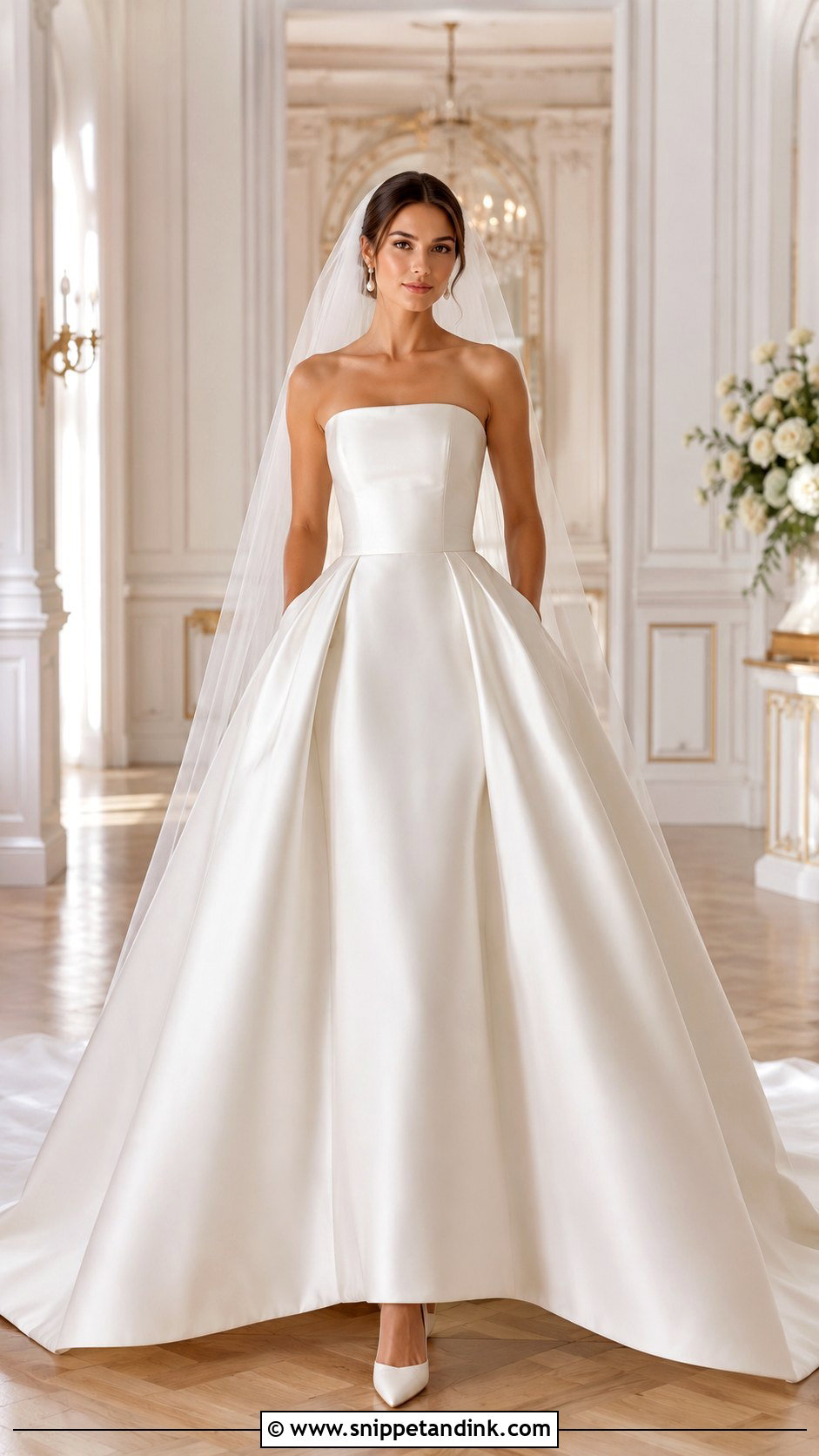
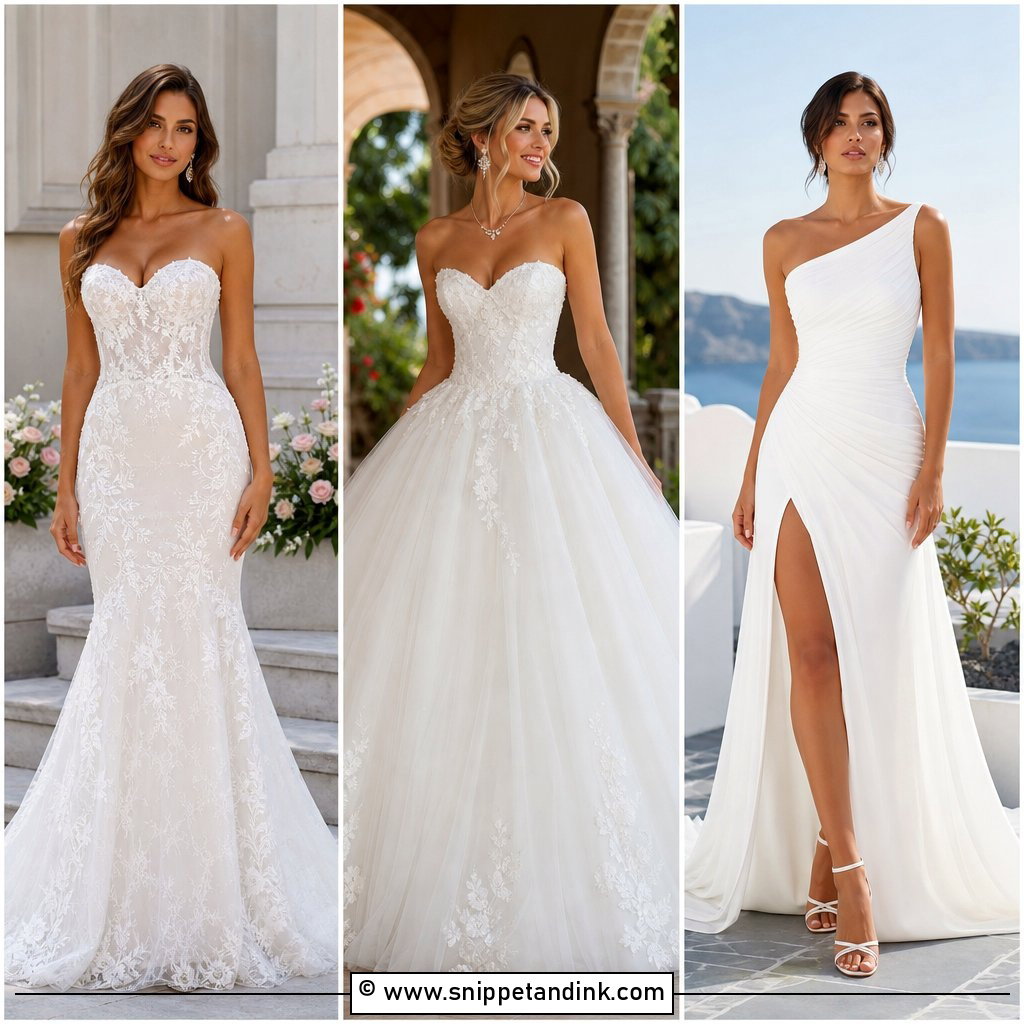
A strapless ball gown in satin needs real engineering under the surface. I look for a bodice with supportive boning, a softly curved neckline and clean seams at the waist rather than decoration. Duchess or a mikado-style satin holds a full skirt on its own and glows softly in pictures. Pointed ivory pumps, pearl drops and a cathedral veil with a narrow satin edge; a smooth low bun keeps the neckline in view. Scale matters: on a petite frame I’d take some fullness out of the skirt, while a tall bride can carry deeper pleats and a longer train. Ask for hidden pockets while it’s being altered.
2. Square Neck Satin A-Line Wedding Dress
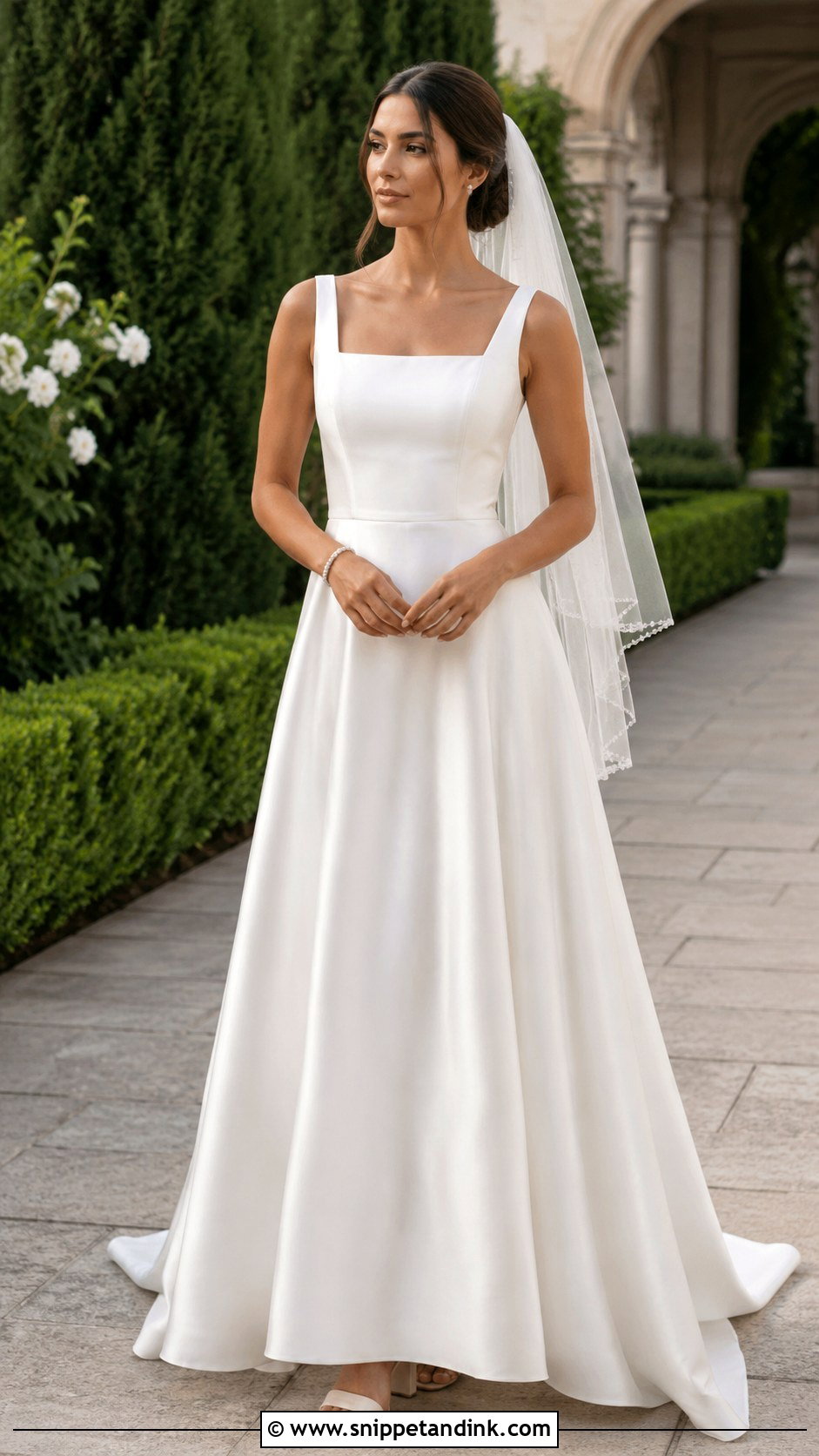
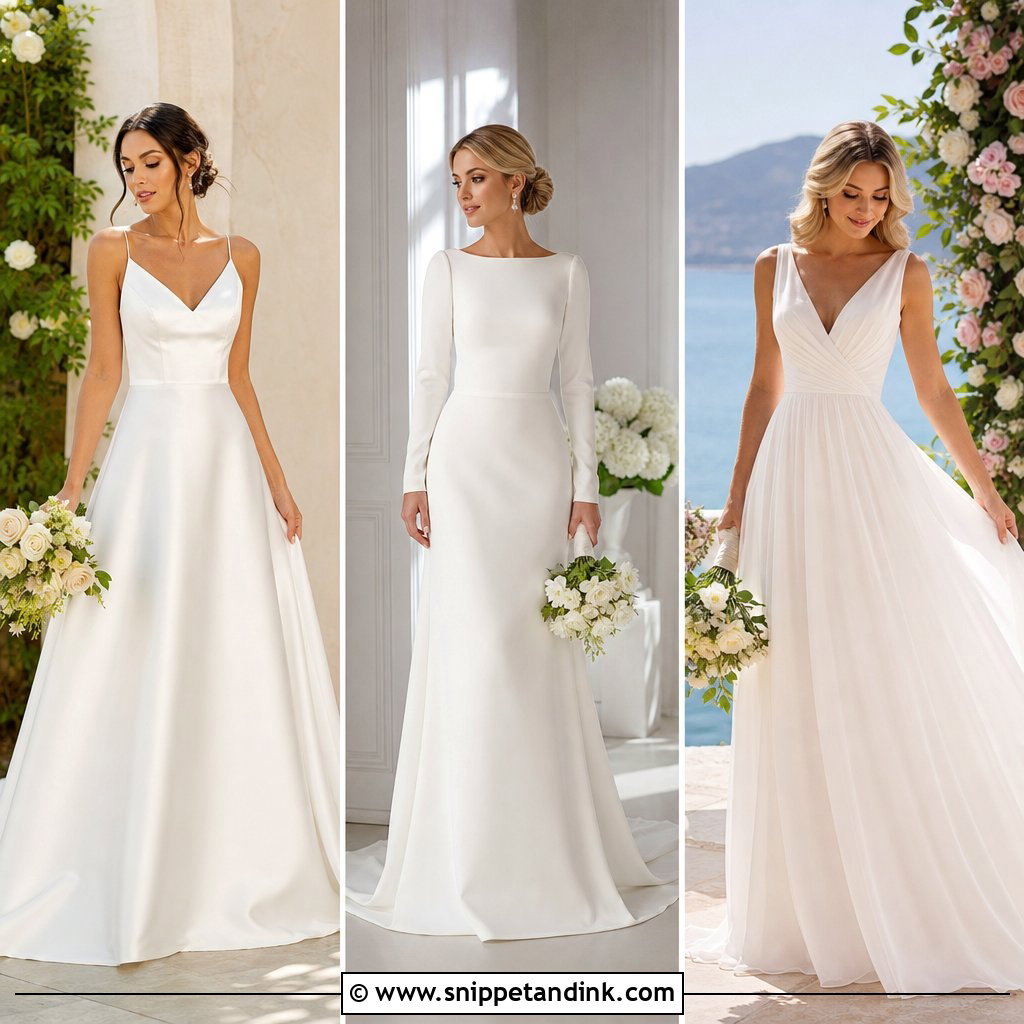
Square neck plus A-line is one of the safest combinations in satin for a wide range of figures, because it defines the waist without hugging the hips. The straight neckline frames the collarbone and wide straps add support. Pearl studs, a slim tennis bracelet and block-heel sandals keep it comfortable; a fingertip veil softens the angles. Bring a cropped satin jacket or wrap for a cool evening. A neat chignon and natural makeup suit ballrooms, estates and gardens. At the fitting, watch the corners of the square as you breathe. Gaping there is common and easy to fix if it’s caught early.
3. Off-Shoulder Satin Basque Waist Wedding Dress
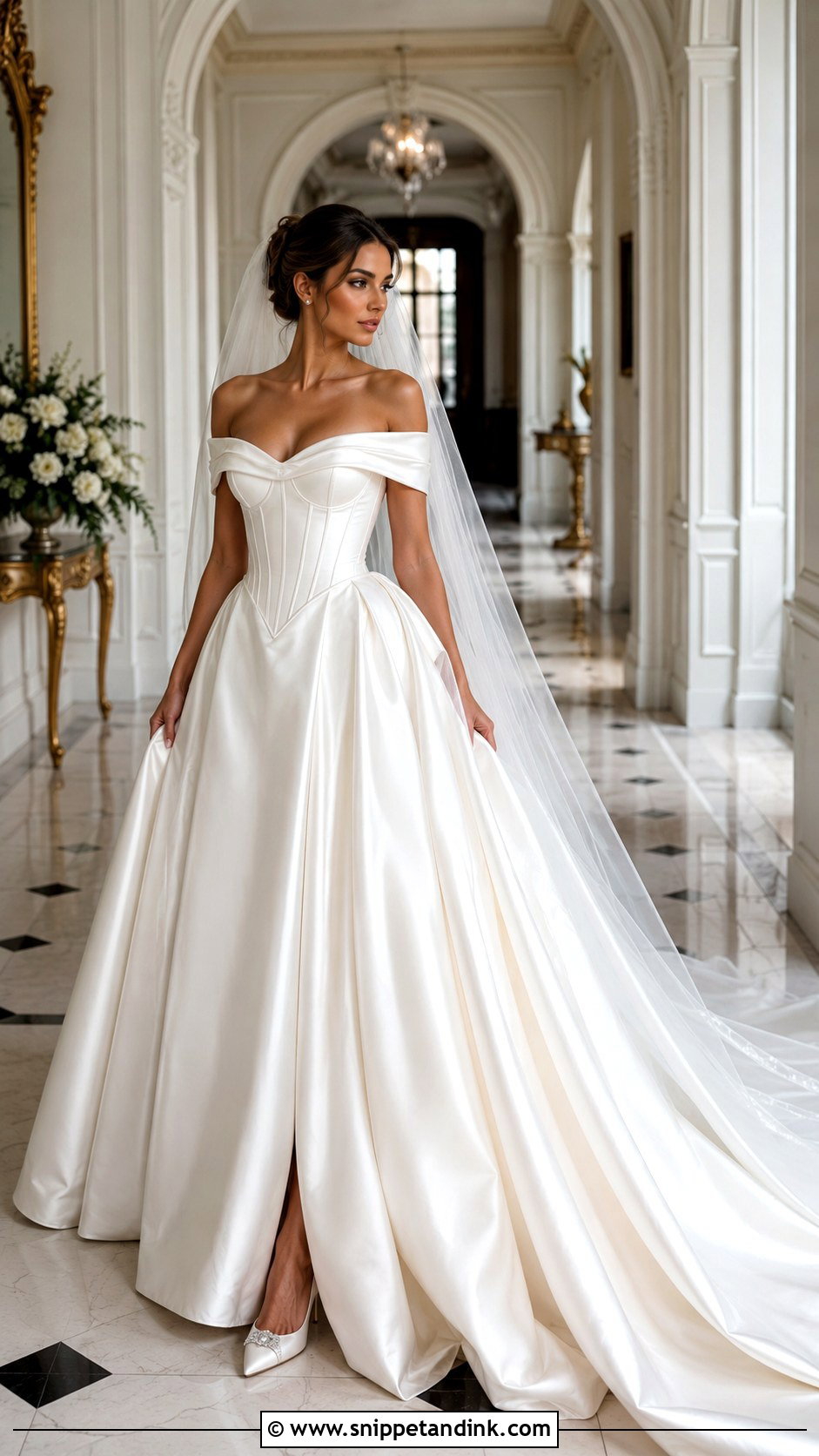
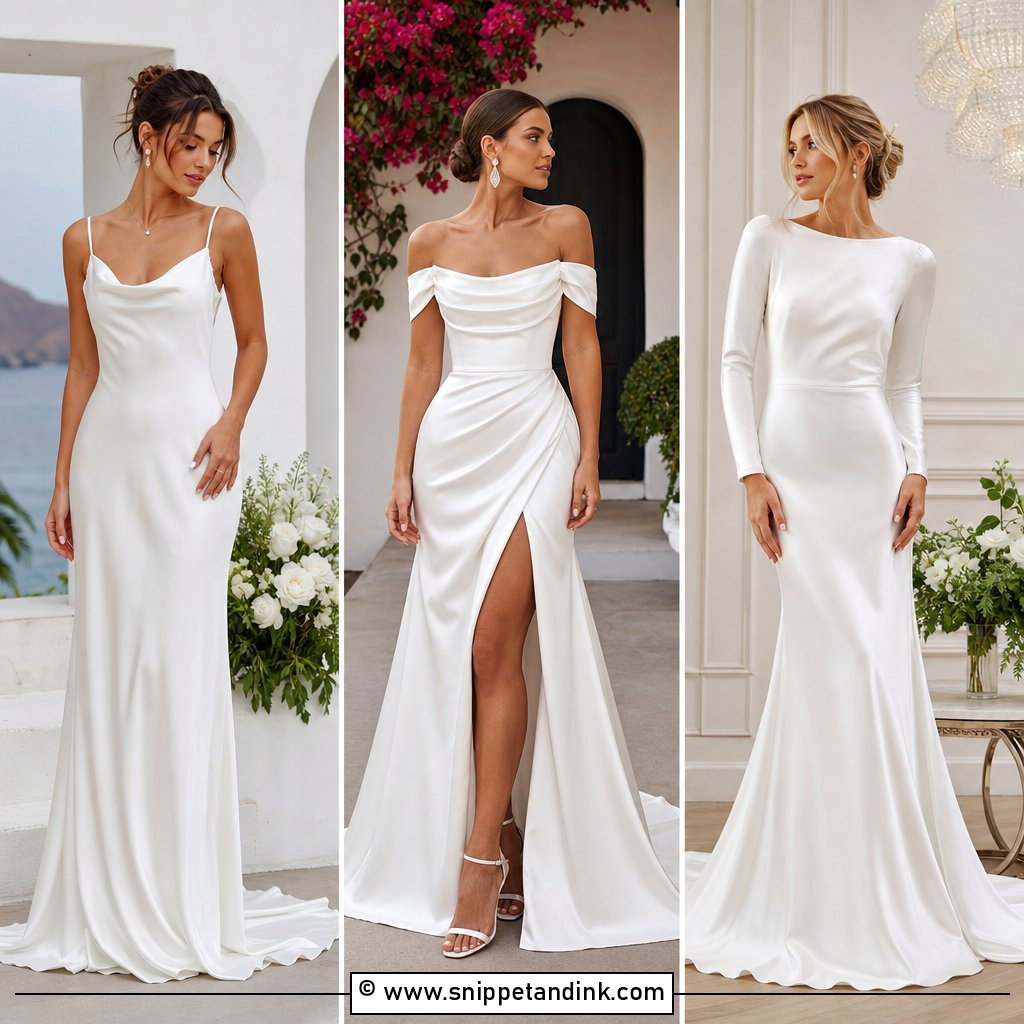
Off the shoulder with a basque waist is traditional with a sharper edge. The neckline lies across the shoulders while the pointed waist lengthens the torso and throws the full skirt into relief. Firm satin keeps the pleats crisp and the bodice smooth. A lace-up back or internal corset makes it more secure for a long day; I lean toward the corset when the bride plans to dance a lot, since laces can loosen. Crystal studs, satin pumps and a long plain veil, with little or no necklace and hair swept back. Carry a compact bouquet so the bodice isn’t hidden in every photo.
4. Long Sleeve Satin Wedding Dress
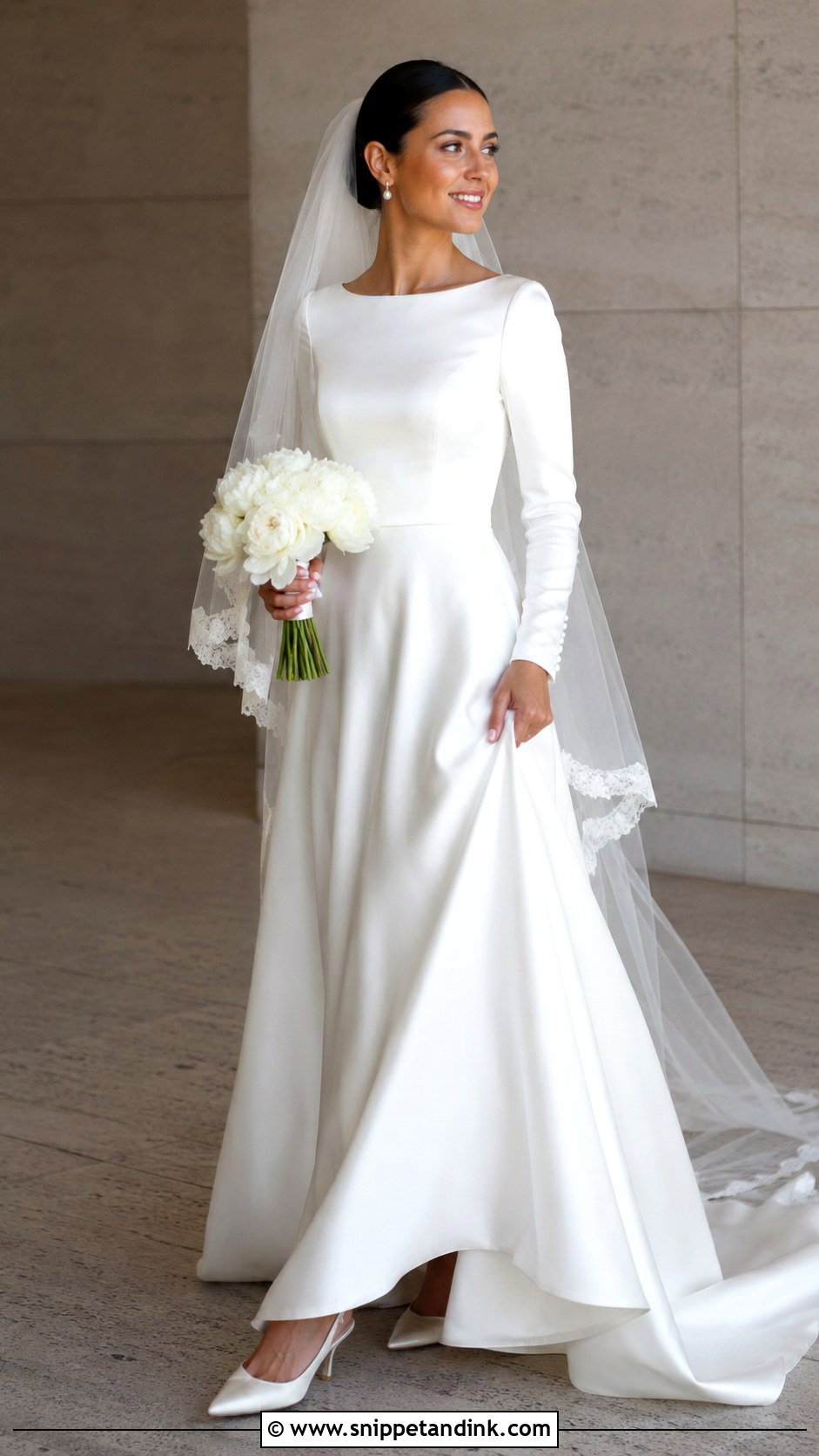
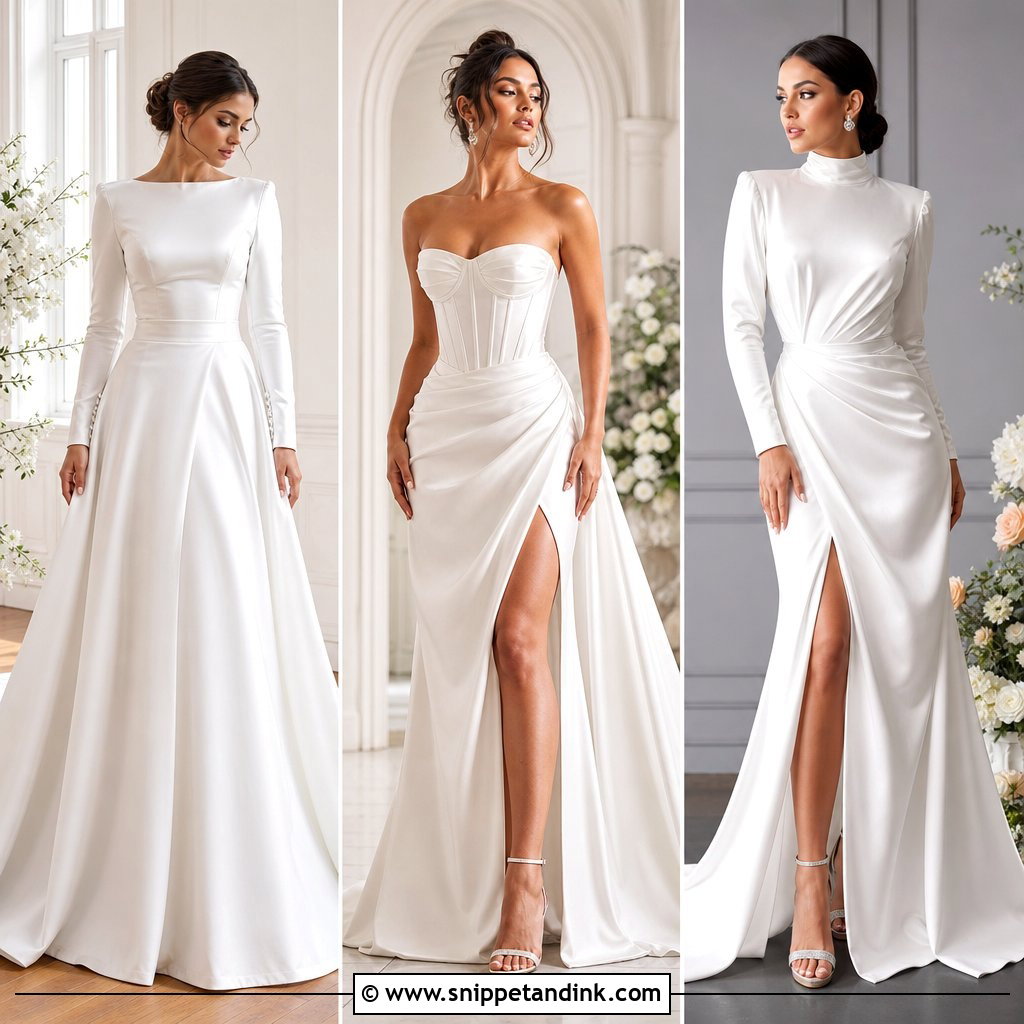
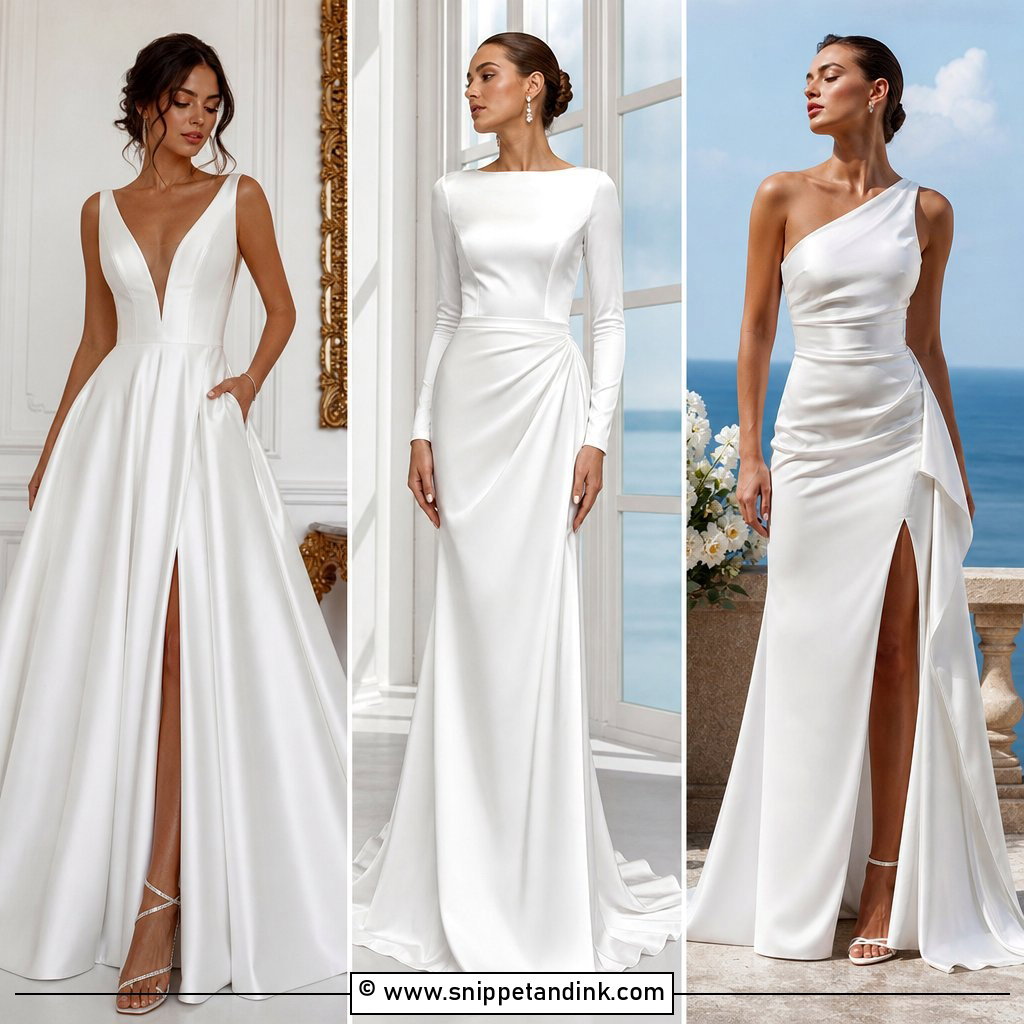
Long satin sleeves cover without weighing a dress down, as long as they’re cut narrow and clean. A fitted bodice, a defined waist and covered buttons at the cuffs or down the back carry the detail; a bateau, jewel or shallow V neckline balances the coverage. An A-line skirt is softer, a column more formal. Pointed slingbacks, small pearl earrings, a simple chapel veil and a low twisted bun finish it. Satin has no natural give, so this is the dress I test hardest for movement. Ask about a little stretch in the satin or discreet underarm gussets if you plan to hug a hundred guests.
5. Cowl Neck Satin Slip Wedding Dress
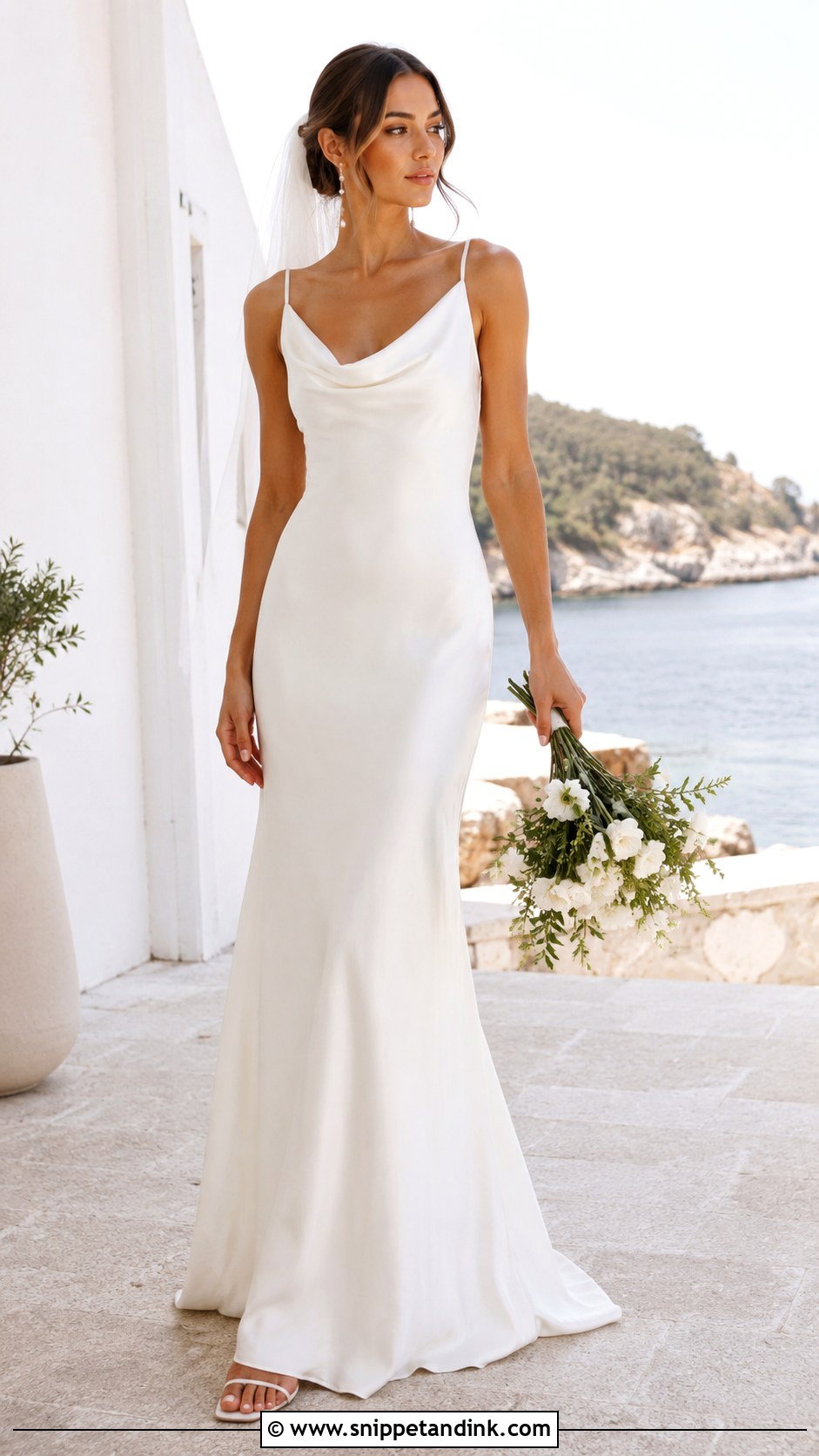
Light slides across the folds of a cowl neckline, which is the whole appeal of a satin slip. Cut on the bias, it follows the body without a structured bodice, and it suits minimalist ceremonies, coastal venues and small weddings. Thin satin clings unpredictably, so I always reach for a heavier one. Delicate strappy sandals, pearl threaders, an elbow-length veil and a smooth bun or softly waved bob. Bust, waist and hem alterations make or break it. Smooth, supportive underwear and an optional light lining help the satin fall cleanly.
6. Corset Satin Fit And Flare Wedding Dress
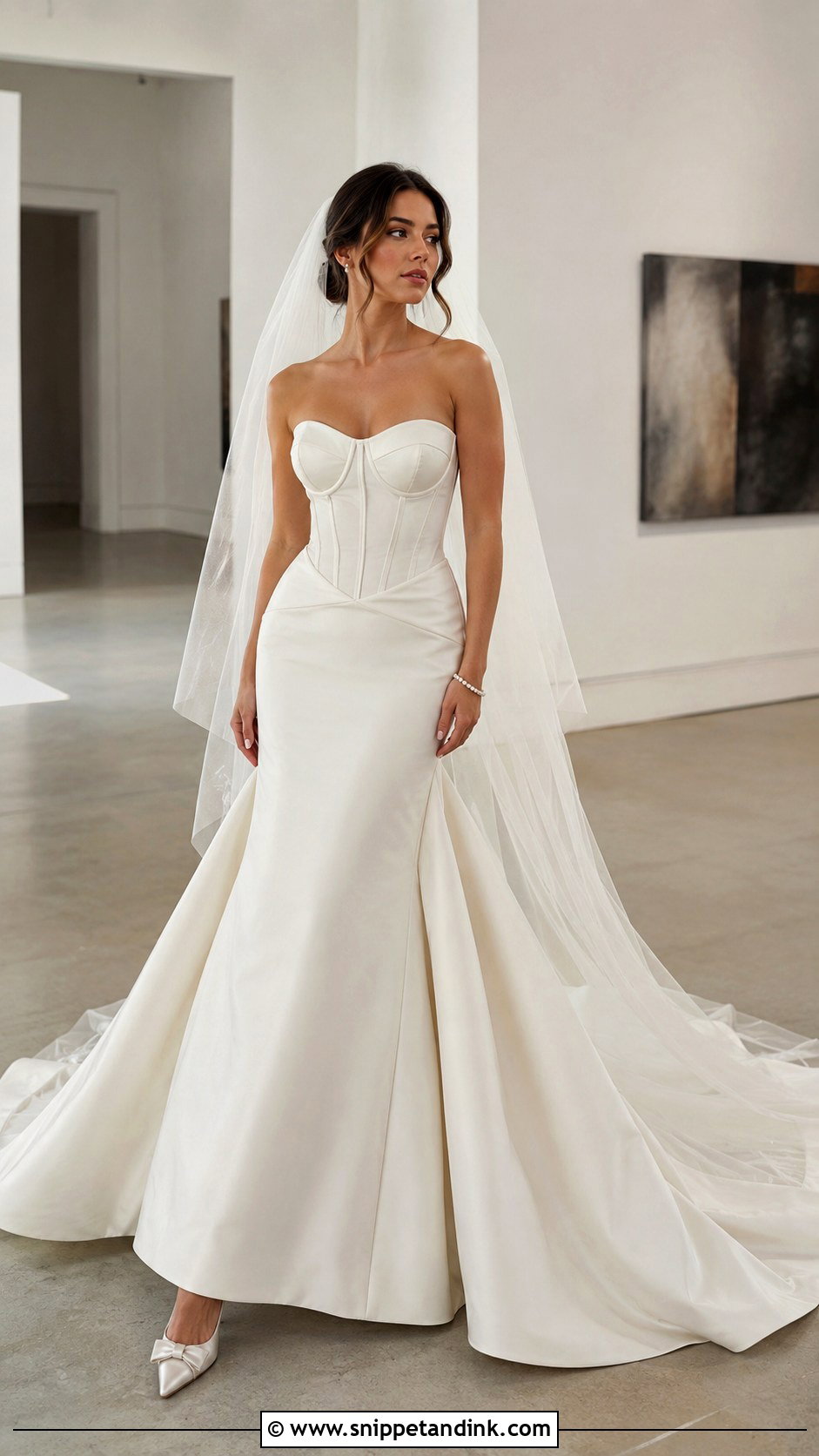
A corset bodice on a satin fit-and-flare gives a sculpted shape with very little ornament. Visible seams or covered boning define the waist; the skirt follows the hips and opens below the thigh or knee into a crisp flare. Pointed pumps, a slim pearl bracelet, a chapel veil and a neat ponytail or structured updo. For coverage, add detachable off-shoulder straps or a matching wrap. Satin won’t stretch to forgive a tight hip, so sit and walk at every alteration appointment, and arrange a proper bustle if the gown has a long train.
7. Halter Neck Satin Column Wedding Dress
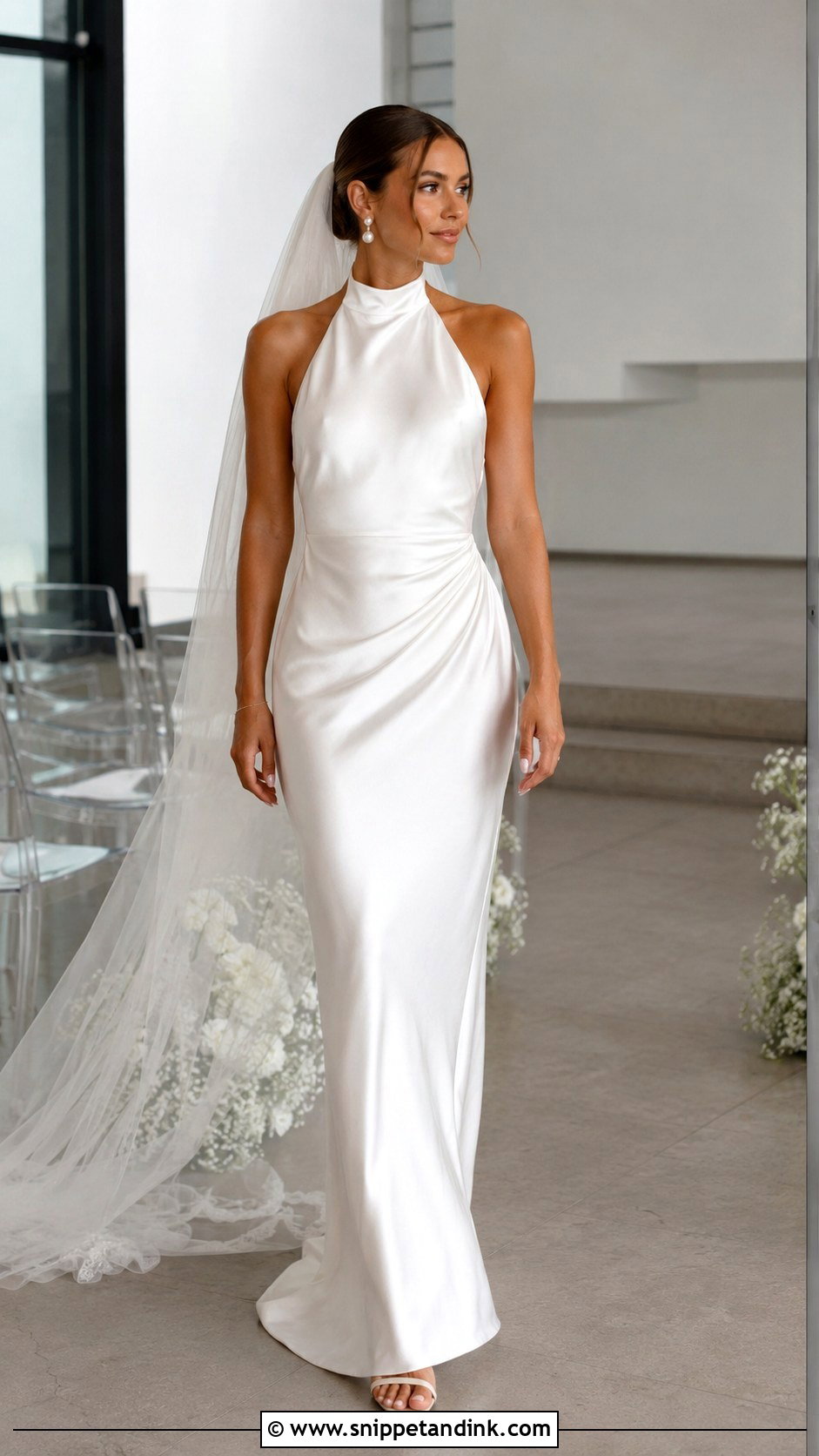
A halter neck satin column gown looks statuesque in a pared-back venue. The halter lifts the eye; the narrow skirt keeps it simple. I check two things: that the closure at the neck is secure, and that the halter covers enough at the sides of the bust, because satin gapes there when a bride turns. Gentle draping at the waist adds shape. Metallic or ivory sandals, a structured mini bag and bold pearl earrings, no necklace, and a sleek bun with a long veil for the ceremony. A back slit or kick pleat is the difference between walking and shuffling in a column.
8. One Shoulder Draped Satin Wedding Dress
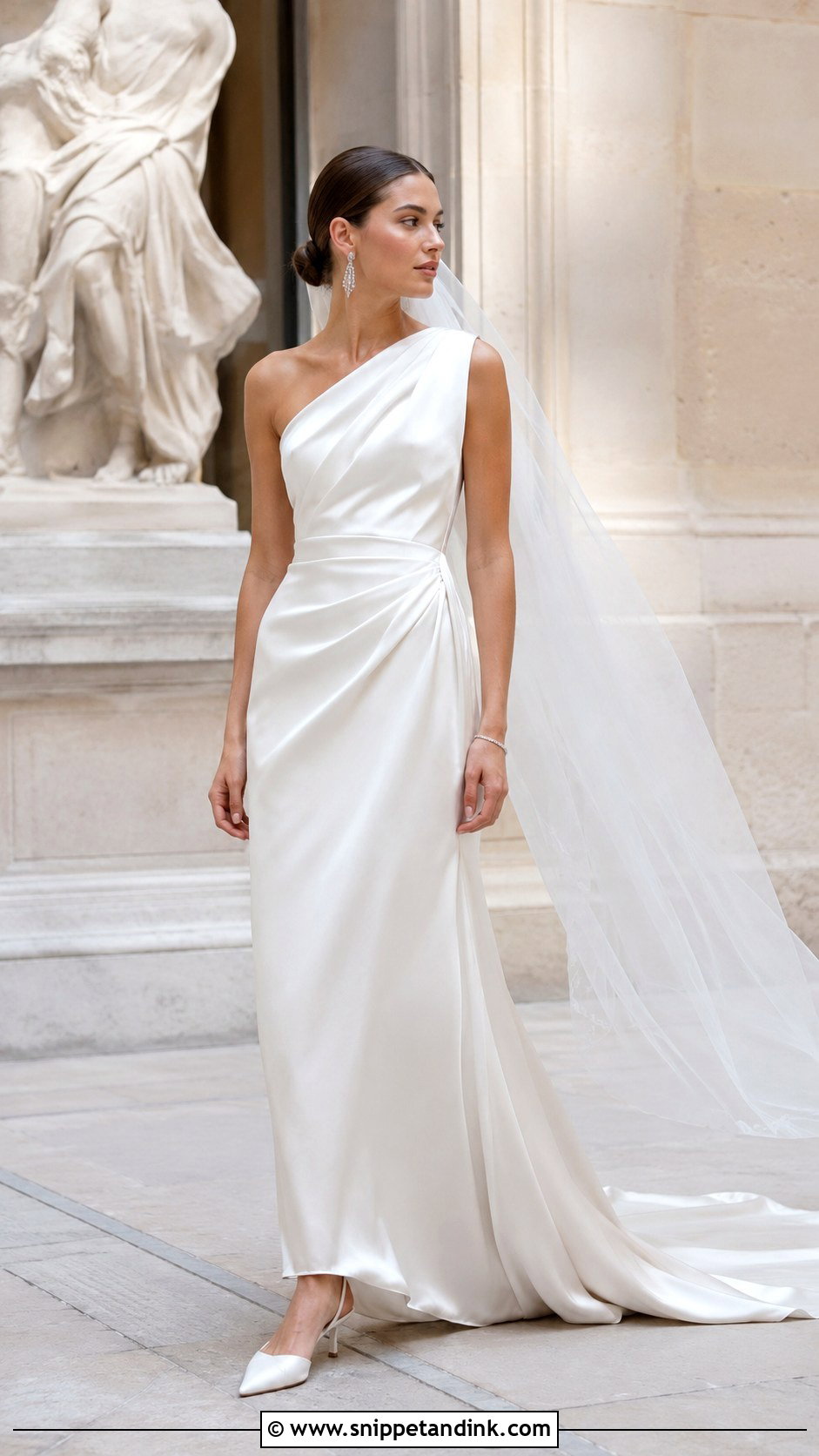
Draped folds across the bodice and waist do the shaping on a one-shoulder satin dress, and they catch the sheen as she moves. A straight, A-line or gently fitted skirt stops it tipping into drama. One statement earring or matching crystal studs, pointed slingbacks and a narrow bracelet on the bare arm; a veil fixed beneath a low bun. Asymmetric dresses like to travel, so internal support matters more than usual. I ask the seamstress to check shoulder placement, bust support and the underarm while the bride raises her arms, not only while she stands still.
9. V-Neck Satin Empire Waist Wedding Dress
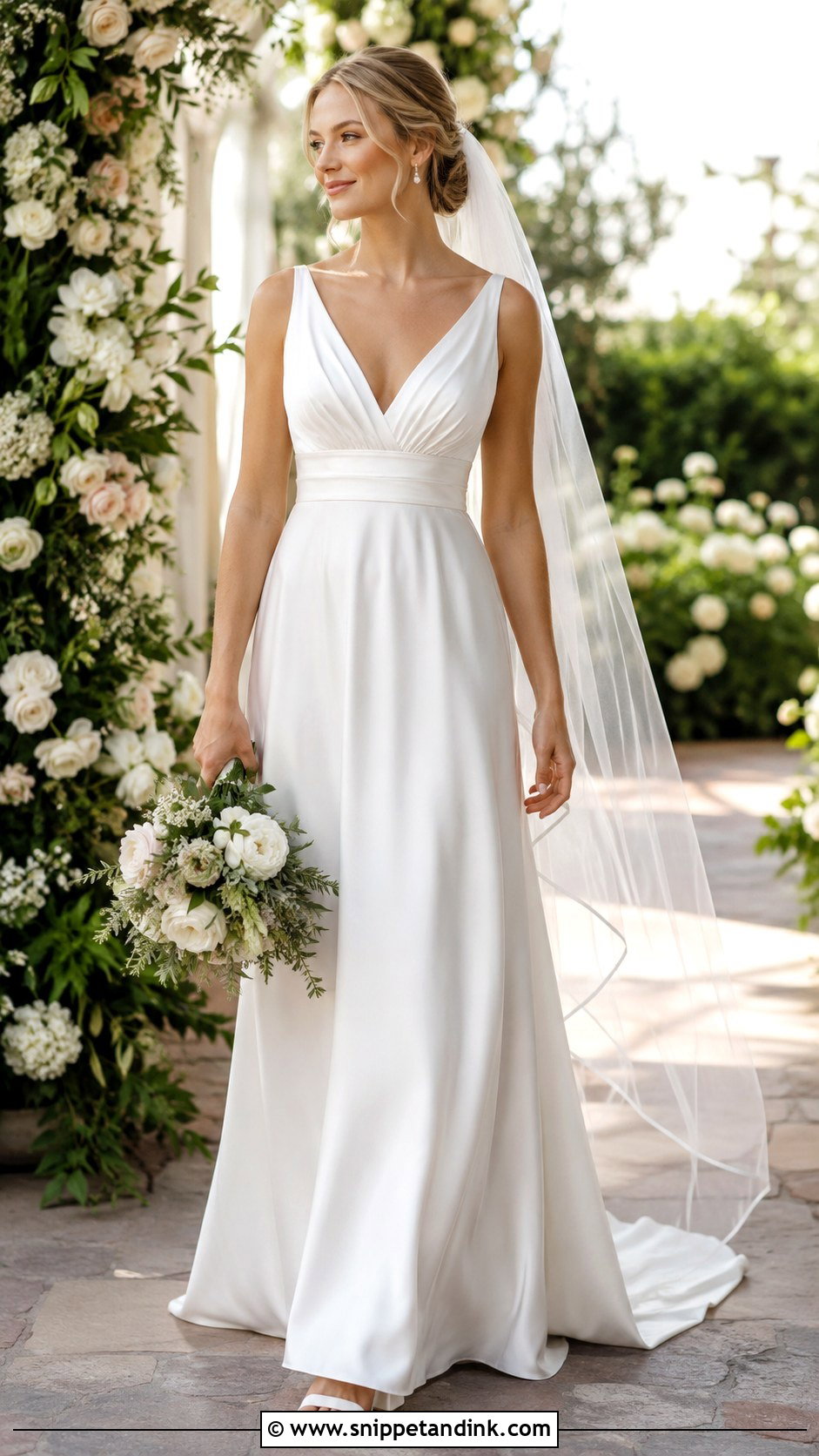
An empire waist sits under the bust and lets the skirt fall freely, so there’s nothing gripping the midsection. That makes this V-neck satin gown a comfortable choice for a long day. Keep the V moderate, with supportive straps and secure inner construction; a satin band or a gathered panel under the bust adds definition. Low block heels, delicate drops, a sheer chapel veil and loose waves or a soft half-up style suit its softness. For summer, I’d choose a lighter satin with minimal lining. Hem it precisely: a fluid skirt should skim the floor, not pool over the shoes.
10. Scoop Neck Satin Sheath Wedding Dress
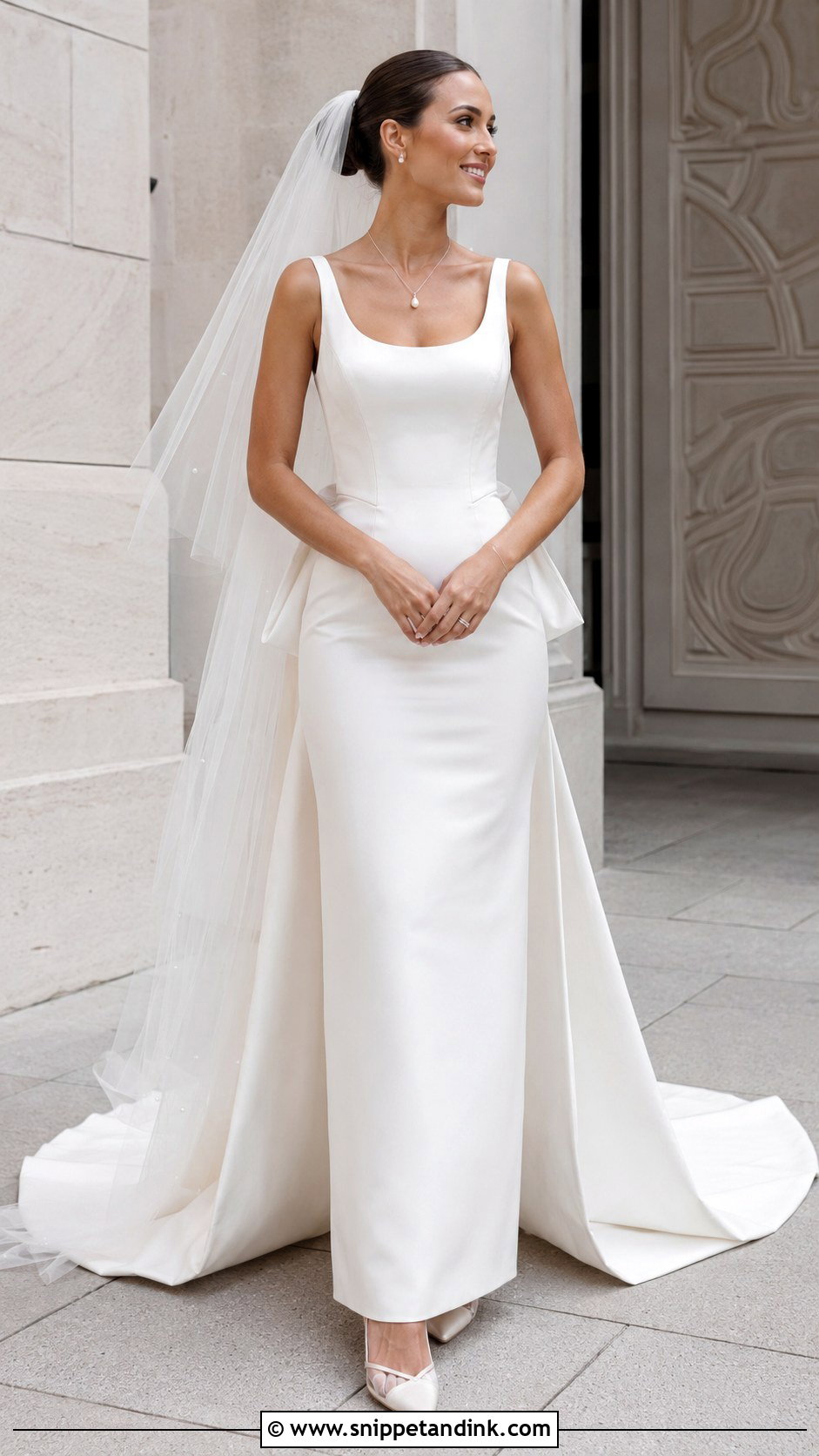
A satin sheath gown with a scoop neck looks simple and still has plenty going on when it fits properly. The curved neckline frames the face; the straight skirt follows the body without a mermaid flare. Wide straps support, narrow ones look more delicate, and darts, princess seams or light ruching refine the fit. Kitten-heel slingbacks, a pearl pendant, a light fingertip veil and a low ponytail keep it modern. For an outdoor ceremony, a detachable satin train adds aisle drama and comes off later. Satin sheaths show every pull at the hip, so that’s where alteration time goes.
11. Bow Back Satin Wedding Dress
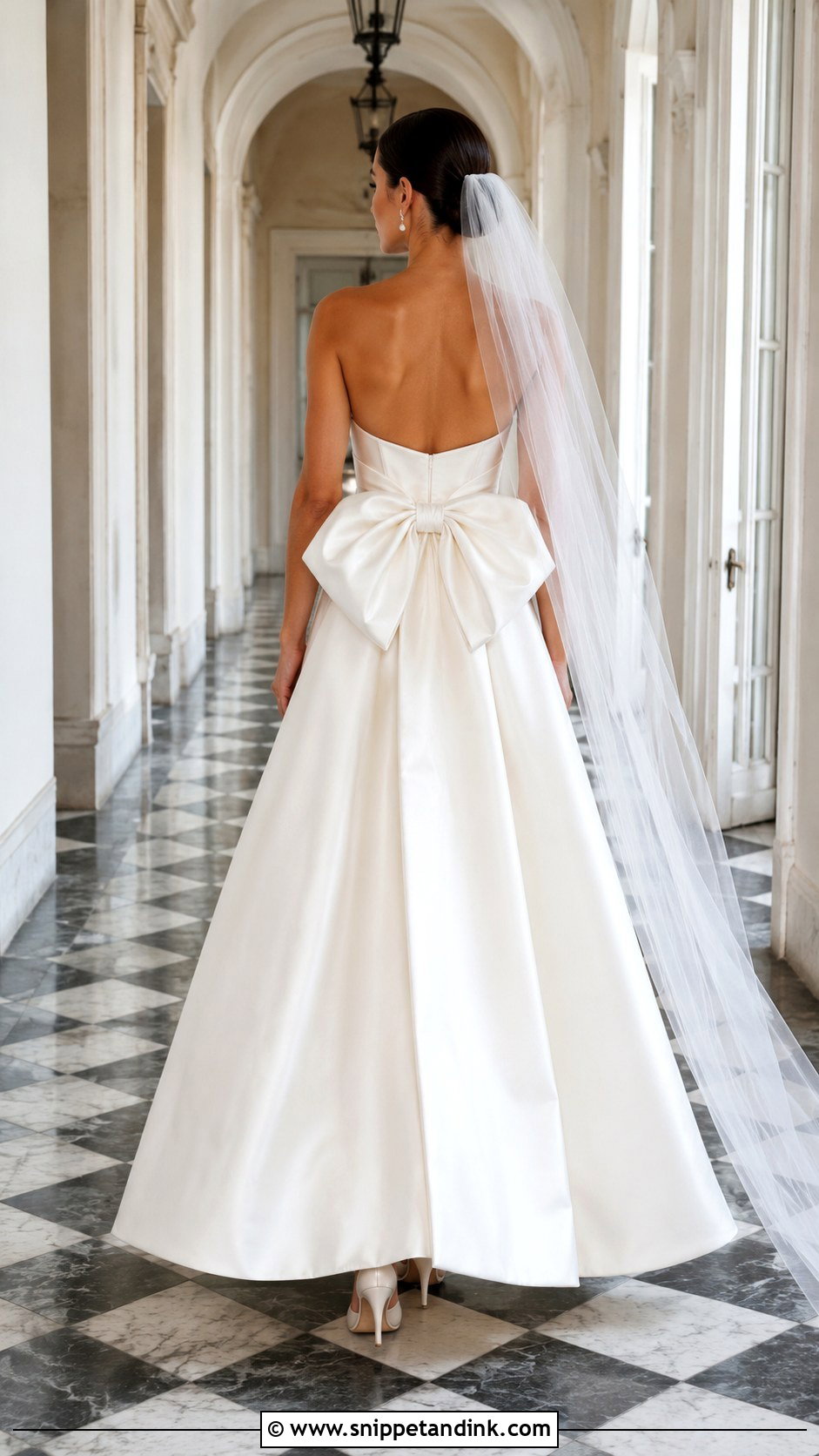
The moment she turns toward the aisle, the bow is the story. Choose a structured bow at the waist or upper back, with crisp loops and tails sized to her frame, over a strapless A-line or fitted square-neck dress with a quiet front. Pearl earrings, closed-toe satin heels and a smooth updo. The veil length needs planning: end it well above the bow or carry it far past it, because a veil that stops right on the bow flattens it. A soft bow will droop after a few hours, so I ask whether the loops are interfaced, and whether it detaches for dancing.
12. Pearl Detail Satin Wedding Dress
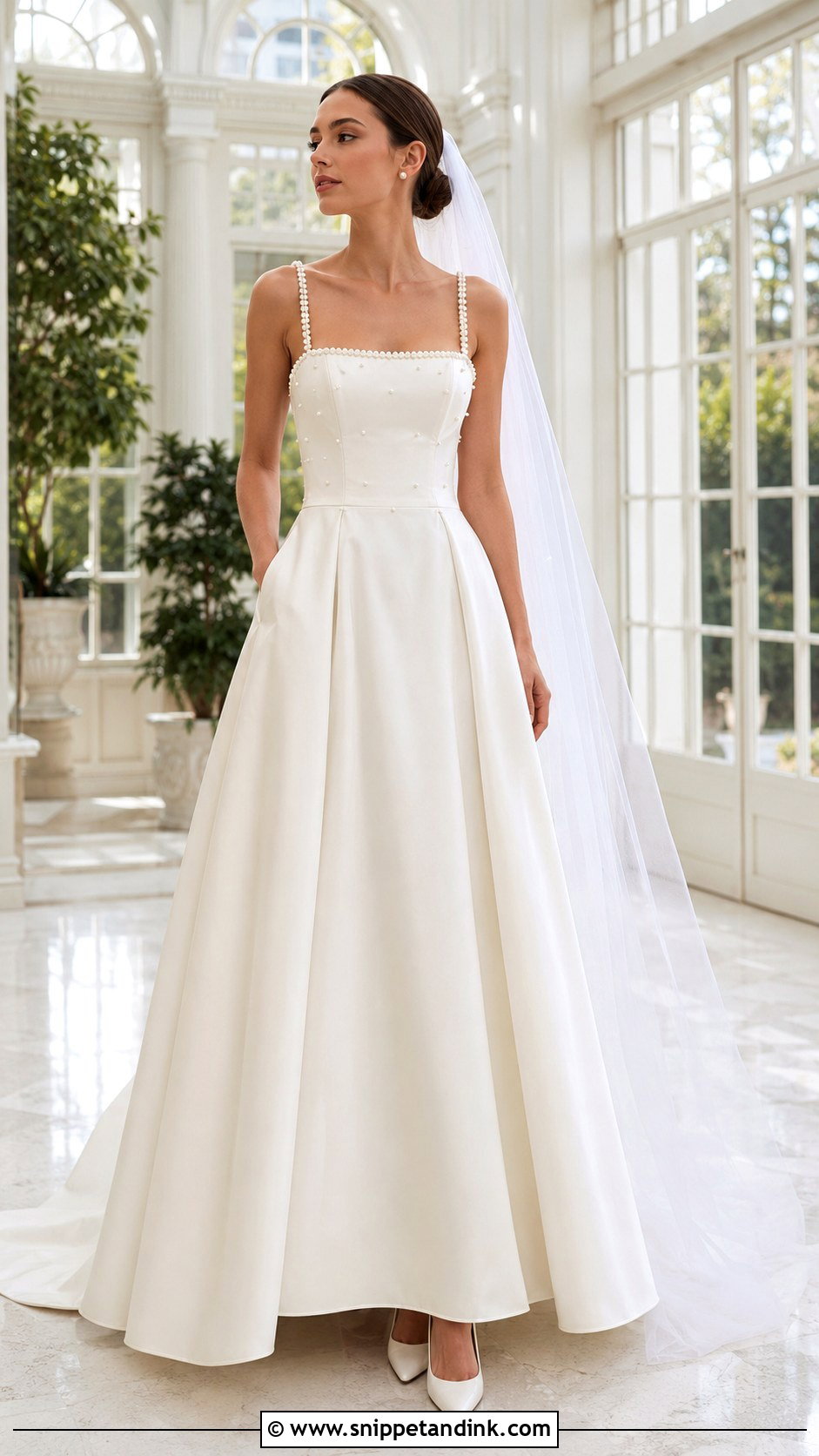
Small pearl accents add dimension without hiding the satin. Pearl-trimmed straps, a beaded neckline or scattered pearls around the bodice of a clean A-line are plenty; any more and it looks busy. Pearl studs, ivory pumps and a plain tulle veil let the details show, with a softly curled updo. Match jewelry to the tone of the dress pearls, which vary from bright white to cream, and avoid piling on separate pearl pieces. Run your hand along beadwork near the arms. Well-sewn pearls shouldn’t scratch the inner arm or snag the veil.
13. Lace Panel Satin Wedding Dress
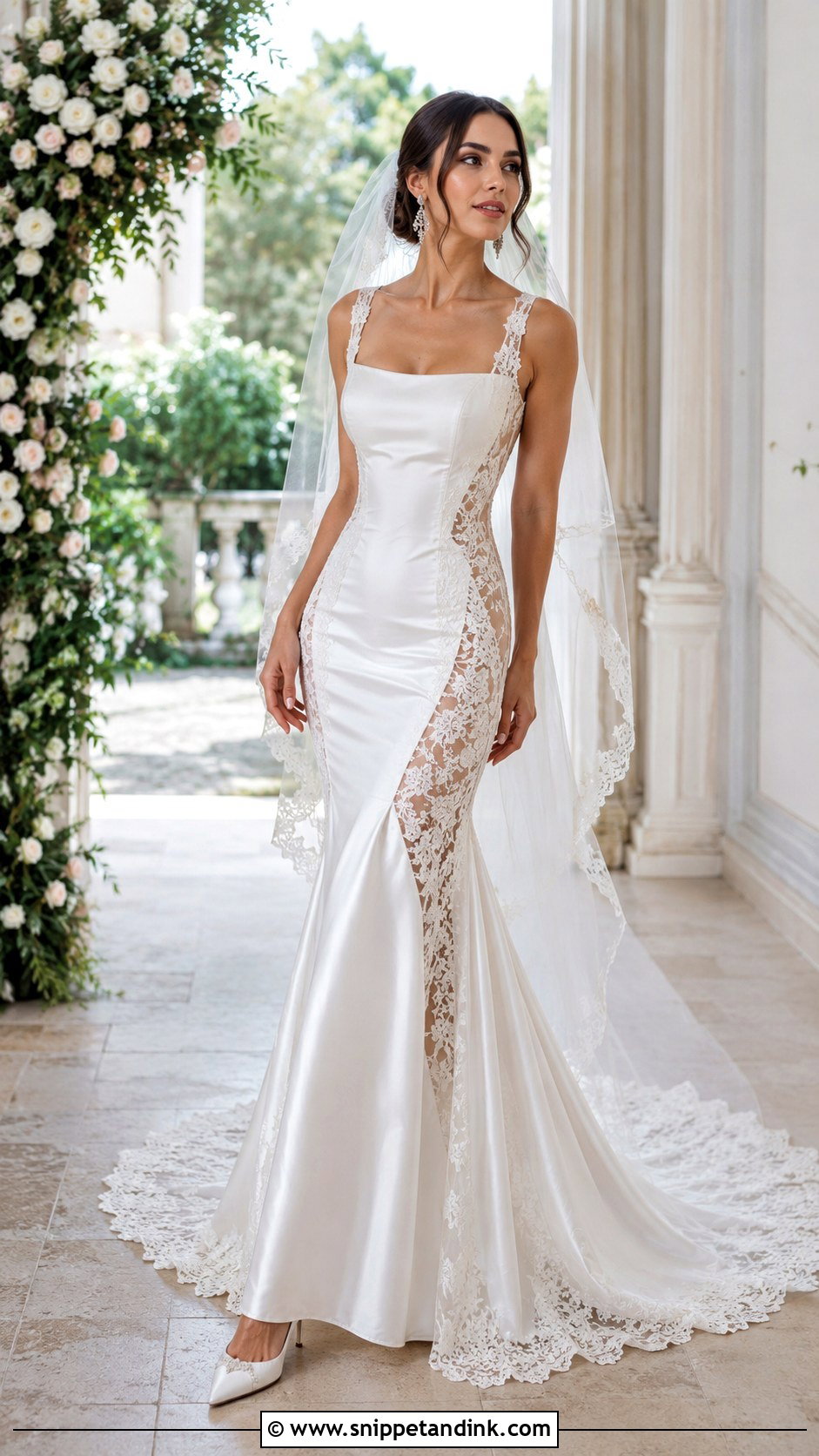
Satin and lace work together when each is used sparingly. Lace side panels, a lace-edged neckline or a narrow insert down the train over an A-line or fit-and-flare; both fabrics need room to read as intentional. Match the lace shade closely to the satin unless you want obvious contrast, since two whites side by side expose each other. Pointed ivory heels, small crystal earrings and a veil with only a fine lace border. Keep the bouquet simple. Sheer lace panels need a lining decision during alterations; a skin-tone lining gives coverage while the lace pattern stays crisp.
14. Satin Wedding Dress With Detachable Overskirt
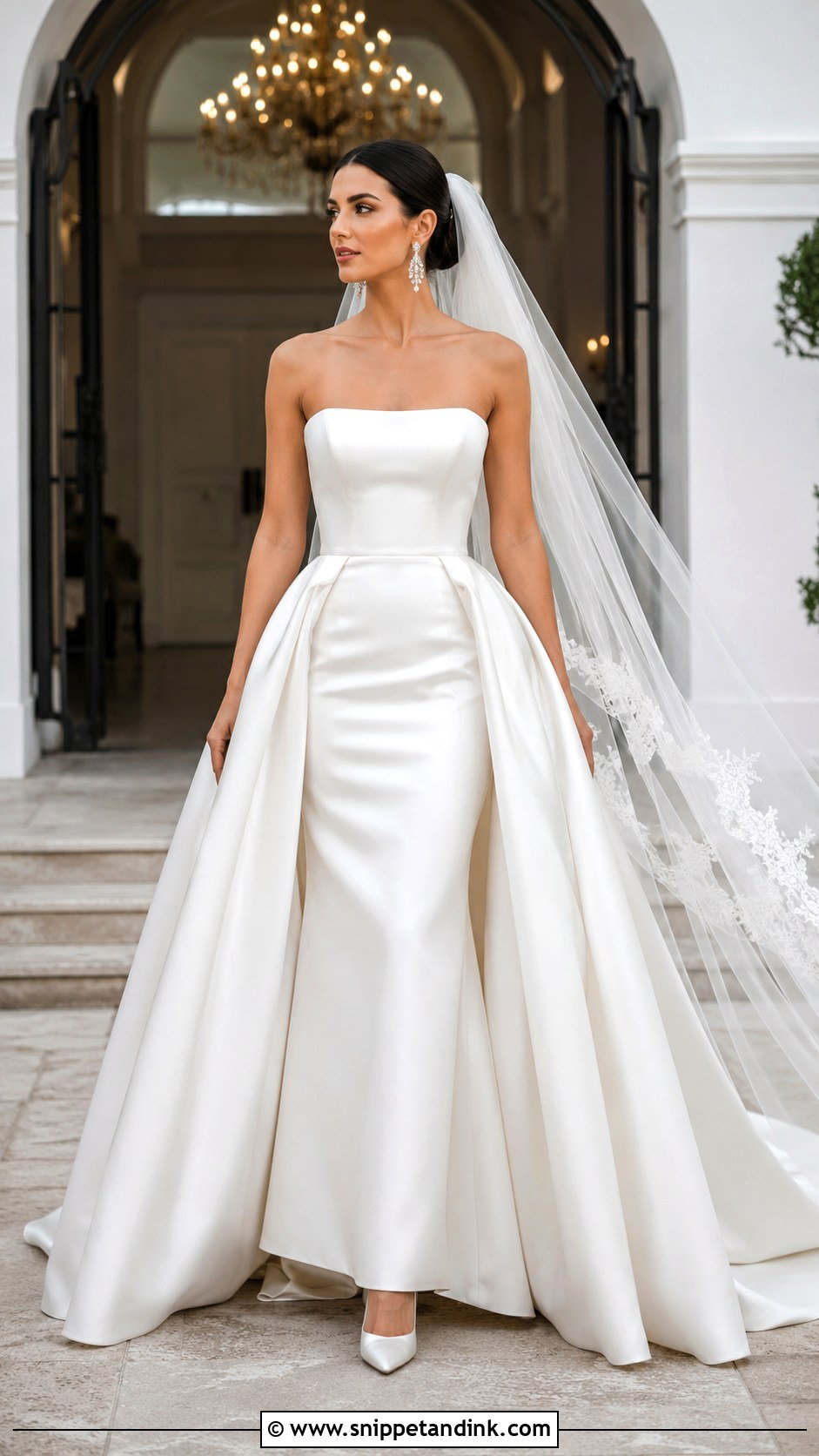
One gown, two silhouettes. A fitted column, sheath or fit-and-flare base with a full satin overskirt for the ceremony; box pleats or soft gathers give volume and keep the waist neat. After portraits, the overskirt comes off and walking and dancing get easier. Pointed pumps, statement earrings and a cathedral veil for the ceremony; block heels and no veil for the reception. The overskirt waistband should sit flat with the fastenings hidden, and its train needs a bustle so it can be lifted safely between locations. Have whoever will help you practise unhooking it before the day.
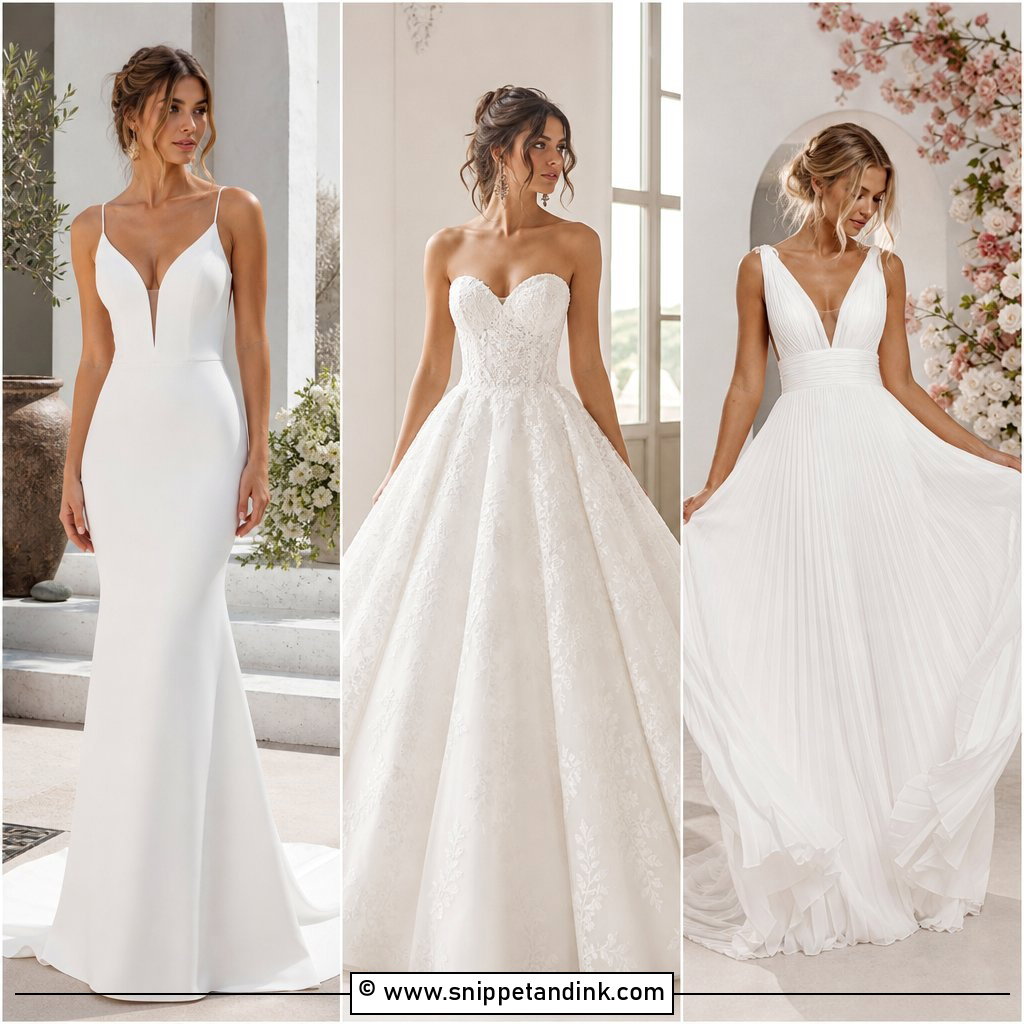


15. Satin Wedding Dress With Cape Sleeves
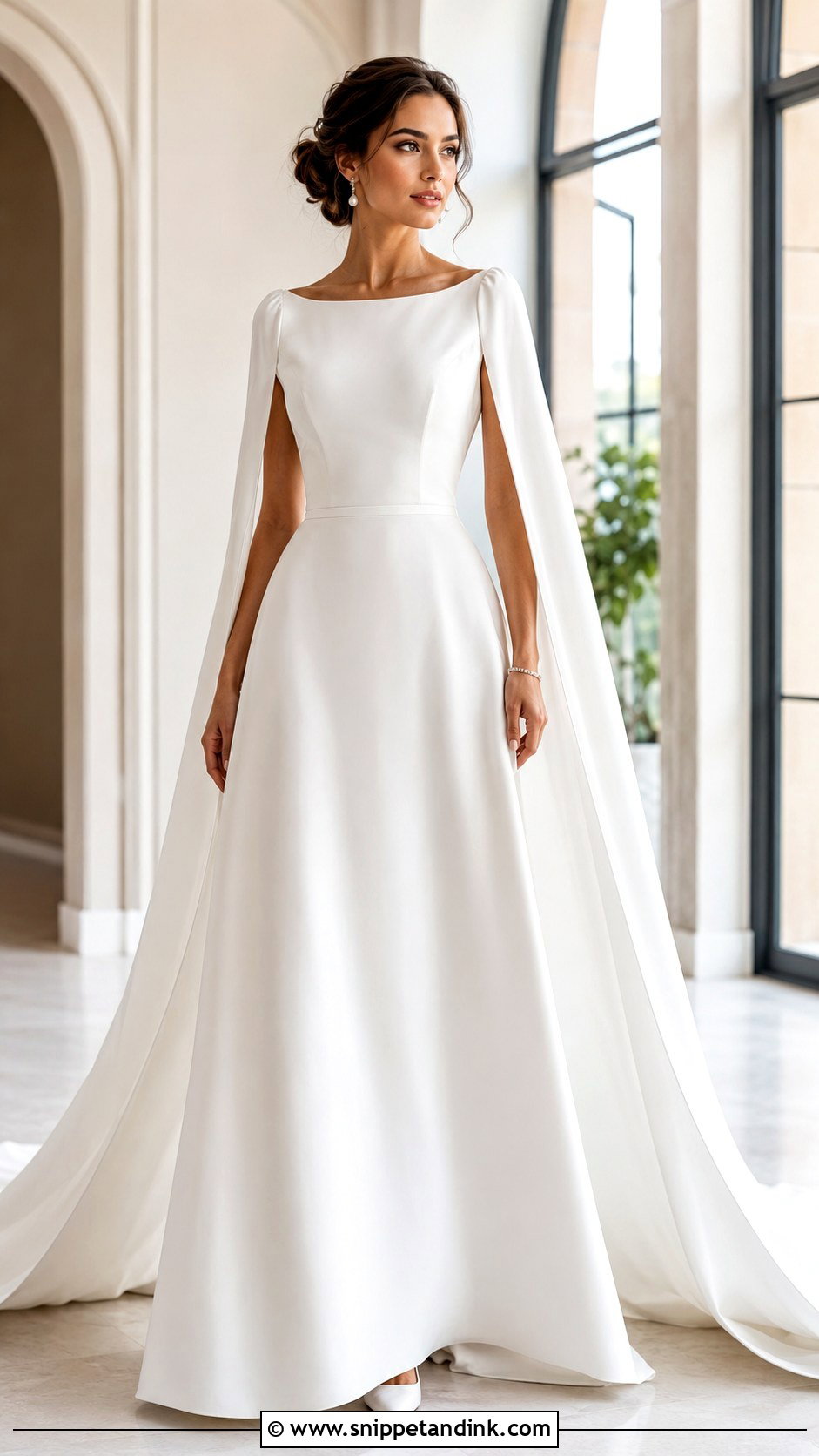
Cape sleeves give a plain satin gown a regal frame. Choose a clean column or A-line with cape panels fixed at the shoulders so the fabric moves without covering the bodice; a V, high neck or bateau suits it, depending on coverage. Pointed heels, delicate earrings and a slim bracelet. If the cape extends into a long train, I’d drop the veil, because two trailing layers compete. A polished bun keeps hair out of the shoulder seams. Lightweight satin or satin-backed crepe moves well without dragging on the shoulders; test it walking, turning and sitting.
16. Tea Length Satin Wedding Dress
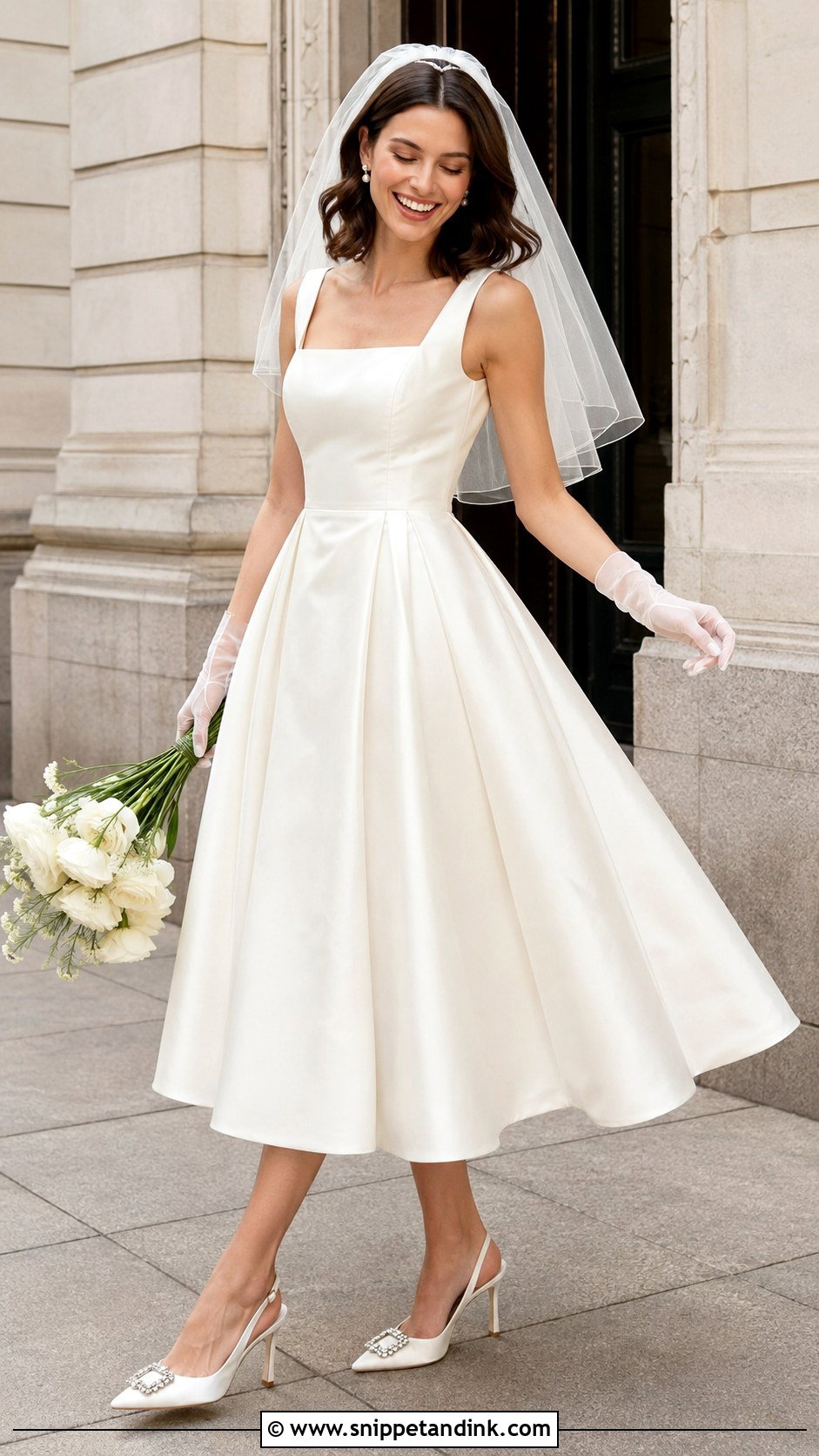
Tea length satin feels cheerful and polished and lets you move freely. The skirt ends between knee and ankle, so shoes become part of the outfit: embellished slingbacks with pearl earrings, short gloves and a shoulder-length veil, plus a structured mini bag for a courthouse, restaurant or small venue. A fitted bodice with a square, scoop or off-shoulder neckline over a softly flared, neatly pleated skirt is the classic build. On a petite bride I’d set the hem just below the knee; a taller bride can wear a longer midi. Check it seated. A full satin skirt rides up more than you’d expect once the knees bend.
17. Satin Mini Wedding Dress
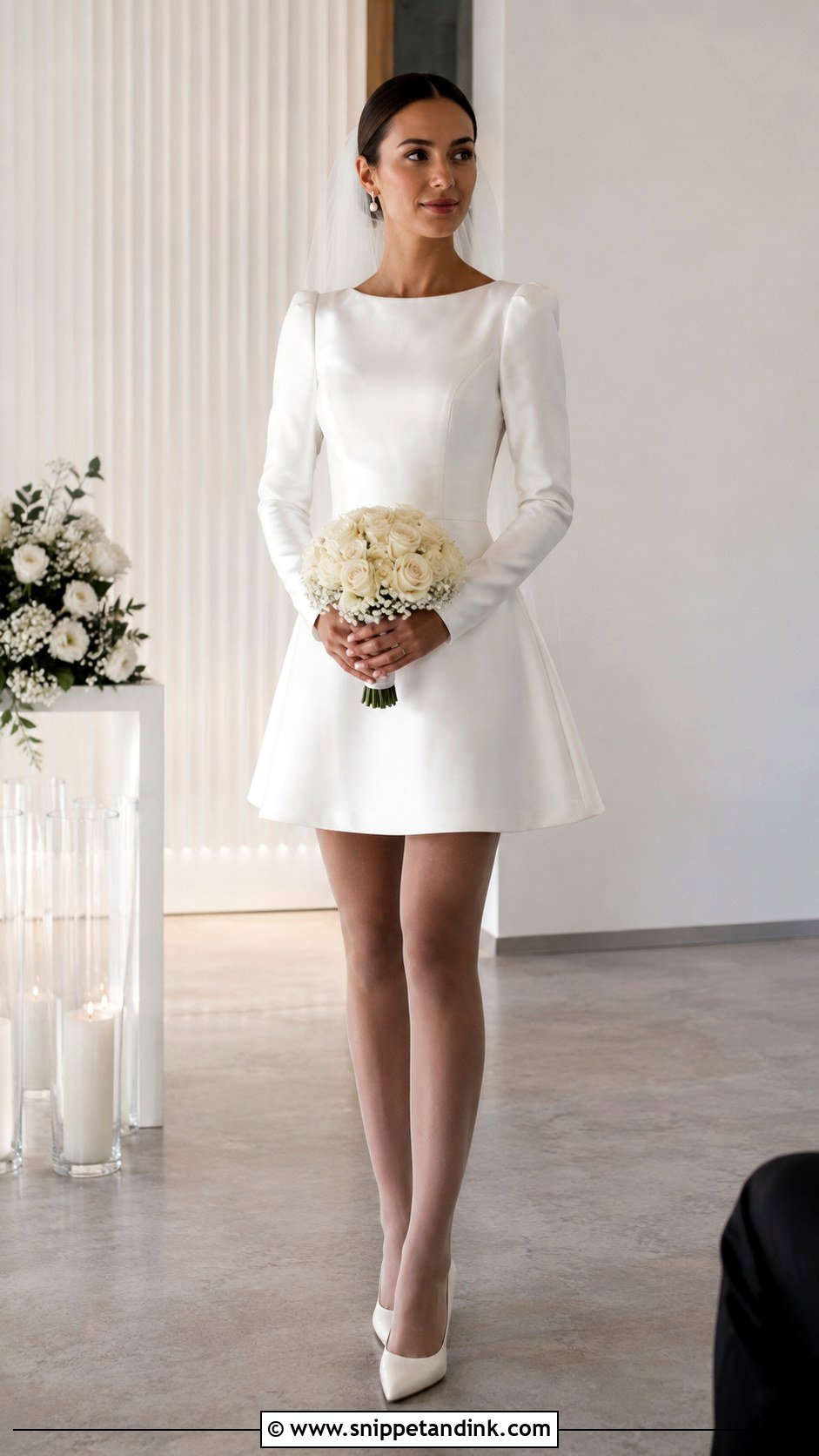
A satin mini suits a civil ceremony, a reception change or a small party. Keep it refined with a tailored shift, a fitted square-neck dress or a structured A-line, rather than anything very tight. Long sleeves, a big bow or a detachable overskirt make the short length feel ceremonial. Pointed pumps or slingbacks, pearl earrings and a short veil or simple hair bow; sheer bridal tights in cool weather. Short satin rides up when you sit and dance, so I check the hem in motion and sometimes suggest a slightly longer back hem for security. A compact bouquet keeps the proportions right.
18. Champagne Satin Wedding Dress
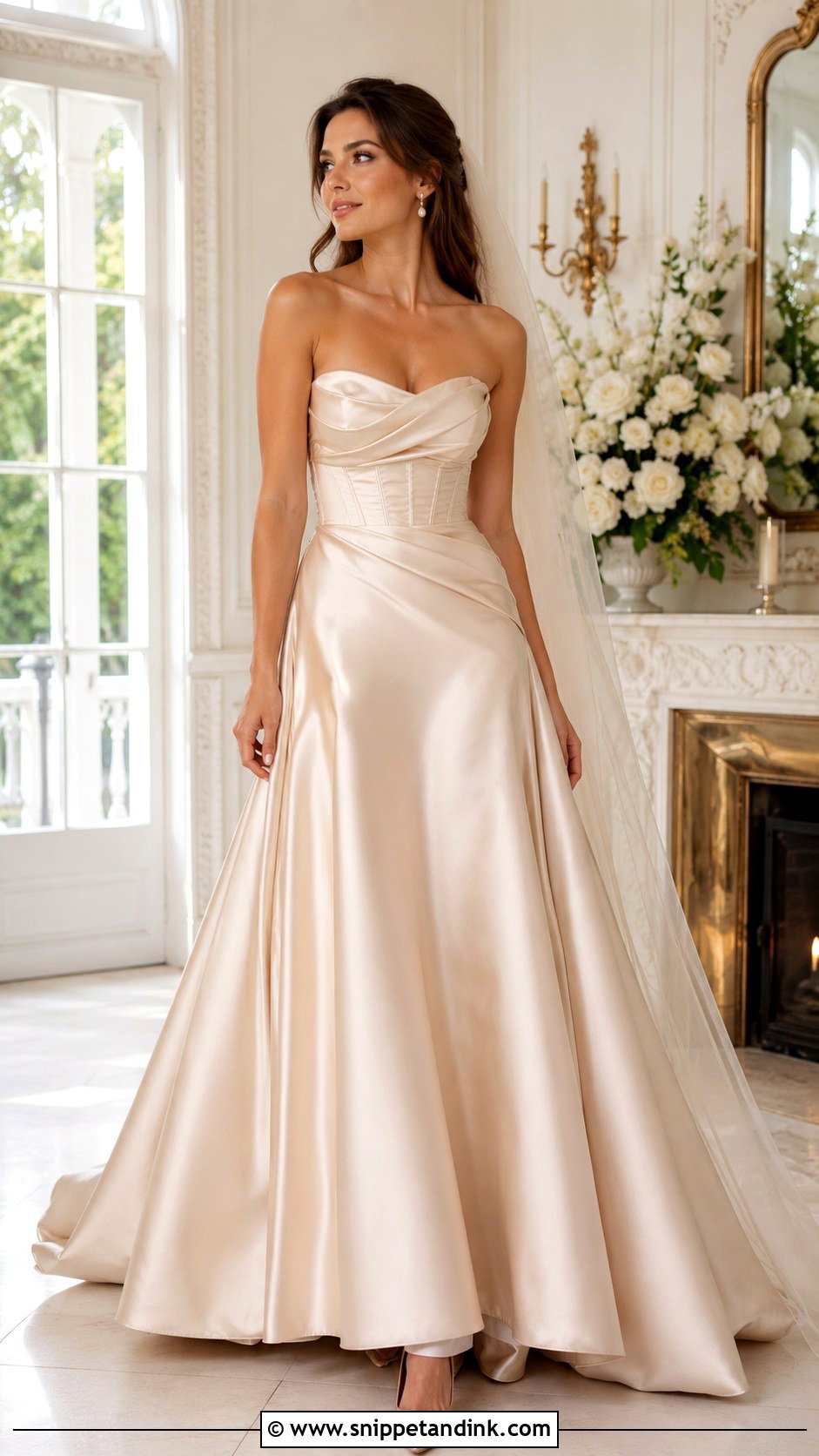
Champagne covers a wide range, from pale ivory-beige to soft gold, so always judge the fabric in daylight before deciding. A draped A-line, corset ball gown or bias column lets the color lead. Neutral satin heels, warm metallic earrings and a veil in matching champagne or soft ivory; cool bright-white accessories next to a warm gown look like a mistake. A low bun, glowing neutral makeup and cream flowers complete the palette. I’d ask your photographer to take a few test frames at a fitting, because satin’s reflective surface can read lighter under flash than in person.
19. Plus Size Ruched Satin Wedding Dress
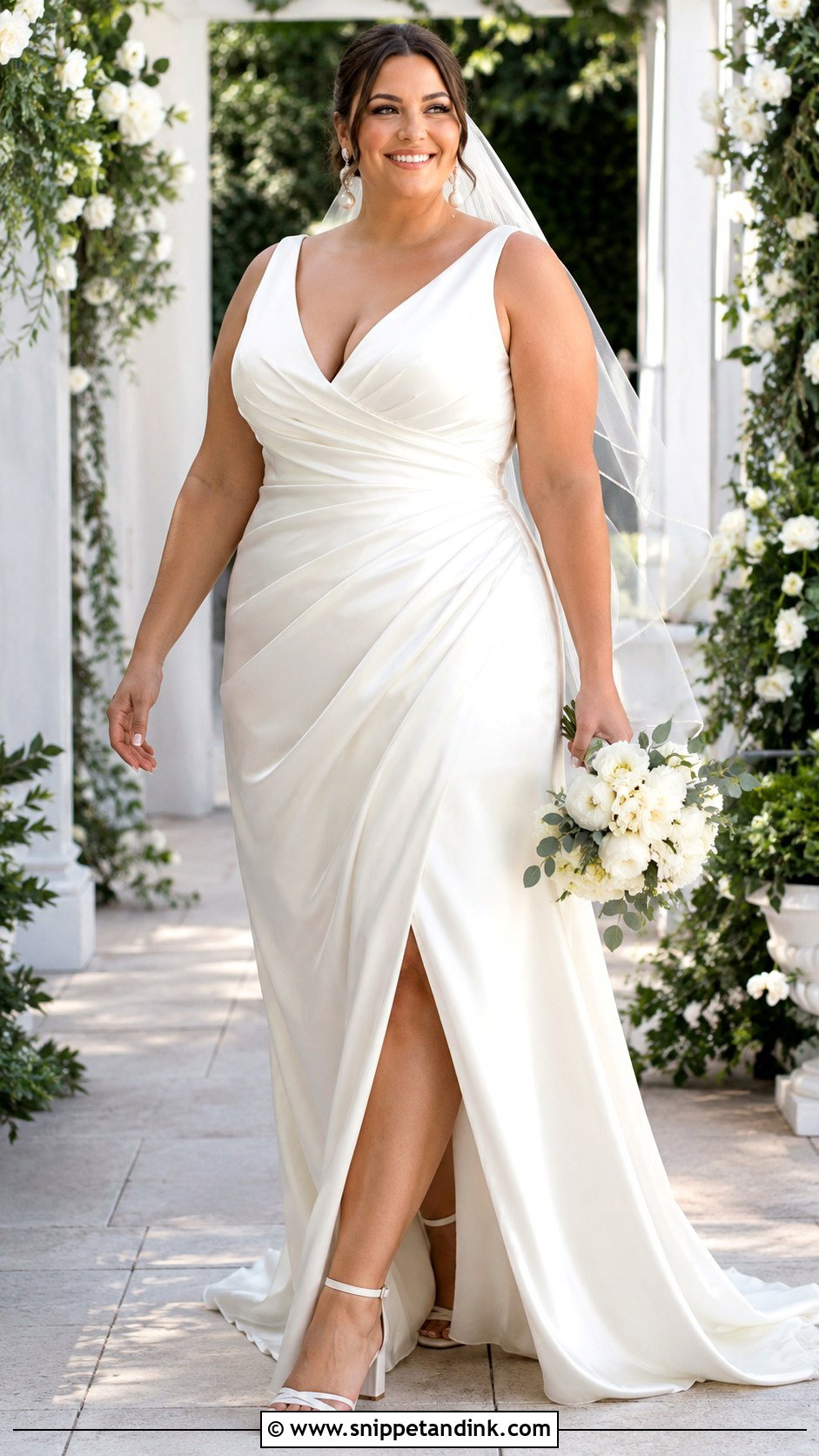
Well-placed ruching gives a plus-size satin dress shape, support and movement. Look for diagonal draping across the waist, a secure wrap bodice or gathered panels flowing into an A-line skirt, with wide straps, internal boning and a supportive back. More fabric doesn’t automatically mean a better fit; precise tailoring matters far more than coverage for its own sake. Block-heel sandals, statement pearl earrings and a light veil beneath a soft updo. Stretch satin adds give through the bodice and hips. Move your arms, sit, walk and dance at fittings. The ruching should stay where it was set and never pull flat across the stomach when you sit.


20. Modest Boat Neck Satin Wedding Dress
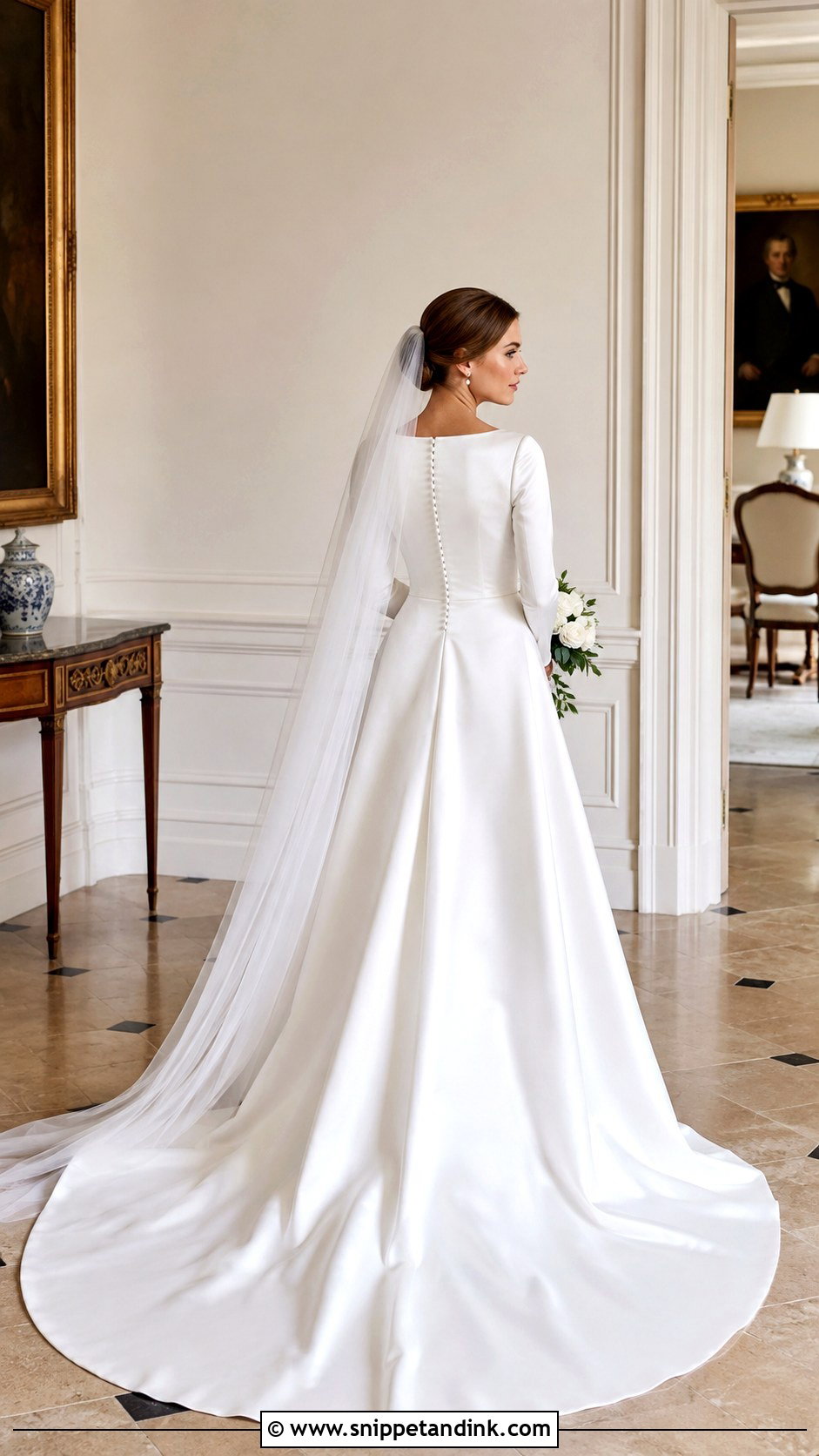
A modest boat neck satin wedding dress frames the collarbones and covers comfortably. Three-quarter or full sleeves, a defined natural waist, an A-line skirt, covered buttons and a chapel train give it traditional detail. Closed-toe pumps, pearl studs and a long veil under a low bun. Wide boat necks tend to expose bra straps, so I ask for discreet shoulder stays, small snap loops that hold the straps in place. A light lining keeps long sleeves from feeling restrictive indoors, and a narrow satin belt adds waist definition if wanted. It suits brides who want full coverage without heavy embellishment or volume.
How the Camera Reads a Satin Dress
Satin reflects light, so it behaves differently in photos than matte crepe or lace. Midday sun creates bright hotspots across the skirt and can wash out the seams and pleats that give the dress its shape. Soft, even light shows the sheen as a gentle gradient, which is what most brides picture when they choose satin. I’d mention the fabric to your photographer early so portraits can be planned in open shade or later in the day.
Creases you can avoid
Most visible creases come from the car and the getting-ready room, not the ceremony. Travel with the skirt laid across the seat rather than sat on in a bunch, stand rather than sit in the last half hour before portraits, and ask someone to smooth the train out flat before each set of photos. A quick pass with a handheld steamer, kept well back from the fabric, takes out the worst of it.
Ivory satin usually photographs a touch warmer than it looks in the room, and bright white can look slightly blue in shade. Neither is a problem, but if you’ll be comparing the dress to the photos, it helps to know it’s coming.
Satin Rewards Patience at the Fitting Stage
A satin gown should feel as good as it looks, and the range here, from slips and columns to ball gowns, modest sleeves and detachable overskirts, means there’s a version for most brides. Start with the silhouette, neckline and level of support that make you comfortable. Then think about the venue, the weather, your shoes, the veil and how much you’ll move. Satin exposes construction, so alterations and the right underwear make a visible difference. Keep accessories deliberate and let the fabric’s surface do the work, whether you lean modern or full ceremony.
You'll Like These Ideas:









Leave a Reply