
Designer bridal gowns earn their price mostly in places you can’t see from the aisle: the inner corset, the way lace is cut around a seam, the weight of the silk. Current collections run from sculpted satin and sleek crepe to capes, detachable overskirts, basque waists, dimensional flowers and bows, with clean columns still holding their place. When I take a bride shopping at this level, I stop her falling for embellishment first. Proportion, venue and how the gown feels after four hours matter more, and the accessories should support the construction rather than fight it. Here are the silhouettes I see brides choose most, with what I’d check on each.
What the Designer Price Buys Inside the Dress
Turn a designer gown inside out and you’ll usually see why it costs more. These are the things I look at before I look at the front:
- Inner structure: a built-in corset or boned bodice that holds the gown up on its own, so you don’t need a strapless bra.
- Lace placement: motifs hand-cut around seams and hems instead of a straight cut through the pattern.
- Fabric content: silk satin, silk crepe or silk mikado behave differently from polyester versions, which can look shinier and trap heat.
- Finishing: bound seams, a soft lining and properly sewn beading rather than glued pieces.
None of this means a lower-priced gown is wrong. It tells you where to look when you compare two dresses that seem alike on the hanger.
I also ask what alterations the designer allows. Some gowns can have the neckline reshaped, sleeves added or the skirt reduced at the order stage, which is far cheaper and cleaner than cutting into a finished dress later. Others are built so tightly around their structure that a seamstress can only take them in a little. Knowing which kind you are buying saves a lot of disappointment at the first fitting.
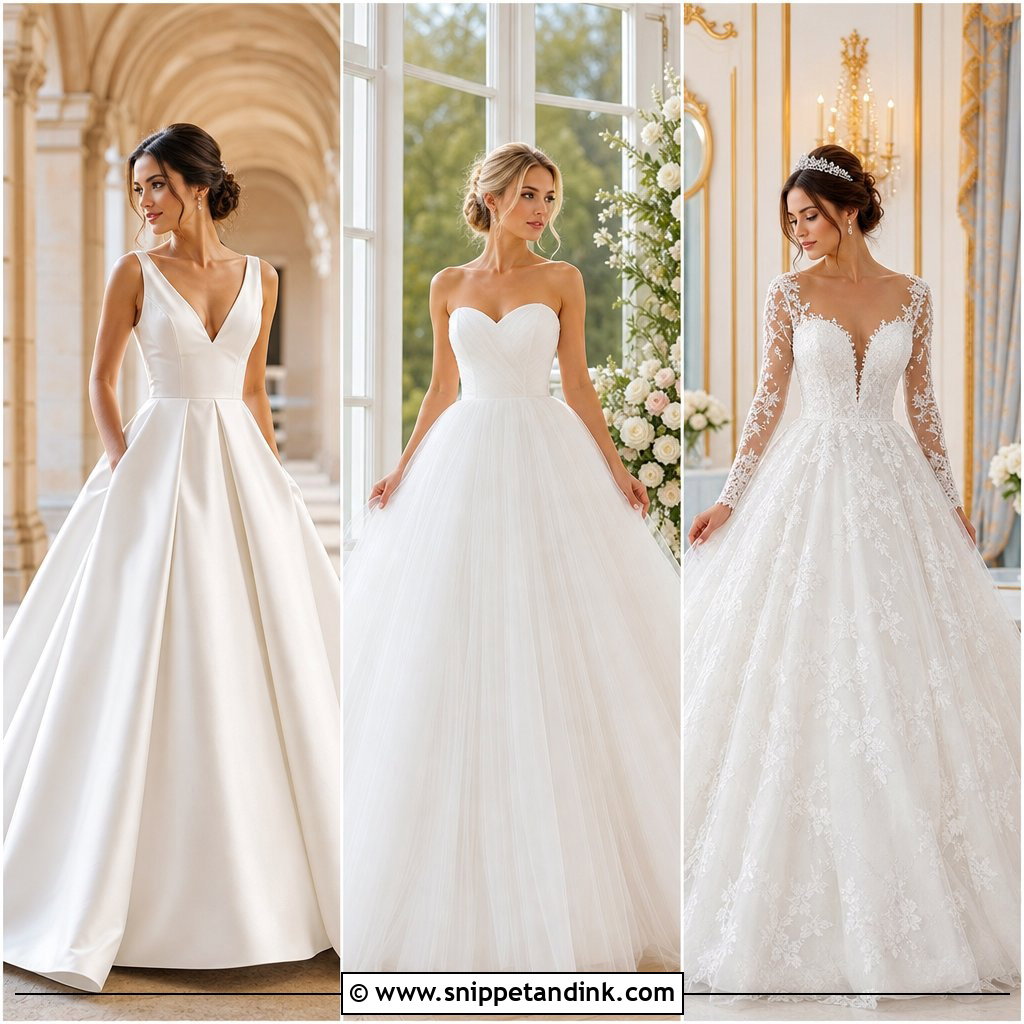
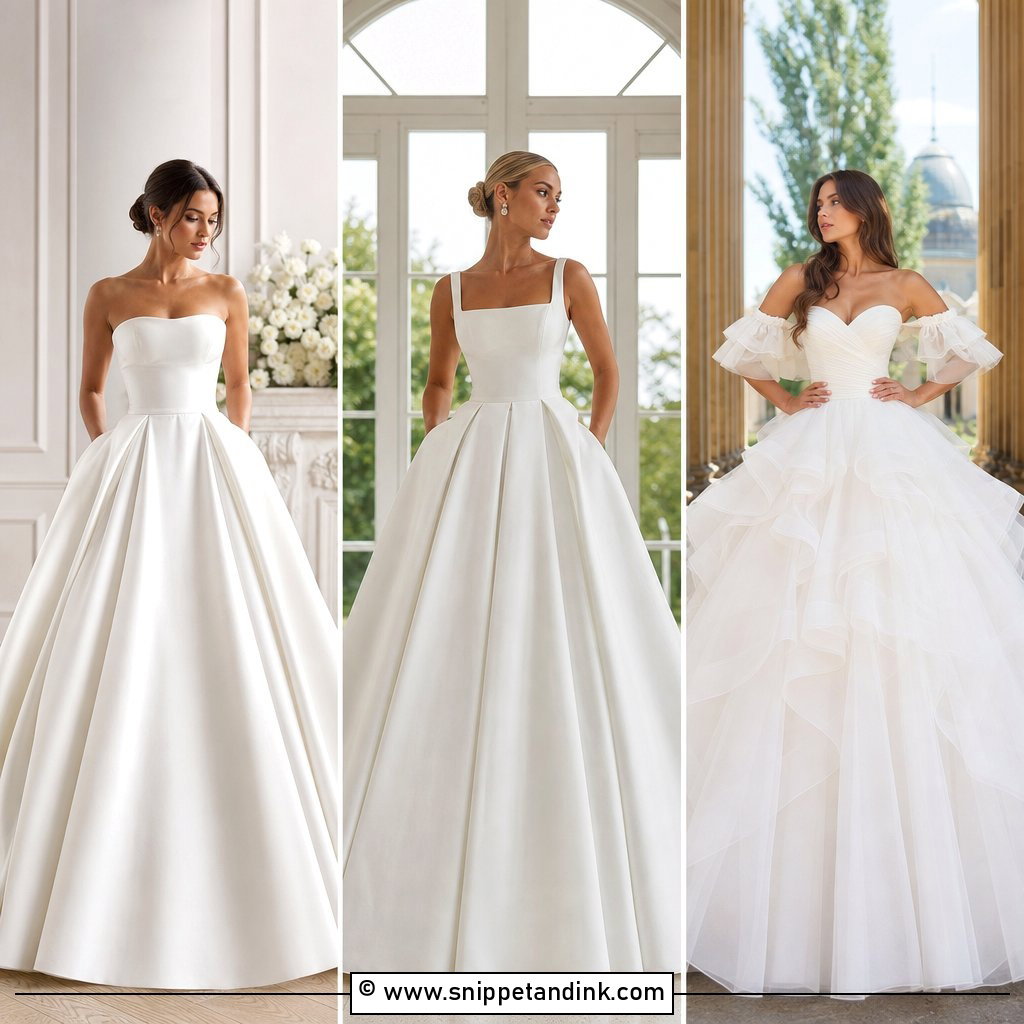
1. Designer Satin Ball Gown
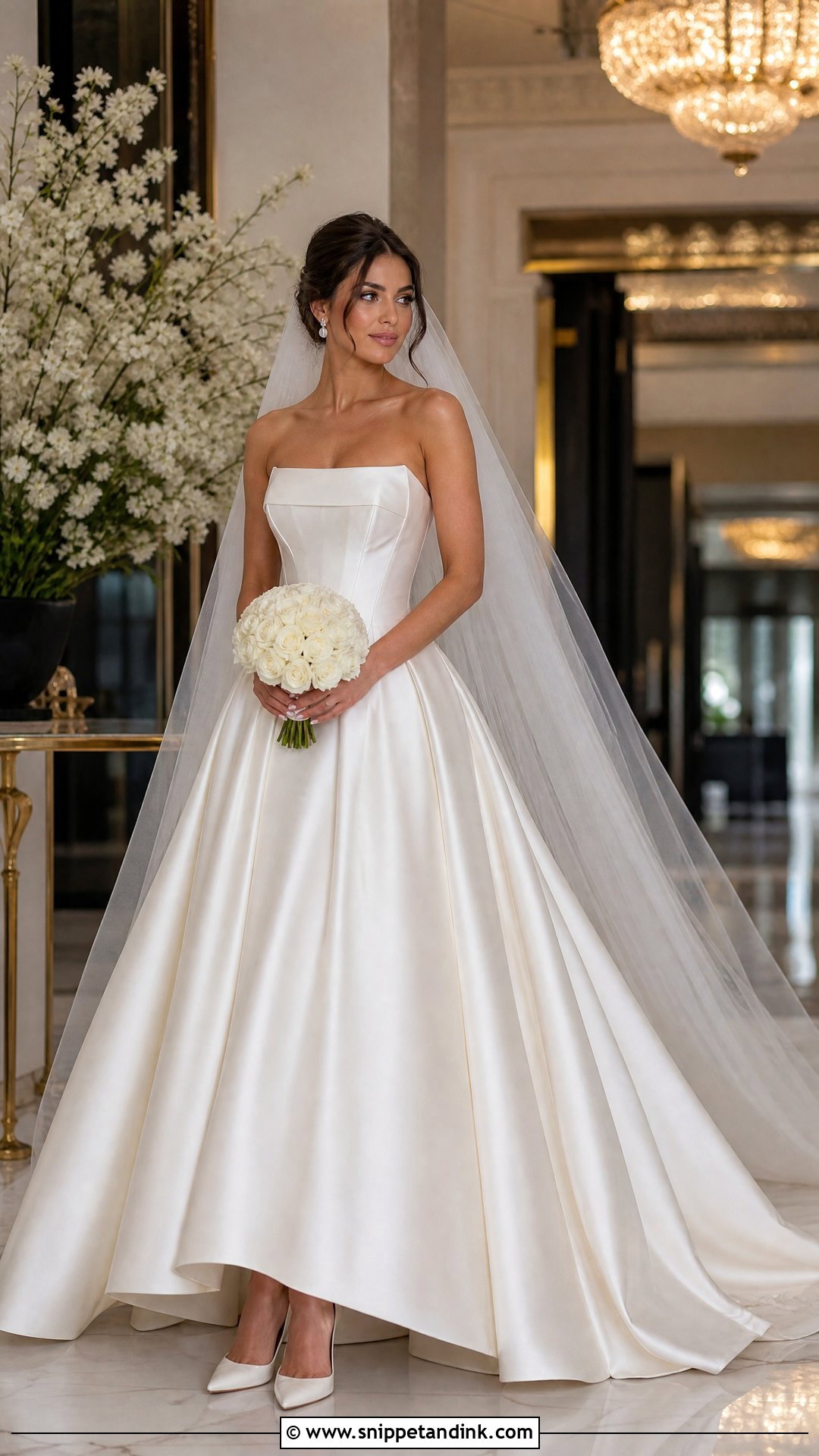
Duchess satin is what gives a ball gown its weight and sheen; it holds a full skirt without needing layers of net underneath. The bodice should be structured with a clear waist, and the skirt should swing, not stand like a lampshade. For petite brides I ask the salon for a reduced skirt, which most designers can do; taller or curvier brides can carry the full width with good internal corsetry. Pearl earrings, a cathedral veil, pointed ivory pumps and a compact bouquet of roses or callas are all it needs. If the neckline is strong, skip the necklace altogether.
2. Designer Lace A-Line Bridal Gown
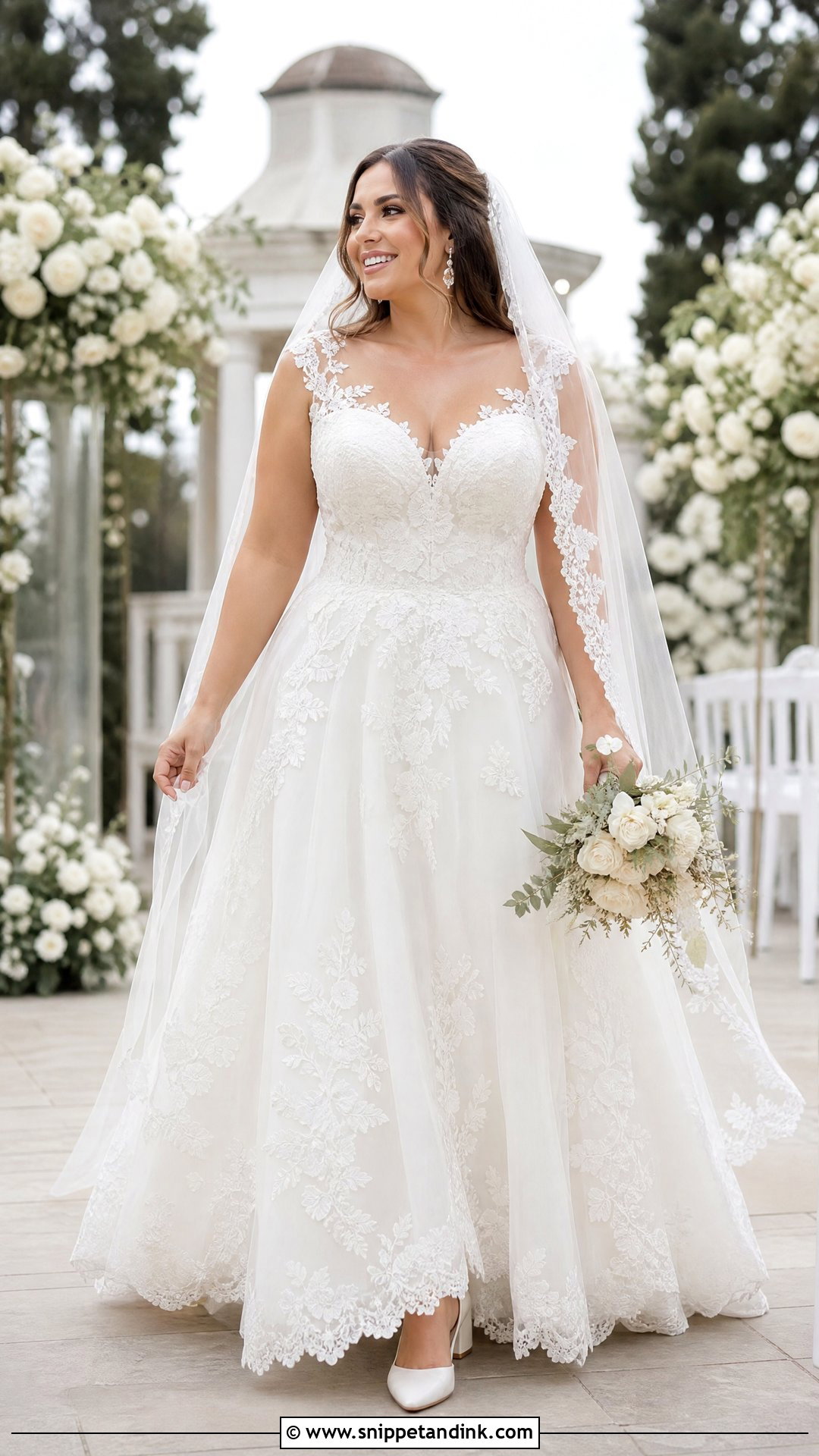
Lace A-lines suit almost any venue. Floral lace is classic; geometric lace looks more current. The sign of good work is the lace motifs continuing across the seams, cut and hand-appliquéd around the bust and waist rather than sliced through by a straight seam, so look closely there. I’d add a fingertip veil edged in matching lace, fine drop earrings, closed-toe satin heels and a loose bouquet. With dense lace, leave out jewelled belts and big necklaces. Illusion sleeves or a lightly lined bodice add coverage without hiding the pattern.
3. Designer Basque Waist Bridal Gown
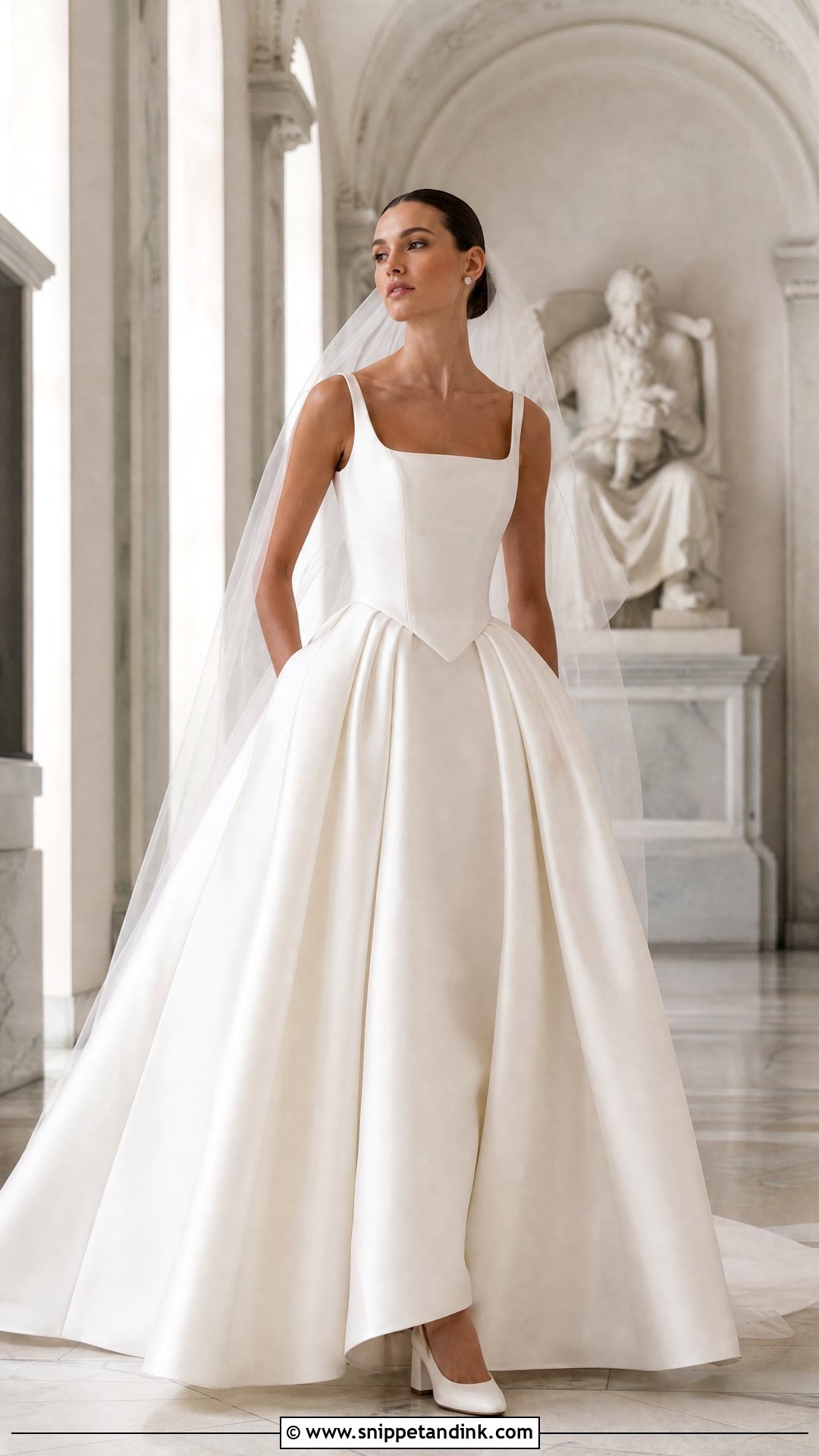
A basque waist bridal gown drops the bodice below the natural waist into a V, which lengthens the torso and looks regal over a satin or mikado skirt. The question I ask first is torso length. On a short-waisted bride, a deep point can push the skirt down onto the hips, so request a softened point. A scooped or strapless neckline keeps the top open. Crystal studs, a sleek low bun, a plain chapel veil and block-heel pumps under the skirt complete it. Sit down in it at the fitting, because a long rigid point presses into the stomach when you’re seated.
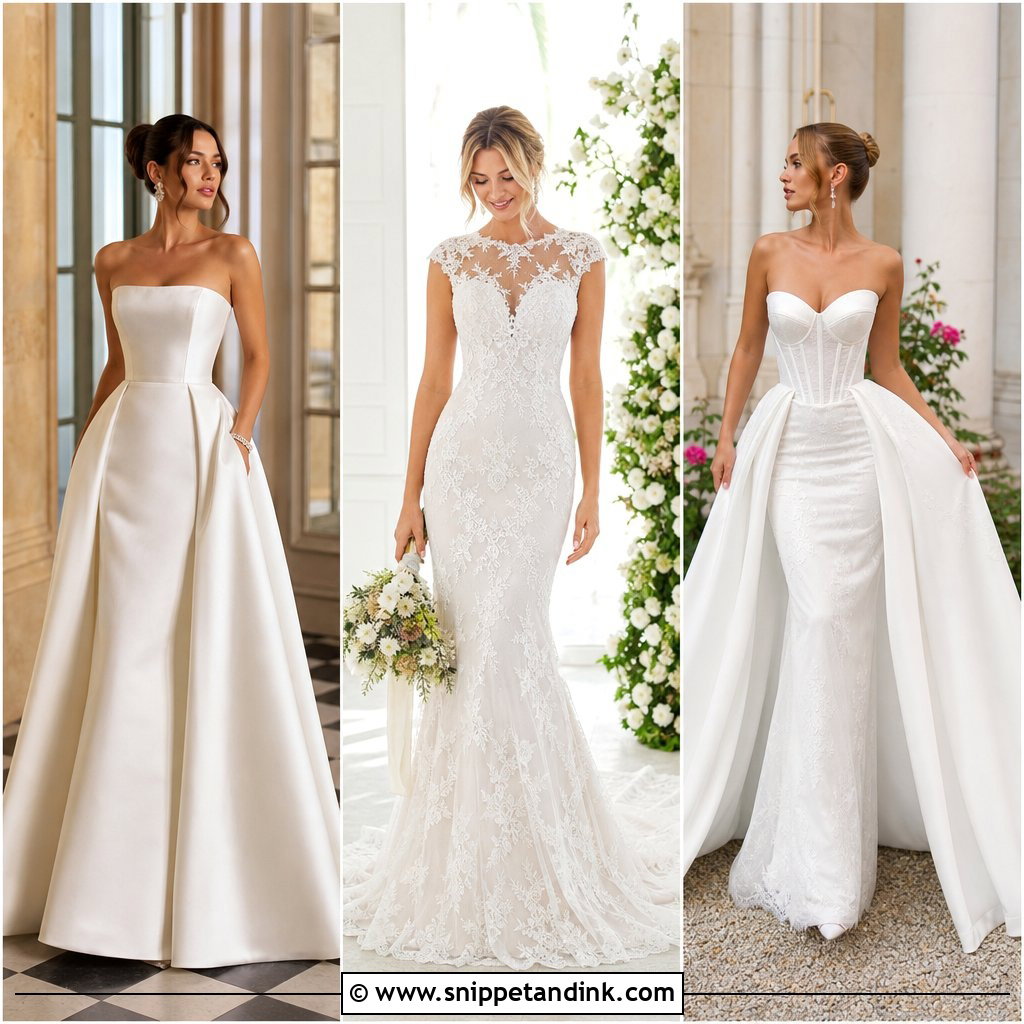
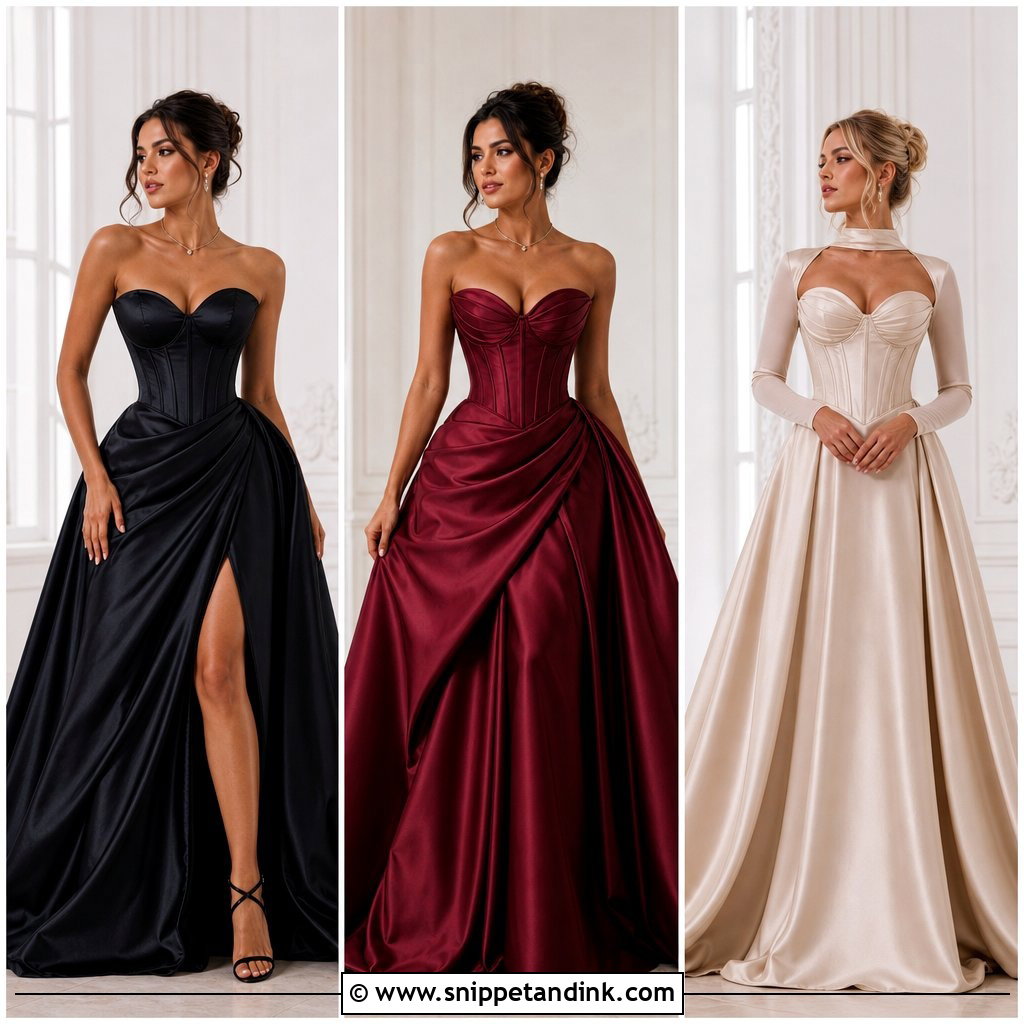
4. Designer Strapless Corset Bridal Gown
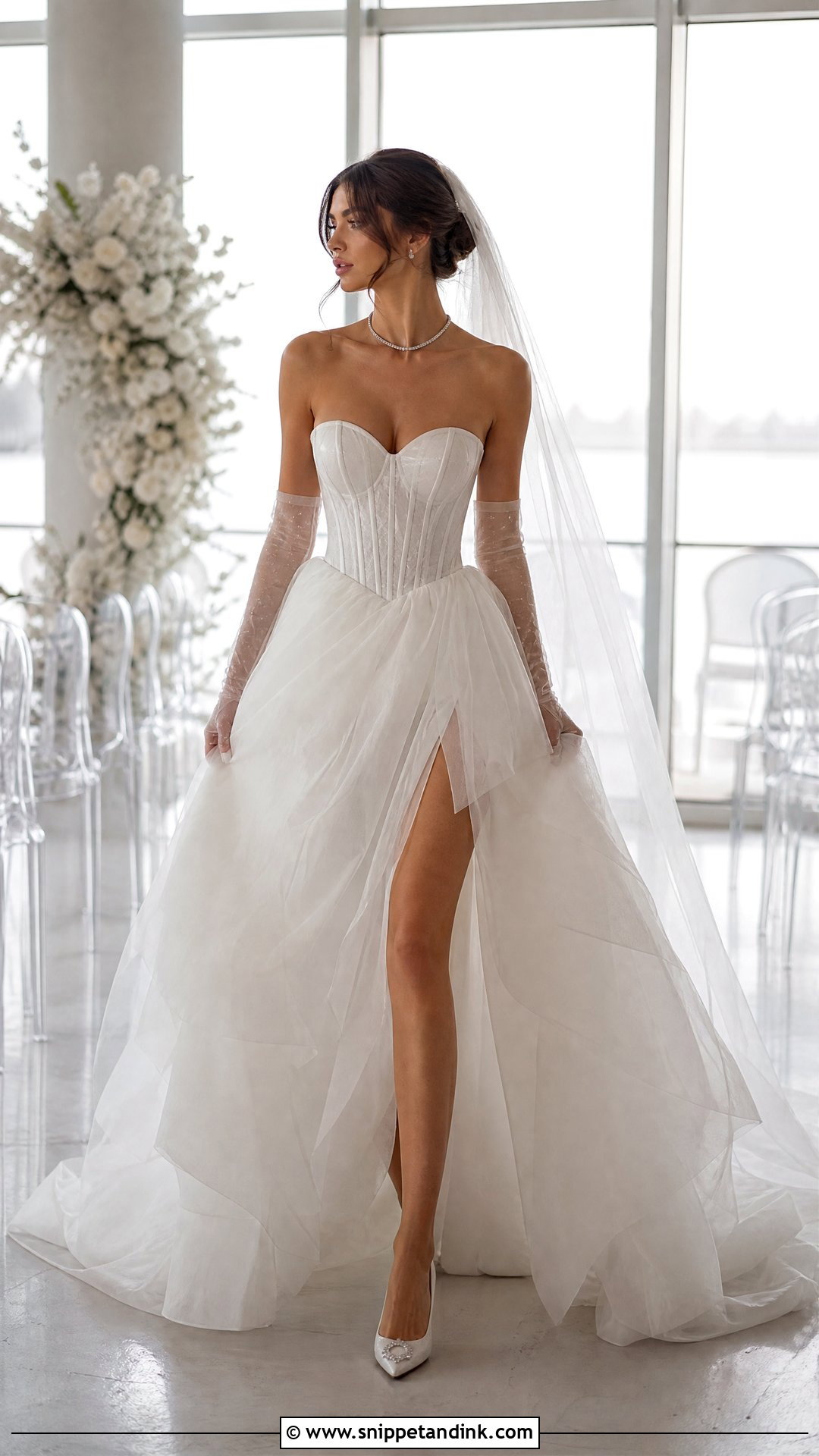
Strapless corsets look easy and take the most skill to build. Proper boning, shaped cups and a neckline that grips without pinching are what stop you hitching it up all night. Pair the bodice with full satin for drama or soft tulle for lightness. Long gloves read editorial; a fine necklace brightens the open neckline. Hair up or swept back shows the construction, with pointed pumps and a mid-length veil. Fit matters more than tightness. I’d rather loosen a corset a touch and keep you able to eat dinner.
5. Designer Long Sleeve Lace Bridal Gown
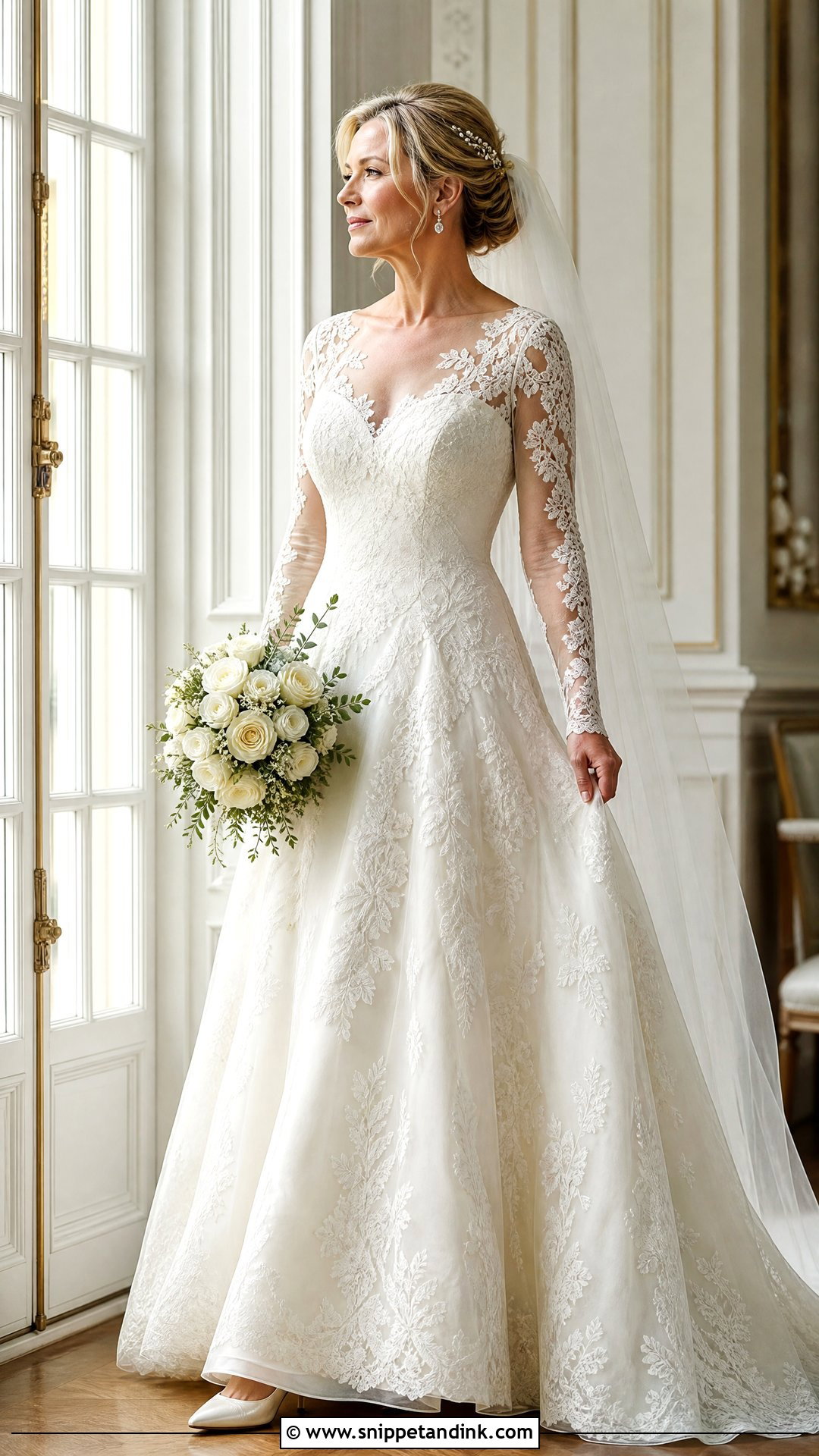
Long lace sleeves are the hardest part of a gown to fit well. They should follow the arm closely without pulling at the elbow when you bend it, which you’ll do every time you hold a glass or a bouquet. Ask what’s underneath: a soft lining or neatly finished seams stop scratchy lace edges irritating skin over a long day. An illusion neckline links lace and skin softly, over an A-line or gently fitted skirt. Pearl pins, small earrings, a sheer chapel veil and closed-toe heels suit cooler seasons; leave bracelets out.
6. Designer Off-the-Shoulder Bridal Gown
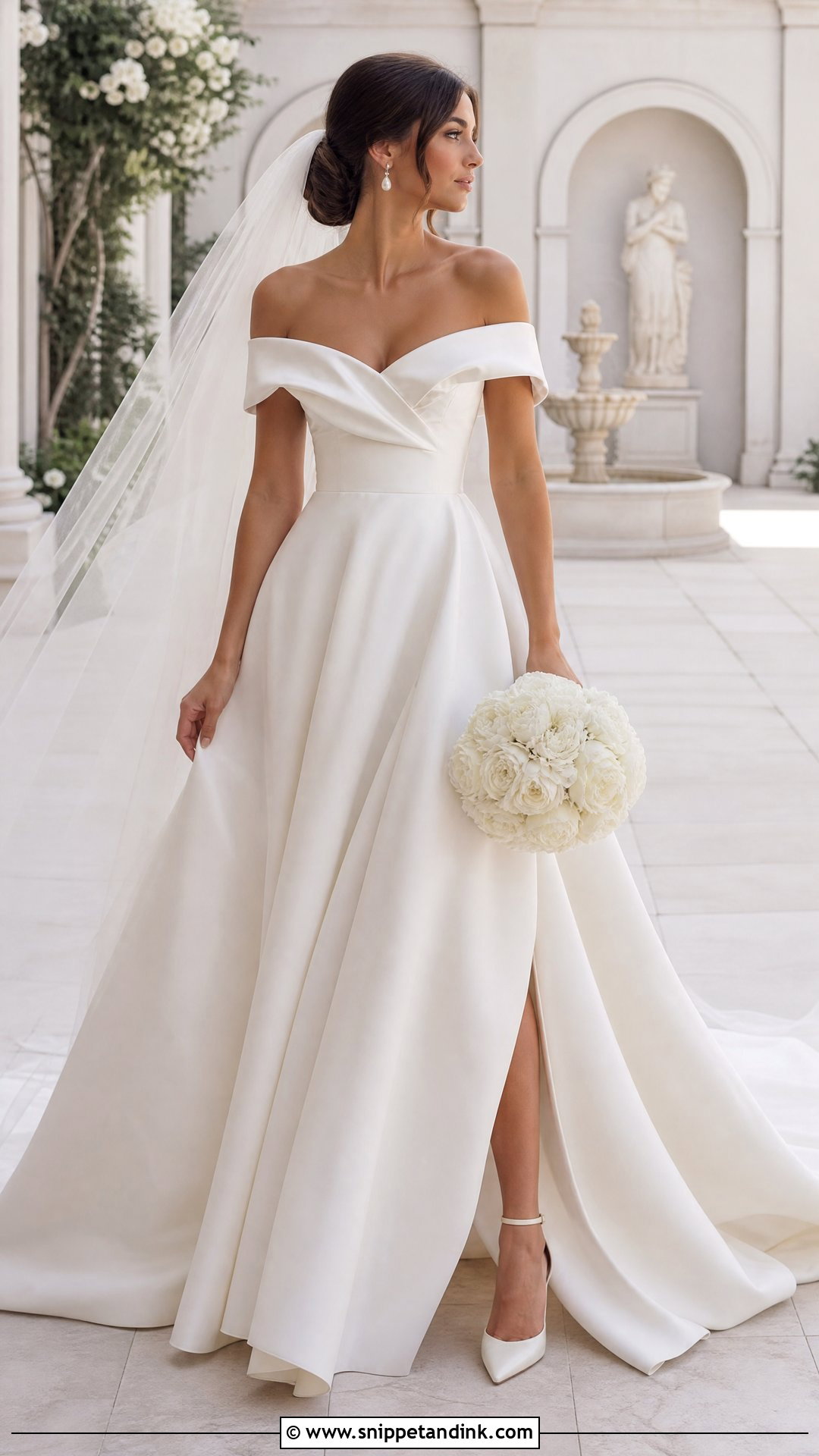
Off-the-shoulder bands frame the collarbone. In structured satin they look sculptural; in draped tulle, softer. The bands need to stay put when you lift your arms to hug someone, and with a fuller bust the support has to come from inside the bodice, not from the bands themselves. Detachable straps are a sensible backup. A fine pendant, pearl drops and a low chignon with the veil set under it keep the neckline visible from behind. Ivory ankle-strap heels and a rounded bouquet finish it.
7. Designer Square Neck Bridal Gown
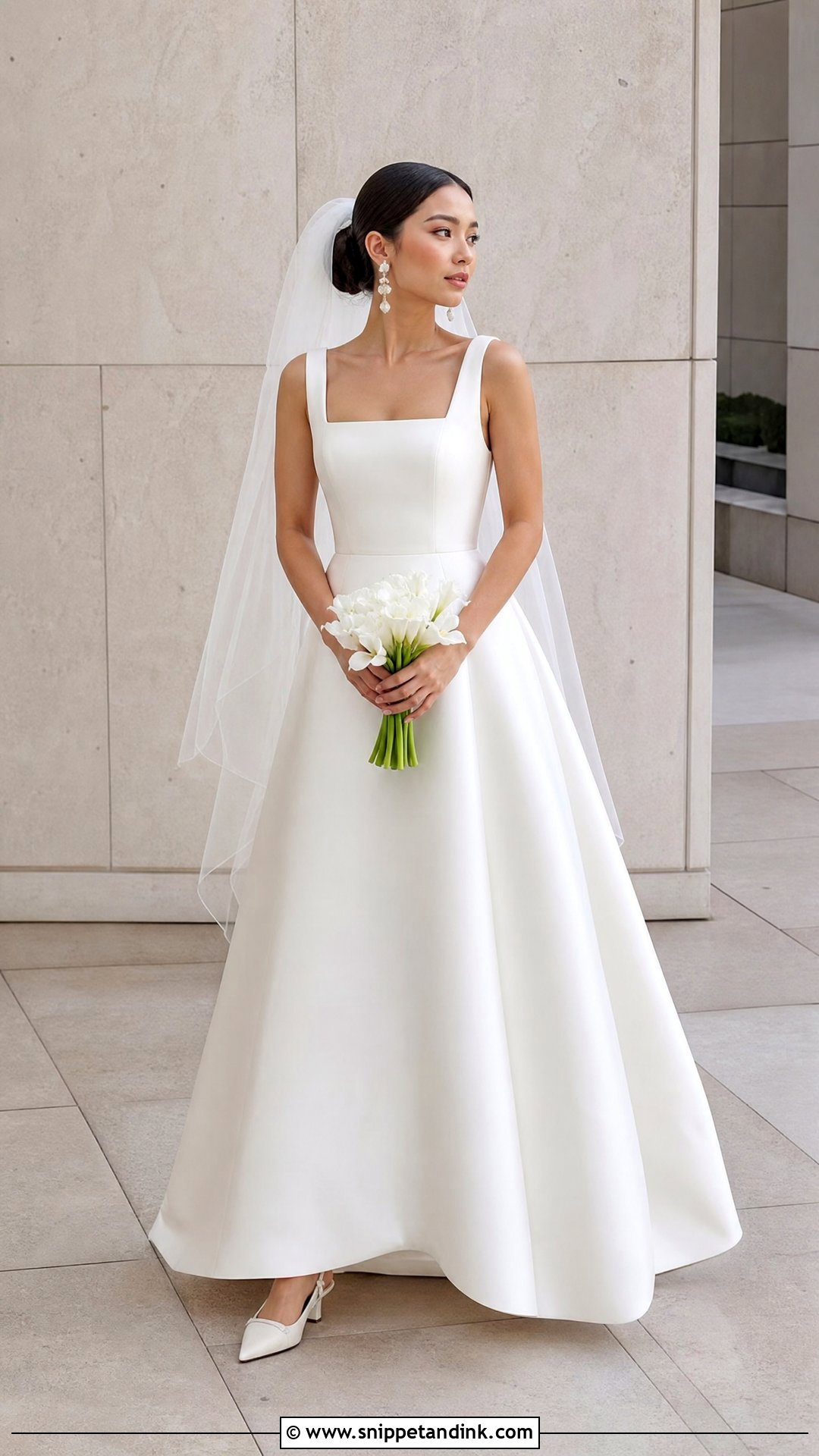
Square necklines have a slight vintage note and look clean with wide straps, a fitted bodice and a smooth A-line. Silk mikado gives crisp structure, crepe a quieter finish. The fitting detail is that the neckline must lie flat against the chest when you lean forward; gaps at the corners show in every photo taken from above. A short pendant can sit in the open space, though going without looks more modern. A plain tulle veil, sculptural pearl earrings, a neat bun or polished waves, pointed slingbacks and a slim bouquet keep the lines clean. Removable sleeves add a second look.
8. Designer High Neck Bridal Gown
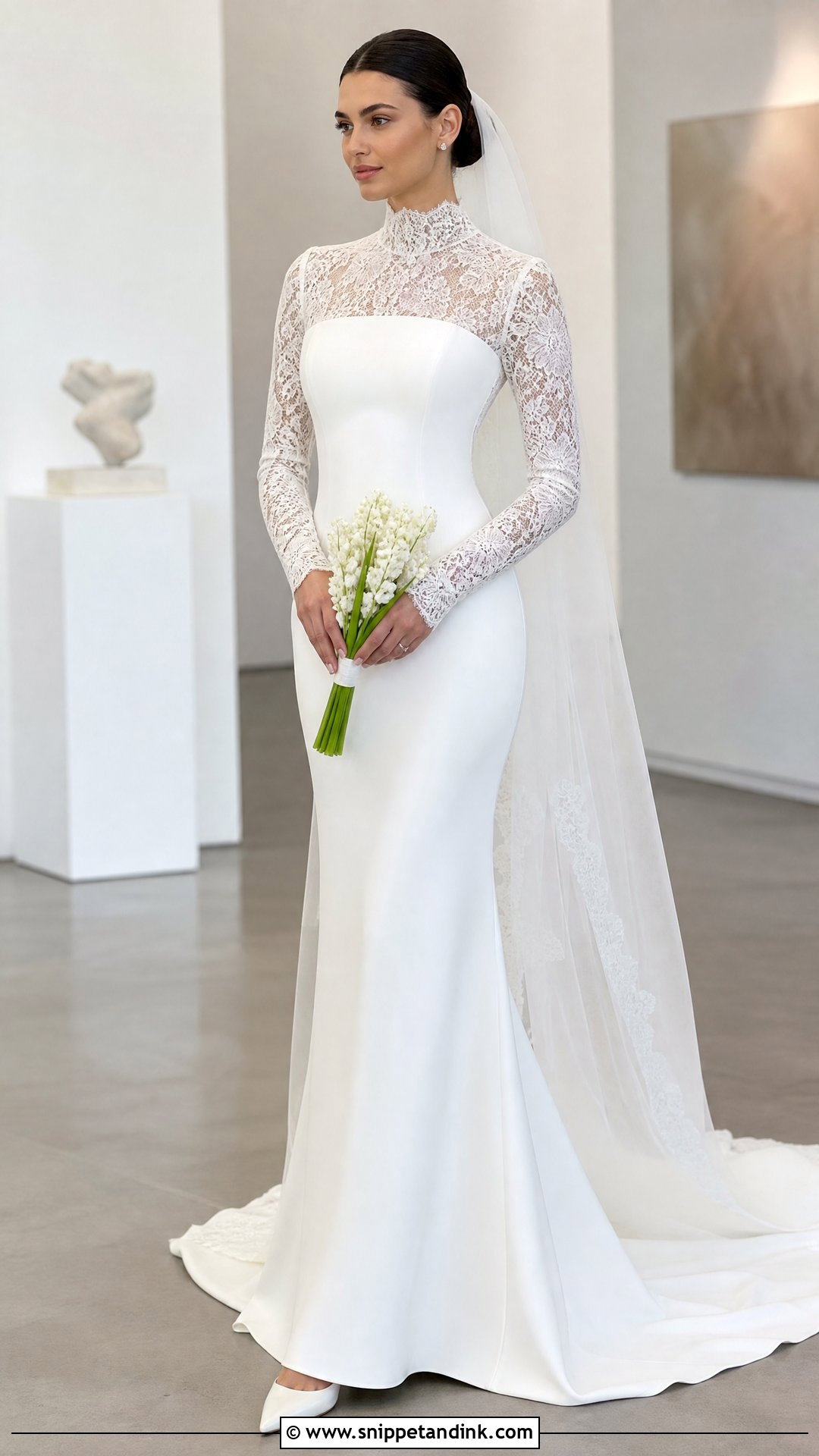
A high neck bridal gown is confident coverage. Fine lace feels romantic, smooth crepe minimal, embellished tulle a little sparkly. Pair the fitted bodice with a fluid skirt so the top doesn’t feel heavy. No necklace; small diamond studs, a sleek updo with the veil placed below the bun, pointed satin heels and a narrow bouquet. Turn your head both ways at every fitting. A soft facing inside the collar and a discreet back closure make the difference between comfortable and counting the minutes.
9. Designer Silk Column Bridal Gown
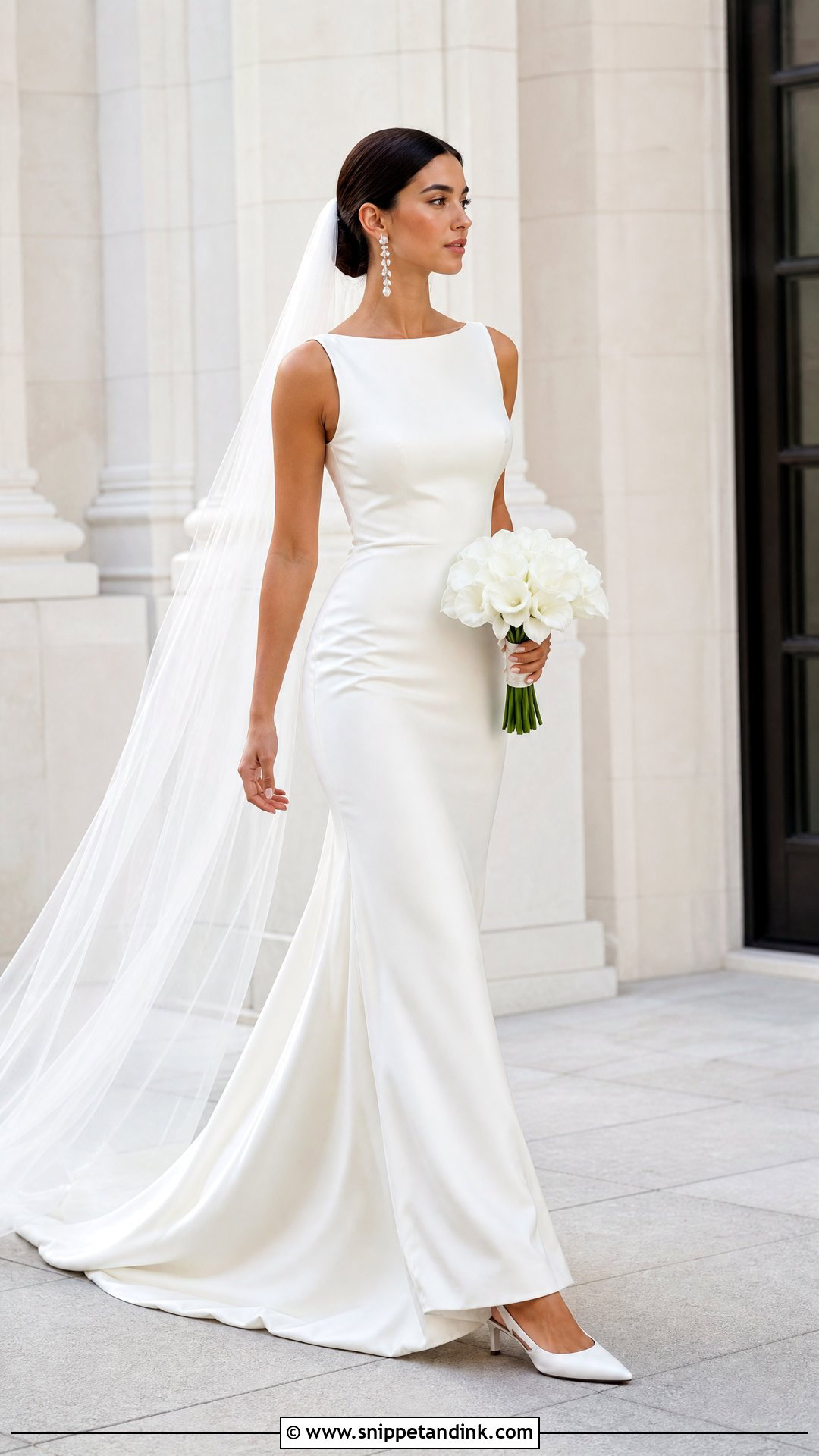
Silk columns are the gown where tailoring shows most. It should skim, not cling, with seams shaping the waist and hips. A bateau, scoop or soft drape at the neck keeps it refined. Silk reveals every line underneath, so I settle foundation pieces before the first fitting and never change them after. A small back slit or short train gives you stride room. Add a sheer cathedral veil, long earrings to bring light to the face, minimal slingbacks and a structured clutch. Galleries, hotels and small city venues suit its restraint.
10. Designer Bias Cut Slip Bridal Gown
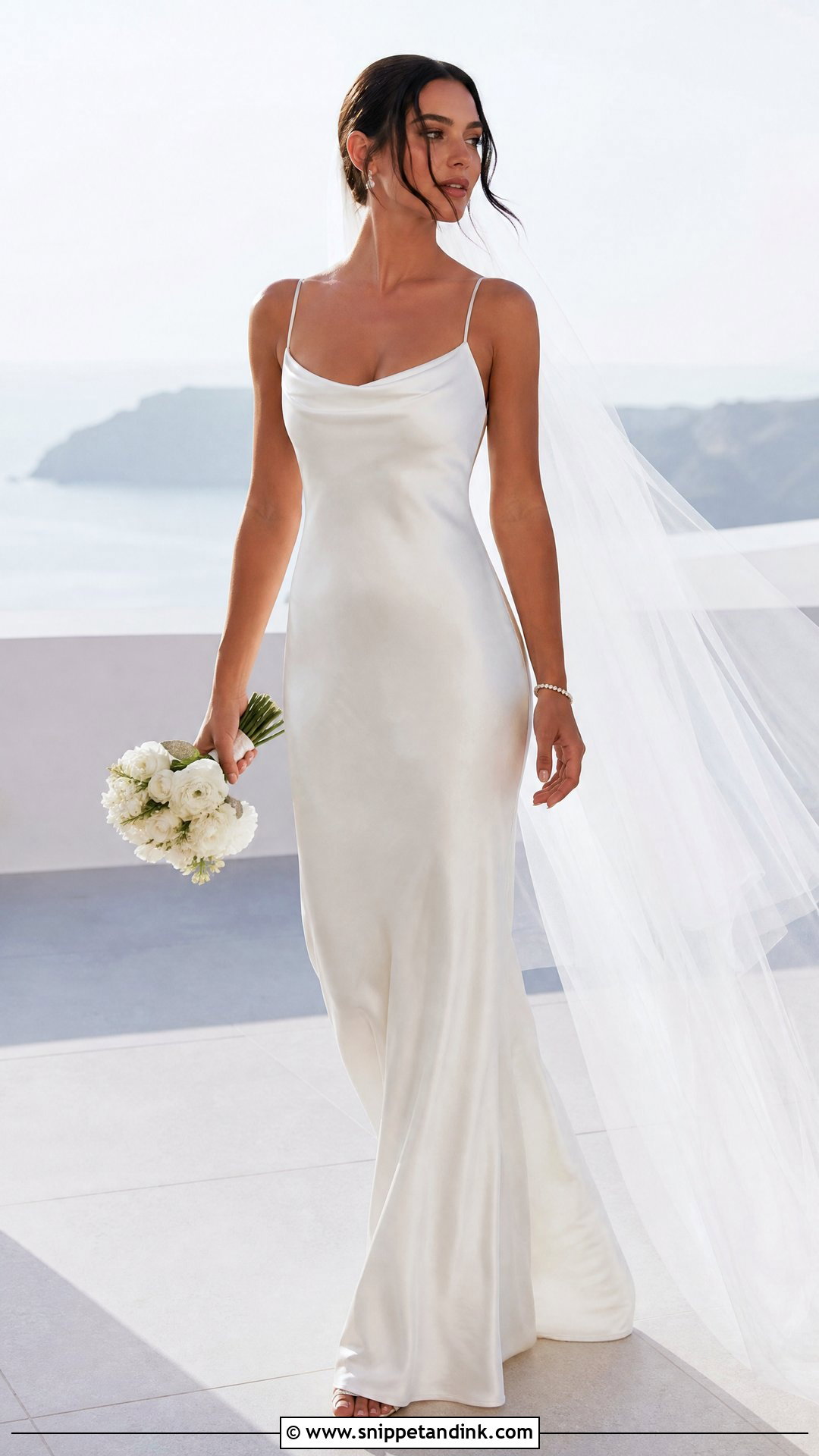
Bias-cut slips run on the diagonal of the fabric, which is why silk satin cut this way drapes and moves like water. It’s also why alterations need a specialist: bias seams stretch if handled carelessly, and a bad hem ripples. Check that the straps are wide enough to carry the weight and that the neckline stays put when you bend. A sheer veil, delicate sandals, a slim tennis bracelet and soft waves or a low knot suit it. For coverage at the ceremony, add a removable silk cape or a light wrap. Keep accessories light.
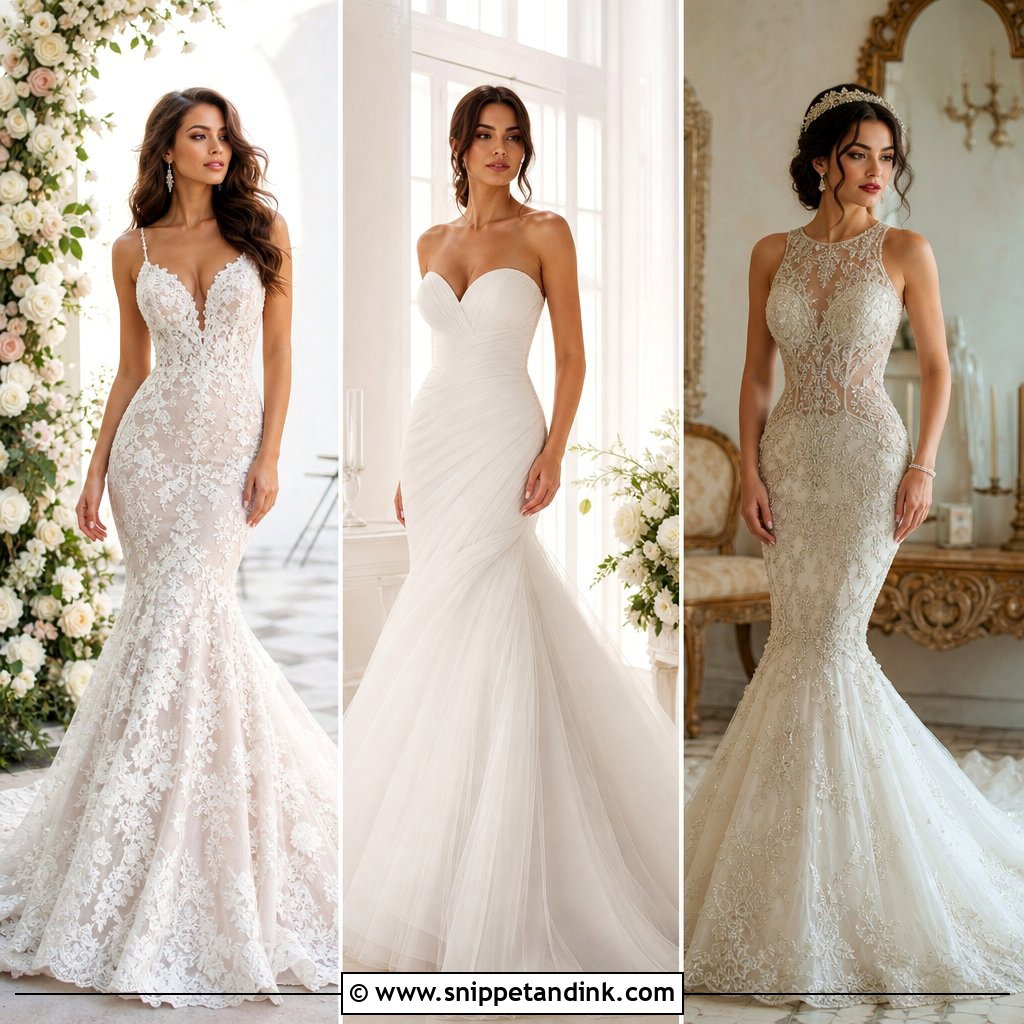
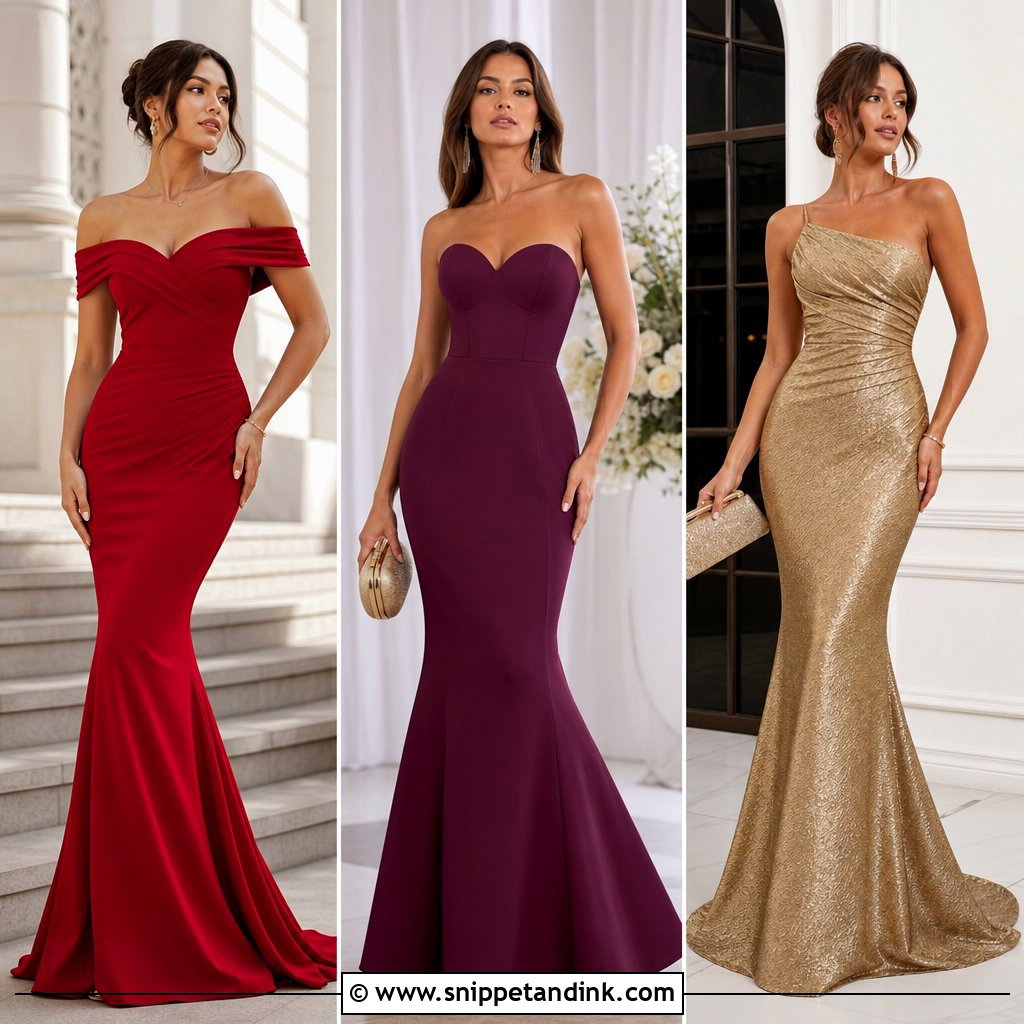
11. Designer Mermaid Bridal Gown
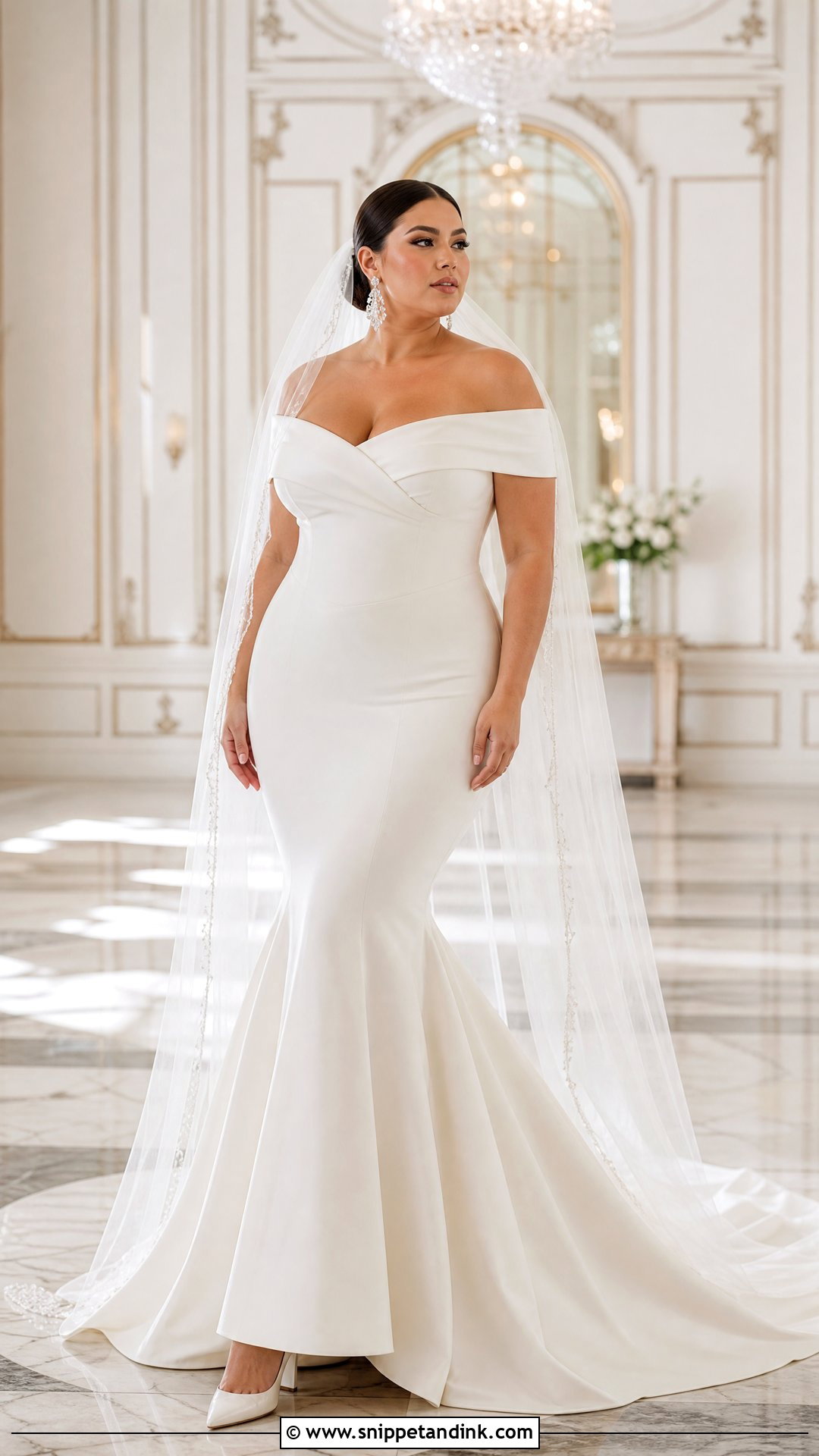
Mermaid gowns fit through bodice, waist and hips, then flare near the knee. The flare point decides everything: set too low, you shuffle; a little higher, you can walk and sit. Practise steps and turns well before the day. Structured crepe looks smooth, lace or beading adds texture. A long veil past the train, statement earrings, pointed pumps and sleek hair keep the outline clean. An off-shoulder neckline or fine straps balance the hips if you prefer. Ask for a hidden bustle so the train lifts for the reception.
12. Designer Fit and Flare Bridal Gown
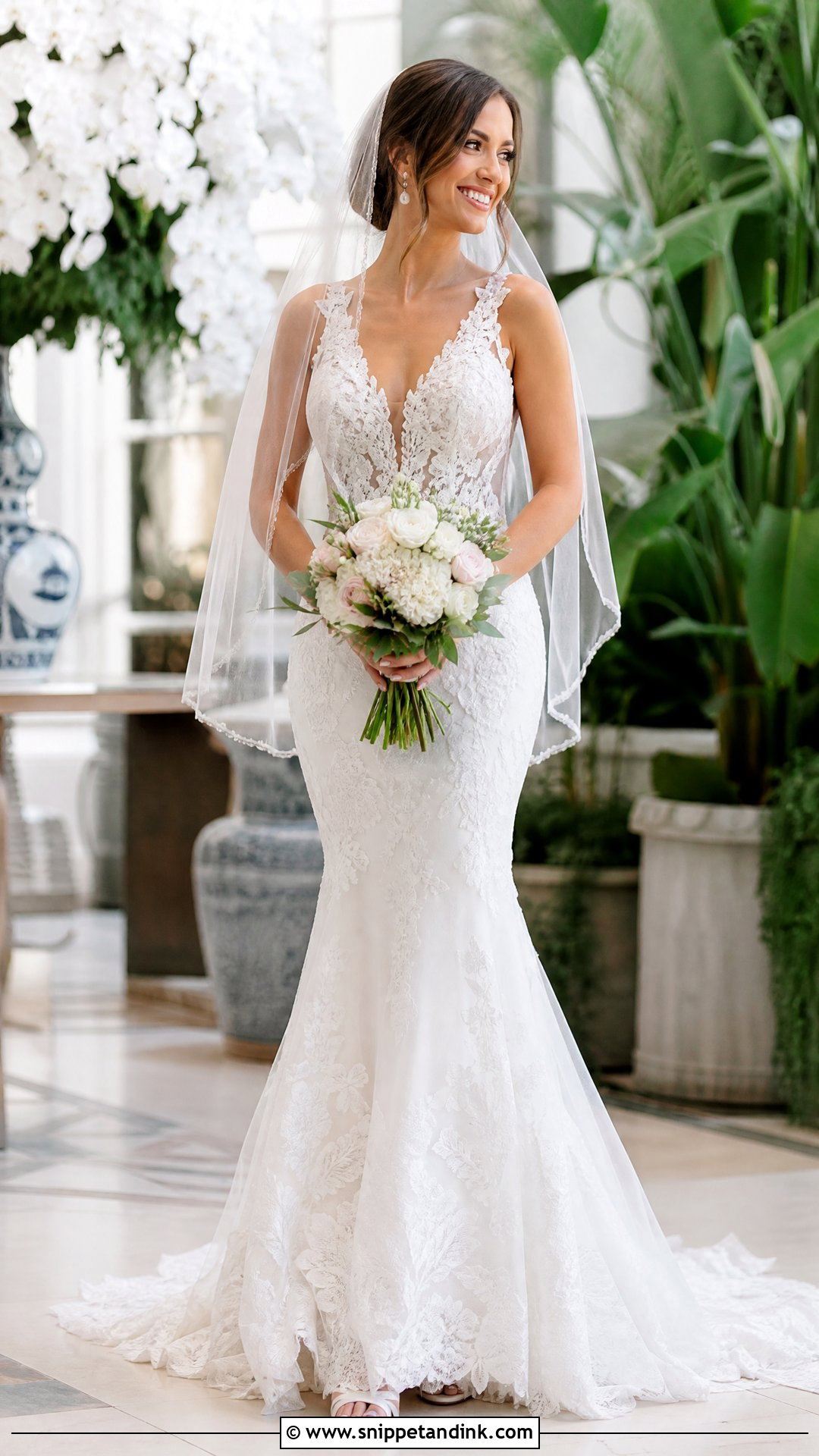
Fit and flare is the mermaid’s easier sister. It opens at mid-thigh, so you get shape and a normal stride. Crepe looks modern, floral lace romantic, satin formal. A sweetheart or V-neck suits the balanced skirt, and a fitted bracelet sleeve gives coverage without hiding the line. I check that the skirt doesn’t pull across the hips when you walk; horizontal creases there mean it needs letting out. Fingertip veil, pearl earrings and supportive heels finish it, with a small train and a bustle for dancing.
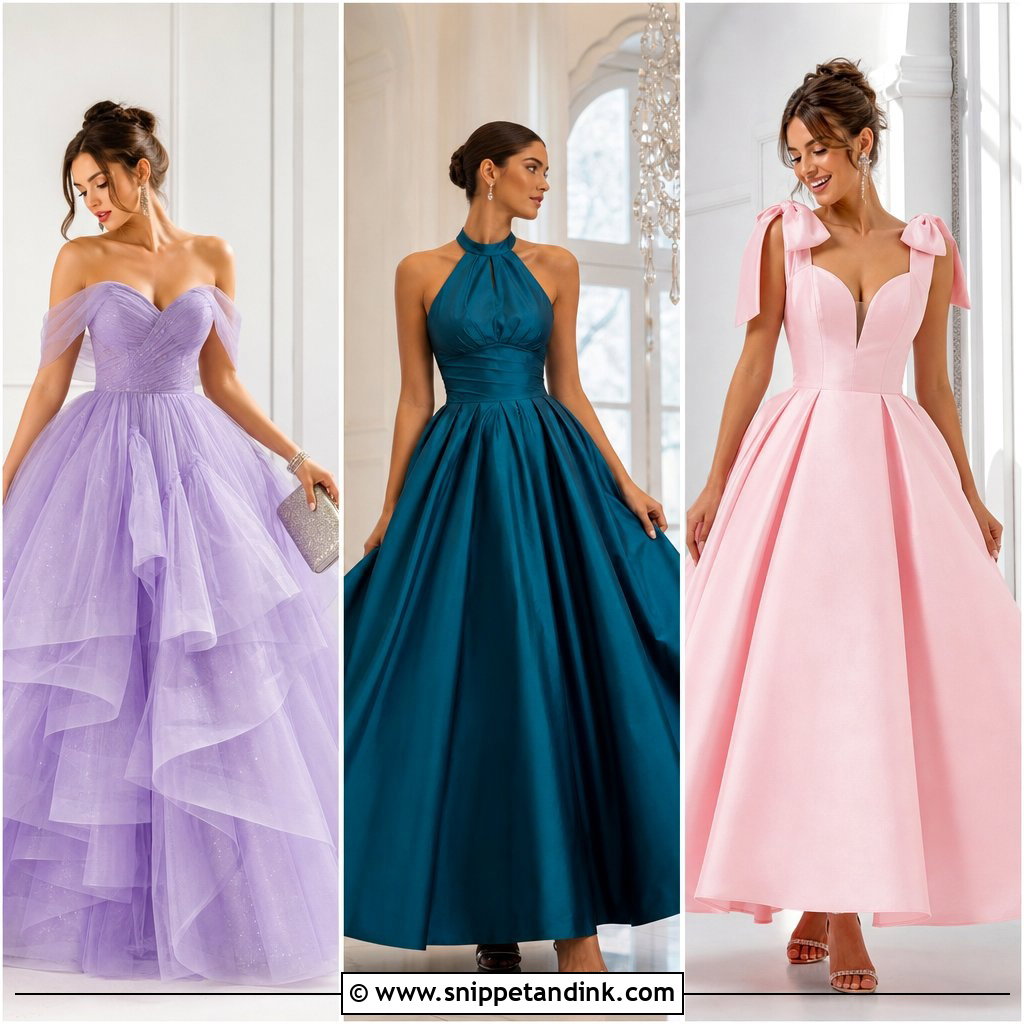
13. Designer Princess Ball Gown
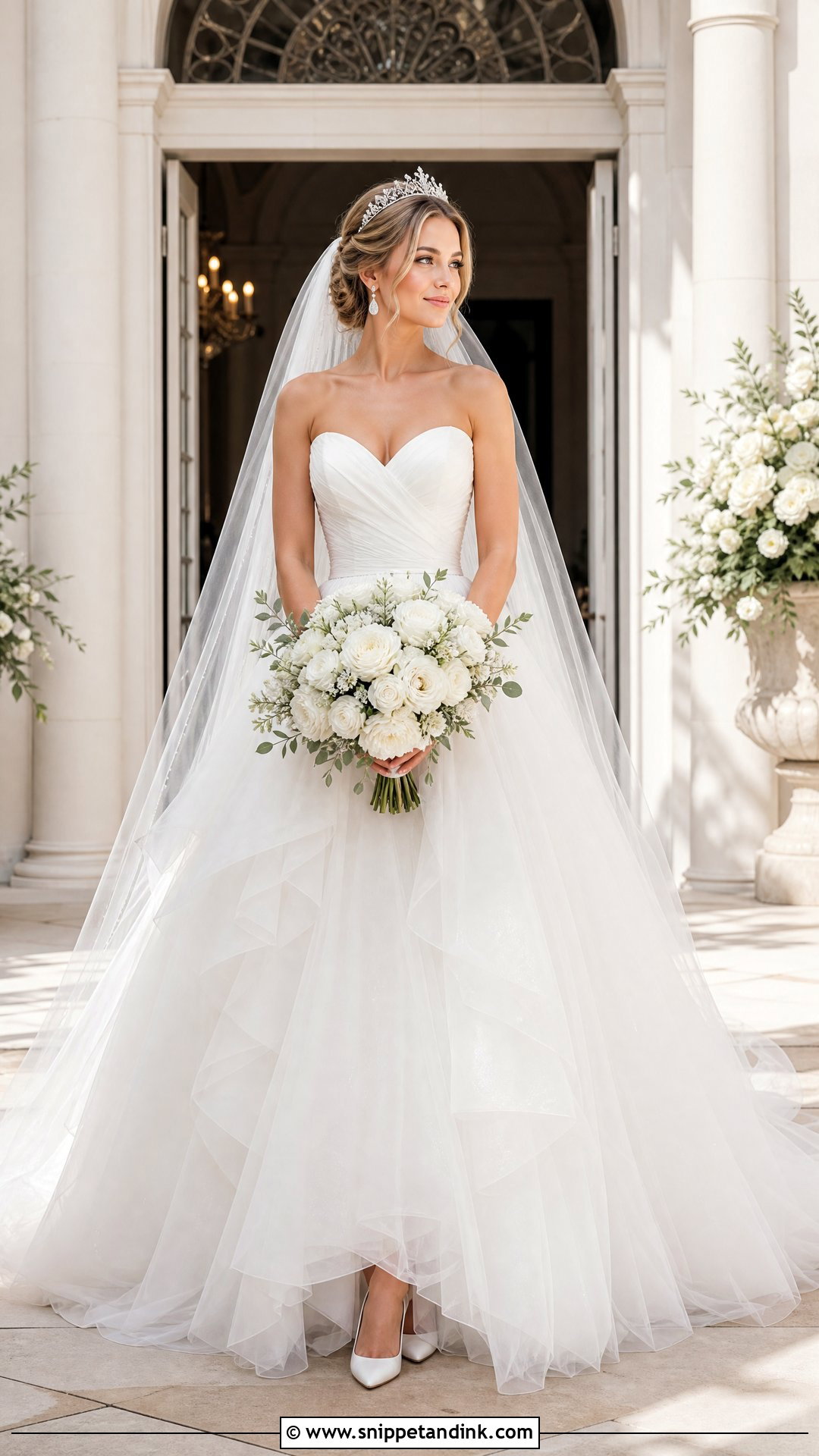
A princess ball gown is all scale: fitted bodice, sweeping skirt. Layers of tulle move lightly; satin or mikado give an architectural shape. Pick a neckline that matches the volume, such as a soft sweetheart, portrait or wide scoop. A tiara works with understated earrings and a simple veil, and the bouquet should be large enough to hold its own. Measure the venue: doorways, aisle width, the car, the chair at the top table. A hoop or structured underskirt takes weight off the waist and helps the skirt stand.
14. Designer Floral Appliqué Bridal Gown
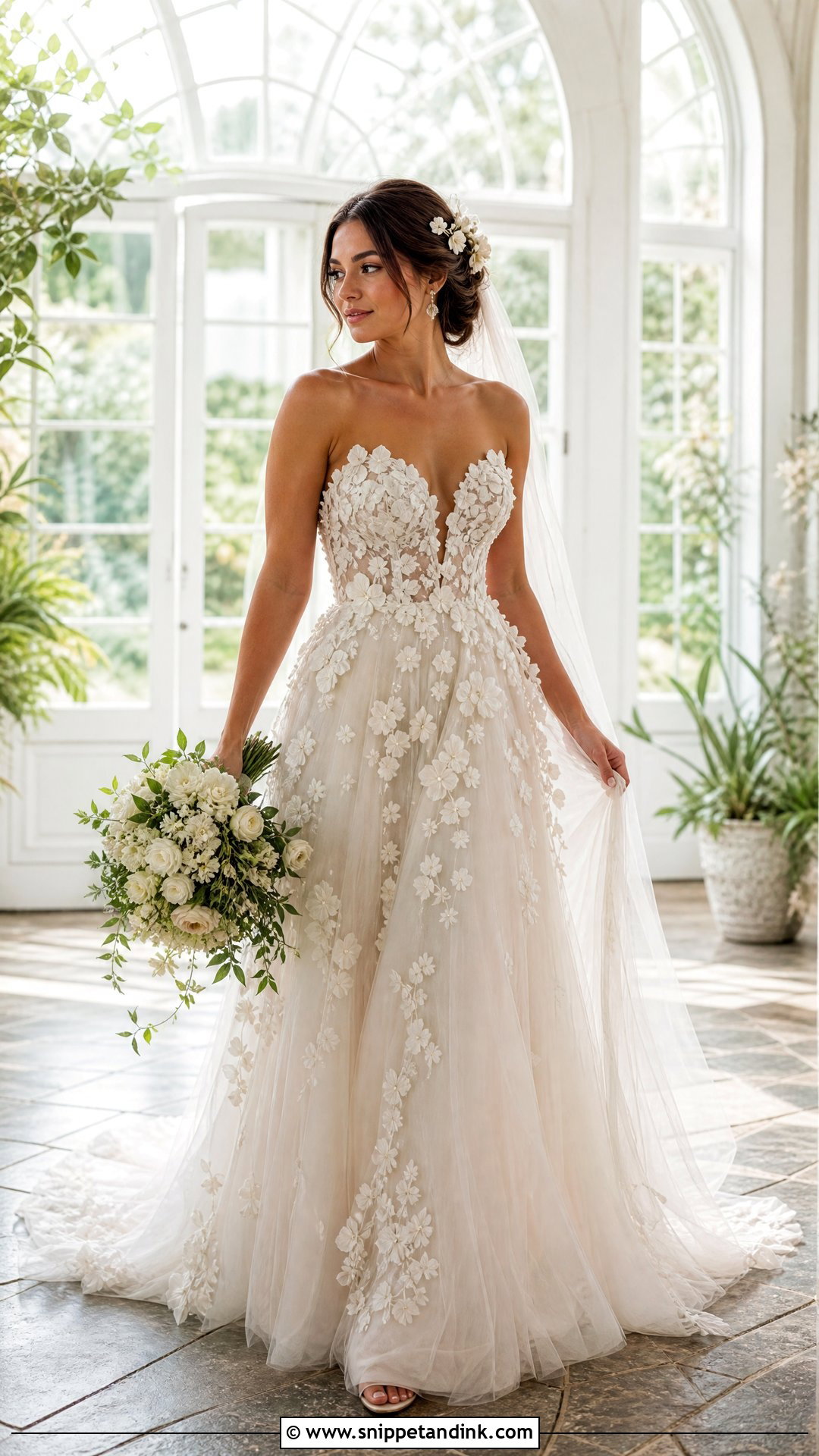
Dimensional appliqués look best floating on a soft tulle base, so the flowers seem suspended. They can trail lightly on the bodice or spread across the skirt. Check placement at fittings; a cluster sitting at the widest point of the hip or right on the bust apex can add bulk where you don’t want it. Floral pins, small earrings, barely-there ivory sandals and a plain veil keep the raised flowers in charge. A loose bouquet should echo their shape, not copy them.



15. Designer Pearl Beaded Bridal Gown
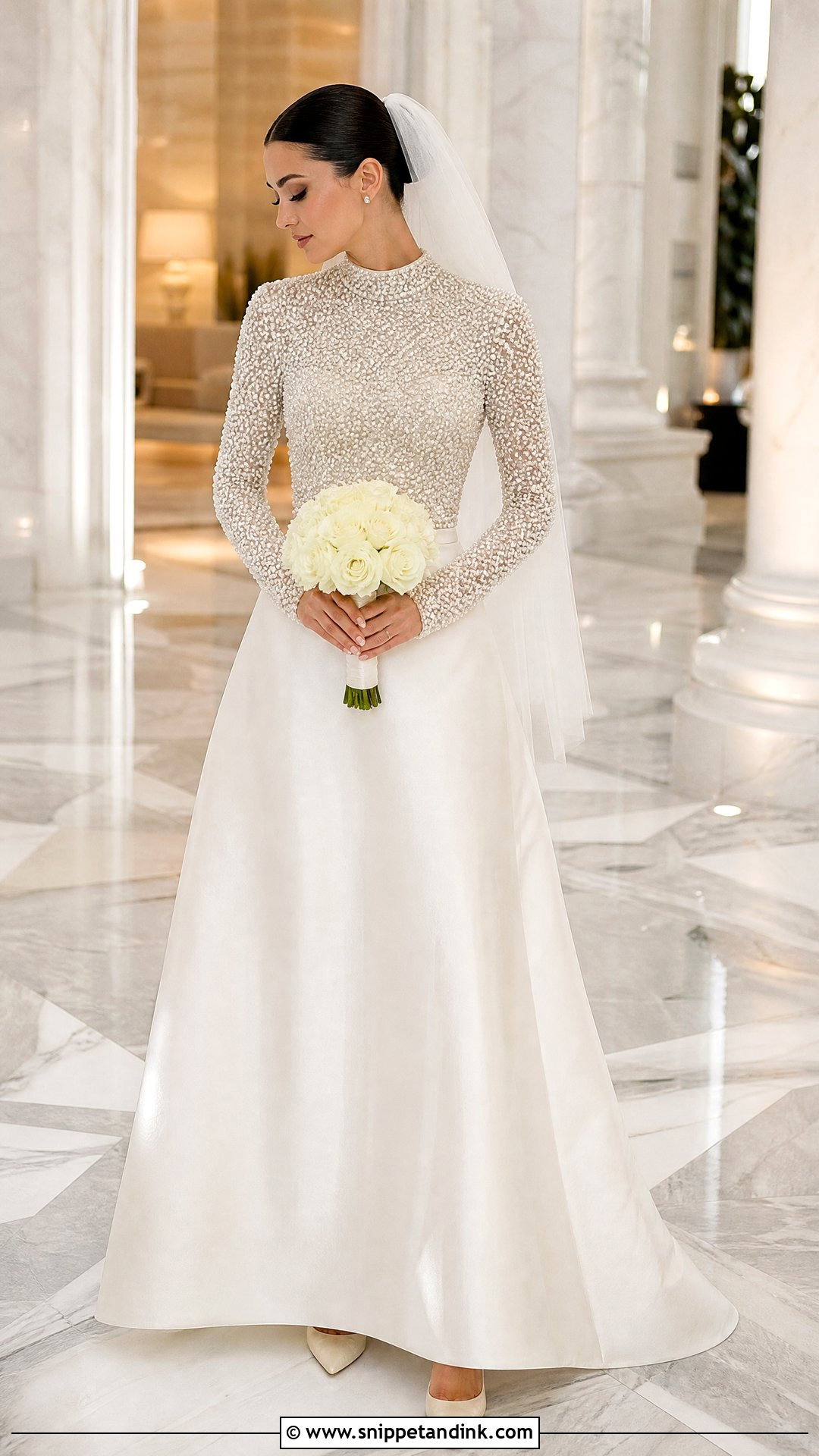
Pearls glow where crystals flash. Scattered across a fitted bodice into a clean satin skirt, or continuing over tulle for all-over texture, they’re softer in photos under bright venue lighting. Heavy beading adds real weight, so I check that straps, seams and inner construction carry it, and that a soft lining protects sensitive skin from the backs of the beads. Pearl studs, a smooth veil and ivory heels are enough; stacking more pearl accessories cancels out the dress. A sleek bun or soft side waves suit it.
16. Designer Crystal Embellished Bridal Gown
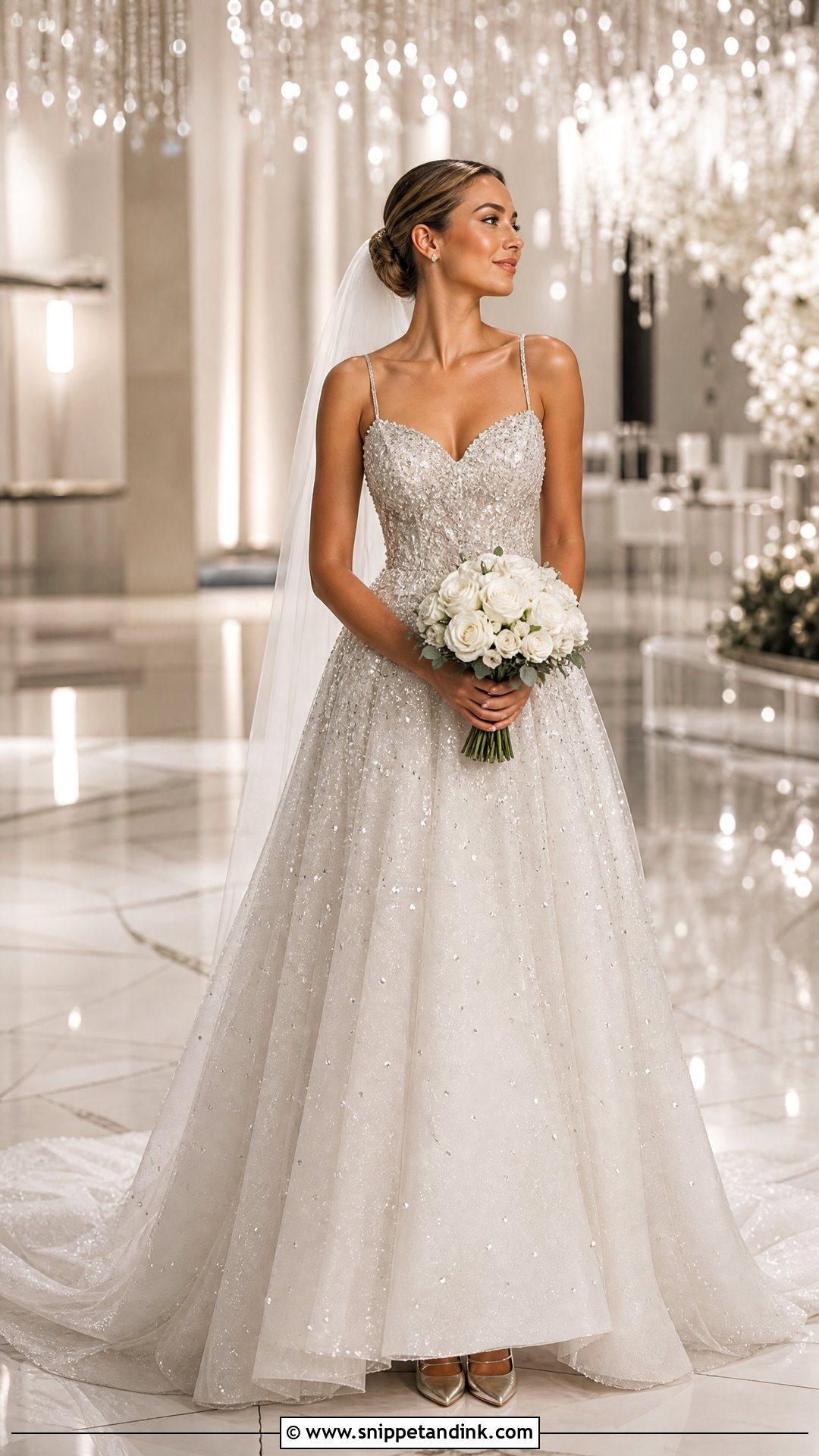
Crystals catch every movement. Concentrated on the bodice they define the waist; scattered over tulle they look softer. A flowing A-line balances the sparkle. My rule is that the face should outshine the dress, so keep jewellery to small diamond studs, a plain veil and metallic or ivory pumps, and only add a statement necklace to a very plain neckline. Drag the veil across the bodice at a fitting; rough crystal settings snag tulle. Heavily worked fabric may need extra straps or internal corsetry to stay comfortable.
17. Designer Bow Detail Bridal Gown
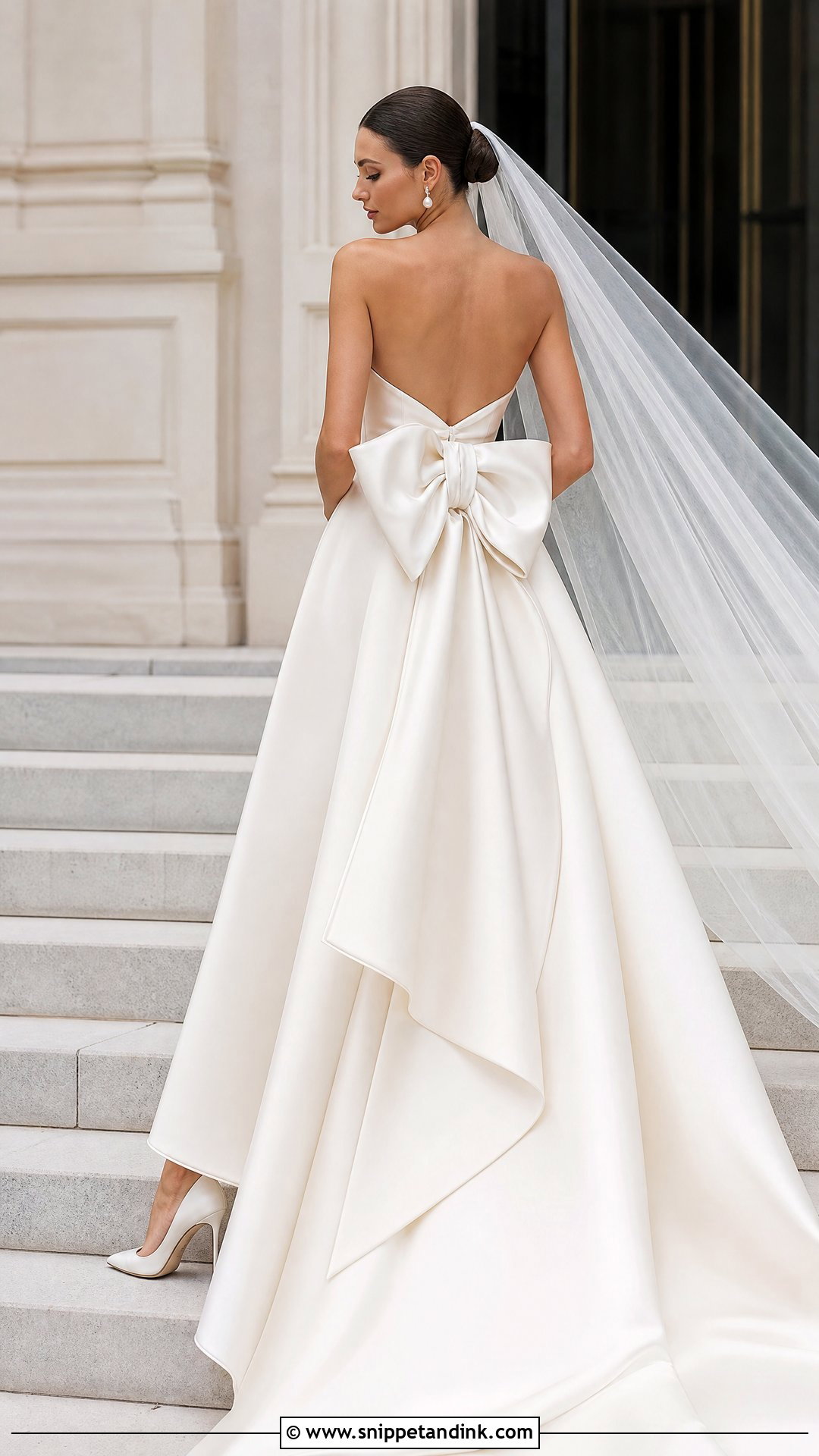
Bows turn a clean gown playful. An oversized back bow suits a strapless satin silhouette; small shoulder bows soften a fitted design. Keep the rest of the gown plain so the bow reads as the point of the dress. A neat updo shows a back bow in photos, and the veil shouldn’t cover it completely. Pearl earrings and pointed ivory heels finish it. Large bows pull on the fabric where they’re attached, so I check that the fixing is reinforced, and a removable bow gives you a cleaner reception look.
18. Designer Bridal Gown With Cape
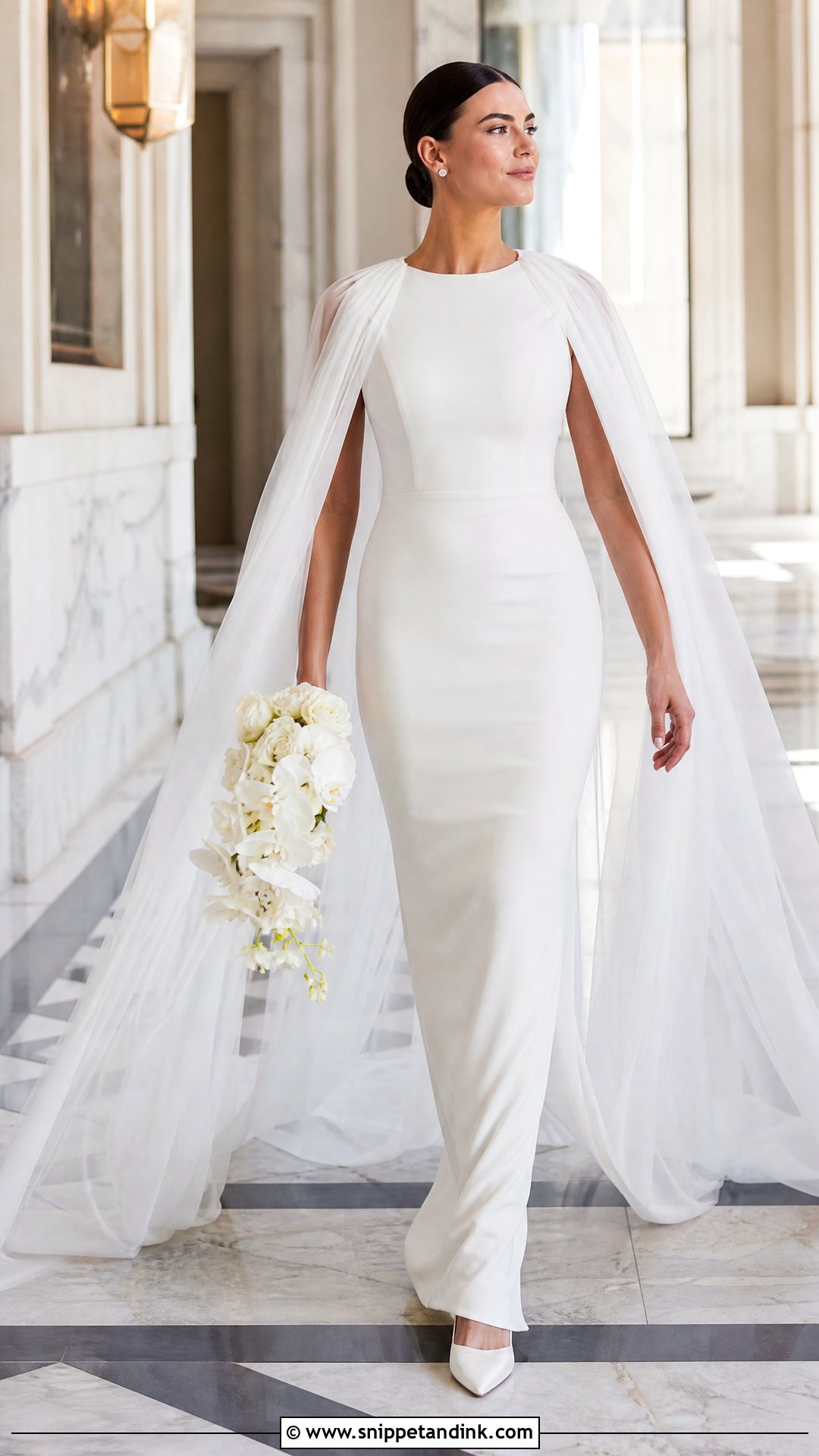
Capes replace the veil and frame the gown as you walk away, which is why they look so good in ceremony entrances and photos from behind. Sheer tulle feels airy, embellished lace romantic, crepe architectural. Underneath, a clean column, A-line or understated ball gown lets the cape fall freely. Attachment is what I check: it should sit at the shoulders or neckline without pulling the gown back or pressing on the throat. Choose a removable one for dinner and dancing. Studs, sleek hair and simple pumps complete it.
19. Designer Bridal Gown With Detachable Overskirt
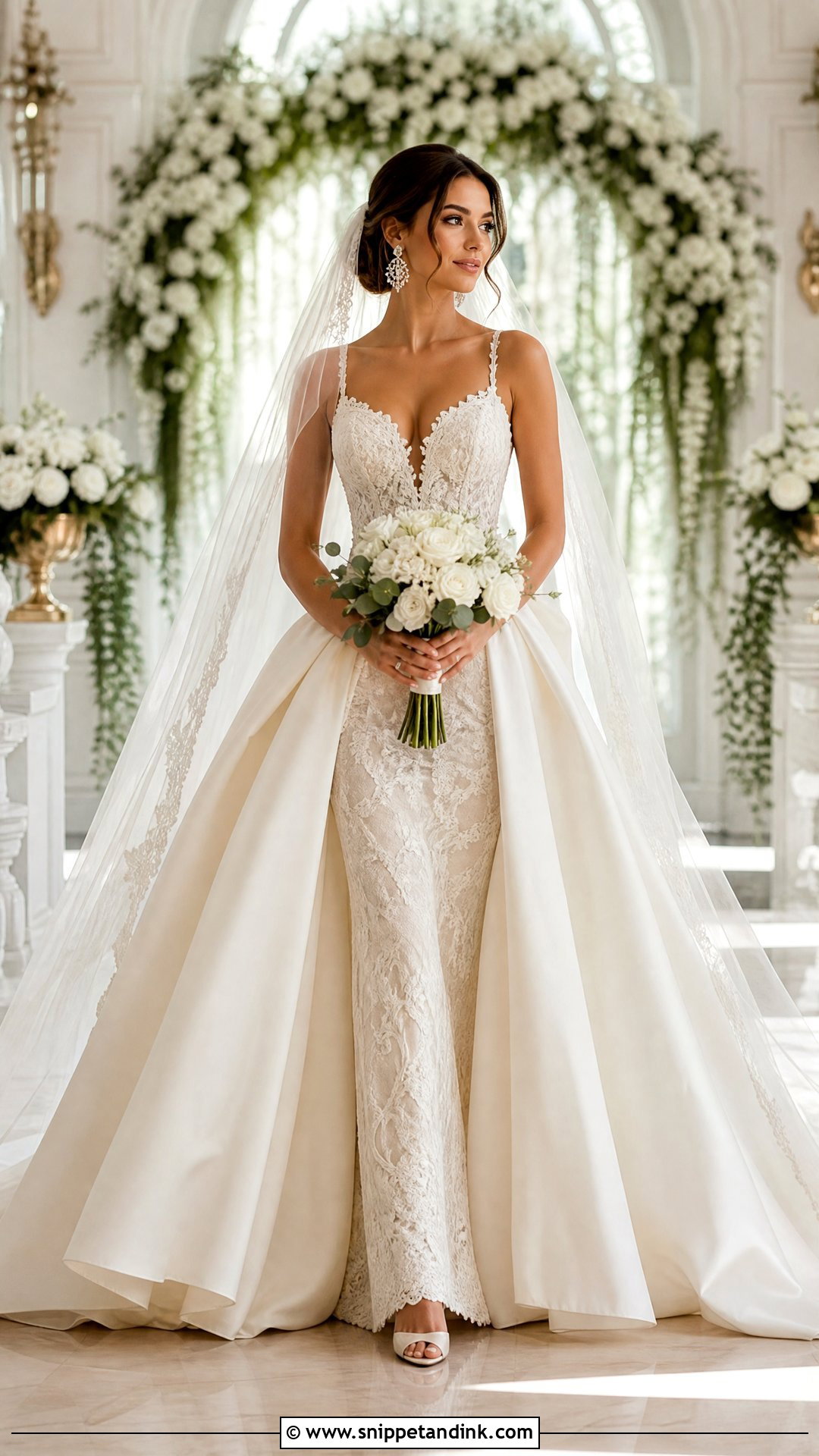
Overskirts give one gown two silhouettes: ball-gown volume for the ceremony over a fitted crepe, lace or satin dress, then a sleek reception look. The join should hide under a belt, seam or fold. Practise taking it off with whoever will help you, because snaps or hooks in the back are fiddly with nervous hands. A long veil suits the full version; statement earrings and comfortable heels work for both. It’s a smart option if you want the entrance and the dancing.
20. Designer Tea Length Bridal Gown
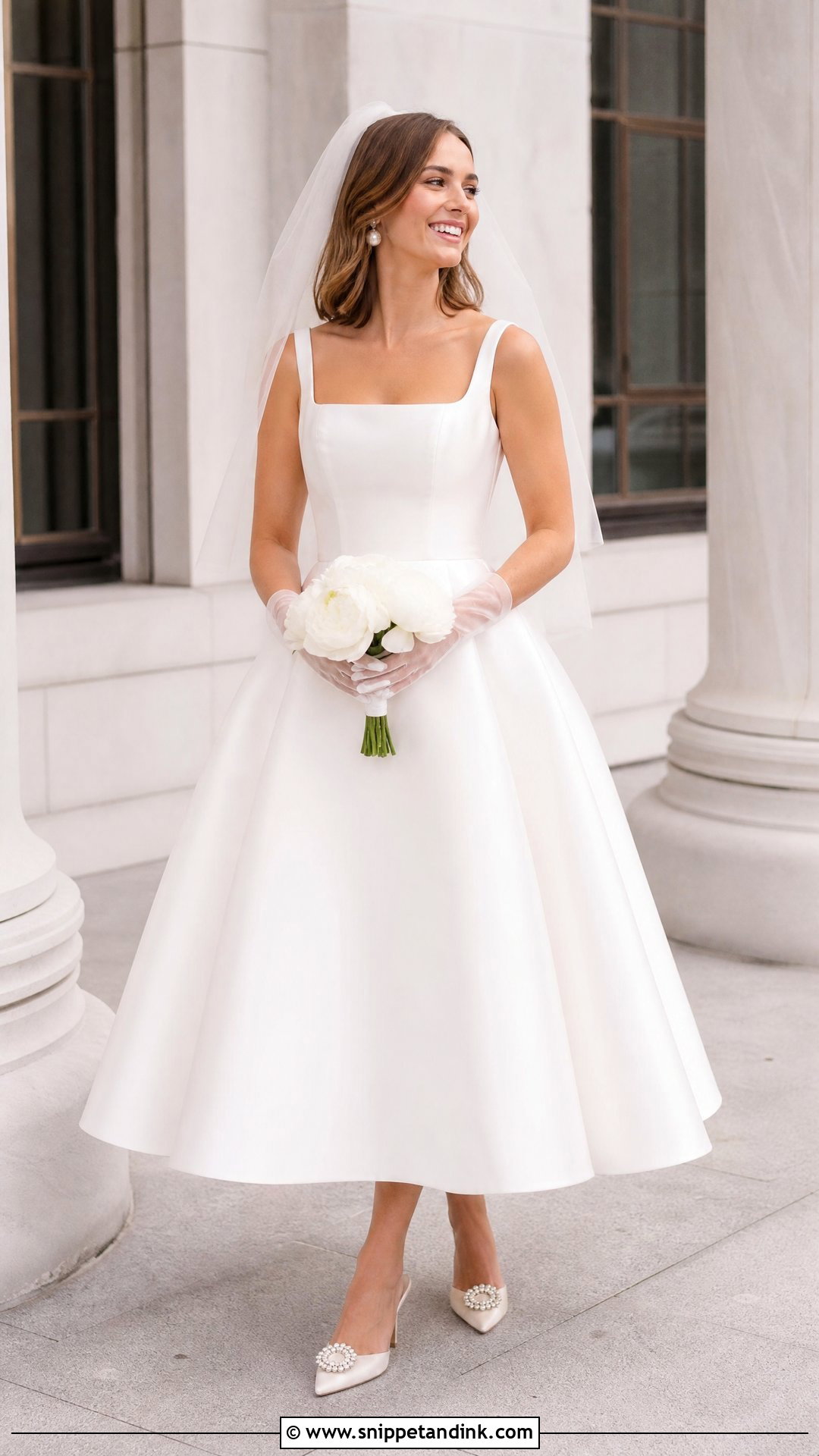
Tea length lands between knee and ankle and shows the shoes, so they matter almost as much as the gown. Pointed pumps, embellished slingbacks or ankle straps all suit. Where the hem lands is the key fitting decision; it should end at a slim point of the lower leg, not across the calf’s widest part. A fitted bodice and full skirt feel classic, a narrow satin shape more current. Short gloves, pearl earrings and a birdcage or shoulder-length veil keep proportions right. A petticoat adds volume; without it the skirt moves more freely.
21. Designer High-Low Bridal Gown
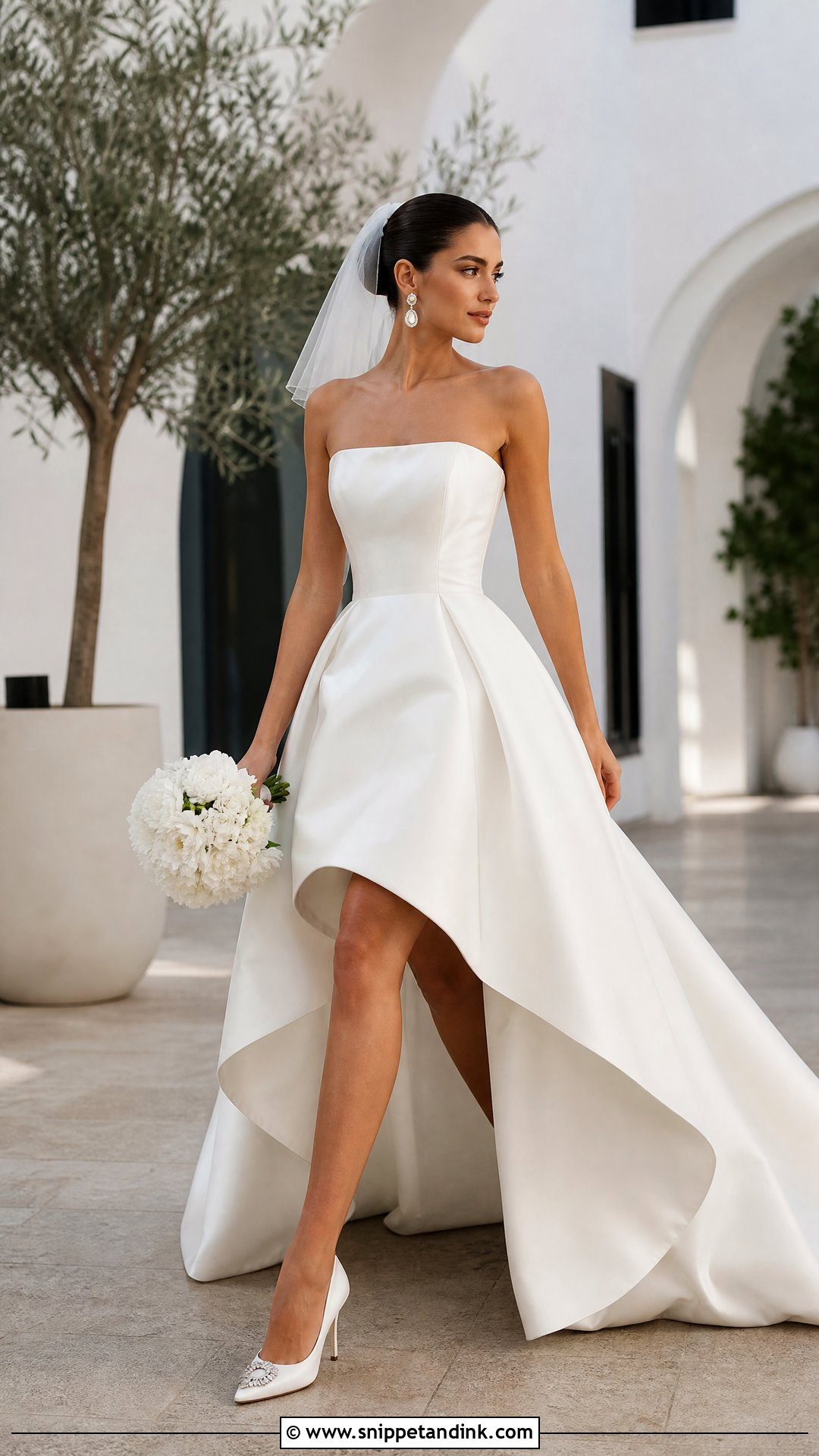
High-low hems pair a shorter front with a longer back or train, so you get drama behind and visible shoes in front. Structured satin looks bold, layered tulle softer. The transition from short to long should curve smoothly; an abrupt step looks unfinished. Make sure the front is long enough to sit and climb stairs without worry. Elegant pumps, drop earrings, a short veil that doesn’t fight the back hem, a clean updo and a compact bouquet finish it.
22. Designer Blush Bridal Gown
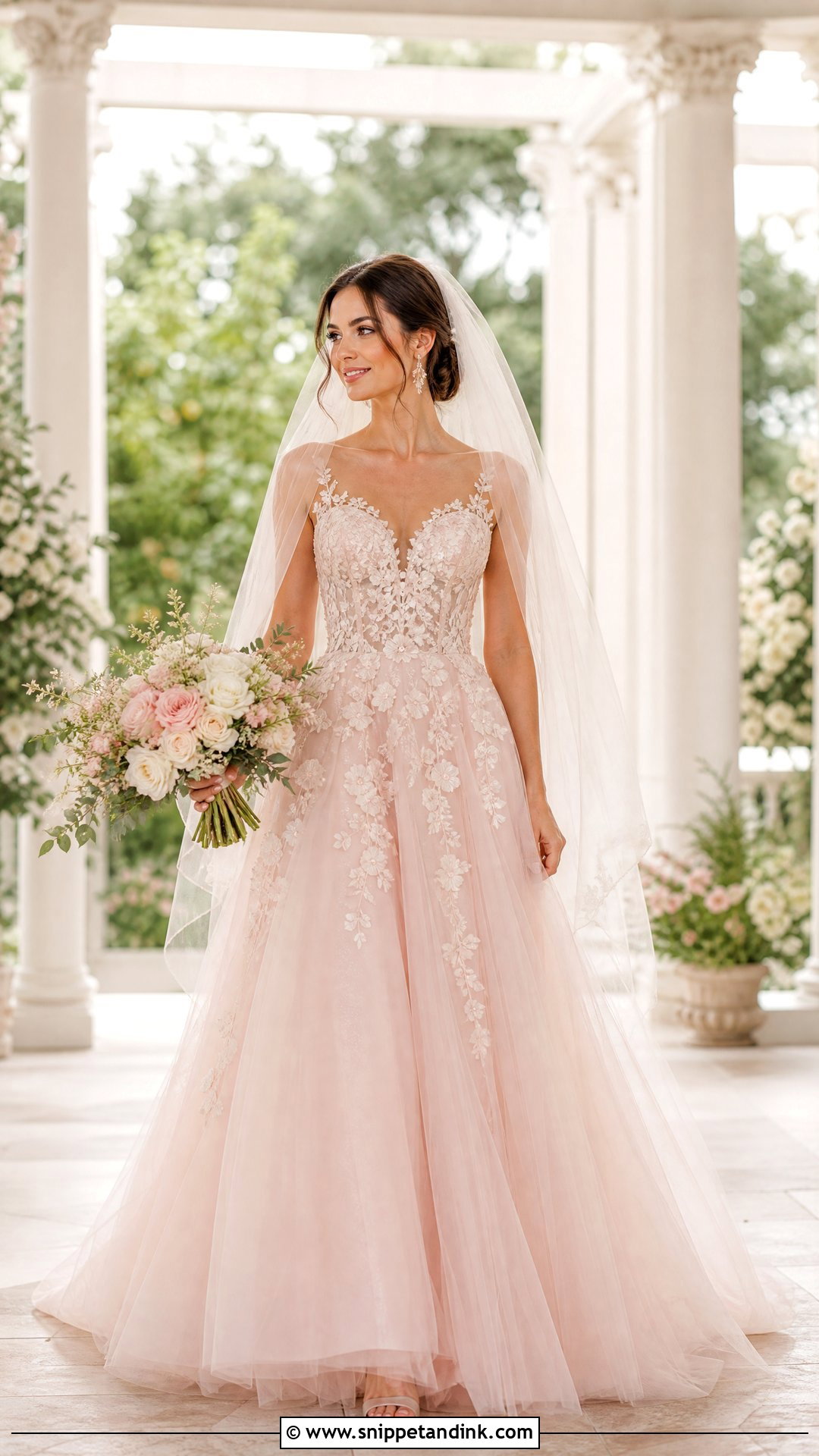
Blush covers a range, from pale pink and soft rose to champagne with a rosy undertone. Which one depends on your skin: cool, pink-toned shades suit some complexions and make others look flushed, so I try two or three against the face in daylight. Tulle, lace and appliqués suit the colour; satin makes it modern. Bright white accessories look harsh next to blush, so match the veil closely and compare everything under indoor light too. Neutral heels, rose gold earrings and a cream-and-pink bouquet with muted greenery tie it together.
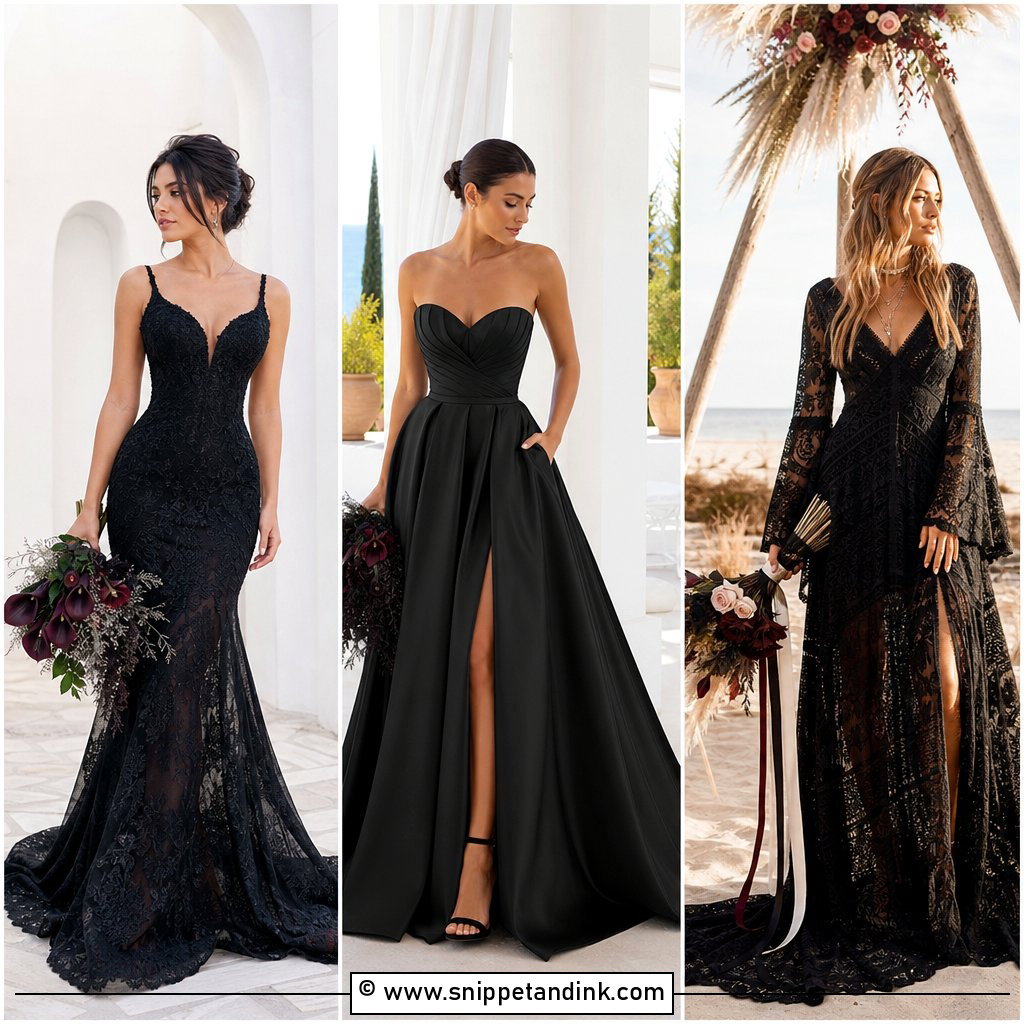
23. Designer Bridal Gown With Black Accents
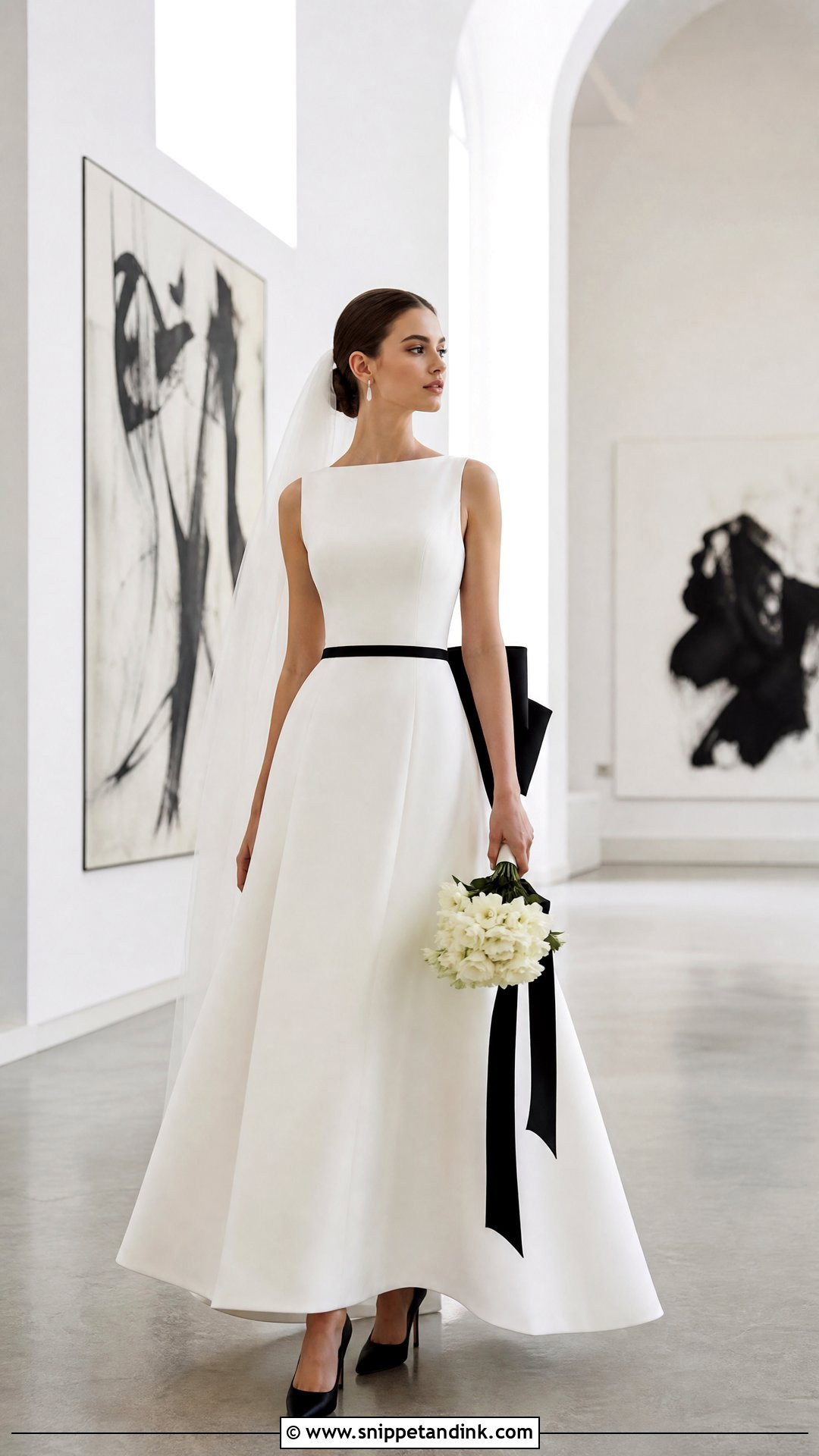
Black accents on ivory look formal and graphic. A narrow black waist ribbon defines the silhouette; black bows, embroidery or detachable gloves make a bigger statement. Start from clean satin or crepe so the dark detail looks deliberate, and keep it to one or two contrasting elements. Black pointed pumps, simple earrings and a plain ivory veil suit it, with a black ribbon round the bouquet to repeat the accent. Structured bodices, square necklines and sculptural skirts carry it best. Some families still have feelings about black at a wedding, so a quick conversation helps.
24. Designer Minimalist Crepe Bridal Gown
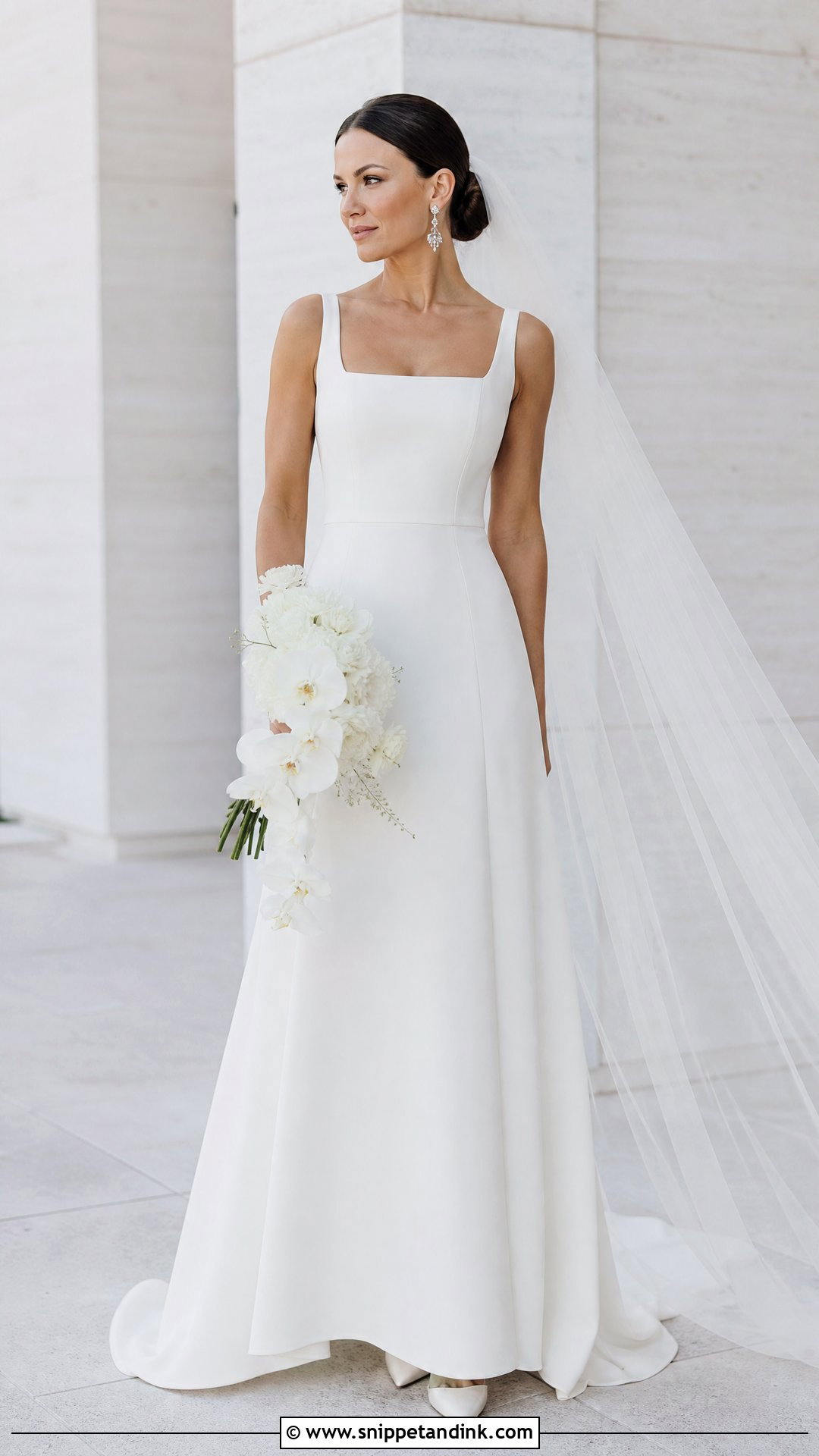
Minimalist crepe depends entirely on fit and fabric. A column, fit and flare or quiet A-line with a square, bateau or softly draped neckline is the frame. Every fitting point shows: bust, waist, hips and hem must be precise. Smooth undergarments and a comfortable lining stop crepe clinging. A sheer cathedral veil adds ceremony drama, with sculptural earrings, pointed pumps and a low bun or sleek waves. Personality can come from a big bouquet or removable gloves. It proves a designer gown needs no embellishment to hold a room.
25. Designer Drop Waist Bridal Gown
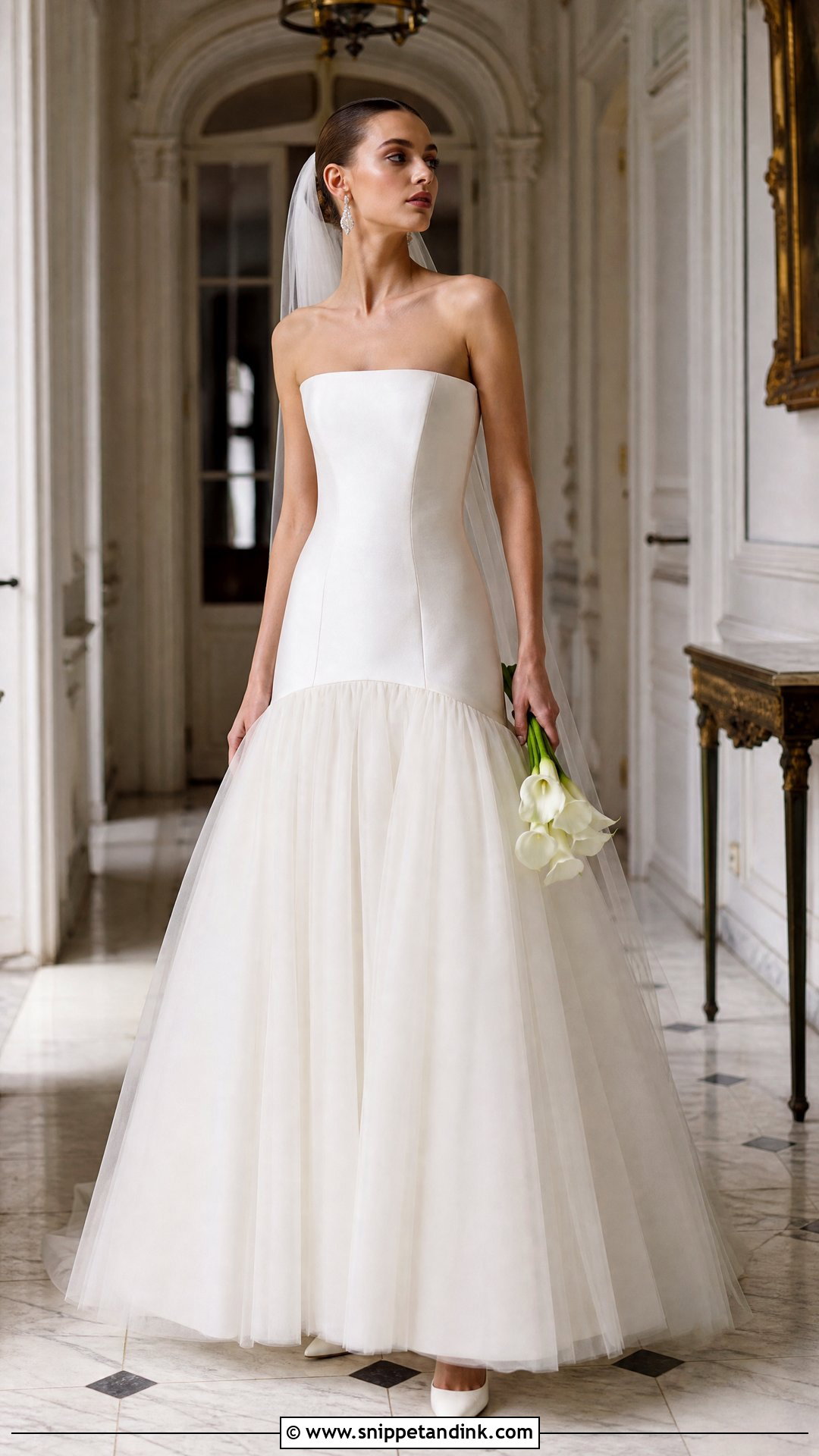
A drop waist bridal gown carries the fitted bodice below the natural waist before the skirt opens, giving a long torso and a vintage line. A softly curved seam is subtle; a low V is dramatic. Satin and mikado hold the shape, while tulle lightens the skirt. Waist placement is the critical fitting point, especially on petite or short-waisted brides, where I’d raise it a little so the legs don’t look shortened. A plain veil, crystal earrings, pointed ivory shoes and sleek hair keep the long lines clear.
Ordering a Made-to-Order Gown Without Paying a Rush Fee
Most designer gowns are cut to your order after you buy, not taken off a rail. Production times vary by designer and season, and many quote several months before alterations even begin, so I start looking roughly nine months to a year before the wedding. Shorter timelines are possible but often come with rush charges or fewer choices.
Sample sizes in the salon
The dress you try is a sample, often clipped to fit. Ignore the size on the label and look at the shape. If it’s too small to zip, ask the consultant to hold it closed and look at the skirt and neckline instead.
Bridal sizing runs small
Designer size charts rarely match high-street sizes. The salon orders by your largest measurement and the seamstress takes it in elsewhere, so don’t be alarmed by the number.
Trunk shows and sample sales
Trunk shows bring a designer’s full collection to a shop for a few days, sometimes with a discount on orders. Sample sales sell the try-on gowns themselves; check them for makeup marks, loose beading and hem wear before paying.
Try the Silhouette You Think You Won’t Like
Start with silhouette, fabric, comfort and setting, and leave the decorative details for last. Try shapes you didn’t expect to like, because construction looks different on a body than in photographs. Walk, sit, turn and lift your arms at every fitting, and plan veil, shoes, jewellery and hair together with the gown, not as afterthoughts. From structured satin to quiet crepe, the right gown is the one that lets you move like yourself.
You'll Like These Ideas:









Leave a Reply