
A multi-day wedding asks more of a guest wardrobe than any single party does. The daytime mehndi wants light fabric and color you can sit cross-legged in; the reception wants deeper shades, real embroidery and a longer line. When I dress guests for marriage functions, I start with the event list and the venue, then the weather, and only then the silhouette. Lehengas, sarees, shararas, gowns and fusion sets all have a place below, each with the shoes, jewelry and bag I’d send it out with. The question to keep asking is simple: can you eat, sit, dance and stand for photos in it for five hours?
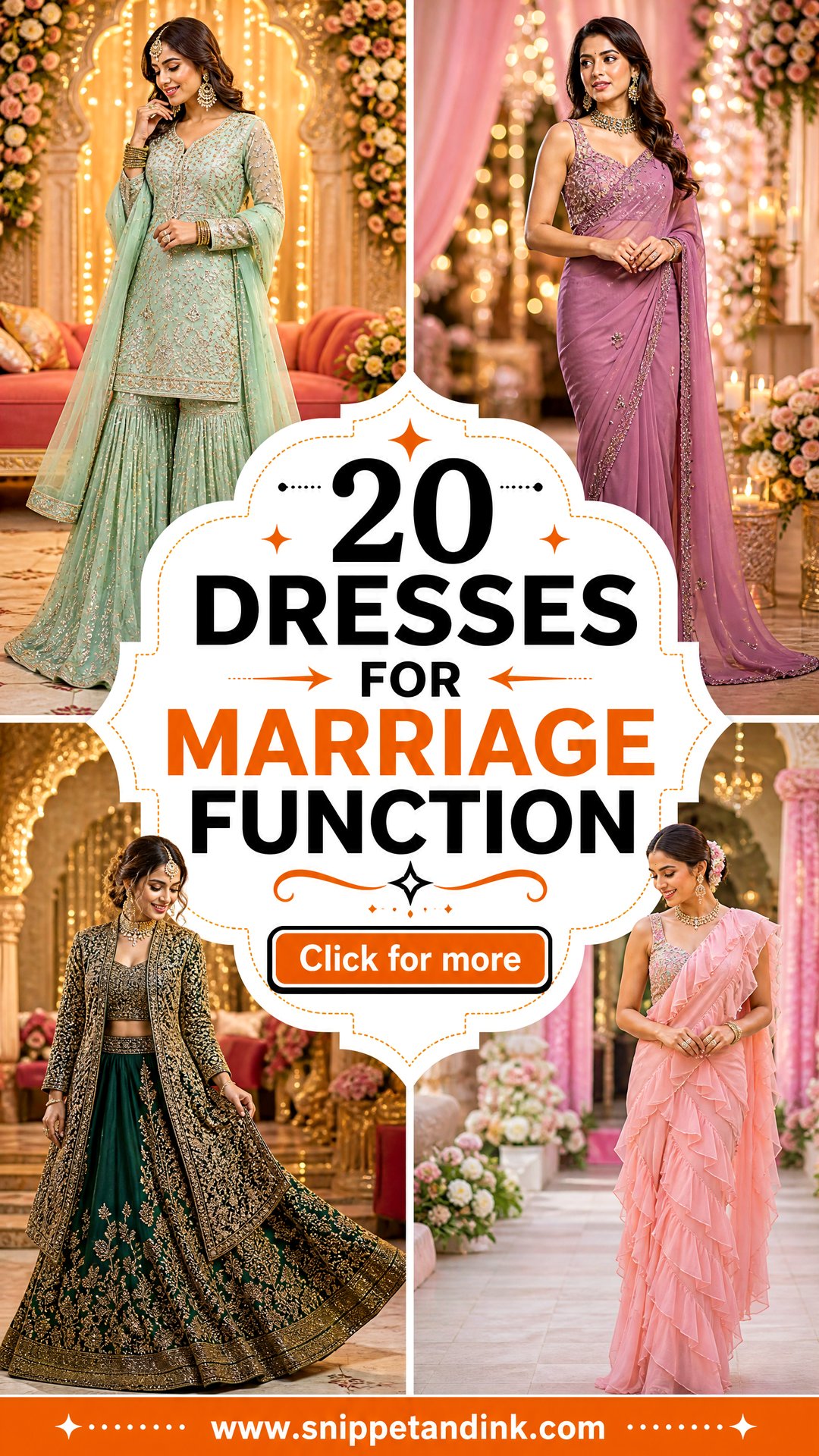
Mehndi Morning to Reception Night, One Outfit at a Time
When I plan a guest wardrobe for a three or four day wedding, I write the events down in order and give each one an outfit before buying anything. The functions differ more than people expect, and the same outfit rarely suits two of them.
- Mehndi: usually daytime and relaxed, often with floor seating. Bright color, light cotton or georgette, and nothing with long sleeves you’ll mind getting near wet henna.
- Sangeet: the dancing night. Shararas, dhoti sets and mirror work earn their place here; avoid trains and anything that needs constant re-pinning.
- Wedding ceremony: the most traditional, sometimes long and seated. Silk sarees, Anarkalis and lehengas in rich color, with a dupatta if the venue asks for heads covered.
- Reception: the most Western in feel. Gowns, saree gowns and sequins are at home, and deep shades suit evening light.
If you’re traveling and packing light, I’d make the ceremony outfit the investment and build the other nights from separates that can be re-paired, such as one dupatta worn with two different suits.
1. Floral Lehenga for Marriage Function
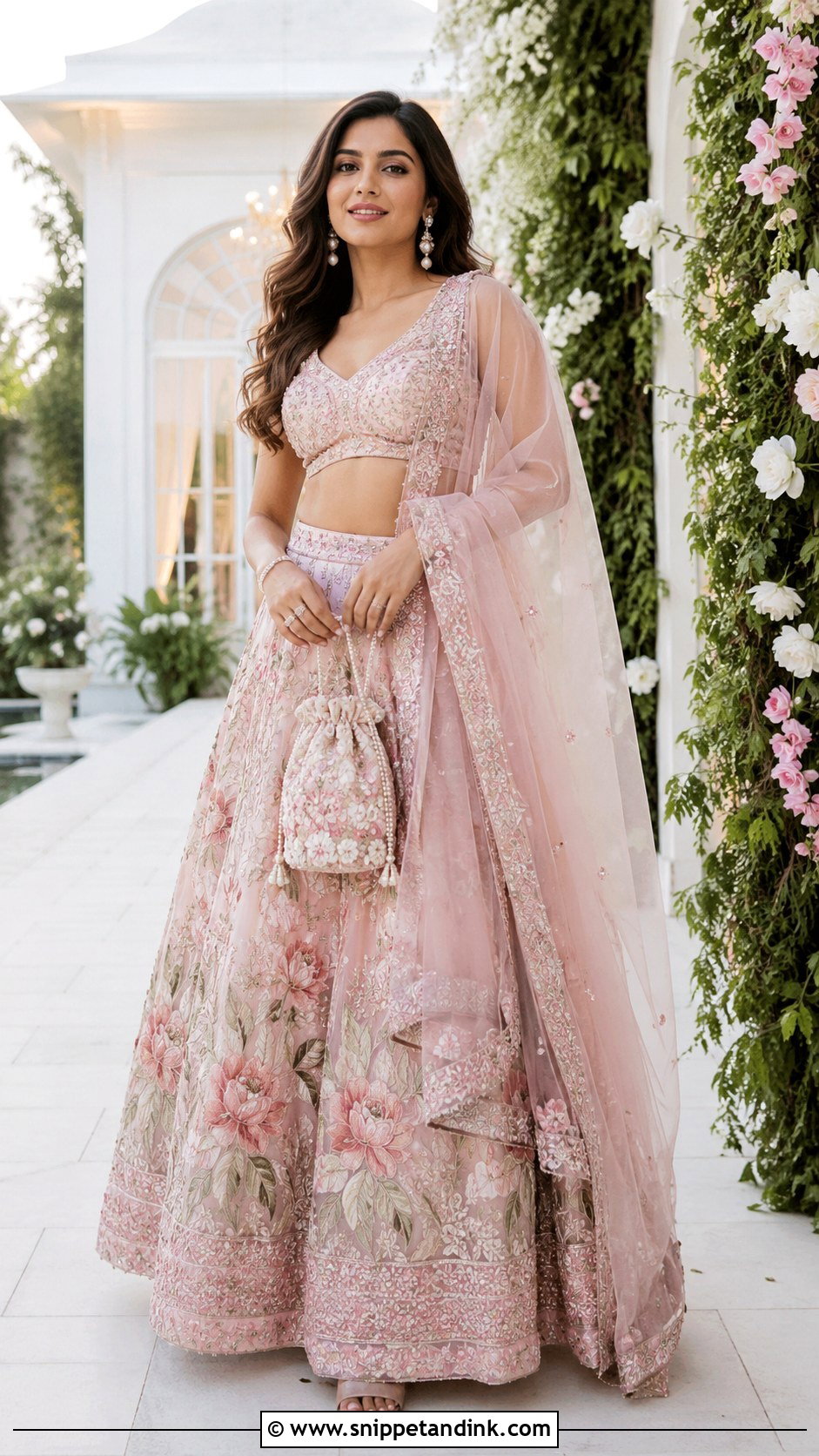
For a daytime function, I’d rather see a floral lehenga in printed cotton-silk or light georgette than anything heavily embellished; a dense skirt in midday heat is miserable by the second hour. Pastel pink, mint or powder blue reads fresh outdoors. Pair it with a fitted blouse and a sheer dupatta so the print still shows through. Scale matters: smaller florals sit better on a petite frame, while taller women can carry big blooms and a wide border. Block-heel sandals, pearl drops and a small potli finish it. Have the blouse fitted with proper support, since you’ll be lifting your arms on the dance floor.
2. Silk Saree for Marriage Function
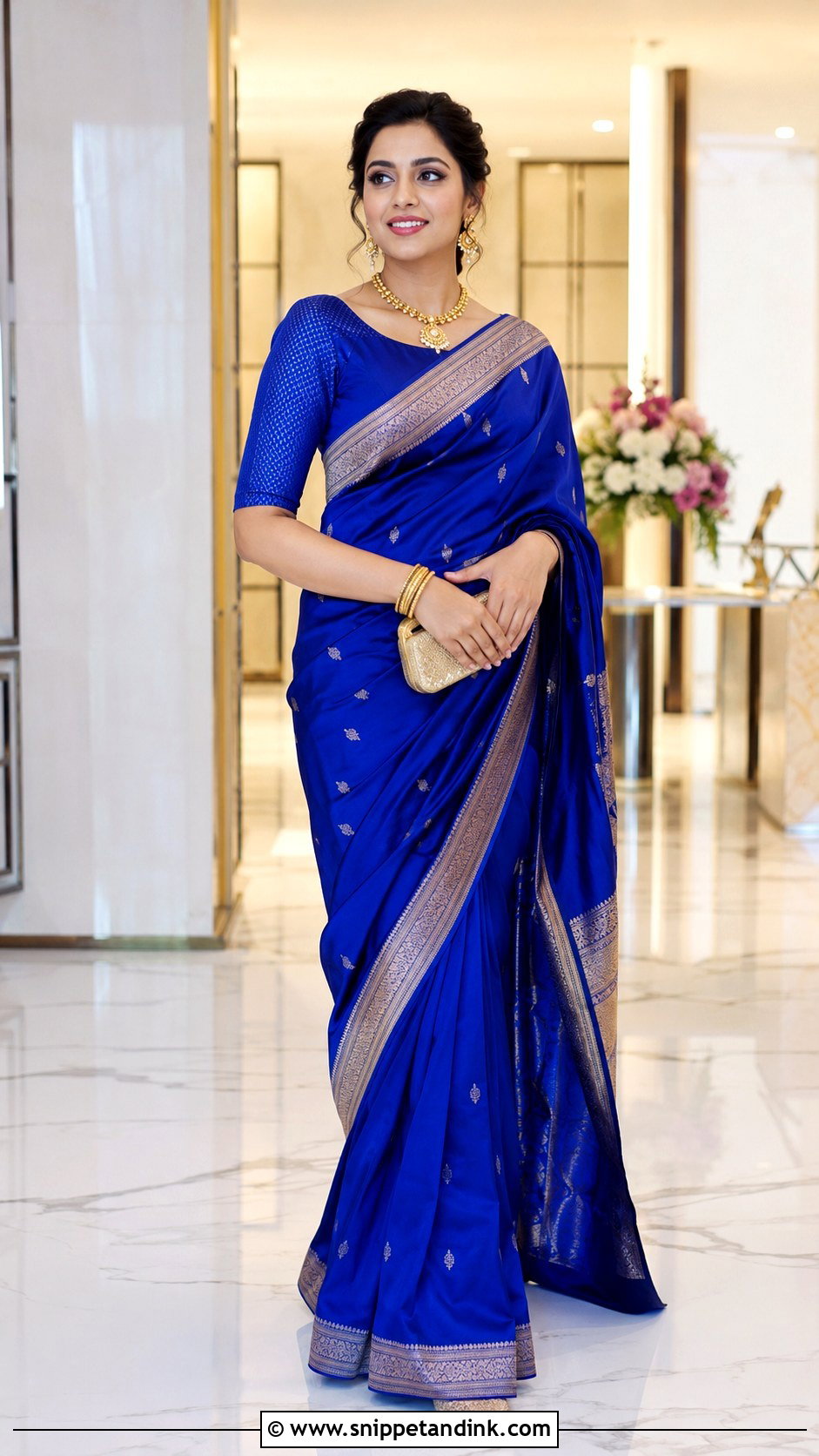
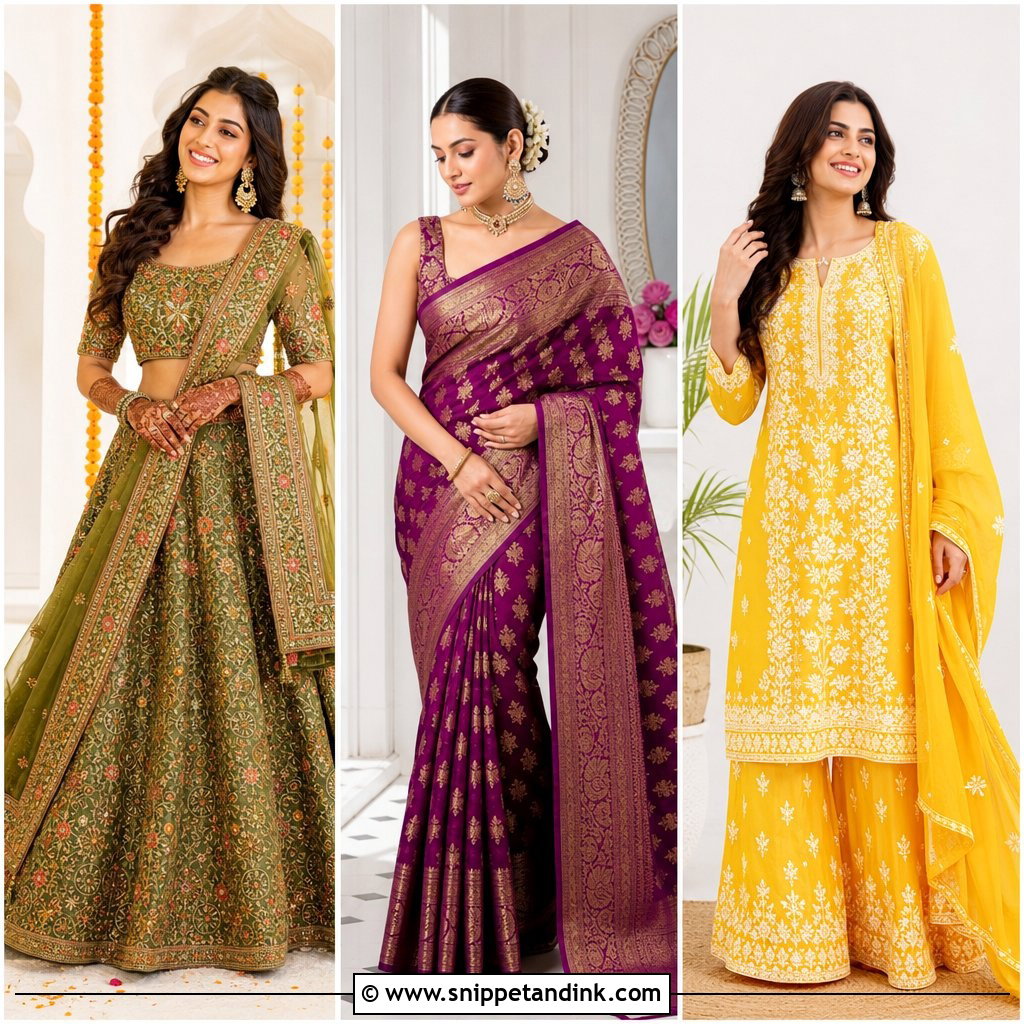
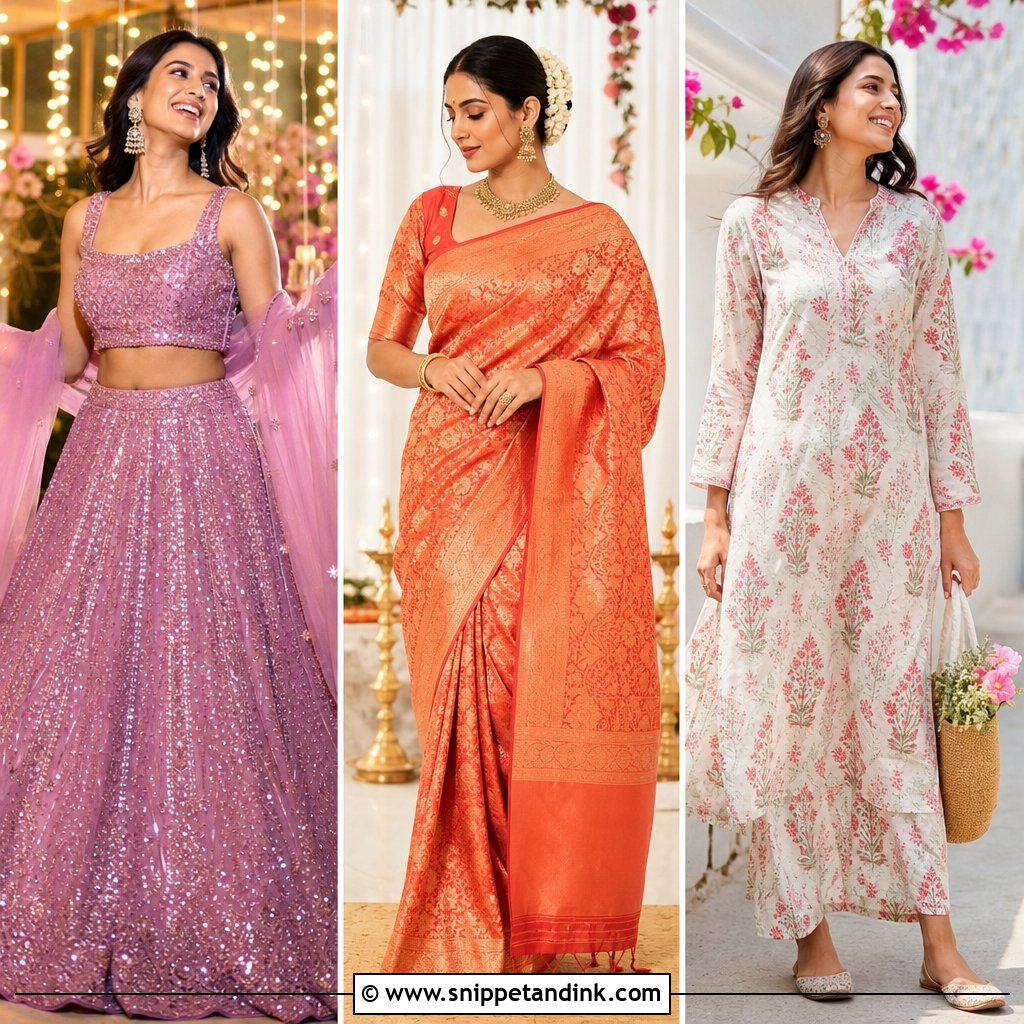
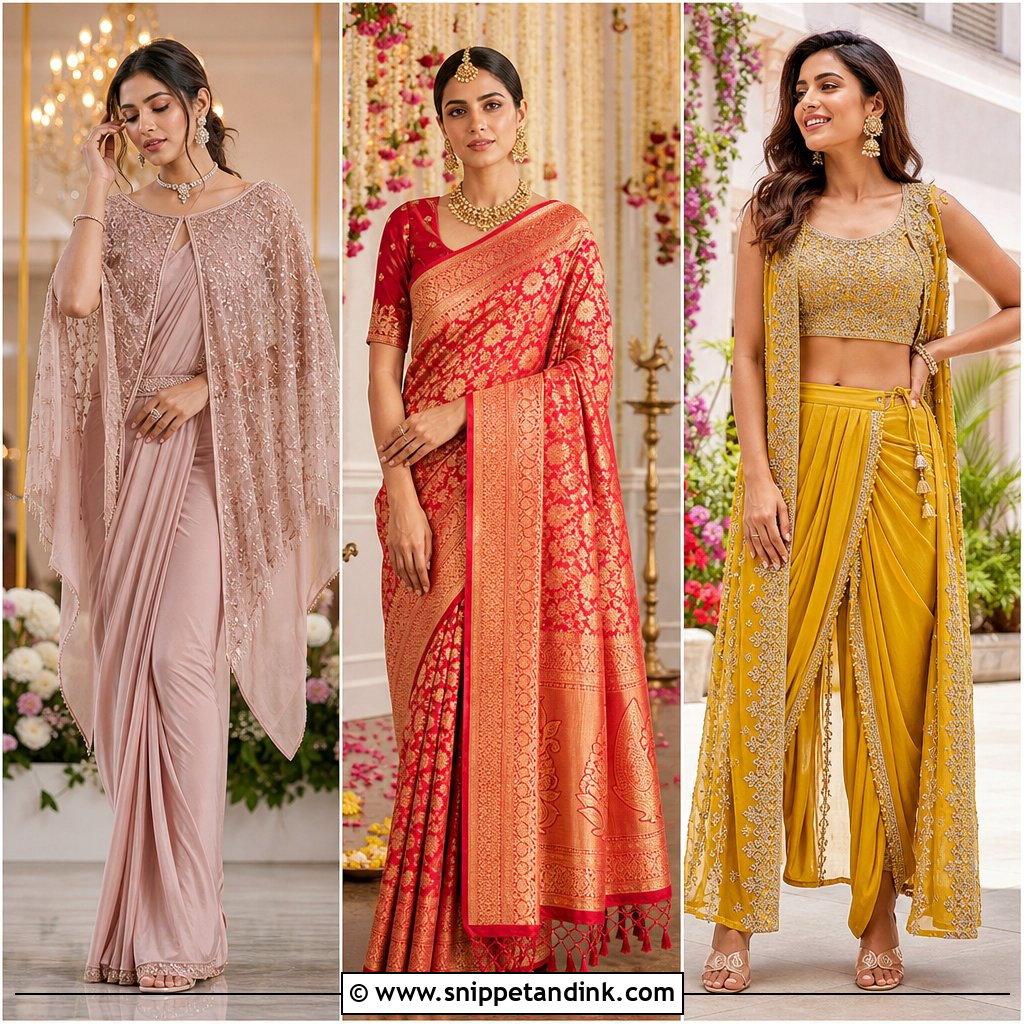
The gentle shine of a silk saree carries tradition into any function, but the weave you choose sets the formality. A Banarasi or Kanjeevaram is heavy and grand for an evening ceremony; Chanderi or soft silk drapes lighter for the day. Kanjeevaram silk is stiff when new, so I pleat it a little narrower than a chiffon and press the pleats the night before. Emerald, royal blue or mustard all photograph richly. A well-cut blouse, a short gold necklace, bangles and embellished low heels complete it. Pin the pallu at the shoulder from underneath so it never slips while you greet people.
3. Anarkali Suit for Marriage Function
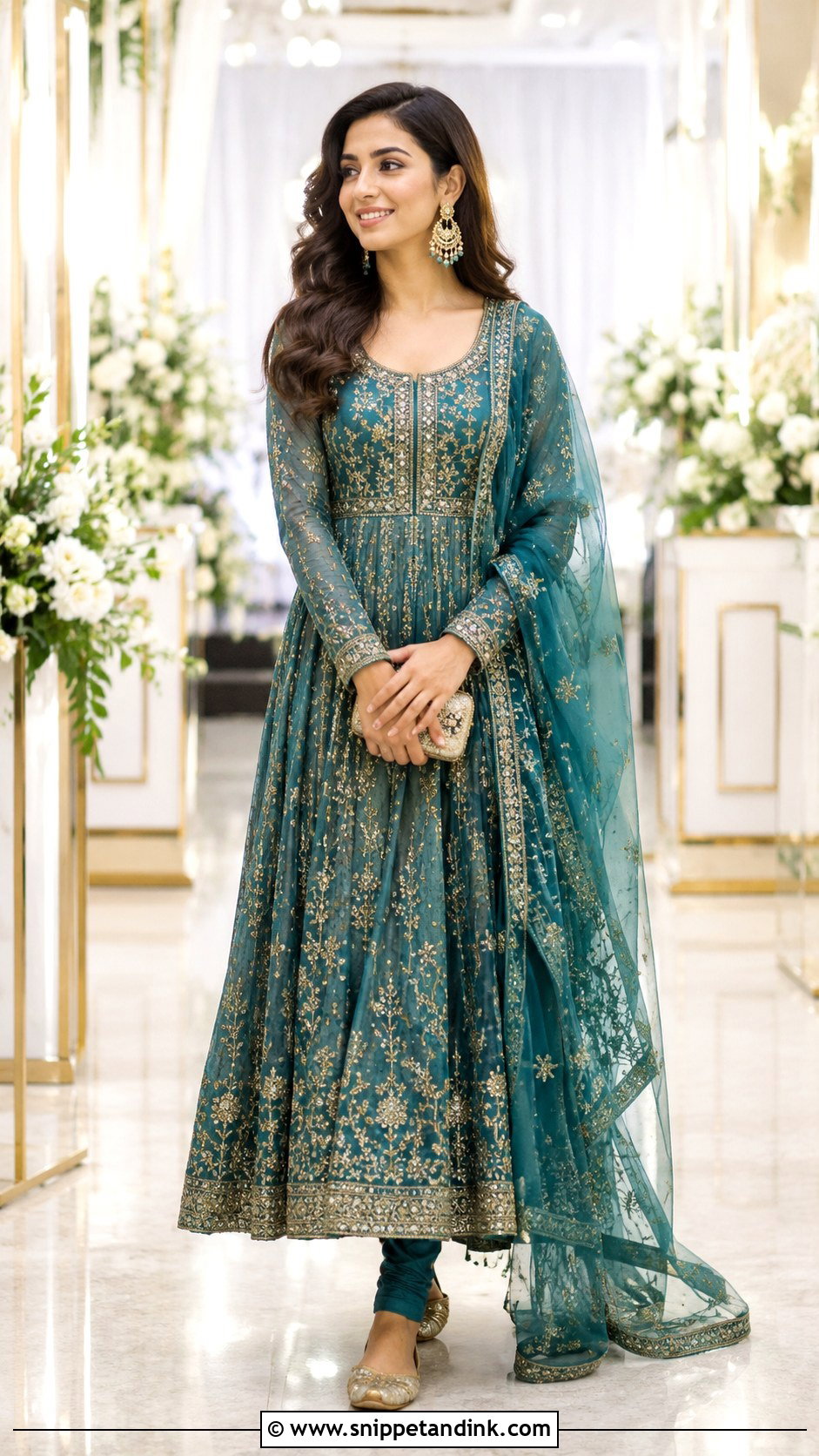
If you’ve never draped a saree and don’t want to learn on the day, an Anarkali is my answer. The fitted bodice and long flared skirt suit almost every body type and age, and nothing needs re-pinning. Embroidery concentrated at the neckline and hem keeps the weight where it helps the skirt fall. Wine, teal or sage in georgette or organza moves well from engagement to reception. Pair fitted churidars, an embroidered dupatta, pointed juttis and chandelier earrings, and skip the necklace if the neck is already worked. Have the hem finished to clear your shoes; floor-length Anarkalis catch on stairs constantly.
4. Sharara Suit for Marriage Function
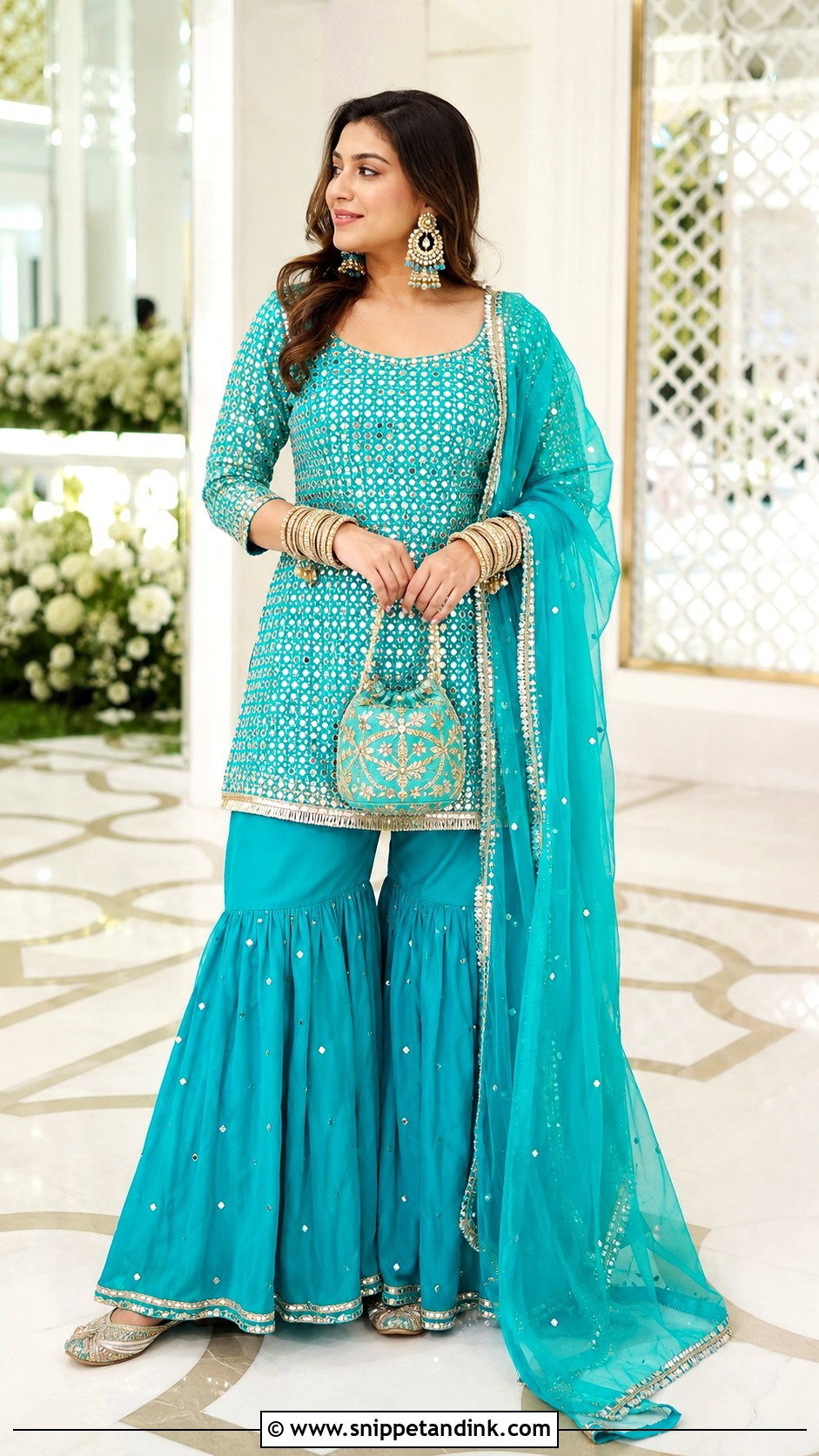
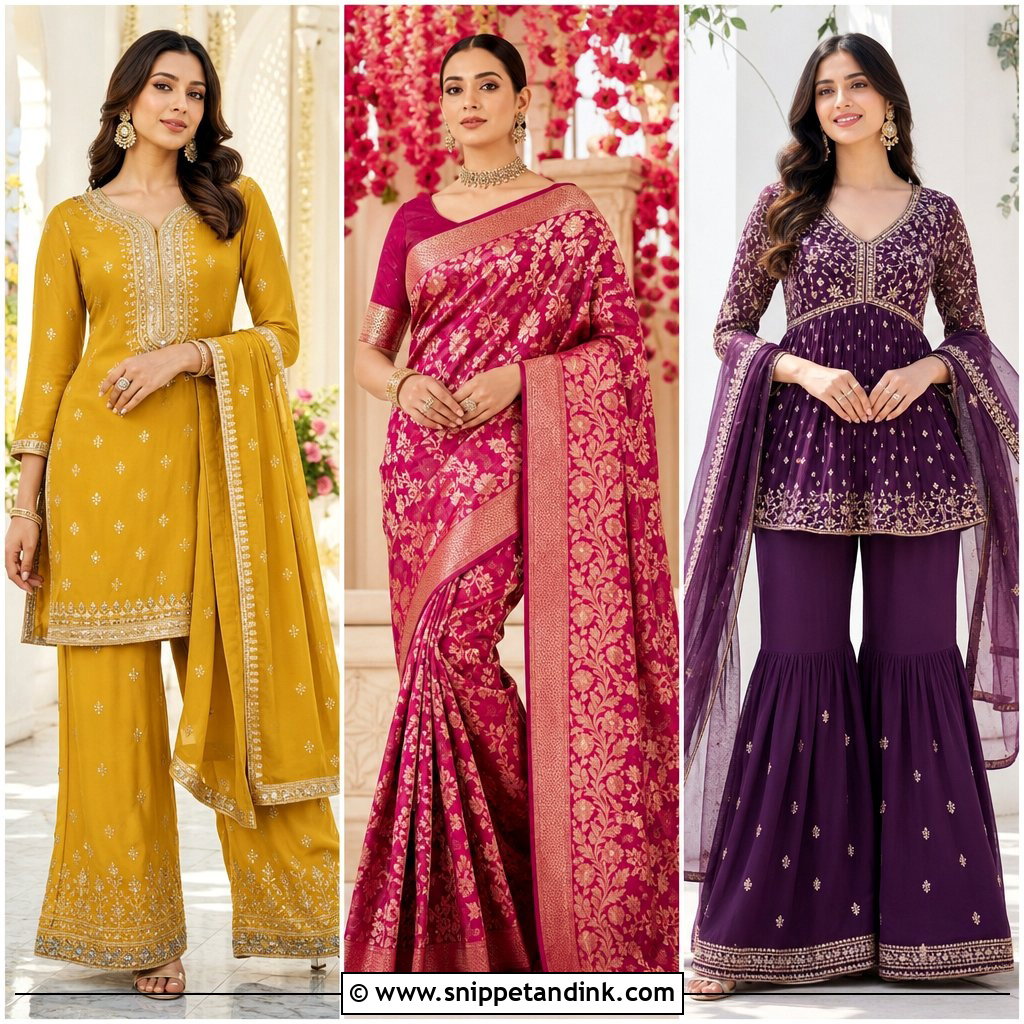
Shararas flare from the hip, so they swing when you dance, which is exactly why they belong at a sangeet. A short or mid-length kurta sits over dramatically wide pants with a coordinating dupatta. Choose mirror work for a sangeet, floral threadwork for daytime and zari for an evening ceremony. Because all the volume sits below the knee, I insist on a structured kurta and a defined waist; without them, the set swallows you. Metallic juttis, big jhumkas and stacked bangles suit the mood, with a braid to keep hair off the neckline. A breathable lining matters once the dancing starts.
5. Chiffon Saree for Marriage Function
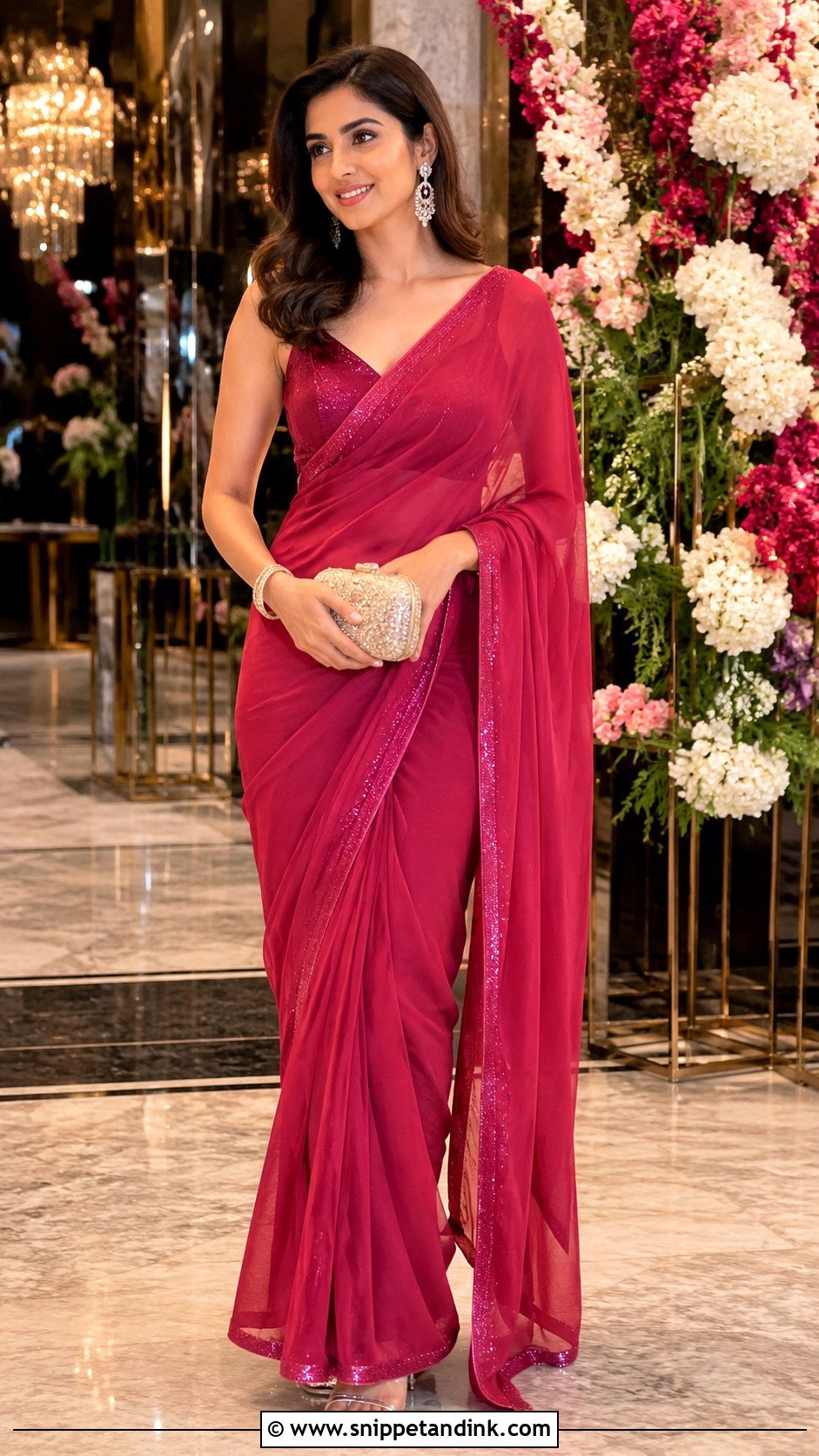
Chiffon is the saree I hand to a first-timer, because it’s light, forgiving and drapes without fighting you. The trade-off is that it slips. I pin the waist pleats together at the top and secure the shoulder drape with two small pins from underneath, and that’s what keeps it in place through dinner and dancing. A solid raspberry, midnight blue or rust with a fine sequined border looks dressy without veering bridal. Wear a matching or contrasting jewel-tone blouse, slim heels, a crystal clutch and two or three bangles, with soft waves or a sleek bun.
6. Velvet Lehenga for Marriage Function
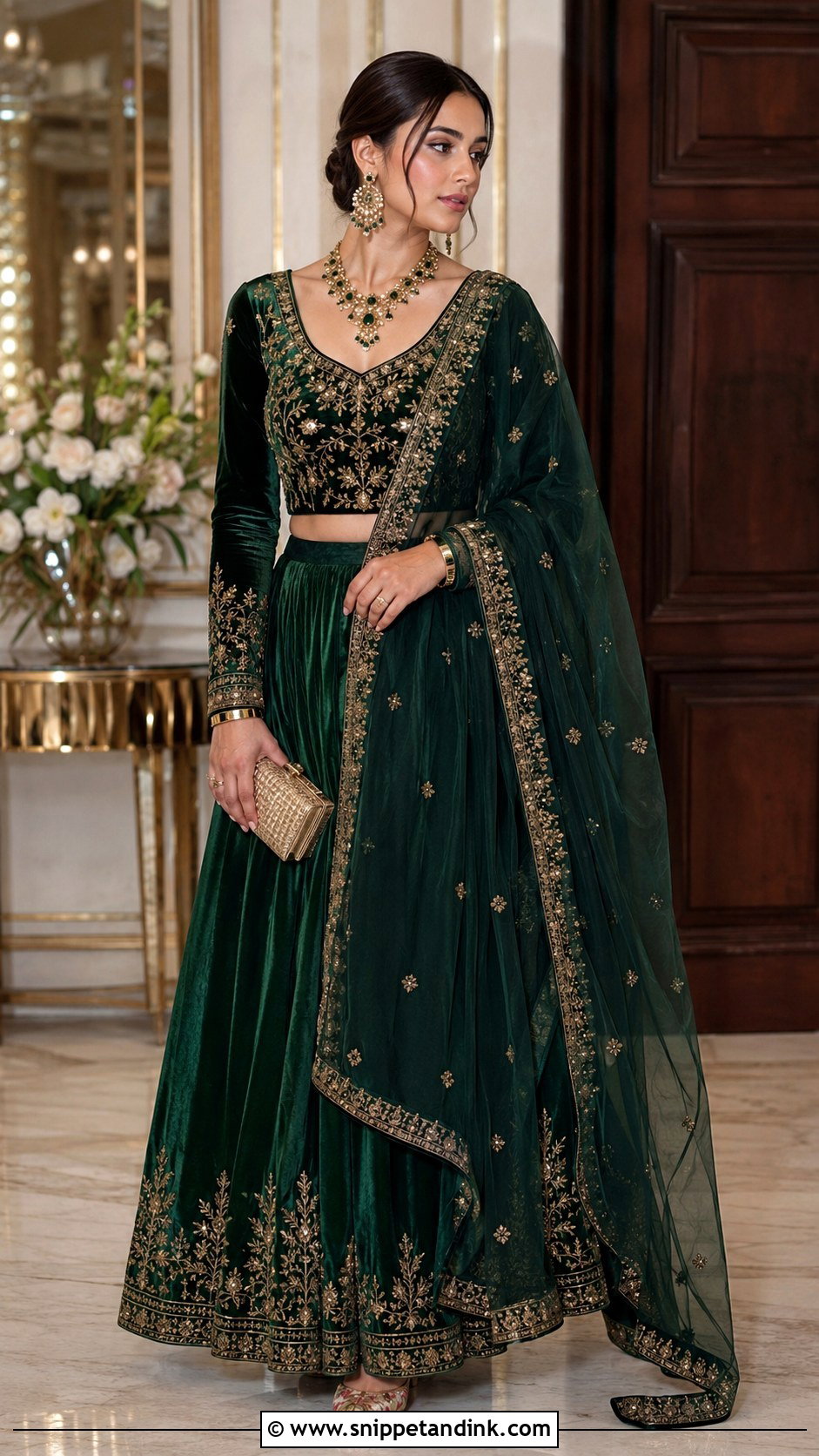
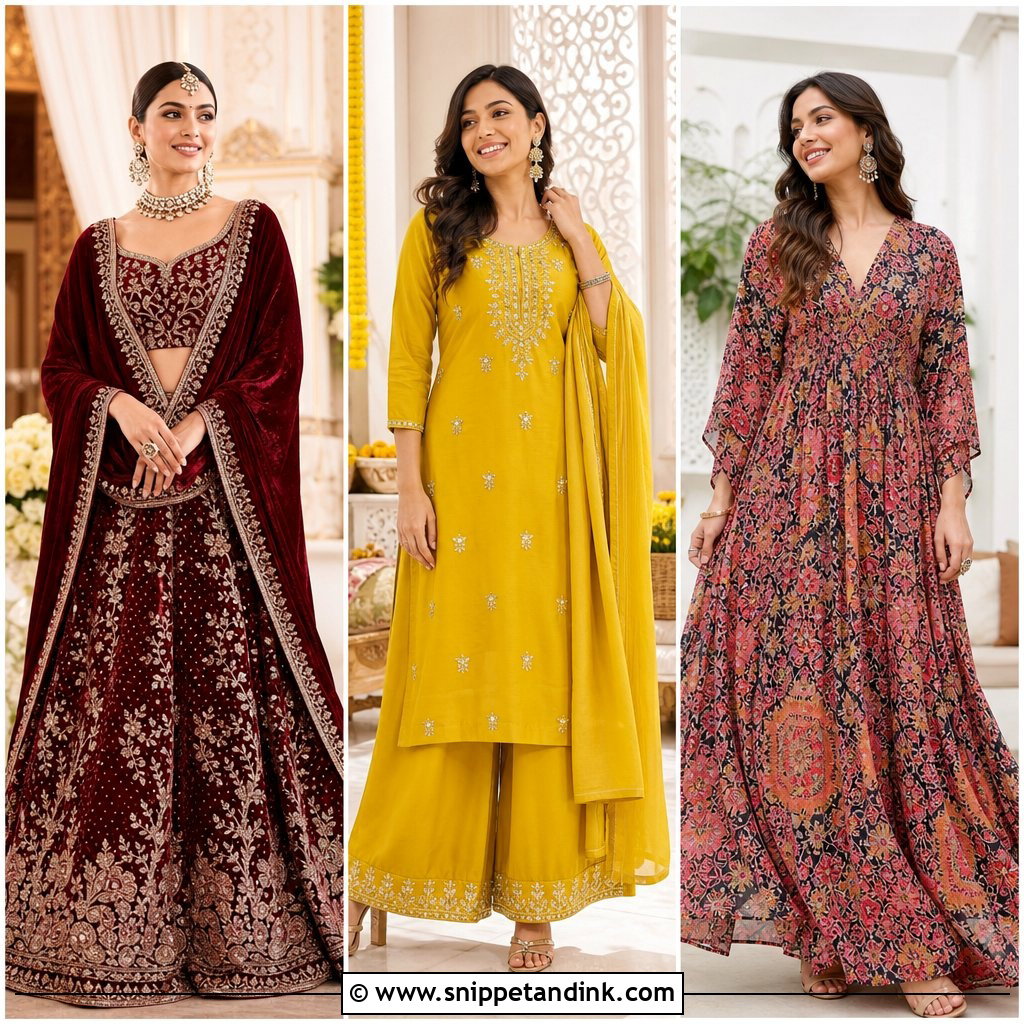
Velvet is a winter fabric, full stop. In a heated hall in December it’s comfortable; at a summer daytime function it becomes a sauna. Choose maroon, forest green or aubergine and look for controlled embroidery rather than decoration on every inch. My favorite version is a velvet blouse with a silk or brocade skirt, which weighs much less than a full velvet set, softened with an organza dupatta. Antique gold jewelry, embroidered heels and a hard-case clutch suit it. Velvet already has depth, so keep the makeup simple and save it for an evening reception.
7. Palazzo Suit for Marriage Function
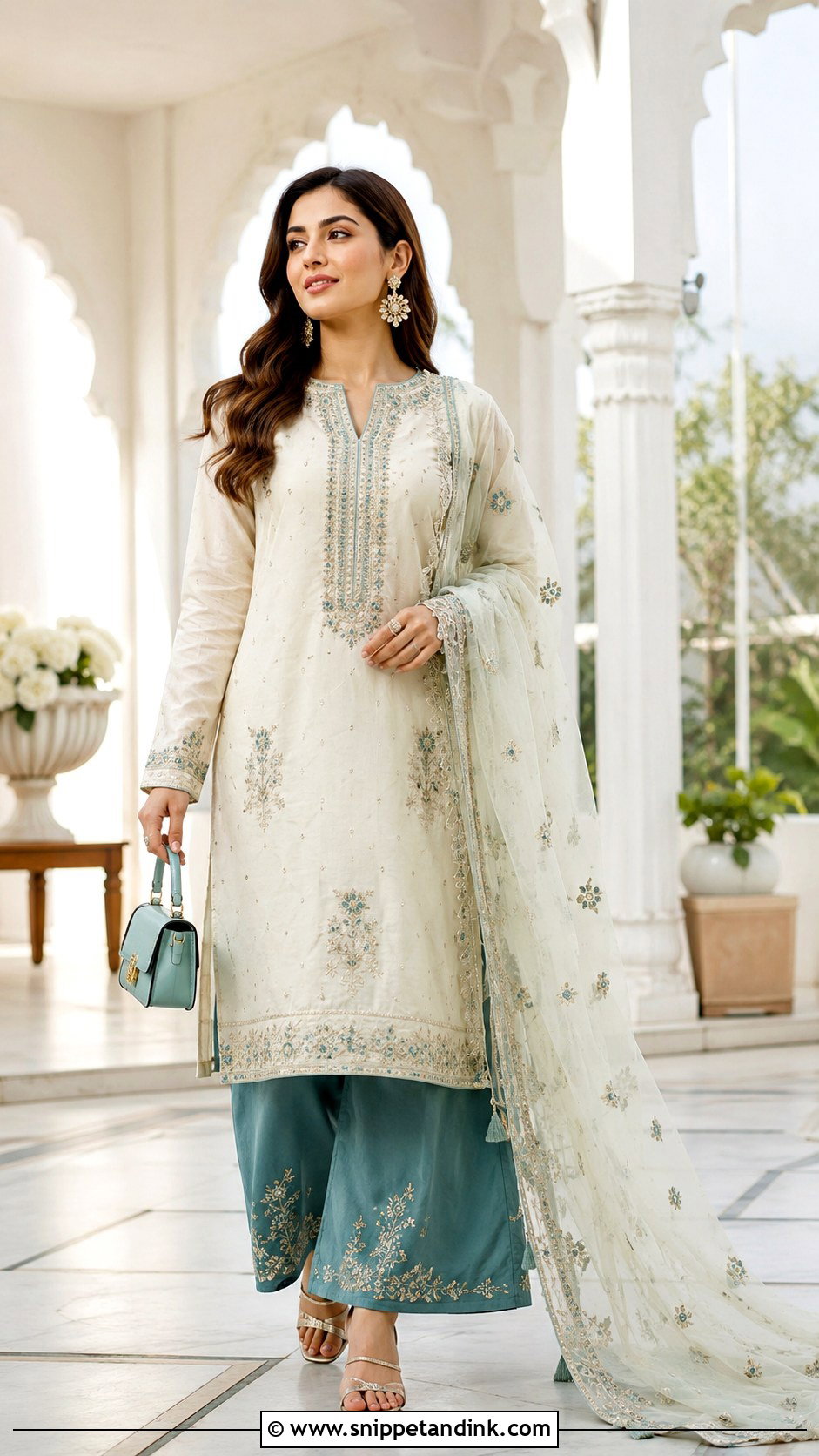
For a relaxed family function, a palazzo suit gives you comfort without looking casual. A straight or slightly flared kurta over wide-leg palazzos in silk blend, crepe or georgette moves fluidly without bulk. Detail separates it from daywear: an embroidered neck, a scalloped hem or small mirror work. If you want waist definition, choose a shorter kurta or one with shaped side seams. Block heels, a light dupatta, statement studs and a structured mini bag, with a smooth ponytail. It’s the outfit I recommend for ceremonies with long sitting, especially on floor seating.
8. Organza Saree for Marriage Function
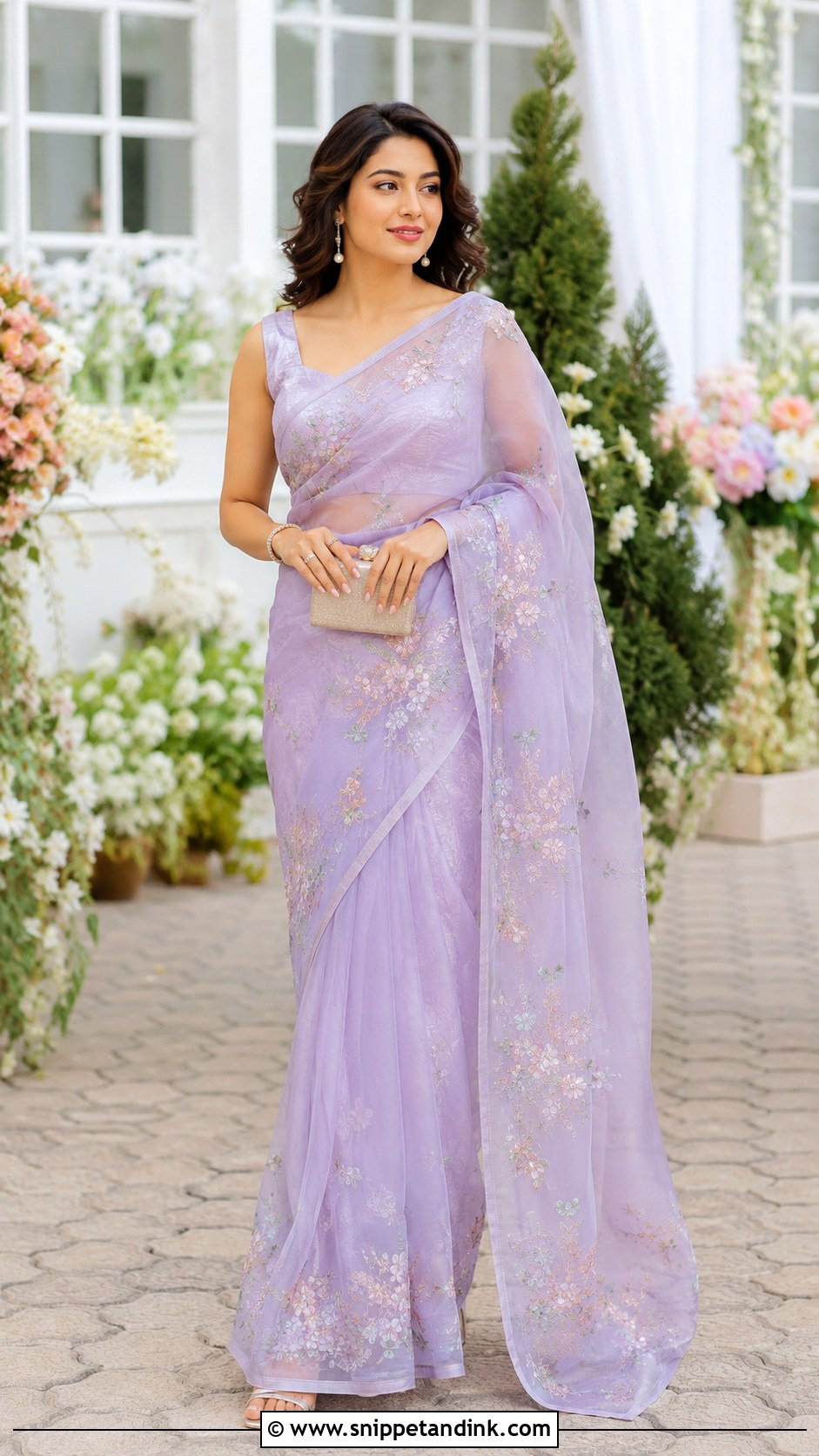
Organza is crisp and almost transparent, so it holds an airy shape at a daytime function, and it can also stand away from the body if it’s pleated too wide. I fold organza pleats narrower than usual and test the drape at home first. A structured silk blouse gives the saree a clear outline. Powder blue, pistachio or blush suit garden events, with pearl earrings, a delicate bracelet, a box clutch and low kitten heels. Keep the hair smooth, since the saree already has volume. Pinning the pallu neatly leaves both hands free for greeting and eating.
9. Cape Gown for Marriage Function
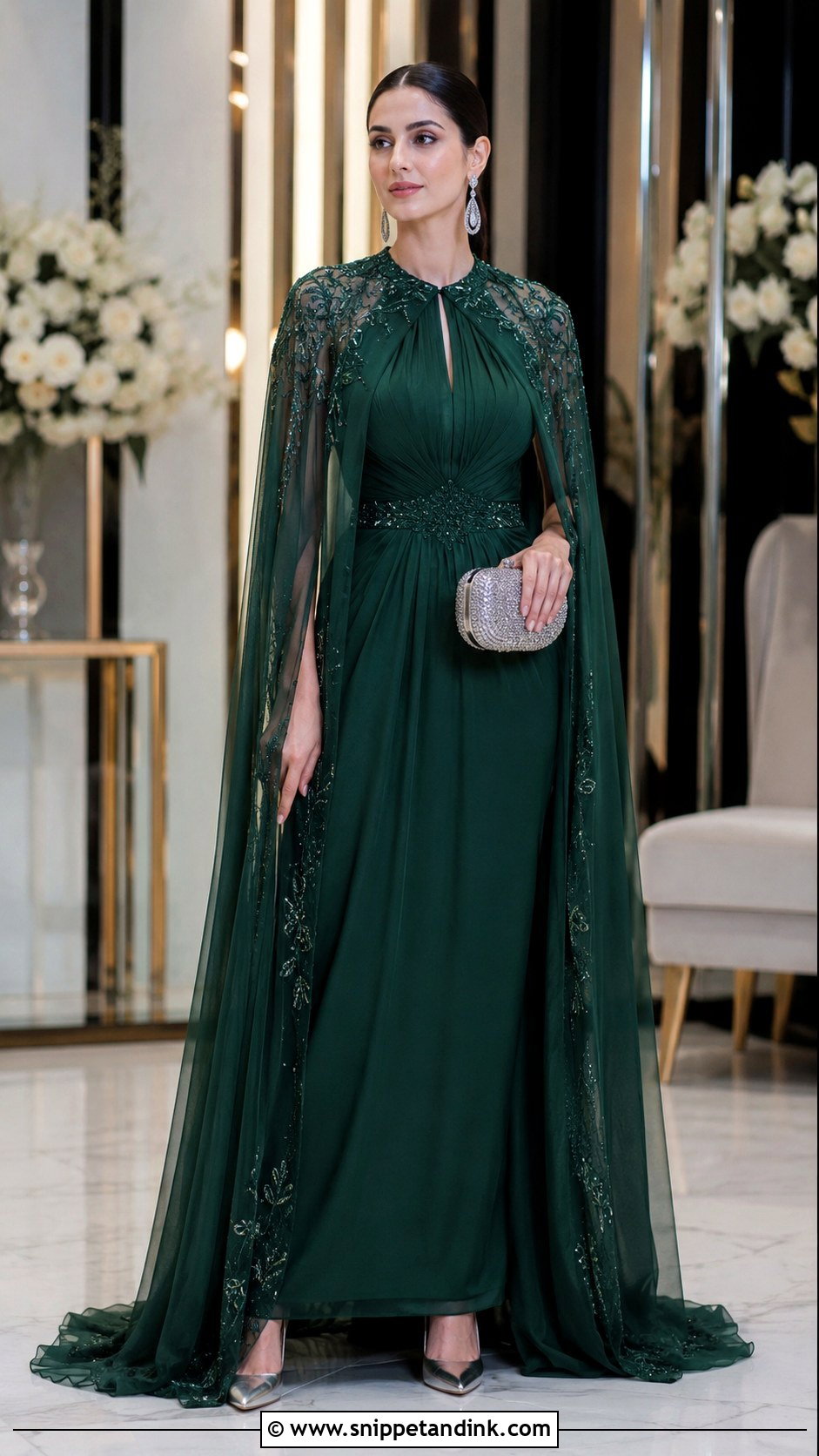
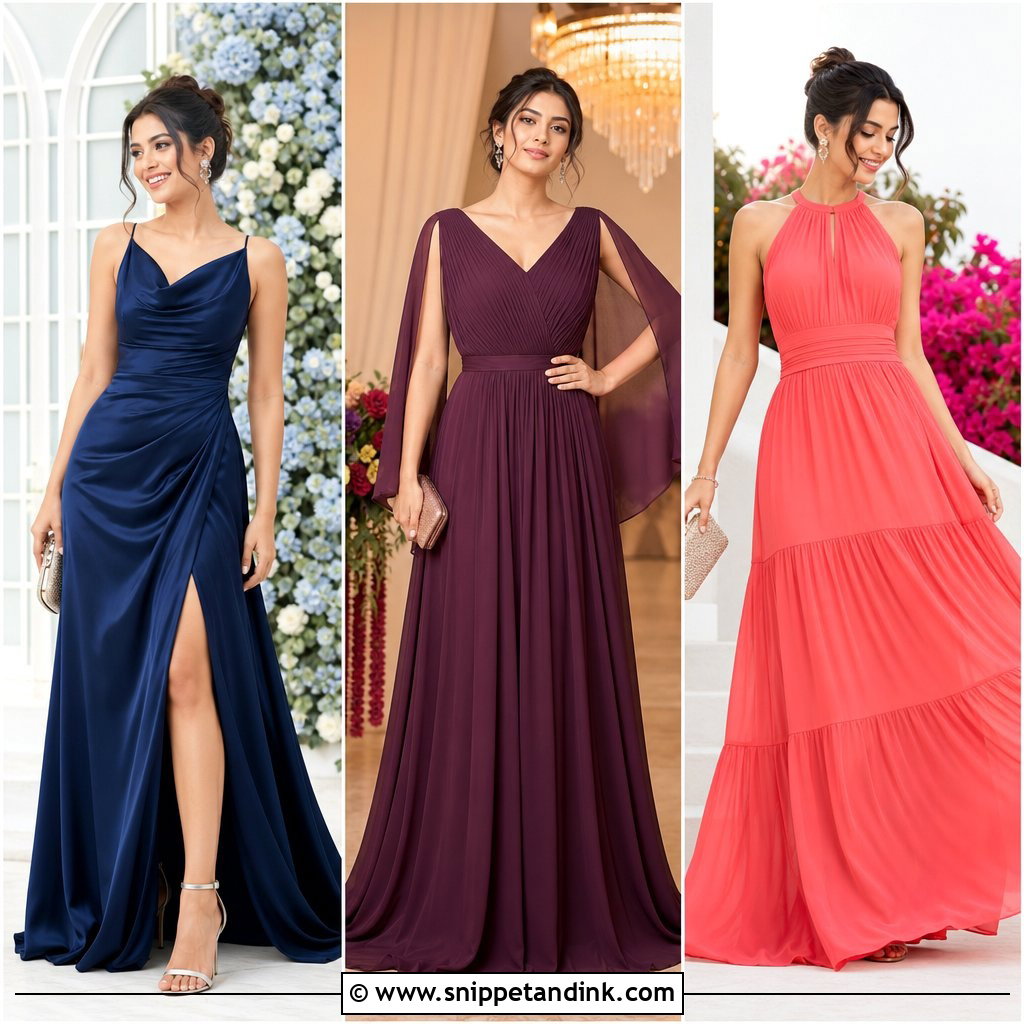
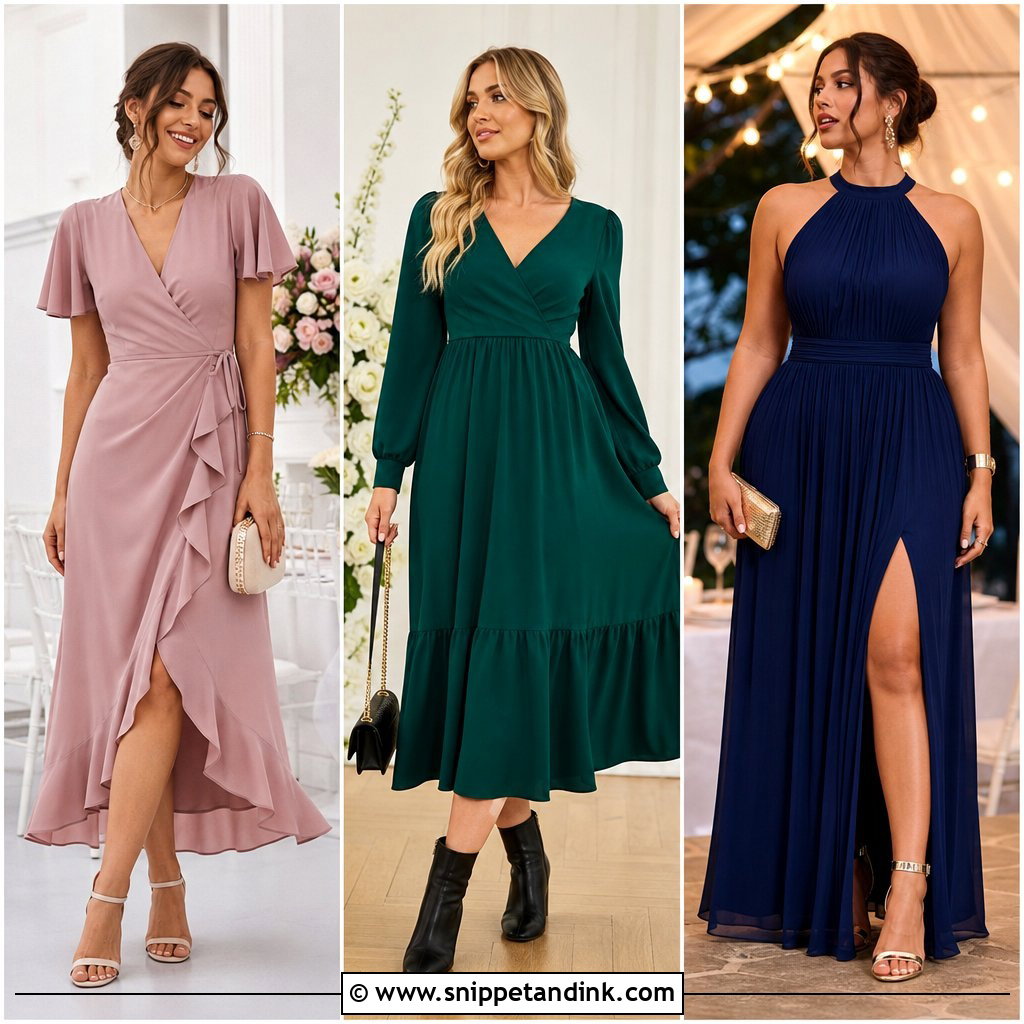
A cape gown is the shortcut I suggest to guests who want coverage and drama without managing a dupatta. A floor-length gown with an attached sheer cape or embroidered shoulder layer in navy, emerald or burgundy suits a reception or cocktail function. Keep the waist defined so the cape doesn’t make you look boxy. Check its length: a cape that trails behind you gets caught under chairs and stepped on at the buffet. Pointed heels, a metallic clutch and statement earrings, with no necklace if the neckline is worked, and a sleek low ponytail so the cape shows in photos.
10. Peplum Lehenga for Marriage Function
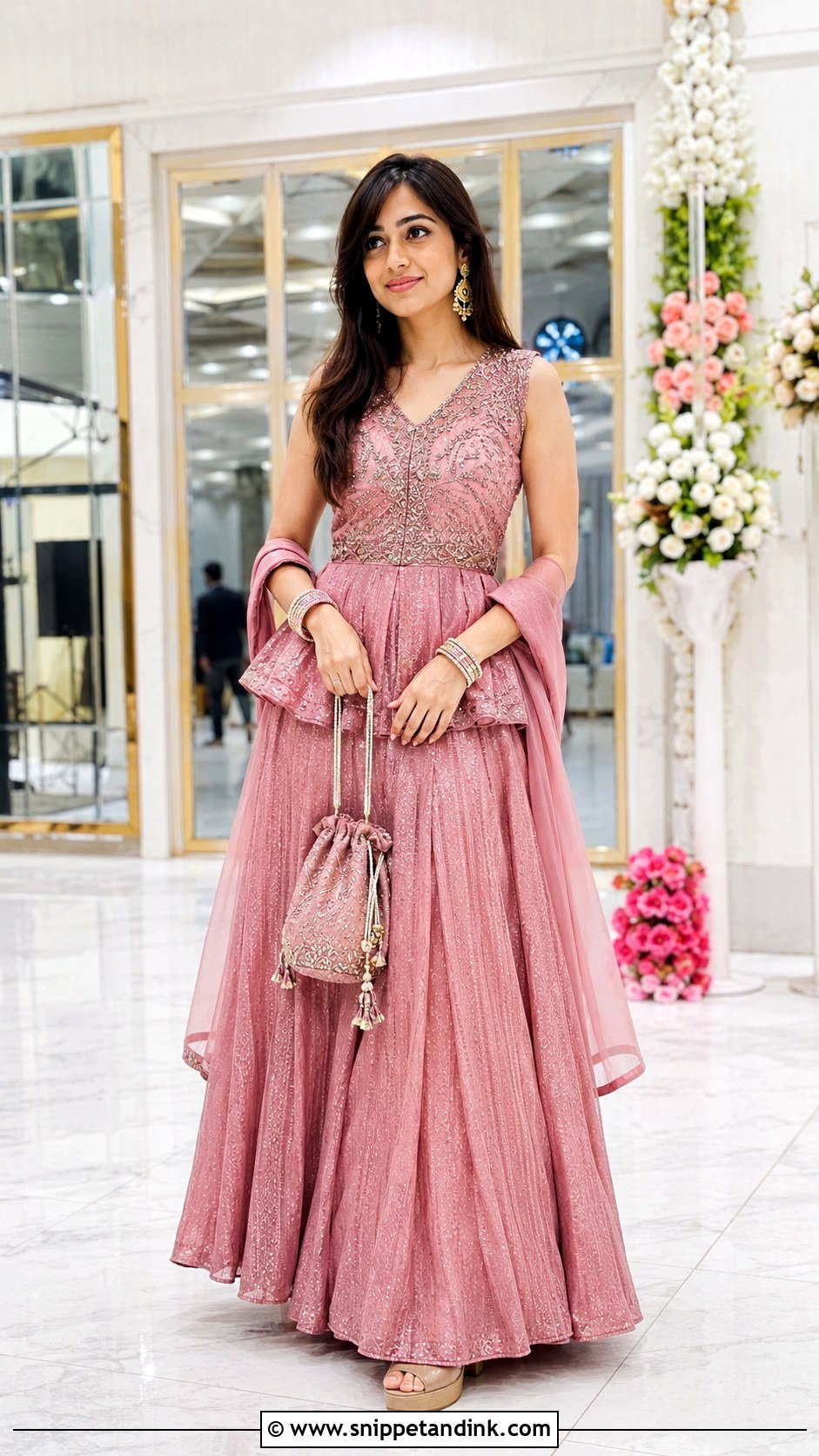
Peplum lehengas solve a common complaint: guests who don’t want a cropped blouse showing the midriff. The fitted top defines the waist, and the flared peplum covers the join with the skirt. Dusty pink, peacock blue or plum with embroidery at the neck and peplum hem looks festive. The fit point I always check is where the peplum ends. It should stop above the widest part of the skirt, or it rides up and bunches when you sit. Platform heels, a small potli and slim bangles suit it, with a half-up style to balance the volume.
11. Jacket Lehenga for Marriage Function
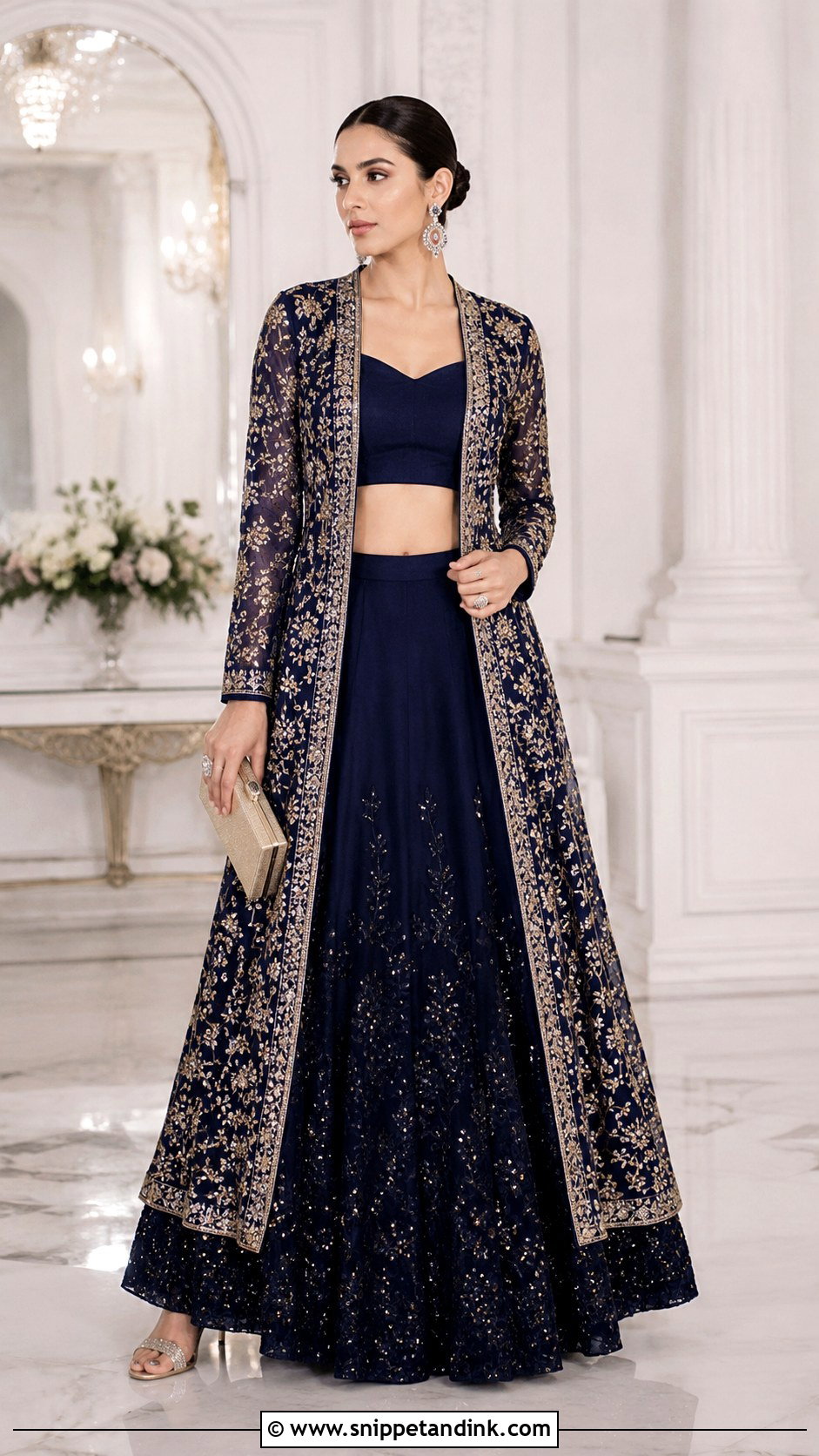
A jacket lehenga looks formal because of its layers, and the jacket does the job a dupatta would, so you can leave the dupatta at home. A simple blouse and flowing skirt go under a long embroidered jacket. A sheer open-front jacket keeps it light, while brocade or velvet makes a grander winter look. The fit through the shoulders and upper arms decides whether it works: a tight armhole stops you hugging relatives and lifting a plate. Heeled sandals, drop earrings, a sleek clutch and one cocktail ring are enough.
12. Embroidered Maxi Dress for Marriage Function
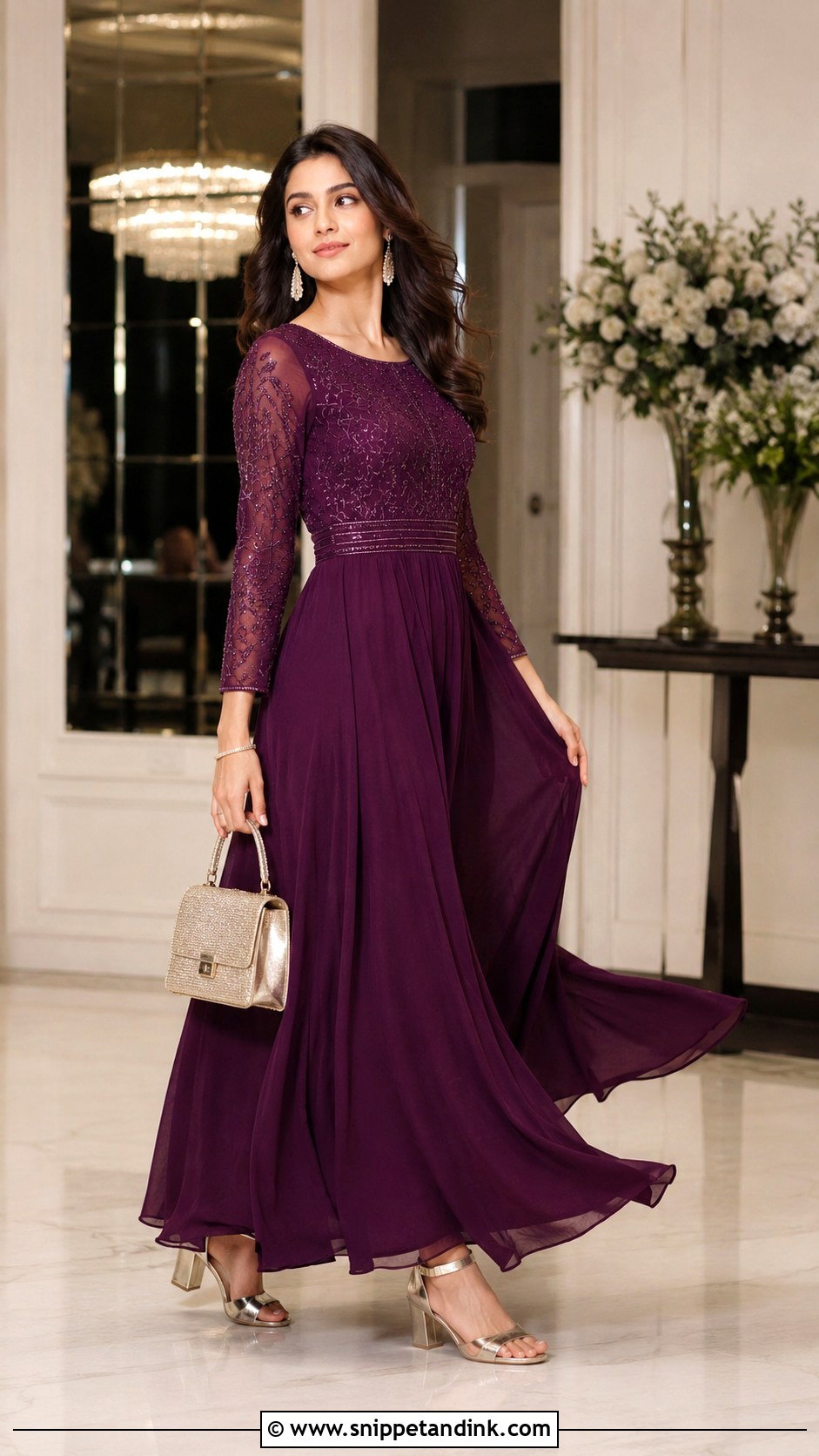
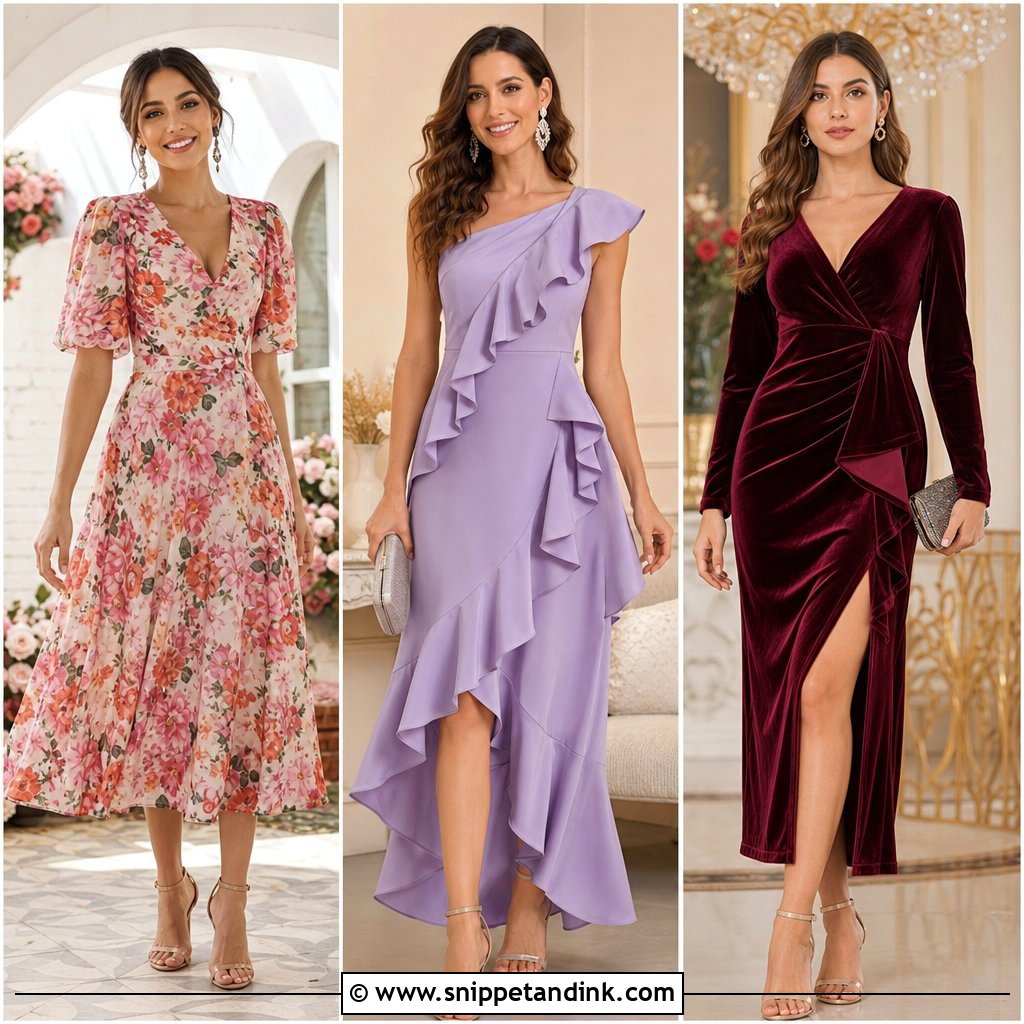
Some guests want one piece and done, and an embroidered maxi dress delivers that. Look for a defined waist, an ankle-grazing hem and detail at the sleeves or neckline. Chiffon or georgette moves softly; a lined bodice gives structure and coverage. Rich shades suit evening events, and pastels the day. Metallic block heels, drop earrings and a small top-handle bag finish it. I’d skip any train, since crowded seating and dance floors are hard on a hem. Bring a light shawl for air-conditioned halls, which can be properly cold.
13. Mirror Work Lehenga for Marriage Function
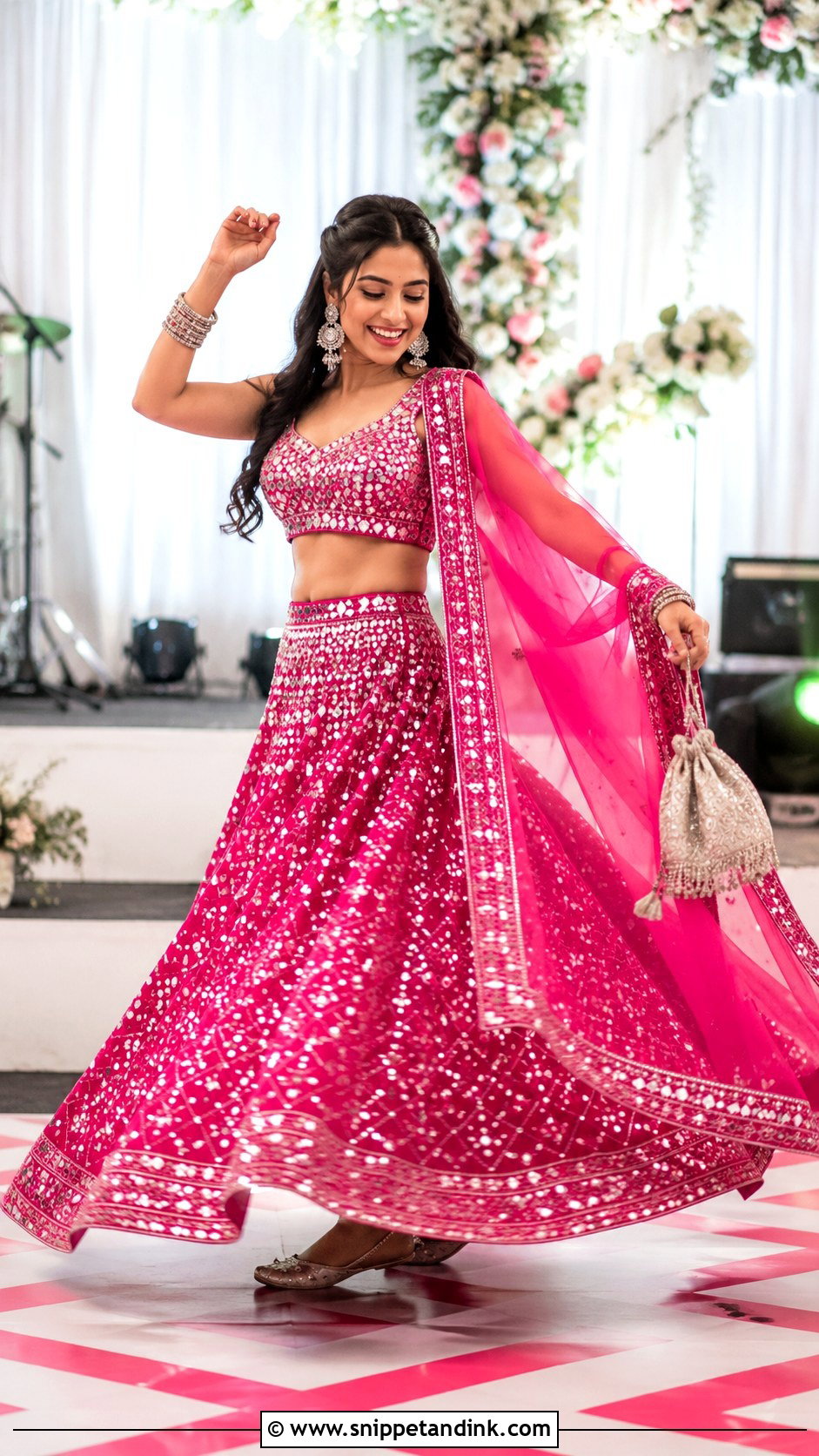
Mirror work belongs to the sangeet, where the little mirrors catch every light on the dance floor. Smaller, evenly spaced mirrors look more refined than heavy clusters. Jewel tones, hot pink, orange or turquoise bring the energy. Here’s the practical part: mirror work can scratch, especially under the arms and at the inner wrist, so check the blouse lining before you commit to wearing it for hours. A lightweight dupatta with a narrow mirrored border, comfortable juttis or block heels, silver-toned earrings and an embroidered potli, with a braided ponytail or loose waves.
14. Draped Saree Gown for Marriage Function
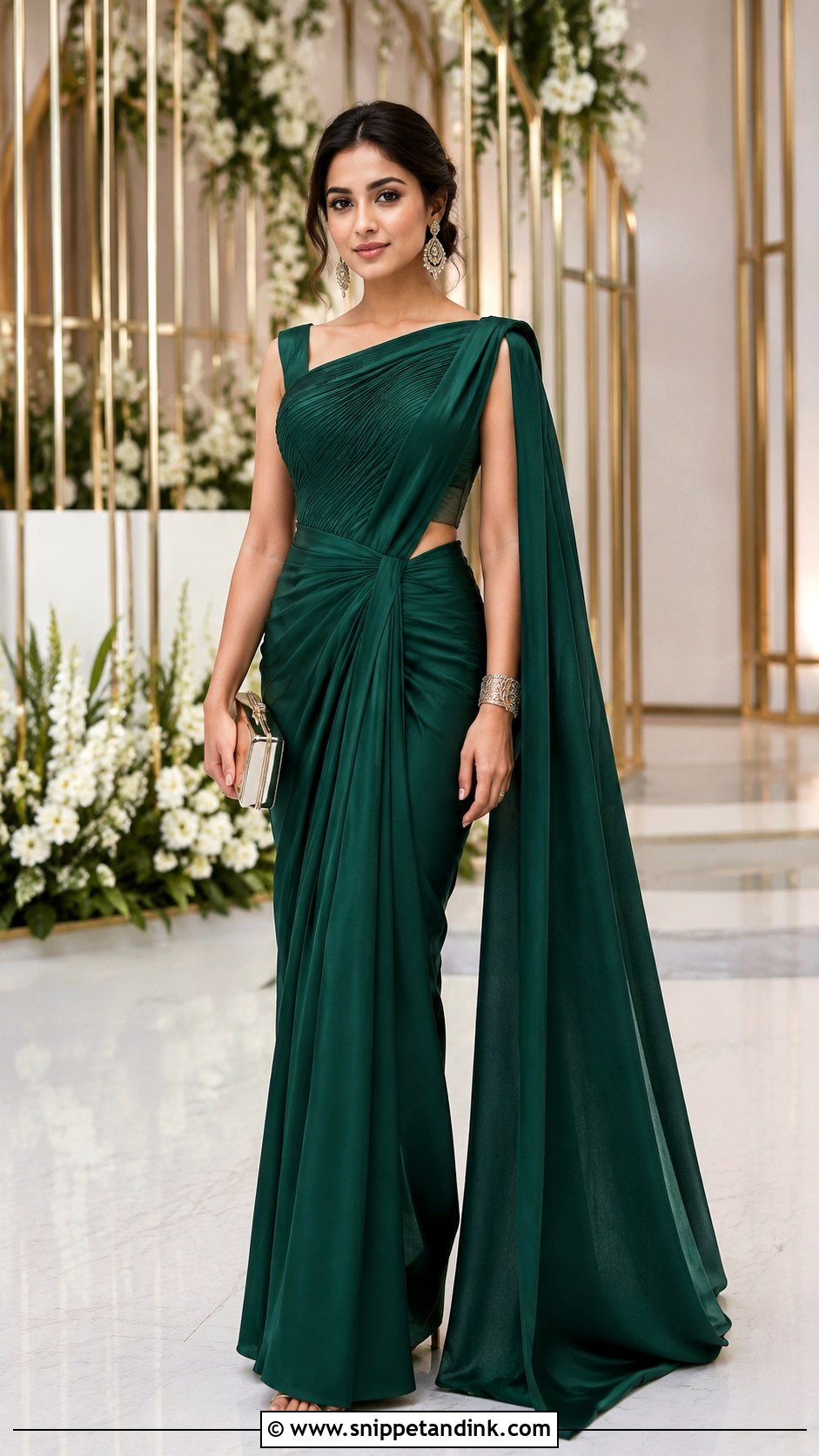
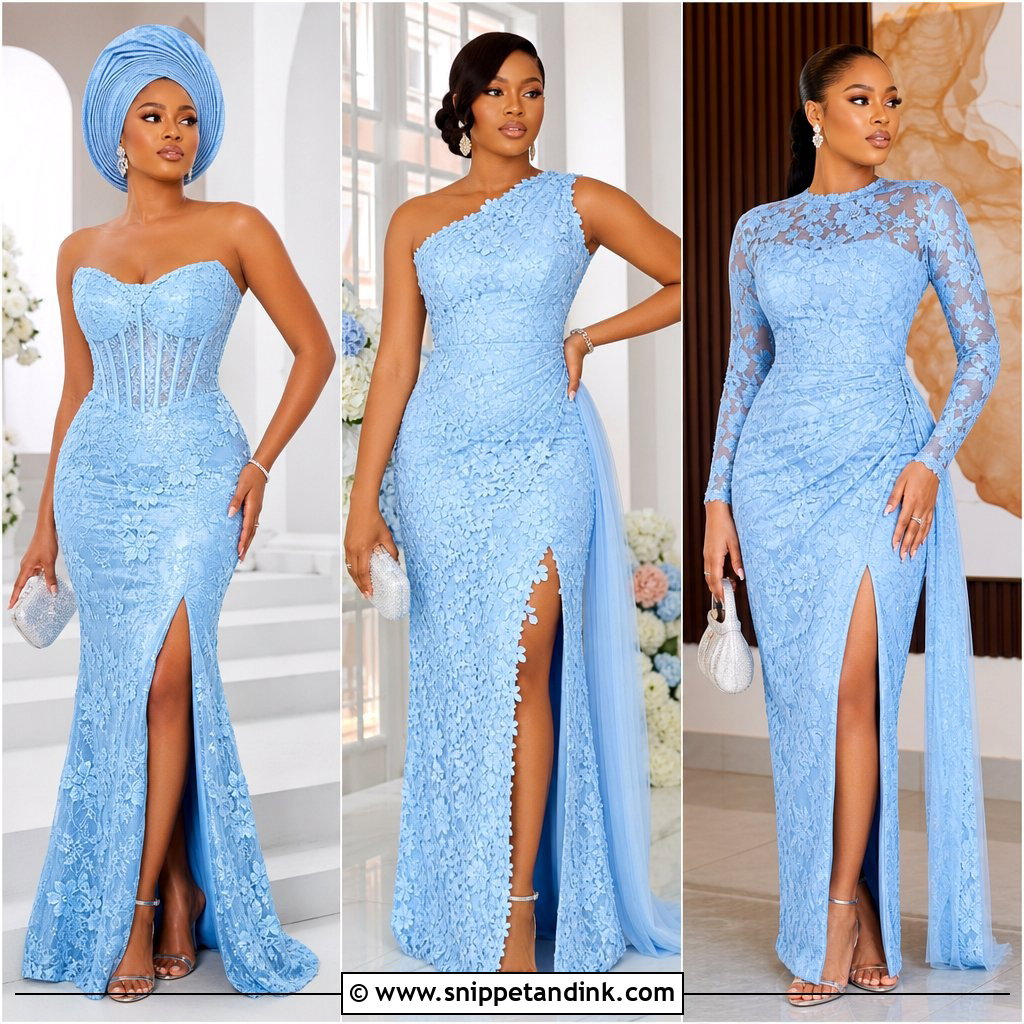
A saree gown gives the flowing pleats of a saree in a dress you simply zip into. That makes it my go-to for anyone short on getting-ready time. Look for a fitted waist, a shoulder drape stitched securely in place and enough stretch to sit. Satin, crepe and georgette in wine, cobalt or bronze suit an evening engagement or reception. Slim heels, sculptural earrings, a metallic clutch and a fine cuff, with a sleek bun to show the drape. Check that the attached pallu stops above the floor and doesn’t hide the waist detail.
15. Brocade Kurta Set for Marriage Function
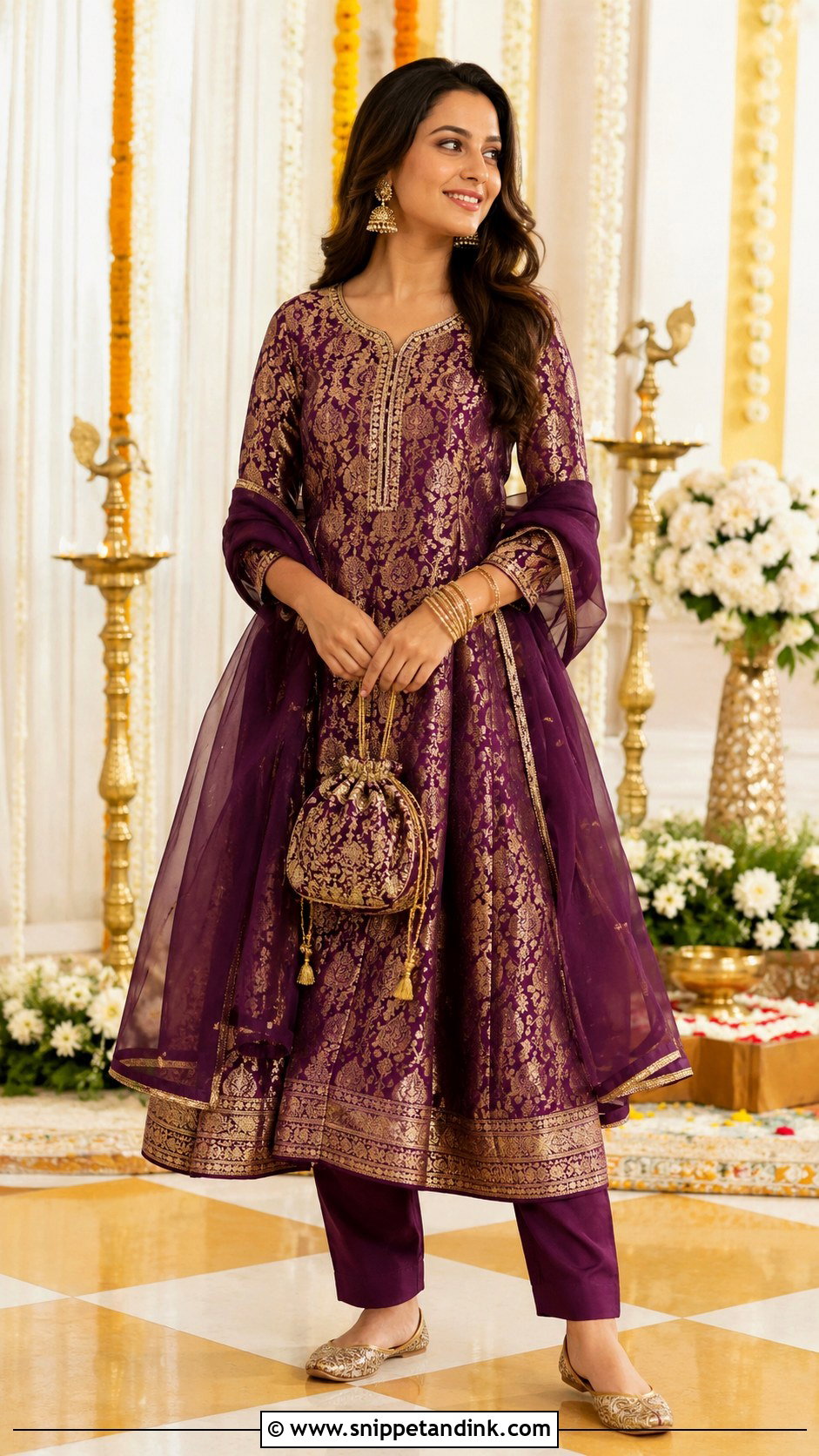
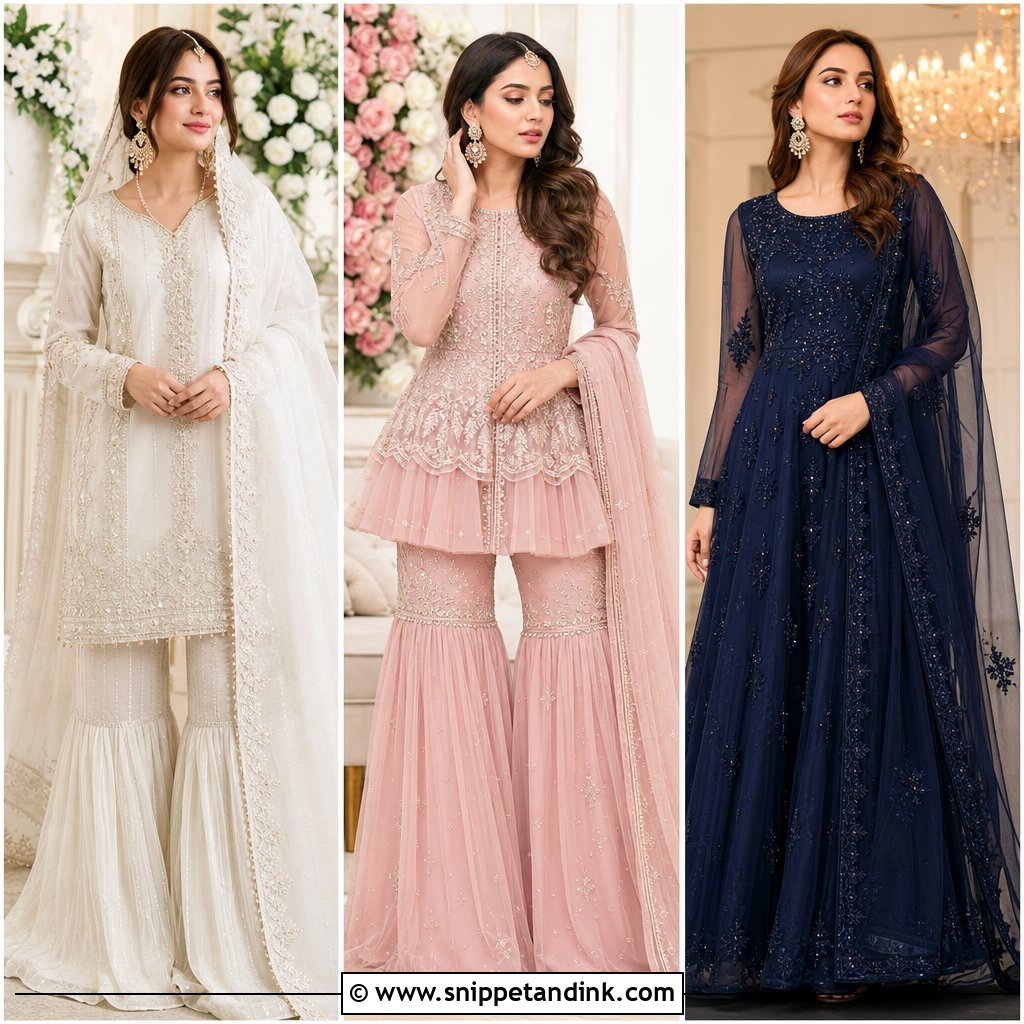
Brocade has natural body, which means it holds its own shape, so choose a cut that skims rather than one that clings. A straight or A-line brocade kurta with cigarette pants or a flowing skirt feels right at traditional, family-centered ceremonies. Gold weave flatters jewel tones; silver weave sits better on blue, lavender or gray. I usually put brocade on just one piece, the kurta or the bottom, because two heavily woven pieces together get stiff and hot. A plain organza dupatta balances the surface. Embroidered juttis, a structured potli and classic jhumkas complete it.
16. Pastel Gharara for Marriage Function
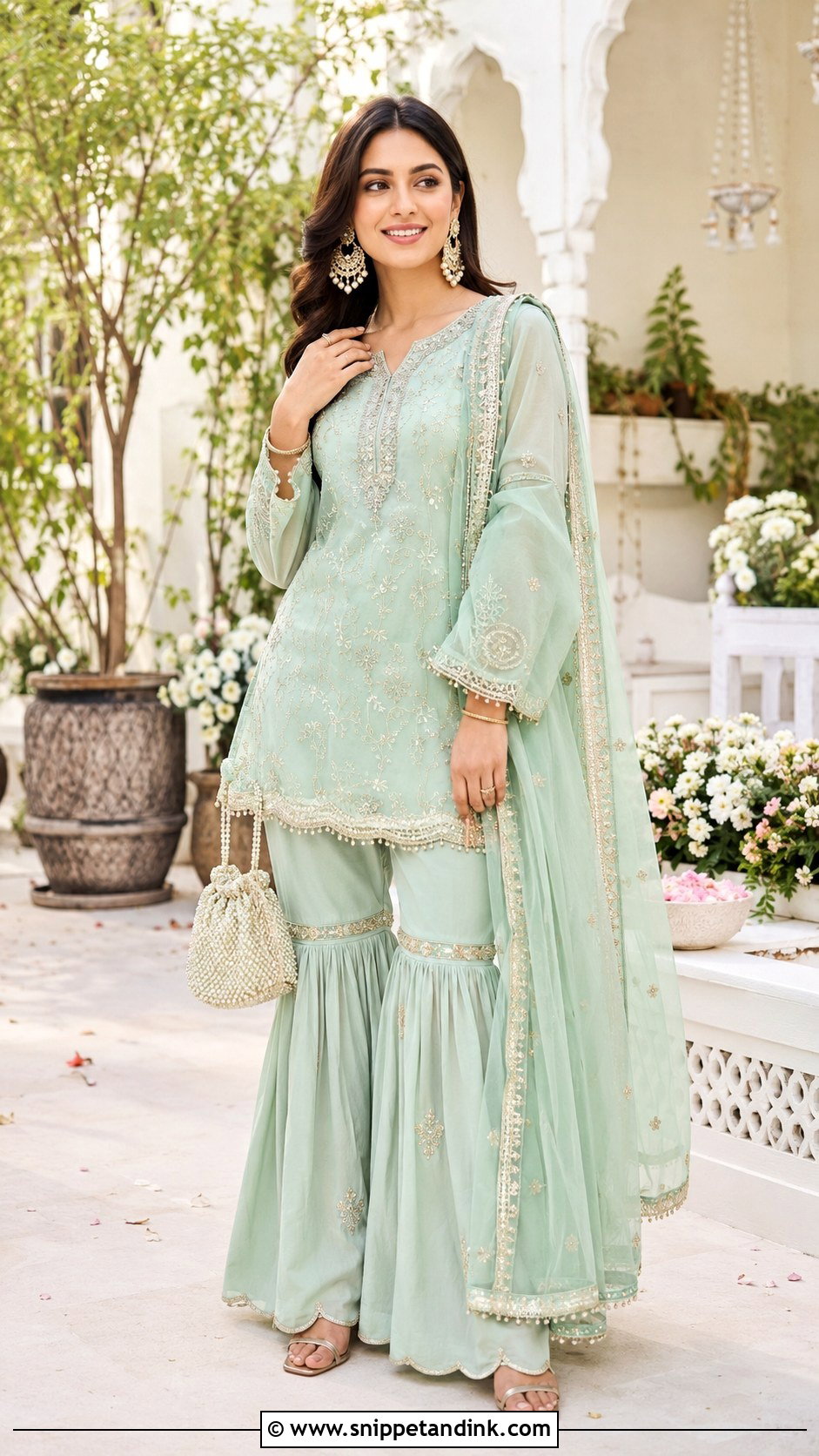
A gharara is fitted through the thigh and flares from the knee, where a decorative band covers the joining seam. That seam is everything. If it sits too high or too low, the proportions look off and the pants pull when you sit, so I always pin it on the wearer before the tailor stitches. A short embroidered kurti and sheer dupatta in mint, blush or powder blue suit daytime and warm weather. Pearl or kundan earrings, low block heels and a small beaded bag, with a center-parted bun or loose braid.
17. Ruffle Saree for Marriage Function
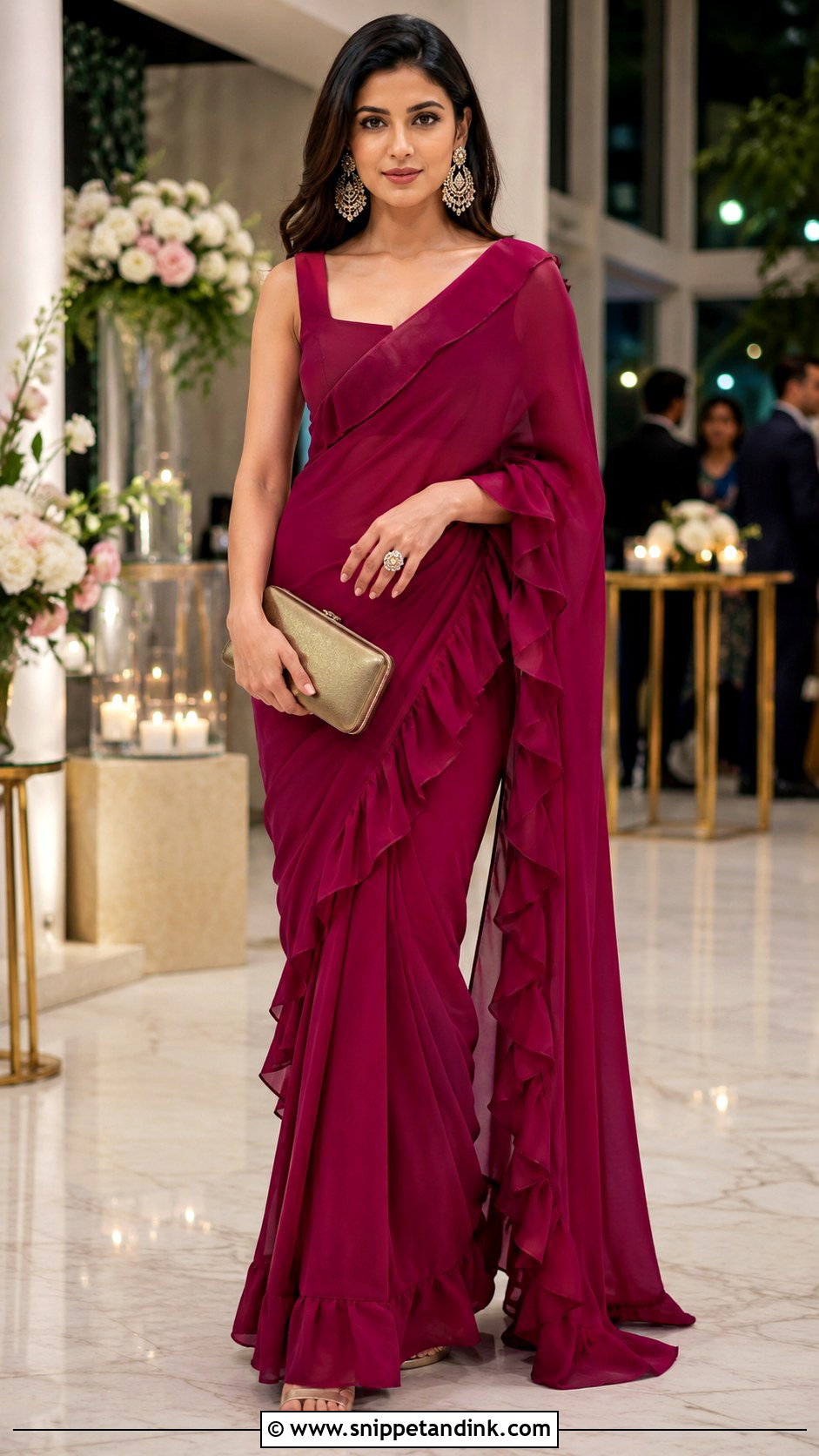
Ruffles add volume at the hem, so everything above it should be fitted and clean. I’d pick a solid teal, berry or navy, since a busy print plus layered ruffles is too much movement in one place. Ruffled fabric is heavier than it looks, which means the drape needs firmer pinning than a plain chiffon. Streamlined heels, statement earrings, a smooth clutch and one bold ring are enough; skip necklaces and bangle stacks. A high ponytail suits the modern feel. The hem should just show your shoes and stay off the floor as you walk.
18. Sequin Gown for Marriage Function
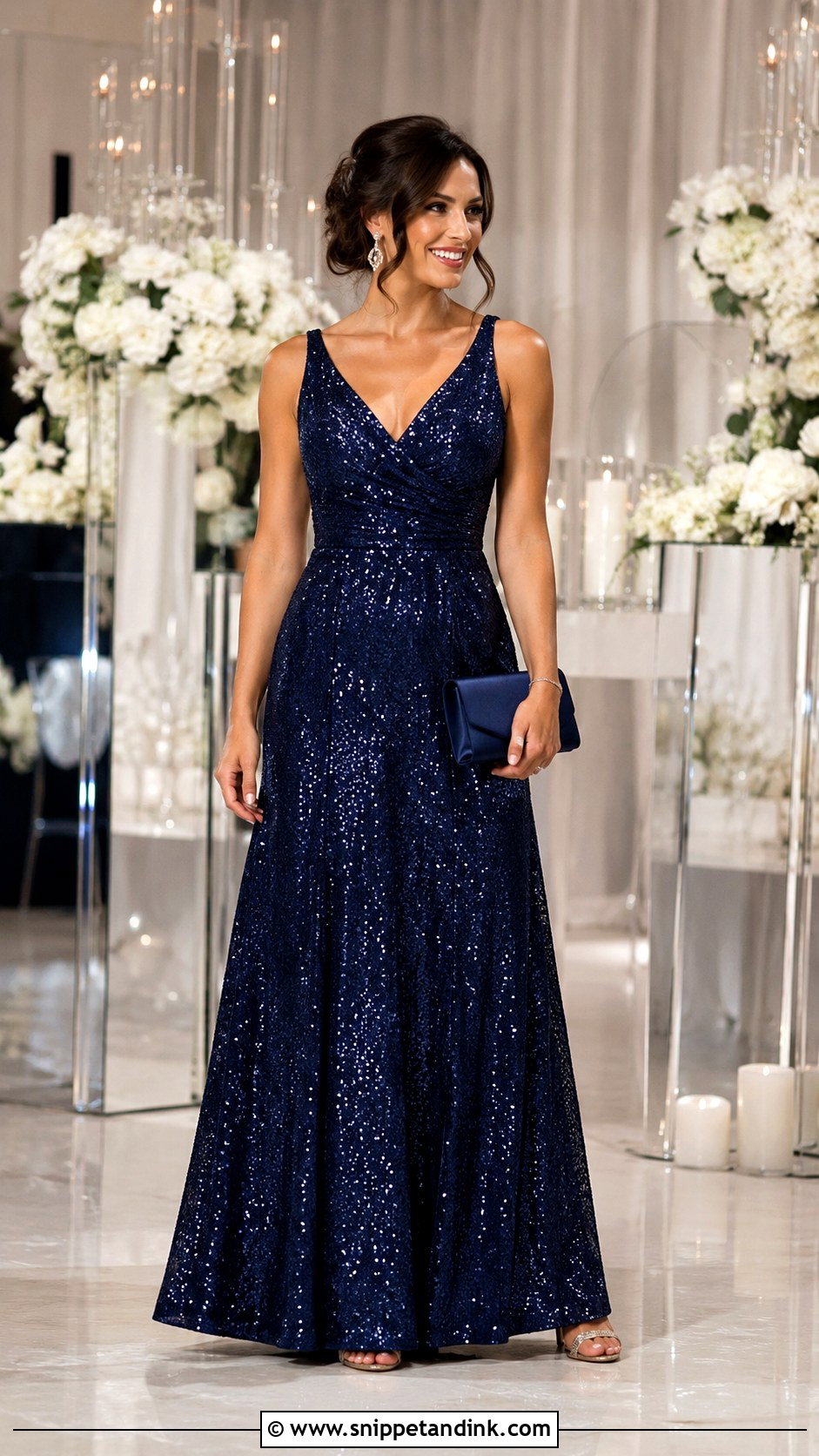
An evening reception is where a sequin gown makes sense. A column, wrap or softly flared shape in deep green, navy or graphite gives shine without looking flashy, provided the lining is soft enough to stop sequins scratching. If the whole dress is sequined, keep the shoes, earrings and clutch plain; a gown with a sequined bodice only can take bolder jewelry. Sequins bounce camera flash harder than they look in a mirror, so test it under bright light at home. Make sure you can take a full stride and sit down.
19. Indo-Western Dhoti Set for Marriage Function
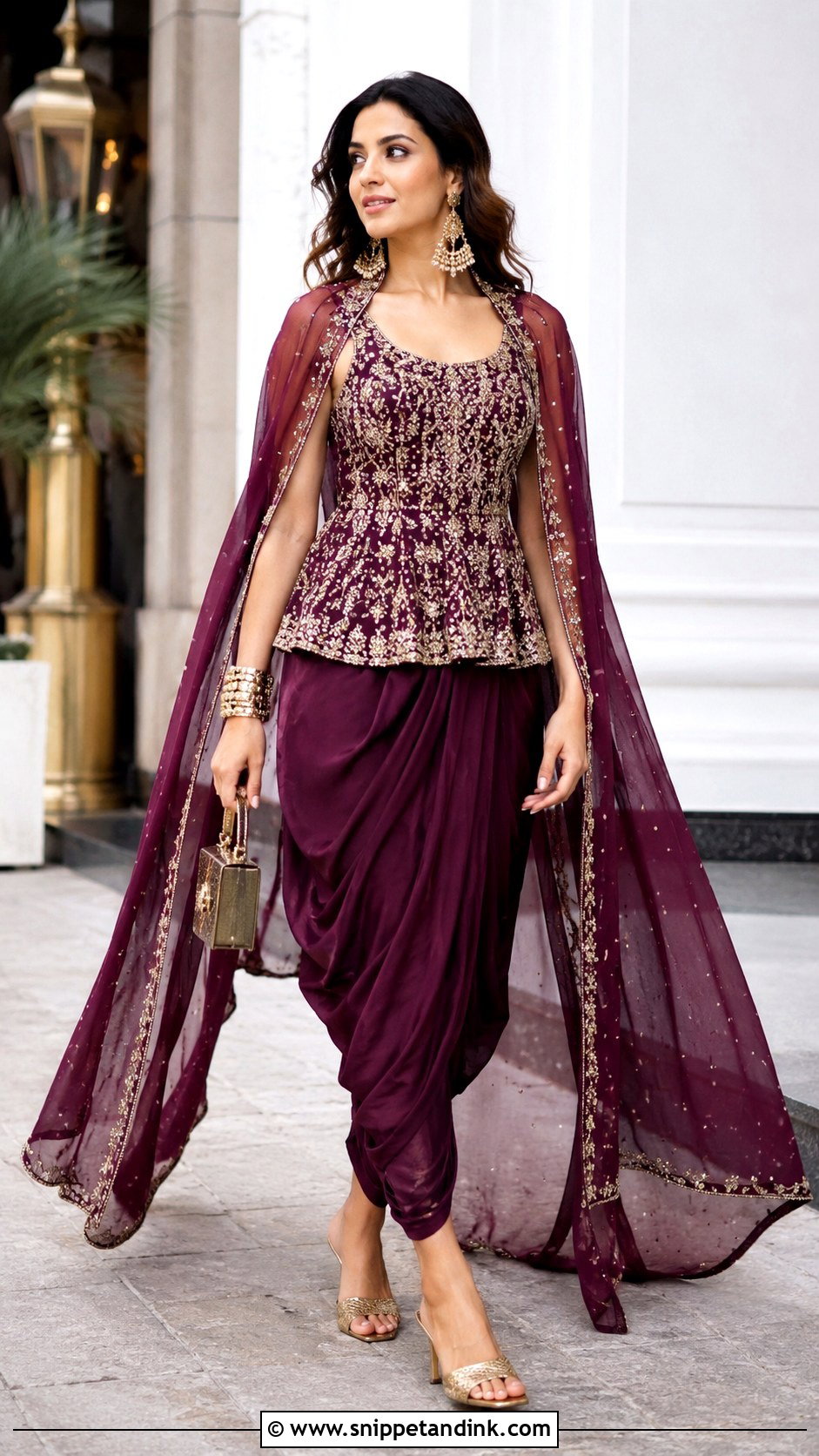
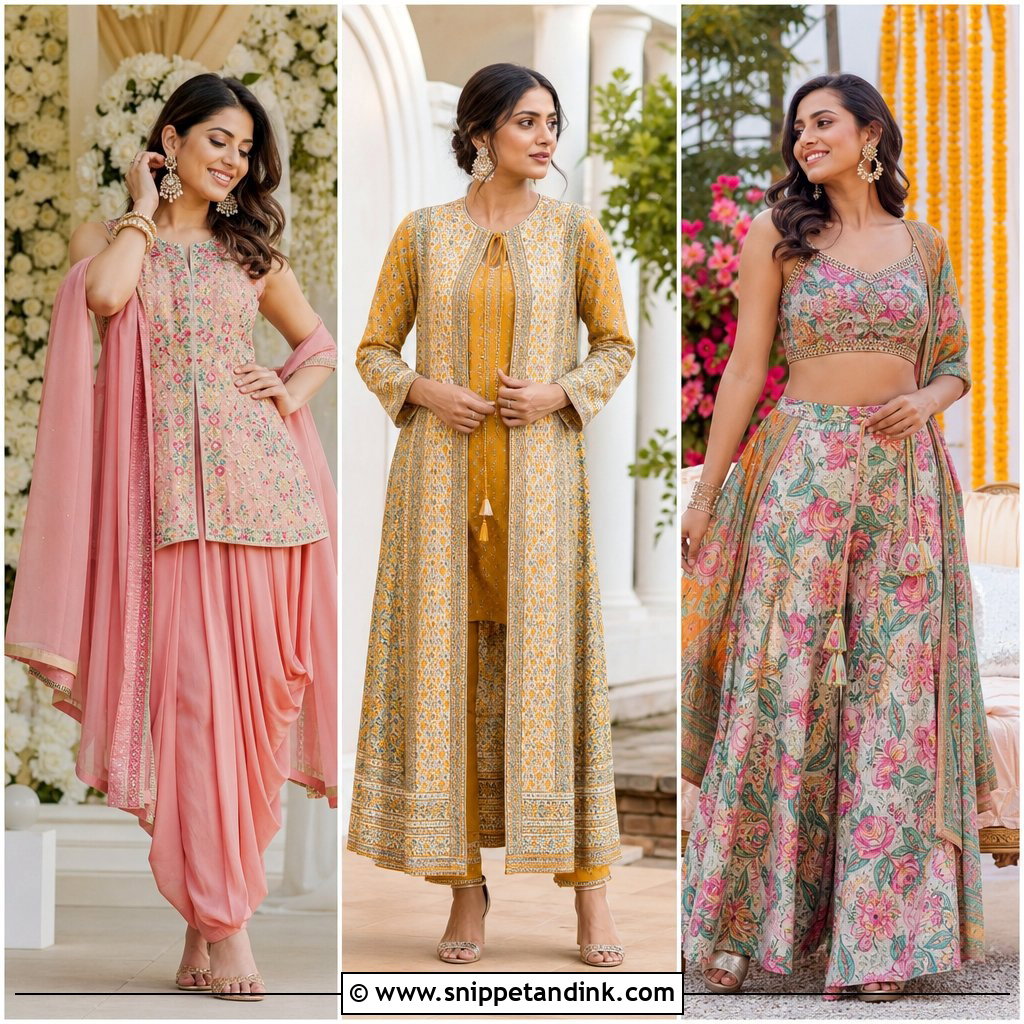
For dancing, an Indo-Western dhoti set beats any long skirt: you get the movement of draped fabric with nothing to trip over. The dhoti pants can go under a fitted top, a peplum blouse or an asymmetric tunic, with a light cape or cropped jacket for coverage. Bright colors for a mehndi, jewel tones for an evening sangeet. The waistband must be secure and there needs to be room through the hips, because draped pants pull hard when you sit. Heeled mules, modern jhumkas and a structured mini bag, with a sleek ponytail.
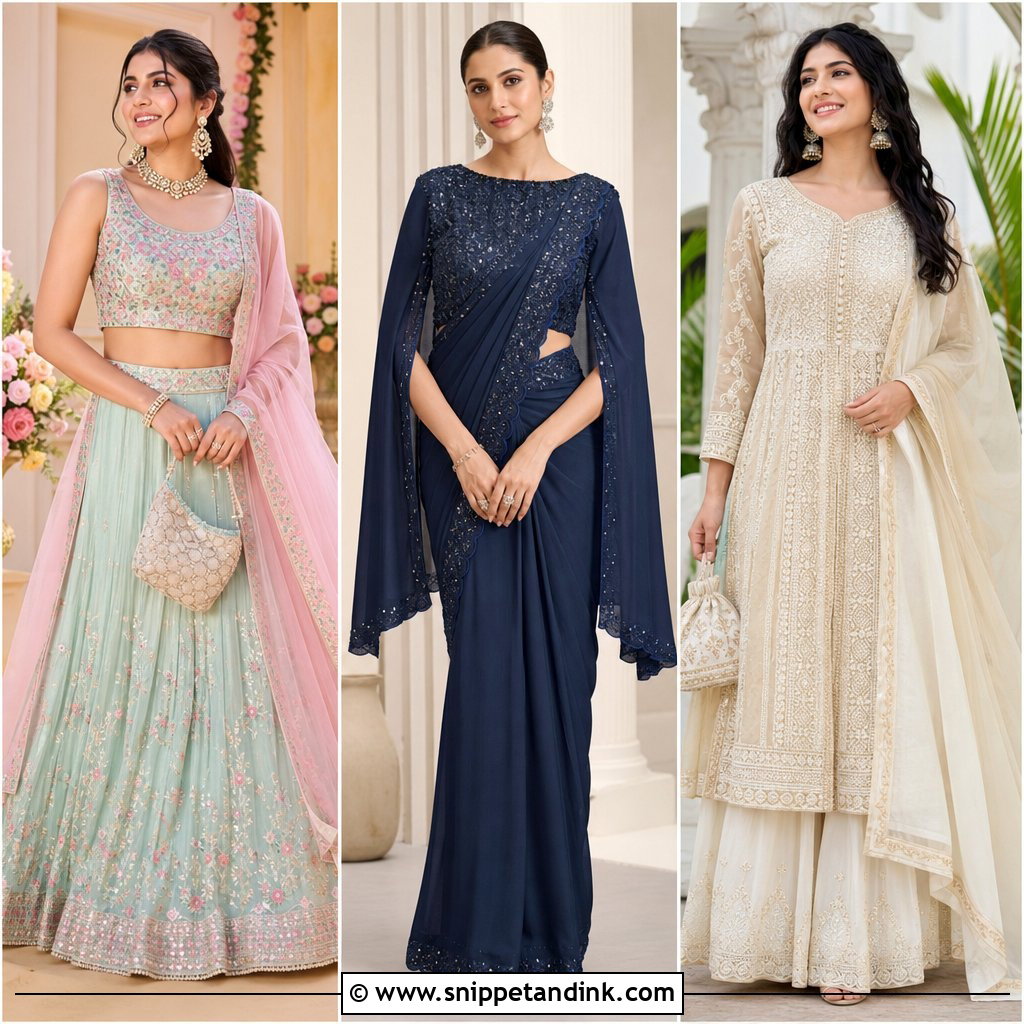
20. Printed Kaftan Dress for Marriage Function
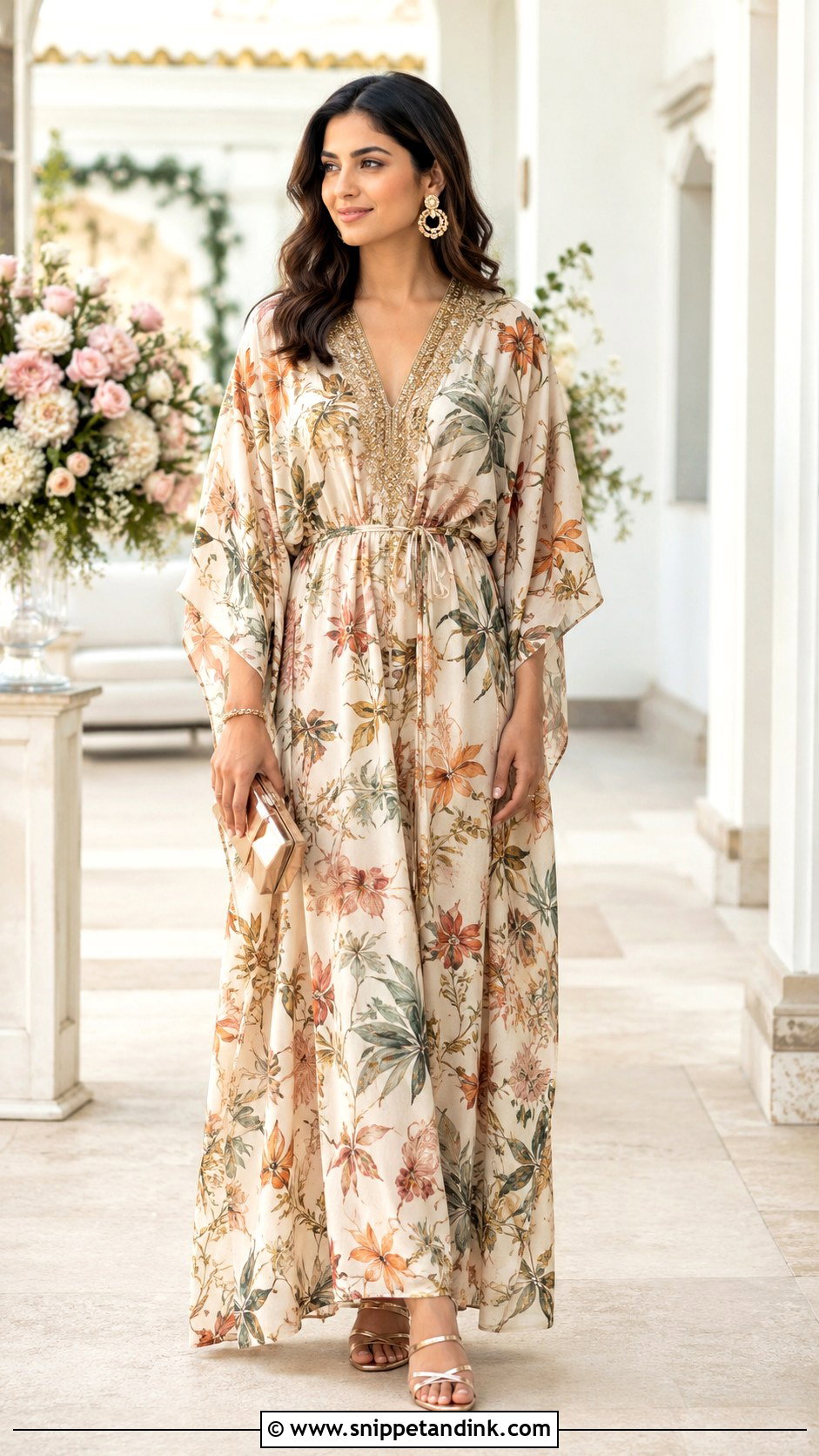
A printed kaftan dress gives freedom and coverage at a relaxed function, and the risk is looking shapeless. An inner belt, a defined waist or structured shoulders fixes that. Silk blends, crepe and chiffon fall smoothly where cotton would add bulk. Botanical prints or traditional motifs work; keep geometrics controlled. Metallic sandals, sculptural earrings, a sleek clutch and a few slim bracelets, with a low ponytail. I’d check the sleeve width before dinner, since wide kaftan sleeves end up in the curry.
Red, White and Bare Feet at the Ceremony
A few guest customs come up constantly. At many North Indian weddings the bride wears red, so guests steer away from a full red lehenga that could compete with her. White is associated with mourning in some Hindu families, and some families also feel strongly about black at the wedding itself. Customs differ by region and household, so when in doubt, I tell guests to ask the couple or a family member rather than guess.
Ceremonies held in a gurdwara or temple bring their own practicalities. You’ll remove your shoes and often sit on the floor, and at a gurdwara everyone covers their head. That favors outfits with a dupatta long enough to drape over the hair and skirts or pants you can fold your legs under without strain. Slip-on juttis or sandals make the shoe rack much less awkward than buckled heels.
Getting the Blouse Stitched Before Peak Season
Saree and lehenga blouses are usually tailored to measure, and that takes longer than people plan for. A tailor typically needs a few weeks, and in the busy winter wedding months the queue grows, so I’d hand over the fabric six to eight weeks ahead and allow time for a second fitting. Ask for padding or cups to be built in if you’d rather skip a separate bra.
For a new saree, have the fall and pico done at the same time. The fall is a strip of fabric stitched inside the hem that weighs it down so the pleats hang straight, and the pico finishes the raw edge. Both are quick jobs, yet they’re the difference between a saree that drapes and one that flips up as you walk.
Test the Whole Outfit Sitting on the Floor
Each function sets its own mood. Floral lehengas and pastel ghararas suit the daytime events; velvet, sequins and heavy silk belong to the grand evening reception; shararas, Anarkalis and saree gowns fill the space between. Before you settle on anything, confirm the venue and the family’s expectations, and check the weather. Then put the whole outfit on at home with its shoes, jewelry, bag and undergarments, and sit on the floor, stand, eat and dance in it. Most problems show up in that ten-minute test, while they’re still easy to fix.
You'll Like These Ideas:



Leave a Reply