
A multi-day wedding can mean five outfits in four days: a haldi morning, a mehndi afternoon, a sangeet that runs past midnight, a ceremony and a reception. Each one asks something different of the clothes. Haldi needs fabric you can get messy, mehndi needs free hands, sangeet needs to move, and the ceremony needs to sit on the floor gracefully. I plan function wardrobes event by event, then work out the shoes, jewelry and bag for each so nobody is unpacking in a panic an hour before. Here’s how I’d dress for each one.
Mapping Four Days of Outfits Before You Shop
When I help someone dress for a full wedding week, I start with a simple grid: each function, its time of day, whether it’s indoors or out, and what people will be doing there. Only then do we choose clothes. It stops the classic mistake of buying three heavy lehengas and nothing you can sit on the floor in.
- Give each function a different color family so the photos don’t look repeated.
- Put your heaviest outfit on the evening with the least dancing, and your lightest on the sangeet.
- Reuse jewelry and shoes across functions; gold jhumkas and one pair of embellished flats can carry three events.
- Leave tailoring of blouses and kurtas at least three to four weeks before you travel, with time for a second fitting.
Also ask the family about any color rules. Some families dress all guests in yellow for haldi or green for mehndi, while red is often kept for the bride. Knowing that early saves you from buying the wrong thing.
1. Haldi Yellow Anarkali Dress
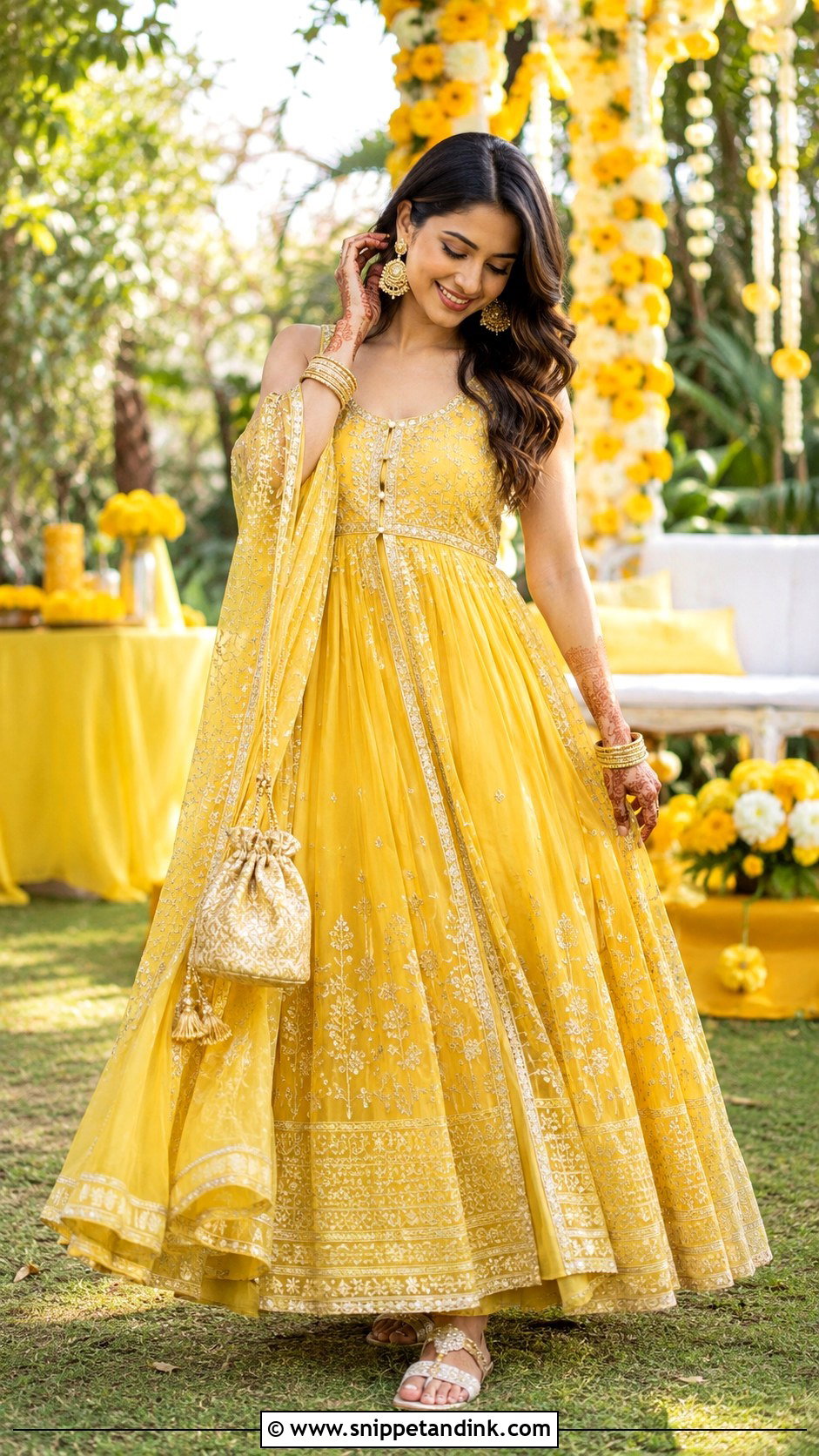
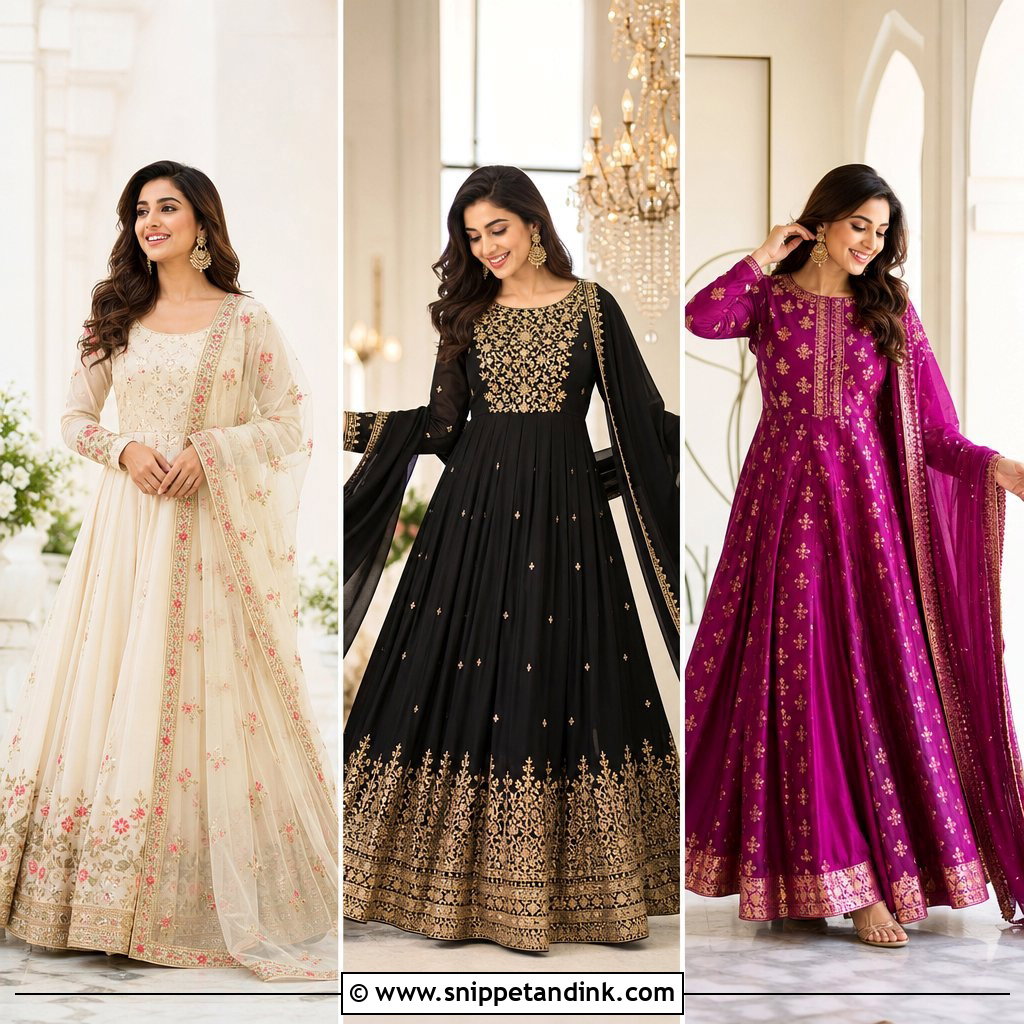
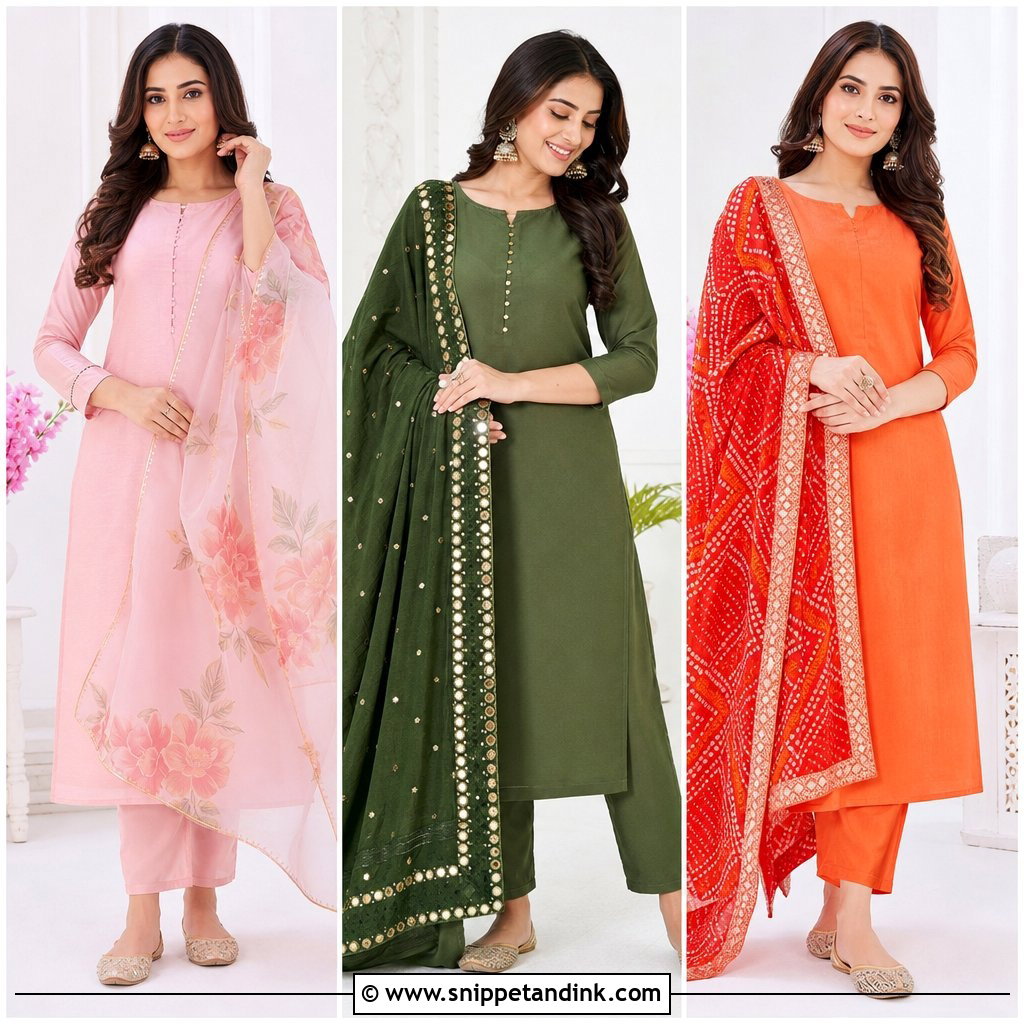
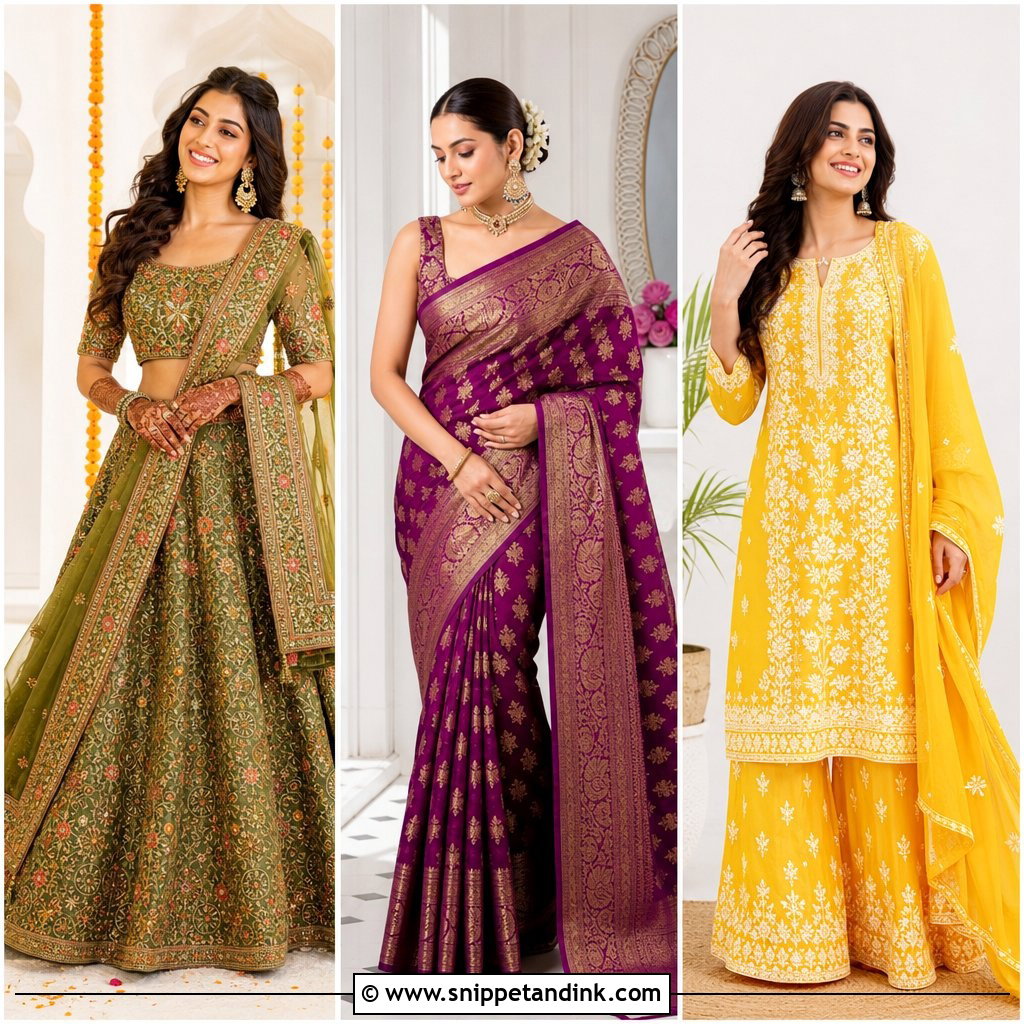
Haldi is the one function where your outfit will almost certainly get turmeric on it, so I never put anyone in their best silk for it. A yellow Anarkali dress in cotton silk, georgette or light chiffon with gota or mirror work looks festive and hides a smear or two. The flared skirt lets you sit cross-legged for the rituals. Flat embellished sandals, gold jhumkas and a few bangles are enough. Keep makeup dewy and light; heavy foundation and a paste of turmeric and oil don’t mix.
2. Mehndi Green Sharara Dress
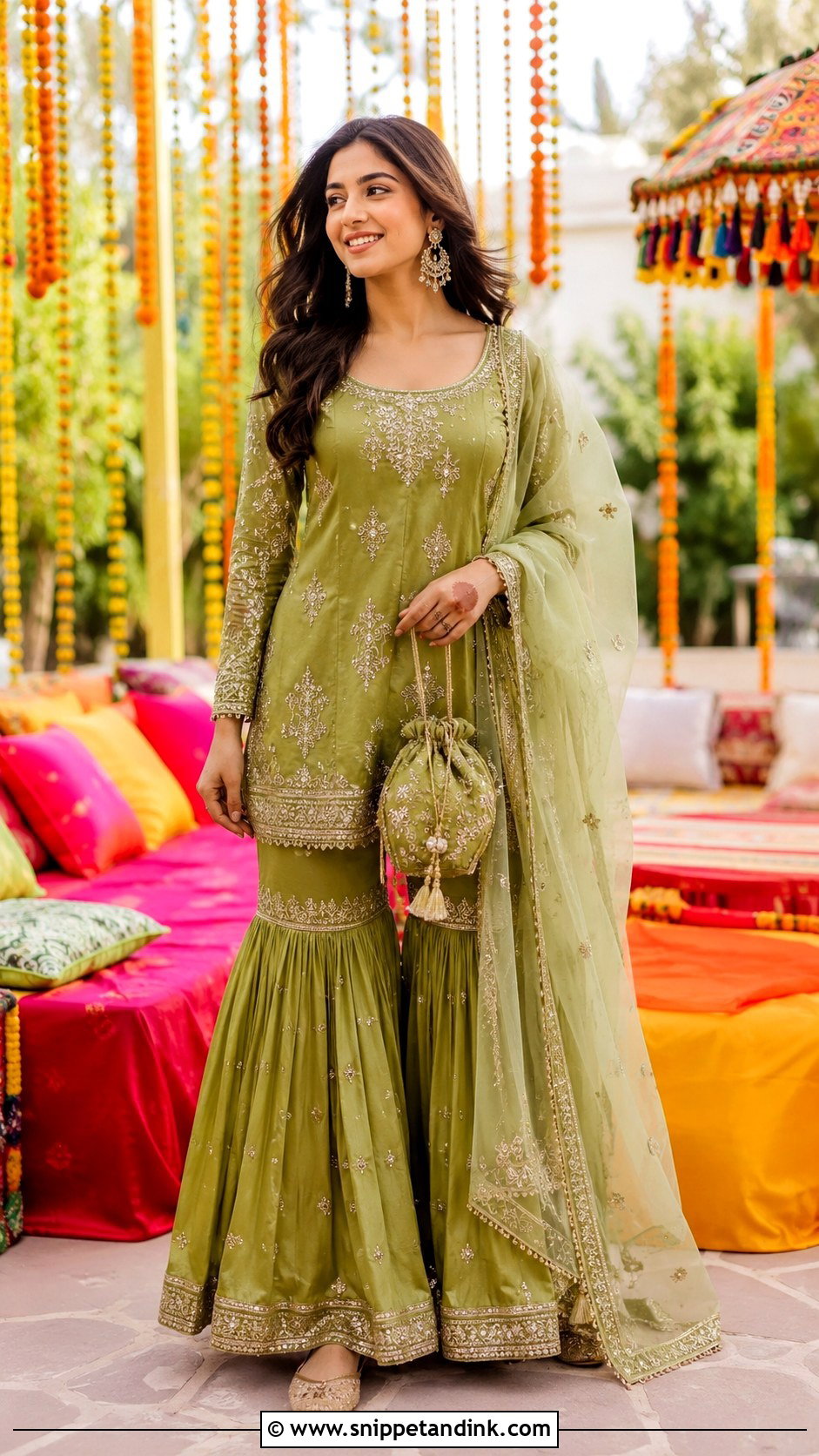
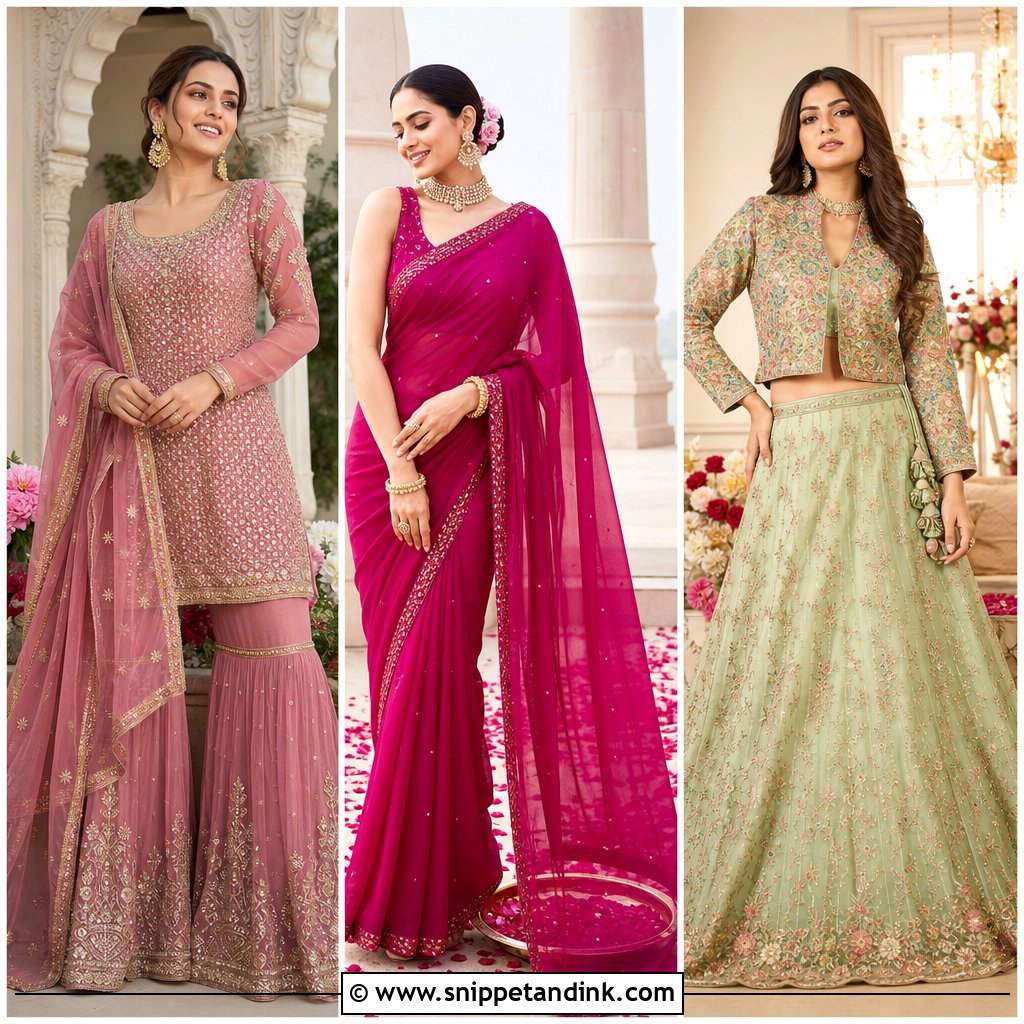
Green is traditional for a mehndi function, and a short kurti with a sharara is my go-to because nothing trails on the floor while you sit for hours. If you’re getting henna yourself, keep the dupatta light and pinned back, because wet paste smudges onto everything it touches and stains it. Mirror work and tassels give the festive look, so jewelry can stay to earrings and a maang tikka. Juttis are easier than heels for sitting on floor cushions.
3. Sangeet Sequin Lehenga Dress
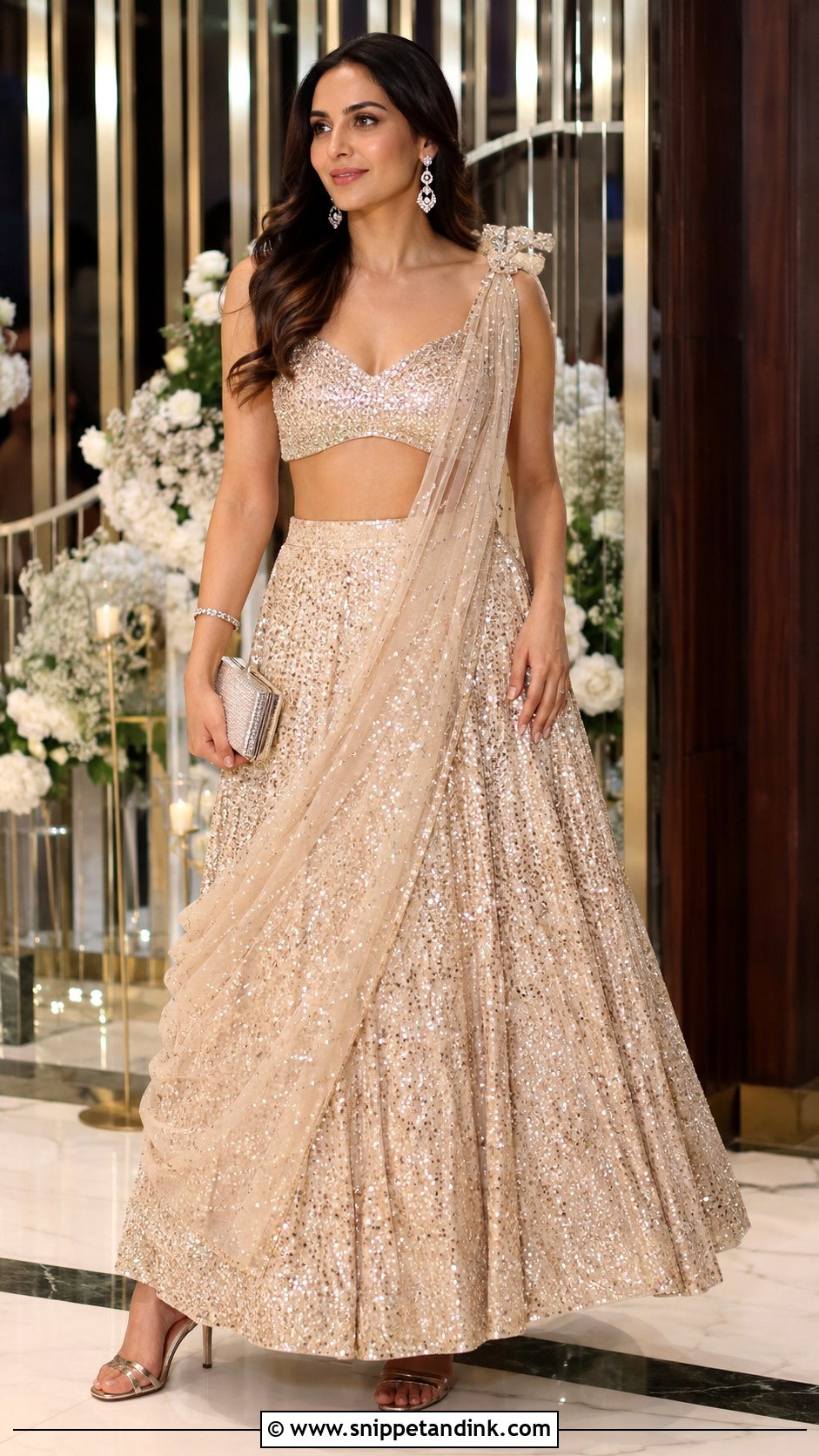
Sangeet is where sparkle belongs, under stage lights and in a crowd of dancing cousins. A sequin lehenga for a sangeet night needs one thing above all: a dupatta pinned firmly at the shoulder and waist, because a loose one slips the first time you spin. I’d check the weight too. A heavily sequined skirt can be surprisingly heavy, and you’ll feel it by the second hour of dancing. Drop earrings, metallic heels you’ve broken in, and soft glam makeup that won’t melt.
4. Cocktail Satin Midi Dress
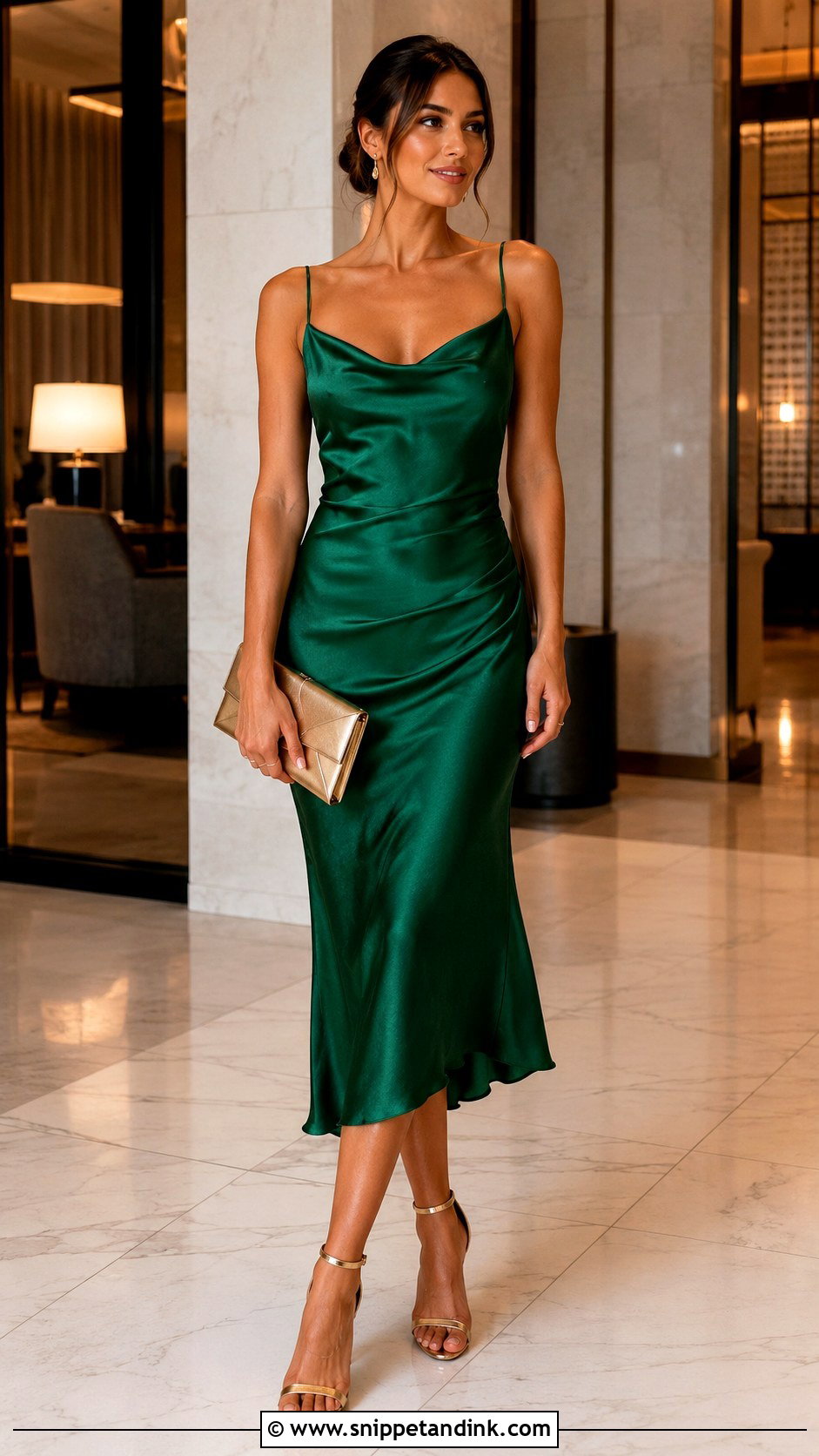
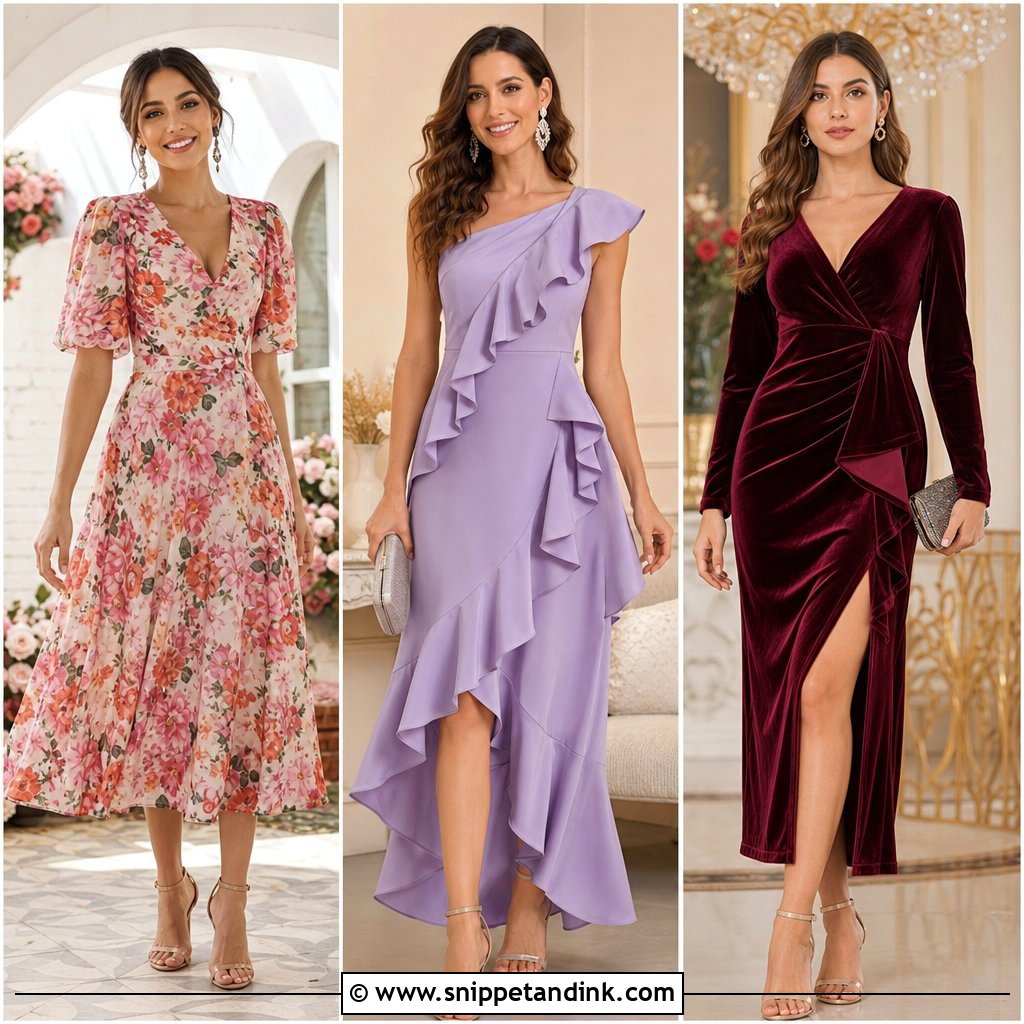
For a cocktail wedding function with a modern dress code, a satin midi in emerald, burgundy or sapphire is my safest pick. A cowl, wrap or one-shoulder neck feels dressed without being a gown. Satin shows water marks from spilled drinks, so choose a mid-weight one and keep a napkin handy. Strappy heels, sleek jewelry and a blazer for a cool rooftop are all you need.
5. Wedding Ceremony Silk Saree Dress
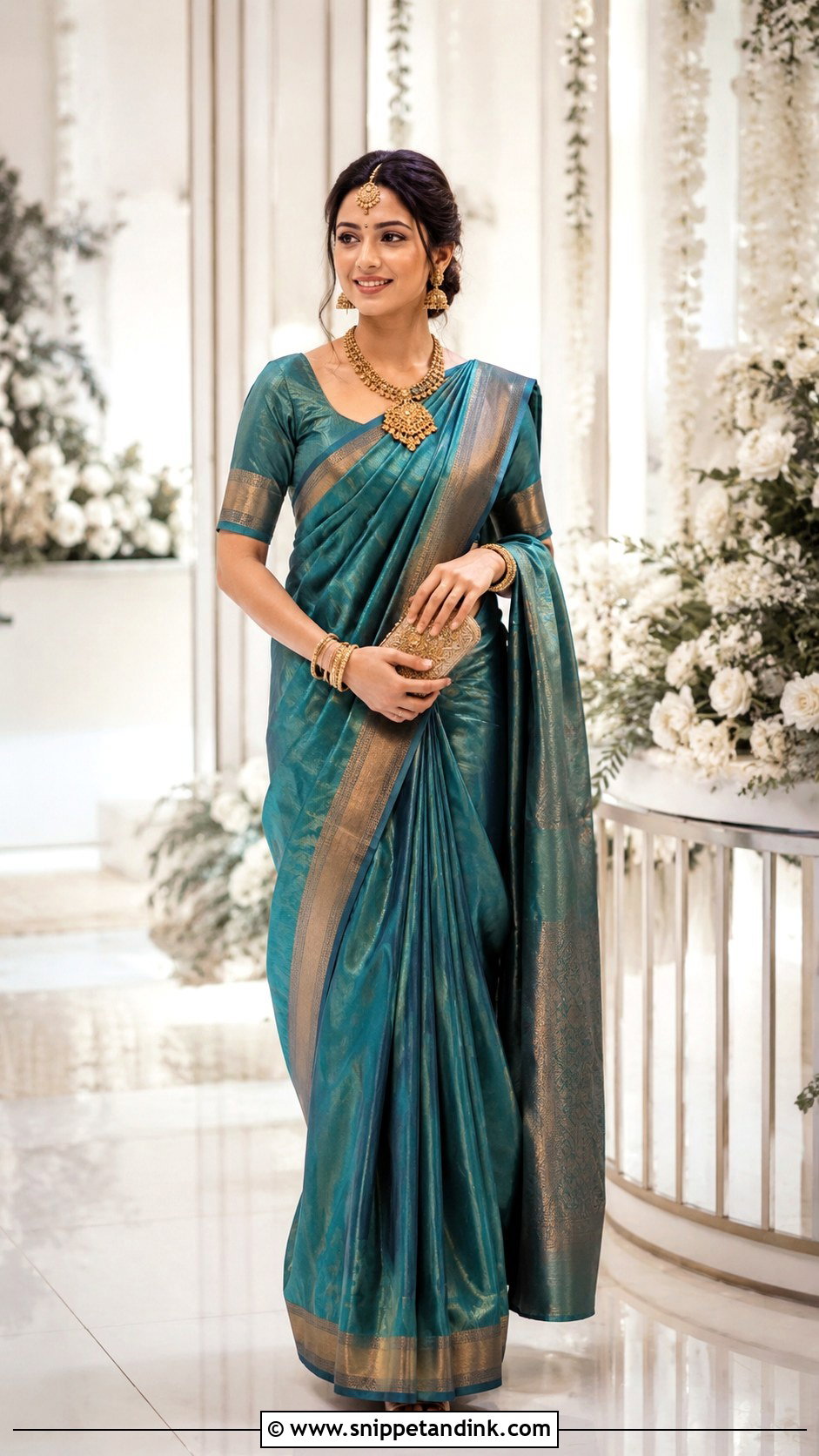
A silk saree suits the main ceremony, especially a morning or afternoon ritual. The blouse is what makes or breaks it, and it needs a proper fitting weeks ahead, not days. Mustard, teal, magenta, rust or royal blue in silk photograph richly. Temple or antique gold jewelry finishes it. Ceremonies often mean long standing, sitting on the floor and walking between mandap and seating, so wedges or low block heels beat stilettos. Ask someone experienced to pin the pleats; well-set pleats survive the whole day.
6. Reception Embellished Gown Dress
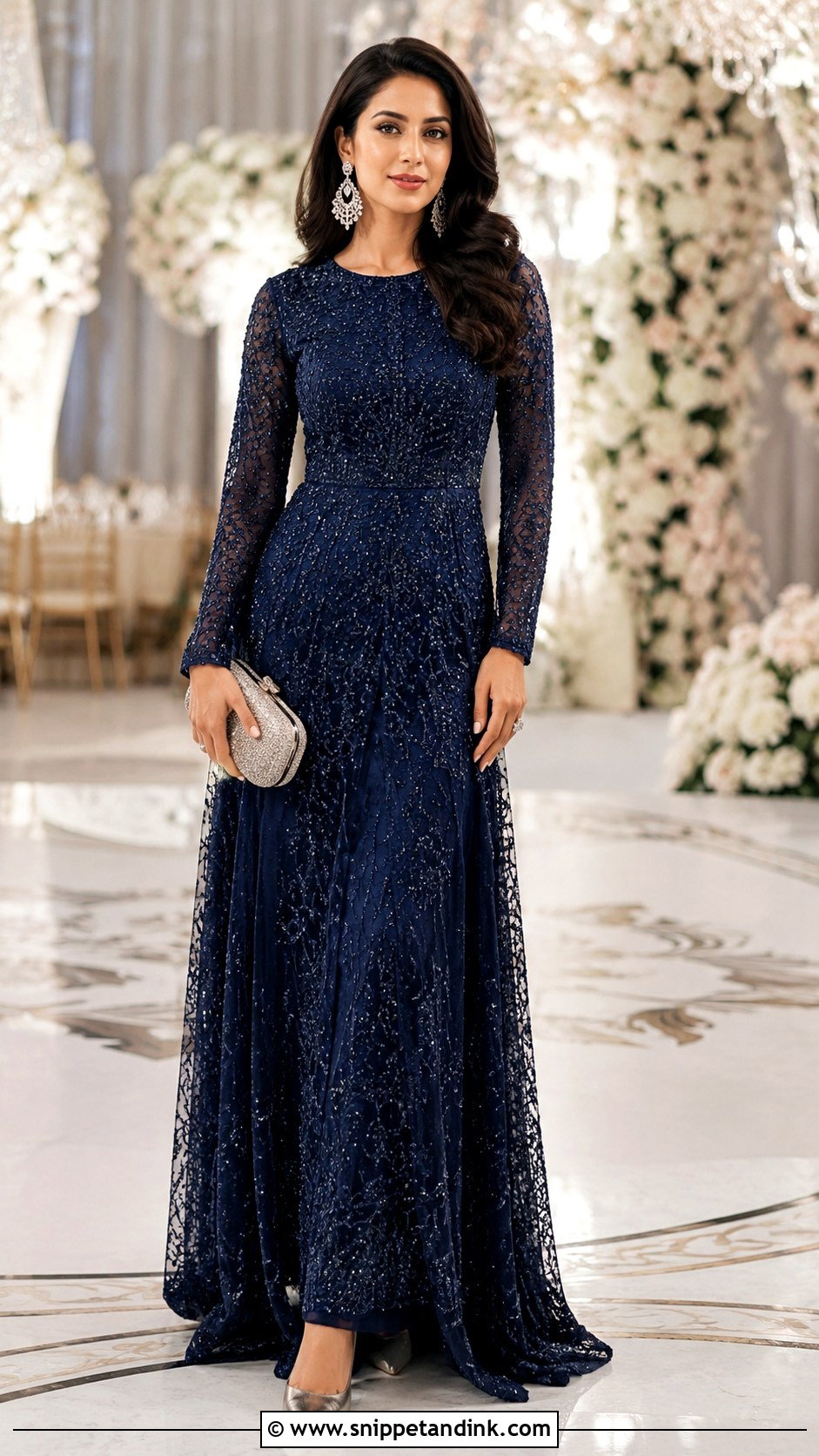
A reception gown can be more Western and formal. I’d look for a floor-length style with fine beading or metallic thread rather than heavy embellishment, since a guest shouldn’t outshine the bride’s reception look. Navy, mauve, champagne, deep green or charcoal read sophisticated under banquet lighting. With a detailed neckline, skip the necklace. Pointed heels and a small clutch are enough.
7. Engagement Floral Maxi Dress
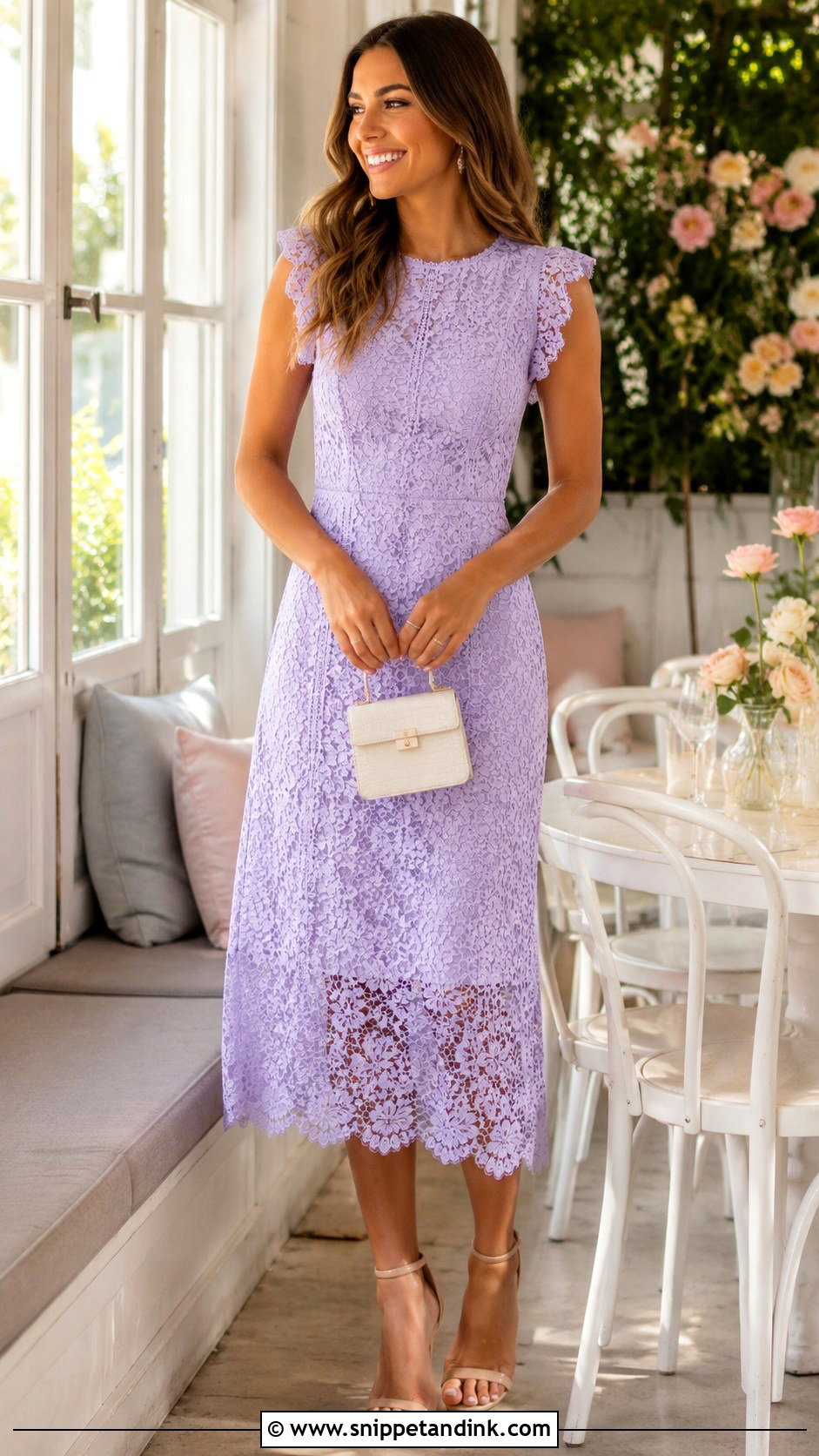
Engagement parties are often held in the daytime, in gardens or restaurants, and a floral maxi suits that easy mood. A defined waist and soft sleeves give it shape. I’d pick pastel or watercolor prints over loud ones, since you’ll stand in a lot of family group photos. Indoor venues with heavy air conditioning are common, so bring a shawl or cropped jacket. Nude heels and pearls are all it needs.
8. Roka Pastel Chikankari Dress
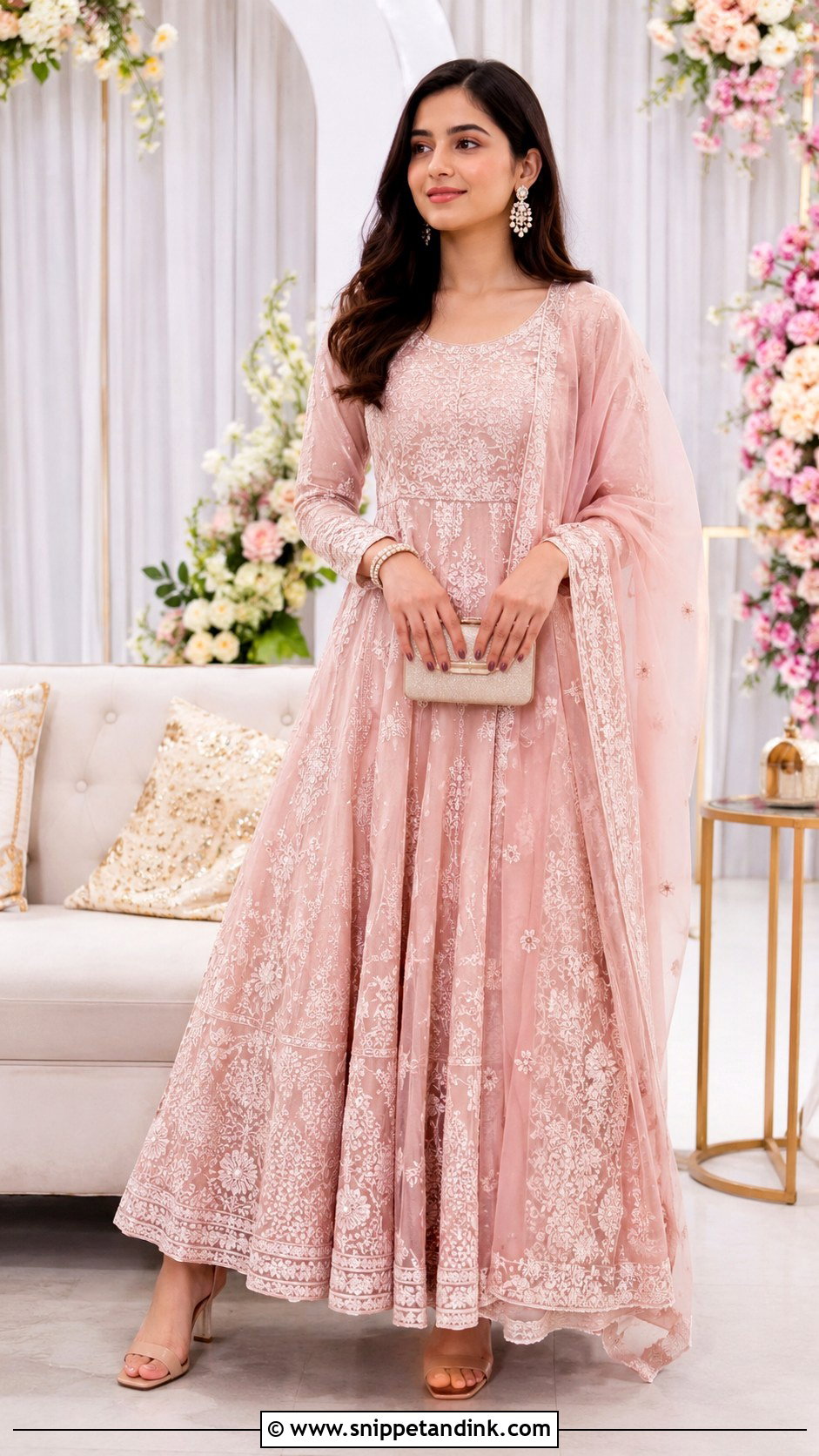
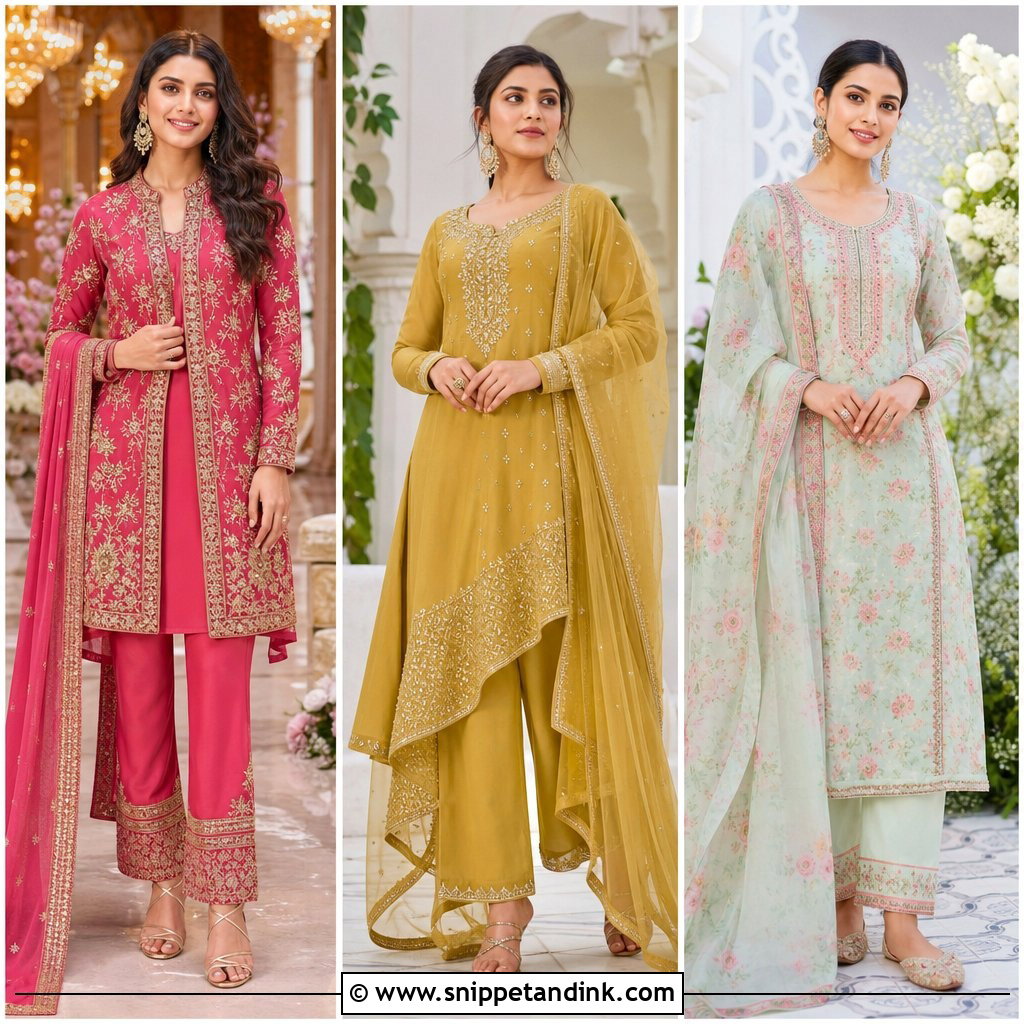
A roka function is usually intimate and family-focused, and chikankari suits it well because the white-thread embroidery looks refined without feeling showy. Powder blue, blush, mint or lavender keep it soft. Real chikankari is often on fine cotton or georgette that’s sheer, so check the lining. A straight kurta with cigarette pants or a light Anarkali, pearl earrings and nude sandals finish it.
9. Welcome Dinner Wrap Dress
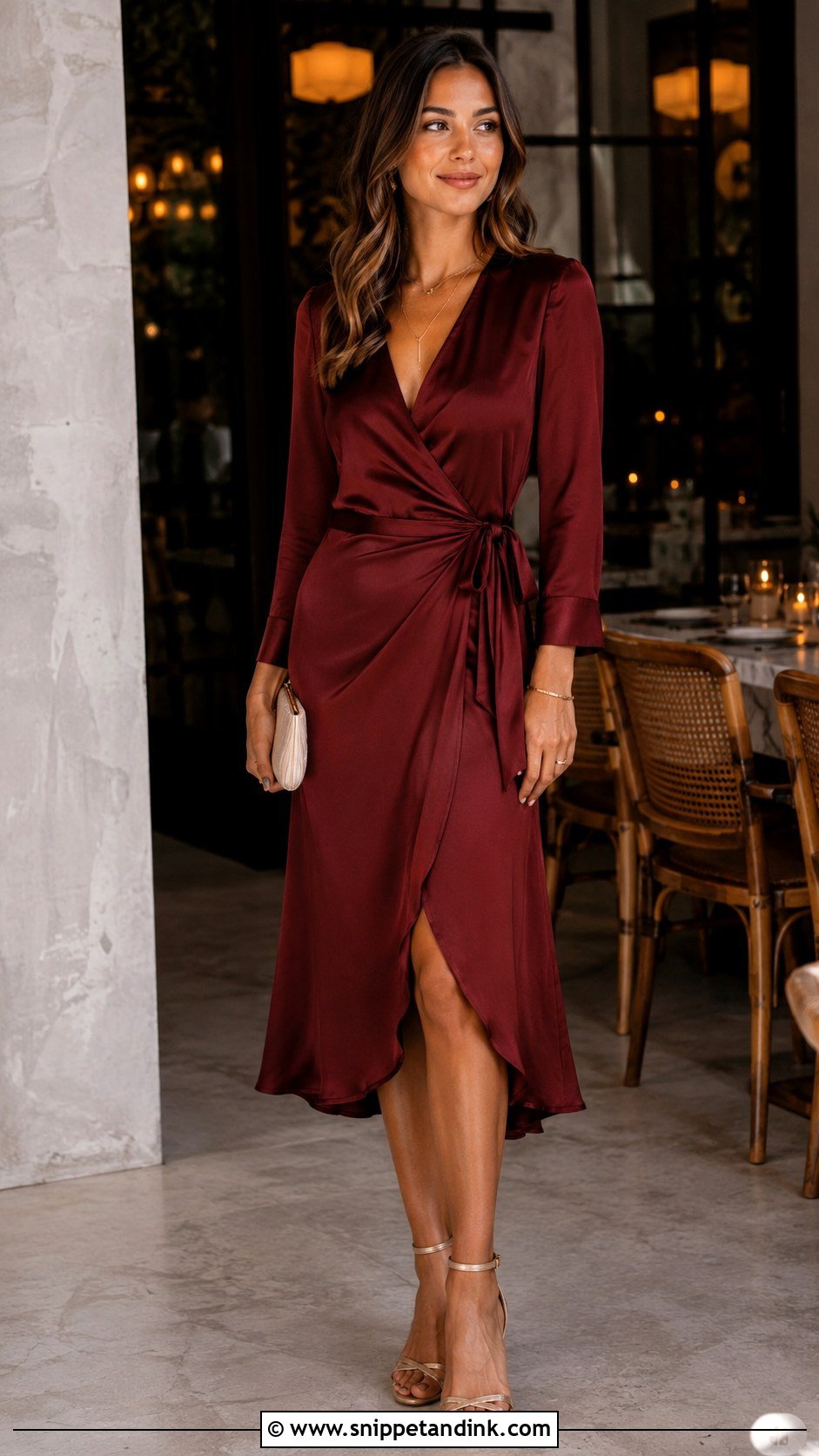
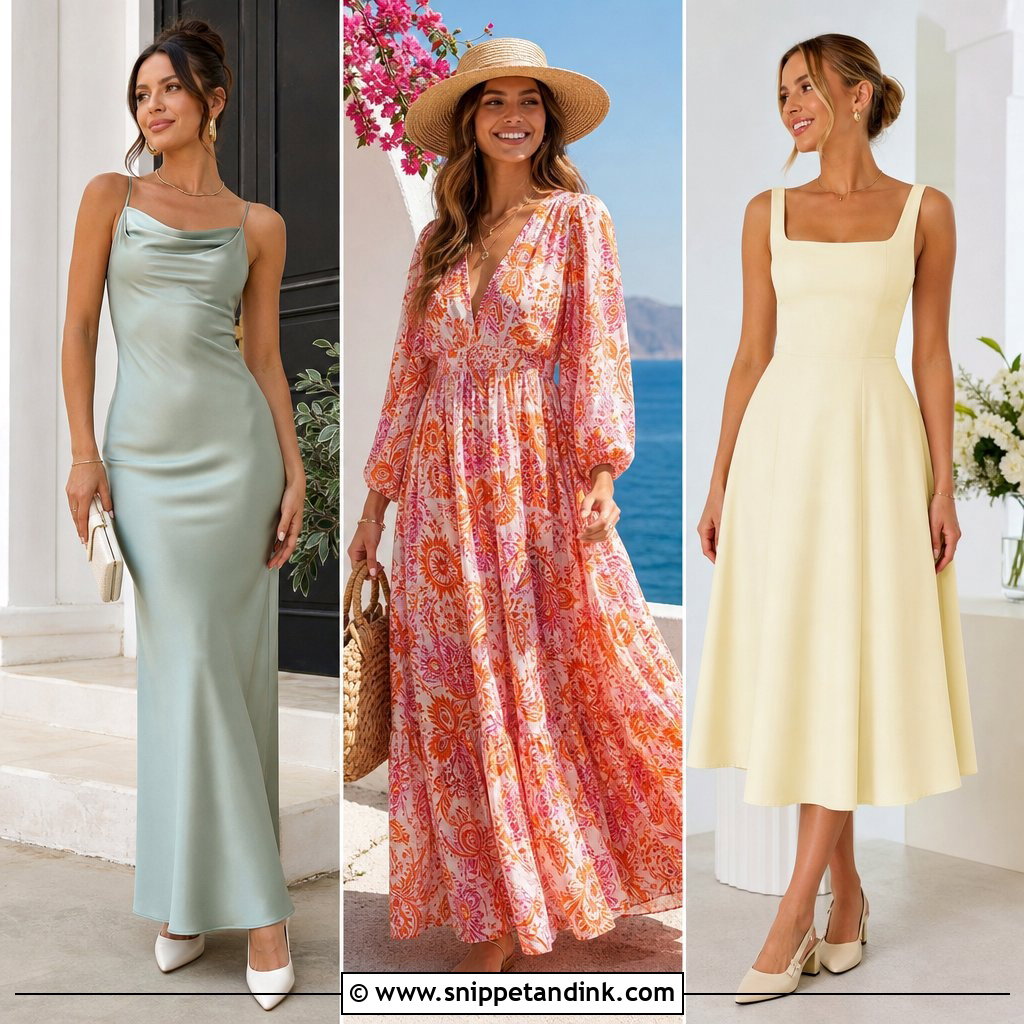
A welcome dinner is about meeting people and sitting through a long meal, so I’d choose a wrap dress. The tie lets you loosen the waist after dinner without anyone noticing. Silk, satin or crepe in a solid or subtle print looks dressed but not formal. For a fusion or destination dinner, add an embroidered shawl or bold earrings. Block heels keep you steady on terraces and lawns.
10. Bridal Shower Lace Midi Dress
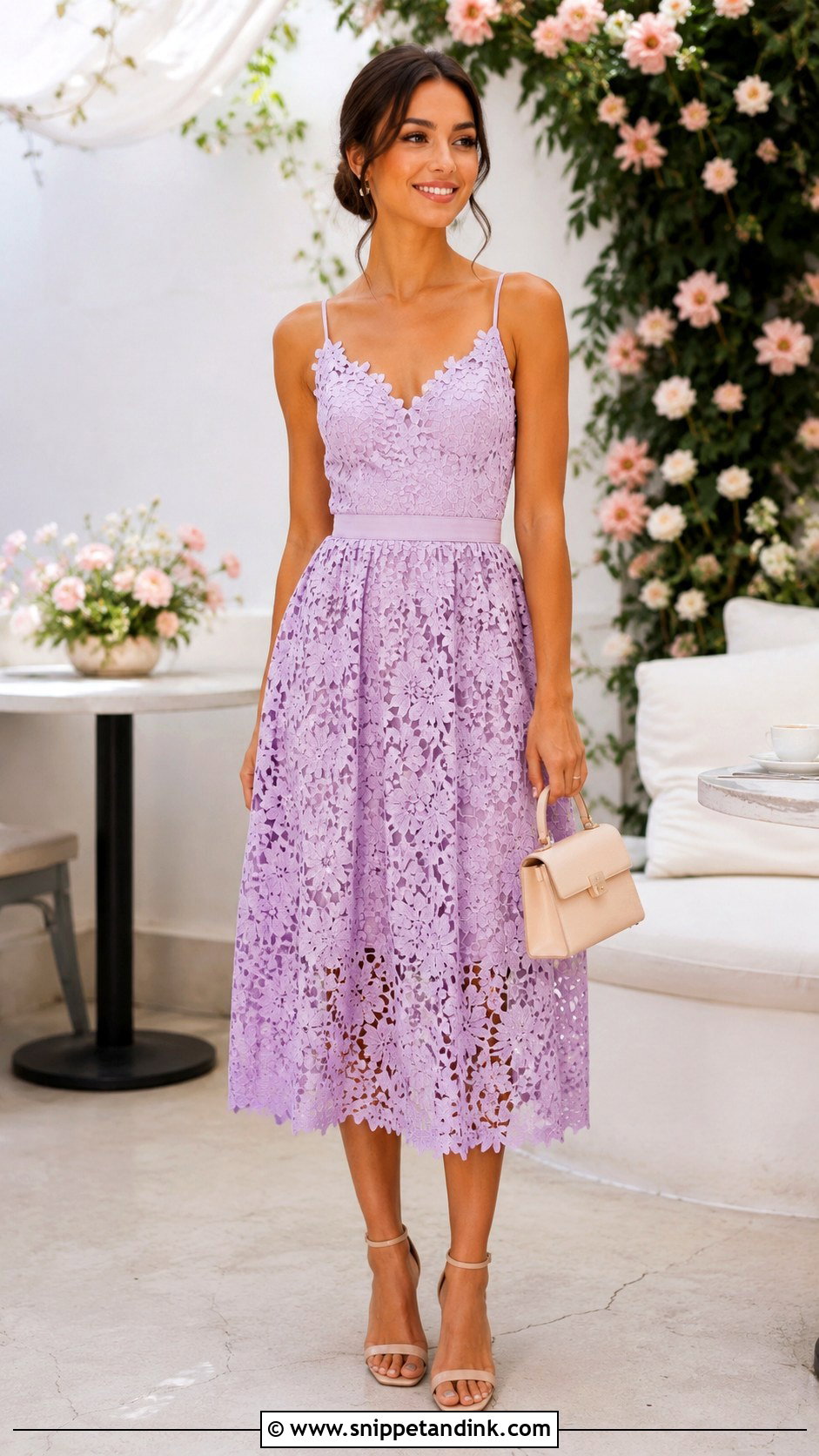
A lace midi suits a bridal shower or pre-wedding brunch, which is usually daytime and lighter in mood. Blush, sage, powder blue or butter yellow keep it fresh. I’d keep away from white or ivory lace entirely here; at a shower, white lace looks like you’re competing with the bride. Sleeves or a square neck, nude heels and a small bag finish it.
11. Poolside Wedding Kaftan Dress
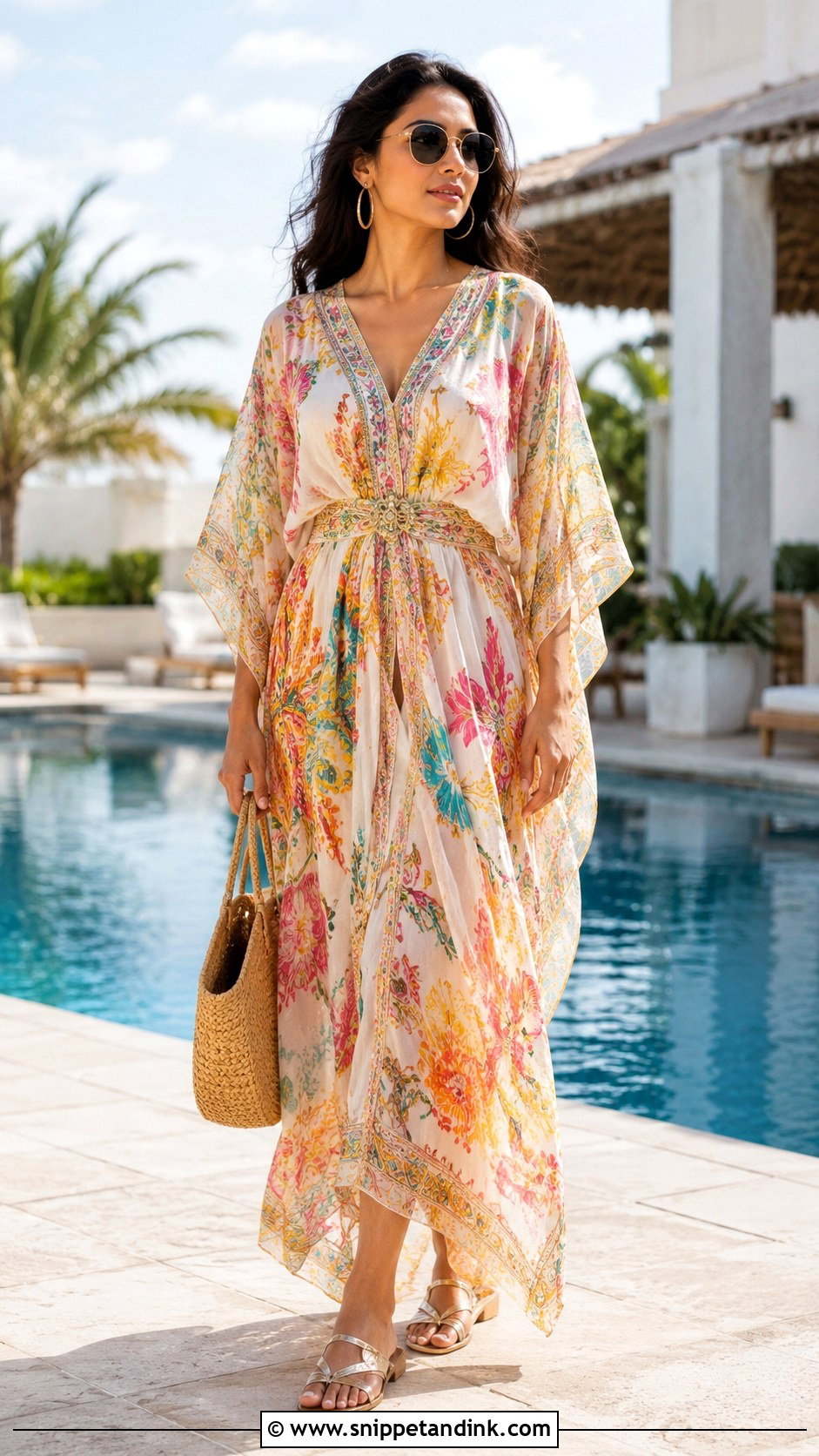
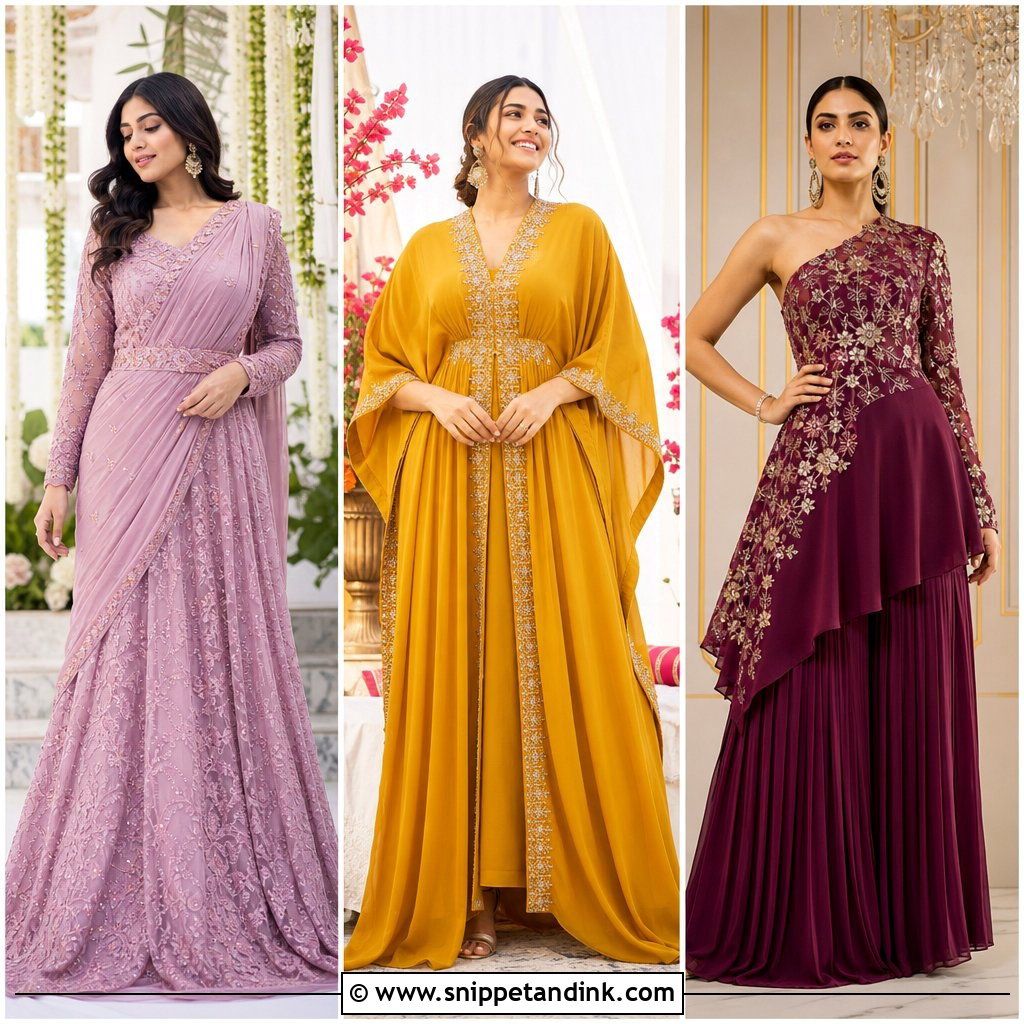
Poolside events at resorts call for a kaftan. It’s cool, covers you and moves in the breeze. I’d choose one with a cinched waist or structured neckline, otherwise kaftans can read as beachwear rather than a wedding outfit. Light shimmer or an embroidered neckline adds festivity. Flat metallic sandals, sunglasses and a woven or beaded bag suit a welcome lunch or a relaxed mehndi.
12. Beach Wedding Flowy Maxi Dress
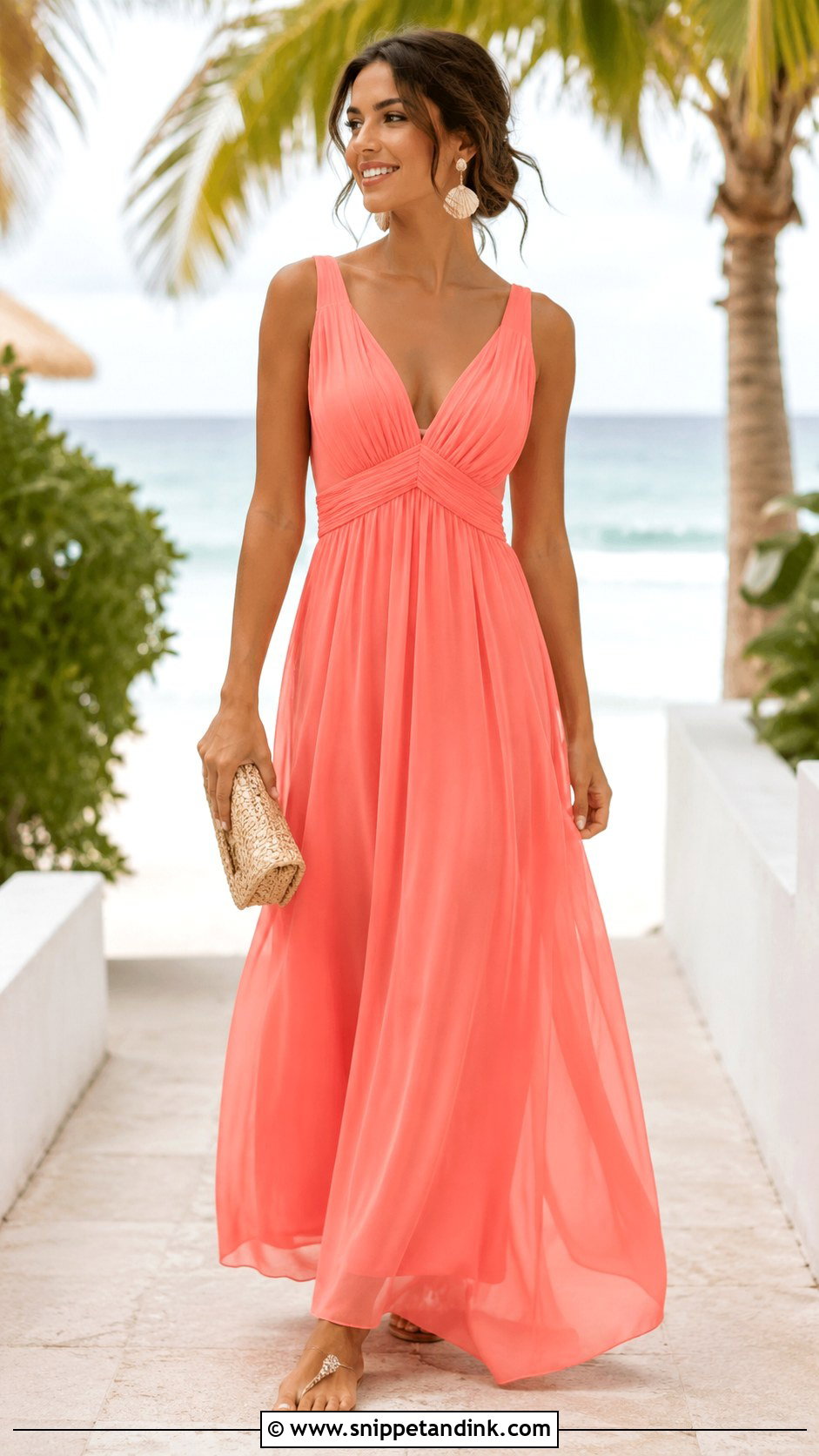
On sand, a flowing maxi in chiffon, georgette, voile or light crepe moves well and breathes. I’d keep the hem at ankle height; long hems drag through wet sand and darken quickly. Coral, turquoise, seafoam or soft yellow look fresh against water. Flat sandals are essential, and wedges only on a firm deck. A loose bun or side braid holds better in sea wind than loose waves.
13. Garden Wedding Organza Dress
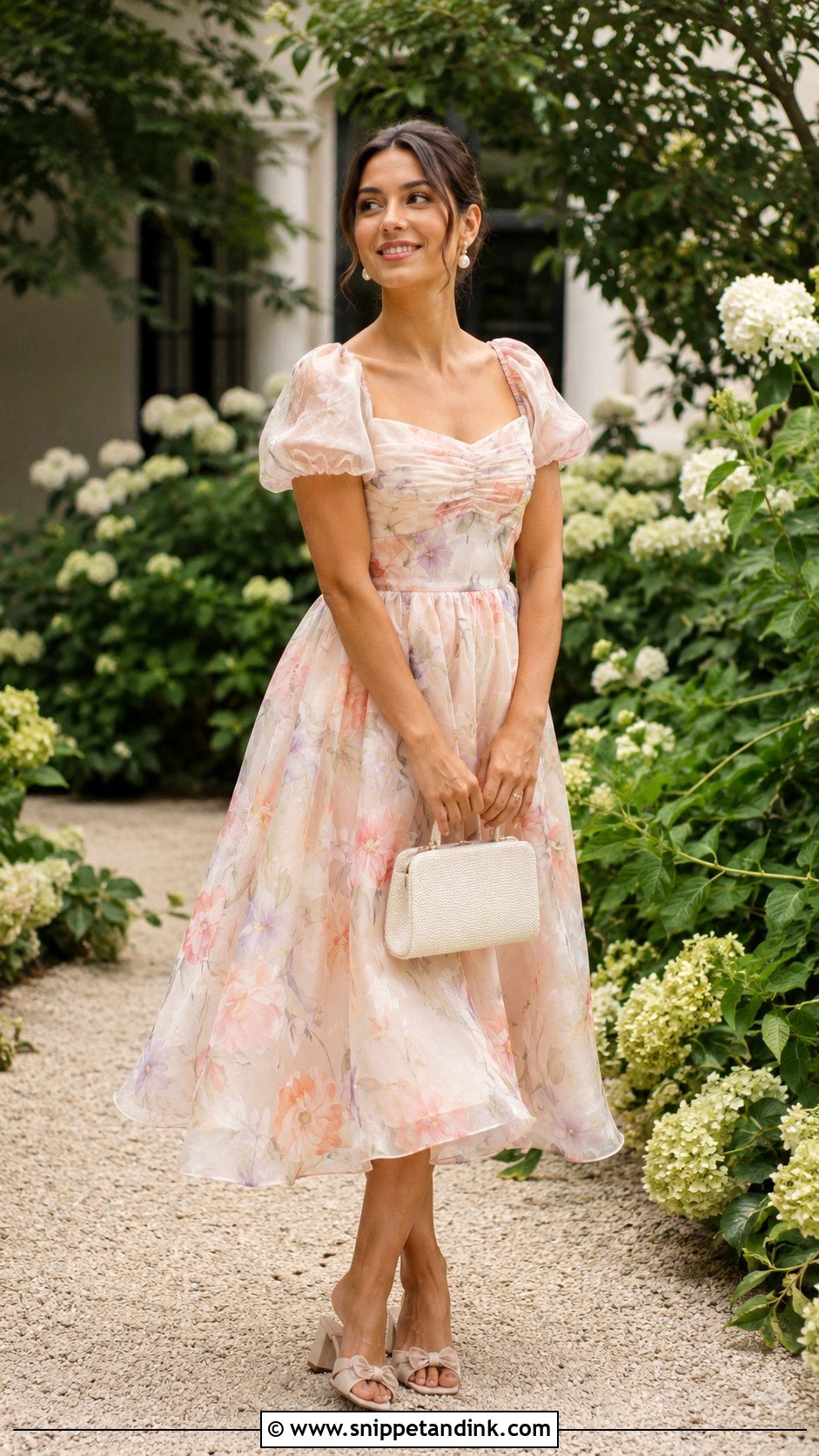
Organza holds a little structure, so it keeps its shape outdoors even in a light breeze. A midi or maxi with floral embroidery or puff sleeves suits a garden. Organza creases sharply when sat on, so steam it on the morning and expect a few creases by the end. Pastels and nature prints look good against green. Block heels for walking on grass, and keep the accessories refined.
14. Black Tie Wedding Gown Dress
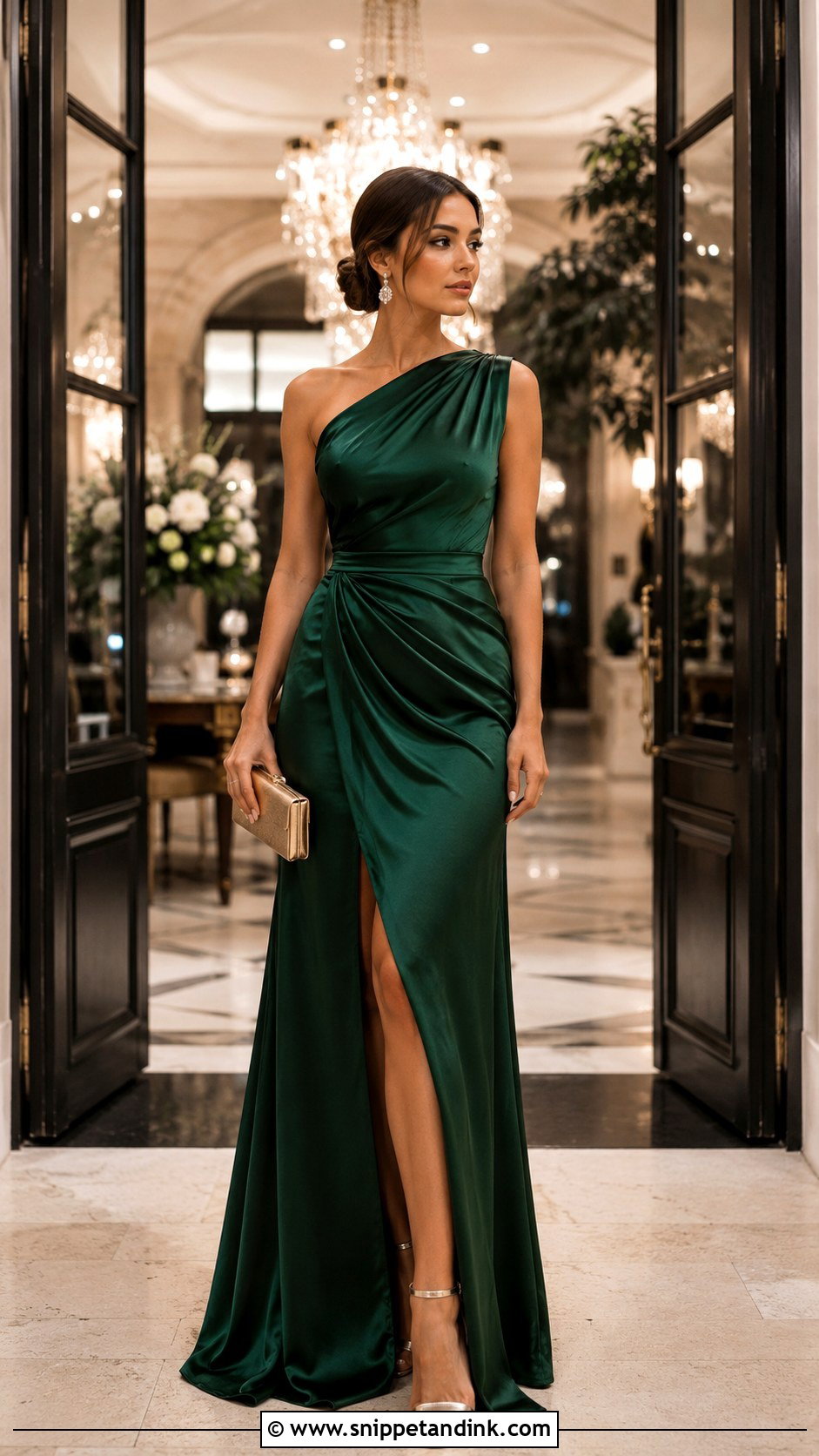
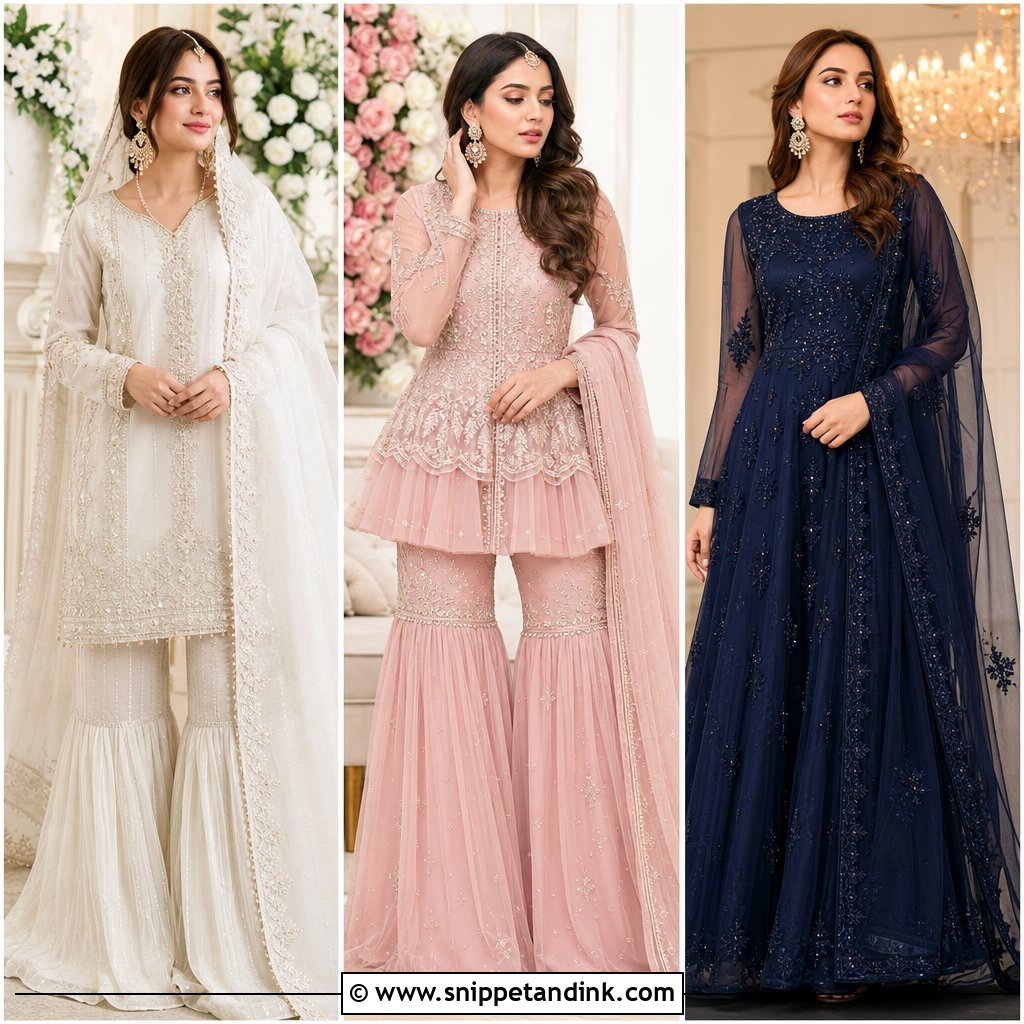
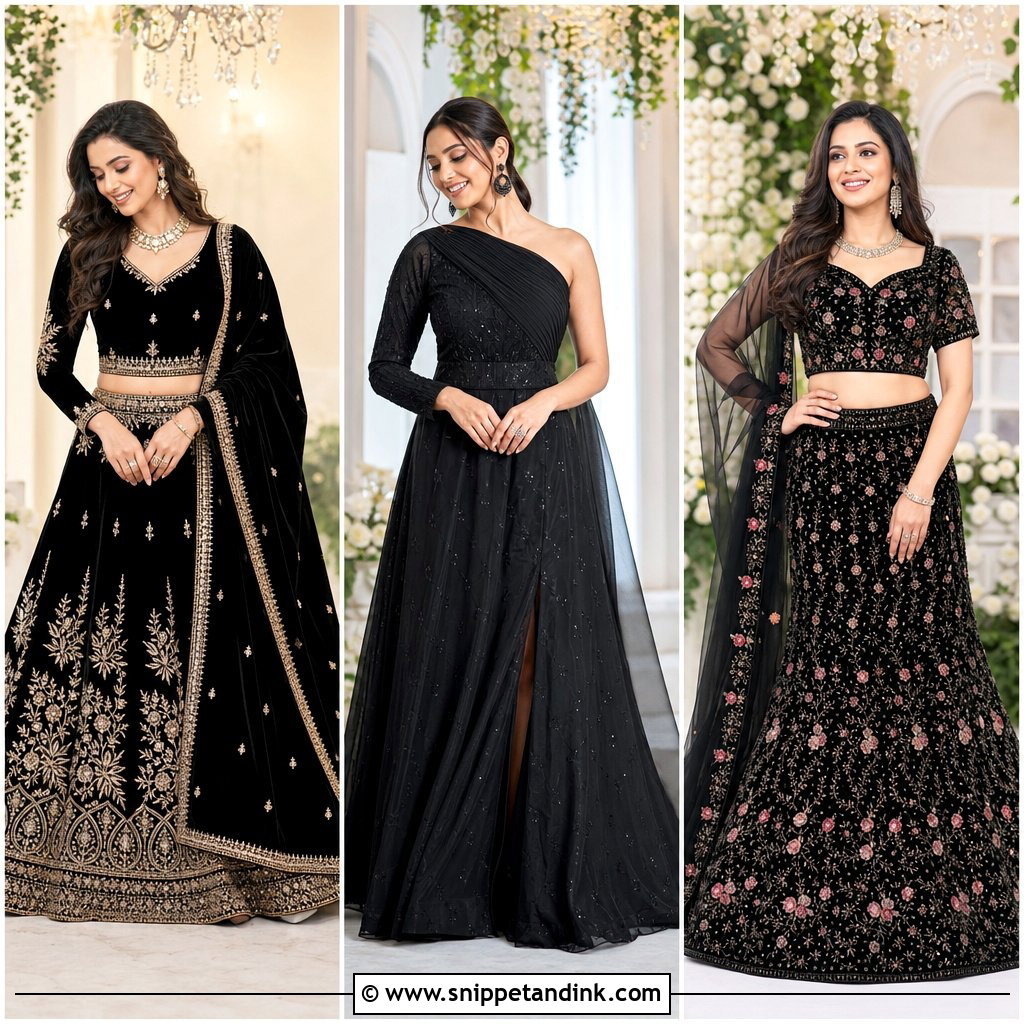
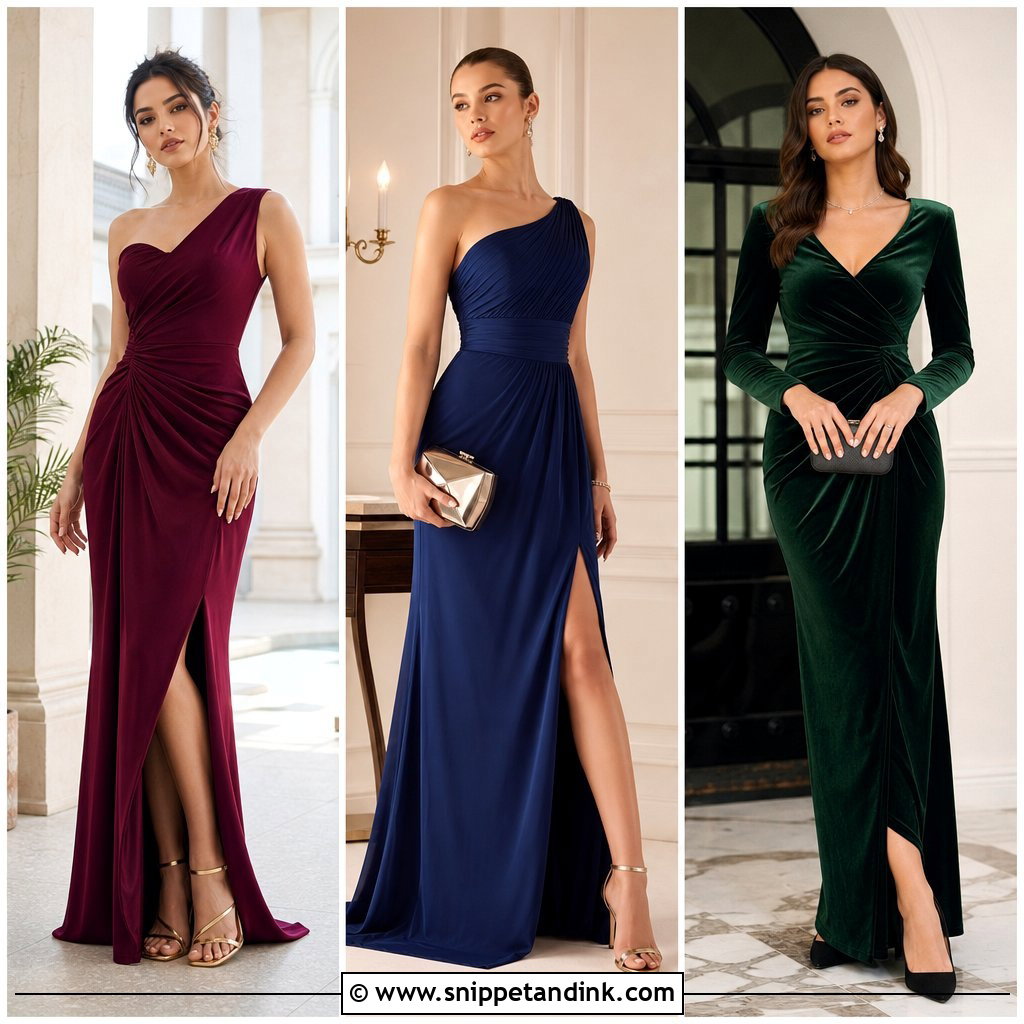
Black tie at a wedding means a floor-length gown in satin, crepe, chiffon or velvet, chosen by season. Navy, emerald, plum, burgundy or black all look rich in the evening. Black is fine at many Western-style receptions, but I’d check with the family at a traditional ceremony, where some consider it unlucky. One-shoulder, column or draped shapes keep it modern. Metallic heels, a sleek clutch and polished hair are enough.
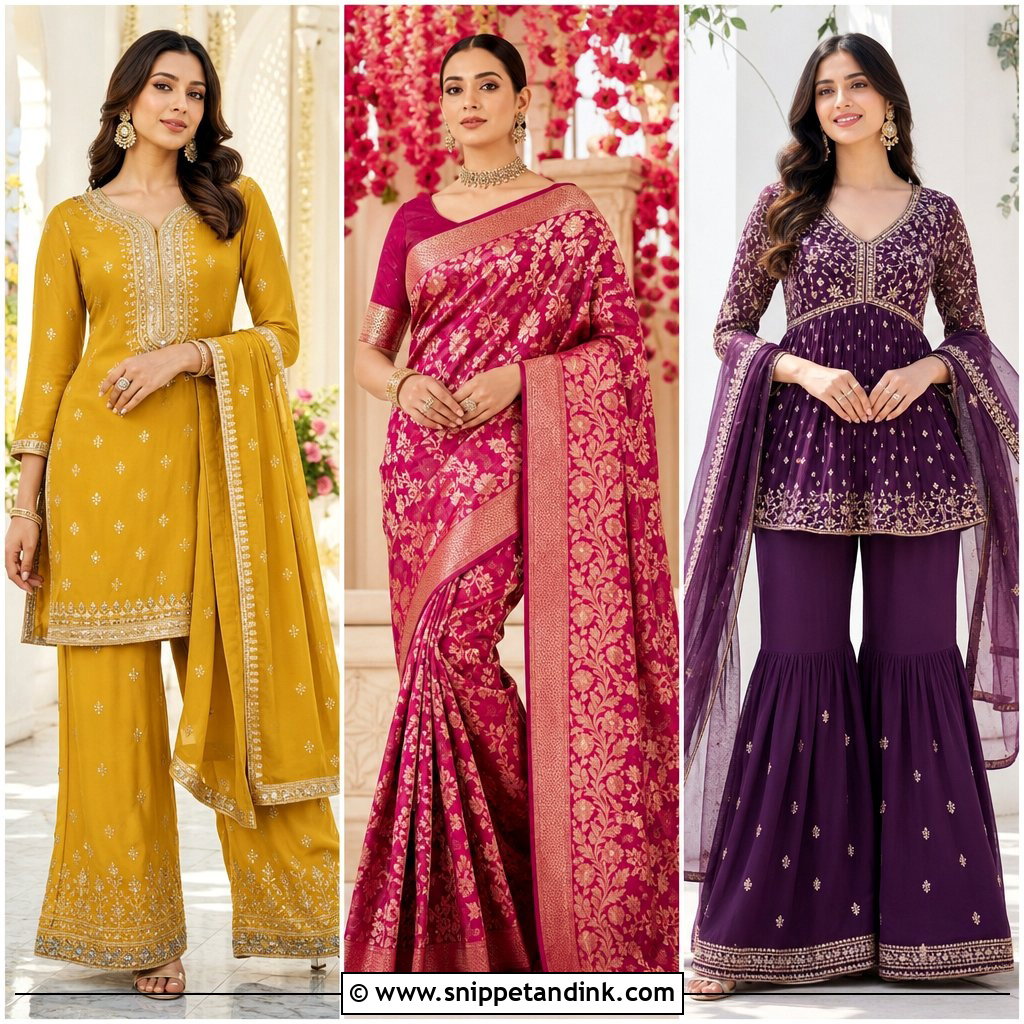
15. Day Wedding Printed Kurta Dress
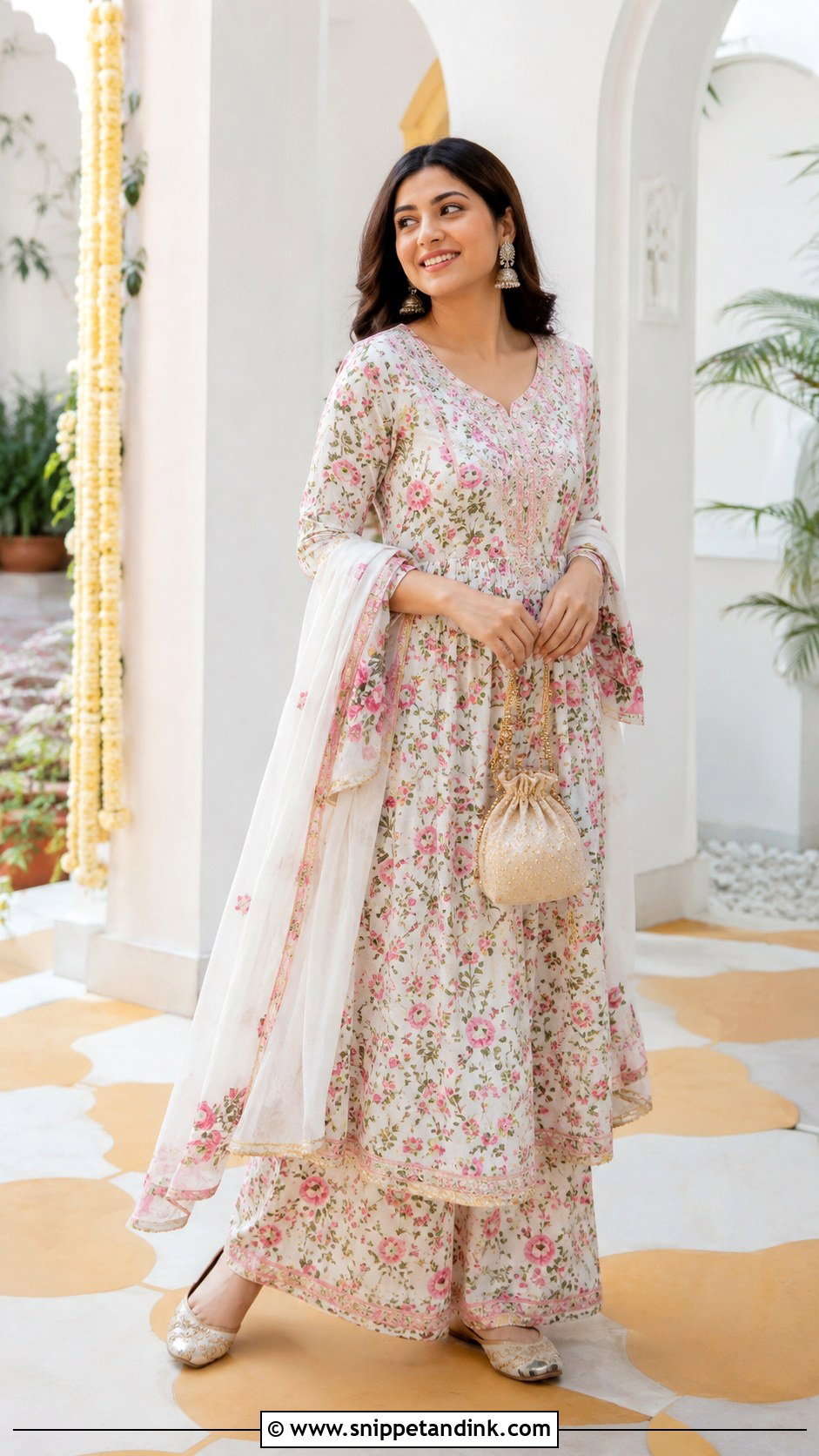
For daytime rituals in heat, a printed kurta set is more comfortable than anything heavy. Block prints and floral prints with light embroidery suit morning pujas and family events. Pair the kurta with palazzos, straight pants or a soft skirt, and add a light dupatta for a more traditional finish. Juttis and a small potli keep it practical. Cotton blends breathe much better than polyester in a hot tent.
16. Night Wedding Velvet Dress
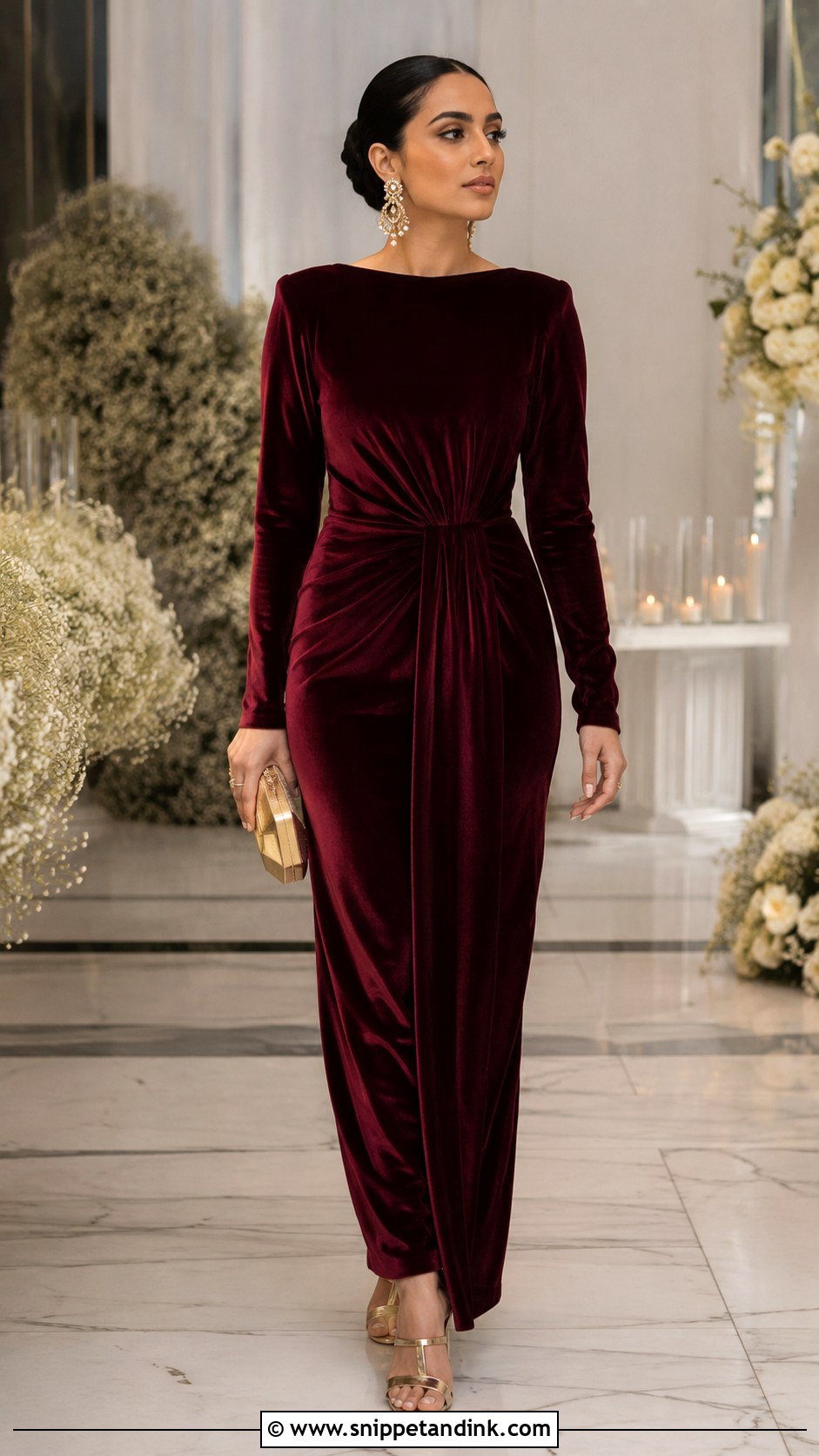
Velvet suits a winter night function, and it carries itself without much jewelry. Wine, forest green, midnight blue or plum look deep under evening lighting. A velvet midi, maxi or Anarkali all work. Velvet is warm, so in a crowded indoor banquet hall I’d skip heavy layers underneath. Statement earrings and metallic heels finish it. Never iron velvet directly; steam it.
17. Summer Wedding Linen Dress
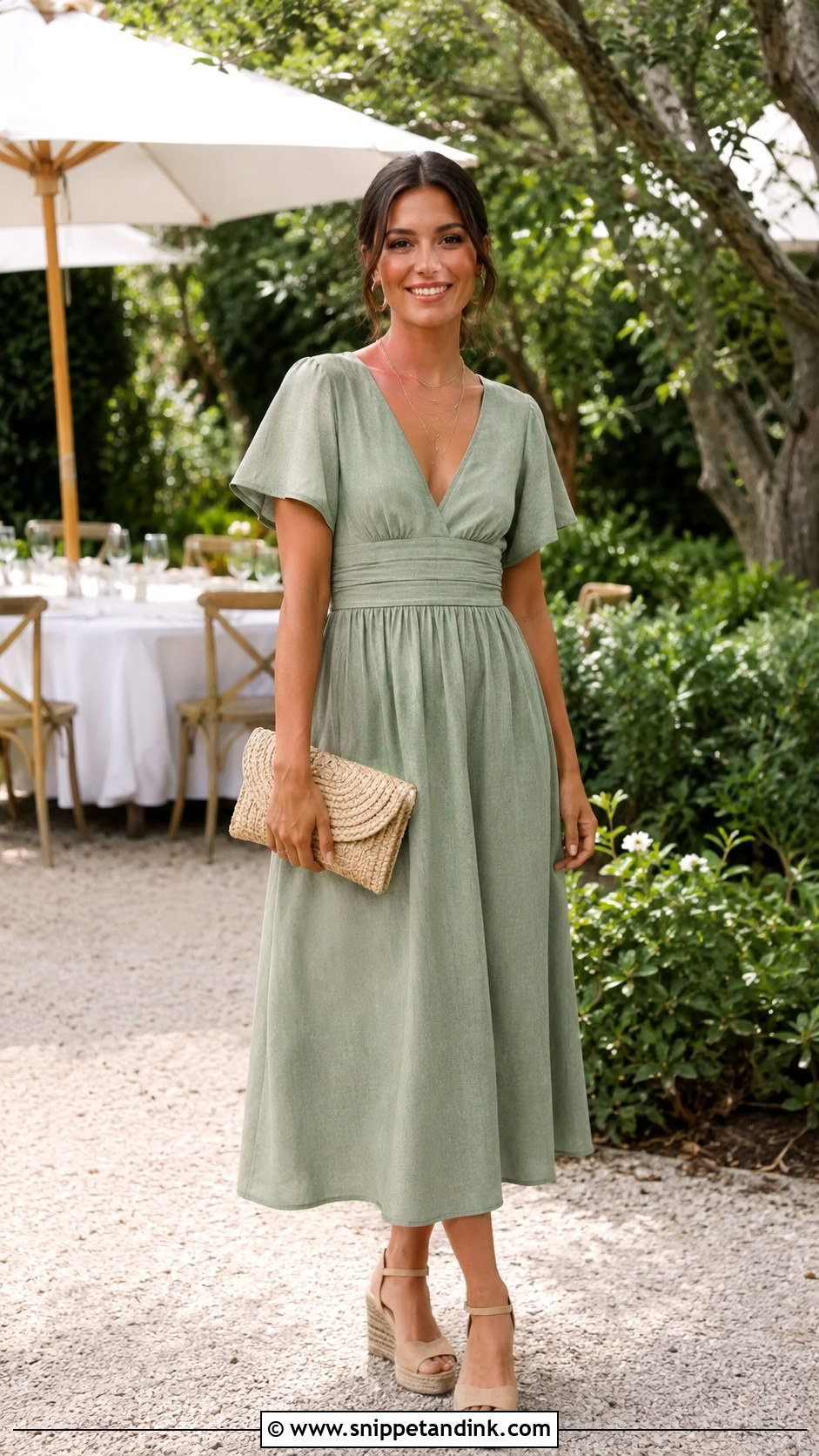
Linen keeps you cool at a summer daytime event, but it creases, and a crumpled sundress looks too casual. A structured linen midi or maxi, ideally a linen blend, keeps its shape better. Sage, coral, sky blue or terracotta suit warm days. A belt defines the waist, and wedges or block heels handle a garden lunch. Gold hoops and a woven clutch keep it relaxed.
18. Winter Wedding Long Sleeve Dress
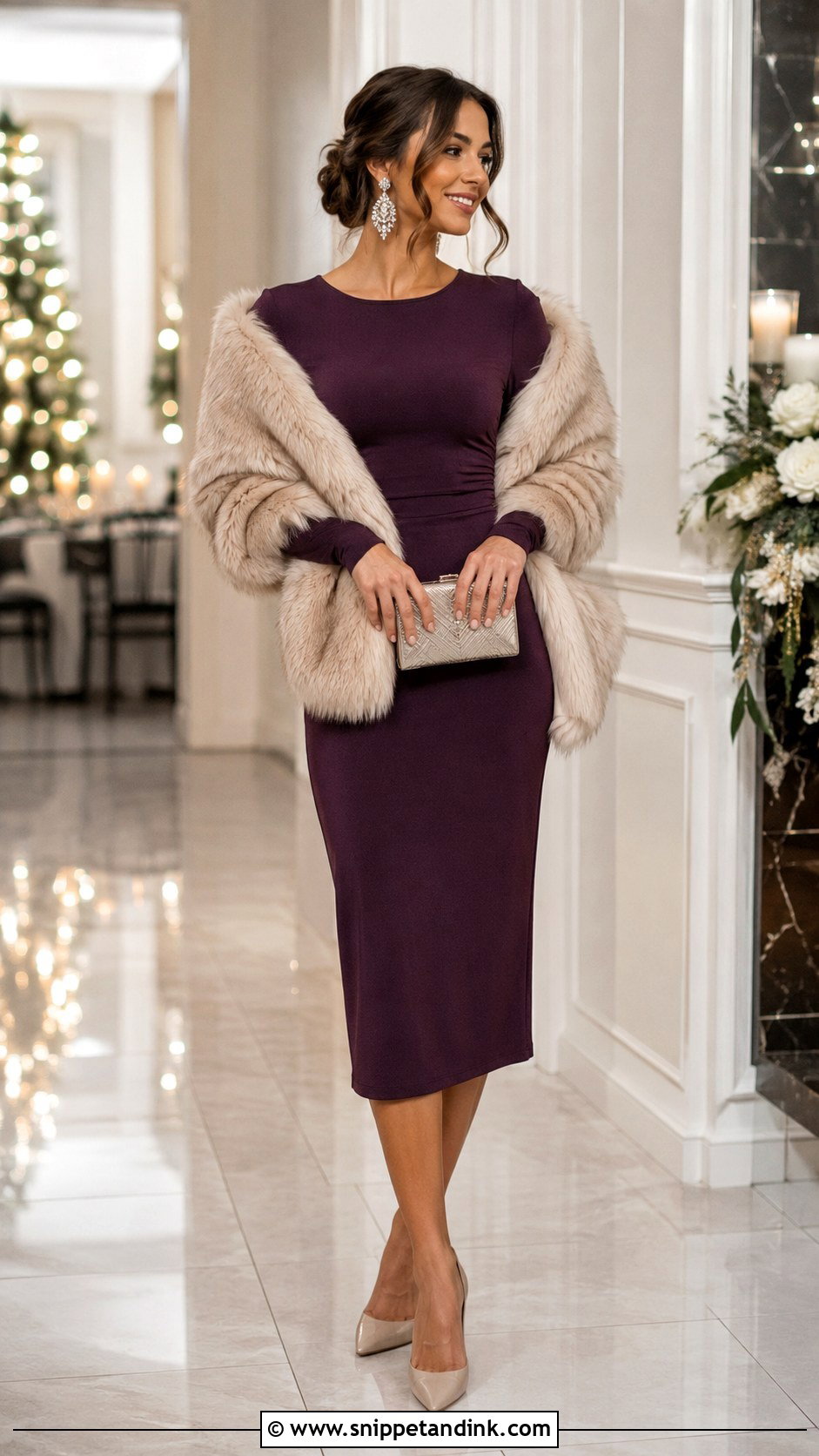
Winter functions are usually indoors in heated halls, with cold car parks in between. A long-sleeve dress in velvet, satin, crepe or heavy chiffon solves both. Jewel tones and darker florals suit the season. I’d plan a proper coat or tailored wrap for arrivals and photos outdoors, rather than shivering in a thin shawl. Closed-toe heels and statement earrings complete it.
19. Plus Size Wedding Guest Dress
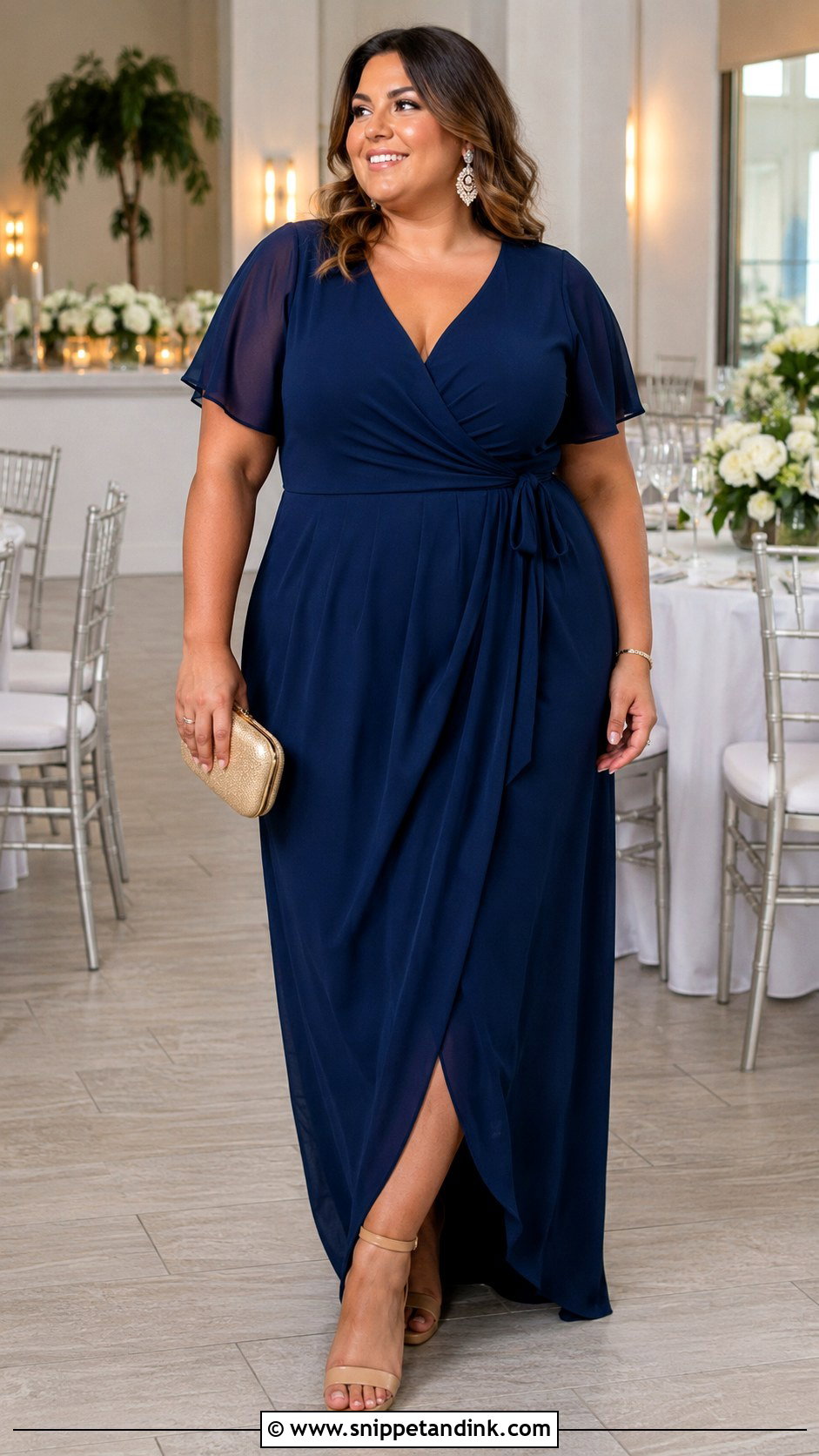
For plus-size guests, I look for support first: built-in bra structure, wide straps, and fabric that drapes rather than clings. Wrap dresses, empire waists, A-line maxis and fit-and-flare midis are the shapes I’d try. Chiffon, crepe, satin or structured jersey hang best. Match color to the function, from bright florals for mehndi to deep tones for the reception. Block heels and a secure clutch let you dance without worry.
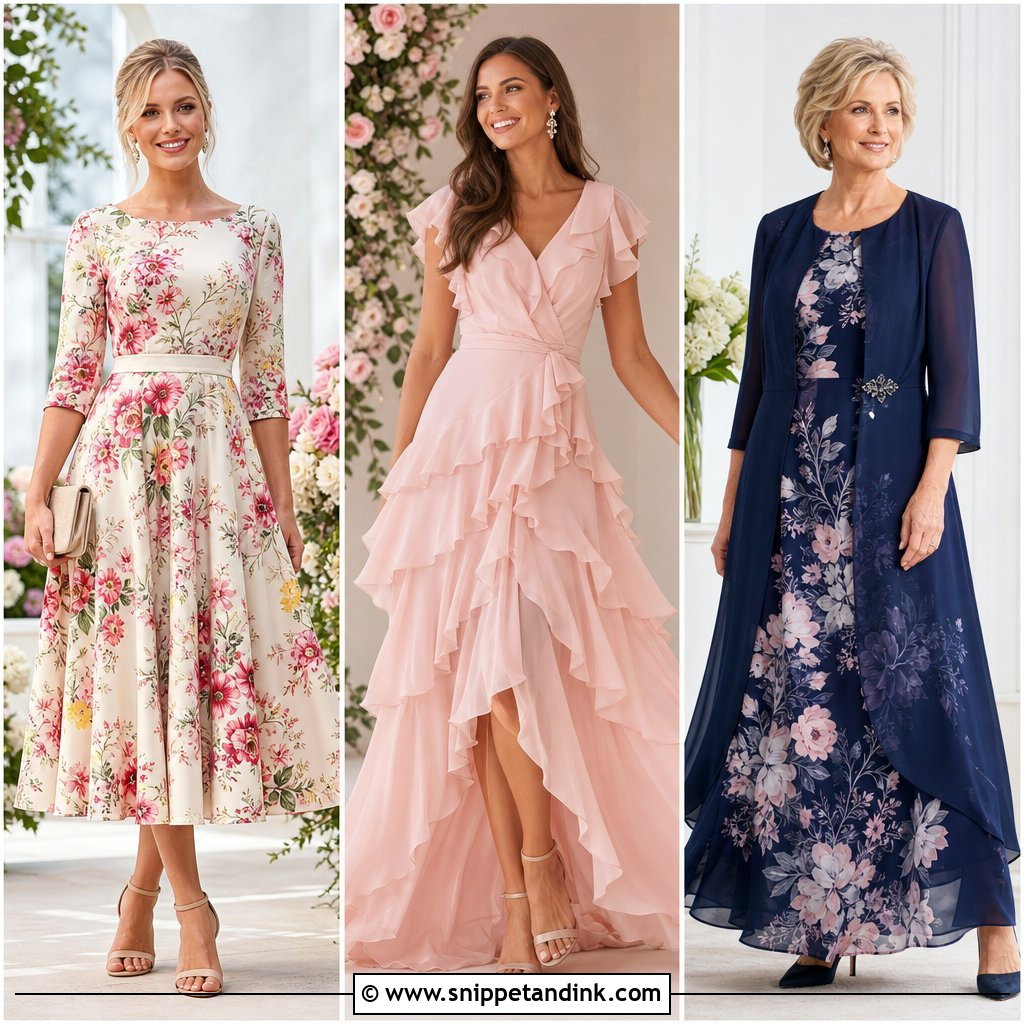

20. Petite Wedding Guest Dress
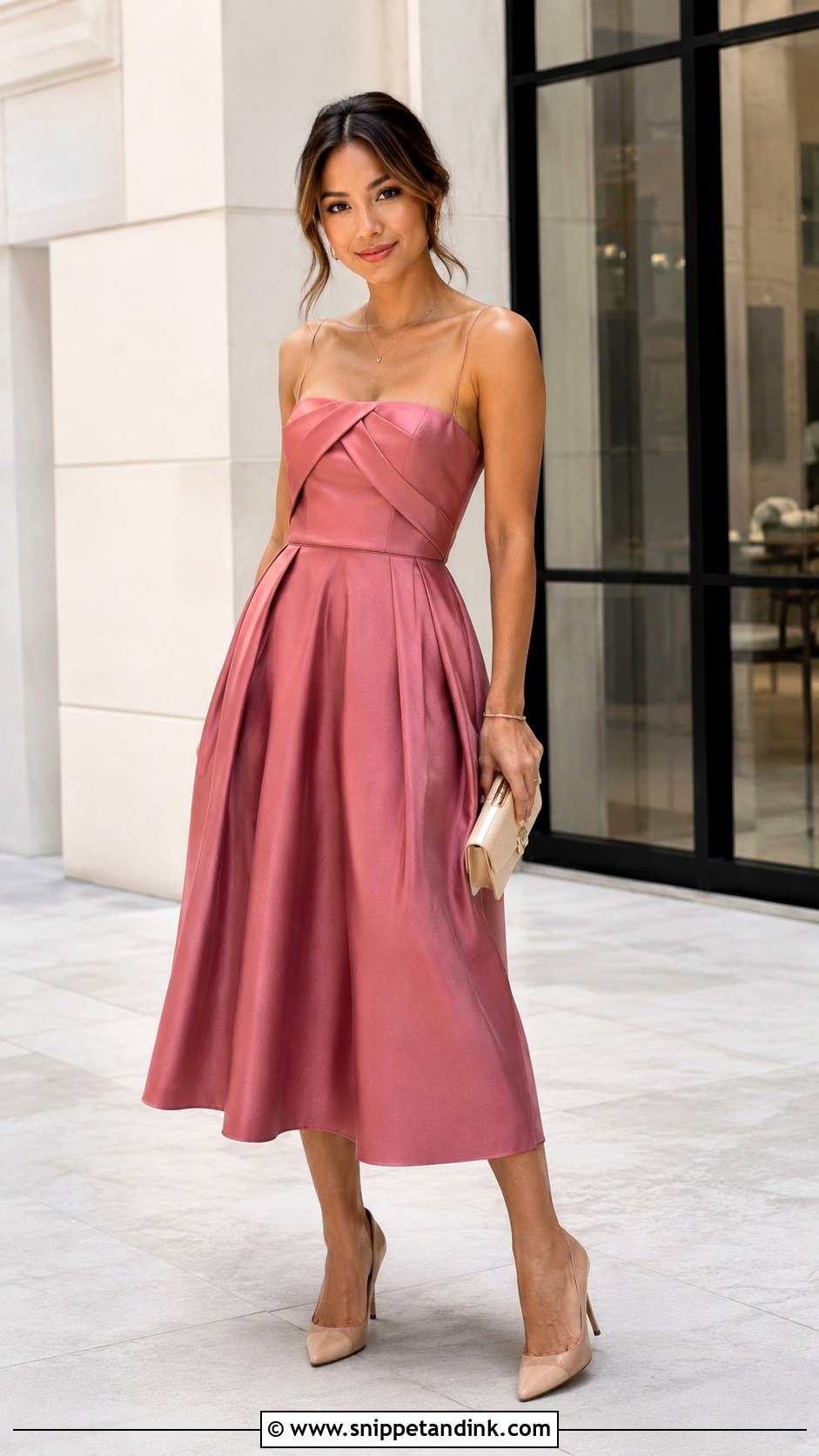
Petite guests do best with balanced proportions. Midis that hit just below the knee, high-waist maxis and fitted columns all work. Heavy lehengas with large borders can swamp a small frame, so I’d look for finer embroidery and smaller prints. Vertical details and clean necklines add height. Nude or pointed heels lengthen the leg. Keep the bag small and the jewelry fine.
21. Modest Wedding Guest Dress
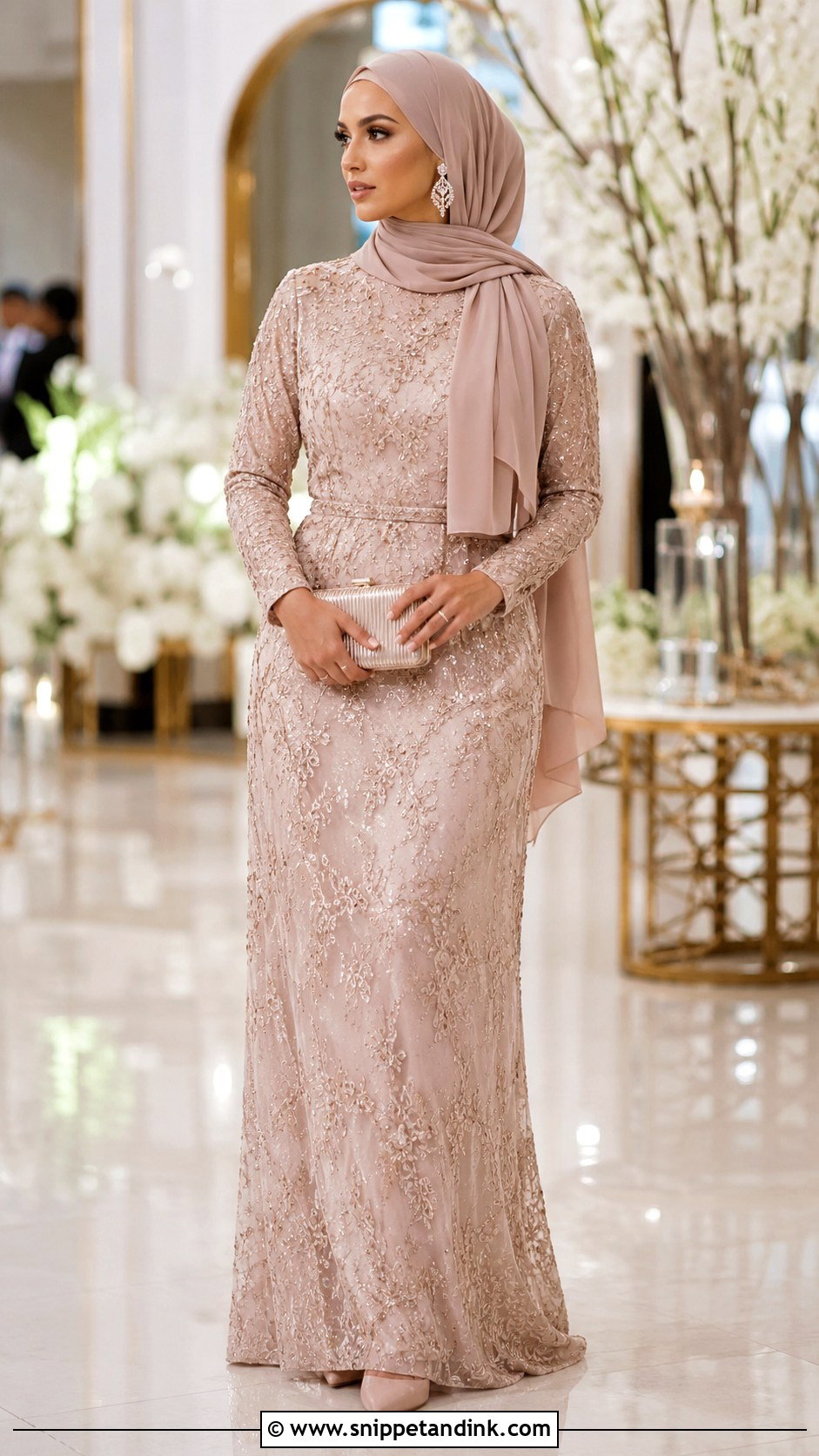
Modest dressing at a function is mostly about cut. Long sleeves, higher necklines and maxi lengths that still move are what I’d start with: an embellished maxi, a long Anarkali, a kaftan gown or a high-neck satin dress. Add a scarf, dupatta or wrap for a ceremony that asks for covered heads or shoulders. Rich color or textured fabric keeps the look festive rather than plain.
22. Minimal Wedding Guest Dress
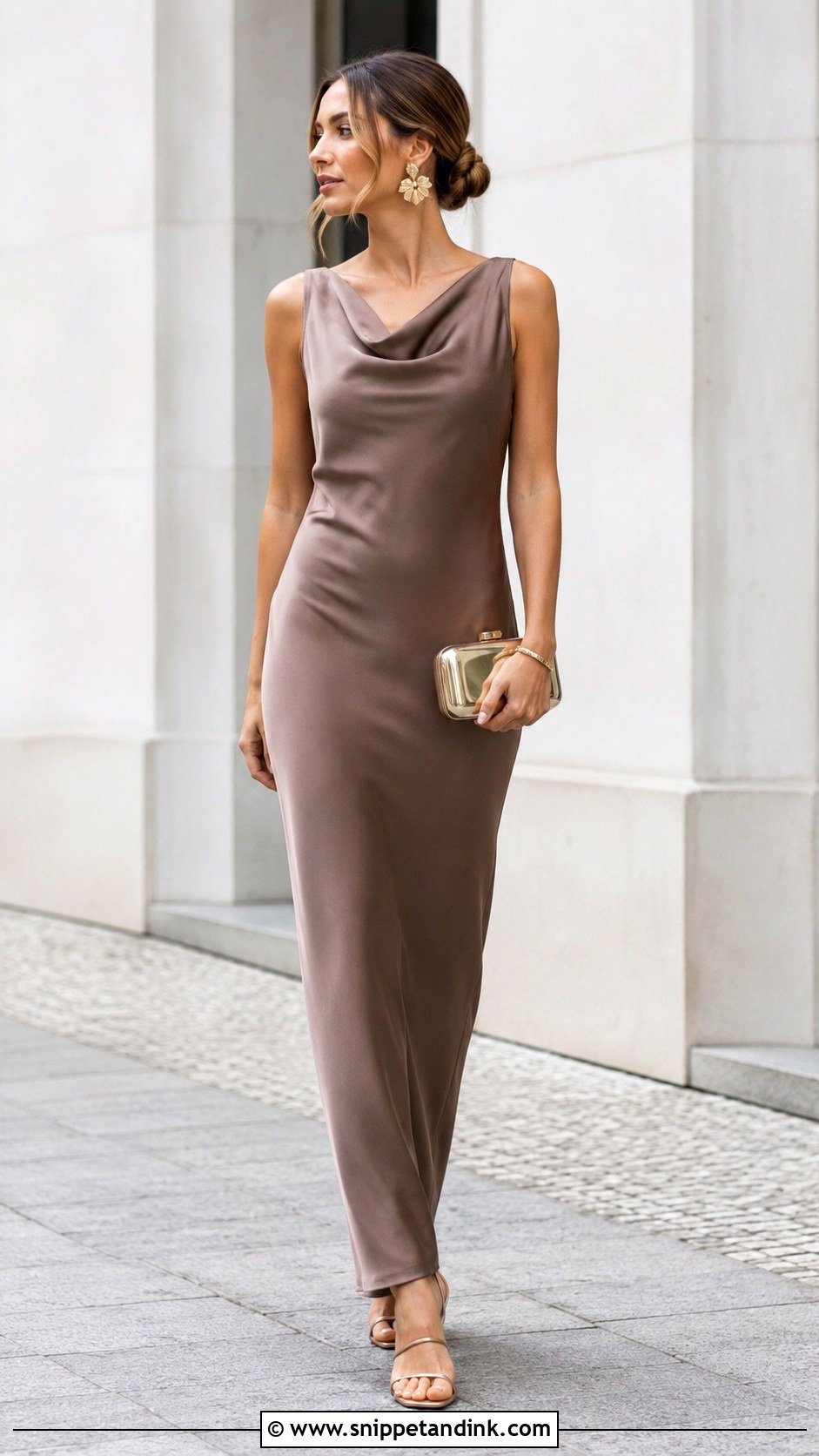
Minimal dressing depends entirely on fit and fabric, because there’s no embellishment to distract. A satin slip, crepe midi, column gown or tailored maxi in mocha, olive, navy or champagne looks modern. I’d get it tailored; a simple dress that pulls at the hips looks cheap, while the same dress fitted properly looks expensive. Sculptural earrings and sleek heels are the only extras it needs.
23. Colorful Wedding Guest Dress
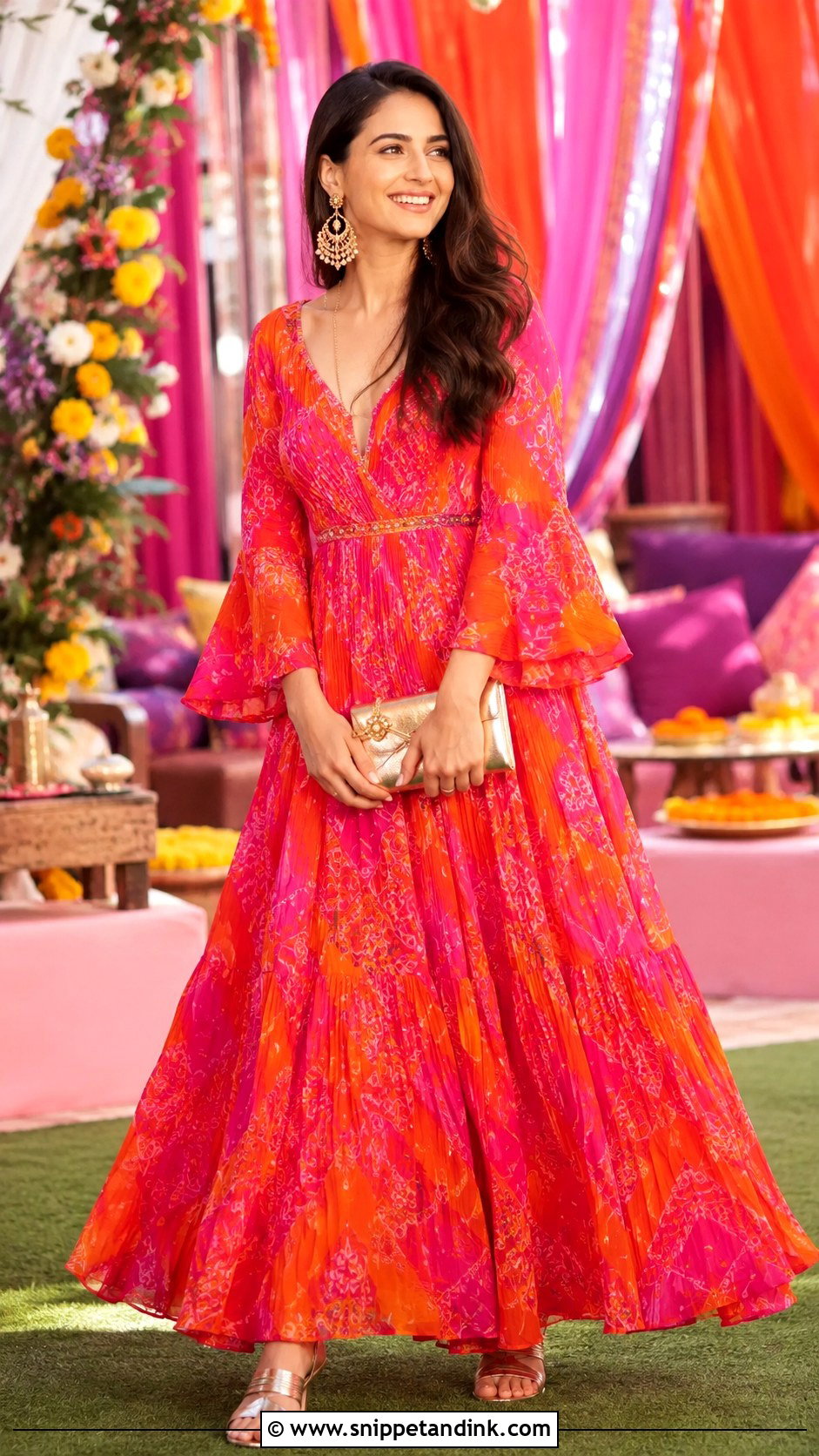
Bright color belongs at mehndi, sangeet, haldi and welcome parties, the most joyful functions. Fuchsia, orange, cobalt, lime, purple or turquoise in a printed maxi, embroidered Anarkali or sharara set all fit the mood. With a multicolored outfit, pick one shade for the bag or earrings rather than adding new ones. Neutral or metallic shoes steady the look. Comfort matters most here, since these events involve the most dancing.
24. Indo Western Wedding Dress
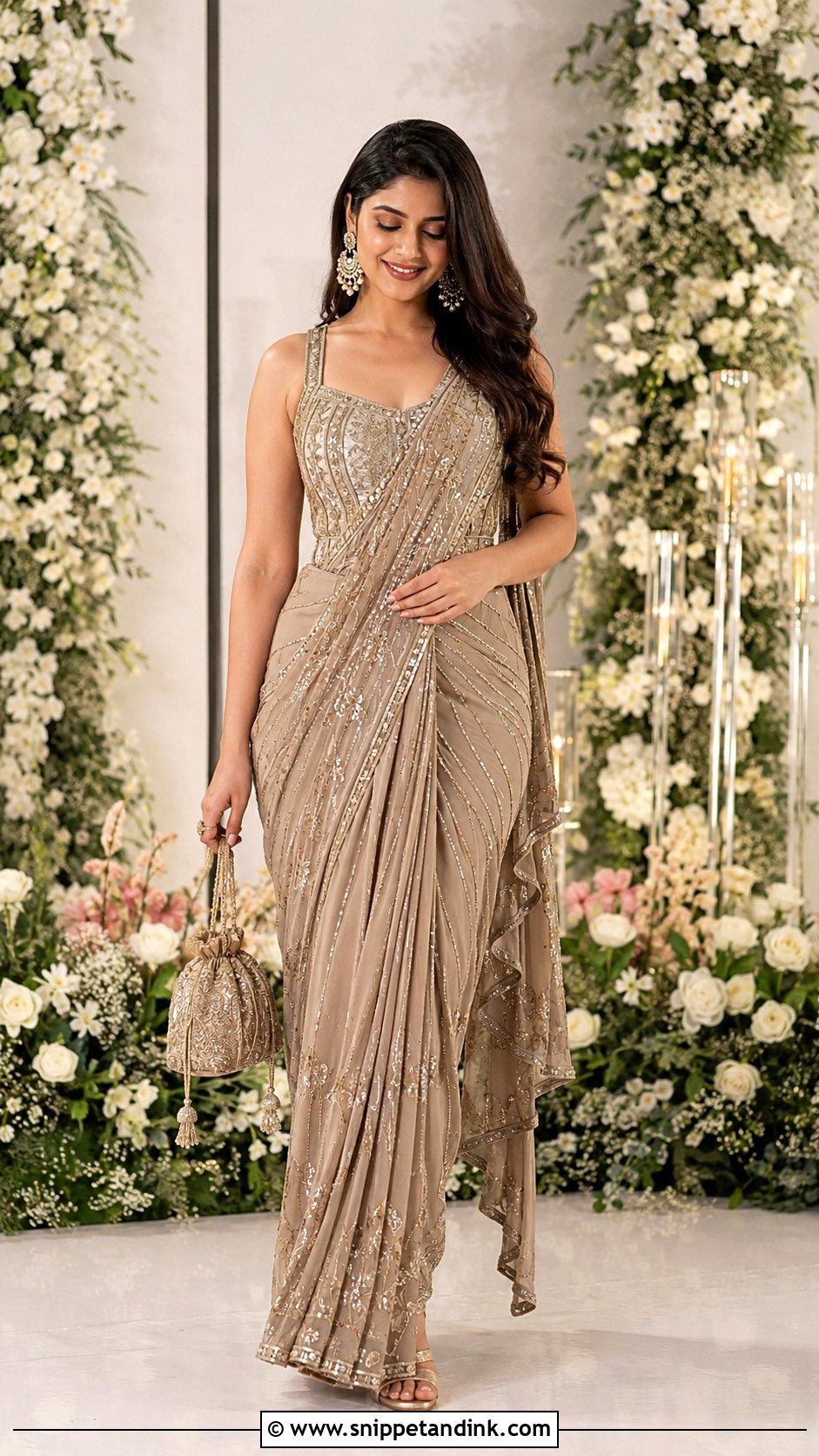
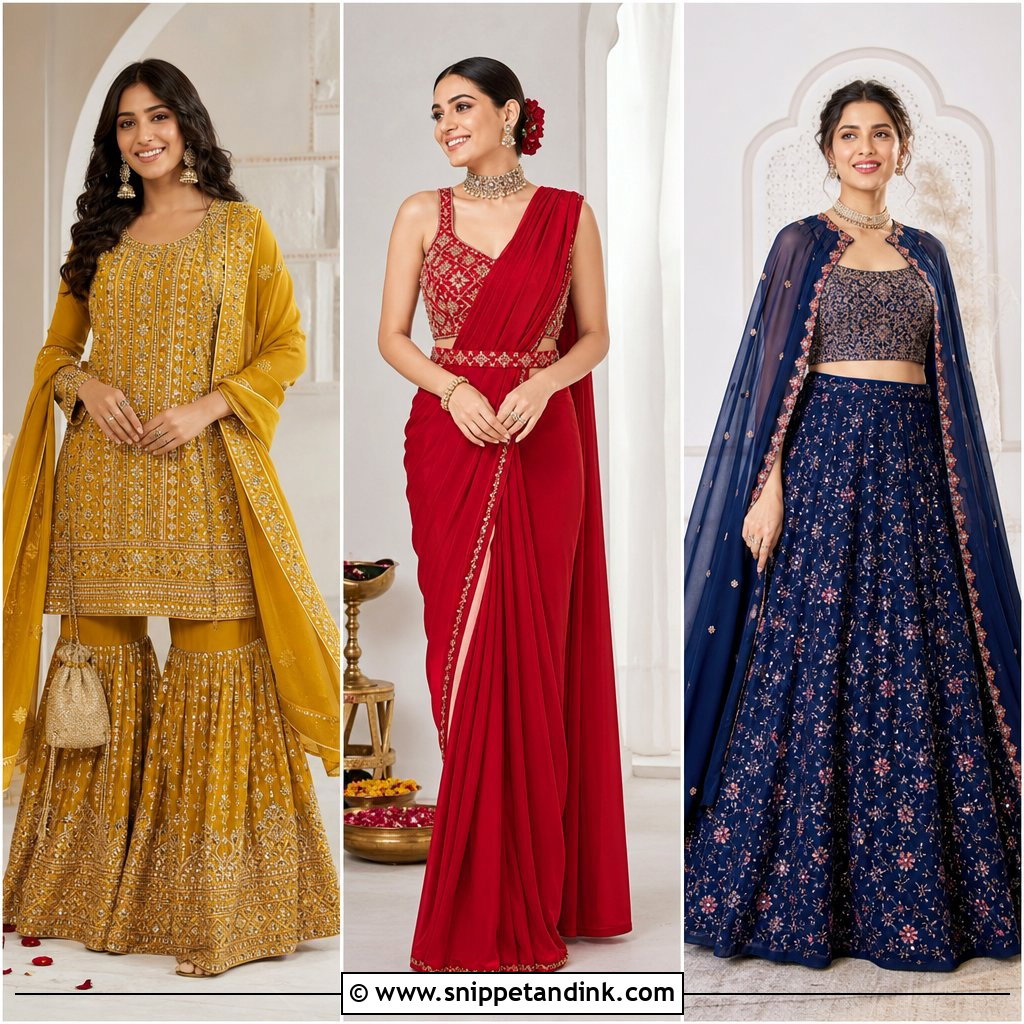
An Indo Western wedding dress suits functions that mix traditional and modern guests. Cape gowns, dhoti-style dresses, peplum tops with skirts, pre-draped sarees and crop tops with palazzos are all easier to manage than a full lehenga. I’m a fan of pre-draped sarees for guests who don’t drape often; they look polished and can’t unravel on the dance floor. Mirror work or metallic thread, statement earrings and block heels keep it festive.
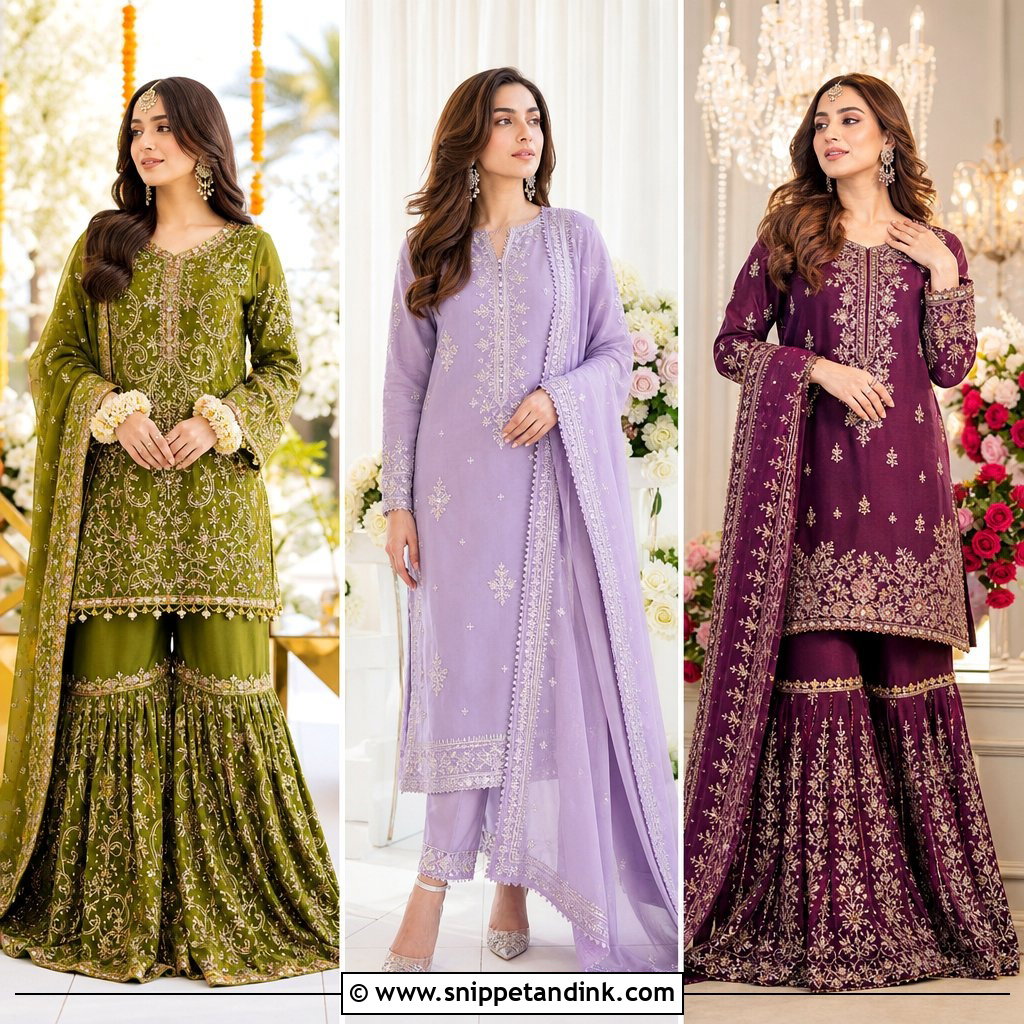
25. Destination Wedding Travel Dress
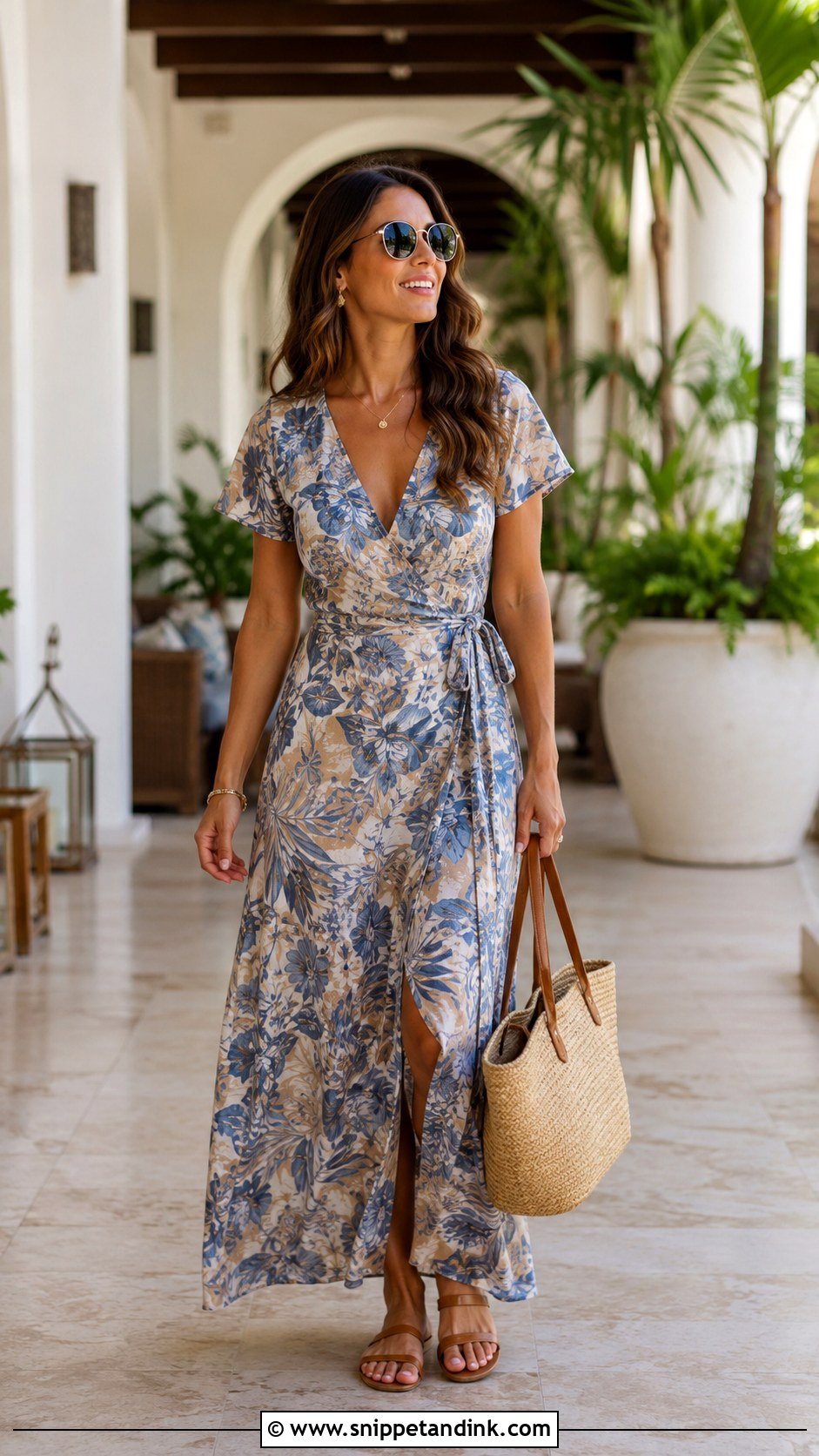
For travel days around a destination wedding, choose clothes that pack small and come out of a suitcase looking decent. Jersey, crepe, chiffon and cotton blends resist creasing far better than stiff fabrics. A lightweight maxi or printed wrap dress can go from the flight to welcome drinks. Comfortable sandals, a tote and a scarf for the plane are enough. Tropical prints for a resort, earthy tones for desert venues.
Turmeric, Henna Paste and a Dupatta on the Dance Floor
Most wardrobe damage at multi-day weddings comes from three things, and each has a fix.
Turmeric at the haldi
Turmeric stains quickly and stubbornly. Rinse the mark with cold water as soon as you can, work in a little dish soap and avoid hot water at first. Drying the garment in sunlight helps, because turmeric’s yellow fades in light. Better still, wear something you don’t mind keeping slightly golden.
Henna at the mehndi
Wet henna paste stains fabric deep orange-brown. If you’re getting your hands done, wear short or elbow sleeves, pin the dupatta back and keep a cotton cloth on your lap. Let the paste dry fully before you touch anything.
Dupattas and long skirts while dancing
I pin a dupatta in at least two places, shoulder and waist, using small safety pins hidden in the fold. Hem the lehenga to the height of the shoes you’ll dance in, not the ones you’ll arrive in. And pack a mini kit: safety pins, double-sided tape, a few bobby pins and a small sewing kit.
One Outfit Per Function, Built Around What Happens There
Each function has its own job, and the outfit should be built around it: washable and bright for haldi, hands-free for mehndi, secure for sangeet, graceful for the ceremony, polished for the reception. Plan the shoes and the dupatta pins along with the clothes, and you’ll spend the wedding celebrating rather than adjusting.
You'll Like These Ideas:



Leave a Reply