
A family wedding can mean five outfits in three days, each with its own mood, and the haldi outfit that works at noon will look wrong at the reception. I plan guest wardrobes by event first and color second. Haldi and mehendi want washable fabric and freedom to sit, the sangeet wants something you can dance in, and the ceremony and reception call for your best silk or embroidery. The looks below cover sarees, shararas, lehengas and fusion pieces, with notes on jewelry, shoes and bags. Before any of that, ask yourself one question: can I sit on the floor in this, walk across a lawn, and still breathe after dinner?
Colors and Coverage Hosts Notice at a Gurdwara, Temple or Nikah
Guest dress codes at Indian weddings are rarely printed on the card, and the unwritten ones vary from family to family. These are the points I check with a host before a client buys anything.
Colors worth asking about
Deep bridal red is usually left to the bride, and many would rather guests stayed out of it at the ceremony. Plain white and all-black are avoided at many Hindu ceremonies because of their link with mourning, though both turn up happily at receptions. When in doubt, a quick message to someone in the family beats guessing.
Covering your head
At a gurdwara, everyone covers their head, so bring a dupatta that will actually stay up rather than a slippery satin one. Many nikah ceremonies expect the same. Pin it lightly into your hair at the crown and it will survive bowing and sitting.
Shoes come off
Temples and gurdwaras ask you to remove your shoes, sometimes for a long ceremony. Wear something you can slip off and on in seconds, and remember your feet will be on show. Without heels, a saree or lehenga hemmed for them will drag, so set the length for bare feet if the main ritual is indoors at a temple.
1. Silk Saree for Indian Wedding Function
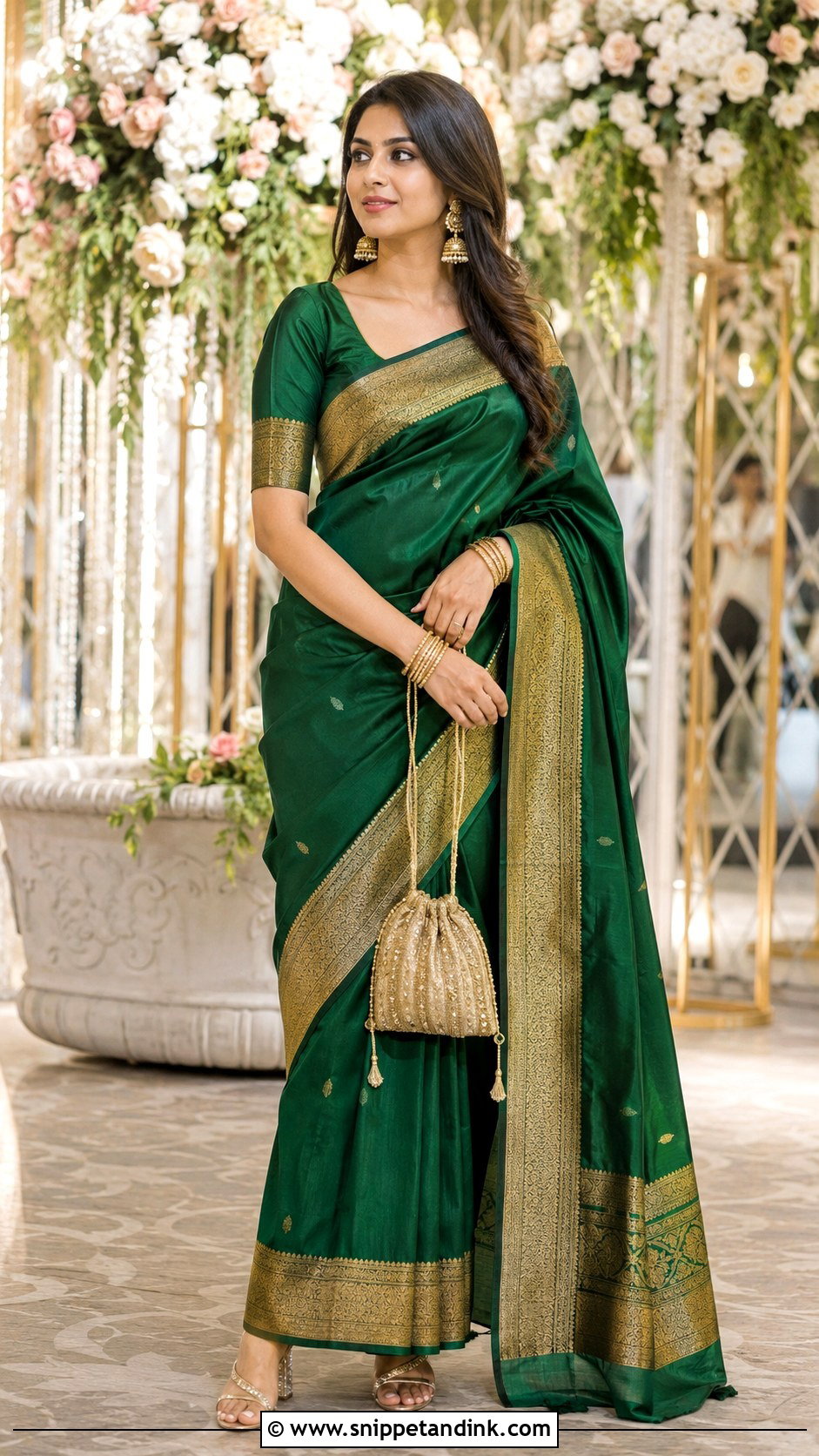
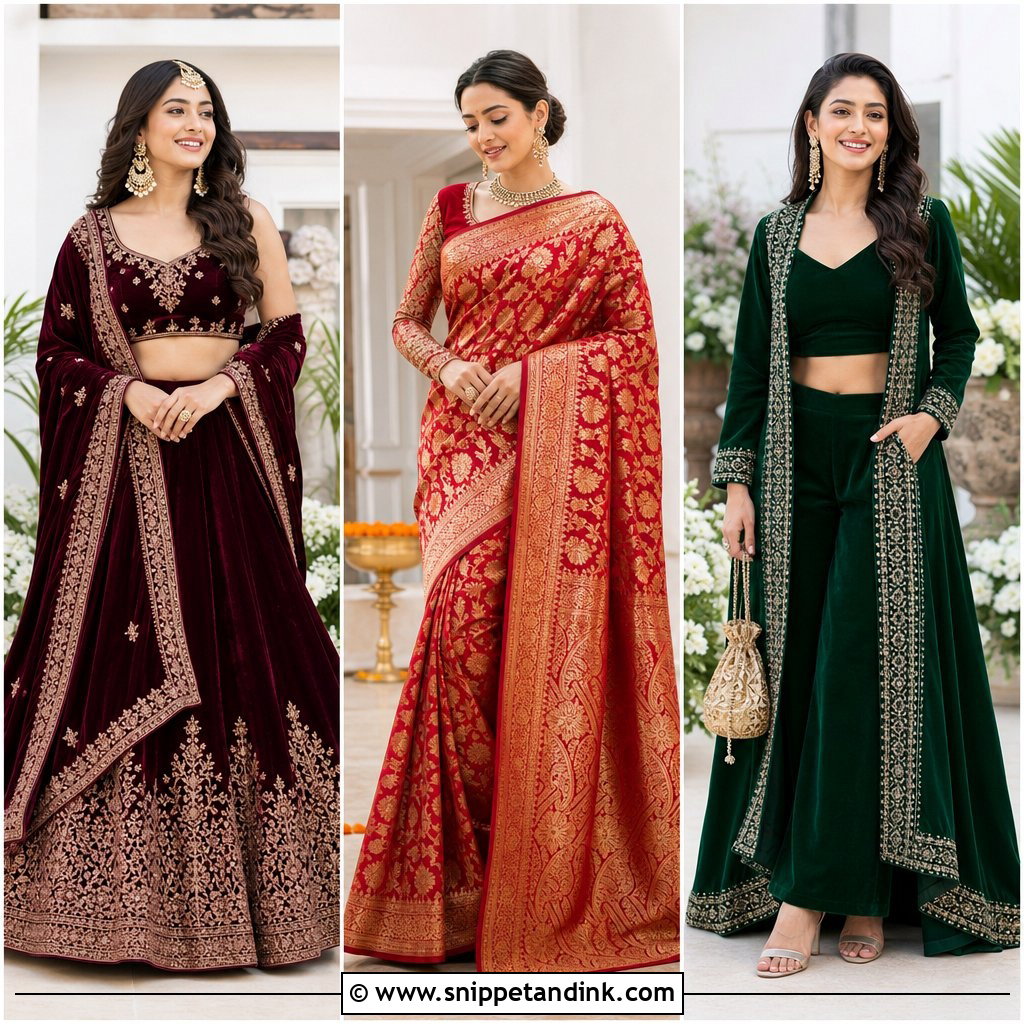
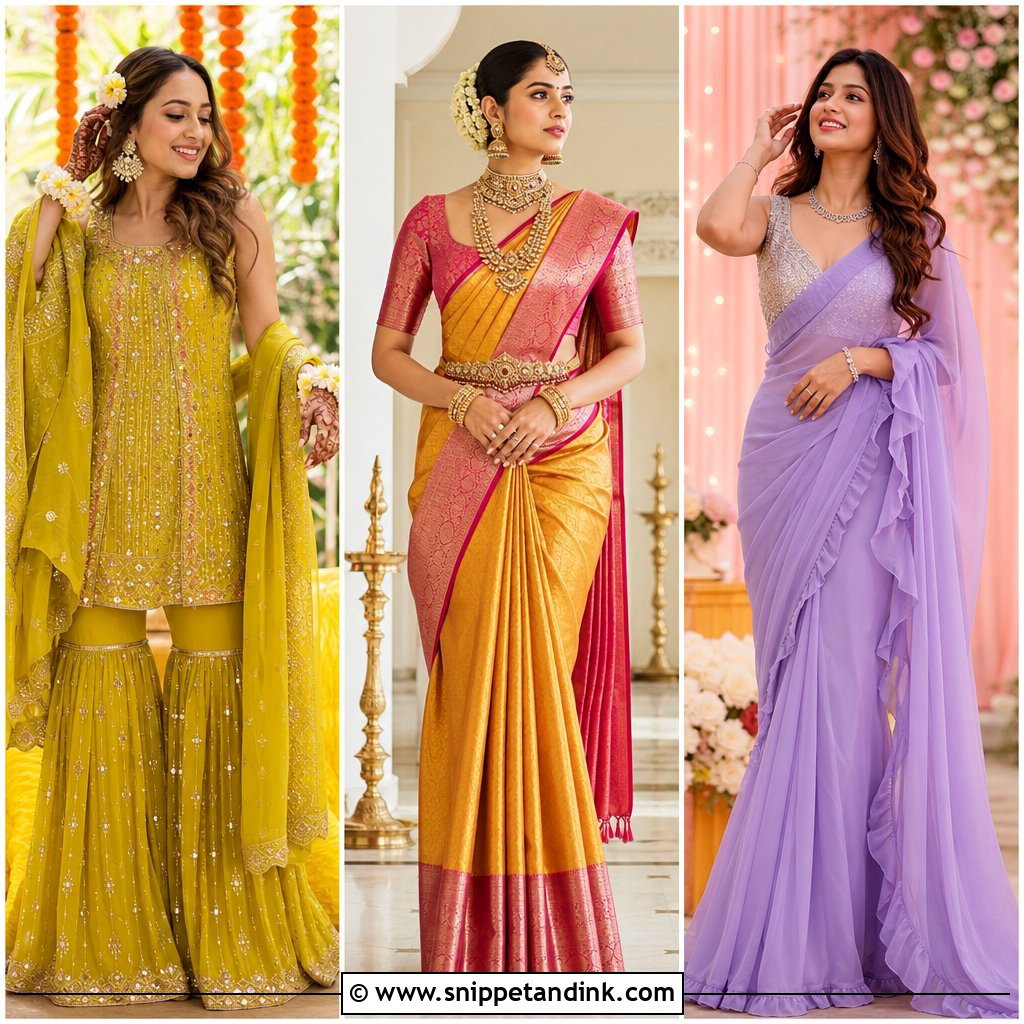
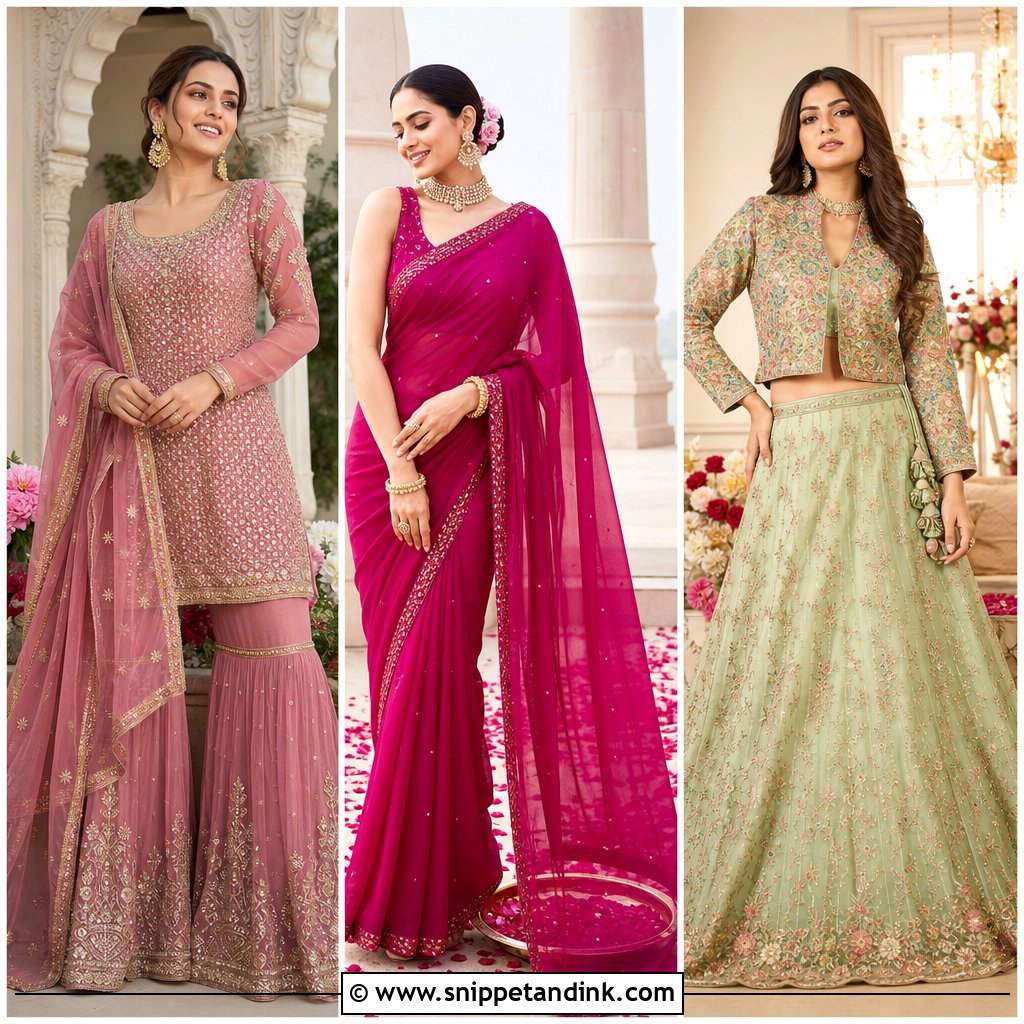
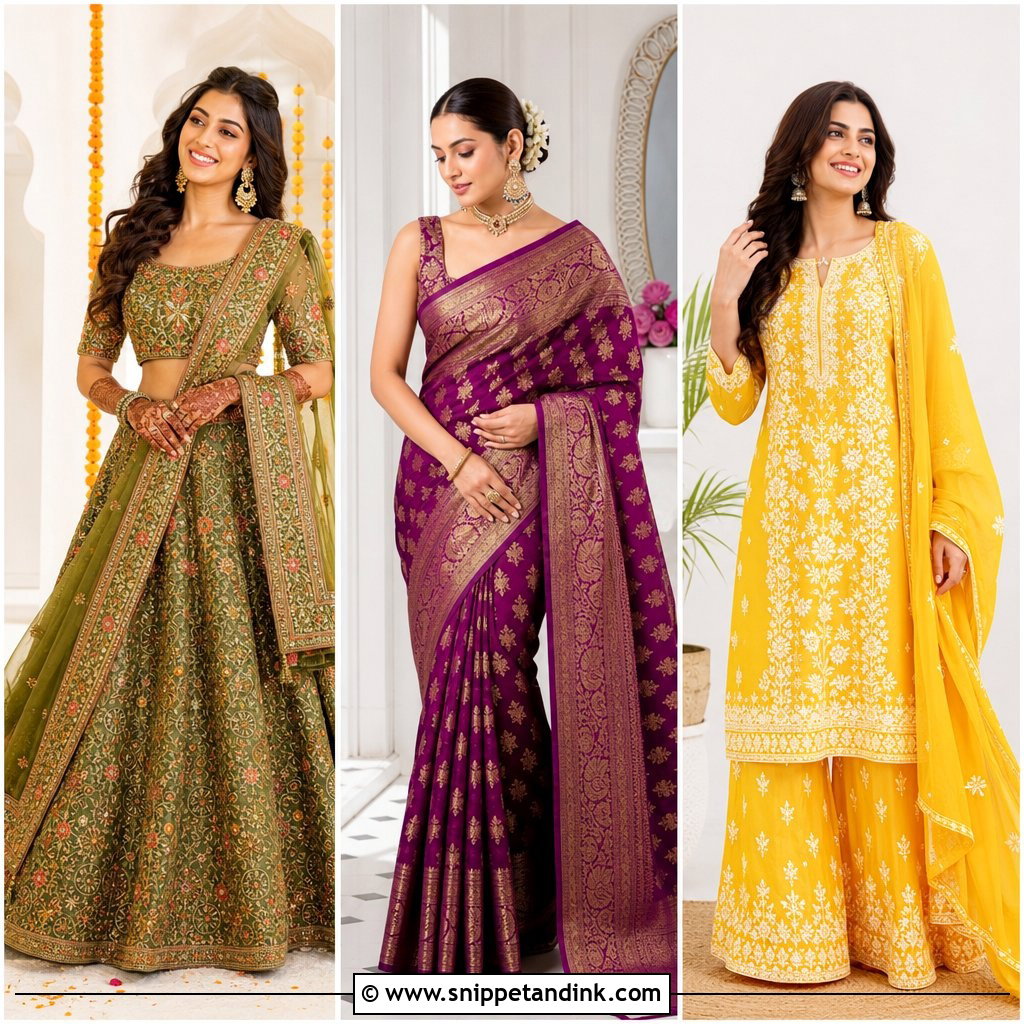
A silk saree is still the safest way to dress for the main ceremony, and jewel tones like emerald, royal blue, magenta or deep purple with a gold border suit almost every family. Silk has body, so it needs an elbow-sleeve blouse fitted properly at the bust; a loose blouse lets the pallu drag the whole drape sideways. Gold jhumkas, stacked bangles and a small potli are enough. Cushioned block heels or juttis, a low bun with fresh flowers, and two or three pins hidden in the pleats keep everything in place through the rituals.
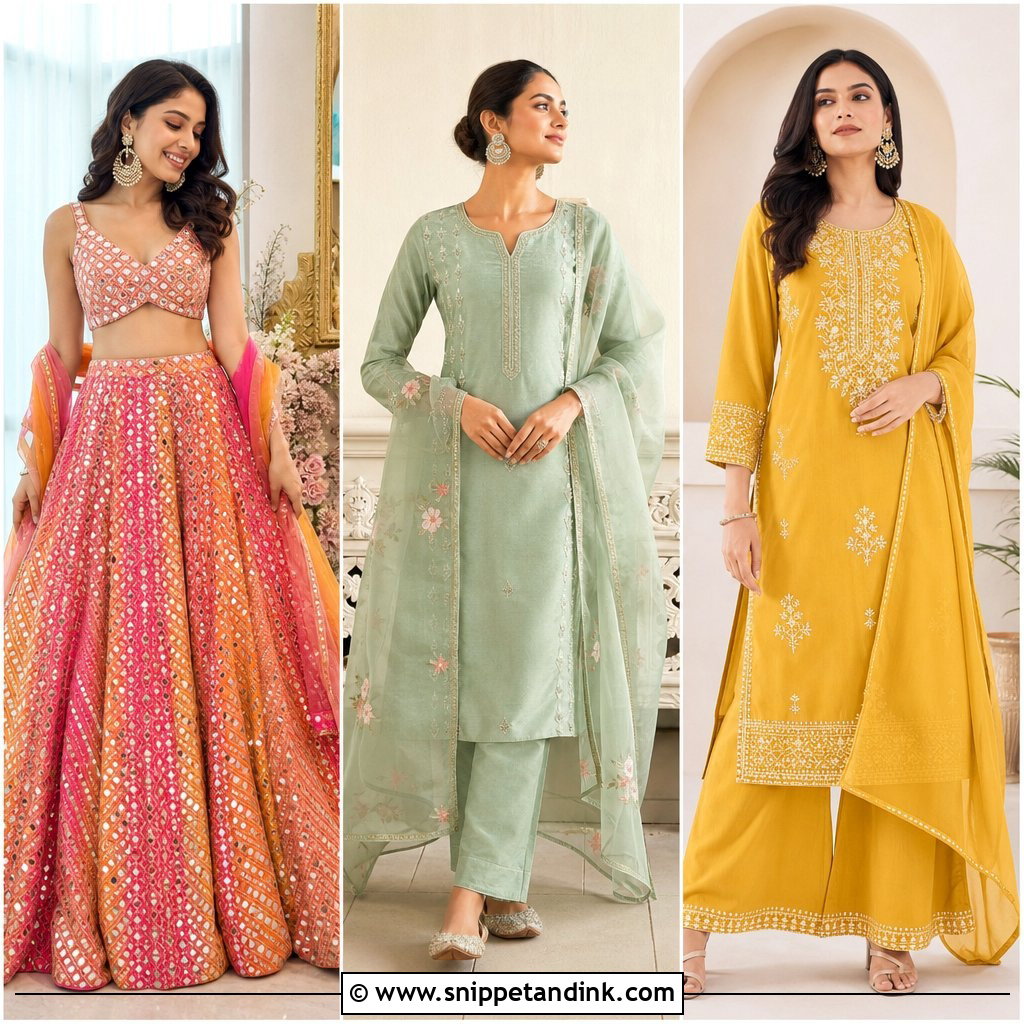
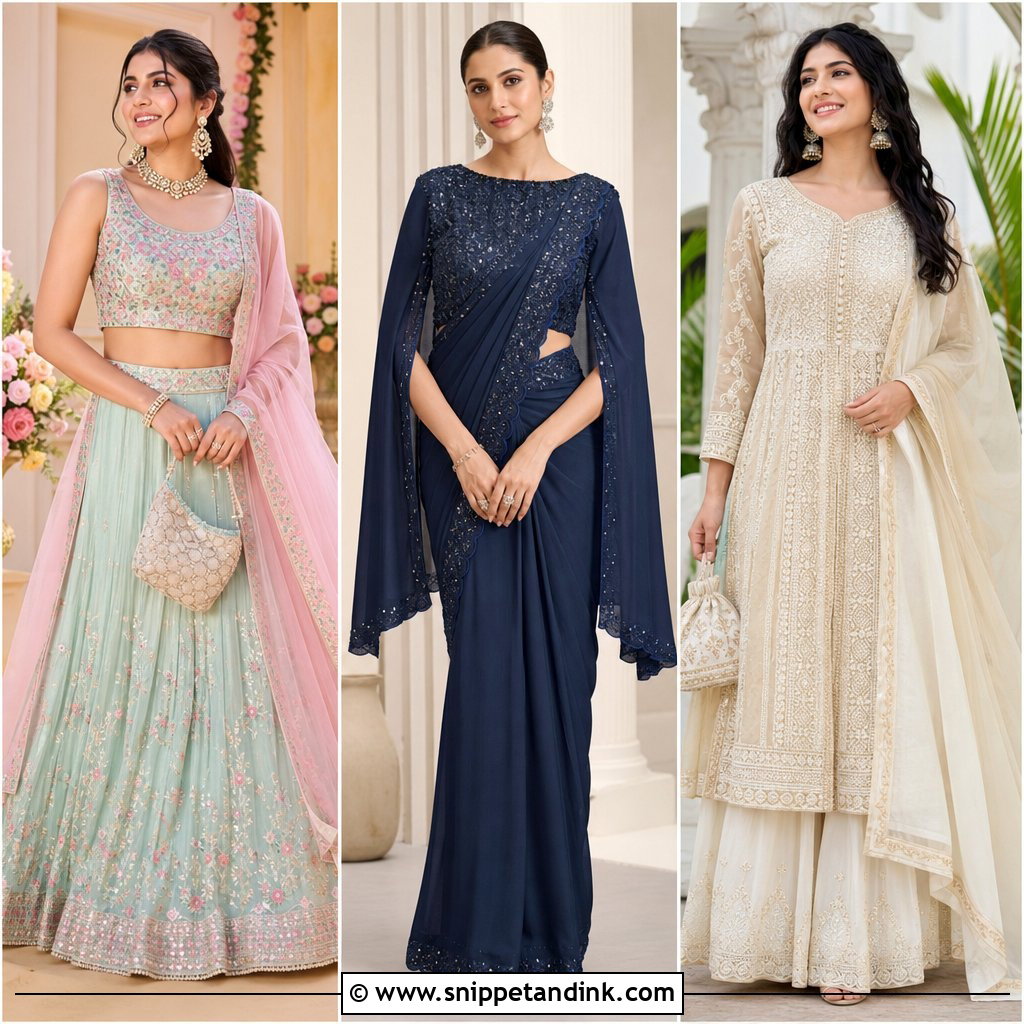
2. Floral Lehenga for Mehendi Function
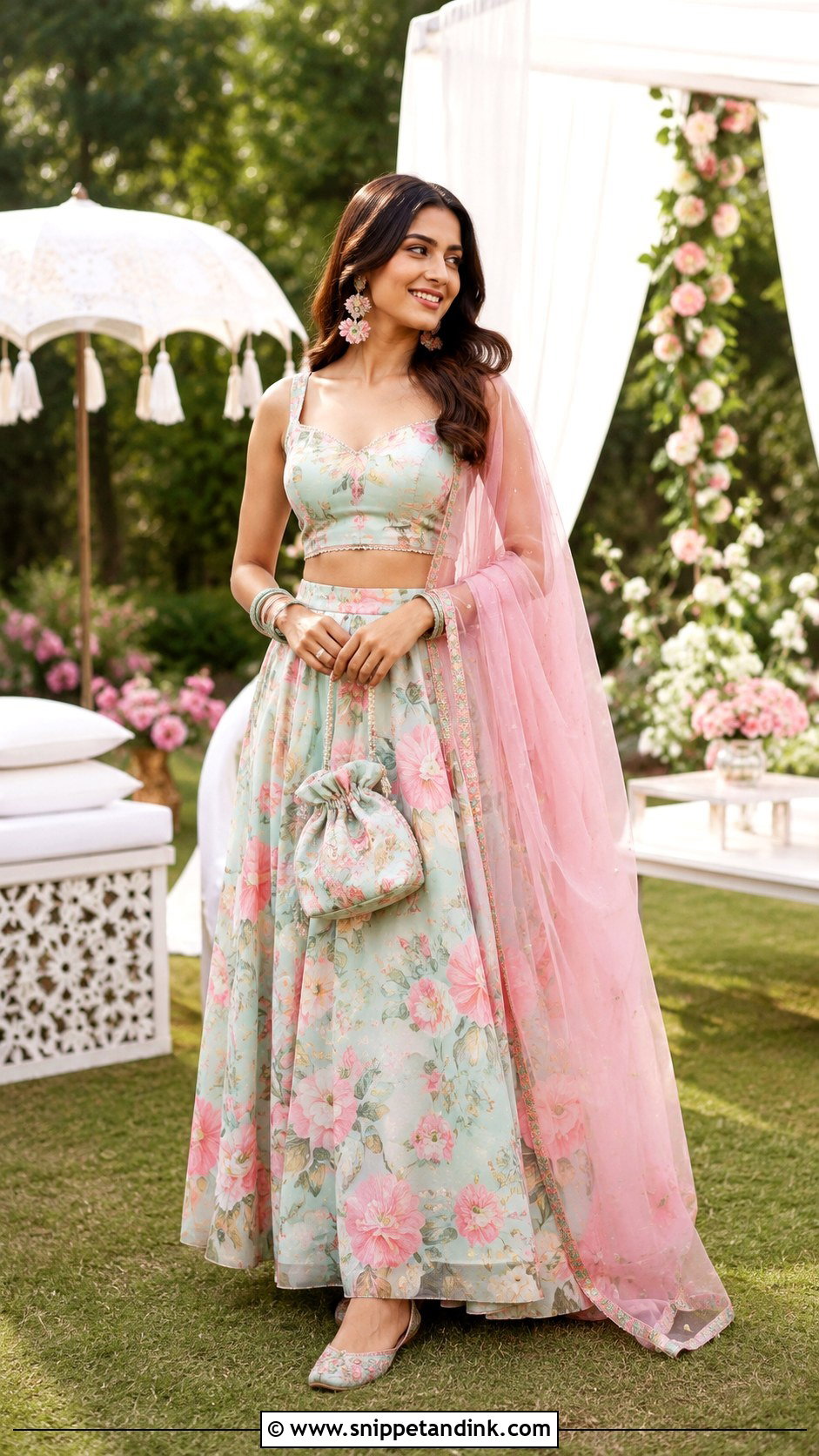
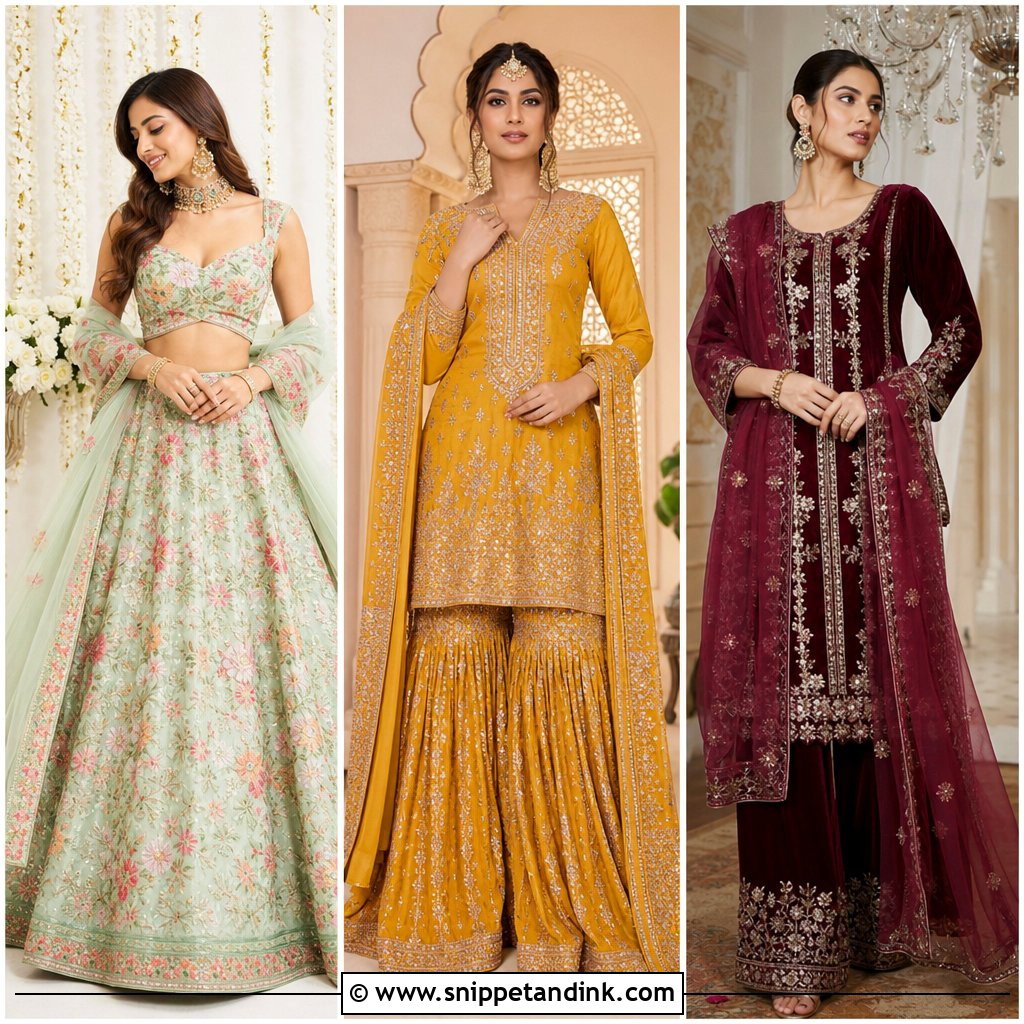
At a mehendi, guests often get henna too, so think about your hands before your hemline. A floral lehenga in mint, coral or turquoise with a cropped blouse is light and cheerful, and an organza or chiffon dupatta won’t drag across wet paste the way a heavy one does. Flat embroidered juttis and floral earrings keep it relaxed. I always recommend a crossbody potli here, because you can’t hold a clutch while your henna dries. Tie your hair back in a braid or half-up style, since loose strands stick to fresh mehendi.
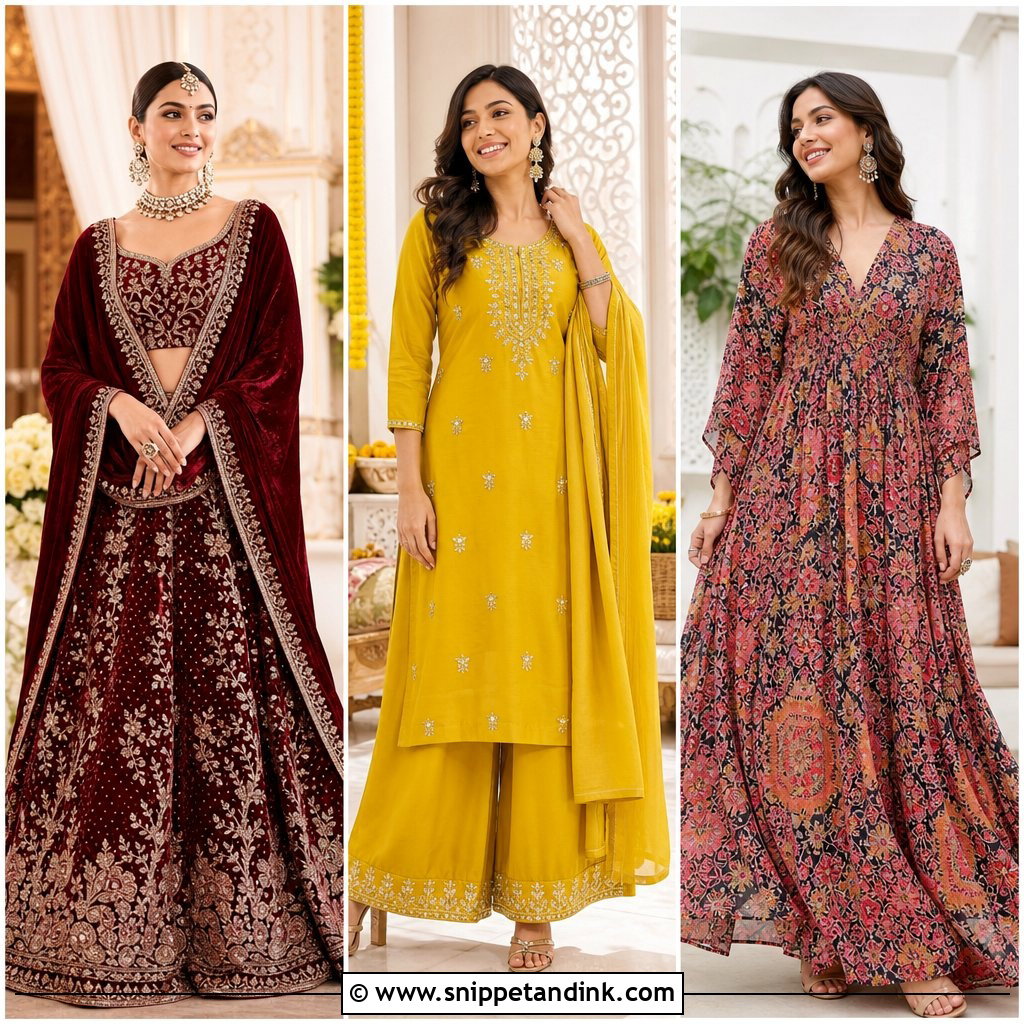
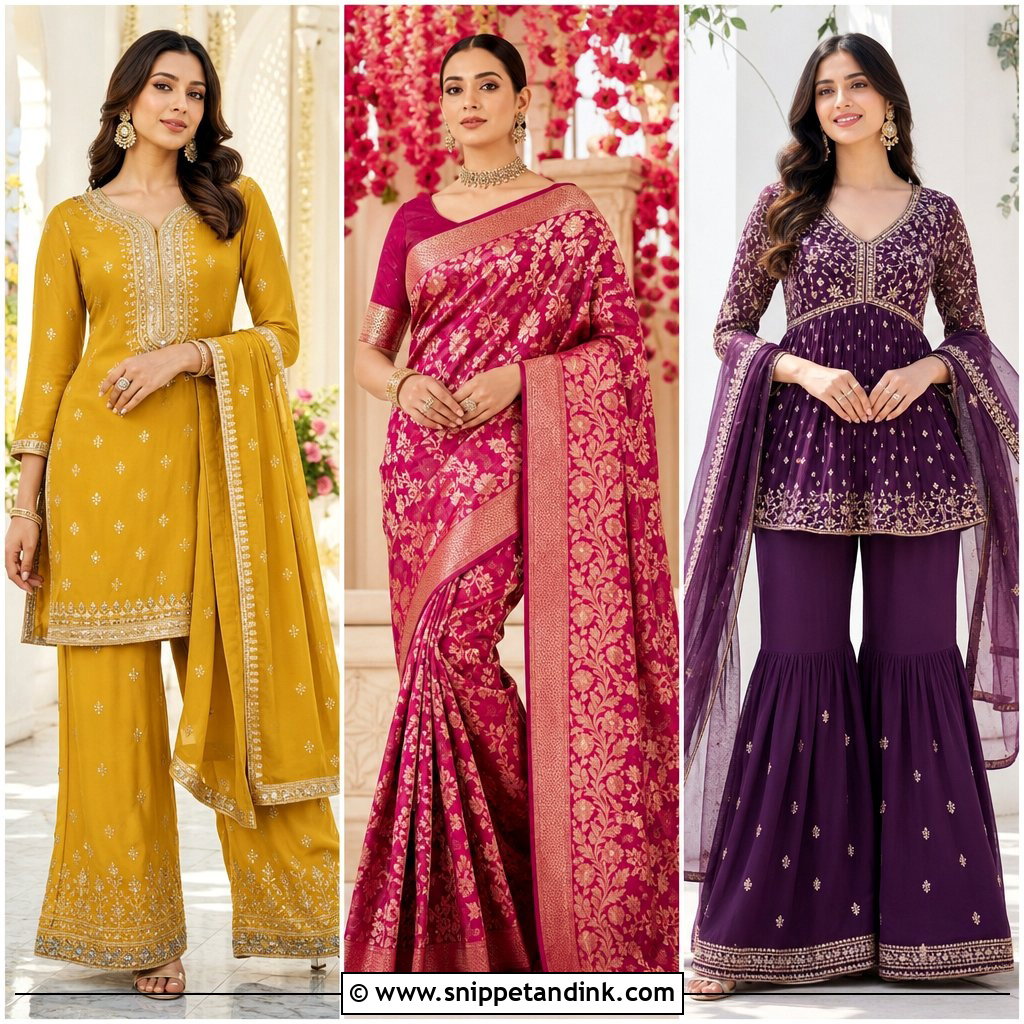
3. Yellow Sharara Set for Haldi Function
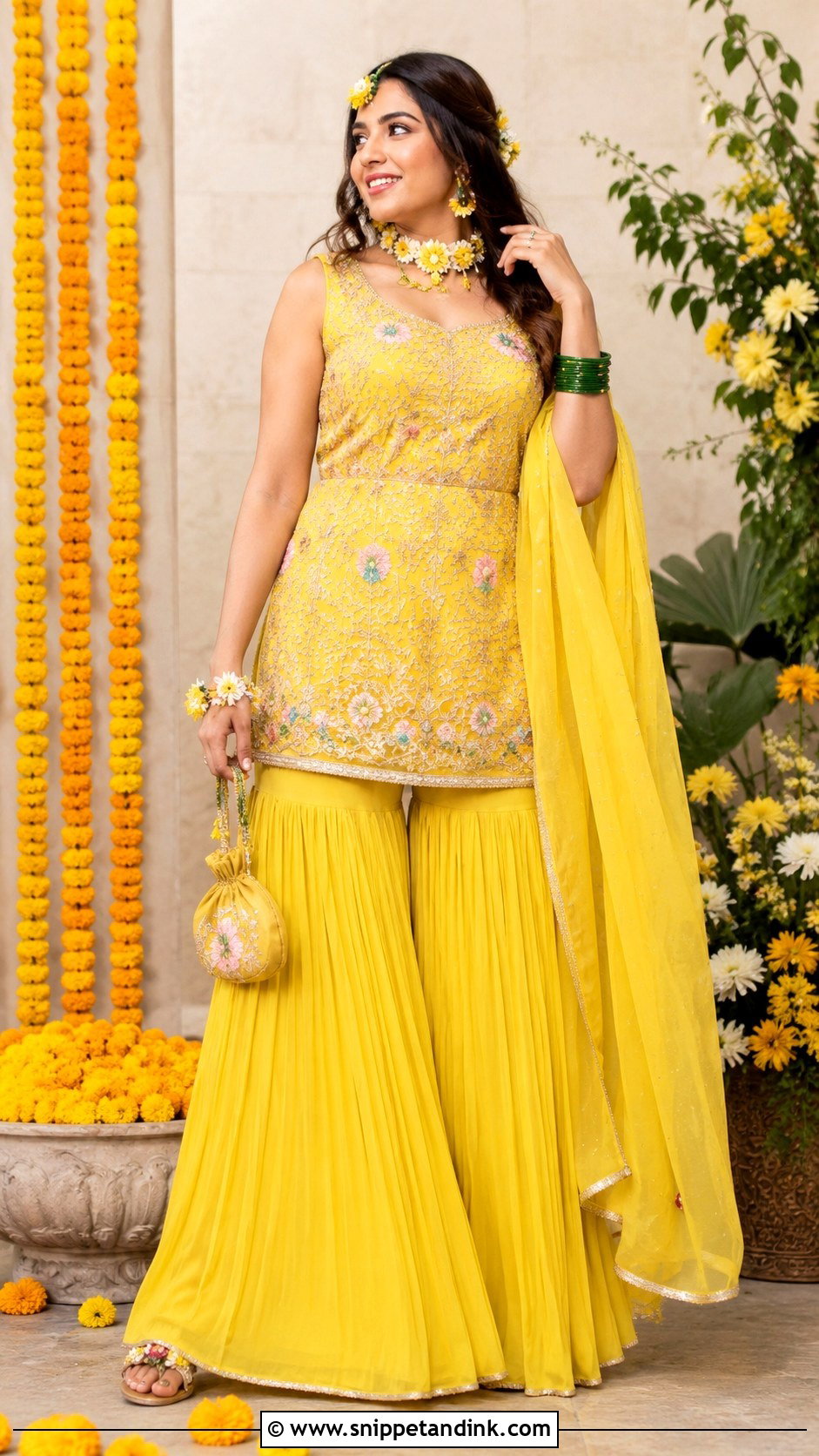
Haldi is messy by design. A yellow sharara set with a short kurta and a light dupatta pinned over one shoulder lets you sit low and move quickly once the turmeric starts flying. Cotton silk and chanderi handle a wash better than delicate georgette. Add green, white or pink through floral jewelry or bangles. Then flat sandals, a loose braid or ponytail, and nothing you’d mourn if it came home yellow.
4. Sequin Lehenga for Sangeet Function
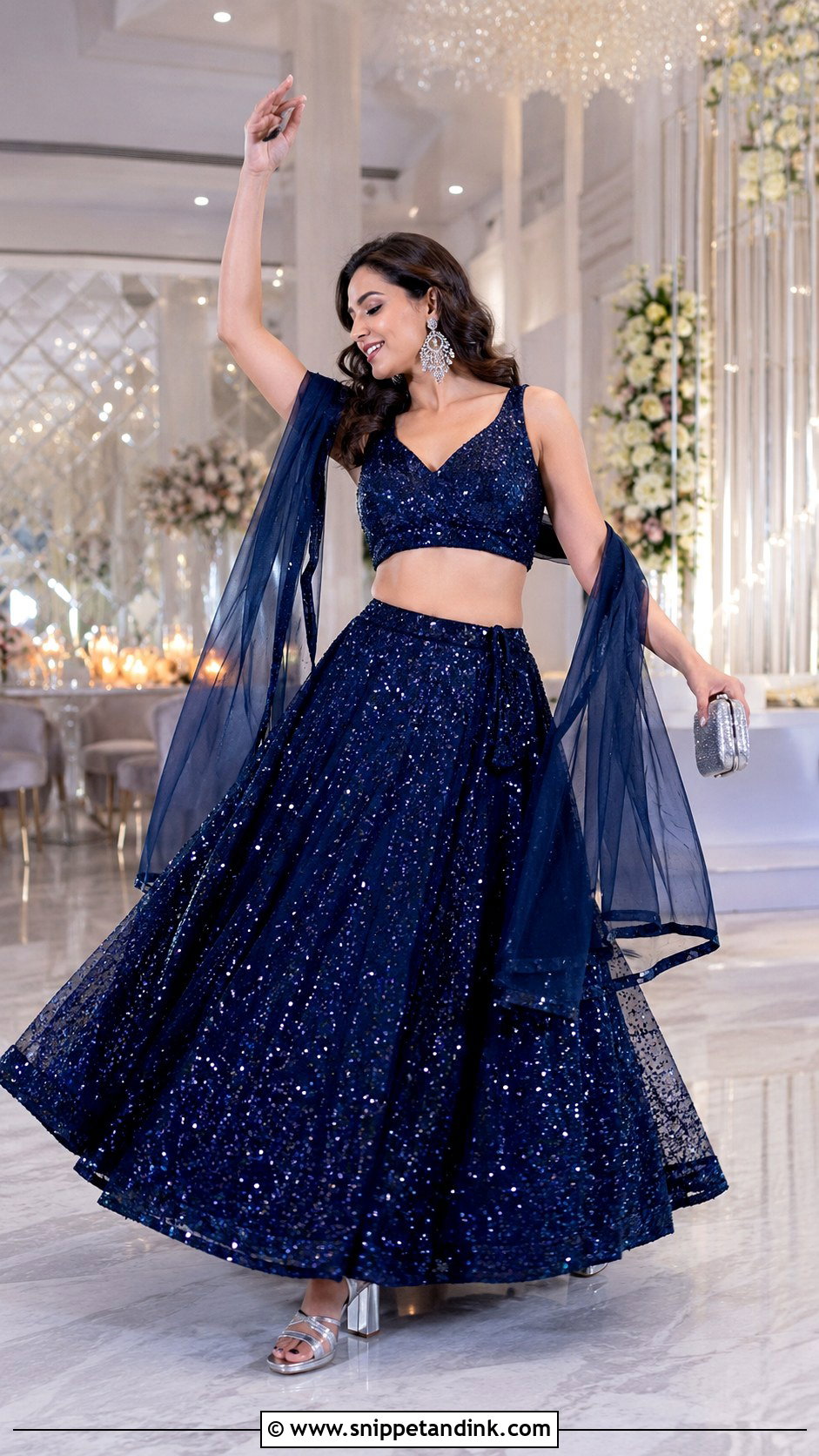
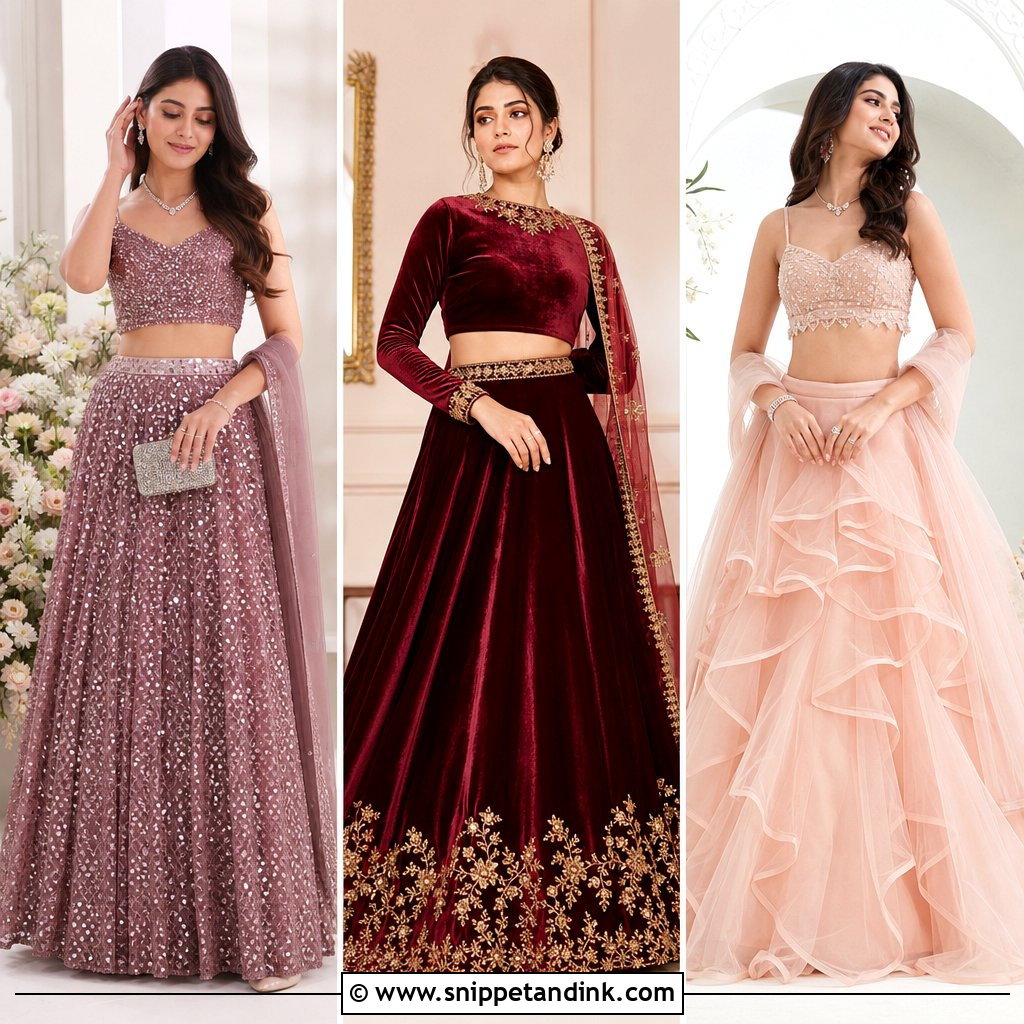
Sequins are heavy in a way photos don’t show. A densely worked skirt drags at the waist and scratches your inner arms by the third song, so for a sangeet I steer guests toward scattered sequins on a light base. Navy, plum, teal and silver catch event lighting well. The blouse should be supportive enough to dance in, and the dupatta draped around the arms or pinned at one shoulder. Statement earrings, a slim clutch and stable block heels finish it, or embellished flats if there are long performances. Skip the necklace; a detailed blouse already fills the neckline.
5. Anarkali Suit for Engagement Function
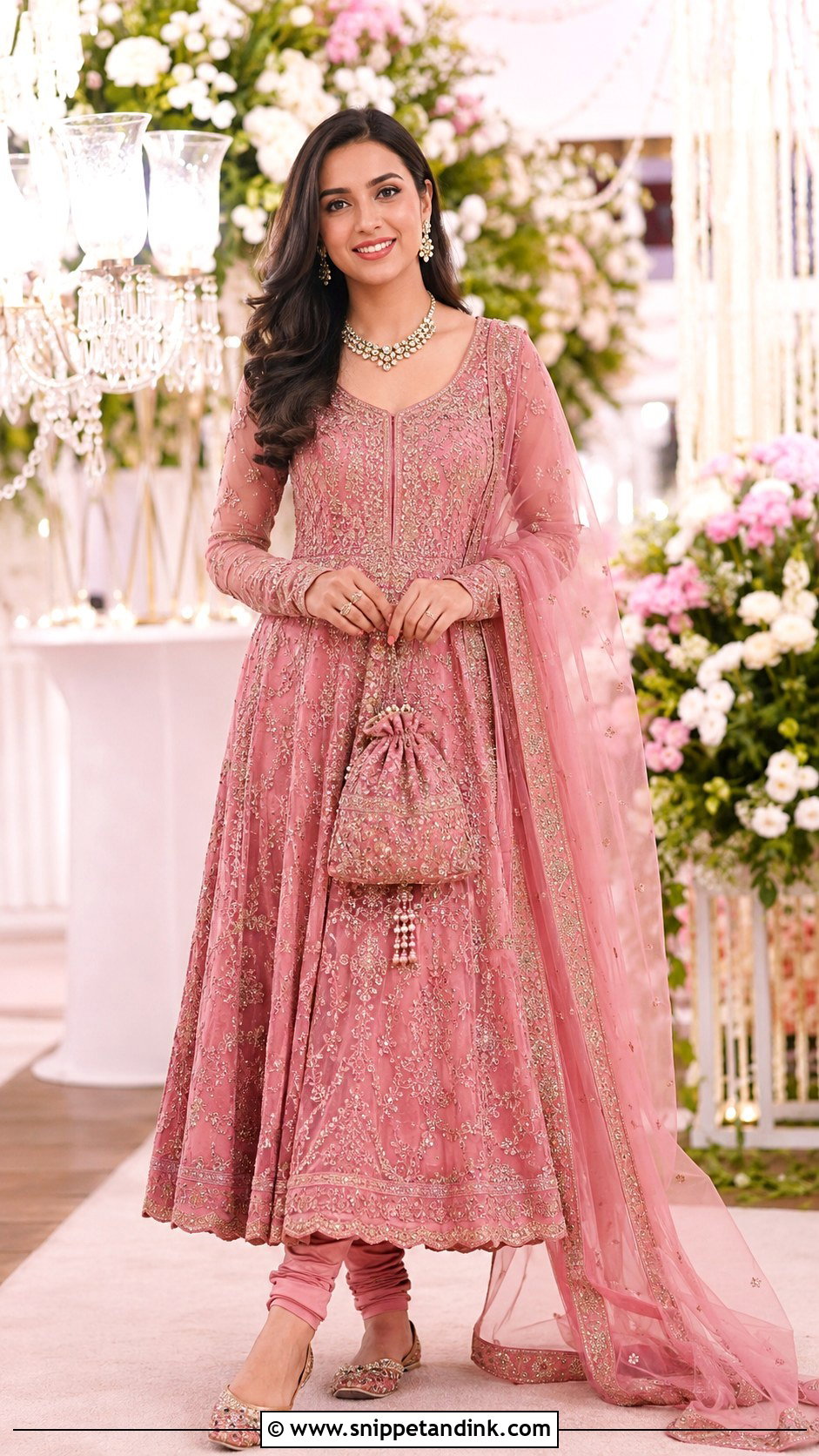
An Anarkali gives more coverage than a lehenga and moves well, which makes it a reliable engagement outfit for guests who’d rather not show the midriff. Fit is the whole story. The waist seam has to sit at your natural waist: set too low, the skirt looks heavy, and set too high, it reads as maternity wear. Rose pink, powder blue, maroon or sage with embroidery at the neckline and hem looks polished without competing with the couple. Churidar, a sheer dupatta on one shoulder, a kundan set and pointed juttis complete it, and the hem should just brush the top of your shoes.
6. Pre-Draped Saree for Wedding Reception
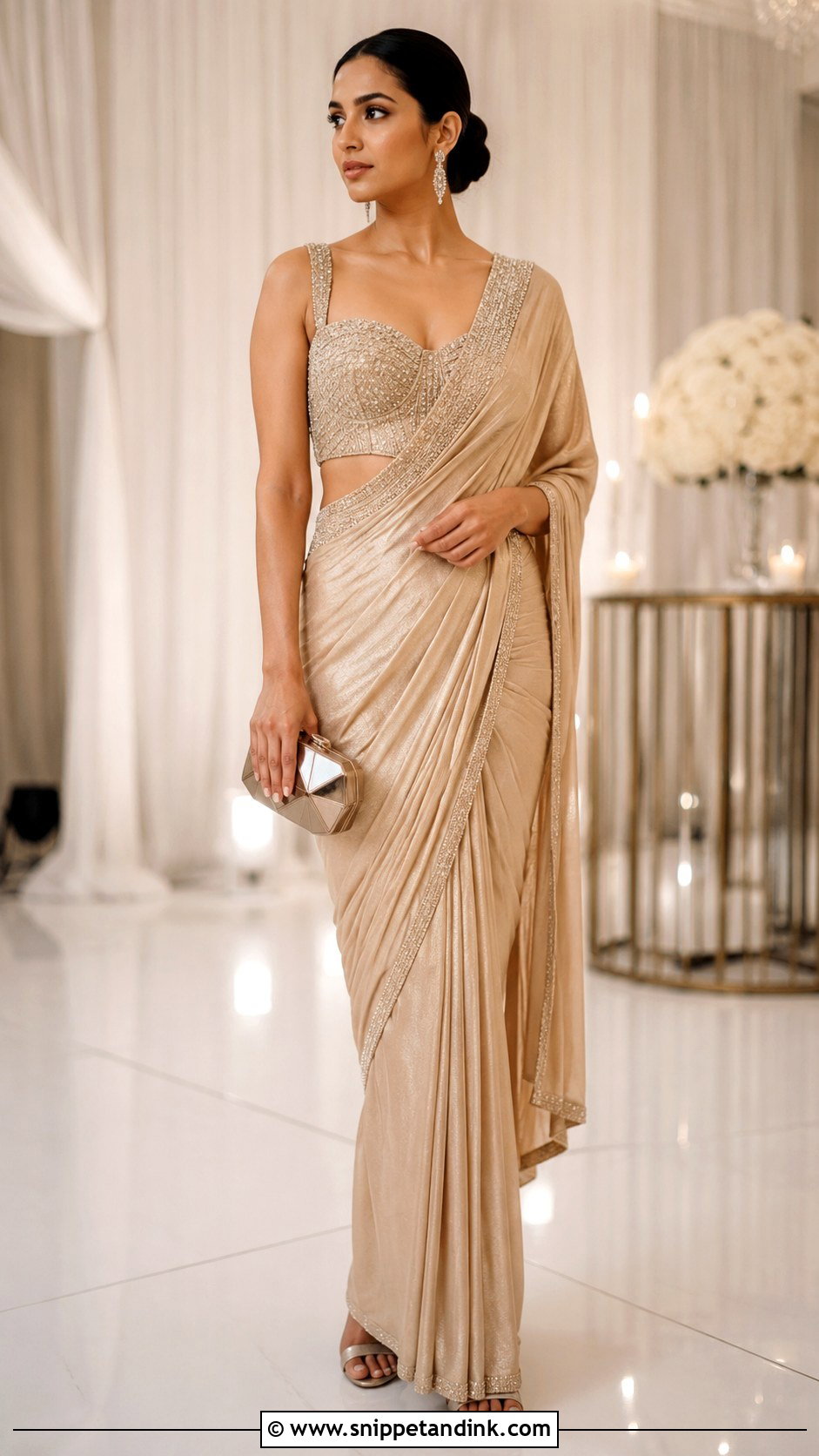
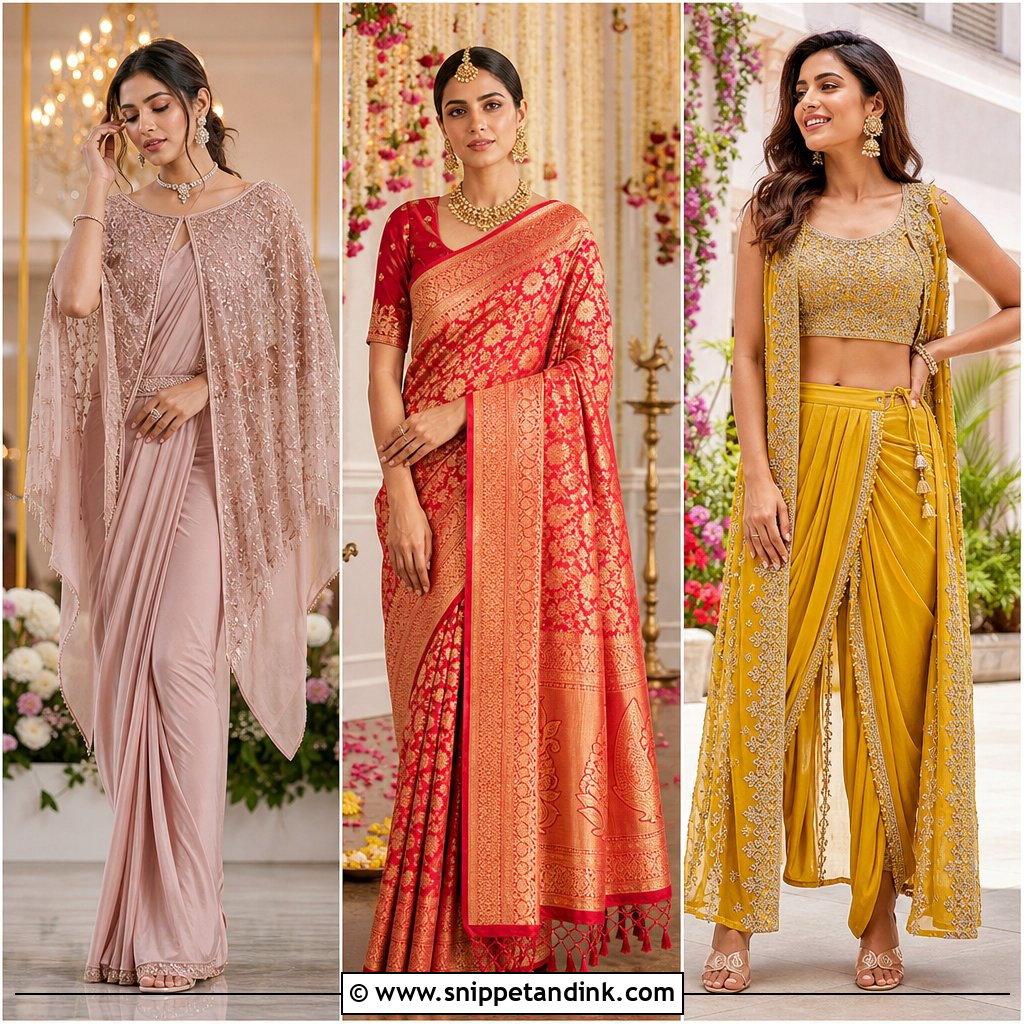
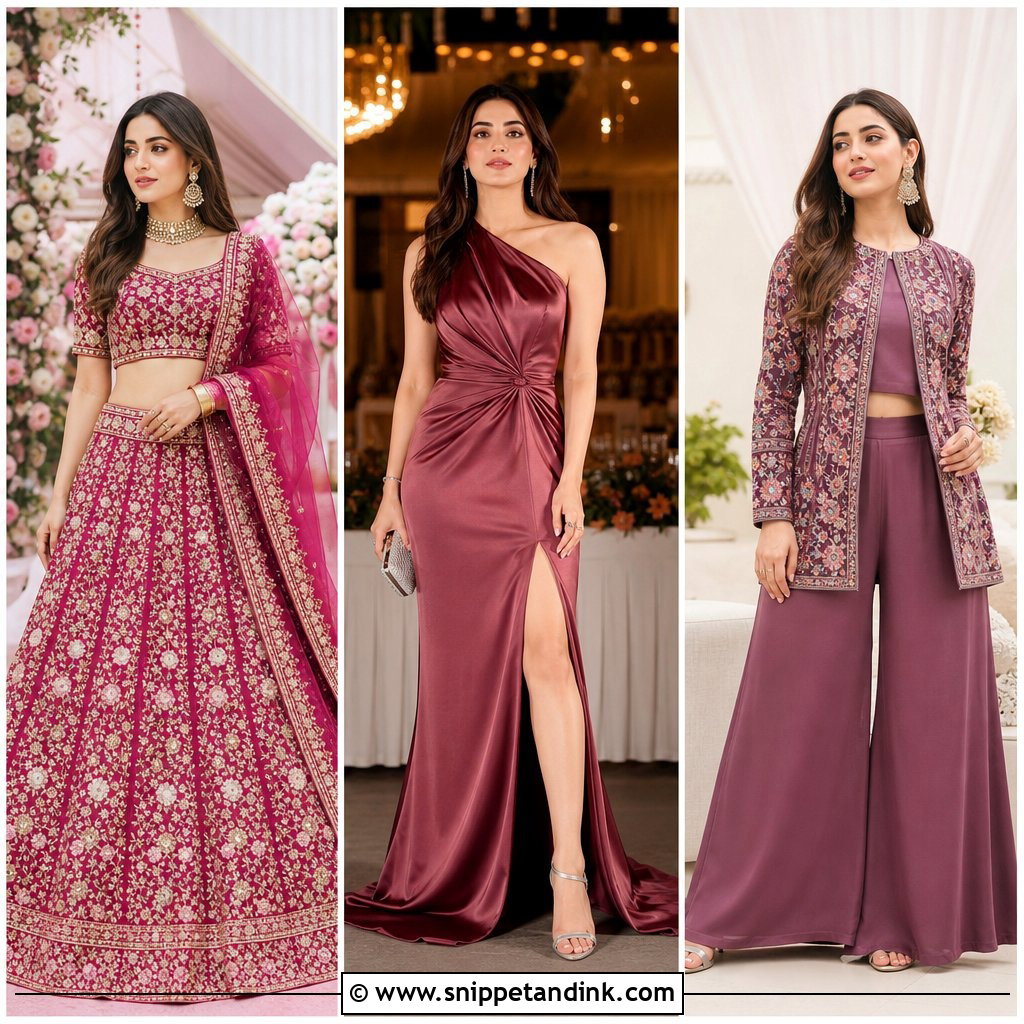
If you’ve never draped a saree yourself, a pre-draped one is the honest choice for a reception where you’ll be greeting people and walking between tables. The pleats are stitched, so nothing unravels after dinner. Satin, crepe or light georgette in champagne, navy, mauve or emerald suits evening light. Give it a structured blouse with an interesting neckline or full sleeves, crystal earrings, a metallic clutch and sleek heels. Check the stitched length with the exact heels you’ll wear, because pre-drapes are cut to a standard length and can pool on shorter guests.
7. Gharara Suit for Nikah Function
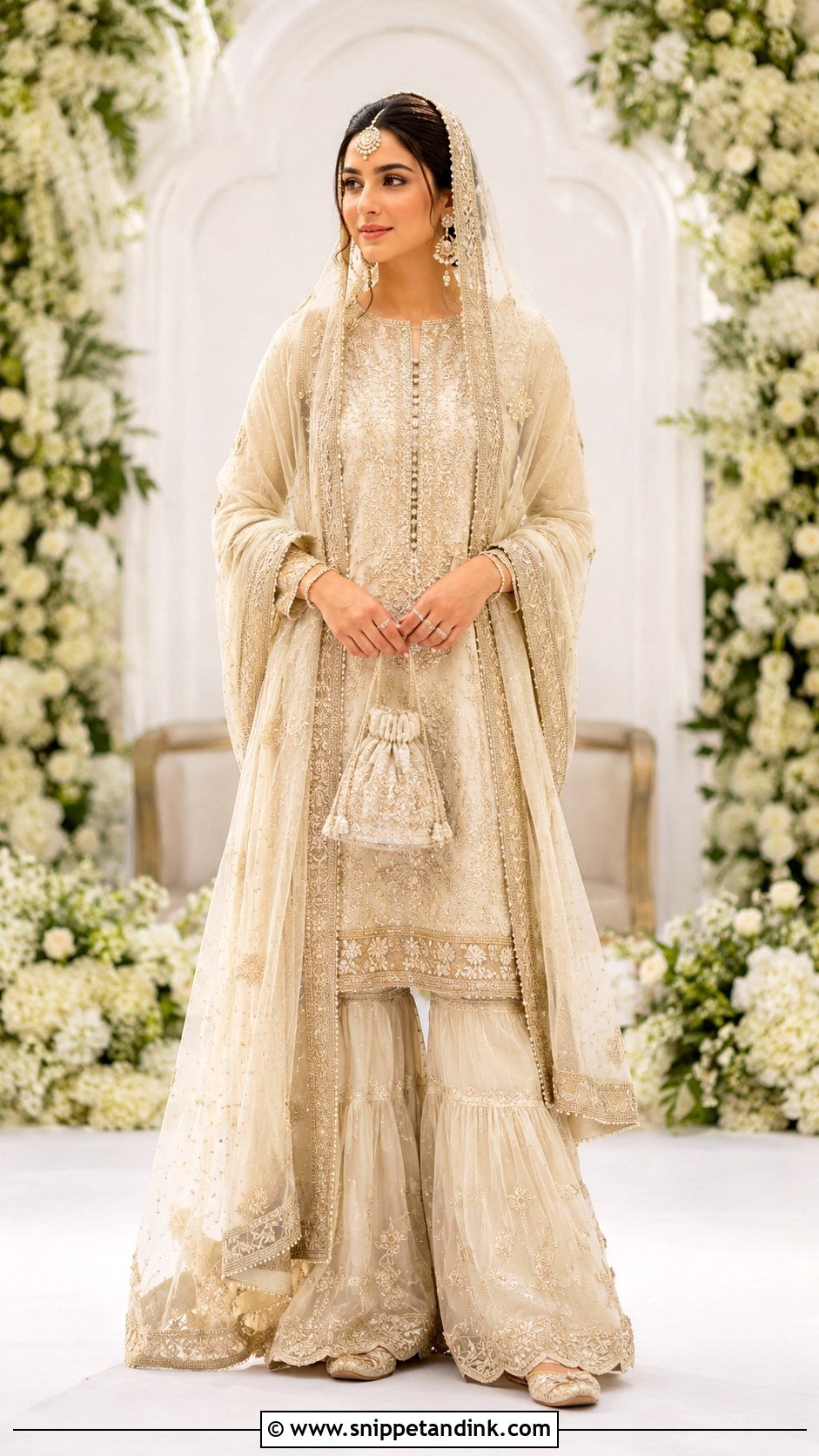
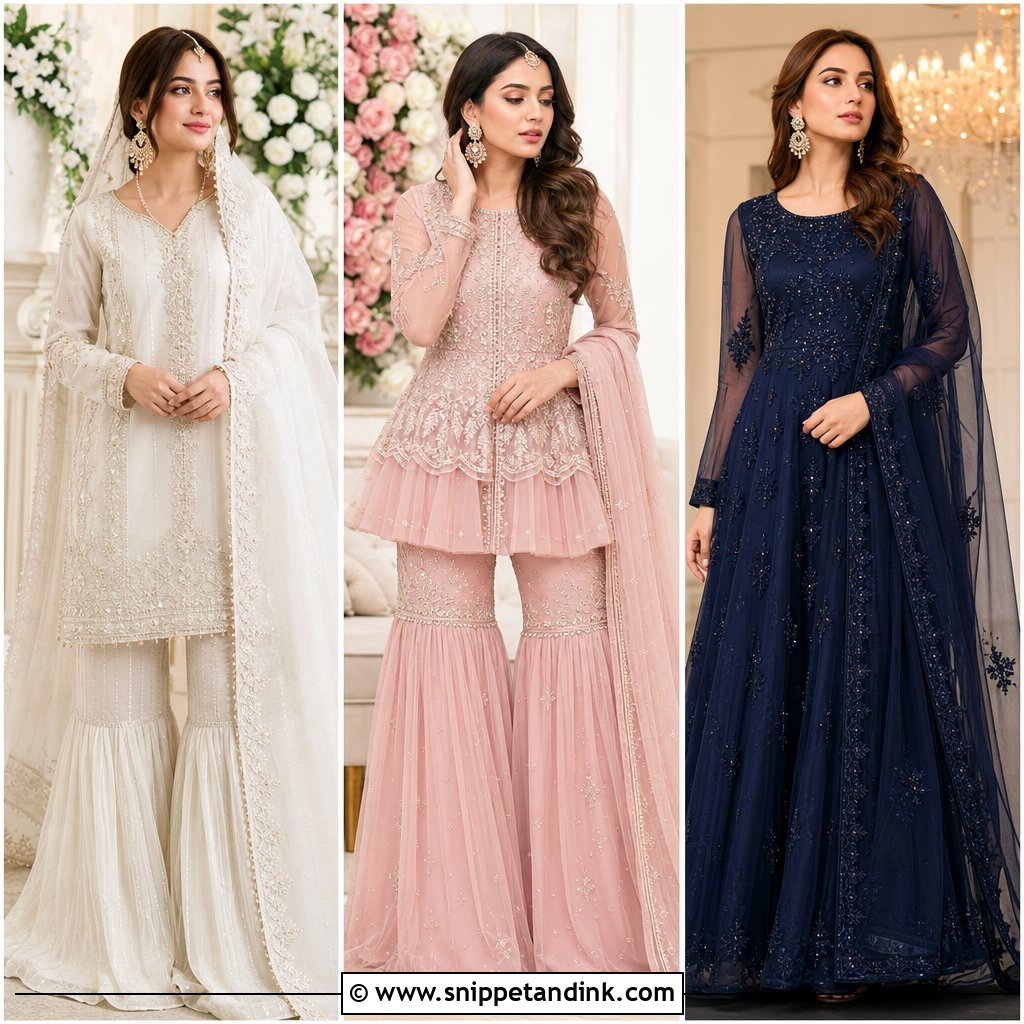
Gharara pants are fitted to the knee and then flare, and that knee joint, often trimmed with gota, is how you tell them from a sharara. With a knee-length kurta they suit a nikah or formal daytime function. Ivory, pistachio, blush or dusty blue with zari or pearl embroidery stays respectful. Bring a dupatta you can drape over your head, as many families expect it at the nikah, and wear a low bun so it has something to rest on and pin into. Pearl earrings, a small maang tikka, embroidered juttis and a beaded potli are all it needs.
8. Palazzo Suit for Daytime Wedding Function
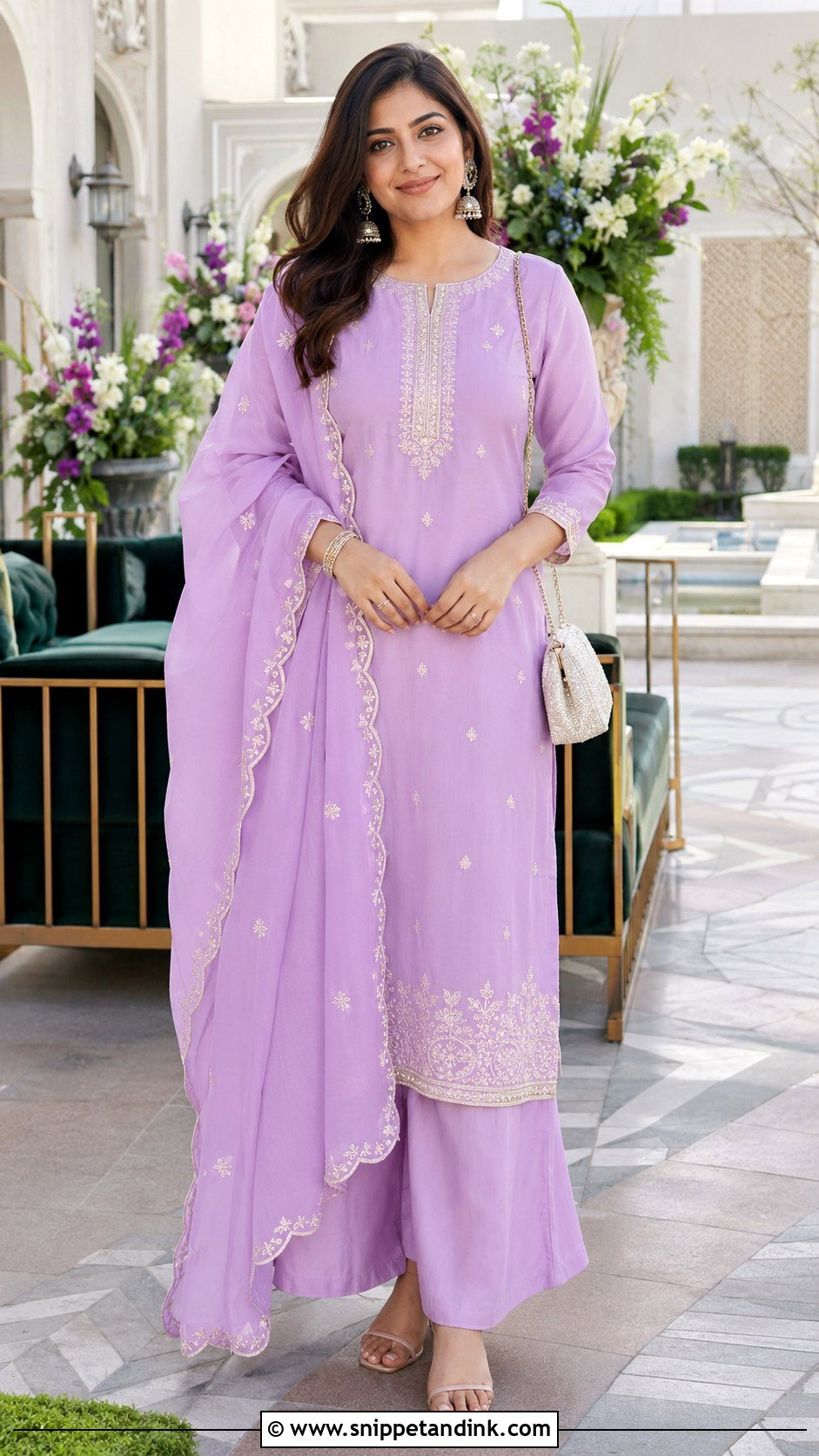
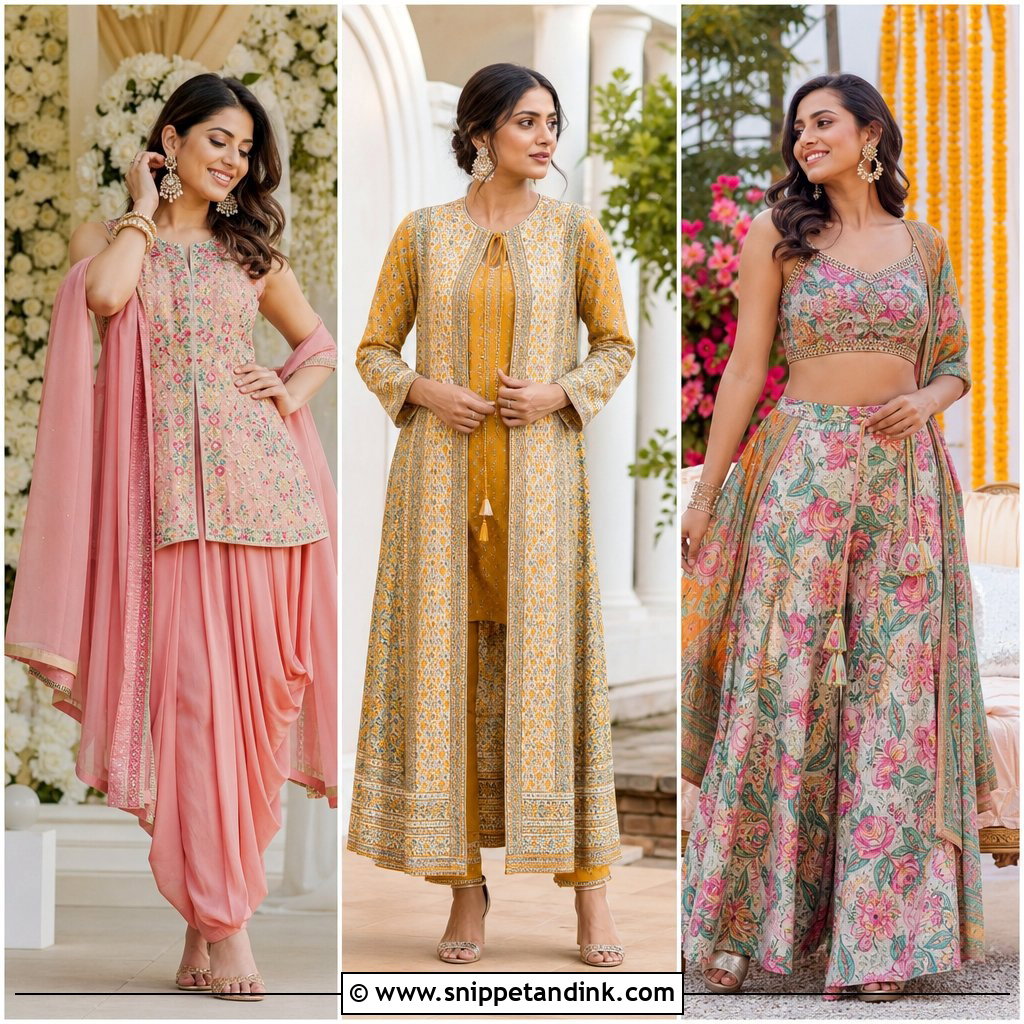
For a relaxed daytime function, a palazzo suit is the most comfortable outfit here. A straight or slightly flared kurta in cotton silk, chanderi or georgette sits over wide-leg pants, and pastel peach, lilac or aqua suits an airy venue. Let the dupatta carry the interest with a print, embroidery or a scalloped edge. Proportion is where palazzo sets go wrong. A kurta ending mid-thigh over very wide pants can shorten you, so try one that reaches the knee or just below. Medium jhumkas, a few bangles, a small shoulder bag and low block heels finish it.
9. Organza Saree for Day Wedding
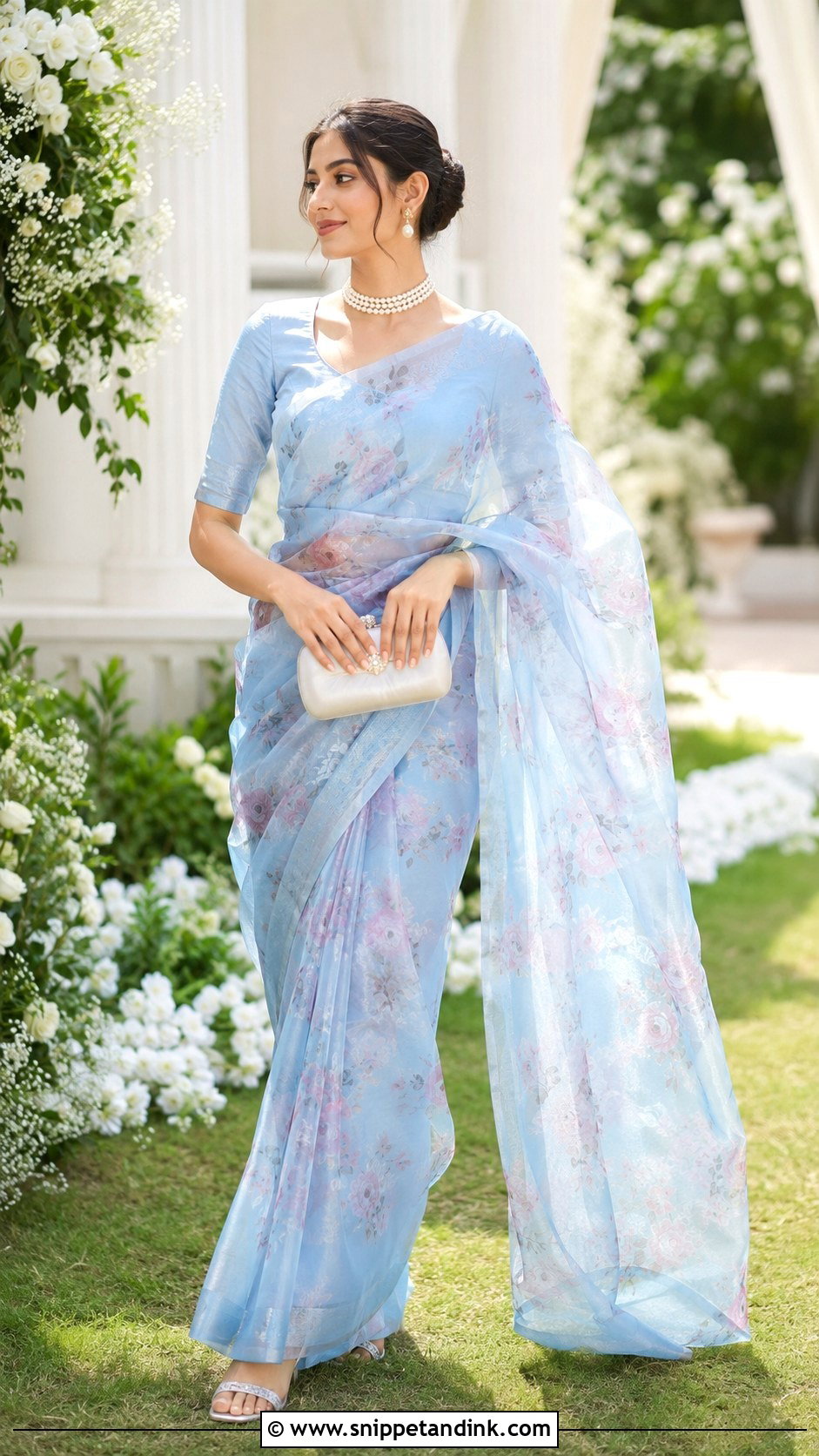
Organza is crisp, so it stands away from the body instead of clinging. That’s welcome at a day wedding and tricky for pleats, which want to spring open, so keep them narrow and pin twice at the waist. A soft floral print or woven border in lavender, mint or powder blue looks fresh in daylight. Pair a well-fitted blouse, with elbow sleeves if you’d like more coverage, with a pearl choker and a satin clutch. Low heels keep the hem off the floor and a sleek bun balances the volume. Organza also wrinkles visibly where you sit, so stand for photos early.
10. Banarasi Saree for Traditional Wedding
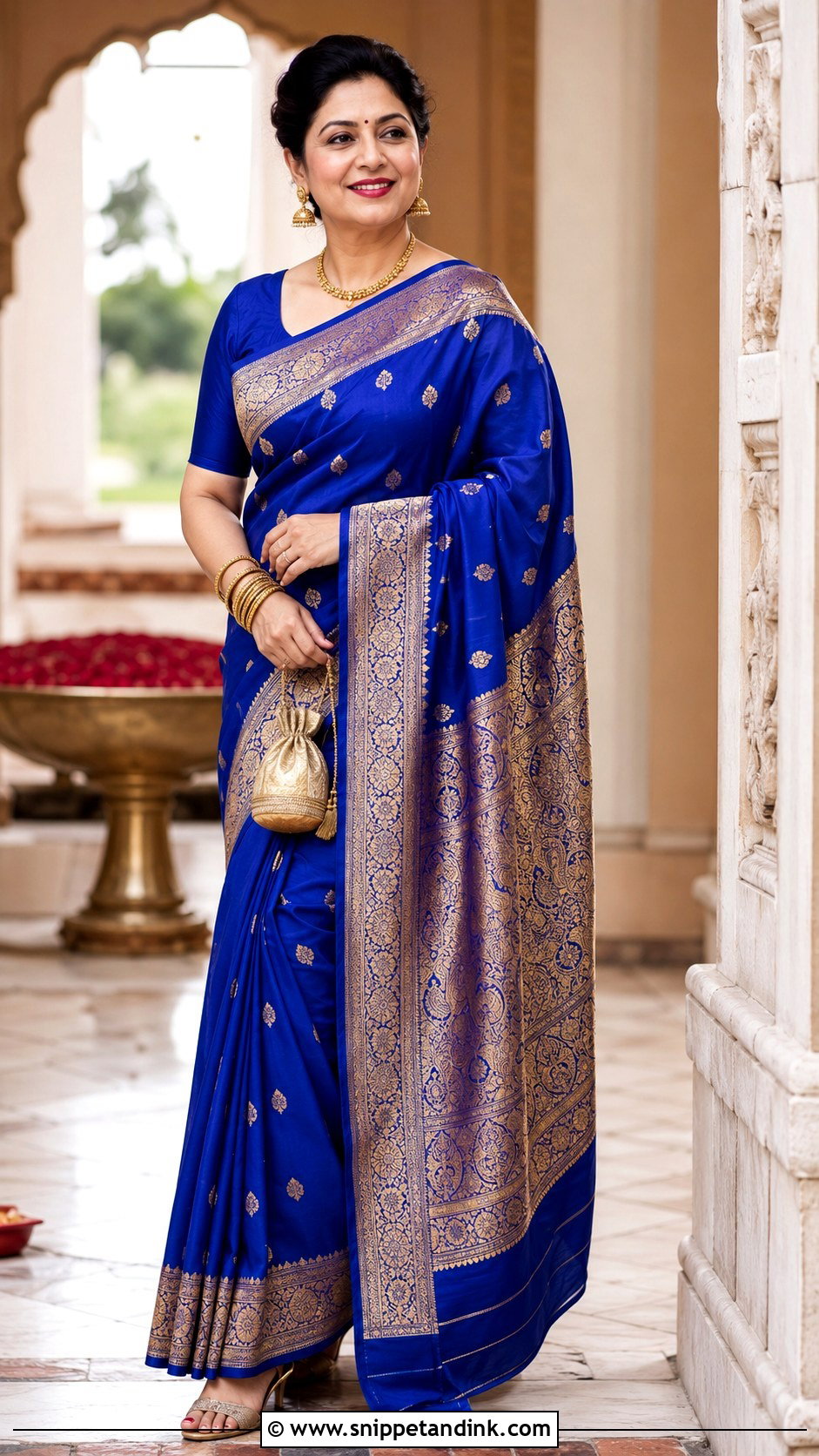
Banarasi silk carries its weight in the pallu, so that shoulder drape needs a secure pin or it slides down your arm all evening. Ruby, mustard, green or royal blue with gold zari suits a traditional ceremony. The styling rule is balance: a plain silk blouse under a busy saree, a brocade blouse under a quieter weave. A short gold necklace, jhumkas, bangles and a potli finish it, with heeled sandals or juttis. A center-parted bun with flowers matches the formality. Leave off any extra layer, since the fabric is warm on its own.
11. Kanjivaram Saree for South Indian Wedding
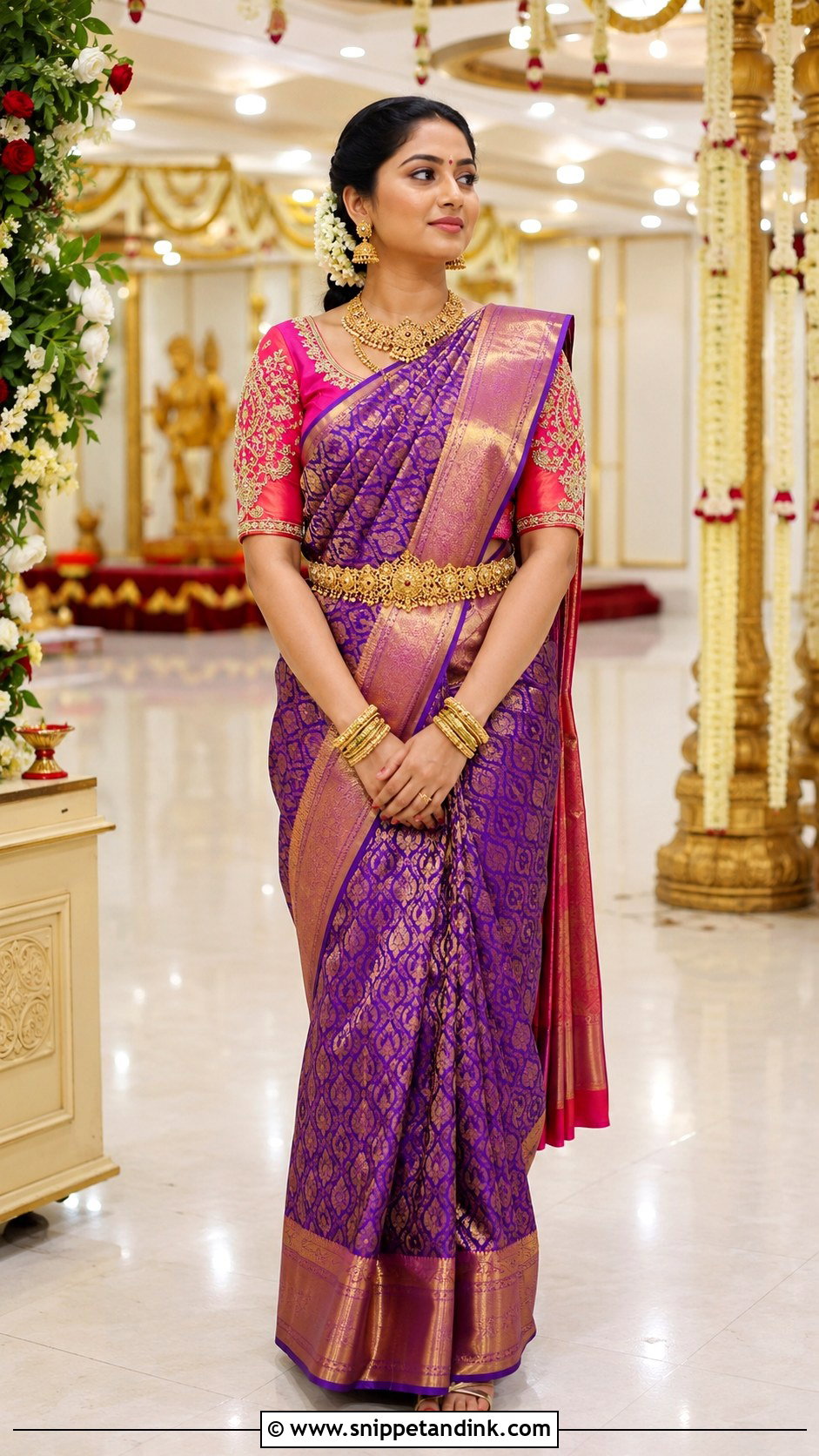
At a South Indian wedding with a traditional dress code, a Kanjivaram is the guest outfit families notice. Contrast borders are the tradition here, so purple with gold, green with pink or blue with orange all look right, and the blouse should repeat one color from the border. Temple jewelry and statement jhumkas suit the weave. A waist belt helps hold the pleats, but sit down in it at home first: a belt that feels fine standing can bite once you’re seated through a long ceremony. Flowers around a low braid and supportive sandals complete the look. Expect to remove your shoes at many temple venues.
12. Jacket Lehenga for Marriage Function
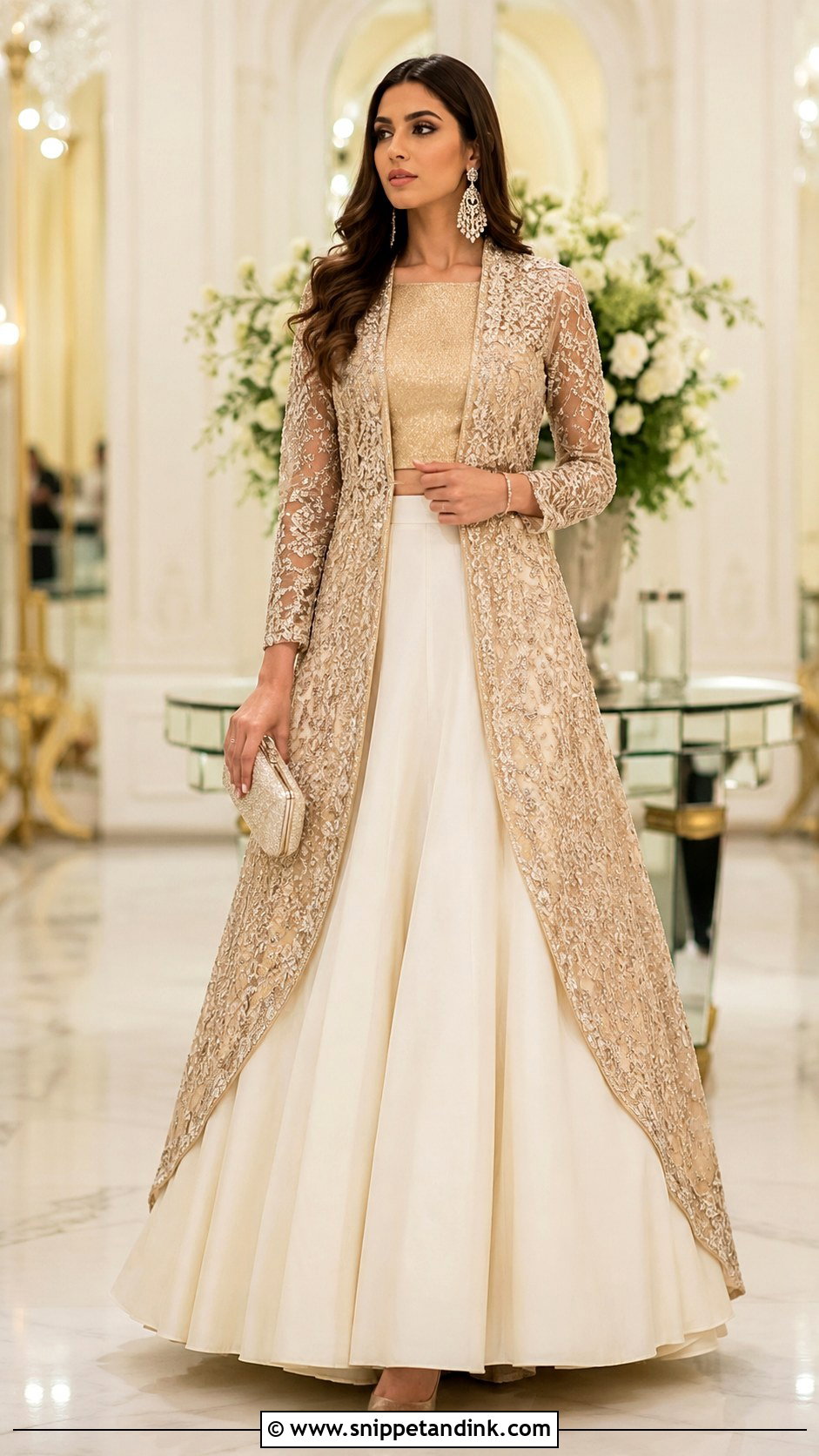
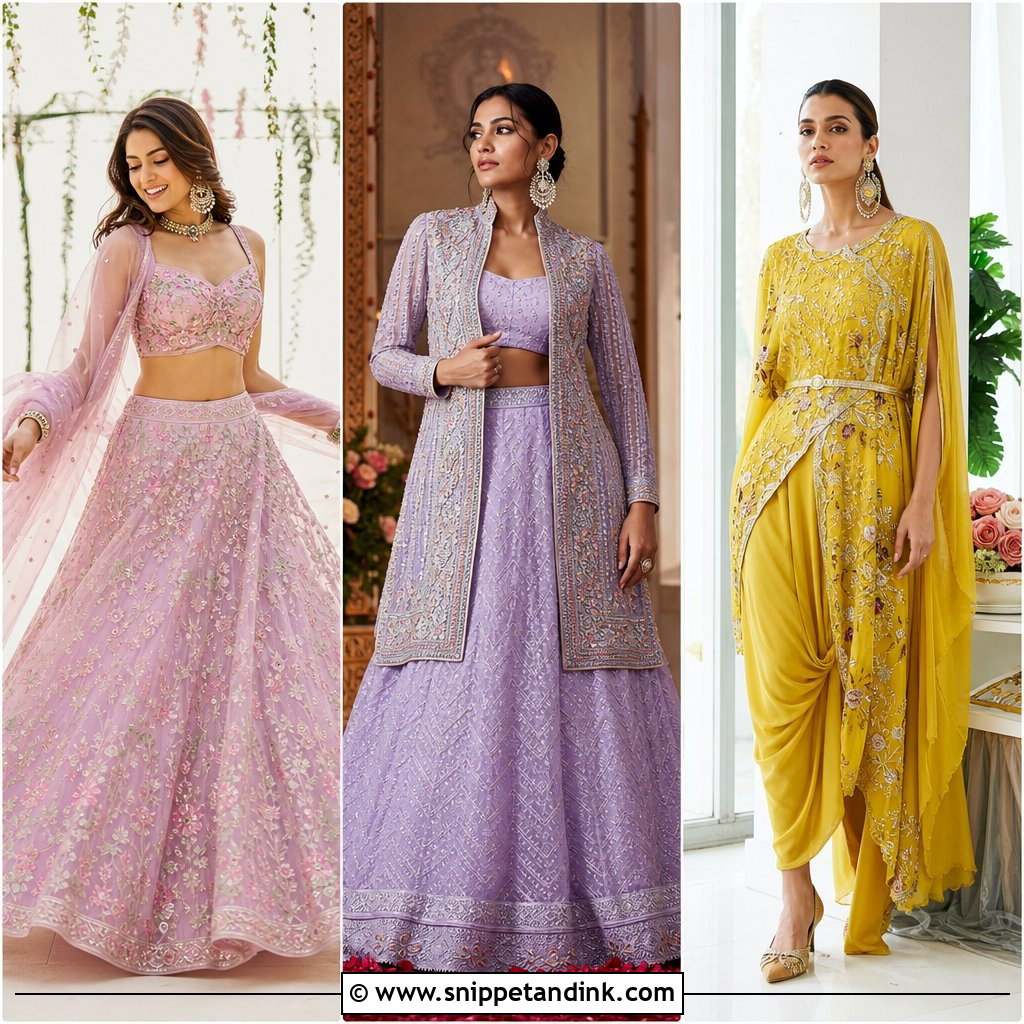
A jacket lehenga solves two problems: coverage for guests who don’t want a short blouse, and no dupatta to manage all night. The embroidered long jacket is the statement, falling below the knee over a flared skirt and a simple fitted top. Ivory with gold, navy with silver or pink with burgundy keeps it coordinated. Because the jacket is busy, I keep jewelry to chandelier earrings and a slim bracelet. Wear it open to show the layers, or fastened at the waist for shape. Long jackets get warm indoors, so ask for a light lining if it’s for a reception.
13. Cape Saree for Sangeet Function
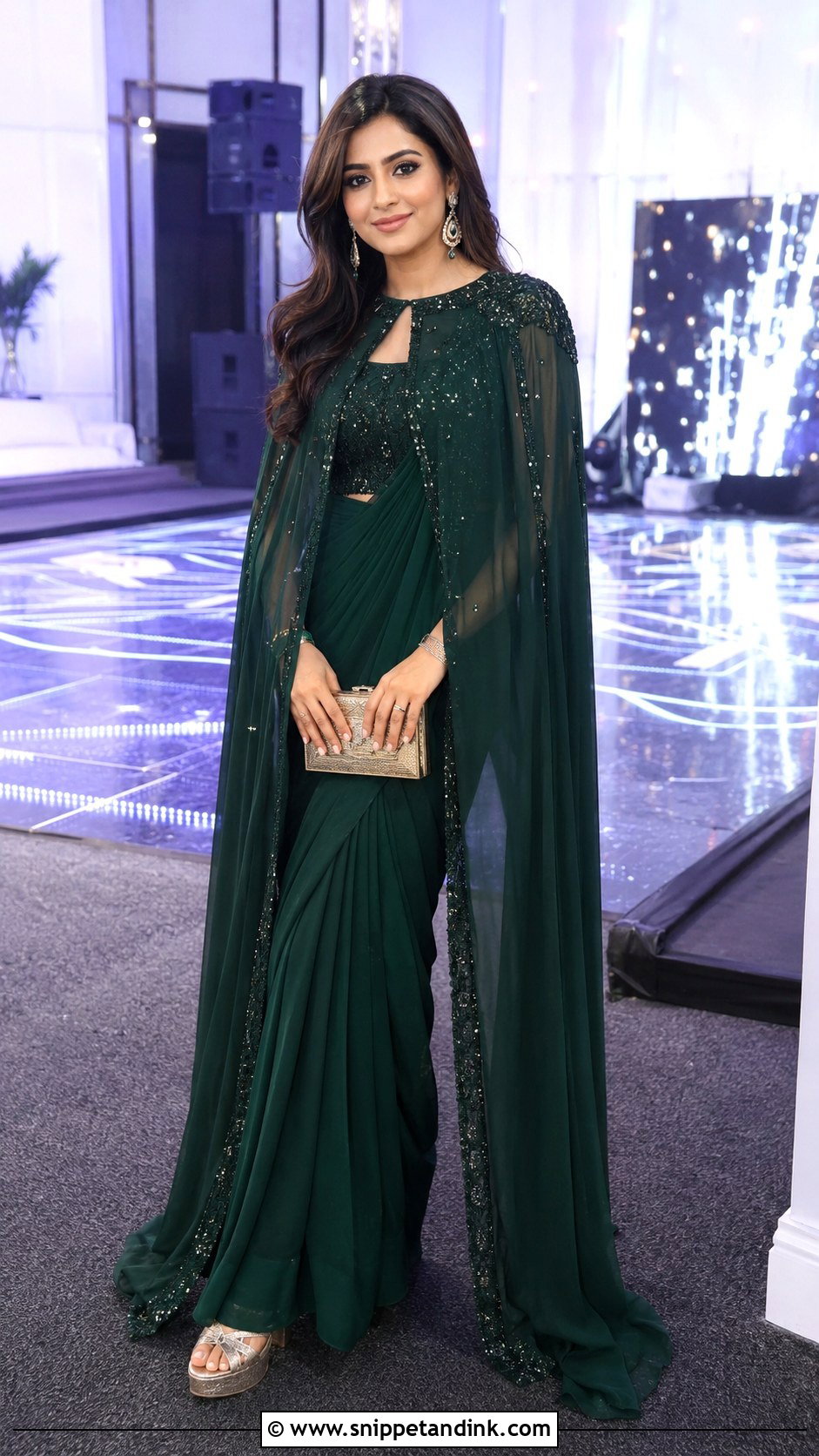
The cape replaces the pallu, so nothing slides off your shoulder while you dance. That’s the practical reason I suggest a cape saree for a sangeet. Start with a pre-draped or neatly pleated saree in crepe or satin, then add an embellished cape from the shoulders. Midnight blue, berry or deep green looks rich under stage lights. Keep the blouse and saree plain so the cape has room, choose drop earrings over a necklace, and pull your hair into a sleek ponytail or low bun so it doesn’t catch in the beading. Platform heels and a box clutch finish it.
14. Peplum Sharara for Wedding Function
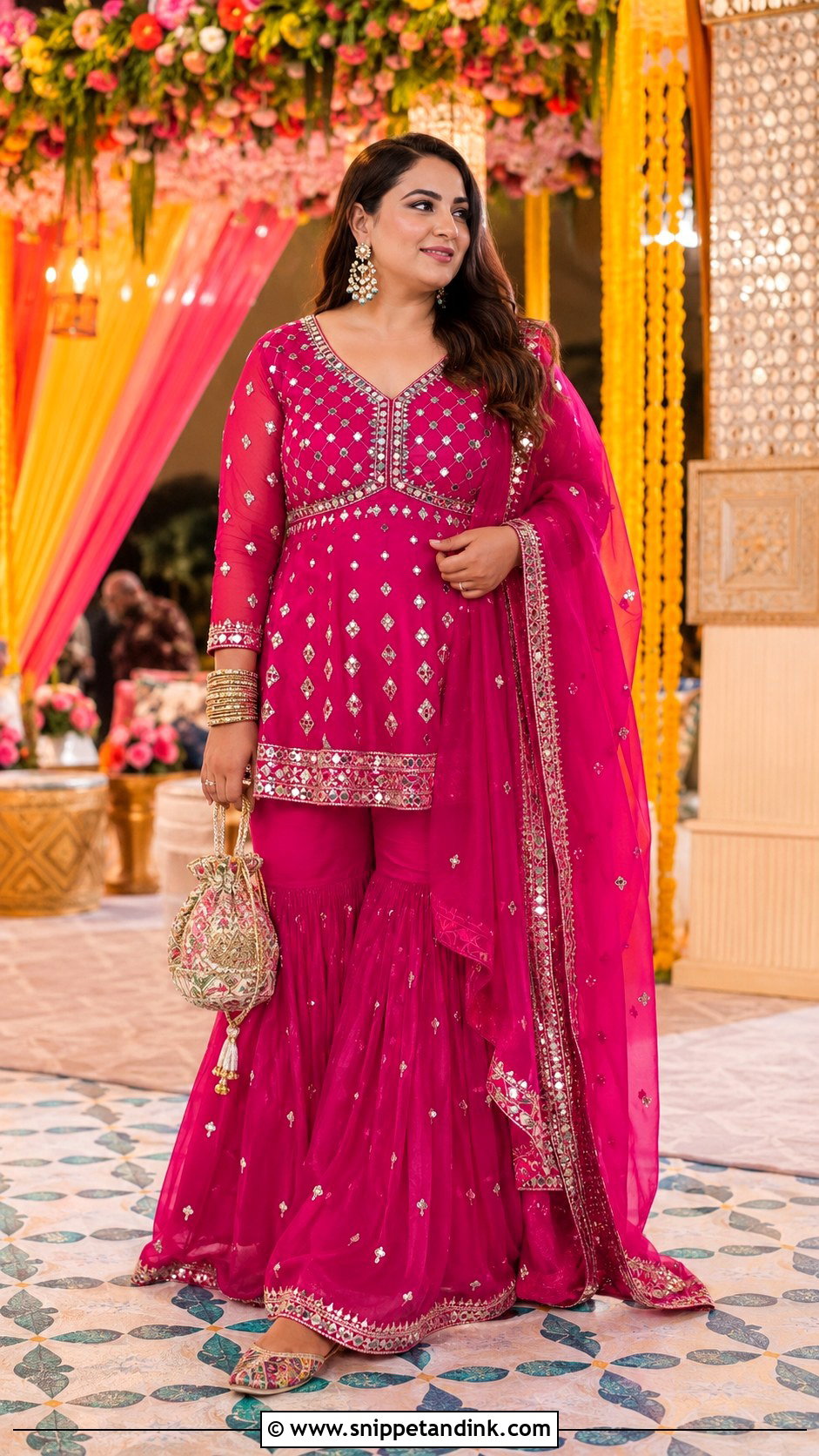
The peplum length decides whether this works. A peplum top should flare from your natural waist; if the flare lands across the widest part of your hips, top and sharara pile volume on volume. Fuchsia, turquoise, lavender or ivory with mirror work suits mehendi and sangeet. Wear the dupatta around the elbows or pinned at one shoulder for dancing. Statement earrings, stacked bangles, embroidered juttis and a potli with a wrist strap are enough. It’s far lighter than a lehenga, which you’ll appreciate at midnight.
15. Dhoti Pant Kurta for Mehendi Function
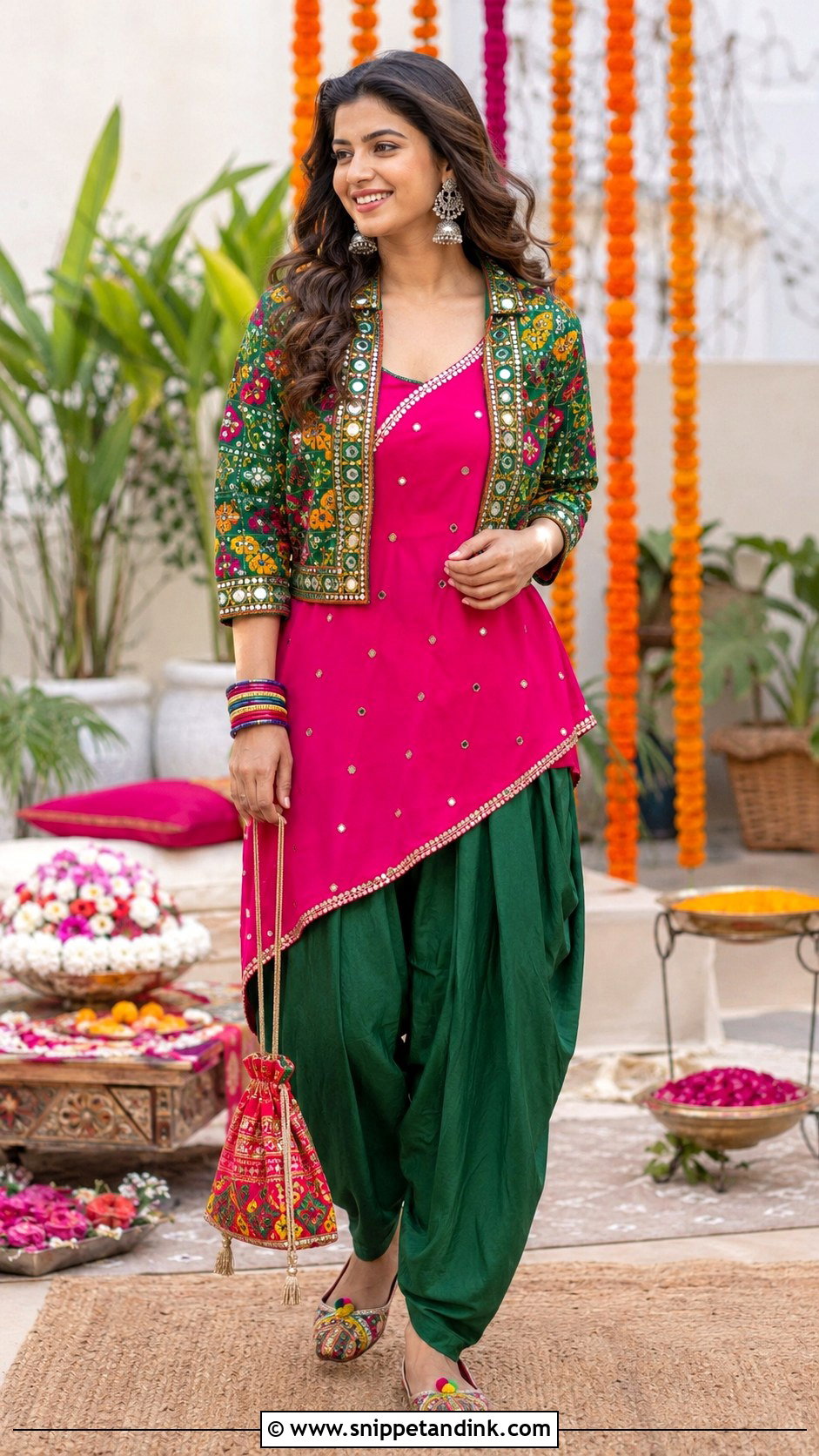
Dhoti pants stand out at a mehendi because few other guests wear them, and they’re among the most comfortable things you can put on for a floor-seated event. Pair them with a short asymmetric kurta or a fitted peplum in bright orange, green or pink. The drape must be tailored, though. Ready-made dhoti pants often sag low between the legs and look sloppy when you stand. Oxidized earrings, stacked bangles, a sling potli and flat juttis suit the fusion mood. A high ponytail or braid keeps hair out of wet henna, and a light embroidered jacket helps if the evening cools.
16. Indo-Western Gown for Wedding Reception
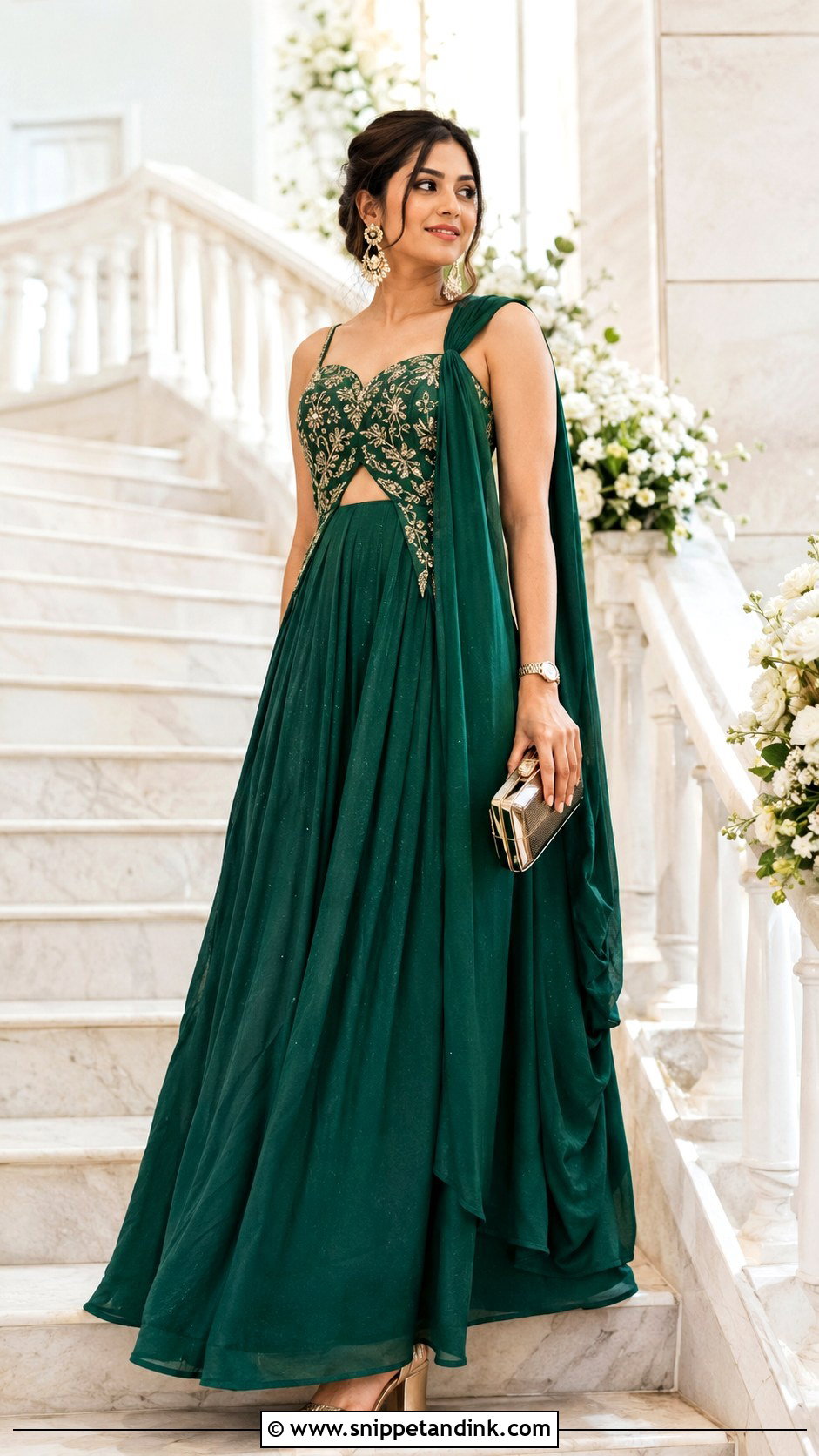
A gown gives you evening drama with no draping at all, which is why guests reach for it at receptions. Look for a structured bodice, a flowing skirt and proper lining, because unlined net scratches over a long night. Embroidery placed at the neckline, waist or sleeves reads more refined than an allover design, and jewel tones or metallic neutrals suit the evening. Statement earrings, a bracelet, a hard-case clutch and block heels finish it. Hem it with your shoes on. A gown that touches the floor will be stepped on, by you or by someone else.
17. Lehenga Saree for Marriage Reception
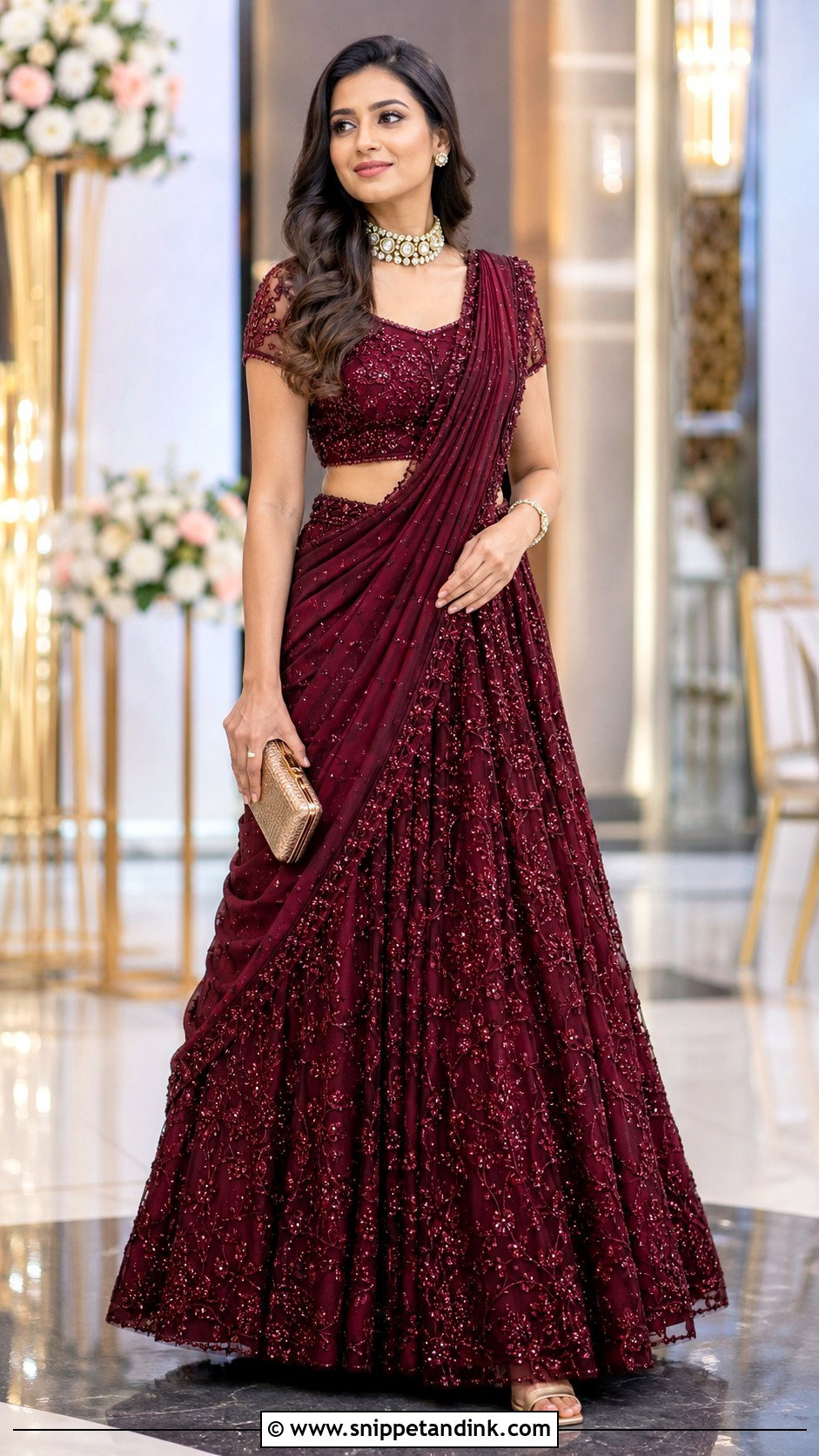
Can’t decide between a saree and a lehenga? A lehenga saree gives you the skirt’s volume with a saree-style drape across the torso, and because the skirt is stitched you get the look without pleating anything. Match the skirt and blouse, then drape a matching or contrasting dupatta. Burgundy, teal, navy and muted gold suit a reception. A choker with stud earrings keeps the neckline clean against the drape. Ask the shop to tack the drape at the waist so it doesn’t loosen when you sit, and finish with heeled sandals and side-swept curls.
18. Kurta Skirt Set for Wedding Function
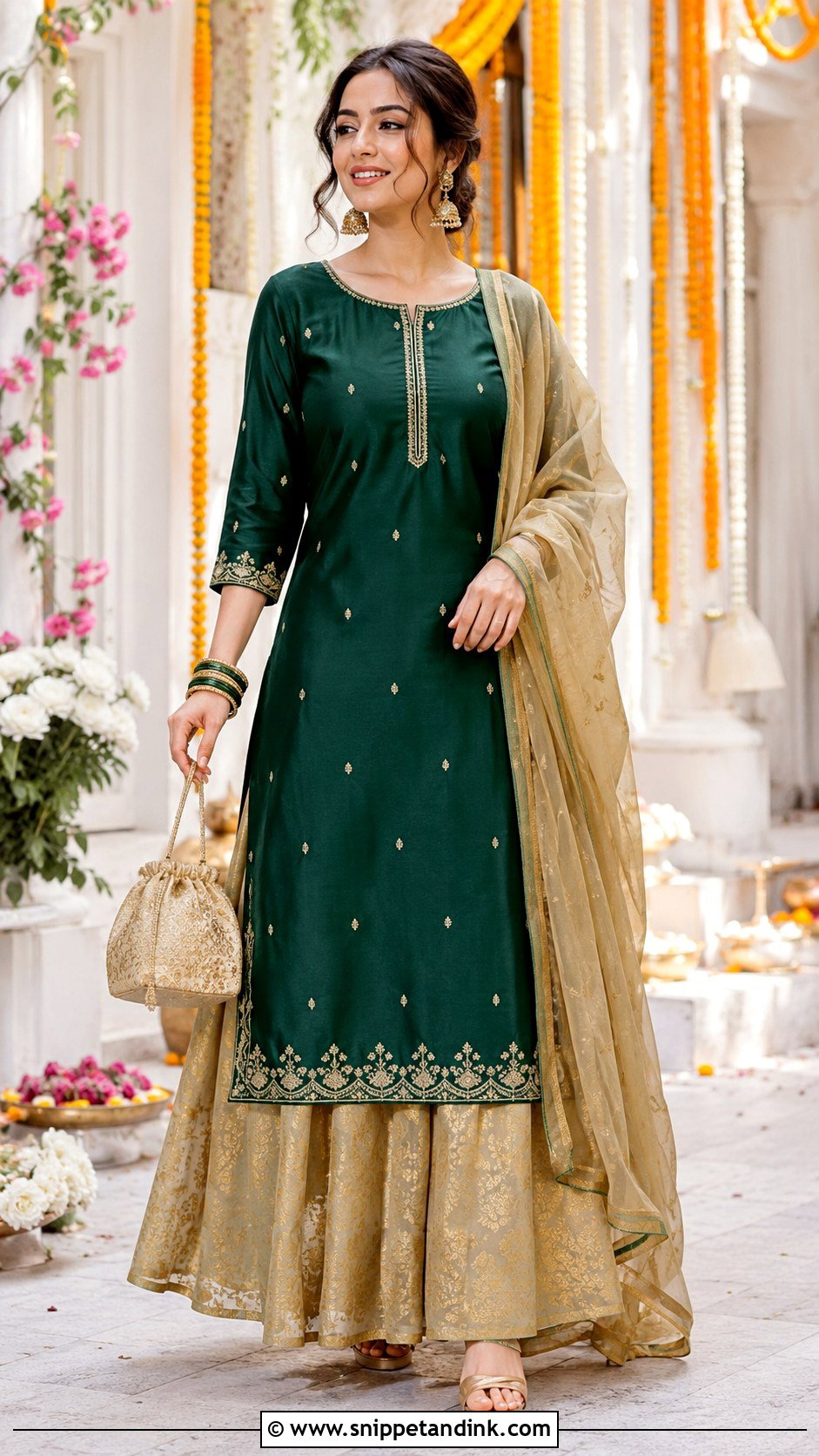
A kurta and skirt set is my suggestion for guests who want a traditional outfit without a cropped blouse. A fitted knee-length kurta goes over a flowing embroidered or printed skirt, and pairings like coral with ivory or emerald with gold keep it interesting. The kurta should end above the fullest part of the skirt, otherwise the two shapes fight. If the neckline is heavily decorated, wear jhumkas or a long necklace, never both. A light dupatta over one shoulder, block heels and a structured potli complete it.
19. Velvet Lehenga for Winter Wedding
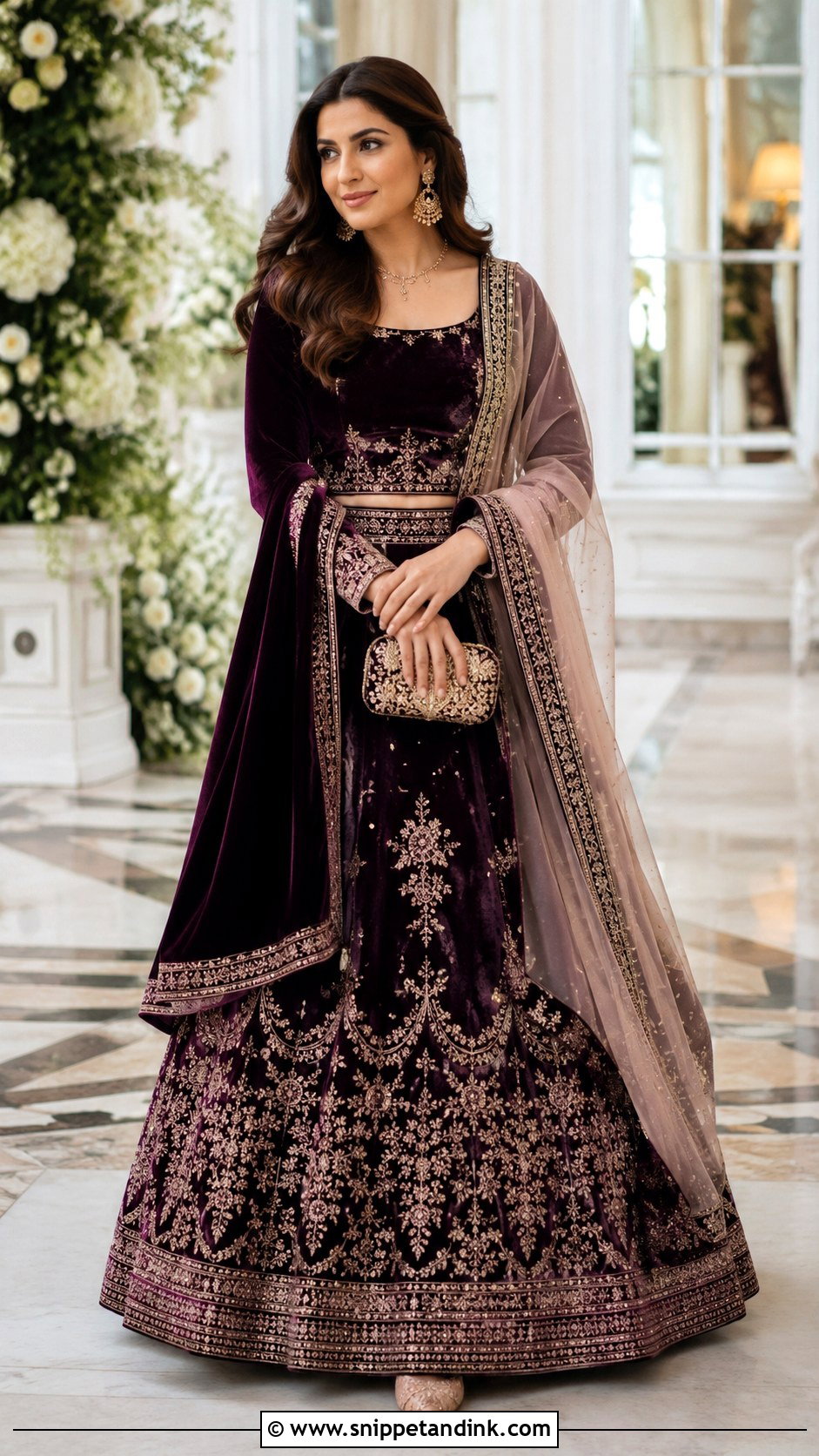
Velvet is warm and heavy, and it does nothing for a summer guest. For a winter wedding, though, an emerald, plum or maroon velvet lehenga with restrained antique gold work is hard to beat. A long-sleeve velvet blouse makes sense in the cold, but pair it with a net or organza dupatta so the outfit doesn’t become one dense block. Velvet crushes where you sit and an iron flattens the pile, so hang it in a steamy bathroom instead. Antique-finish earrings, a small necklace, closed-toe heels and a matching shawl for an outdoor ceremony complete it.
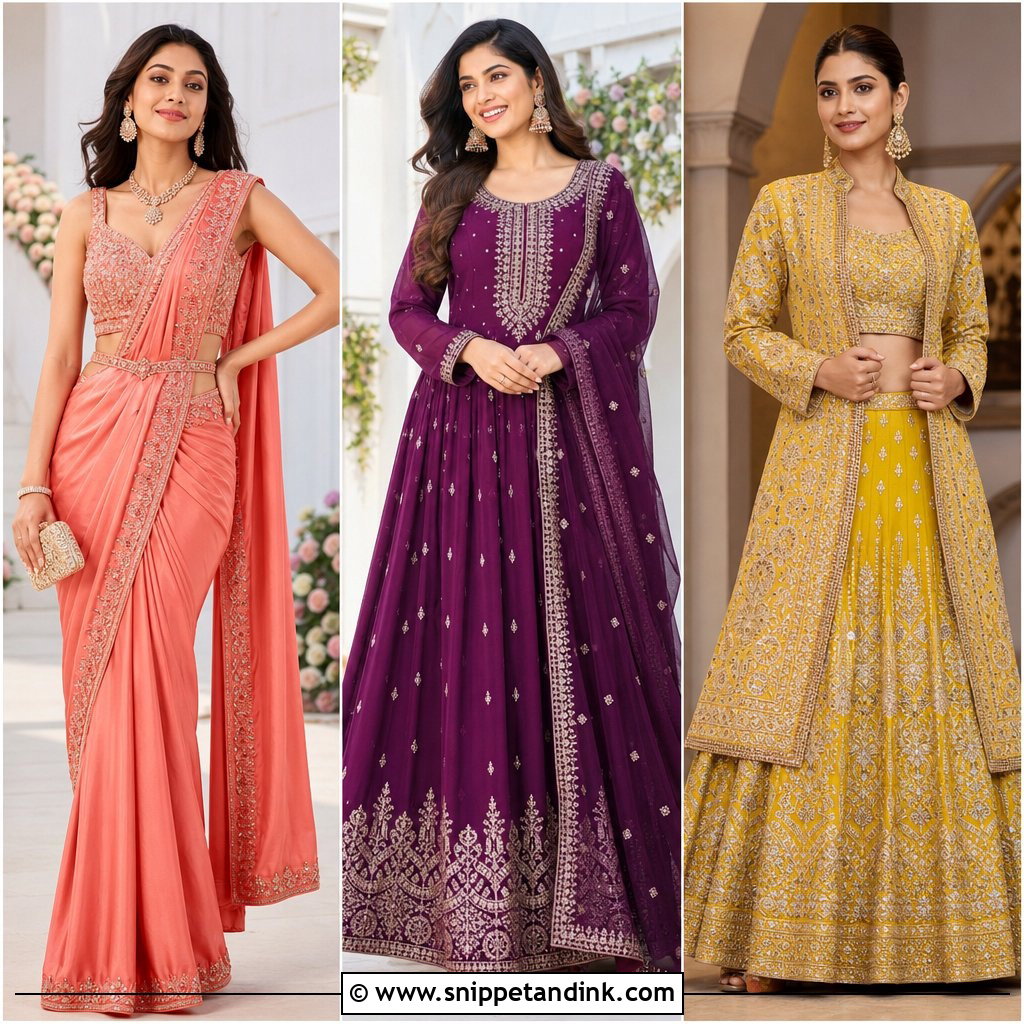

20. Cotton Silk Suit for Summer Wedding
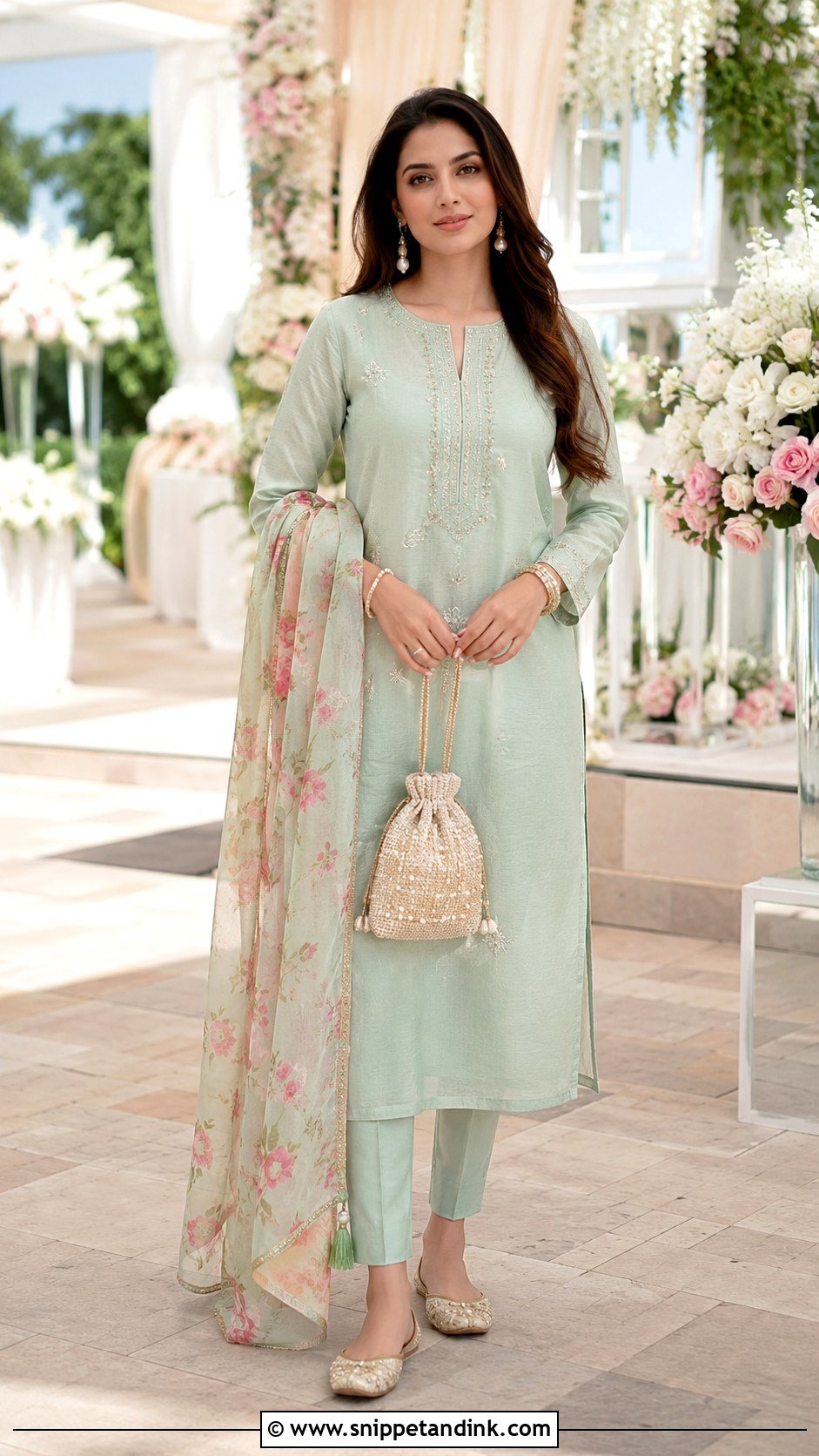
In heat and humidity, the guest in cotton silk is the one still comfortable by mid-afternoon. A straight kurta, tapered pants and a light dupatta in mint, sky blue or peach breathe in a way polyester never will. Woven borders, block prints or fine threadwork give festive detail without heavy beading. Pearl earrings, slim bangles, a woven potli and cushioned juttis suit it. Keep makeup light and choose a neat braid, bun, or ponytail so nothing sits on your neck. Have the shoulders tailored, because a simple suit only looks polished when it fits.
Packing Five Functions Into One Suitcase
Out-of-town weddings mean travelling with several outfits, and heavy Indian wear doesn’t fold flat. A few habits save the pleats and your nerves.
- Pack each function as a set in its own bag, with outfit, blouse, petticoat, jewelry, shoes and pins together. Dressing in a hotel room with everything scattered is how a blouse gets left behind.
- Roll the lighter sharara and palazzo sets. Fold sarees along their existing creases and lay tissue between the folds wherever there’s zari or beadwork.
- Carry a heavy lehenga in a garment bag as hand luggage if your airline allows it, since checked cases get crushed.
- Bring a travel steamer. Hotel irons are risky on silk and organza, and steam lifts creases from velvet without flattening the pile.
- Repeat what you can. One pair of gold juttis and one set of jhumkas can serve three outfits, which frees space for the dupattas that take up the most room.
Unpack the night you arrive and hang everything up. Most creases relax overnight in a warm room, and anything that hasn’t can be steamed in the morning.
Dress for the Function First, the Photos Second
Every function asks something different of your outfit, and the right one lets you join in without fussing. Check the event timing, the venue and the family’s dress code before you shop. Lighter fabrics and secure draping suit the active functions, while silk, velvet and heavy embroidery belong at the formal ceremonies. Comfortable shoes and a bag you can manage one-handed matter more than any trend. If there’s money left over, spend it on tailoring. A simple outfit that fits always beats an elaborate one that pulls and slips.
You'll Like These Ideas:



Leave a Reply