
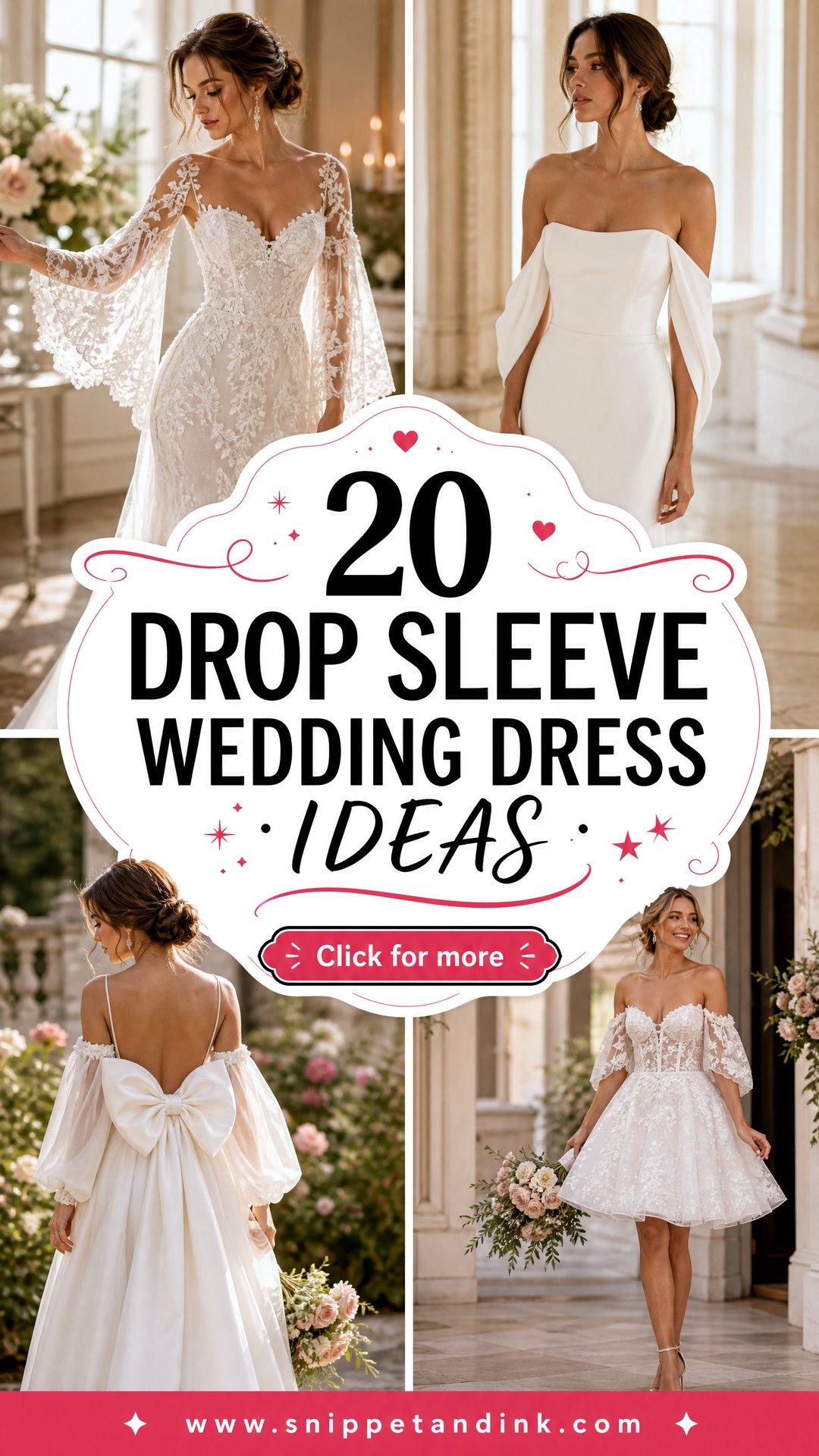
Drop sleeves sit below the natural shoulder line, so they frame the collarbone the way an off-the-shoulder neckline does while giving the gown more shape than plain strapless. I love them on brides who want romance without lace climbing up toward the face. The twenty gowns below run from fitted lace to full satin ball gowns, which covers most venues, seasons and any bridal aesthetic. What I always tell brides, though, is that a drop sleeve is a construction detail before it’s a style. If the bodice isn’t doing the holding, the sleeves end up doing it, and you’ll feel that every time you lift your arms.
Where a Drop Sleeve Should Sit on Your Arm
The sleeve should rest on the upper arm, roughly an inch or two below the bony point of the shoulder. Set higher, it reads as a cap sleeve. Set lower, it pins your arms to your sides, and you won’t be able to raise your bouquet or hug anyone properly.
These are the checks I run at the first fitting:
- Arm lift: raise both arms to shoulder height. The sleeves can pull a little, but the bodice shouldn’t move with them.
- Bouquet hold: hold something about the weight of your bouquet at your waist for a full minute. If your upper arms press against tight sleeves, they’ll be sore before the portraits are done.
- Leaning forward: sit and lean in as if signing papers. A loose sleeve band usually slides down right here.
- Shoulder width: drop sleeves widen the shoulder line. Broad shoulders often look better in a softer drape set slightly lower, while narrow shoulders suit a crisper folded band.
Most sleeve problems are simple when caught early: elastic inside the band, a hidden strap, or a moved attachment point. Left until the final fitting, the same problem can mean reworking the bodice.
1. Lace Drop Sleeve Wedding Dress
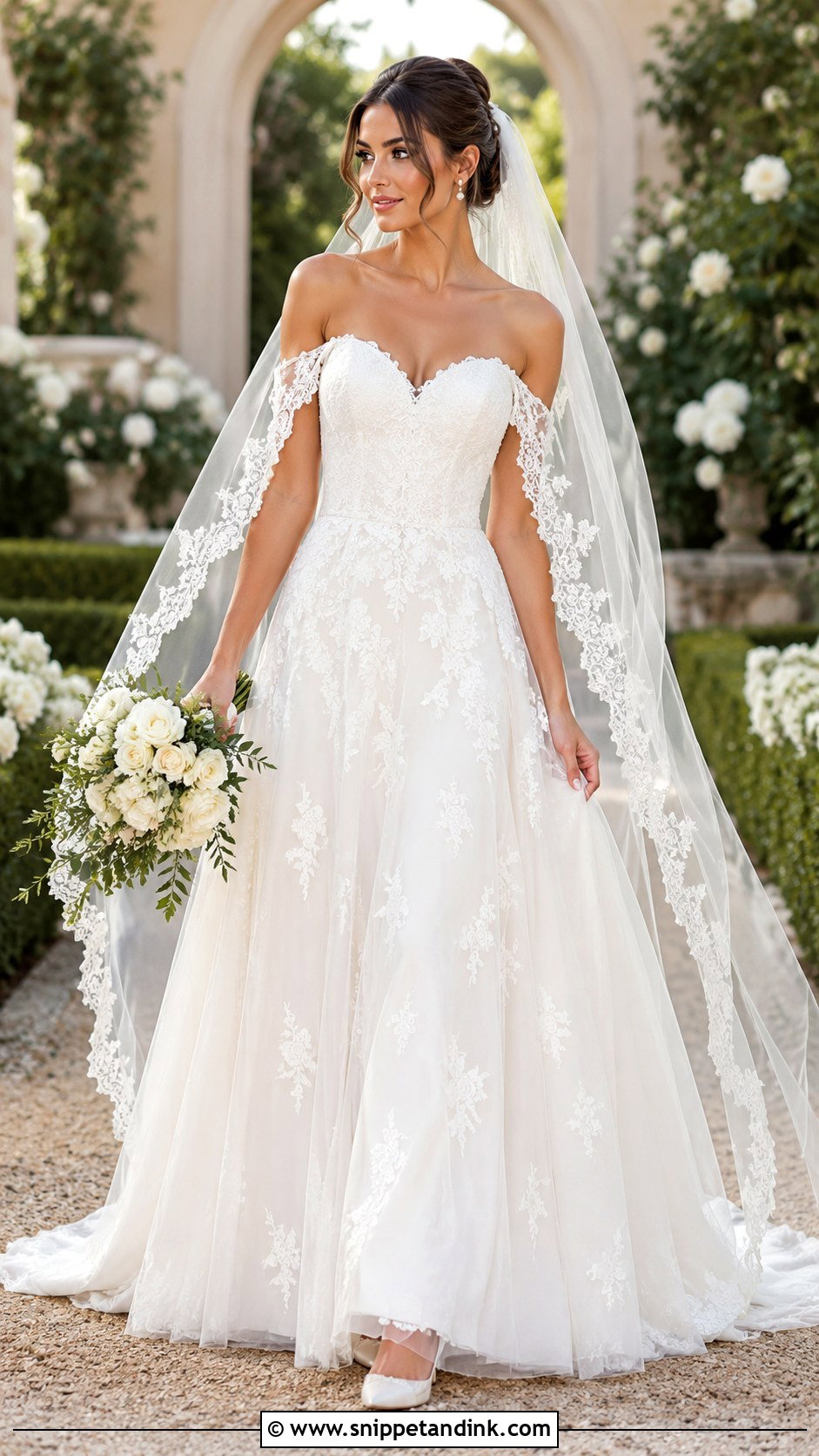
Lace drop sleeves are the most forgiving version to wear for a full day, because lace has a little give where satin has none. An A-line with a fitted lace bodice, a soft sweetheart and appliqués trailing onto the skirt keeps it romantic without looking old-fashioned. Scalloped sleeve edges rest on the upper arm and show off the collarbone. Pointed ivory pumps, pearl drops and a fingertip veil edged in matching lace, with a loose low bun to keep the neckline clear. At fittings, raise and lower your arms slowly. If the bodice lifts with them, the sleeves are set too low or too tight.
2. Satin Drop Sleeve Ball Gown
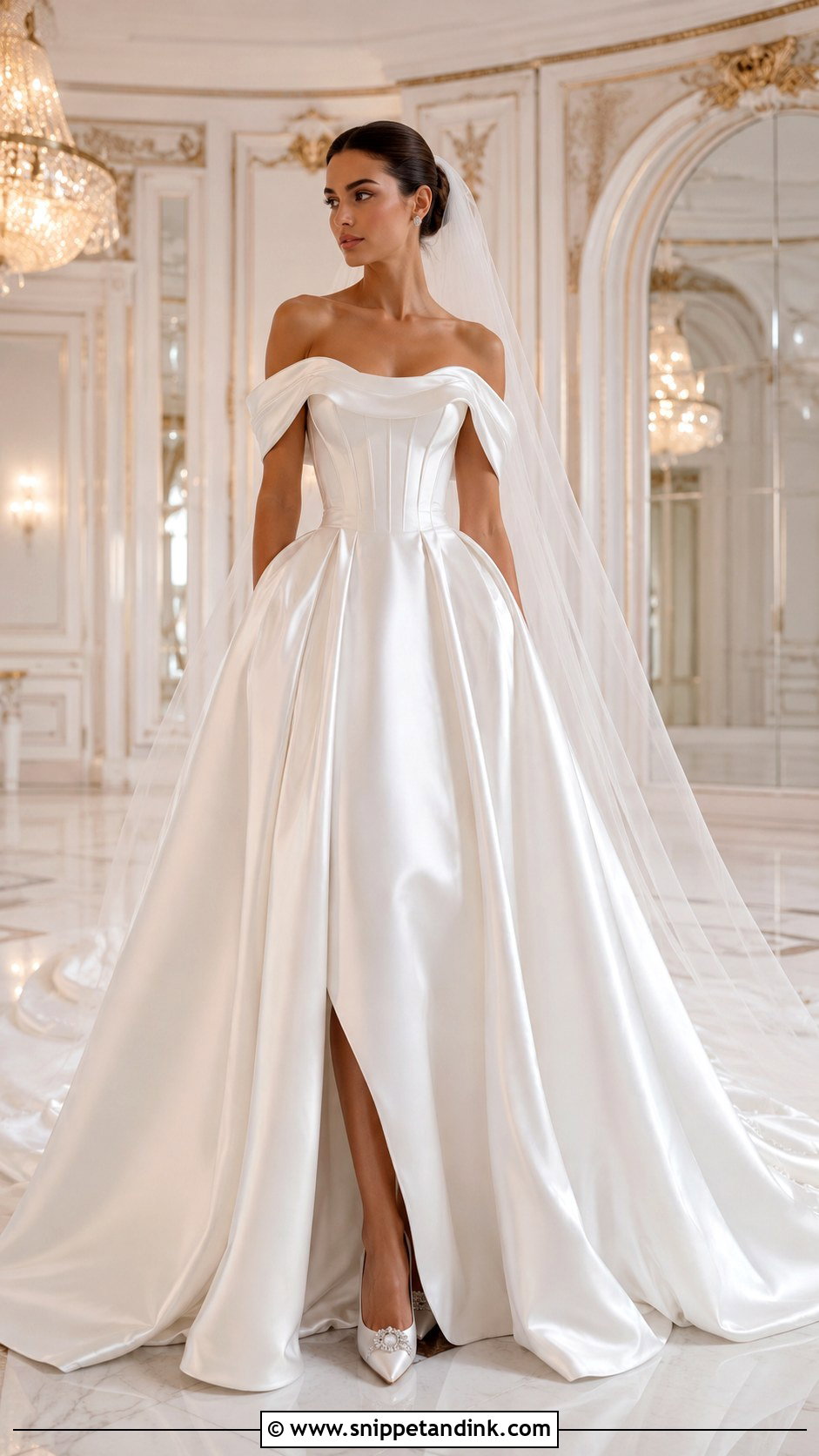
Satin sleeves have no stretch at all, which is why on a ball gown I check the bodice before anything else. A structured corset with clean folded sleeves and a full skirt that holds its shape is the build. The sleeves should decorate the neckline; if they’re helping carry that skirt, they’ll dig into your arms by the first dance. A straight or softly curved neckline keeps it modern, and covered buttons down the back finish it. Crystal studs, a sleek bun, pointed satin heels and a cathedral veil. Keep the bouquet compact so it doesn’t compete with the skirt in a grand ballroom.
3. Chiffon Drop Sleeve Wedding Dress
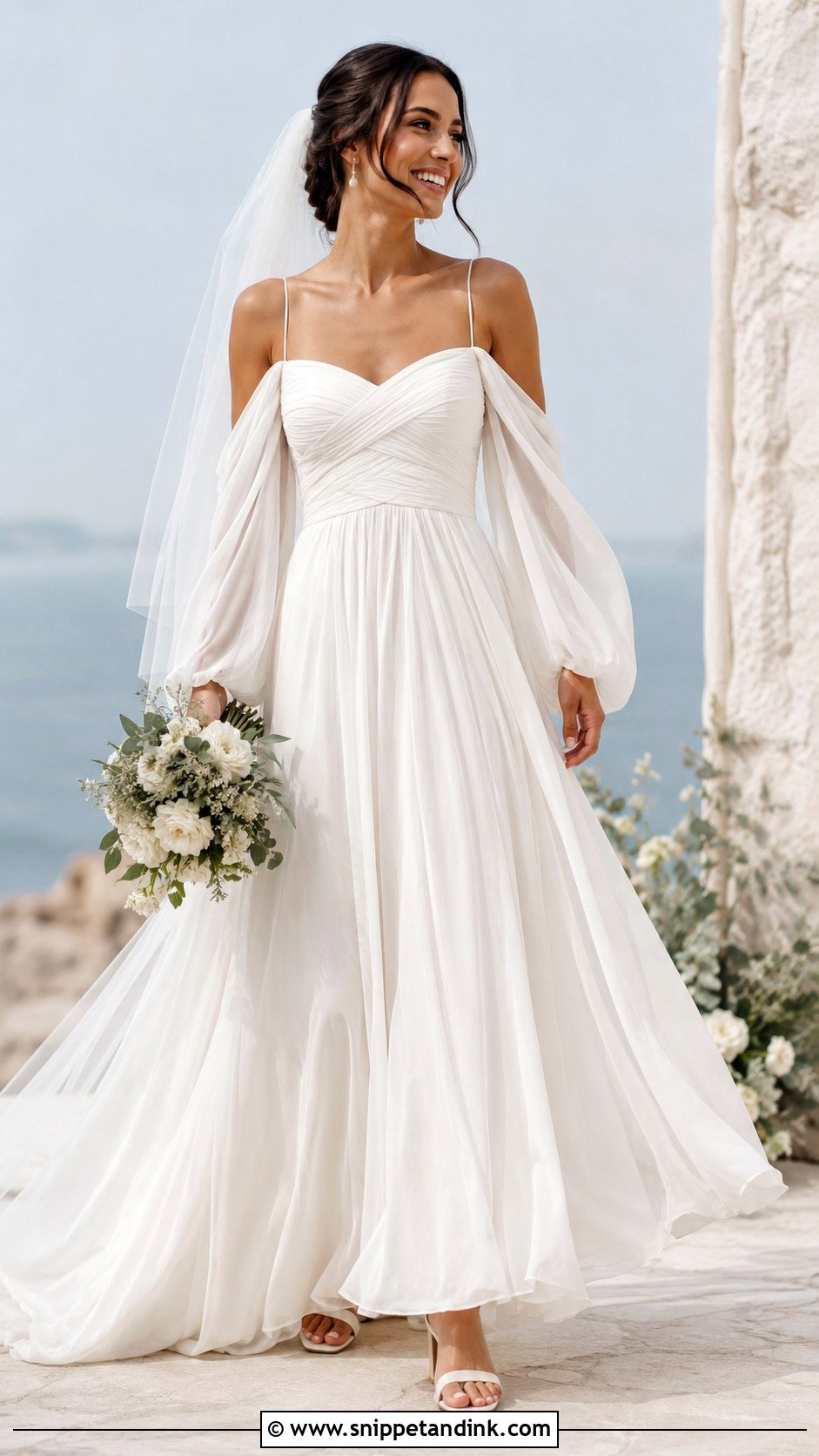
Chiffon sleeves flutter as you move, which suits coastal and garden ceremonies. Choose an empire or A-line gown with a softly gathered bodice and chiffon draped across the upper arms. Delicate block-heel sandals, small pearls, a simple comb and a plain chapel veil keep the outfit light. Chiffon turns sheer in sun. Look at the dress by a window and under indoor light before alterations are finalized, because what looks opaque in the boutique can show lining seams outdoors. A smooth lining and discreet internal support keep it secure.
4. Mermaid Drop Sleeve Wedding Dress
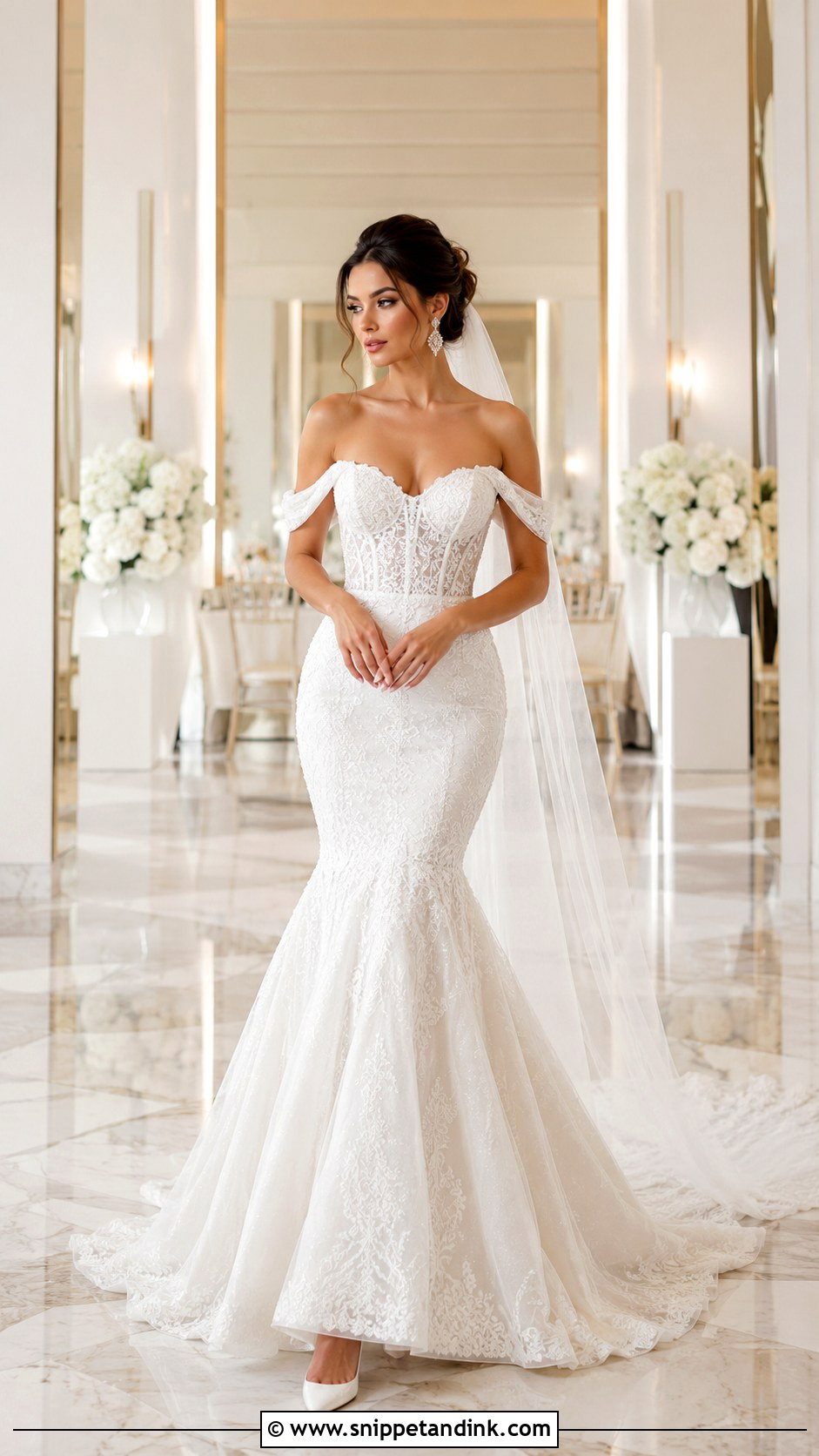
Mermaid gowns restrict movement below the knee, and drop sleeves restrict it at the arm, so together they need careful tailoring. A supportive sweetheart bodice in lace or crepe with a flare below the knee gives the sculpted line, while draped sleeves soften it and lift attention to the face. Pointed pumps, a narrow cathedral veil, statement earrings and a smooth side part; skip the necklace. At every fitting, walk, sit and climb a few steps. If you can’t step up without hitching the skirt, the flare point needs lowering. Evening ceremonies and formal indoor venues suit it.
5. A-Line Drop Sleeve Wedding Dress
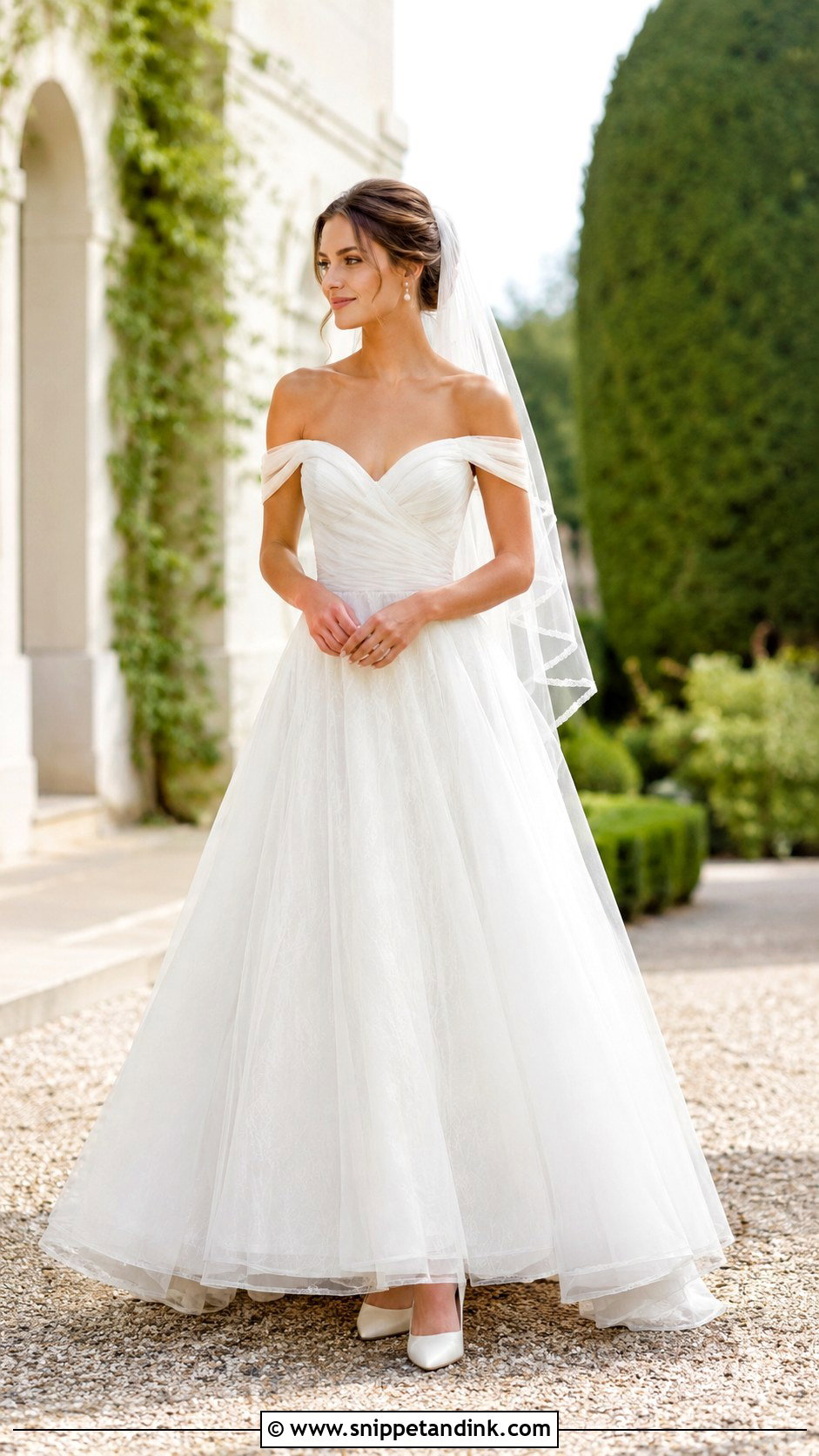
The A-line is the shape I suggest when a bride wants drop sleeves but isn’t sure about heavy structure. The fitted bodice holds everything, and the skirt widens gradually without the weight of a ball gown. Tulle, organza or layered chiffon decide how much it moves. Pearl earrings, a narrow bracelet, mid-height pumps and a fingertip veil. A half-up style keeps hair off the sleeves, where loose strands tangle with lace edges. It suits garden, hotel, vineyard, or estate settings. Match the sleeve fabric and trim to the bodice; a different texture on the arms looks added on.
6. Long Drop Sleeve Wedding Dress
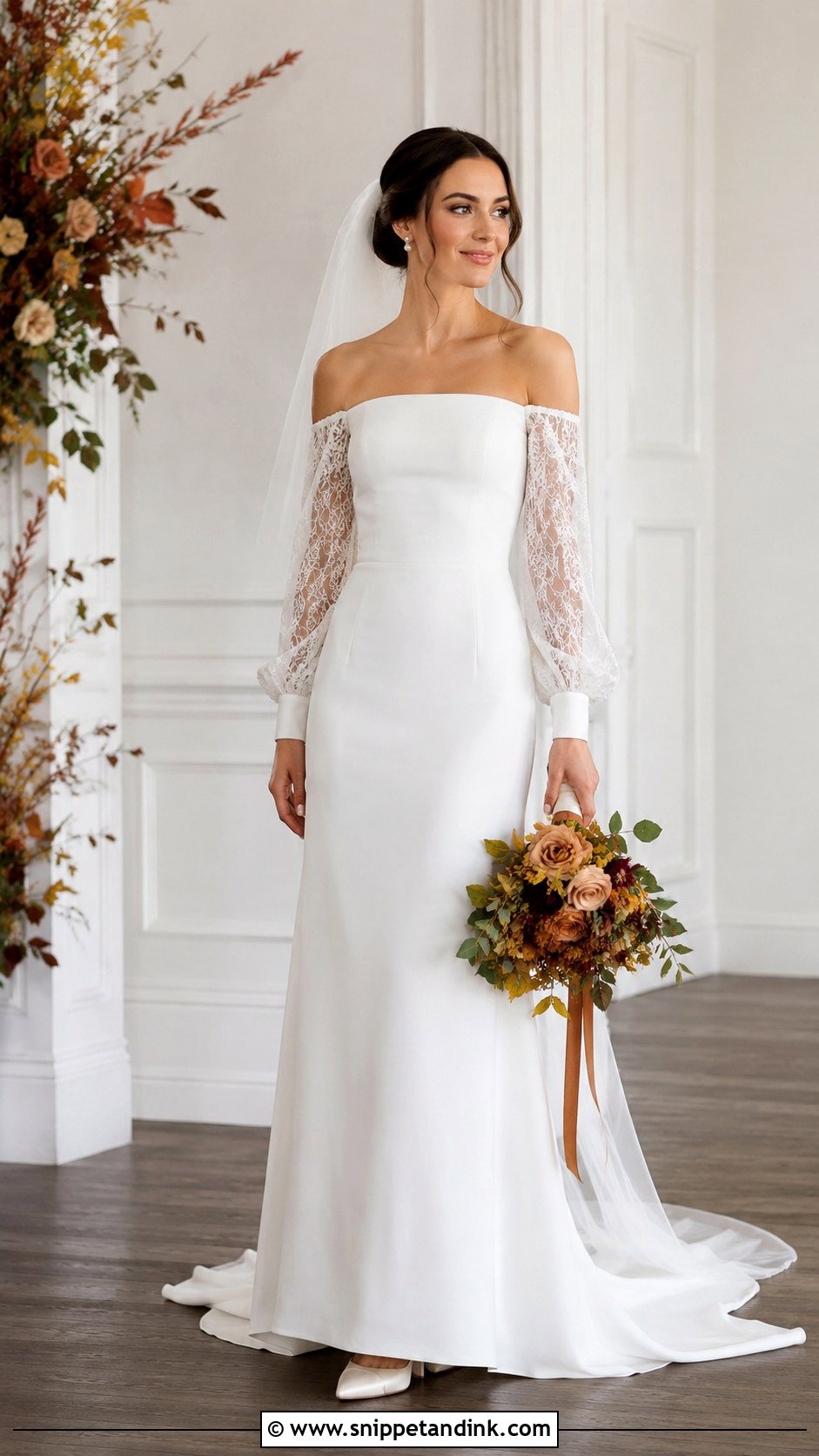
Long drop sleeves give coverage and keep the neckline open, which suits fall, winter and religious ceremonies that ask for covered arms. illusion tulle or delicate lace sleeves starting below the shoulder and ending in fitted cuffs work best. A slim A-line balances them; a soft sheath feels more contemporary. Closed-toe heels, pearl studs, a simple veil and a low twisted bun, with buttons at the wrist as a lovely finish. The fitting point is the underarm. Long drop sleeves have less room there than set-in sleeves, so test reaching forward and bending your elbows; any pull shows as diagonal wrinkles across the bodice.
7. Detachable Drop Sleeve Wedding Dress
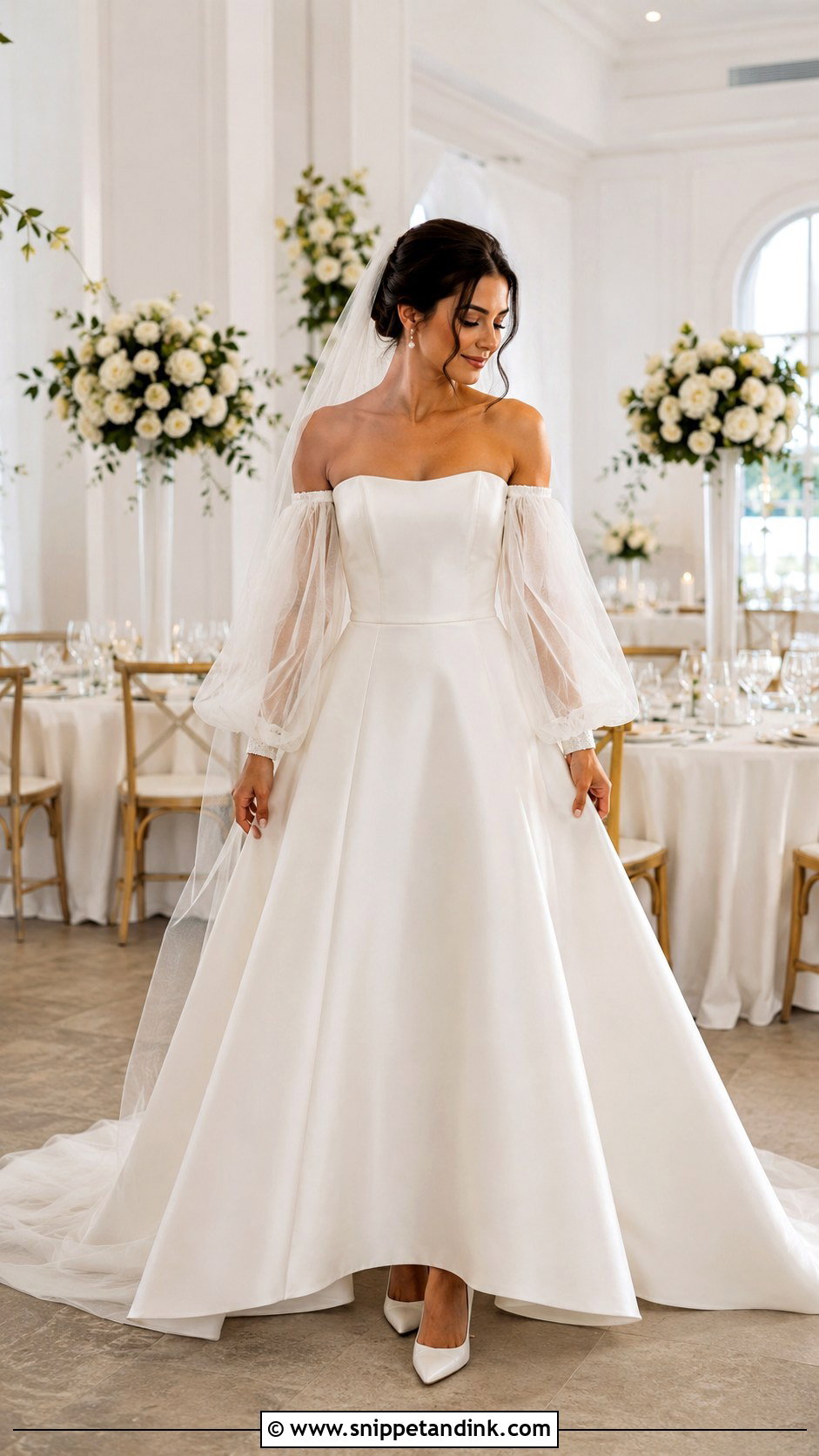
Detachable sleeves give you two looks from one gown. Wear tulle, lace or satin sleeves on a structured strapless bodice for the ceremony, then take them off for a cleaner, cooler neckline at the reception. Hidden snaps, loops or buttons should hold each sleeve without bulk, and the bodice must be strong enough to stand on its own once they’re gone. Match the sleeve fabric’s weight to the dress, since heavy satin sleeves drag on a light tulle bodice. Classic heels, pearls and a chapel veil for the ceremony; later, lose the veil, switch to sparkling studs and change into flats if you like. Practice the change at a fitting with whoever will help you, so it takes minutes.
8. Tulle Drop Sleeve Wedding Dress
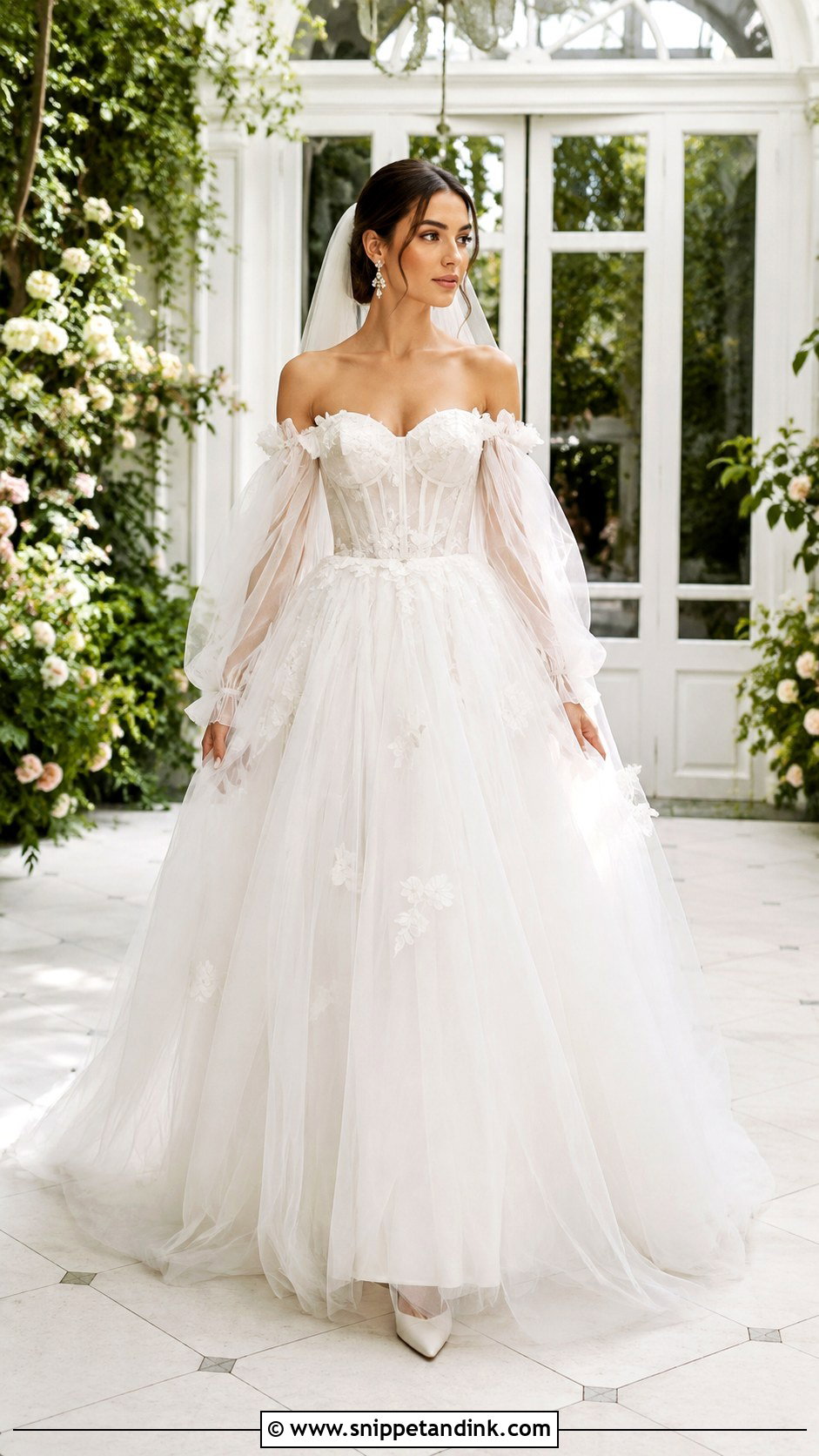
Tulle gives a drop sleeve gown an ethereal quality while staying light. A princess or A-line shape, a structured bodice, a floating skirt and softly gathered sleeves around the upper arms, with subtle appliqués or scattered beads for depth. Crystal earrings, pointed ivory shoes, a fine tulle veil and a low bun. Tulle snags. Bracelets with prongs and rough-backed earrings catch on it constantly, so I test every piece of jewelry against a scrap of the fabric. Gathered sleeves also need enough fullness to move, or they creep down as the day goes on.
9. Crepe Drop Sleeve Wedding Dress
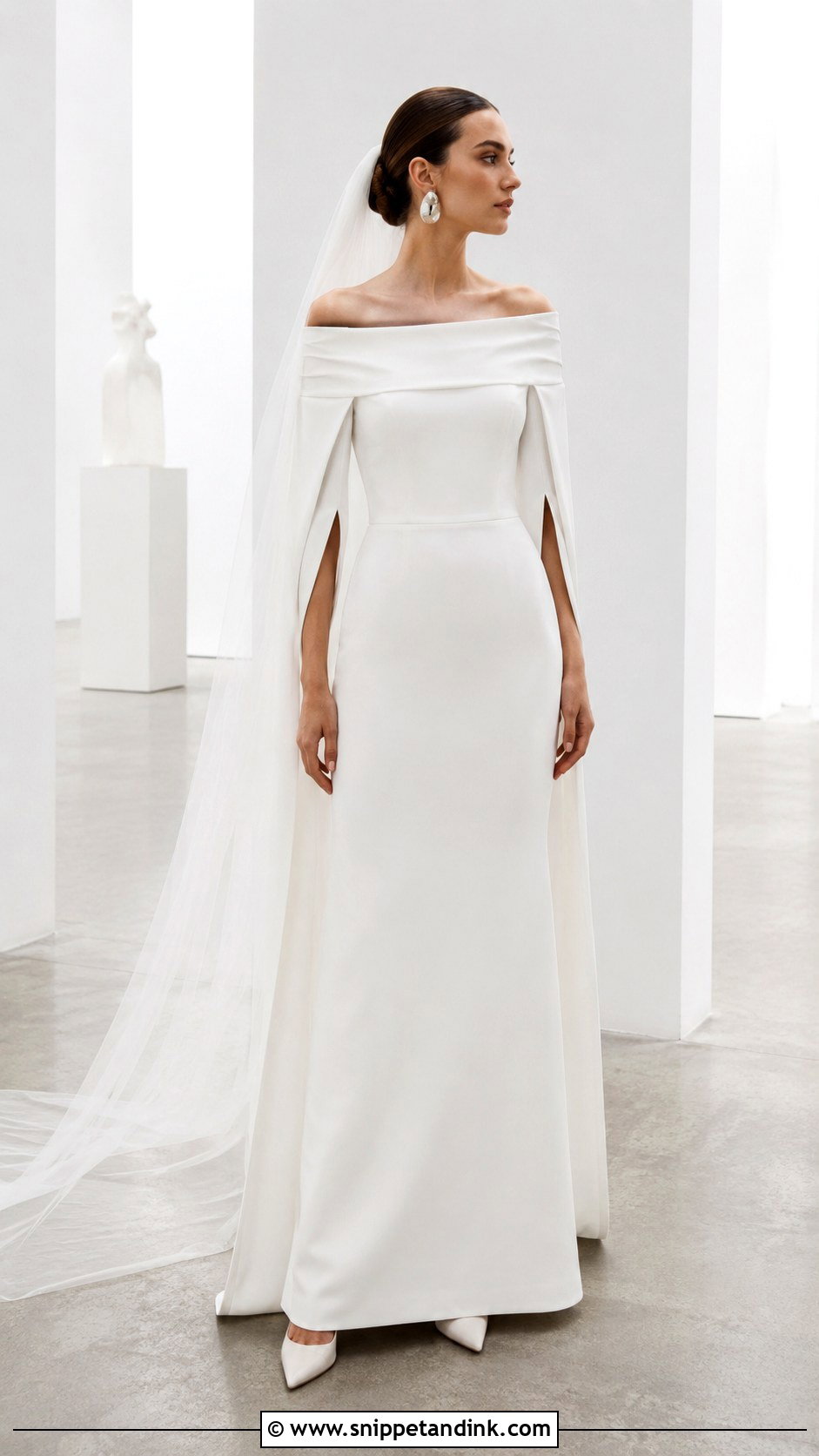
Crepe is the most honest fabric for drop sleeves. It shows everything: seams, darts, the edge of a bra. A fitted column or soft trumpet with a folded neckline and simple draped sleeves relies entirely on tailoring, and that’s the appeal. Bring the exact undergarments to every fitting, because changing them later can shift the whole fit. Sculptural earrings, pointed pumps, a sleek low bun and a plain cathedral veil, with a small structured bouquet. Ask to see the gown from the side in a three-way mirror, since drop sleeves on crepe often gape at the back where you can’t see.
10. Floral Drop Sleeve Wedding Dress
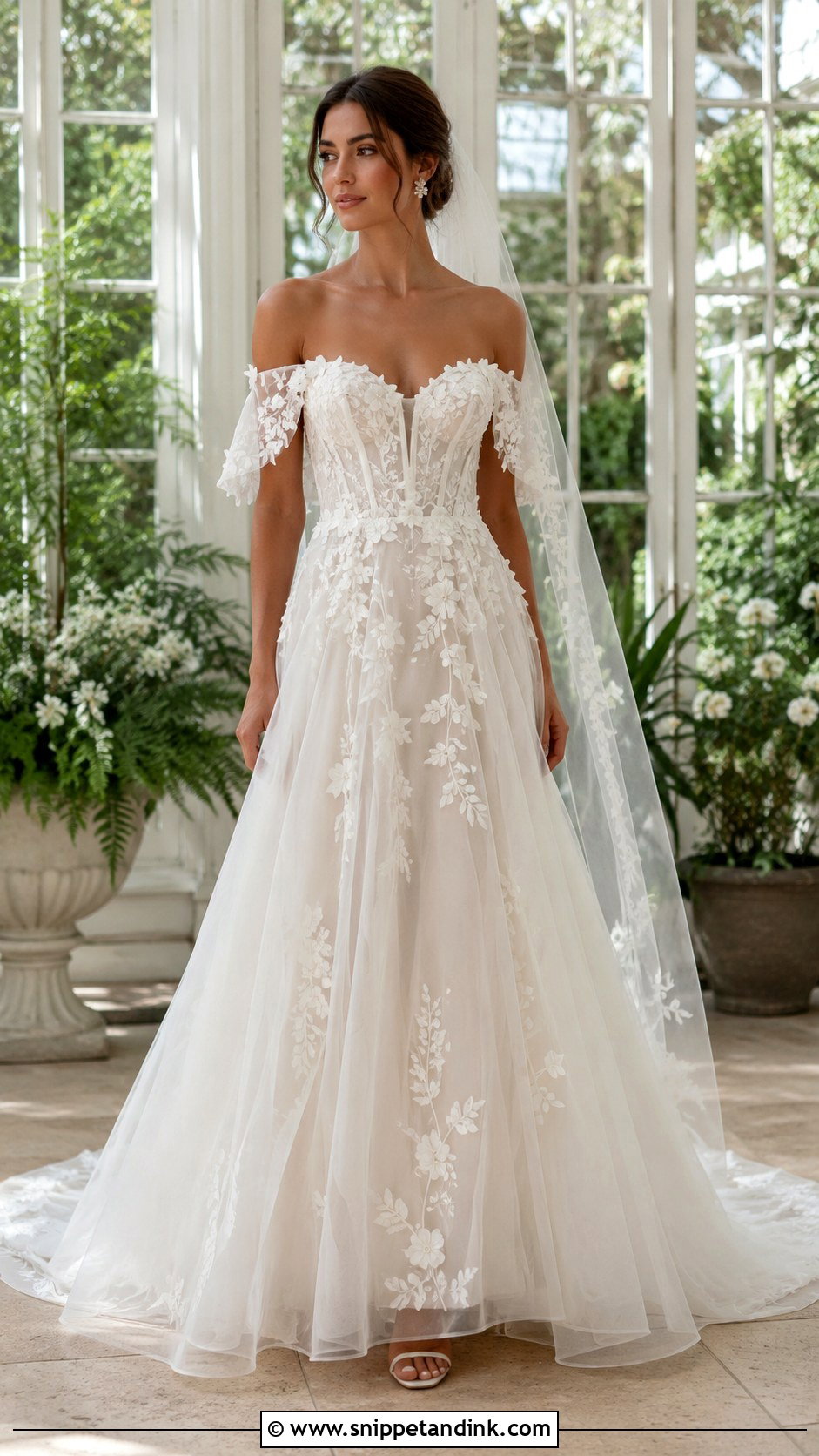
Three-dimensional flowers turn drop sleeves into a botanical look, but they’re the sleeve detail most likely to irritate. Raised petals rub the inner arm and catch on the veil every time you turn. So keep the heaviest flowers near the neckline and bodice, and ask for soft-edged, securely stitched blooms on the sleeves. An A-line or ball gown, small floral earrings, neutral heels and a sheer veil with only a few matching appliqués. Soft waves or a textured low bun suit gardens, conservatories and spring weddings.
11. Beaded Drop Sleeve Wedding Dress
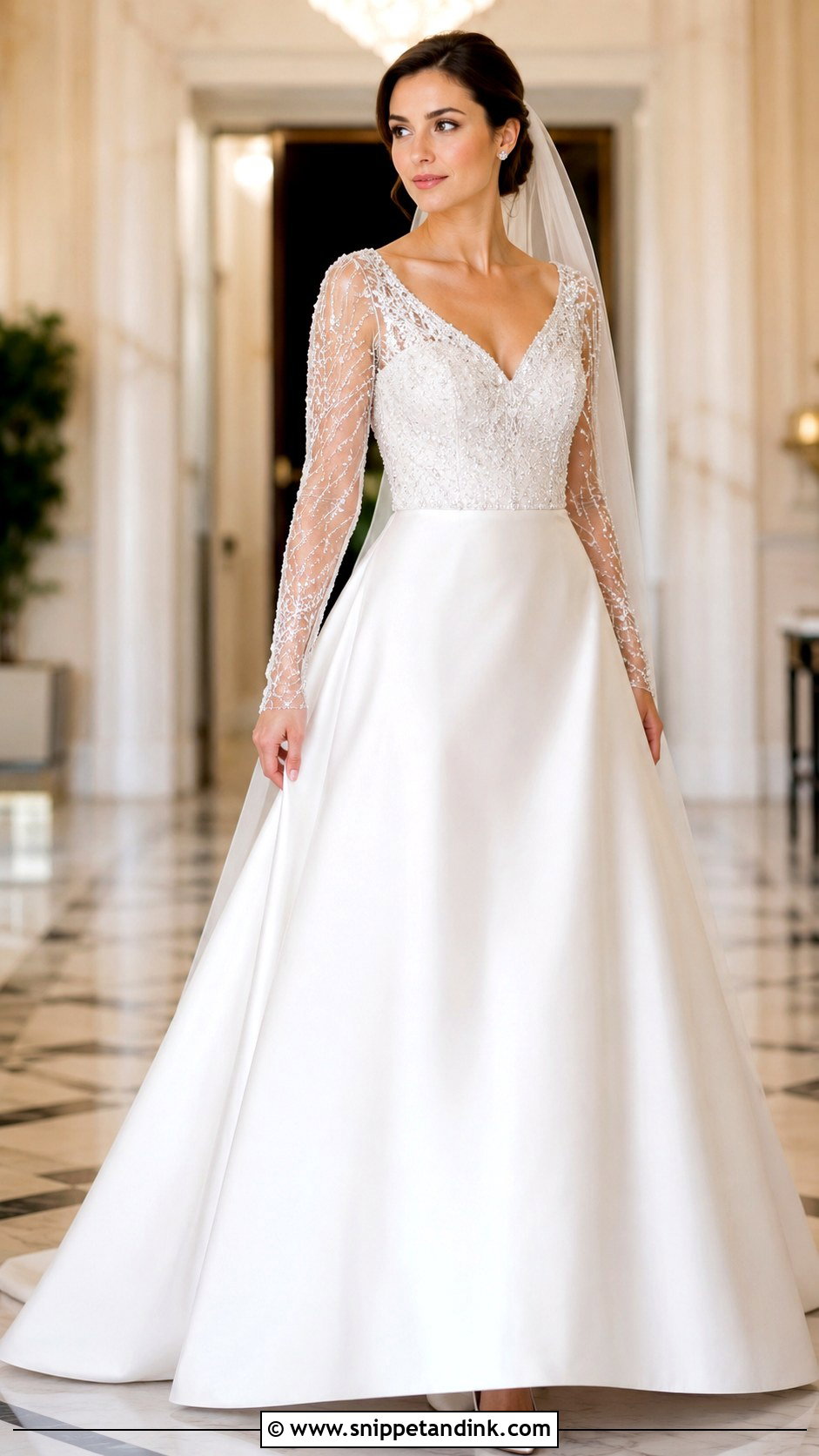
Beadwork on a drop sleeve brings controlled sparkle to evening weddings, as long as it stays on the outside of the arm. Beads on the inner sleeve rub against the skin and the bodice side seam all night. A fitted bodice with beads tracing the neckline and spilling lightly onto sheer tulle sleeves, over a plain satin, crepe or tulle skirt, keeps it balanced. Crystal studs, satin pumps, a plain veil and polished hair, with no jeweled necklace. During fittings, check the inside of each sleeve for smooth lining and reinforced stitching.
12. Boho Drop Sleeve Wedding Dress
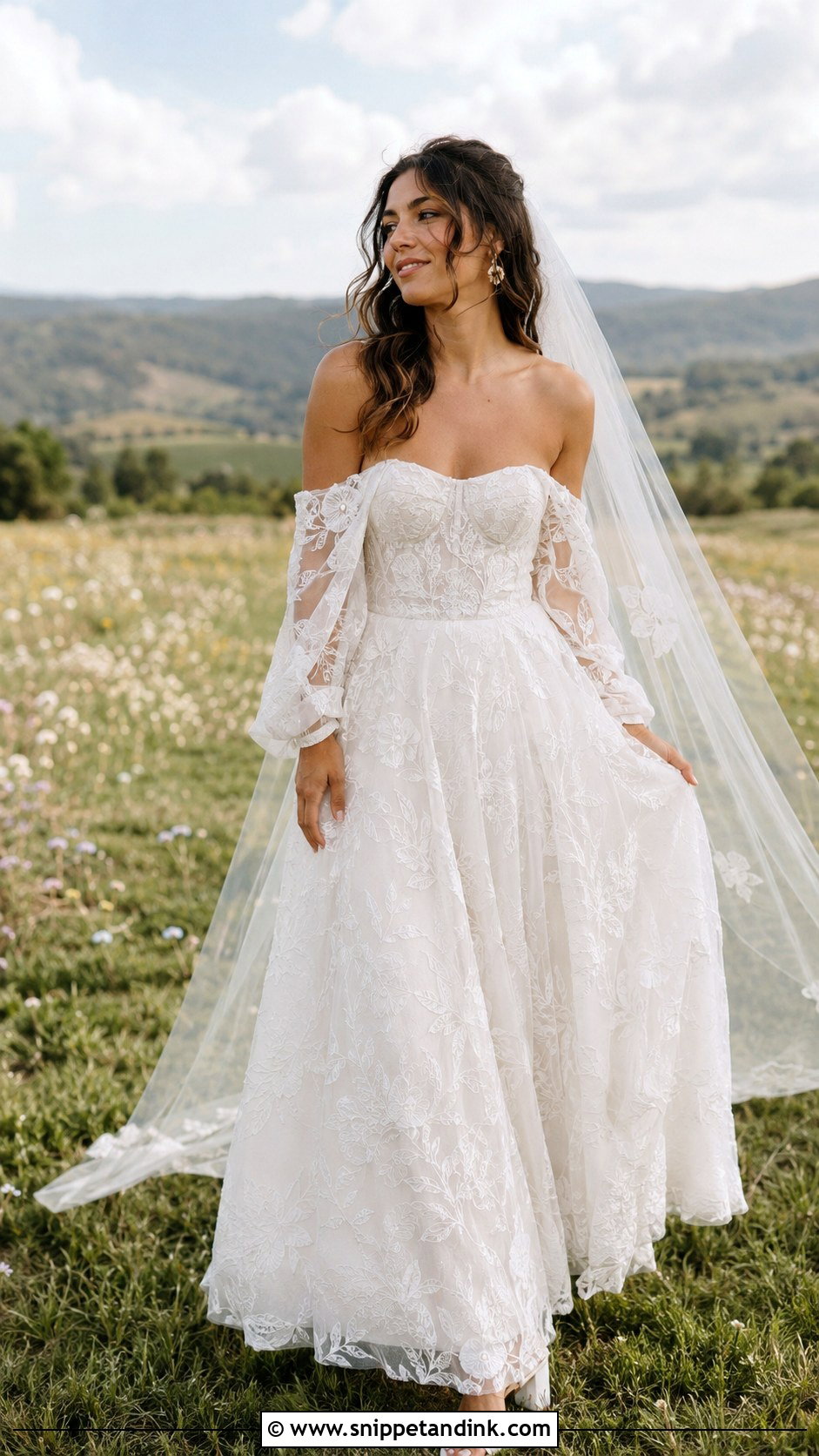
Boho drop sleeves should look relaxed and be engineered underneath. A soft A-line in botanical lace with a lightly structured bodice, loose draped sleeves and a short train suits fields, woodland and rustic estates. Low block heels, delicate gold earrings, a floral comb and a simple veil or light cape, with natural waves or a loose braided bun. Under open lace, choose a lining close to your skin tone; a stark white lining makes the lace look flat in photos. Loose sleeves still need firm attachment points, or they’ll slip by the reception.
13. Minimalist Drop Sleeve Wedding Dress
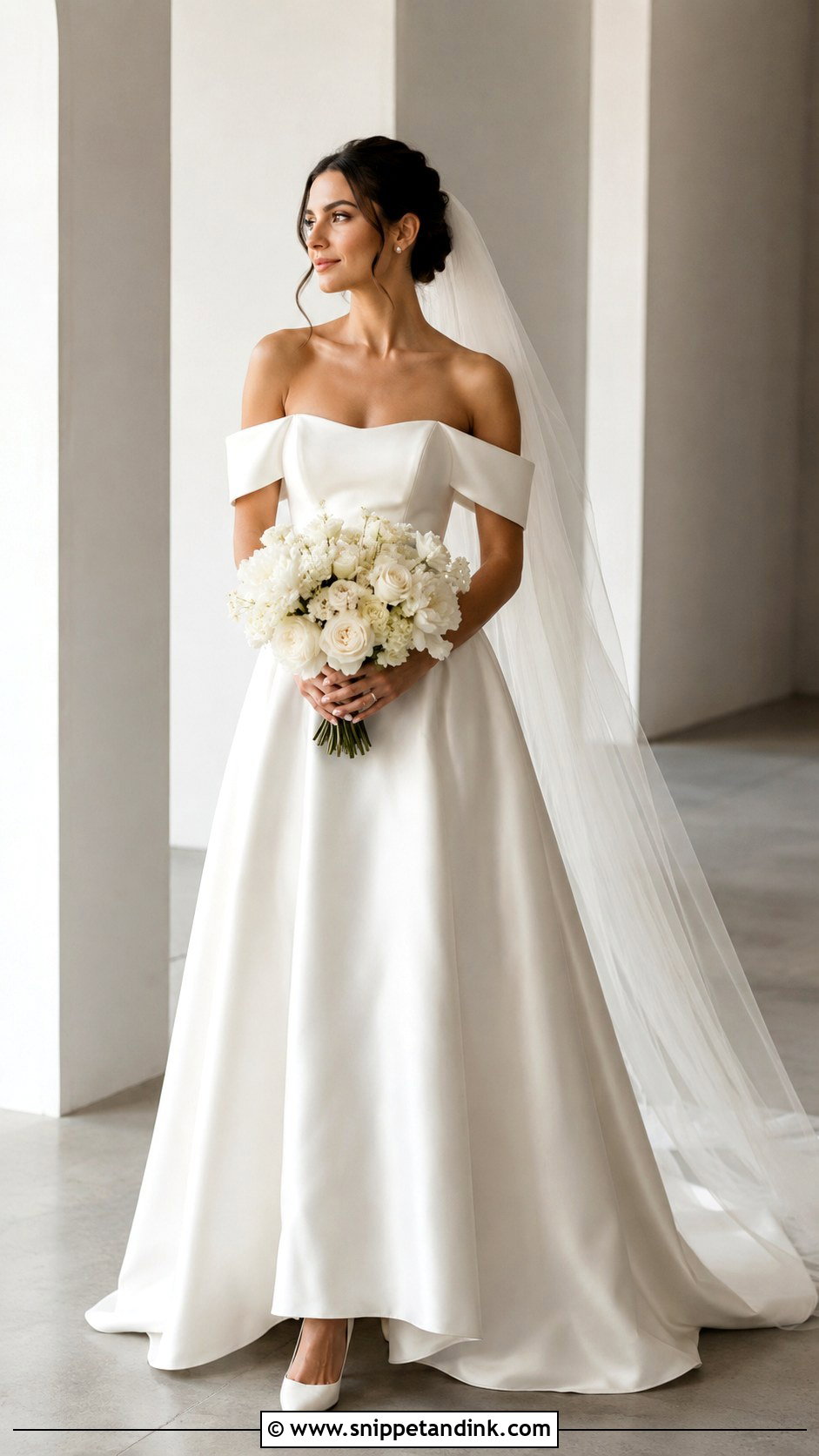
Minimalist gowns depend on construction and proportion, so a poorly set sleeve has nowhere to hide. Smooth satin or crepe, a fitted bodice, clean drop sleeves and an A-line or column skirt, with no heavy lace or beading. Pearl studs, pointed heels, a structured bouquet and a plain veil; a polished chignon reads modern, soft waves more relaxed. City venues, studios and rooftops suit it. Ask the tailor to check that both sleeves sit at exactly the same height. On a plain gown, a half-inch difference shows in every front-on photo.
14. Vintage Drop Sleeve Wedding Dress
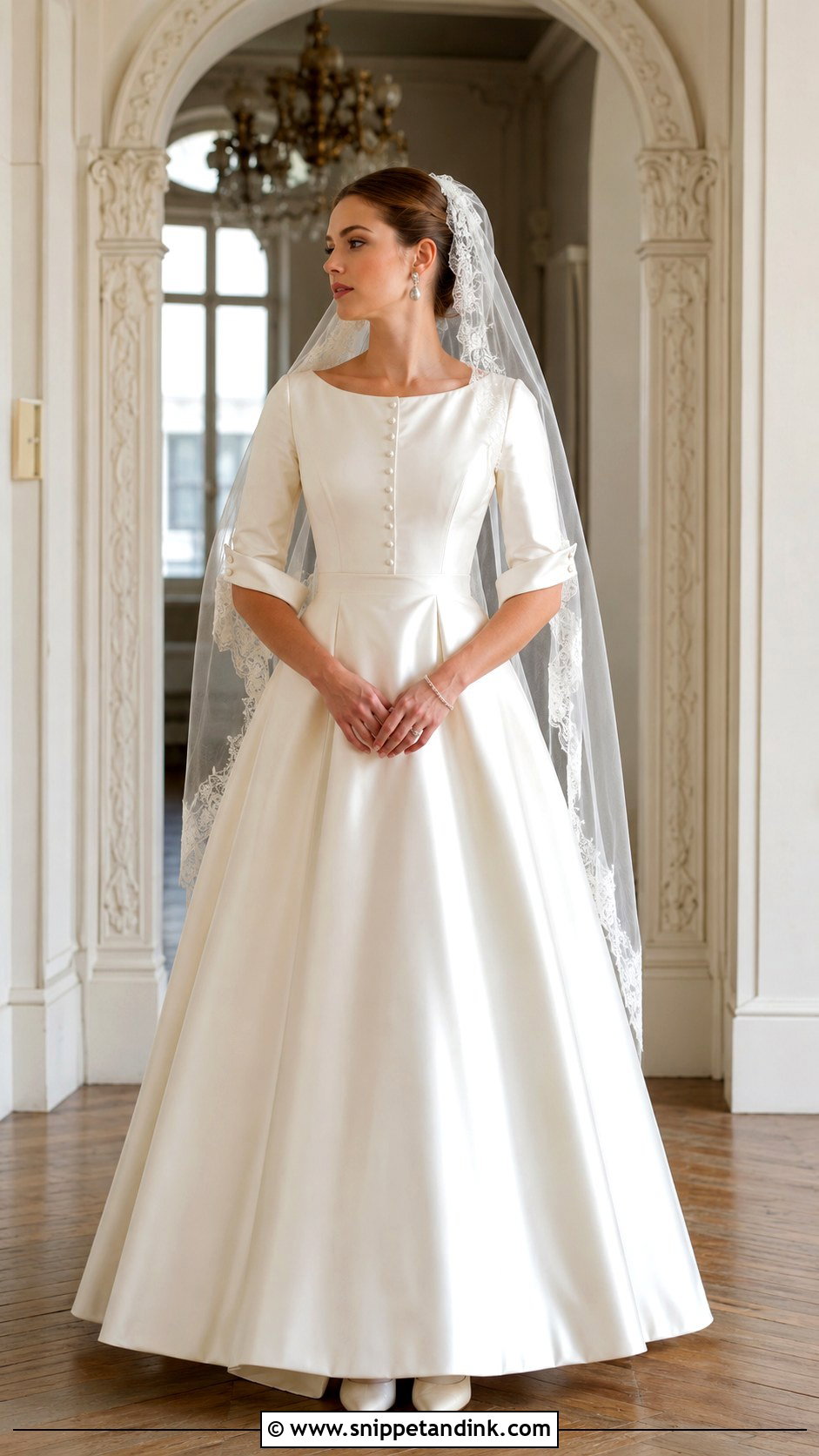
Vintage-inspired drop sleeves can nod to the past without turning into costume. A satin A-line with a corseted waist, portrait neckline, softly folded sleeves and covered buttons is the base. Add a lace-edged veil, pearl earrings, closed-toe pumps and a compact bouquet, with a waved updo or smooth low bun. Soft ivory supports the mood better than bright white. My limit is two or three period details chosen together; several lace patterns, oversized accessories and decorative extras all compete with the neckline. Historic homes, estates and traditional ballrooms suit it.
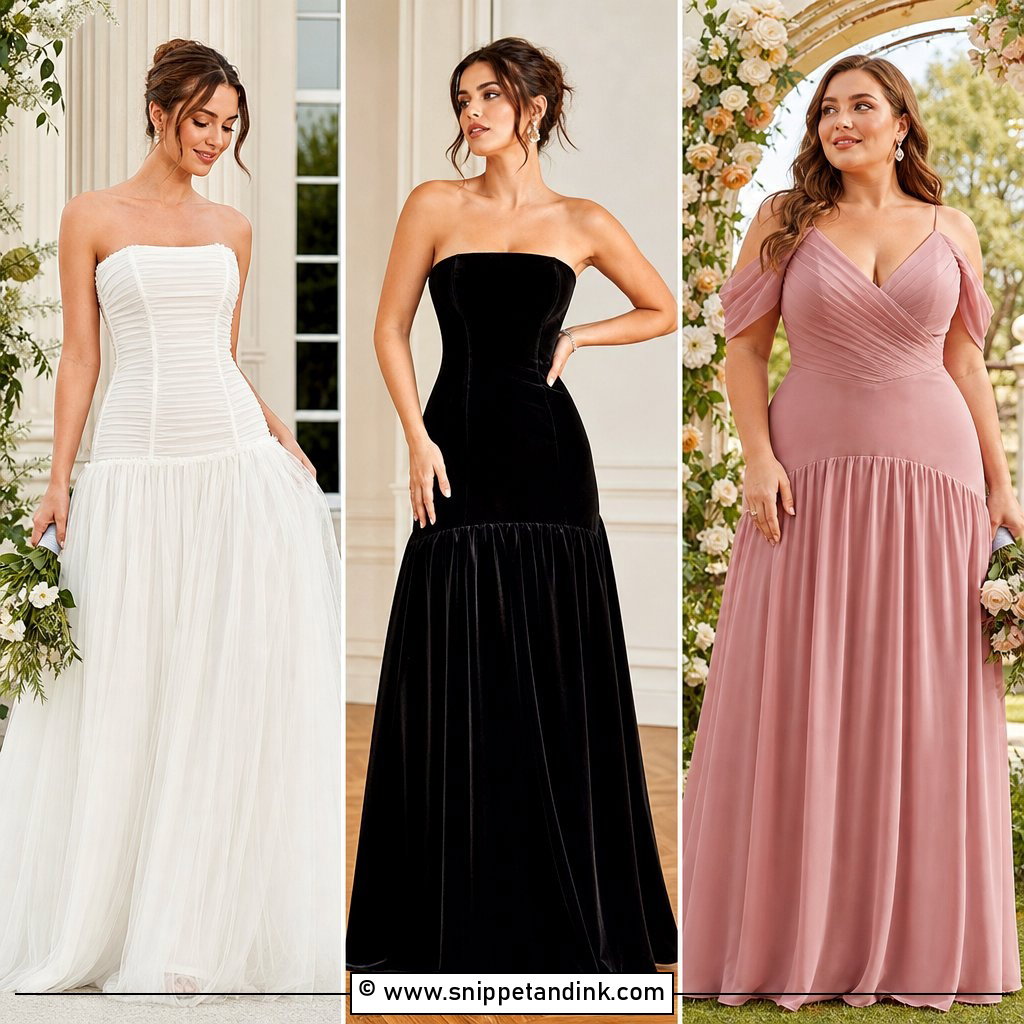

15. Plus Size Drop Sleeve Wedding Dress
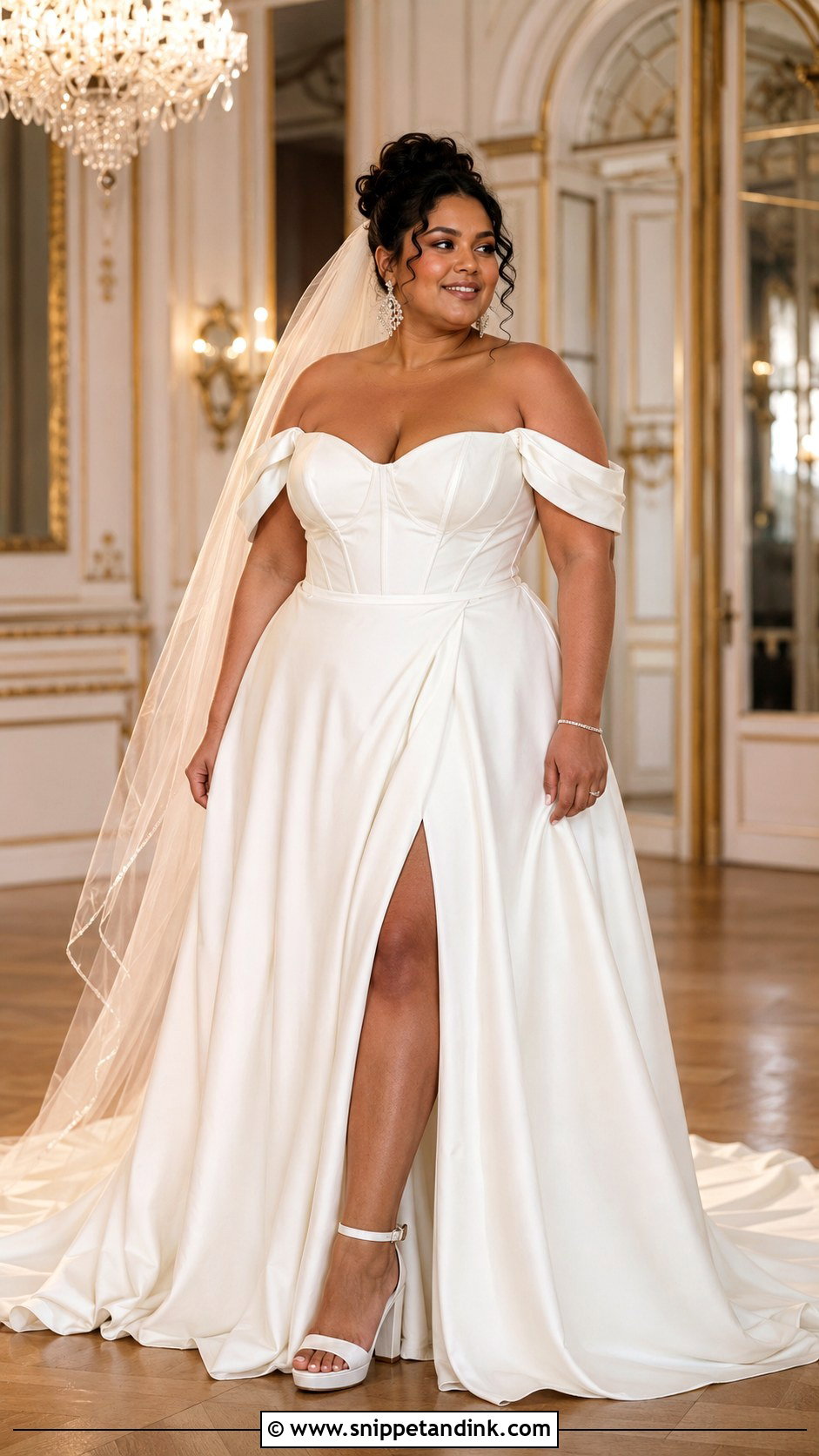
For plus-size brides, the bodice decides everything about drop sleeves. Internal boning and a shaped neckline hold the gown, so the sleeves can rest on the upper arm instead of being pulled tight to keep things up. Draped satin gives clean structure; lace or tulle feels softer. Stable block heels, statement earrings and a veil matching the gown’s formality. Sleeve circumference matters too, because a sleeve cut for a smaller sample can bite into the arm. Ask the consultant whether the sleeves can be let out or remade rather than sizing up the whole dress, which tends to loosen the bodice where you need it most.
16. Petite Drop Sleeve Wedding Dress
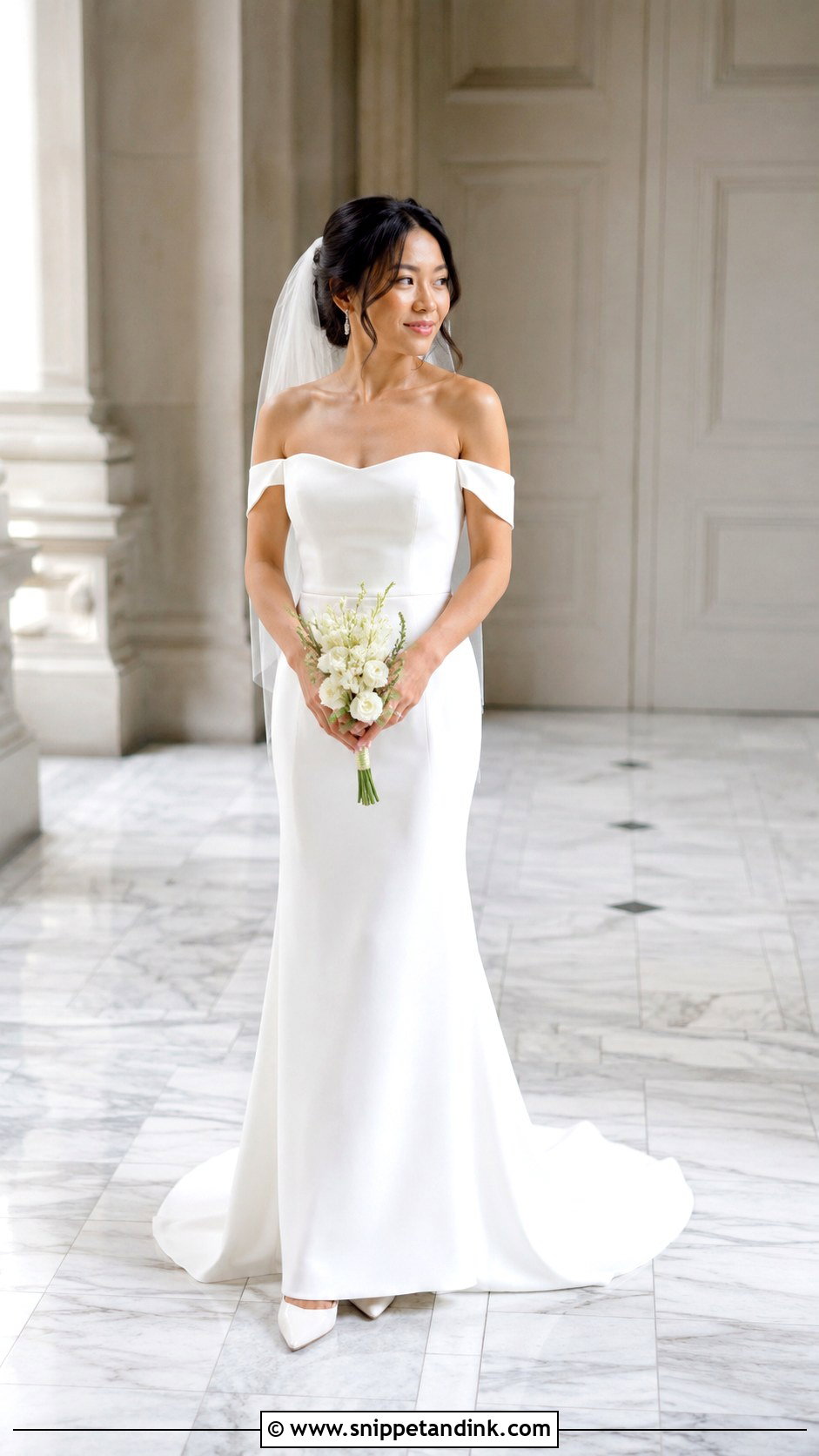
Petite brides need drop sleeves scaled down. A narrow A-line, sheath or subtle fit-and-flare with limited volume, slim sleeves and a gently curved neckline keep the upper body open. Pointed heels, delicate earrings, a narrow bouquet and a veil without a heavy border; hair up shows the neck and shoulders. Big ruffles or large appliqués on the sleeves swamp a small frame. Alterations should shorten the bodice and skirt at the right construction points rather than just cutting the hem, or the waist sits low and the flare starts in the wrong place.
17. Square Neck Drop Sleeve Wedding Dress
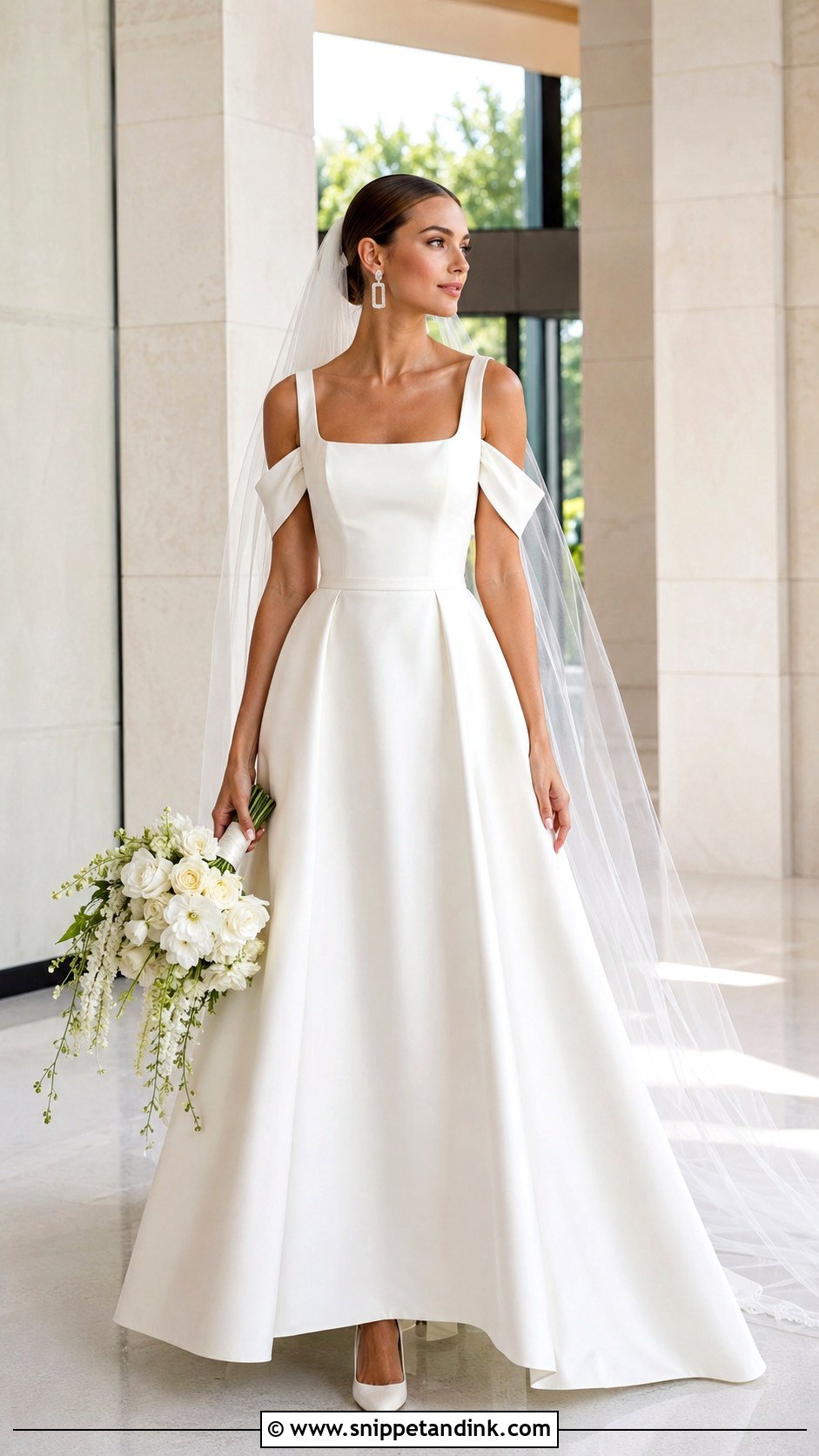
A square neckline gives drop sleeves a structured, fresh look. Satin or mikado in an A-line, with the sleeves attached near the outer corners of the square, frames the collarbone in clean lines. Geometric earrings, pointed pumps, a smooth bun, a plain chapel veil and a structured bouquet. Squares are unforgiving to fit. Turn, sit and raise your arms at the fitting; if the sleeves drag the corners down or a gap opens along the bust, the attachment point needs moving. Formal venues and understated city weddings both suit it.
18. Sweetheart Drop Sleeve Wedding Dress
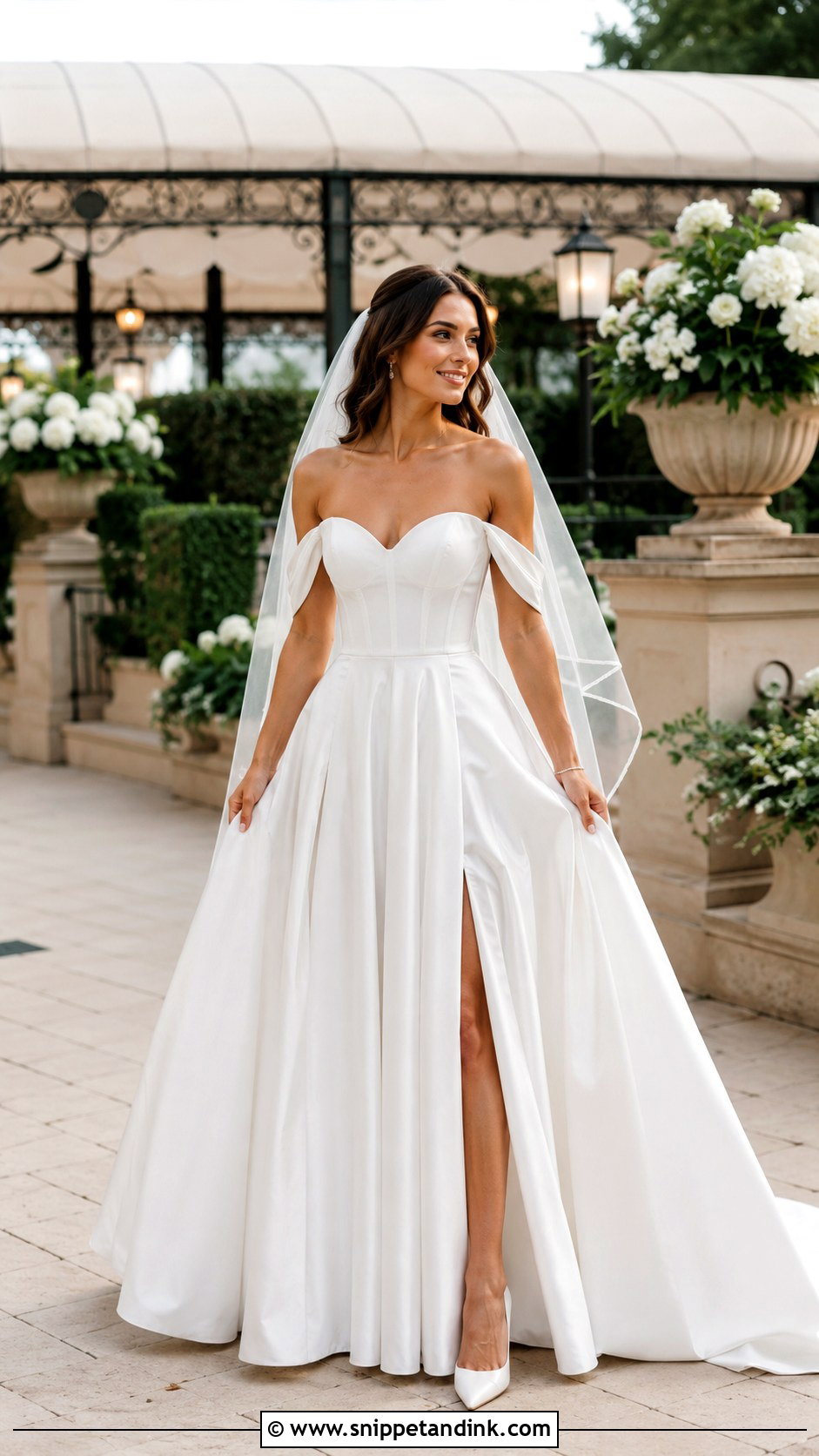
The curves of a sweetheart neckline pair naturally with drop sleeves, but the center dip is where gaping starts. A supportive corset bodice with satin folds, lace or gathered tulle; an A-line skirt for classic, a mermaid for drama. Pearl earrings, a narrow bracelet, pointed heels and a veil with minimal edging, plus a low bun or side-swept waves. During fittings I watch the center point as the bride bends to sit. If it lifts away from the body, the bodice needs taking in there before the sleeves are set. Ballrooms, gardens and destination ceremonies all work.
19. Drop Sleeve Wedding Dress With Bow
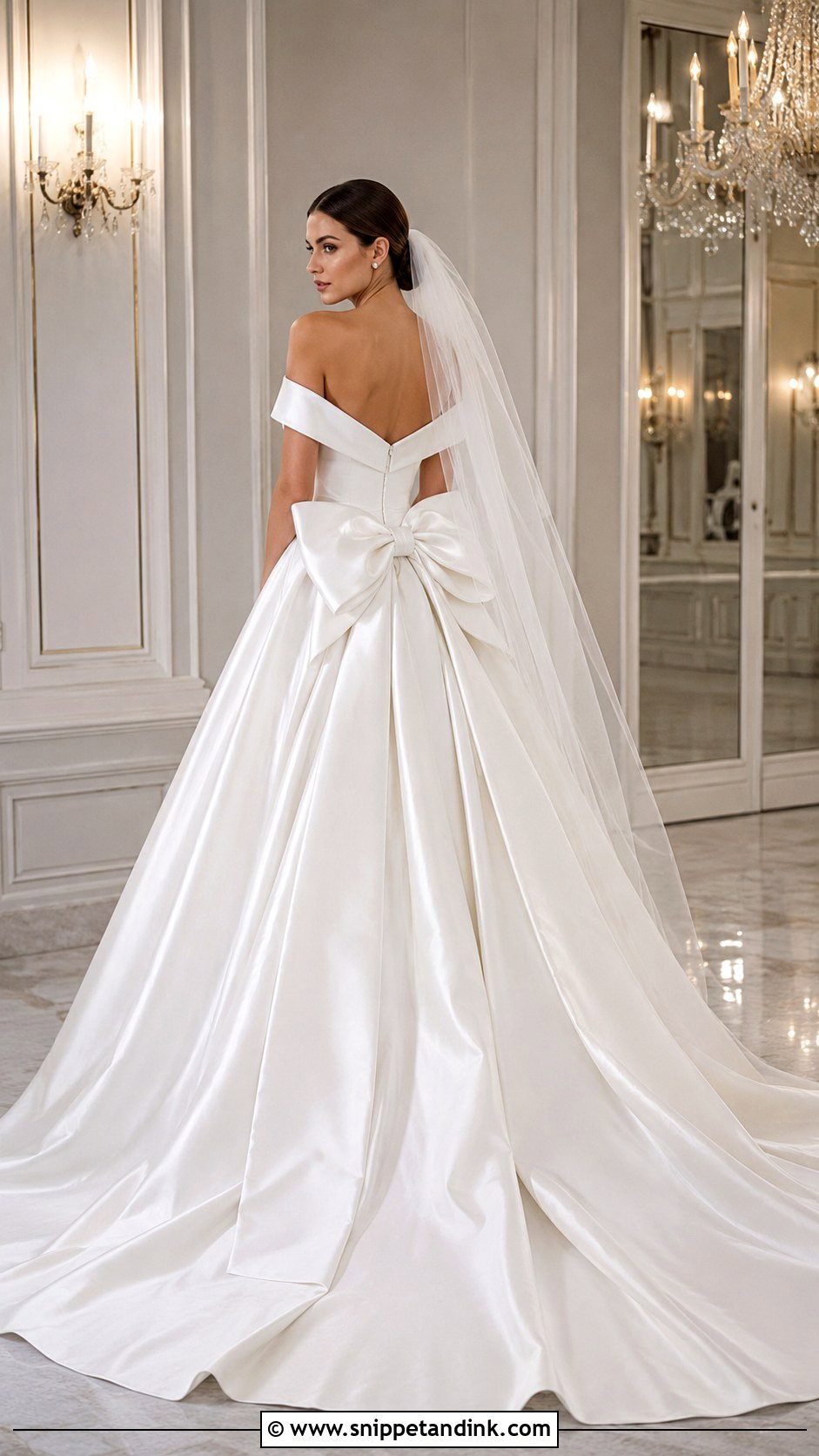
A bow works on a drop sleeve gown only when its scale matches the dress. Think of a clean satin ball gown with folded sleeves, a structured bodice and a removable back bow above the train, finished with pearl studs, pointed pumps, a smooth veil and a neat chignon. For something softer, slim ribbon bows at the sleeve attachments replace one big accent. Big bows have weight. Sit and walk in the gown at the fitting, and check that the bow doesn’t hide bodice details or get in the way once the train is bustled.
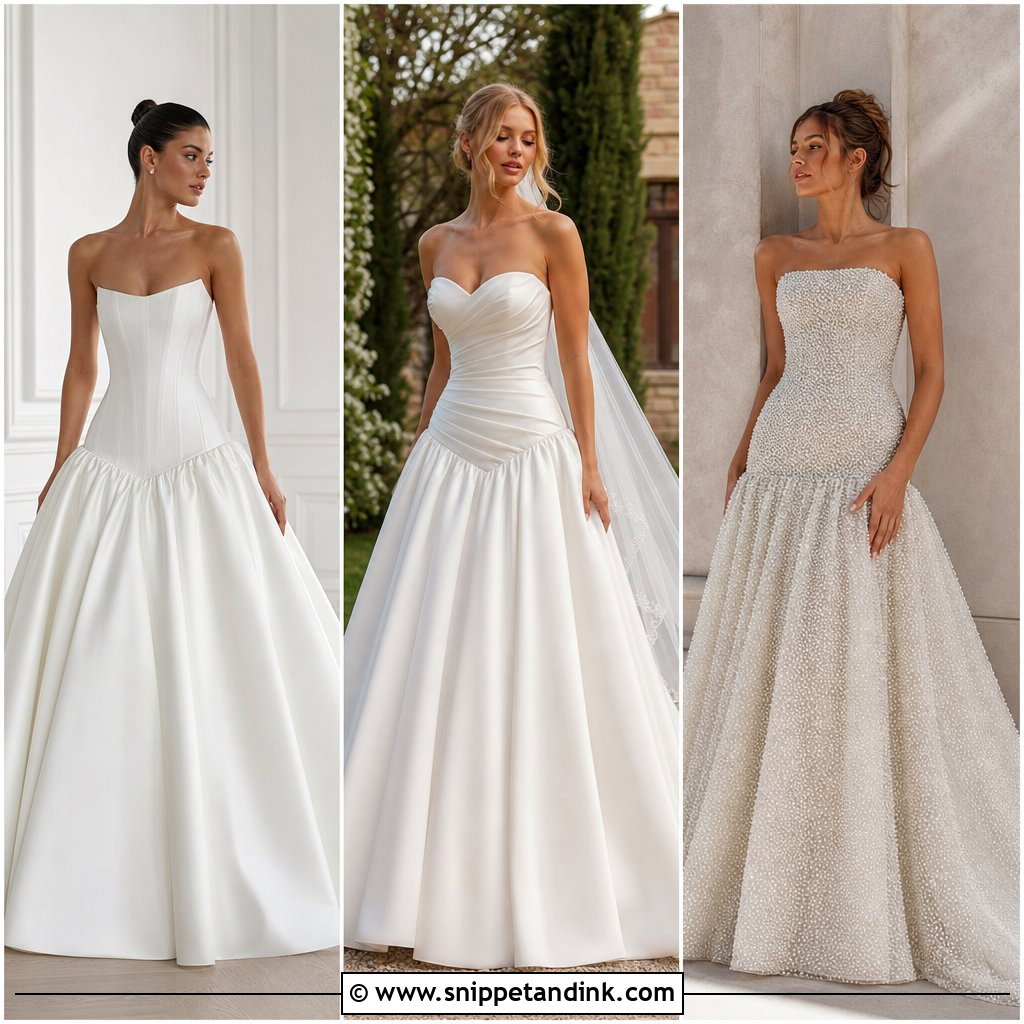
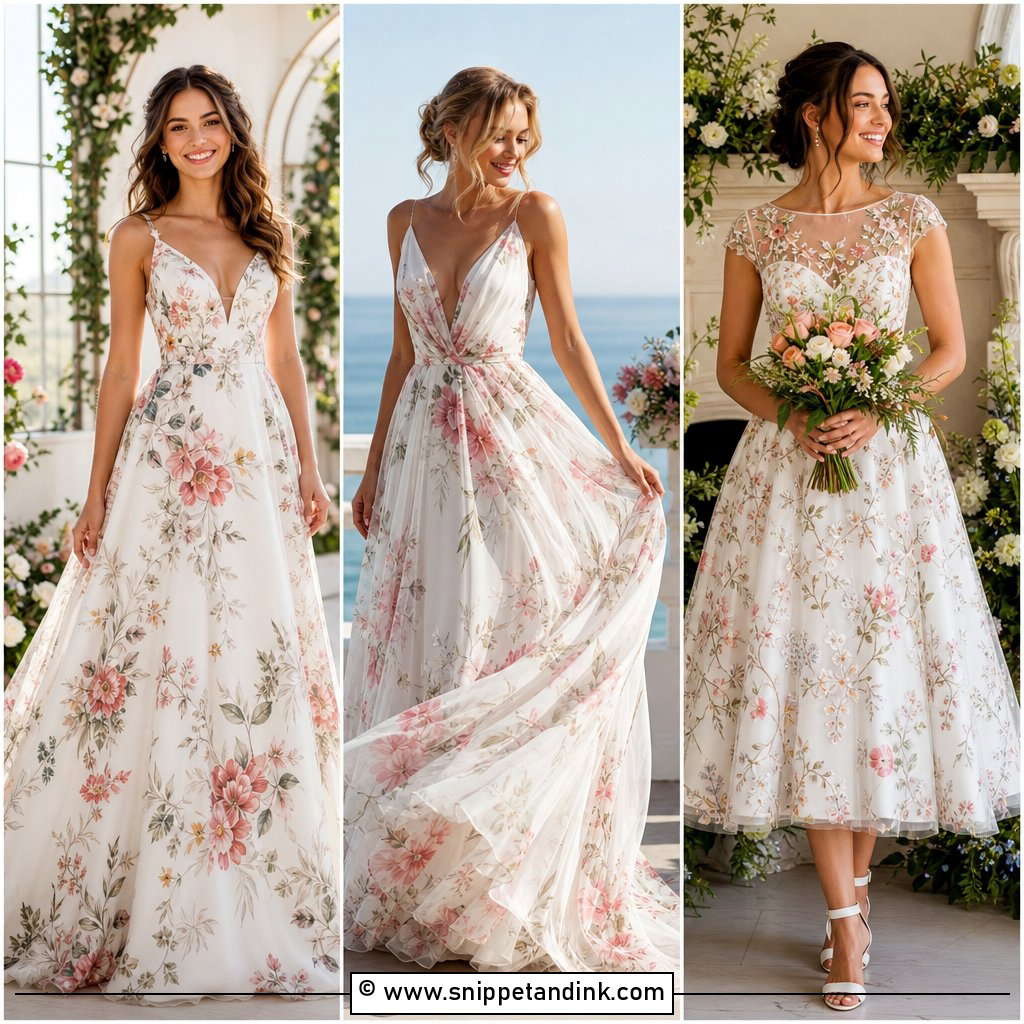

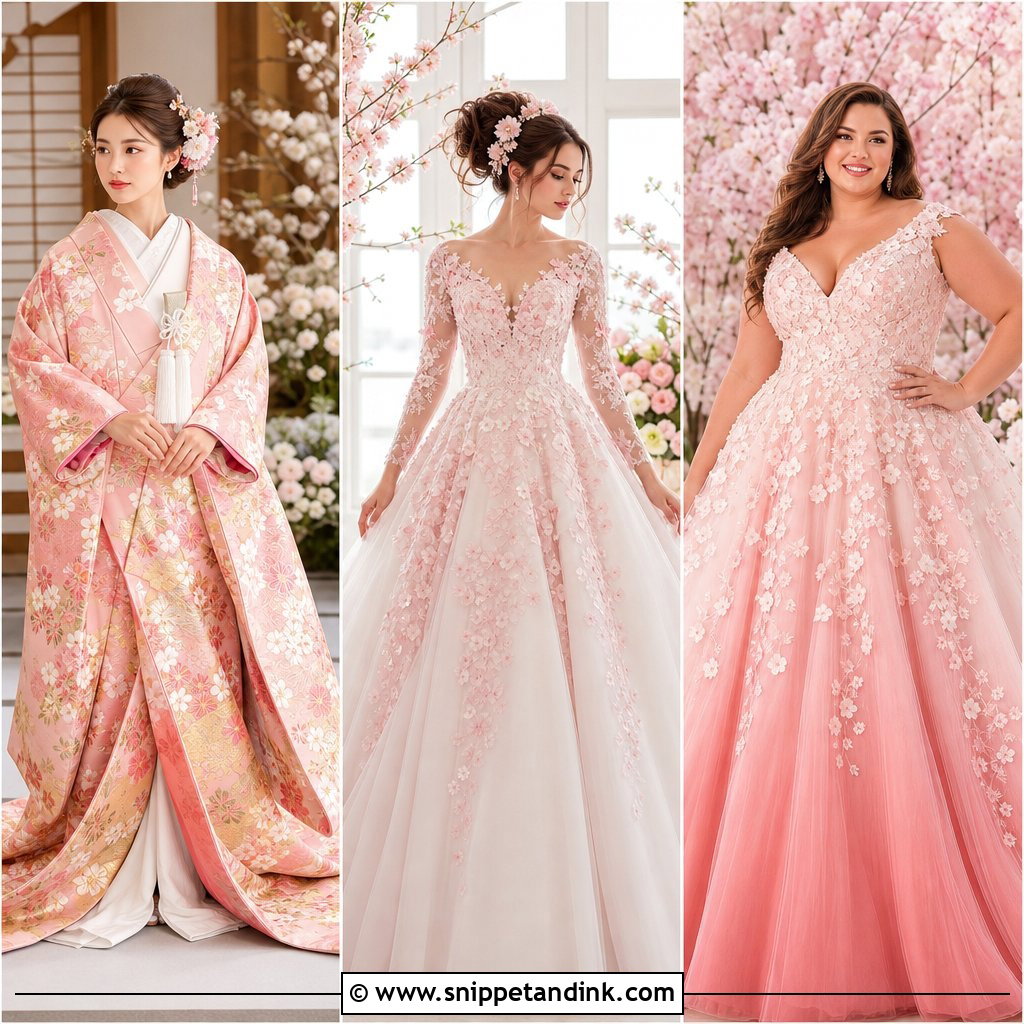
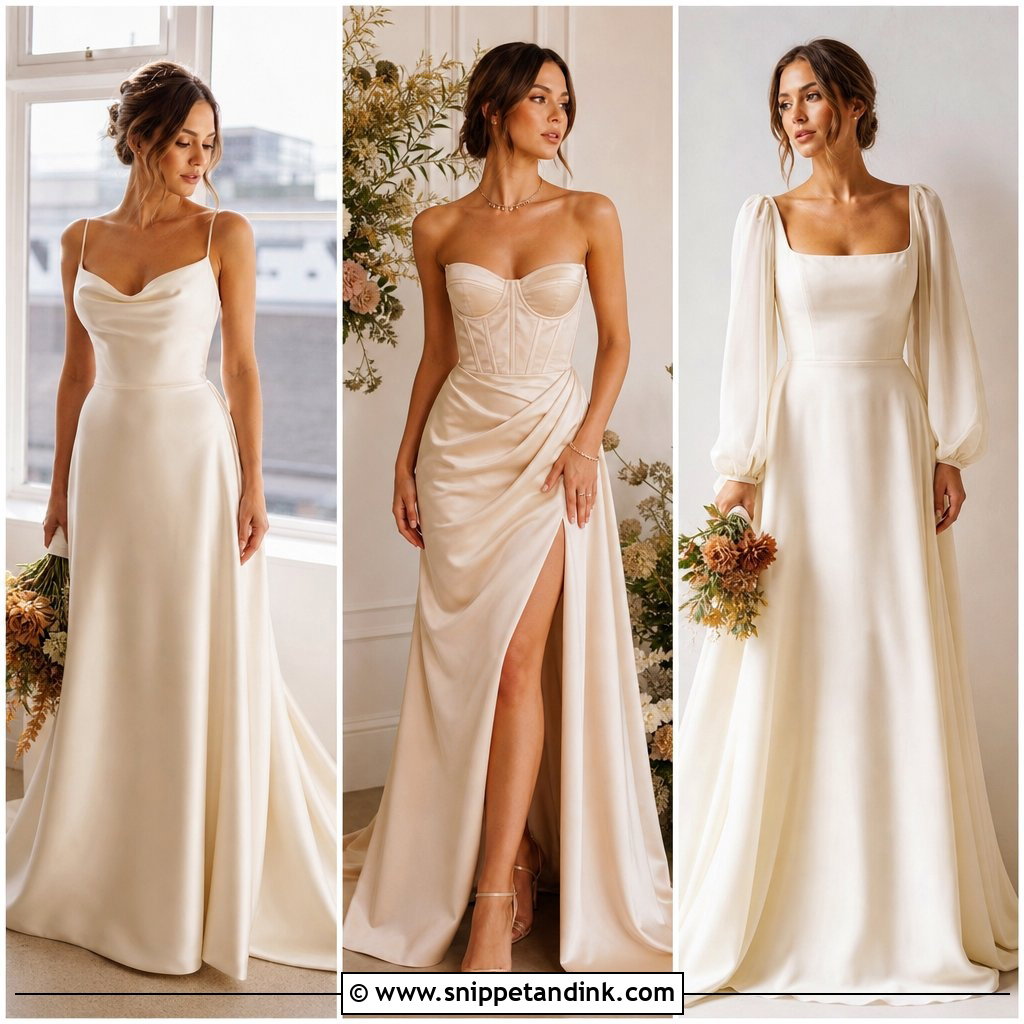
20. Short Drop Sleeve Wedding Dress
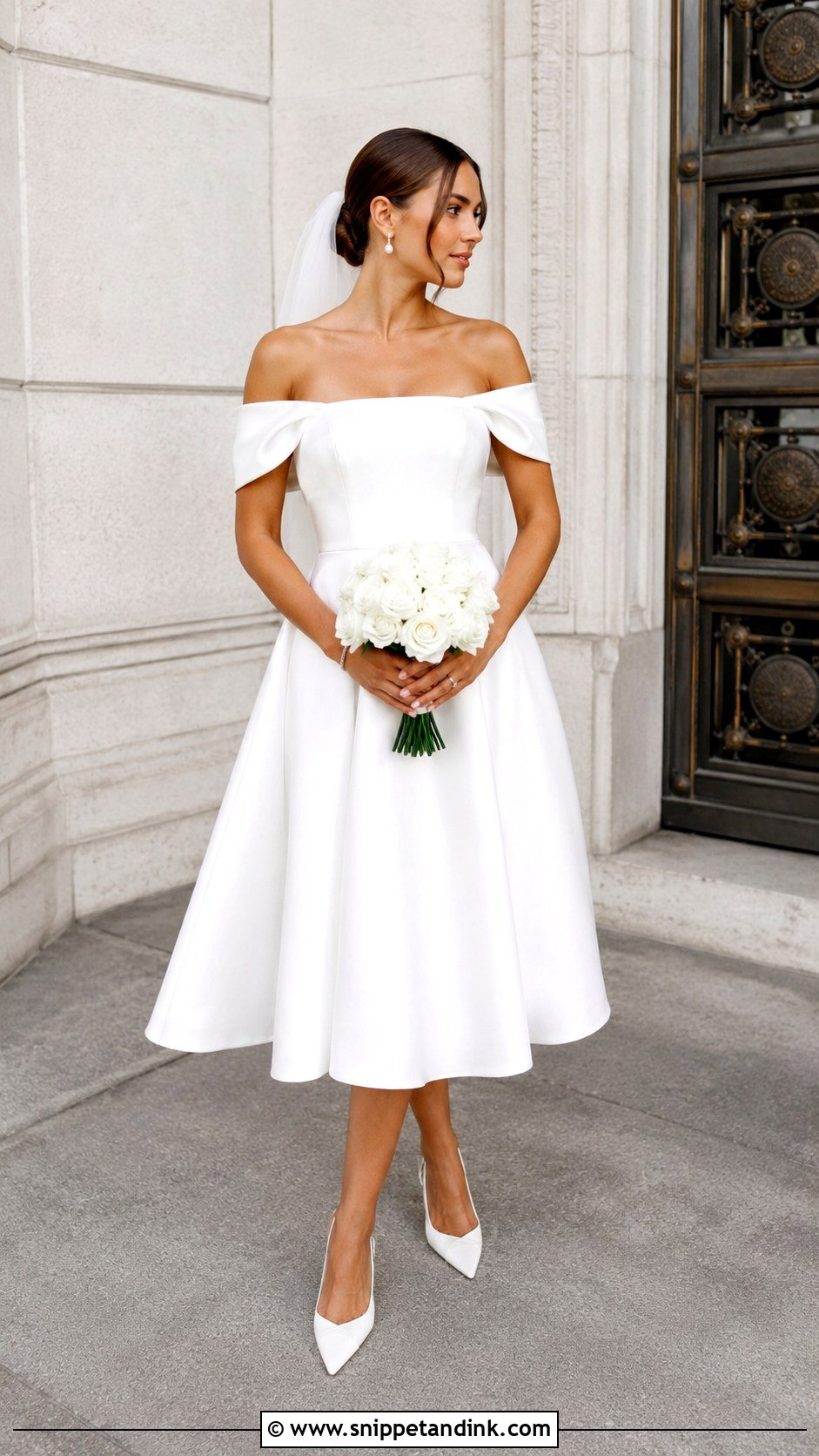
Short drop sleeve dresses suit courthouse ceremonies, daytime weddings and a second look for the reception. A tea-length A-line or a tailored mini with a structured bodice and clean off-shoulder sleeves is the shape. Pointed pumps, slingbacks or dressy flats, pearl earrings and a short veil. The shoes are on show, so match their color and formality to the dress. A small bouquet and smooth updo keep it bridal. Sit and walk in a mini before deciding; hems rise when you’re seated, and you’ll likely sit down to sign the marriage license.
Adding Sleeves to a Strapless Gown You Already Love
Plenty of brides fall for a strapless gown and then wish it had sleeves. A good bridal seamstress can make drop sleeves to order and fix them with hidden snaps or loops, which also lets you take them off later in the night.
Matching the fabric
Ivory is not one color. Bring the gown itself rather than a photo, and ask whether spare fabric can come from the hem allowance or the inside of the skirt. If not, hold several swatches against the dress in daylight, since a slight mismatch looks obvious in pictures.
Allowing time
Custom sleeves add work on top of normal alterations, so raise the idea at your first fitting rather than your last. Time and cost vary widely by seamstress and fabric, so get both in writing.
Checking the bodice first
Added sleeves should never be holding the dress up. If your strapless gown already slips when you move, have the bodice fitted properly before anyone cuts sleeve fabric.
Hug, Dance and Sign the License Before You Commit
Good drop sleeves look easy because the bodice is doing the work. Lace and tulle read soft; satin, crepe and mikado give cleaner structure. Long, detachable, beaded, floral, minimal and short versions each suit different venues and seasons. Whichever you choose, walk, sit, hug and lift your arms in it, and bring your shoes and undergarments to every fitting so your seamstress is fitting the real outfit. When you can reach for a hug without thinking about your sleeves, the gown is right.
You'll Like These Ideas:




Leave a Reply