
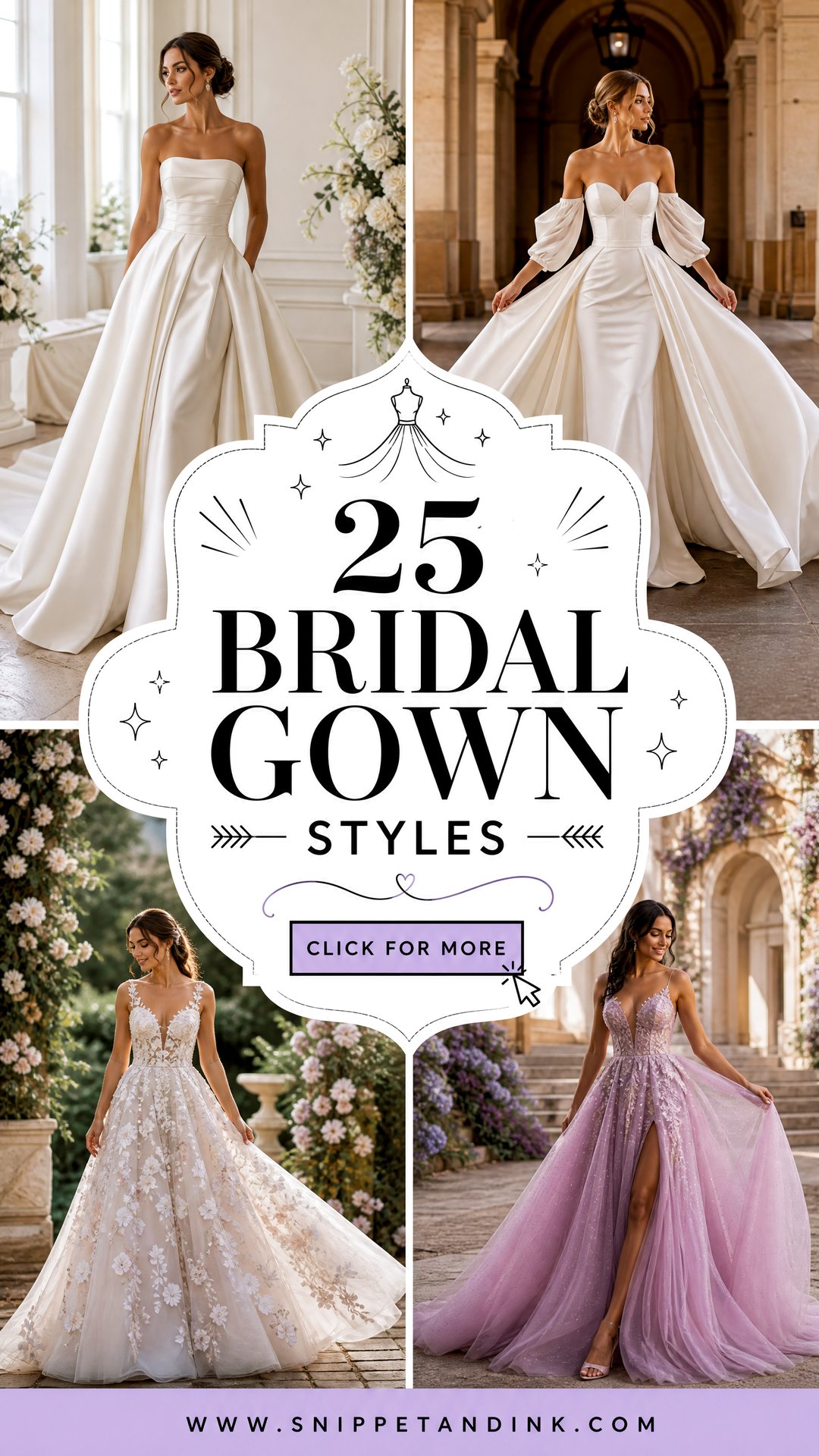
Most brides walk into their first appointment with a picture of one dress and walk out in a different shape altogether. That happens because a silhouette behaves differently on a body than on a hanger: satin shows every seam, tulle adds width you didn’t plan for, and a corset changes how you breathe through a three-hour dinner. Below are 25 gown styles I pull for brides, from A-line and ball gown to slips, capes, colour and vintage, each with what I watch for when you step out of the fitting room and actually move.
Sit, Climb a Step and Hug Someone in the Sample
A dress that looks right in a standing mirror can still fail you on the day. Before a bride decides on any silhouette, I ask her to do the things she’ll actually do at her wedding, in the sample, with the shop assistant holding the clips.
- Sit on a low chair for a full minute. Boning that digs into the hip or a waist seam that folds over shows up here, not standing.
- Climb a step or two. Mermaid and fitted skirts reveal whether the flare starts high enough for you to manage without lifting the hem.
- Hug someone and raise your arms as if holding a glass. Off-shoulder sleeves and tight lace cuffs restrict this more than people expect.
- Walk a few steps backwards. Trains and full skirts catch under the heel, and you’ll be stepping back at the altar and during the first dance.
Bring shoes at roughly the heel height you plan to wear and the underwear you’ll actually use. A sample pinned at flat-shoe length and photographed in a strapless bra you won’t wear tells you very little.
How Far Ahead a Gown Needs Ordering
Most made-to-order gowns take several months to arrive after the order is placed, and lead times vary a lot between designers and seasons. I usually suggest starting appointments roughly nine to twelve months before the date, so you have time to order without paying rush fees. Off-the-rack and sample gowns cut that wait down, which is useful for a short engagement.
Alterations are a separate block of time. Expect two or three fittings, with the first about two to three months before the wedding and the last a couple of weeks before. Keep your shoes and undergarments the same from the first fitting to the last, because changing either one changes the hem and the bodice.
1. A-Line Bridal Gown
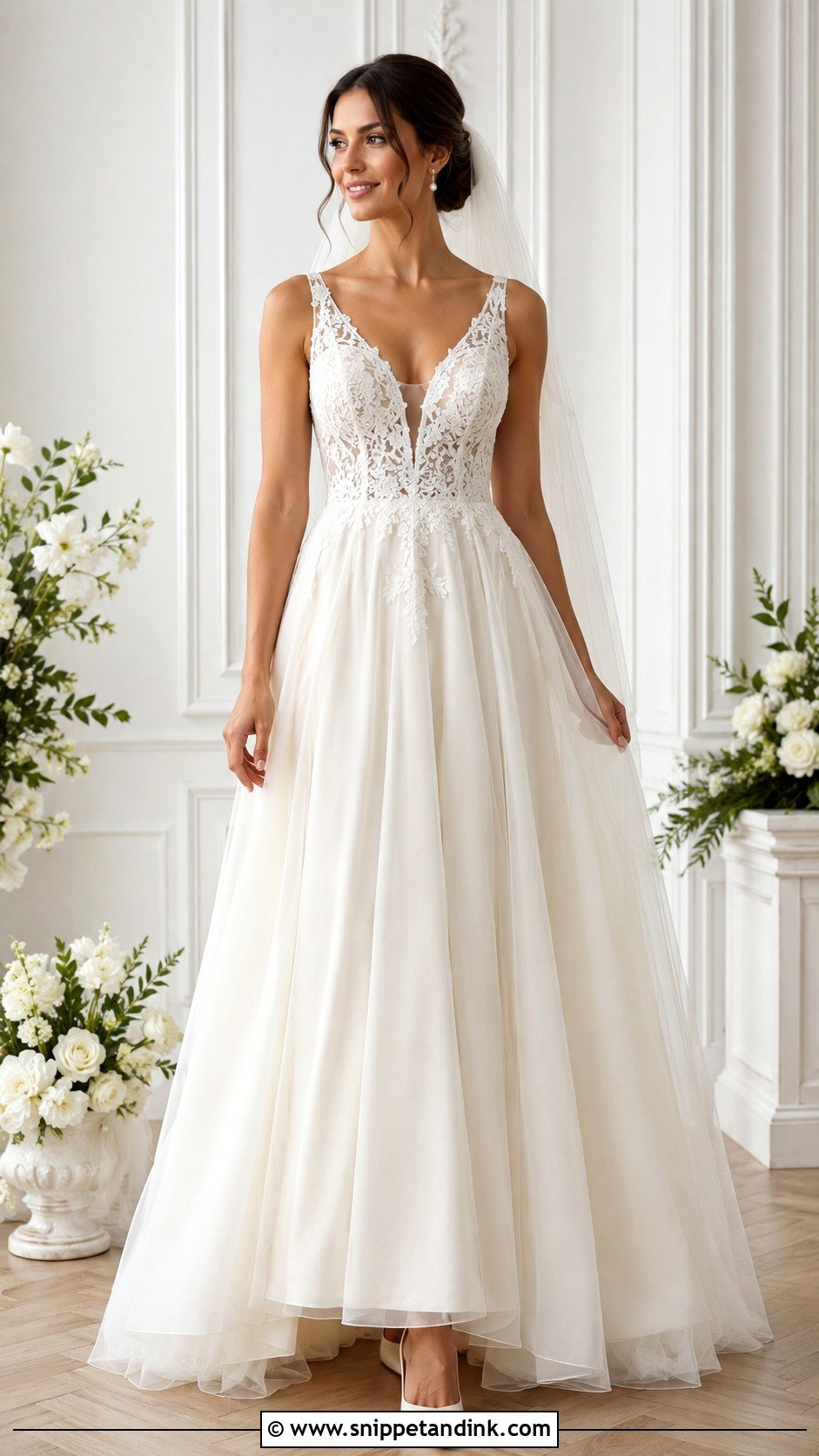
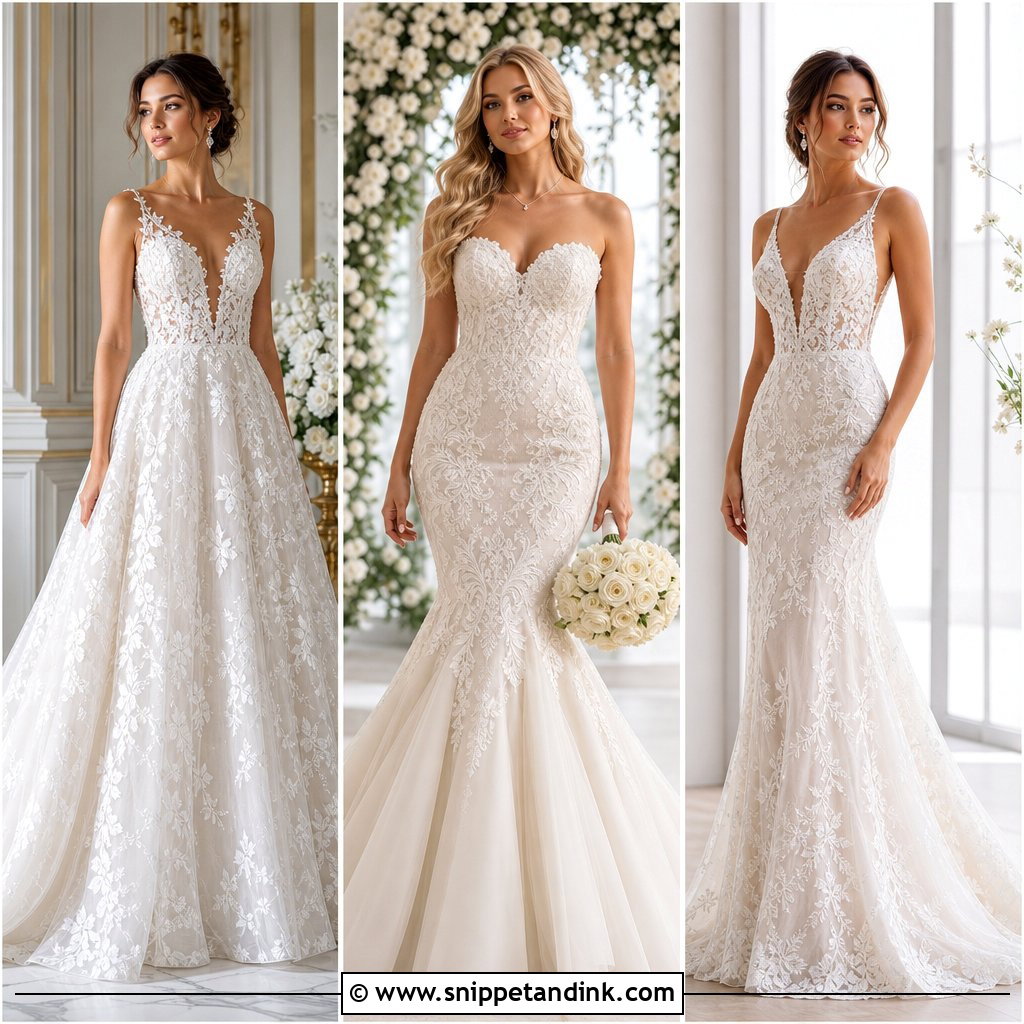
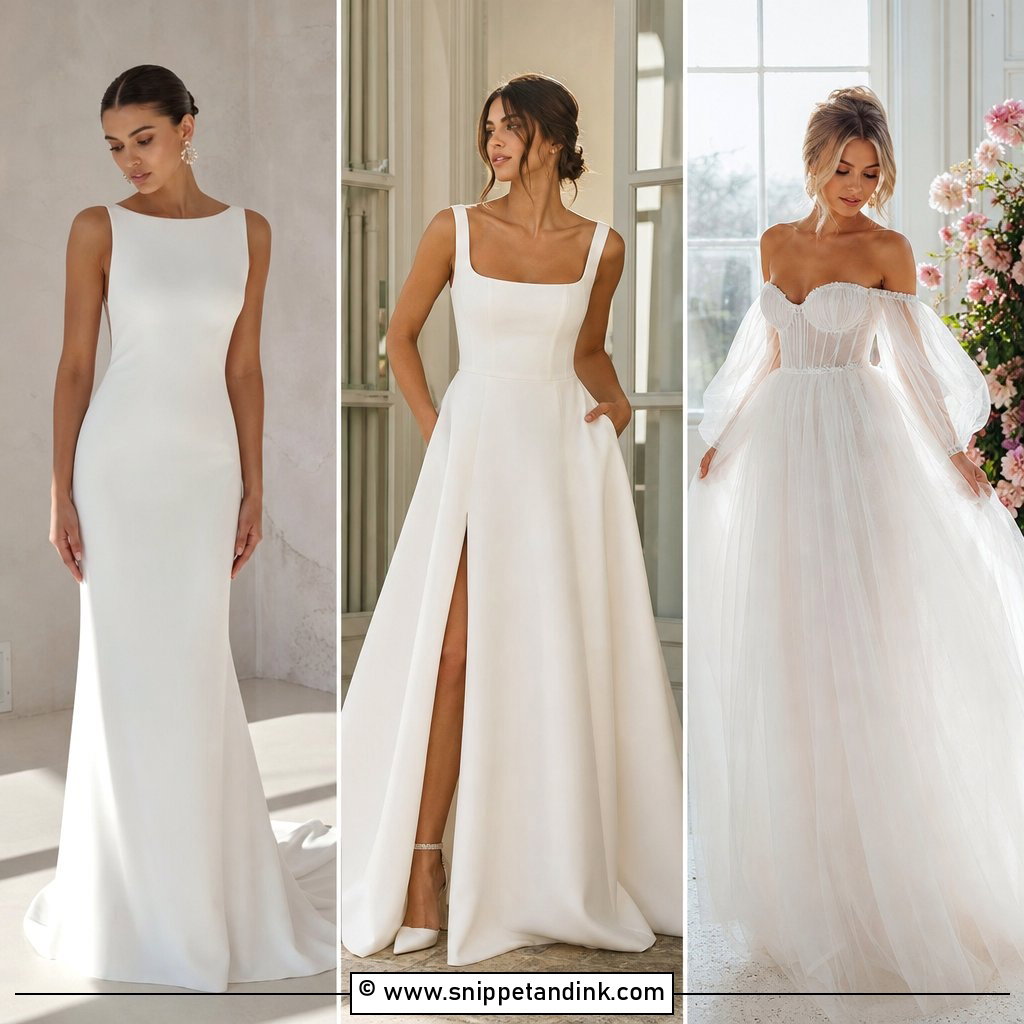
If a bride tells me she has no idea where to start, an A-line is usually the first dress I zip her into. The bodice holds the waist and the skirt falls away from the hip, so it suits a wide range of figures and almost any venue. Fabric decides the mood: satin reads clean, lace softer, tulle airy. Watch where the waist seam lands, though. If it sits even a centimetre below your natural waist, the whole shape drops and looks borrowed.
2. Ball Gown Bridal Gown
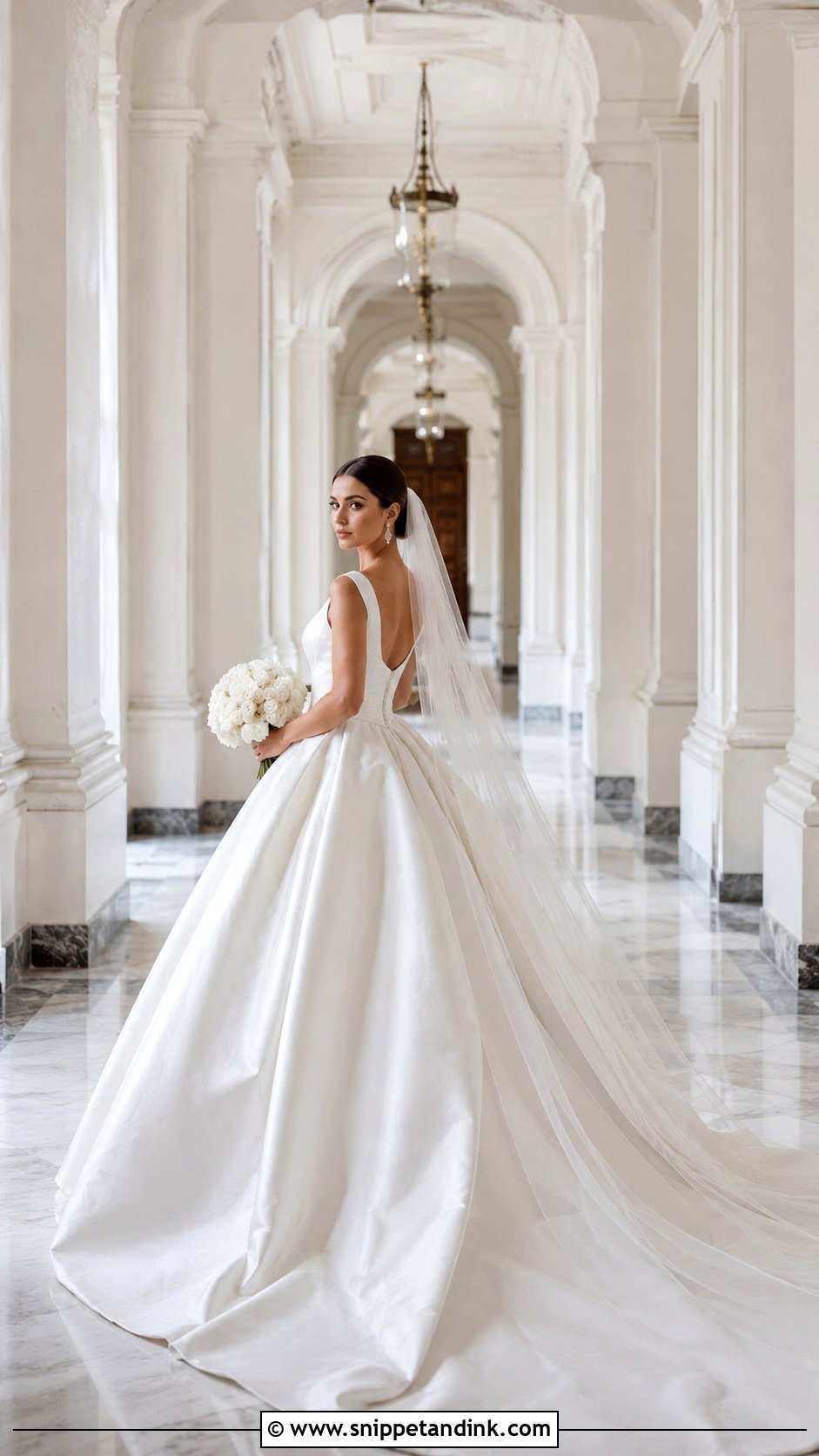
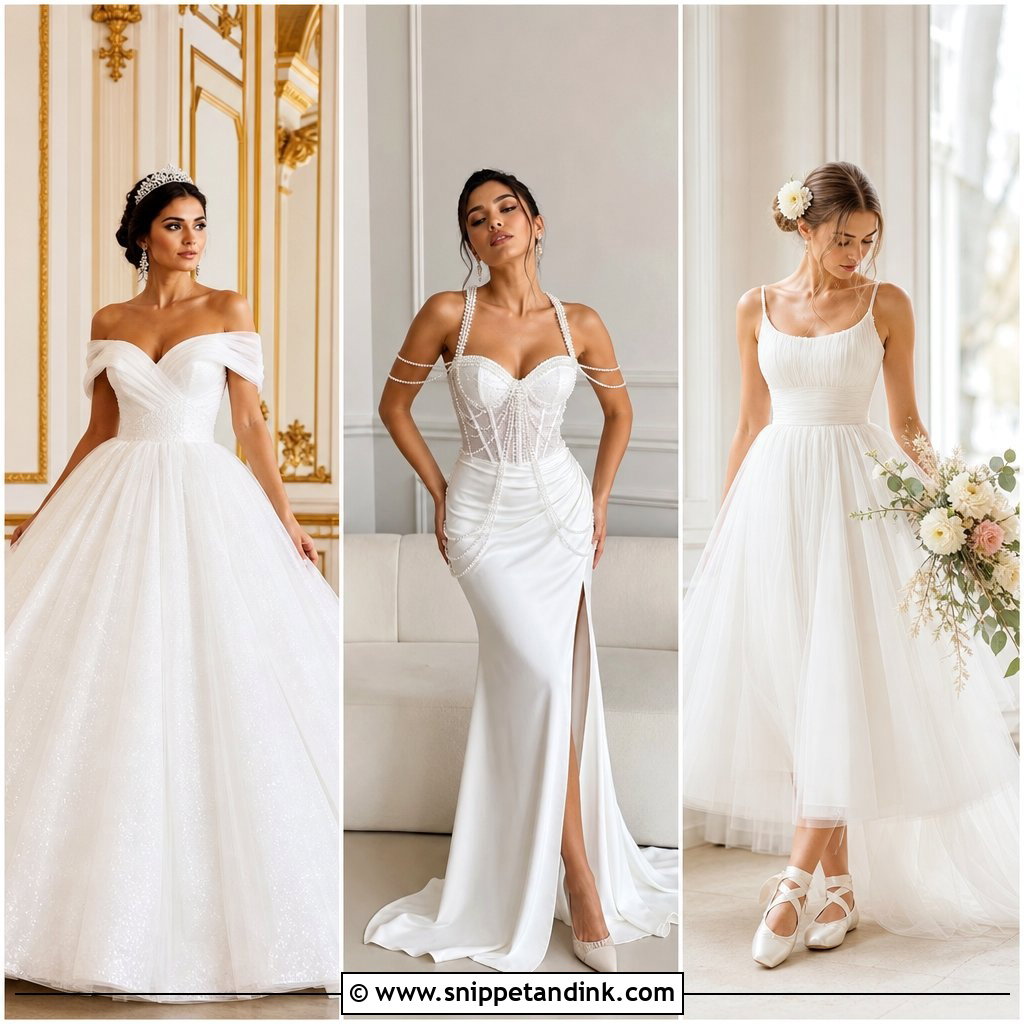
A ball gown needs space, and I mean that literally. Before you fall for one, picture the aisle width, the car and the bathroom. Satin, mikado, organza and layered tulle hold the volume; softer fabrics collapse by the reception. I’d keep everything above the waist quiet with a sleek bun, drop earrings and a plain waistline, and if you add a cathedral veil, plan who carries it in a crowded doorway.
3. Mermaid Bridal Gown
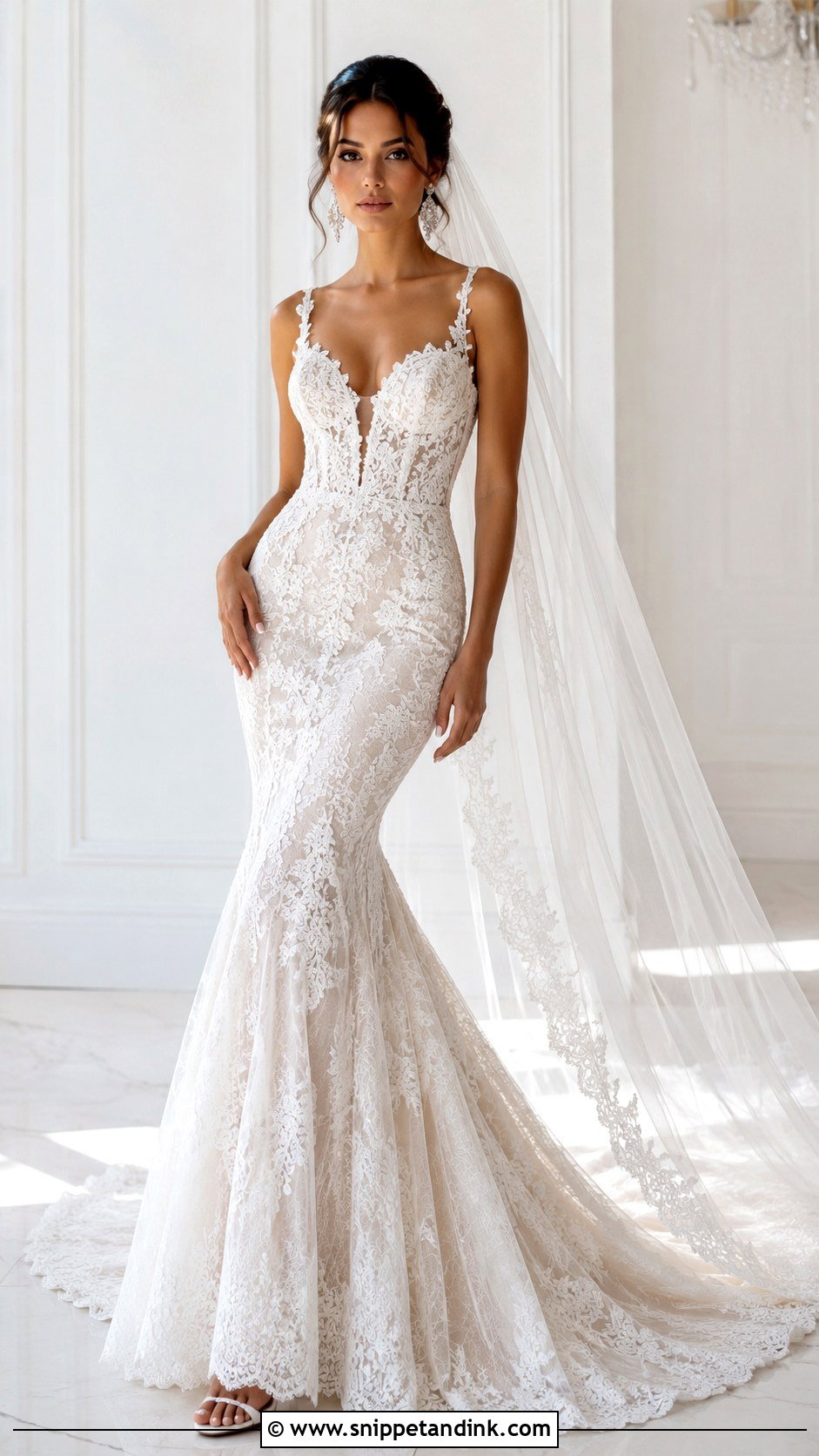
Mermaid gowns fit close through the bodice, hips and thighs and flare at or below the knee, so this silhouette highlights curves more than anything else on this list. Crepe, lace, satin and beaded fabric all suit it. The catch is the knee. I make every bride climb a step and sit on a low chair in the sample, because if the flare starts too high you’ll shuffle all day and won’t manage stairs without lifting the skirt. Alterations here are detailed and worth paying a good seamstress for.
4. Trumpet Bridal Gown
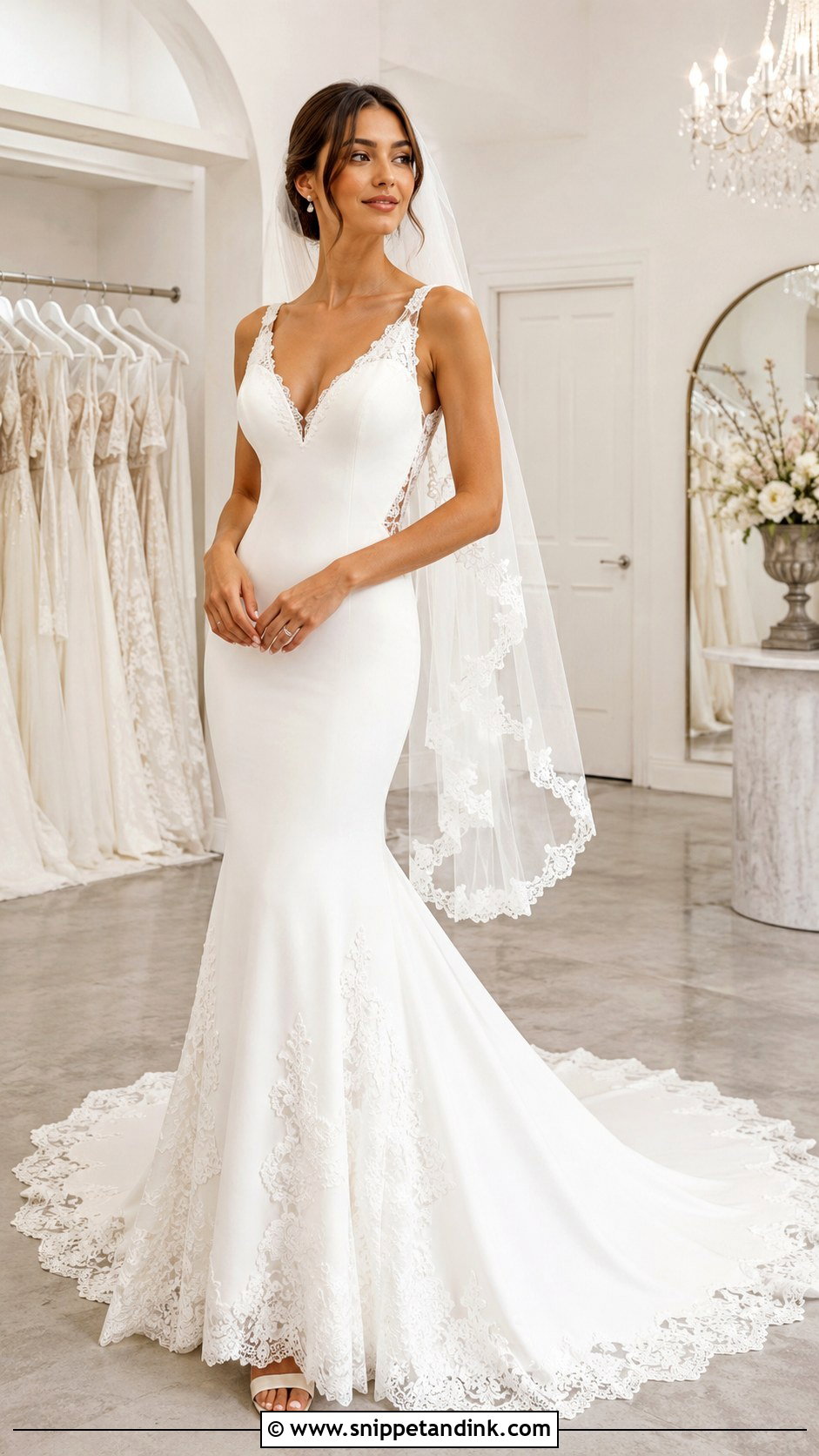
I often steer brides from a mermaid to a trumpet bridal gown once they’ve tried sitting down. It hugs the bust, waist and hips but flares from mid-thigh, which frees the knees and makes dancing realistic. Lace overlays, clean crepe and off-the-shoulder necklines all suit it. Keep the veil mid-length so it doesn’t hide the point where the skirt opens, since that flare is the whole reason to choose it.
5. Sheath Bridal Gown
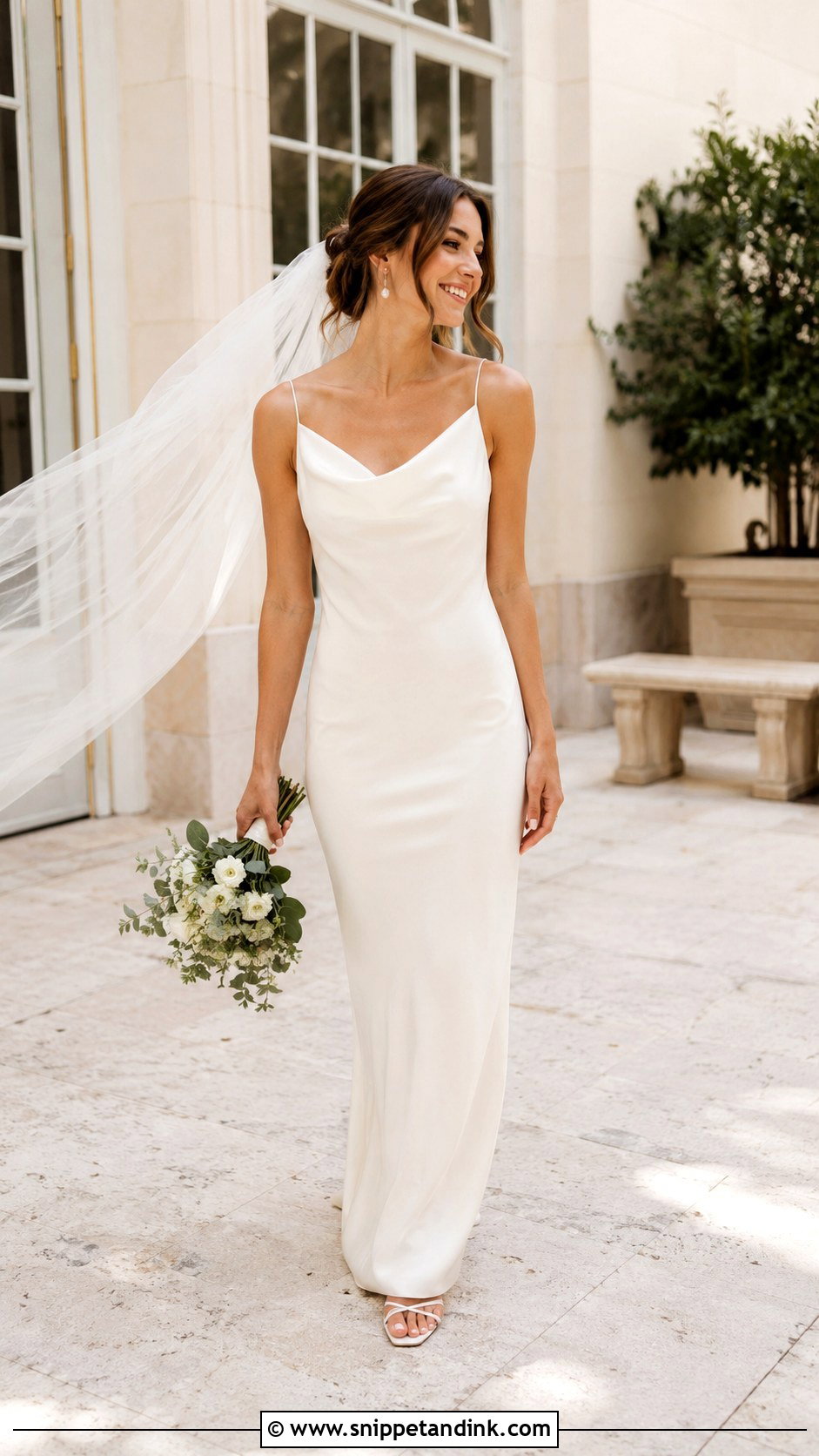
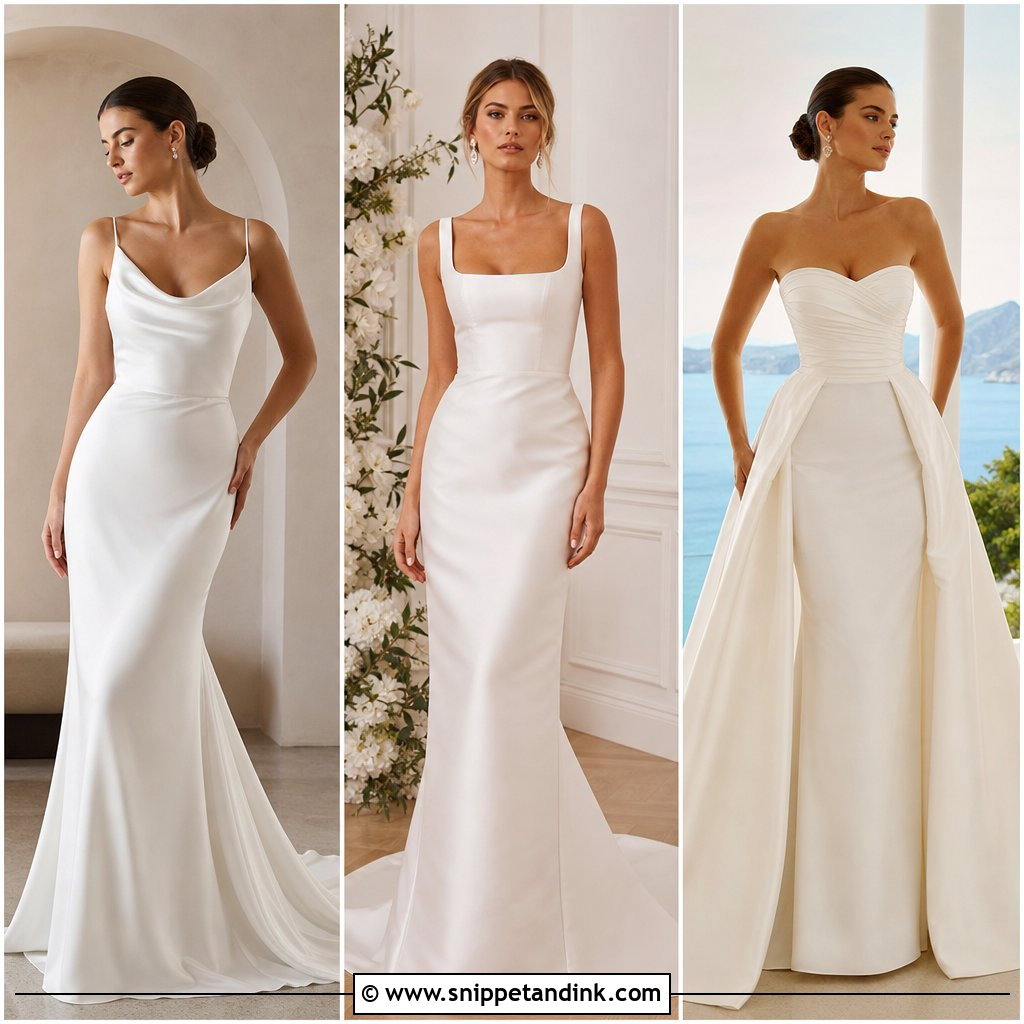
A sheath follows your natural line without a flare or a full skirt, which makes it easy to walk in on sand, cobbles or a city pavement. Crepe and satin give a smooth surface; lace softens it. My honest warning: a sheath shows exactly what’s underneath, so bring the actual underwear and shapewear you plan to wear to every fitting. Accessories carry the mood, so a low bun and pearl studs give you a classic finish, while bold earrings and strappy heels push it more fashion.
6. Slip Bridal Gown
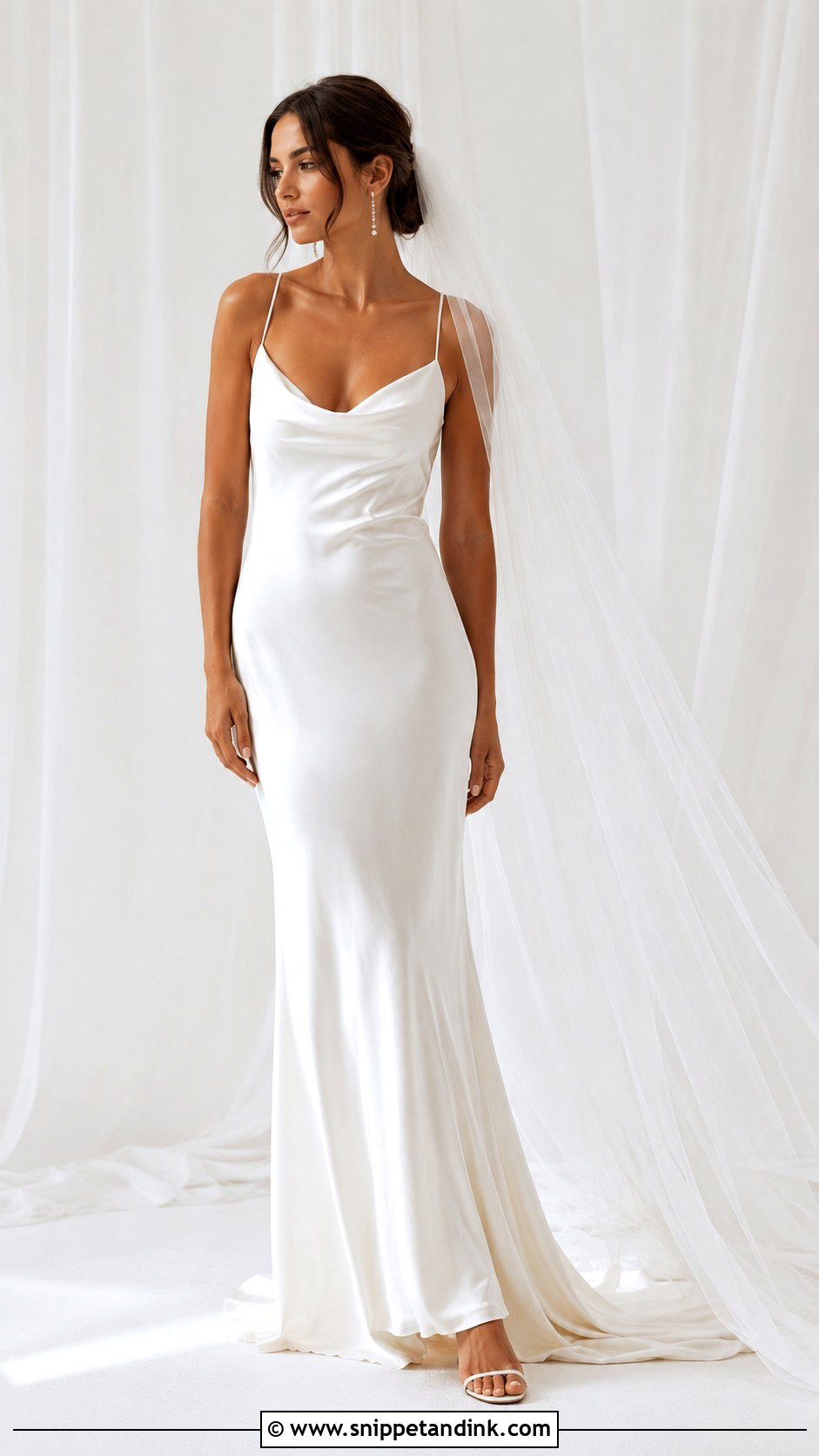
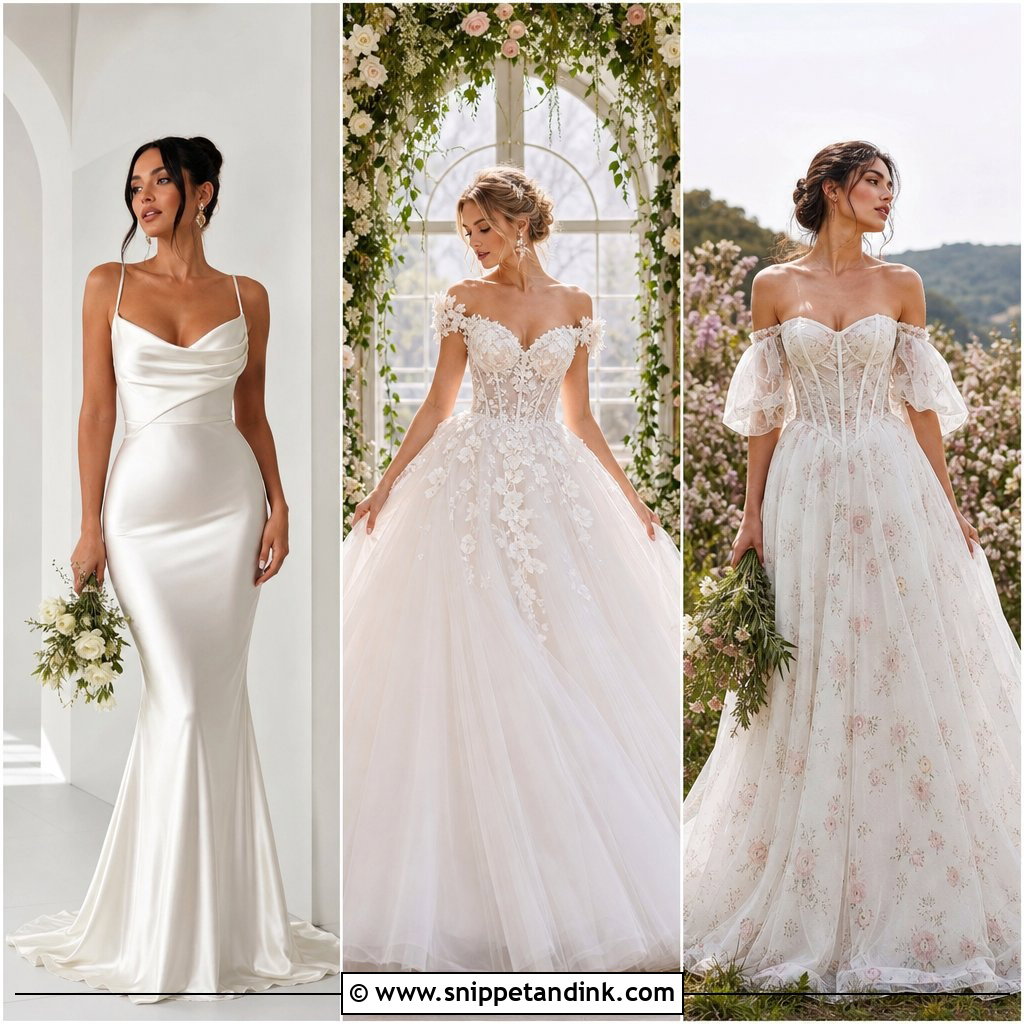
Slip gowns are cut on the bias in satin, silk or charmeuse, which is why they pour over the body instead of standing away from it. The bias cut is also why they’re unforgiving: it stretches slightly along the body and clings wherever there’s a line underneath. I always book an extra fitting for a slip. A long veil, delicate jewelry and smooth hair suit it, and a lace topper, sheer gloves or a cape add coverage for a church ceremony you can take off later.
7. Column Bridal Gown
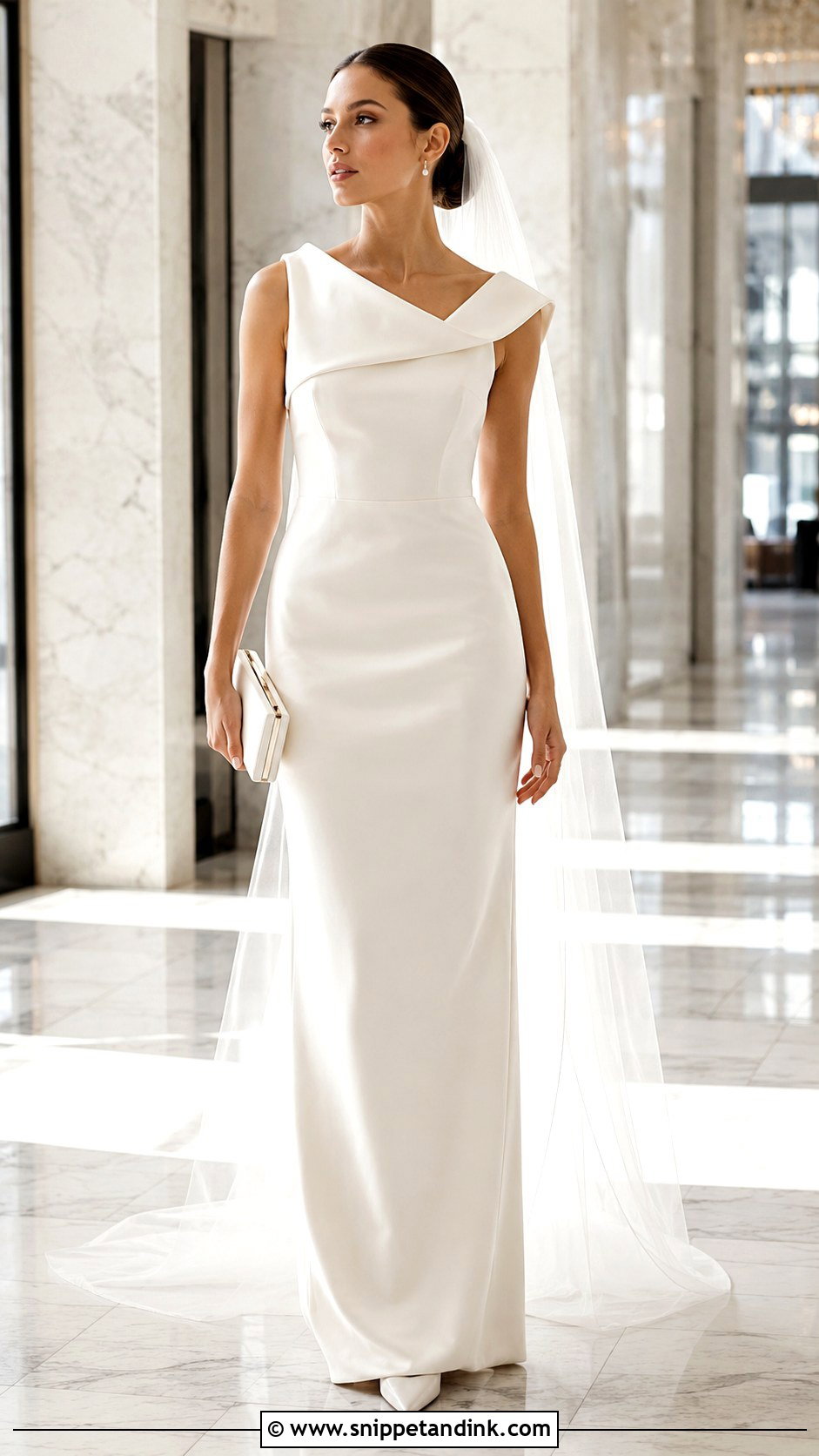
Where a sheath softly contours you, a column drops straight from the neckline to the hem, so it reads more architectural. That long vertical line makes most brides look taller. Satin, crepe, silk or a light jacquard work well. With so little going on, every accessory is visible, so I edit hard: one structured clutch, pointed heels, a clean veil and sculptural earrings, and nothing else competing.
8. Drop Waist Bridal Gown
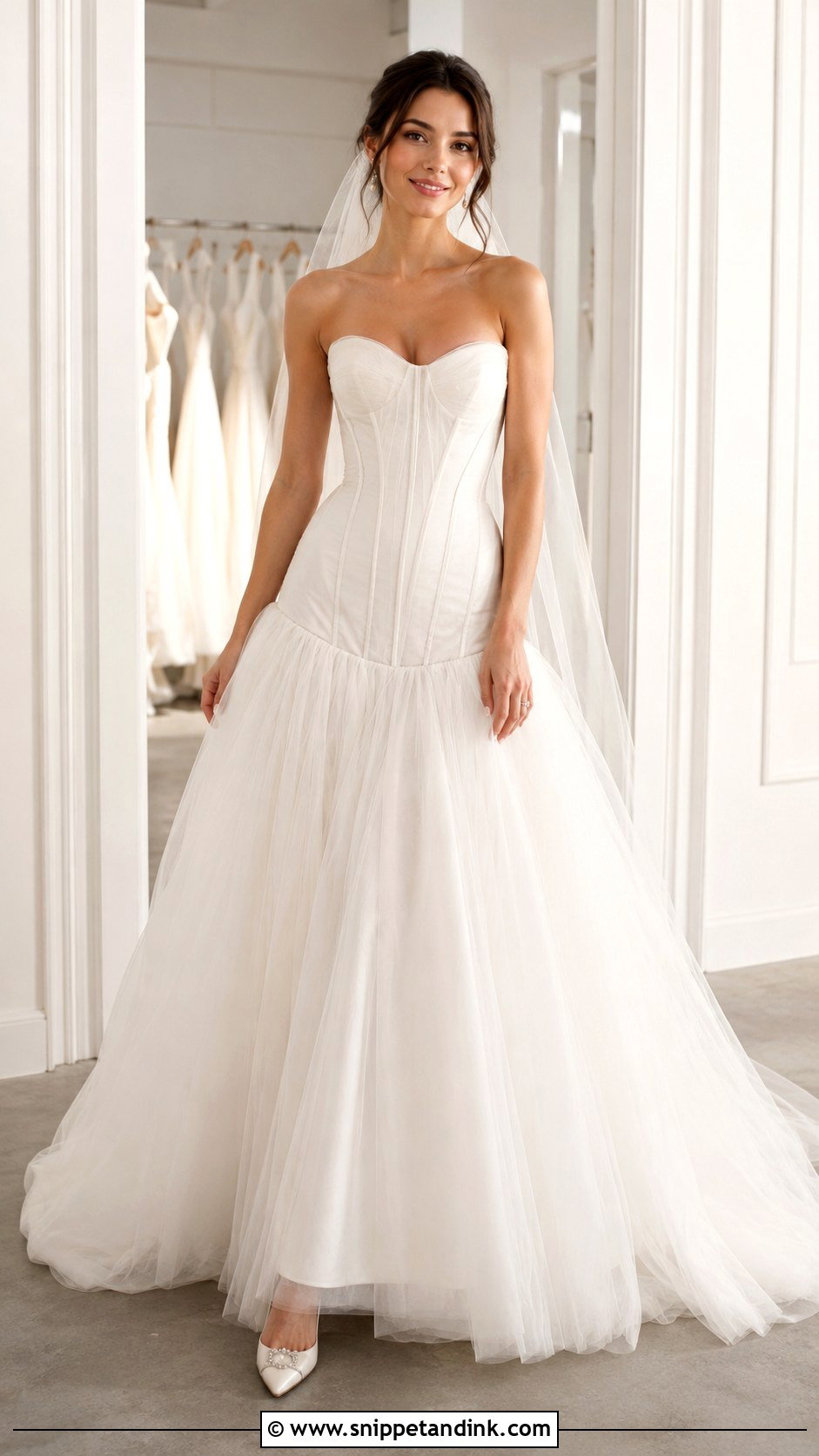
Drop waists put the seam around the upper hip, which lengthens the torso and gives a slightly vintage line. It can go full tulle, sleek satin or corseted. Fit through the hip is make or break here. If the seam sits on the widest part of your hips it adds width, so I pin it a little higher or lower at the first fitting and let the bride see both in the mirror before anything is cut.
9. Basque Waist Bridal Gown
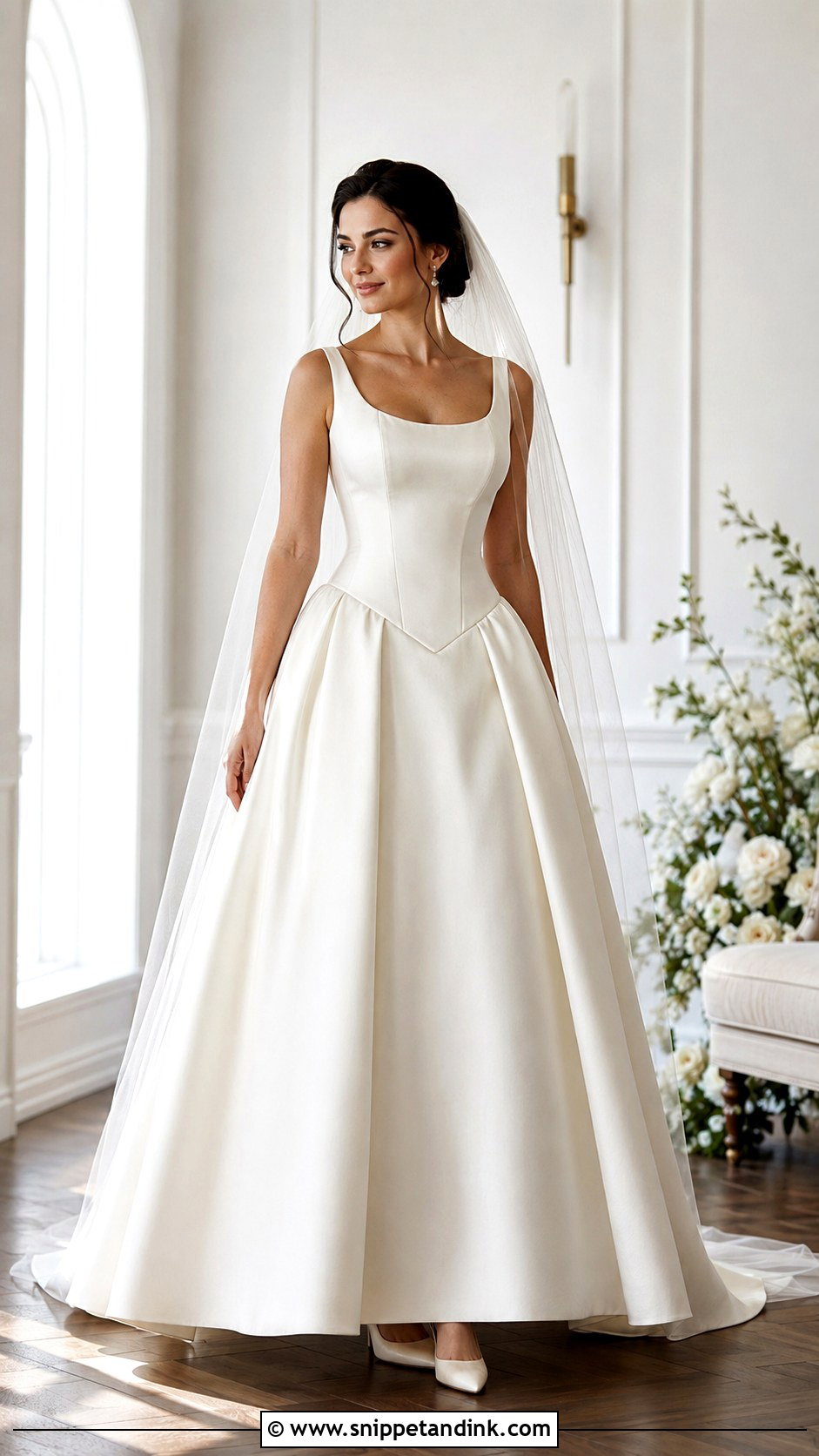
The basque waist dips into a V or U at the front, drawing a centre line down the bodice that makes the torso look longer. You’ll see it with full skirts, corset bodices, satin, lace sleeves and tulle. That point needs to sit exactly centred, and it’s one of the first things I check after alterations, because a basque that has twisted even slightly looks crooked in every front-on photo. A soft updo and drop earrings keep attention on that line.
10. Corset Bridal Gown
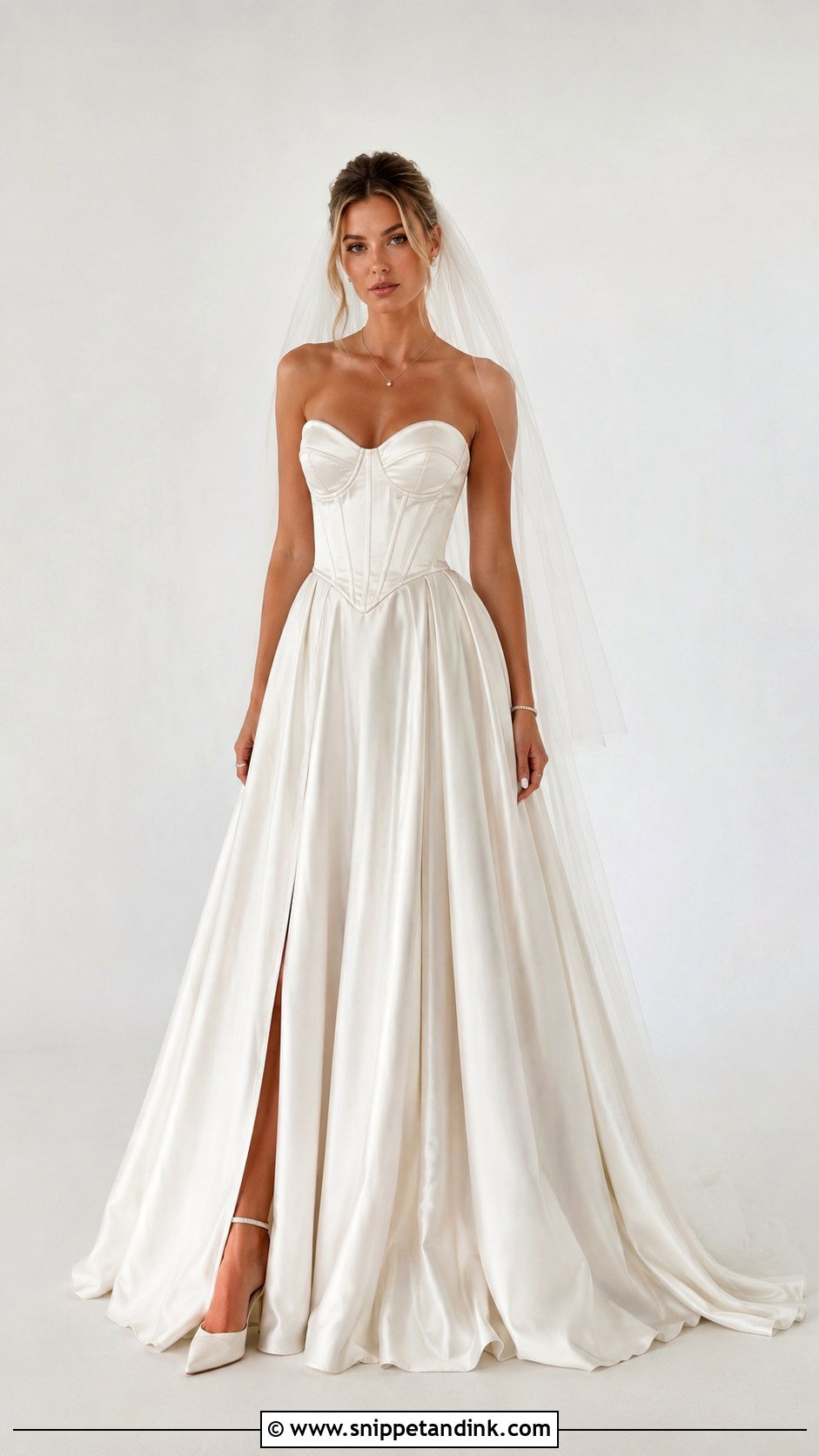
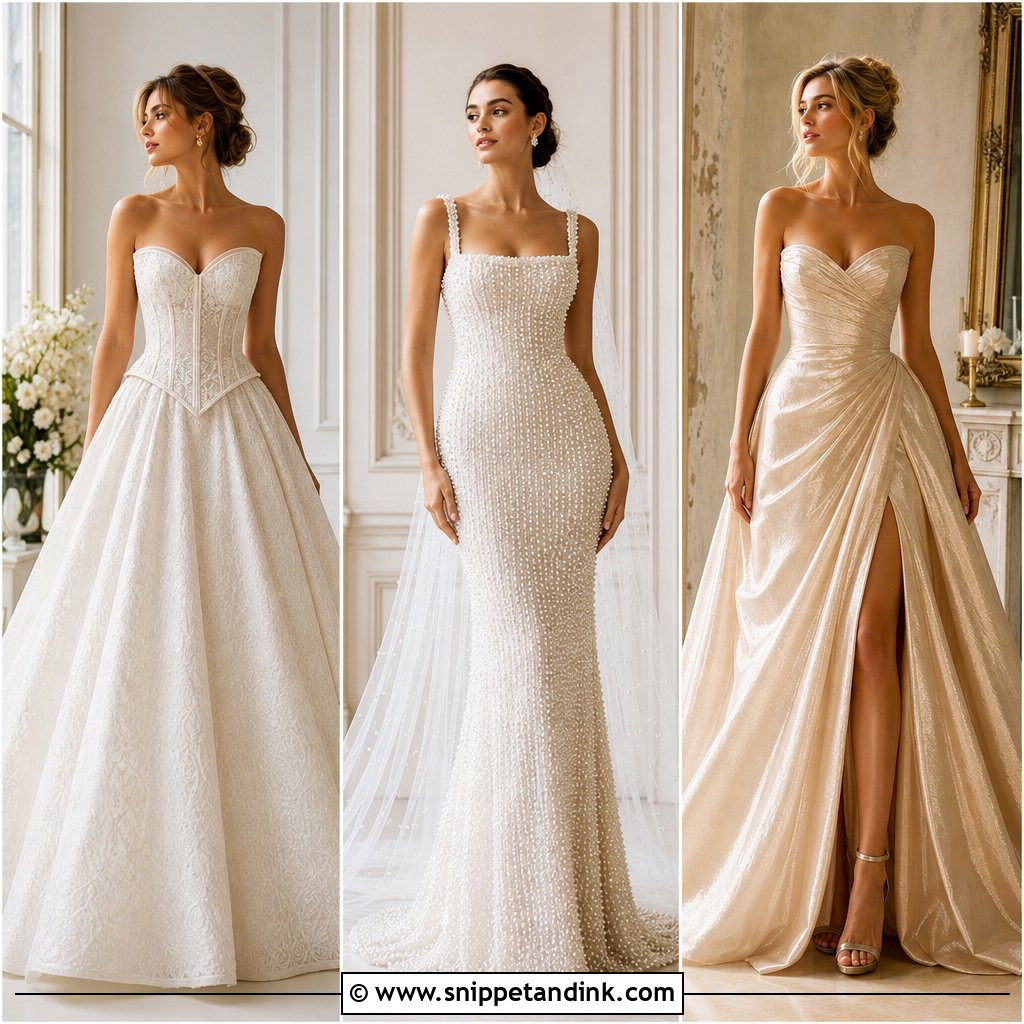
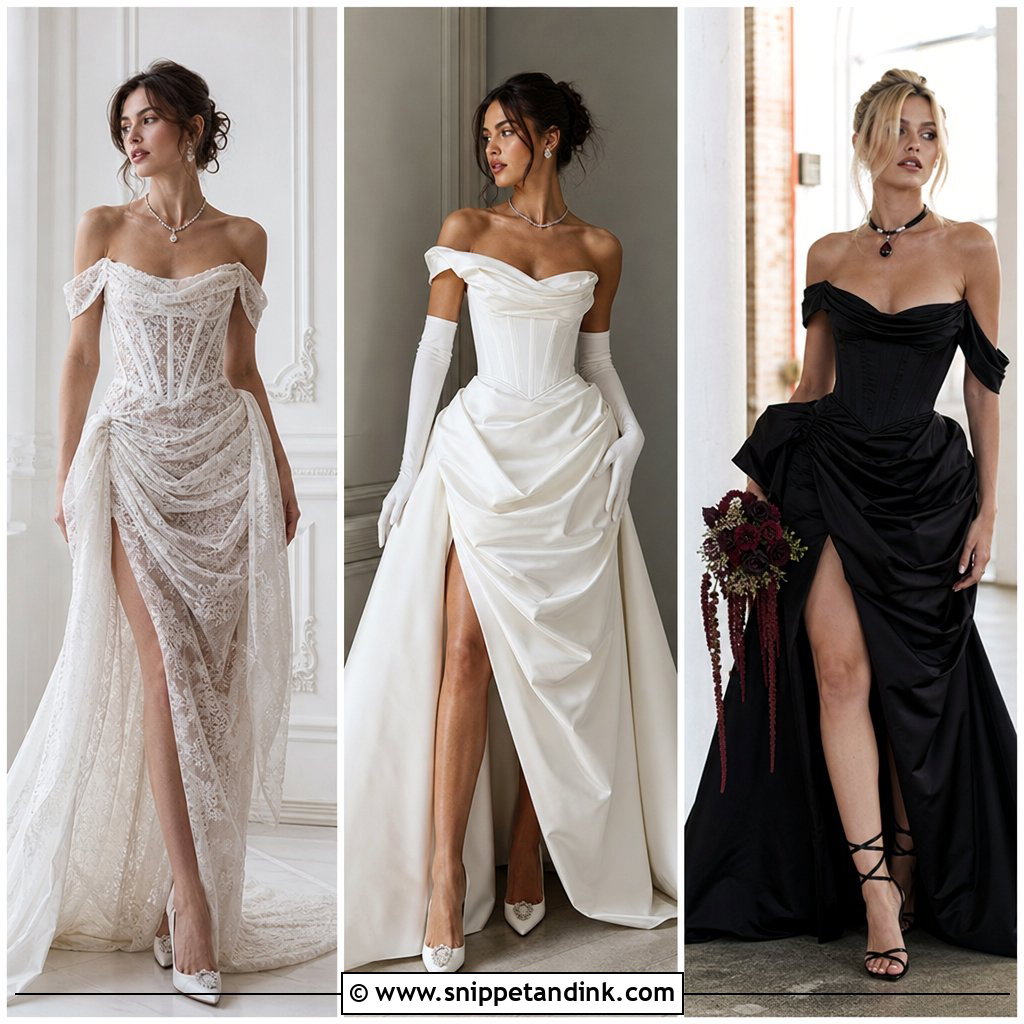
Boning gives a corset bodice its shape, whether the bones are visible on the outside or hidden in the lining. Done well, it supports you so you can skip a bra entirely. Done badly, it digs in at the hip when you sit. I ask brides to eat a little and sit through a full minute in the sample, because a corset that feels fine standing can pinch by the speeches. It pairs with A-line, ball gown, mermaid and drop waist skirts, so you can keep the support and still choose your skirt.
11. Off Shoulder Bridal Gown
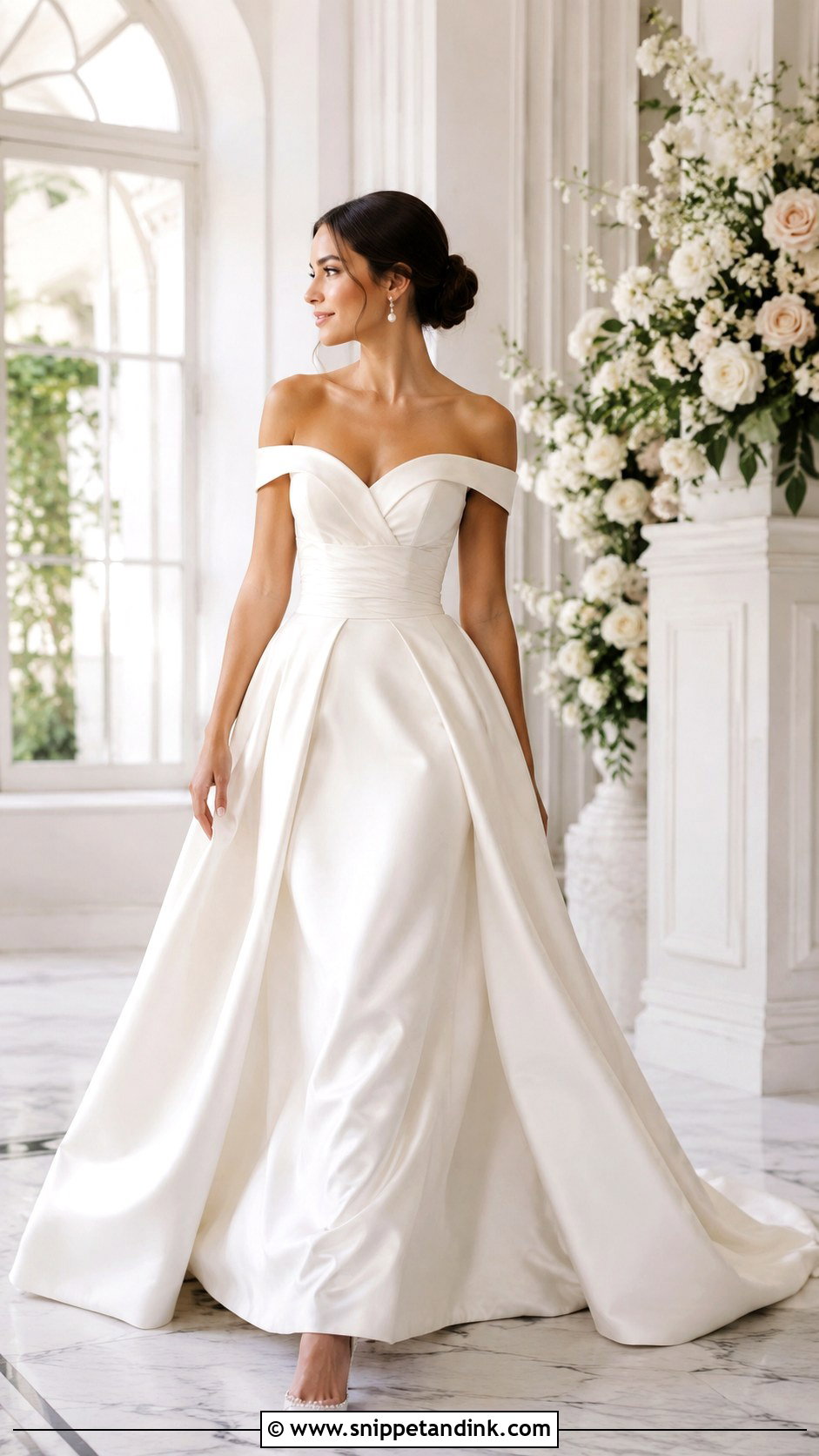
Off-shoulder necklines frame the collarbone and suit fitted mermaids, A-lines and full ball gowns. The practical issue is your arms. Sleeves or straps that sit below the shoulder restrict how high you can lift them, so try hugging someone and raising a glass in the fitting room. Simple earrings are usually enough here, and a low bun or soft waves keep the shoulders on show.
12. Strapless Satin Bridal Gown
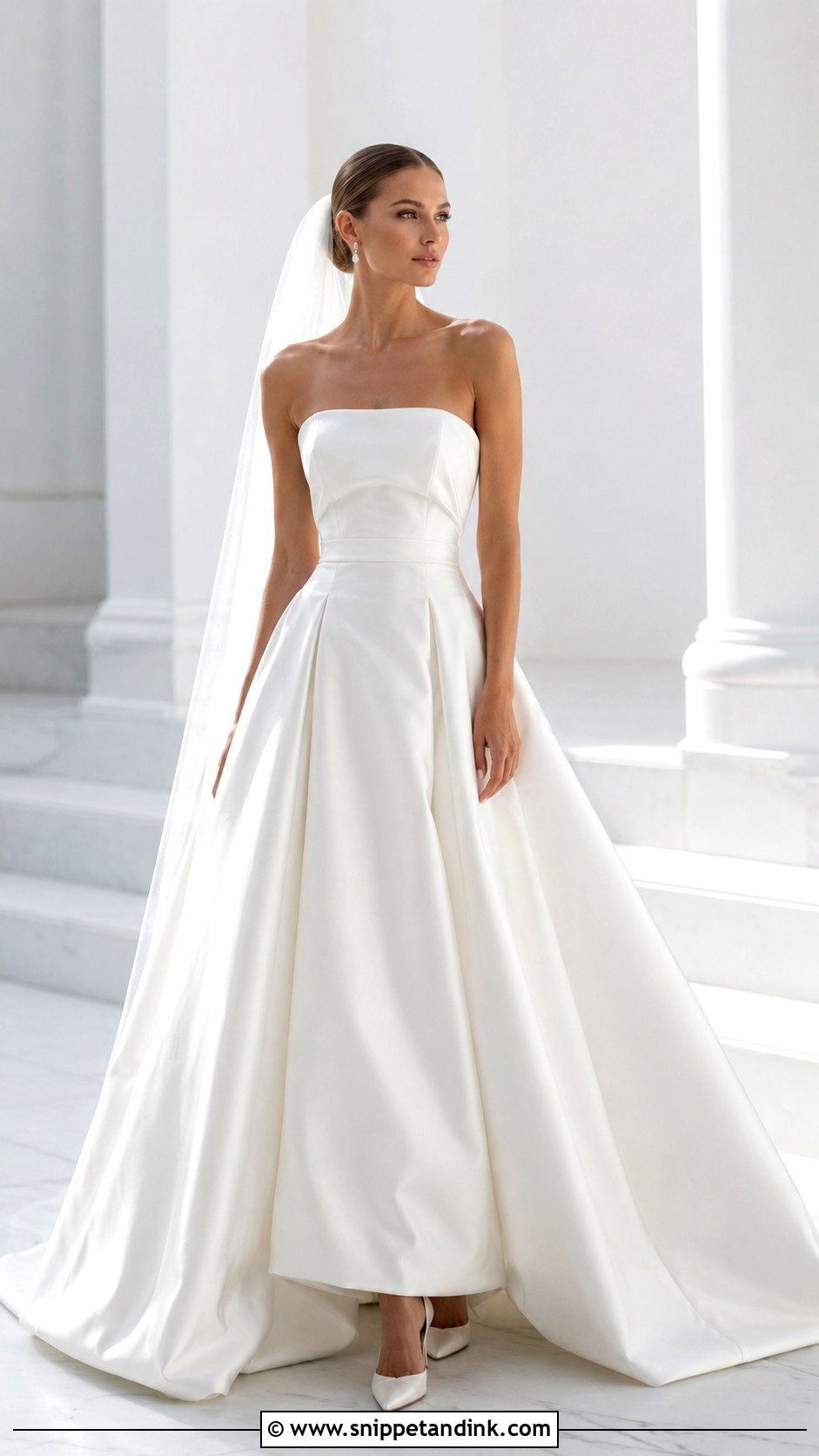
Strapless satin looks clean because there’s nowhere for anything to hide, including a poor fit. The bodice has to be tailored snugly at the bust and waist so it stays up on its own; if you find yourself hitching it up in the fitting room, it isn’t finished yet. Satin also creases where you sit, so expect some lines across the lap by evening. A long train or detachable overskirt adds drama if the plain version feels too spare for you.
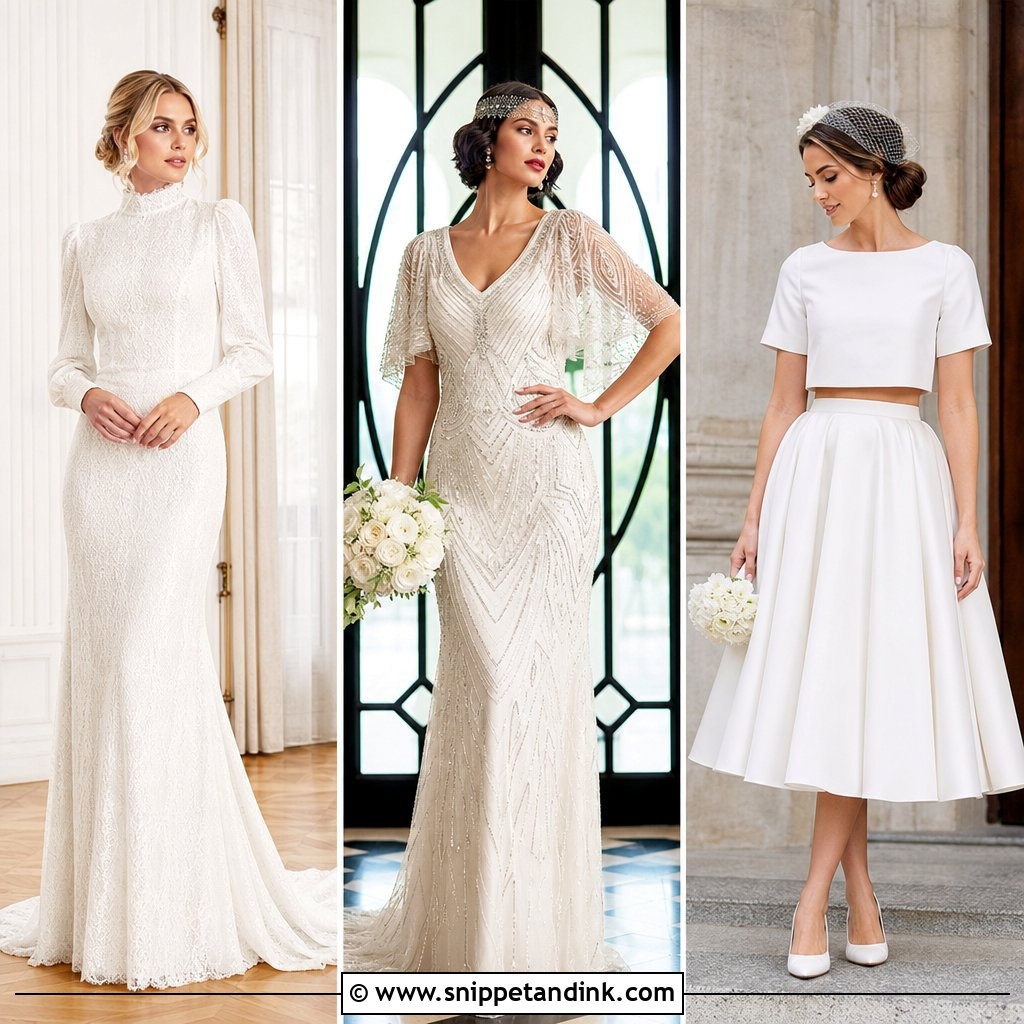
13. Long Sleeve Lace Bridal Gown
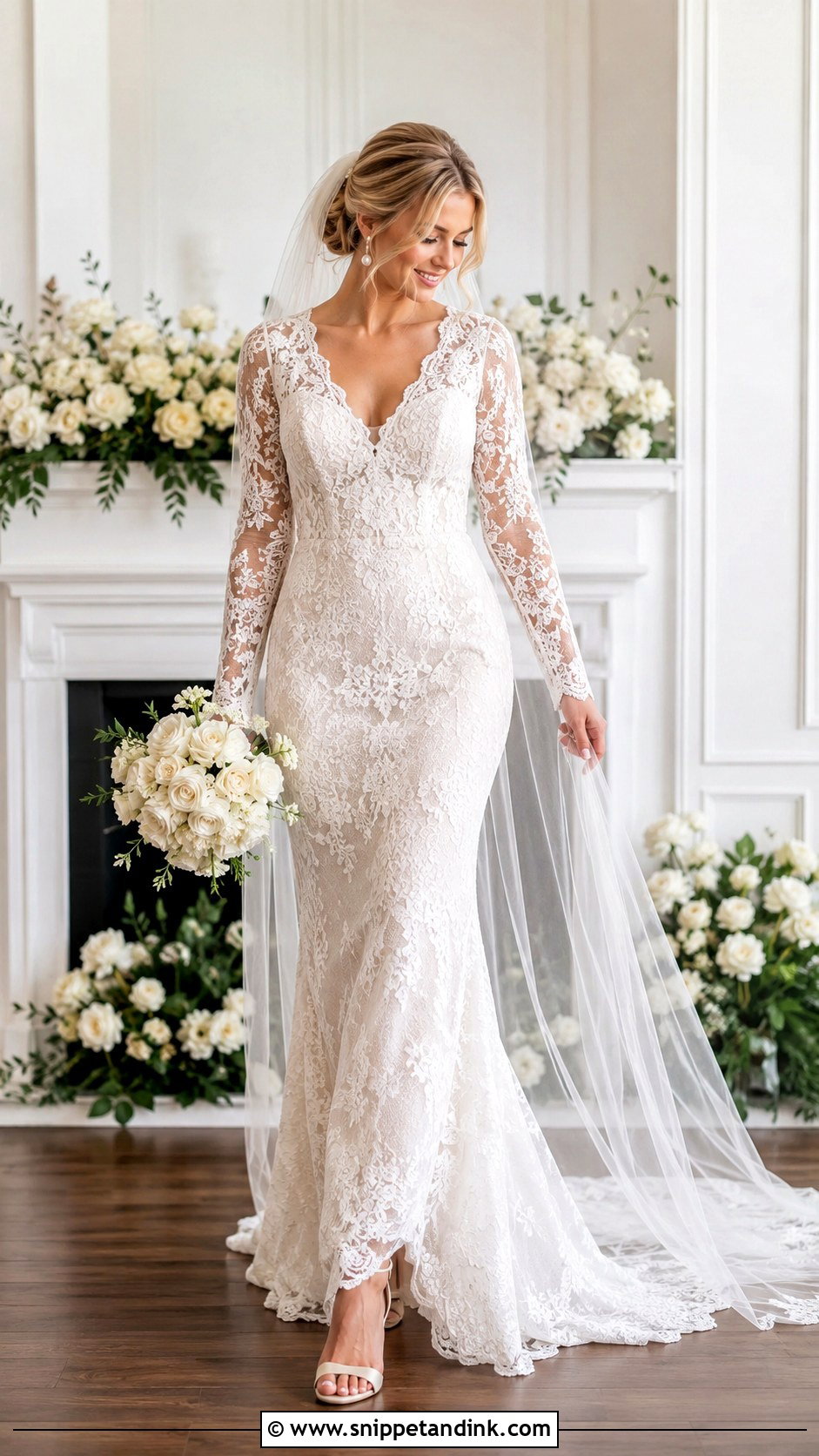
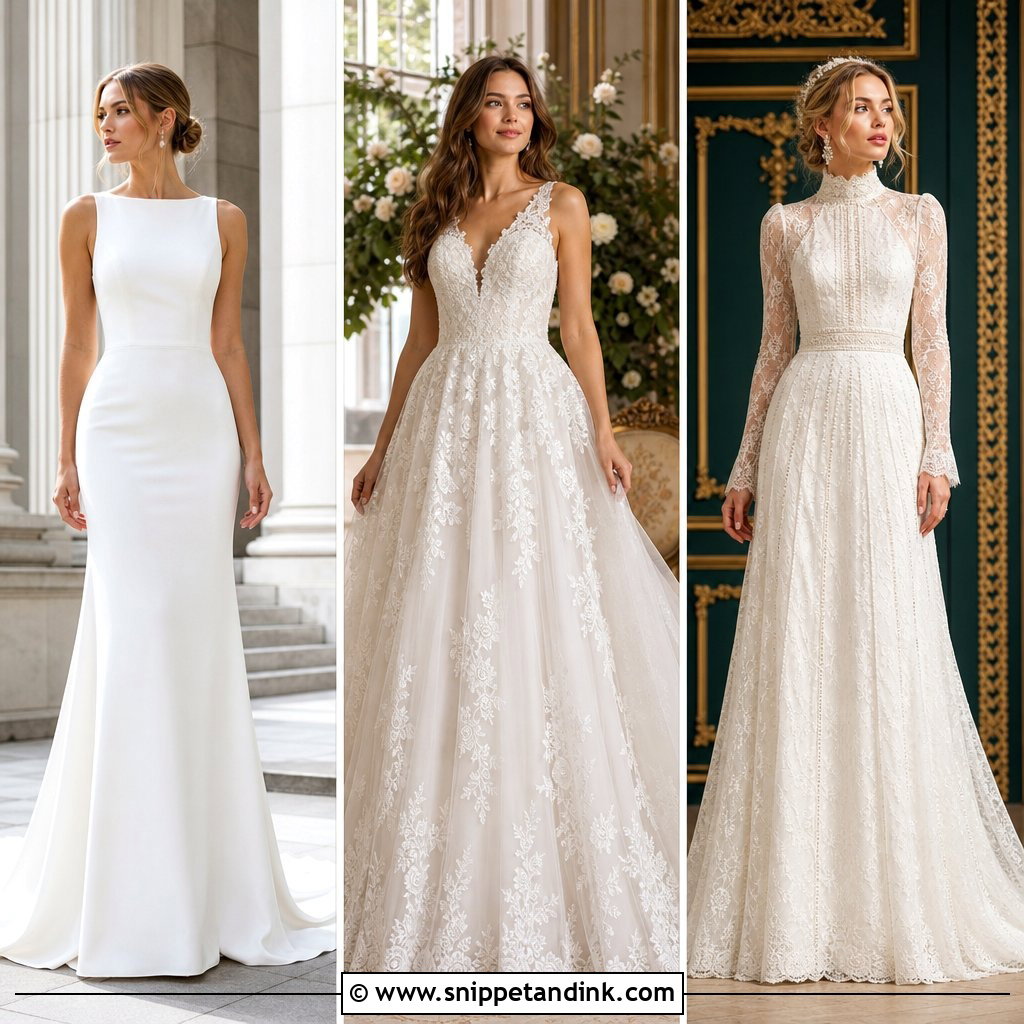
Long lace sleeves give coverage and texture at once. They can be sheer, lined, fitted or slightly flared. I check the cuff first: a tight lace sleeve looks neat standing but rides up and pulls at the elbow when you bend your arm to hold a bouquet. Cool weather, formal venues and church ceremonies suit this dress well. Closed heels, pearl earrings and a plain veil that doesn’t cover the lace pattern let the sleeves do the work.
14. High Neck Bridal Gown
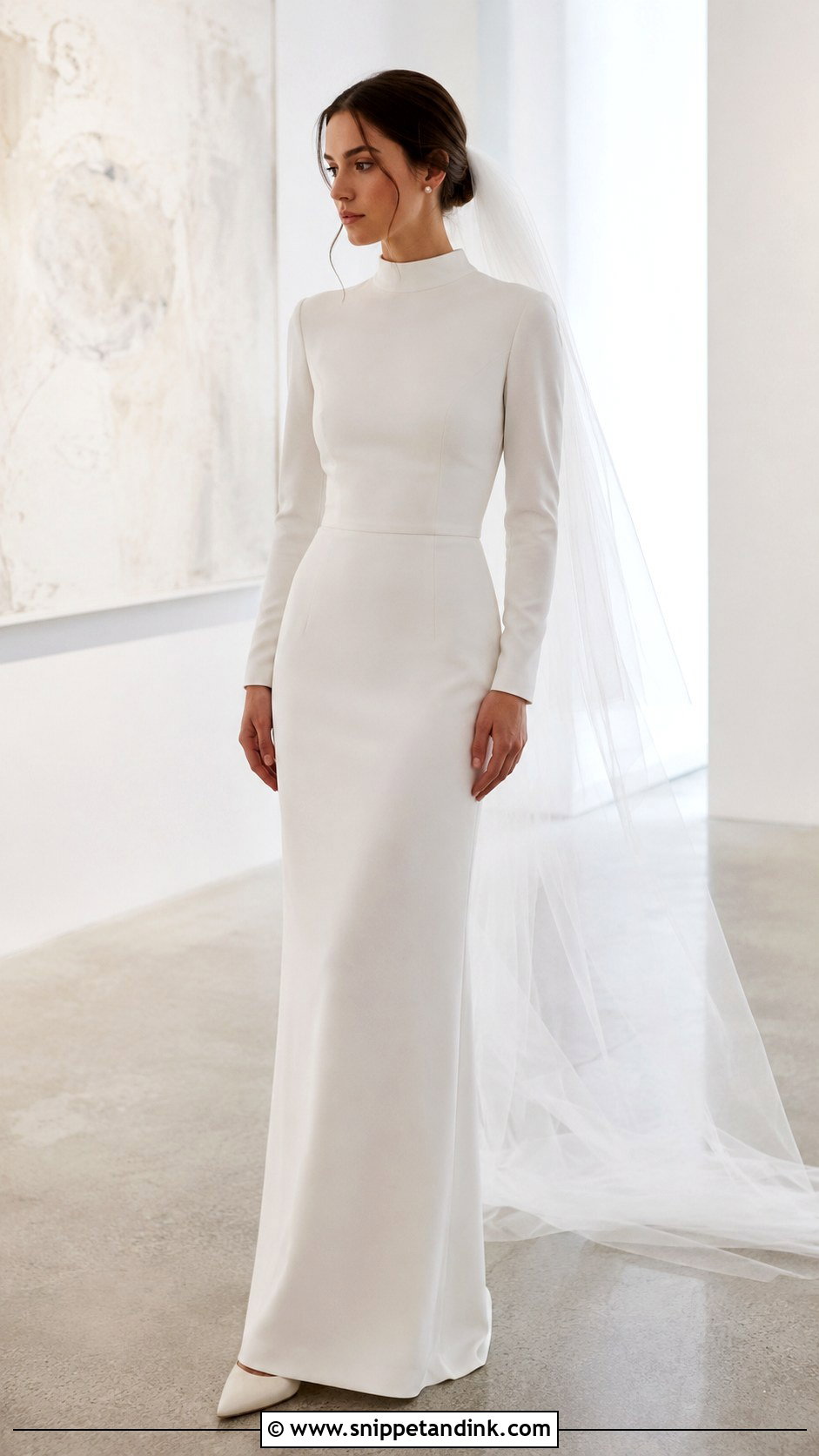
High necks work in lace, crepe, satin or sheer illusion fabric and suit column, fitted and long-sleeve designs. Skip the necklace completely. What I’d consider instead is hair, because a high neck plus long loose hair crowds the face; a clean bun or a sleek low twist keeps your jawline clear. Pearl drops or small studs are plenty for a modest look that still feels designed.
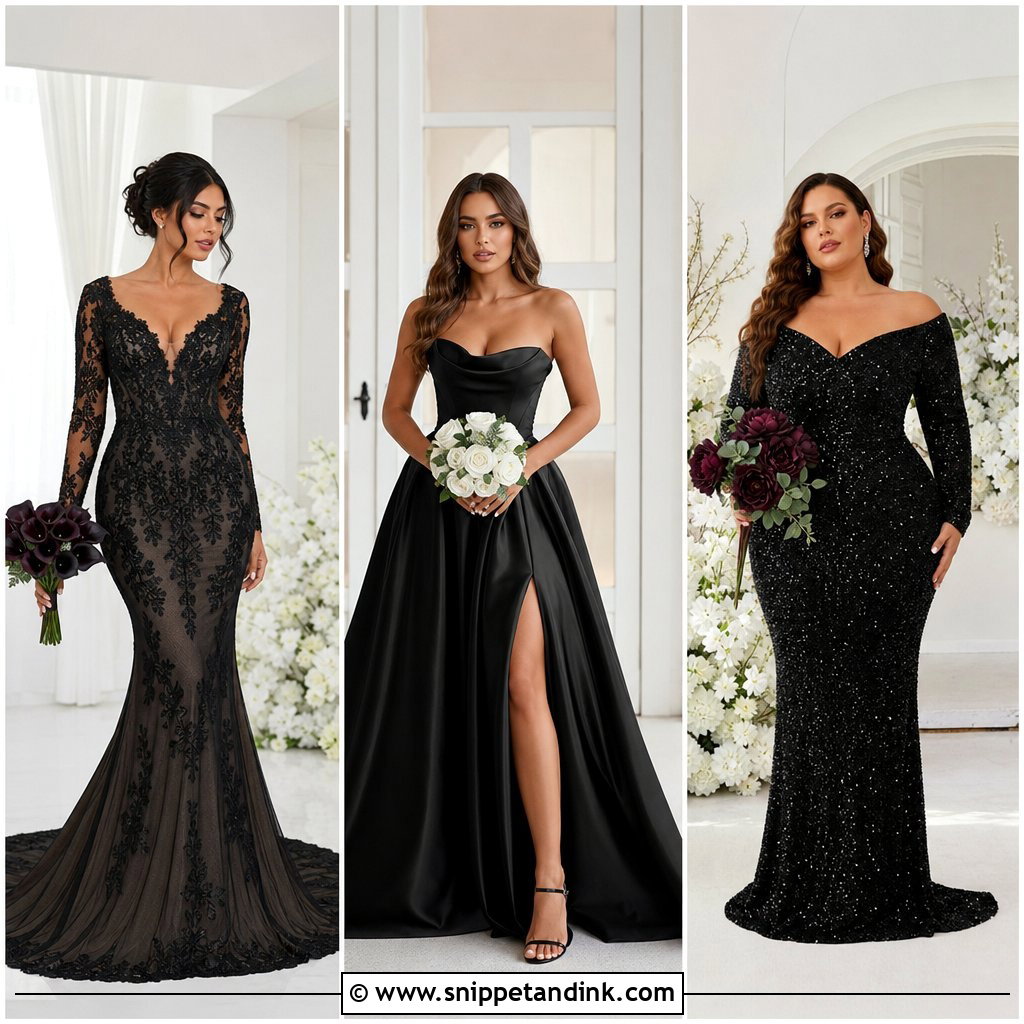

15. Square Neck Bridal Gown
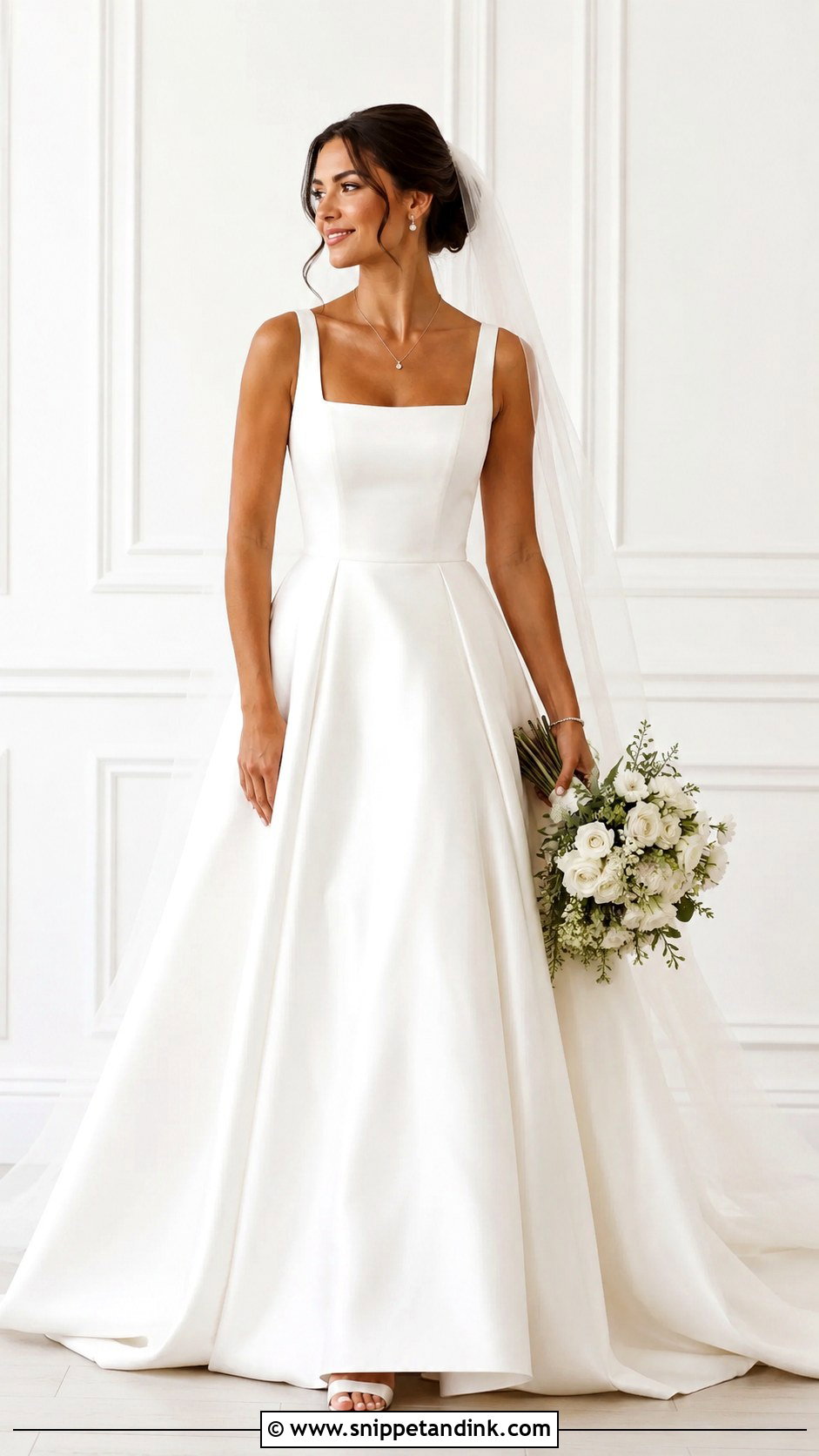
A square neckline draws a straight line across the collarbone, which suits thicker straps, long sleeves and minimal satin. It looks different in each fabric: soft in lace, crisp in mikado, sleek in crepe. The corners must sit flat. If they gape when you lean forward, the bodice needs taking in at the top edge, which is a quick fix but needs doing early. Block heels or slim pumps and a low chignon round it out.
16. Halter Bridal Gown
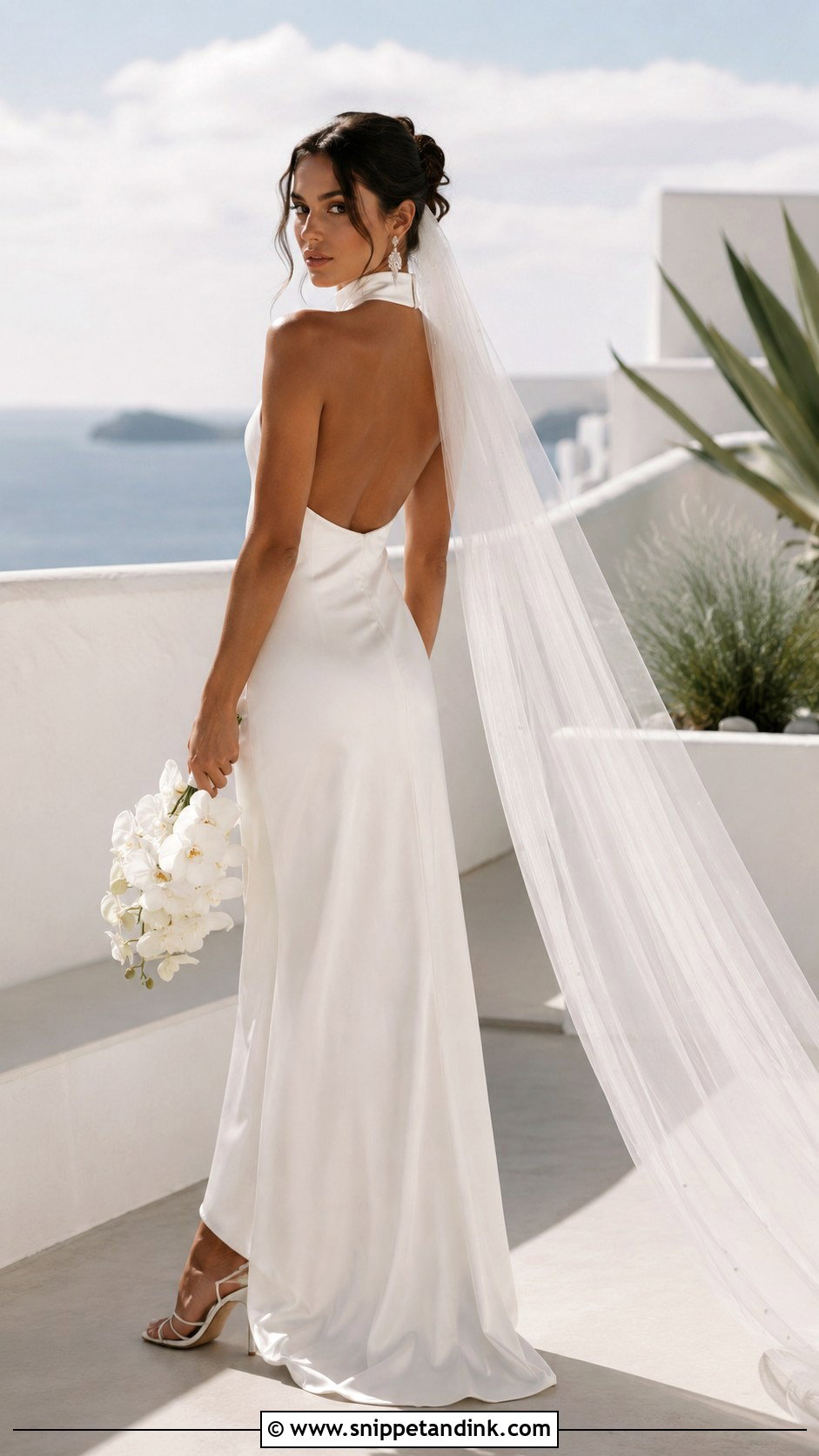
Halters fasten behind the neck, so the shoulders and upper back become the focus. Satin keeps it sleek; lace or beading adds detail. It suits open backs and column skirts. Two things I’d test: whether the neck strap pulls after an hour (a heavy skirt hangs from that one point), and whether your bra plan works, since most halter backs leave no room for straps. Hair goes up, earrings instead of a necklace.
17. Tea Length Bridal Gown
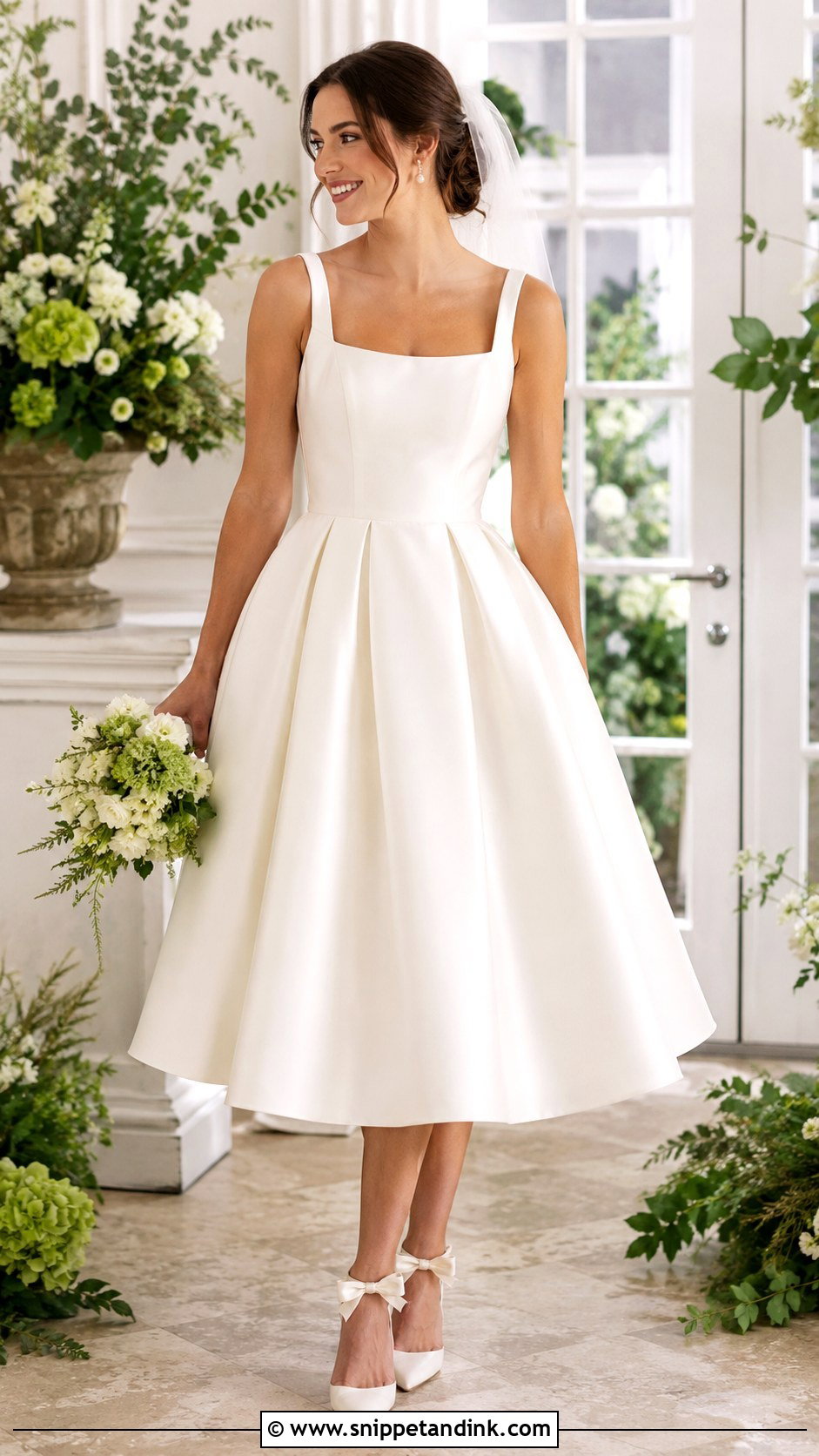
Tea length ends between knee and ankle, so you can walk, dance and climb steps without lifting anything. It has a vintage feel but full skirts, lace overlays and structured bodices keep it current. Your shoes are on show the whole day, so buy them first and bring them to the hemming fitting. Satin pumps, bow heels or embellished flats all work, and a short veil keeps it from tipping into costume.
18. Mini Bridal Gown
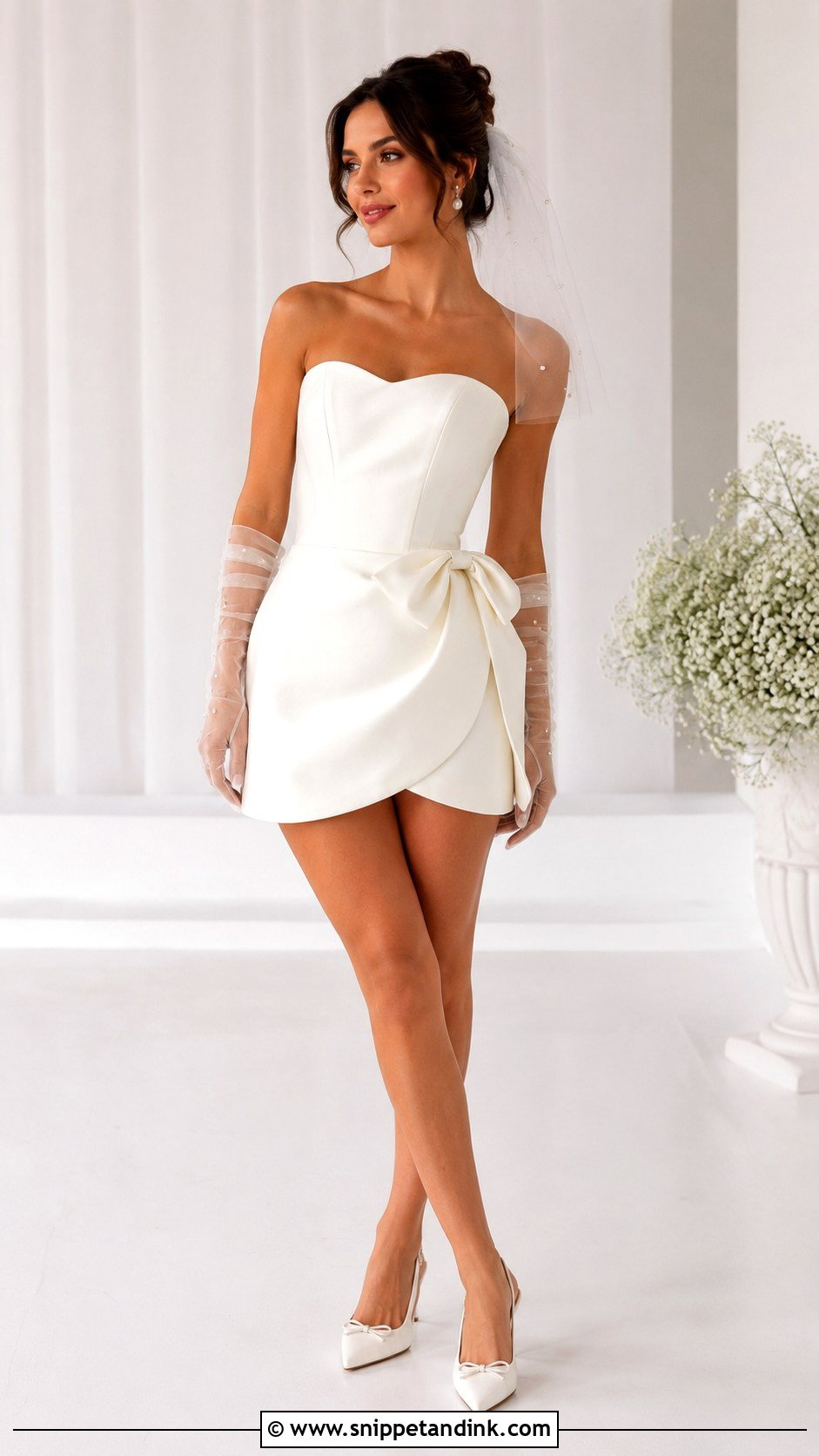
A mini suits elopements, courthouse ceremonies, after-parties or a second look once the formal part is done. With so much leg on view, the shoes and hosiery matter more than the dress, so think pointed pumps, slingbacks, platforms or polished flats. Satin, lace, bows, feathers and pearls all appear on minis. A veil, gloves or a small bouquet keeps it reading as bridal. It isn’t for every bride, and I’d never push someone into one who keeps tugging the hem down at the mirror.
19. Convertible Bridal Gown
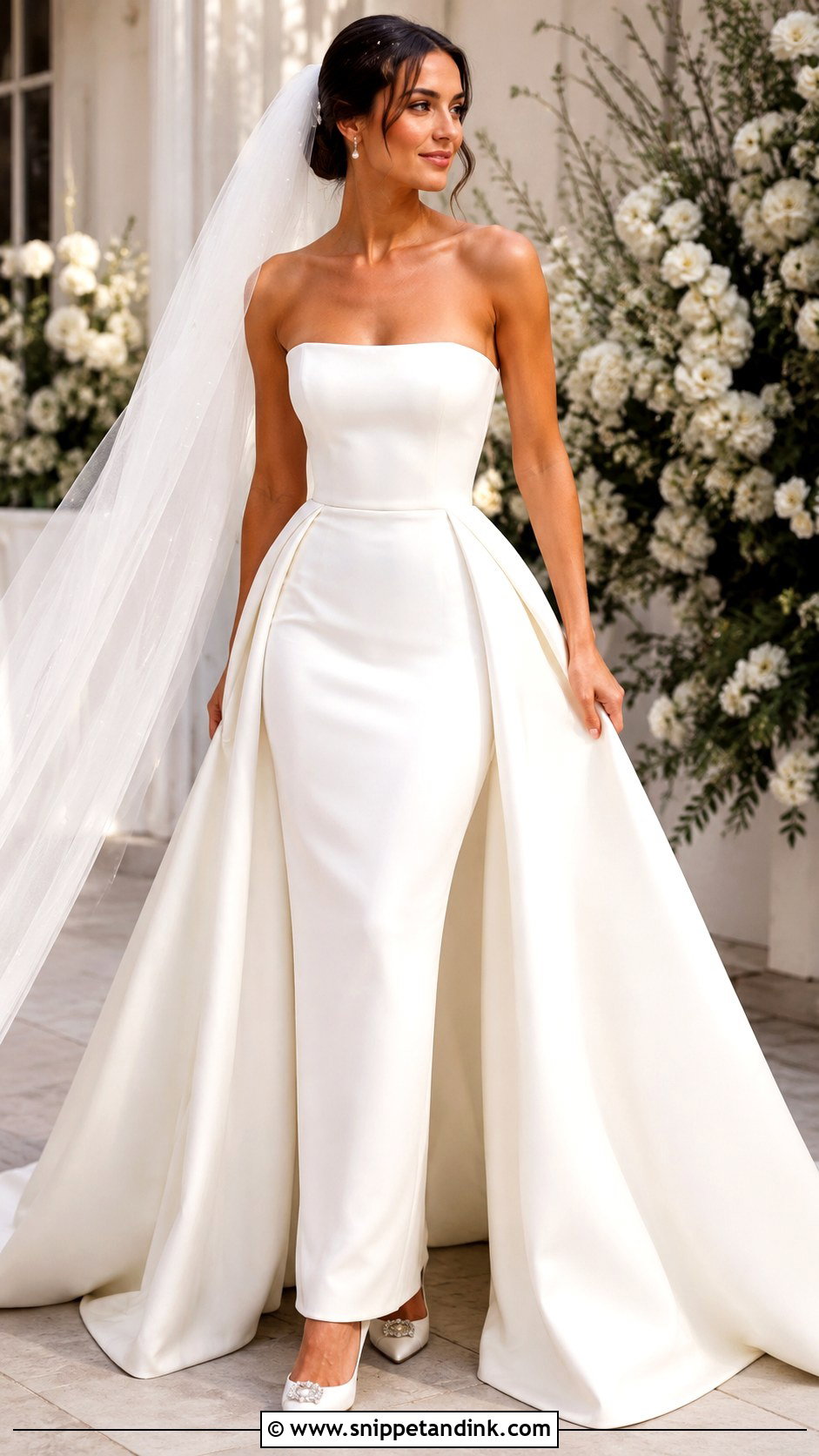
A convertible bridal gown changes during the day through a detachable overskirt, removable sleeves, a cape, a train or a second neckline layer. Column gown plus overskirt is the version I fit most often: full volume for the aisle, freedom for dancing. Practise the change at your last fitting with whoever will help you on the day, because hidden hooks and snaps are fiddly in a dim bathroom. Pick accessories that suit both versions so nothing has to swap.


20. Floral Applique Bridal Gown
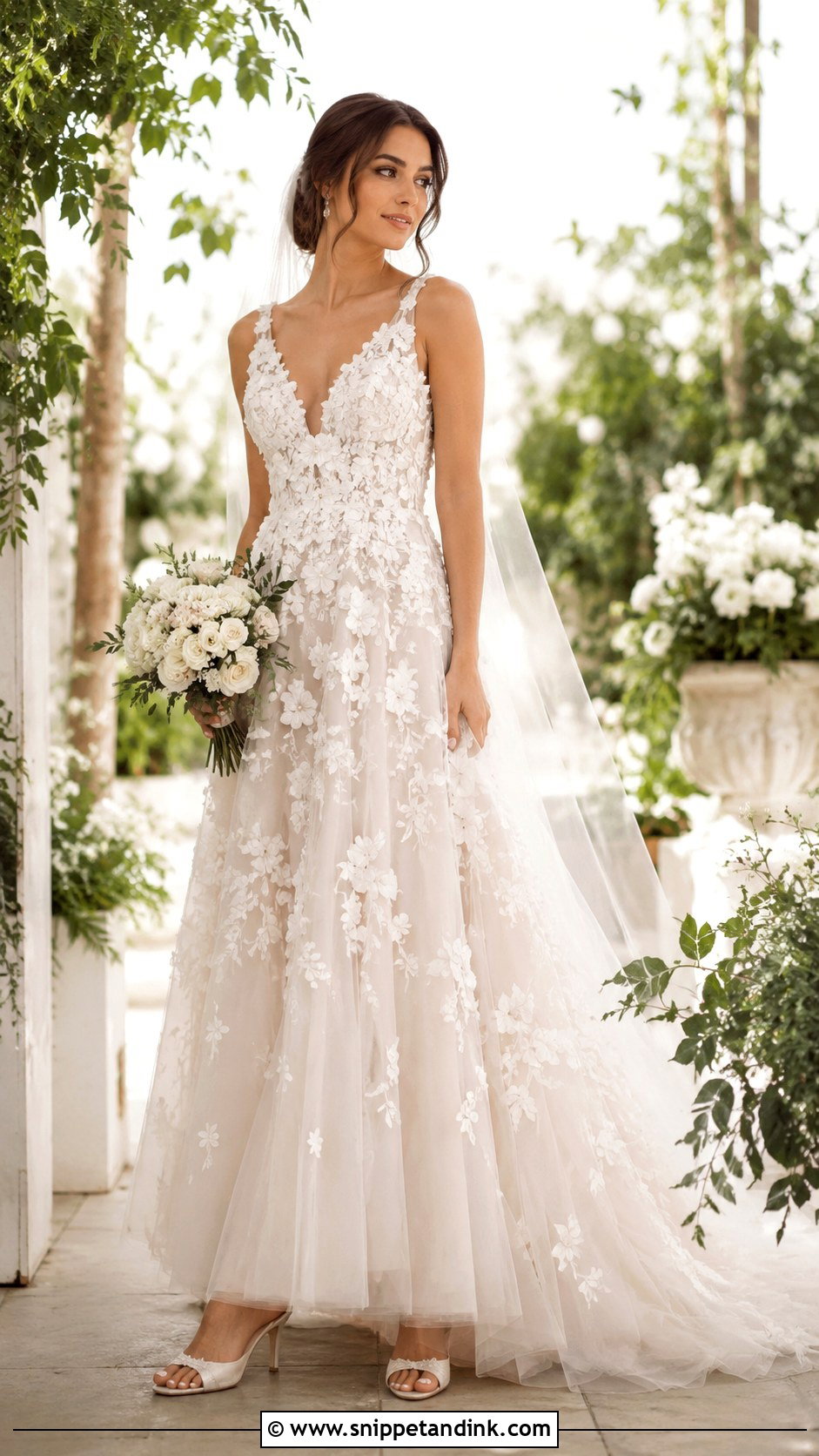
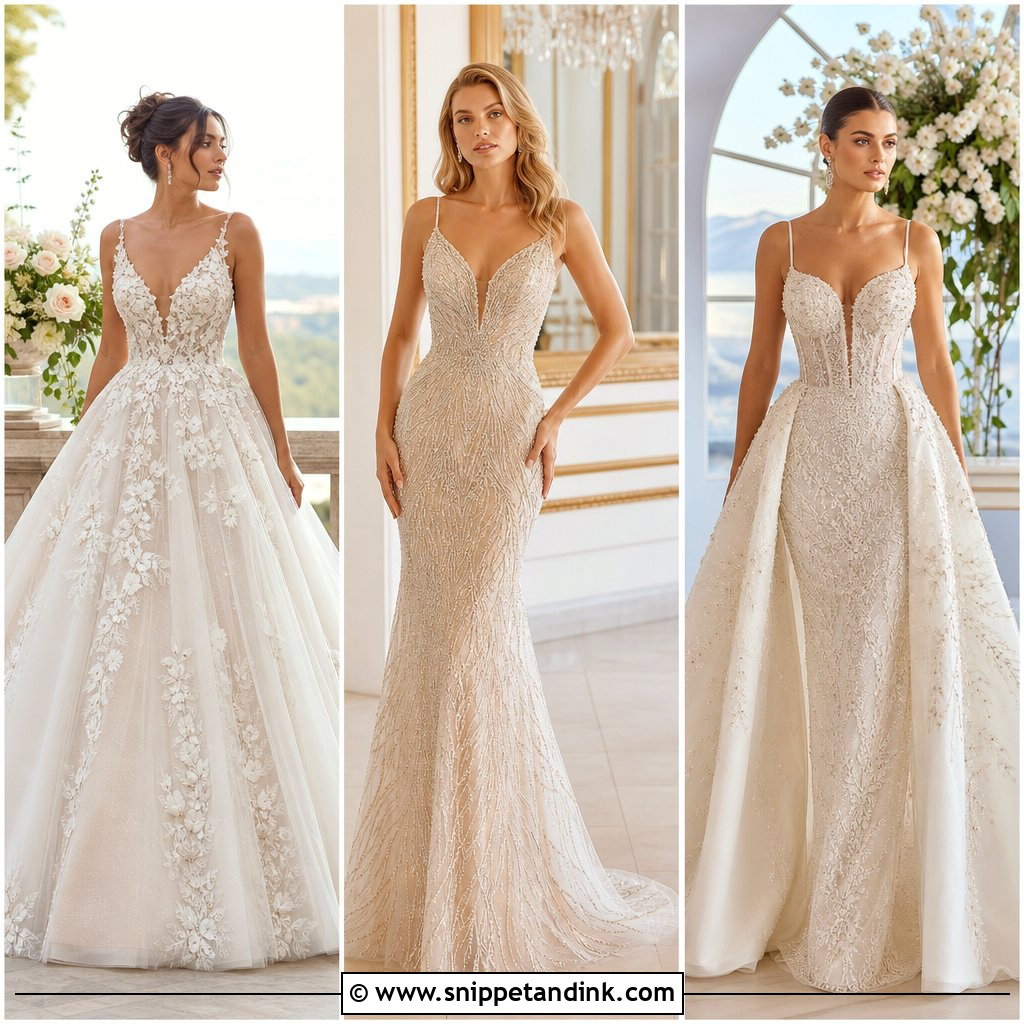
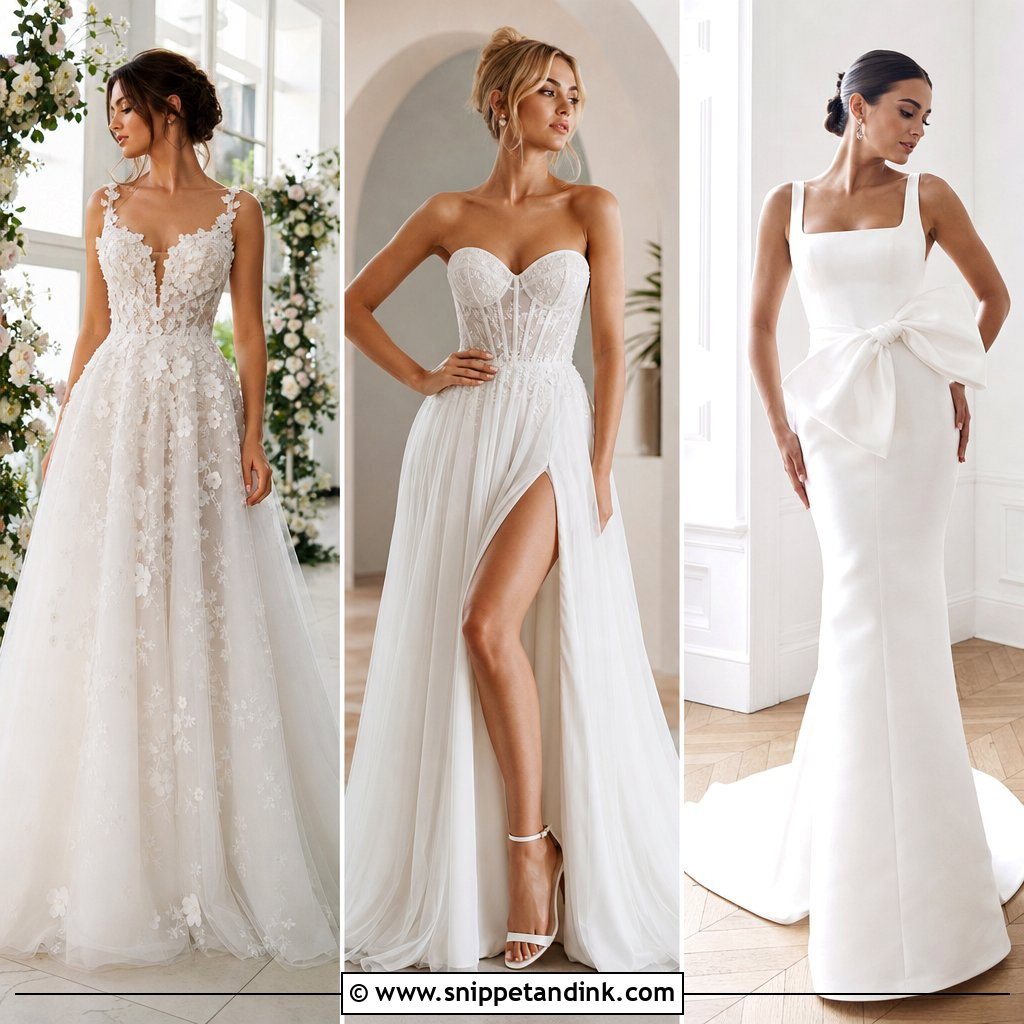
Floral applique uses raised flowers, embroidery or 3D petals, scattered lightly or covering the whole gown, on tulle, lace, organza or sheer sleeves. It gives depth in outdoor light. The petals catch on things, so I warn brides about rough bouquet stems, beaded clutches and anyone’s cufflinks during a hug. Keep accessories quiet, ivory heels, small earrings and a soft veil, and let the flowers carry it.
21. Pearl Bridal Gown
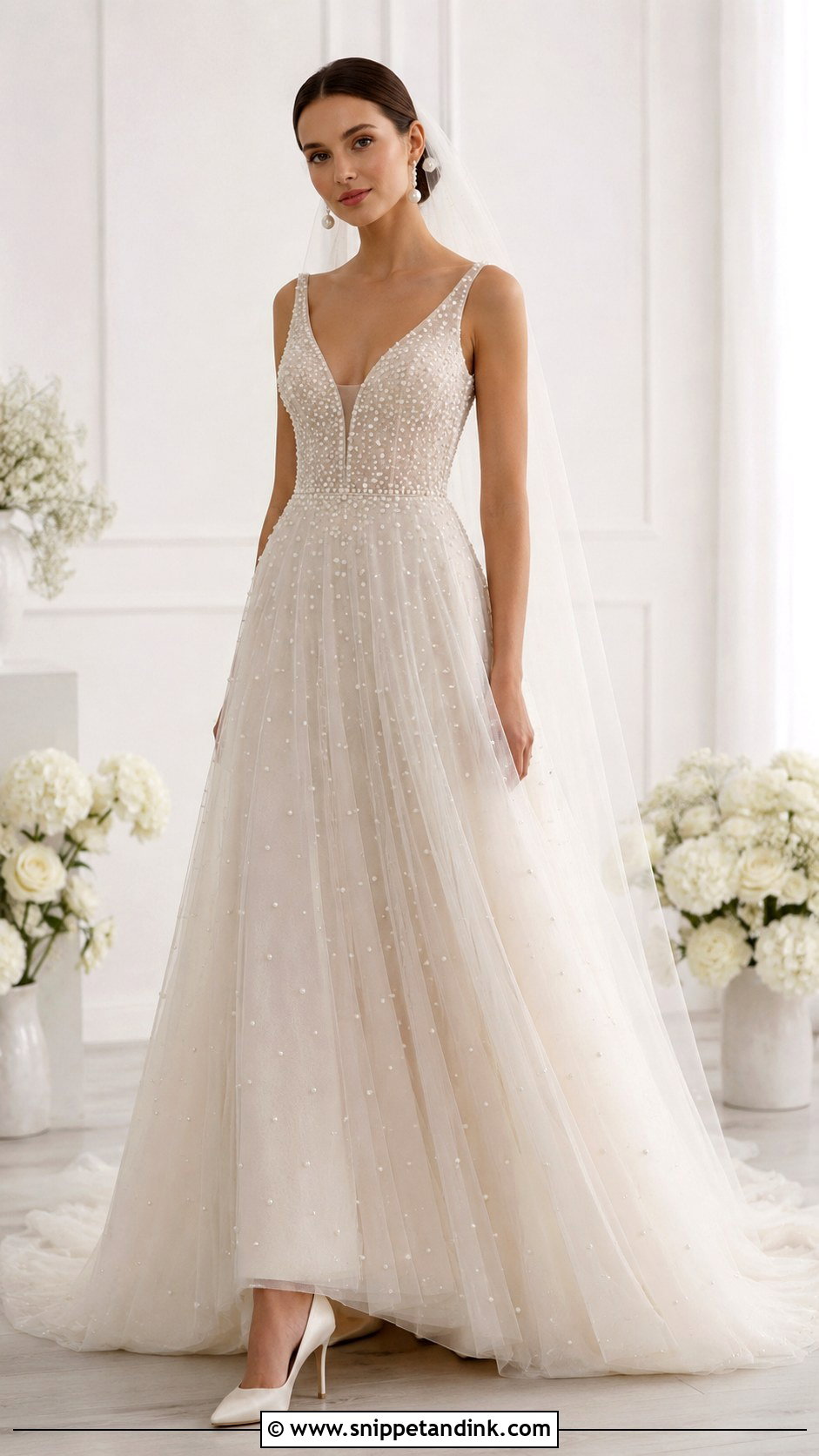
Pearls scattered on tulle, lining a sleeve or trimming a bodice give a soft glow rather than the sharp flash of crystal. I’d hold back on the accessories: pearl earrings yes, pearl necklace, pearl shoes and pearl hair pins all together starts to look like a theme. Ask the shop how the pearls are attached. Glued pearls fall off on the dance floor, sewn ones don’t.
22. Bow Bridal Gown
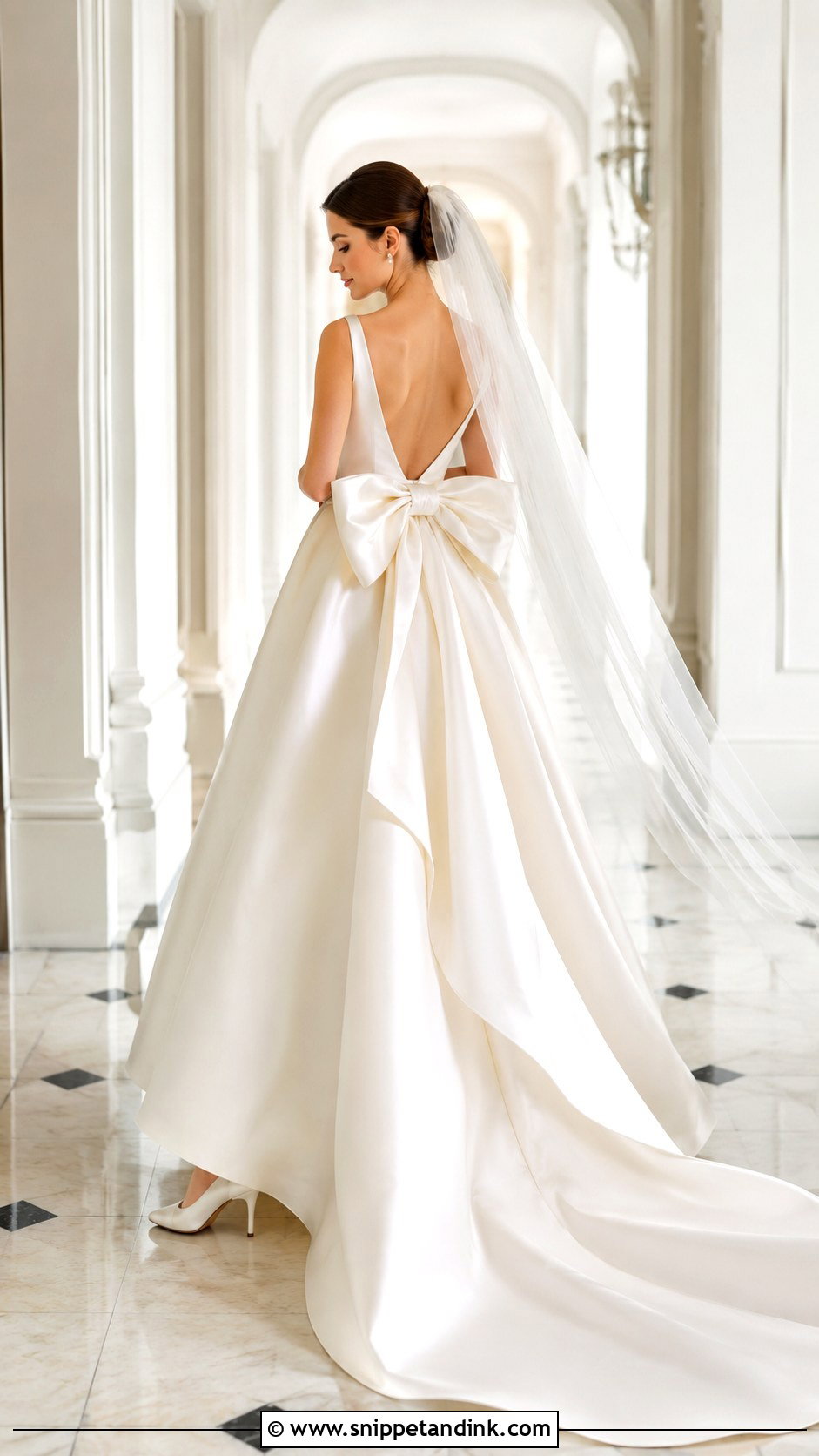
A bow bridal gown can carry its bow at the back waist, shoulder, neckline, train or hip. A big back bow gives you an exit shot; a small shoulder bow is much quieter. Satin and mikado hold a sculptural bow, while softer fabrics droop. Ask how a back bow sits when you’re seated against a chair, since a large one gets crushed through dinner unless it’s lightly stiffened.
23. Cape Bridal Gown
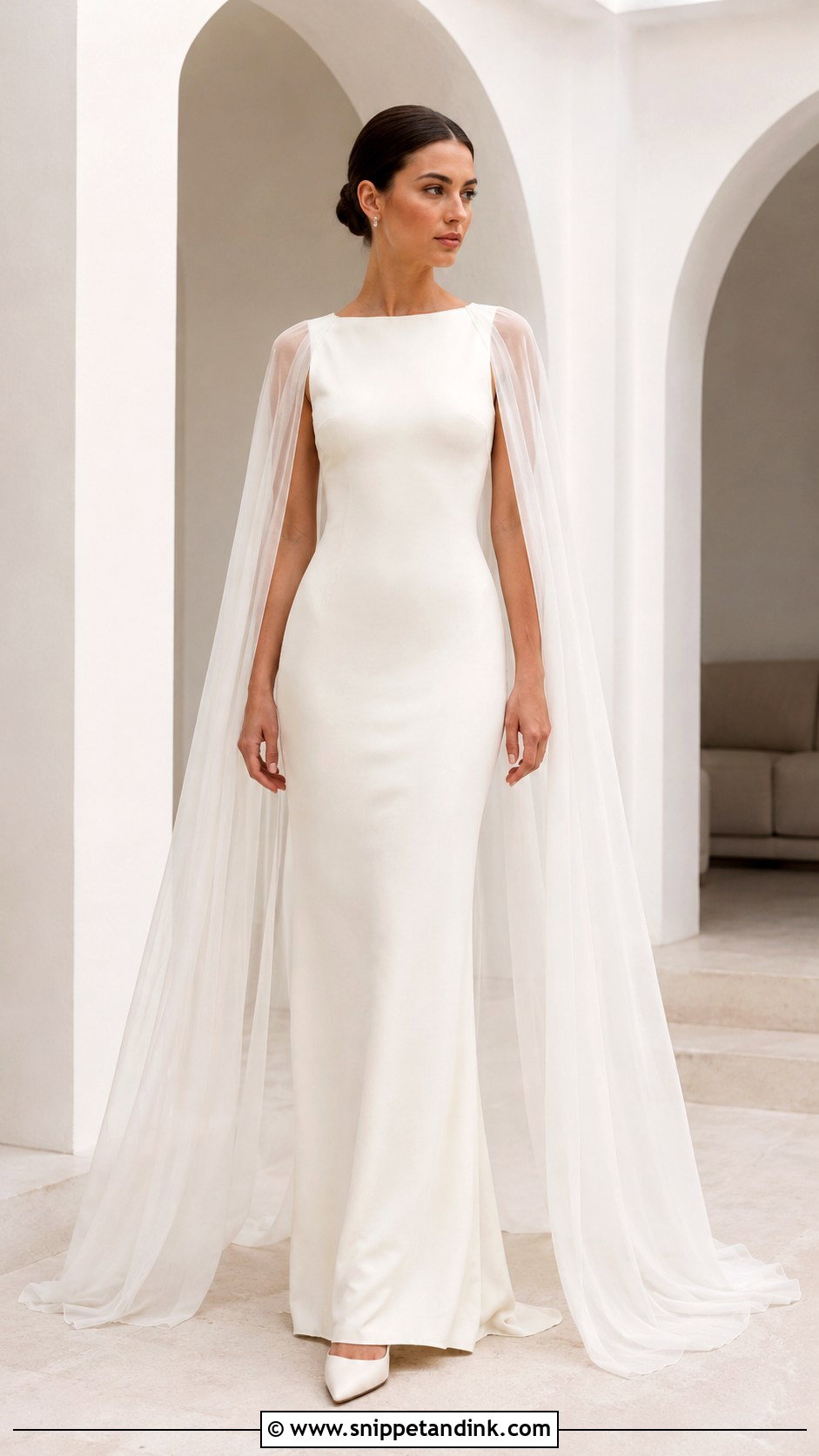
Capes give drama and coverage and can stand in for a veil. They come sheer, lace, satin, beaded, short or floor-length, usually attached at the shoulder. Pair a long sheer cape with a sleek column for a modern line, or lace over an A-line for something softer. Check the weight: a heavy beaded cape pulls the shoulders back and can drag the neckline. Detachable is the version I recommend, so it comes off after the ceremony.
24. Colored Bridal Gown
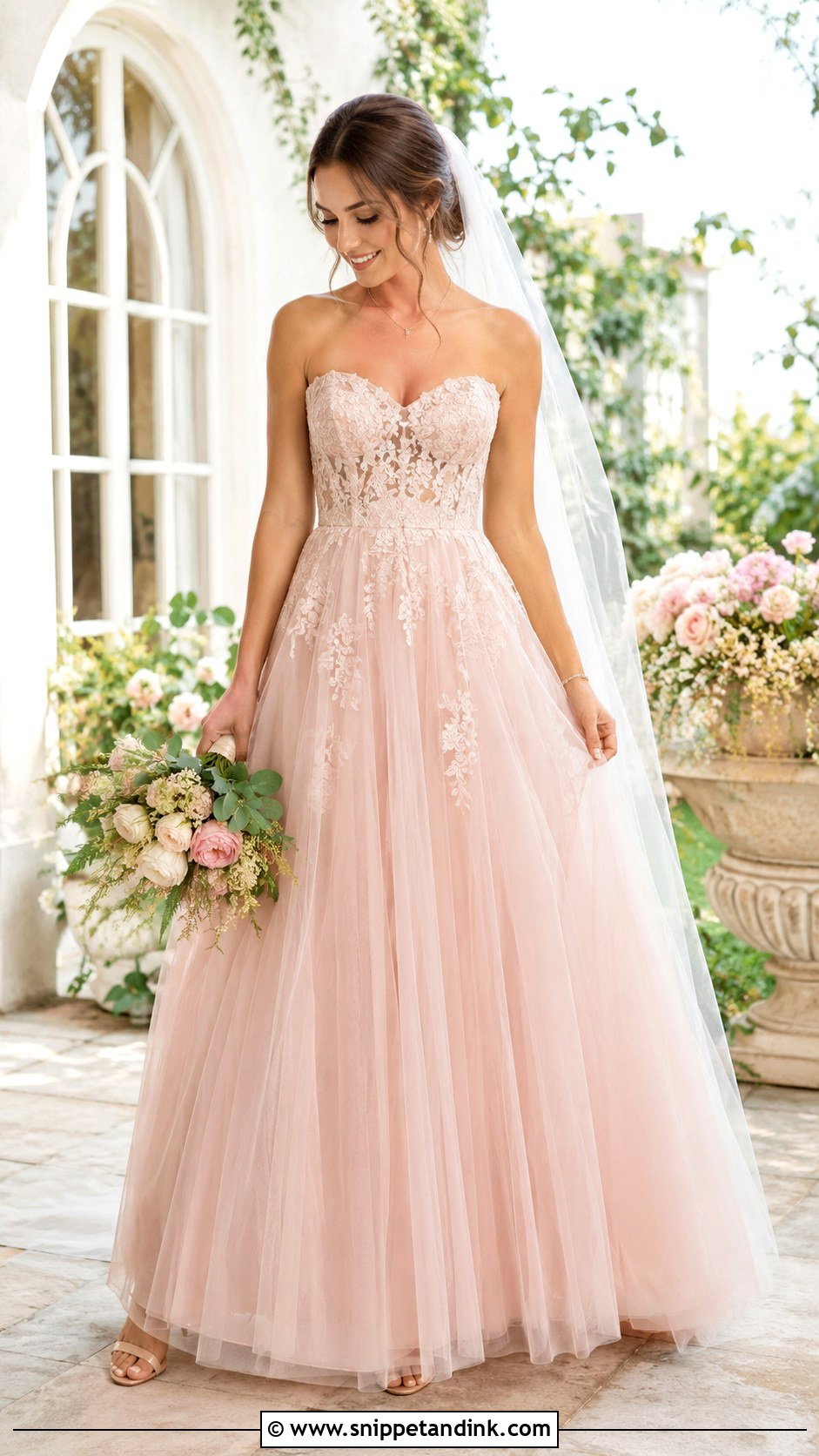
Colour lets a bride feel like herself without giving up the sense of occasion. Blush, champagne, pale blue, silver and warm ivory are the easiest shades to wear, and bolder colours work if the setting carries them. Hold the fabric up to your face in daylight and under warm bulbs; some blushes turn beige indoors. Choose neutral heels and a bouquet that complements the shade rather than matching it exactly, so they don’t blur together in photos.
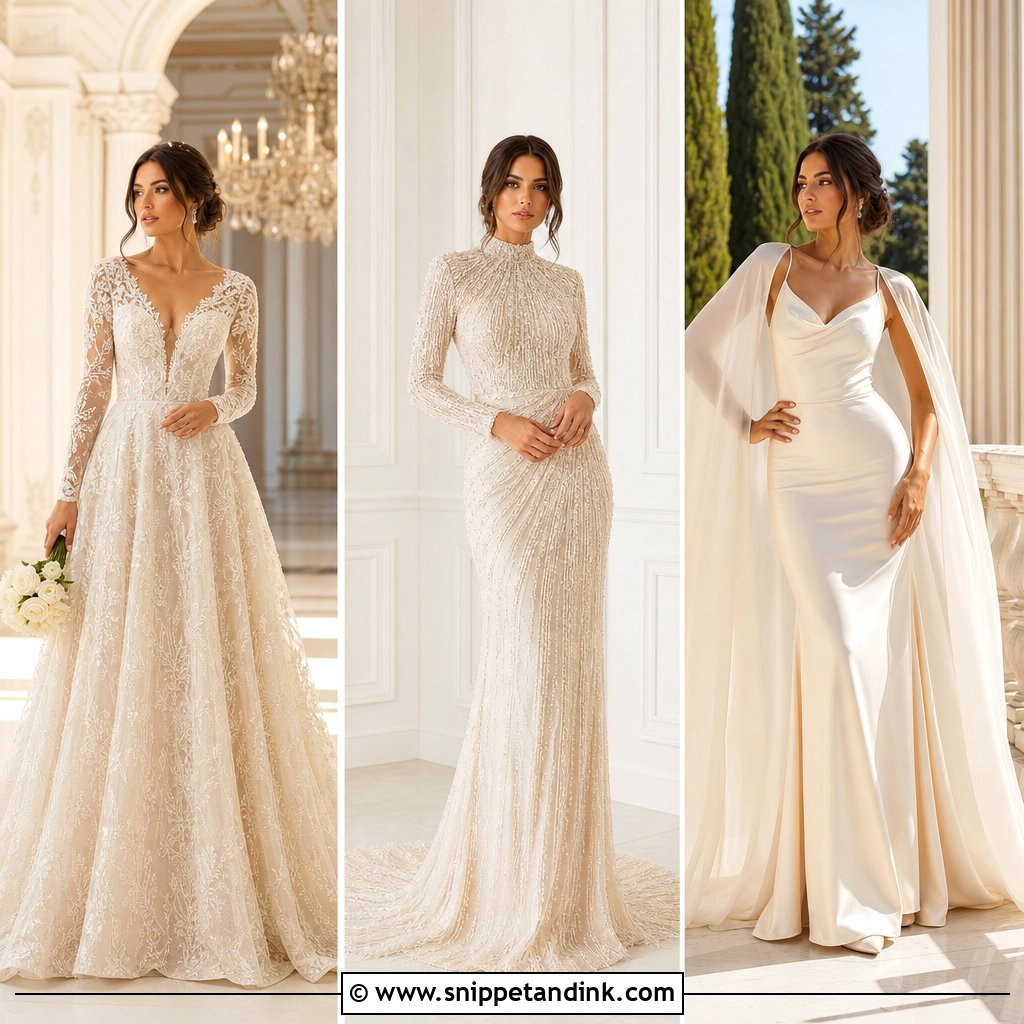



25. Vintage Bridal Gown
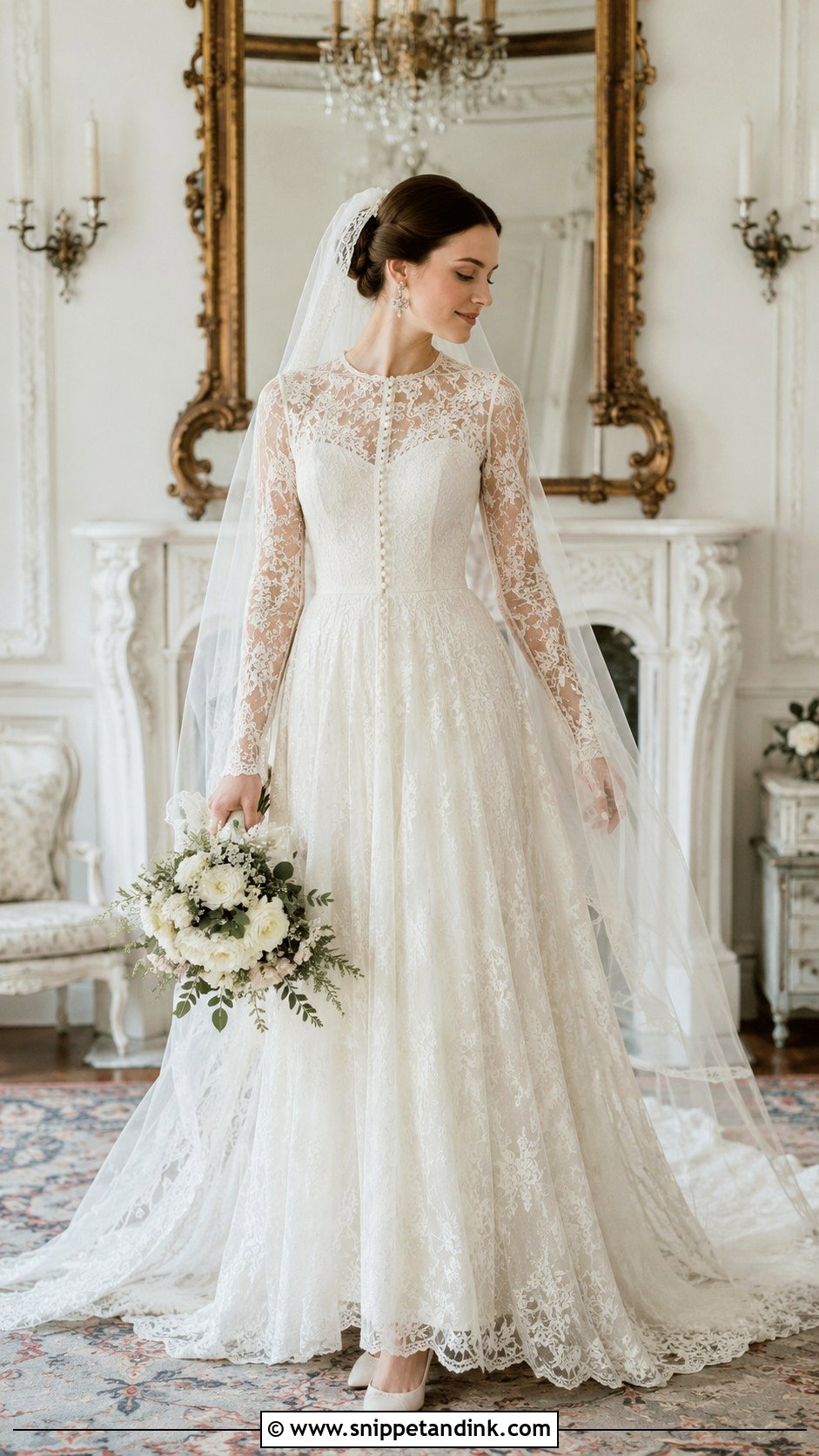
Vintage can mean a true period dress, a family gown redesigned, or a new gown inspired by an earlier decade, and each brings one-of-a-kind beauty in its own way. Lace sleeves, high necks, tea lengths, satin slips, basque waists and button backs all appear. With a real vintage piece, ask a seamstress to check the fabric before you commit; old silk can split along fold lines and some lace can’t be let out at all. Modern hair and current accessories keep it from looking dated.
What Satin, Crepe, Lace and Tulle Do After Ten Hours
Fabric decides how the dress will look at the end of the night, so I talk about it as much as the shape.
Satin
It holds structure and reflects light, which is why ball gowns and bows love it. It also creases wherever you sit and marks if splashed with water. Heavier duchess satin creases less than a thin polyester version.
Crepe
Matte, smooth and modern, crepe drapes close to the body. Because it’s so plain, every lump of shapewear and every seam allowance shows through, so lining and fit carry more weight than with patterned fabrics.
Lace and tulle
Both forgive small fit issues and hide creasing. Tulle catches on jewelry, bark and rough stone, and the hem picks up grass and dust at outdoor venues. Lace with a scalloped edge costs more to shorten, because the seamstress moves the scallop up rather than cutting straight across.
The Bustle Question Nobody Asks at the First Appointment
Any gown with a train needs a way to lift it for the reception, and the bustle is added during alterations. An over bustle hooks the train up onto the back of the skirt; an under, or French, bustle tucks it beneath with ties. Heavy fabrics usually need more attachment points to hold. Ask your seamstress which suits your train, then teach a bridesmaid how to do it at the final fitting, because no one at the venue will know where the ribbons go.
Try the Shape You Keep Skipping
Silhouette, neckline, fabric and detail each change how a dress looks and how you feel in it by hour eight. Some brides end up in a plain satin column, others in lace sleeves, a full ball gown, a mini or floral applique. Try at least one shape you’d normally skip, sit in it, lift your arms, and walk a few steps backwards. The dress that survives that test is usually the one you keep thinking about after you leave the shop.
You'll Like These Ideas:




Leave a Reply