
Tom Sébastien gowns are built around the corset. Sculpted bodices, figure-shaping seams, raised flowers, shimmer and airy layers come up again and again, along with neo-romantic shapes that rework classical bridal details for now. When I style a gown this detailed, my first job is restraint: the more the dress does, the less the veil, jewelry and hair should. A cleaner silhouette, on the other hand, can take a bolder earring or a dramatic veil. The twenty looks below are styled head to toe, with notes on where each one works best and what to watch for.
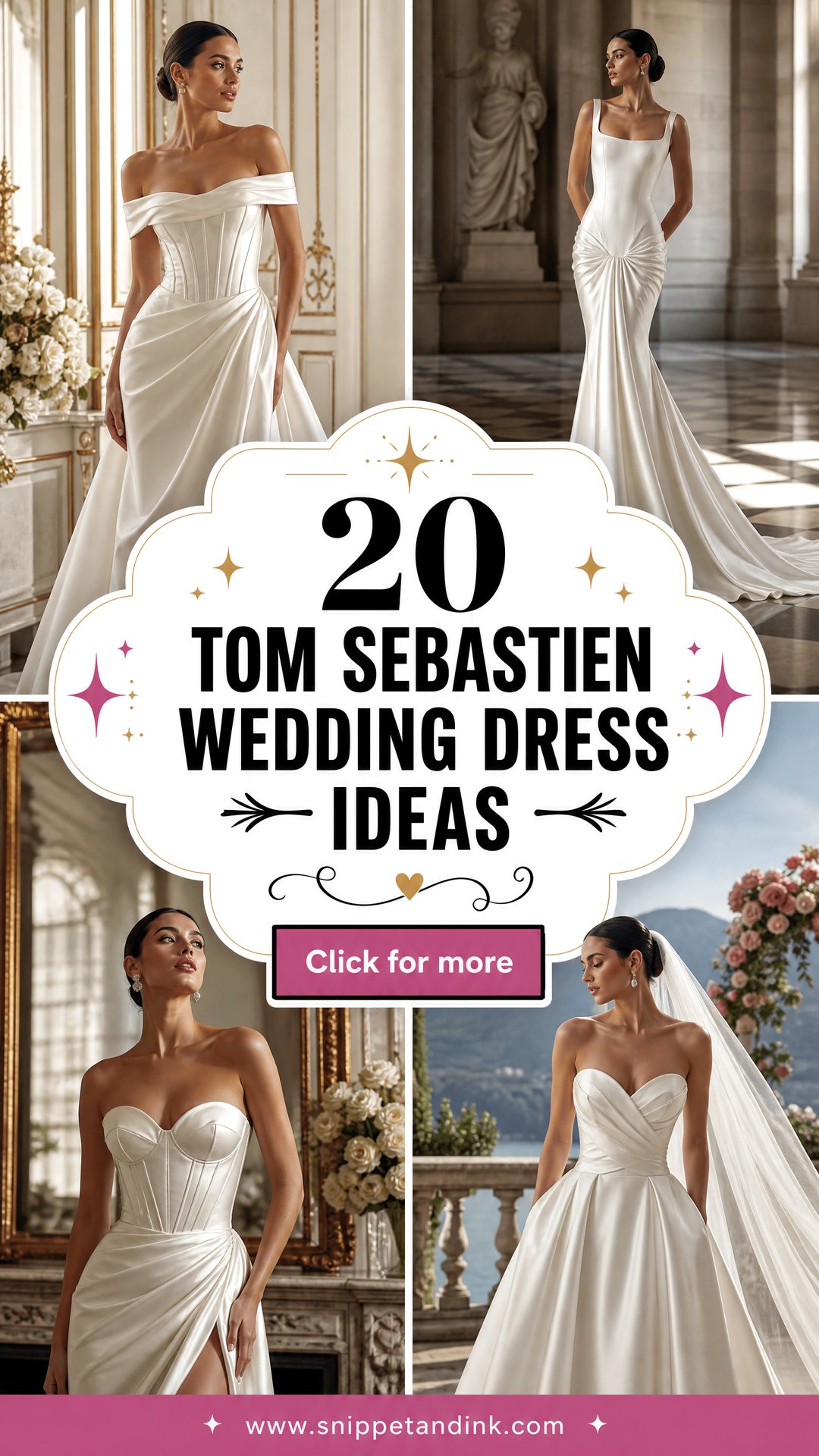
How a Boned Bodice Should Feel at Your First Fitting
Nearly every gown here depends on a structured corset, and a well-made one shouldn’t hurt. Boning is there to hold the shape and support the bust, not to squeeze you. If you can’t take a full breath, the size or the lacing is wrong. Here is what I check at a first fitting:
- Breathe in deeply, then sit down. The top edge shouldn’t dig into your ribs or push up under the arms.
- Bend forward as if signing the register. Cups that gap away from the chest need taking in.
- Raise both arms. A bodice that slips down needs better internal support, often a waist stay or grip tape.
- Look at the bones from the side. They should run smoothly down the body without bowing outward at the hip.
Bring the shoes and the undergarments you’ll actually wear. Heel height changes how the skirt falls, and shapewear changes the corset fit by more than people expect.
Finally, wear the gown for a while. Ten minutes in a fitting room tells you very little. Ask to stay in it for half an hour, walking and sitting, and notice where it pinches.
1. Tom Sebastien Basque Waist Ball Gown
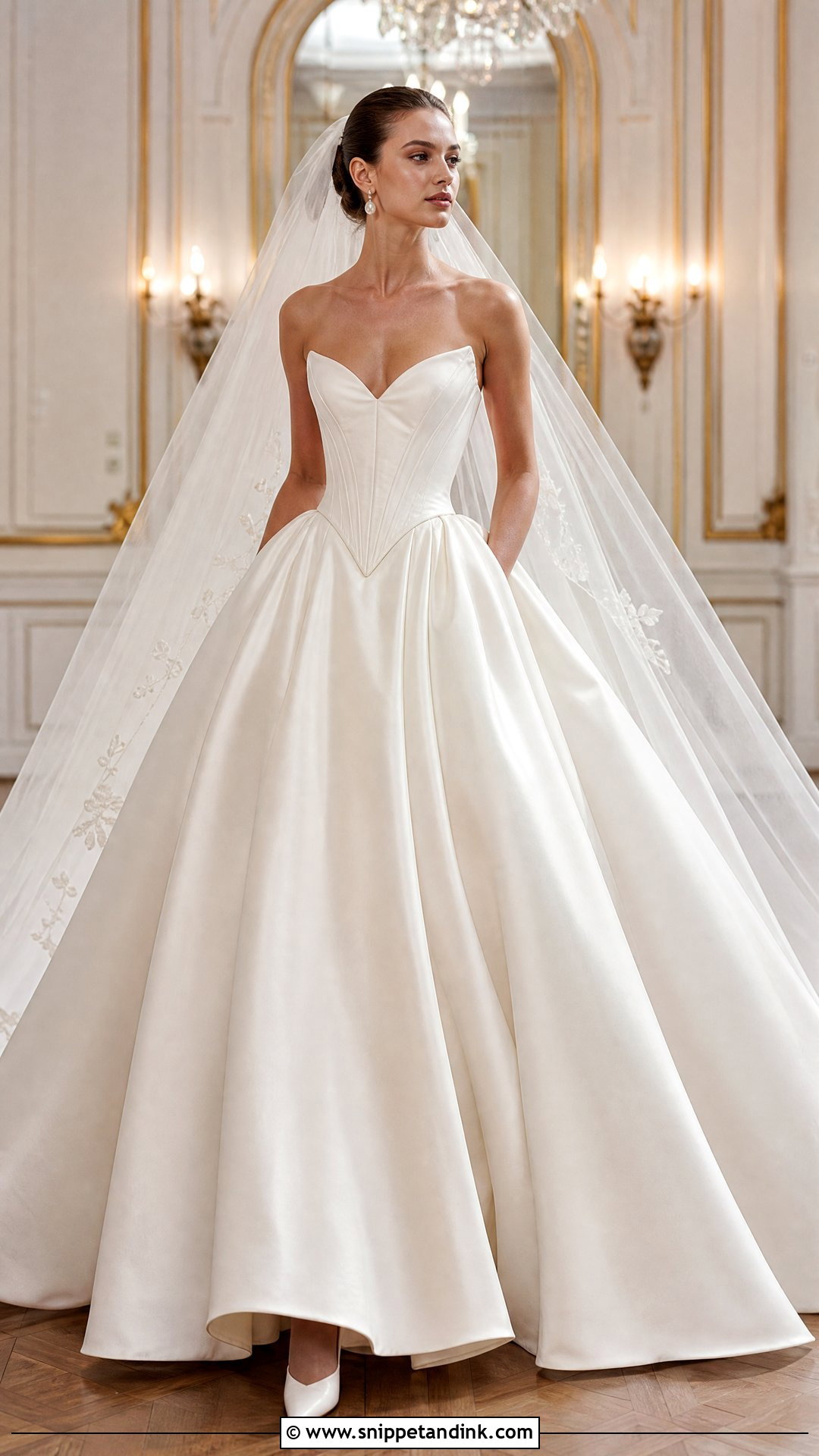
A basque-waist ball gown is the most regal shape in this list. The pointed waist dips below the natural waistline, which lengthens the torso and makes the waist look smaller, but only if the point sits in the right place. At fittings I check that the tip lands centered and doesn’t dig in when the bride sits. Satin, layered tulle or a softly shimmering skirt all suit it. Style with a cathedral veil, pearl drops, pointed ivory pumps and a sleek low bun. Ballrooms and historic estates give the skirt room; a narrow aisle doesn’t.
2. Tom Sebastien Sheer Corset Wedding Dress
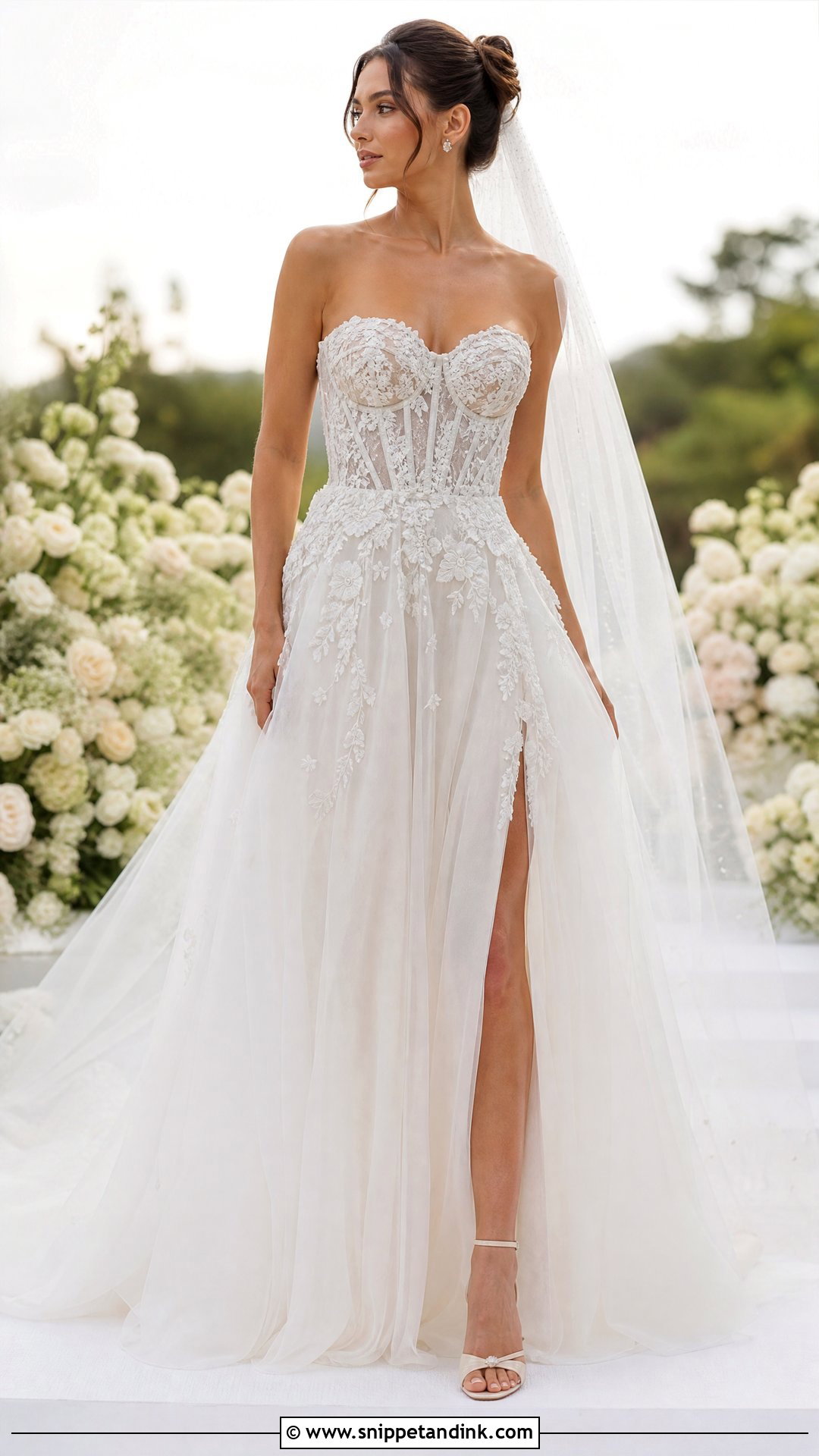
Sheer corset bodices rely on placement. Lace and appliqués have to sit exactly where coverage is needed, and that’s decided at fittings, not on the hanger. I’d always check the bodice in daylight and under a phone flash, since illusion mesh can read more transparent in photos than in the mirror. An A-line skirt keeps it graceful. Ivory satin sandals, crystal studs, a single-layer fingertip veil and soft waves finish it. For a religious ceremony, detachable off-the-shoulder sleeves or a light cape add coverage you can remove later.
3. Tom Sebastien 3D Floral Wedding Dress
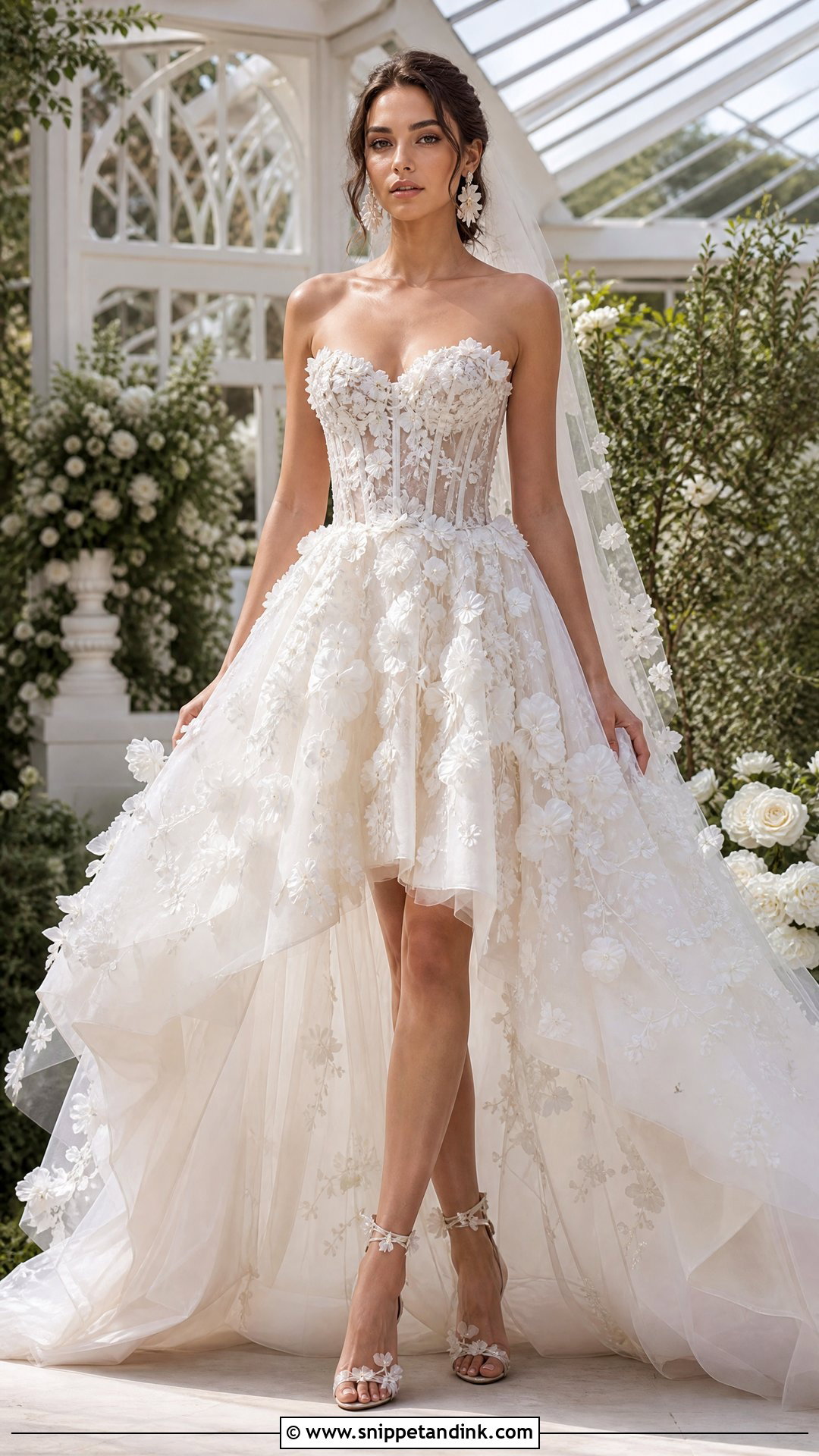
Raised floral appliqués look best when they’re concentrated at the corset and thin out down the skirt. That gradient defines the waist and keeps the skirt moving; flowers spread evenly everywhere make the dress look heavy. A nude or soft ivory lining behind sheer areas lets the flowers show clearly. I keep the rest quiet: ankle-strap heels, small floral earrings, a barely-there tulle veil and a loose updo. A bouquet of white sweet peas and greenery echoes the texture without fighting it. Spring gardens and conservatories suit it.
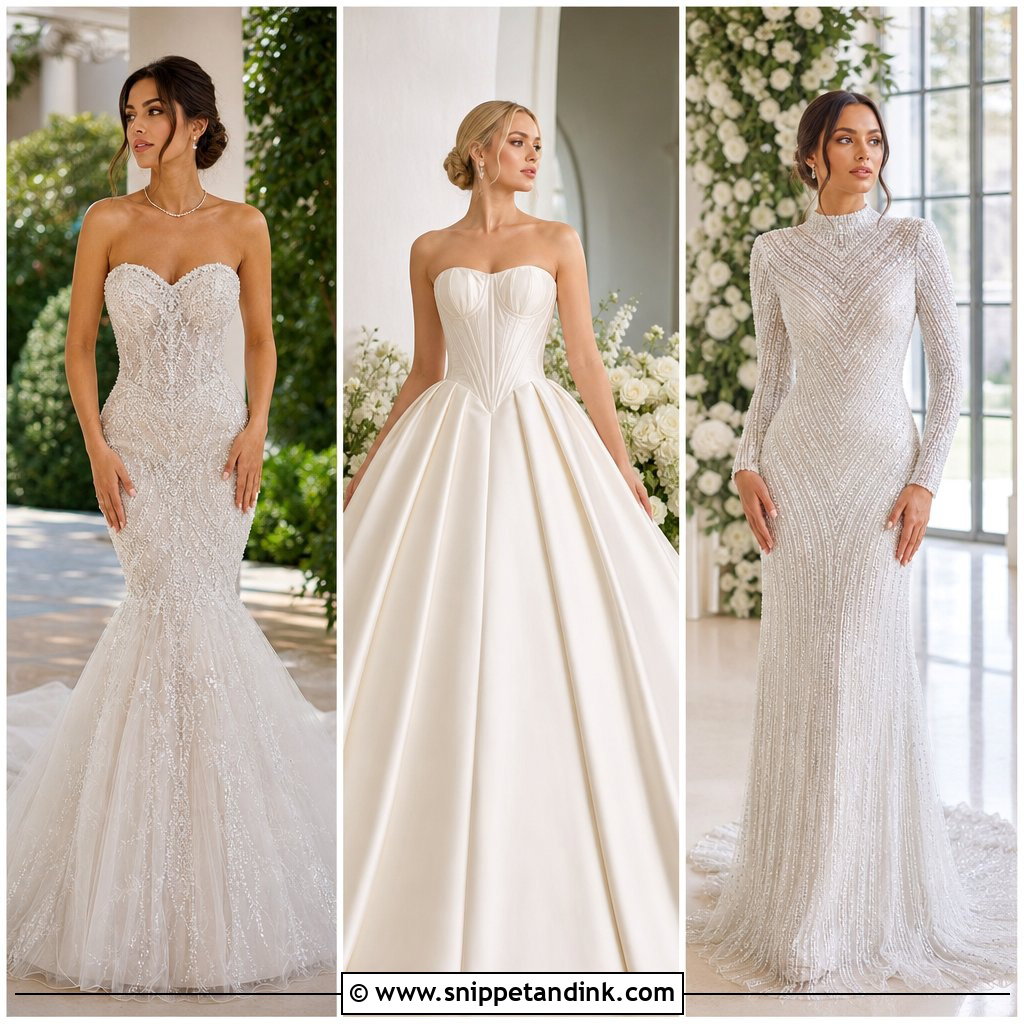
4. Tom Sebastien Sparkling Mermaid Wedding Dress
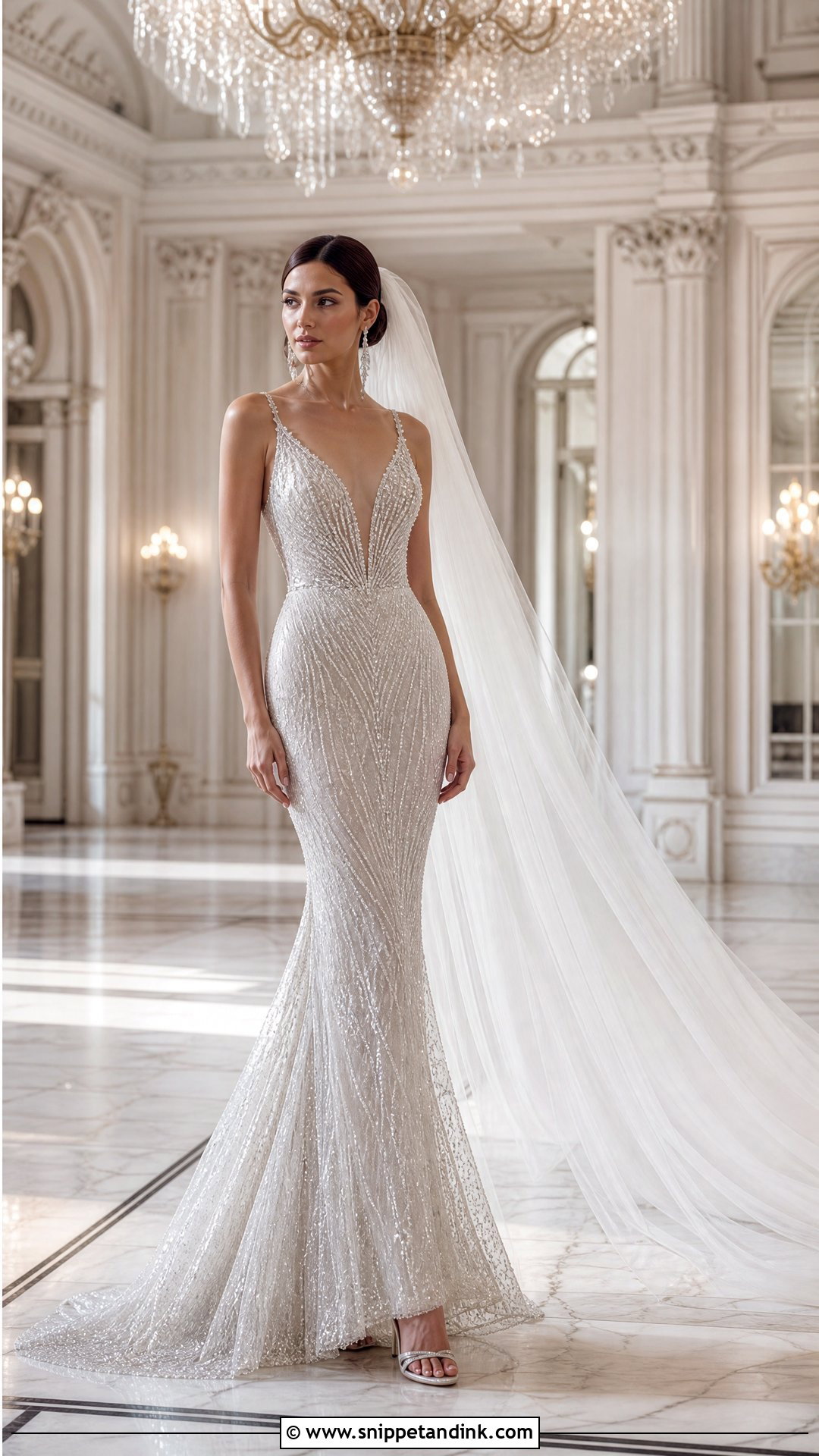
Fine beading is the difference between sparkle and costume. On a fitted mermaid, I look for small beads or glitter embroidery spread across the fabric; large heavy stones pull the fabric down and drag at seams over a long evening. The dress should follow the body and flare near the knee. Crystal slingbacks, a slim tennis bracelet and understated drops are enough, with a middle-part bun. Choose a plain cathedral veil rather than a beaded one so the train has the stage. Under ballroom lights, fine shimmer moves gently instead of glaring.
5. Tom Sebastien Off-Shoulder Wedding Dress
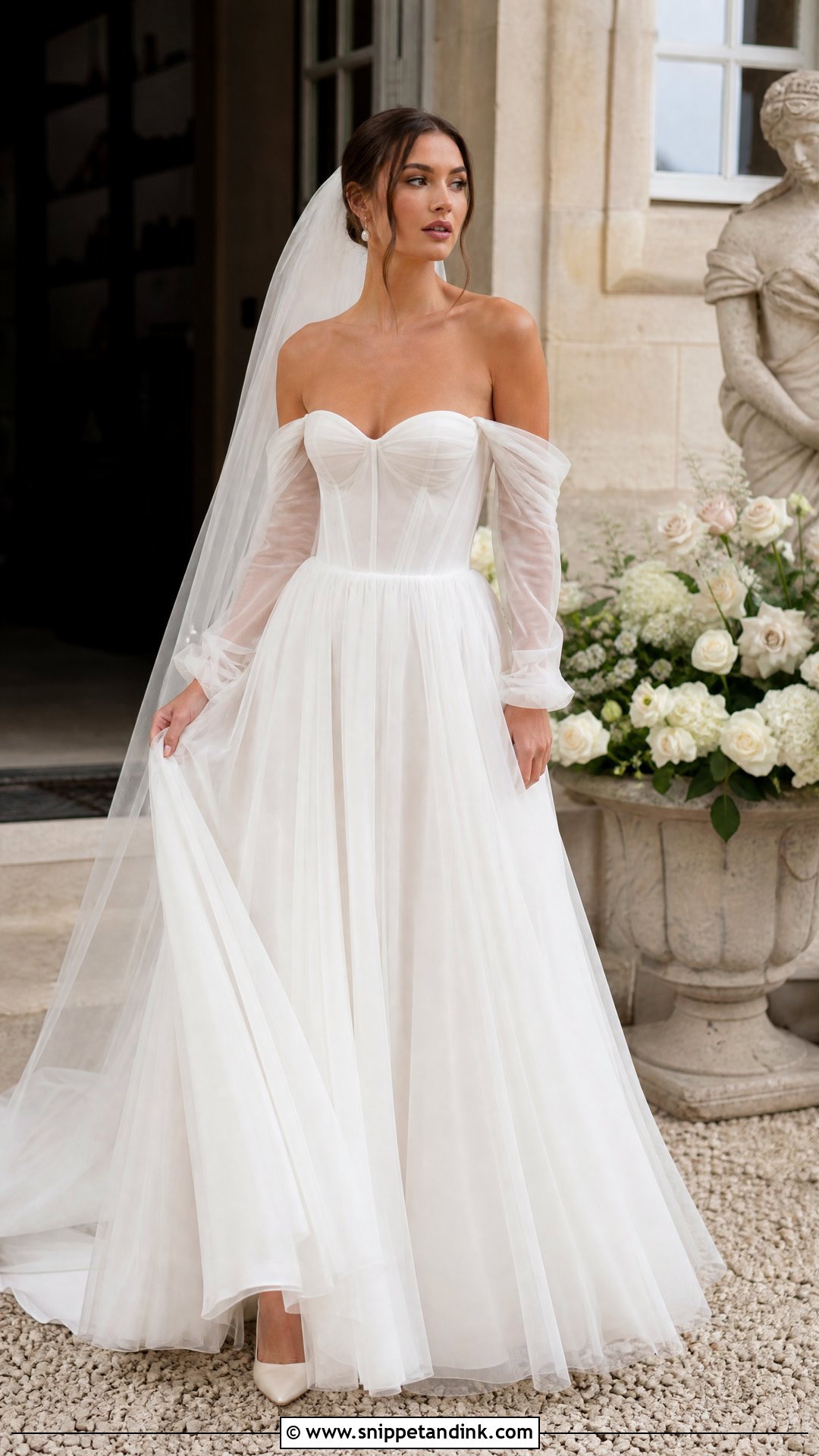
Off-the-shoulder necklines look romantic, but they limit how high you can raise your arms. I have brides hug me and reach for an imaginary bouquet toss at the fitting: if the sleeves ride up or pinch, the bodice needs adjusting. Draped tulle, structured satin or detachable floral sleeves can sit below the shoulder over a fitted corset, with an A-line or gentle flare skirt. A fine pendant, pearl earrings, closed ivory heels and a low textured bun make room for a medium veil. Remove the sleeves after the ceremony for a cleaner reception look.
6. Tom Sebastien High Slit Wedding Dress
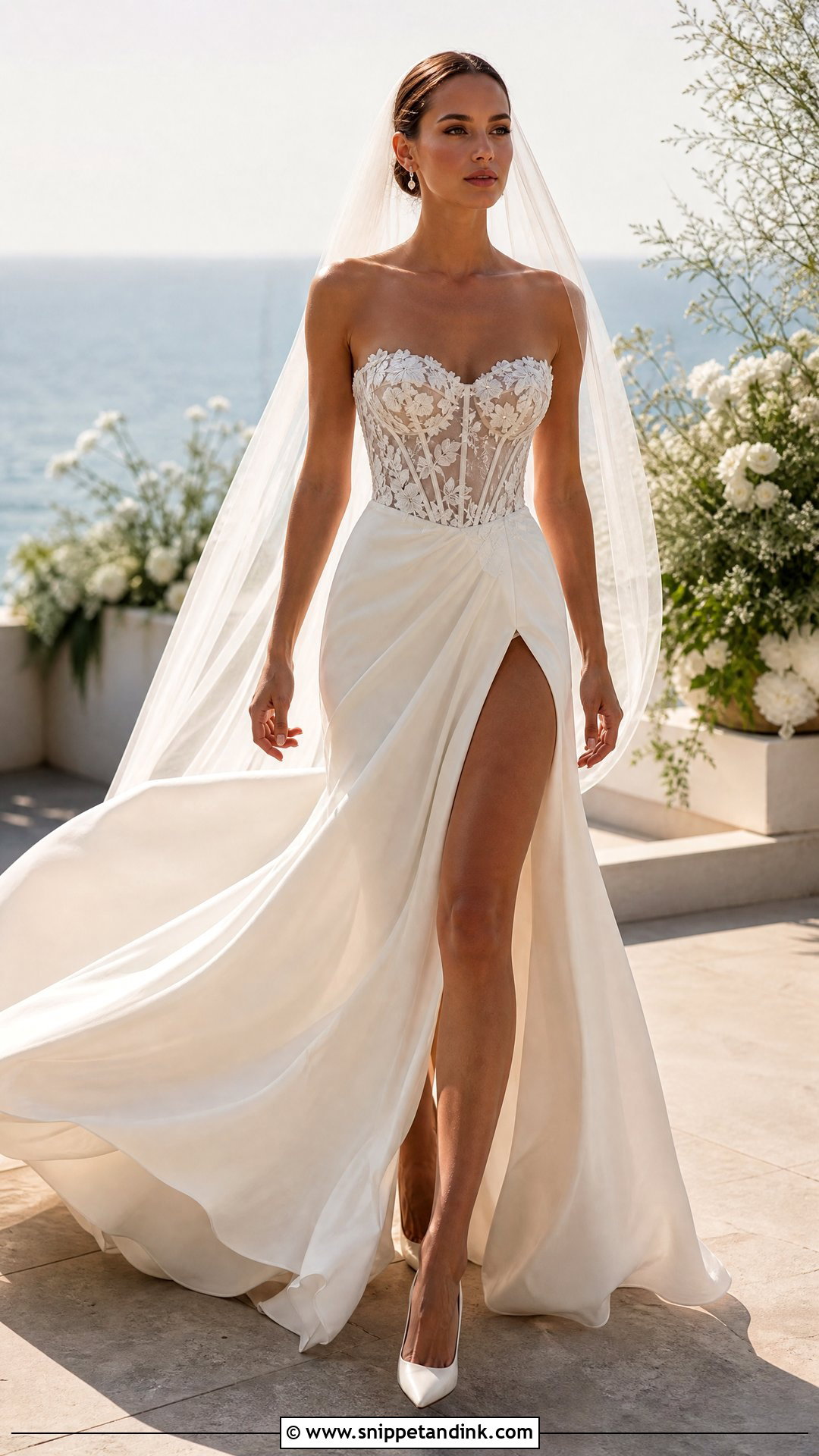
The slit is where a high-slit wedding gown succeeds or fails. A soft skirt that parts as you walk looks natural; a rigid one has to be rearranged every time you sit. I always ask brides to walk up a few steps and sit down at the fitting, because the slit height that looks right standing can open far higher when seated. Balance the leg with a corseted or appliqué bodice. The shoes will show, so choose pointed pumps or slim ankle-strap sandals. A fingertip veil, delicate earrings and a low ponytail suit coastal or warm-weather ceremonies.
7. Tom Sebastien Detachable Sleeve Wedding Dress
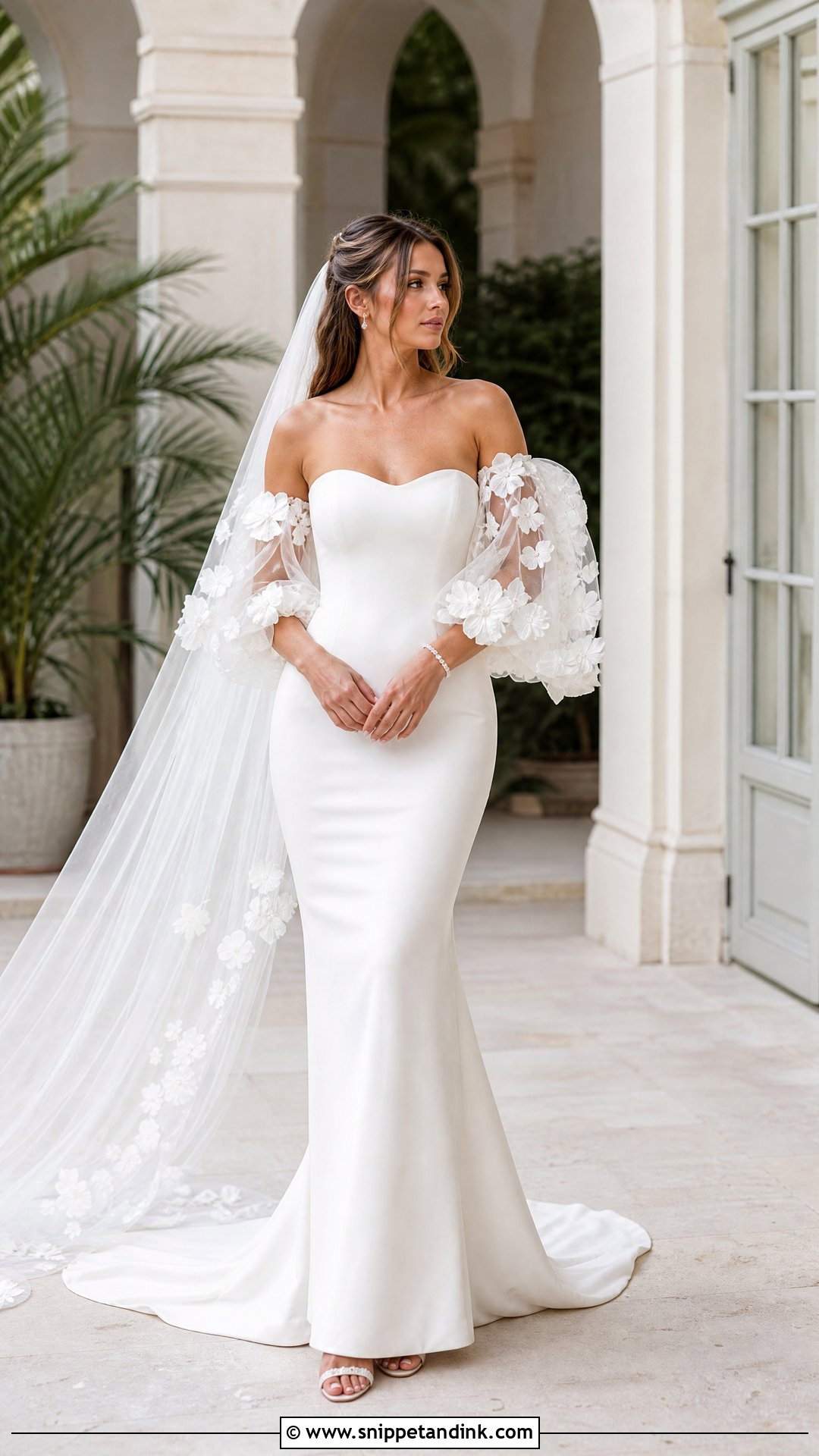
Detachable sleeves are a practical way to get two looks without buying a second dress. Tulle, lace or floral sleeves attach to the corset for the ceremony; afterwards they come off and leave a strapless gown for dancing. Ask how they fasten. Tiny hooks or snaps are hard to undo yourself, so tell whoever is helping you change how they work before the day. Pearl-accented heels, a fine bracelet, a long plain veil and a half-up style suit both versions. Fitted or A-line, the skirt choice is yours.
8. Tom Sebastien Lace A-Line Wedding Dress
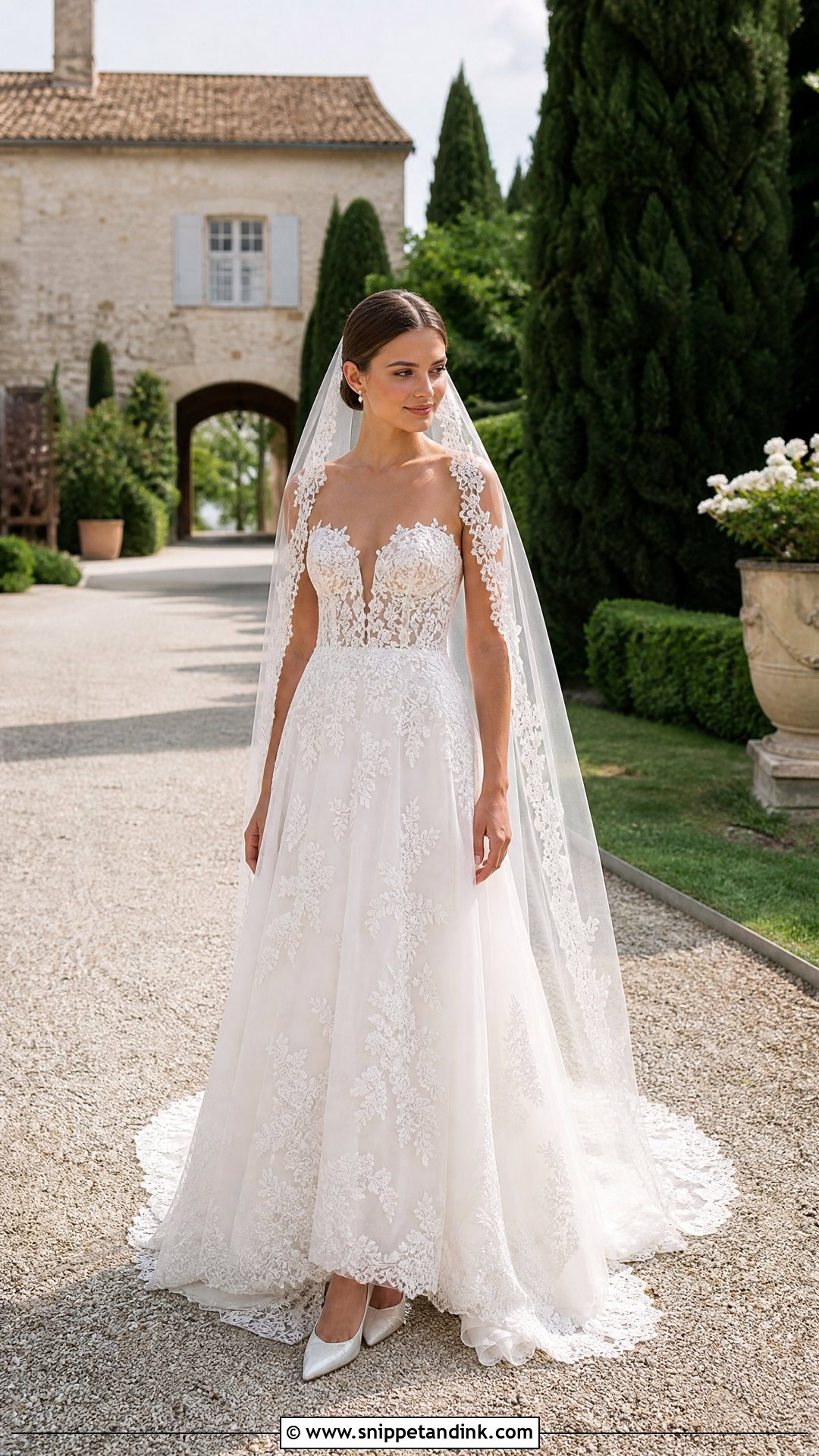
A lace A-line is the most forgiving shape here, for bodies and for venues. The versions I like have a defined corset, a gentle plunge and lace that thins toward the hem, which gives depth without burying the bride. Pointed satin heels, pearl studs and a chapel veil with only a narrow lace edge keep the lace from doubling up. A low chignon and natural makeup suit it, with a loosely shaped bouquet of white roses. It moves easily from ballroom to countryside and gives skirt volume without a full ball gown’s weight.
9. Tom Sebastien Square Neck Wedding Dress
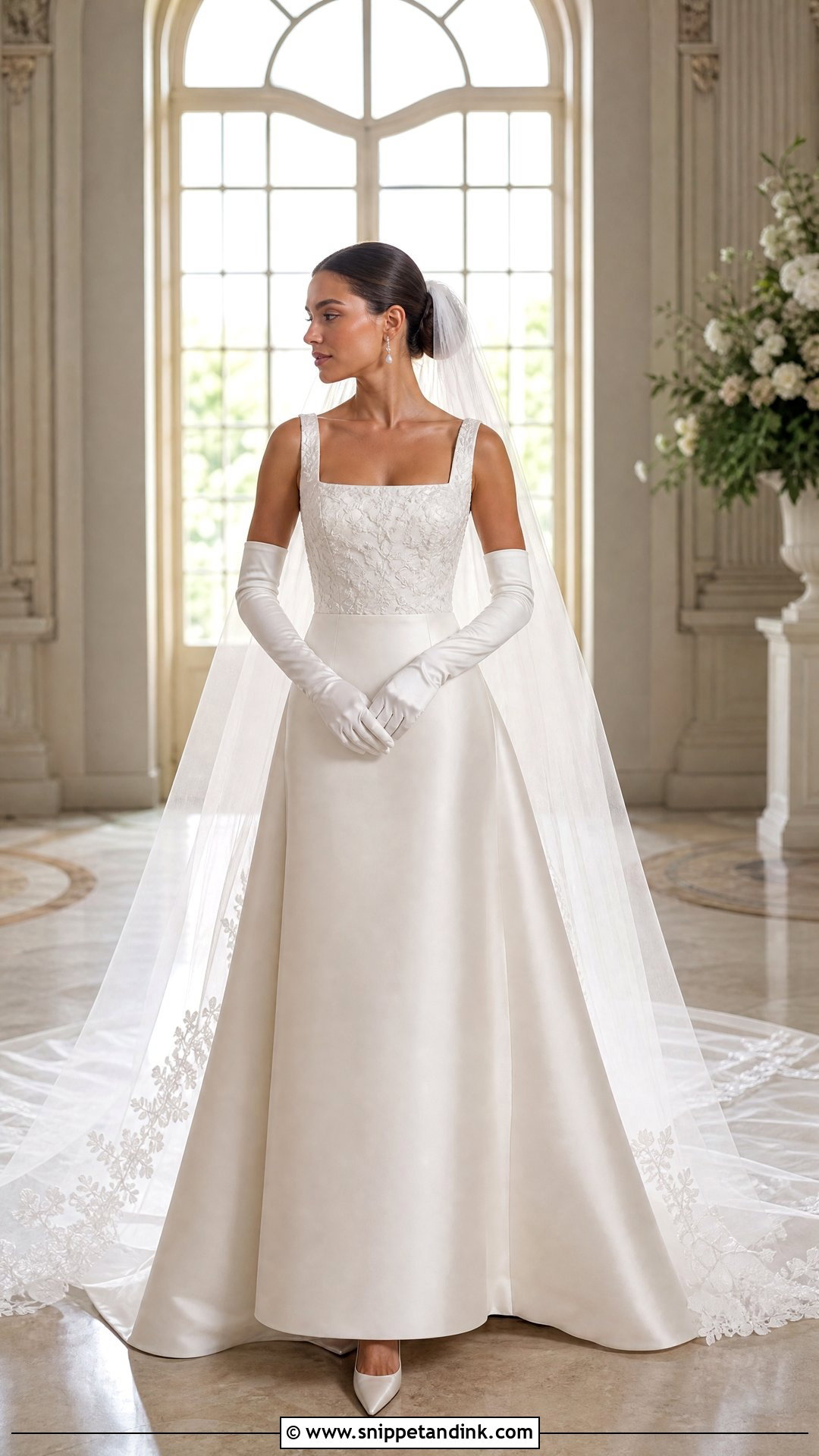
Square necklines are architectural, and they show any gap instantly. If the neckline lifts away from the chest when you lean forward, it needs taking in; I check this with the bride bending as if to sign the register. A corset with wide straps, light embroidery or draped satin and a softly flared skirt keeps the neckline the hero. Skip the necklace. Pearl drops, ivory pumps and a long veil set under a smooth bun finish it, and long satin gloves add formality for the ceremony. Stately indoor venues suit it.
10. Tom Sebastien Drop Waist Wedding Dress
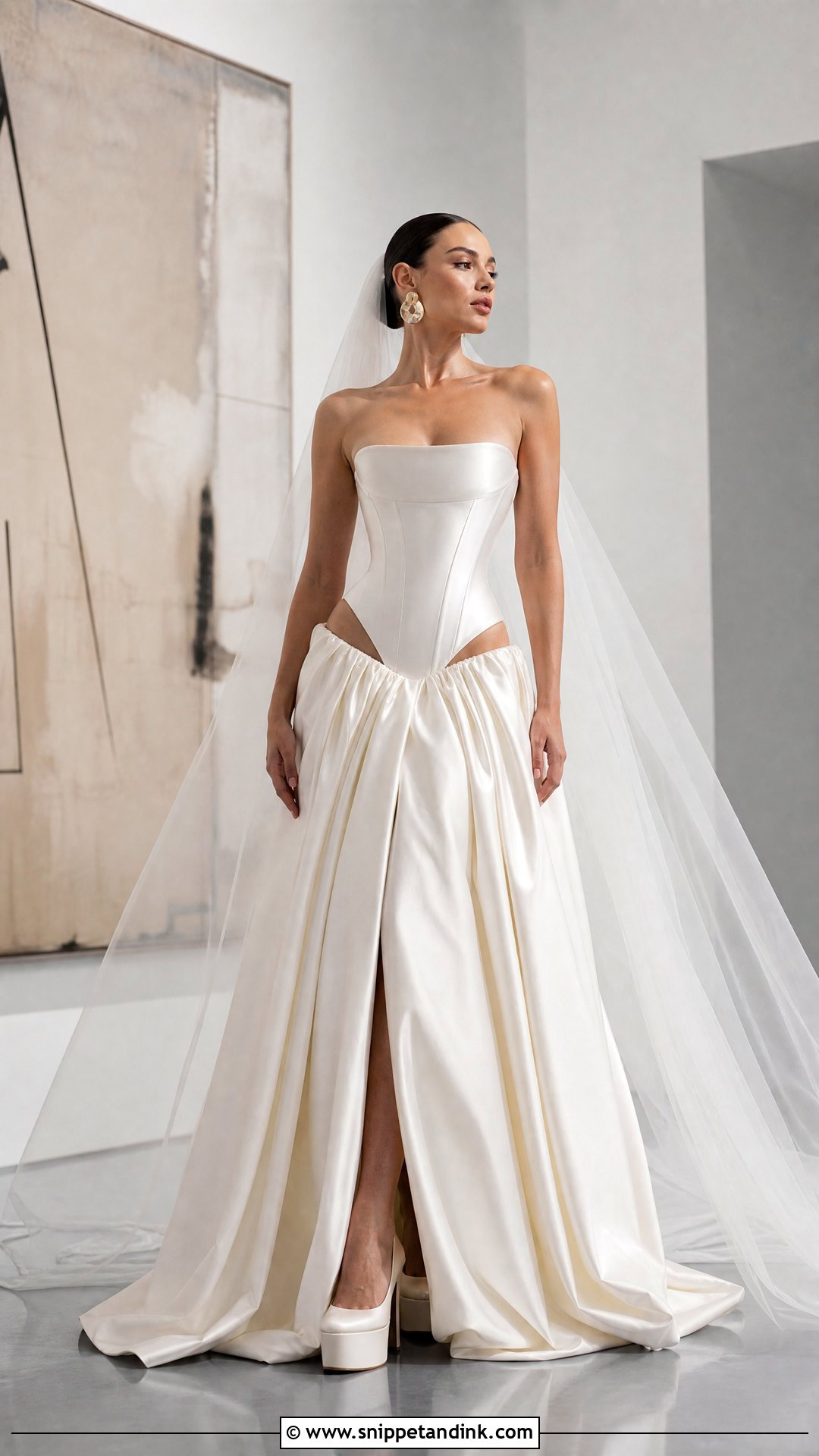
A drop waist moves the corset down toward the hips before the skirt opens, which makes the bodice the whole story. That’s why I keep the fabric simple: clean satin, jacquard or restrained appliqué, not all three. It isn’t for everyone. On a short torso, the dropped line can shorten the legs visually, so try it before falling for photos. Platform heels hidden under the skirt help with height. Sculptural earrings, a plain cathedral veil and a sleek bun suit museums, luxury hotels and modern spaces. Keep the bouquet small so it doesn’t cover the waist.
11. Tom Sebastien Floral Corset Wedding Dress
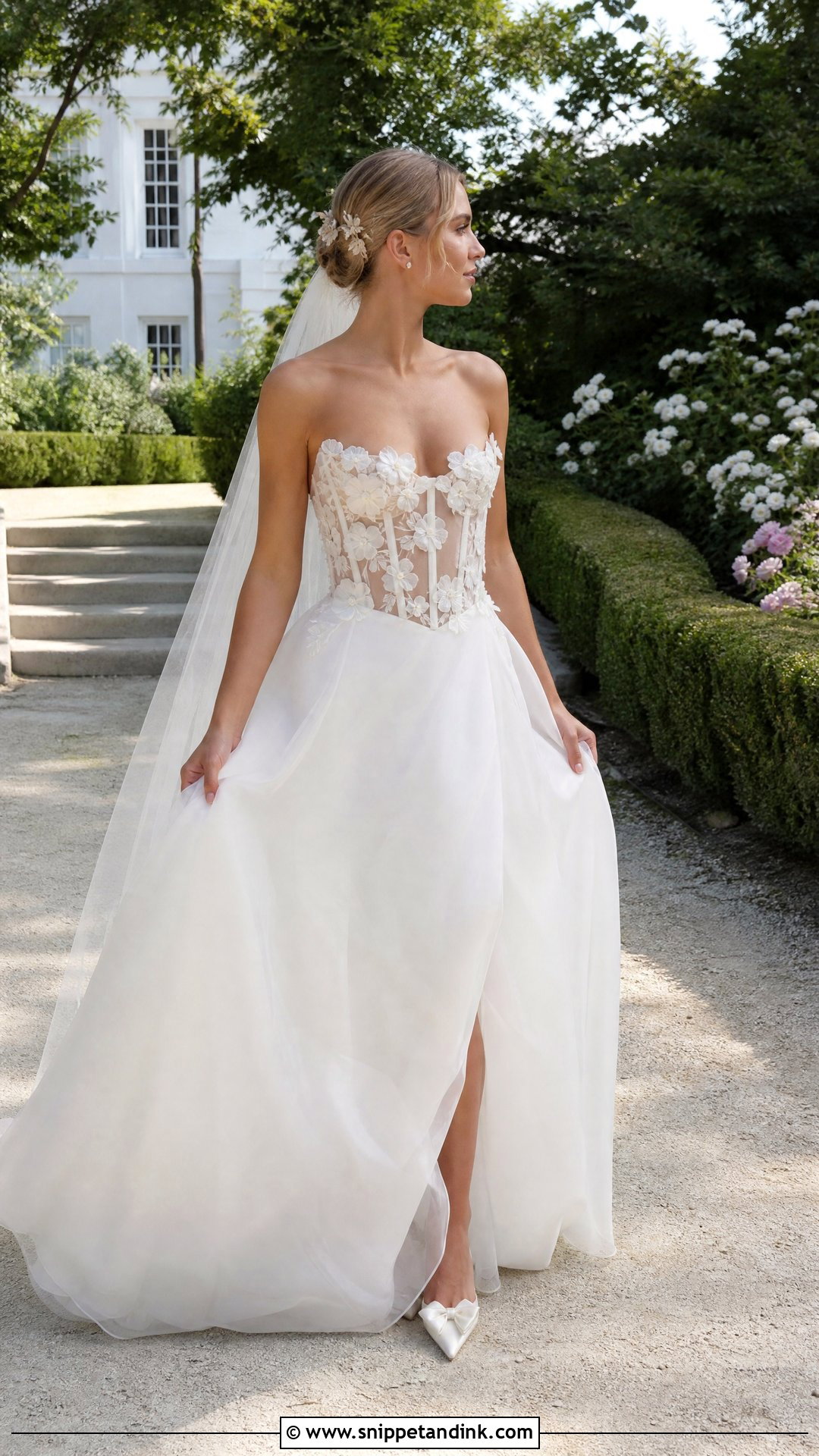
With a floral corset, the skirt should step back. Raised appliqués, embroidered vines or small blossoms over visible boning do the talking, and a plain organza or tulle skirt lets them. Soft pointed heels, tiny gemstone earrings and a sheer veil without lace edging finish it. I’d limit the hair to a relaxed bun with one or two small floral pins, and keep the bouquet all white so the look doesn’t tip into a garden theme. Spring and summer suit it best, though it works indoors with a neutral palette.
12. Tom Sebastien Pearl Wedding Dress
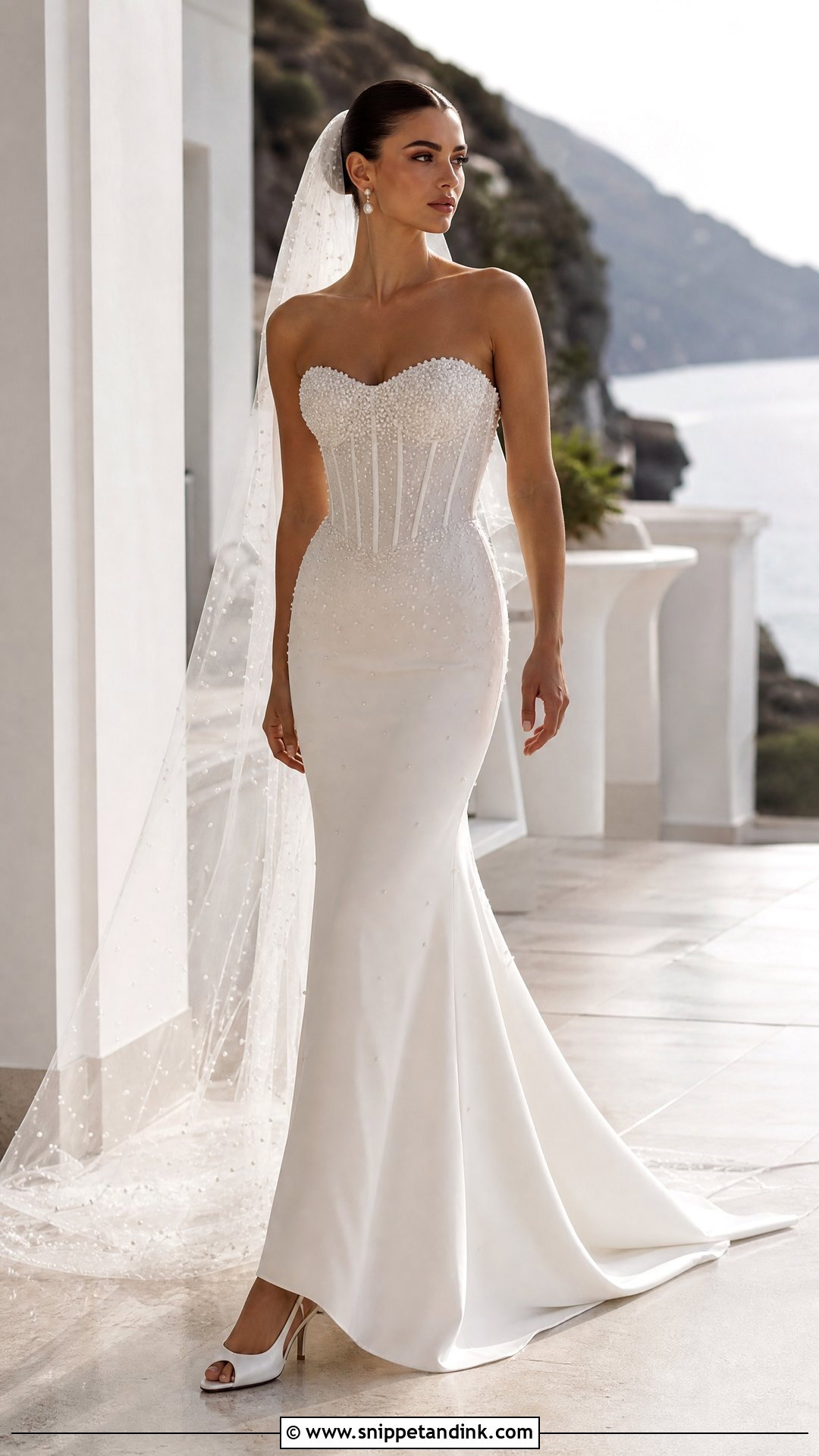
Pearls give a softer glow than crystals, and in daylight they look warm rather than flashy. A fitted corset with pearls scattered over sheer tulle, along the neckline or around raised flowers, paired with a clean skirt, keeps the weight balanced. Pearl beading is heavier than it looks, so I check that the bodice is strong enough to carry it without sagging at the neckline. Repeat pearls two or three times in the accessories at most: earrings, slingback heels, a veil with a few accents. A smooth low bun or glossy side-part waves suit an ivory palette.
13. Tom Sebastien Long Sleeve Wedding Dress
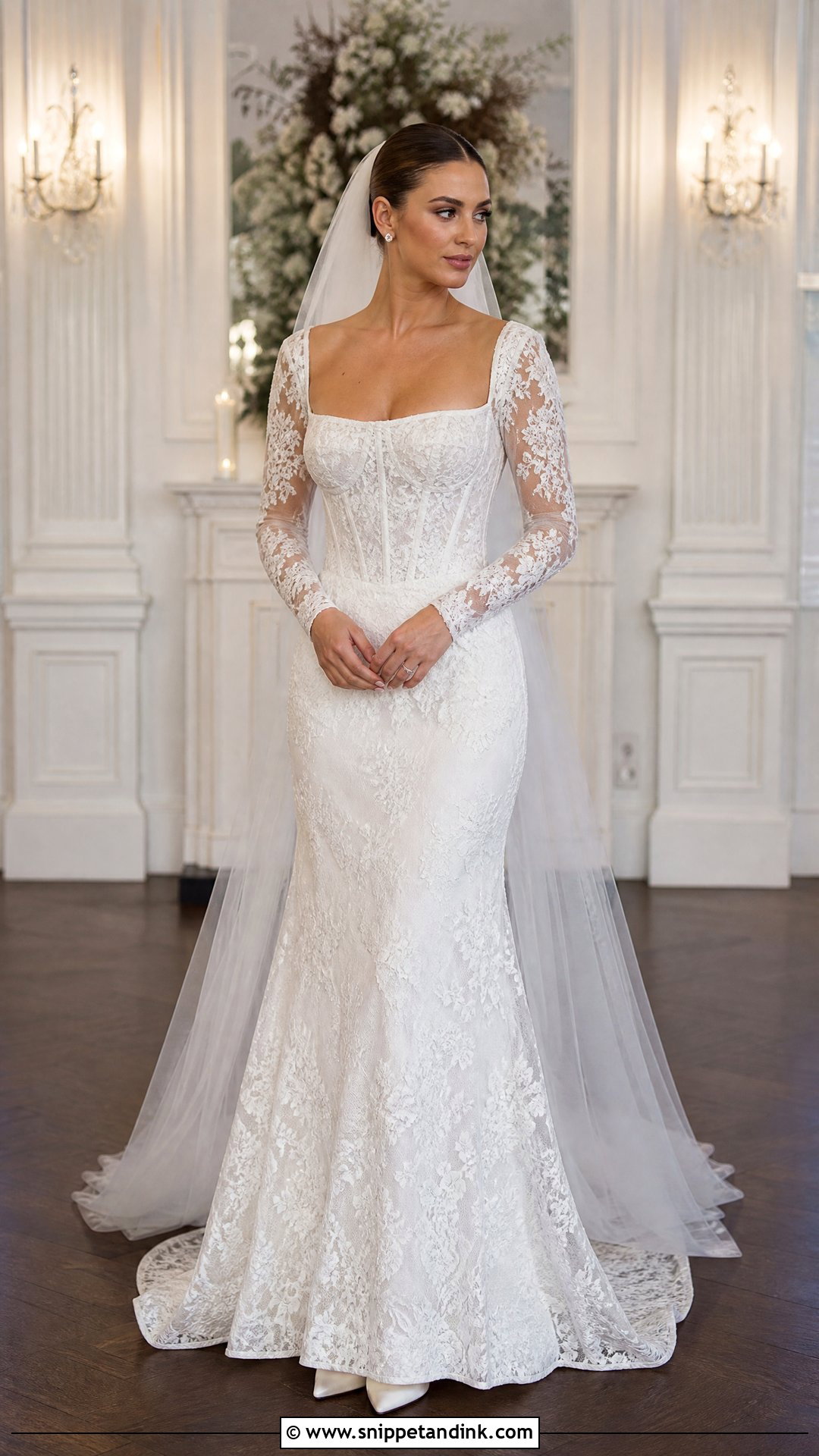
Long sleeves feel light when they’re sheer lace or embroidered tulle over a defined corset. A fitted or softly flared skirt continues the vertical line. Closed pumps, small diamond studs and a long plain veil make it formal, and an updo keeps hair from covering the sleeve detail. Check the sleeve fit with arms raised: tight sheer sleeves can tear at the underarm seam when you hug or dance. For fall and winter, a smooth ivory wrap for travel between locations is better than a bulky jacket.
14. Tom Sebastien Satin Corset Wedding Dress
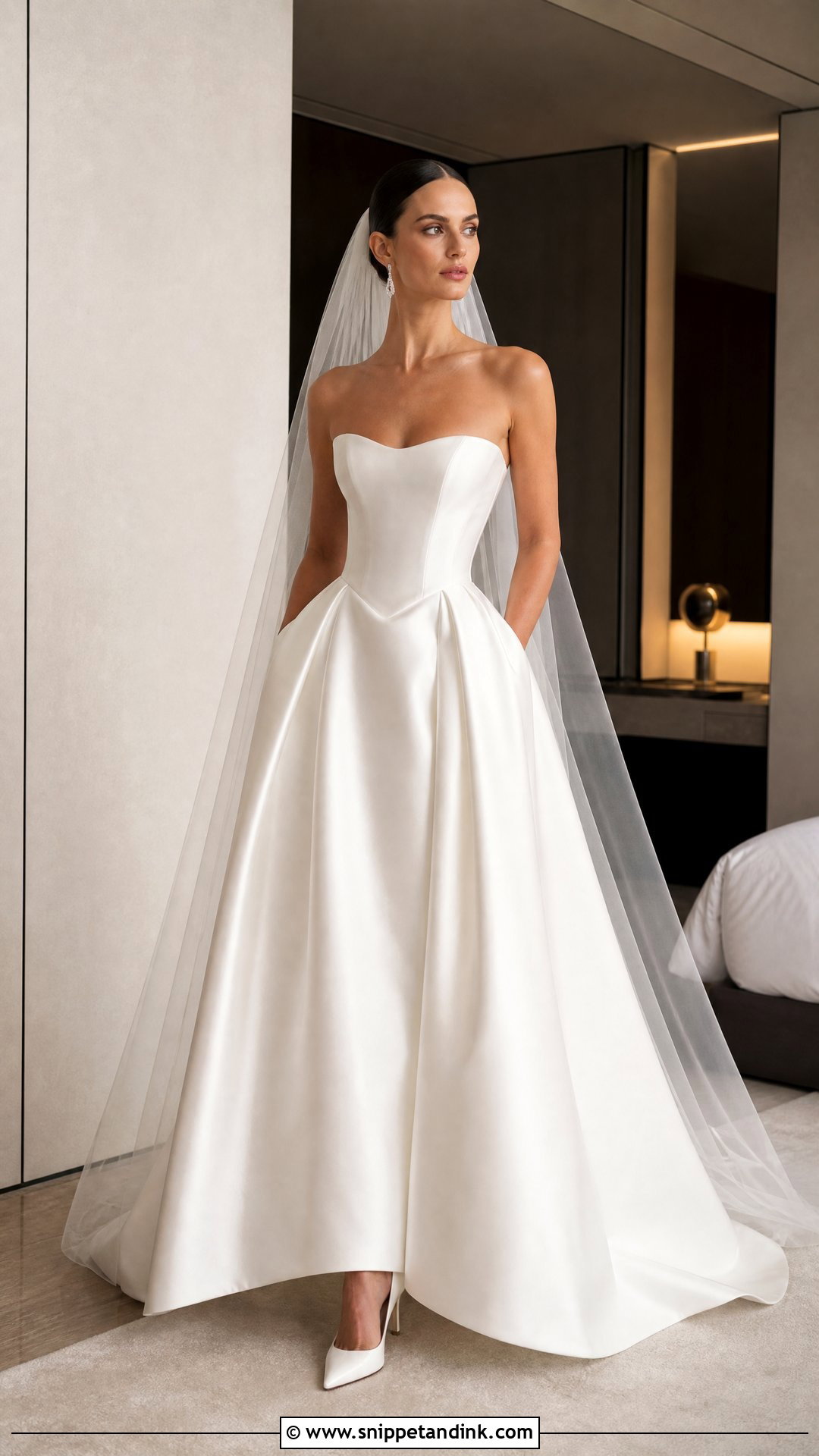
Plain satin shows every fitting issue, which is exactly why I love it on a well-made corset. With no lace or beading to hide behind, the seams, waist and neckline have to be precise. A sculpted neckline gives the minimal fabric character. Crystal drops, pointed satin pumps, a plain cathedral veil and a polished bun keep the lines clean, and a white rose bouquet softens it. Detachable gloves or a satin overskirt add drama for the entrance. It suits brides who admire couture construction but want a quieter finish.

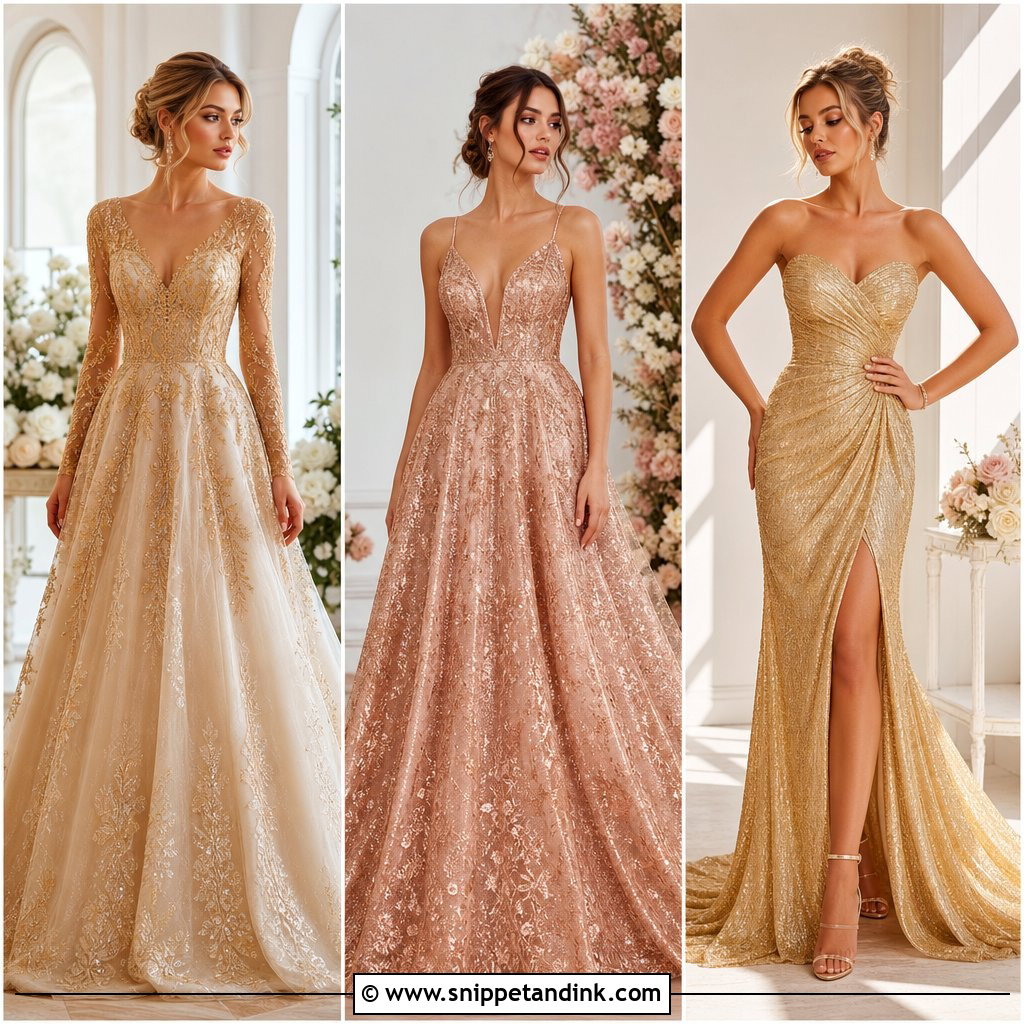
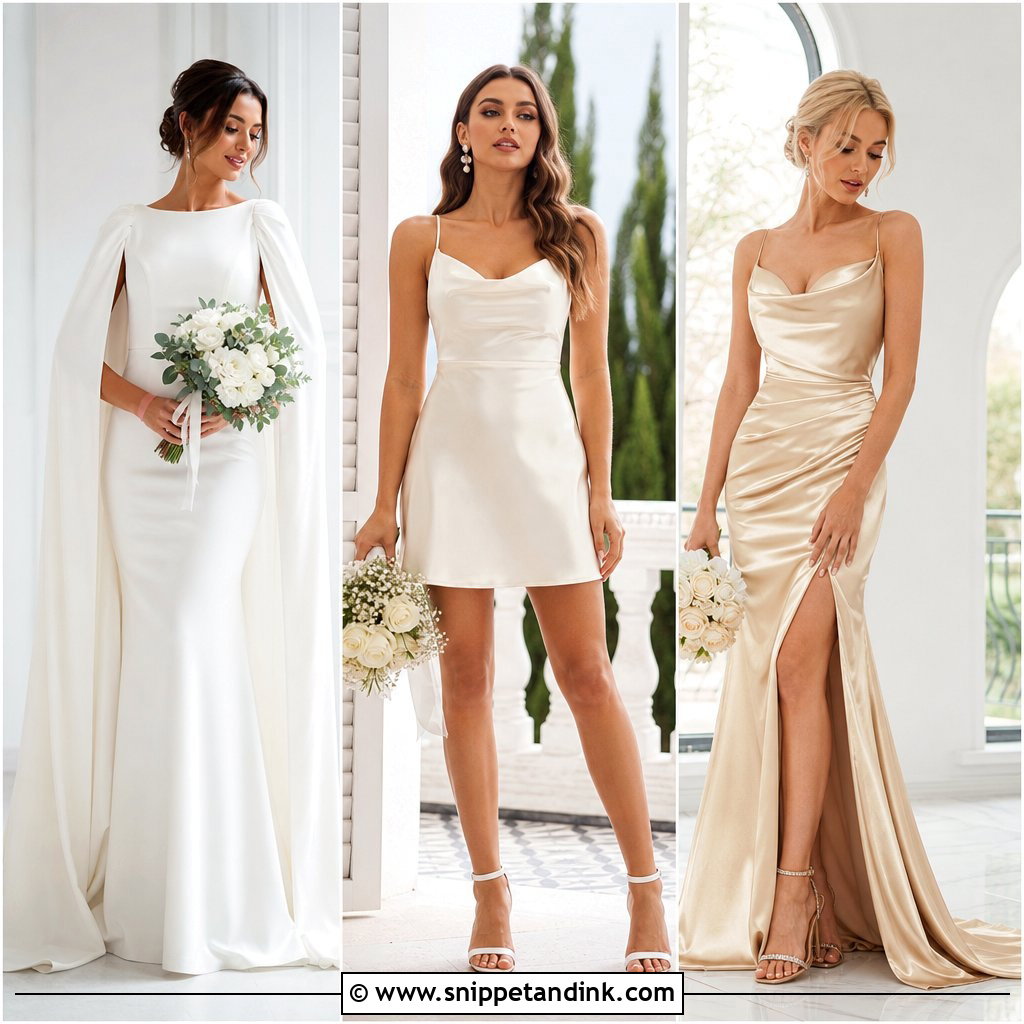
15. Tom Sebastien Cape Wedding Dress
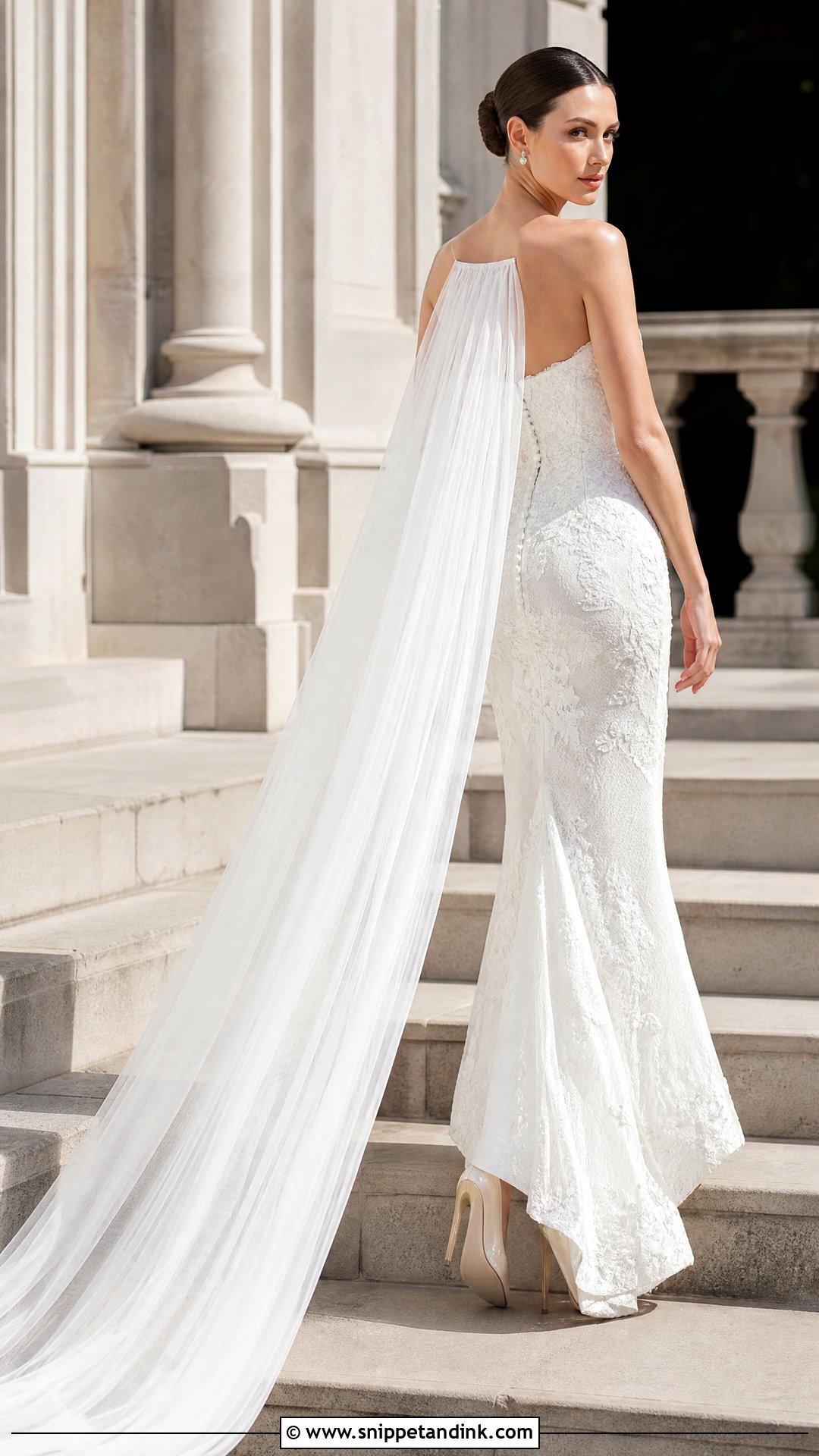
A floor-length sheer cape gives the movement of a veil without covering the hair. It attaches at the shoulders or neckline of a strapless corset gown in lace, satin or soft sparkle and trails behind. I check the fastening against the hairstyle: a smooth updo keeps the cape clasp from catching loose strands at the nape. Studs, a slim bracelet and ivory pumps are plenty. After the ceremony, unhook the cape and the reception silhouette is underneath. Outdoor portraits and long aisles show it off.
16. Tom Sebastien Sweetheart Wedding Dress
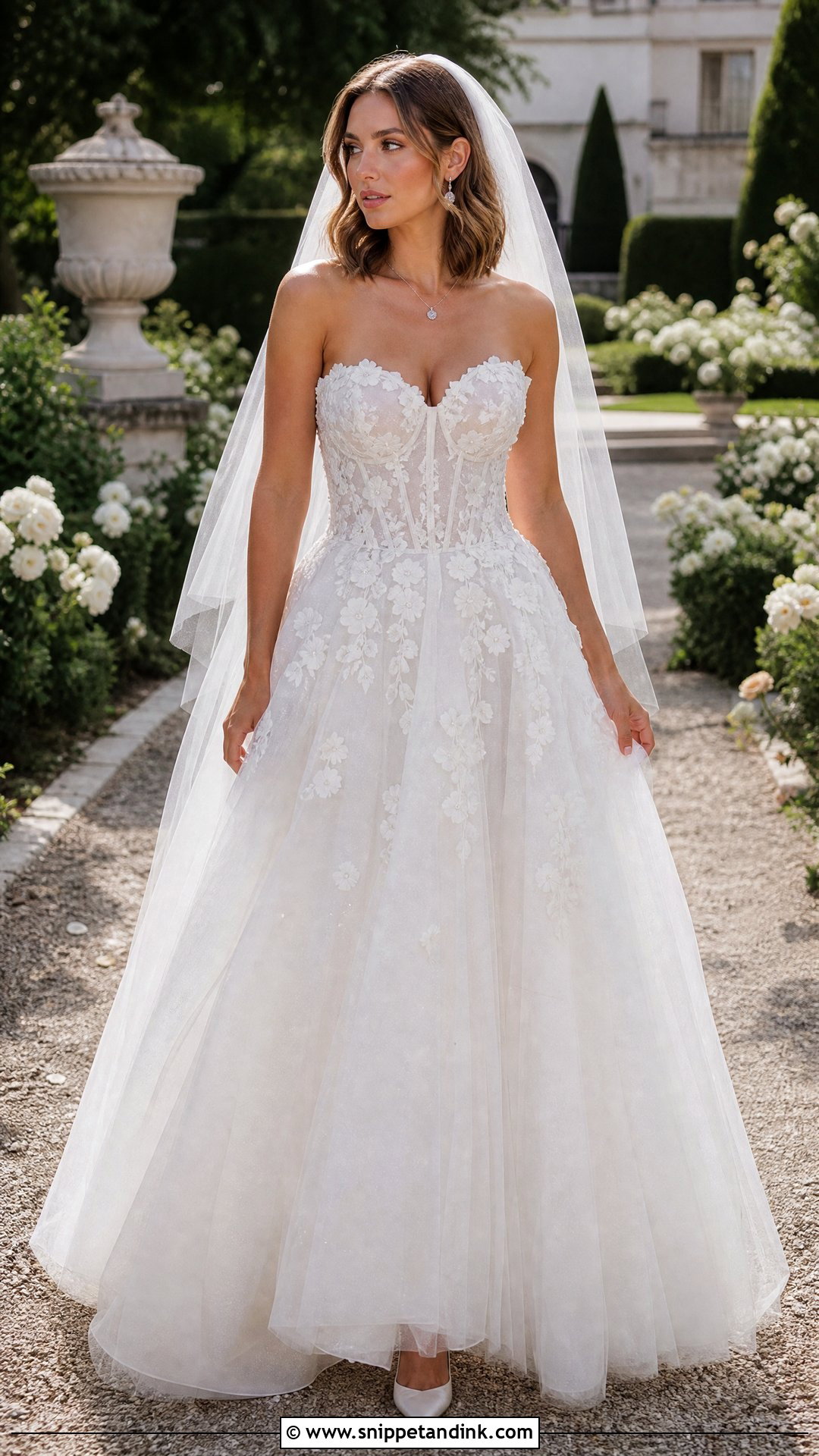
A sweetheart neckline on a modern corset is classic for a reason: curved cups and good boning support the bust without straps. The fit at the top edge is what I watch. If it gapes when you breathe in or digs into the underarm, the cups need adjusting. A full tulle skirt reads romantic; a mermaid skirt reads glamorous. A fine pendant, pearl or crystal earrings and pointed heels you can stand in all day finish it. A shoulder-length veil keeps the neckline visible; a cathedral veil suits a large venue.
17. Tom Sebastien Open Back Wedding Dress
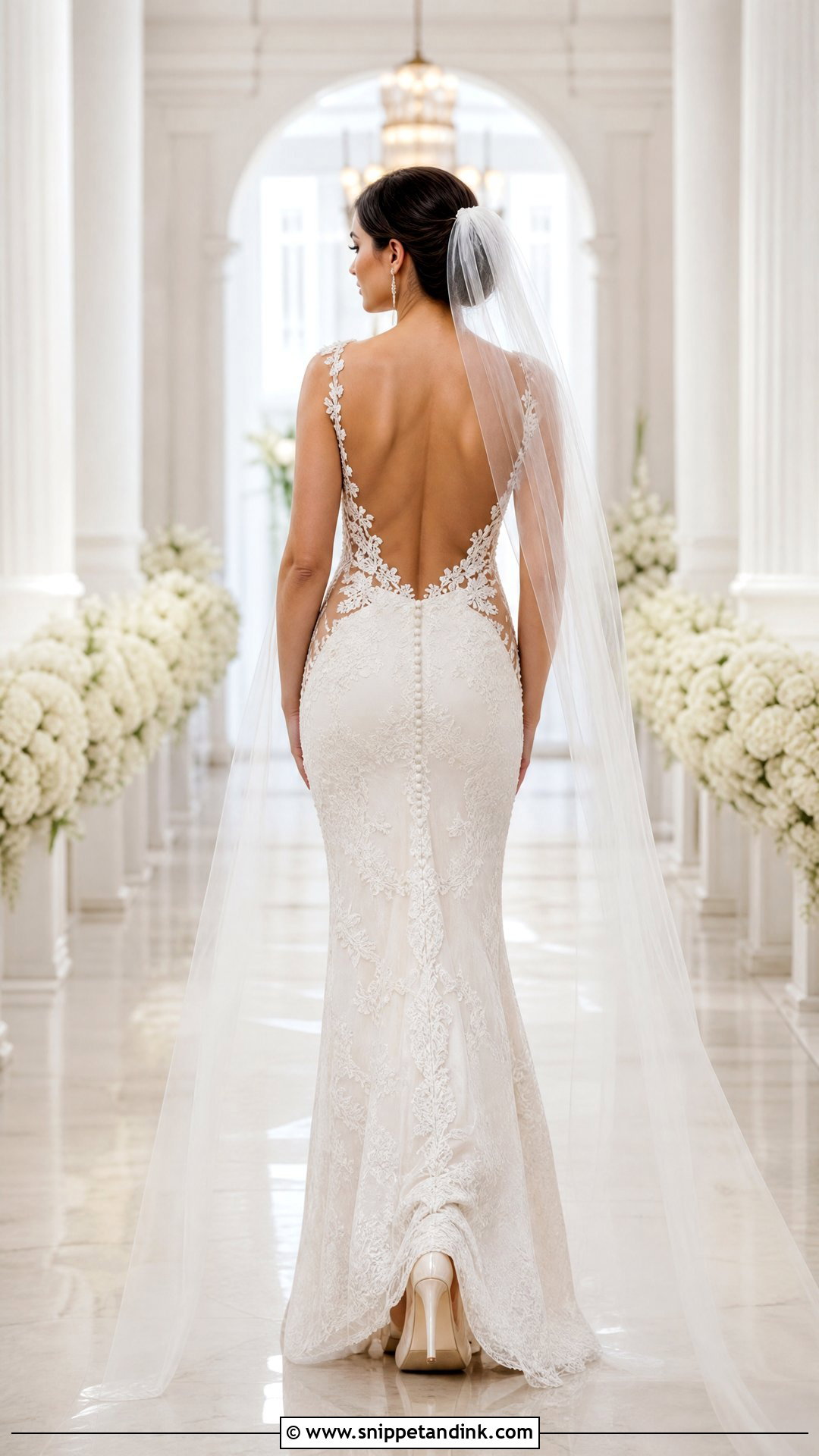
An open back is what guests see for the whole processional, so it deserves the attention. Illusion tulle, fine straps, floral edging or a row of buttons framing the opening all work; keep the front simpler so there’s one focal point. Support is the challenge. Plan undergarments and alterations early, because most bras won’t work and cups often need sewing in. An updo or side-swept waves keep the back on show, with delicate earrings, ivory heels and a veil sheer enough to see through.
18. Tom Sebastien Overskirt Wedding Dress
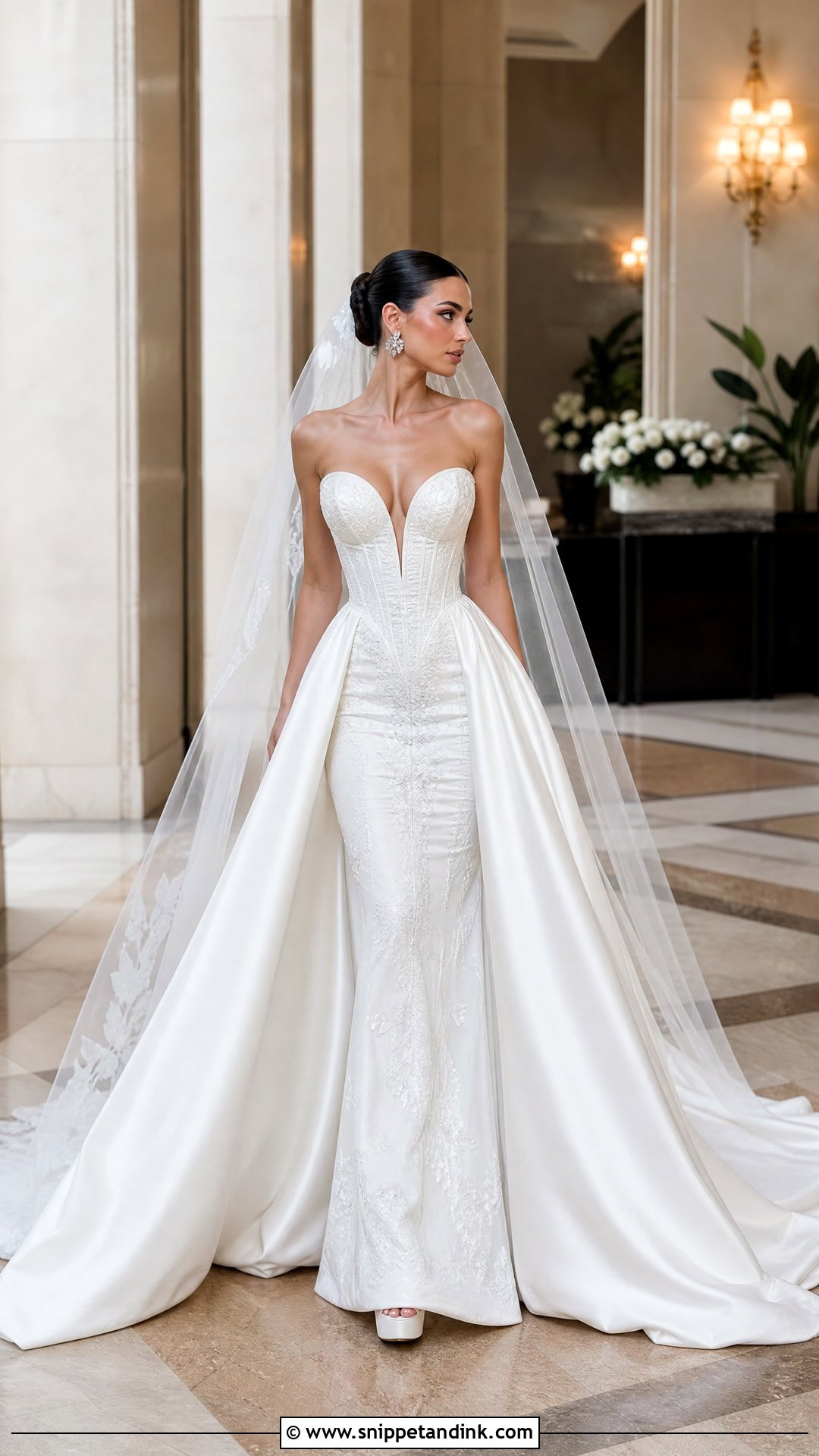
A detachable overskirt gives ball-gown scale for the ceremony and a fitted gown for the party. Underneath, a corseted mermaid or column in lace, satin or light beading; on top, a matching overskirt whose opening shows enough of the base dress to look deliberate. Practise removing it before the day. Overskirts attach with hooks, buttons or snaps, and a helper who’s done it once will do it in a minute instead of ten. Platform heels, statement earrings, a simple cathedral veil and a sleek bun suit both versions.
19. Tom Sebastien Ruffled Tulle Wedding Dress
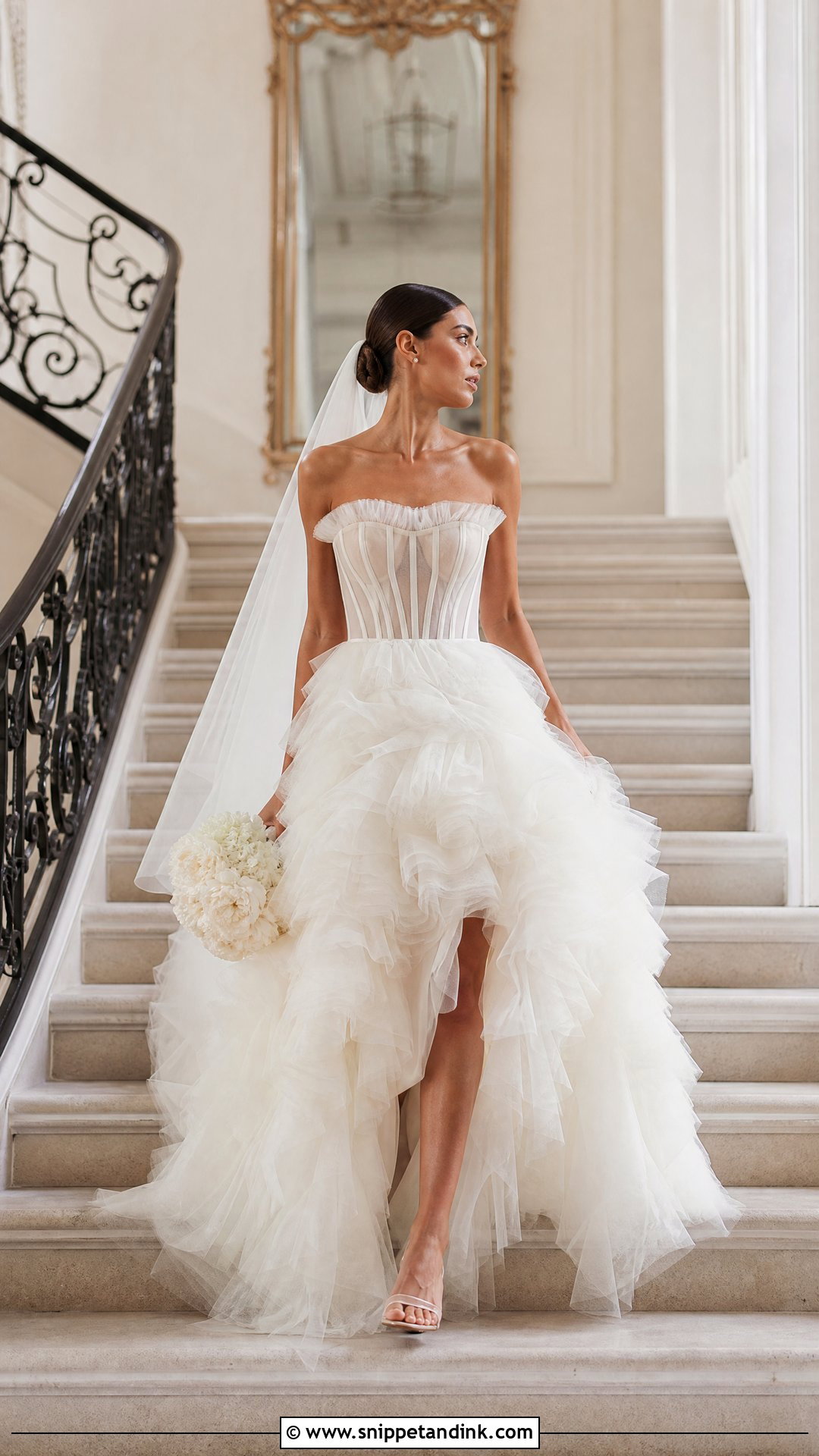
Ruffled tulle gives volume without weight, but tulle layers catch on everything: chair legs, heel straps, bouquet wire. A structured corset defines the waist against the airy skirt, with ruffles in graduated tiers or set asymmetrically. Simple ivory sandals, studs, a plain veil and a neat low bun keep it polished. Carry a smaller bouquet so the skirt stays the focus. I’d tell any bride in this dress to hold the skirt slightly forward on stairs. Ballrooms and estate gardens give it the space it needs.
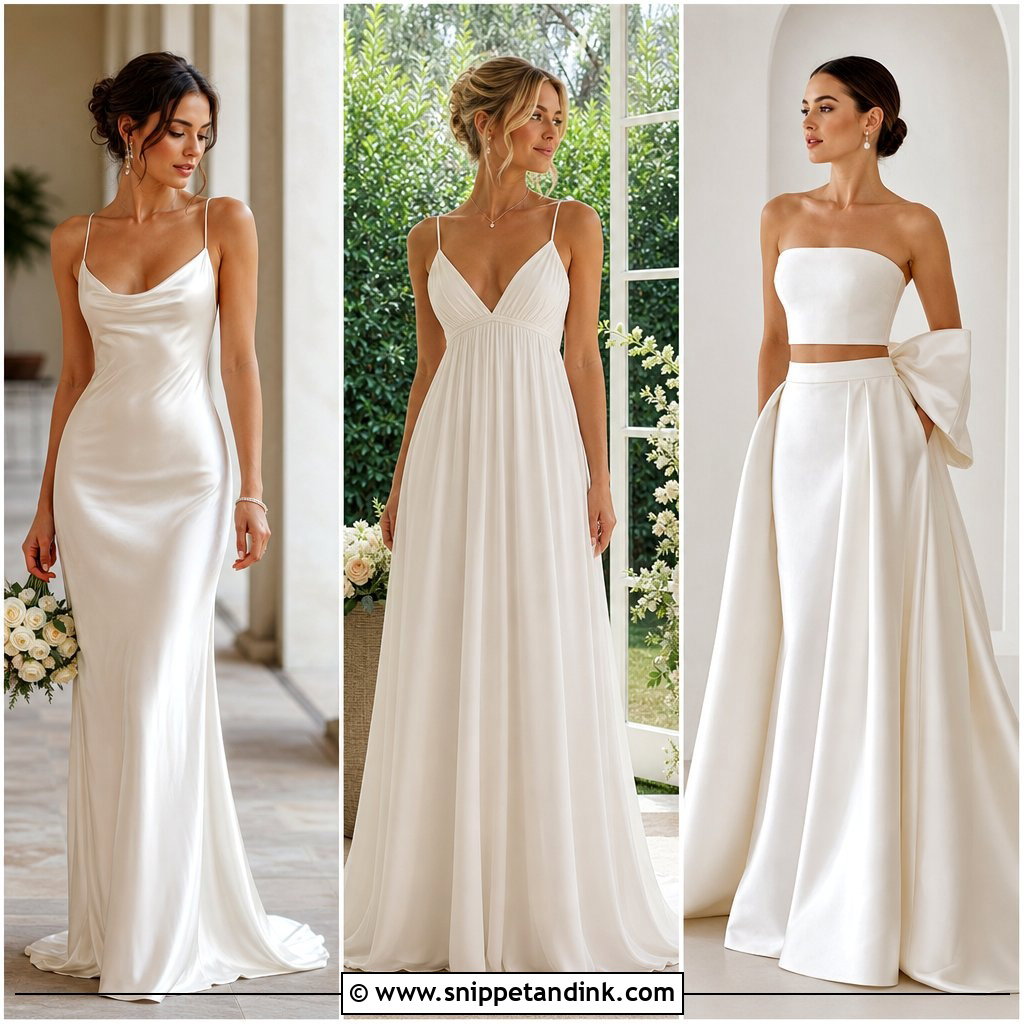

20. Tom Sebastien Minimal Mermaid Wedding Dress
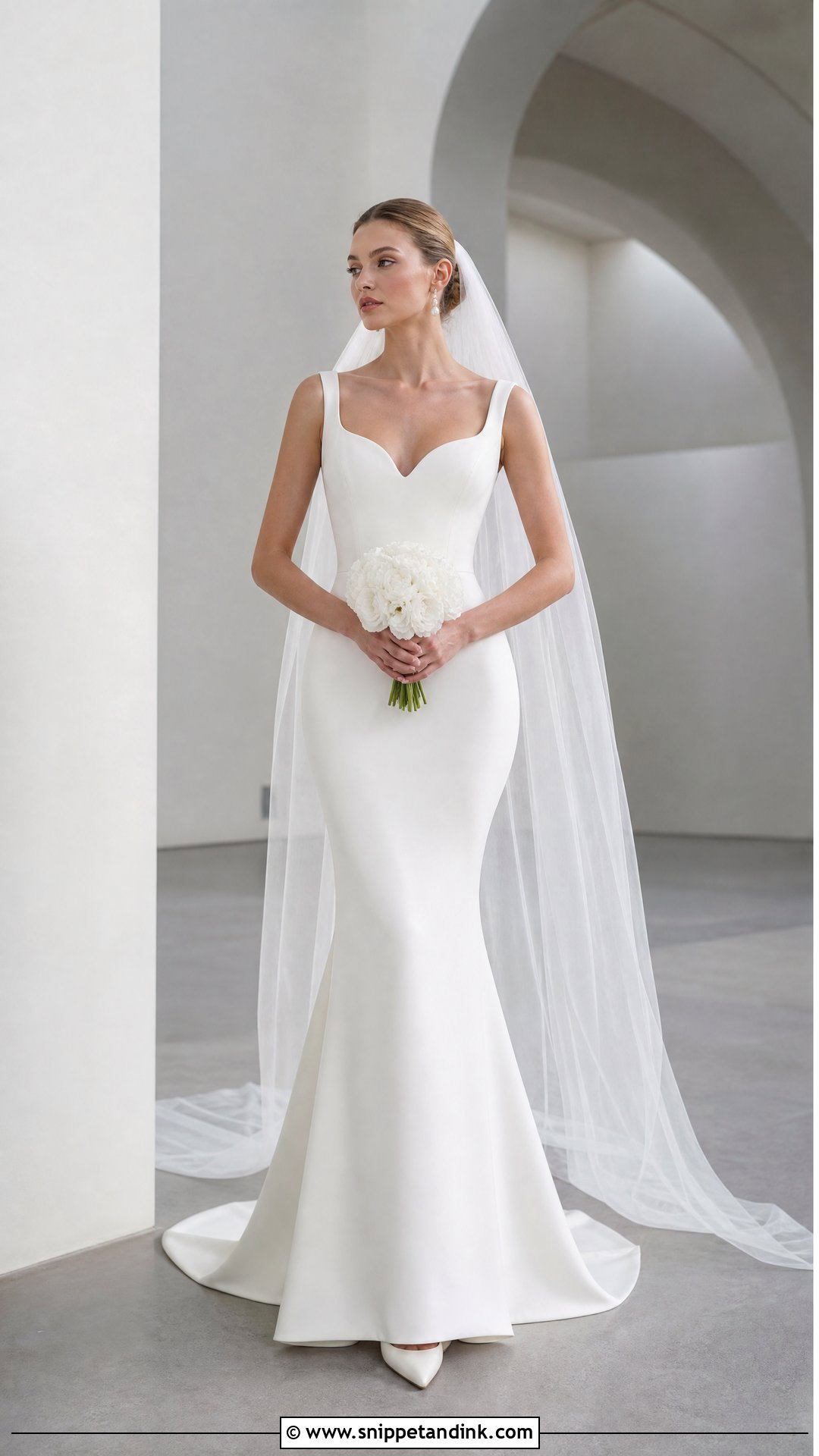
A plain mermaid relies on fit alone. In smooth crepe or satin, with a structured bodice and a flare near the knee, there is nowhere for poor tailoring to hide, so I’d budget for careful alterations through the hips. One sculpted neckline or a low back gives enough interest. Pointed pumps, modern pearl earrings, a long sheer veil and a glossy bun or controlled waves keep it modern, and a detachable bow, cape or overskirt can add ceremony drama. Hotels and gallery venues with clean architecture suit it.
Ordering a Designer Gown Without Racing the Calendar
Designer gowns are usually made to order, and production takes months, not weeks. Many boutiques suggest ordering somewhere around eight to twelve months before the wedding, then leaving two to three months for alterations. Timelines vary by label and season, so ask the boutique for the expected delivery date in writing before you pay a deposit.
Sizing and alterations
Bridal sizes rarely match high-street sizes, and the gown is ordered to your largest measurement, then taken in. Don’t be thrown by the number on the label. Expect two or three fittings, and keep in mind that corset gowns with appliqué or beading cost more to alter because the trims have to be removed and replaced by hand.
Plan the bustle and the changes
Long trains, overskirts and capes all need a plan for the reception. Ask your seamstress to show a bridesmaid how the bustle hooks up and how any detachable pieces come off. A short practice at the final fitting saves a lot of fumbling in a dim corridor later, and it keeps delicate tulle from tearing under rushed hands.
One Focal Detail, Then Let the Corset Do the Work
Corsetry, texture and accessories all have to agree for a gown like this to work. Start with the silhouette you feel most confident in, then choose one main detail: raised flowers, pearls, sleeves, a slit or a sculpted neckline. Let the shoes, jewelry, hair and veil support it rather than compete. Before you commit, walk, sit, climb steps and raise your arms in the full outfit. A gown that passes those tests will suit the venue and stay comfortable from the aisle to the last dance.
You'll Like These Ideas:







Leave a Reply