
The gowns that work best in my fitting room are the ones where the bride picks an era for its shape, not its trivia. High-neck Victorian lace, liquid 1930s satin and short 1960s hems all appear below, and each one changes how you stand, sit and move. A vintage dress only looks like a costume when every accessory shouts the same decade at once. Good fabric, one or two period details and a fit made for your body keep it feeling current. Bridal clothing has always mirrored the craftsmanship of its time, so there is a lot to borrow from. Read these for silhouette first, ornament second.
One Era From Veil to Shoes
The fastest way to make a period gown look accidental is to pair it with hair and shoes from a different decade. A 1930s bias dress with a big 1980s curled updo, or Victorian lace with strappy modern sandals, reads as a mistake in photos even when each piece is lovely on its own. When I style a vintage bride, I pick the decade’s two or three strongest cues and let everything else stay neutral.
- Victorian and Edwardian: hair low and soft, a long veil or Juliet cap, closed shoes. Leave the neck bare of jewelry when the collar is high.
- 1920s and Art Deco: hair close to the head, a band or cap veil, T-straps. Long earrings rather than a necklace.
- 1930s and Old Hollywood: side-parted waves or a low chignon, a long sheer veil, slim satin shoes.
- 1940s and 1950s: rolled or set curls, a short or birdcage veil, pointed pumps, gloves if the sleeves are short.
- 1970s: loose waves or a braid, a flowing veil or none, low boots or flat sandals.
Makeup follows the same logic. A defined 1950s lip or a soft 1930s brow is enough of a nod; full period makeup tends to age the face in close-up shots.
1. Victorian Lace Bridal Gown
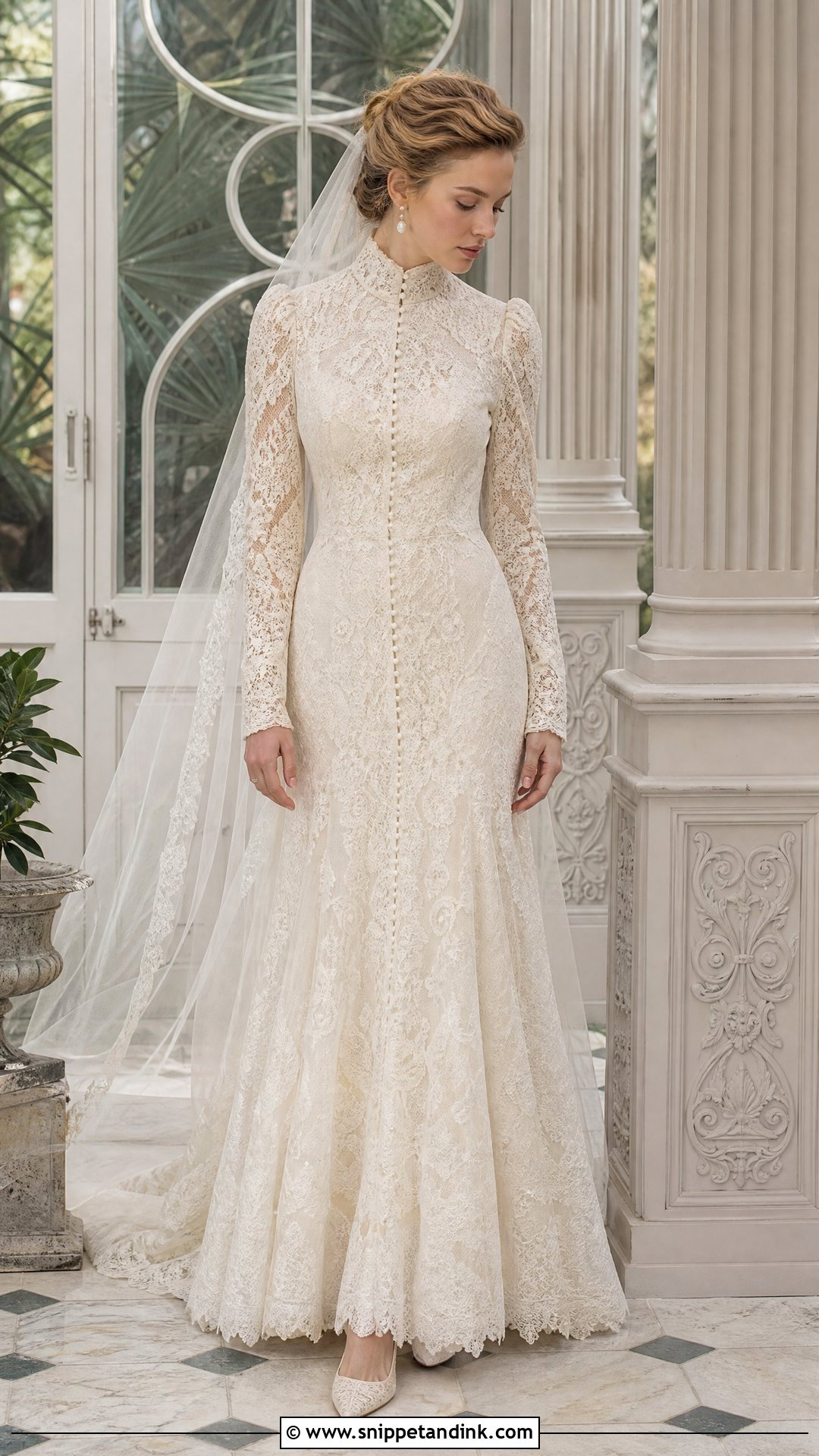
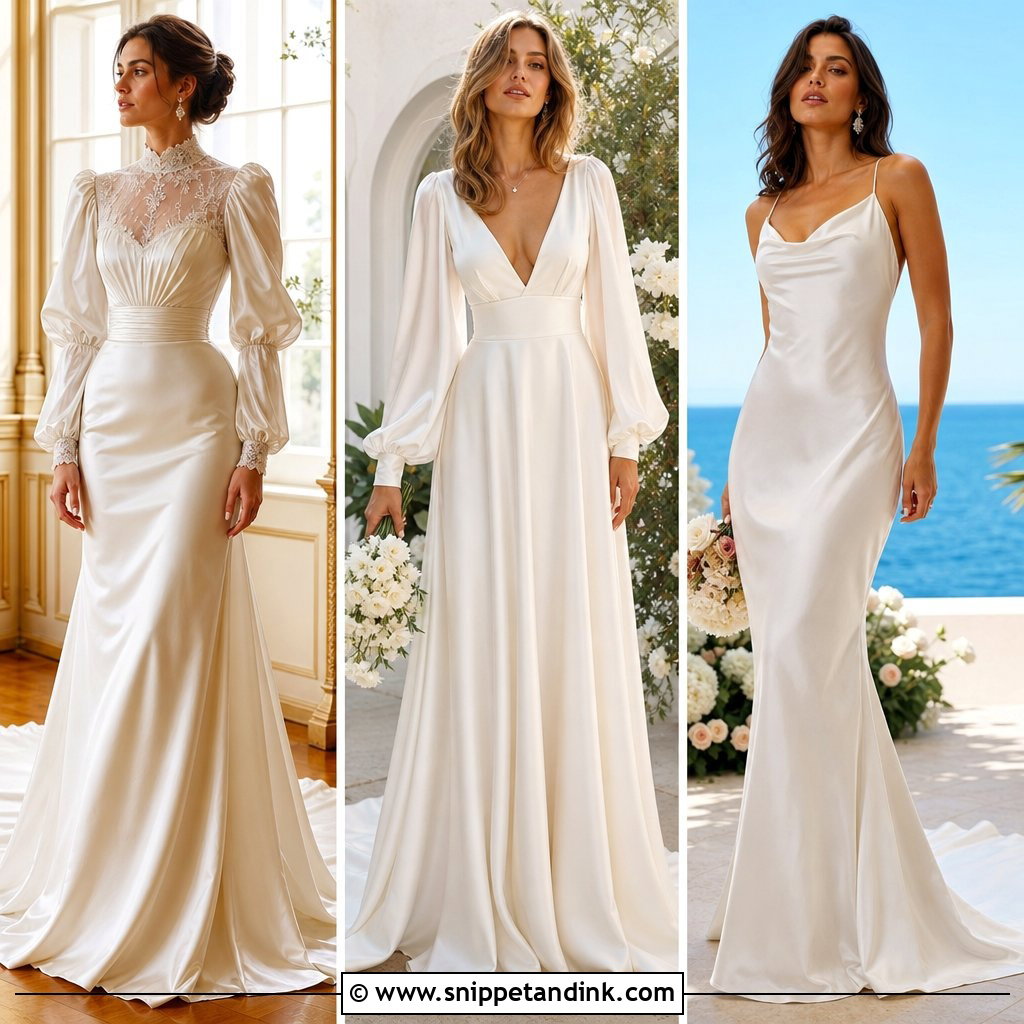
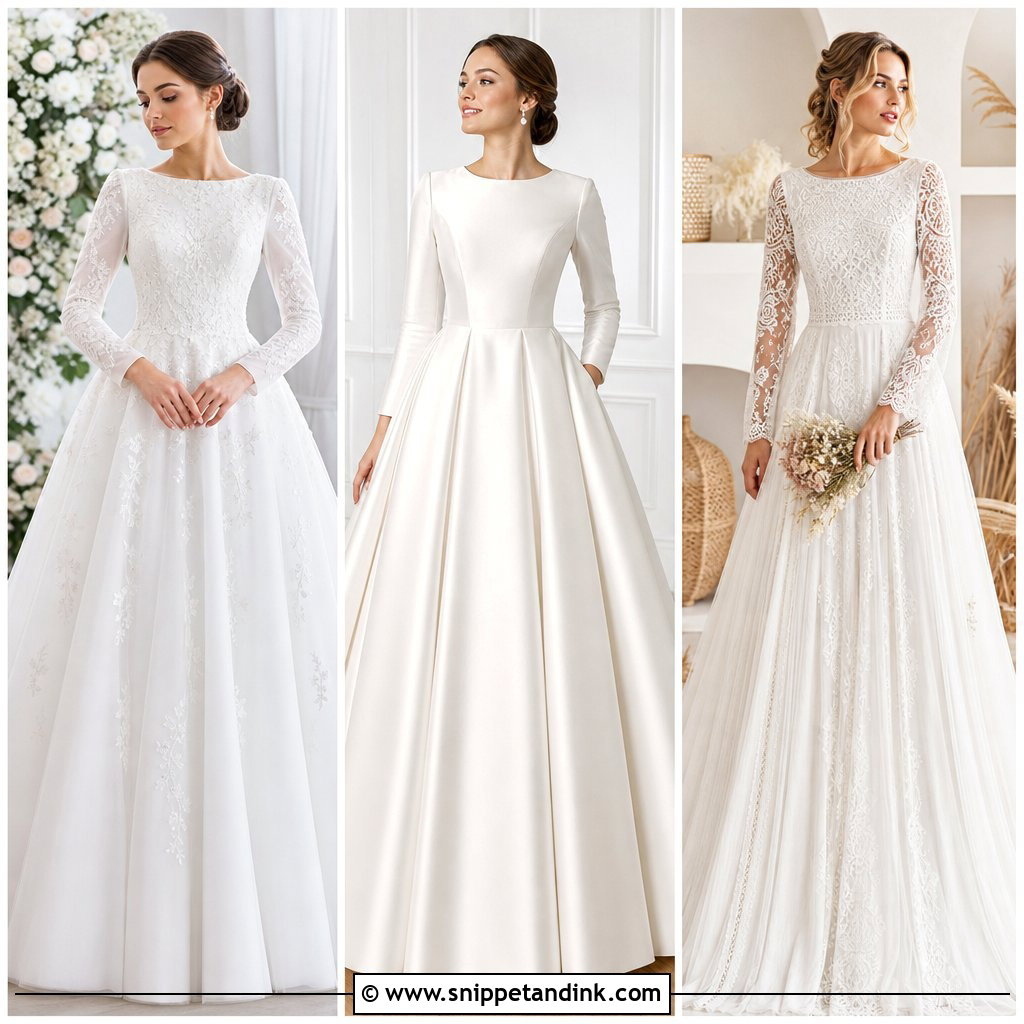
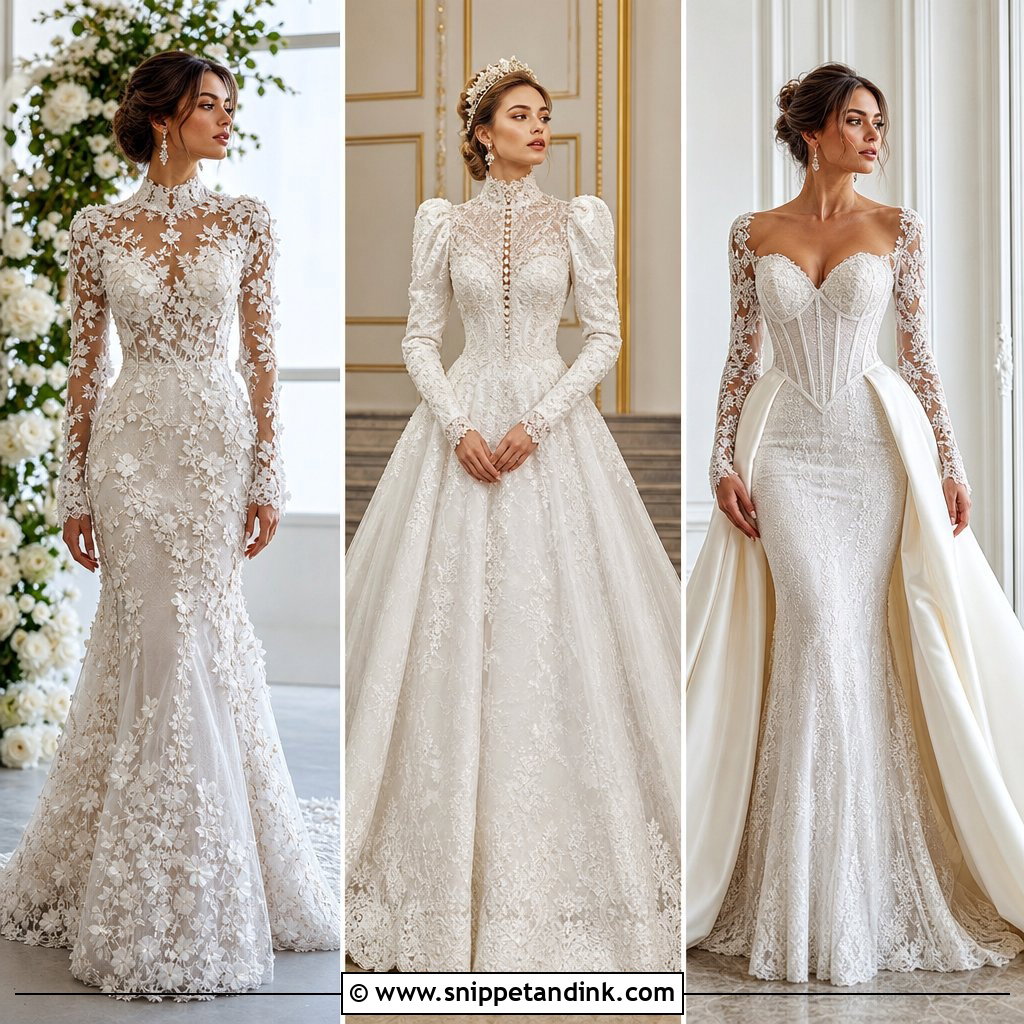
Lace this dense needs a lining that breathes. A Victorian lace bridal gown pairs a fitted bodice, a high neck and long sleeves with a skirt that has structure but doesn’t drag. Ivory lace over satin gives that softly aged color, and white lace has been bridal since the mid-1800s, so it’s an honest reference. I ask for a little ease in the sleeve head, because tight lace sleeves stop you lifting your arms for hours. Lace-covered pumps, pearl drops and a veil edged in matching trim suit it, with a low bun to show off the neckline and buttons.
2. Edwardian High Neck Bridal Gown
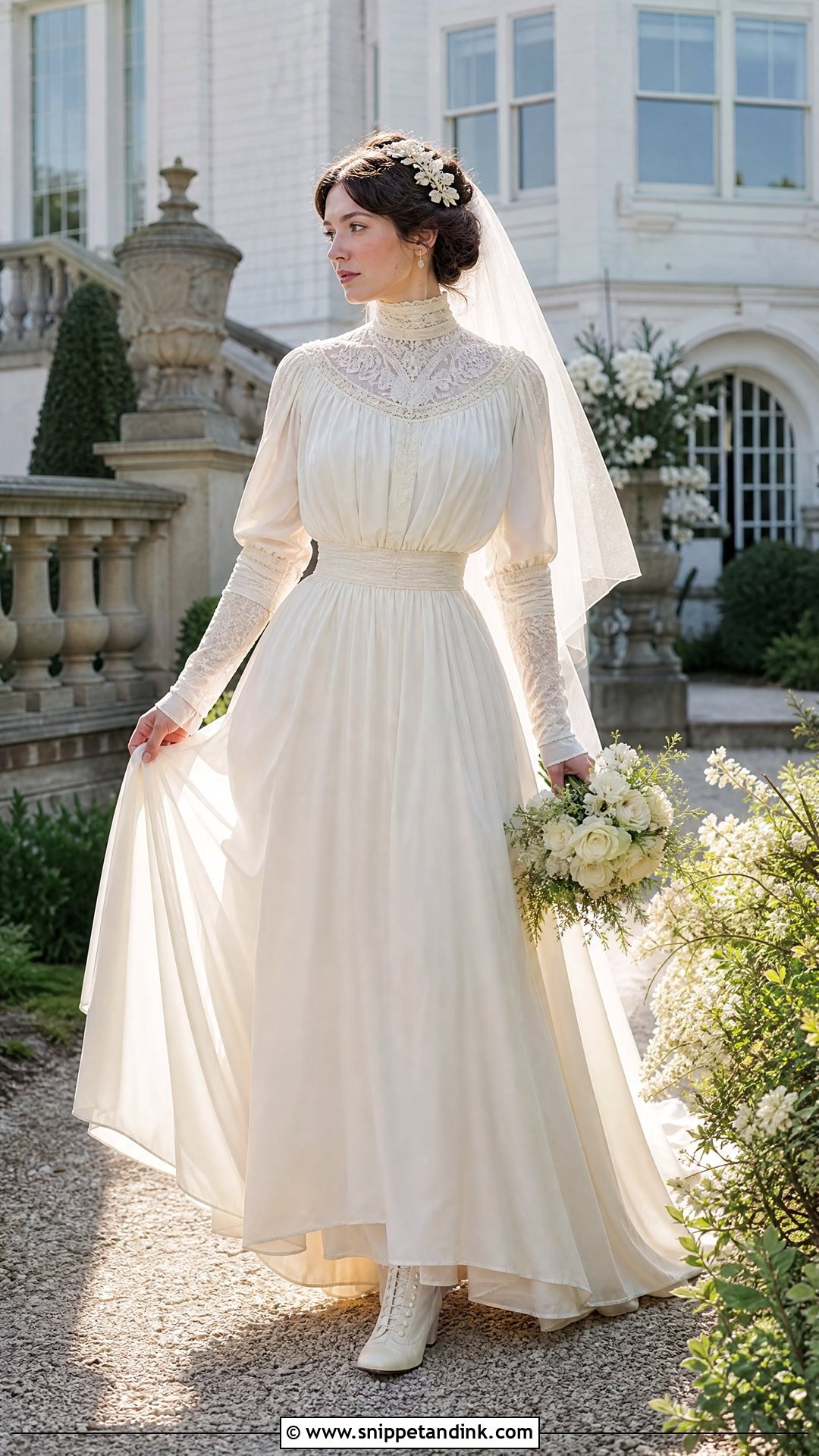
Edwardian gowns are built softer than people expect. The bodice is lightly bloused, the lace yoke sits high and the waistband is narrow, so the shape comes from the cut rather than from squeezing. If you want more definition, hidden boning at the side seams does it without stiffening the front. Button boots or almond-toe heels, a small floral comb and a tulle veil under a loose updo are all it needs; the neckline and sleeves already carry plenty of detail. For a lighter, modern version, I’d pick sheer sleeves and embroidered tulle over heavy, densely layered lace. Garden roses suit the mood.
3. 1920s Beaded Bridal Gown
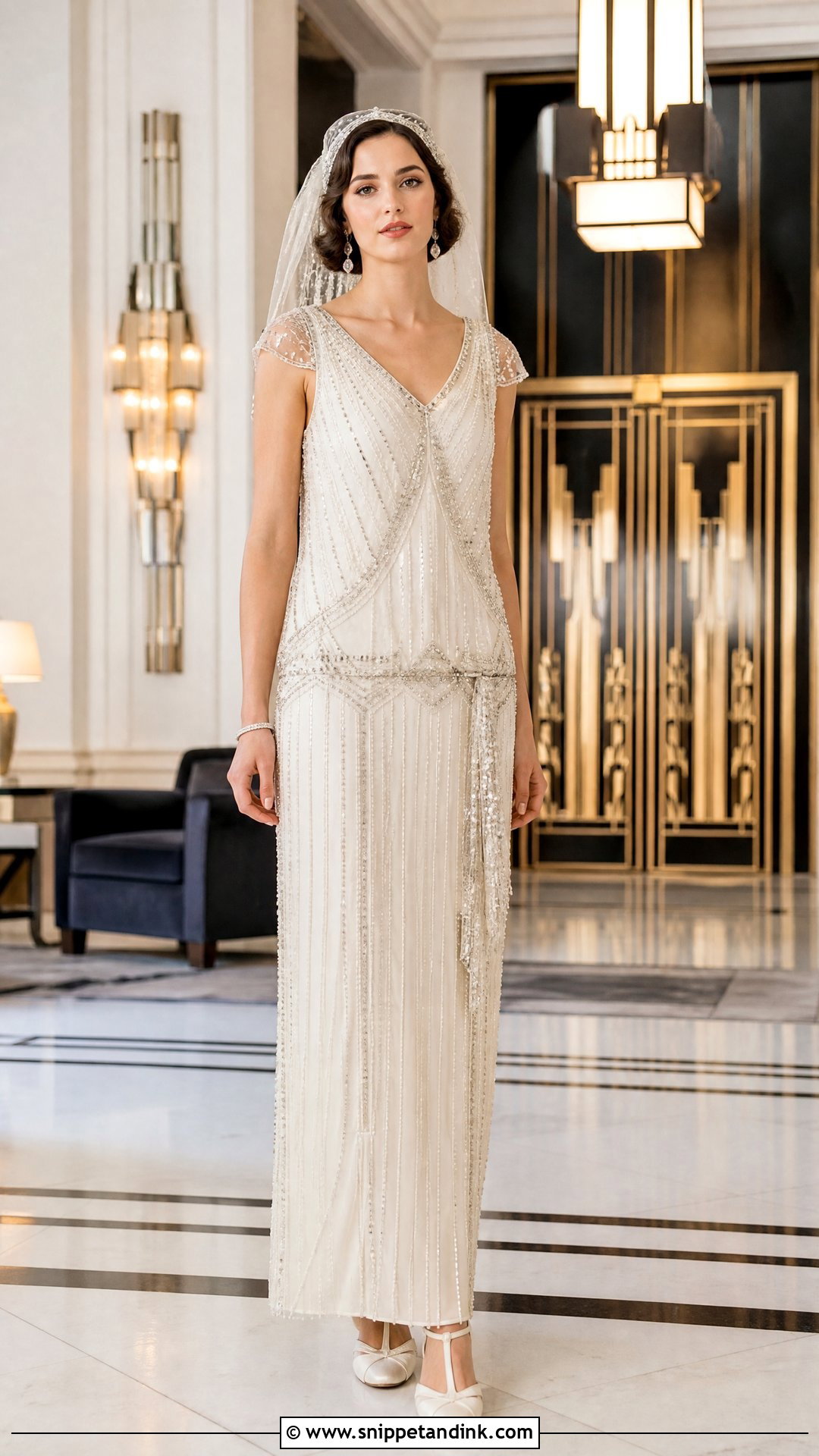
Beading on mesh is light; beading on satin is not. That single choice decides whether a 1920s beaded gown feels easy at midnight. A straight or slightly dropped waist, geometric beadwork and a modest V-neck give the classic line. I always turn these inside out to check that the beading near the waist and underarms is backed and lined, since loose threads there snag and scratch. Silver T-straps, a crystal comb and long earrings that echo the beads suit it, with a soft cap veil. Keep the flowers compact, ivory roses or calla lilies, so the beadwork stays the focus.
4. 1930s Bias Cut Satin Bridal Gown
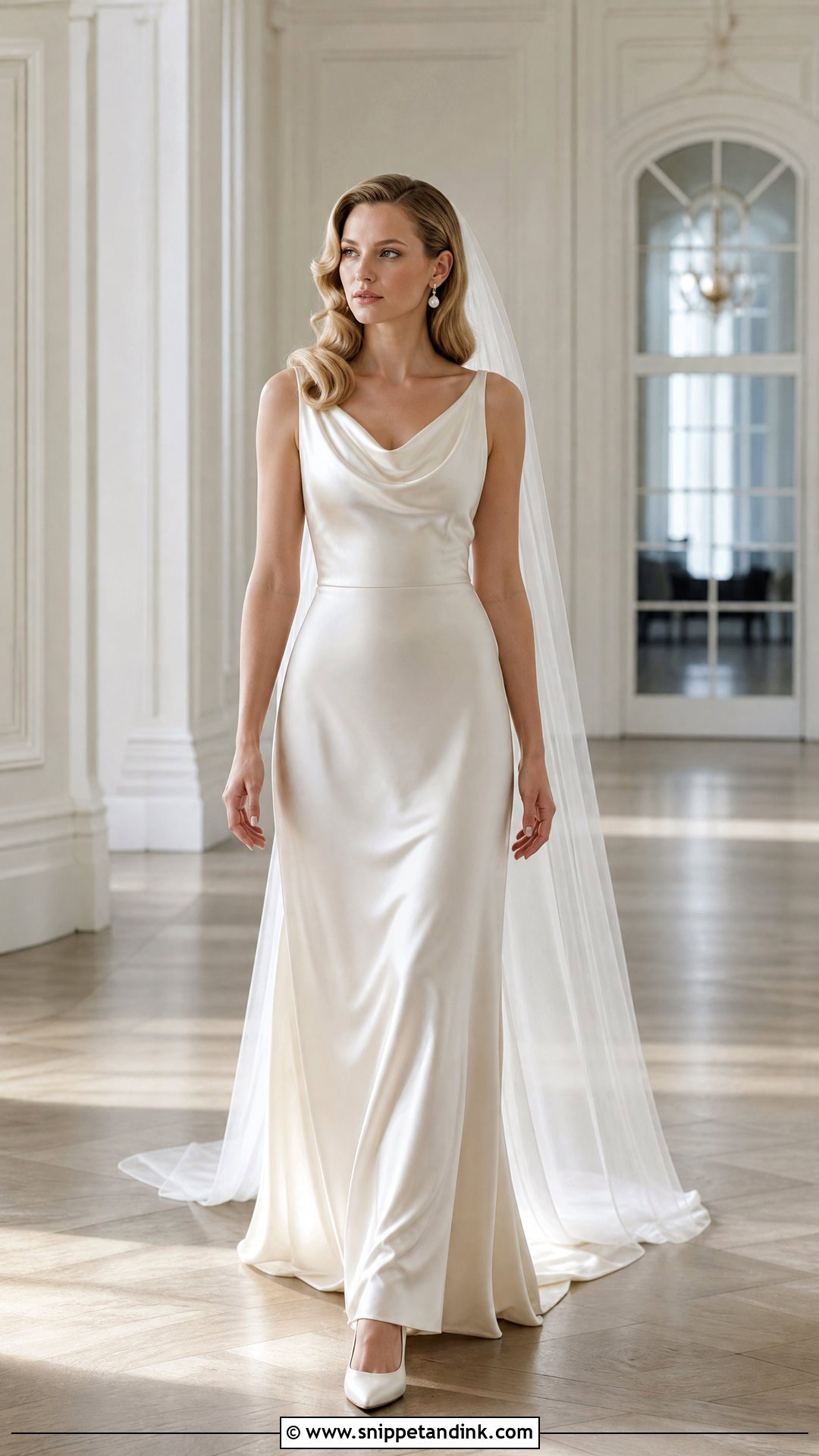
Cutting satin on the diagonal grain lets it fall around the body instead of standing away from it, the technique that made 1930s bias cut satin bridal gown designs so fluid. A cowl neckline, a fitted waist and a softly flared hem are the details to look for, in silk satin or a good satin alternative. Bias cloth shows everything underneath, so I fit these over smooth, skin-toned shapewear and let the hem settle for a day before it’s finished. Closed-toe ivory heels, a long sheer veil and plain pearl earrings work, with soft side waves or a low chignon. A faux-fur wrap covers you on a cold evening.
5. 1940s Long Sleeve Bridal Gown
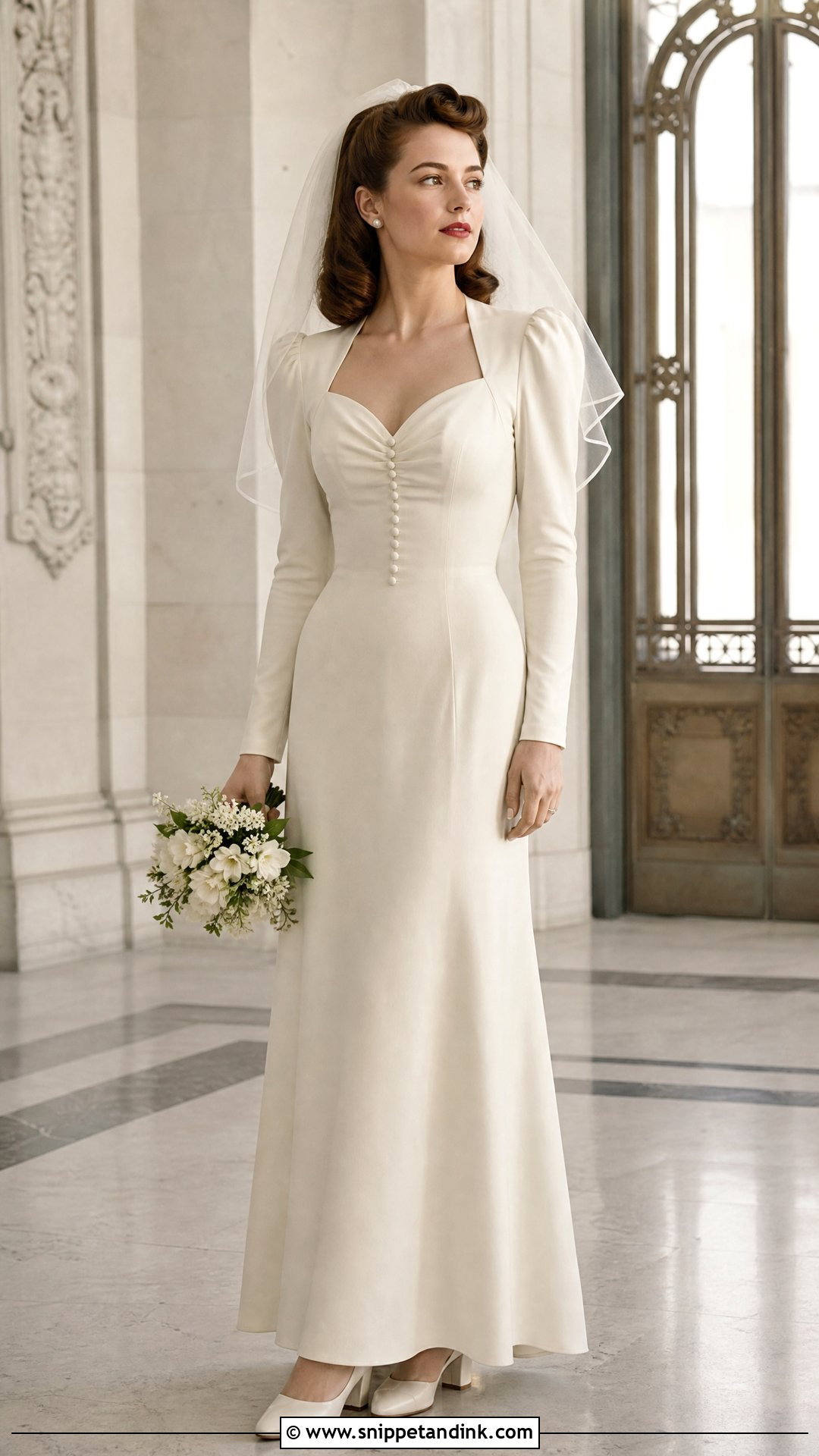
Tailoring is the ornament on a 1940s long-sleeve gown. Defined shoulders, a shaped waist, covered buttons and a narrow A-line skirt make the silhouette, and crepe or matte satin keeps it sleek. The shoulder seam must land exactly on your shoulder bone; a centimeter out and the whole dress looks borrowed. A sweetheart neck softens the structure, while a bateau or small V gives more coverage. Low block heels, pearl studs and a shoulder-length veil on a rolled set or low bun suit it. White roses with seasonal greenery finish the picture.
6. 1950s Tea Length Bridal Gown
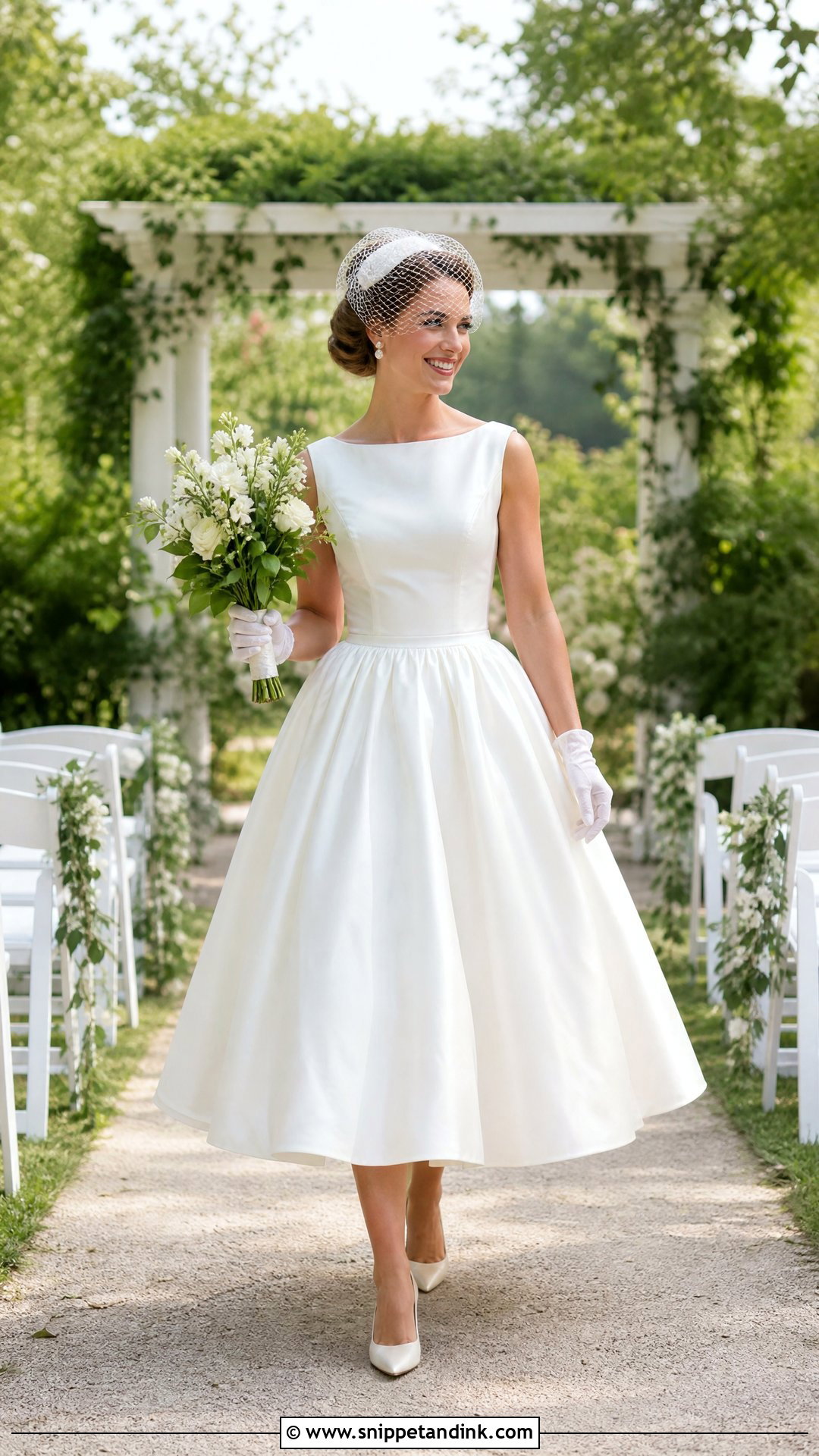
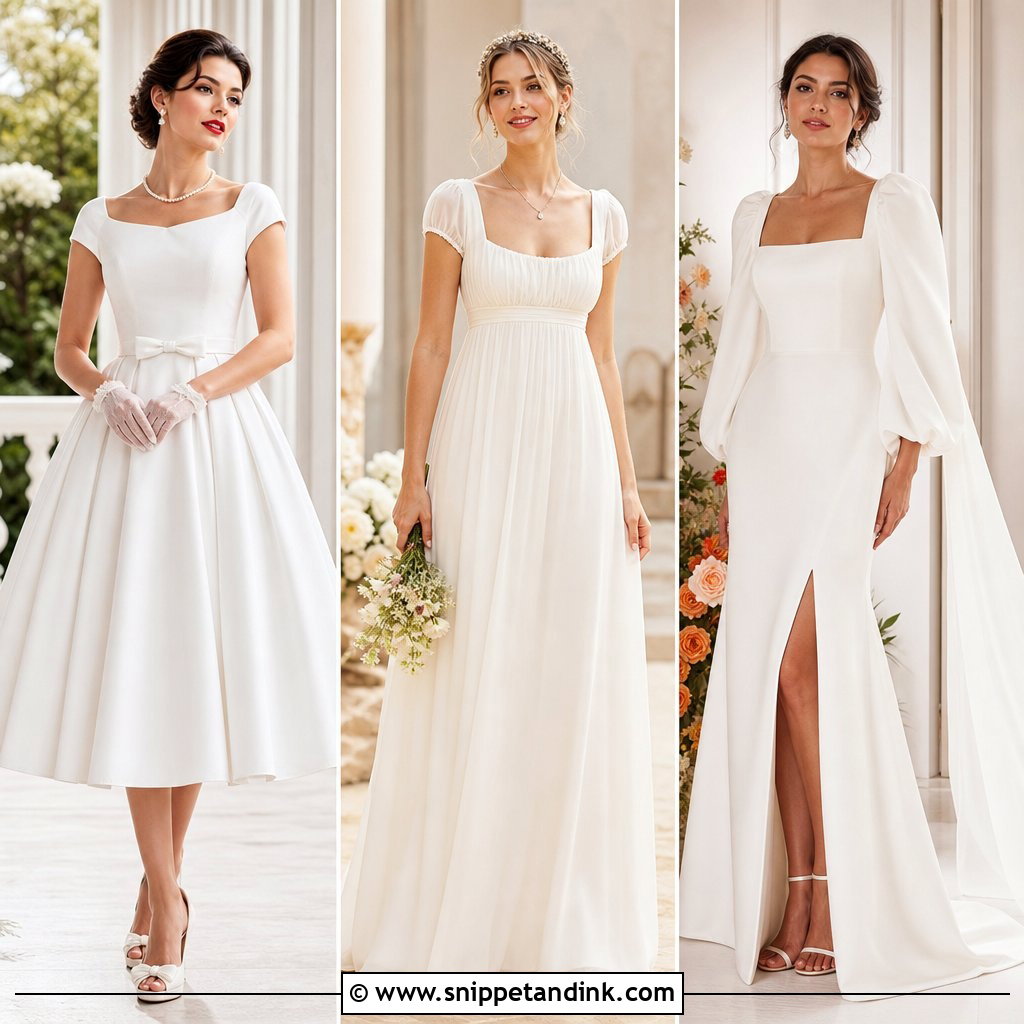
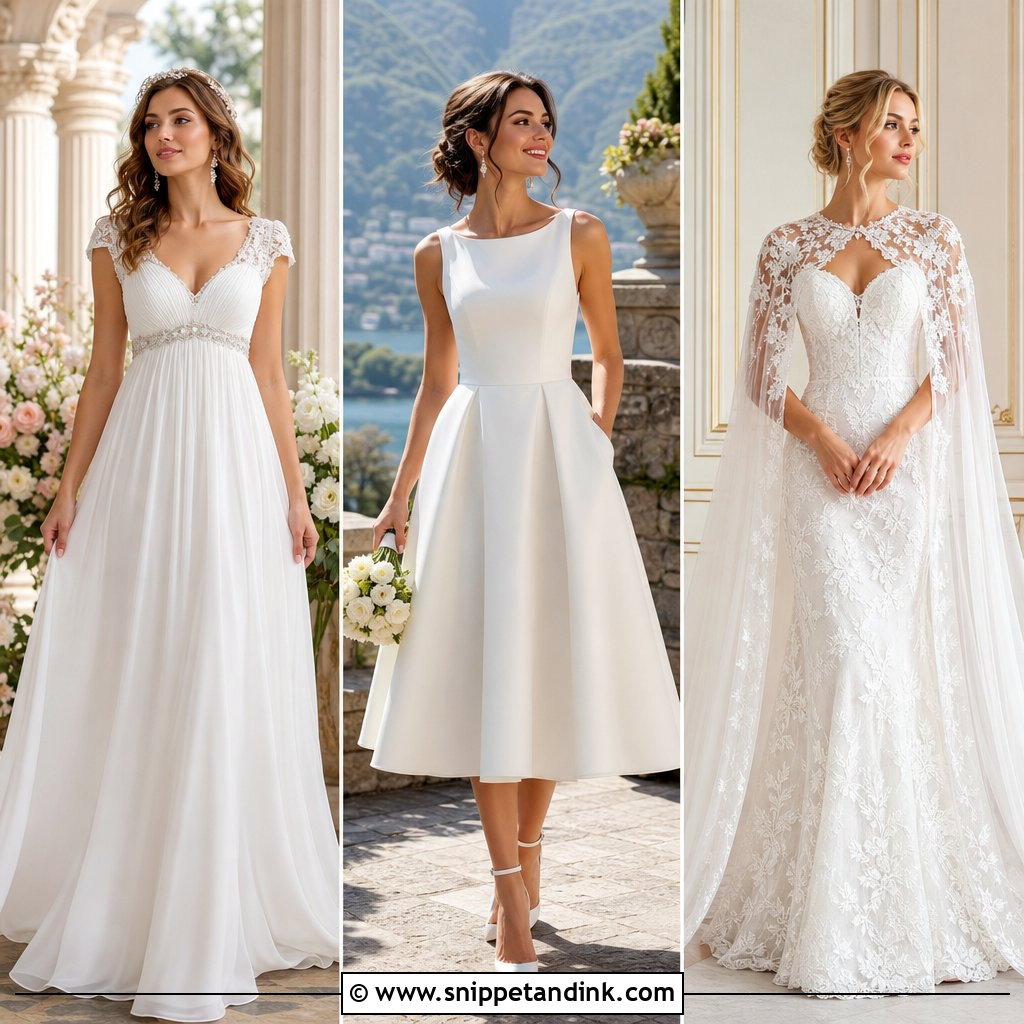
Short hems change your whole outfit plan. With a 1950s tea length bridal gown, the shoes are on show all day, so I treat them as part of the dress and try them at every fitting. A fitted bodice with a bateau or sweetheart neck and a full skirt ending between knee and ankle are the basics. A soft petticoat adds shape; fewer layers give more swing. Pointed pumps, short gloves, pearl earrings and a little birdcage veil are the classic set. Smooth mikado reads more modern than lace if you want a cleaner version, and the length suits a courthouse or a reception change.
7. 1950s Ball Gown Bridal Gown
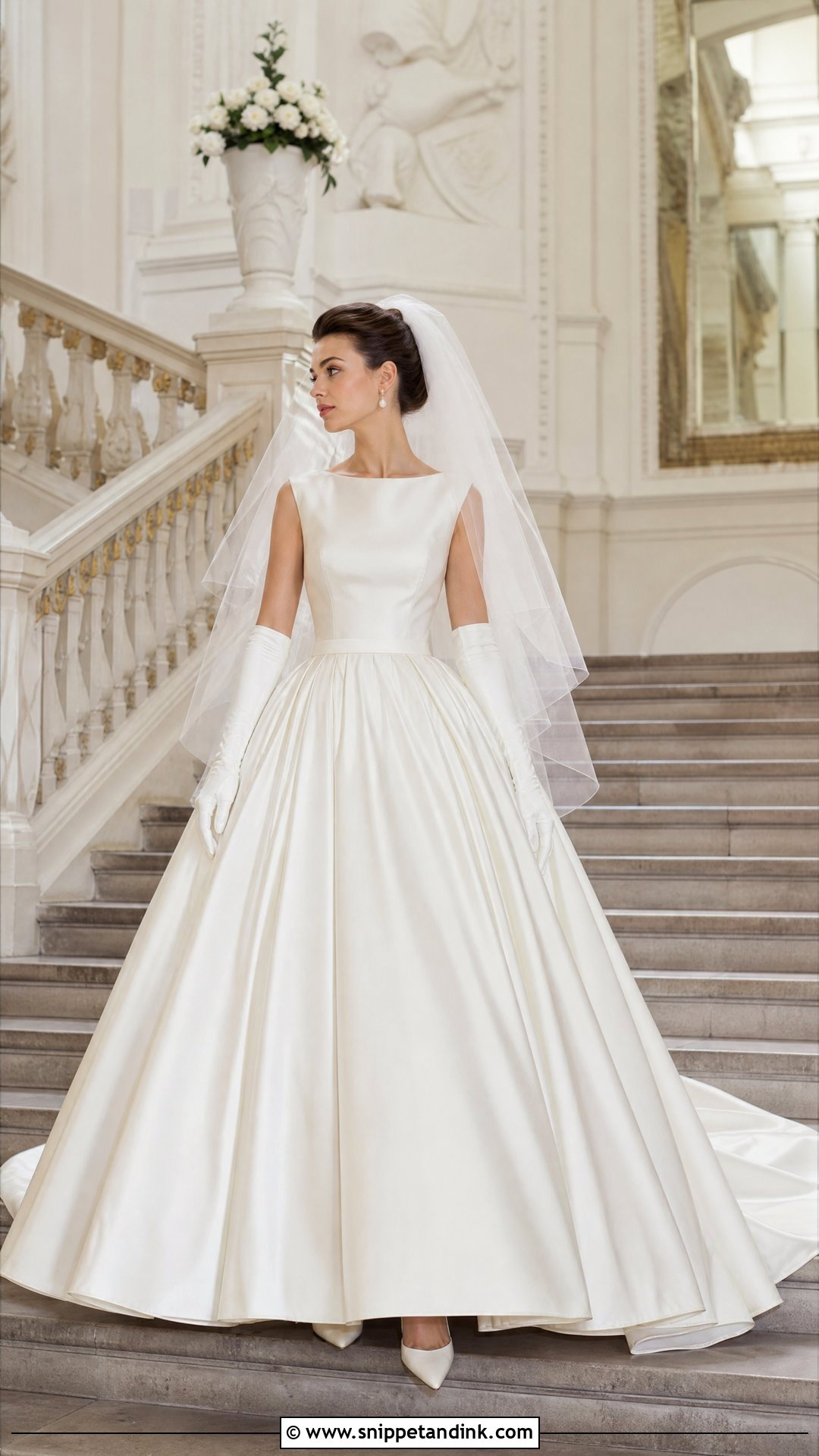
Walking into a formal venue calls for real skirt, and a 1950s ball gown provides it. A structured bodice, a natural or slightly dropped waist and a full skirt in satin, taffeta or tulle make the shape, while a portrait or off-the-shoulder neck balances the volume. Off-the-shoulder bodices slide if the fit is even slightly loose, so at the final fitting I have brides sit, raise their arms and hug me. A petticoat supports the skirt without making it heavy. Pearl earrings, pointed satin heels, opera gloves and a chapel veil complete it, with a rounded bouquet rather than a cascade.
8. 1950s Basque Waist Bridal Gown
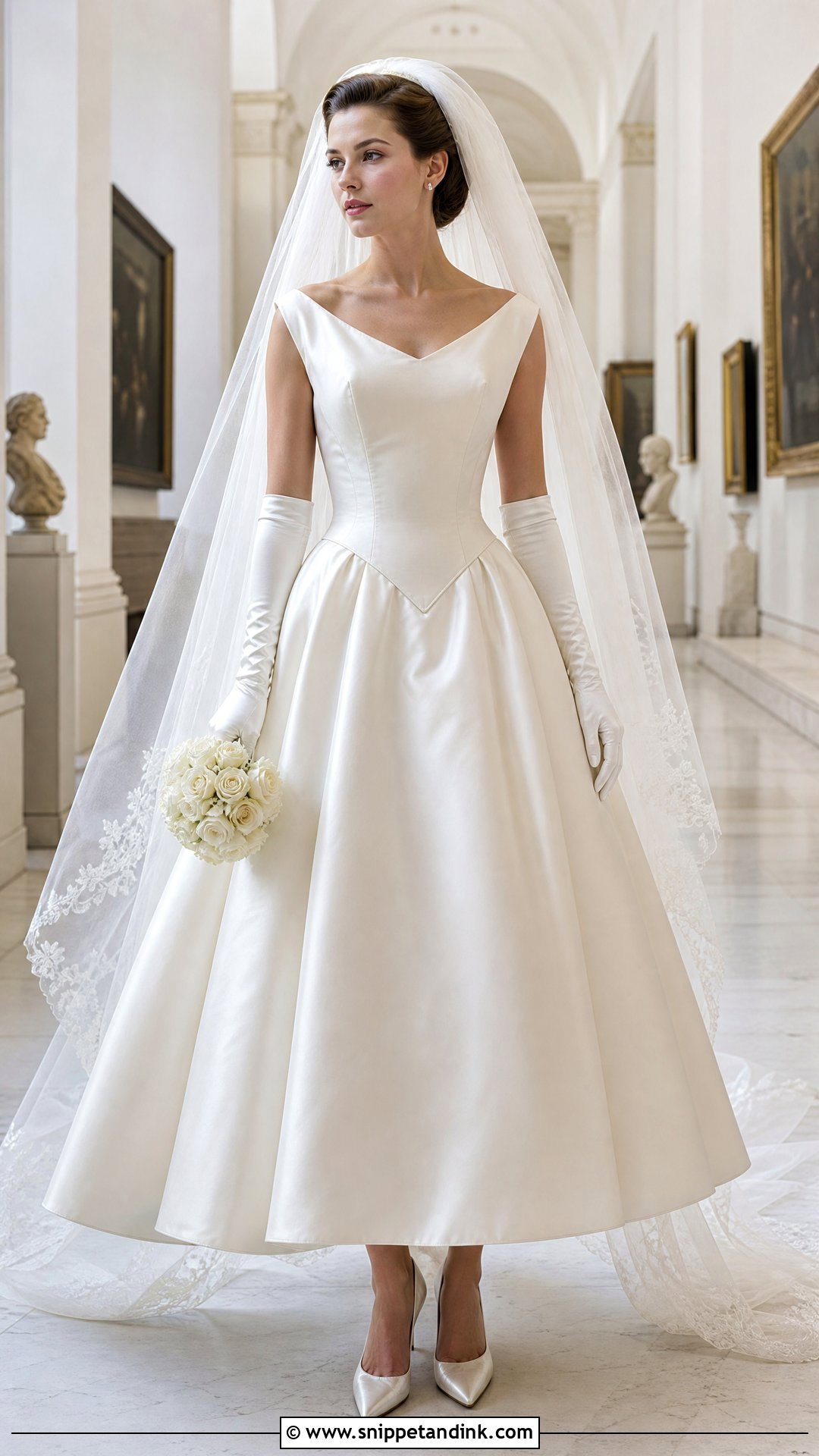
A Basque waist dips into a V at the front and draws the eye to the center of the body. Paired with a full satin, mikado or organza skirt, it gives a sculpted shape. My one firm rule: alter the bodice to fit, never buy a size down to make it tighter, because the point of the V shifts and the seams twist. Internal boning with a lace-up or a well-fitted button back gives support. A scoop or portrait neck keeps the top open. Elbow gloves, pearl studs, pointed heels and a plain cathedral veil suit it, so skip the necklace.
9. 1960s Mod Mini Bridal Gown
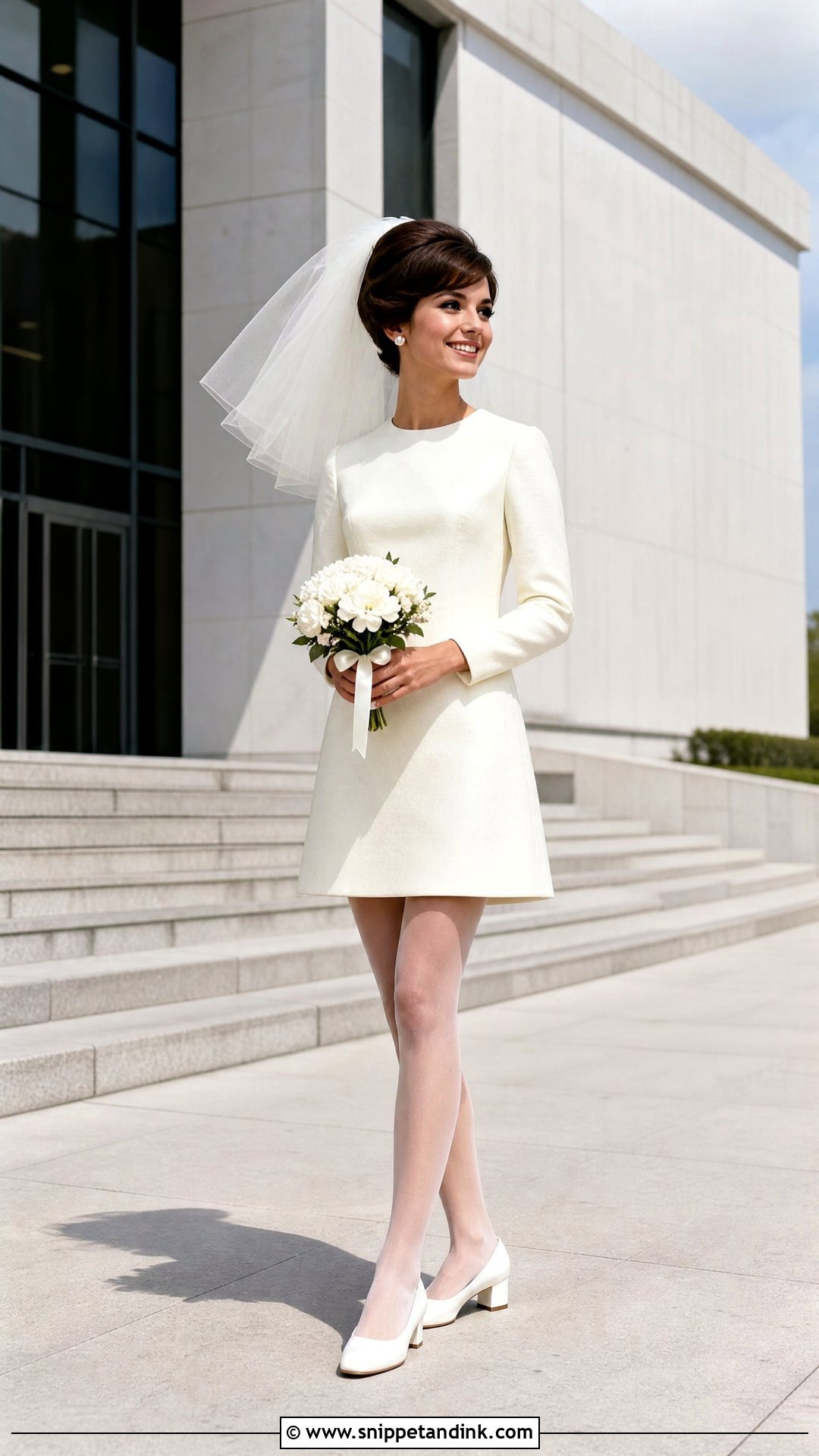
A mod mini is the most practical gown here for a civil ceremony. A structured shift with long sleeves and a jewel neckline in crepe, jacquard or smooth satin keeps the lines clean. Sit down in it before buying; a hem that looks fine standing can ride up a hand’s width in a chair, and above-the-knee is the easier length for most brides. Low block heels, sheer tights, pearl studs and a short veil or bow headband finish it. Keep the bouquet small so the short silhouette doesn’t look crowded, and keep the tailoring crisp at the shoulders and bust.
10. 1960s Empire Waist Bridal Gown
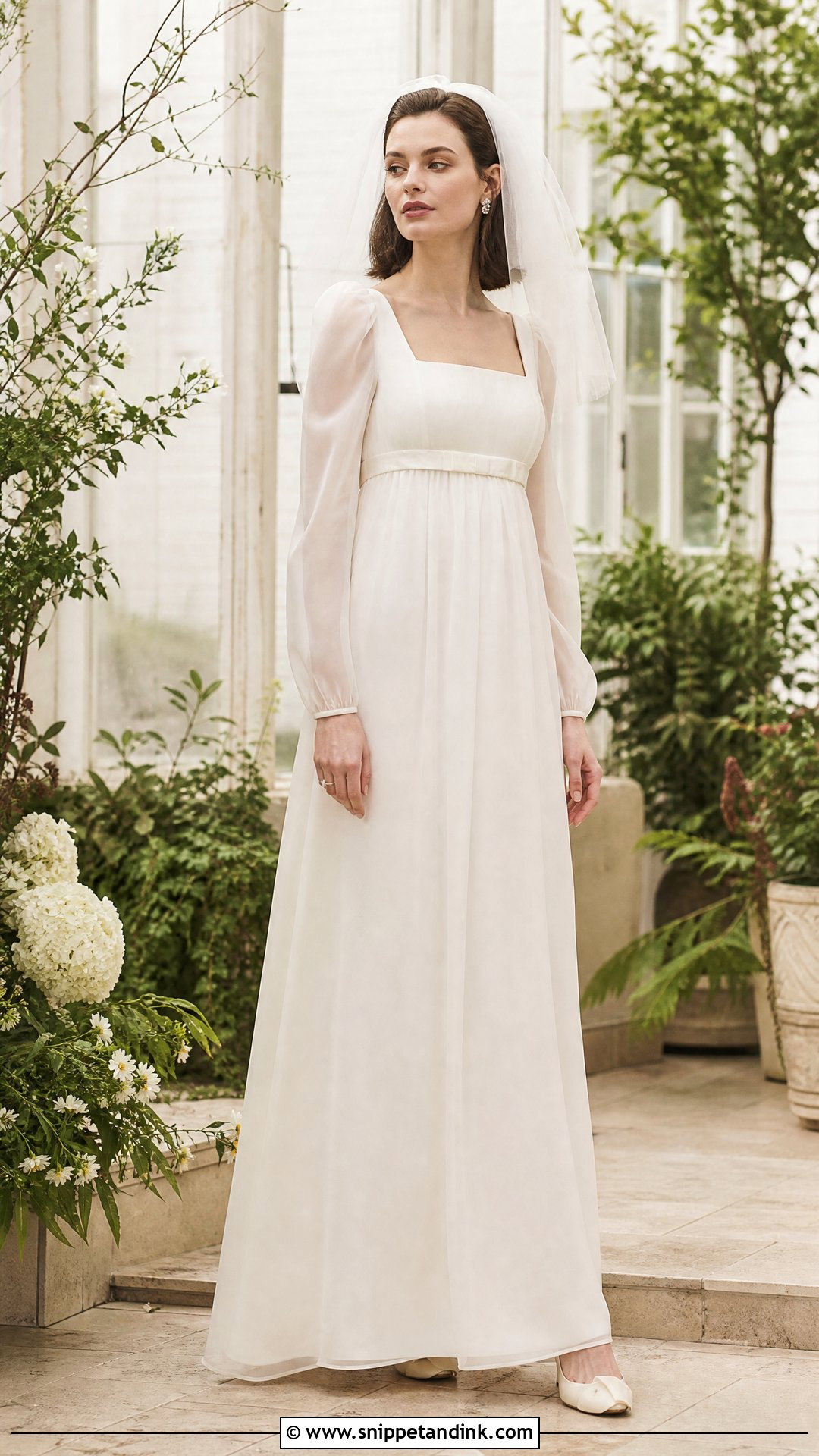
Everything on a 1960s empire gown hangs from the seam under the bust, so support there is the first thing I fit. Chiffon, silk crepe or light satin keeps the skirt fluid, and a square neck, sheer long sleeves or narrow ribbon trim add character. If the bra shifts, the seam tilts and the skirt swings unevenly, so I’d have cups sewn in. Low ivory heels, drop earrings and a shoulder-length veil on a half-up style suit it. A loose bunch of daisies or garden roses keeps the mood relaxed.
11. 1970s Boho Lace Bridal Gown
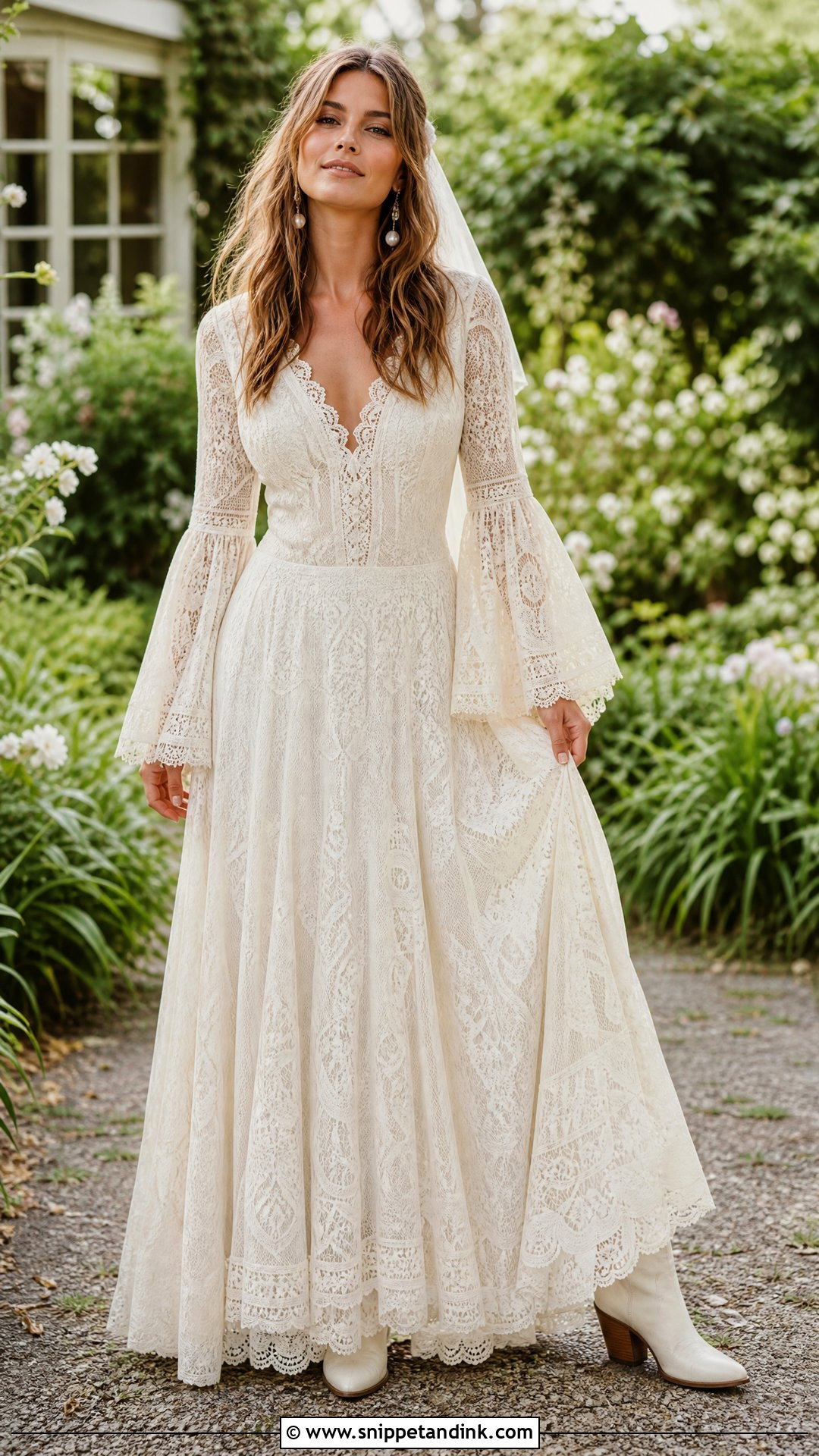
Imagine soft lace moving through a field. A 1970s boho lace bridal gown usually has a relaxed waist, long bell sleeves and an easy A-line skirt. Cotton lace, crochet panels or embroidered mesh need an opaque lining; in bright sun, unlined lace shows far more than it does in the shop. Ivory ankle boots or low sandals, natural pearl earrings and a loose veil under soft waves complete it. A floral crown is fine if it’s small. Choose a cut that skims rather than clings for warm weather, and carry greenery with pale flowers.
12. 1970s Prairie Bridal Gown
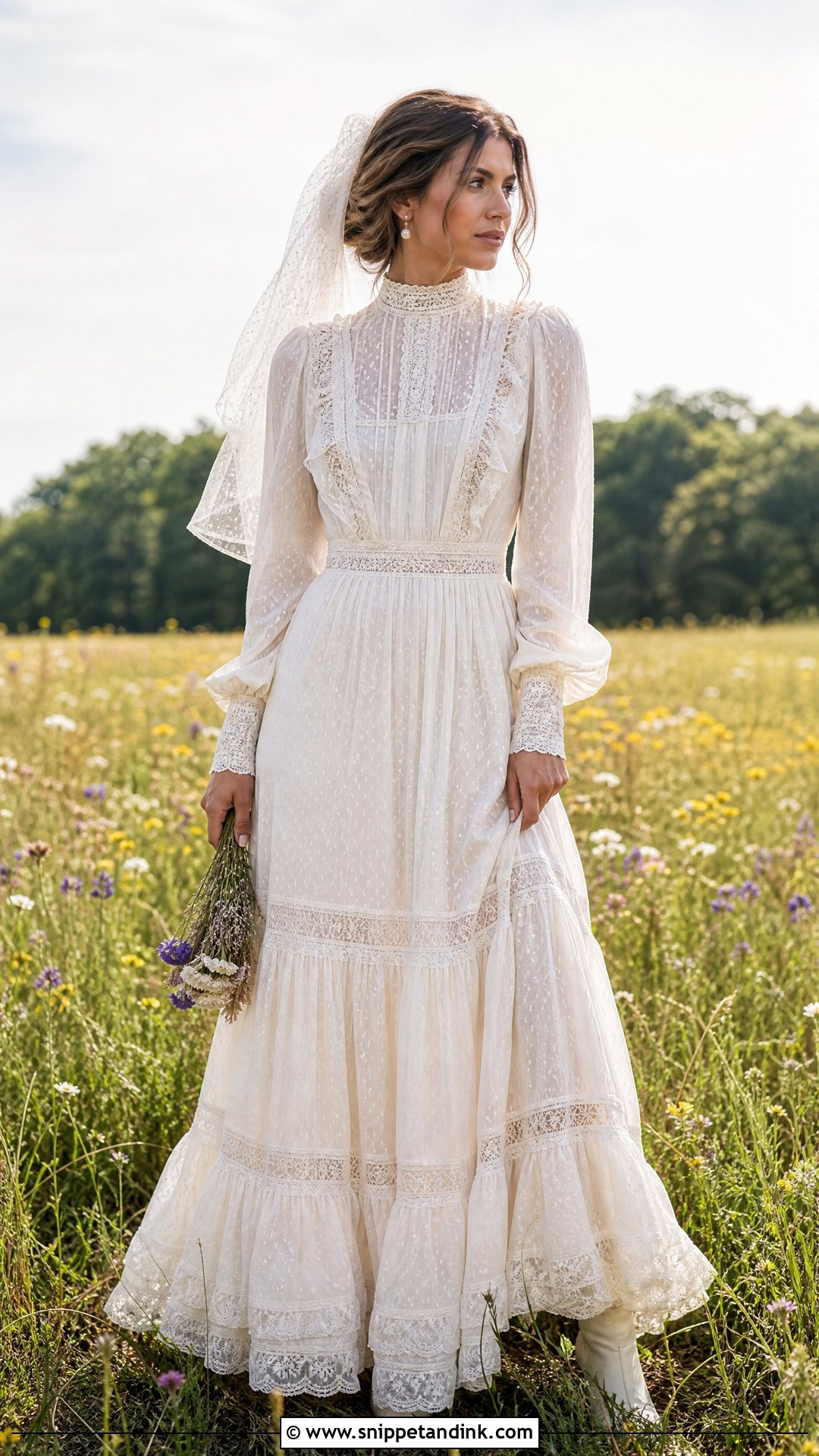
Tiers are the prairie gown’s charm and its risk. A high or ruffled neck, fitted cuffs, lace inserts and a tiered skirt in cotton voile, dotted Swiss or chiffon give that handmade look. On a petite frame, too many tiers chop the body into bands, so I’d go with two or three; a tall bride can carry more. A defined waistband stops the layers taking over. Simple leather or ivory boots, small pearls and a fingertip veil suit it, or a narrow floral comb in a loose braid. Restrained trim keeps it bridal rather than costume.
13. 1980s Puff Sleeve Bridal Gown
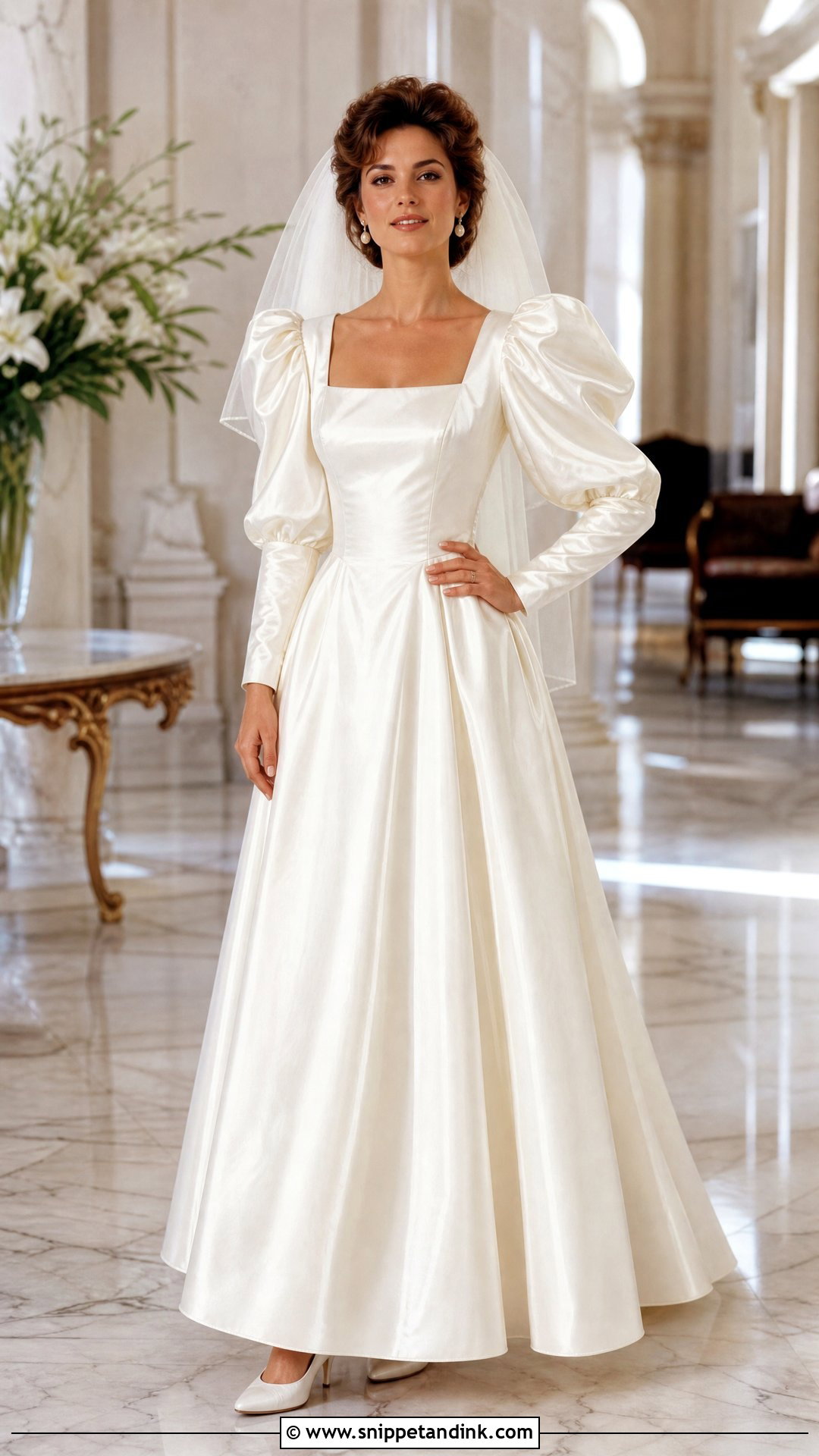
Volume, sheen and strong proportions are what an 1980s puff-sleeve gown is about. Dramatic sleeves with a fitted cuff, a structured waist and an A-line or ball-gown skirt hold their shape best in taffeta, satin or organza. Detachable puffs are my favorite fix: full drama for the aisle, bare arms for dancing. A deep V or open square neck creates breathing room around the face. Simple pumps, pearl earrings, a medium veil, smooth hair and a streamlined bouquet keep the rest calm. Later decades like this one are now firmly part of vintage bridal, not only Victorian lace.
14. 1980s Lace Ball Gown Bridal Gown
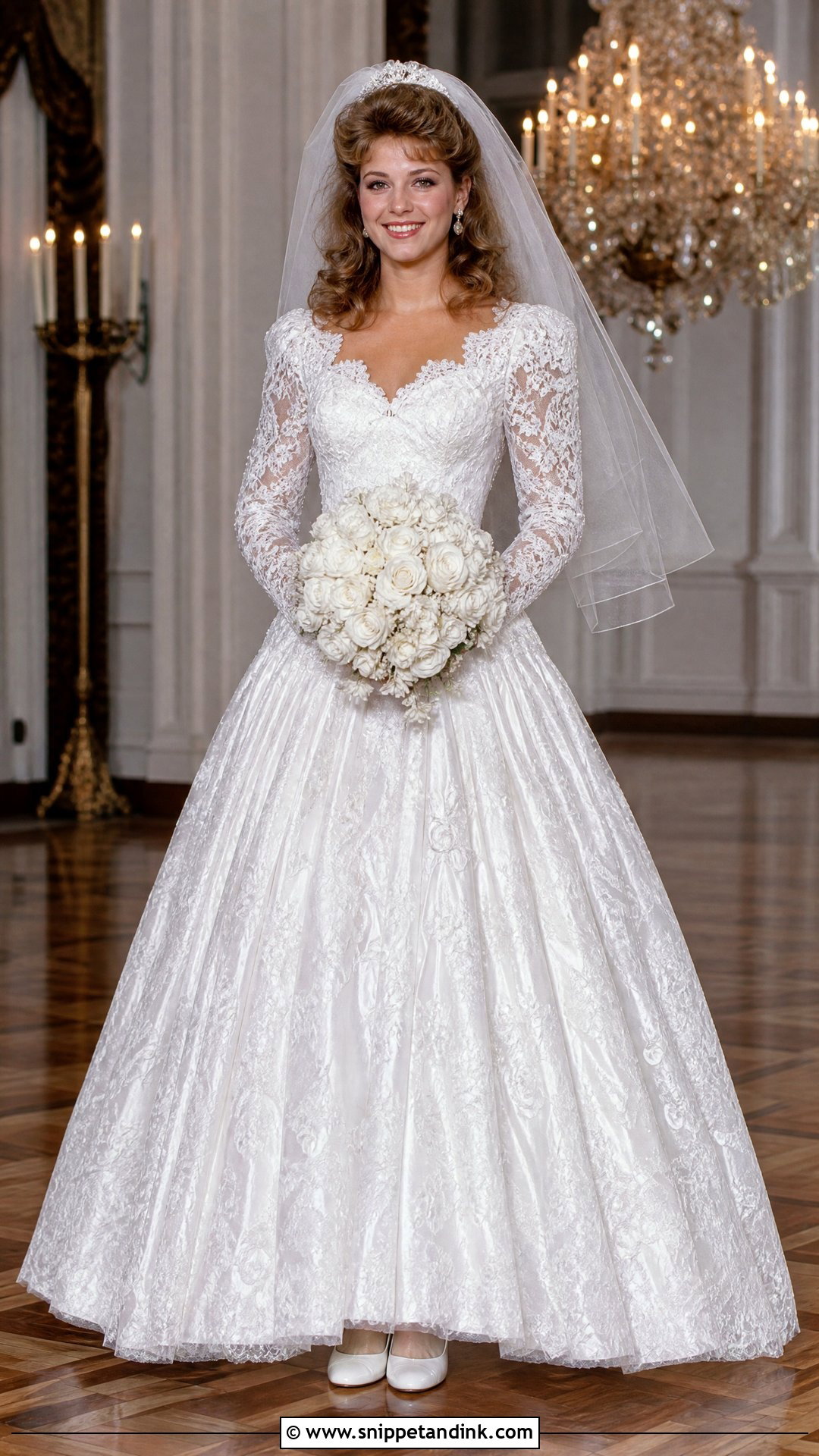
This is the gown for a big room. An 1980s lace ball gown pairs a fitted bodice with a sweeping, decorated skirt, usually floral lace, a dropped waist, long sleeves and a train scaled to the venue. Original pieces from the decade often carry heavy shoulder pads and oversized sleeves; a seamstress can take both down and reshape the neckline while keeping the character. Order a secure bustle with several hooks, because a lace train is heavy once it gathers dust. Satin pumps, pearl drops and a plain tulle veil let the lace show, with a neat chignon and a rounded white bouquet.
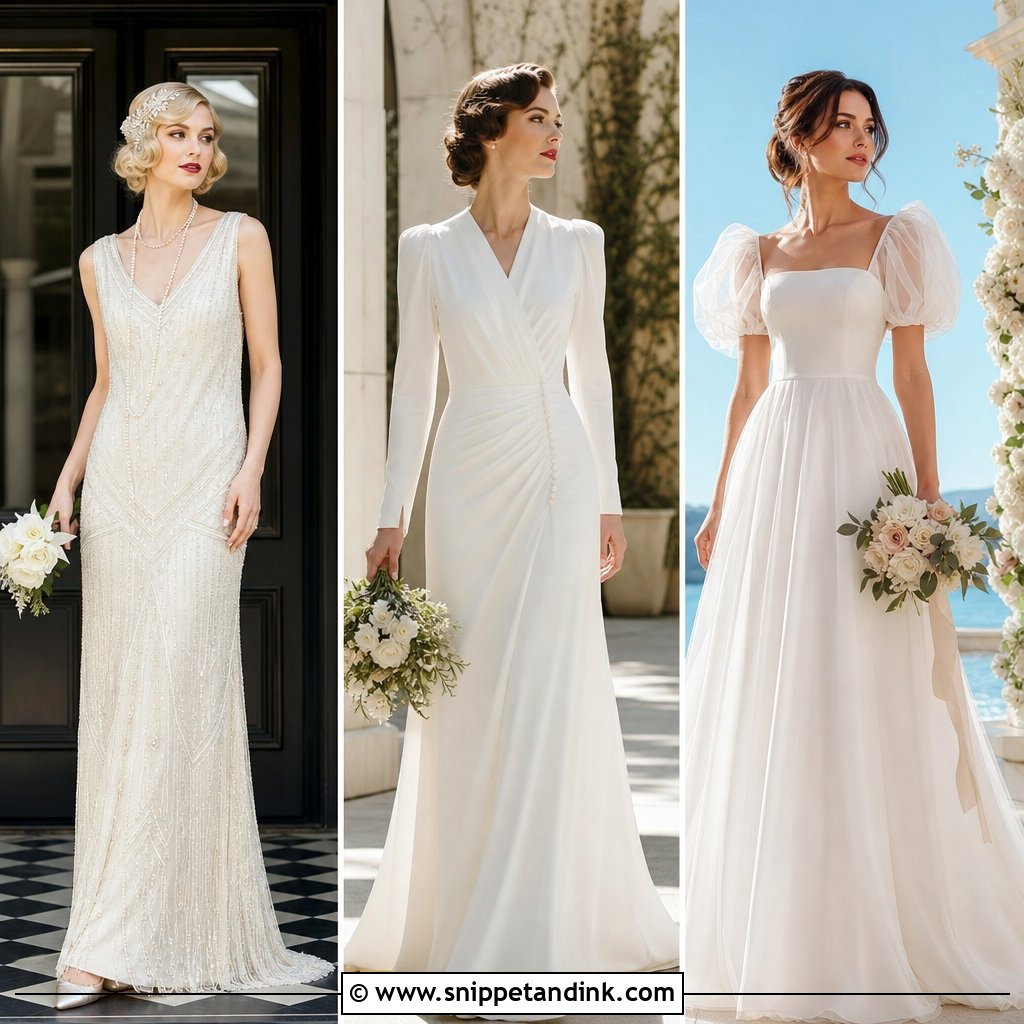
15. 1990s Minimalist Satin Bridal Gown
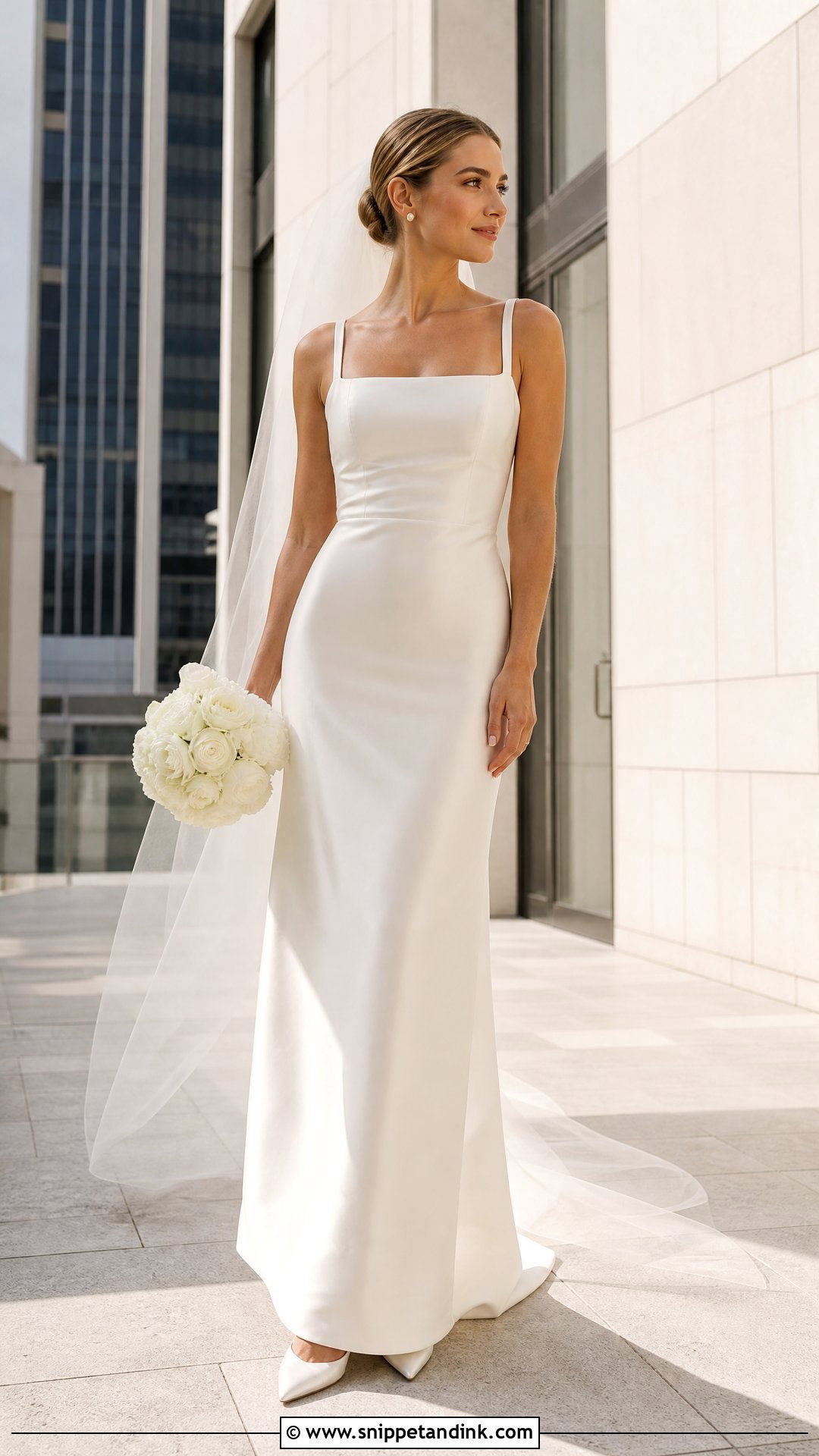
A minimalist 1990s satin gown has nowhere to hide, so I inspect the seams and lining harder than on any lace dress. A column, sheath or soft A-line with slender straps, a square neck or a simple scoop is the shape. Satin shows pulled stitches and puckered zips immediately. Smooth, skin-toned undergarments and discreet built-in support keep the outline clean. Pointed ivory heels, small studs and a long sheer veil suit it, with a smooth bun or tucked waves. A satin wrap or tailored jacket covers you later, and a compact white bouquet finishes it.
16. Art Deco Beaded Bridal Gown
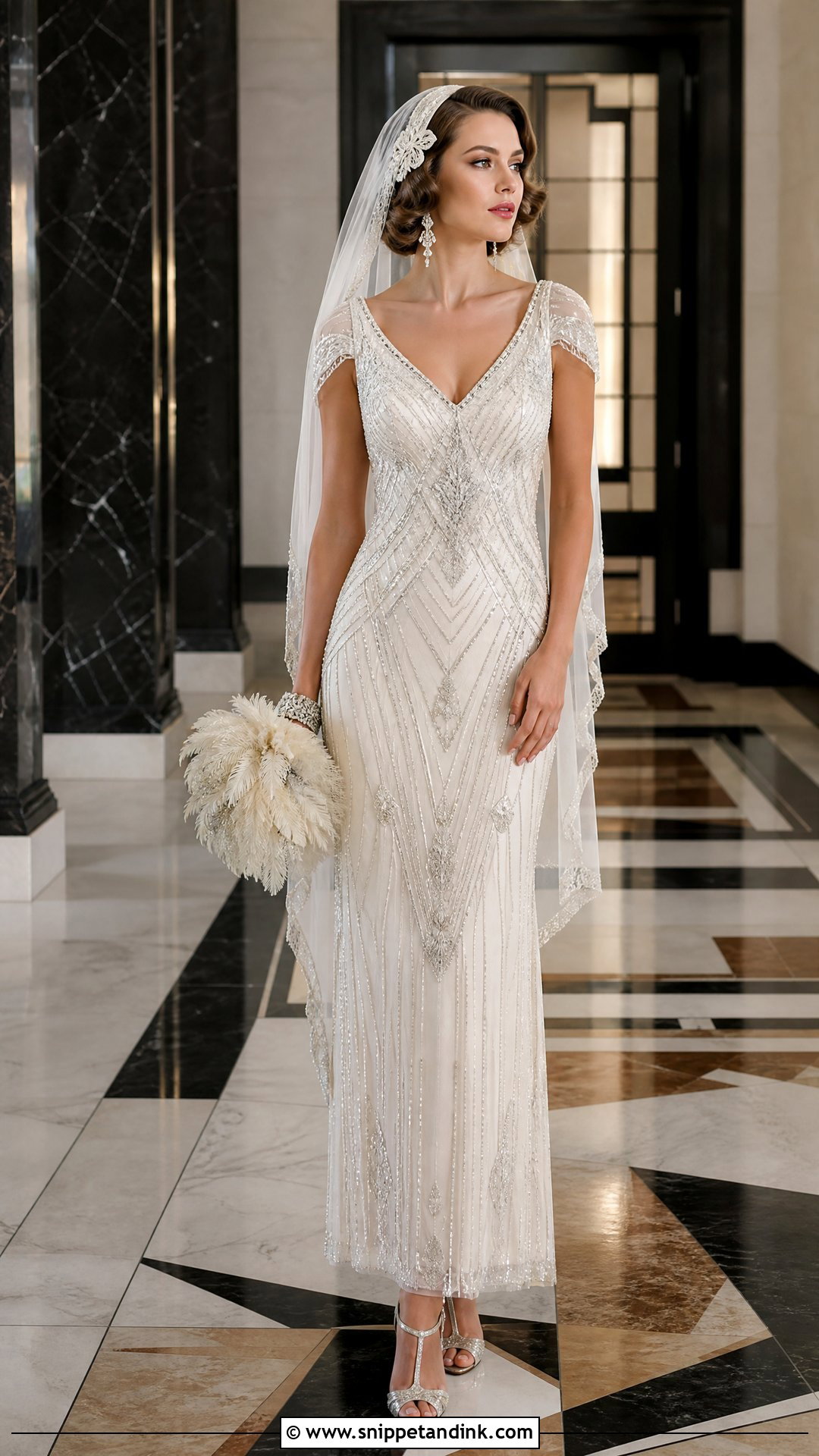
Geometric sparkle gives an Art Deco beaded bridal gown its evening feel. A slim column with symmetrical beadwork, linear motifs and a soft scoop or V-neck is the shape, in ivory, pale champagne or silver tones. Beaded columns are heavier than they look on a hanger, so I check that the straps or shoulders are reinforced and the lining is soft against skin. Keep hair close to the head, polished waves or a low bun, so the beading stays visible. T-strap heels, crystal earrings and a delicate cap veil complete it, with a satin ribbon at the waist if you want definition.
17. Old Hollywood Satin Bridal Gown
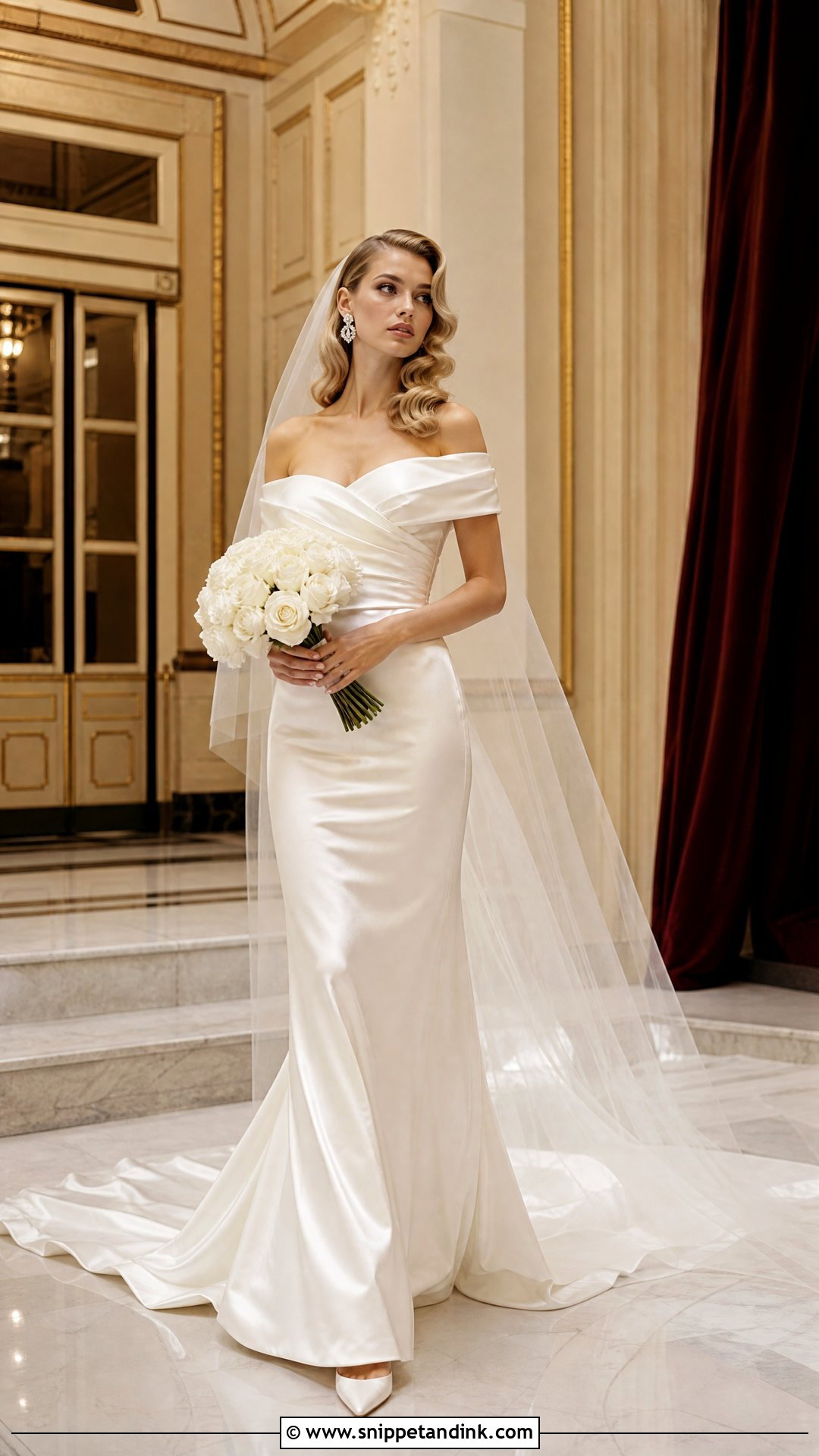
Old Hollywood is about drape and shine, so leave lace and appliqués off this one. A fitted sheath or gentle mermaid with a cowl, halter or off-the-shoulder neck sets the shape, with a sweeping train. Satin cut this close tends to pull across the hips when you sit; precise alterations, and sometimes a bias-cut skirt panel, fix that. Pointed pumps, crystal drops and a long veil beneath side-parted waves are the signature, with a faux-fur stole or satin cape for cooler nights. A narrow bouquet of roses or calla lilies suits a ballroom, theater or hotel.
18. Regency Empire Waist Bridal Gown
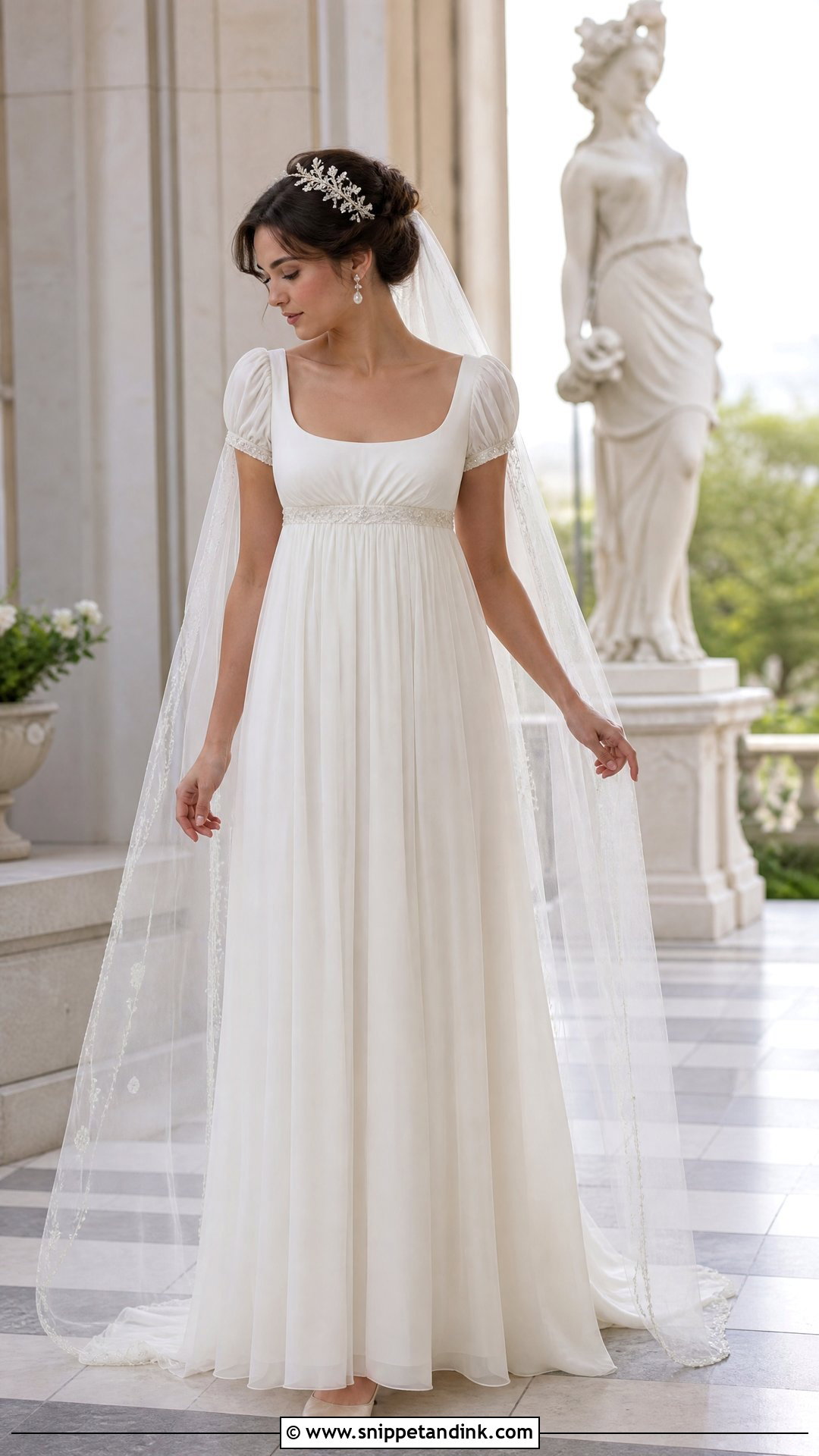
Airy fabric and a raised waist give a Regency empire waist bridal gown its light quality. A square neckline, short puff sleeves and a long skirt dropping cleanly from under the bust are the period markers. Silk chiffon, fine cotton or light satin keeps it from looking bulky. I check that the waist seam sits level all the way round, since it tends to rise at the back on a fuller bust. Low satin slippers, delicate earrings and a ribbon or jeweled comb in a soft updo suit it. A sheer cape veil adds drama; a small garden bouquet keeps it gentle.
19. Edwardian Tea Bridal Gown
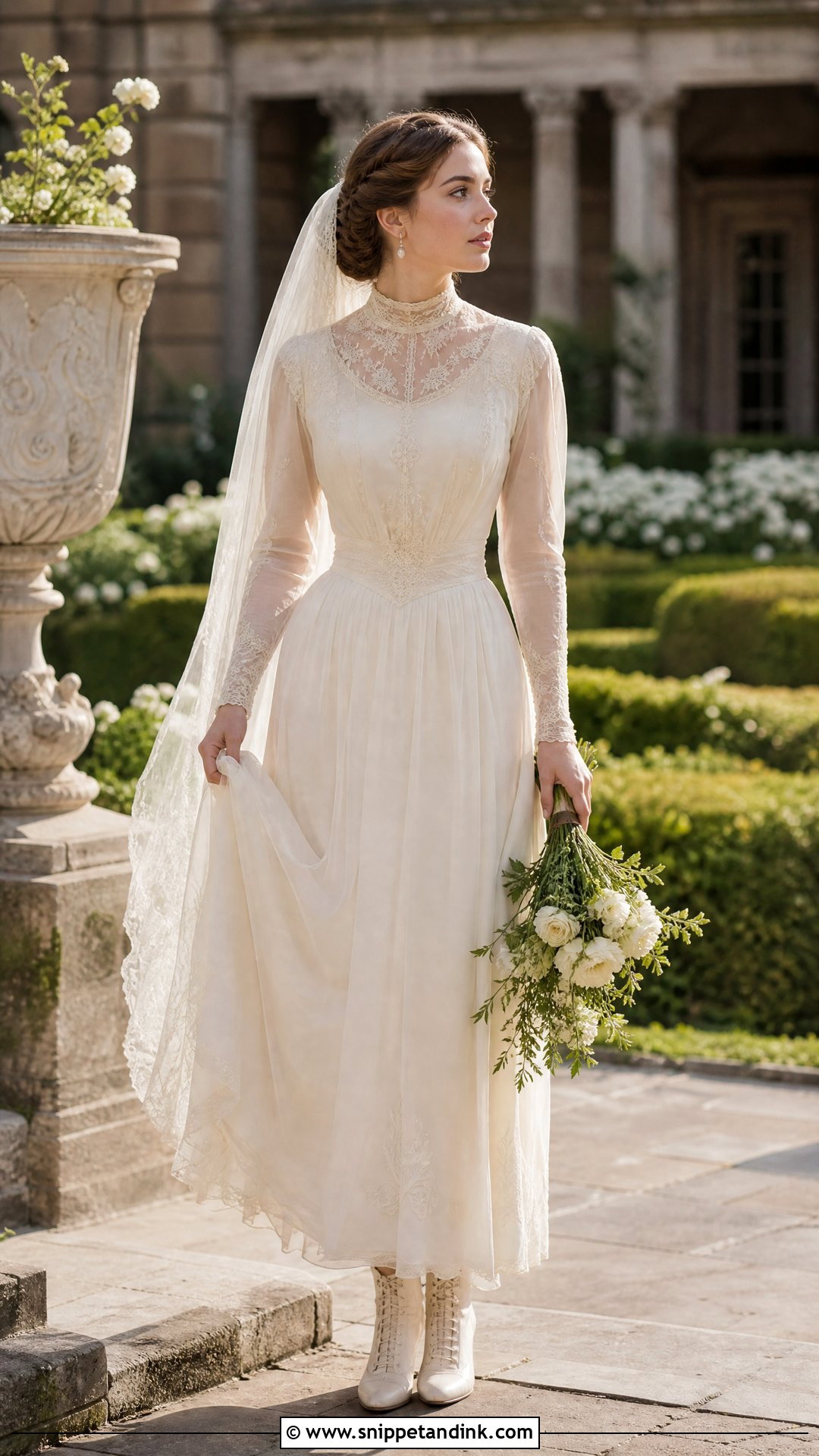
Ankle length is what makes an Edwardian tea gown more relaxed than its formal cousin. A lace bodice with a high illusion neck, elbow or full sleeves and a natural waist sit above a softer skirt. Stiff collars rub, so at alterations I have brides turn their head fully side to side before anything is finished. Lightweight lace over breathable crepe or satin lining keeps it comfortable. Button boots, pearl earrings, a small lace-edged veil and a low braided bun suit it, along with roses and greenery. Daytime weddings and courthouse ceremonies fit it well.
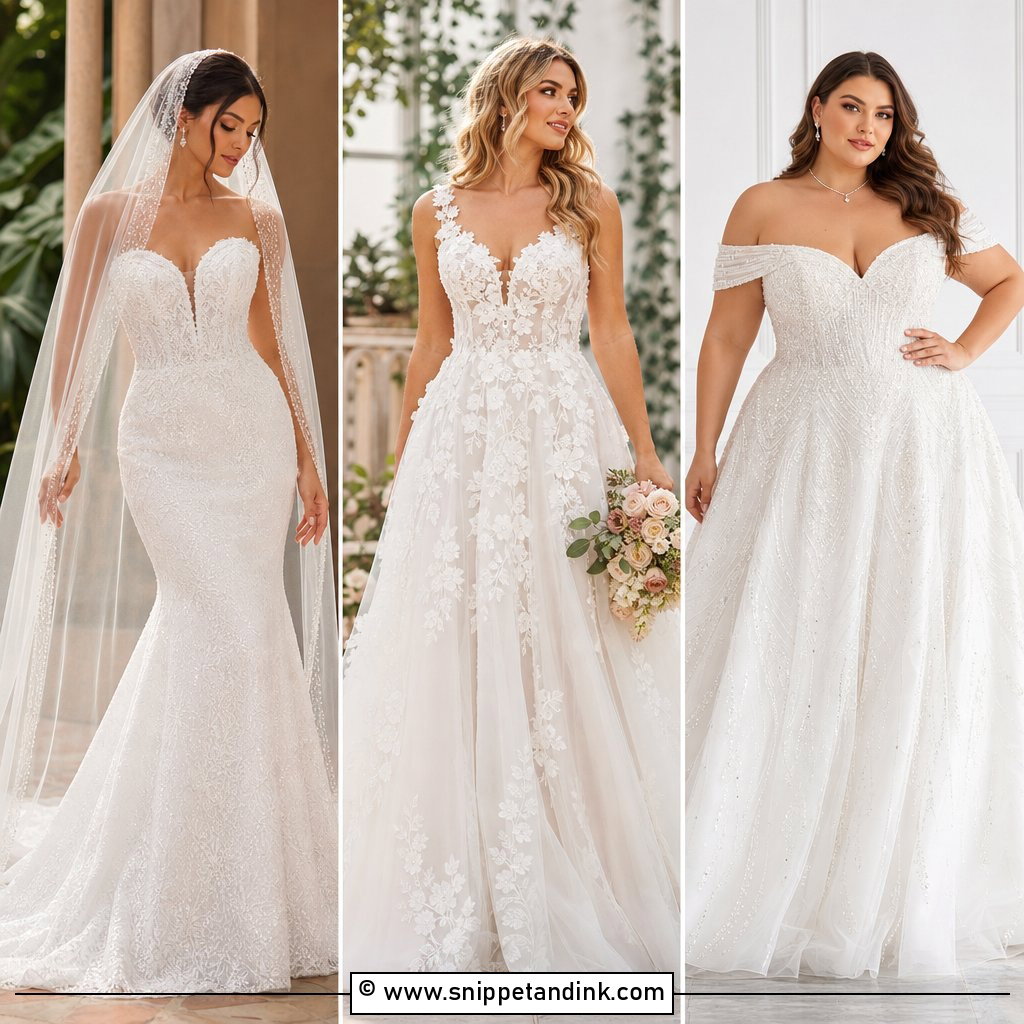
20. Vintage Lace Mermaid Bridal Gown
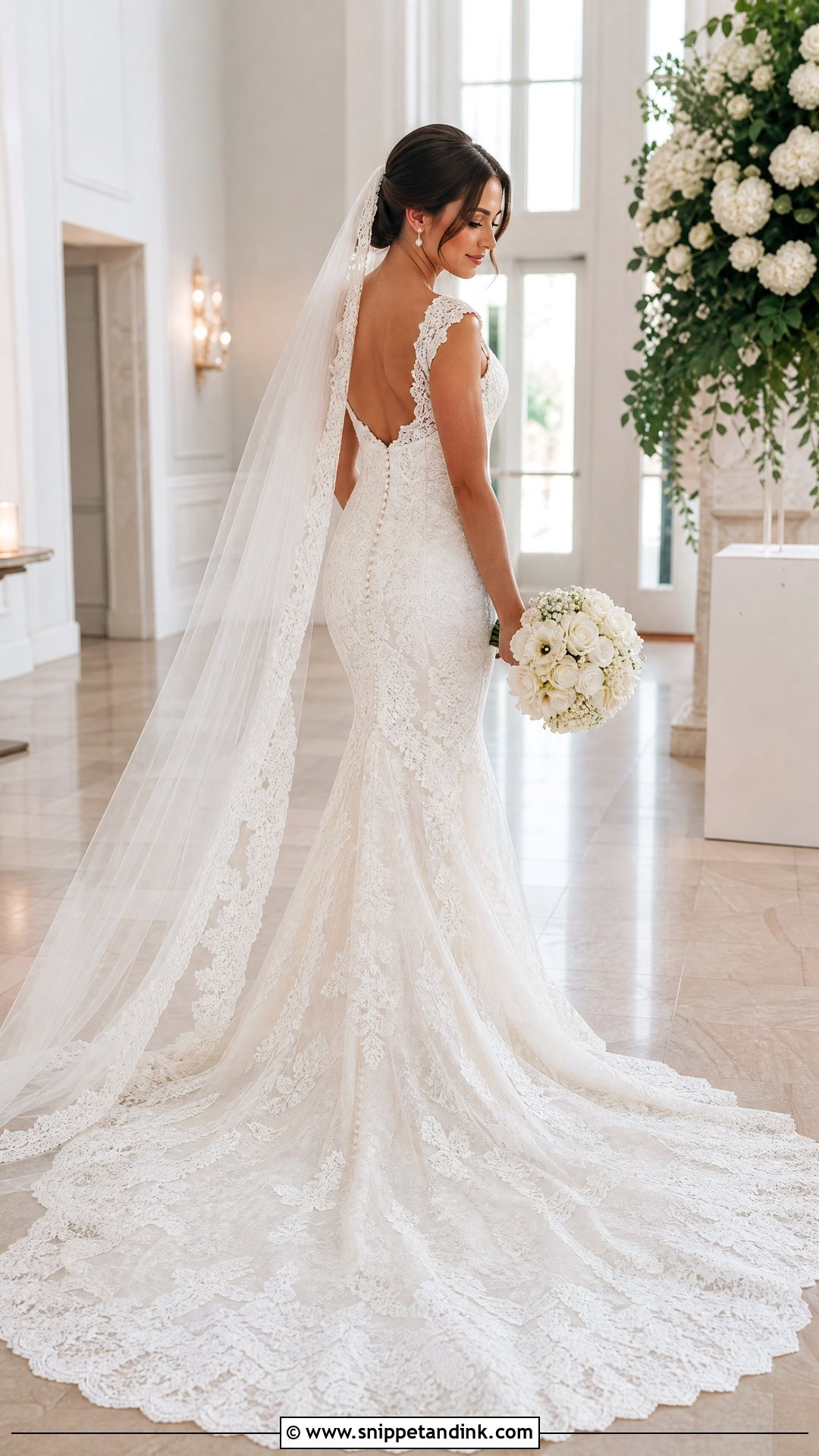
Where the flare starts decides how you move in a lace mermaid gown. A supportive bodice, a defined waist and a skirt opening at or above the knee give the fitted line, with floral lace, covered buttons and a scalloped train for antique detail. During fittings I make brides climb a step and sit on a low chair; a flare set too low makes both awkward. A softer fit-and-flare is the kinder option if you’ll be dancing a lot. Pointed satin heels, pearl earrings, a lace-edged cathedral veil and a low chignon complete it, with a simple white bouquet.
Putting Silk, Lace and Beading Away Properly
Vintage-style fabrics age the same way the originals did, so the gown you wear now can be the heirloom someone else inspects in forty years. I tell brides to get it to a specialist gown cleaner within a few weeks. Sugar from champagne or cake is invisible at first and turns brown as it oxidizes, which is why a clean-looking hem still needs cleaning.
How each fabric wants to be stored
- Beaded and heavy gowns should be laid flat in an acid-free box with acid-free tissue in the folds. Hanging lets the weight stretch the shoulders and pull threads.
- Bias-cut satin also goes flat; on a hanger it slowly grows longer and the hem goes wavy.
- Lace and tulle need tissue padding wherever they fold so they don’t crease permanently.
- Avoid plastic dry-cleaning bags and cardboard boxes that aren’t acid-free. Both trap moisture or yellow the fabric.
Keep the box somewhere with steady temperature, so not the attic or a damp basement, and open it once a year to refold along different lines. That small habit prevents the hard, yellow crease lines I see on most dresses that were packed away and forgotten.
Start With the Silhouette, Then the Decade
Vintage romance takes many forms here, from fitted Victorian lace to an Art Deco column, a full 1950s skirt or a clean 1990s sheath. Try the shapes before you commit to a period, and pay attention to comfort in the first ten minutes, because that rarely improves. Accessories should clarify the era, not repeat it from head to toe. A seamstress can update an original or a new vintage-style gown with better support, lighter lining, detachable sleeves or a proper bustle. Pick the details that fit your venue and your personality, and the dress will feel like yours rather than a reenactment.
You'll Like These Ideas:


Leave a Reply