
Square necklines, a flat stiff bodice, a cone of skirt and a hood framing the face: Tudor dress is one of the few historical looks people recognize instantly. White wasn’t yet the default for brides then. A woman married in the best cloth she could manage, and rich women chose damask, velvet and deep dyed colors that announced their family’s standing. That leaves you a lot of room. You can go fully historical with layers and a hood, or keep a modern gown and borrow two or three details. I’ve laid out twenty versions below, from ivory to black and gold, with notes on fabric weight, fit and what each one is like to wear for a full day.
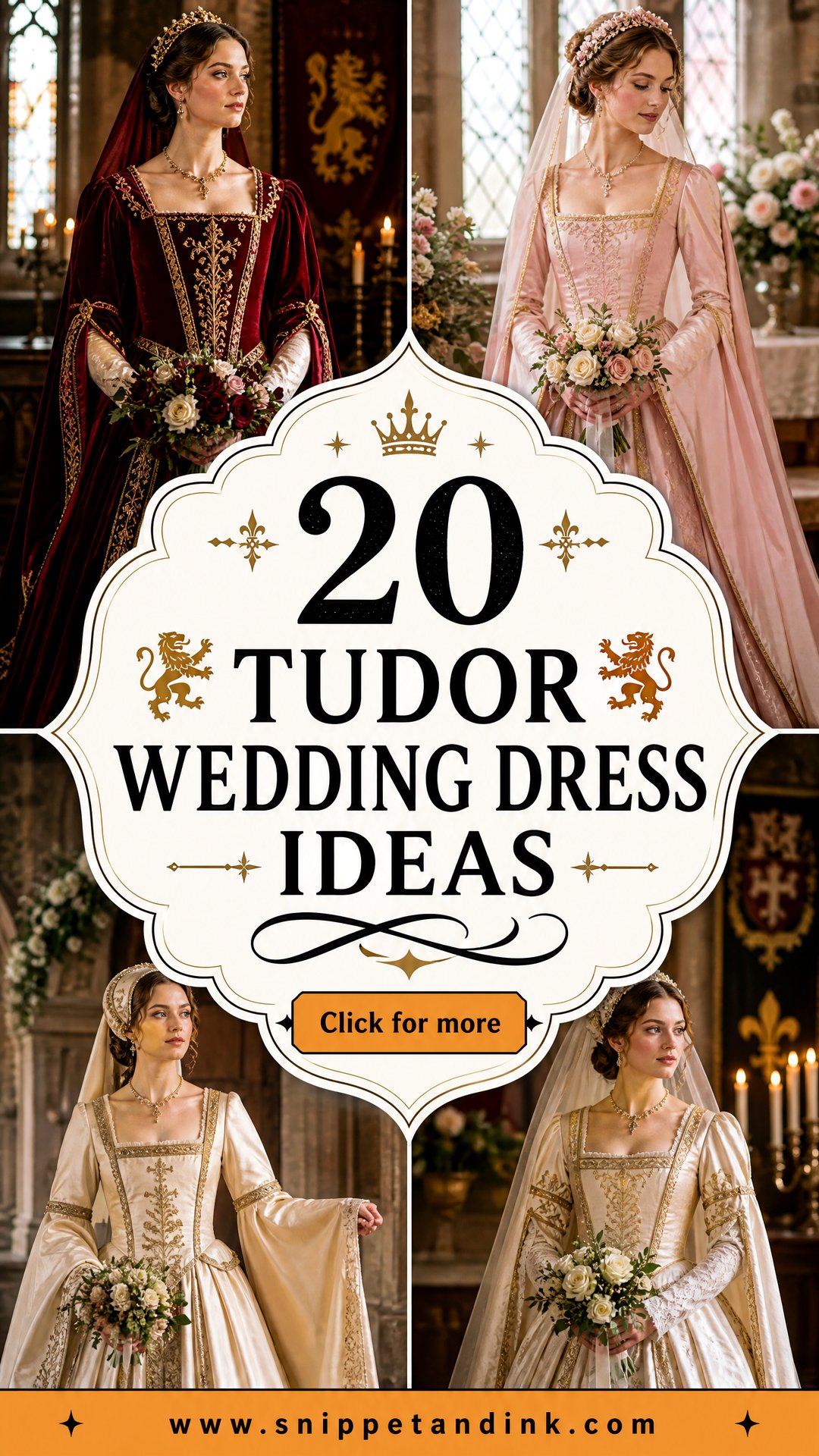
Kirtle, Forepart, Partlet: The Layers Behind a Tudor Gown
When brides bring me a Tudor portrait, the first job is untangling what they’re looking at. A sixteenth-century outfit was several garments worn together, and knowing the names makes it far easier to brief a dressmaker.
- Kirtle: the fitted underdress. Its front often shows where the outer gown opens.
- Forepart: a decorative triangle of fabric at the front of the skirt, often in the richest material of the outfit.
- Farthingale: a hooped petticoat that gave the skirt its smooth cone. A modern hoop or stiff petticoat does the same job.
- Partlet: a fill-in for the neck and shoulders, sheer or linen, worn over or under the bodice.
- Undersleeves: separate sleeves, often tied or pinned in, which is why mixing fabrics at the arm looks authentic.
- Girdle: a jeweled chain worn at the waist, hanging down the front.
You don’t need all of them. A square neck, a flat bodice and a forepart already carry the look; a hood and girdle push it further toward costume. Decide early where on that scale you want to sit, because it changes who you should be shopping with.
1. White Tudor Wedding Dress With Square Neckline
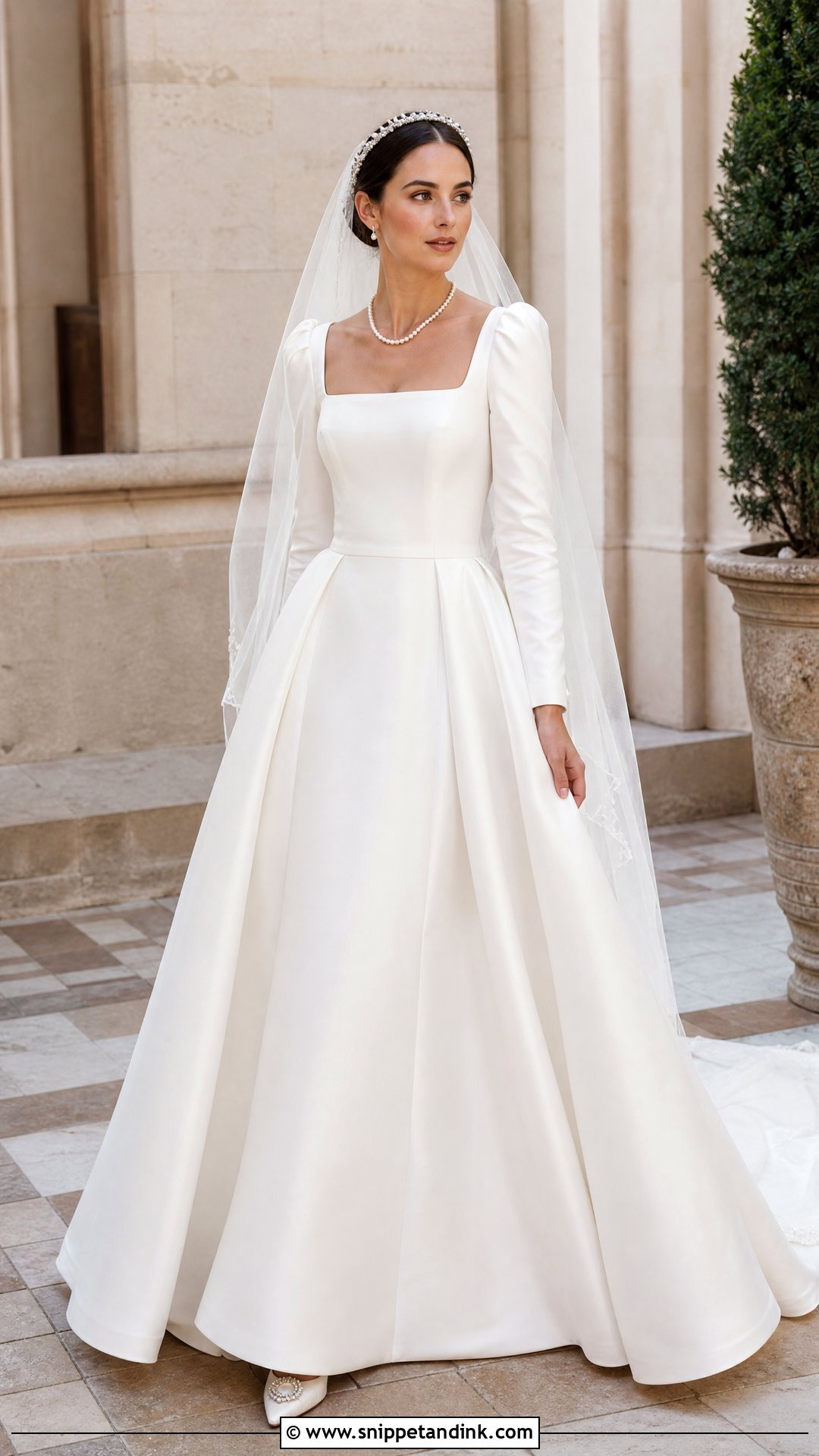
Ivory or white with a square neck is the easiest way into Tudor style, because guests still read it as a wedding dress first. The bodice should lie flat across the torso with no wrinkling at the sides; that smooth plane is what makes the neckline look period rather than modern. Pearls, lace or a thin metallic trim along the edge frame it. Long fitted sleeves with turned-back cuffs can show a contrasting lining. Ivory slippers, a pearl strand and a jeweled band or French hood finish it, with a light veil pinned behind the headpiece so the neckline stays visible.
2. Ivory Tudor Wedding Dress With French Hood
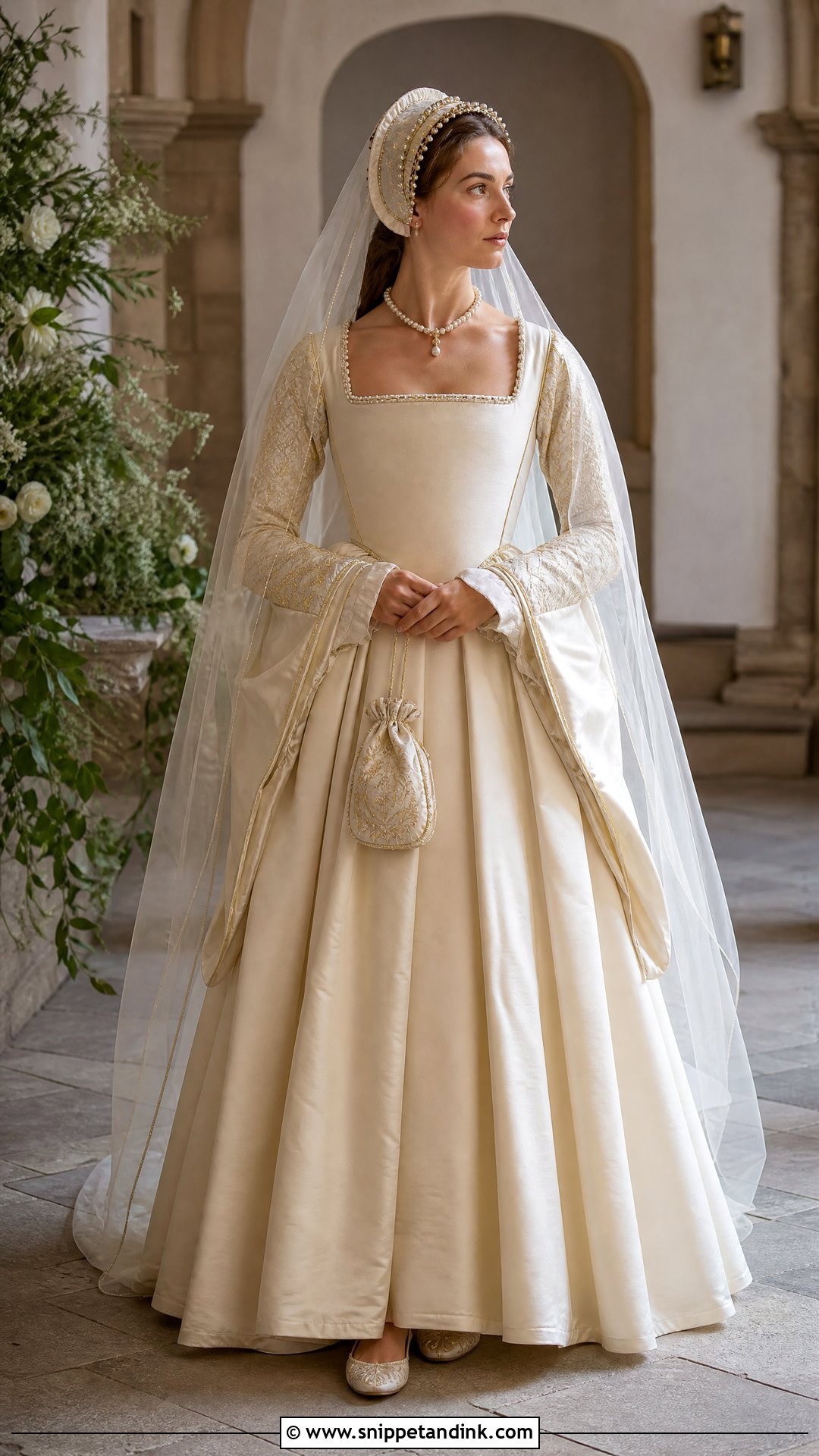
Ivory looks softer and older than bright white, and it sits comfortably against oak paneling and stone. Start with a fitted ivory bodice, a low square neck, light boning and fabric-covered fastenings, then a wide skirt in silk, satin or a light brocade. The French hood is the real feature here. It sits back on the head and shows the front of the hair, so it’s far easier to wear than people expect. Ask for seed pearls on the billament, the curved band along the front, rather than large costume stones. If you add a veil, pin a sheer fingertip length behind the hood so the two don’t fight.
3. Gold Brocade Tudor Wedding Dress
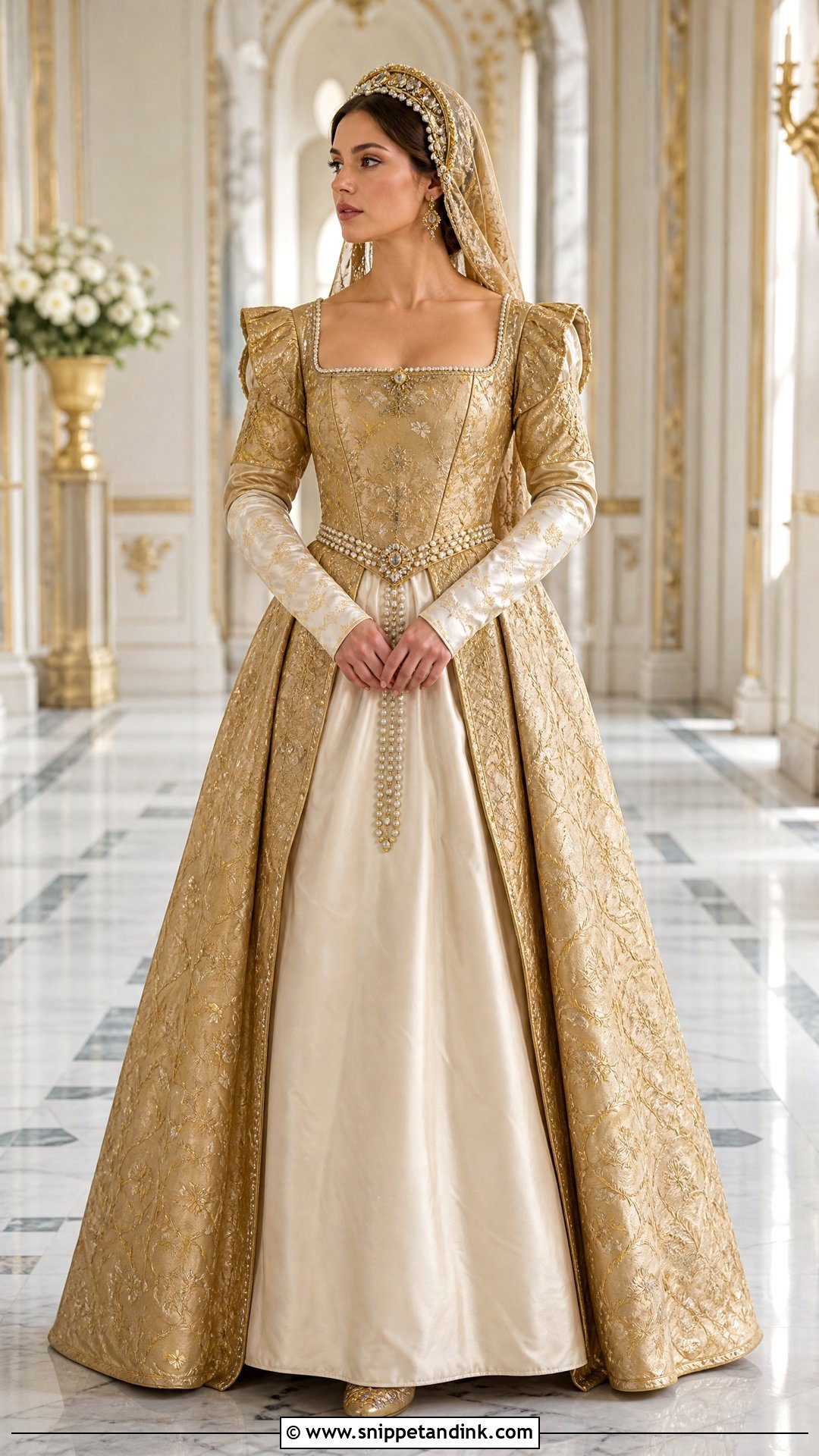
Gold brocade is the fabric that looks most like a royal portrait. Pick a small botanical or scrolling repeat; big motifs get chopped up by bodice seams and look like upholstery. I’d pair a square-neck brocade bodice and overskirt with a cream satin forepart at the front, plus cream undersleeves banded in gold so the metal has somewhere to rest. Brocade is stiff and scratchy on the inside, so insist on a soft lining at the neckline and underarms. A pearl girdle and a small jeweled hood are all the extra it needs, and candlelit winter venues suit it.
4. Red Velvet Tudor Wedding Dress
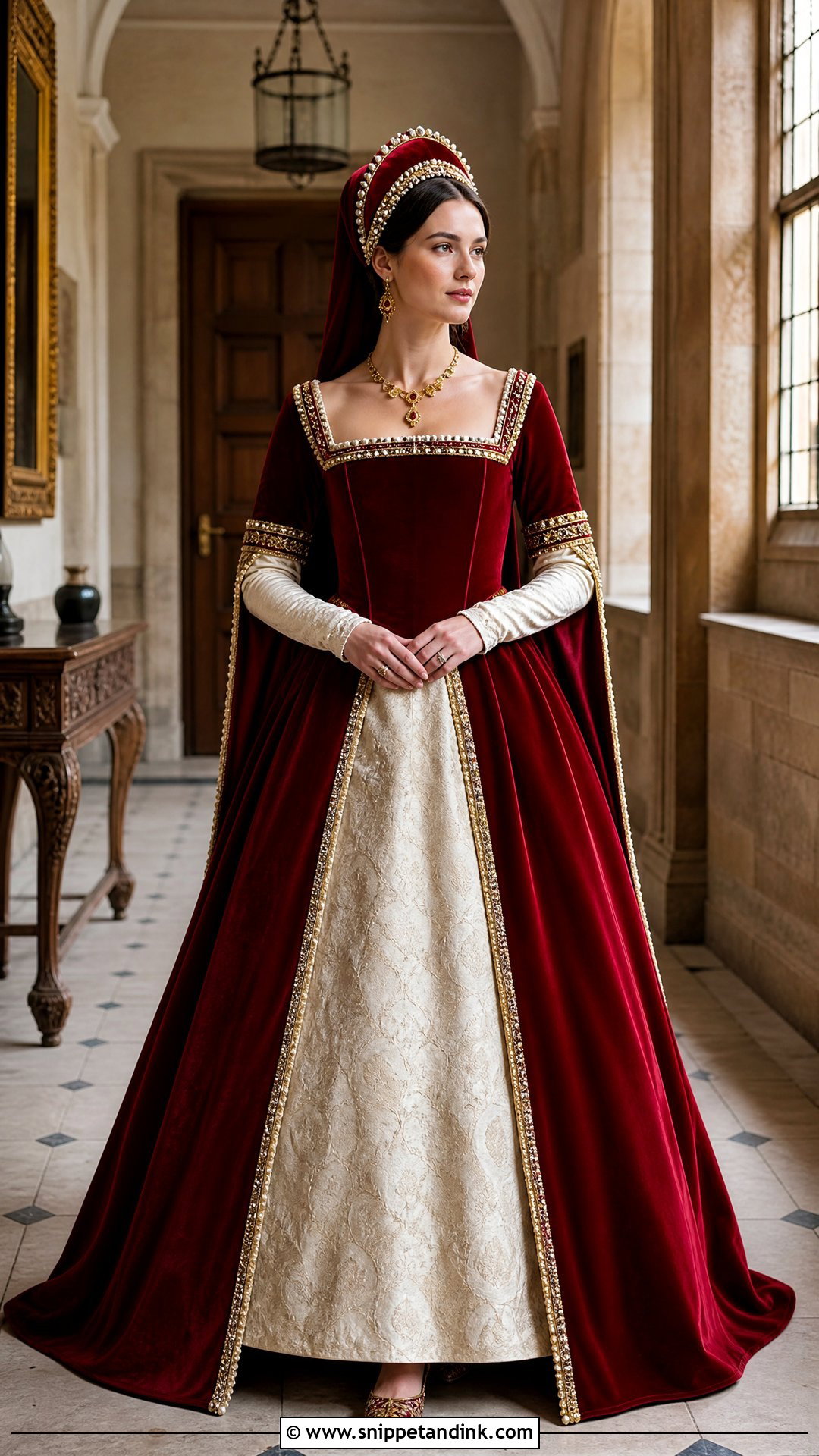
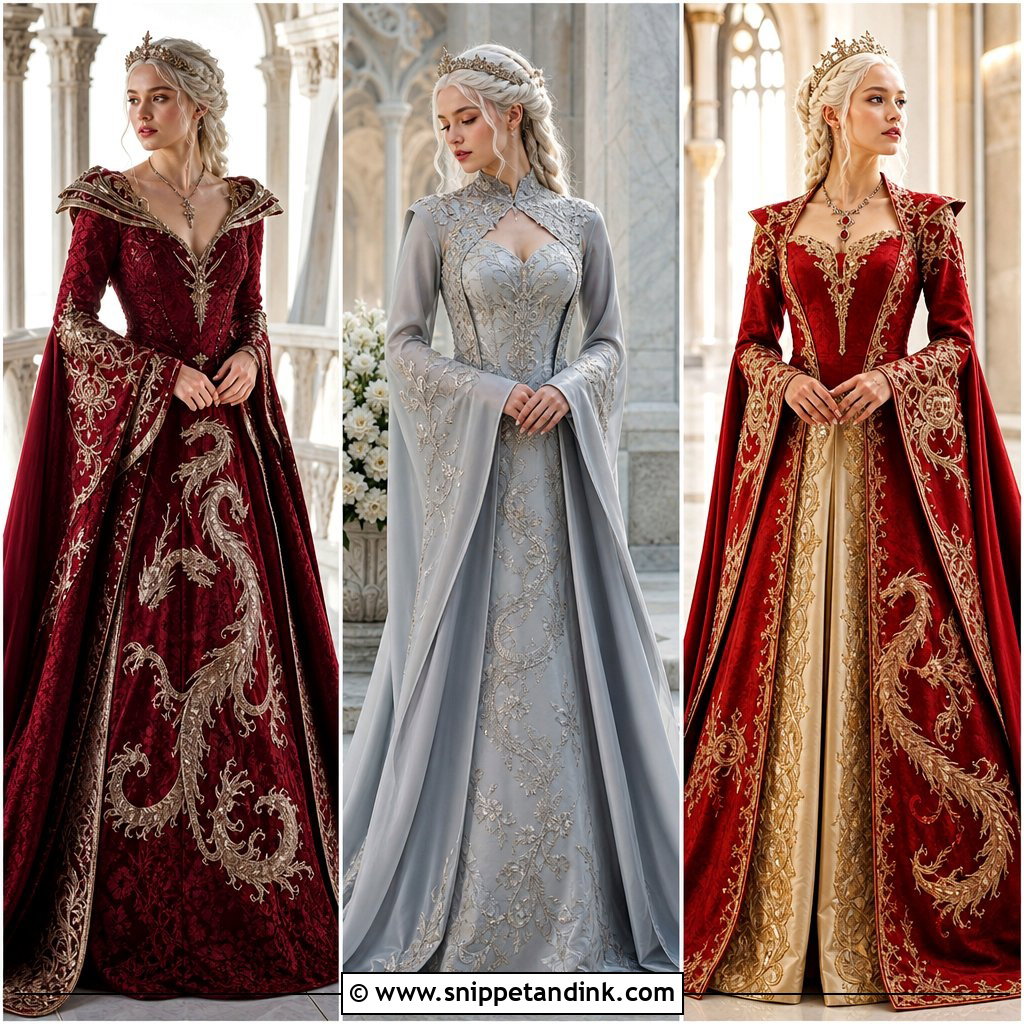
Red velvet has weight and warmth, and in a stone hall it glows. Go for a flat-front bodice, a broad neckline and a full skirt; velvet is heavy, so the skirt needs enough width to swing rather than cling. Ivory piping or pearl edging at the neck, cream undersleeves and a cream forepart keep the red from overwhelming your face. Velvet crushes when you sit for long and shows every pressed mark, so steam it the morning of, never iron. A hidden back zip is fine if you want modern ease. Save this one for cool weather; it is warm to wear.
5. Emerald Green Tudor Wedding Dress
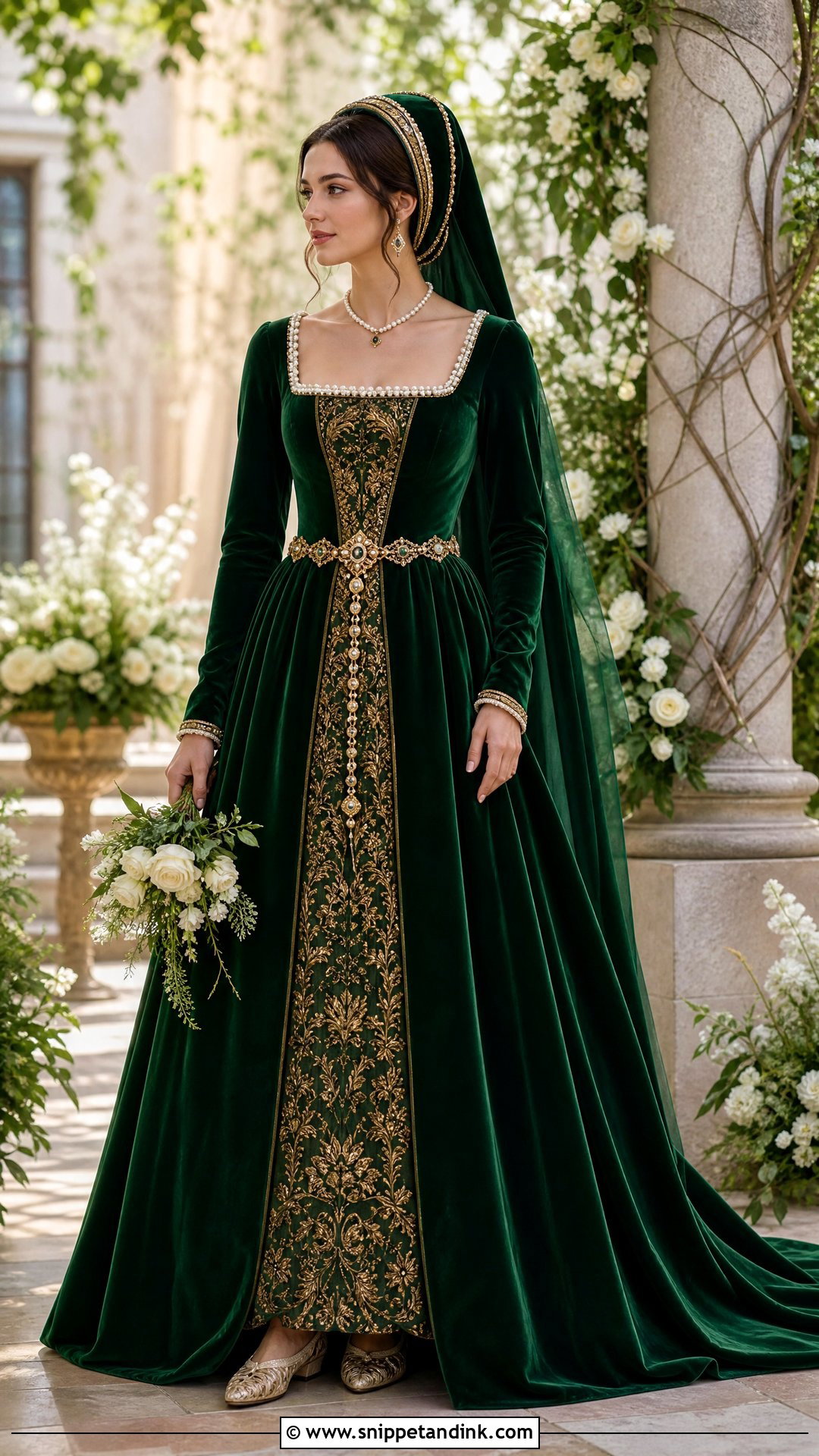
Emerald green still reads rich today, and deep greens were prized dye colors in the period too. A structured velvet or silk bodice with a square neck and fitted sleeves is the base. Let the skirt part at the front over a gold or ivory forepart. Pearls at the neck and cuffs lift the darker fabric near your face. Green can drain some skin tones in shade, so I hold fabric samples up to a bride’s face outdoors before ordering. Green or antique-gold flats, a long girdle and a modest hood complete it, with white flowers and foliage in the bouquet.
6. Sapphire Blue Tudor Wedding Dress
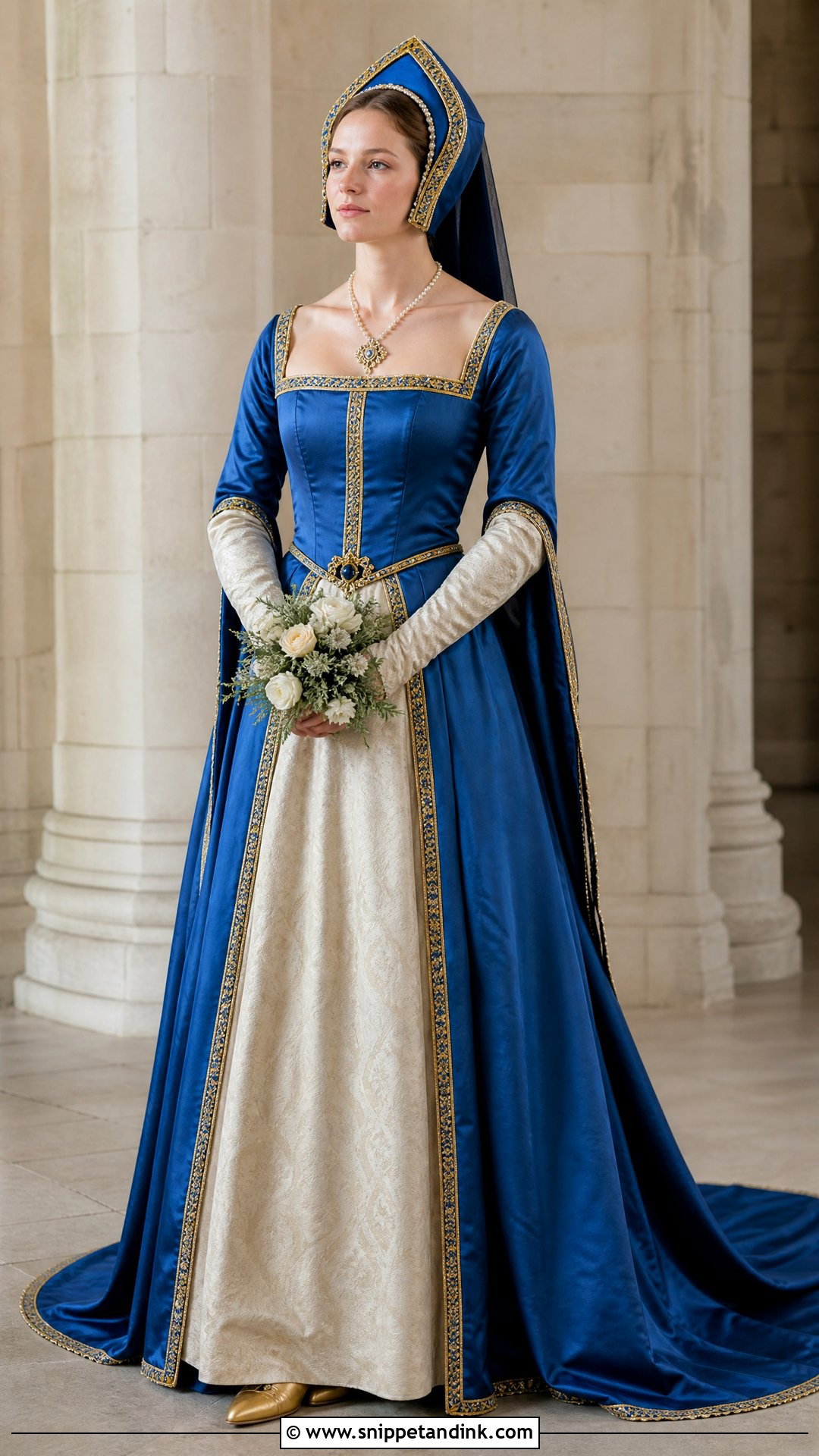
Sapphire satin gives clear, cool color. Pair a fitted bodice and wide square neck with a full floor-length skirt, then outline the neckline, front opening and cuffs in gold braid. A pale blue or cream forepart softens the block of color. Blue satin shows water marks badly, so keep drinks and rain well away from it. A pendant should sit inside the neckline rather than lying across the bodice, and a blue hood or narrow jeweled band finishes the head. Gold or navy shoes keep it consistent. It’s at its best in evening light.
7. Burgundy Tudor Wedding Dress With Pearl Trim
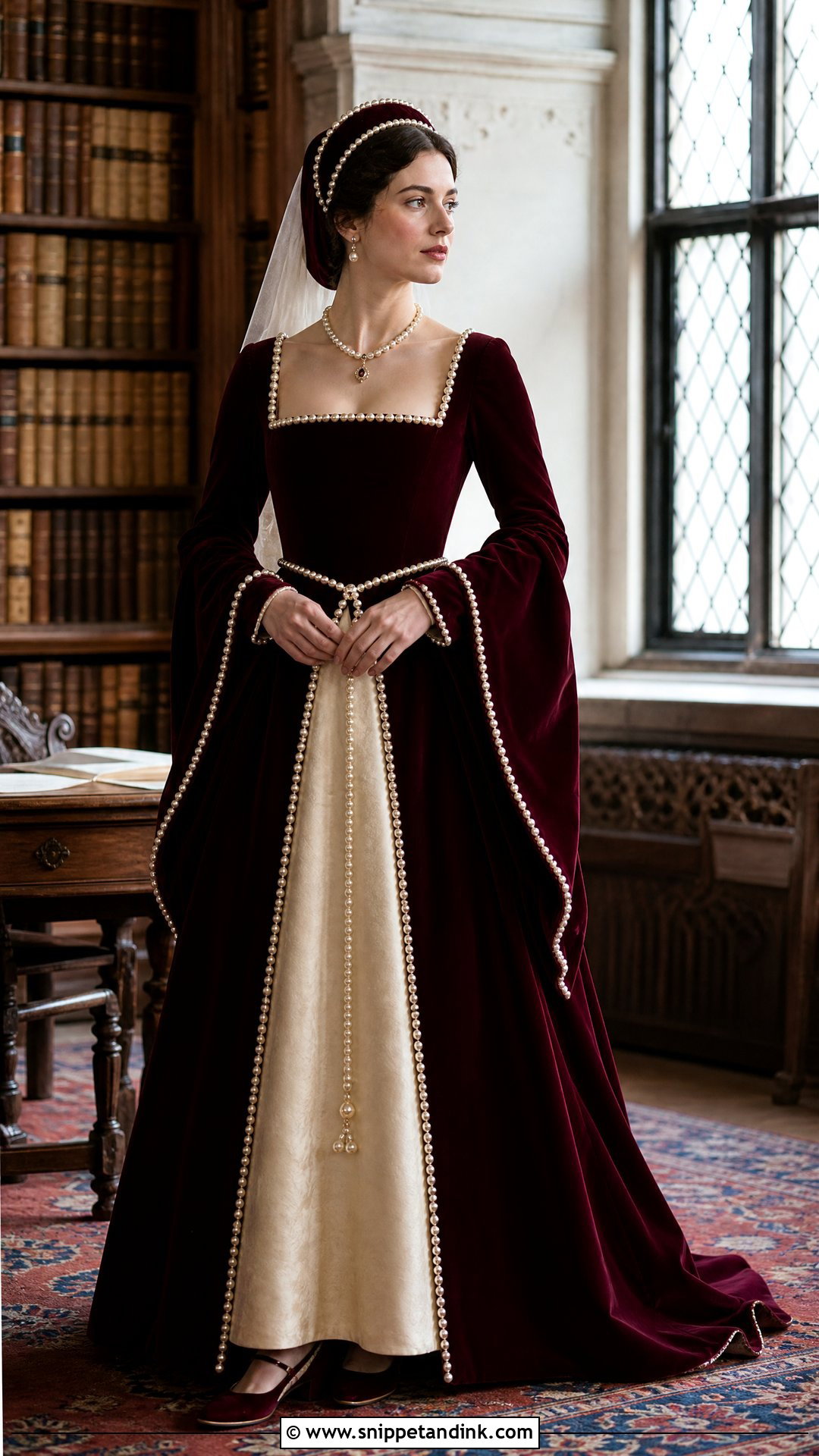
Burgundy is red’s quieter cousin. In velvet or heavy satin it looks rich without shouting, which makes it easier to style. Pearl trim around the square neck catches light up toward the face; repeat a little at the cuffs and leave the skirt plain. An ivory forepart, matching undersleeves and a long pearl girdle complete the gown itself, with burgundy flats and a structured headdress carrying a short sheer veil. Dark wood, libraries and autumn gardens all suit it.
8. Black And Gold Tudor Wedding Dress
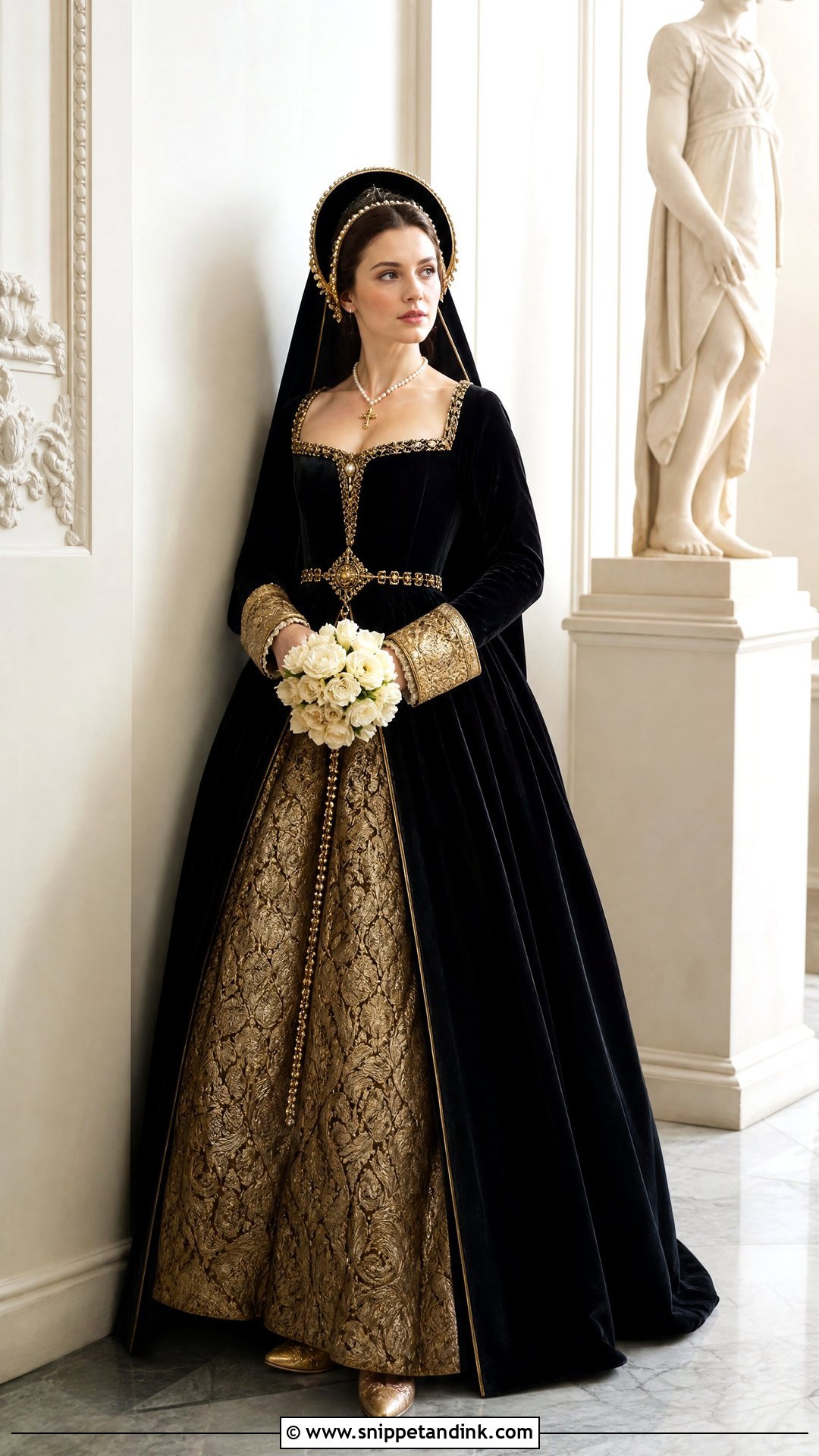
Black was an expensive, status color in Tudor England, so black and gold is more historical than it looks. Use black velvet for the bodice and overskirt and bring in gold through a patterned forepart, embroidered cuffs and thin neckline trim. Keep the square opening generous. Black velvet absorbs light, and a narrow neckline makes it look heavy around the shoulders. A black hood with small gold beads, gold shoes and ivory flowers give contrast. Light, fresh makeup matters more here than with any other color, since dark velvet makes tired skin look tired.
9. Blush Pink Tudor Wedding Dress
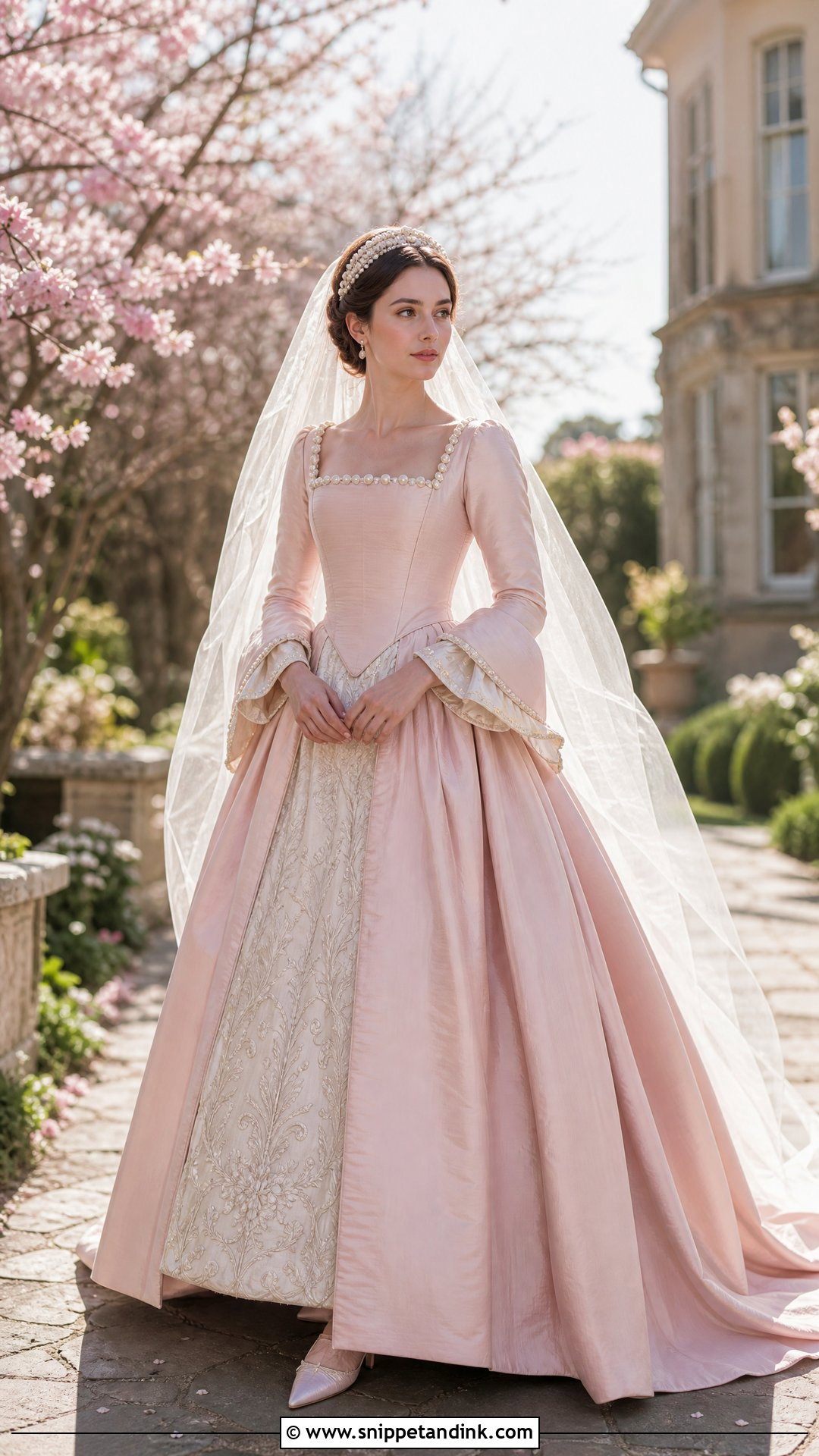
Pink softens the strict Tudor outline. Matte silk, satin or a light brocade keeps it grown-up; shiny polyester satin in pale pink tips toward sugary. Edge the square-neck bodice in ivory pearls, give the sleeves a slight flare at the cuff and open the skirt over an ivory embroidered forepart. Rose gold can work if the finish is antiqued rather than bright. Pale pink slippers, a pearl band or small hood and a sheer ivory veil finish it. Spring gardens and bright halls suit this one.
10. Silver Tudor Wedding Dress With Embroidery
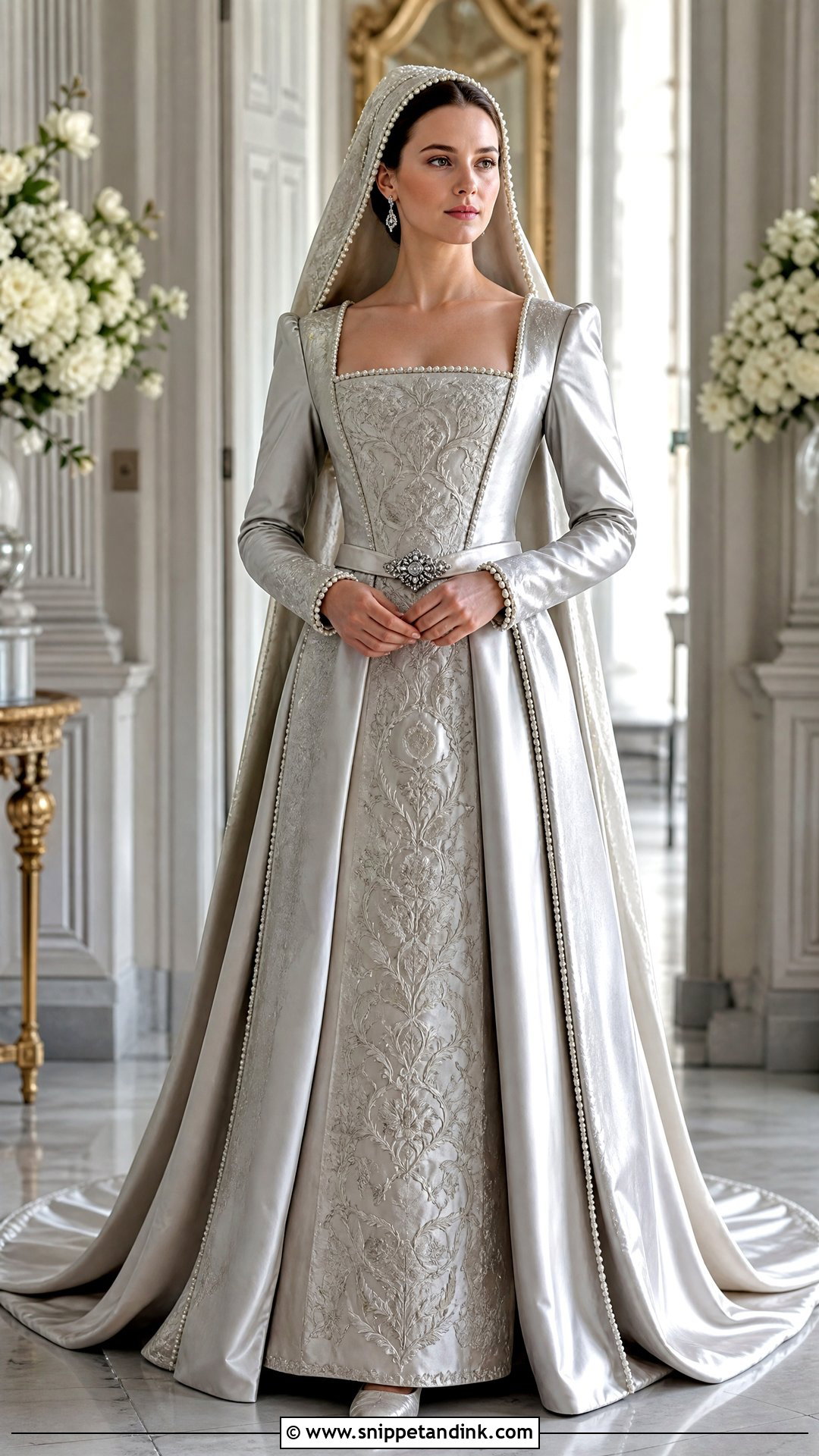
Silver feels ceremonial without being ivory. A soft silver satin or a brocade with a restrained woven pattern works; a busy pattern turns noisy in flash photography. The bodice can have a crisp square neck, a slight dip at the front waist and pearl-edged cuffs. Pale gray or white embroidery on the neckline and forepart shows up in photos without adding glare. I’d keep the jewelry to crystal drops and a slim girdle. A pearl-trimmed hood plus a sheer veil makes it unmistakably bridal for a winter evening.
11. Tudor Wedding Dress With Bell Sleeves
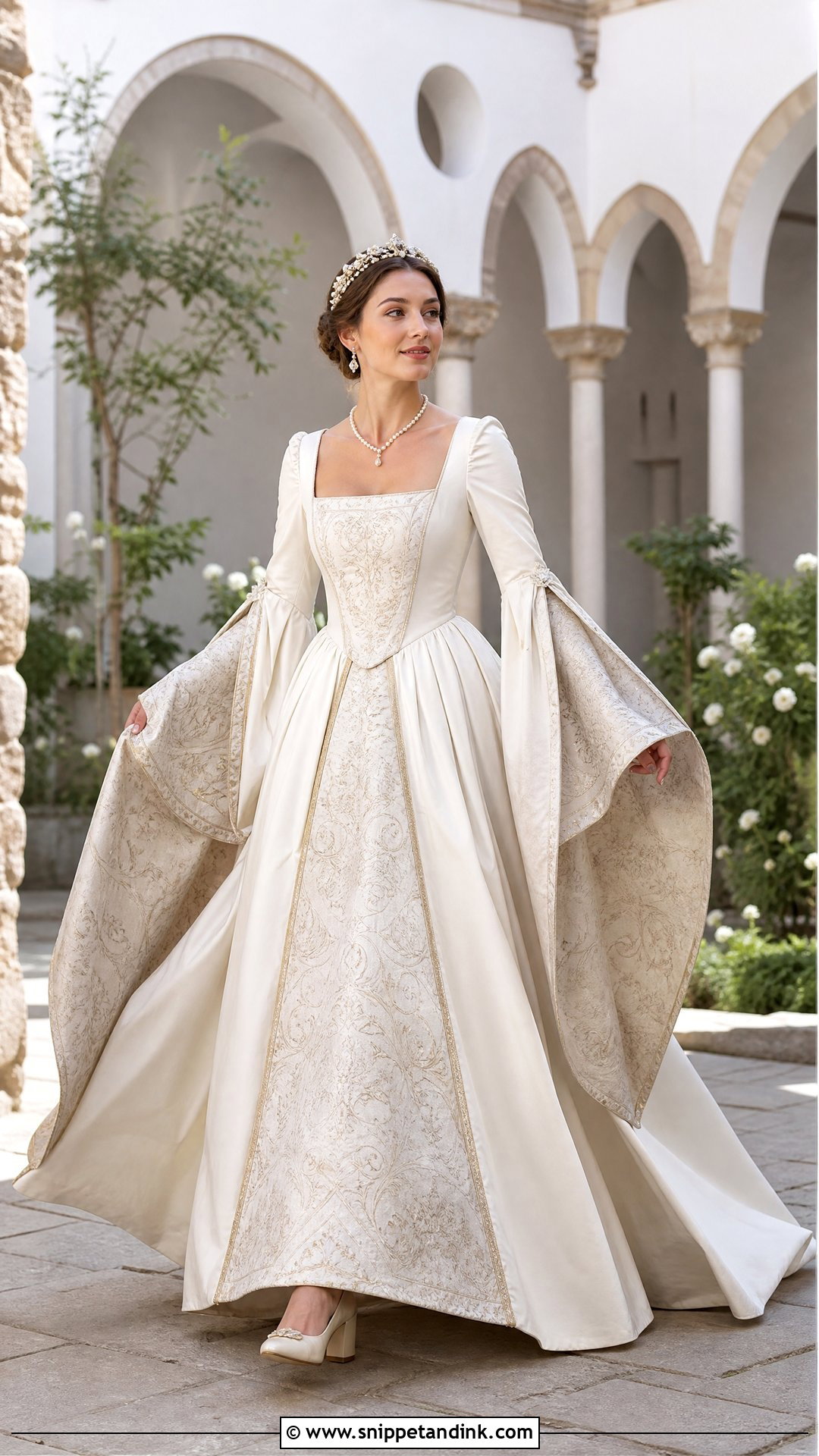
Hanging sleeves were a real Tudor feature, often turned back to show a lined cuff, and they give the dress movement. Start with an ivory or champagne bodice and a wide square neck, then fitted upper sleeves opening below the elbow into a wide bell lined in brocade or satin. Here’s the practical test: the sleeves must end above your fingertips, or they’ll trail through candle flames and sauce. A manageable A-line skirt with a decorated center panel keeps the dress lighter than a full reproduction. Low block heels steady you under the long hem.
12. Tudor Wedding Dress With Detachable Sleeves
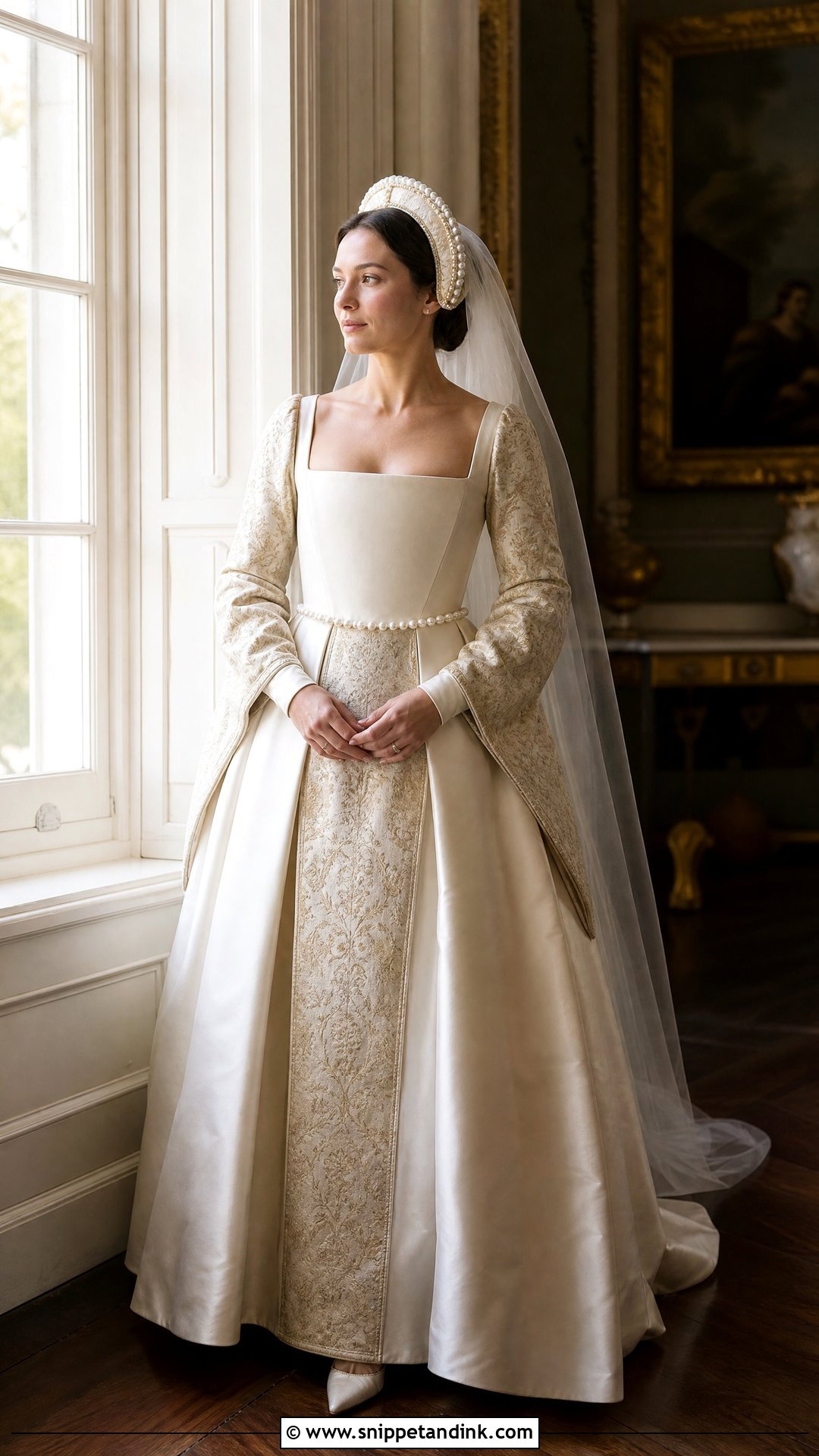
Removable sleeves are period-correct; Tudor sleeves were often pinned or laced on separately. That makes this the easiest gown on the list to adapt between ceremony and party. An ivory square-neck gown with long velvet or brocade sleeves, a pearl girdle and a hood covers you for the service, then the sleeves come off for dinner and dancing. Have the sleeve fastenings tied with points or hidden hooks, and practice removing them with whoever will help. Tie the sleeve fabric to another detail, like the forepart, so the gown looks planned both ways.
13. Tudor Wedding Dress With Lace Undersleeves
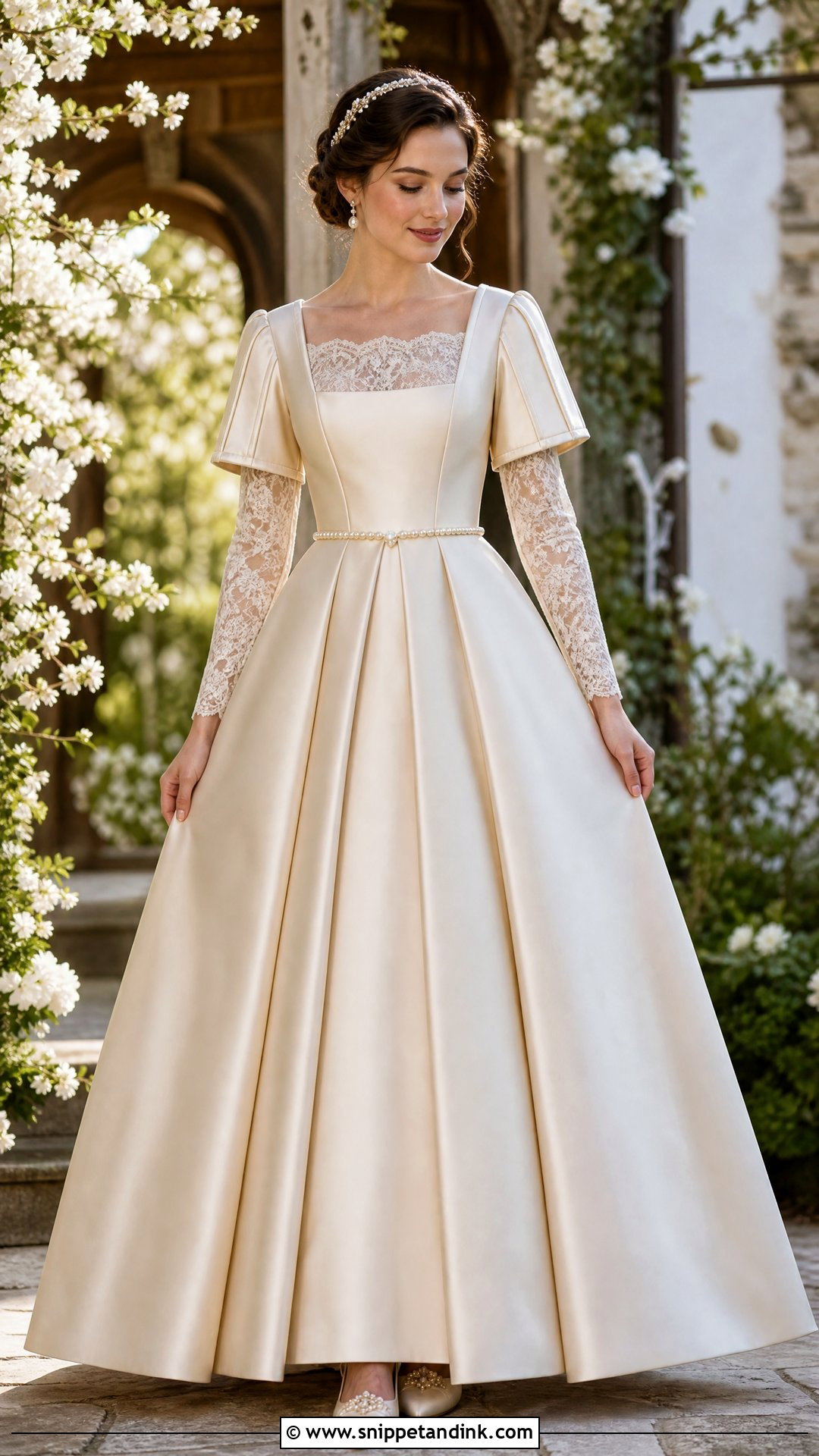
Lace undersleeves are a gentle way to soften a structured overdress. Choose satin or velvet in ivory, champagne or pale blue, with short outer sleeves framing long lace sleeves to the wrist. A matching lace insert at the square neck adds coverage without losing the shape. Small floral lace looks right; bold modern guipure looks out of place next to Tudor seams. Satin shoes, pearl earrings and a simple jeweled band are enough, and the lighter sleeves keep it comfortable on a mild spring day.
14. Tudor Wedding Dress With High Neck
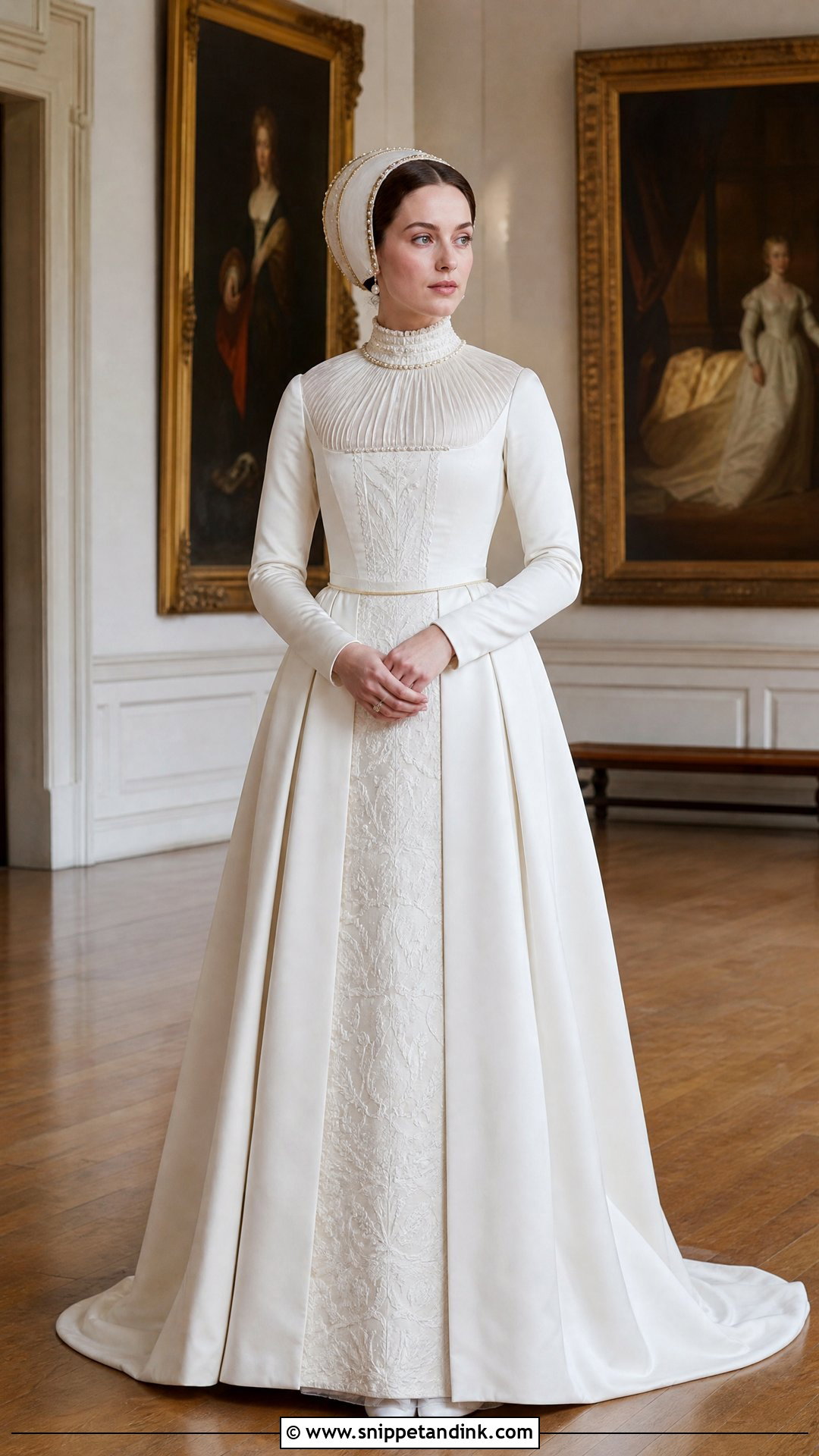
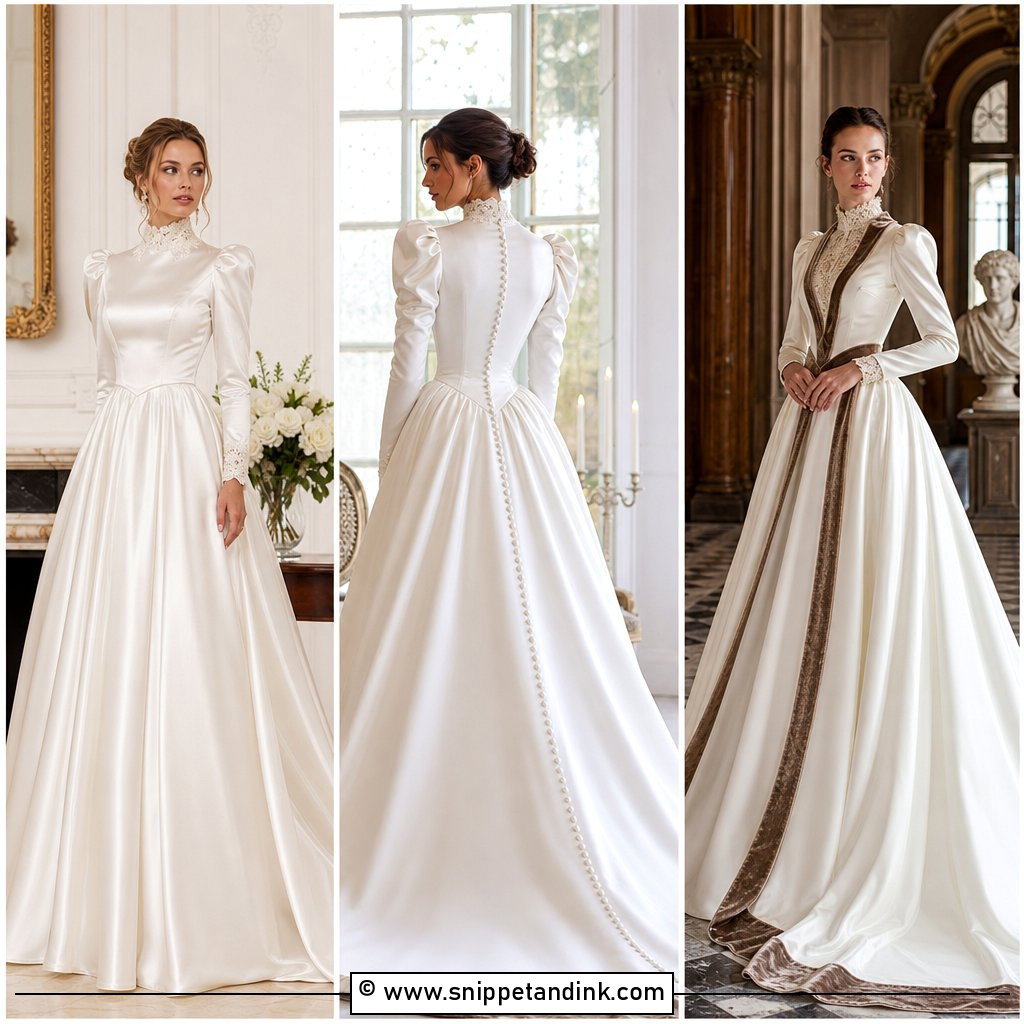
A high neck in Tudor dress came from the partlet, a separate fine linen or sheer layer worn over the shoulders and closed at the throat. Recreate it with a sheer or finely pleated partlet over a fitted bodice. Small pearls, covered buttons or narrow lace can edge the collar; stop before it grows into a large ruff, which belongs to a later look. Long sleeves and a skirt opening over an embroidered panel follow naturally. A velvet cap, jeweled band or compact English hood balances a covered neck better than any necklace. It suits modest dressing and cool weather.
15. Tudor Wedding Dress With Corset Bodice
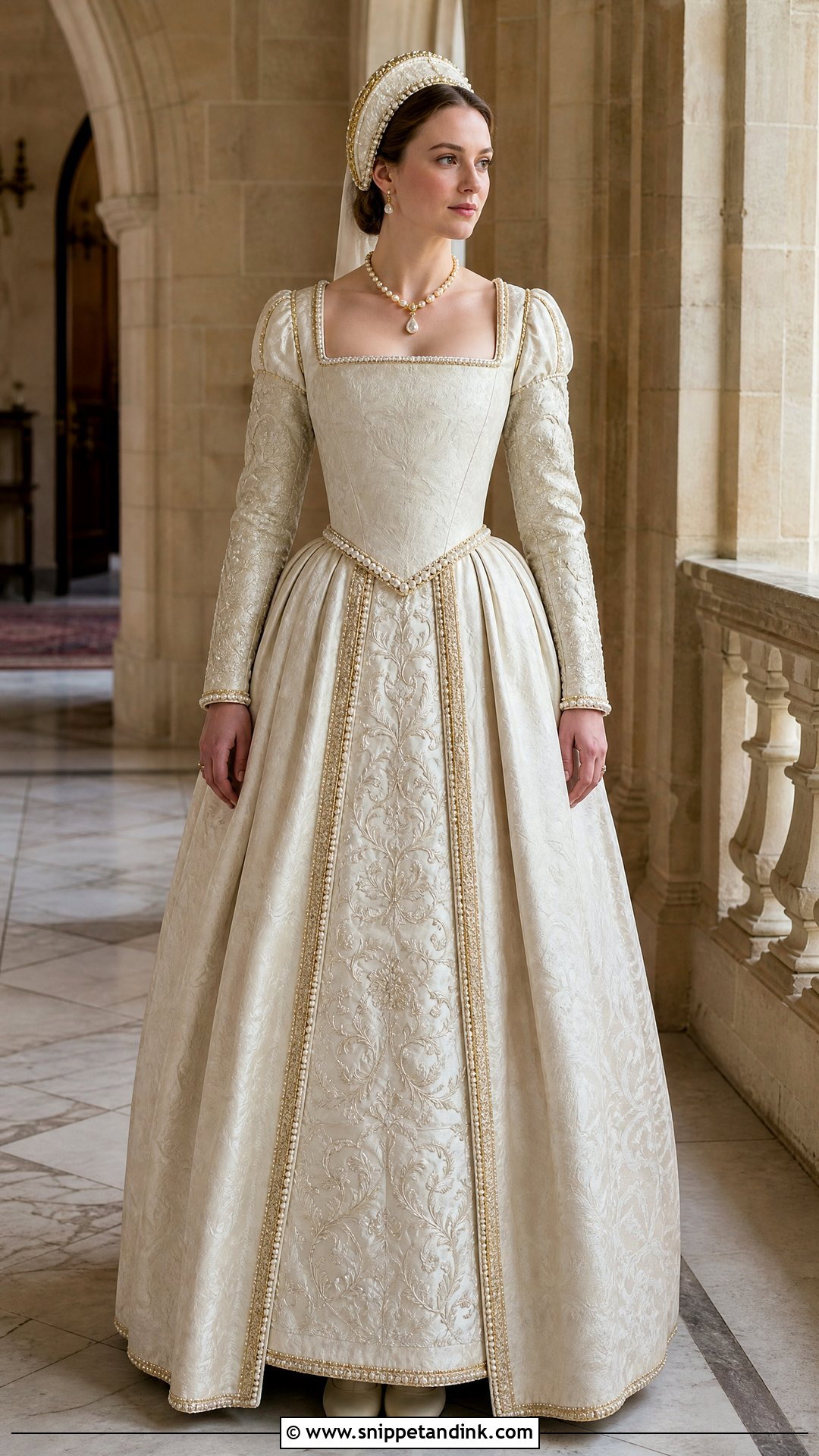
Tudor women got their flat, smooth torso from stiffened bodies, not from cinched waists, so a period-inspired corset bodice should flatten and lengthen rather than squeeze. Look for internal support, a square neckline, wide straps and a gently pointed waist. If you can’t sit down and eat comfortably at a fitting, the bodice is too tight. Full satin or brocade skirts and long sleeves pair well, along with a patterned forepart and pearl belt. Put any visible lacing at the back in ribbon matched to the gown. Modern construction gives you the historical outline with proper sizing and real comfort.
16. Tudor Wedding Dress With Embroidered Forepart
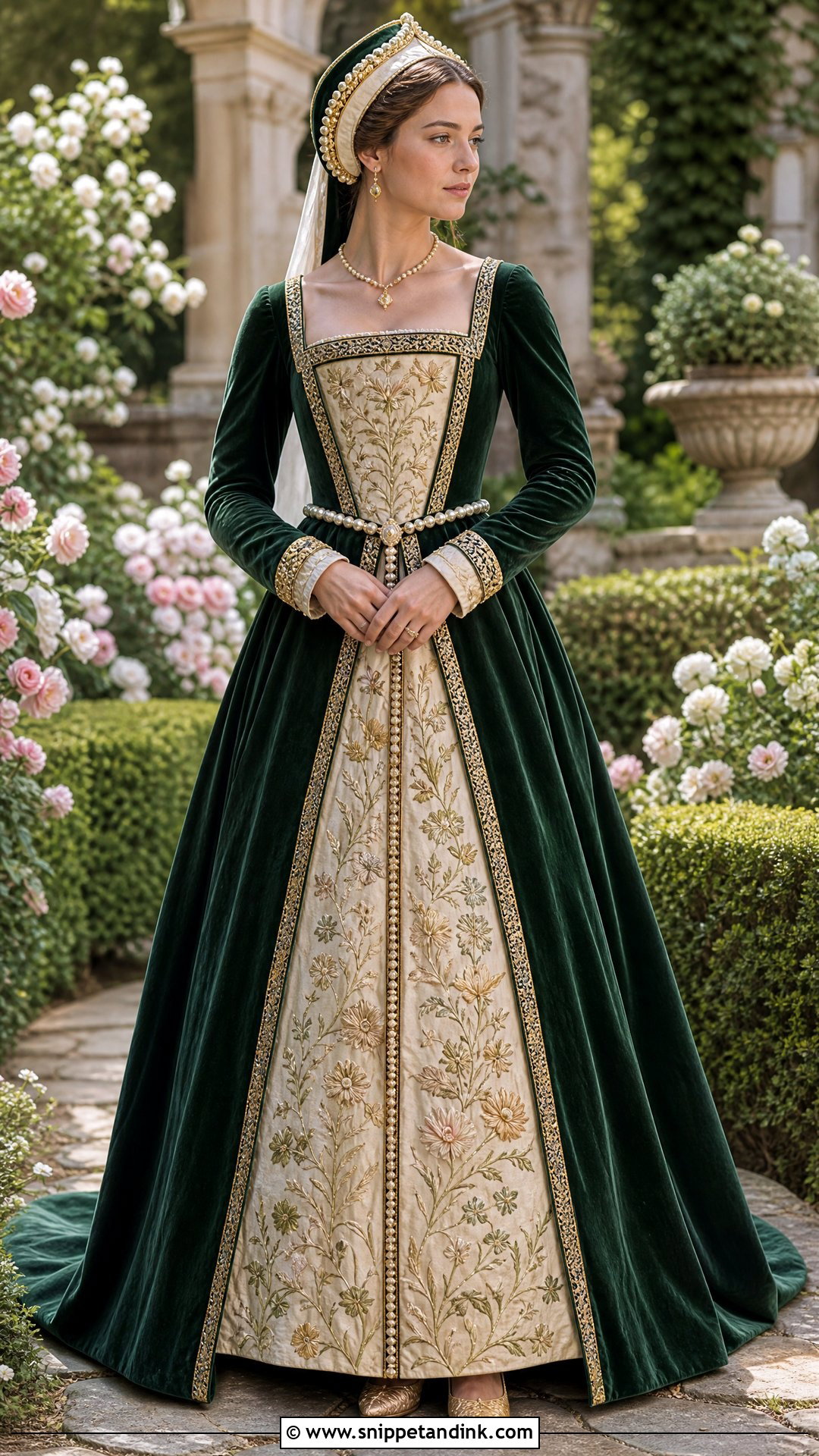
The forepart was the showpiece of a Tudor gown, the triangle of rich fabric seen where the skirt parts at the front. Make it the star: keep the overdress plain in velvet, silk or satin, and let the panel carry vines, flowers, scrollwork, pearls or metal thread. Repeat one small motif at the cuffs so the panel doesn’t feel stuck on. Hand embroidery takes a long time, so start early if it’s custom. You can also stitch in flowers that mean something to your family without covering the whole gown.
17. Tudor Wedding Dress With Cathedral Train
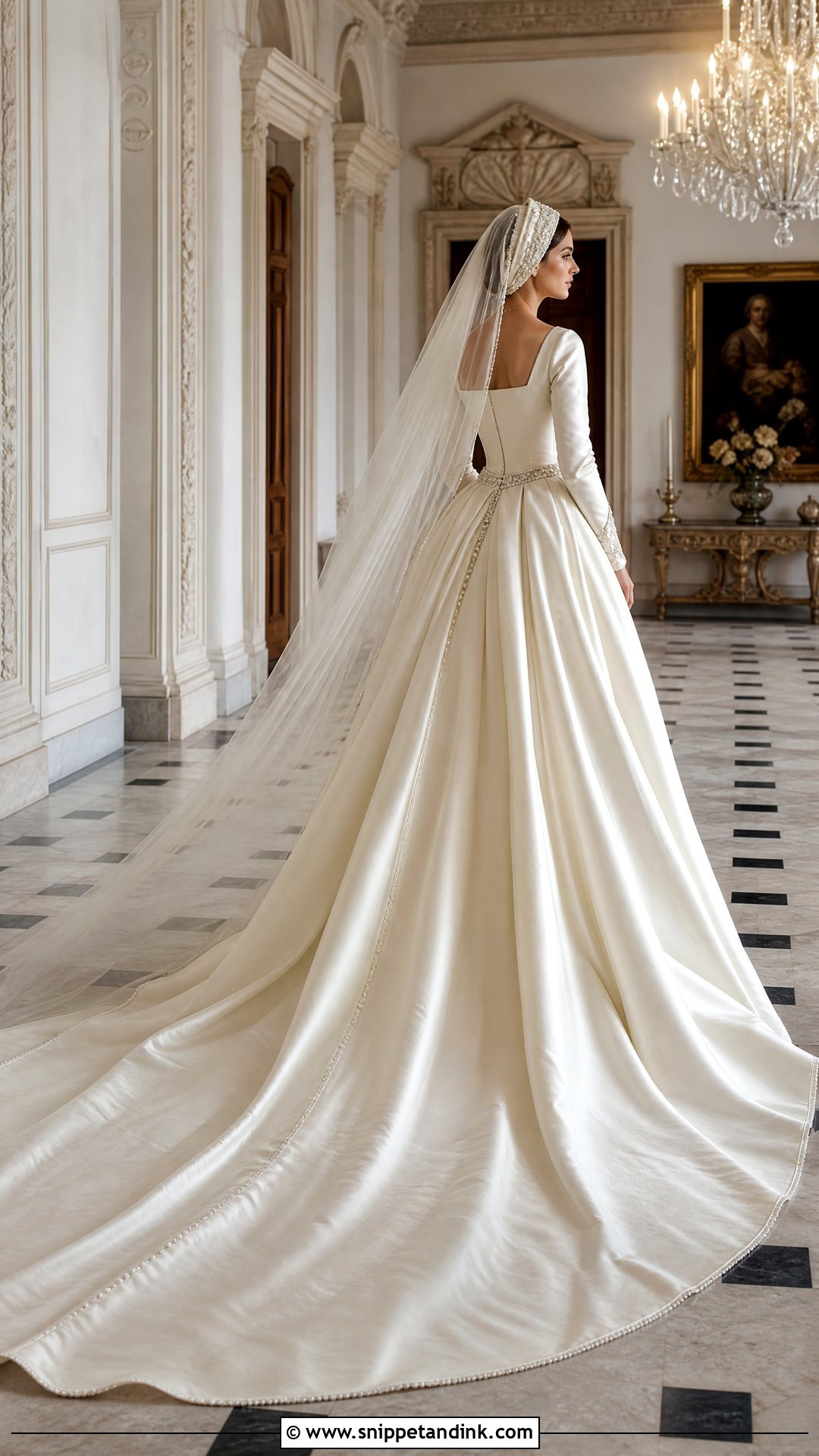
A cathedral train gives the Tudor outline real ceremony. Use satin, silk faille or a light brocade with enough body to spread out behind you rather than collapsing into narrow folds. Keep the front clean so the back gets the attention: a forepart or narrow pearl edging is plenty. Long trains on heavy fabric are hard to drag over carpet and gravel, so add a wrist loop or a strong bustle for after portraits. Low closed shoes support you under the weight, and wide aisles with smooth floors make it practical.
18. Simple Tudor Wedding Dress
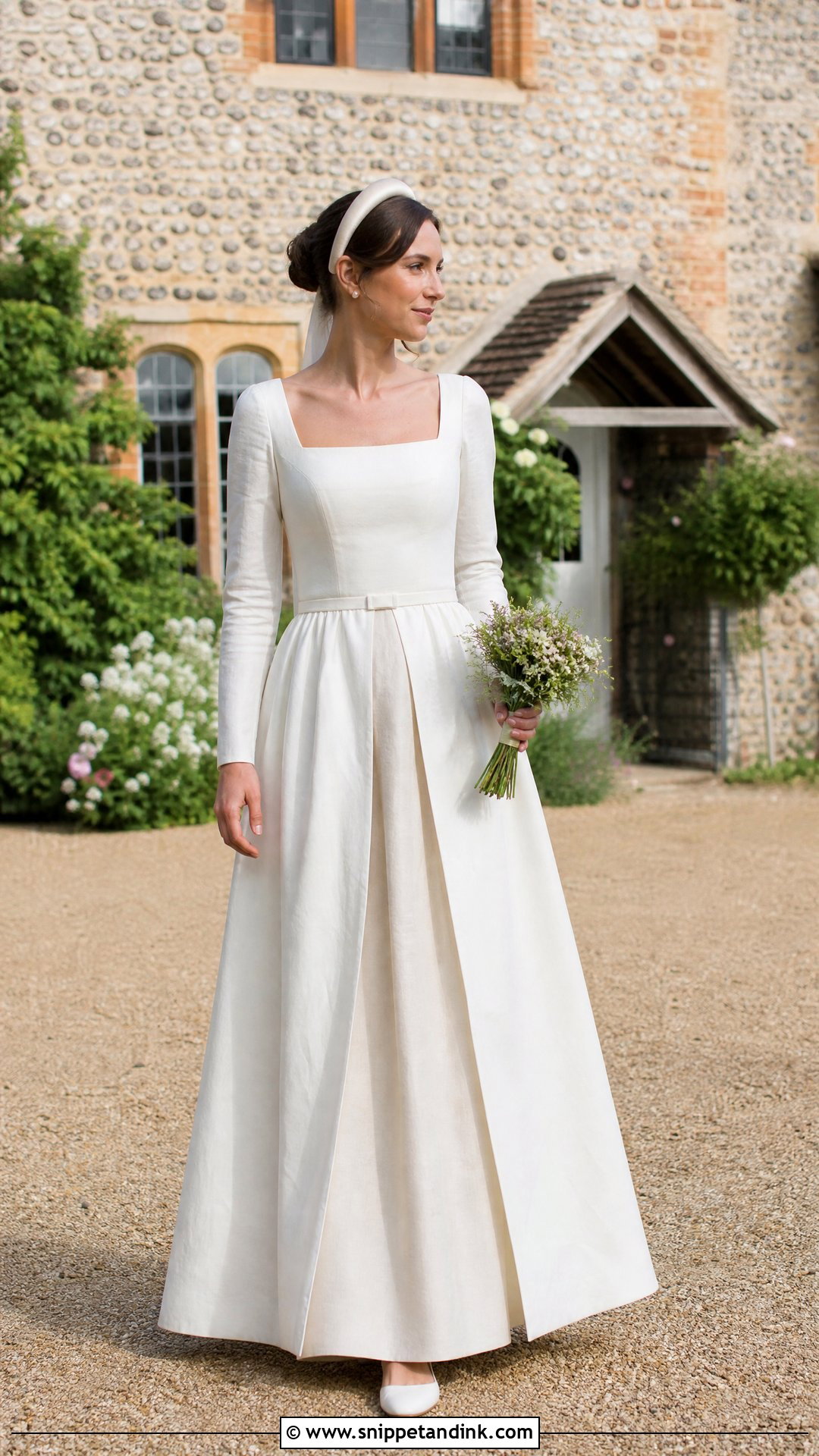
You don’t need velvet or jewels to look Tudor; the neckline and silhouette do most of the talking. A clean square-neck bodice, long fitted sleeves and a gathered A-line skirt in ivory linen, silk or matte satin is enough. A narrow contrasting panel at the center front hints at a forepart. Linen creases quickly, which honestly suits a rustic day, but choose silk if you hate wrinkles in photos. Add comfortable leather flats, a slim fabric belt, pearl studs and a plain band or simple cap. It’s my pick for small outdoor ceremonies.
19. Modern Tudor Wedding Dress
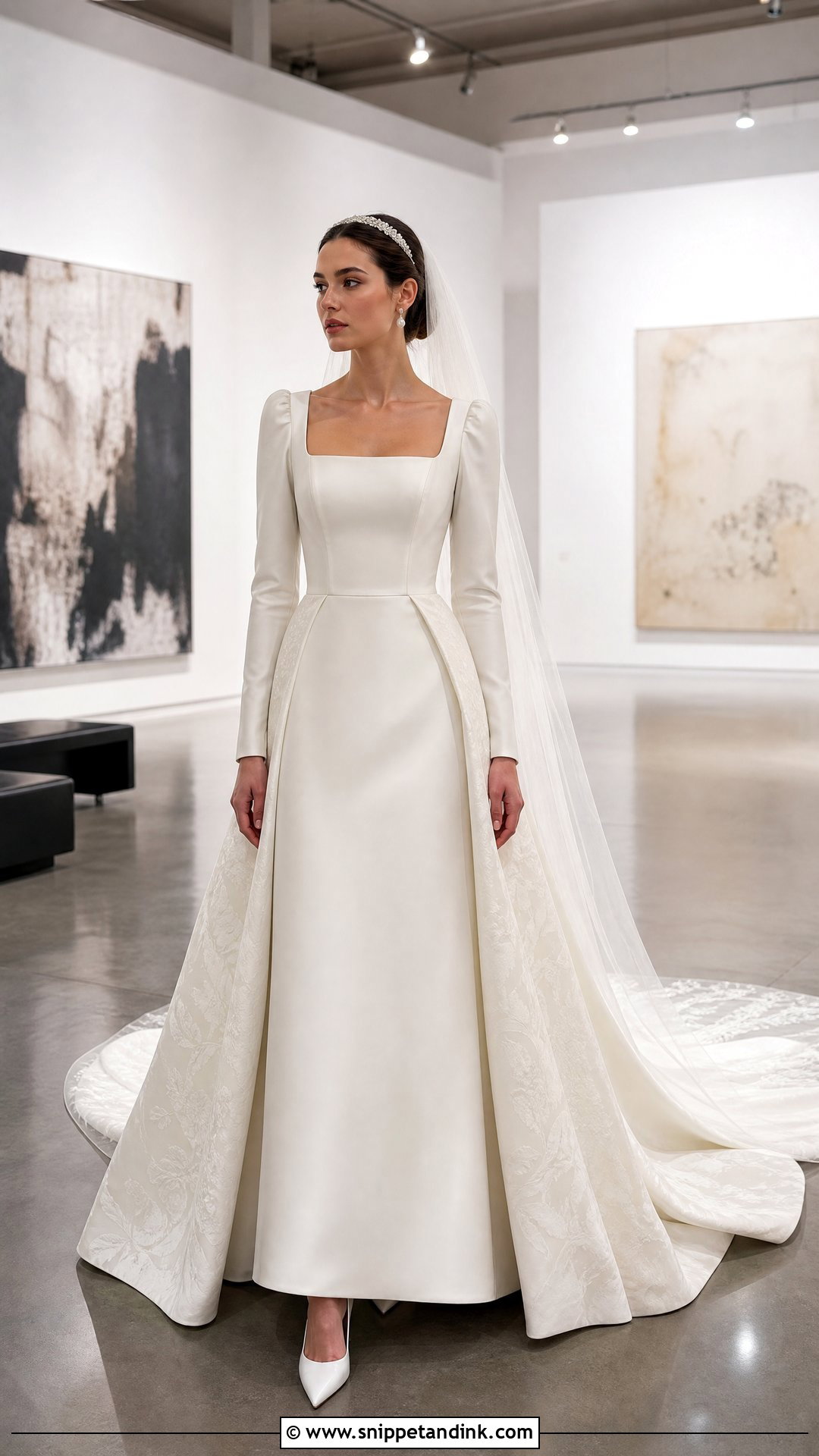
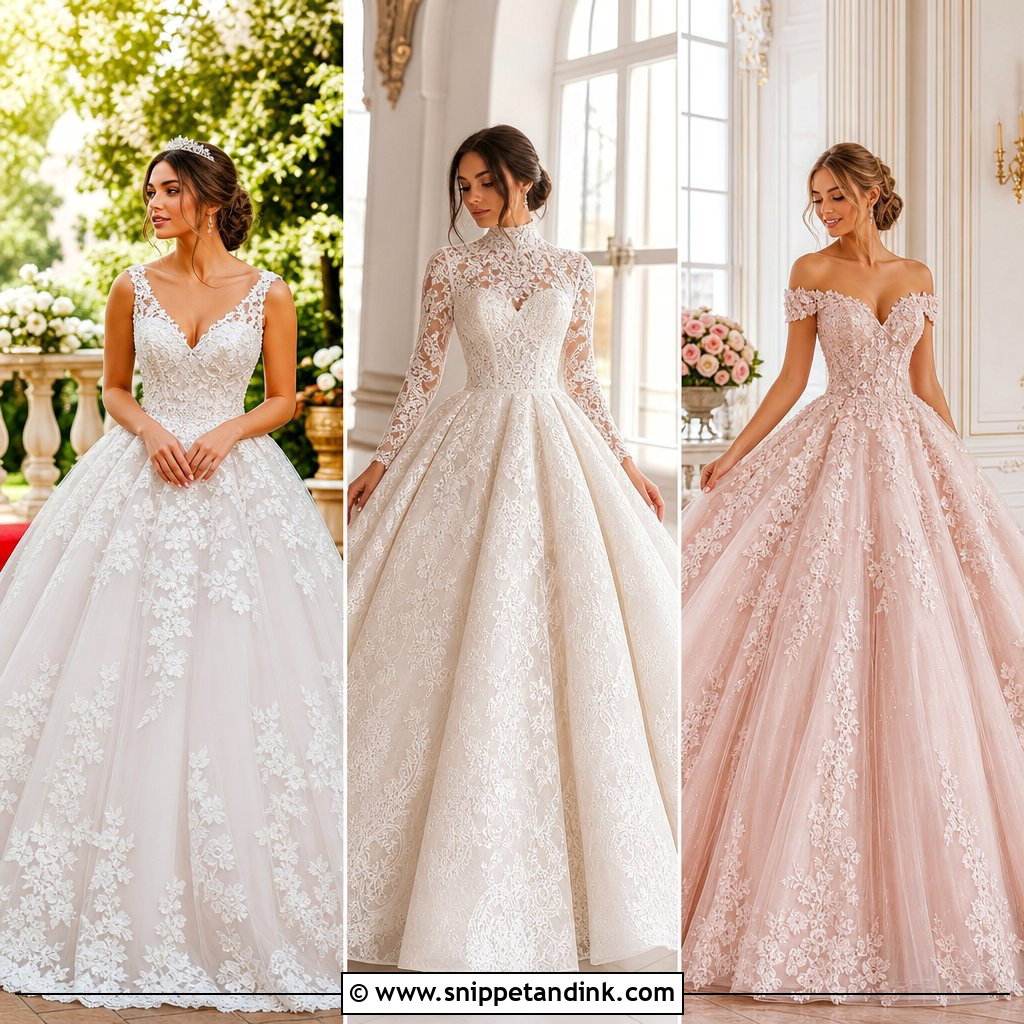
The modern route takes a few period signals and leaves the rest. A sleek A-line or ball gown with a square neck, a defined waist and long sculpted sleeves already reads Tudor. Add pearl edging, a pointed bodice seam or a detachable brocade overskirt instead of every layer. Many vintage-inspired bridal lines combine these references with current sizing and construction, which makes the look far easier to wear. Pointed pumps, pearl earrings and a minimal headband work, and a sheer chapel veil can replace the hood entirely for a ballroom or city venue.
20. Plus Size Tudor Wedding Dress
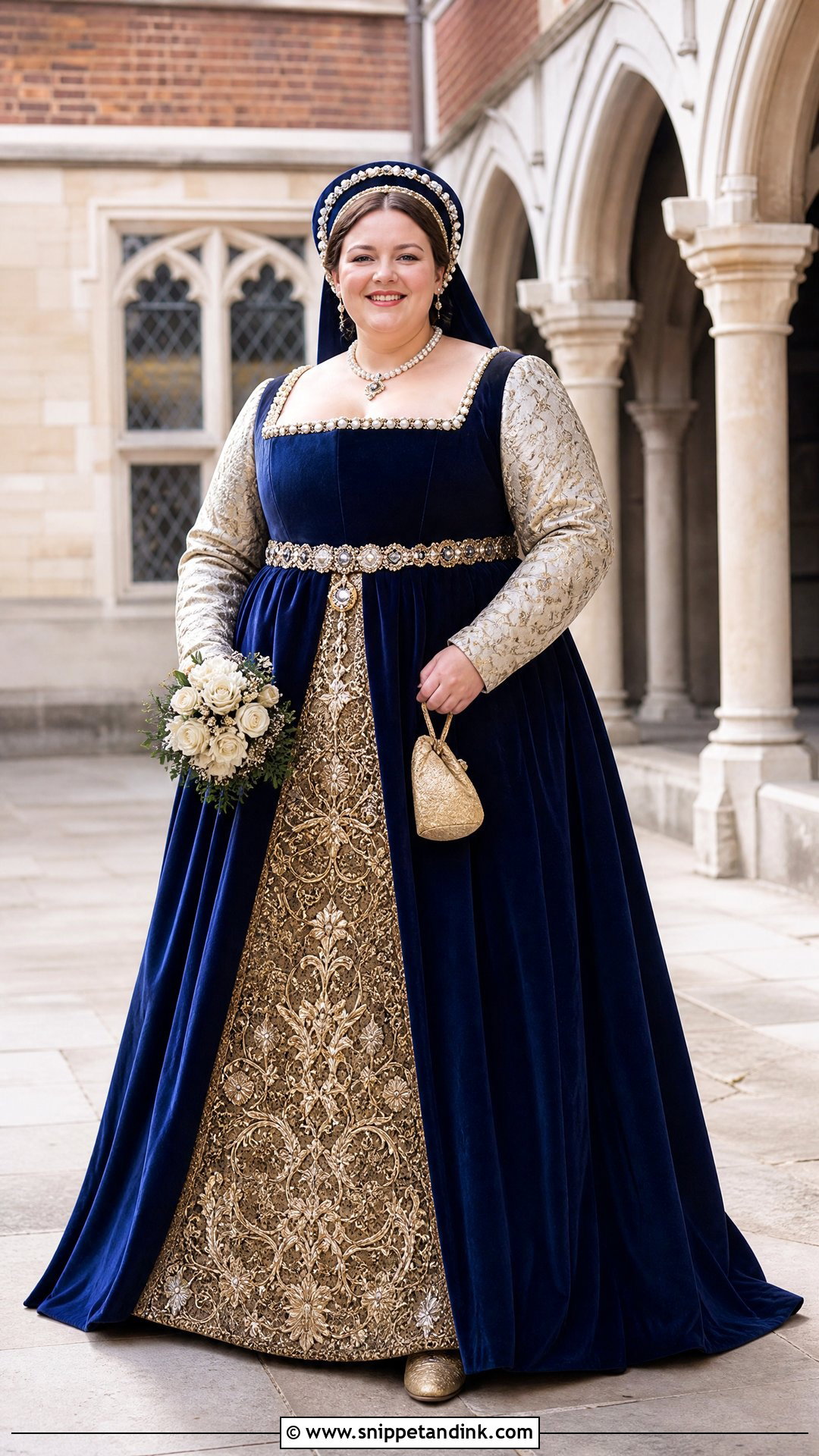
Plus-size bodies wore these silhouettes in the sixteenth century too, and the flat, structured bodice can be very supportive when it’s cut properly. Size the square neck to your shoulders, not to a standard pattern, and plan for several fittings so the boning lands where your body needs it. A gently pointed waist and full skirt give period shape without compression. Rich velvet, bright satin, ivory silk and patterned brocade can all look right when fitted; ignore rules about which colors suit you. Breathable lining and a reliable bustle keep you comfortable through to the last dance.
Bridal Salon, Historical Costumer or Both?
A bridal shop can sell you a square-neck gown with long sleeves and alter it, and for a lightly Tudor look that’s the simplest route. A layered gown with a forepart, hood and farthingale is a different job. That needs a dressmaker or costumer who understands period patterning.
Give a custom maker enough time
Custom period gowns usually involve a mock-up in plain cotton first, so the fit is solved before the expensive fabric is cut. Expect several fittings and plan on many months rather than weeks, longer if there’s hand embroidery. Bring portraits or museum images you like and say plainly which details matter most, since a maker can tell you which ones will add the most time and cost.
Living in velvet and hoops for a day
- Velvet and brocade are warm. In summer, ask for cotton or silk lining and consider lighter silks for the outer layer.
- A hooped skirt changes how you sit, climb into a car and use a bathroom. Practice all three in the full outfit before the wedding.
- Hoods and headdresses need to be pinned to your hair, not balanced on it. Have your hairstylist see the headpiece at your trial.
- Choose flat or low shoes. Under a long period skirt nobody sees them, and you’ll stand for hours.
A Hood, a Forepart and Room to Breathe
Tudor style rewards careful tailoring more than strict accuracy. Square necklines, flat bodices, long sleeves, foreparts, full skirts and hoods give you plenty of ways to build the silhouette. Ivory, jewel tones, brocade, lace and velvet each set a different mood, and the venue usually narrows the choice for you. Pick the details you love from the gowns above, then make the dress comfortable enough for hours of standing, sitting and dancing. It should look regal and still feel like you.
You'll Like These Ideas:


Leave a Reply