
Silk has a glow and a way of moving that no synthetic quite copies, which is why I still steer most brides toward at least trying it on. The twenty gowns below cover minimalist ceremonies, ballrooms, gardens and modern receptions, and bridal designers keep pairing clean silk with dropped waists, sculptural draping and fuller skirts. The silhouette is only half the decision, though. Neckline, veil, shoes, bouquet and tailoring all change how a silk dress reads. Before you fall for a shape, compare silk satin with crepe, chiffon, organza, and dupioni, because each one holds structure and drapes in its own way.
Satin, Crepe or Mikado? Matching the Silk to the Silhouette
“Silk” on a label tells you the fibre, not how the dress will behave. The weave and weight decide that, and a beautiful design in the wrong silk is the most common mismatch I see at first fittings. Here is how I pair them.
- Charmeuse and bias satin: liquid and shiny, made for slips and cowl necks. It shows every line underneath and creases when you sit, so it suits brides comfortable with a little rumple by evening.
- Silk crepe: matte with a pebbly hand and real drape. My first pick for mermaids, columns and long sleeves, and it resists creasing better than satin.
- Mikado and faille: heavy, crisp and slightly ribbed. They hold a sculpted ball gown or strapless bodice and hide small fit flaws, but they feel warm on a hot day.
- Dupioni: textured with visible slubs and a stiff hand. Good for tea length and structured A-lines; the slubs are part of the character, not faults.
- Chiffon and organza: sheer layers for capes, overlays and sleeves rather than the main gown.
Ask to handle a swatch of the exact fabric, crush it in your fist for a few seconds, and look at it after you let go. That tells you more about how it will look after the ceremony than any photograph.
1. Silk Slip Bridal Dress
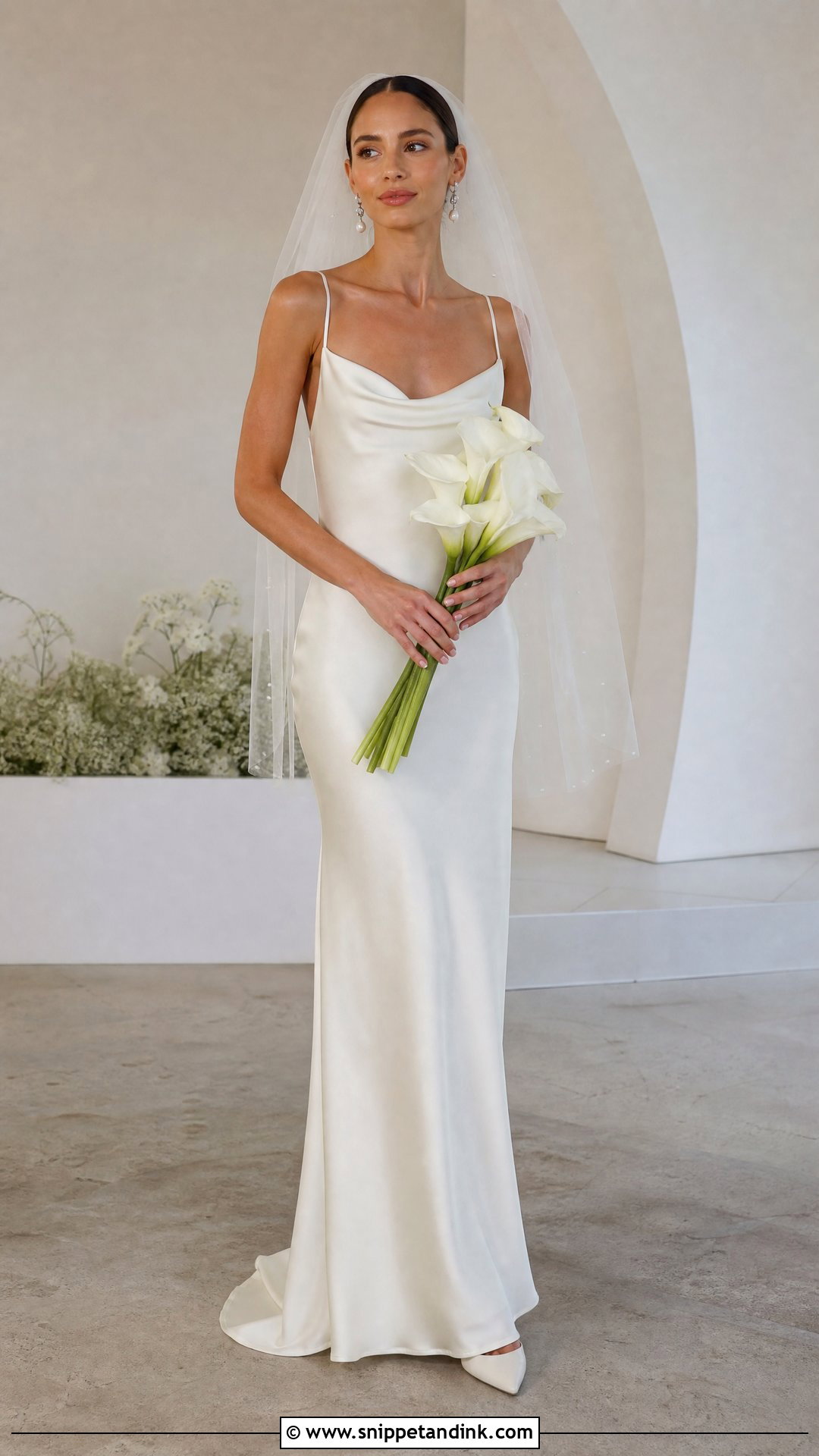
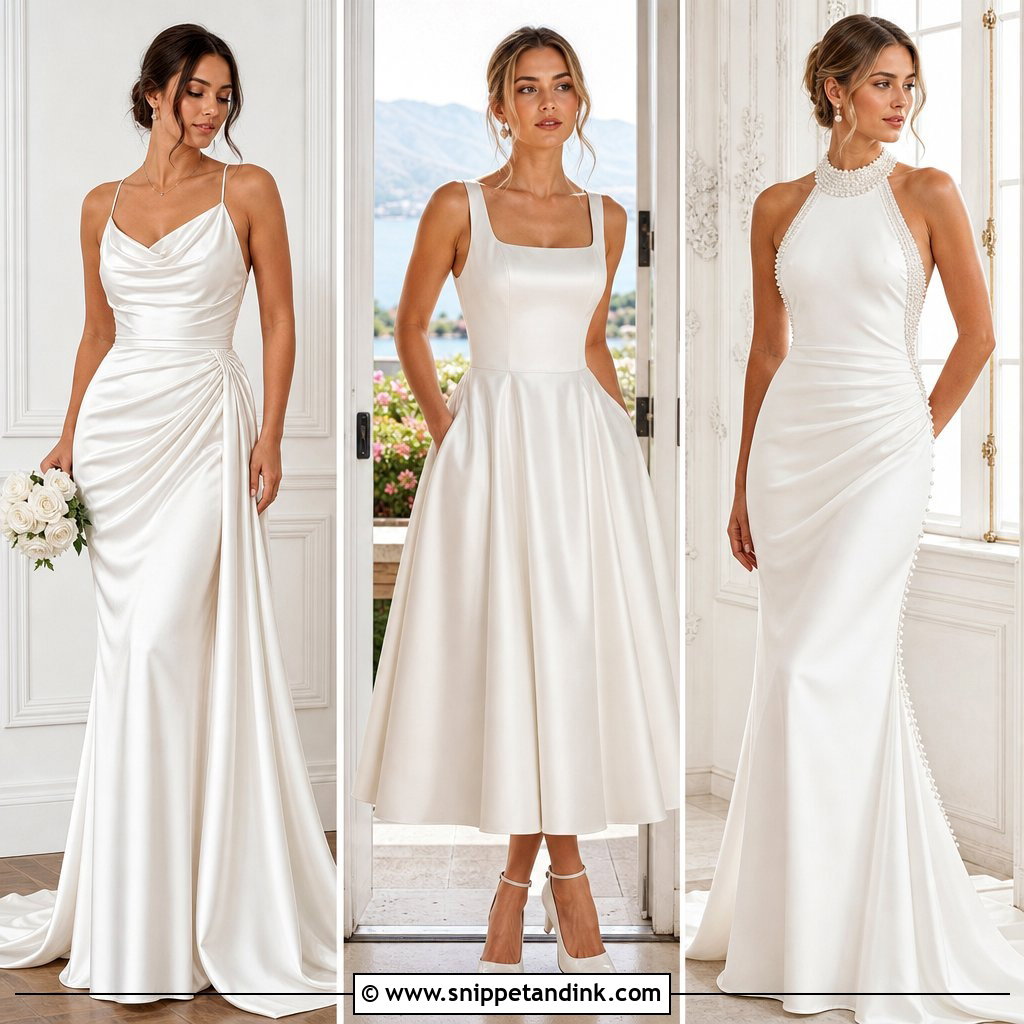
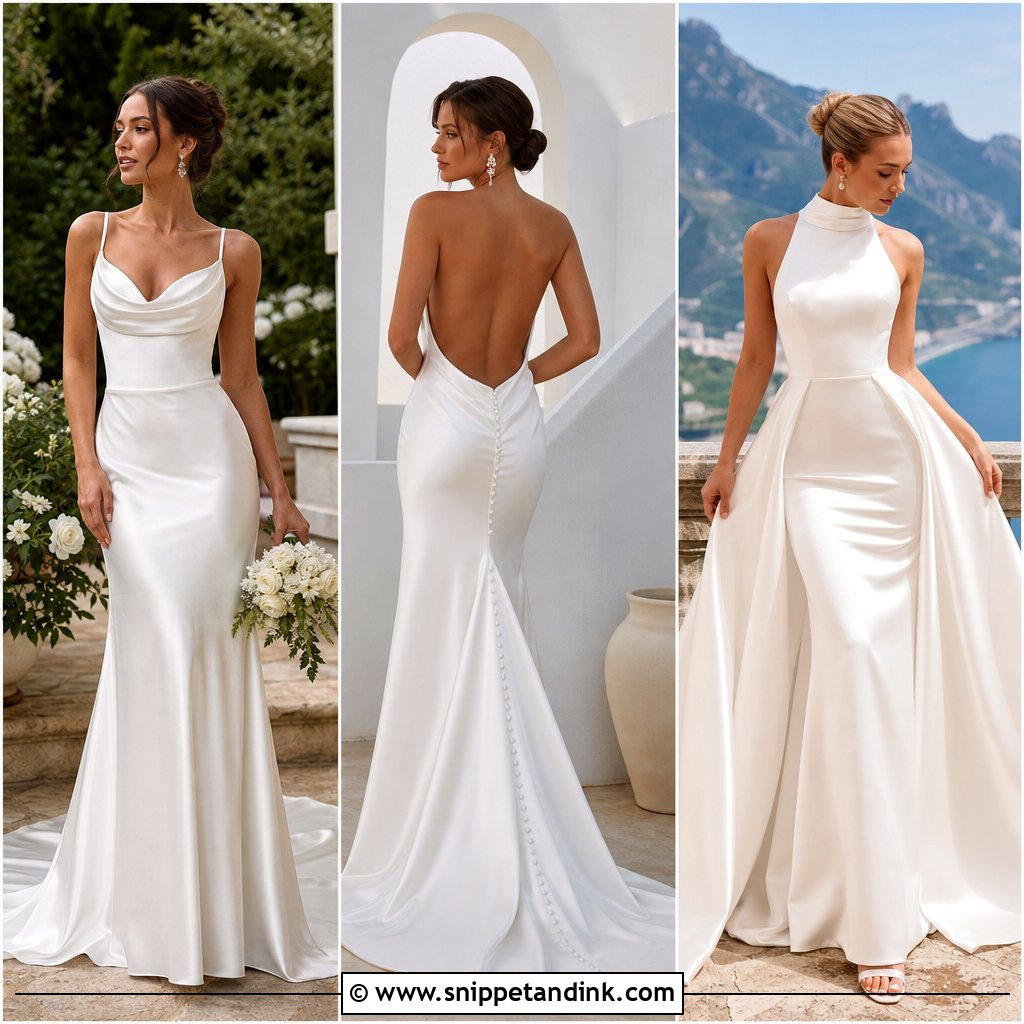
The slip is the most honest silk dress there is, and the least forgiving. A bias-cut gown with slim straps and a softly draped neckline follows the body because the fabric is cut on the diagonal, which also means it shows every seam beneath it. My first job at a slip fitting is underwear: smooth, supportive and tested, plus a proper lining discussion with the tailor. A low cowl back keeps the front plain. Pointed ivory pumps, pearl drops, a fingertip veil with a raw edge and a few white calla lilies are all it needs. It sits most naturally in an intimate room, by the coast or in a modern space.
2. Silk A-Line Bridal Dress
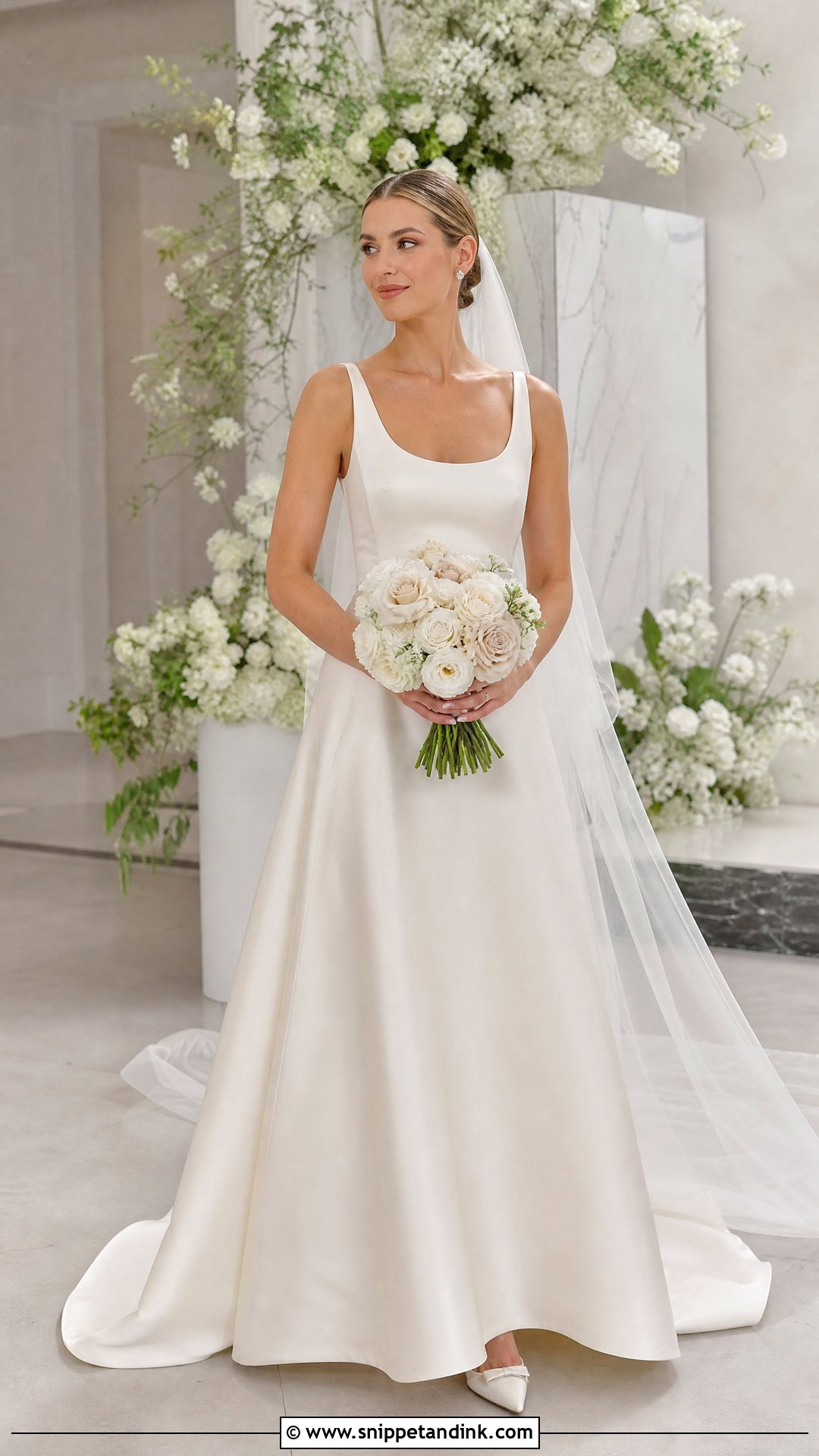
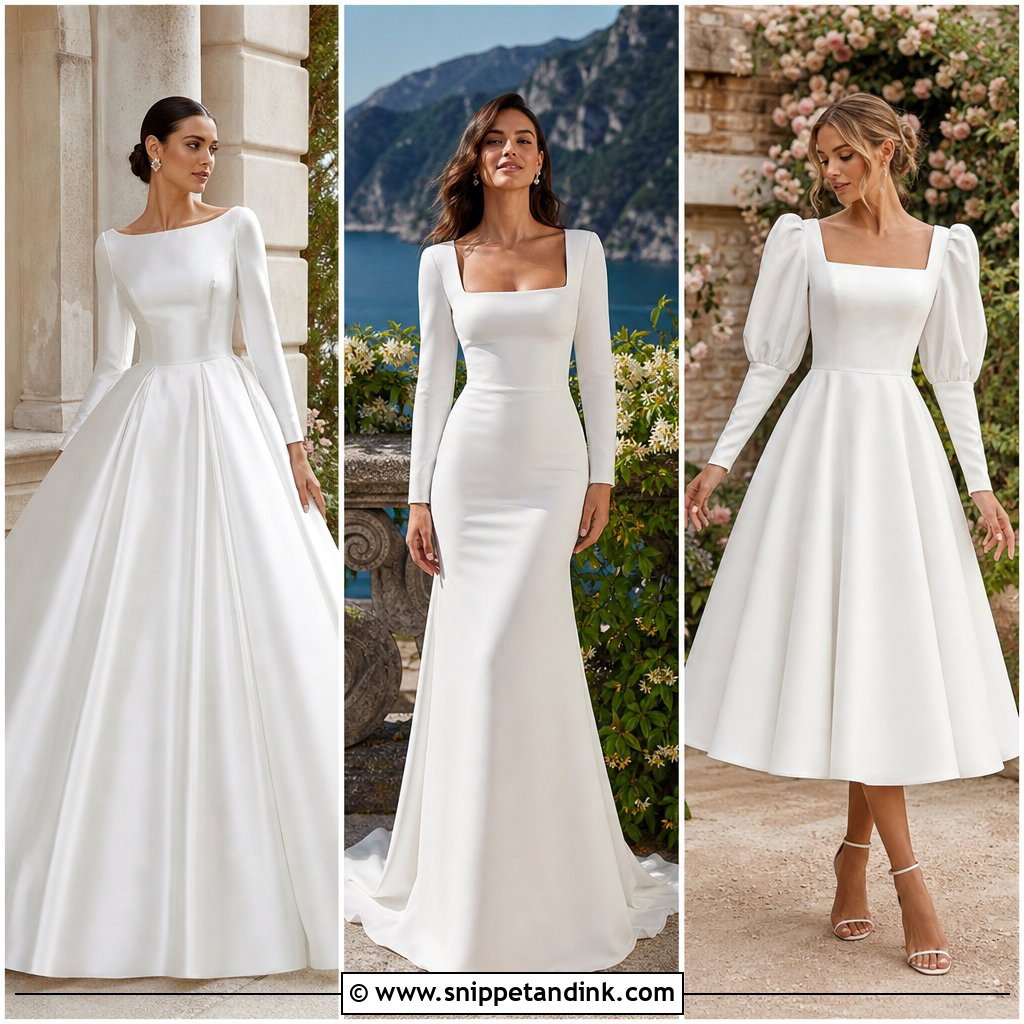
An A-line gives gentle shape and lets you move freely, which is why it’s the silhouette I see fit the widest range of brides. The bodice marks the waist and the skirt widens gradually rather than ballooning. Silk faille or satin has enough body to hold that line; a lighter silk collapses into it. I’d pair a scoop or V-neck with small studs and a chapel veil, closed-toe slingbacks and a structured bunch of garden roses. Petite brides do better with a narrower skirt and a short train. If you want support, ask for internal boning and wide straps rather than relying on tape. It suits nearly any season or venue.
3. Silk Ball Gown Bridal Dress
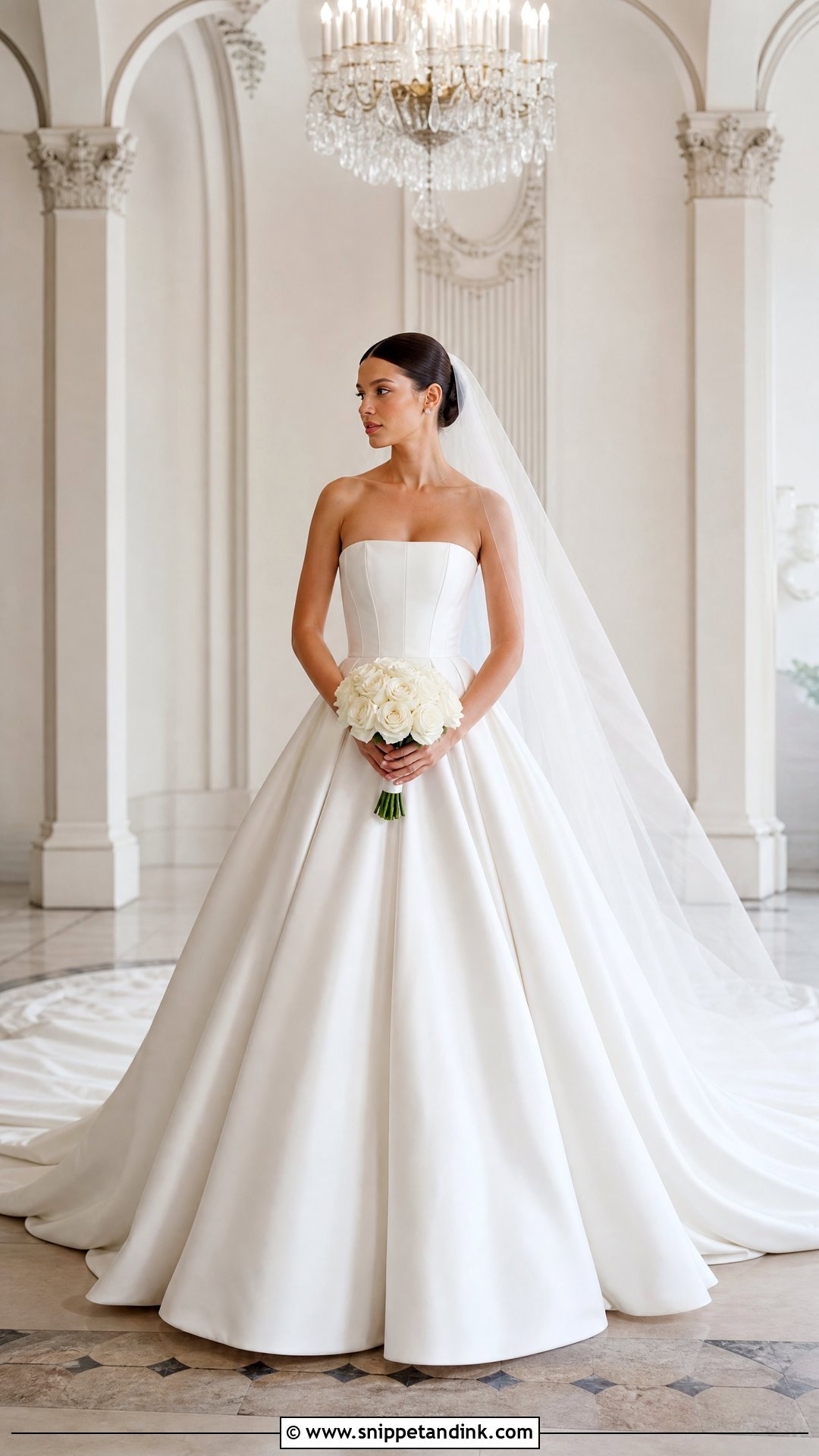
A ball gown in silk makes a formal entrance without the glitter of tulle. Structured satin or dupioni with a fitted bodice, defined waist and generously gathered skirt is the classic build, and a strapless neckline keeps the top clean against all that volume. Add a cathedral veil, crystal studs and block heels nobody will see. A compact bouquet of white roses stops the accessories competing. At fittings I make the bride practise sitting and walking in the full skirt, because silk ball gowns are heavier than they look and the hem length decides whether she trips on stairs. Removable off-the-shoulder straps or a matching wrap add coverage.
4. Silk Mermaid Bridal Dress
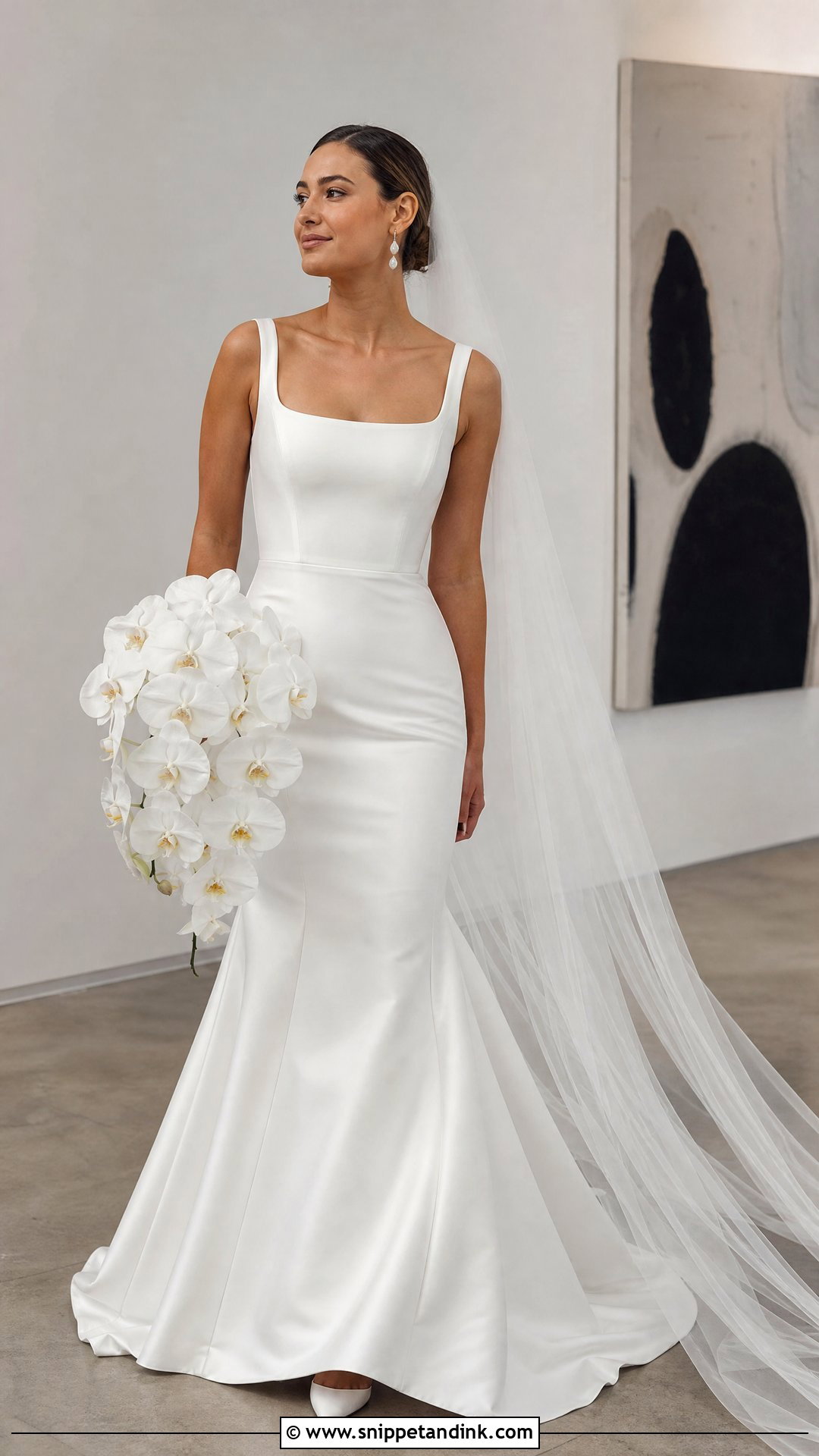
A mermaid follows the torso and hips and flares near the knee, so the fabric choice matters more than in almost any other shape. Silk crepe is the one I recommend: it smooths over the body yet moves more softly than heavily embellished fabric, and its matte surface forgives the small ripples a satin mermaid would highlight. Try a square neckline with supportive straps and a low rounded back. Keep jewellery sleek, wear pointed pumps and choose a long plain veil. A cascading orchid bouquet adds shape without clutter. Don’t approve final alterations until you’ve walked, sat and danced in it, with the flare point checked for movement.
5. Silk Column Bridal Dress
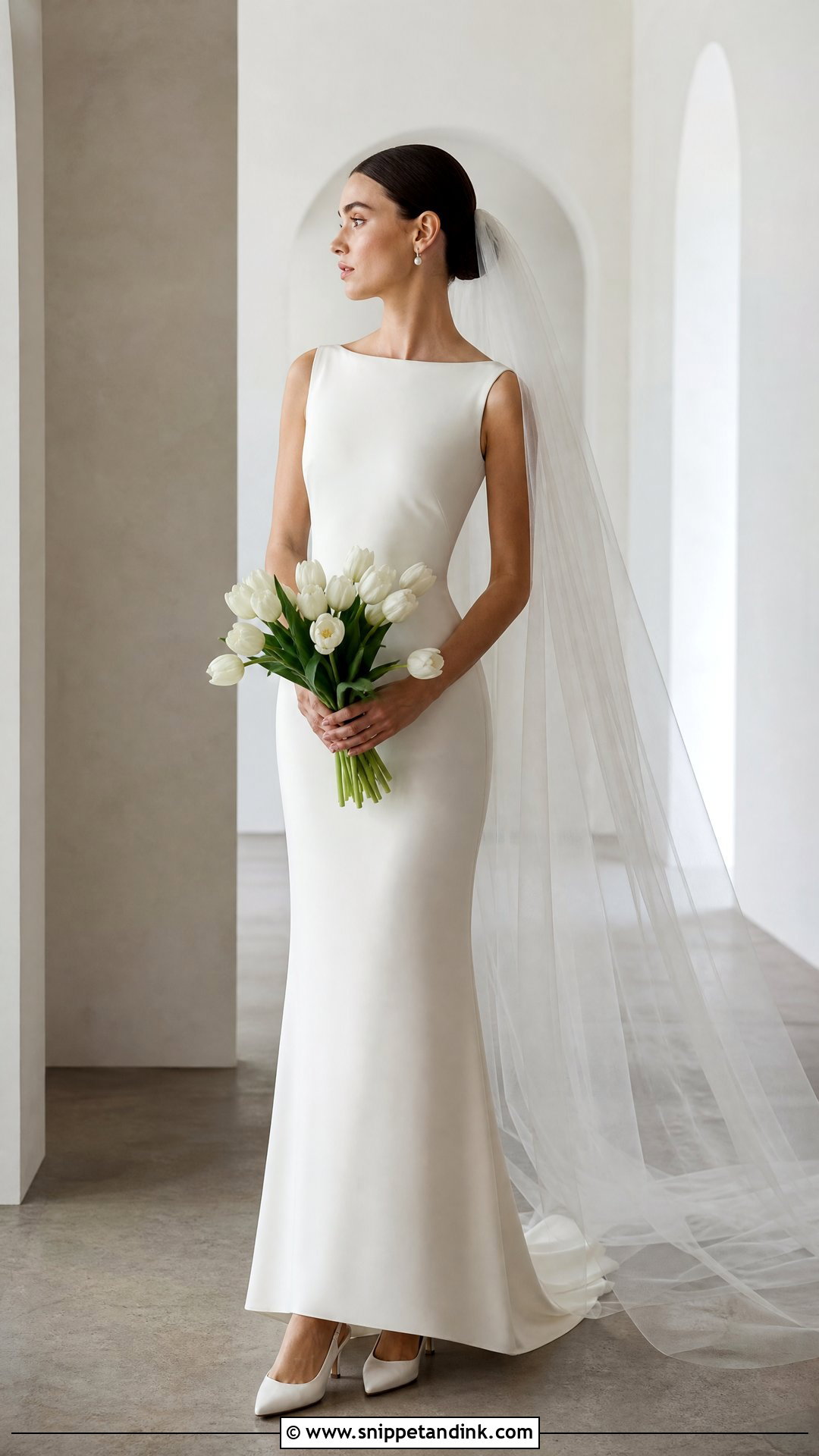
A column falls in one long, narrow line, and in silk it is all about the quality of the fabric. I look for a substantial crepe that skims rather than clings, with a bateau neckline, subtle waist shaping and a small train. Pearl button earrings, satin slingbacks and a sheer cathedral veil keep it clearly bridal. Loose white tulips or anemones add a touch of texture. A row of covered buttons down the back is worth the extra fitting time. Practically, the column suits venues with stairs or tight aisles, since there’s no wide skirt to manage. Tailoring is what turns this simple shape into something luxurious, so budget for it.
6. Silk Basque Waist Bridal Dress
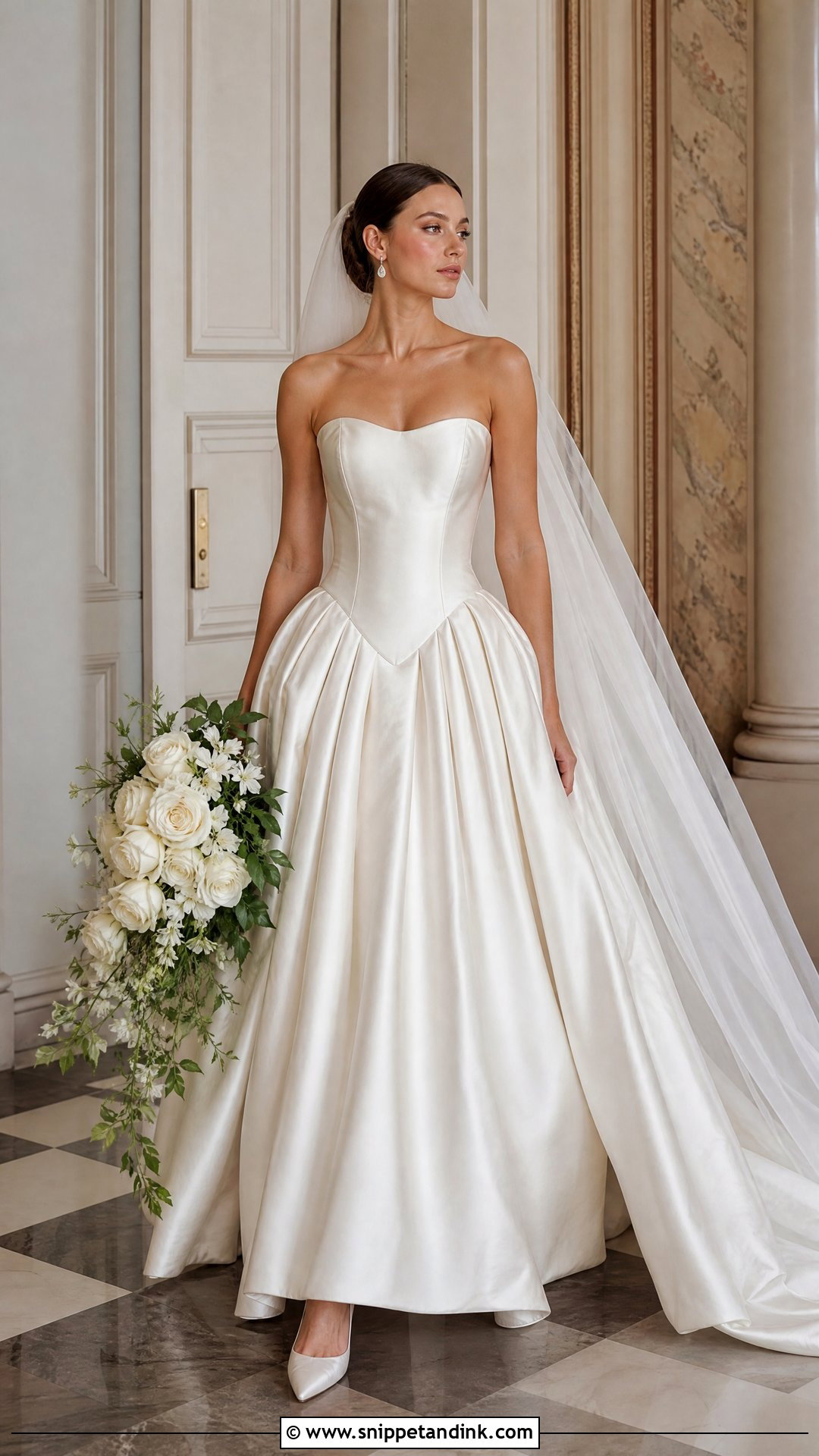
The basque waist dips into a soft point at centre front, which lengthens the torso and gives a full skirt a sculptural base. Luminous satin with a curved strapless neckline and controlled pleating at the hip shows the point clearly. On a short torso I ask the seamstress for a shallower dip; a deep V on a short body squashes the bust into the waist. Firm boning keeps the bodice from riding up. Finish with a long plain veil, teardrop earrings and low pointed heels, and let ivory roses with trailing greenery soften the clean fabric. No lace or beading is needed for this one to feel regal.
7. Strapless Silk Bridal Dress
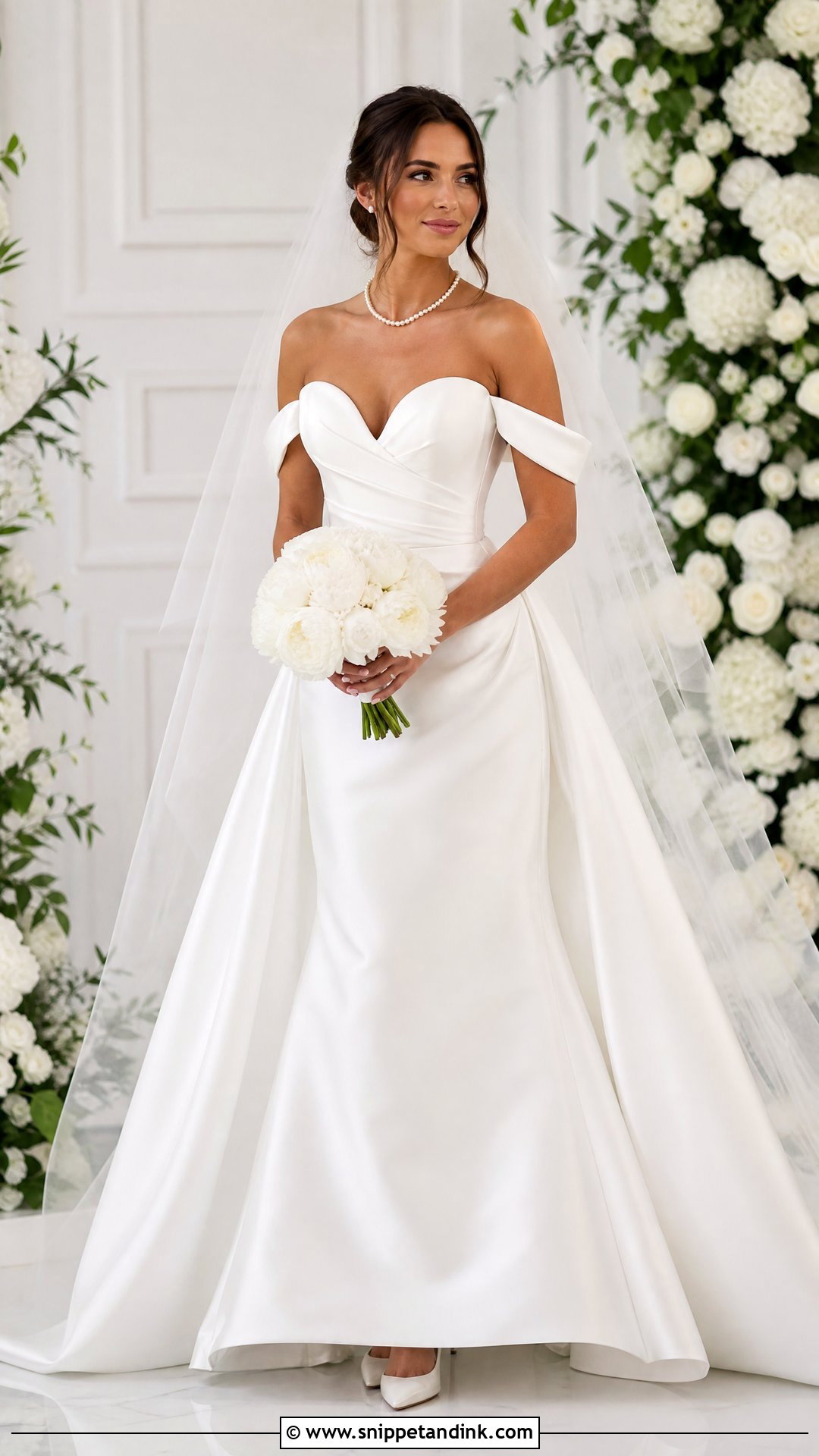
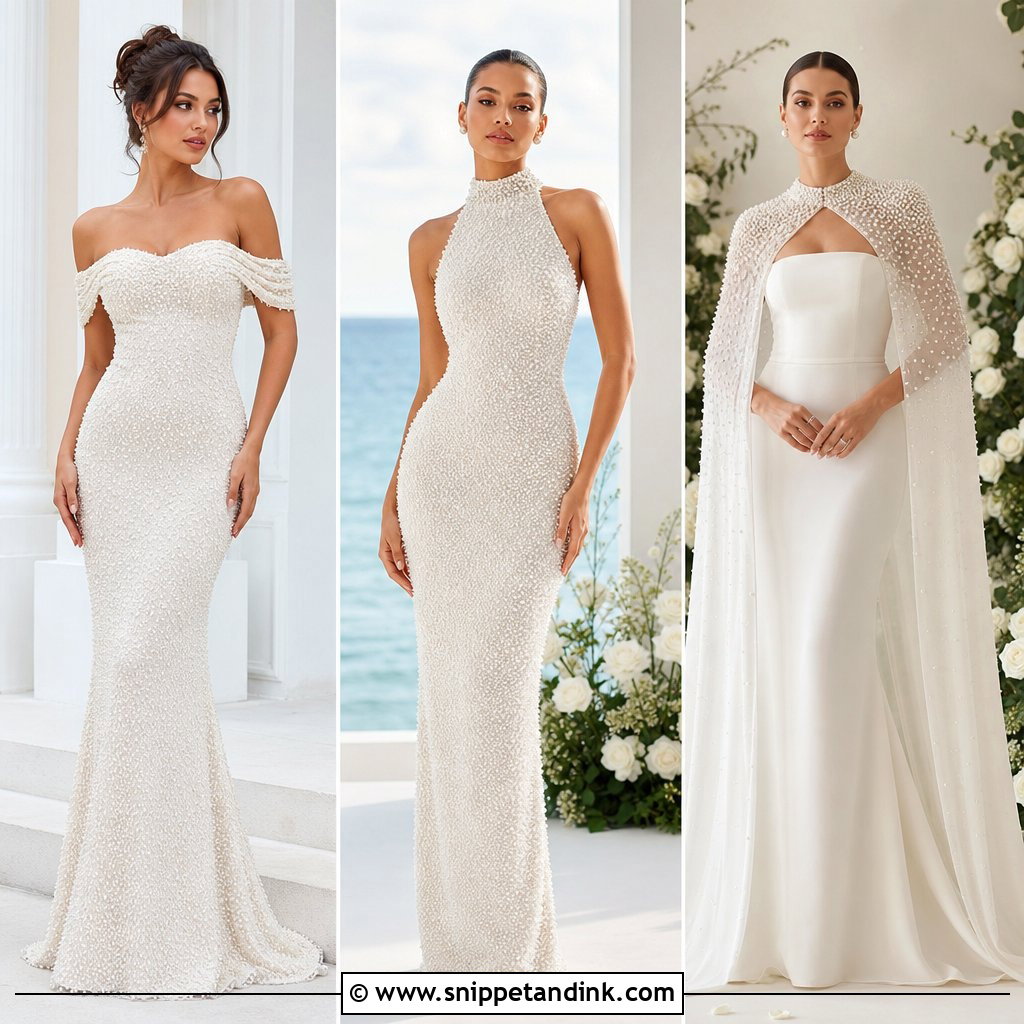
Strapless silk shows off shoulders, collarbone and a well-made bodice. I like mikado or a heavier satin here, with a gentle sweetheart neckline, soft folds and an A-line skirt. The test I run is simple: if you hitch the bodice up more than once in a fitting, the boning or waist fit isn’t right yet. Style it with a short pearl necklace or a pair of statement earrings, never both, and pointed ivory heels. A cathedral veil and a white peony bouquet keep the palette restrained. Detachable silk sleeves can come off between ceremony and reception if you want two looks.
8. Off-The-Shoulder Silk Bridal Dress
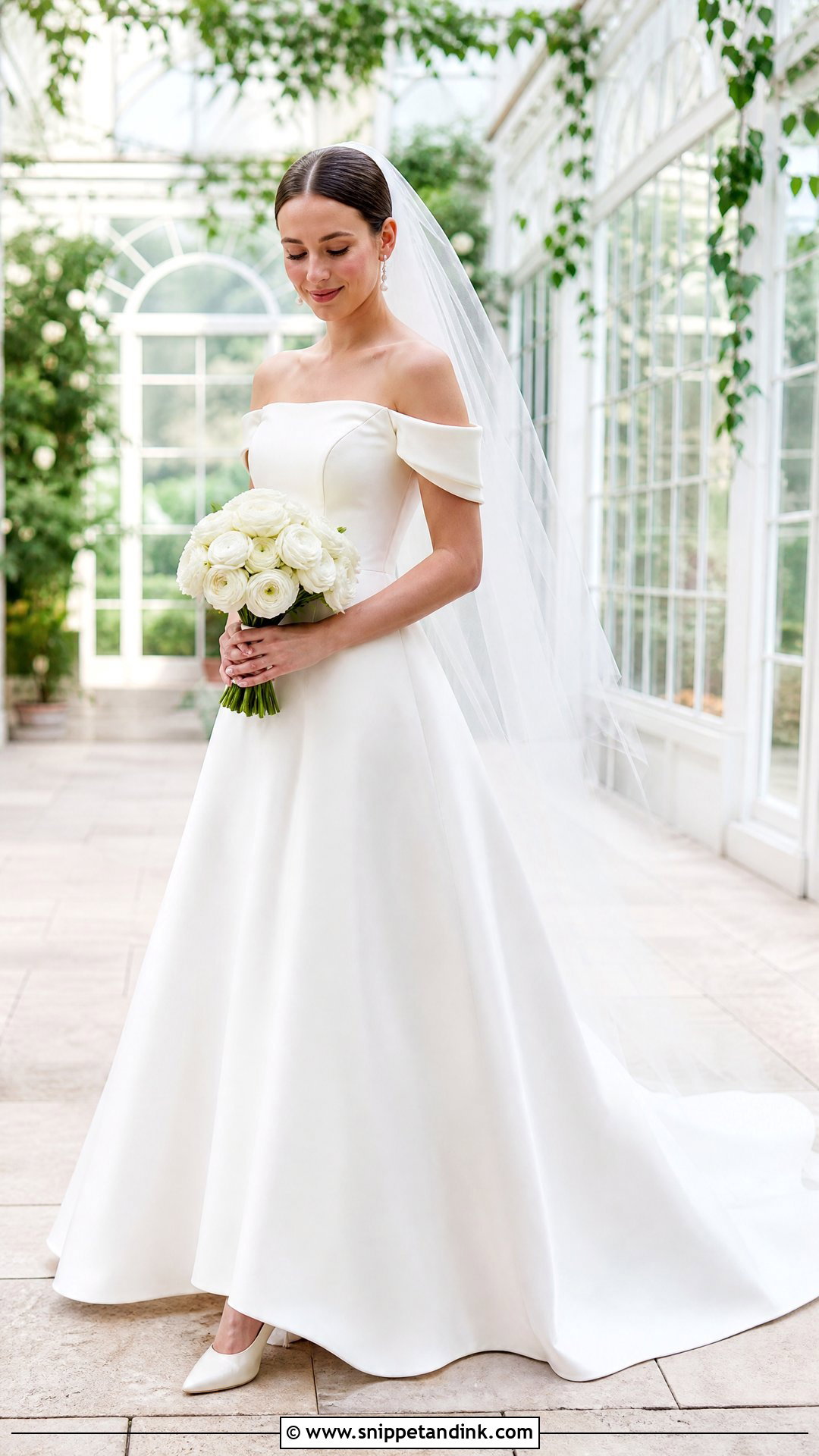
Folded silk bands across the arms give an off-the-shoulder dress its composed, slightly old-fashioned charm. The structured bodice and those bands need to rest securely below the shoulder, over an A-line or full skirt, with covered buttons down the back. Here’s what catches brides out: the bands pin your arms, so reaching up to hug someone or dance with your hands raised can feel restricted. I test arm movement at every alteration and suggest removable straps if it’s tight. Wear pearl earrings and a low chignon with a chapel veil anchored beneath it. Ivory pumps and round white ranunculus finish it.
9. Long Sleeve Silk Bridal Dress
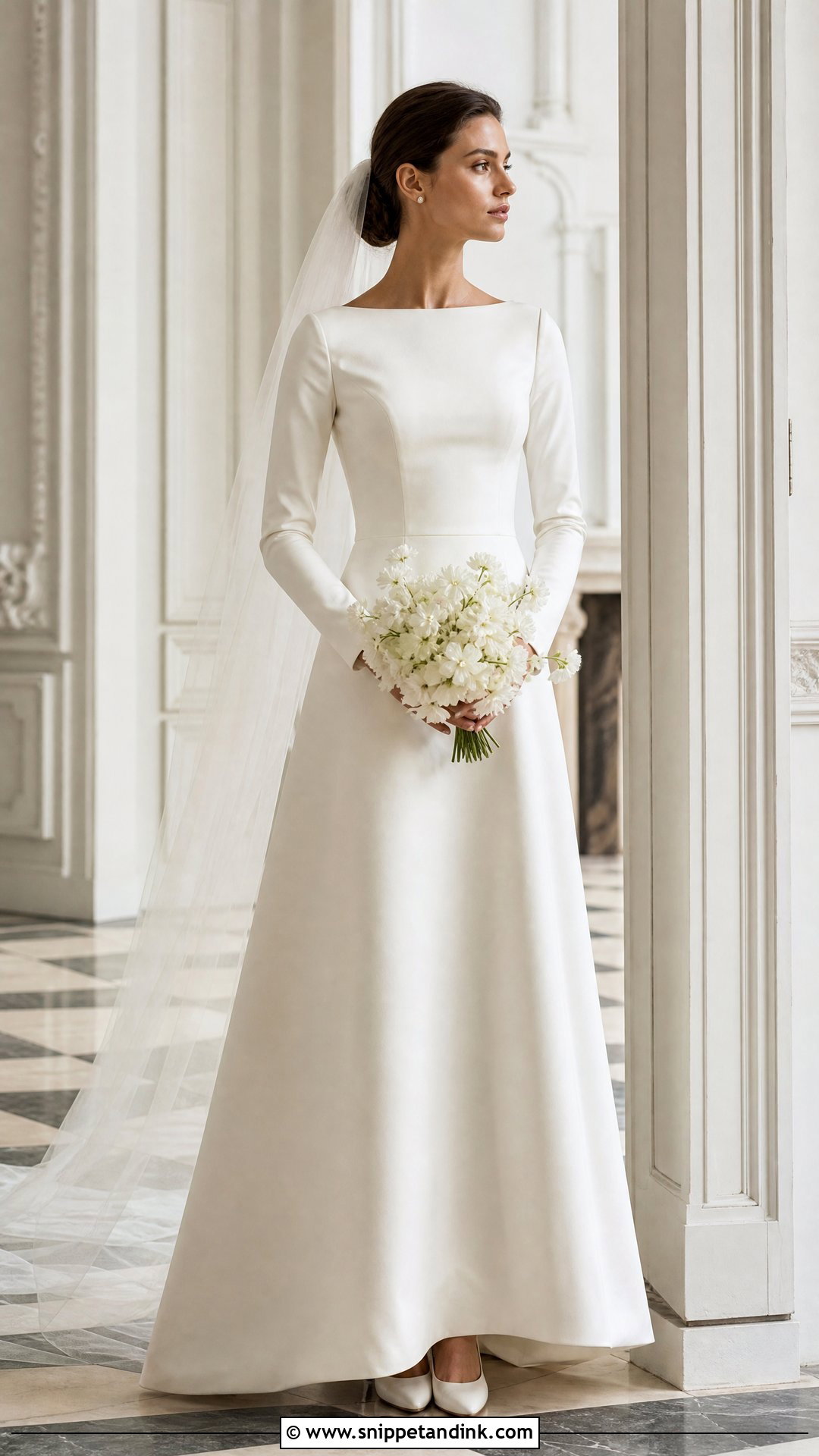
Long sleeves in silk crepe give elegant coverage and still look sleek. I’d choose fitted sleeves, a clean bateau neckline and a softly shaped waist, then a column or gentle A-line skirt so nothing looks heavy. Fitted woven sleeves restrict the elbow, so I ask for discreet stretch panels or covered wrist buttons that open. Pearl studs, a low bun, a plain long veil and closed-toe pumps keep it refined, and white sweet peas add a little texture. A matching silk cape helps on a cold day outdoors. Minimal construction shows every seam, so pay for careful finishing.
10. Halter Neck Silk Bridal Dress
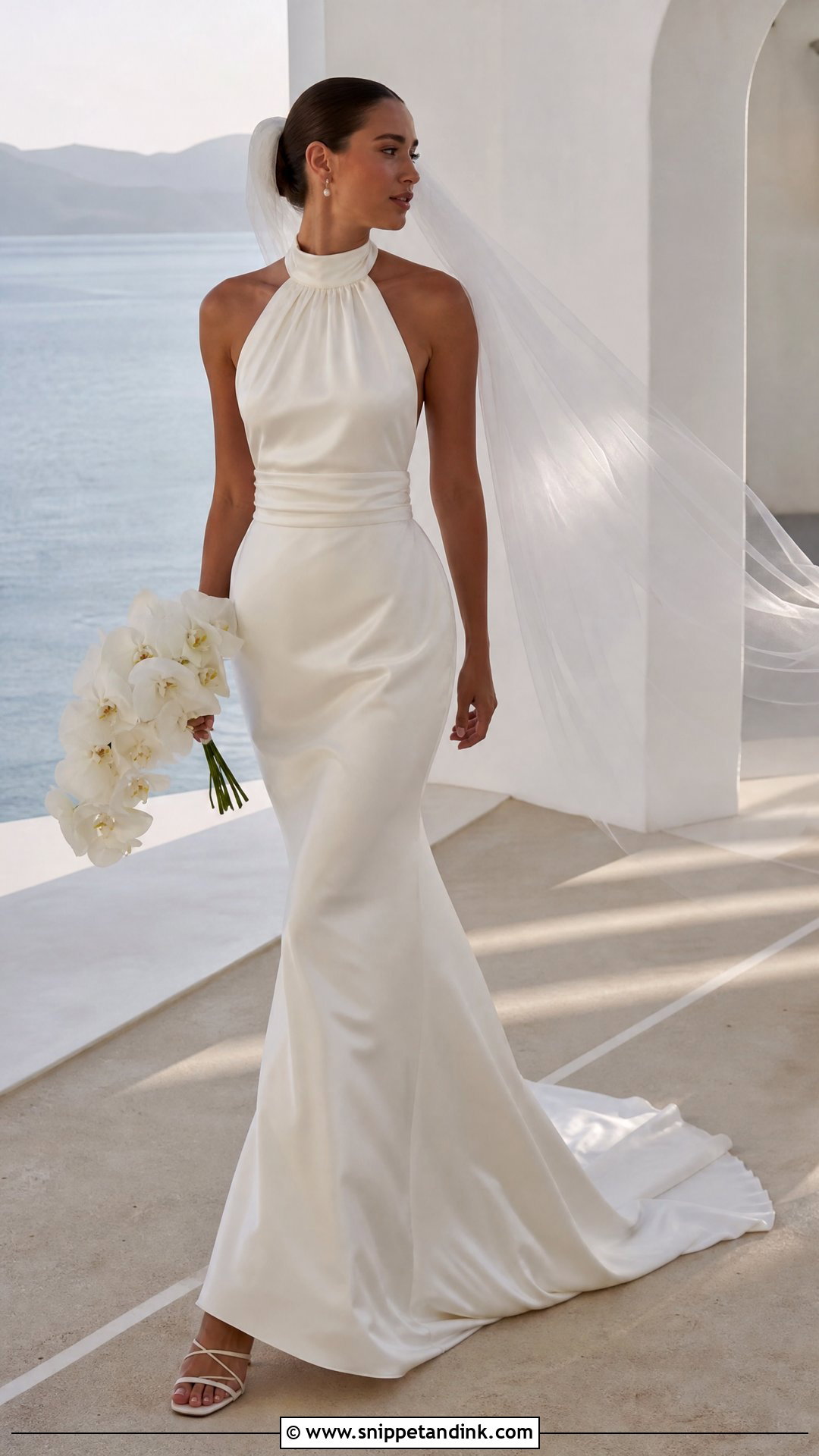
A halter frames the shoulders and draws a long line up through the neck. In satin or crepe, I like a softly gathered neckline, defined waist and fluid skirt, with an open back balancing the higher front. Skip the necklace entirely; small gold or pearl earrings and a sleek bun keep the neckline uninterrupted. Slim ivory sandals and a fingertip veil set below the bun, plus loose white orchids, suit the movement of the fabric. My concern with halters is the neck itself: if the strap carries the dress’s weight, it pulls and aches by evening. An internal waistband should carry that load, leaving the halter to look smooth.
11. Cowl Neck Silk Bridal Dress
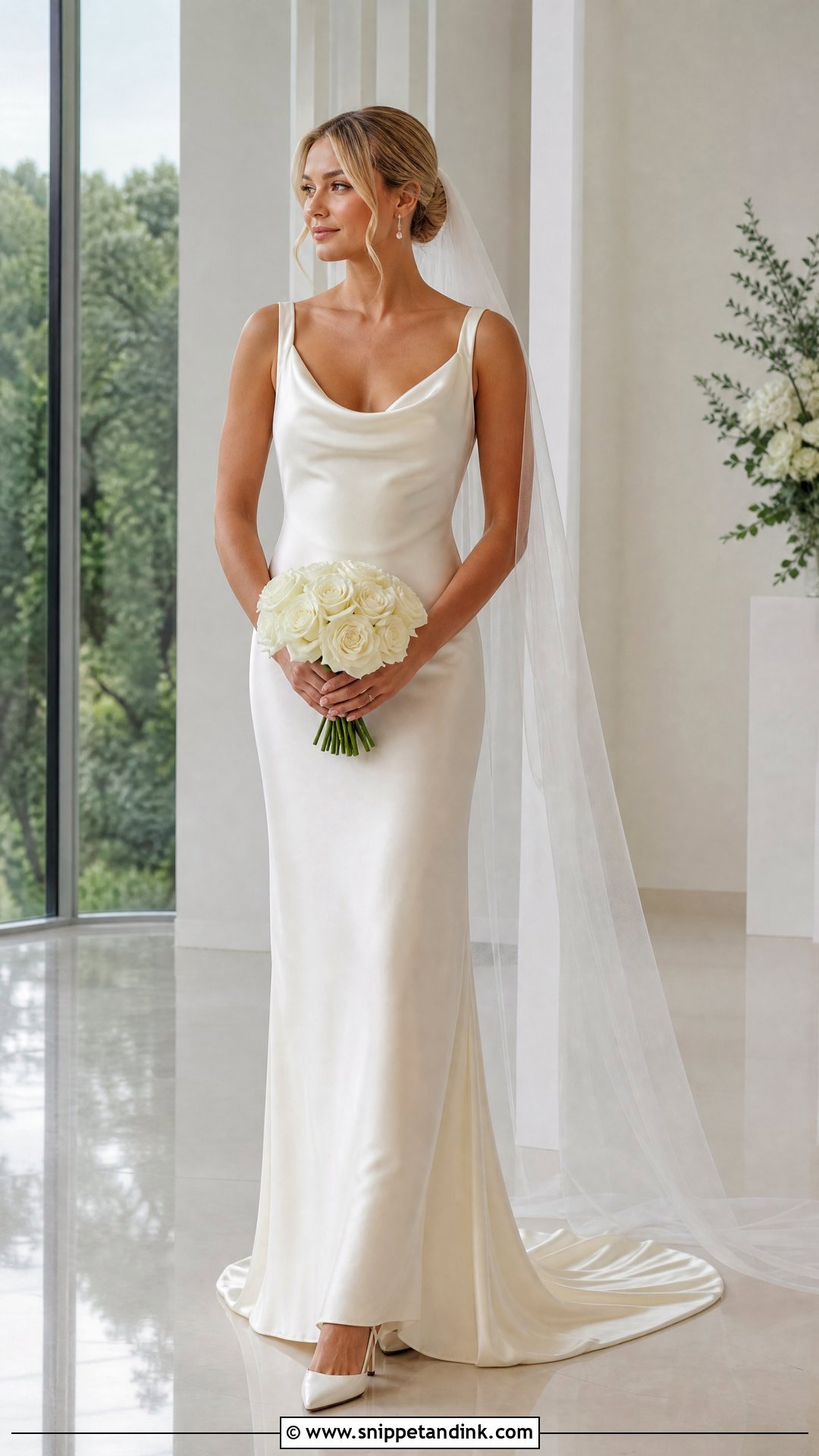
A cowl neck softens a plain slip or column with gentle folds of fabric. It needs bias-cut satin with wider straps for support and a neckline controlled enough to stay put when you lean forward to sign the register. That’s the moment a loose cowl gapes, so I secure it with fashion tape or hidden internal stitching. Let the skirt fall straight to a small train. Delicate drops, a sheer fingertip veil, pointed slingbacks and compact white roses keep it streamlined. If there’s a cowl at the back too, bring a low-back undergarment to your first fitting rather than your last.
12. Square Neck Silk Bridal Dress
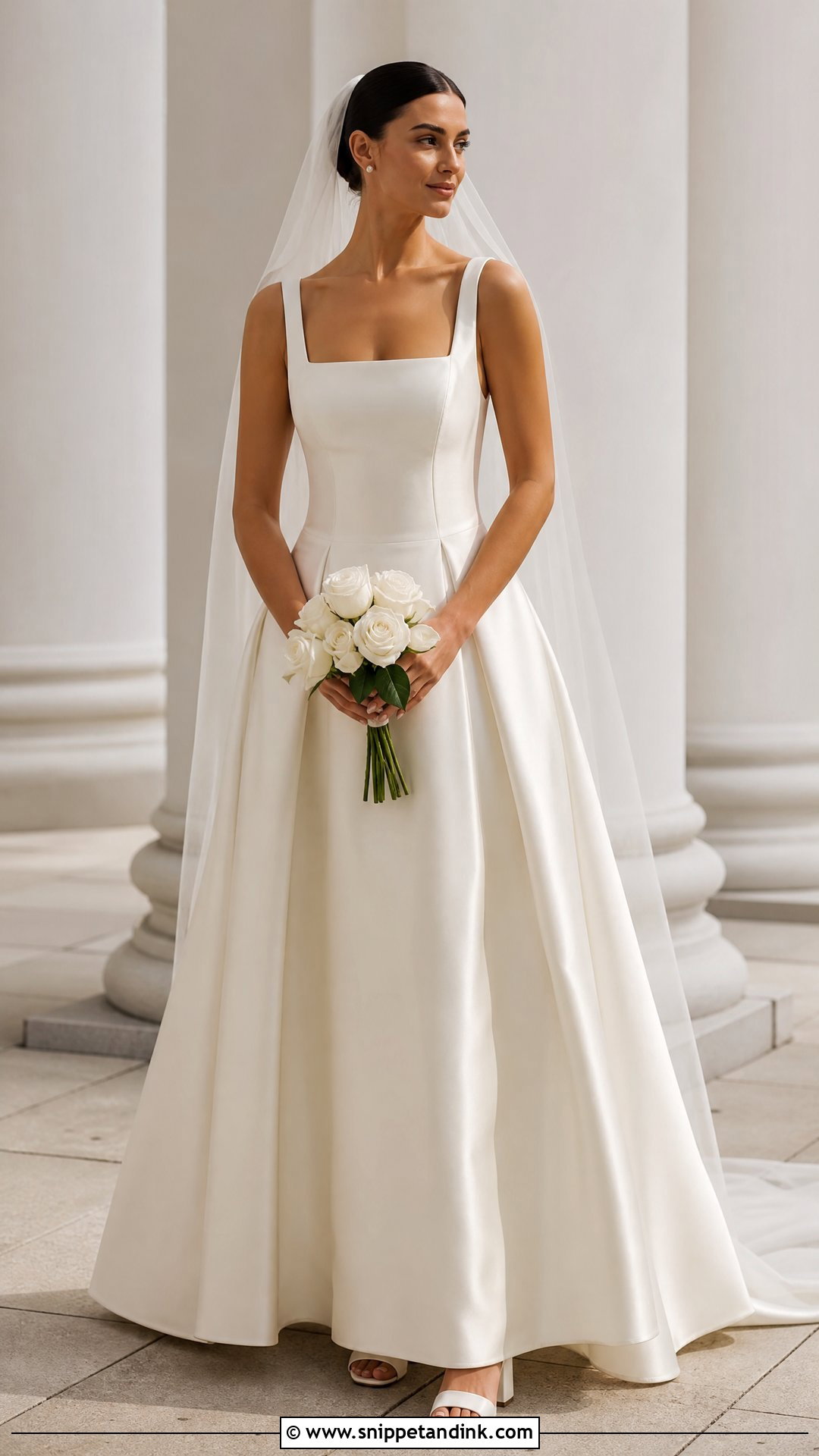
A square neckline gives silk a crisp, architectural look. Structured satin with broad straps, a fitted bodice and a softly flared A-line is the version I’d show first. The neckline frames the collarbone, so wear small pearl studs rather than a big necklace, a smooth chapel veil, ivory block heels and white roses with very little greenery. A defined waistband underlines the geometry, and covered back buttons soften it. For bust support, request wider straps and built-in cups. The detail I check repeatedly is that the neckline edge lies flat when you move; a square neck that bows outward loses the whole effect.
13. High Neck Silk Bridal Dress
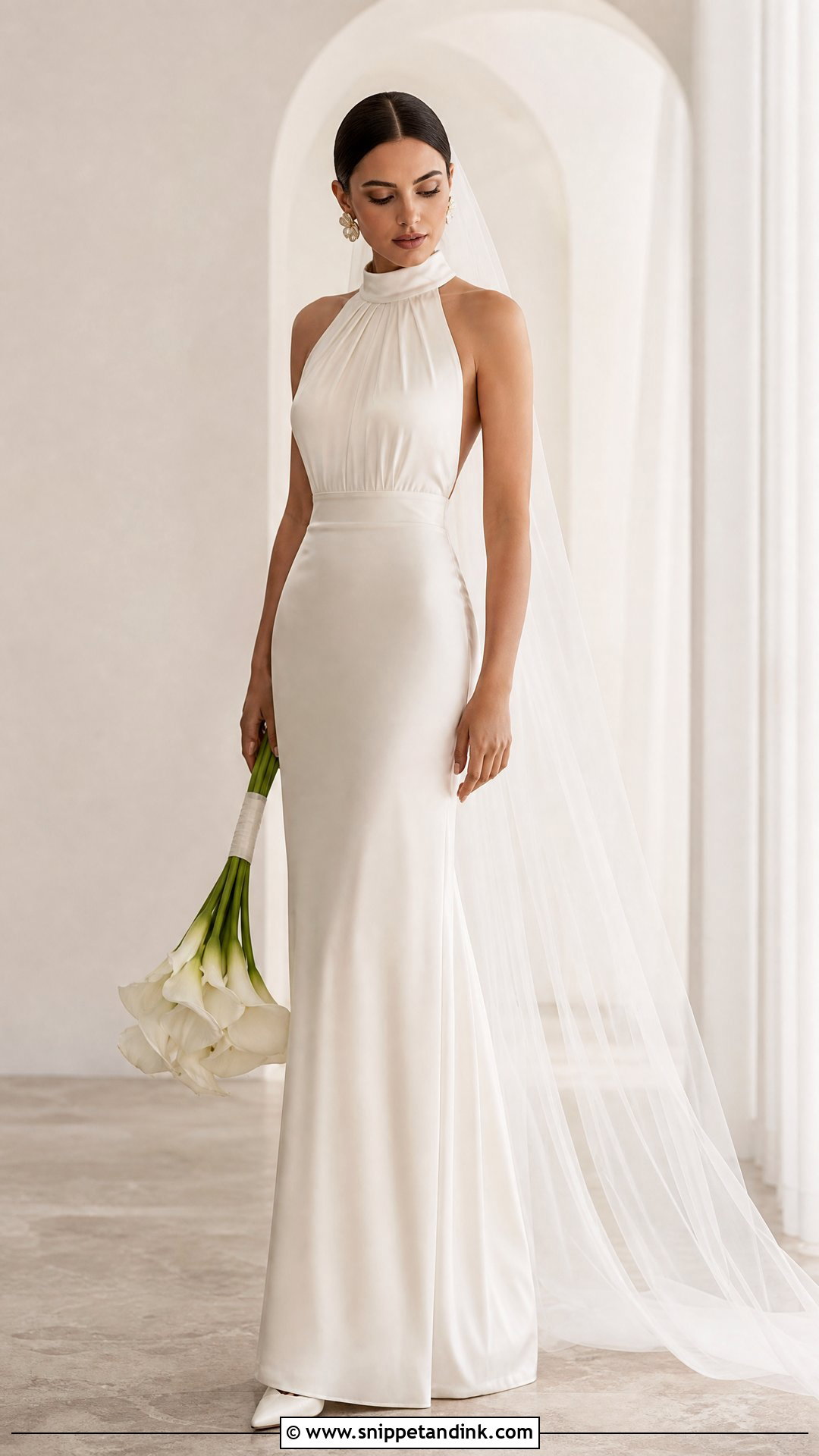
A high neck frames the face and gives polished coverage. Fluid crepe works best, with a softly draped neckline, fitted waist and long column skirt, and a keyhole or open back to balance it from behind. Over-gathering at the throat adds bulk and makes the neck look shorter, so I ask for a few carefully placed pleats instead. A neat bun and sculptural earrings replace any necklace. Pointed pumps, a long sheer veil and white calla lilies keep the lines vertical. It’s a natural fit for formal indoor rooms, minimalist venues and cool-season weddings where coverage is practical as well as pretty.
14. Backless Silk Bridal Dress
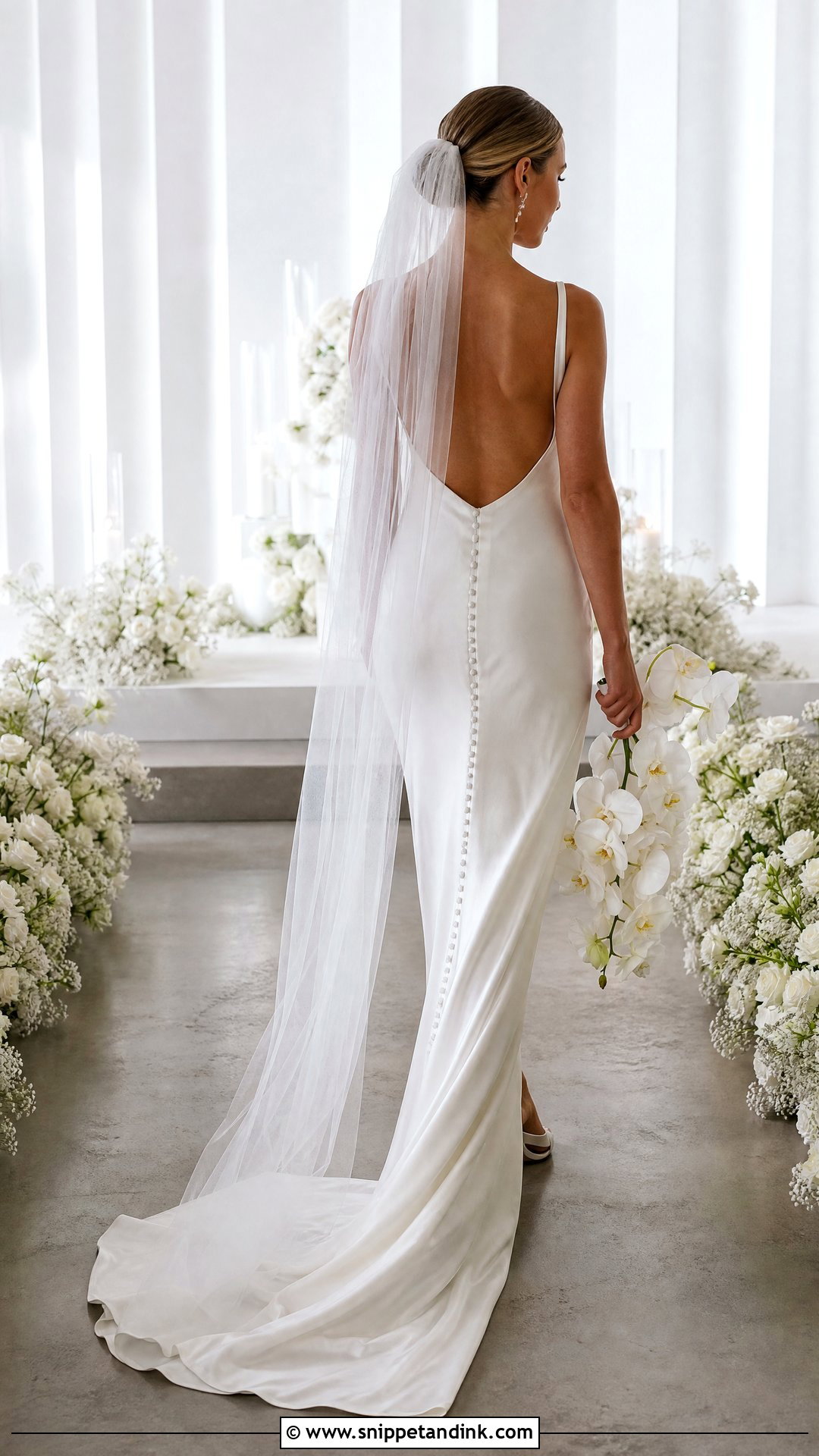
A backless silk bridal dress saves its impact for the walk down the aisle, when everyone is looking at your back. A plain front, supportive straps and a low open back framed by clean seams is the build, sometimes with covered buttons where the back meets the skirt. Support is the whole conversation with the tailor: hidden side boning, internal cups and exactly where the straps sit. Test any low-back bodysuit or adhesive weeks ahead, not at the final fitting. Style it with a low bun, small earrings and a sheer veil that lets the back show, plus ivory slingbacks and a small orchid bouquet.
15. Draped Silk Bridal Dress
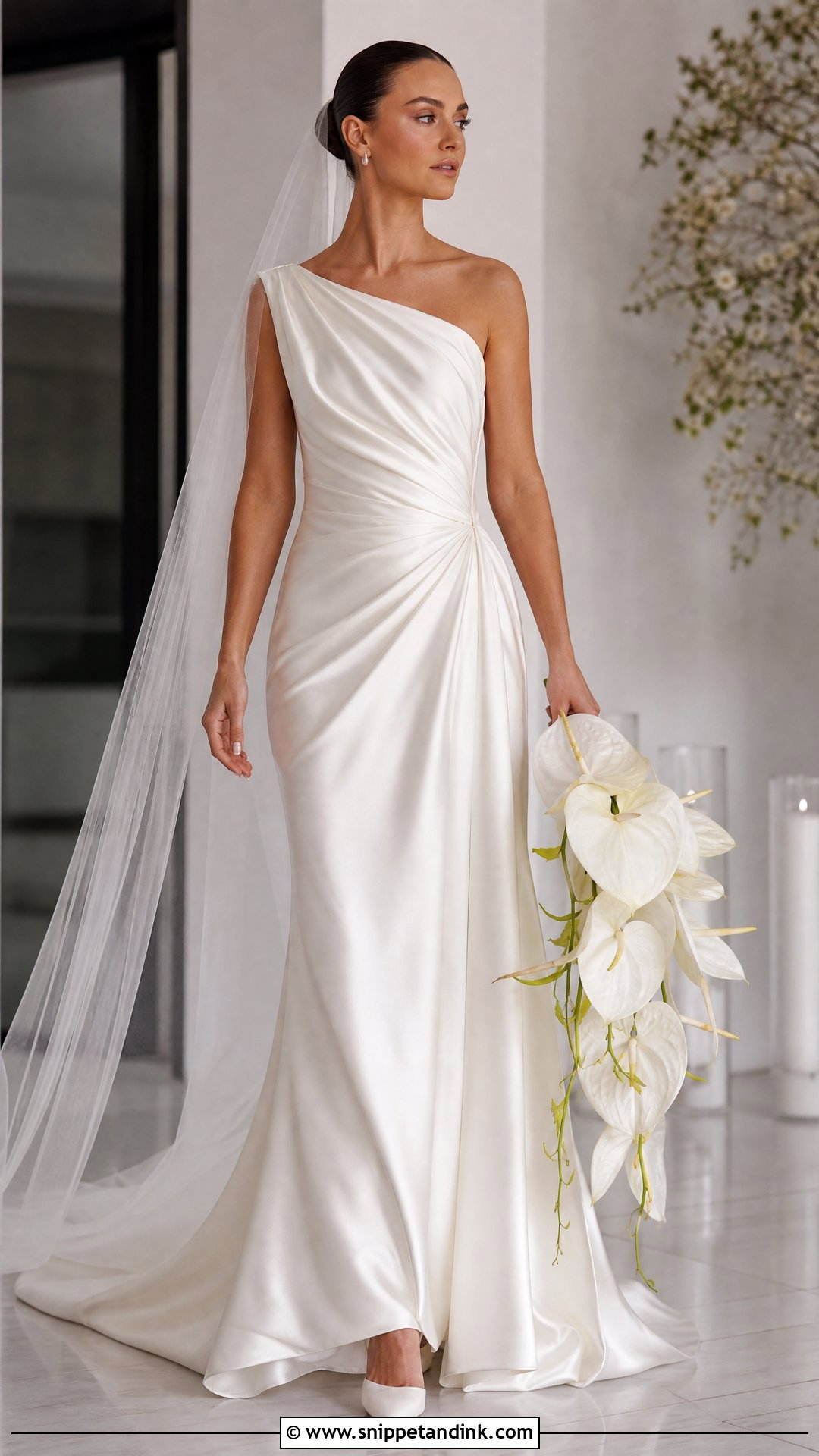
Well-cut draping shapes silk without a single crystal. Picture diagonal folds across the bodice, fabric gathered at one hip and a fluid skirt running into a small train, perhaps with an asymmetric neckline or twisted shoulder carrying the movement upward. I view a draped gown standing, sitting and walking during alterations, because folds that look intentional upright can bunch strangely when seated. On a petite frame, fewer, larger folds work better than lots of small ones. Keep earrings minimal, hair in a smooth bun, and add pointed pumps, a plain cathedral veil and white anthuriums.
16. Silk Bridal Dress With Bow
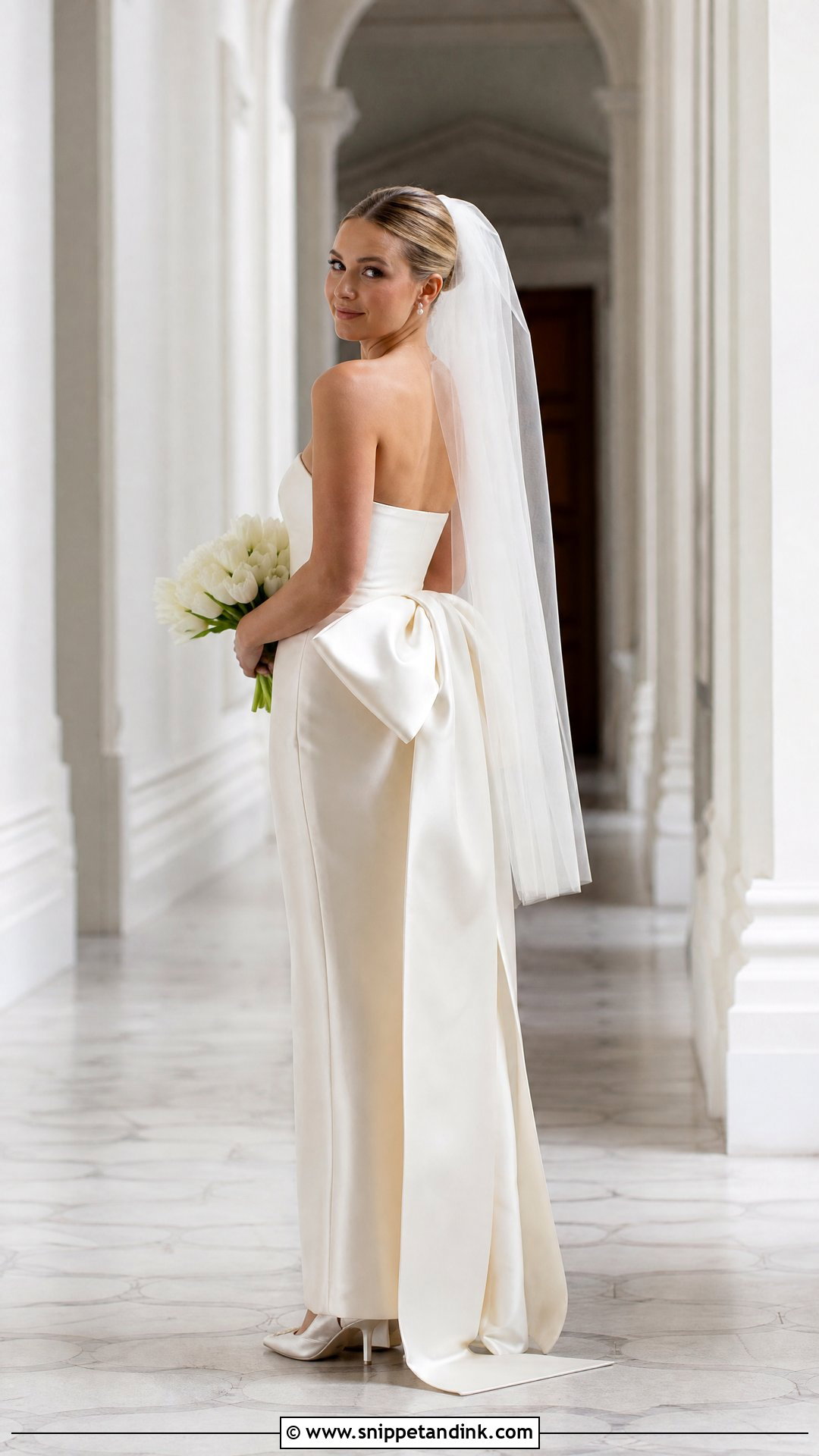
A bow adds one memorable detail without covering the gown in decoration. My preference is a fitted strapless dress with a detachable oversized bow at the lower back or waist, on a column, A-line or ball gown that gives it room. The veil should end above or below the bow, never lie on top of it and flatten it. The bow itself needs interfacing or it droops by the speeches, and it must be light and securely fixed. Pearl studs, pointed heels and compact white tulips keep things balanced. Make it removable for dinner; sitting back against a large bow all evening is uncomfortable.
17. Silk Bridal Dress With Cape
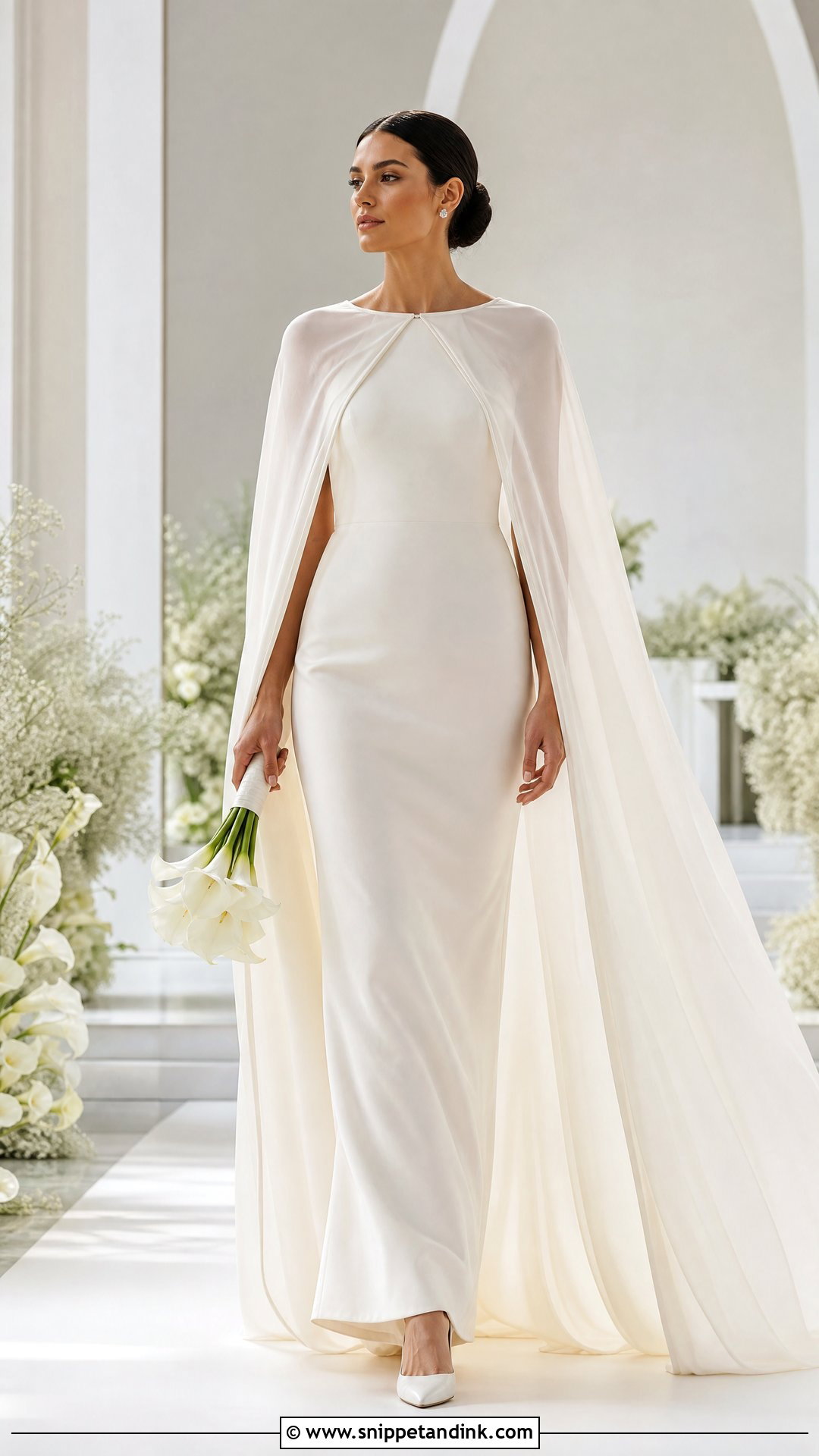
A cape brings ceremony drama and can replace the veil entirely. Start with a simple crepe column or structured satin A-line, then add a floor-length silk chiffon cape fixed at the shoulders or neckline with discreet fastenings. The chiffon should float freely and let the dress show through. Crystal studs, a sleek bun, closed-toe ivory pumps and narrow white calla lilies suit the long lines. On stairs or an outdoor aisle, a long cape catches heels and wind, so I always rehearse the length and attachment points. Unhook it after the ceremony for a lighter reception look.
18. Silk Bridal Dress With Detachable Overskirt
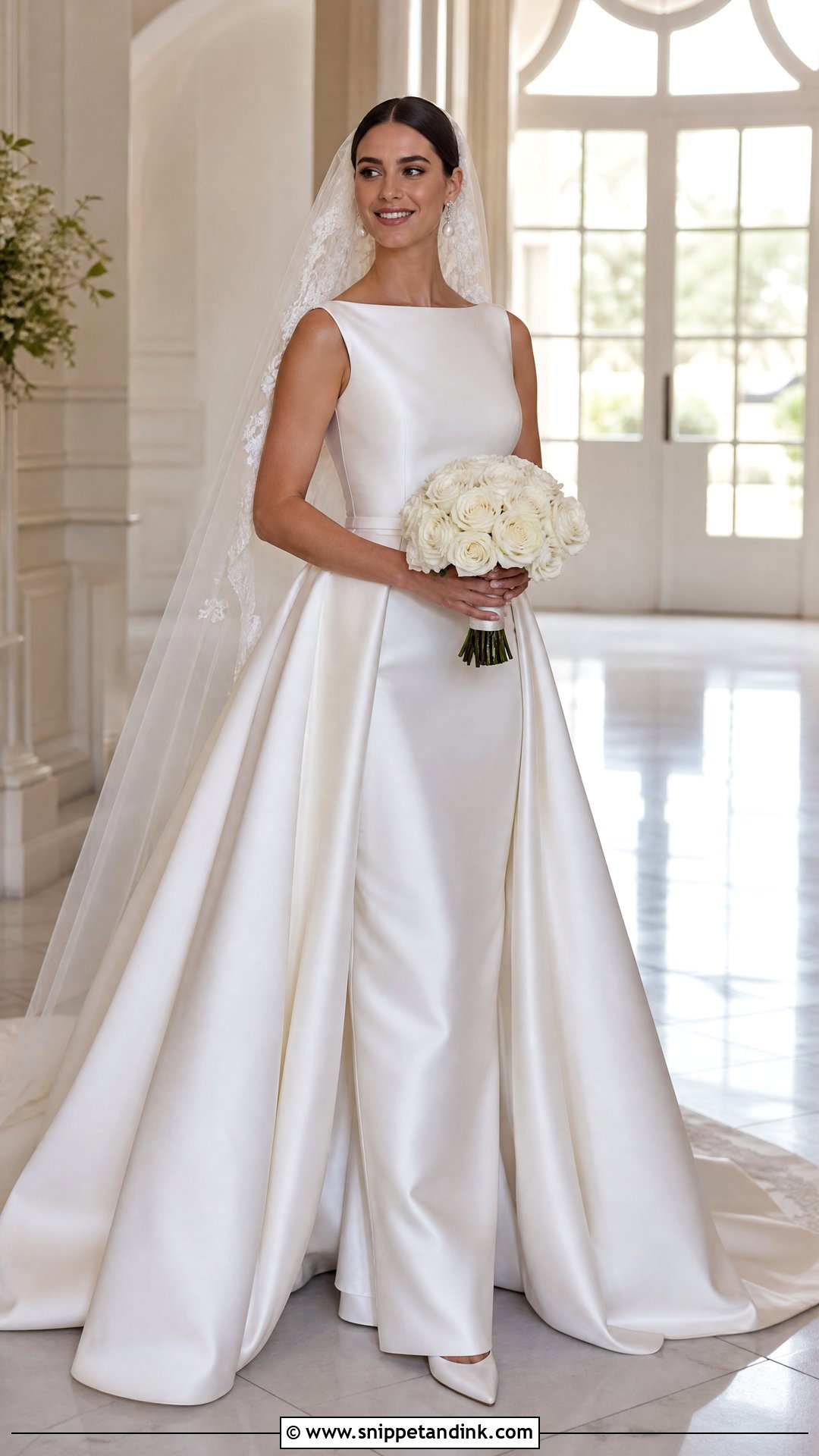
A detachable overskirt gives you two silhouettes from one dress. Under it sits a fitted crepe column or mermaid; on top, a full satin overskirt fastened at the natural waist adds volume and a longer train for the ceremony. Take it off later to reveal the slimmer gown. The waistband must close flat and securely, with no ridge showing through. I always compare the two fabrics in daylight, because crepe and satin cut from different bolts rarely share exactly the same ivory, and photographs exaggerate the gap. For the ceremony, add a cathedral veil, pearl earrings, pointed pumps and a structured rose bouquet.
19. Tea Length Silk Bridal Dress
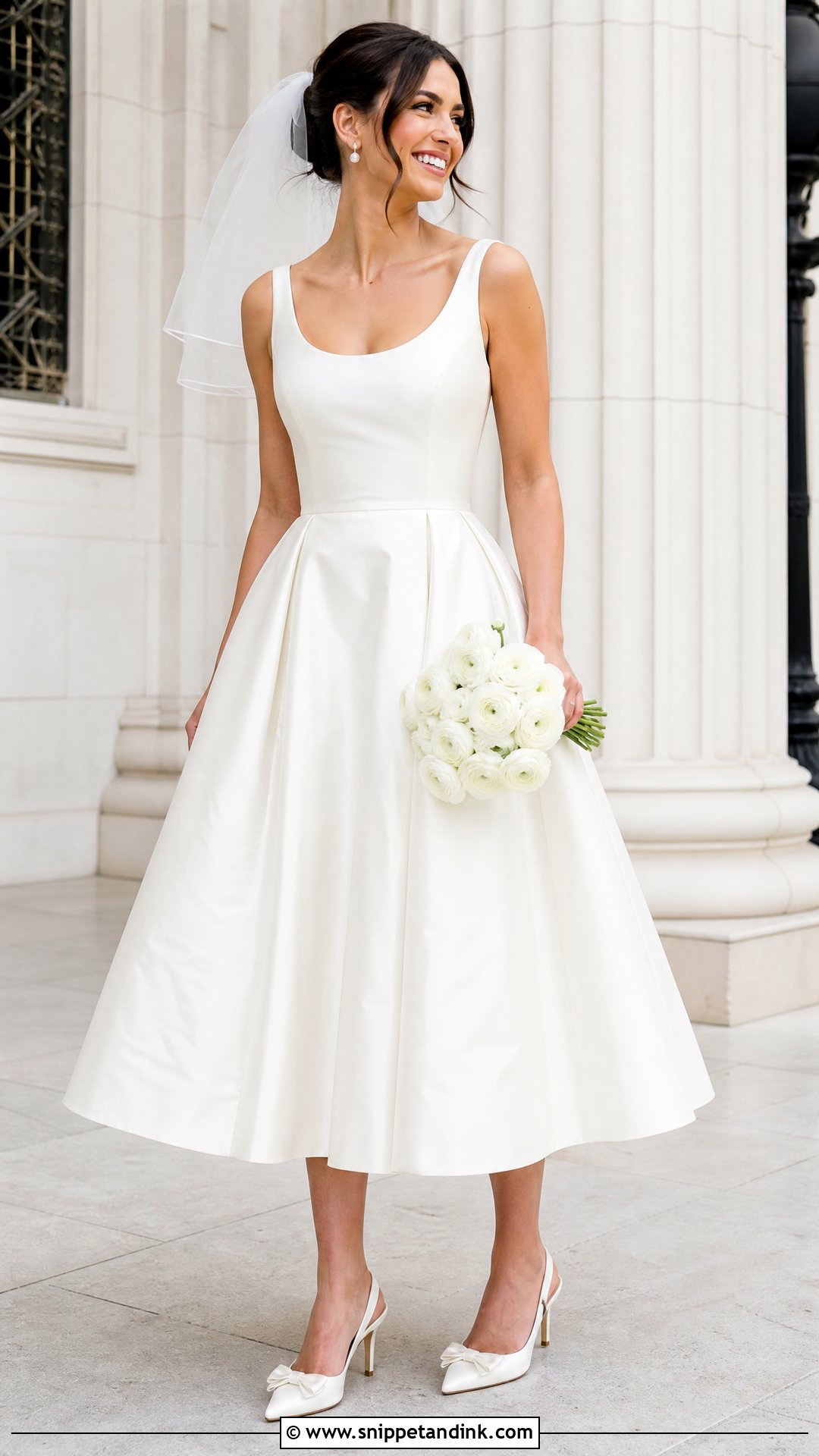
Tea length is cheerful, practical and very easy to move in. Structured dupioni or satin with a fitted bodice and an A-line skirt ending between knee and ankle gives it a proper bridal shape, with a bateau, scoop or sweetheart neckline. Your shoes are on show, so they deserve real attention: pointed pumps, bow slingbacks or refined block heels. A short veil, pearl earrings and round white ranunculus finish it. Keep any belt in the same silk. A fitted crinoline adds controlled volume, but too much makes the skirt look like a costume. It suits courthouse ceremonies and daytime parties where you want to dance.

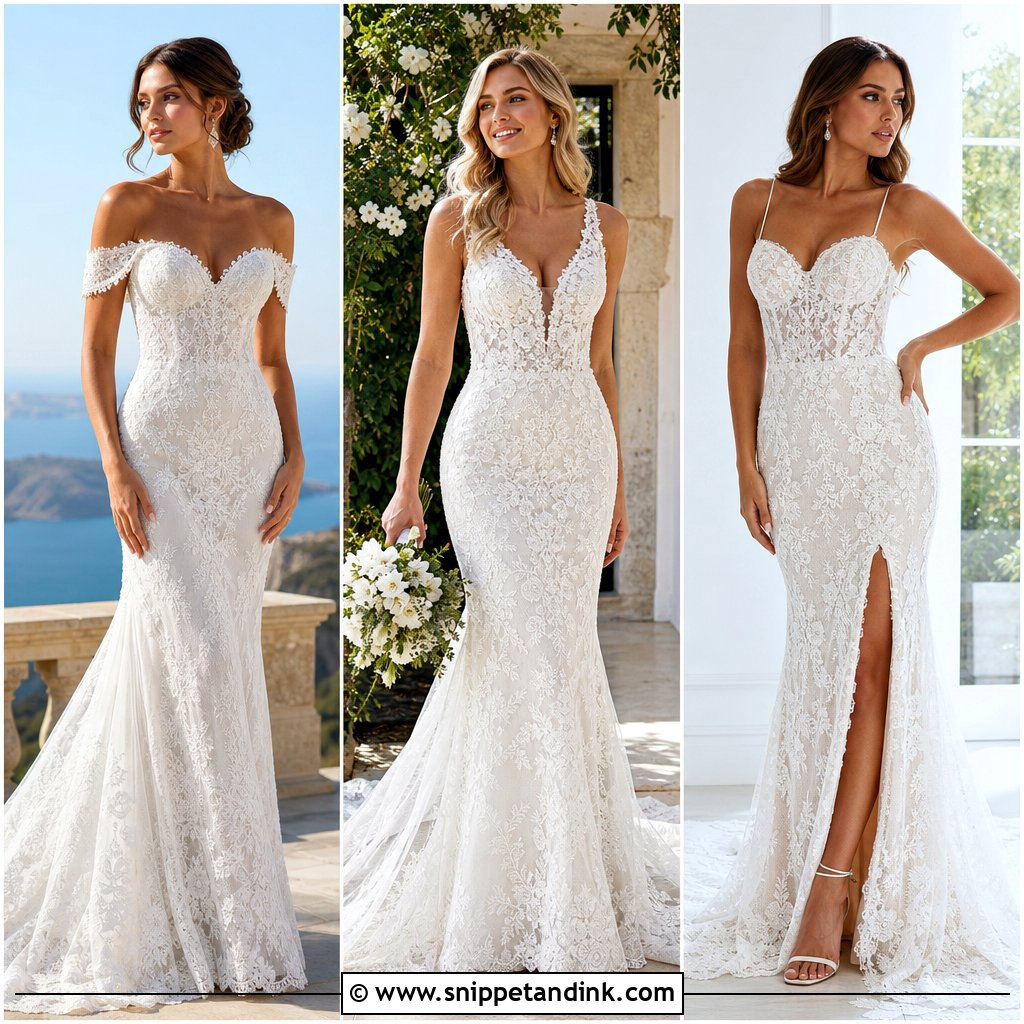
20. Silk Bridal Mini Dress
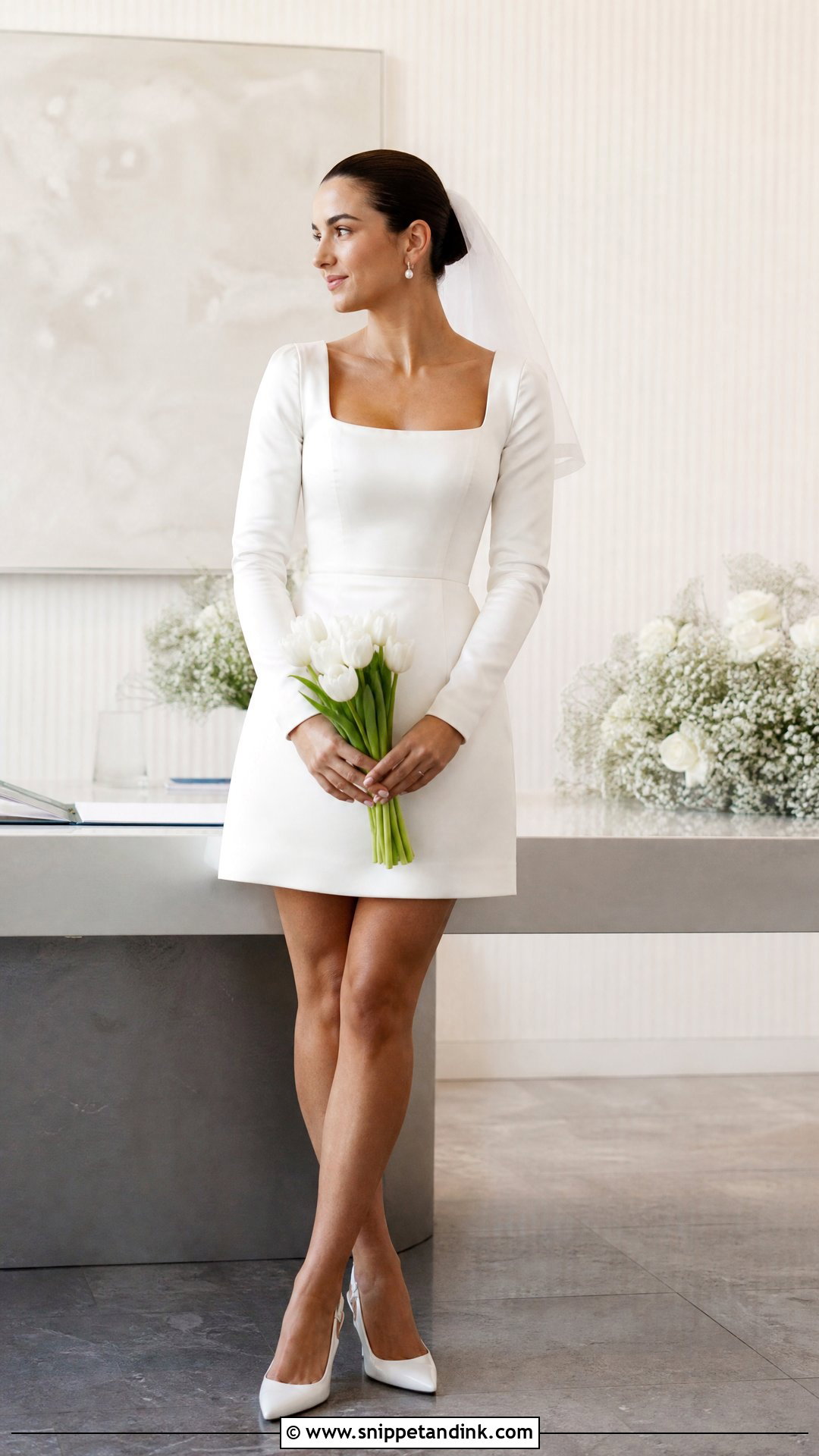
A silk mini is a fresh option for a civil ceremony, a reception change or a small party. Structured satin in a shift, fitted sheath or softly flared cut keeps the short hem looking deliberate, especially with a square neckline, long sleeves or a sculpted strapless bodice. Pointed pumps, pearl earrings and a short veil or neat hair bow keep it bridal, with a few white tulips to carry. Legs and shoes are now centre stage, so I pin the hem with the actual shoes on and check how it rides up when you sit. A detachable overskirt can add formality for the vows. Done well, it reads as bridal, never as a party dress.
How Silk Reacts to Rain, Steam and Spilled Champagne
Silk is tougher than people assume, but it reacts to a few things in ways other fabrics don’t. Plan for them and the dress will still look right at midnight.
Before you put it on
I steam silk from the inside, on low heat, keeping the steamer moving and never letting it spit water onto the face of satin. A single drop can dry into a ring. If you can’t steam safely, hang the dress in a bathroom after a hot shower and let the folds relax on their own.
During the day
- Satin and charmeuse show perspiration at the underarm and lower back. Sewn-in dress shields are worth the extra fitting.
- Never rub a spill. Blot with a clean white cloth and leave it for a cleaner; rubbing breaks the surface and leaves a dull patch.
- Bring a white umbrella to an outdoor ceremony. Rain spots on silk are far more visible than on polyester.
After the wedding
Get the gown to a specialist cleaner within a few weeks. Sugary splashes like champagne or cake dry clear and then brown as they age, so a dress that looks spotless can still need cleaning. Store it in acid-free tissue in a breathable box, never sealed plastic, and keep bias-cut gowns folded rather than hanging for months, because the diagonal grain stretches under its own weight.
Move, Sit and Reach Before You Say Yes
One fabric covers a remarkable range, from a fluid slip that feels relaxed to a structured ball gown made for a grand entrance, and necklines, sleeves, trains and detachable layers let you adjust from there. Once a gown catches your eye, look at it from every angle and move in it: walk, sit, raise your arms. Bring your intended undergarments and shoes to every alteration so the fit you approve is the fit you’ll wear. Then pick the silk weight and construction that support you rather than the one that looked best on a hanger. Good tailoring and restrained accessories do the rest.
You'll Like These Ideas:








Leave a Reply