
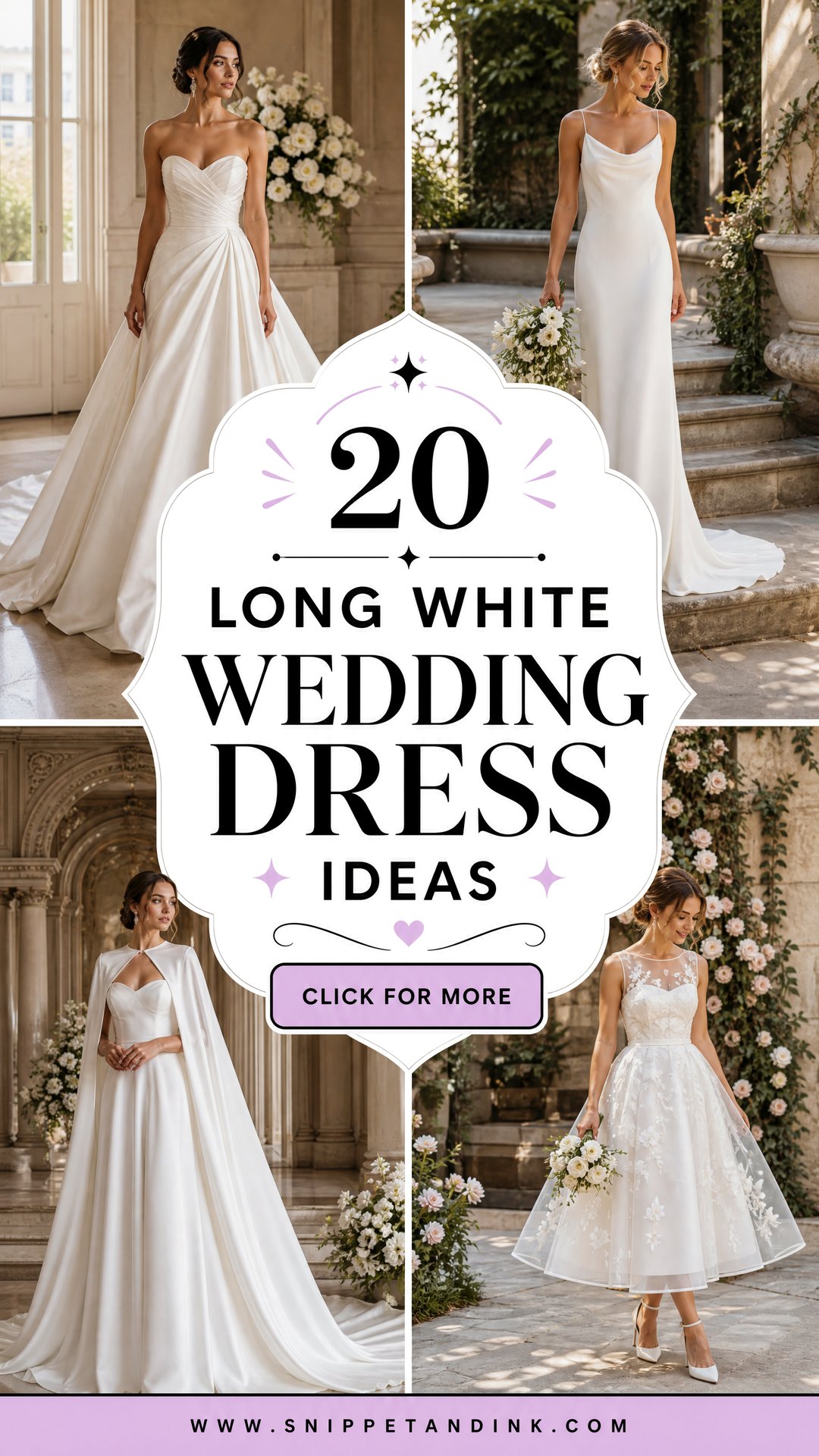
Comparing whole looks is far easier than comparing necklines and lace in isolation, and it’s how I walk brides through a first appointment. The dresses below cover classic silhouettes, modern tailoring, lace, plain satin and relaxed destination gowns. Basque waists, structured fabrics and convertible pieces are everywhere in bridal collections at the moment, while A-lines and ball gowns stay as reliable as ever. Whatever you lean toward, the dress has to suit your proportions and venue and let you move from the ceremony through to the last dance. Season, train length, underwear, heel height and accessories all feed into that decision, so I’ve included them with each look.
A Summer Gown and a Winter Gown Need Different Things
Brides tend to choose a dress in a climate-controlled shop and then wear it in August heat or a drafty church in January. I always let the season narrow the fabric before a bride starts falling for pictures.
Warm months
Chiffon, organza, light crepe and openwork lace breathe best. Heavy satin and multiple tulle petticoats hold heat close to the body. Antiperspirant can leave white marks on satin and silk, so apply it the night before and again early in the morning, and let it dry completely before you dress. Ask whether the bodice lining is cotton or a breathable blend.
Cold months
Duchess satin, Mikado, denser lace and long sleeves come into their own. Plan a cover-up for outdoor photos, such as a faux fur stole, a tailored coat or a cape in a matching white, and try it on with the dress. Closed-toe shoes help more than you’d think when you’re standing on cold stone for portraits.
1. Long White A-Line Wedding Dress
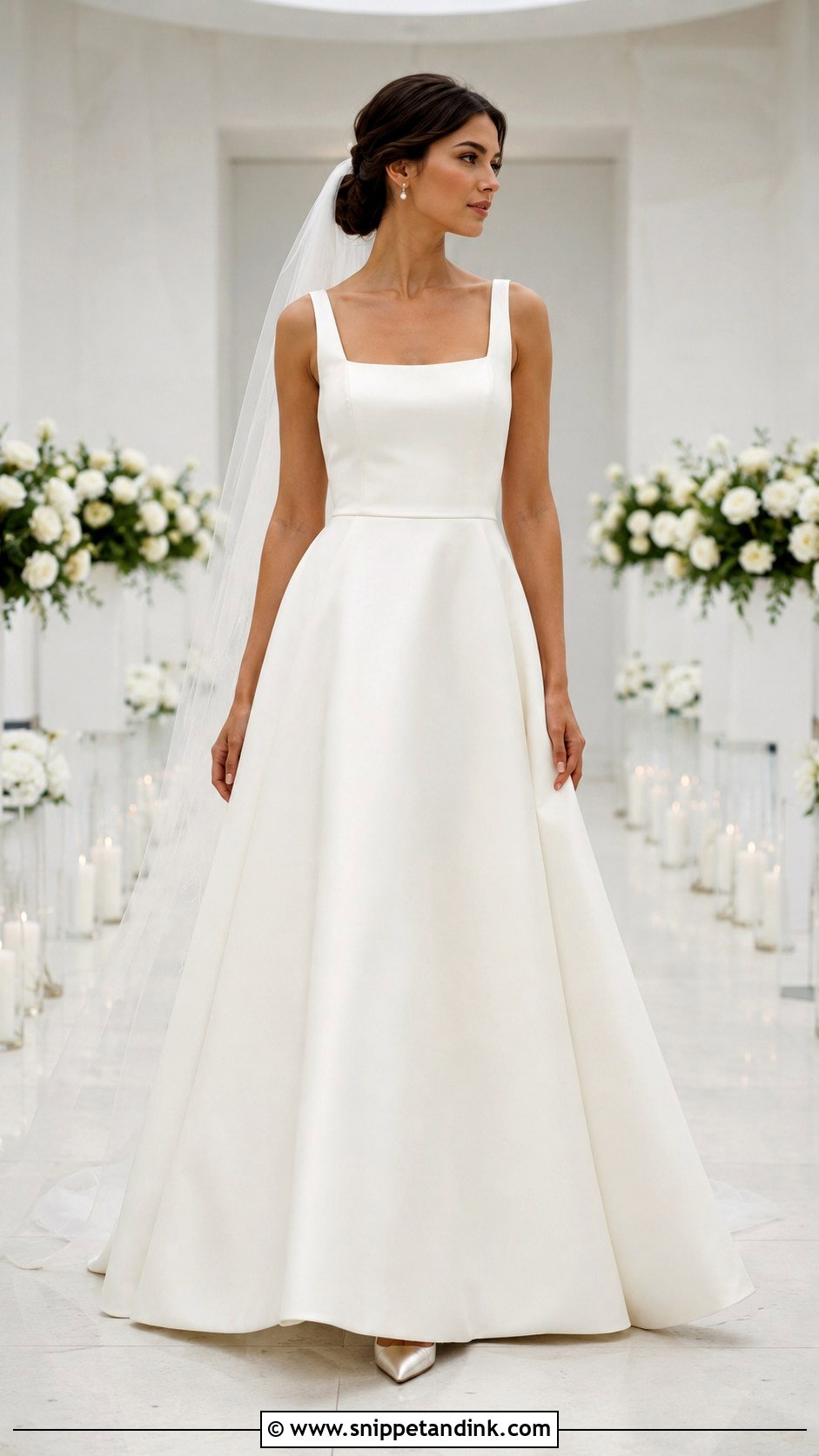
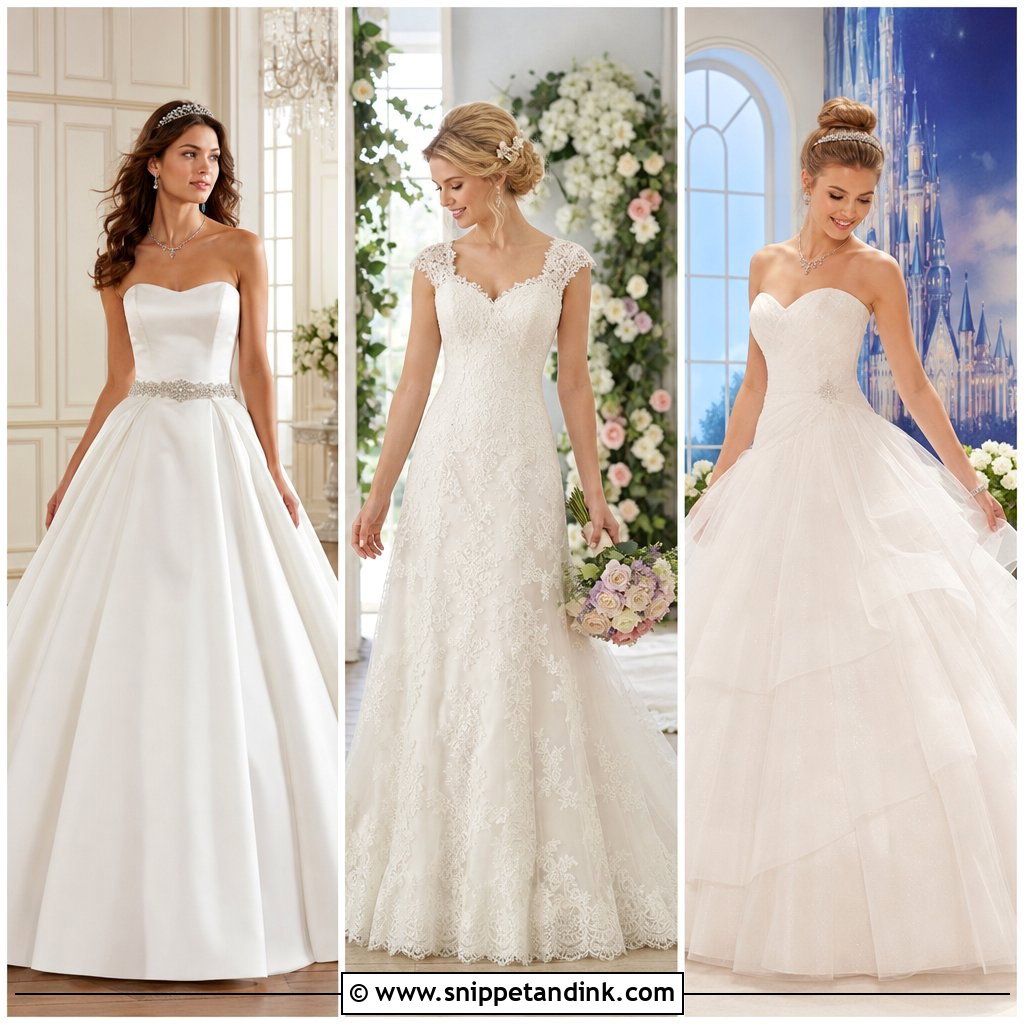
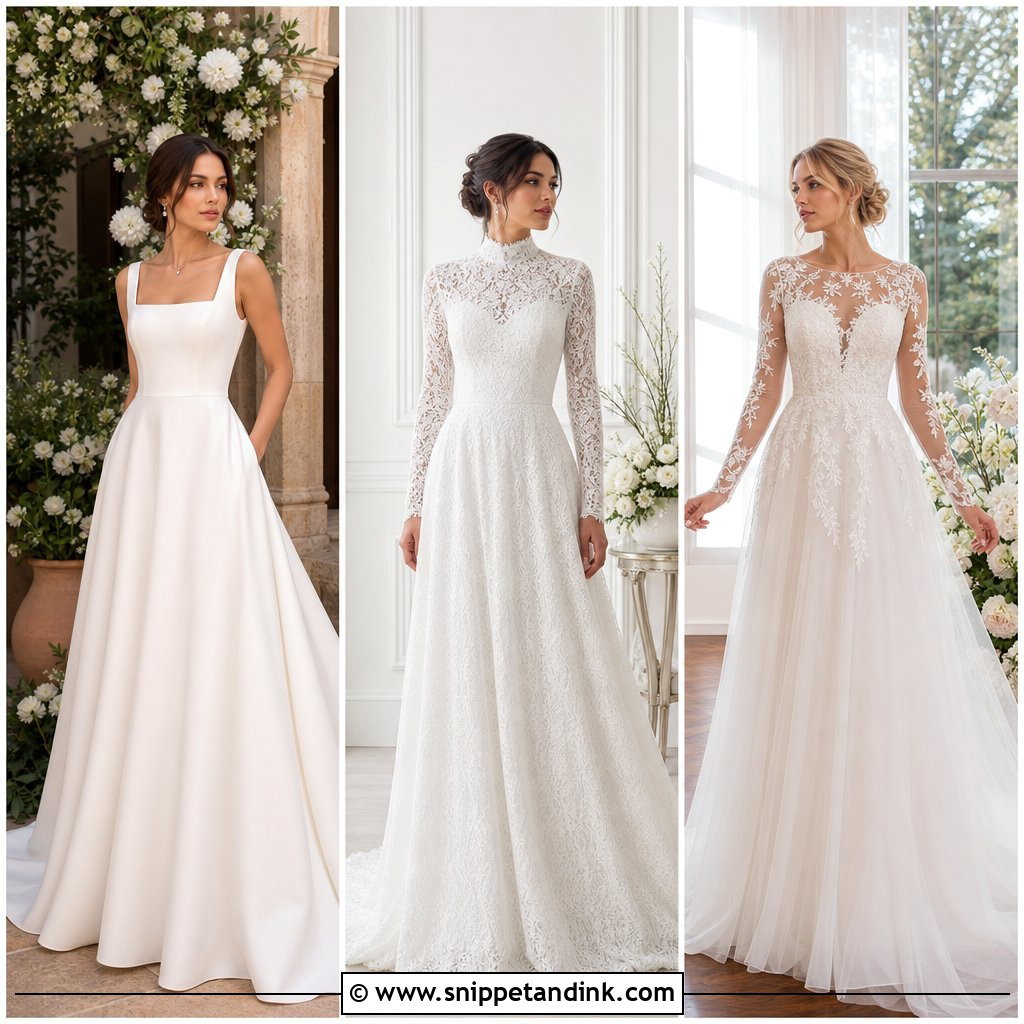
If you’re unsure where to start, start with an A-line. The fitted bodice and gradually widening skirt suit nearly every body and every venue, from a ballroom to a garden. Matte satin keeps it clean; soft chiffon moves more. A square, V or sweetheart neckline changes the personality without changing the shape. Pointed pumps, pearl earrings, a fingertip veil, a small bouquet and a low bun keep it refined. Proportions are easy to adjust here: a slightly raised waist seam helps petite brides, and taller brides can carry a longer train.
2. Long White Satin Ball Gown Wedding Dress
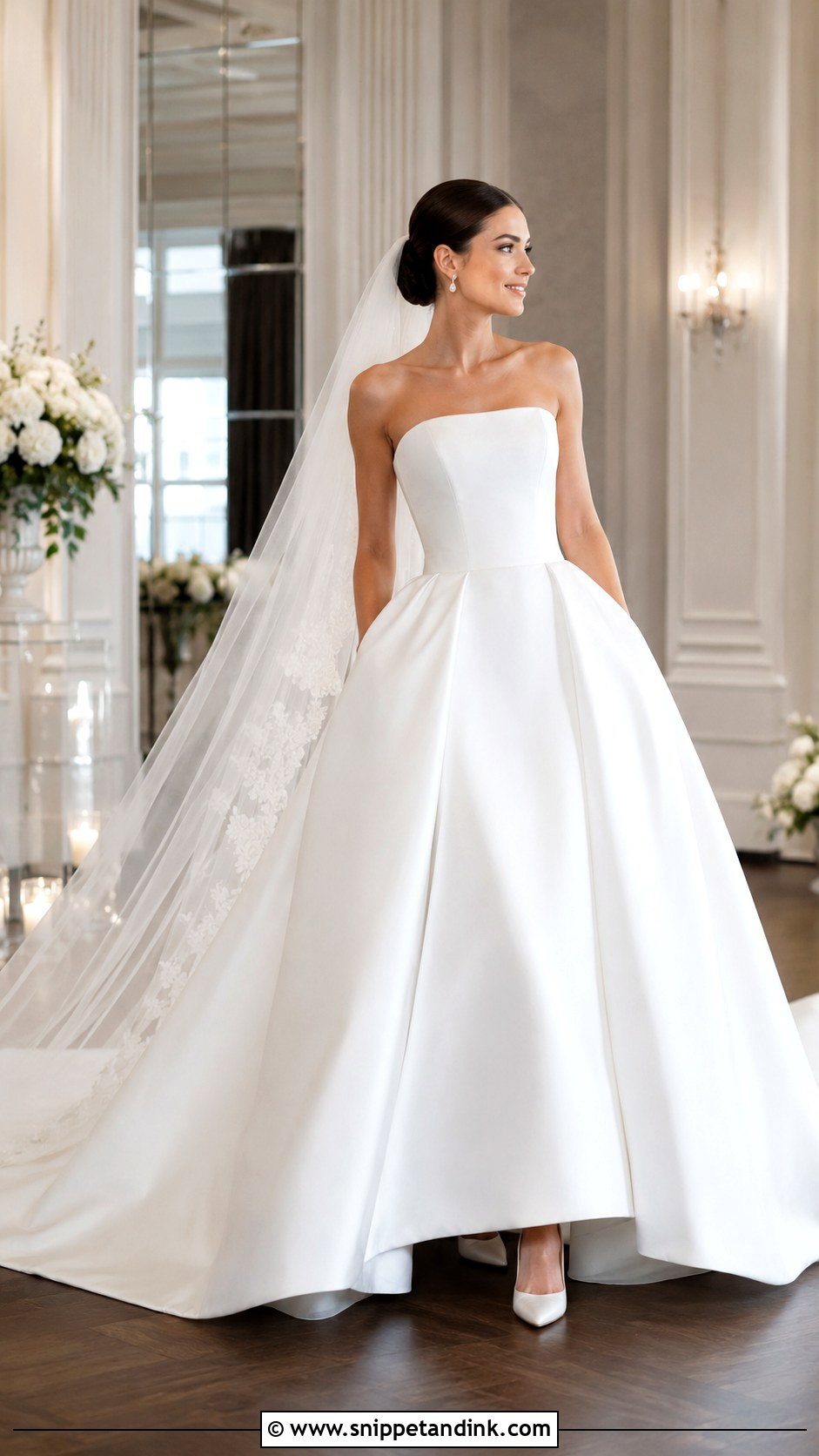
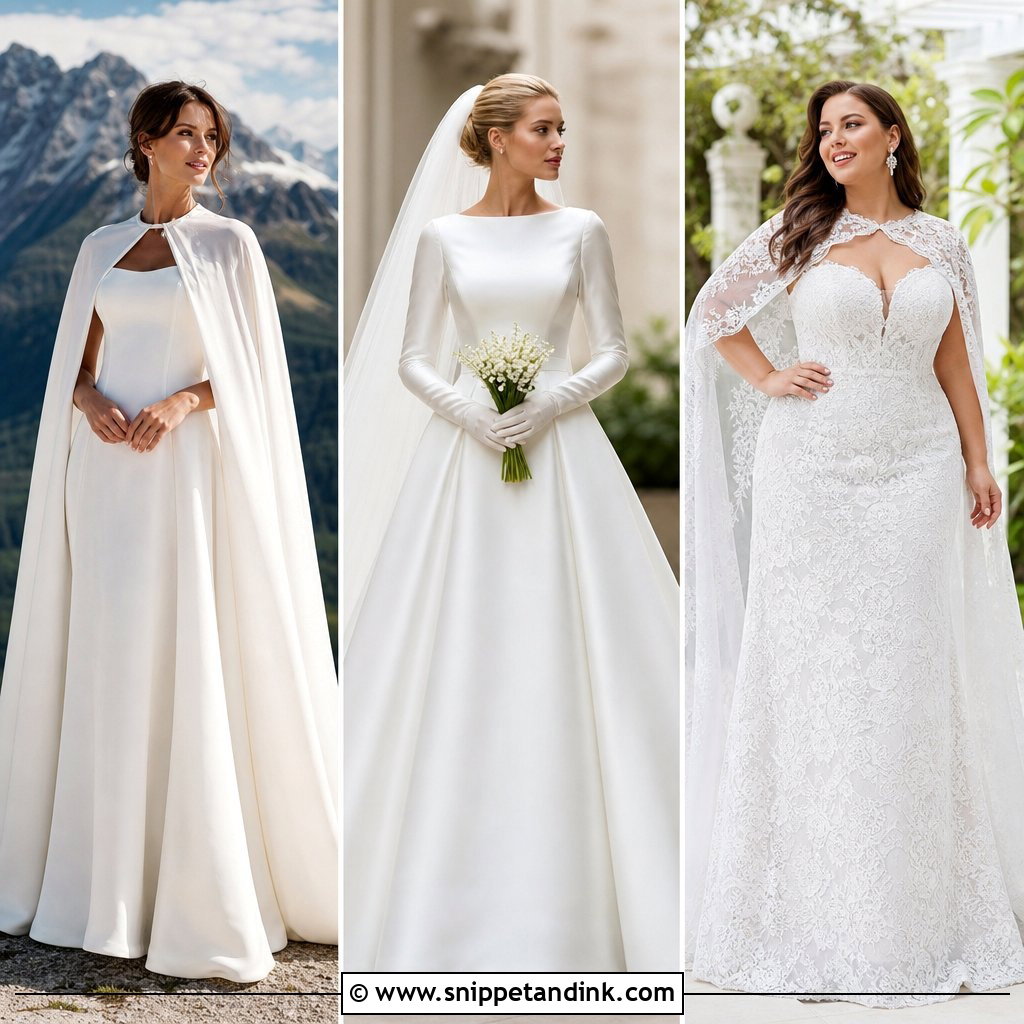
Satin ball gowns are about structure. A firm bodice defines the waist and the full skirt brings the drama, so you don’t need beading at all. The fabric has to be substantial enough to stand out on its own, which is why I point brides toward Mikado or duchess satin rather than thin polyester satin that collapses. Satin pumps, a cathedral veil, fine drop earrings and a sleek chignon finish it, with a modest bouquet and little jewelry. Ask for pockets. In a skirt this full they disappear completely, and you’ll be glad of somewhere to put a lipstick.
3. Long White Lace Wedding Dress With Sleeves
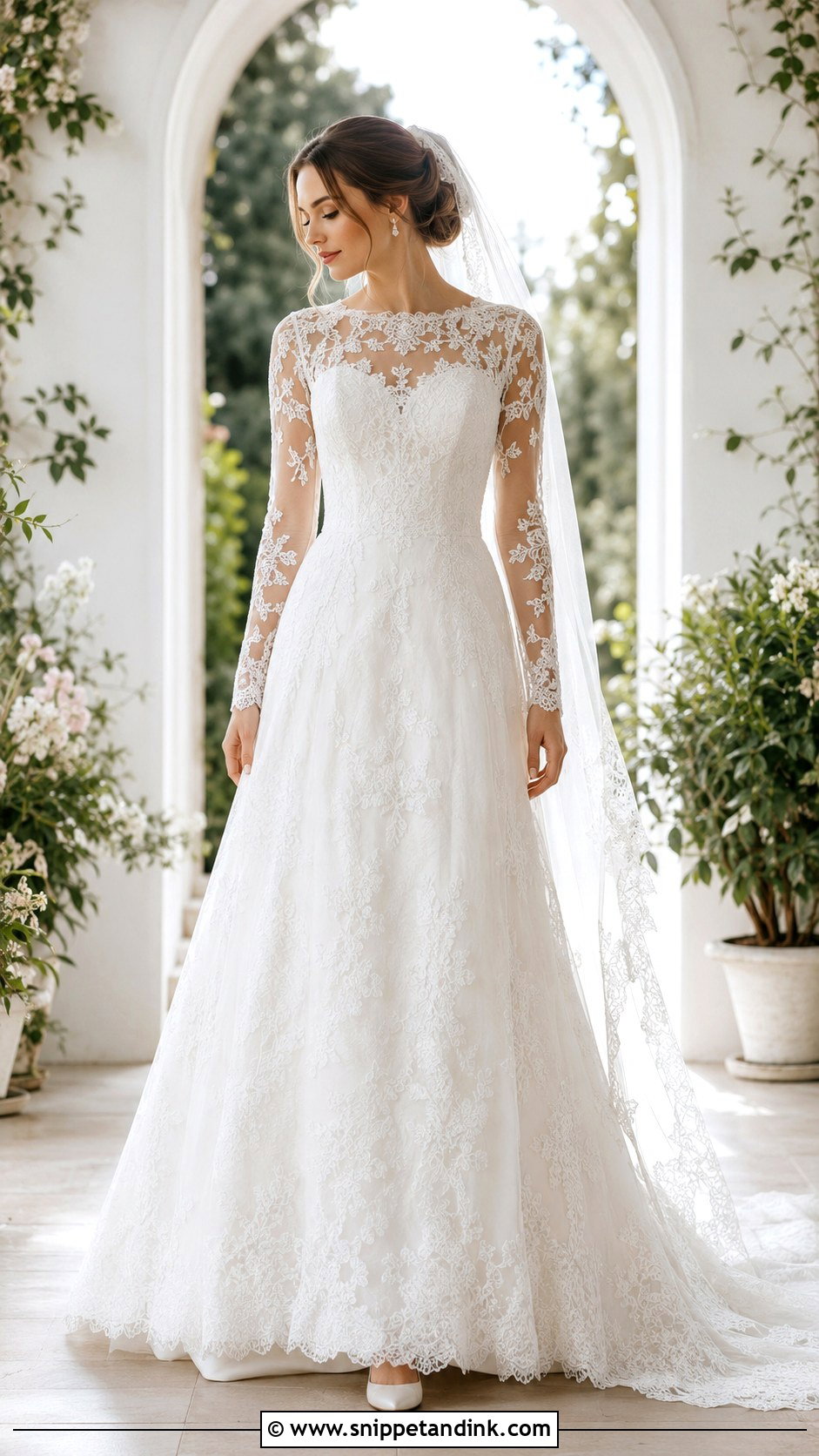
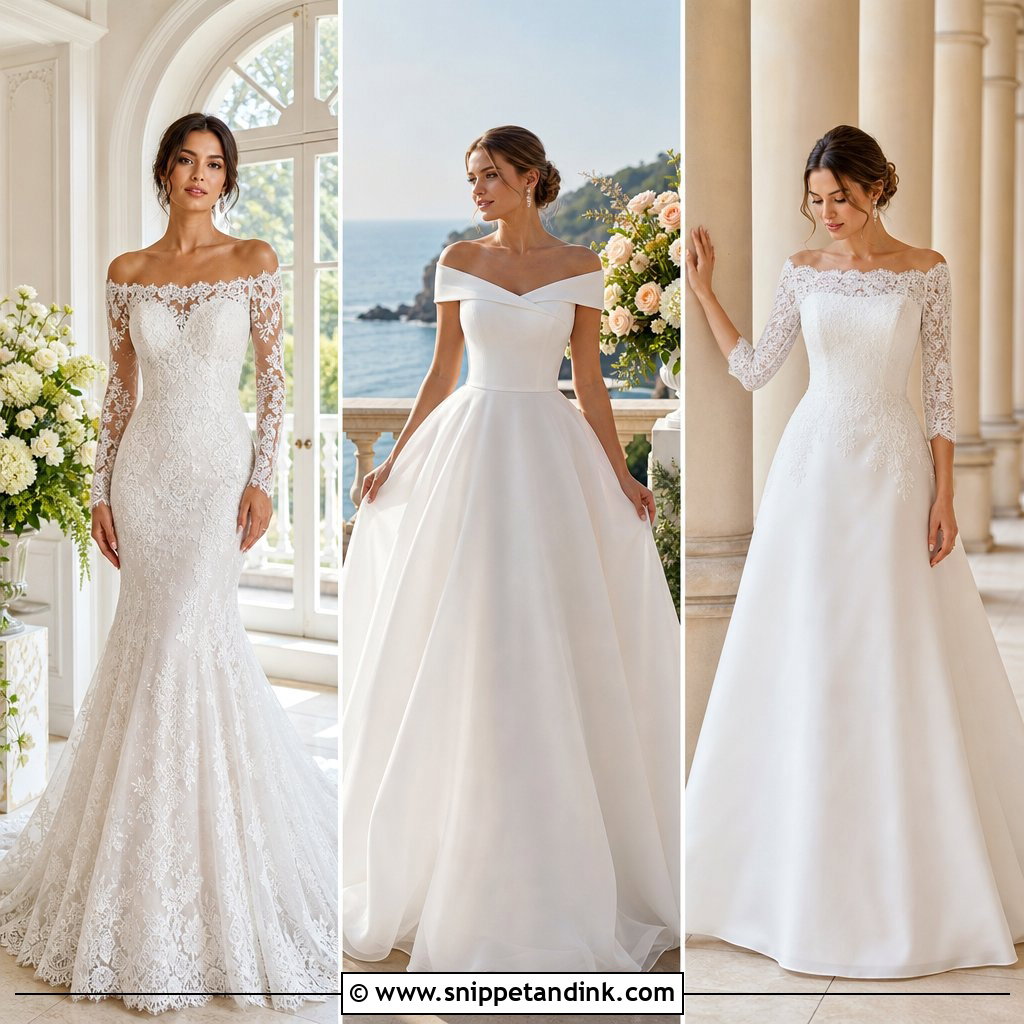
Lace sleeves give coverage with a lot of romance. A lined bodice looks modest, while sheer illusion sleeves let the lace sit directly against the skin. Keep the skirt A-line or gently fitted so the whole thing doesn’t turn ornate. Closed-toe ivory heels, small crystal earrings and a lace-edged veil that echoes rather than copies the gown suit it, with a loose low bun or polished waves. Season changes the build. For winter I’d pick denser lace over a satin lining; for summer, tulle sleeves and openwork lace breathe far better. Whatever you choose, have the tailor check you can hug and dance without the sleeves pulling.
4. Long White Mermaid Wedding Dress
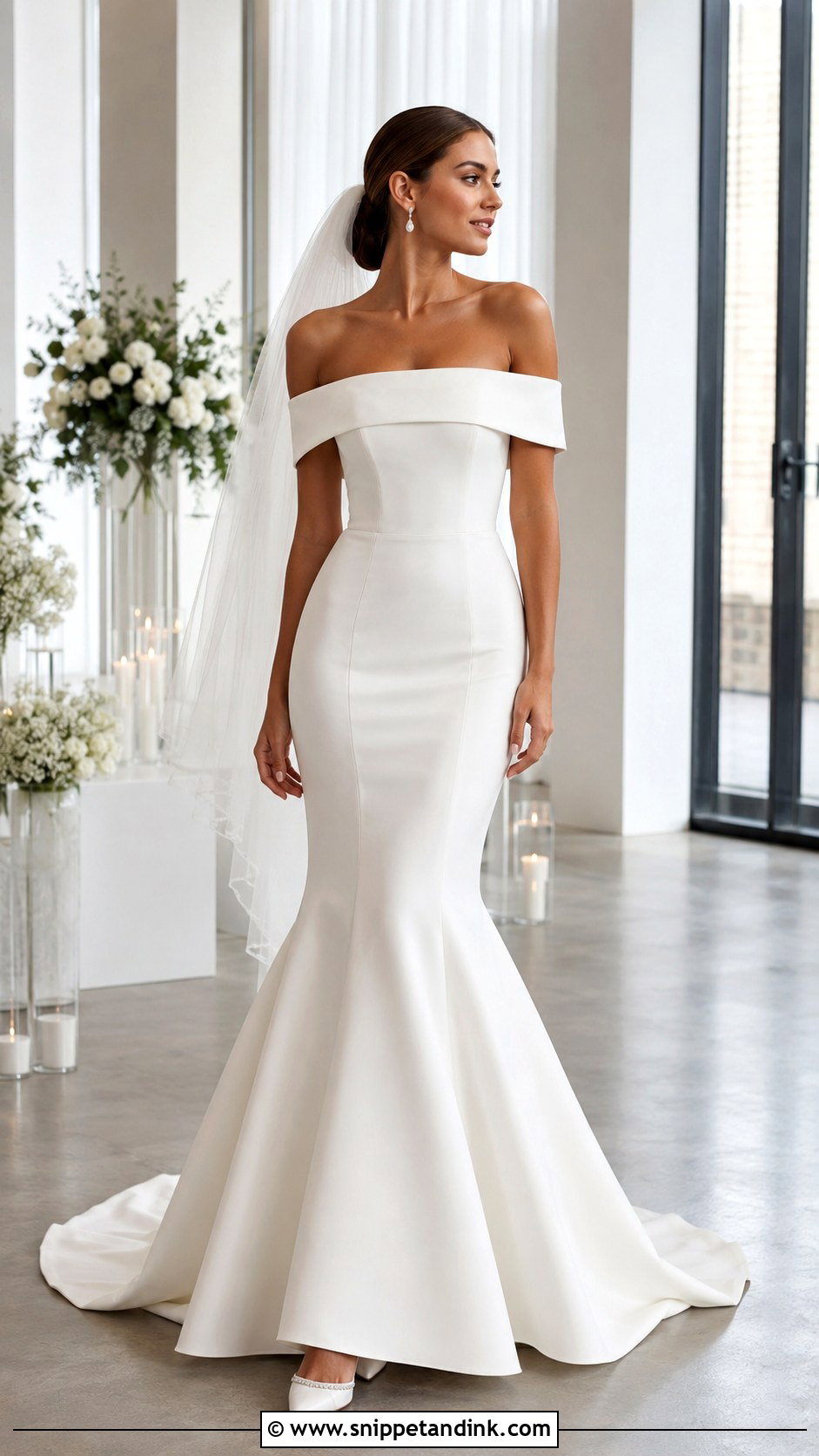
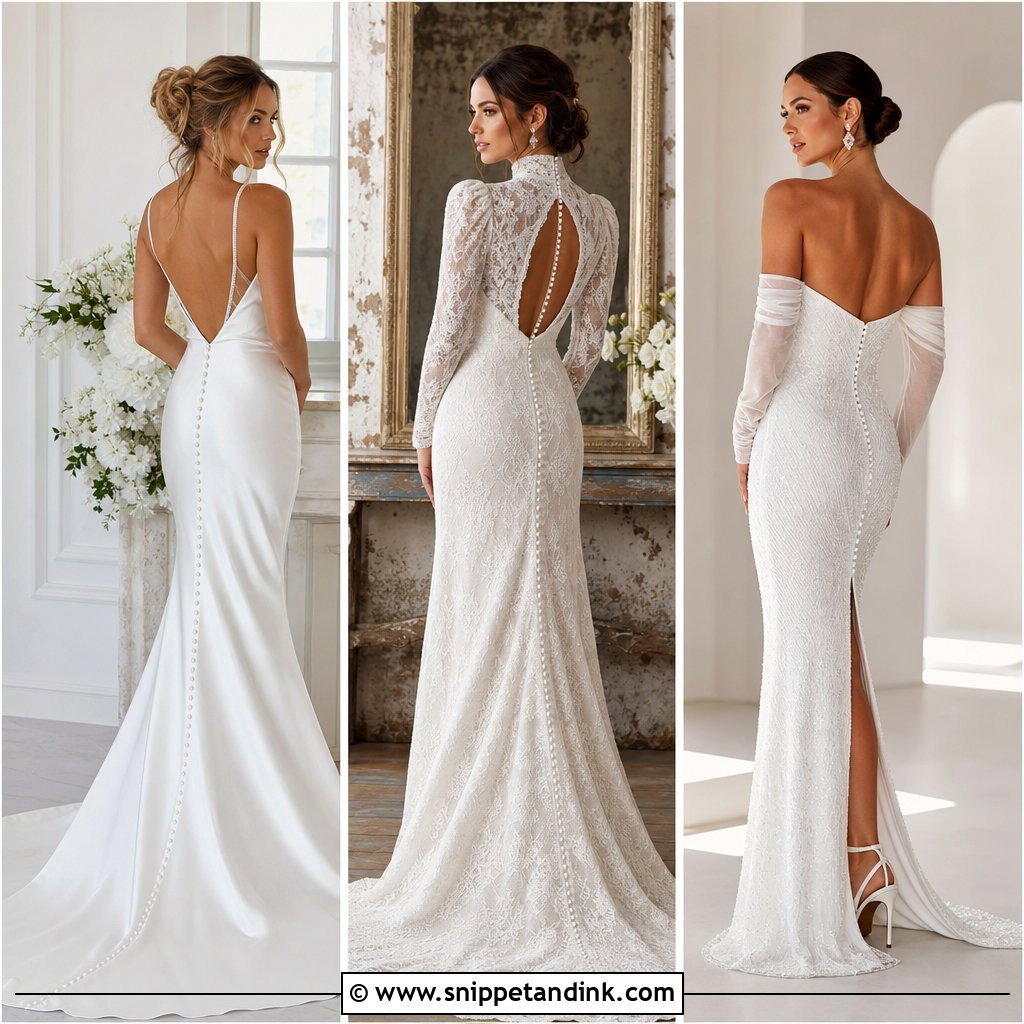
Mermaid dresses hug the bodice, waist and hips before flaring near the knee, and they need real inner structure to look smooth. Crepe, satin and lace all work. Balance the fitted line with a plain neckline, such as an off-the-shoulder fold or a simple strapless top, plus comfortable pointed heels, a mid-length veil and slim earrings. A low ponytail or smooth bun shows the shoulders and back. At appointments, take full strides, not dainty steps, since a flare set too low turns walking into shuffling. A removable overskirt gives extra drama for the ceremony and reveals the mermaid line for the reception.
5. Long White Strapless Wedding Dress
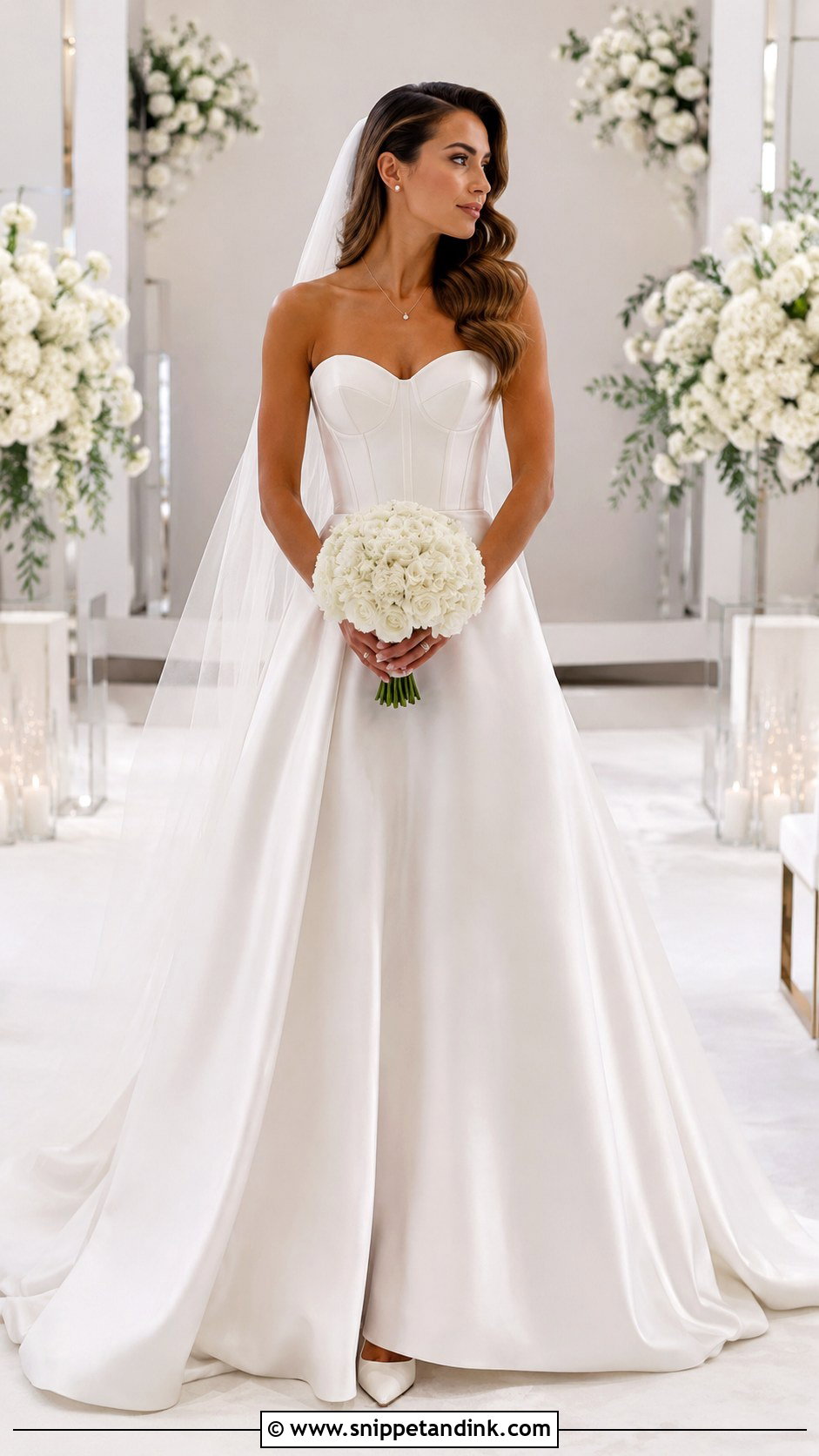
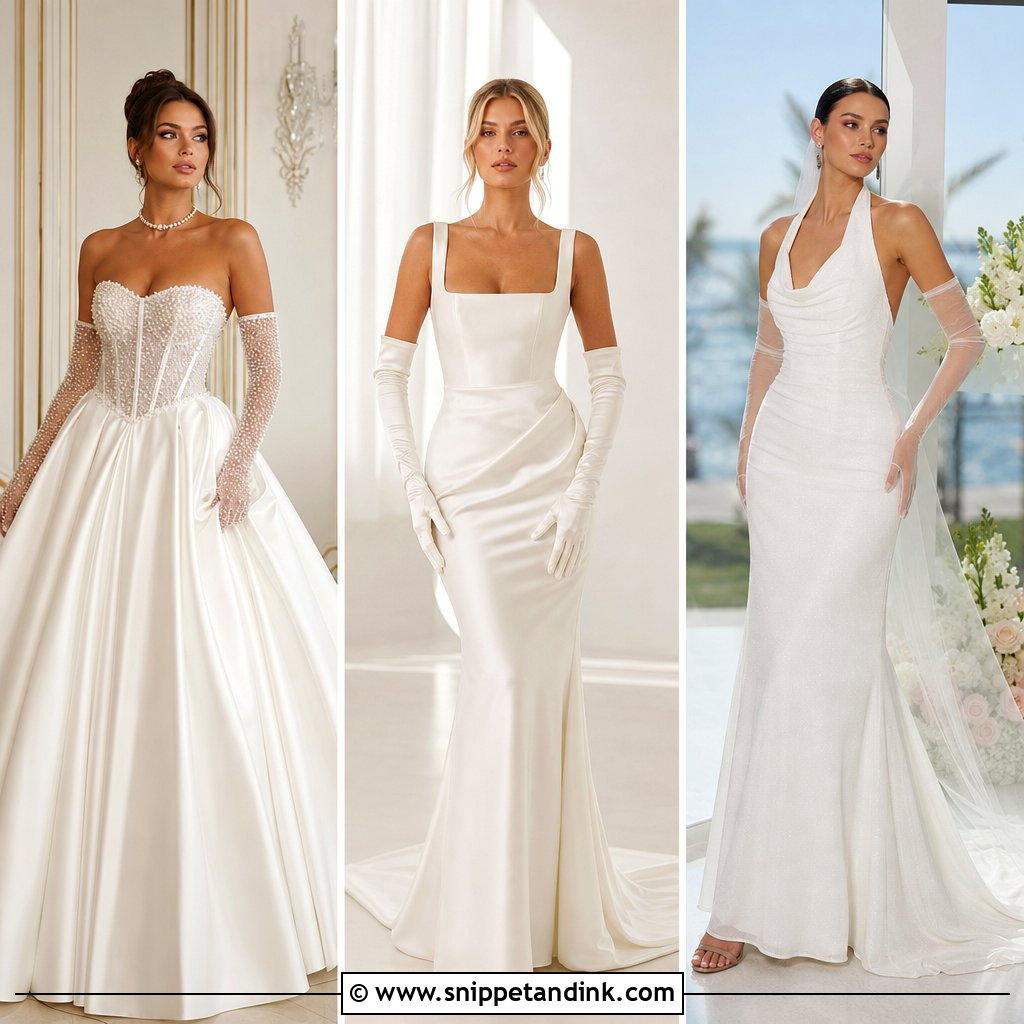
Strapless gowns put the focus on the shoulders and collarbone, and they live or die on support. Look for boning, molded cups and an internal waist stay, a petersham band that anchors the bodice at your waist so it can’t slide down. A delicate necklace, pearl studs, satin heels and a sheer veil pair well. A fitted crepe skirt reads modern, a full satin one traditional. If you’d like coverage for the ceremony, a removable lace bolero, stole or detachable sleeves gives you that without changing the gown. Hair up shows the neckline; side-swept waves soften it.
6. Long White Off-the-Shoulder Wedding Dress
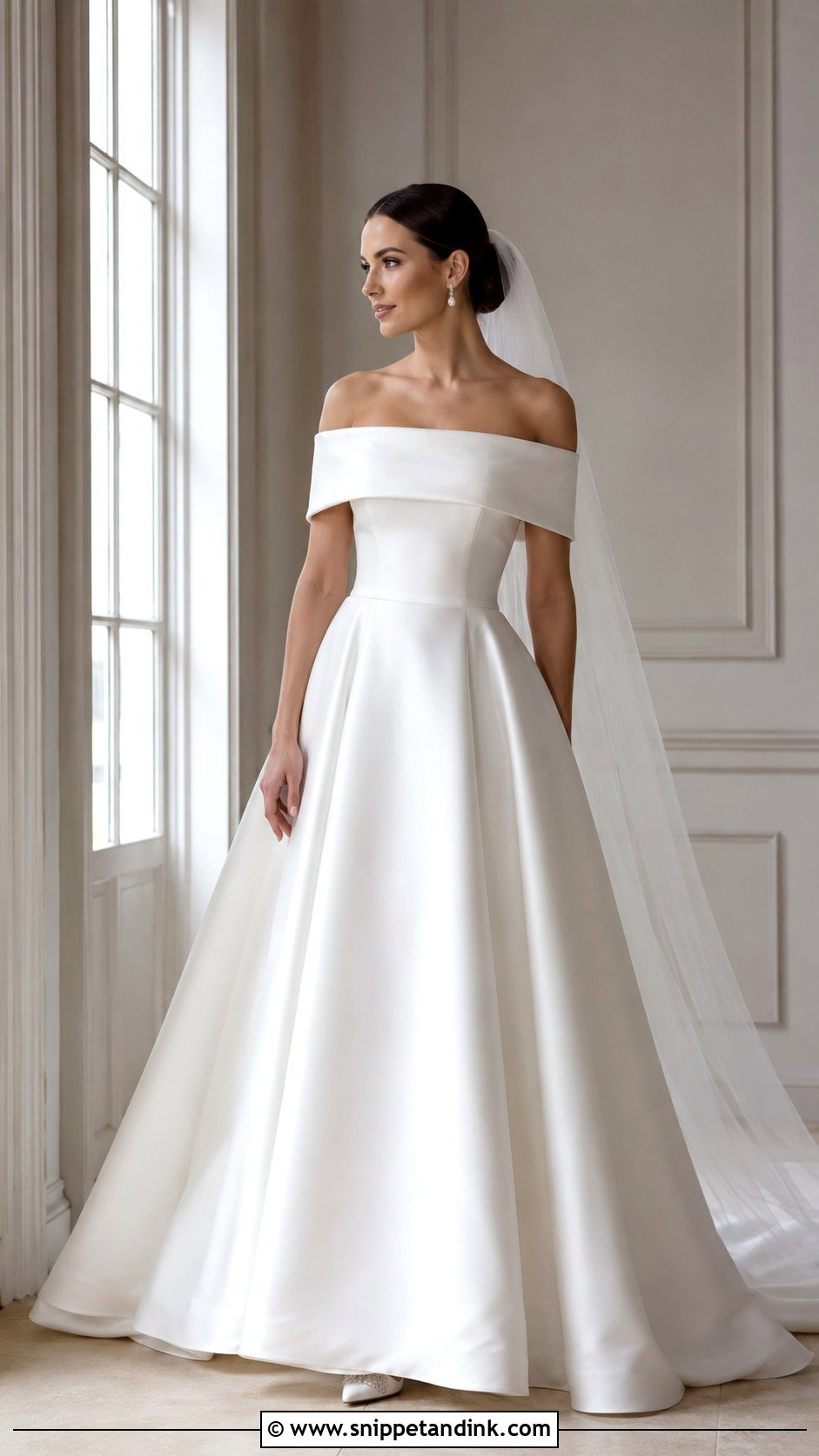
Off-the-shoulder necklines flatter a wide range of shapes and adapt to fitted gowns, A-lines and ball gowns alike. A folded satin neckline looks structured; lace sleeves look romantic. Drop earrings, a low bun, pointed pumps and a plain veil set below the bun suit it, and no heavy necklace. Here’s the construction detail I always check. The shoulder bands are decorative, not load-bearing, so the bodice must hold itself up. If you feel the sleeves taking the weight when you raise your arms, ask for more support in the bodice before anything else.
7. Long White Square Neck Wedding Dress
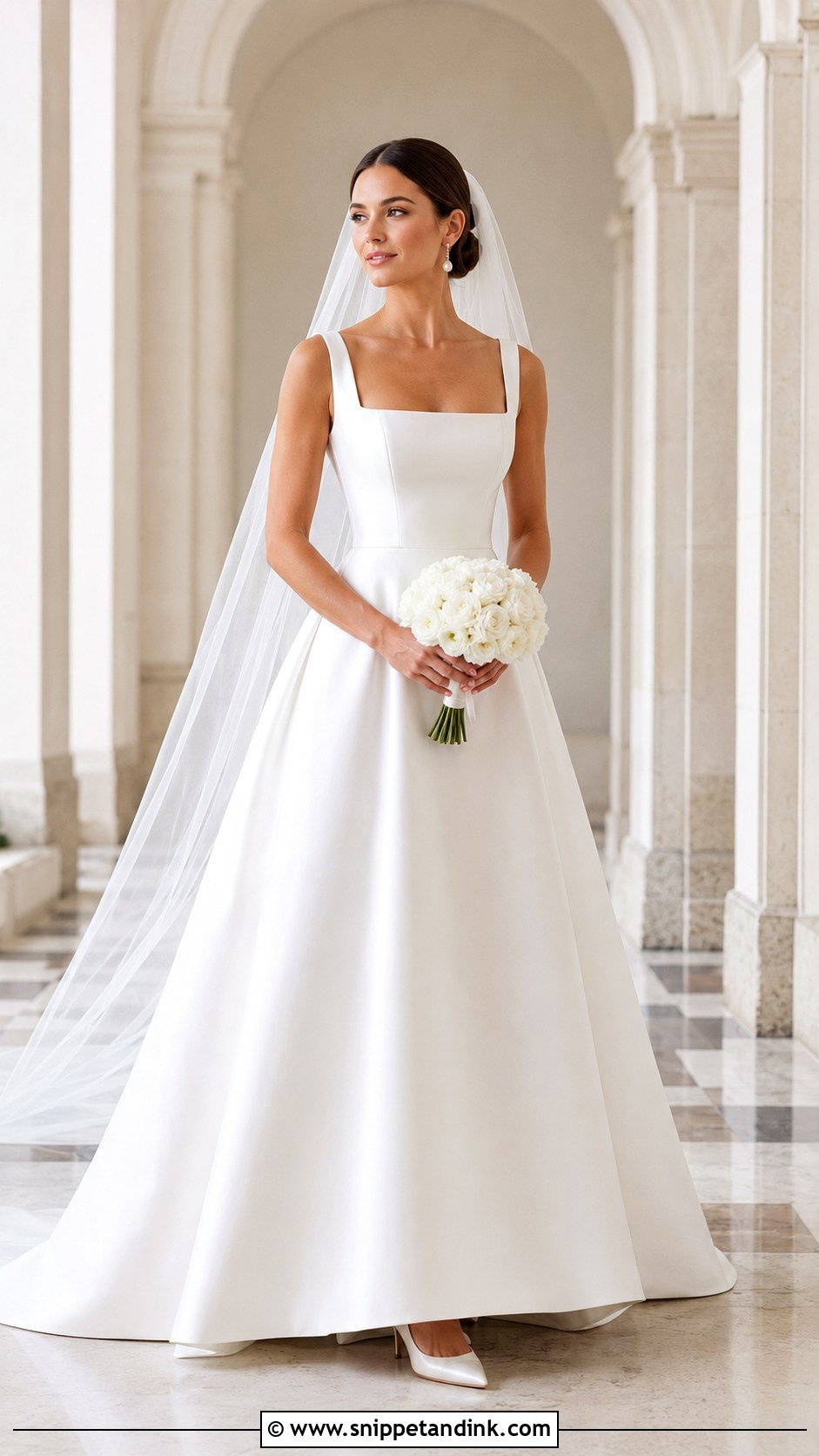
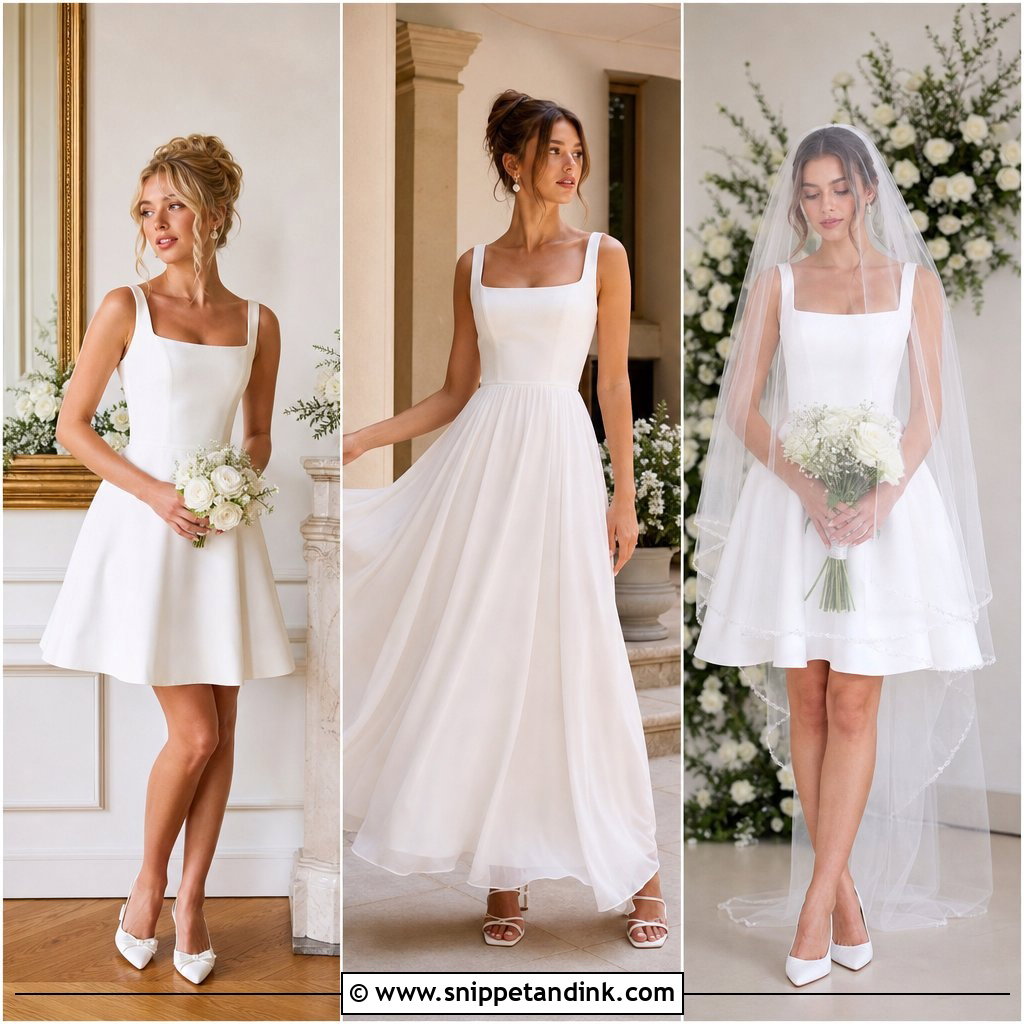
Square necks bring clean geometry to a classic gown, framing the collarbone with straight lines. Wide straps are a practical bonus, offering more support than spaghetti straps. Structured satin looks formal and smooth crepe looks quieter; an A-line keeps proportions balanced, while a column feels more current. Pearl drops, low pointed heels, a chapel veil and a compact bouquet suit it, with a center-parted bun or soft waves. If you need more bust support, a good seamstress can widen the straps or add cups without losing the square shape. Lean forward at the fitting, too, since square corners tend to gap.
8. Long White High Neck Wedding Dress
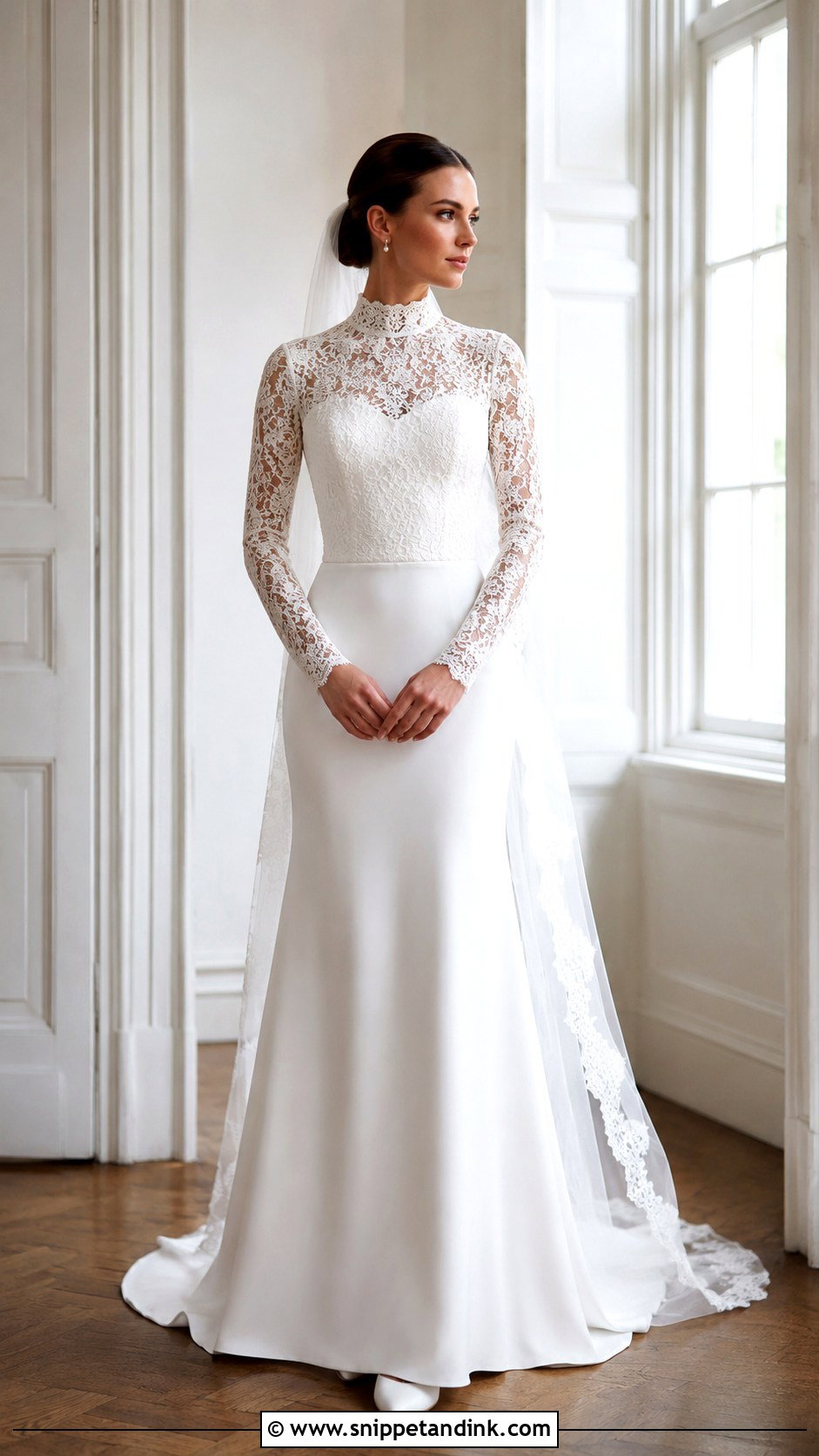
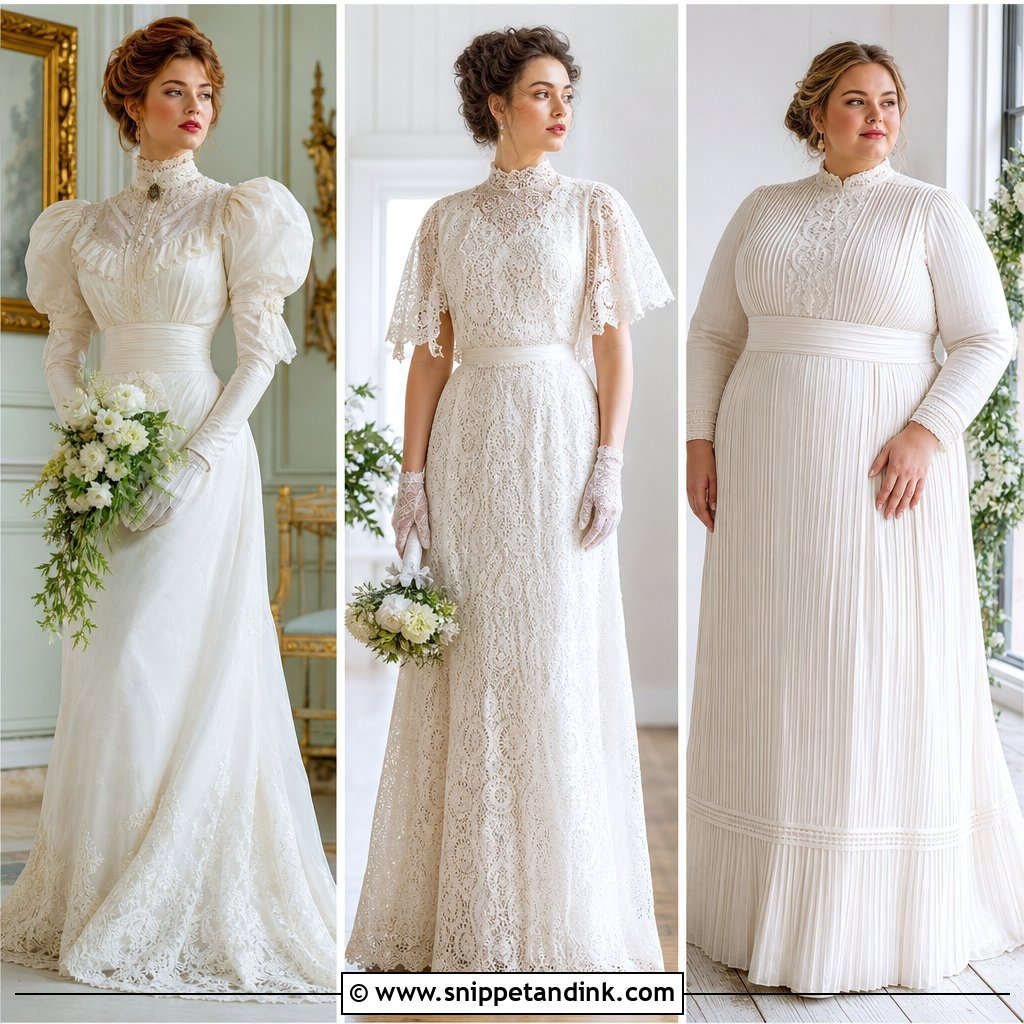
A high neckline draws attention to your face and gives refined coverage. Smooth crepe looks understated; lace over a lined bodice adds texture. Choose a column skirt for a sleek outline or an A-line for easier movement, then add small earrings, closed-toe heels and a low bun, with no necklace. Set the veil beneath the bun so the front stays clean. I have brides turn their head side to side at every fitting. A collar that sits fine facing the mirror can rub raw by evening, and beaded or lace collars need a soft lining where they touch the neck.
9. Long White Halter Wedding Dress
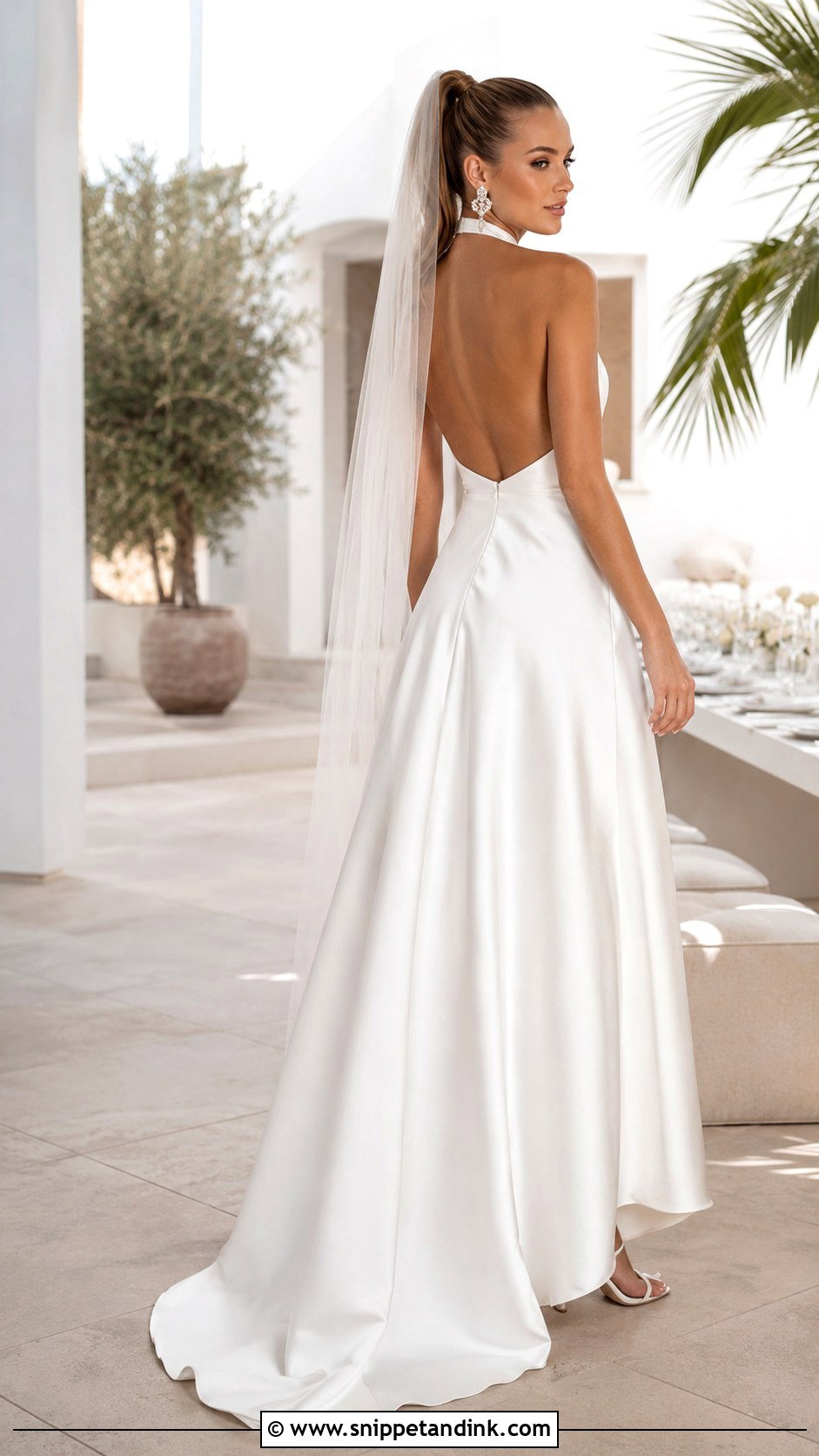
Halters show off the shoulders and upper back with one strong line. Flowing satin, silk-like fabrics and crepe keep that line clean, cut as an A-line for movement or bias-cut for something more modern. Statement earrings, strappy heels and a neat bun or high ponytail suit it, and skip the necklace, which fights the halter strap. A narrow veil set below the hairstyle keeps the back visible. The comfort issue with halters is the neck. If the strap is carrying the bodice, it drags at the back of your neck by mid-afternoon, so the bodice should be built to take the weight at the waist instead.
10. Long White Corset Wedding Dress
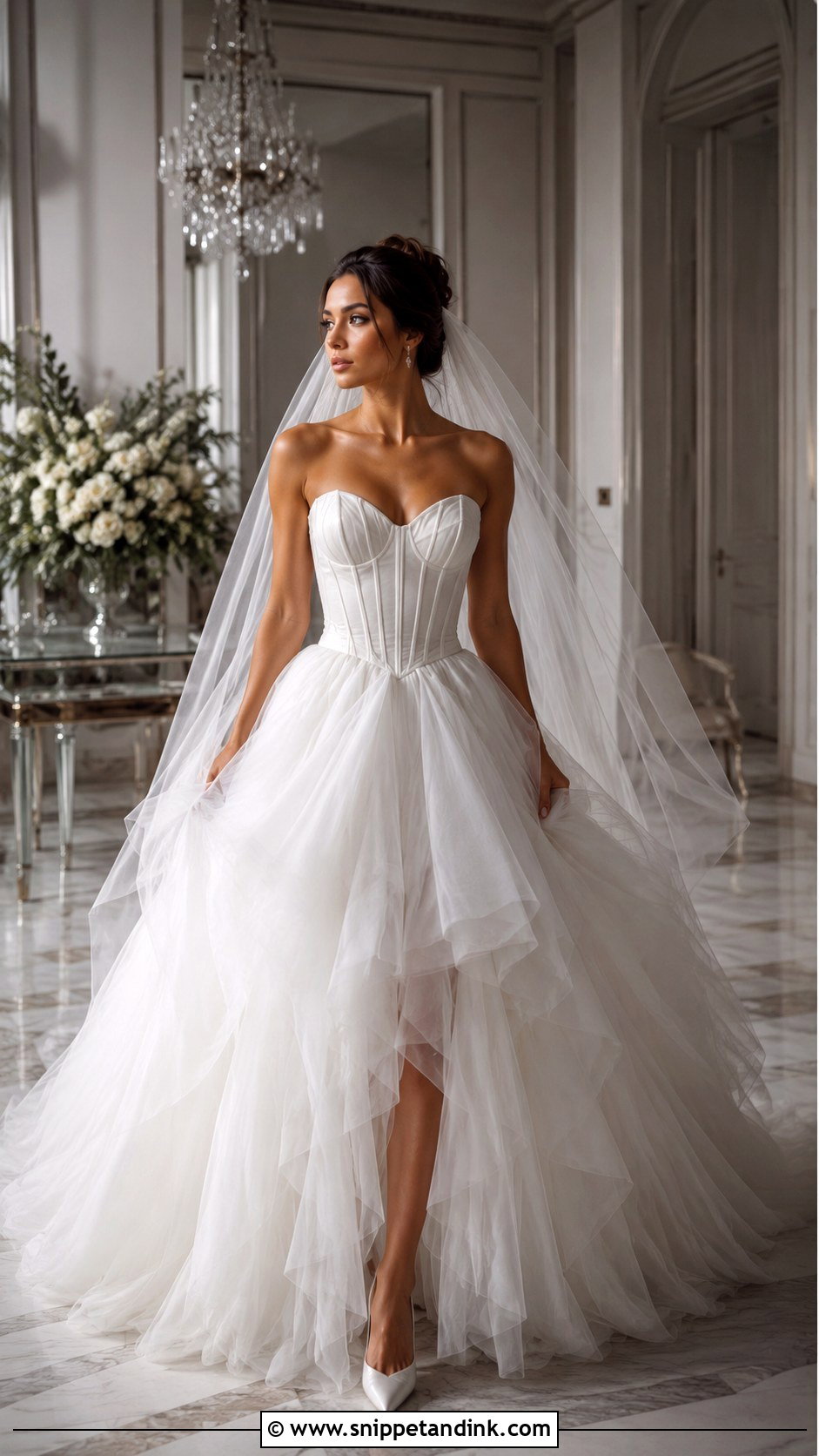
Visible corsetry gives a gown definition and a fashion-led edge. A Basque waist dipping into a subtle V lengthens the torso and leads into the full skirt, in satin for a clean look or layered tulle for something softer. Pointed heels, a sheer cathedral veil, delicate earrings and a polished updo finish it. Lined panels give more coverage; exposed boning reads more modern. Sit, breathe deeply and reach during the fitting. Corsets are the gowns where alterations matter most, because bust, waist and boning all have to stay aligned when one seam is taken in.
11. Long White Minimalist Crepe Wedding Dress
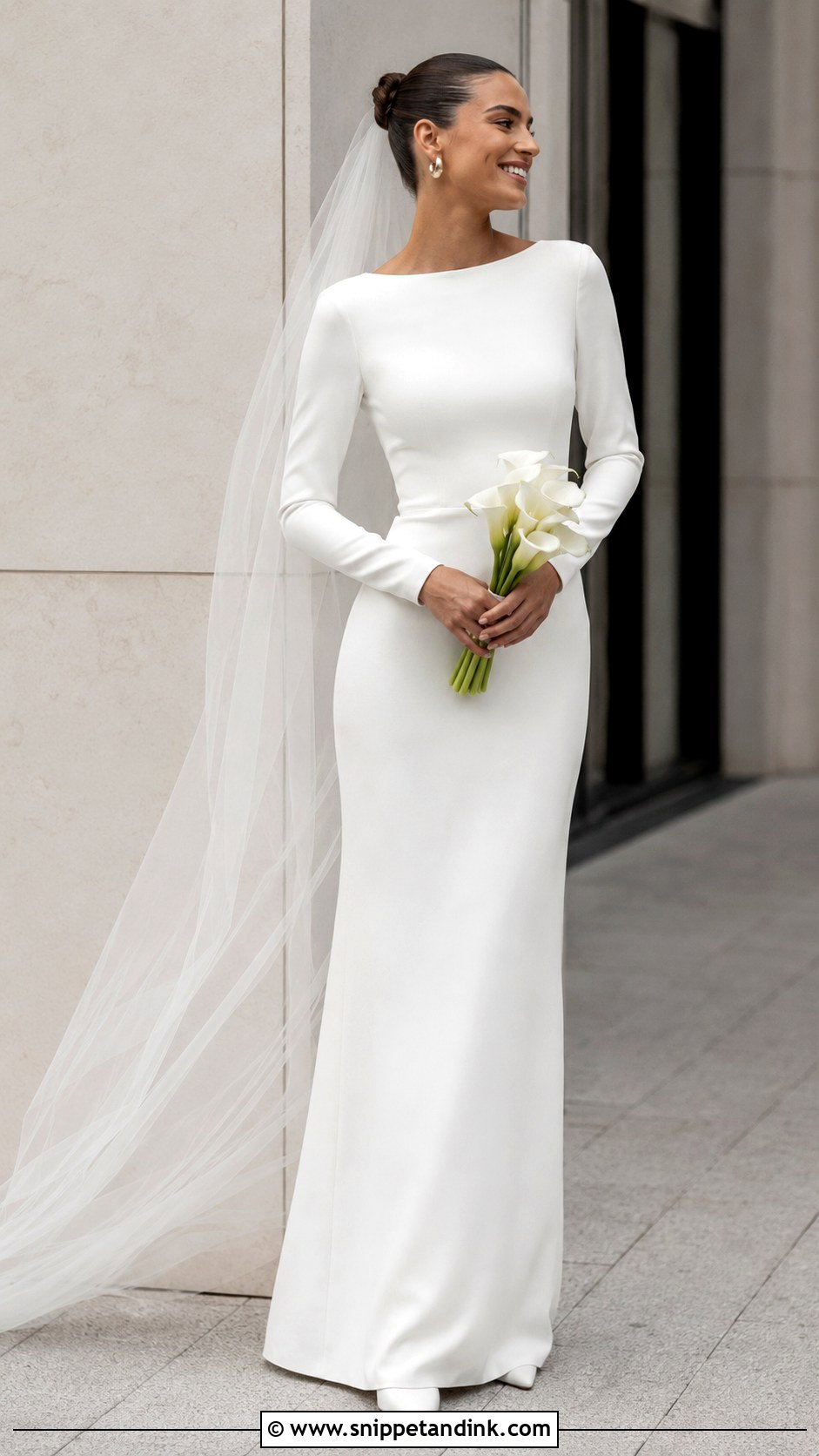
Crepe has nowhere to hide, which is exactly its appeal. A fitted column or gentle fit-and-flare lets the fabric and tailoring be the whole design, with a bateau neckline, covered buttons, architectural seams or a low back for interest. Sculptural earrings, pointed white pumps, a sleek bun and a plain tulle veil keep it minimal, with a structured clutch for portraits. Crepe shows every edge underneath it, so I’d try flat, skin-tone foundation pieces at your fittings. A lining with some weight makes the drape fall smoother, too, which is worth asking about if the sample feels thin.
12. Long White Slip Wedding Dress
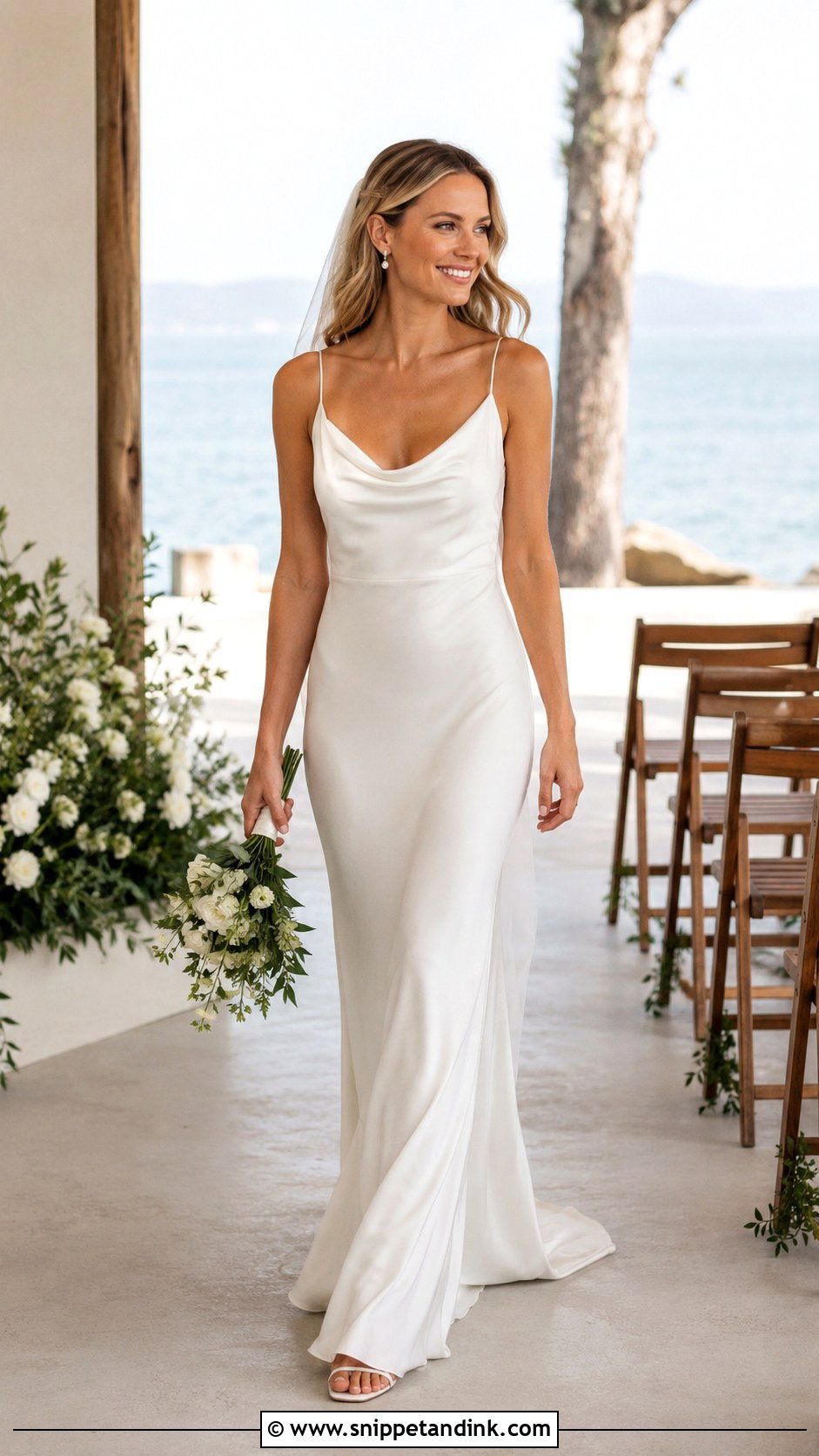
Slip dresses move with you and carry a quiet vintage feel. Choose a bias-cut satin design that skims rather than clings; a cowl neckline is softer, a straight neckline with thin straps more crisp. Low strappy sandals, pearl or crystal earrings, a narrow veil and soft waves suit it, with a light wrap for cooler outdoor moments. Satin on the bias reveals every fit problem, so allow time for careful tailoring and smooth underwear, and check the dress in daylight. For more ceremony impact, add a long veil or detachable overskirt, then take it off for the reception.
13. Long White Chiffon Wedding Dress
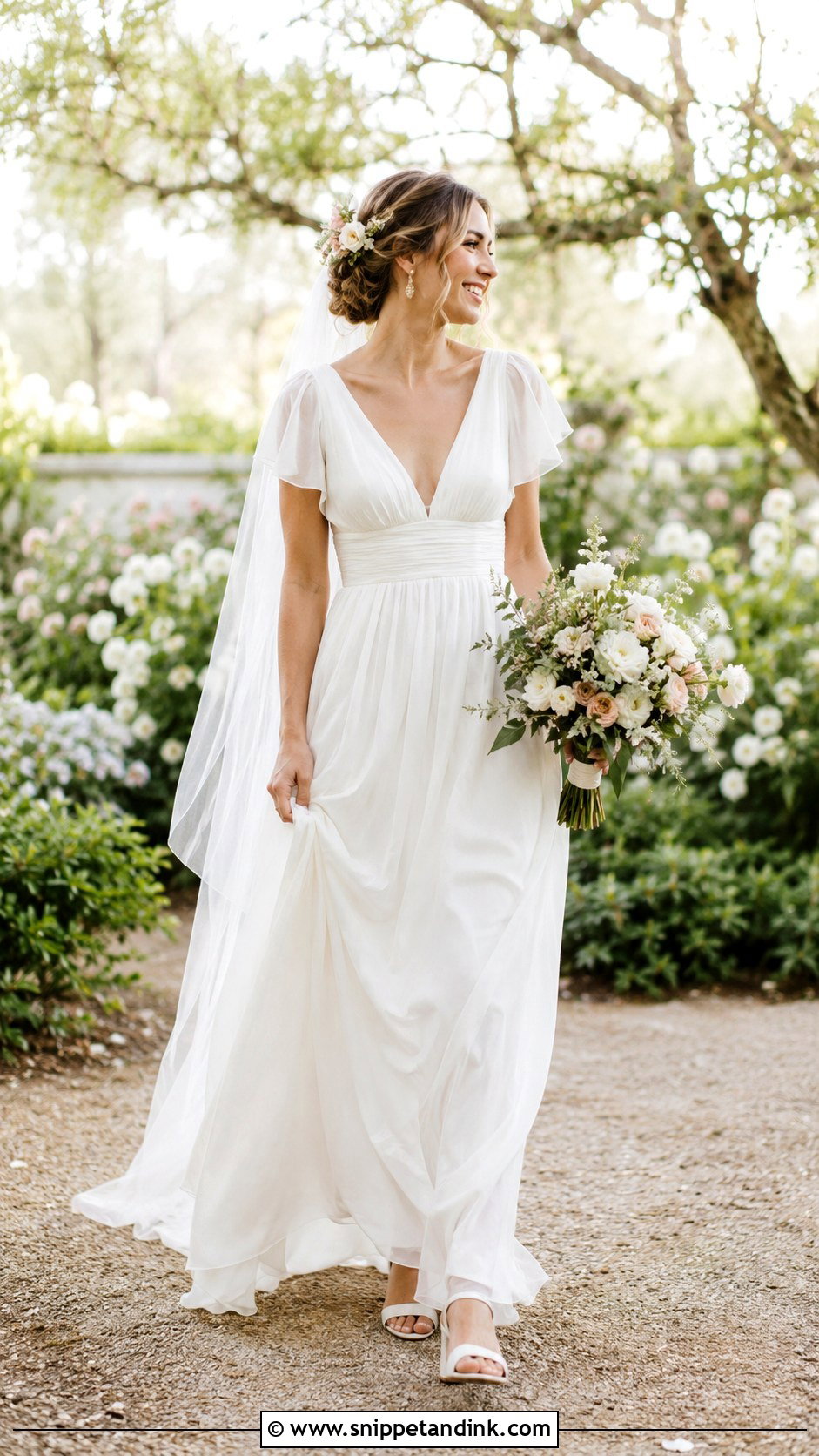
Chiffon is the beach and garden fabric. It moves in a breeze and stays cool, and an empire waist or soft A-line keeps it from looking bulky. A lined bodice with fine straps, flutter sleeves or a modest V-neck suits it, with block-heel sandals, understated jewelry, a light veil and a loose low bun; floral pins add detail without formality. Outdoors, I’d keep the train short. Chiffon picks up grass and sand quickly, and a light train can blow under your feet, so a bustle, wrist loop or detachable train is worth having once the entrance and photographs are done.
14. Long White Boho Wedding Dress
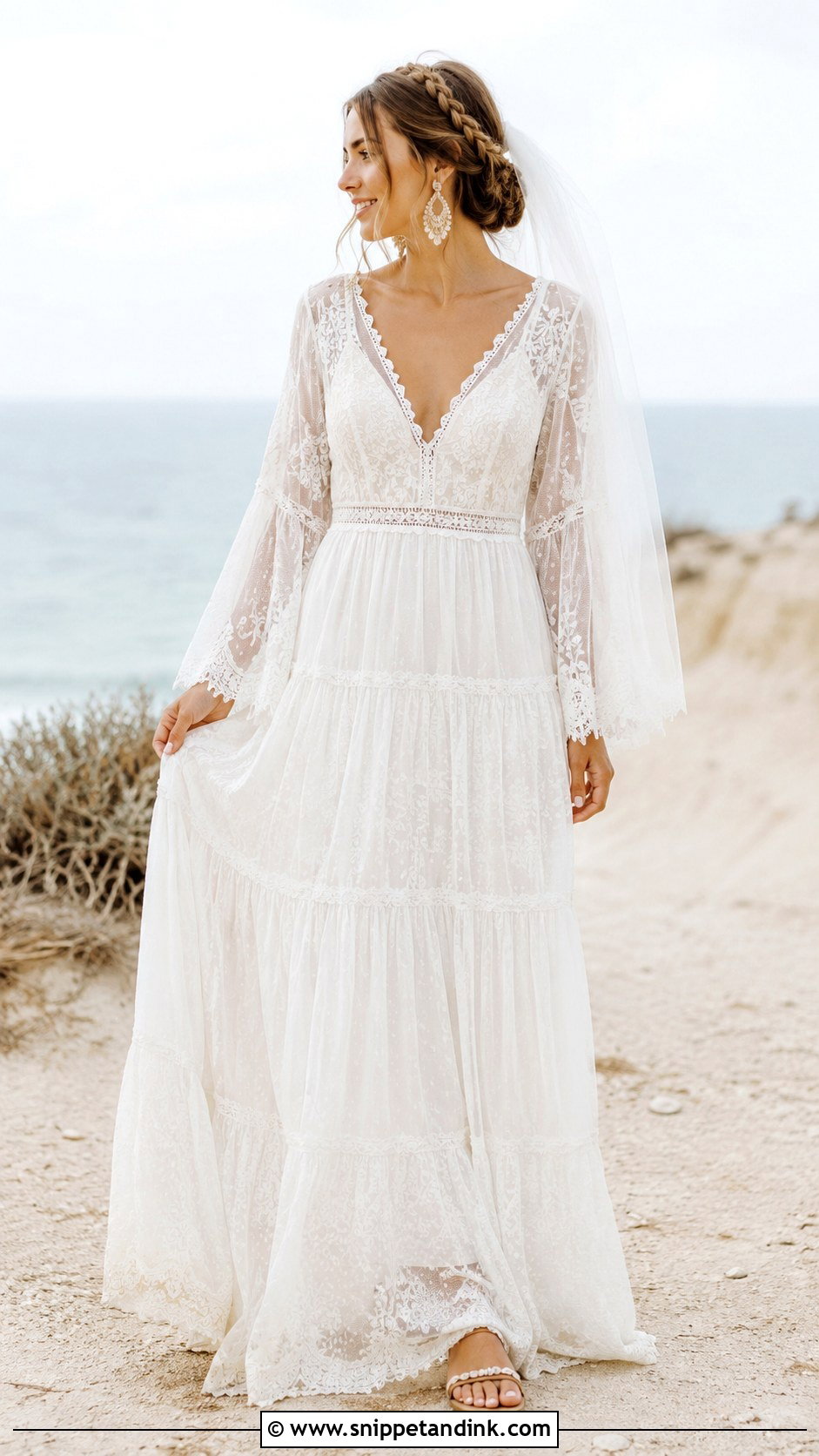
Boho gowns trade structure for movement and handmade-looking detail: soft lace, flowing chiffon, bell sleeves, embroidered panels or a gently tiered skirt. Low block heels or refined flat sandals, textured earrings and a loose braided updo fit the mood, with a simple tulle veil or floral hair piece. A lining close to your skin tone makes the lace pattern stand out more clearly. For uneven ground, keep the train short enough that you aren’t dragging it over roots and gravel. A light shawl covers your shoulders without making the look feel formal.
15. Long White Wedding Dress With Cape
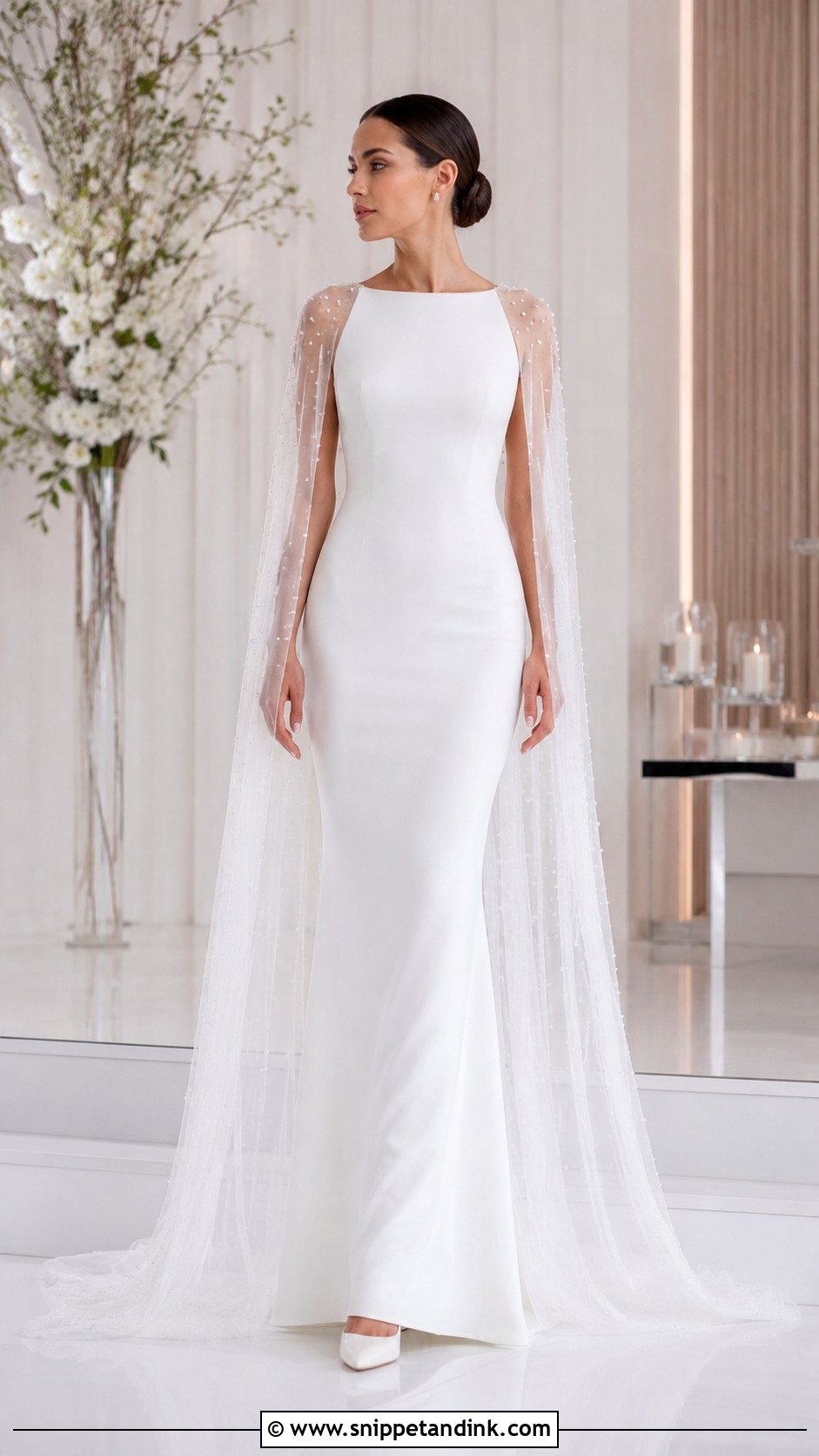
A cape turns a simple dress into a ceremony look. Start with a clean column, A-line or fitted crepe gown and add a sheer tulle cape falling from the shoulders into a train, with lace edging, scattered pearls or light embroidery if you want detail. Pointed pumps, small earrings and a smooth low bun suit it; leave the veil out, because the cape already gives you movement at the back. Check that the attachment points don’t drag the neckline backward. A detachable cape lets you keep it for the entrance and portraits and then move freely at the reception.
16. Long White Wedding Dress With Detachable Sleeves
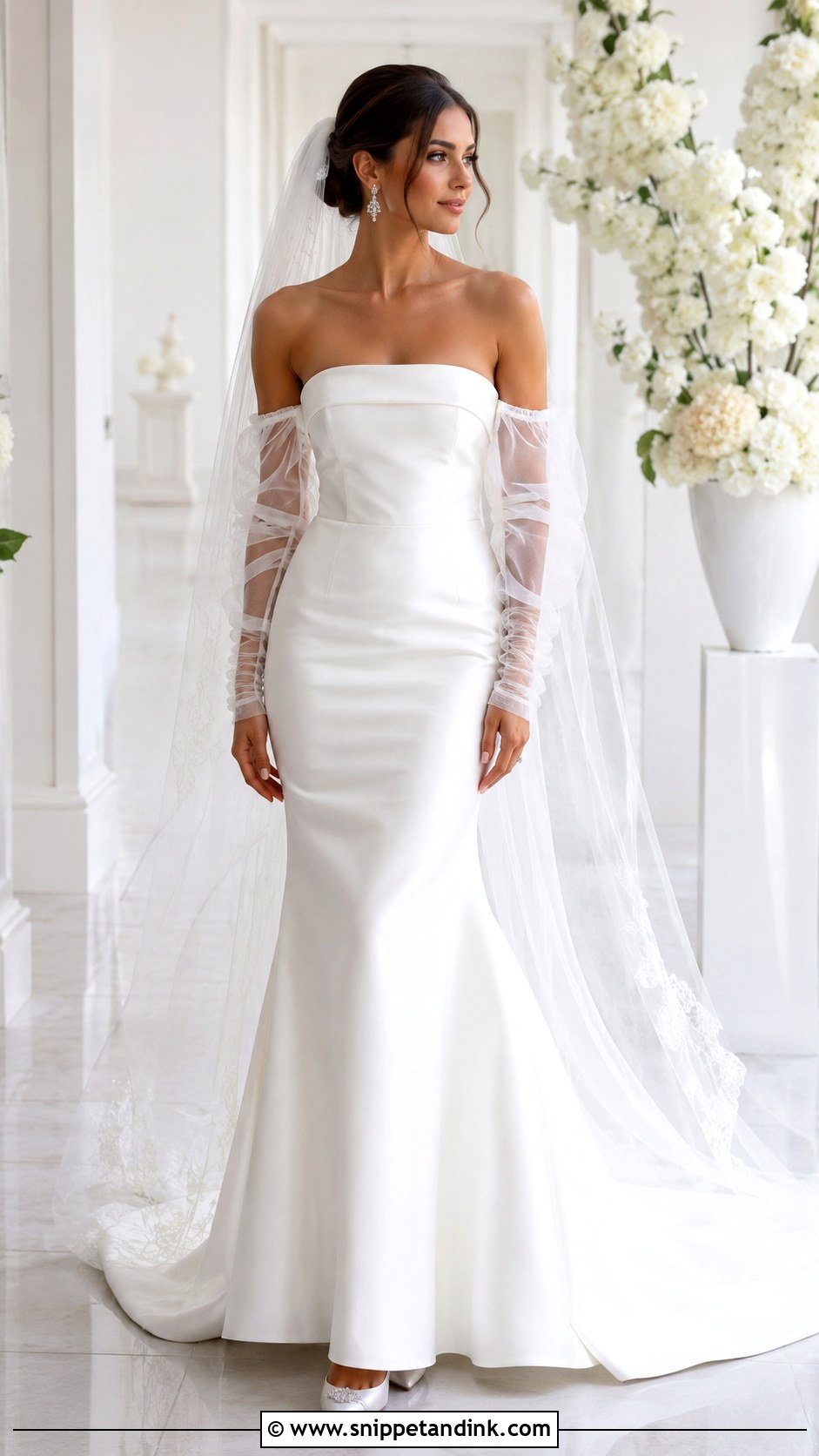
Two looks from one dress is the appeal of detachable sleeves. Start with a strapless or sleeveless fitted gown and add lace, tulle or satin sleeves for the ceremony, close-fitting for subtle coverage or softly puffed for volume. A long veil, drop earrings, closed-toe heels and an updo suit the ceremony version; afterwards, remove the sleeves and switch to smaller earrings or a hair comb. Order the sleeves in the same fabric batch as the gown if you can. White from two dye lots can differ slightly, and daylight makes even a small mismatch obvious.
17. Long White Wedding Dress With Overskirt
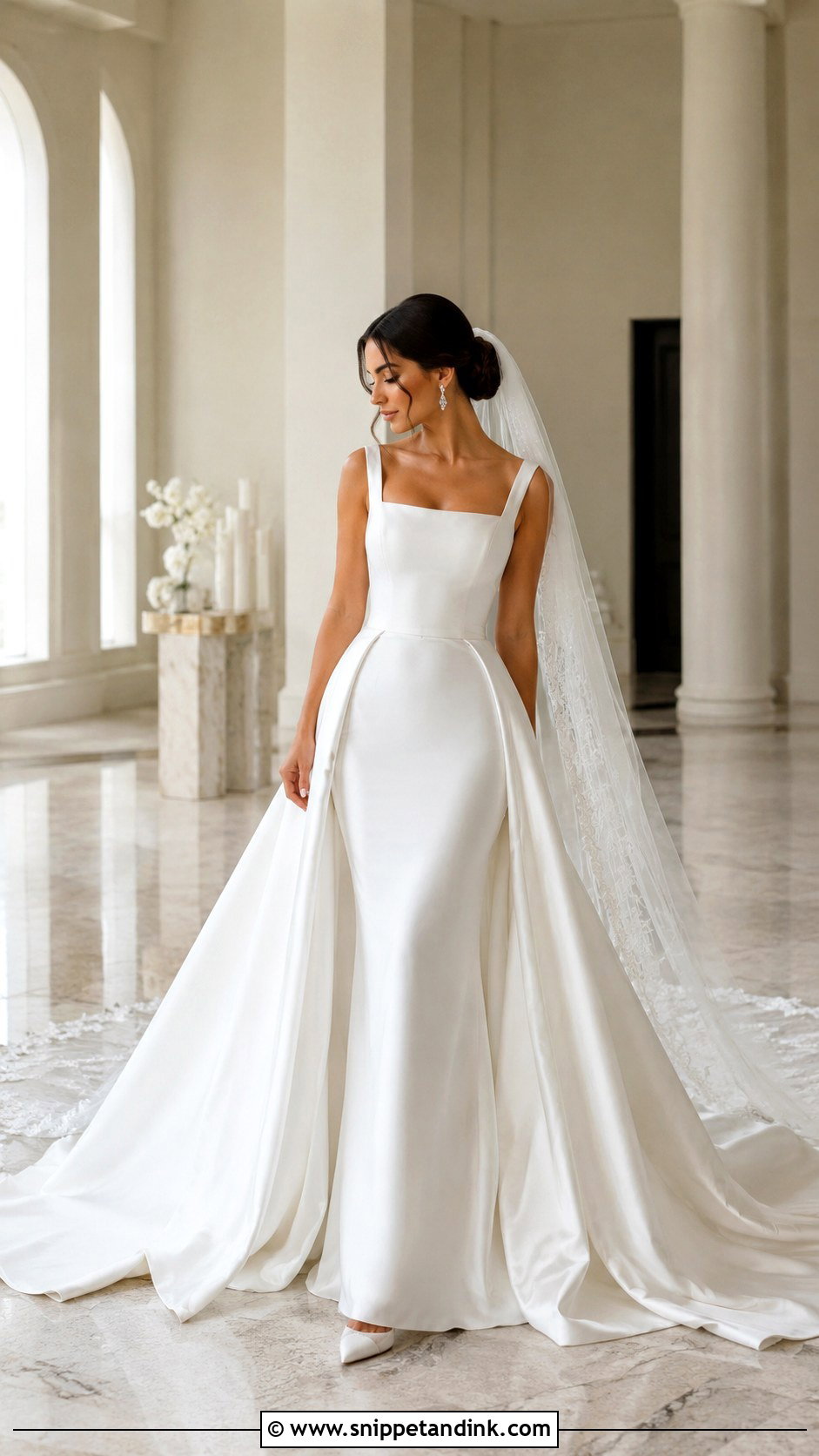
A detachable overskirt gives you ball gown volume for the ceremony without wearing it all day. Layer satin, organza or tulle over a fitted column, sheath or mermaid gown, and wear it with a cathedral veil, pointed heels and simple earrings. Later, the outer layer comes off and you’re in a slimmer dress for dancing. Choose a smooth waistband or hidden fastening so the base gown looks complete without it, and check that the two train lengths sit well together. Rehearse fastening and removing it, and give someone a garment bag for it.
18. Long White Wedding Dress With Bow
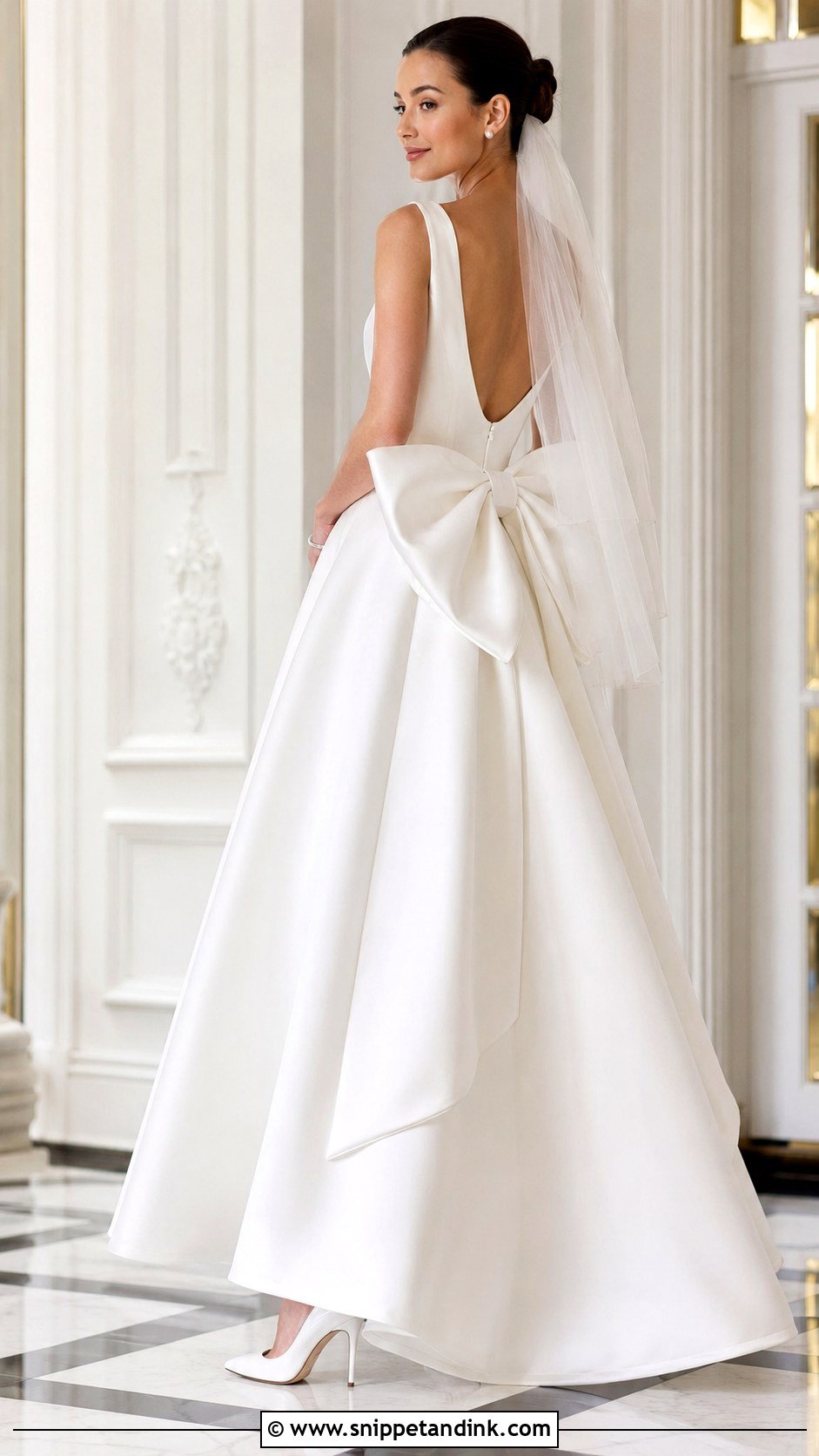
Bows are back, and they give a classic white gown a clear focal point. A structured back bow on a satin ball gown is dramatic; a smaller bow at the waist of a simple A-line is softer. Pearl earrings, classic pumps and a plain veil balance it. If the bow sits at the back, set the veil above it or have it end before it, so the two don’t collide. Skip an oversized bouquet. Bows should be interfaced or stiffened, otherwise they wilt by evening, so check at the fitting that yours lies evenly and doesn’t twist or pull the fabric.
19. Long White Beaded Wedding Dress
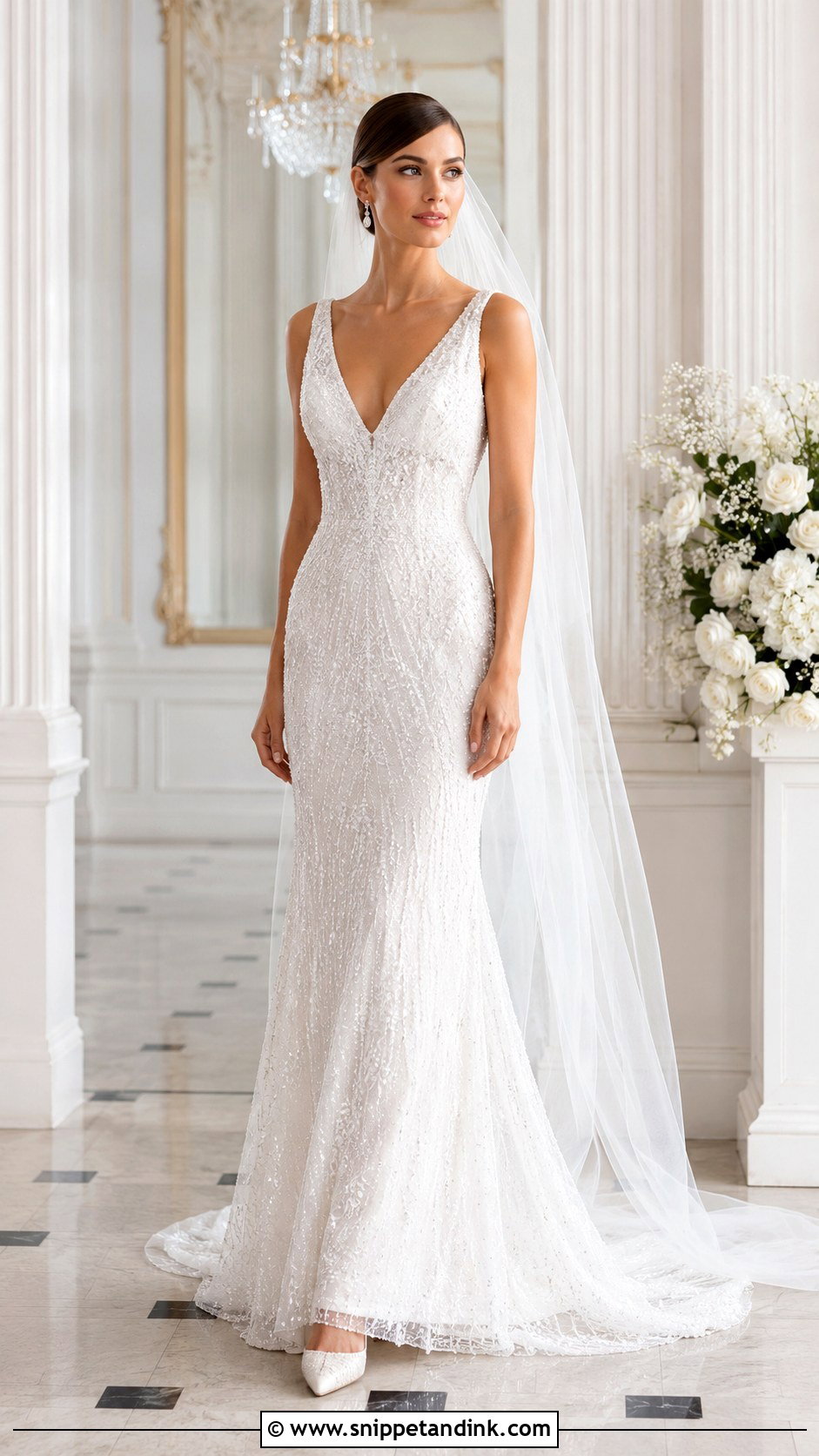
Beading catches the light and turns a white dress into a proper evening gown. All-over beadwork sparkles hardest; beading concentrated on the bodice keeps the skirt lighter. A column, soft A-line or mermaid all work. Simple heels, understated earrings, a plain veil and smooth hair let the surface detail lead. I ask brides to wear the dress for several minutes at appointments, because beaded gowns are heavier than they look. Check that the lining covers the beading’s backs, the armholes don’t scratch, and that the bustle has enough attachment points to hold an embellished train.

20. Long White Tea-Length Overlay Wedding Dress
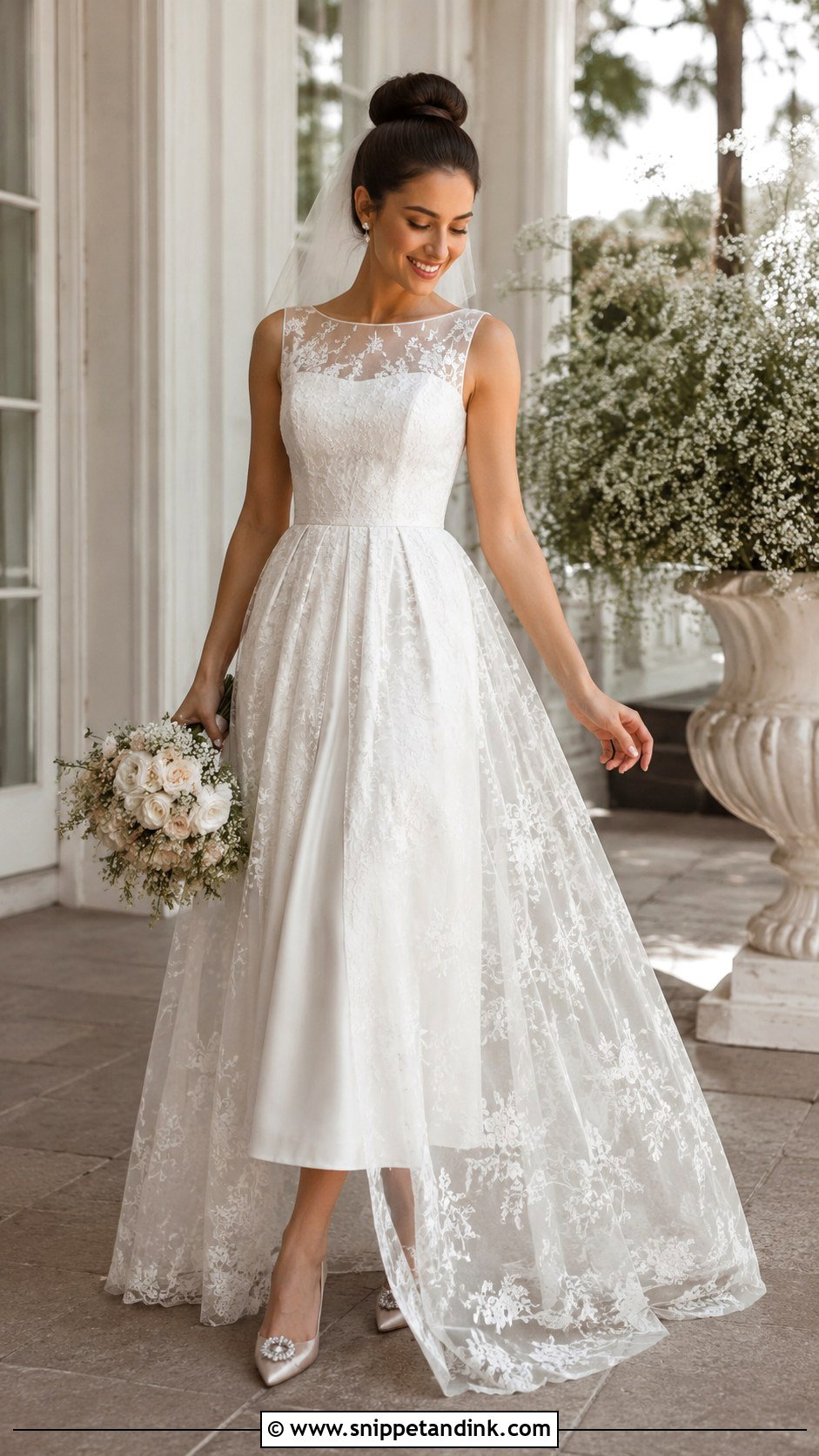
Here you get vintage proportions and a full-length entrance at once: a tea-length underlayer with a sheer overlay of lace, organza or tulle running to the floor. The shorter lining shows your ankles, so the shoes are part of the look; pointed pumps or embellished block heels both work. Pearl earrings, a short veil and a neat bun keep it balanced, and a fitted bodice stops the layered skirt from swamping you. It suits smaller venues and daytime weddings. Walk in it before committing, since a sheer overlay can catch on the shorter hem’s edge and flip up as you move.
Getting Into the Dress Takes Longer Than You Think
On the morning, the gown is usually the last thing on and the first thing that runs late. Corset lacing, a long row of covered buttons or a detachable piece can each take twenty minutes with nervous hands. Allow a proper window in the timeline and have one person in charge who has practiced at the final fitting.
- Hair and makeup done, wearing a button-front shirt you can slip off.
- Underwear, shapewear and any adhesive cups on.
- Step into the gown from the floor rather than over the head, with a thin scarf over your face if it has to go up.
- Closures done from the bottom up; a crochet hook makes loop buttons much faster.
- Shoes on before the bustle or overskirt is checked, so the length is judged at the right height.
- Jewelry, then veil, last.
Keep a small kit nearby with safety pins, a needle and white thread, and fashion tape. Most last-minute problems are a popped hook or a strap that won’t stay put, and both take a minute to fix if someone has the right supplies to hand.
Shoes, Hair and Veil Belong in the Fitting Room Too
A wedding dress should fit securely and let you move through the whole celebration. The gowns above range from ball gowns and crepe columns to lace, chiffon and convertible dresses with pieces that come off. Whatever you choose, judge it as an outfit. Shoes set the hem, your hairstyle changes how the neckline reads, and a veil changes the proportions of the train. Bring your underwear and heel height to fittings whenever you can. Pick the dress that feels like you, not the one every magazine is showing, and let careful tailoring do the rest.
You'll Like These Ideas:







Leave a Reply