
Ivory is the color I steer most vintage-loving brides toward, and not for sentimental reasons. Bright white makes old-style lace look flat and new, while ivory has the slight warmth that antique lace, pearls, aged gold and heirloom veils already carry. The outfits below borrow from Victorian romance, Edwardian lace, Art Deco glamour, Old Hollywood satin, 1950s tailoring and the looser shapes of the 1970s. Each one is styled head to toe, because with vintage the shoes, hairpiece and bouquet decide whether a dress looks inspired by a decade or dressed up as it.
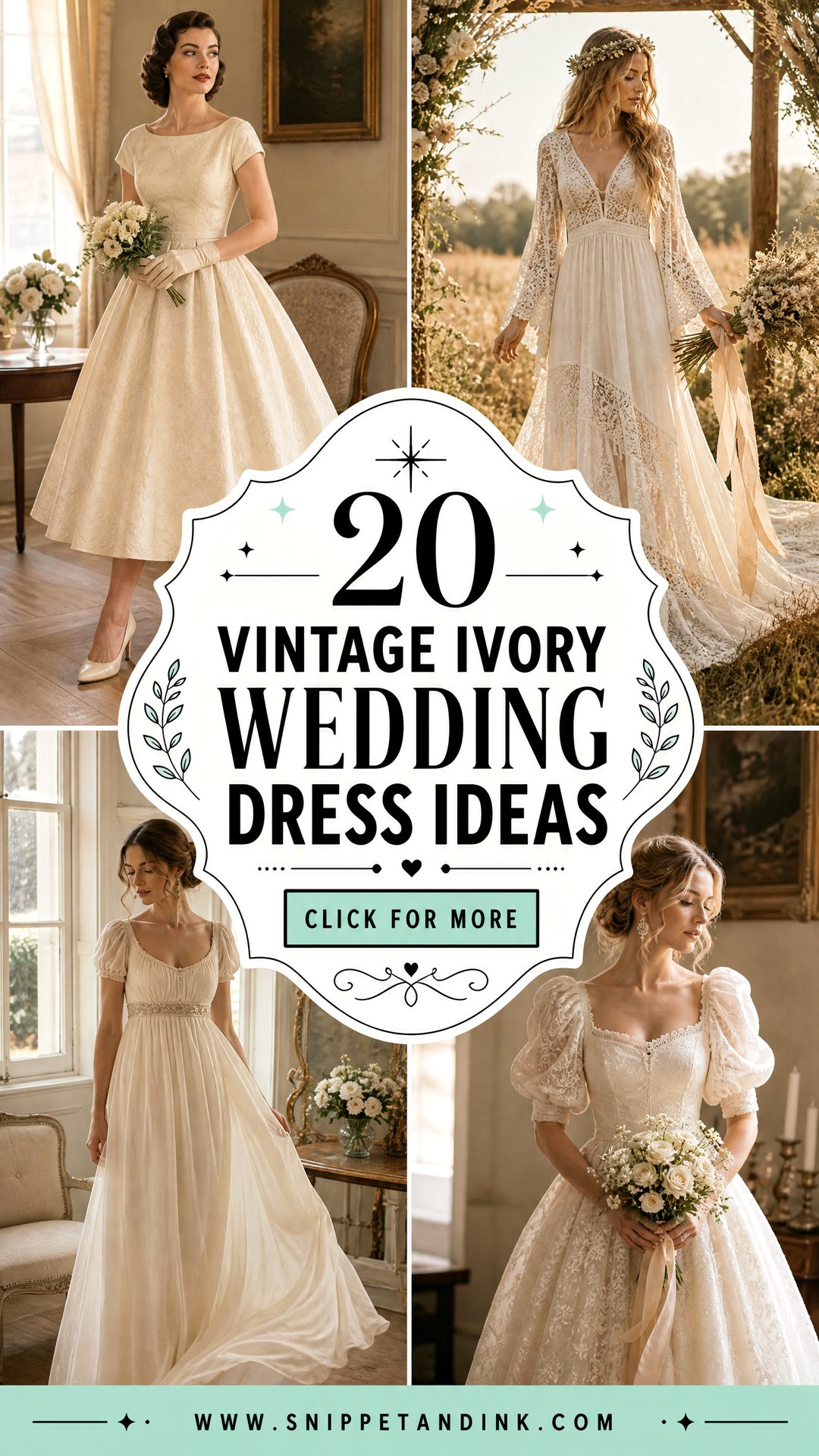
Will Ivory Look Yellow on Your Skin?
It’s the question I hear most, and the honest answer is that it depends on which ivory. Bridal ivory runs from a near-white with a faint warm cast to deep cream with a yellow or pink undertone. Fabric changes it too: satin reflects light and looks paler, while lace and crepe absorb it and read warmer.
- Very fair skin with pink undertones often looks best in a soft, pale ivory. Deep cream can make it look sallow.
- Olive and golden skin tones usually carry warmer ivory and champagne-leaning shades easily.
- Deep skin tones tend to glow against rich ivory and cream, and stark white can look harsh beside them.
- When in doubt, stand by a window in the shop. Shop lighting is warm and flattering, and it hides undertone problems.
Take a photo on your phone without flash as well. If the dress looks dingy on camera next to your face, try the next shade lighter before you rule out ivory altogether.
1. Victorian Ivory Wedding Dress With High Neck
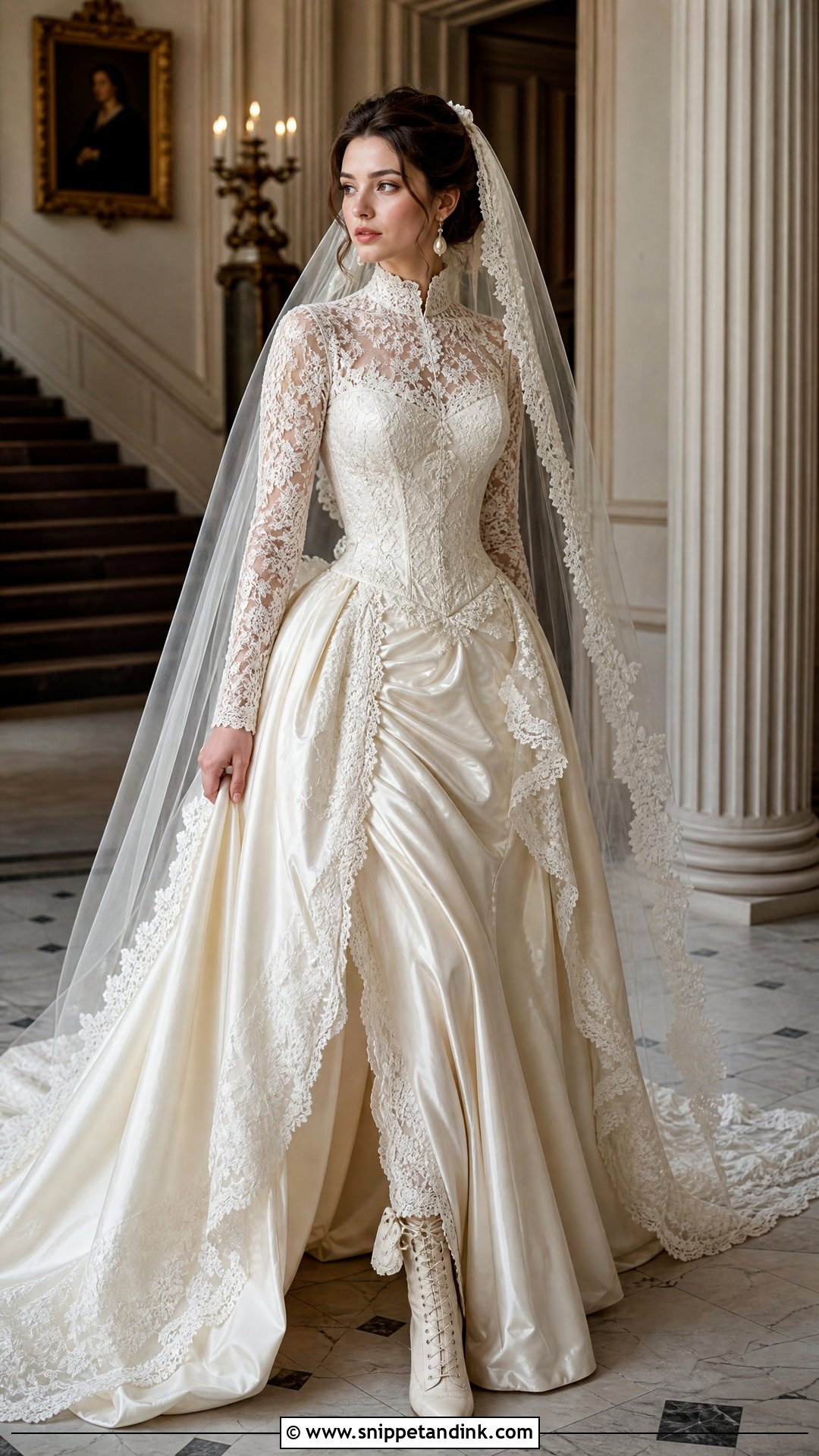
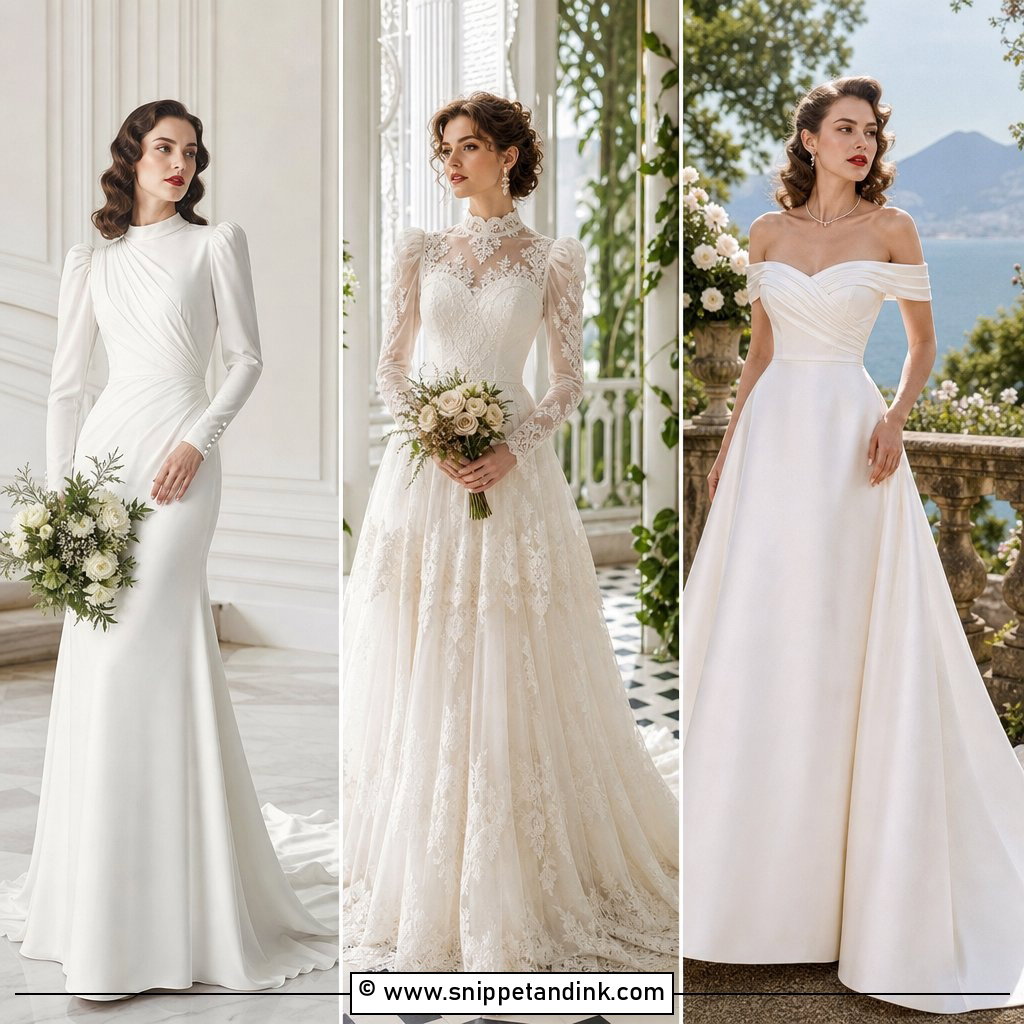
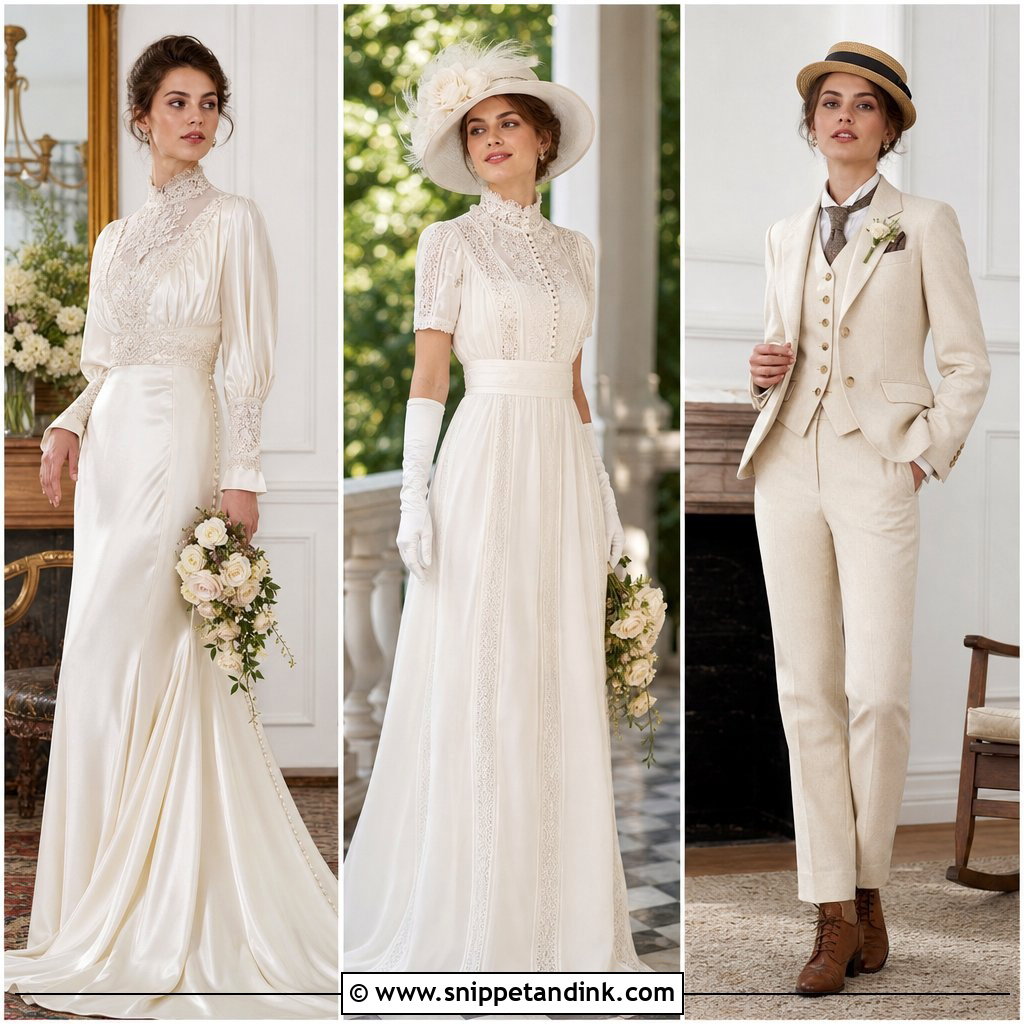
With a high neck and long buttoned sleeves, almost all of the dress is fabric, so the choice of lace matters more than on any other gown here. Matte satin or silk under a fine floral lace gives the Victorian texture without the shine of a modern ballgown. A gently structured waist keeps it from looking like a column of lace. I pair it with ivory lace-up boots on a block heel, a cathedral veil edged in matching lace, pearl drops and a compact bouquet of cream roses with trailing ribbon. A low braided bun clears the collar. Count the buttons before the day, too: twenty covered buttons up the back take a helper several minutes to close. Historic houses suit it.
2. Edwardian Ivory Lace Wedding Dress
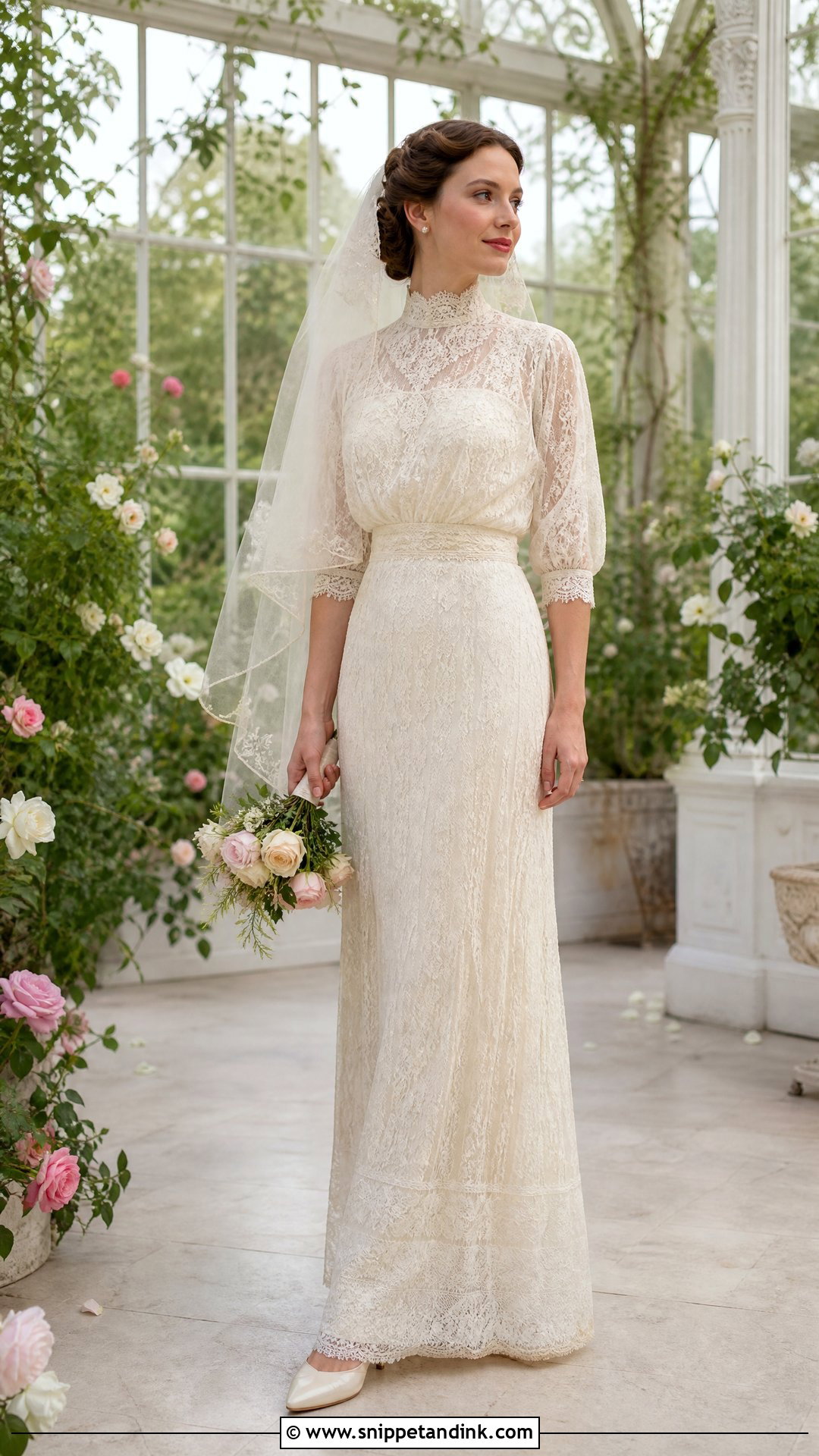
Edwardian dresses sat on a raised waist with a softly bloused bodice, and that blousing is what keeps the lace from looking stiff. Look for a lace yoke, a high collar and three-quarter sleeves over a narrow floor-length skirt. Pointed ivory kitten heels, pearl studs and a small satin clutch keep the finish clean. A fingertip veil secured under a loose chignon suits the narrow line better than a big cathedral veil, and garden roses with sweet peas suit the period. If the lace is busy, take accessories down to almost nothing. Natural light shows the pattern best, so gardens, conservatories and estate grounds are natural homes for it.
3. 1920s Ivory Beaded Wedding Dress
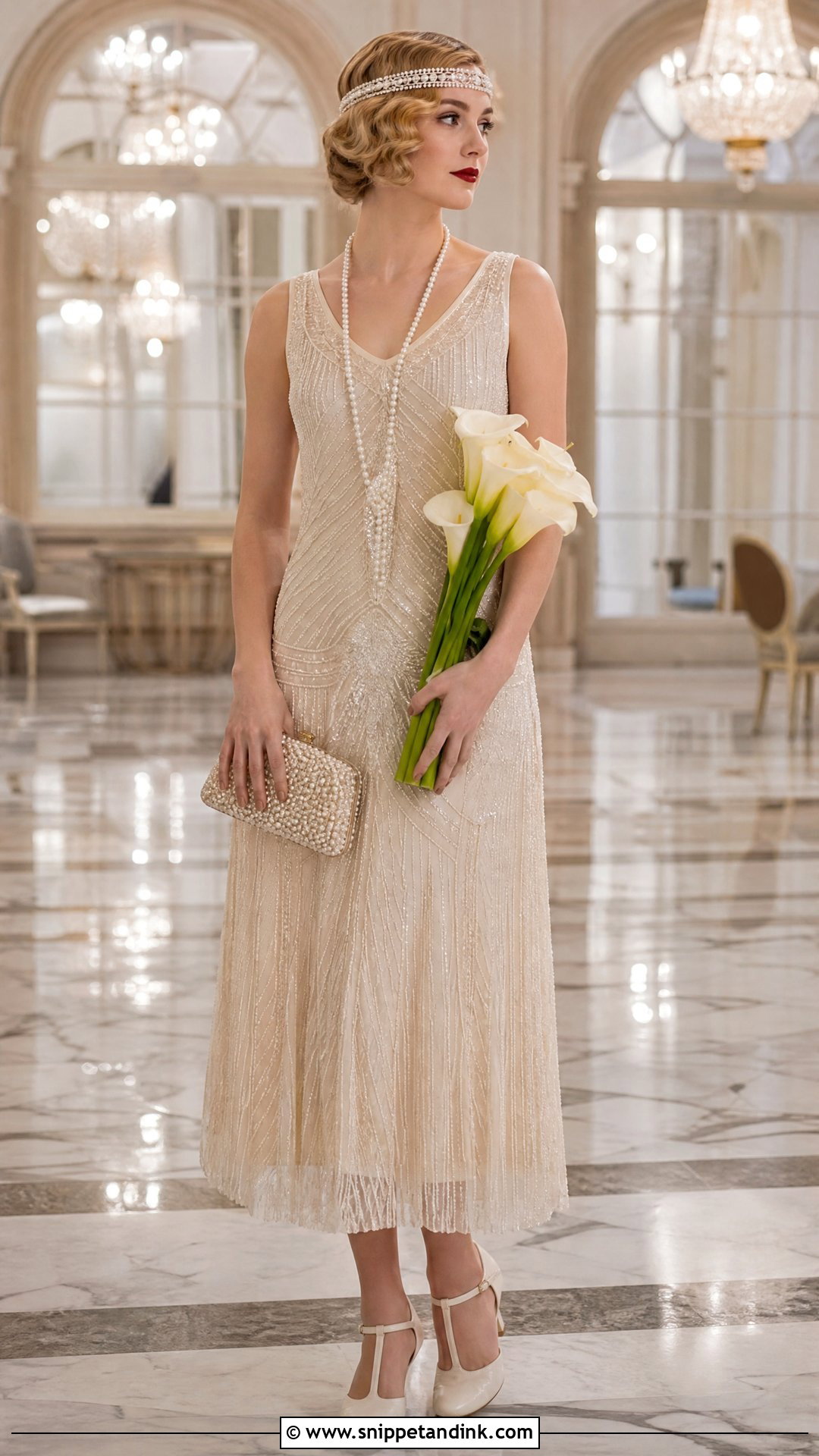
Would you love a dress that sparkles as you walk? A 1920s ivory beaded wedding dress moves with you thanks to geometric embellishment, a relaxed bodice and a straight skirt. I’d choose Art Deco beading in ivory and pearl over dense sequins, which can look costume-bright against ivory fabric. Ankle or floor length both work. Ivory T-strap heels, a small pearl-covered bag and a jeweled headband across soft waves suit it. Long ropes of pearls are true to the period, but a single strand looks more current. White calla lilies balance the detail, and a sheer cape or light veil adds ceremony without covering the beadwork.
4. 1920s Ivory Drop Waist Wedding Dress
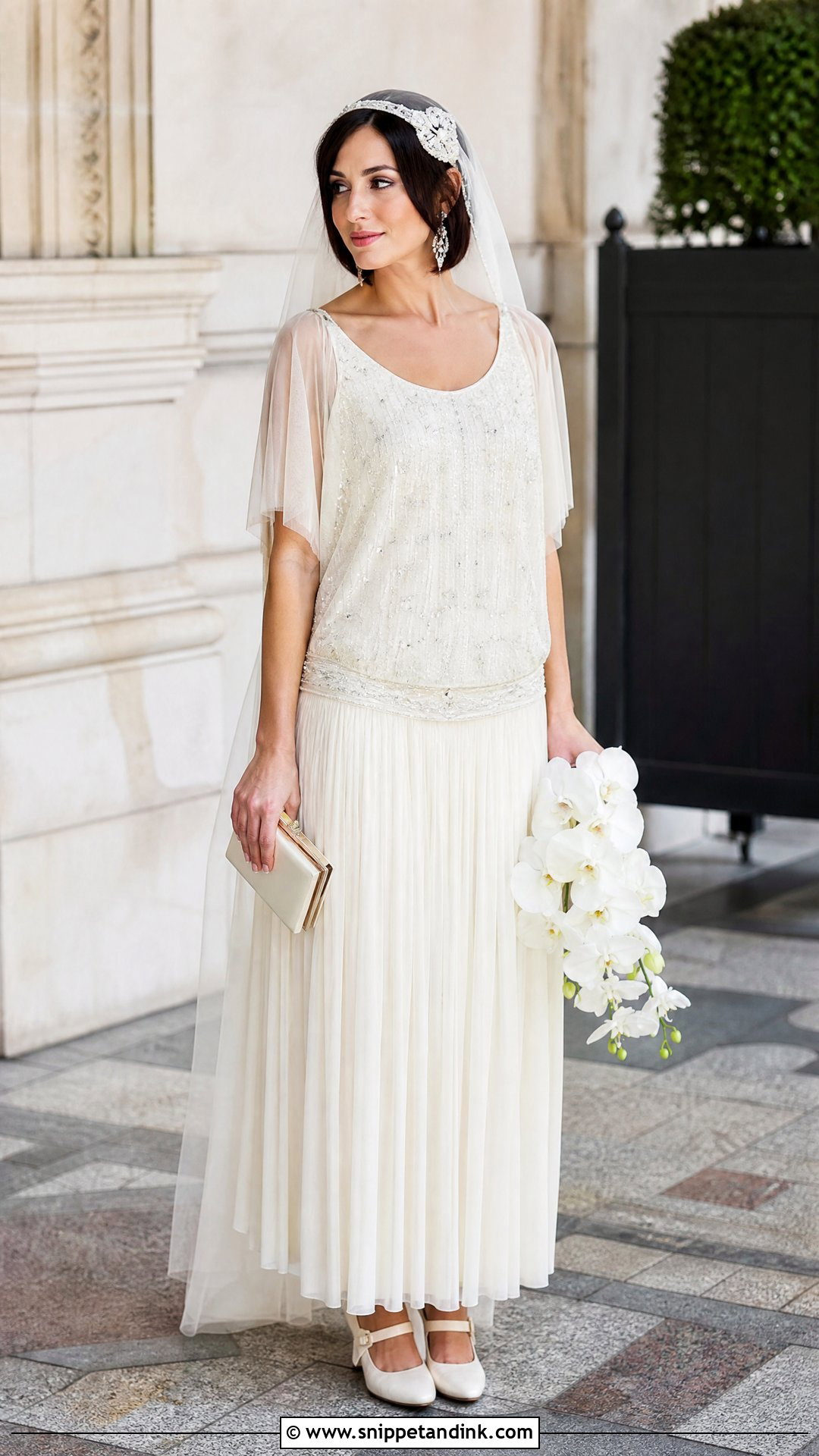
The beauty of a drop waist is comfort: nothing grips at the natural waist, so you can eat and dance freely. The catch is placement. If the seam lands at the widest part of your hips, it adds width, so I mark it slightly above or below that point. Choose a sleeveless or cap-sleeve style with a loose bodice and a softly pleated skirt, with embroidered lace, scattered pearls or a little fringe for movement. Closed-toe Mary Jane heels and a structured ivory clutch go with it. A Juliet cap veil frames the face; short hair suits finger waves, and long hair can be pinned into a smooth faux bob. Small crystal earrings and an elongated orchid bouquet complete it.
5. 1930s Ivory Bias Cut Wedding Dress
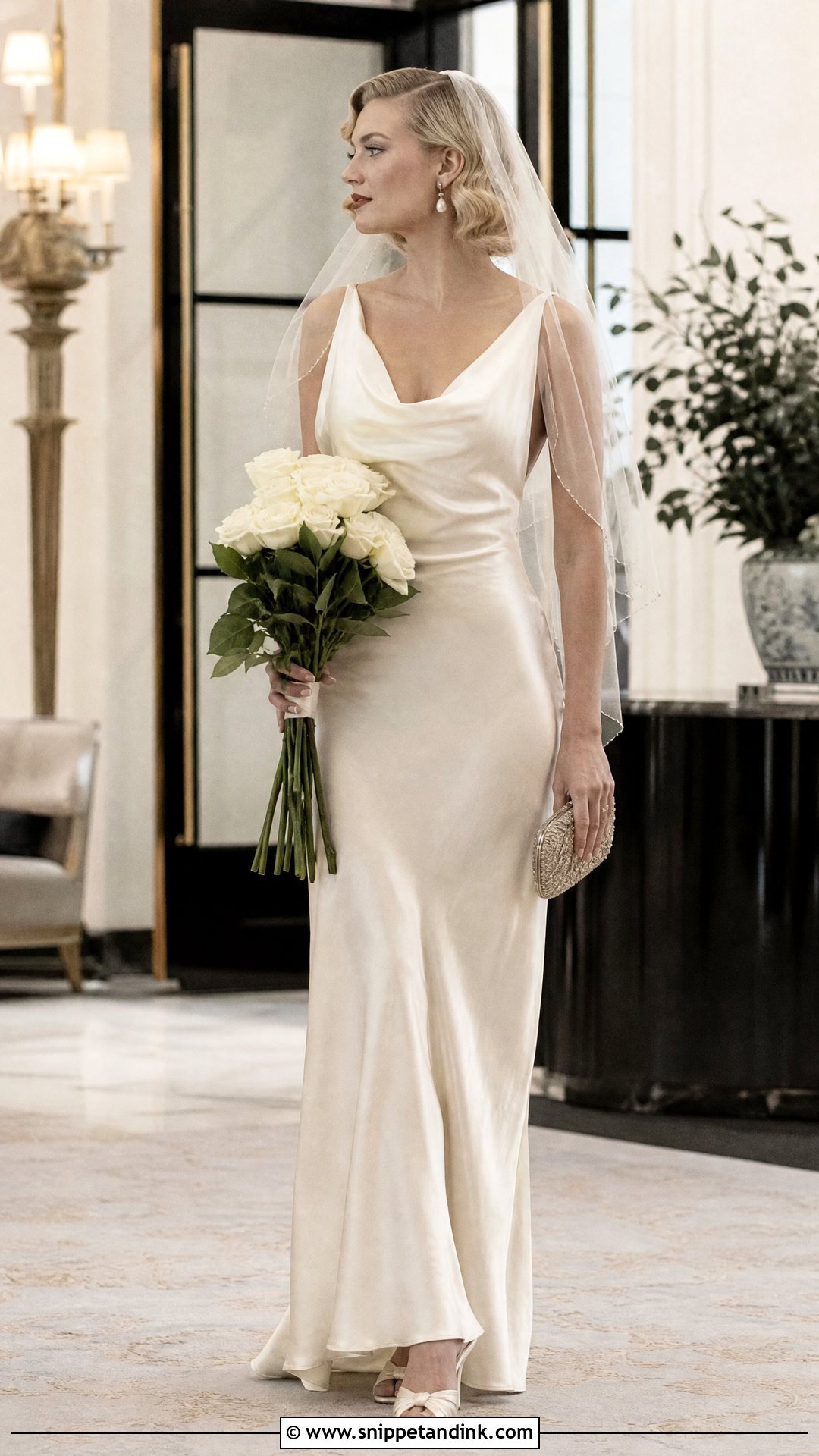
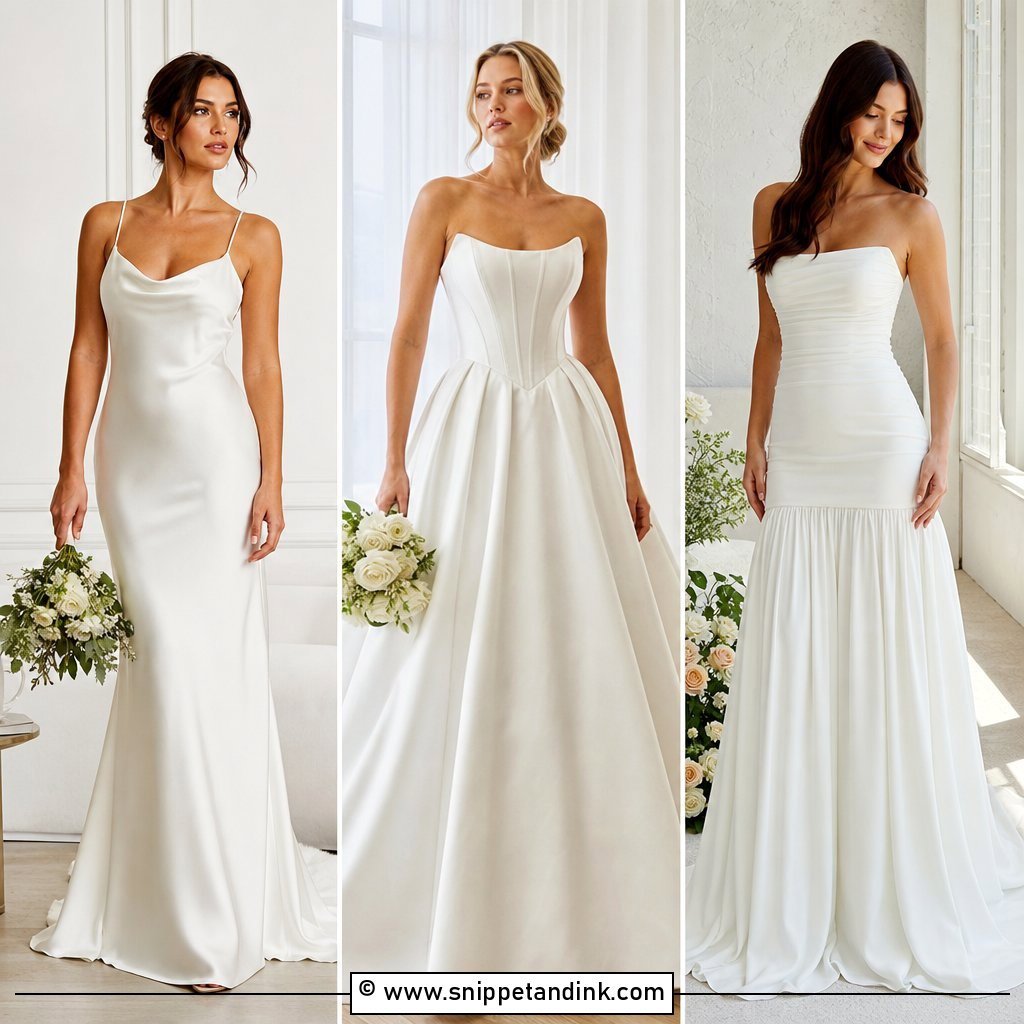
Bias-cut ivory satin moves like water, and it also shows everything underneath. Before I fit one of these, I ask the bride to bring the exact underwear she’ll wear, because a seam line or a strap shows straight through. The cut follows the body gently, so pick the neckline for coverage: a cowl, slim straps or softly gathered sleeves. Peep-toe satin heels and a small beaded clutch in a matching ivory keep the line unbroken. A fingertip veil on a simple comb, side-parted waves and narrow pearl or crystal drops suit it, along with long-stemmed roses that echo the length of the dress.
6. 1940s Ivory Long Sleeve Wedding Dress
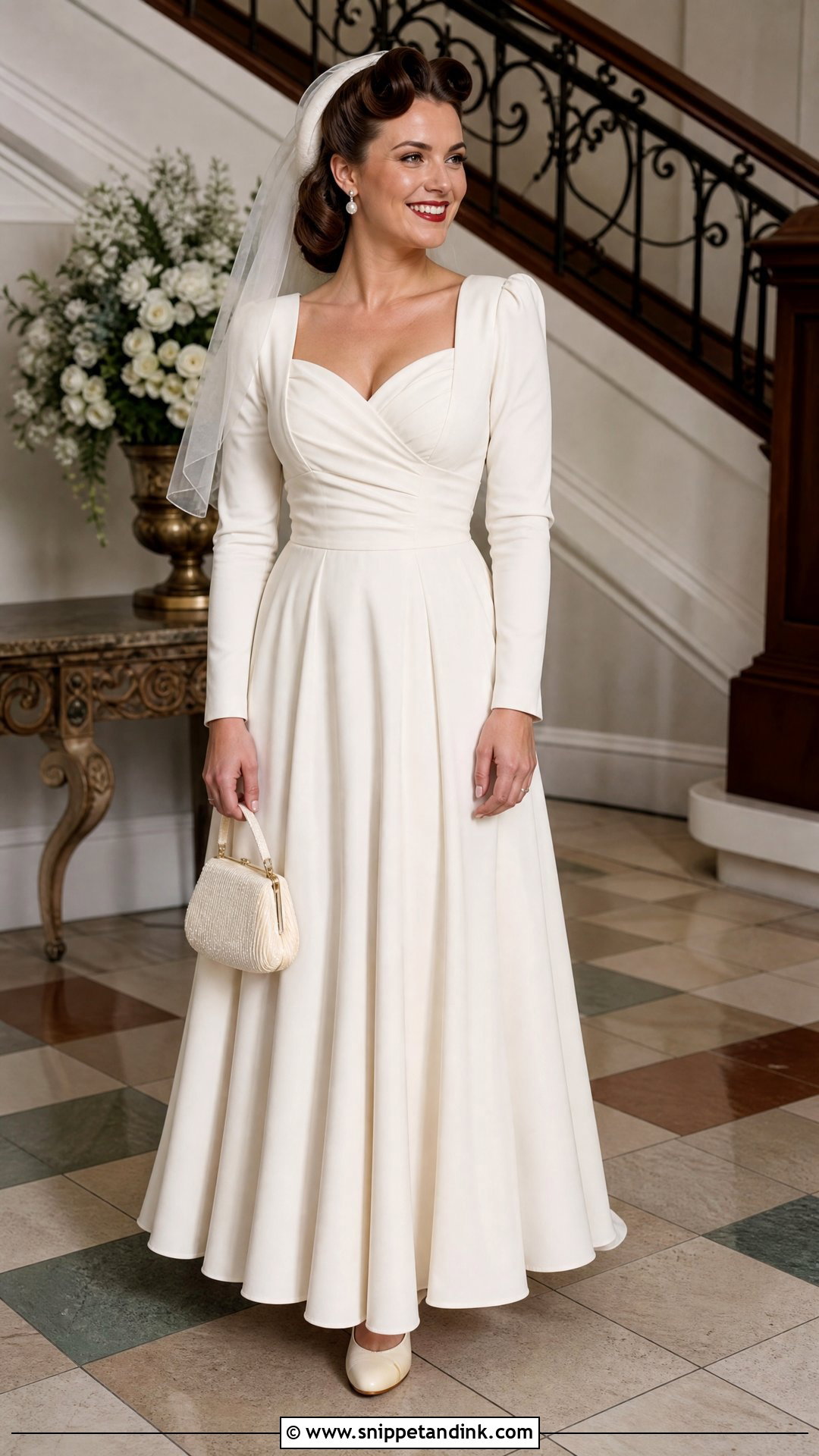
Forties dresses were cut with fabric rationing in mind, which is why they look so tidy: structured shoulders, a defined waist and a modest flared skirt, usually in crepe or satin. A sweetheart neckline edged in lace softens the tailoring, and fitted sleeves give coverage that’s comfortable in cooler months. Round-toe pumps, a small top-handle bag and a shoulder-length veil on a tilted hat or floral comb finish it. Polished rolls or a low waved updo with simple pearl earrings and a neat bouquet of cream roses suit the clean silhouette. It feels right for courthouse ceremonies and traditional indoor venues.
7. 1950s Ivory Tea Length Wedding Dress
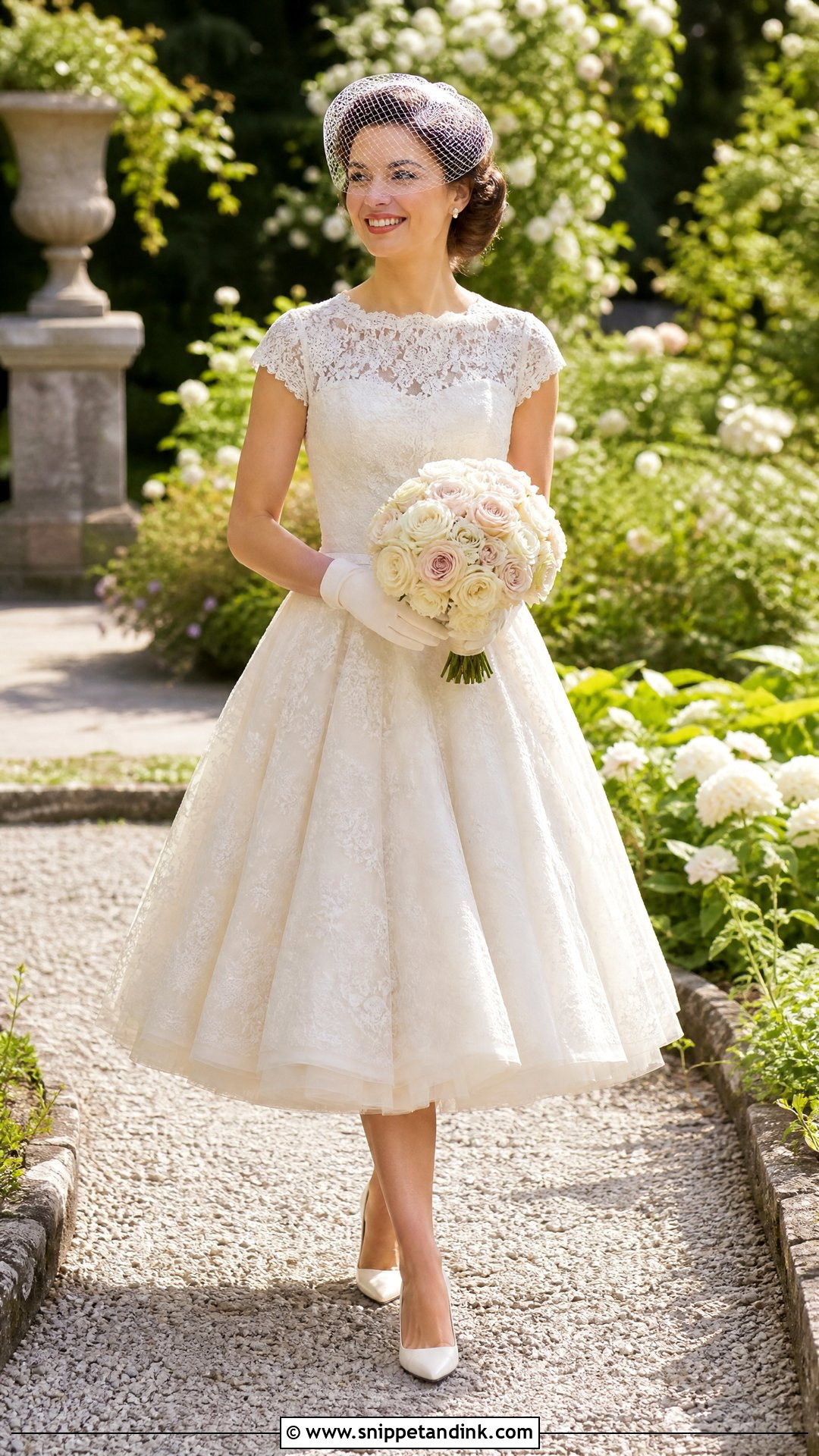
Tea length puts your shoes on show, so I treat them as part of the dress from the first appointment. Choose a fitted bodice with a bateau, sweetheart or scoop neckline and a full calf-length skirt over a lightweight petticoat. Lace leans romantic, while smooth satin gives a cleaner retro appearance. Pointed pumps, slingbacks or embellished flats all work, with short gloves and pearl studs for period detail. A birdcage veil over a softly curled updo and a rounded rose bouquet finish it. The shorter skirt is the easiest dress on this list to dance in, and it suits gardens and smaller receptions.
8. 1950s Ivory Satin Ball Gown
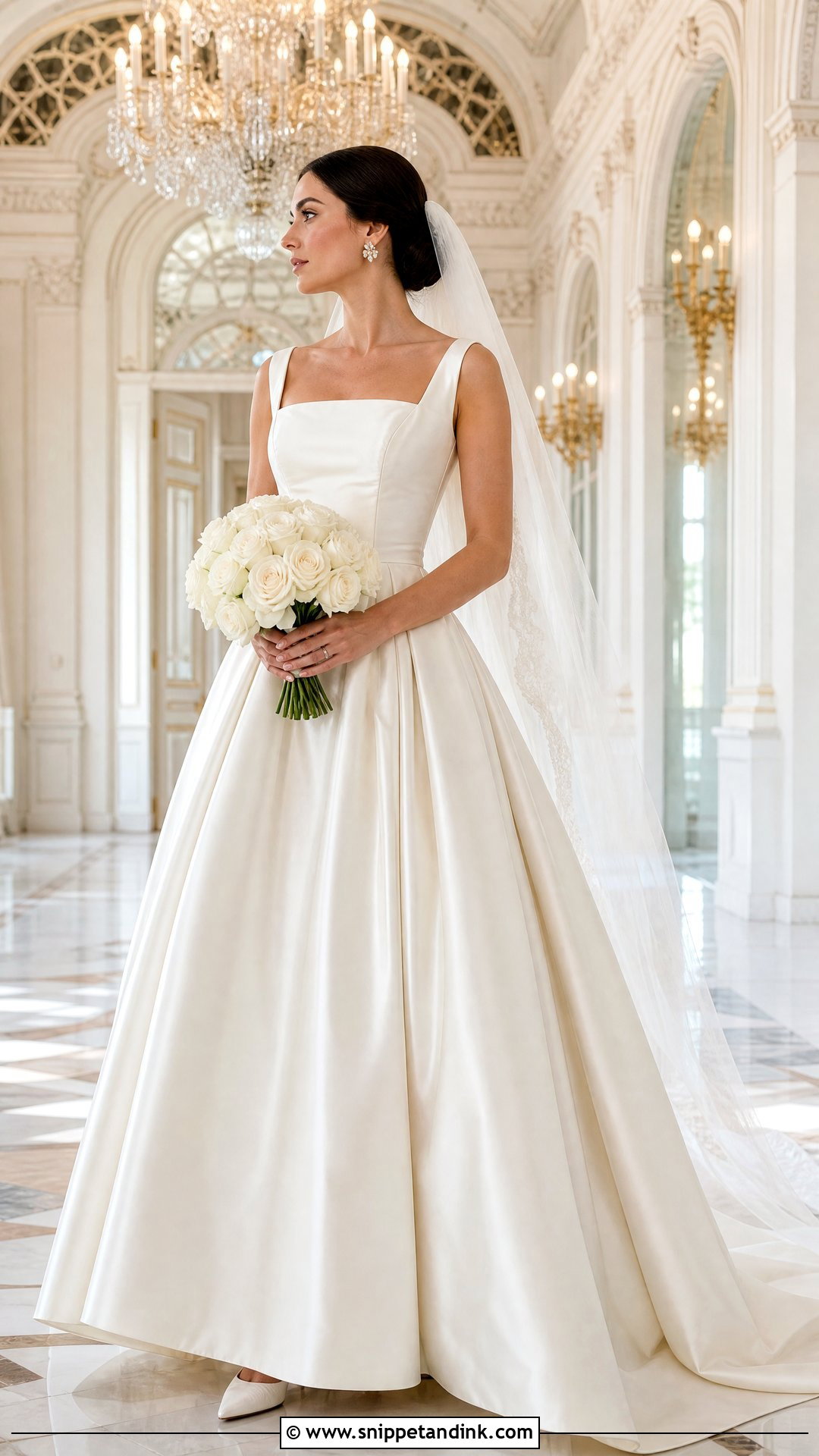
A full ivory satin skirt reflects a lot of light, which is why I keep decoration on these gowns spare. Gentle pleating or covered buttons let the soft sheen do the work. A structured bodice and fitted natural waist give the 1950s couture line. Closed-toe ivory heels and a cathedral veil that runs past the train add drama, while pearl cluster earrings and a slim bracelet are enough jewelry. A polished chignon or smooth side-parted updo and a bouquet of white roses and lilies keep it formal. The skirt has real volume, so plan supportive underlayers and think about how you’ll get through doorways and into the car.
9. 1960s Ivory Mini Wedding Dress
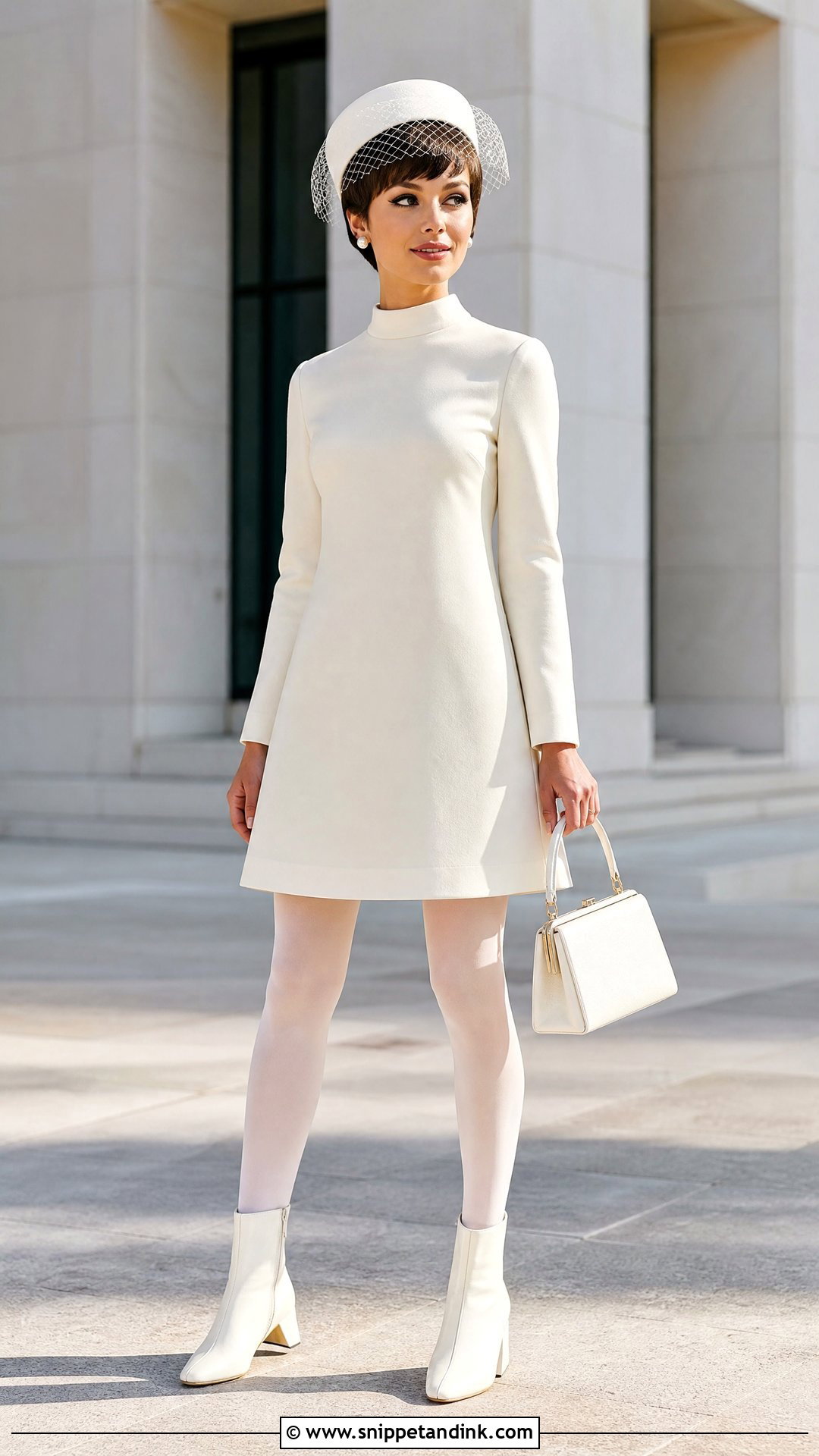
Short dresses need a fabric with body, or they cling and ride up. For a 1960s ivory mini, I’d go with textured jacquard, floral lace or a heavyweight crepe in a structured A-line, with a high bateau neckline and long sleeves. It makes a fun courthouse look or a reception change. Low block heels, sleek pumps or ivory ankle boots suit different venues, and a pillbox hat with a short veil plus a small structured bag nail the decade. Keep earrings to pearl studs or buttons. A smooth bob, low ponytail or lifted updo works, and opaque tights add warmth and coverage for an autumn or winter date.
10. 1970s Ivory Boho Wedding Dress
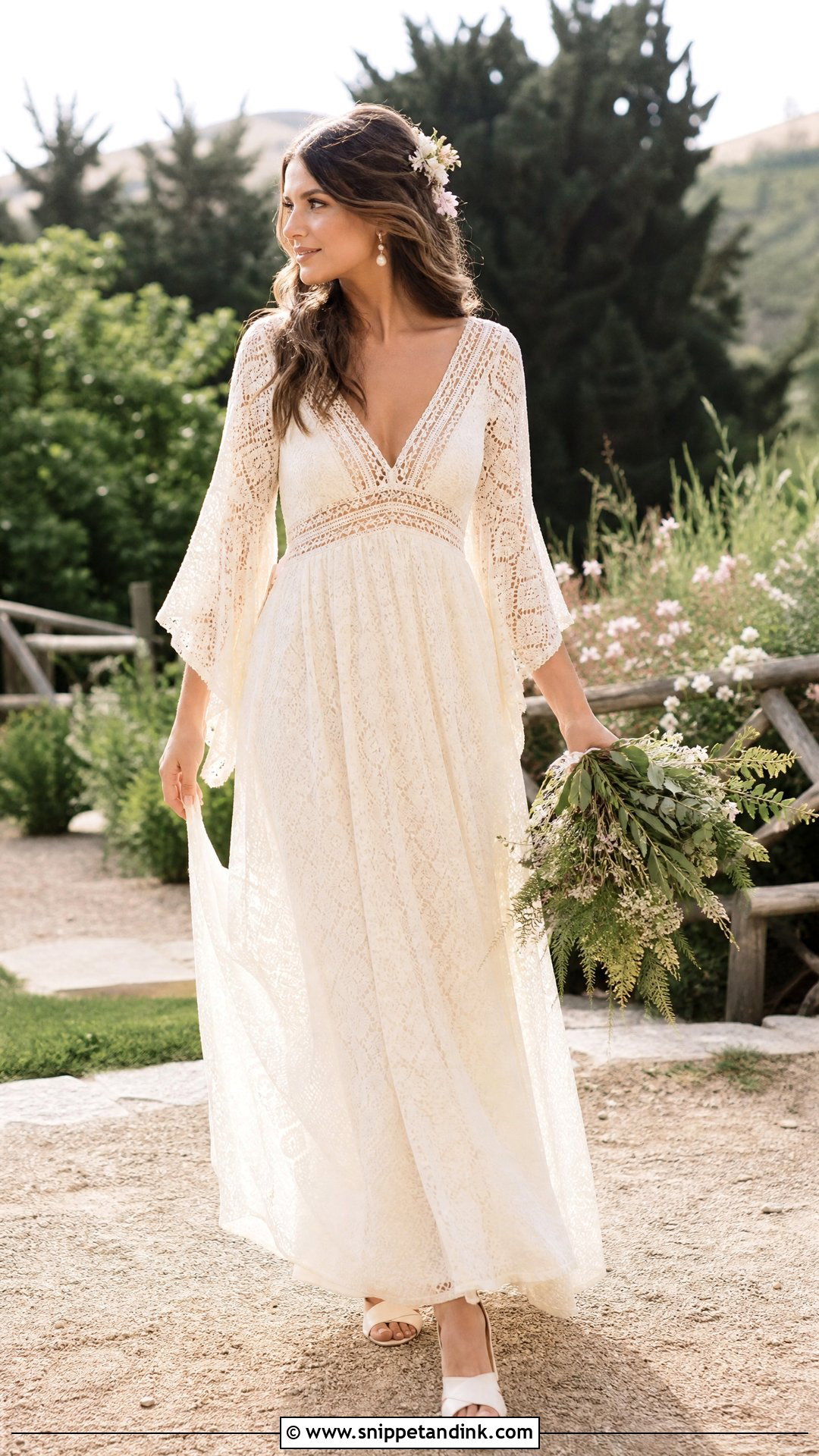
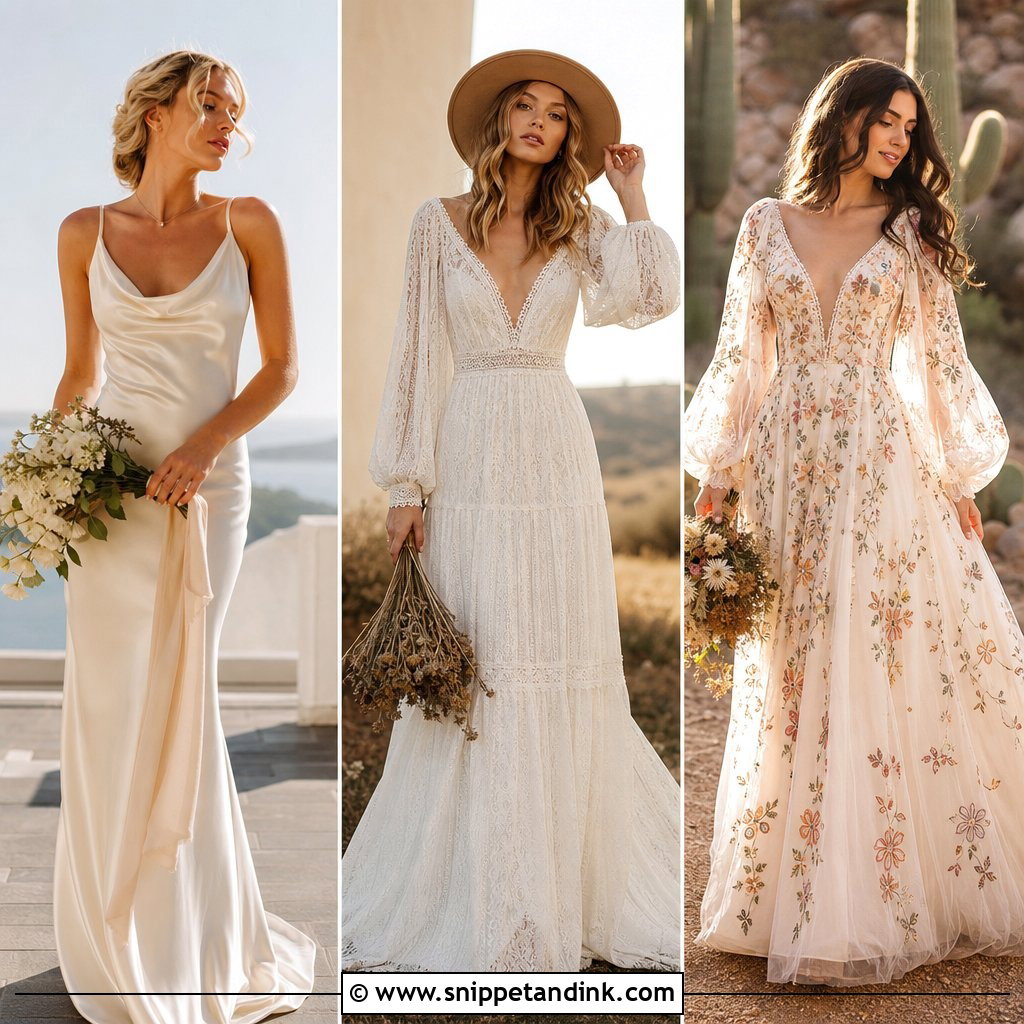
Crochet lace and chiffon breathe, which is the practical reason a 1970s ivory boho wedding dress suits an outdoor ceremony on a warm day. Look for a flowing A-line or empire shape with relaxed bell sleeves that skims rather than grips. Shoes matter on grass: leather sandals, low wedges or block heels won’t sink. Pick one headpiece only, whether a floral comb, wide-brim hat or soft fingertip veil, because two compete. Layered pearl earrings, a loose bouquet of daisies and roses, and natural waves or a relaxed braid keep the mood easy. Gardens, woodland and countryside venues suit it.
11. Ivory Empire Waist Wedding Dress
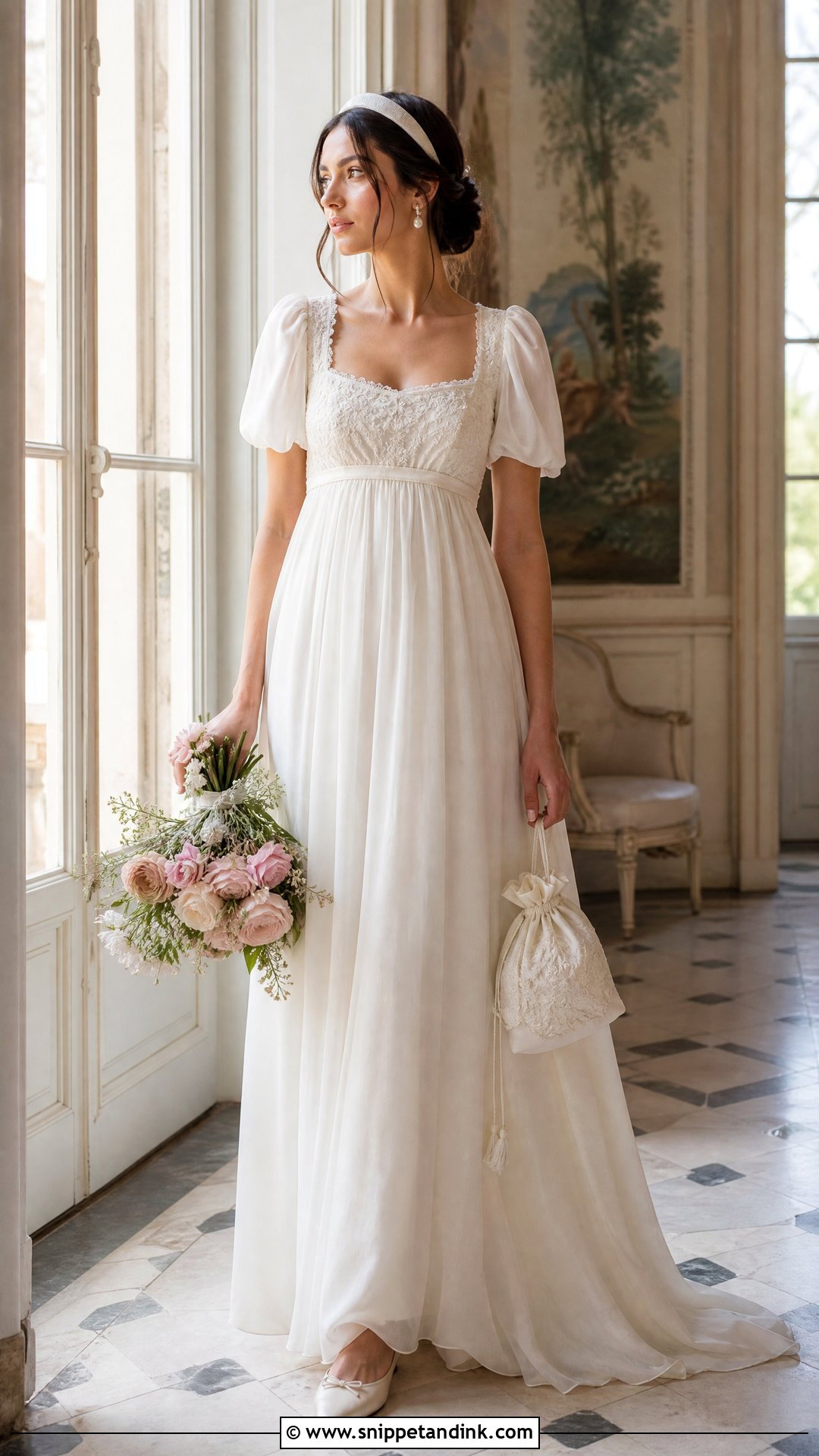
Placing the seam just under the bust gives an empire waist its long line, and it’s the most forgiving waist on this list for brides who don’t want anything fitted through the middle. A chiffon or silk skirt under a lace bodice with softly gathered sleeves feels vintage, and a square or scooped neckline adds a Regency note. Low satin slippers, pearl earrings and an embroidered drawstring bag suit it, with a ribbon headband or floral comb over loose curls. Add a flowing fingertip veil if you want extra softness, and carry hand-tied garden roses with trailing ribbon. One fitting note: the under-bust seam must sit snugly, or the whole skirt drops forward.
12. Ivory Puff Sleeve Wedding Dress
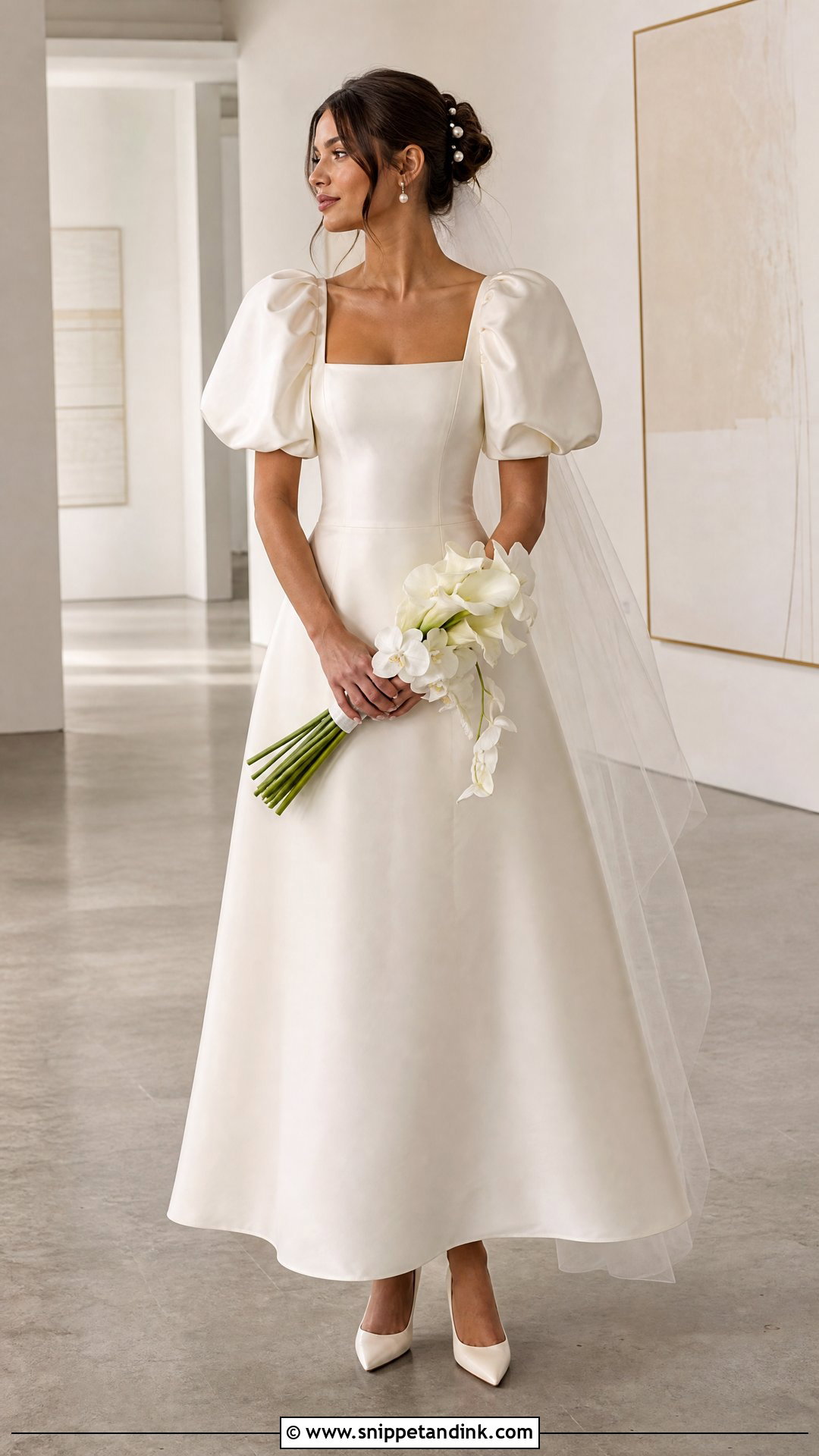
Puff sleeves need support inside, usually a layer of stiff net, or they collapse after an hour of hugging. Choose rounded sleeves that narrow at the wrist or stop above the elbow, depending on the season, and balance them with a fitted bodice and a clean A-line or column skirt. Matte satin, silk faille and dotted tulle all hold the shape. Pointed ivory pumps and a compact satin clutch keep the lower half quiet. A low bun, pearl hairpins and small drops leave the shoulders and neckline on view. Pick a plain tulle veil, since heavy lace edging fights the shoulder detail, and carry long-stemmed white flowers.
13. Ivory Square Neck Wedding Dress
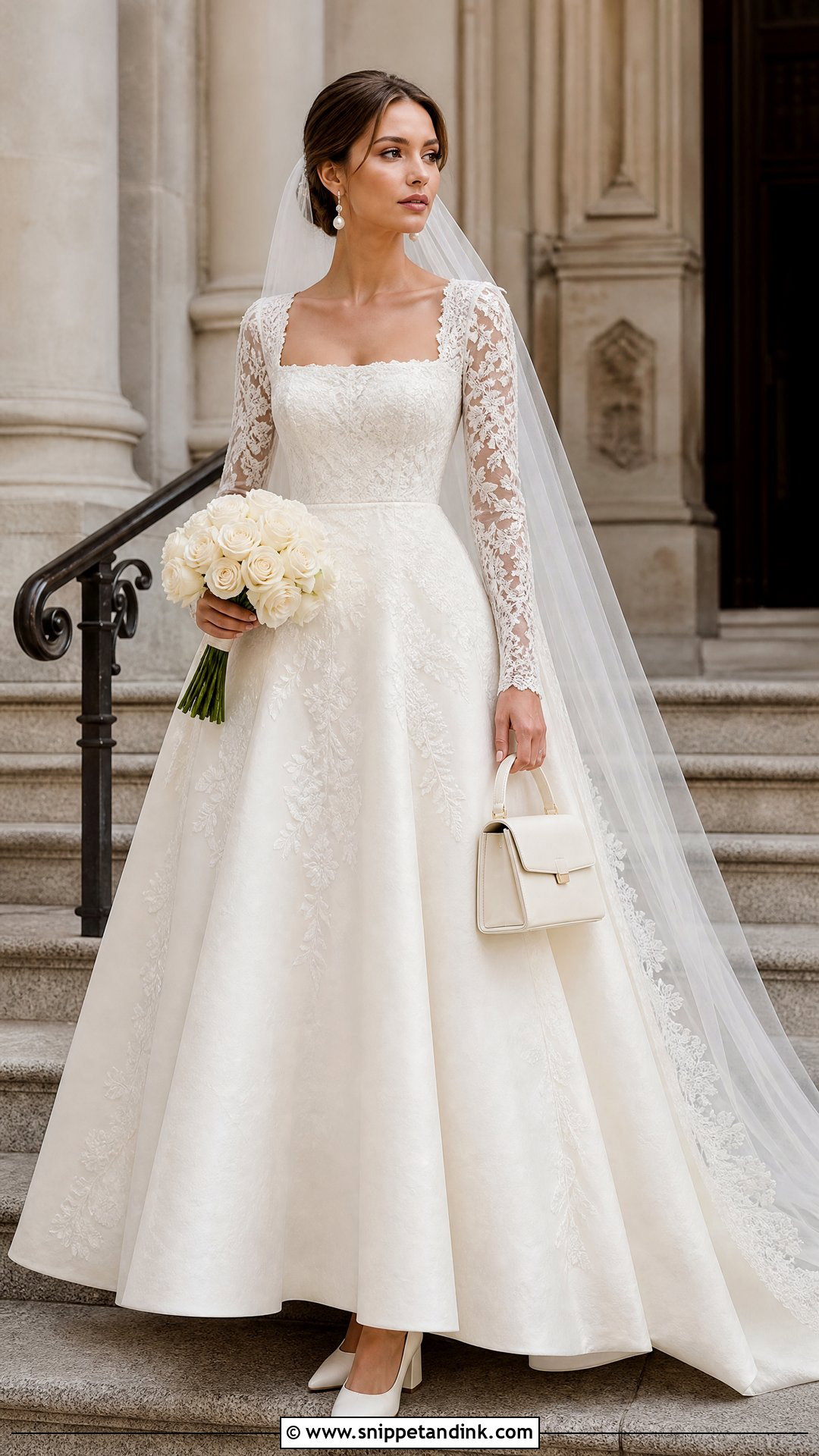
A square neckline is one of the most flattering shapes for the collarbone, but its corners have to sit flat, and on a fuller bust they often need a little boning to stop them flipping out. Choose a fitted bodice with wide straps or long sleeves over a full A-line skirt. Floral lace looks antique; smooth satin reads simpler. Pearl drops, ivory block heels and a small structured bag go with it. A chapel veil under a neat bun keeps the neckline in front, or try half-up waves with a vintage comb for something softer. A rounded bouquet of ivory roses suits formal venues and small ceremonies alike.
14. Ivory Off Shoulder Wedding Dress
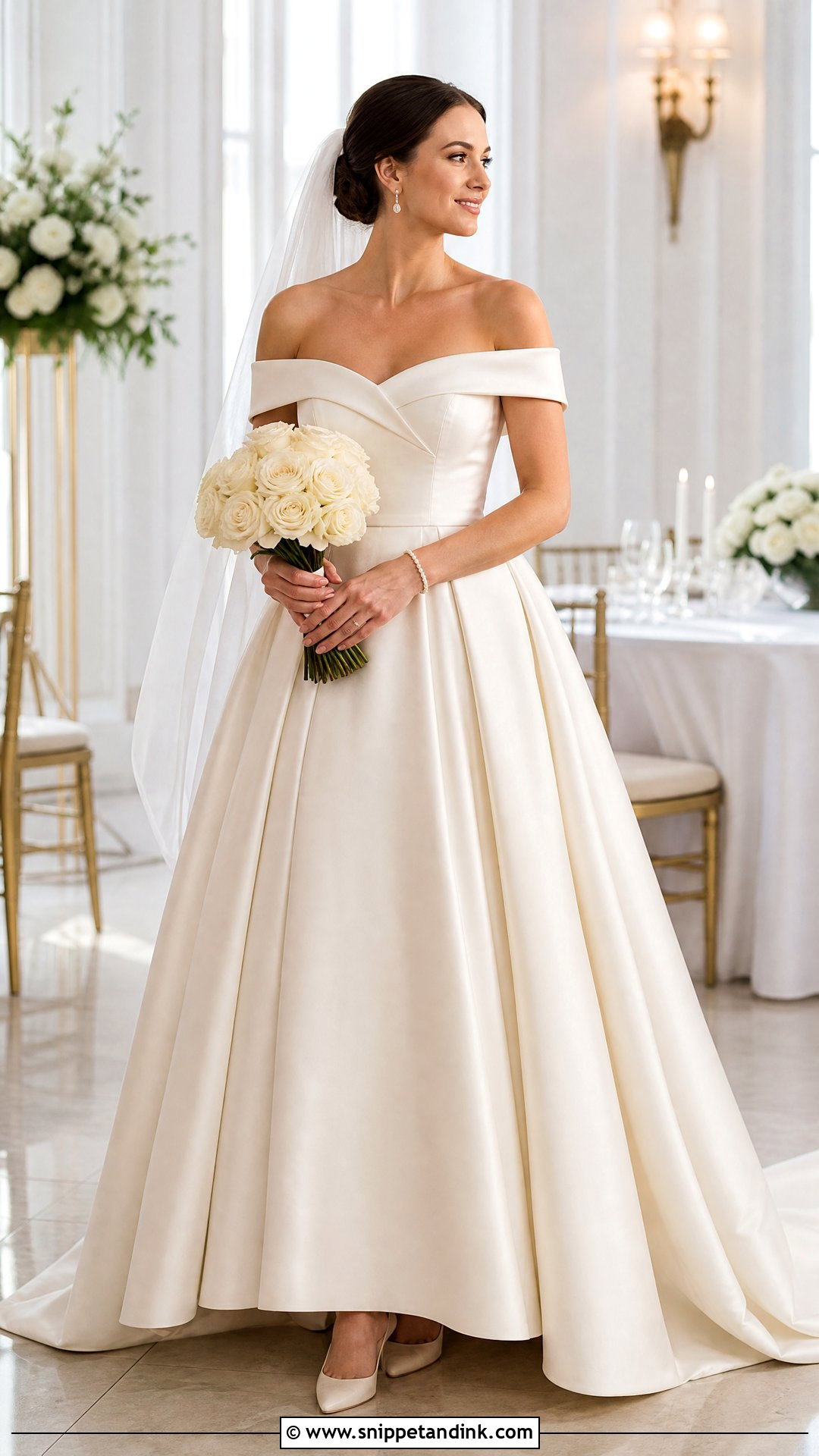
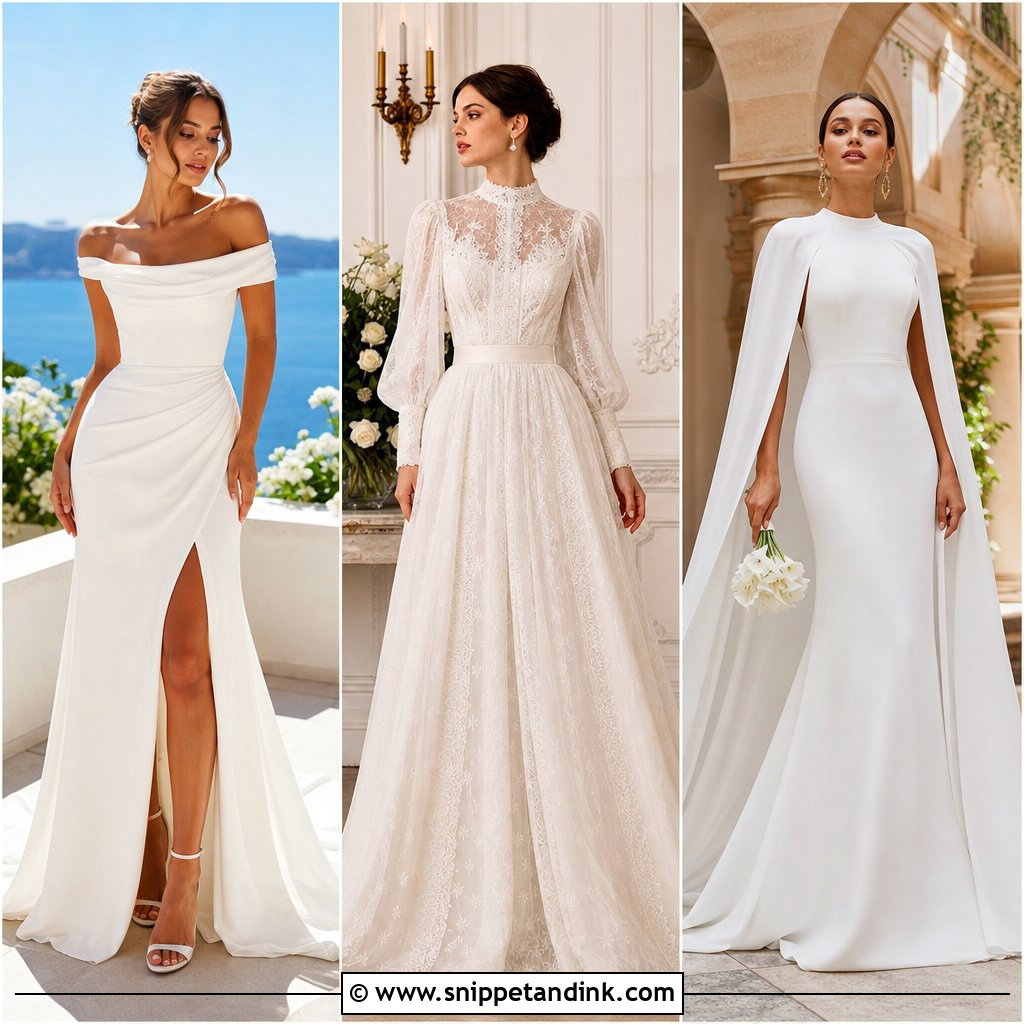
Off-shoulder bodices only work with real internal structure, because the dress hangs from your torso rather than your shoulders. At fittings, I have the bride raise her arms and hug; if the neckline creeps down, the boning or the fit at the ribcage needs work. Choose a fitted lace or satin bodice with a full skirt or gentle fit-and-flare. Folded satin cuffs give a clean 1950s effect; scalloped lace sleeves feel softer. Closed-toe pumps, a pearl bracelet and fine drops finish it, and a short necklace can work if nothing else is competing. A low chignon holds the chapel veil, and cream roses with minimal greenery keep it clean.

15. Ivory Juliet Sleeve Wedding Dress
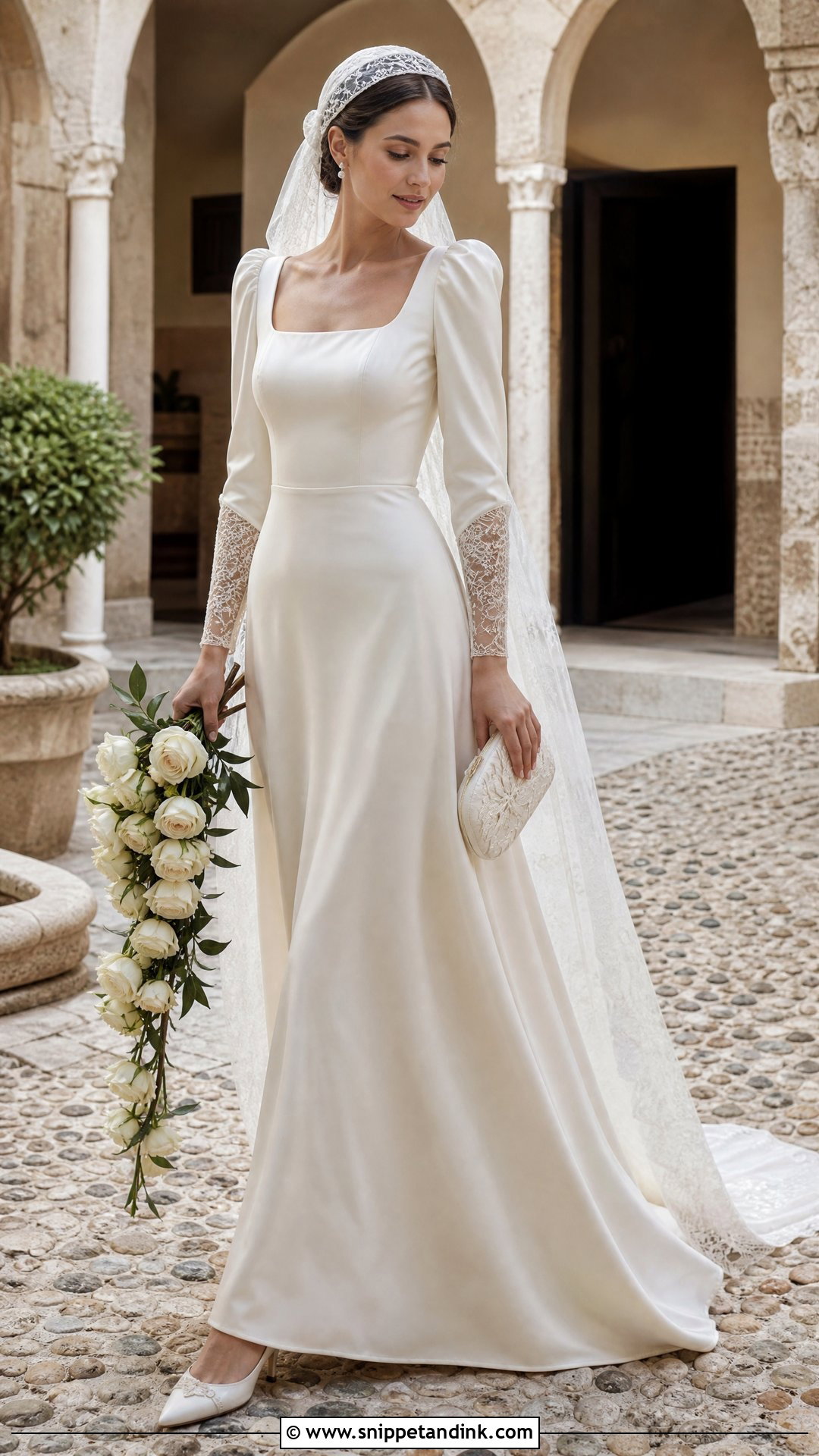
A Juliet sleeve is gathered at the shoulder and then fitted tight down the forearm, so the forearm fit decides whether you can move. Make sure you can bend your elbow fully and push the cuff up slightly to wash your hands. Pair the sleeves with a defined waist, a modest V-neck and a flowing chiffon or satin skirt, with ivory lace panels along the bodice and cuffs. Pointed kitten heels, pearl earrings and a small embroidered clutch suit it. A Juliet cap veil is the natural match, though a chapel veil also works. Soft waves or a low braided bun sit under the headpiece, and an elongated rose bouquet suits an old-world venue.
16. Ivory Cape Sleeve Wedding Dress
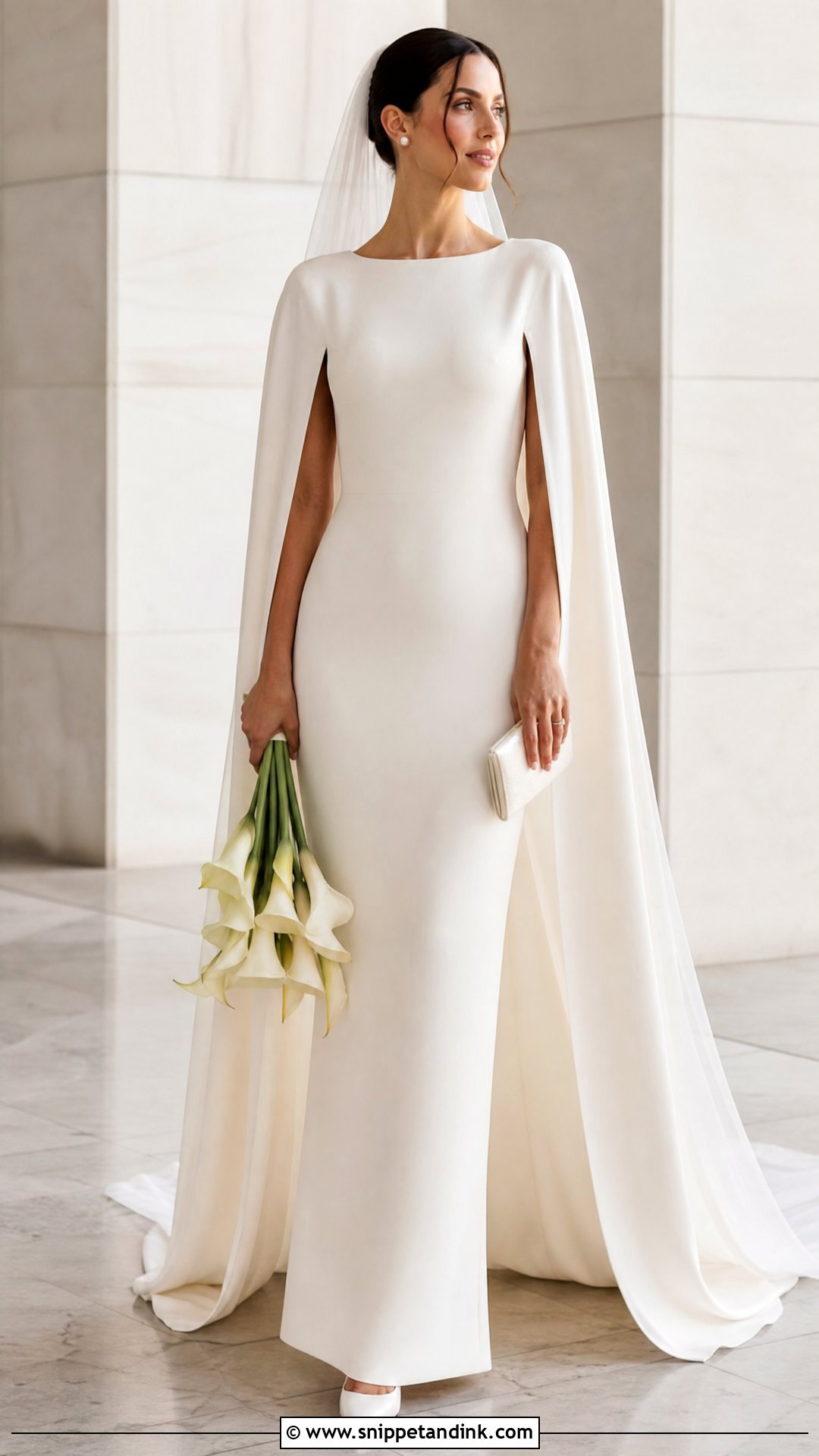
A cape attached at the neckline catches the air as you walk, so the movement is the decoration here. Keep the gown itself streamlined, in crepe or satin, with only a little lace edging. Pointed ivory heels and a slim clutch echo its lines. Because the cape already draws the eye, pearl studs are enough; skip large earrings and the necklace. A smooth low bun with a simple comb veil falling under the cape works best, and long-stemmed calla lilies or a narrow rose arrangement suit the shape. Have the cape weighted slightly at the hem if your ceremony is outdoors, or the wind will wrap it around you.
17. Ivory Crochet Lace Wedding Dress
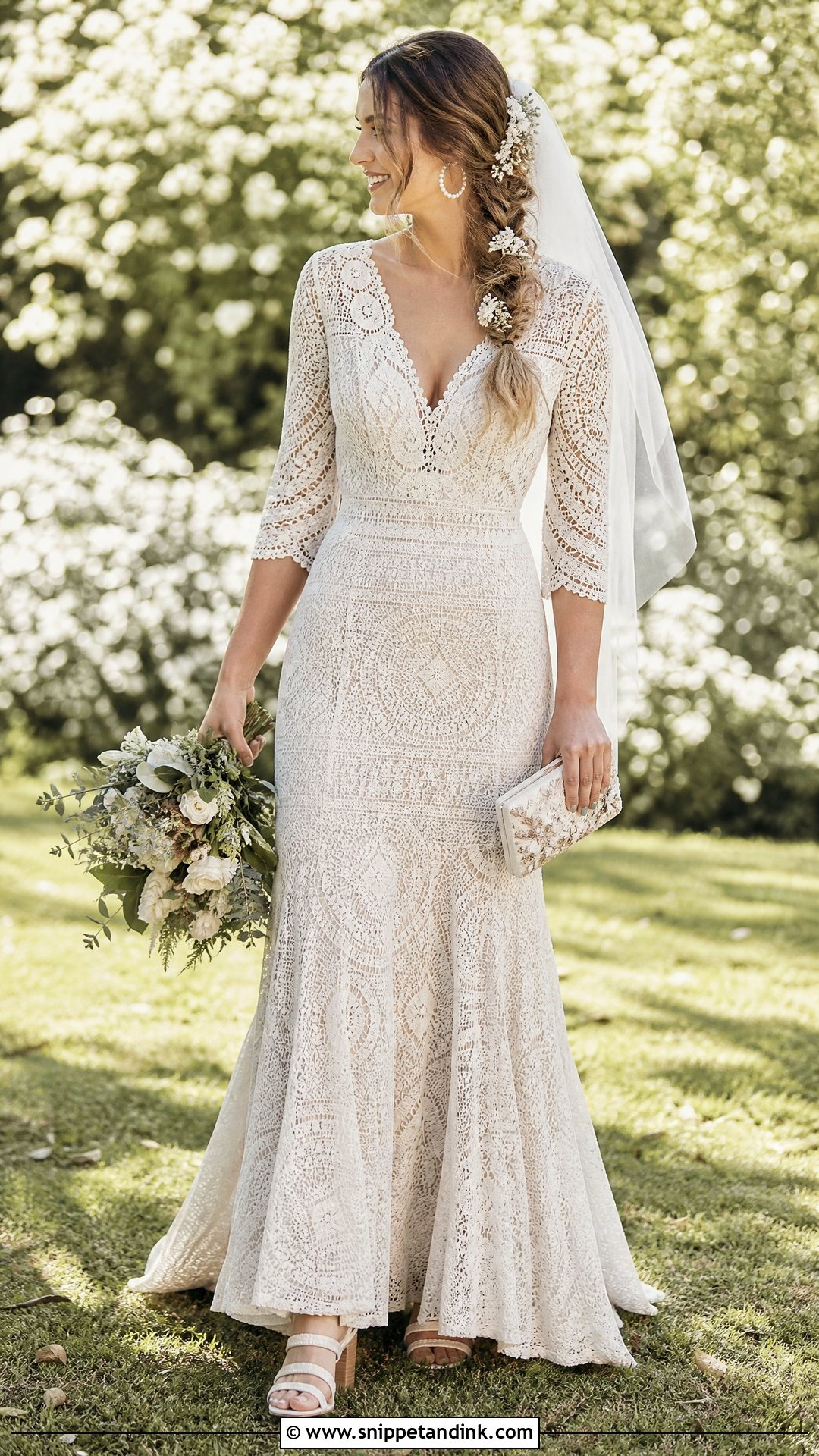
Crochet lace is open and slightly stretchy, so the lining does a lot of the work. Match the lining closely to the ivory of the lace, because a whiter lining shows through the holes as harsh contrast. Look for a lined floor-length design with a fitted waist, a slightly flared skirt and three-quarter or bell sleeves. Leather block-heel sandals, pearl hoops and a small woven or embroidered clutch fit the relaxed feel. A loose braid with tiny flowers keeps it informal; a plain fingertip veil makes it more bridal. Carry white flowers with ferns, and stop at one or two rustic accessories so it still looks polished.
18. Ivory Wedding Dress With Lace Jacket
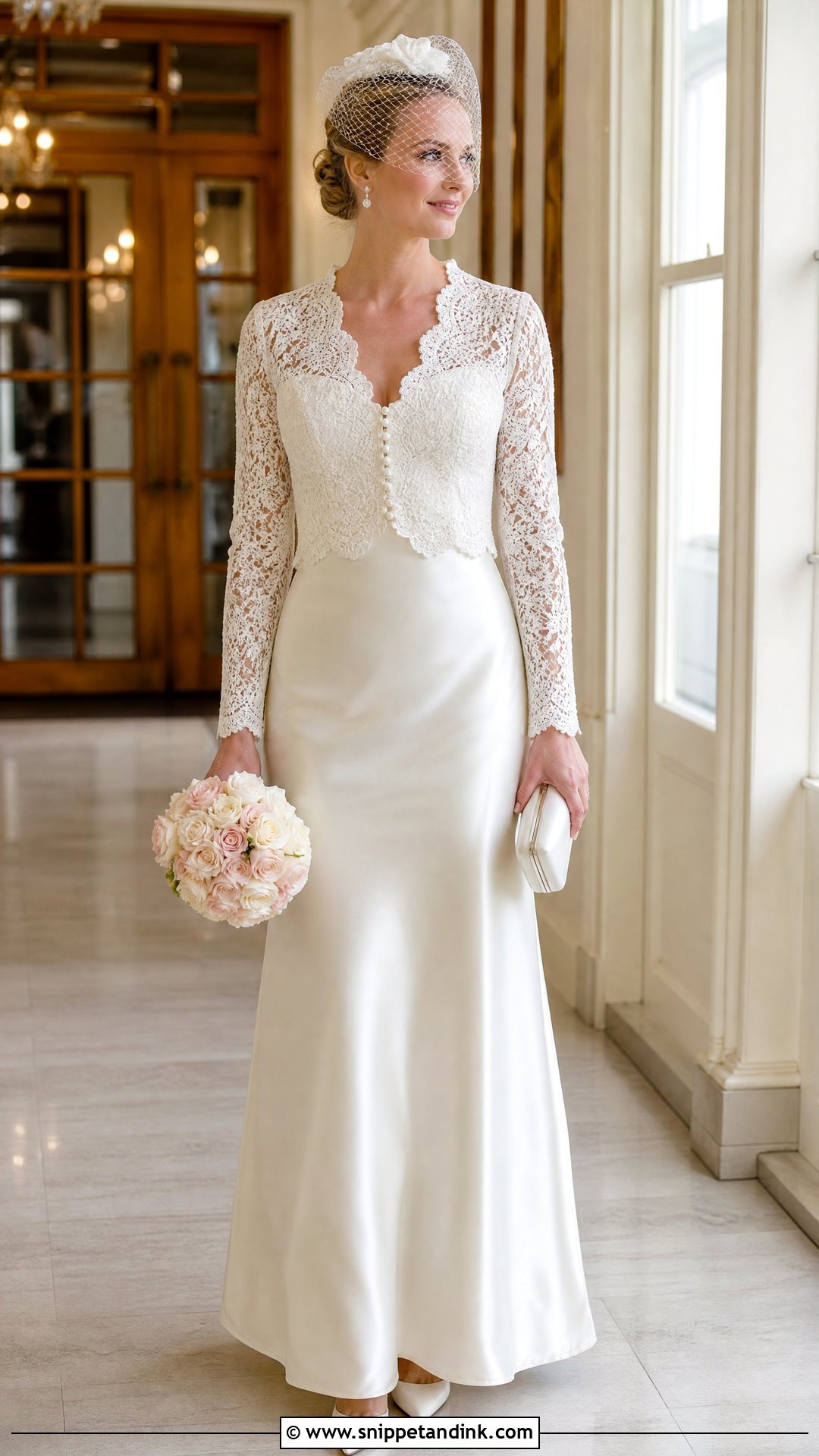
Ivory is not one shade, and nowhere is that clearer than when a separate lace jacket goes over a satin gown. One ivory can turn yellow or grey beside another, so I hold the jacket against the dress in daylight before anything is ordered. Start with a strapless or sleeveless satin gown in an A-line, column or tea-length shape, and layer a fitted lace jacket with covered buttons, a scalloped neckline and wrist-length sleeves for the ceremony. Take it off for a cleaner reception look. Ivory pumps, pearl earrings and a satin box clutch suit it, with a short veil or birdcage piece that won’t clash with the lace, a polished low twist and a compact rose bouquet.
19. Ivory Corset Wedding Dress With Full Skirt
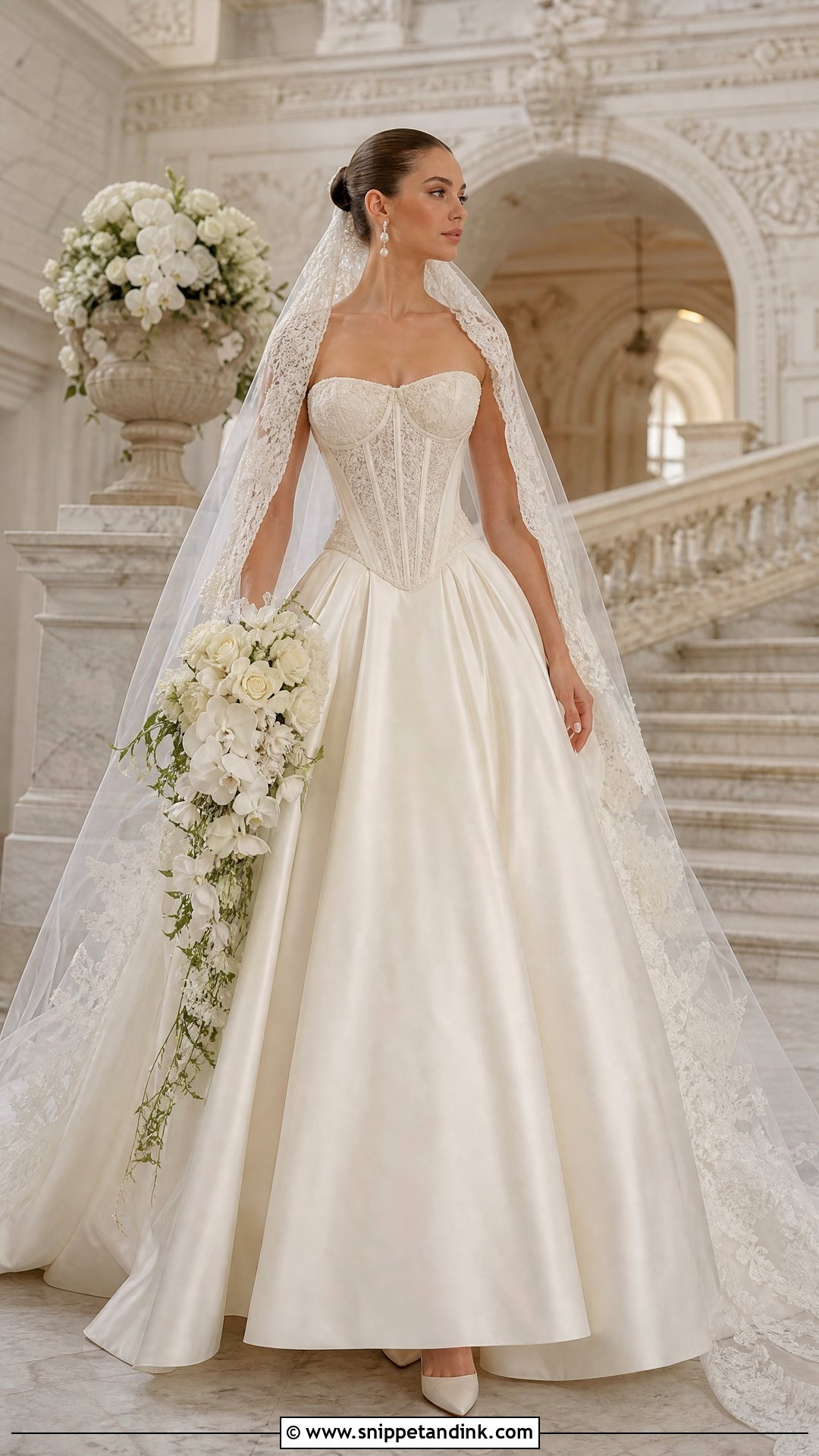
A pointed basque waist on a corset bodice lengthens the torso and sharpens the transition into a full skirt. The fit question is simple: can you sit, breathe deeply and lift your arms? If not, it isn’t finished. Silk satin gives the formal finish, and lace panels soften the visible structure. Closed-toe ivory heels and a cathedral veil edged in narrow lace suit it, with pearl drops and no necklace if the bodice carries embroidery or visible boning. A sleek bun keeps it sophisticated rather than theatrical. A cascading bouquet of ivory flowers balances the scale of the skirt.

20. Ivory Slip Wedding Dress With Vintage Accessories
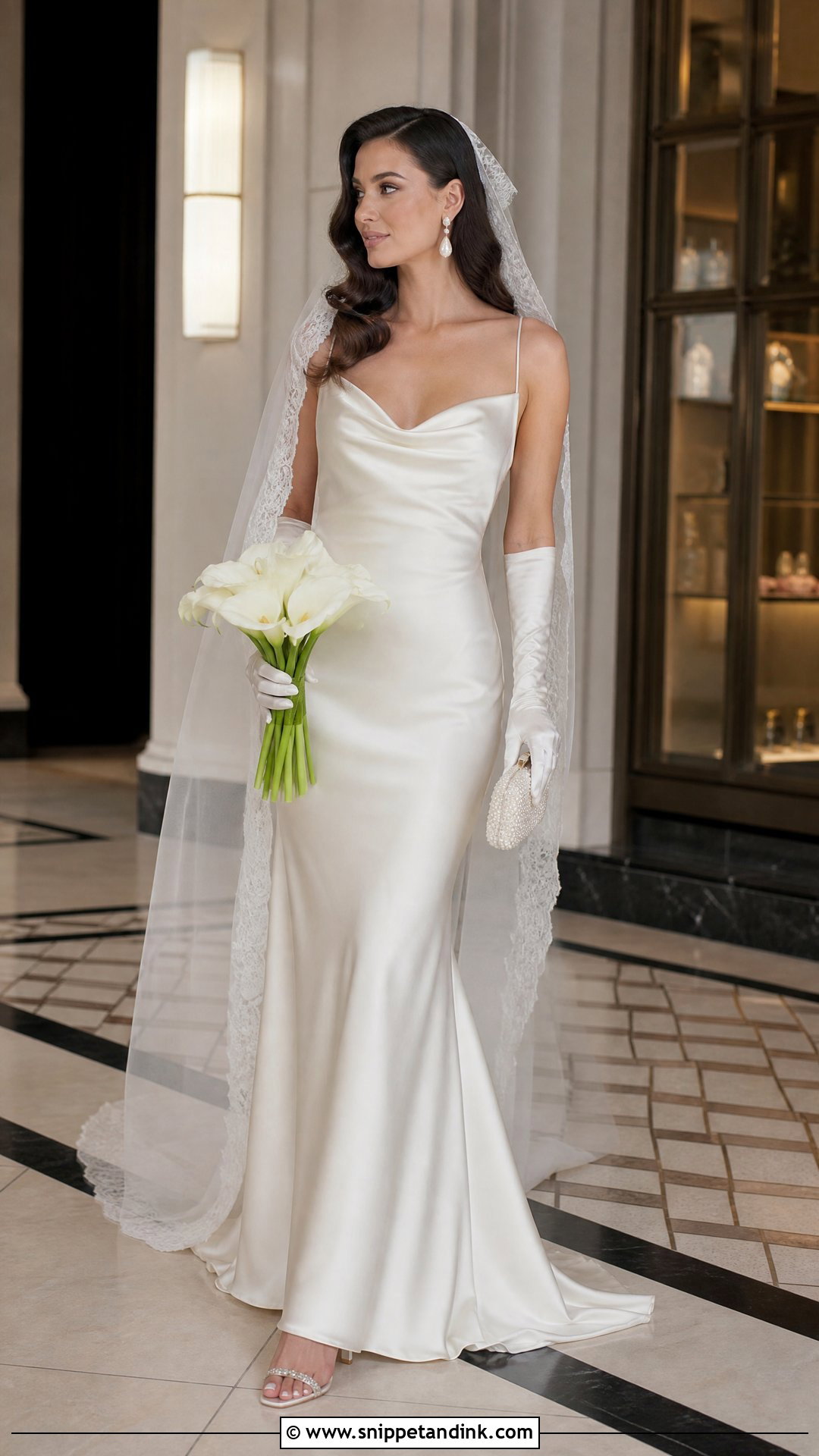
Sometimes the simplest dress makes the strongest vintage outfit. An ivory silk slip cut on the bias can point to 1930s glamour or 1990s minimalism depending on what you put with it. Choose a cowl neckline, narrow straps and a gently flared hem. Pearl drops, satin gloves and a lace-edged veil push it vintage; peep-toe heels or slender slingbacks keep the line long, and a beaded clutch adds texture. Side-parted waves give an Old Hollywood mood, while a clean low bun keeps it minimal. Silk slips mark easily, so I tell brides to keep perfume and deodorant well away from the fabric and to dress last, after makeup is set.
Order the Veil and Shoes After the Gown Swatch Arrives
The most common styling mistake I fix is a veil that’s whiter than the dress. Tulle is sold in shades like diamond white, ivory and champagne, and each maker’s names differ, so a veil labelled ivory from one shop can be noticeably paler than an ivory gown from another. Ask your bridal shop for a small fabric swatch from the gown, then match everything else to that piece.
The order I’d buy things in
- The dress, plus a swatch.
- The veil, matched to the swatch in daylight, since it sits right against the dress in every photo.
- Shoes, gloves and any jacket or cape, matched to the swatch or dyed to it.
- Jewelry last. Pearls also come in shades, and cream pearls usually sit better on ivory than bright white ones.
Heirloom pieces need their own check. An older veil or lace collar has often darkened with age, and it can look stained beside a new ivory gown. Sometimes the answer is to wear it somewhere it doesn’t touch the dress, such as a short blusher, or to have a specialist gently clean it well before the wedding rather than in the final week.
Hold Every Accessory Against the Dress in Daylight
A vintage outfit works when the period details sit on a fit that feels comfortable and personal. There’s something here for romantic, minimalist, formal, bohemian and playful weddings alike. Start with the silhouette that suits your venue and how much you want to move, then build the veil, shoes, jewelry, hair and bouquet around its strongest feature. Ivory ranges from pale cream to deep antique, so check each accessory against the gown by a window. Victorian lace, 1930s satin or a 1950s tea-length skirt will all look right when the shades agree.
You'll Like These Ideas:







Leave a Reply