
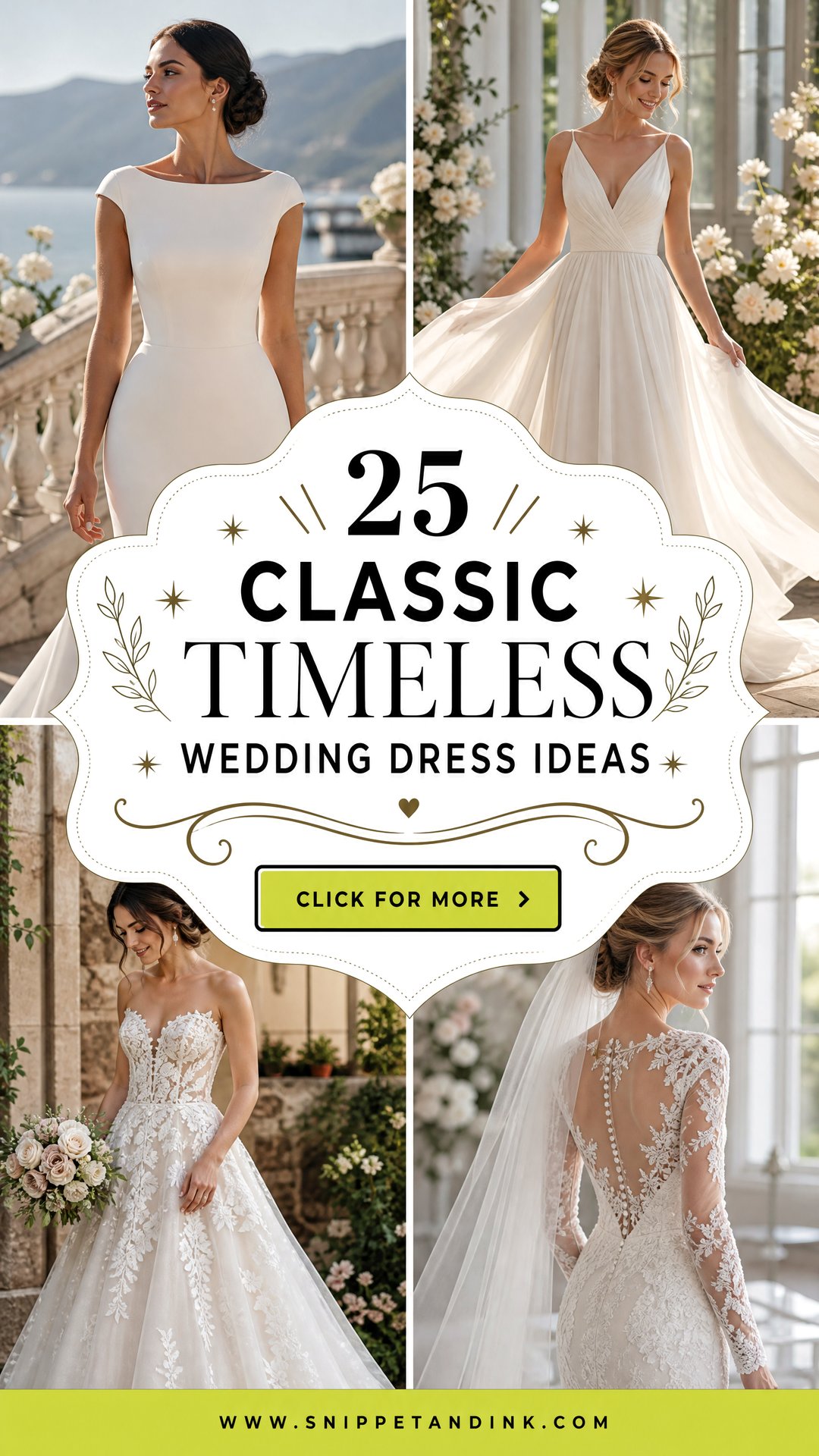
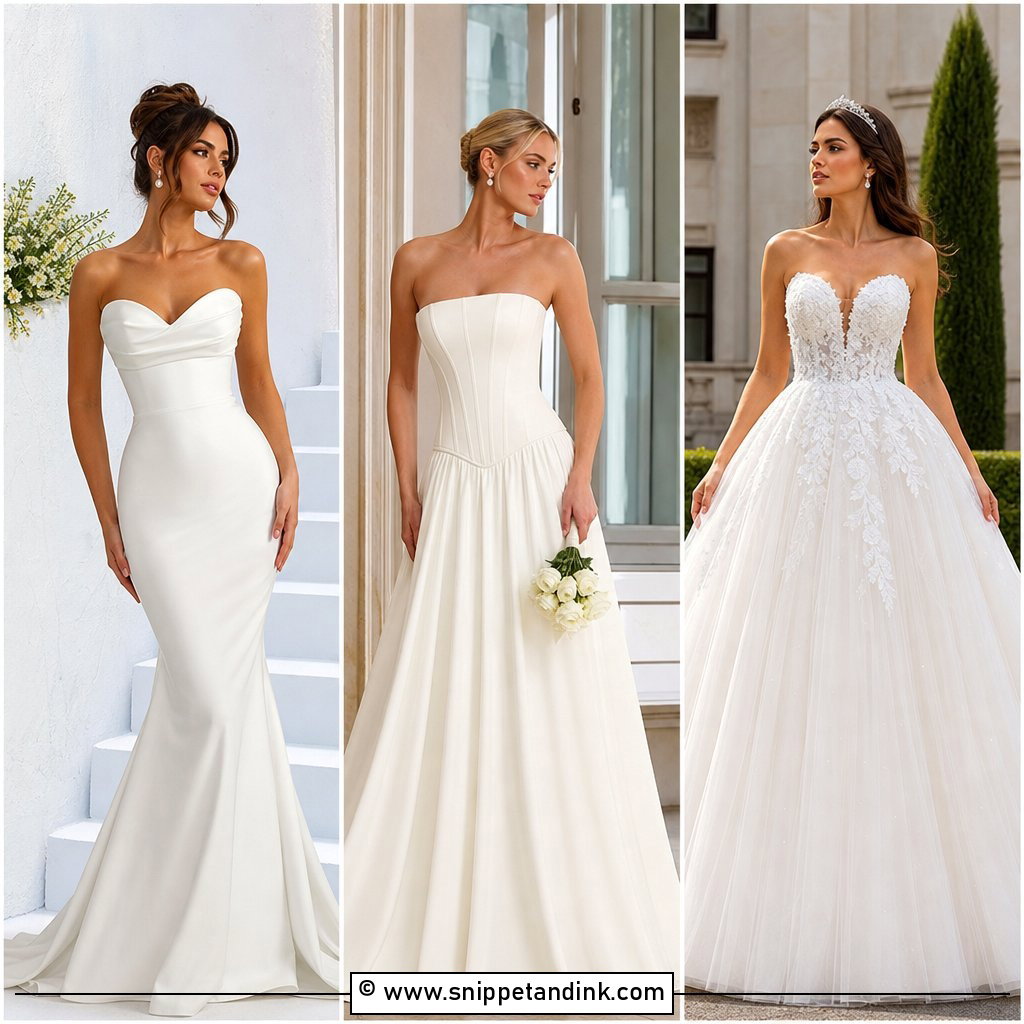
Some wedding photos date within five years and others still look right decades on. The difference is rarely the dress alone. It’s the whole outfit: a gown built on fit, fabric and proportion, plus accessories quiet enough not to pin it to one season. Satin, lace, crepe, tulle, sleeves, clean necklines and long trains all appear below, each styled as a complete look with the pearl earrings, simple veils, sleek heels, soft gloves and polished hair that many brides are pairing with classic shapes right now. Treat them as starting points for your venue and season, then adjust each one to your own build.
Why Some Wedding Photos Date and Others Don’t
Look through wedding albums from a few decades back and you’ll notice the gowns that still look right weren’t always the plainest ones. What dated the others was usually a single exaggerated detail of its moment: enormous puffed sleeves, very heavy contour, the hairstyle everyone wore that year.
When a bride tells me she wants a dress that ages well, I ask her to run three checks:
- Strip the accessories away in your head. If the dress still works with plain studs and no veil, its shape is doing the work.
- Find the one trend detail, if there is one, and ask whether it could be removed or softened later. A detachable bow, sleeve or overskirt dates far less than one that’s sewn in.
- Keep hair and makeup a notch quieter than the dress, because those place a photo in a particular year faster than anything else.
None of this means avoiding personality. It means letting one or two details carry it and keeping everything else steady.
1. Satin A Line Wedding Dress
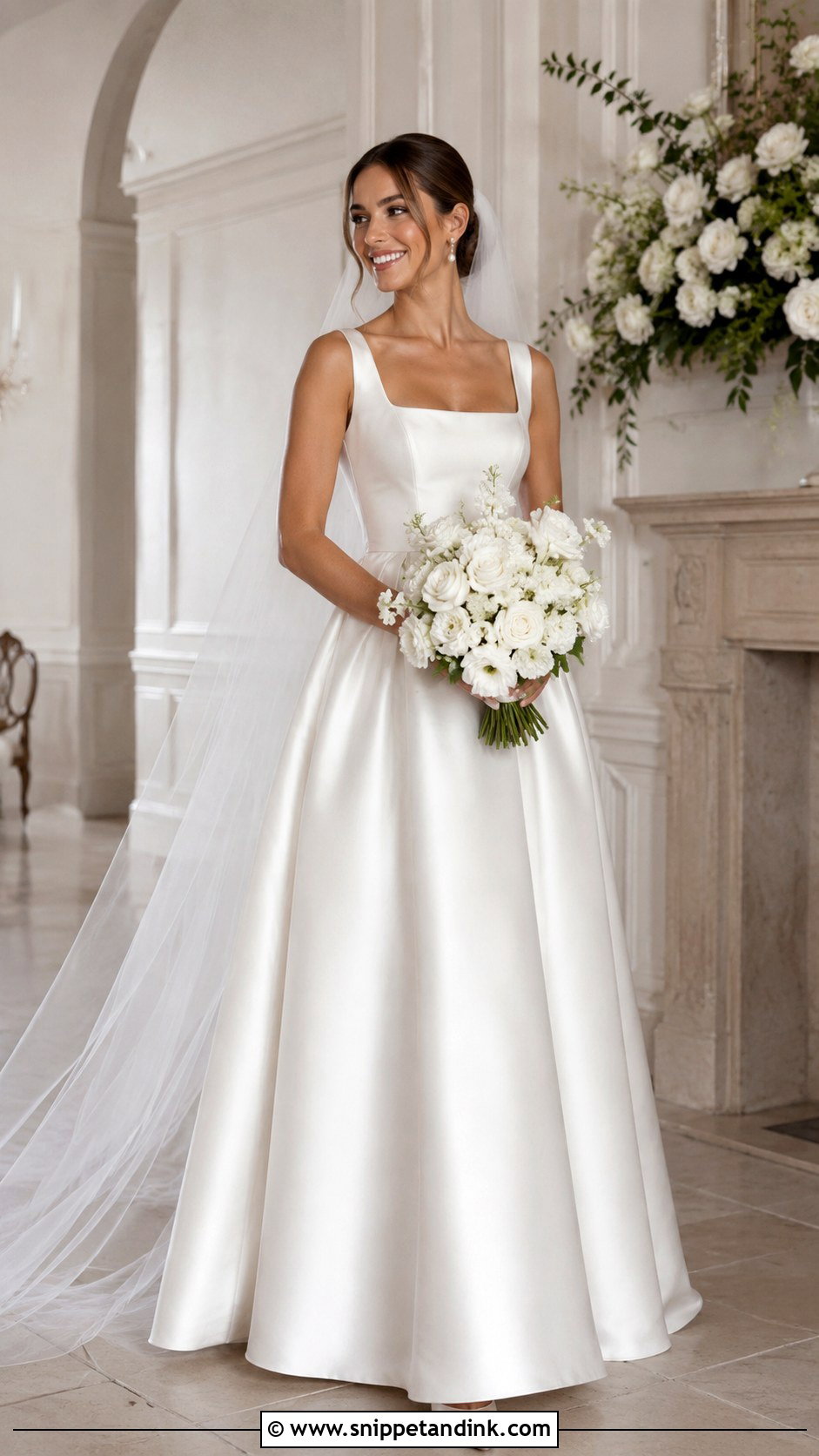
Few shapes are as reliable as this one. The fitted bodice marks the waist and the skirt falls over the hips without weight, so it suits most figures and most rooms, from a ballroom to a garden. Ivory or soft white satin looks warmer than stark white in natural light. Square, thin-strap and subtle scoop necklines all keep it classic. I’d pair it with pearl drop earrings, a cathedral veil, pointed satin pumps and a small bouquet of white flowers and greenery. If a cathedral veil is new to you, practise turning in it at a fitting, because it pulls on the comb more than you’d expect.
2. Lace Long Sleeve Wedding Dress
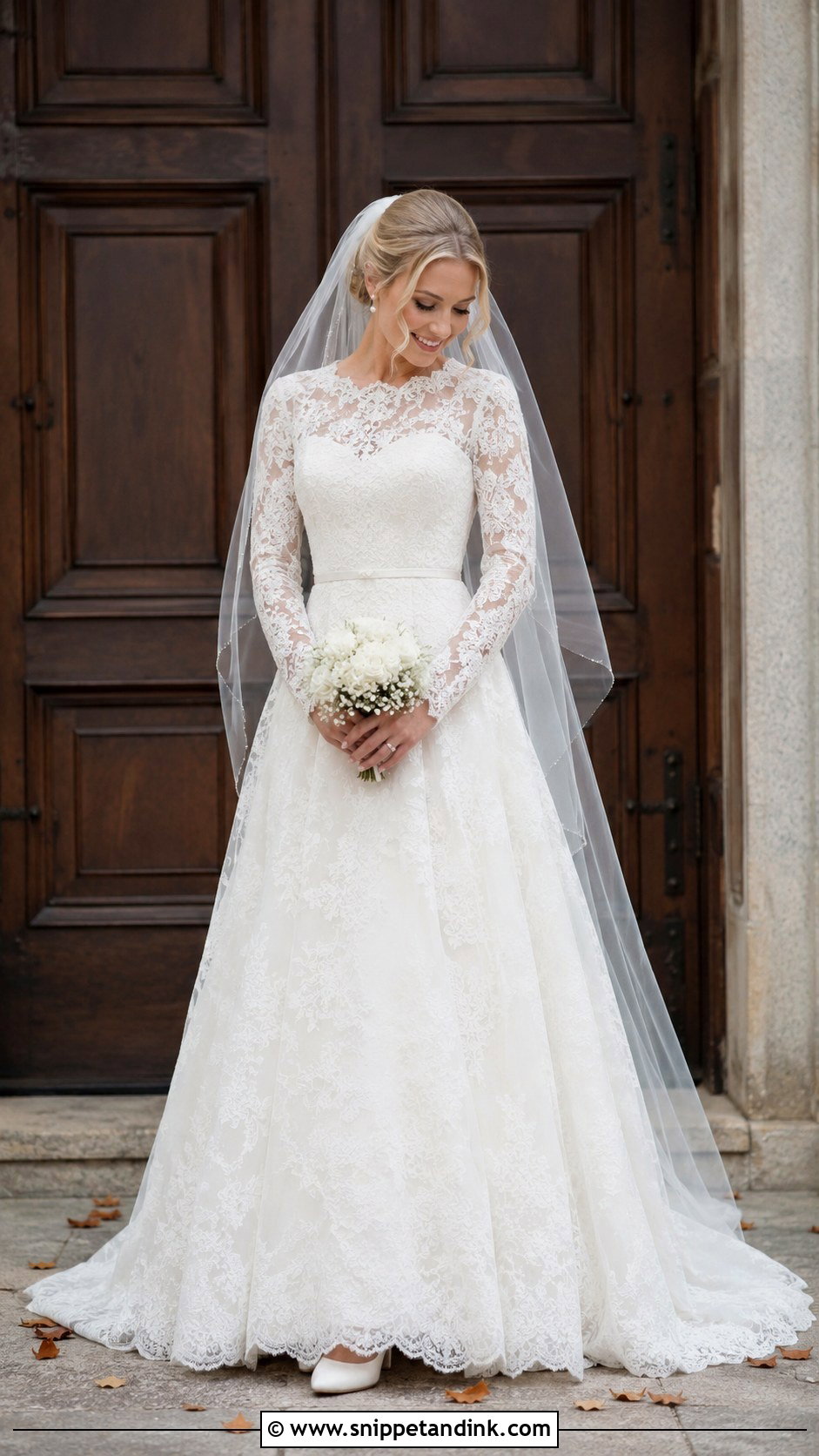
Lace sleeves give coverage and texture at once. I fit them close but never tight, since lace sleeves pinned too slim pull at the armhole every time you reach for a glass. A defined waist and a skirt that moves easily, A-line or fit-and-flare, keep the outfit balanced. Accessories can stay modest: pearl studs, a fine bracelet over the cuff, a sheer veil and closed-toe heels, with a low bun or soft waves. Heavier lace suits fall and winter, while a light, open lace works well in spring.
3. Strapless Ball Gown Wedding Dress
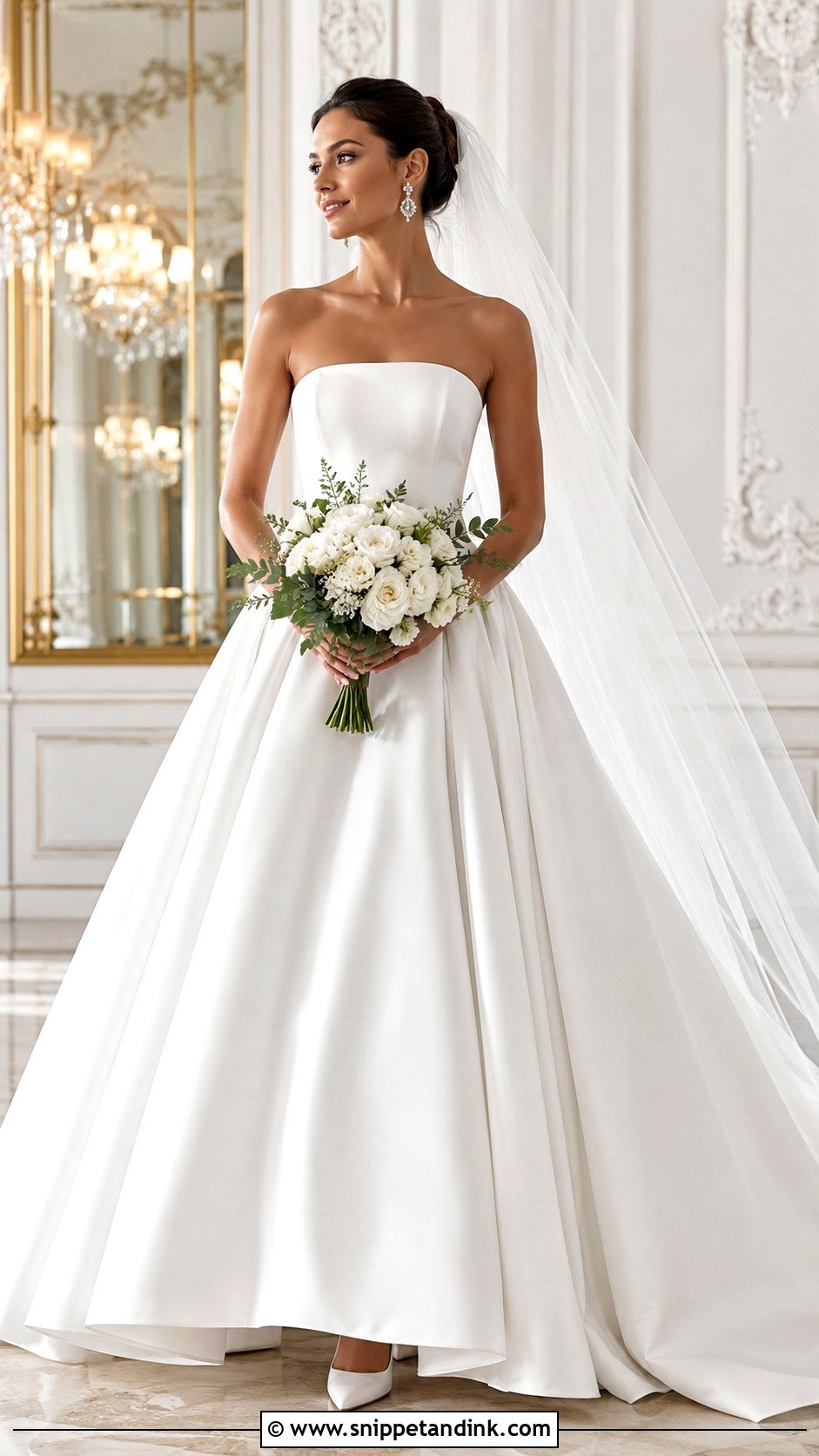
Choose structure over decoration here. A smooth bodice, a defined waist and a full skirt in mikado, satin or organza will still look right in thirty years, whereas heavy crystal work tends to place a dress in its year. A softly curved neckline flatters the shoulders and collarbone. The weight of a full skirt hangs from the bodice, so stand in it for twenty minutes at the fitting, and if the top starts to slip, it needs more support. A long veil, crystal or pearl earrings and classic pumps complete it, with sheer gloves or a delicate wrap if you want coverage for the ceremony.
4. Crepe Fit And Flare Wedding Dress
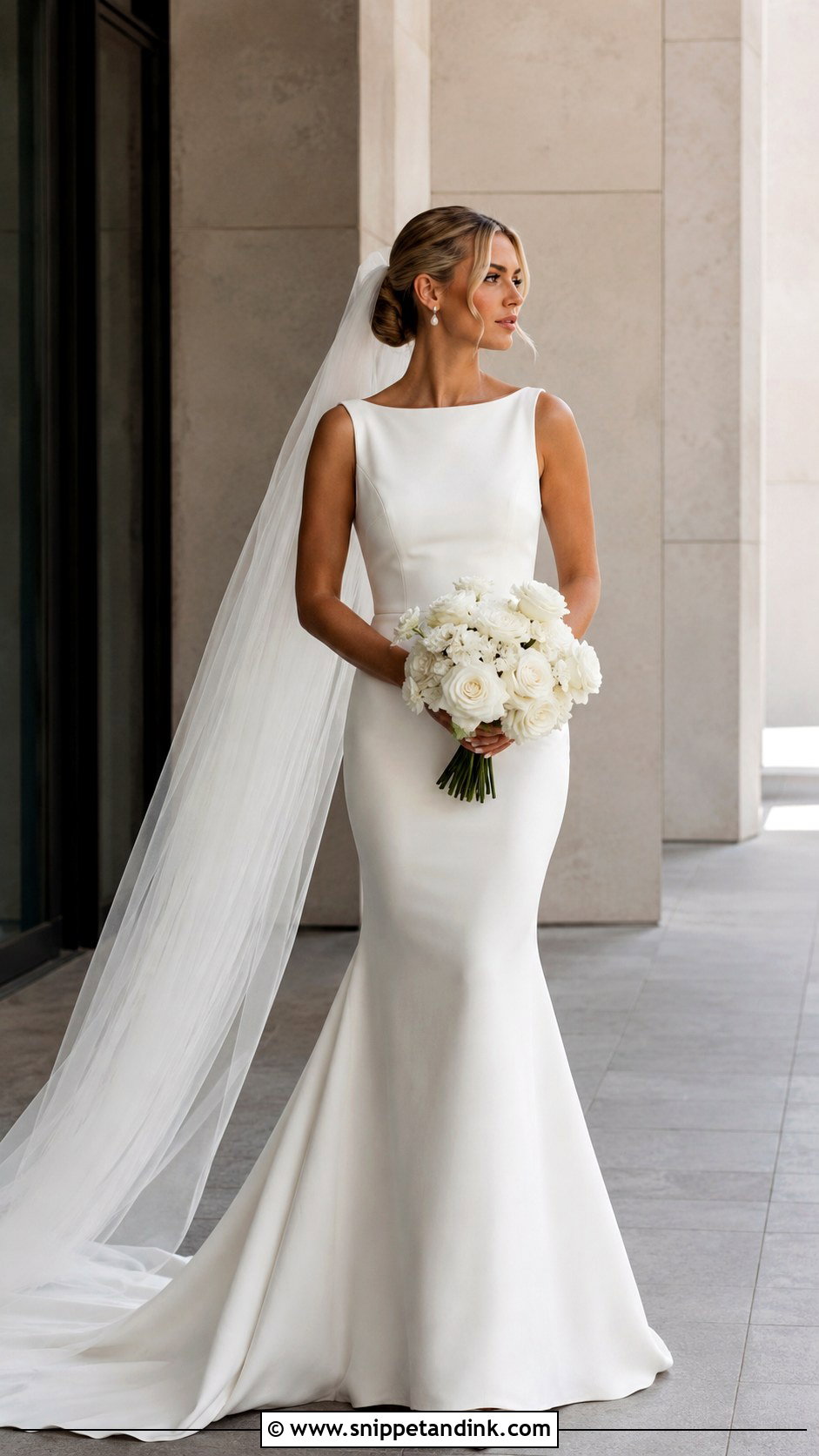
Crepe’s matte finish keeps a sculpted shape from looking flashy. The dress follows the body and then opens below the hips or knee for movement, with a bateau, square or sweetheart neckline. With no decoration to distract, the seams over the hip have to sit dead level, so I check them in a side mirror while you walk. Sleek heels, a low chignon, pearl earrings, a long plain veil and a small structured bouquet suit city venues, modern hotels and formal parties.
5. Off Shoulder Wedding Dress
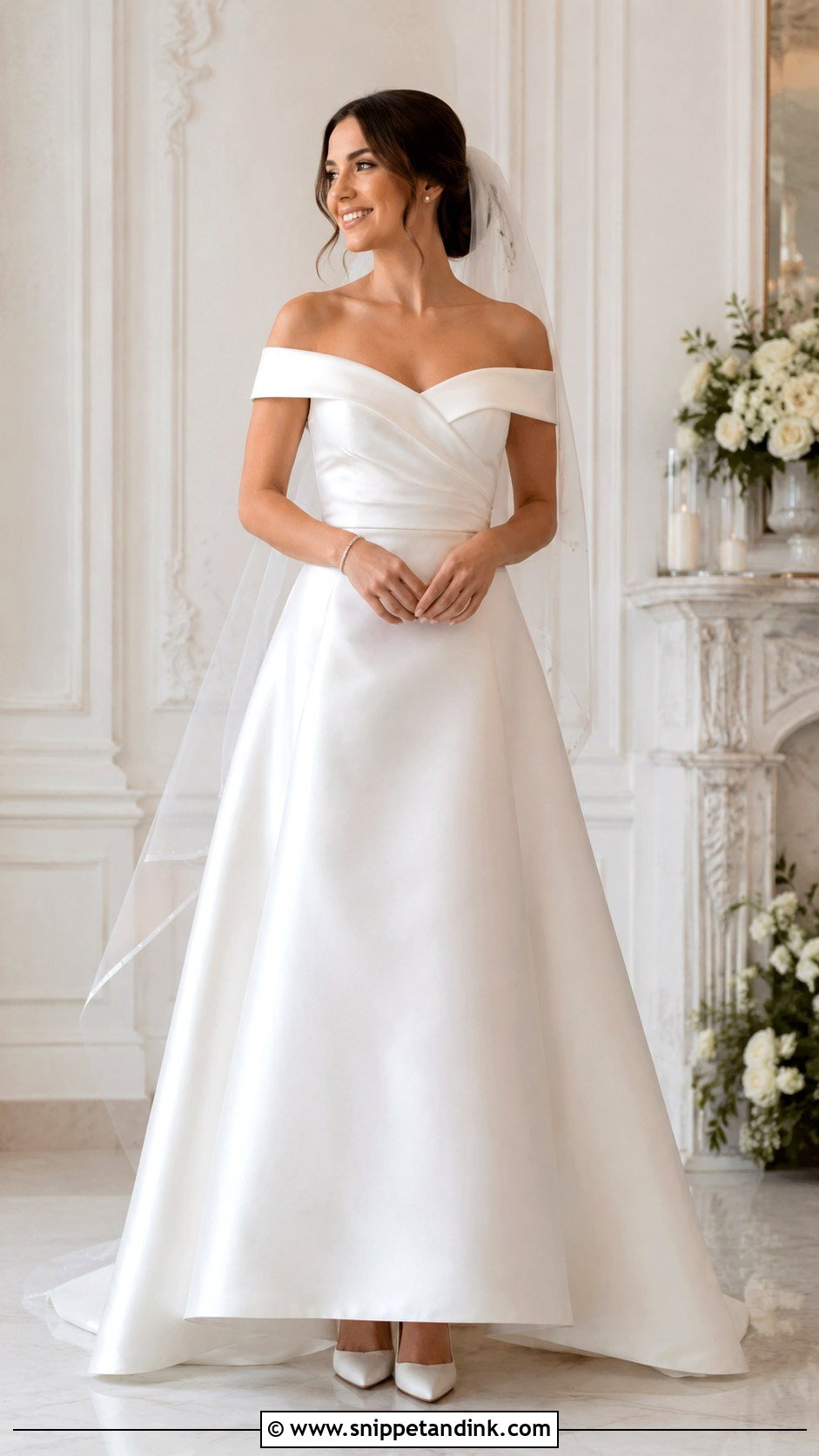
Off-shoulder necklines frame the shoulders and soften the bodice. The classic version uses smooth satin, mikado or lace over a fitted waist and a full or A-line skirt. Skip big puffed sleeves if you want it to age well, because they’re the detail most likely to place the photos in a particular year. A neat updo, pearl studs, a simple bracelet and pointed heels complete it, with a fingertip or cathedral veil for a traditional finish.
6. Simple Silk Slip Wedding Dress
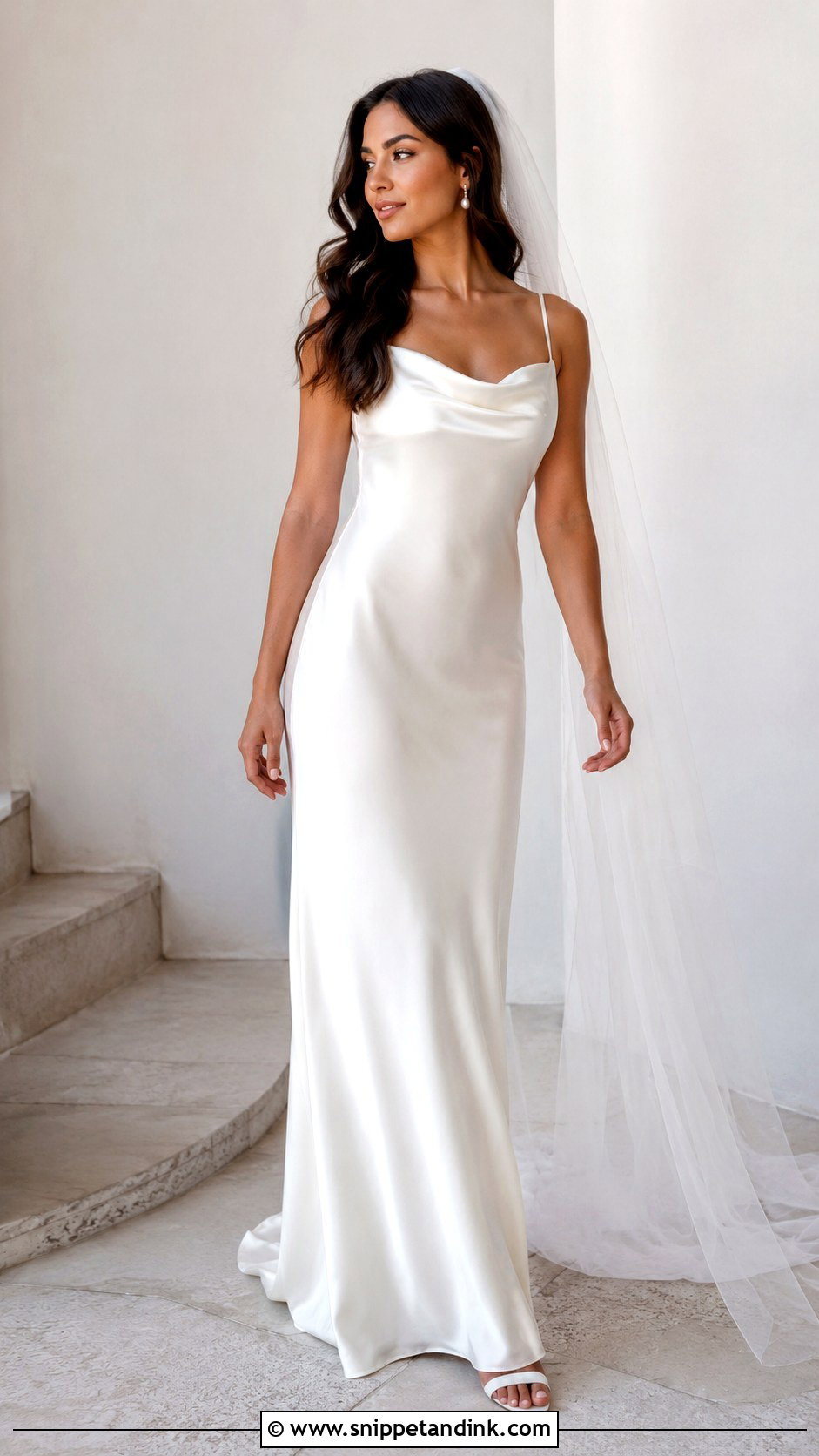
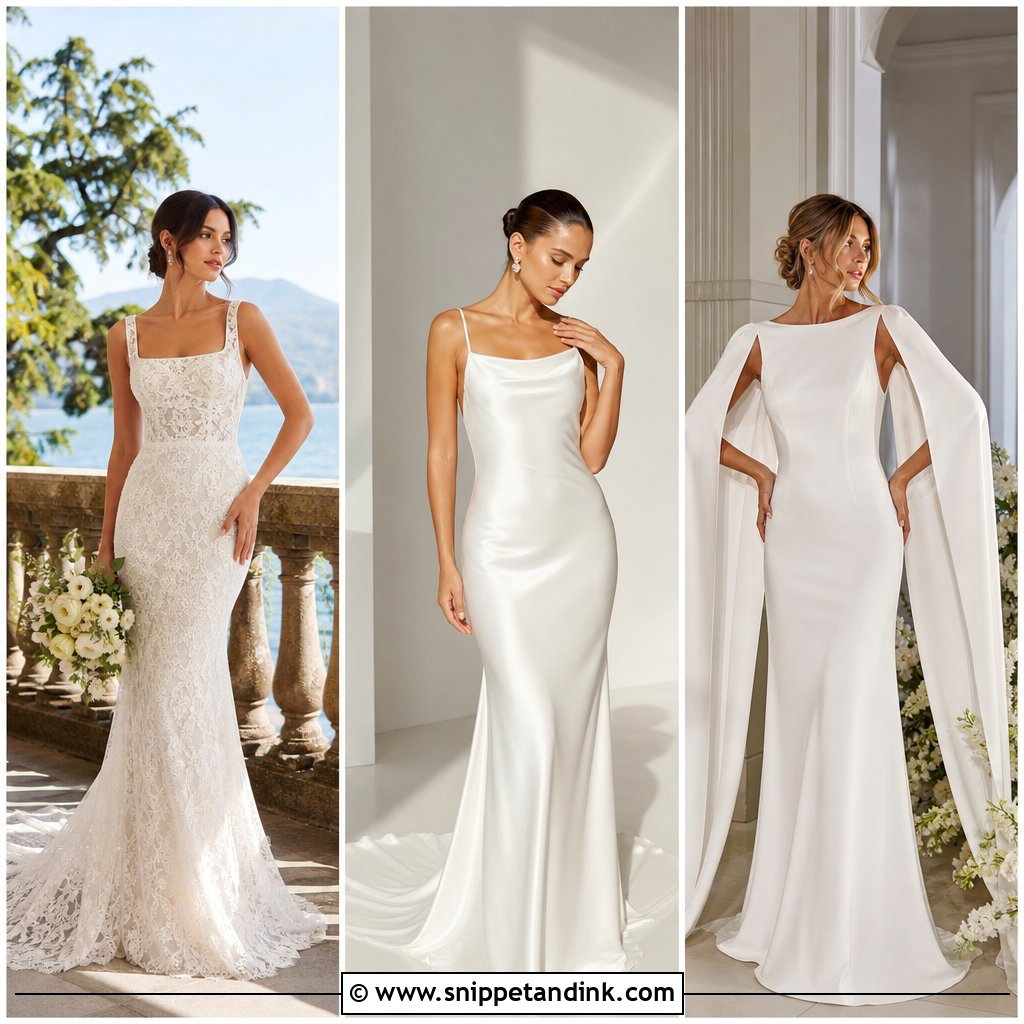
Minimal doesn’t mean forgettable. Everything here comes from the drape, the sheen and a clean cut. Bias-cut silk skims the body without stiffness, though it also shows whatever is beneath, so smooth underwear is part of the outfit. A cowl neckline, a straight neckline or delicate straps all keep it classic. Sleek sandals or pointed pumps, a soft veil, small pearl earrings and polished waves finish it. On a cool evening, a fine bridal scarf or a tailored coat keeps you warm without hiding the line. Courthouses, destination ceremonies and modern receptions suit it best.
7. High Neck Lace Wedding Dress
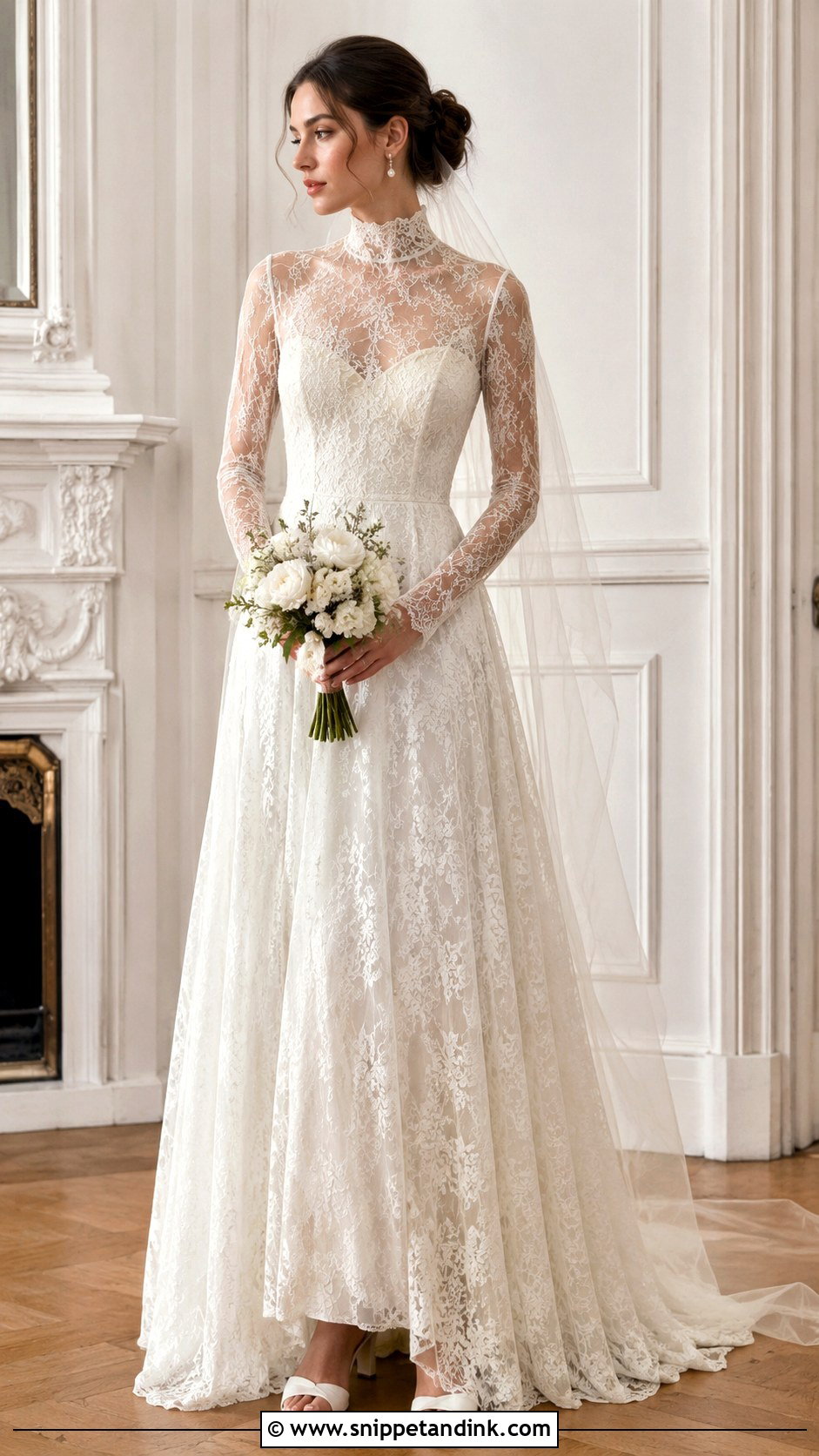
Hair decides this one. A high lace neckline needs a low bun or an updo, since loose hair catches in lace and hides the very detail you chose the dress for. Pick a delicate pattern with close-fitting sheer sleeves and a softly shaped skirt, then add pearl earrings, simple heels and a sheer veil with no lace edge to compete. The modest coverage and old-world detail make it a natural match for a church or a historic venue.
8. Mikado Ball Gown Wedding Dress
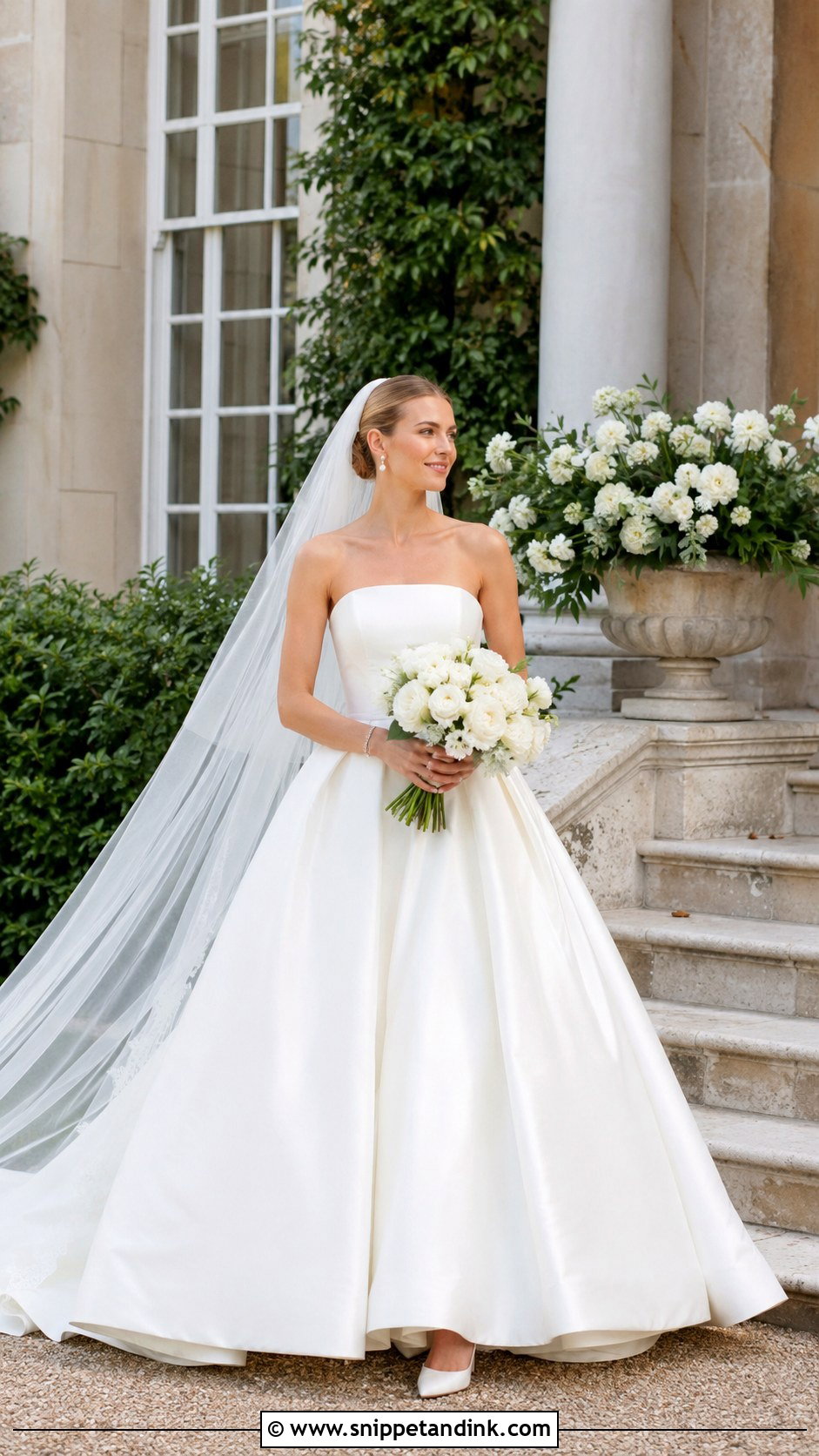
Mikado has enough weight to hold a full skirt crisply, so the silhouette never looks soft or flimsy. Strapless, square-neck and off-shoulder bodices suit it. That weight cuts both ways. By evening a mikado skirt can feel heavy, and I’d plan a bustle and a lighter petticoat if you’ll be dancing for hours. A long veil, pearl or diamond-look studs, satin heels and a neat bouquet are plenty for a grand venue or a formal estate.
9. Bateau Neck Wedding Dress
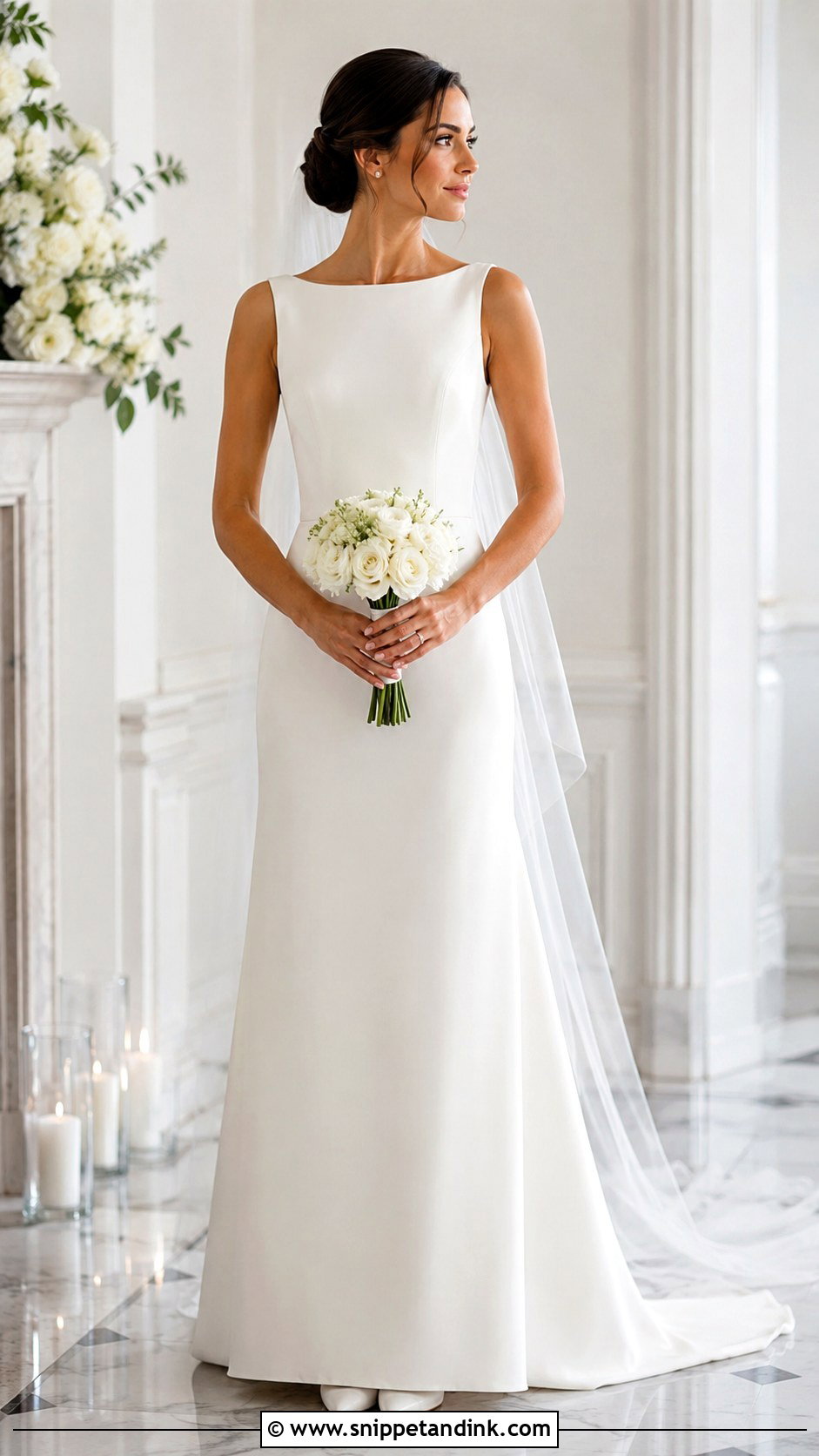
A bateau neck wedding dress runs gently across the collarbone, giving coverage without feeling closed in. It works in crepe, satin or lace over an A-line, sheath or fit-and-flare skirt, and its old-Hollywood feel never seems out of date. Small earrings beat a bold necklace, which would have nowhere to sit. Add a low bun, a soft veil, classic pumps and a slim bouquet. If your shoulders are broad, ask for the neckline to be cut slightly narrower so it doesn’t widen them further.
10. Sweetheart Neck Wedding Dress
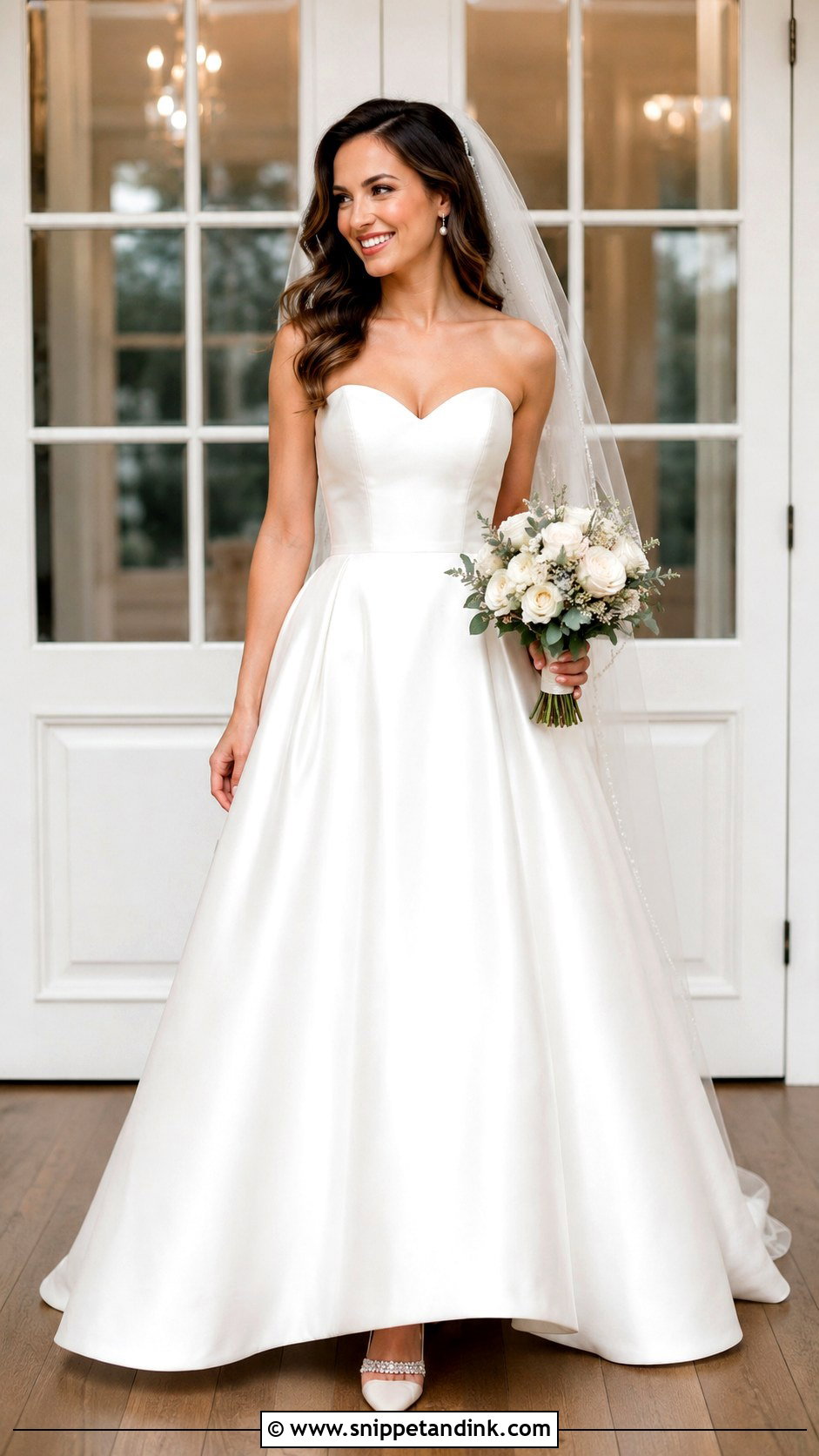
A sweetheart neck wedding dress stays popular because the curved neckline flatters most bust shapes and reads as bridal without any decoration. Satin, lace or mikado with clean seams keeps it timeless over A-line, ball gown or fit-and-flare skirts. Subtle boning in the bodice stops the curves collapsing when you sit. A delicate veil, pearl earrings, soft curls and classic heels carry it through formal and semi-formal settings.
11. Square Neck Wedding Dress
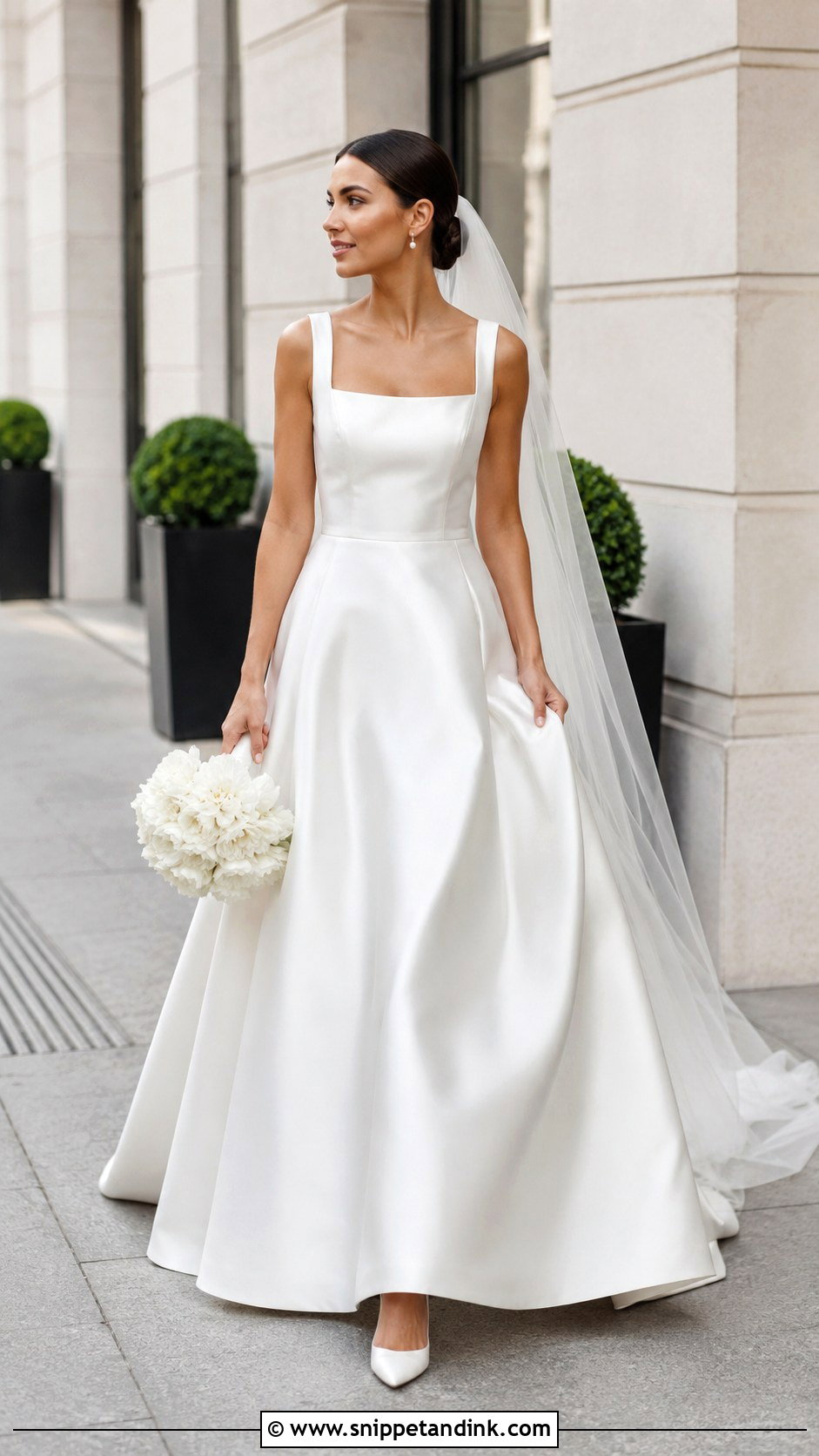
Clean and structured, the square neck shows the collarbone in a simple frame. Wide straps, long sleeves or a fitted strapless bodice all suit it, in satin, crepe or lace, and it adapts to slim or full skirts, so you can match it to the venue. Pearl earrings, a smooth bun, pointed pumps and a long veil finish it. I check the corners when you raise your arms, since that’s when a square neck most often gapes.
12. Tea Length Wedding Dress
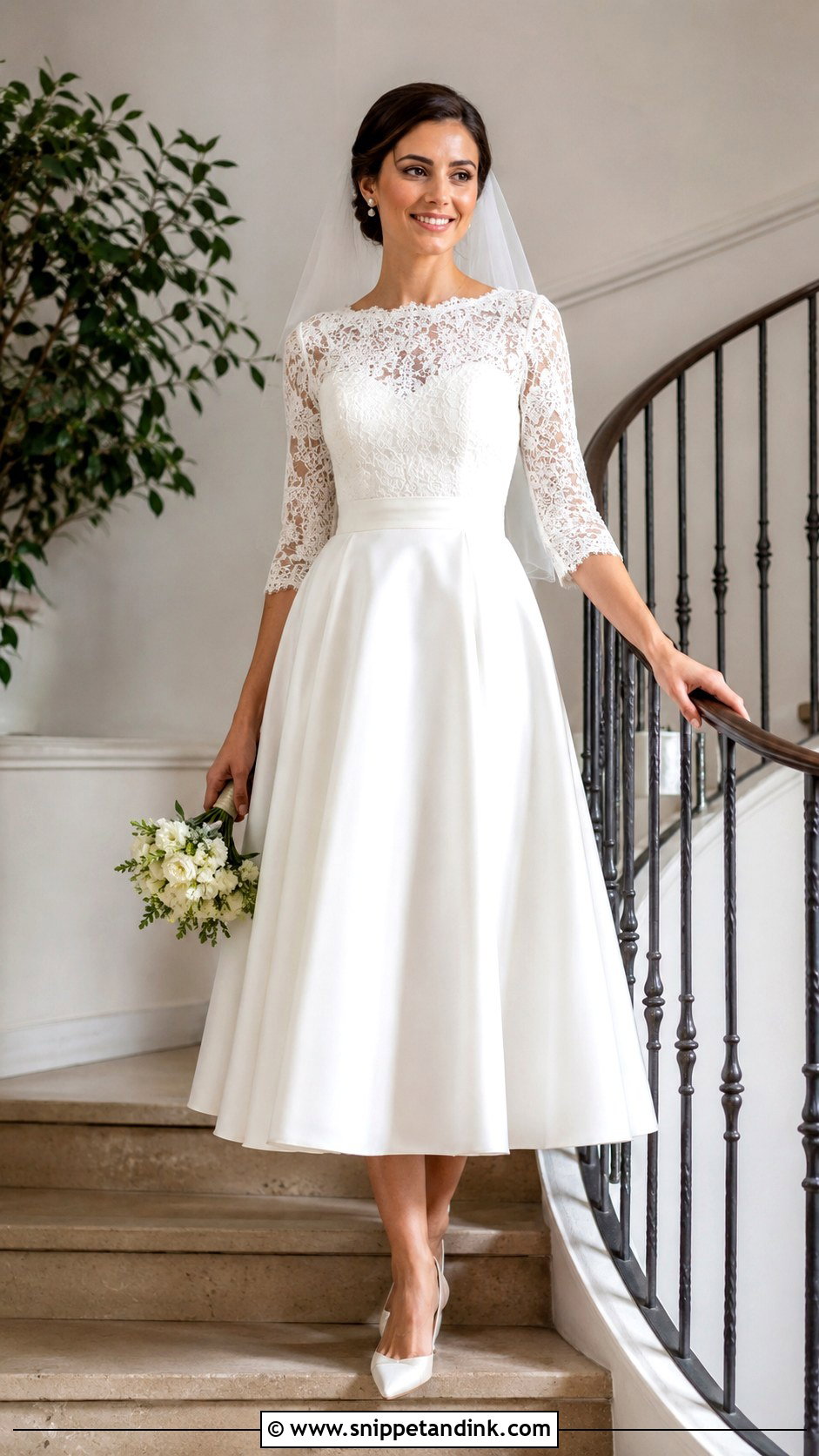
Tea length falls between knee and ankle, so your shoes are fully on show and deserve as much thought as the dress. Lace, satin or tulle over a fitted bodice works best, for smaller weddings, civil ceremonies or a vintage theme. Pointed pumps, pearl earrings, a short veil and a small structured bouquet complete it. A red lip suits the 1950s outline if you already wear one; if not, soft makeup keeps it fresh. It’s the easiest gown on this list to walk, sit and dance in.
13. Chiffon A Line Wedding Dress
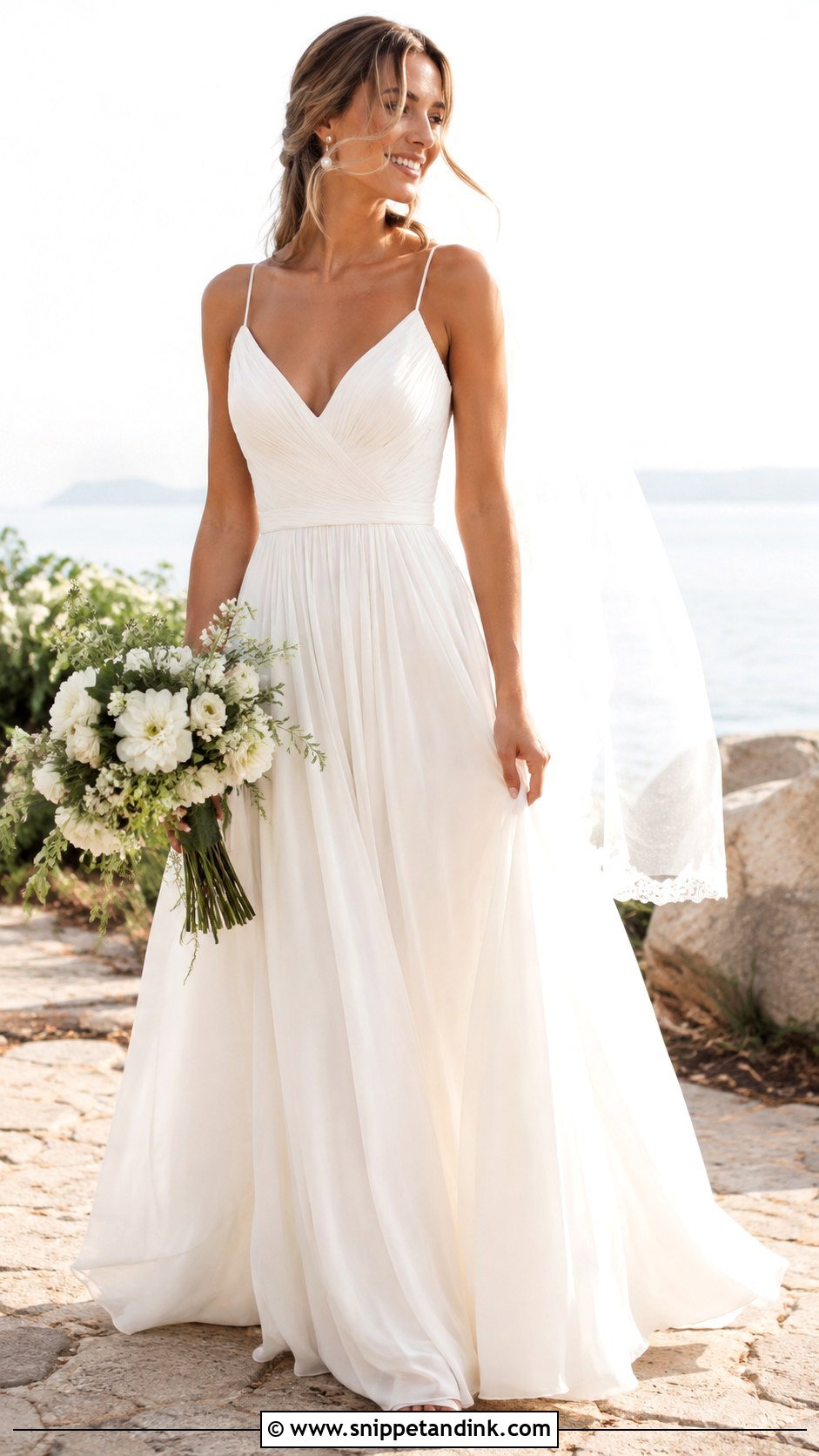
Chiffon is the lightest fabric in this list and it moves in even a small breeze, which suits beach and garden weddings in spring and summer. The trade-off is that it creases and snags easily, so the hem should be finished with a narrow rolled edge and kept just short of the ground outdoors. A V-neck, sweetheart or delicate straps keep the bodice simple, and gentle layers in the skirt look more classic than lots of volume. Soft waves, pearl earrings, strappy sandals, a light veil and a loose bouquet of white and pale green finish it.
14. Tulle Ball Gown Wedding Dress
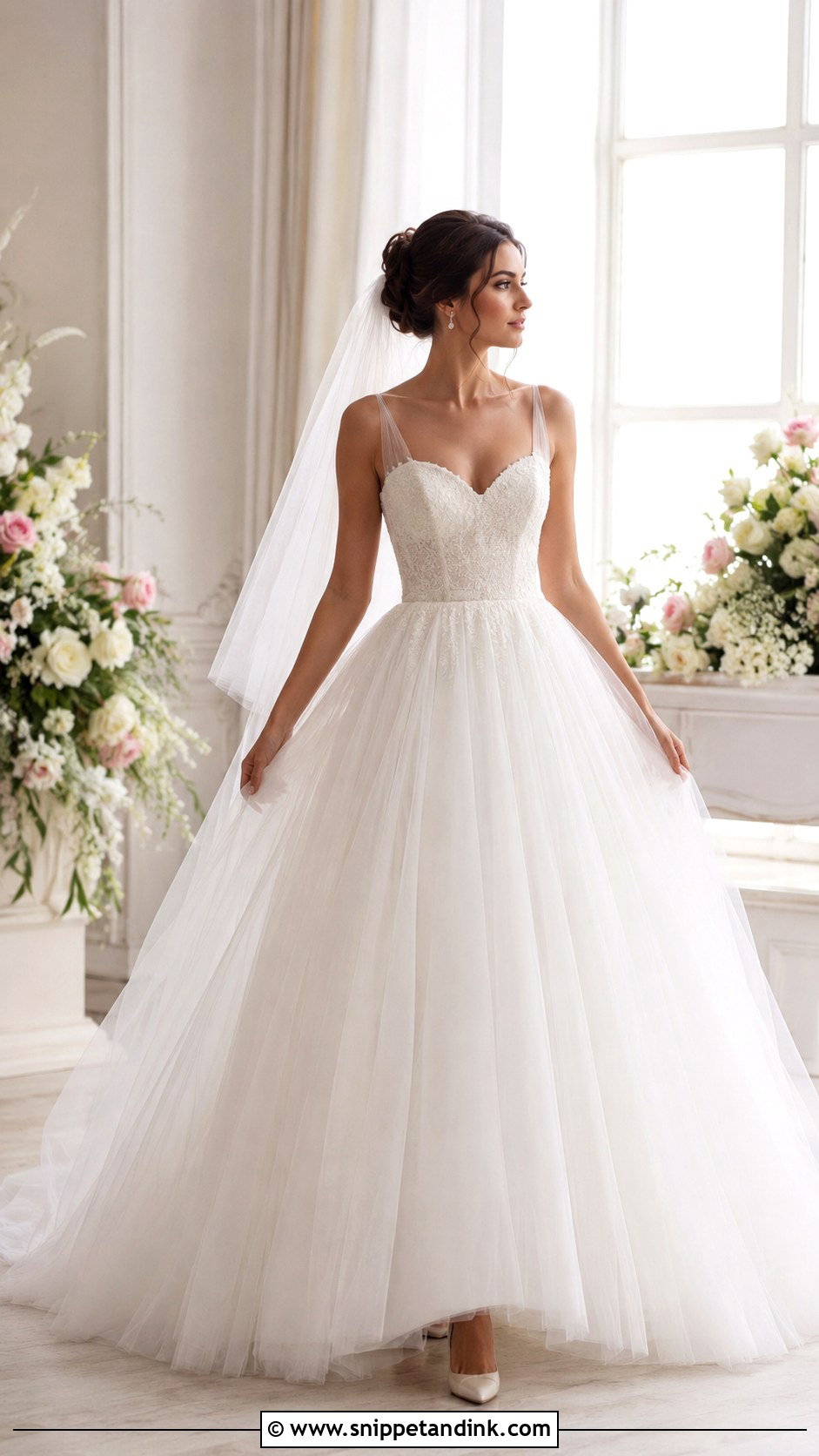
Fine layers of tulle give volume without weight, which is why this shape stays classic as long as you hold back on sparkle. A fitted bodice and a clean waistline keep it grown-up, and strapless, V-neck and lace bodices all suit the airy skirt. Tulle compresses in a car, so plan for someone to fluff the layers by hand before the ceremony, with a steamer held well back from the fabric for stubborn creases. Simple earrings, a sheer veil, satin pumps and a polished updo complete the look.



15. V Neck Wedding Dress
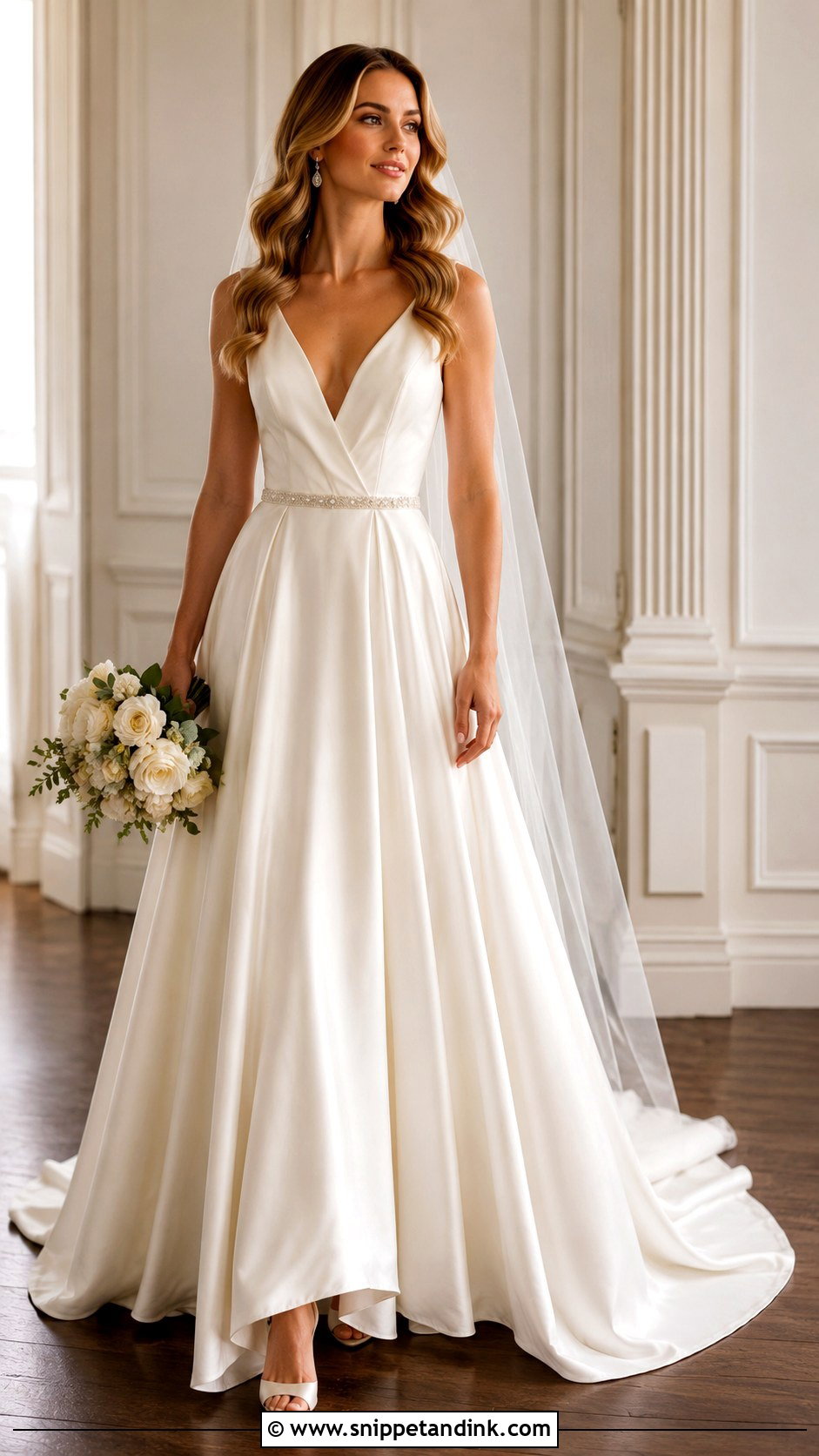
The V draws the eye down the centre of the body and lengthens the torso. A moderate V ages better than a deep plunge. Lace, satin, chiffon and crepe all carry it, and on a very plain dress a narrow belt defines the waist. Drop earrings, a simple veil, classic heels and soft waves or a relaxed updo round it off for almost any setting.
16. Cap Sleeve Wedding Dress
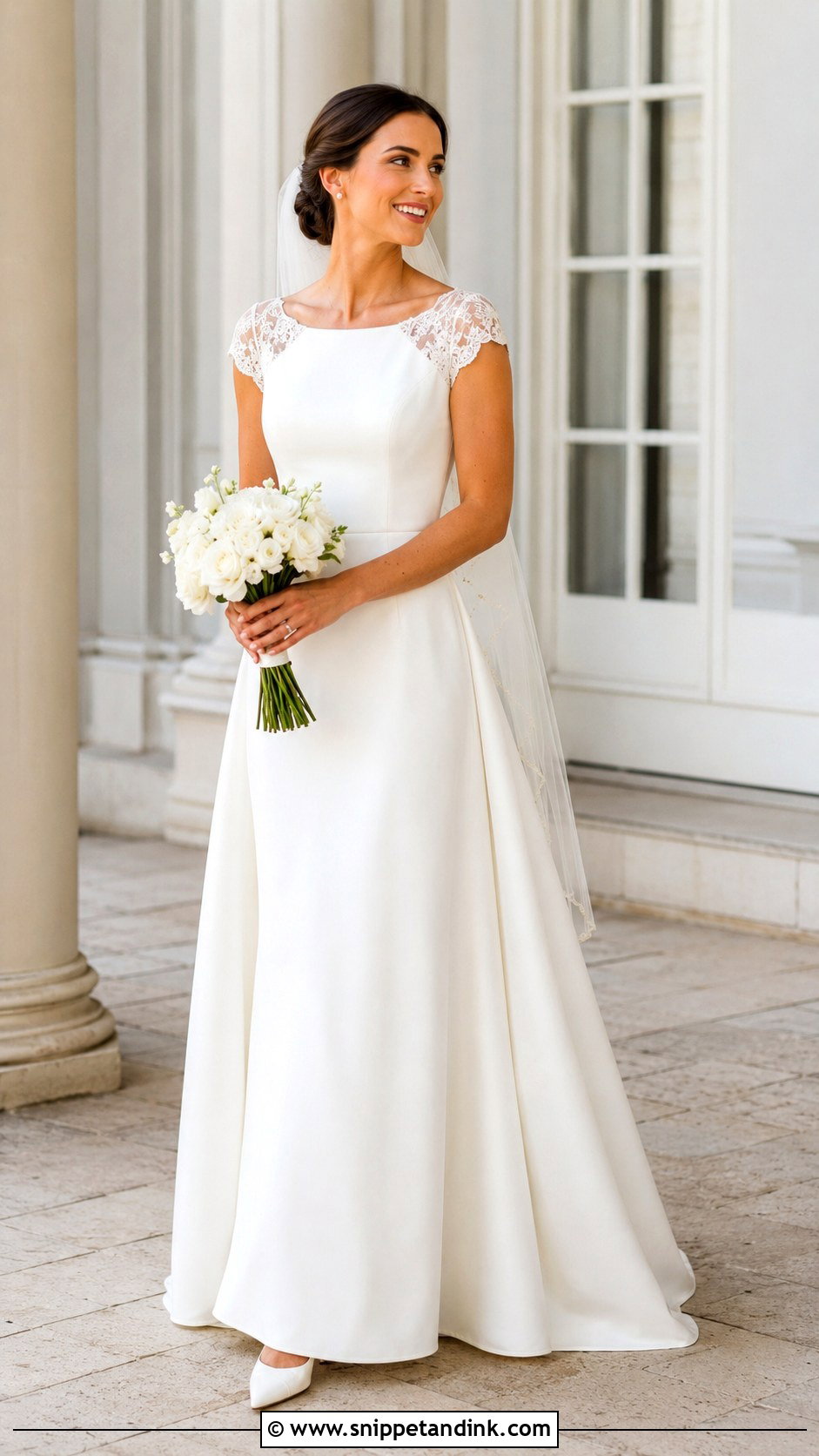
The cap sits over the top of the shoulder and gives light coverage without hiding the neckline or the arms. Lace cap sleeves look romantic, and satin or crepe versions look cleaner. A-line and sheath silhouettes suit it. The sleeve opening should lie flat against the arm; if it flips outward when you lower your arms, the cap needs reshaping or a light stay inside. Pearl studs, a fingertip veil, pointed heels, a neat bouquet and simple hair, pinned back or in a low bun, complete it.
17. Minimalist Column Wedding Dress
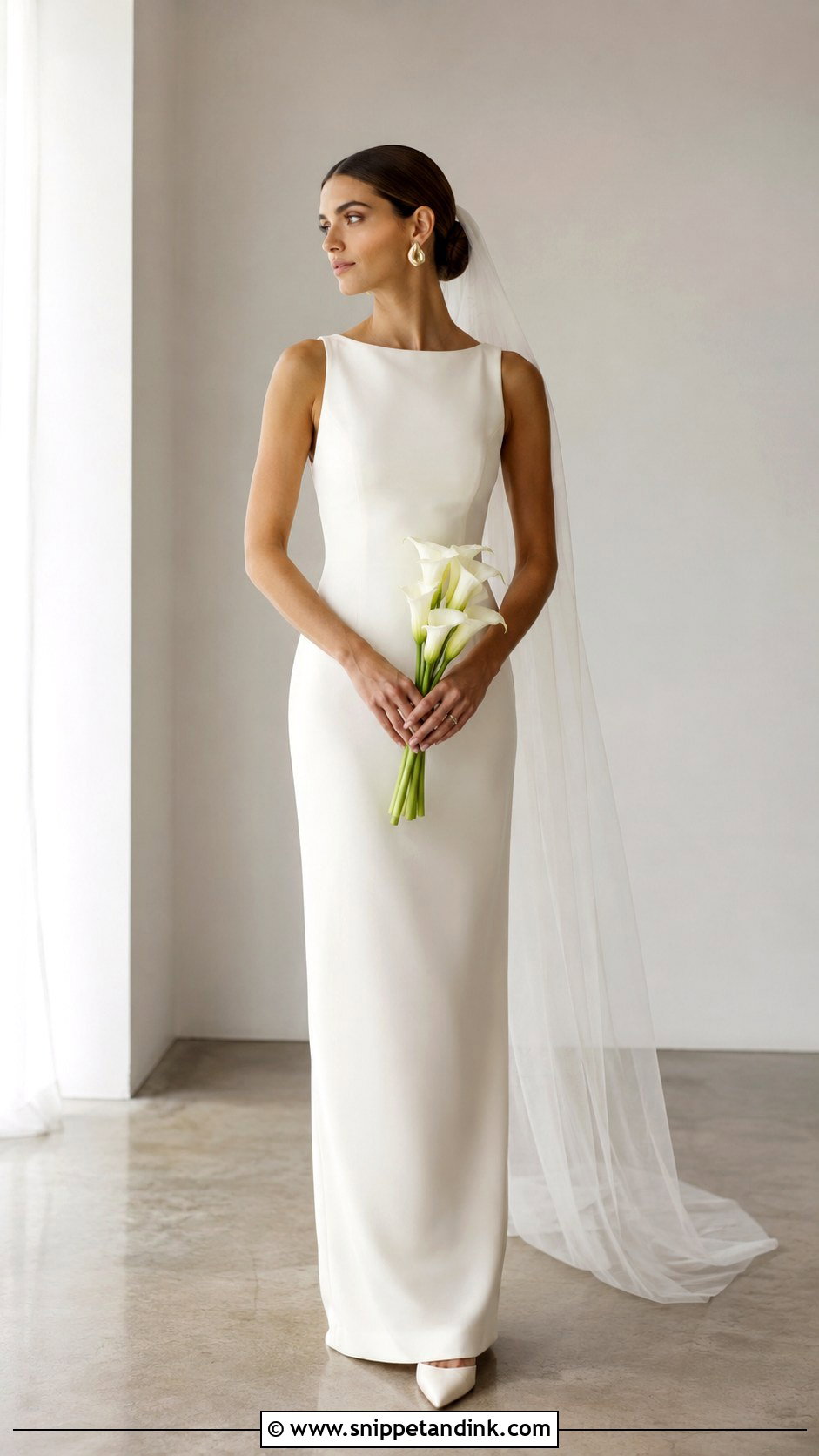
A straight column draws one long line, so fit and fabric are all anyone sees. Crepe, silk and satin show clean construction best. The usual problem is walking. A column that’s narrow at the knee needs a discreet slit, and I’d much rather add one than watch a bride shuffle down the aisle. A simple veil, sculptural earrings, pointed pumps, a sleek hairstyle and a small bouquet suit galleries, rooftops and hotels.
18. Pearl Detail Wedding Dress
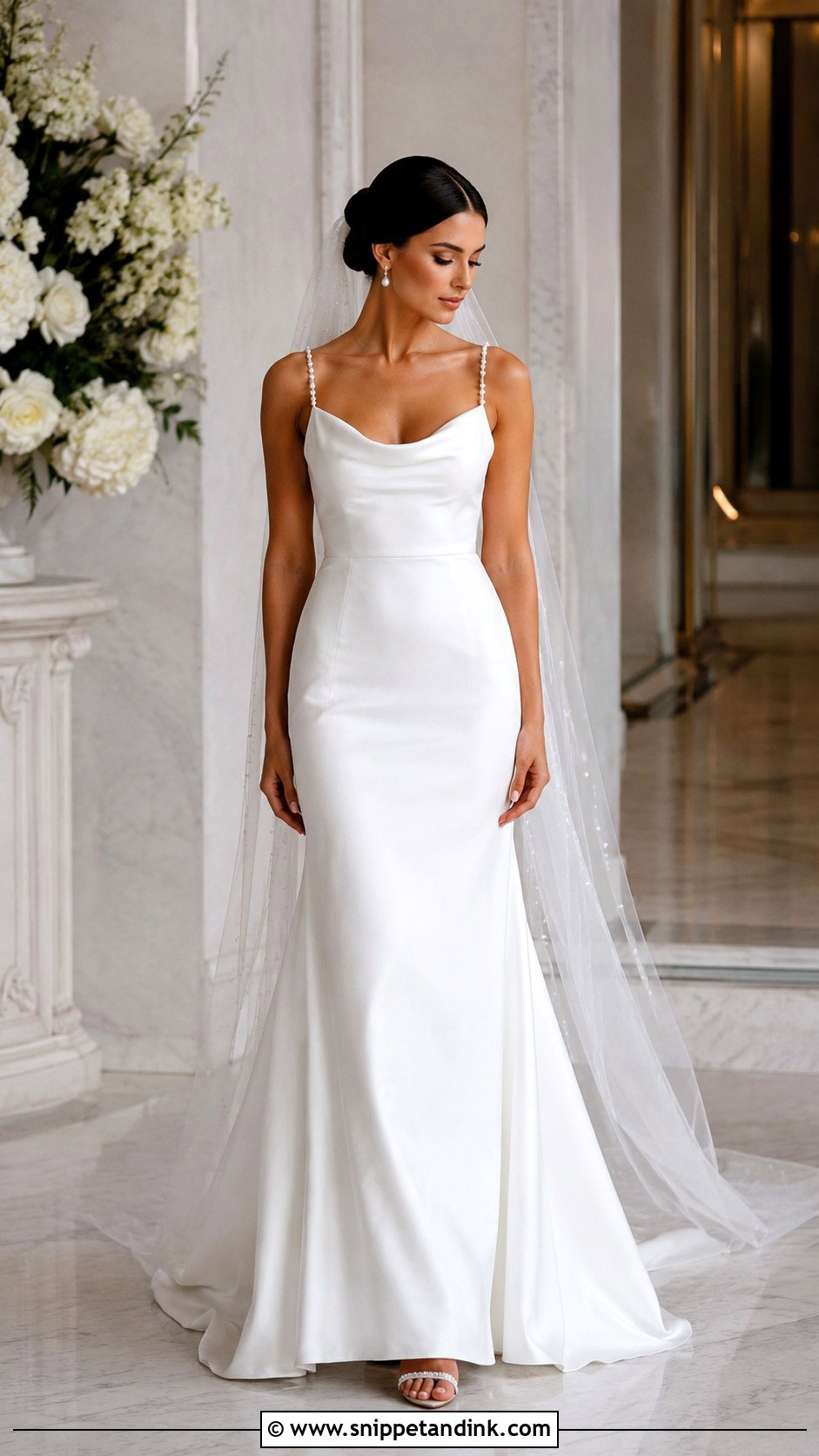
Pearls work best as an accent: pearl straps, a pearl-trimmed neckline, pearl buttons or light pearl embroidery, not a gown covered from bodice to hem. Satin, crepe and tulle all pair with them. Good pearls have a soft glow, while cheap plastic ones look flat in close-up photos, so look at them in daylight before you buy. Pearl studs or drops, simple heels, a sheer veil and smooth hair keep the pearls the one decorative note.
19. Basque Waist Wedding Dress
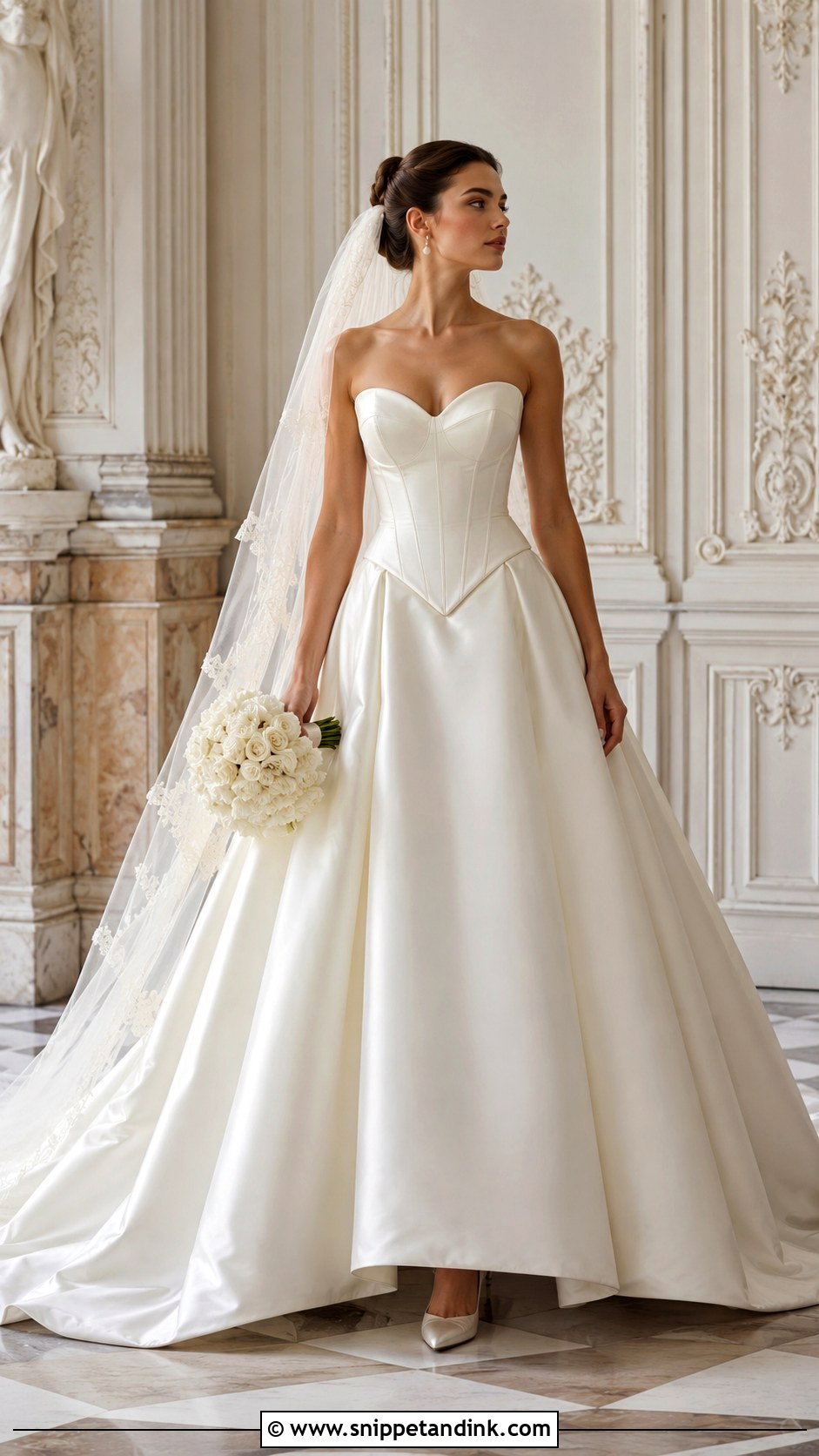
A basque waist wedding dress dips just below the natural waist and lengthens the torso. Balance it with an A-line or ball gown skirt in satin, mikado or lace. The dip should stay shallow on a short torso and can go deeper on a long one, and that is the adjustment I make most often with this shape. Strapless, scoop and off-shoulder necklines keep it simple, finished with a long veil, pearl earrings, satin pumps and a structured bouquet. It’s a historic shape that looks current with clean styling.





20. Long Train Wedding Dress
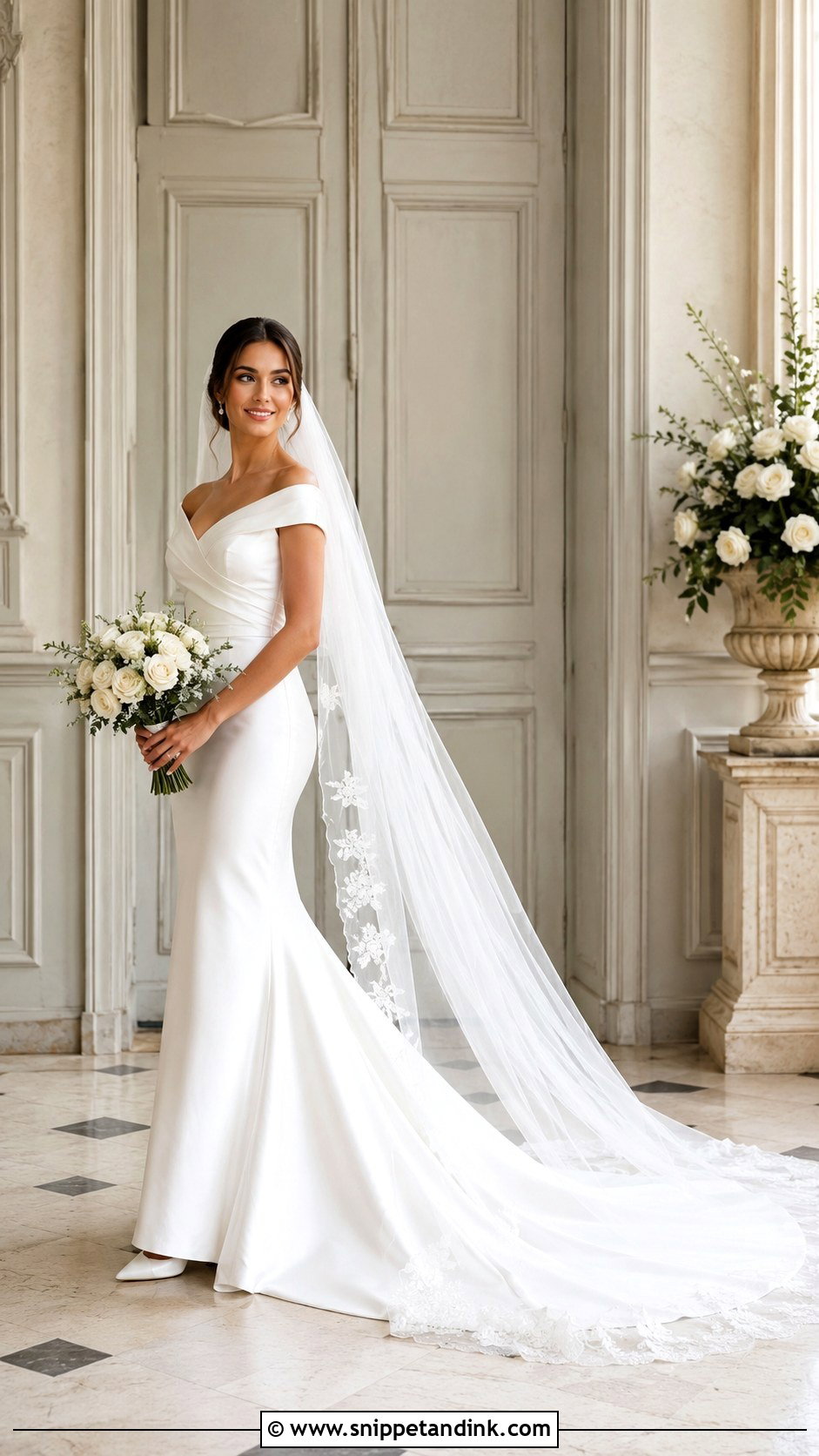
A long train makes the entrance and a big photo moment, provided it flows from a clean skirt rather than carrying heavy detail. Satin, crepe, lace and mikado all suit it. A cathedral veil adds to the drama, with simple earrings and classic heels keeping the rest calm. Insist on a bustle, and practise it. An unbustled train gets stepped on by the first guest who hugs you. Formal venues with long aisles show it off best.
21. Floral Lace Wedding Dress
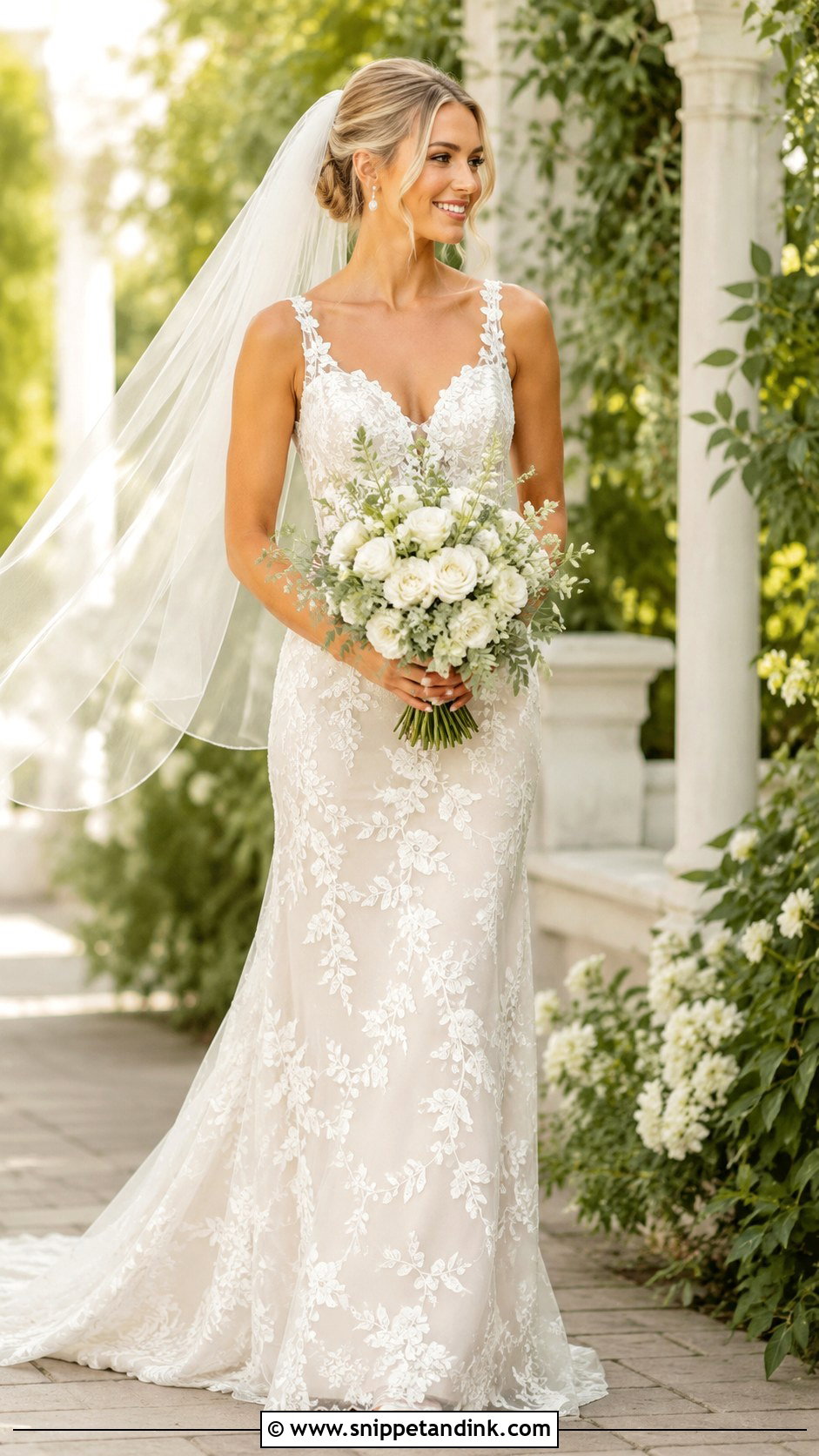
Floral lace stays classic when the pattern is delicate and placed with intent, over tulle, satin or crepe on an A-line, sheath or fit-and-flare. I look at how the motifs meet at the seams. In a well-made gown the lace is cut around the flowers so they flow across the join instead of being sliced in half. All-over lace calls for pearl earrings, plain heels and a sheer veil, while lace only at the bodice or hem leaves room for a slightly more detailed veil. Gardens and spring weddings suit it.
22. Satin Mermaid Wedding Dress
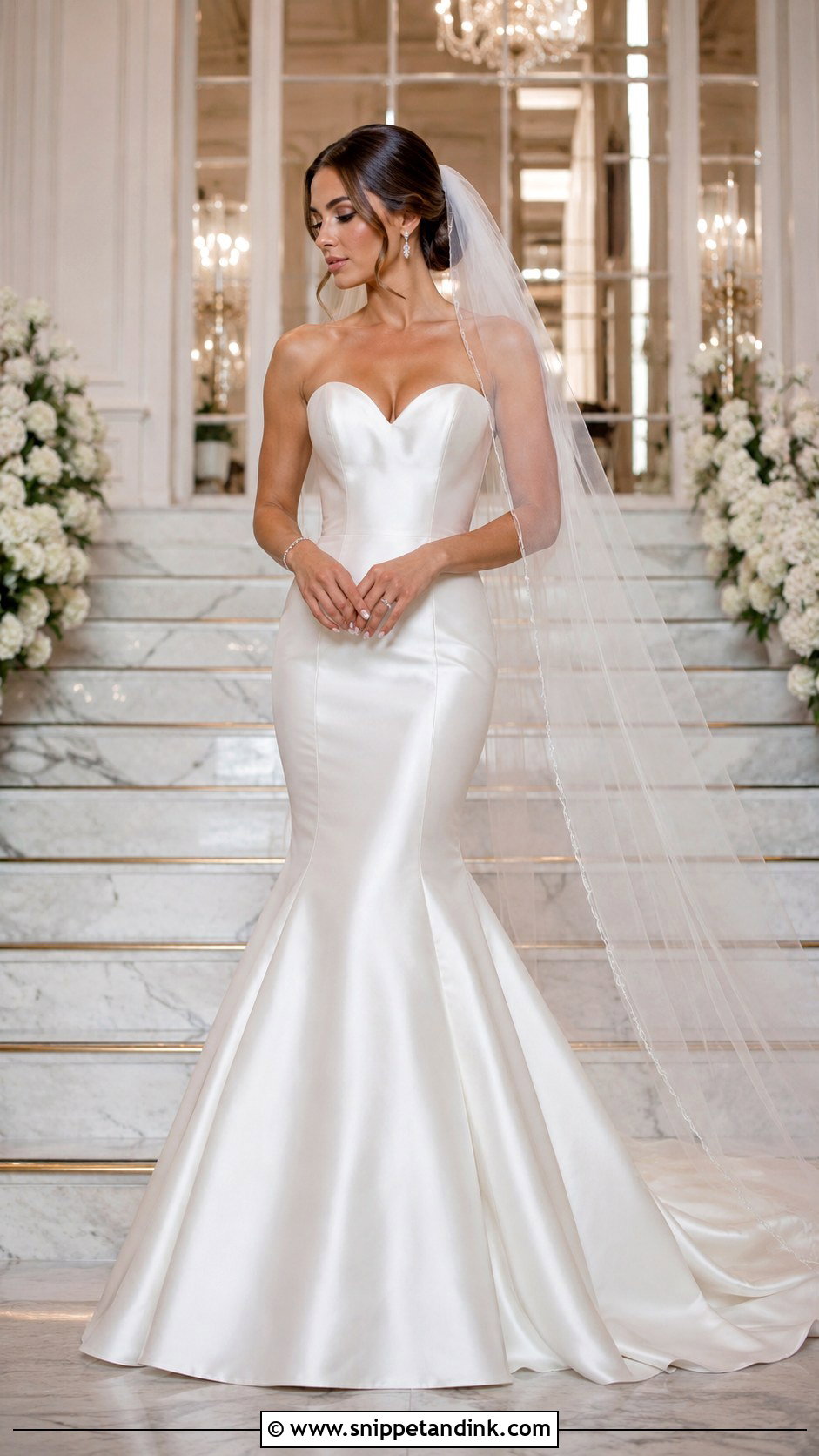
Mermaid satin fits closely and flares low, so the line has to be clean to stay classic. Smooth satin with few seams and a sweetheart, off-shoulder or strapless bodice works best. Sitting is the hard part. A mermaid skirt bunches at the knee on a chair, so look for a gown with a little ease through the thigh. Sleek heels, drop earrings, a long veil and a polished updo finish it, without heavy accessories, for formal evening weddings, hotels and modern venues.
23. Illusion Sleeve Wedding Dress
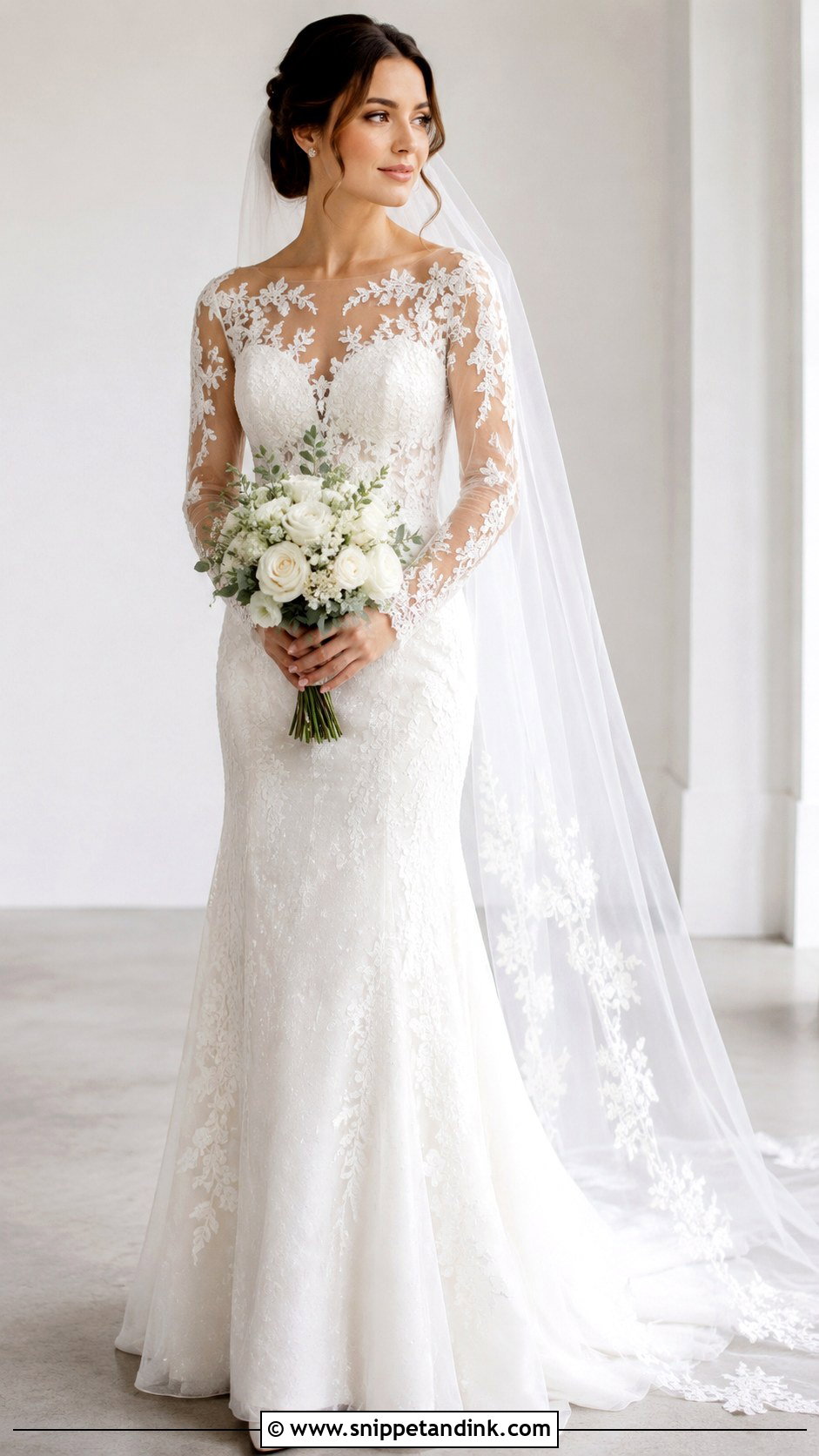
Sheer sleeves with lace appliqué, fine embroidery or tiny buttons give the look of long sleeves while keeping the outfit light. A fitted bodice and soft skirt let them blend into the design. The tulle should be close to your skin tone, otherwise it reads as a grey film in photos. A simple veil, small earrings, closed-toe heels and a neat bouquet keep the sleeves in focus. Because it covers without trapping heat, it works in almost any season.
24. Plain Satin Wedding Dress
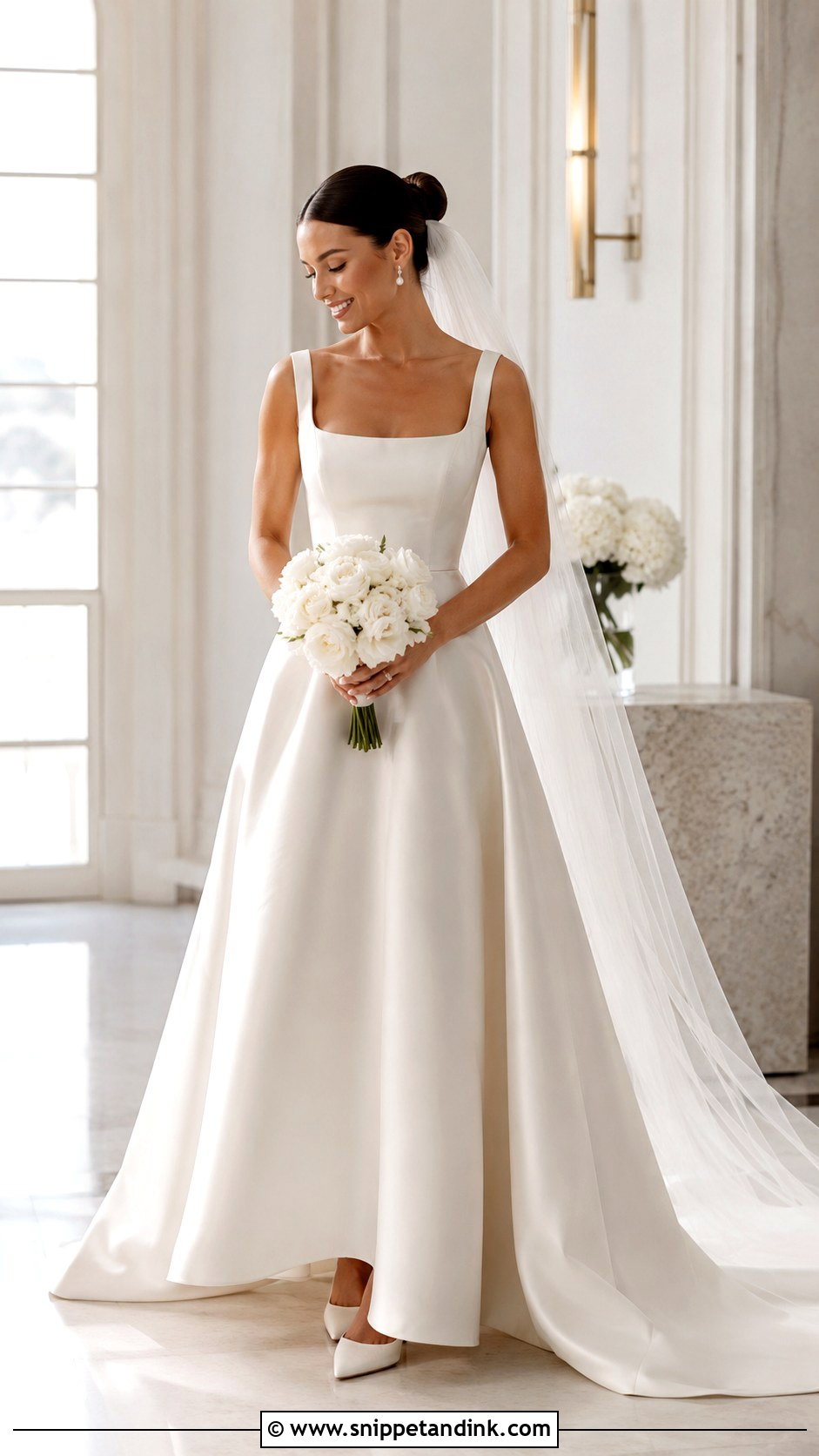
With nothing else on the dress, the cut has to be excellent. Look for a smooth bodice, clean seams and a skirt that moves naturally, under a square, strapless or scoop neckline. Plain satin shows every bump in a seam allowance, so I run a hand over the inside to check they’re pressed and trimmed flat. Pearl earrings, a long veil, pointed pumps and a sleek bun finish it, with a simple bouquet of white blooms. There’s no lace or beading to date it, which is exactly the point.



25. Classic Wedding Dress With Veil
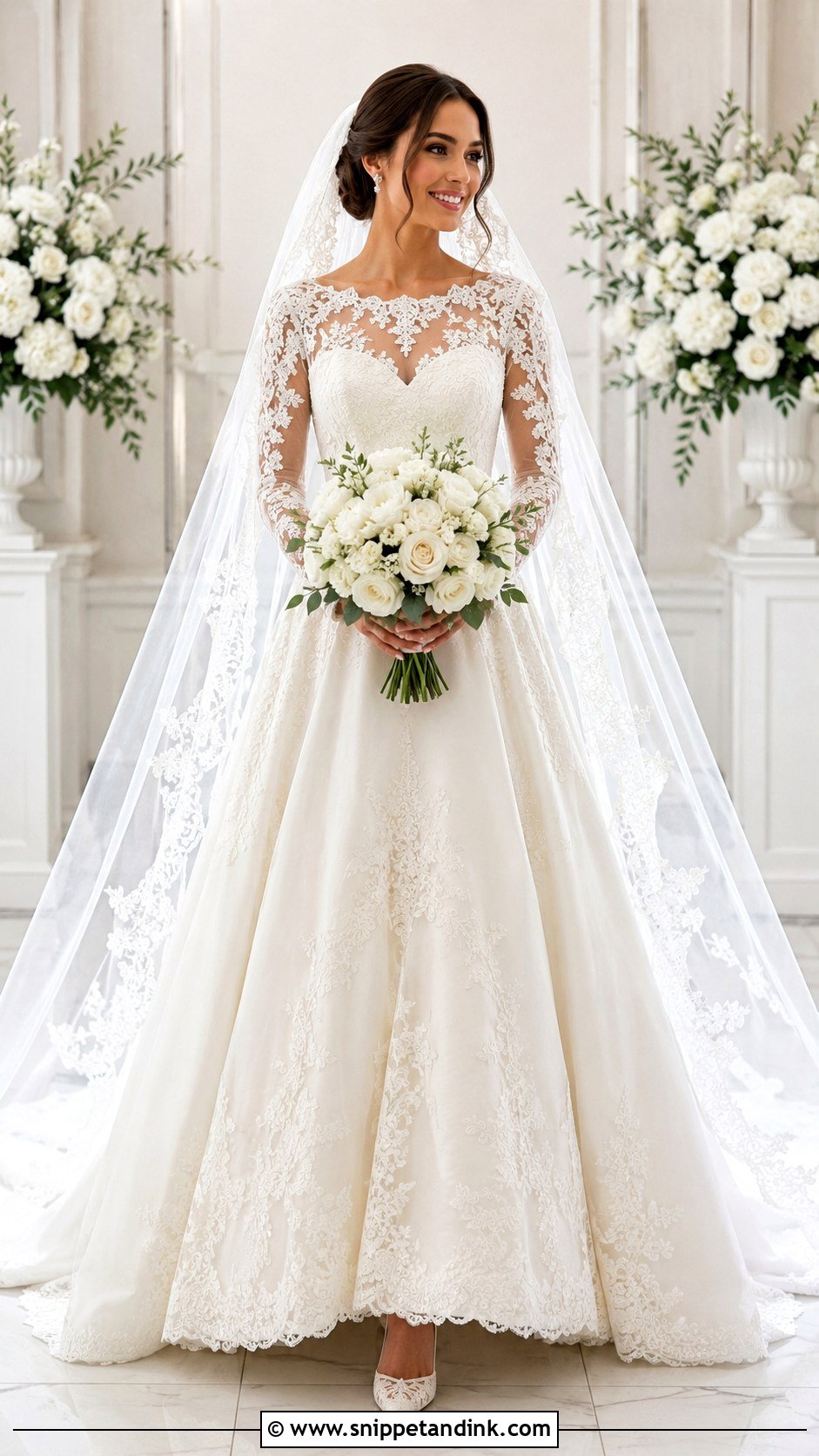
The veil is what turns a white dress into a bridal outfit, and matching its mood to the gown matters most. Plain satin looks right with a sheer cathedral veil, and a lace gown pairs with a lace-trimmed veil as long as the two laces are close in style. Satin, lace, crepe and tulle gowns can all take one. Hair needs to be firm where the comb goes in, or the veil drags the style loose within the hour. Pearl earrings, elegant heels and a bouquet that doesn’t overpower the outfit complete it.
If You Hope Someone Wears It Again
Some brides choose a classic gown hoping a daughter, niece or friend will wear it one day. That plan works far better if you start at the alterations stage rather than years later.
- Ask your seamstress to leave seam allowances wide wherever possible instead of trimming them, so the dress can be let out for a different body.
- Keep the fabric cut from the hem or train in a labelled envelope. It’s the only exact match you’ll ever have for future repairs.
- Write down your measurements and the alteration notes, and photograph the label and the inside construction.
- Have it professionally cleaned, then store it folded in acid-free tissue inside an acid-free box, away from light and damp.
Even then, any gown will need a fresh fitting and probably some repair before a second wedding. Satin and silk can yellow and lace weakens with age, so think of a passed-down dress as a starting point for a good seamstress rather than something guaranteed to fit straight off the hanger.
Balance Is What Makes a Dress Last
A timeless gown doesn’t have to be plain, and a detailed one doesn’t have to date. The bridal looks that last usually share one quality, and it’s balance: good fabric, careful tailoring, flattering proportions and accessories that support the dress rather than compete with it. Satin, lace, crepe, tulle, sleeves, a train or a simple veil can all get you there. Think about how you want to feel on the day and which photos you’ll want to look at in thirty years, then choose the dress that answers both.
You'll Like These Ideas:












Leave a Reply