
Bridal gowns have become more personal. The classic silhouettes are still here, but now with basque waists, pearl accents, soft draping, square necklines, detachable trains and very clean, minimal fabrics. A gown that looks perfect on the hanger can still be wrong for you. It has to suit the venue and your shape, and you have to be able to sit, eat and dance in it for hours. Below are the shapes I see brides love most, from the full ball gown to the sleek satin column and the short reception dress, each with the veil, shoes, jewelry and bouquet I’d pair with it and the fitting detail I’d check.
Satin, Crepe, Tulle or Mikado? Start With the Fabric
Most brides start with silhouette. I start with fabric, because it decides how a gown feels at hour eight more than its shape does.
- Satin: smooth, reflective, structured. It shows creases and sweat marks, and it is warm in summer.
- Crepe: matte and fluid. Comfortable and modern, but it shows every line underneath and every inch of a poor fit.
- Tulle: light and airy, cooler in heat, easy to move in. It snags on rough floors and jewelry.
- Mikado: a heavy, stiff silk blend that holds sculpted shapes and bows. Great for cool weather, tiring in a hot marquee.
- Lace: depends on the lace and the lining. Fine lace breathes; heavy guipure over polyester lining does not.
For a summer garden I lean toward tulle, chiffon or light lace. For a winter ballroom, satin and mikado come into their own. Once the fabric fits the season, the silhouette choice gets much easier.
1. Lace A-Line Wedding Gown
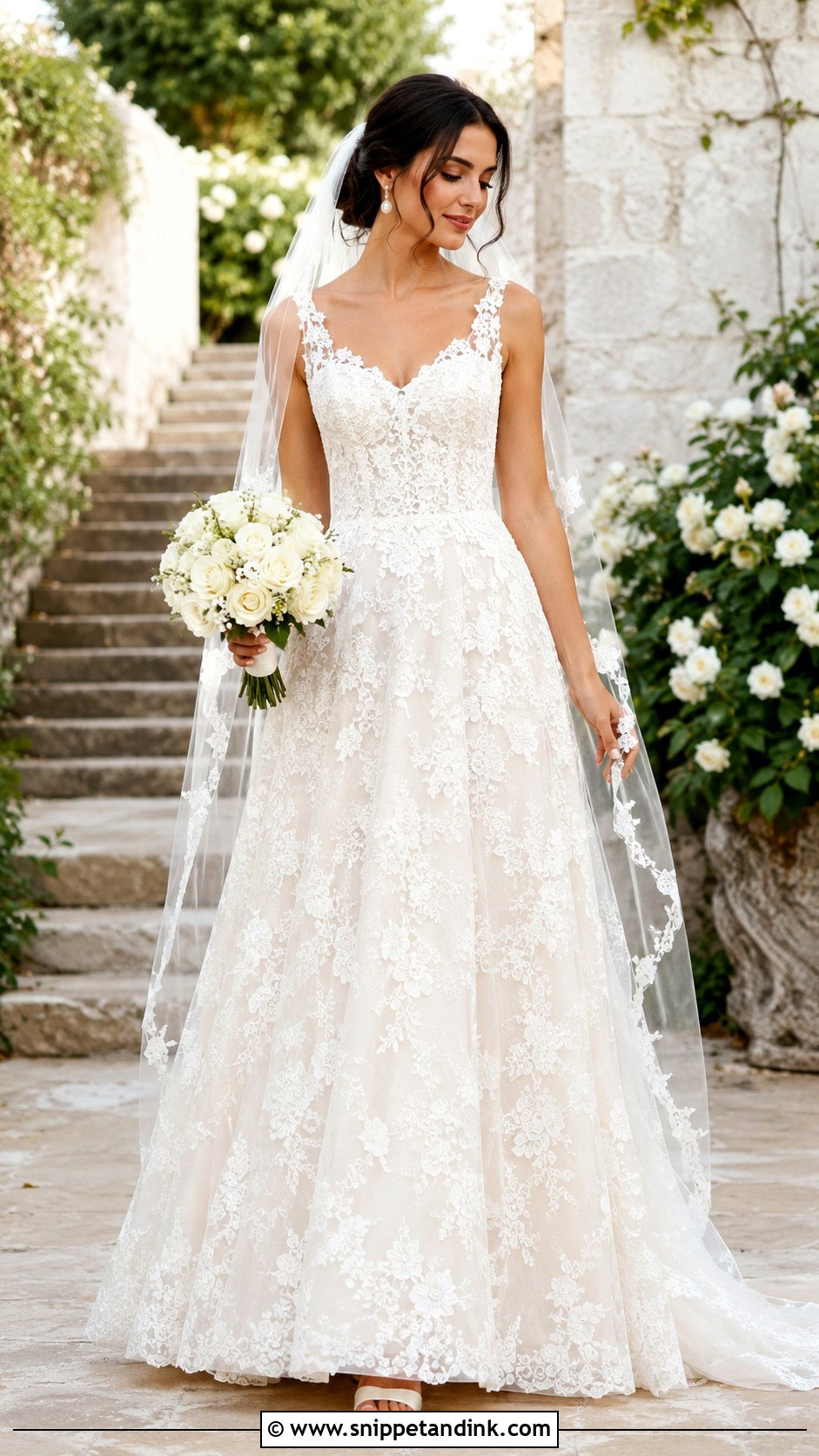
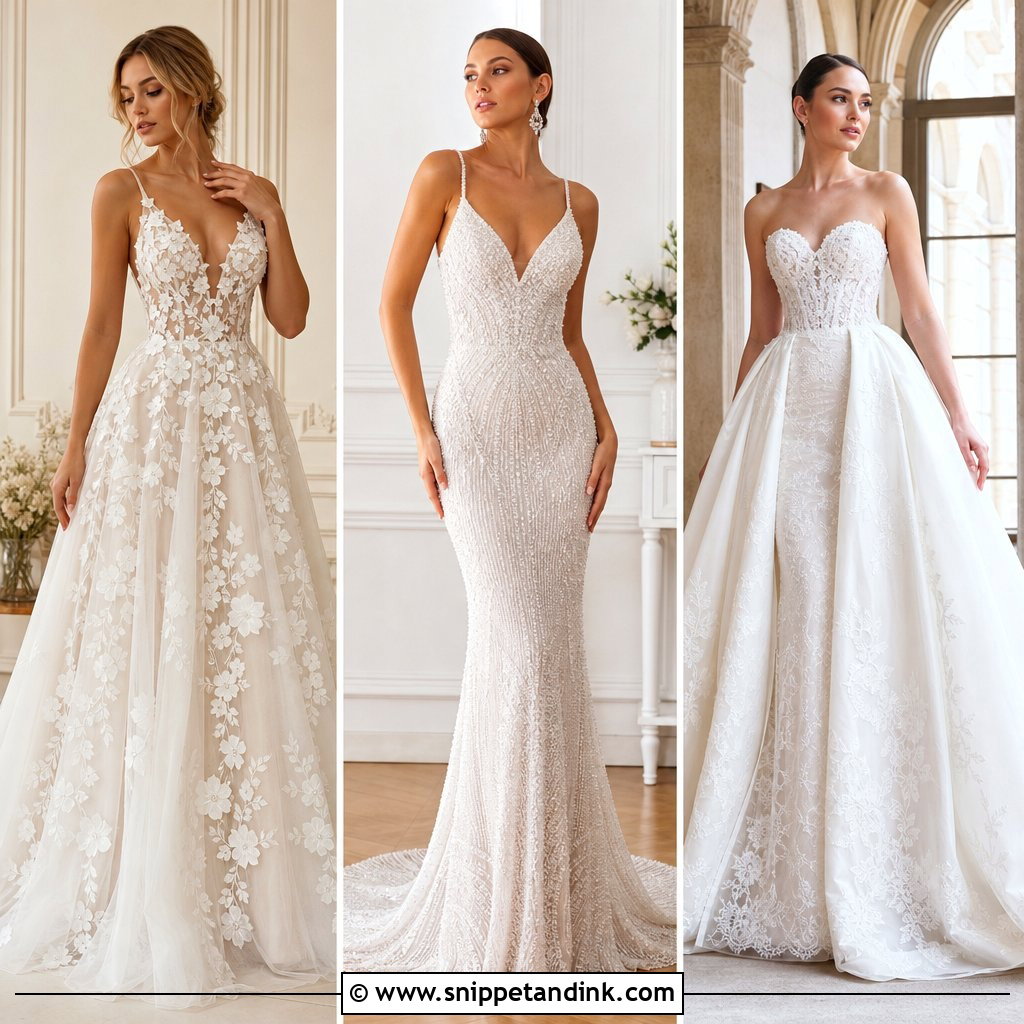
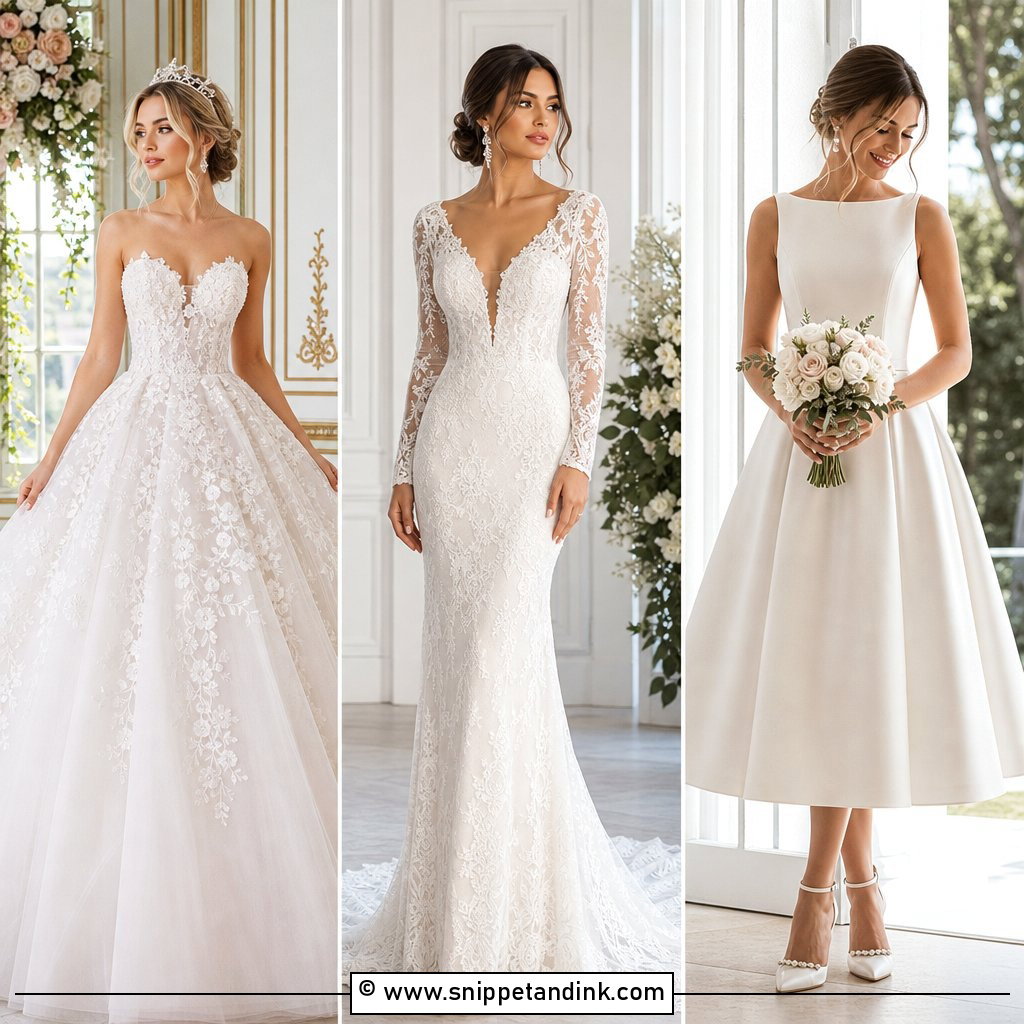
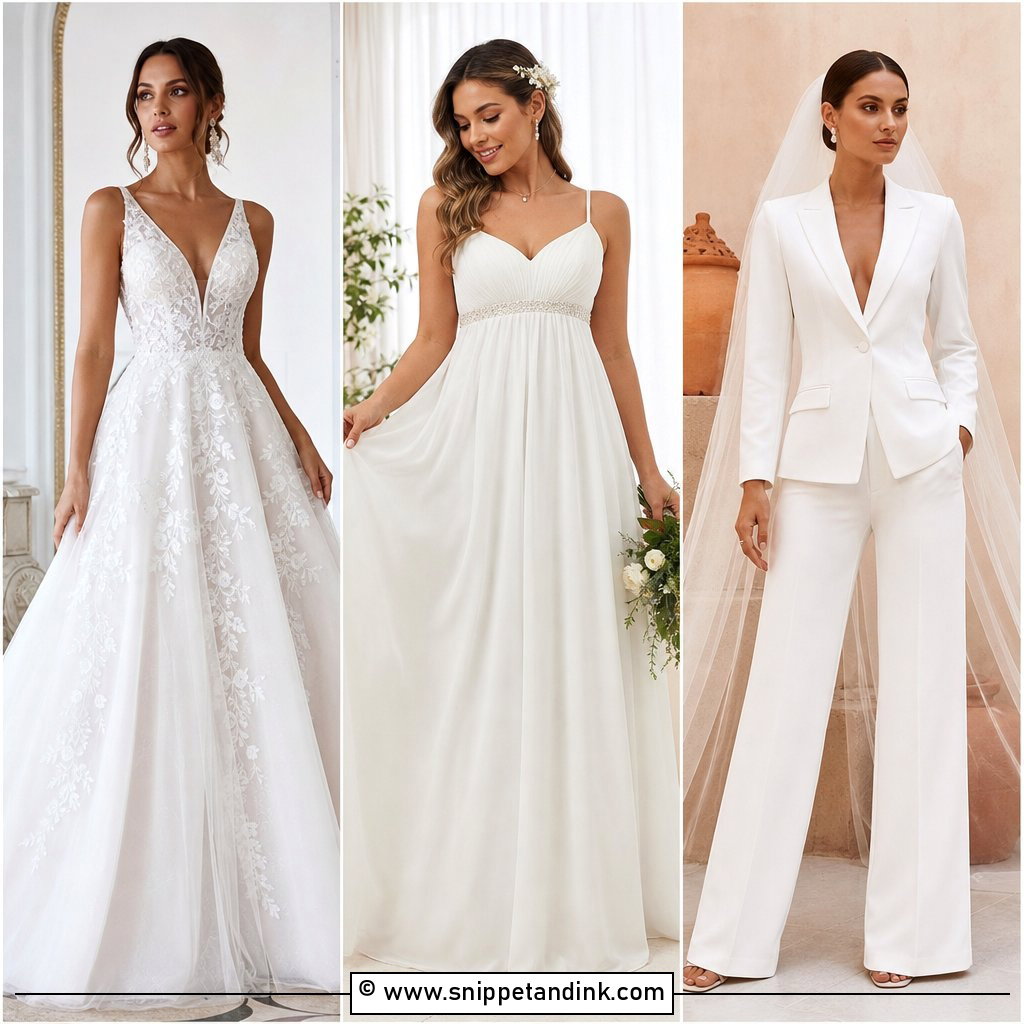
Lace A-lines are the gown I see chosen most often, and for good reason: the bodice holds the waist and the skirt opens enough to walk, sit and dance freely. Floral lace over ivory lining feels classic; raised appliqués look newer. A sweetheart or V-neck suits most figures. I’d add pearl drops, a fingertip veil, ivory block heels and white roses with greenery. Block heels matter for gardens and estates, where stilettos sink into lawn.
2. Satin Ball Gown Wedding Gown
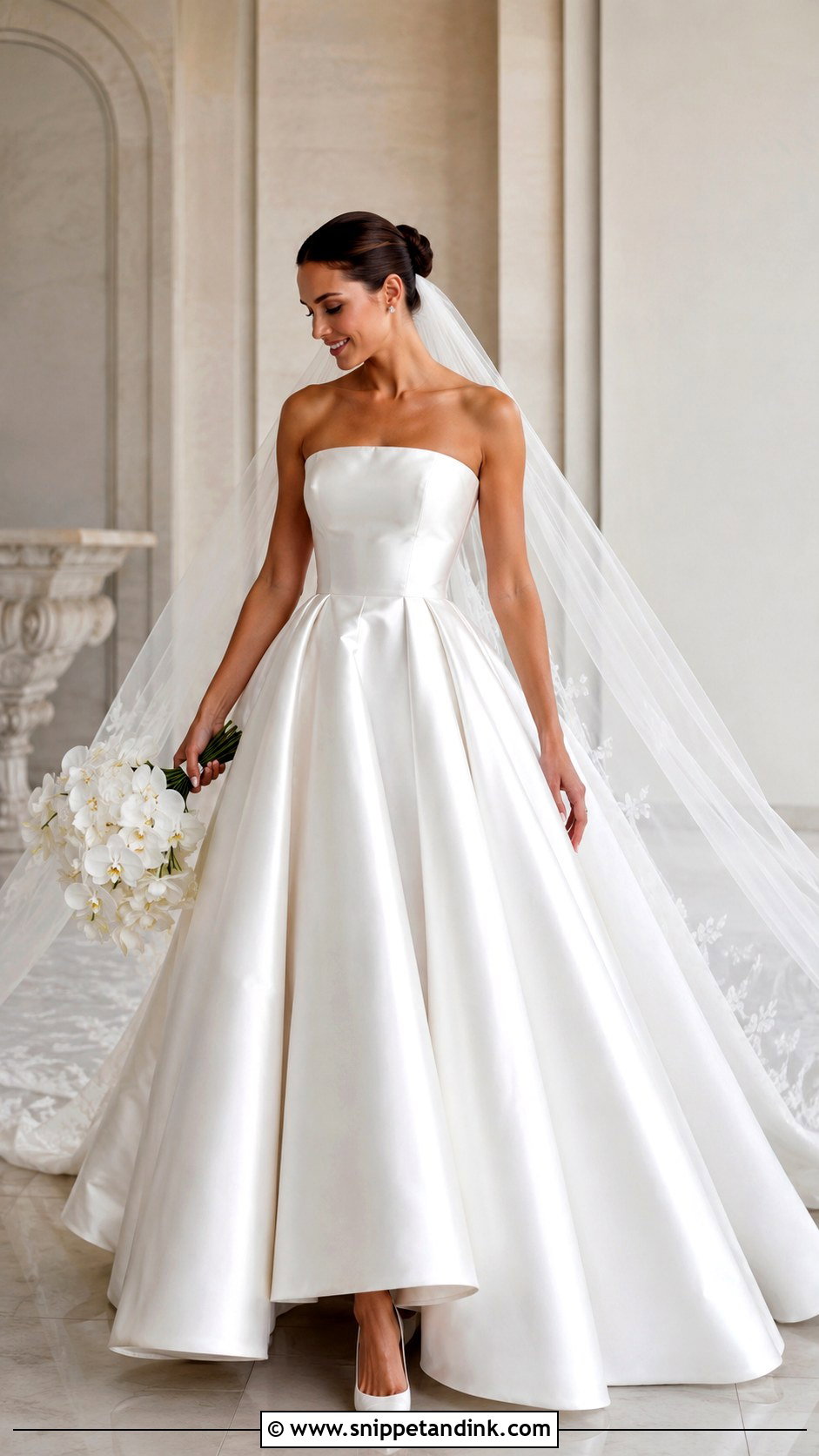
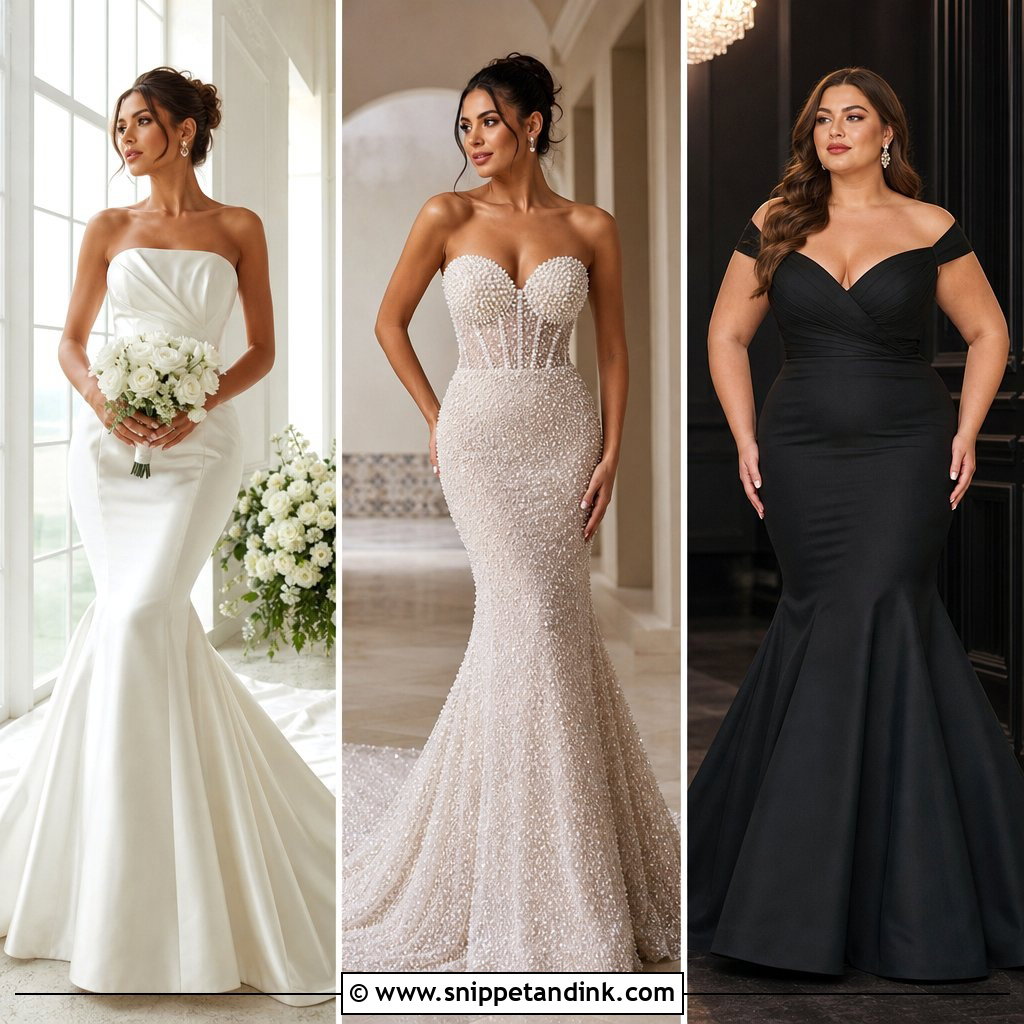
Satin doesn’t hide anything, which is exactly why a well-cut satin ball gown looks so clean. A strapless or square bodice with hidden corsetry gives the structure; the full skirt does the rest. Keep accessories quiet: a cathedral veil, crystal studs, pointed satin pumps and a neat bun. It suits formal venues and large celebrations. Satin creases at the hip where you sit, so I plan portraits before the meal when I can.
3. Off Shoulder Wedding Gown
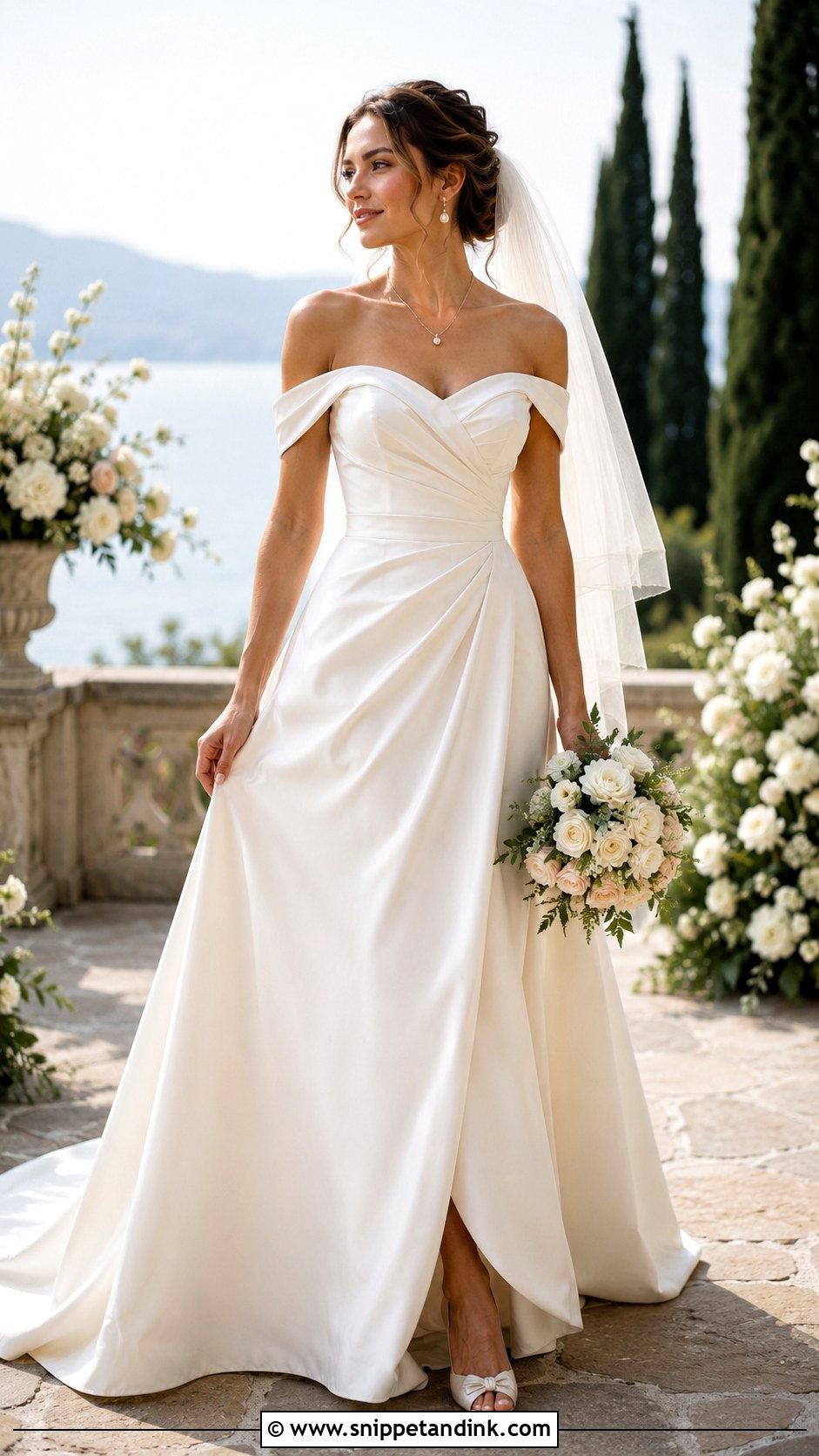
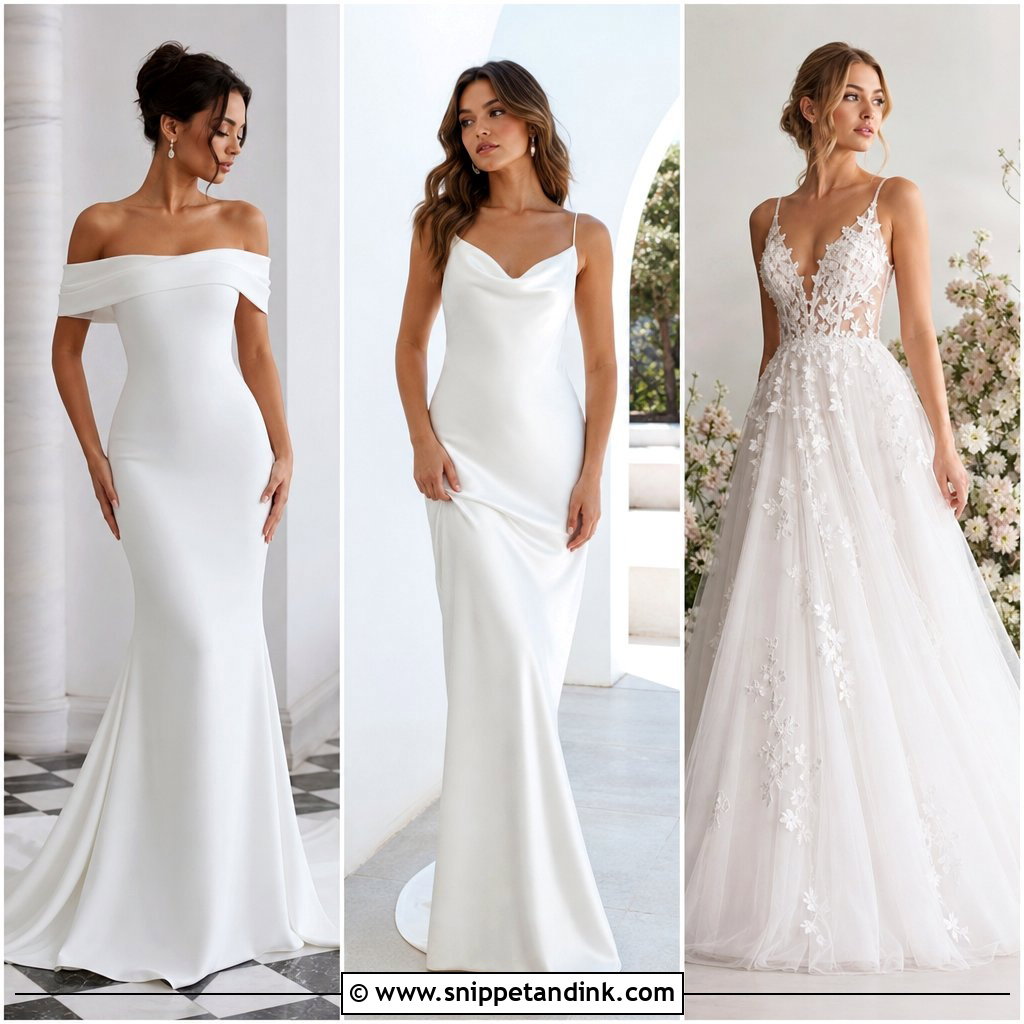
The off-shoulder line frames the collarbones and works in satin, lace, crepe or tulle. Fitted sleeves at the upper arm look polished; a flowing skirt relaxes it. A fine necklace, small pearl earrings, low heels and a mid-length veil suit it, with soft waves or a loose updo that keeps the neckline clear. My fitting test is to raise both arms as if hugging. These sleeves restrict movement, and some need a little extra ease built in.
4. Strapless Mermaid Wedding Gown
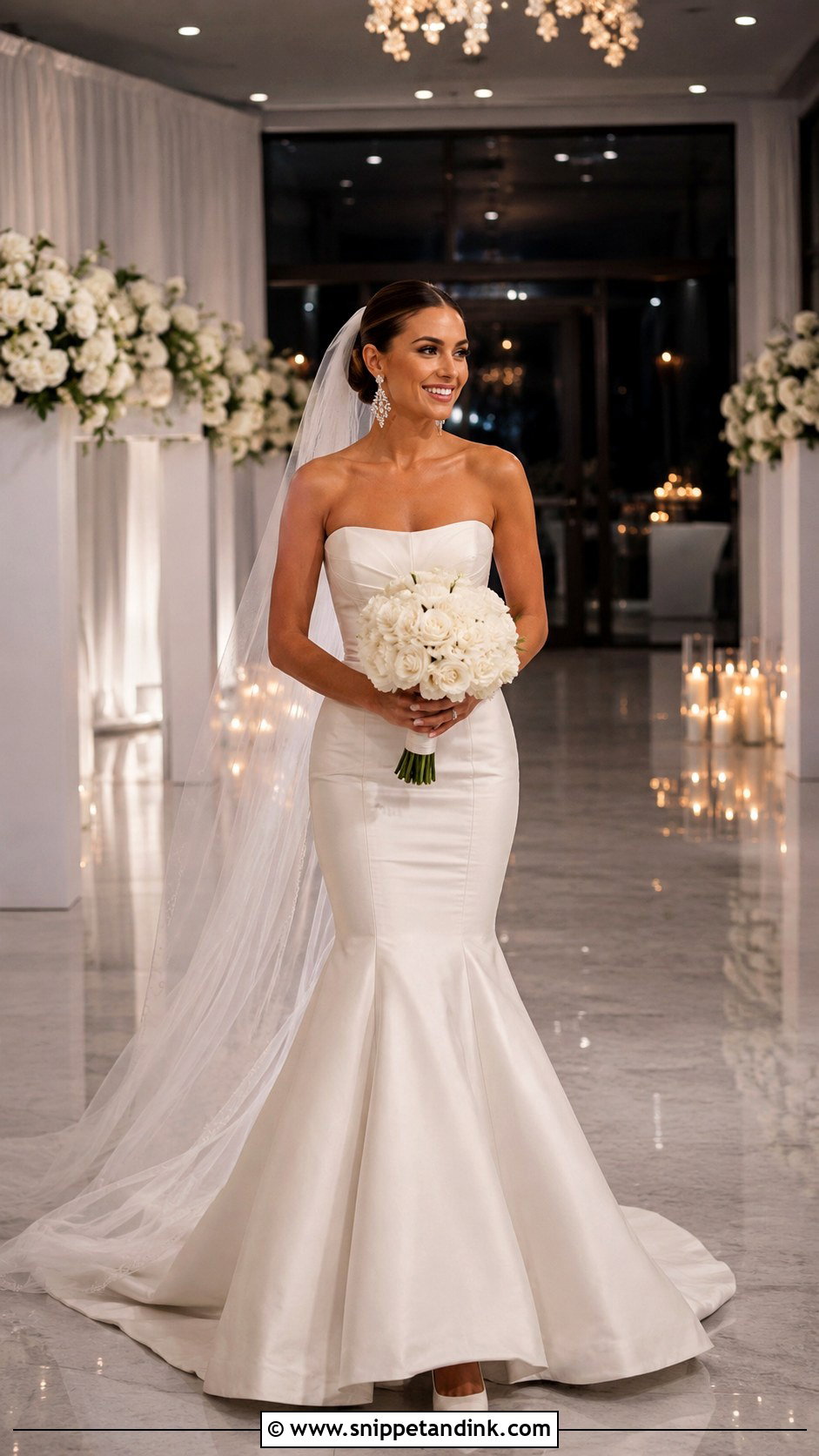
A strapless mermaid follows the body through waist, hips and thighs, then flares near the knee. That shape only works with strong construction: I look for proper boning, a secure top edge that doesn’t move when you breathe in, and fabric with enough body to hold the flare. Satin, crepe and lace all work. Statement earrings, sleek heels, a long veil and a simple bouquet keep it balanced. It is at its best in ballrooms and evening venues. Practise stairs and getting into a car in it.
5. Long Sleeve Lace Wedding Gown
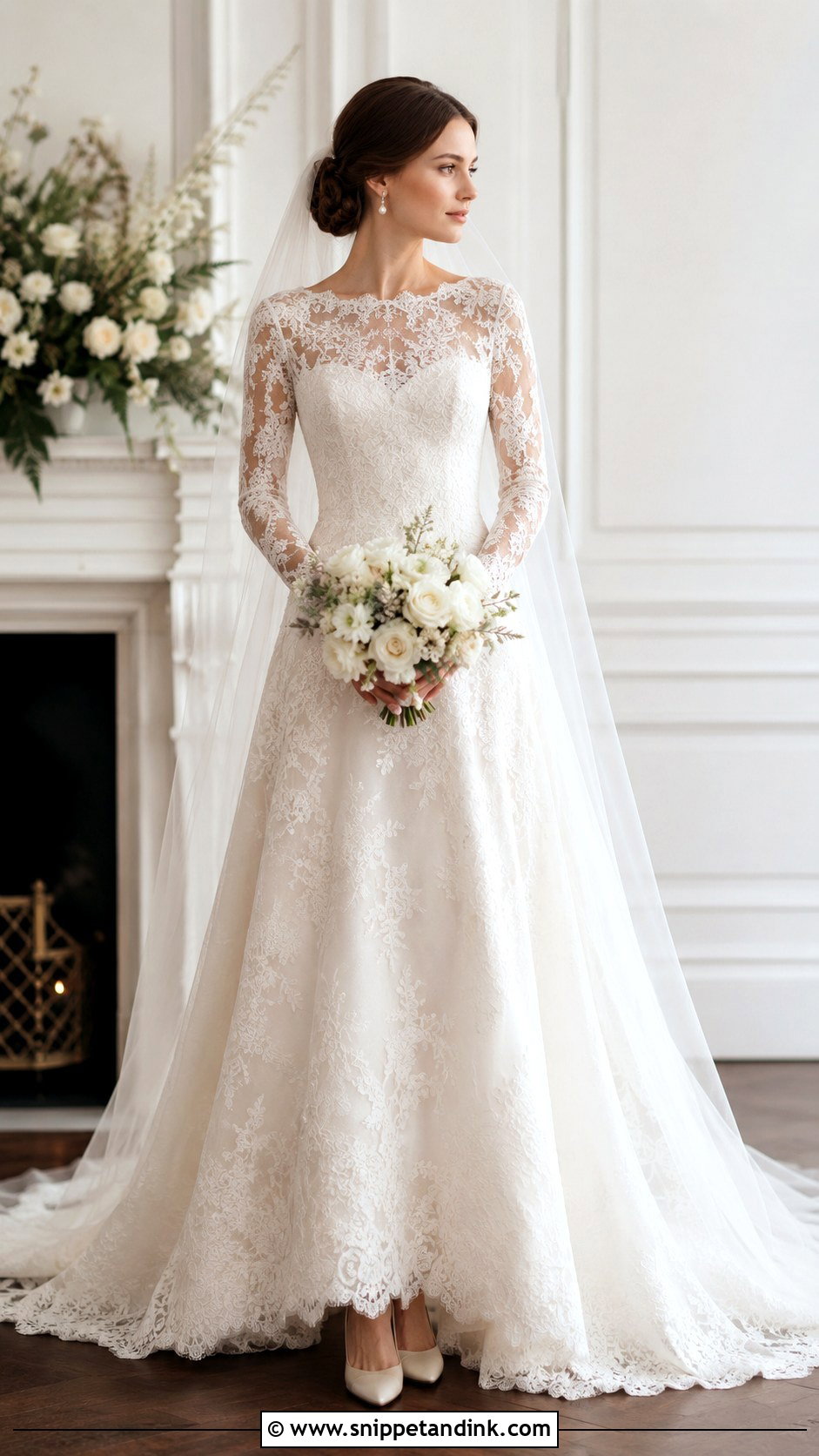
Sheer lace sleeves give coverage that still looks light, which suits cooler seasons and religious ceremonies. Illusion sleeves are the more delicate option; lined sleeves cover fully. With a fitted bodice and flowing skirt, the gown balances well as long as the lace isn’t too heavy. Pearl earrings, a low chignon, ivory pumps and a classic veil. White blooms and soft greenery. In close-ups, lace sleeves show every pucker, so the sleeve fit deserves as much attention as the bodice.
6. Minimalist Crepe Wedding Gown
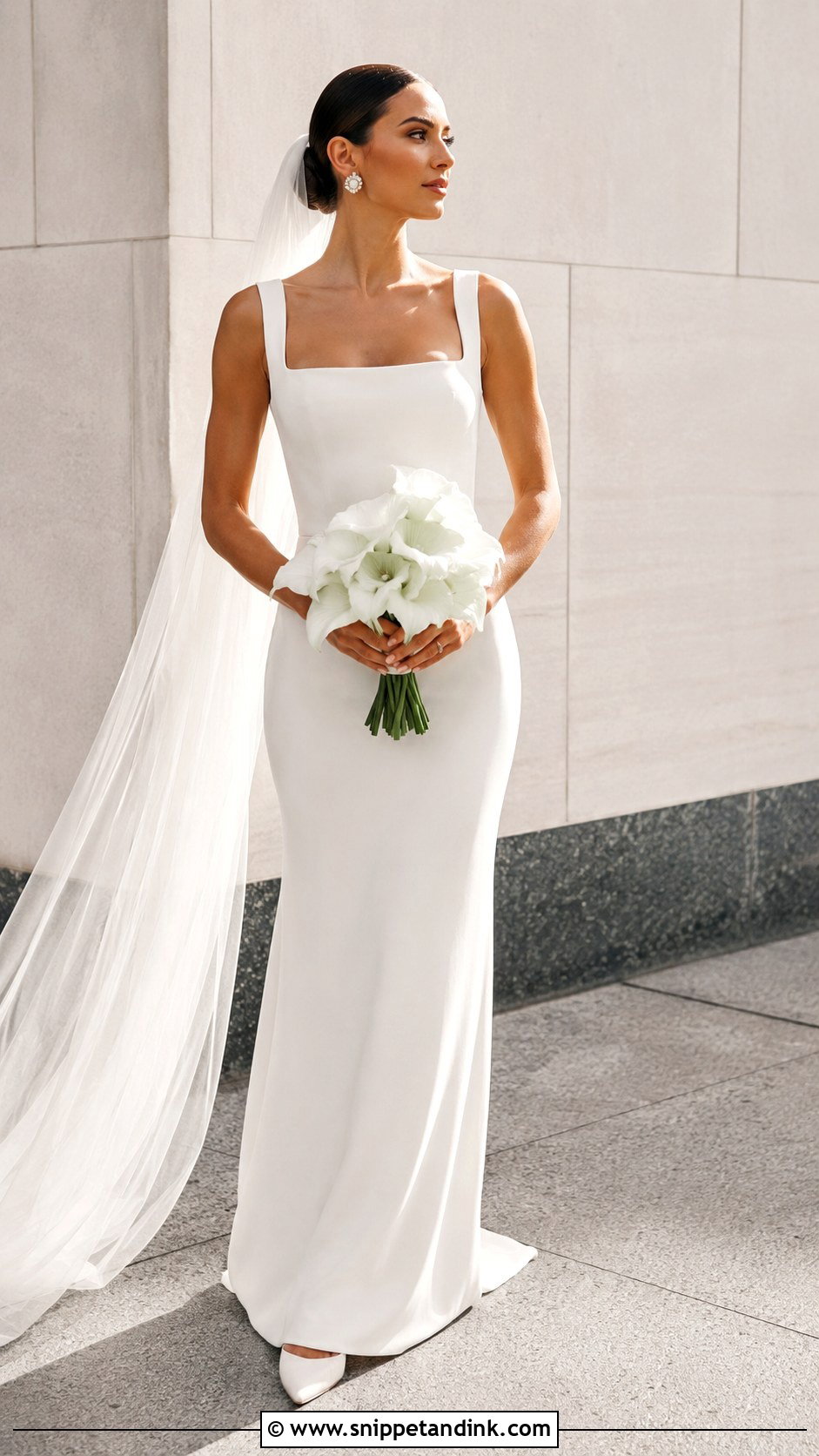
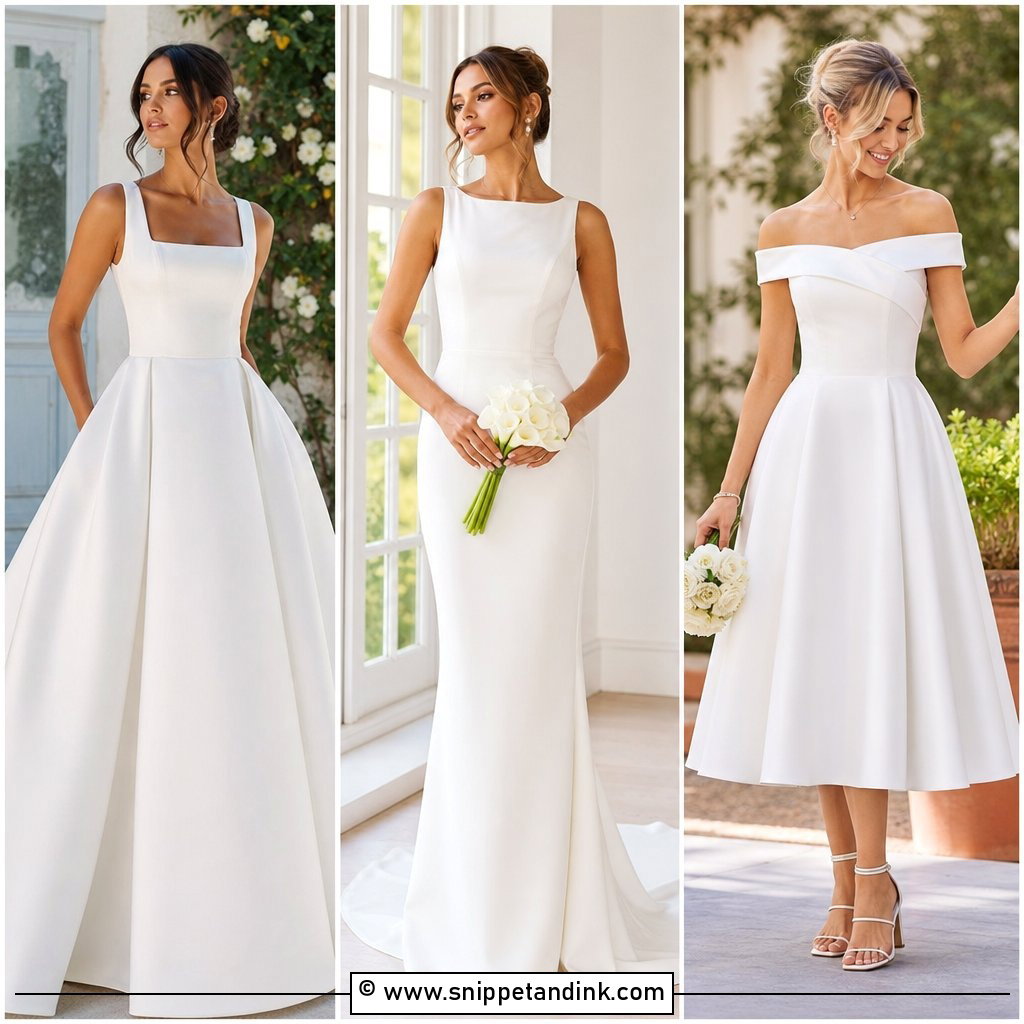
Crepe has nowhere to hide a bad fit, and that is its strength: the gown is all line and fabric. Square, bateau and sleek V necklines all suit it. Sculptural earrings, a smooth veil, pointed heels and a structured bouquet keep it modern. It’s a good base for one bold accessory, a pearl veil, a cape or striking shoes. I’d steer brides who dislike visible underwear lines toward a smoothing slip, since crepe shows everything underneath.
7. Tulle Princess Wedding Gown
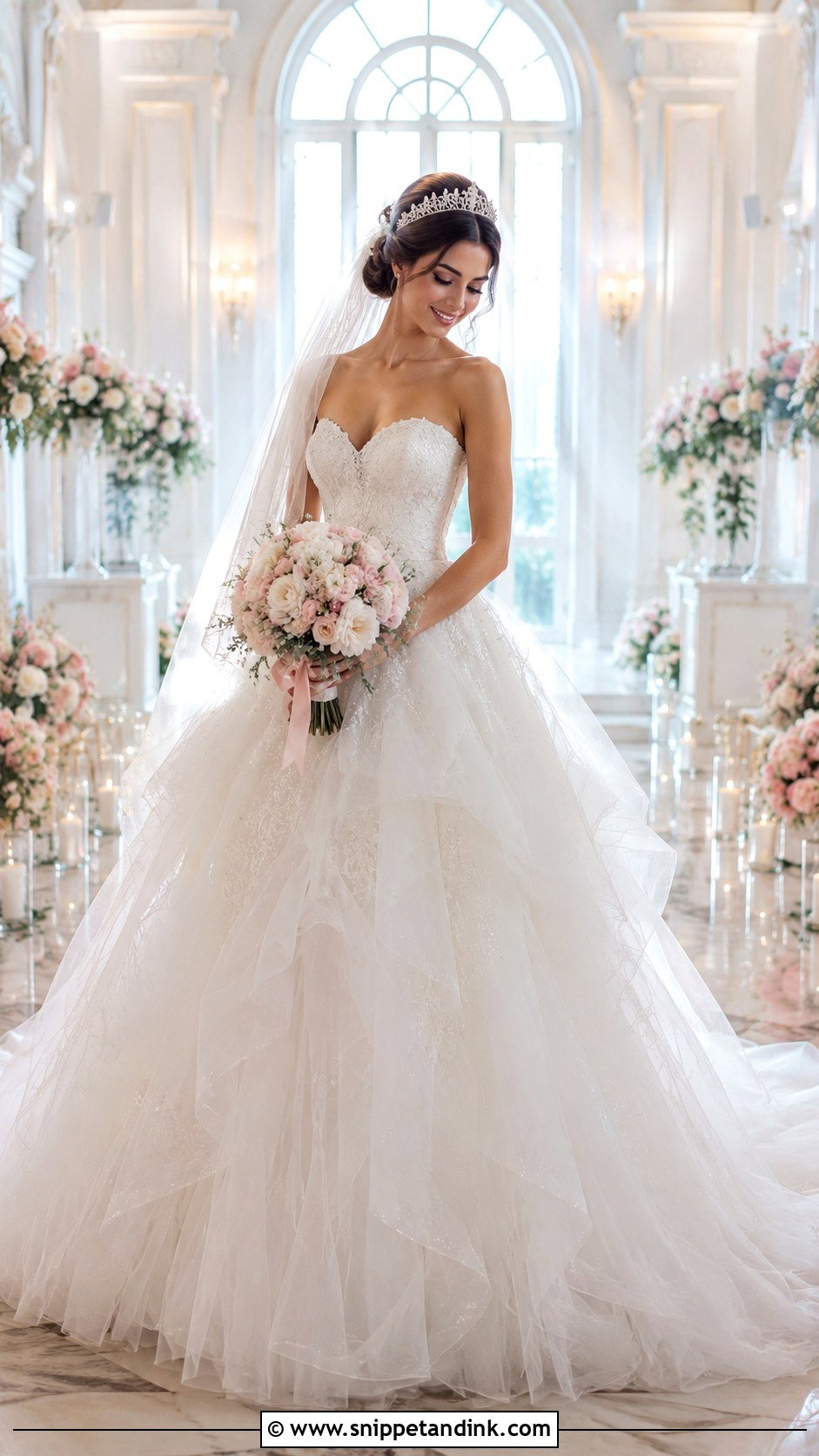
A tulle princess wedding gown gets its volume from layered tulle, which is far lighter than the same shape in satin or brocade. A fitted bodice keeps it in proportion. Lace appliqués, tiny pearls or a little shimmer add detail. Shoes hide under the skirt, but they still set the hem, so wear the same pair to every fitting. A tiara headband, long veil and soft pink or white bouquet suit it. Tulle snags on rough floors and branches, so outdoor portraits need a helper lifting the hem.
8. Square Neck Wedding Gown
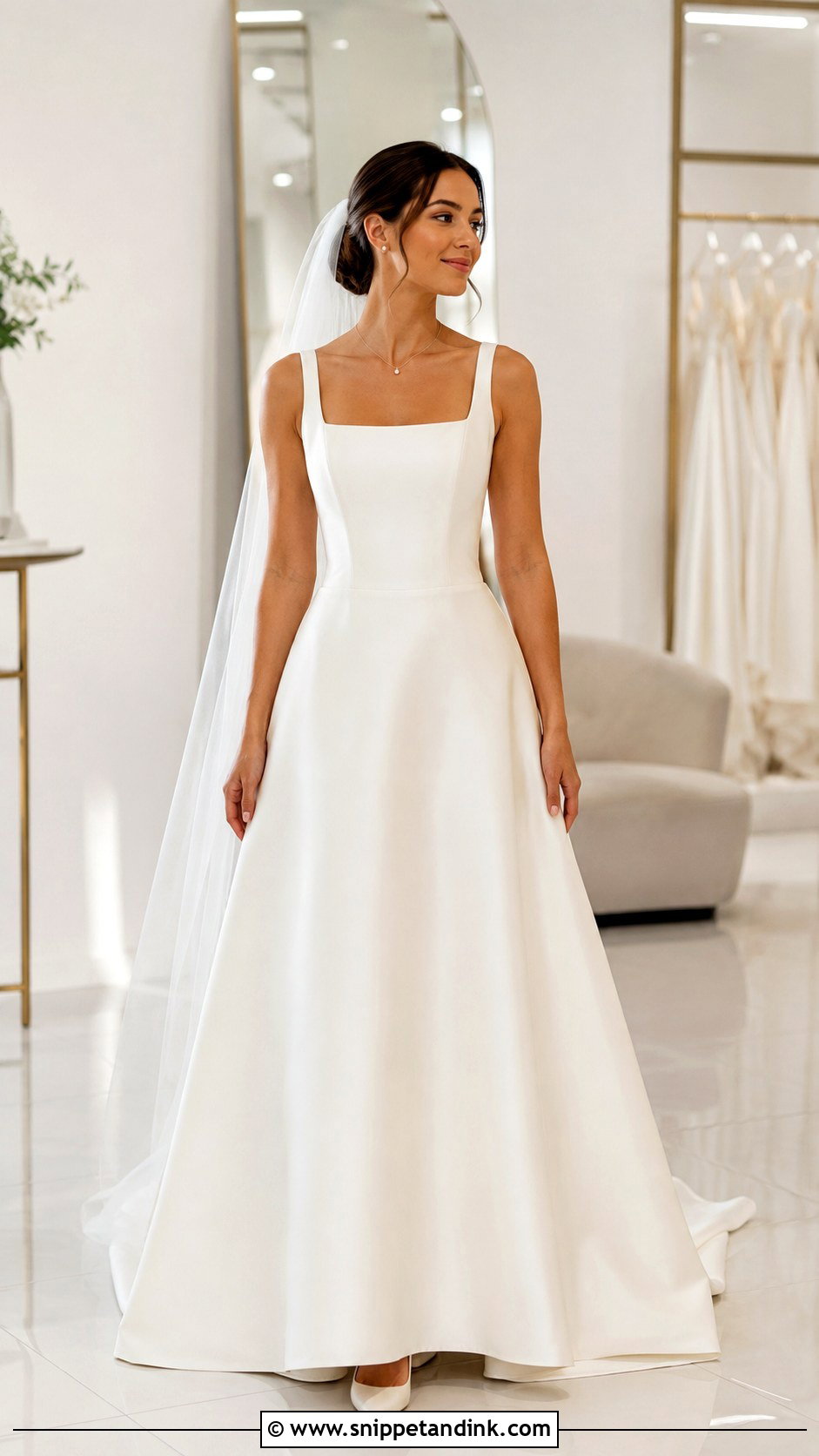
A square neck opens the chest in a structured way that balances the shoulders, and it suits A-line, sheath, ball gown and fit-and-flare shapes. Satin or crepe with few seams looks timeless; lace or embroidered tulle is more romantic. A simple pendant, pearl studs, a smooth low bun and classic pumps work, with a chapel veil that doesn’t cover the neckline. I check the corners of the square at the fitting. If they gape or pull, the strap length needs adjusting.
9. Floral Embroidered Wedding Gown
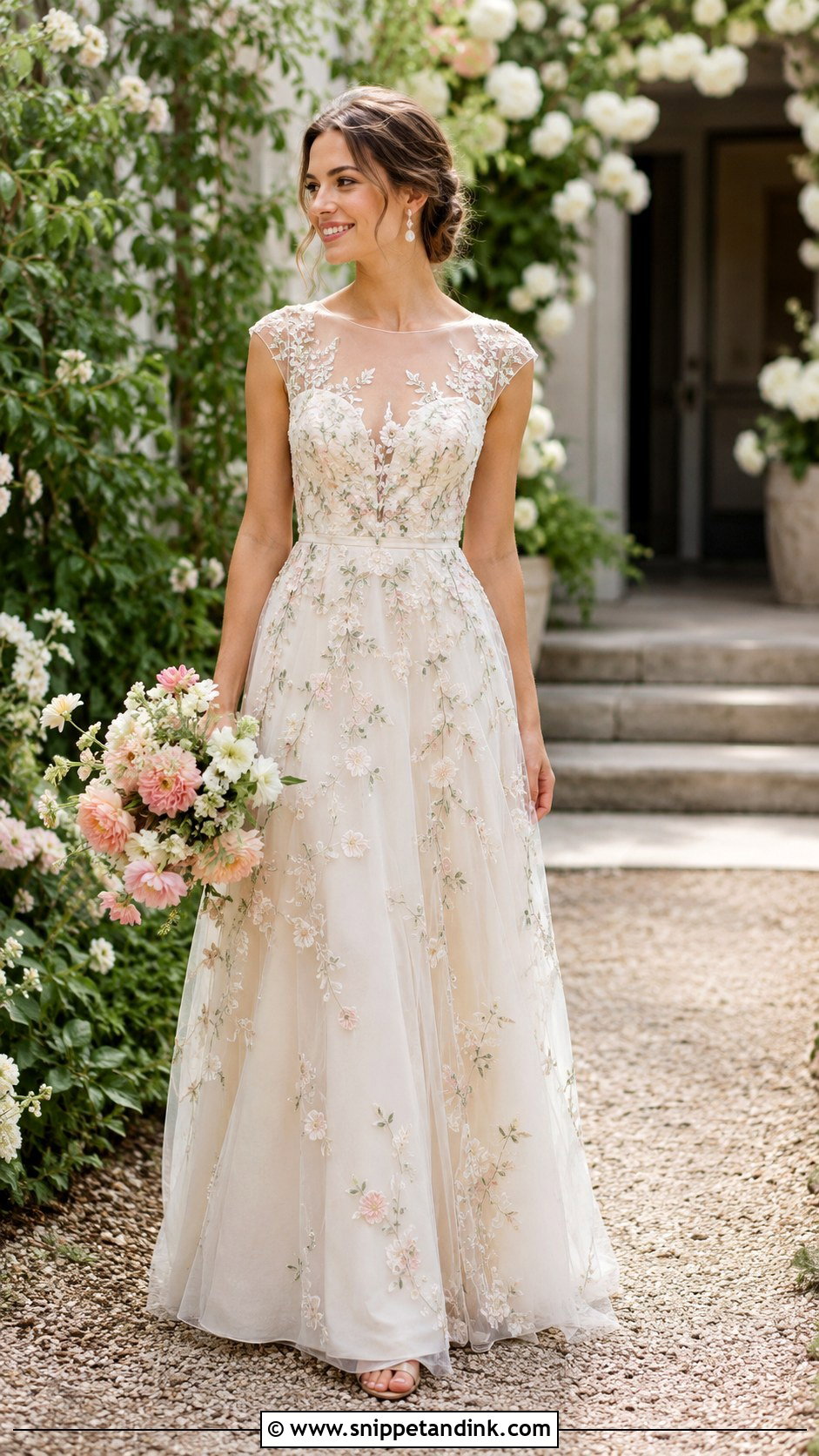
Embroidery can be subtle ivory thread or dimensional 3D flowers with beading. The best versions place the flowers where they flatter, heavier at the bodice and thinning down the skirt, rather than spreading them evenly. On a sheer overlay, they look as if they’re floating. Simple earrings, barely-there heels and a soft veil. A seasonal bouquet ties it to spring and outdoor weddings. Raised 3D flowers flatten if the gown is packed tightly, so ask how it will be bagged for delivery.
10. Beaded Wedding Gown
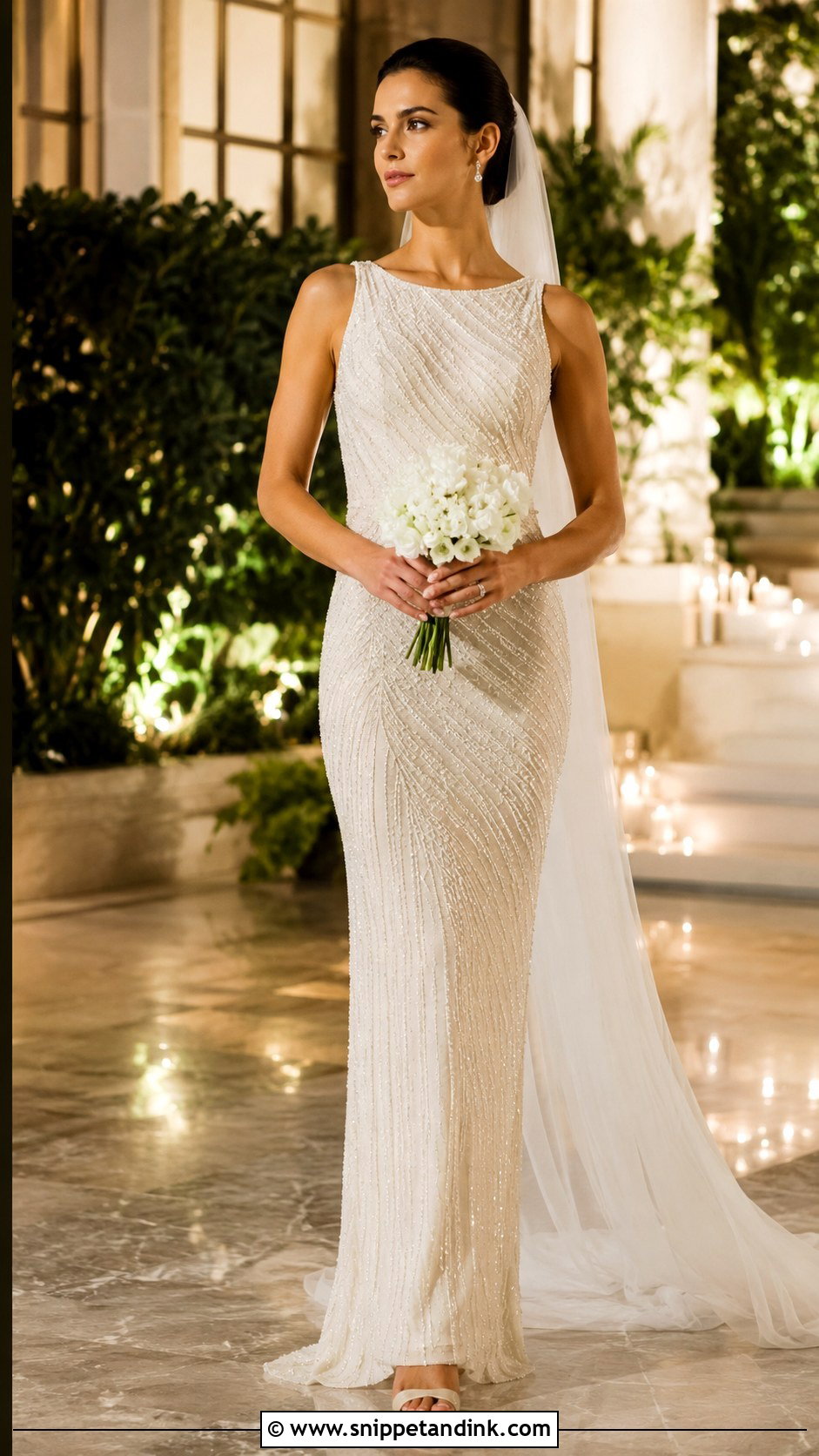
Beading should follow the gown’s shape. Linear beading lengthens the body; floral or vine beading softens it. It suits sheath, fit-and-flare and A-line silhouettes. With all that shine, I keep accessories clean: crystal studs, metallic or satin heels, a simple veil and a small bouquet, with waves or an updo depending on the neckline. Beading reads best in evening light and hotel venues. Remember it adds weight, which a strapless bodice has to carry all day.
11. Basque Waist Wedding Gown
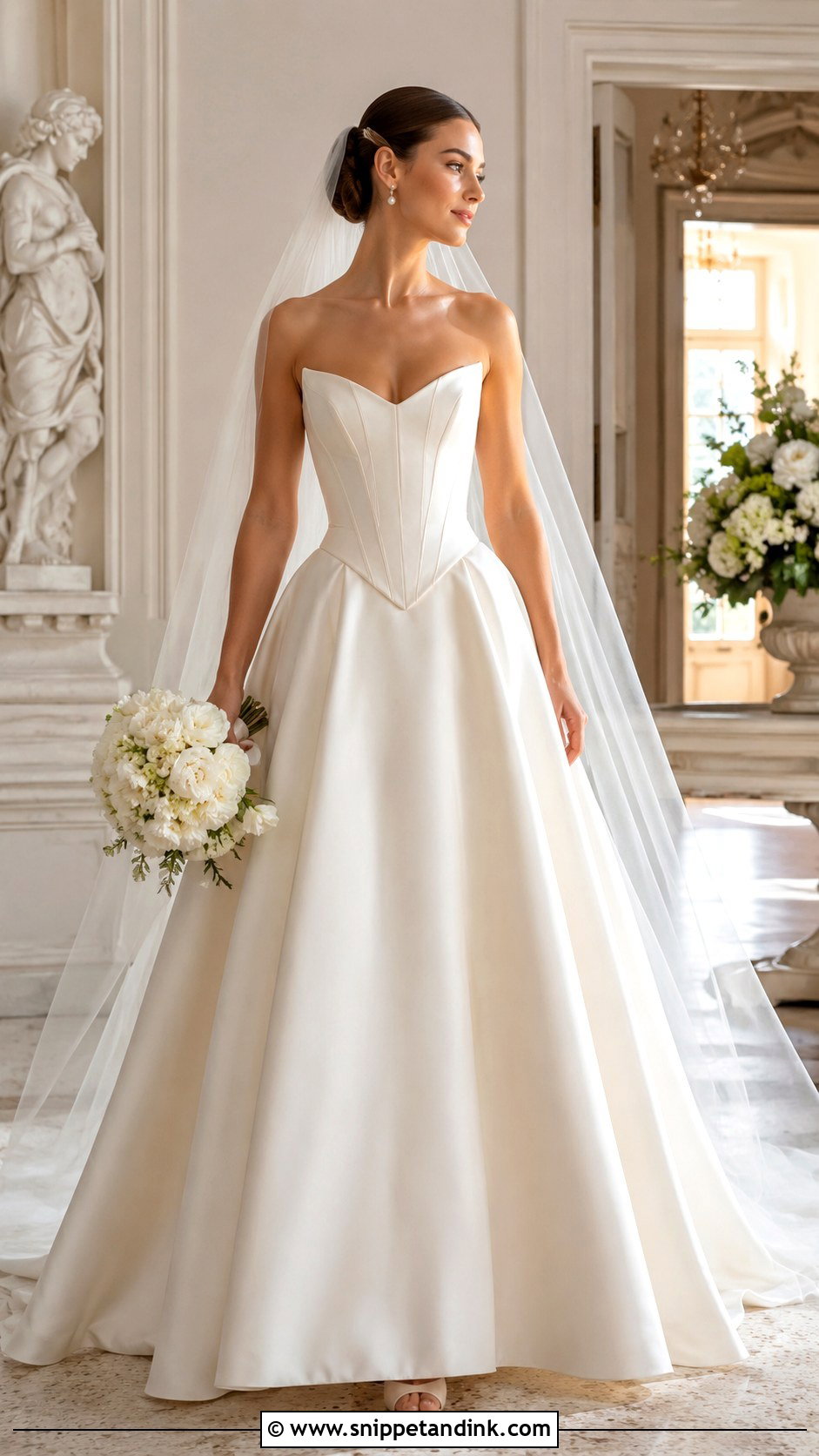
The basque waist dips into a V or U below the natural waistline, lengthening the torso and giving a vintage outline without much decoration. It looks right with a full skirt, a lace bodice or satin. A strapless, scoop or square neckline keeps the waist as the focus. Long veil, pearl earrings, soft heels and a classic bouquet. The point of the basque has to land in the right place on your body, so this is a detail I’d only order after trying the sample on, not from a photo.
12. High Neck Wedding Gown
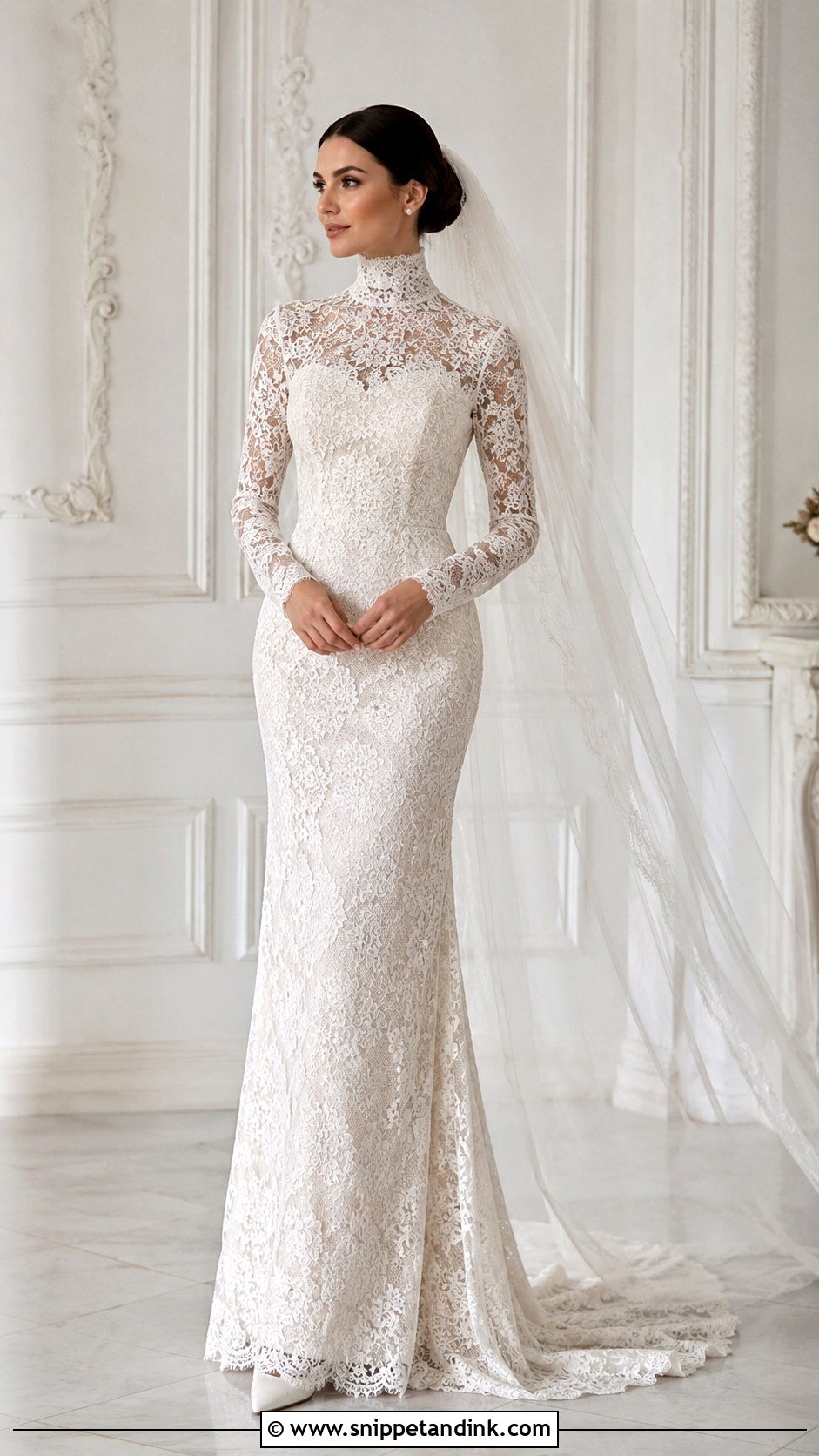
A high neck gives coverage and a fashion edge in lace, crepe or sheer illusion fabric. It pairs with a fitted skirt, an A-line or long sleeves. Skip the necklace and choose earrings: pearl studs with a sleek bun, pointed heels and a long veil. It suits formal and cooler-season weddings. Side and back views matter here, especially with buttons or a keyhole detail, so I place the veil comb below them rather than over them.
13. Pearl Wedding Gown
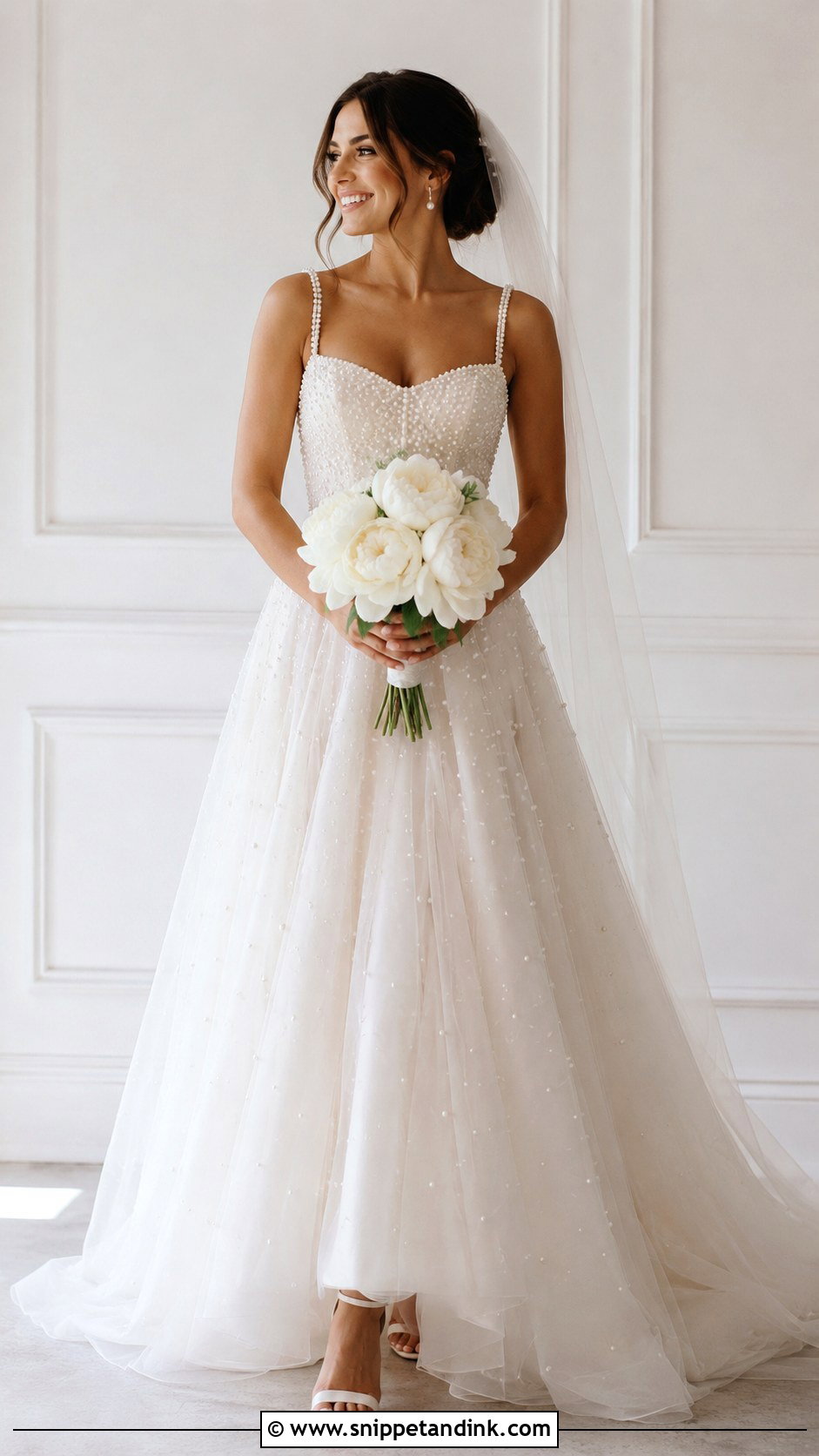
Pearls glow rather than sparkle. They can be tiny scattered accents, neckline trim, sleeve details or allover decoration. A fitted bodice with pearl straps or a pearl-dotted tulle skirt reads delicate. Pearl earrings, satin heels, a clean veil and white peonies or roses suit it, and I avoid extra shiny accessories. It works from ballroom to garden. Pearl shades vary from bright white to cream, so I match the gown’s pearls to the earrings in daylight.
14. Corset Bodice Wedding Gown
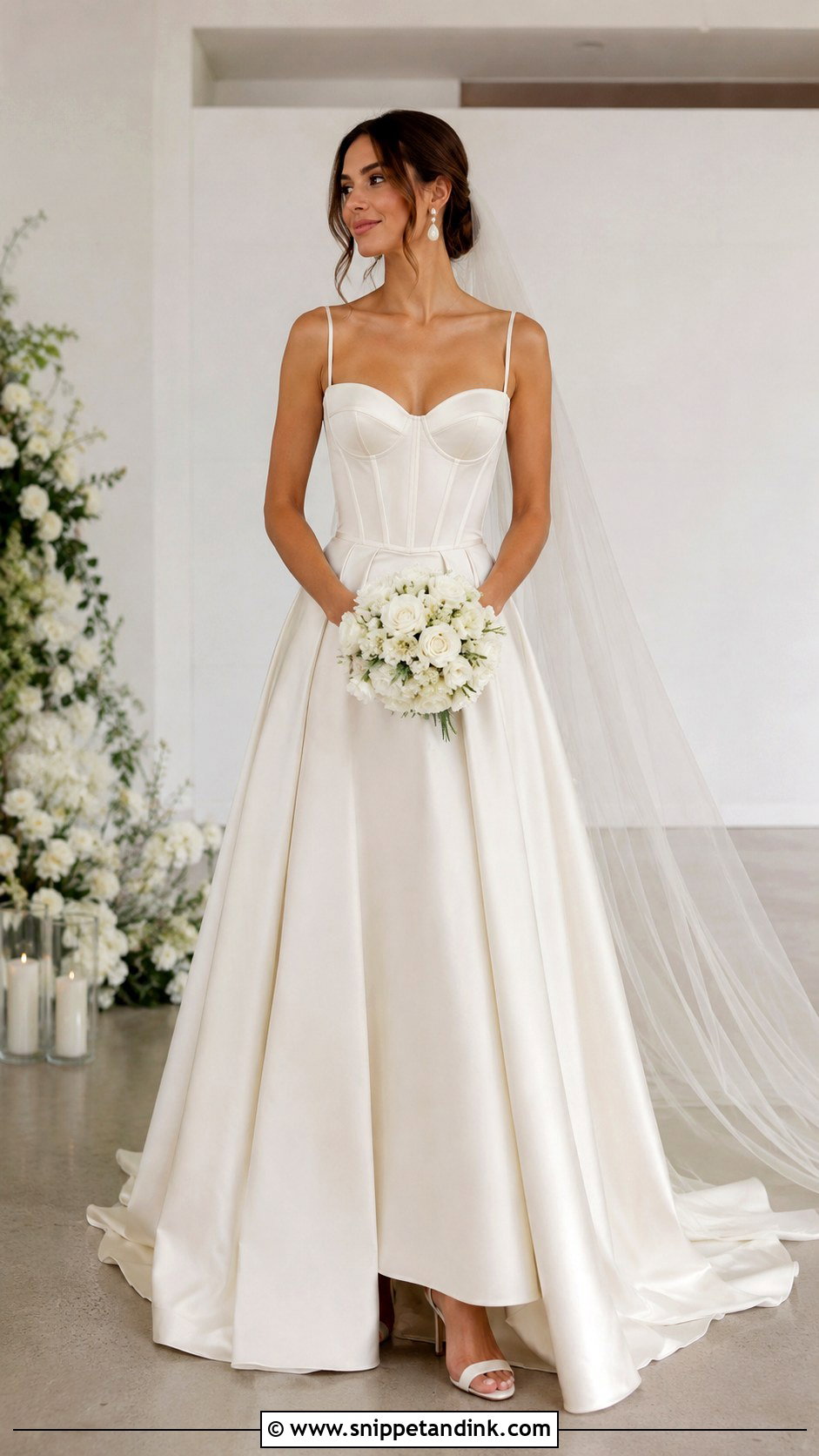
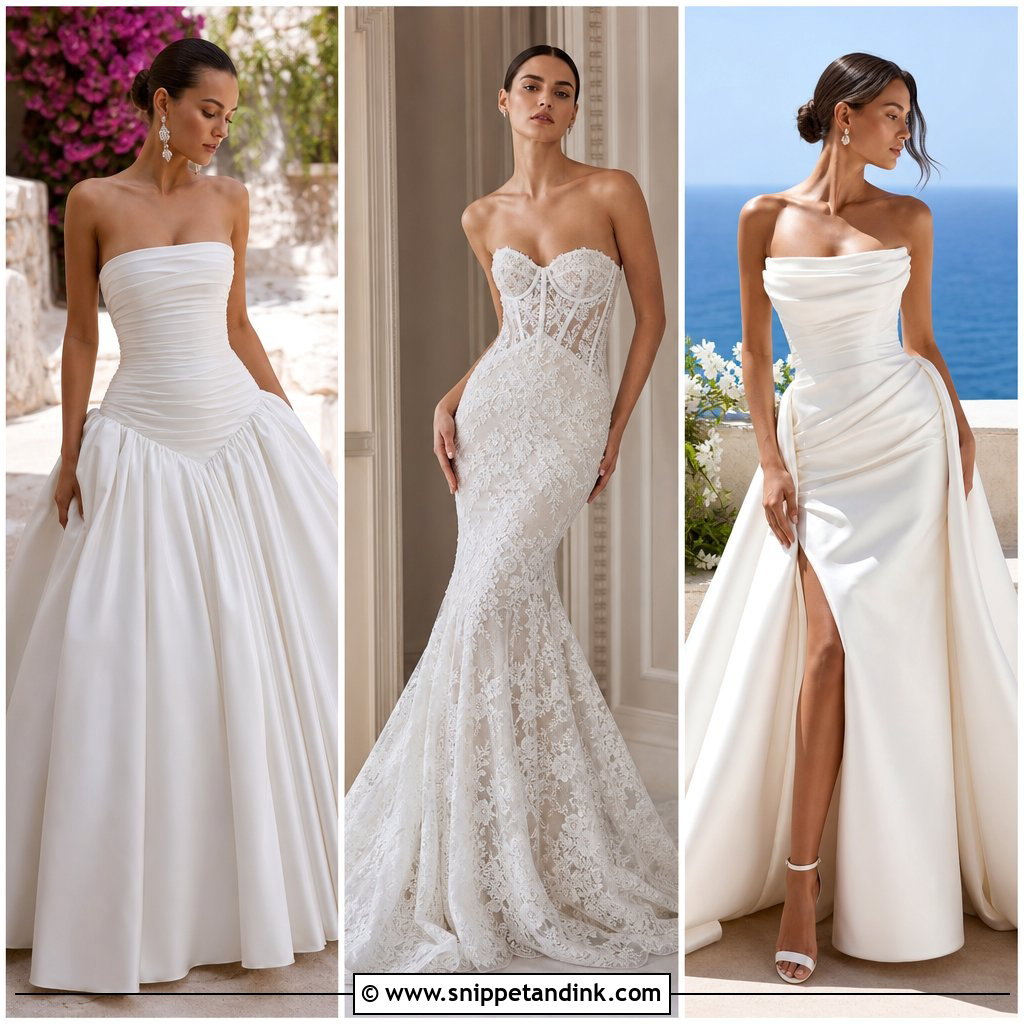
Corset bodices give structure, support and a defined waist. Exposed boning feels fashion-led; a covered corset feels classic. They suit ball gowns, A-lines and fit-and-flare shapes. Soft veil, drop earrings, comfortable heels and a bouquet in the gown’s mood. Plenty of brides tell me a good corset makes them feel secure all day. It needs to be fitted close to the wedding, though, since even small changes in weight affect how it laces.
15. Sheath Wedding Gown
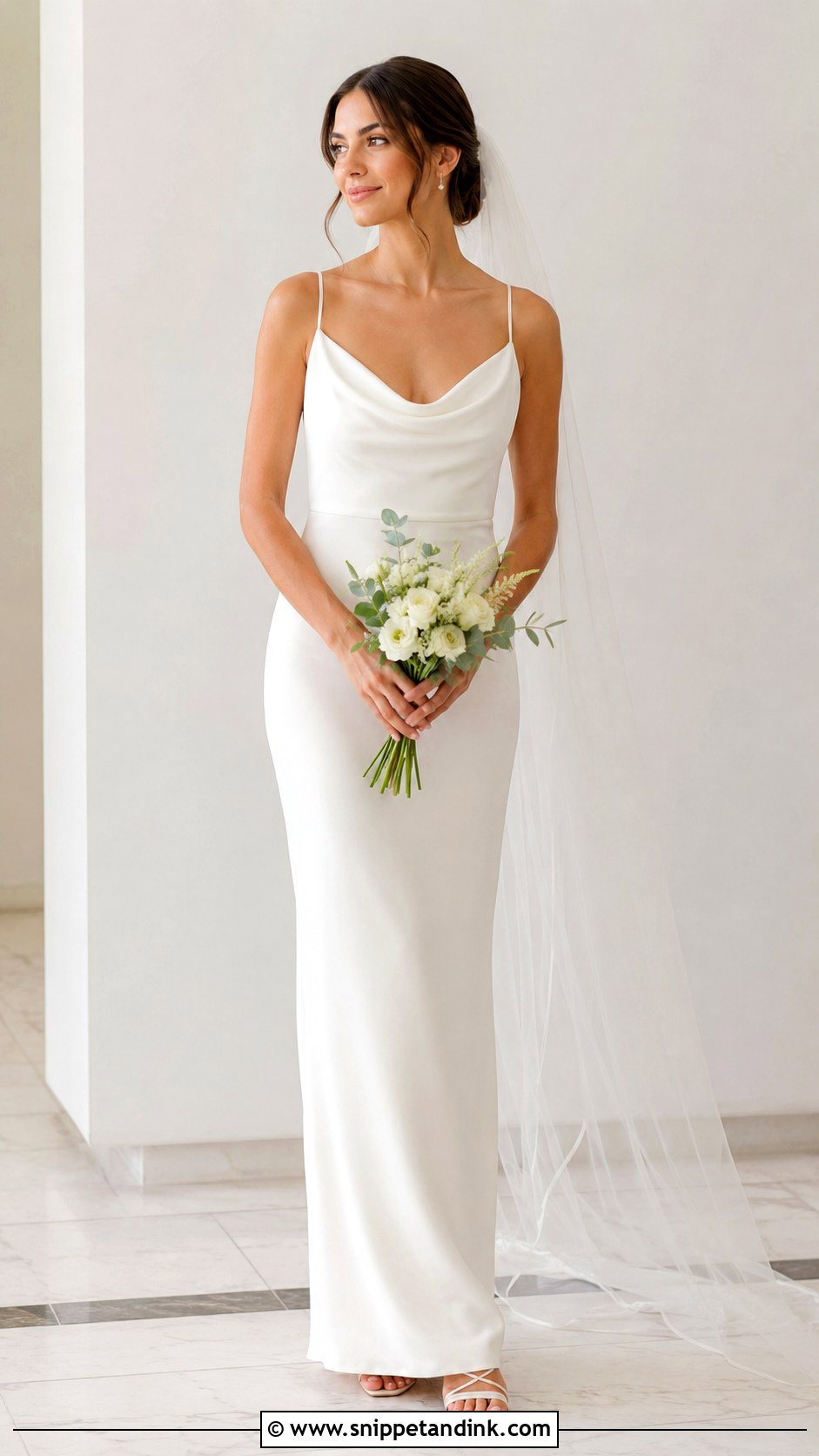
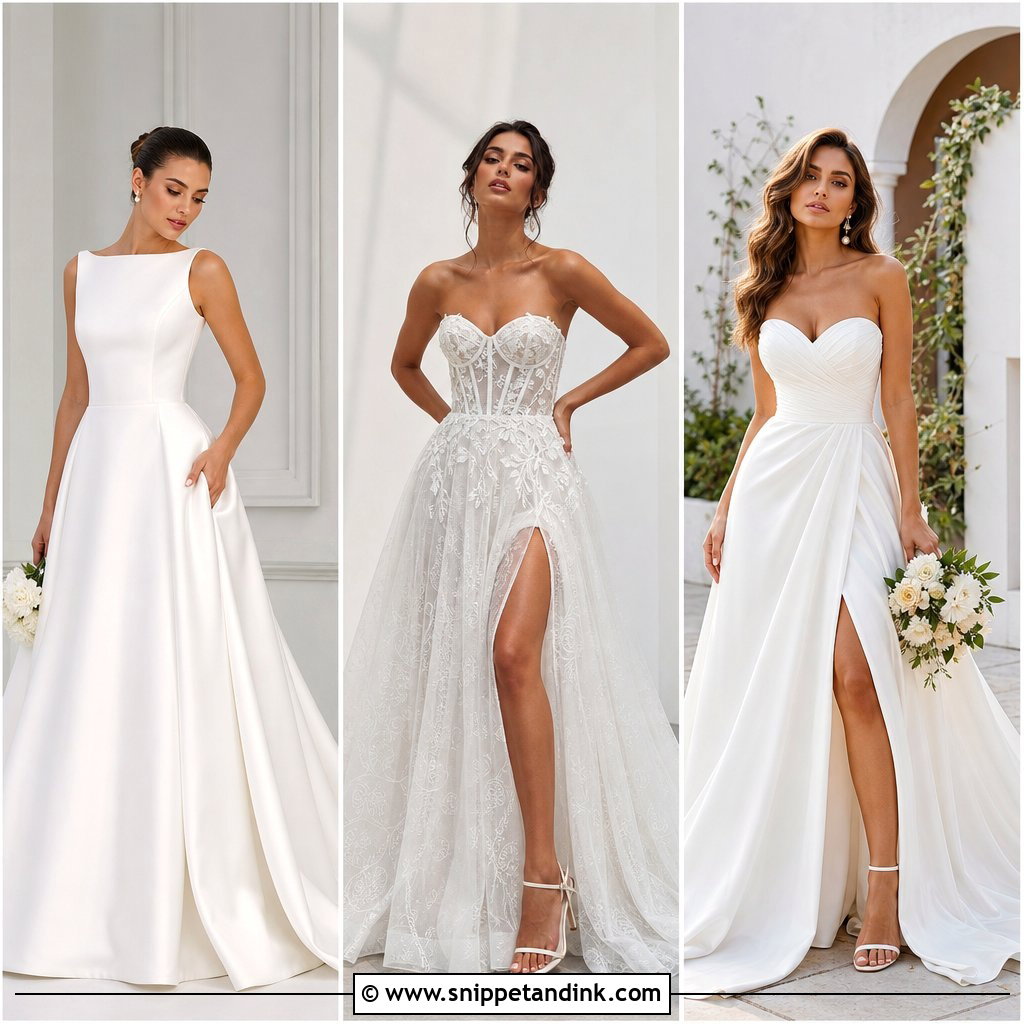
A sheath follows the body’s line with no flare, which suits beaches, city ceremonies and courthouses. Crepe, satin and lace all work. A cowl neck feels soft and modern; a high slit adds movement. Strappy heels, delicate earrings, a smooth veil and a slim bouquet. Fit is everything in this shape. The fabric should skim without pulling across the hips, and I always have brides sit in it, since a sheath that’s fine standing can ride up badly in a chair.
16. Short Reception Wedding Gown
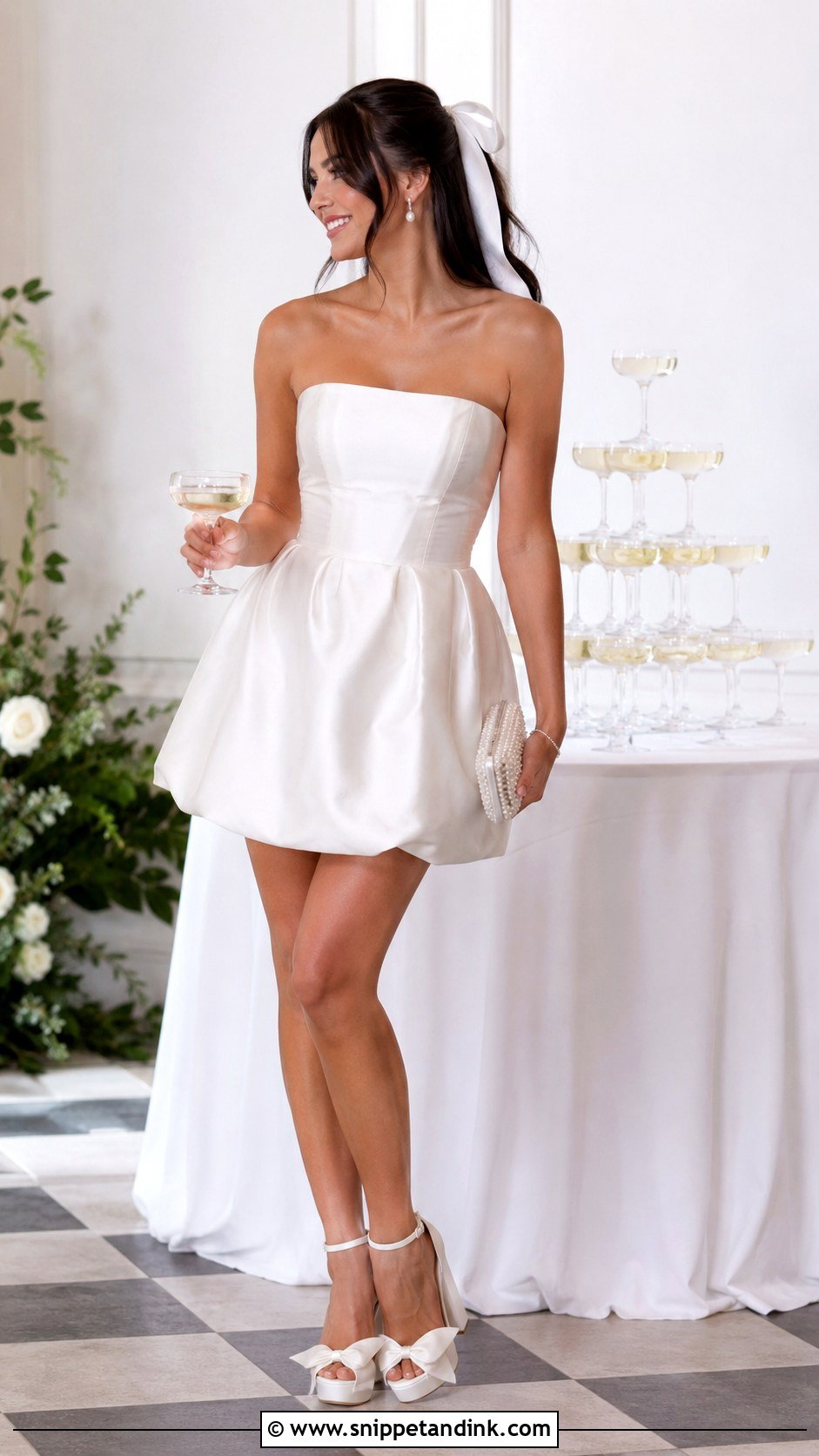
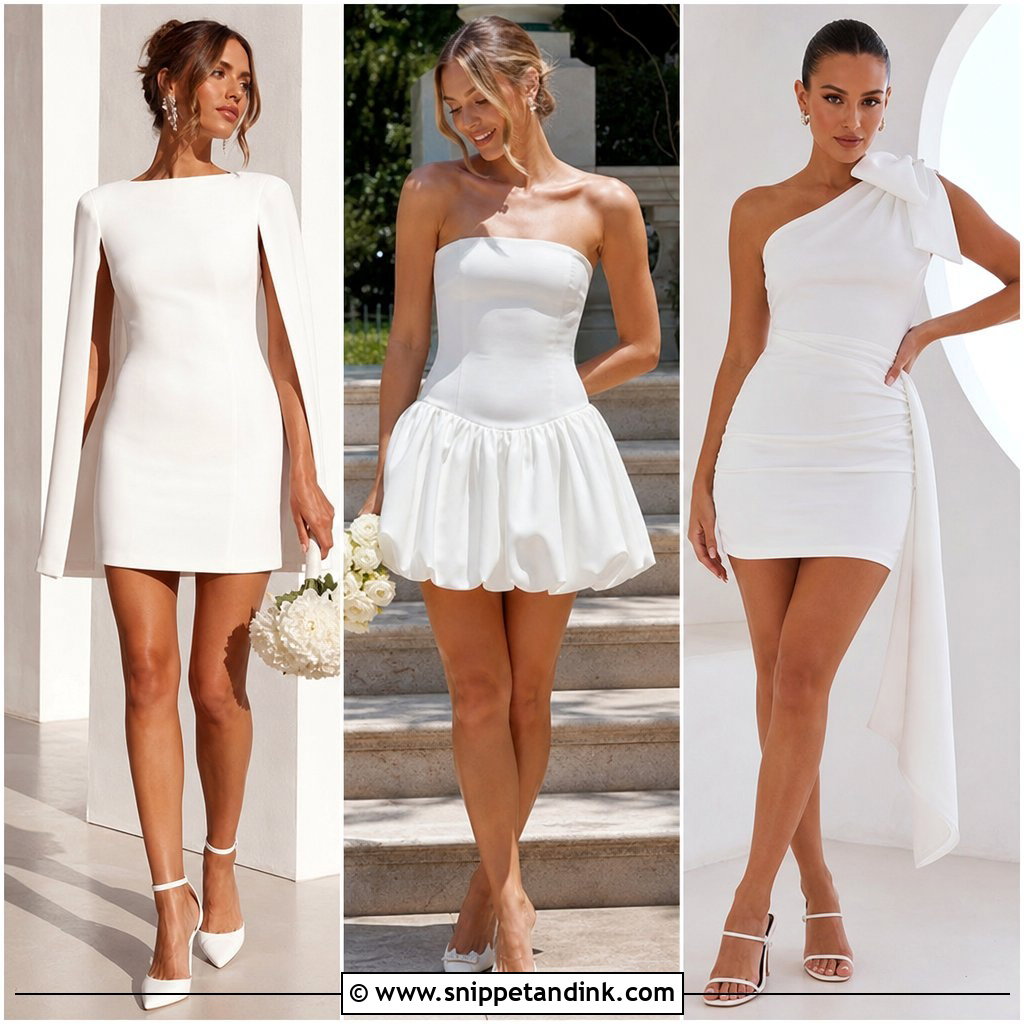
A short dress for the reception means you can actually dance. It can be a mini, a tea-length or a structured short dress with a bow or feather trim, in satin, lace, mikado or embellished fabric. It needs to feel special enough to stand beside the ceremony gown. Statement heels, pearl earrings, a small clutch and a playful hair accessory finish it. It doubles for civil ceremonies, rehearsal dinners and after-parties, and gives you a second fashion moment with far less fabric to manage.
17. Detachable Train Wedding Gown
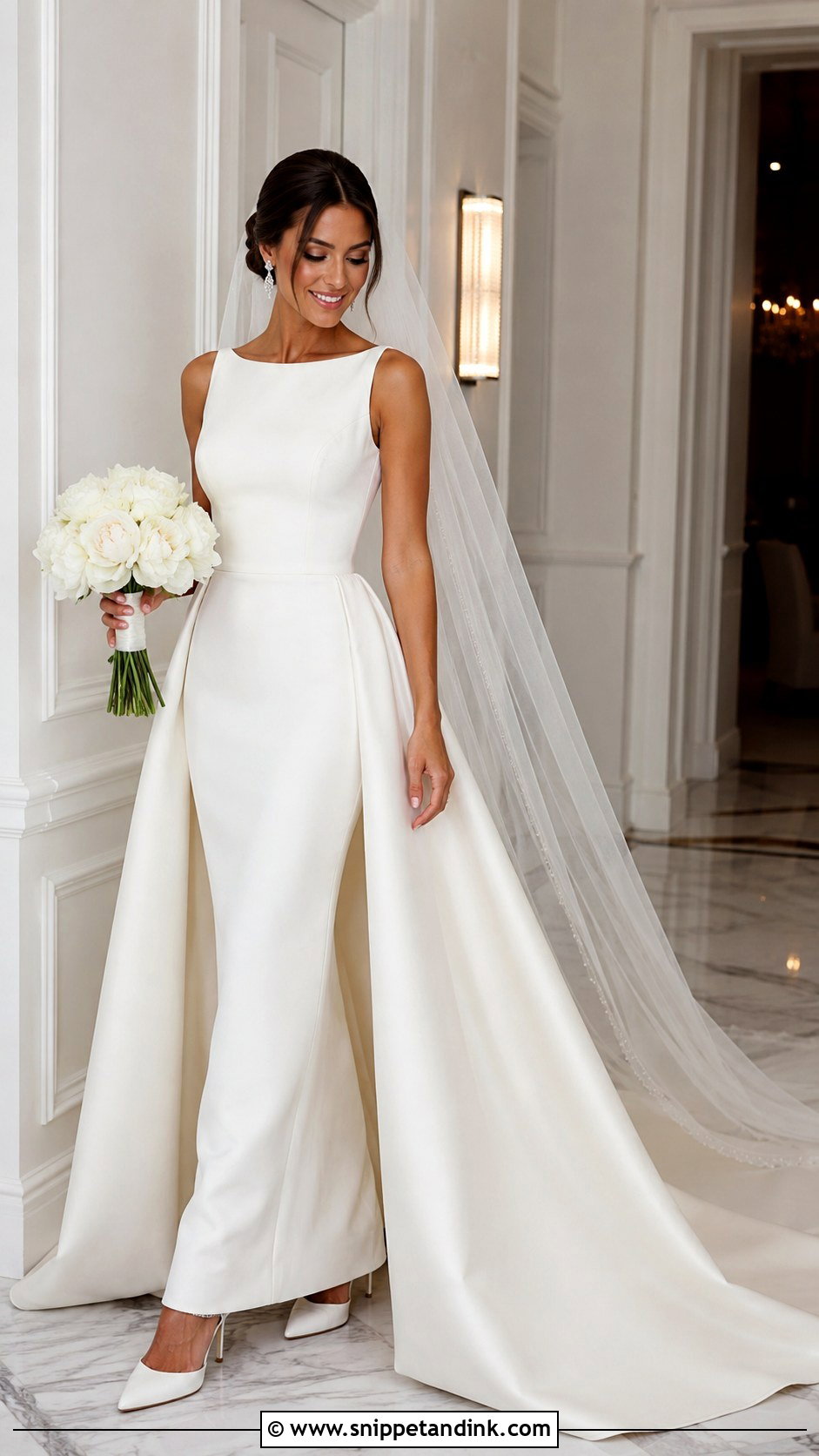
With a detachable train, you wear the drama for the ceremony and portraits, then unclip it for the reception. It works with fitted gowns, minis, jumpsuit-style looks and columns. How it fastens is the whole question: hooks, snaps or buttons, and whether the join is visible once the train is off. Check this at your fittings and practise removing it with the person who’ll help you. Long veil for the ceremony, then statement earrings or a hair bow later.
18. Drop Waist Wedding Gown
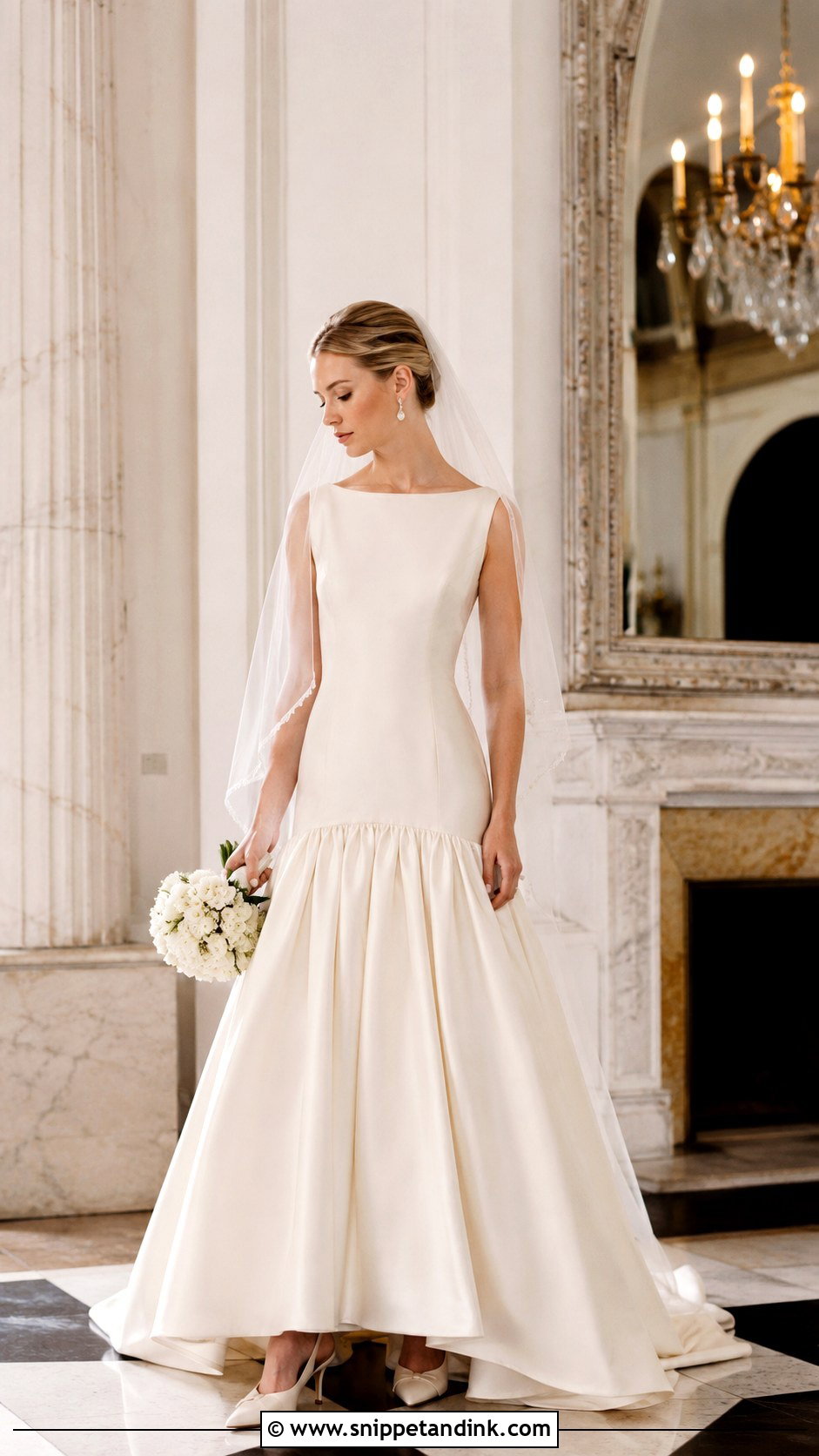
A drop waist lengthens the bodice below the natural waist before the skirt begins, giving an elongated, vintage line. Lace, satin and tulle all suit it, with a fitted bodice and a softly full skirt. It highlights the torso and hips, which some brides love and others don’t, so try it before ruling it in or out. Simple heels, a fingertip veil, pearl earrings and a soft bouquet; skip busy accessories since the silhouette is already strong.
19. Halter Neck Wedding Gown
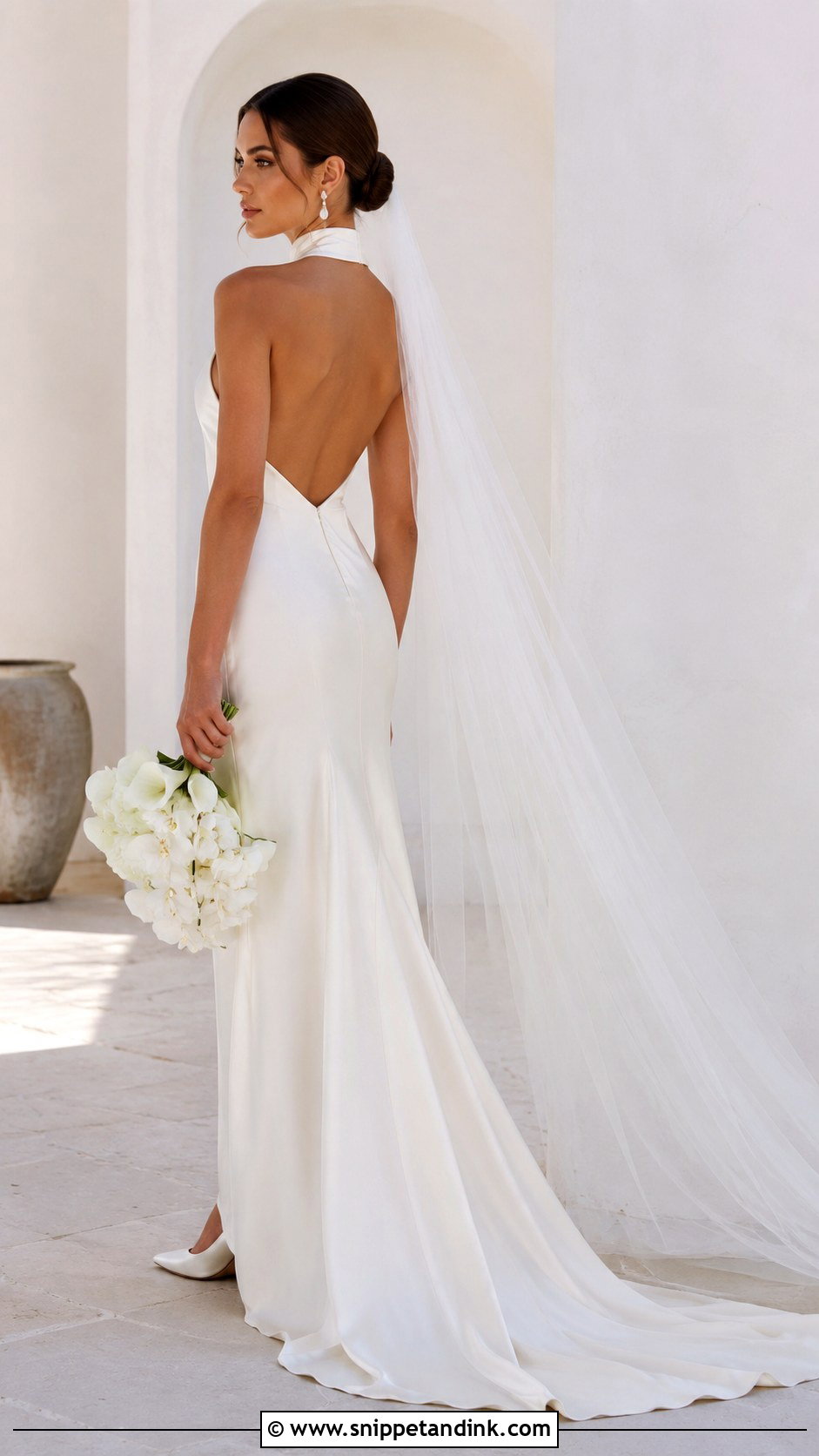
A halter shows the shoulders while giving more support than most strapless gowns, because the neck strap takes some of the weight. Sleek crepe feels minimal; lace feels softer. Low bun, drop earrings, no necklace, pointed heels, a clean veil and a structured bouquet. Open backs often come with halters. One caution: a halter can pull on the neck over a long day if the bodice is heavy, so check where the weight sits at your fitting.



20. One Shoulder Wedding Gown
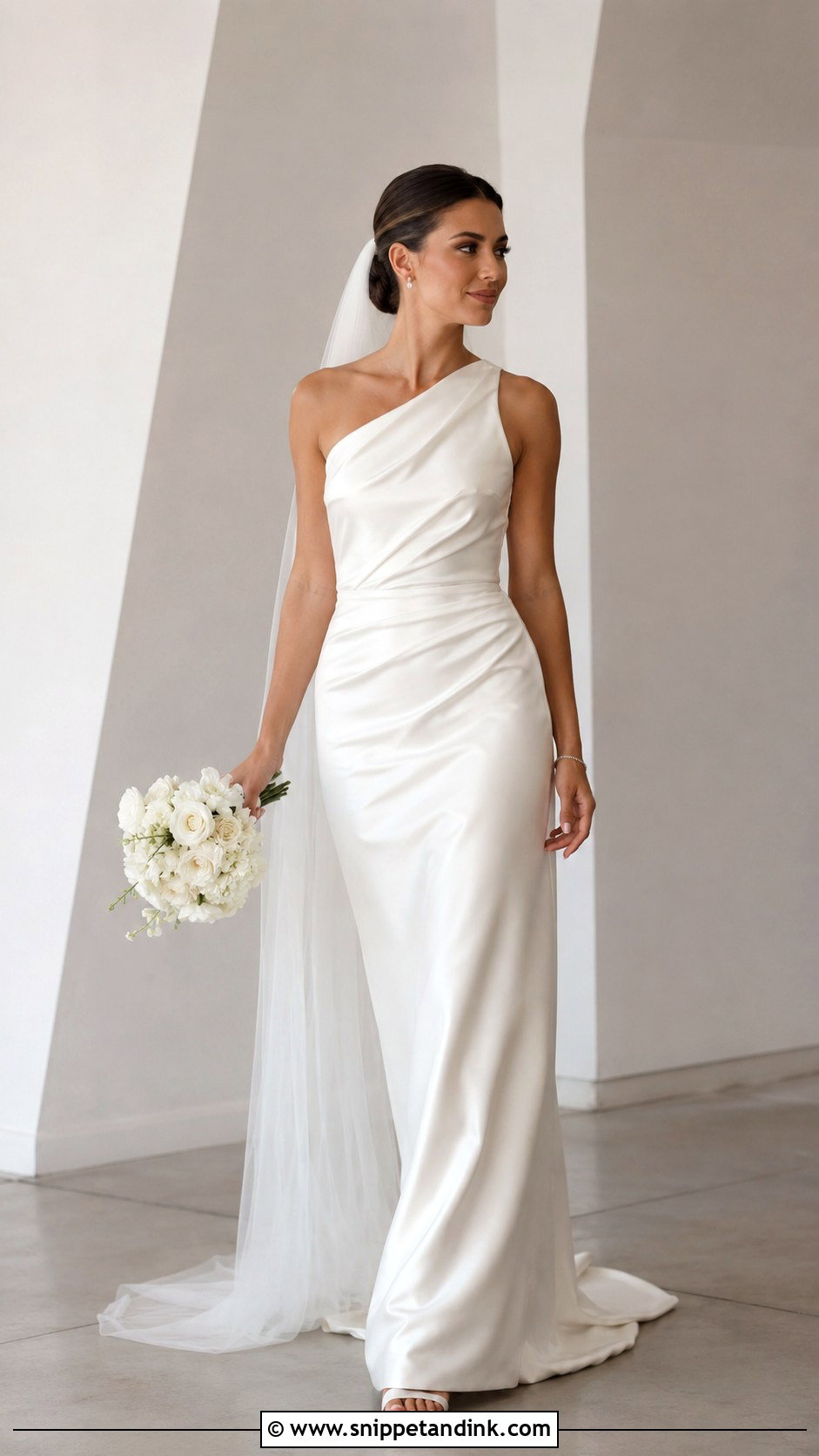
One shoulder makes the neckline the detail, so the gown needs little else. Satin, crepe and draped chiffon work, with a clean skirt in a fitted, A-line or flowing shape. One bold earring look or simple studs, and no necklace. Sleek heels, smooth hair and a long veil set low at the back of the head. Asymmetric necklines shift as you move, so I ask for a silicone grip strip inside the strap.
21. Boho Lace Wedding Gown
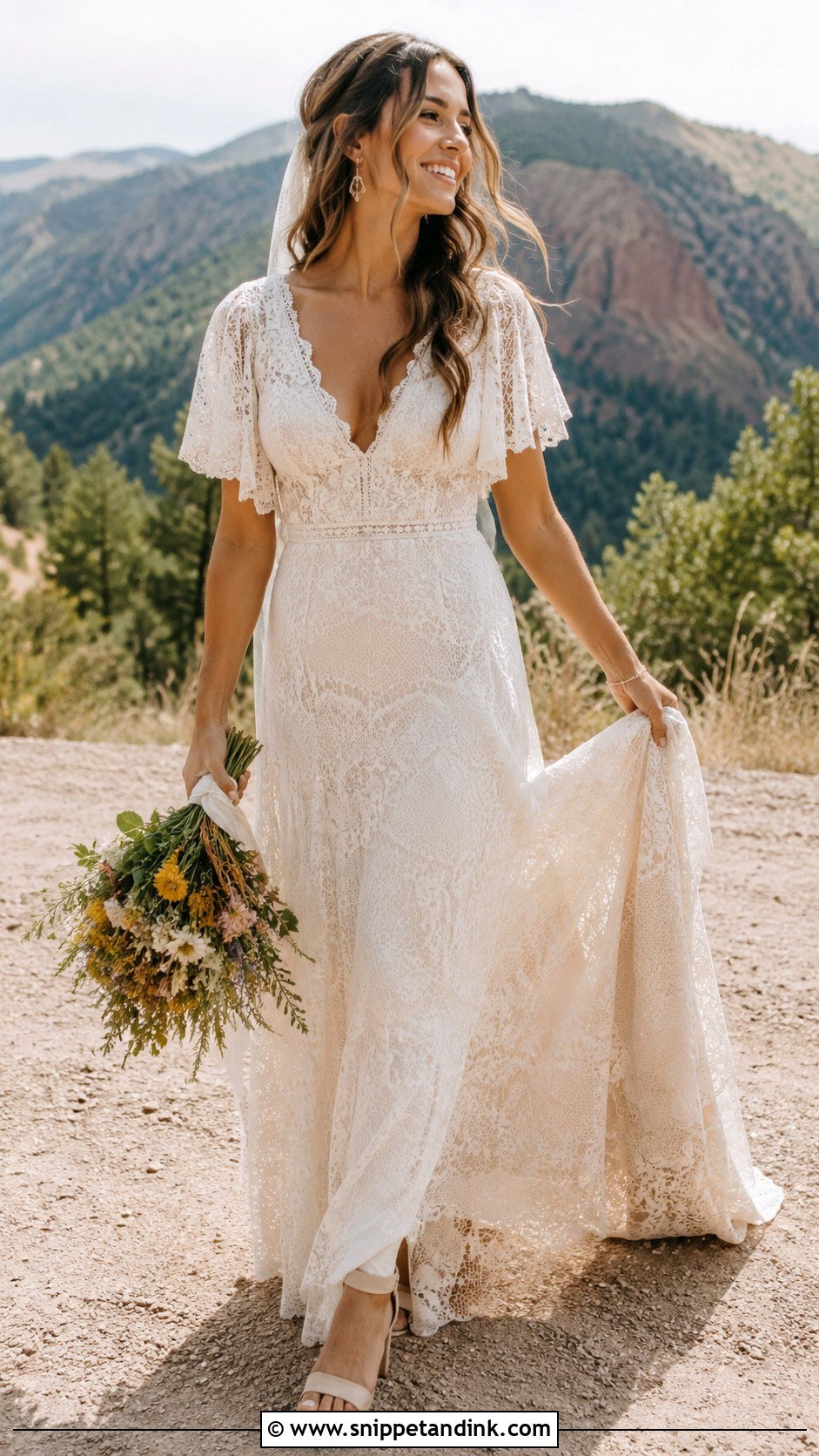
Boho lace moves naturally: soft lace, flutter or bell sleeves, a flowing skirt and often a gentle V. Nude or ivory lining shows the lace pattern; a low back adds personality. Loose waves, delicate earrings, block heels or sandals and a wildflower bouquet, with a soft veil or floral hairpiece. It suits outdoor and rustic venues. Unstructured lace can slip on the shoulders, so the fitting should include a few minutes of walking around.
22. Vintage Inspired Wedding Gown
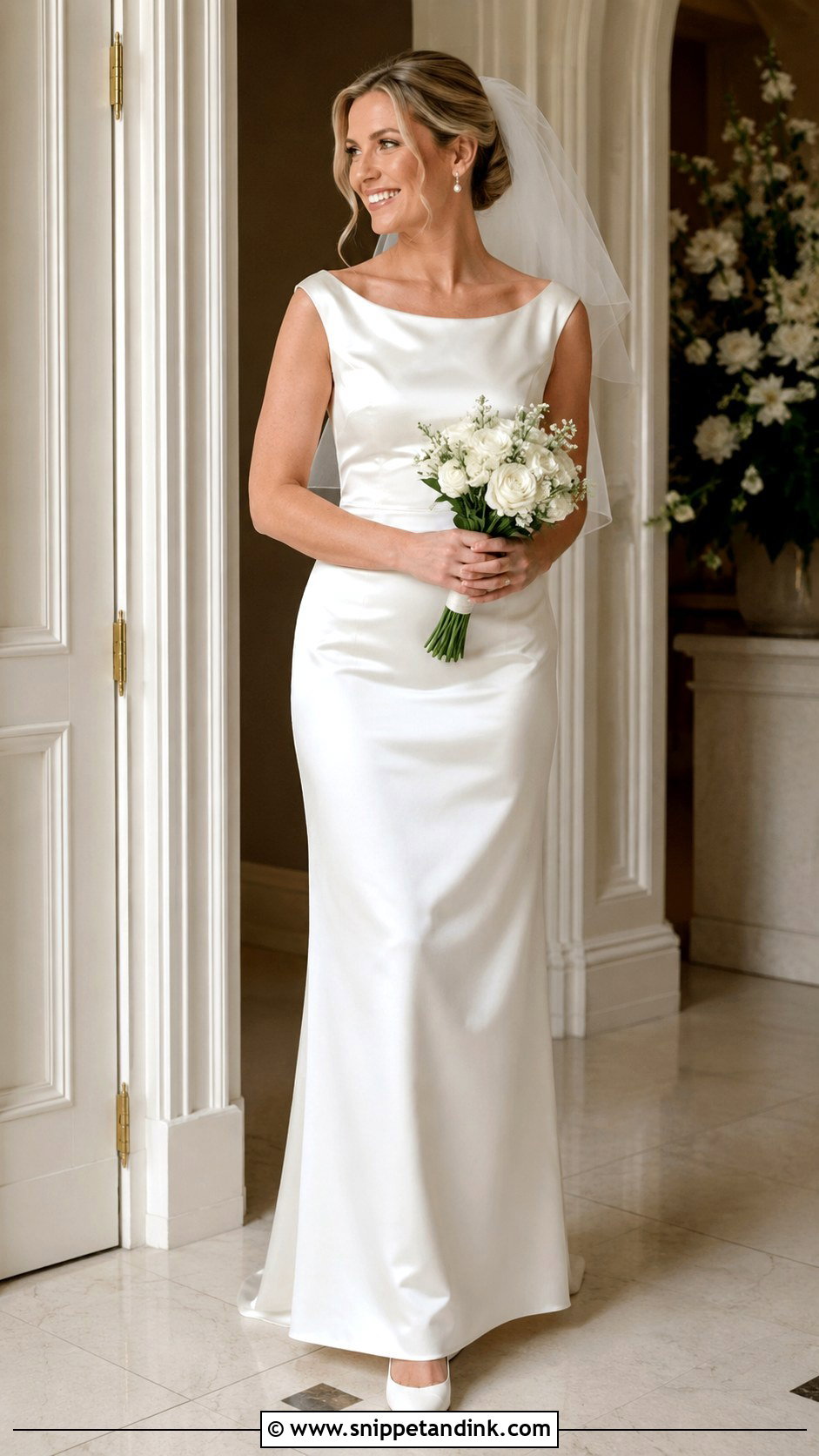
A vintage inspired wedding gown can borrow from any era: a 1920s beaded sheath, a 1950s tea-length, a 1990s satin column. The way to avoid costume is to pick one clear reference and keep everything else polished. Pearl earrings, satin pumps, a short veil or soft updo. Vintage and vintage-style gowns also suit brides who care about sustainable choices. Genuine vintage pieces often need careful restoration, so allow extra time with a specialist seamstress.
23. Champagne Wedding Gown
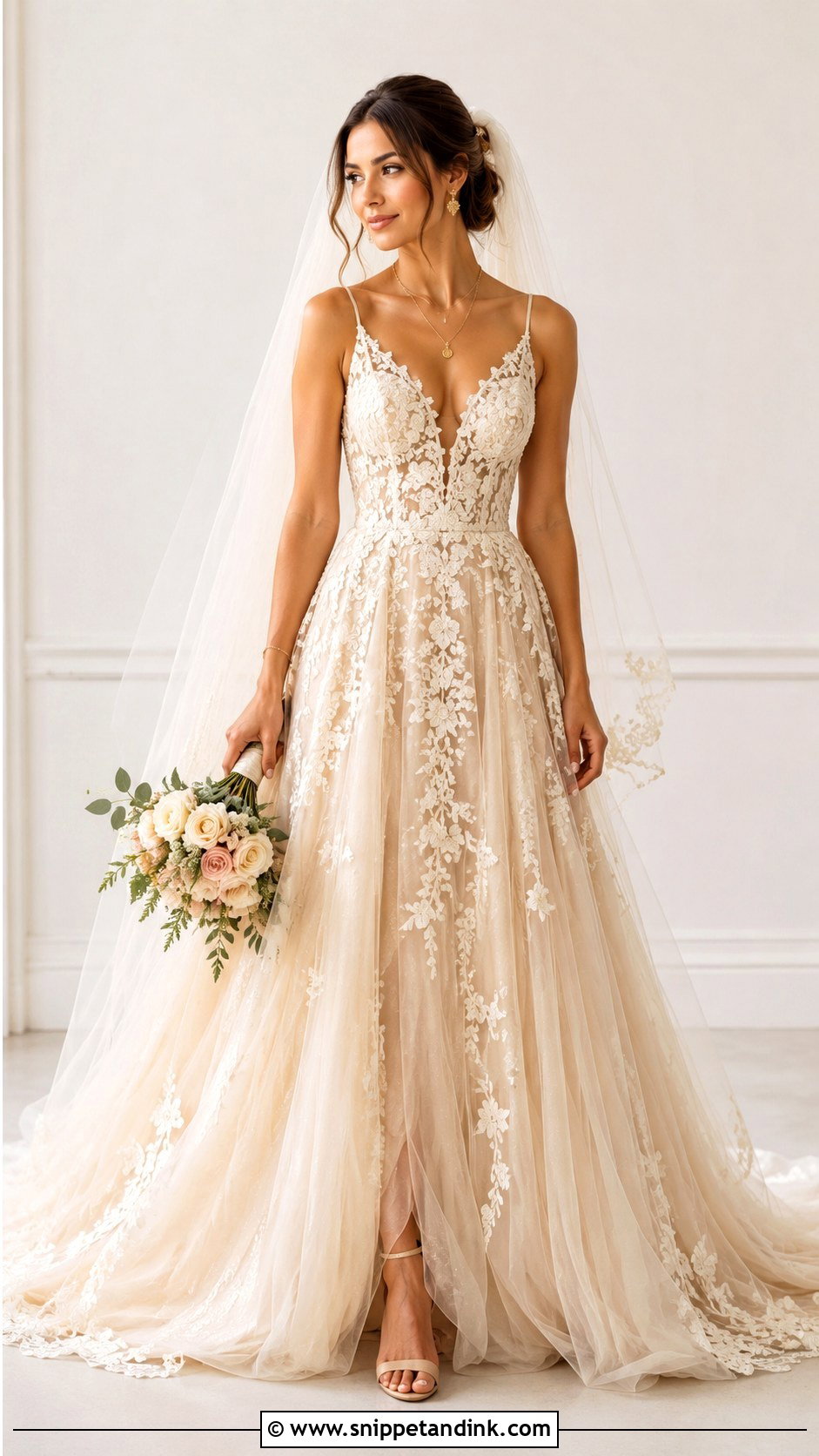
Champagne warms the bridal palette and flatters many skin tones that look washed out in bright white. Under lace, tulle or beading it makes the detail stand out. A champagne lining is subtle; a fully warm-toned gown is a stronger statement. Ivory or nude heels, gold jewelry, a soft veil and a bouquet in white, cream and blush. Warm, glowing makeup matches it. I check it next to your skin in daylight, as some champagnes look nude from a distance.
24. Floral Lace Ball Gown Wedding Gown
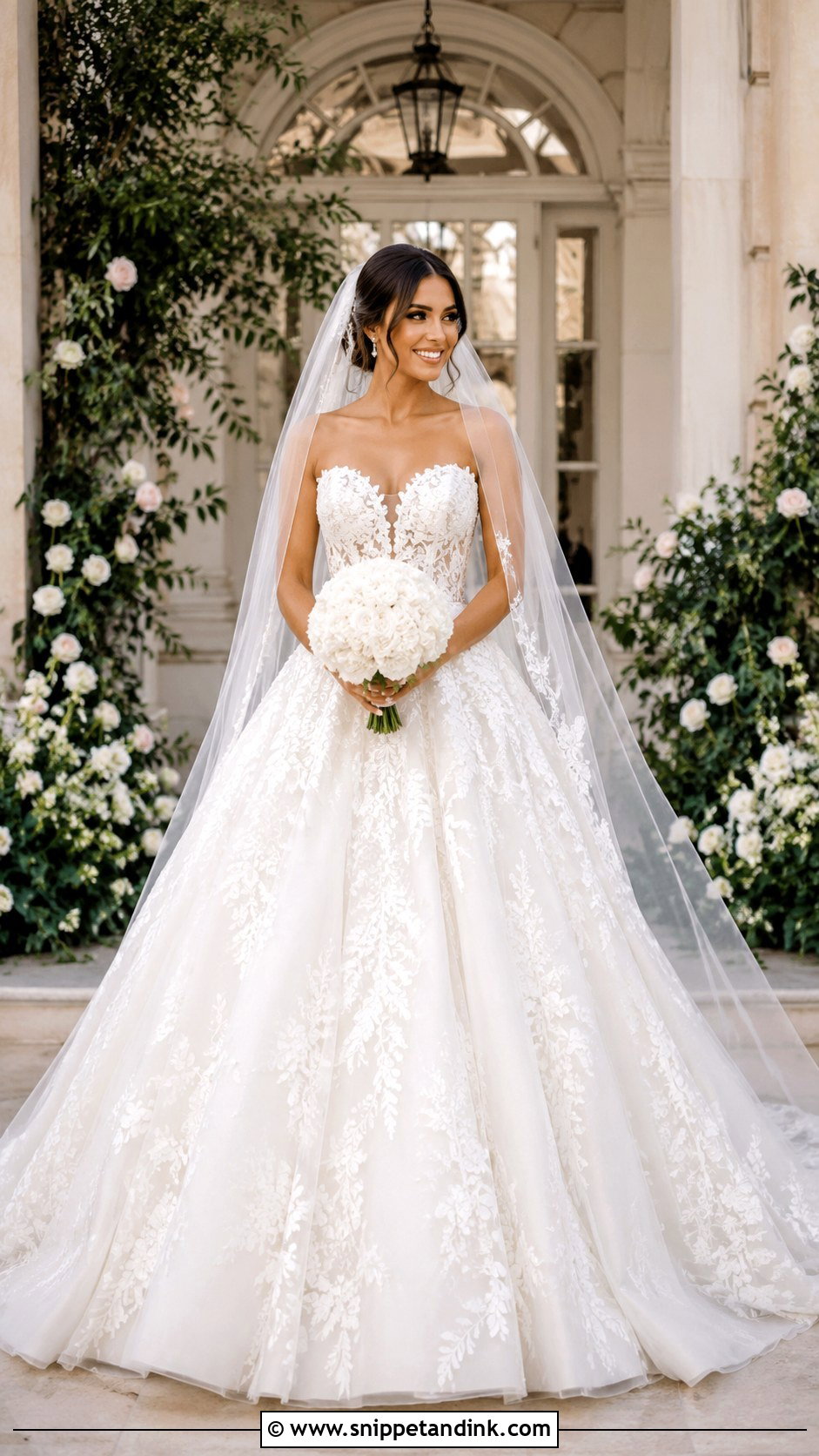
A ball gown in floral lace gives you volume with texture rather than sparkle. I like lace that trails from the bodice into the skirt, so the gown reads as one piece. Strapless, scoop or off-shoulder necklines all suit it. A long veil, pearl earrings, hidden platform heels and a rounded bouquet complete it. Platforms help under a full skirt because they add height without a stiletto’s instability. The floral texture looks especially good outdoors, against gardens and estate grounds.




25. Simple Satin Column Wedding Gown
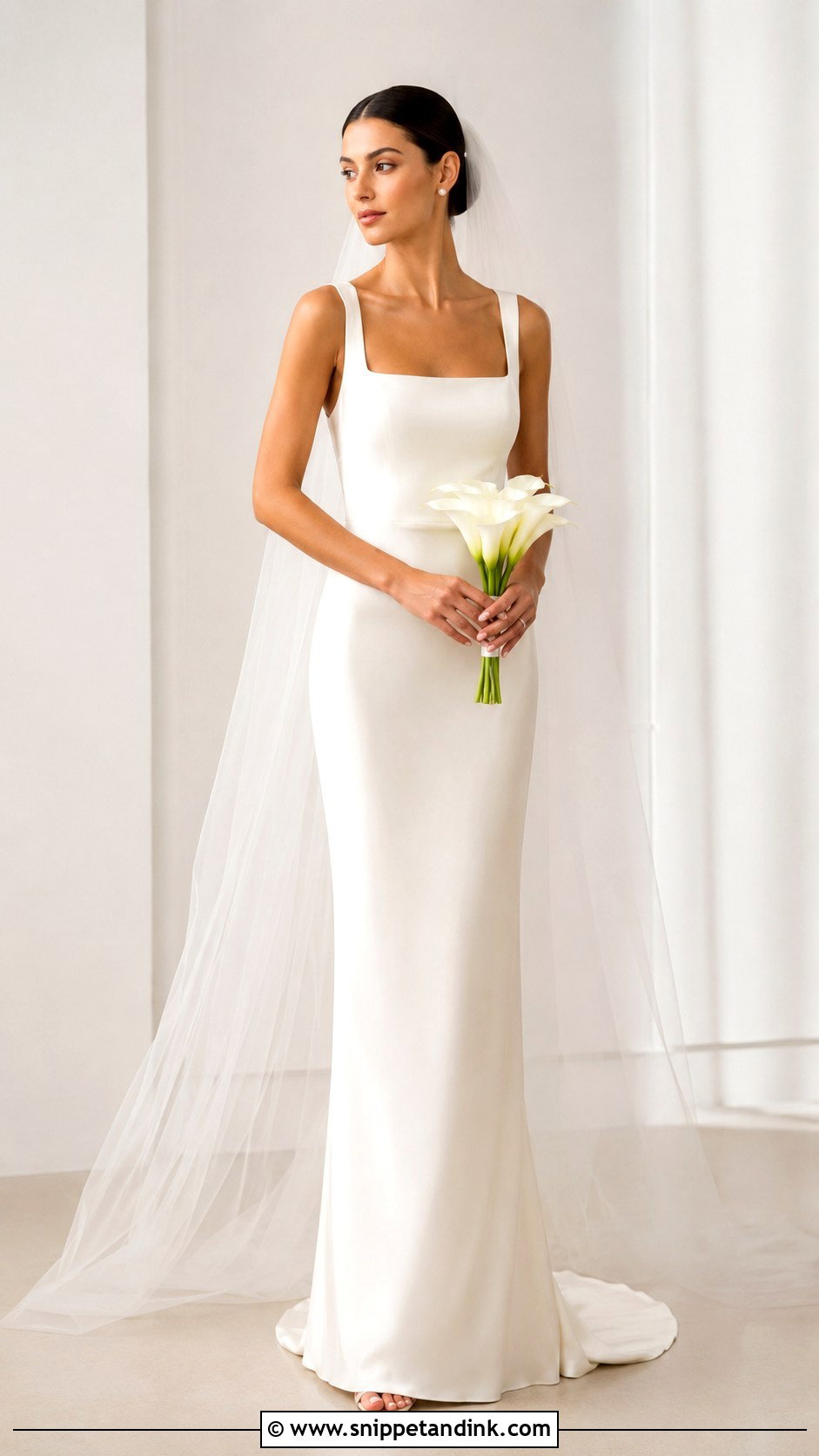
A satin column is a straight vertical line with soft shine and no volume, lace or sparkle to lean on. A cowl neck, square neck or strapless bodice all suit it. Styling has to be deliberate: pearl studs, minimal heels, a smooth veil and a small bouquet of calla lilies or roses. It restyles easily for the reception with gloves, a hair bow or statement earrings. A column only works if the fit is precise, so I’d budget for careful tailoring.
A Realistic Timeline From First Appointment to Final Fitting
Most bridal gowns are made to order after you choose a sample, and production plus alterations takes longer than people expect. Timelines differ between designers and shops, so treat these as general guide points and confirm dates in writing.
- Around nine to twelve months out: start appointments. Many made-to-order gowns need several months to produce.
- Order by roughly eight months out so the gown arrives with room to spare.
- First fitting about two to three months before the wedding, wearing your actual shoes and underwear.
- Second fitting a few weeks later to check changes.
- Final fitting and collection in the last two to three weeks, with whoever will help you dress on the day.
Shorter timelines are possible. Sample sales, ready-to-wear gowns and rush orders exist, though rush fees are common and choice narrows. If your date is close, tell the salon at booking so they show you only gowns that can realistically arrive in time.
Let the Fitting Room Make the Final Call
The right gown suits your body, your venue and how you want to move on the day. Trends can point you somewhere, but they shouldn’t make the decision. A satin ball gown, a lace A-line, a crepe sheath or a short reception dress can each be right when it feels natural to wear. Look hard at fit, fabric and movement, and try the whole outfit together, veil, shoes, jewelry and bouquet included. Use these ideas to shortlist a few silhouettes, then let the fitting room decide.
You'll Like These Ideas:









Leave a Reply