
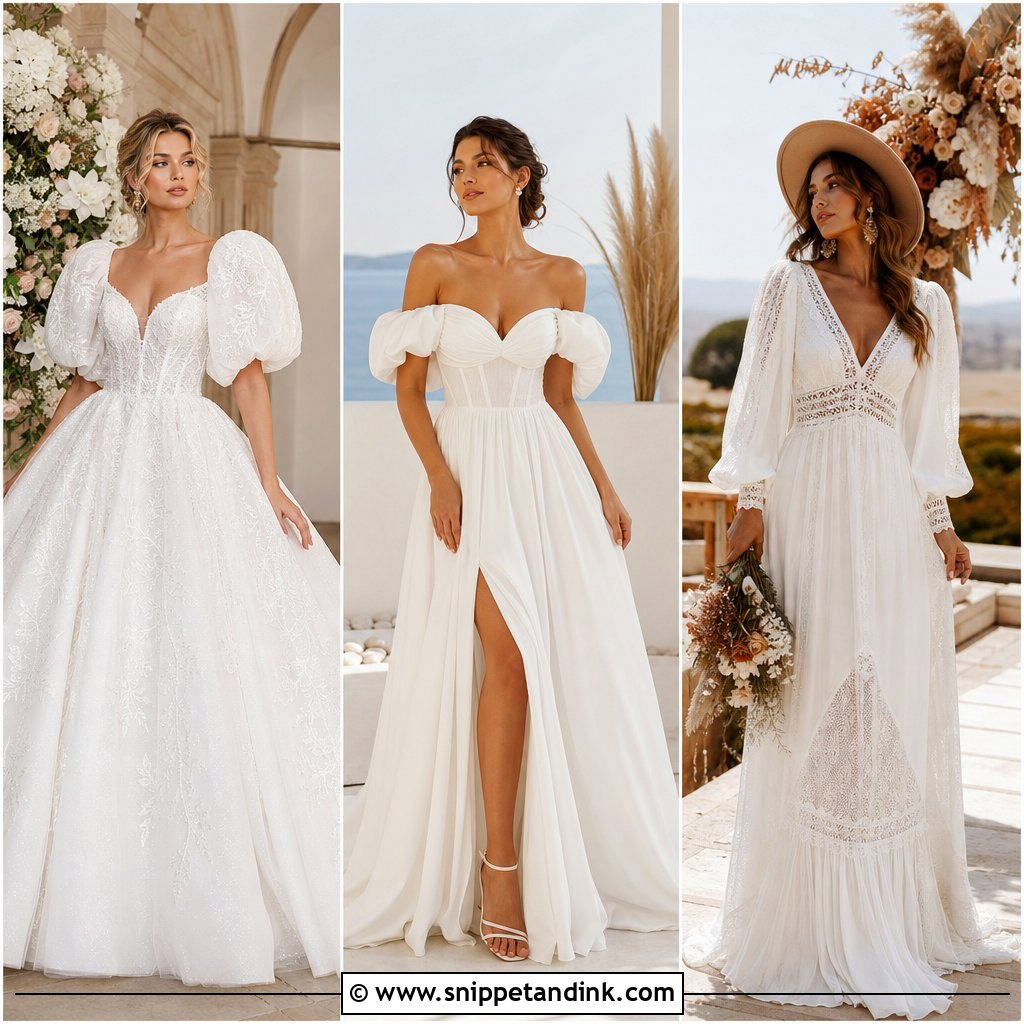
Big skirts are back in fitting rooms, and not only as the classic princess gown. Volume now comes as puff sleeves, cloud skirts of stacked tulle, drop waists, bubble hems, floral appliqué and plain satin cut to stand away from the body. When I pull puffy gowns for a bride, the first thing I want to know is not her favourite neckline but where she is getting married and how she is getting there, because the skirt has to fit through every door of the day. Below are 25 ways to wear bridal volume, with what I notice about each one once it is actually on a body and moving.
How Much Skirt Your Venue, Car and Aisle Can Take
Before falling for a ball gown, I walk brides through the day as a series of spaces. A very full skirt can measure well over a metre across at the hem, and every doorway, staircase, aisle and car seat has to accommodate it. Narrow church aisles lined with chairs, spiral staircases at historic venues and small hire cars are where big skirts get crushed or snagged.
- Measure the narrowest point: usually the aisle between pews or the door of the getting-ready room.
- Ask what car you’ll travel in. A full tulle skirt fits in the back of a large saloon; a stiff satin one needs a people carrier or a vintage car with a wide rear seat.
- Check the toilet at the venue. A big skirt needs a disabled-access room and a helper, and it is better to know that in advance.
- Think about weather. Tulle goes limp in humidity, and lightweight skirts lift in wind on open-air sites.
Hoops, petticoats or layers
Volume comes from what is underneath as much as from the dress itself. A hoop gives the widest, most even shape but swings when you sit and can tip up at the front. A tulle petticoat is softer and easier to sit in, though warmer. Some gowns have layers built into the lining. I always ask brides to sit down, climb a step and turn in a circle with the underskirt they plan to wear, since that is the version of the dress that goes down the aisle.
1. Classic Ball Gown Wedding Dress
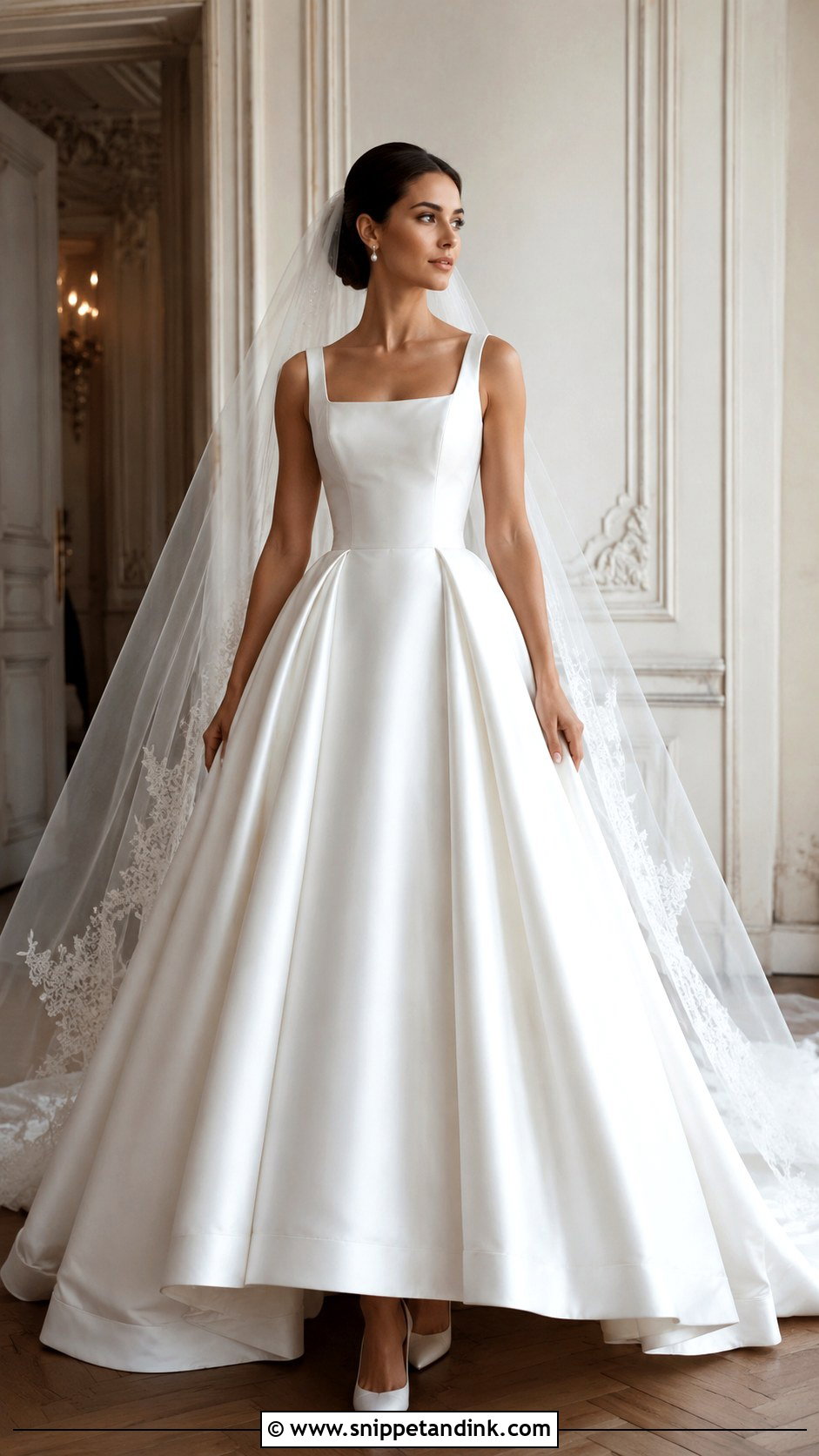
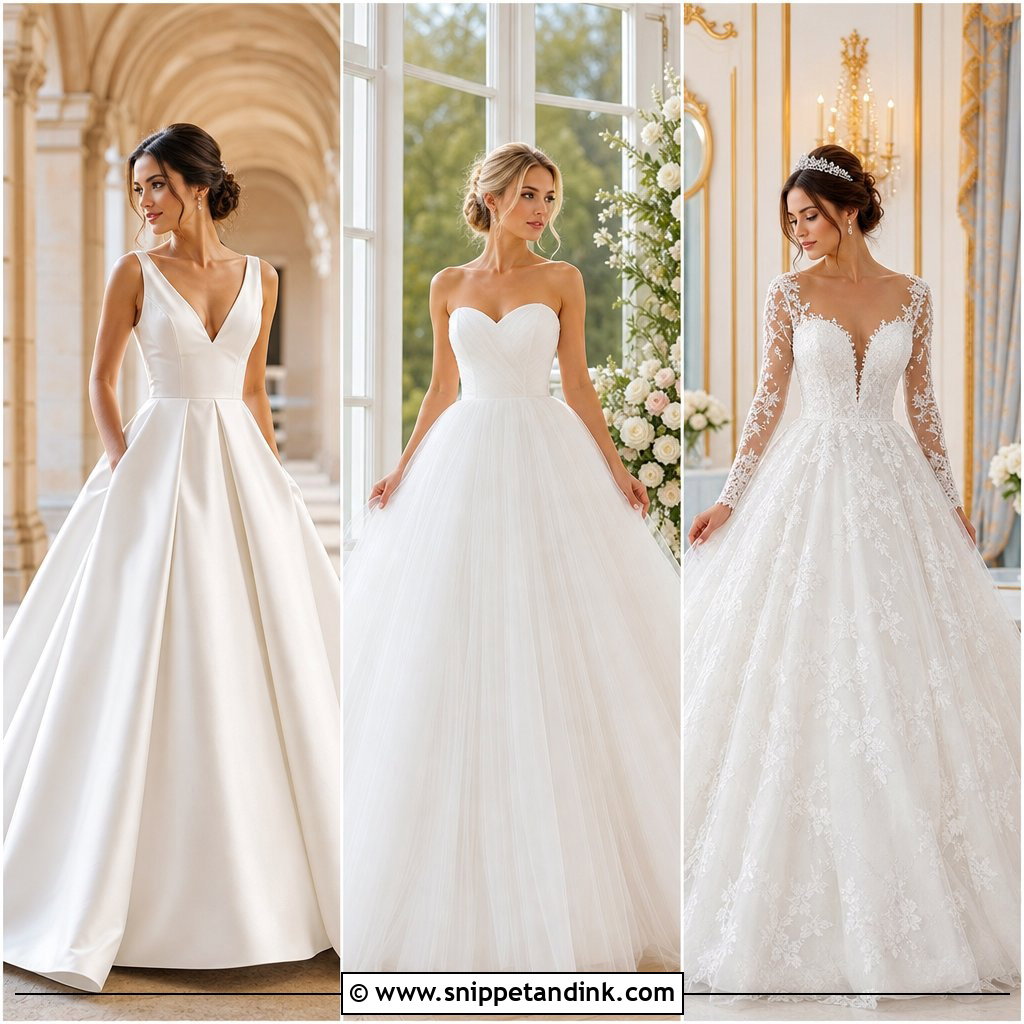
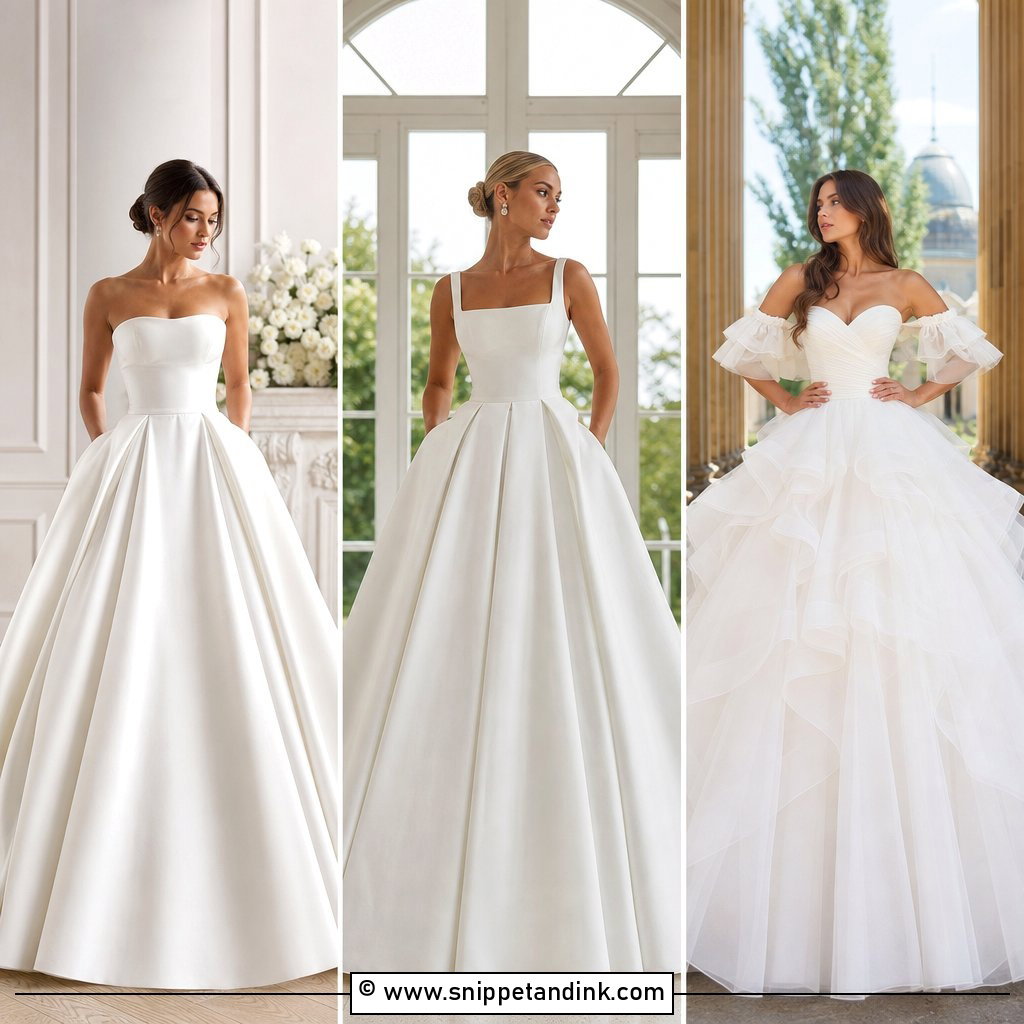
The fitted bodice and wide skirt of a true ball gown give the beautiful princess silhouette most brides picture first. Fabric decides how it behaves: mikado and heavy satin hold their own shape, while layered tulle needs a petticoat or crinoline underneath or it collapses by the reception. I always check where the bodice seam sits on the natural waist, since a waistline even two centimetres too low makes the skirt look like it is pulling the torso down. A sweetheart neckline softens it; a straight one reads cleaner. Ballrooms and estate houses suit it, a tight registry office does not.
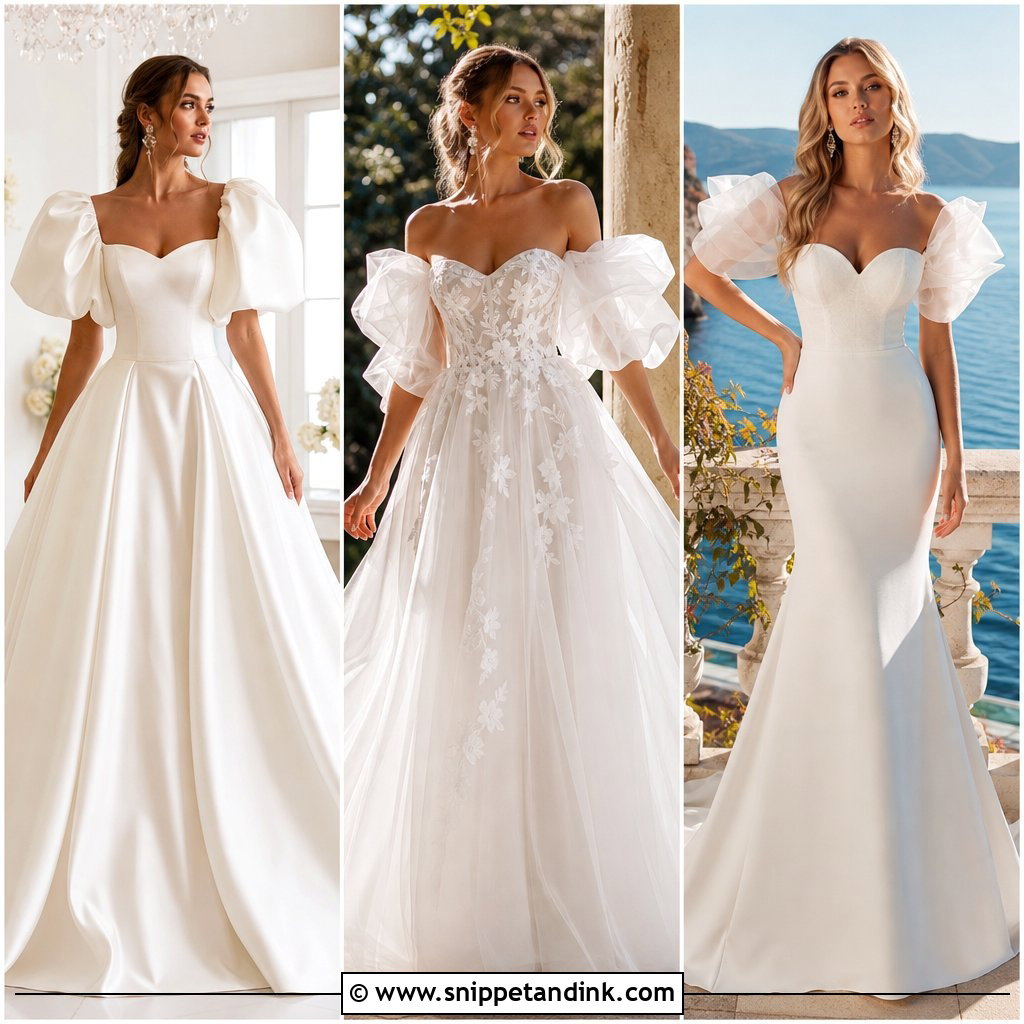
2. Puff Sleeve Wedding Dress
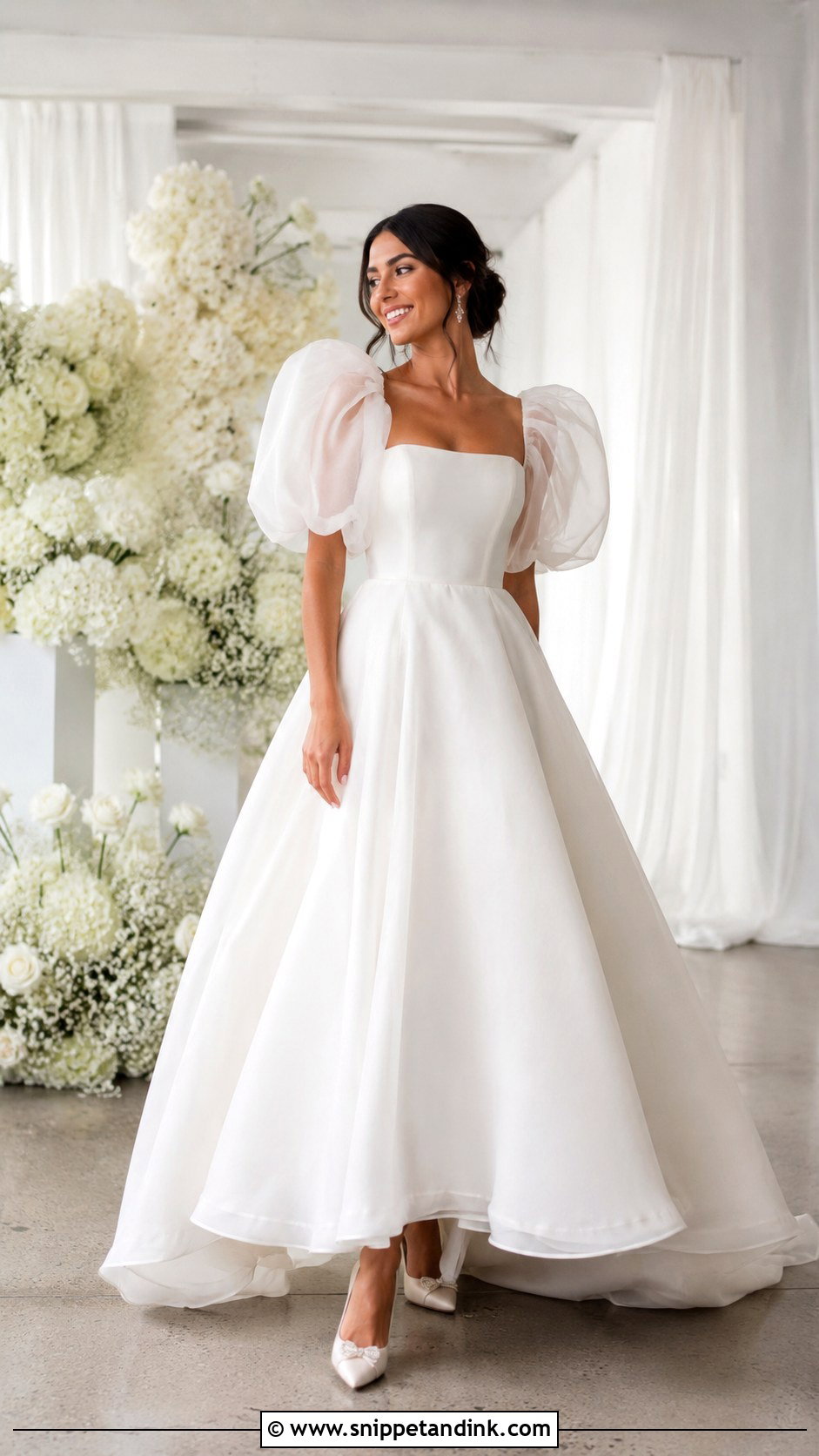
Puffed sleeves move the volume up to the shoulders, which is useful if you have a narrow frame or want some arm coverage without a full sleeve. Organza sleeves stay light and slightly see-through; satin sleeves stand up on their own and look more fashion-led. The detail I test at every fitting is the armhole. If it is cut too tight, the bride cannot lift her arms to hug anyone, and the sleeve crumples at the top seam in every candid shot. Pair them with a sleek bun or soft waves and very little jewellery, because the sleeve is already doing the framing.
3. Tulle Ball Gown Wedding Dress
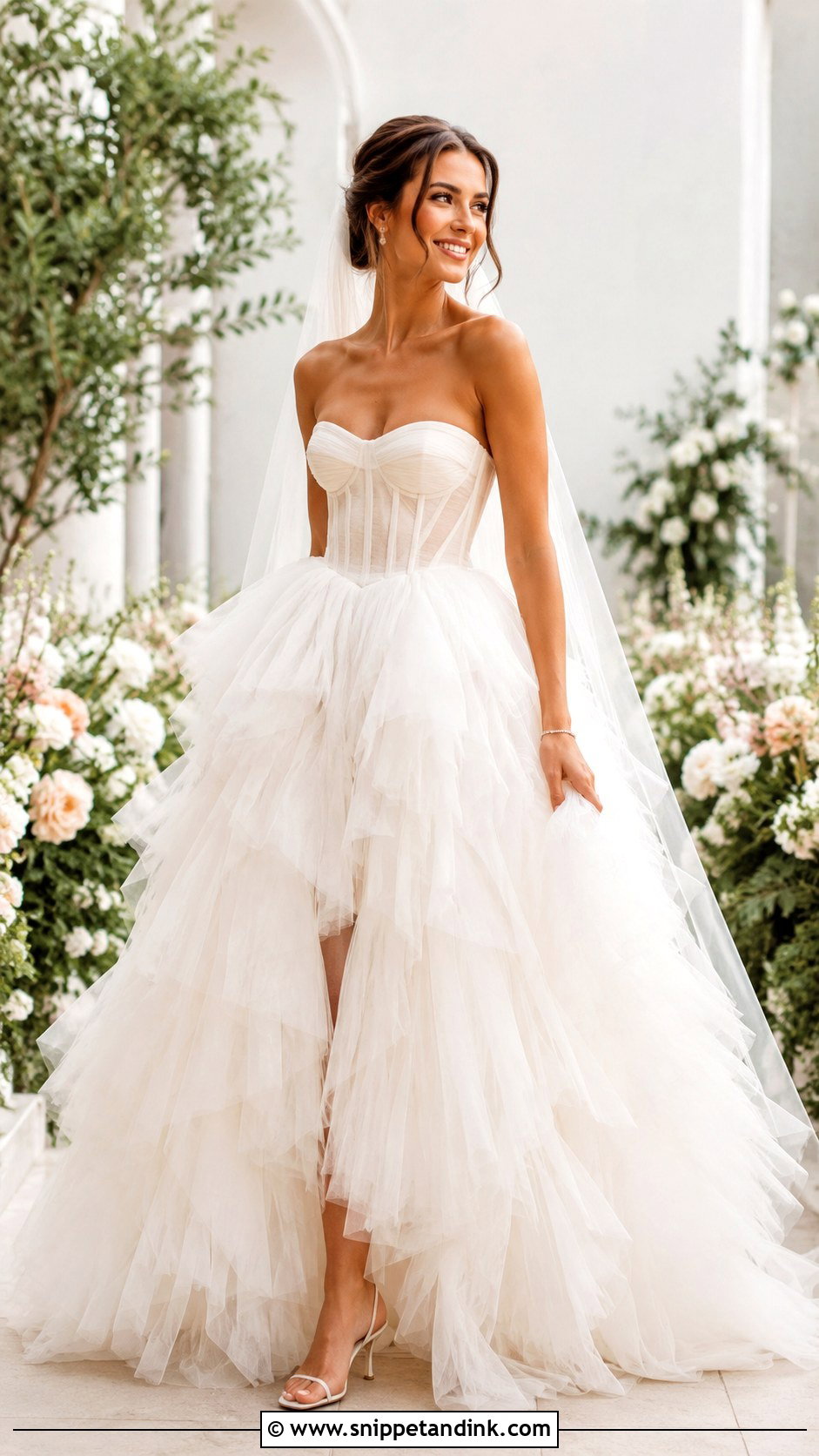
Tulle gives the softest volume of any fabric, a skirt that floats and sways with each step. It is also the most fragile: it snags on bracelets, rough stone floors and bouquet wire, and cheaper tulle flattens in humidity. I like it for garden ceremonies and romantic indoor rooms, as long as the bodice brings some structure, such as a boned corset, a lace top or a clean strapless line, so the whole thing doesn’t read as costume. Keep accessories delicate, and if you add a long veil, choose one a shade softer than the skirt so the layers don’t fight.
4. Satin Ball Gown Wedding Dress
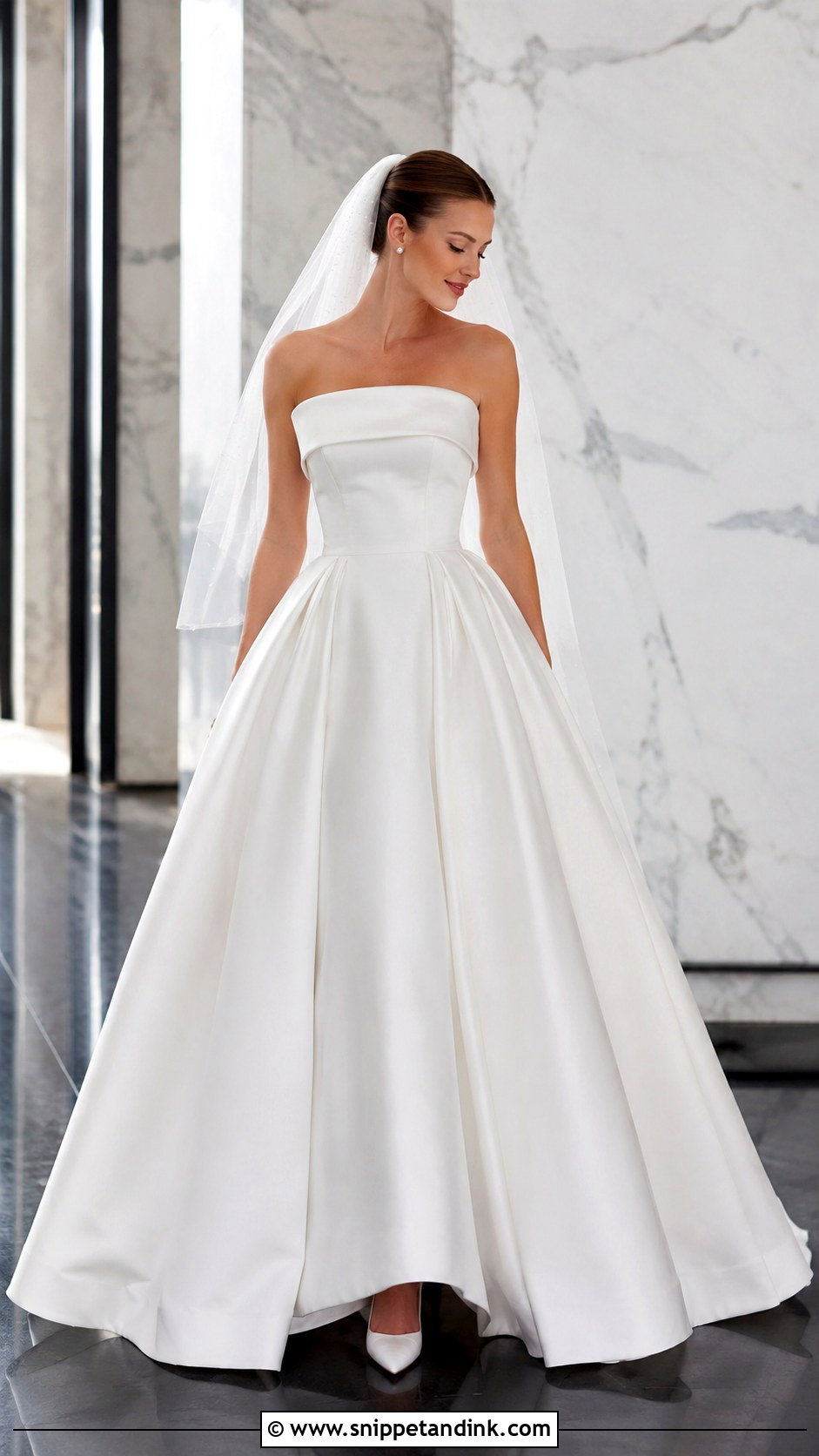
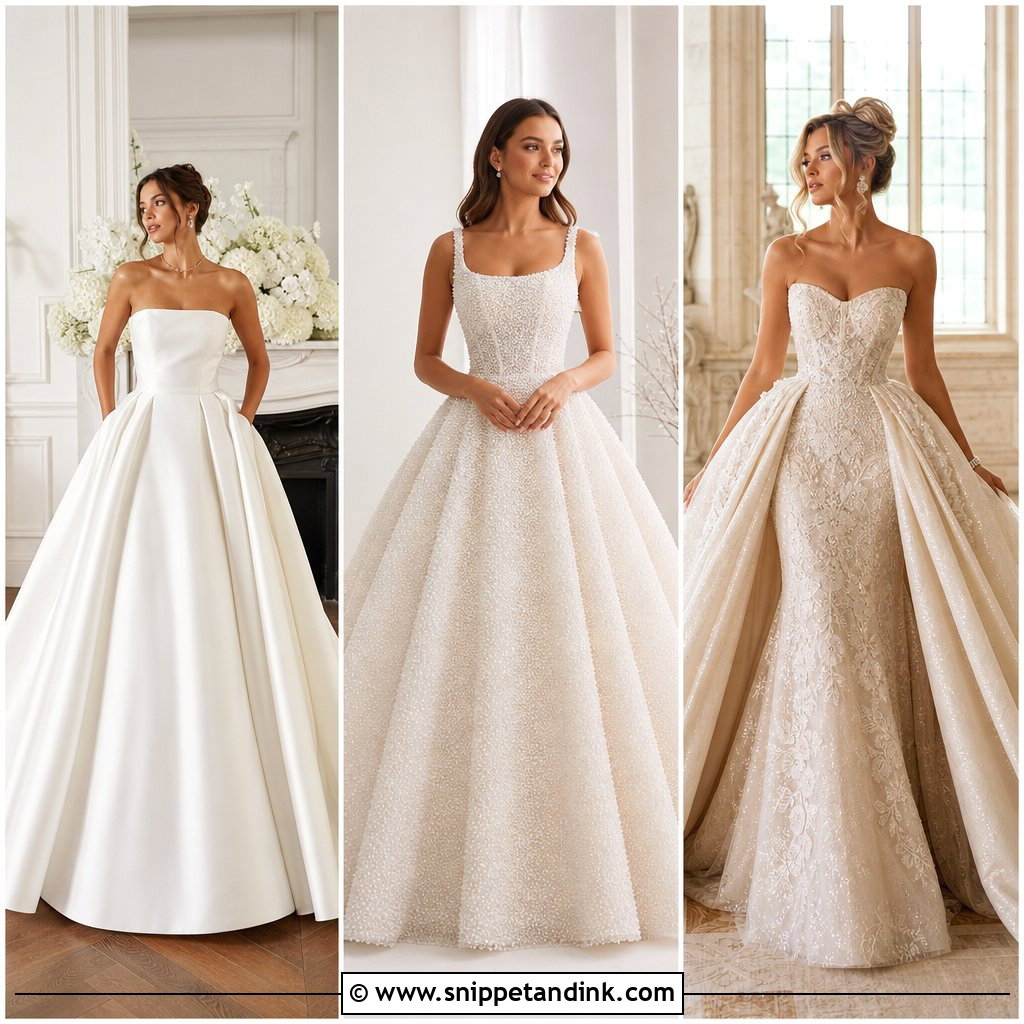
Satin builds volume through stiffness rather than layers, so the skirt holds a crisp shape and catches light along every fold. That same quality shows every crease. When a satin bride sits in a car for forty minutes, she arrives with lines across the lap, so I tell her to sit on the back of the skirt with the front lifted, or to travel in a larger vehicle. Strapless bodices, folded necklines and a subtle draped waist all suit it. Evening and black-tie weddings are where satin really comes into its own, with nothing more than pearl studs and a sleek veil.
5. Off Shoulder Puffy Wedding Dress
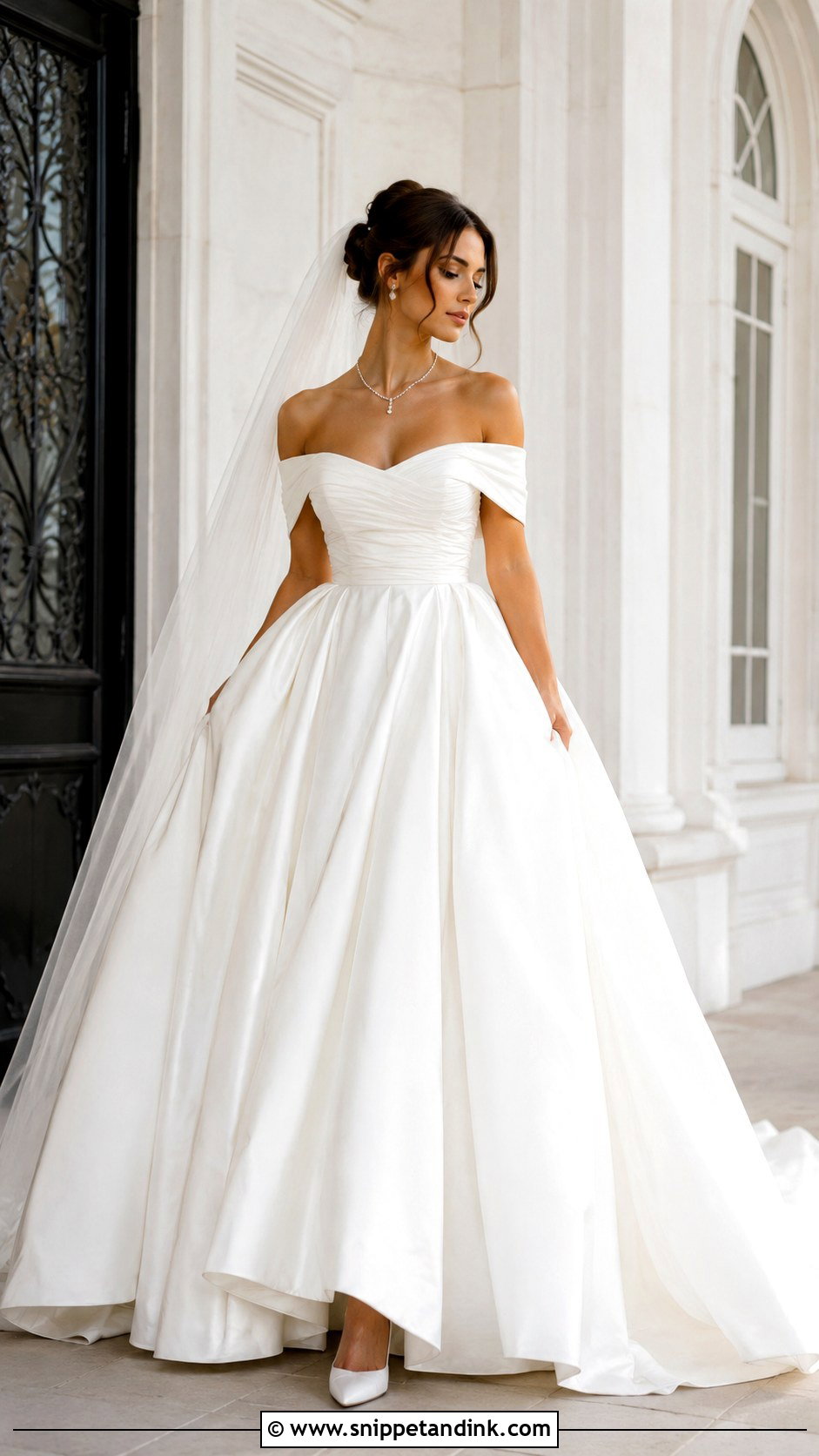
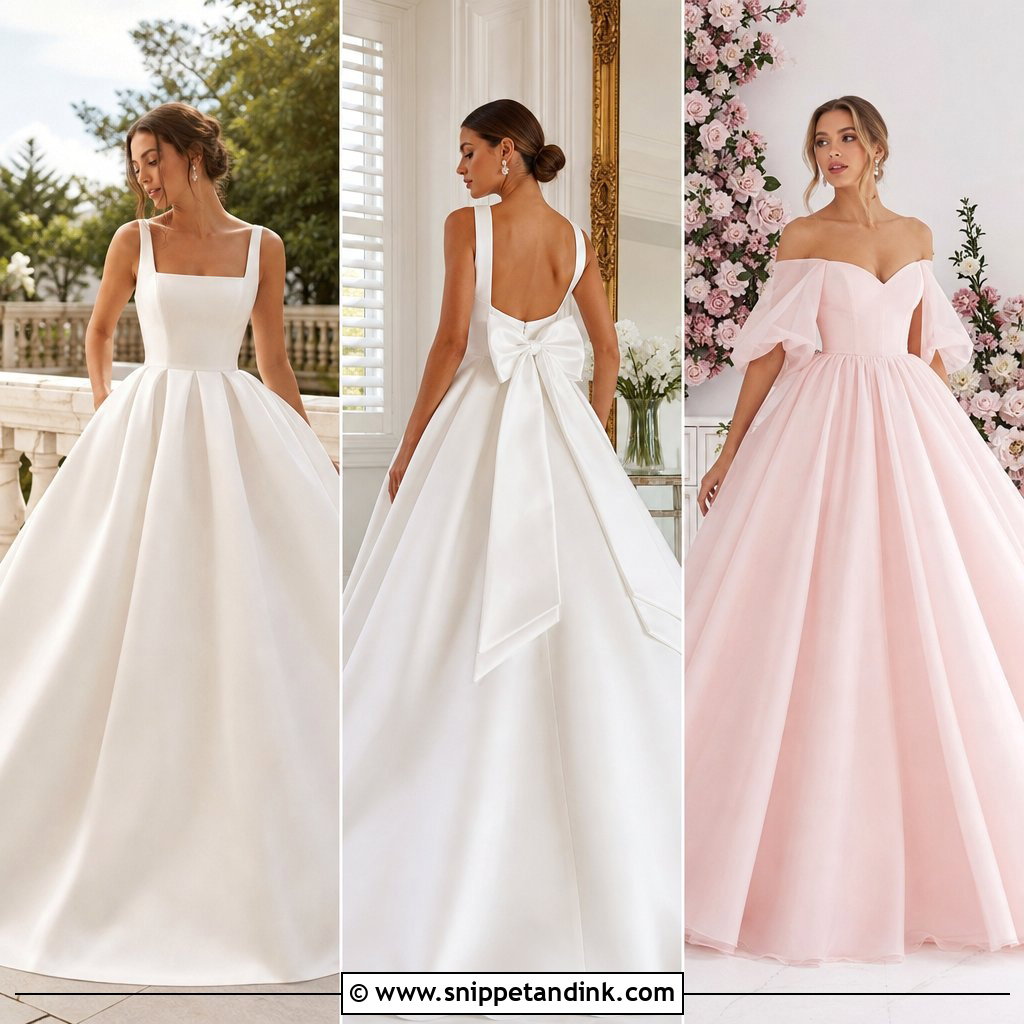
An off-the-shoulder neckline opens up the collarbone and pulls the eye upward, which balances a very wide skirt. The catch is movement. Folded satin or draped tulle bands sitting on the upper arm can restrict how high you lift your arms, so I ask brides to do the full first-dance hold and a bouquet toss in the fitting room before we commit. Silicone grip tape inside the band helps it stay put. An updo keeps the shoulder line visible; a fine necklace is plenty.
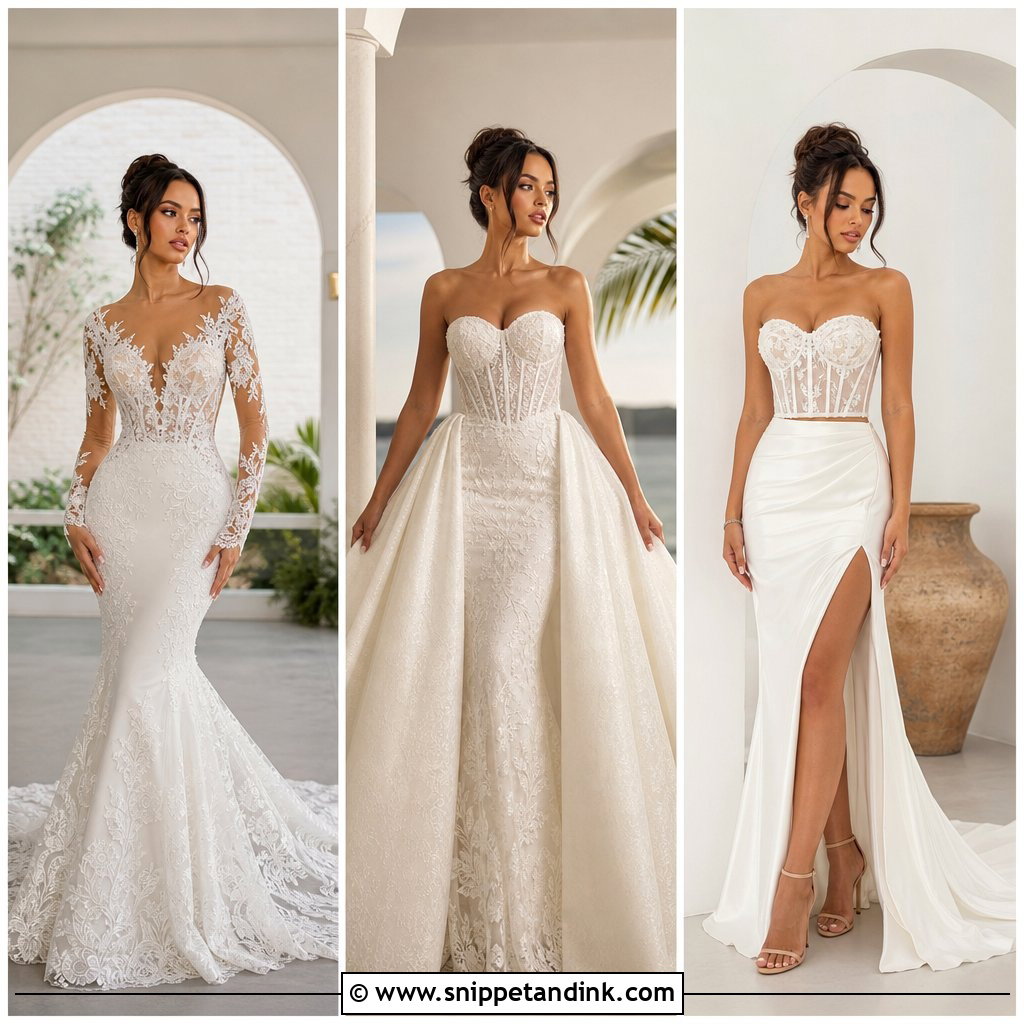
6. Corset Puffy Wedding Dress
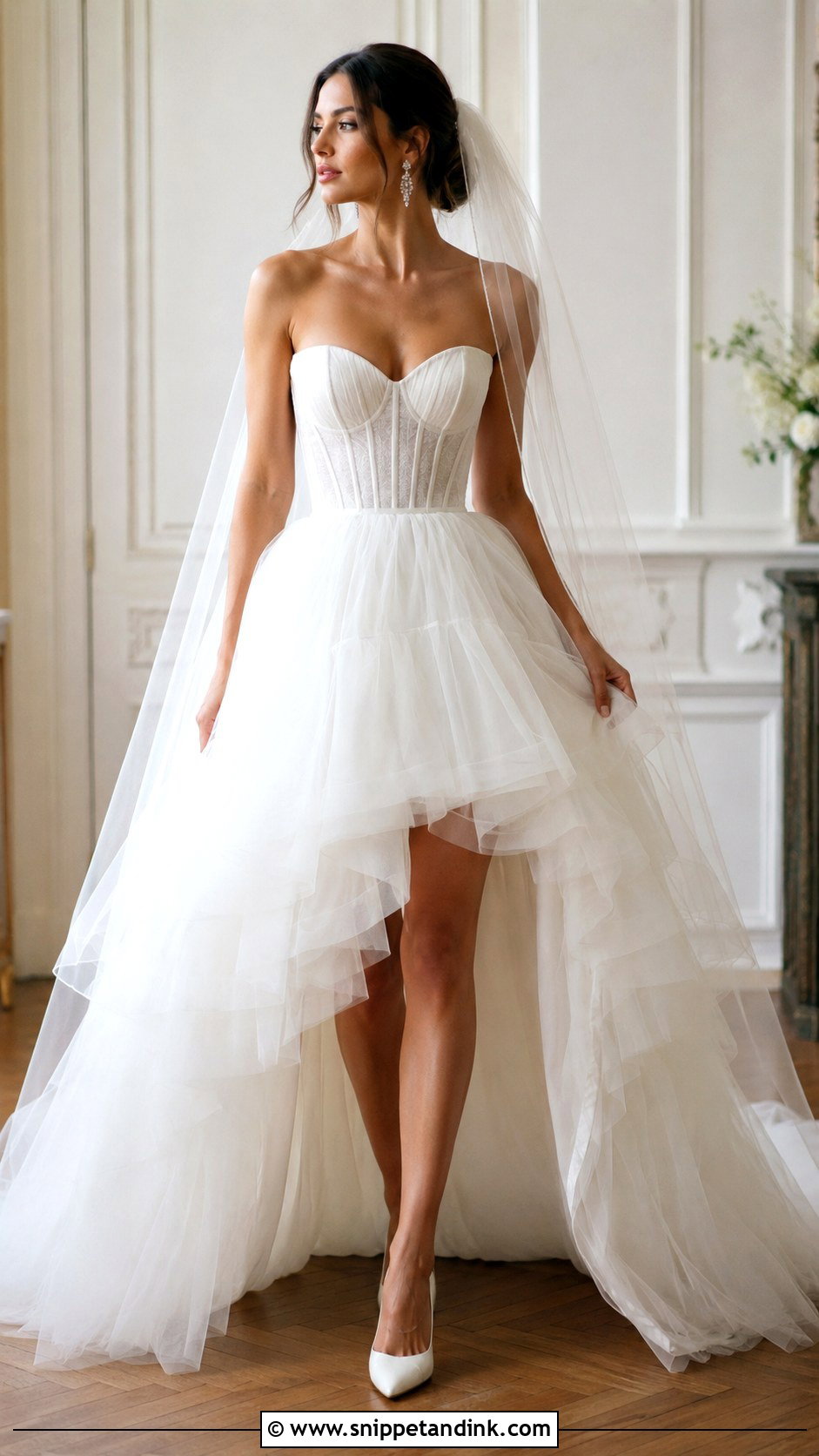
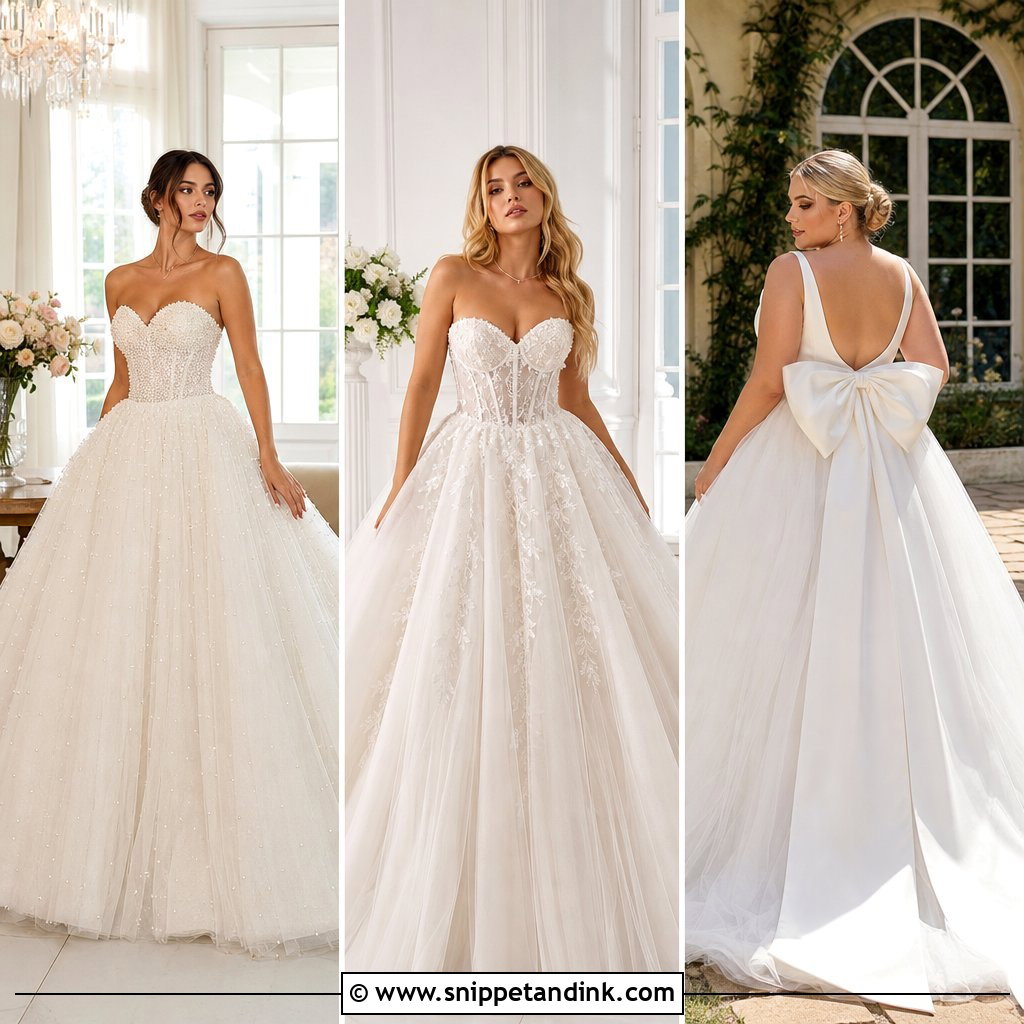
A corset puffy wedding dress gives the strongest waist definition of anything here, and the bones do real work supporting the bust so you can often skip a separate bra. Comfort depends entirely on fit. A corset laced to the tightest point at the first fitting will feel very different after a three-course dinner, so I fit it with a little room and let the lacing take up the slack on the morning. Lace makes it romantic, satin makes it sharp, sheer tulle panels make it lighter. Keep earrings small so the bodice seams stay the focus.
7. Drop Waist Puffy Wedding Dress
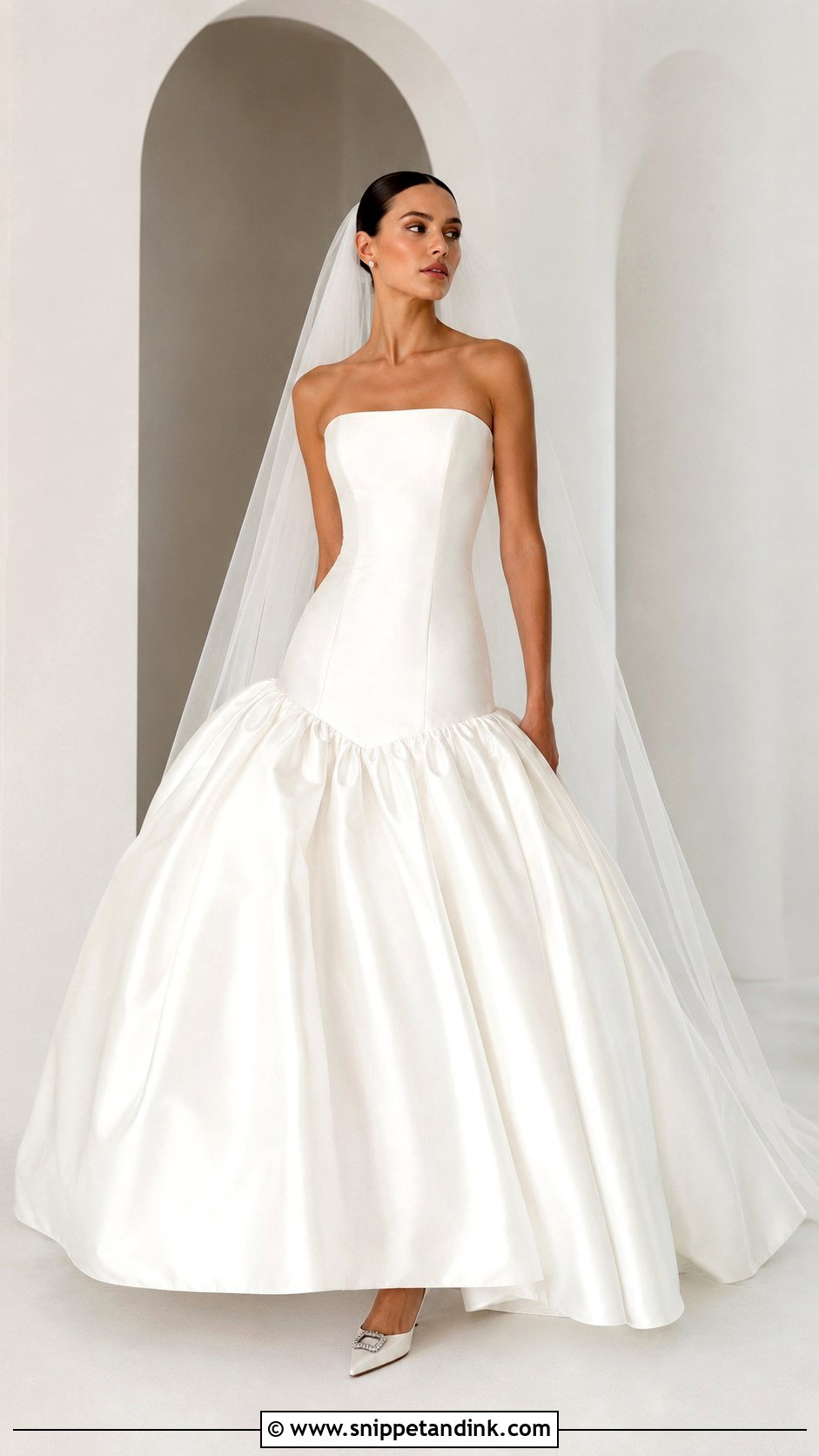
Here the bodice runs past the natural waist to the hip before the skirt opens, which makes a long, unbroken line through the torso. It looks crisp in taffeta, satin or stiff organza and quite vintage in photographs. I’d be honest that it is less forgiving than a natural waist: on a short torso, the skirt can start too close to the thigh and shorten the legs. Try it on with the shoes you’ll actually wear before deciding, and pair it with a sleek hairstyle so the long bodice has room.
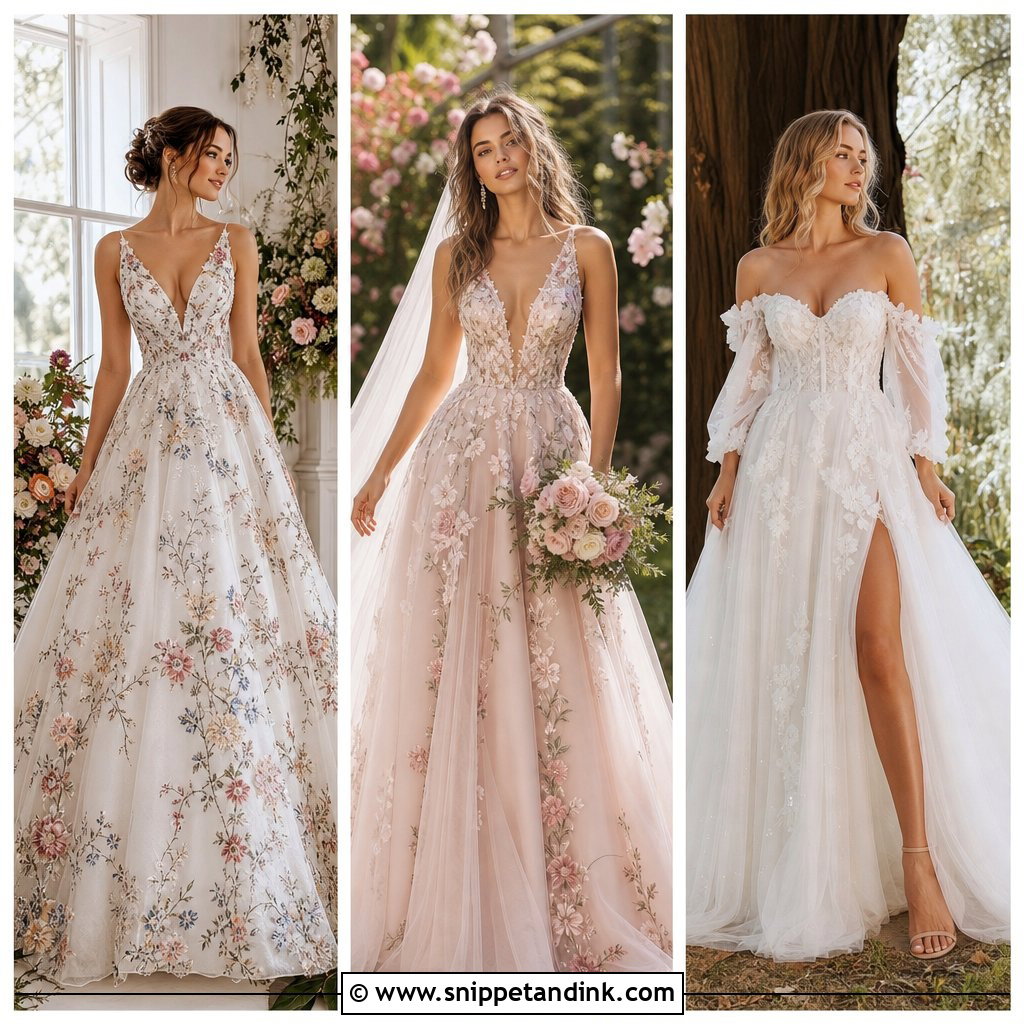
8. Floral Puffy Wedding Dress
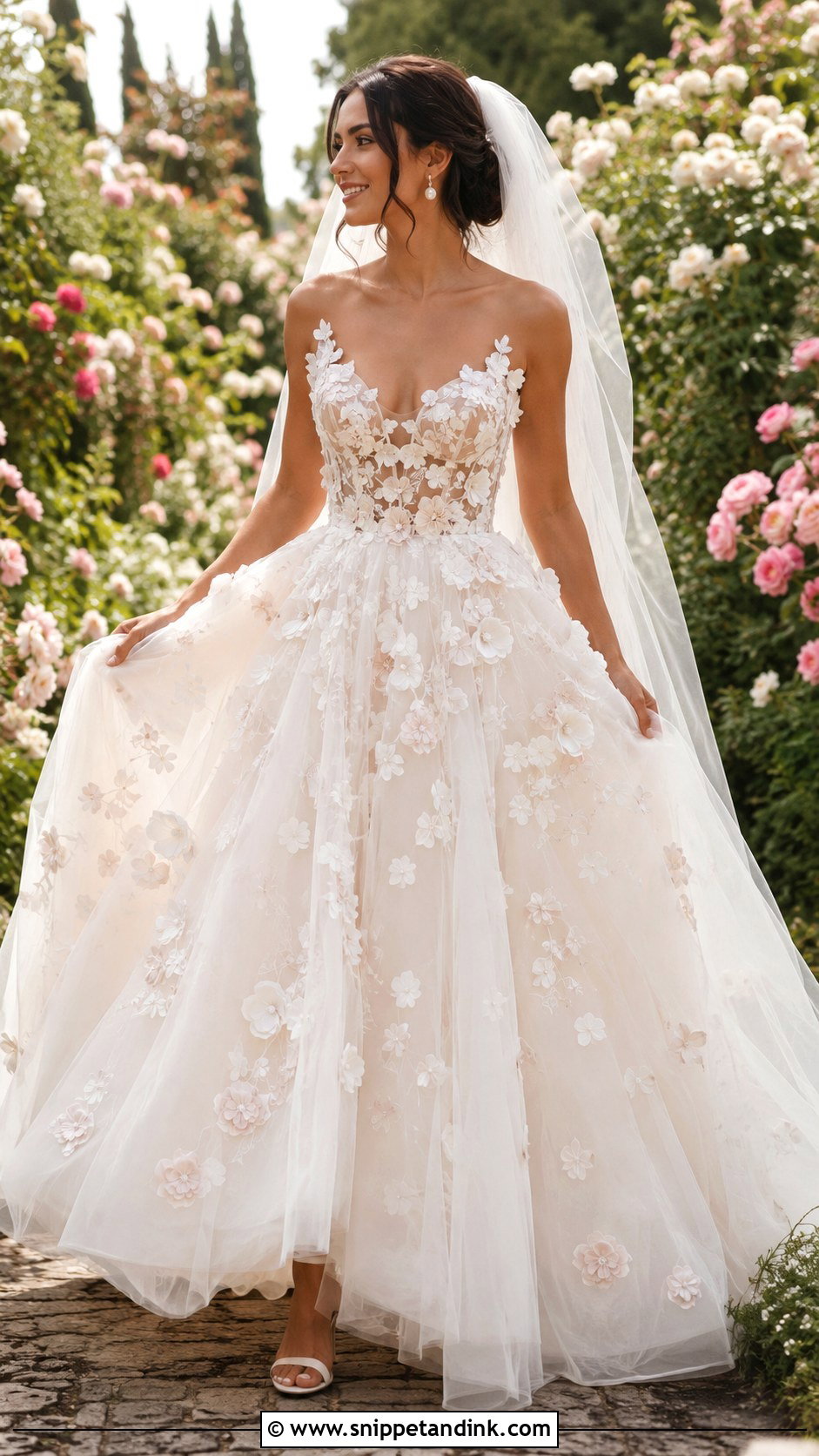
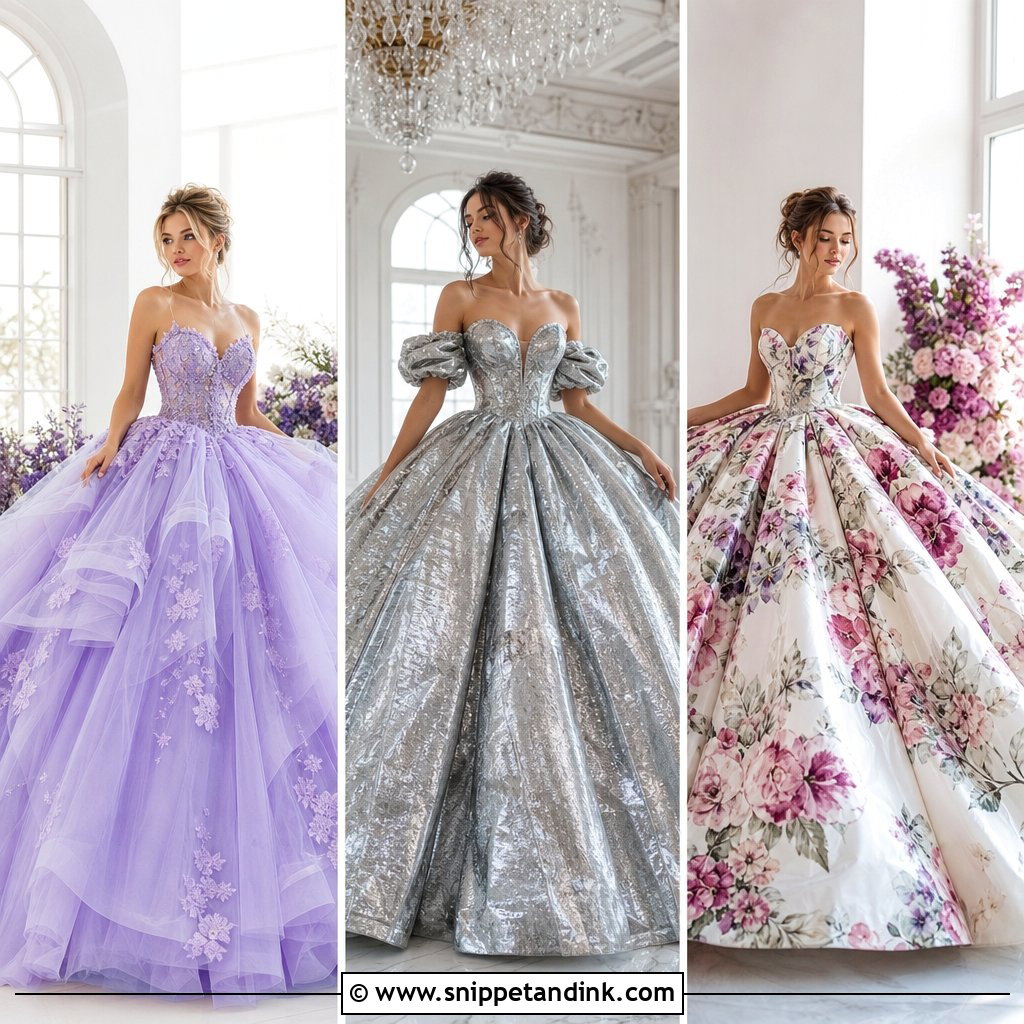
Three-dimensional petals and appliqué turn a big skirt into something closer to a garden bed, and the effect changes depending on how densely the flowers are placed. Scattered blooms on a tulle skirt feel light; dense clusters near the hem add weight that helps a soft skirt hang well. I always run a hand over the back of appliqué to check it is stitched down rather than glued, because glued petals lift after a day of brushing against chairs. Echo the flowers loosely in the bouquet instead of matching them exactly.
9. Lace Ball Gown Wedding Dress
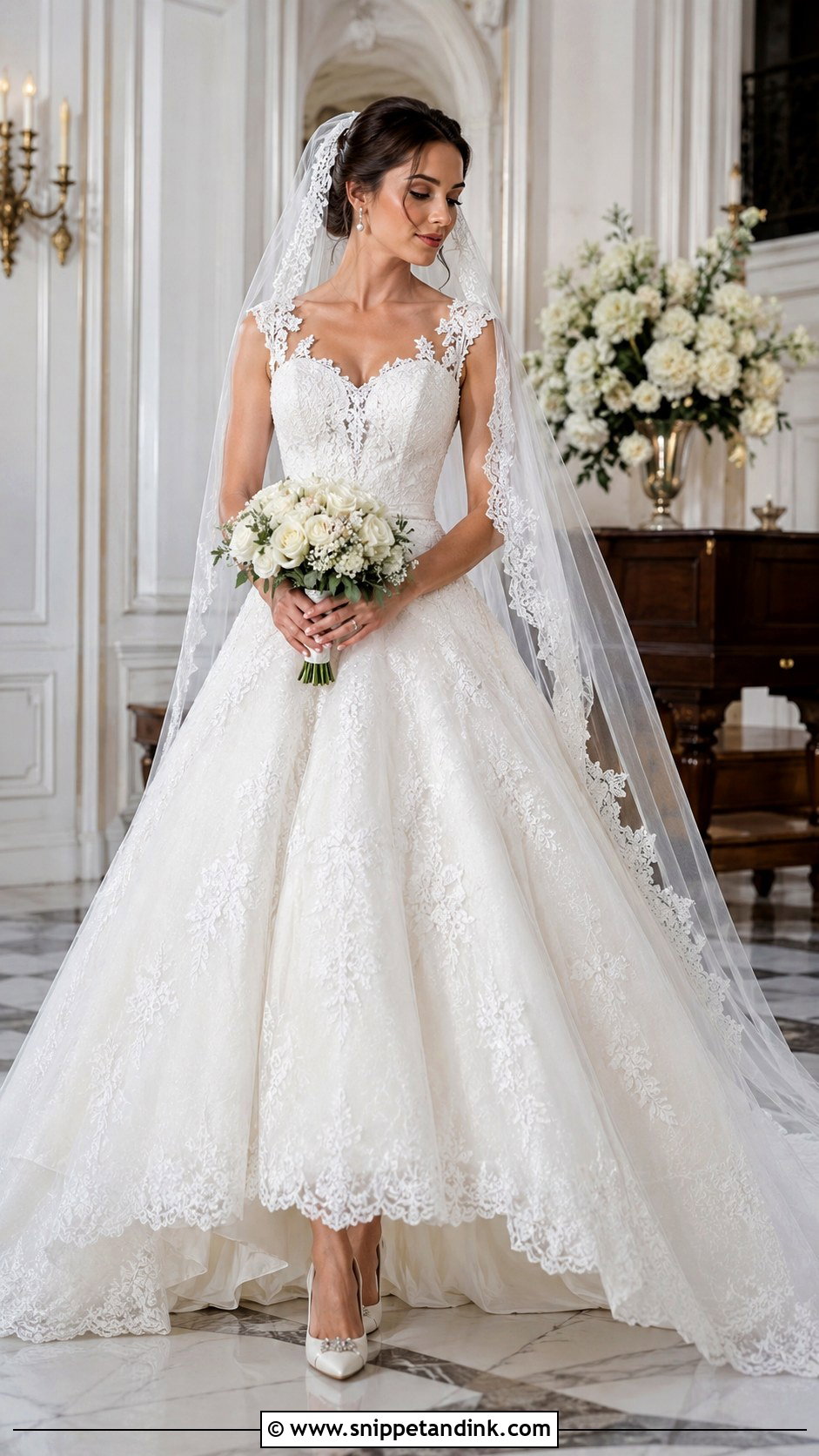
Lace gives a full gown a traditional finish and adds detail without the weight of beading. A lace bodice on a tulle or satin skirt keeps the balance right; all-over lace feels more vintage and heavier. The thing I check is how the lace pattern meets at the seams. Good dressmakers cut around the motifs so the pattern flows across the bodice; cheap ones slice straight through a flower at the side seam. Long lace sleeves suit a cooler season, while a strapless lace top is easier on a hot day. A veil edged in matching lace ties it together.
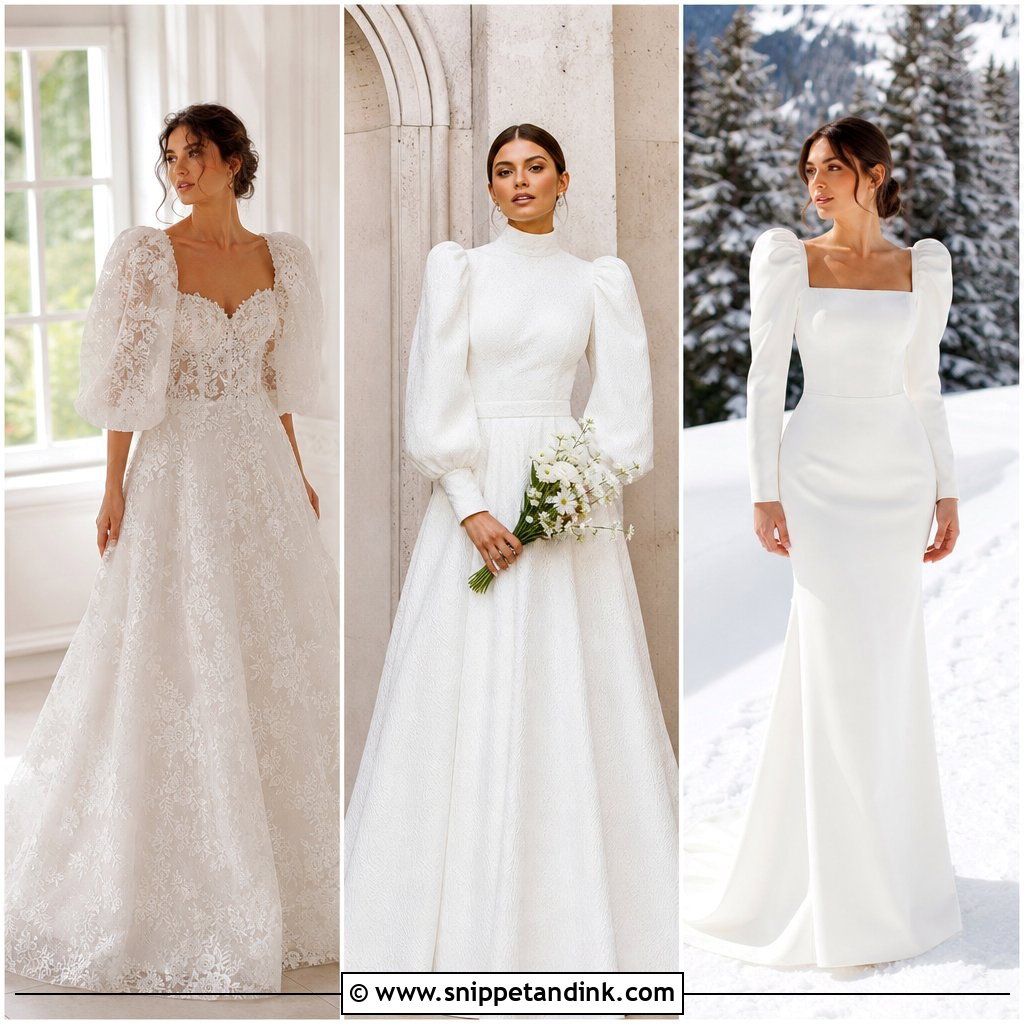
10. Long Sleeve Puffy Wedding Dress
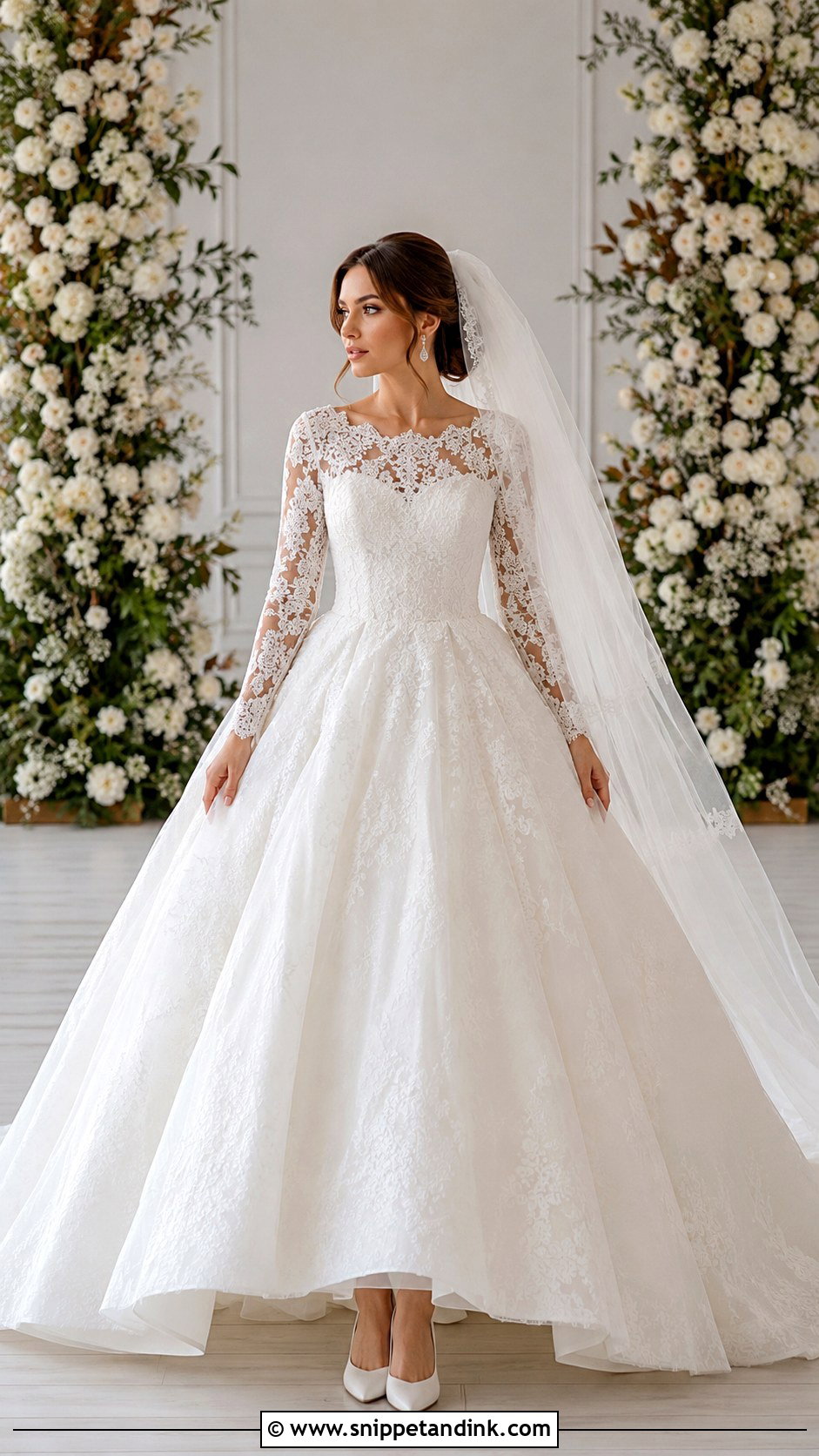
Sleeves to the wrist give coverage while the skirt keeps all the drama. Sheer lace or tulle sleeves feel delicate; structured puffed sleeves add yet more volume up top, which can feel like a lot on a petite frame. At fittings I watch the wrist when a bride raises her hand to her face: a sleeve cut too short rides up to mid-forearm. They suit autumn and winter, and lightweight versions work in spring. If the sleeves carry the detail, keep the neckline plain, and let the veil and a pair of soft heels finish it.
11. Strapless Puffy Wedding Dress
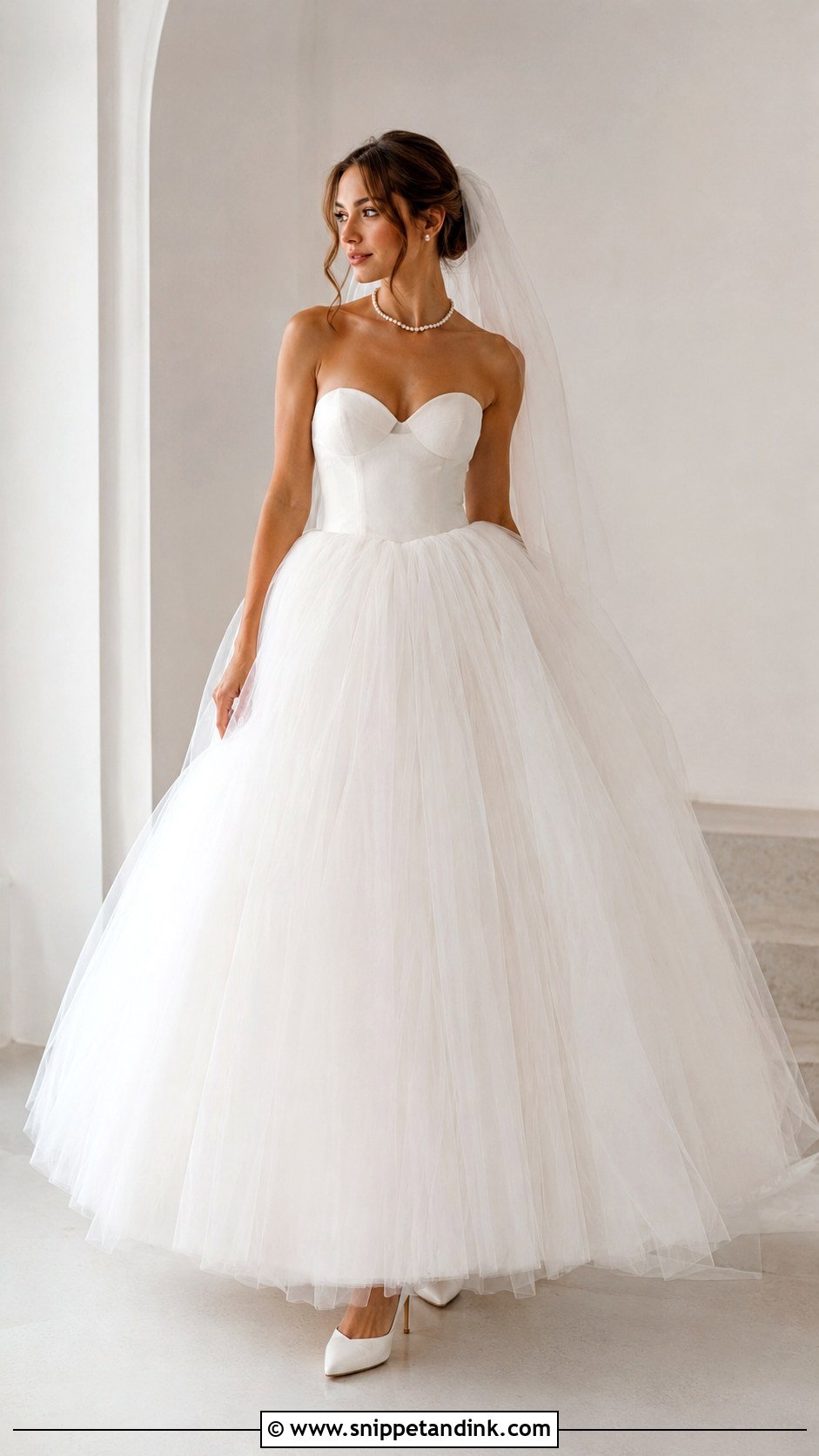
With no straps, the upper body stays clean and the skirt carries the volume. A sweetheart neckline softens the top edge; a straight line looks more modern. The real question with any strapless gown is support. I want the bodice built with boning and a waist stay, the inner grosgrain band that takes the weight of the skirt, so you are not hitching it up all evening. A pearl choker or drop earrings gives the open neckline a focal point.
12. Square Neck Puffy Wedding Dress
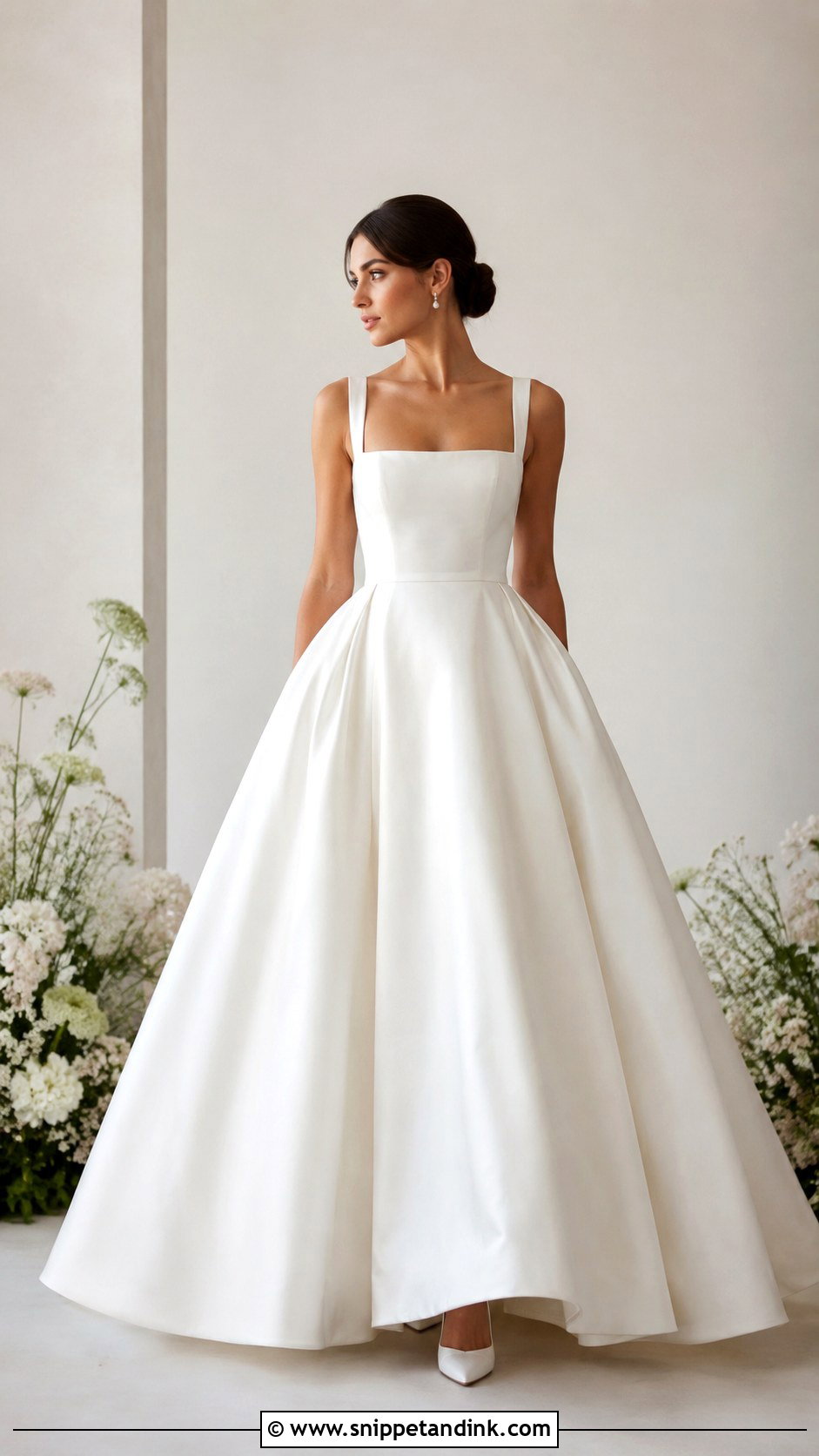
A square neck frames the chest with straight lines and feels slightly vintage, and it works with straps or sleeves. Against a full skirt it creates a strong, balanced shape. It suits brides who find a sweetheart too expected. My one caution: the corners of a square neckline must sit flat against the skin, and if they gap when you lean forward, the bodice needs taking in at the side seams, not just the neckline. Smooth satin keeps it sharp, while lace softens it. A low bun shows off the neckline best.
13. High Neck Puffy Wedding Dress
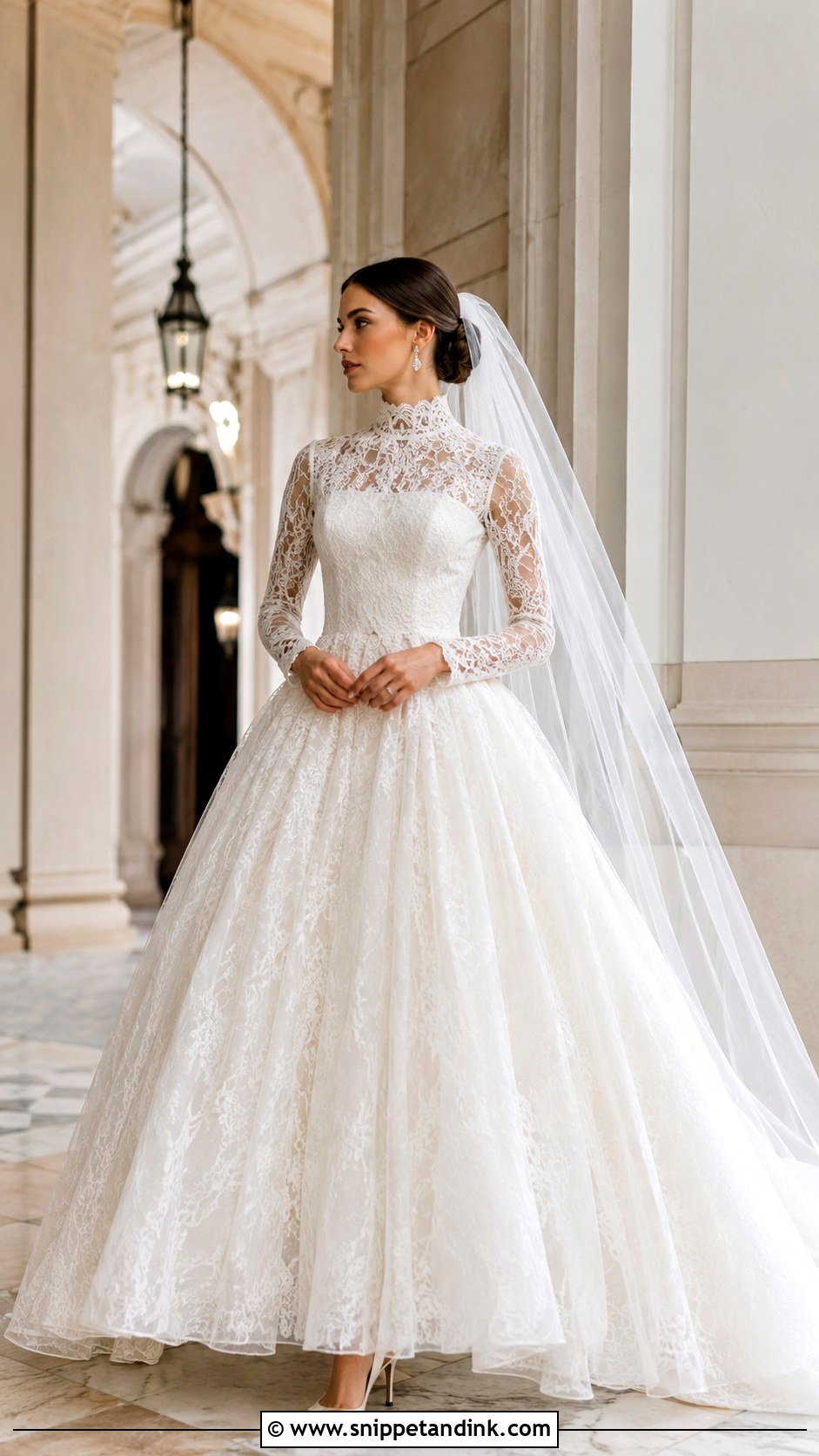
A high neckline gives the upper body structure and a regal, covered look that suits formal and historic venues. Illusion fabric or fine lace keeps it from feeling heavy. I always have a bride turn her head fully side to side in a high neck, because a collar cut too close rubs the jaw by mid-afternoon. Skip the necklace entirely and put the attention on earrings, a veil or a polished updo. If you run warm, ask for a sheer back panel; it makes a surprising difference over a long day.
14. Organza Puffy Wedding Dress
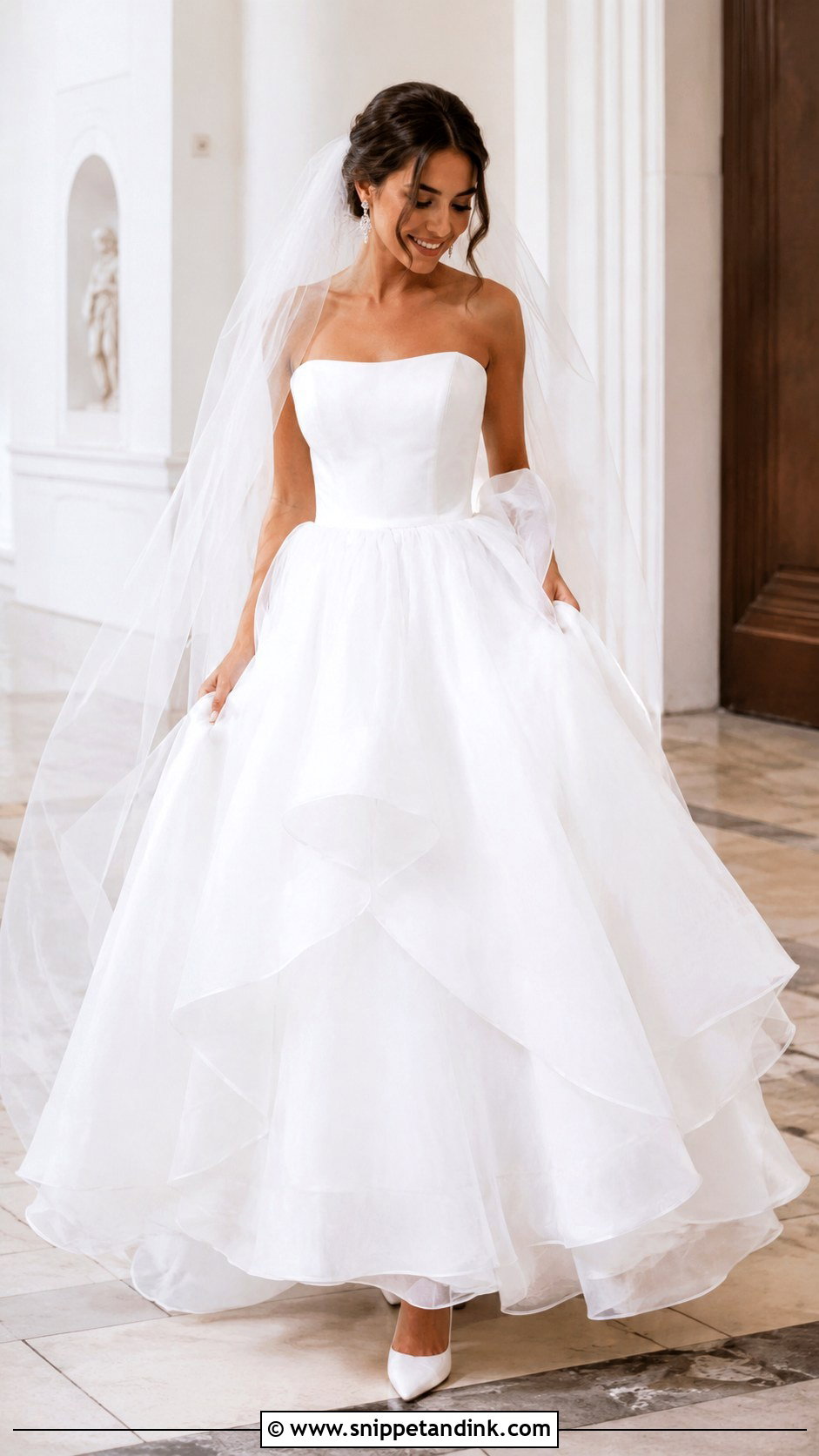
Organza is crisper and lighter than tulle, so it holds a sculpted shape without needing as many layers underneath. It works for floating overskirts, soft waves and stiff tiers. Bright rooms and daytime outdoor ceremonies show it off well. The trade-off is that organza wrinkles faster than satin and shows water spots, so I keep a steamer on site and warn brides away from walking across wet lawns before photos. A simple bodice keeps the overall look clean.



15. Ruffle Puffy Wedding Dress
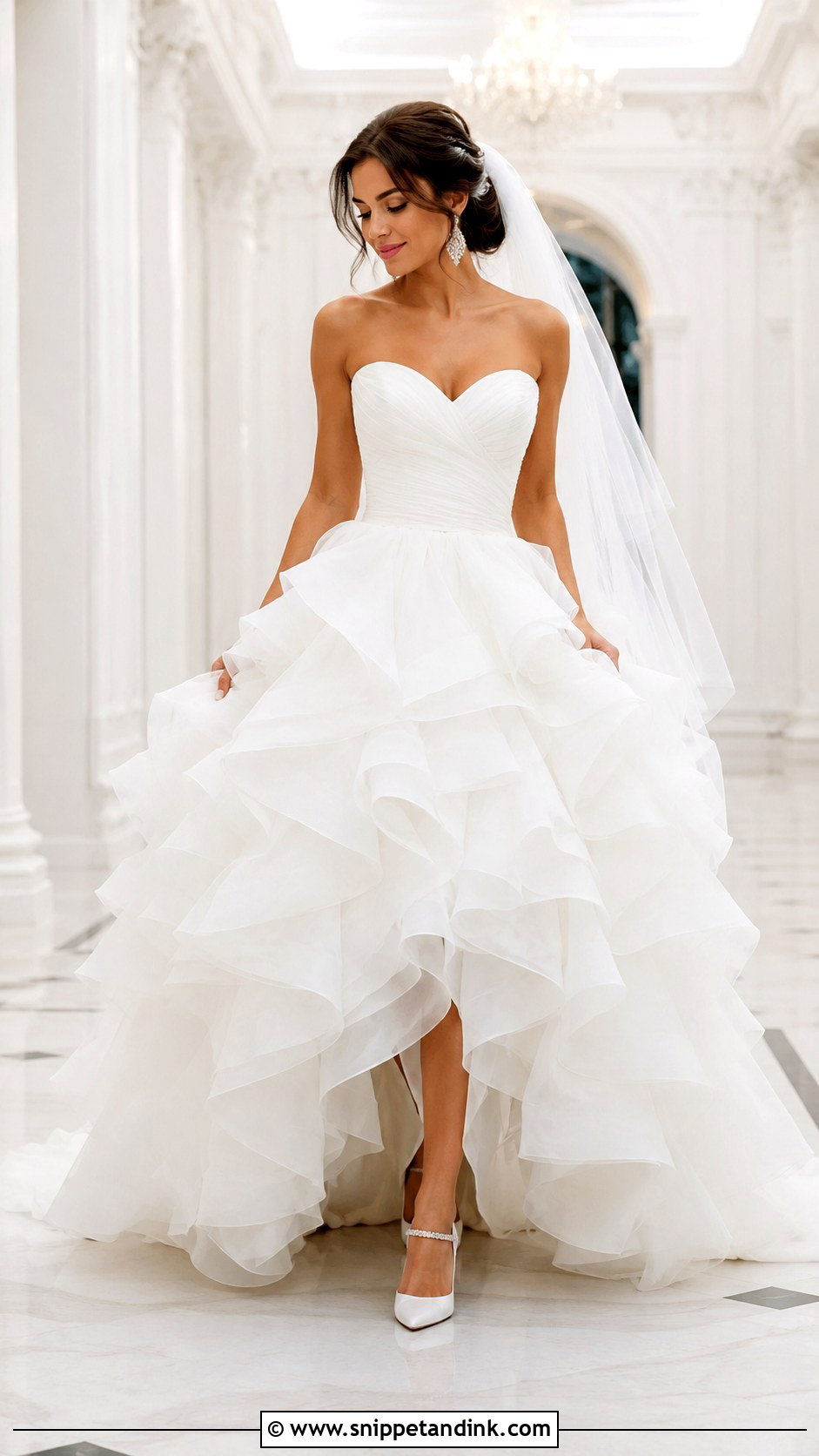
Tiered ruffles give a skirt movement that you really see in walking and twirling shots. Balance is the whole game. With heavy ruffles, I steer brides to a plain bodice, whether that is strapless satin, a clean corset or a simple scoop neck. Tulle ruffles soften; organza ruffles look sculptural. These skirts read well across a large hall but can swamp a small room. They also catch on everything at hip height, so check the route from the bridal suite to the aisle before the day.
16. Bubble Hem Wedding Dress
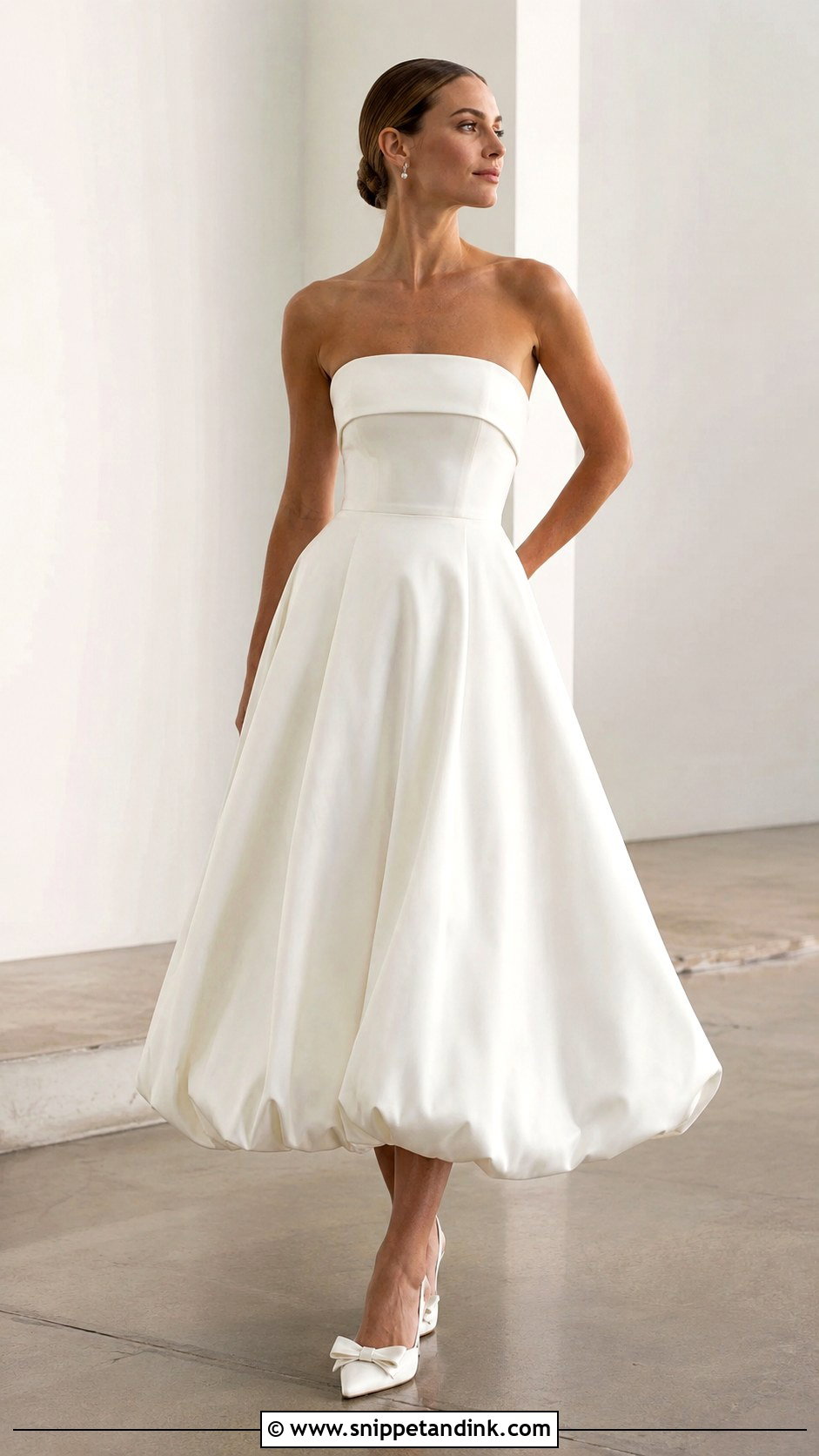
A bubble hem tucks the bottom of the skirt under itself to make a rounded, puffed edge. It needs crisp fabric such as taffeta, satin or organza, since soft fabrics just droop. A mini version suits a reception change, and a full-length bubble gown is a bold ceremony choice. Watch the hem when you sit: the gathered edge can lift and show more leg than expected, so test it in a chair. Keep the bodice plain and finish with pointed heels and a neat hairstyle.
17. Puffy Mini Wedding Dress
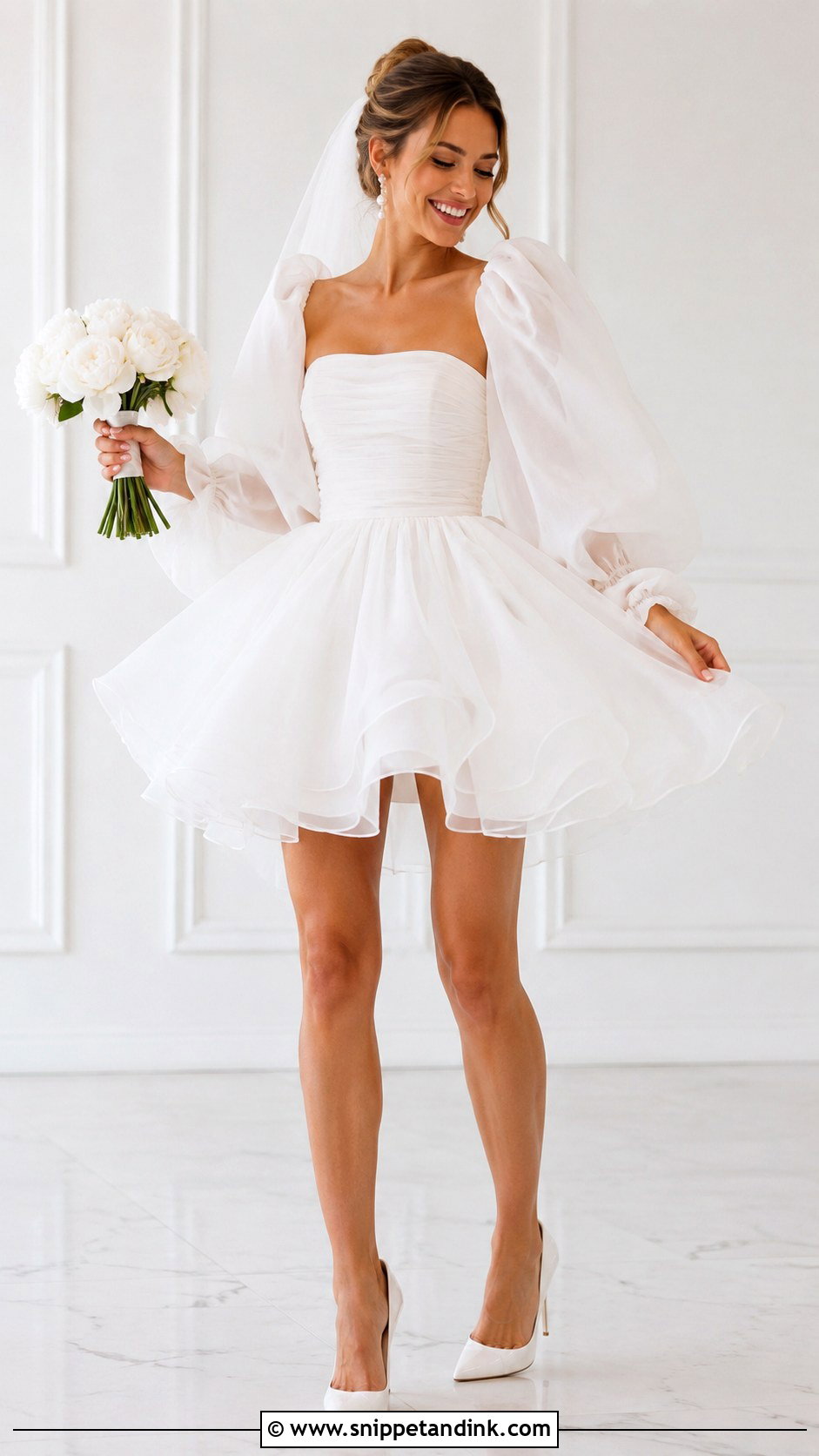
A short puffed dress works for a second look, a courthouse ceremony, a rehearsal dinner or a reception change. The short hem keeps it fun, and the puffed skirt or sleeves keep it reading as bridal. Organza, taffeta and satin hold the shape best. I’d recommend it most to brides who wore a heavy gown for the ceremony and want to dance properly afterwards. Choose a hem length you are comfortable sitting in; a mini that rides up all night is not much better than a heavy skirt. Pearl earrings and a short veil or bow finish it.
18. Puffy Wedding Dress With Train
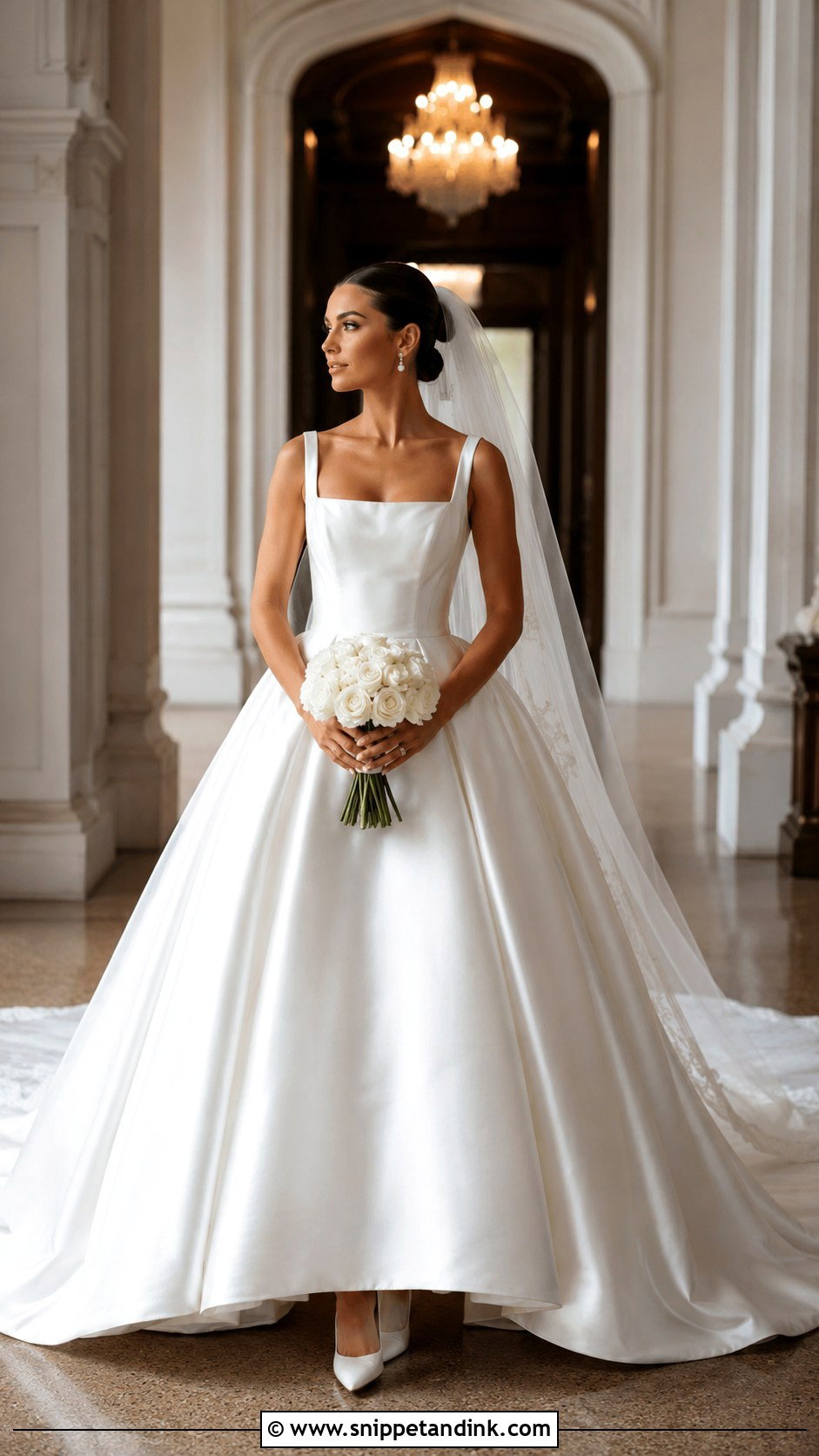
A full skirt with a train gives a dramatic entrance from the front and real movement from the back. A chapel train stays manageable, while a cathedral train is a bigger commitment. The bustle is where most of my fitting time goes. A French bustle tucks under and a ballroom bustle lifts the train up to the waistline, and someone in your party needs to practise it at the final fitting, not at the reception. Keep the veil shorter than the train so the gown still shows.
19. Beaded Puffy Wedding Dress
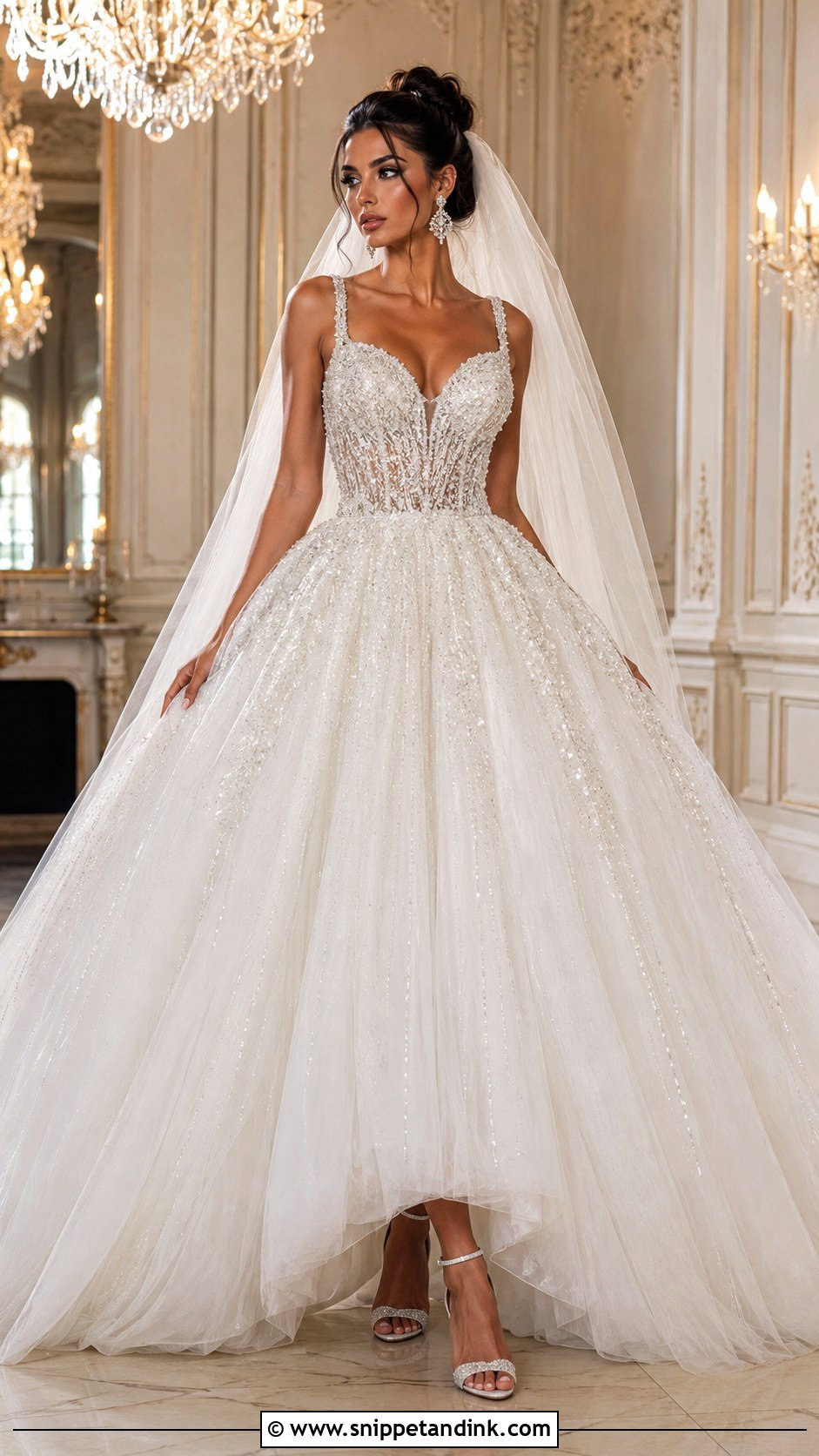
Beading puts sparkle onto a big shape, whether concentrated on the bodice, scattered across the skirt or tracing floral patterns. Under evening light and candles it catches light in a way plain fabric can’t. Heavy beading adds real weight, though, sometimes a couple of kilograms on a full skirt, and it can catch on lace veils. I lift the skirt in the fitting room to make sure a bride can carry it comfortably for a full day. With heavy embellishment, accessories stay minimal: a clean veil and small crystal earrings.

20. Pearl Puffy Wedding Dress
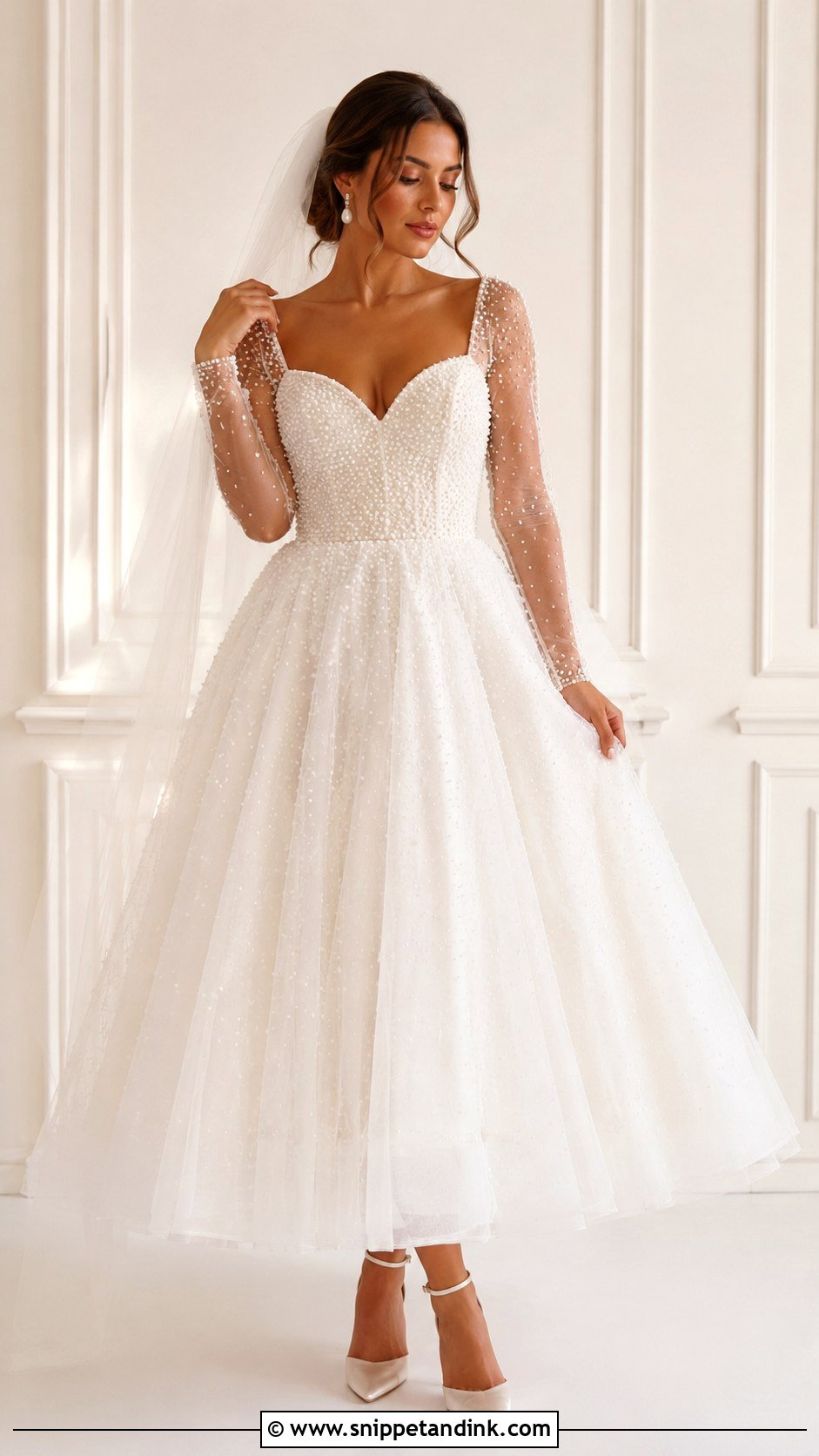
Pearls add texture without the hard flash of crystals, which suits brides who prefer a softer gleam. They can be scattered across tulle, set along a bodice seam or used on straps and sleeves. Hand-sewn pearls stay put; glued ones pop off with friction, so check the skirt where your arms brush it. I wouldn’t add a pearl necklace and pearl earrings on top of a pearl-heavy gown. One small accent is enough, plus satin heels and a smooth veil.
21. Minimal Puffy Wedding Dress
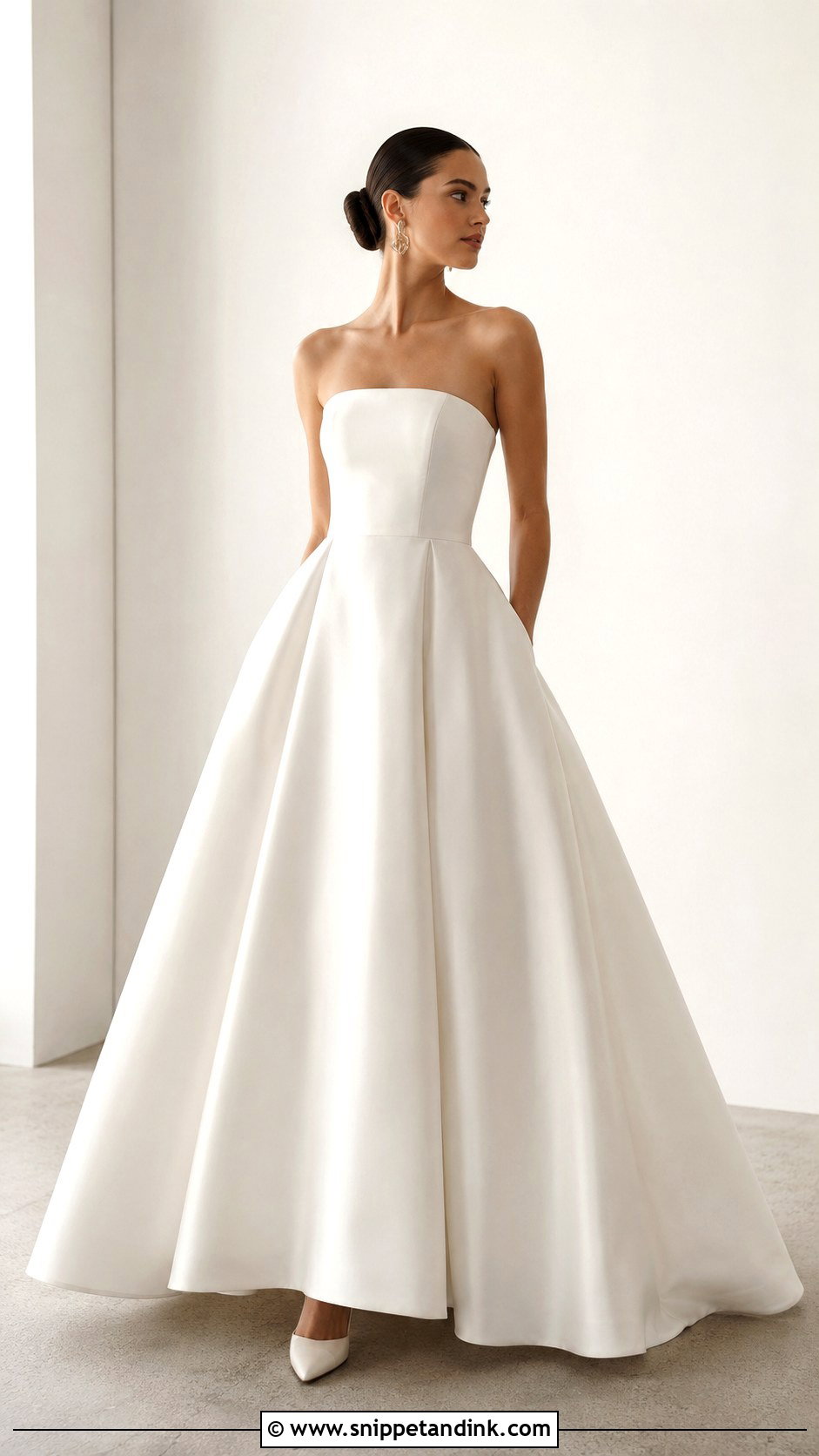
Volume does not need detail. A strong silhouette in clean fabric, well tailored, can be as impressive as lace or sparkle. Satin, mikado and taffeta hold shape best for this. A strapless bodice, square neckline or simple scoop keeps it pared back. Because there is nothing to hide behind, the fit has to be exact: every pull line across the bodice shows. I love this on brides who are getting married in galleries, modern spaces or hotels, with sleek hair and sculptural earrings.
22. Blush Puffy Wedding Dress
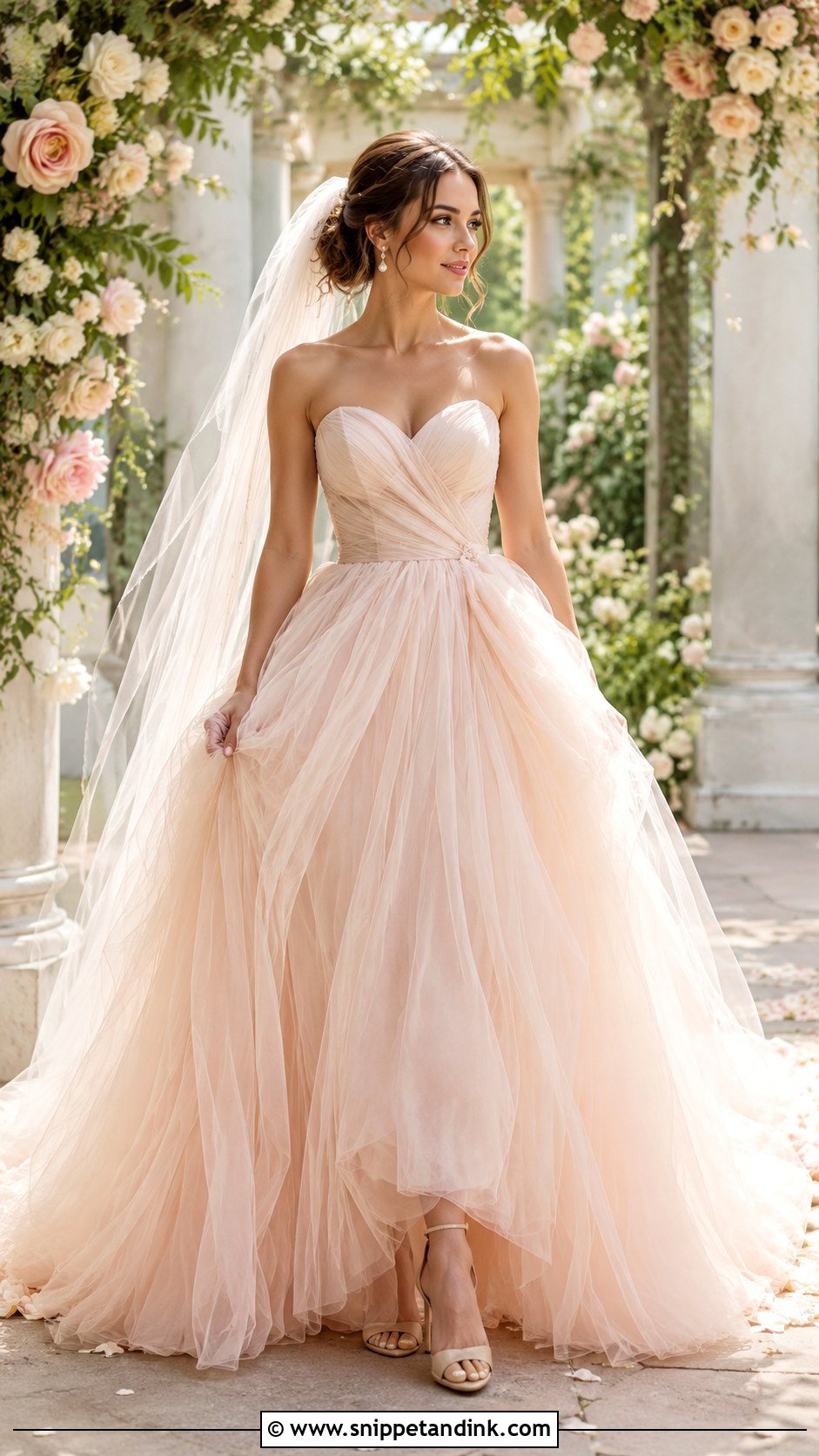
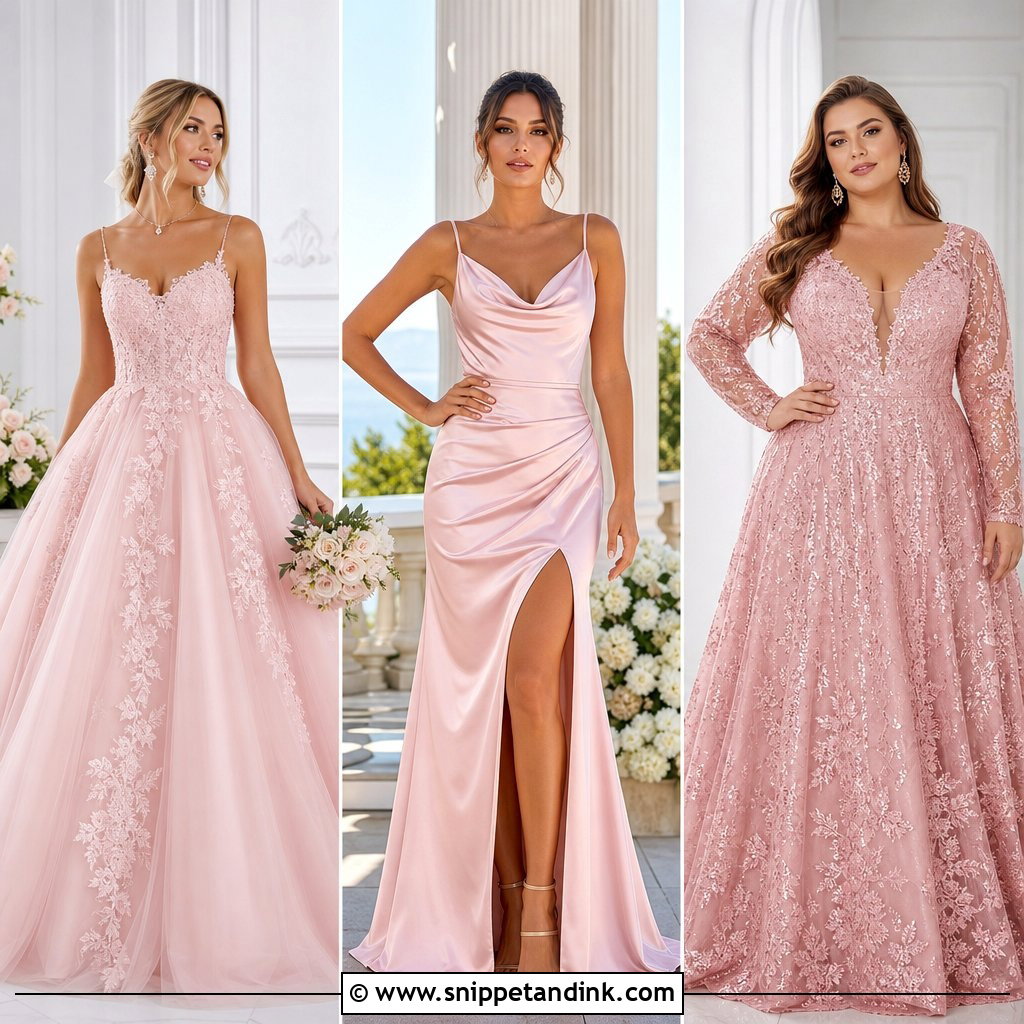
A pale pink gown adds warmth while still reading as bridal, and it sits naturally with tulle, lace and floral appliqué. Blush shifts with light: in shade it can look almost ivory, in warm evening light quite pink, so I always ask brides to look at the fabric outdoors before ordering. Keep accessories in ivory, champagne or silver so the colour looks deliberate. A loose natural bouquet and a fine veil complete a fairytale feel with only a hint of colour.
23. Champagne Puffy Wedding Dress
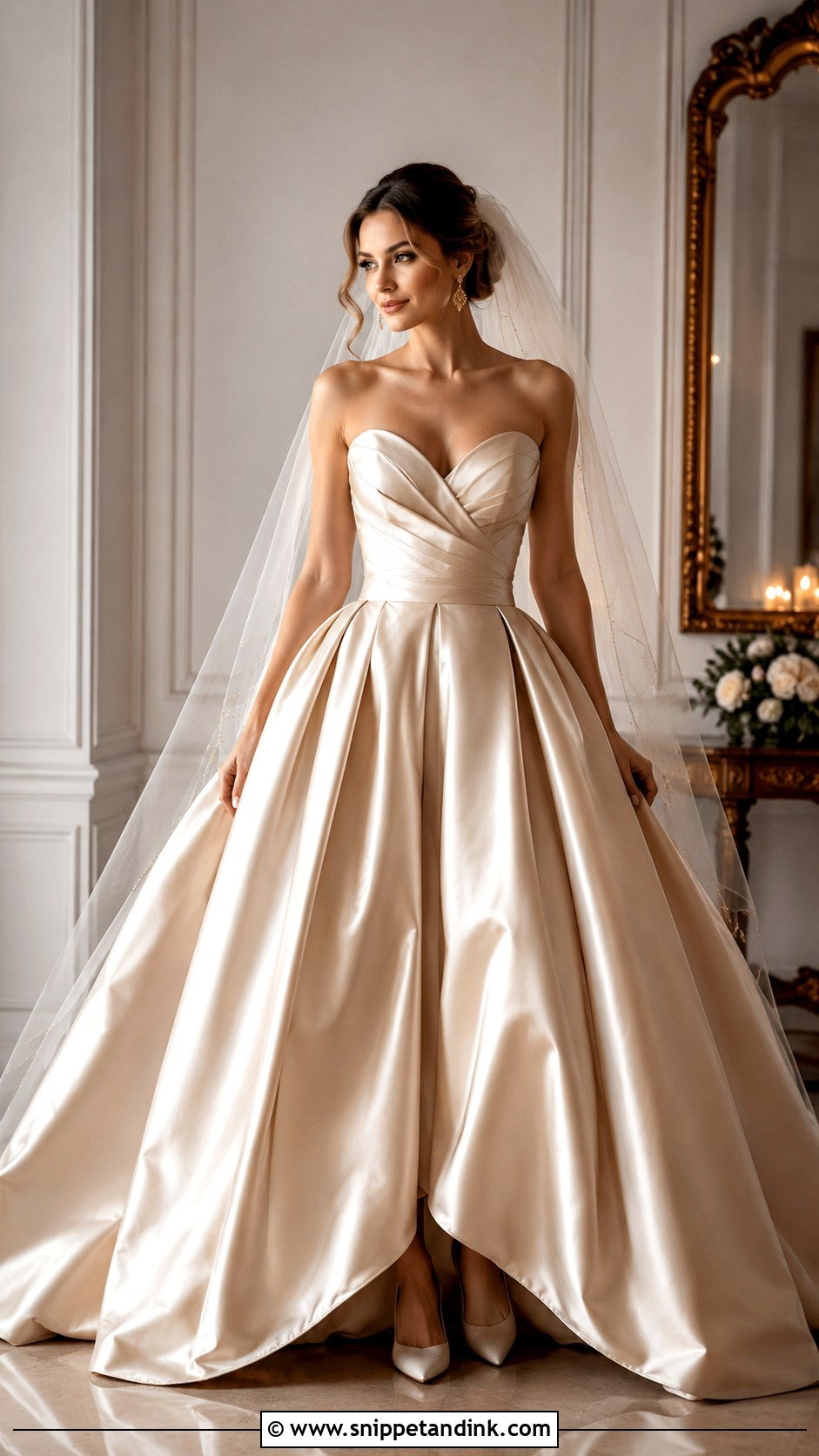
Champagne has a gold undertone that flatters many skin tones and looks rich in daylight and evening photos alike. It adds depth to satin, tulle, beading and lace. I’d avoid pure white accessories with it, because bright white shoes or a white veil can make the dress look slightly dingy next to them. Gold or pearl jewellery and ivory shoes match it better. The cut decides the mood: vintage, glamorous or modern.
24. Detachable Overskirt Wedding Dress
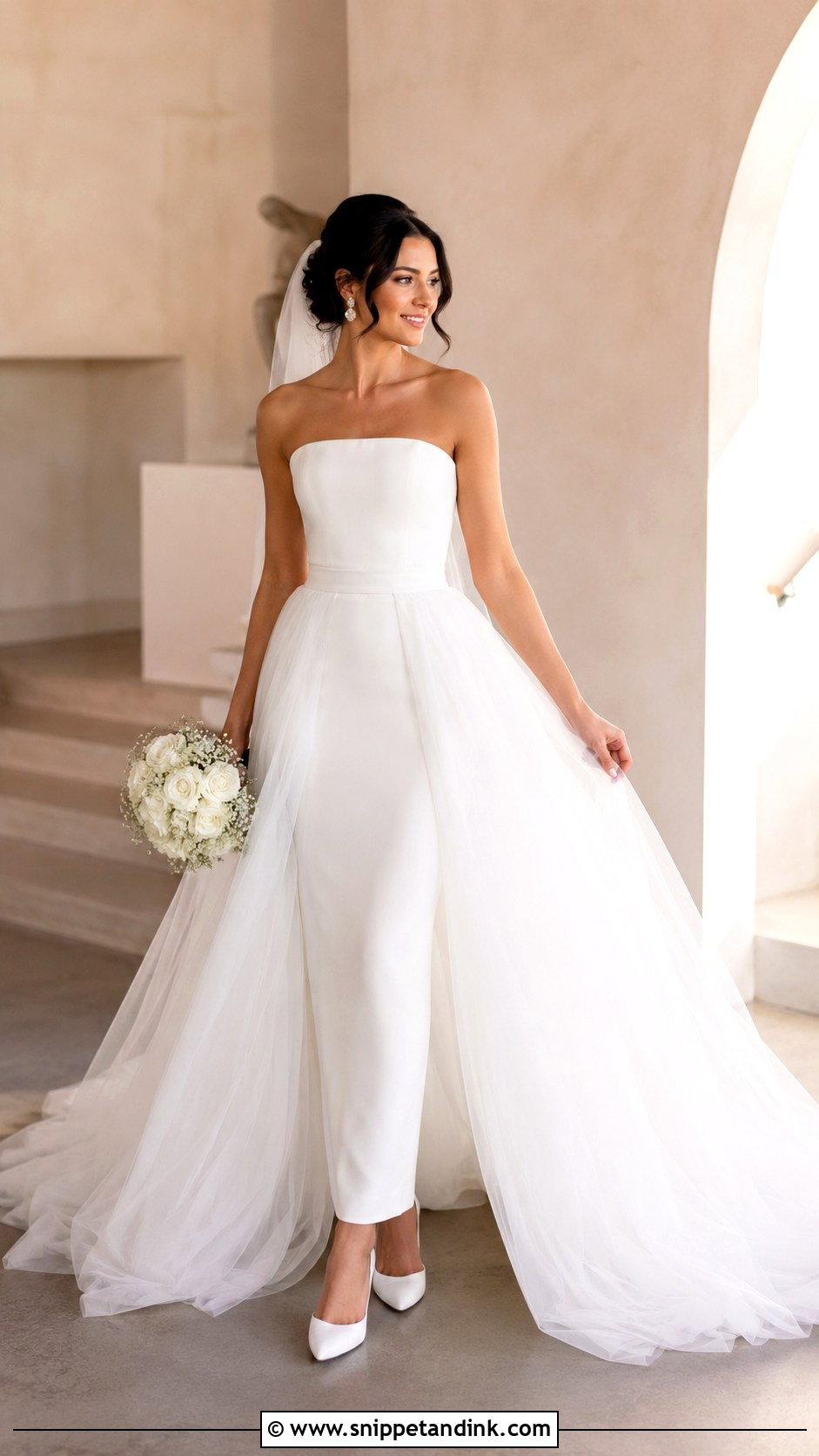
A detachable overskirt gives you two looks: the full ceremony skirt, then a slimmer dress underneath for the reception. It suits brides who want volume for the aisle but comfort for dancing. The base dress can be fitted, A-line or a sleek column. The detail I check is the waistband join. It should close with hooks or hidden buttons and lie completely flat on the base dress, or you will see a bulge in every reception photo. Practise taking it off with whoever will help you, and plan where it will be hung afterwards.

25. Modern Princess Wedding Dress
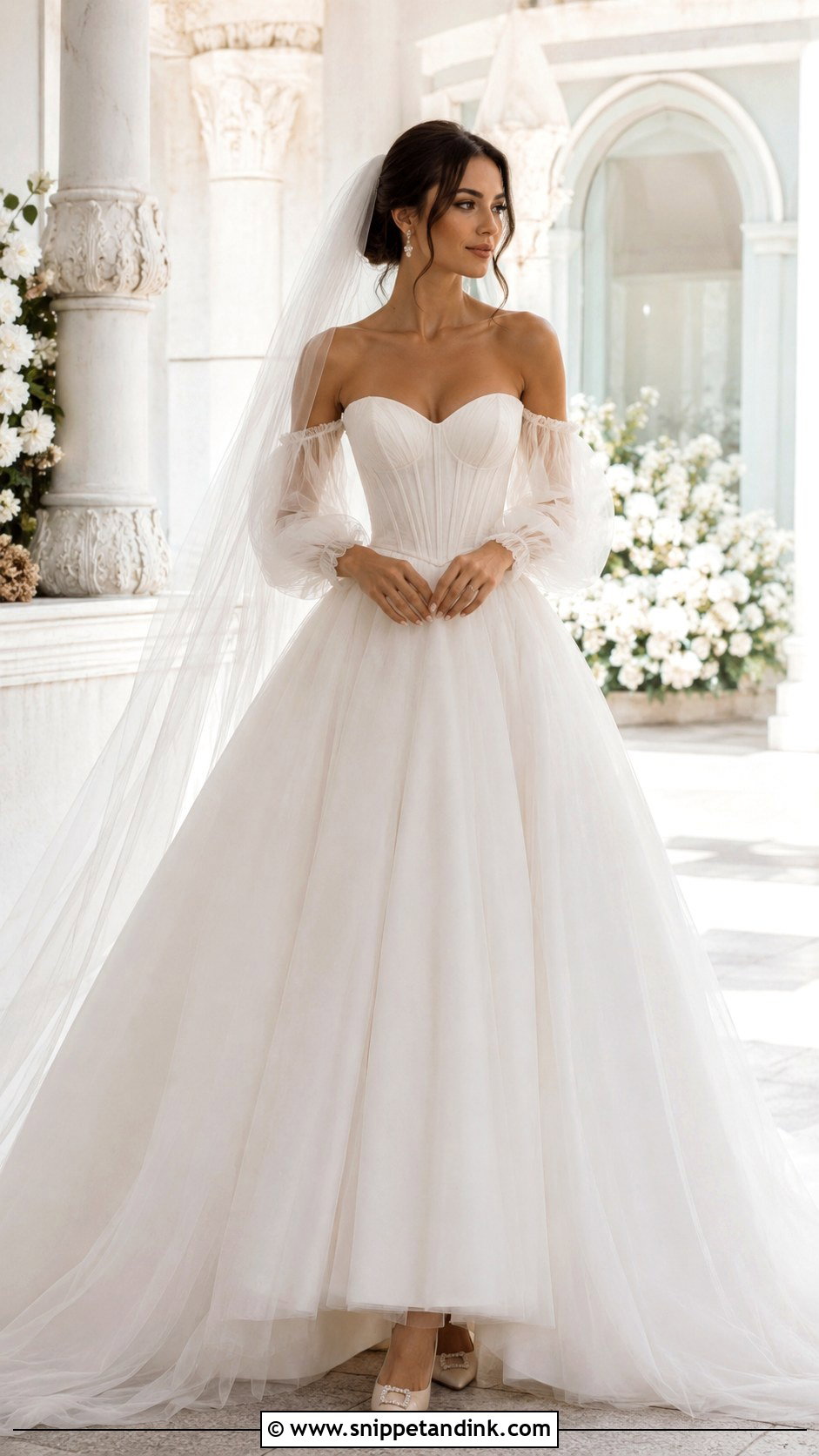
The modern princess gown keeps the magic of a full skirt but updates the details: clean corset bodices, lighter skirts, soft square necklines, subtle sparkle and removable sleeves. The idea is grand without looking dated. Fabric does most of the adjusting, as satin looks polished, tulle dreamy and organza fresh. I like suggesting a long veil for the ceremony and then swapping to statement earrings or a hair bow for the reception, which changes the whole look without a second dress.
Steaming, Bustling and Storing a Ball Gown Afterwards
A full skirt arrives creased from the bag almost every time. Tulle and organza respond well to a handheld steamer used from the inside of the skirt, held a few centimetres away. Satin and mikado should be steamed carefully and never pressed with a hot iron directly, since they can water-mark or go shiny. I plan for the dress to come out of its bag the night before and hang freely, with enough ceiling height that the hem does not touch the floor.
On the day
Bring a small kit: safety pins, a white chalk stick for marks on satin, clear nail varnish for a small tulle snag and a lint roller. Show your bustle helper the loops and buttons at the final fitting and take a photo of the finished bustle so they have a reference at the reception.
After the wedding
Get the gown cleaned within a few weeks, because sugary drinks and sweat can turn into yellow stains as they oxidise. For long-term storage, a heavy skirt should be folded into an acid-free box with acid-free tissue padding the folds, not hung by its straps, since the weight of the skirt stretches the bodice over time. Keep it somewhere dark, cool and dry, and refold it once a year so the creases don’t set permanently.
Volume That Still Lets You Sit, Dance and Hug
A full skirt brings bridal impact on its own, and sleeves, corsets, trains, ruffles, pearls and colour decide its personality. Size is not the goal. The gown that works is the one that fits through your venue’s doors, lets you sit through dinner without sliding off the chair and moves when the music starts. Take your shortlist to a fitting, walk, sit and raise your arms in each one, and the right amount of volume usually becomes obvious within a few minutes.
You'll Like These Ideas:






Leave a Reply