
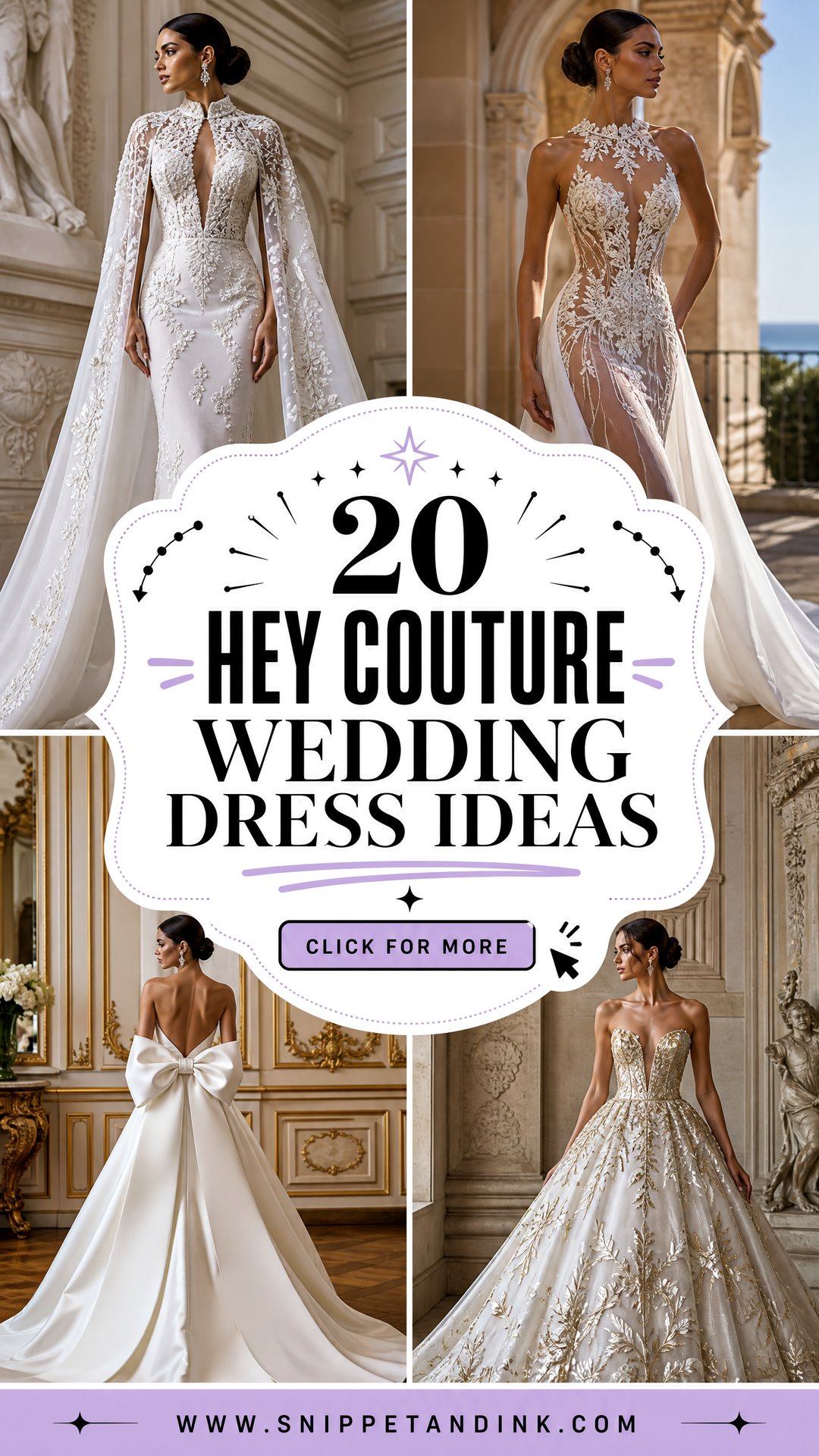
Couture details look wonderful on a hanger and behave very differently on a body that has to walk, sit and hug two hundred people. That gap is what I spend most fittings closing. Below are twenty gowns, from lace ball gowns and sculpted corsets to clean silk columns and raised floral appliqué, each styled with a veil, shoes, jewelry, bouquet and hair. Grand ballroom or small garden, there’s a couture-inspired direction here that fits it. Treat these as a starting brief, then let a seamstress adjust the proportions to you.
Ivory, Champagne or Bright White Against Your Skin
Couture houses dye the same gown in several shades, and the shade matters as much as the cut. Bright optic white can make warm or olive skin look sallow in photos. Soft ivory flatters almost everyone. Champagne or nude underlays give a warmer glow and can make lace look richer, but they read beige under some indoor lighting.
At appointments, I ask the shop for fabric swatches in each shade and hold them under the chin, by a window first and then under the store’s lights. Your face tells you within a few seconds which one works.
- Take a quick phone photo with and without flash. Flash flattens ivory toward white and can show a champagne lining clearly through tulle.
- Match the veil to the gown, not the catalogue. Tulle labelled ivory varies from maker to maker, so ask the shop to order veil and dress together.
- Shoes in satin can be dyed to match. Bring a small offcut from the seamstress if you can get one.
1. Lace Ball Gown Couture Wedding Dress
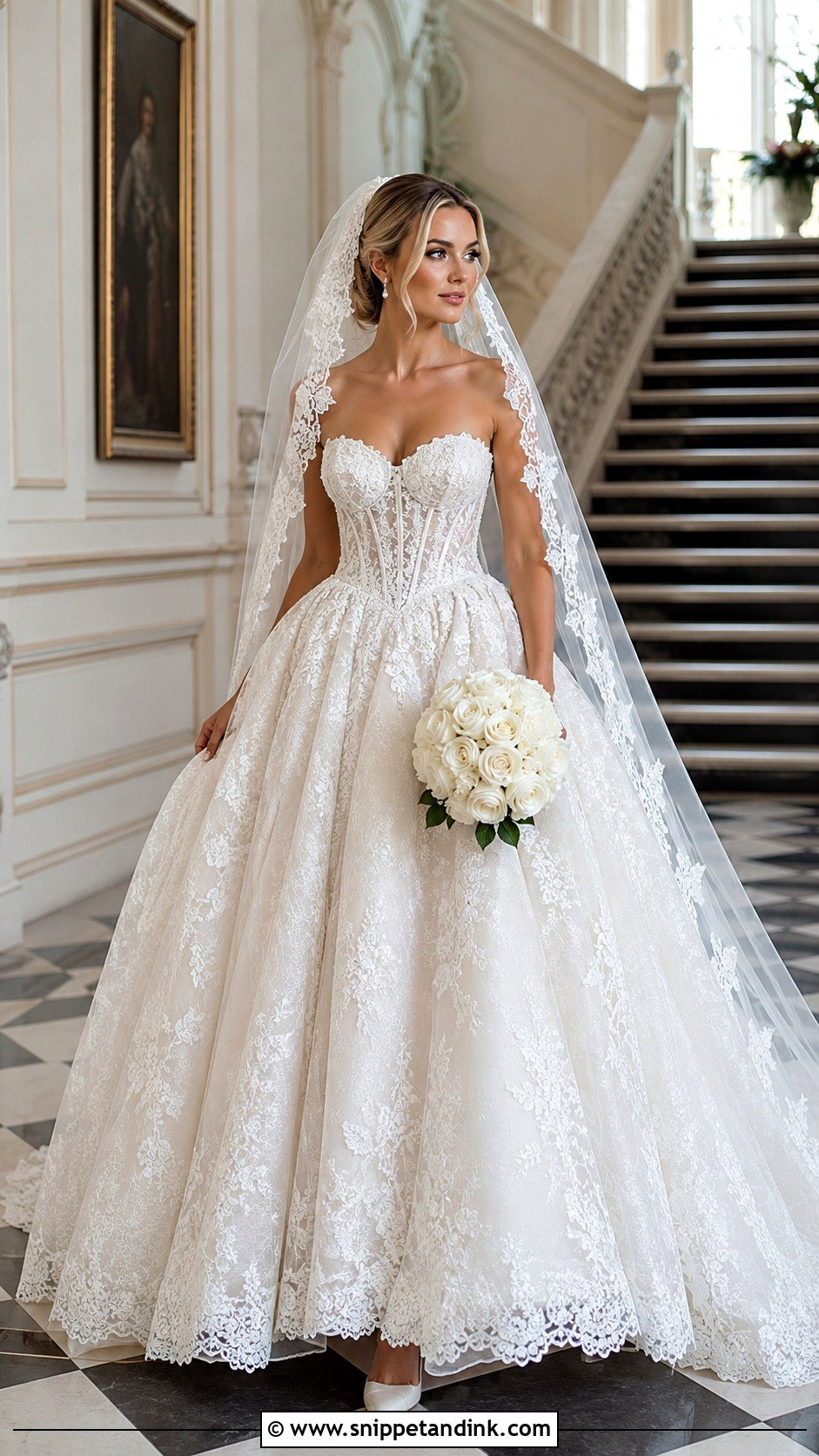
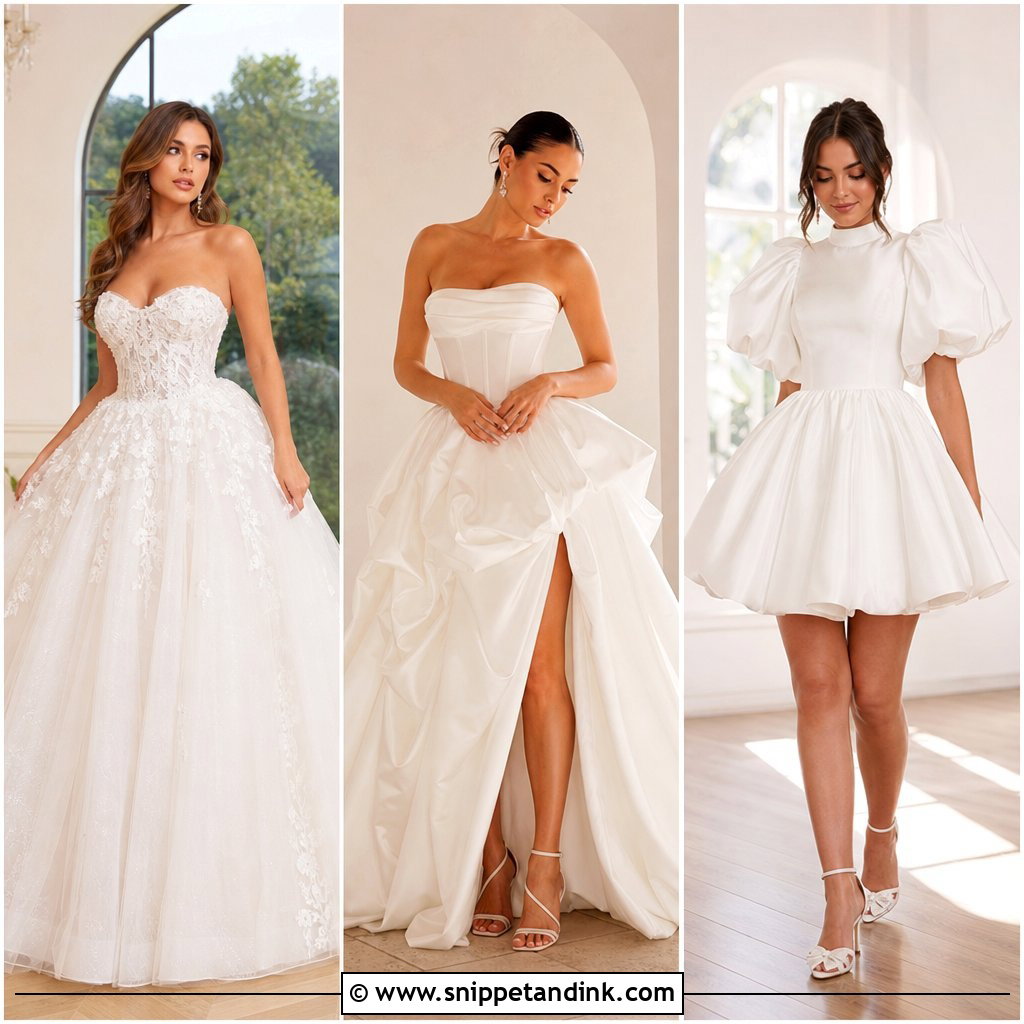
Lace over a ball gown skirt adds weight fast, so the corset underneath has to be doing real work. I check the boning by having the bride sit on a low chair: if the bodice digs in at the hip, the waist needs letting out a fraction. A chapel veil with a narrow lace border ties the accessories to the gown. Pearl drops, pointed ivory pumps and a compact rose bouquet are all it needs. Keep the hair in a smooth low bun so the neckline stays clear, and hem the skirt in your actual wedding shoes. Ballrooms and historic estates carry it best.
2. Satin Drop Waist Couture Wedding Dress
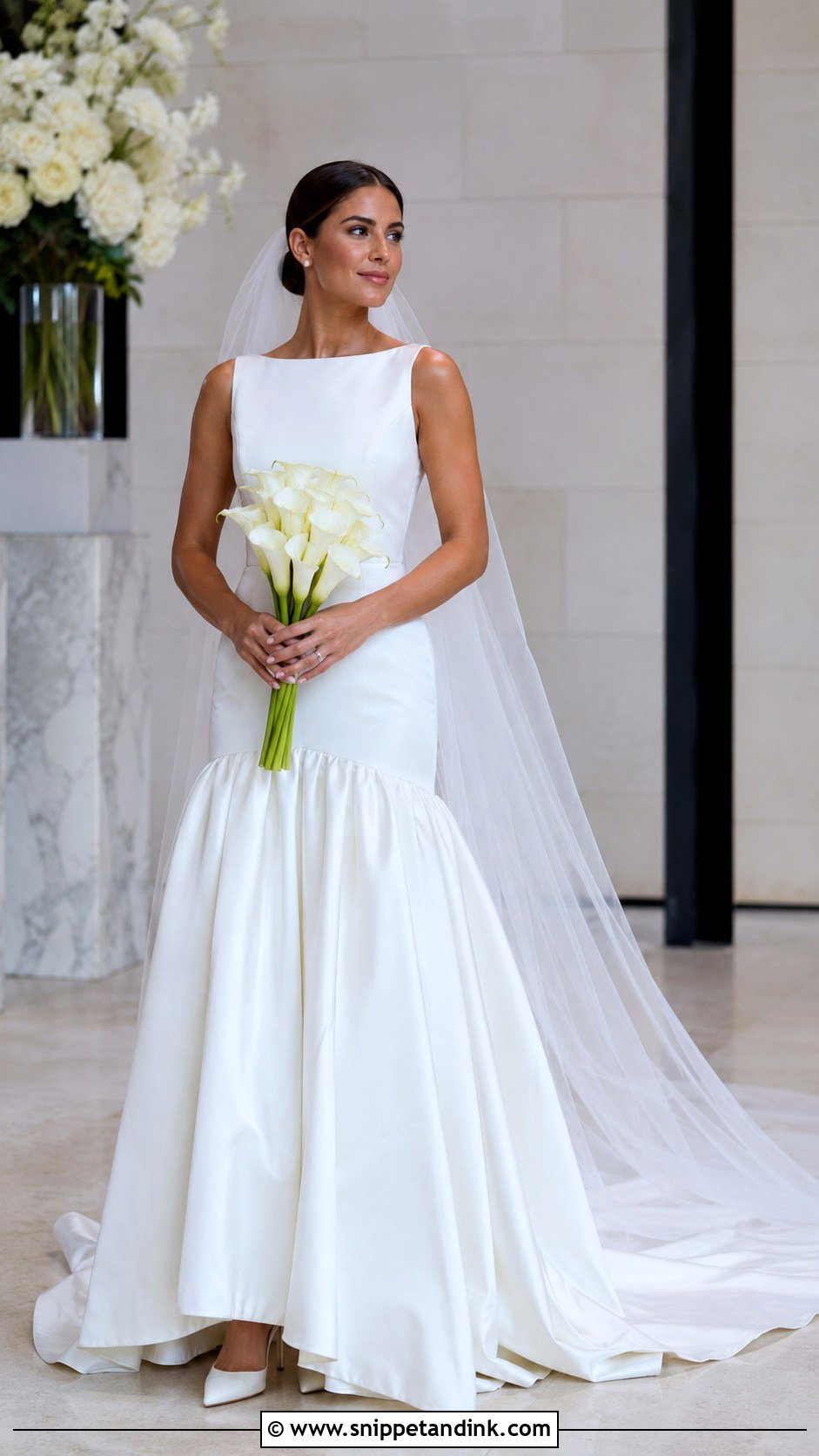
Drop waists are the trickiest proportion I fit. Too low and the legs look short; too high and it reads as an ordinary bodice. The seam usually wants to sit across the upper hip, and I move it in small steps until the torso looks long but she can still sit without the skirt bunching. Heavy silk satin or mikado holds the shape. Add pearl studs, sleek heels and a long plain veil, plus a structured mini bouquet of callas. A center-parted bun or smooth waves tucked behind the ears keep the line clean.
3. Sculpted Mermaid Couture Wedding Dress
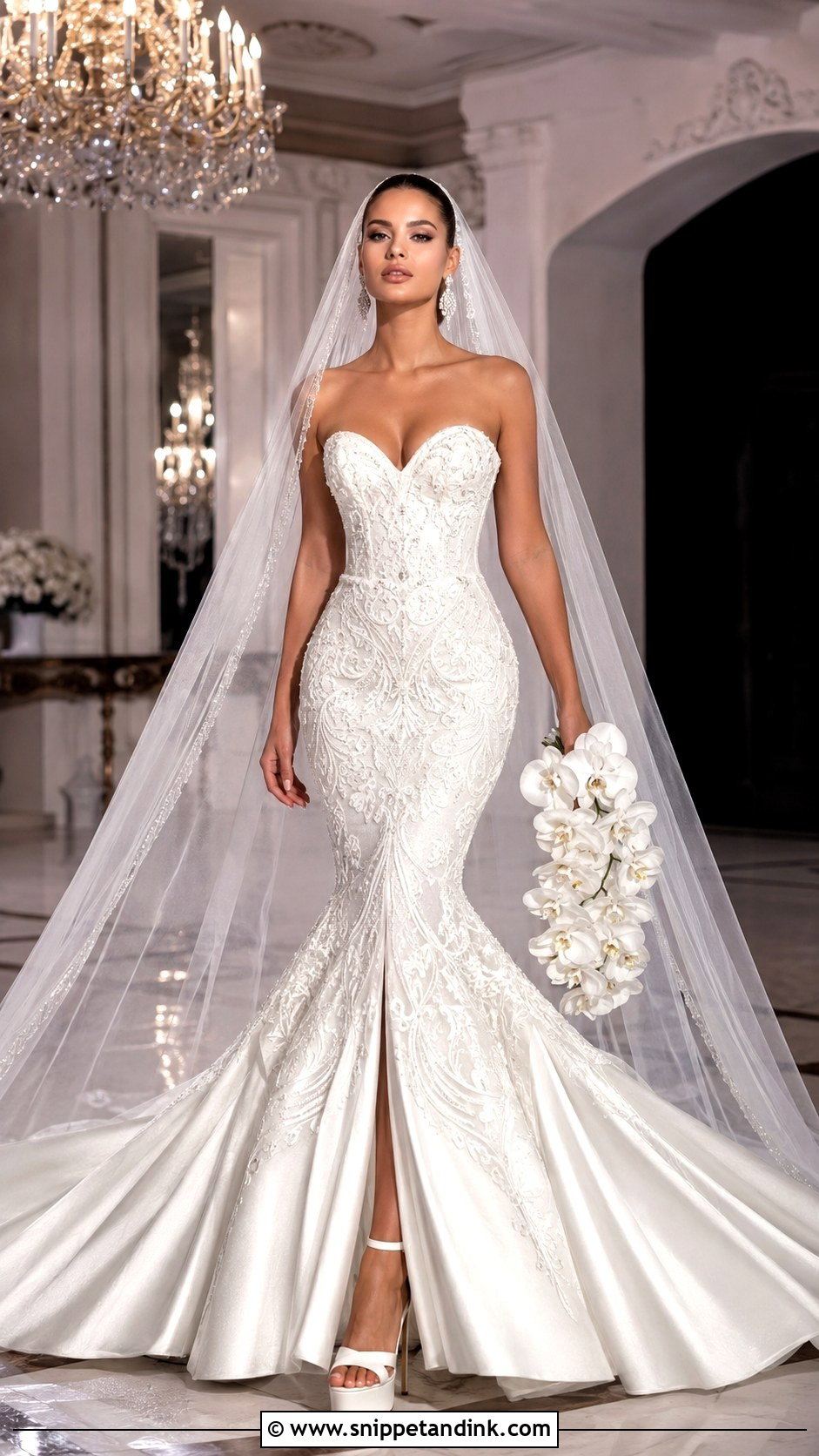
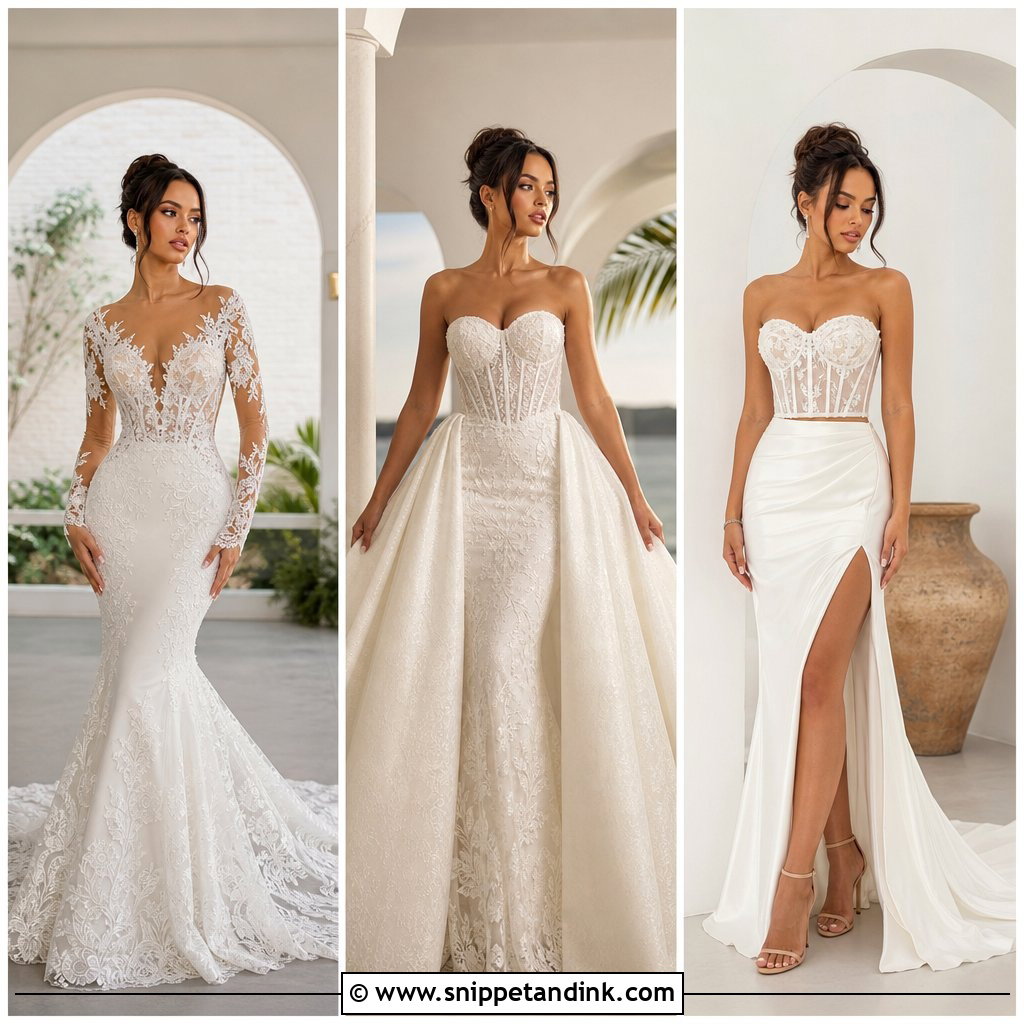
Mermaid gowns are where I’m strictest about movement. If you can’t take a full stride, climb three stairs and sit at a dinner table in it, the flare sits too high, and no styling will fix that. The fit should skim bust, waist and hip without stopping your breath, with a soft sweetheart neckline to balance the line. Embroidery or light crystal adds detail. Pair it with a sheer cathedral veil, crystal earrings, hidden platform sandals and a low Hollywood-wave hairstyle. White orchids echo the shape. Ask for a wrist loop and a strong bustle.
4. Pearl Embellished Couture Wedding Dress
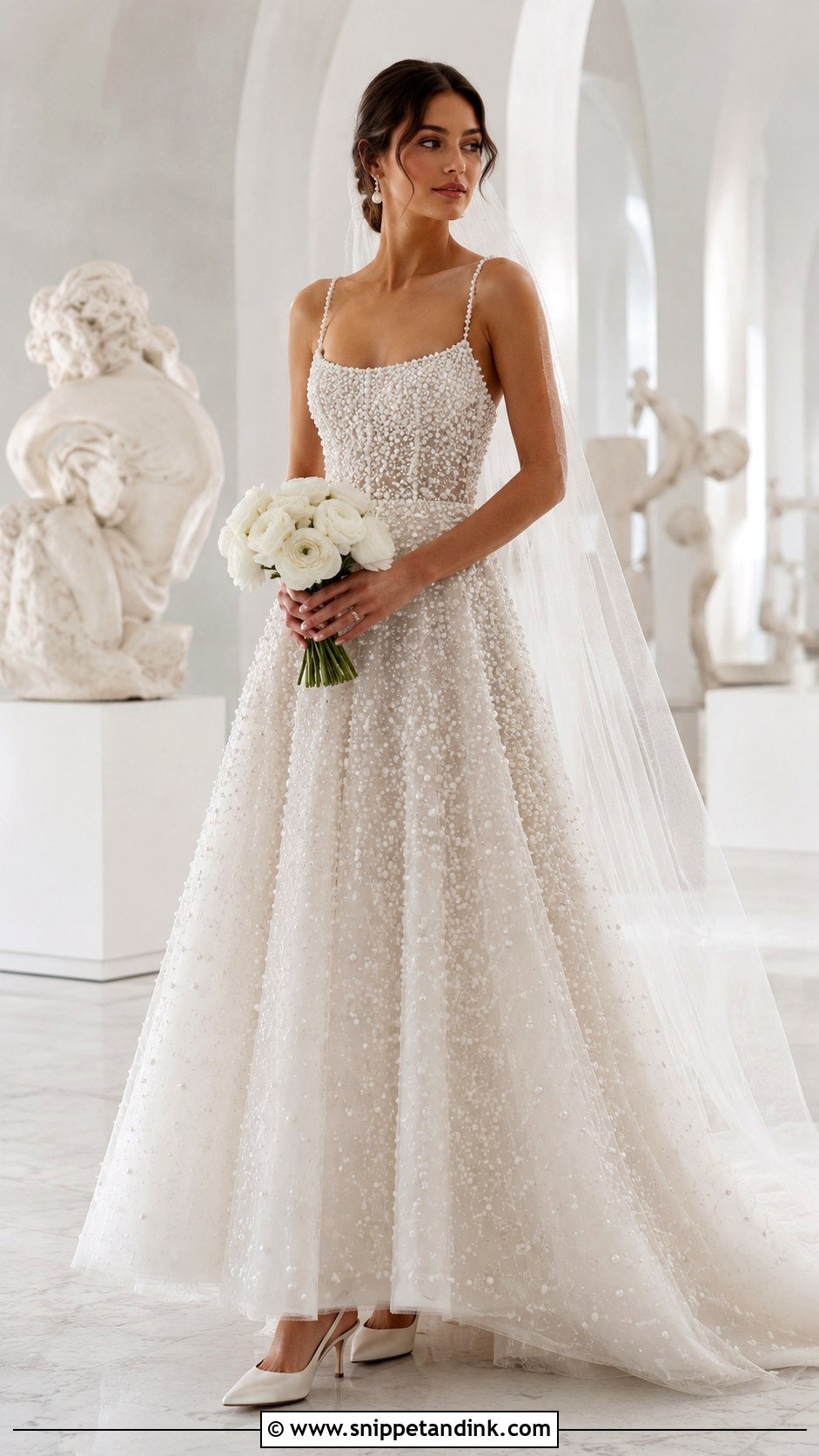
Scattered pearls on tulle catch light softly, but each one is a small weight on a fine fabric. I like the embellishment graduated: denser on the bodice, thinning toward the hem, which balances the dress visually and physically. Pair it with pearl earrings, satin slingbacks and a raw-edge fingertip veil. Leave the necklace at home. A loose chignon and white ranunculus finish it. Before the final fitting, run the veil over the bodice and your inner arms; any pearl that snags or scratches should be re-stitched flatter.
5. Long Sleeve Lace Couture Wedding Dress
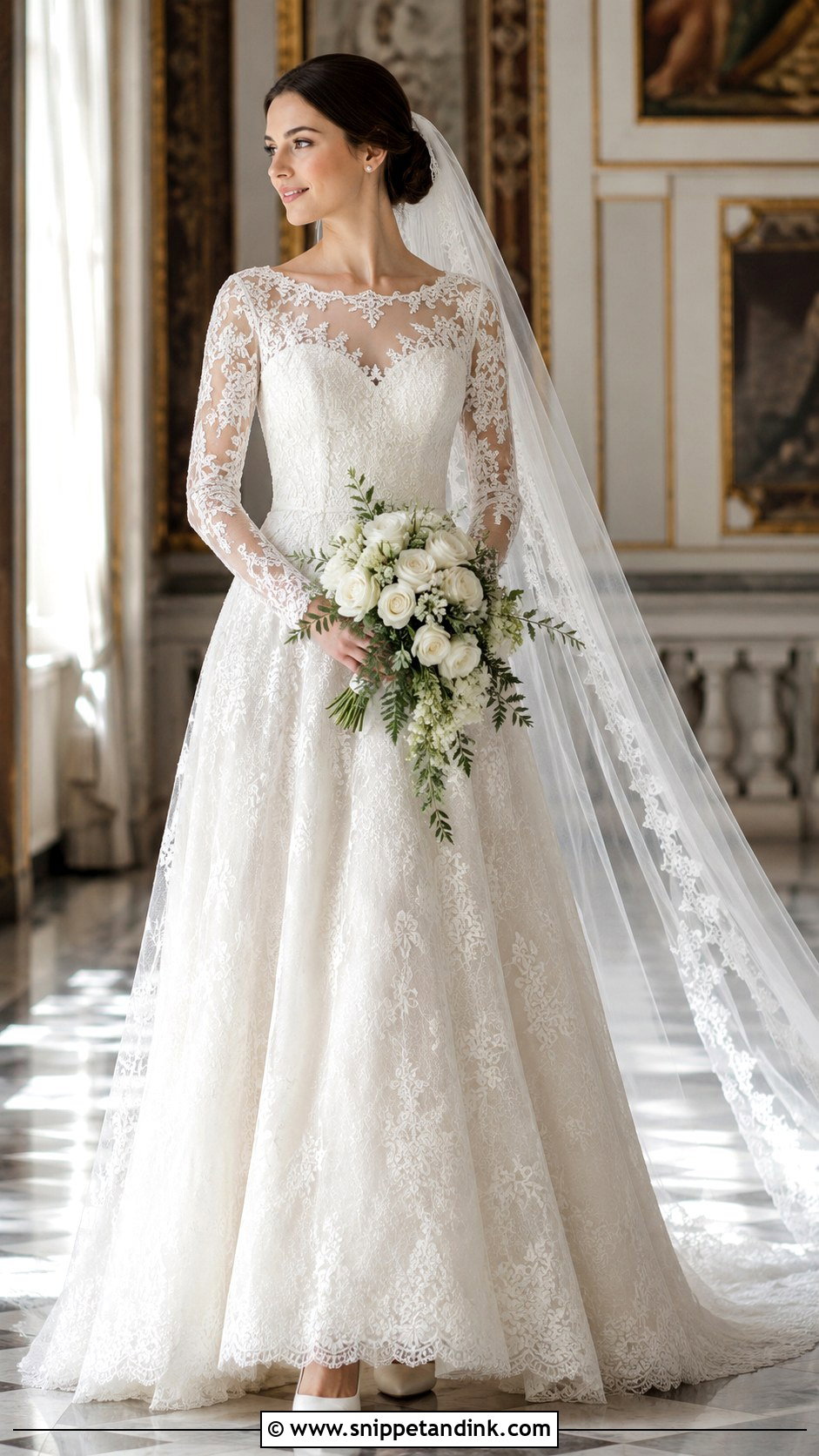
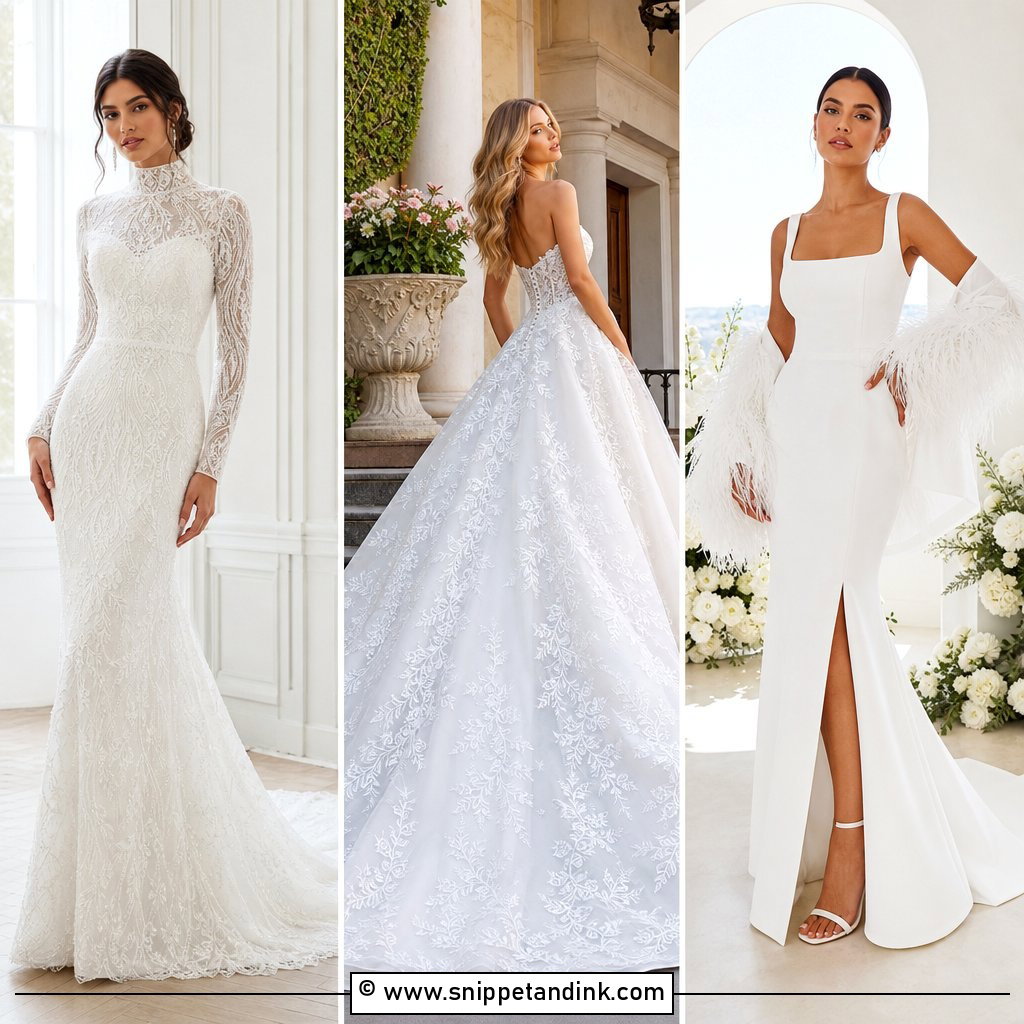
A sleeve that’s half an inch too long looks sloppy in every hand-holding photo, so I mark sleeve length at the wrist bone with the arm bent, not hanging. Look for fitted illusion sleeves, a supportive bodice and an A-line skirt. Covered-button cuffs are a classic couture finish. Closed-toe ivory pumps, small studs and a cathedral veil under a low bun complete it, with white roses and greenery. If the lace is fine, ask for reinforced underarm seams so you can lift your arms for the first dance.
6. Strapless Corset Couture Wedding Dress
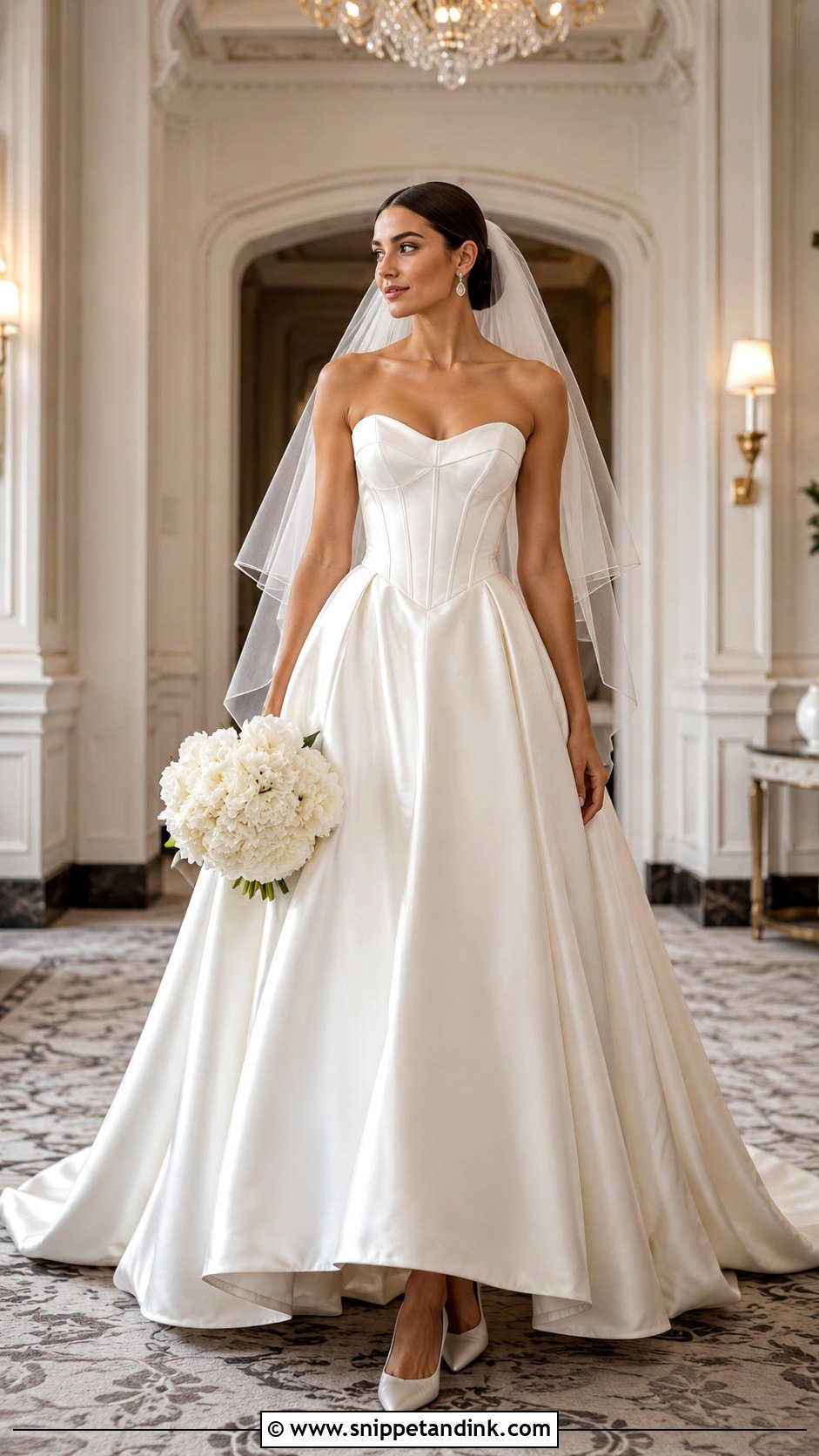
Strapless corsets work when the cups are fitted to you, not just the band. A bride who keeps hitching the bodice up is wearing a cup that’s too shallow. Choose a neckline shape for your shoulders: straight for broad shoulders, a soft curve or point for narrow ones. An elbow-length veil, drop earrings and cushioned ivory pumps keep the look tidy. A neat updo leaves the décolletage open and a rounded peony bouquet balances it. Detachable straps are a sensible backup for the dance floor.
7. High Neck Couture Wedding Dress
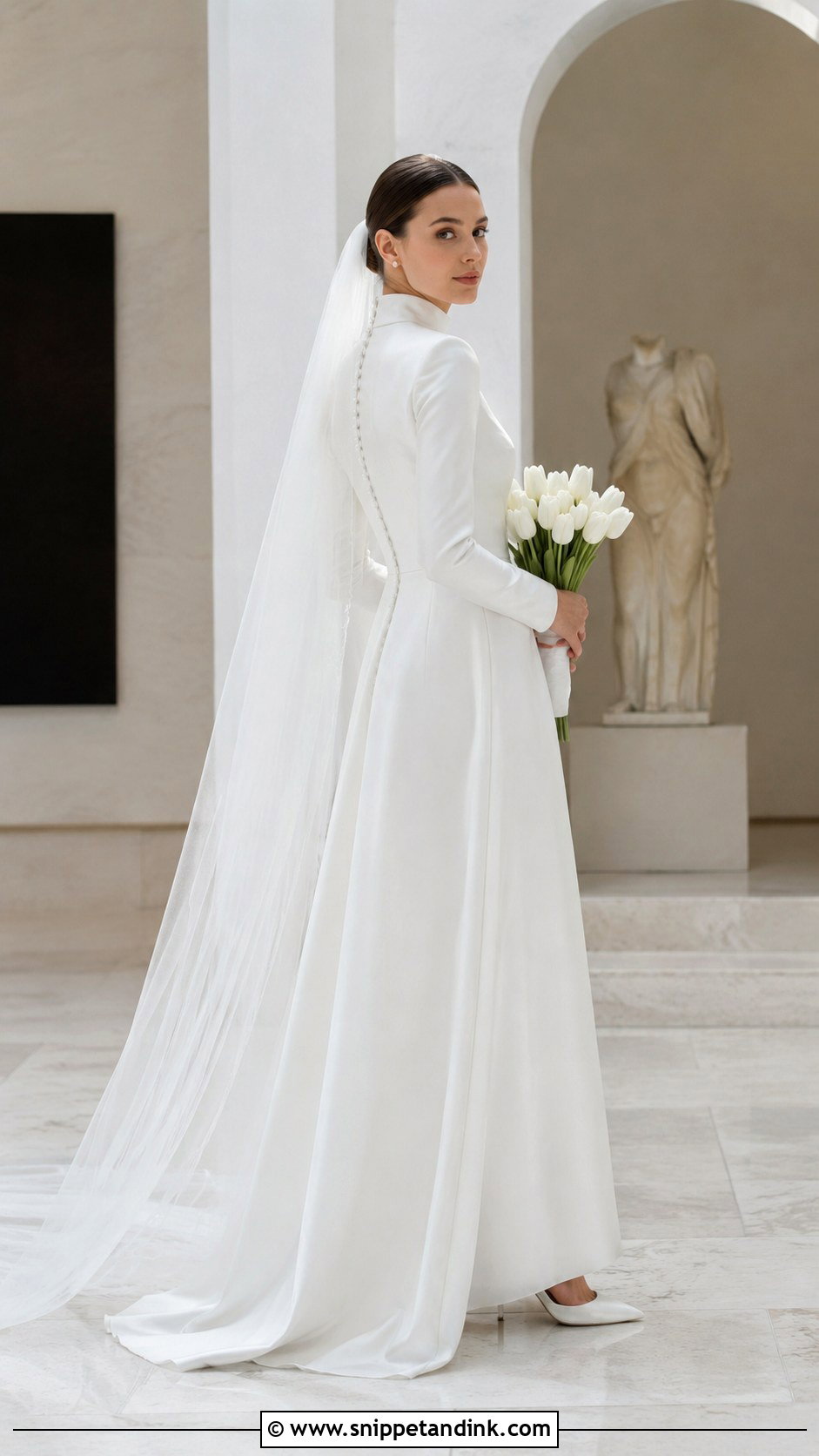
High collars rub. That’s the first thing I test, by having the bride turn her head fully both ways for a minute. A soft lining inside the collar fixes most of it. The rest of the dress can be quiet: a lace or silk bodice, defined waist, column or A-line skirt and covered buttons down the back. Wear studs, pointed satin pumps and a long veil under a smooth chignon; a necklace would only crowd the collar. A narrow tulip or calla bouquet follows the vertical line. City venues, museums and hotels suit it.
8. Off Shoulder Draped Couture Wedding Dress
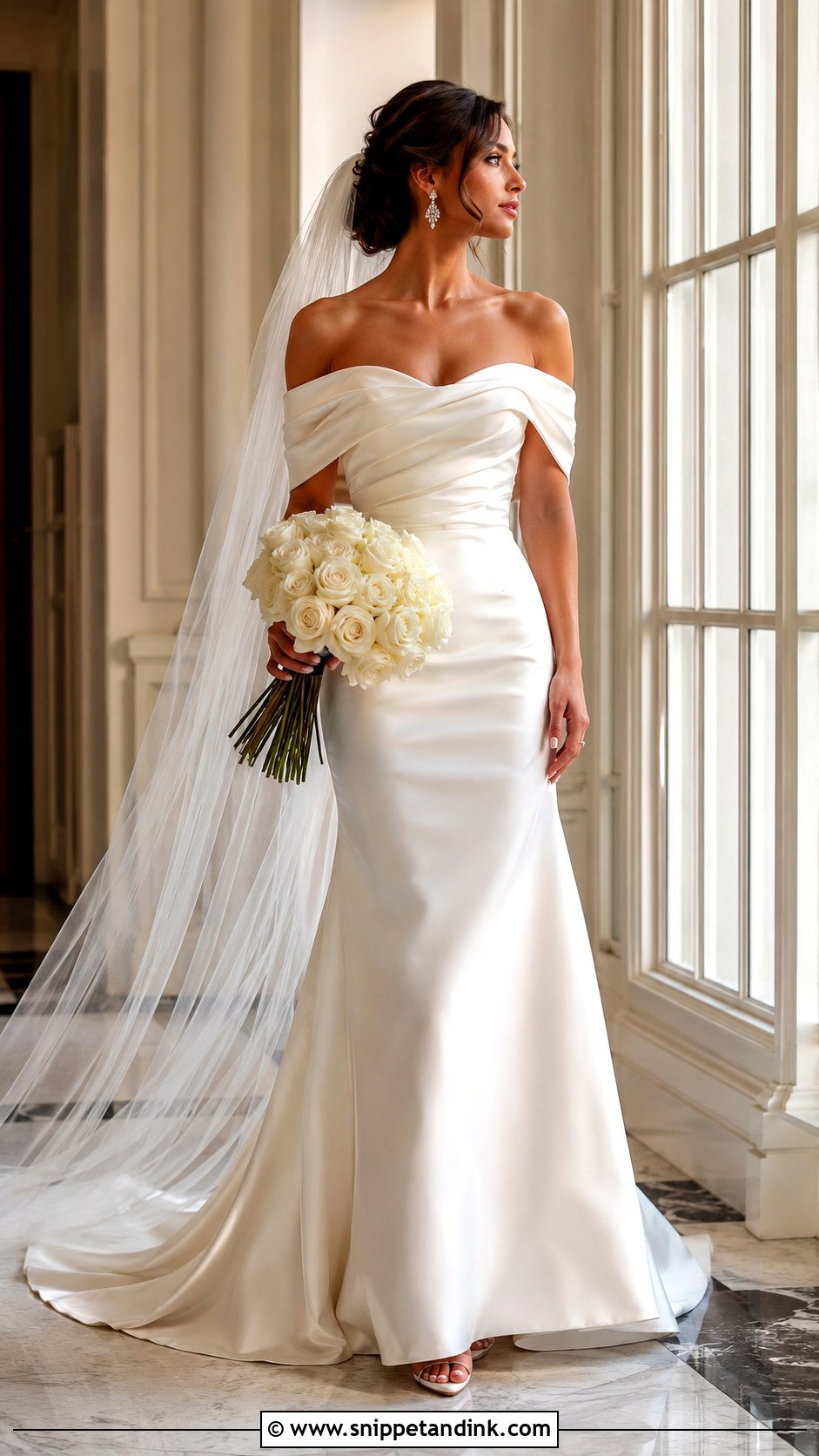
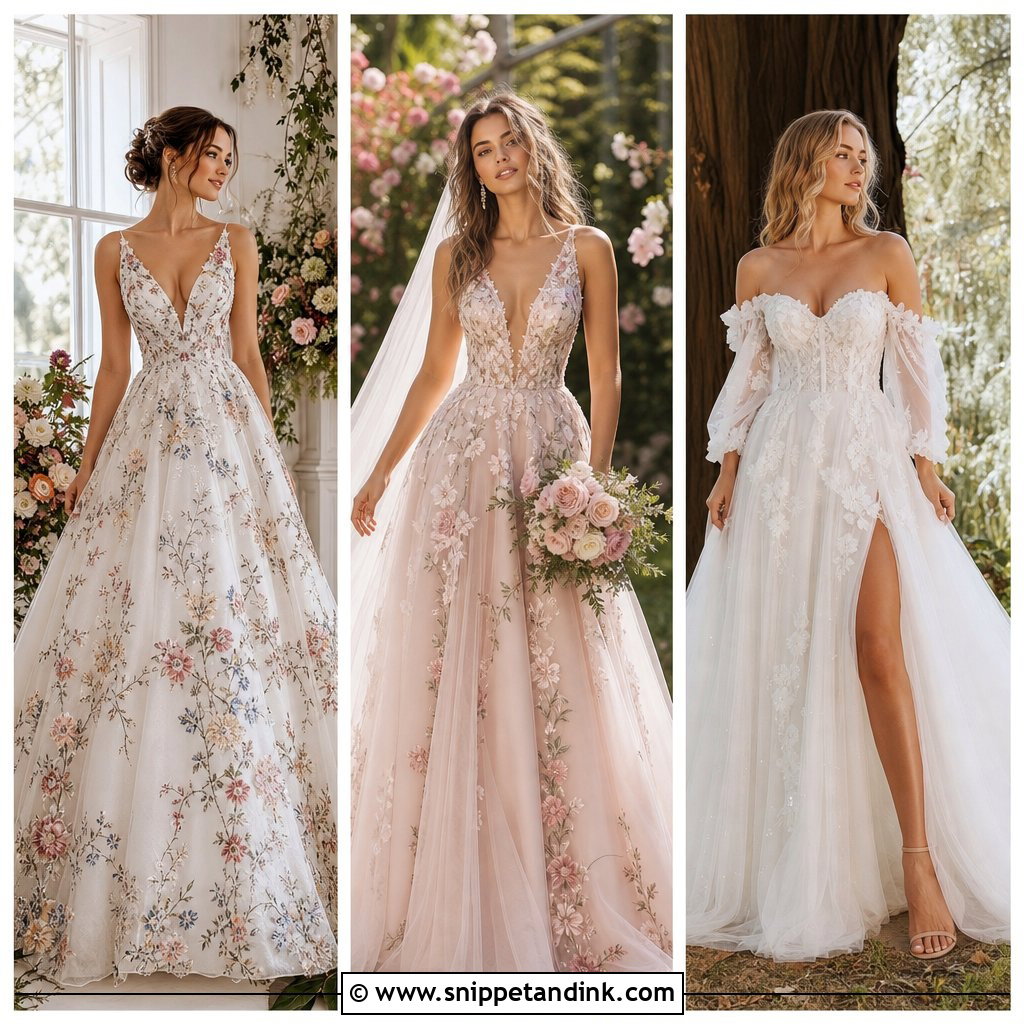
Shoulder drapes slip once you start dancing, so I always ask how they’re anchored. The good ones sit on a hidden inner strap or a fine elastic, which keeps the folds in place without pinning your arms. Satin, crepe or silk faille all drape well over a fitted bodice and a gently flared skirt. Add a simple tulle veil, crystal earrings, satin heels and long-stemmed ivory roses. A low twisted bun or side-swept waves keep the neckline visible.
9. Floral Applique Couture Wedding Dress
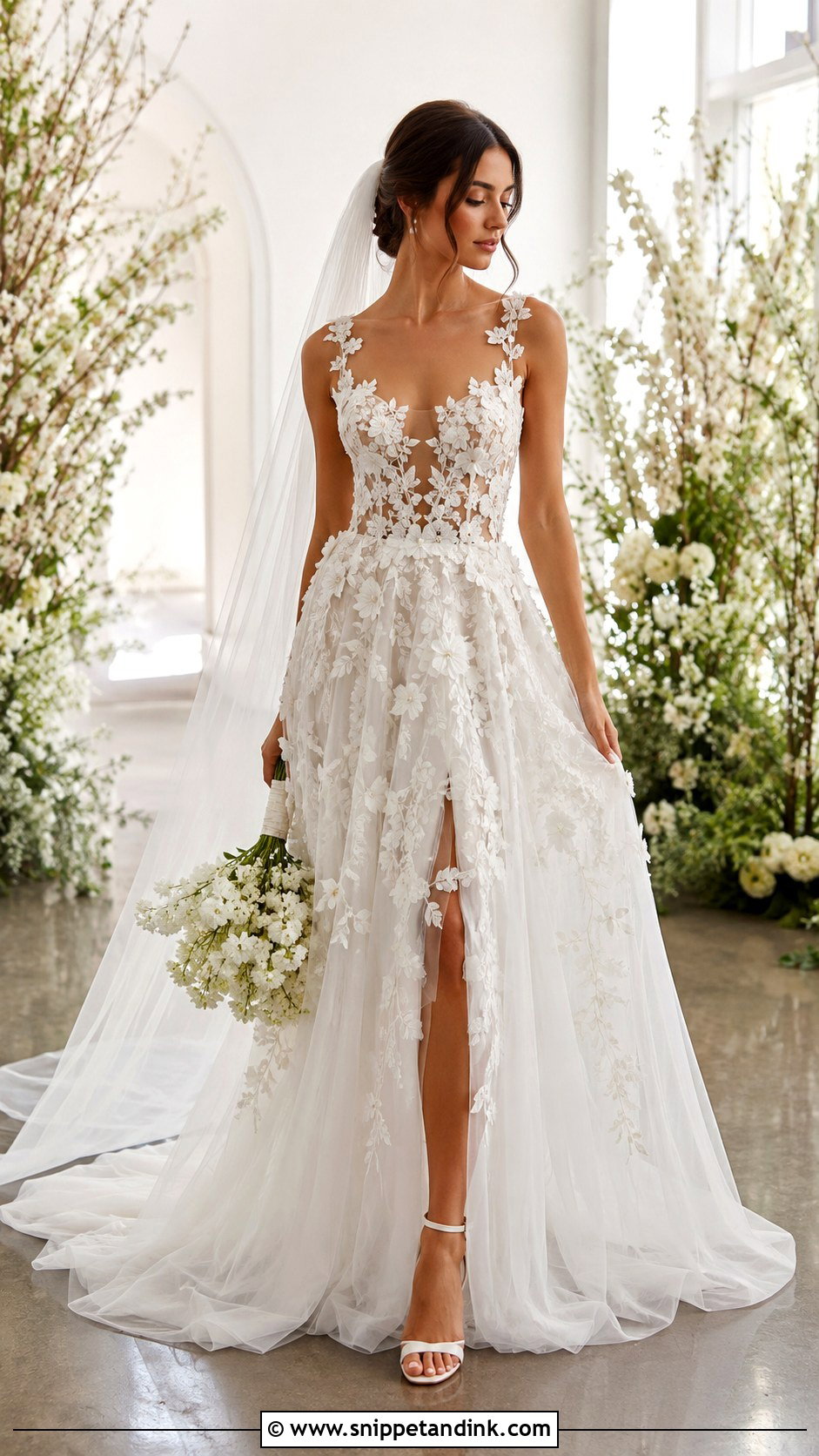
Three-dimensional petals look like a garden and catch on everything, including your own veil. That’s why I keep the veil plain and the accessories small here. Choose an illusion bodice and flowing tulle skirt with hand-cut petals clustered at the neck and waist, thinning down the skirt. Satin ankle-strap heels, understated earrings, a loose braided bun and white sweet peas fit the texture. Check raised petals for loose threads, and ask the maker for a few spare flowers you can stitch on if one tears.
10. Minimal Silk Column Couture Wedding Dress
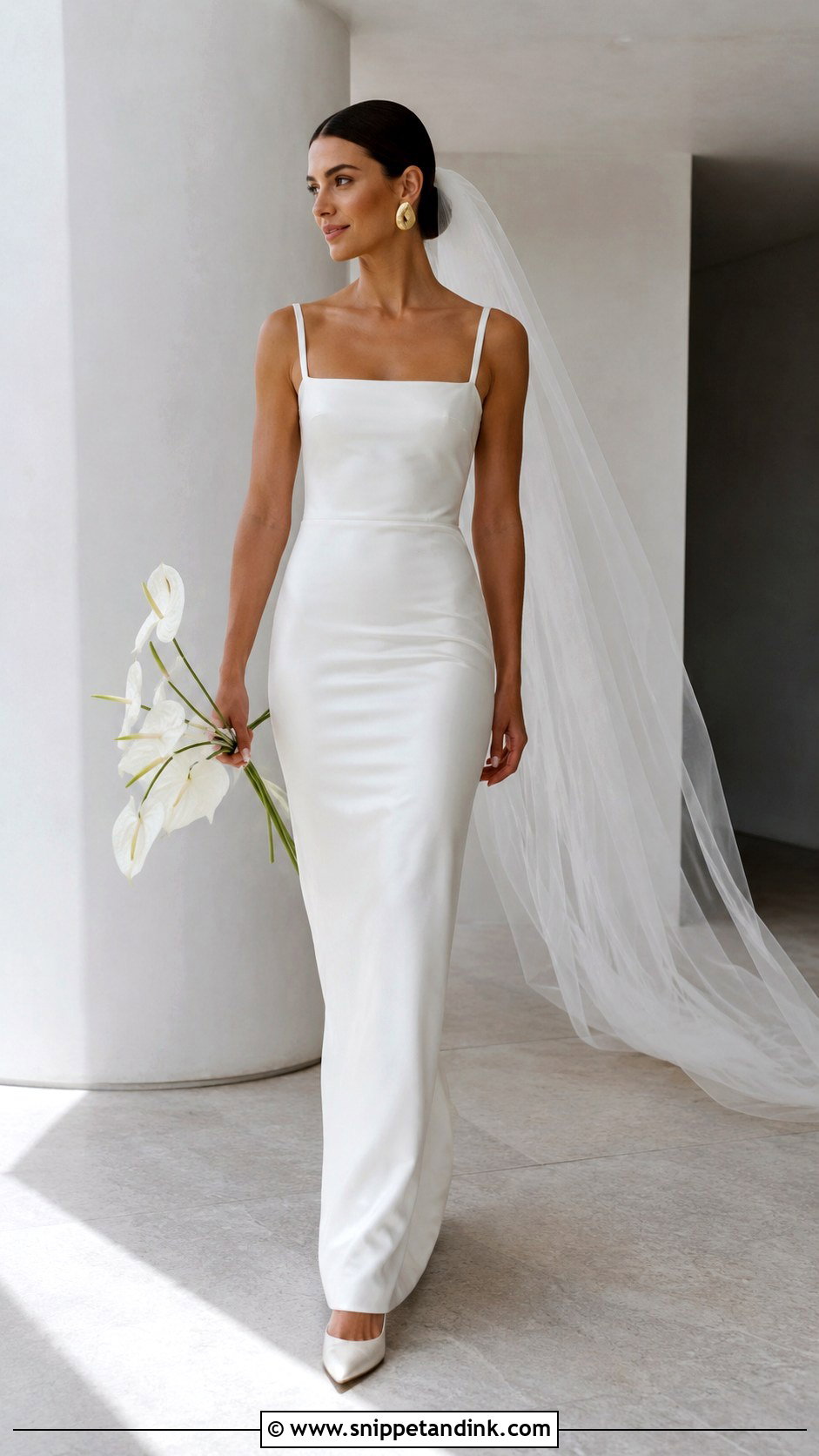
Simple silk is a harder sell than embroidery, because it hides nothing. Every bra line, pressing mark and unlevel hem shows. When the tailoring is exact, though, nothing else looks as expensive. Look for a precise neckline, gentle waist shaping and a skirt that falls close without clinging; a square neck or soft cowl adds interest. Sculptural gold earrings, ivory slingbacks, a long sheer veil, a low bun and white anthuriums keep it modern. Wear smooth undergarments and leave enough ease through the hips. A detachable train or silk scarf adds ceremony drama.
11. Basque Waist Couture Wedding Dress
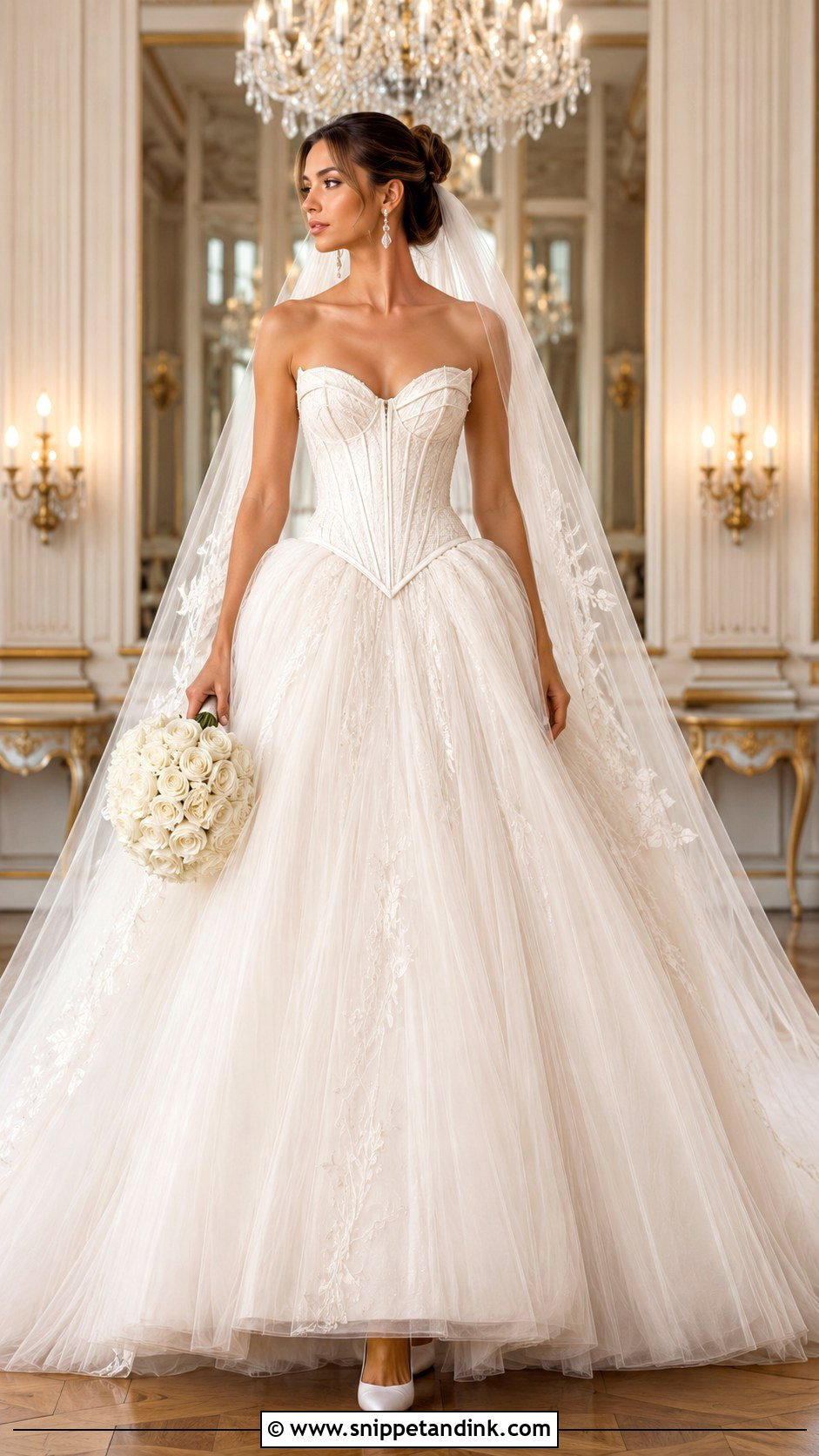
A basque point should lie flat against the stomach when you sit. If it folds or juts, the bodice is too long for your torso, and I’d have it shortened before anything else. Pair a structured corset and curved neckline with a layered tulle, satin or organza skirt. Style it with a cathedral veil, pearl and crystal earrings, stable satin pumps, a polished bun and an oval rose bouquet. Skip belts; they cut straight through the point. Ask your fitter to look at the bodice from the side and back, not only in the mirror.
12. Cape Sleeve Couture Wedding Dress
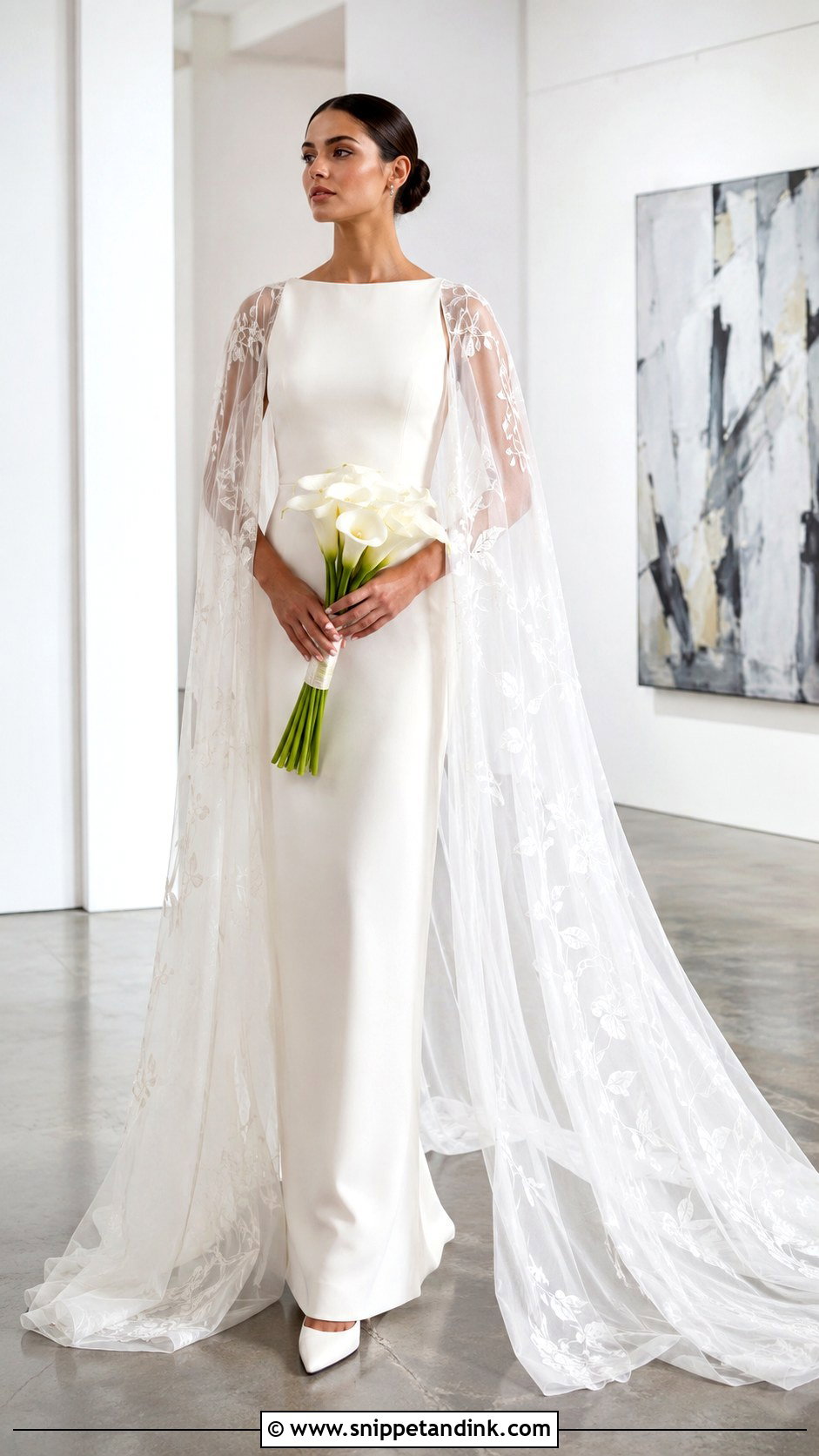
A cape gives you a veil’s movement without anything in your hair, which is why brides who dislike veils often love it. It suits a clean column, sheath or fitted A-line best. Tulle, chiffon or lace capes can attach at the shoulders or neckline and run to chapel or cathedral length. Keep jewelry small, wear pointed ivory pumps and carry callas. Hair goes up so the attachment stays neat. Light chiffon lifts in wind, so if your ceremony is outdoors, walk in it outside before deciding.
13. Detachable Overskirt Couture Wedding Dress
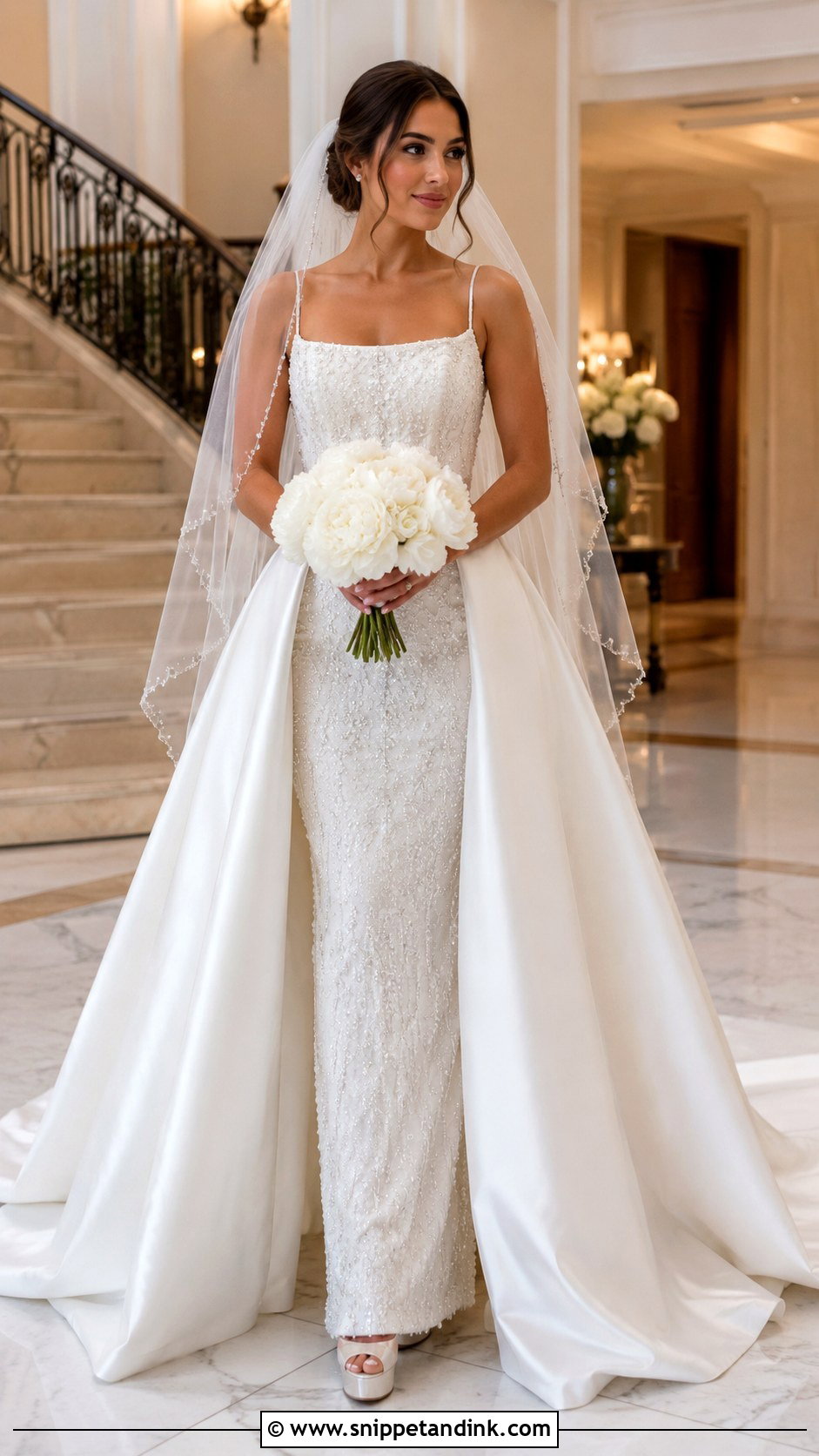
Overskirts fail at the waistband: too loose and it slides, too thick and it adds bulk. I want it flat and secure, closing with something an attendant can undo in under a minute. Start with a crepe, lace or beaded column and add a full satin or tulle skirt for the ceremony. A fingertip veil, crystal studs and platform sandals keep it light. A sleek ponytail suits the modern change. Carry peonies, then drop the overskirt and veil later. The inner gown needs its own bustle, so both versions look finished.
14. Sheer Panel Couture Wedding Dress
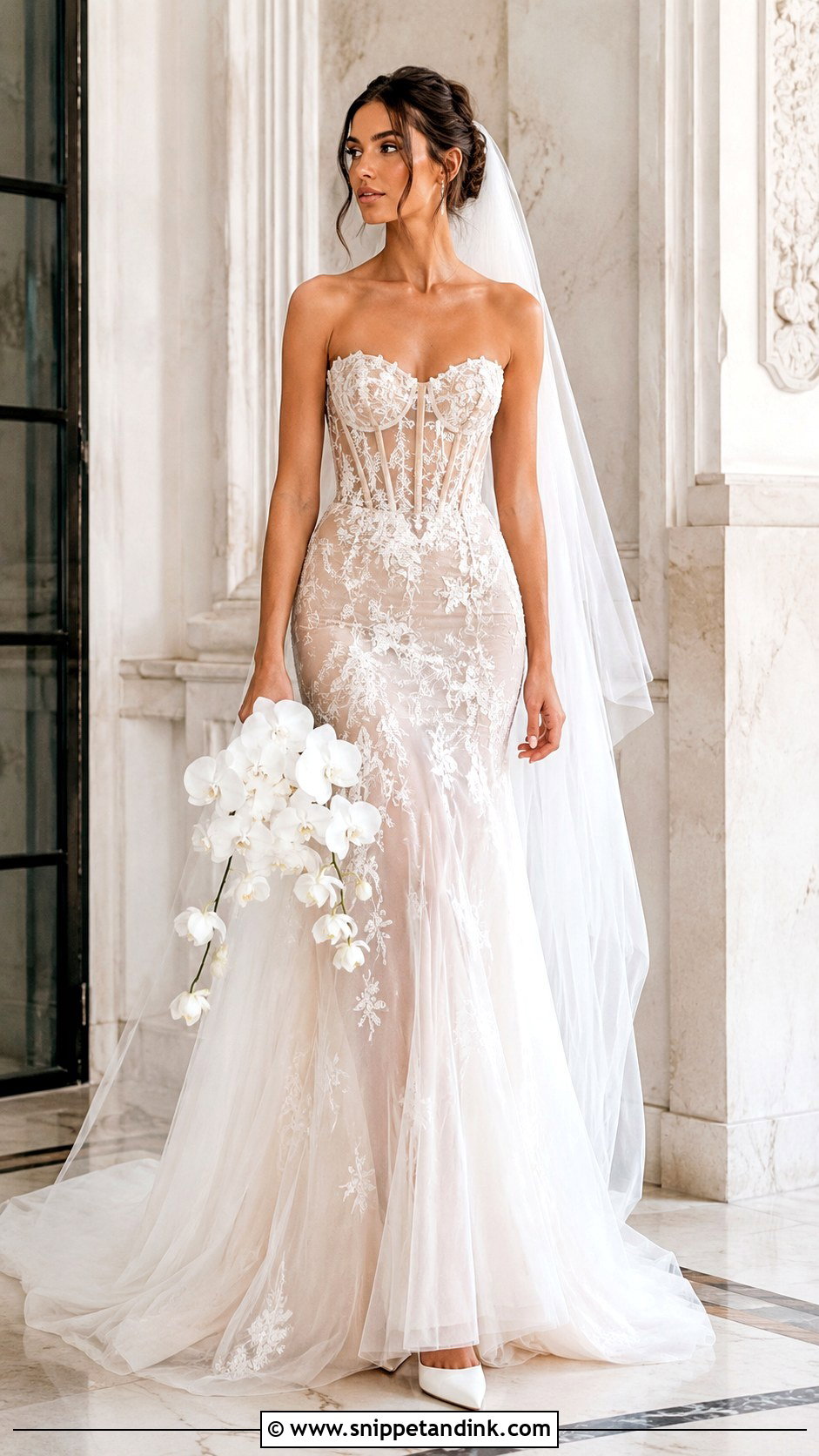
Illusion tulle only reads as illusion when it matches your skin, and shops often carry just a few shades. Ask to see the swatches against your arm in daylight. Lace, embroidery or satin seams give the coverage and support. A fitted bodice and softly flared skirt balance the sheer and the solid. Wear a plain veil, slim drops, pointed ivory heels, a smooth updo and a sculptural orchid bouquet. Check the gown under flash too; some linings go nearly transparent in flash photos.
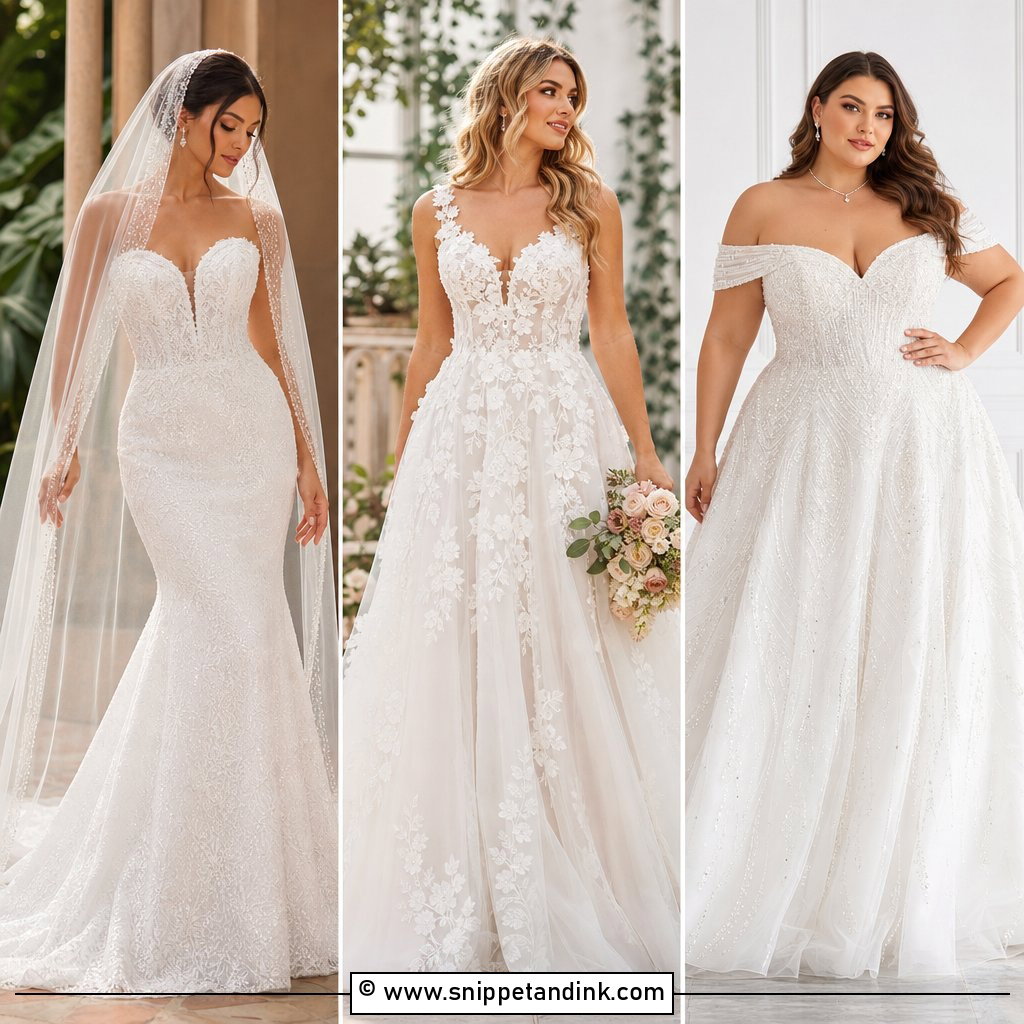

15. Pleated Organza Couture Wedding Dress
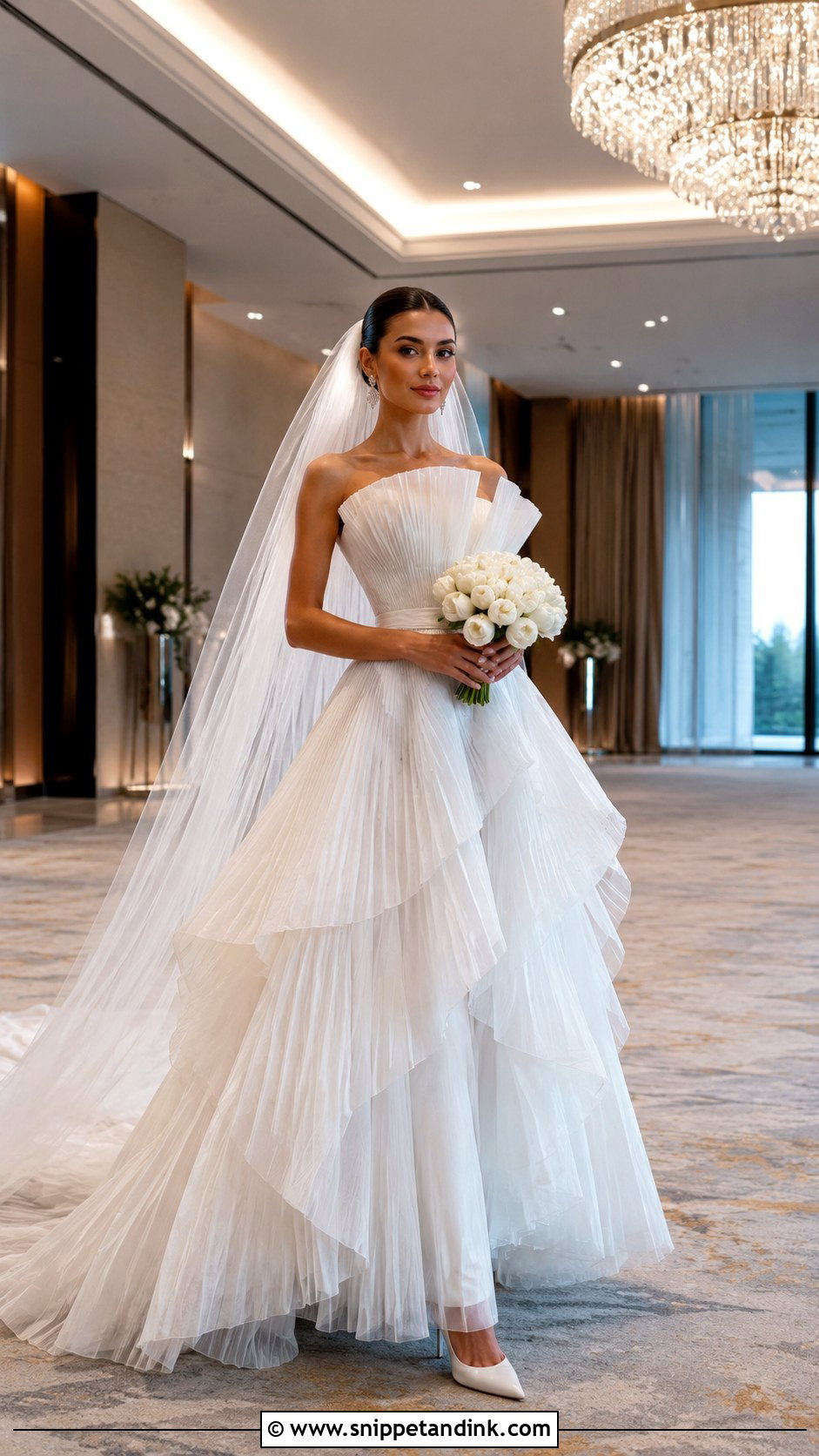
Pleated organza gives airy volume and architectural texture without the weight of satin. The pleats should open gradually from the waist; if they start full at the hip, the skirt looks bulky. An asymmetric fold or pleated neckline gives one clear focal point. Crystal earrings, satin pumps, a plain cathedral veil, a neat bun and a compact tulip bouquet keep things uncrowded. Organza creases in transit, so book a steamer at the venue, and make sure the bustle is built for light, springy fabric.
16. Feather Trim Couture Wedding Dress
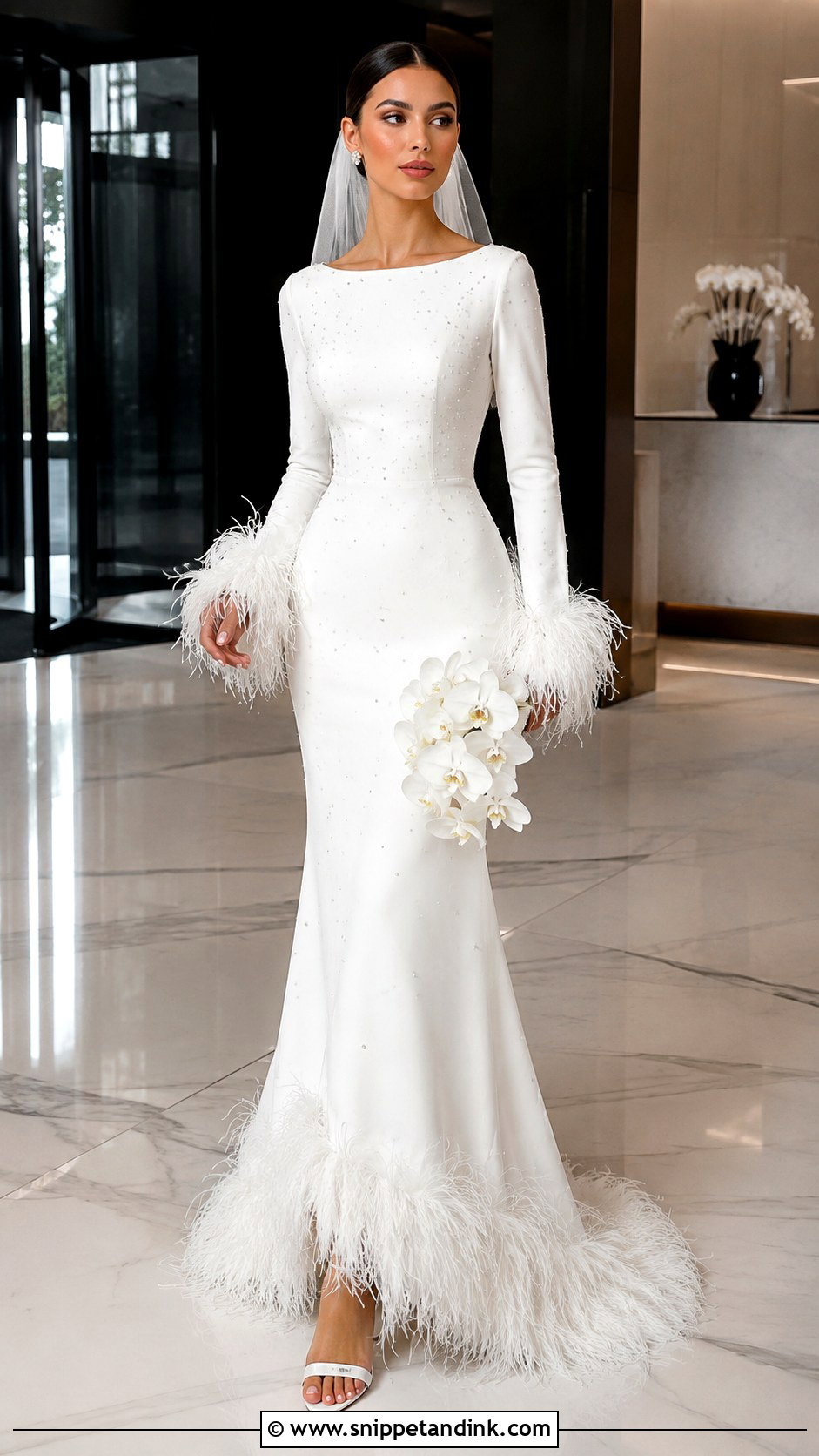
Feathers shed and flatten. Used in one place, a neckline, cuff or hem edge, they move nicely; used everywhere, they get crushed by the first hug. Put them on a clean satin or crepe gown, away from the inner arm. Crystal studs, sleek ivory sandals and a shoulder-length veil keep the rest calm, with a polished ponytail and a small orchid bouquet. Transport it in a wide garment bag. Hotels, galleries and contemporary ballrooms suit the glamour.
17. Bow Back Couture Wedding Dress
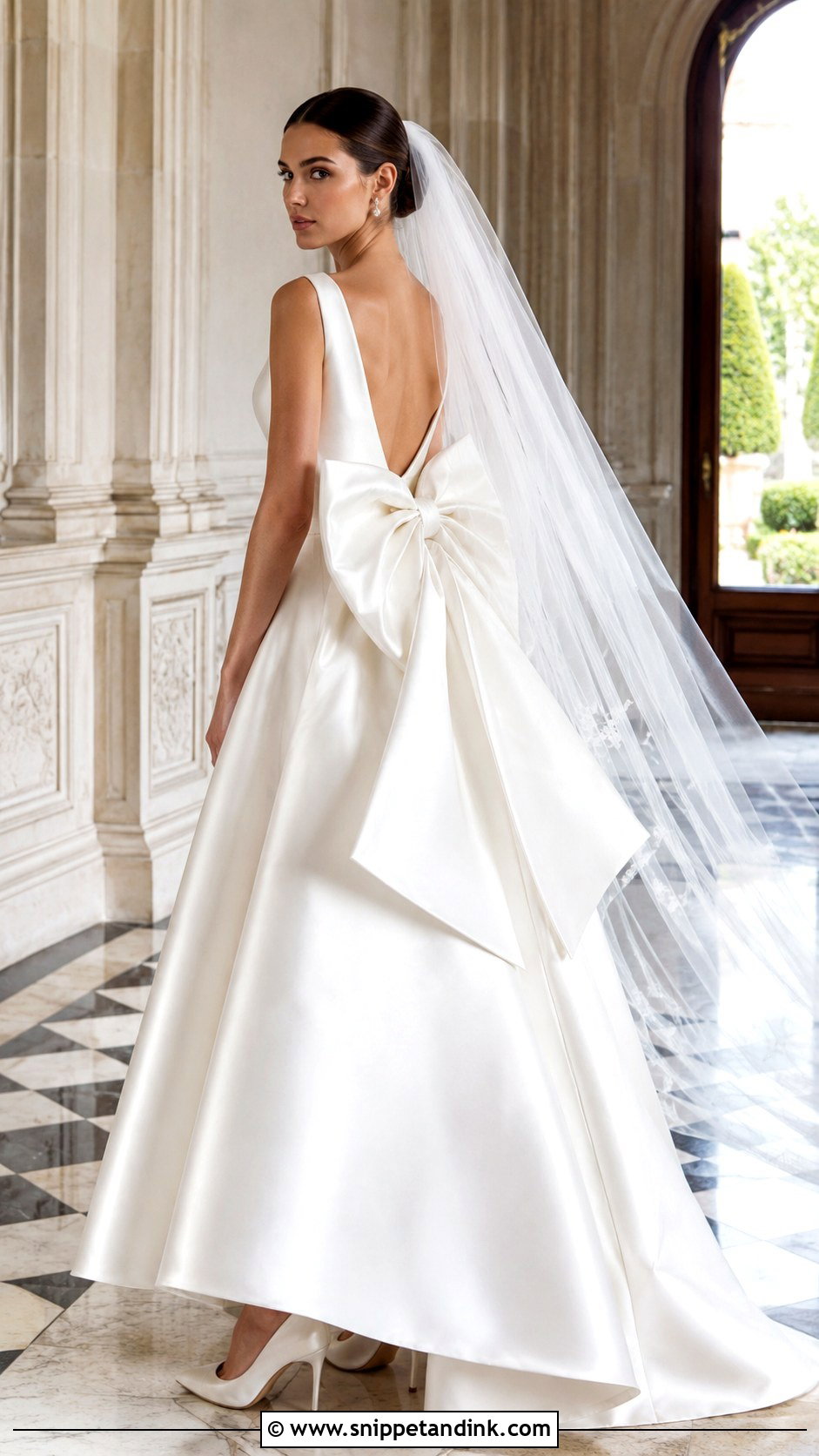
A big back bow is only as good as its stiffening. Without interfacing it droops by the second hour, so I ask how it’s built before anything else. Choose a smooth satin or mikado dress with a clean front and a detachable bow at the waist or upper back; tails can run into the train. Pearl earrings, closed-toe pumps and a sheer veil that still shows the bow suit it. A high bun keeps the back clear. Take the bow off for dinner and dancing, and steam the loops before portraits.
18. Metallic Embroidery Couture Wedding Dress
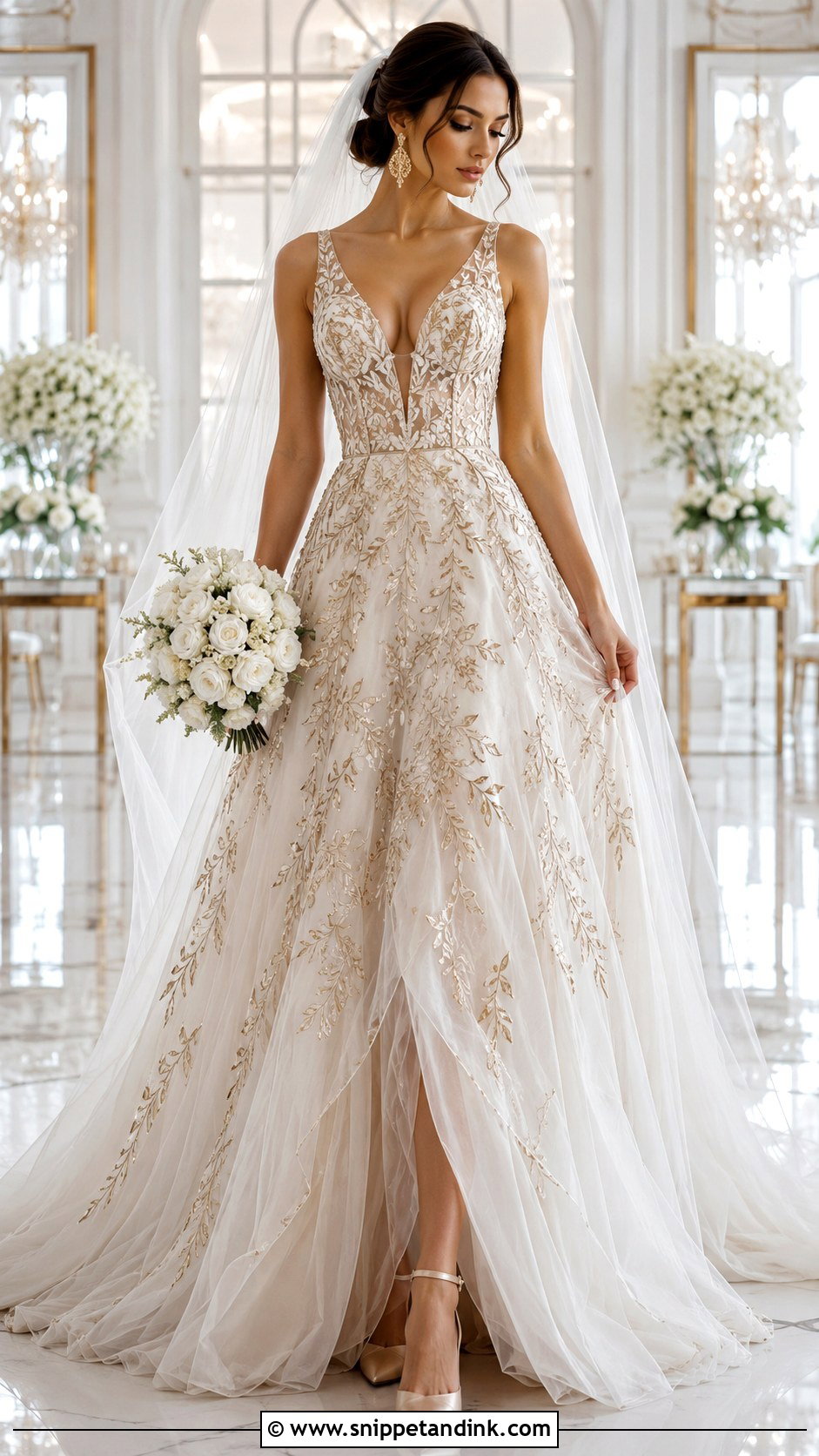
Metallic thread changes color with the light, so I view these gowns by a window and under warm indoor bulbs before a bride commits. Gold can turn brassy under tungsten. Choose tulle or silk embroidered with pale gold, silver or champagne vines over a soft A-line. Match small earrings to the thread, pair with neutral satin heels and a plain veil with a narrow edge, and wear a low textured bun. Don’t mix metals unless the embroidery already does. Keep the makeup softly luminous.
19. Asymmetrical Neckline Couture Wedding Dress
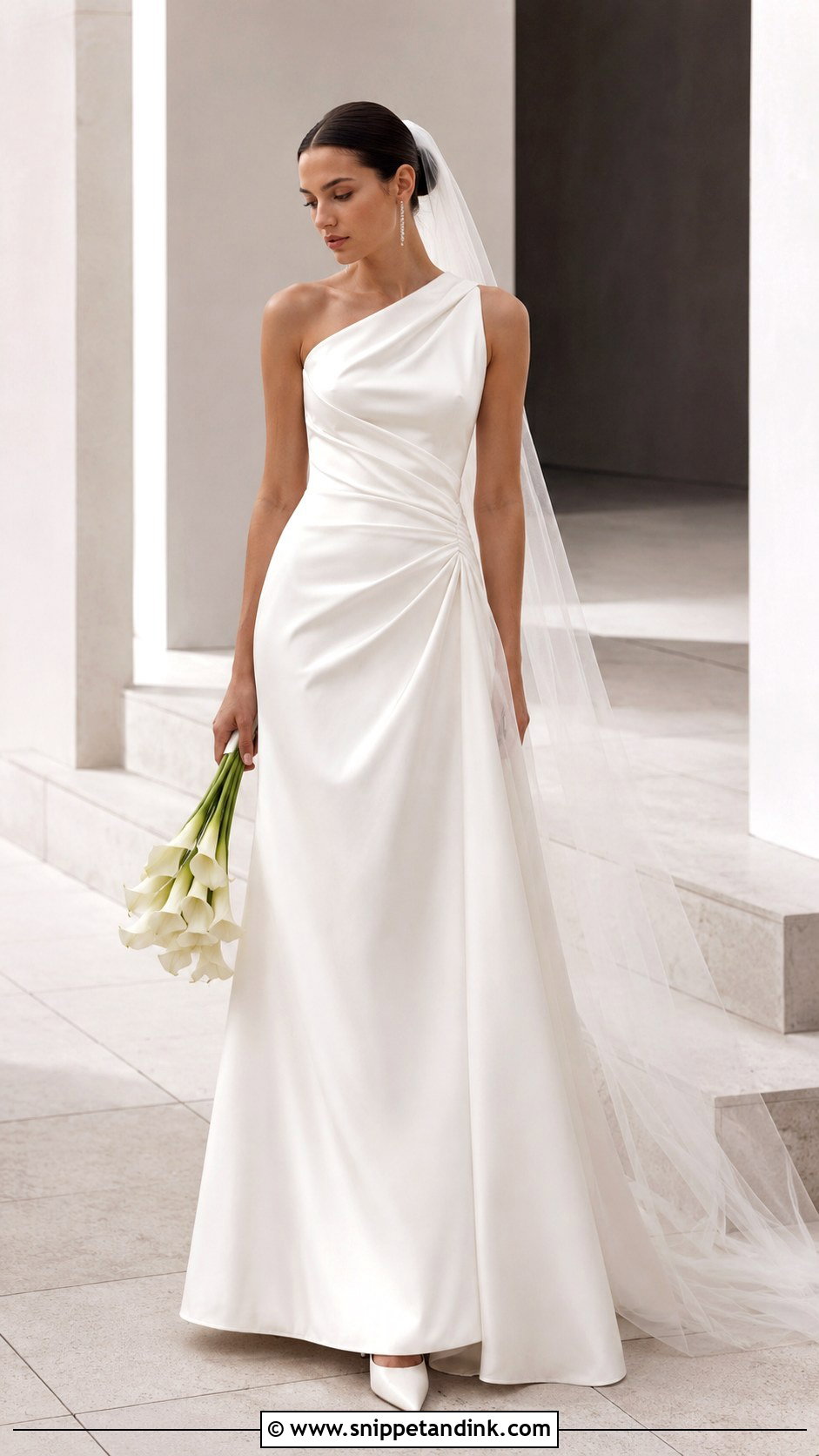
One-shoulder bodices need internal support to stay up, and the strap often needs moving a little toward the neck so it doesn’t slide off. Look for a satin or crepe bodice with a straight, A-line or gently flared skirt, with draping across the torso to soften the line. One statement earring or slim drops, pointed ivory pumps and a veil set low at the back keep the neckline in charge. A sleek side-parted bun and narrow callas finish it. Test arm movement before the final fitting.
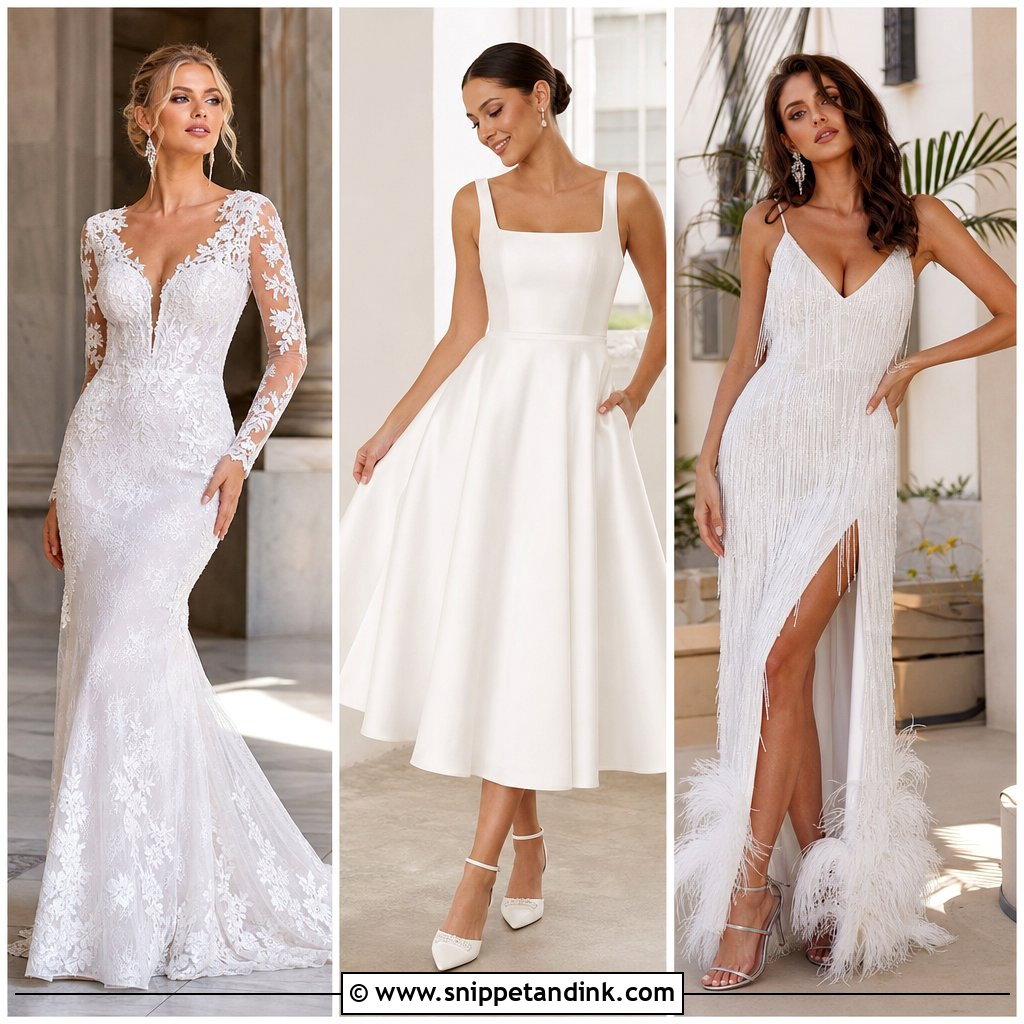

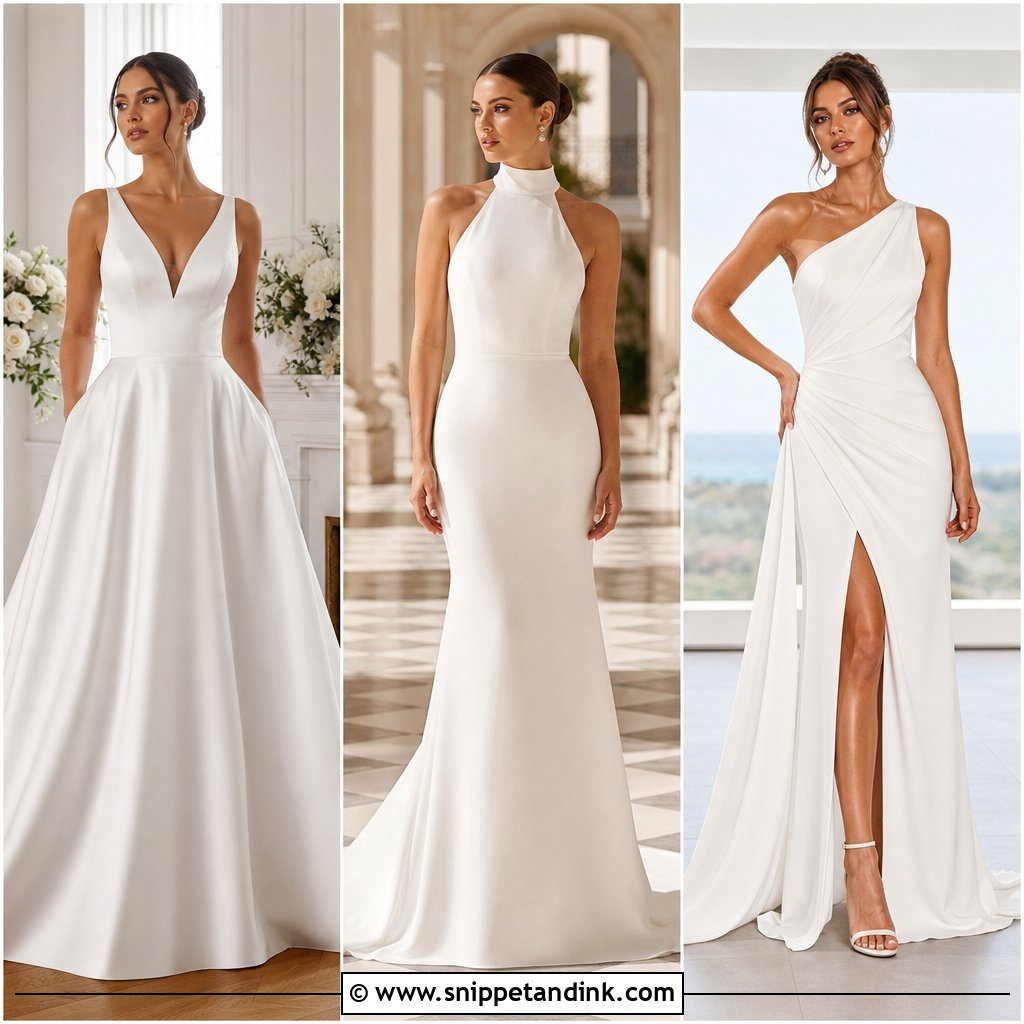
20. Short Reception Couture Wedding Dress
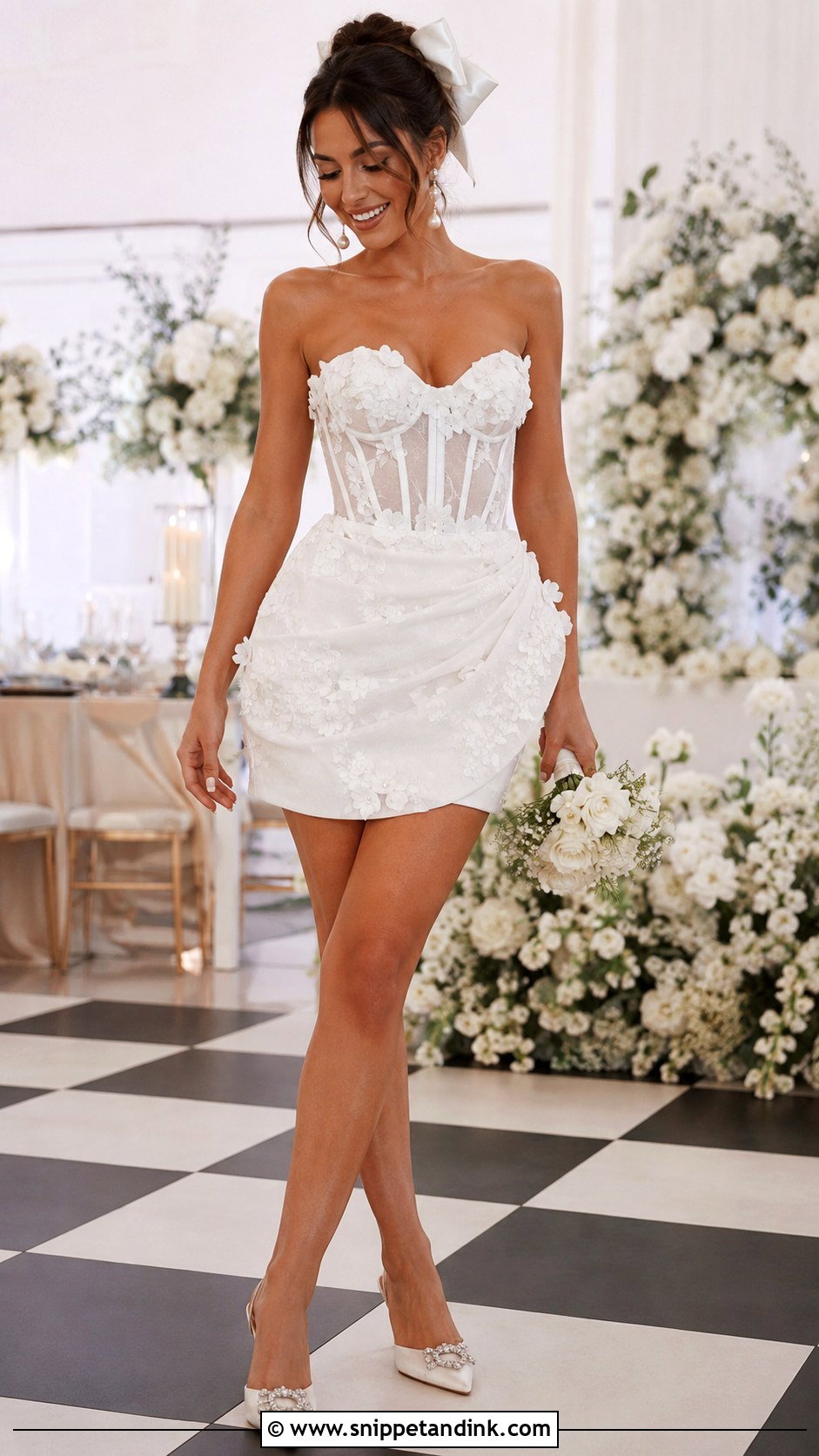
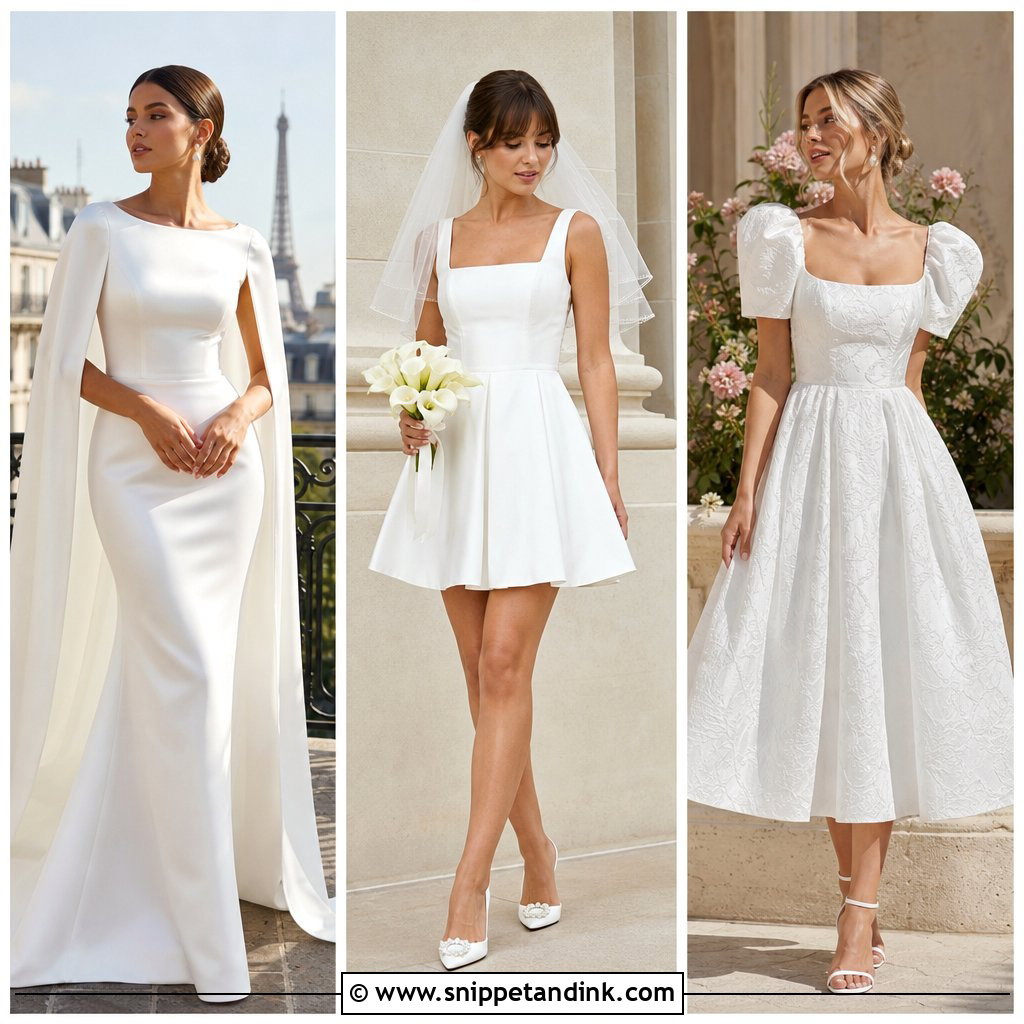
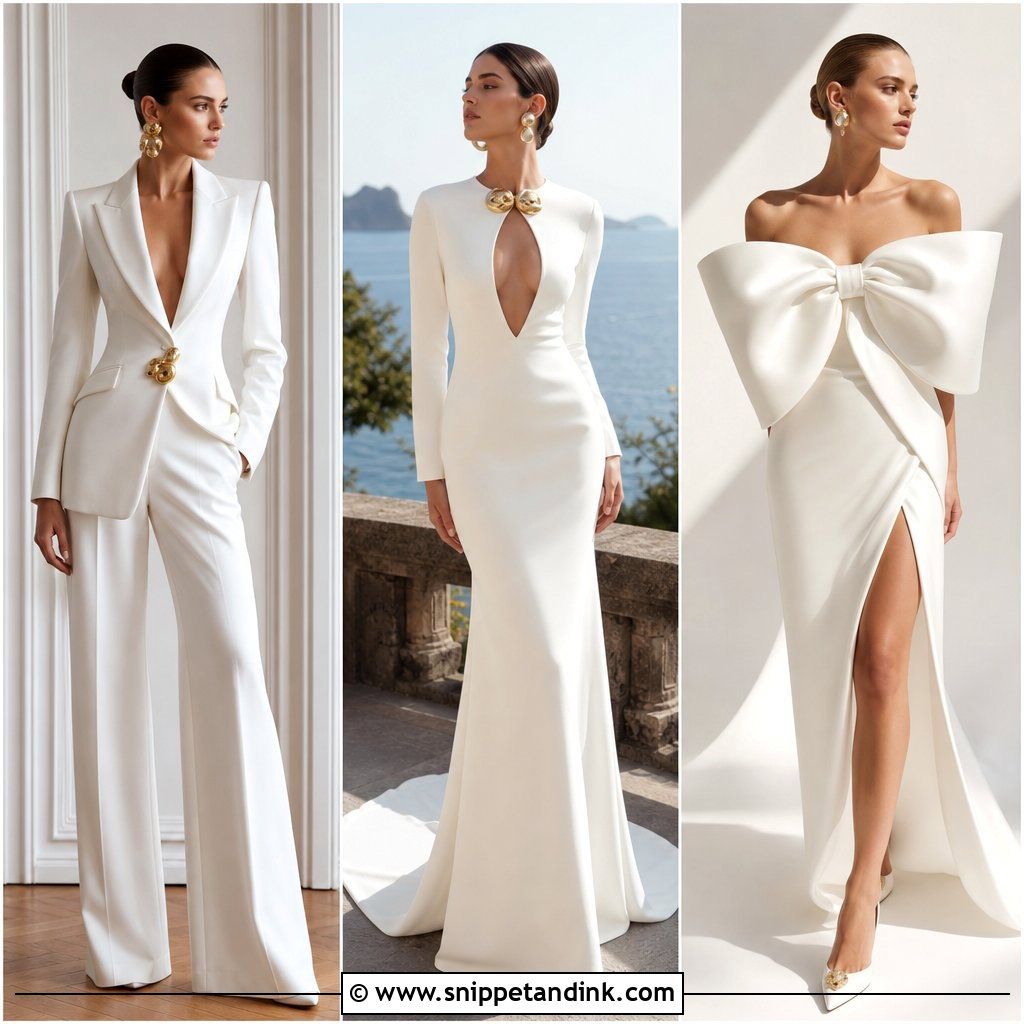
A reception dress should feel like part of the same story, not a costume change. I match one detail from the ceremony gown (the appliqué, the pearl, the satin) so the two read as a pair. Choose a structured mini or tea-length dress with a corset bodice. Pointed pumps or embellished slingbacks balance the shorter hem, and a satin bow or pearl headband replaces the veil. The hem must stay put when you sit, so consider built-in shorts or a smooth lining. A detachable train or overskirt can give a big entrance first.
The Morning After: Getting Pearls, Feathers and Organza Cleaned
Embellished gowns need care soon after the wedding. Spilled champagne, sweat and cake leave sugary marks that you can’t see on the night but turn yellow-brown over the following months. I’d get the dress to a cleaner who handles bridal work within a few weeks, not a few years.
Tell the cleaner what’s on the dress
Pearls can be coated plastic that dissolves in some solvents, feathers often need hand cleaning, and metallic thread can tarnish. Point these out at drop-off and ask whether anything will be removed and re-stitched. Also point to stains you know about, especially around the hem.
Storing it so it lasts
Keep the gown out of plastic, which traps moisture. Fold it with acid-free tissue in an acid-free box, or lay it in a breathable cotton bag, and keep it somewhere dark and dry, not in an attic or basement. Heavy beaded dresses shouldn’t hang for years; the weight stretches the shoulders. Check it once a year and refold along new lines so creases don’t set.
Is the Dress Ready to Dance In?
Every gown here, from sculpted satin to petal-covered tulle, depends on the same two things: construction that holds you up, and alterations done in your real shoes and underwear. Start with the silhouette that makes you feel most like yourself, then weigh fabric, neckline, embellishment and how it moves. Test sitting, walking and dancing before you sign off the hem. Couture should look remarkable and still let you enjoy the whole day.
You'll Like These Ideas:









Leave a Reply