
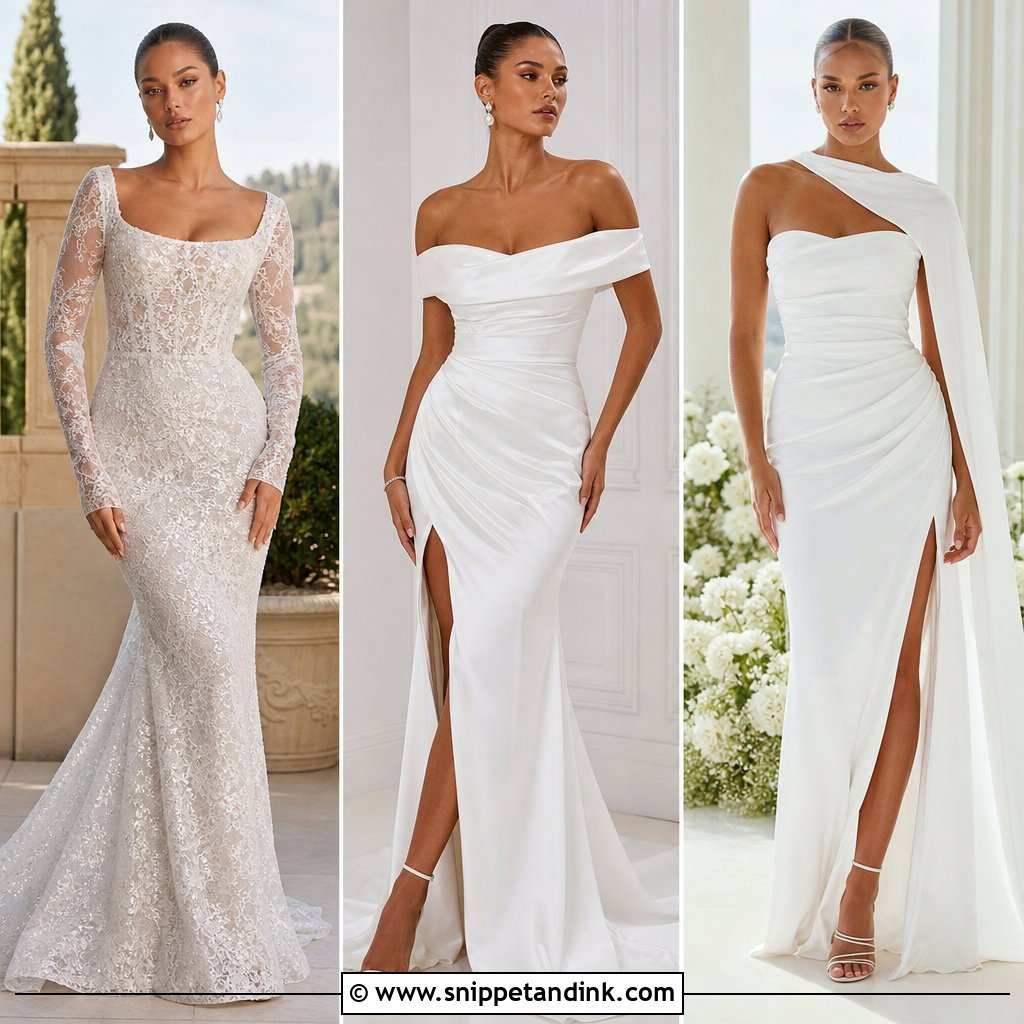
Most of the curve brides I dress arrive expecting to be steered toward one safe silhouette, and they leave with three very different shortlists. The gowns below are complete looks meant to celebrate fuller figures, not hide them, from lace and satin to capes and detachable skirts. For each one I’ve added what I actually check at a fitting, plus the shoes, veil and bouquet I’d put with it, because a dress that works on the hanger can still fail once you sit, lift your arms or stand for six hours. Read them as starting points for your appointments, not rules about your body.
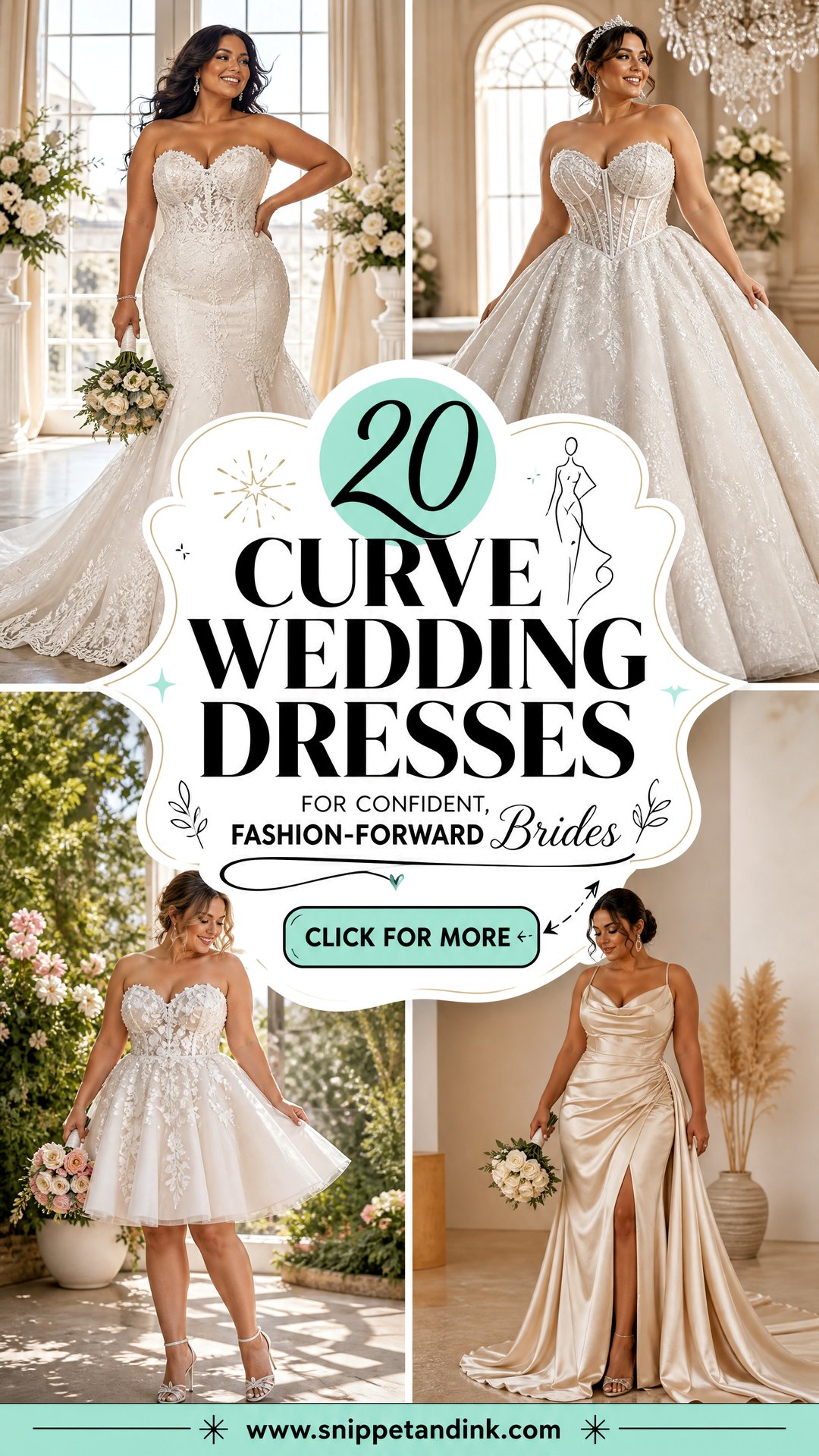
Trying On Sample Gowns That Aren’t Cut for Your Size
Many bridal shops still carry samples in one or two sizes, so a curve bride often ends up clipped into a dress that’s too small or swimming in one that’s too large. I’d rather you know this before you walk in than feel let down by it. Ring ahead and ask which sizes their samples come in. A shop that stocks a full curve range lets you see how the bodice actually sits on you, which no clip can fake.
When you do try on a sample that doesn’t fit, judge three things and ignore the rest: where the waist seam falls, how the neckline frames your shoulders, and whether the skirt moves the way you like when you walk. Fit can be fixed. A silhouette you dislike can’t.
Ordering the size
Designer size charts rarely match high street sizing, and I always order from the largest of your bust, waist and hip measurements, then alter down. Taking a gown in is straightforward; letting it out is limited by the seam allowance, and some dresses have almost none. Made-to-order gowns commonly take four to eight months, sometimes longer, so ask the shop for the realistic delivery window in writing.
- Bring the bra or shapewear you plan to wear, or a strapless longline if you haven’t decided.
- Wear shoes close to your wedding heel height.
- Ask whether the gown can have cups, a waist stay or extra boning added, and what that costs.
1. Curve A-Line Lace Wedding Dress
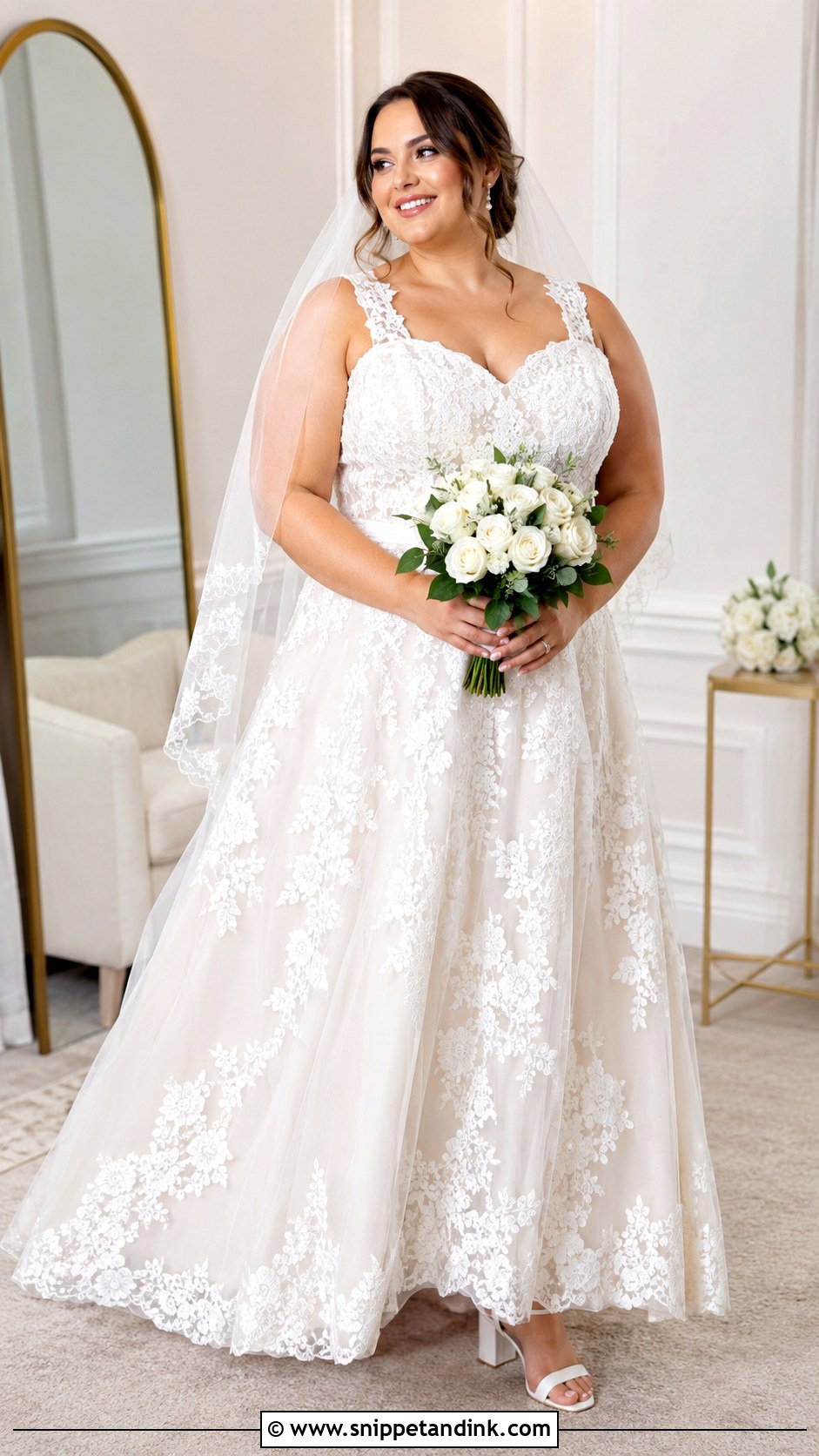
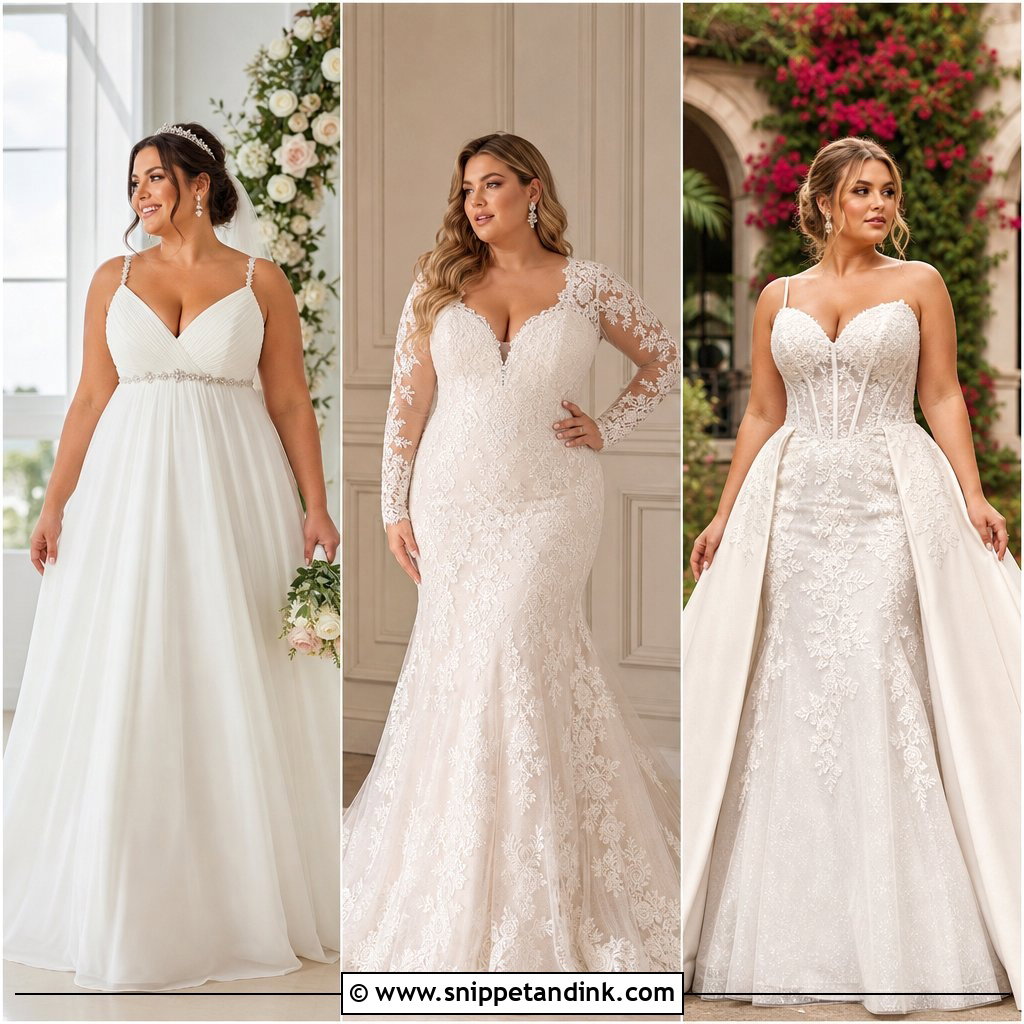
An A-line in lace is the gown I pull first for a bride who isn’t sure where to start, because the skirt releases from the waist and gives the hips room without any clinging. What decides it is the strap. A thin spaghetti strap on a heavier lace bodice digs in by the second hour, so I ask for a wider strap or a set-in sleeve with the cup built into the lining. Floral lace over a soft lining keeps the texture from looking busy. I’d style it with pearl drops, a fingertip veil, block-heel sandals and a loose chignon, with garden roses and greenery in hand. At the alteration appointment, sit, walk and raise both arms: the bodice should stay put without you tugging at it.
2. Curve Off-Shoulder Ball Gown Wedding Dress
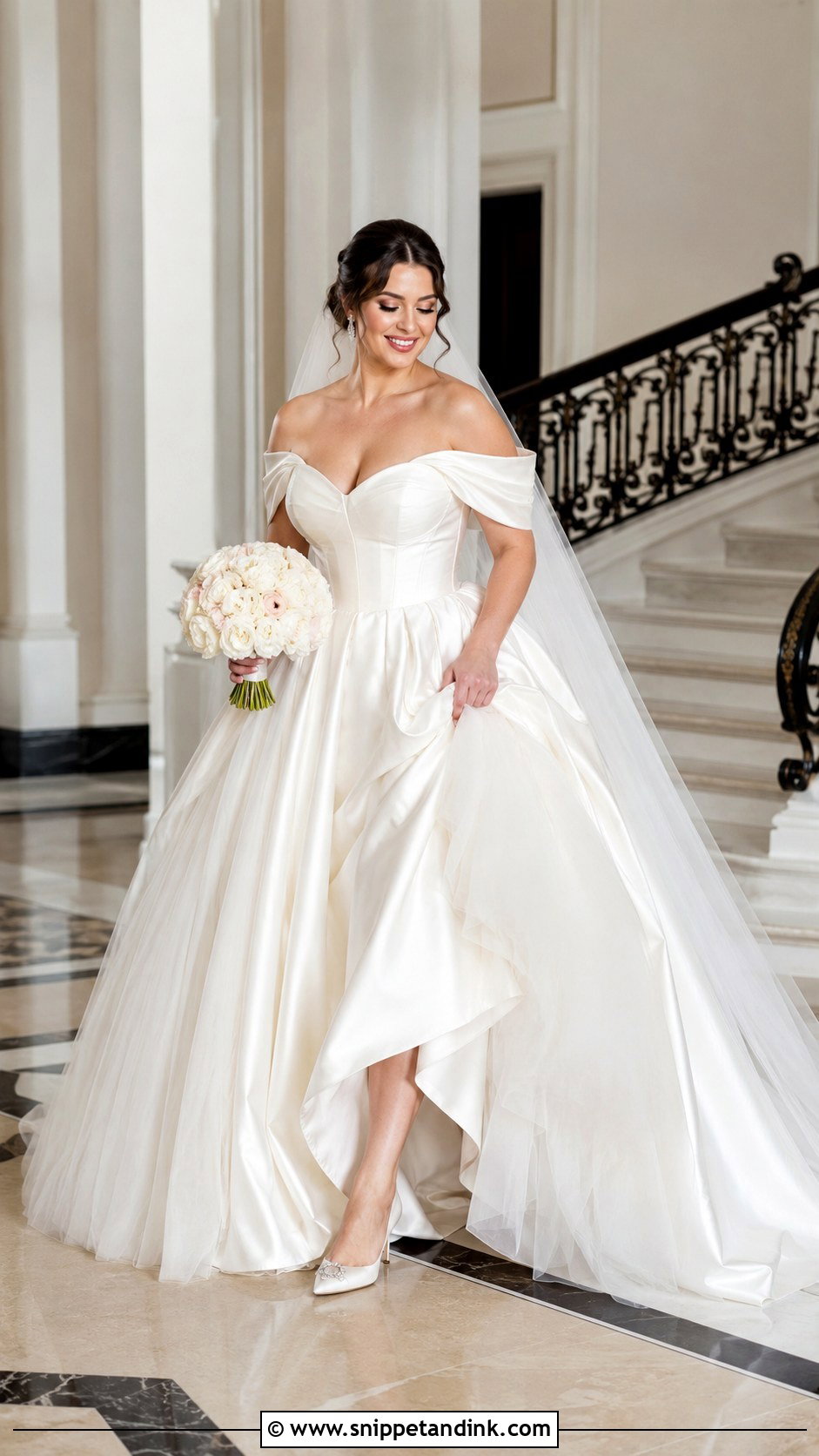
Off-shoulder sleeves sit on the upper arm, and that’s exactly where they go wrong. If the elastic or the sleeve band is cut snug, you can’t hug anyone or lift a glass without the whole neckline riding up. I always have the bride reach forward at the fitting before we pin. Inside, the ball gown needs proper boning and a waist stay so the bodice, not the sleeves, holds everything up. A satin bodice with lightweight tulle layers gives volume without dragging. Wear a simple pendant, crystal studs and a pointed heel you can stand in; choose a cathedral veil indoors and a shorter one outside, where wind turns long tulle into a sail. A low bun or side-swept waves keep the shoulders clear, and a rounded bouquet of roses or peonies should sit below the neckline, not over it.
3. Curve Long-Sleeve Crepe Wedding Dress
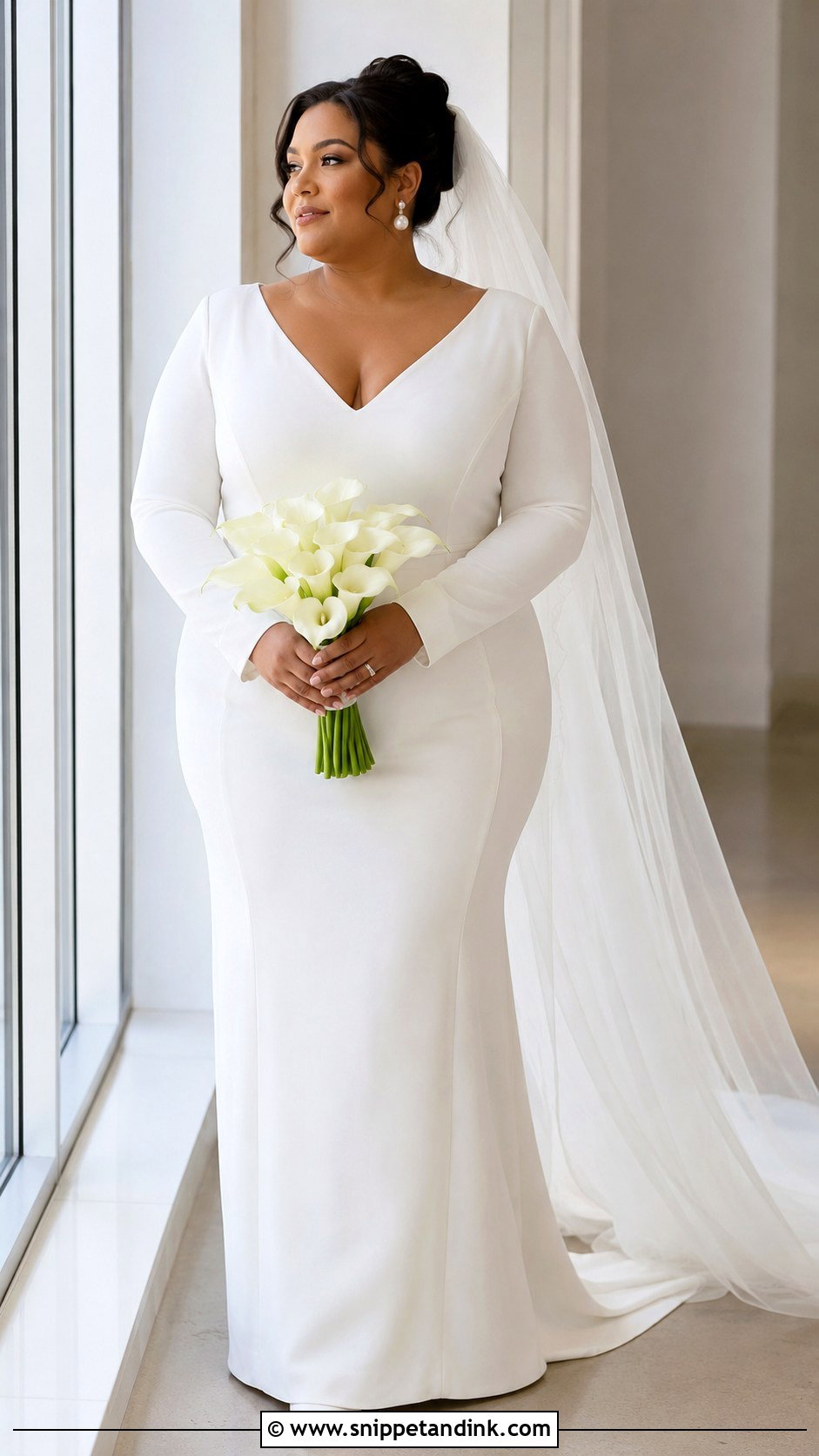
Crepe is honest fabric. It shows every bit of tailoring, good and bad, which is why I only recommend it in a heavy stretch weight that skims rather than grips. Princess seams do the shaping here, so ask your seamstress to take in along those seams instead of the side seams, which can pull the front off-centre. A V or soft scoop neckline opens up the long sleeves. For a cooler ceremony, sleeves with a little stretch let you raise your arms; pure woven crepe sleeves often bind at the elbow. Pair it with sleek pumps, pearl studs, a chapel veil and structured calla lilies, and look at the final fit from the side and back, not just the mirror in front of you.
4. Curve Mermaid Sweetheart Wedding Dress
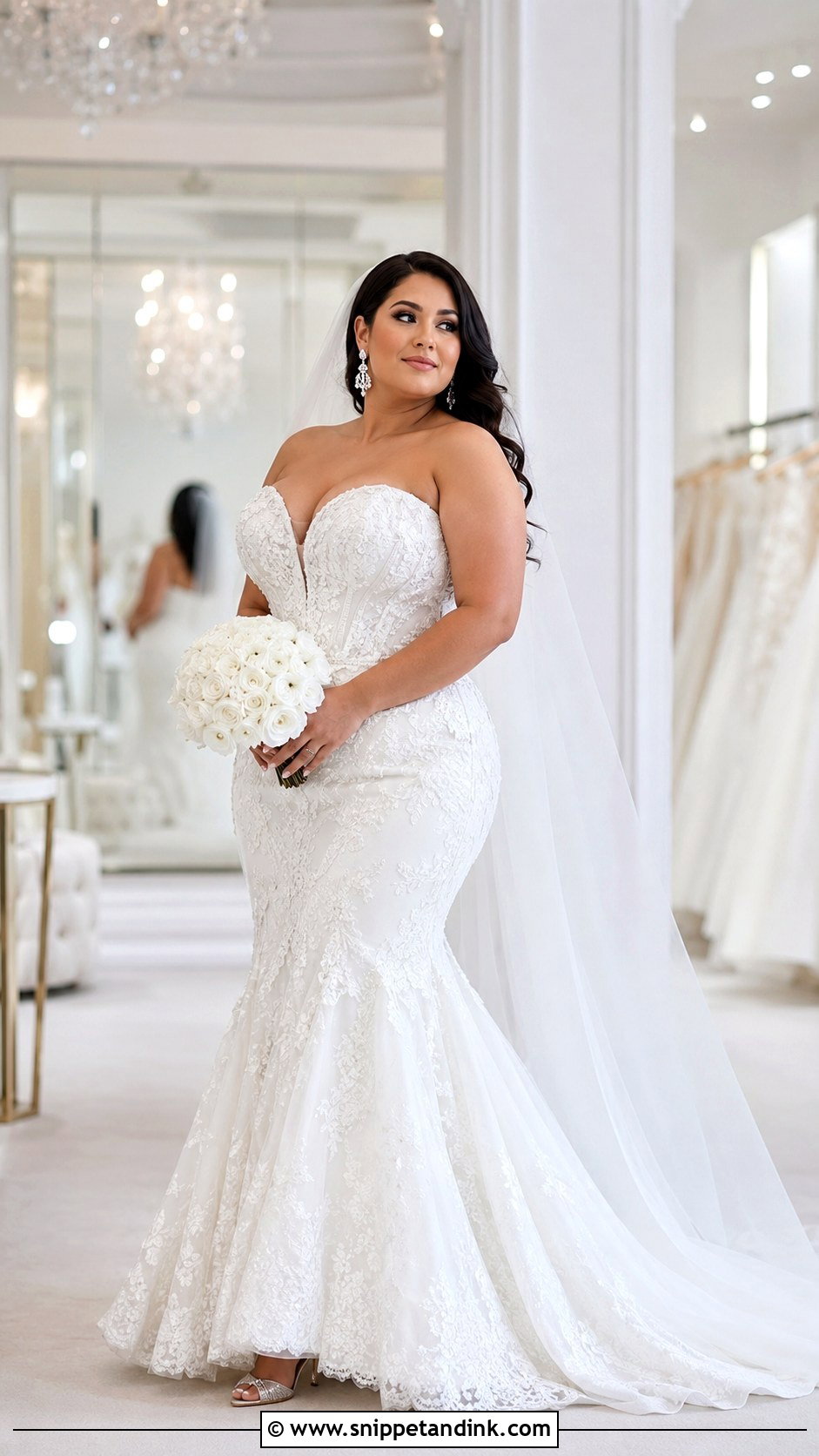
A mermaid with a sweetheart neckline is the most dramatic shape on this list, and the one I fit most carefully. The flare point matters more than anything: set it at or just above the knee and you can walk; set it lower and you’ll shuffle all evening. A corset bodice should be built to your measurements, not laced tighter to compensate for a pattern that’s wrong. I’d keep the accessories quiet with crystal earrings, a plain veil, metallic or ivory heels and Hollywood waves, plus a compact bouquet that leaves the waist visible. Practise your stride and sit on a hard chair before the hem is cut. A hidden wrist loop on the train saves you from holding fabric all night.
5. Curve Square-Neck Satin Wedding Dress
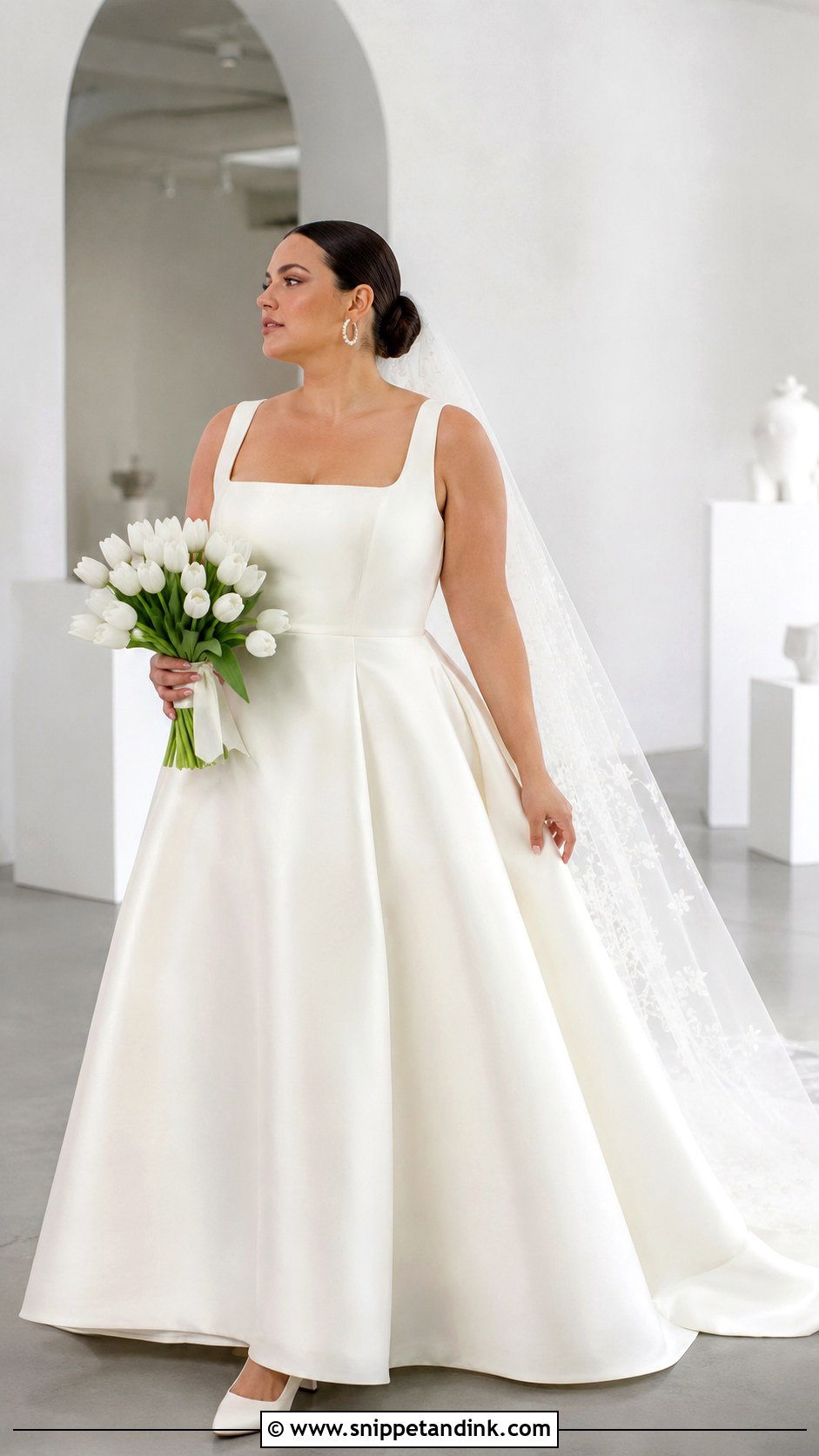
The square neckline is one of my favourite cuts for a fuller bust because the wide straps can hide a supportive bra and the straight edge frames the collarbones cleanly. Matte satin or mikado holds the skirt’s shape; shiny satin shows every pull line. The trouble spot is where the neckline meets the underarm. If the fabric wrinkles there when you lean forward, the bodice needs taking in at the side seam, not tightening at the back. Finish with pearl hoops, a polished bun, a narrow cathedral veil and ivory pumps or block heels for long standing, with white tulips or roses.
6. Curve Empire-Waist Chiffon Wedding Dress
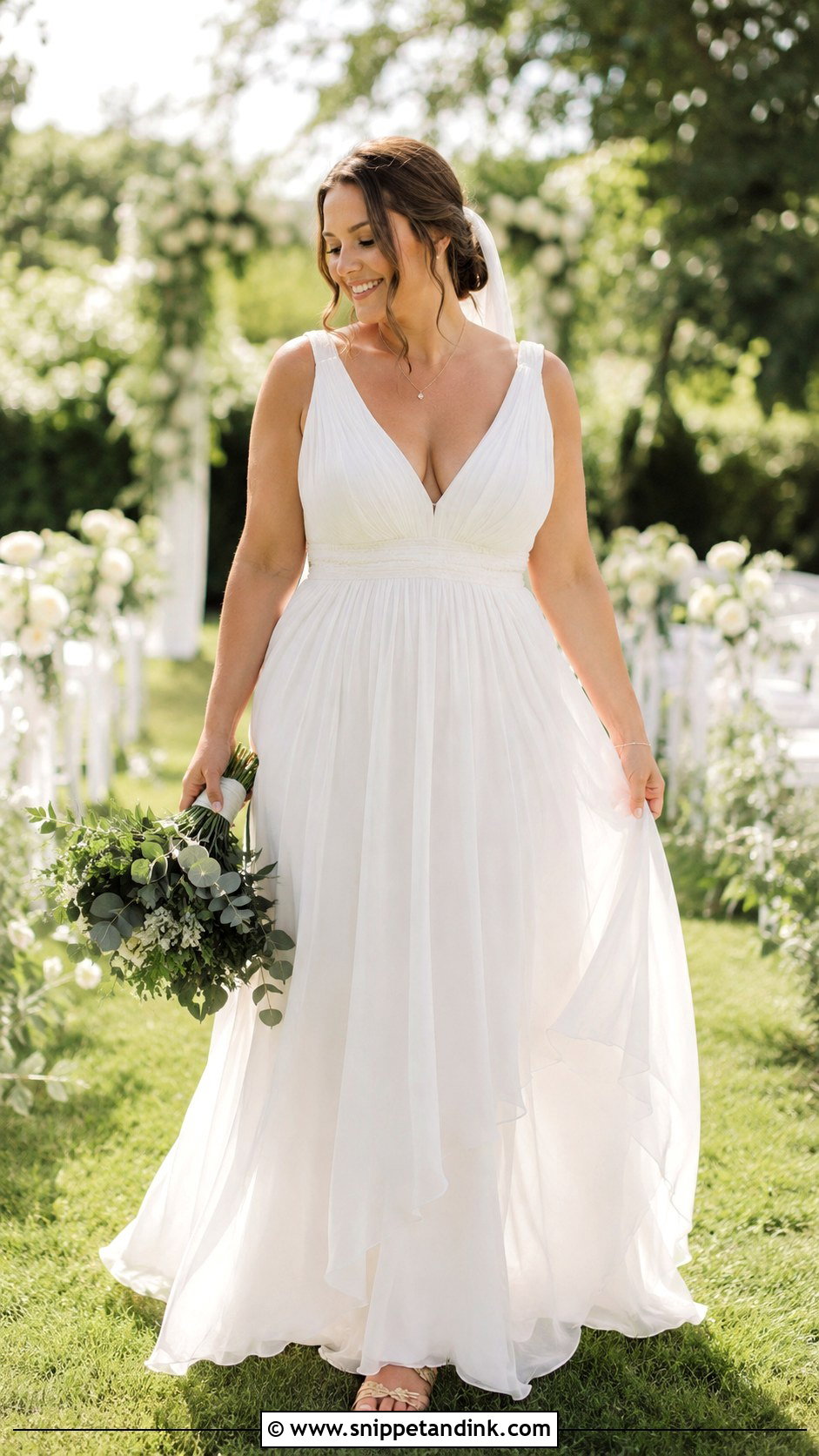
Light chiffon and an empire waist make an easy gown for a hot day or a destination ceremony, since the seam sits under the bust and the skirt simply falls. My one warning: single-layer chiffon goes see-through in strong sun, so hold it up to a window before you commit and ask whether the lining runs the full length. On a fuller bust, the empire seam needs real structure underneath or it rides upward. Style it with low embellished sandals, fine gold jewellery, a light veil and soft curls or a braided updo, and carry a loose seasonal bouquet. Outside, a few small weights sewn into the hem stop the skirt wrapping around your legs in the breeze.
7. Curve Tea-Length Wedding Dress
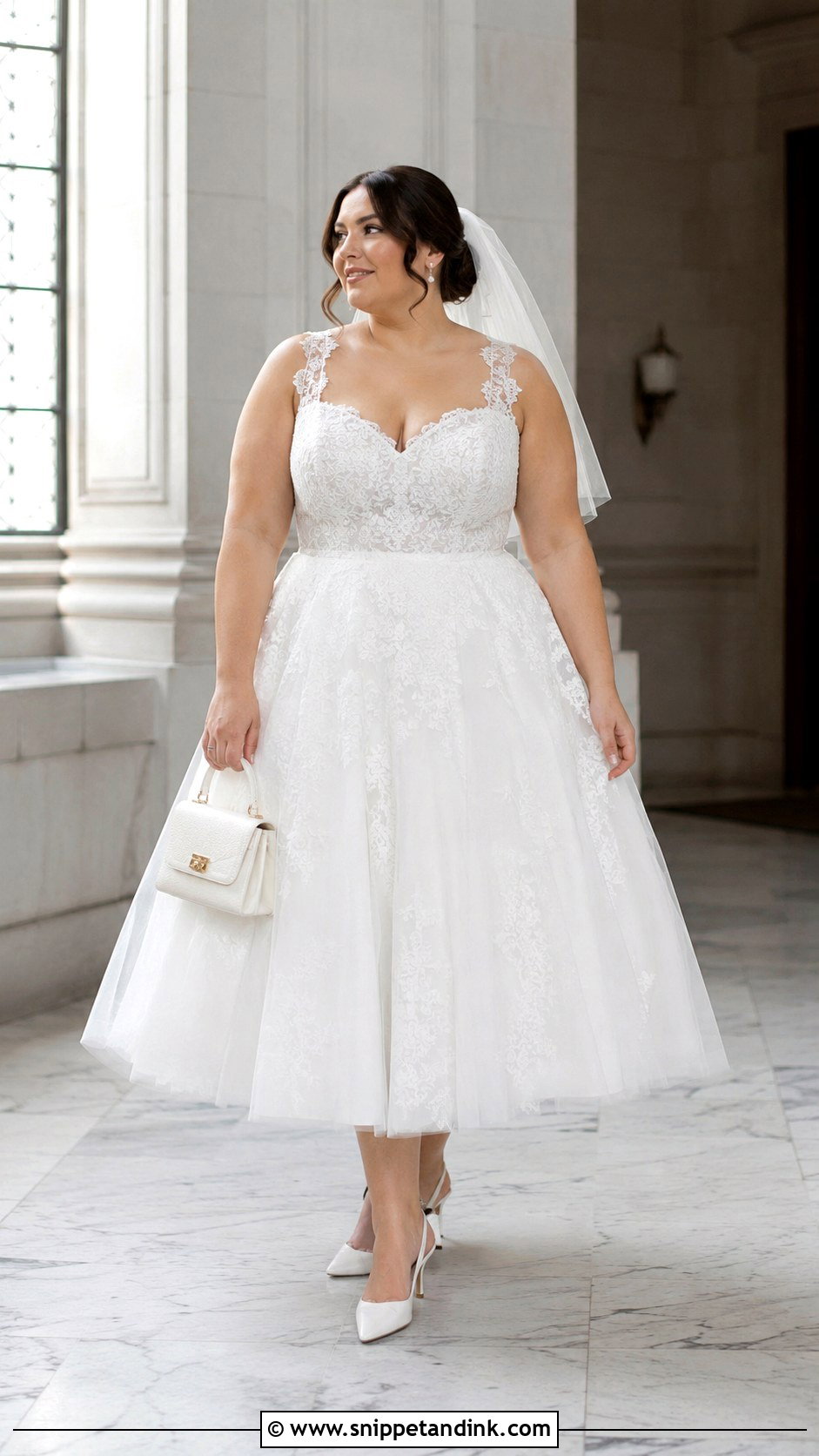
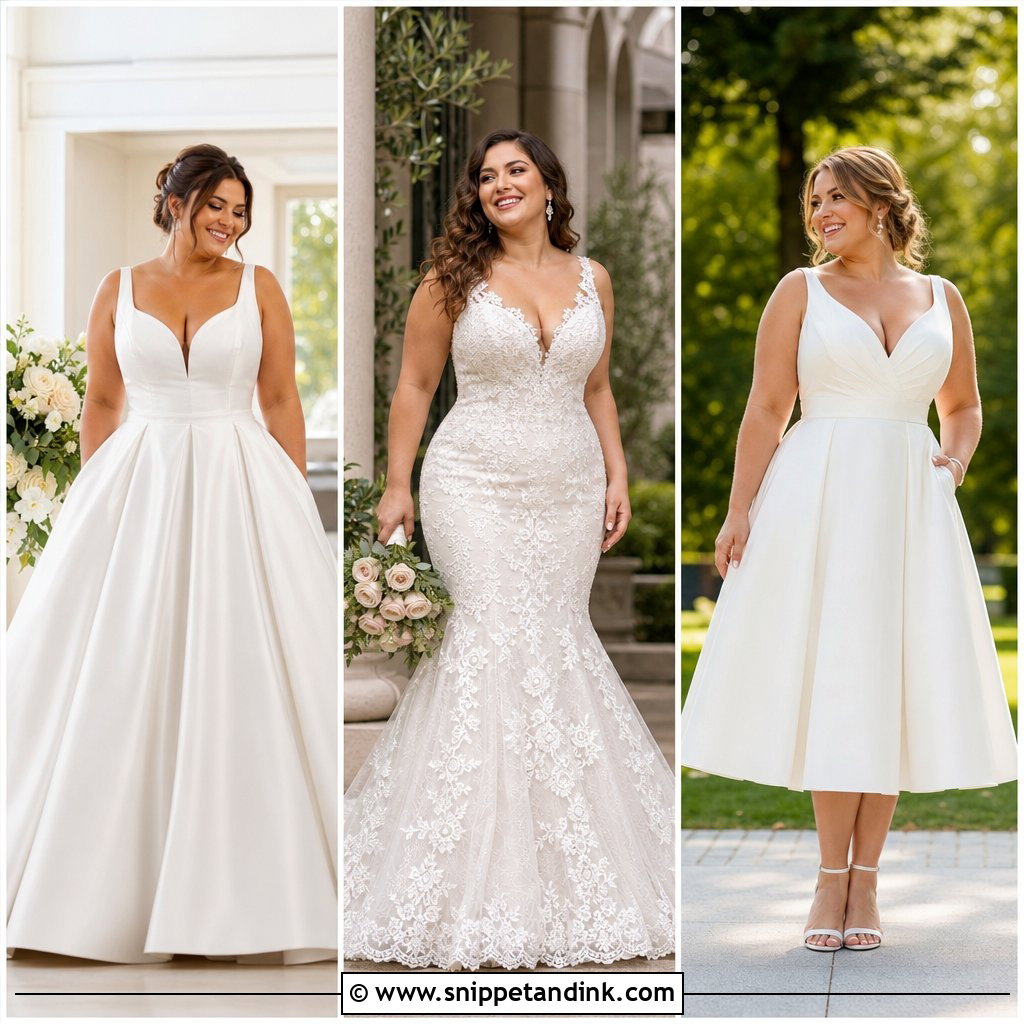
Tea length puts your shoes on show, so I treat footwear as part of the dress here. The hem should land wherever your leg looks best to you, anywhere between knee and ankle, and that point changes with heel height. Bring the actual wedding shoes to every fitting or the length will be wrong. Lace, mikado and structured satin all hold this shape. I’d add pointed slingbacks, pearl earrings, a short veil or birdcage piece and a small structured bag for a courthouse or restaurant wedding, with soft waves or a neat bun to keep it polished.
8. Curve Minimalist Column Wedding Dress
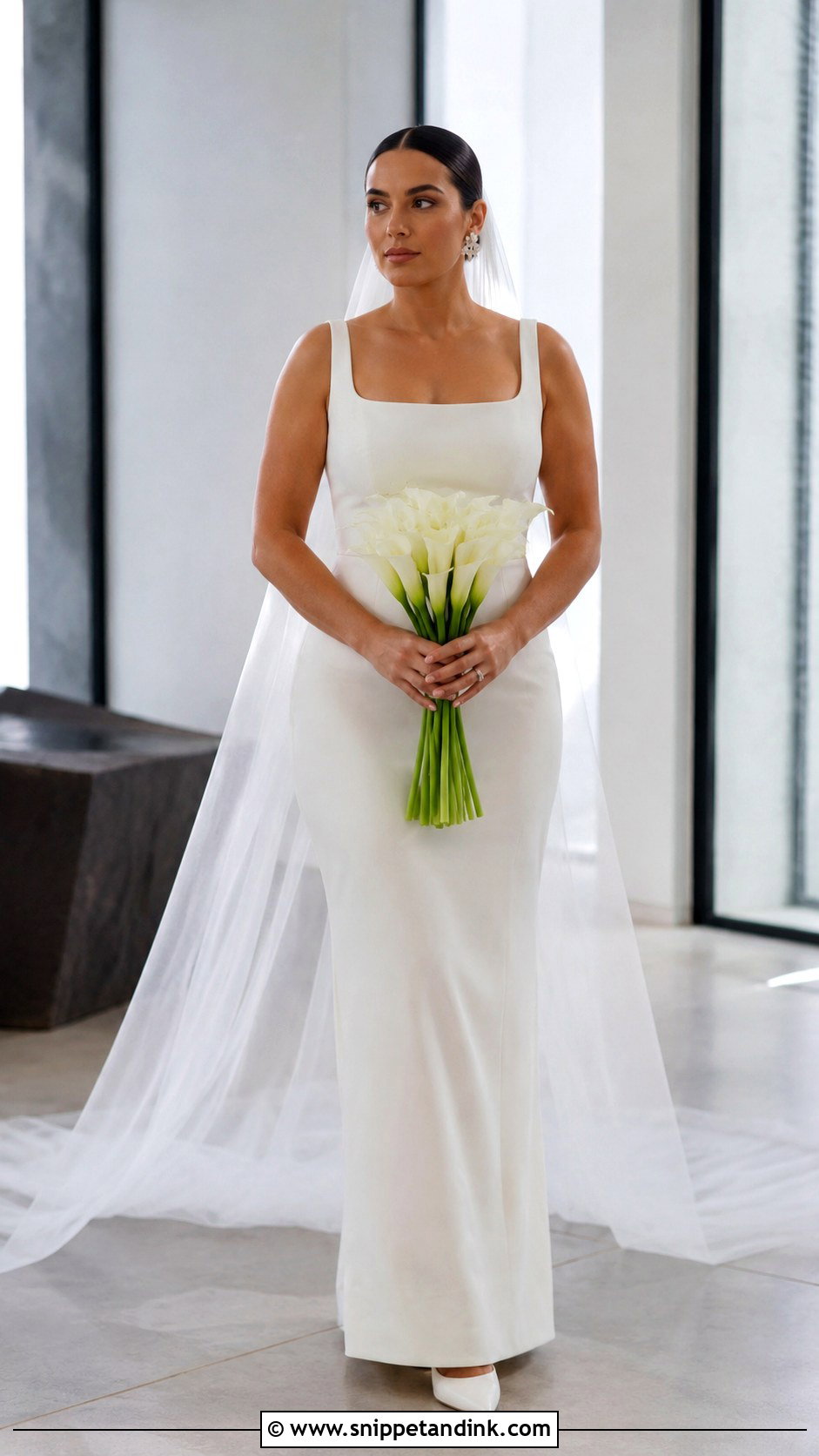
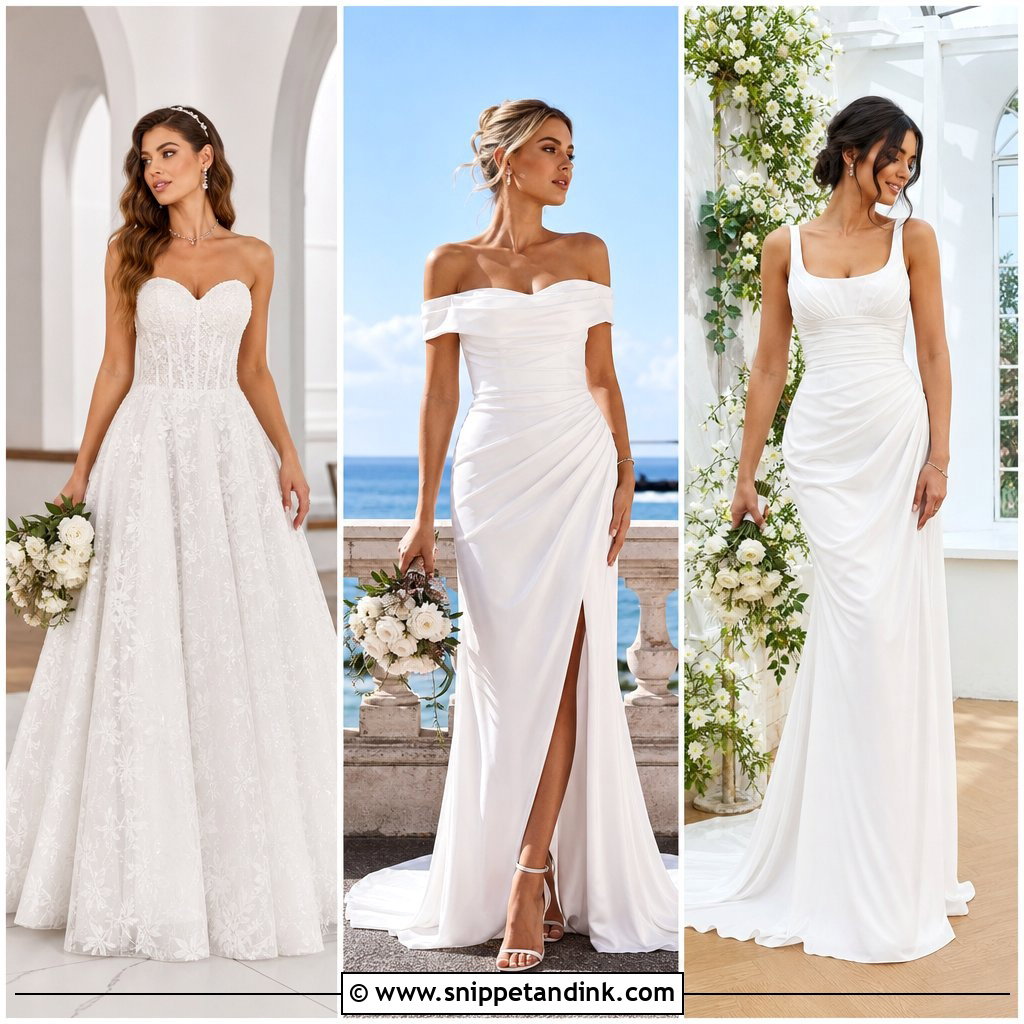
A minimalist column has nowhere to hide, which is the appeal and the risk. Double-lined crepe or satin with a little stretch gives a smooth line; single-layer fabric shows the edge of every undergarment. A bateau, scoop or shallow V keeps the shape long. I ask the seamstress to let the fabric skim the hip rather than hug it, because a column that’s taken in too far creases across the lap the moment you sit. Smoothing underwear can help, but only if you’d happily wear it for twelve hours. Sculptural earrings, pointed pumps, a long plain veil, a sleek ponytail and a few calla lilies or orchids are all this gown needs.
9. Curve Corset Bodice Tulle Wedding Dress
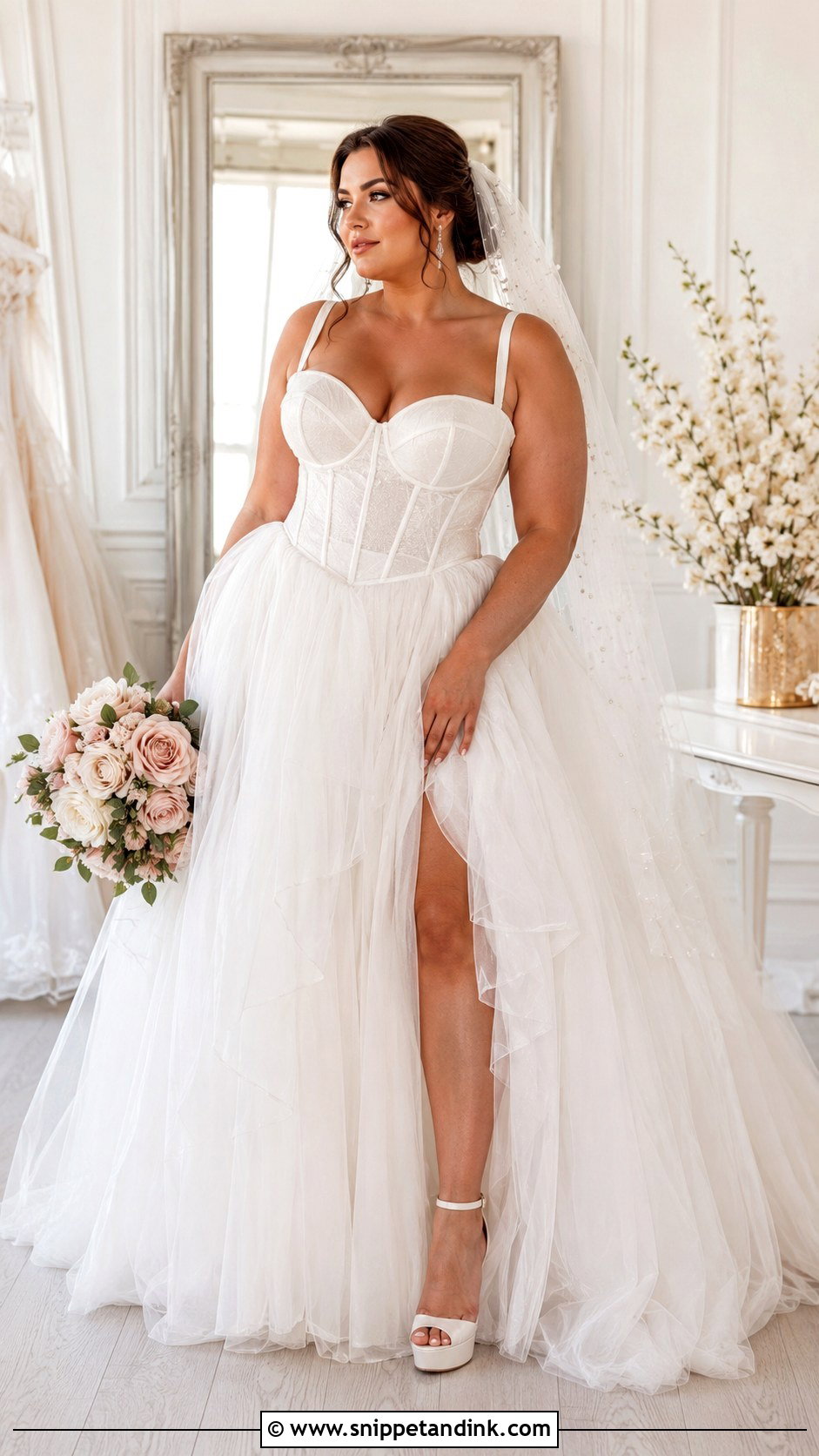
Modern corsetry should hold you, not squeeze you. I check two things at every corset fitting: can the bride take a full breath while seated, and does the top edge lie flat against the bust without cutting in? Flexible boning, straps or sleeves for extra hold and an adjustable lace-up back are what make this work for a long day, since your body changes slightly after a meal. The tulle skirt keeps the look soft. Crystal studs, a scattered-pearl veil, platform heels under the skirt and a textured updo suit it; keep the bouquet to simple roses. Confirm the waist seam sits at your true waist before anything else is altered.
10. Curve Basque-Waist Ball Gown Wedding Dress
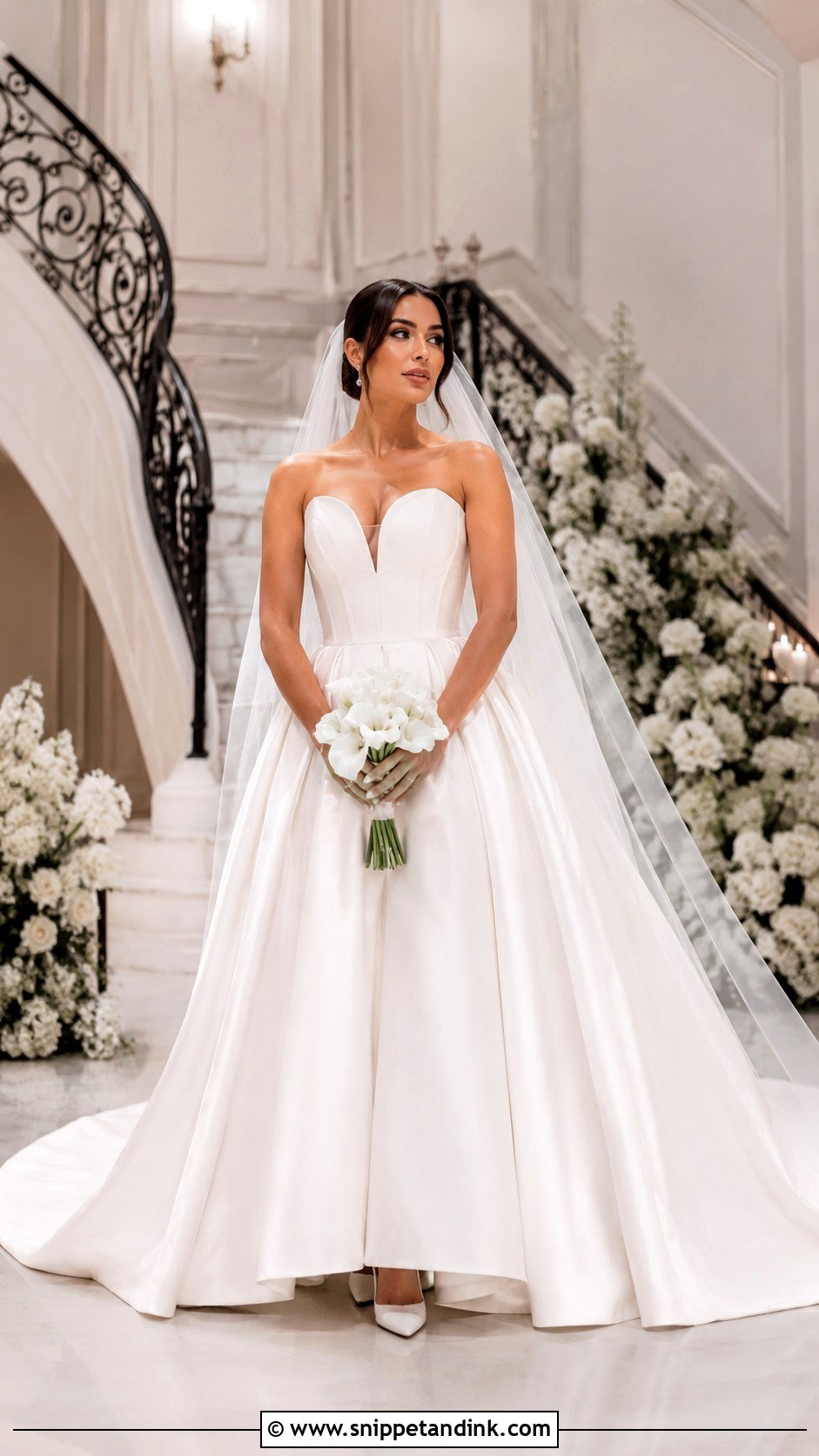
The Basque-waist ball gown dips into a V below the natural waist, which draws the eye downward and links the bodice to the skirt in one line. It’s a flattering shape on many curvy figures, but only when the point lands correctly. Too low and it pokes into the stomach when you sit; I usually have brides sit during the pinning so we can see it fold. Crisp mikado gives structure, layered tulle keeps it lighter. A cathedral veil, drop earrings, classic pumps and a low bun suit it, with a narrow bouquet held to one side so the point of the waist stays visible in photos.
11. Curve Floral Appliqué Wedding Dress
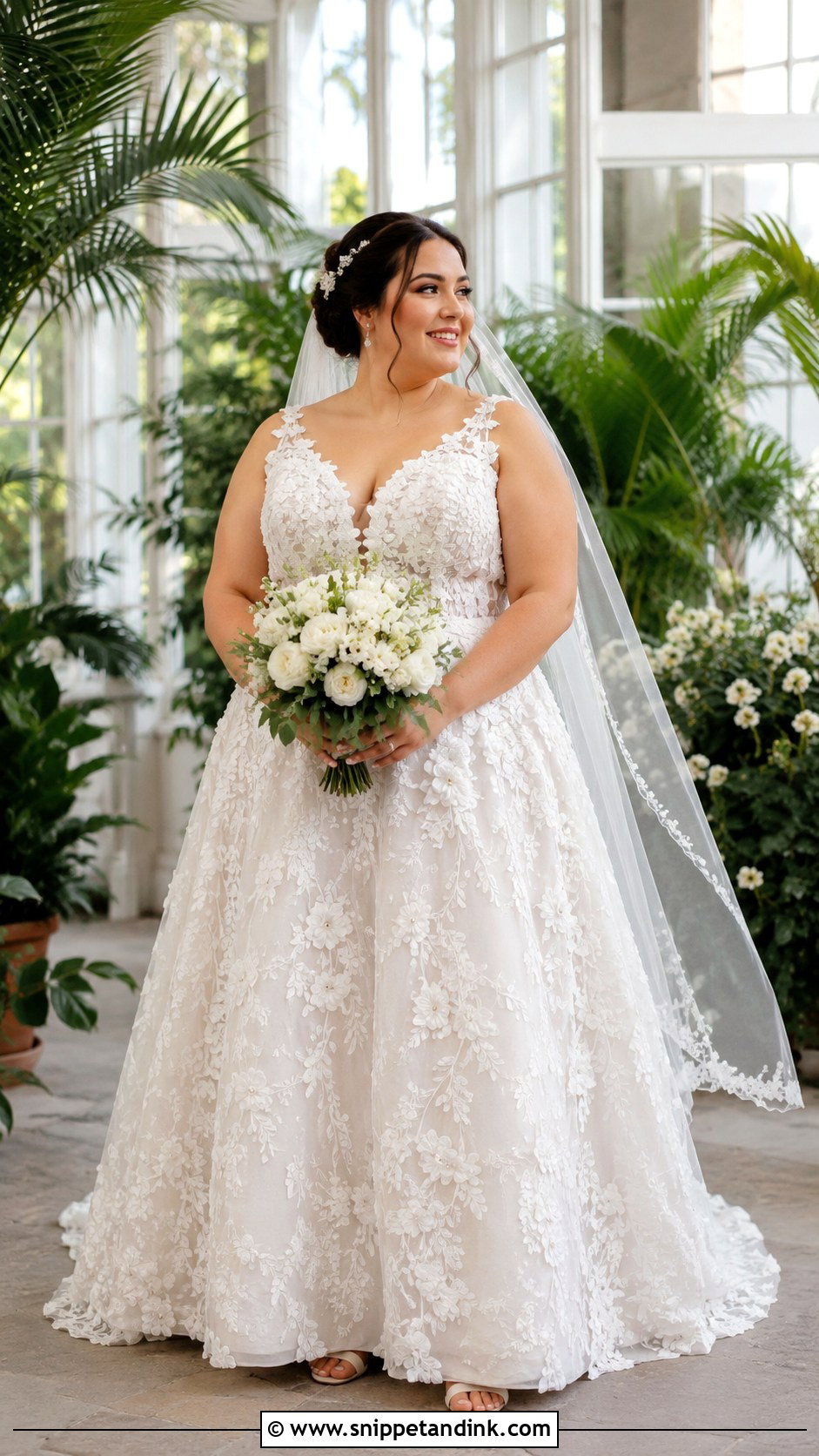
Raised appliqué adds depth that flat lace can’t, and on a curvy figure I like the flowers scattered from the bodice down onto an A-line or fit-and-flare skirt, so no single zone carries all the detail. Run your fingers along the edges around the arms and neckline. Stiff, glued or scratchy appliqués rub raw by the evening, and they can be backed or softened before the wedding if you ask. Under flash, dimensional pieces throw small shadows, so look at the gown in daylight too. Keep the rest simple with plain earrings, neutral heels, a lightly embellished veil and two or three floral pins in a loose updo, plus a natural bouquet that echoes the appliqué shapes.
12. Curve Cape-Sleeve Wedding Dress
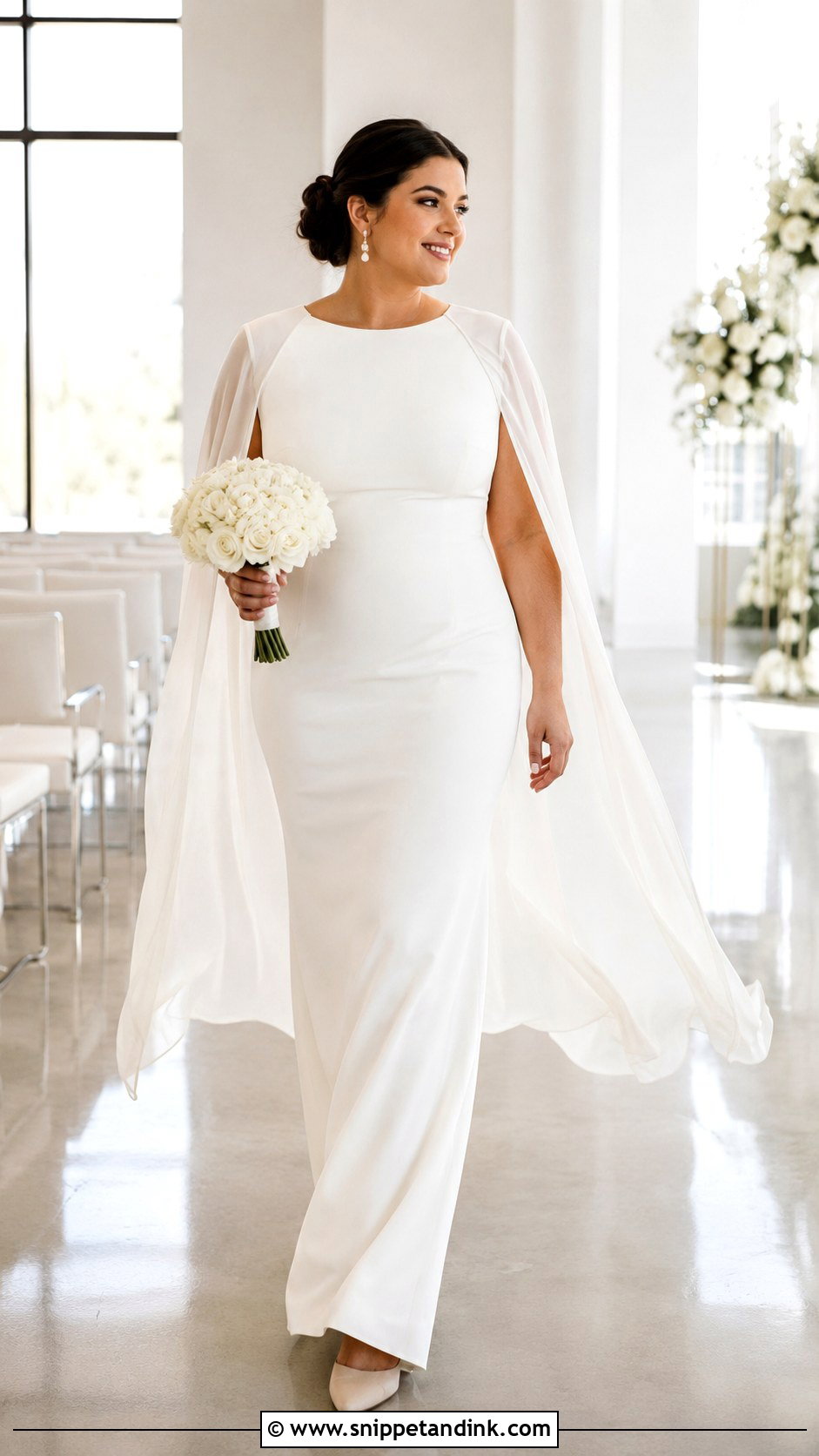
Cape sleeves give you arm coverage that moves, and they’re often a relief for brides who dislike tight sleeves. Choose a plain A-line or column underneath so the cape has the stage. The fit issue I see most is a cape that slides backward off the shoulder when the bride turns, so we stitch small hidden snaps or a clear elastic loop to anchor it. Skip the veil or wear a short plain one; two floating layers compete. Wear a clean updo, small earrings and understated heels, with a small bouquet. If the cape is detachable, you can take it off for dinner and dancing in a warm room.
13. Curve High-Neck Lace Wedding Dress
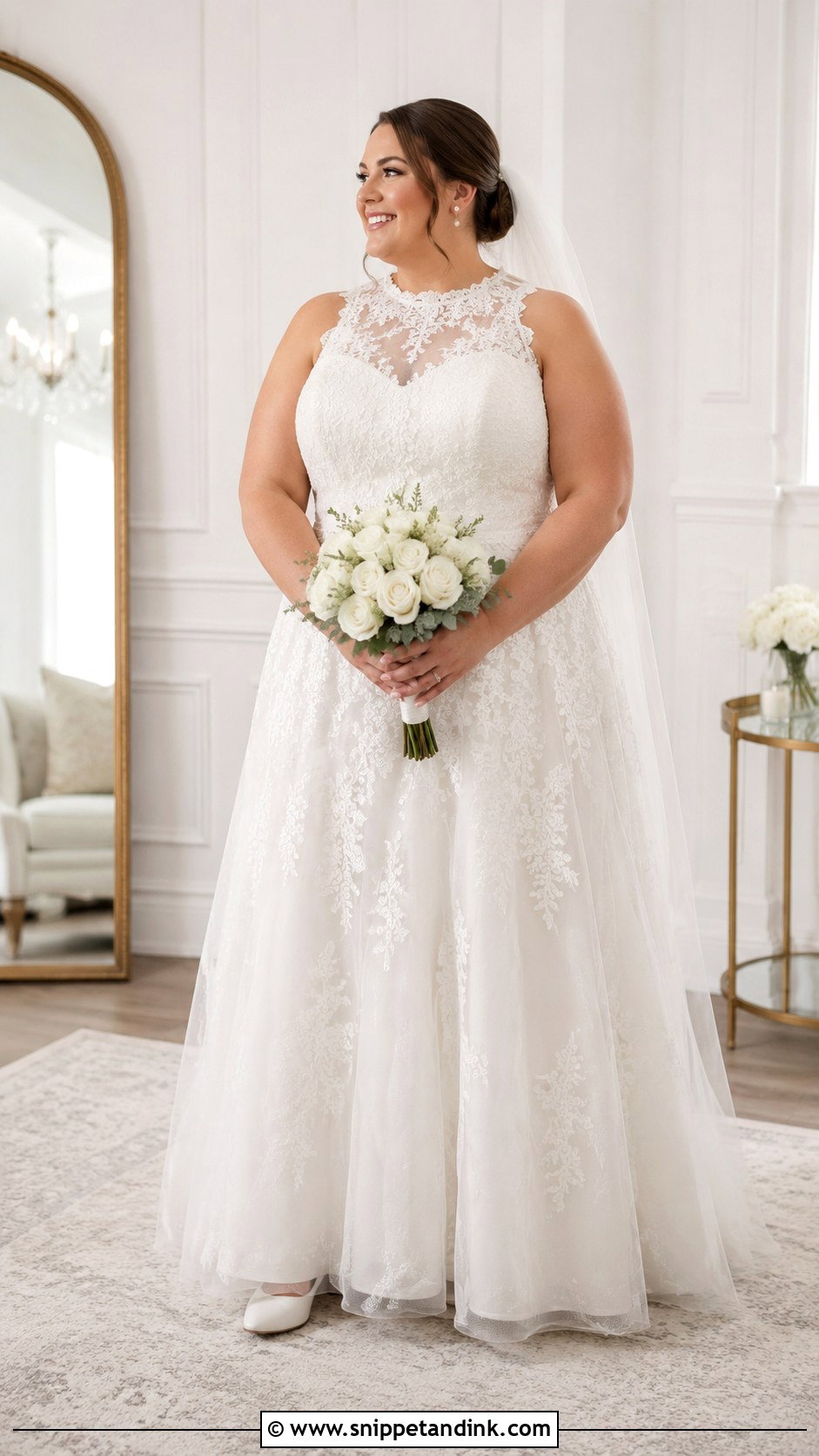
A high lace neckline is gentle on a fuller bust because it carries the eye upward and doesn’t need a plunging bra. Check the neck first: turn your head fully both ways and lift your arms. If the illusion mesh tightens around the throat or the armholes rub, it needs adjusting before it gets near your wedding morning. Skip the necklace entirely and let the lace do the work. I’d style it with pearl studs, a low bun, a veil set beneath the hair, closed pumps or low block heels and white roses with very little greenery.
14. Curve One-Shoulder Draped Wedding Dress
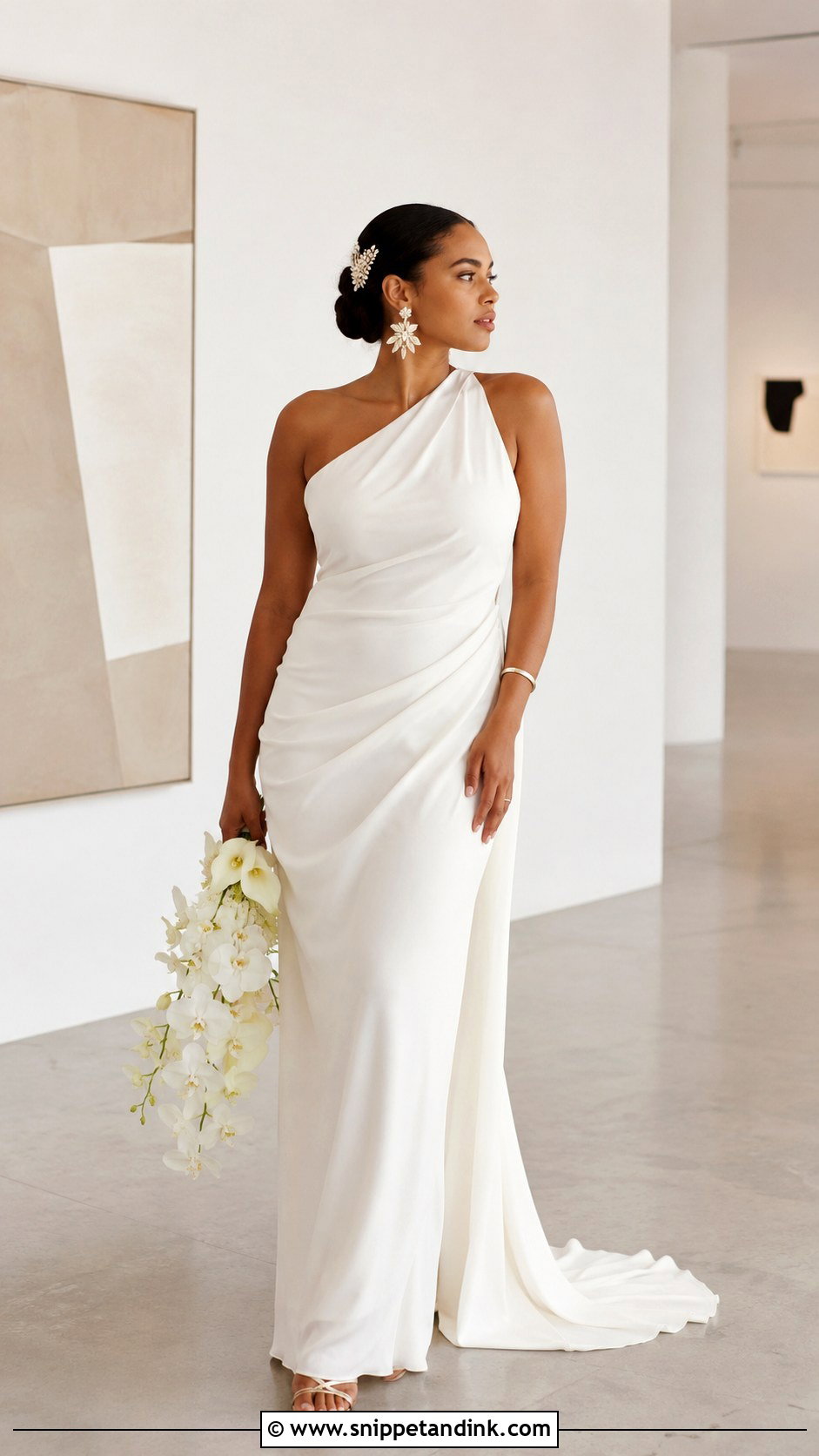
A one-shoulder wedding dress asks a lot of one strap, so I never let it do all the work. There should be internal support, such as boning, a built-in cup or a grip band at the waist, so the gown stays up even if the strap shifts while you dance. Crepe and satin give structure; chiffon drapes softer but needs more help inside. Put a statement earring on the bare side, wear a low bun and a slim bracelet, and either set a plain chapel veil under the bun or swap it for a comb. Metallic sandals and a long narrow bouquet keep the diagonal line going.

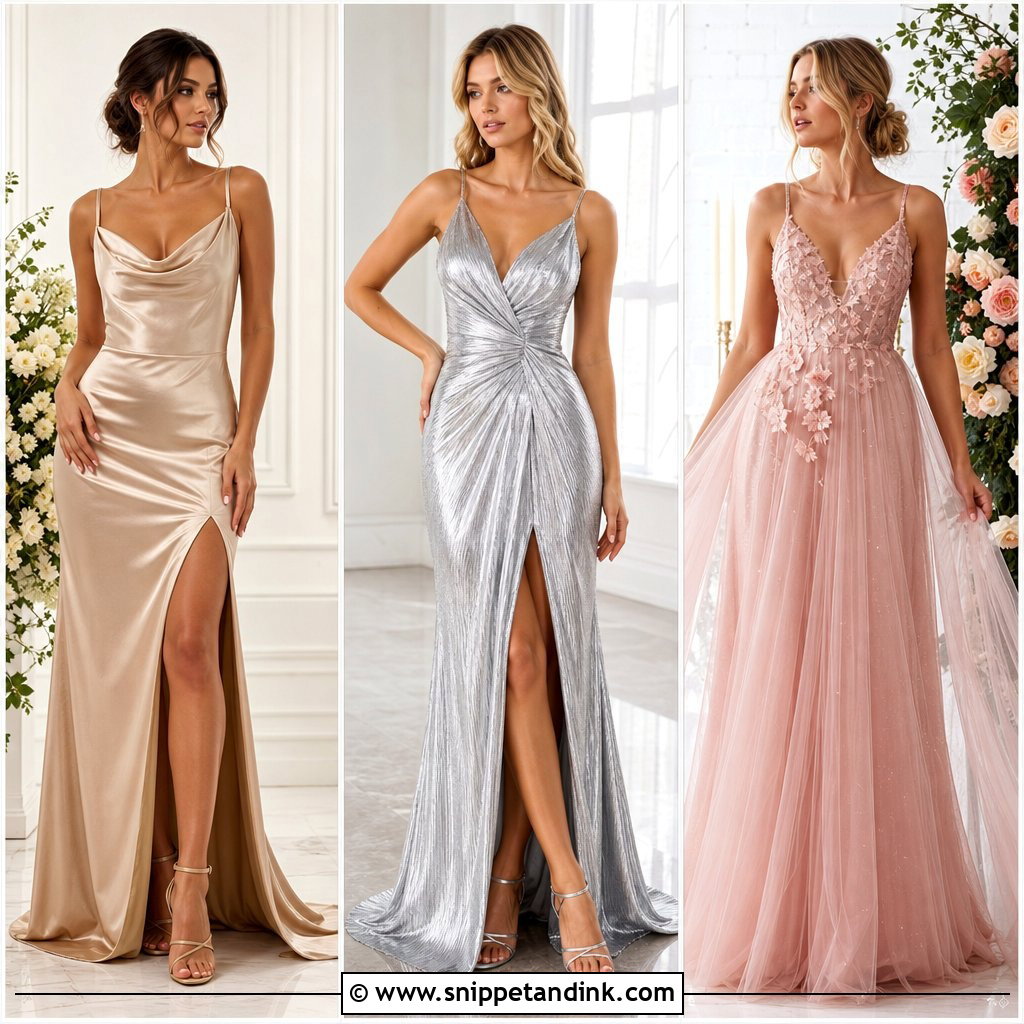
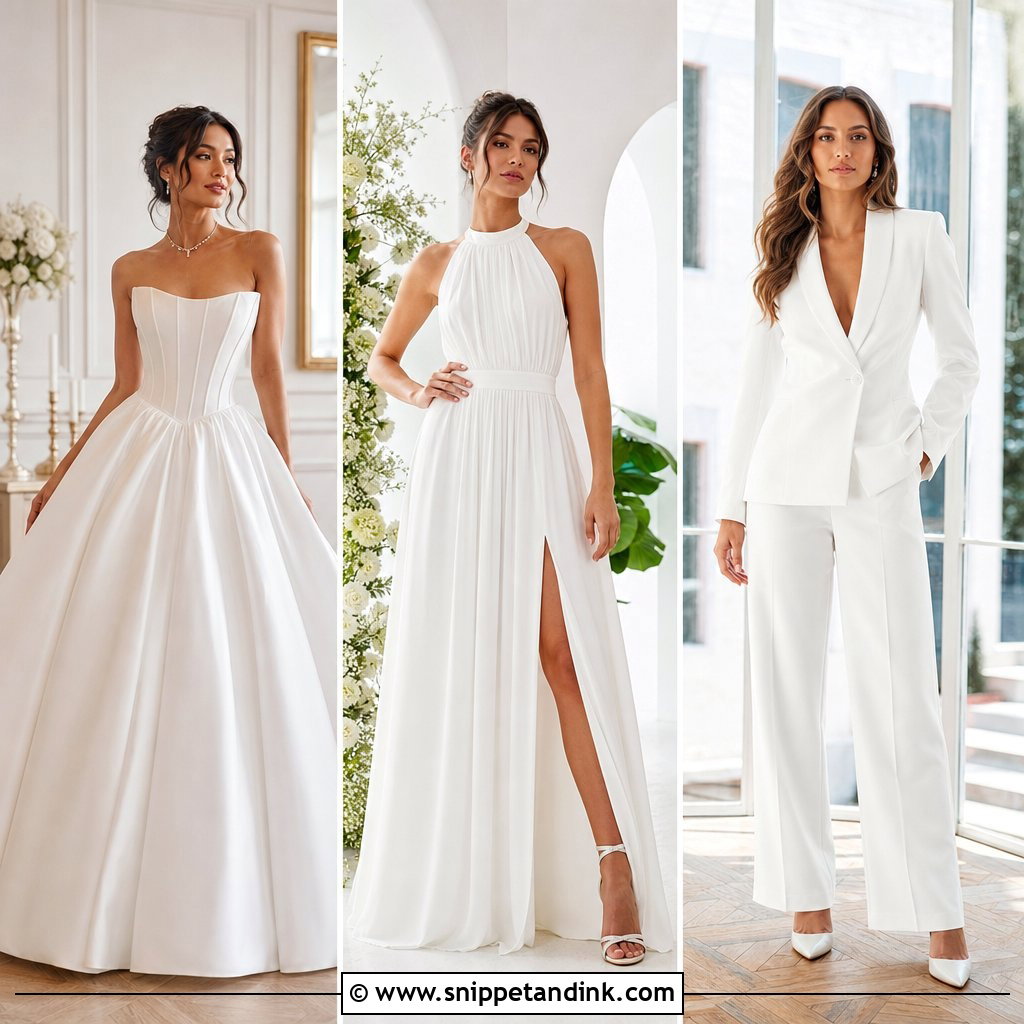
15. Curve Boho Bell-Sleeve Wedding Dress
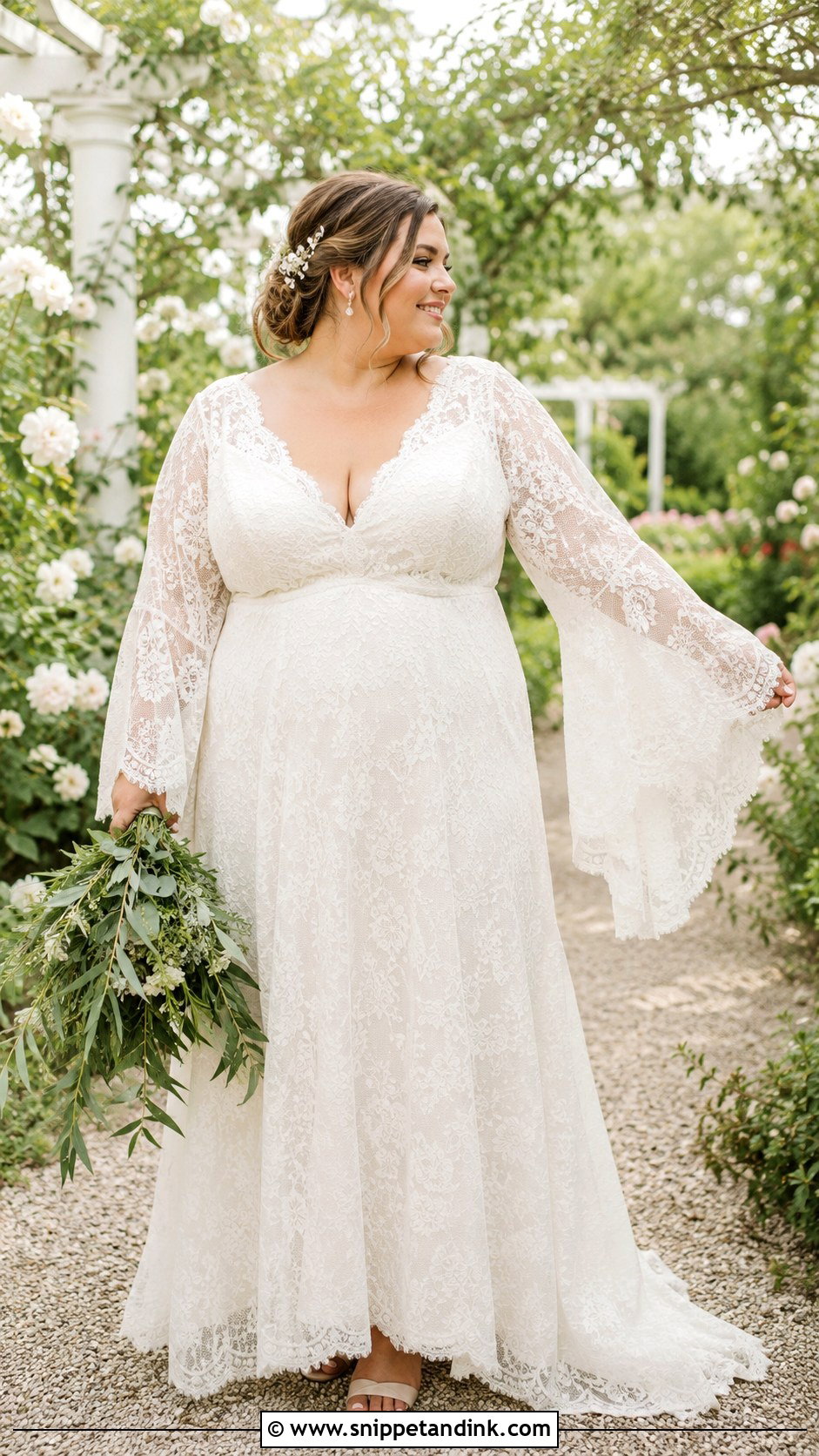
Bell sleeves are lovely until they drag through the dinner plate or brush a candle, which happens more often than you’d think. I have the sleeve shortened so it opens below the elbow and ends at the wrist bone, and if a bride wants the long drama, a discreet finger loop keeps it under control. A softly shaped A-line with a comfortable lining suits the relaxed mood. Style it with low block-heel sandals, small gold earrings and a floral comb or simple ribbon in the hair, and carry flowers mixed with herbs. On grass or gravel, keep the train short enough that it isn’t collecting the lawn by the first dance.
16. Curve Wedding Dress With Detachable Overskirt
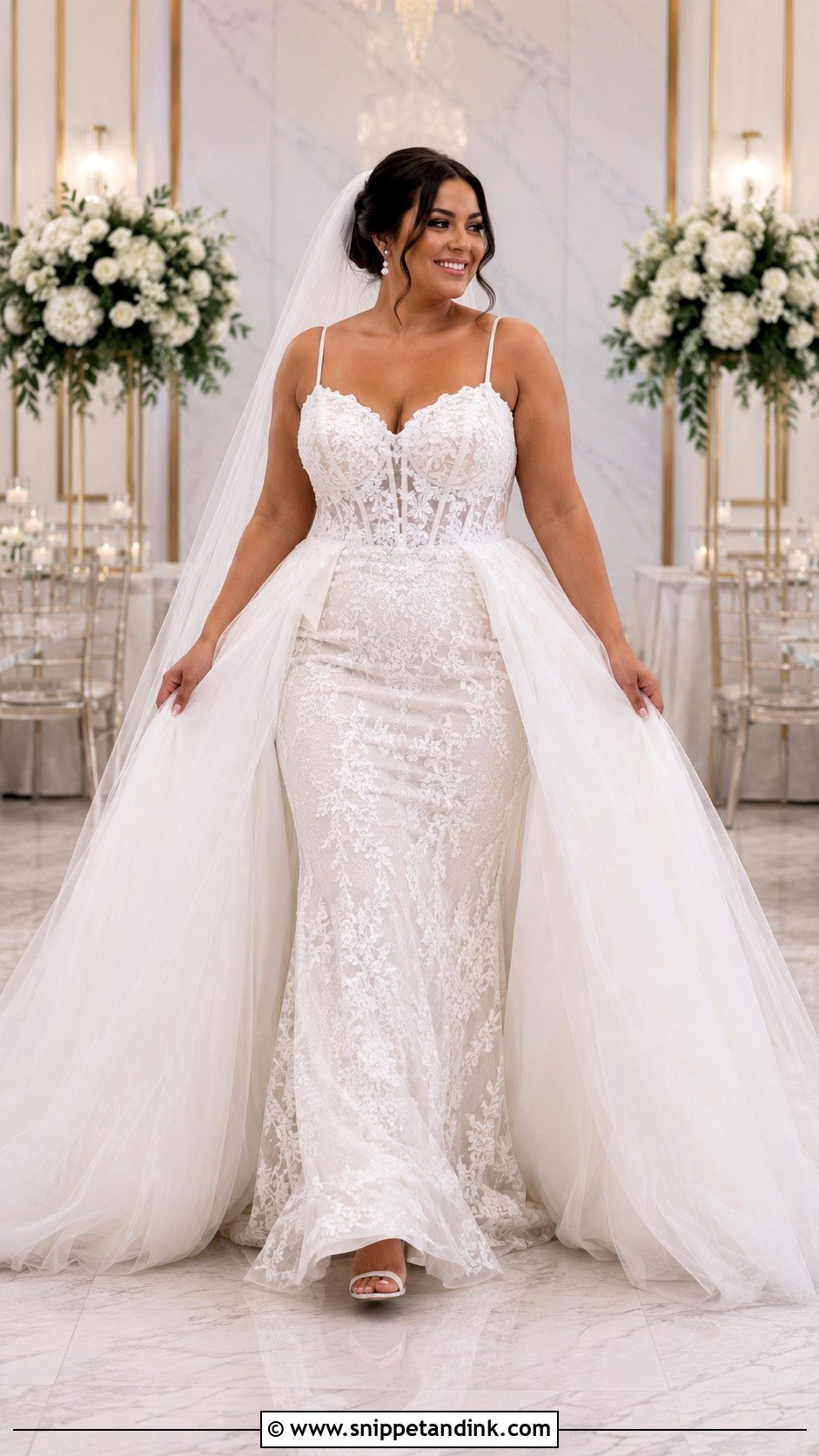
A fitted gown with a detachable overskirt gives you a ceremony silhouette and a lighter dress for the party. The join is where it succeeds or fails. Hooks and bars at the waist add bulk on a curvy figure, so I prefer a flat waistband that buttons or snaps under a sash. Check that the base dress looks finished alone, with no visible loops. Practise taking the skirt off with whoever will help you, because doing it for the first time in a hotel corridor is stressful. A long veil, pearls and classic heels go with the full look; swap to statement earrings or a shorter veil afterwards.
17. Curve High-Low Wedding Dress
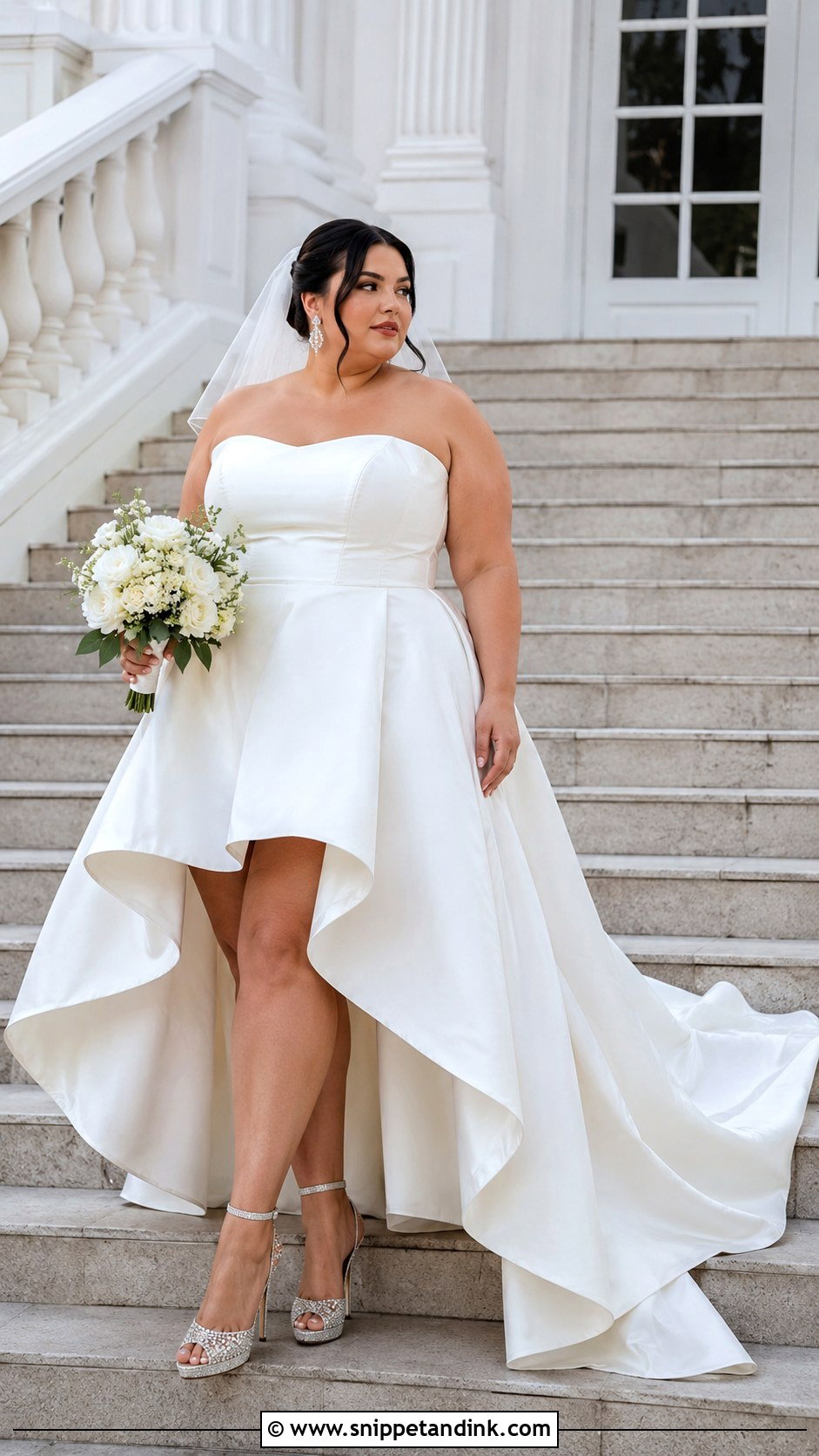
High-low hems can look either intentional or accidental, and the difference is the curve of the hem line. A gradual slope from front to back reads deliberate; a sharp step reads like a mistake. Walk up a few stairs and sit down in the fitting room, since the short front can ride higher than you expect. Because the shoes are in plain view, choose embellished heels you can stand in, and bring a backup pair. Bold earrings, a short veil or plain headband and a compact bouquet suit the shape. The back still trails, so have a secure bustle put in for the reception.
18. Curve Short Wedding Dress
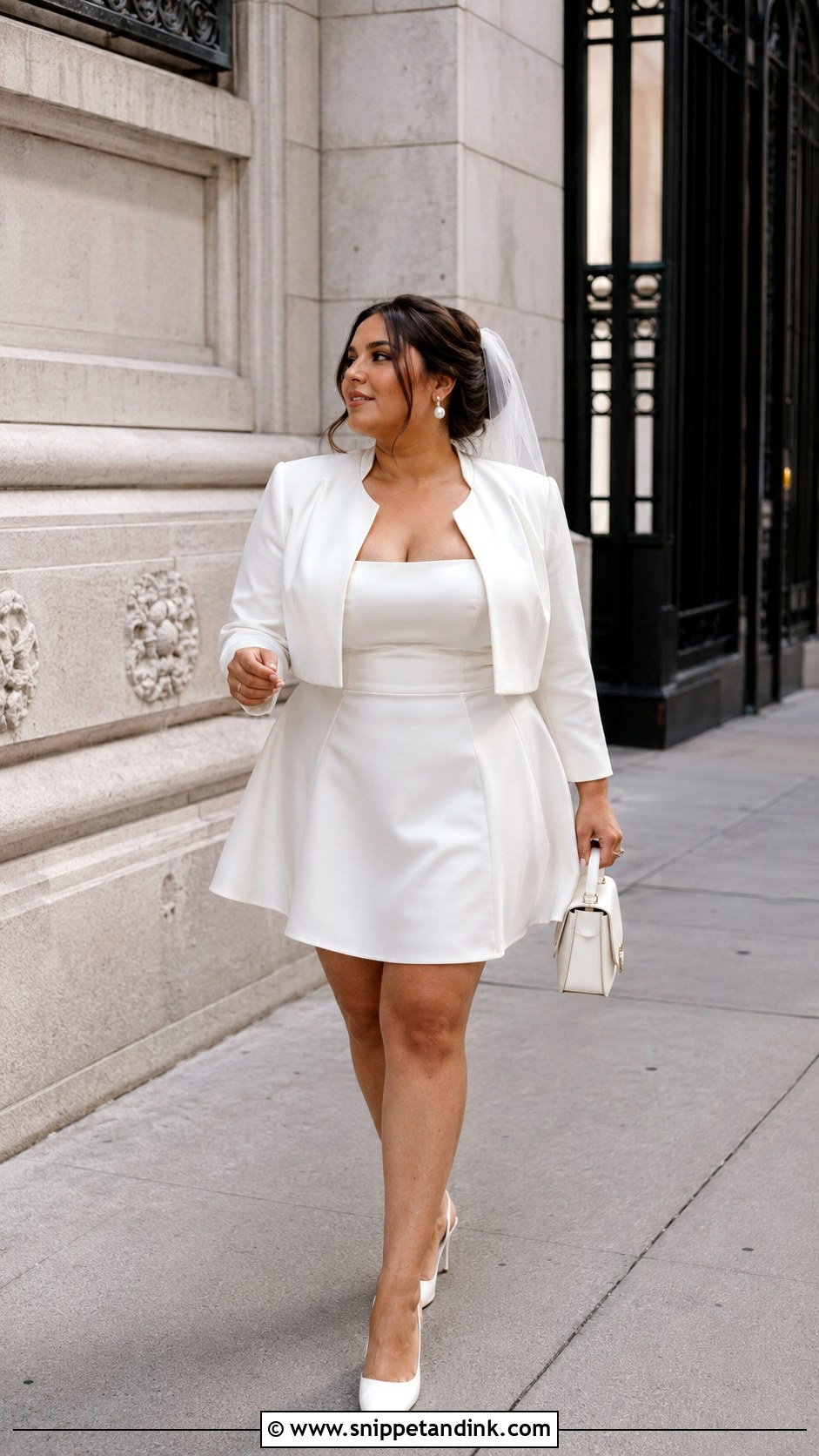
Short wedding dresses suit courthouse ceremonies, small dinners and second outfits, and they’ve stayed popular in every form from tailored shifts to full-skirted minis. On a curvy figure, the hem length is the decision: I mark it while the bride is wearing her shoes, then have her sit, because a mini can rise several centimetres when seated. Keep structure through the bodice so the dress isn’t relying on stretch alone. Slingback heels, pearl earrings, a compact veil and a small structured bag complete it, and a cropped jacket covers you on a cool evening. A small bouquet keeps the proportions right.
19. Curve Champagne Satin Wedding Dress
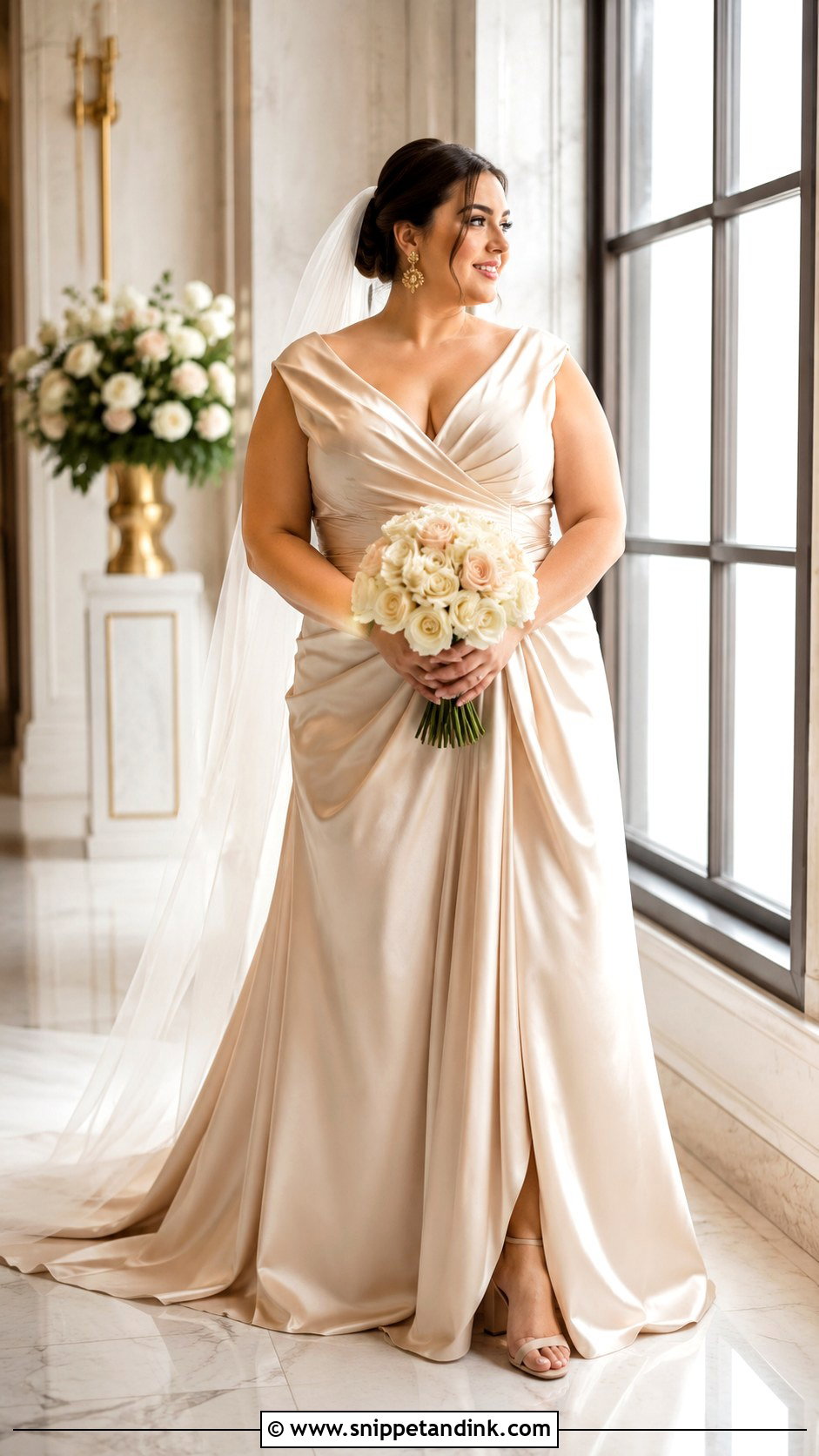
Champagne satin sits warmer than white and often flatters olive and deeper skin more than stark ivory does. The catch is that champagne is a whole family of shades, from pale beige to almost gold, and the gown, lining and veil can come from different dye lots. I lay all three together under daylight and indoor light before ordering the veil. Wrap-style, A-line or fit-and-flare all work; pick the shape you enjoy wearing. Gold earrings, neutral heels, warm makeup, a polished bun and cream roses with pale greenery finish it. If colour accuracy matters to you, ask your photographer for a quick test shot at a fitting.
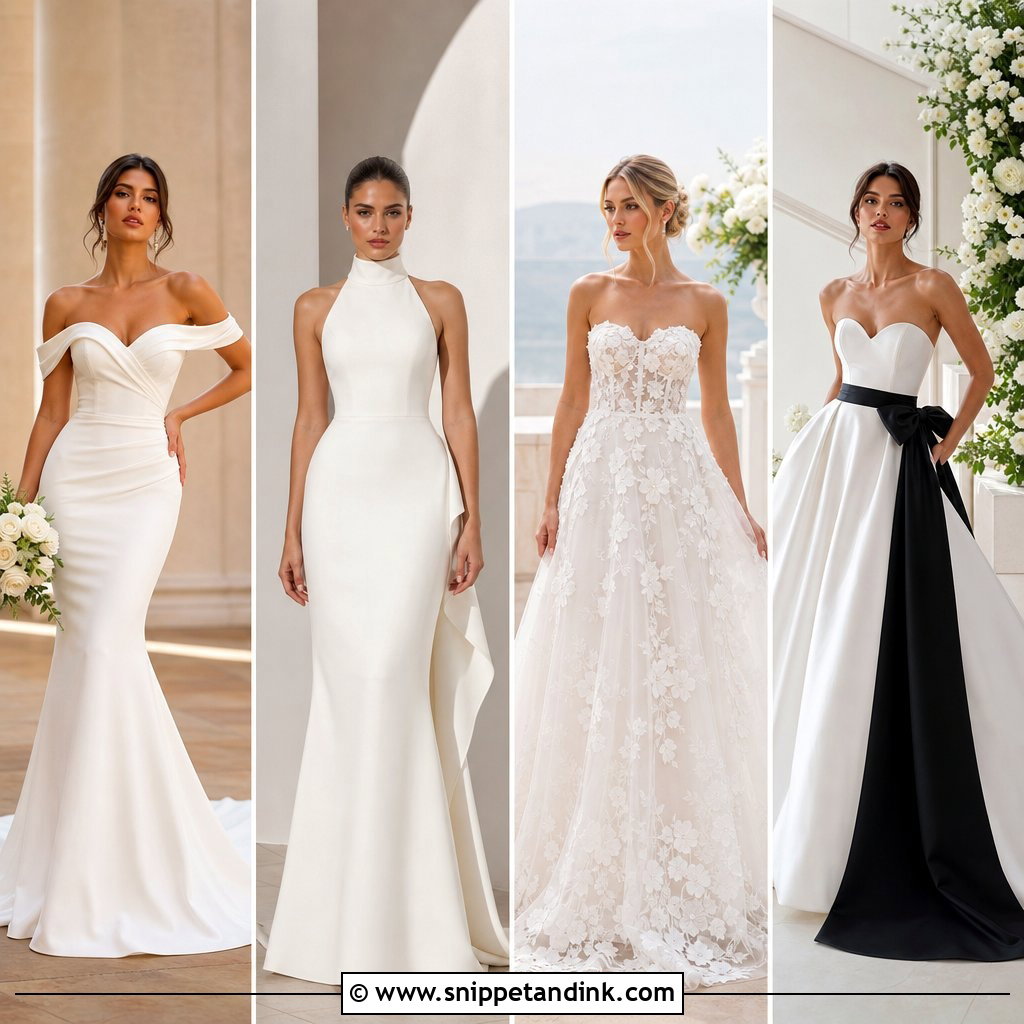
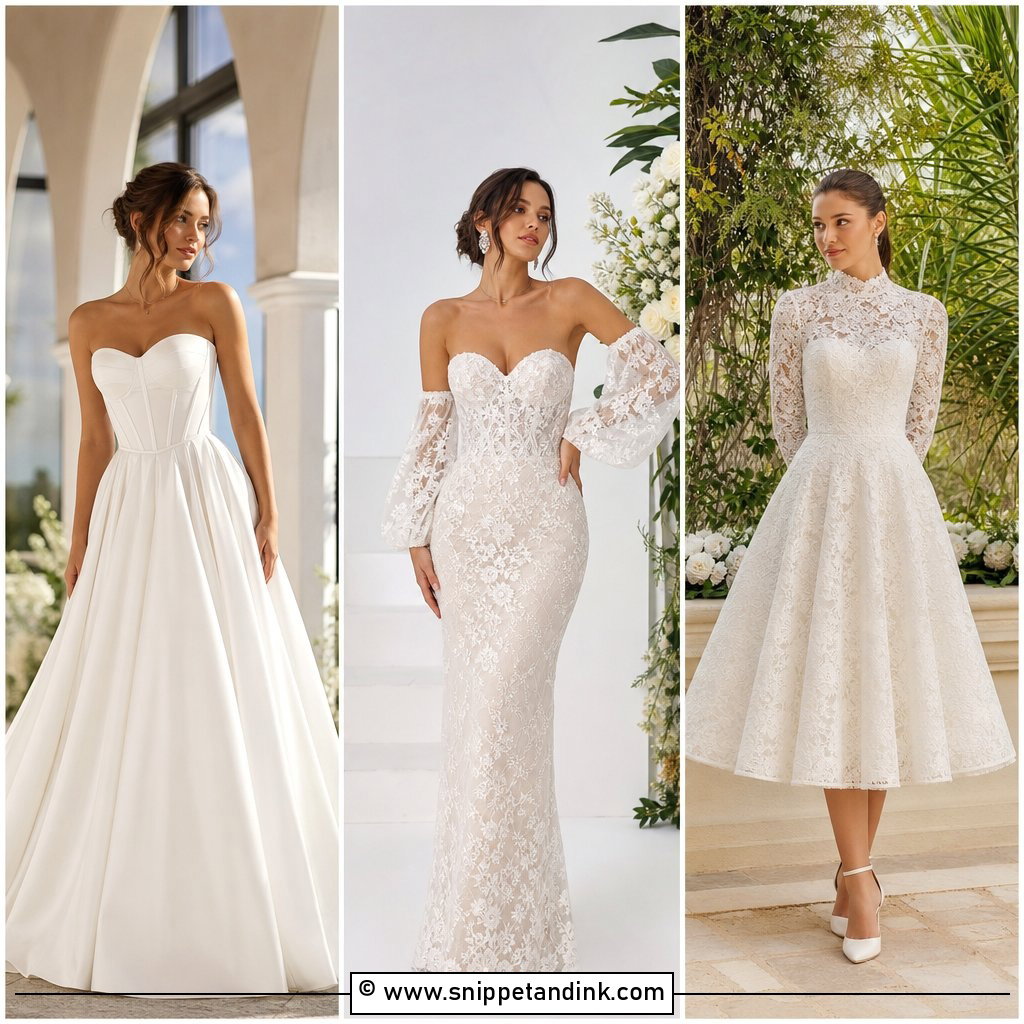

20. Curve Embroidered Color Wedding Dress
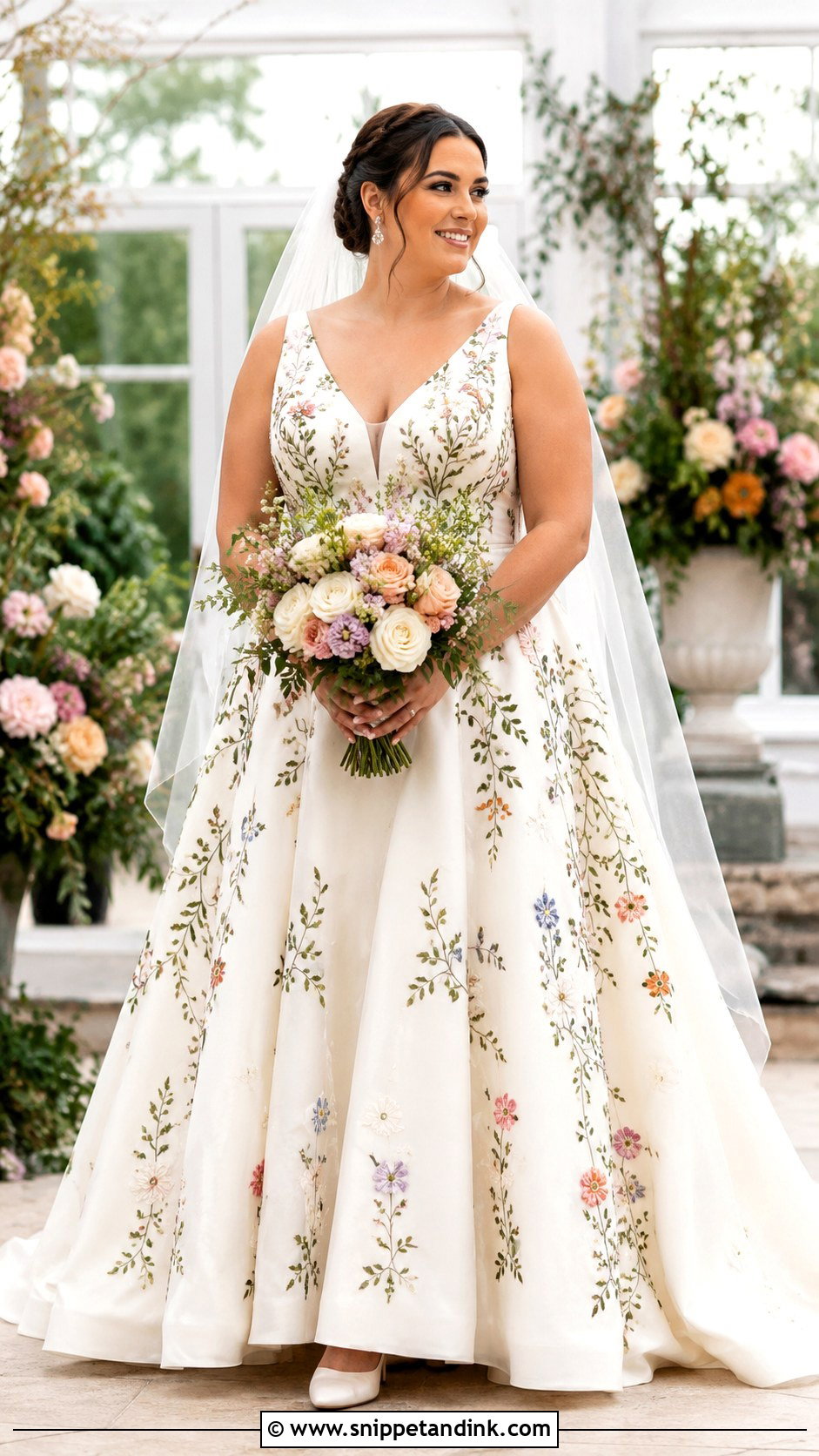
Coloured embroidery lets the dress carry your personality, and the base colour changes the whole effect: ivory keeps it bridal, blush softens it, pale blue makes it feel far less traditional. Before ordering, look at where the embroidery crosses seams. Taking in the waist or bust cuts through the pattern, so ask whether the maker can re-place motifs or whether you should order closer to your measurements to limit alterations. An A-line gives the design room to travel down the skirt. Keep the shoes, small gemstone earrings, plain veil and clean hairstyle simple, and pull one or two embroidery colours into the bouquet.
Comfort Details Nobody Sees in the Photos
The fittings I enjoy most are the ones where the bride stops looking in the mirror and starts testing the dress. That’s when the useful problems show up. A gown can be flawless standing still and still rub, pinch or slip by mid-afternoon, and these are the small fixes I build in for curvy clients.
Thighs, straps and the heat
- Thigh chafing: anti-chafe shorts or a slip with a smooth leg are worth more than any accessory, especially in summer or in a fitted skirt.
- Strap marks: ask for straps to be lined with soft fabric or widened slightly; a narrow strap carrying a heavy bodice cuts in.
- Sweat: a dress shield sewn into the underarm protects satin and silk, which water-mark easily.
- Bust support: built-in cups or a bra sewn into the lining mean nothing shifts when you hug people.
Timing your alterations
I like the first alteration appointment about two to three months before the wedding, with a final fitting in the last two or three weeks. Most gowns need two or three sessions. If your weight tends to change with stress, tell your seamstress early; she can leave a little ease in the side seams and make the final adjustment close to the date. At that last fitting, sit through ten minutes, eat something small and dance a few steps. If it still feels right after that, it will on the day.
The Gown That Lets You Forget You’re Wearing It
No body-shape chart or label size should choose your dress for you. The right gown supports you, looks like you and lets you get through the day without thinking about it. Try at least one silhouette you’d never have picked from a photo; curve brides are surprised by the shape they love more often than not. Then bring the right shoes to every fitting, move in each gown as you would at the reception, and spend your budget on a skilled seamstress. That last part does more for how a dress looks on you than any trend.
You'll Like These Ideas:




Leave a Reply