
A boned bodice does the job a strap, a bra and a belt would otherwise share. Fitted well, it holds the dress up at the waist, smooths the line from bust to hip and lets you forget about hitching all night. Fitted badly, it digs into your ribs by the speeches. I spend more fitting time on boning than on almost anything else in a gown, because it is the part brides cannot see and feel the most. Visible boning makes an architectural statement, while hidden boning gives the same support under a clean surface. Here are twenty ways it shows up in wedding dresses now, with what I look for in each one.
What the Bones in a Bridal Bodice Are Actually Made Of
Ask the boutique what the boning is made of. The answer tells you more about how the dress will feel at hour eight than the designer label does.
- Spiral steel is a flattened coil that flexes sideways as well as forward. It follows the curves of bust and hip, and it is what I want in side and princess seams.
- Flat steel bends in only one direction. It sits at the center front or beside lacing, where a straight line must not buckle.
- Plastic boning, often a woven polyester strip, is light and inexpensive. It softens with body heat and can take a permanent bend at the waist after long wear, which shows as a dent or ridge.
Plastic is not automatically a problem. Plenty of lightweight dresses are boned that way and feel fine all day. In a heavy satin or beaded bodice, though, I would ask whether steel can be substituted during alterations, and many seamstresses will do it.
Look at the ends as well. Each bone should be tipped or capped and finish a little short of its channel, so it cannot work its way through the fabric.
1. Strapless Wedding Dress with Boning
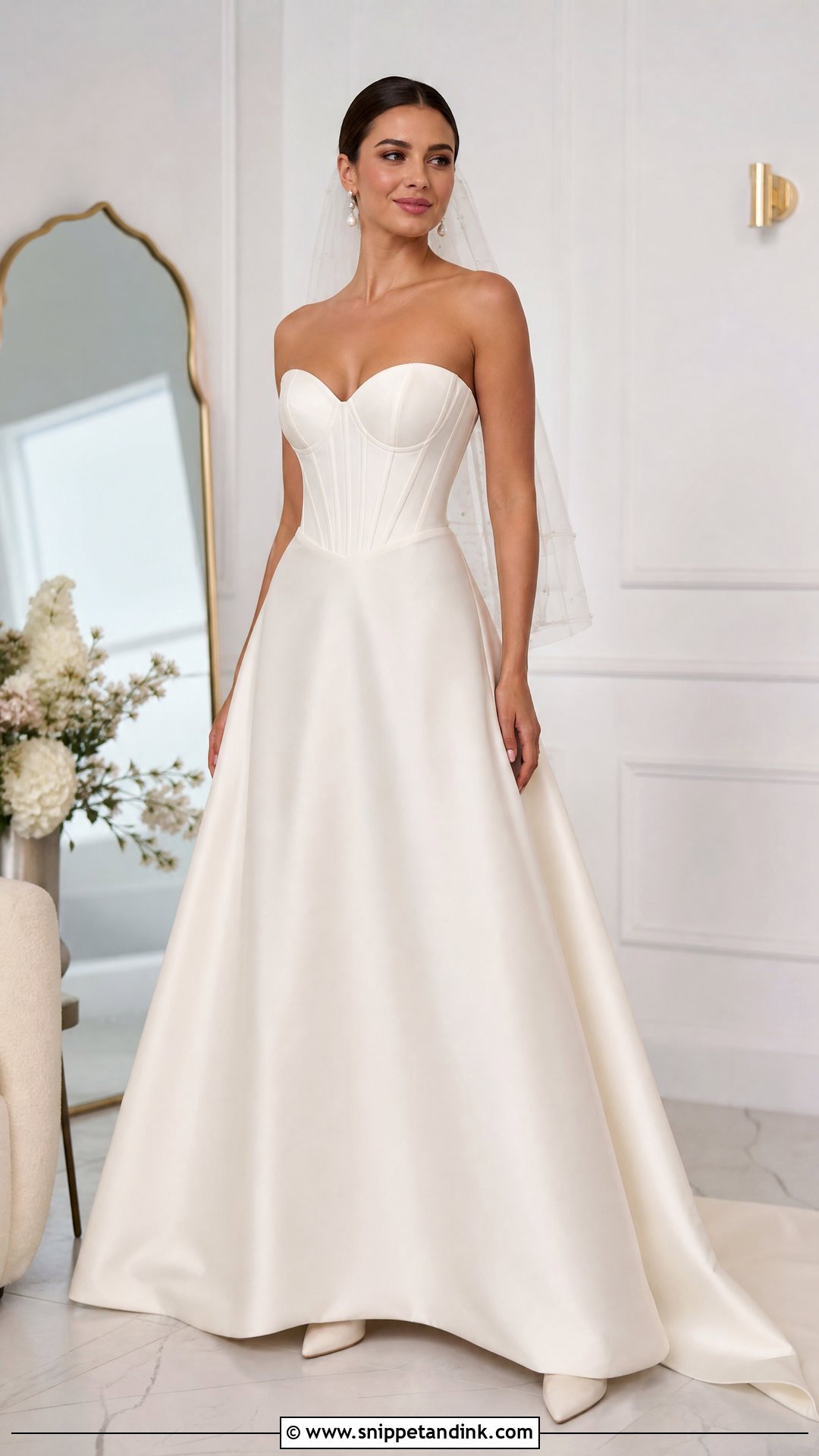
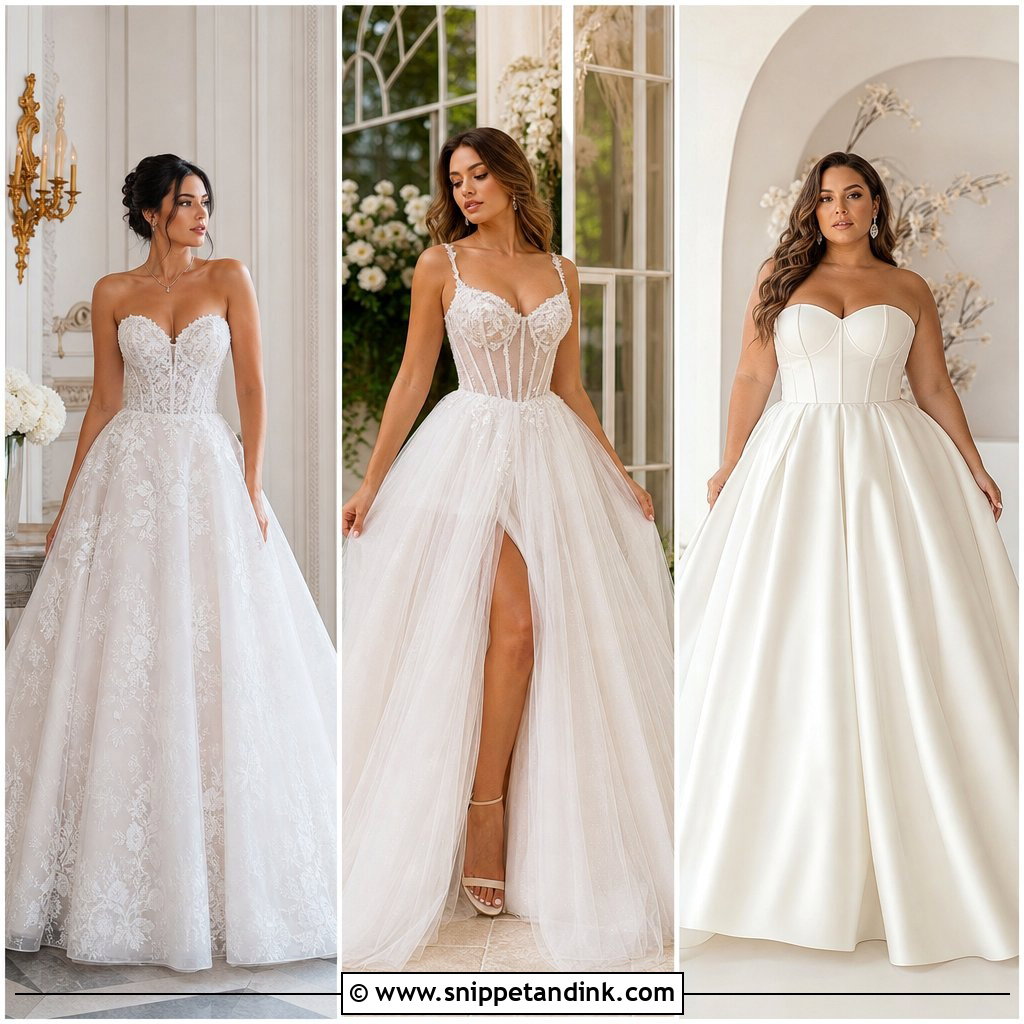
Strapless dresses are where boning earns its keep. With nothing over the shoulders, the bodice has to grip at the waist and ribs rather than the bust, so the top edge never slips. A sweetheart neckline softens the line; a straight one looks more modern but shows any gaping instantly. At fittings I ask brides to lean forward as if picking up a dropped bouquet. If the top edge pulls away from the chest, the bodice needs taking in at the side seams. Keep the necklace delicate or skip it, and let pearl drops and a fingertip veil do the rest.
2. Lace Wedding Dress with Exposed Boning
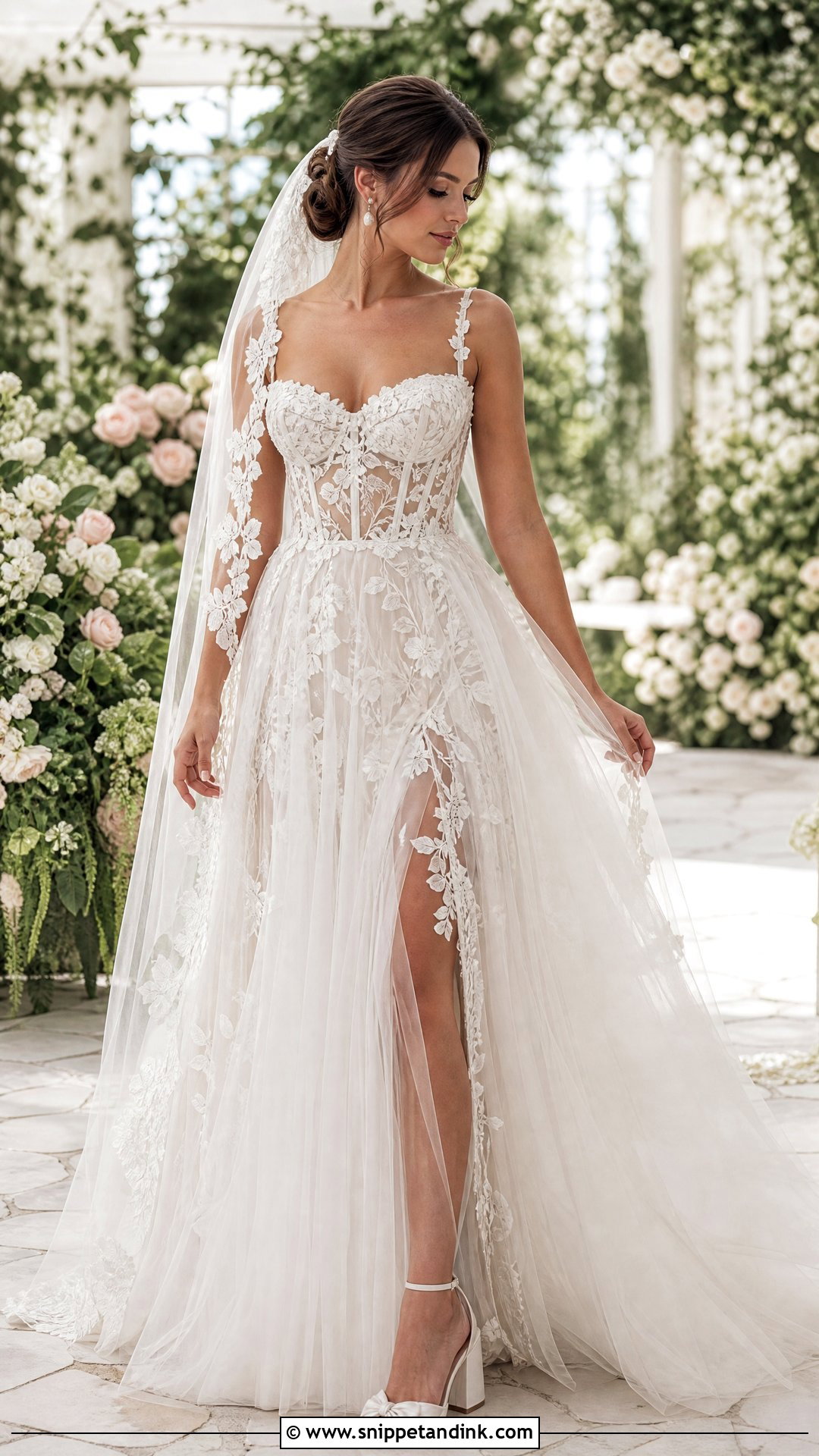
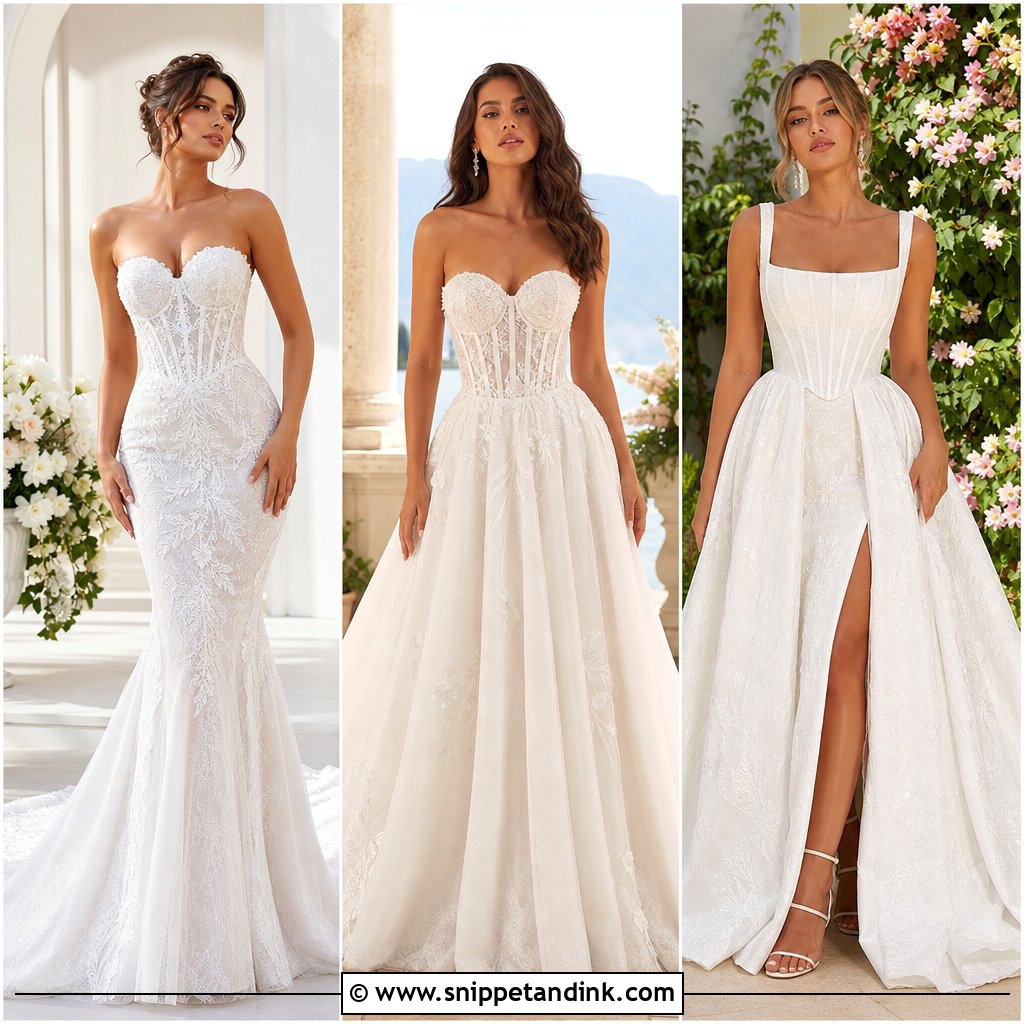
Exposed boning can look clinical on its own, which is why lace appliqués laid over the channels work so well. They soften the lines while leaving the structure visible. A fitted lace bodice running into a layered tulle A-line keeps the waist defined and everything below it light. If you want more coverage under the sheer panels, ask for a nude or ivory lining, and match it to your skin in daylight; a lining that is slightly off turns grey through lace in photos. A low chignon keeps the bodice on view from behind.
3. Satin Ball Gown Wedding Dress with Boning
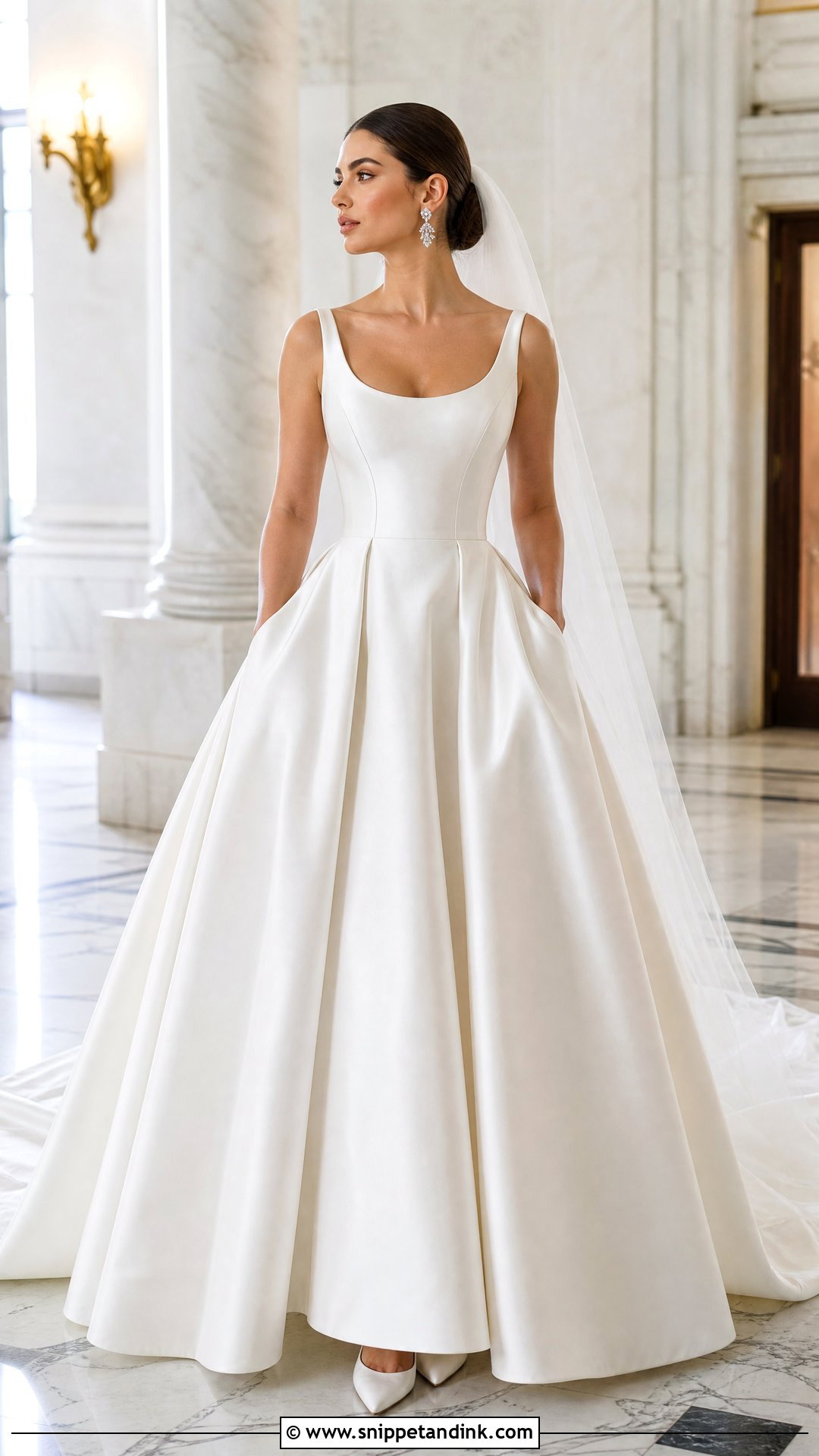
Satin is the least forgiving fabric to bone. Every channel, every slightly uneven seam and every crease from the car ride shows on its glossy surface, which is why satin ball gowns usually hide the boning between the fashion fabric and the lining. The structured bodice over a full skirt makes a balanced formal shape, and the neckline decides how architectural it feels: a scoop reads soft, a softly pointed one reads sharper. Book the final steam as close to the wedding as you can. A cathedral veil and crystal earrings finish it, and pockets, if the dress has them, are a welcome extra.
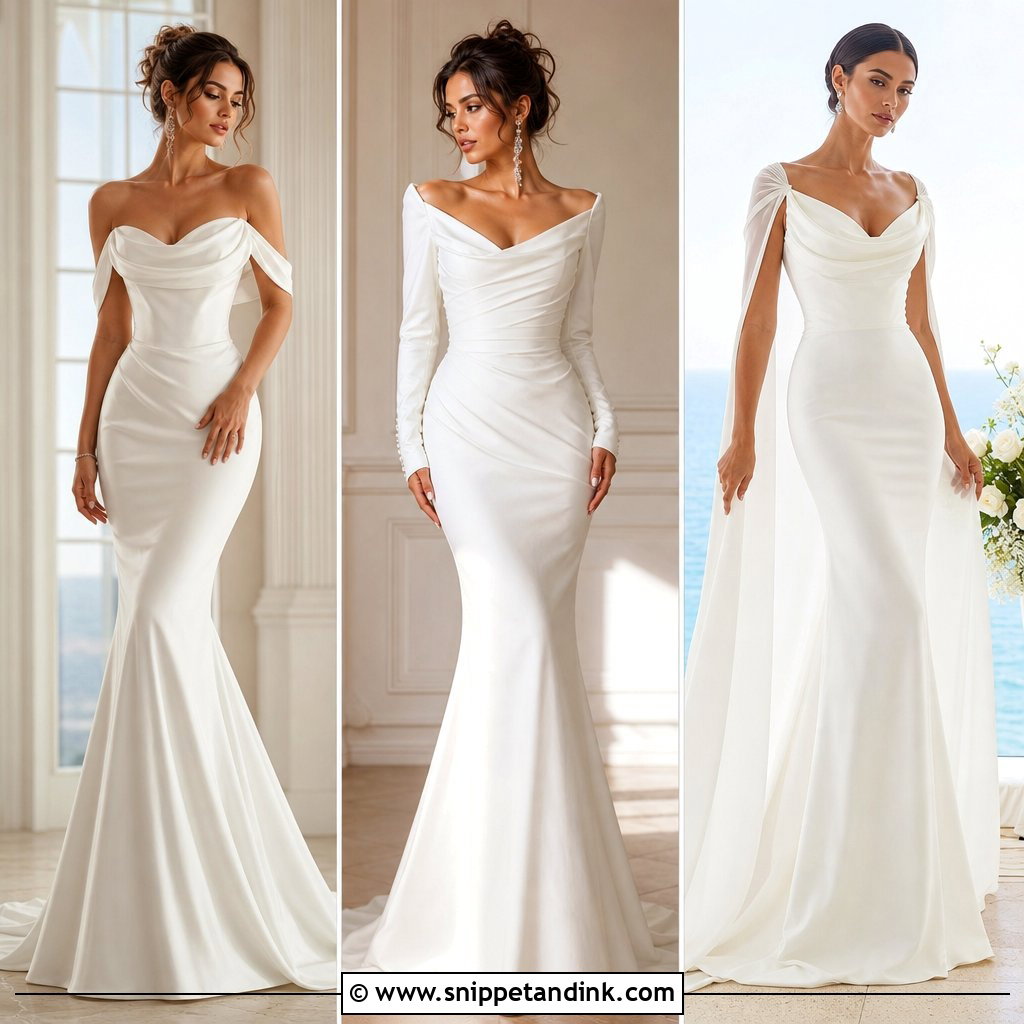
4. Mermaid Wedding Dress with Boning
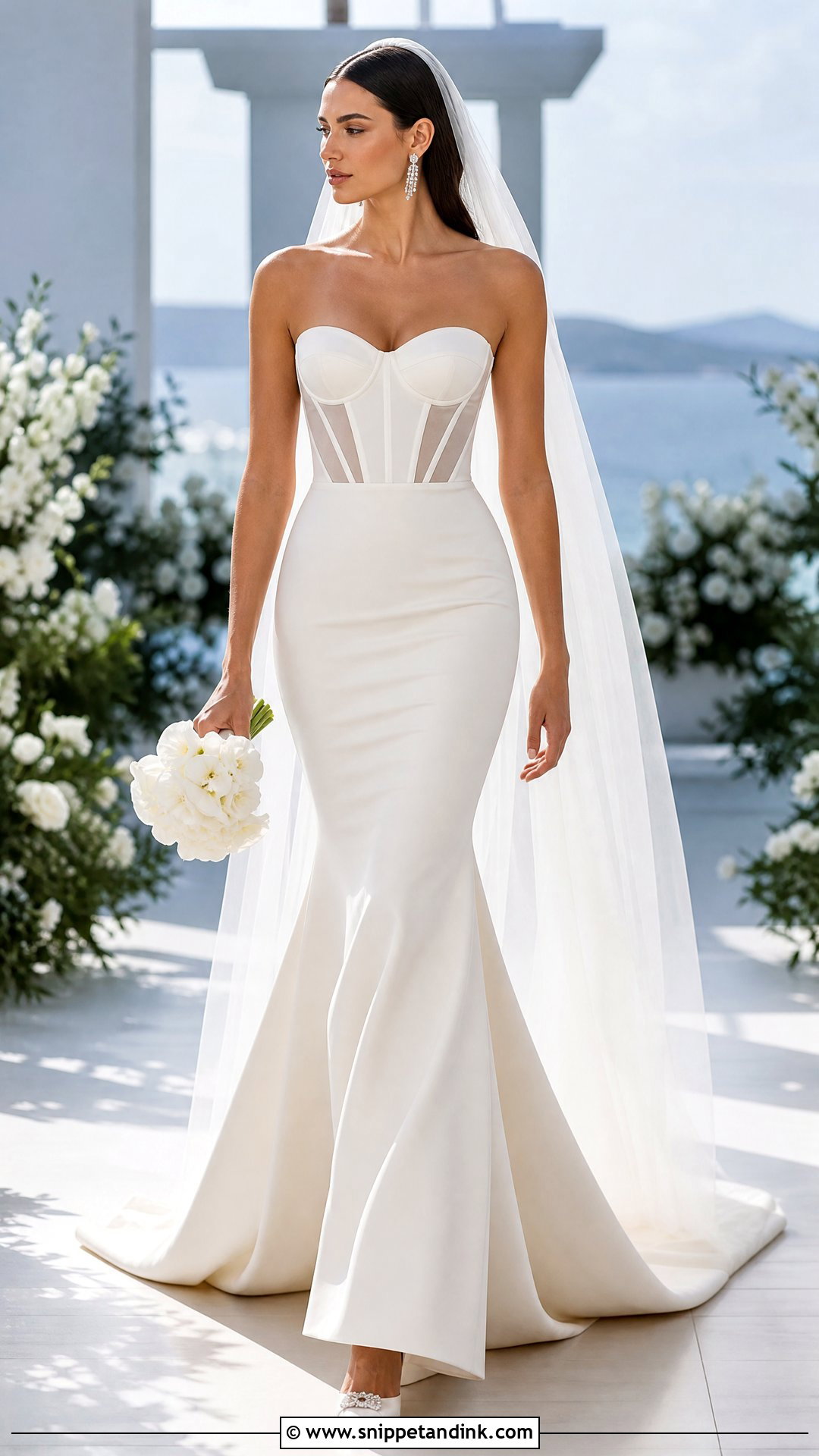
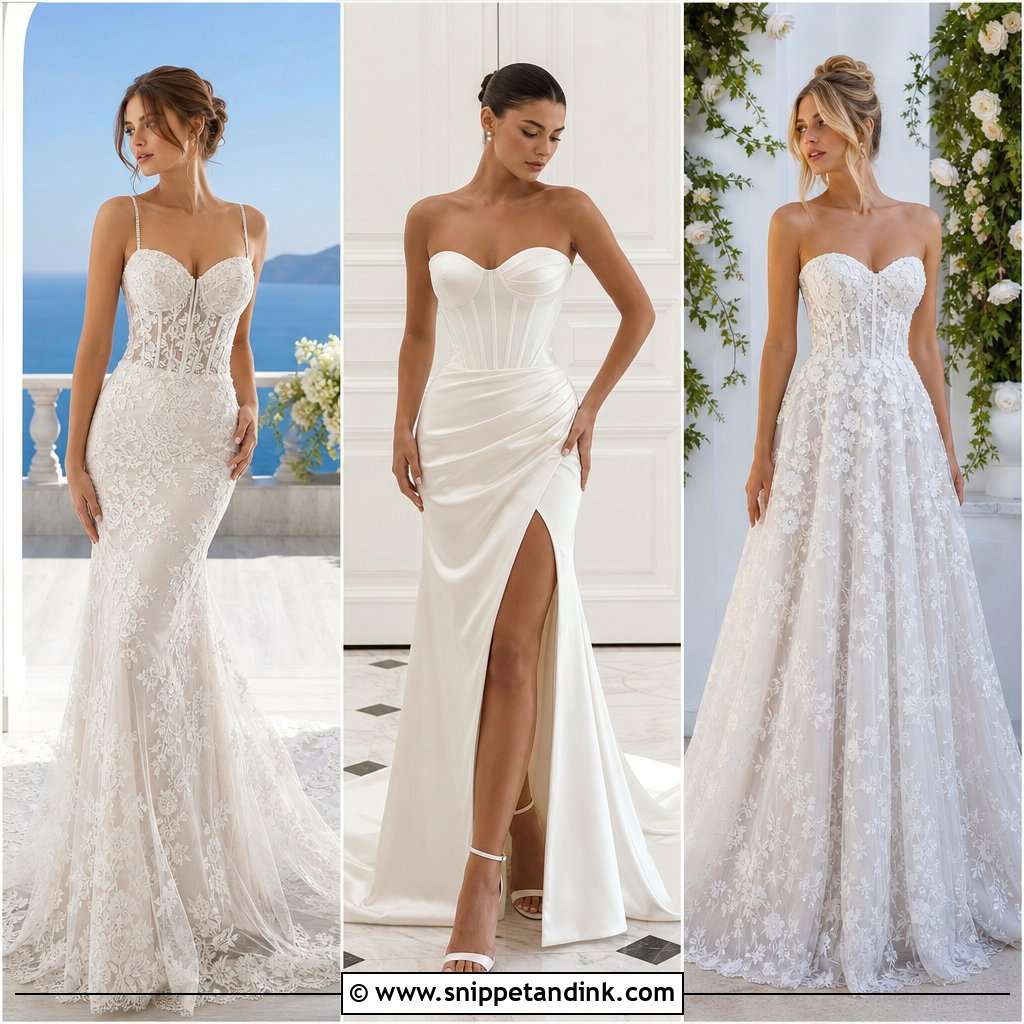
In a mermaid gown the boning usually runs past the waist toward the hip, so the fitted line holds all the way down to the flare. That extra length is exactly what you need to test. Sit on a hard chair at every fitting and climb a few stairs; if the bone tips press into the crease of your hip, the channels can often be shortened. Stretch crepe gives a minimal finish and lace a softer one. Ask early how the bustle will work, because a mermaid flare dragged across the floor all night is miserable to dance in.
5. A-Line Wedding Dress with Boning
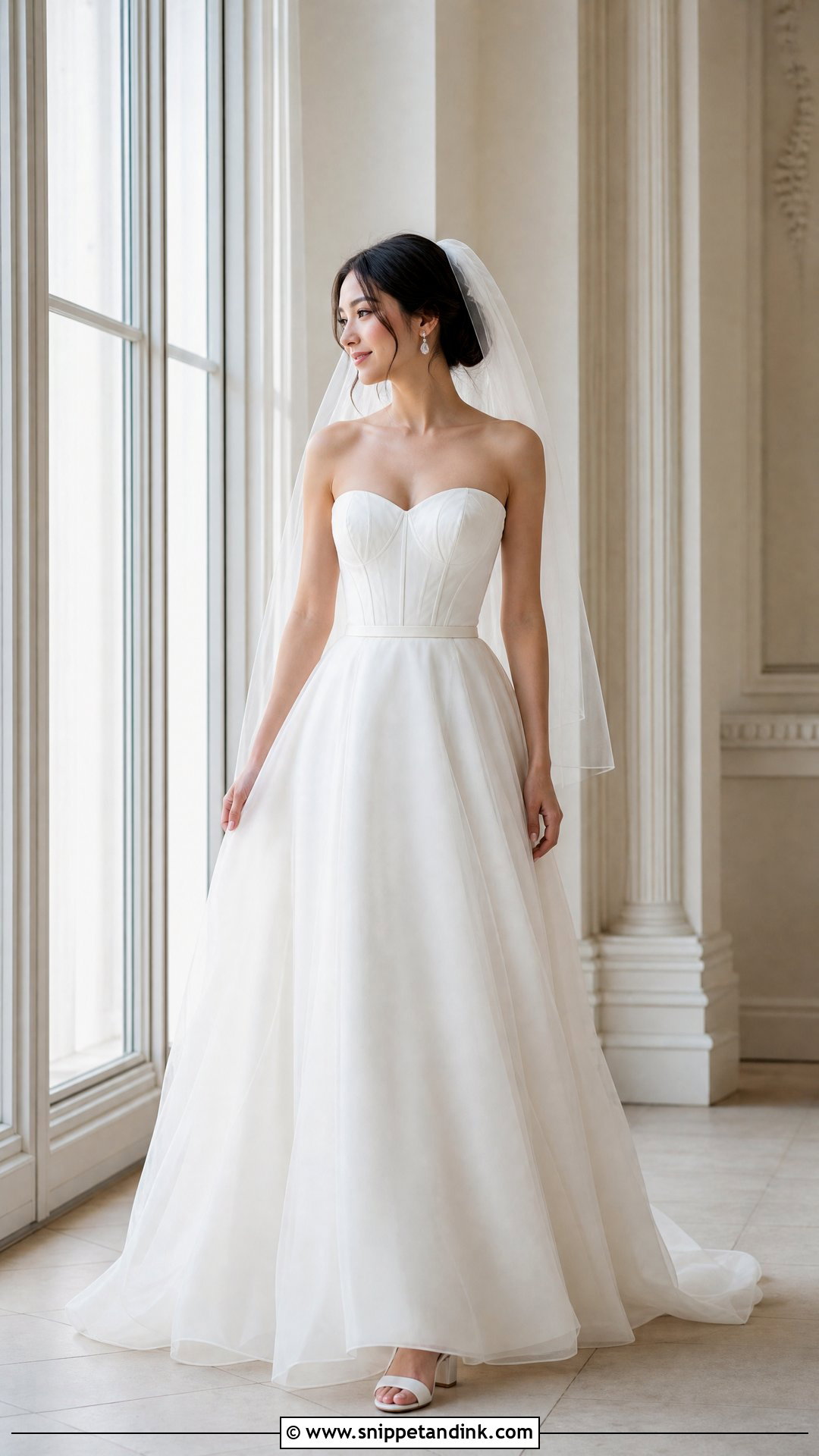
An A-line is the most forgiving shape to bone, because the skirt releases from the waist and nothing below it needs holding. That leaves the boning one simple job: keep the bodice smooth and the waist defined. A corset bodice with a soft sweetheart neckline over satin, organza or layered tulle is the classic version. A slim belt can mark the waist, though visible boning often makes one redundant. For an outdoor ceremony, a chapel-length train is far easier to manage on grass than a cathedral one.
6. Sheer Corset Wedding Dress with Boning
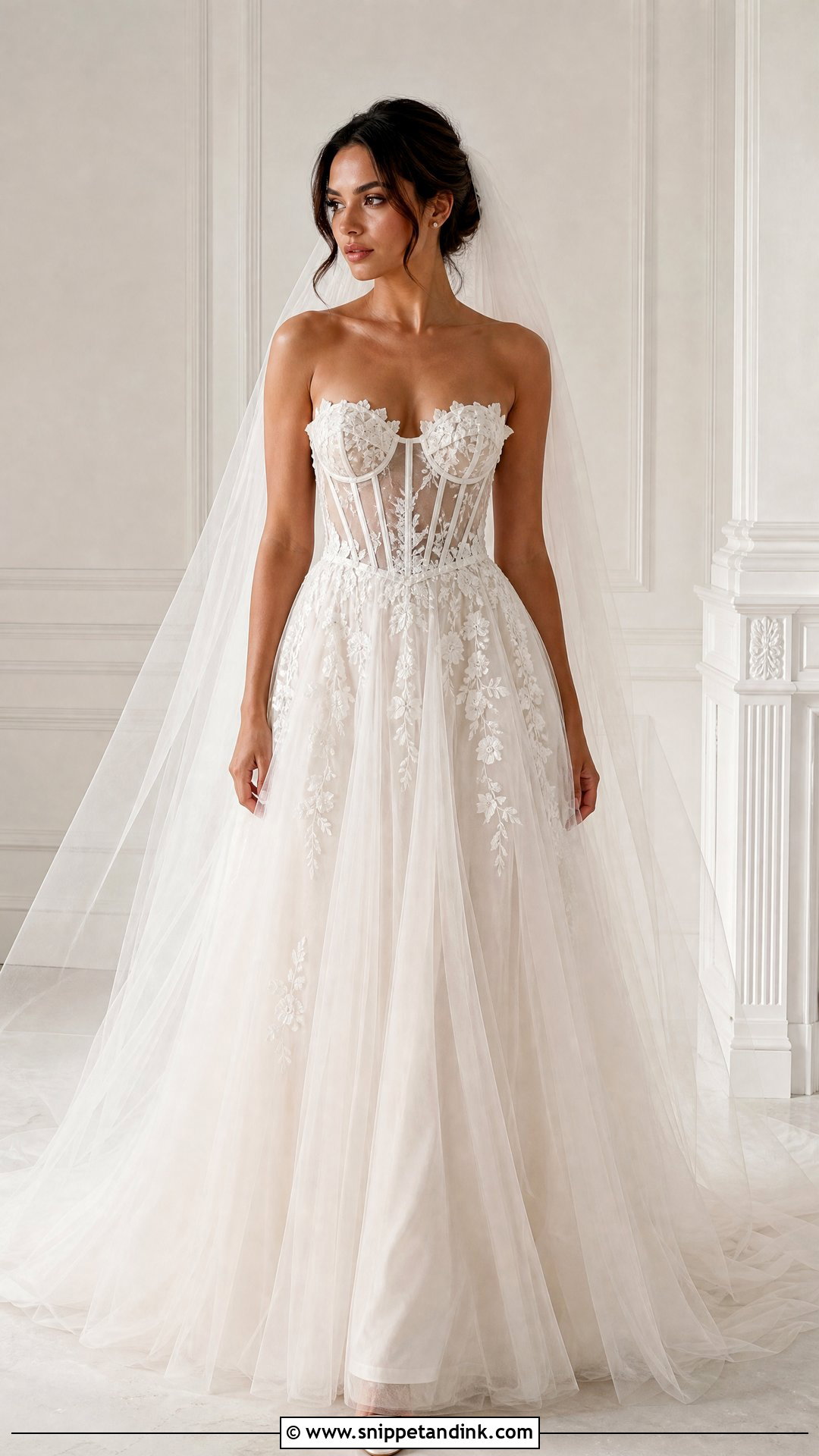
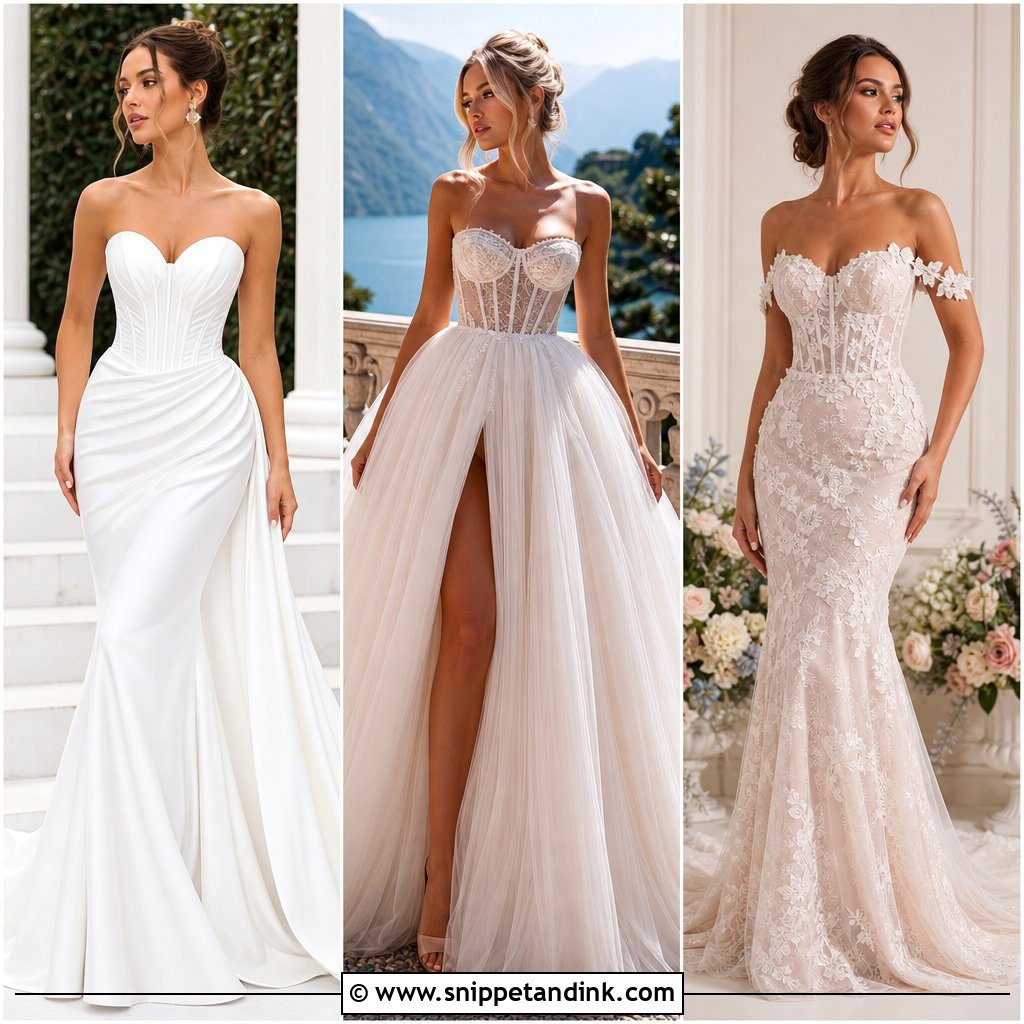
Sheer corsetry turns the construction into the decoration. You see the cups, the seams and every vertical bone through the mesh, so the inside work has to be very neat; turn the bodice over at the boutique and look at how the channels are finished before you fall for it. A lined skirt in matching ivory grounds the transparency. Appliqués across the bust and waist give some coverage, and many designers will add bodice lining on request if you want more. Keep jewelry minimal, because the corset is already the pattern.
7. Basque Waist Wedding Dress with Boning
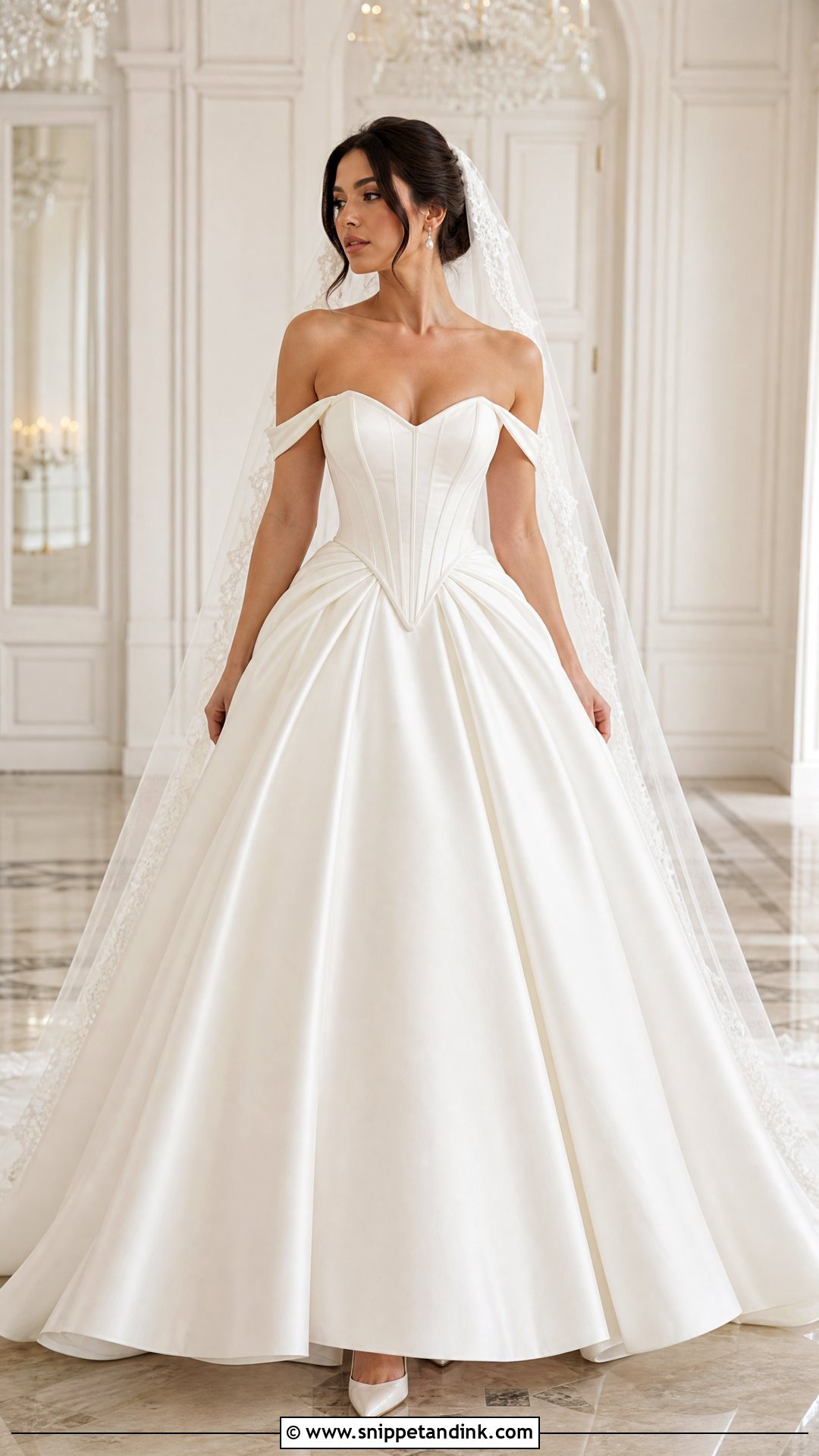
A basque waist drops into a V below the natural waist, and the boning has to follow that point precisely or it buckles when you sit. That is the honest drawback of a basque waist wedding dress with boning: it looks wonderful standing and needs careful fitting to stay flat once you are seated at dinner. Over a full satin or tulle skirt, it lengthens the torso dramatically. Skip belts entirely. Detachable off-the-shoulder straps soften the traditional corset effect if strapless feels too stark for you.
8. Off-the-Shoulder Wedding Dress with Boning
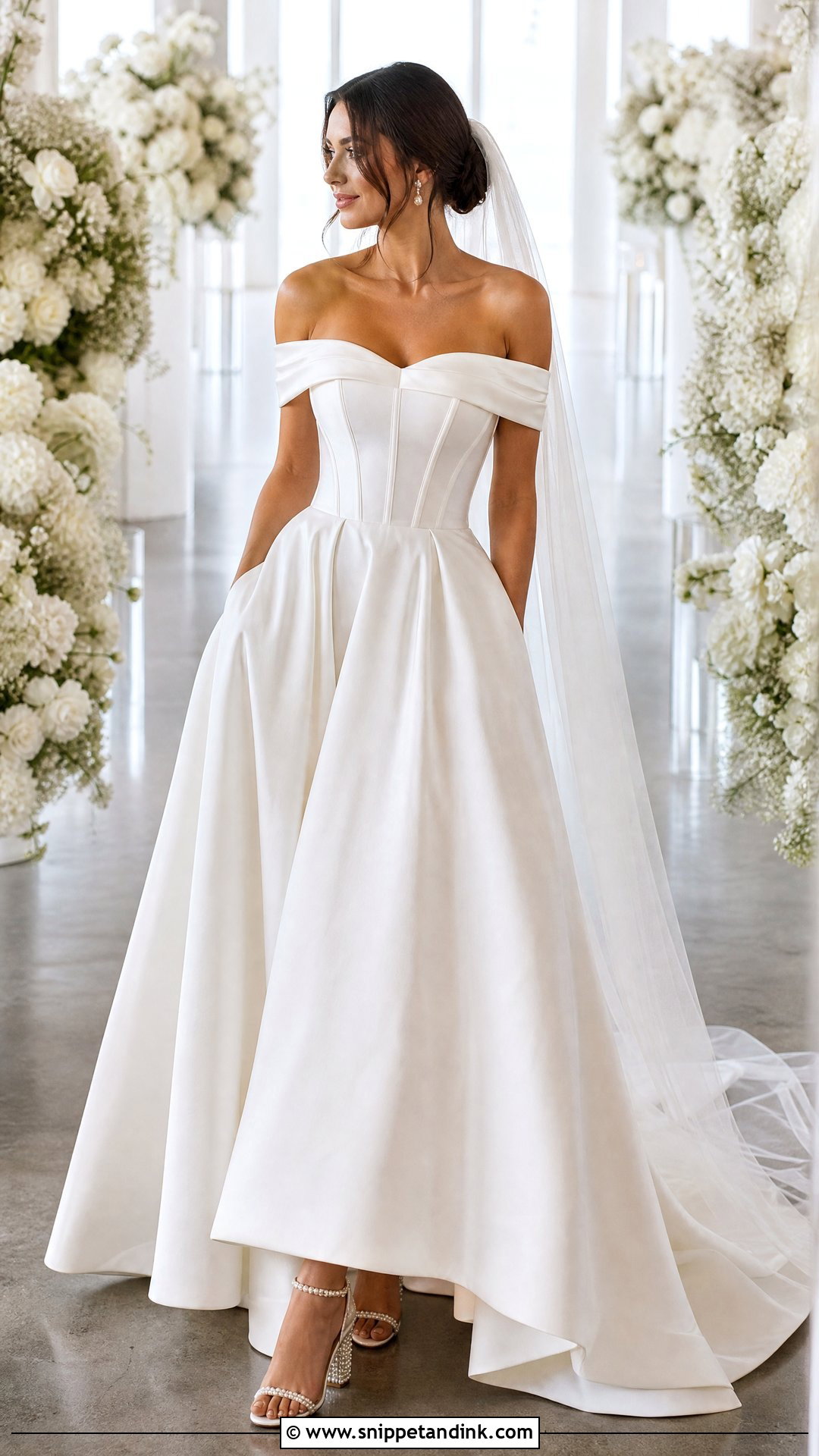
Off-the-shoulder sleeves sit on the upper arm, which means they quietly pin your arms down. During the fitting, raise your arms, hug someone, sit and reach for a glass. Some of these sleeves are purely decorative and stop you lifting your hands above chest height, which is fine for the aisle and annoying on the dance floor. Draped satin bands look formal and appliquéd tulle more delicate. Because the sleeves hold nothing up over a boned bodice, detachable ones are a sensible option. A low bun with the veil tucked underneath keeps the shoulder line clear.
9. Long Sleeve Wedding Dress with Boning
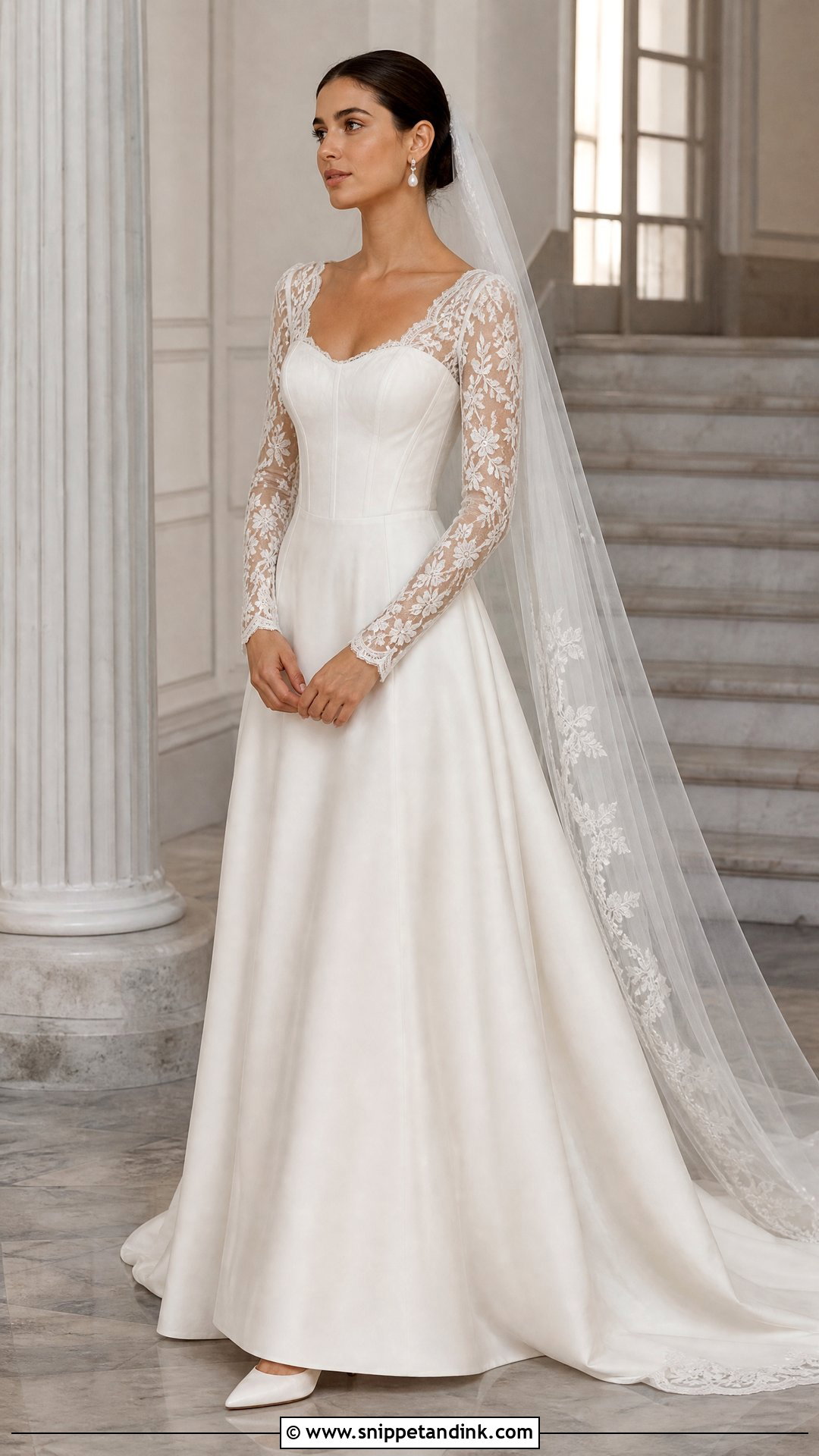
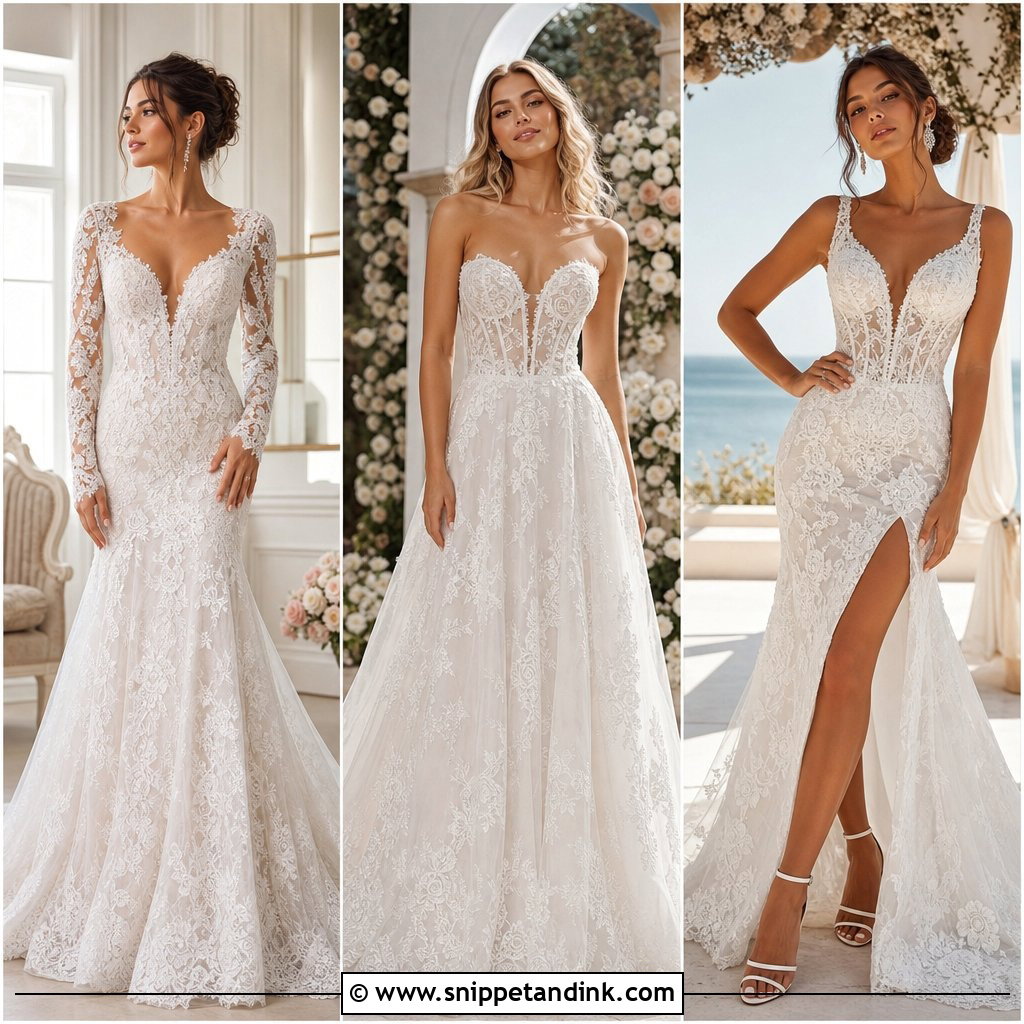
Long sleeves and a boned bodice pull against each other when you lift your arms. The sleeve rises, and if the armhole is cut low it drags the whole bodice up with it. A high, close armhole is the fix, and it is the first thing I check. Sheer lace sleeves look light while fitted crepe looks clean, and a square or bateau neckline balances the coverage. Leave bracelets off, since they catch on lace cuffs. Covered buttons down the back and at the wrists suit a cold-season or formal indoor wedding.
10. Square Neck Wedding Dress with Boning
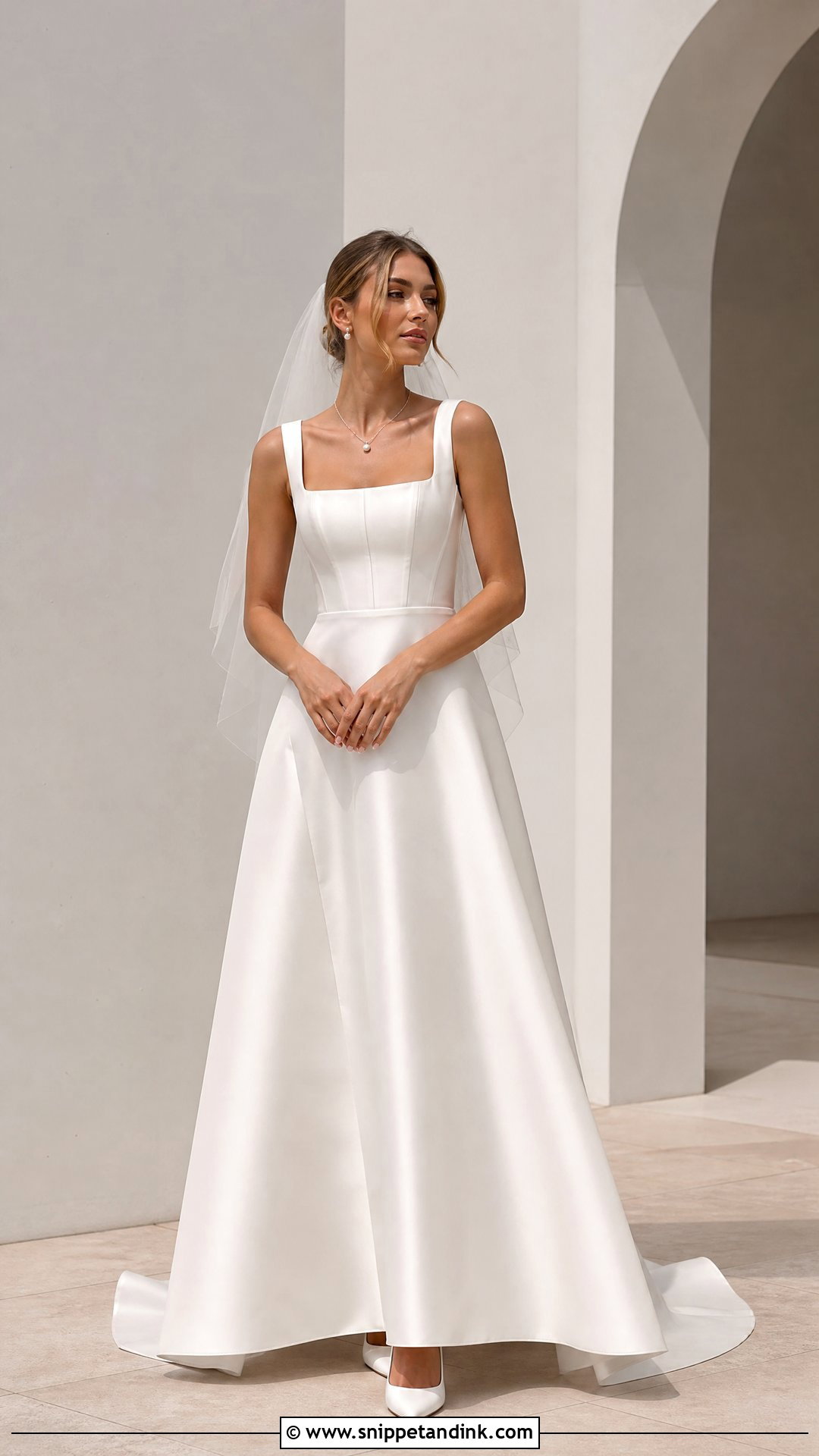
Square necklines show gaping faster than any other shape, right at the two corners. During fittings, watch whether those corners lift when you breathe in, and feel for pressure under the arms where the side seam meets the boning. Get those right and the neckline frames the collarbone cleanly. Wide straps give dependable hold; narrow ones look lighter but put more work on the bones. Sweep the hair back so the shape stays visible. You should be able to take a full breath without horizontal folds forming across the chest.
11. Plunging Neck Wedding Dress with Boning
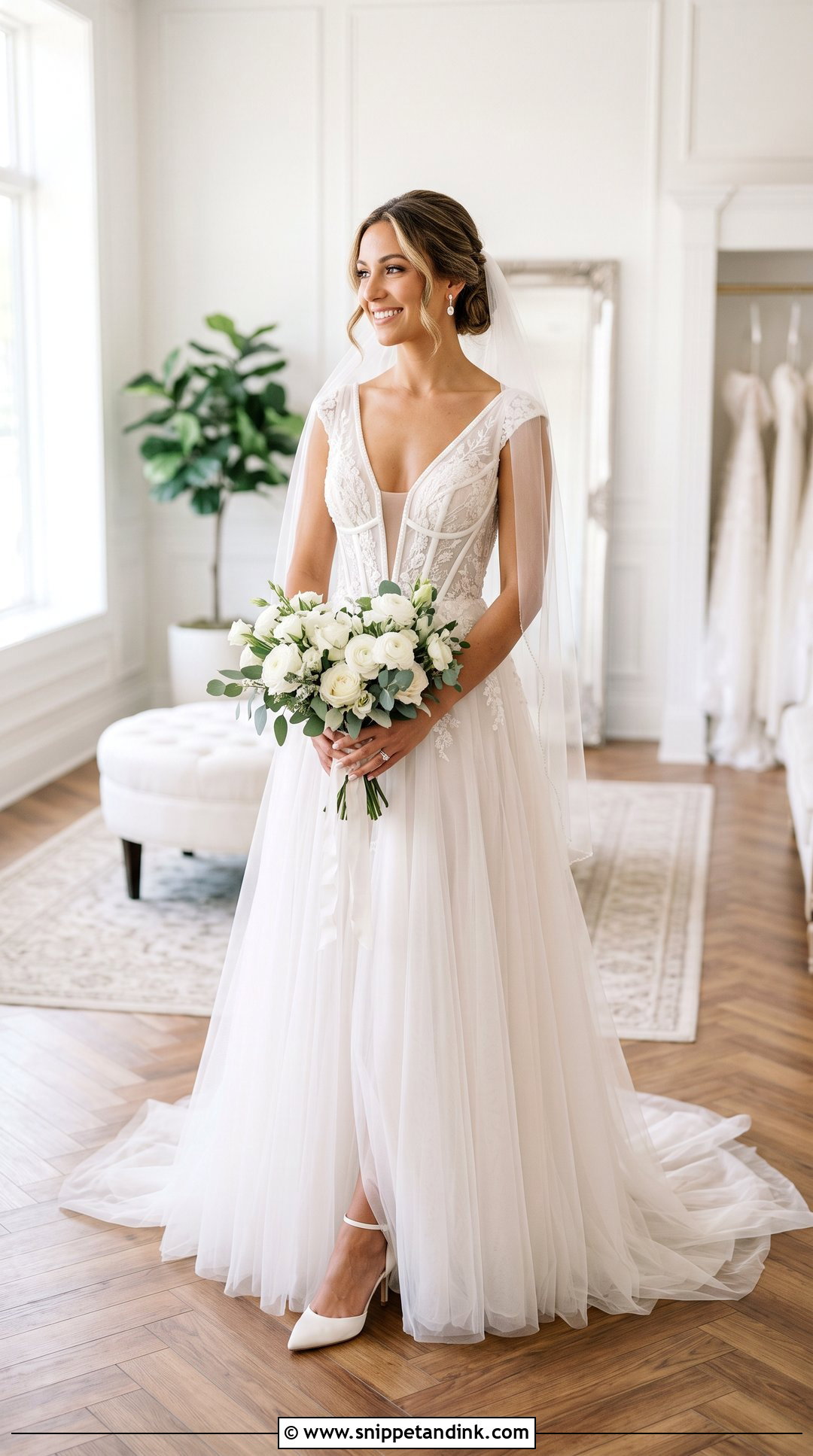
Deep plunges stay put because boning runs along the sides and center of the bodice, holding each edge flat against the body. Many designs add a sheer mesh insert across the opening, which also stops the two sides drifting apart as you move. Ask your tailor to match the illusion mesh to your skin tone, and test the cups by leaning and hugging. Fashion tape helps a gown that already fits; it cannot rescue one that does not. Skip the necklace. A fitted crepe skirt looks modern and soft tulle adds contrast.
12. Floral Wedding Dress with Boning
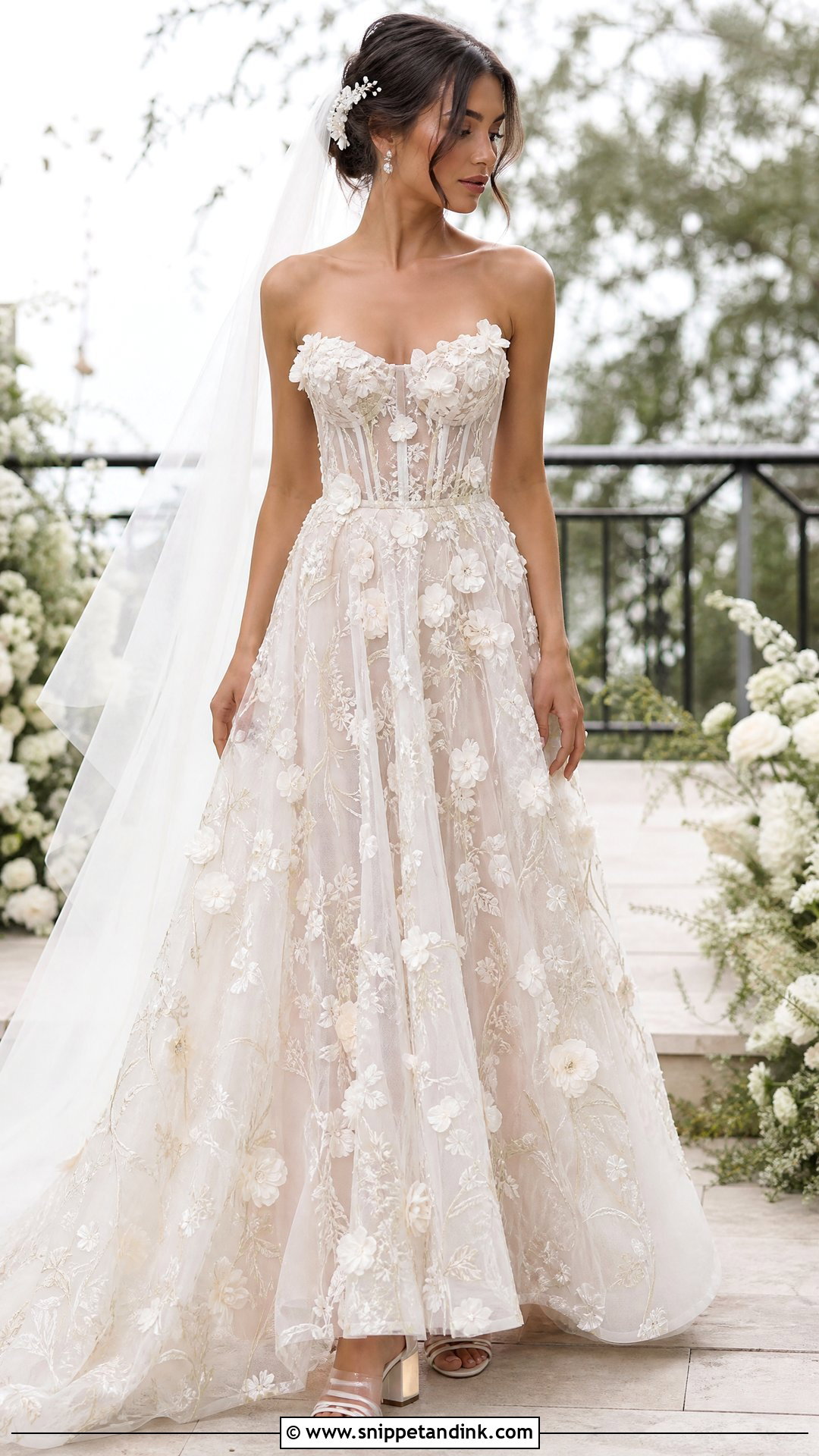
Three-dimensional flowers sewn over a boned bodice catch on everything, including the inside of your arm. So the first thing I check is how the appliqués sit at the waist and underarms, and whether any wire or stiff edge rubs as you walk. Embroidered vines or lace leaves laid over the channels give the garden feel without that problem. A sheer bodice with a tulle skirt stays light; a lined one covers more. Keep the veil plain and the bouquet simple, mostly greenery and white flowers, so the dress keeps the attention.
13. Beaded Wedding Dress with Boning
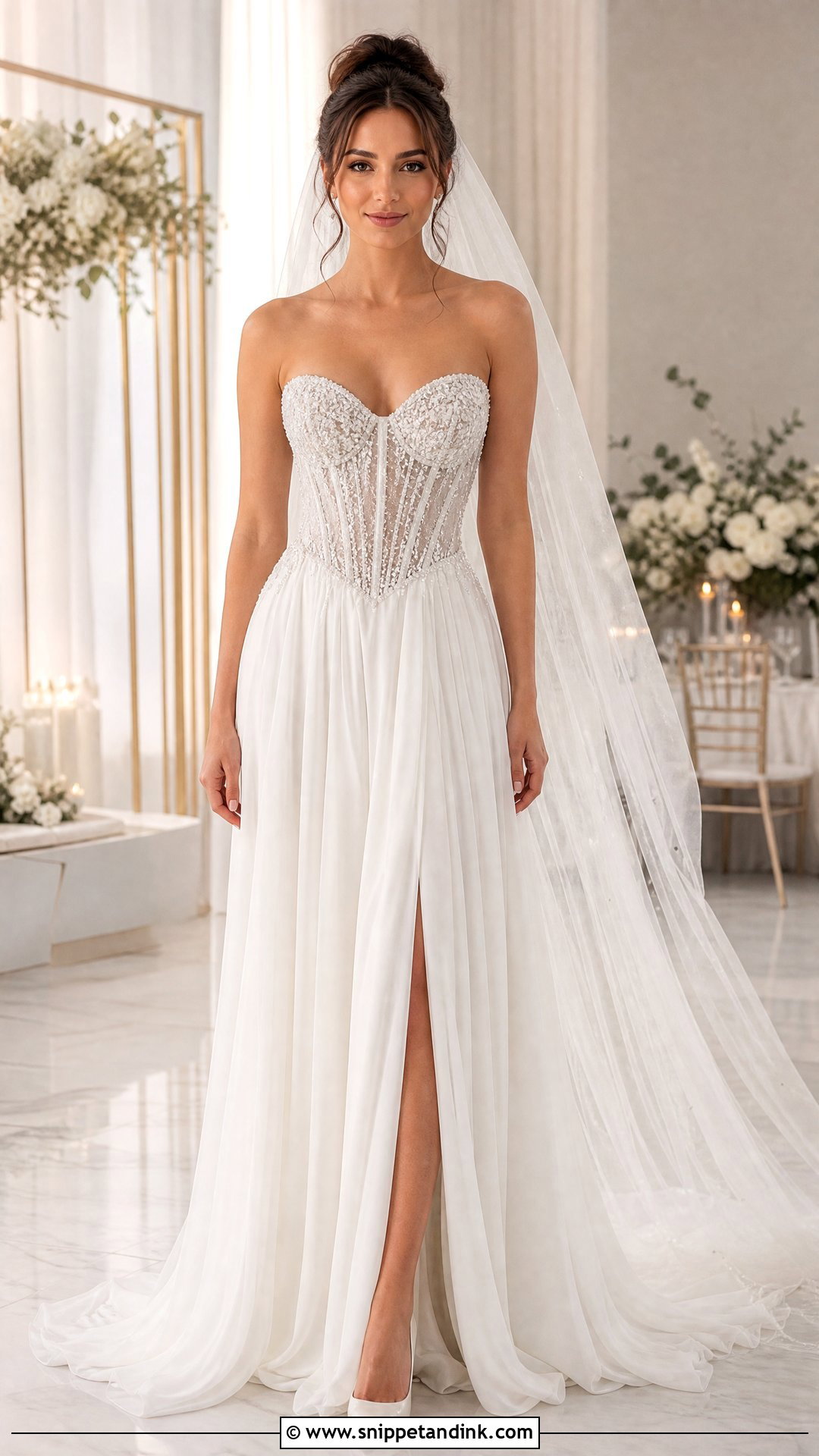
Beading adds real weight. Concentrated on the corset, it is manageable. Spread over an entire mermaid gown, it can feel noticeably heavier by evening, so pick the dress up and hold it for a minute before you decide. Boning actually helps here, because it carries the bodice’s weight at the waist instead of on your shoulders. A beaded corset into a chiffon skirt keeps things airy. Small crystal earrings and an untrimmed veil are enough. Ask your tailor to reinforce loose beads near the zipper and underarms, where friction is highest.
14. Minimalist Wedding Dress with Boning
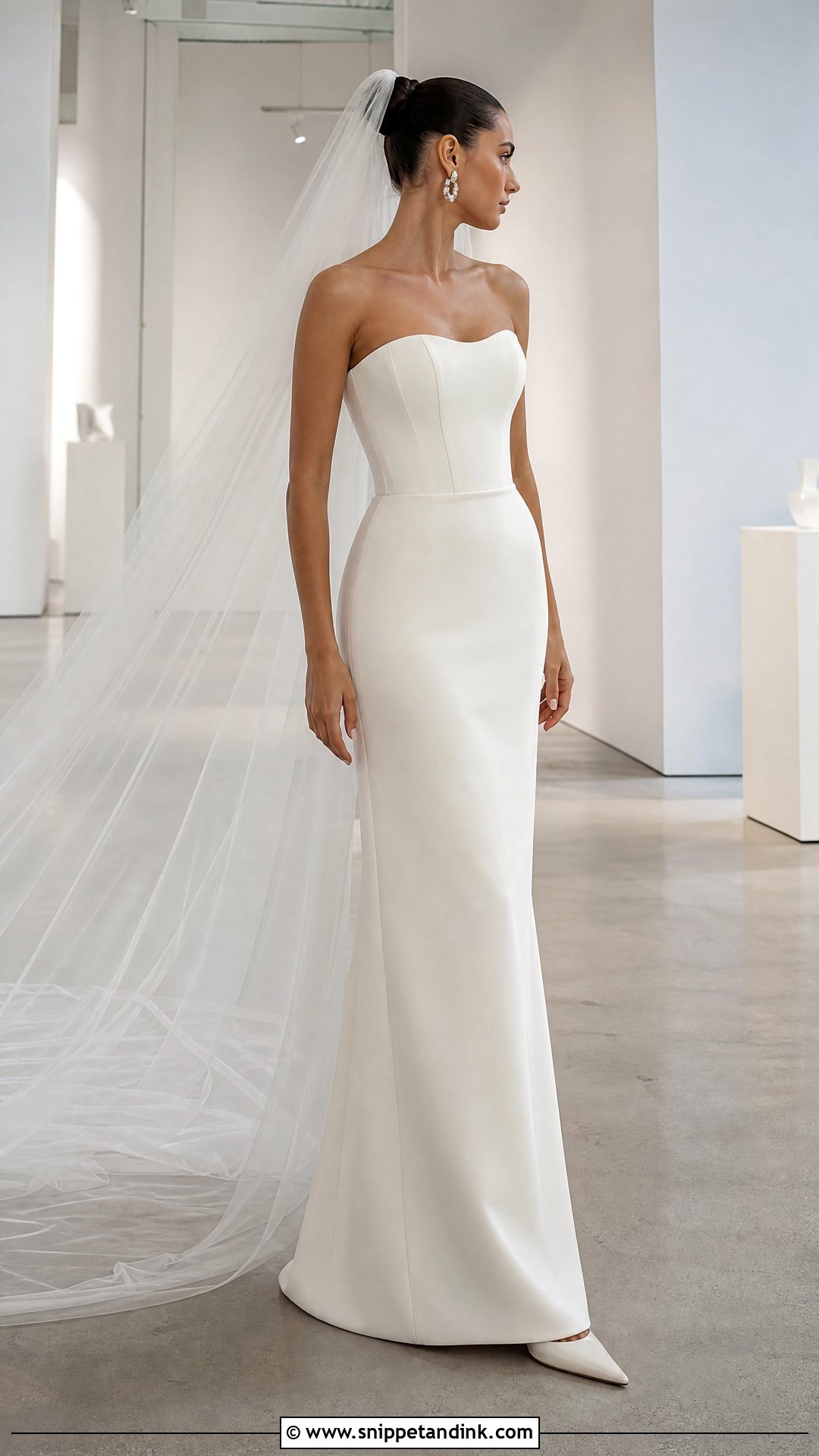
With no lace or beads to disguise anything, a minimalist boned gown shows every fitting flaw. Concealed boning under crepe, mikado or matte satin holds the shape without exposed corset lines, but if one bone is slightly long or a seam sits off-center, a ridge appears. I check seam placement against the center of the body, the bust shaping and the join between bodice and skirt. A strapless column suits this approach especially well. Sculptural earrings and a plain cathedral veil finish it, and a discreet bustle keeps the clean line through the reception.

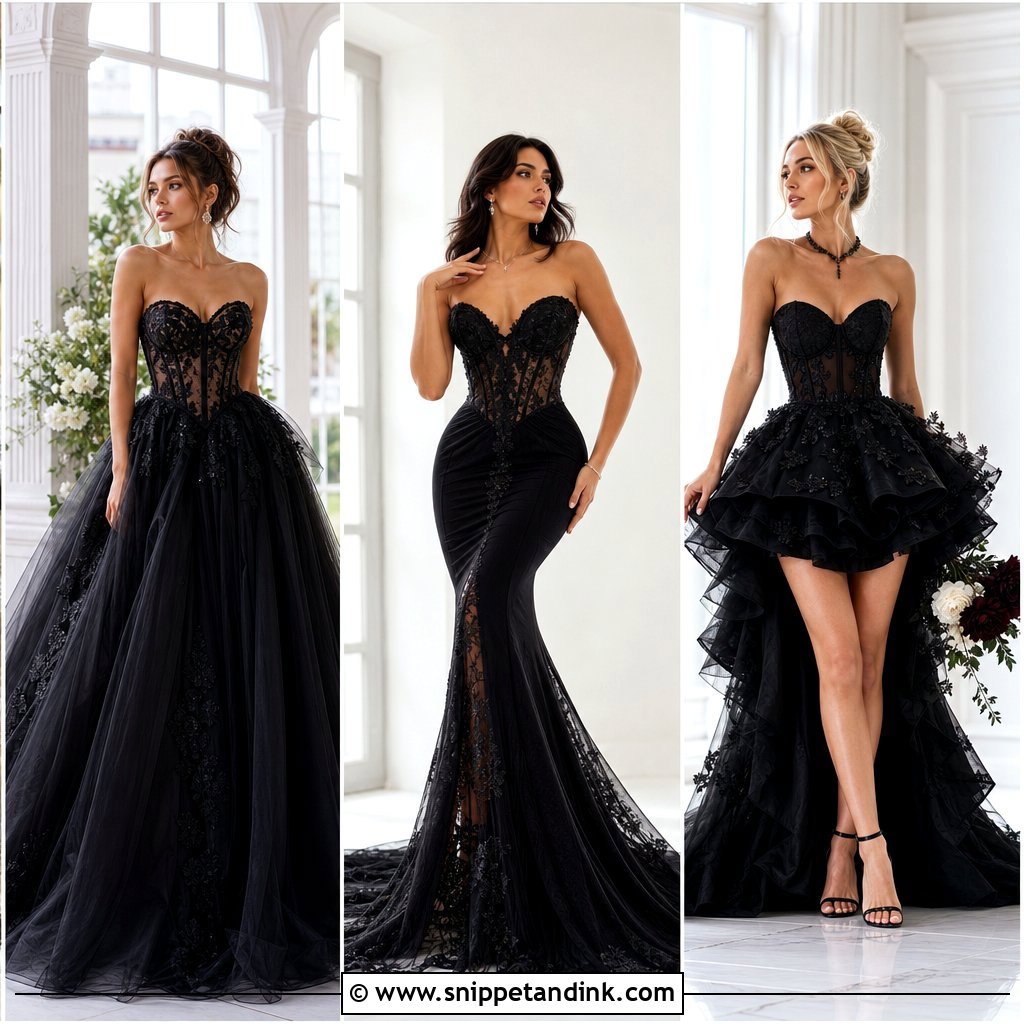
15. Plus Size Wedding Dress with Boning
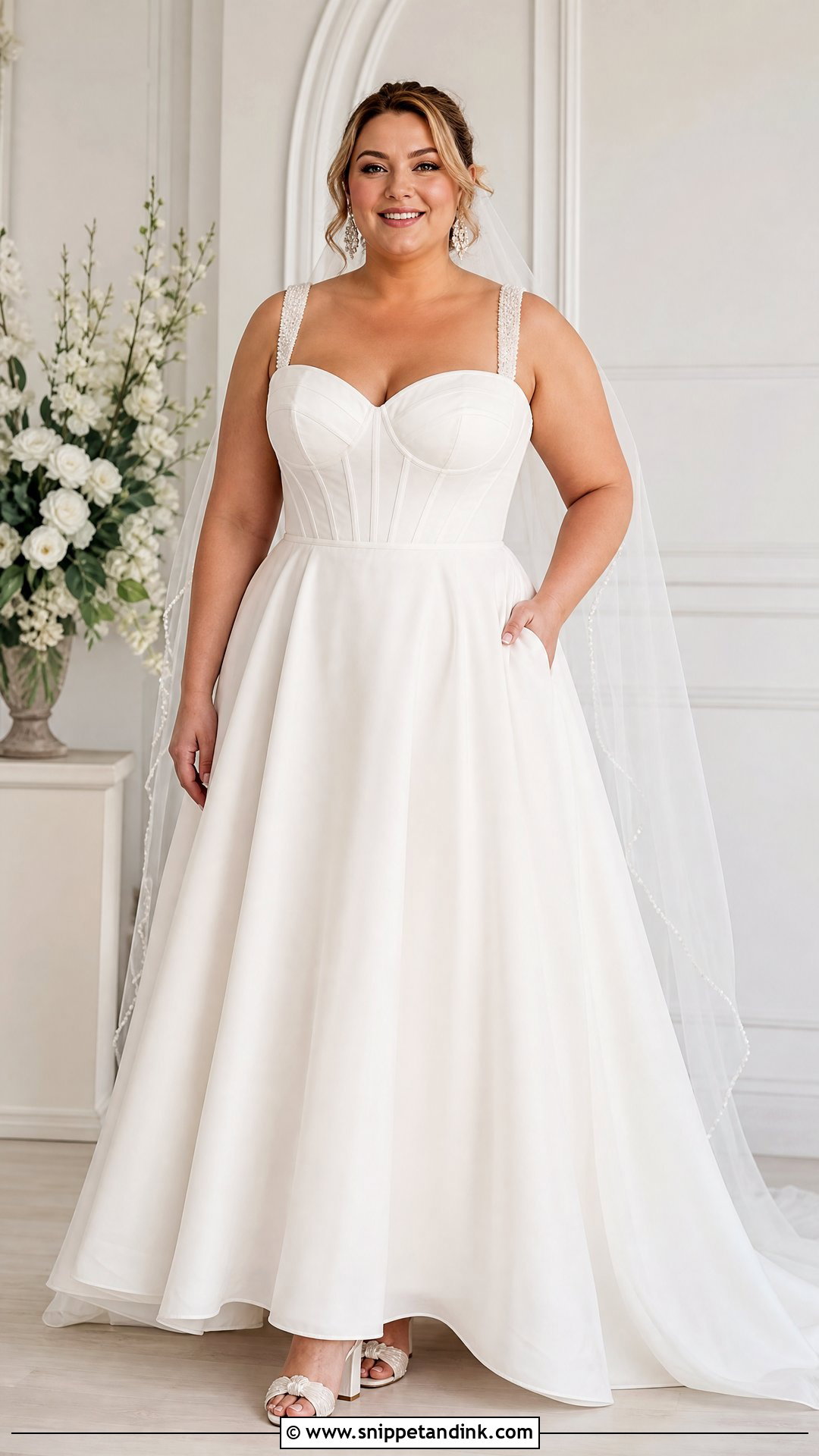
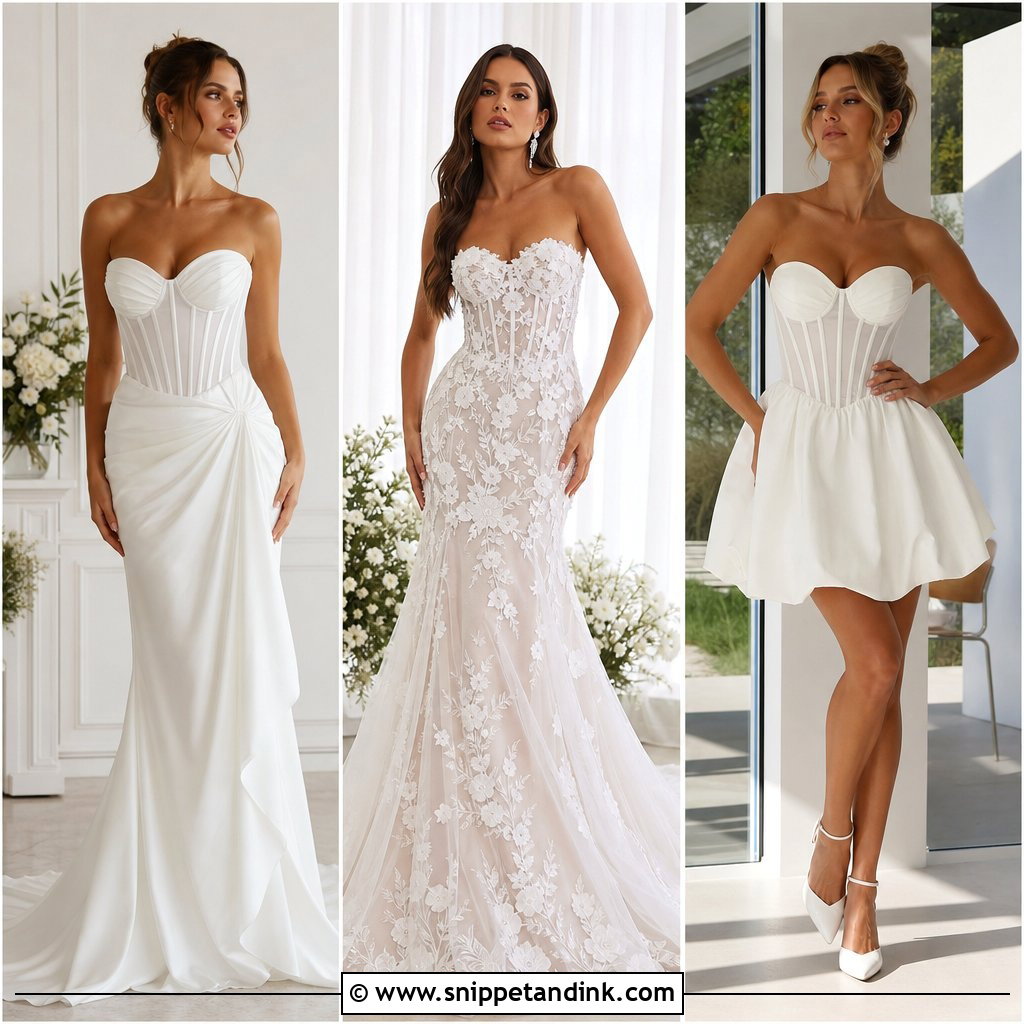
Good boning supports a curvy body; it should never try to reshape it. Look for properly sized cups, strong side panels and bones that follow the torso instead of flaring outward at the top or bottom edge, which usually means the bodice is too small. Spiral steel bends with curves far better than plastic. Ask whether the sample you tried is built the same way as your ordered size, since construction sometimes changes across a size range. Strapless works when the fit is right, and wide straps or detachable sleeves are there if you want them. Book alterations early.
16. Corset Back Wedding Dress with Boning
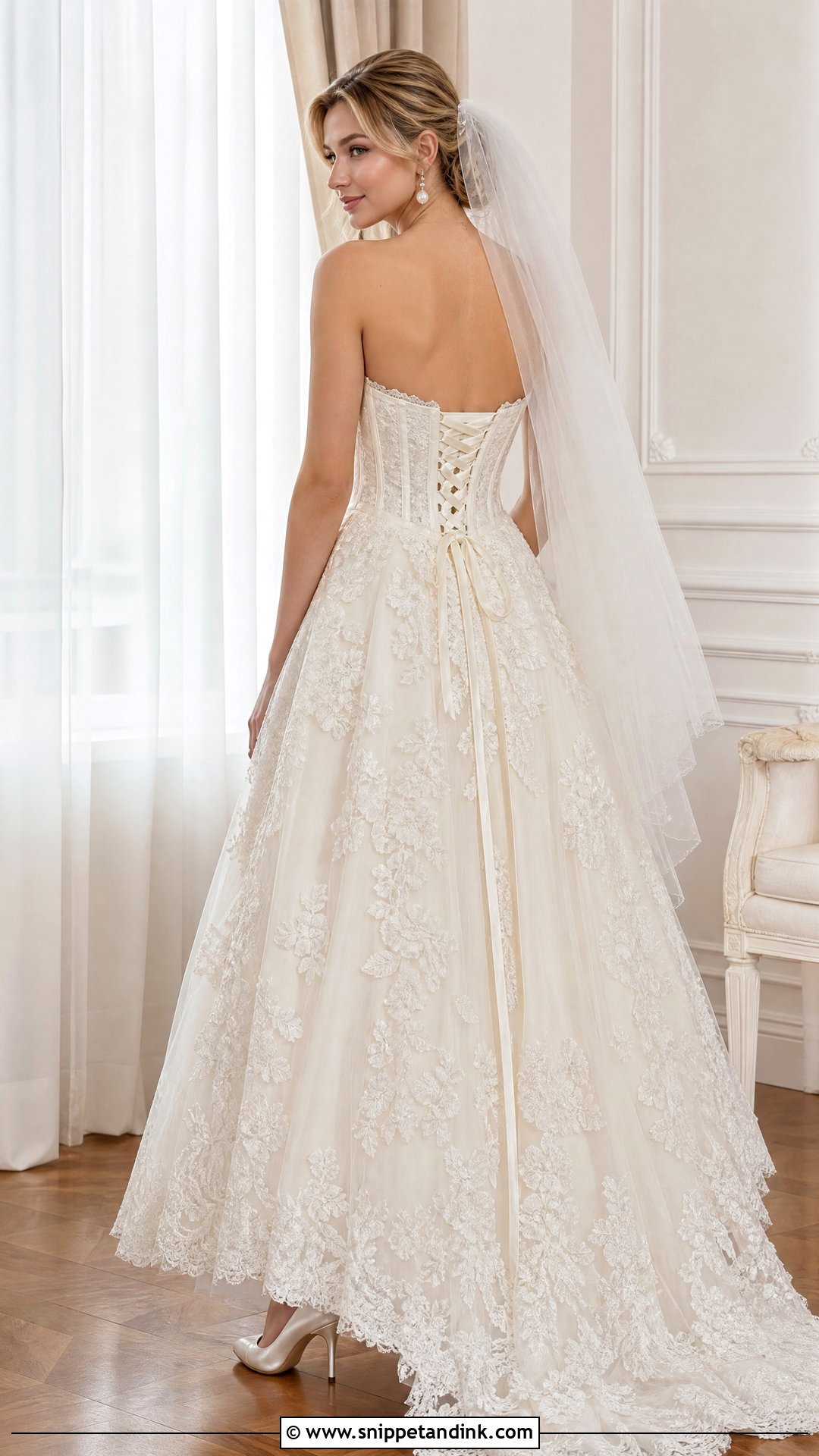
Lacing is adjustable, which is its great advantage and its biggest risk. Whoever laces you on the day should have practiced at least once, tightening evenly from top to bottom so the gap between the two sides stays parallel. Uneven lacing twists the bodice. Satin ribbon looks soft and classic, narrow matching laces cleaner. A modesty panel behind the lacing covers skin, and some designers add a concealed zipper to speed up dressing. Place the veil comb above the lacing so the two never tangle.
17. Drop Waist Wedding Dress with Boning
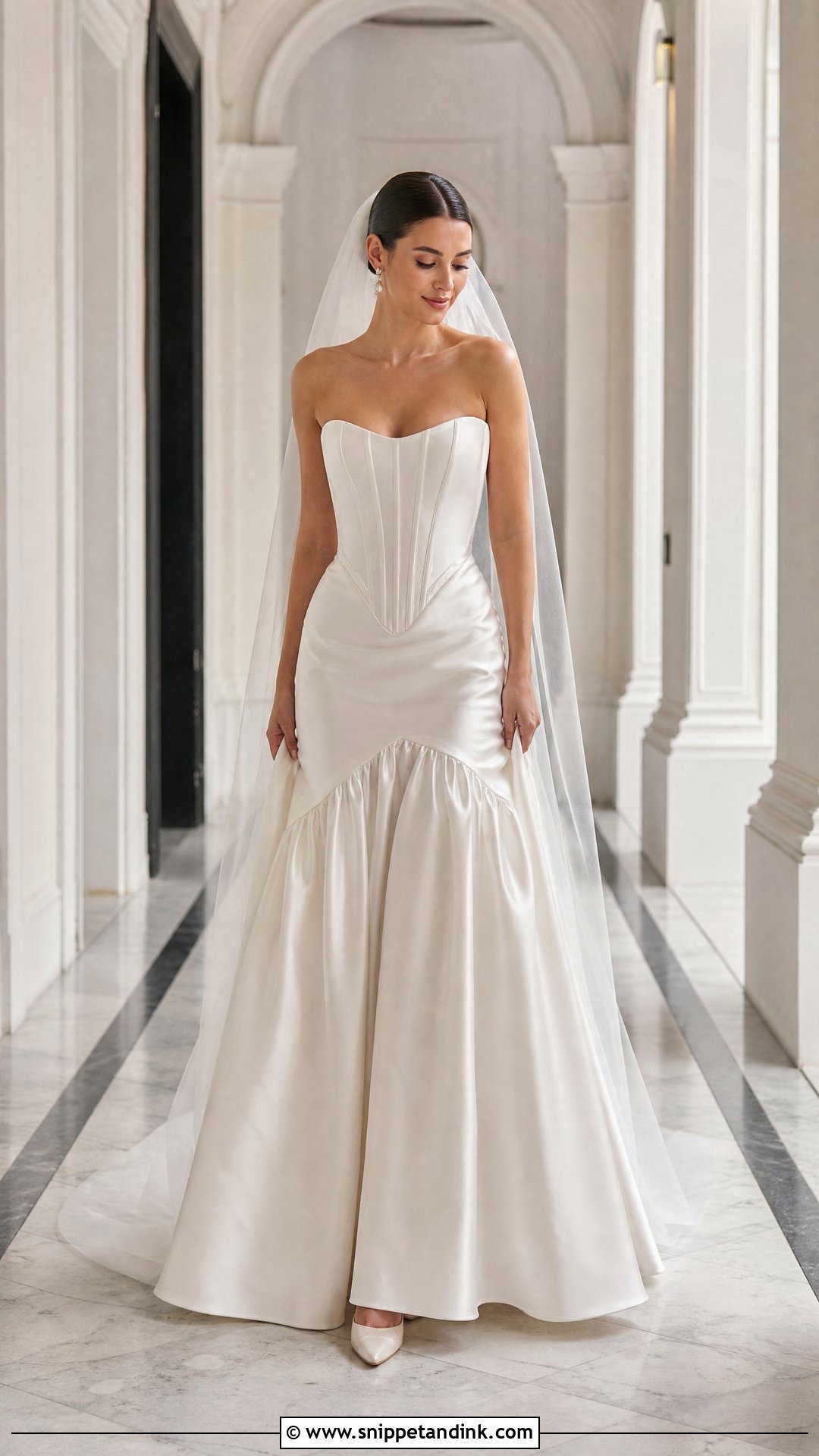
Extending the boning below the waist makes the torso look longer and the gown sleeker than a classic ball gown. It also puts the lower bone tips near the hip bones, which is exactly where discomfort shows up. Sit, walk and bend at every fitting. If the lower bodice creases sharply when you are seated, ask whether the channels can be shortened slightly or flexible spiral bones swapped in. Satin gives crisp definition and lace a softer transition. Leave out any belt at the natural waist; it cuts that long line in half.
18. Detachable Sleeve Wedding Dress with Boning
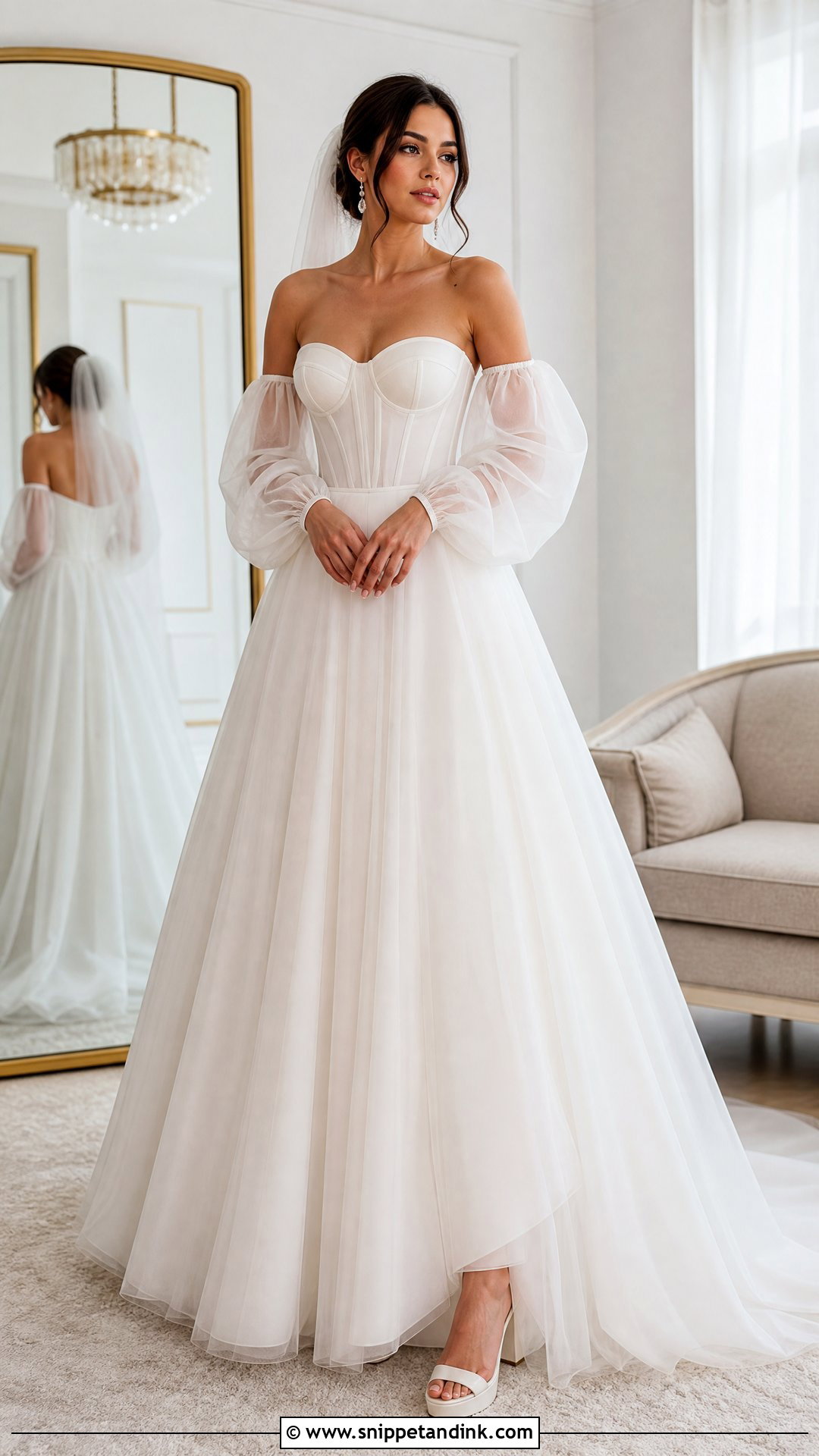
The attachment matters more than the sleeve. Ask exactly how they fix on: clear snaps, hidden hooks or small buttons should hold firmly without dragging the neckline out of shape, and on a boned bodice they should anchor into the structure rather than just the outer fabric. Start the ceremony with off-the-shoulder tulle or fitted lace, then take them off for a lighter strapless reception look. Practice removing them with a helper. Put the sleeves straight into a labeled bag afterward, because detached pieces vanish surprisingly easily at the end of a wedding.
19. High Slit Wedding Dress with Boning
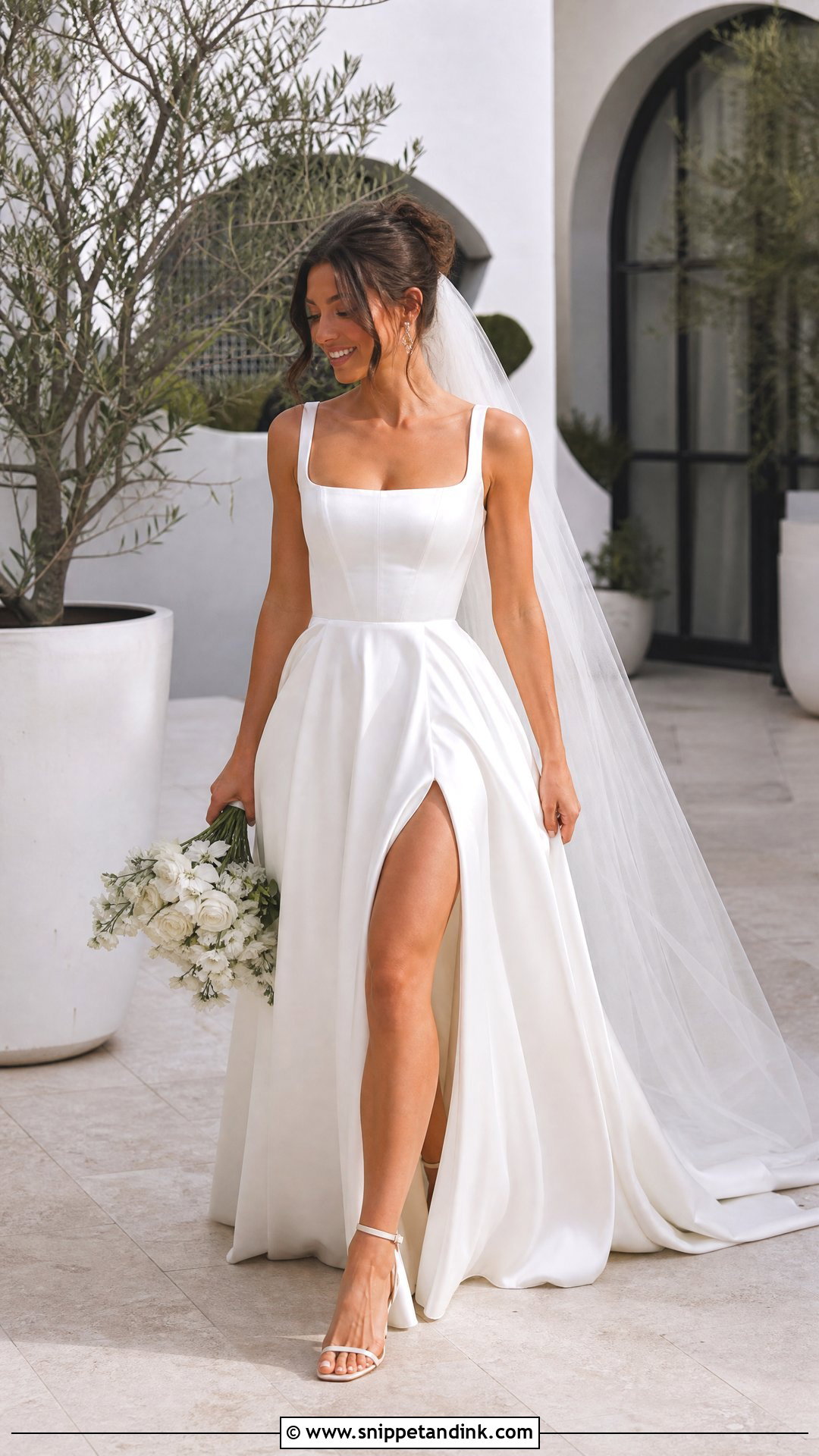
A high slit depends on the bodice staying exactly where it is. If a boned top twists even slightly, the slit swings round toward the side, which is why I test this one walking, sitting and on stairs. A strapless or one-shoulder bodice balances the exposed leg well. Satin and crepe show the slit clearly, while layered chiffon reveals it only as you move. Your tailor can lower the slit or add a hidden snap if you want more coverage. Take a full stride in the mirror and make sure nobody can see the inner lining.




20. Short Wedding Dress with Boning
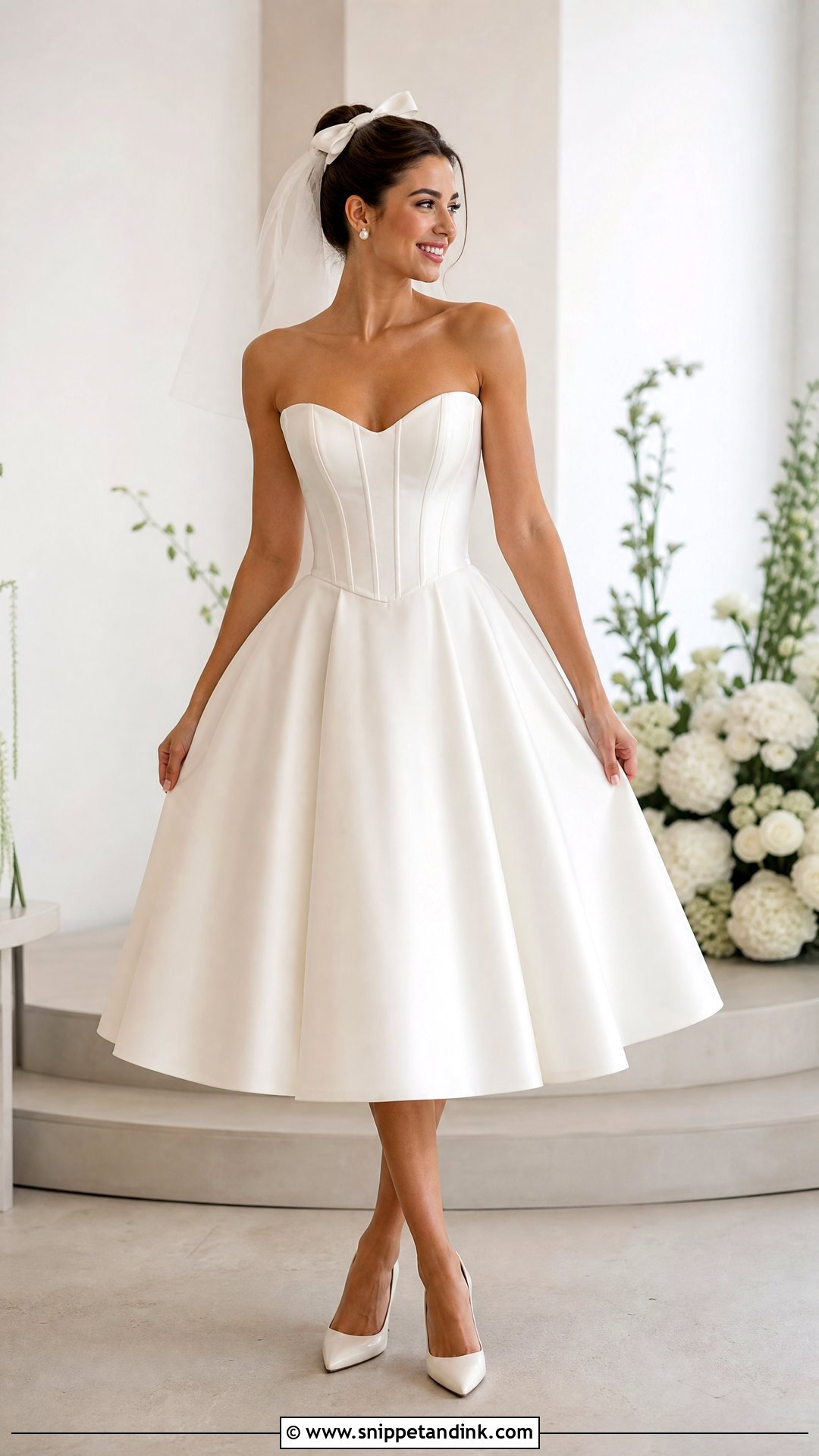
Short boned dresses keep all the support of a full gown with none of the weight, which makes them a favorite for courthouse ceremonies and second outfits. A structured mini with a flared skirt, a tea-length satin dress or a fitted midi dress with visible corset seams all fit the idea. With legs and shoes on show, the hem has to be exact, so check it from the front, side and back while walking. The lining matters too, since a shorter skirt shows its inside when you sit. Pearl earrings and a short veil or hair bow finish it.
If a Bone Pokes Through Halfway Through the Reception
It happens more often than brides expect. After hours of sitting and dancing, a bone tip wears through its channel and starts pressing into skin, usually under the arm or at the hip. It is fixable in a few minutes.
- Tape a piece of moleskin or a small square of felt over the tip, on the inside of the bodice.
- If the tip has broken through the fabric, a few stitches with a needle and white thread across the end of the channel will hold it until the night is over.
- Leave the bone in. Pulling it out lets that section of the bodice collapse and can make the dress start to slip.
Pack moleskin, a threaded needle, safety pins and fashion tape in the emergency kit, and show your maid of honor where the channels end so she knows what she is looking at.
A Boned Dress Should Never Hang From Its Straps
Once the wedding is over, hang the gown from the inner loops sewn near the waist. They pass the weight through the boned bodice instead of stretching the straps or the neckline. For long-term storage, a cleaner can box it flat with acid-free tissue padding the bodice so no bone bends at a fold, and it should stay out of plastic garment bags, which trap moisture.
Support You Forget About by the First Dance
Boning is there to hold the dress so you do not have to. Settle on the silhouette, neckline and coverage you love first, then judge the bodice by how it is built: cup placement, lining, the type of bone and where the channels end. Visible corsetry brings drama and concealed boning a smooth surface. Keep accessories simple enough not to fight the structured lines. And leave room in your timeline for alterations, including at least one fitting where you sit, dance and eat a little in the finished gown.
You'll Like These Ideas:







Leave a Reply