
A plain wedding dress is the hardest kind to get right. With no lace or beading to pull the eye, every seam, every wrinkle and every quarter inch of the hem is on show, so the fabric and the fit carry the whole look. When I style a bride who wants clean lines, I spend far more time on the cut than on accessories. Designers keep leaning on sculpted necklines, long columns, dropped waists and heavier fabrics that do the work decoration used to do. Below are twenty silhouettes I’d put in front of a bride who wants restraint, from fluid silk slips to unadorned ball gowns, each with what I look for at a fitting and when I’d suggest something else.
Reading Fabric Quality on a Gown With Nothing to Hide Behind
In a shop full of plain dresses, the price difference usually lives in the cloth. Embroidery can disguise a thin satin; a minimal gown can’t. So before I look at a neckline, I handle the fabric.
- Pinch and release a fold of the skirt. Good crepe and heavy satin spring back; cheaper versions keep a soft crease.
- Hold a single layer against a light. You shouldn’t see the outline of your fingers through a satin meant to be worn without much lining.
- Look at the inside. Clean, finished seams and a bodice with proper boning tell you the outside will stay smooth.
- Check the colour under daylight. Ivory and white satins shift a lot between warm shop bulbs and a window, and a plain dress has no detail to distract from a colour you end up not liking.
If you love a shape but the fabric feels flimsy, ask whether the designer offers it in a heavier cloth. Many do, and that one change often matters more than any detail you could add.
1. Satin Slip Wedding Dress
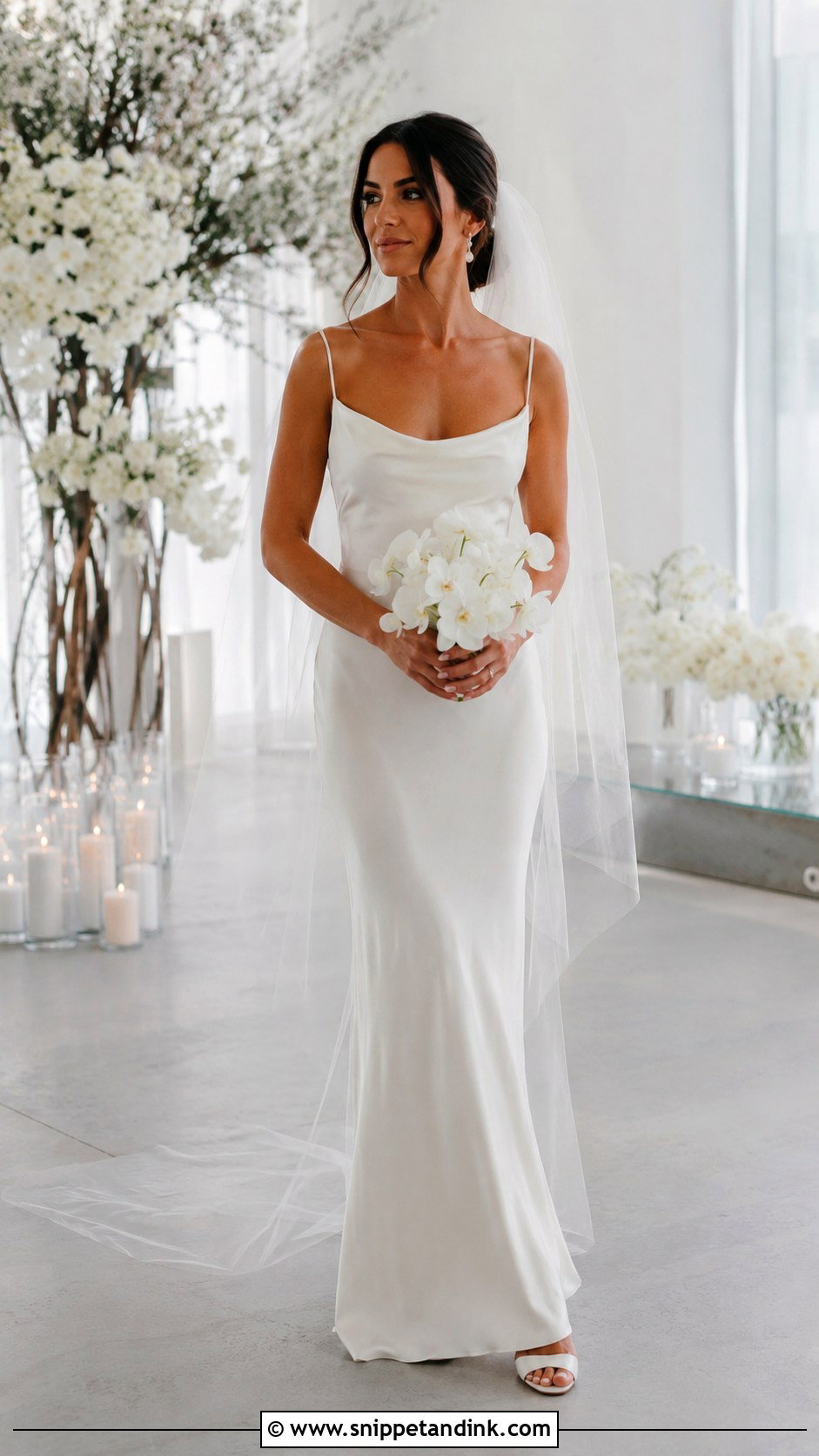
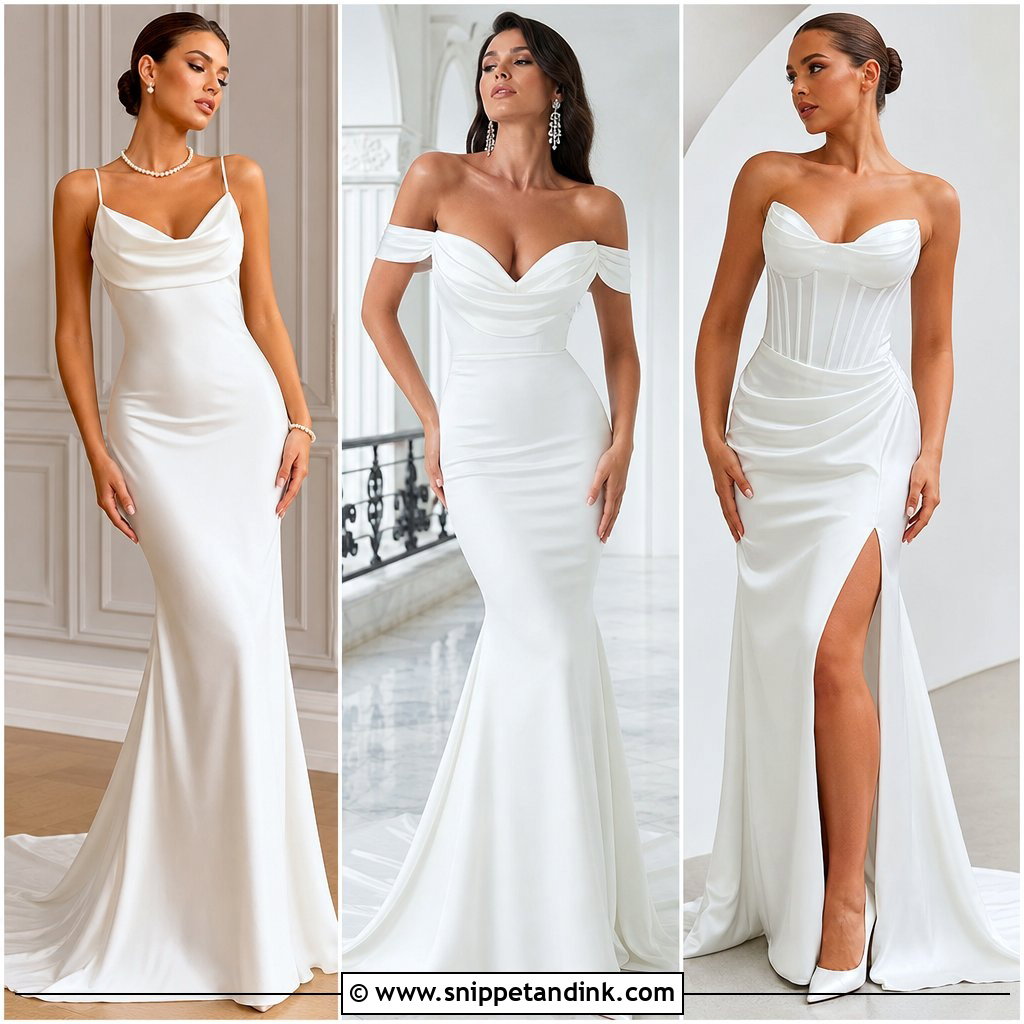
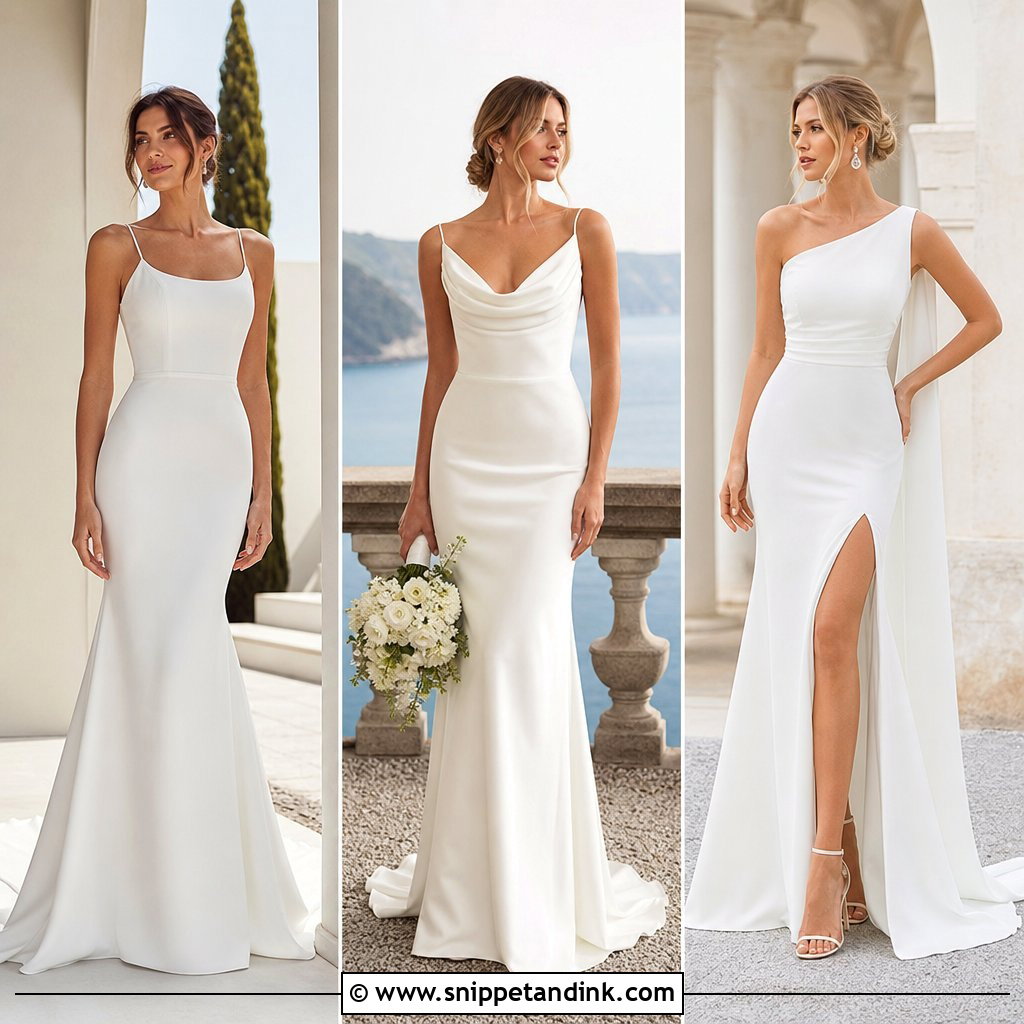
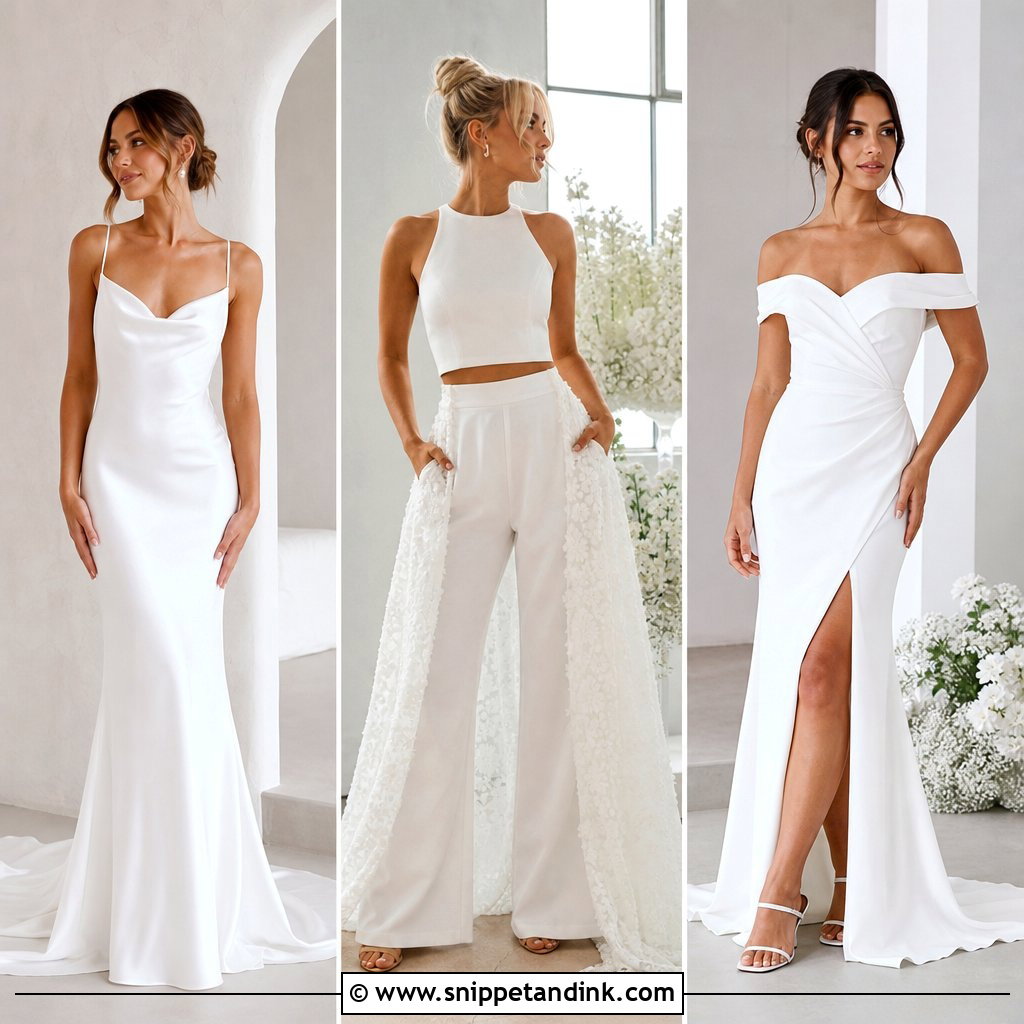
The slip is the dress I see go wrong most often, and almost always because the satin is too thin. Hold the skirt up to the light: if you can see your hand through it, it will cling to every line underneath. A heavier, bias-cut satin skims instead. Thin straps and a straight or cowl neckline keep it simple, and low satin heels with a raw-edge fingertip veil suit its relaxed mood. If you need support, ask for built-in cups or a lined bodice before you settle on stick-on solutions. Hem it with your actual shoes on, because a fluid skirt that’s even half an inch long will fold around your toes.
2. Square Neck A-Line Wedding Dress
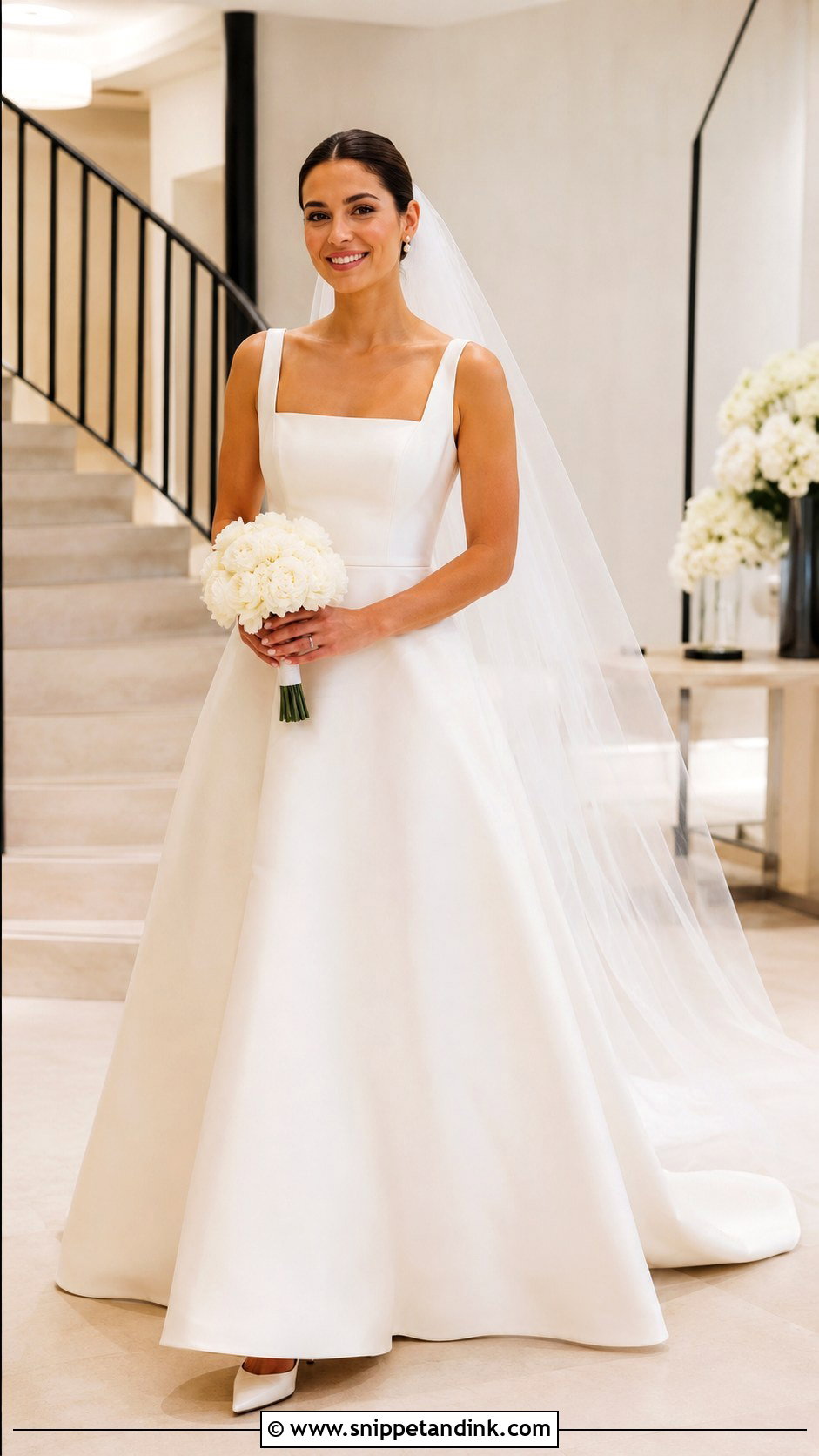
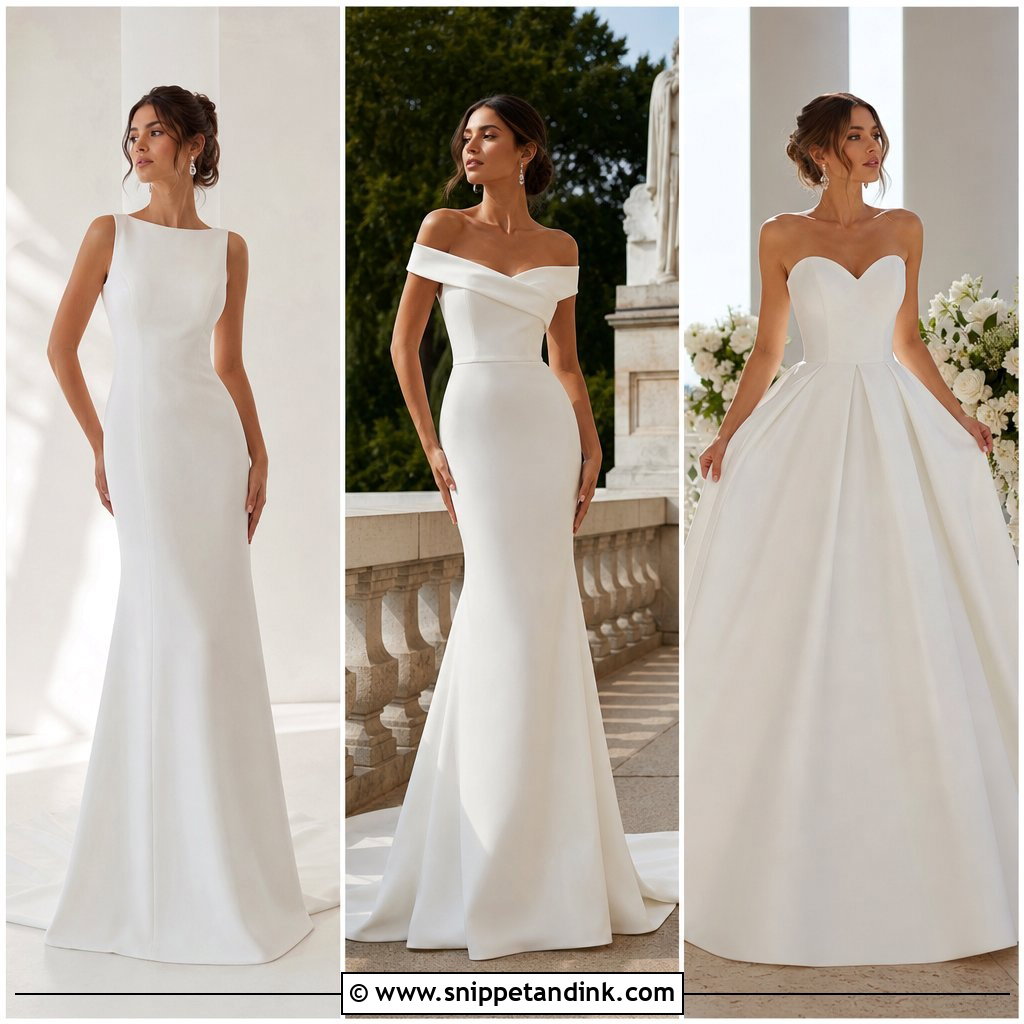
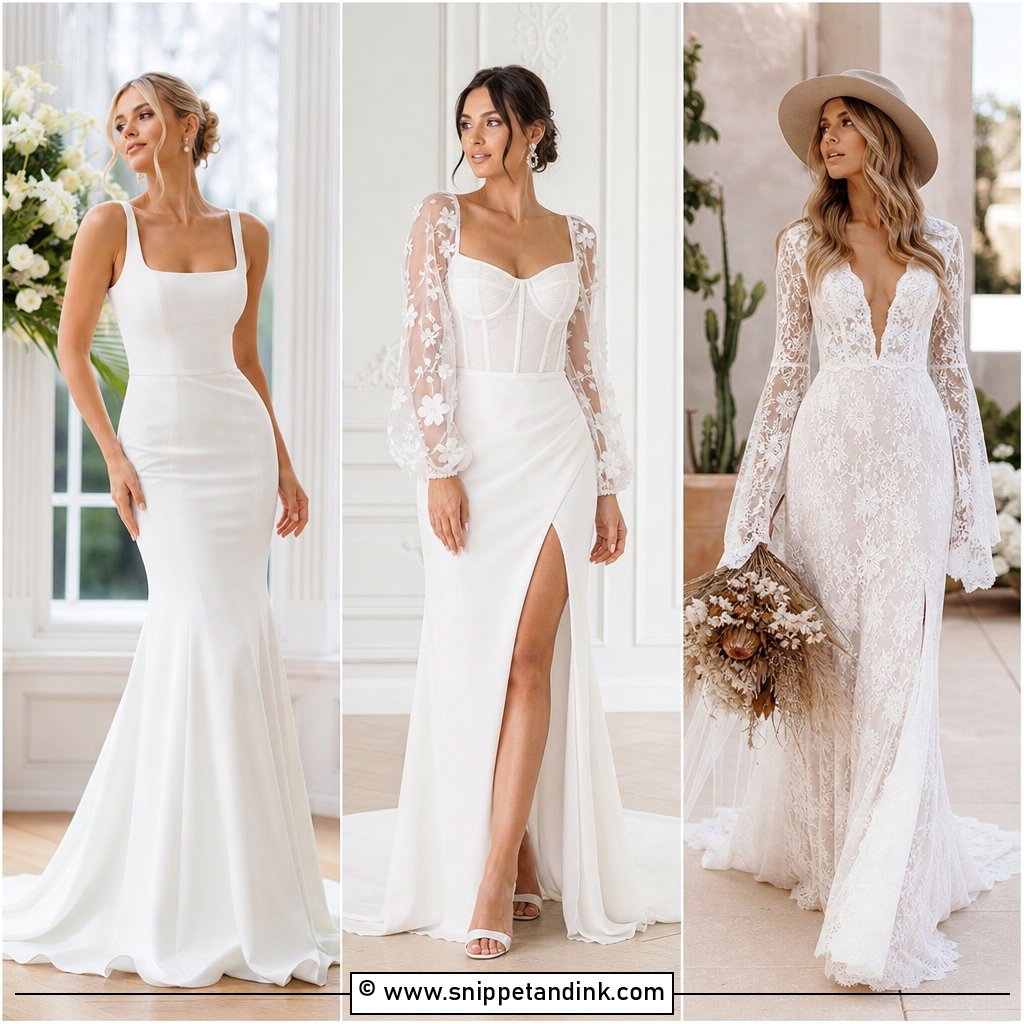
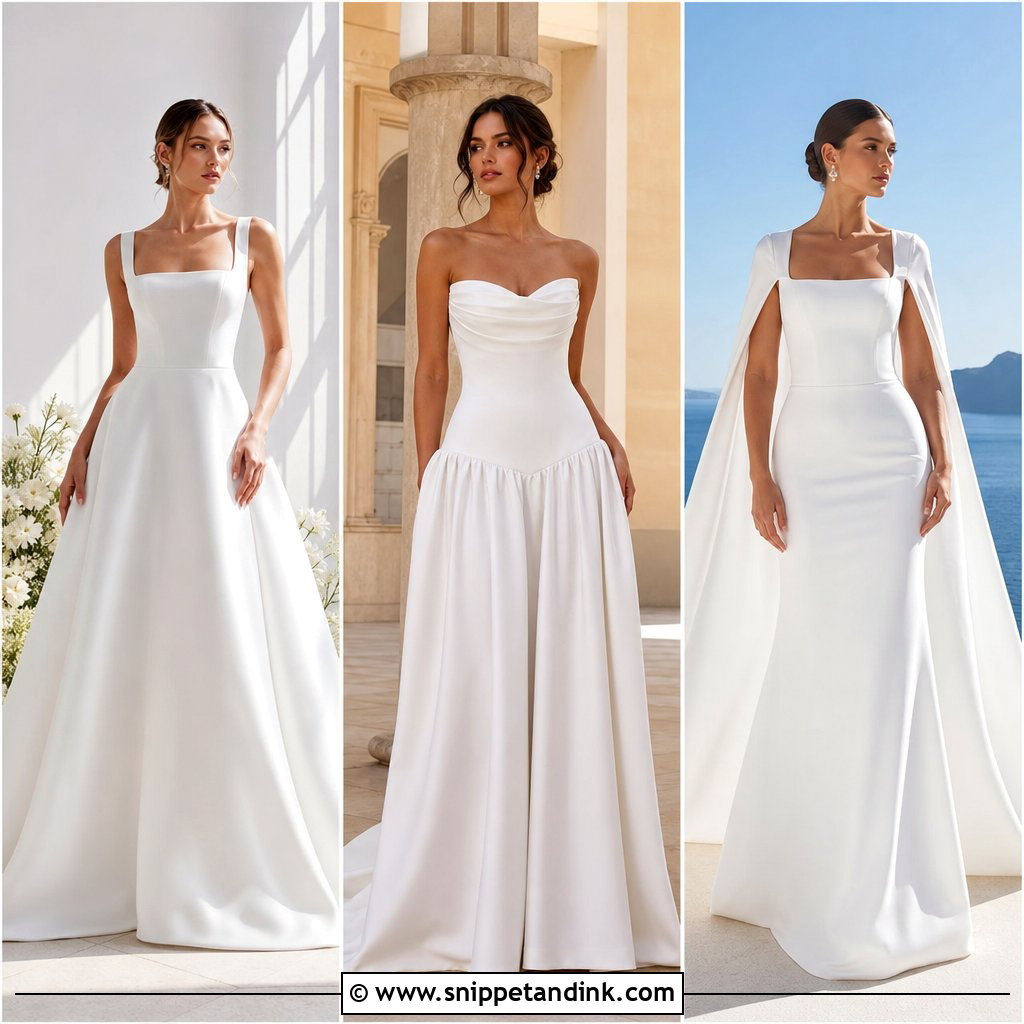
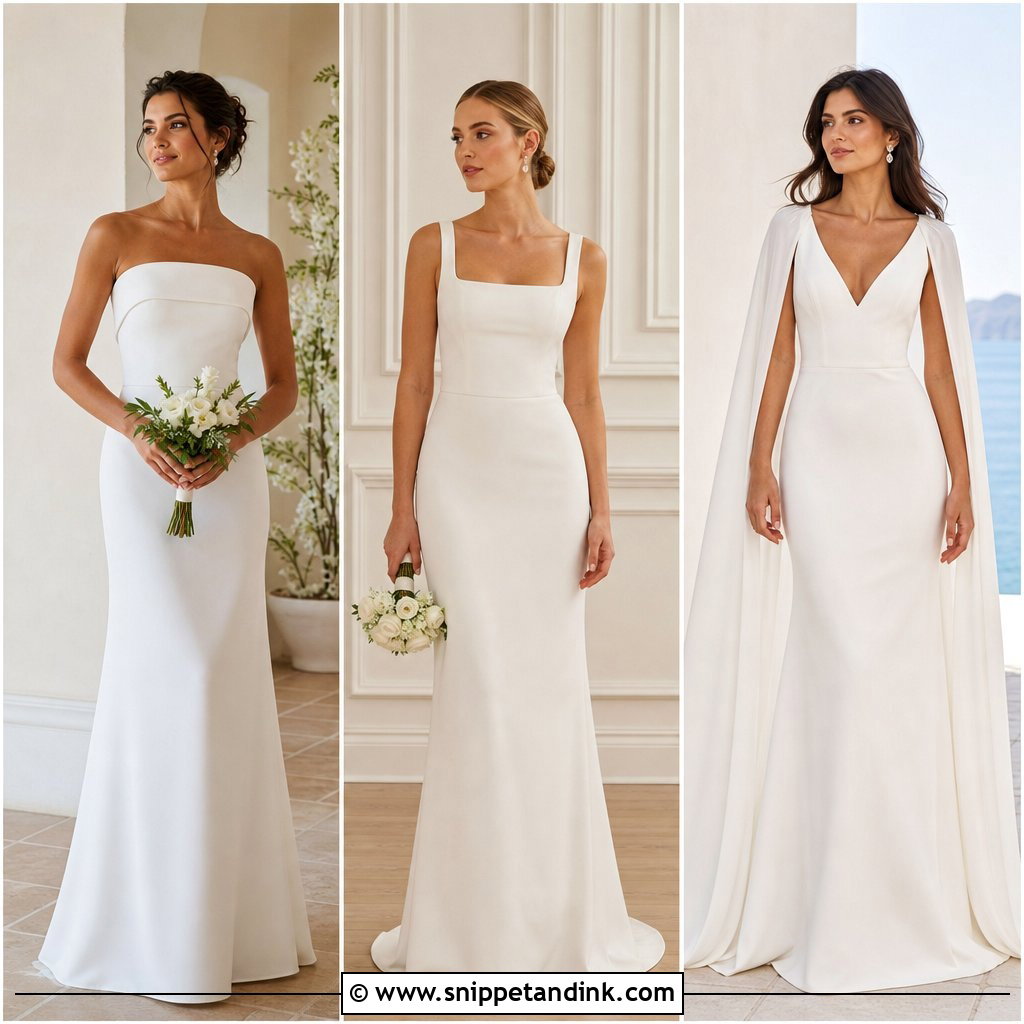
A square neckline frames the collarbone with a hard edge, and an A-line skirt balances it underneath. The shape only reads crisp in a fabric with body, so I steer brides toward mikado, a firm satin or a structured crepe rather than anything soft. Pearl studs and a plain cathedral veil leave the neckline alone. The detail I check every time: sit down and lift your arms. If the top edge gapes or bows outward when you move, the bodice needs taking in at the side seams, not the straps.
3. Strapless Column Wedding Dress
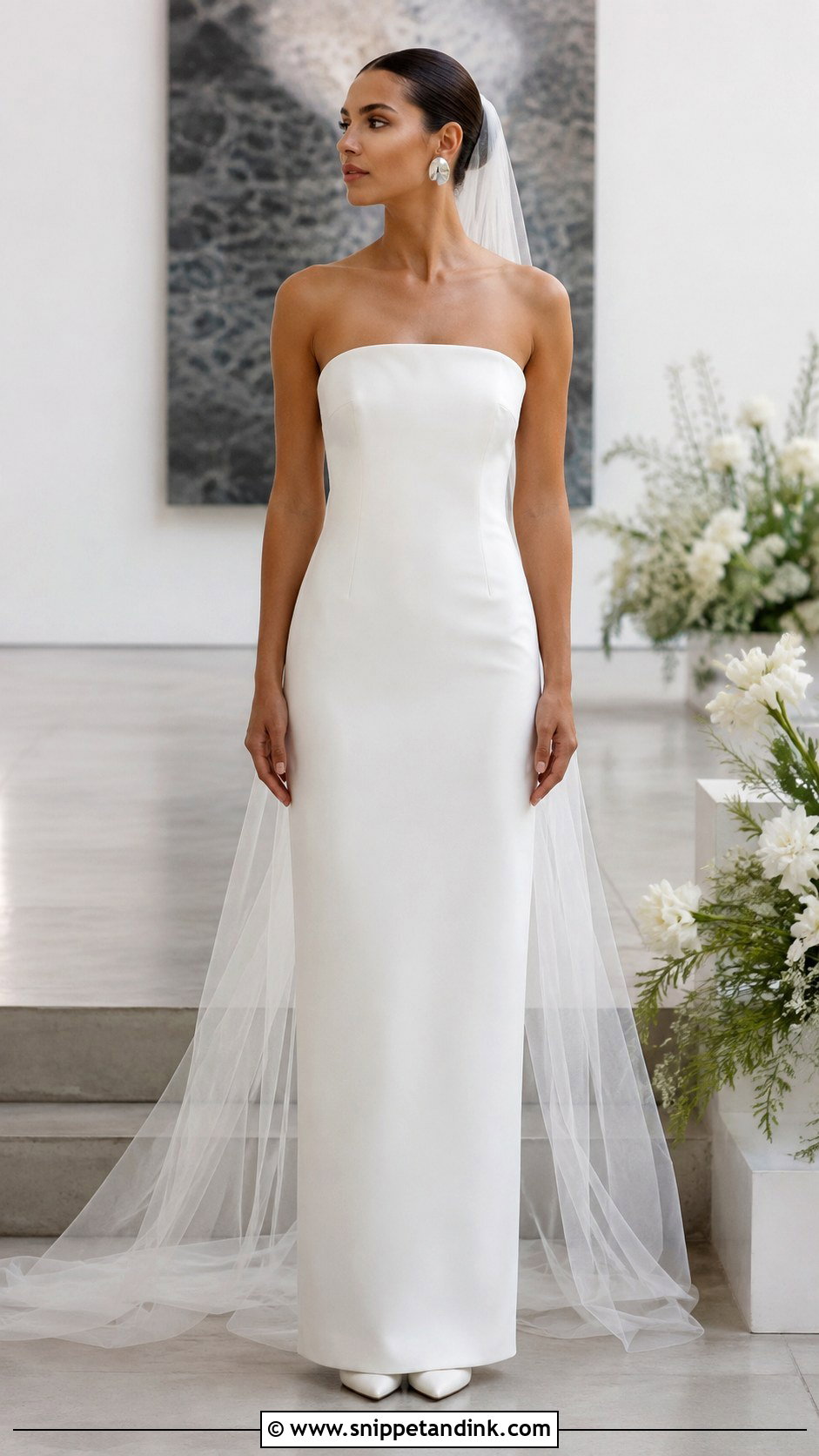
Nothing interrupts the line of a strapless column, which is exactly why it is so unforgiving. All the support has to come from inside: boning, a waist stay and a bodice cut close enough that it doesn’t rely on your posture. Heavy crepe, silk faille, or duchess satin hold the column shape better than lighter cloth. I like sculptural earrings and sleek hair with it, plus a long sheer veil. If you’re nervous about bare shoulders in a church, a removable satin wrap solves it. Ask your seamstress to fit you seated as well as standing, or you’ll spend the evening hitching it up.
4. Long Sleeve Crepe Wedding Dress
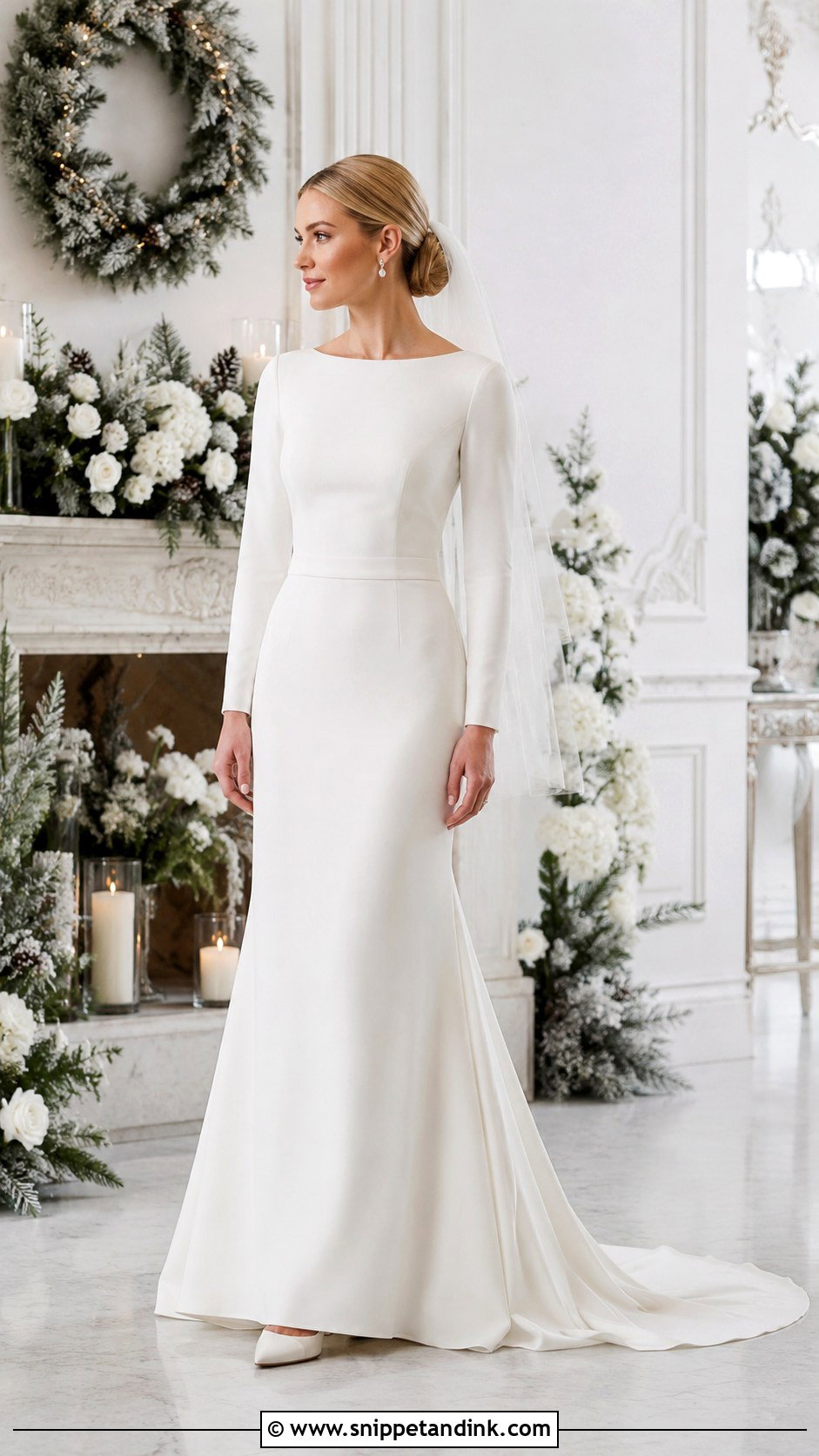
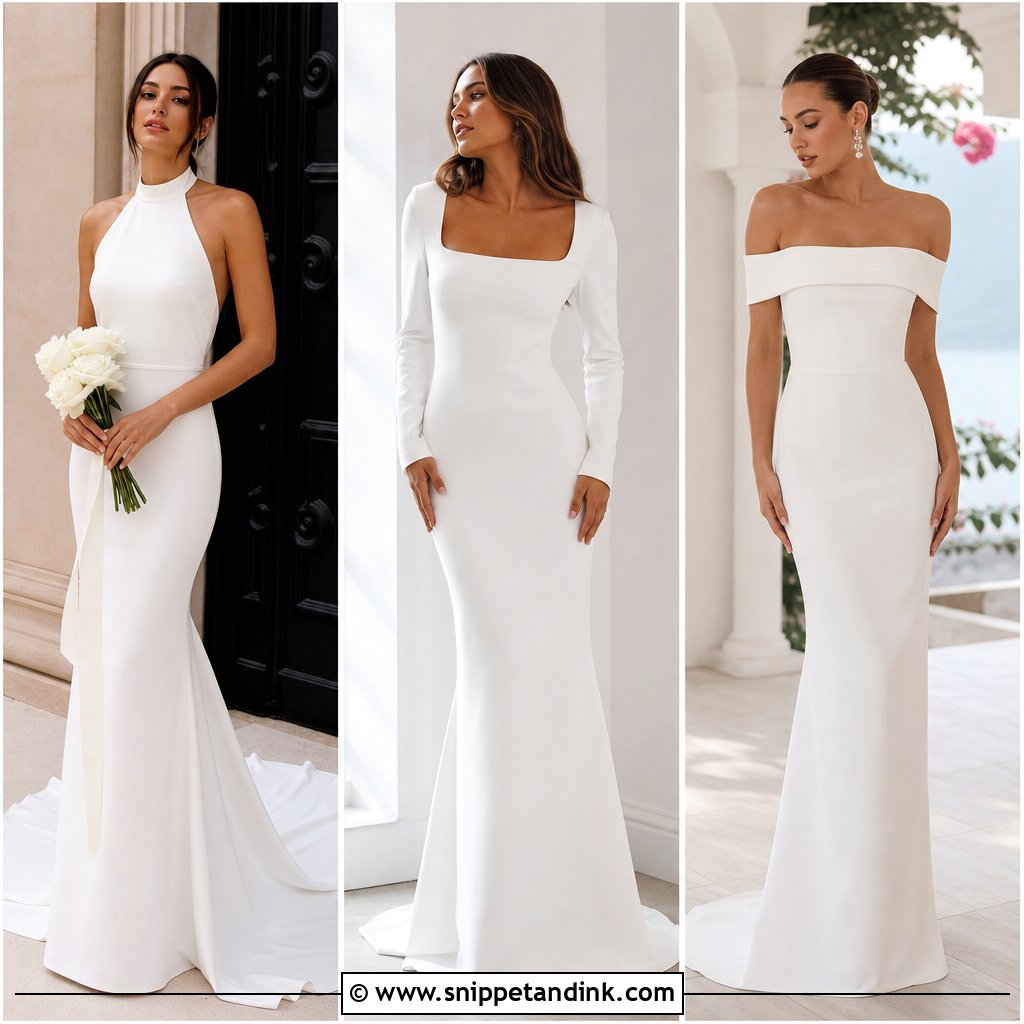
Long sleeves in matte crepe give coverage without weight, and a softly shaped waist stops the dress looking severe. The neckline decides how formal it feels: a bateau is the most structured, a V the softest. A low bun and pearl earrings keep attention near the face. Sleeves are where these gowns fail, so at every fitting I ask the bride to bend her elbows and reach forward as if hugging someone. A tight sleeve cap will pull the whole bodice up. A stretch lining helps, and this is the dress I’d point to first for a cold-season or very formal wedding.
5. Halter Neck Wedding Dress
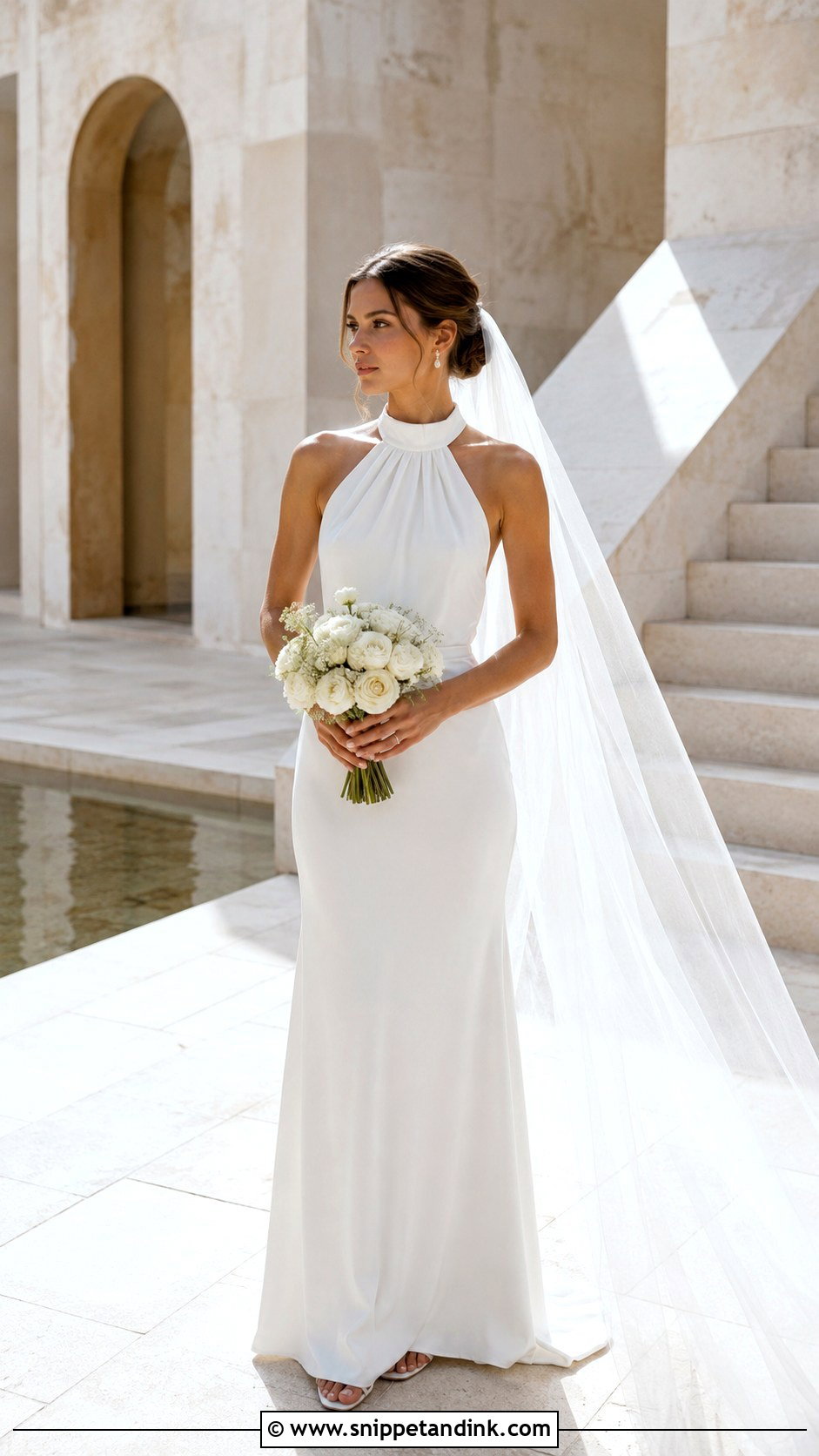
A halter draws the eye straight up to the face and shoulders. It can sit close at the throat or cut away to show more of the shoulder blades, and it works over a fluid column skirt or a softly flared satin hem. Skip the necklace; the neckline already does that job. Small earrings and a smooth updo let it breathe. My one warning: if all the weight of the bodice hangs from the neck strap, you’ll have a headache by the speeches. A good halter takes its support from a fitted bodice and lets the strap simply hold the shape.
6. Cowl Neck Wedding Dress
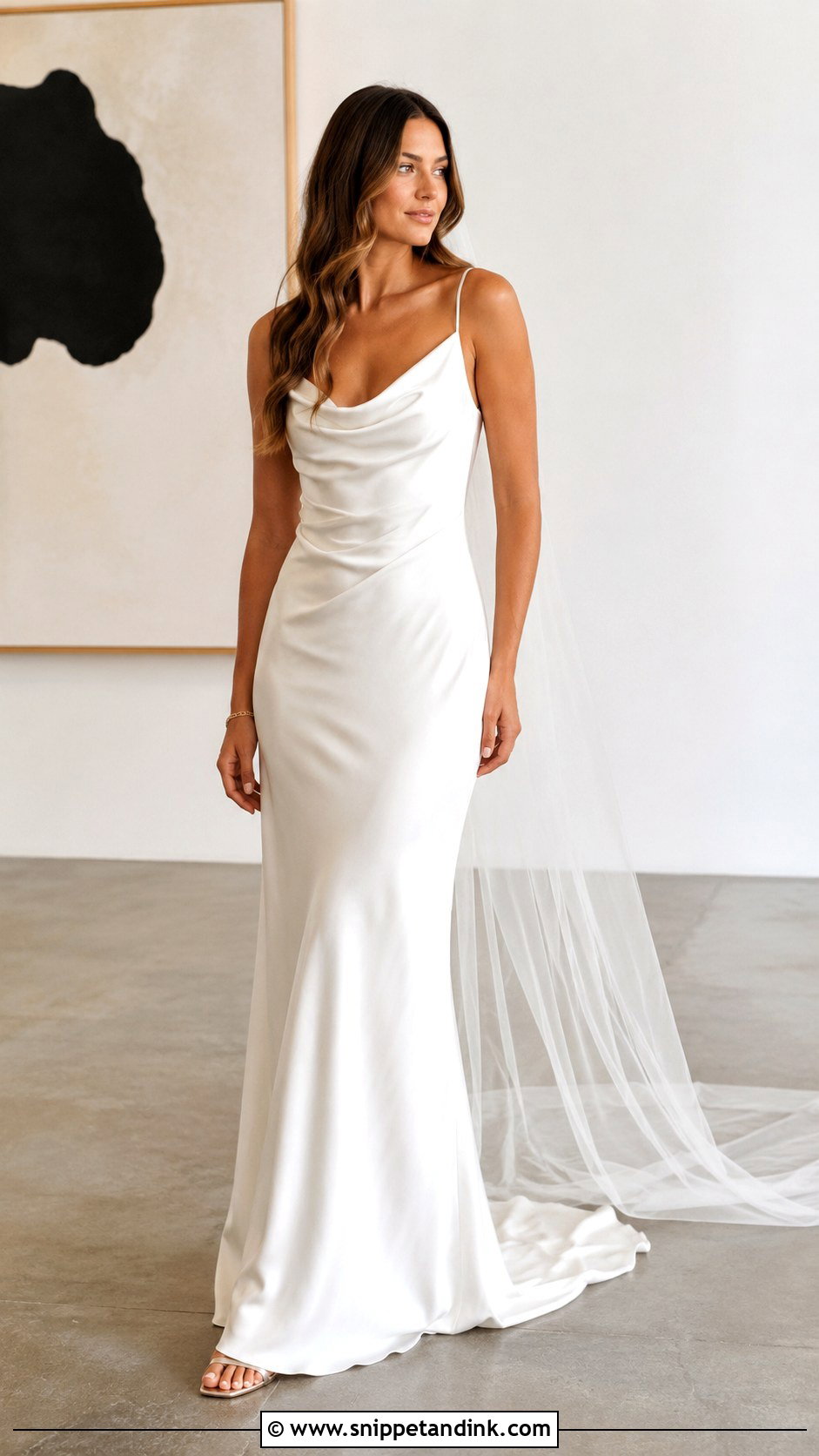
Folds of fabric at the neckline give a cowl its movement, and it only works in cloth that drapes, such as silk satin cut on the bias. A front cowl is gentle; a draped cowl back is the more dramatic choice for the walk away from the altar. Cowls shift as you move, so I often ask the seamstress to stitch a small weight inside the fold, and I keep fashion tape in my kit for the day itself. Try it on in daylight, not only under shop lighting. Reflective satin shows pulling and uneven seams much more clearly near a window.
7. Bateau Neck Wedding Dress
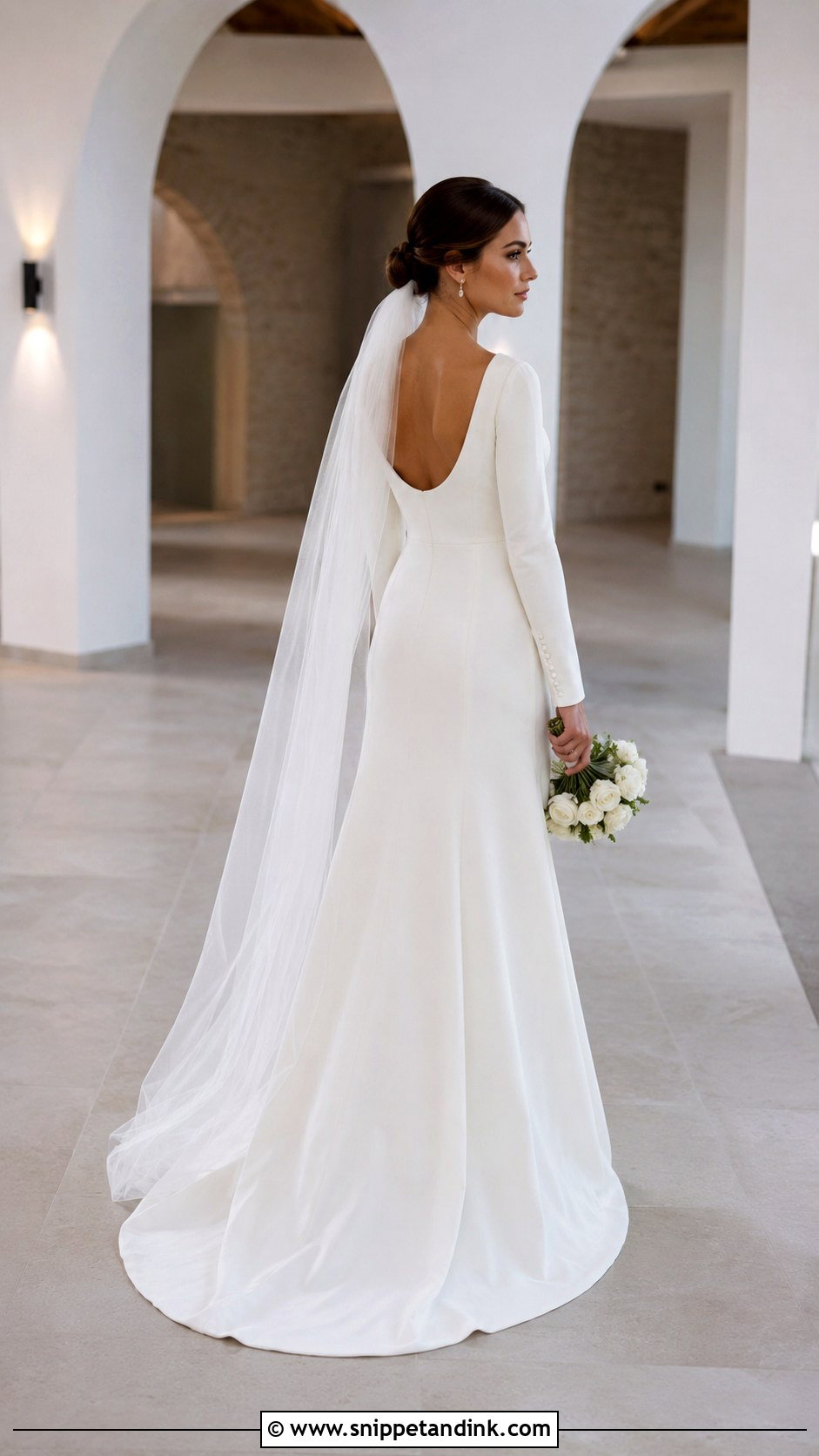
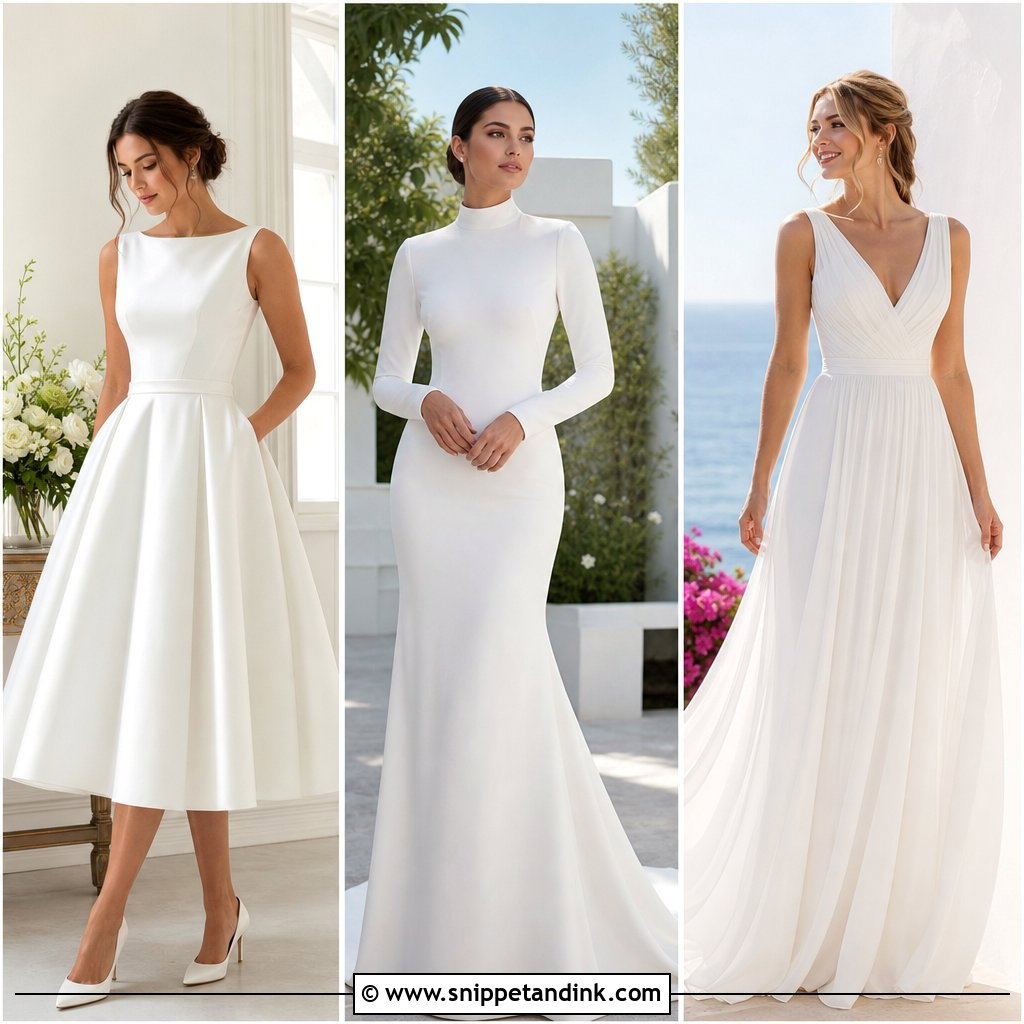
A bateau neck wedding dress runs straight across from shoulder to shoulder, which gives coverage and widens the collarbone line slightly. That makes it a good balance for narrow shoulders and less flattering on a bride who already has a broad frame. It suits a slim sheath or a gentle A-line. In matte crepe it feels quiet; in mikado, more formal. A low chignon with the veil tucked beneath it is my usual pairing. Leave the necklace off, and if there are sleeves, check the shoulder seam lets you raise your arms for the first dance.
8. Off Shoulder Wedding Dress
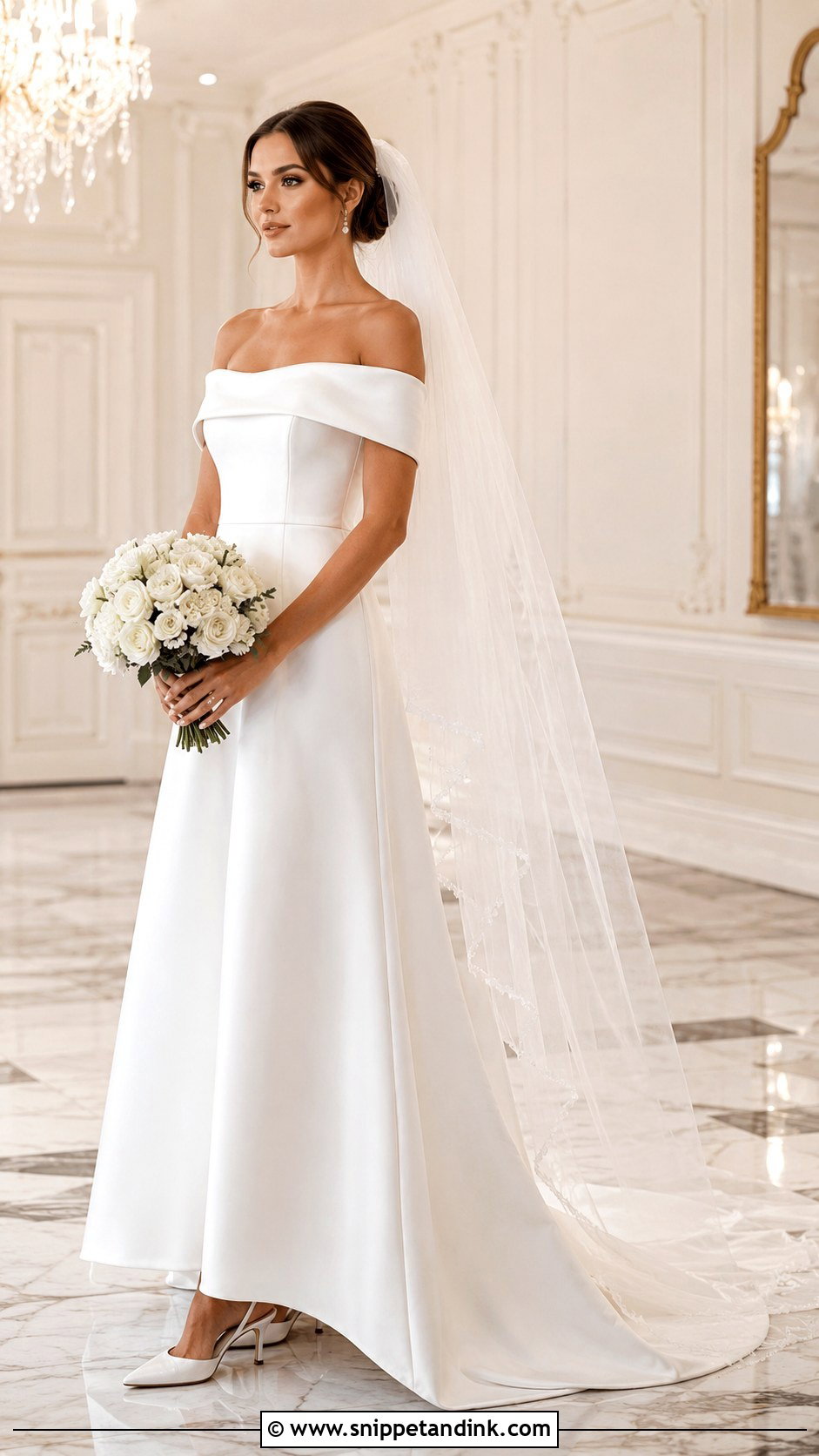
Off-shoulder necklines stay minimal when the band is smooth: either a folded satin cuff, which adds structure, or a softer crepe drape. The trade-off is movement. A band sitting on the upper arm limits how high you can lift them, so practise hugging and reaching during alterations rather than finding out at the reception. Removable straps give you a fallback. A clean bun and a raw-edge veil keep the shoulders as the focus, and slingback heels match the line without competing.
9. Minimal Ball Gown Wedding Dress
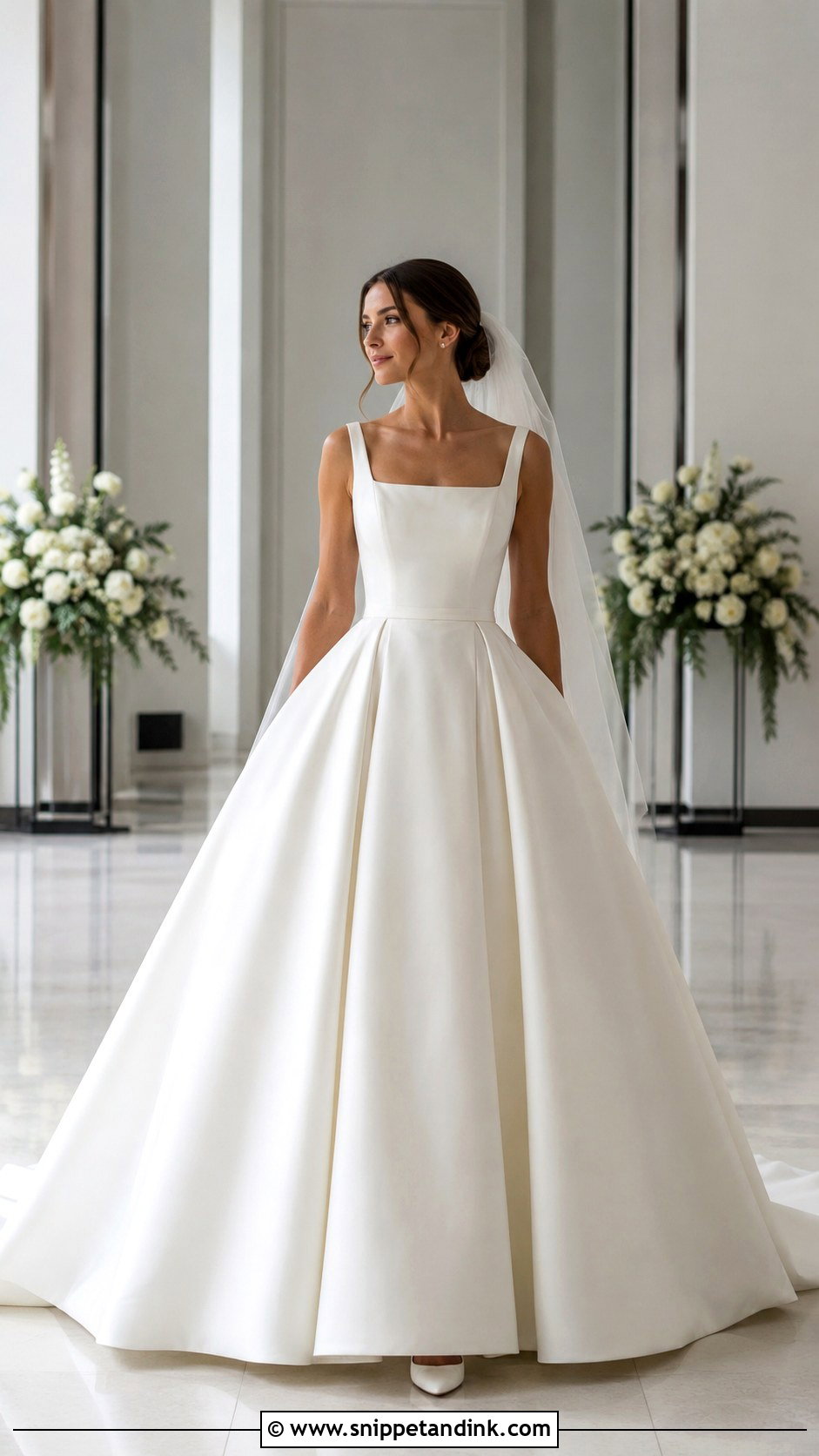
A ball gown can be minimal if the drama comes from shape and not sparkle. The skirt has to be smooth and heavy enough to hold its curve on its own, which is why mikado, faille and matte satin are the usual choices. On petite brides I’d suggest controlled volume and a slightly raised waist so the skirt doesn’t swallow them; taller brides can carry a wider hem and a longer train. Lift the petticoat at the shop. If it already feels heavy, it will feel twice that by evening. Pockets are welcome, but only if they lie flat when your hands aren’t in them.
10. Backless Sheath Wedding Dress
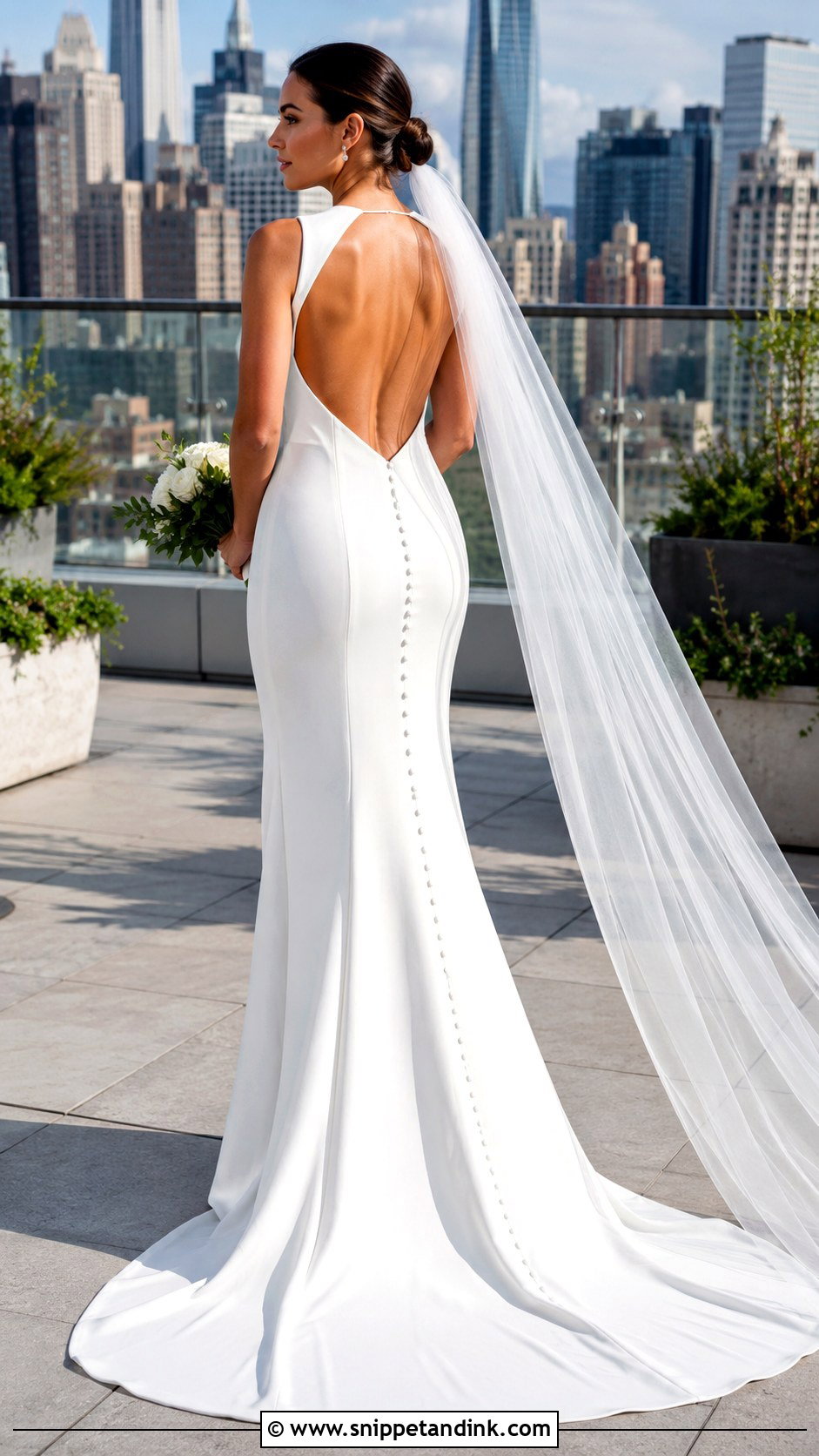
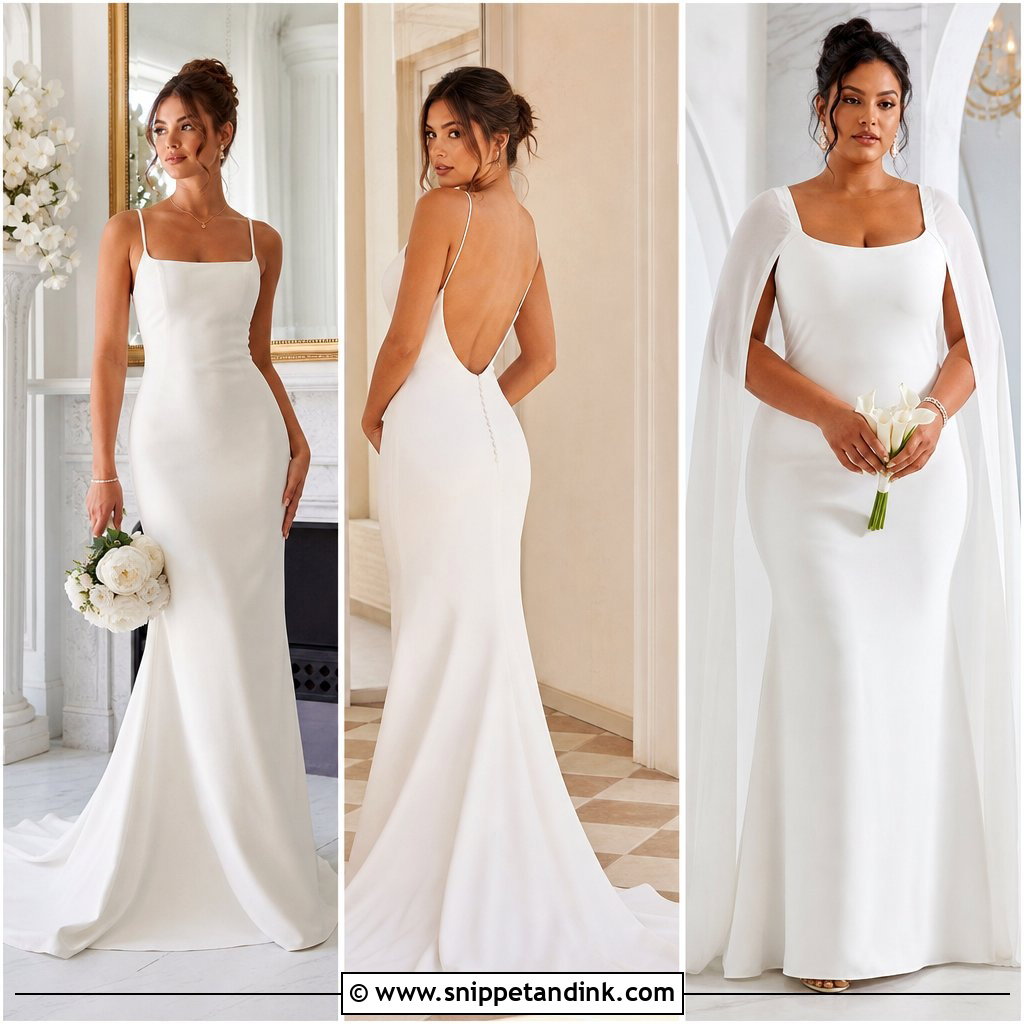
From the front, a backless sheath wedding dress looks restrained; the open back is the surprise as you walk up the aisle. Heavy crepe, double-faced satin or lined silk follow the body without showing every ripple. A high front neckline balances a deep back. The real question is support, and I want it answered before alterations begin, whether that’s cups sewn into the bodice or a custom backless bodysuit, because the fit changes once it’s in. If the back edge stands away from your skin when you sit, it needs taking in. Hair low or swept to one side, with the veil attached below the style, keeps the back clear.
11. High Neck Wedding Dress
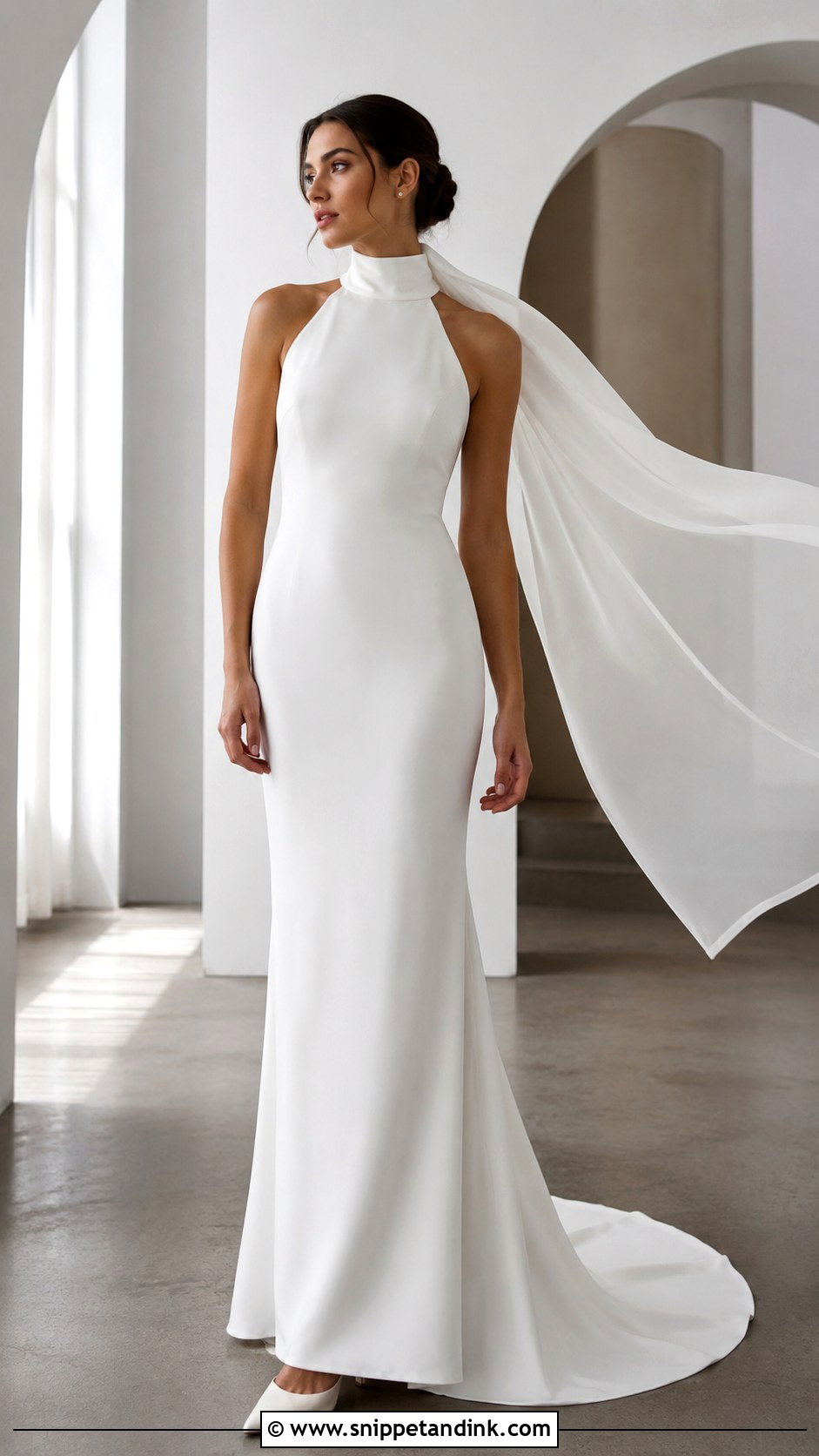
A high neck works through proportion: covering the throat makes the shoulders and arms look longer. A fitted crepe column with a mock neck is the sleek version; a sleeveless satin A-line with a high neck is softer. An updo is almost essential so the collar isn’t fighting your hair. Turn your head side to side at the fitting. If the collar touches your jaw, it will smudge foundation onto the fabric within the first hour. An open back or a lightly flared train balances the covered front, and some brides add a long detachable scarf for movement.
12. Bias Cut Silk Wedding Dress
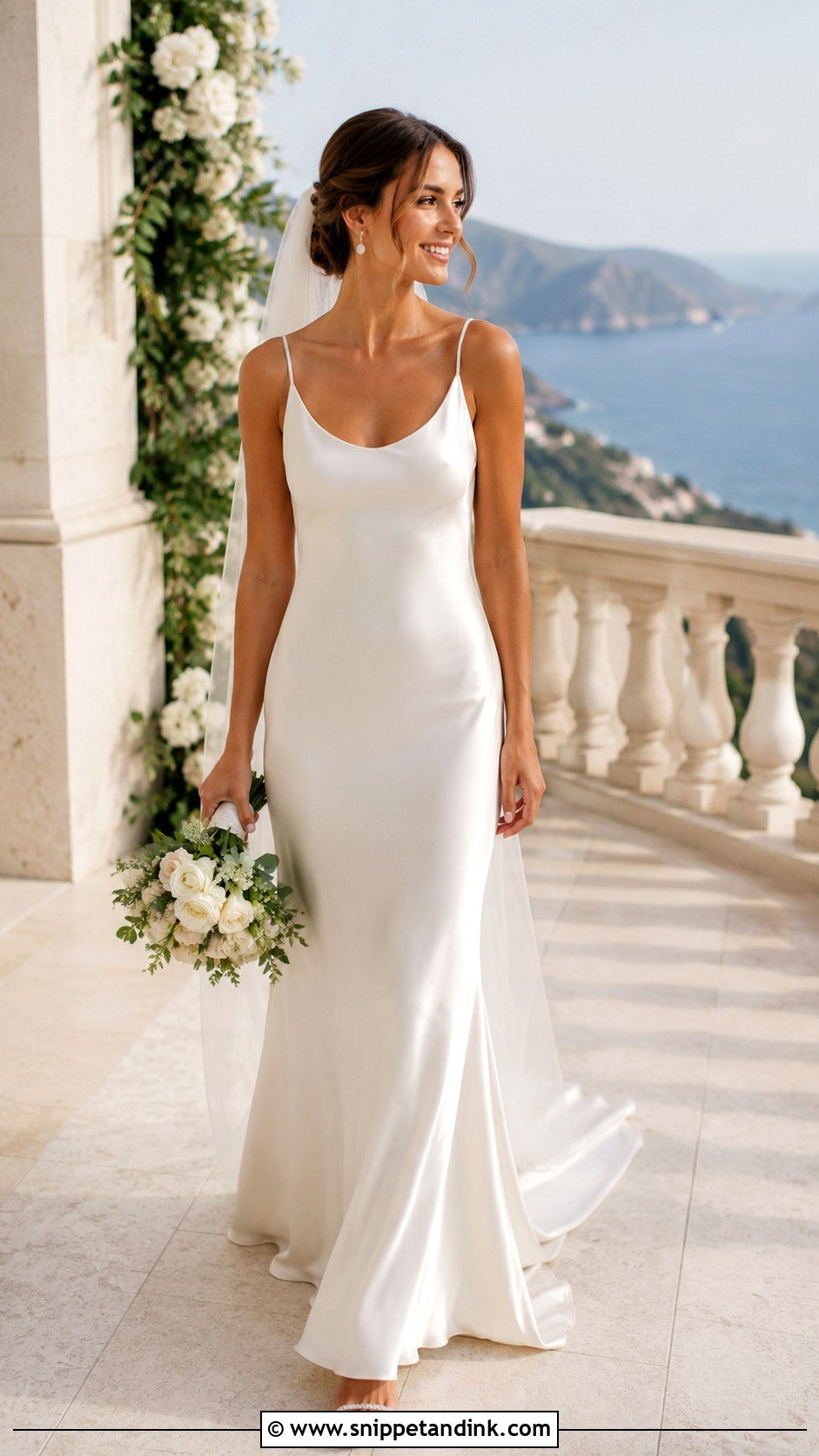
Cutting silk on the bias, diagonally across the grain, is what lets it pour over the body instead of hanging stiffly. That same quality makes it honest about everything underneath: tension at the hips, a visible underwear line, a seam that pulls. Smooth, edge-free foundations aren’t optional here, and neither is a seamstress who has handled bias cuts before, since they can drop and grow longer after hanging. A scoop neckline and thin straps keep it simple. A silk crepe lining adds coverage. I like it most for coastal or gallery venues where the light is soft.
13. Basque Waist Satin Wedding Dress
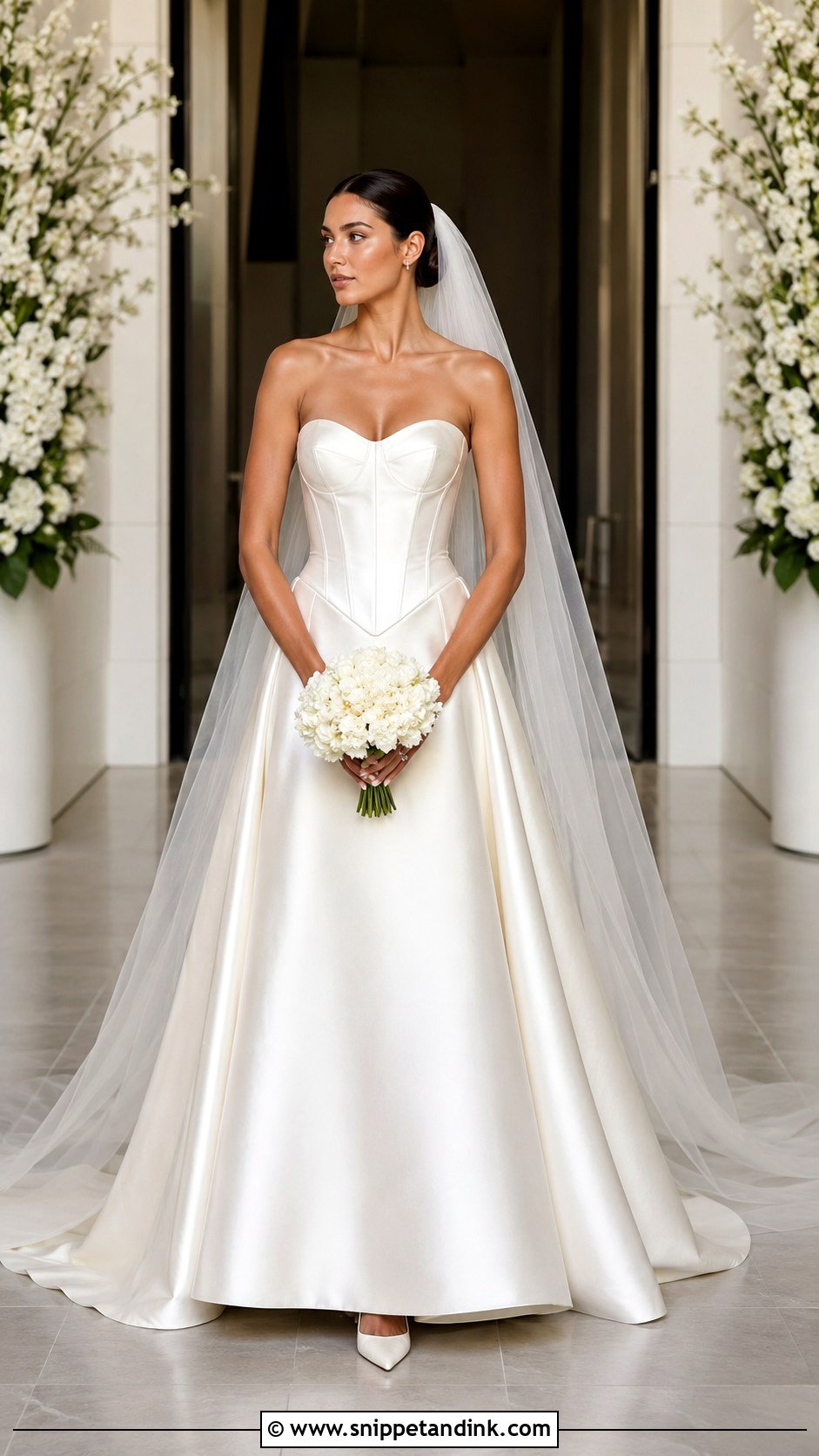
The basque waist dips into a gentle V at the centre front, lengthening the torso before the skirt opens out. In plain satin with a strapless or square neckline, the shape itself becomes the detail. A moderate dip tends to age better in photographs than a sharp, deep one. The fitting check I care about here is sitting: a basque point can dig into the stomach when you sit, so the bodice has to contour without pinching. Pointed pumps, crystal studs and a sleek veil are all it needs.
14. Midi Courthouse Wedding Dress
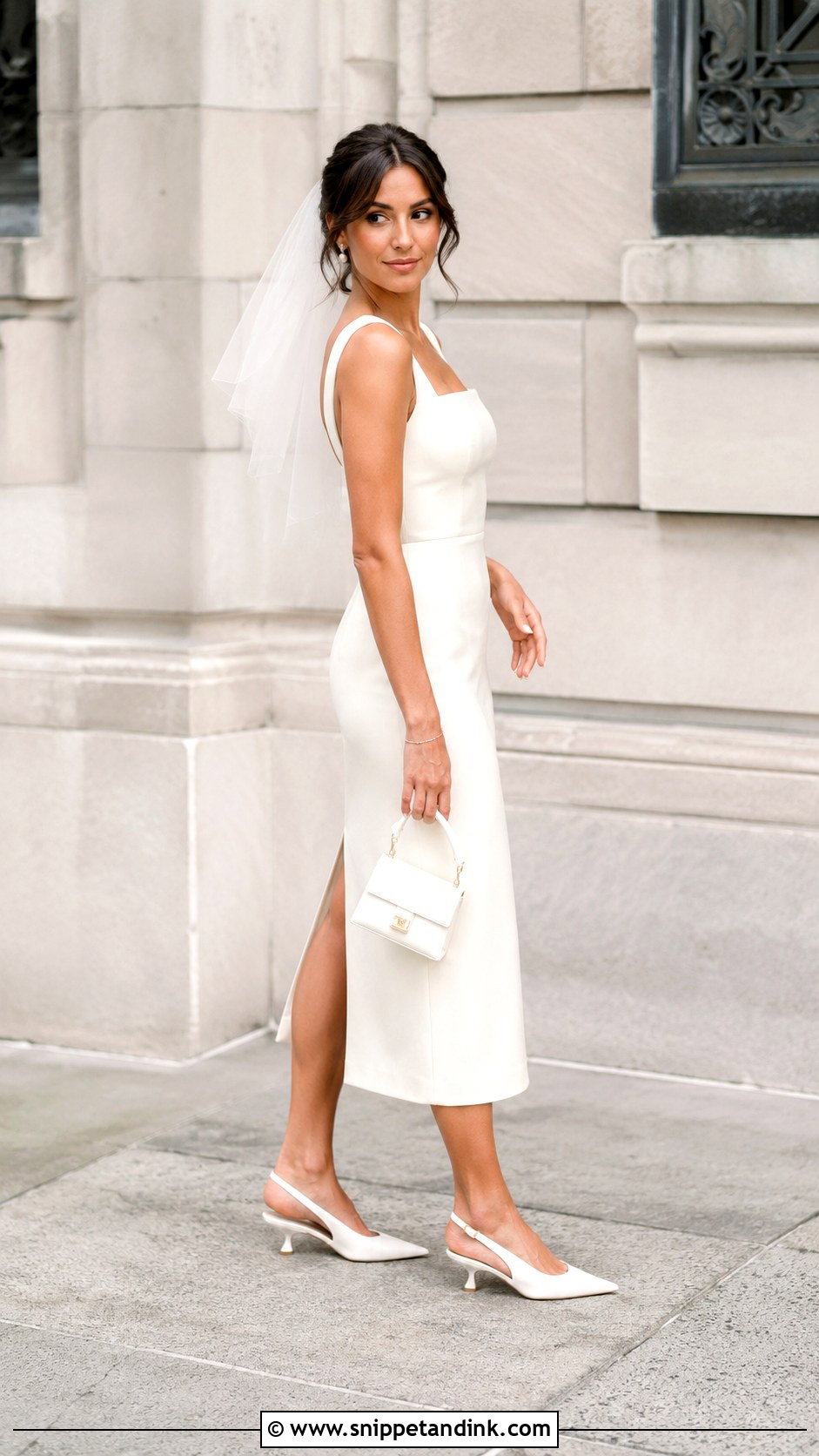
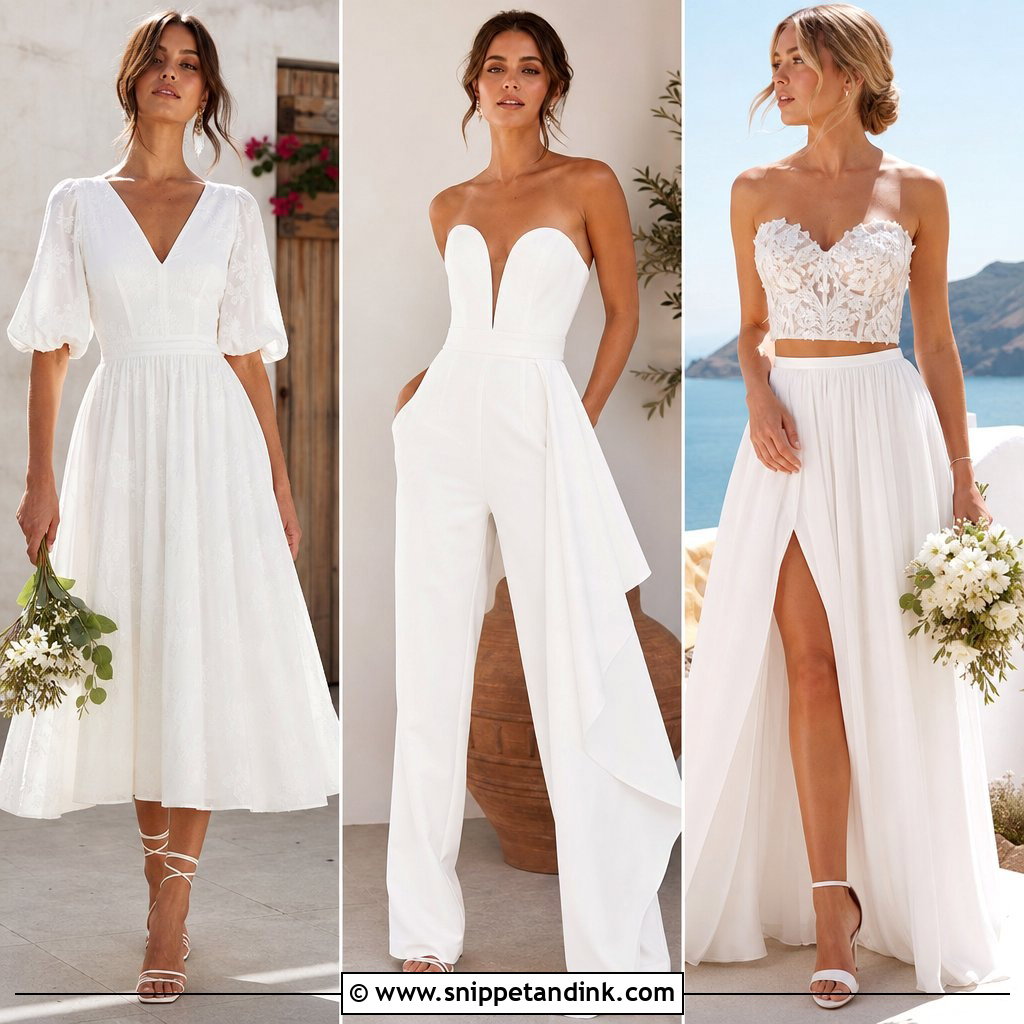
A midi ending between the lower calf and the ankle feels finished for a courthouse or registry ceremony without the scale of a floor-length gown. A structured column midi or a fitted crepe dress with a back slit both work. Because the shoes are fully on show, I treat them as part of the outfit: pointed slingbacks are my default. Shorter lengths expose proportion, so tailoring has to be precise at the hem and waist. A cropped blazer for arrival photos is a smart addition, and this is one wedding dress you’ll genuinely wear again.
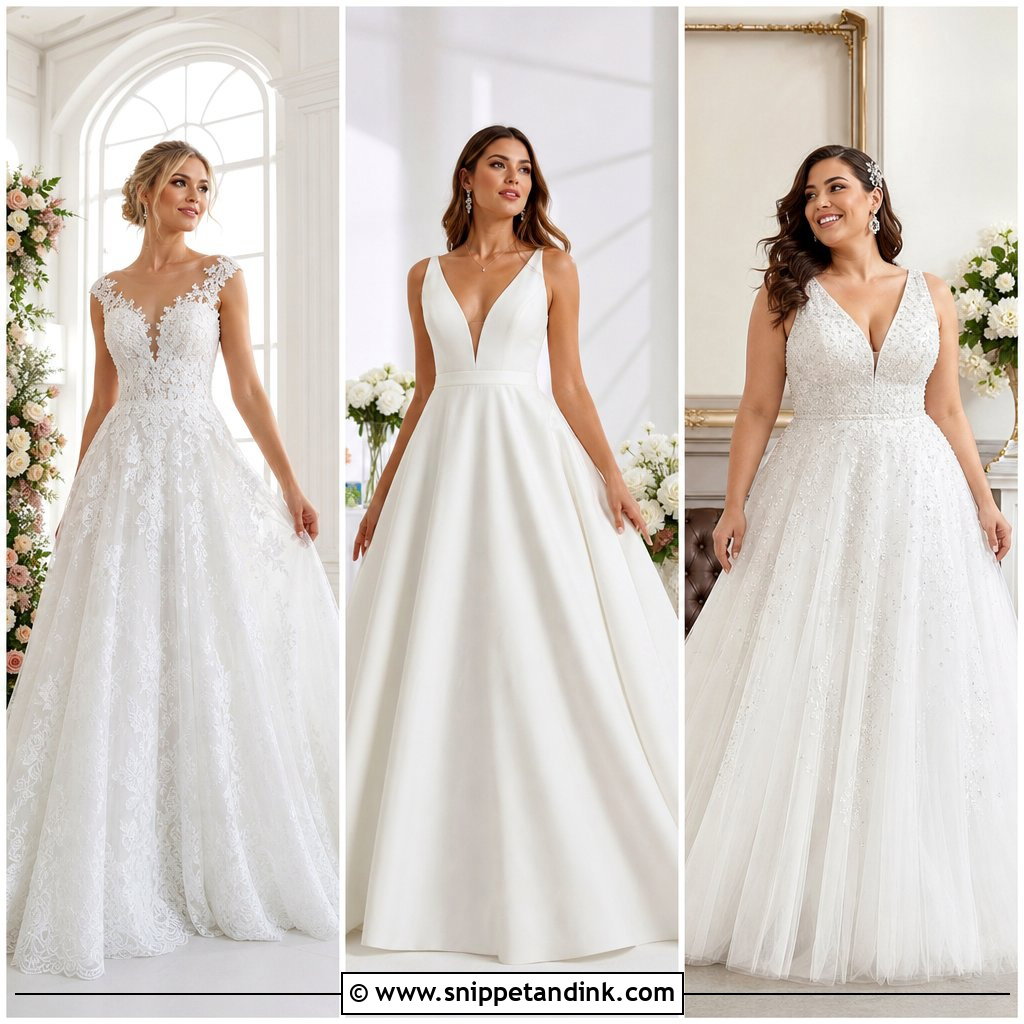
15. Minimal Mini Wedding Dress
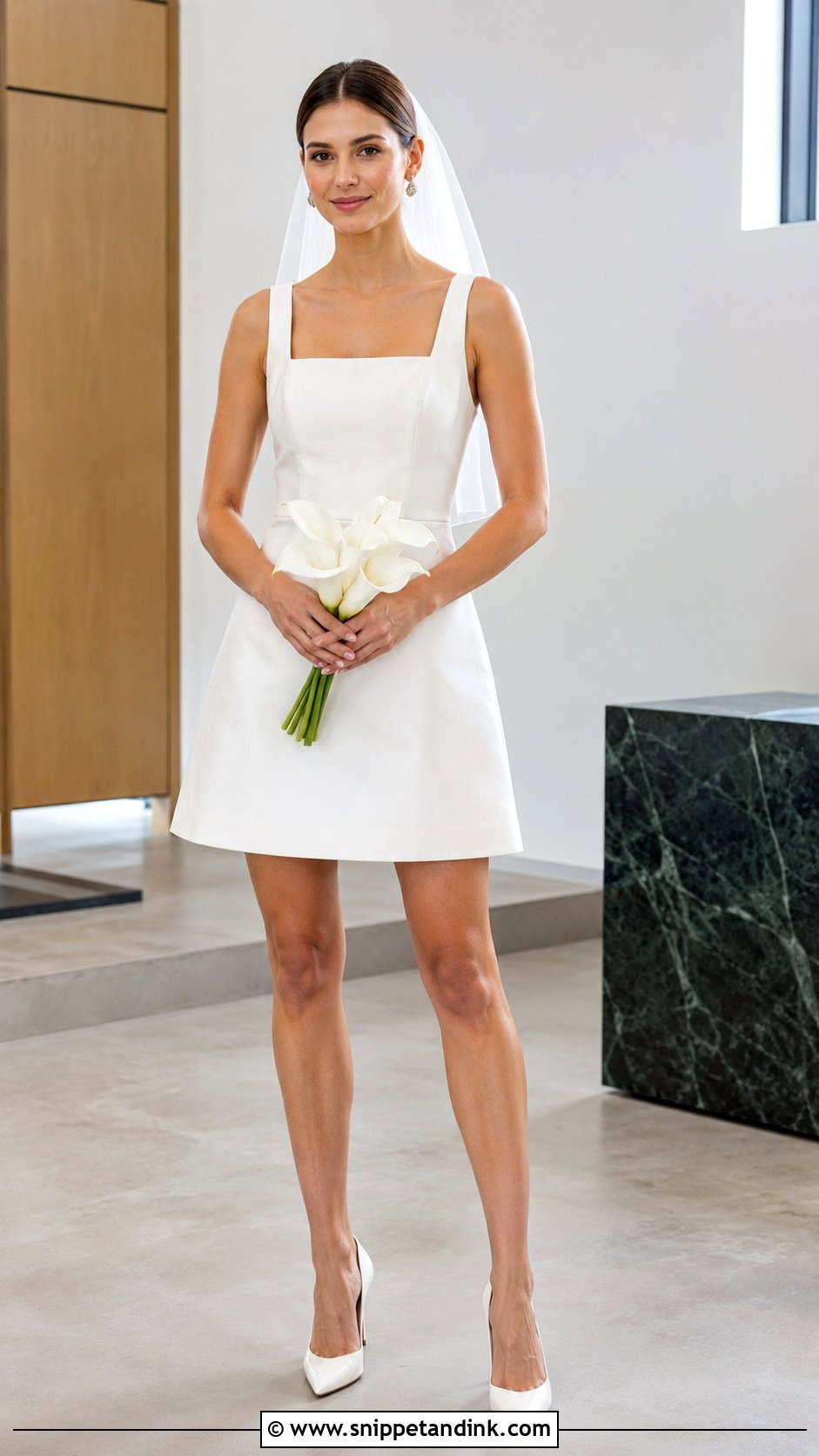
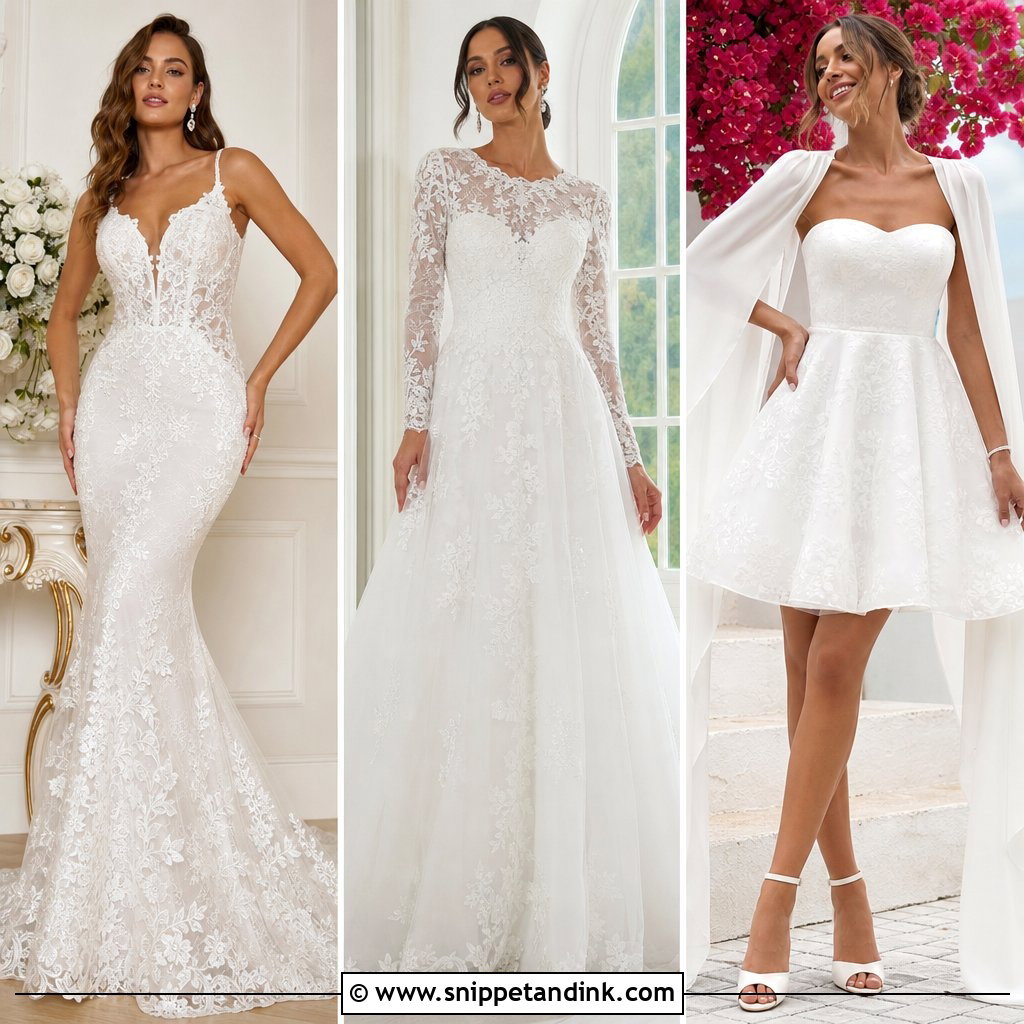
A short wedding dress needs more polish than a long one, not less, because there’s less fabric to hide an uneven hem. I’d look at a clean shift or a tailored A-line in crepe or structured faille. Keep the neckline refined and the bodice secure to balance the bare legs. Sheer tights work in cooler weather. Sit in it in front of a mirror before you buy: a mini that’s fine standing can ride up uncomfortably high in a chair. A detachable overskirt gives you a longer silhouette for the ceremony and the mini for dancing.
16. One Shoulder Wedding Dress
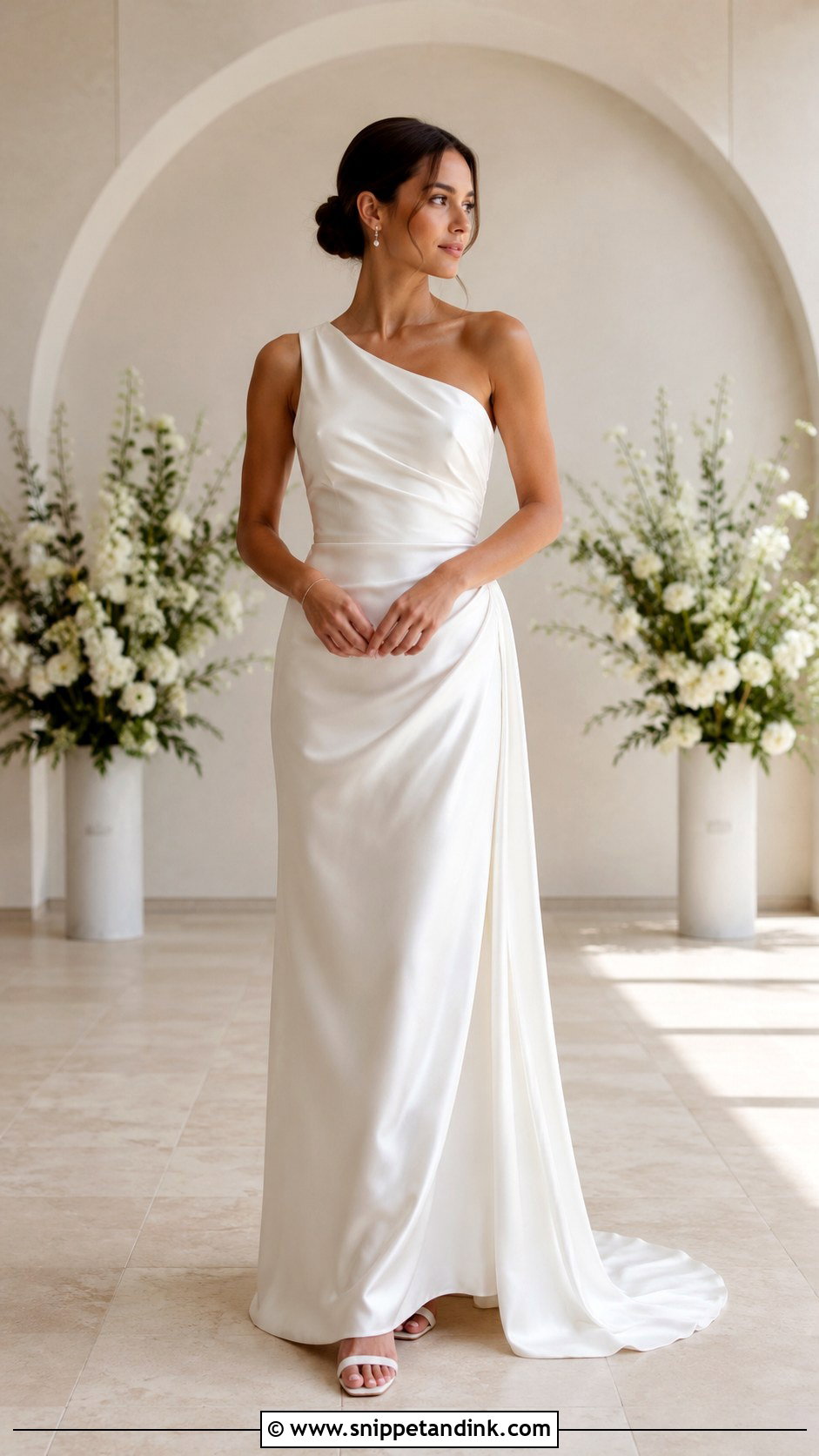
One strap means one side of the bodice is doing all the holding, so the inside construction matters more than the strap itself. Without balanced boning, the bare side slips and the neckline tilts. A wide sculpted band looks more architectural; a soft draped strap moves more. Either suits a satin column or fitted crepe sheath. I keep jewellery to small earrings and one bracelet on the bare arm. At fittings, raise both arms and hug someone. If the neckline doesn’t come back level afterwards, it needs adjusting.
17. Cape Sleeve Wedding Dress
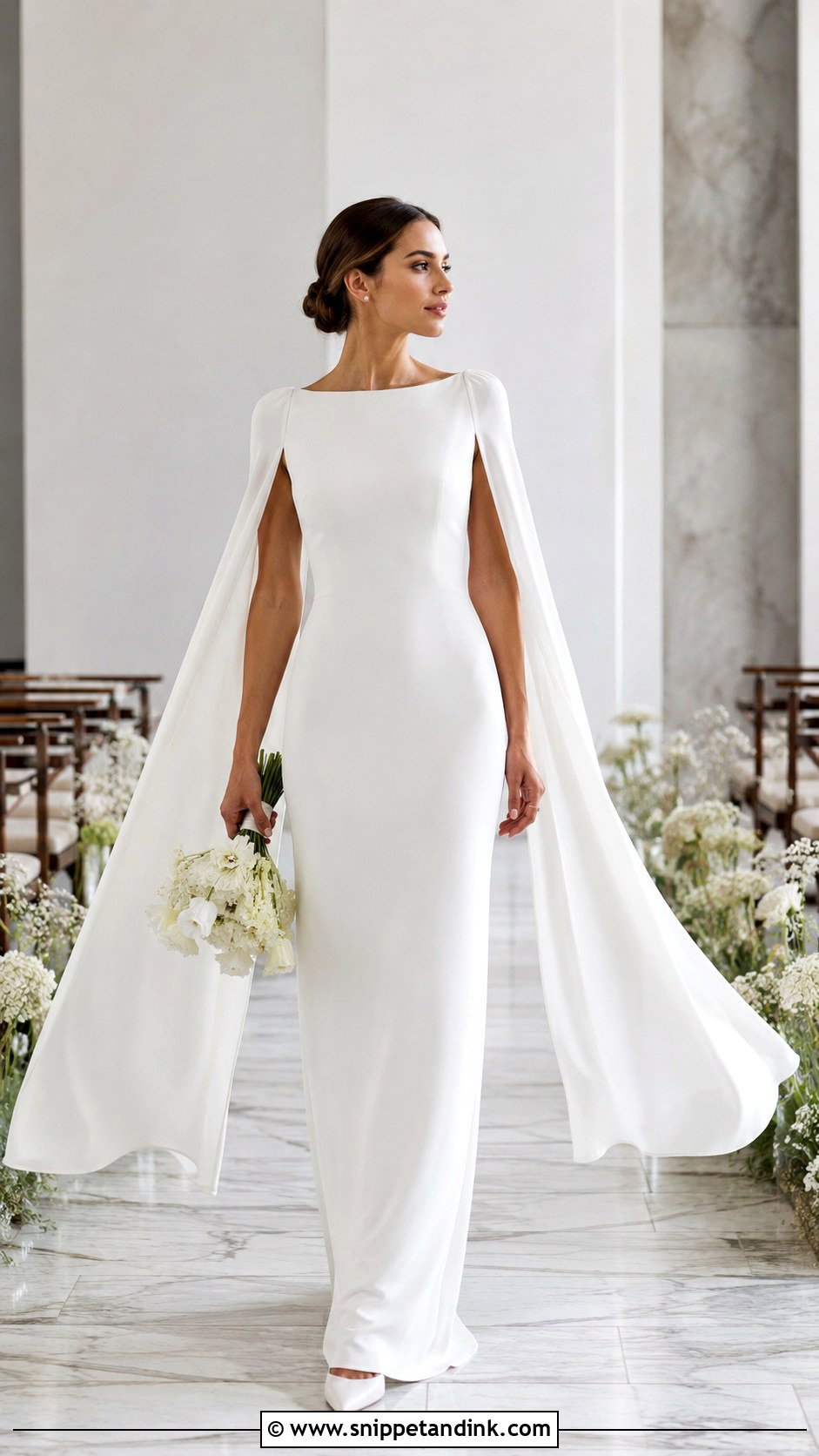
Cape panels falling from the shoulders give movement and coverage with no embellishment at all. On a column or narrow A-line in matte crepe they look streamlined; in chiffon they float. Because the cape creates length behind you, many brides skip the veil. If you want both, choose sheer tulle that won’t flatten the cape. Watch the length: a cape that touches the floor gets stood on by you and by guests. Detachable panels make the reception easier.
18. Structured Mikado Wedding Dress
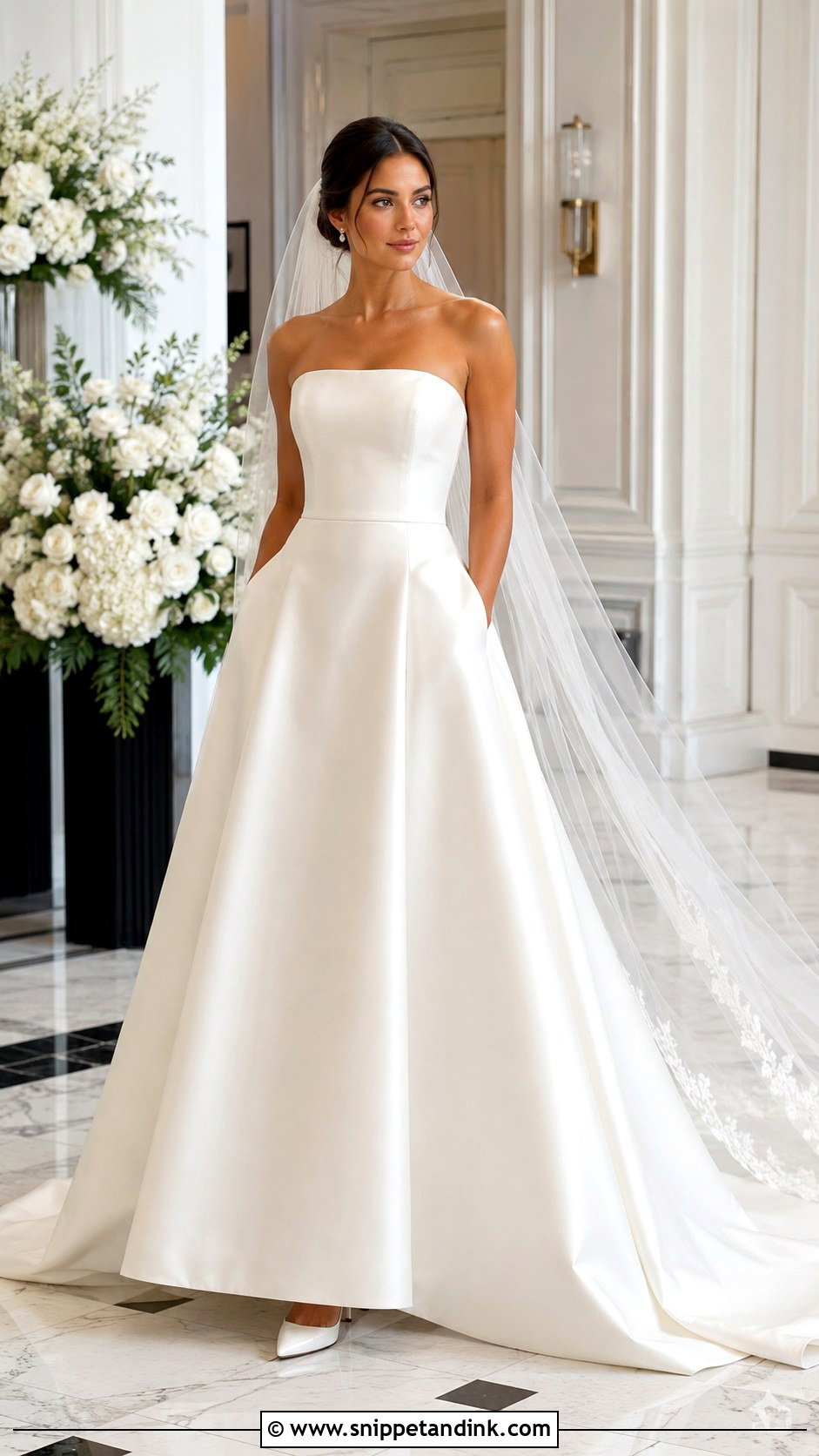
Mikado is a crisp, heavy silk blend that holds shape on its own, which is why it suits clean A-lines and plain ball gowns. It needs very little help. Princess seams or precise pleating shape the bodice without breaking up the surface. The thing to know about mikado is that it creases sharply where it folds, so sit down at the fitting and check where the lines form across your lap. A sturdy bustle is worth paying for with a train this stiff.
19. Empire Waist Wedding Dress
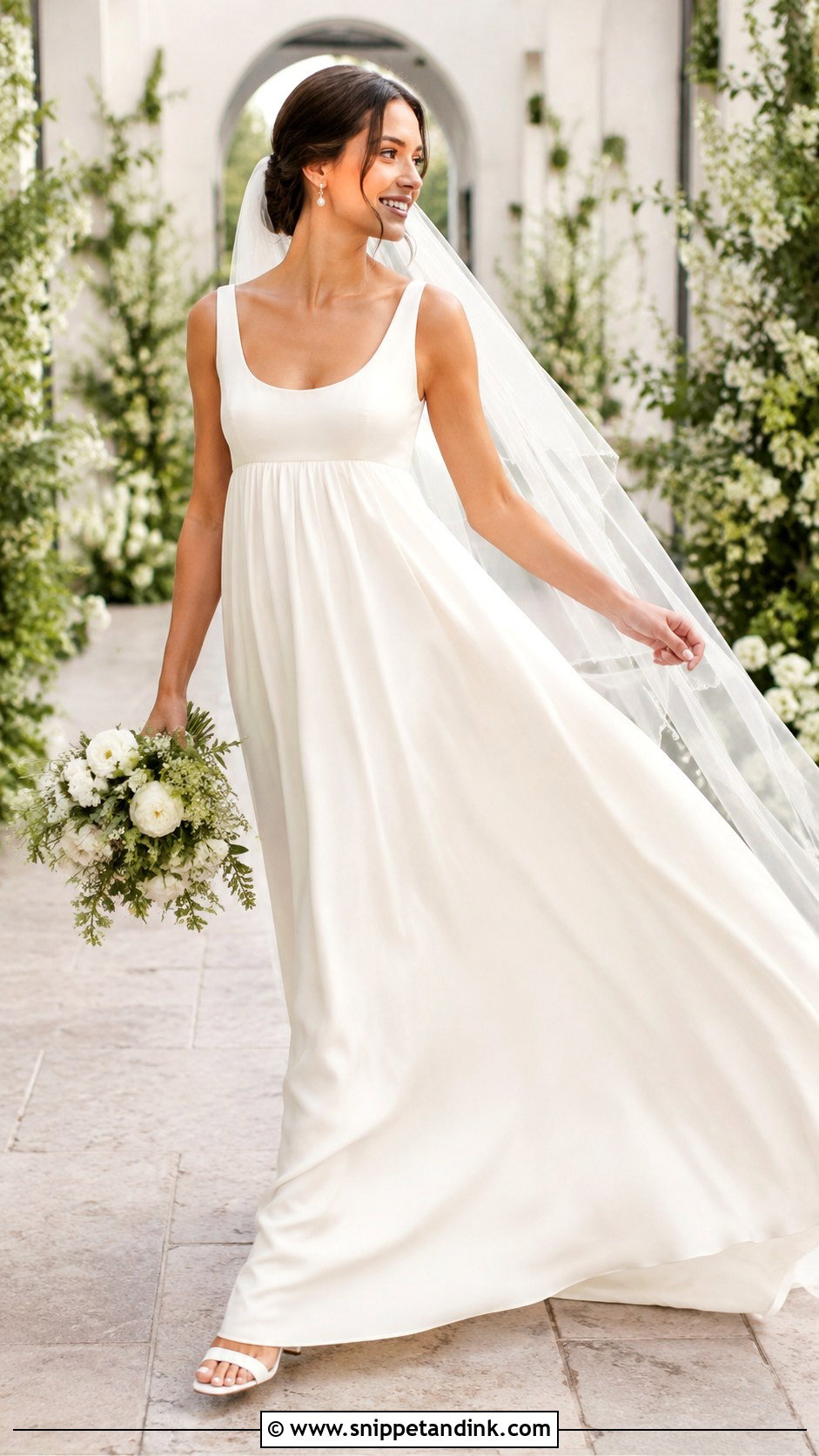
An empire waist wedding dress places the seam just below the bust and lets the skirt fall long and loose. In silk crepe, matte satin or chiffon with very little gathering, it stays clean. The raised waistline is comfortable and lengthens the leg without tightly defining the middle. The common problem is the seam creeping upward as you move, so ask for a stay or elastic inside the waistline. A square or narrow V-neck suits it, and it’s one of my go-to shapes for garden ceremonies and destination weddings.
20. Tea Length Wedding Dress
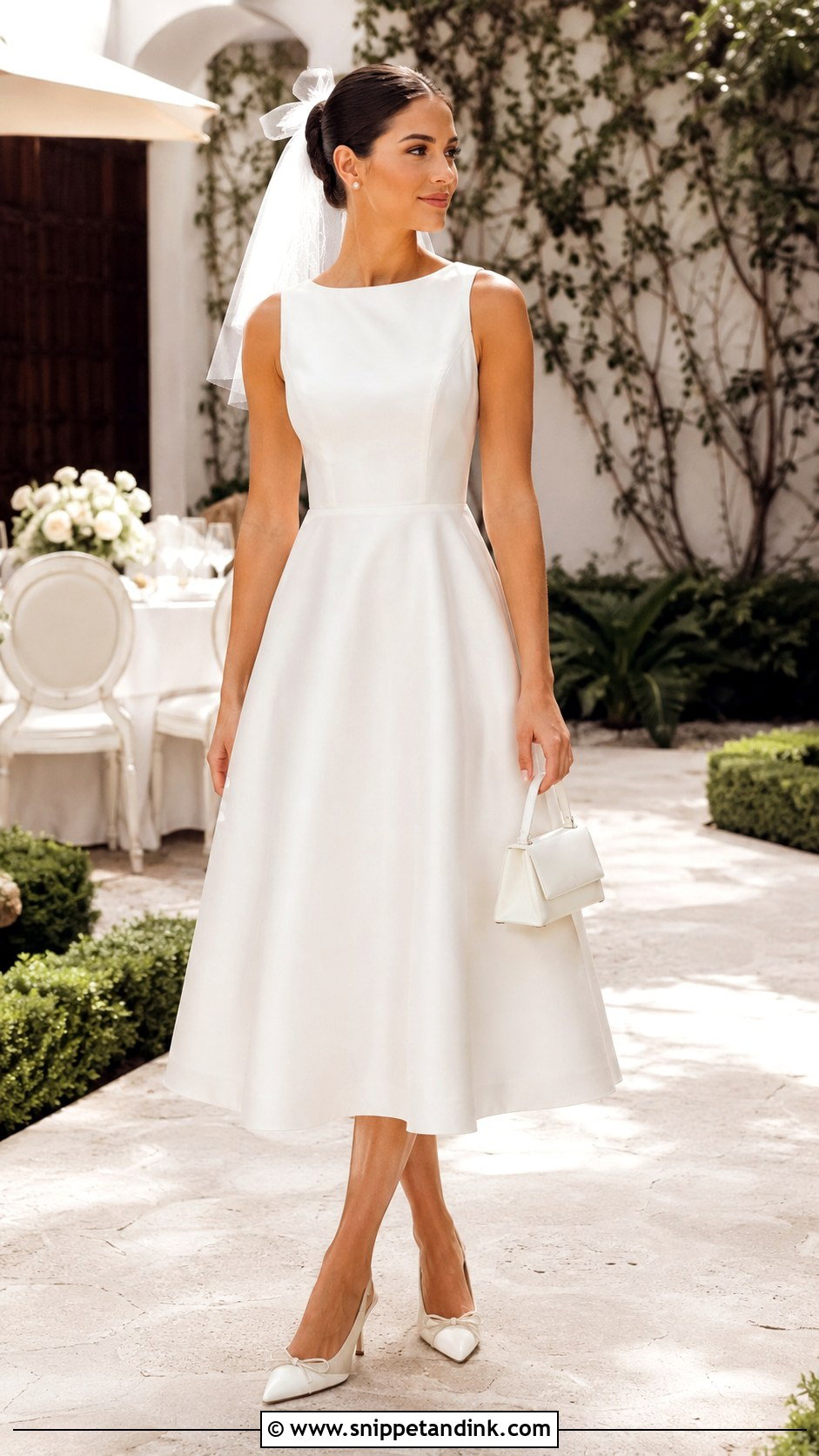
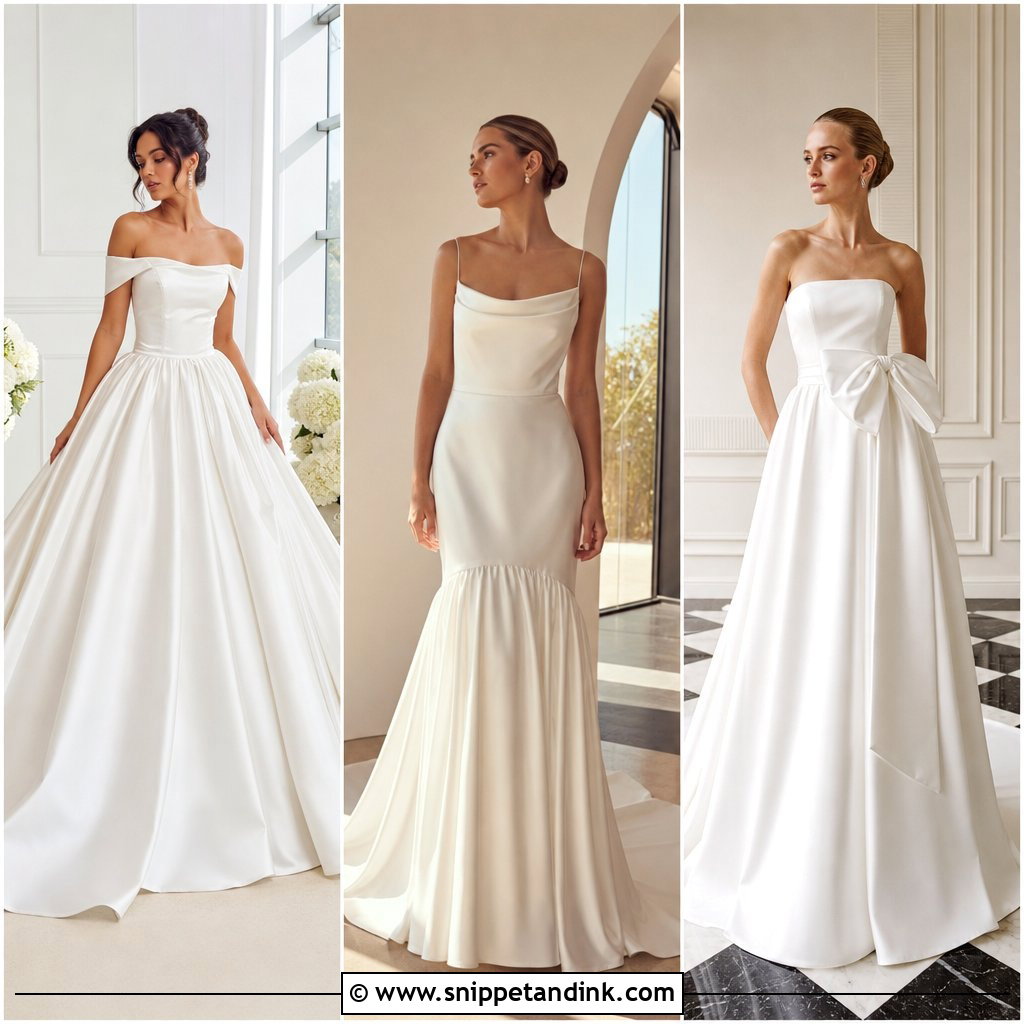
Tea length falls between the knee and the ankle, so your shoes become part of the design. A structured satin A-line or a bateau-neck dress with a gently flared skirt keeps it modern. Keep accessories out of themed vintage territory if you want it to feel current: pointed pumps or slingbacks, pearl studs, a short veil. The skirt should swing when you walk but hold a neat shape when you stand still for photographs. It’s far easier to move in than a train, which makes it a natural fit for daytime ceremonies and small weddings.
Underwear, Steaming and the Hem on a Gown This Plain
Most of what makes a clean gown look expensive happens at fittings and on the morning, not in the shop.
Bring the real underwear to the first fitting
Every alteration is measured over whatever you wear underneath. Swap a bra or shapewear between fittings and a bodice that sat flat will suddenly ridge. With slips and bias cuts, a smooth, edge-free nude set or a bodysuit is the usual answer, and I’d buy it before the first appointment.
Book alterations with time to spare
Seamstresses commonly want the dress around two to three months before the wedding, with two or three fittings spread over that time. Plain gowns aren’t quicker. A hem on a bias-cut silk or a bodice on a strapless column takes careful work, and a seamstress may want a bias dress to hang for a while before it is hemmed so the fabric settles.
Steam it, and keep the iron away
Crepe, satin and silk all mark under a direct iron, and satin can turn shiny where the plate touches. A handheld steamer kept moving, held a few inches from the fabric and worked from the inside where possible, releases travel creases without that risk. Hang the dress the night before so the skirt can drop. And on the day, ask someone to check the back of the skirt after the car ride; seated creases show most on a dress with nothing else going on.
Plain Dresses Are Built, Not Decorated
What makes a dress minimal is how carefully its few elements work together, not how little it has on it. The slip gowns here bring softness, the mikado and basque shapes bring structure, and the midi and mini lengths suit smaller ceremonies. Whichever one you lean toward, put your budget into fabric and alterations before accessories. Then add one thing, a long veil or a pair of sculptural earrings, and stop there. Wear it, sit in it and move in it at every fitting, because a plain dress shows exactly how well it fits.
You'll Like These Ideas:




Leave a Reply