
Most brides I dress fall for one detail first, a sleeve or a neckline, and only later find out whether the whole gown works on them. That’s why every idea below is styled head to toe, with shoes, veil, hair and jewelry. Bridal design right now leans toward sculpted waists, visible corsetry, three-dimensional flowers, bolder volume and pieces that come off between ceremony and reception, alongside the classic lace and clean satin that never really leave. Use the list to work out which shapes suit your venue, season and the way you actually move.
Working Backwards From the Wedding Date
The gown you try on in a bridal shop is almost always a sample. Yours is ordered in a size taken from your measurements and made to order, which takes months rather than weeks. Production times vary by designer and season, but four to eight months is common for made-to-order gowns, and alterations usually need another two to three months on top. That’s why I suggest starting to shop nine months to a year before the wedding if you can.
- Shop and order: allow time for two or three appointments before you commit.
- Production: ask the shop for the designer’s current lead time in writing, plus any rush fee if your date is tight.
- First fitting: roughly two to three months before the wedding, bringing your actual shoes and undergarments.
- Second fitting: hem, bustle and fine adjustments.
- Final fitting: a few weeks out, when your weight has settled, and take whoever will bustle you on the day.
Bridal size charts often run smaller than everyday clothing, so don’t be thrown by the number on the label. A gown is always ordered to fit your largest measurement and taken in from there, because letting out is rarely possible.
1. Basque Waist Bridal Dress
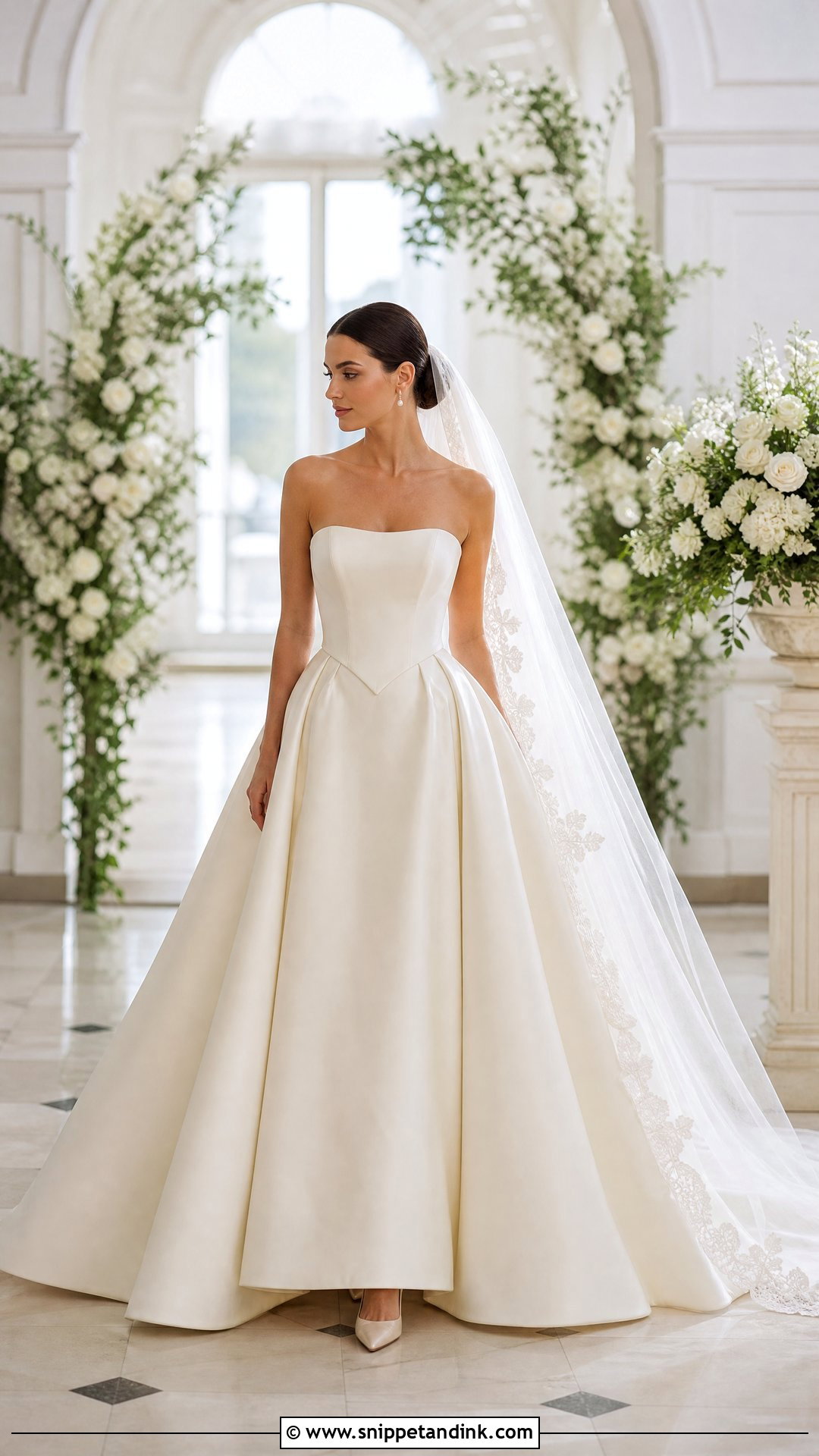
The point of a basque waist is that it dips into a V below the natural waist, which lengthens the torso and narrows the middle. A basque waist bridal dress in structured satin reads formal; with a tulle skirt it’s lighter and easier to walk in. The depth of that V is what I adjust most. On a petite bride a deep point can make the legs look shorter, so I’d ask for a shallower dip, and a fuller bust usually needs wider straps and internal support. Pointed ivory pumps, pearl drops and a plain cathedral veil. Nothing else.
2. Lace High Neck Bridal Dress
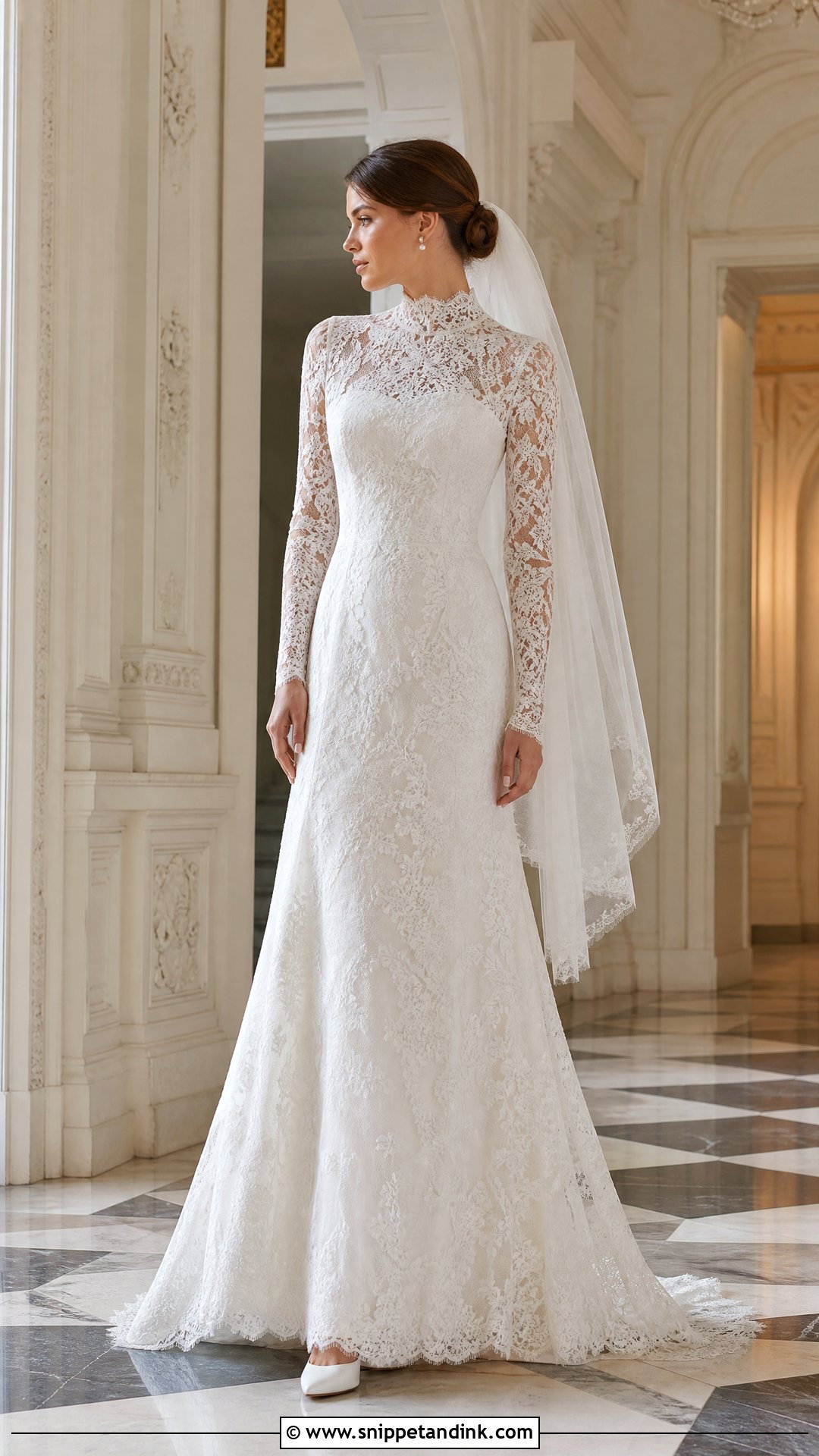
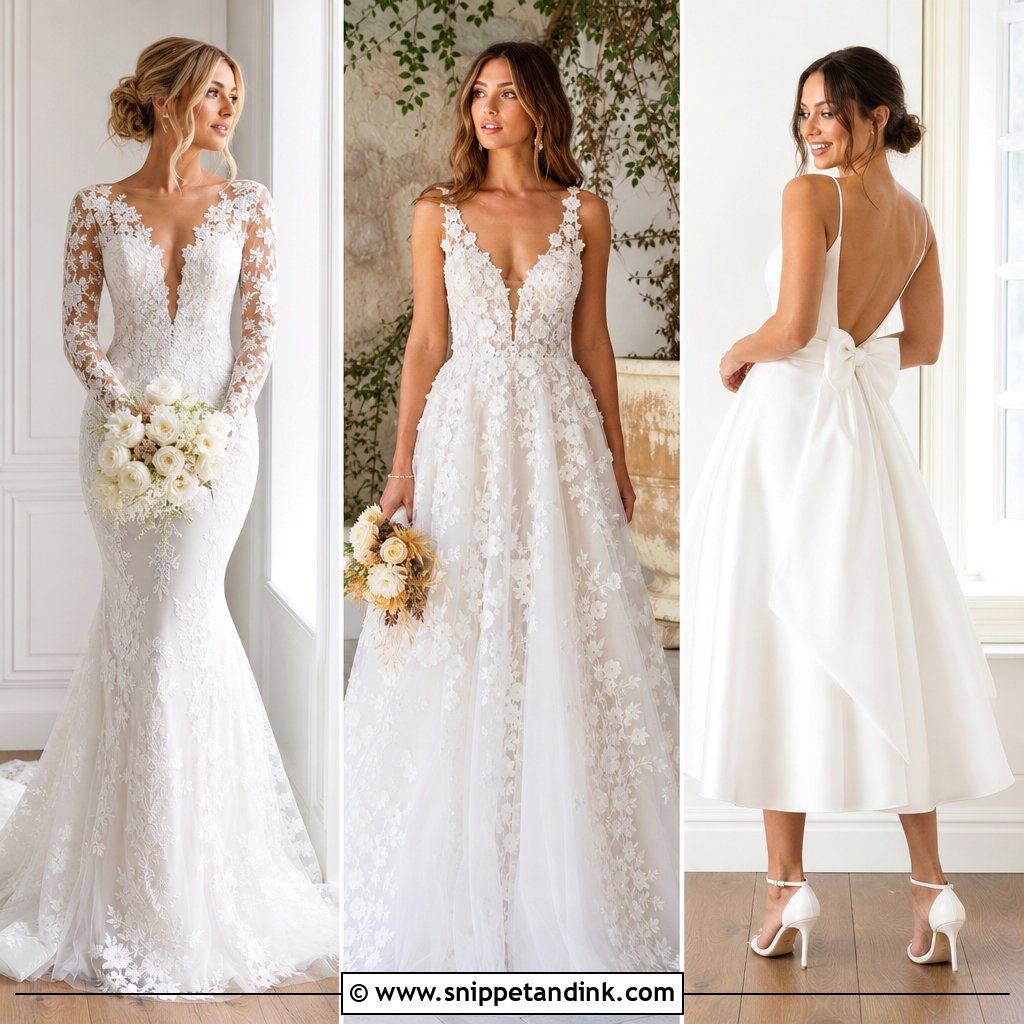
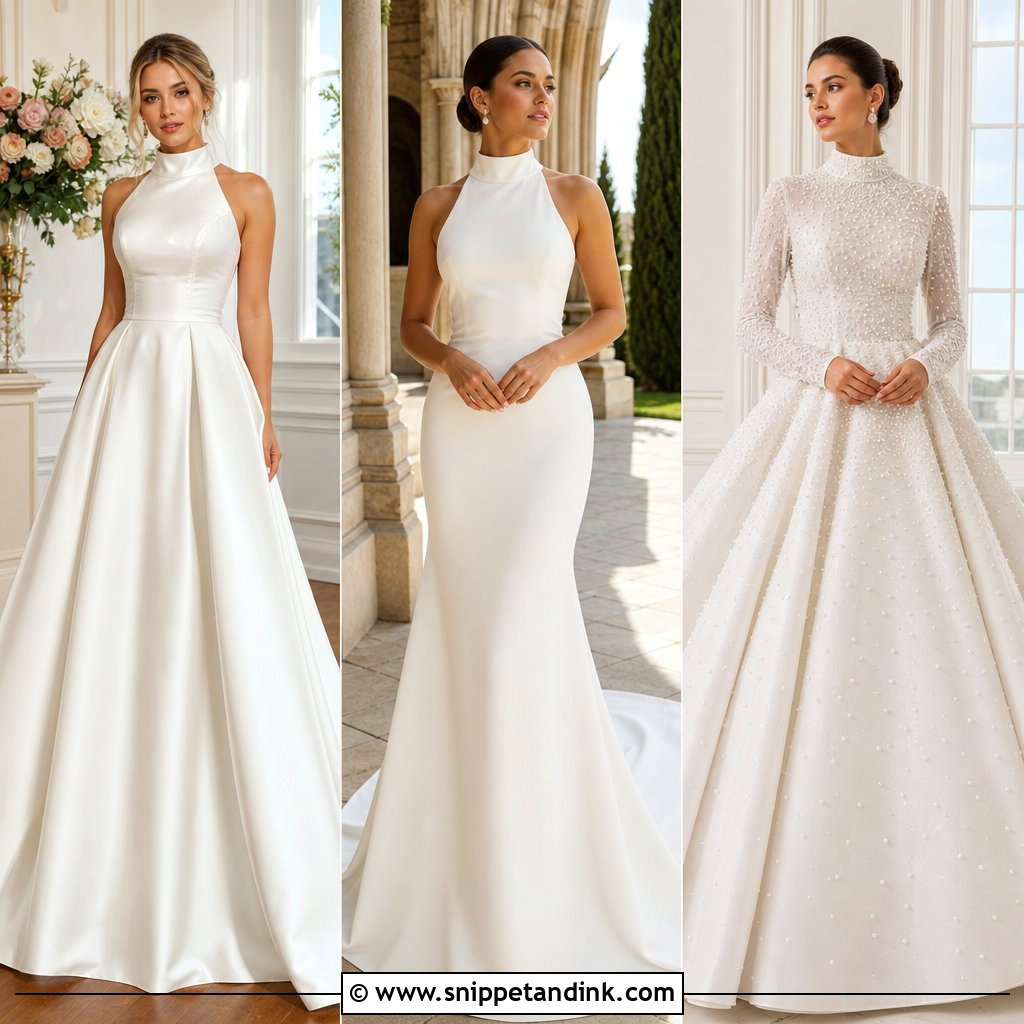
High-neck lace is quiet and romantic, and it suits historic venues and cool-weather weddings especially well. Floral or geometric lace carries enough texture that beading isn’t needed. A lined bodice gives full coverage, while an illusion yoke feels lighter on the shoulders. Where I’d be careful is the veil: a comb pushed into the top of an updo crowds a high neckline, so I attach a fingertip veil underneath a low chignon instead. With detailed lace, skip the ornate necklace and the jeweled belt.
3. Exposed Corset Bridal Dress
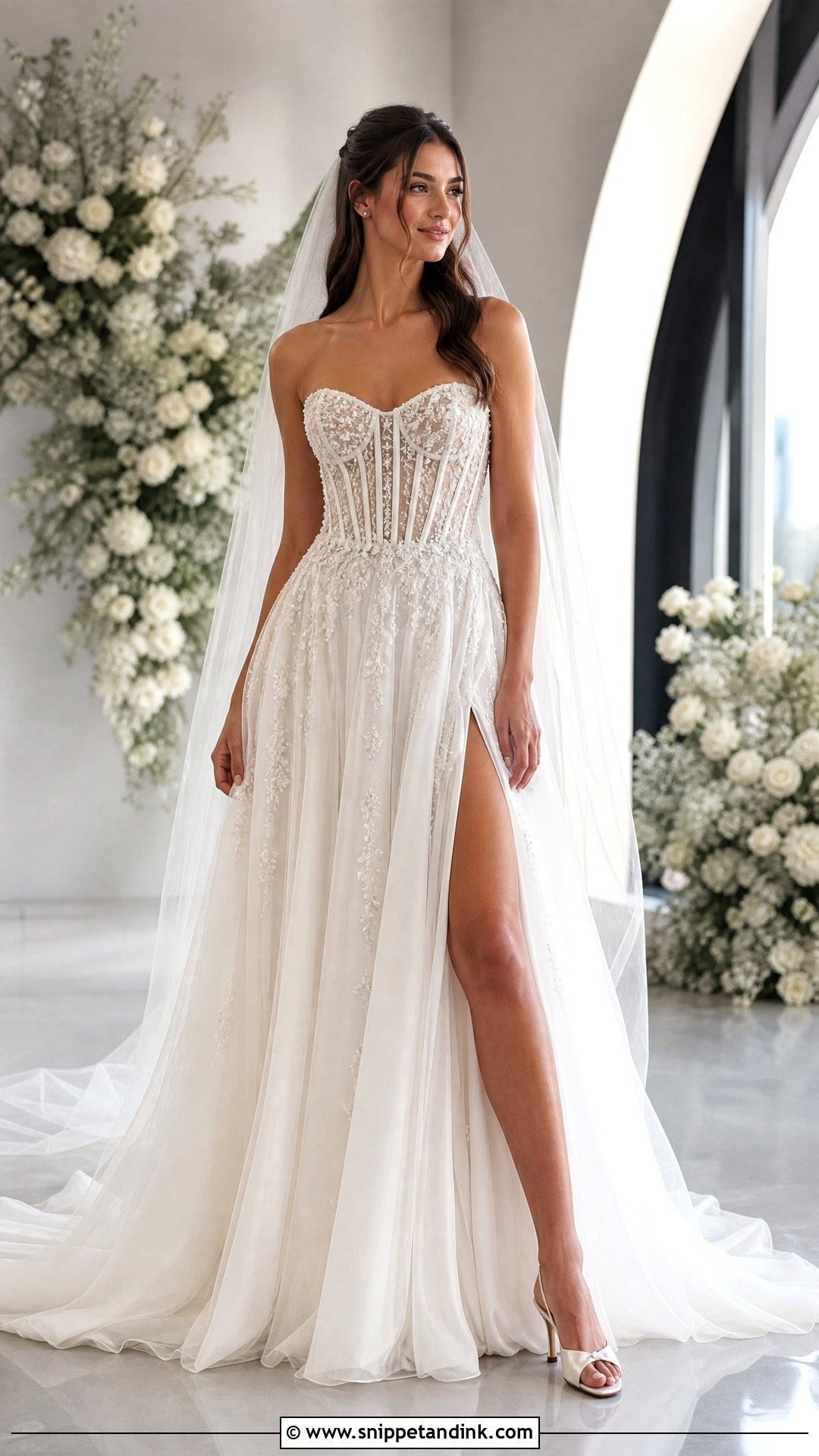
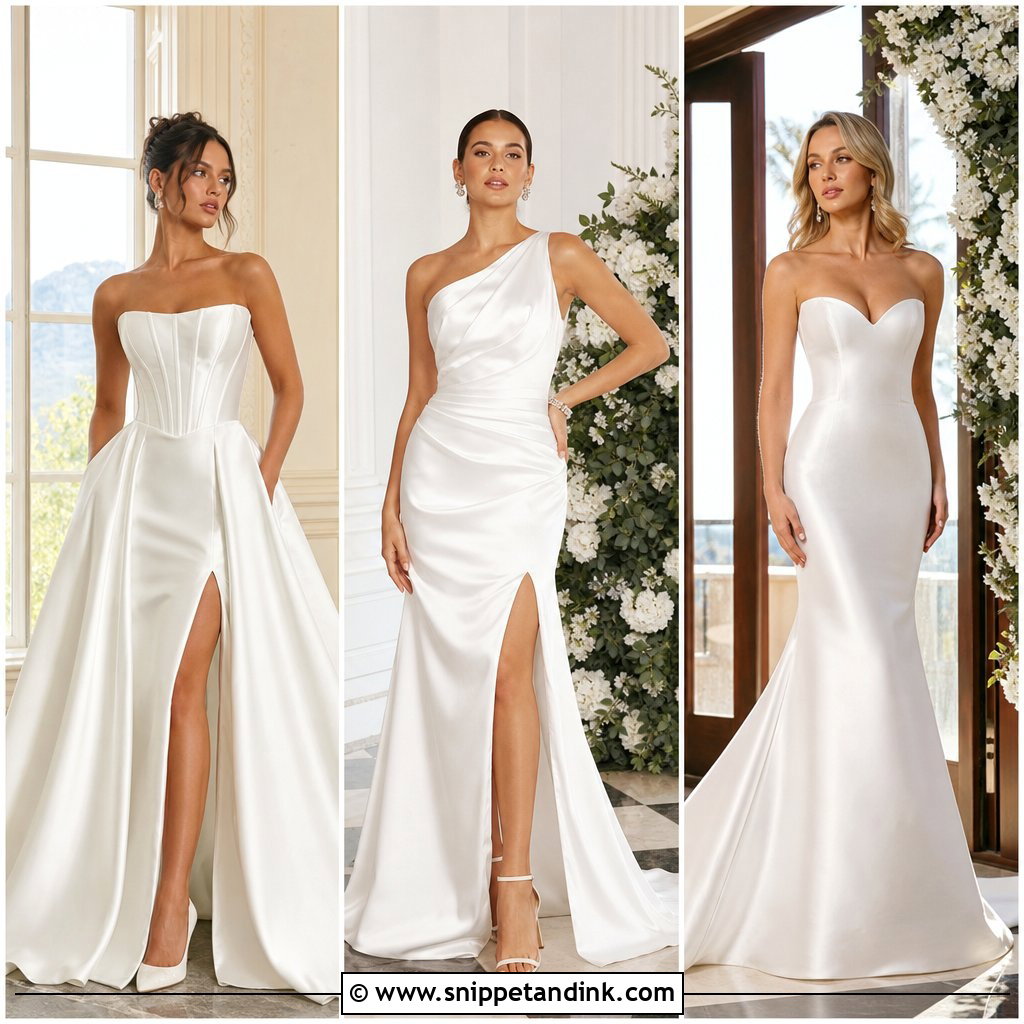
An exposed corset bridal dress lives or dies by its boning. Look for bones placed to follow the body rather than stitched in straight rows, a secure inner lining and cups that support without relying on tightness. An A-line skirt softens all that structure. My fitting test is simple: sit down, lean forward to sign the register, raise your arms. If the top edge digs in or the boning bows when you sit, it needs adjusting before the day. Illusion panels between the bones add coverage, and loose waves keep it from feeling stiff.
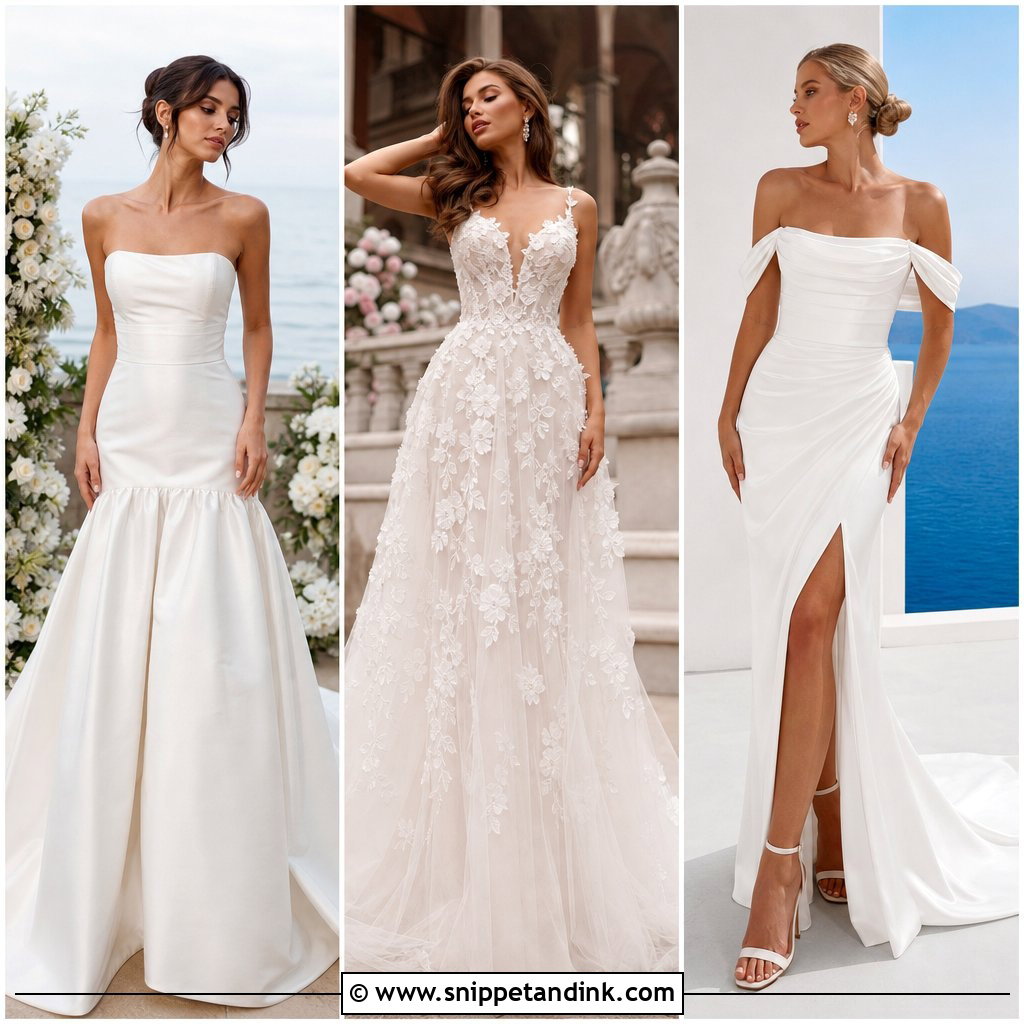
4. Draped Satin Bridal Dress
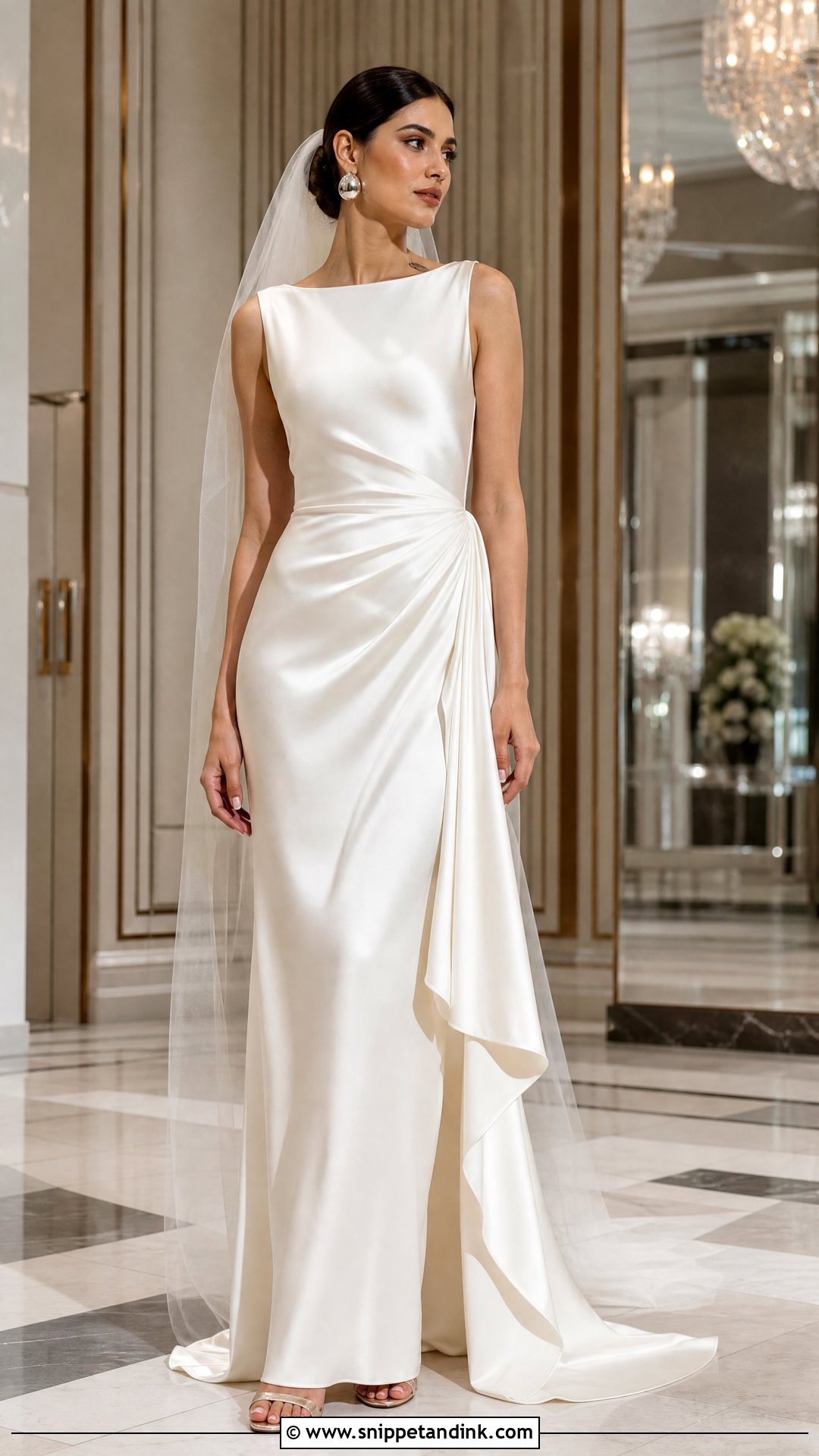
Draped satin has nowhere to hide. Soft folds across the waist, a gathered hip or a cascading side panel give movement without any decoration, but satin reflects light, so every pull line and every visible undergarment edge shows. That’s why I’d budget properly for tailoring and smooth, skin-tone foundations with this one. A column or fit-and-flare shape keeps the lines clean. Wear a plain chapel veil for the ceremony and take it off afterwards, with a low twisted bun so the neckline stays clear.
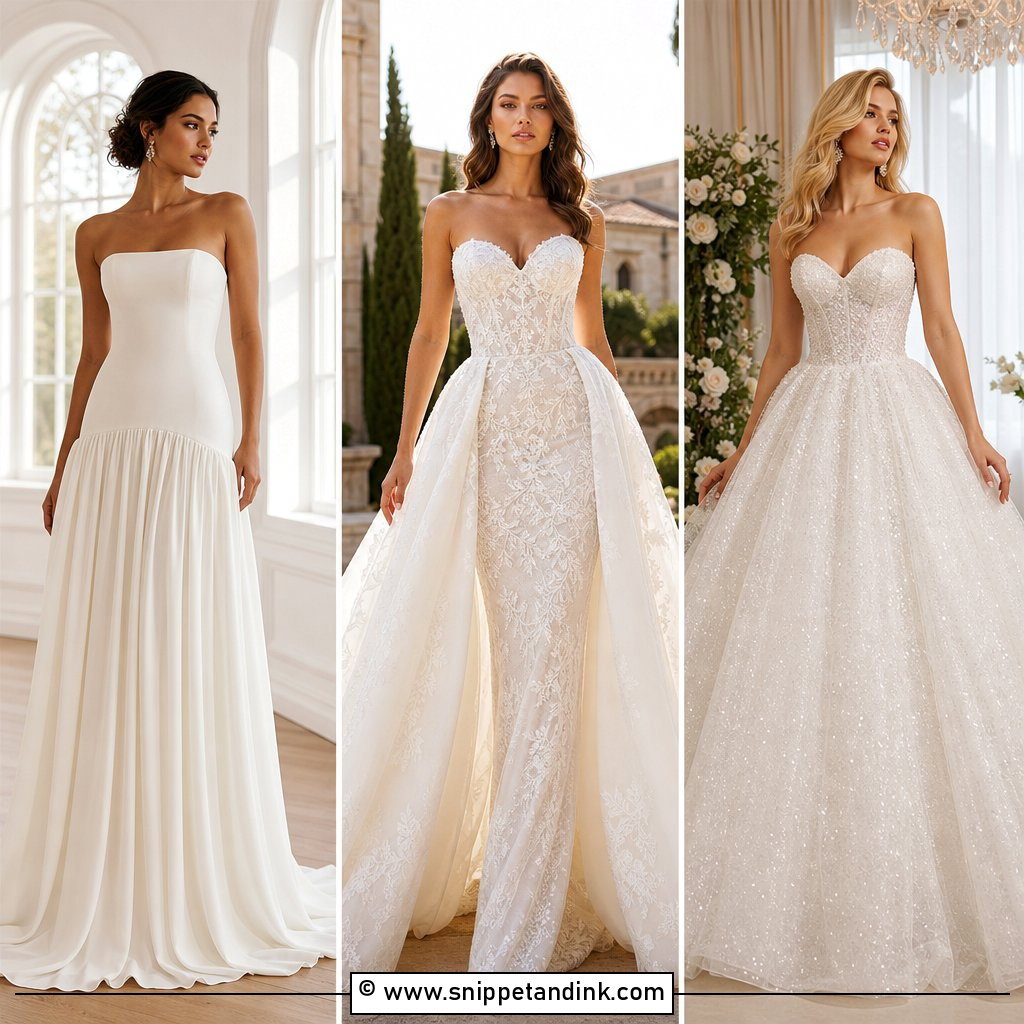
5. Drop Waist Bridal Dress
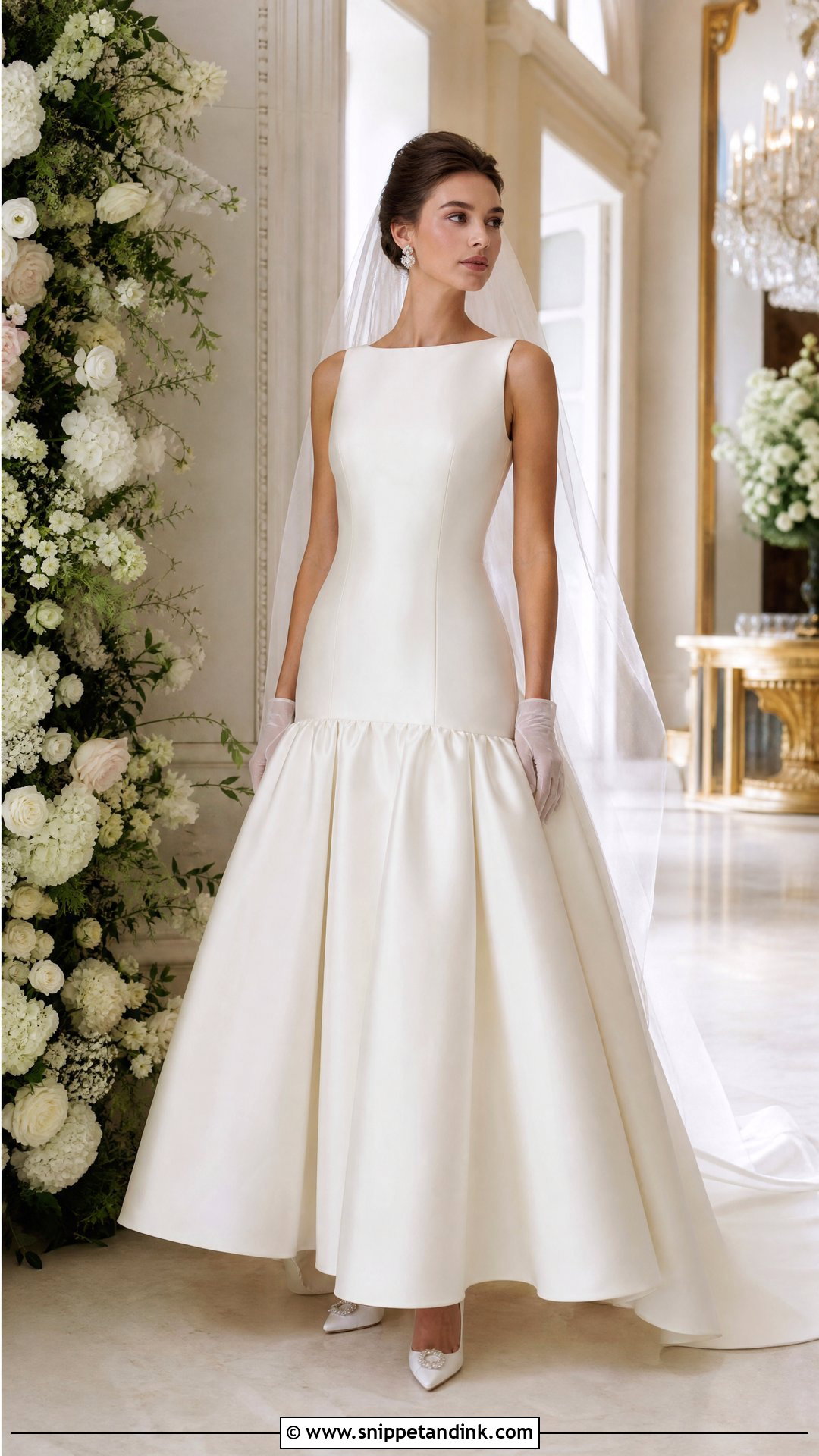
The drop waist extends the fitted bodice past the natural waist before the skirt opens out, and it can look vintage or very current depending on the fabric. Crisp mikado gives architectural volume; tulle keeps it light. Torso length decides how deep the drop should go. Long-waisted brides can carry a deep drop, while shorter torsos look better with a shorter fitted section. The other check I make: the skirt seam needs to land somewhere you can still sit comfortably, or it bunches at the hips in every seated photo. Short gloves and a French twist suit it.
6. 3D Floral Bridal Dress
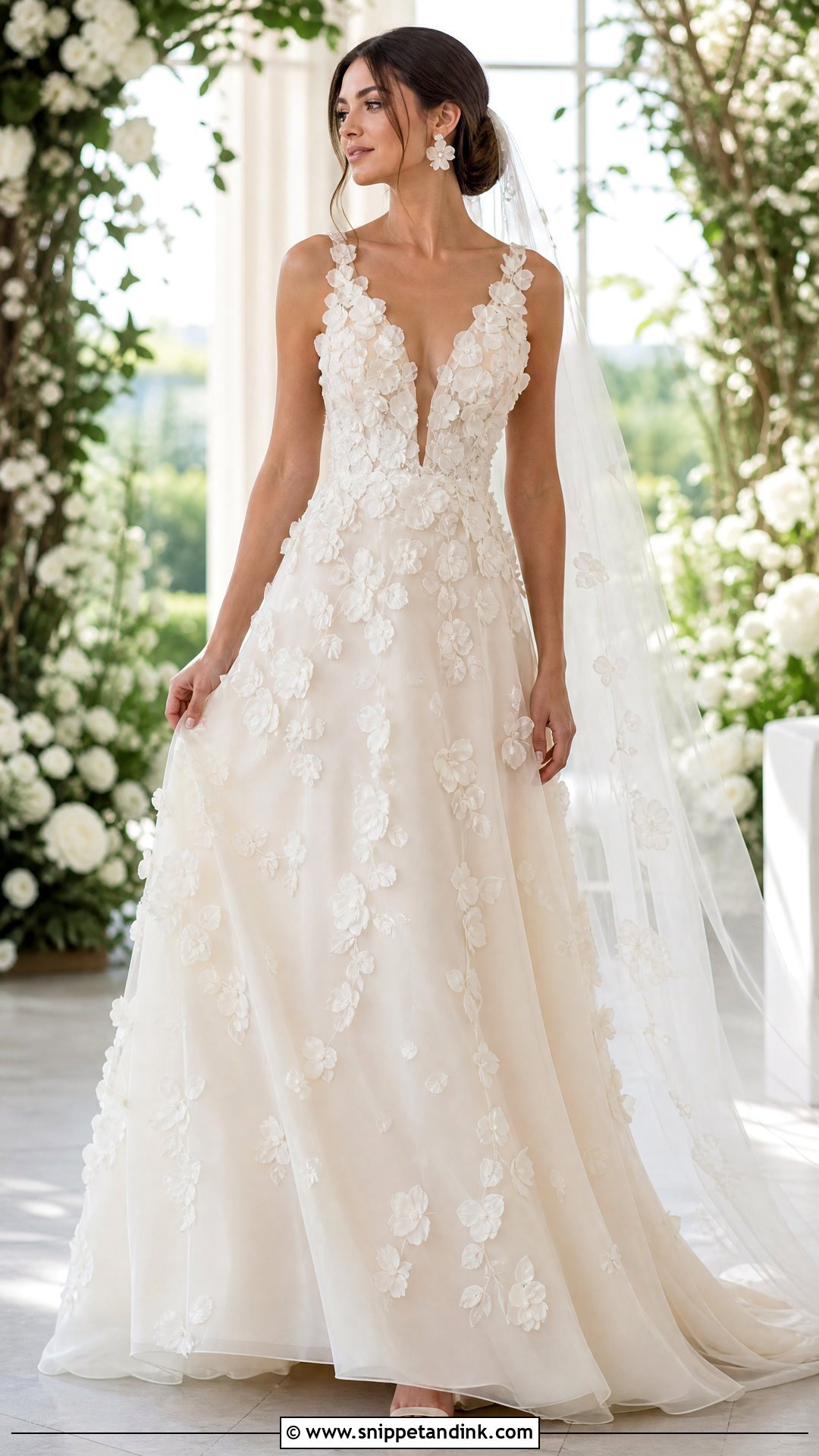
Dimensional flowers turn a familiar shape into a statement, but placement is everything. I prefer appliqués concentrated on the bodice and scattered more sparsely down an A-line skirt, which keeps the gown from looking top-heavy or bottom-heavy. For an outdoor wedding, check that every flower is stitched down at its centre and edges, since loose petals catch on chair backs and hedges. Tonal organza petals stay subtle; layered blooms with pearl or crystal centres are the dramatic version. A few matching appliqués at the veil edge tie it together.
7. Bubble Hem Bridal Dress
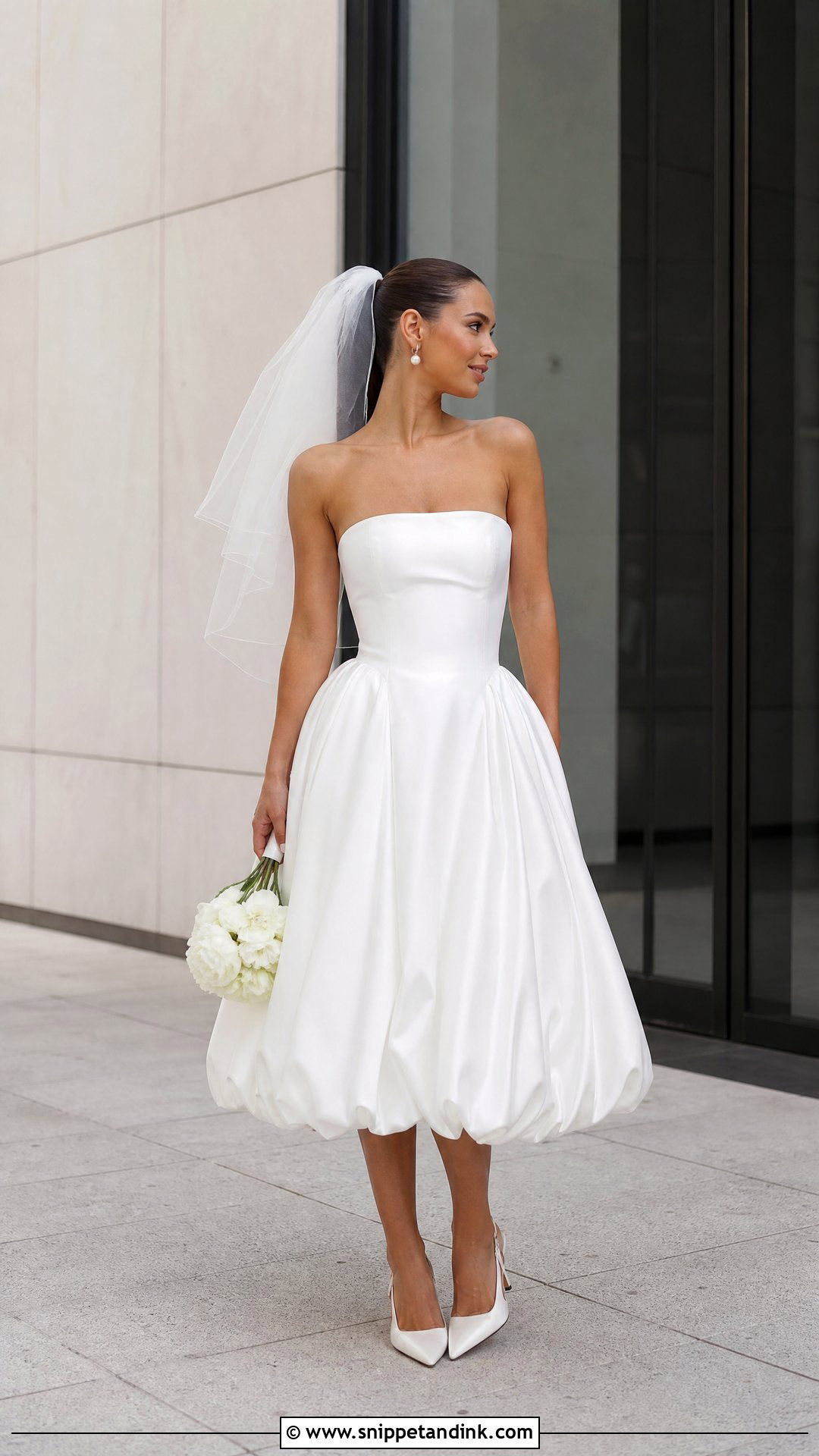
A bubble hem bridal dress is playful, and I’d only steer a bride toward it if she’s comfortable being the most fashion-forward person in the room. The tucked skirt can be full-length, tea-length or short. For a ceremony, a structured midi with a fitted bodice and wide straps is the most wearable version. Shorter hems put your shoes on show, so choose them with care. The hem needs enough internal support to stay round without adding bulk at the hips; ask how it’s built before you order.
8. Detachable Overskirt Bridal Dress
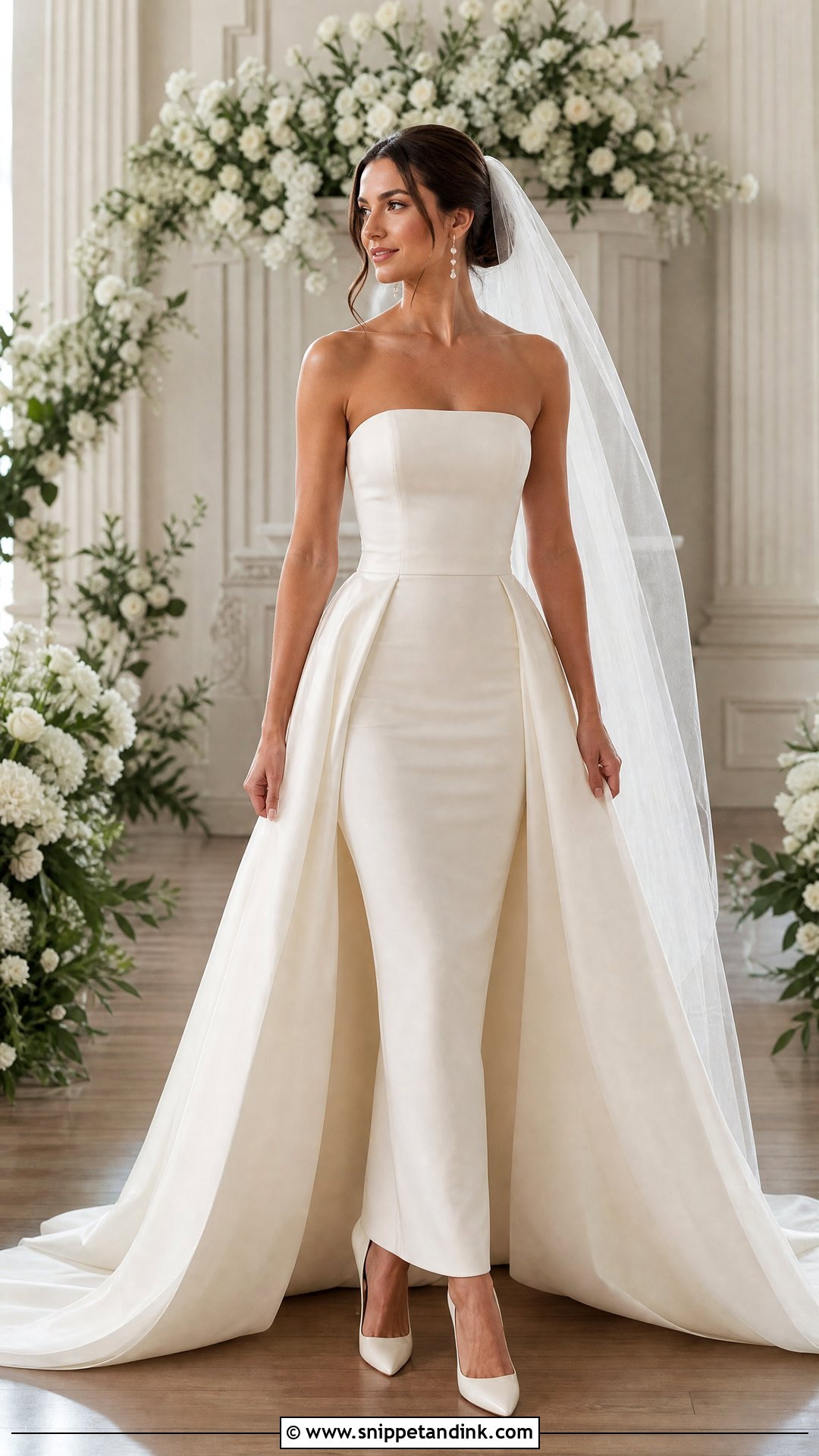
Detachable overskirts are how I solve the problem of a grand ceremony entrance followed by a dance floor you can actually move on. A fitted crepe or lace gown sits underneath a satin, organza or tulle overskirt that comes off after the photos. The attachment is what I check closely. Hooks, snaps or buttons should lie flat and stay invisible from the back and the side, and the overskirt fabric should match the base gown in tone, not just colour. For the reception, swap the long veil for a jeweled comb and the pumps for block heels.
9. Pearl Embellished Bridal Dress
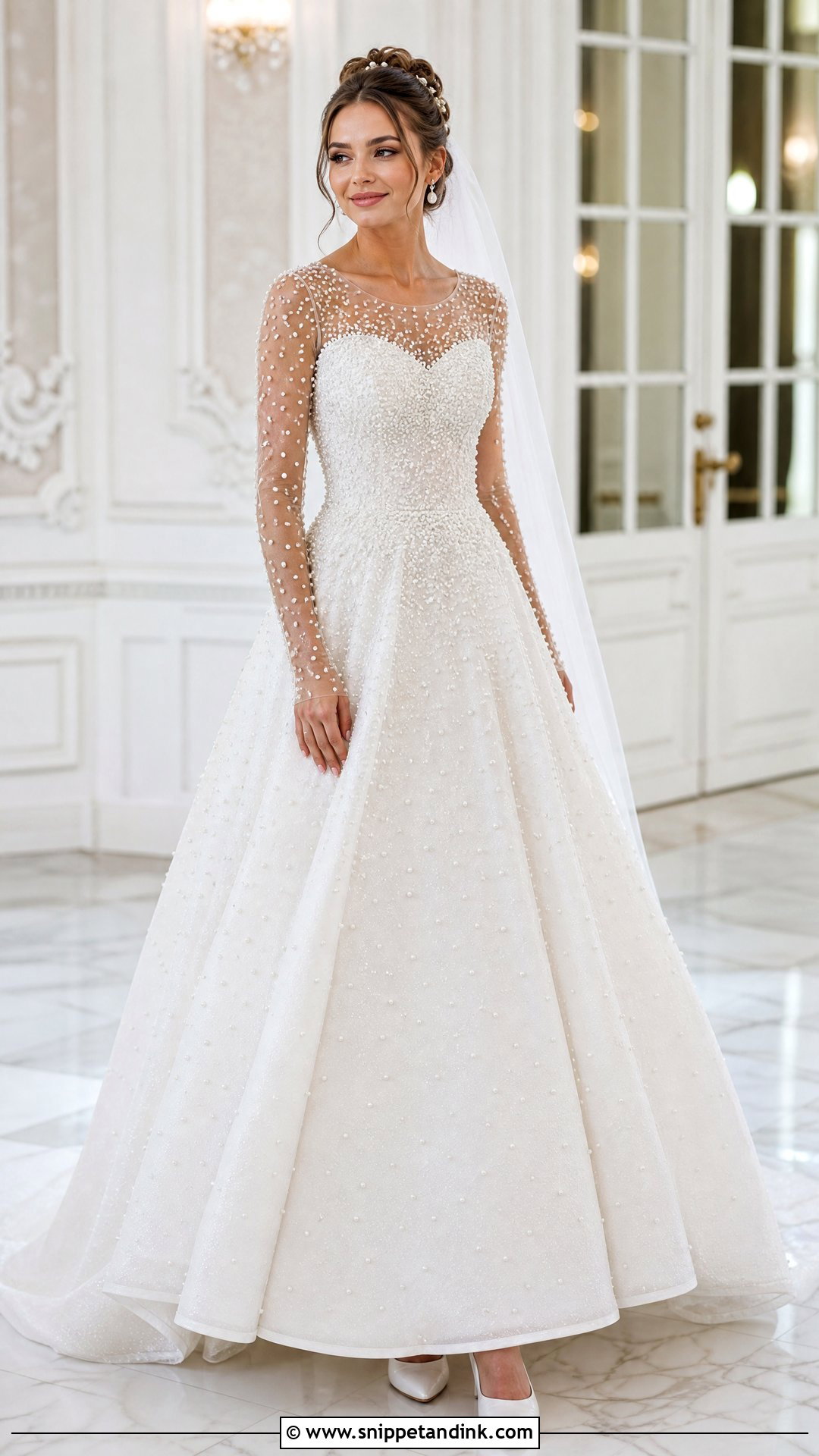
Pearls add soft texture rather than sparkle. They can be scattered over illusion sleeves, a structured bodice or a tulle skirt, but I’d choose one main area so the gown photographs clearly. Repeating pearls in the hairpins, earrings and shoes tips it into too much; let one accessory echo the dress. Two practical checks at alterations: raised pearls can snag a fine tulle veil, and any beads near the underarm will rub, so ask for that area to be kept smooth.
10. Bow Back Bridal Dress
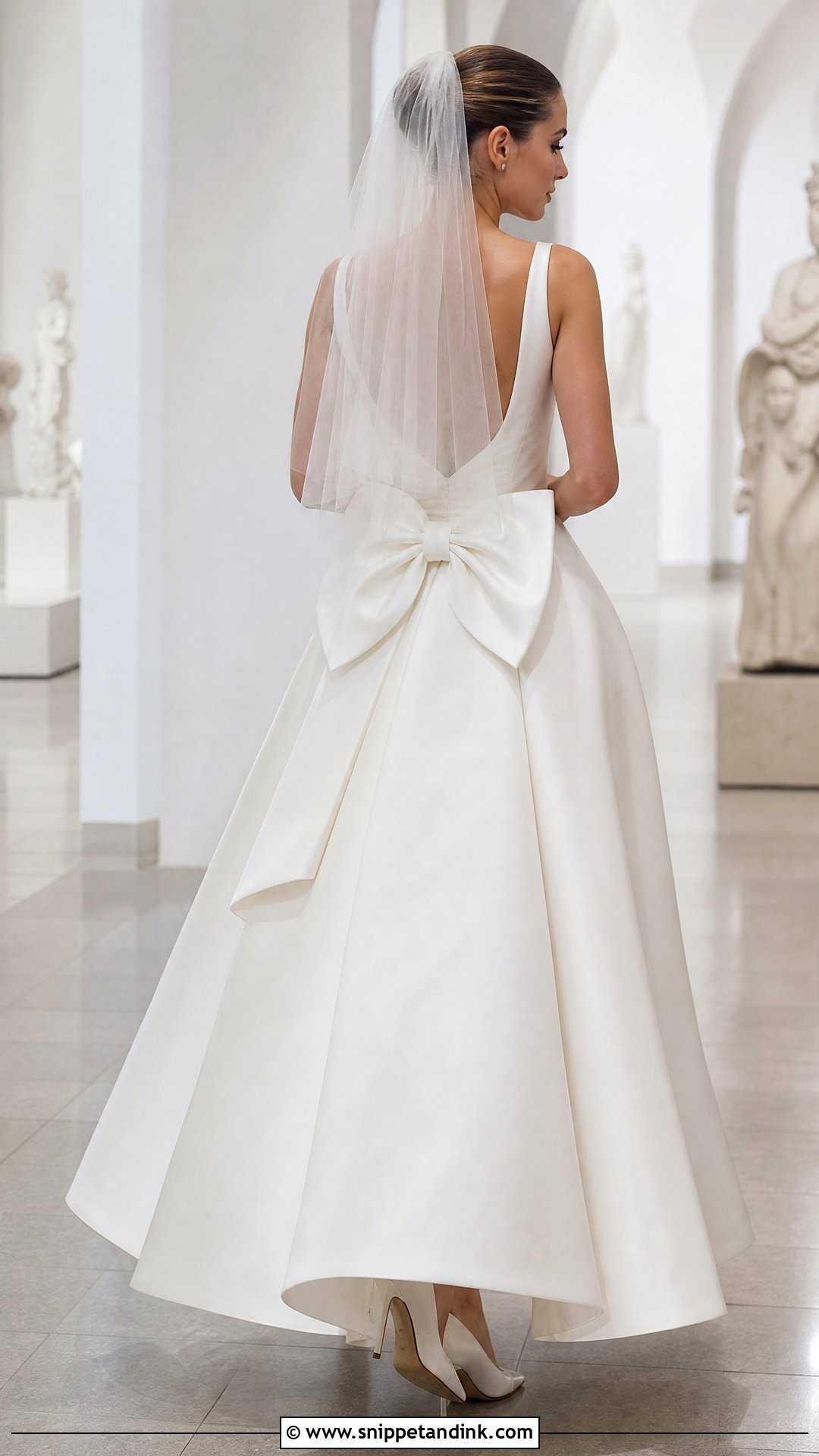
Guests spend most of the ceremony looking at your back, which is the whole argument for a bow. A clean A-line or column with a bow at the waist, shoulder blades or lower back gives them something to look at. Satin holds a crisp, architectural bow; organza is softer. Ask for it to be detachable, so you can take it off for the reception and sit back in a chair without crushing it. Plan the veil length around it as well, ending clearly above or below the bow rather than draping over it.
11. Halter Neck Bridal Dress
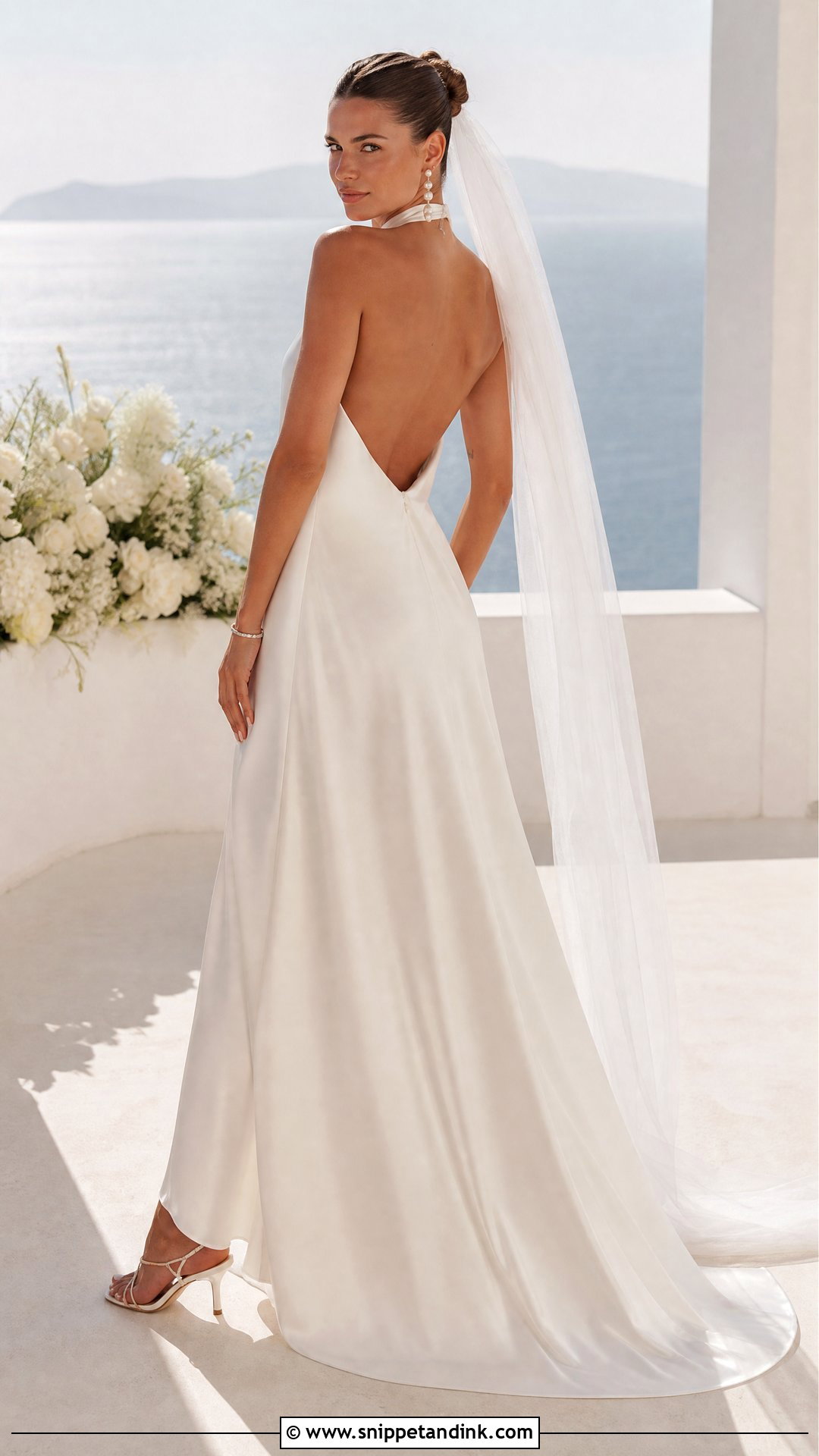
Halters frame the shoulders and run a long, clean line through the upper body, especially in fluid crepe or satin with an open back and a gently flared skirt. Swap the necklace for statement earrings and a narrow bracelet. The neck strap is the weak point: it should carry no weight at all, so built-in bust support has to do the work, which also solves the problem of hiding bra straps. At fittings I look for pulling at the neck and gaping at the sides. A long sheer veil attaches neatly under a polished bun.
12. Scoop Neck Bridal Dress
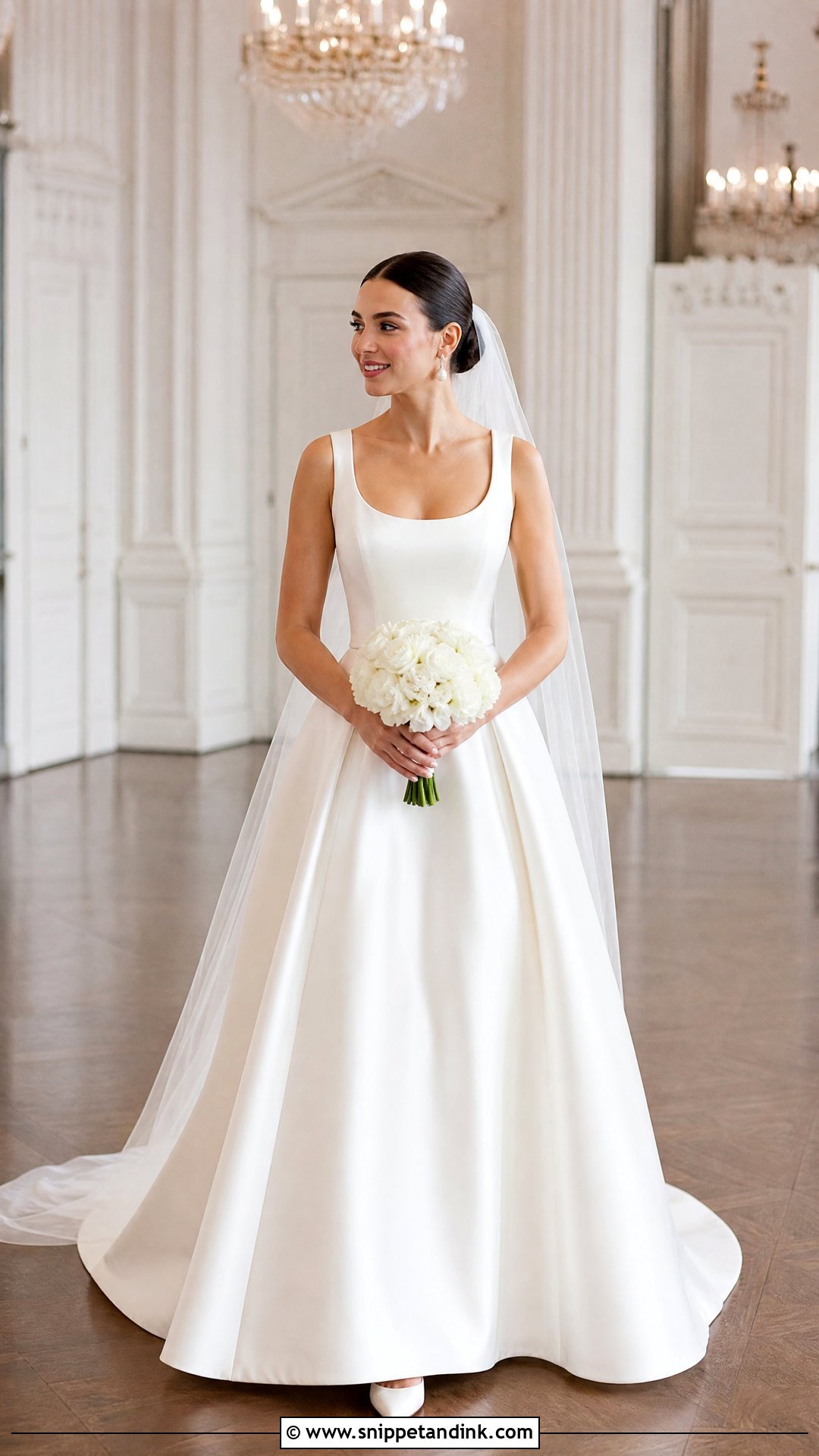
A scoop neck is the gentler choice for brides who don’t want a strapless gown or a sharp V. The rounded line frames the collarbone and sits well on fitted, A-line or ball gown shapes. In structured mikado with wide straps it feels secure all day. The depth is easy to adjust during alterations, so don’t rule out a gown because the sample is cut lower than you’d like. Internal cups and reinforced seams add support. A low bun and a compact bouquet keep the neckline visible in photos.
13. Tiered Ruffle Bridal Dress
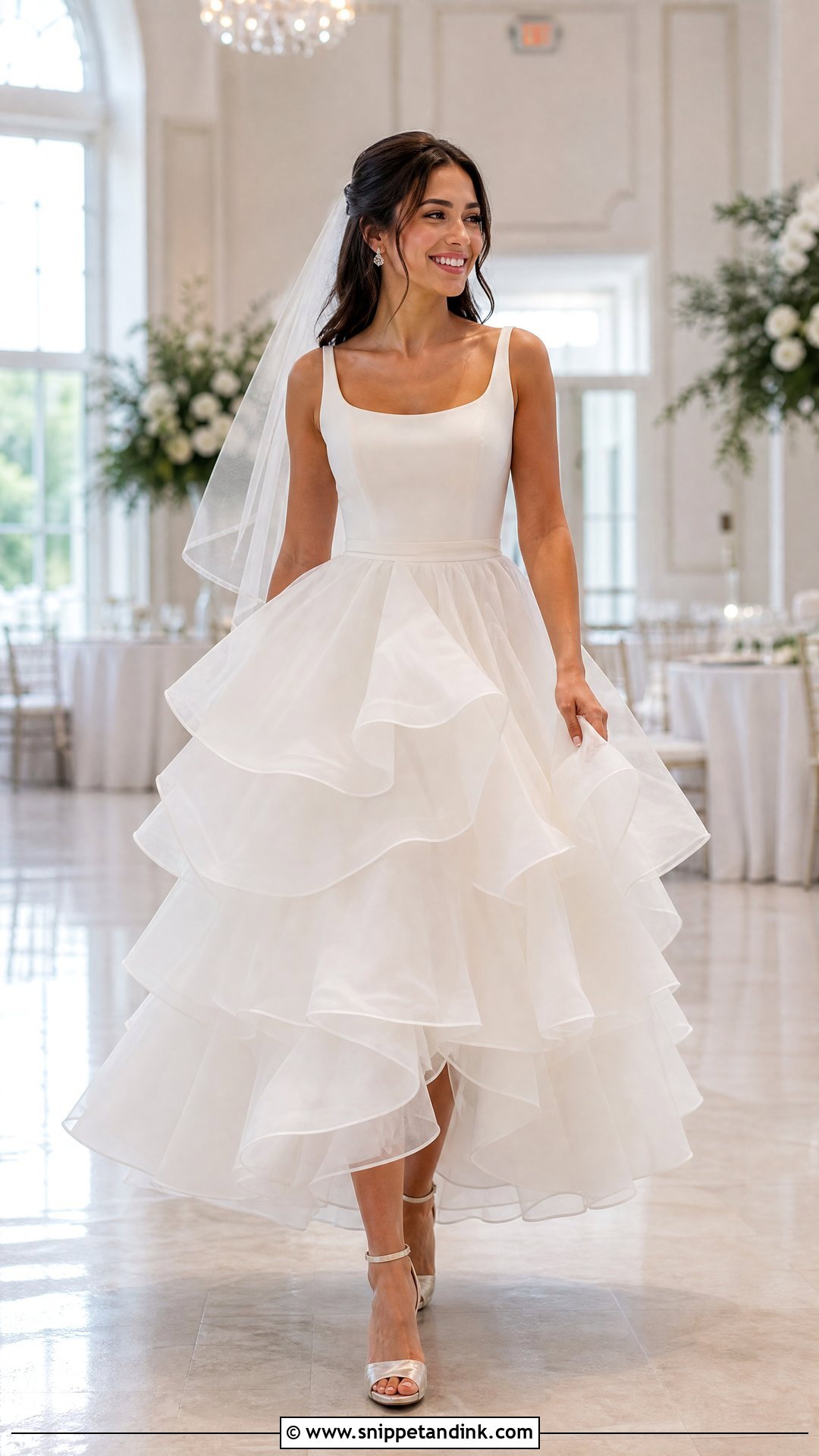
Ruffles move every time you walk. A tiered ruffle bridal dress stays balanced when the bodice is fitted and fairly plain, and when the tiers are made in organza or tulle light enough to float. Scale is where I adjust: narrower tiers on a petite frame, broader sculptural ones on a taller bride. Practise stairs at your fitting, because full tiers take up more room than you expect and catch under your feet going down. Keep the bouquet compact and the veil plain.
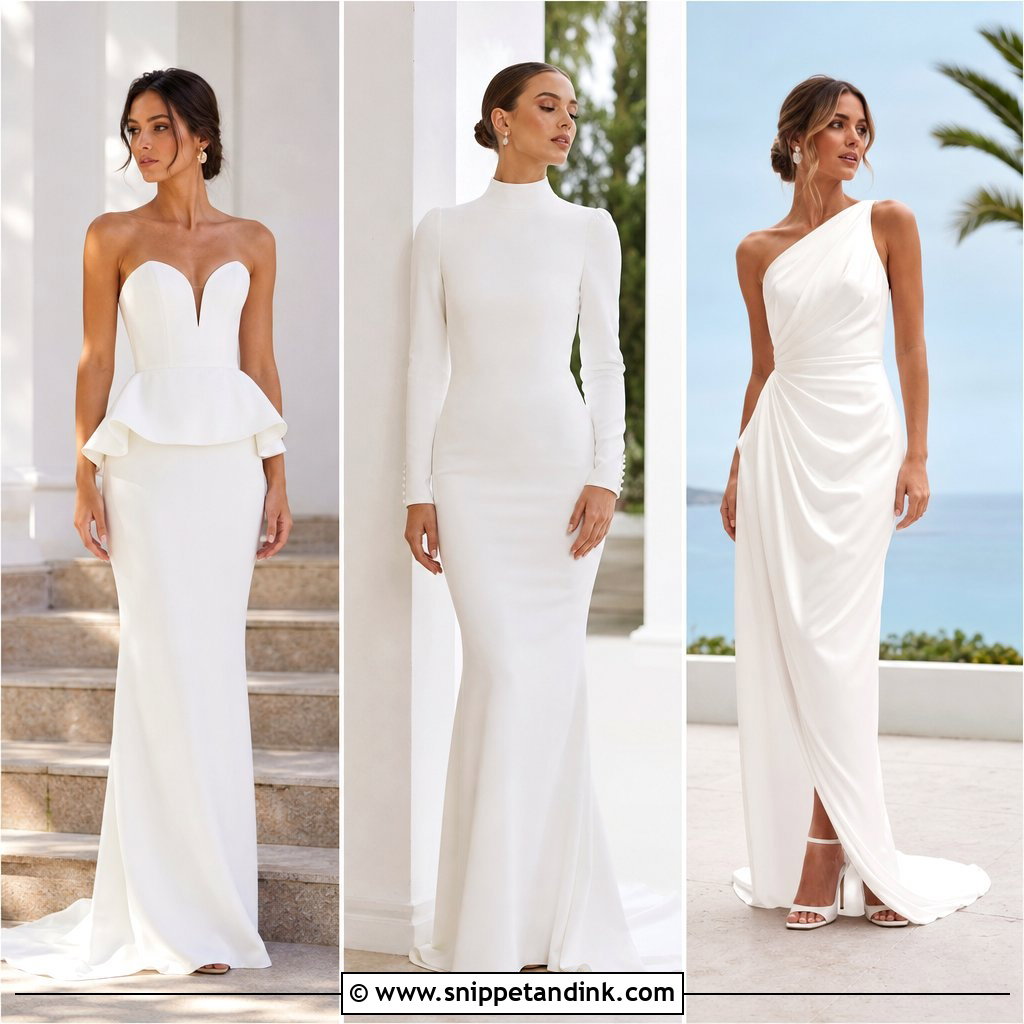
14. Long Sleeve Bridal Dress
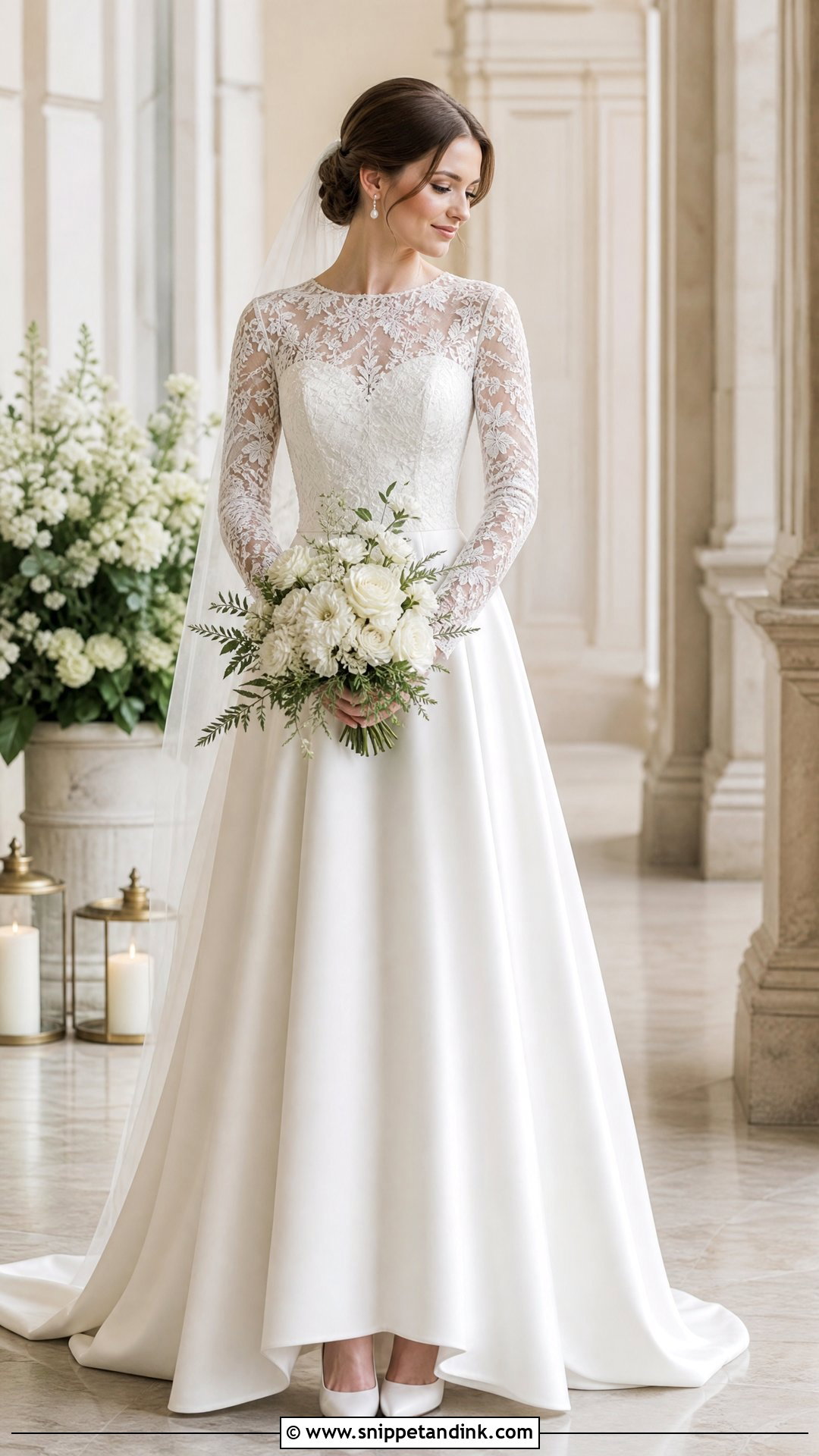
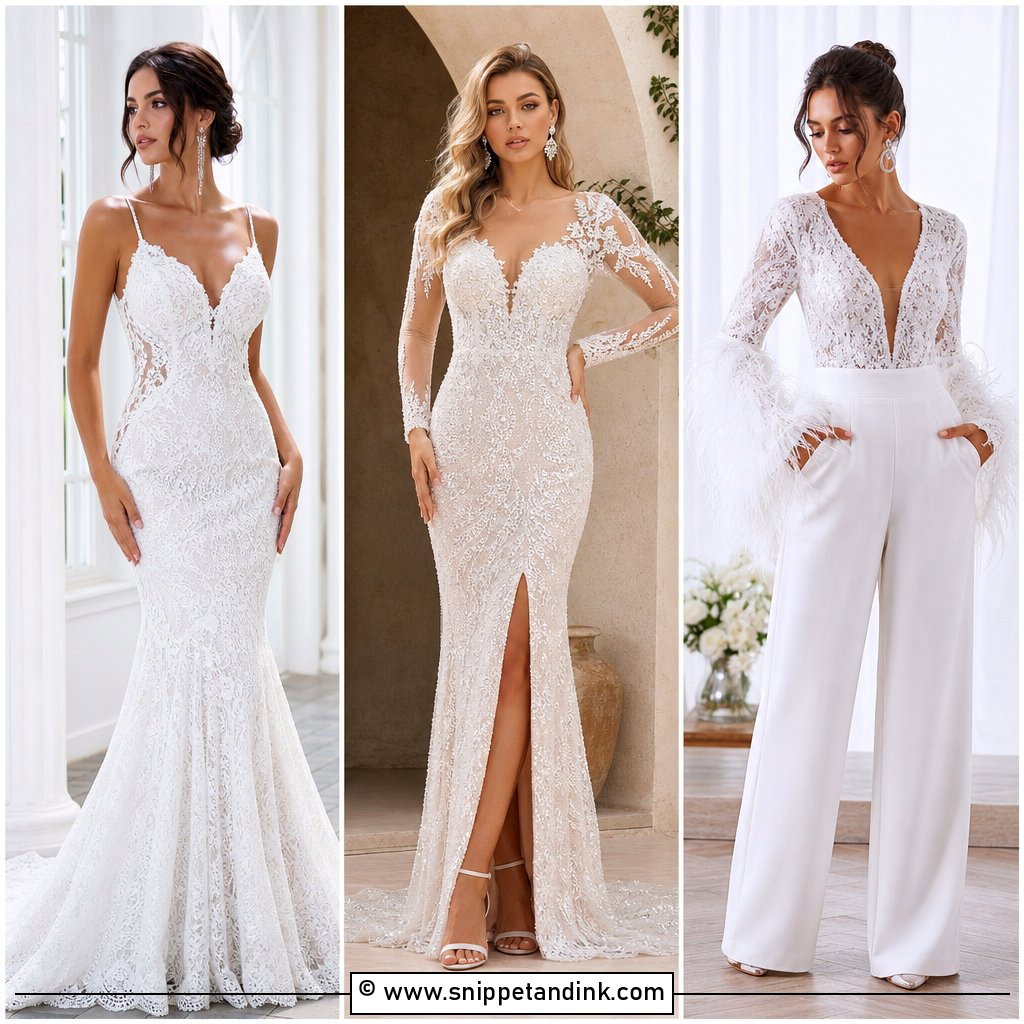
The fabric decides what long sleeves say. Fitted lace sleeves feel romantic, smooth crepe feels minimal, and detachable sheer sleeves give you the choice on the day. A defined bodice with an A-line skirt keeps the balance. I always ask brides to reach forward and hug me at the fitting, because sleeves set in too tightly pull across the back the moment you lift your arms. Small covered buttons at the wrist finish it neatly. Illusion fabric keeps sleeves wearable for spring as well as cooler months.



15. Off Shoulder Bridal Dress
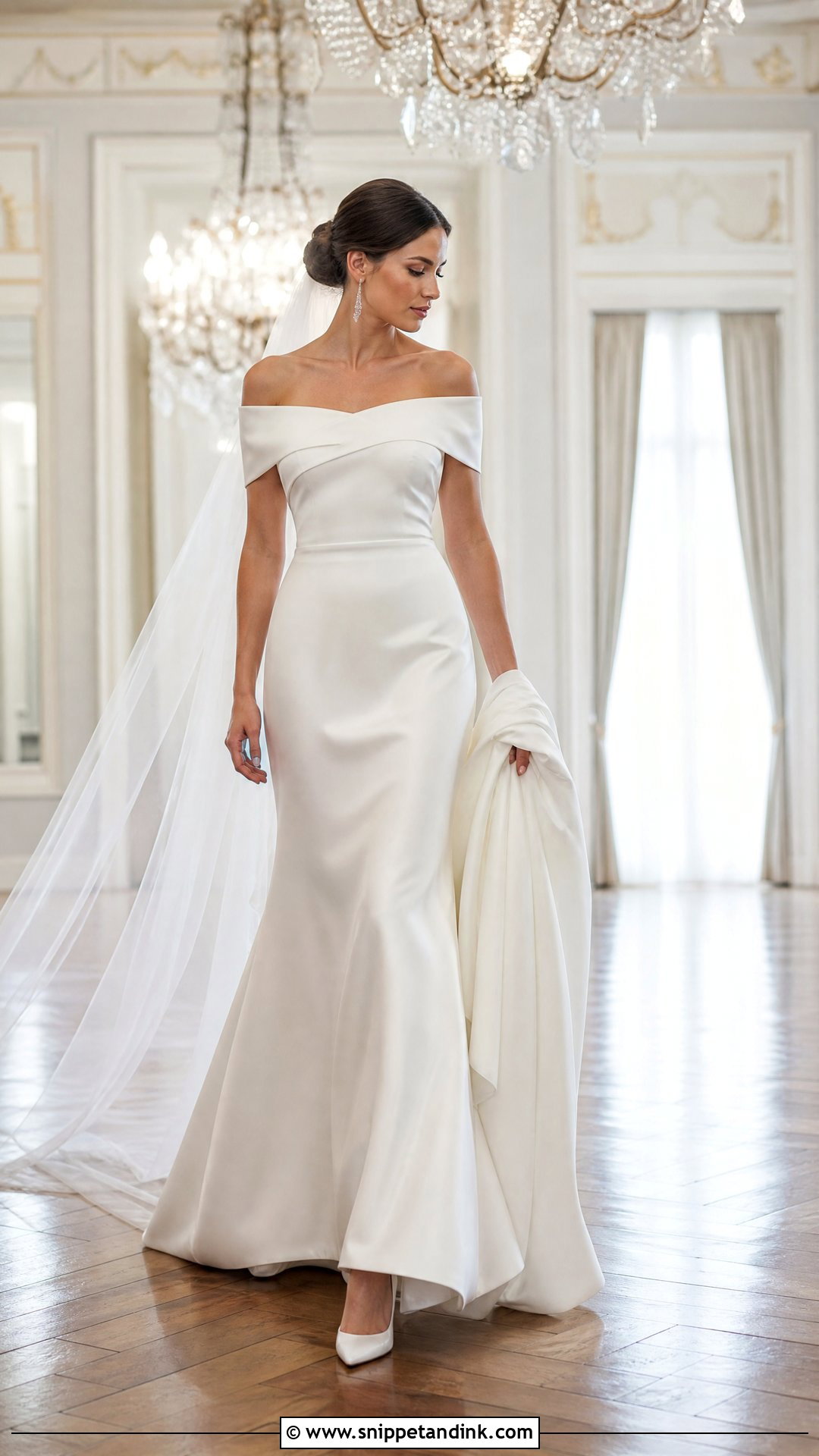
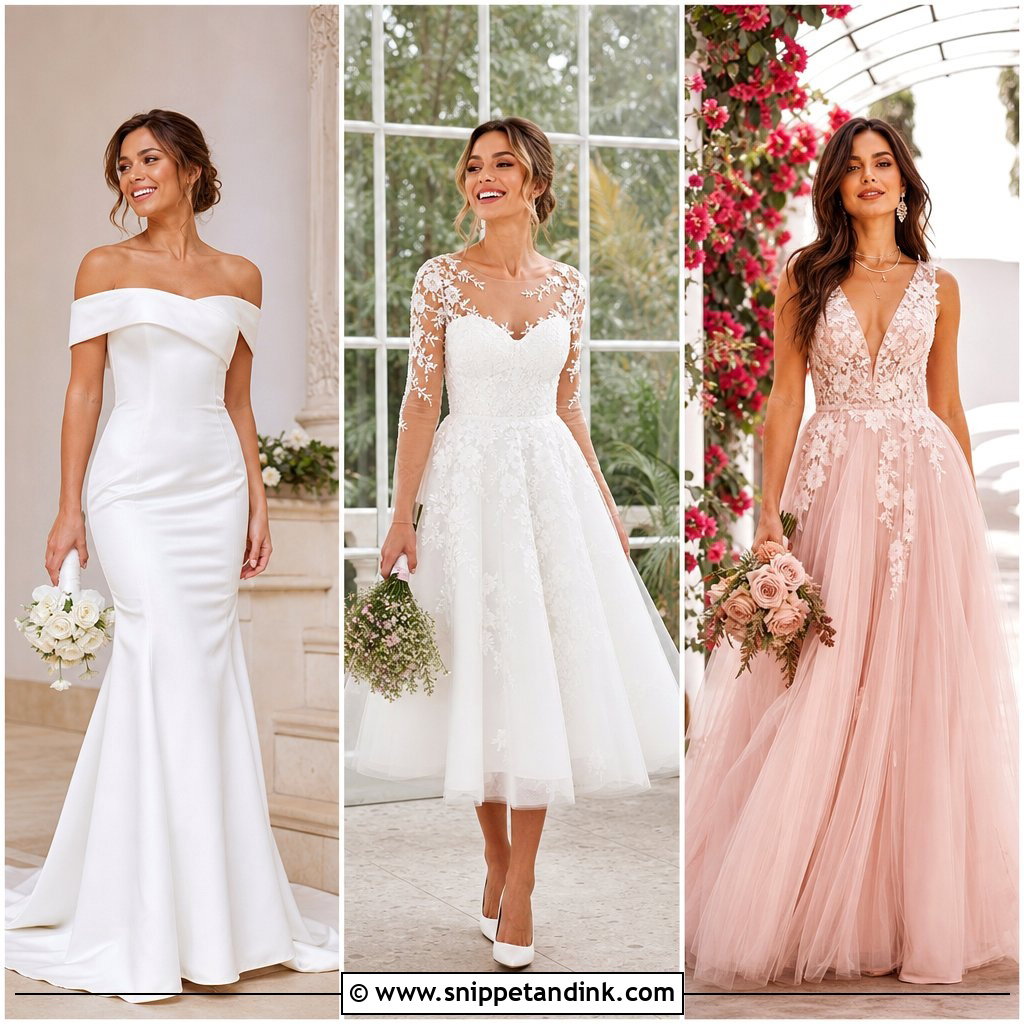
Off-shoulder necklines frame the collarbone and upper arms, with a folded satin band reading formal and lace or tulle sleeves feeling lighter. The difficulty is staying put. When you raise your arms the band wants to climb, and when you sit it wants to slip, so I’d ask for hidden elastic or a supportive inner bodice and test both movements during alterations. Skip the necklace. A tailored jacket or wrap is useful between locations.
16. Minimalist Column Bridal Dress
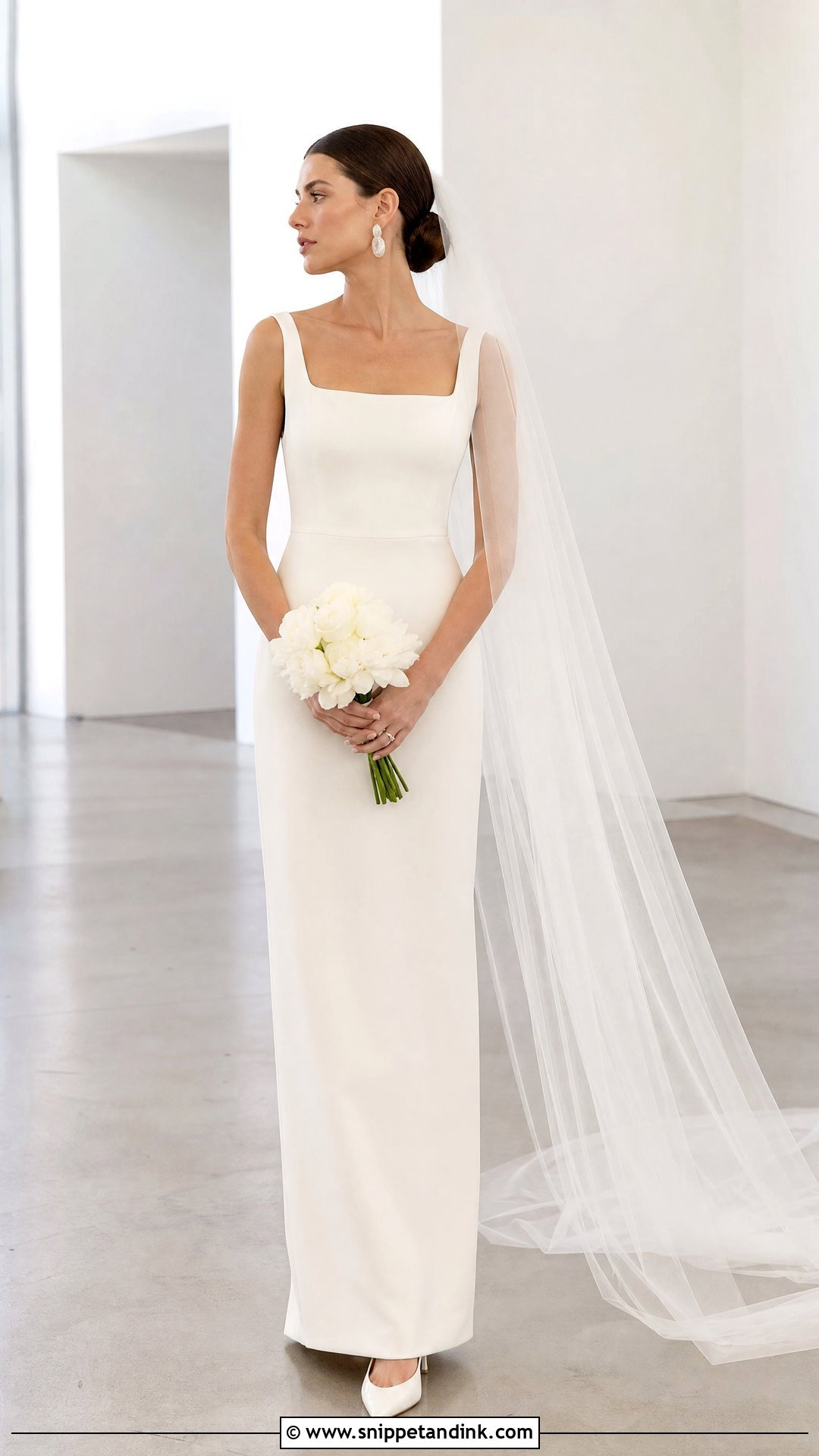
Minimal gowns show every tailoring decision. With nothing on the surface, a slight pull across the hips or a seam that doesn’t line up becomes the most visible thing in the room. Silk crepe, satin or a double-faced fabric with precise seams is the place to start, and fit through the bust, waist and hips is where I’d spend the alteration budget, along with smooth foundation garments. A square or bateau neck adds interest. A narrow cathedral veil brings ceremony drama to a courthouse, gallery or modern venue.
17. Colored Bridal Dress
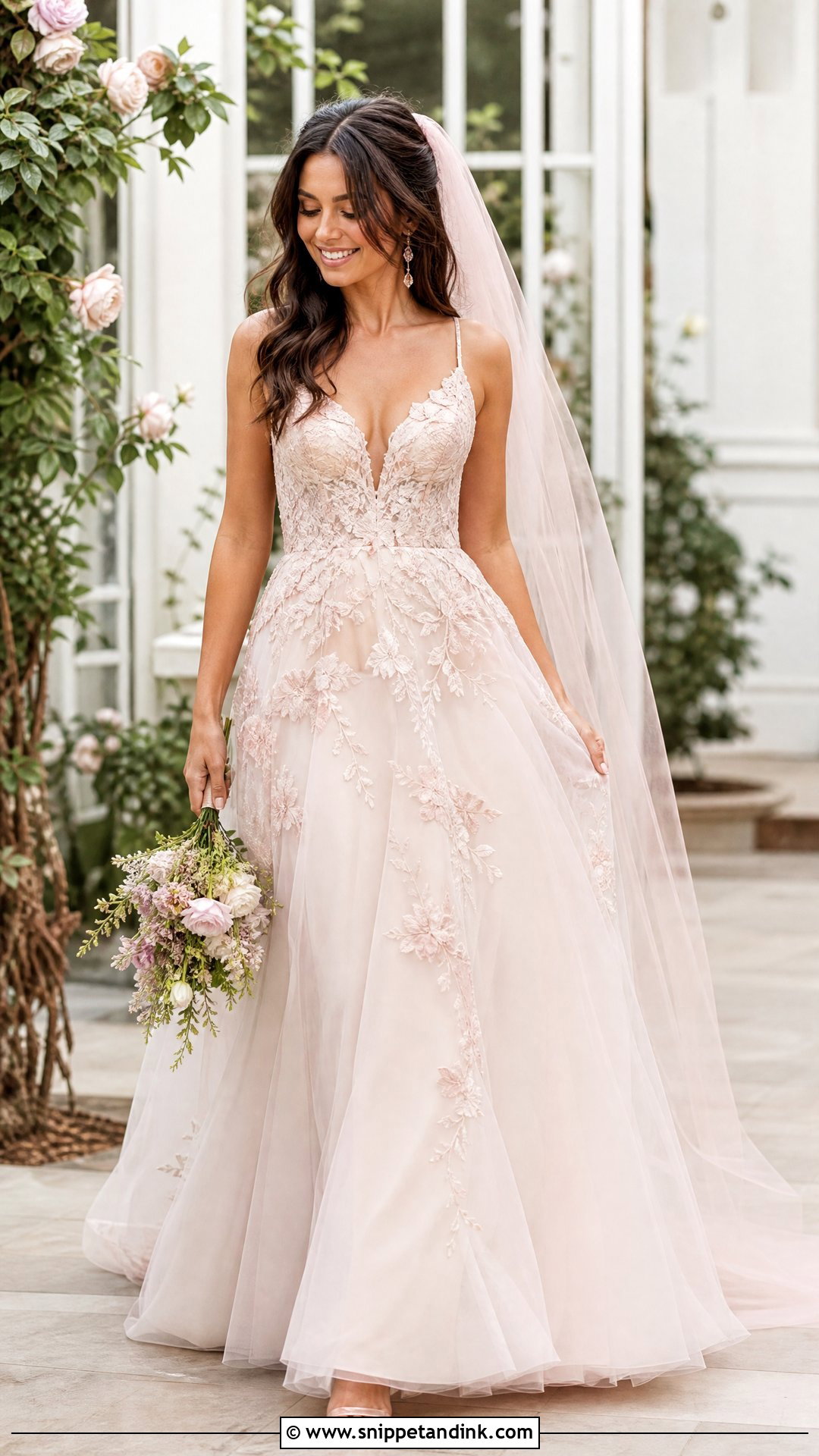
Colour lets you step away from bright white and still look unmistakably bridal. Blush, champagne, pale blue and silver each favour different skin tones, so compare them against your face in daylight, not under the warm lights of a fitting room. Undertone matters most with the veil: a stark white veil beside champagne or blush silk makes the dress look dirty, so match the veil to the gown’s undertone. Tonal embroidery keeps an A-line romantic; structured satin looks sharper. Choose a bouquet that complements the colour rather than copying it.
18. Two Piece Bridal Dress
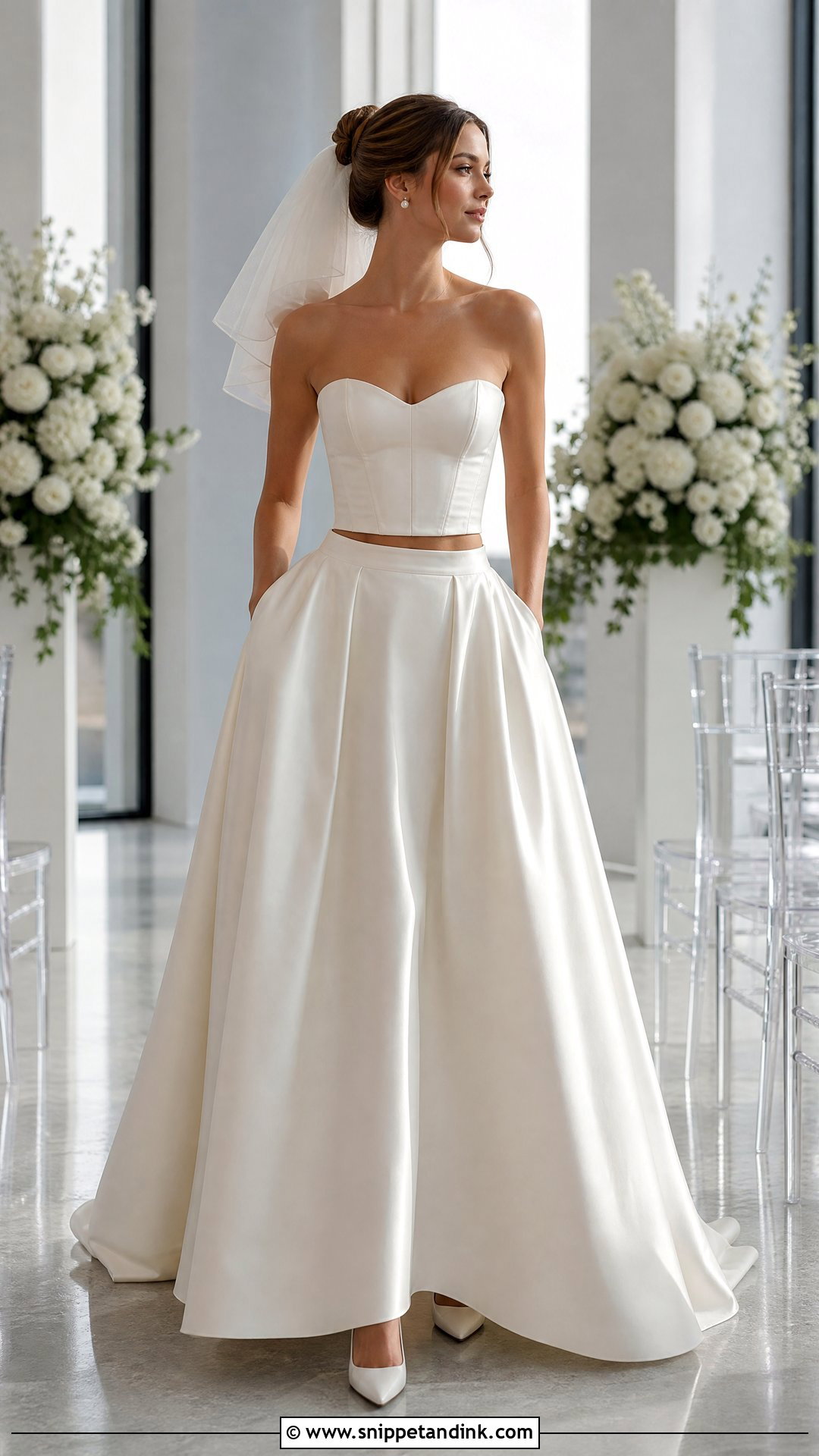
Separates give you more freedom than any single gown: a structured corset top with a full satin skirt, or a lace blouse over a clean crepe column. Keep both pieces in the same colour family, since whites vary more between fabrics than you’d expect. The waist join is my main concern. Ask the tailor to anchor the top discreetly so it doesn’t ride up when you dance, and check that the waistband lies flat without bunching. Later, the top can go with tailored trousers, or the skirt with a lighter blouse.
19. Feather Trim Bridal Dress
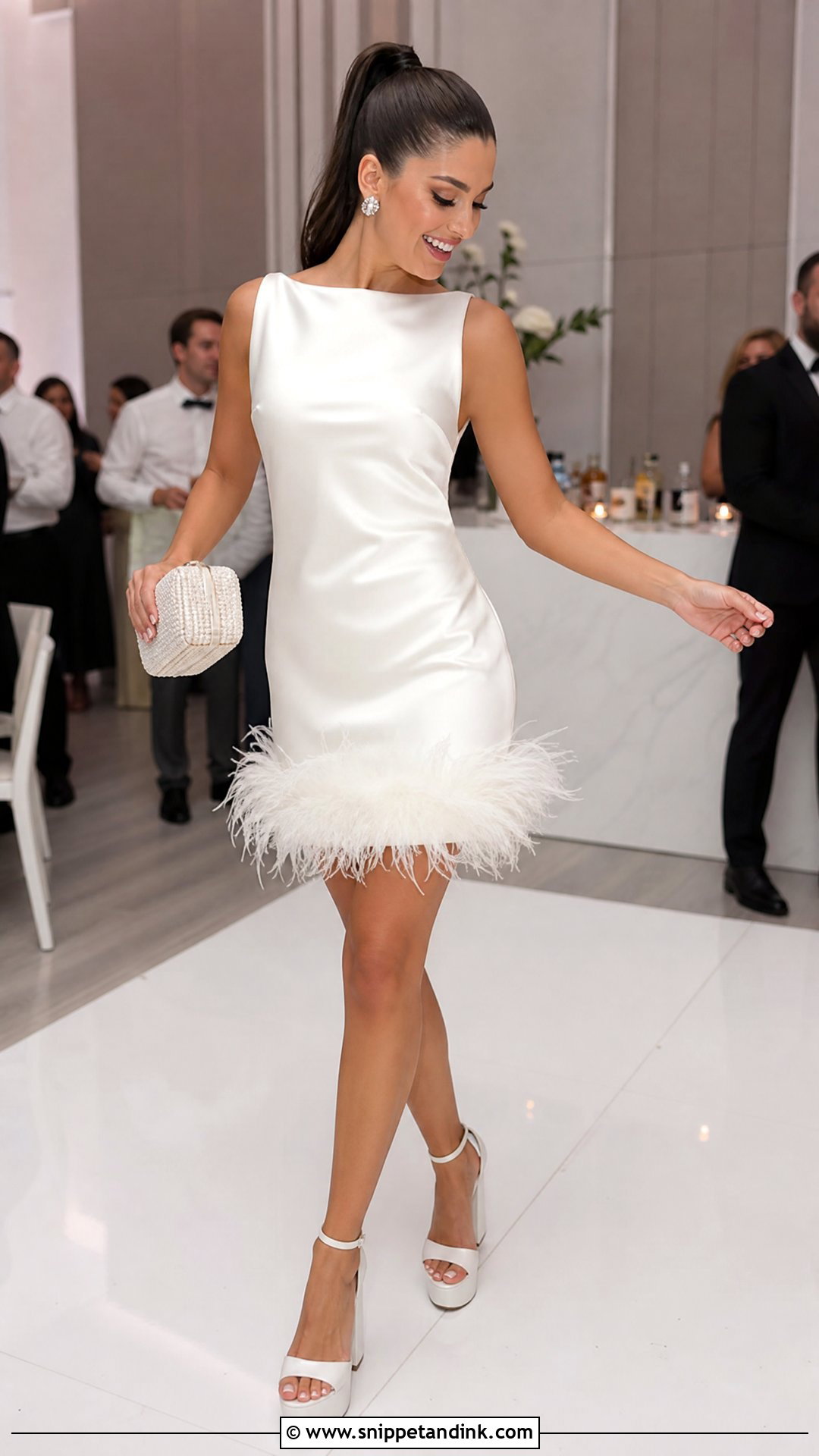
Feathers bring texture and movement, but a little goes a long way. A bridal dress with feathers at the neckline, cuffs, hem or on a detachable overskirt gives enough. A satin mini with a feathered hem is a lively reception look; a long crepe gown with feather cuffs feels more formal. Give the trim a gentle shake at your fitting, since cheaper feathers shed all over a dark suit. Skip feathered shoes and bags. A sleek ponytail or a jeweled clip marks the switch from ceremony to party.

20. Short Bridal Dress
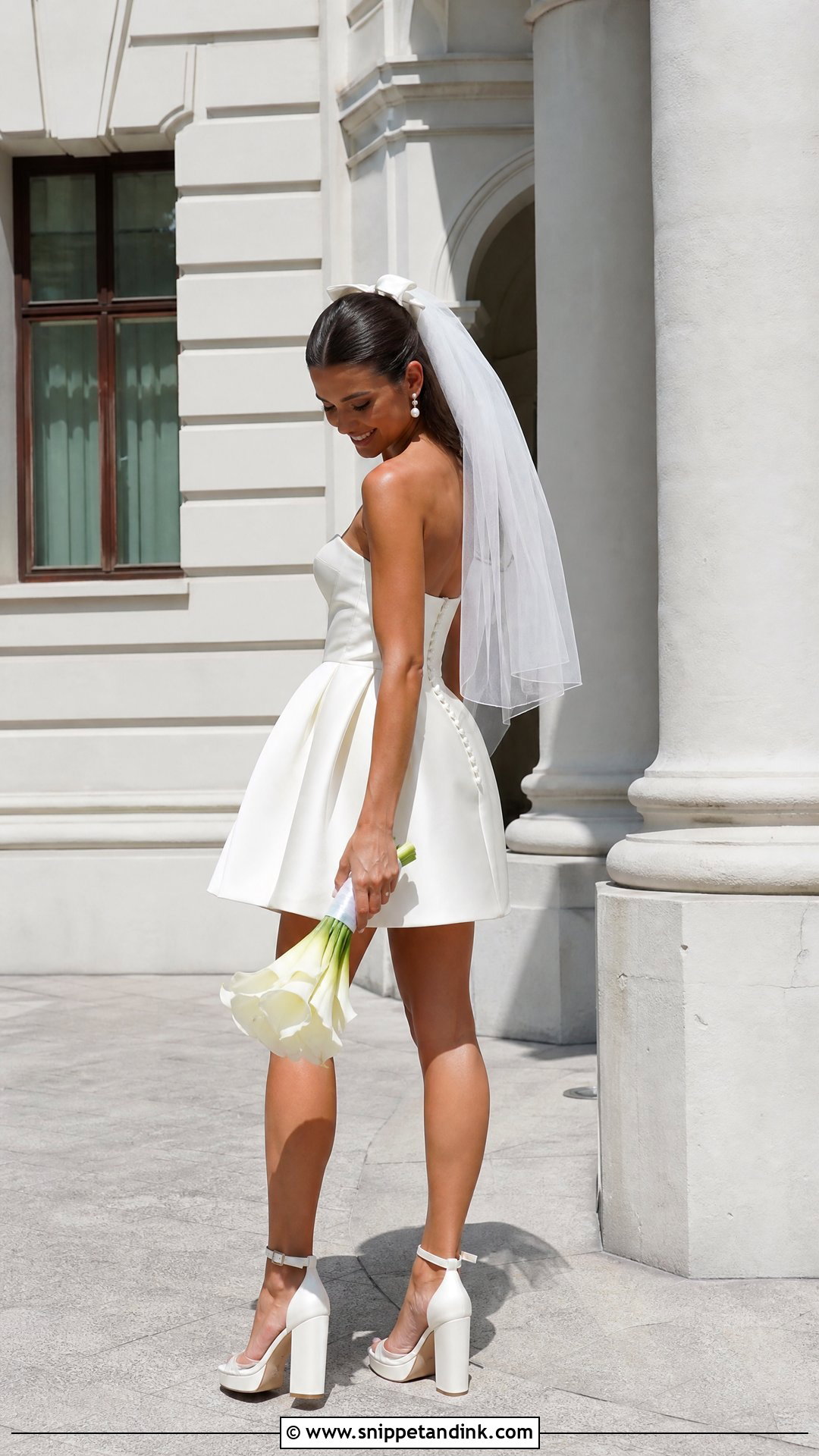
Short dresses suit courthouse ceremonies, welcome parties, receptions and small weddings, and they’re far easier to dance in. A tailored mini or tea-length dress with a defined bodice works in satin for polish or lace for a traditional texture. Because your shoes are fully visible, they matter as much as the dress, so match the white and the finish. Sheer tights help in cold weather, and a tailored blazer adds coverage. Don’t skip alterations: a short hem that sits a centimetre uneven is very obvious.
What These Fabrics Look Like by the Last Dance
Every fabric in this list behaves differently after ten hours of sitting, hugging and dancing, and I think brides should know that before they choose. Satin creases across the lap the first time you sit for the ceremony or a car ride; heavier duchess or mikado satin holds up better than thin charmeuse. Crepe barely wrinkles but shows every line underneath it. Tulle snags on jewelry, chair edges and Velcro on a groomsman’s boutonniere. Lace is the most forgiving: it hides creases and small marks well.
The bustle is part of the dress
Any gown with a train needs a bustle for the reception, and it has to be added during alterations. Some lift the train up with hooks onto the back of the skirt; others fold it under and tie it with ribbons inside. The ribbon version often has numbered or colour-coded ties, and they confuse everyone in a dim reception hall. Have the person who’ll do it on the day practise at your final fitting and take a photo of the finished bustle.
On the morning, steam the gown on a hanger rather than ironing it, and hang it high enough that the train doesn’t lie on the floor. If something spills, blot with plain water and a white cloth and leave stain treatment for the cleaner afterwards. Rubbing pushes stains deeper into satin.
Silhouette First, Everything Else Second
Settle the silhouette first, judged against your body and your venue, and then compare fabrics, necklines, embellishment, train length and removable pieces. Shoes, jewelry, veils, hairstyles and undergarments should support the dress, not compete with it. Wear the whole outfit at your final fitting and walk, sit, turn and raise your arms in it. Trends are a useful starting point, but it’s the tailoring that makes a gown look like yours, from lace and sculpted satin to separates or a short reception dress.
You'll Like These Ideas:




Leave a Reply