
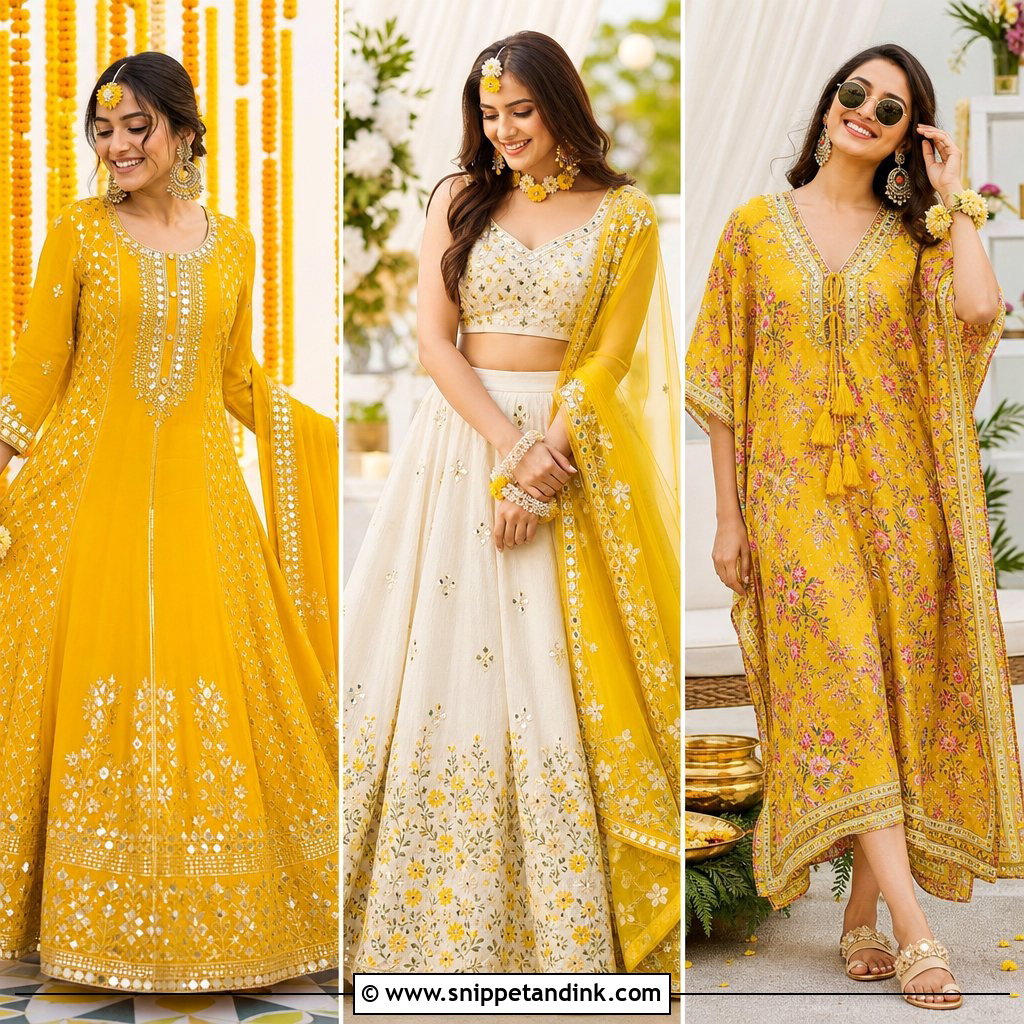
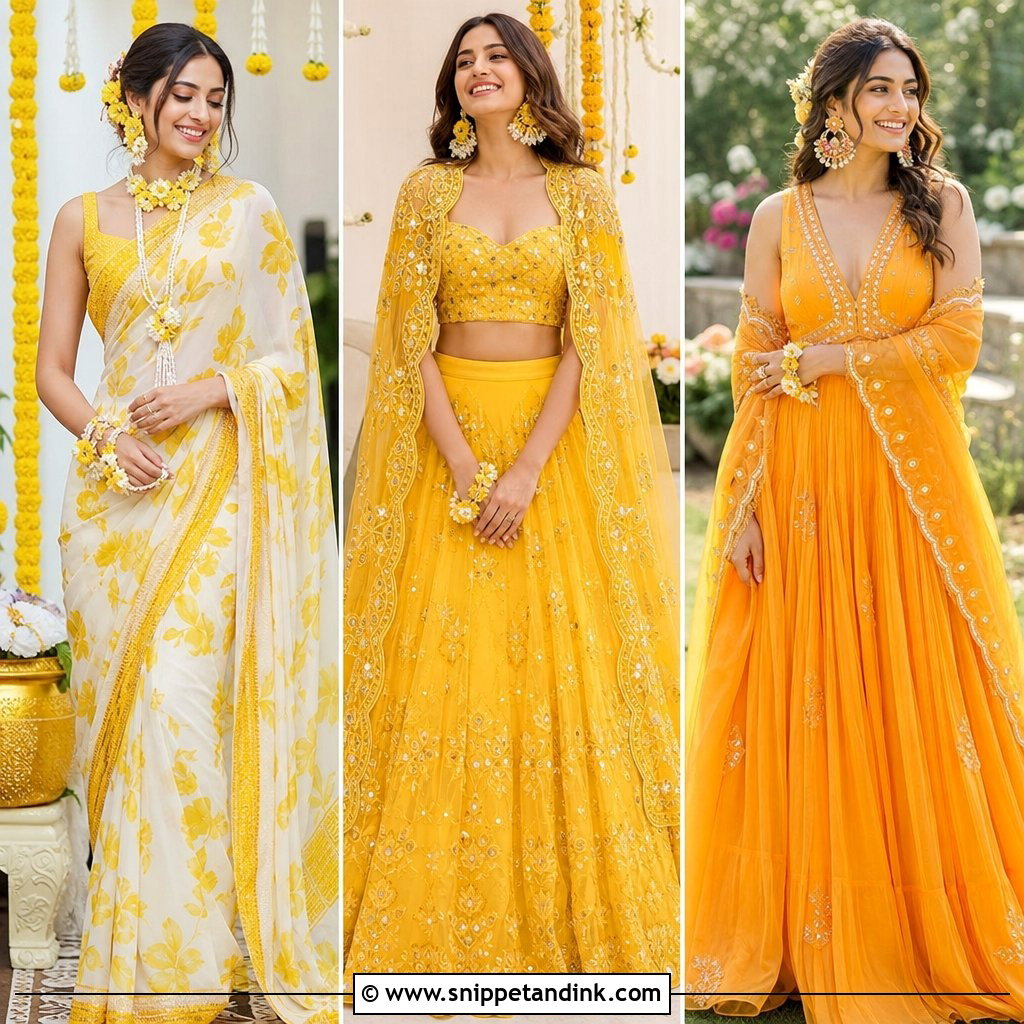
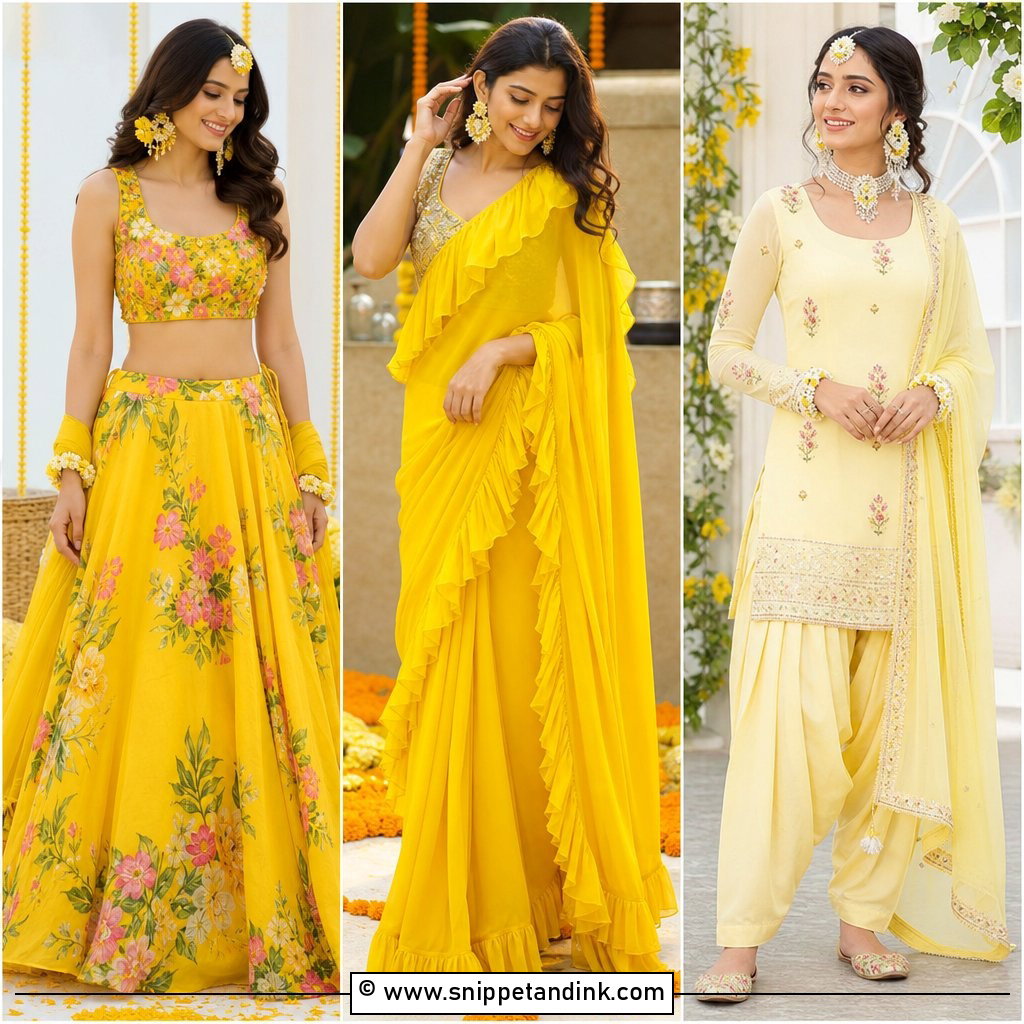
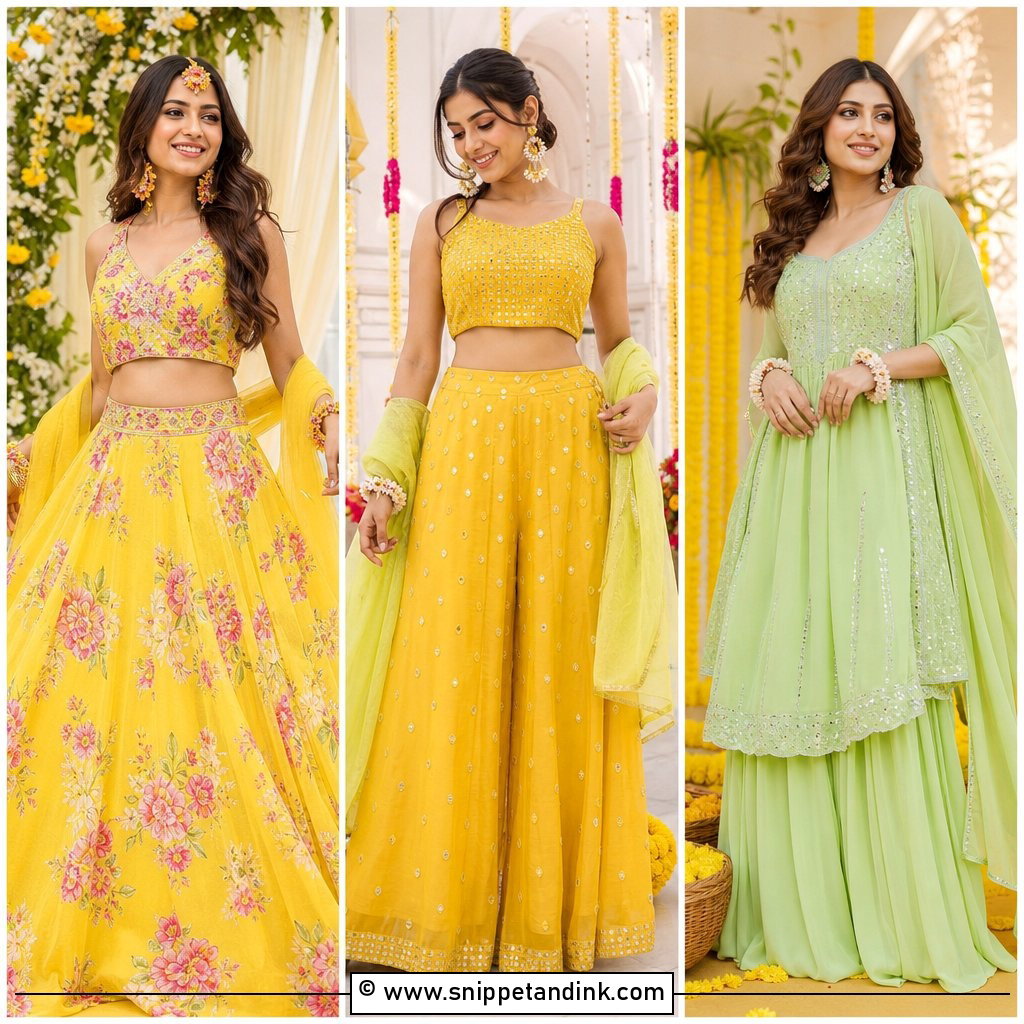
Haldi is the one wedding function where your outfit is guaranteed to get dirty. Turmeric paste goes on your face, arms and feet, relatives get enthusiastic, and there is often water, petals and dancing straight afterwards. So when I dress a bride for it, I start with two questions: how will she sit, and what happens to the fabric when the paste lands on it? Yellow is still the traditional color, but ivory, lime, peach, floral prints, capes, shararas and pre-draped sarees all have a place now. Below are 35 outfits, each with the practical detail I’d want a bride to know before she commits to it.
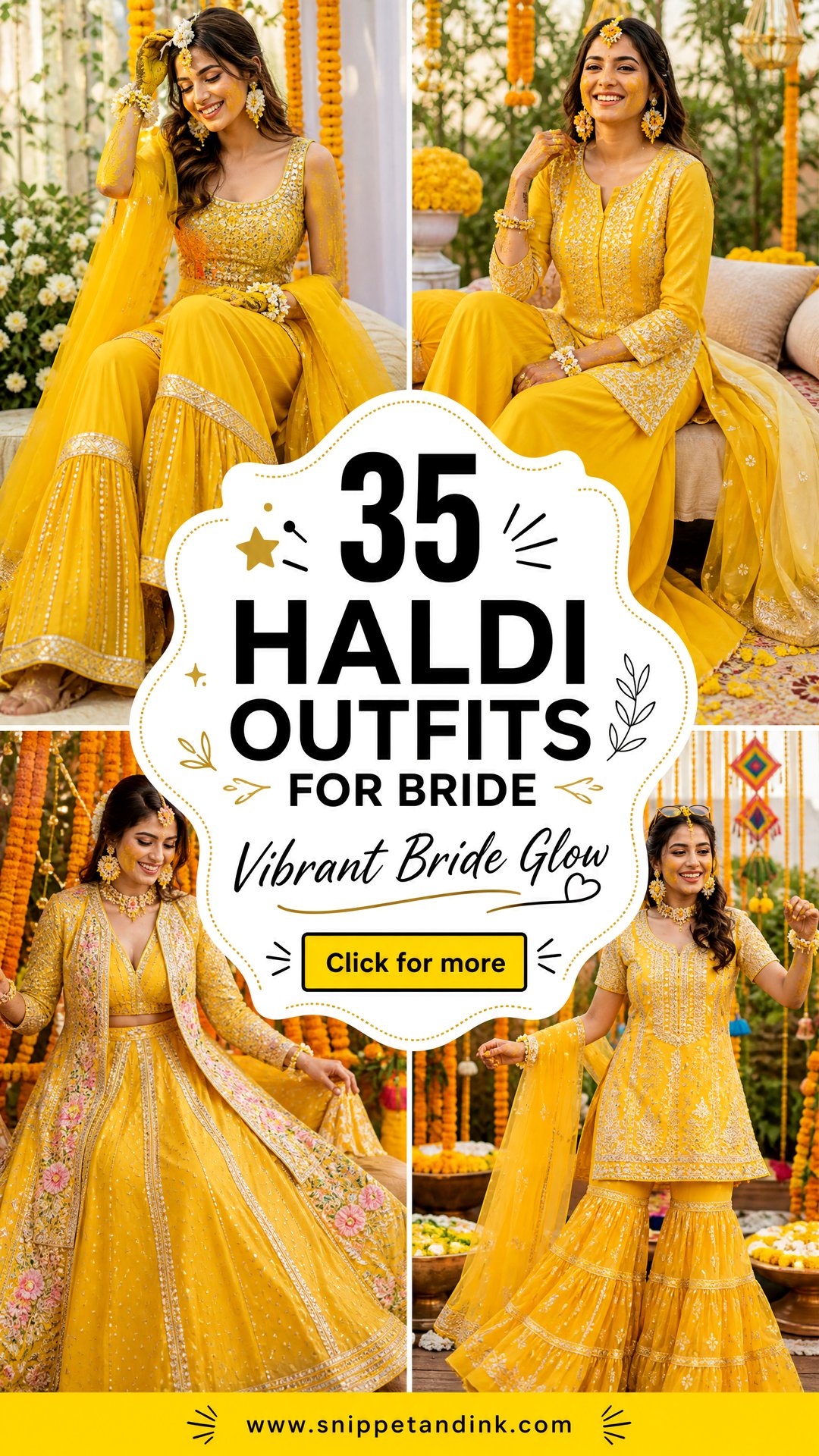
Sit Down at Your Fitting, Not Just Stand
Most Haldi rituals happen with the bride seated, on a low wooden chowki or straight on the floor, while family members take turns applying the paste. Standing in front of a mirror tells you almost nothing about how an outfit behaves in that position. At the final fitting, I ask every bride to run through a few movements before we sign off on anything:
- Sit cross-legged for a few minutes, then stand up without using your hands. If the waistband digs in or your foot catches the hem, it needs altering.
- Raise both arms above your head. Paste goes on the arms and relatives will lift them, so the blouse has to allow that without riding up.
- Push the sleeves above the elbow. Anything that won’t move will be stained by the end of the morning.
- Check the hem in the shoes you’ll actually wear, ideally flat juttis or sandals with grip, because the floor gets wet.
- Pin the dupatta yourself and move around for a while. If it slips at the fitting, it will slip at the ceremony.
Fabric matters as much as fit. Cotton, cotton silk, chanderi, georgette and crepe breathe in daytime heat and forgive a lot. Heavy raw silk, velvet and dense zardozi trap heat and are the hardest to clean. If your ceremony ends with water being poured or a splash game among cousins, ask for a full cotton lining in a pale lehenga or kurta, because wet georgette and chiffon turn sheer surprisingly quickly.
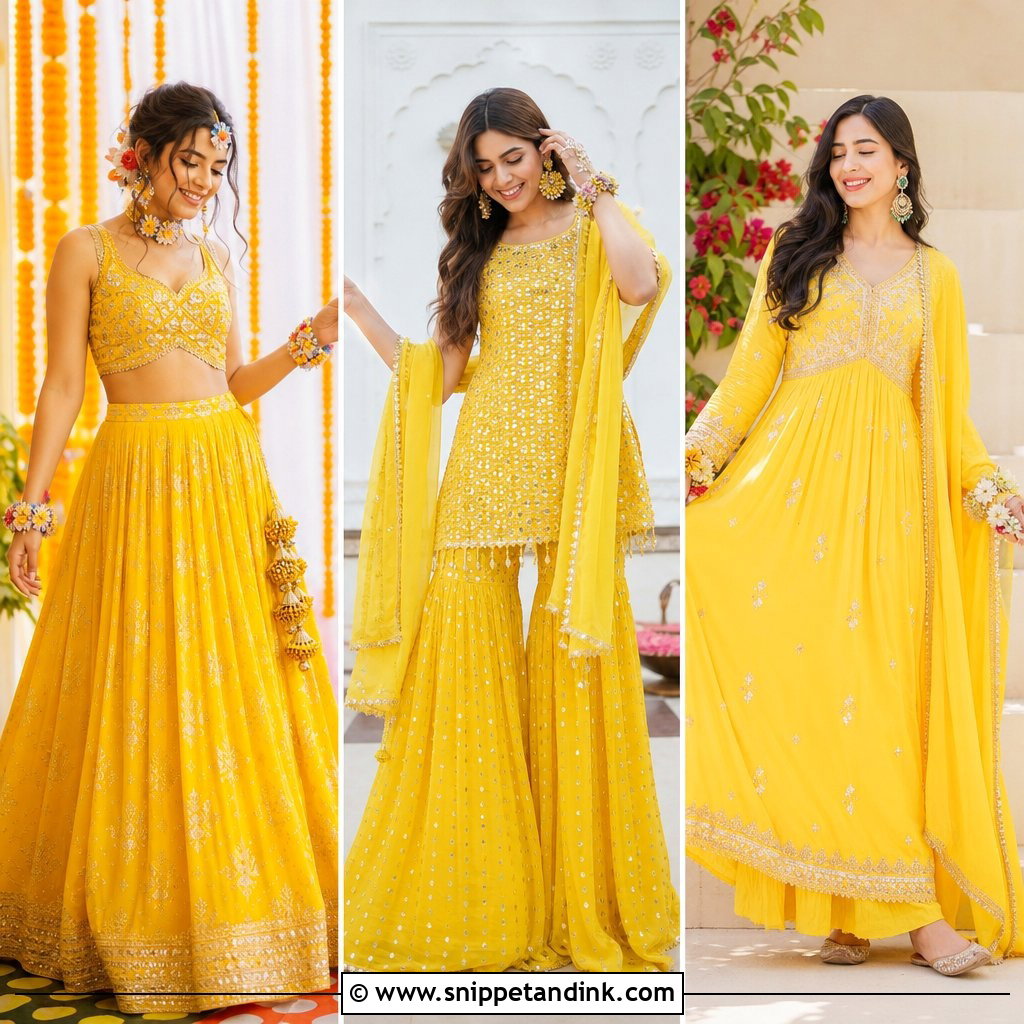
1. Yellow Lehenga for Haldi Bride
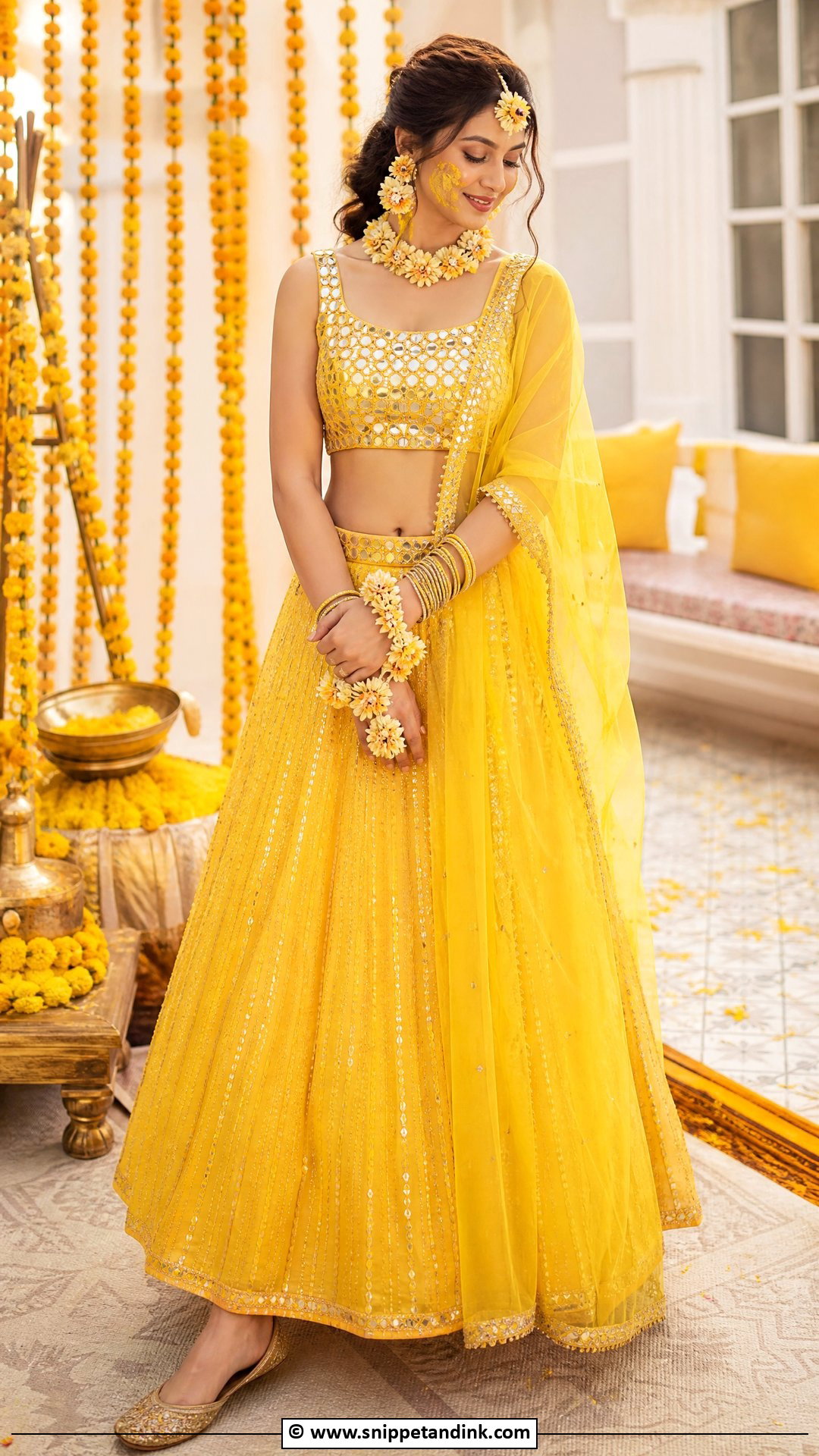
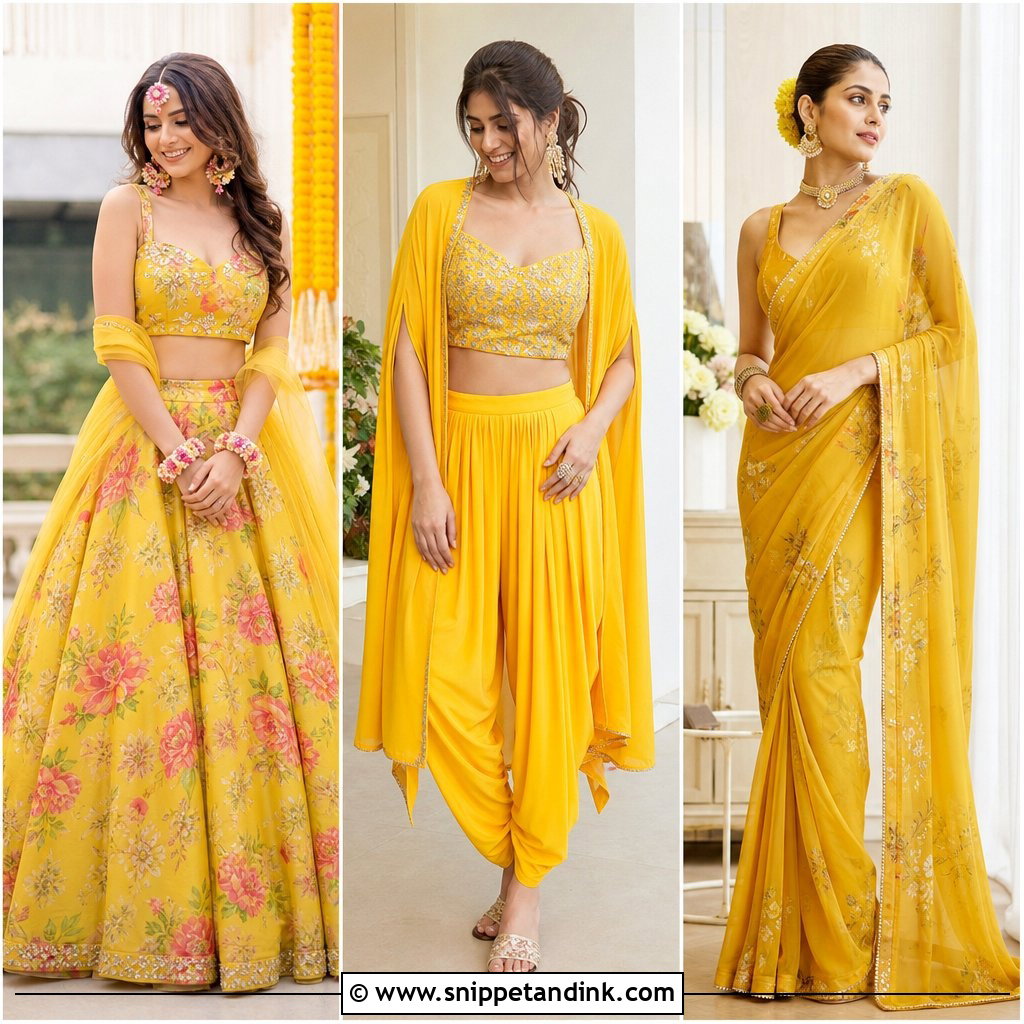
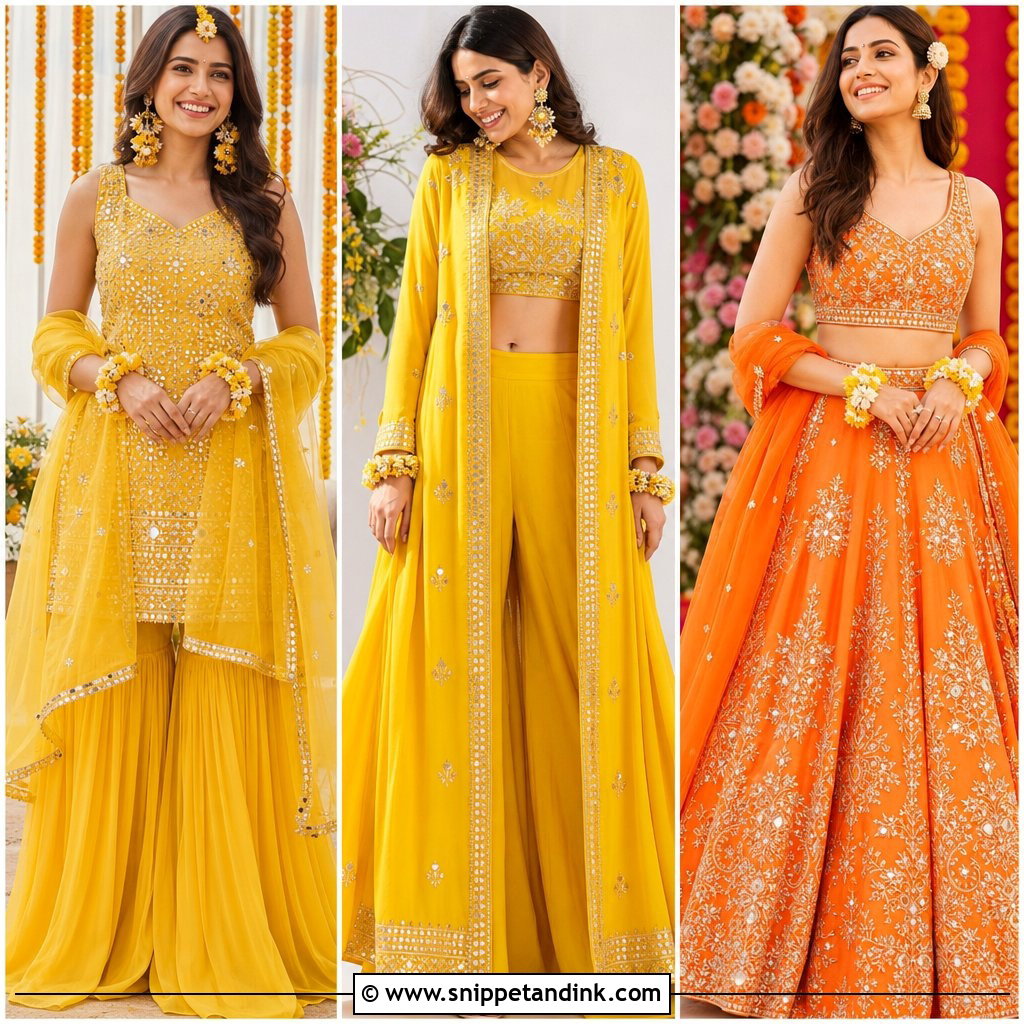
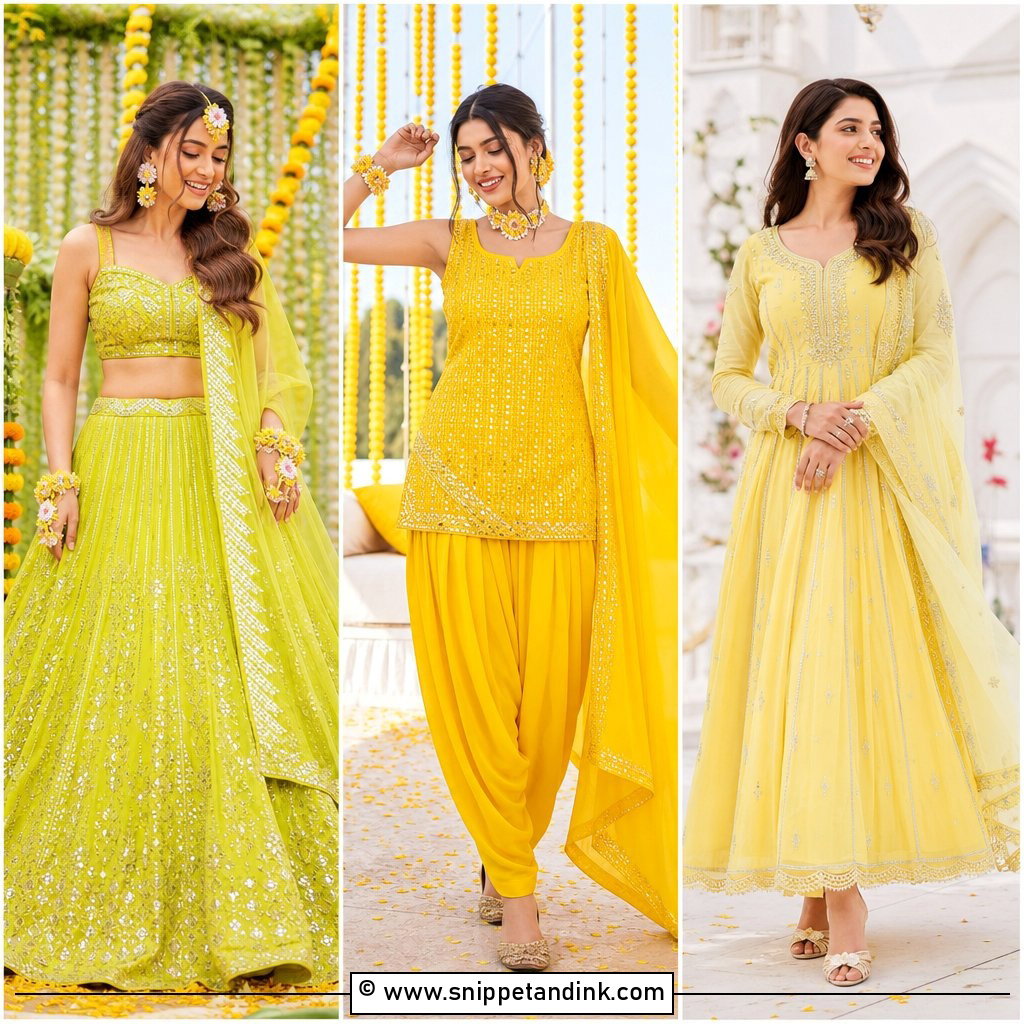
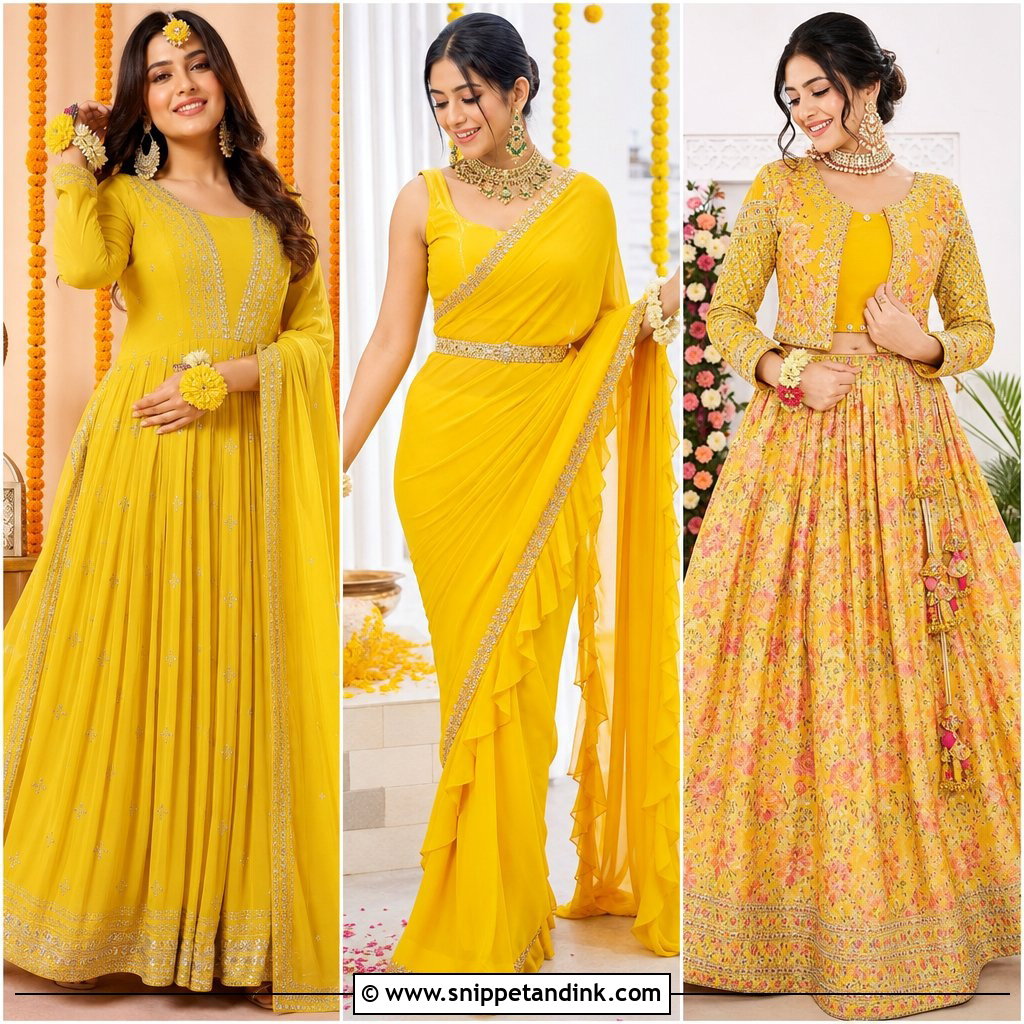
Most families still picture the bride in yellow, and a lehenga is the most familiar way to do it, which is why it remains the classic Haldi bride look. For a ritual where you sit on a low stool for a long stretch, I steer brides toward cotton silk or chanderi over heavy raw silk; the skirt should be light enough to gather in one hand when you stand. Keep the blouse embroidery flat, gota or thread rather than raised beadwork, because paste gets trapped in raised work and is hard to clean out. Pin the dupatta firmly on one shoulder before the ceremony starts, not halfway through it.
2. White Lehenga for Haldi Bride
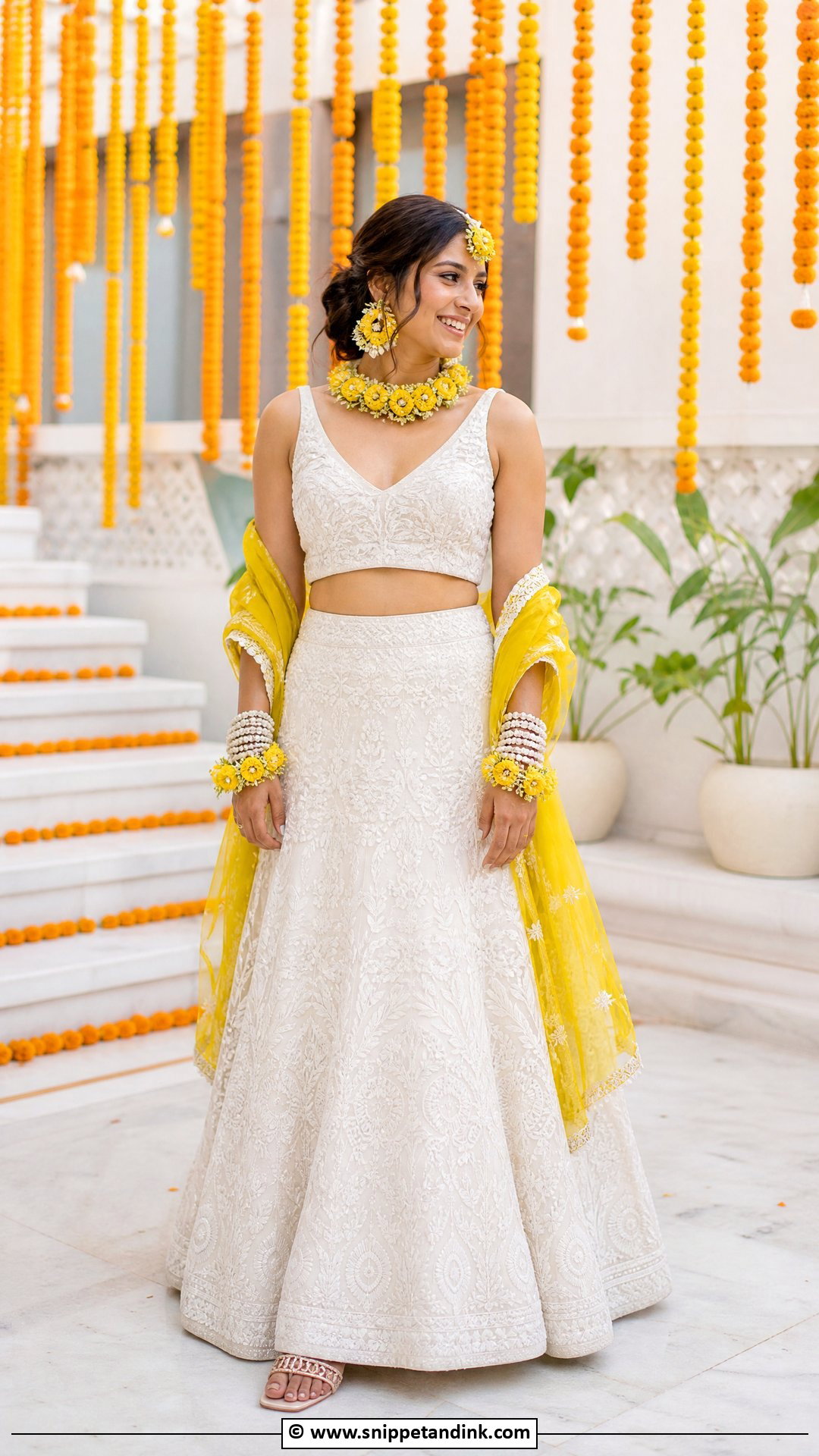
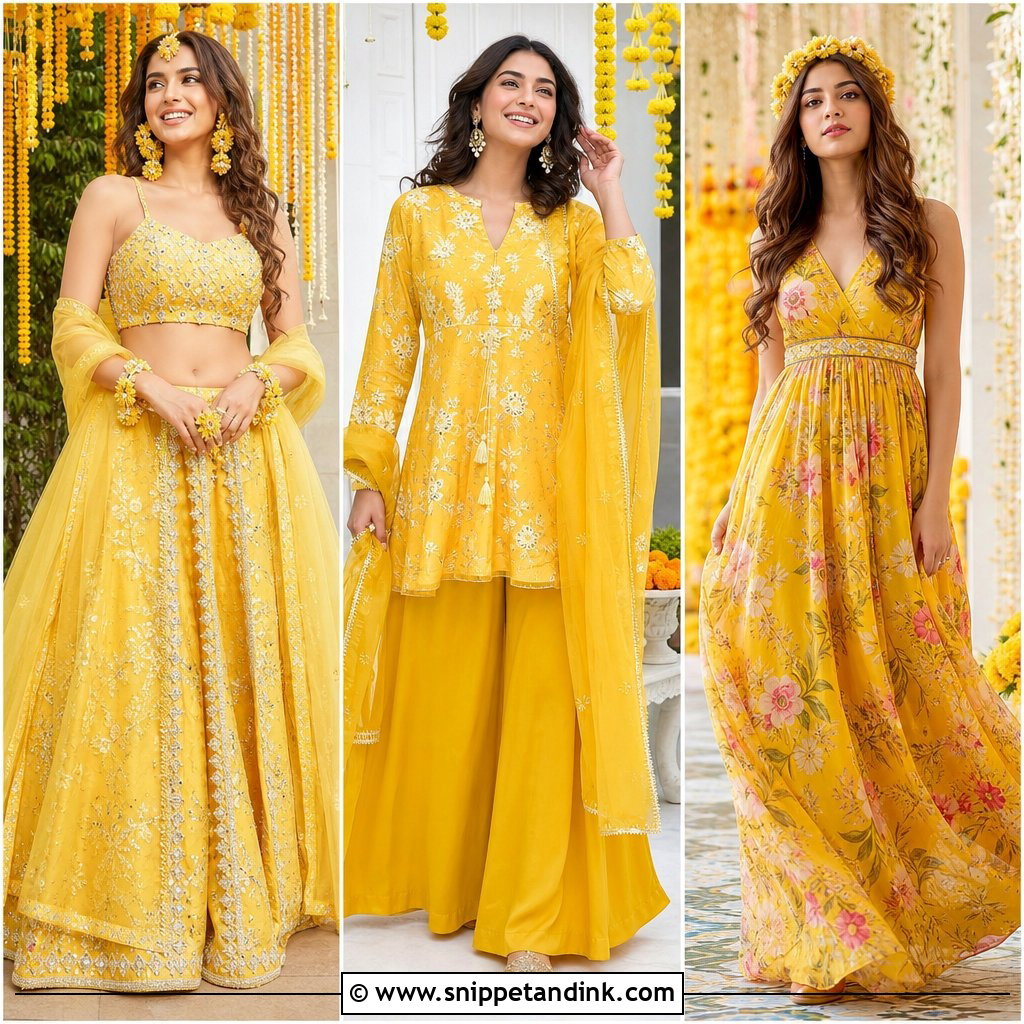
Ivory is the color I’m asked about most and the one I caution about most. Turmeric on white stays visible, and on ivory silk a faint yellow shadow can remain even after professional cleaning. If your family applies the paste generously, wear the ivory lehenga for the portraits beforehand and change, or choose one where the yellow embroidery and border sit low on the skirt, where splashes land anyway. A yellow dupatta ties it back to the ceremony, and with a soft braid and yellow flower jewelry it reads fresh rather than washed out in daylight.
3. Yellow Saree for Haldi Bride
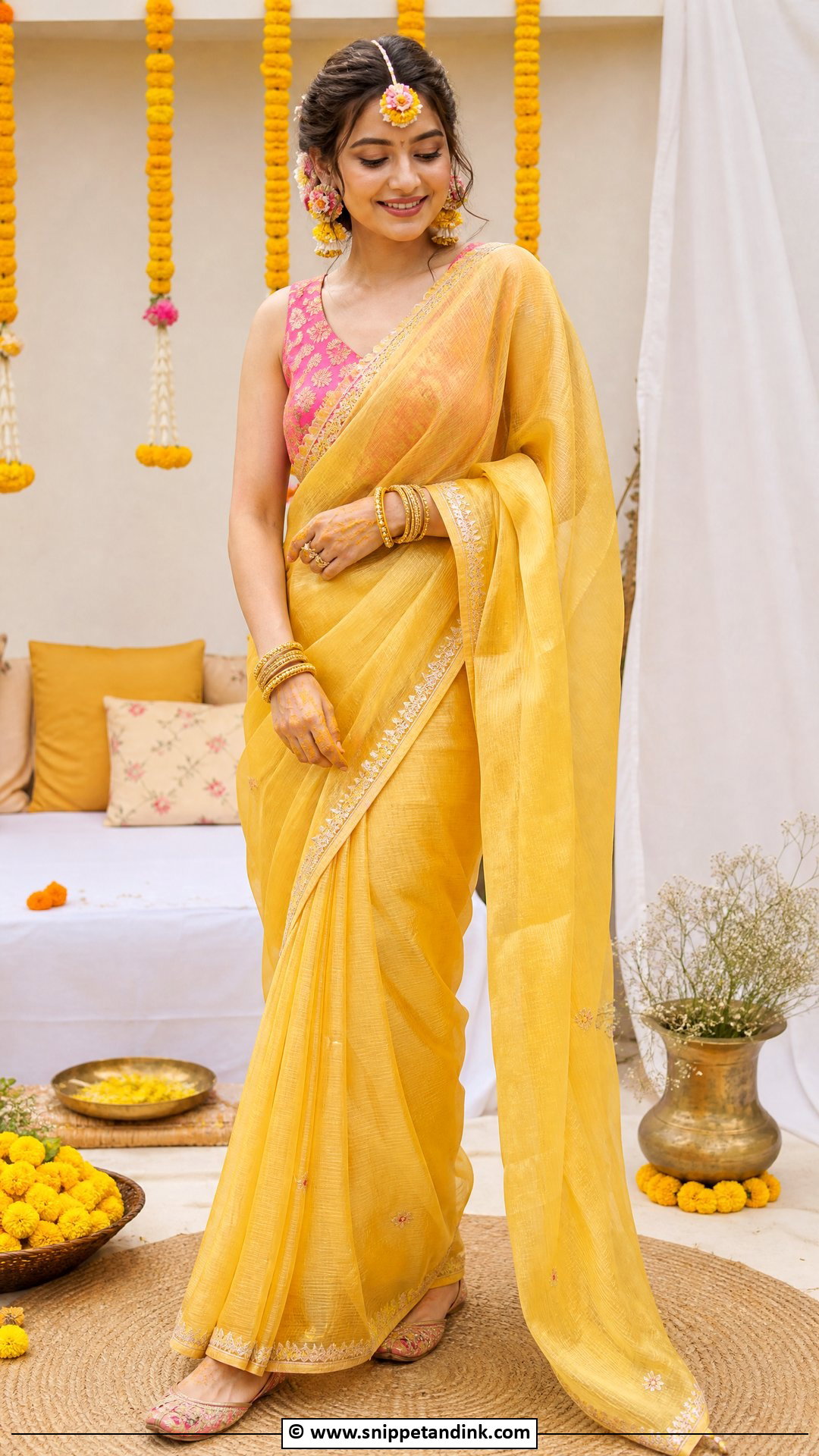
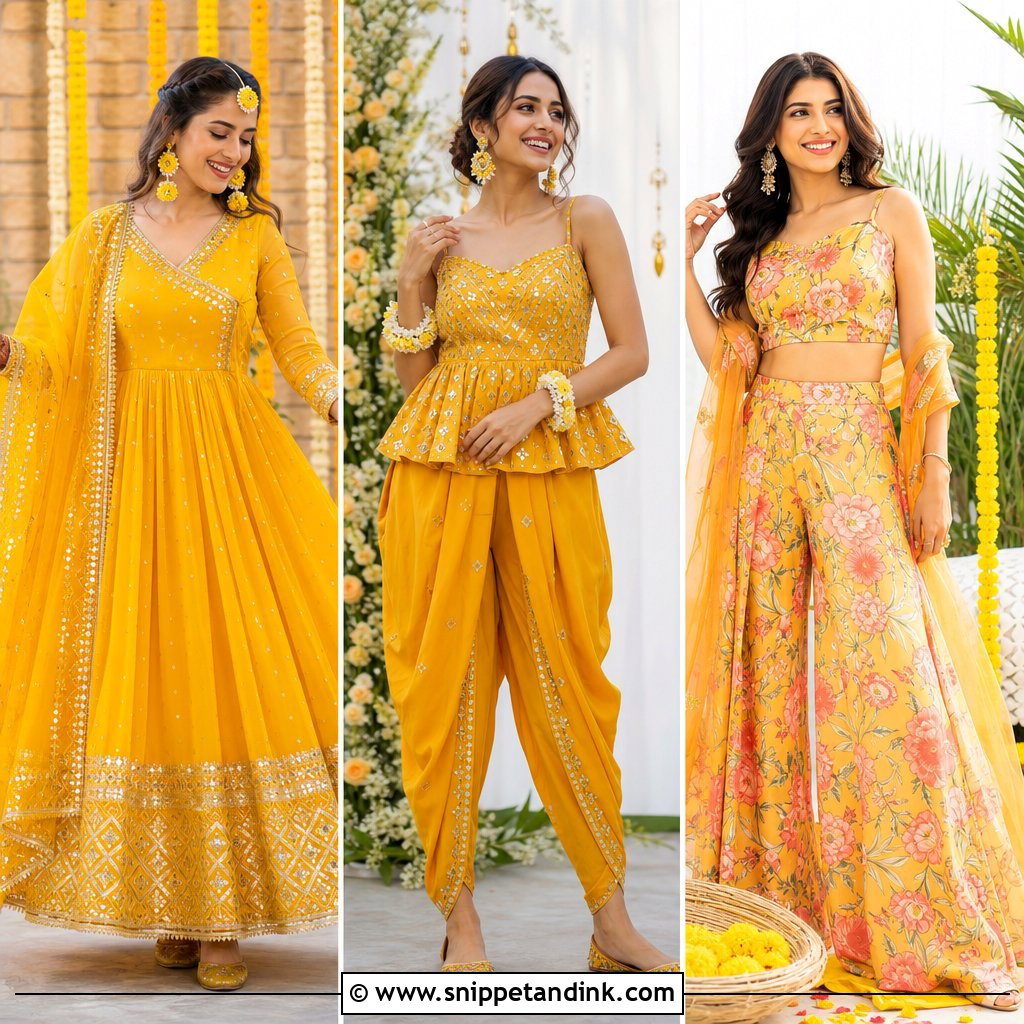
A saree is what I’d pick for a bride who wants to wear her Haldi outfit again, because a plain yellow cotton silk or chanderi slips straight into festive dressing later. The catch is the pleats. Sitting on the floor pulls them apart unless they’re pinned at the waist in at least two places and the pallu is anchored at the shoulder. I also ask the draper to keep the hem a touch higher than she would for a reception, so it clears the paste bowl when you stand. A contrast blouse in pink or green stops you from disappearing into a sea of yellow in group shots.
4. Floral Lehenga for Haldi Bride
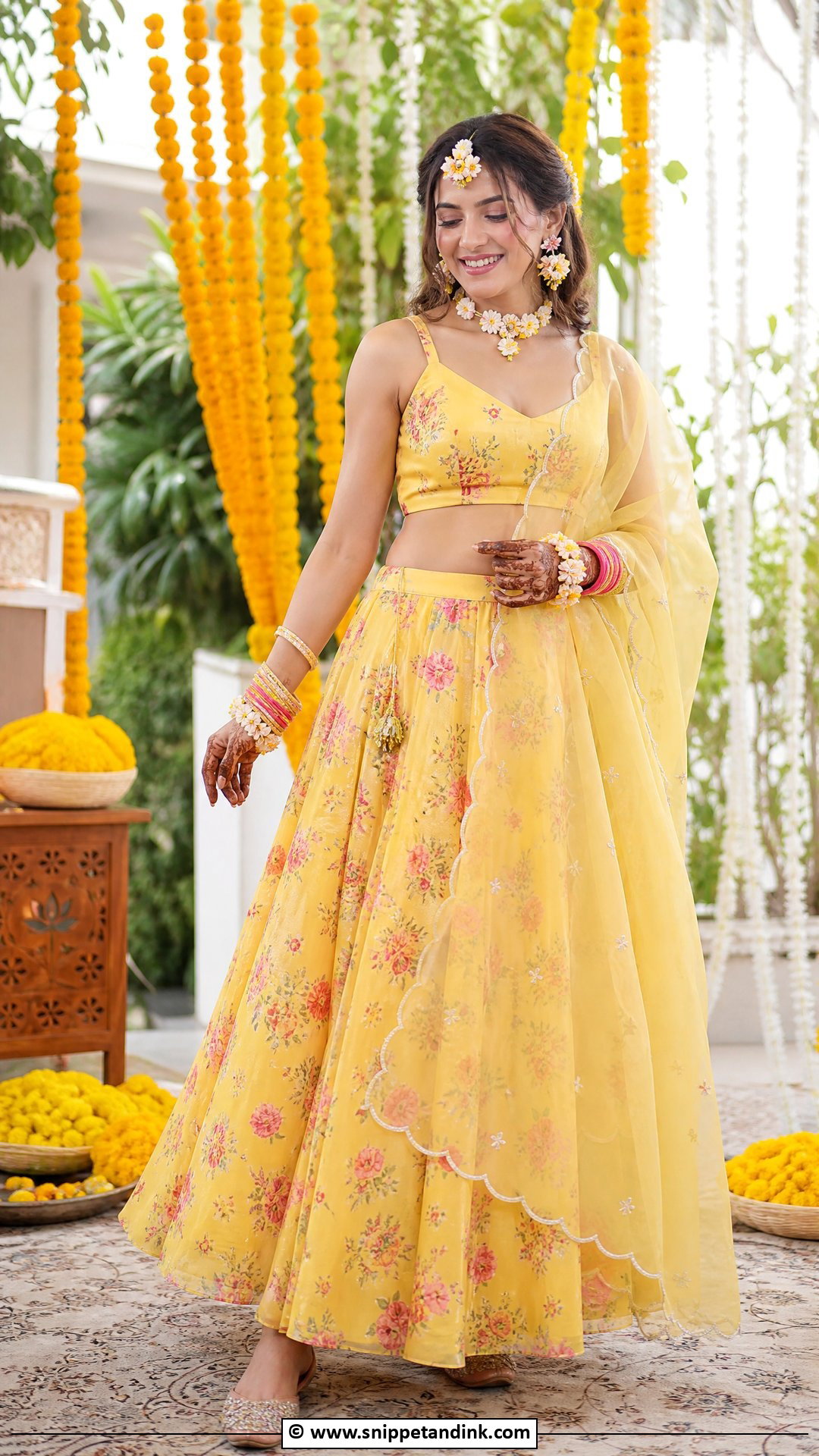
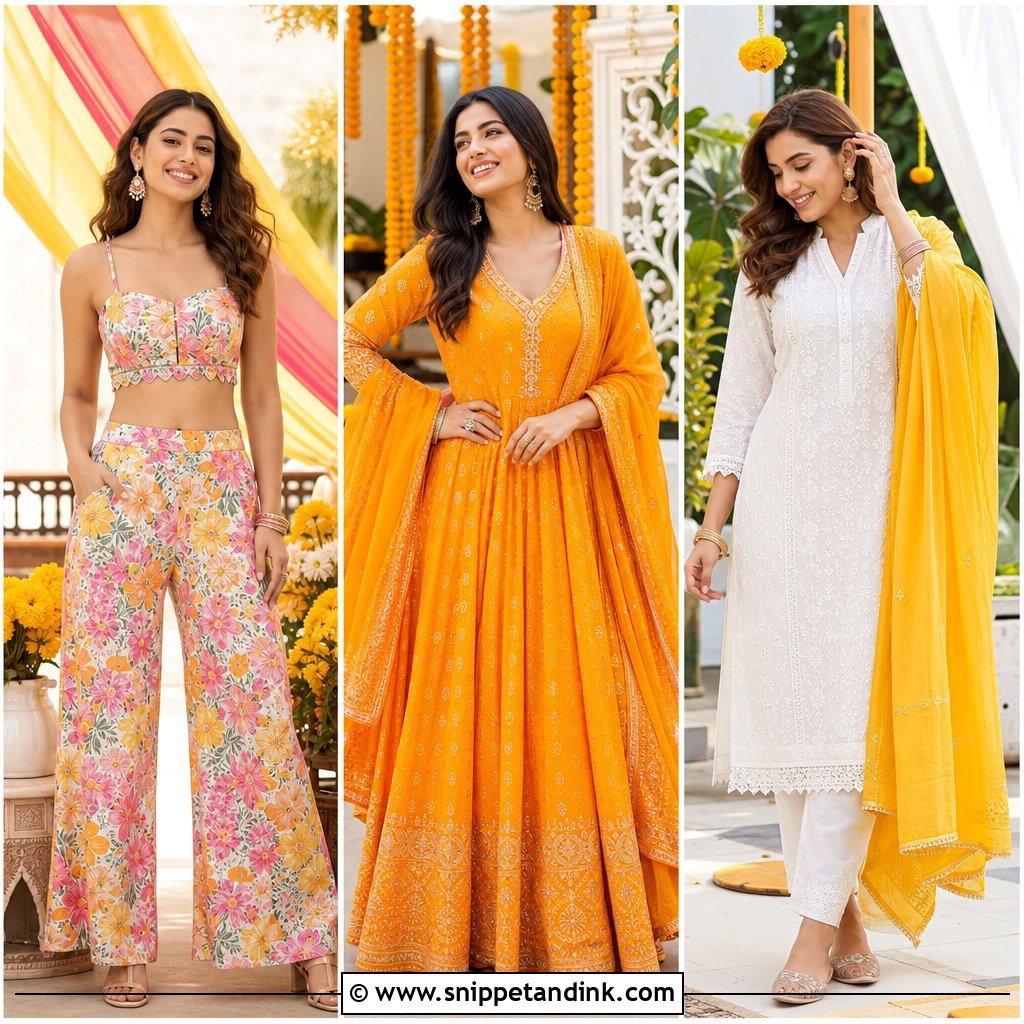
Floral prints are forgiving in a way plain fabric isn’t. A smear of turmeric on a busy print of peach and yellow blooms practically disappears, which makes a floral lehenga one of my favorite picks for brides who know their cousins will be heavy-handed. The rule I give is one busy piece only: if the skirt is printed, the blouse stays plain and the dupatta stays sheer so it doesn’t swallow the pattern. Fresh roses or marigolds in the jewelry pick up the print colors without adding more noise.
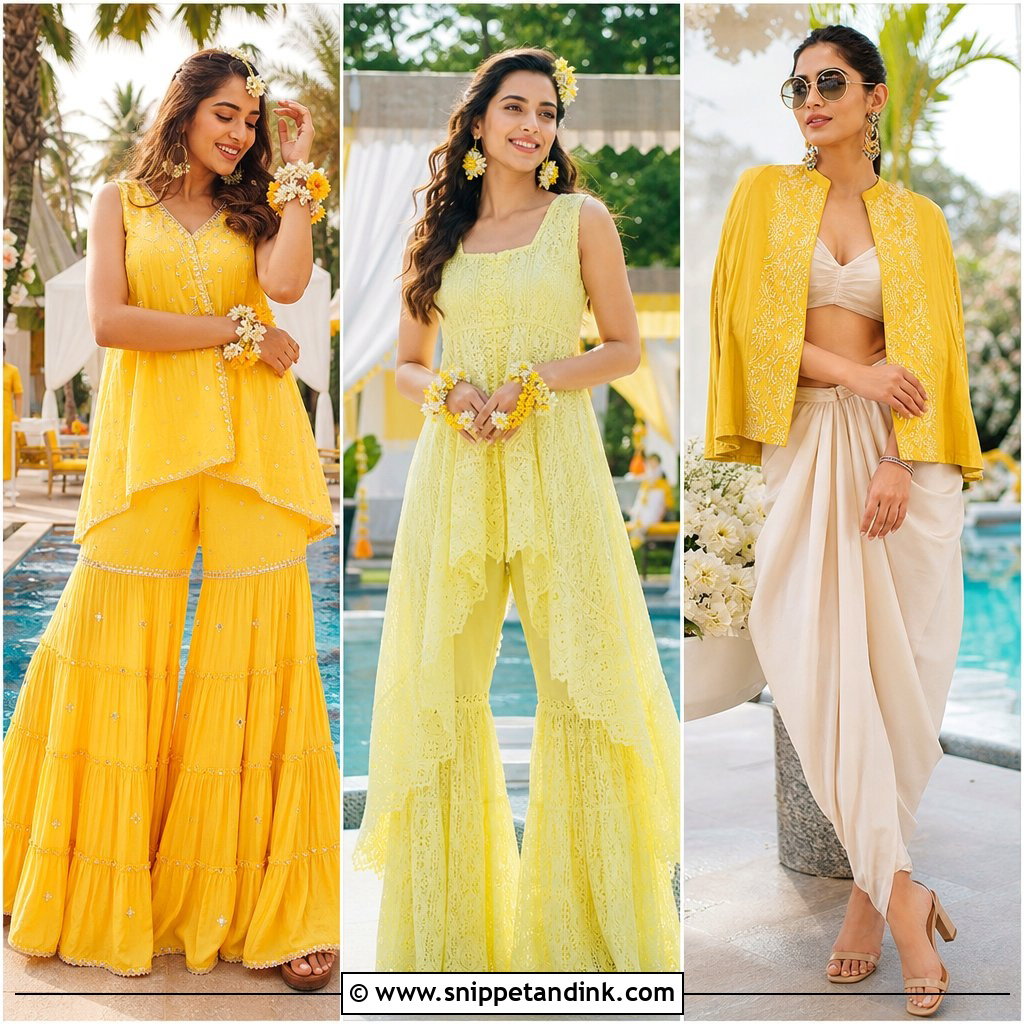
5. Yellow Sharara for Haldi Bride
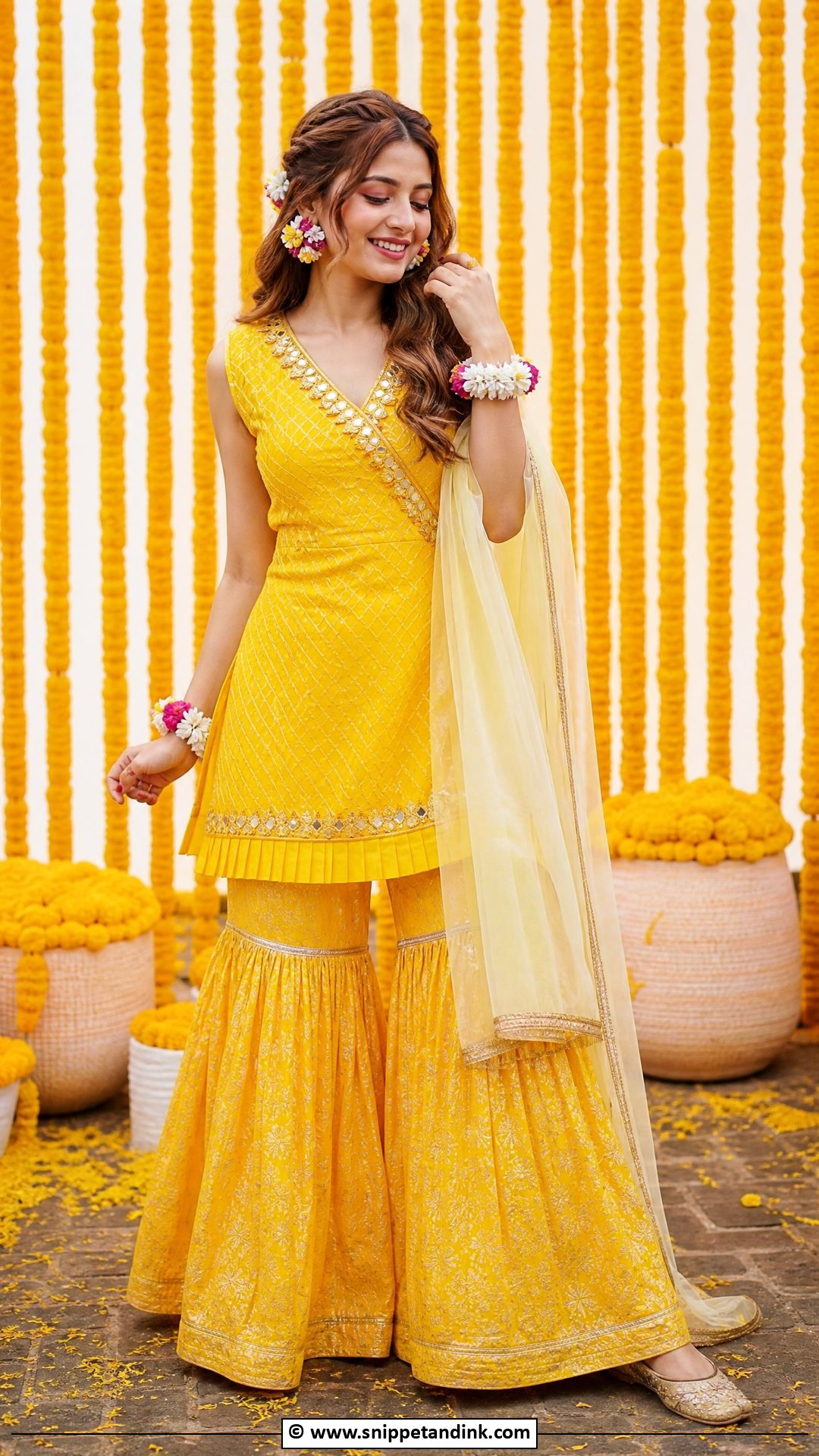
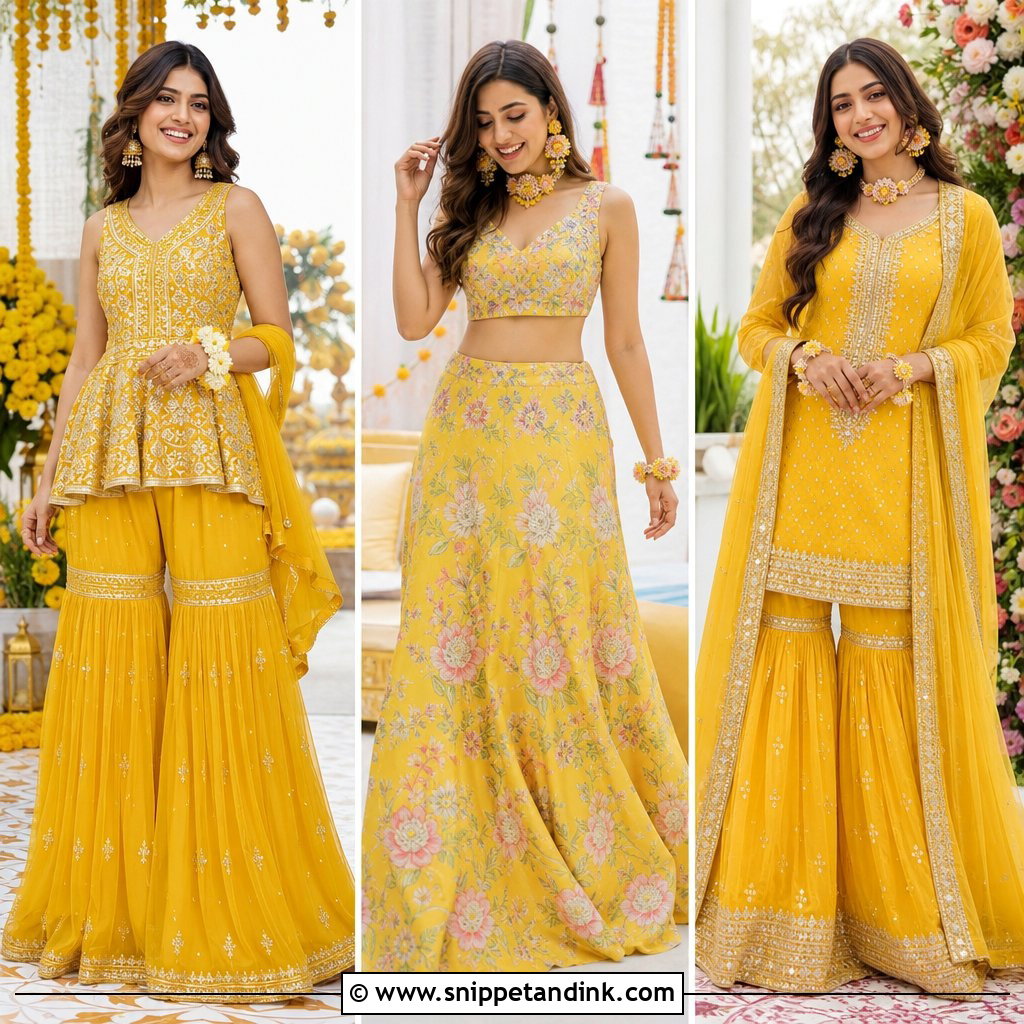
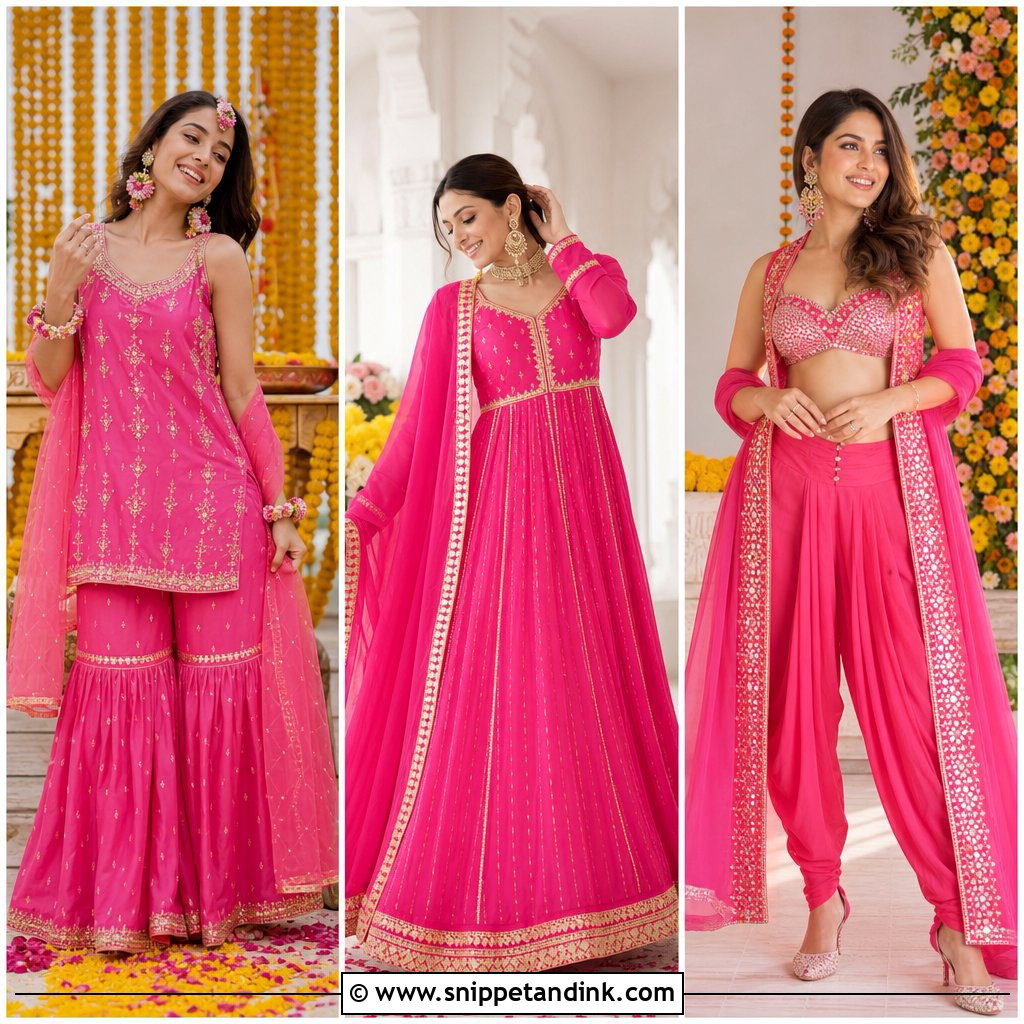
Shararas are what I suggest to brides who plan to dance. The wide legs move like a skirt, but you can’t step on a hem when you kneel, and that matters on a floor slippery with paste and water. Georgette or crepe keeps them from feeling bulky. Embroidery belongs at the neckline, sleeves and hem rather than across the body, which keeps the weight down. Ask the tailor to finish the hem about an inch above the floor in the flat shoes you’ll actually wear.
6. Yellow Gharara for Haldi Bride
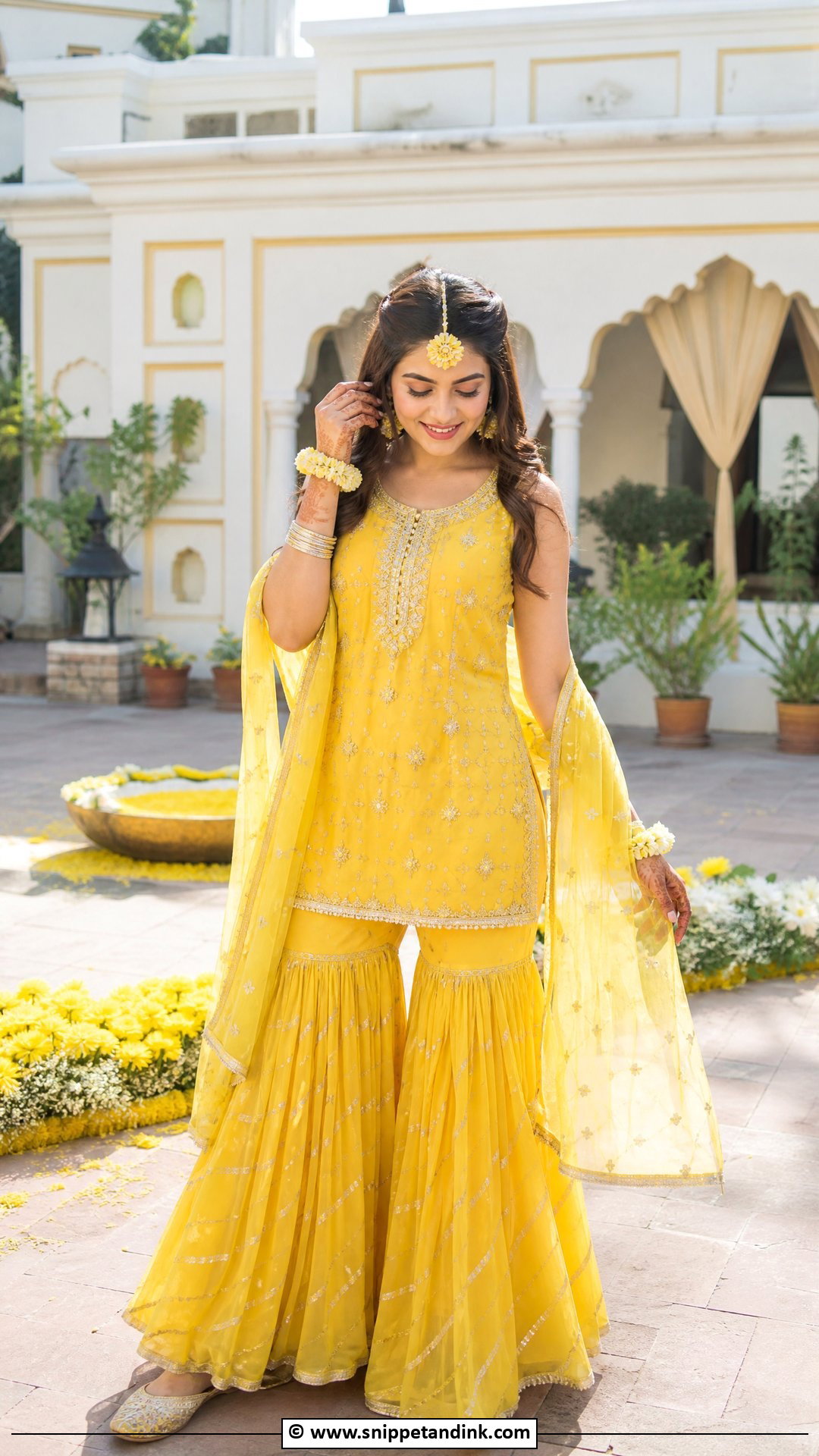
A yellow gharara looks more formal than a sharara because of the gathered joint at the knee, where the fitted upper leg breaks into the flare. That joint is also the thing to test. Sit cross-legged in it at the fitting, because a snug upper leg pulls across the thigh once you’re on the floor. Gota patti or zari on the knee band adds the festive note. The volume is already built in, so I keep the dupatta light and the top short or peplum, which lets the knee detail show in full-length photos.
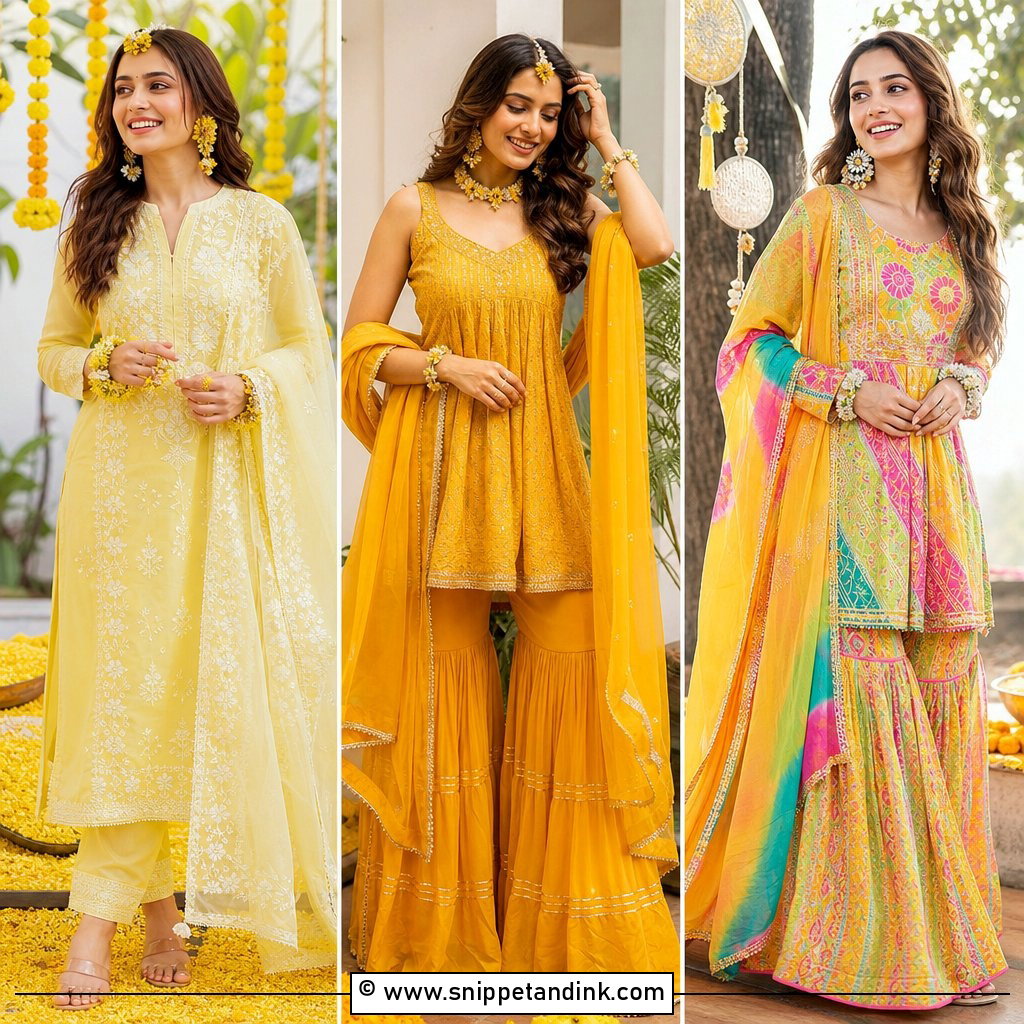
7. Haldi Anarkali Suit for Bride
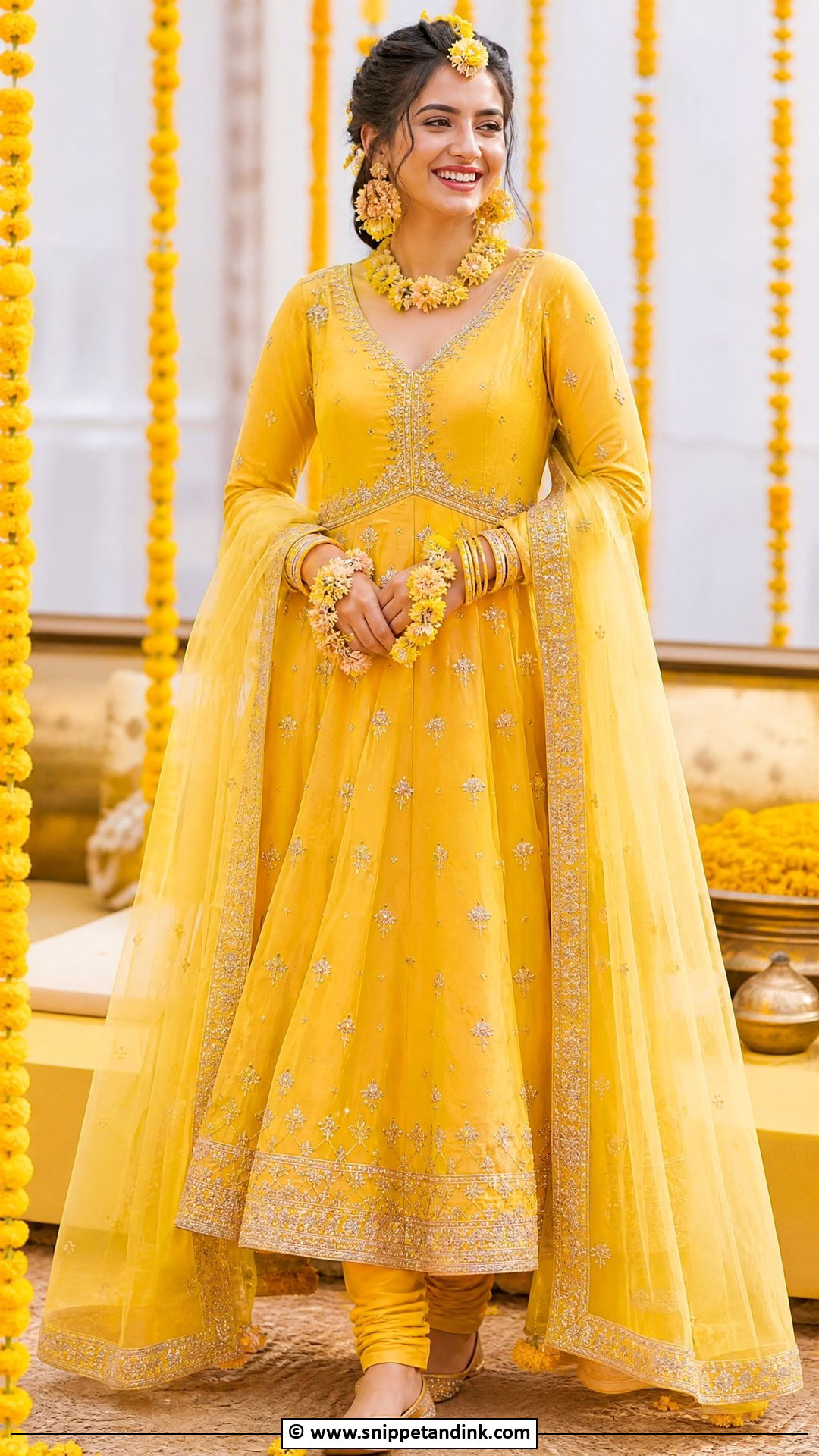
An Anarkali is one piece, so there is nothing to tuck, re-pin or hold up while someone rubs paste on your arms. That’s why I recommend it to brides who feel fussed by a lehenga. Look hard at the flare before you buy: a very full Anarkali pools around you when you sit and the hem drifts toward the turmeric bowl, so a moderate flare is the safer cut. Chikankari or light mirror work suits it, with fitted churidar underneath. If you want long sleeves, have them made loose enough to push past the elbow.
8. Yellow Kurta Palazzo Set for Haldi Bride
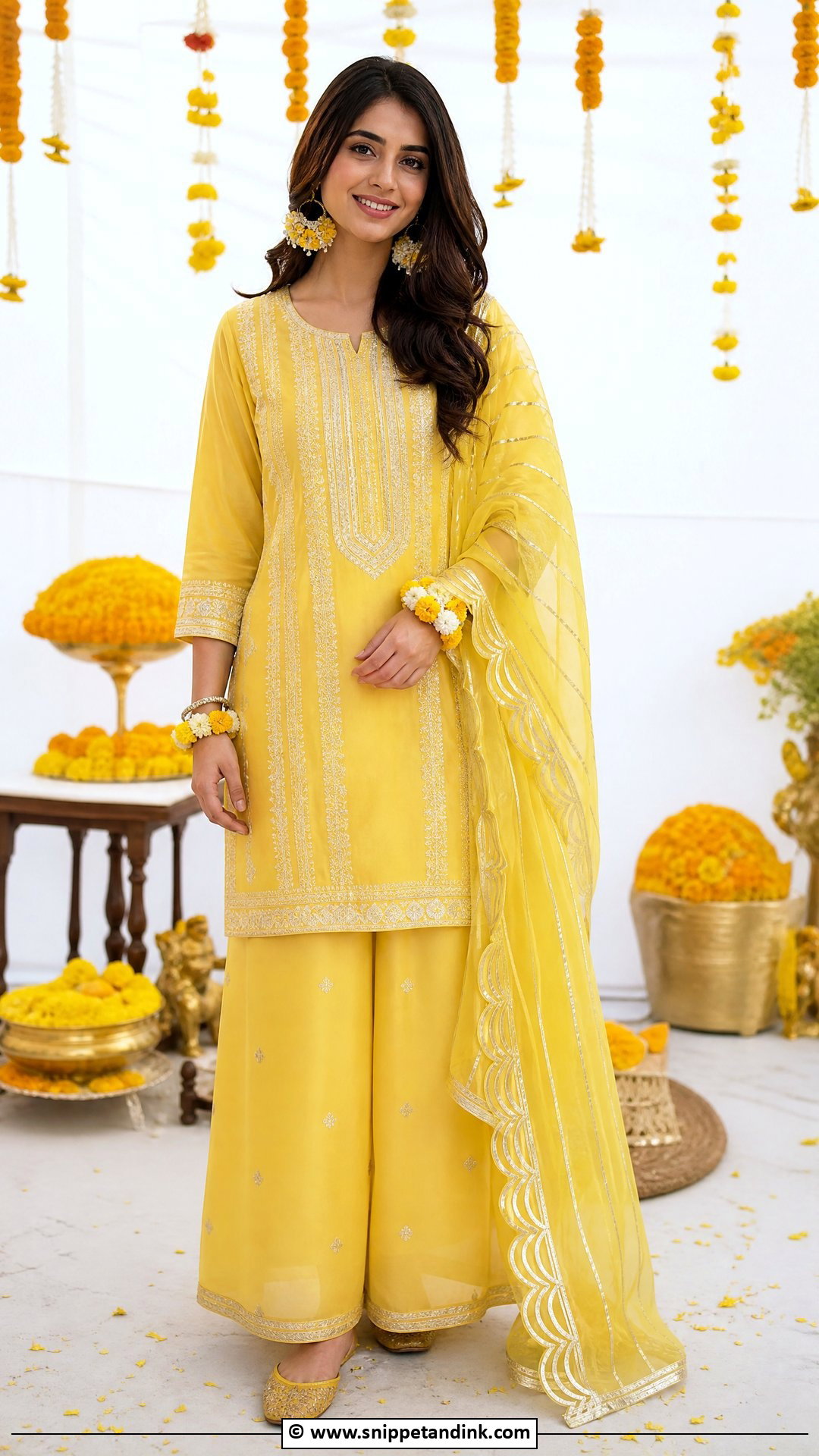
For a small home Haldi or a poolside one, a kurta and palazzo set is where I’d start if comfort comes first. The loose trousers make floor sitting easy and the kurta covers well when you bend forward. The risk is that it reads like everyday wear, so the bridal signal has to come from the dupatta and the flowers: a gota or mirror border, fresh flower jewelry, embroidered juttis. On the kurta itself, embroidery at the neckline is enough. It frames the face, and that’s where most Haldi photos are cropped.
9. Yellow Crop Top and Skirt for Haldi Bride
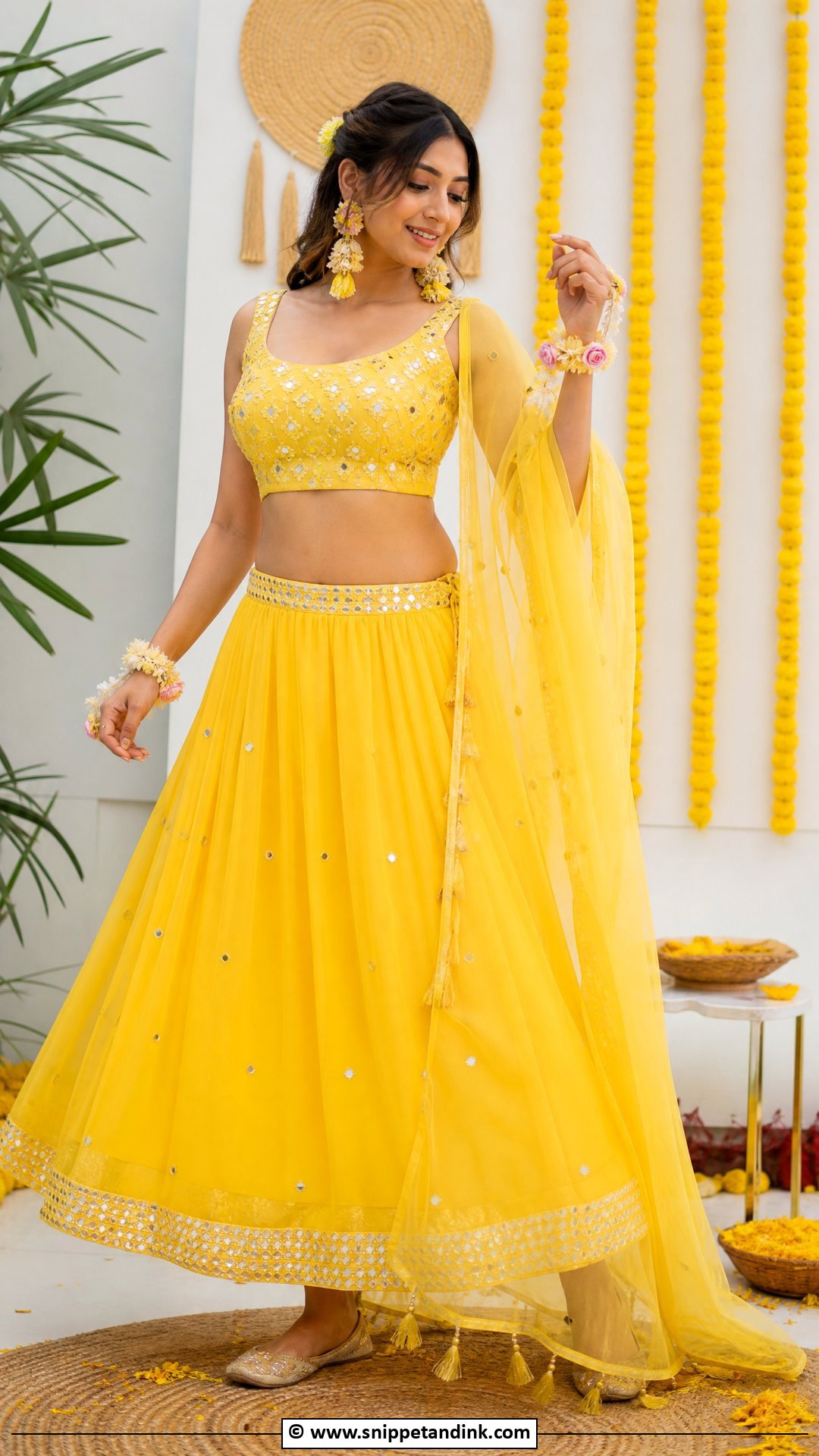
A crop top with a flowy skirt is a lehenga without the weight, and at a Haldi with a dhol and plenty of dancing it’s the outfit brides move most freely in. Think about the midriff before you choose it. Paste and water will get there, and when you sit, a short top rides up further than it does in the fitting room mirror. A structured choli cut slightly longer, or a sheer dupatta crossed over the body, solves that. Mirror work or tassels give you movement in the spinning shots.
10. Yellow Dhoti Set for Haldi Bride
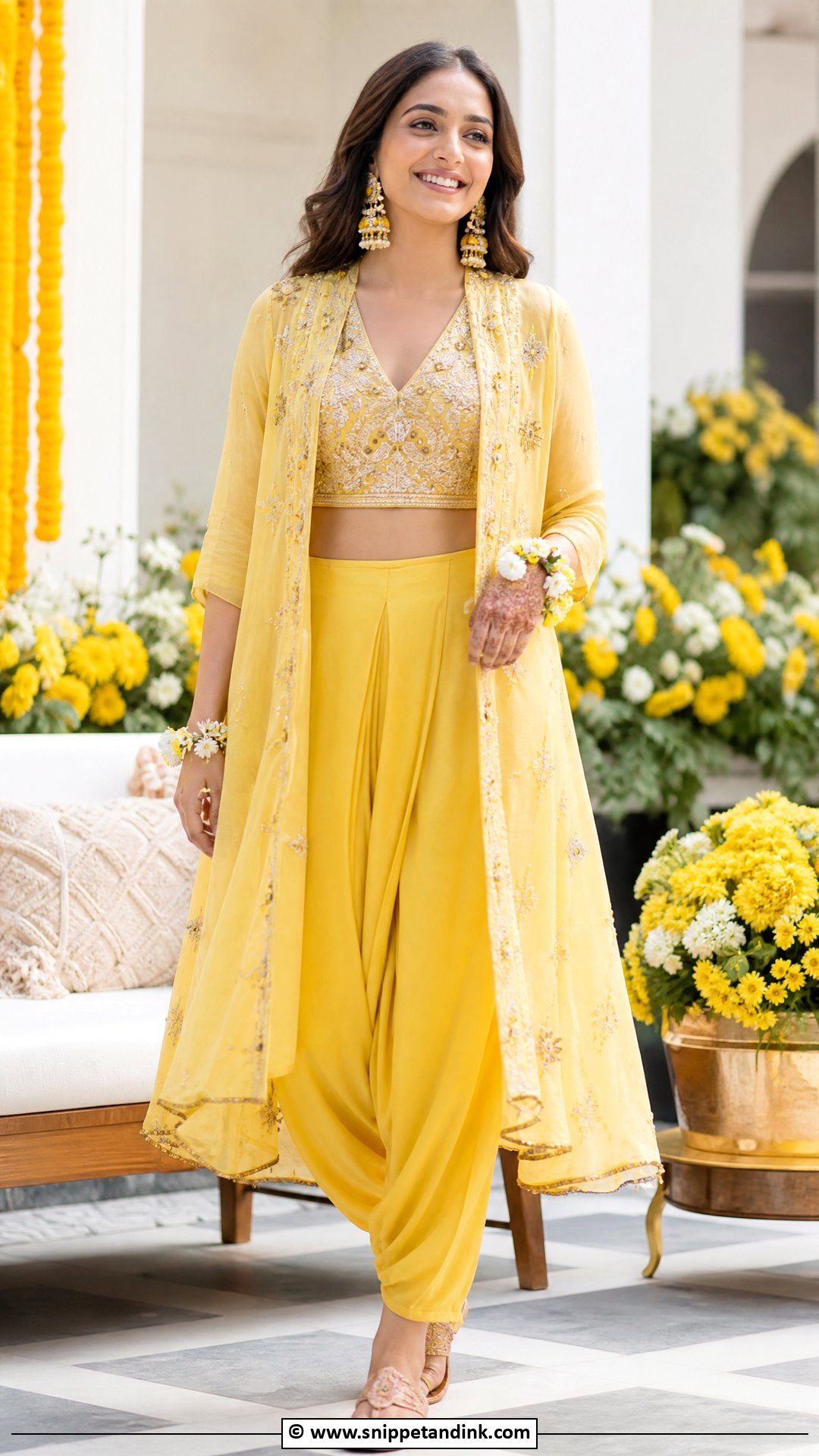
A yellow dhoti set is Indo-western dressing that genuinely earns its place at a ritual, since the draped bottom lets you sit, kneel and step over things without thinking about it. A crop top or peplum keeps the top half polished. If you want a cape or long jacket for drama, choose one that comes off easily once the paste starts, because a cape sweeping over turmeric-covered arms picks up every streak. Kolhapuri sandals and a sleek ponytail keep it unfussy.
11. Yellow Cape Set for Haldi Bride
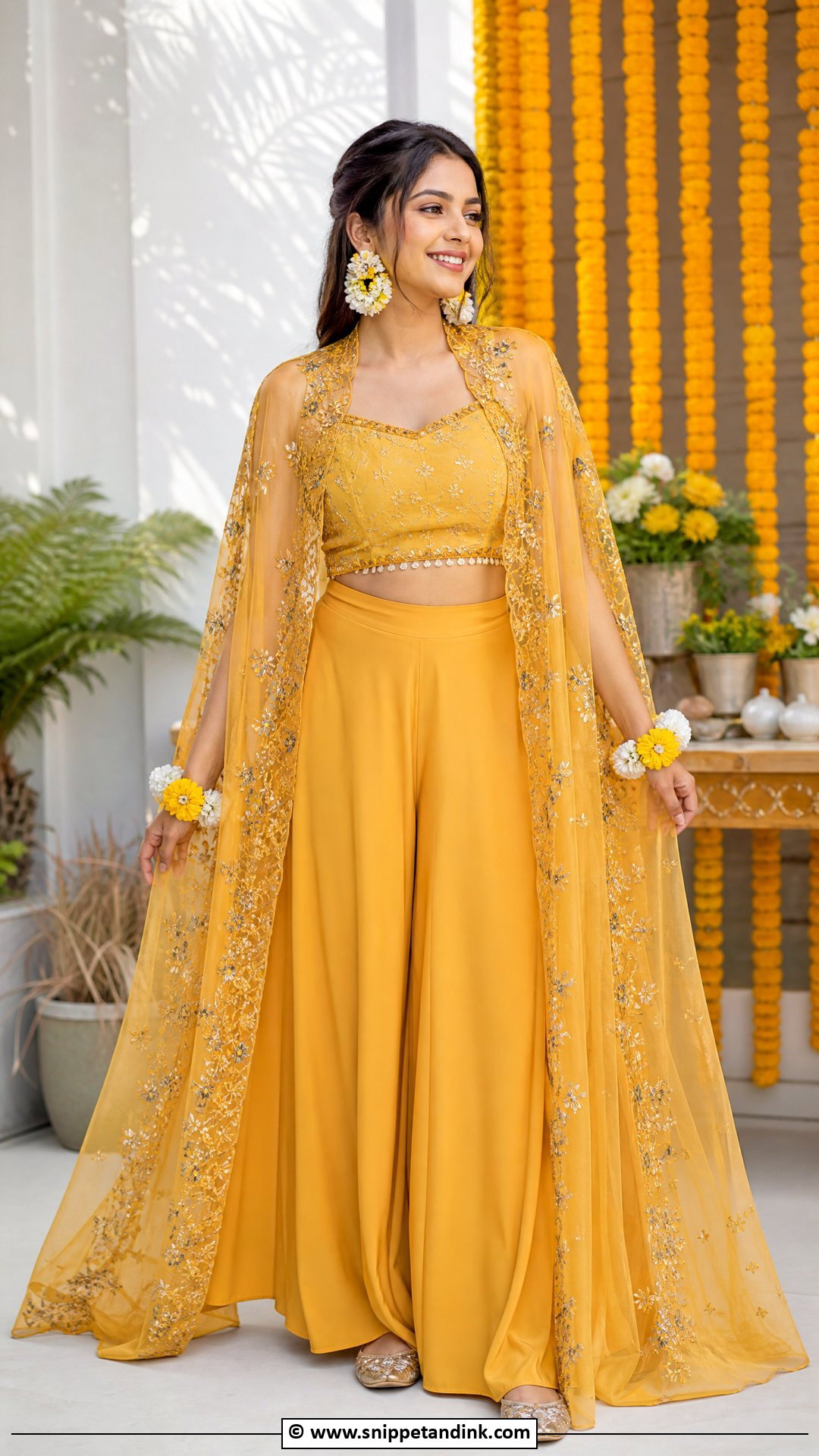
Capes have largely replaced the dupatta for brides who hate re-pinning, and the reason is simple: a cape sits on the shoulders and stays there. I prefer organza or georgette for it over net, which snags on bangles and earring backs. Outdoors, a sheer cape catches the light behind you, which is where it earns its keep in photos. Underneath, choose palazzos, a skirt or a sharara depending on how much you’ll be sitting. Keep the jewelry to earrings and flower bracelets, because a statement necklace fights the cape at the neckline.
12. Ivory Haldi Lehenga With Yellow Dupatta
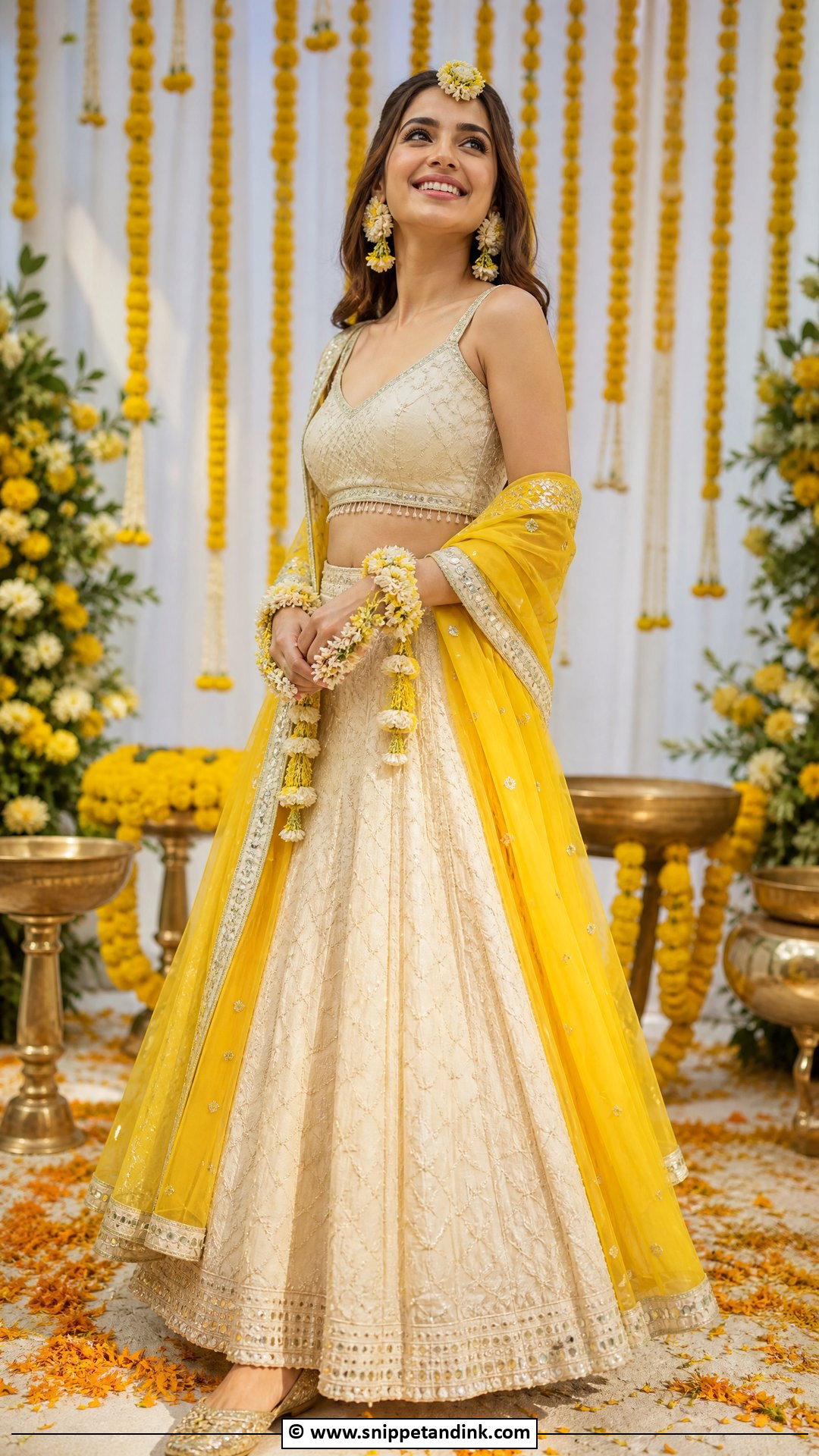
Ivory with a yellow dupatta is the gentler version of an all-yellow look, and I often suggest it to brides whose skin reads sallow against strong mustard. The yellow lives in the dupatta, which you can drape away from your arms during the paste, so the most exposed fabric is also the easiest one to remove. Keep the lehenga work light in gold, pearl or thread. Against marigold decor in sunlight, the ivory bounces warm light back onto your face, and soft peach makeup sits comfortably with it.
13. Chikankari Kurta Set for Haldi Bride
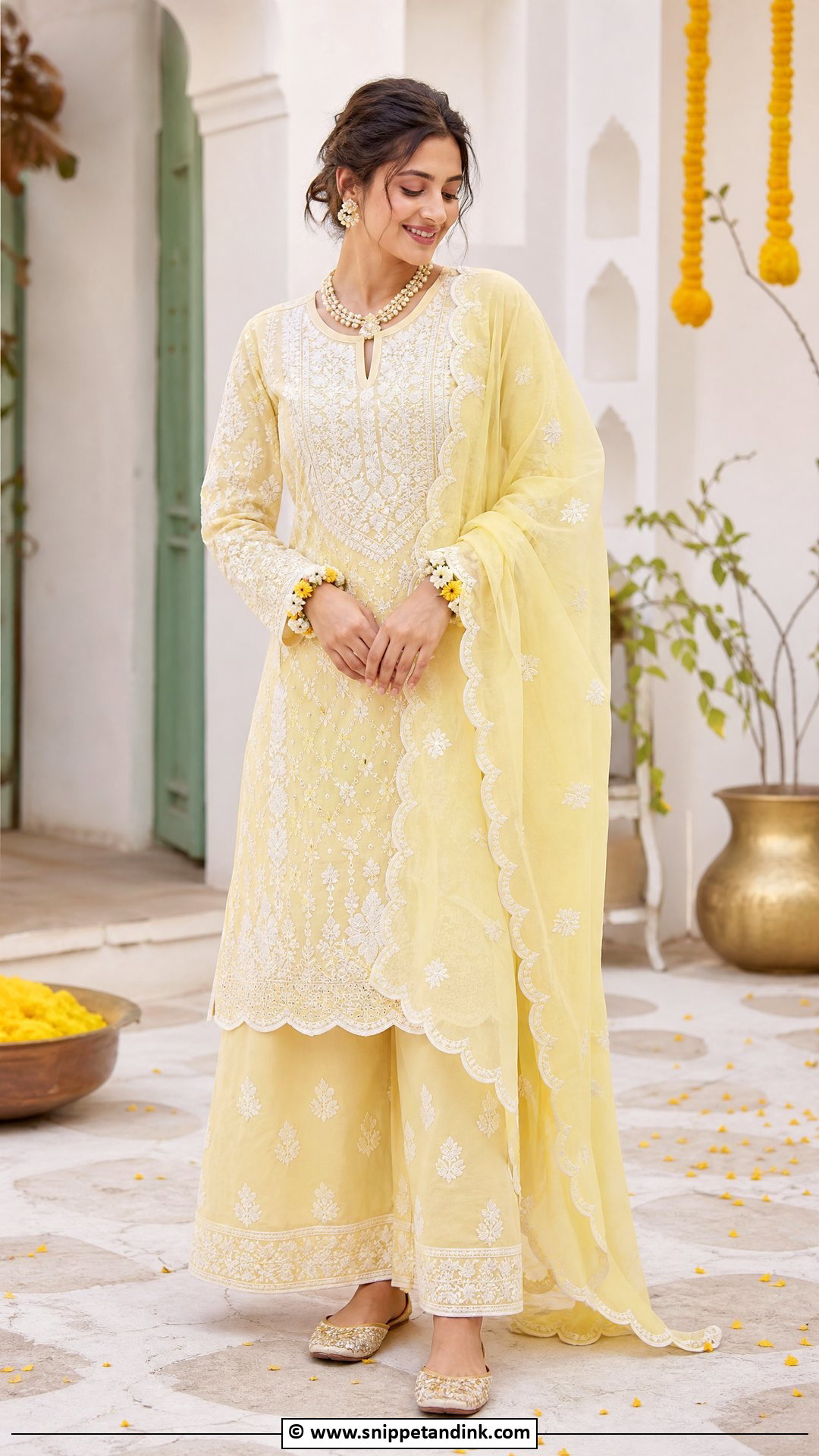
Chikankari is fine hand embroidery, usually on cotton or georgette, and its shadow work and tiny knots give texture without weight, which is why I like it for a hot daytime Haldi. A straight kurta with palazzos, a short kurti with sharara pants, or an Anarkali cut all carry it well. A cotton chikankari set can usually be hand washed gently, so of everything here it’s one of the friendlier outfits to clean after the paste. Add pearls, a scalloped dupatta and embroidered flats, and you’ll keep reaching for it at summer functions long after the wedding.
14. Mirror Work Lehenga for Haldi Bride
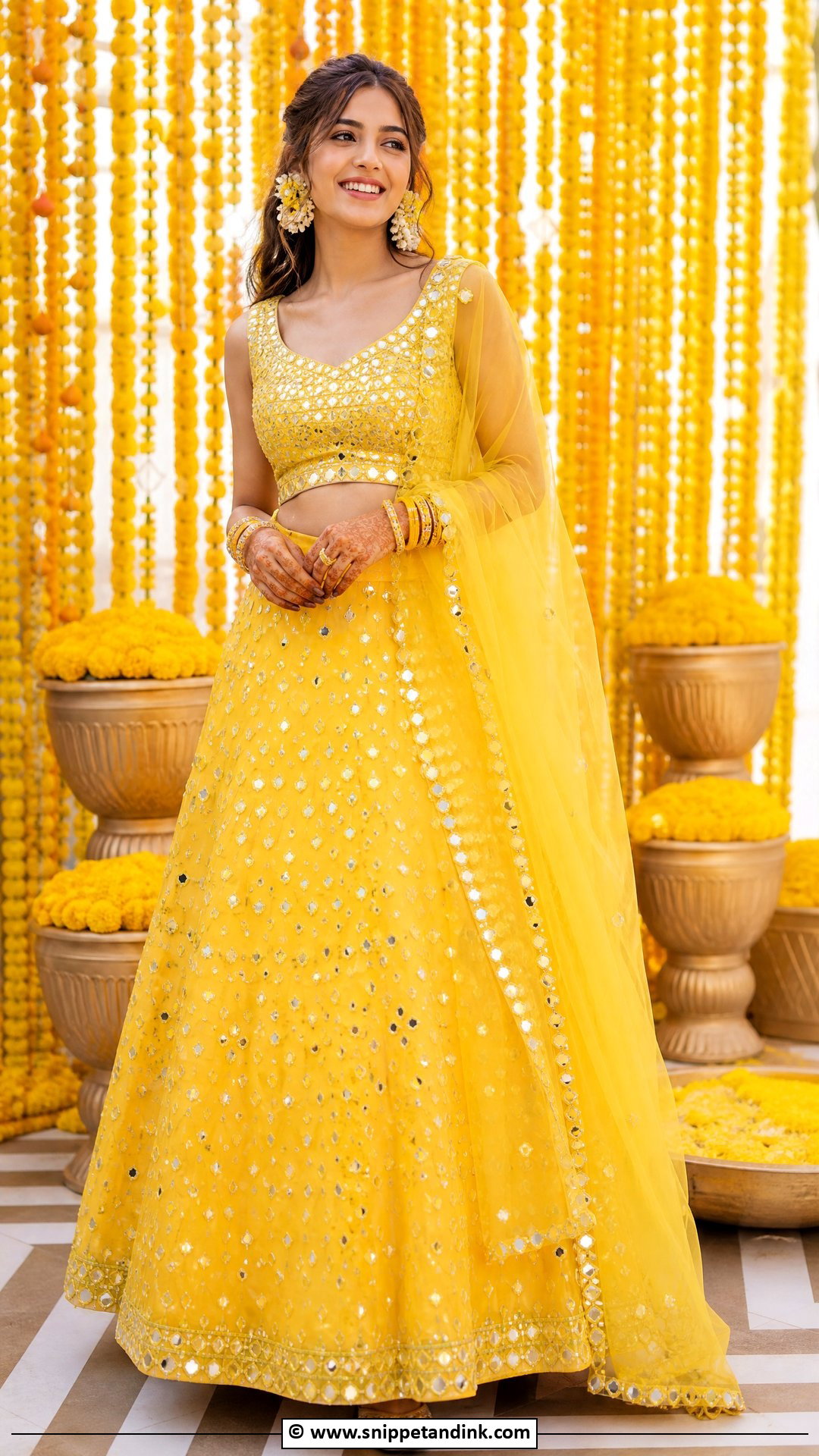
Mirror work does the job of jewelry in daylight, throwing small flashes every time you move, so I keep accessories almost bare with this one. For a Haldi, scattered mirrors beat dense panels. Dense mirror work is heavy, it turns stiff when you sit, and paste collects in the stitched rings around each mirror. A sleeveless or short-sleeve blouse keeps your arms free for the ritual, and a light dupatta keeps the skirt on show. Flower jewelry and plain bangles are enough.
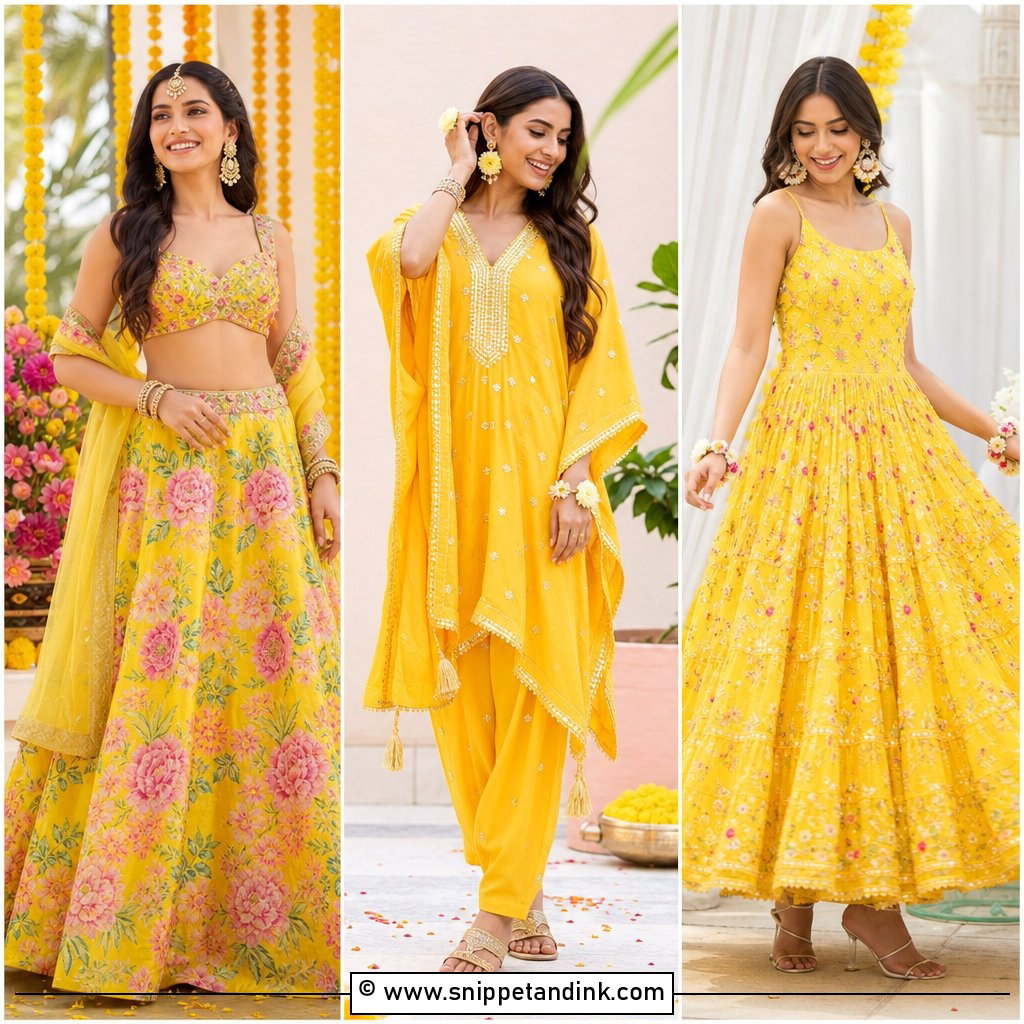
15. Yellow Organza Saree for Haldi Bride
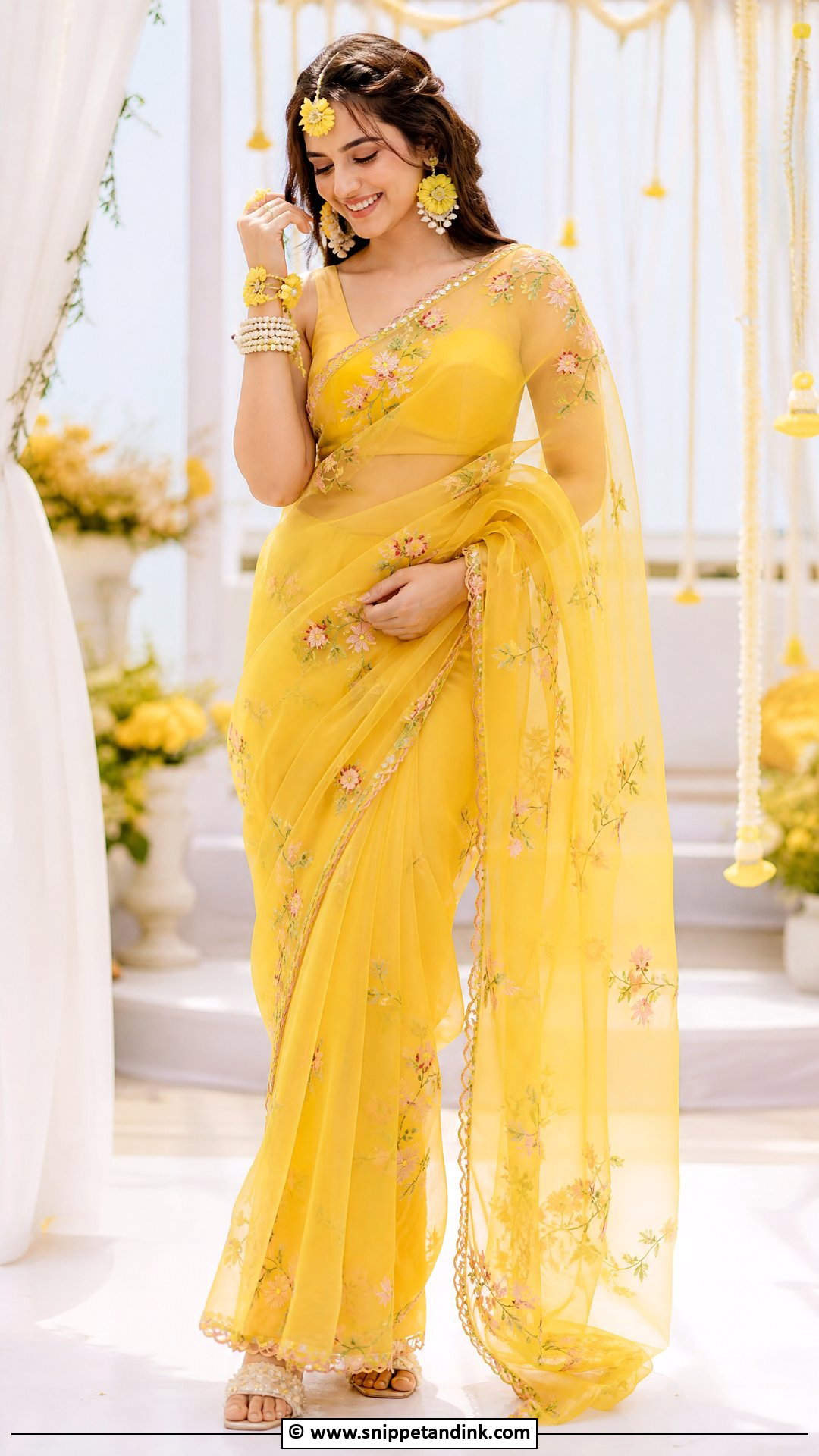
Organza looks airy, but it’s a crisp fabric, and that crispness is what you plan around. It holds pleats in a stiff fan, so they need firm pinning or they spring apart when you sit, and it creases sharply at the knee. For a seated ritual I’d choose a soft or blended organza over the stiff kind. Floral embroidery or a scalloped border shows up clearly on the sheer ground. Pair it with an ivory or green blouse, soft waves and low block heels, and keep the paste off it where you can, since silk organza can water-mark.
16. Yellow Chanderi Saree for Haldi Bride
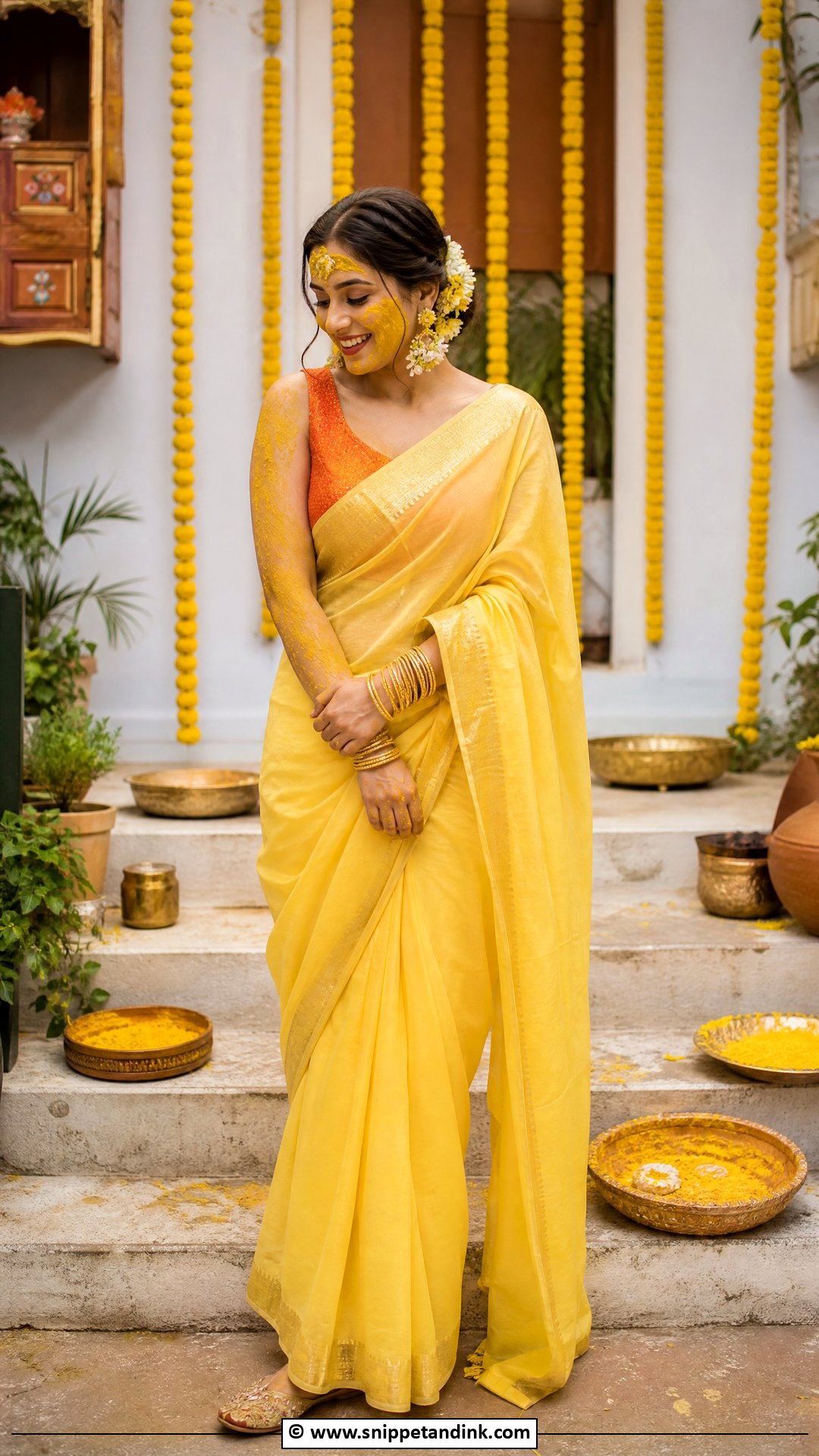
Chanderi has a soft sheen from its silk and cotton blend, festive in daylight without the glare heavy silk gives under flash. It’s also light enough to wear through a long ceremony in the heat. A plain yellow body with a gold border is the most traditional version; small woven buttis are a step up. I like it with a fitted blouse in orange or pink, gold bangles and fresh flowers in the hair. Keep the footwear simple, because you’ll be getting on and off the floor all morning.
17. Yellow Silk Saree for Haldi Bride
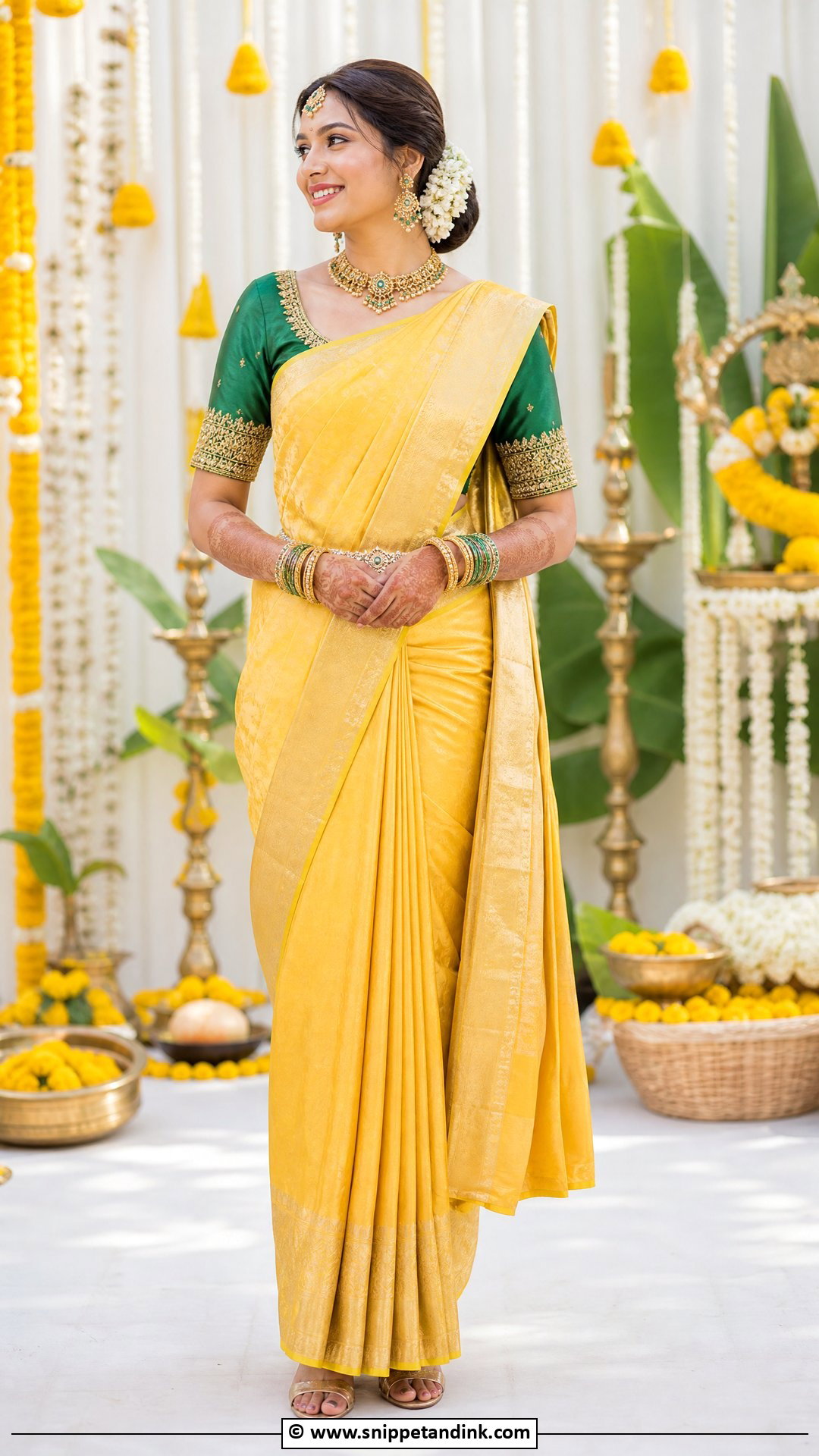
A yellow silk saree is the most traditional option in this list and the one most likely to be a family piece. If it’s an heirloom, think carefully before wearing it for the paste itself. Turmeric on pure silk with zari is hard to remove completely, and I’d rather a bride wear it for the greetings and photos, then change. If you’re buying new, a soft lightweight silk sits far better on the floor than a heavy Kanjeevaram. A green or red blouse, temple jewelry and a neat bun keep it rooted. Pin the pallu well, or it ends up trailing across the floor.
18. Yellow Printed Lehenga for Haldi Bride
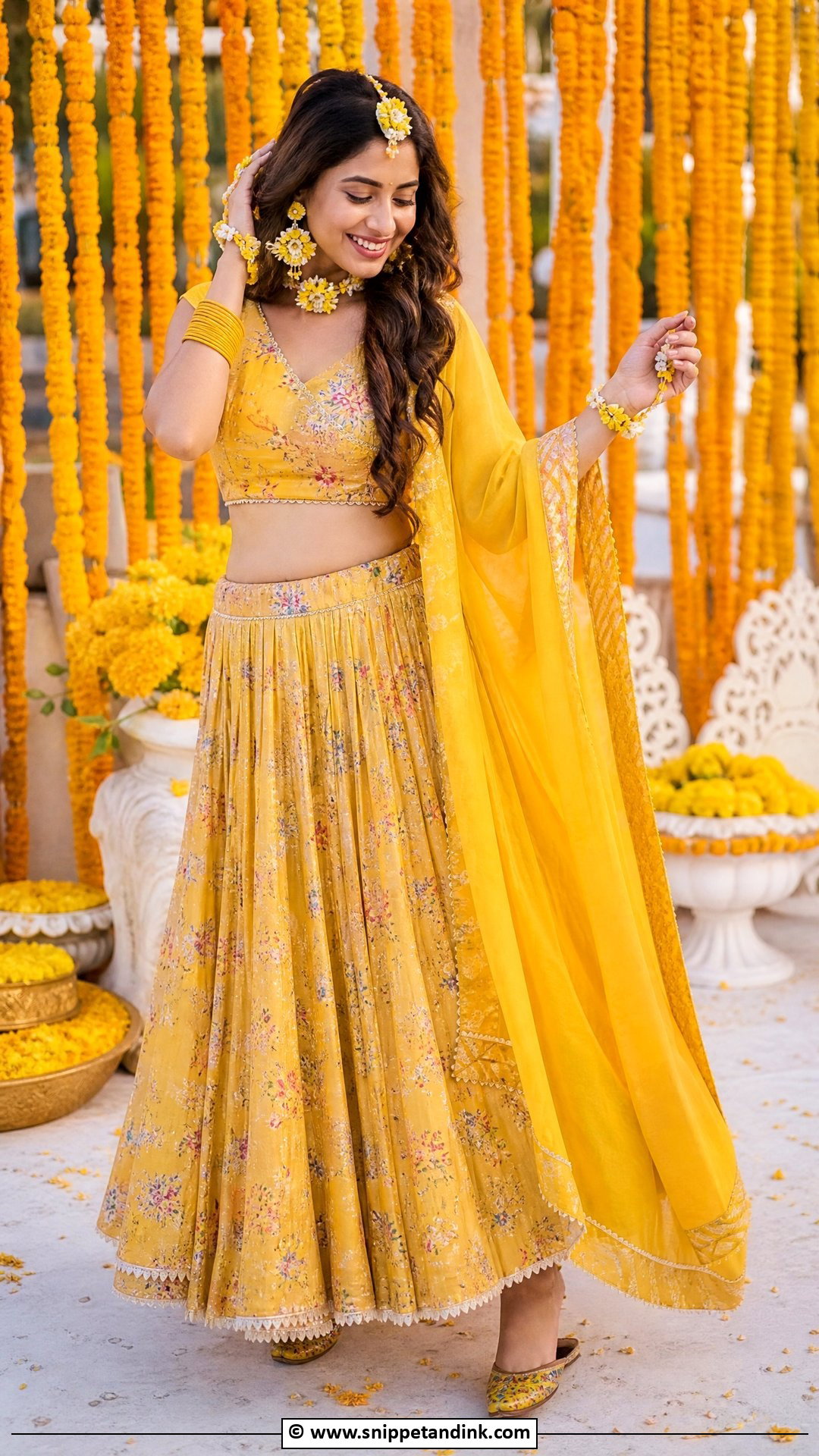
Printed lehengas are much lighter than embroidered ones because the color is printed onto the fabric rather than stitched into it, and at an outdoor summer Haldi you feel that difference by midday. Block prints and paisleys hide splashes well, too. Keep the blouse simple and the dupatta soft in one of the print colors. With prints, I quieten the jewelry right down: flowers and tassel earrings rather than gold sets, which look heavy against printed cotton.
19. Pink Lehenga for Haldi Bride
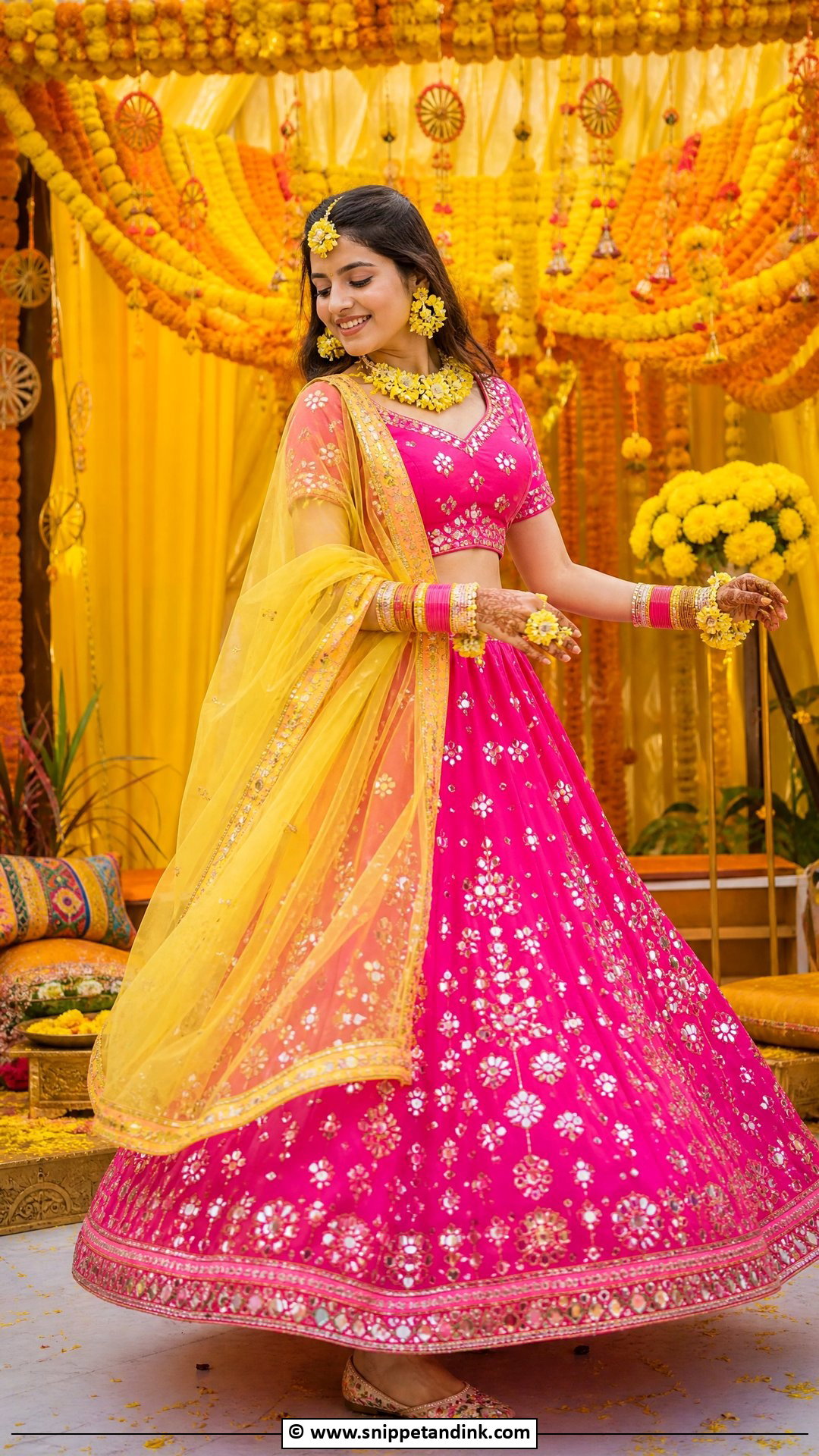
Pink is the color I suggest when a bride wants to stand apart from relatives who’ve all been told to wear yellow. Rani pink is strong enough to hold its own against marigold decor, while blush can wash out in harsh midday sun, so check the shade outdoors before you buy. A yellow dupatta links you back to the ceremony palette. Yellow and white flower jewelry reads crisply against the pink, and juttis keep you steady on a wet floor.
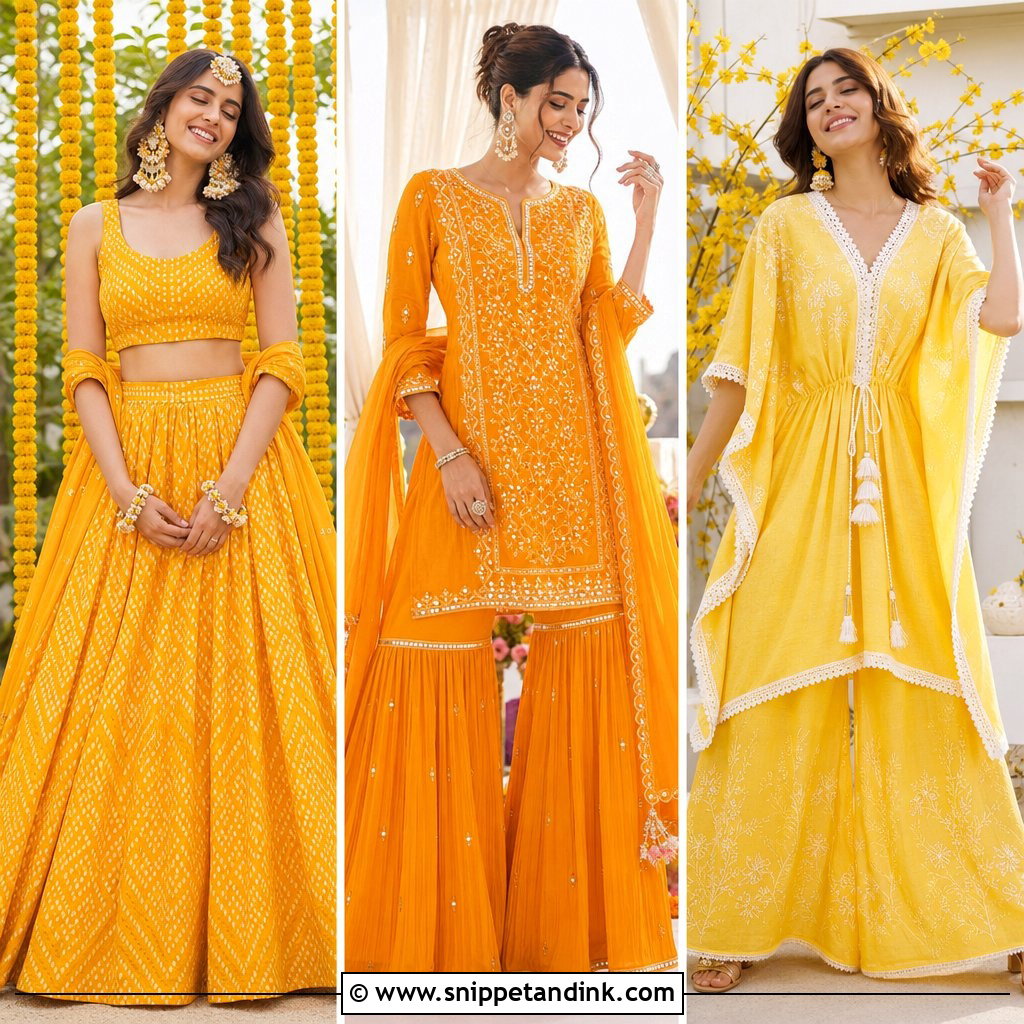
20. Lime Green Lehenga for Haldi Bride
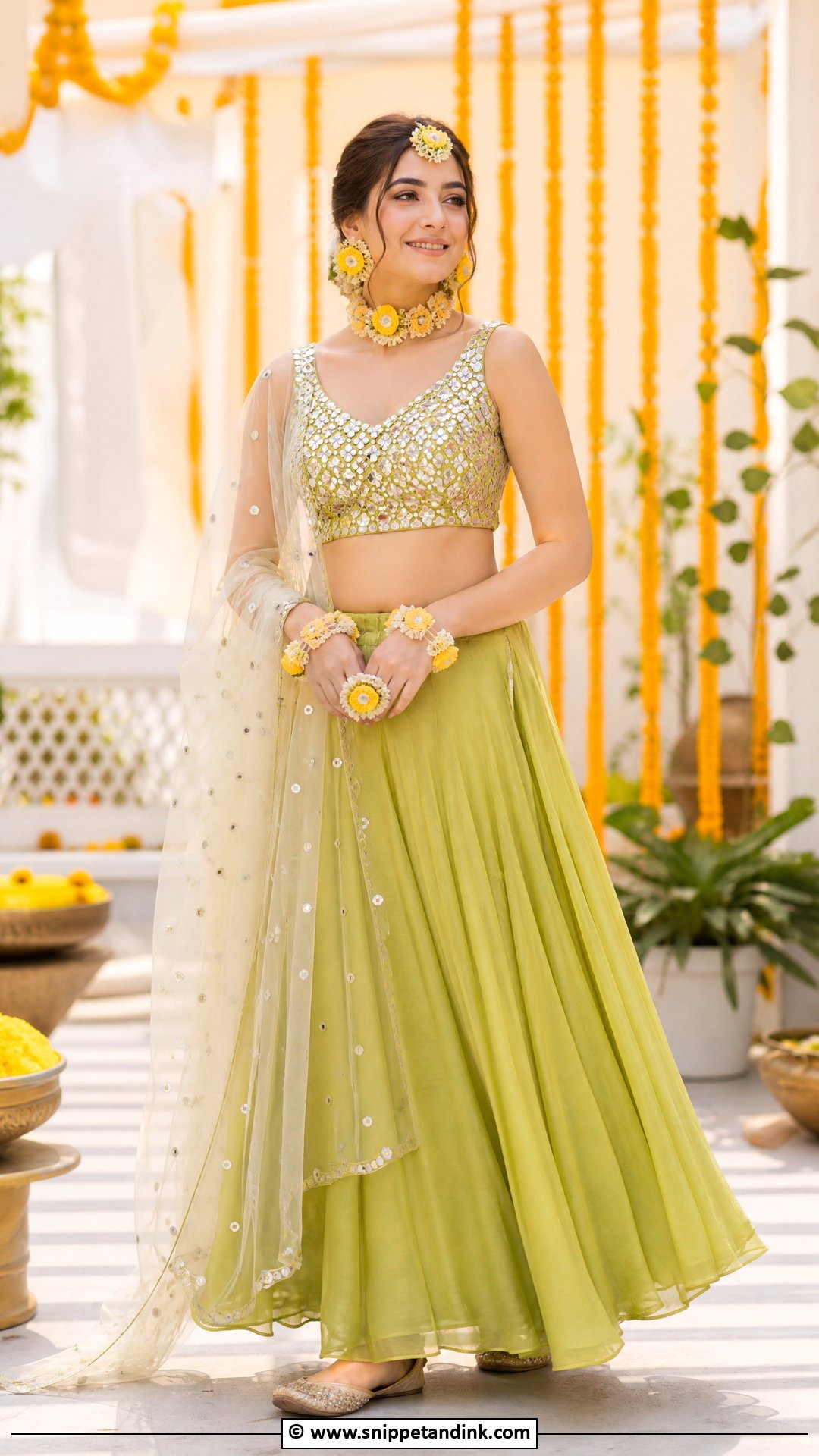
Lime green looks bright and modern in daylight, but it’s a shade I always test against the bride’s skin outside first. On some undertones it throws a greenish cast onto the face, especially in shade. If it works for you, yellow flower jewelry sets it off and a yellow or ivory dupatta softens it. Georgette or cotton silk with minimal mirror work keeps it light. Glowing skin and peach blush suit lime far better than a heavy matte face.
21. Orange Lehenga for Haldi Bride
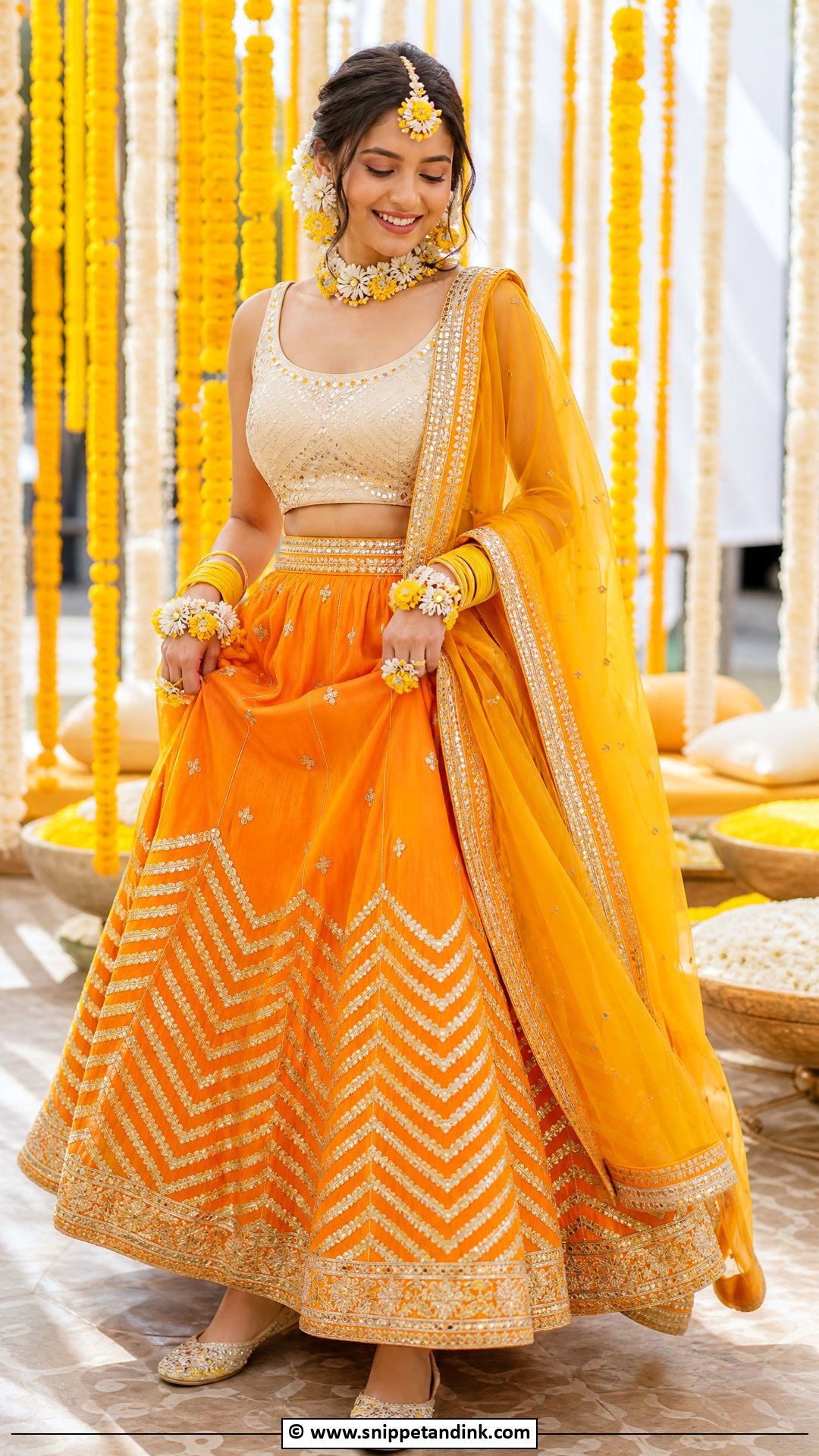
Orange sits right next to turmeric in color, so paste on an orange lehenga barely shows, which is a real point in its favor. Mango and saffron are warmer and especially flattering on deeper skin tones; tangerine is brighter and suits a loud, music-filled Haldi. Keep the skirt work to threadwork or gota rather than heavy zardozi. An ivory blouse breaks up the orange if a full matching set feels like too much, and white or peach flowers take the edge off.
22. Peach Lehenga for Haldi Bride
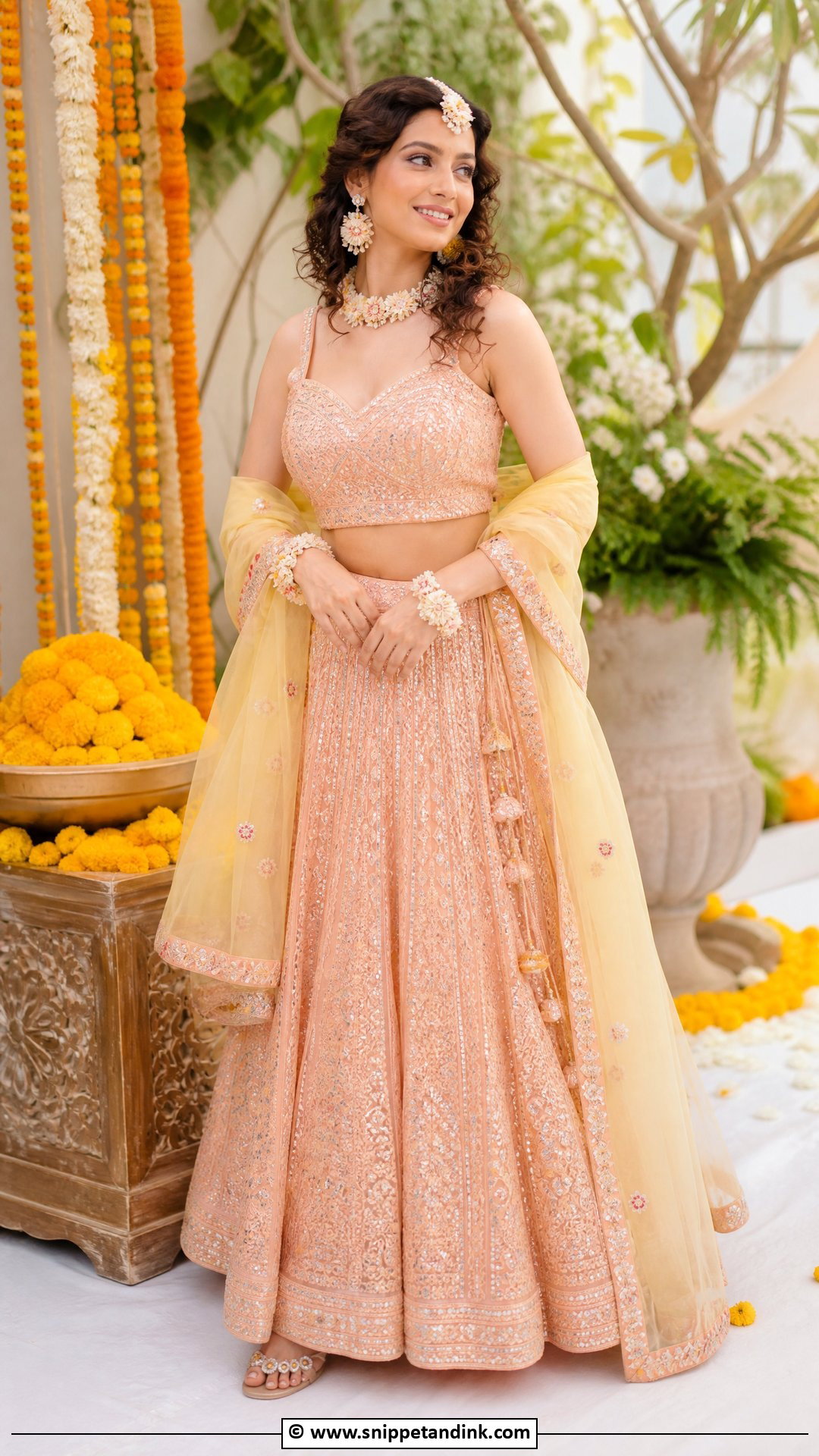
Peach is my default suggestion for brides who tell me yellow makes them look tired. It flatters most skin tones in natural light and still reads warm beside marigolds. The dupatta decides the mood: yellow keeps the Haldi link, ivory makes the look softer and quieter. Delicate gota or floral embroidery suits it. Pearls and nude sandals finish it for a garden Haldi or a small daytime gathering at home.
23. Multicolor Lehenga for Haldi Bride
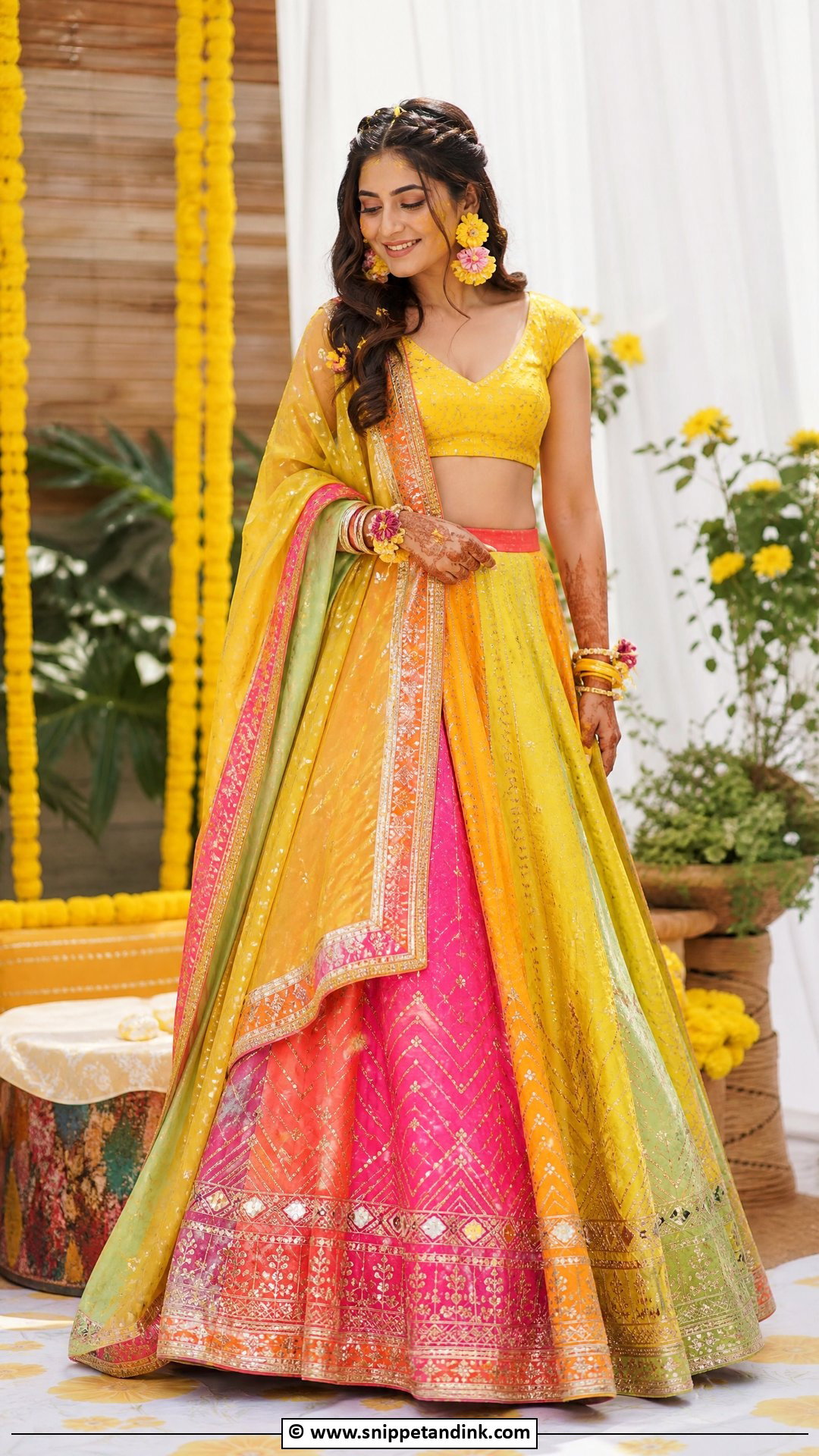
A multicolor lehenga hides turmeric better than almost anything and brings a festival feeling into the photos. The styling risk is that it gets loud fast. I keep the blouse in one color pulled from the skirt, pick a single shade for the dupatta, and match the flower jewelry to the brightest color in the print instead of adding a new one. Simple makeup and plain juttis stop the outfit from competing with itself.
24. Pastel Lehenga for Haldi Bride
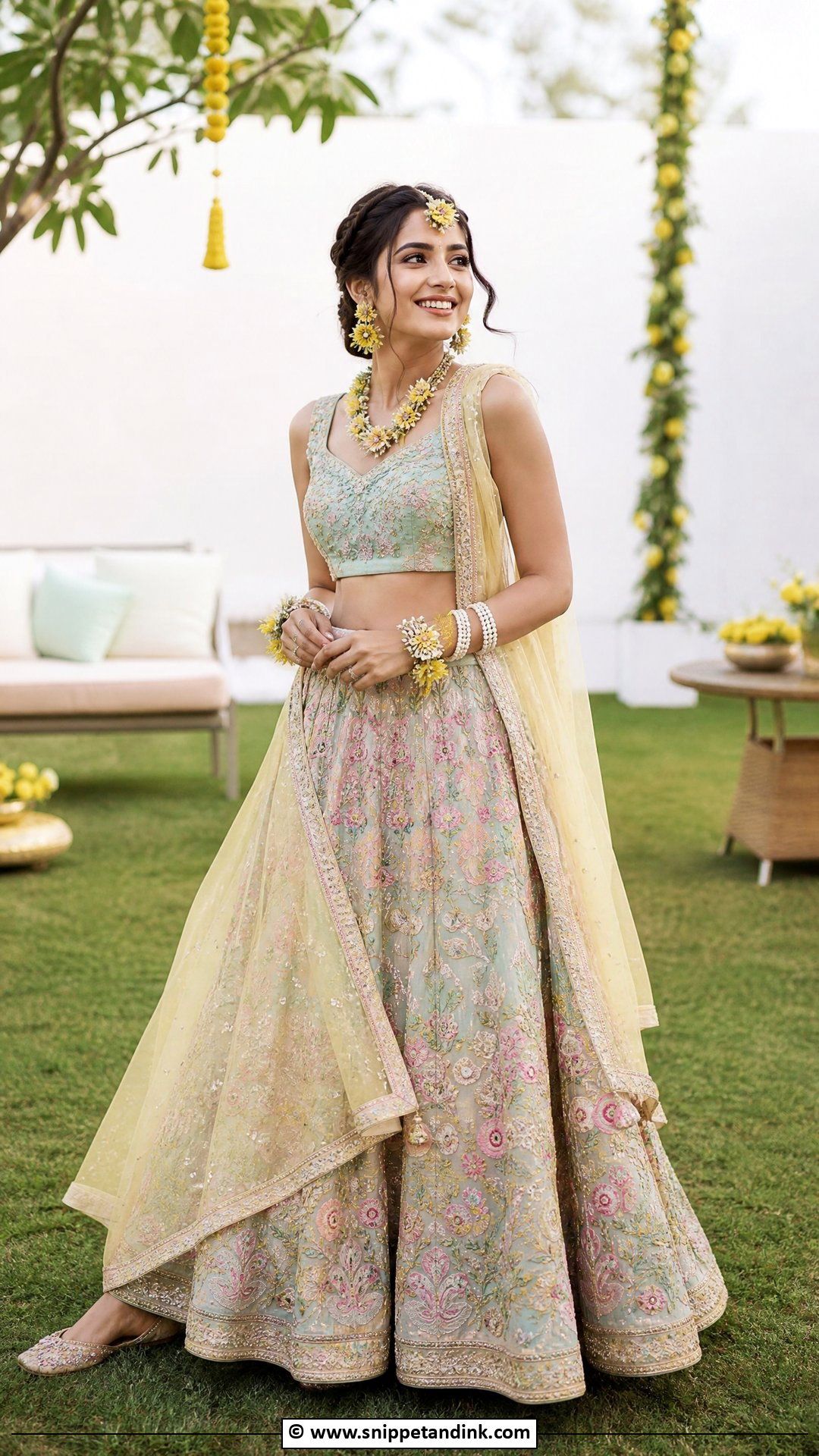
Pastels suit a quieter, minimalist Haldi, and mint or powder yellow look especially fresh in a garden. The honest trade-off is that turmeric shows clearly on pale fabric, a little less than on ivory but far more than on mustard. I tie a pastel look to the ceremony through pieces that can come off: marigold hair accessories, a yellow dupatta, flower jewelry. Keep the embroidery subtle and the fabric light. Pearls and soft curls fit the mood.

25. Haldi Jumpsuit for Bride
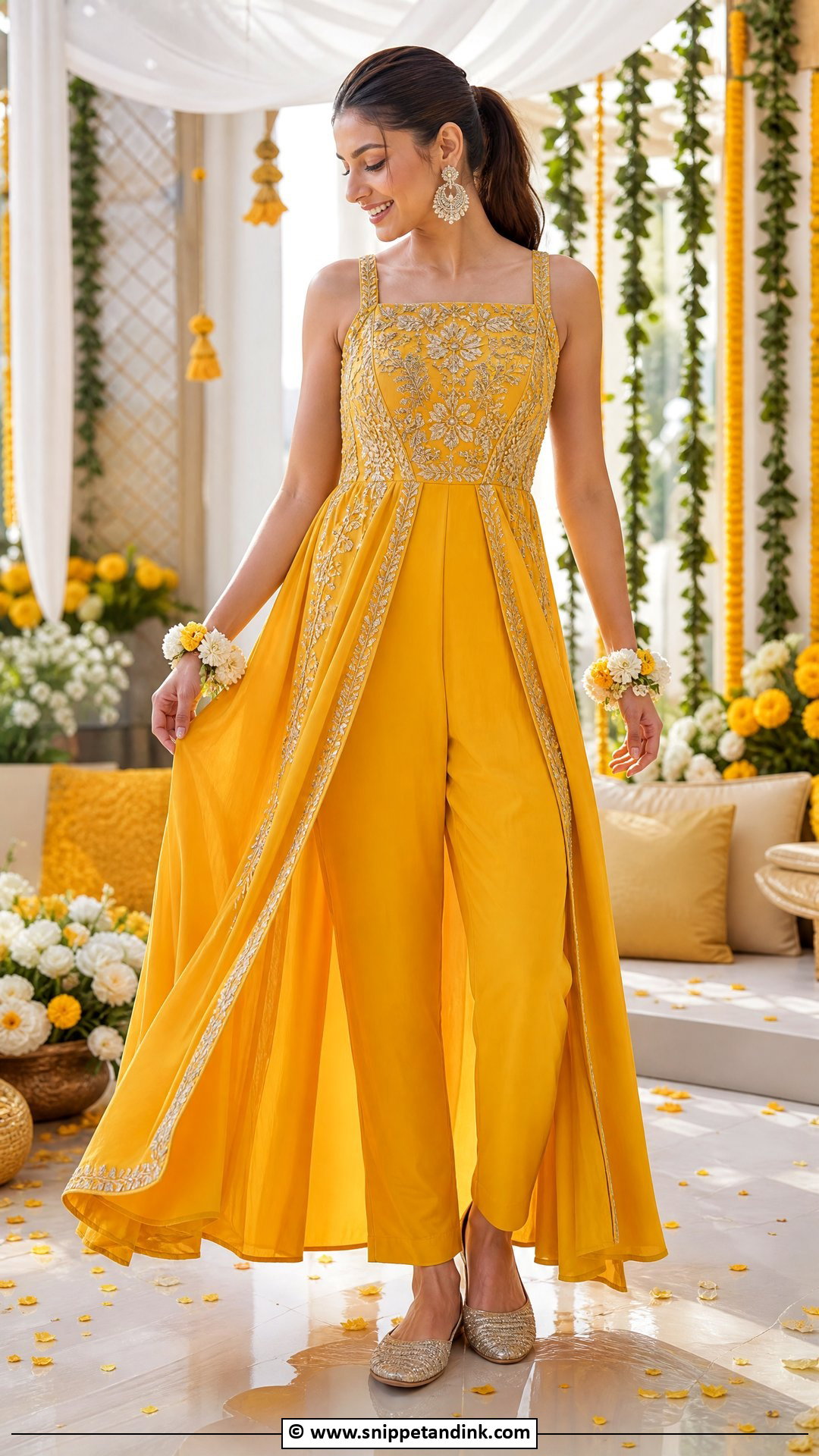
For a bride who’ll be dancing, a jumpsuit is the most practical outfit on this page: no skirt, no pleats and no dupatta unless you add one. A draped overlay or cape sleeves make it feel like an occasion piece rather than brunch wear. Fit is everything here. Check the rise while sitting cross-legged, because a jumpsuit that fits standing can pull uncomfortably once you’re on the floor. Crepe or georgette breathes well, and a sleek ponytail with metallic flats keeps it modern. You’ll get real wear out of it afterwards.
26. Haldi Co Ord Set for Bride
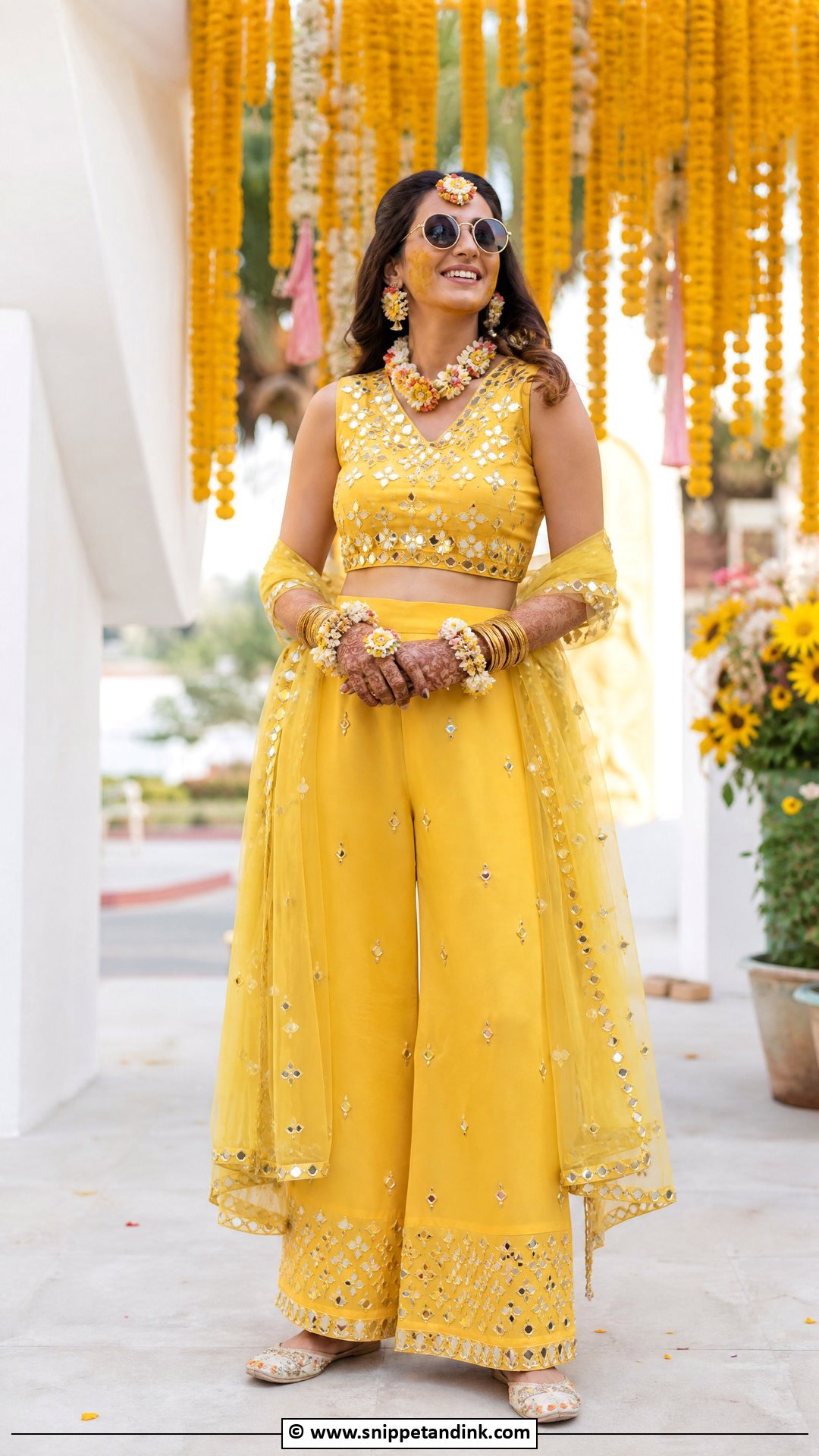
A Haldi co ord set is two matching pieces, a crop top with palazzos, a short kurti with wide pants or a blouse with a skirt, which makes it simple to tailor and simple to wear. On its own it can look like holiday clothing. What turns it bridal is what you add: a sheer dupatta with a mirror border, flower jewelry, stacked bangles. I like it most for destination Haldis, where the outfit has to pack flat in a suitcase and come out wearable.
27. Haldi Palazzo Saree for Bride
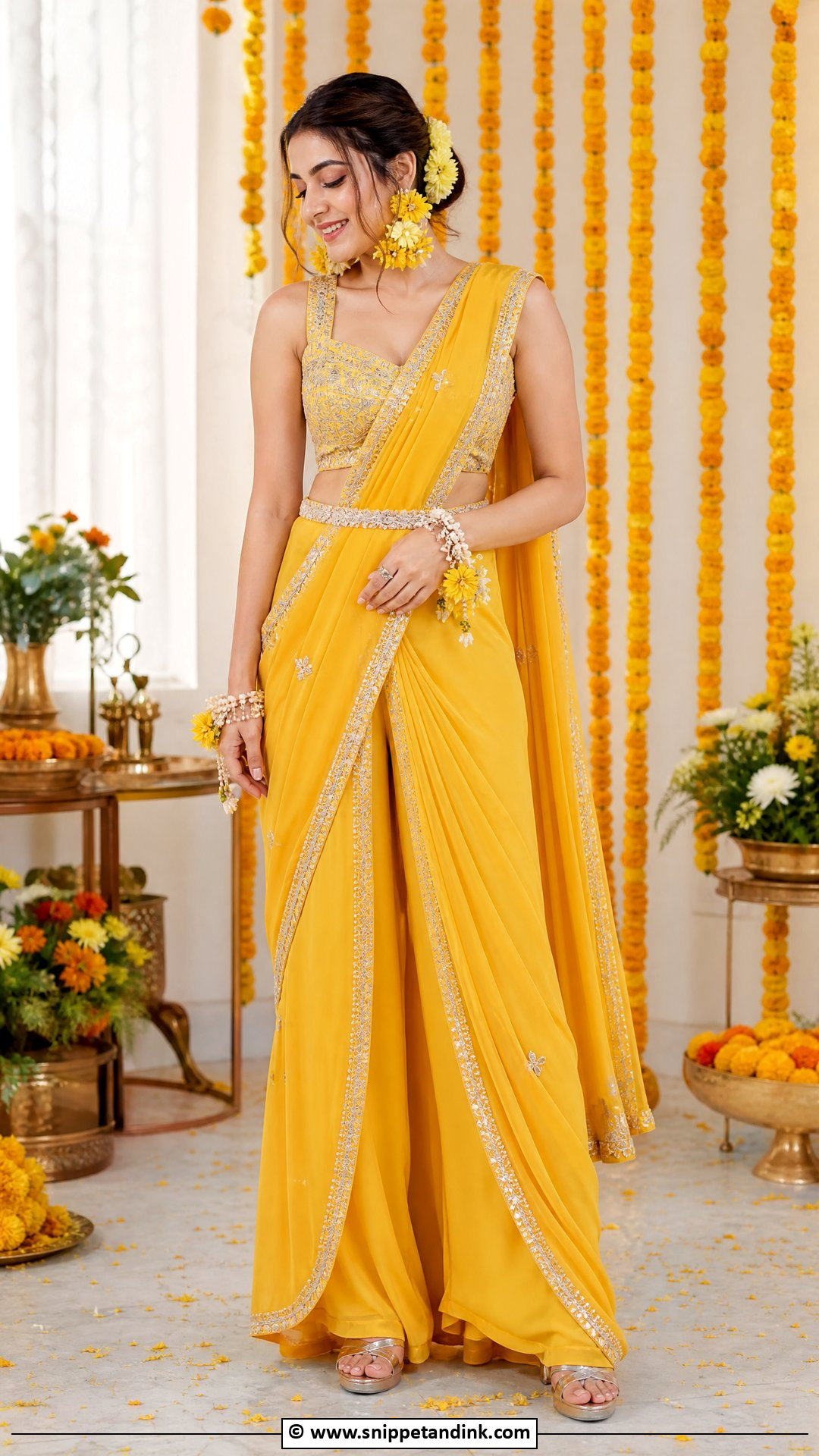
A palazzo saree comes pre-stitched. The pleats are sewn into trousers and the pallu is attached, so nothing unravels mid-ritual, and that’s exactly why I recommend it to brides who’ve never spent hours in a saree. Check the waistband fit carefully at the trial, since it can’t be adjusted the way a hand drape can. An embroidered waistband gives it the bridal finish. Wear flats rather than heels; the hem length is fixed, so try it on in the shoes you’ll use.
28. Haldi Skirt and Kurti for Bride
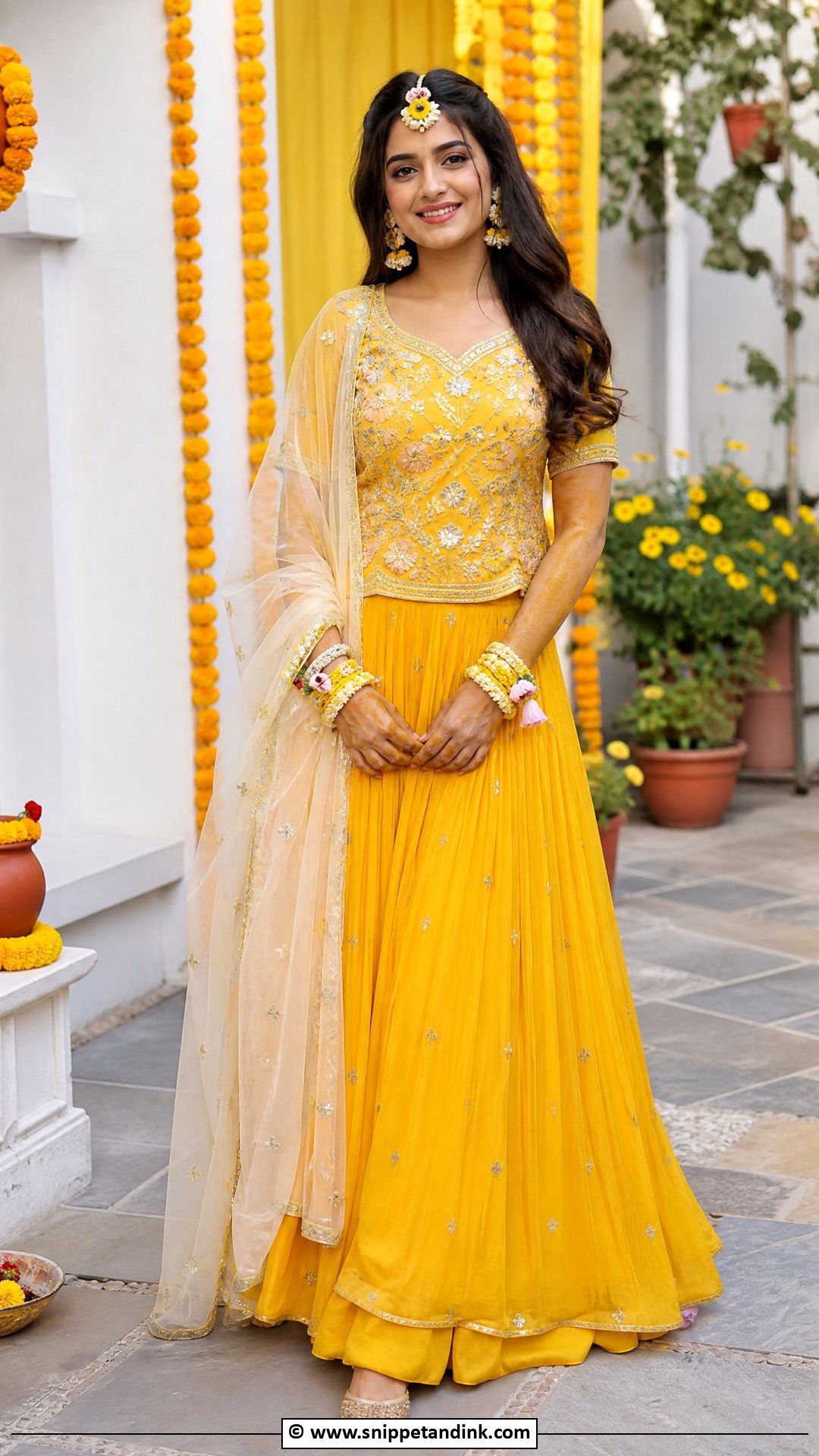
A skirt and kurti sits between a lehenga and a suit, lighter than the first and more festive than the second. Pair a flowy yellow skirt with a short embroidered kurti, or a printed skirt with a plain one for balance. It covers more than a crop top, which some brides prefer when elders are sitting close by during the ritual. A dupatta with gota or tassel edging adds the bridal note. For a family ceremony at home, it’s one of the easiest outfits to live in all day.
29. Haldi Jacket Lehenga for Bride
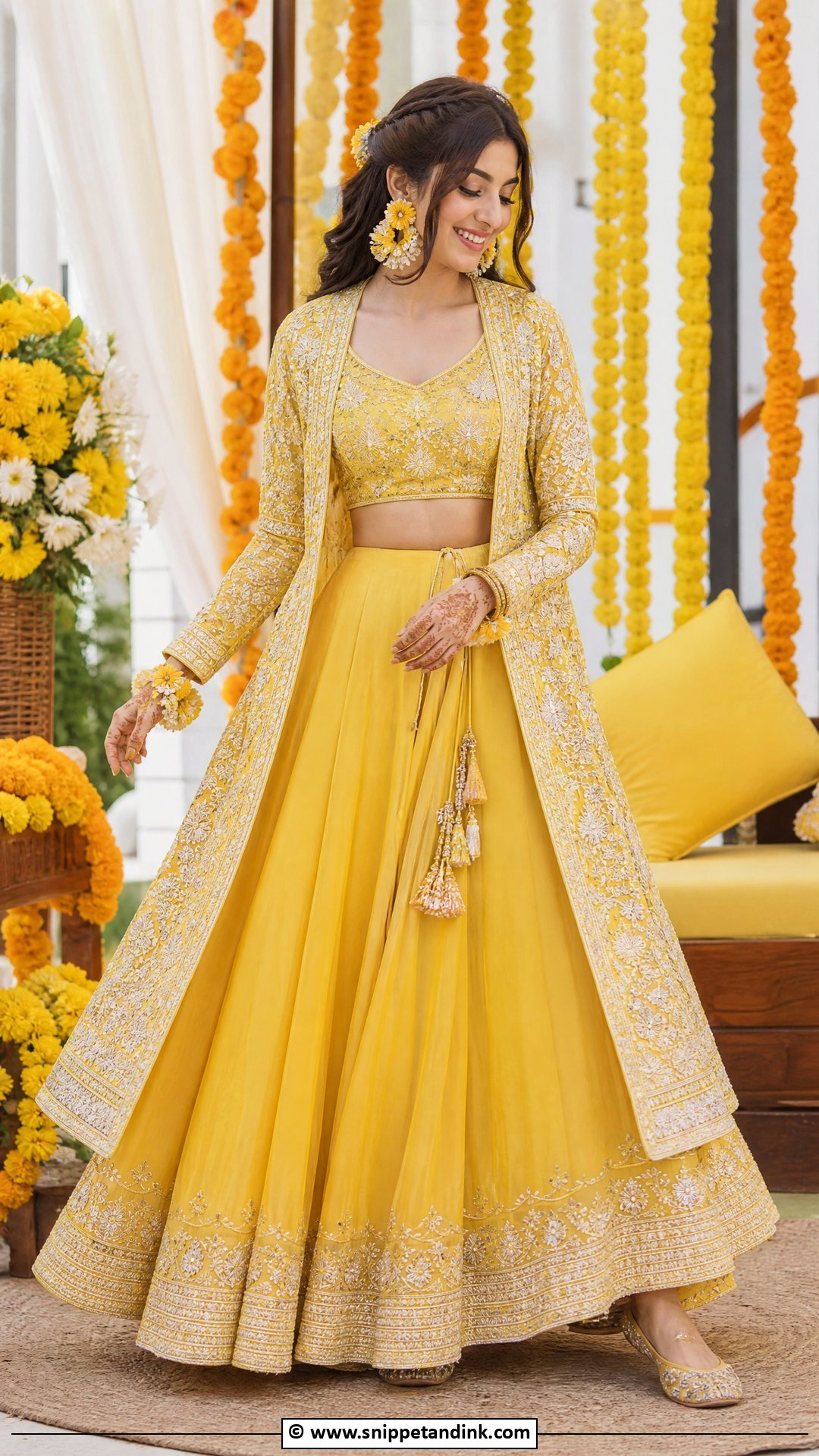
A jacket over a crop top and skirt gives coverage and structure without a dupatta, and the part I like is that it comes off. Wear it for the arrival and the posed photos, then slip it off before the paste reaches your arms. If the jacket is heavily embroidered, keep the skirt plain so the two don’t fight. A short mirror-work jacket is more practical for dancing than a long one, which catches underfoot when you sit down.
30. Haldi Peplum Sharara for Bride
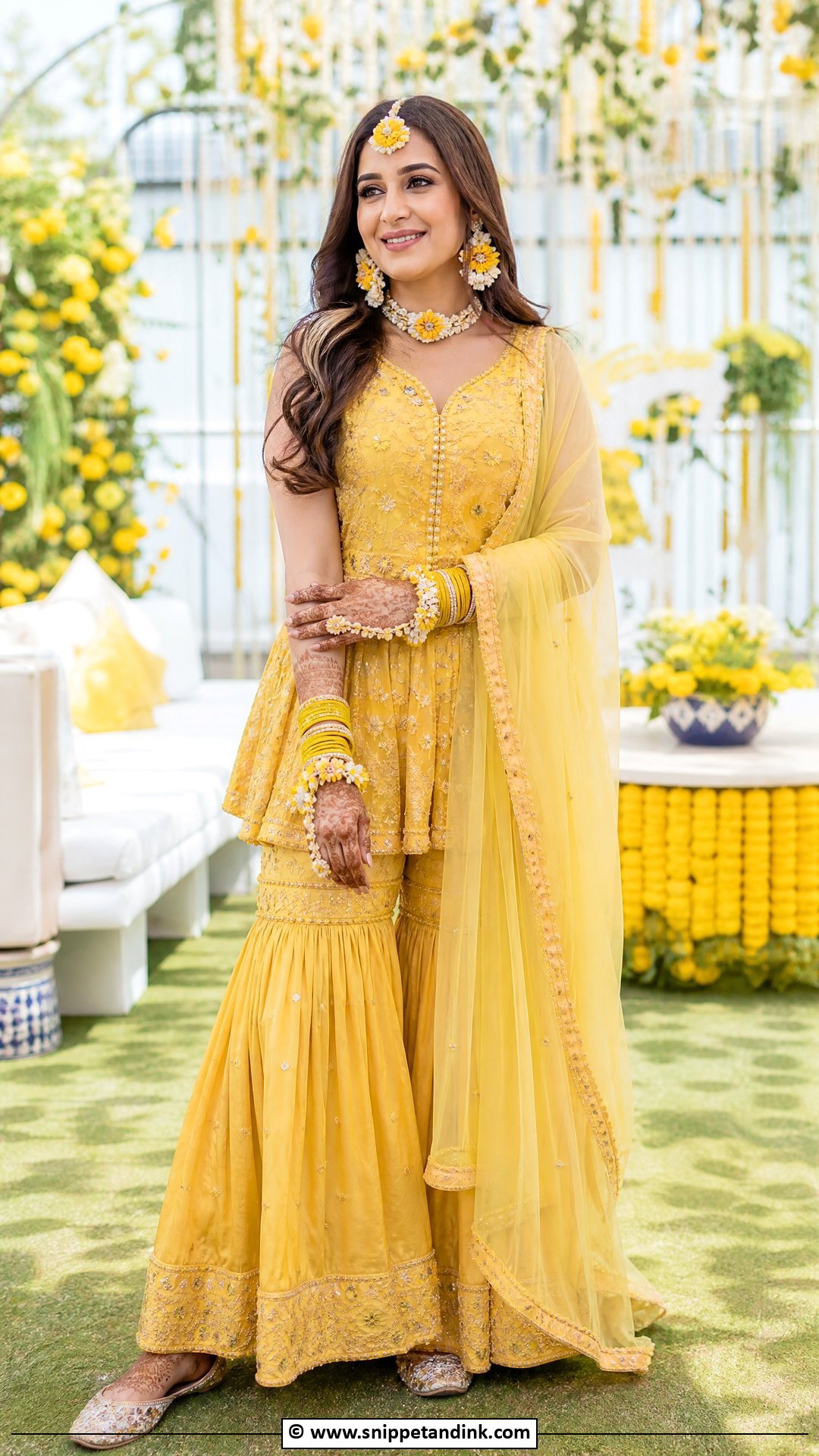
Brides often ask me how to get waist definition while still covering the stomach, and a peplum does exactly that by flaring out from the waistline. With sharara pants you get two flares, so I suggest keeping one of them plainer. Light gota or mirror work along the peplum edge is enough. The dupatta can be draped lightly or skipped. A half-up hairstyle keeps hair off the shoulders, which is where much of the paste goes.
31. Haldi Ruffle Saree for Bride
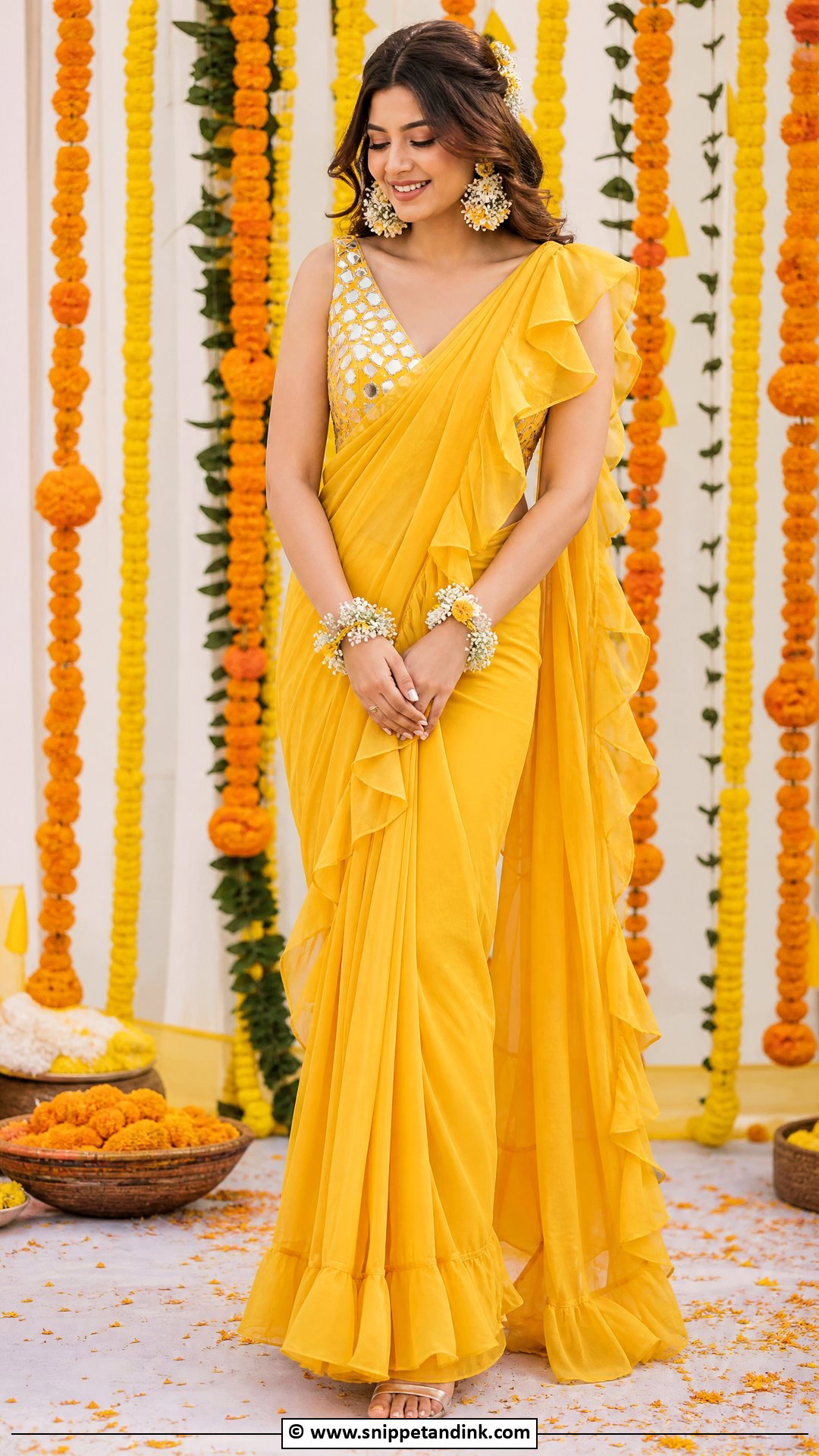
Ruffles add volume and movement, and on a saree they make the drape feel playful rather than formal. Choose a pre-draped version if you can; a hand-draped ruffle saree carries a lot of loose fabric that shifts every time you sit. Georgette ruffles fall softly, while organza ruffles stand out more and crush when you lean back against a cushion. Pair it with a simple blouse or a mirror-work crop top, plus a belt to hold the pallu in place.
32. Haldi Ombre Lehenga for Bride
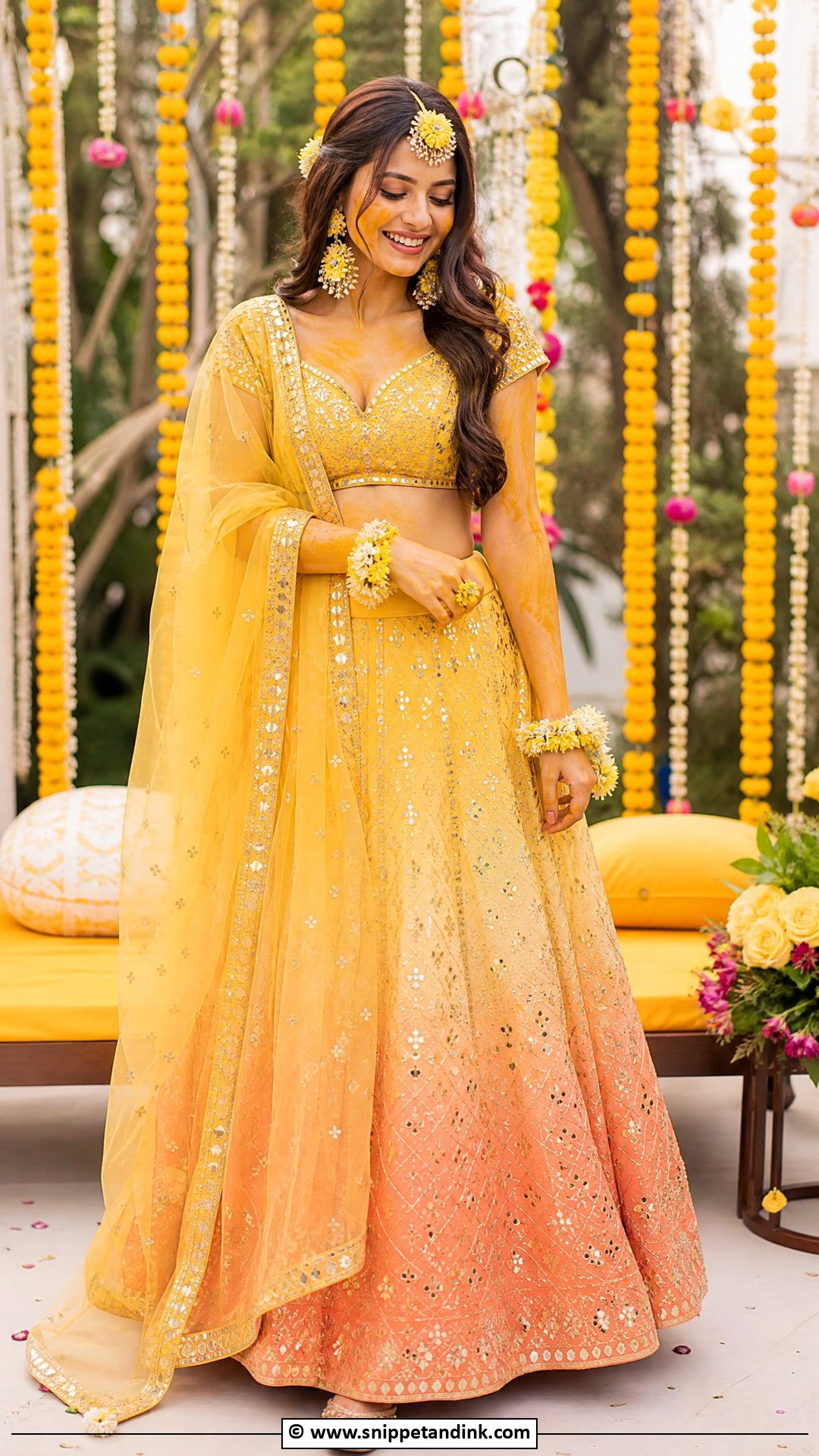
Ombre dyeing fades one color into the next, so the lehenga has variation without the busyness of a print. Yellow into orange is the most natural Haldi gradient; yellow into pink is softer. Where the darker shade sits matters more than people expect. Dark at the hem hides splashes and grounds the look in full-length shots. Choose a blouse in one of the gradient colors and a sheer dupatta that won’t hide the fade.
33. Haldi Short Kurti Sharara for Bride
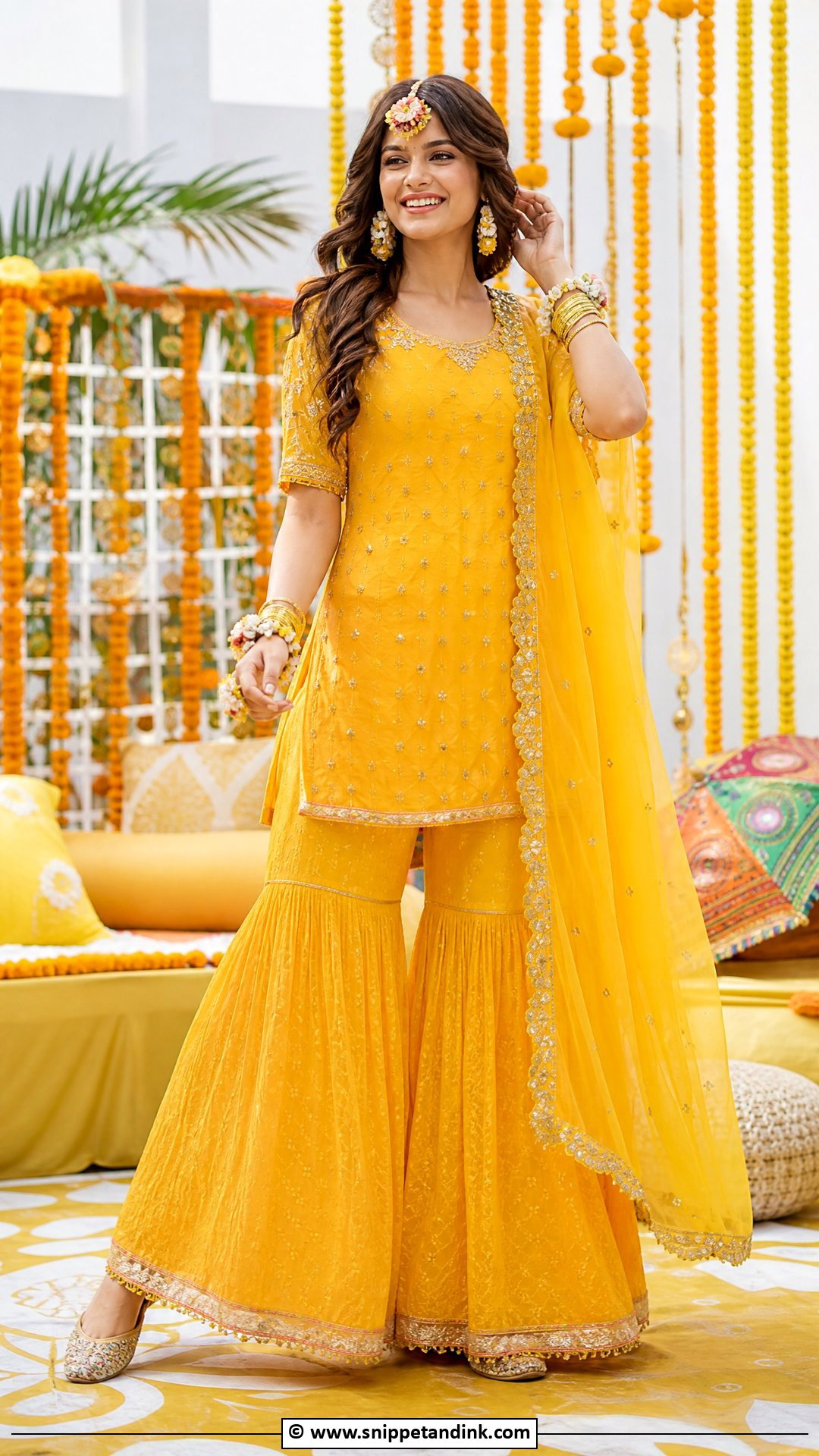
After the jumpsuit, a short kurti with a sharara is the most movement-friendly outfit here. The kurti ends around the hip, so it doesn’t bunch when you sit, and the flare gives you room to step and turn. Pin the dupatta to one shoulder before you sit down, not after. Mirror work or gota at the neckline frames your face in close-ups. Ivory with yellow embroidery, peach or lime all work alongside classic yellow.
34. Haldi Maxi Dress for Bride
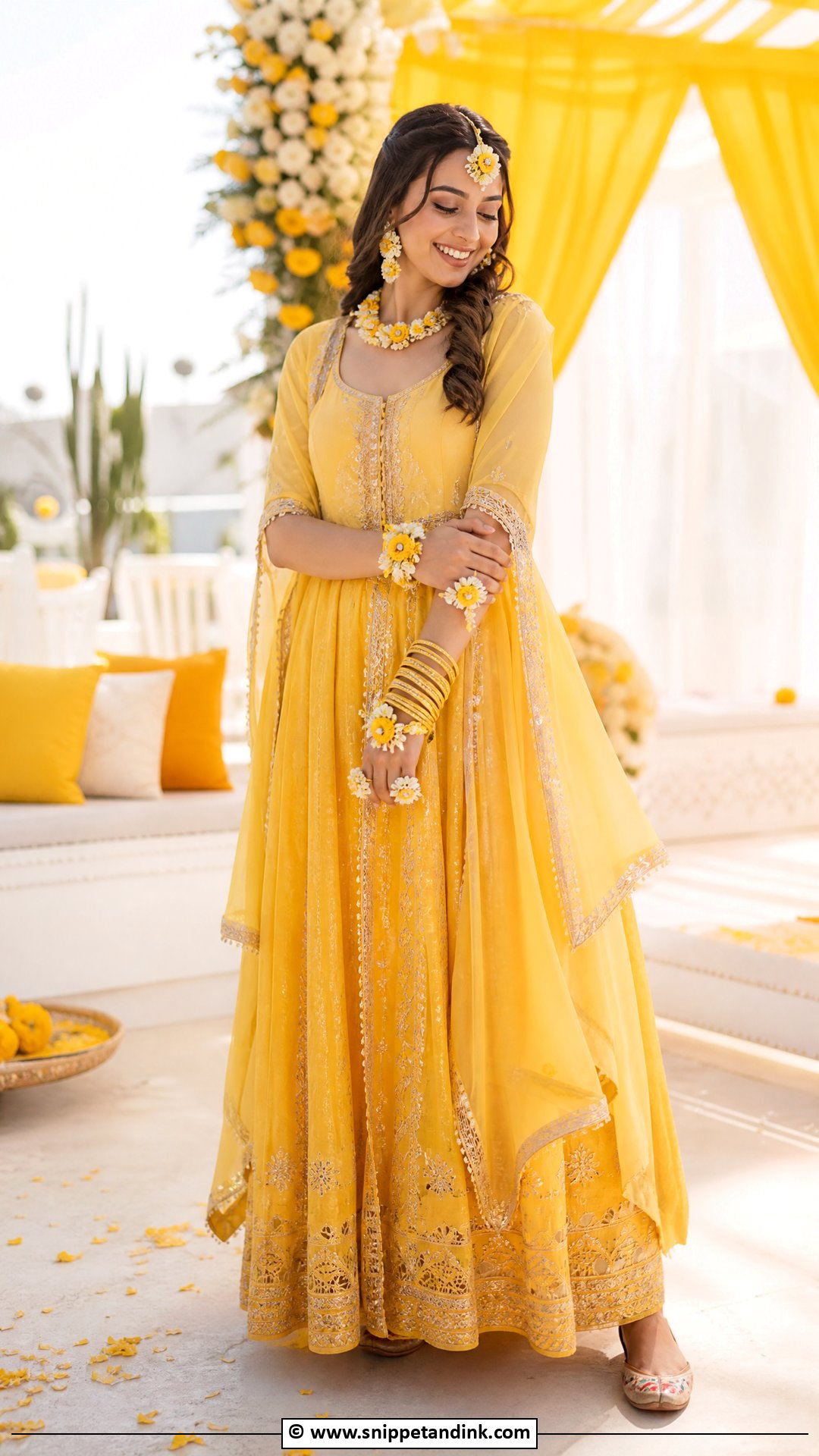
A maxi dress is the most reusable outfit on the list, and that’s its strongest argument. It fits best at a beach Haldi or a relaxed destination event where a lehenga would feel overdressed. On its own, a yellow maxi can read as everyday, so the Indian accessories have to do the bridal work: a maang tikka, flower jewelry, bangles and juttis. Look for one with a light cape overlay or mirror straps. Check the length while seated, since a floor-skimming maxi drags straight through the paste.
35. Haldi Banarasi Lehenga for Bride
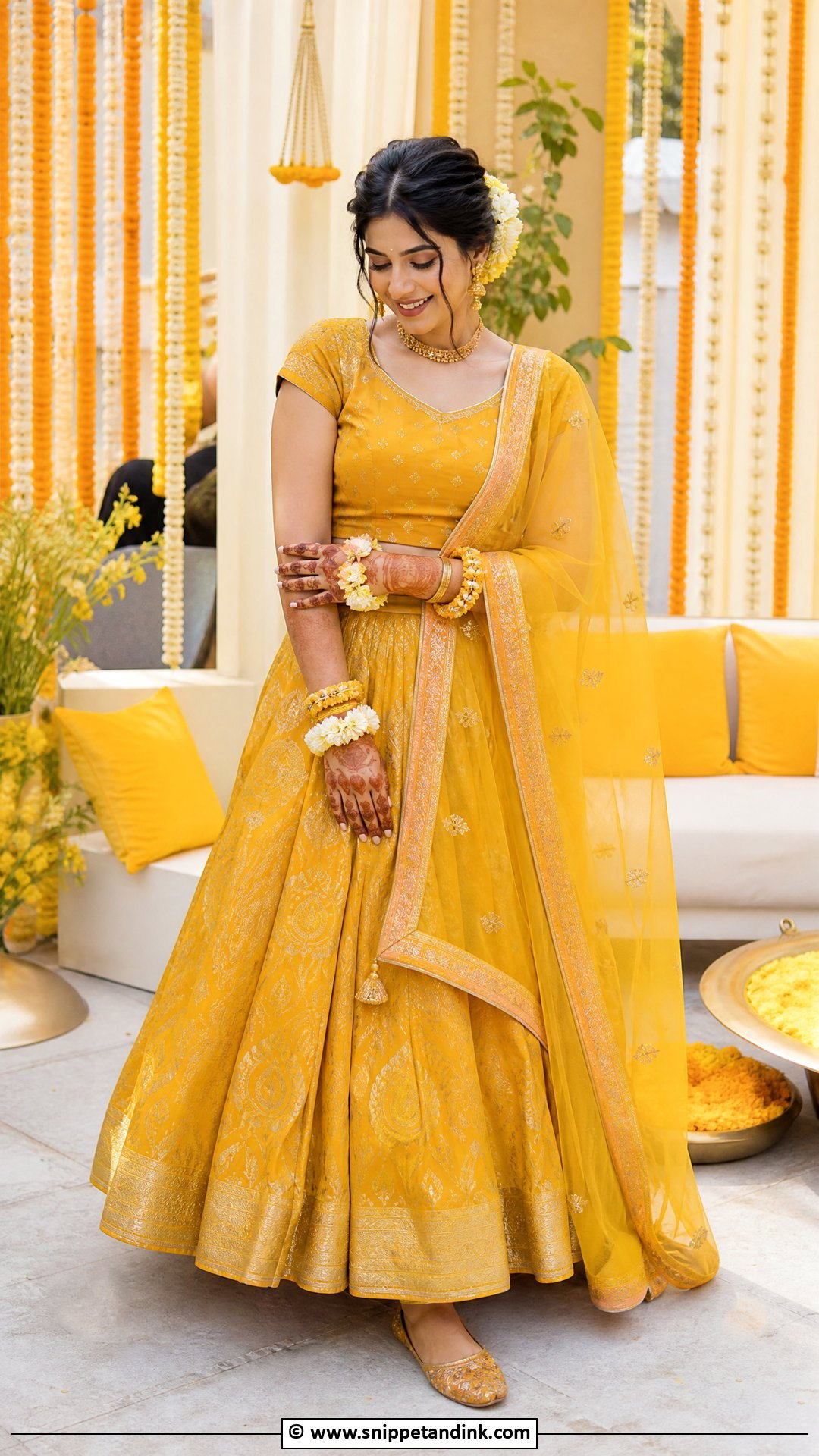
Banarasi weaving puts gold or silver zari into silk, so even a light Banarasi skirt has some weight and stiffness. For a Haldi, I’d only pick a lighter weave or a georgette Banarasi, in yellow, mustard or mango. Pair it with a plain blouse and a light dupatta so the weave carries the look. Zari is delicate and hard to clean, so the paste is the real worry: wear it for the greetings and photos, then step into something washable if your family is generous with turmeric.
What Turmeric Does to Fabric, and How to Get It Out
Turmeric is a strong natural dye, and the longer it sits, the deeper it goes. I tell brides to treat the outfit within hours, not the following week once the wedding is over. For washable cottons and blends, this is the order I follow:
- Let the paste dry a little, then lift off the excess with a blunt knife or spoon. Rubbing wet paste only pushes it deeper into the weave.
- Rinse from the back of the fabric with cold water. Hot water helps set the stain.
- Use a gentle detergent and test it on a hidden seam first. Strong alkaline soaps and baking soda turn turmeric a reddish brown, which can look worse than the original yellow.
- Dry the piece in direct sunlight. Sun fades turmeric remarkably well on cotton, sometimes better than any product.
Silk, zari, Banarasi weaves and anything with mirror work should not be washed at home. Take them to a dry cleaner within a day or two and tell them the stain is turmeric, because it needs different treatment from an oil or food mark.
Planning the change afterwards
Many brides go from the Haldi to lunch or the mehndi on the same day, so I always pack a second outfit and a separate garment bag for the stained one, since damp turmeric transfers onto anything it touches. Shower properly before you change. Paste left along the hairline, behind the ears and under the nails will mark a fresh collar within minutes.
Plan for the Paste First, Then Dress for the Photos
Any outfit on this list can work if it lets you sit on the floor, laugh and get covered in turmeric without worrying. Yellow lehengas, sarees and shararas are the traditional anchors, while ivory, pink, lime, ombre, capes, dhoti sets and jumpsuits give you room to stand apart. Whatever you choose, sit in it at the final fitting, pin everything before the first ritual, wear flat shoes, and decide ahead of time whether this outfit is for the paste or only for the pictures.
You'll Like These Ideas:






Leave a Reply