
A rustic cake is the one I get asked for most often for barns, back gardens and mountain lodges, and it is also the style that gets misunderstood most. Rough frosting and a few sprigs of eucalyptus look casual, but the cake underneath still has to be built properly, filled well and timed so it reaches the table fresh. Below are twenty directions I’d happily bake, with notes on what each one needs from you, from your venue and from the season so the cake looks relaxed on purpose rather than half finished.
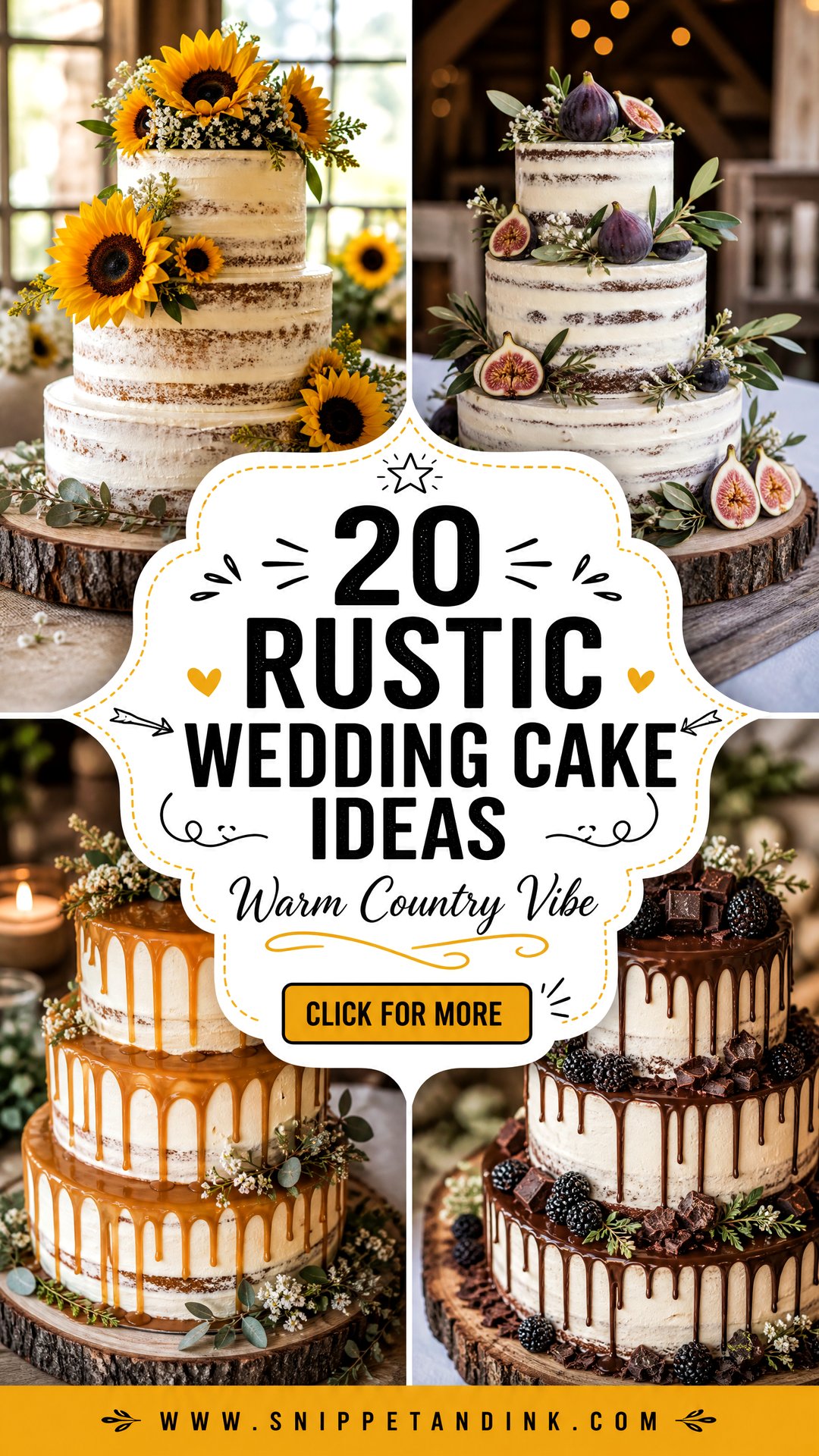
How Long Your Cake Sits Out Decides the Finish
The first question I ask about a rustic cake isn’t colour or flowers. It’s what time the cake gets delivered and what time it gets cut. At many barn and garden weddings the cake goes on display before the ceremony and isn’t cut until after dinner, which can be five or six hours.
That gap decides how much of the sponge I can safely leave bare:
- Naked: best when cutting happens within a couple of hours of setup, or in a cool room. Exposed sponge dries at the edges, and a wrapped, syrup-soaked sponge only buys so much time.
- Semi naked: the thin crumb coat seals the layers enough for an afternoon display in mild weather.
- Textured buttercream or ganache: the right call for long displays, warm marquees and venues with no air conditioning.
Heat is the other half of it. American buttercream made with all butter softens fast above room temperature, so for summer I often switch to a recipe with more stability or a firm ganache under the decoration. If your venue has a sunny window or a patio door that stays open, tell your baker at the first meeting, not the week before.
1. Semi Naked Wedding Cake
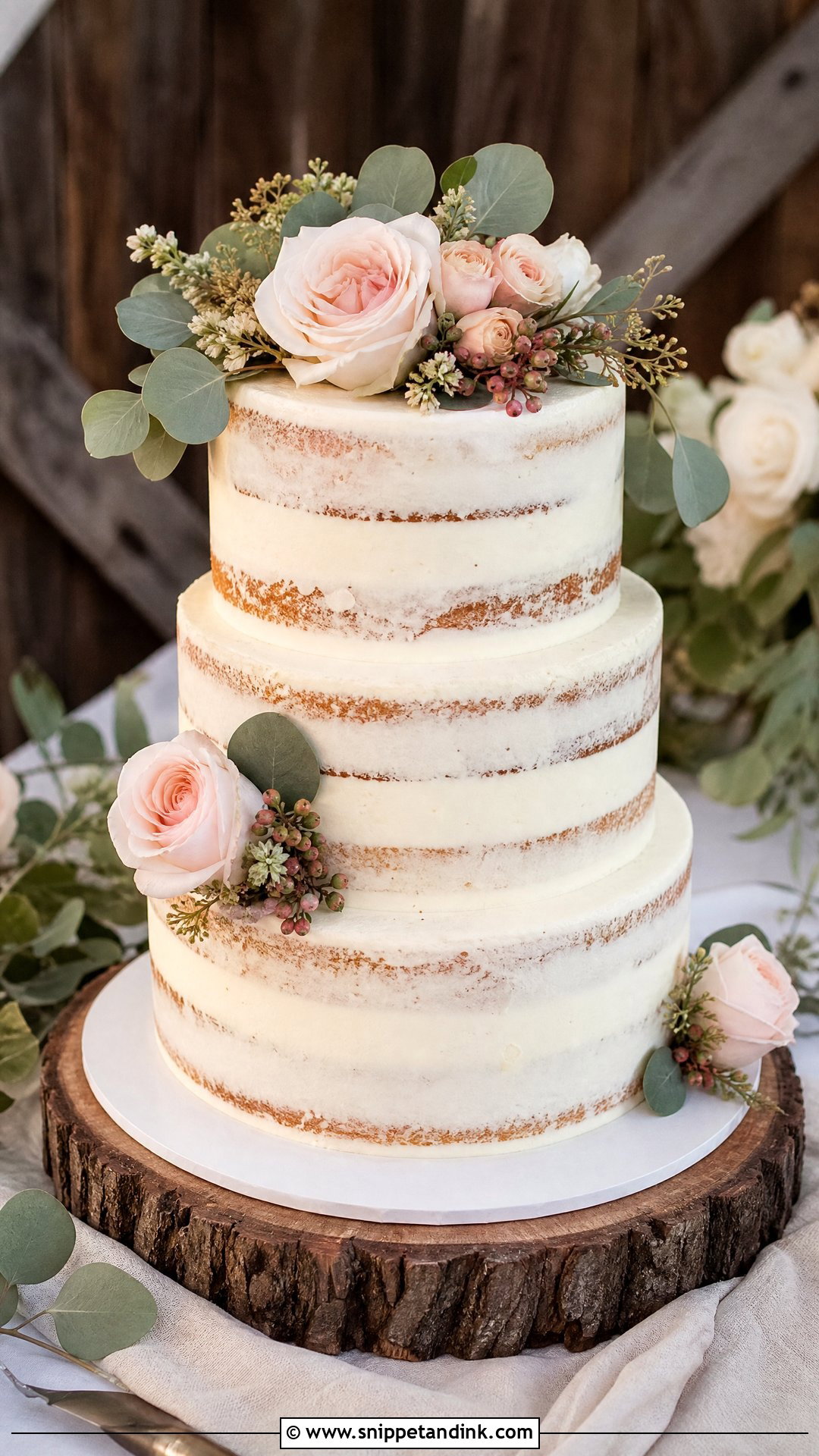
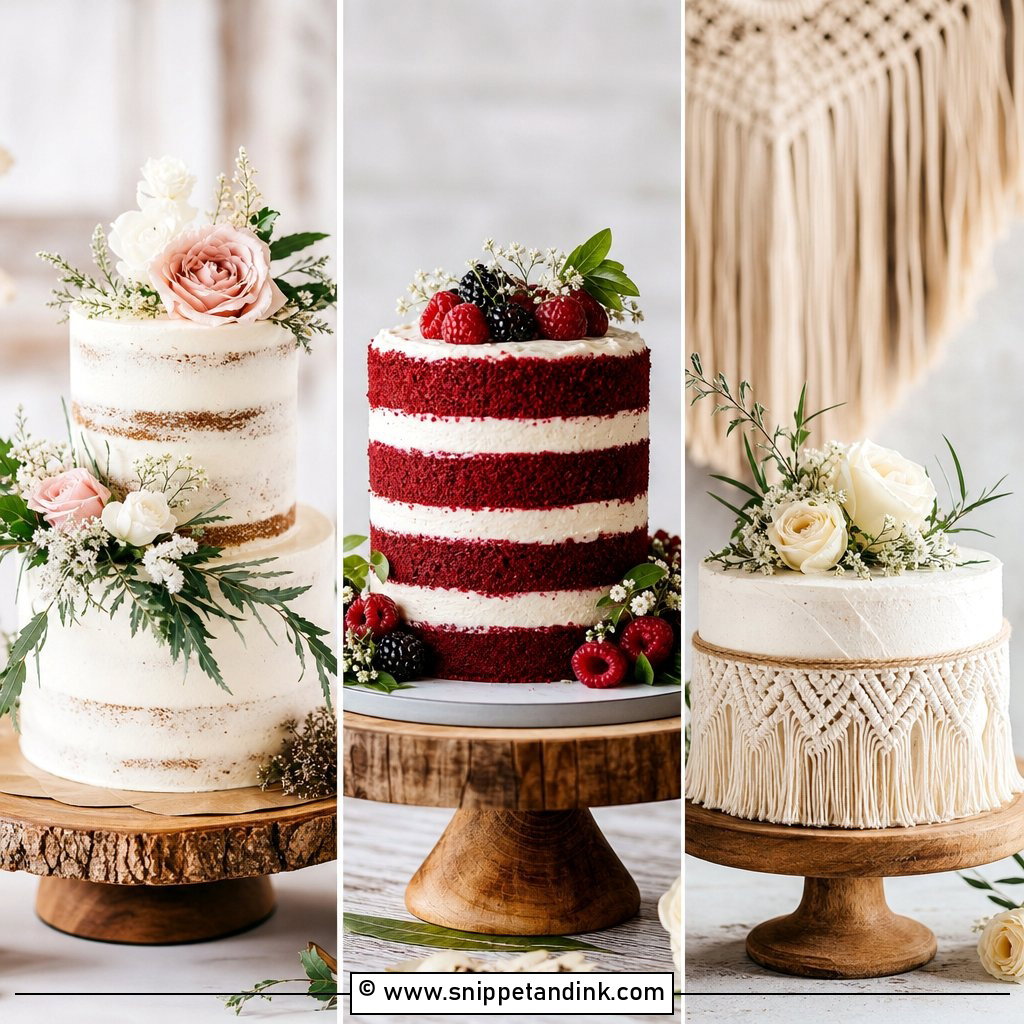
This is the style most couples bring me a screenshot of. I fill and crumb coat each tier, then scrape most of it back so the sponge shows through in soft bands. The thing that makes or breaks it is the filling: if it’s mean, the cake looks dry and stripy, so I build each layer with a good half inch of buttercream or curd. Vanilla, almond, lemon, carrot and spice all suit it because their crumb has colour and texture worth showing. A wood slice and a little greenery finish it without crowding the tiers.
2. Naked Wedding Cake With Berries
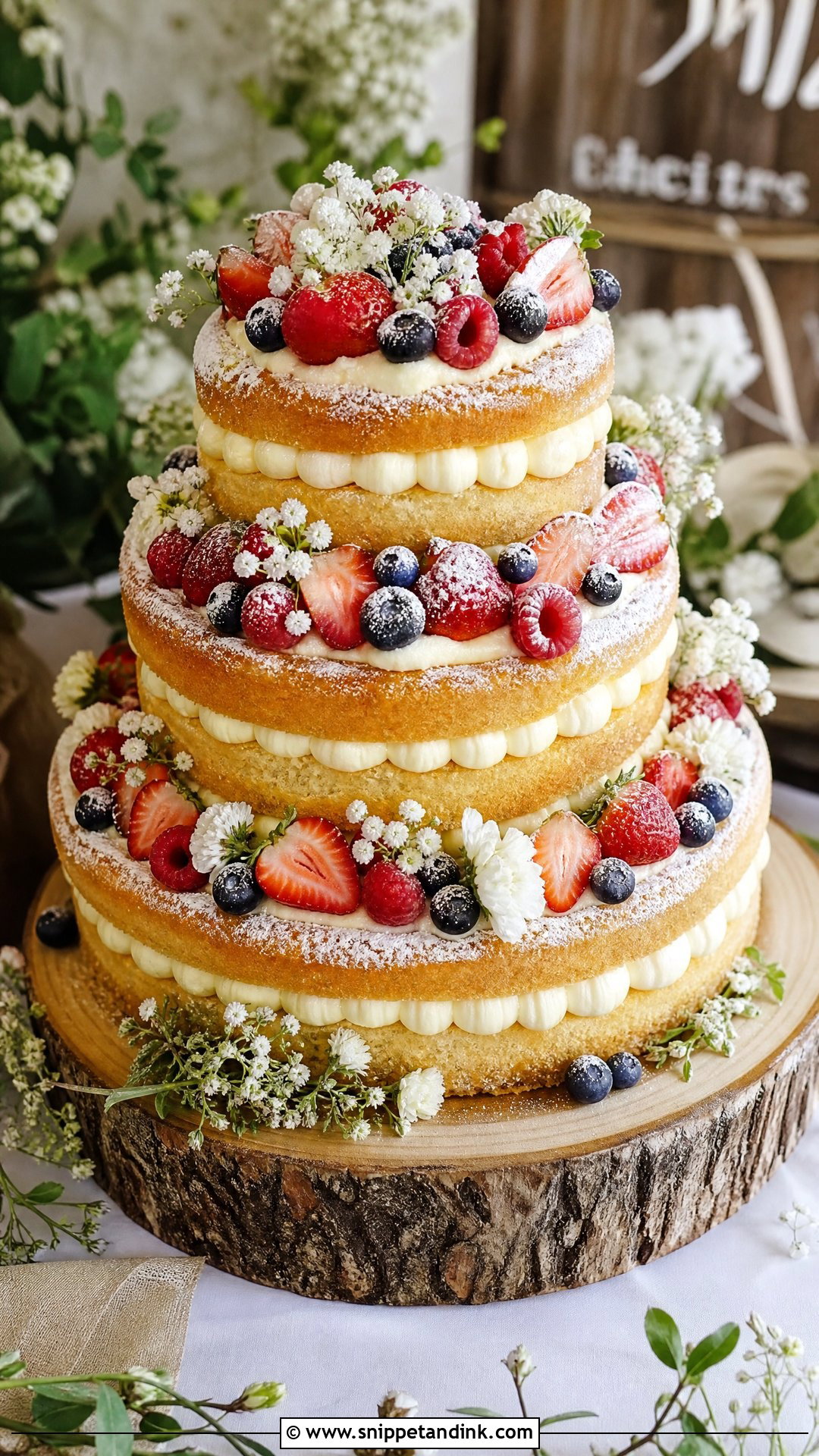
A naked wedding cake with berries has nothing on the outside to protect it, which is the honest trade-off. The sponge starts drying the moment it’s exposed to air, so I assemble these as late as I can and tell couples not to plan a long display before cutting. Strawberries, raspberries, blueberries and blackberries do the decorating, and a light dusting of icing sugar goes on at the venue, never before transport, because it melts into damp fruit within the hour. Buttercream or mascarpone cream holds the layers straight; whipped cream alone slumps.
3. Rustic Buttercream Wedding Cake
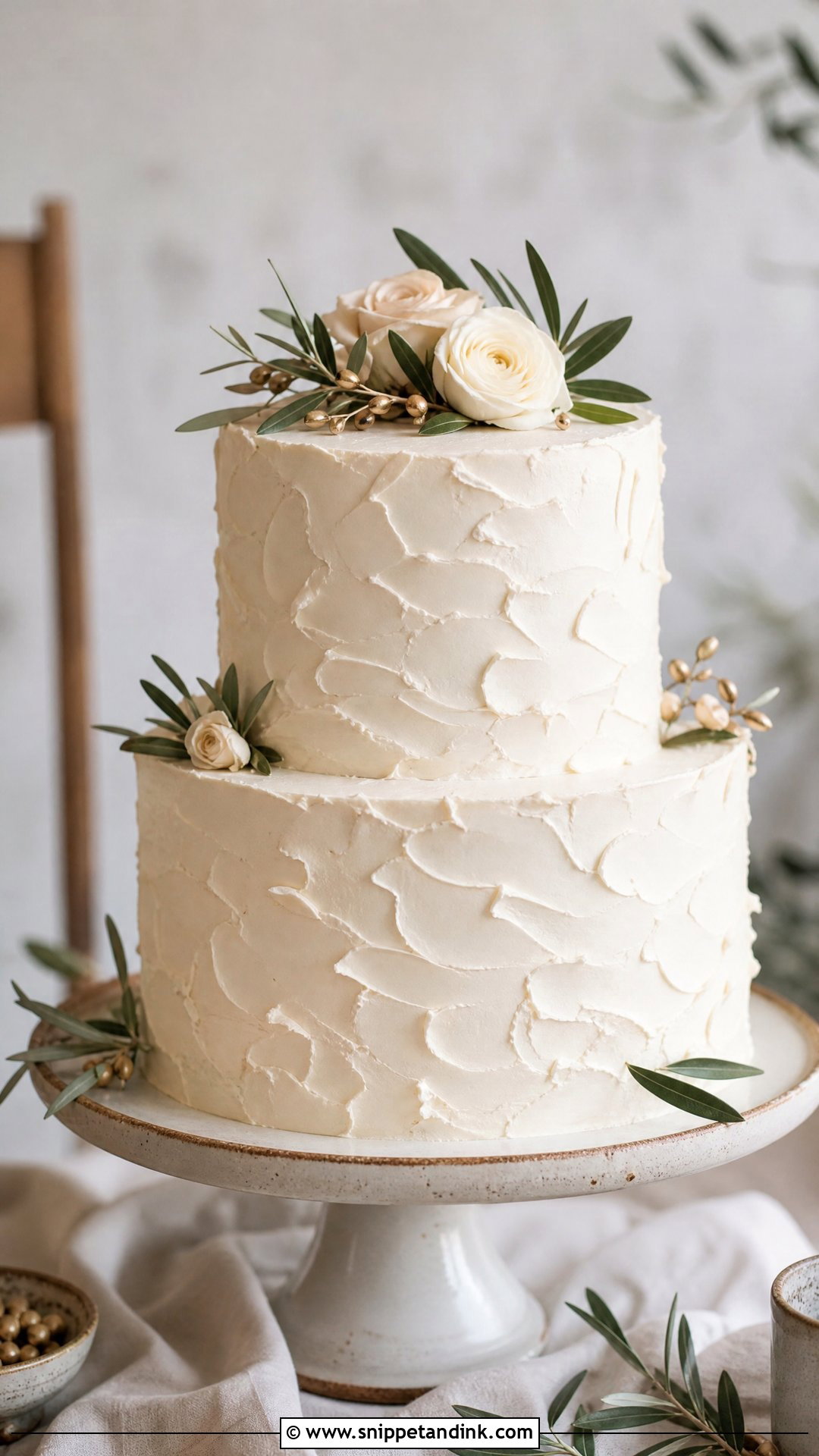
If you love the rustic look but the cake will sit out for a while, this is the version I usually steer people toward. It’s fully frosted, so the sponge stays sealed, and the finish is left deliberately loose: palette knife swoops, gentle ridges from a comb, or a scraped side that isn’t polished to glass. Ivory is the classic, though a pale blush or a muted sage takes colour well. Seasonal flowers or fruit go on last. It’s the most forgiving style on this list for warm rooms and long receptions.
4. Two Tier Rustic Wedding Cake
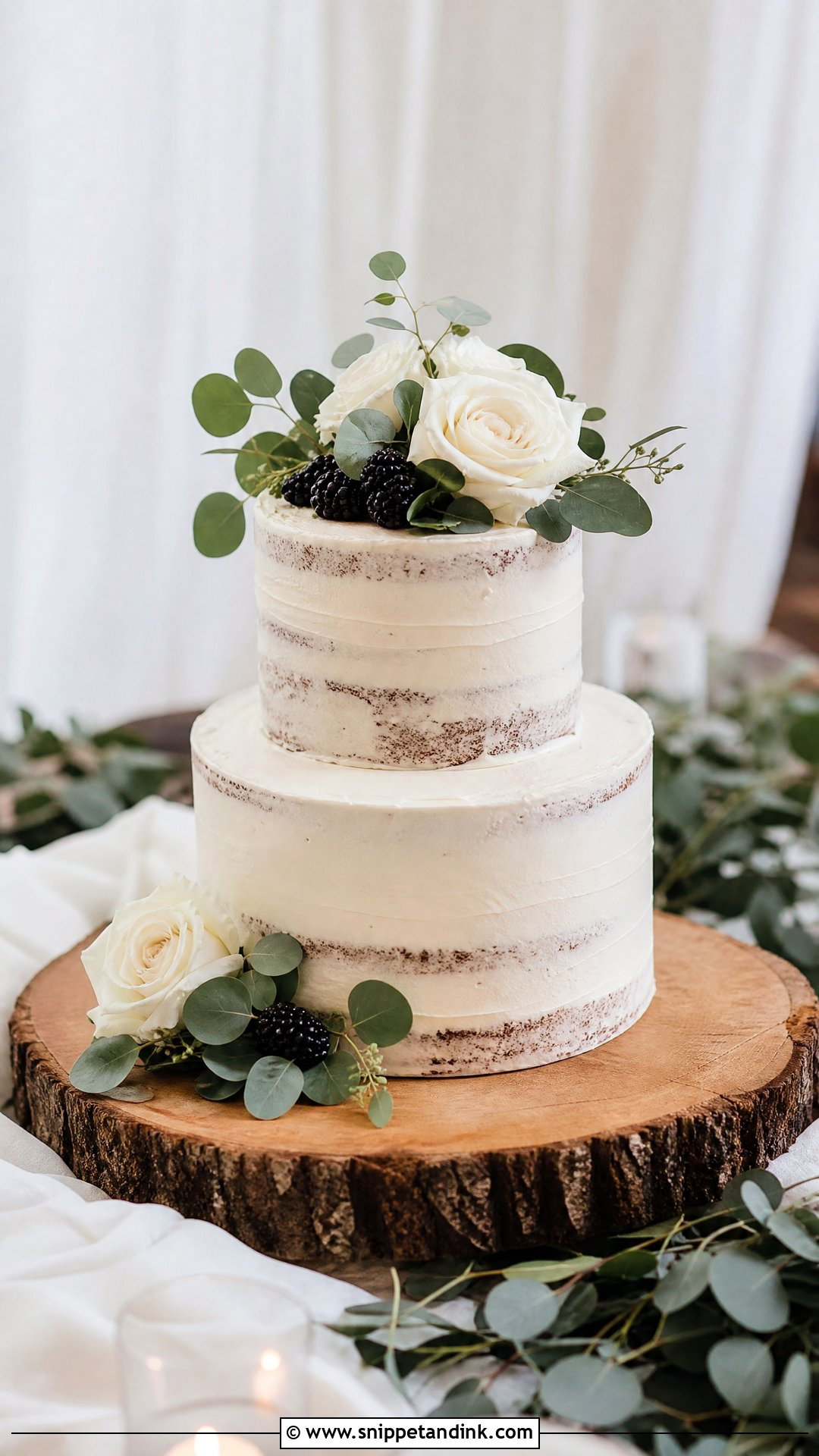
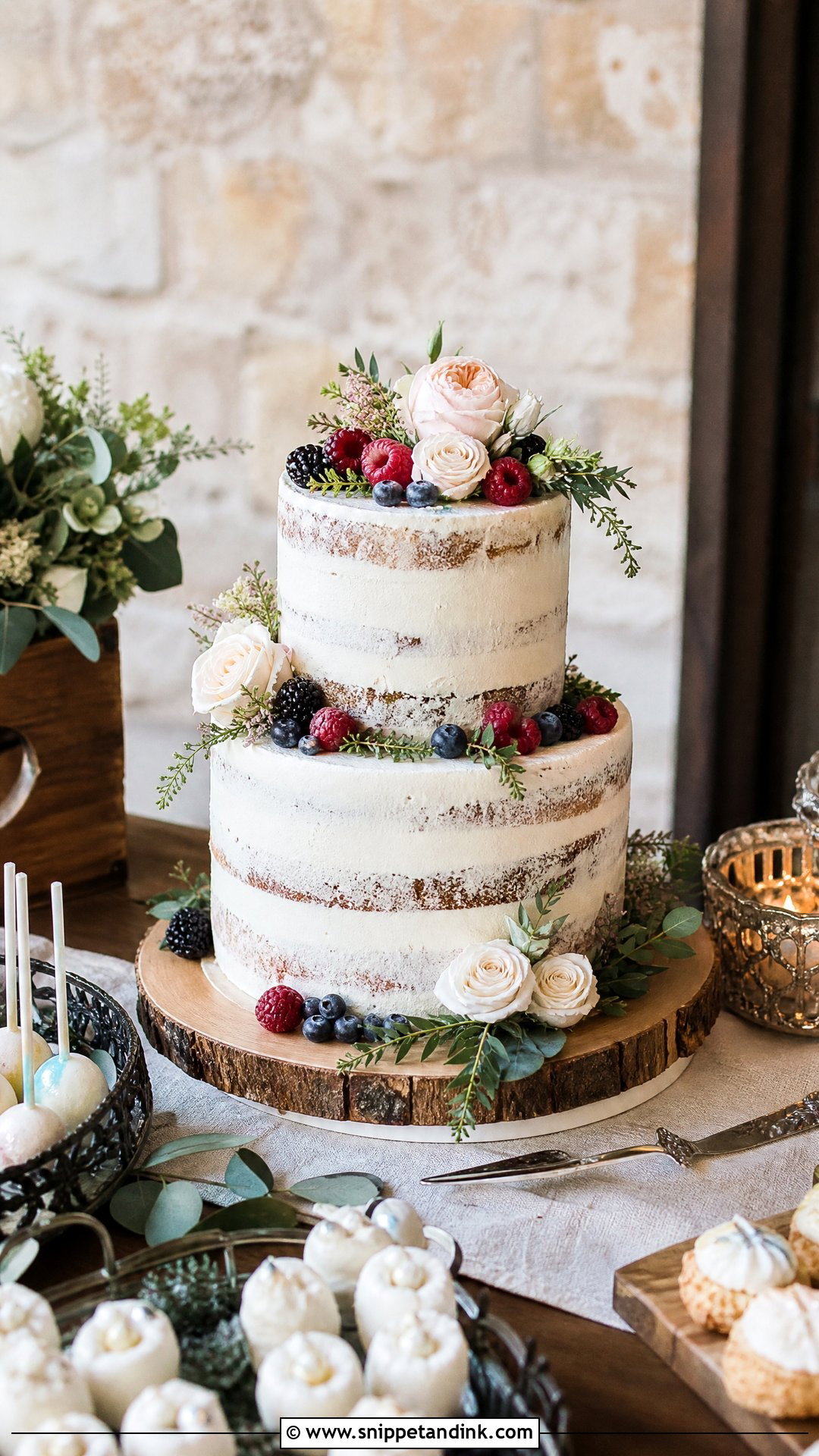
Two tiers are my usual suggestion for guest lists under about sixty, or for couples who want a simple cake table with other desserts around it. It still gives height on a stand, and it’s far easier to transport and set up on an uneven barn floor. One tier can be semi naked and the other textured buttercream if you want contrast. I also like that two tiers means two flavours, say vanilla with raspberry on top and chocolate with salted caramel underneath, so guests get a choice without a separate dessert bar.
5. Three Tier Rustic Wedding Cake
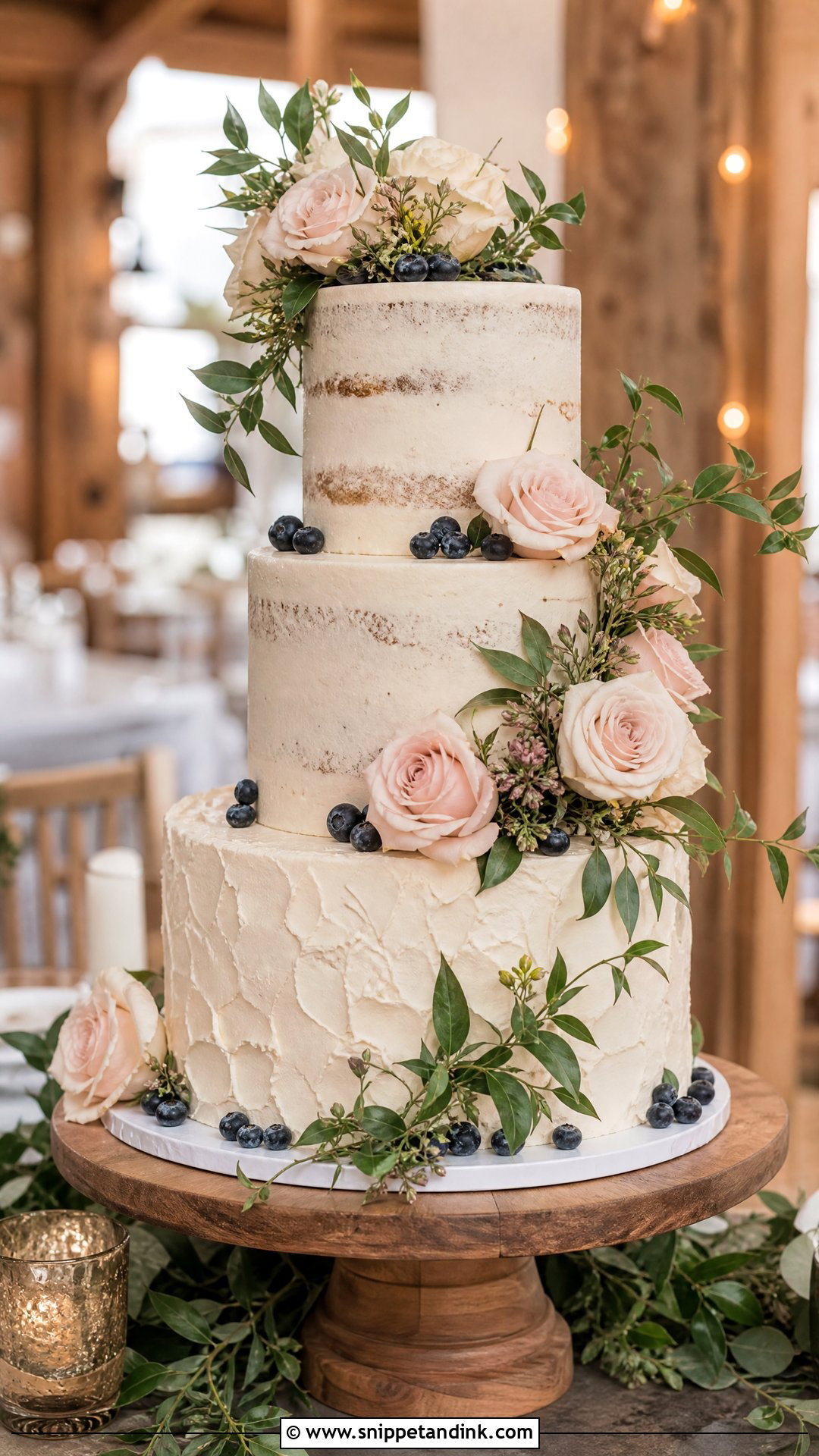
Three tiers fill a big tent or barn properly, which a small cake can’t do in a high-ceilinged room. The structure matters more here: every tier sits on its own board with dowels underneath, and for anything travelling down a farm track I add a central dowel through all three. To keep it rustic rather than formal, I’ll mix finishes, often a semi naked base with smoother buttercream above, and let a cascade of garden roses and greenery link the tiers on one side instead of wrapping all the way round.
6. Rustic Wedding Cake With Fresh Flowers
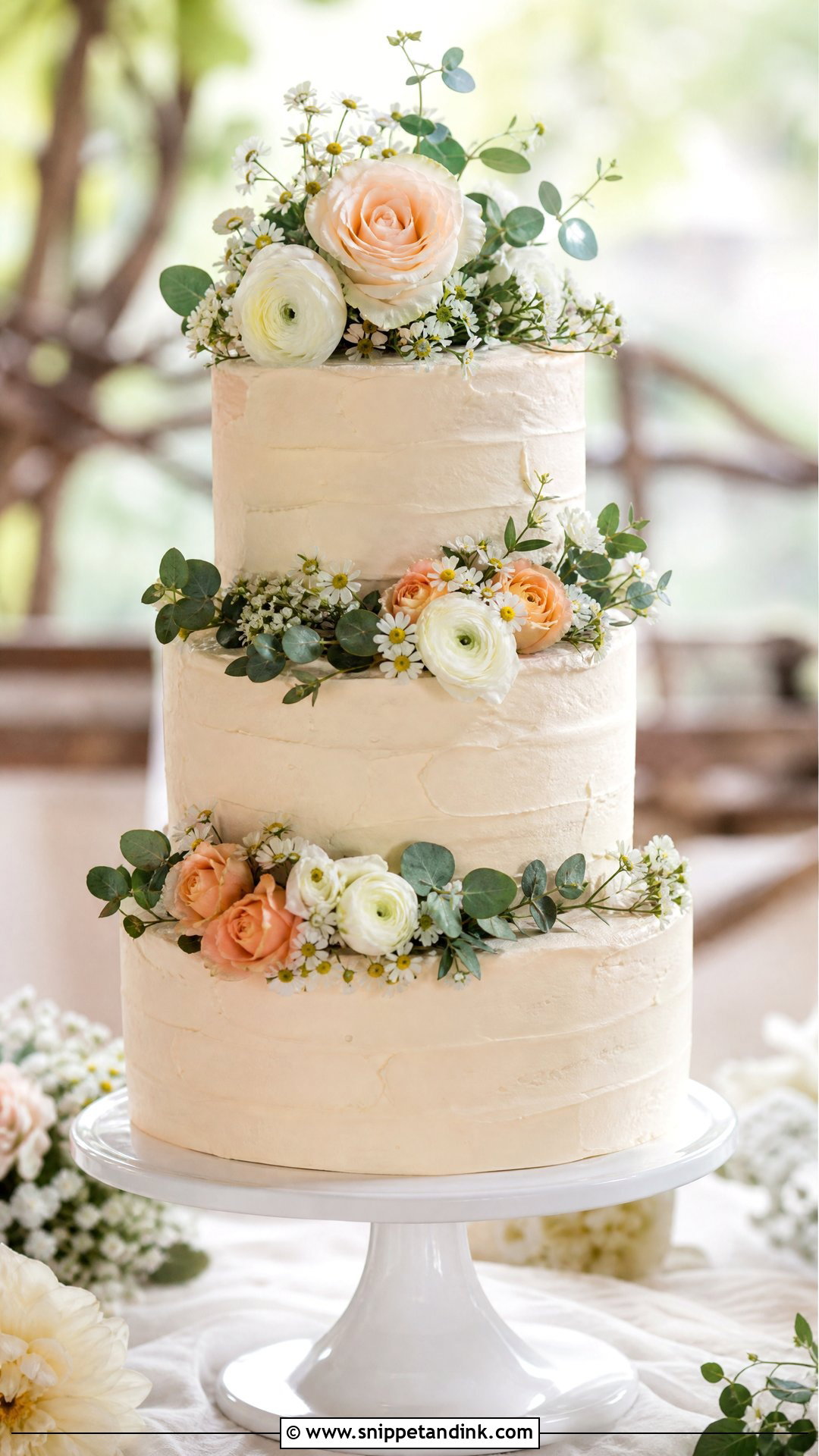
Flowers are what tie the cake to the rest of the day, so I always ask for the florist’s recipe for the bouquet and centrepieces. Roses, ranunculus, chamomile, lavender and dahlias all read as garden flowers; I arrange them in loose clusters rather than neat rows, which is what makes them look picked rather than placed. The part couples forget is safety. Not every bloom is safe near food, and stems need wrapping or a barrier before they touch frosting, so the florist and I agree on exactly who supplies and places what.
7. Rustic Wedding Cake With Greenery
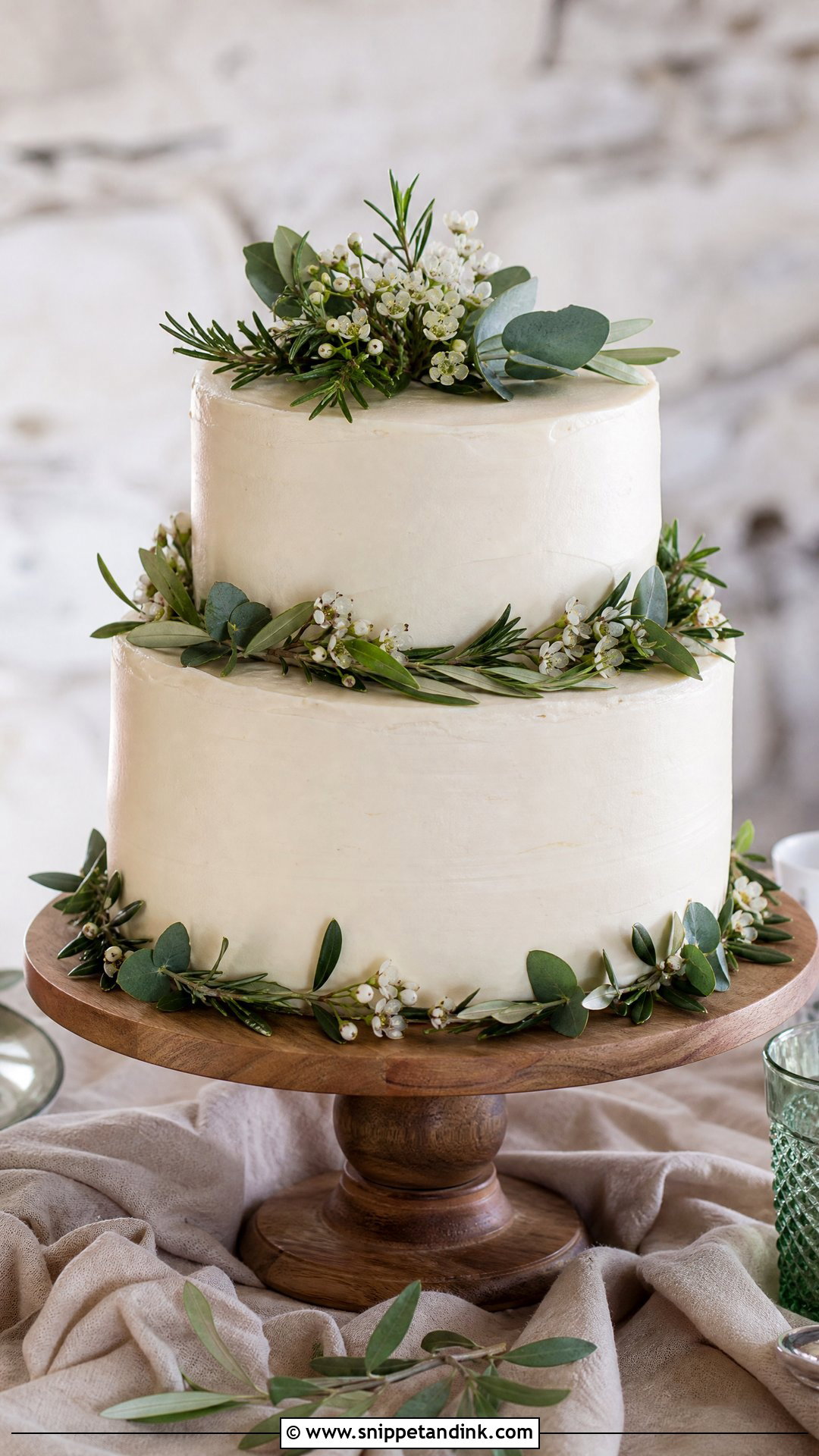
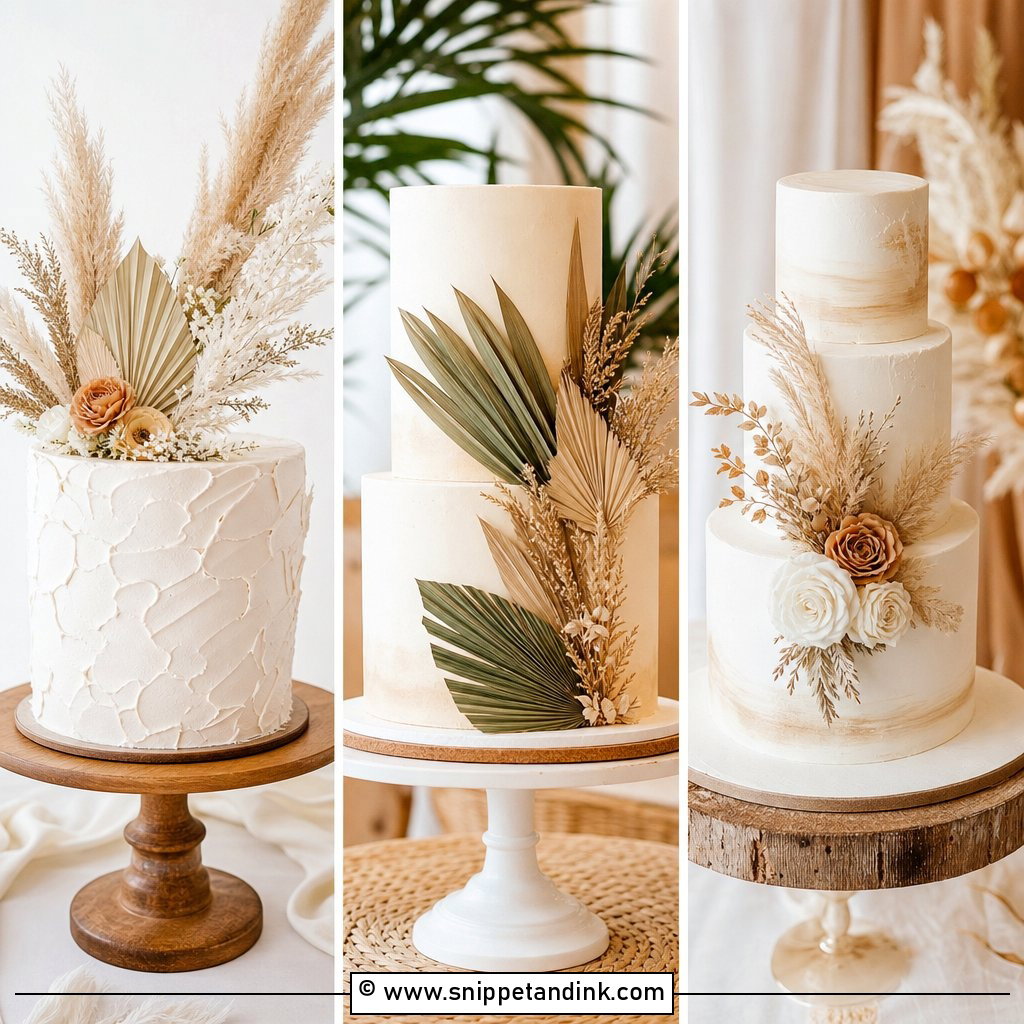
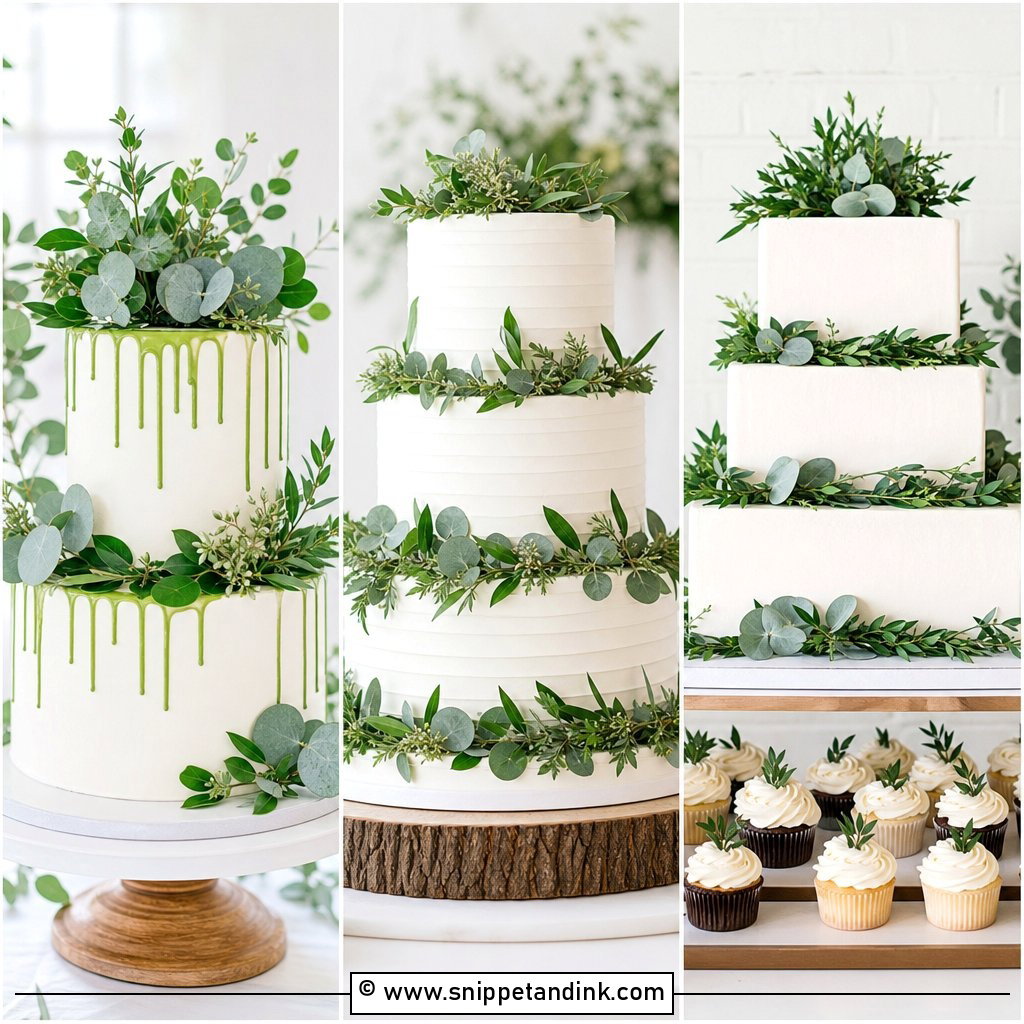
Greenery alone is underrated. Olive, rosemary, eucalyptus and small fern fronds give a cake shape and colour without a single flower, and they suit ivory buttercream with a lemon or almond sponge. A word of caution: eucalyptus is not something to eat, so I place it on a barrier or ask guests’ slices to be cut clear of it. For a garden wedding I’ll add a few white blooms; in a barn I keep it green and let the linen and wood do the rest. It’s also one of the cheaper ways to make a cake look full.
8. Woodland Wedding Cake
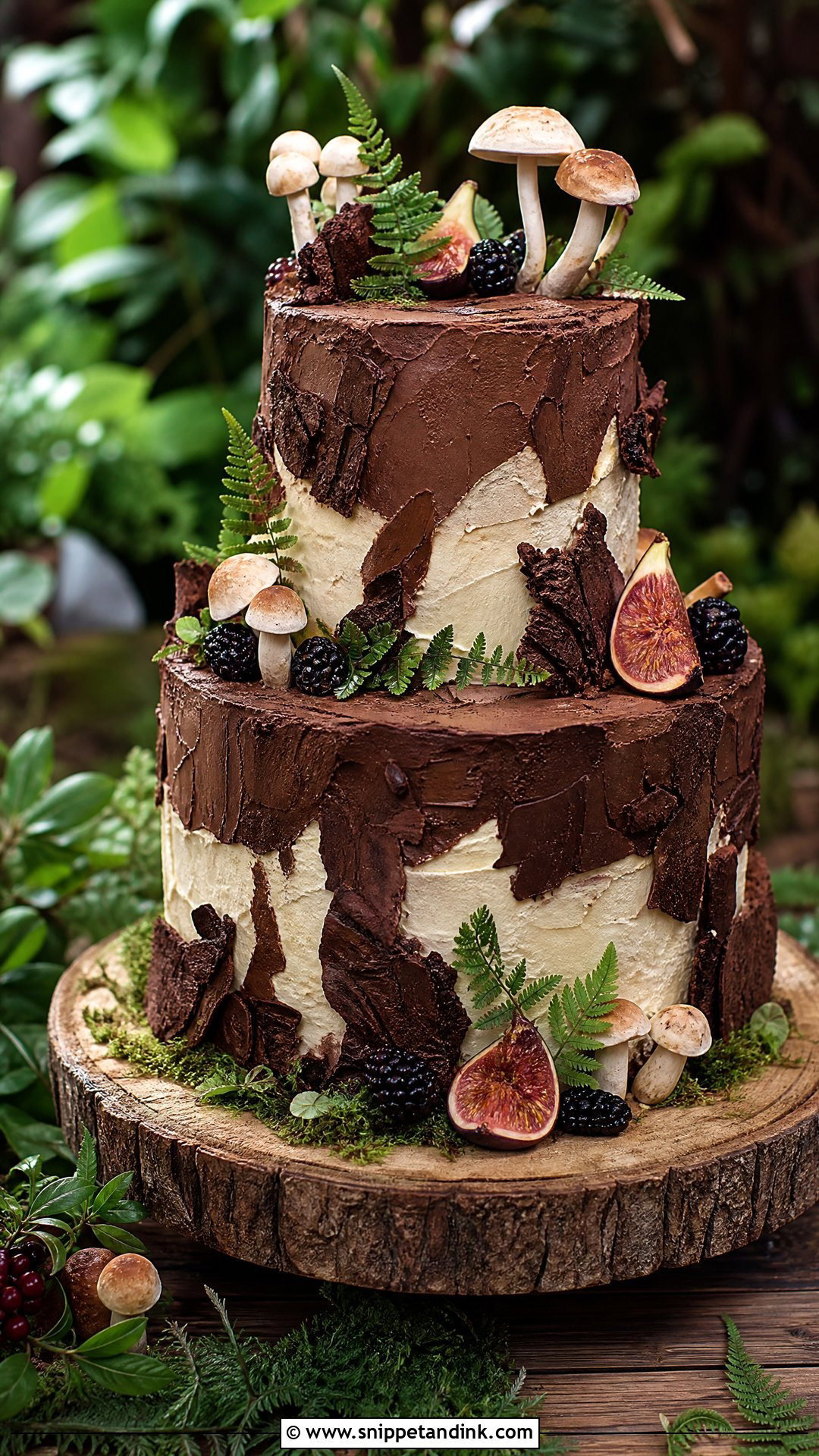
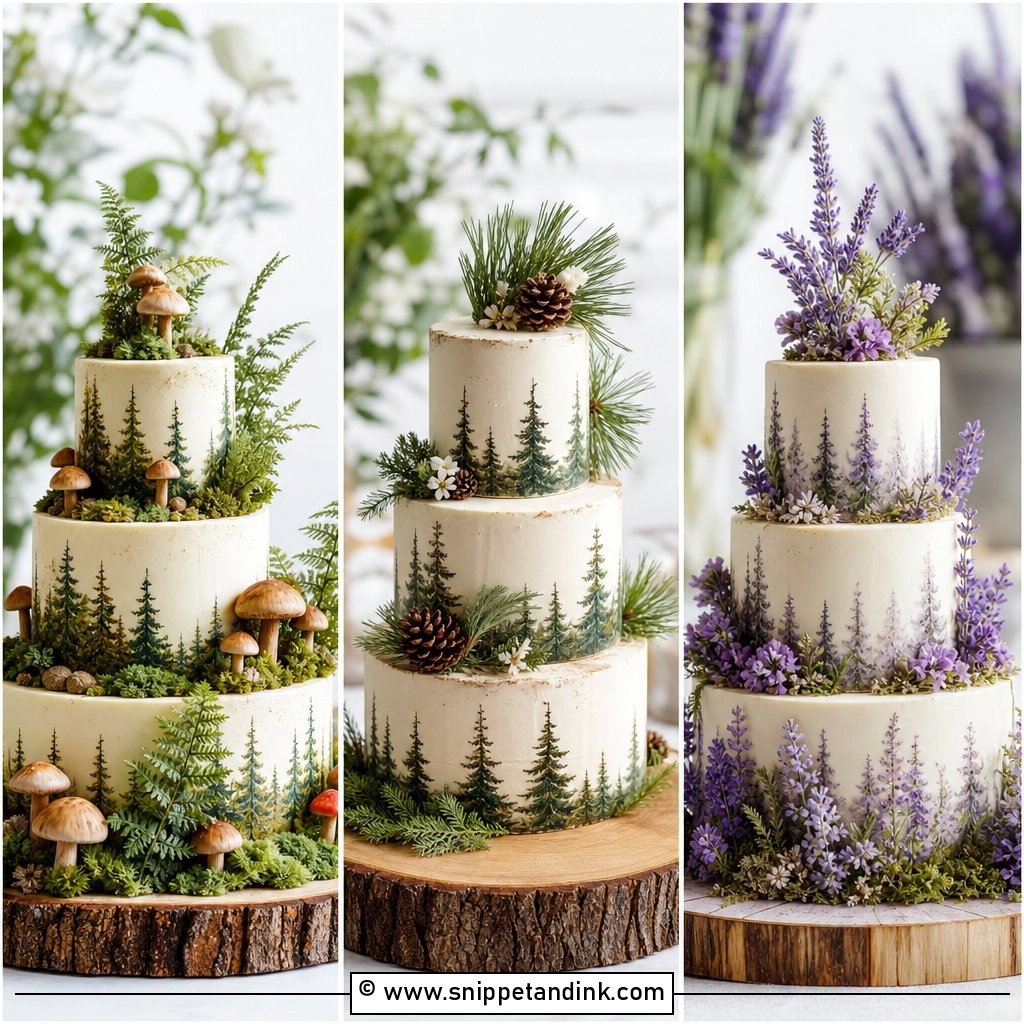
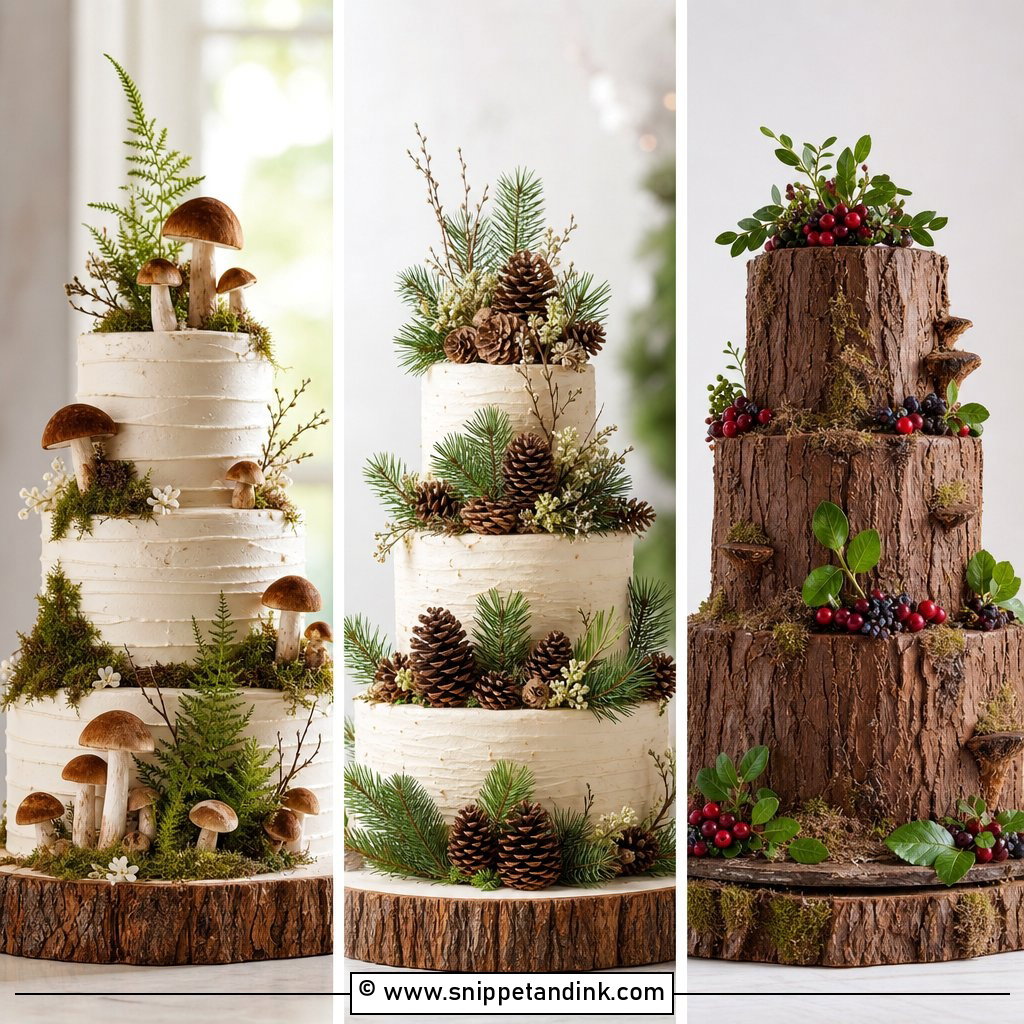
A woodland wedding cake walks a fine line between forest and fairy tale. Textured buttercream in stone and moss tones, ferns, figs, berries and a few meringue mushrooms or chocolate bark pieces will read as grown-up; add too many toadstools and it starts to look like a birthday cake. I keep one focal cluster and leave plenty of bare texture around it. Chocolate, hazelnut, spice and caramel sponges match the colours, which is a nice bonus when guests cut into it by candlelight.
9. Barn Wedding Cake
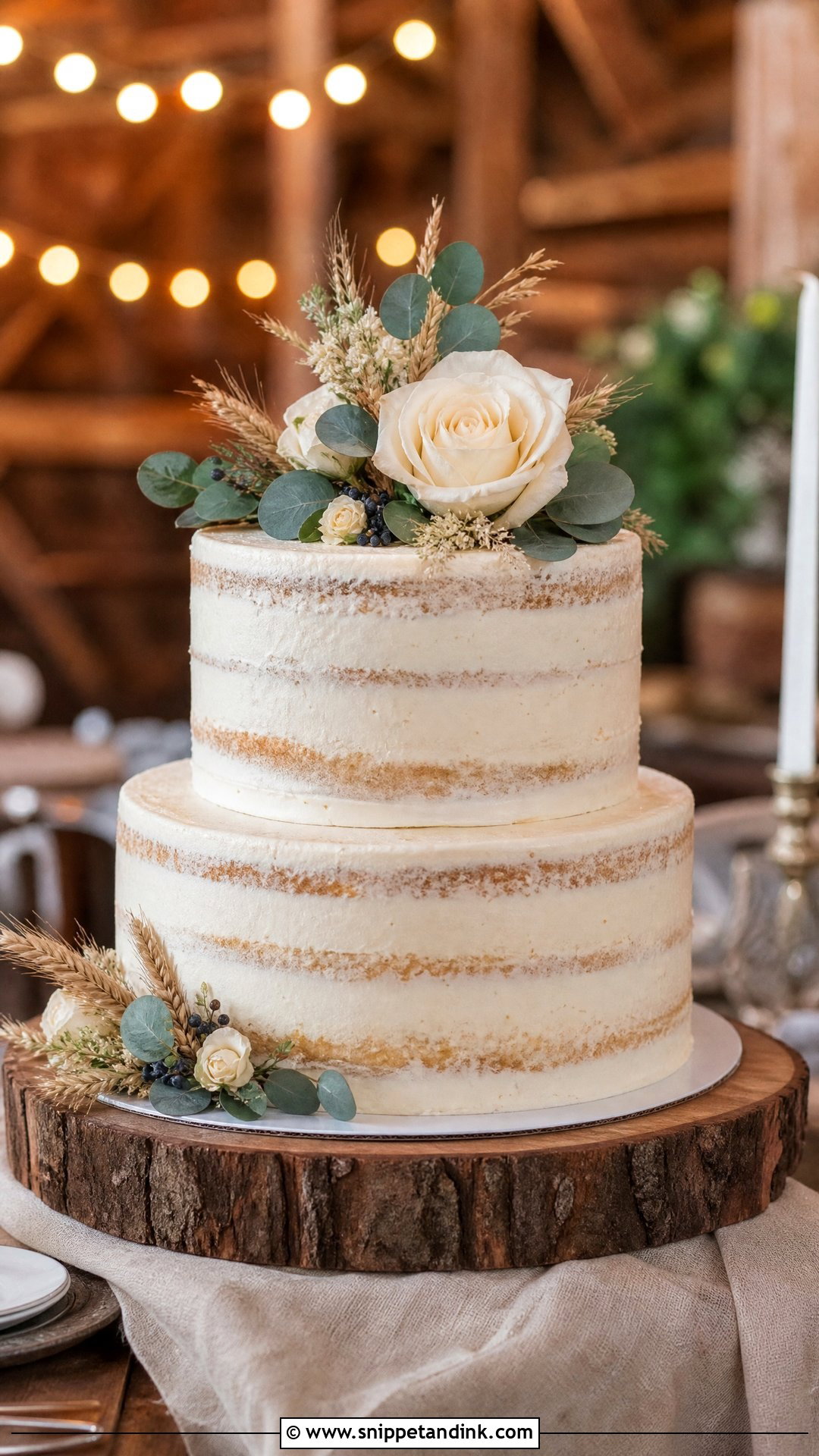
Barns are lovely to work in and tricky to bake for. Many have no air conditioning, uneven floors and doors left open to the yard, so I build a barn wedding cake to cope with warmth and a wobbly table: firmer buttercream, well-chilled tiers and a stand that sits flat. Semi naked or roughly frosted finishes look at home next to beams and string lights. Vanilla bean, red velvet, carrot and chocolate suit the relaxed mood, and a few soft flowers or berries stop it from looking plain.
10. Rustic Wedding Cake With Sunflowers
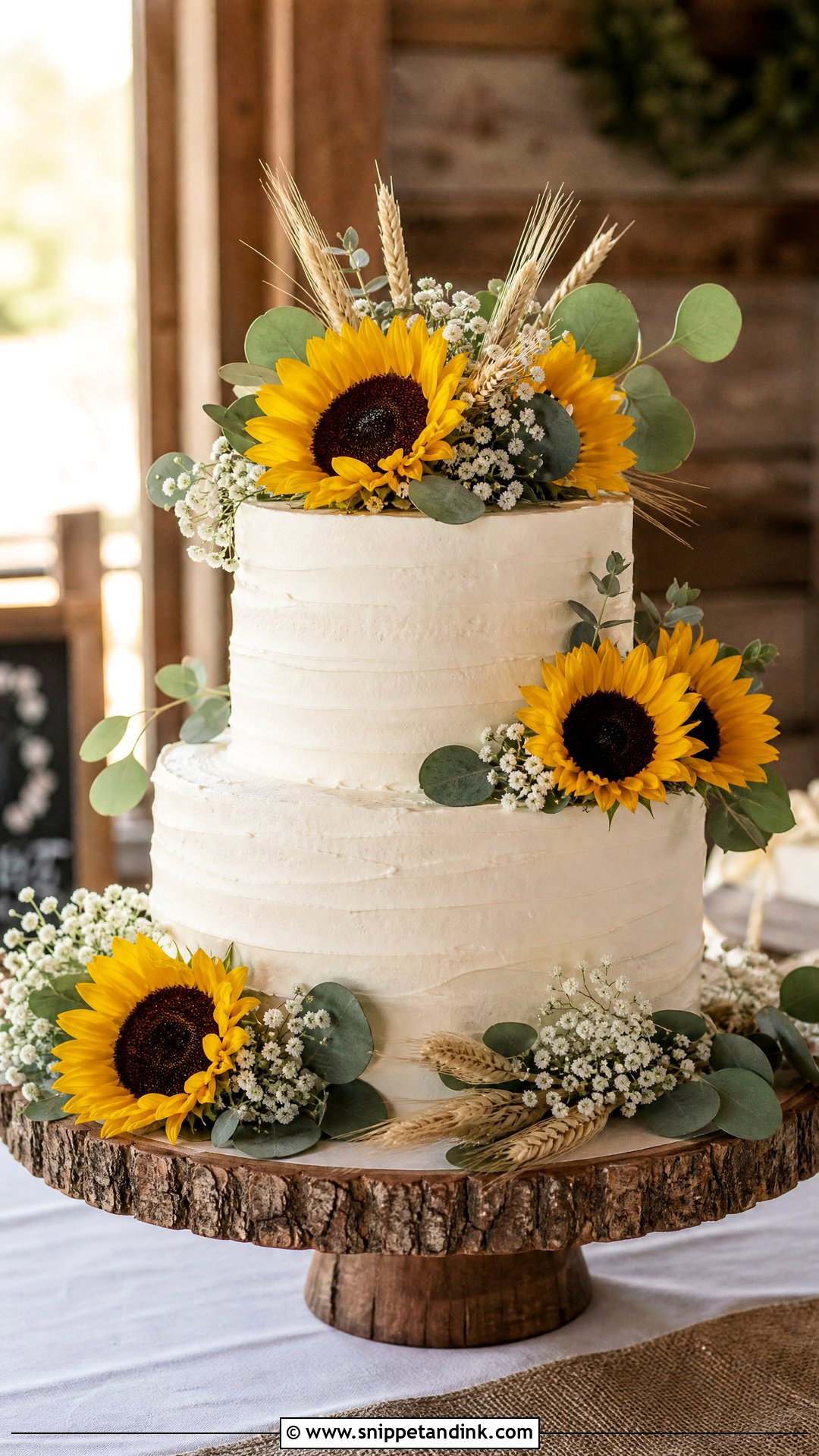
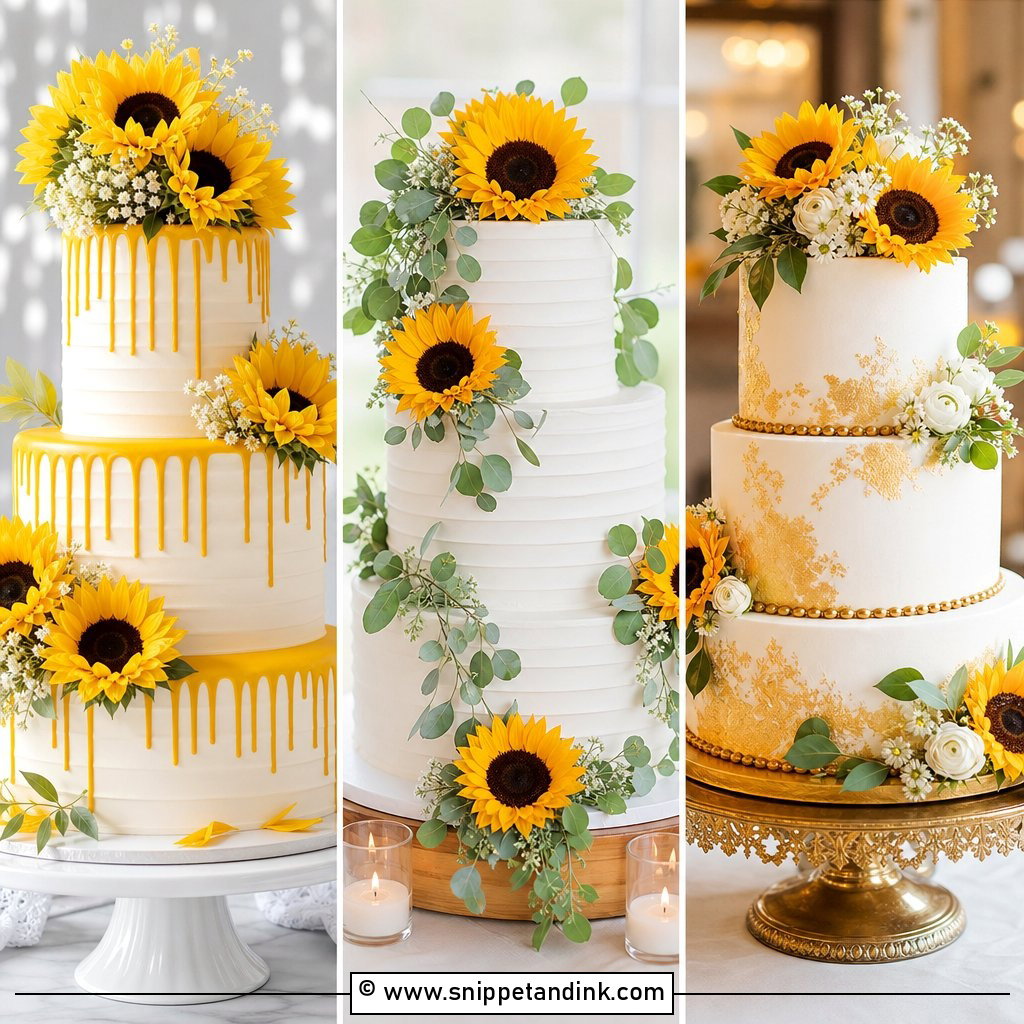
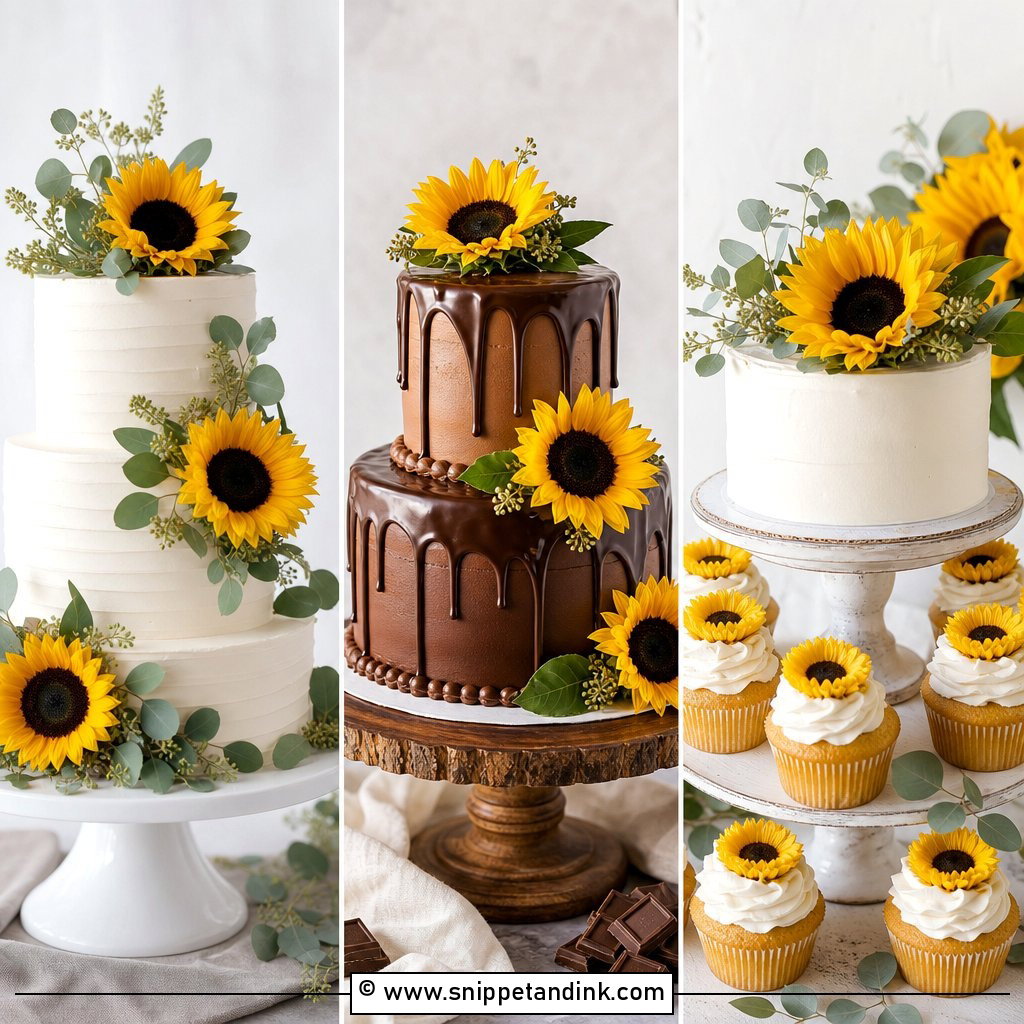
Sunflowers are heavy and very yellow, so they need a quiet base and some restraint. I put them in two or three clusters on a semi naked vanilla or ivory buttercream cake and fill the gaps with smaller white flowers or wheat to soften the colour. Their thick, hairy stems hold a lot of sap, so I cut and wrap them carefully before they go anywhere near the frosting. Late summer and early autumn are when they’re at their best and cheapest, and they suit barn and field venues far better than a ballroom.
11. Rustic Wedding Cake With Lavender
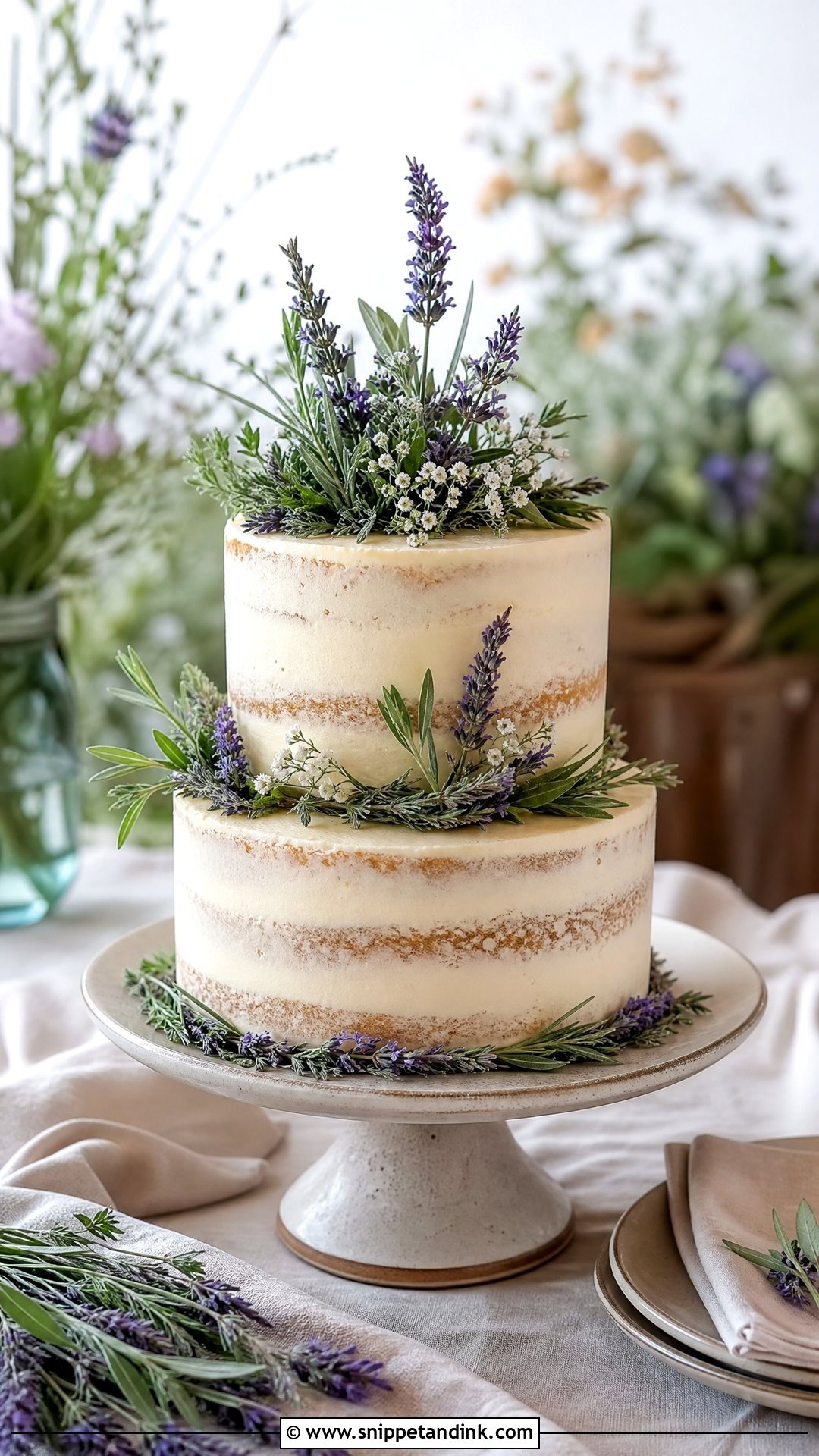
Lavender gives colour without shouting, and it pairs naturally with lemon, honey, almond and plain vanilla. I use small sprigs sparingly, tucked along the tier edges or bundled with white flowers. If you want it in the flavour as well, go gently: culinary lavender infused into a syrup or buttercream tastes floral in small amounts and like soap in large ones, so I always test the strength at the tasting rather than guessing. A semi naked finish lets those pale purple sprigs read as freshly cut.
12. Rustic Wedding Cake With Figs
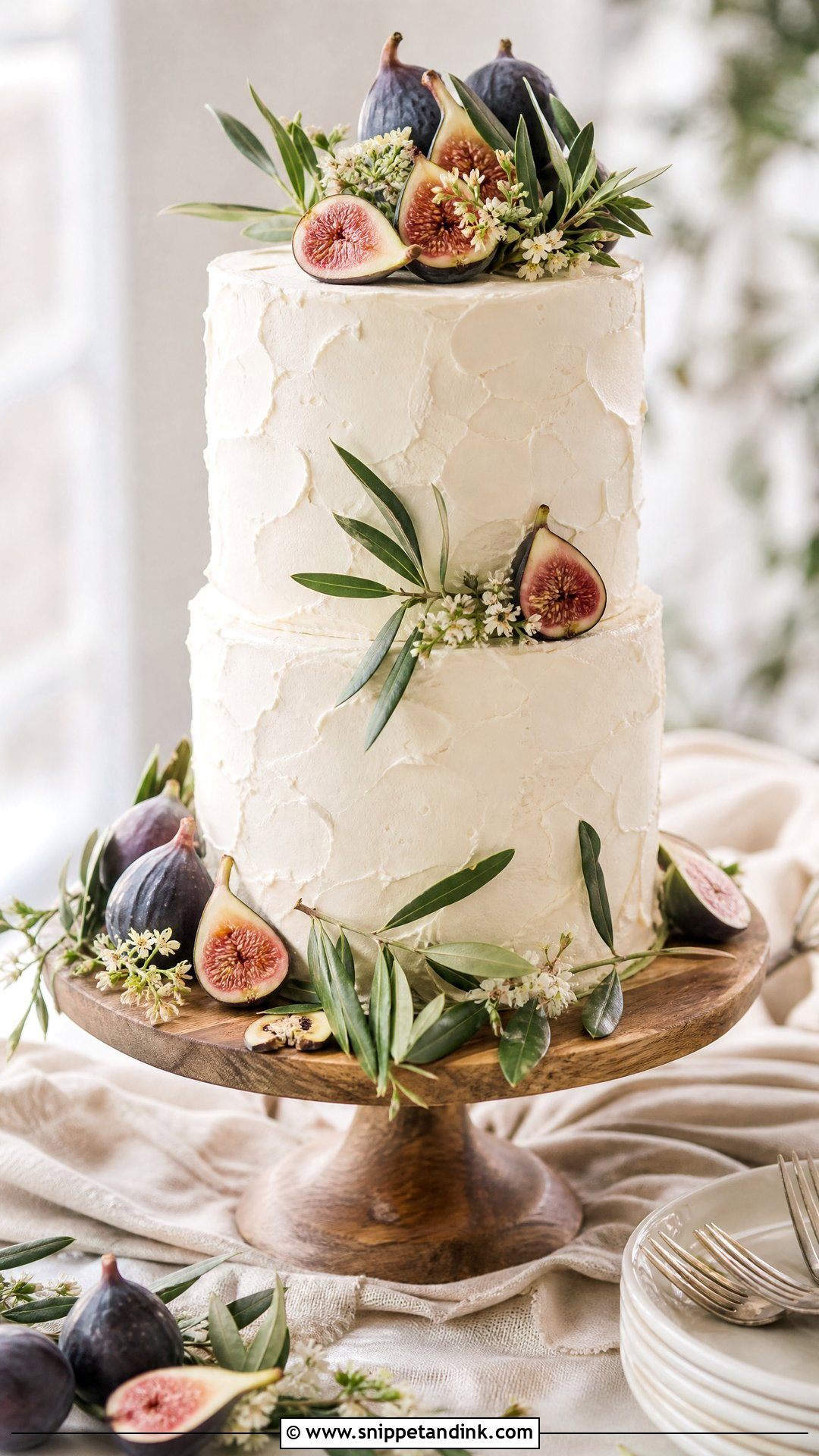
Figs are my favourite fruit to decorate with in late summer and autumn because a halved fig shows that deep pink centre without any extra work. The catch is that cut figs weep and darken, so I slice them at the venue and brush them with a thin glaze to keep them glossy. They suit honey, almond, spice, chocolate and mascarpone fillings, and they look most at home on textured buttercream with a little greenery. It’s a richer, more grown-up look than berries.
13. Rustic Wedding Cake With Caramel Drip
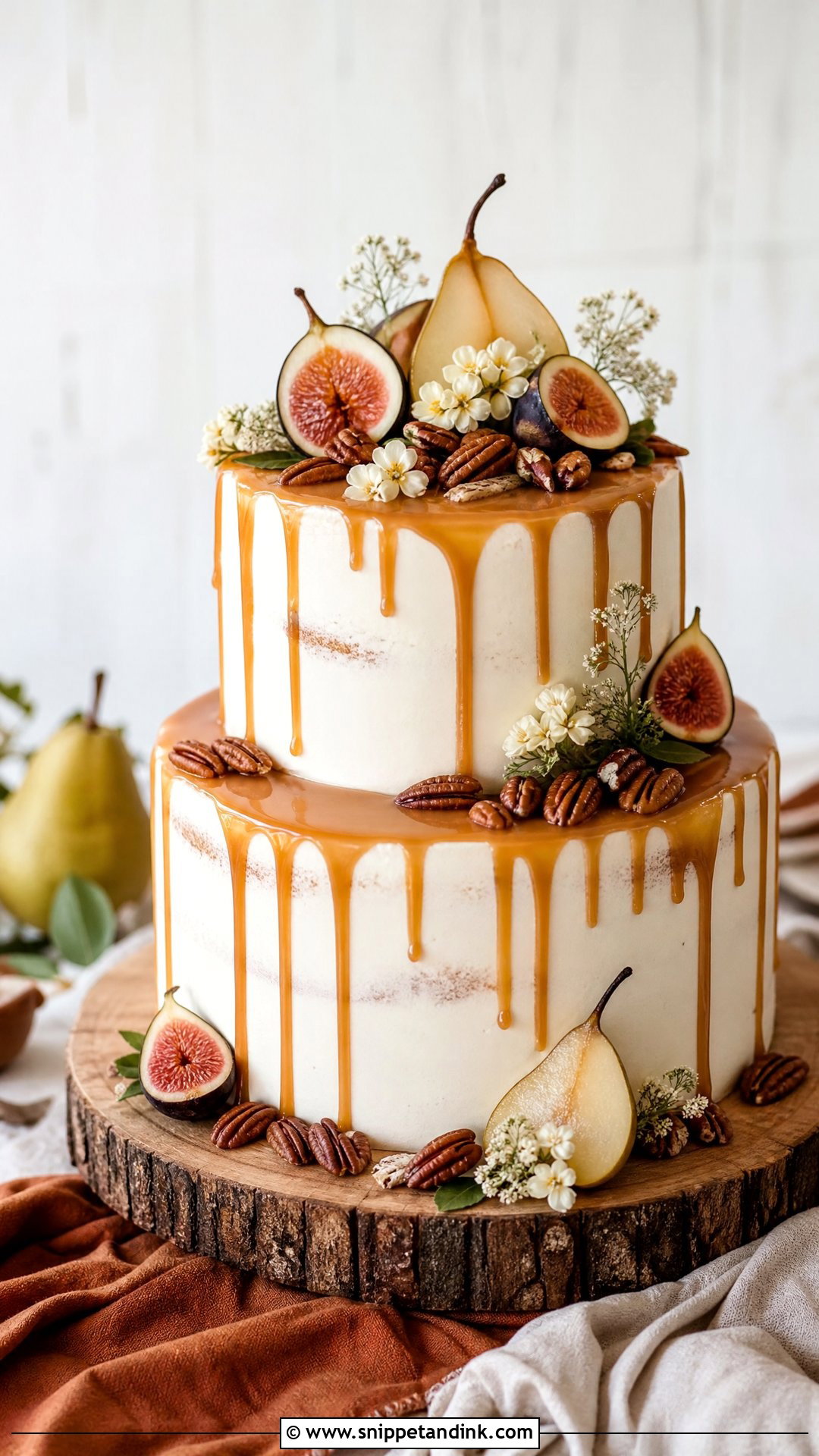
A caramel drip adds shine and movement, but it behaves differently from a chocolate one: it stays softer and keeps creeping in a warm room. I make it slightly thicker than for a party cake and apply it to cold tiers so the drips set where I put them. It pairs well with apple spice cake, brown butter, pumpkin or vanilla bean sponge. Let the drips fall unevenly for a rustic feel, then top with figs, pears or toasted nuts. It belongs in cooler months; on a hot afternoon I’d talk you out of it.
14. Rustic Wedding Cake With Chocolate Ganache
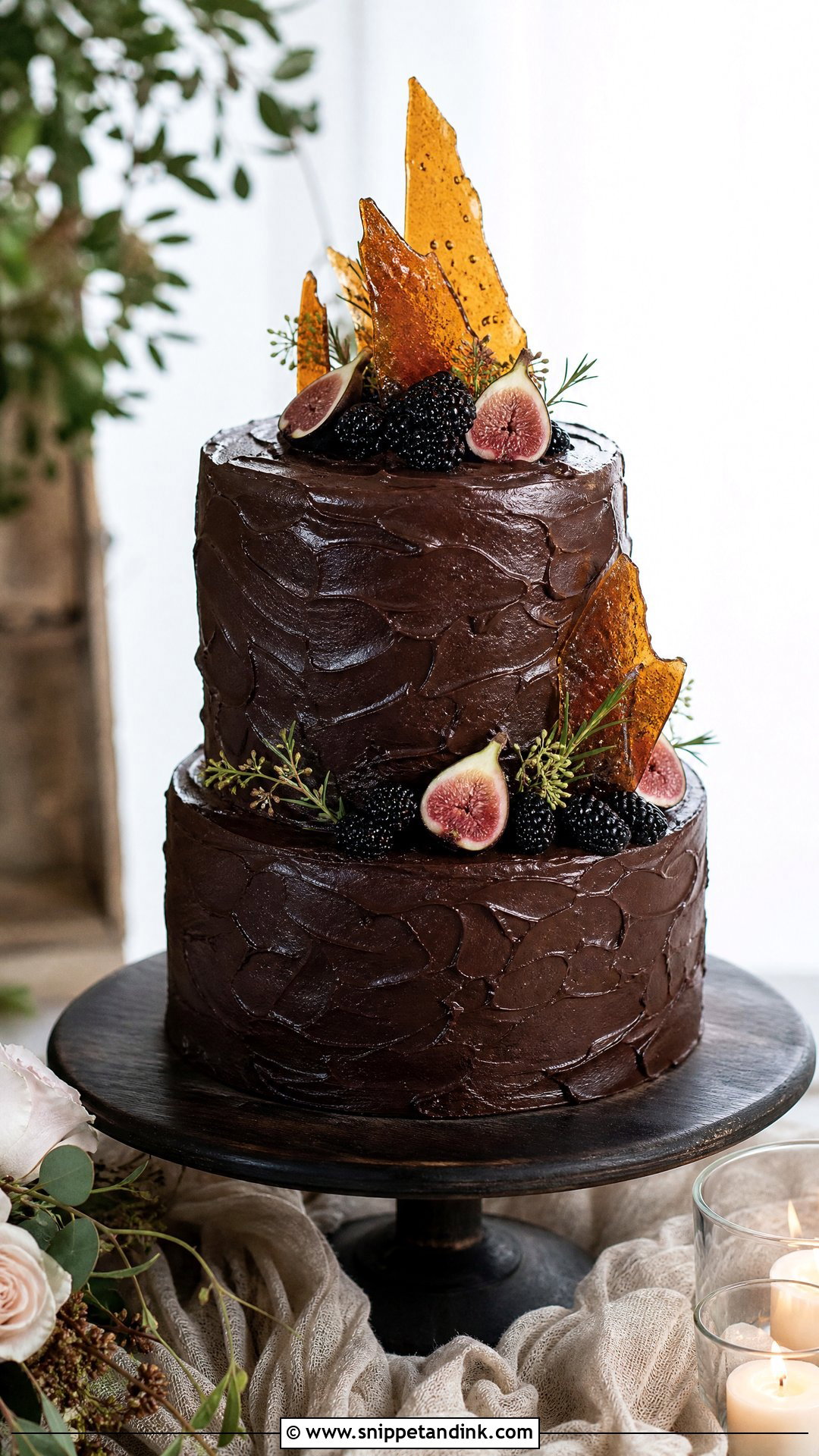
Dark ganache is the answer for couples who don’t want a white cake. It can be smoothed, swept with a palette knife for texture, or poured as a drip over buttercream, and it actually holds up better in mild warmth than a lot of soft buttercreams because it sets firm. Berries, figs and toasted nuts look rich against it. In photos the colour reads very dark under warm barn lights, so I add a little greenery or pale fruit to give the camera something to pick out, and I keep the stand neutral.

15. Rustic Wedding Cake With Pressed Flowers
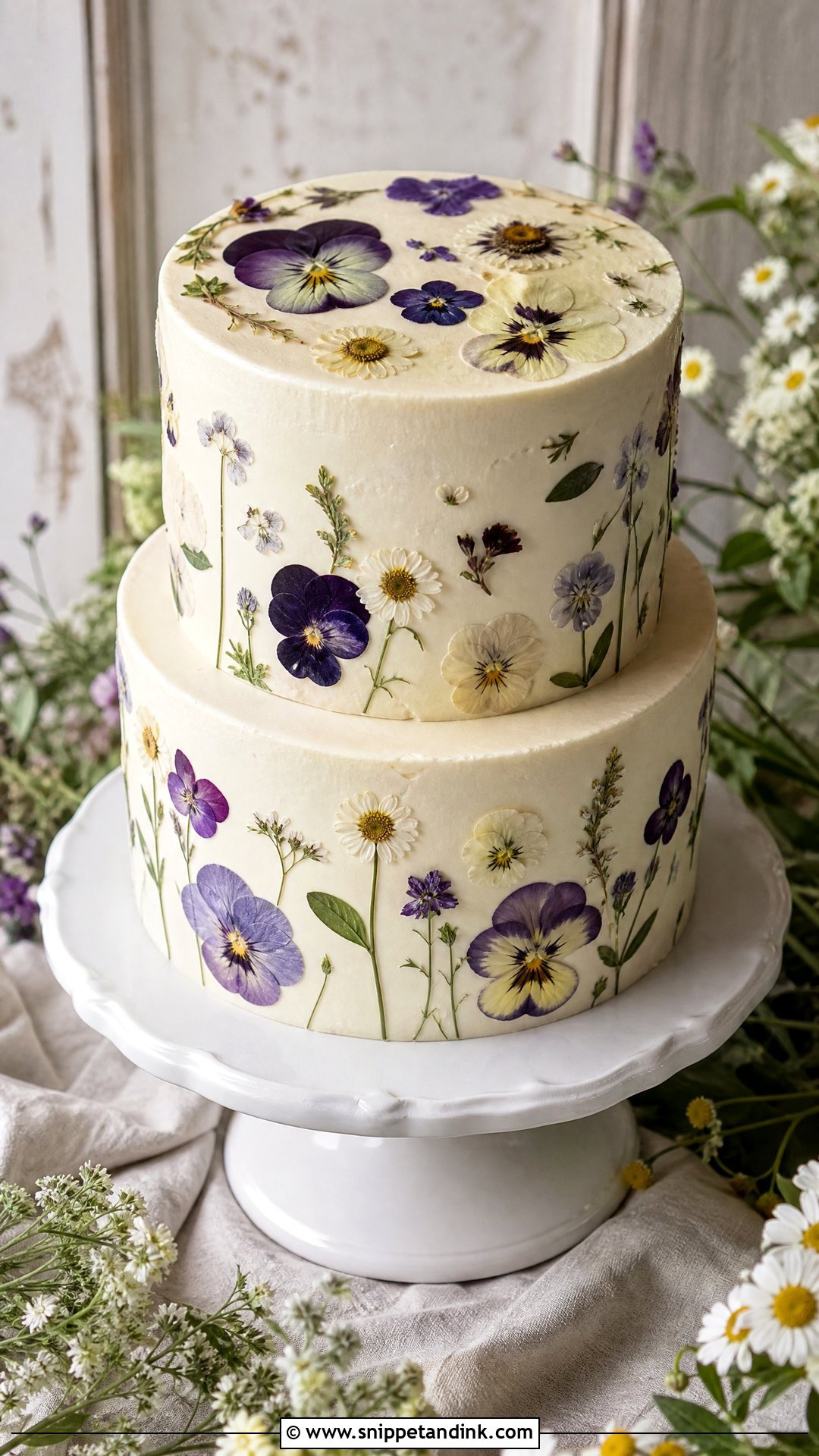
Pressed flowers sit flat, so this cake gives you a meadow look with no height or bulk, and they travel far better than fresh blooms. They need a smooth surface, so I use a well-chilled buttercream or a thin layer of fondant and press them on with a touch of piping gel. Pansies, violas, chamomile, calendula and violets are all edible when grown for eating, and I source them that way rather than from a florist. Keep the colours to two or three from your palette so it looks designed rather than scattered.
16. Rustic Wedding Cake With Burlap Ribbon
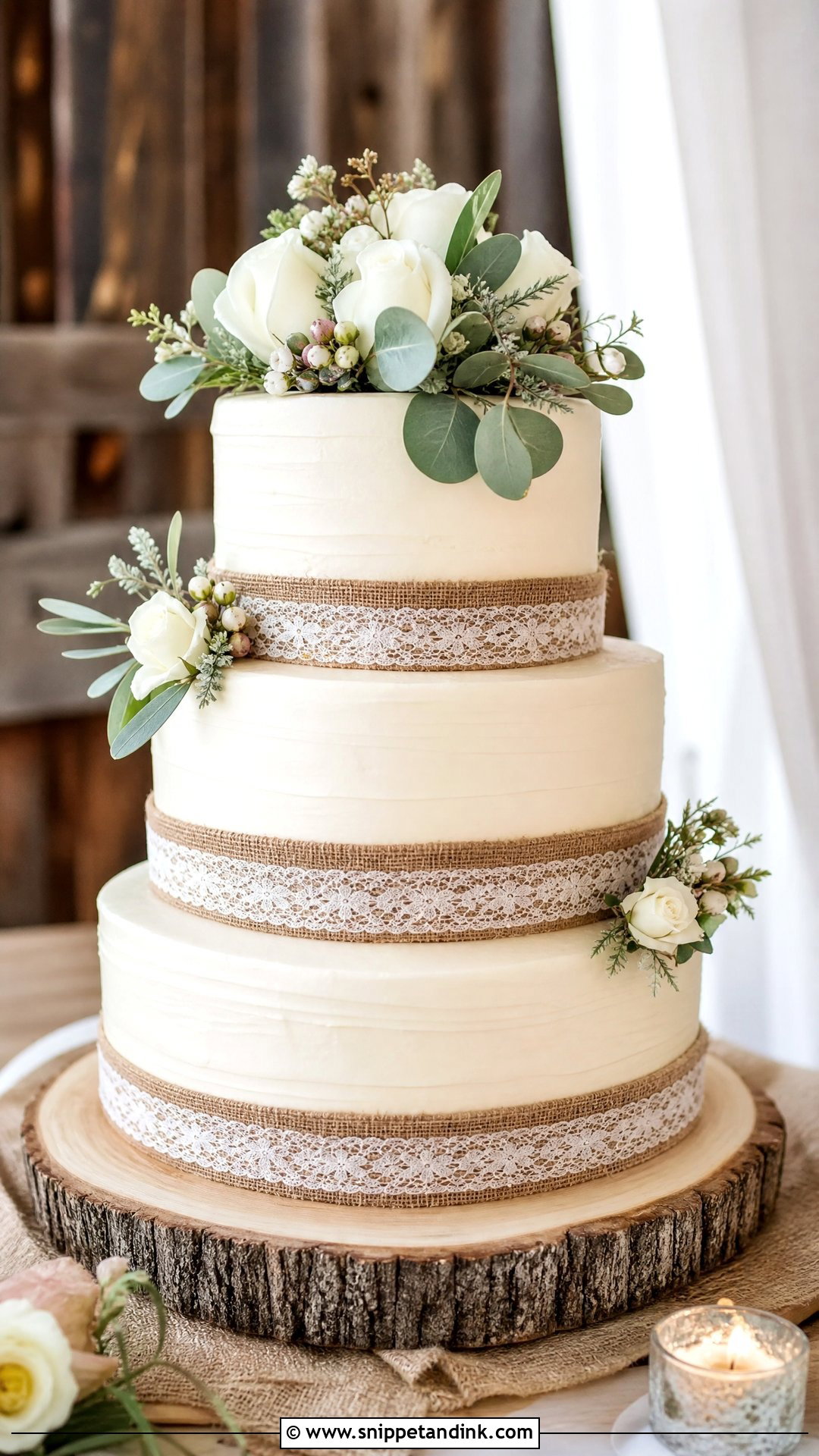
A rustic wedding cake with burlap ribbon is the country classic, and it works best when the cake under it is neat. Clean ivory buttercream, straight tiers and small floral accents keep the hessian looking intentional rather than rough. A strip of lace over the burlap softens it. Burlap is not a food material and its fibres shed, so I always back it with a strip of food-safe ribbon or acetate so it never touches the frosting directly. A wood slice or vintage table suits it.
17. Rustic Wedding Cake With Wildflowers
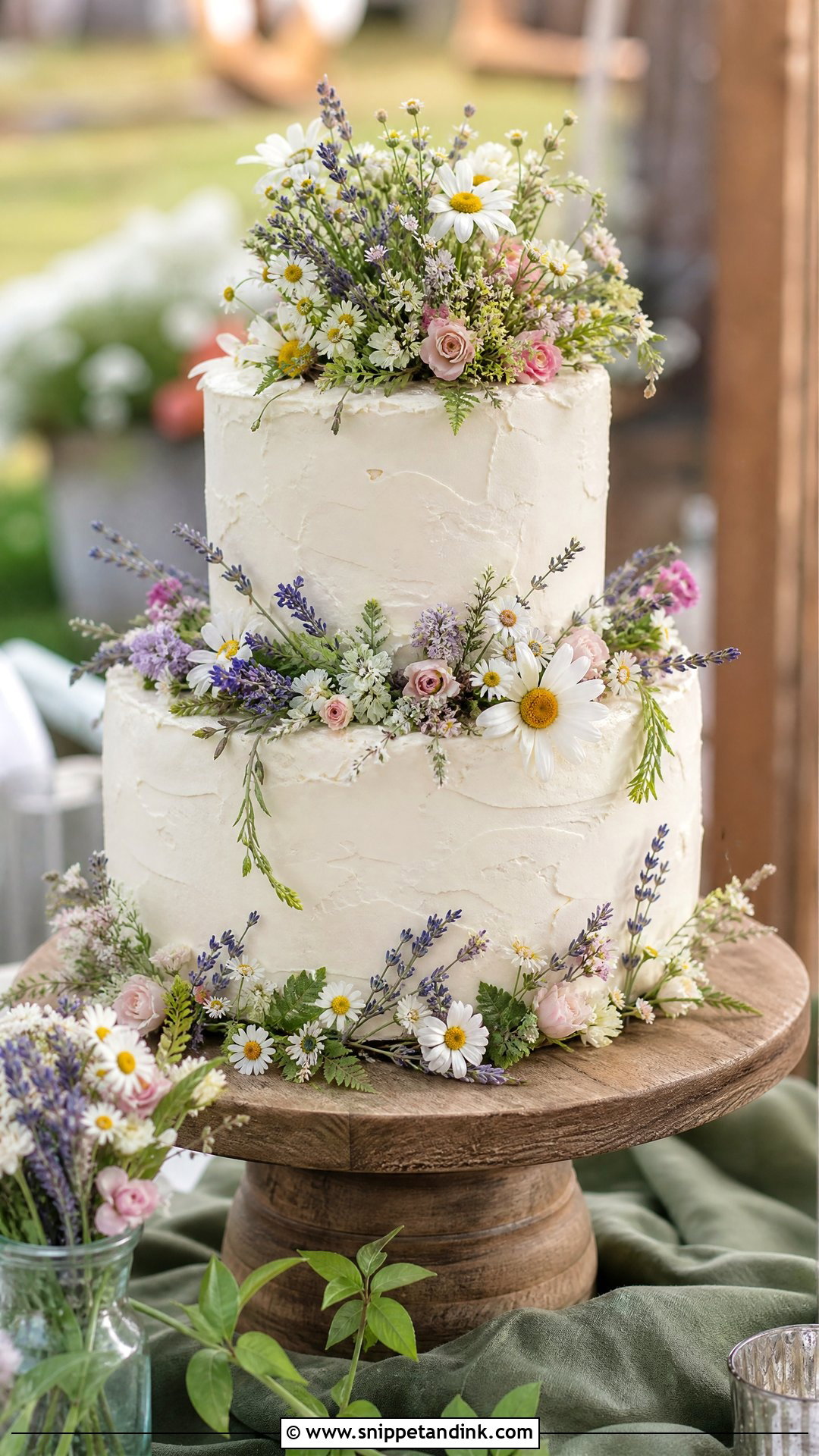
Wildflowers are small and loose, and that’s the point. Daisies, chamomile, tiny roses and lavender in airy clusters make a cake look like it was dressed in the field outside. Many wild-looking flowers are delicate and wilt quickly out of water, so I place them close to serving time and keep a few spare stems in a cool box. A semi naked or textured finish suits them; on a smooth cake they look stuck on. In autumn, warmer colours and seed heads keep the same feel.
18. Rustic Wedding Cake With Fruit
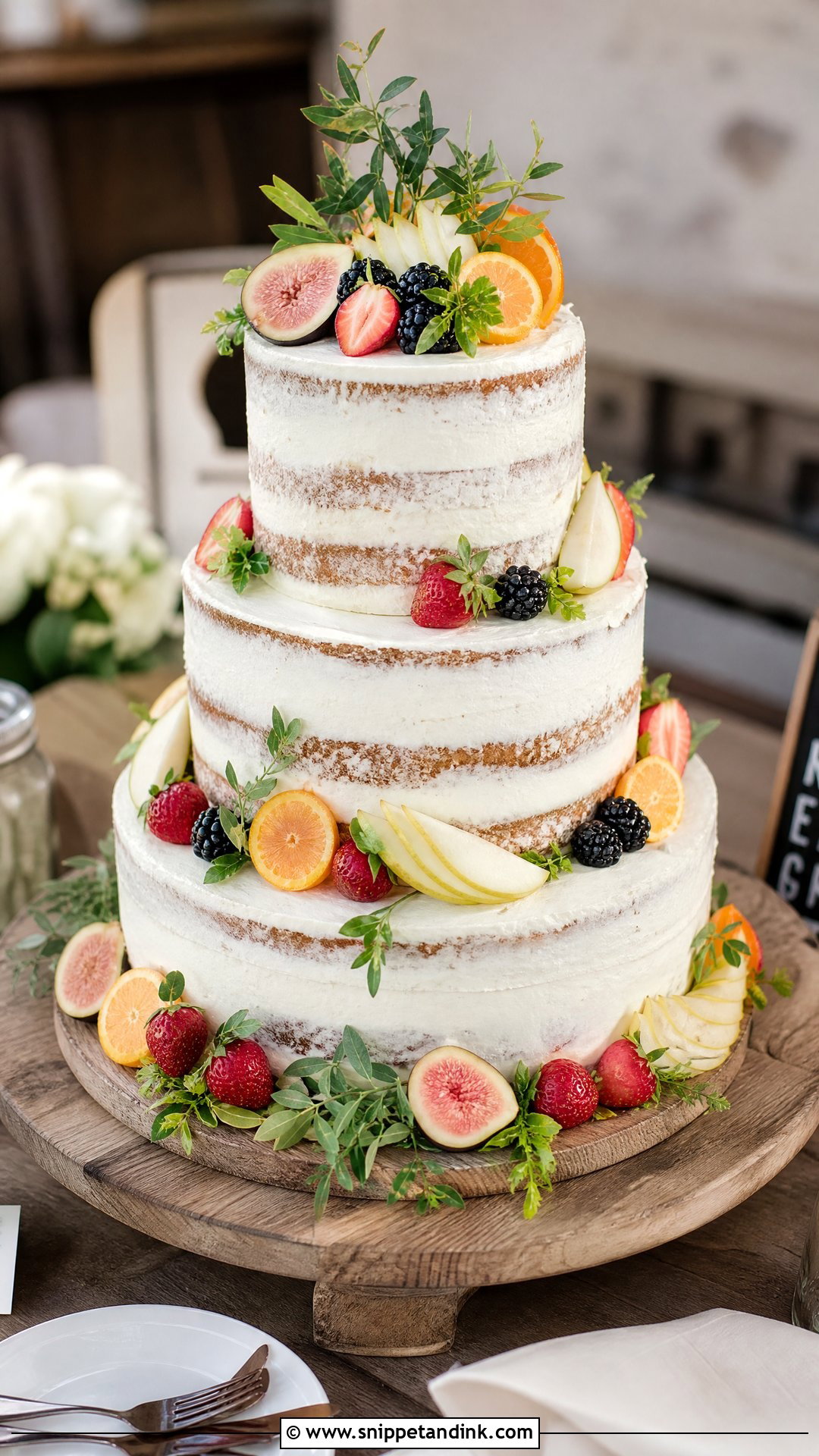
Fruit is the easiest way to make a cake look abundant and seasonal: berries in summer, pears and figs in autumn, citrus slices for a fresher garden table. I choose fruit that firms up rather than bleeds. Raspberries hold their shape well; sliced strawberries leak juice into buttercream within a couple of hours. A semi naked vanilla cake with berries is the classic, while textured buttercream with pears and greenery leans autumnal. Using fruit that also appears in your menu makes the whole meal feel connected.
19. Small Rustic Wedding Cake
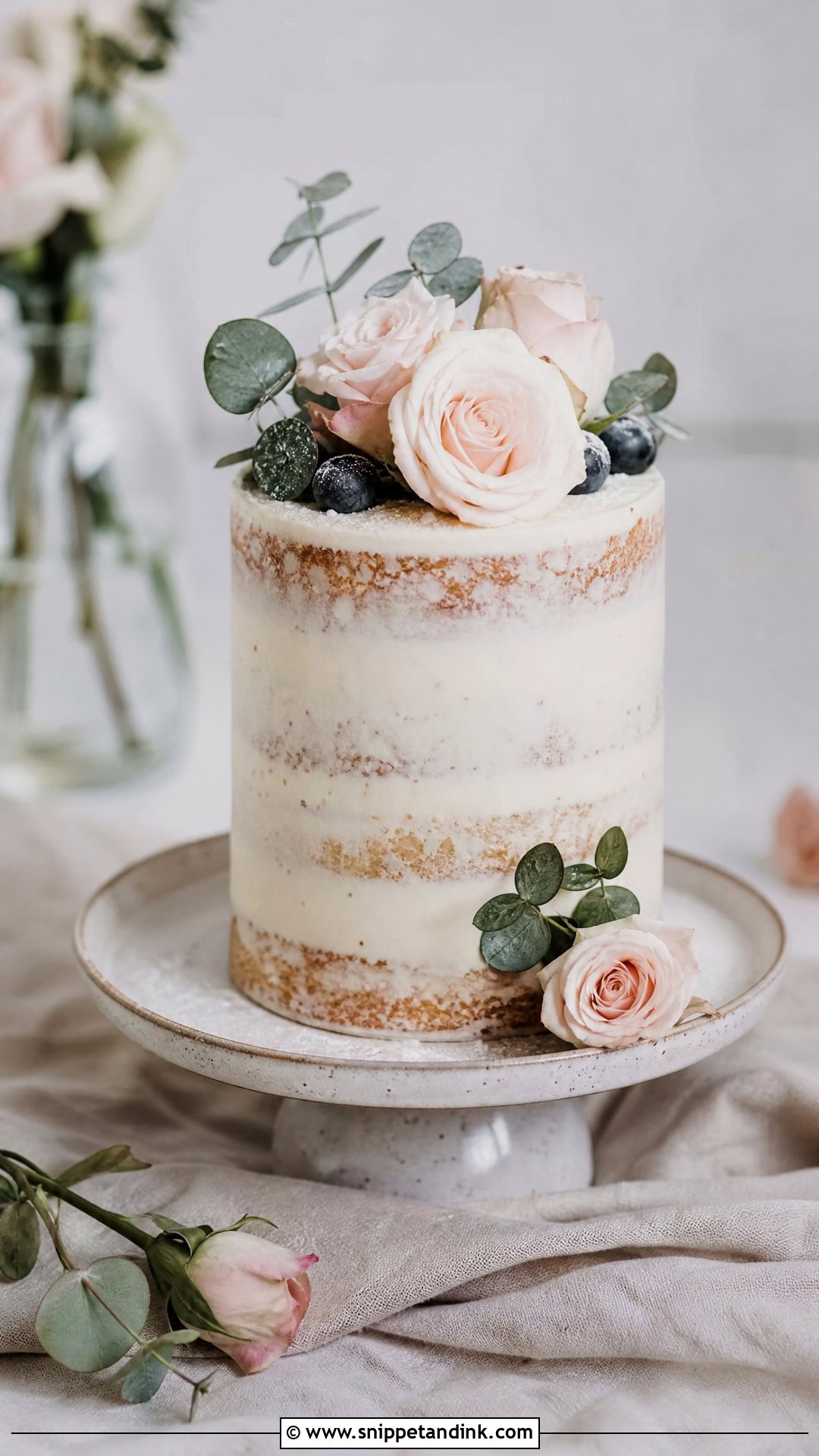
Small cakes are where I see the best value. For an elopement or a micro wedding, a single tall tier or a petite two tier cake on a good stand still feels like a wedding cake, and you can spend the budget on a richer flavour rather than on size. Fresh flowers, berries or a simple topper finish it. If you need more servings, I’d suggest a sheet cake in the same flavour kept in the kitchen, or cupcakes and pies on the side.

20. Rustic Wedding Cake Table
The table matters as much as the cake, because it’s where every photo of it is taken. I ask couples to give the cake a sturdy, level table on its own, away from doors, heaters and direct sun. Around it, a linen runner, a few candles, greenery and a framed sign build a warm scene without hiding the tiers. Leave clear space in front for the cutting. A modest semi naked cake looks far more impressive on a well-dressed table than a big one squeezed beside the gift box.
Real Flowers on a Cake Need a Safety Plan
Almost every cake on this list uses fresh flowers or greenery, and that’s where I see the most avoidable problems. Florist flowers are grown to look good, not to be eaten, and many are treated with sprays. Some popular wedding flowers are also unsafe near food, including hydrangea, foxglove, lily of the valley, sweet pea and many lilies.
Here’s what I do before a single stem touches a tier:
- Agree with the florist which flowers are for the cake, and ask for unsprayed stems where possible.
- Wrap every stem in floral tape and push it into a food-safe flower pick or a straw so no sap reaches the sponge.
- Keep toxic varieties off the cake entirely, even if they match the bouquet.
- Tell the catering team to lift the flowers off before slicing, and make sure they know which ones are decorative only.
Getting Tiers Down a Farm Track in One Piece
Rural venues mean gravel lanes, cattle grids and long walks from the van. I usually deliver tiers stacked only if they have a central dowel; otherwise I stack them on site, which needs a clean table and about half an hour of quiet.
Ask your venue where the cake can be set up, whether there’s a fridge or a cool room for the tiers, and how close a vehicle can park. Make sure the cake table is ready and level when the baker arrives. A cake carried a long way across uneven ground is the one most likely to arrive with a crack, so a closer drop-off point is worth arranging in advance.
The Rustic Cake That Still Looks Fresh at the Last Dance
Rustic cakes look casual only when the planning behind them is solid. Pick your finish by how long the cake will sit out, your decoration by the season and the venue, and your flavours by what you’d genuinely want a second slice of. Talk to your florist and baker together about flowers, and give the cake a cool, level spot. Get those right and a simple two tier cake with a handful of figs can be one of the most photographed things at your reception.
You'll Like These Ideas:






Leave a Reply