
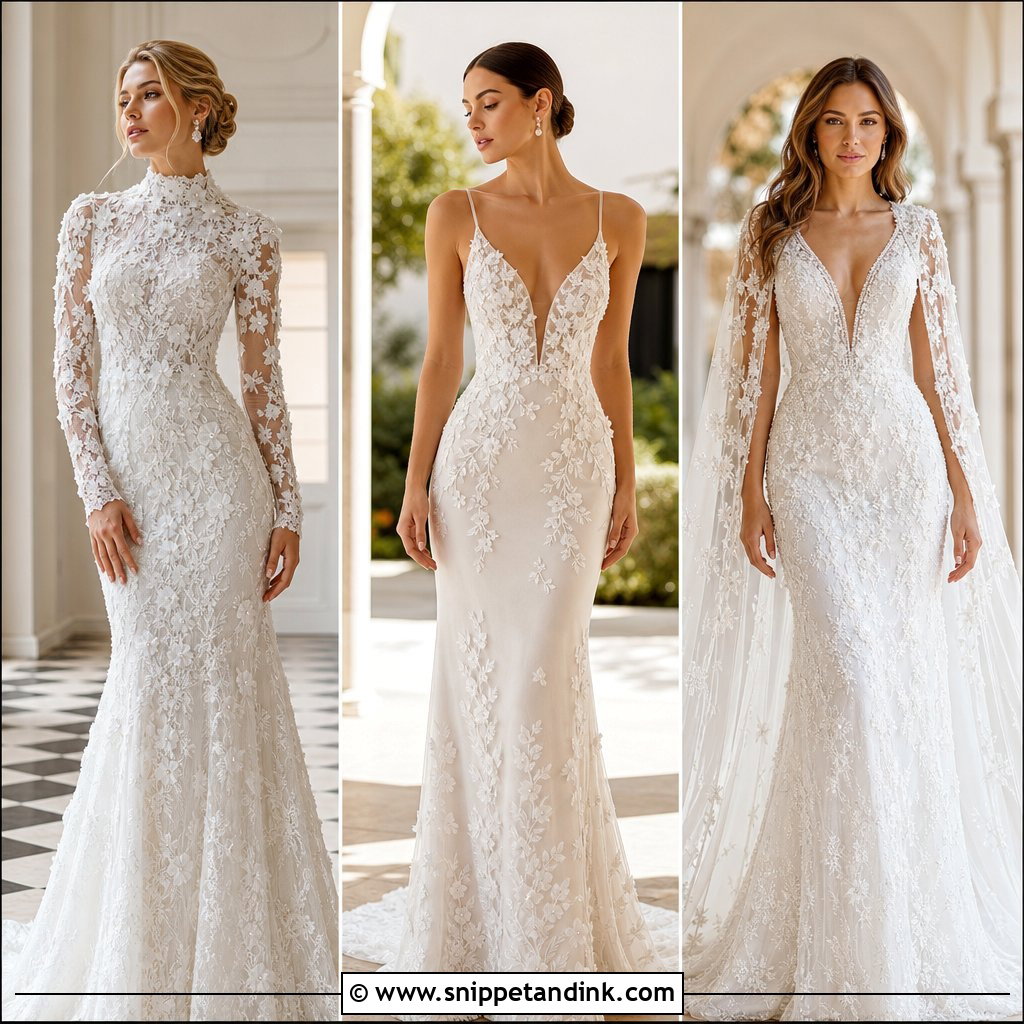
Flower lace gives a gown texture and personality without tying you to one silhouette. The twenty below run from airy A-lines and full ball gowns to sleek mermaids, short hemlines and corseted designs. Bridal collections keep returning to lace alongside structured bodices, basque waists, detachable layers and raised floral details, so there are plenty of ways to make it your own. Before any appointment I ask about the venue, the season and how much detail you actually enjoy wearing. Then the shoes, veil, jewelry and bouquet get chosen to sit back and let the lace lead.
Corded, Guipure or Chantilly? What the Lace Type Tells You
Before I talk silhouettes, I like a bride to touch a few laces, because the name on the swatch predicts how the dress will behave. Two gowns can look identical online and feel completely different on the body.
- Chantilly is fine, flat and soft, with flowers outlined in a thin thread on a net background. It drapes well on sleeves and skirts but snags easily.
- Alençon-style corded lace has a raised cord traced around each motif. It holds its shape on bodices and gives crisp scalloped edges.
- Guipure has no net at all; the motifs are joined by small bars. It’s heavier and more graphic, and it suits a structured, modern cut.
- Embroidered tulle is stitching worked straight onto net. It’s light and good for summer, though the scale tends to be smaller.
- Re-embroidered lace adds beading, cord or sequins on top of a base lace. It catches light in photos and adds weight to the skirt.
Run your hand over the bodice and look at the back of the lace. Corded motifs feel ridged; appliquéd motifs sit on top of the tulle and should be stitched all round the edge, not just tacked at a few points. Loose tacking is where petals start lifting by the end of the night.
Why Hemming a Scalloped Lace Edge Takes Longer
Lace alterations cost more and take longer than plain fabric, and it surprises people. On a scalloped hem, the seamstress can’t simply cut and fold. She unpicks the scalloped border, shortens the skirt, then hand-stitches the border back so the motifs still line up. The same applies to taking in a lace bodice: appliqués that cross a seam are lifted, the seam is moved, and the flowers are sewn back over it.
For that reason I’d plan the first fitting about two to three months before the wedding and allow for two or three appointments after it. If you change shoes, the hem changes too, so decide on them early. Ask whether the salon keeps spare lace from your gown; a few loose motifs are handy for covering a moved seam or a repair later.
1. A-Line Flower Lace Wedding Dress
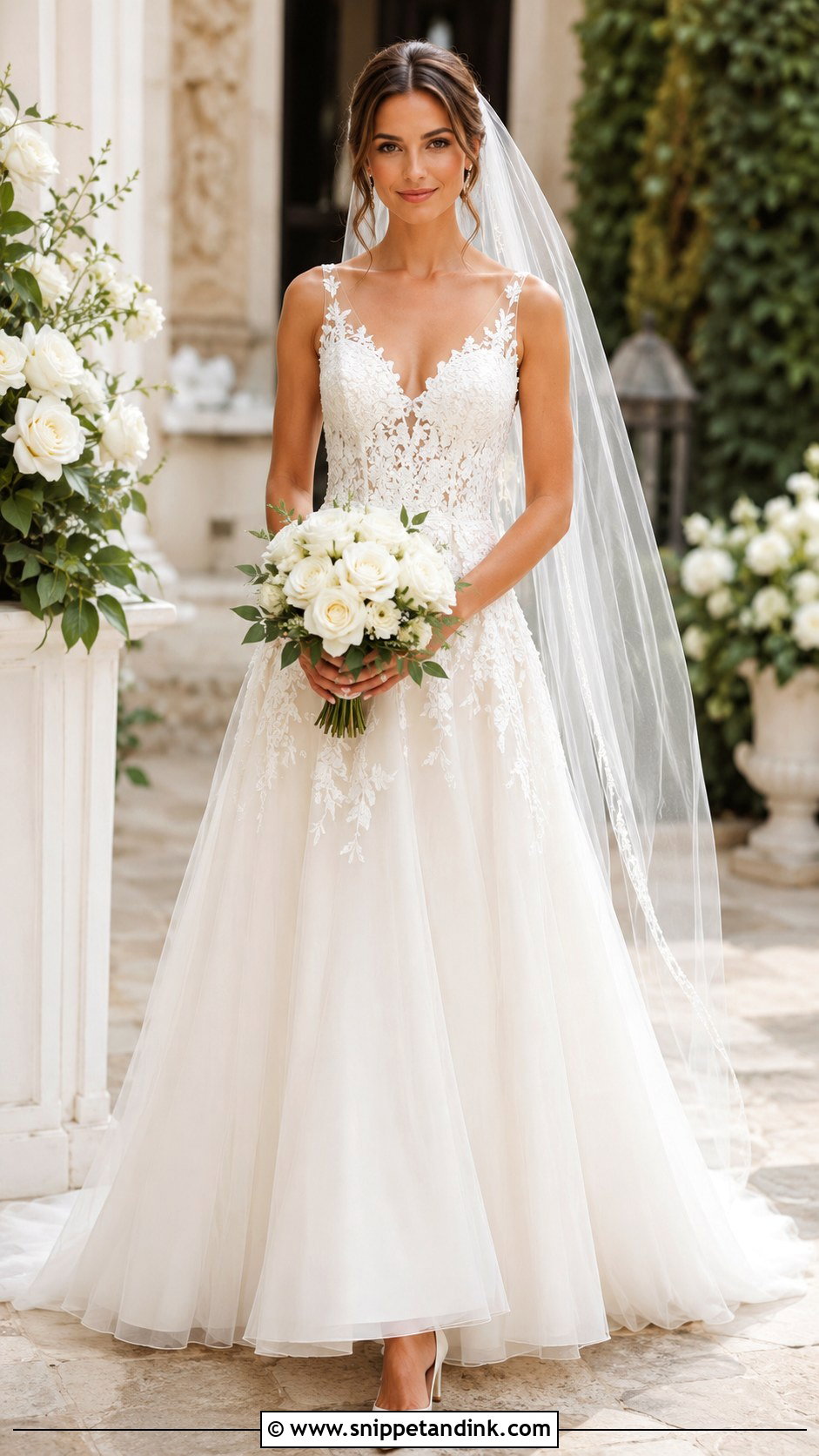
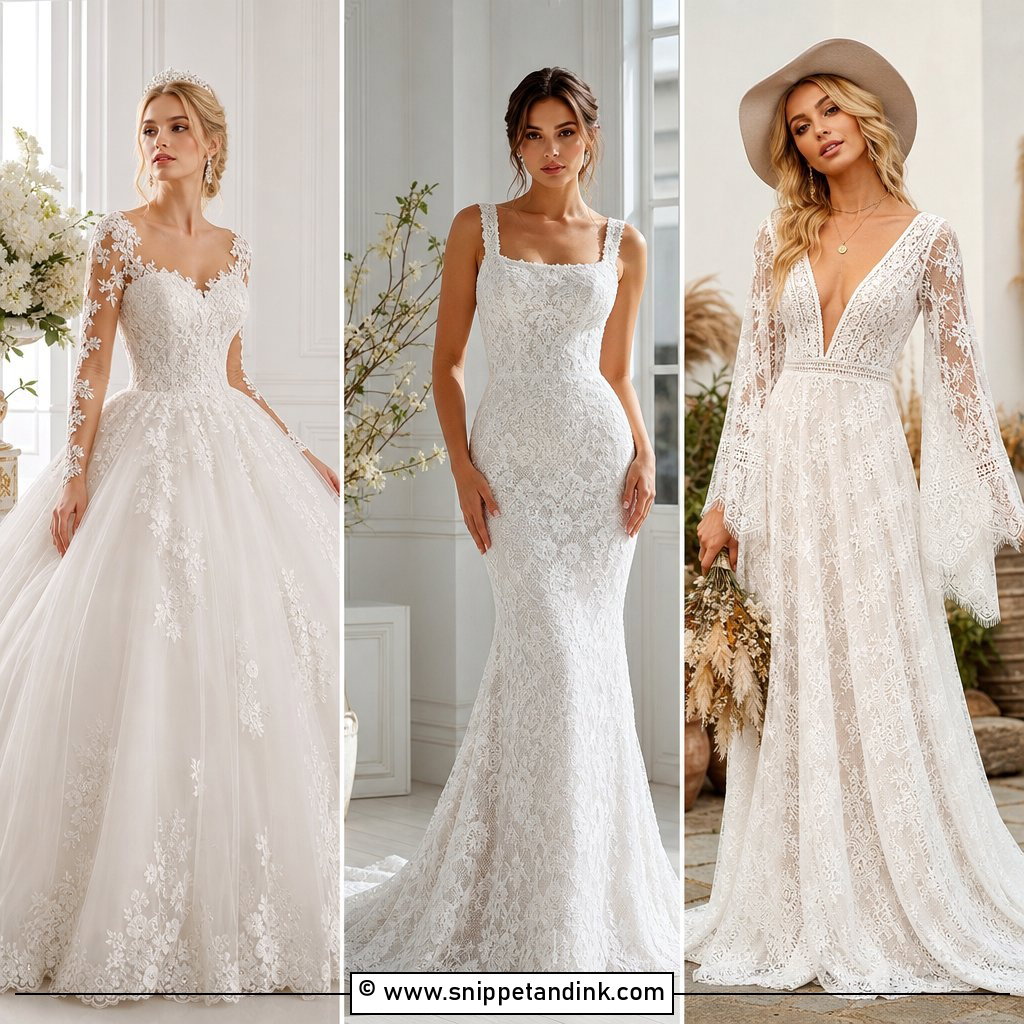
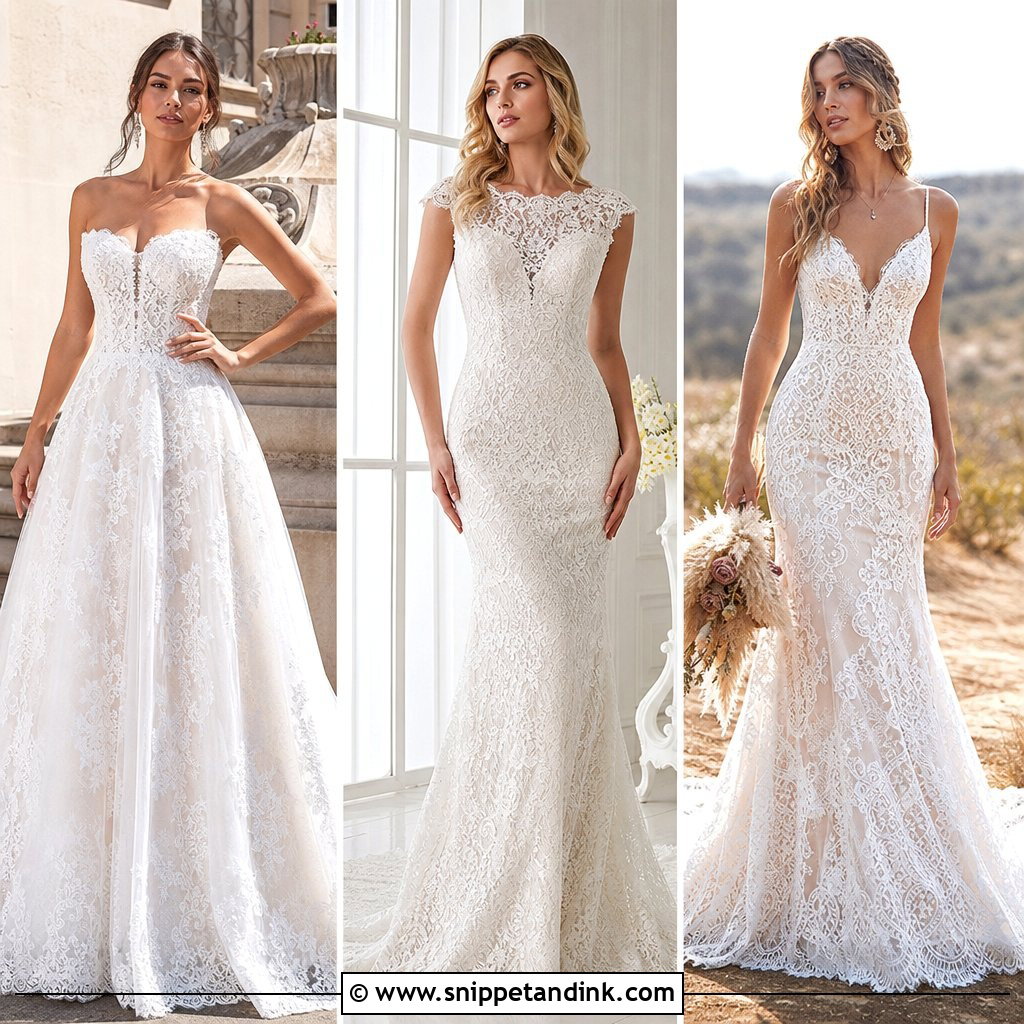
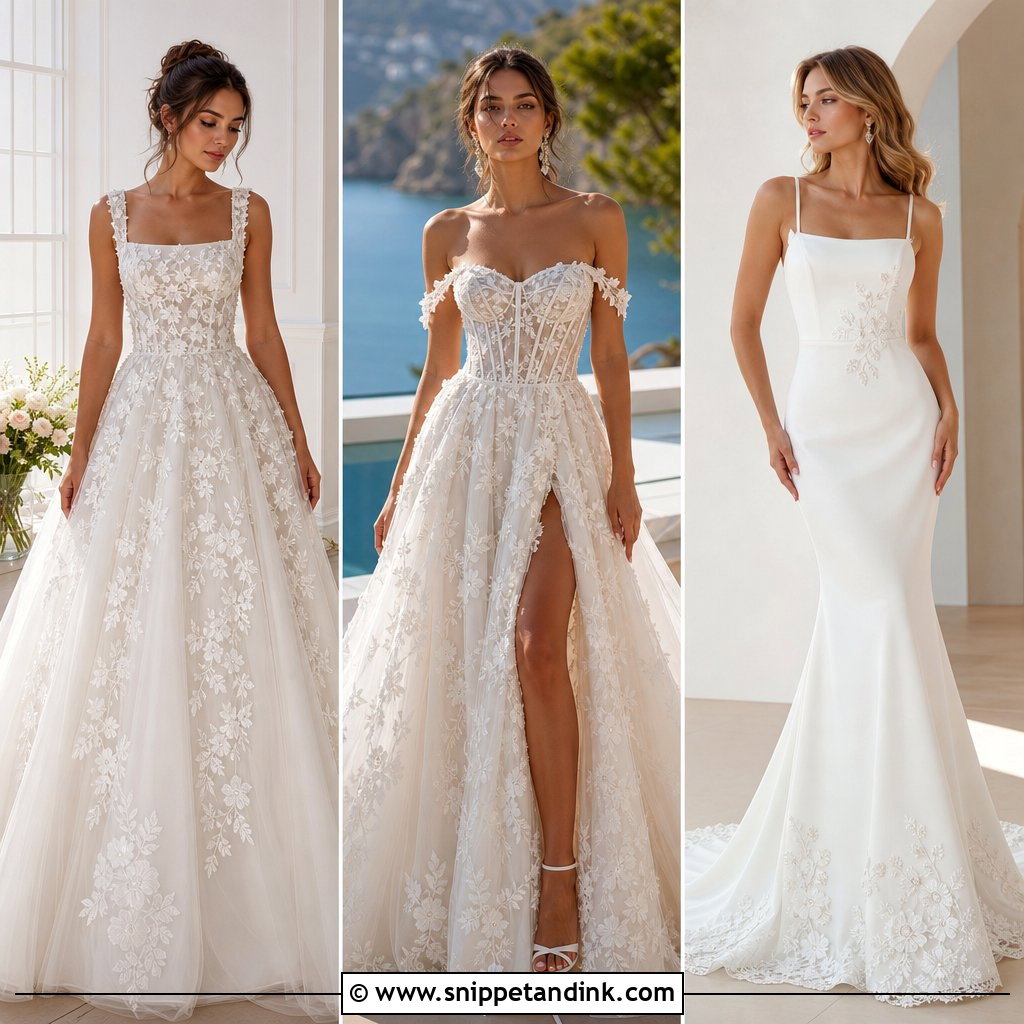
This is the shape I pull first for a bride who isn’t sure where to start. A fitted lace bodice that dissolves into tulle or chiffon below the waist puts the pattern near your face and keeps the skirt light enough to move in. Look at where the motifs stop: a graduated fade looks intentional, while a hard line at the hip looks like two dresses joined. Pointed ivory pumps, pearl drops and a fingertip veil edged in matching lace finish it, with garden roses and greenery in hand. If you want more waist, ask about a slightly raised waistline or a light corset built in under the lace.
2. Ball Gown Flower Lace Wedding Dress
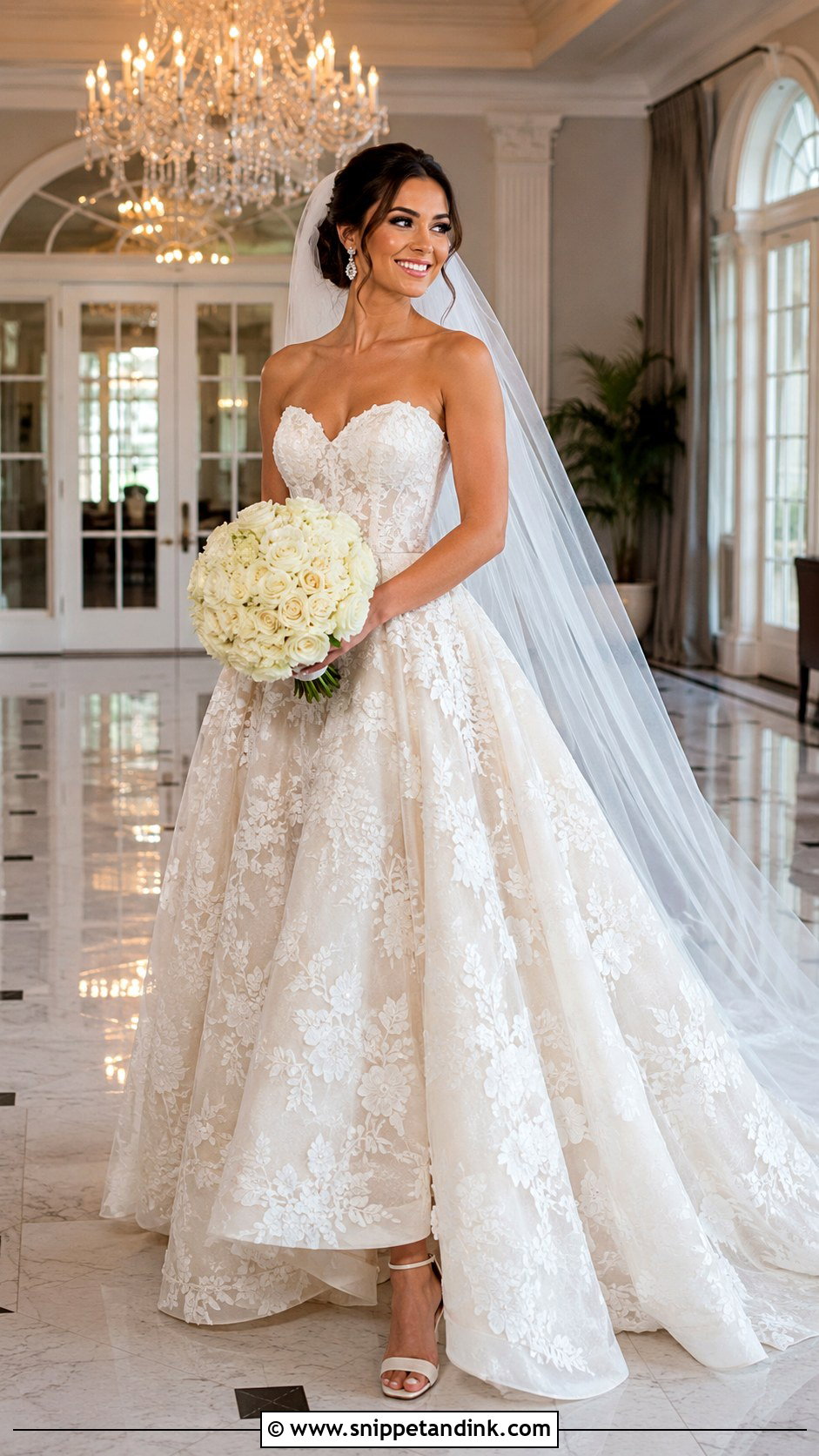
Volume plus lace means weight, and that’s the first thing I warn people about with a ball gown. A structured bodice has to carry a skirt scattered with appliqués, so the waist seam and the boning do real work all day. Evenly spaced motifs keep the skirt from looking busy, and a sweetheart or softly curved neckline stops the top from feeling severe. Block-heel pumps, a cathedral veil and small crystal earrings are enough; I usually skip the necklace. Save this one for a large room where the train has space to be seen.
3. Mermaid Flower Lace Wedding Dress
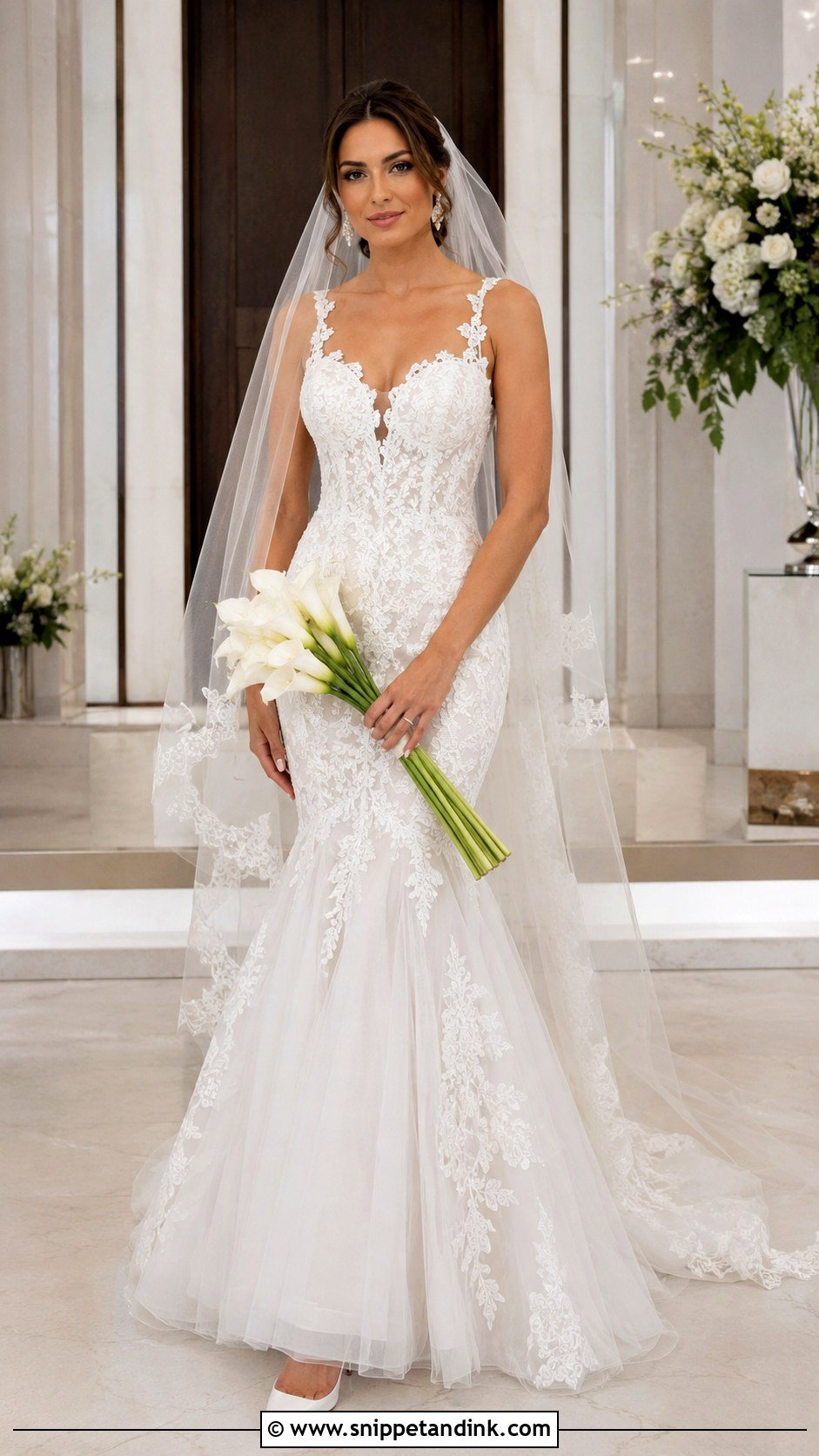
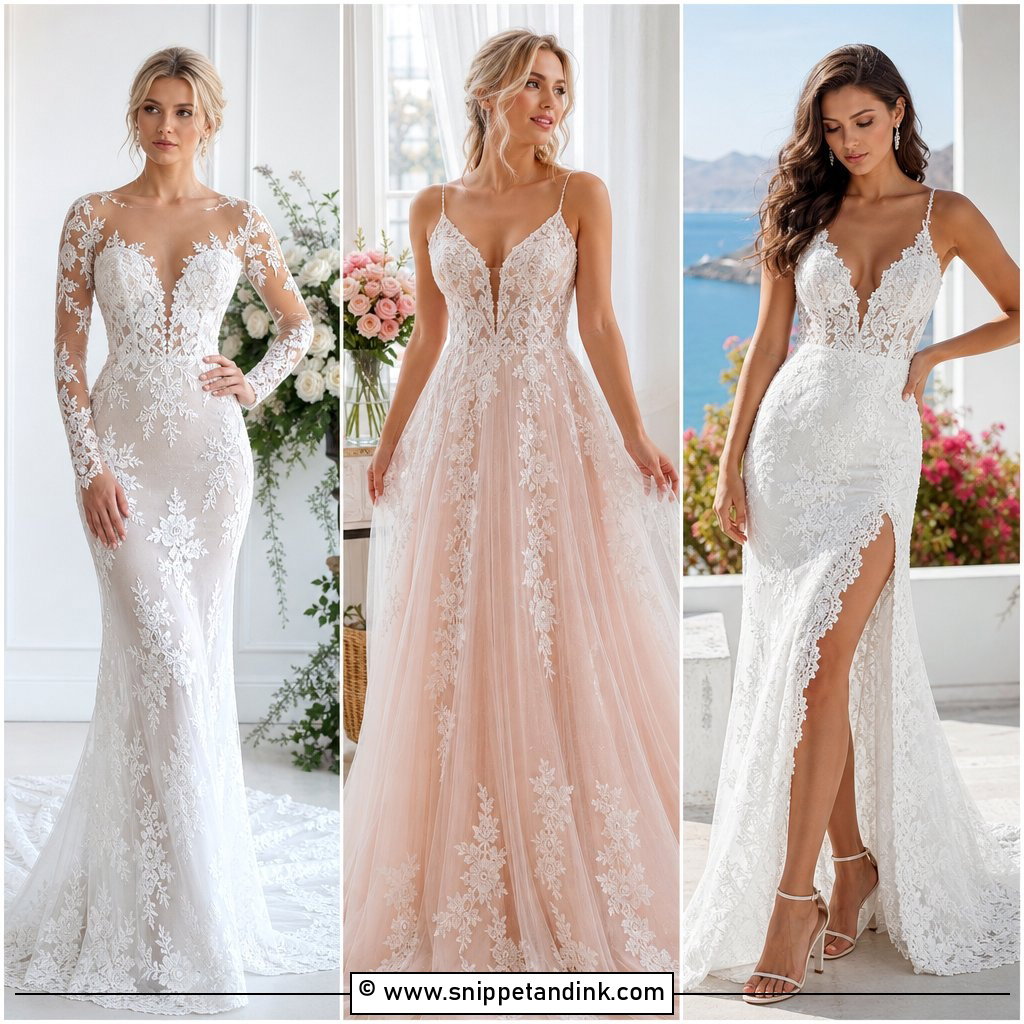
A mermaid is the least forgiving silhouette on this list, and lace makes that more obvious, not less. The gown hugs through the hips and opens near the knee, so the flare point has to be set exactly for your height. I like it when motifs drift across that seam, because they blur the change from fitted to full. Wear pointed heels, a chapel veil and a sleek low bun so the shoulder lace stays visible. A long, narrow bouquet of calla lilies echoes the line. At your final fitting, sit down, climb a step and dance for a minute before you sign off.
4. Fit-And-Flare Flower Lace Wedding Dress
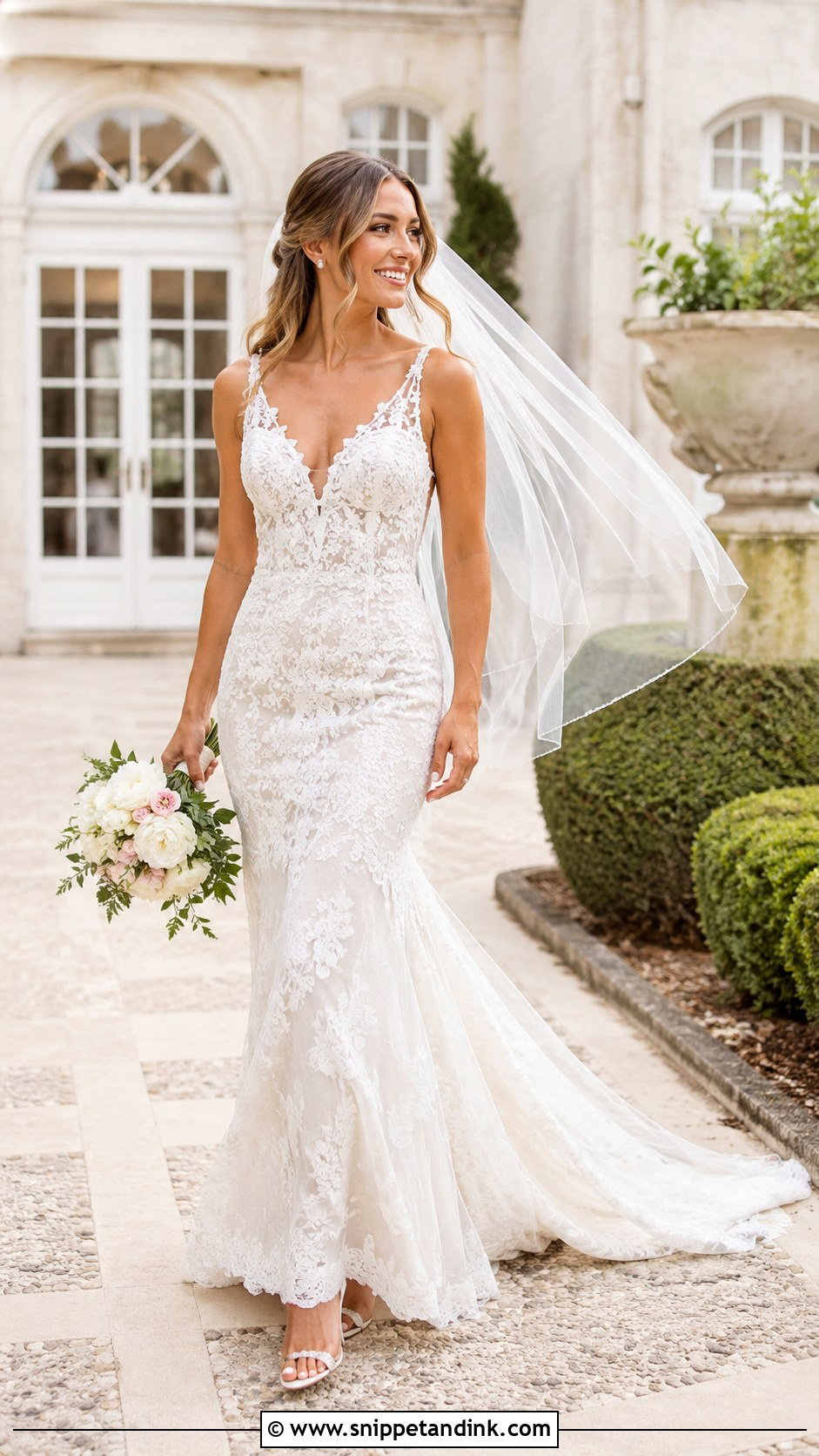
If a mermaid feels too tight at the knee, this is the version I steer people toward. The skirt starts widening around the upper thigh, so you get the curve through the body with a much easier stride. Medium-scale lace sits best here; tiny motifs disappear on the flare and oversized ones break up the line. Slingback heels, a sheer chapel veil and pearl studs keep it quiet, and a loose bouquet of peonies and sweet peas softens the fitted shape. Test stairs with the hem pinned, since the train on these cuts catches on steps more than people expect.
5. Long Sleeve Flower Lace Wedding Dress
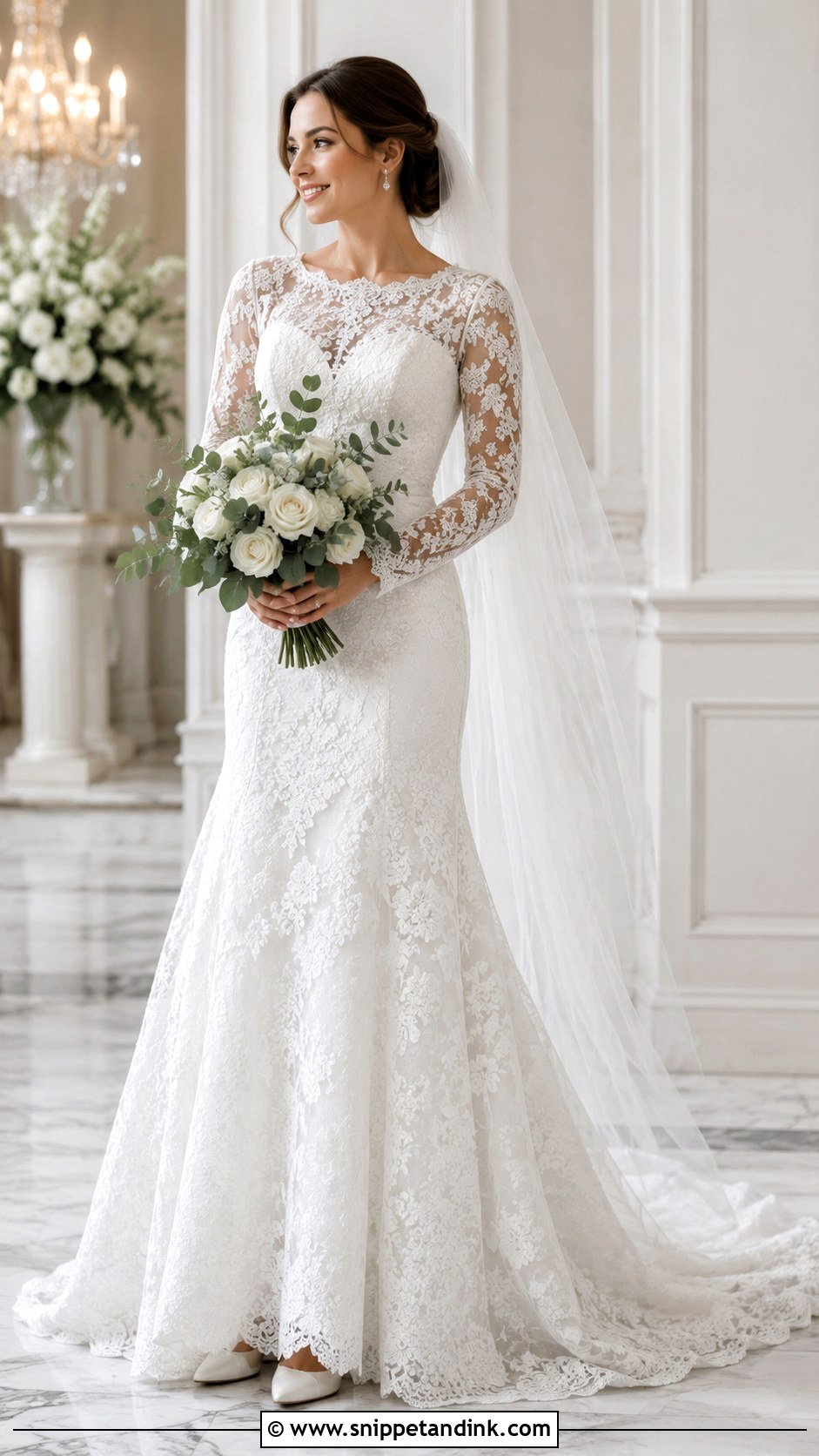
Long lace sleeves are where I spend the most fitting time. Illusion sleeves with placed motifs look delicate; lined lace reads more traditional and hides the arm completely. Either way, the sleeve has to let you hug, reach for a glass and raise your arms on the dance floor, and a sleeve cut too narrow at the elbow will fight you all night. A plain tulle veil won’t hide the detail, and a neat chignon shows off the shoulder line. White roses with eucalyptus suit the cooler months and indoor venues this gown belongs to.
6. Strapless Flower Lace Wedding Dress
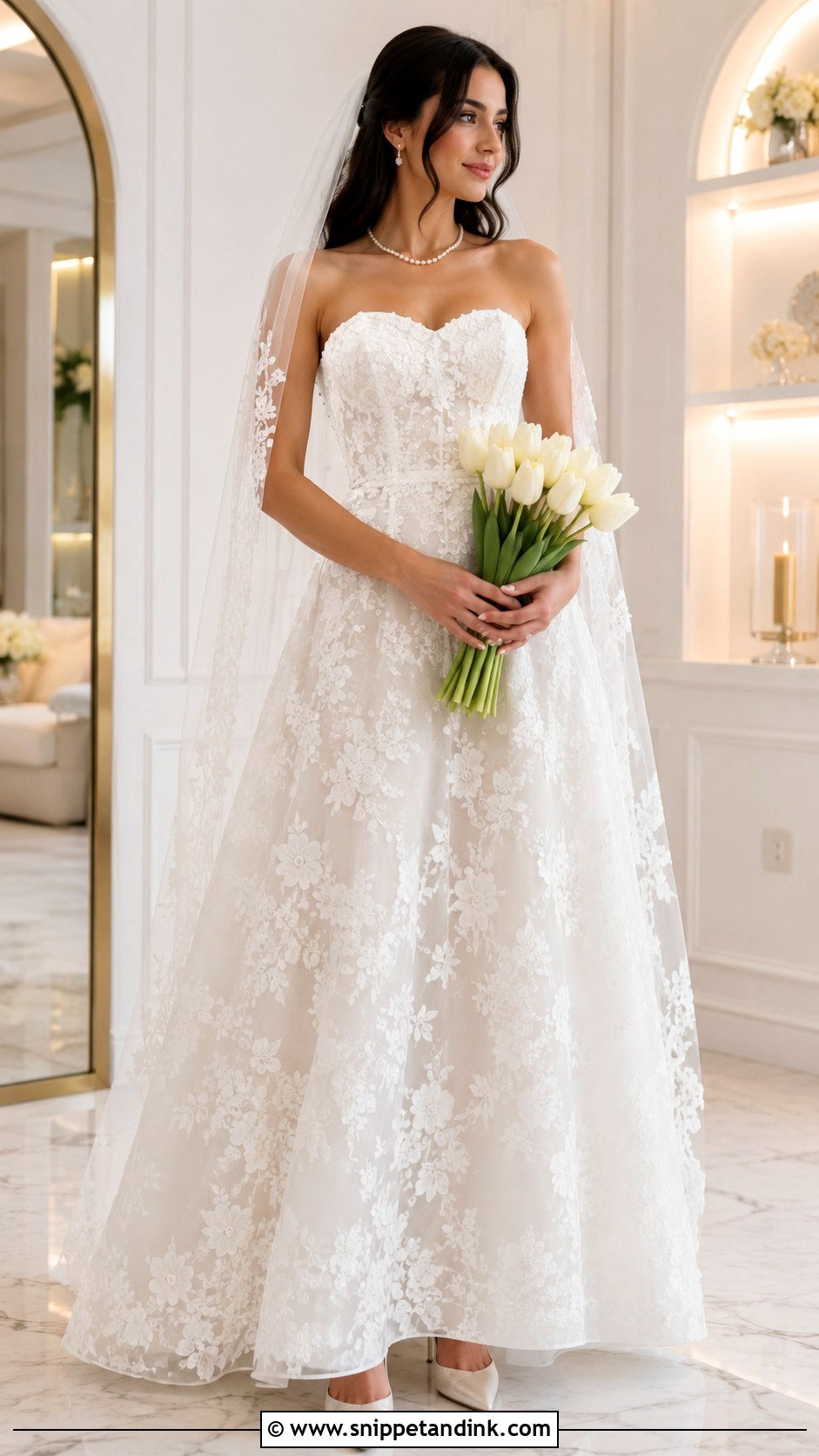
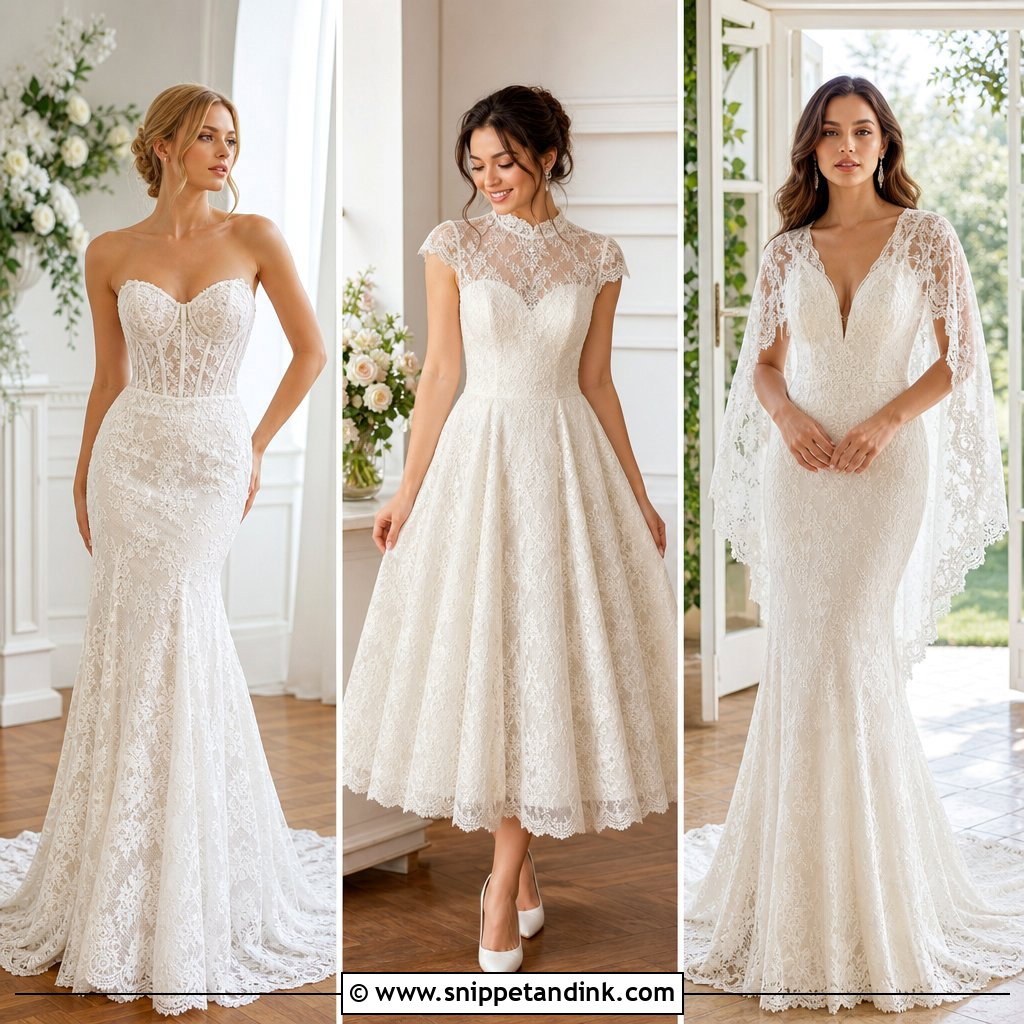
Strapless lace only works when the bodice holds itself up. I check for a boned corset lining and a grip strip along the top edge, because a strapless gown that needs hitching every ten minutes ruins photographs. Appliqués trimmed along the neckline give the edge a finish. Pointed pumps, a fine pendant or short pearl strand and small earrings keep the open neckline clean. A detachable lace-edged veil adds ceremony drama and comes off for the reception. If you get cold or want coverage later, removable lace sleeves or a sheer wrap match better than a cardigan.
7. Off-Shoulder Flower Lace Wedding Dress
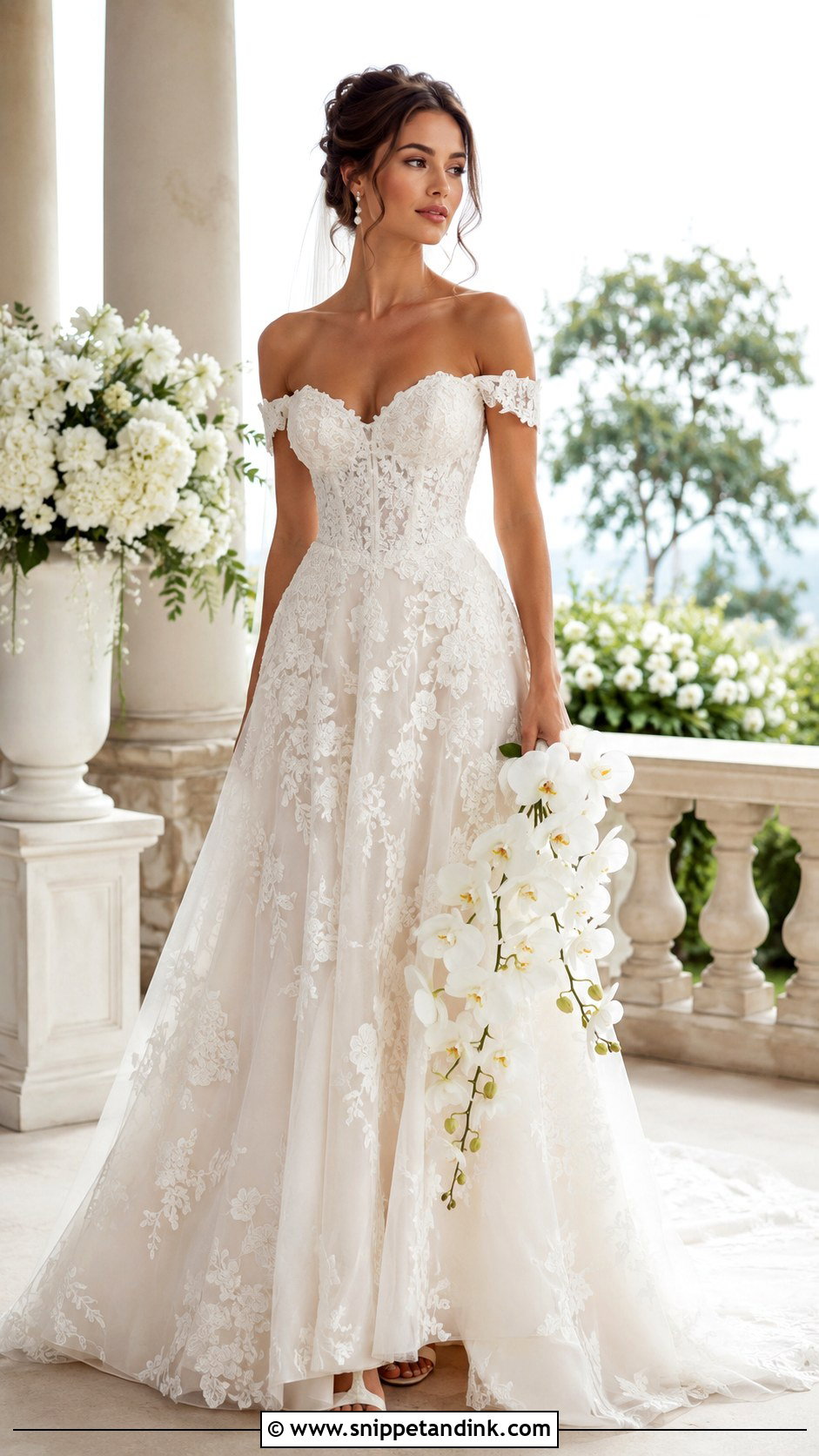
Off-shoulder straps that sit loosely on the upper arm will slide all night. What I look for is a strap anchored into a structured bodice, with a little elastic or silicone inside so it hugs without digging in. The lace can run right down the skirt or thin out toward the hem for a lighter feel. Pearl drops, low ivory heels and a veil tucked under a relaxed updo frame the collarbone, so leave the big necklace at home. A cascading bouquet of orchids and roses with trailing greenery suits the soft neckline. Lift both arms in the fitting room and watch whether the neckline moves.
8. Square Neck Flower Lace Wedding Dress
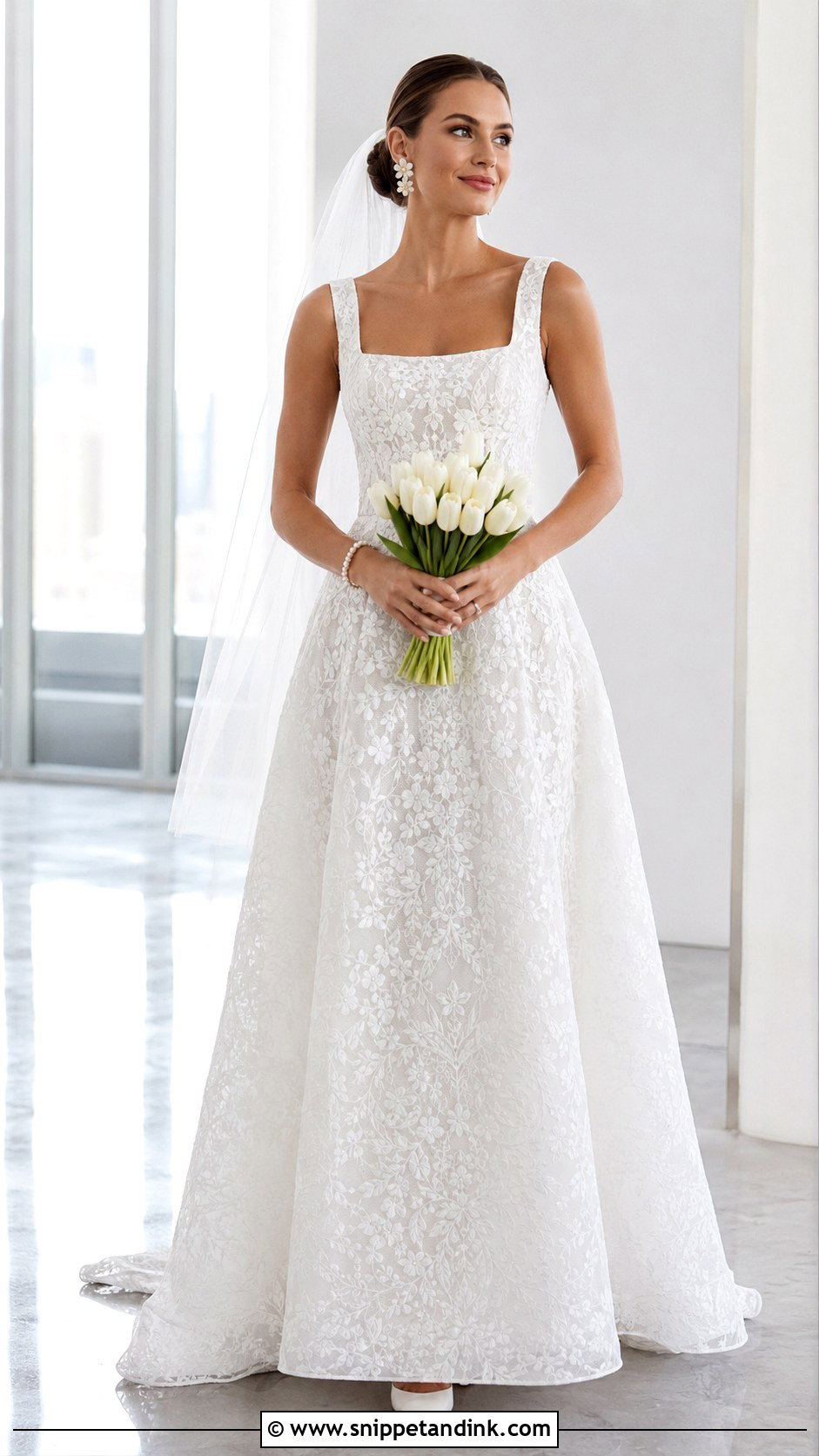
A square neckline turns floral lace from romantic to architectural. Wider straps and supportive seaming keep the corners crisp, and the lace should be placed symmetrically or the neckline looks crooked in front-on photos. Pick an A-line for softness or a column for something cleaner. Pointed satin shoes, a pearl bracelet and small floral earrings keep the focus up top, while a low bun and a veil placed at the back of the head leave the square shape uninterrupted. I always have the bride sit during the fitting, because this neckline tends to gape at the corners when you lean forward.
9. High Neck Flower Lace Wedding Dress
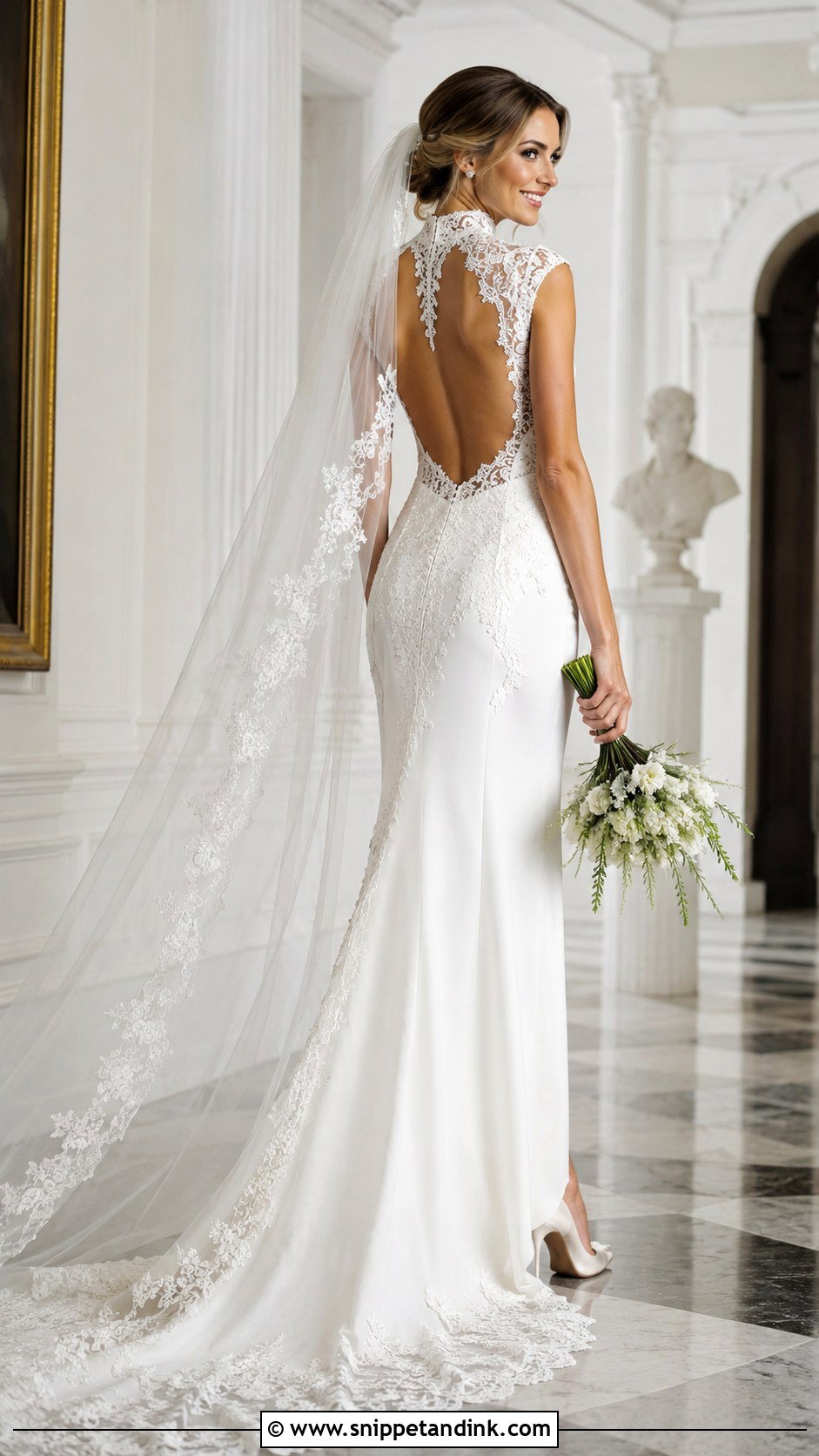
High necks hide nothing in the fit. The collar has to close without pulling at the throat, and on a hot day a dense lace collar can feel like a scarf. That’s why I prefer a lightweight lace here, with flowers spaced so the neck reads detailed rather than heavy. A column or A-line skirt keeps the line long, and an open back gives the surprise when you turn. Skip the necklace and wear studs. A low bun or polished ponytail shows the back, and a plain cathedral veil can come off after the ceremony.
10. Corset Flower Lace Wedding Dress
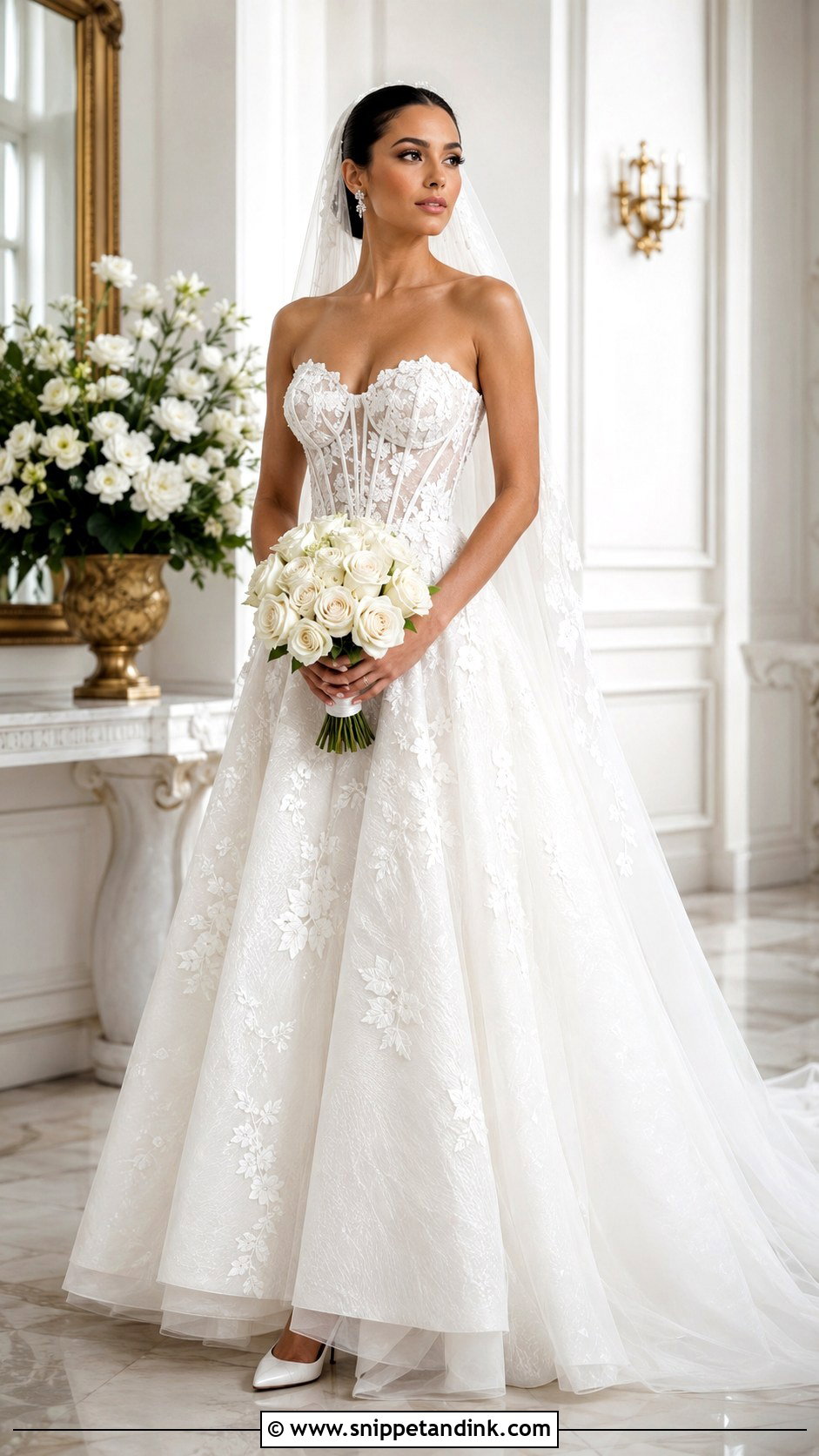
Visible corsetry is a structure choice first and a style choice second. Look for proper boning, lined cups and appliqués laid over the seams so the panels read as one piece of lace instead of stripes. It can carry an A-line, a fitted skirt or a full ball gown. Satin pumps, crystal earrings and a sheer veil without a heavy border keep it modern, and a center-parted bun suits the clean lines. A corset should feel snug, never tight. If you can’t take a full breath at the fitting, you won’t eat or laugh comfortably later.
11. Basque Waist Flower Lace Wedding Dress
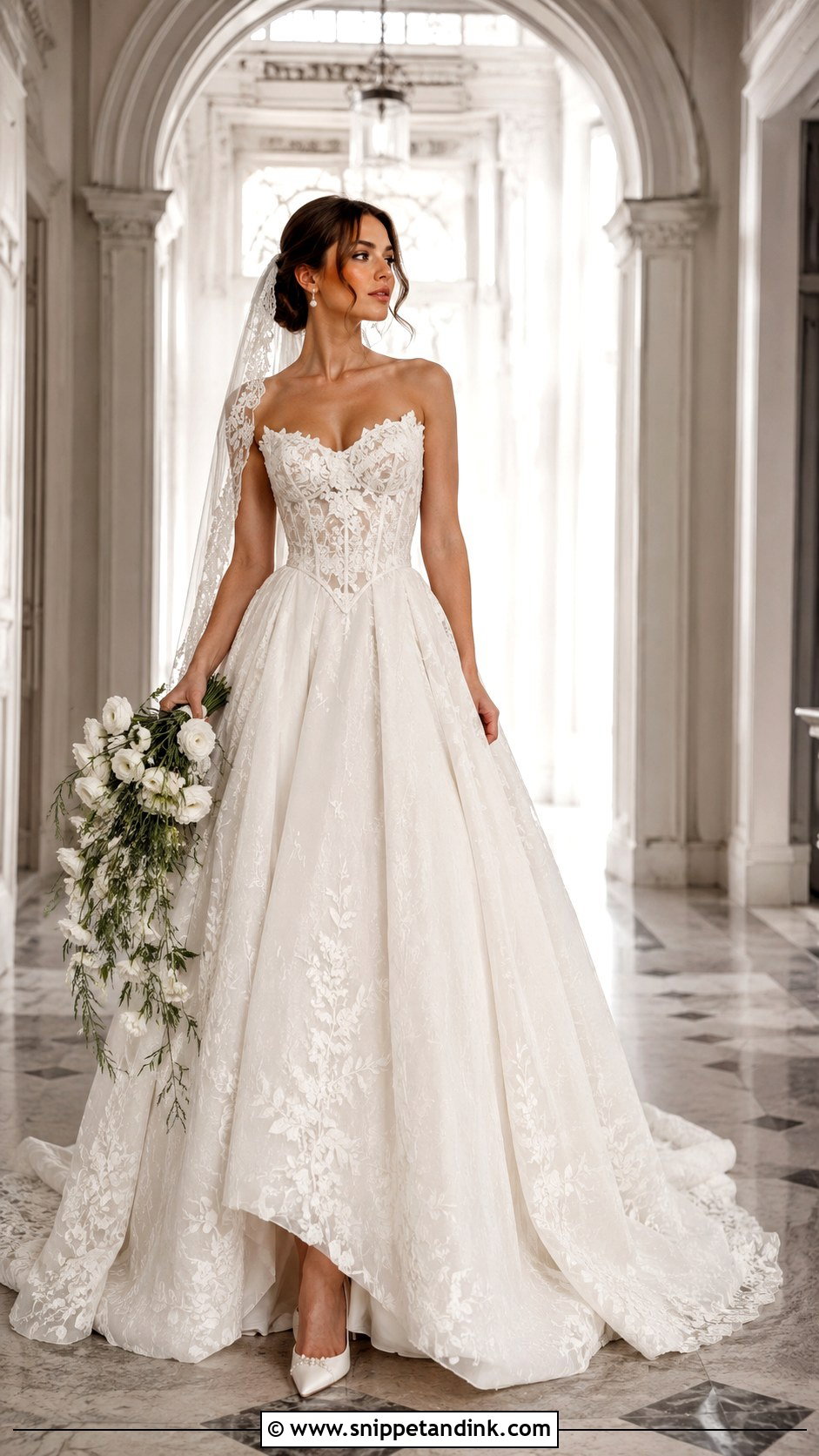
A basque waist dips to a point at the center front, which lengthens the torso and lets a full skirt start lower. The detail I watch for is how the lace follows that point: motifs that trace the V tie the bodice and skirt together, while a straight horizontal lace band fights the shape. Pointed heels, small pearl drops and a plain tulle cathedral veil work well, and a soft updo keeps the eye on the waist. You will see this cut again and again in bridal runway coverage, usually with corsetry, lace and a big skirt. An asymmetrical bouquet of roses and ranunculus adds a modern edge.
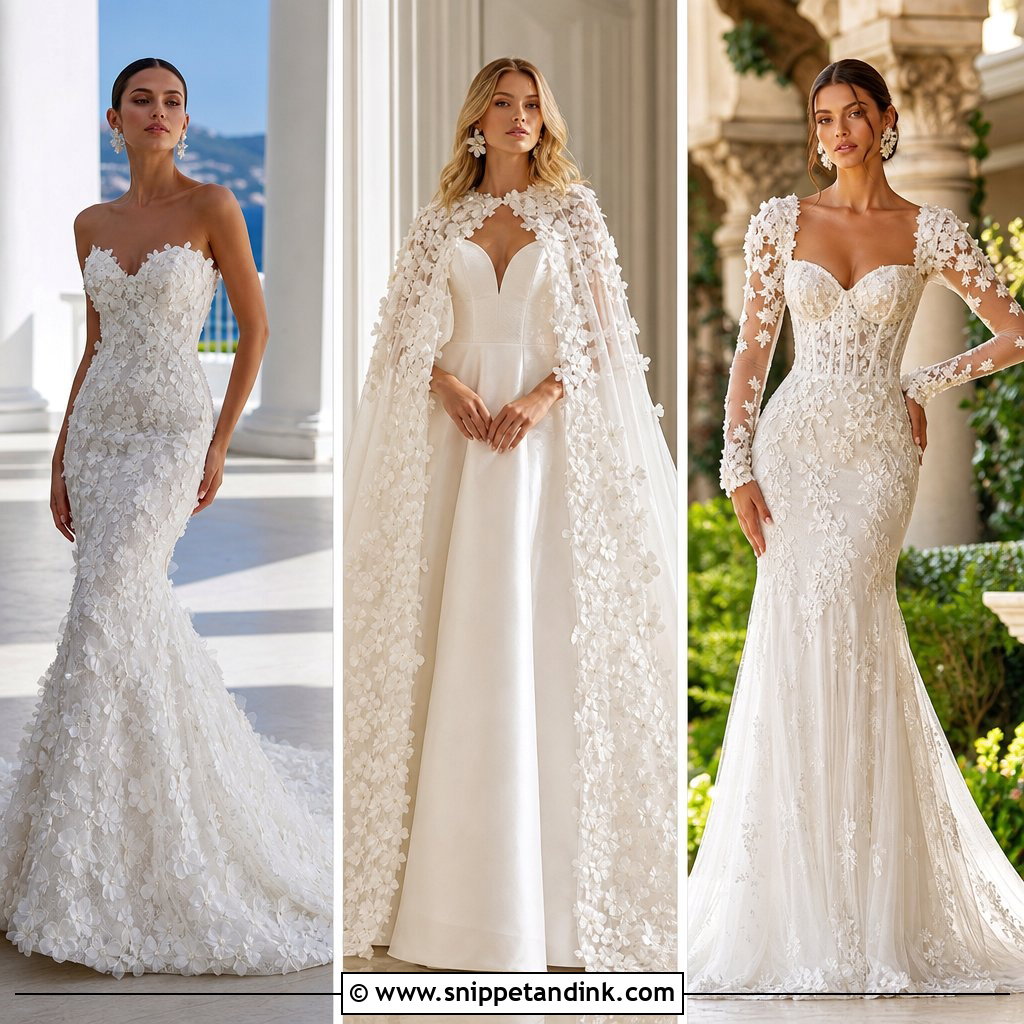
12. 3D Flower Lace Wedding Dress
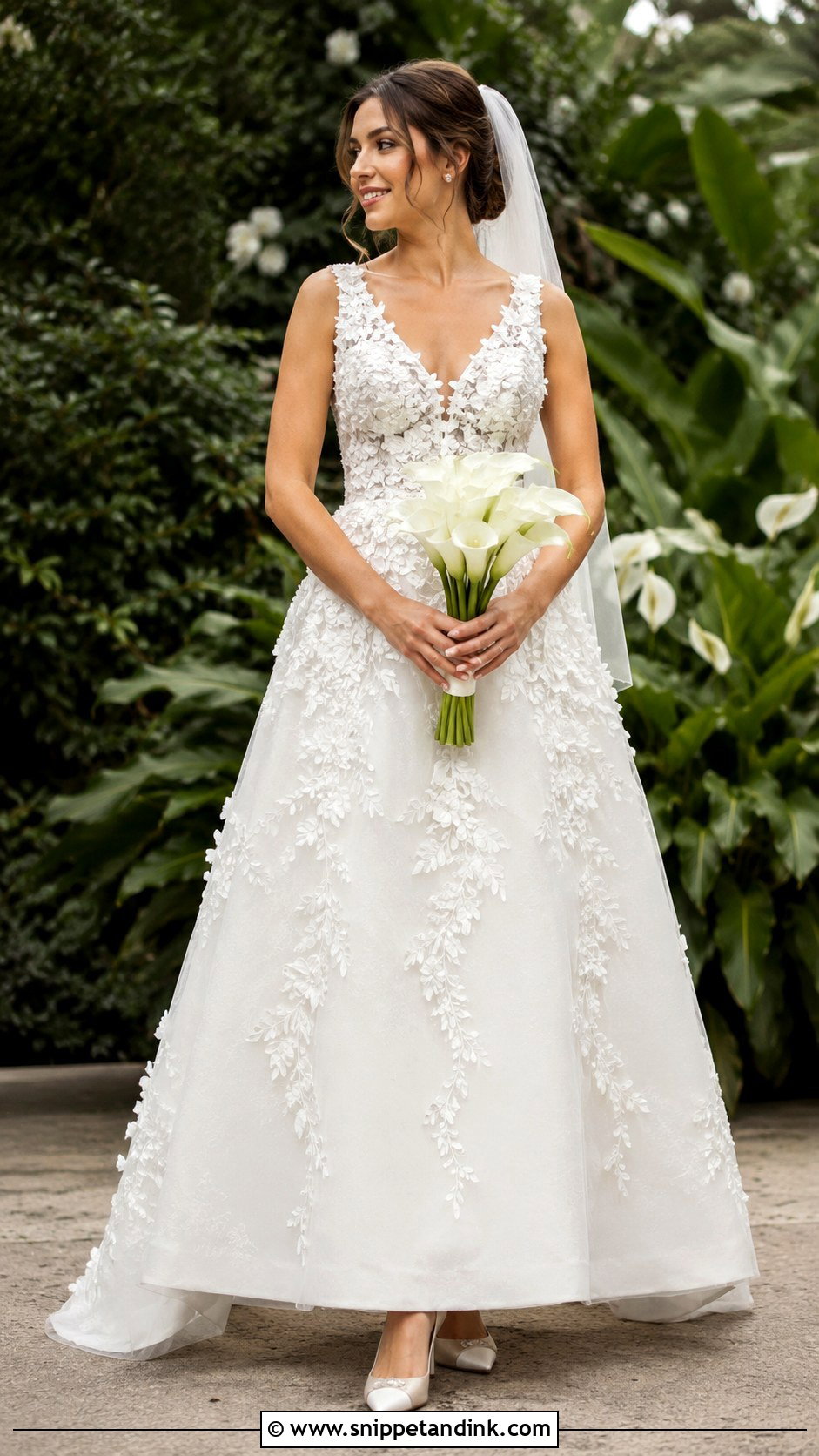
Raised petals are hand-sewn, and they behave differently from flat lace. They catch on things. Veils with a beaded edge, bracelets and the wire in a bouquet stem all snag them, so I keep the veil plain and the jewelry smooth. The design looks best when the 3D flowers gather at the bodice, waist or hem and leave space between them. A clean A-line gives that texture room. Ivory heels and small crystal studs keep the rest quiet, and calla lilies or white tulips avoid stacking more flower shapes on top of a dress already full of them.
13. Colorful Flower Lace Wedding Dress
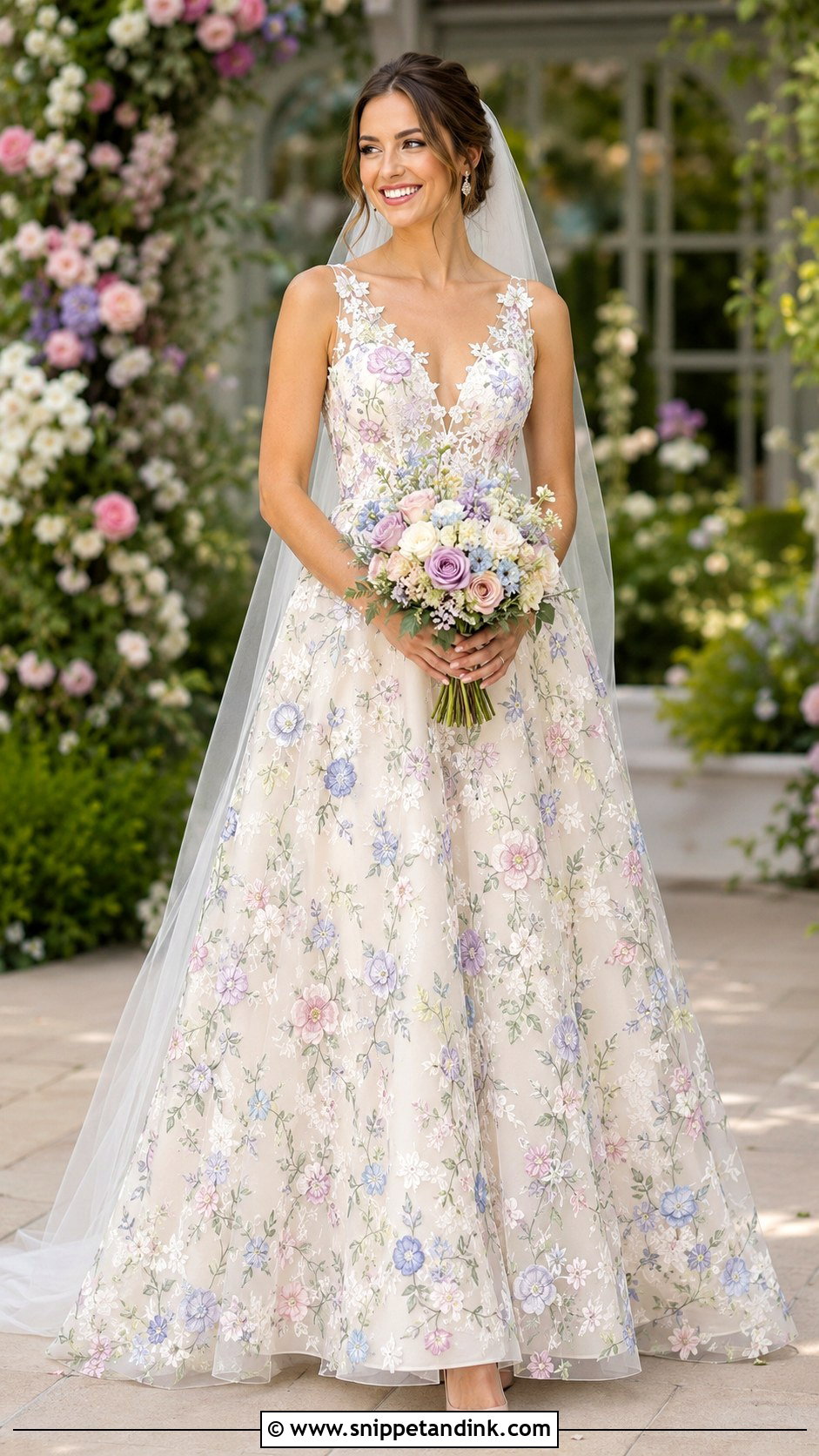
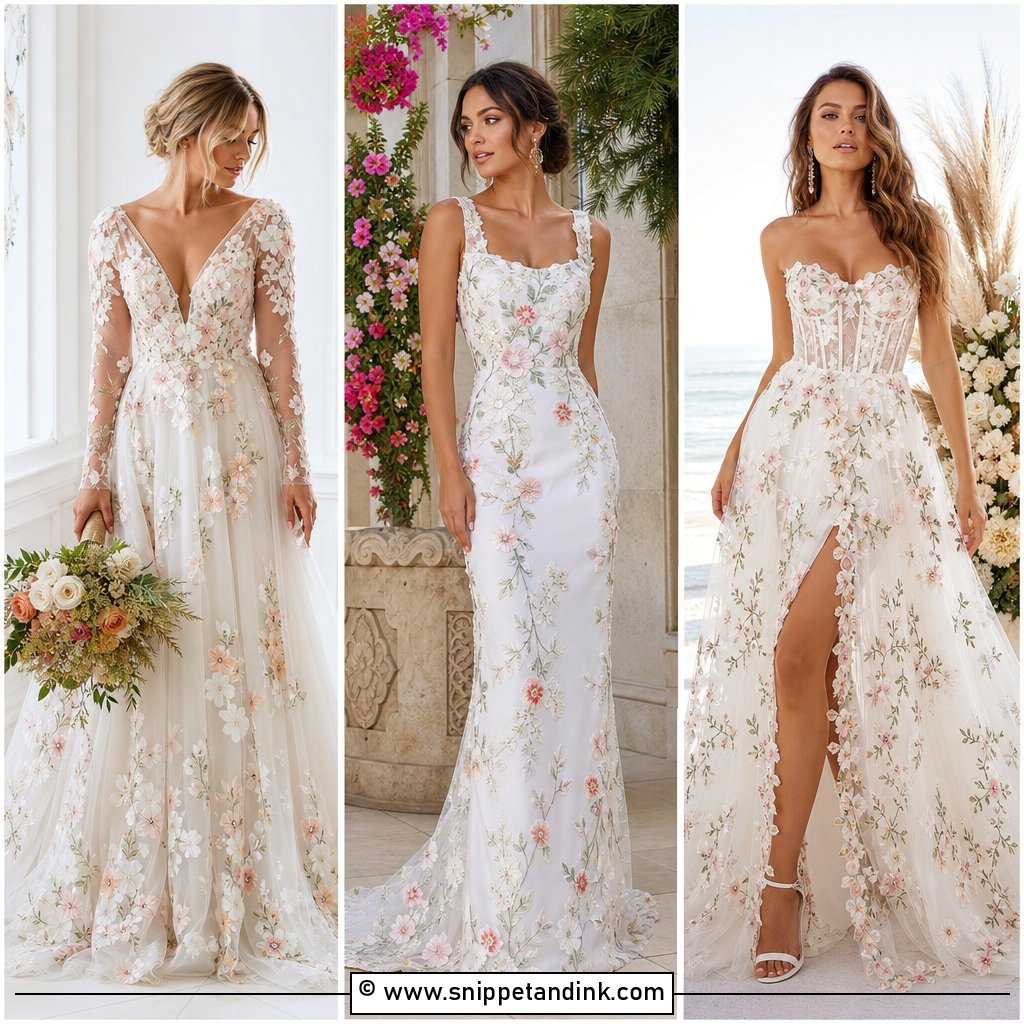
Colored embroidery changes how you plan everything else. Soft blue, pink, lavender or green flowers on an ivory or champagne base look like a garden, and an A-line keeps them light. I take one or two threads from the embroidery and hand them to the florist, rather than trying to match every shade, which looks themed. Neutral shoes, minimal jewelry and a plain tulle veil stop the dress from competing with itself. For the reception, take the veil off and slip in a couple of floral pins that pick up a single color from the gown.
14. Boho Flower Lace Wedding Dress
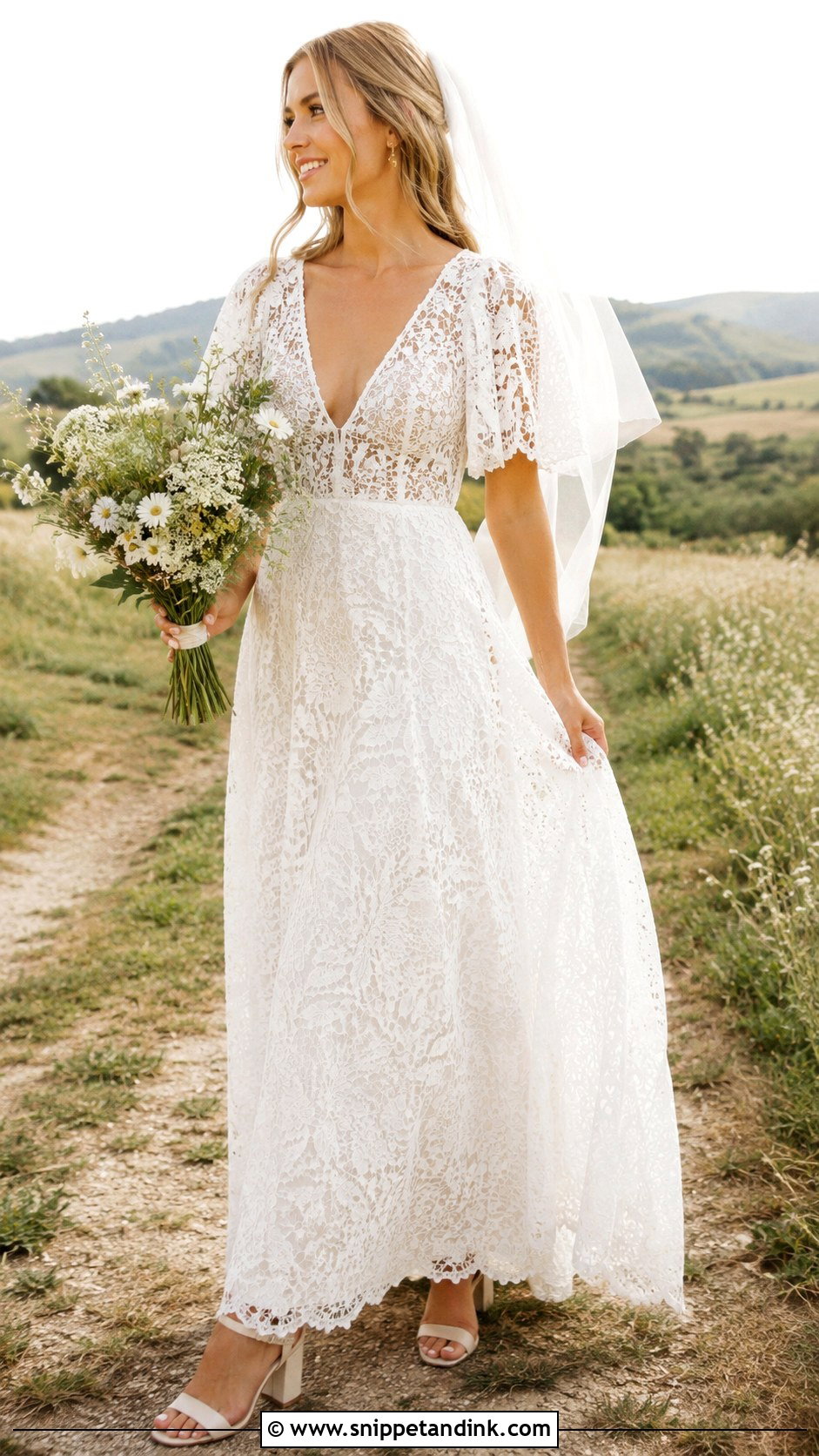
Boho lace should feel easy to wear, and I check that by watching how you move in it. Openwork lace, a softly lined bodice and an A-line or sheath shape keep it relaxed. Flutter sleeves, a low back or a gentle V-neck add to the free mood without making the gown fussy. Block-heel sandals, small gold earrings and a light fingertip veil suit grass and sand. Loose waves or a textured low bun go naturally with it, and a hand-tied bouquet of wildflowers and greenery finishes the look. Pick one botanical theme and stop there; feathers, crowns and macrame together look cluttered on camera.

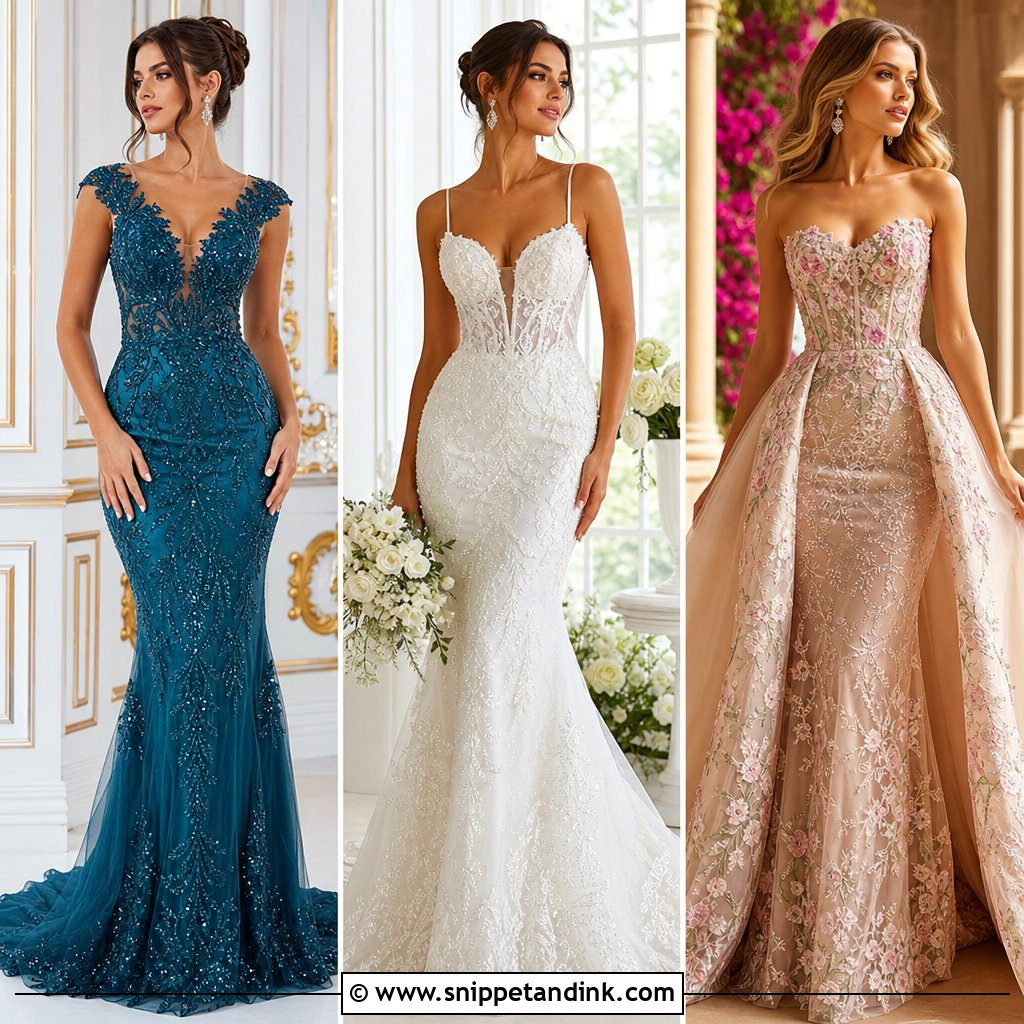
15. Vintage Flower Lace Wedding Dress
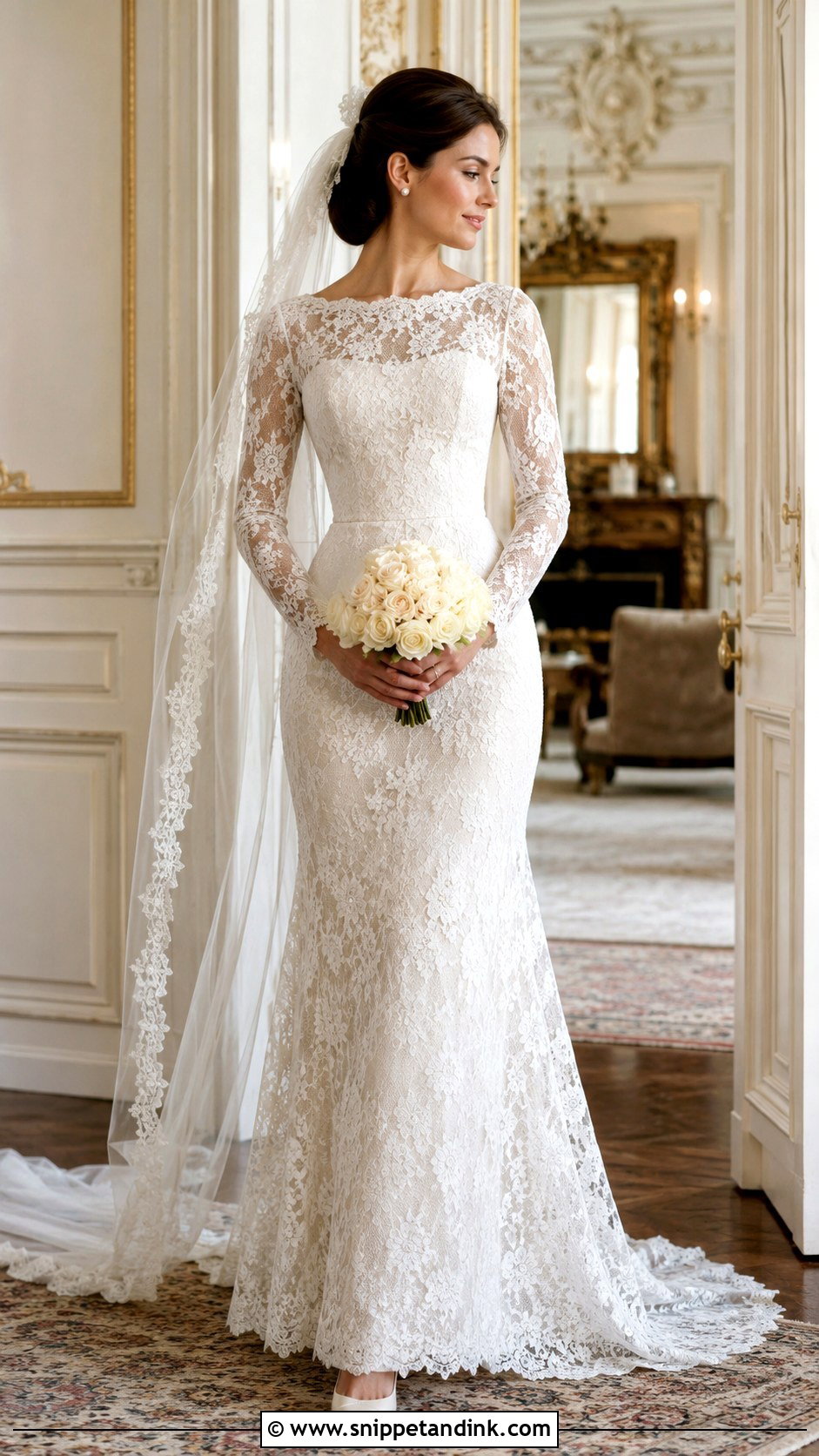
Vintage lace walks a fine line between heirloom and costume. A bateau neckline, fitted sleeves, covered buttons and a softly defined waist give the period feel. Fine floral lace over an ivory lining adds depth. My rule: if the dress already carries three historical details, everything else gets modern. Almond-toe pumps, pearl studs and a lace-trimmed fingertip veil, with a smooth chignon or a softly waved bob, keep it believable. Precise tailoring and comfortable shoes are what make old-fashioned lace feel current rather than borrowed.
16. Minimalist Flower Lace Wedding Dress
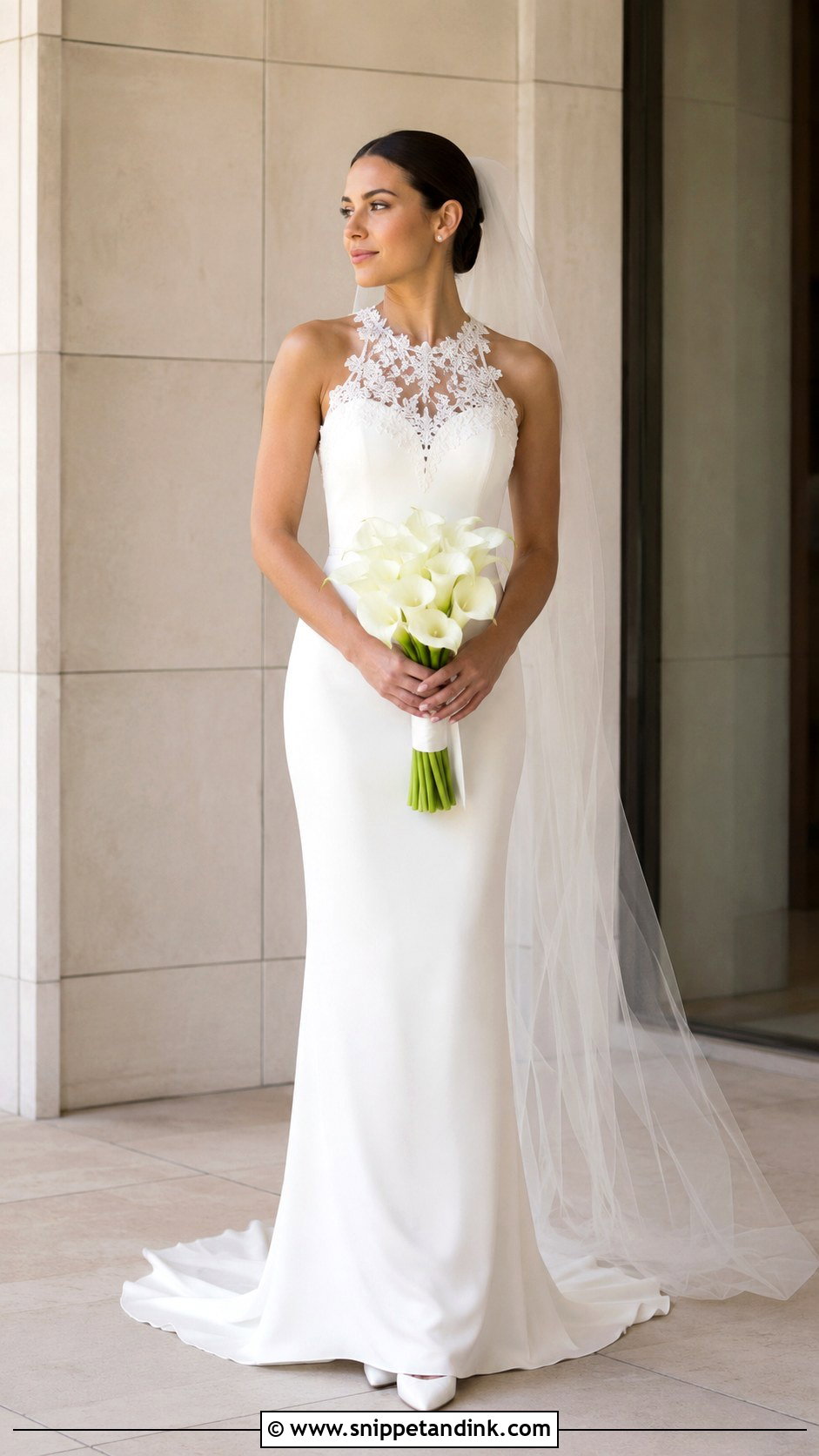
Minimal lace is all about placement. Start with crepe, satin or mikado and let lace appear in one spot only: the neckline, side panels, a low back or the hem. A column or simple A-line turns the lace into an accent. Pointed pumps, diamond studs and a plain chapel veil suit it, and a low bun or smooth waves keep things uncluttered. Calla lilies or tulips match the clean shape. I’d skip gloves and statement jewelry entirely. Here the tailoring has to be faultless, because there’s no texture to hide a pulled seam.
17. Plus Size Flower Lace Wedding Dress
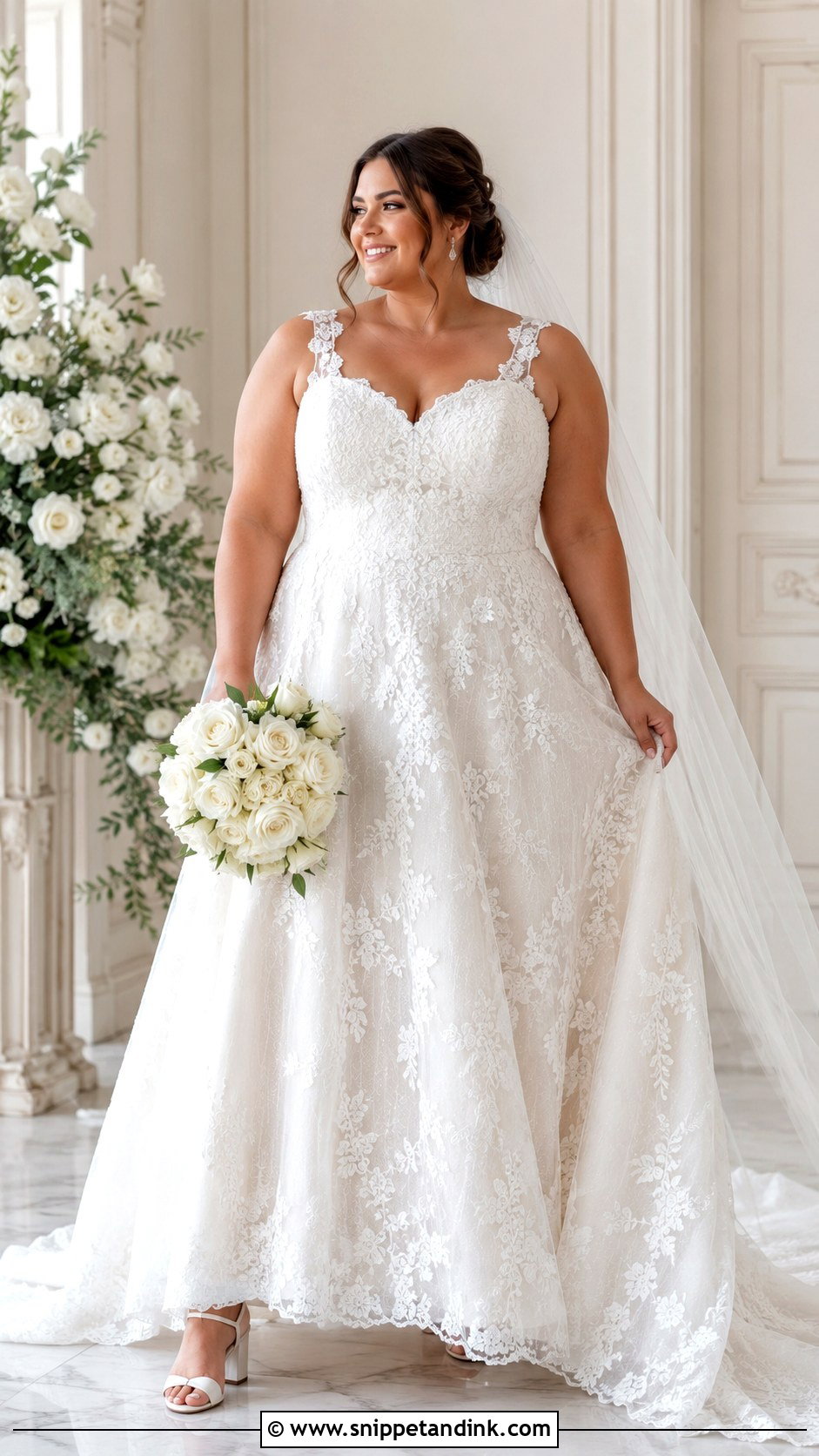
I never assume what a curvy bride will want, and I’d ignore anyone who hands you a list of rules about lace scale or necklines. Try small and large motifs, sweetheart and V, and let the mirror decide. In practice, A-line and fit-and-flare gowns with a structured bodice, wider straps and lace running unbroken across the waist are good starting points. Buy shapewear after the first fitting, not before, so it suits the actual dress. Cushioned block heels and lightweight earrings help over a long day. Ask the salon about custom lining, cup placement and extra boning, because those changes are what make a gown feel supportive.
18. Tea Length Flower Lace Wedding Dress
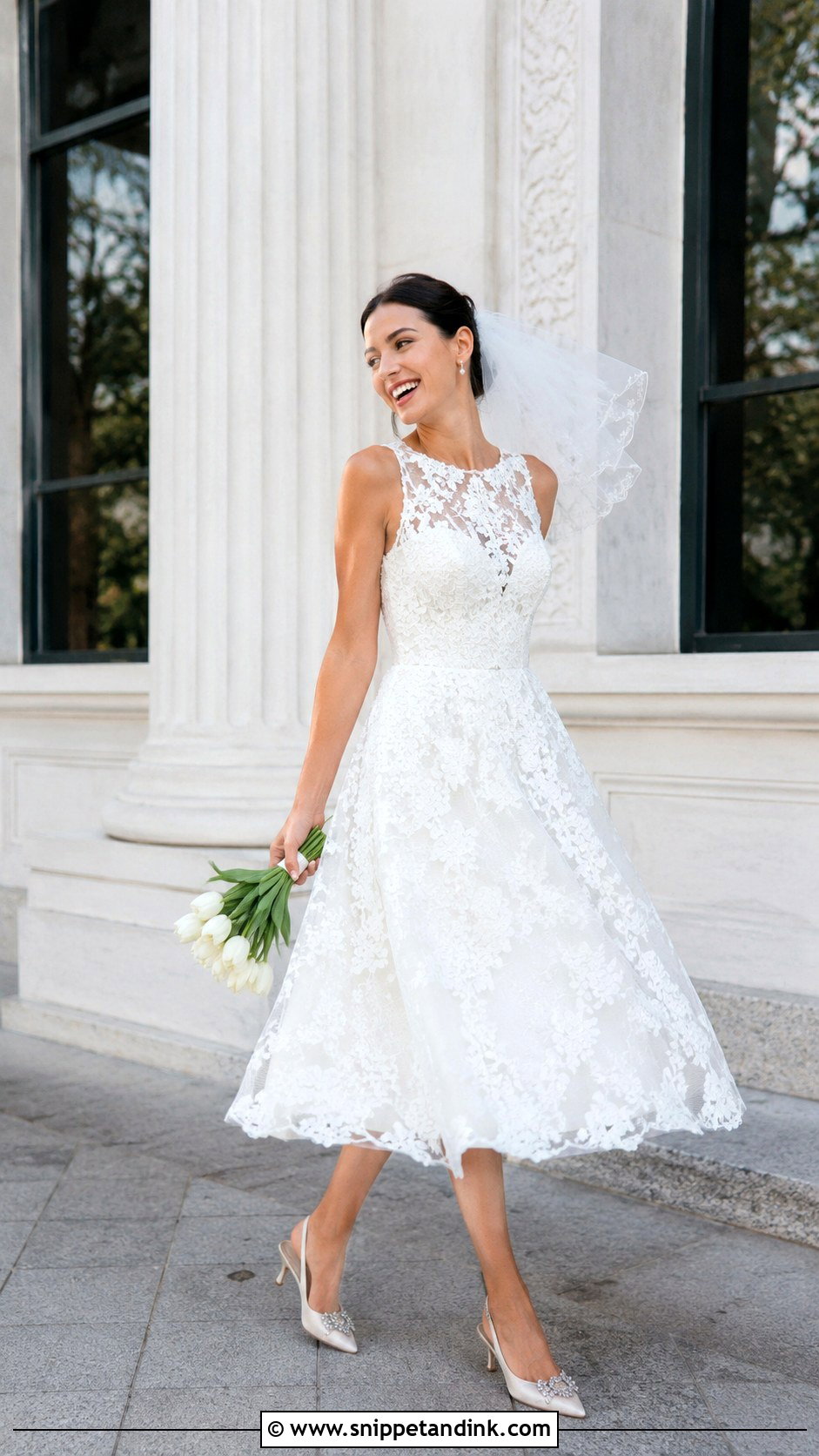
Shoes become half the outfit when the hem stops between calf and ankle. That’s why I choose them before the hem is cut: ivory pumps, slingbacks or embellished block heels all change where the skirt looks best. A defined waist and softly flared skirt keep it playful, and a fitted lace bodice with a square, bateau or sweetheart neck gives the short skirt enough structure. Add pearl earrings, a short veil and a compact bouquet. It suits courthouse ceremonies, small daytime weddings or a reception change, and bring the exact shoes to every alteration appointment.
19. Detachable Overskirt Flower Lace Wedding Dress
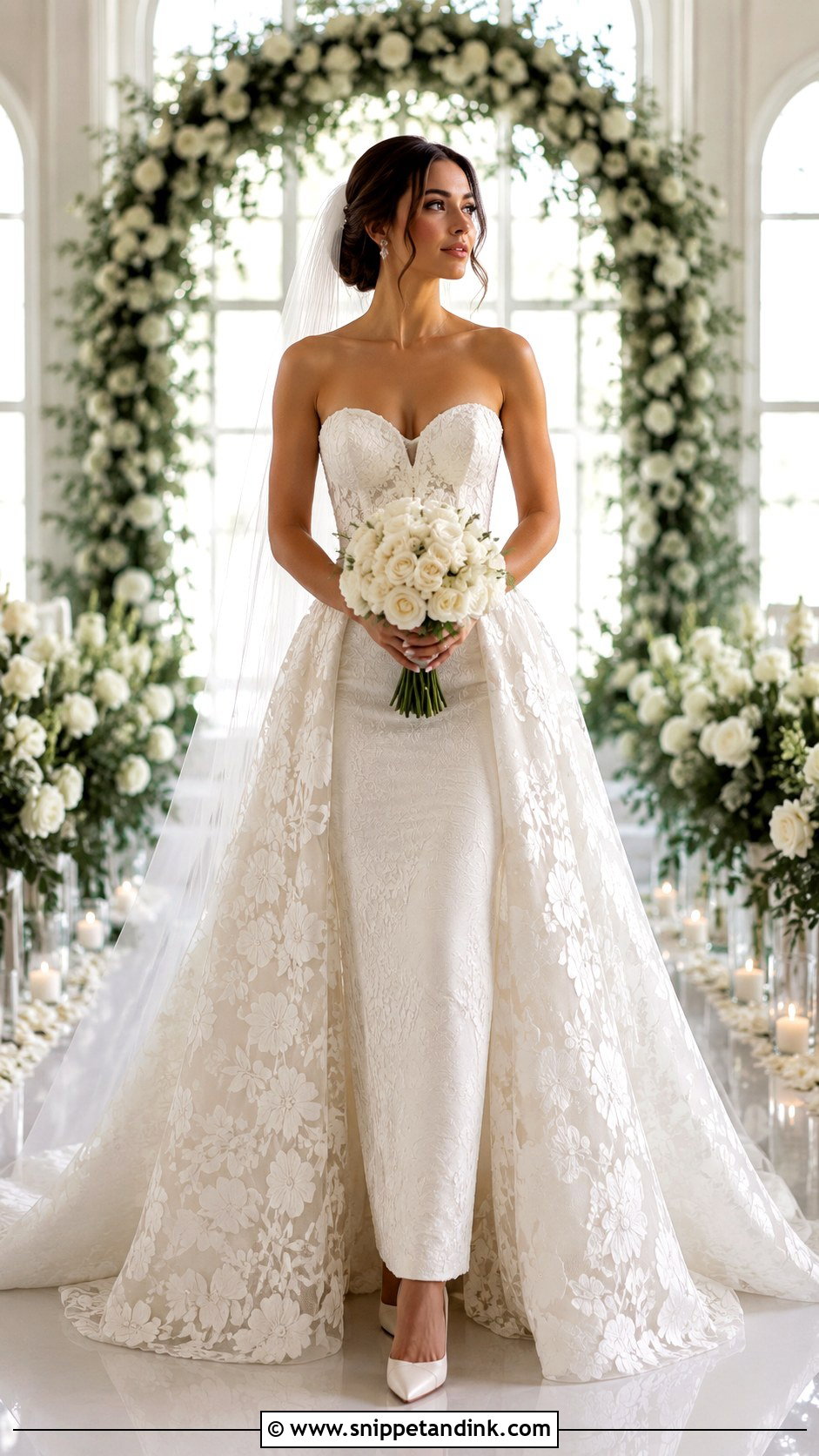
One dress, two silhouettes. A fitted column, sheath or fit-and-flare base carries a full lace overskirt for the ceremony, then the overskirt comes off for dancing. The attachment is what I check hardest: hooks or snaps that lie flat at the waist are fine, while bulky buttons show through the lace. Wear a long veil, pointed heels and quiet earrings for the ceremony, then lose the veil and overskirt together. Removable trains and overskirts give you a change of look without paying for a second gown. Practice the removal with whoever will help, ideally twice.
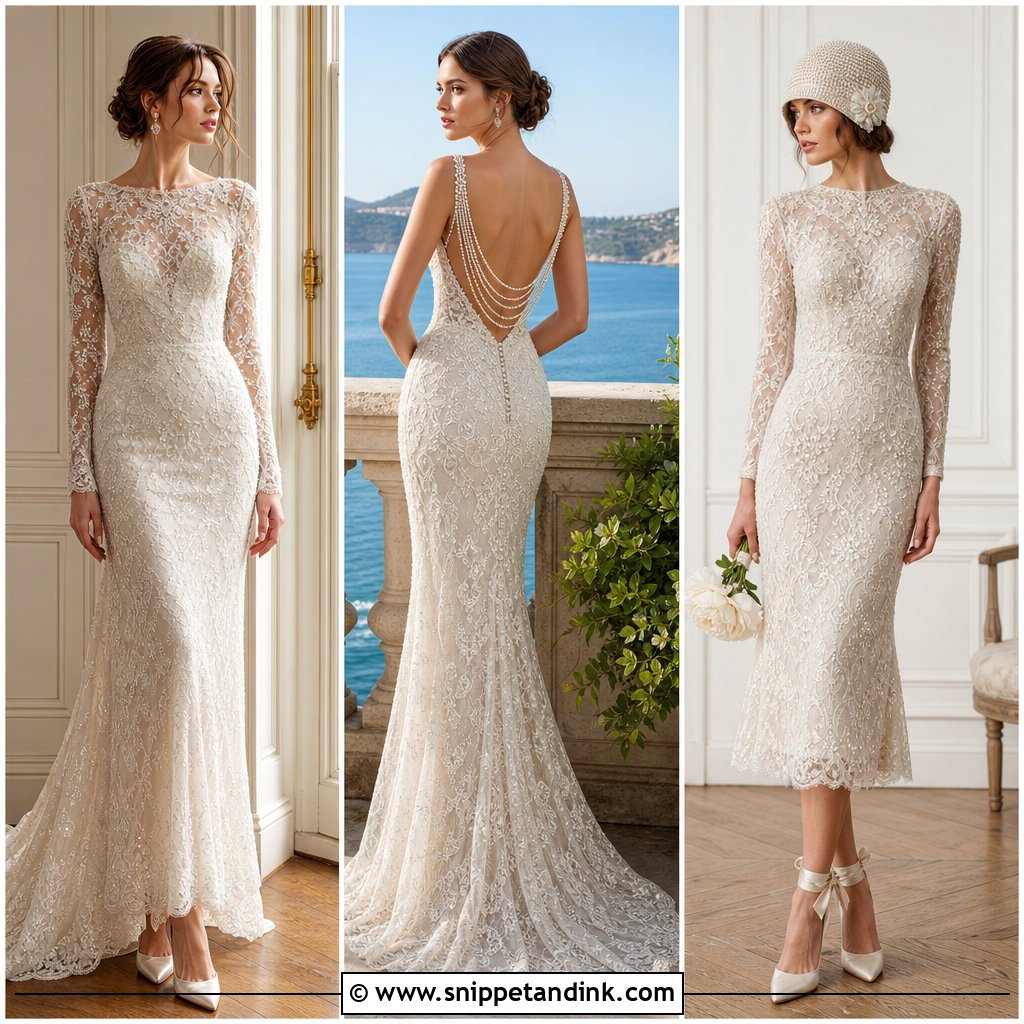

20. Chapel Train Flower Lace Wedding Dress
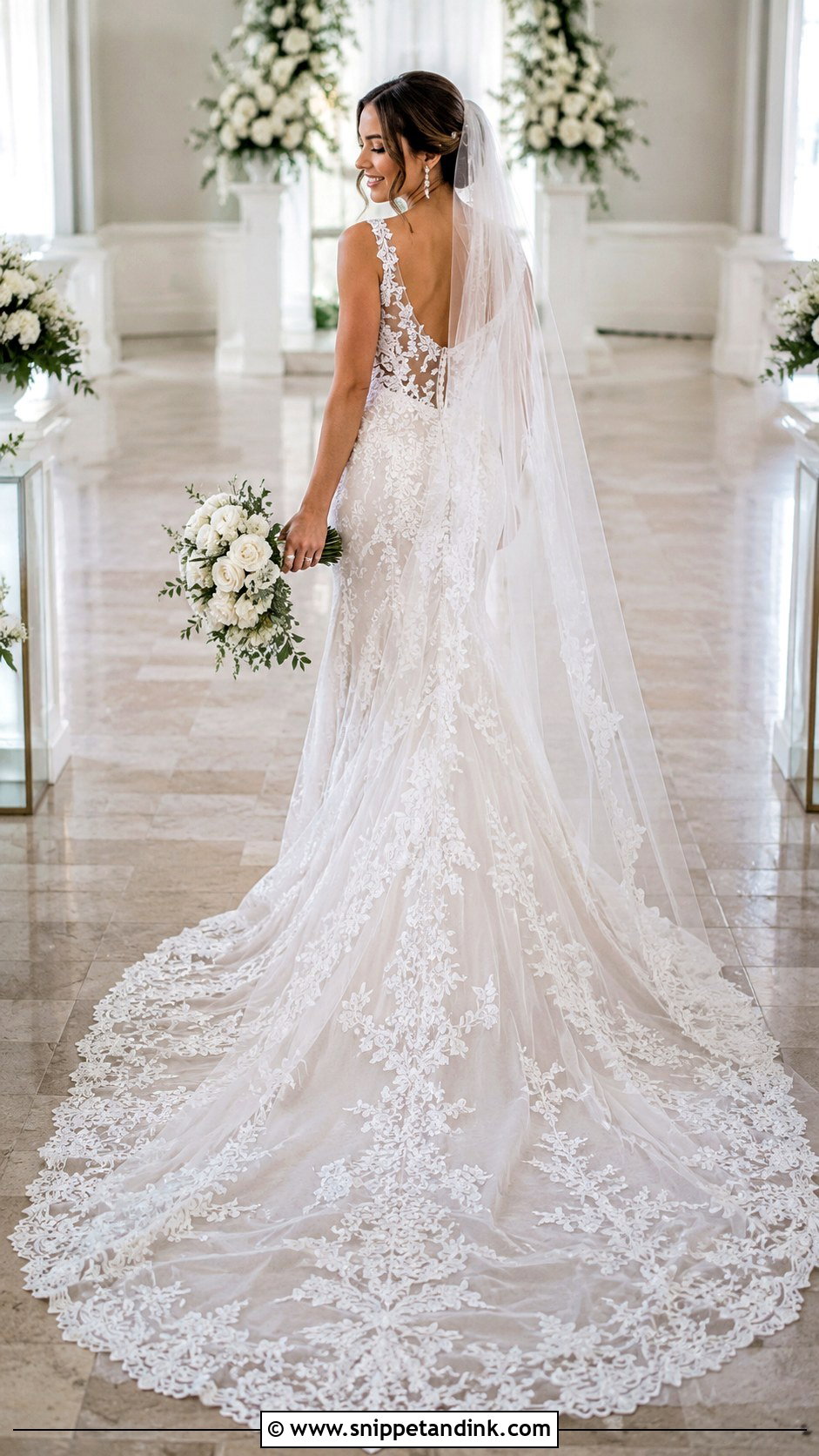
A chapel train adds a real entrance without a cathedral train’s weight. I like the motifs to continue down the back and get richer toward the edge, since the back of the dress is what guests see during the vows. A-line, mermaid and fit-and-flare all carry it. Choose a veil that ends just past the train and a medium bouquet that won’t cover the bodice. The bustle matters more than people think: on lace it needs to lift along the motifs so the pattern doesn’t pucker. Learn the bustle with the person doing it on the day, not just the seamstress.
Snags, Spills and Storage: Lace After the Vows
Lace is tougher than it looks, but it has a few enemies. The day itself is mostly about snags. The real damage often happens in the weeks after, when a dress sits in a bag with a champagne splash nobody noticed.
On the day
- Bouquet stems wrapped in wire or florist pins can catch net lace. Ask the florist to finish the handle with ribbon and pearl-headed pins pointing inward.
- Bracelets with prongs and watch clasps snag sleeves. Choose bangles or skip wrist jewelry.
- If a thread pulls, don’t cut it. Ease it back to the wrong side with a needle, or leave it for the seamstress.
- Pack a small sewing kit with ivory thread for a loose appliqué; a few stitches at the edge hold it until the dress is repaired.
Afterwards
Get the dress to a specialist cleaner within a few weeks. Sugar from drinks and cake dries clear, then oxidizes to a yellow-brown mark over months, and by then it’s much harder to lift. Never iron lace directly; a steamer held a few inches away relaxes creases without flattening raised motifs.
For storage I’d fold the gown loosely in acid-free tissue inside a breathable cotton bag or an acid-free box, away from light and damp. Avoid plastic garment bags, which trap moisture. Don’t hang a heavy lace gown by its straps for years either, because the weight stretches the shoulders. If you’d like to keep it hanging, use the hanging tapes sewn inside the waist.
Let the Lace Lead the Rest of the Look
Lace is one of the most personal fabrics a bride can wear, because the scale, the lining and where the motifs land change everything. Bring photos of what you love, but stay open in the fitting room; a gown you’d scroll past online can surprise you once the lace sits against your skin. Wear your actual shoes and undergarments to fittings. Then build the accessories around the dress, and keep anything that competes with the lace off your list.
You'll Like These Ideas:




Leave a Reply