
Threadwork is the detail guests only see when they hug you, and that closeness is a lot of its appeal. The styles below cover plain white embroidery, coloured wildflowers, raised blossoms, fine vines and bold botanical patterns, on silhouettes that suit different figures and settings. For each one I’ve suggested shoes, jewellery and veils, hairstyles, and bouquets so you can picture the whole outfit, along with the thing I’d look at hardest in a fitting. Floral detail is also one of the easiest ways to make a dress personal, because the flowers themselves can carry meaning.
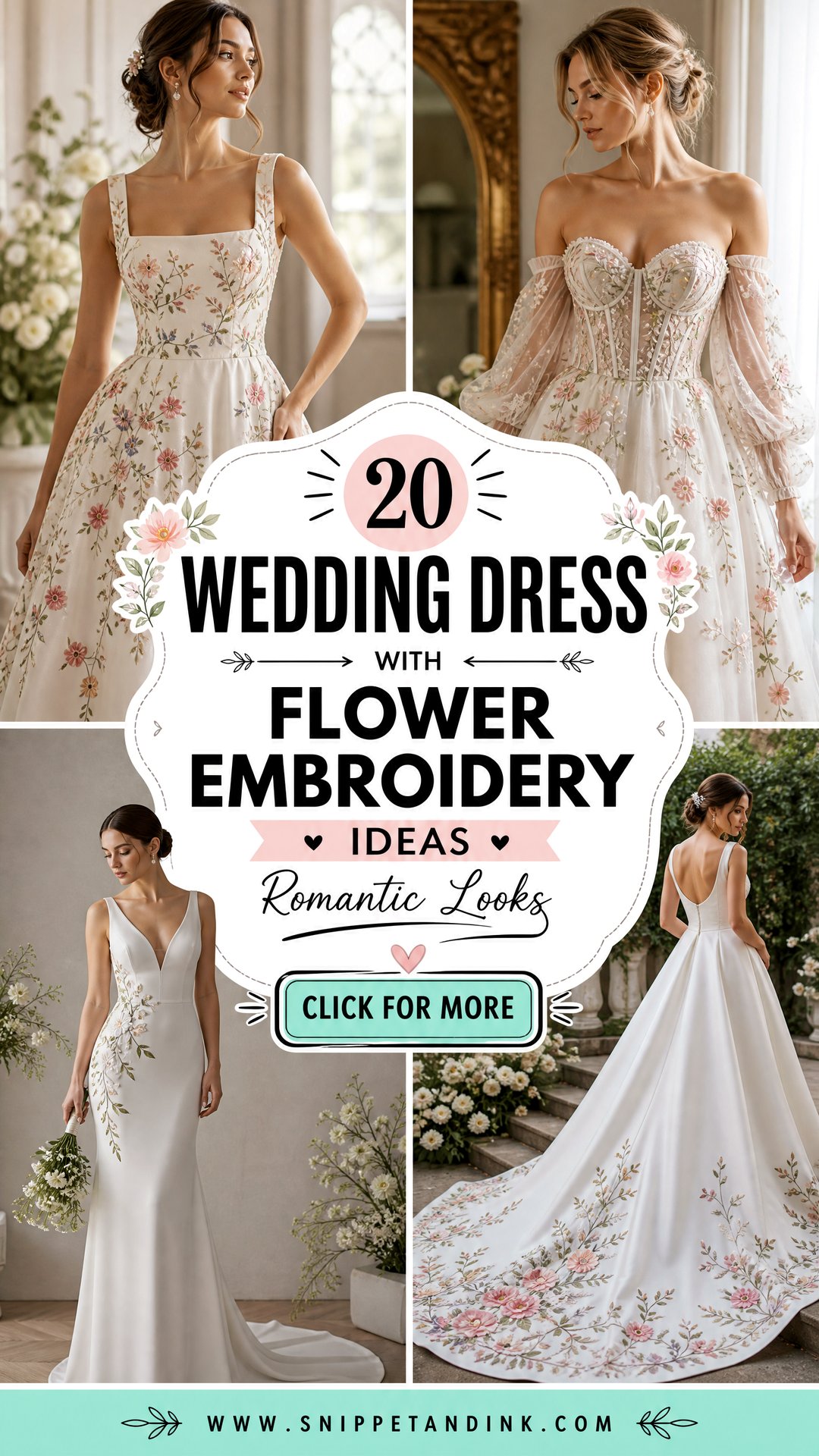
Adding Your Own Flowers: How Custom Embroidery Gets Made
Many brides want flowers that mean something: a birth flower, the bloom from a grandmother’s garden, the flowers that will be on the tables. Most bridal ateliers and independent embroiderers can add these to a dress, or design a motif from scratch. It just needs planning.
- Gather clear photos of the real flower and a sketch of where you want it: shoulder, waist, hem, veil edge or inside the bodice where only you will know.
- Agree the thread colours against your actual dress fabric. A thread that looks soft on a card can look harsh against bright white.
- Ask for a stitched sample on a scrap of matching fabric before the work starts on the dress.
- Build the time into your alteration schedule. Hand embroidery is slow, and it has to be finished before your final fitting so the fit can be checked with it in place.
A small hidden motif, like initials or a single flower inside the bodice, is a quicker job and a nice option if your dress is already close to finished. Expect a quote per motif rather than a flat fee, since the size and density of the flower change the hours involved.
1. A-Line Wedding Dress with Wildflower Embroidery
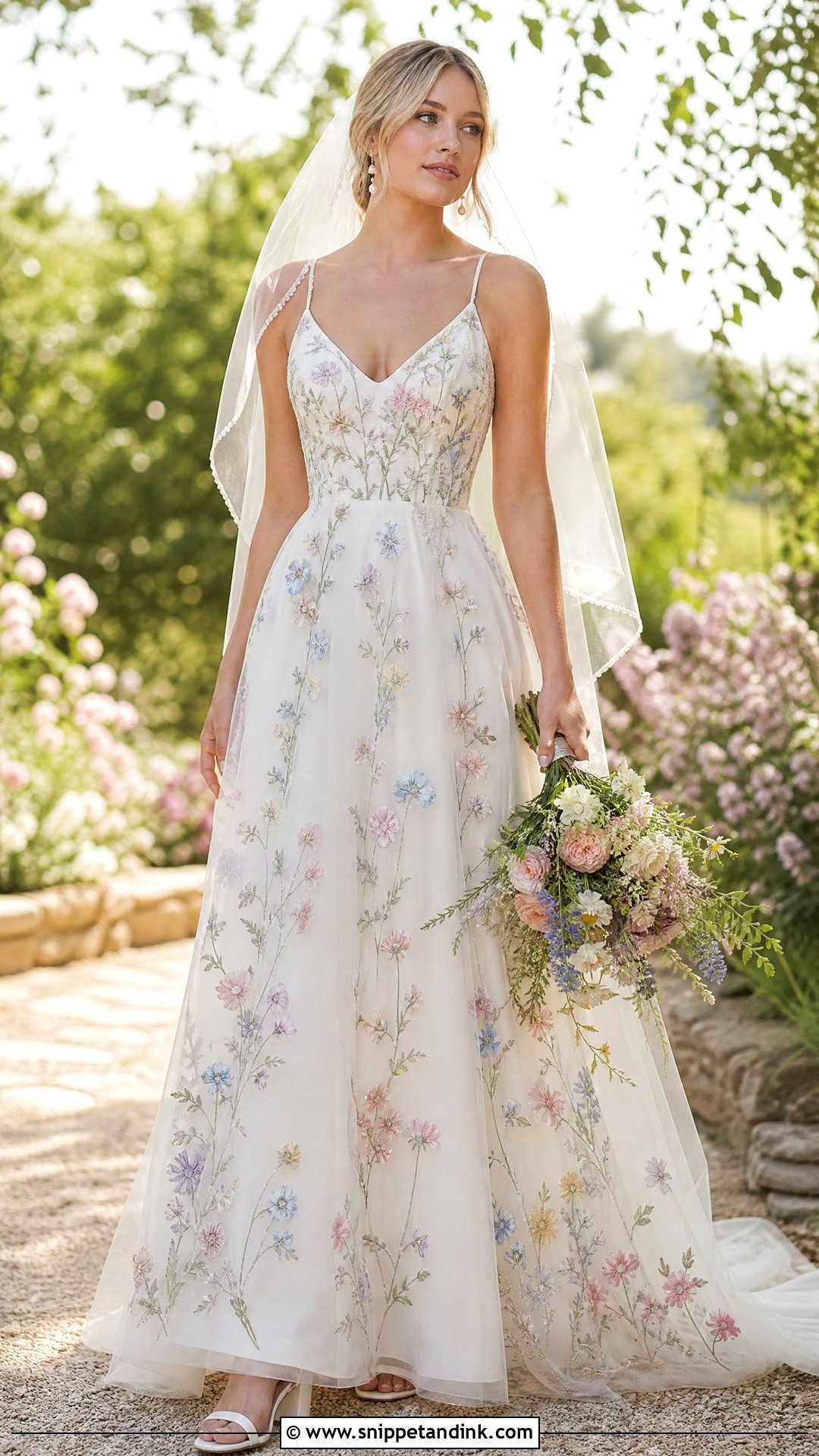
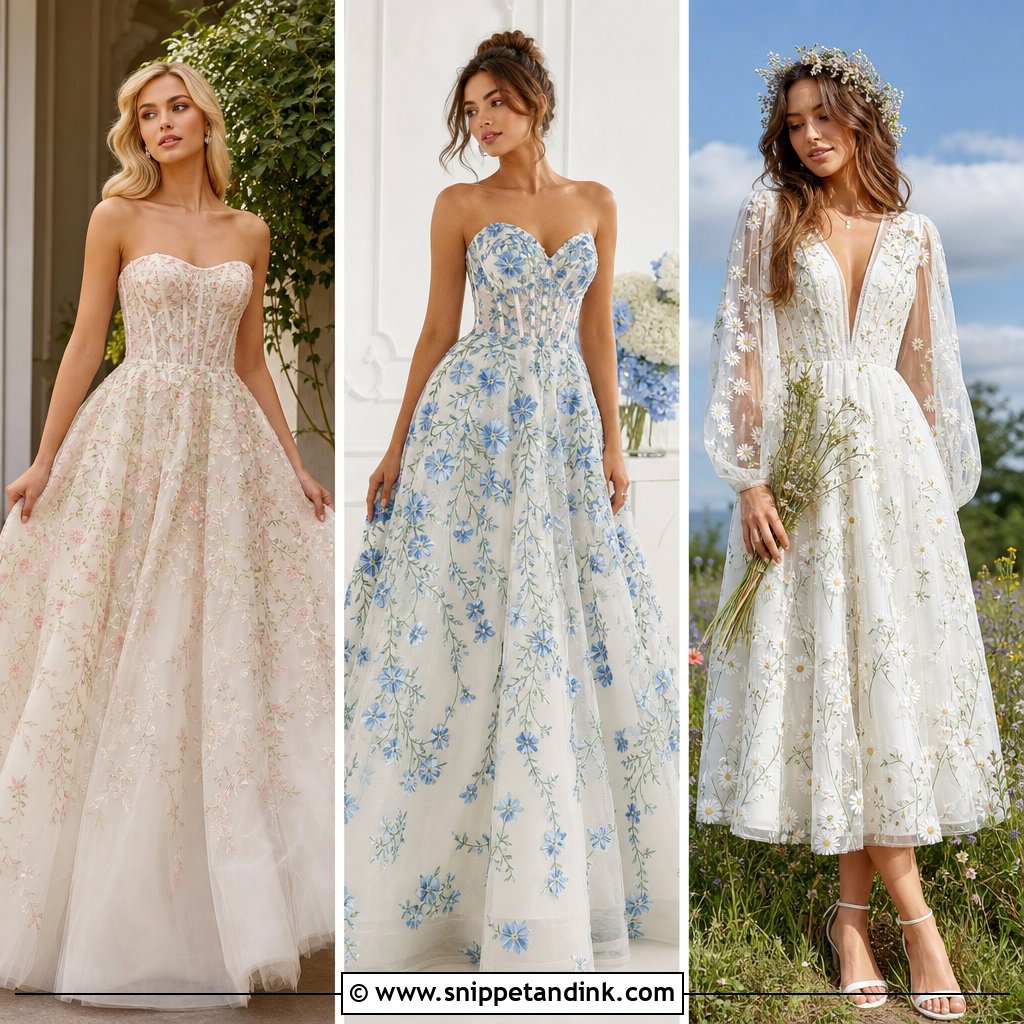
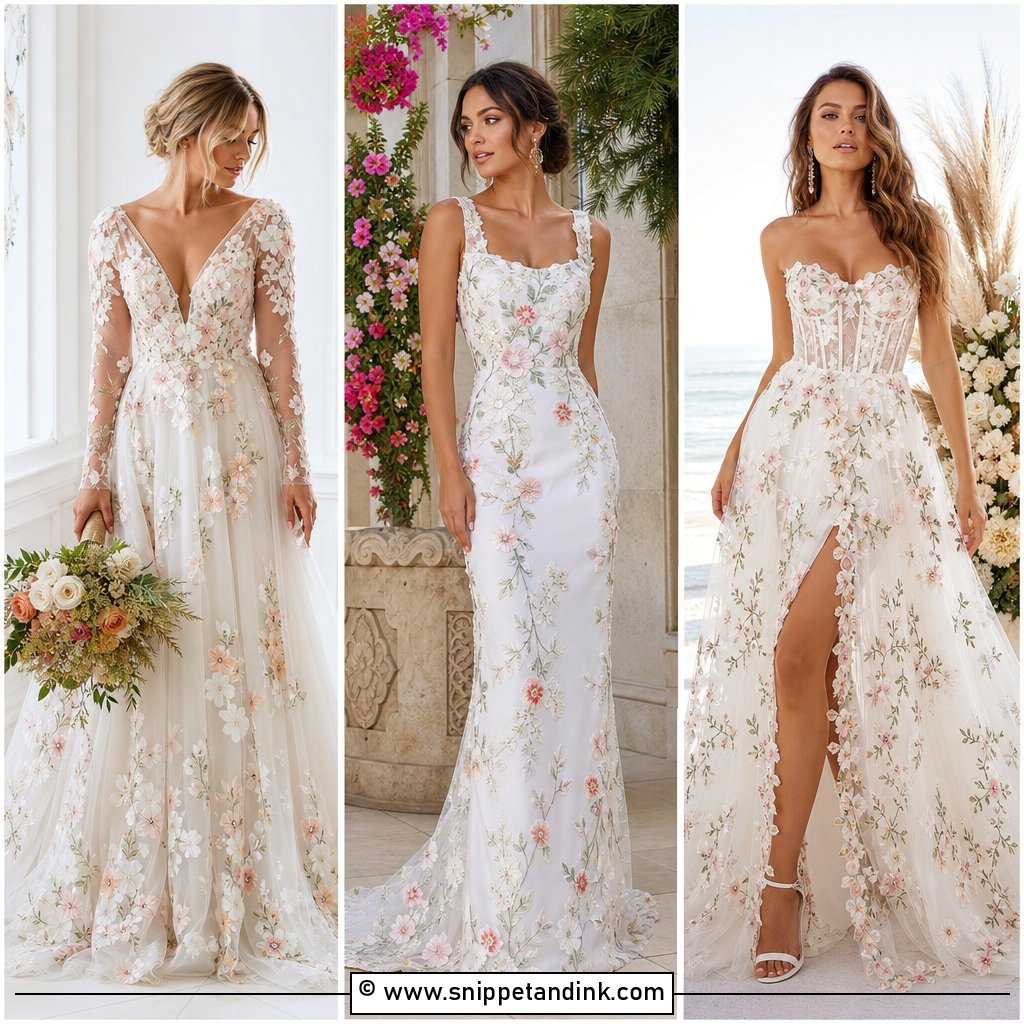
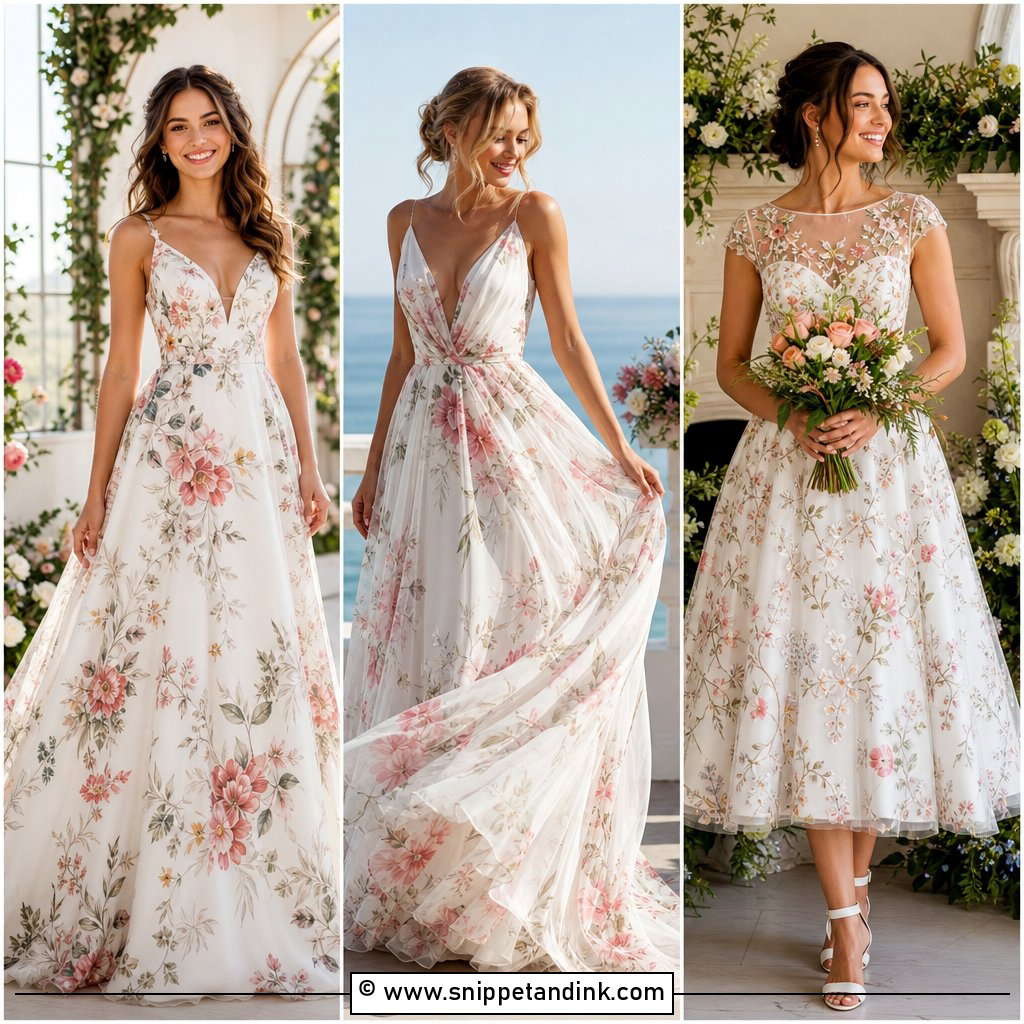
Wildflowers on ivory tulle work best when they’re densest at the bodice and thin out toward the hem, like a meadow seen from above. The A-line shape, with a fitted bodice and an airy skirt, lets them move as you walk. Soft pink, lavender, blue and yellow thread is the usual palette. Ivory block-heel sandals, pearl drops and a plain fingertip veil let the flowers show, with loose waves or a softly pinned low bun. Pull a few thread colours into a loose bouquet. One honest caution: on very sheer tulle, coloured embroidery can show its backing threads in strong backlight, so look at it against a window.
2. Ball Gown Wedding Dress with 3D Flower Embroidery
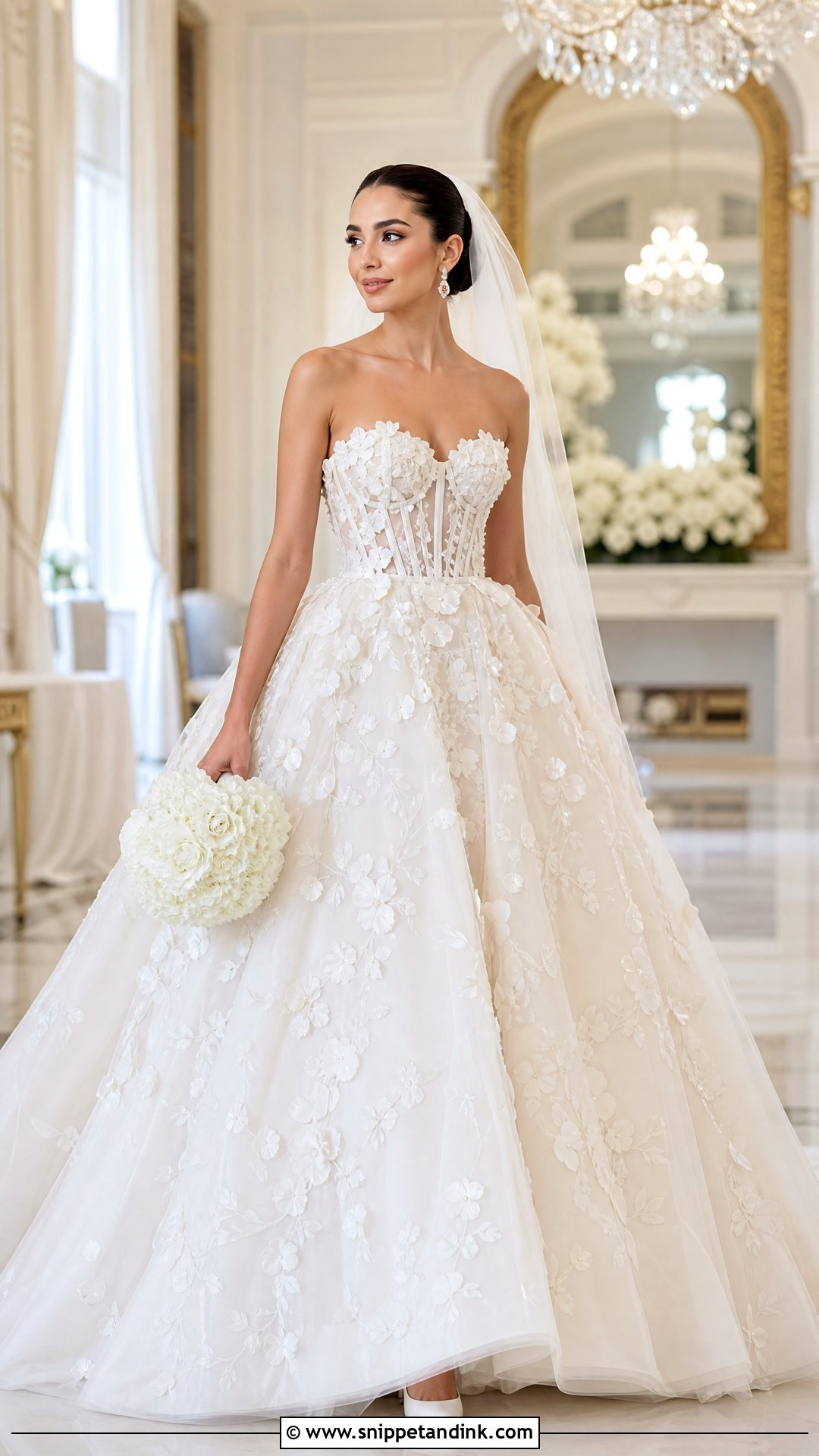
Three-dimensional flowers need a structured corset bodice and a full layered skirt to sit on. I place raised petals, leafy vines and a little beadwork concentrated around the neckline, waist and upper skirt, so they frame you instead of covering you. Pointed satin pumps give some height under the volume, crystal studs add a small shine, and an updo keeps the neckline clear. Choose a long sheer veil with a clean edge and a compact single-variety bouquet. Raised petals snag veil tulle, so the veil should fall behind the shoulders, not over them.
3. Sheath Wedding Dress with White Flower Embroidery
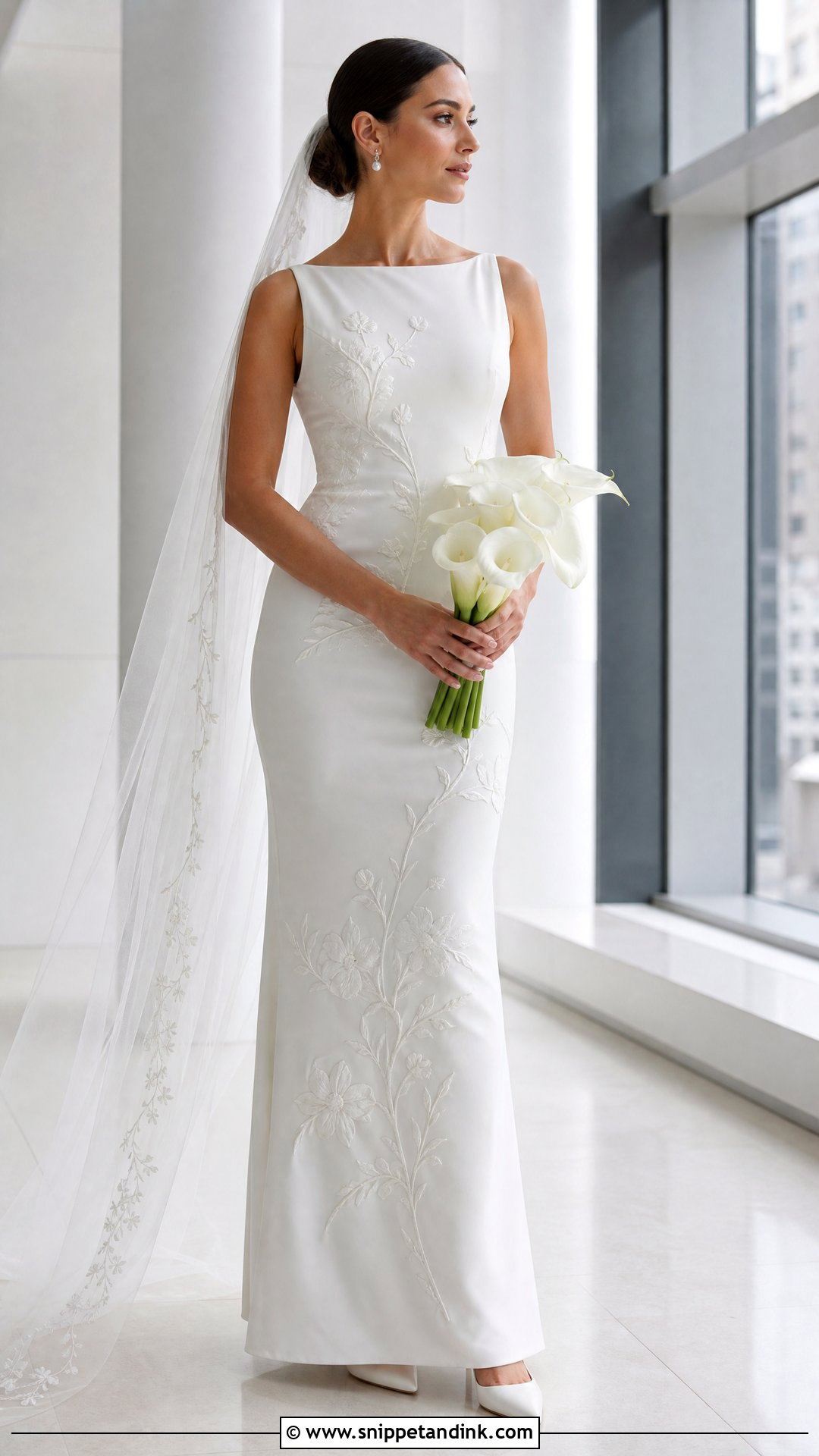
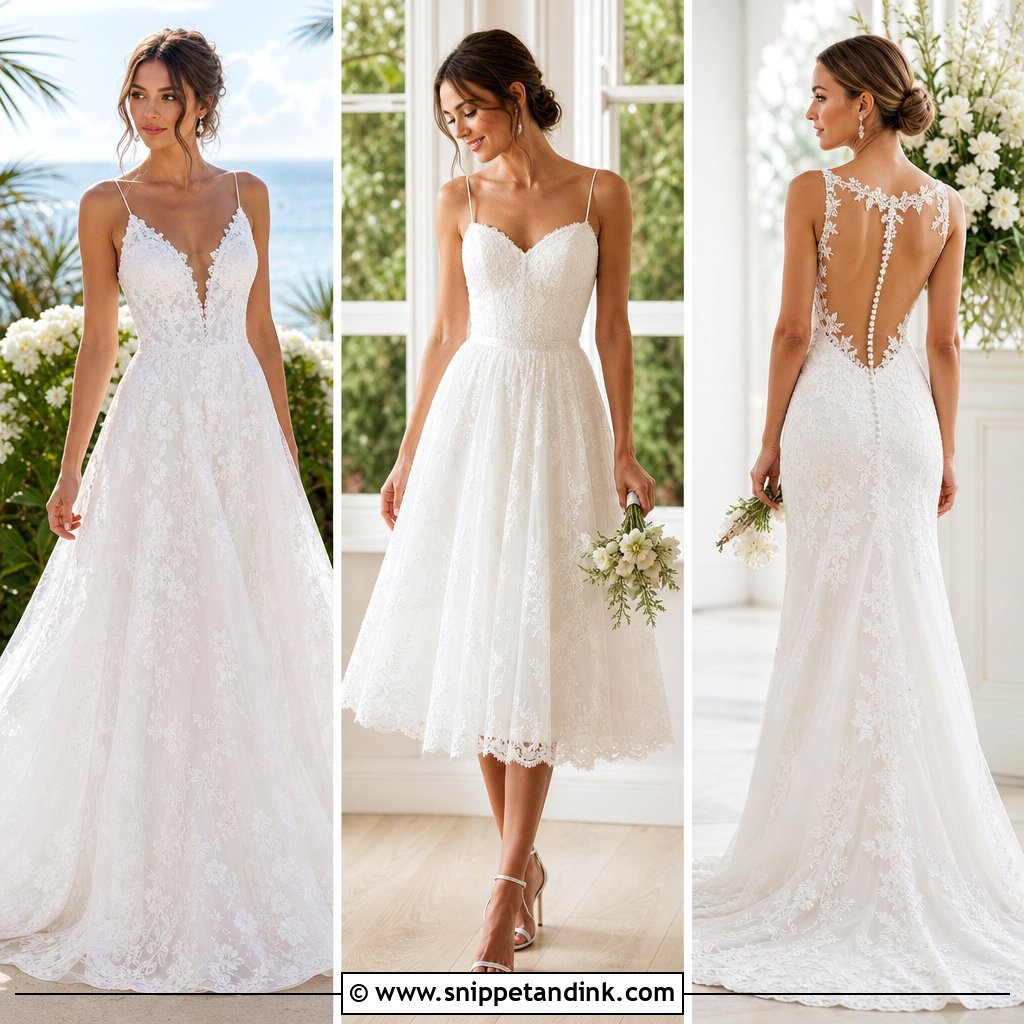
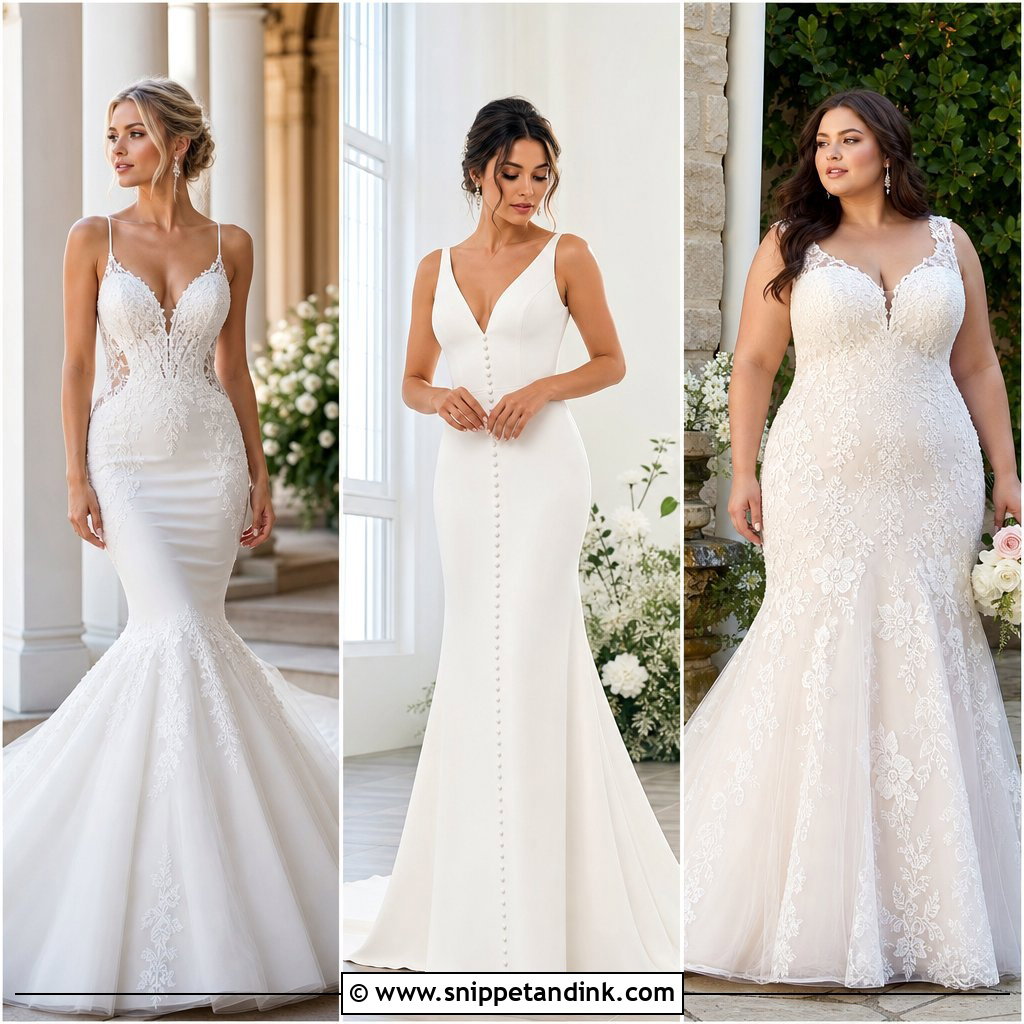
White thread on a white fitted sheath dress is almost invisible across a room and intricate close up, which is why I suggest it to anyone who wants restraint. A smooth crepe or silk base with fine threadwork along the neckline, waist and train is enough. Pointed ivory heels, small pearls, a narrow bracelet and a sleek low bun or tucked-back hair keep it clean. A chapel veil with a light embroidered edge adds a soft layer, and white callas or roses keep the palette single-toned. Ask your photographer for close detail shots. Tonal embroidery barely shows in wide frames.
4. Colorful Flower Embroidered Wedding Dress
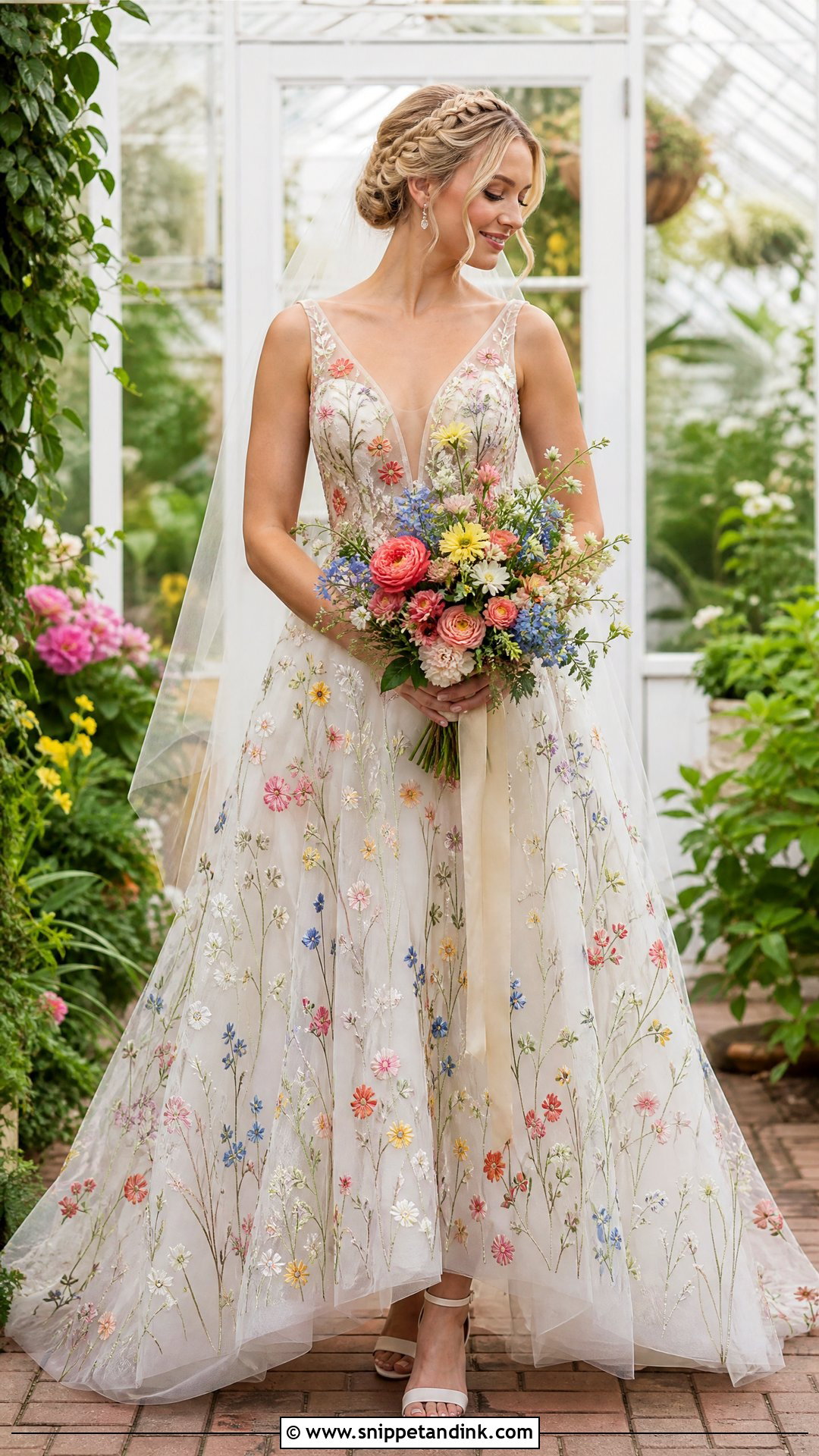
Coral, blue, yellow, pink and green thread on ivory is the most joyful option here, but it needs discipline elsewhere. A flowing A-line with a lightly structured neckline and a tulle overlay keeps the colour polished. Simple ivory ankle-straps and small gemstone earrings in one embroidery colour are enough; skip any decorated necklace. A loose braided updo and a plain sheer veil, plus a bouquet in two or three of the shades with little greenery, keep it calm. Bring a thread sample to your makeup trial too. Bright coral near the face changes which lip colours work.
5. Long Sleeve Wedding Dress with Flower Embroidery
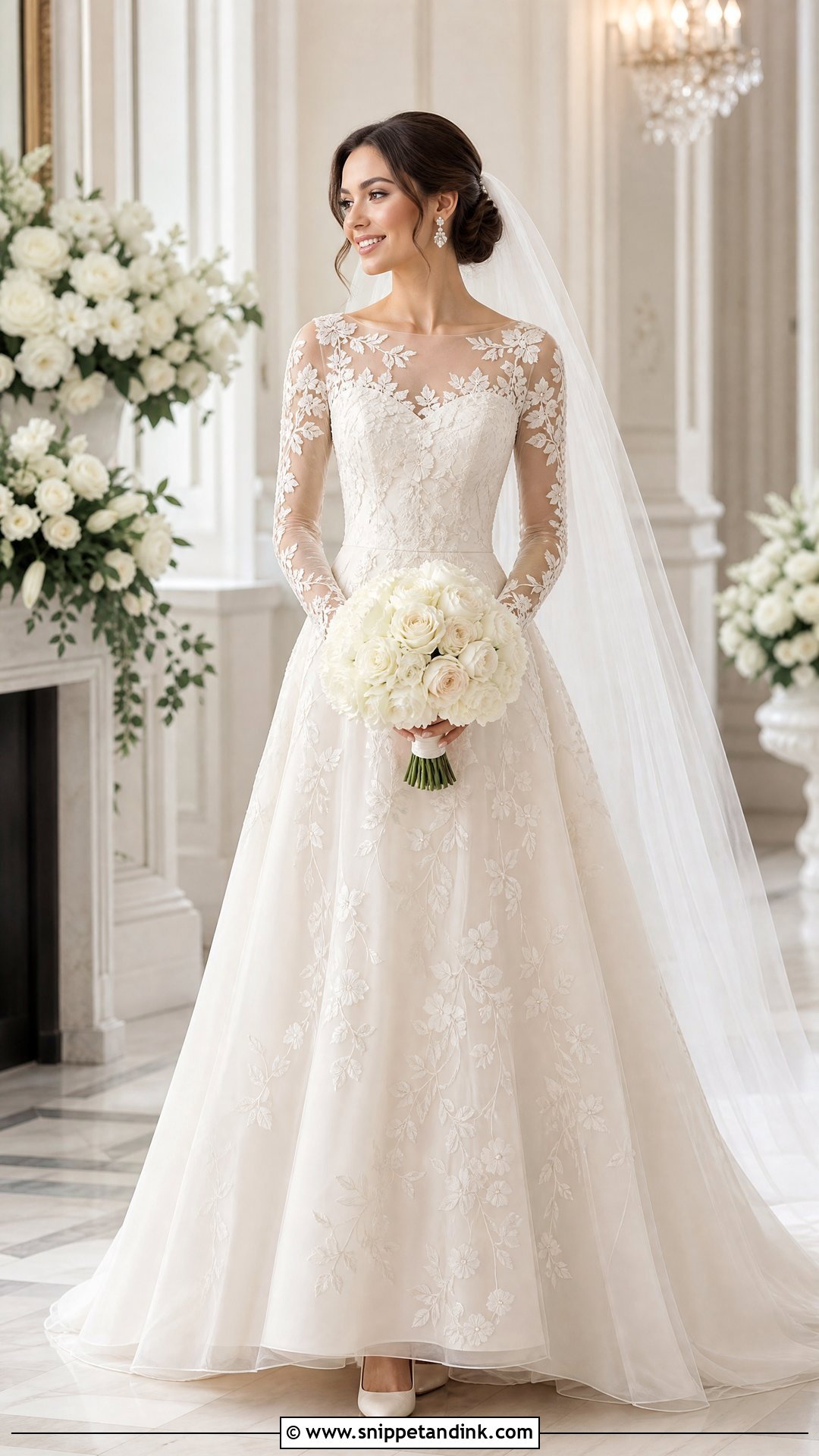
Sheer tulle sleeves with narrow vines feel light, not covered up. The vines continue across a fitted bodice and into a soft A-line skirt, and an illusion neckline makes them look as if they rest on the skin. Closed-toe pumps, pearl-and-crystal earrings and a slim comb in a low textured bun suit it. Choose a plain cathedral veil that falls behind the embroidery and a round white and green bouquet. I always check the sleeve length with the bride’s arms bent. Embroidered sleeves have little stretch, and a sleeve that’s perfect with straight arms rides up when you hold a bouquet.
6. Strapless Wedding Dress with Flower Embroidery
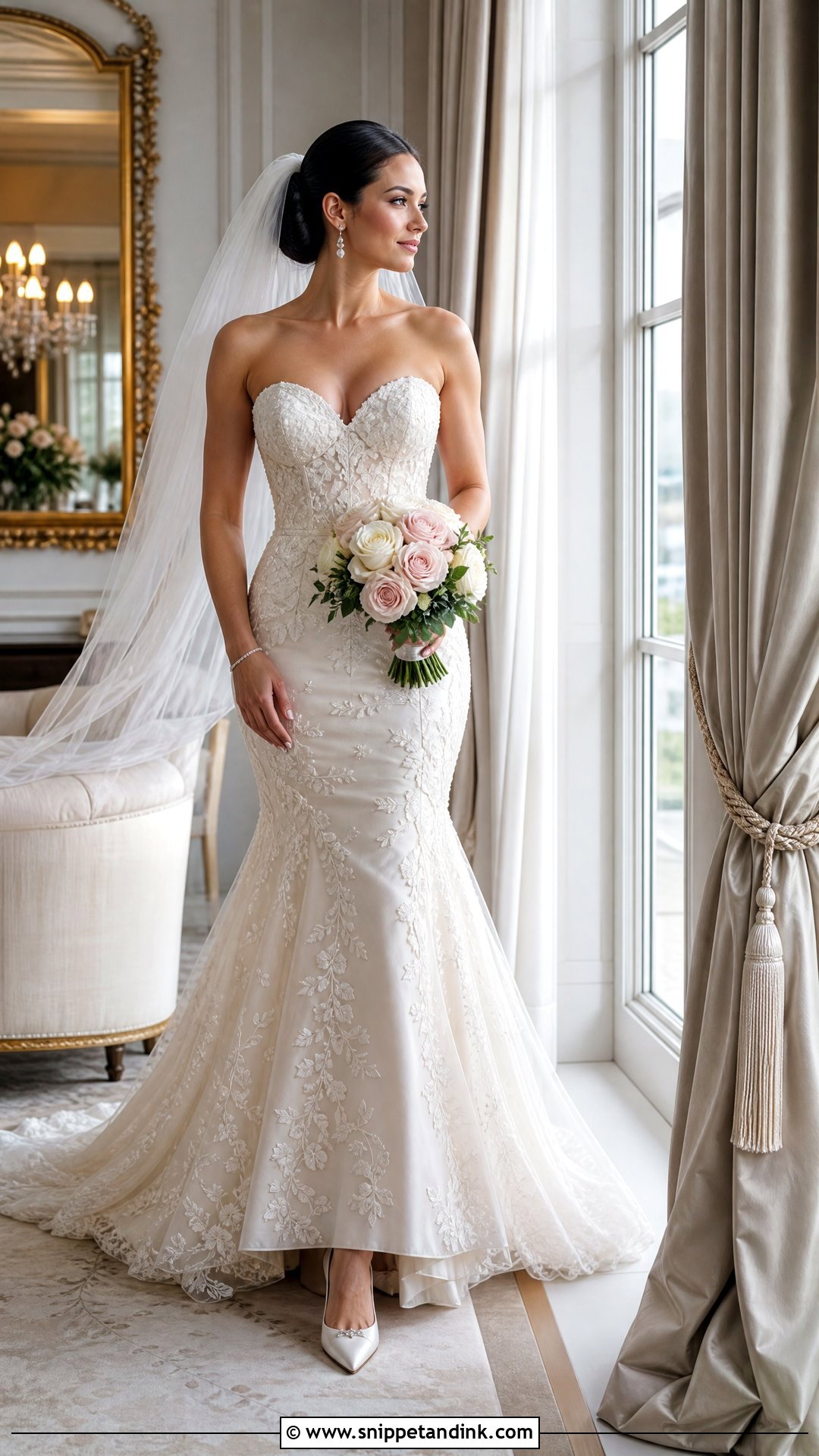
Embroidered flowers on a strapless corset bodice that spread over the waist and trail lightly down the skirt give a structured dress a softer face. A sweetheart neckline is the more romantic option, and an A-line or fit-and-flare skirt balances it. Pearl drops, a fine tennis bracelet and pointed ivory heels are plenty. Because the shoulders are bare, an embroidered veil can carry interest at the back. Hair up or swept to the side, with a medium bouquet of roses, ranunculus and greenery. No necklace needed. The embroidery is doing that job.
7. Off-Shoulder Wedding Dress with Flower Embroidery
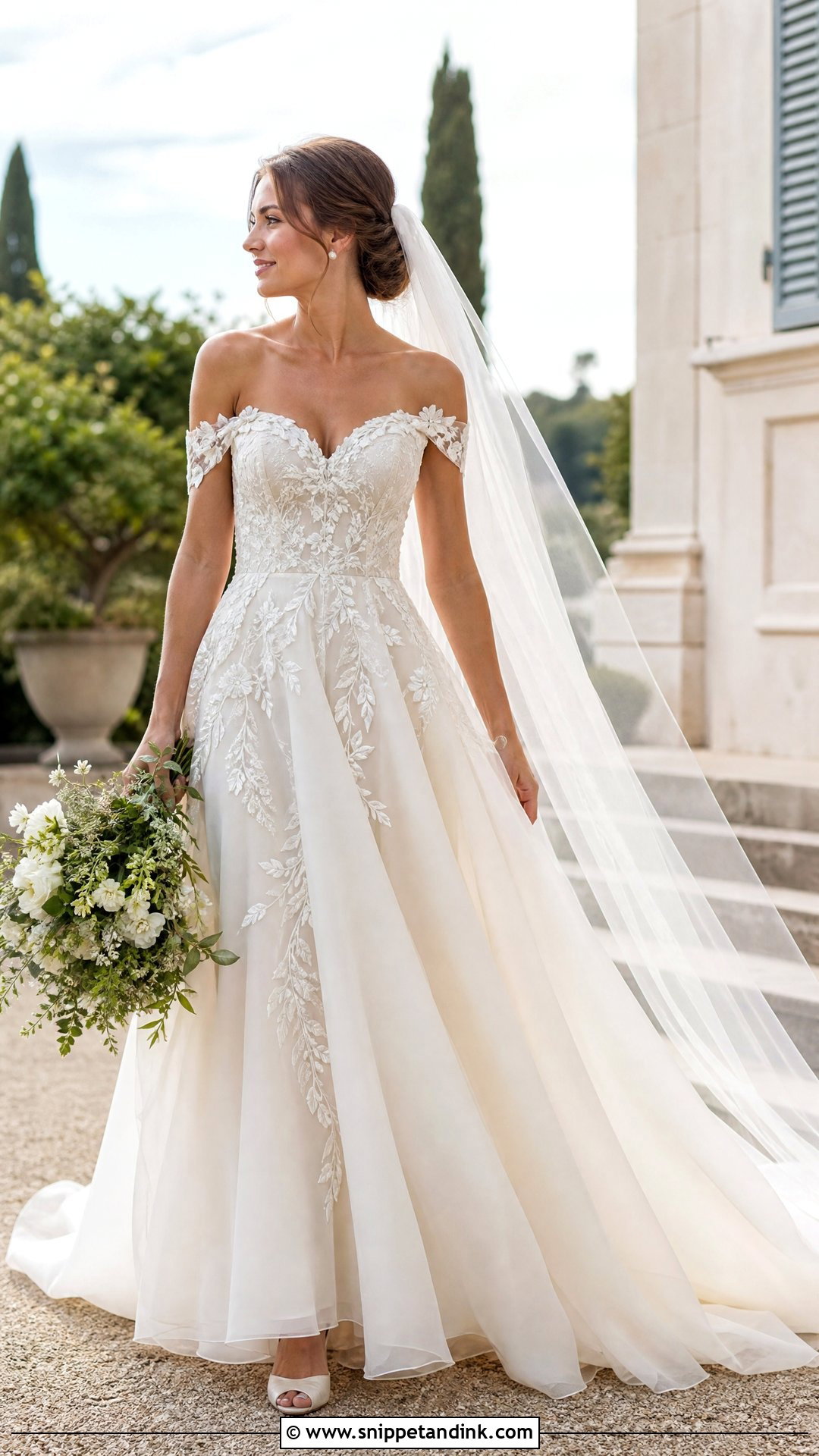
Off-shoulder sleeves stitched with vines soften the neckline’s structure and lead the eye to the collarbones. A fitted bodice with flowers placed on the folded sleeves, waist and upper skirt, flowing into an A-line, keeps the detail travelling top to bottom. Comfortable block heels, pearl studs and a fine bracelet suit it; a short pendant only if the embroidery is light. A low chignon with a few loose pieces, a plain chapel veil and a loose garden bouquet finish it. Raise your arms at the fitting, since embroidered off-shoulder bands are stiffer than plain ones and can dig in when you hug.
8. Square Neck Wedding Dress with Flower Embroidery
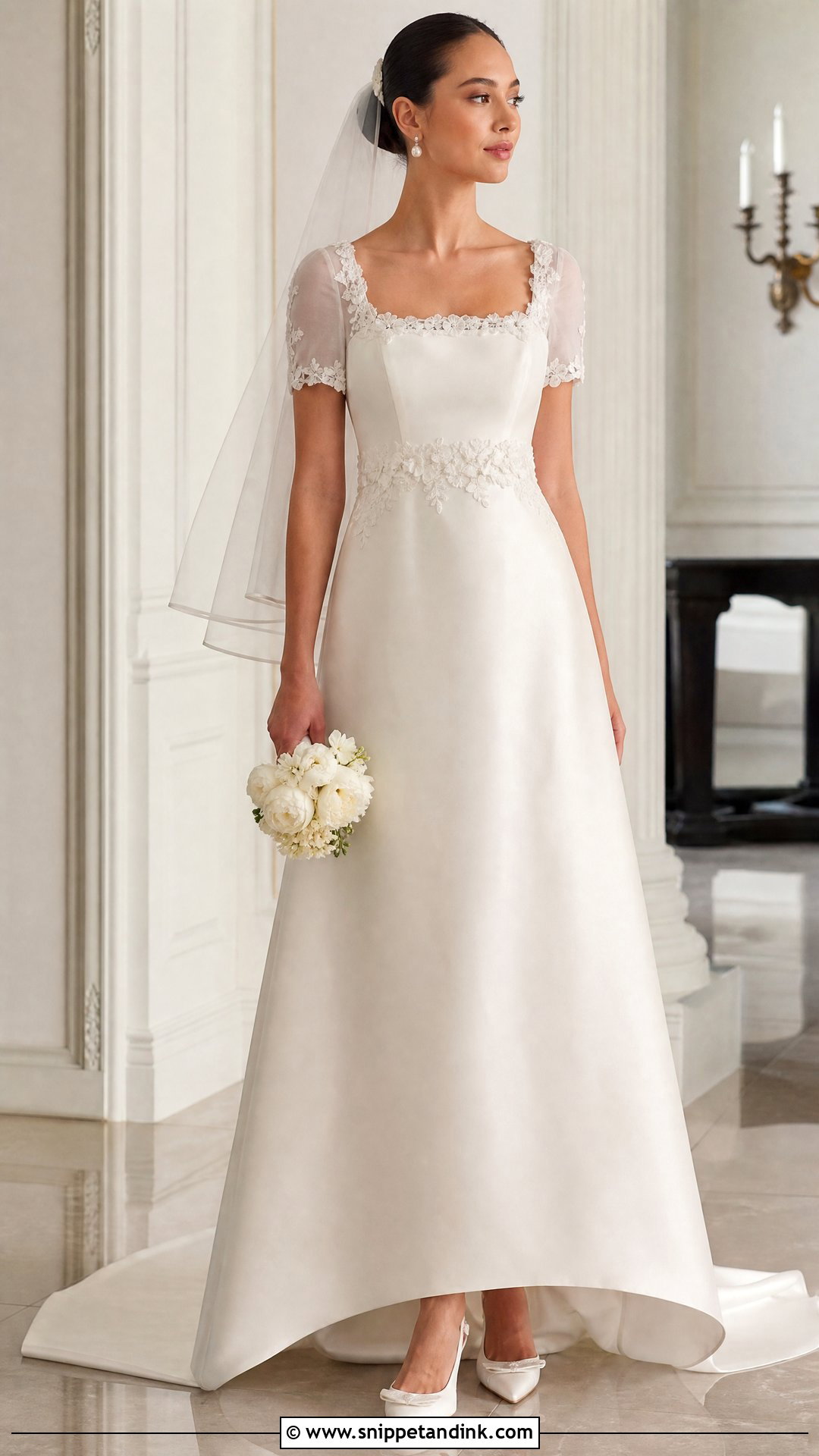
A square neckline’s straight lines against curved botanical stitching is a contrast I always enjoy. Think satin A-line, short sheer sleeves and small flowers around the neckline, cuffs and waist, with a few vines dropping onto the skirt to link everything. Pointed slingbacks and small pearl hoops feel modern. Sleek bun or polished half-up keeps the neckline visible. A shoulder-length veil is lighter; a long plain one is more formal. Keep the bouquet compact, white and green. The look leans gently vintage without trying.
9. V-Neck Wedding Dress with Flower Embroidery
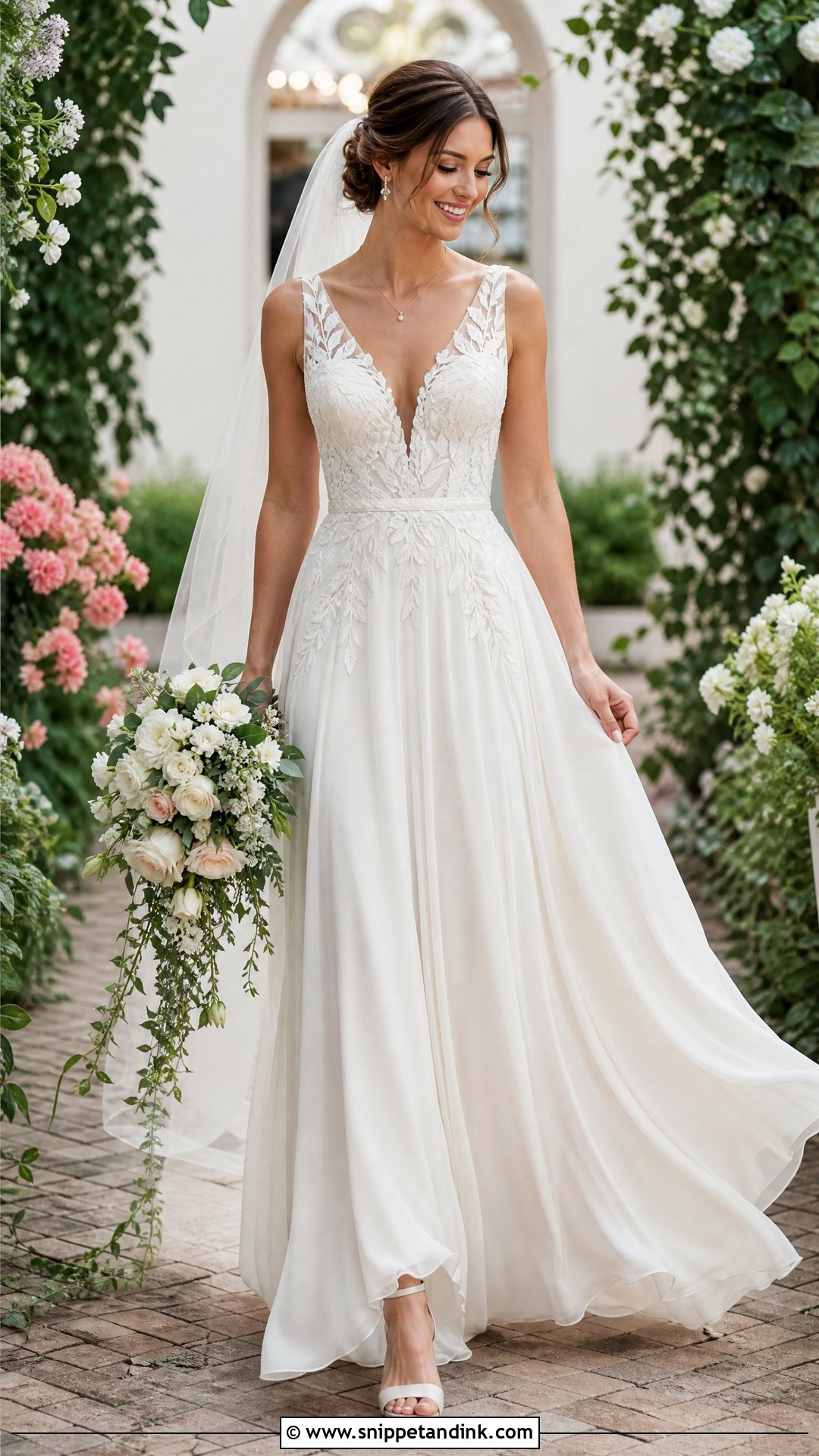
Vines that trace the edge of a V-neck lengthen the upper body, especially if they then spread across the waist. The bodice needs a supportive lining so the V stays flat, and a flowing chiffon or tulle skirt keeps it comfortable. Ivory low heels or embellished flats work depending on height and venue. Delicate drops suit the neckline; a slim pendant can sit inside the V without clutter. A loose updo with the veil fixed below it, and a cascading bouquet kept small enough not to hide the waist. I’d test the depth of the V while you bend forward, not just while you stand.
10. High Neck Wedding Dress with Flower Embroidery
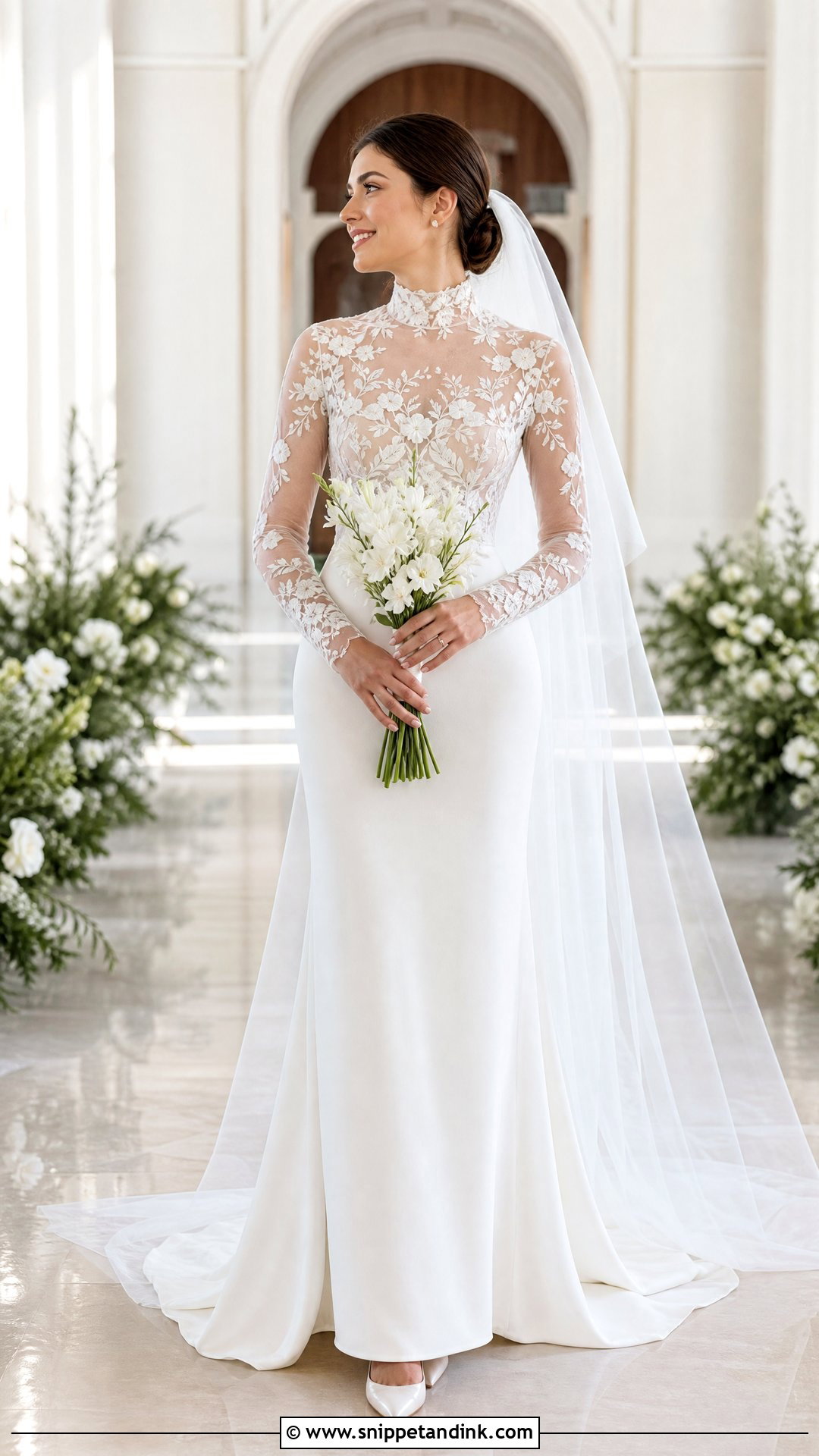
A high neck covered in small white blooms is quiet and distinctive. Look for illusion tulle at the neck, with embroidery across the shoulders, bodice and fitted sleeves, balanced by a clean crepe skirt or a soft flare. No necklace; pearl studs, a slim ring and pointed pumps are plenty. A polished low bun shows off the embroidered collar and back, and a plain cathedral veil set under the bun leaves the back on view. Carry a streamlined white bouquet. For a hot day, check whether the collar is lined; unlined illusion breathes much better.
11. Corset Wedding Dress with Flower Embroidery
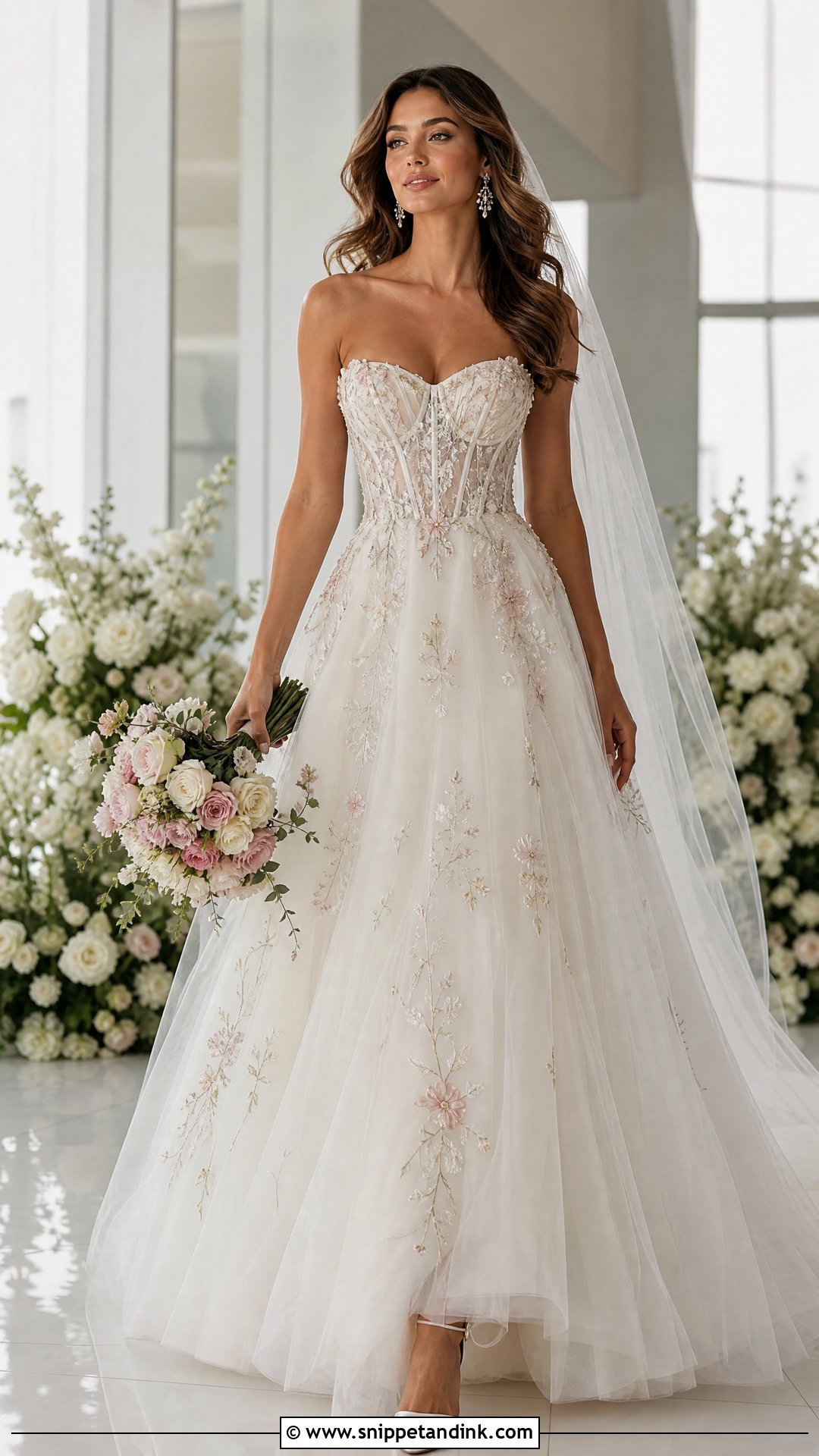
Embroidery that follows a corset’s structure, over the cups and along the waist, makes the boning look softer. A gently curved neckline and an A-line tulle skirt balance the close fit. Ivory thread is classic; pale pastels add a little colour. Closed-toe satin heels, delicate gemstone earrings and a sheer veil with a narrow finished edge suit it, with a smooth bun, soft ponytail or brushed waves. A long-stemmed bouquet with little greenery keeps the lines clean. The first thing I check is how the embroidery sits over the bones. Thread stitched straight across a boning channel can pucker when the corset is laced.
12. Boho Wedding Dress with Flower Embroidery
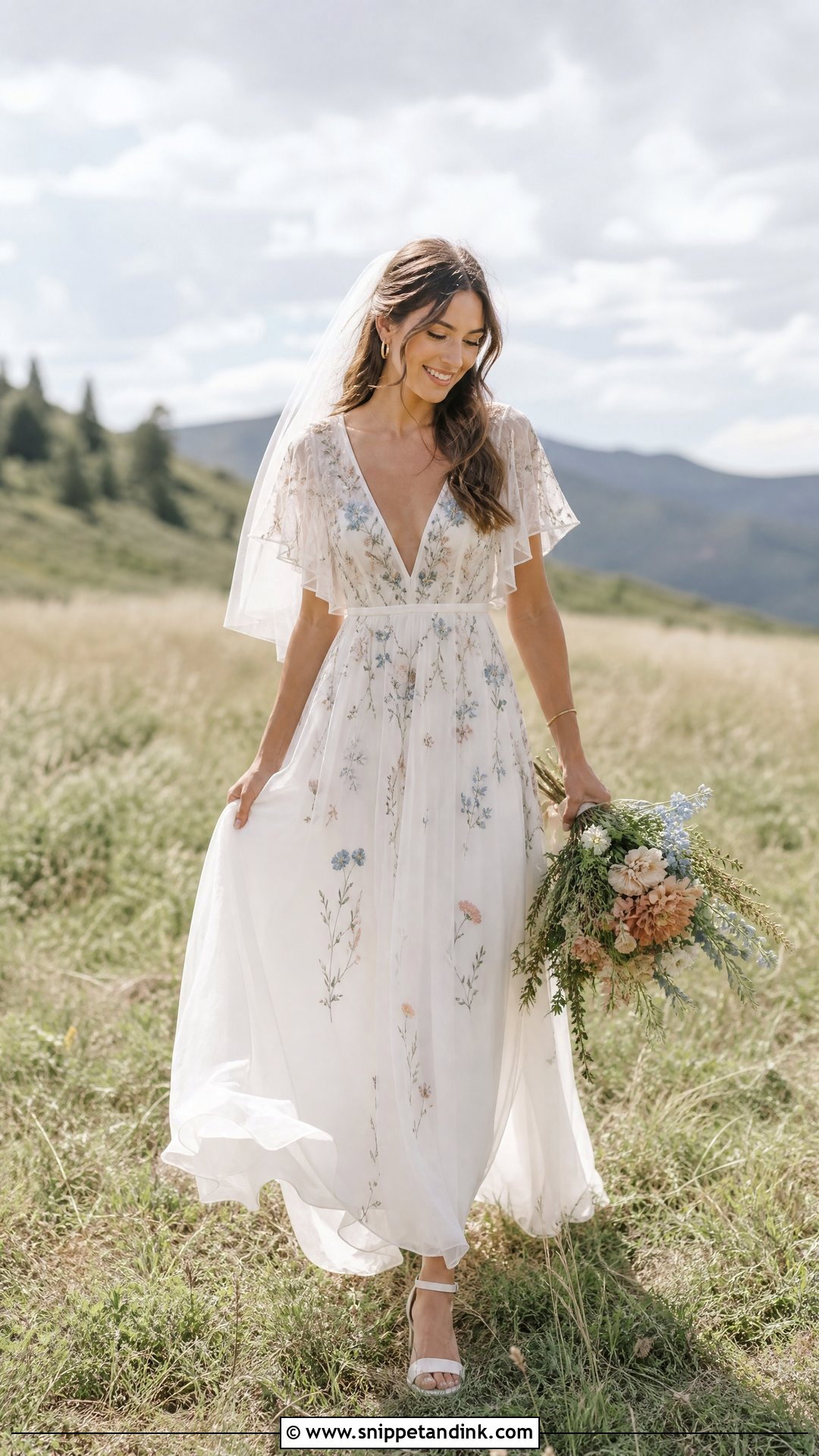
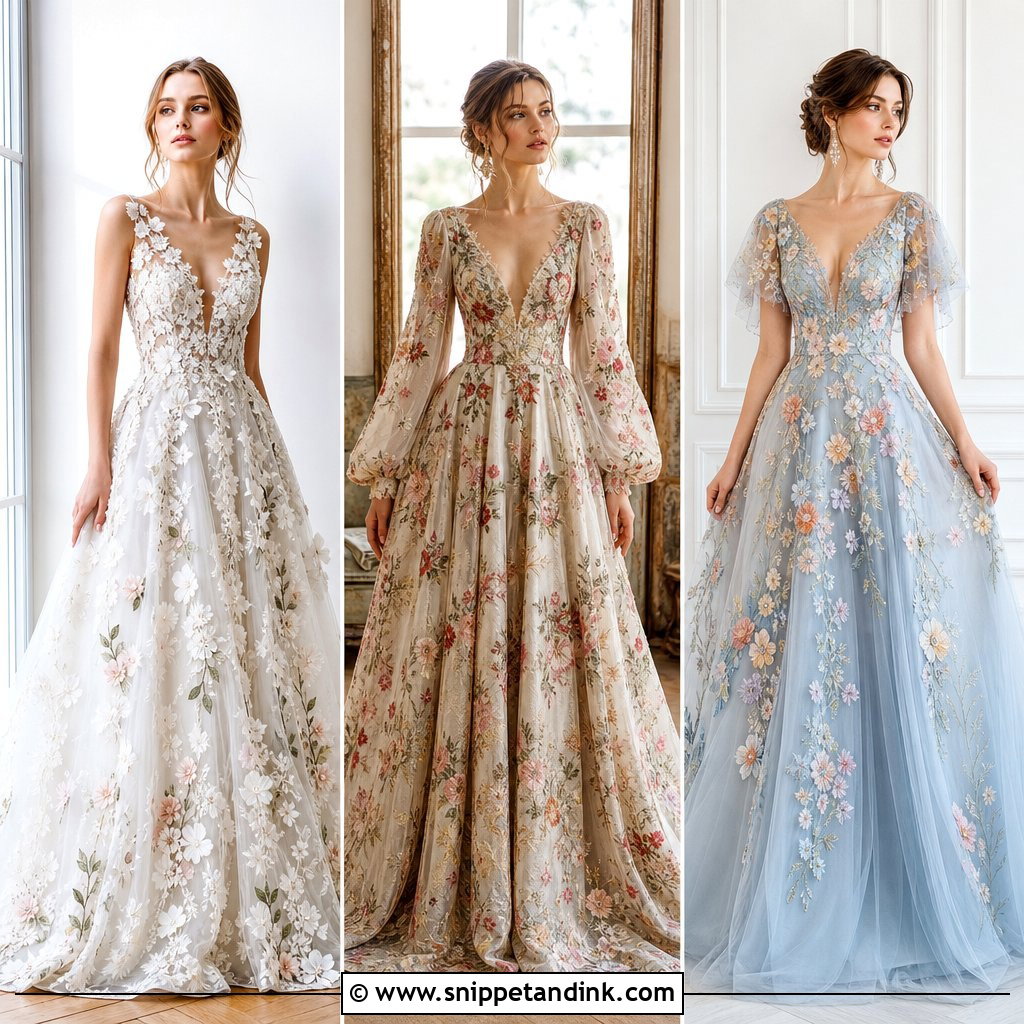
Muted dusty blue, pale peach, cream and sage embroidery suits a relaxed chiffon boho dress with flutter sleeves, a defined waist and a softly gathered skirt. Wildflowers and leafy vines look natural on it. Ivory block-heel sandals or leather flats are practical outdoors. Small gold earrings, a delicate hair vine and a light veil under loose waves are enough, with an unstructured seasonal bouquet. Hold back on rustic props. The embroidery already sets the theme, and too many extras start to look like set dressing.
13. Vintage Wedding Dress with Flower Embroidery
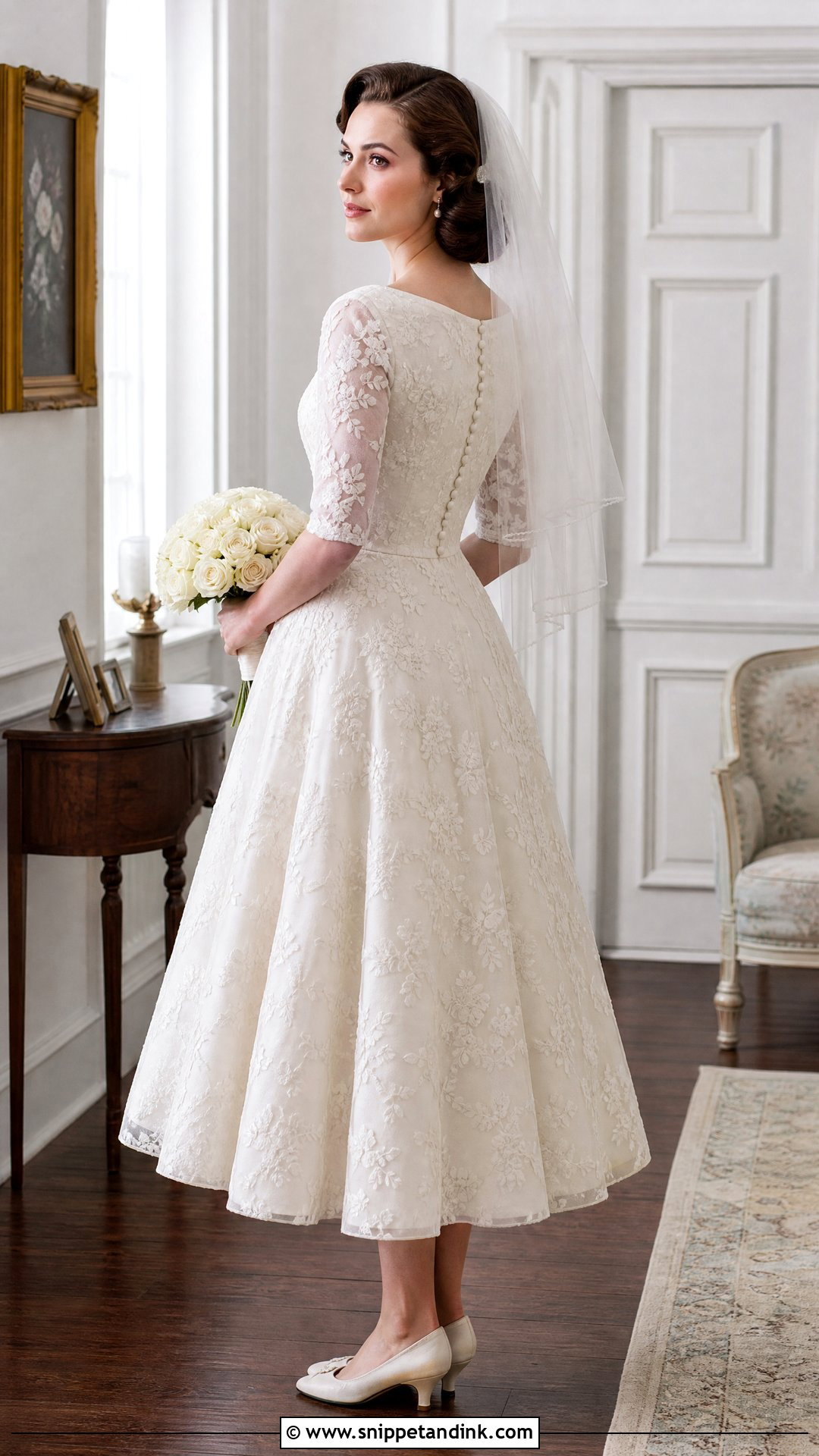
Vintage-inspired floral embroidery usually means small blossoms in a repeating pattern, and it suits a tea-length or full-length dress with a softly defined waist. A bateau neckline, sheer elbow sleeves and a covered-button back keep it traditional without costume. Low kitten heels, pearl earrings and a small structured clutch work. A birdcage veil suits the shorter length; a plain fingertip veil the longer one. Polished waves or a low roll and a compact bouquet of cream roses finish it. Old embroidery patterns look most authentic in slightly warm ivory, not bright white.
14. Minimalist Wedding Dress with Flower Embroidery
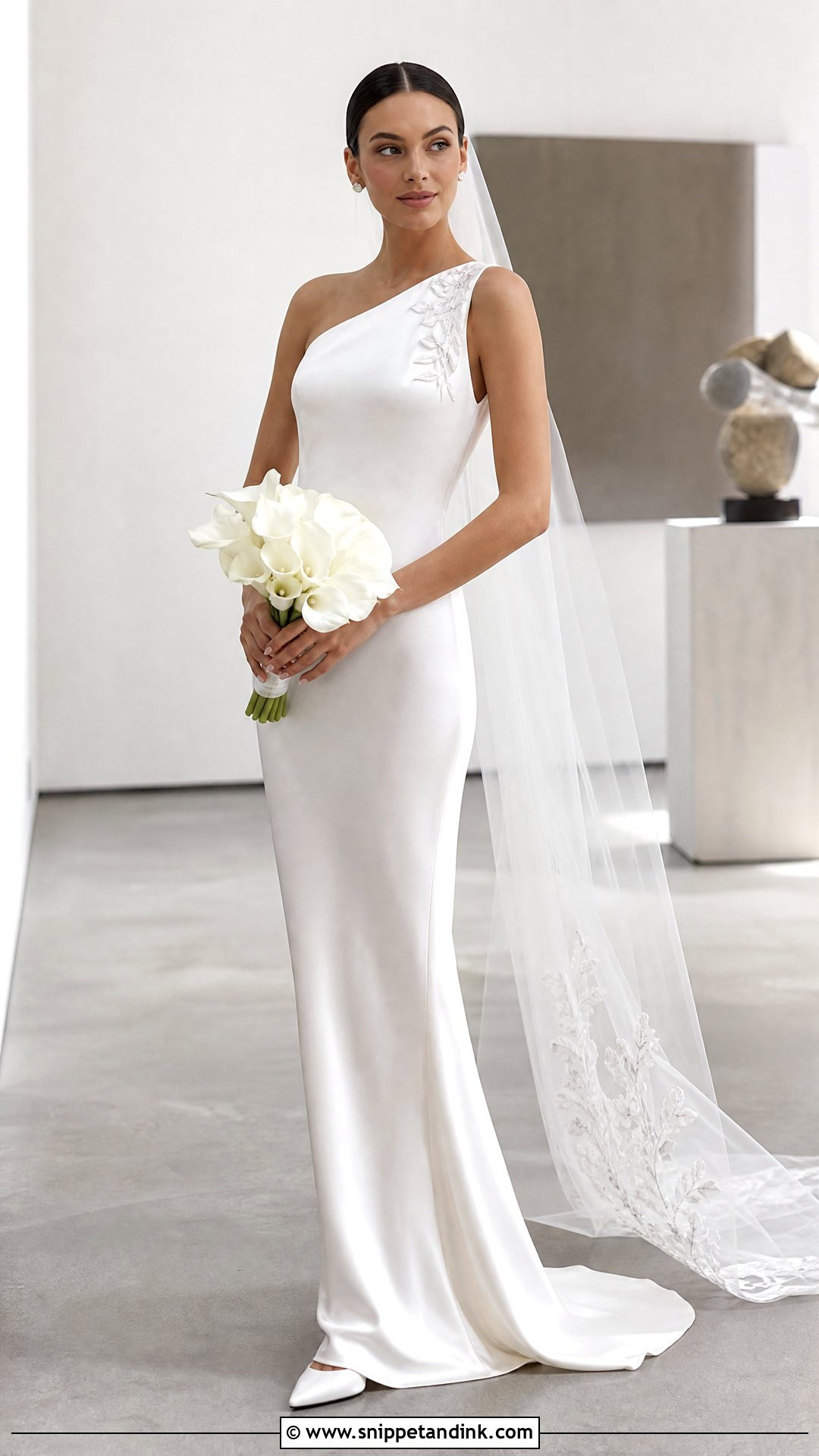
Can a minimalist dress carry flowers? Yes, if you limit it to one place. On a clean silk, satin or crepe column or A-line, a single flower at the shoulder, a narrow vine at the waist or a small spray near the train becomes the whole point. Sleek pointed pumps, small diamond or crystal studs and a plain single-layer veil suit it, with a centre-parted low bun and a sculptural bouquet in one neutral flower. This is the style where a meaningful flower works best, because one motif is easy for an embroiderer to design to order.
15. Blush Wedding Dress with Flower Embroidery
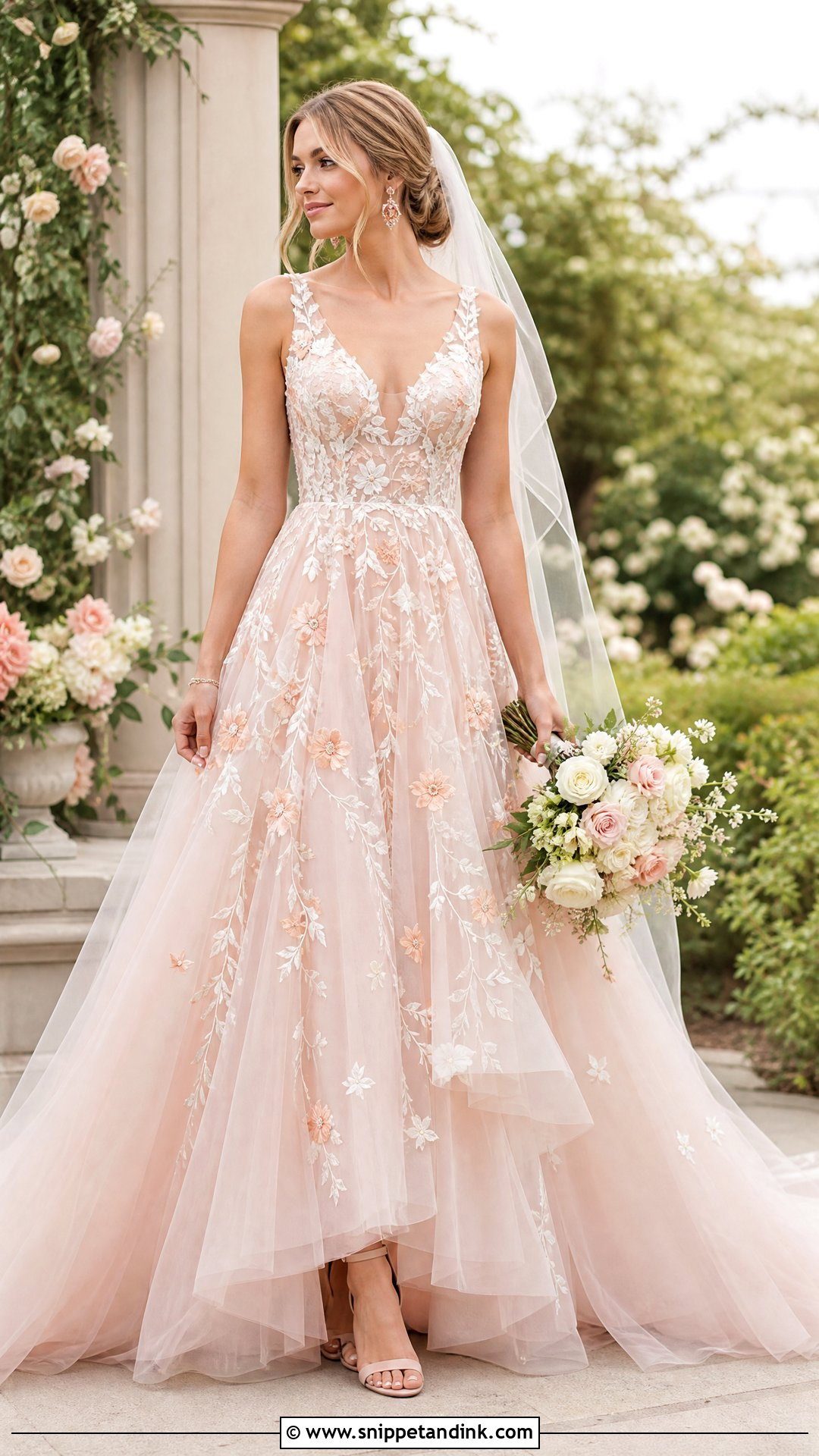
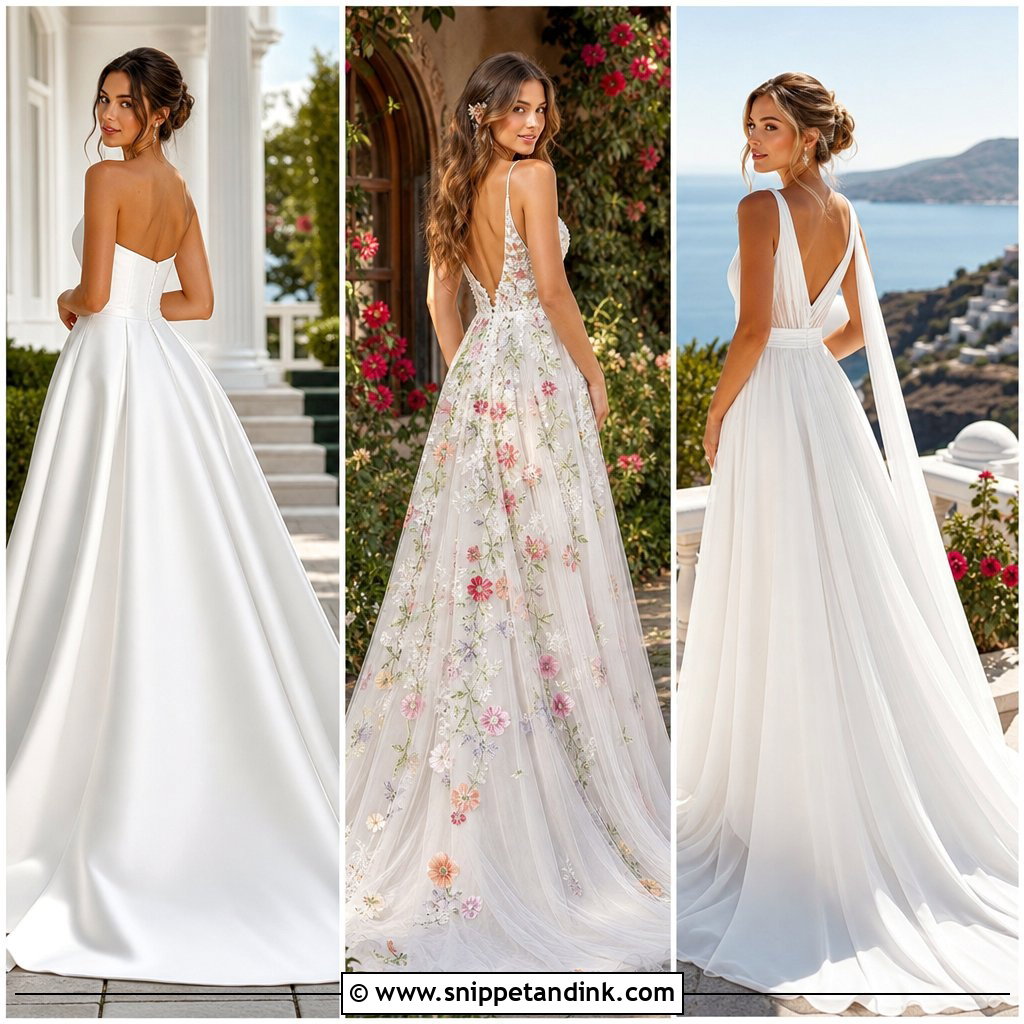
Ivory and pastel embroidery on a blush base gets gentle contrast instead of the near-invisible effect of white on white. A layered tulle gown with a fitted bodice, soft V-neck and A-line skirt can carry white vines at the waist and pink and peach blossoms through the skirt. Nude or pale blush heels keep the colour continuous. Rose-gold earrings, a fine bracelet, soft waves or a loose bun and a plain ivory veil complete it, with white and pale pink flowers in hand. I always hold blush fabric against a bride’s face in daylight before she orders. On some skin tones it reads beige in photos.
16. Champagne Wedding Dress with Flower Embroidery
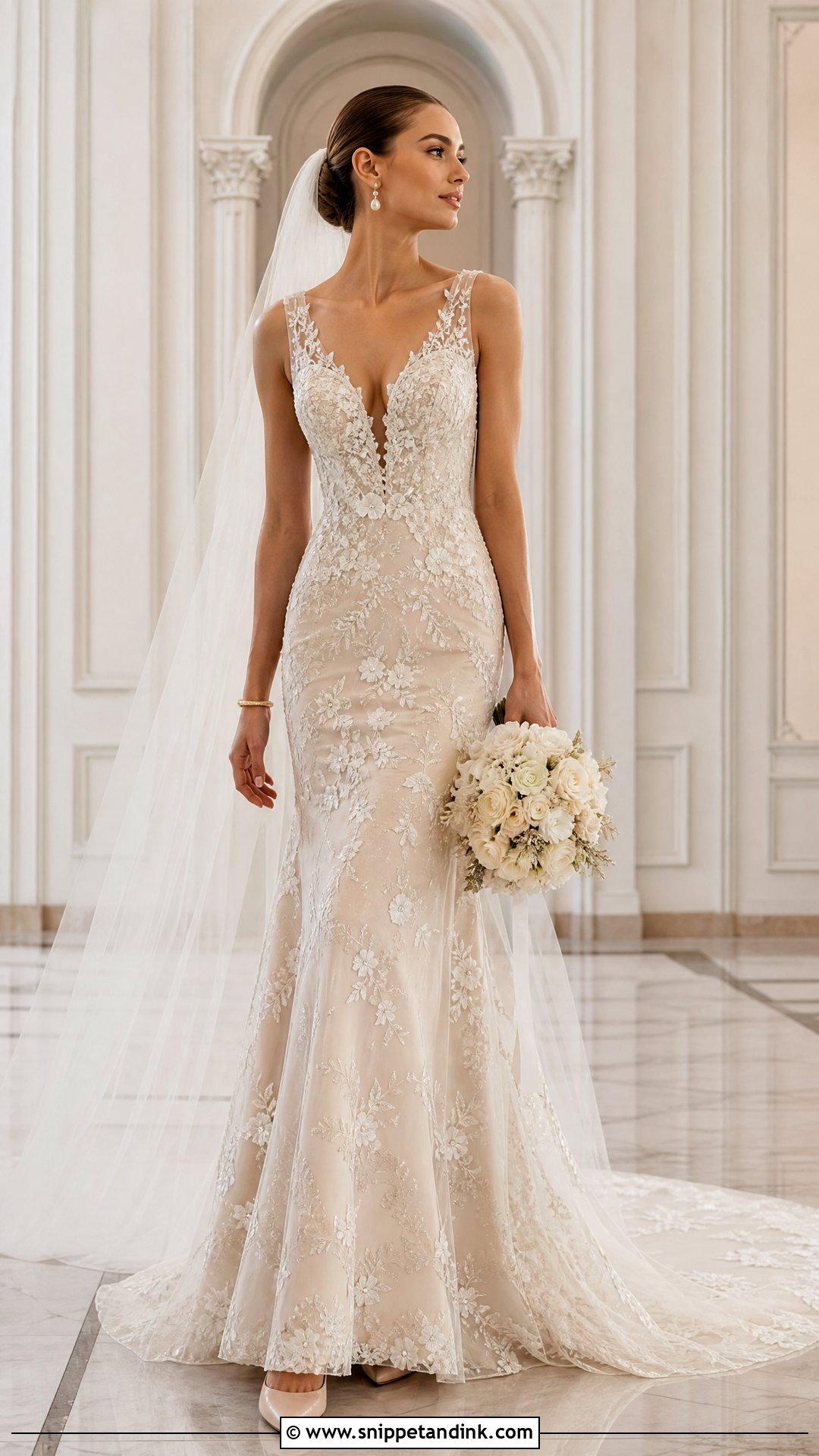
Champagne gives ivory embroidery a warm background, and metallic thread and tiny pearls catch light against it. An A-line or fit-and-flare with the heaviest work on the bodice and lighter work on the skirt stays balanced. Champagne satin pumps, pearl drops and a simple gold bracelet suit the warmth. A plain ivory veil adds a little contrast so the outfit doesn’t go entirely tonal. A sleek chignon or brushed side waves with a small pearl comb, and cream flowers with little greenery. Metallic thread tarnishes if it’s stored damp, so keep this dress somewhere dry afterwards.
17. Blue Flower Embroidered Wedding Dress
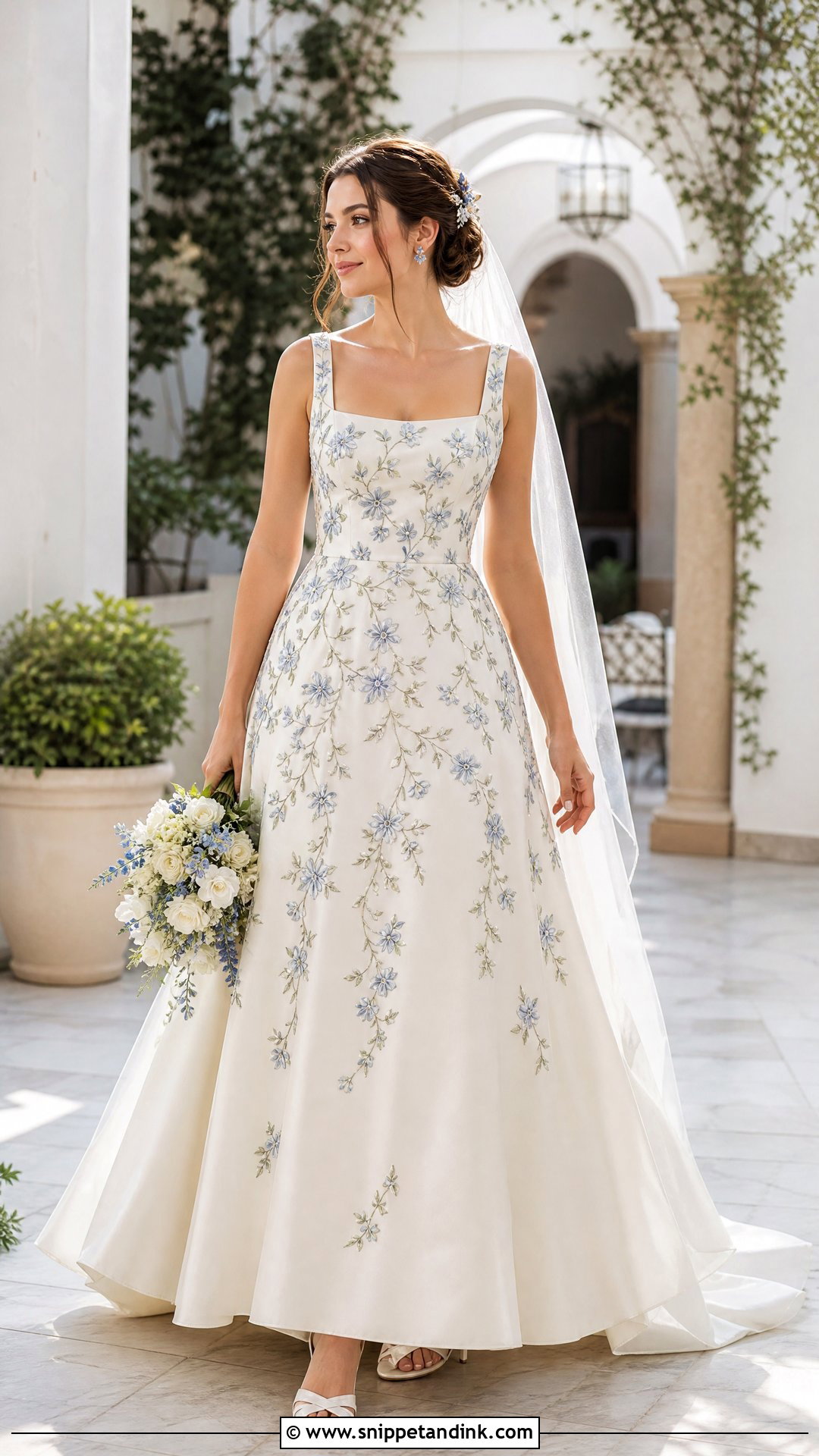
Pale blue blossoms with green vines on an ivory gown add colour without losing the bridal look, and blue has a long tradition at weddings. Concentrate them around the bodice, waist and lower skirt, with a square or soft sweetheart neckline to frame them. Wear ivory shoes, not blue; matching everything makes it look like a costume. One link to the thread is enough, perhaps blue gemstone studs or a small hairpin. A plain veil, natural makeup, a softly pinned style and a mostly white bouquet with a few pale blue accents finish it.
18. Rose Embroidered Wedding Dress
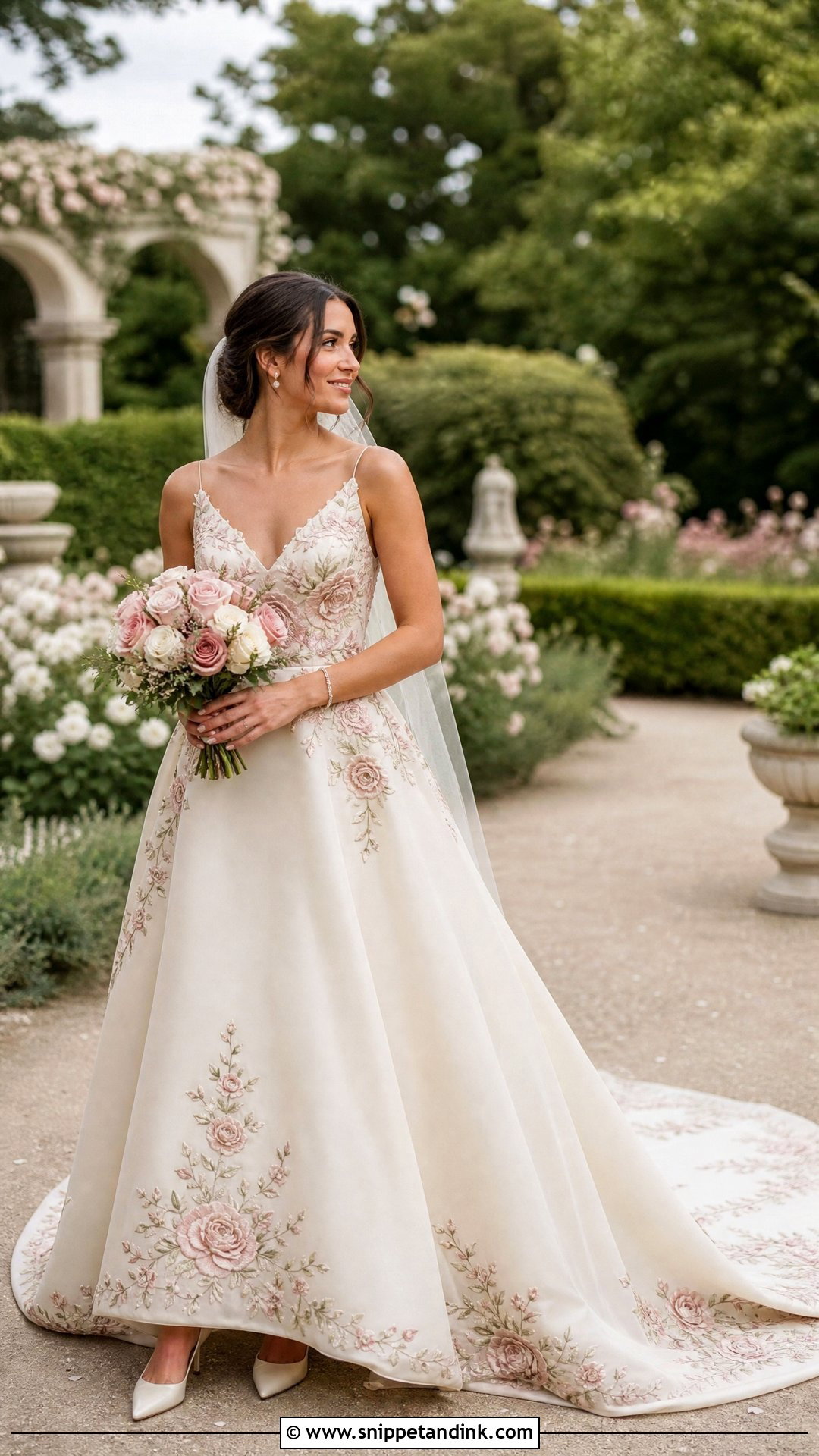
Roses are a bigger motif than most embroidered flowers, so give them room. A fitted bodice with ivory or blush roses trailing from neckline to waist, then reappearing at the hem and train, needs a full A-line skirt. Pointed ivory heels, pearl earrings and a simple bracelet suit it. If the roses are white, a softly tinted veil adds depth; with coloured roses, stay with plain ivory tulle. A low bun with one quiet comb. In the bouquet, use roses in one matching shade rather than copying every colour on the dress.
19. Wedding Dress with Flower Embroidered Hem
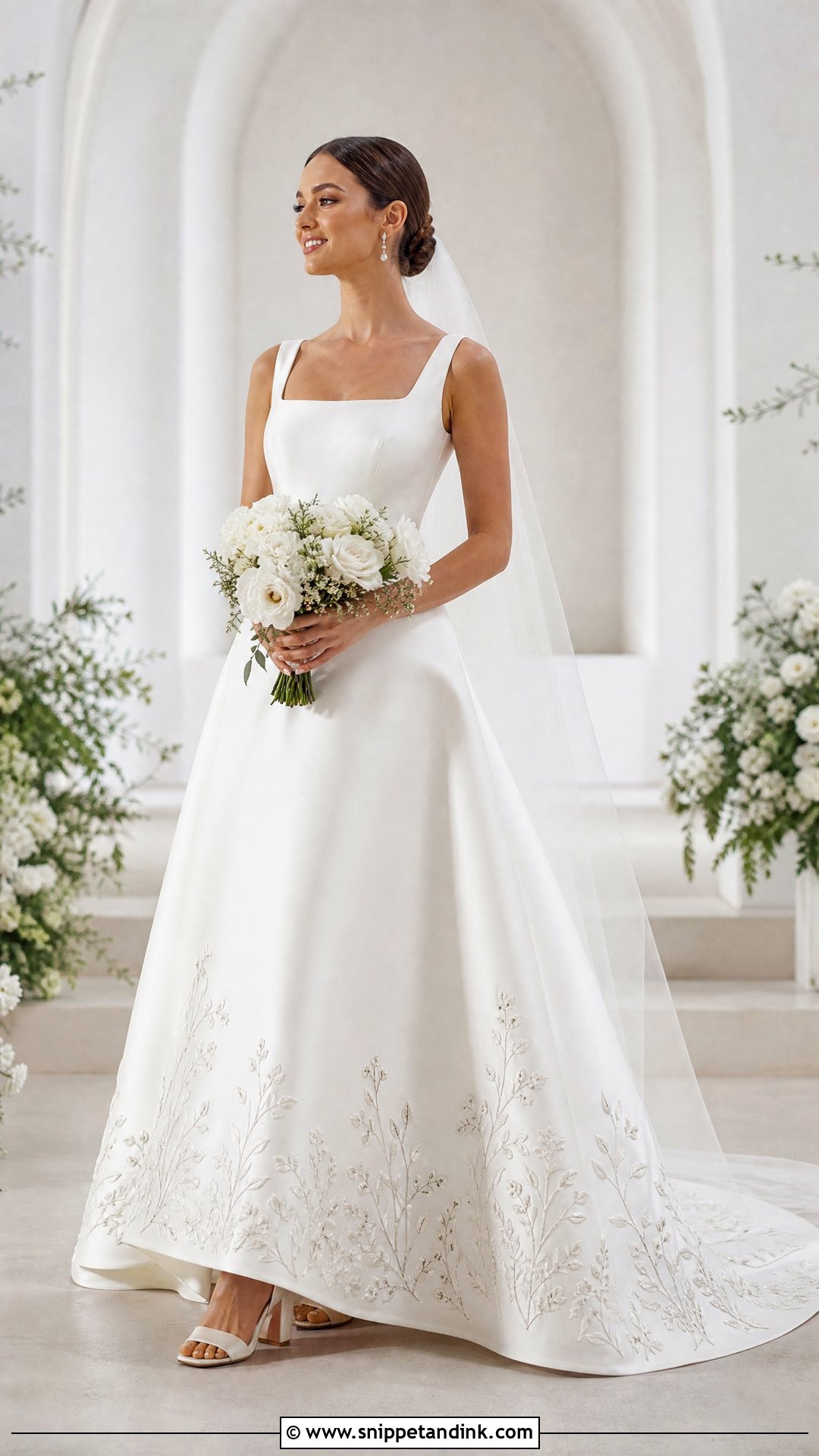
An embroidered hem puts the detail where it moves most. A clean satin or organza A-line with botanical threadwork wrapping the lower skirt and train, and a simple scoop or square neck, makes the border look intended. With the interest near the floor, keep shoes plain: uncluttered pointed pumps or block-heel sandals. Small drops, a smooth low bun and a plain chapel veil finish it, with a bouquet that echoes the embroidery’s shapes rather than its colours. Hem embroidery is also the part of a dress that wears first. Ask for a protective horsehair or tulle edge beneath it if you’ll be outdoors.
20. Wedding Dress with Matching Flower Embroidered Veil
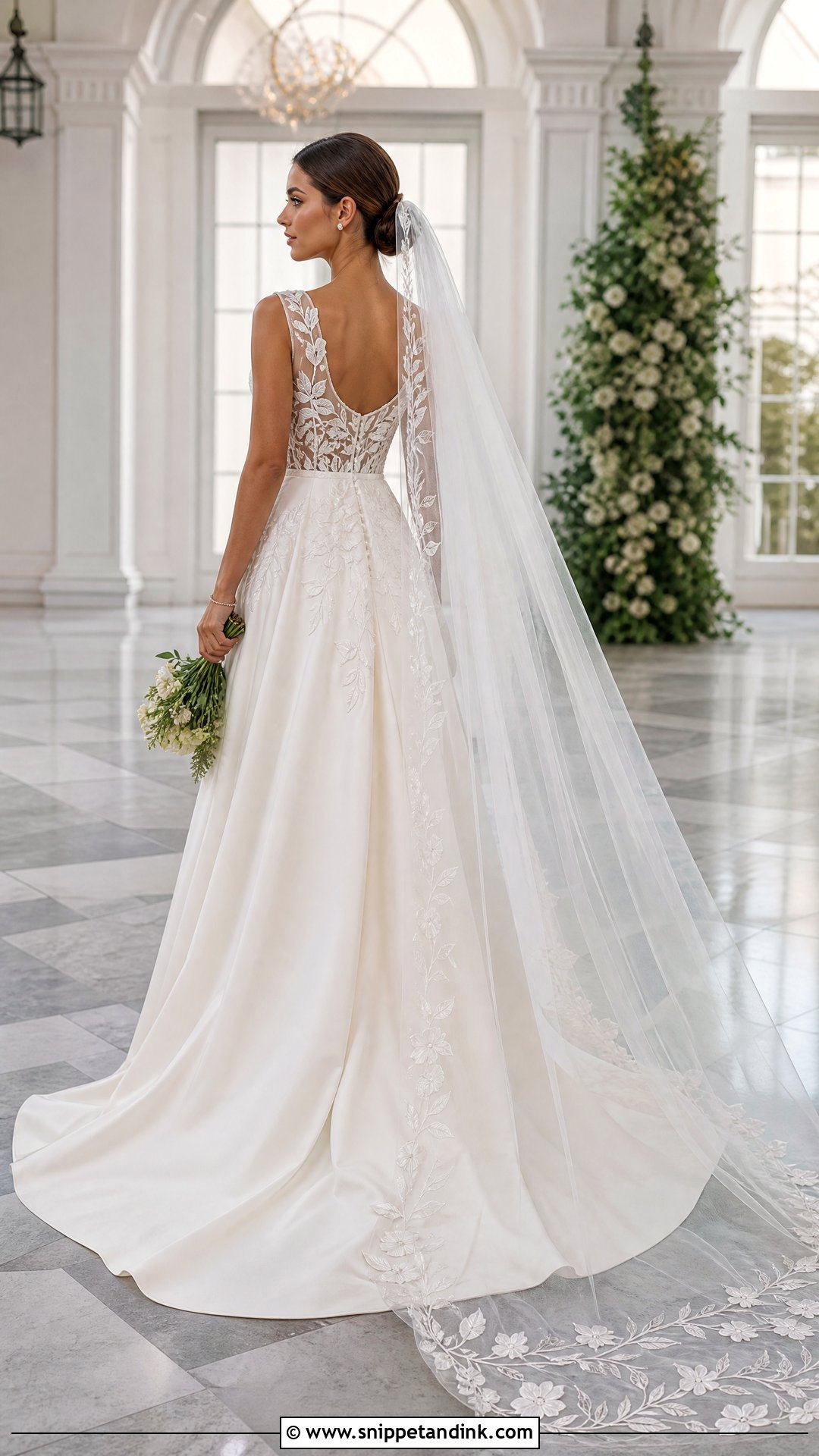
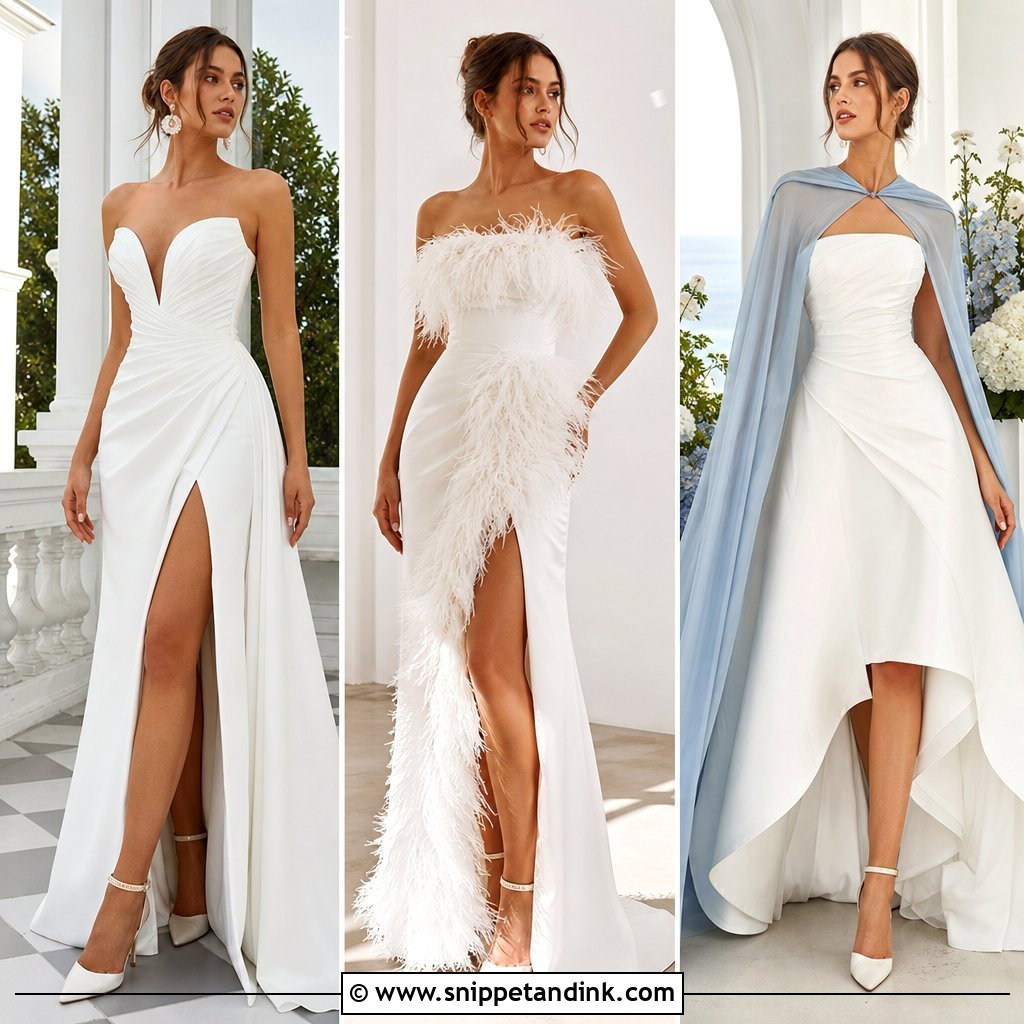
A veil that repeats the dress’s flowers along its border links the whole outfit. Keep the gown’s embroidery mostly on the bodice and waist, with open, airy skirt, and let the long veil carry the same blossoms at its edge or train. Ivory heels, pearl studs and one bracelet are enough. A low bun gives the veil a secure base and shows the embroidered edge. Carry a neutral bouquet. Embroidered veils are heavier than plain tulle, so ask your stylist to anchor the comb with crossed pins; otherwise it drags backwards during the ceremony.
Why Thread Colours Look Different in Every Photo
Embroidery thread, especially silk and rayon, has a slight sheen, and that sheen changes with the light. In soft daylight, pale colours look gentle and true. Under warm indoor bulbs, blues and lilacs can lose strength while pinks and peaches look warmer. Camera flash bounces off shiny thread and can flatten raised flowers into pale blobs.
This is worth testing before the wedding. Take phone photos of the dress at a window, under ordinary indoor light and with the flash on, then show them to your photographer. They can plan angles and light that bring out texture, and they’ll know to grab close-ups in daylight. If your reception is candlelit, those daylight details are the ones that will show the embroidery best.
Matte cotton thread behaves more consistently than shiny thread, so if colour accuracy matters to you, for example to match a family flower, ask which thread the embroiderer plans to use.
Thread, Scale and Placement Decide the Dress
Embroidery suits almost every shape, from a slim sheath to a full ball gown. White thread gives quiet texture, colour says more, and the scale and placement of the flowers decide how the dress feels on you. Look at it next to the veil and bouquet you plan to carry, and try the complete outfit together before deciding anything final. Let shoes, jewellery, hair pieces and flowers stay one step behind the dress. Do that, and the embroidery is what people remember, not the accessories around it.
You'll Like These Ideas:






Leave a Reply