
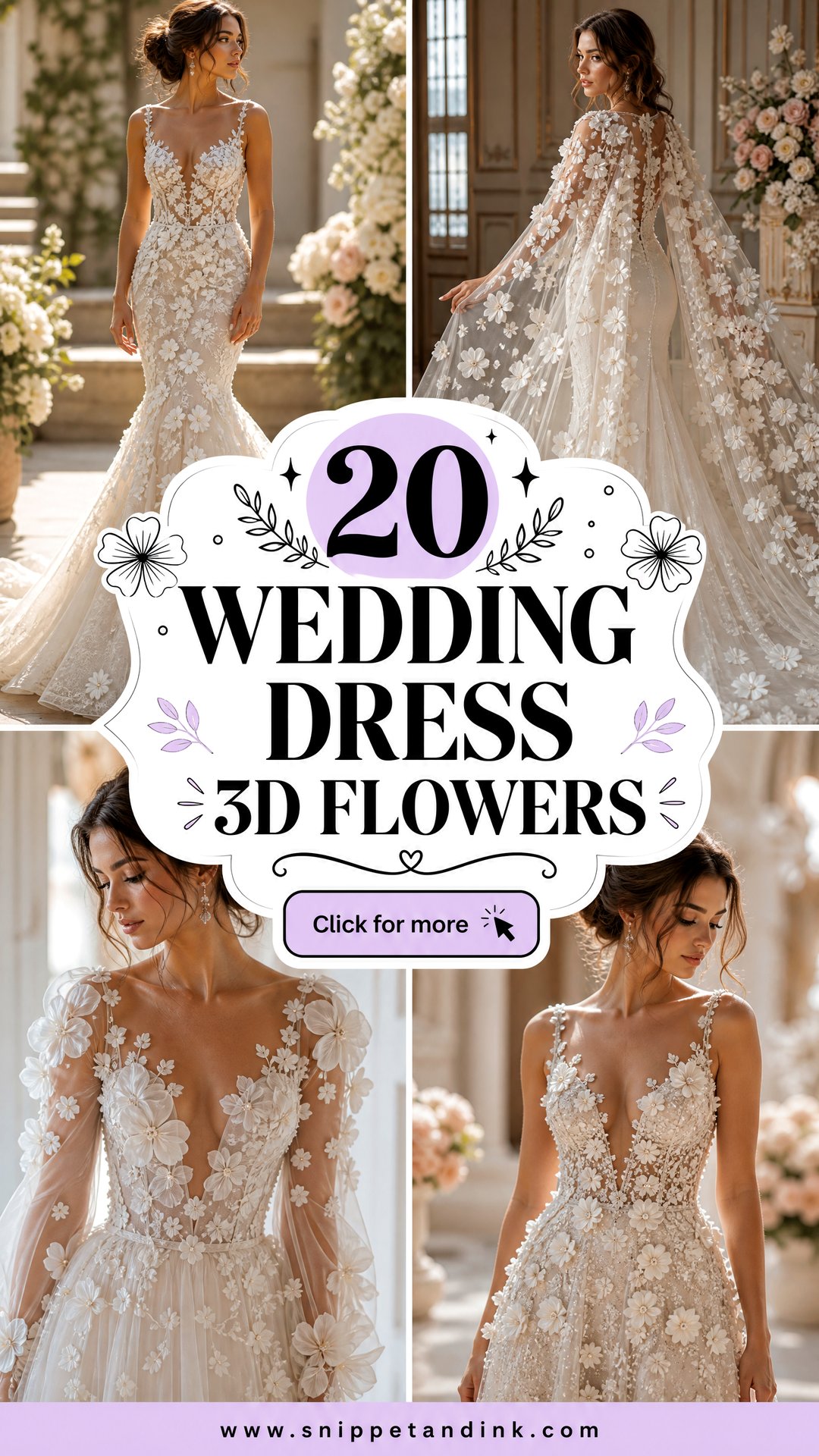
Raised floral appliqués are one of the few gown details that change with the light as you move. A sculpted petal throws a small shadow, so the dress reads as textured from across a room in a way flat lace never quite does. They can soften a structured corset, trail across an illusion sleeve, or carry a plain skirt on their own. At fittings, the question I keep coming back to is scale: how big the flowers are, where they cluster, and whether they flatter your frame or fight it. Everything else you wear should stay quieter than the petals. Below are twenty gowns with full styling for each, from airy A-lines to fitted mermaids.
How Raised Petals Are Made, and Why It Changes What You Buy
Not all 3D flowers are built the same way, and the method affects how a dress wears over a long day. Most bridal appliqués are cut from organza, chiffon or lace, shaped (often with heat), layered, then hand-stitched to the gown at the centre of each bloom. Some cheaper gowns use glued flowers, which can lift at the edges after steaming or a warm afternoon.
When I go over a sample, I turn the flower back gently and look underneath. Small, even stitches anchoring each petal cluster mean it will survive hugs and car rides. A shiny residue or stiff patch suggests adhesive. I also ask whether the shop can supply spare flowers, because a single crushed bloom is easy to replace when you have a few extra.
- Organza petals hold a crisp, curled edge and stay light.
- Chiffon petals look softer and flatter, and they crease more easily.
- Lace flowers with raised centres give texture with less height, a good compromise if you’re nervous about bulk.
- Heavy beaded centres add weight; ask how the bodice is reinforced underneath them.
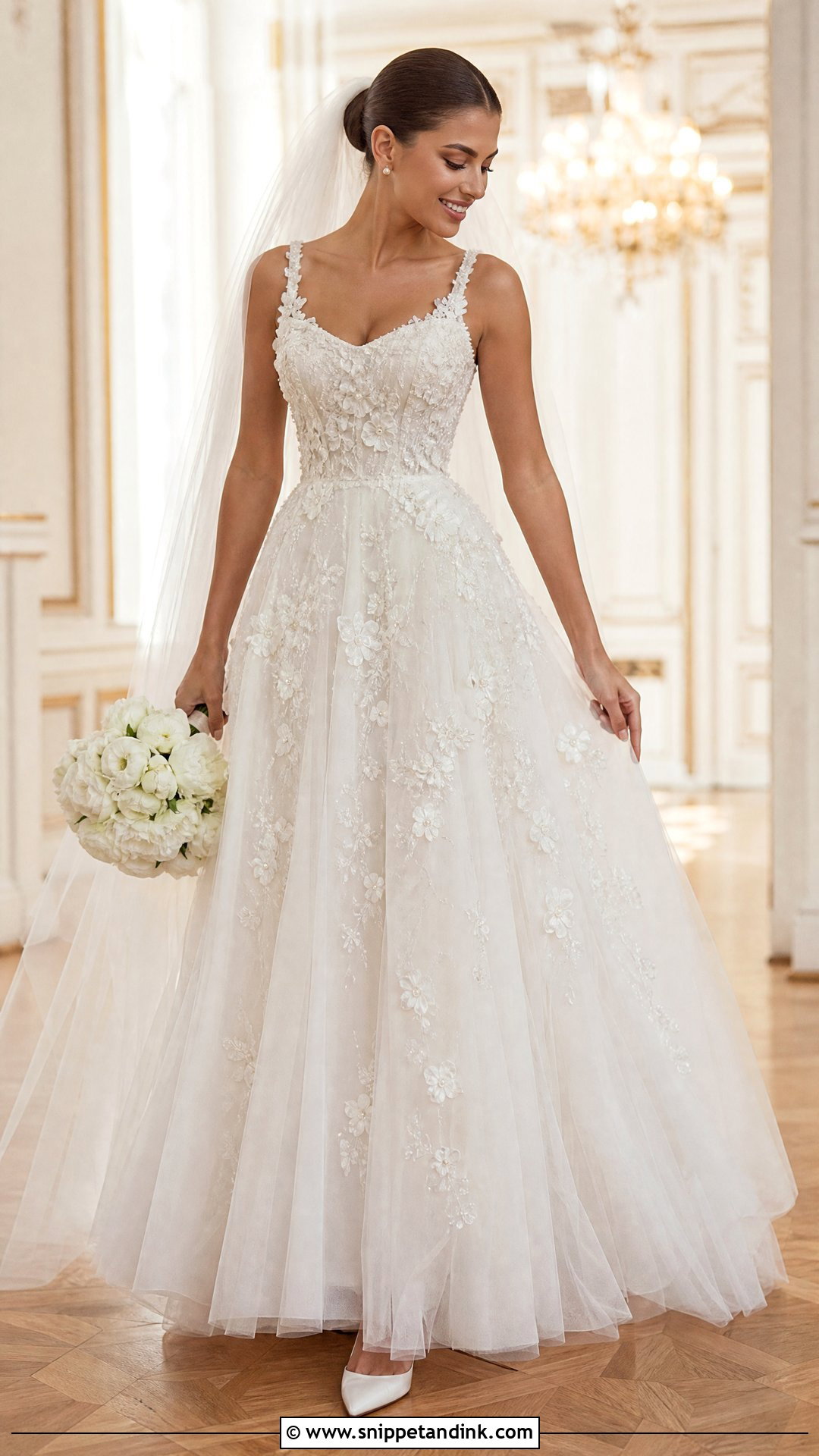
1. A-Line Wedding Dress With 3D Flowers
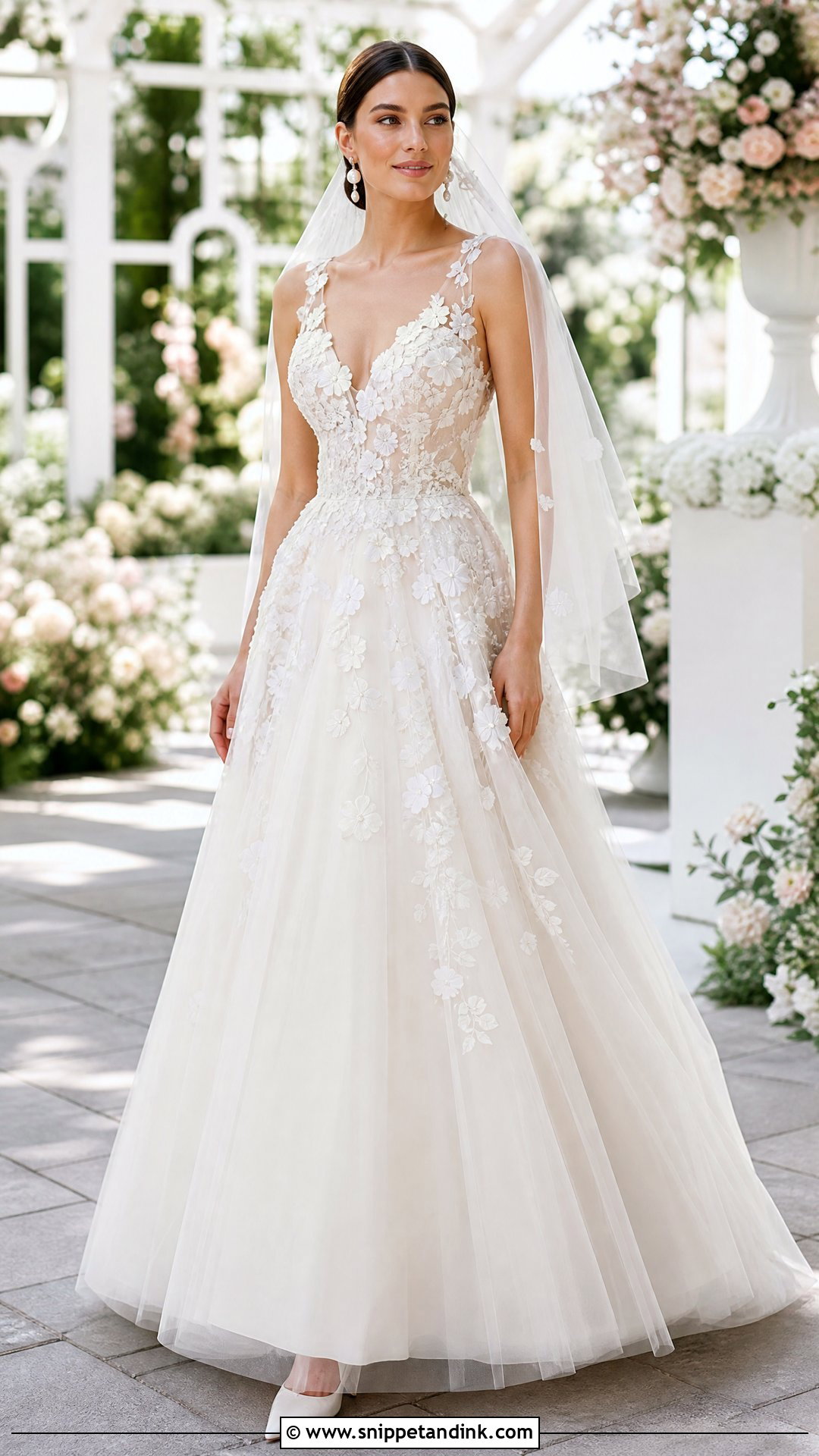
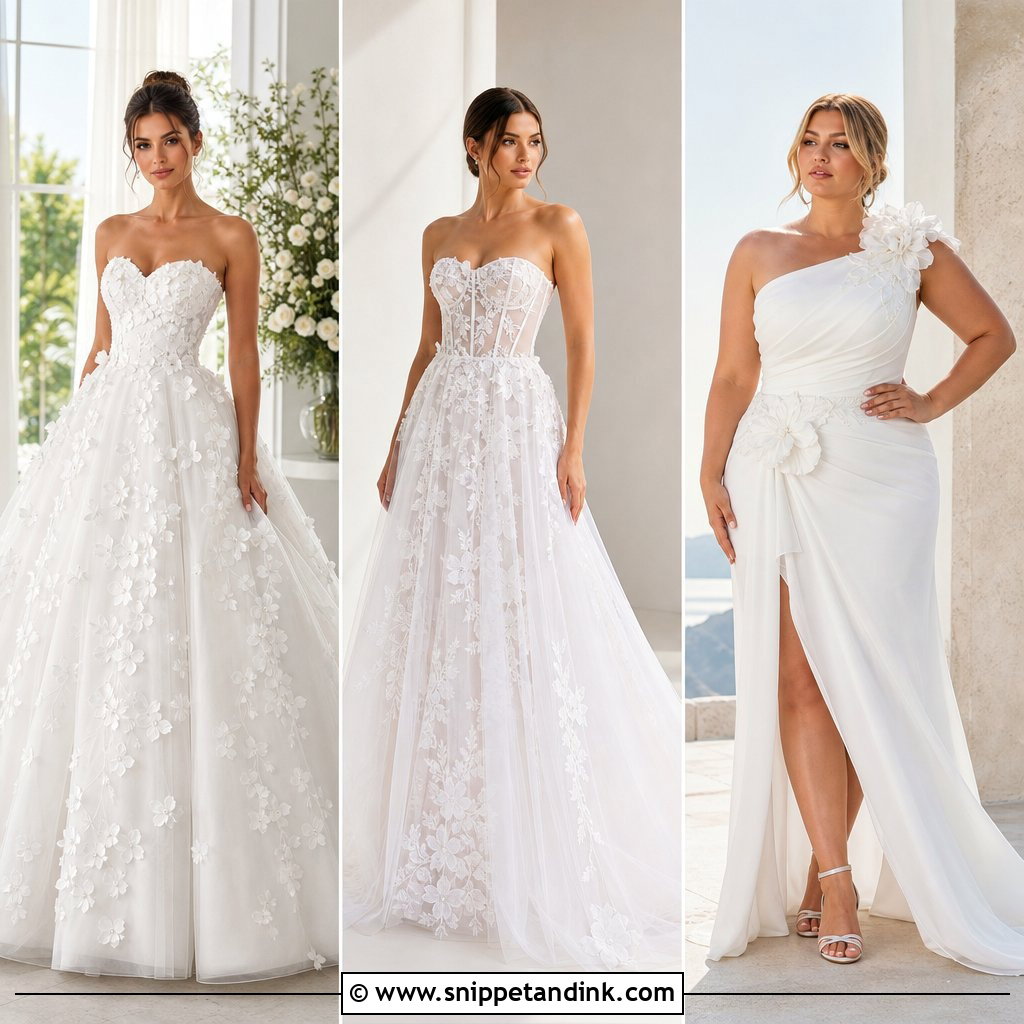
The A-line gives petals the most room of any shape, which is why I suggest it first to anyone unsure about texture. Ask for flowers heaviest at the neckline and waist, then thinning out as they travel down the tulle. That gradient pulls the eye to the narrowest point of the body and lets the skirt stay airy. A fingertip veil stops above most of the appliqué, so nothing gets hidden. Pearl drops, an ivory satin clutch and a low pointed pump finish it, with a loose bun or soft waves. Garden ceremonies and spring light suit it well.
2. Ball Gown Wedding Dress With 3D Flowers
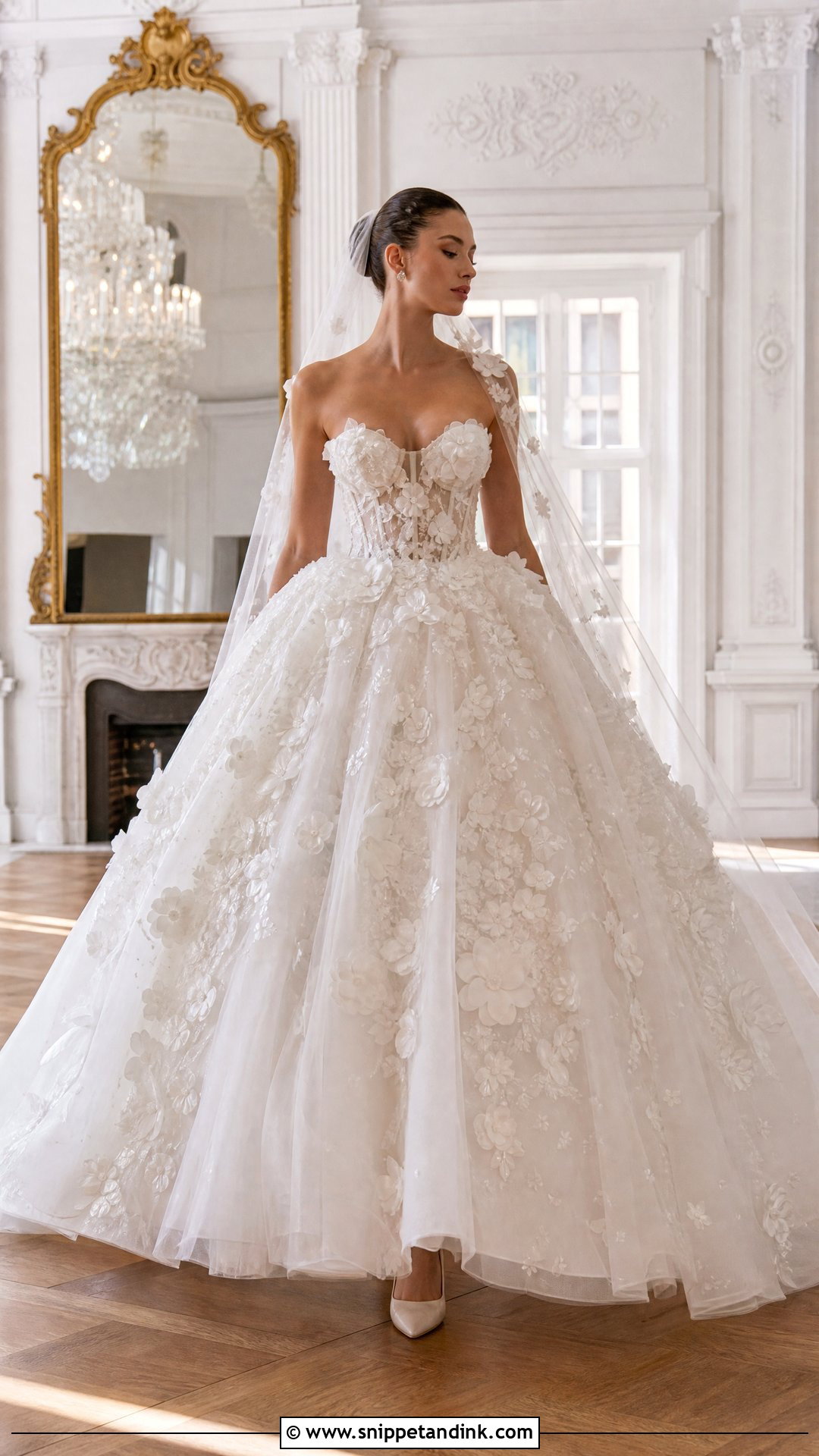
A ball gown covered in sculpted blooms from bodice to hem is the most theatrical option here, and it needs structure underneath to carry the weight. Large organza flowers look artistic; smaller lace ones look more traditional. I always lift the skirt at a fitting to feel how heavy the appliqué makes it, because a fully covered tulle skirt can pull at the waist seam by evening. A plain cathedral veil, crystal studs and a polished updo keep the top half calm. Carry a compact bouquet of a single flower variety so it contrasts with the dress instead of blending into it. Ballrooms and large estates give the train space to be seen.
3. Mermaid Wedding Dress With 3D Flowers
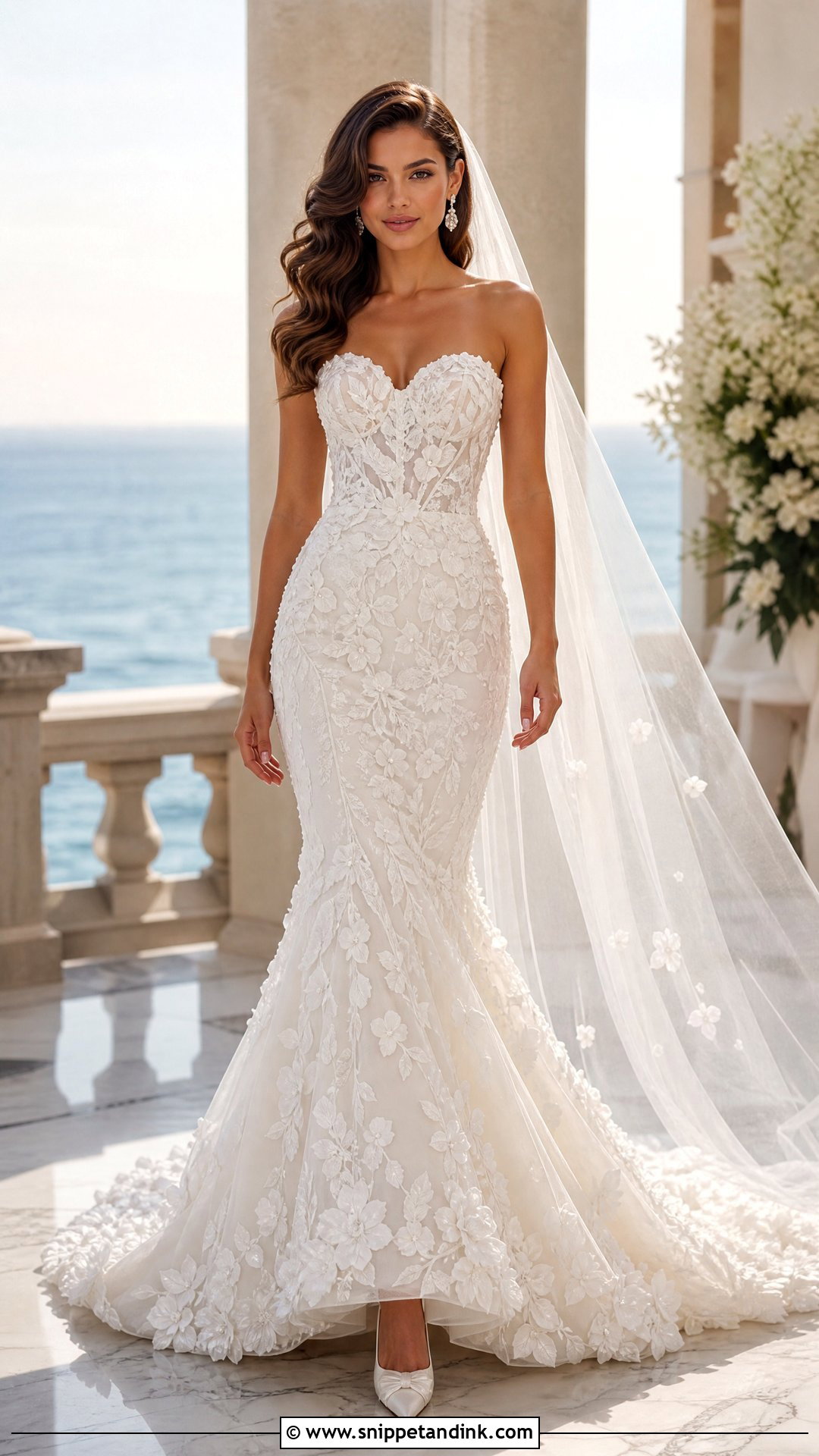
On a mermaid, appliqués belong where you want attention and nowhere else. The best versions start dense at the bodice and lighten toward the knee, then reappear in a few clusters at the flare to tie the two halves together. Flowers sitting right on the hip add width exactly where this silhouette is already fitted, so I check that spot in the mirror before anything else. A sheer chapel veil should fall behind the petals rather than over them. Slim drop earrings, pointed pumps and side-parted waves keep it polished for an evening venue or a coastal terrace.
4. Long Sleeve Wedding Dress With 3D Flowers
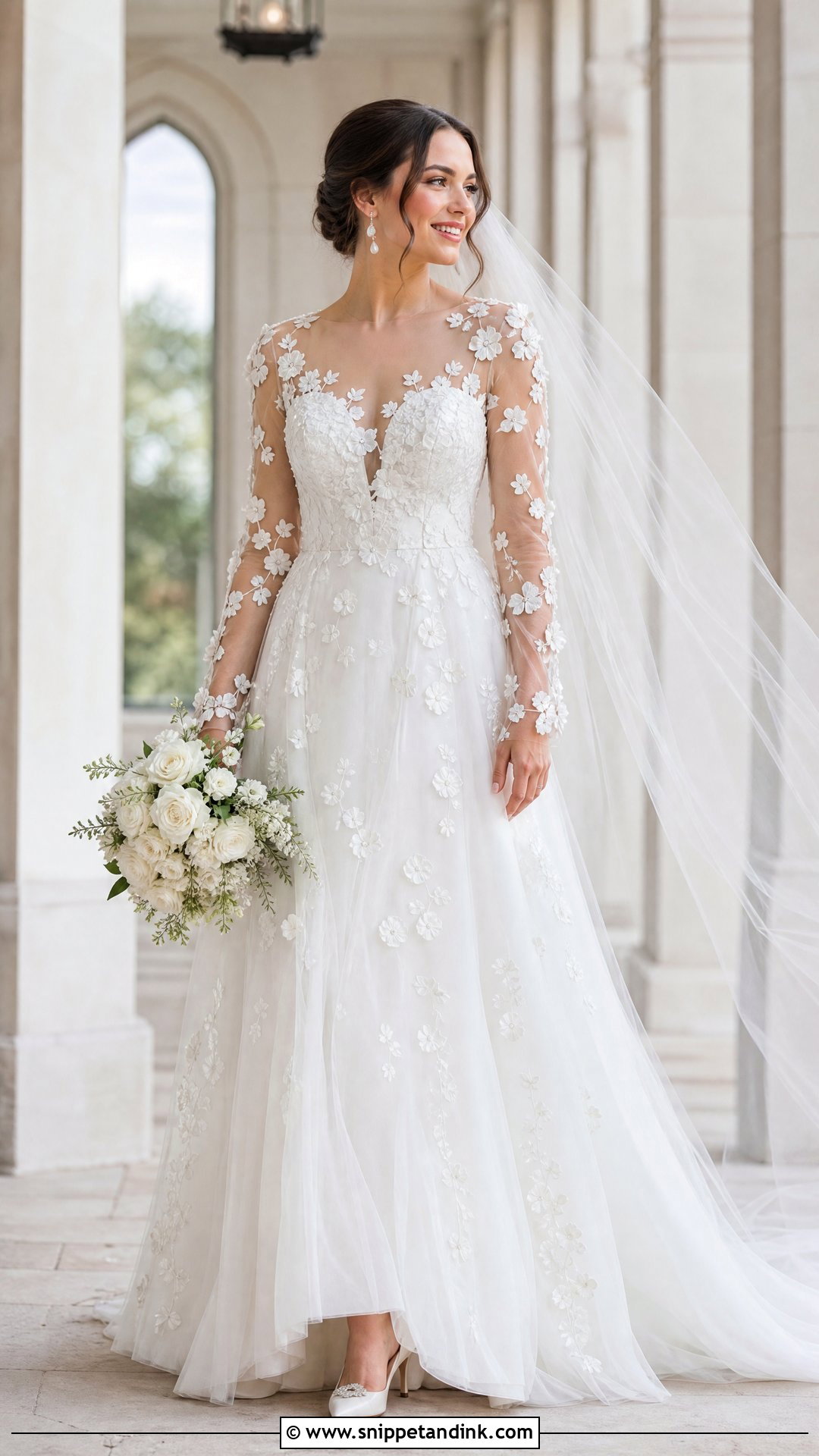
Petals climbing an illusion sleeve make long sleeves feel light instead of wintry. The mesh matters more than the flowers here: if it doesn’t match your skin tone closely, the sleeve reads as a beige panel and the flowers stop floating. I hold the sleeve against the inside of the wrist in daylight to judge it. With that much detail on the arms, skip bracelets and wear small pearl earrings, a plain tulle veil and a low chignon. A greenery bouquet echoes the texture. Cooler months and estate ceremonies are the natural fit, along with anyone who wants coverage.
5. Strapless Wedding Dress With 3D Flowers
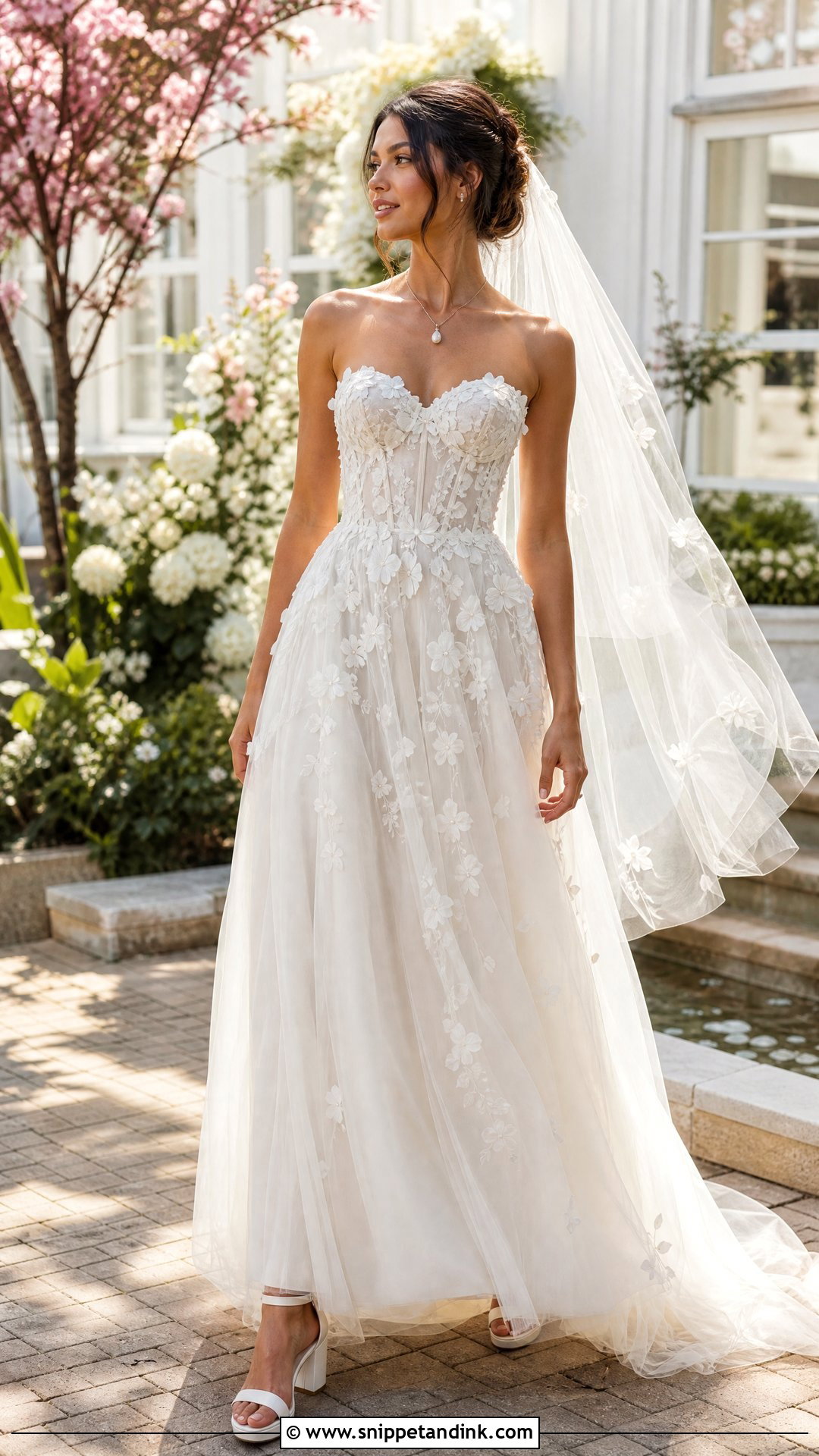
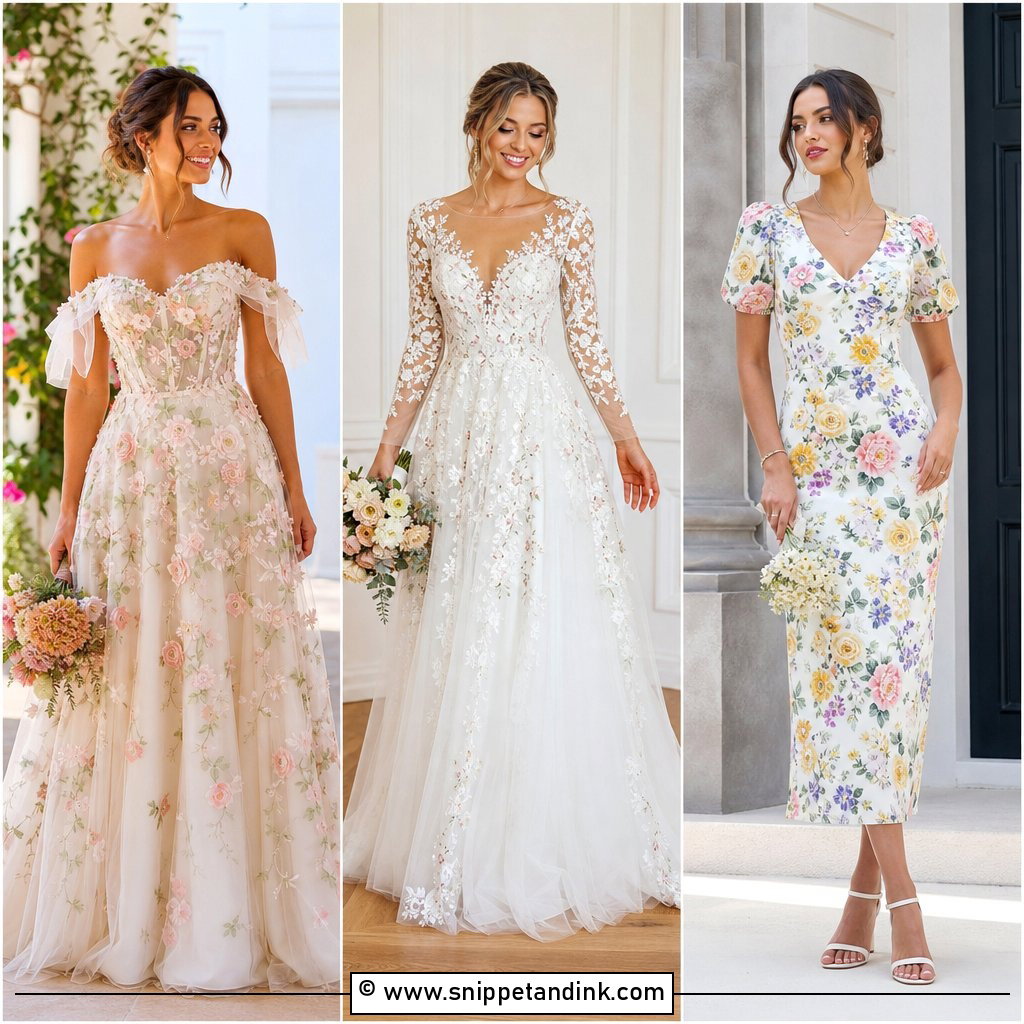
Strapless bodices give sculpted flowers a clean edge to follow, and a sweetheart curve traced with tiny petals is one of the prettiest placements I see. Let the flowers continue through the corset and fade into satin or tulle below. Because nothing holds the dress up except the bodice, have the boning checked under the appliqué; heavy petals at the top edge can make it tip forward. A short strand of pearls or a fine pendant fills the neckline without competing. Block-heel sandals and pearl studs suit a warm garden ceremony.
6. Off Shoulder Wedding Dress With 3D Flowers
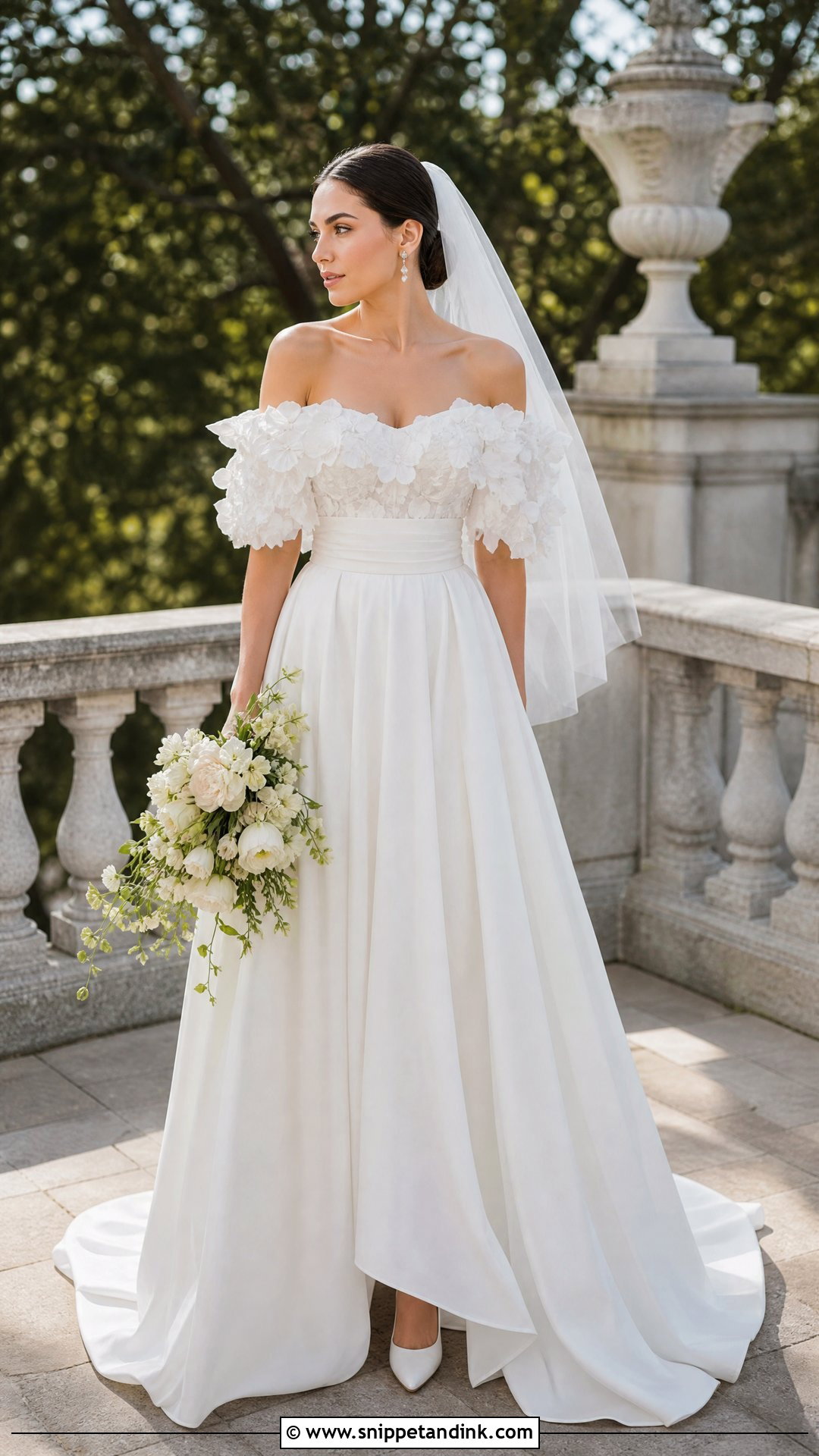
Folded off-shoulder sleeves are a natural home for dimensional petals, and repeating a few at the waist and skirt makes the gown look planned from every side. The neckline frames the collarbone already, so leave the necklace at home. Wear drop earrings and slide an ivory comb into a low updo, with the veil anchored underneath it. One thing I warn about: off-shoulder sleeves limit how high you can lift your arms, so hug-heavy receptions and bouquet tosses need a test at your fitting. Satin pumps and a long-stemmed bouquet complete it for spring or early autumn.
7. Square Neck Wedding Dress With 3D Flowers
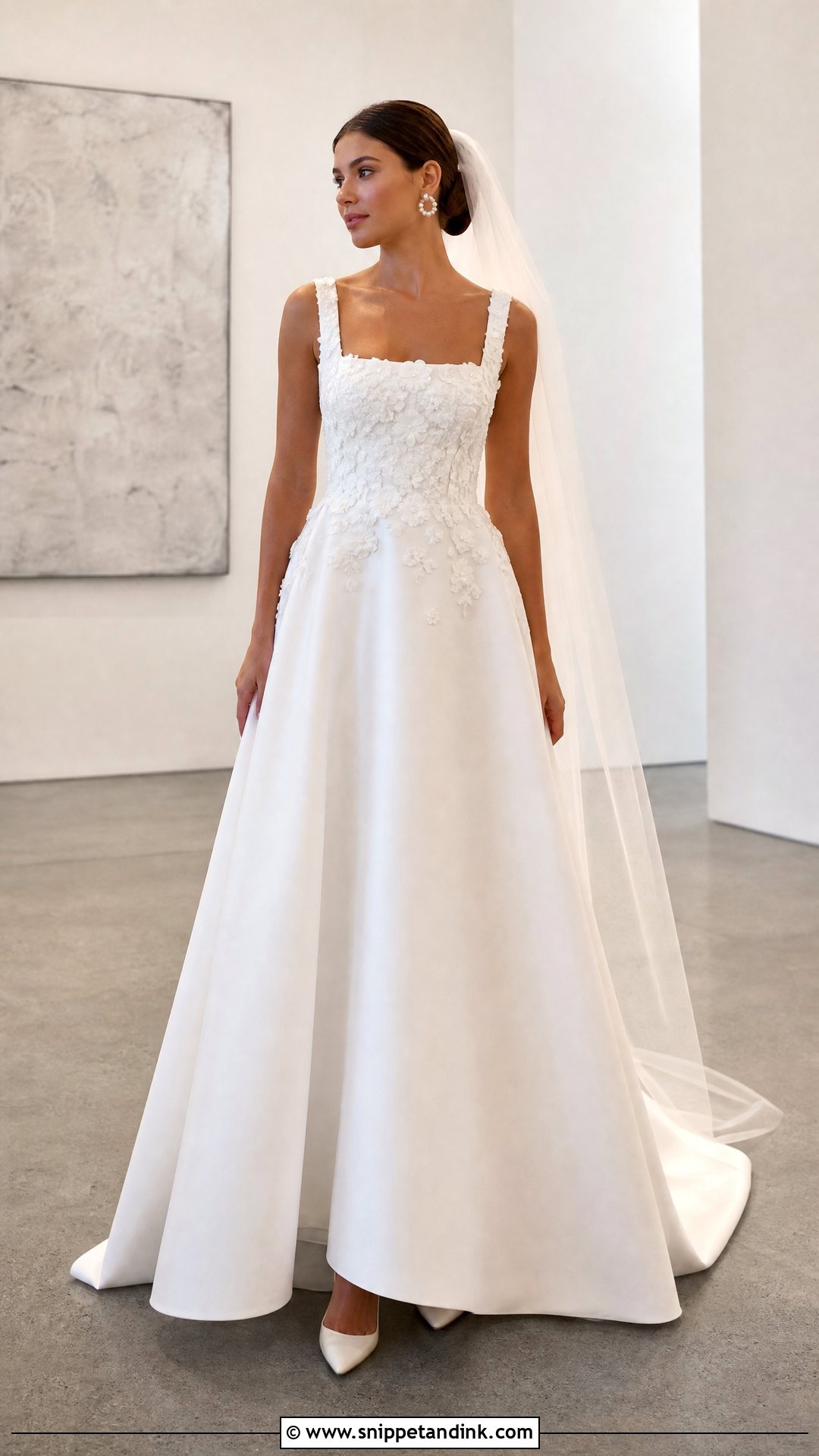
A square neckline stops floral detail from tipping into sugary. Its straight lines give the petals something firm to sit against, especially when the flowers stay small and keep to the neckline, waist and upper skirt. Wide straps carry the weight well. Both A-line and column skirts work; the A-line simply moves more. I like pearl hoops, a chapel veil with a plain edge, pointed shoes and a low bun that shows the shape of the neck. A white bouquet in mixed bloom sizes echoes the dress quietly. Galleries, rooftops and pared-back gardens suit it.
8. High Neck Wedding Dress With 3D Flowers
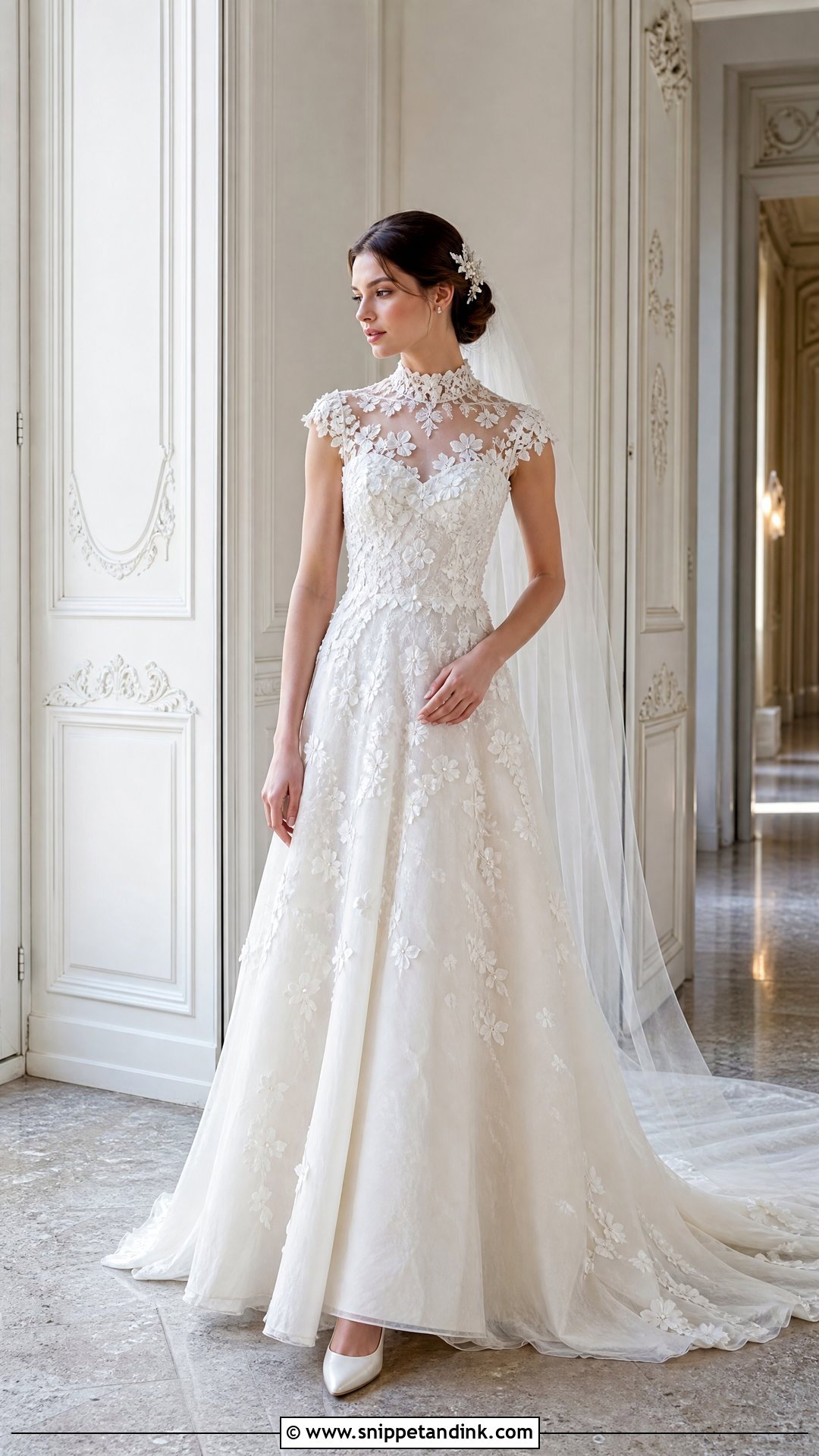
High necks can feel heavy, but illusion tulle with raised flowers framing the throat and shoulders reads as airy. The petals should spread out as they move down the bodice, leaving the waist smooth and the skirt calm. Skip the necklace entirely and wear small earrings. I usually suggest a single hairpin and a low bun with the veil tucked beneath, so nothing crowds the neckline. Closed-toe satin pumps and a narrow bouquet that doesn’t block the bodice finish it. Formal ceremonies and cooler seasons call for it, and it gives modest coverage without stiffness.
9. Fit And Flare Wedding Dress With 3D Flowers
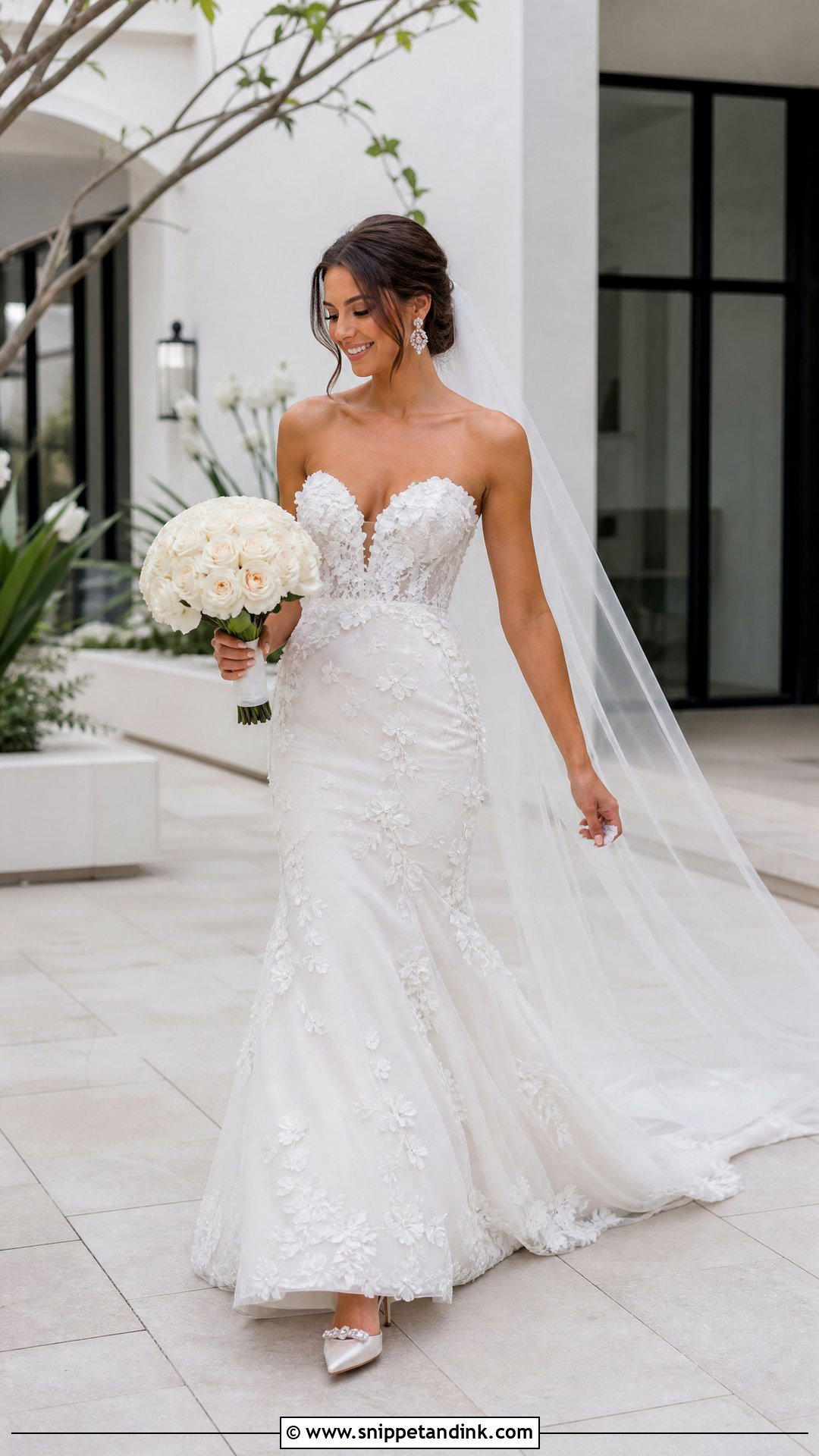
Could a fitted gown still feel easy to wear? Fit-and-flare is my usual answer: it shapes the waist and hip but releases higher than a mermaid, so you can climb steps and sit at dinner. Scattered flowers that follow the bodice seams and drift lightly onto the skirt keep the line clean. Sit down at your fitting and watch the petals near the hip; on a fitted skirt they can buckle when you’re seated. A plain-edged chapel veil, crystal earrings, slingbacks and a sleek ponytail or loose low bun leave the neckline clear. An ivory rounded bouquet ties it together.
10. Crepe Wedding Dress With 3D Flowers
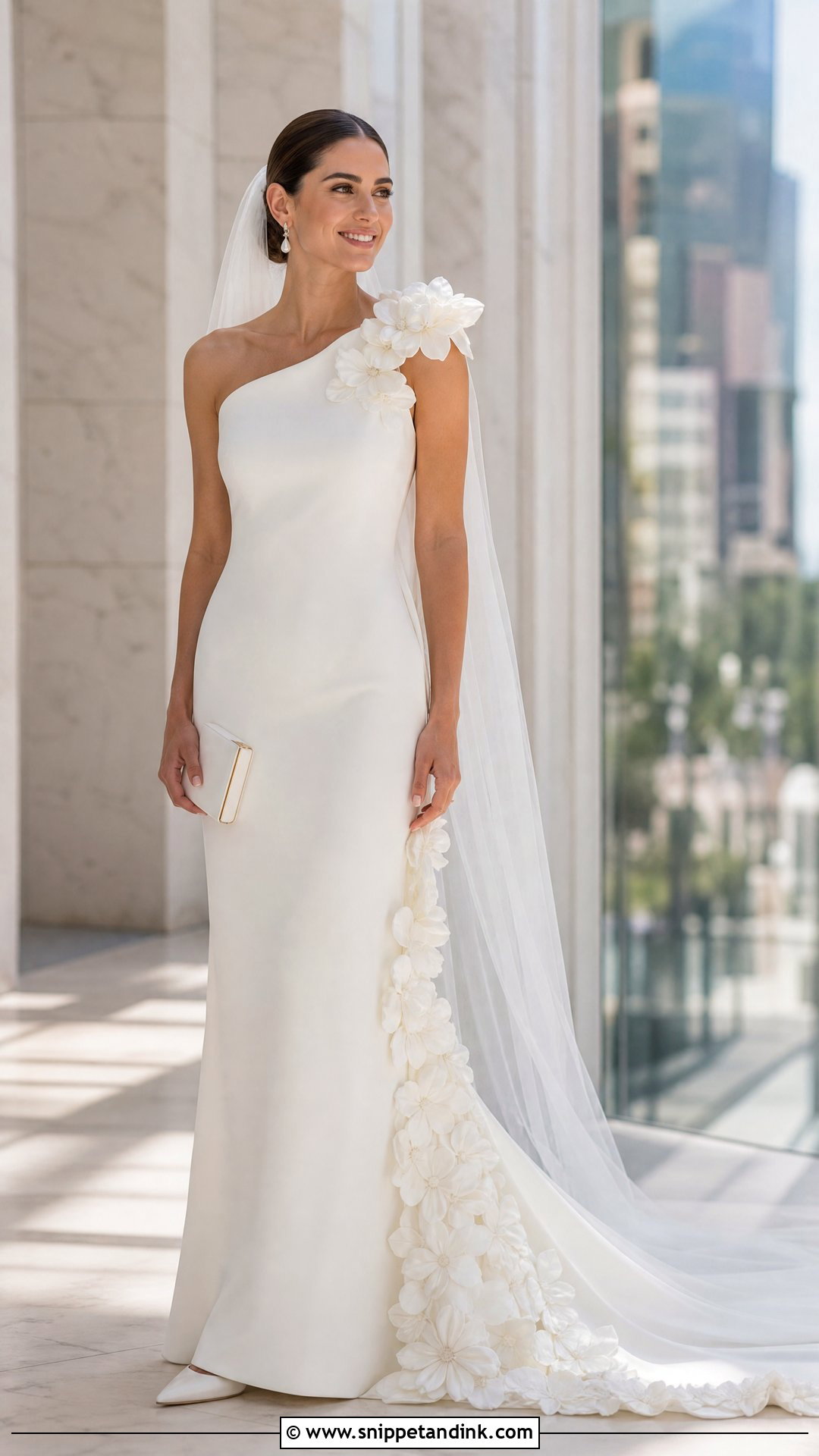
Crepe is unforgiving, which is exactly why a handful of raised flowers works on it. With no lace or tulle to hide behind, three or four blooms on one shoulder or along the train edge become the whole story. I check those appliqués closely on crepe, because any puckering at the stitching shows on a matte surface. Keep everything else lean: a single-layer veil, modern pearl earrings, pointed pumps and a low twisted bun. A structured clutch is handy at the reception. City hotels and small ceremonies suit this one.
11. Colorful 3D Flower Wedding Dress
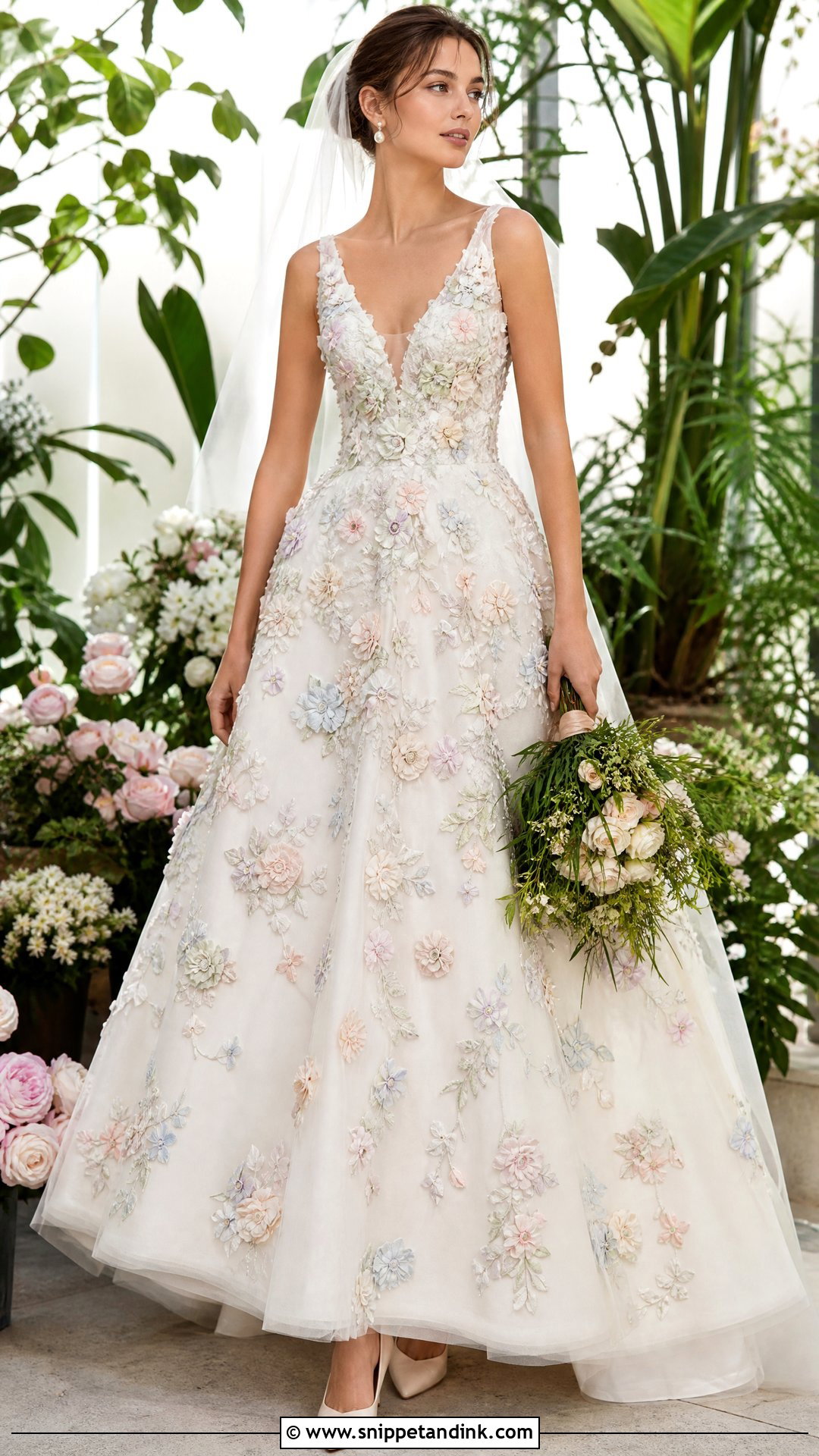
Coloured petals give an ivory dress an artistic quality without changing the base colour. I steer brides toward muted tones like dusty blush, pale blue or sage, because saturated colours can look costume-like next to ivory in daylight. Concentrate the colour near the bodice and let it scatter downward so it looks grown rather than stuck on. Keep the shoes, earrings and veil plain. In the bouquet, repeat one or two colours from the dress, never all of them. Botanical venues and outdoor ceremonies are where it makes the most sense.
12. Blush Wedding Dress With 3D Flowers
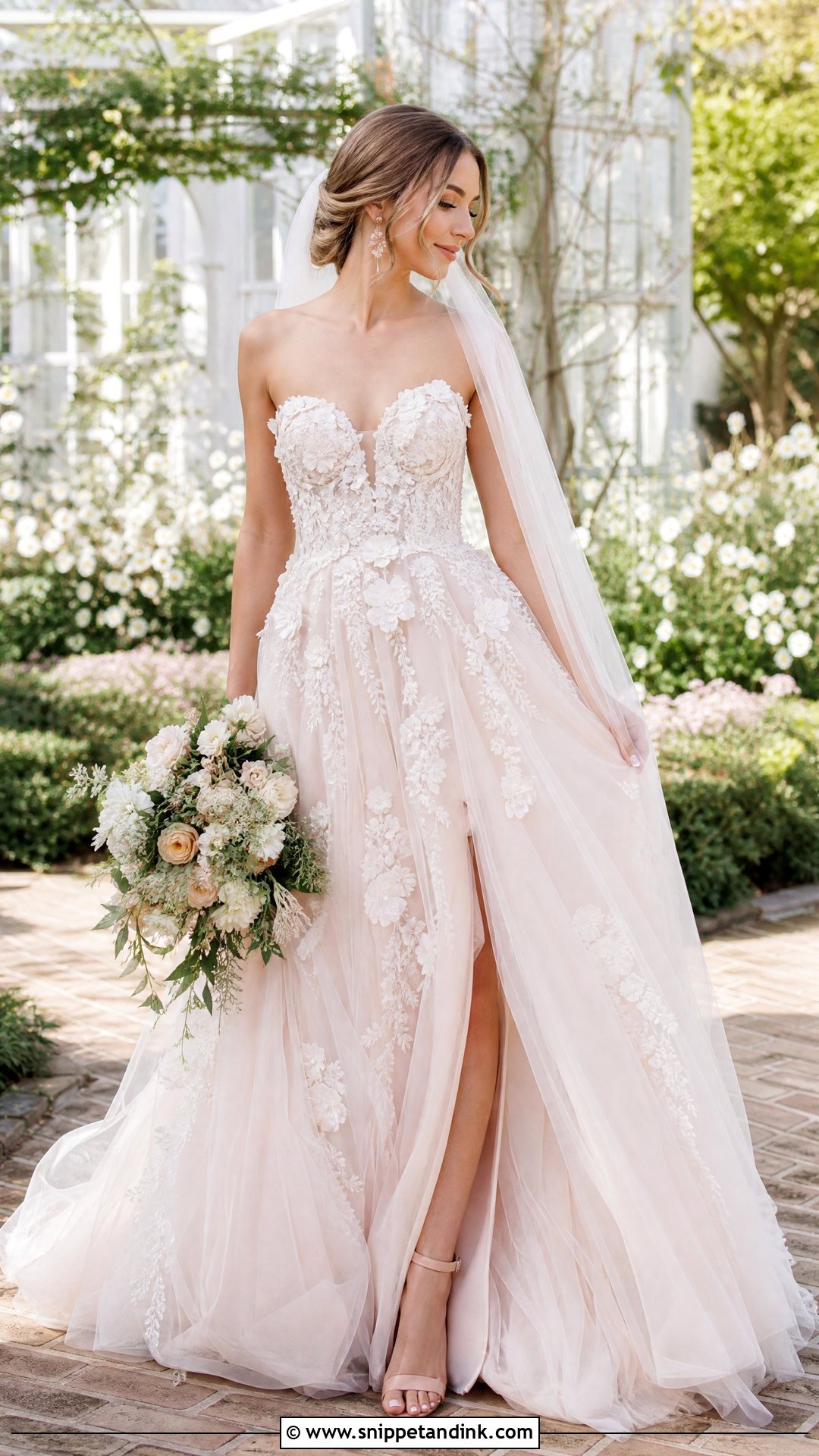
A blush lining under ivory appliqués shows every petal edge, because the slight contrast picks out the shadows. Look for a tulle A-line or ball gown with a nude-blush base and layered flowers on a fitted bodice so the skirt doesn’t go shapeless. Champagne heels and rose gold earrings sit well with the undertone; bright accessories clash with it. Take a swatch of the lining outdoors before deciding, since blush can read almost white in shade and noticeably pink in sun. A small floral comb and a loose ivory and pale pink bouquet suit spring and summer light.
13. Tea Length Wedding Dress With 3D Flowers
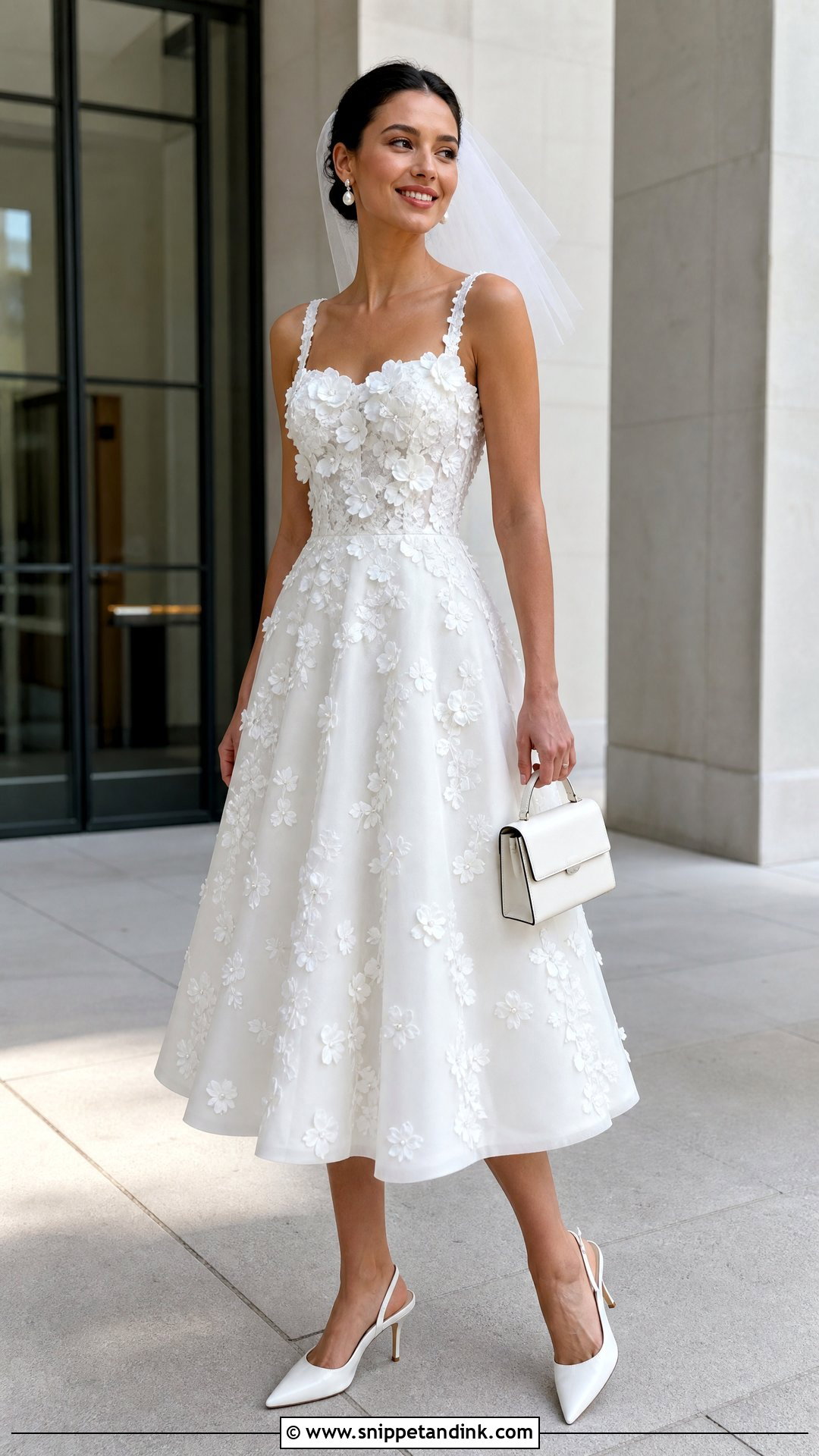
At tea length, the shoes become part of the dress, so I choose them almost as carefully as the gown. Small flowers should cover the bodice and thin out toward a hem that finishes between knee and ankle; large blooms overwhelm a shorter skirt quickly. Pointed slingbacks, a birdcage or short tulle veil and pearl button earrings suit the proportions. A structured mini bag helps in portraits. Wear a sleek bun or smooth shoulder-length waves. It’s easy to move in, which makes it a good choice for a courthouse ceremony or a daytime reception.
14. High Slit Wedding Dress With 3D Flowers
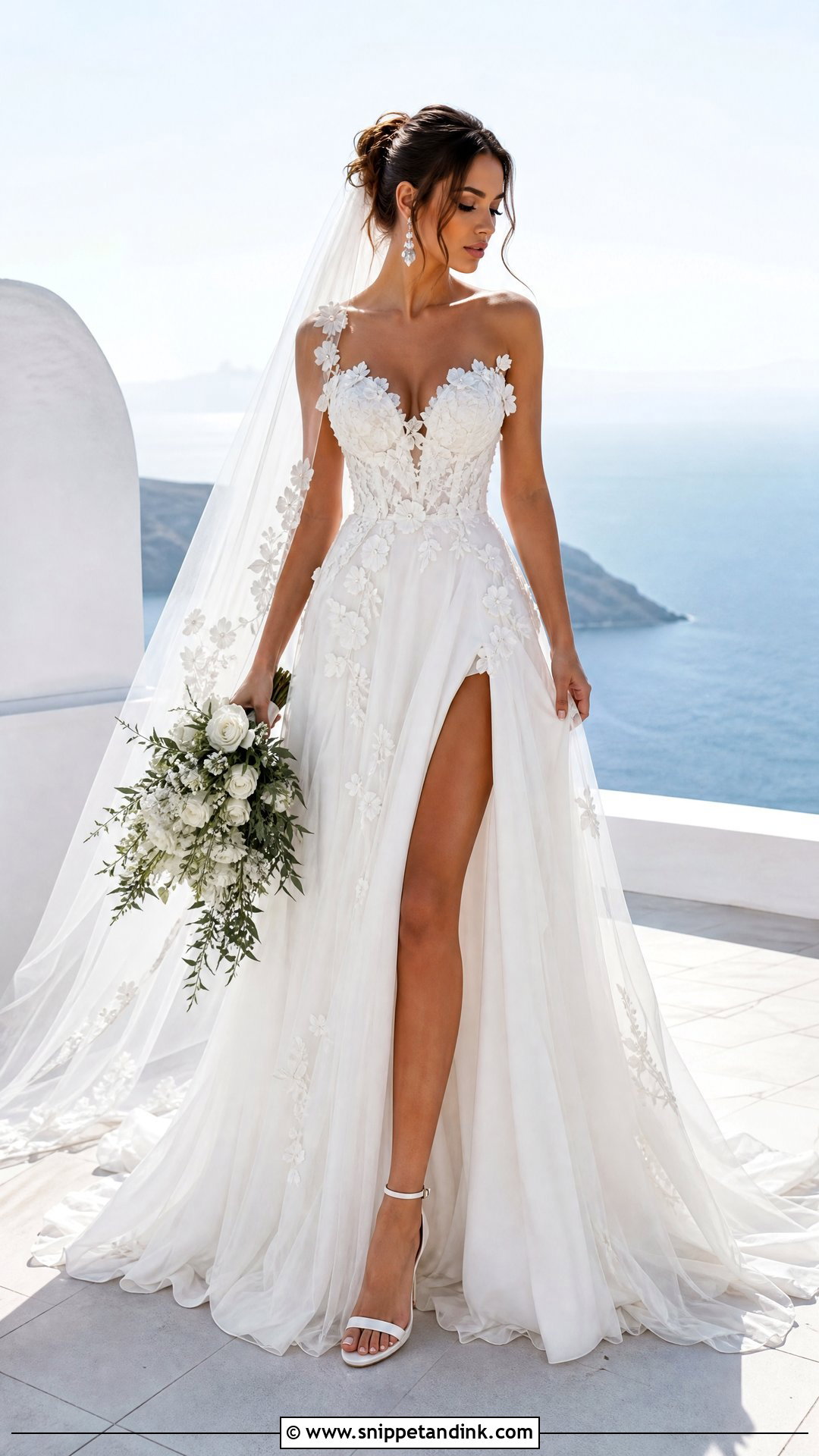
A high slit and raised flowers can look like two separate ideas unless the petals are placed with care. Keep them around the bodice and on the outer skirt panel, away from the slit edge itself, where they’d catch on each step. The lining needs to be secure and the skirt full enough that the opening falls naturally when you walk; I always ask brides to take a few strides in front of the mirror before signing off. Ankle-strap sandals, simple drops, a fingertip veil and a sleek low bun keep it modern. A long-stemmed bouquet follows the vertical line, ideal for seaside terraces and warm-weather venues.
15. Open Back Wedding Dress With 3D Flowers
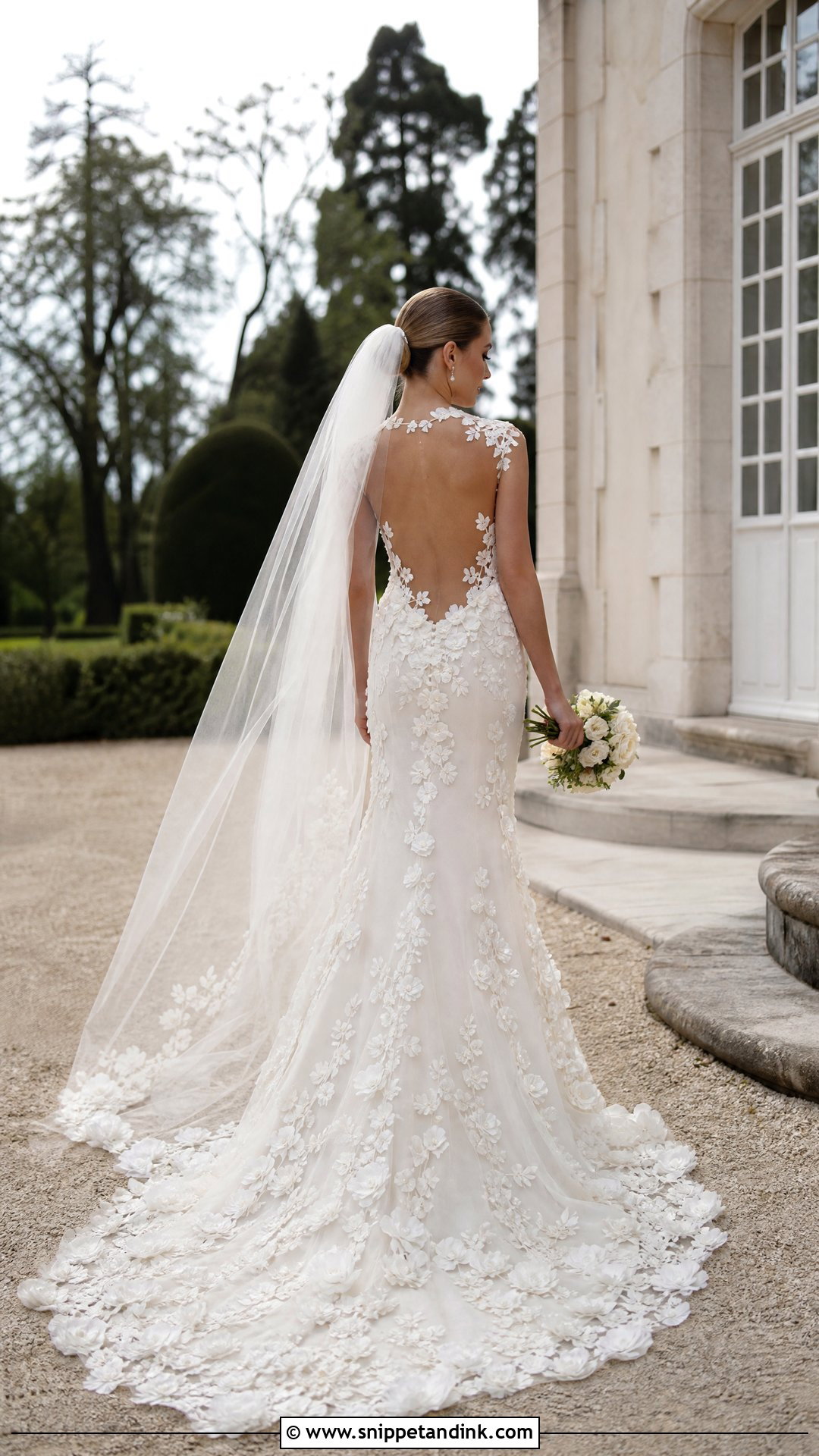
Your guests see the back of the dress for most of the ceremony, so flowers tracing an open back earn their place. Illusion mesh behind the opening adds support and gives the appliqués something to anchor to as they travel over the shoulders into the train. Keep the front simple with a scoop or V-neck. Attach the veil beneath a high bun so it falls below the floral edge rather than over it, and leave out any necklace whose clasp would sit on the bare back. Pearl drops, a hair comb and low pumps finish it. A smaller bouquet keeps the gown in view, which matters for scenic outdoor ceremonies with long aisles.
16. Wedding Dress With 3D Flower Cape
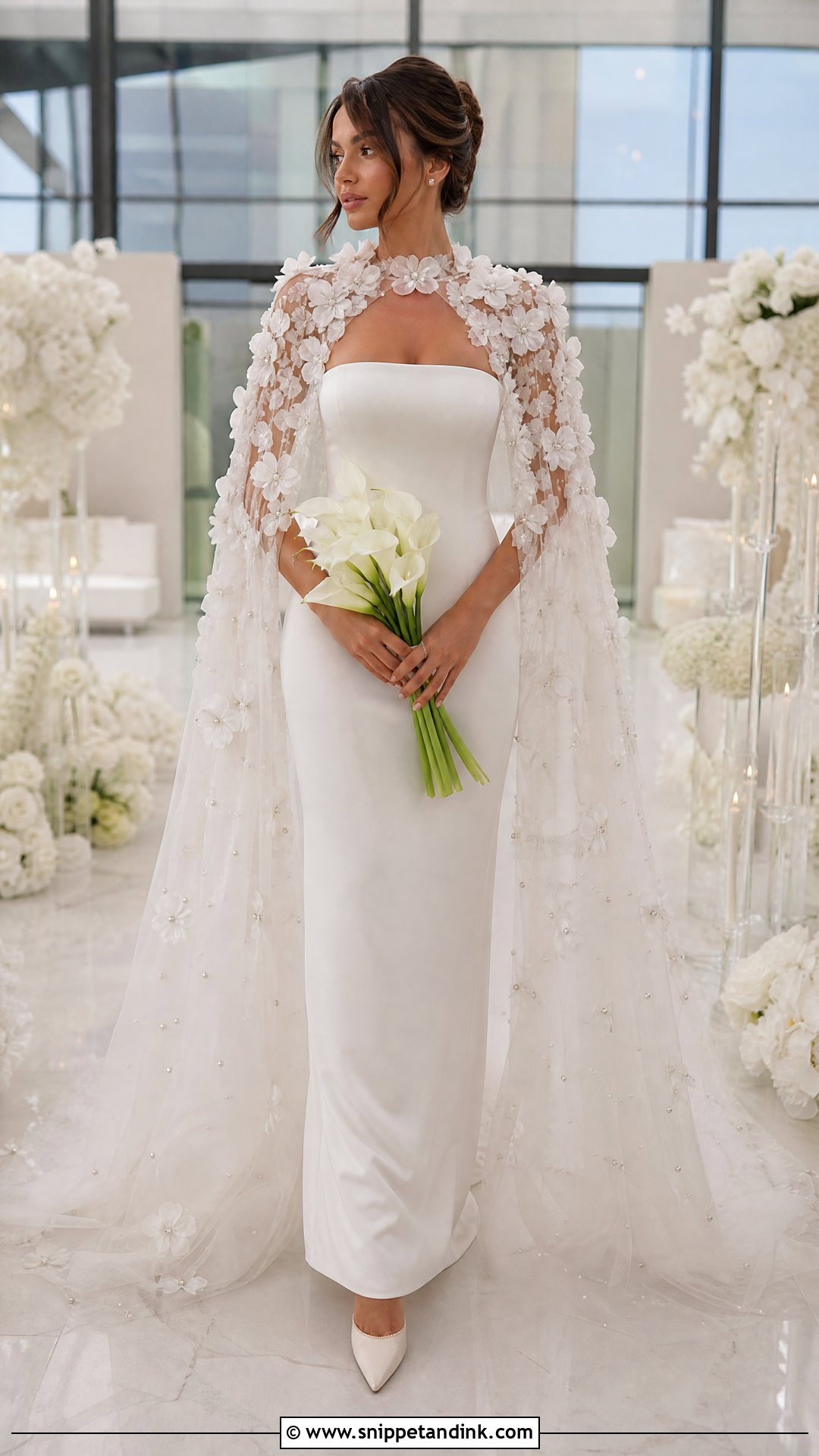
A flower-trimmed cape lets a clean satin or crepe gown carry 3D texture for the ceremony only. Petals along the shoulders and hem give movement as you walk, and the cape can stand in for a veil. Take it off for the reception and you have a second look with no outfit change. I check how the cape fastens, because a heavy appliqué hem pulls on a hook at the back of the neck. Pearl studs, a polished updo and pointed ivory heels keep it clean, with a streamlined bouquet. It handles transitional weather well.
17. Wedding Dress With 3D Flower Sleeves
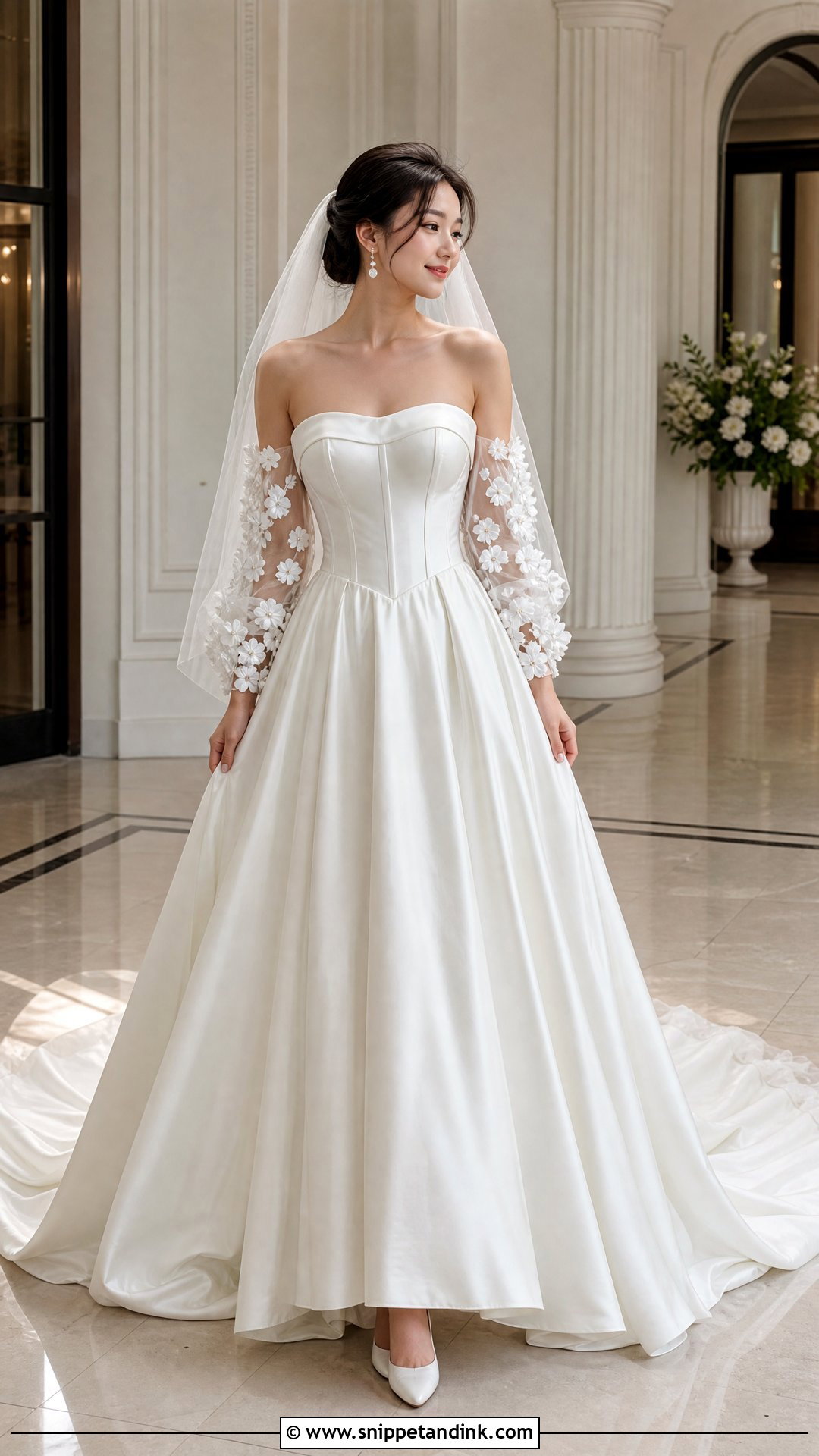
Detachable floral sleeves turn a strapless gown into two outfits. Pick sheer fitted sleeves with petals at the shoulder, cuff or upper arm, and pair them with a structured corset so they look built in. Wear them through the ceremony and slip them off for dancing. Have the seamstress fit the sleeves while you’re wearing the actual dress; a sleeve cut separately can gape at the armhole once the bodice is on. A simple veil, pearl earrings, block heels and a low bun keep the details visible. They help when temperatures change between venues.
18. Plus Size Wedding Dress With 3D Flowers
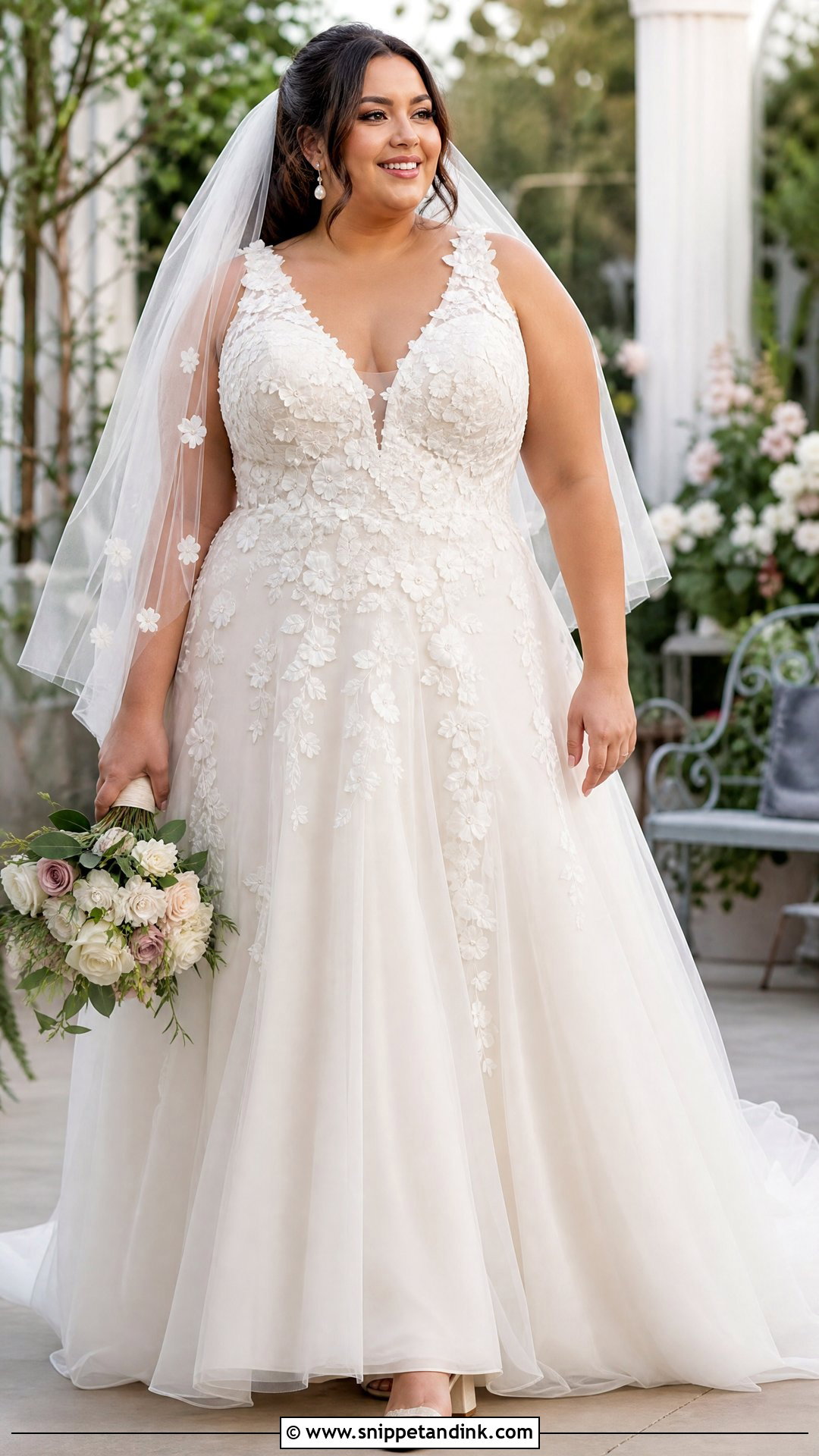
A well-built A-line is the most comfortable foundation for a plus-size bride wearing raised flowers, but the inside of the bodice matters more than the shape. I look for real internal boning, a waist stay and adjustable closures, then appliqués that follow the neckline and waist before spacing out toward the hem. A soft V or scoop frames the face and leaves room for a pendant. Add a fingertip veil, stable block heels and pearl earrings. A properly altered gown always looks better than a loose one bought a size up. A secure low updo and a medium bouquet keep everything in proportion.
19. Petite Wedding Dress With 3D Flowers
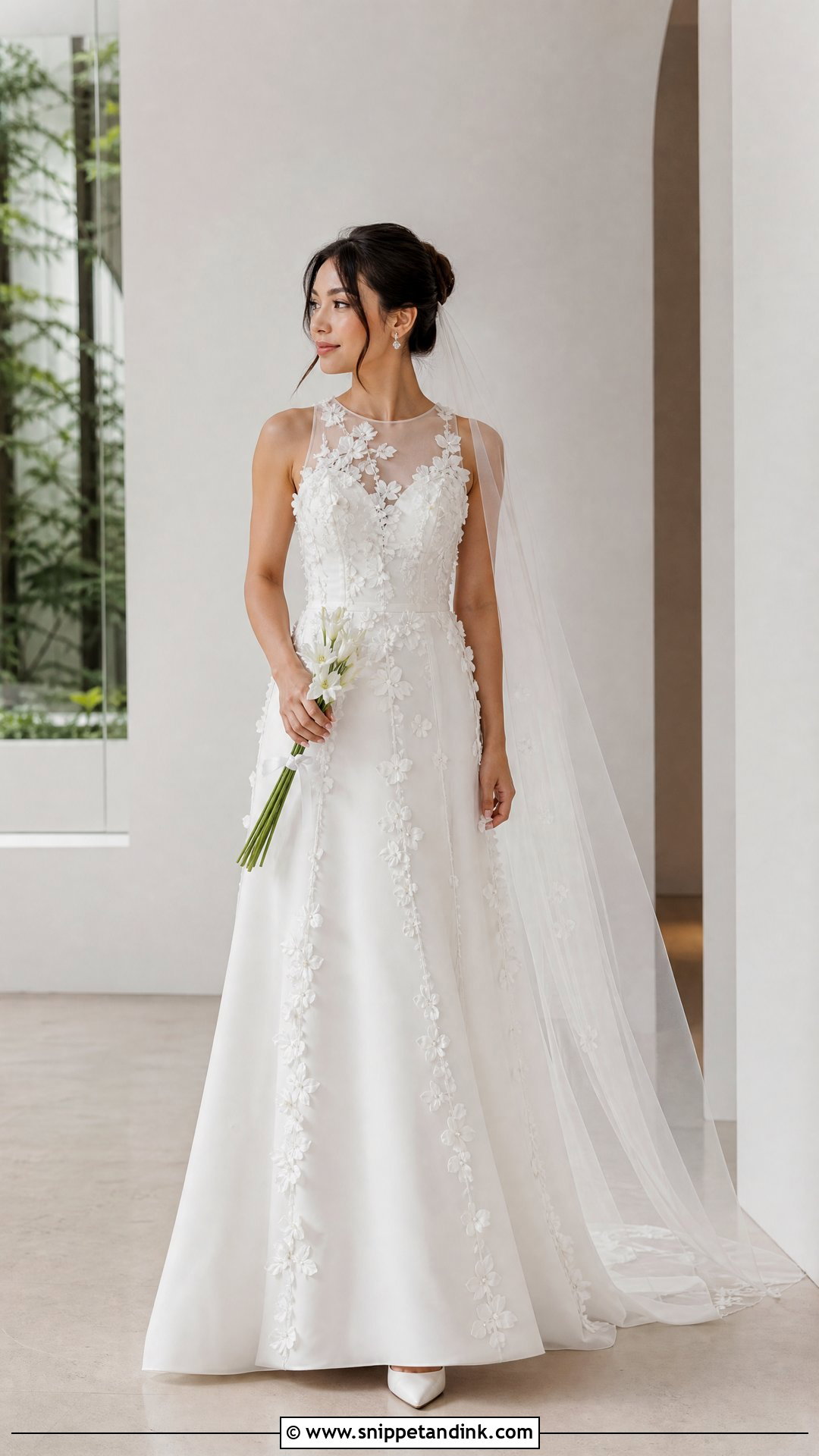
On a petite frame, oversized blooms swallow the body, so keep the appliqués small and arrange them vertically from bodice to skirt to draw a long line. A streamlined A-line, sheath or fit-and-flare with a true natural waist works best; stacked tulle layers tend to shorten you. Pointed pumps with a moderate heel add length, and a narrow bouquet keeps proportions right. I’d budget for hemming and bodice alterations from the start, because petite brides almost always need both. A single-layer veil, small earrings and a neat updo with a little height finish it.
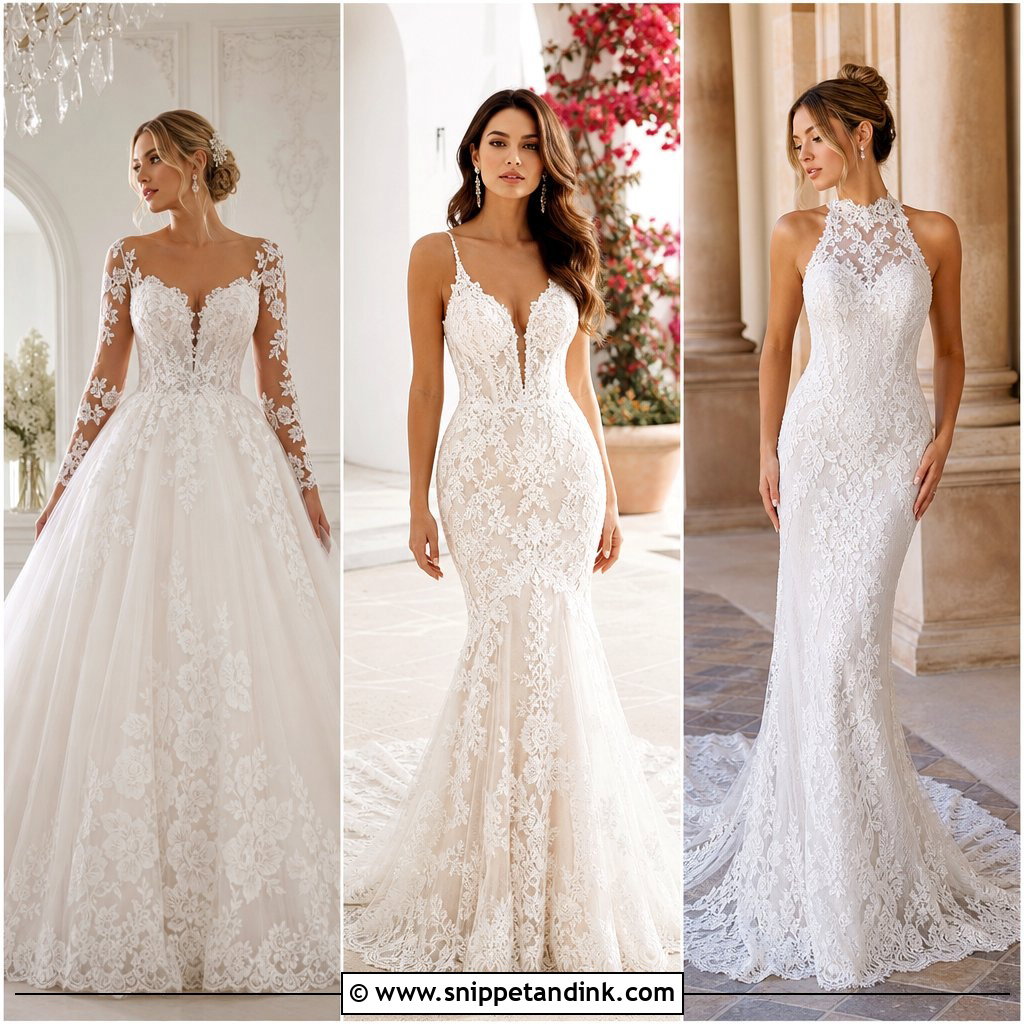
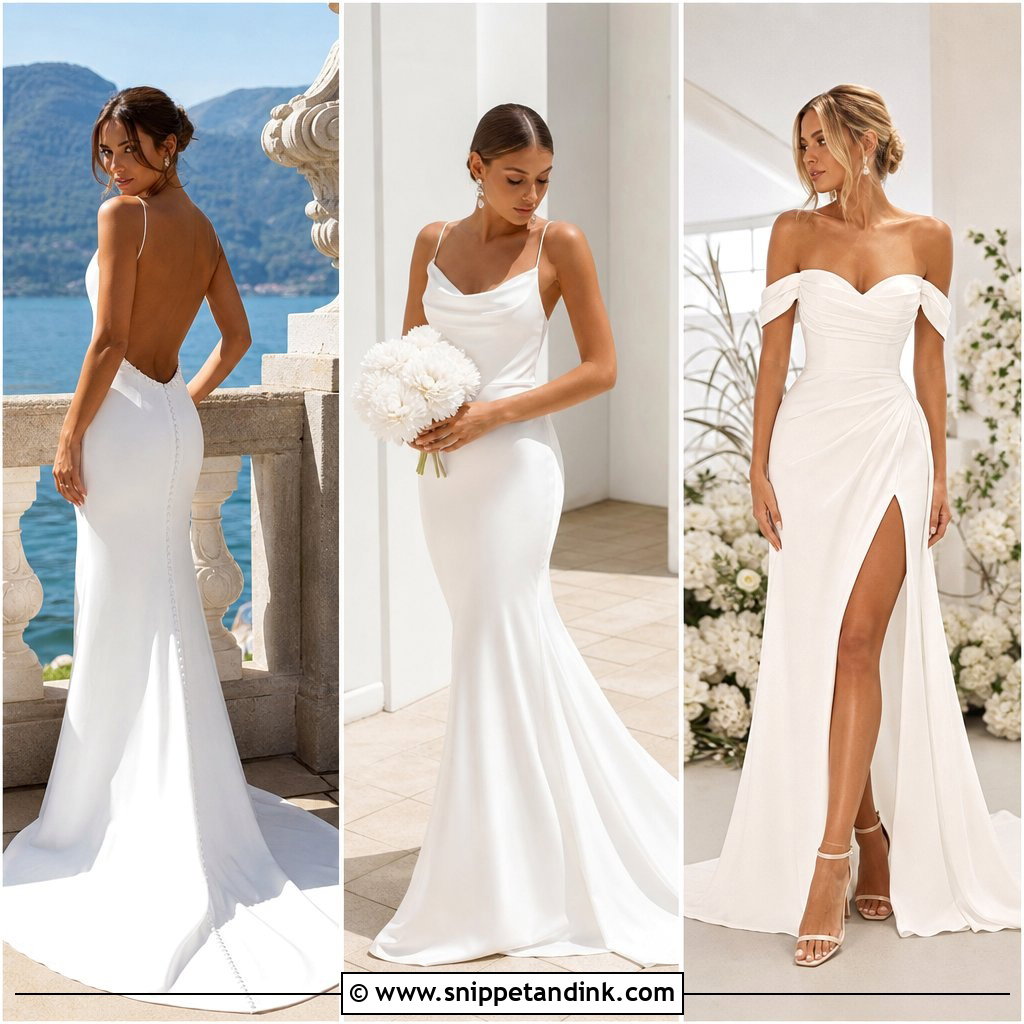
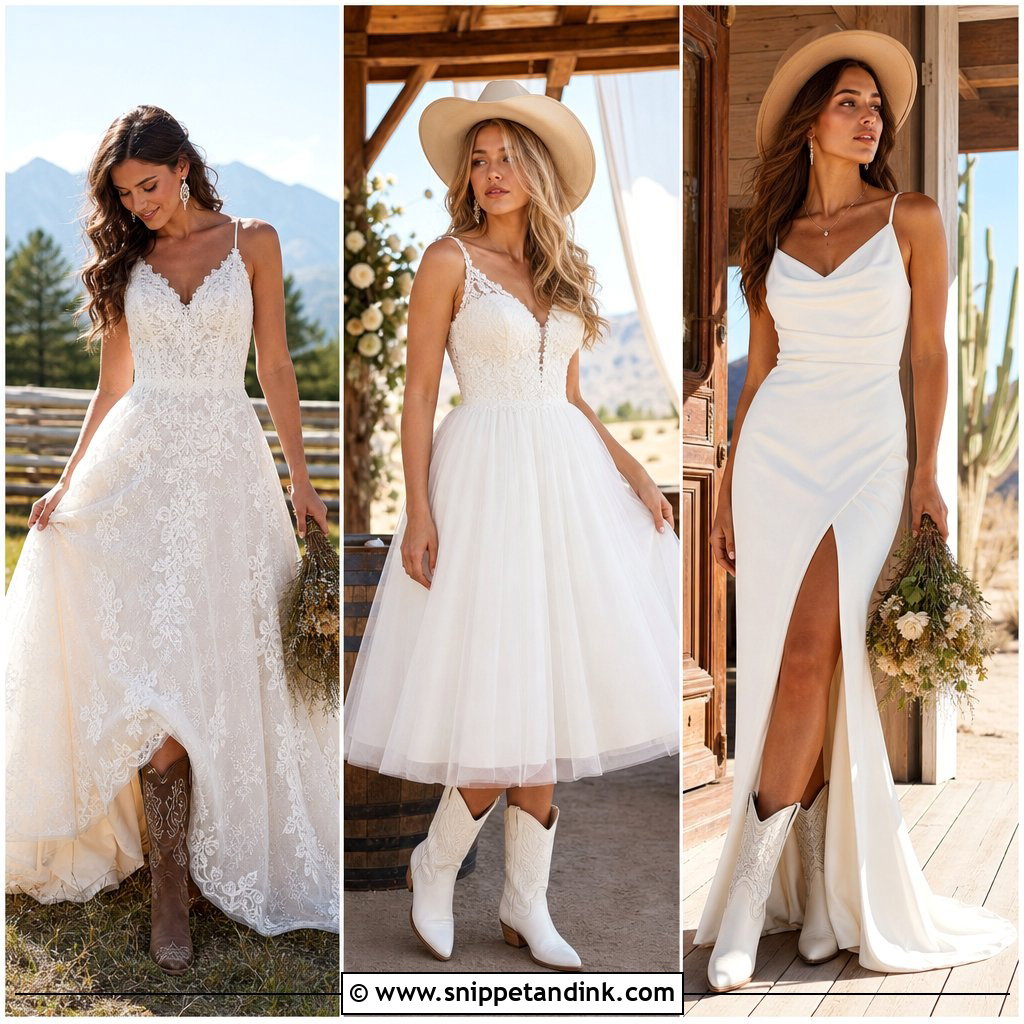
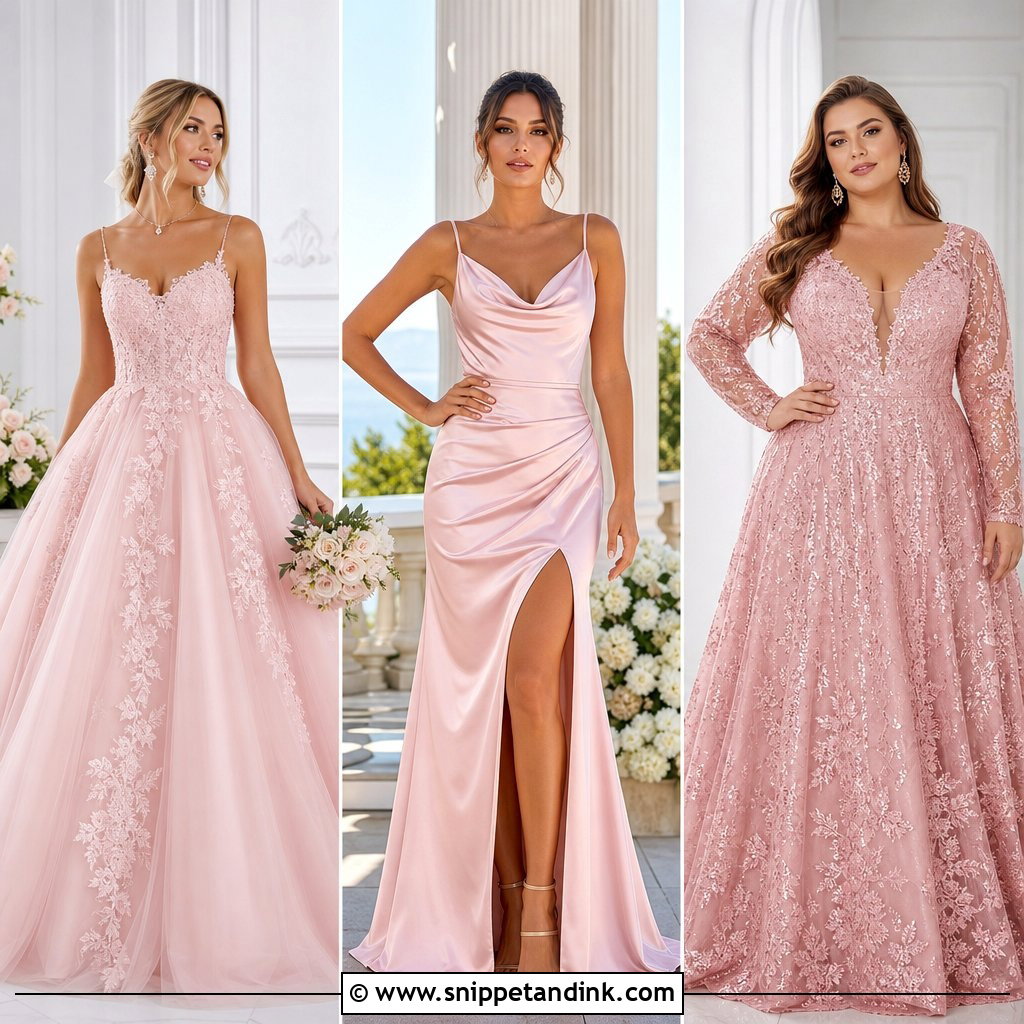
20. Beaded Wedding Dress With 3D Flowers
Beads and petals together can tip into fussy fast. The versions I like use tiny pearls or crystals only at the flower centres, so the shine sits inside the texture instead of covering the surface. A fitted bodice over flowing tulle balances the weight. Keep the veil free of beading, wear simple studs and satin pumps, and smooth the hair into a bun. A white bouquet with little greenery adds no extra sparkle. Evening ballrooms and hotel venues with warm light make the beading glint while the petals keep their shape.
Veils, Bustles and Car Seats: Where Petals Get Crushed
The flowers rarely fail on the dress form. They fail in real moments: a tulle veil snagging on a petal edge, a bustle hook pulling through an appliqué, or forty minutes in a car pressed against the seat. Most of this is preventable if you plan for it at your final fitting.
- Veil: choose a plain or cut edge rather than a heavily trimmed one, and test it over the dress. Soft English net catches on petals far less than stiff tulle.
- Bustle: ask your seamstress to place hooks and loops between flower clusters so lifting the train doesn’t bunch petals together.
- Travel: sit on the back of the skirt in the car and spread the front over your knees, so the decorated panel isn’t pressed flat.
- Steaming: hold the steamer well back from raised petals and shape any flattened ones with your fingers while they’re warm. An iron should never touch them.
- Emergency kit: matching thread, a fine needle and a few spare blooms if the shop provided them.
Storing a Gown That Can’t Be Folded Flat
After the wedding, a 3D floral gown needs more room than a plain one. Folding presses the petals into permanent creases, so I tell brides to have it professionally cleaned first and to ask the cleaner specifically about the appliqués, since some fabric flowers react badly to certain solvents.
For storage, a breathable cotton garment bag or an acid-free box works, with crumpled acid-free tissue tucked between the decorated layers to cushion them. Hanging is fine for a light gown if the internal hanging loops take the weight, but a heavily decorated ball gown is better boxed so the straps don’t stretch. Keep it somewhere cool, dark and dry, and check it once a year to refresh the tissue.
Scale, Placement and Your Fitting Room Test
Raised appliqués work on almost every silhouette once the scale and placement suit your body. Small flowers sit well on fitted or petite gowns; large blooms need the volume of a ball gown or dramatic trains to look balanced. After the dress is chosen, keep shoes, jewellery and veil quiet so the texture leads. At every fitting, sit, walk and lift your arms. If the petals pinch, shift or crush when you move, ask for them to be repositioned before the final hem, not after.
You'll Like These Ideas:










Leave a Reply