
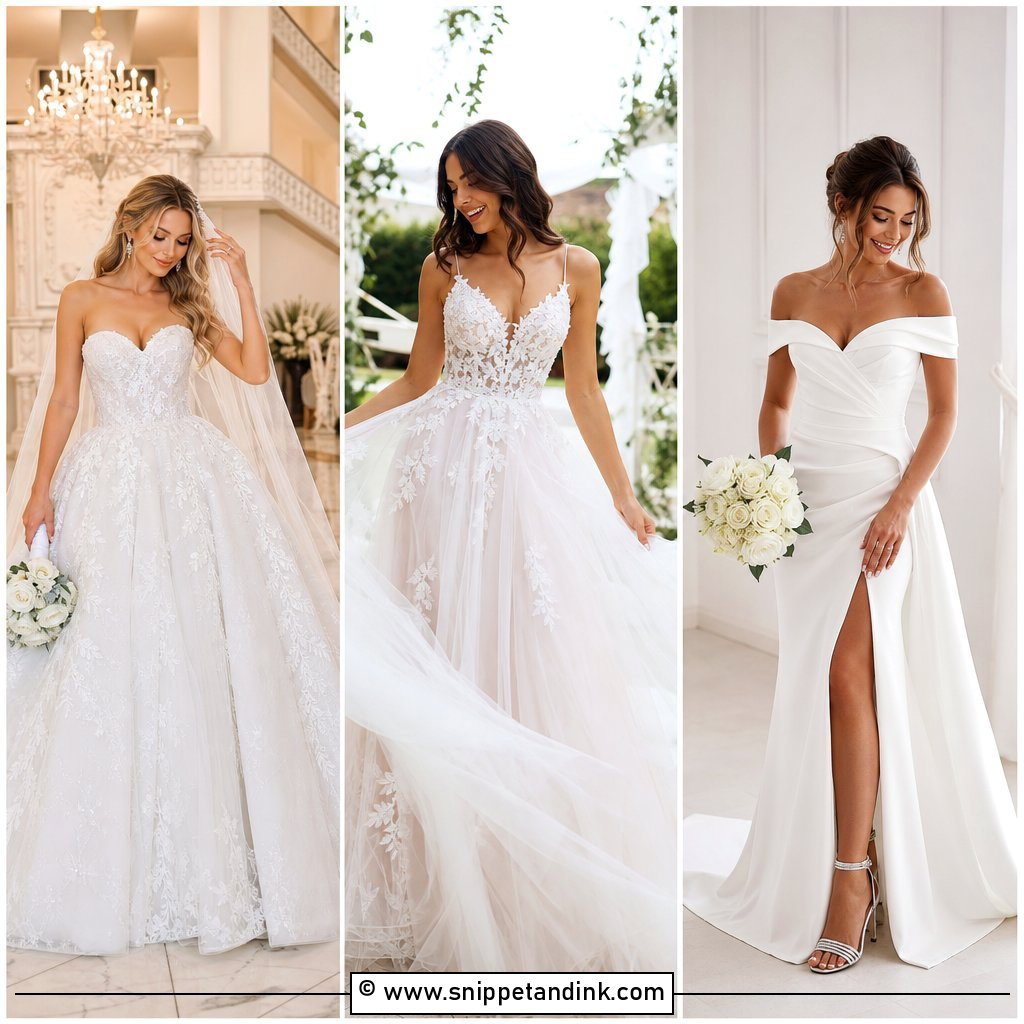
Catwalk bridal is designed to be read from the back of a show venue in a few seconds, so it trades in silhouette first and decoration second. Lately that has meant pointed basque waists, oversized bows, sculptural volume, vintage proportions and pieces that come apart into a second look. The trick I work on with brides is borrowing one runway idea and making it survive a full day of sitting, hugging and dancing. A minimalist might take only the cut: fluid silk, clean seams, almost no jewelry. A maximalist bride can go further with raised flowers, feathers or metallic thread. Here are 25 complete outfits, from ball gowns to two-piece sets, and what each one asks of you in practice.
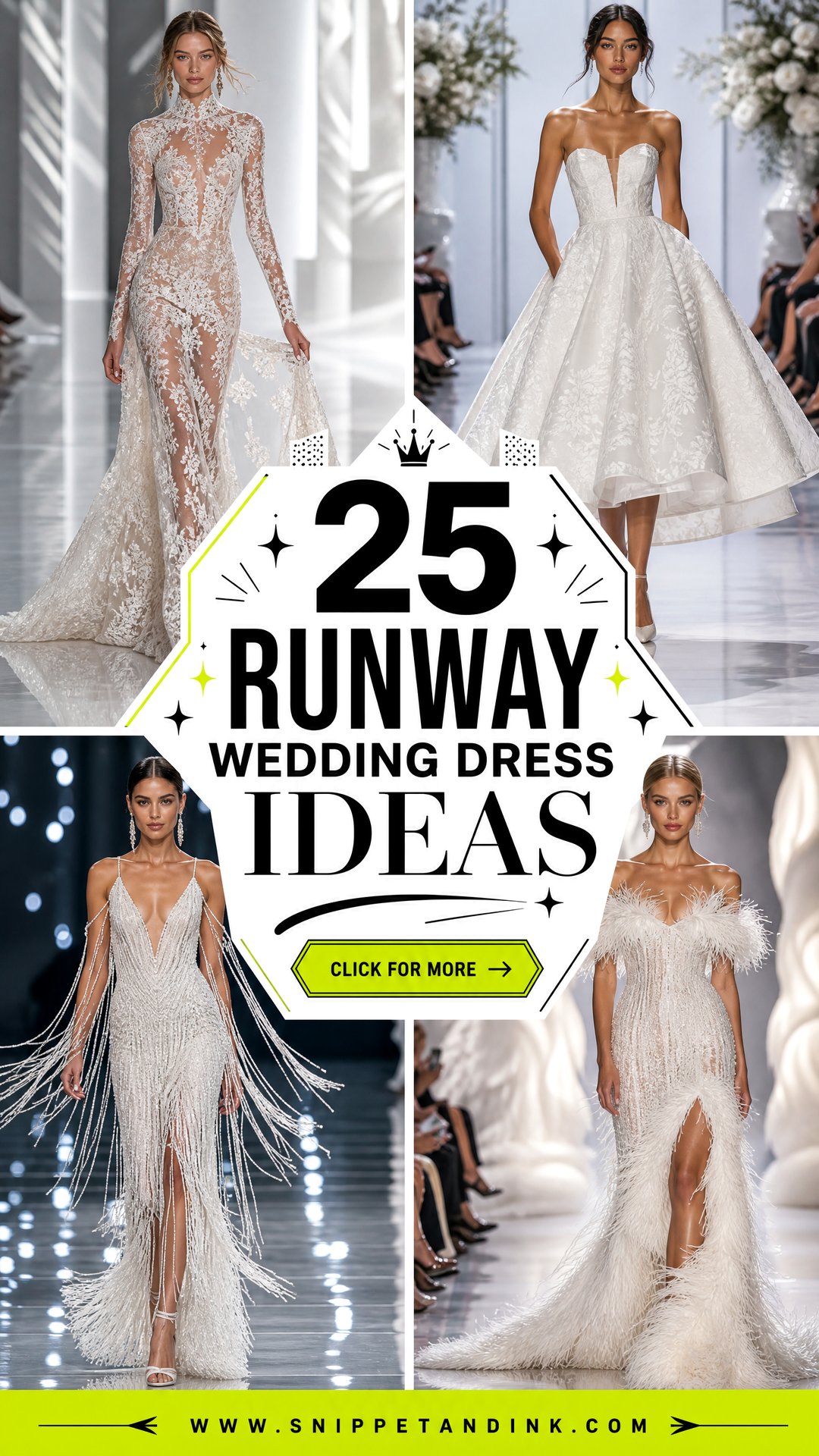
Runway Samples Are Made for Thirty Seconds, Not Twelve Hours
A show dress is fitted to one model, pinned where needed and worn for a single walk. The version you order is remade for a real body that will sit through dinner, so a few things almost always change. I go through them with every bride who falls for a catwalk look.
- Support gets added. Show gowns often skip bra cups and lining that you will want for a full day; ask what the production version includes.
- Weight comes down or goes up. A beaded or feathered runway bodice may be lighter or heavier in production. Lift the store sample and imagine carrying it for ten hours.
- The hem is set for your shoes, not the model’s. Runway hems often brush the floor for drama; yours needs to clear your toes when you walk.
- Trains get practical. A long show train needs a bustle plan for the reception, and some designs need a second fitting just for it.
- Lead times stretch. Designer gowns commonly take several months to make, so order early and ask the store for a realistic delivery date.
If the store has only the runway image and no sample, ask whether they can show you the same silhouette in another style. Trying the shape on matters more than seeing the exact embellishment.
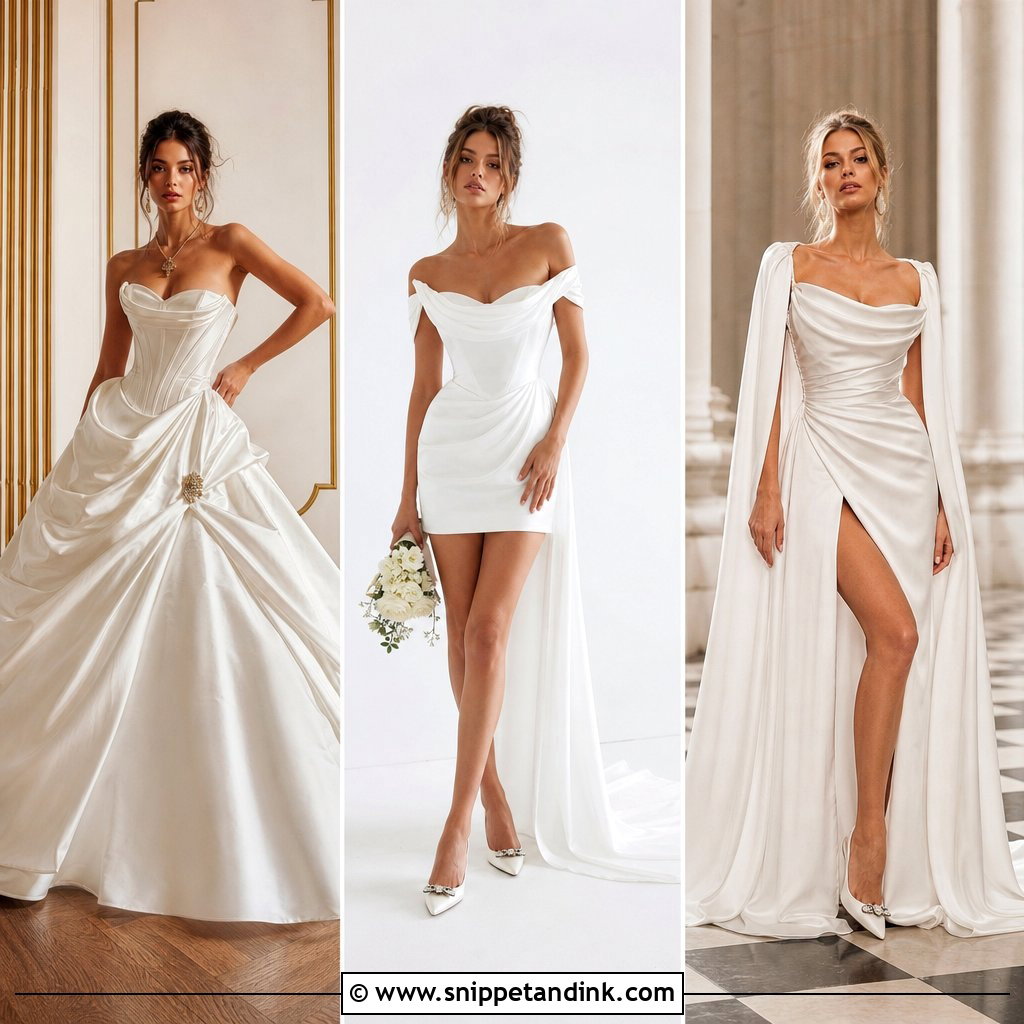
1. Basque Waist Ball Gown Wedding Dress
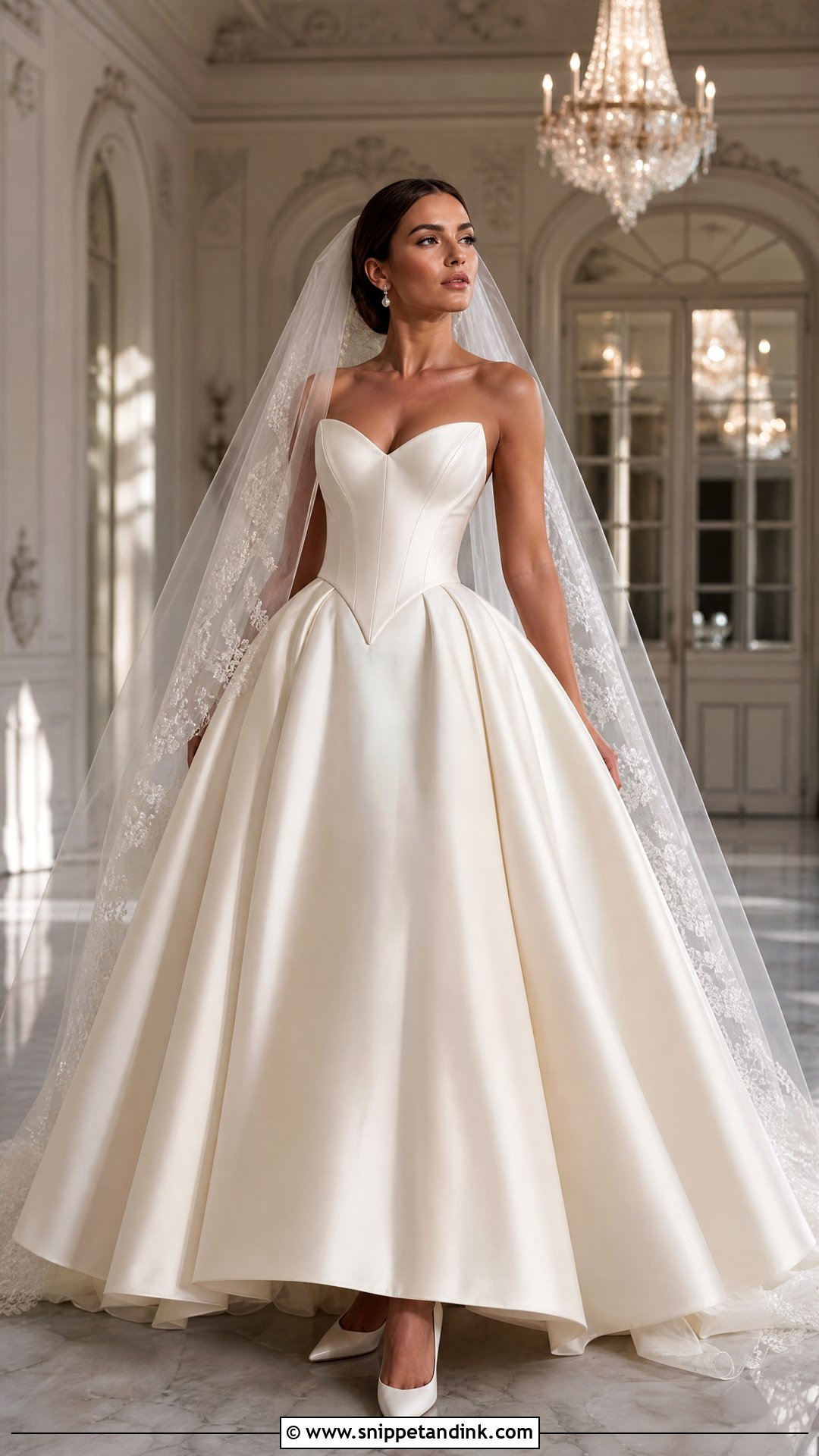
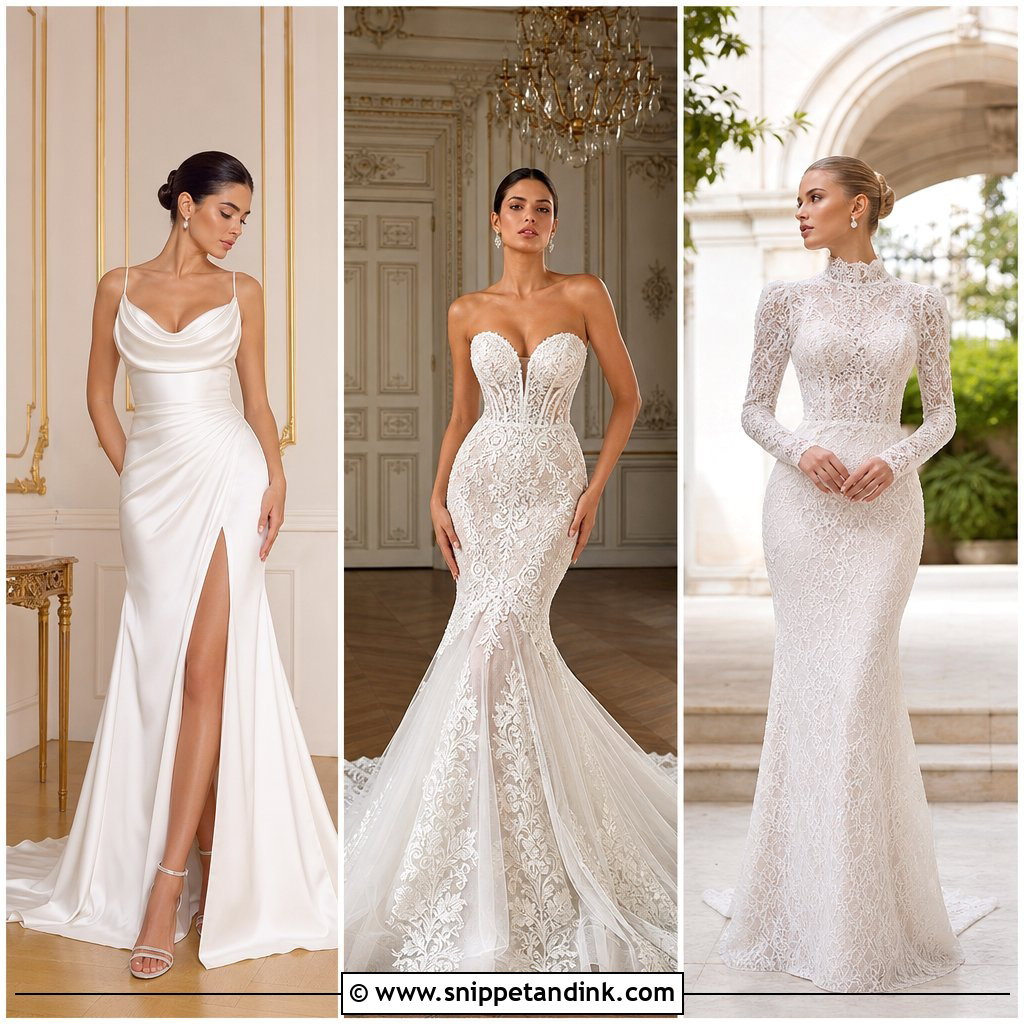
A basque waist ball gown points down at the center front and then opens into a wide skirt, which makes the waist look smaller without any cinching tricks. Mikado or structured satin holds that volume crisply; softer fabric collapses into the point and loses the shape. I keep the neckline plain, strapless or a soft scoop, with pointed ivory pumps, pearl drops and a cathedral veil anchored under a polished bun. The bouquet stays small. One warning: a basque point digs in when you sit if the bodice is even slightly long in the torso, so sit down at every fitting.
2. Drop Waist Satin Wedding Dress
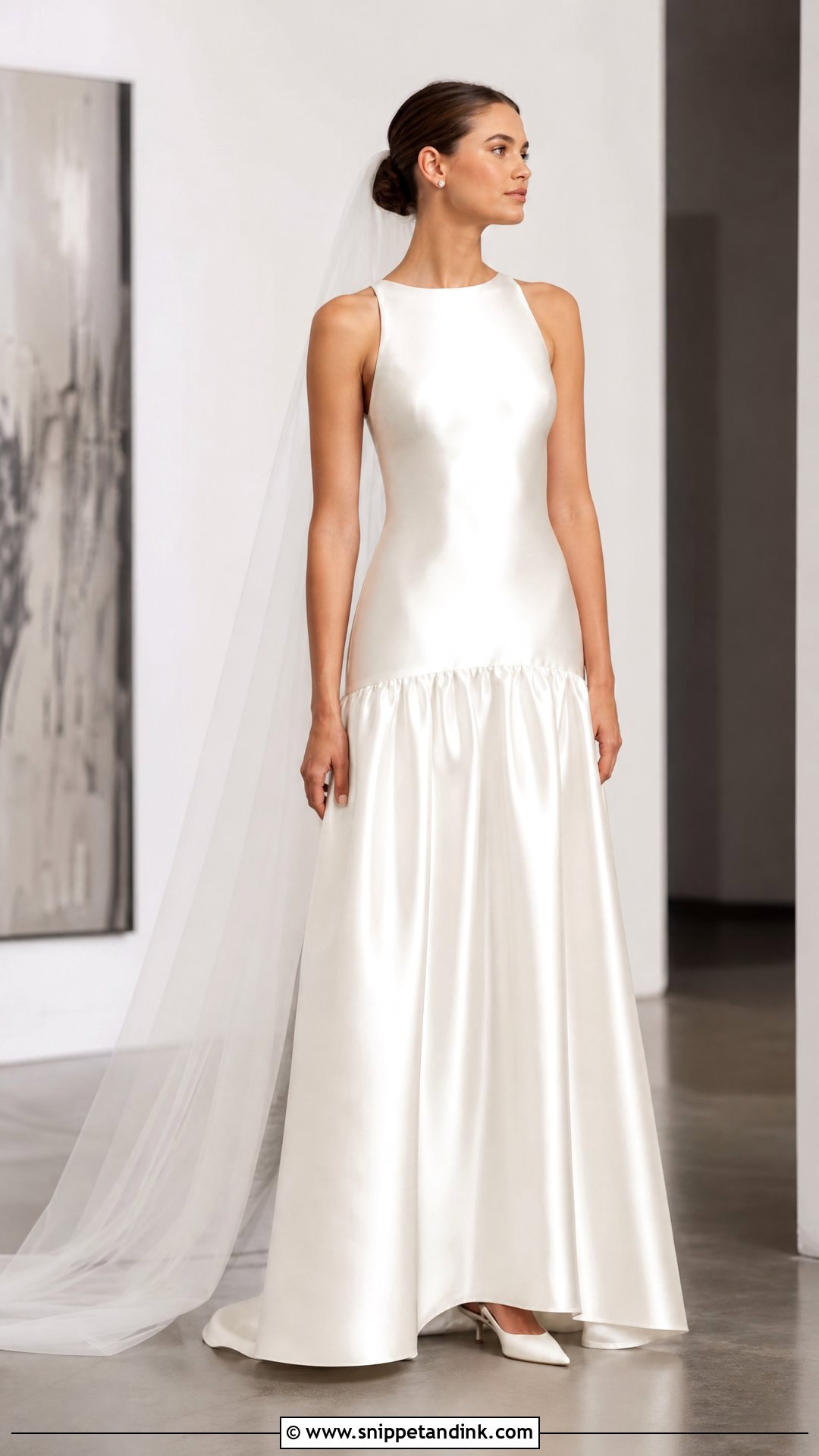
Drop waists start the skirt near the hip, which stretches the torso and reads very modern in silk satin. The shape is unforgiving though. A dropped seam that sits even a little off your actual hip line looks like the dress has slipped, and that is why I’d never buy this cut without proper alterations booked. Pointed slingbacks carry the long line down to the floor. Add a narrow bracelet, small studs, a smooth low chignon and a light veil that runs past the train. Galleries, hotels and city venues suit it.
3. Sculptural Corset Wedding Dress
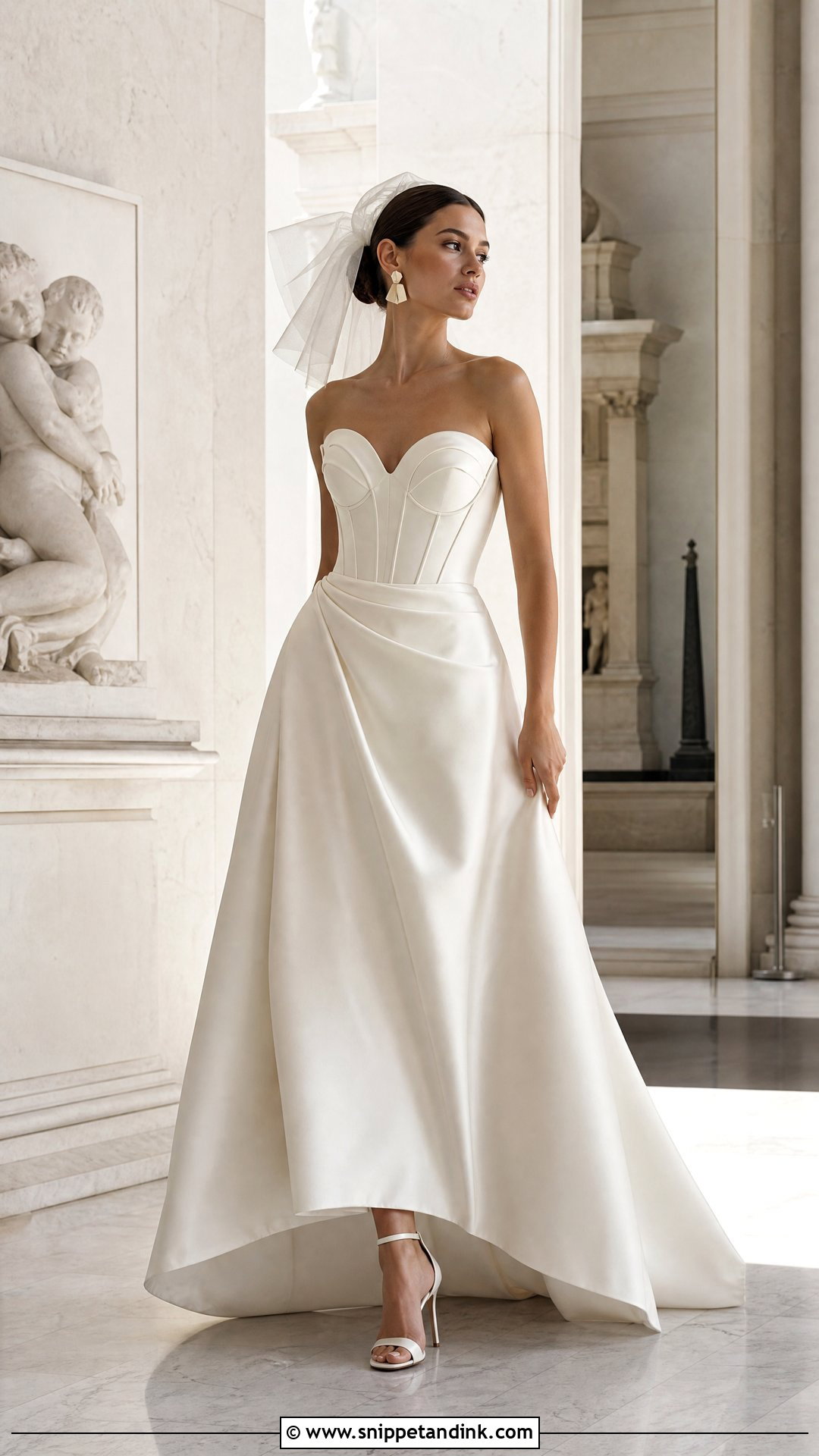
Curved seams and a firm internal frame do the decorating on a sculptural corset, so the rest of the dress can stay almost bare. The skirt should be a clean A-line or a soft drape to offset the sharp lines above. I pair it with satin ankle-strap heels, geometric earrings and a structured mini bag, and I steer brides toward raw-edge tulle or a short veil worn at the back of the head rather than anything beaded. Fresh, glowing makeup keeps the structure from looking severe. When we check fit, the corset should hold you without stopping a full breath. If you can’t laugh comfortably in it, it needs letting out.
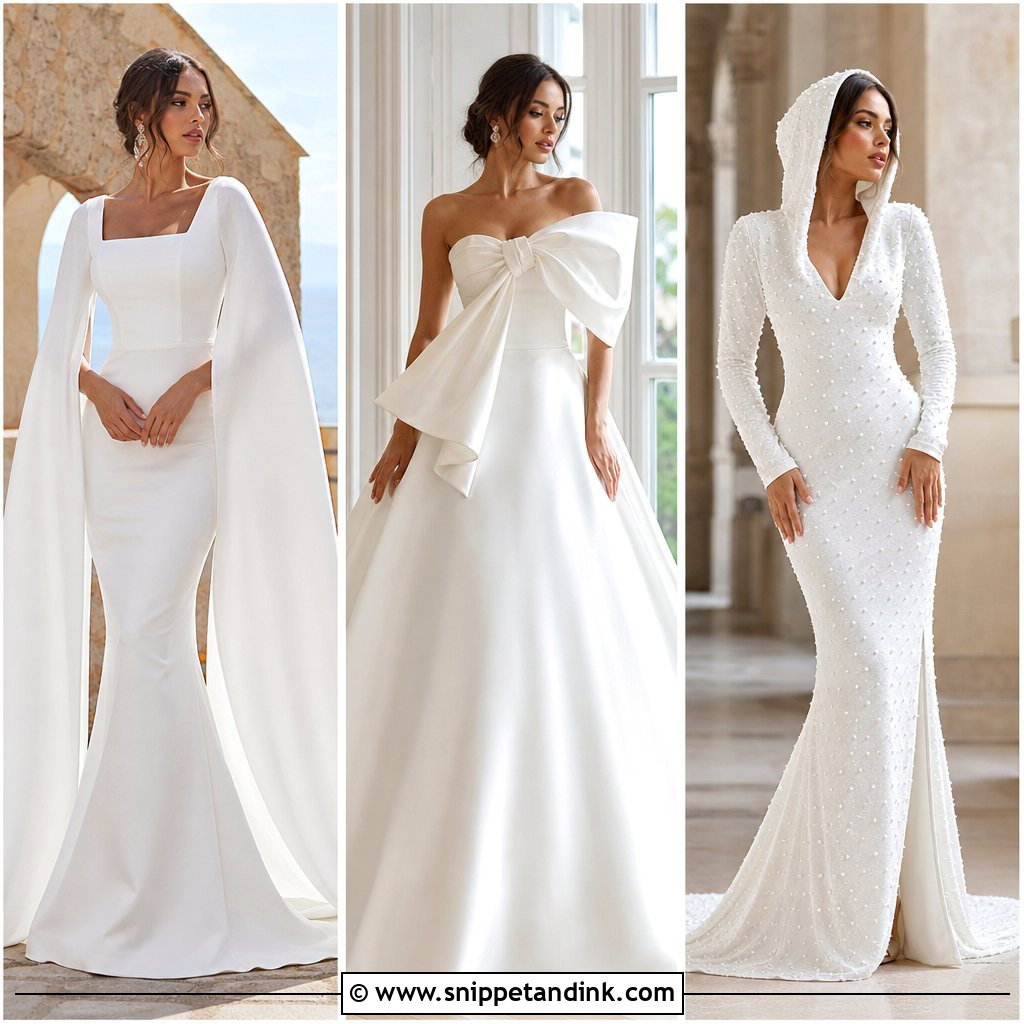
4. Oversized Bow Wedding Dress
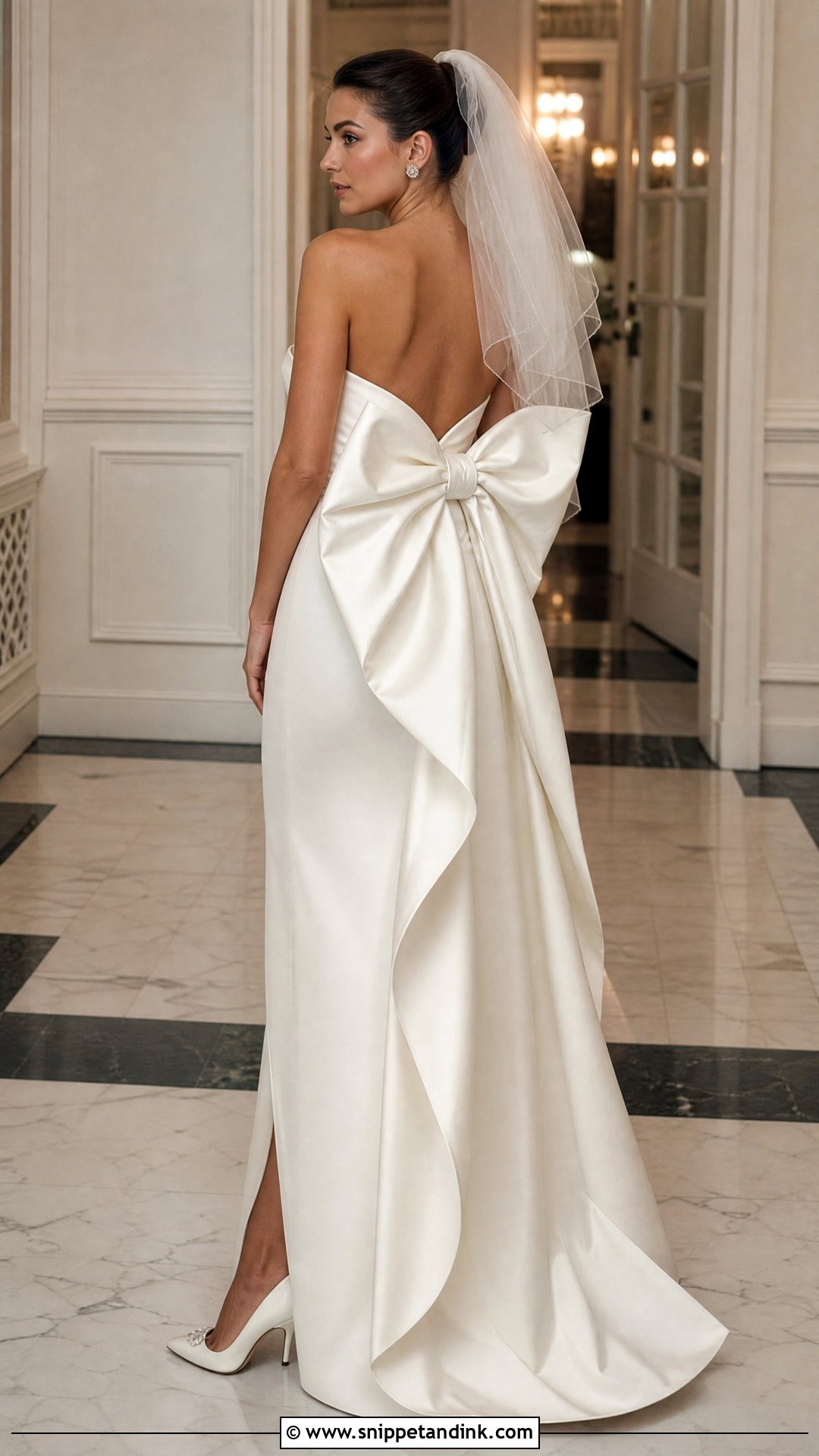
One big bow is the whole point here, whether it sits across the back, wraps the waist or climbs from one shoulder. Put it on a plain silhouette; a column with a large back bow is the most balanced version I’ve styled. The bow’s weight is the practical issue. A heavy satin bow pulls the back of the dress downward over the day unless it is stitched to a support underneath, so ask how it is attached. Sleek updo, crystal studs, clean pumps, and a fingertip veil that stops above the bow. Carry something compact with smooth greenery.
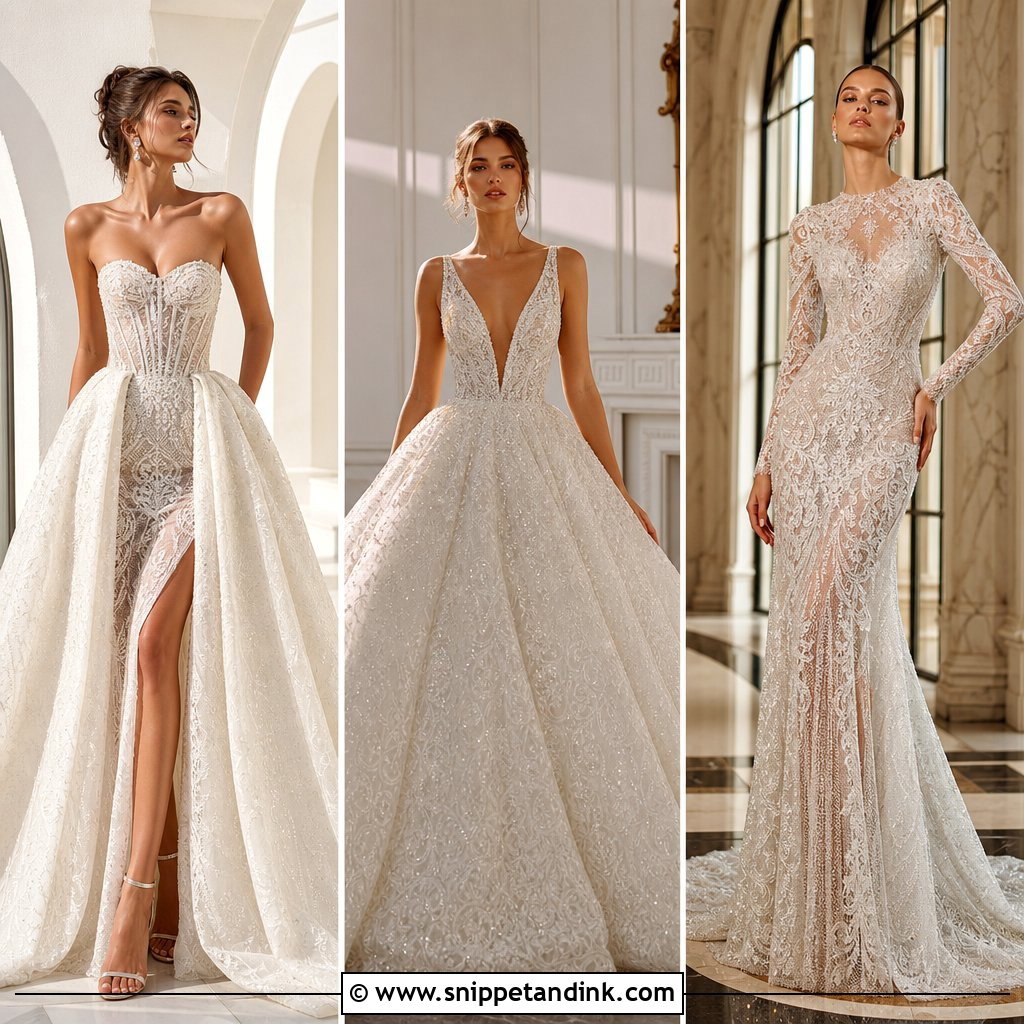
5. 3D Floral Applique Wedding Dress
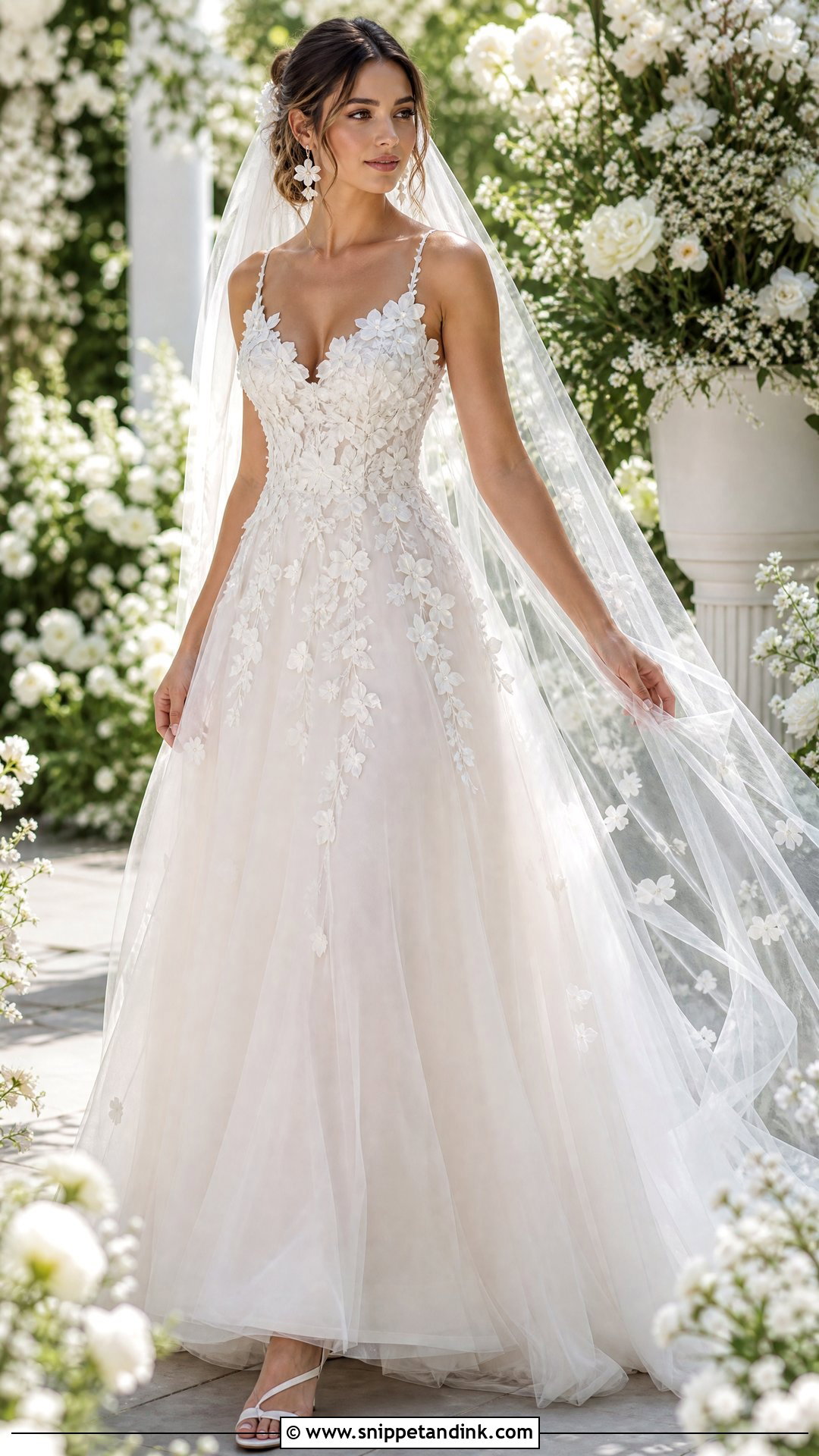
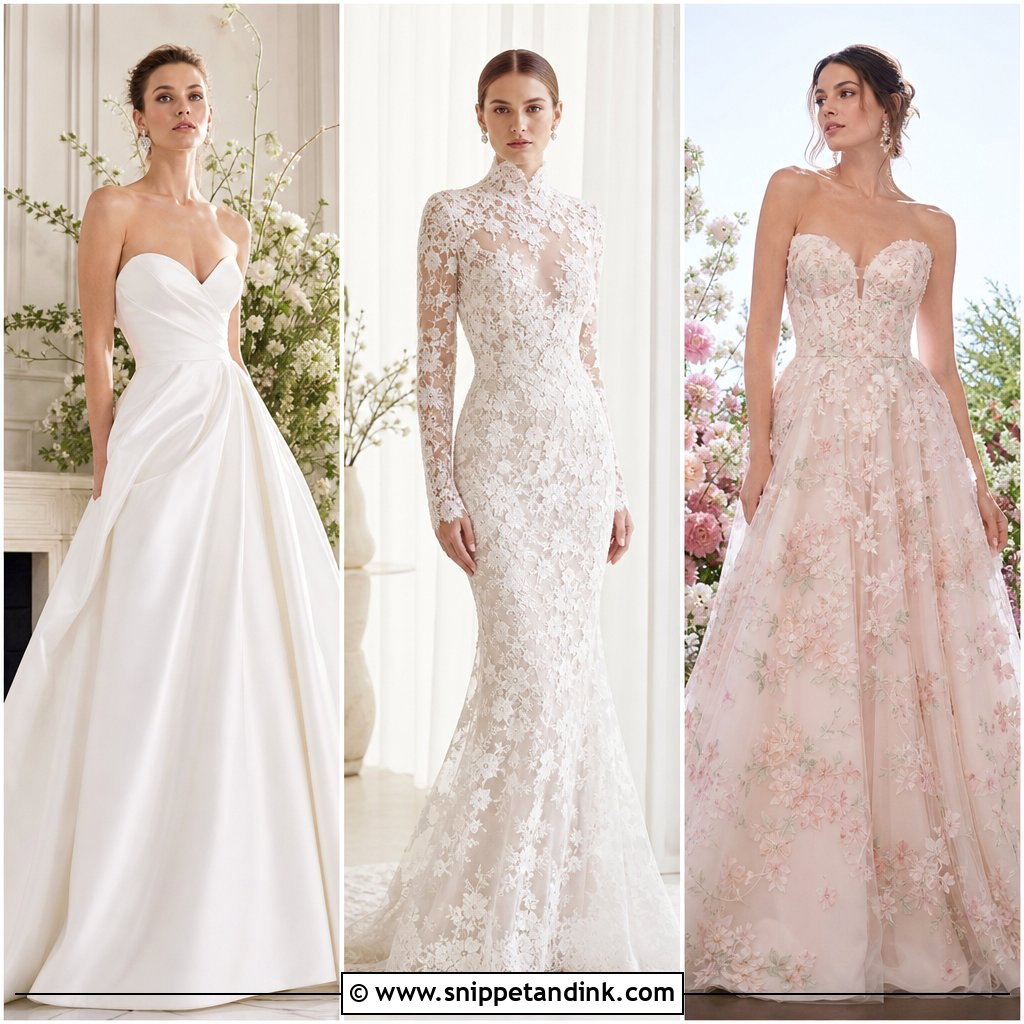
Raised floral appliqués are hand-placed, and the good ones cluster and fade rather than covering every inch. That gap between flowers lets the base tulle show and gives the eye somewhere to rest. A fitted bodice over a soft tulle A-line is the classic pairing. I add only a few matching appliqués near the edge of the veil, delicate ivory sandals and floral earrings, with a soft bun and a few loose pieces at the face. Keep the bouquet smaller than you think. A big arrangement held at the waist covers exactly the part of the gown where most of the hand work sits.
6. Sheer Lace Long Sleeve Wedding Dress
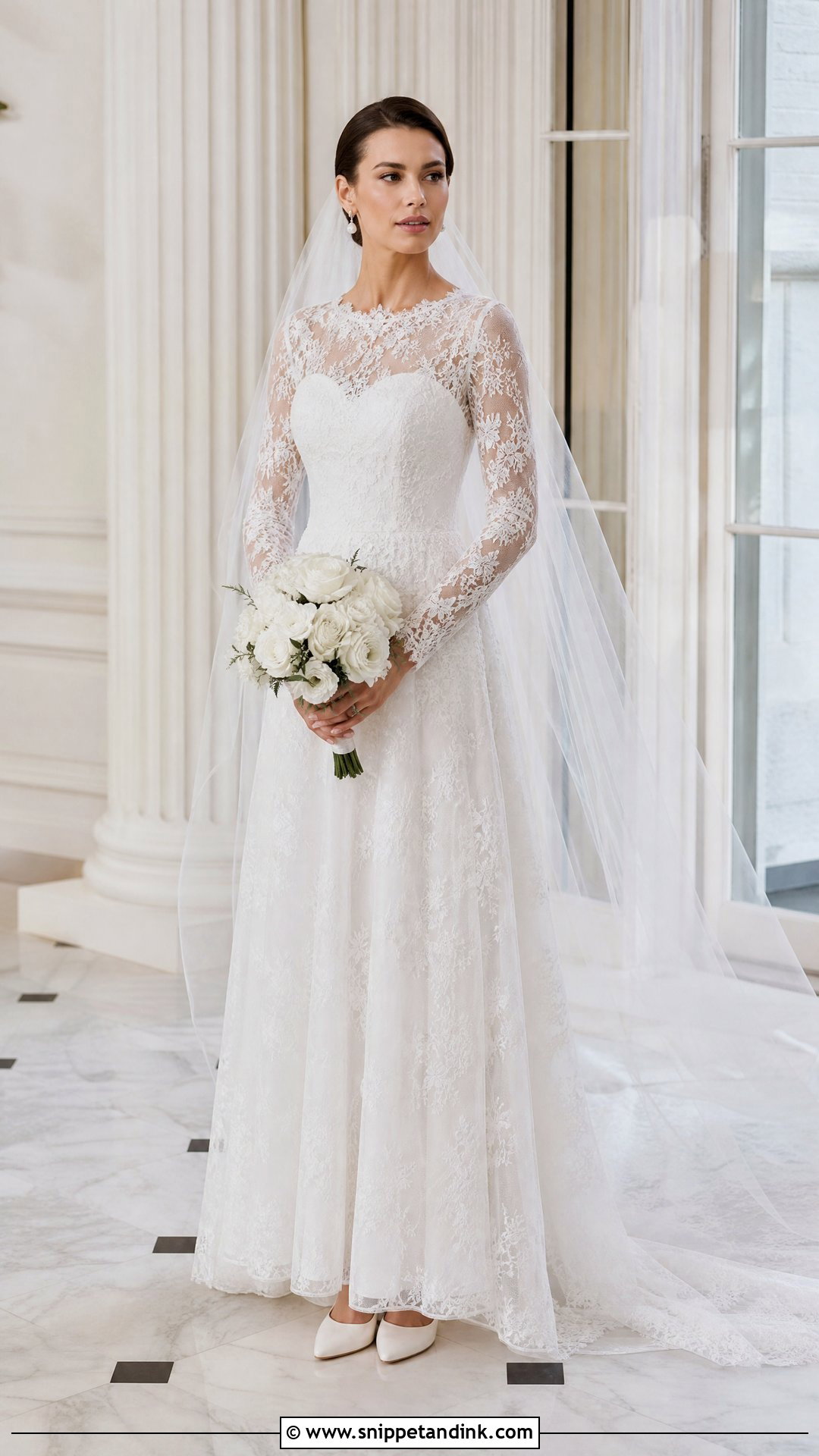
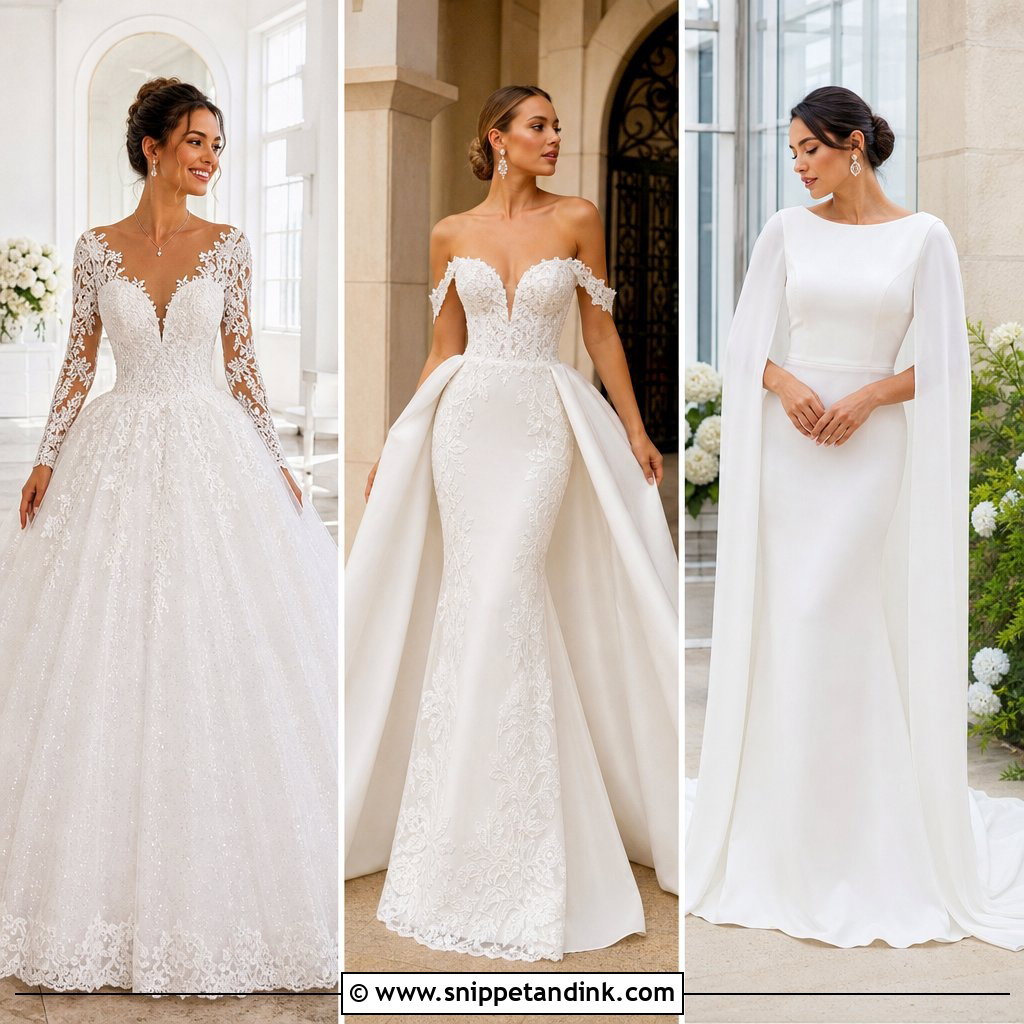
Sheer lace sleeves over a lined bodice give coverage that doesn’t feel heavy. Fine floral lace softens the look; graphic lace sharpens it. Whichever you pick, keep the accessories free of lace: closed-toe satin pumps, pearl earrings, a long veil with no edging. I suggest a low bun or a smooth ponytail because loose hair catches on lace sleeves at the shoulder and pulls threads by the end of the night. Cool seasons and evening ceremonies suit this best.
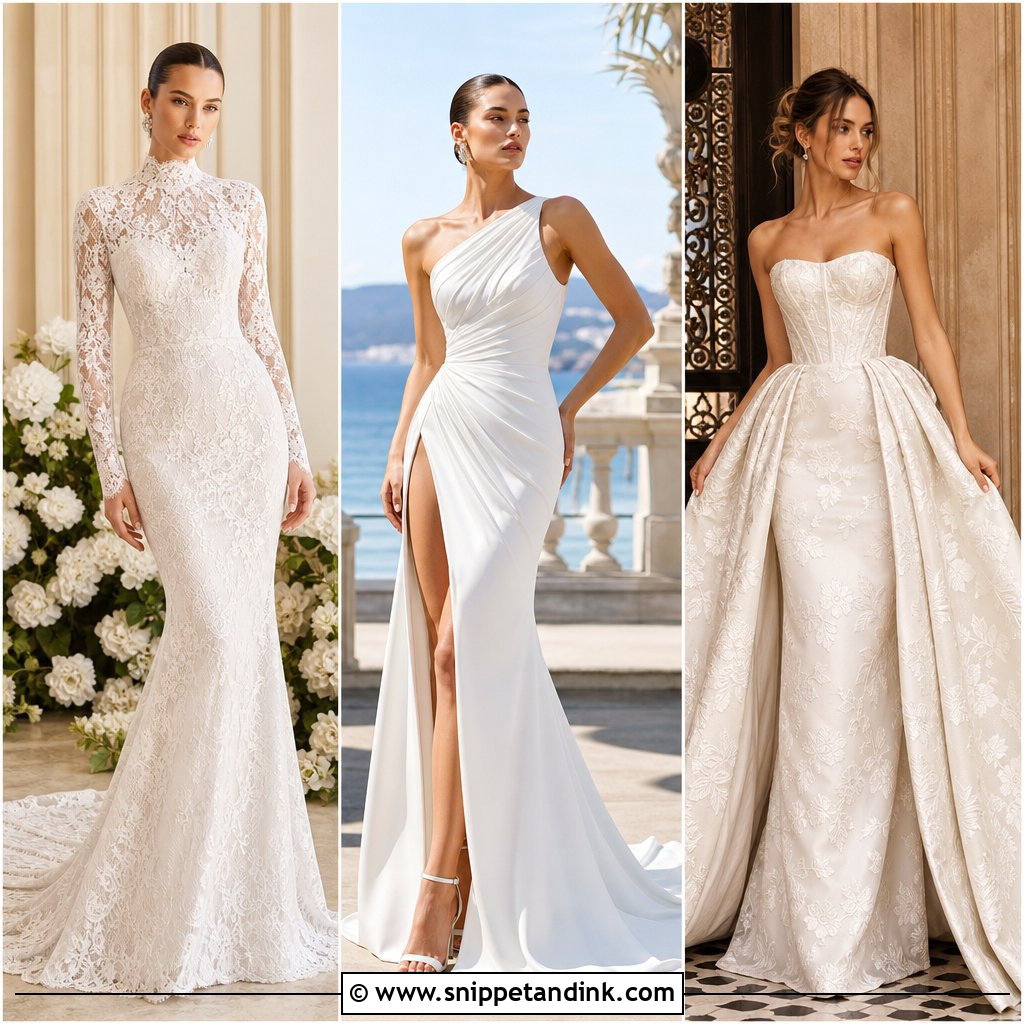
7. High Neck Lace Wedding Dress
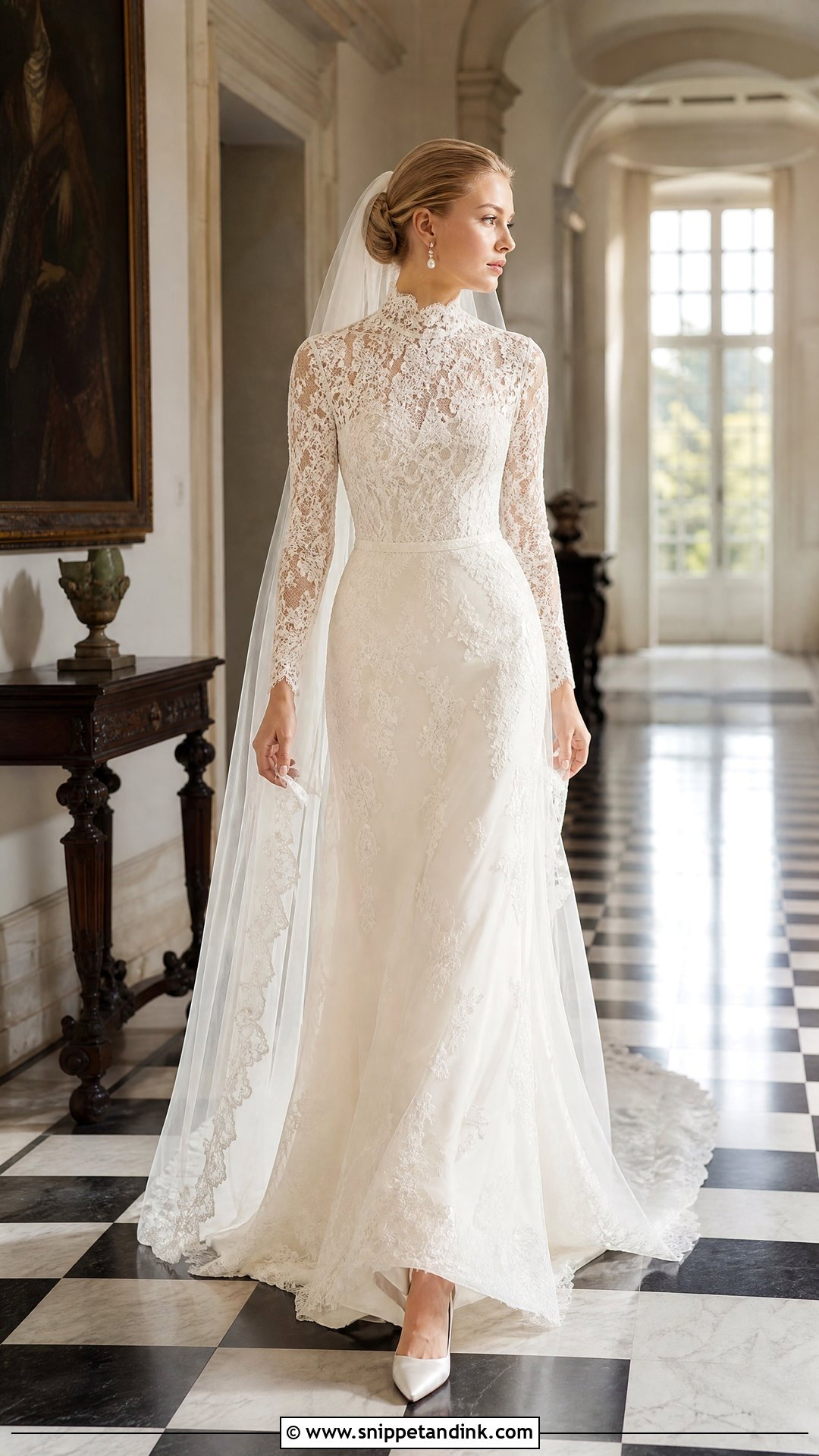
High lace necklines feel editorial when the rest of the dress is fitted through the bodice and loose in the skirt. Comfort around the throat comes first for me. Some lace has a scratchy cord edge, and I always run a finger inside the collar at fittings to check it lies flat. A partially lined bodice gives depth while keeping coverage. Pearl button earrings, pointed ivory heels and a long veil under a neat bun finish it, with no necklace and a small bouquet with trailing stems.
8. Off Shoulder Draped Wedding Dress
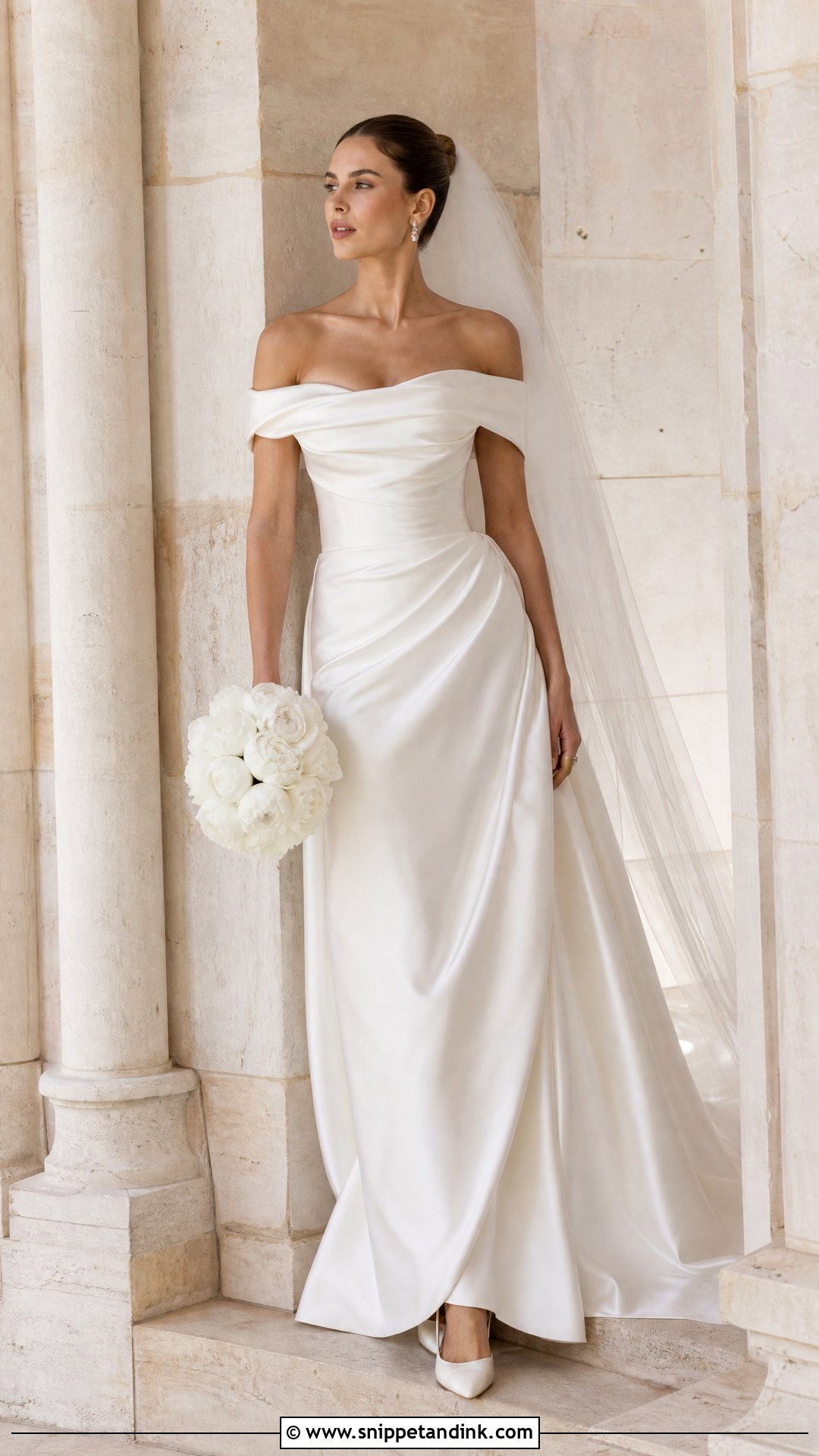
Soft folds around the neckline make this draped style romantic and sculptural at the same time, and satin, crepe or silk faille hold the drape best. The drape needs inner support or it slides down your arms during the first hug. That is the fitting check I’d ask for: walk, wave, embrace someone, then look in the mirror to see if it has moved. Drop earrings, a slim bracelet and low pointed heels under the skirt keep things quiet. A smooth updo, a chapel veil and a round bouquet held below the waist complete it for a ballroom or formal coastal venue.
9. Strapless Column Wedding Dress
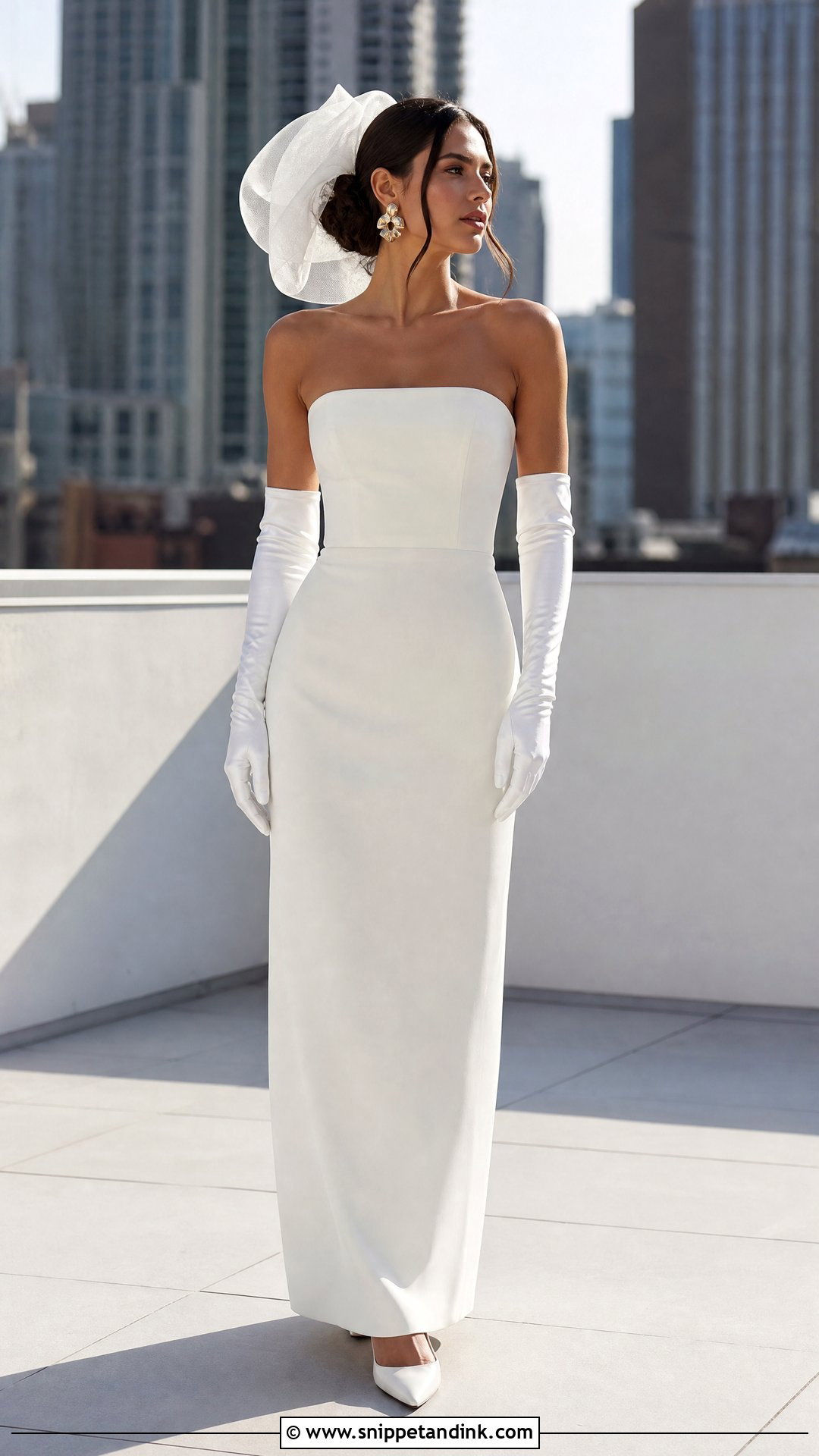
Column gowns have nowhere to hide, so the fabric choice matters more than any detail. Substantial crepe or double-faced satin falls straight without clinging, and light boning in the bodice gives support. A back slit or slight flare at the hem lets you take a normal stride. I love long gloves for the ceremony and a pair of bold earrings, then the gloves come off for the reception. A short veil or sculptural hairpiece suits the narrow outline better than a long one. One flower variety in the bouquet, nothing more.
10. Minimalist Silk Slip Wedding Dress
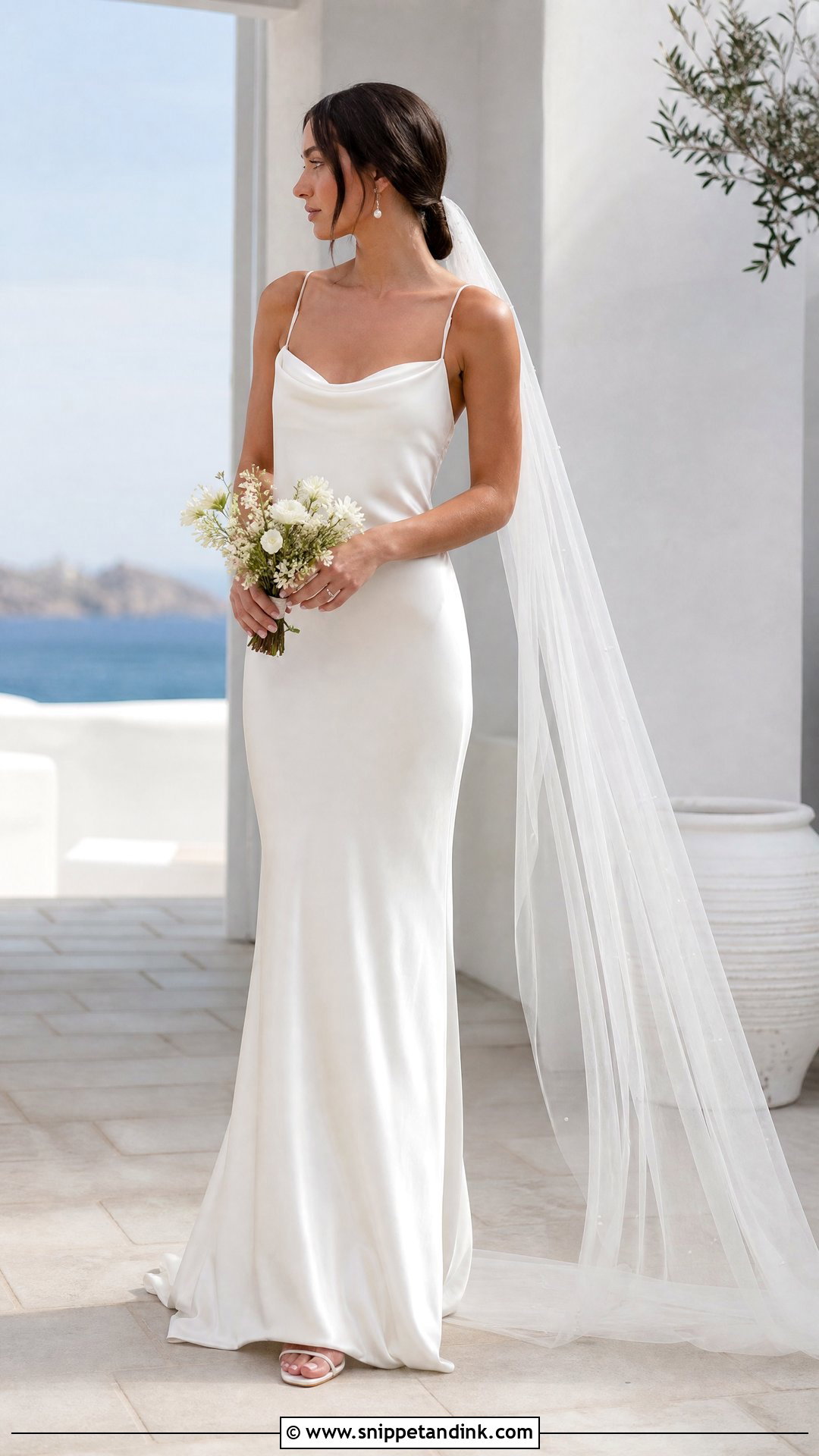
Bias-cut silk slips skim the body instead of hugging it, and that difference is everything. Cut on the straight grain, the same dress clings and shows every line underneath. A draped or square neckline adds shape. Barely-there ivory sandals, a fine pendant or small earrings and a sheer floor-length veil are all it needs, with a tailored white coat or silk wrap if the evening turns cool. Loose waves or a low knot. I’d warn anyone choosing silk for a hot destination that it shows perspiration marks, so plan for underarm shields and a breathable fabric blend if you can.
11. Cape Sleeve Wedding Dress
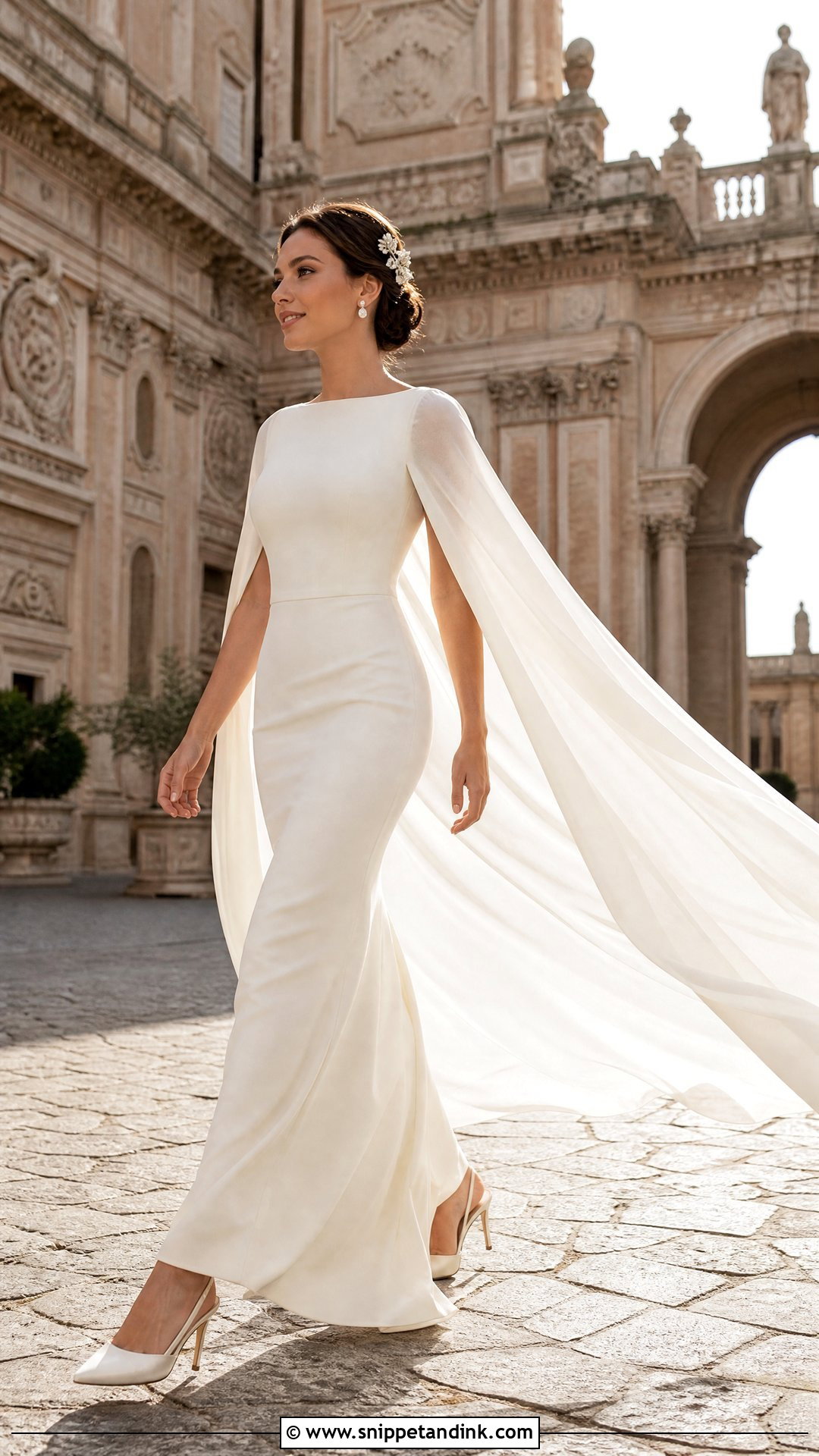
The cape can be stitched to the shoulders, built into the sleeves or made to detach. Chiffon floats; structured crepe makes sharper runway lines. Keep the dress under it simple, either a sheath or a plain A-line. Pointed slingbacks, polished studs and a smooth bun complete it. I tell brides to skip the long veil here, because veil and cape fight each other on every turn. A small comb or a short face-framing veil is enough. Walk toward a mirror at a normal pace to see the movement you’ll get on the aisle.
12. Detachable Overskirt Wedding Dress
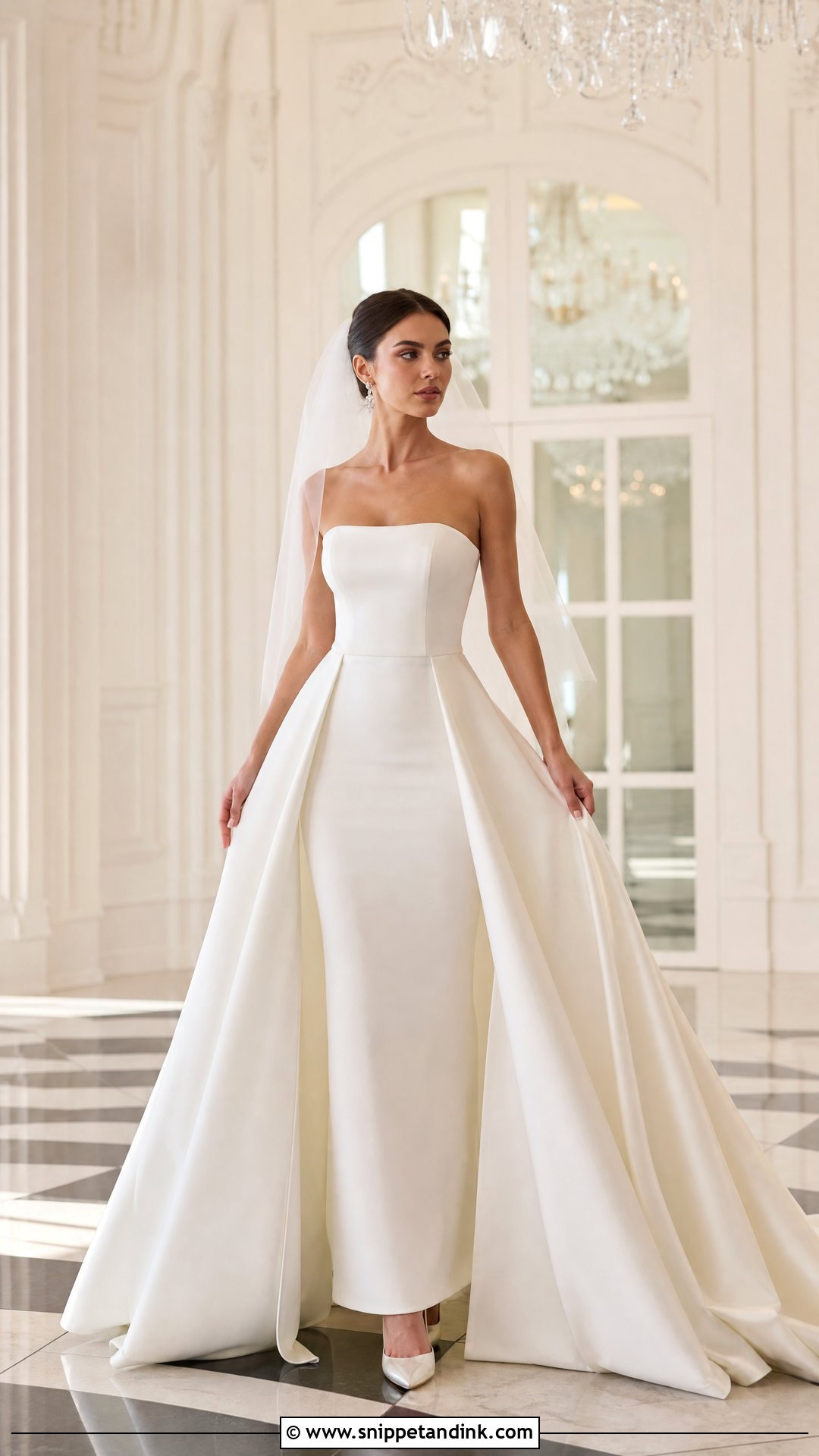
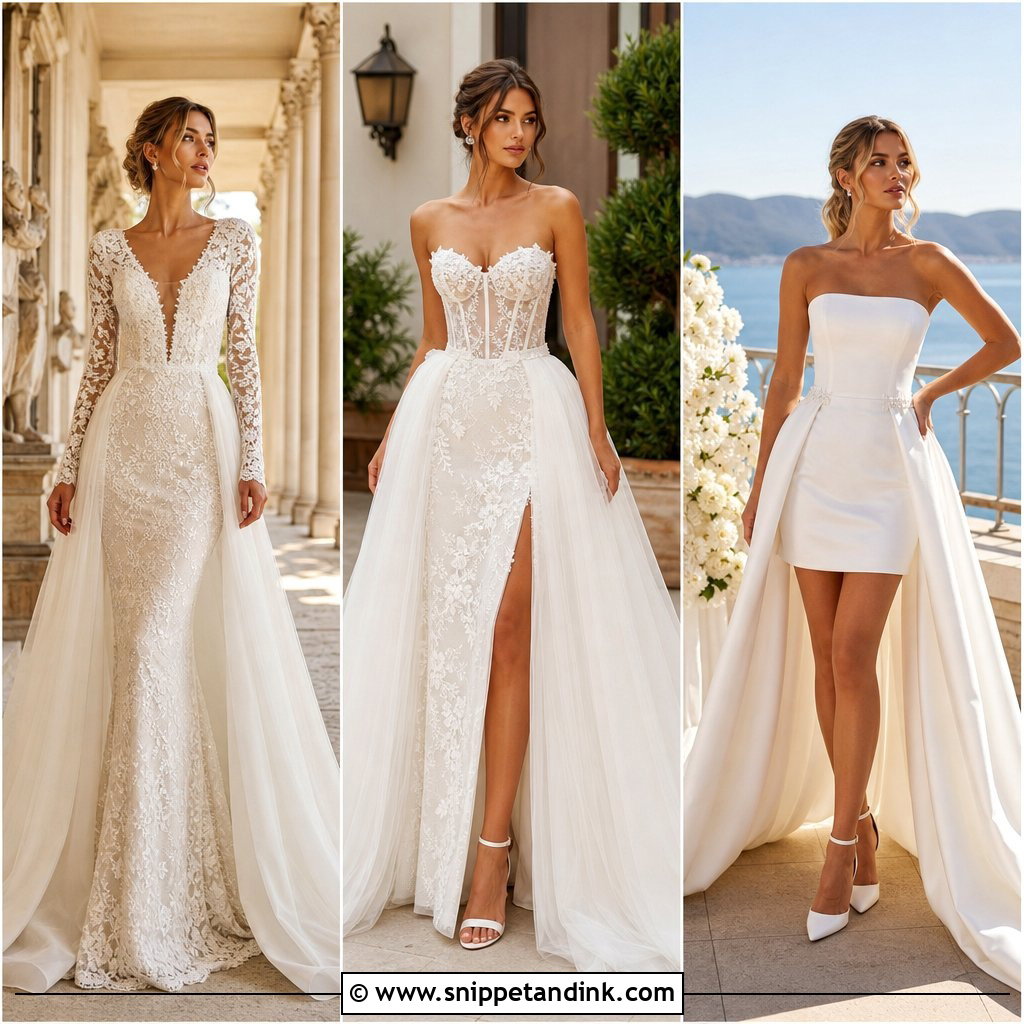
A detachable overskirt wedding dress gives you a full aisle look and a lighter party look with one change. Satin or tulle volume goes over a fitted base, which might be a column, a mini or a slight flare. Test the attachment carefully. It has to be secure enough to survive photos and quick enough for one helper to release in under a minute, and I make whoever will do it practice at the last fitting. Pointed pumps and crystal earrings work for both stages. The medium veil comes off with the overskirt and a simple hair accessory takes its place.
13. Bubble Hem Mini Wedding Dress
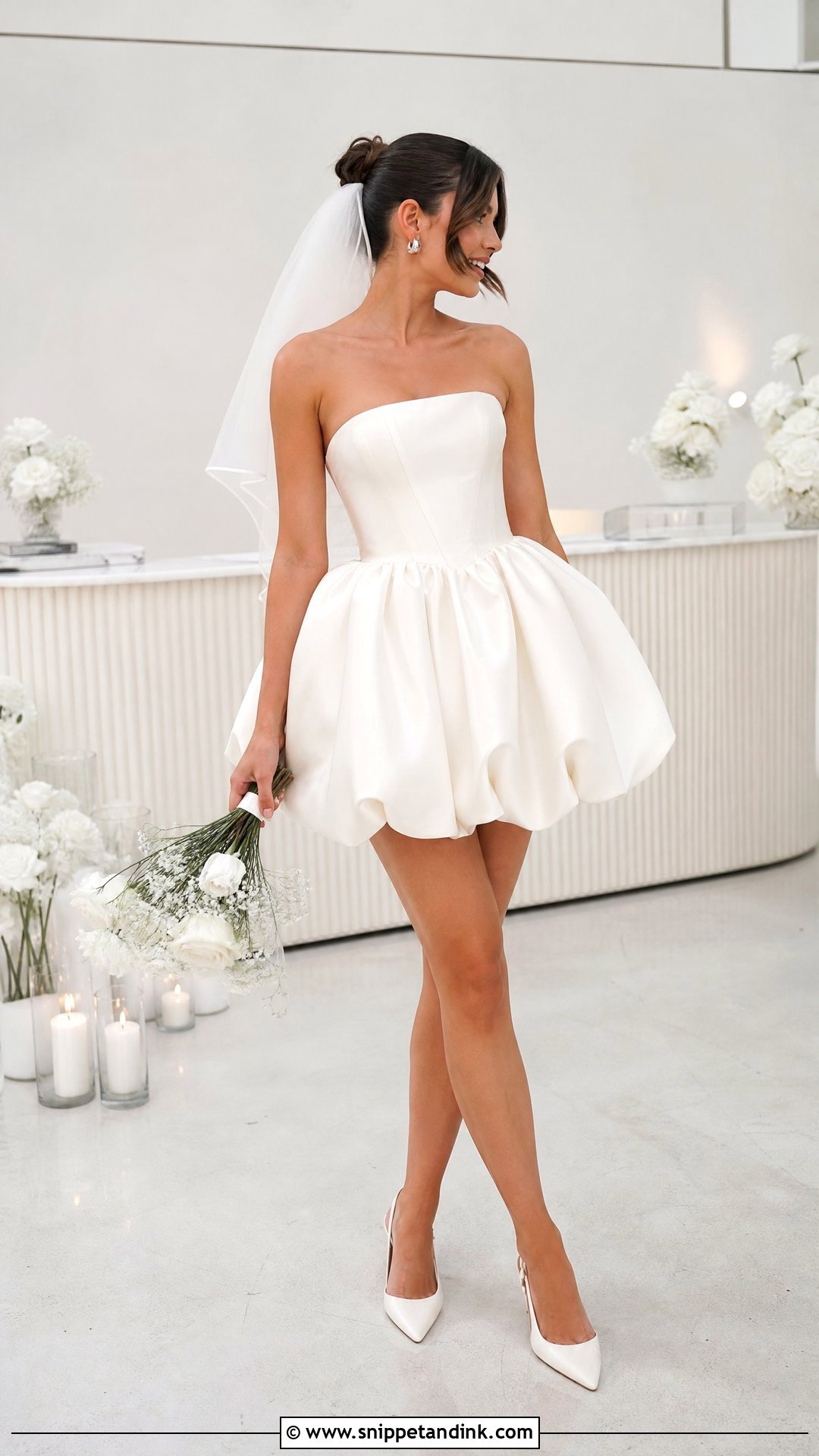
Bubble hems need body to hold their round shape, so structured satin, silk faille or crisp taffeta are the right fabrics, and thin fabric just looks deflated. A fitted strapless or square-neck bodice balances the volume below. Because your legs and shoes are on show, the shoes matter more than in any other look here: pointed slingbacks, sheer tights if you like, small statement earrings and a short veil or a large hair bow. Check that you can sit in it with your knees together before you buy. Civil ceremonies, welcome parties and reception changes are where I see this work best.
14. Tea Length Wedding Dress
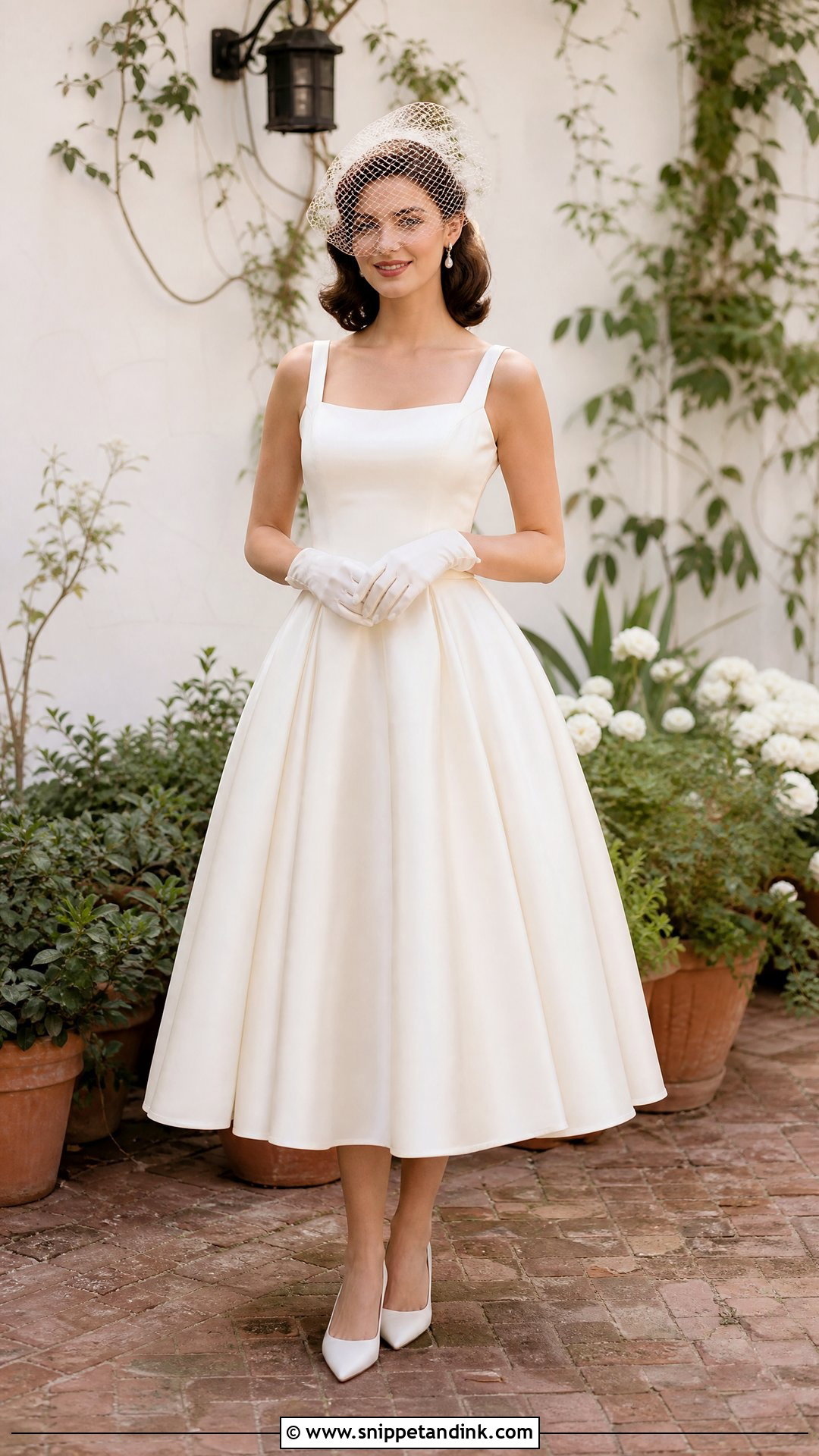
Tea length ends between the lower calf and the ankle, which puts the waist and shoes on display. A full satin skirt gives the classic fifties volume; a narrow crepe cut is the modern take. Pointed pumps, slingbacks or low embellished heels all suit it. I add short gloves, pearl earrings and a birdcage veil for a coordinated finish, and keep the bouquet compact. The hem length is the fitting detail to get exactly right. Too long and it reads as a mis-sized maxi, so judge it with your real shoes on.
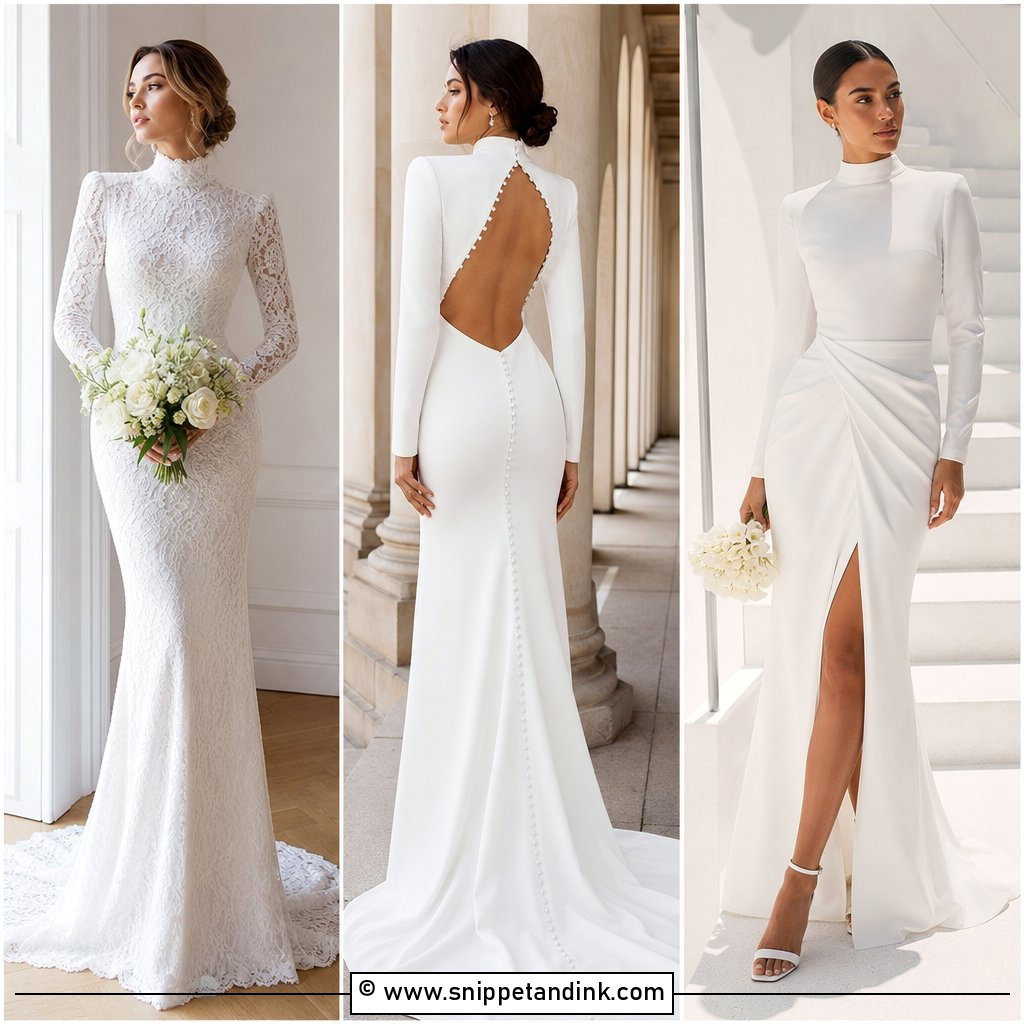

15. Tuxedo Wedding Dress With Train
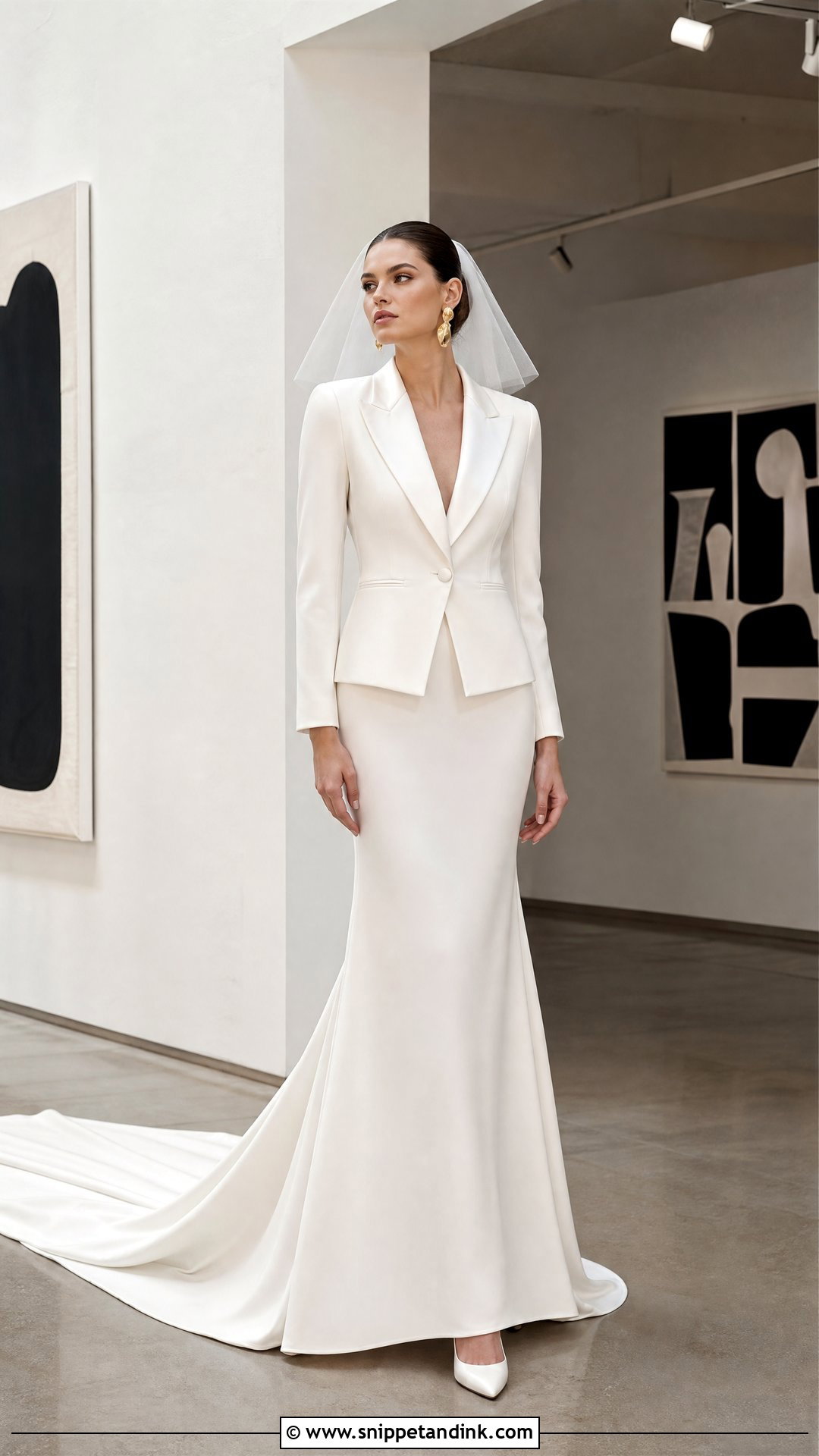
A tuxedo bodice with lapels and a defined waist, flowing into a long controlled train, mixes tailoring with traditional bridal movement. A satin lapel gives quiet contrast. I’d swap the standard veil for a crisp shoulder-length one or a small structured headpiece, and pair it with pointed pumps, sculptural earrings and a low ponytail or bun. Long-stemmed flowers echo the vertical lines. Tailored bodices are hard to let out, so if your weight tends to shift before big events, leave the final fitting as late as your seamstress allows.
16. Two Piece Wedding Dress
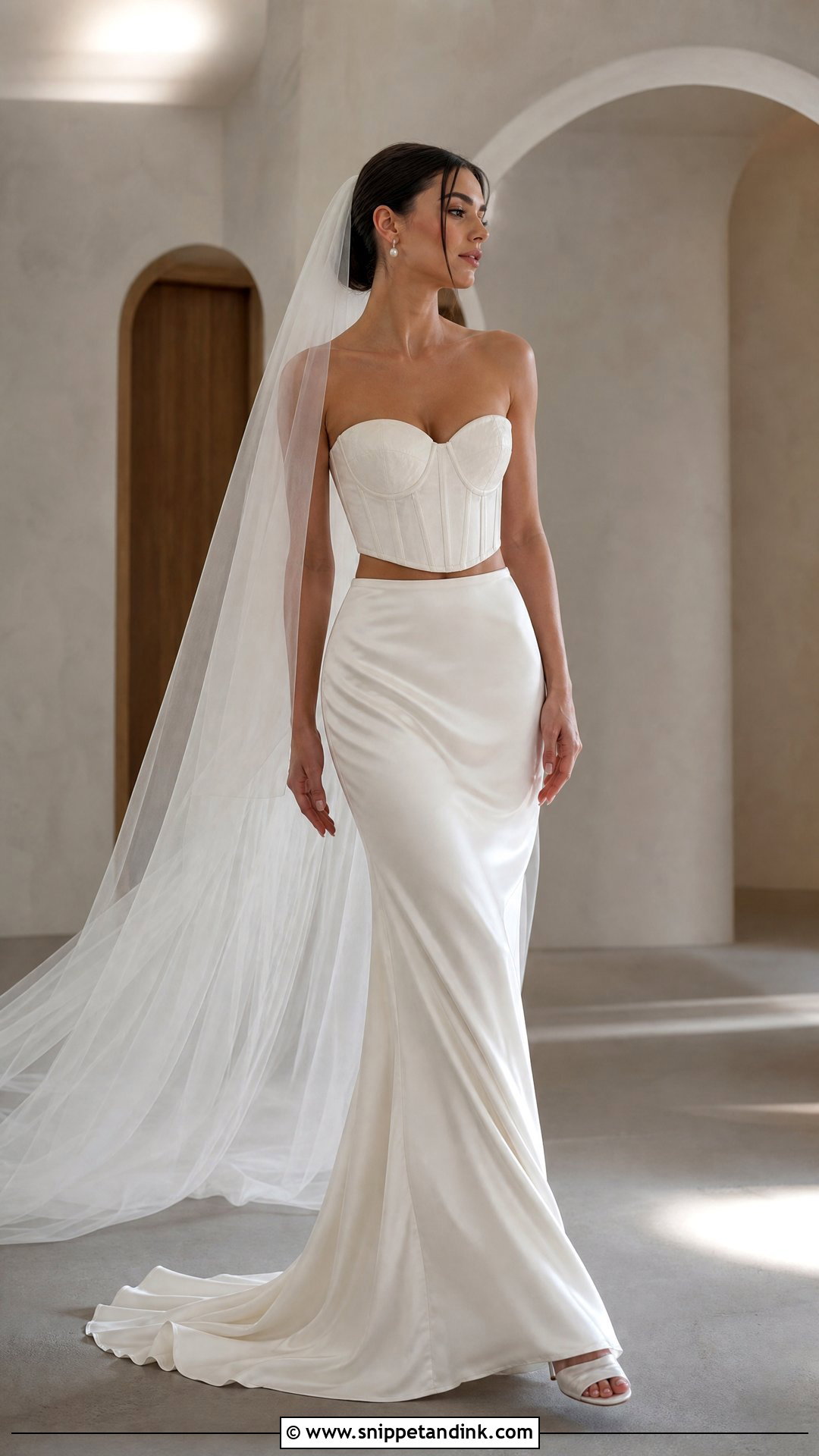
Separates give you options after the ceremony, which is the real appeal. A corset, tailored top or cropped silk blouse goes with a high-waisted floor-length skirt in the same shade and fabric family; mismatched whites look like an accident. A slim strip of skin between the pieces can look polished if the proportions are right. Understated heels, pearl or crystal earrings, a light cathedral veil and a smooth updo complete it. Later, the top can go with a short skirt or tailored trousers. I ask brides to raise their arms in the top during fittings; a crop that rides up too far shows more than they planned.
17. Beaded Fringe Wedding Dress
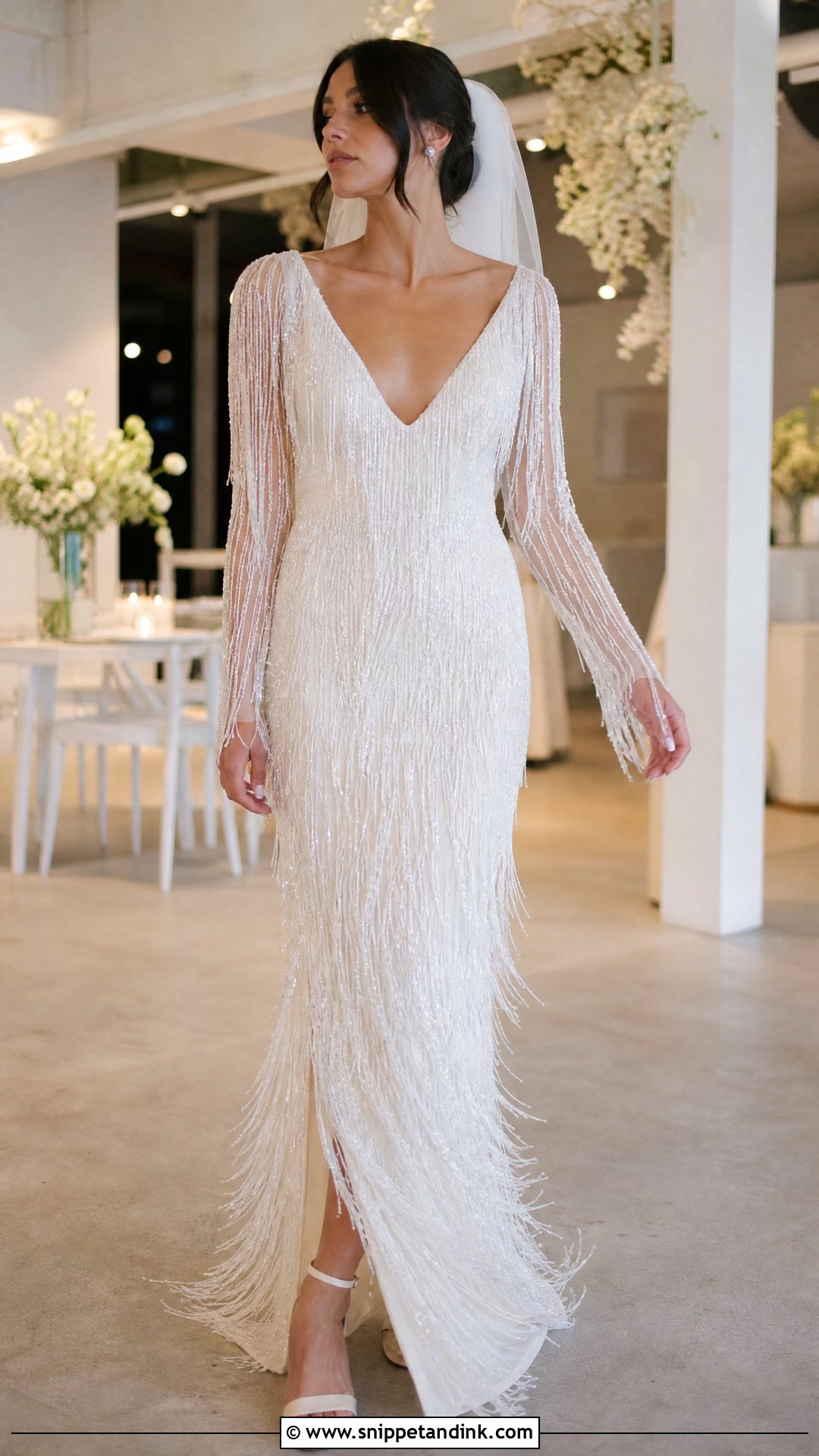
Fringe only looks right when it can swing, so the base gown needs to be streamlined. Placing it along the sleeves, the skirt or the back gives controlled movement; full coverage is heavy and tiring. Simple satin sandals, compact earrings and a smooth hairstyle keep attention on the beads, and a short plain veil can come off after the ceremony. Before the day, I run my hand down the fringe looking for loose threads, because one broken strand can shed beads across the dance floor. The hem must clear the floor, or the lowest strands tangle around your shoes.
18. Pearl Embellished Wedding Dress
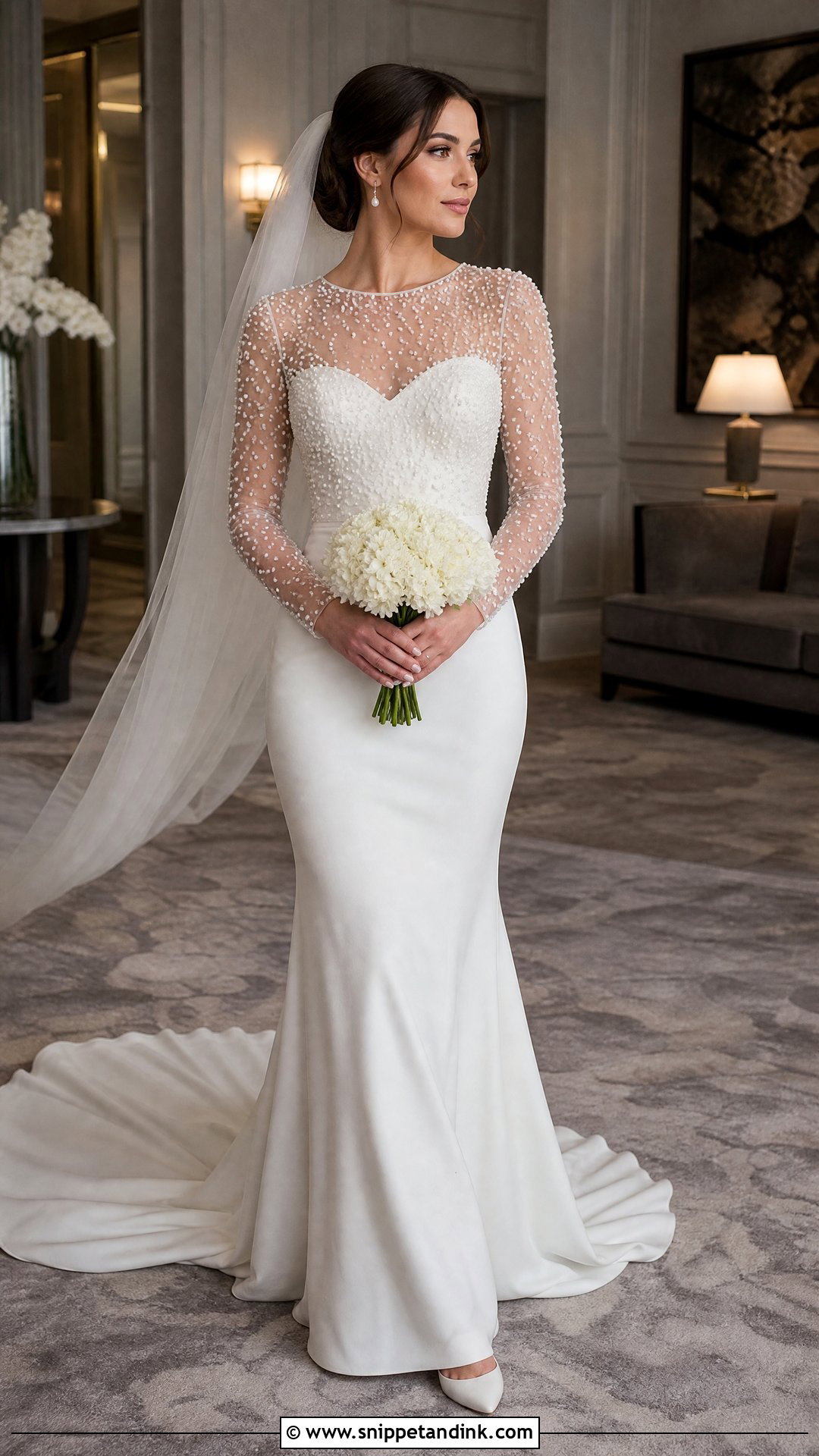
Pearls give a softer shine than crystal, which suits daylight and candlelight alike. They can trace the neckline, scatter across sheer sleeves or cover a fitted bodice before fading into a plain skirt. Pick one placement and let it lead. Pearl studs or small drops are better than a full matching set, and satin pumps, a smooth bun and a plain-edged veil finish the look. A simple white bouquet keeps the texture easy to see. Pearls are heavy in quantity, so a fully beaded bodice adds real weight, and I check that the straps or boning can carry it.
19. Metallic Embroidered Wedding Dress
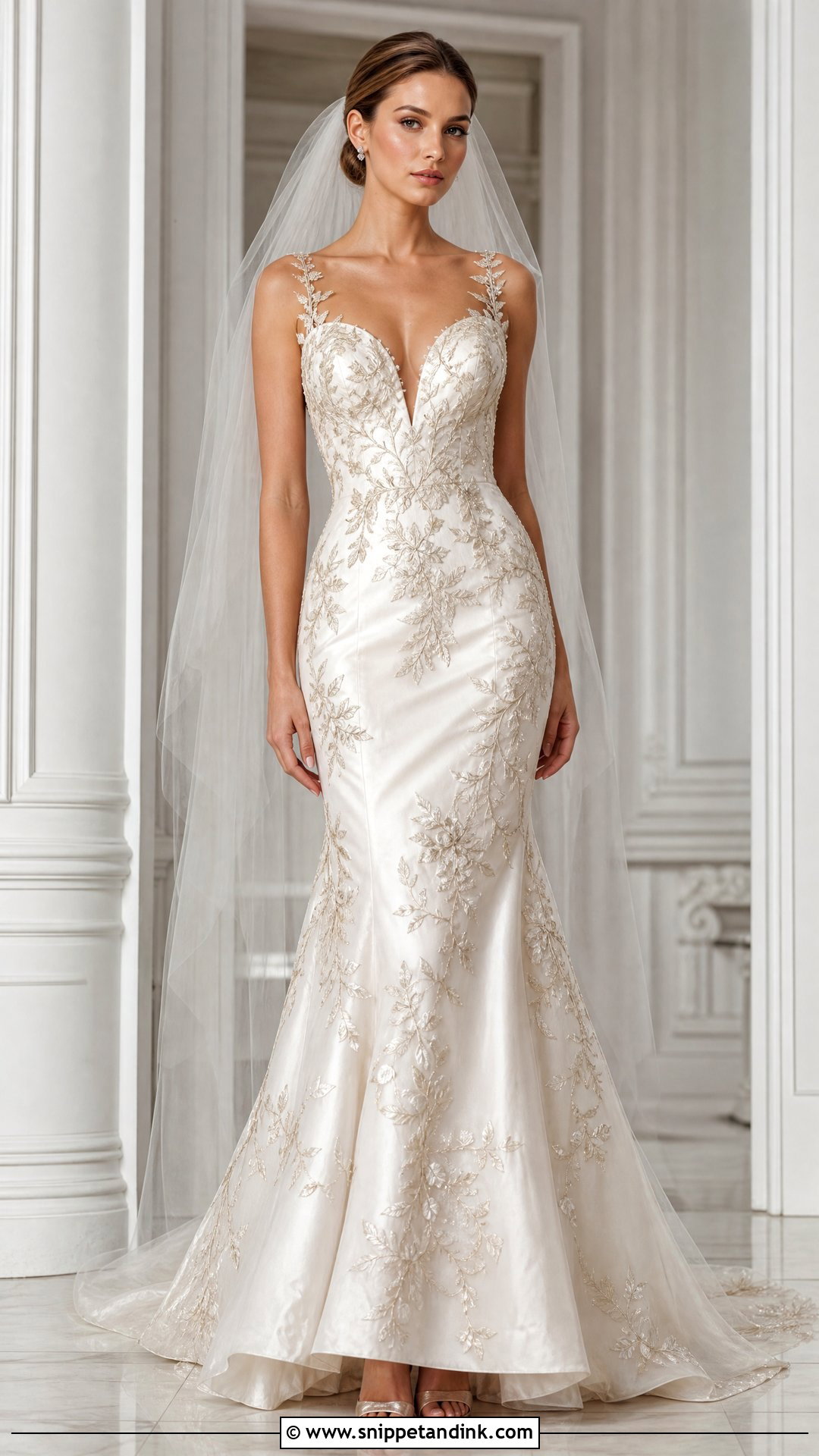
Metallic embroidery gives a wedding dress a luminous couture finish when silver, pale gold or champagne thread follows the seams or a botanical pattern. Thread that sits heavily on top of the fabric tends to look stiff. A fitted bodice with a soft flare is the foundation I’d choose. Neutral metallic heels, small studs and a plain tulle veil are enough, with a light bouquet and hair swept back. Evening light is kind to metallic thread, while direct flash can make it glare, so mention it to your photographer.
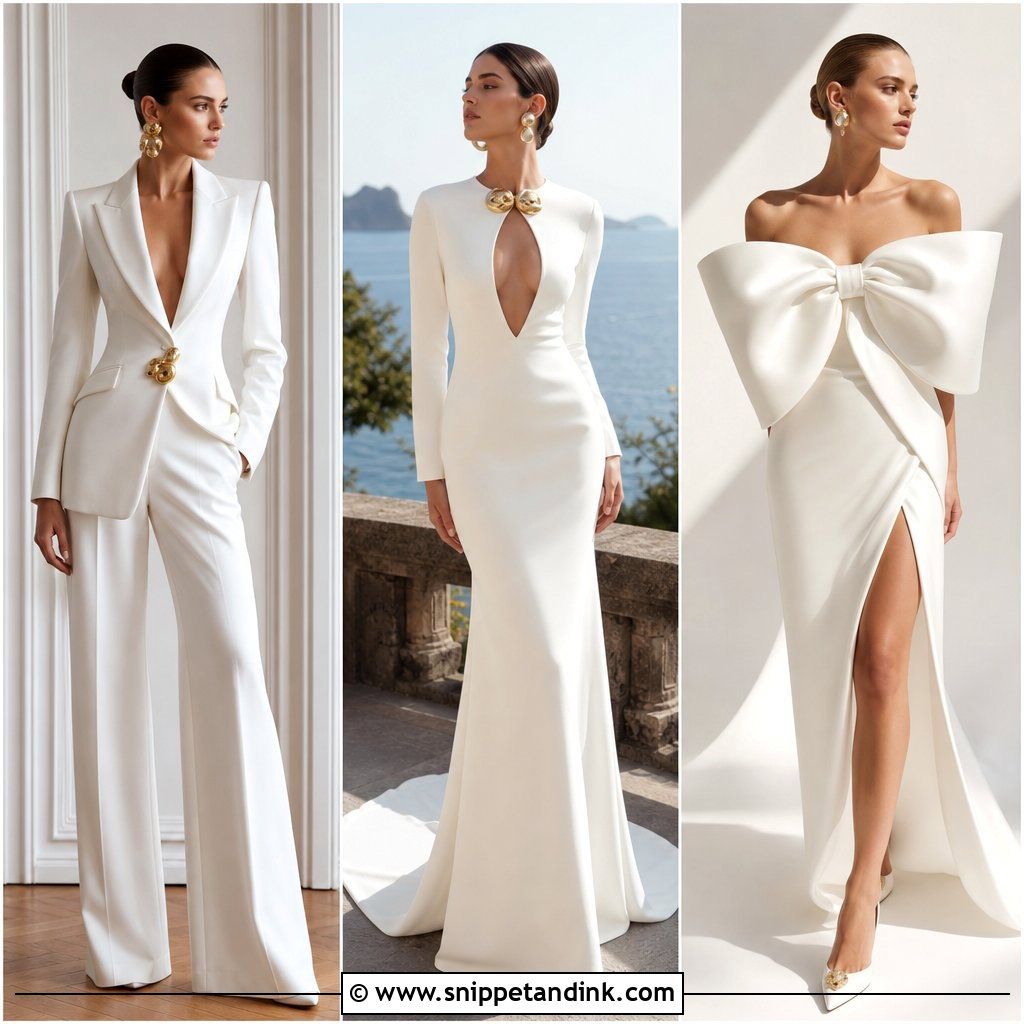
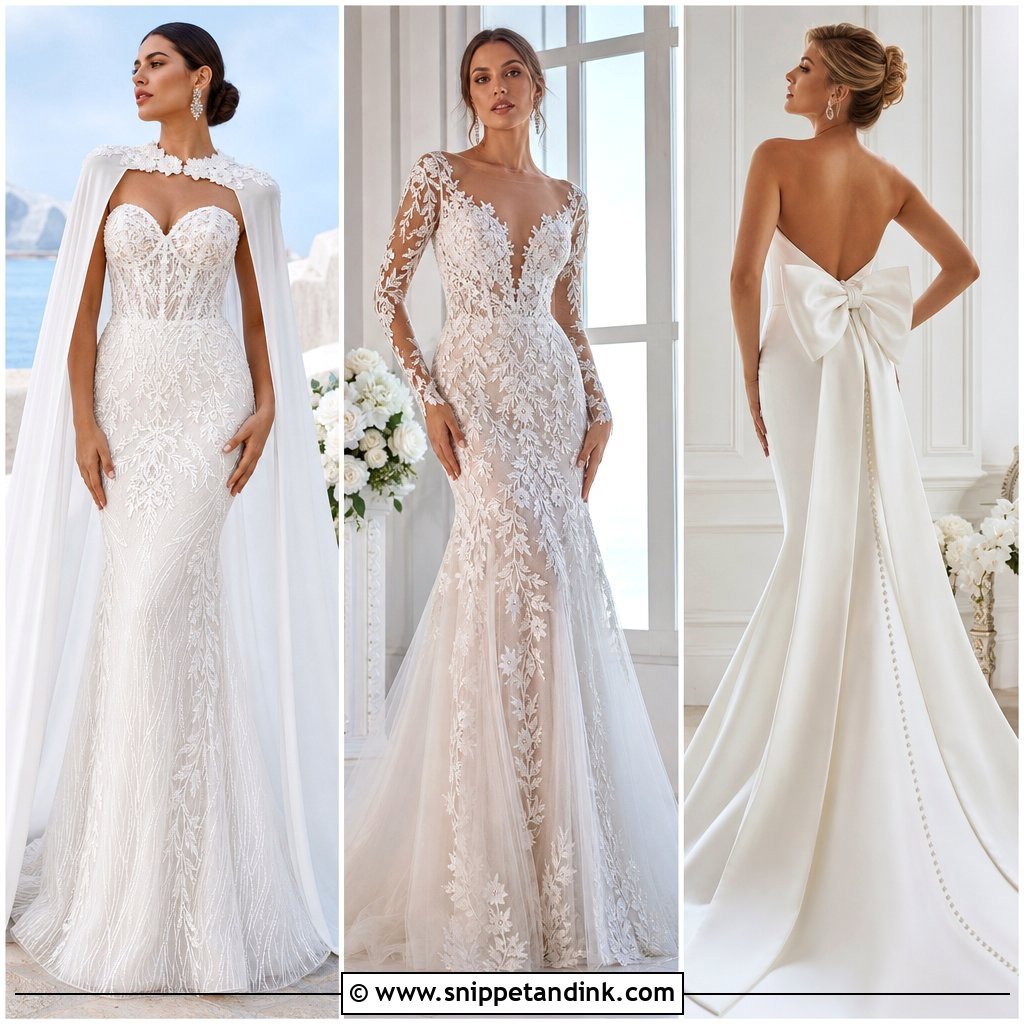


20. Pastel Wedding Dress
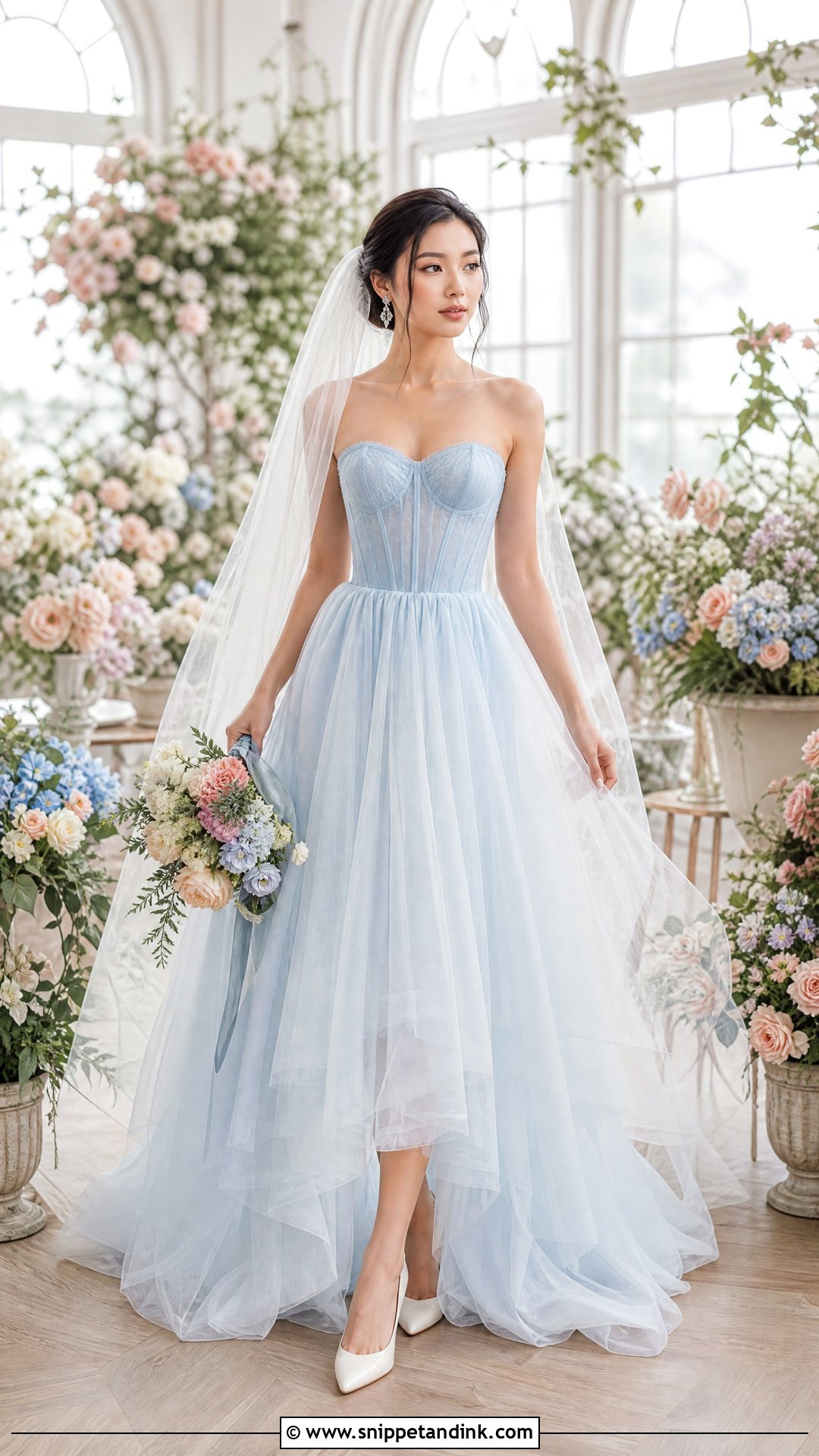
Pastels in powder blue, blush, pale lavender or muted peach still read as bridal, especially in layered tulle, satin or organza. Keep the silhouette formal, such as a corseted ball gown, a flowing A-line or a sculptural column, so the color looks intentional. Shoes either match the gown closely or go ivory. Clear crystal earrings, a sheer ivory veil and a bouquet with small touches of the dress color tie it together. I always bring a fabric swatch to the makeup trial with a pastel gown, because some blush and lip tones turn muddy next to lavender or blue.
21. Black And White Wedding Dress
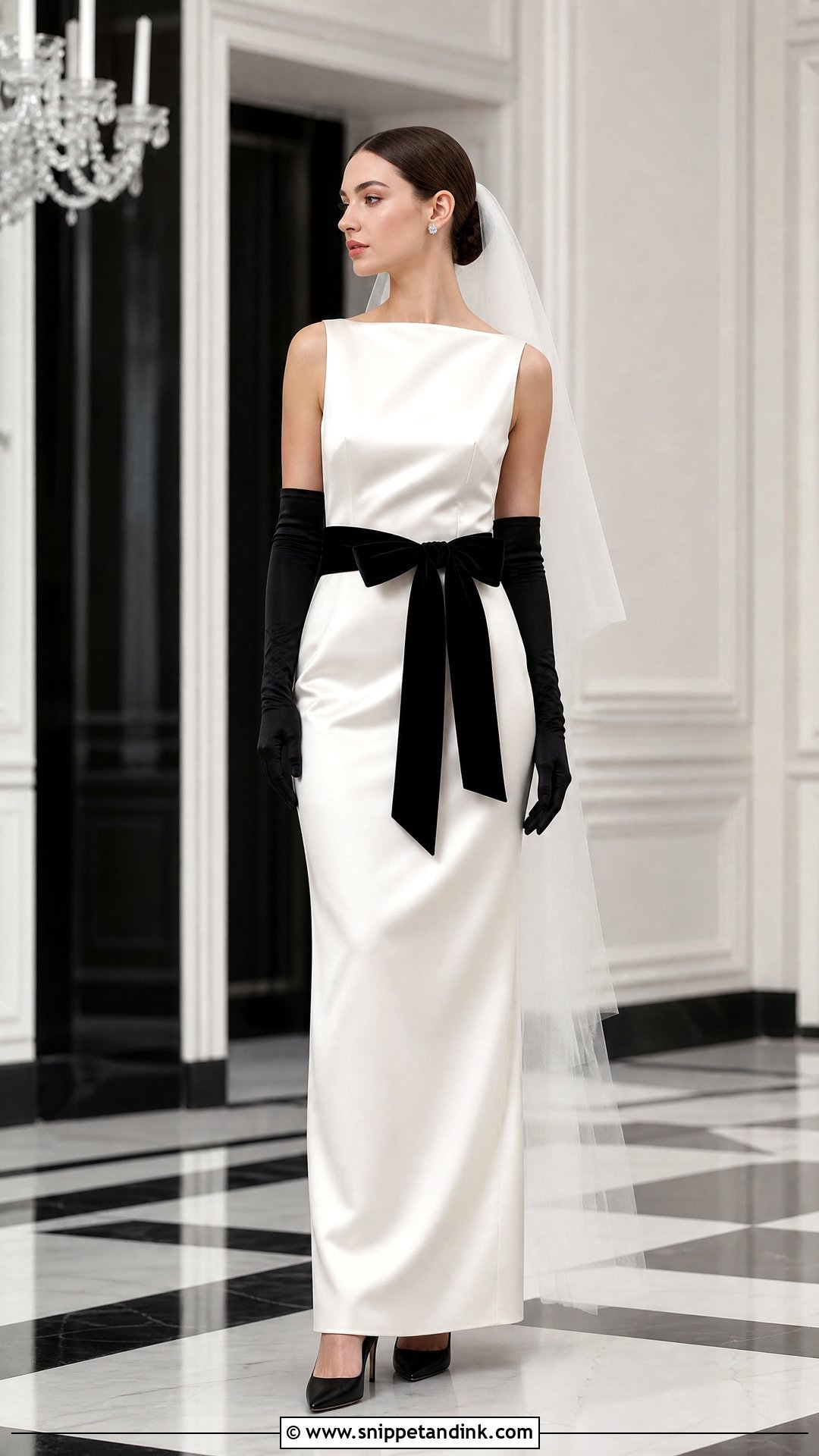
Black on a wedding dress works when it is rationed. Start with an ivory column or ball gown and add black in one or two places only, such as a velvet waist bow, opera gloves, embroidered trim or a removable overskirt. Black pointed pumps, simple diamond earrings and a plain white veil keep it balanced. A sleek bun or polished waves suit the graphic contrast, and white flowers wrapped in a narrow black ribbon tie the bouquet in. Velvet marks easily, so I tell brides to keep the bow away from makeup and lipstick when hugging guests.
22. Vintage Inspired Wedding Dress
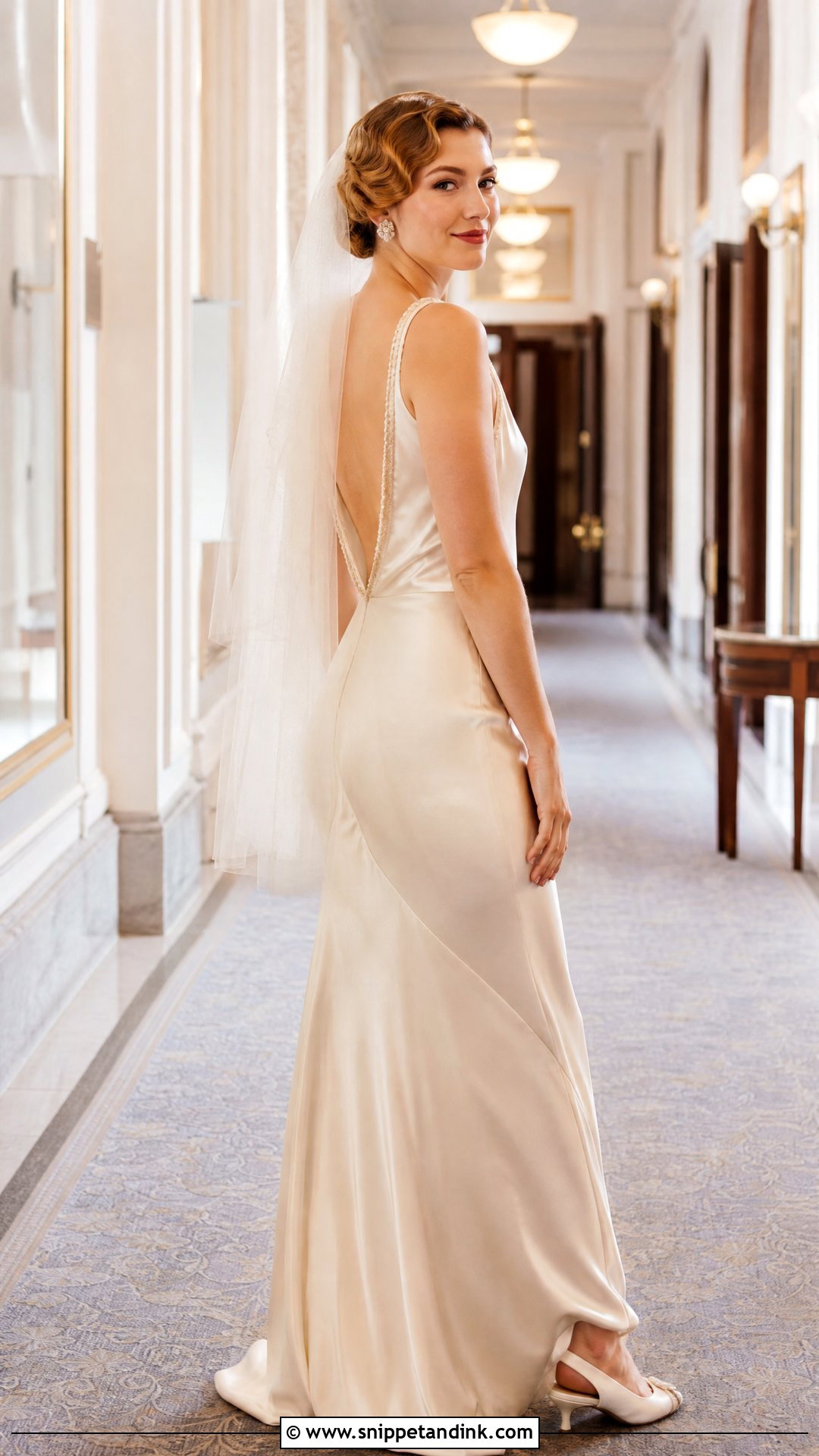
A vintage inspired wedding dress should hint at an era, not recreate it. Pick one decade: a 1930s bias cut, a 1950s tea-length skirt or a 1960s column with a bateau neck. Then make everything else current. With silk satin I’d go for low slingbacks, heirloom-style earrings and a simple veil under the hair. If the dress has lace, buttons or decorative sleeves, keep the bouquet compact and the jewelry minimal. Tailoring is what stops an older shape from looking borrowed, so plan your alterations around modern fit, not period fit.
23. Feather Trim Wedding Dress
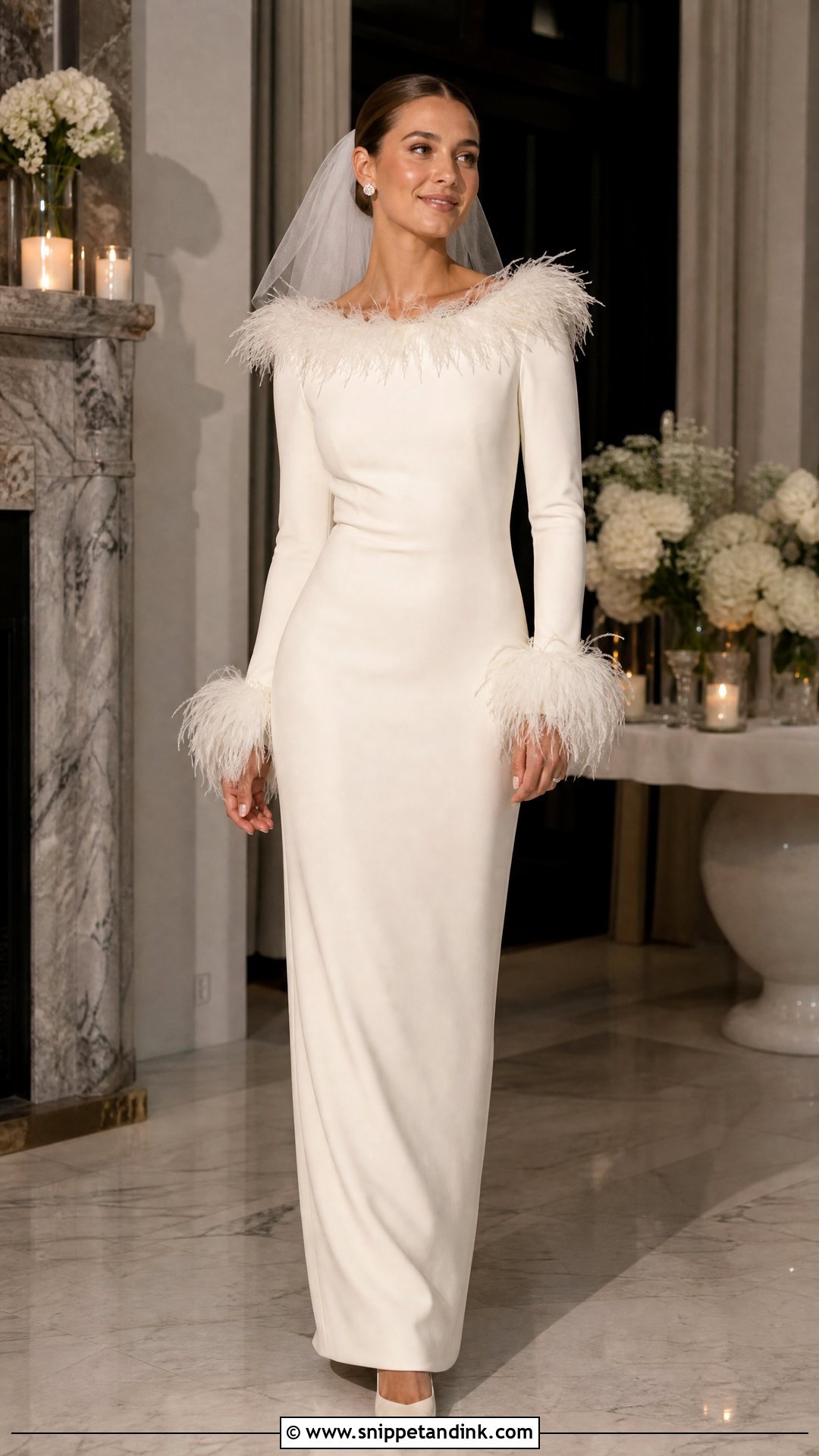
Feathers move with every breath of air, which is the appeal and the risk. The wearable versions trim the neckline, cuffs, hem or the edge of a removable cape, on a clean crepe or satin base. Minimal pointed heels, studs and a polished updo; no detailed veil, just a short plain one or a sculptural comb. Feathers droop in rain and humidity and pick up dirt at floor level, so I’d keep a feather hem for indoor evenings and choose trim higher on the body for anything outdoors.
24. High Low Wedding Dress
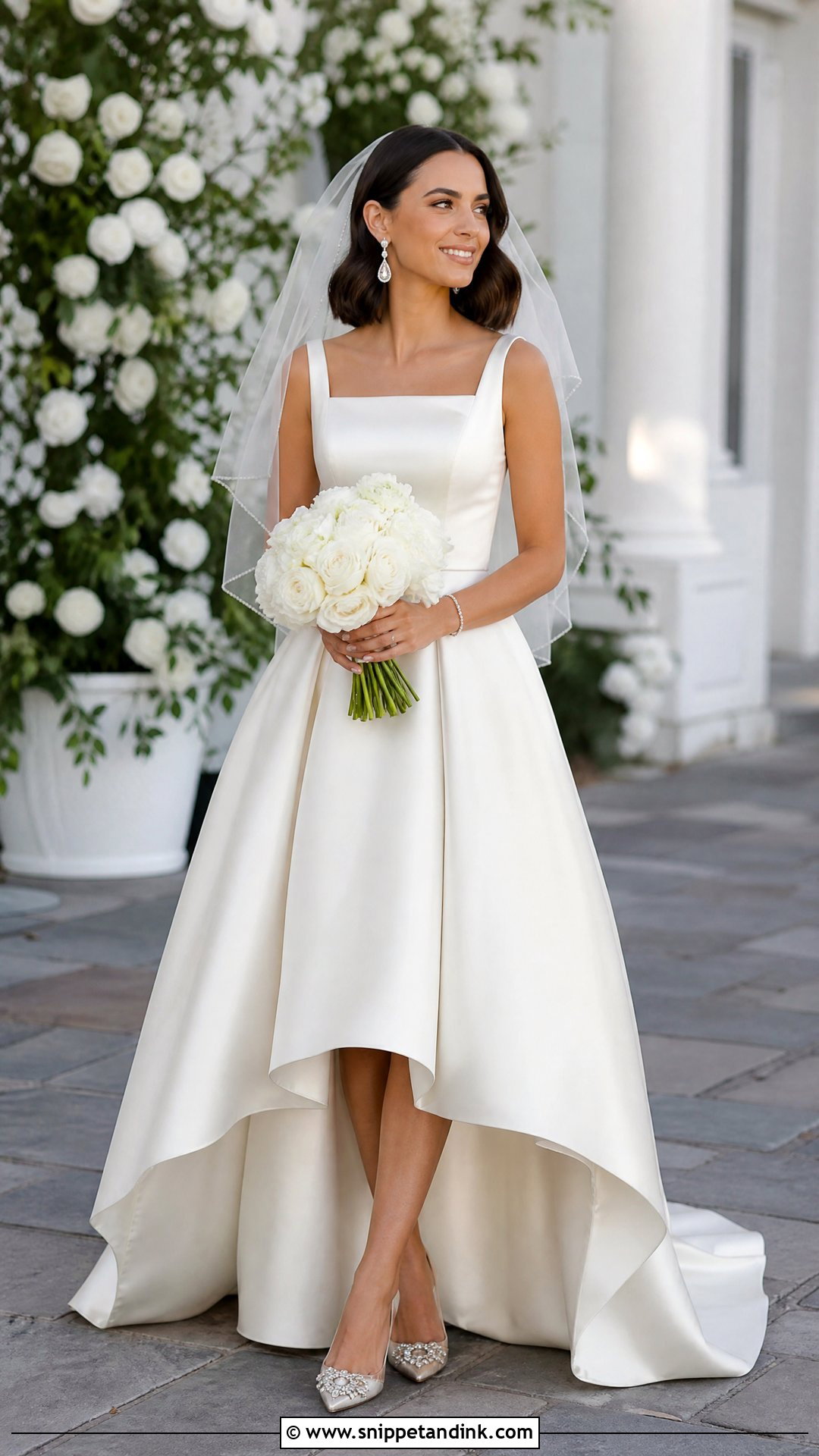
High-low hems show the shoes at the front and keep a train behind. A gradual slope looks elegant; a very short front looks like a cocktail dress with a tail. Structured satin and layered organza hold the shape and let the back fall cleanly. Your shoes are fully visible, so embellished pumps, sleek ankle straps or pointed slingbacks are worth spending on. Add drop earrings, a simple bracelet and a shoulder-length veil that stays clear of the back hem. I’d suggest this to outdoor brides who want a train but don’t want to hitch up a full skirt every few steps.
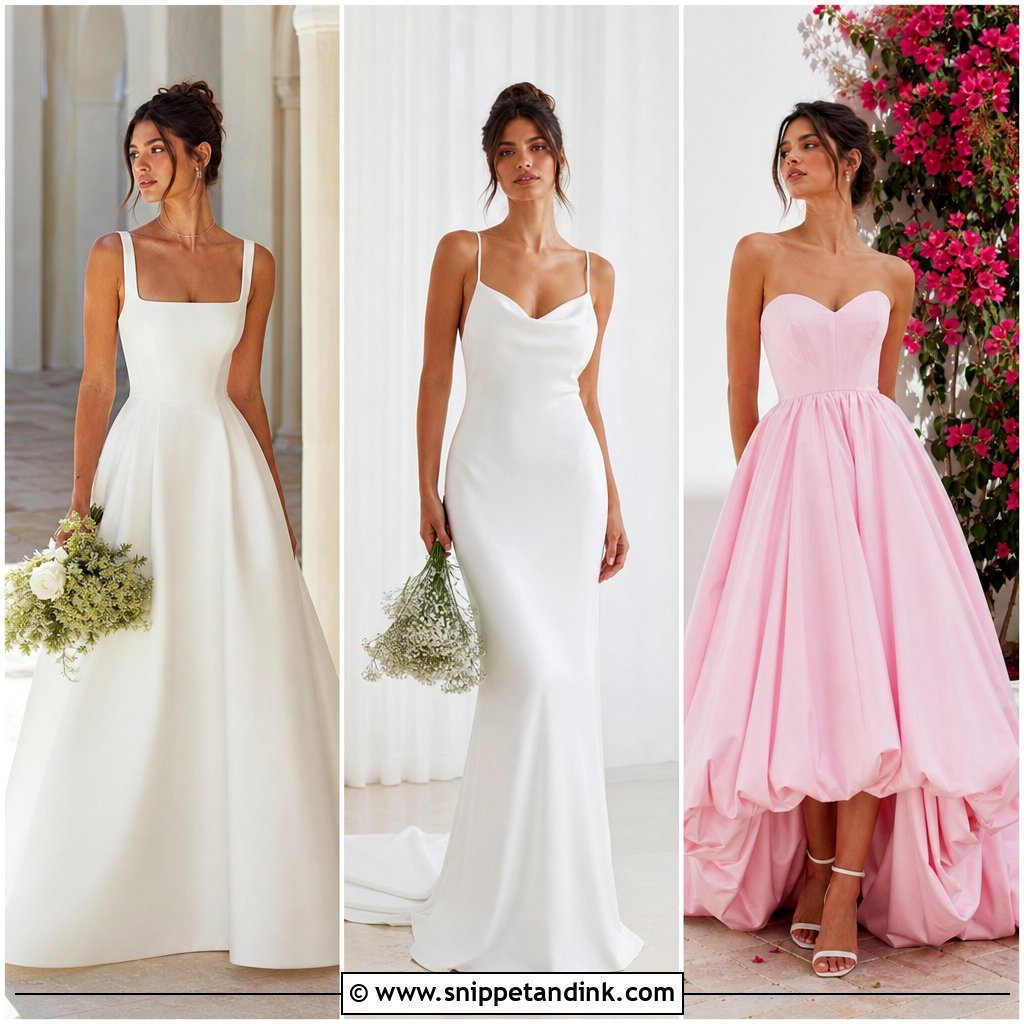
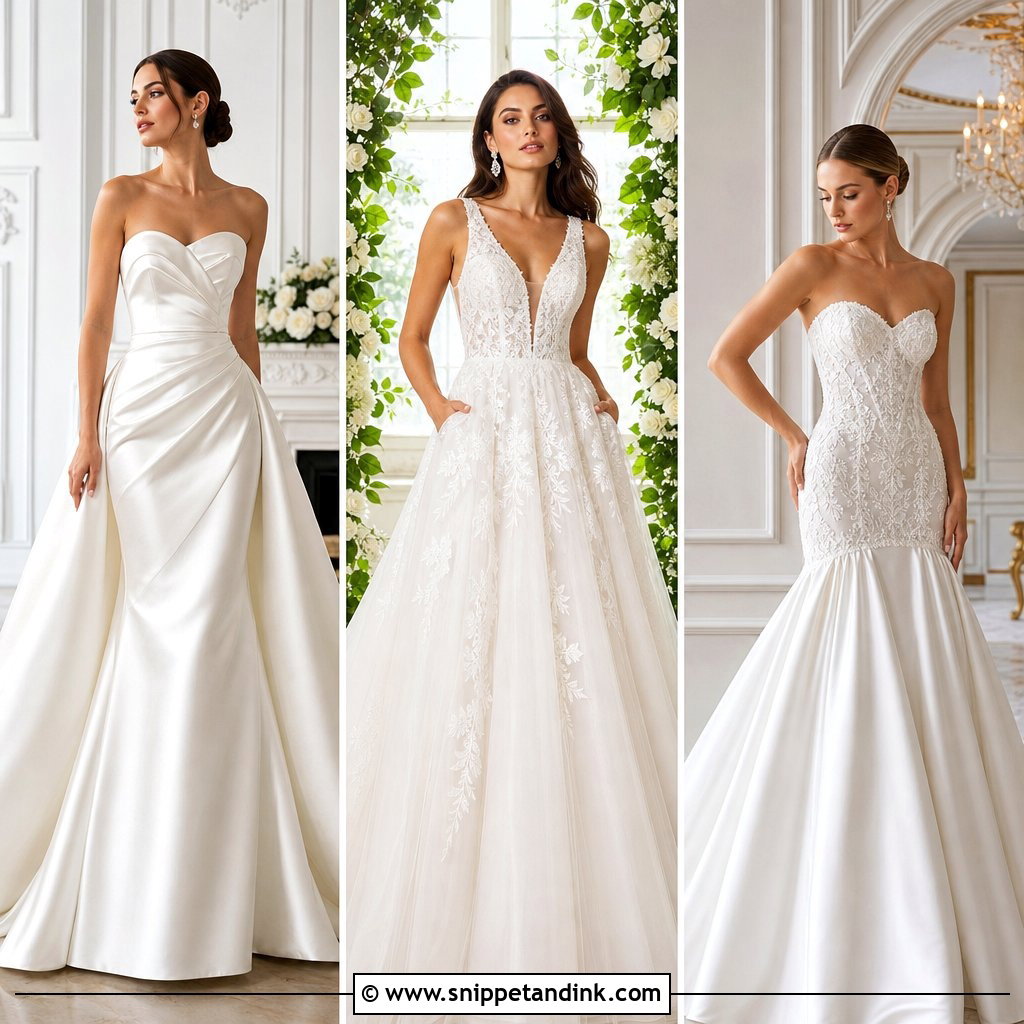

25. Dramatic Ruffle Wedding Dress
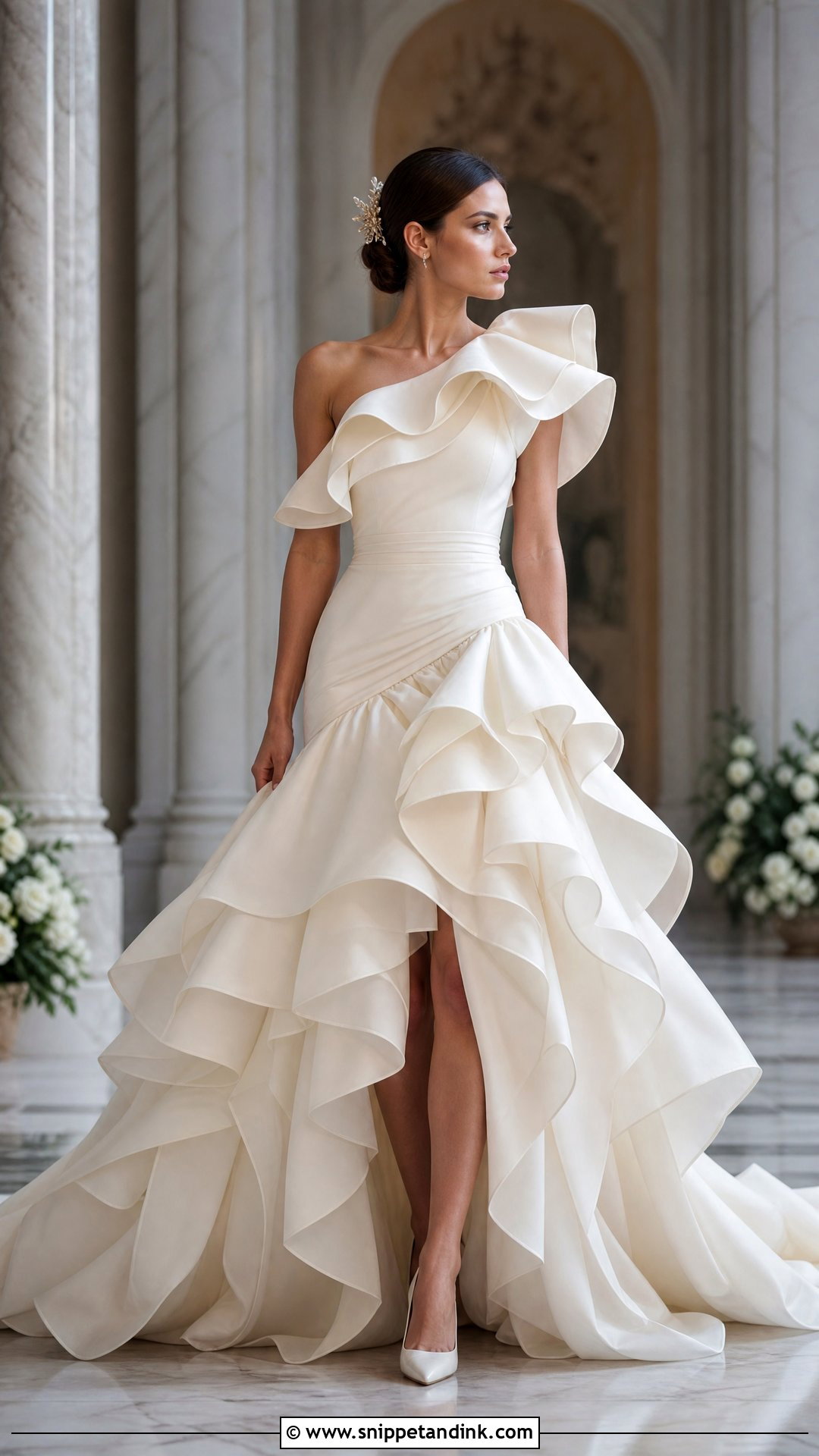
A dramatic ruffle wedding dress is pure finale energy. The ruffles can cascade over one shoulder, frame an asymmetric neckline or build volume through the skirt. Pick one area and keep the rest clean: a fitted bodice under a ruffled skirt, or a narrow column under a big shoulder. Simple pumps, small earrings and sleek hair. A plain veil only works if it stays clear of the ruffles, otherwise use a sculptural comb. Keep the bouquet small and low. Large shoulder ruffles crush in a car seat, so I suggest travelling with the ruffle side toward the open middle of the back seat.
Ball Skirts, Bows and Feathers in Cars, Doorways and Bathrooms
Couture shapes take up space, and the practical moments of the day are where they cause trouble. None of this should put you off a dramatic dress. It just needs a plan.
Getting in and out of the car
Sit first, then lift the skirt in after you, and have someone gather the train onto your lap. Large back bows and shoulder ruffles crush against a seat back, so a roomy vehicle with a bench seat or a minivan is kinder to them than a low sports car.
The bathroom question
With a full skirt, the easiest method is to face the toilet and gather the skirt forward, with a bridesmaid helping. A detachable overskirt solves this neatly, which is one more reason I like them. Practice once at home in your fitting slip.
Doorways, stairs and the bustle
Walk your venue in your head: narrow corridors, spiral stairs, a reception room with tight table spacing. Ask the seamstress to show your maid of honor the bustle points with colored thread, and photograph them on her phone so she can find them under low light.
One Runway Detail, Worn All Day
The most dramatic gown on a catwalk is not automatically the right one for your day. What matters is whether the dress lets you move, sounds like your personality and suits the room. Basque waists, sculptural corsets, raised flowers, feathers, capes and ruffles all work when the accessories step back. Minimal silk, tailored separates and clean columns earn their impact through fit and fabric instead. At every fitting I’d look at the complete outfit, including heel height, veil length, jewelry, underwear and any removable layer, and keep adjusting until the finished look is unmistakably yours.
You'll Like These Ideas:








Leave a Reply