
Flowers on a wedding dress can mean almost anything: a whisper of embroidered vines, sculpted petals standing off the tulle, colored wildflowers or a bold rose print. They also sit happily on nearly every silhouette, from airy A-lines and mermaids to full ball gowns and loose boho shapes. Dimensional appliqués, botanical lace and playful flower motifs are everywhere in bridal right now, so the choice is wide. My job in a styling session is mostly subtraction. A floral gown already carries a lot of detail, and the shoes, veil, jewelry and bouquet should calm it down rather than add another layer of decoration.
Seen From the Back Row: How Flower Scale Reads at a Distance
In a salon mirror you’re standing a meter from the glass, so every petal looks detailed. Your guests are much further away. The first thing I do with a floral gown is ask the bride to walk to the far end of the room and turn around, while I stand where the back pews would be.
- Tiny embroidered flowers in ivory on ivory blur into general texture beyond a few meters. That’s fine if you want subtle, disappointing if you chose the dress for the flowers.
- Dimensional petals cast small shadows, so they stay visible from far away and in photos taken across a room.
- Colored embroidery reads from a distance, but pale shades fade in strong sun. Deeper threads hold up better outdoors.
- Large prints and big roses look bold at a distance and can feel busy up close in portraits, so check both.
Ask the salon to take a photo of you from across the room with a phone, then look at it small. If you can’t pick out the flowers, decide whether that matters to you before you fall for the gown.
Order Dates for Hand-Sewn Flowers
Floral gowns usually take longer to arrive than plain ones, because most appliqués, 3D petals and embroidery are applied or finished by hand. Lead times vary by designer, but I’d treat roughly six to nine months before the wedding as the comfortable window to order a made-to-order floral gown, with alterations starting about two to three months out. Colored embroidery and custom placements can take longer. If you’re under six months, ask what’s available off the rack or as a sample, and have the seamstress confirm she can move appliqués before you buy.
1. 3D Floral Appliqué Ball Gown
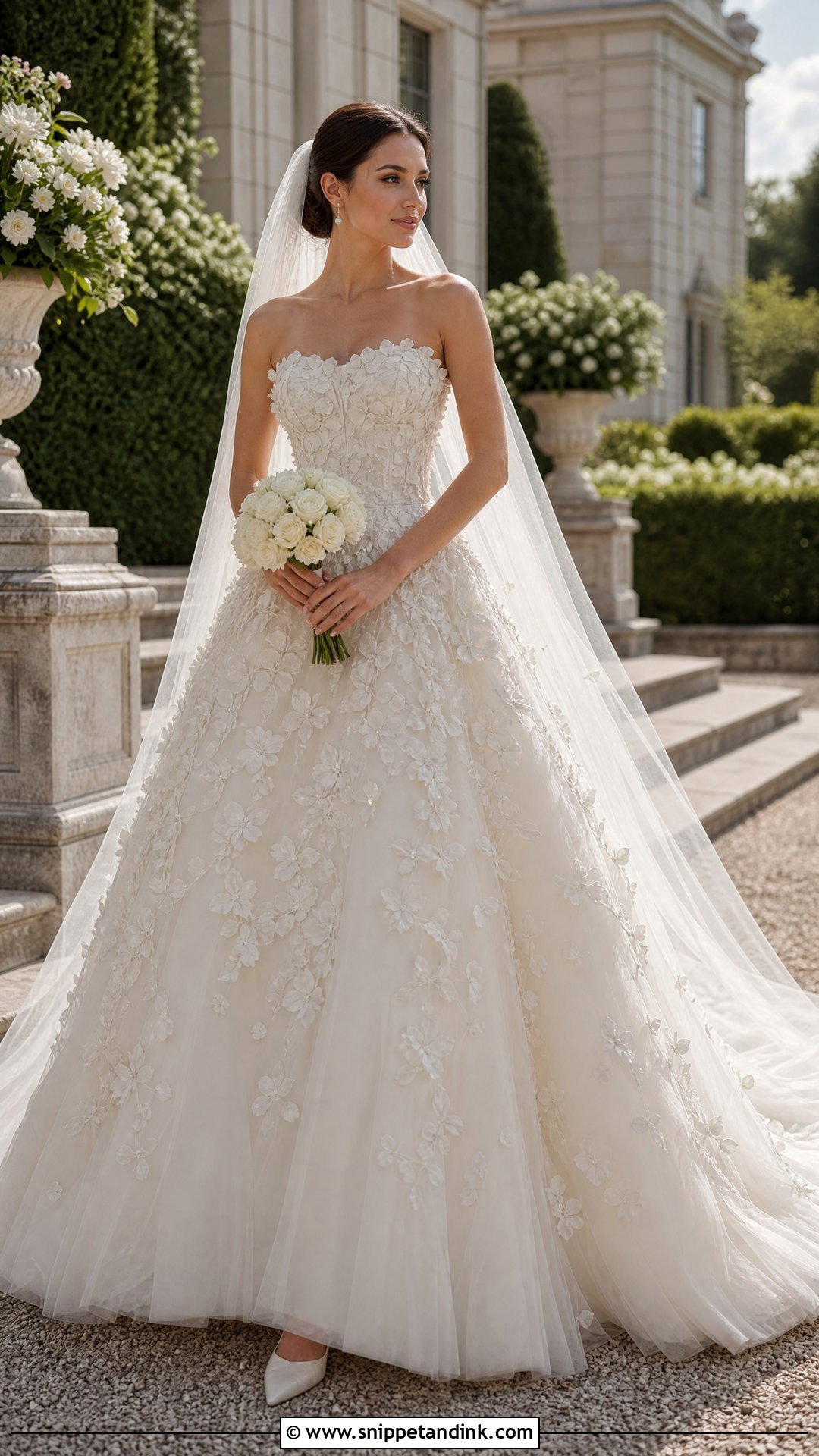
Hand-cut petals clustered thickest at the bodice and thinning down the skirt are what give this ball gown its movement. I check the stitching on a sample petal before anything else; good appliqués are secured at the center and at several points on the edge so they lift slightly without flapping. A strapless top or a softly curved sweetheart neckline balances the skirt. Pearl drops, pointed ivory pumps and a plain tulle veil are all it needs. Ask about the bustle early, since raised petals and layered tulle need loops placed where they won’t crush the flowers.
2. Colorful Floral Embroidered Wedding Dress
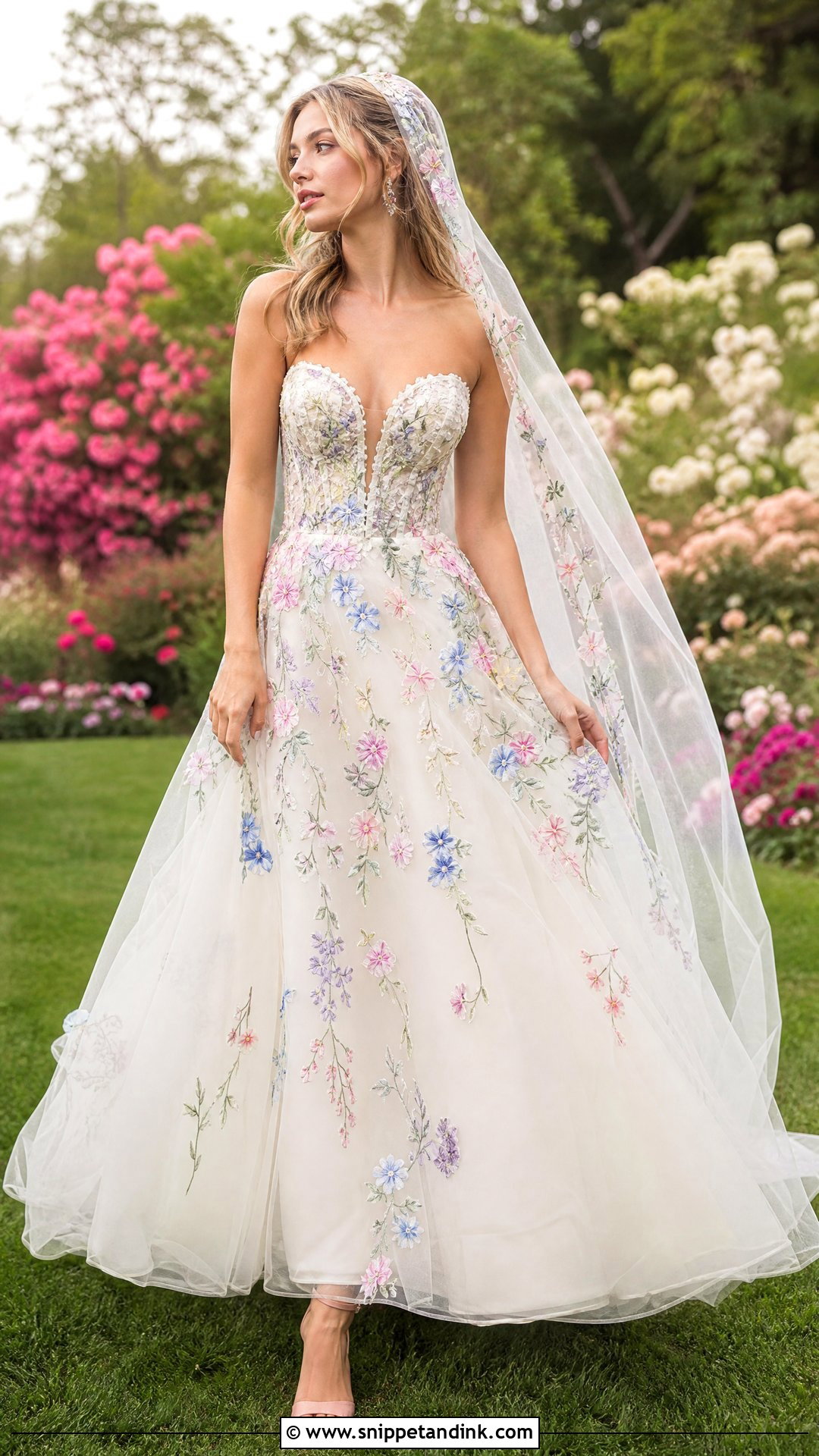
Colored embroidery is joyful, and it’s easy to overdo the matching. Pink, blue, lavender and green threads scattered over ivory tulle on an A-line give you plenty to work with already. Slim straps and a fitted bodice keep it light. My trick is to find the shade used least in the embroidery and repeat it once, in the shoes, a hairpin or the manicure, while the bouquet sticks to one dominant color. A sheer veil with a matching embroidered border ties the top and bottom together. It sings outdoors in spring.
3. Floral Lace Long Sleeve Wedding Dress
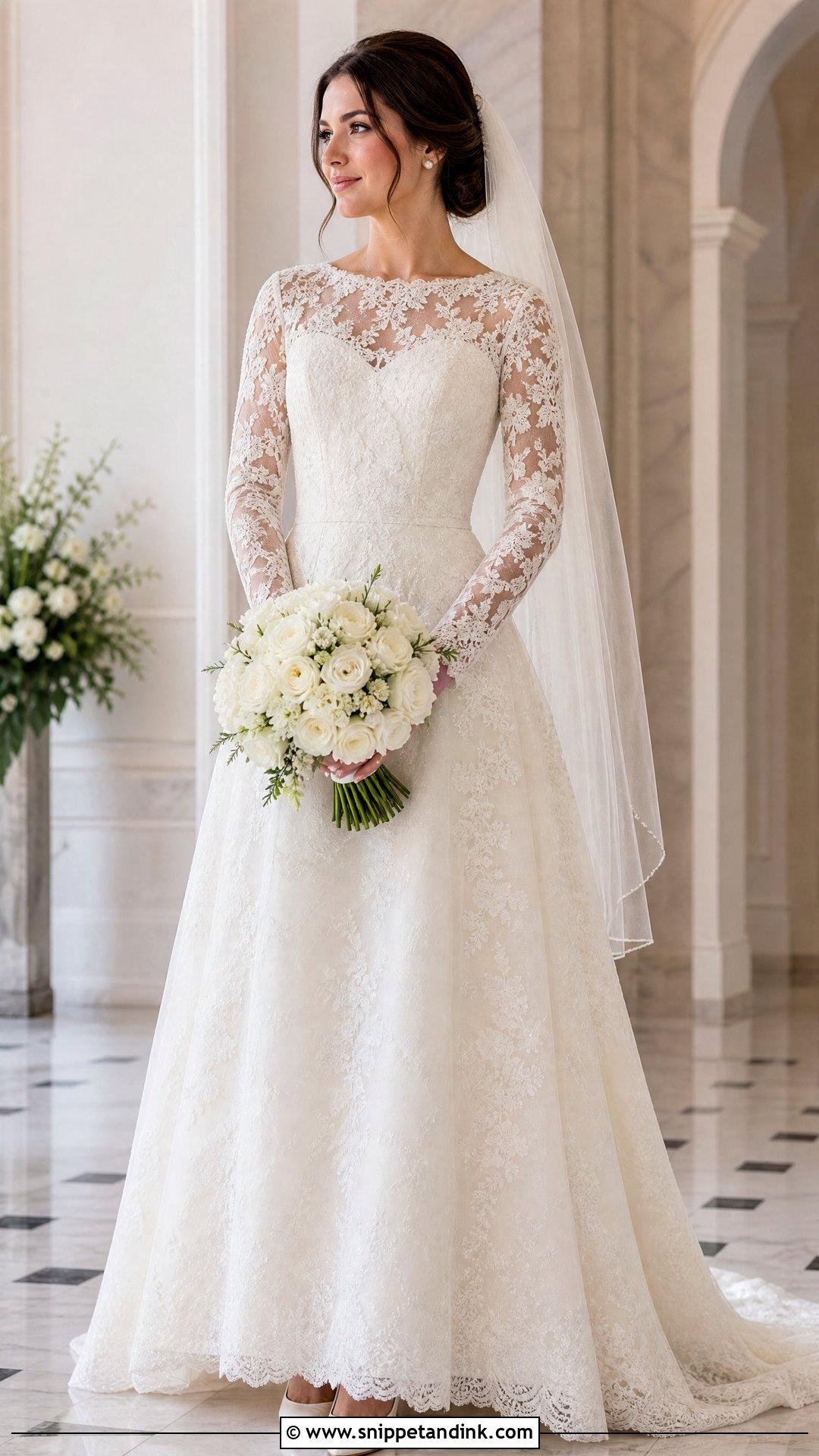
Sleeves change how a gown fits more than any other detail. A fitted lace bodice with illusion sleeves over an A-line or soft fit-and-flare skirt gives coverage with romance, and motifs that run unbroken from neckline to cuff make it look like one piece. Before alterations finish, I have the bride cross her arms, reach forward and lift a glass, because a sleeve lining cut too tight pulls the whole bodice. Closed-toe heels, pearl studs and a low textured bun suit it, with a fingertip veil and white flowers with greenery. Good for cool spring days, fall and traditional indoor venues.
4. Off Shoulder Floral Wedding Dress
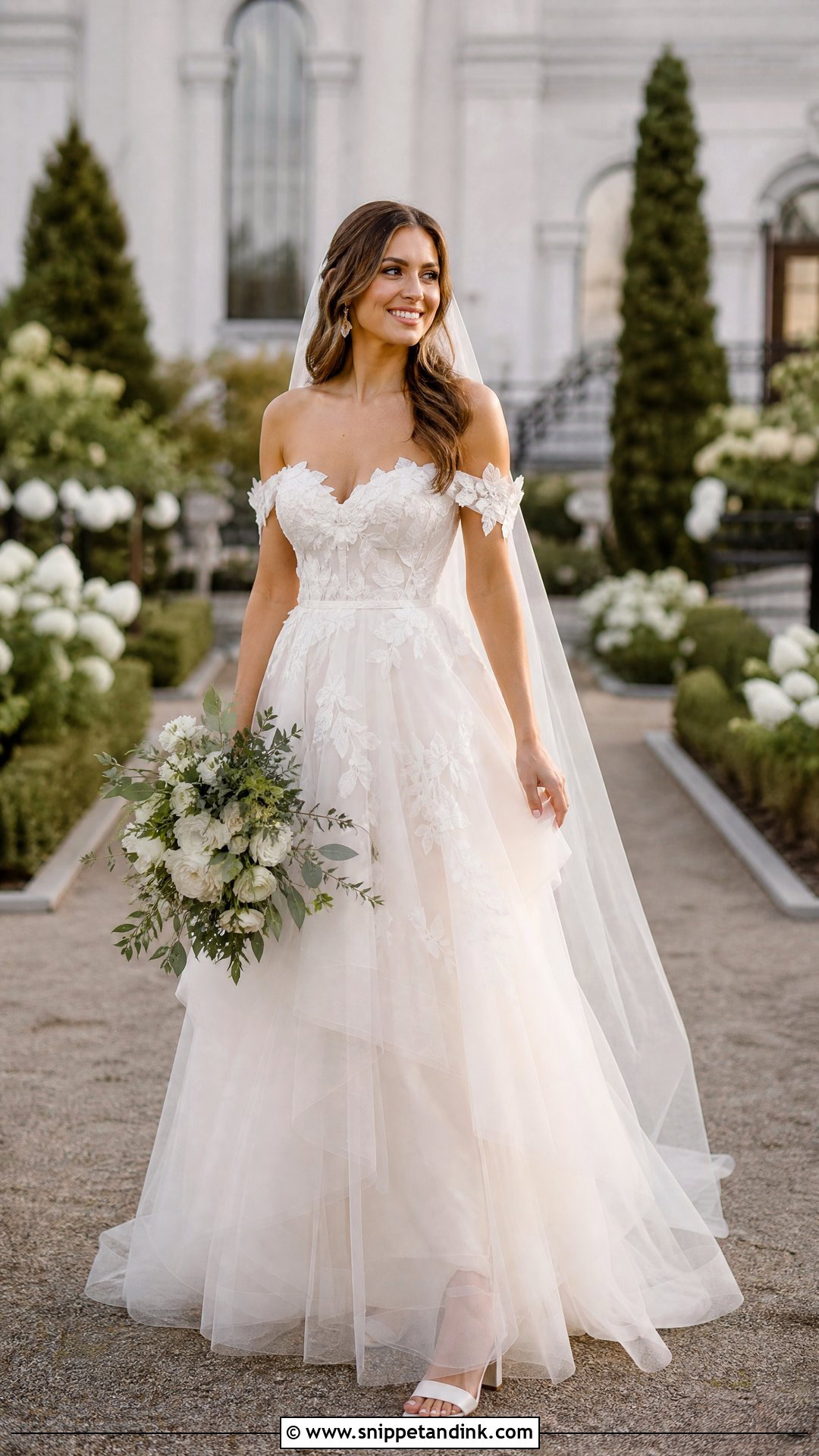
The appliqués across the neckline and upper sleeves do the decorating here, so jewelry stays small: a fine pendant and crystal earrings. Off-shoulder straps have to be anchored firmly into the bodice; if they rely on your arms to stay up, you’ll be tugging them all evening. A flowing tulle skirt, ivory block heels and a low chignon keep the frame open around the collarbone, and a long plain veil gives a calm contrast to the textured flowers. Carry something loose with trailing greenery. In the fitting room, sit, hug someone and raise both arms before you approve it.
5. Blush Floral Wedding Ball Gown
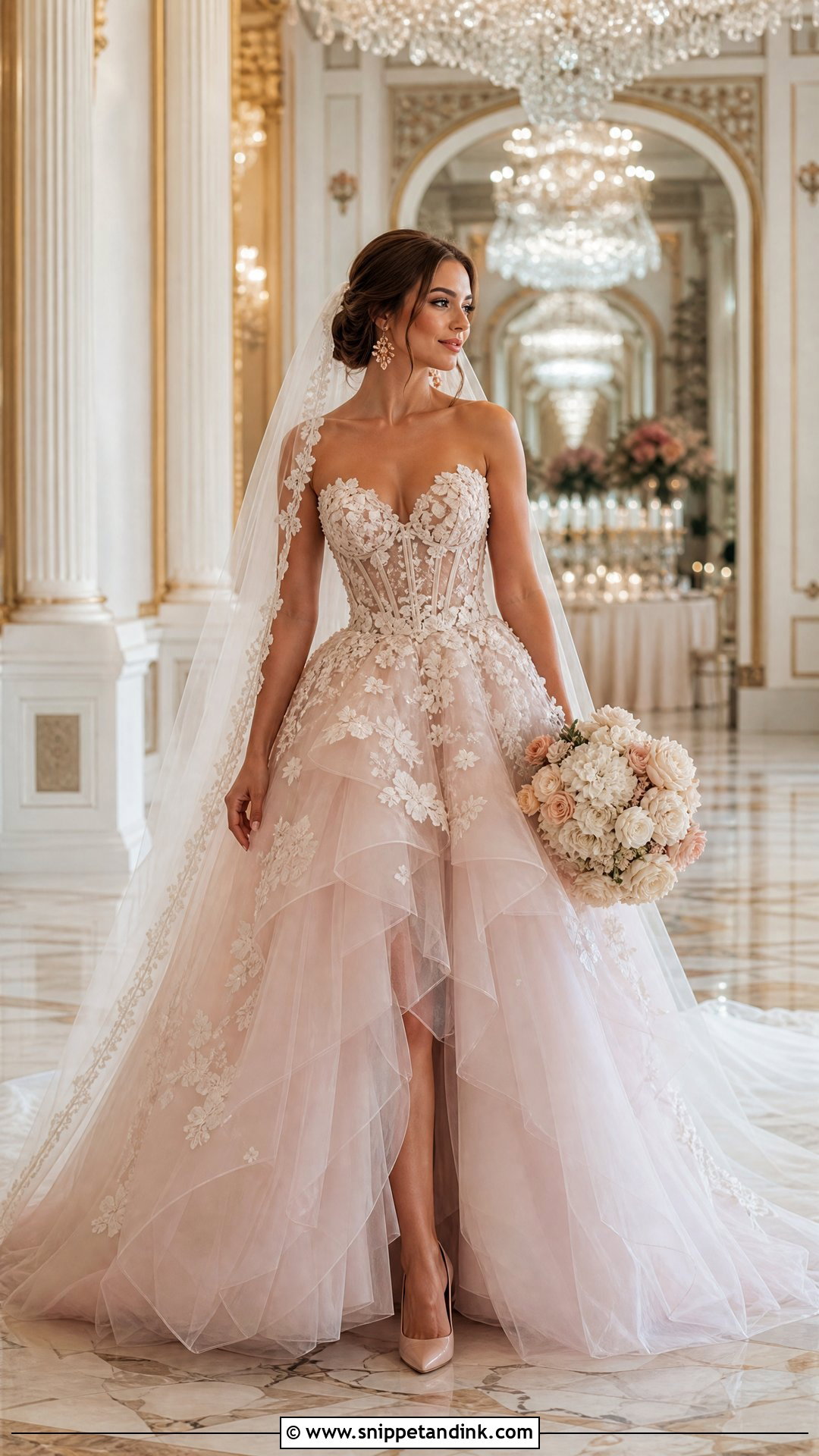
Blush is kinder to more skin tones than bright white, and it makes ivory appliqués pop because there’s contrast behind them. A layered blush tulle skirt, a structured corset bodice and a clean sweetheart neckline give a warm, dreamy ball gown that still reads as bridal. Nude or blush pumps, rose-gold earrings and an ivory cathedral veil fit the palette. If the skirt mixes several pinks, I look at it by a window in daylight before choosing makeup, since salon lighting warms everything up. Cream flowers with small blush accents tie the bouquet in.
6. Floral Mermaid Wedding Dress
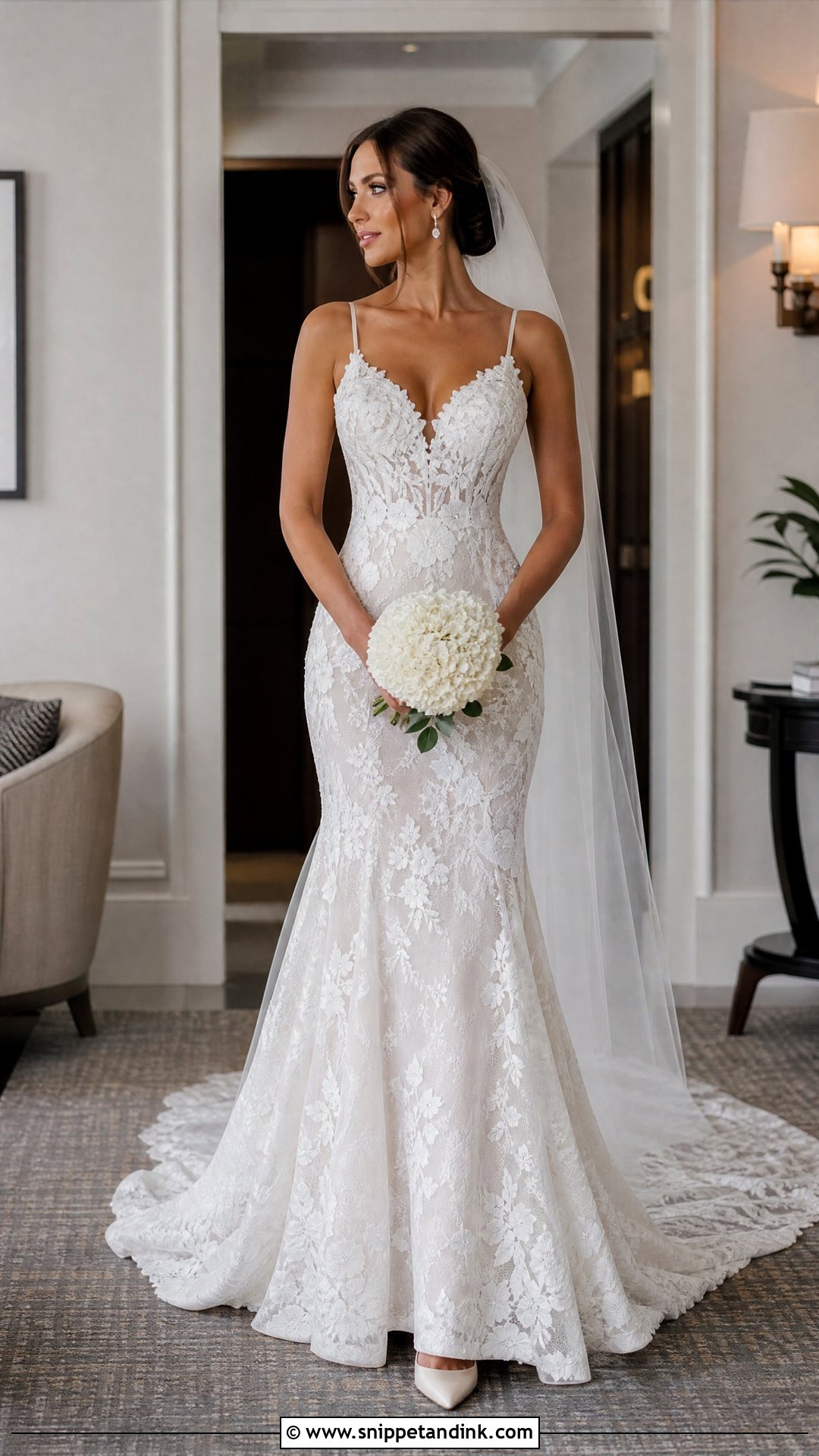
Fitted floral lace exposes every millimeter of the tailoring. The lace should follow the bodice and hips and get lighter where the skirt flares, so the eye travels down rather than stopping at the knee. A square, sweetheart, or subtle scoop neckline adds shape without fuss. Pointed heels, small drop earrings and a smooth low bun keep it sleek. I prefer a narrow veil that falls behind the train rather than over it. Walk, sit and climb a step before the final hem is set; a mermaid that’s too tight at the knee will shorten your stride all day.
7. Floral A Line Wedding Dress
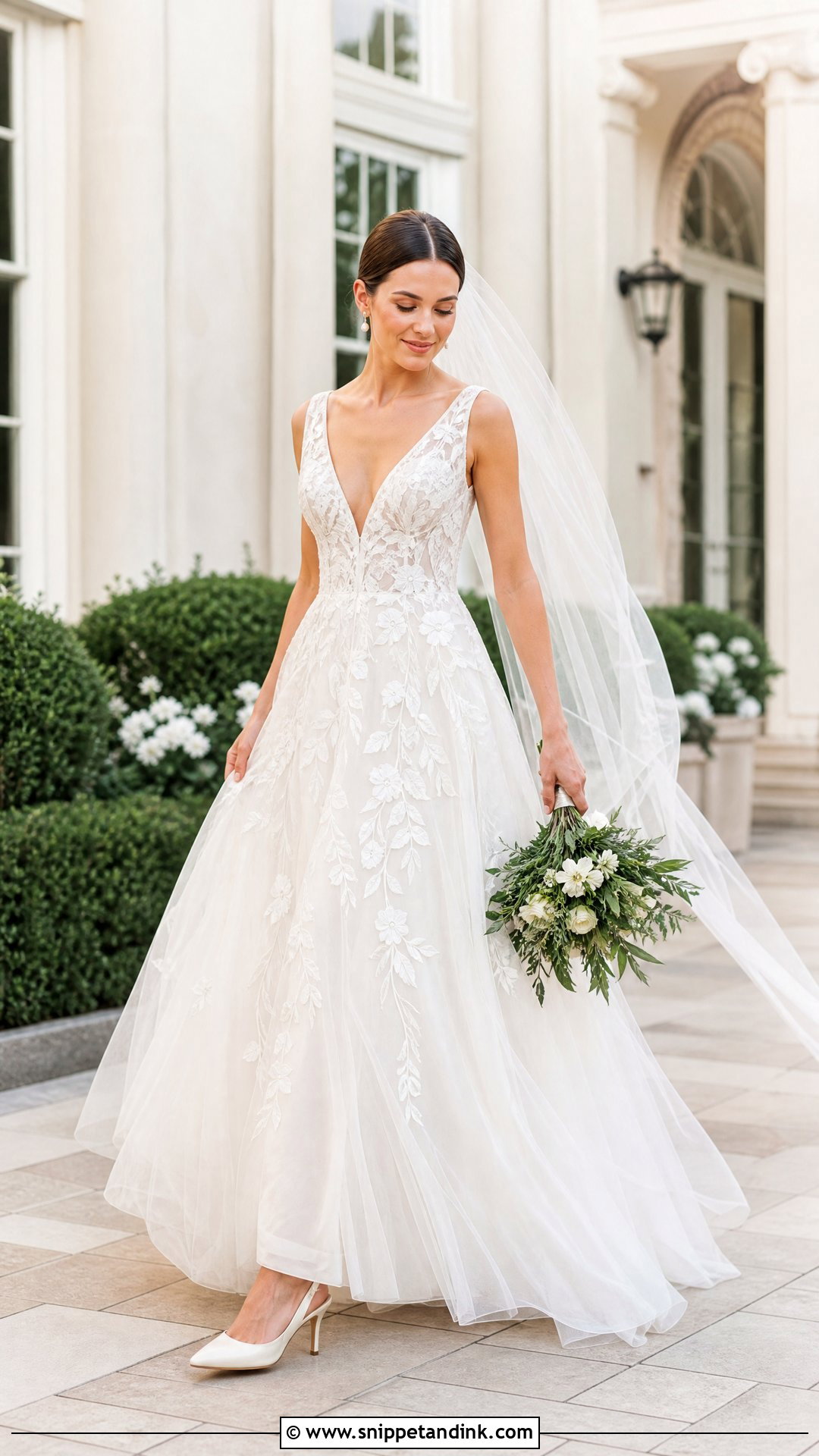
The A-line is the shape I’d recommend if you’re torn between venues or between casual and formal. Embroidered vines that start on a fitted bodice and spread across a light tulle skirt keep the floral design continuous. A V-neck with supportive straps holds the bodice secure without weight. Ivory slingbacks, small pearl earrings and a chapel veil suit it, and a medium bouquet with soft greenery echoes the vines. If you want more waist, add a narrow satin band in the exact tone of the gown so it doesn’t cut the embroidery in half.
8. Boho Floral Wedding Dress
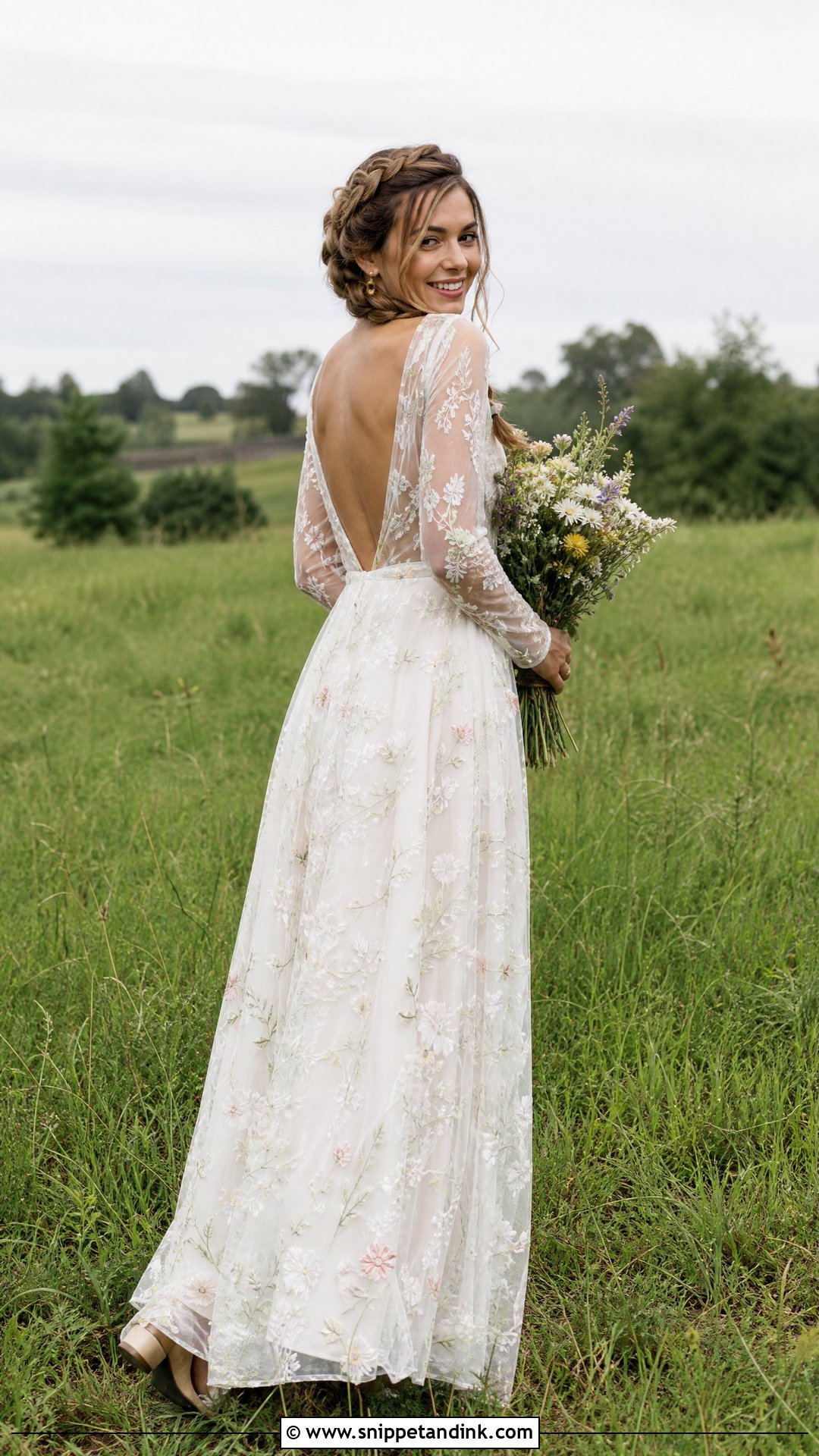
Boho floral dresses should move like they weigh nothing. Soft tulle, chiffon or relaxed lace with embroidered wildflowers, a gently fitted bodice and an open back keep the internal structure minimal. Neutral block-heel sandals stop you sinking into grass, small gold earrings and loose waves or a textured braid keep it unfussy, and a single flower comb can stand in for a veil. Carry a hand-tied bouquet with an uneven, natural shape. I’d hold back on extras like crowns and layered necklaces; the embroidery is already doing that job.
9. Floral Corset Wedding Dress
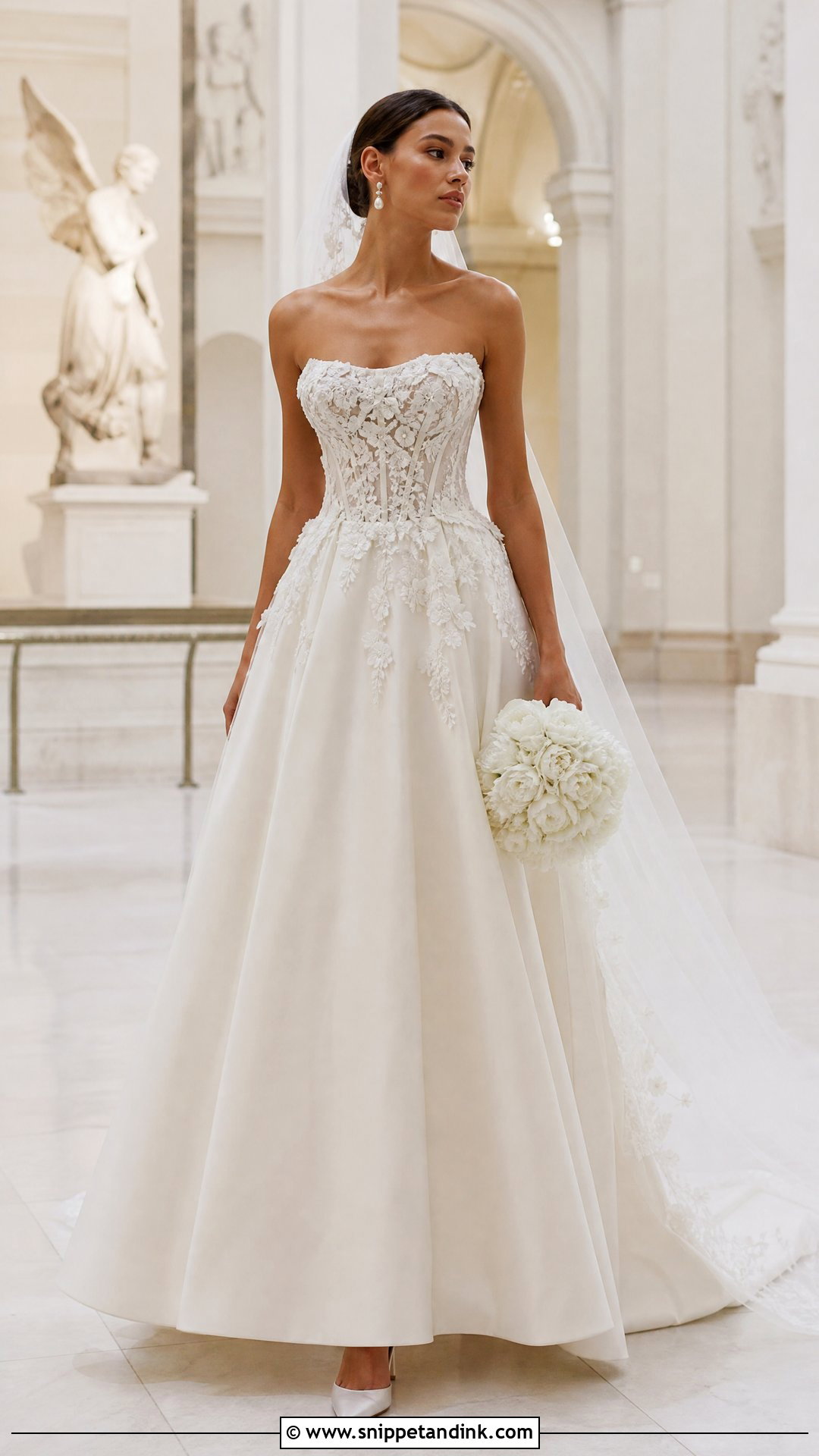
A corset gives a floral gown real definition at the waist. Look for proper boning under the embroidery or appliqués, so the bodice supports you instead of you holding it in place. A full A-line skirt reads romantic; a slimmer skirt feels more contemporary. Pearl earrings, ivory pumps and a veil under a polished updo keep it formal, with a rounded white bouquet. My fitting test is simple: sit for five minutes, then stand and check whether the corset has ridden up or pinched at the ribs. Mirrors only show you standing.
10. Floral Wedding Dress With Cape
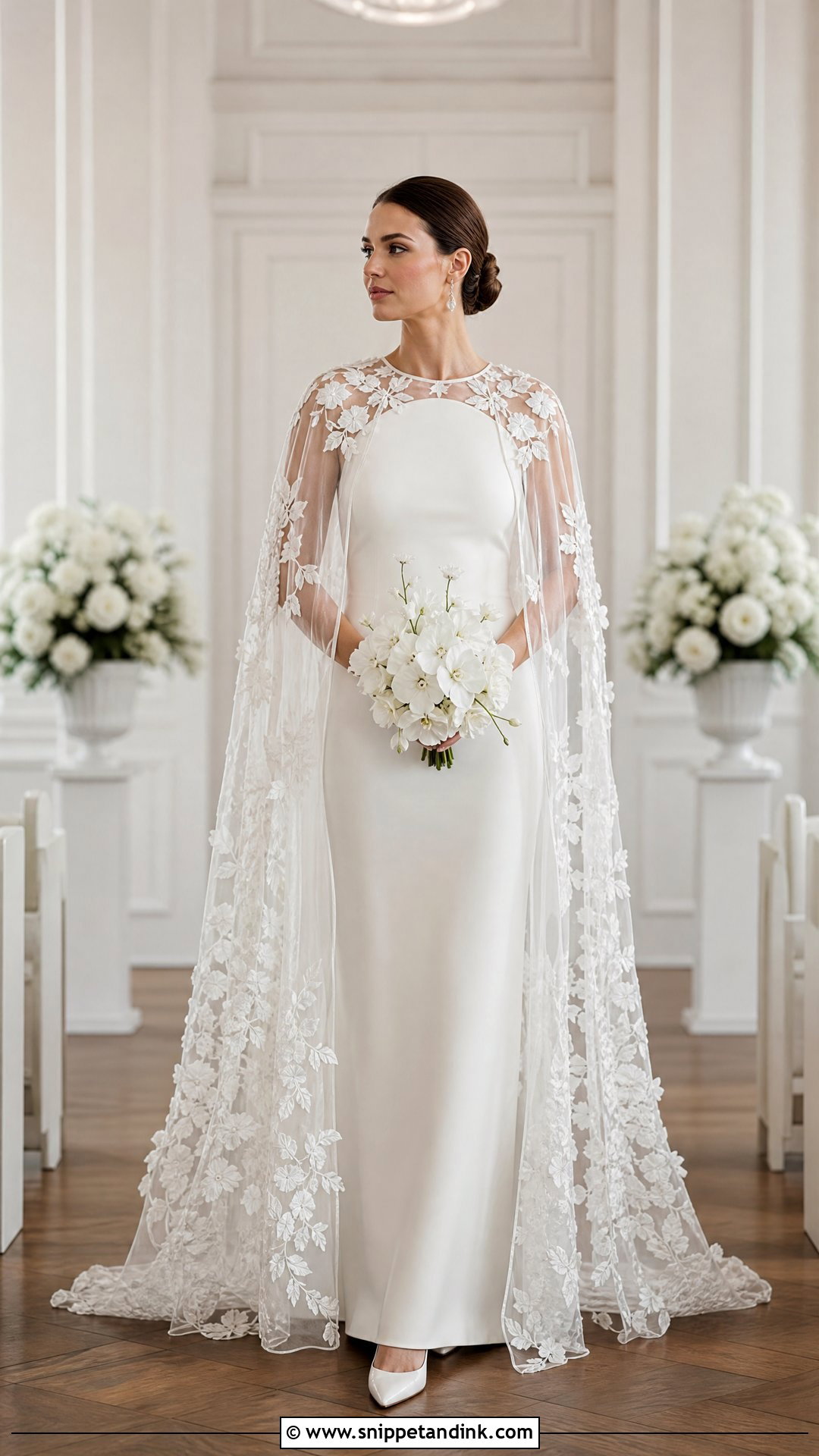
A cape is the softest way to add drama to a simple dress. Start with a clean column or A-line, then add a sheer cape embroidered with vines or scattered blossoms. It gives you an entrance without a heavy skirt or a traditional veil. Pointed heels, slim earrings and a smooth bun keep the neckline clear, and a structured bouquet with little greenery leaves the embroidery visible. I check two things: the cape attaches firmly at the shoulders, and its hem ends where you won’t step on it going down an aisle or stairs.
11. Floral Wedding Dress With Detachable Sleeves
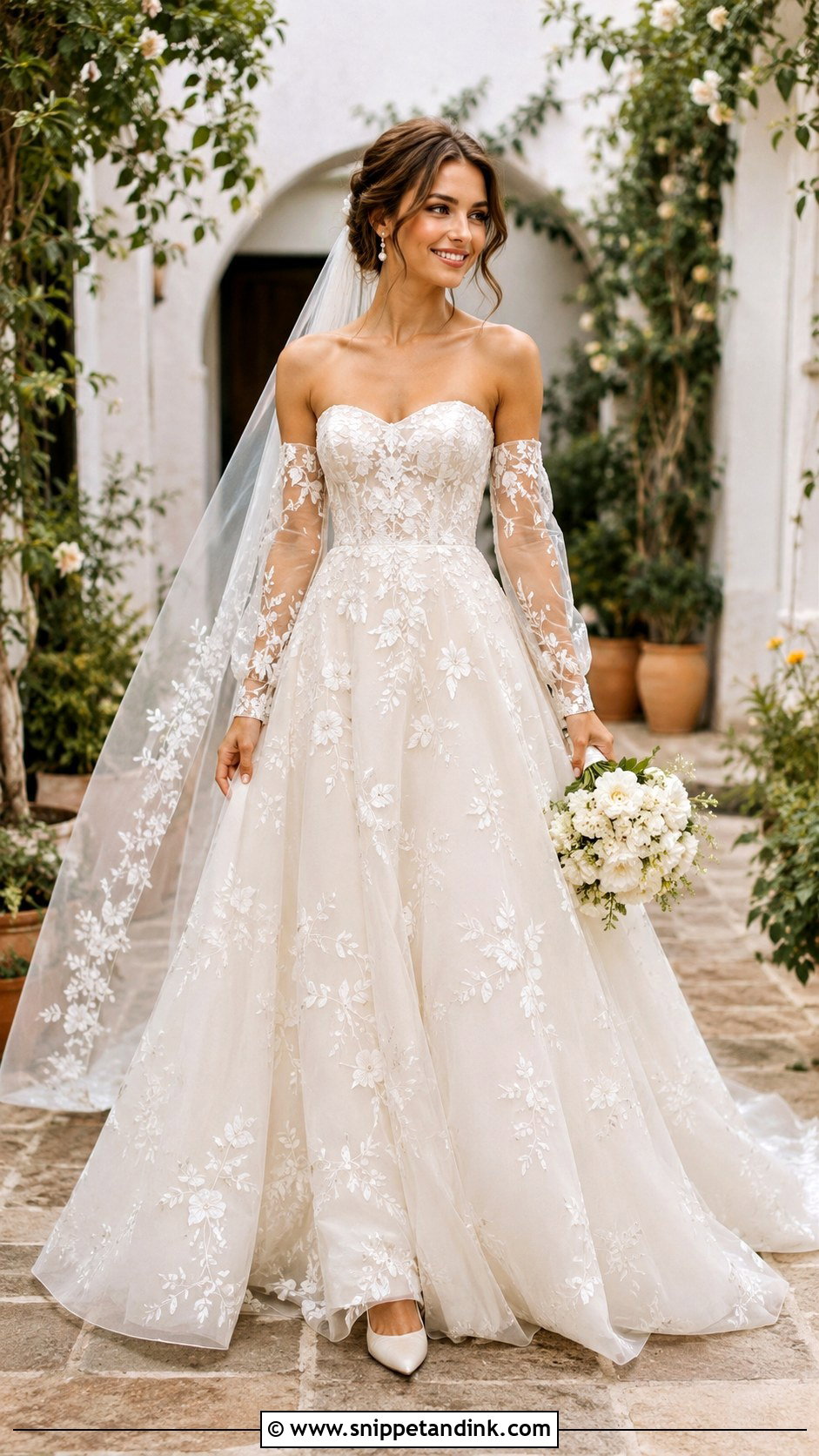
Wearing sleeves for the ceremony and dropping them for the party is one of the most practical ideas here. Pair a strapless A-line or fitted gown with removable illusion sleeves covered in small appliqués. Pearl drops, ivory heels and a veil that repeats one motif from the gown finish the ceremony look, and a low bun keeps the shoulder detail visible. A simple white bouquet with a few trailing stems is plenty. Ask your tailor to place the attachments where they don’t rub, and test them through a round of hugs. Removable sleeves are an easy way to get variety without buying a second dress.
12. Floral Wedding Dress With Square Neckline
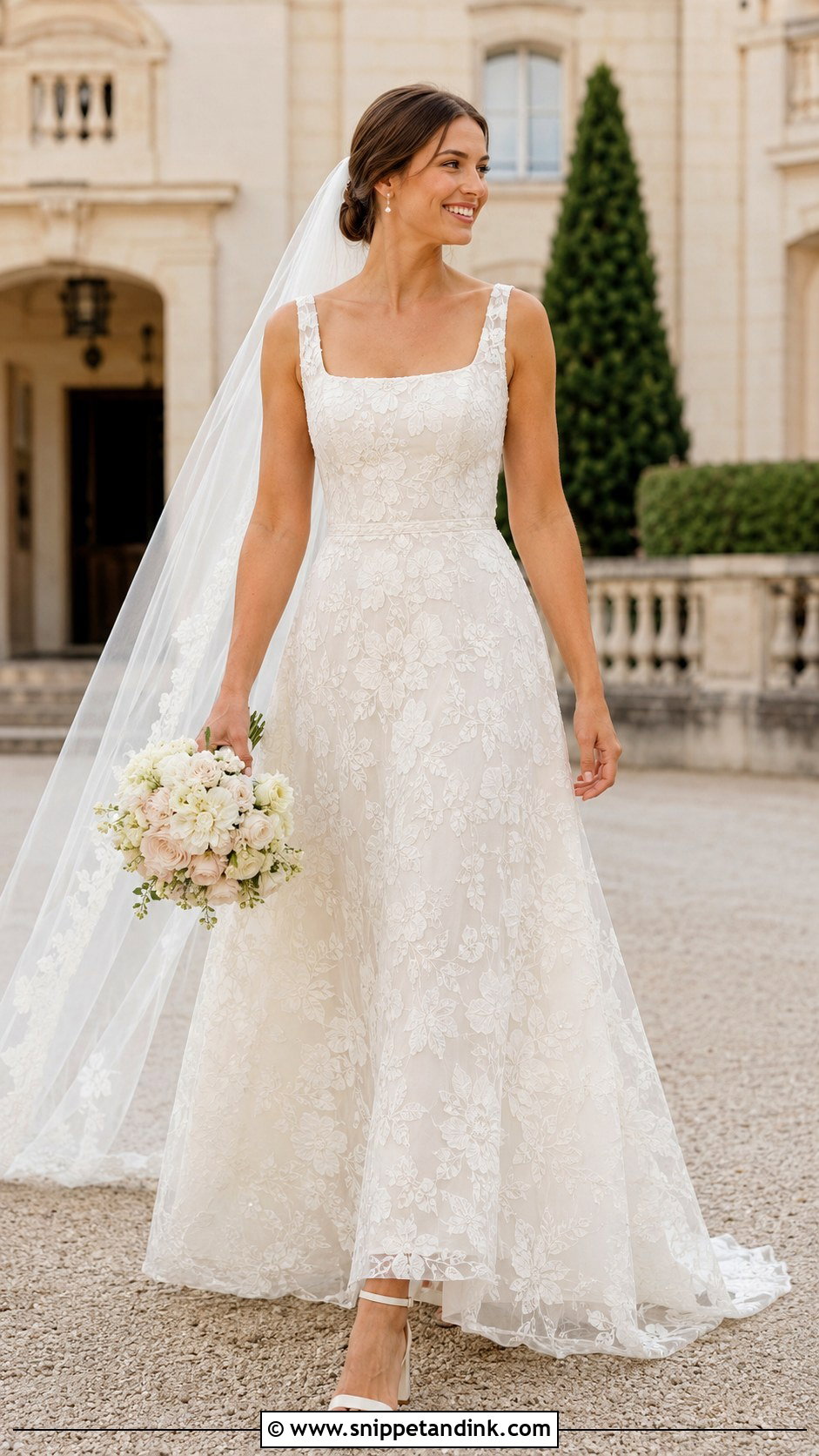
Straight lines across the neck make a flower-covered gown feel a little more modern. Wide straps, a fitted waist and floral lace spread evenly over bodice and skirt keep it balanced. The square frames the collarbone, so I skip the necklace and go for small drop earrings. Ivory block heels, a low bun and a plain chapel veil finish the outfit, and rounded blooms in the bouquet soften the angles. Check the straps from the side and back: if they bow away from the shoulder, the bodice will shift every time you move.
13. Floral Wedding Dress With High Neck
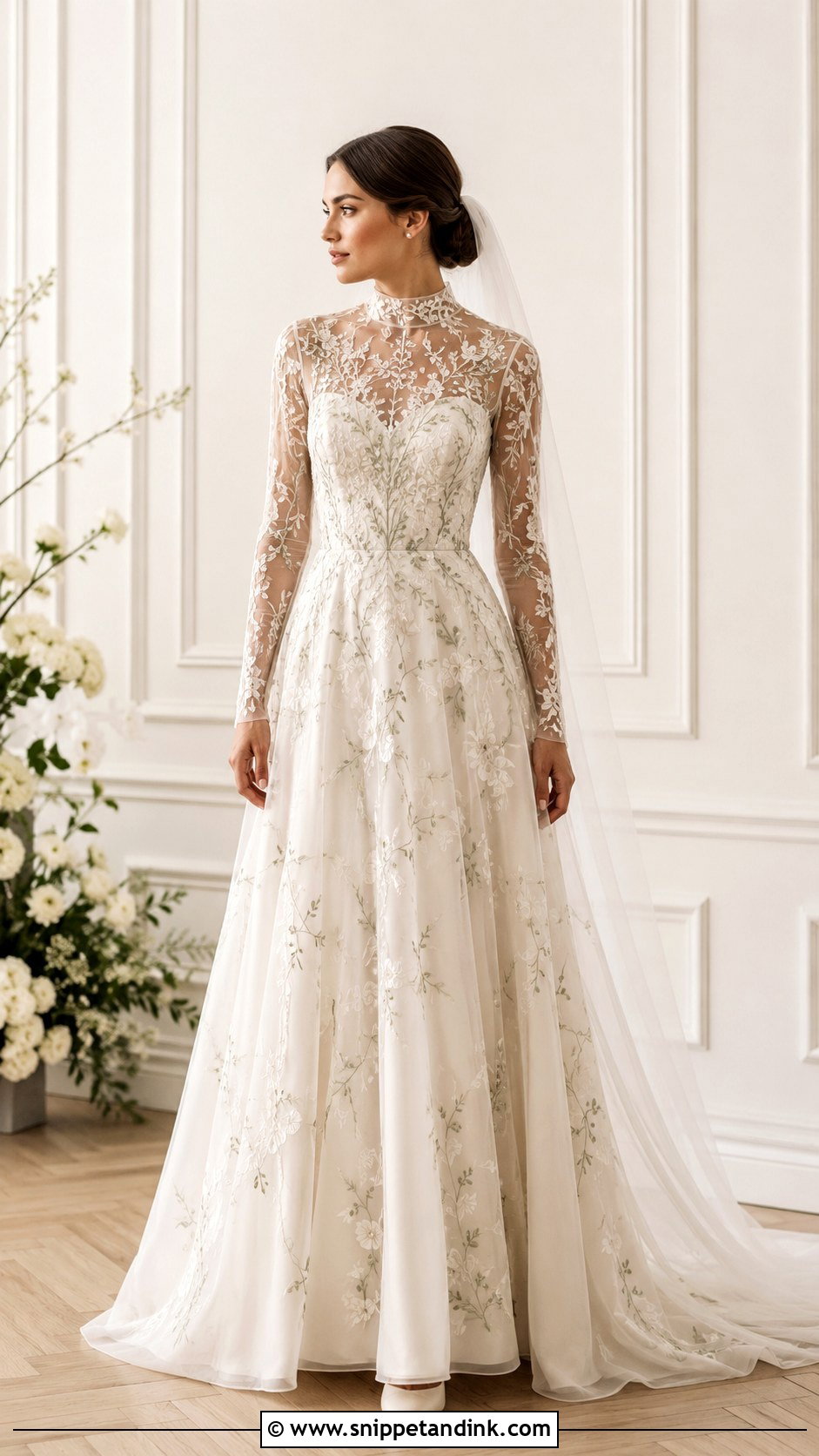
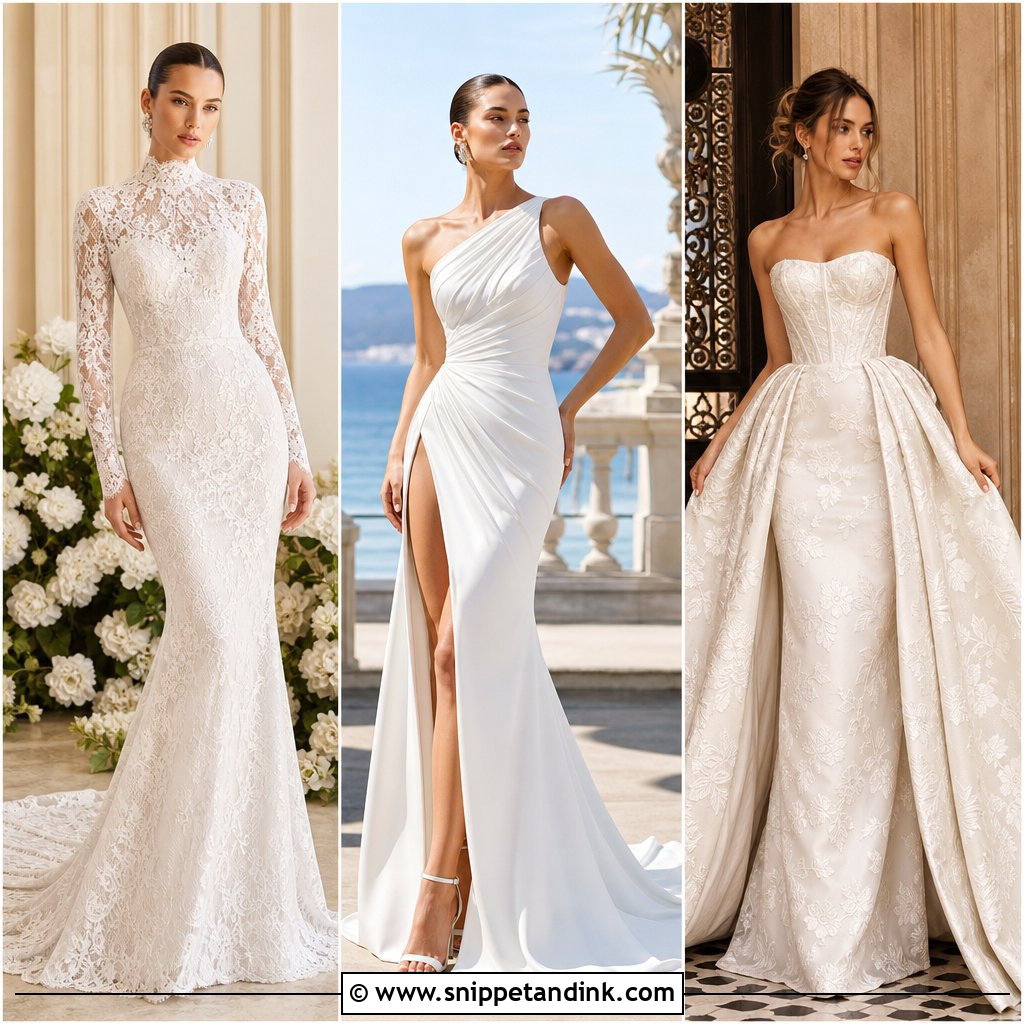
An illusion high neck with delicate vines, tiny flowers and covered buttons down the back has a quiet vintage feel. It only stays light if the skirt does too, so I pair it with a softly fitted bodice and an A-line in chiffon or tulle. Pearl studs, a neat low bun and pointed ivory shoes keep things clean, and the veil should attach below the bun so the neckline stays visible. A narrow white bouquet keeps the vertical line. Run a finger round the inside of the collar; scratchy mesh at the throat is miserable after six hours. Fall, winter and formal indoor ceremonies suit it best.
14. Floral Wedding Dress With Puff Sleeves
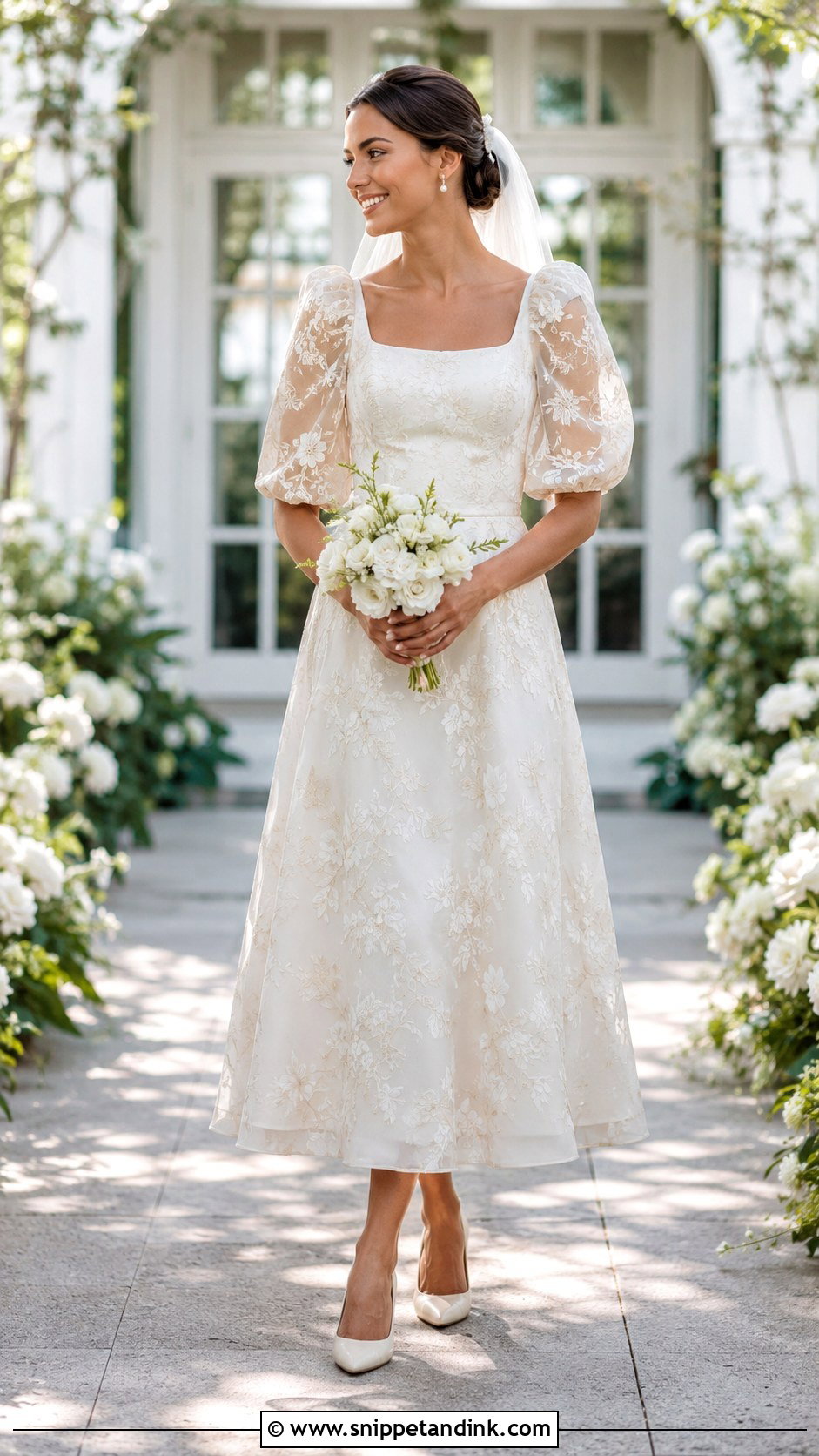
Puff sleeves change your proportions, so the rest of the dress needs to stay simple. Light organza or embroidered tulle keeps the volume airy rather than stiff, and a fitted waist with a plain A-line skirt balances the rounded shoulders. Small flowers scattered over the sleeves tie them to the bodice appliqués. Sleek earrings, ivory pumps and a low ponytail or bun suit the shape, with a short veil worn behind the sleeves and a compact bouquet. If the sleeves come off, you get a streamlined reception dress with free arms. I’d avoid this cut for very broad shoulders unless the puff is small.

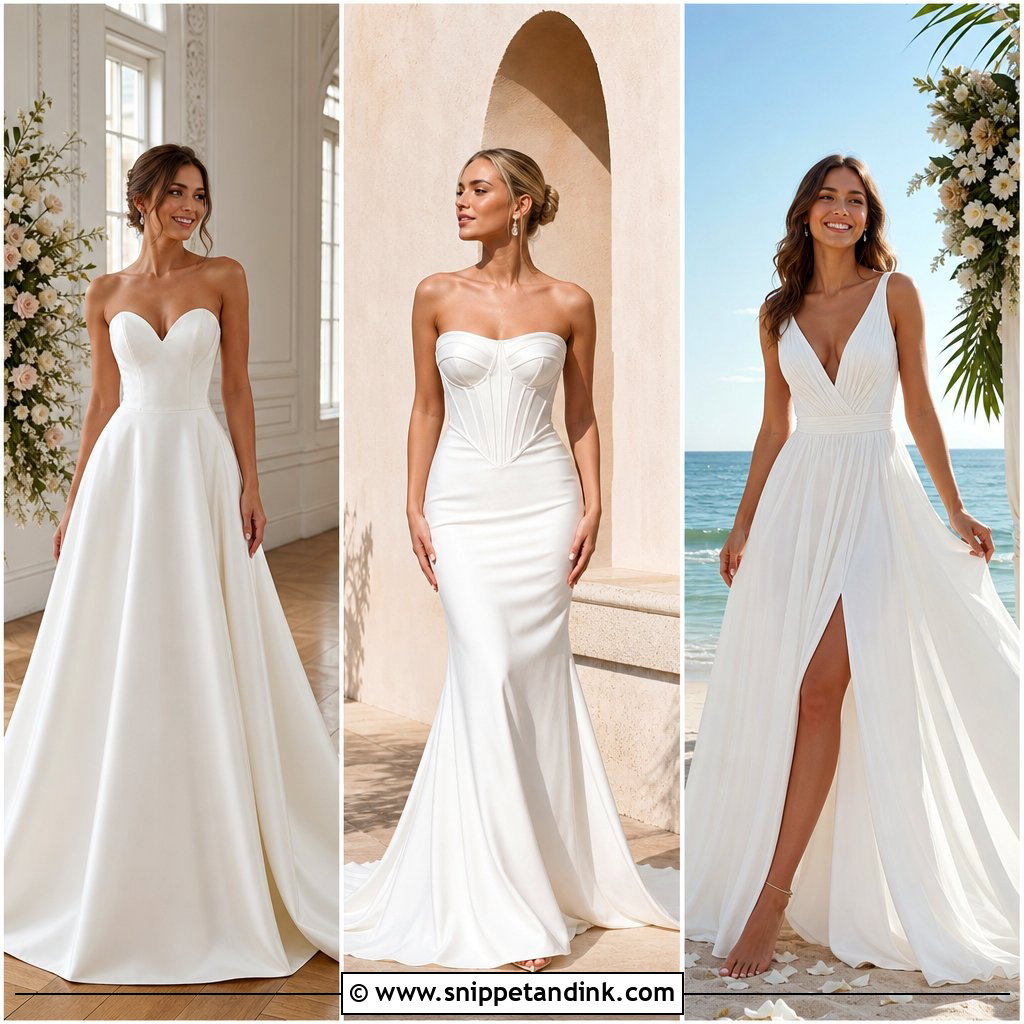
15. Blue Floral Wedding Dress
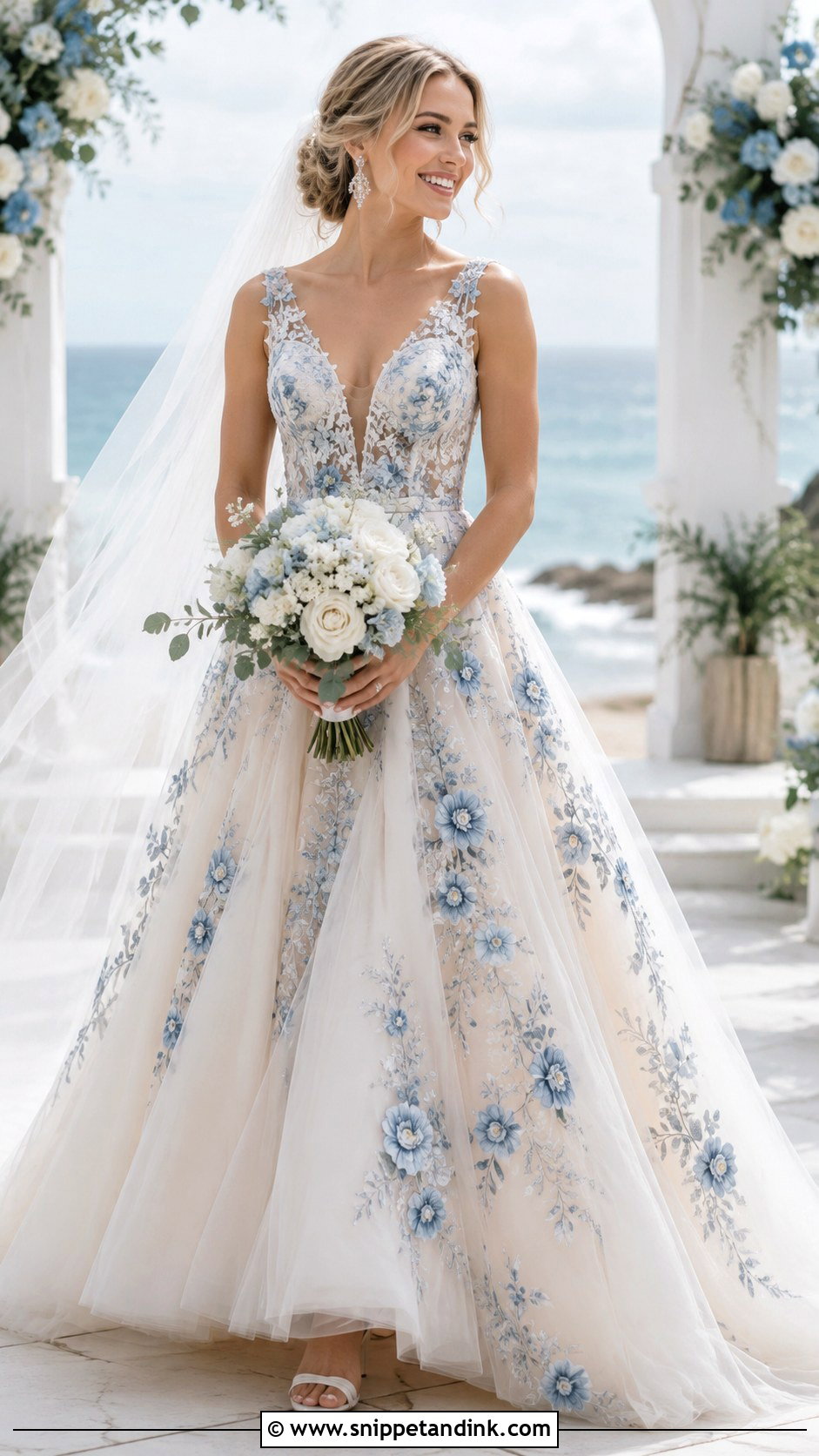
A little blue goes a long way on a white gown. Pale blue embroidery over ivory tulle feels romantic; deeper blue blossoms at the bodice and train are bolder. A classic A-line keeps the color from looking like a costume. Silver earrings, ivory heels and a sheer veil with a plain edge are enough. Keep the bouquet mostly white with a few blue stems matched to the thread. I always hold blue accessories right against the dress, because dusty, cool and bright blues clash quickly when they sit side by side. It suits spring, coastal and garden weddings.
16. Daisy Wedding Dress
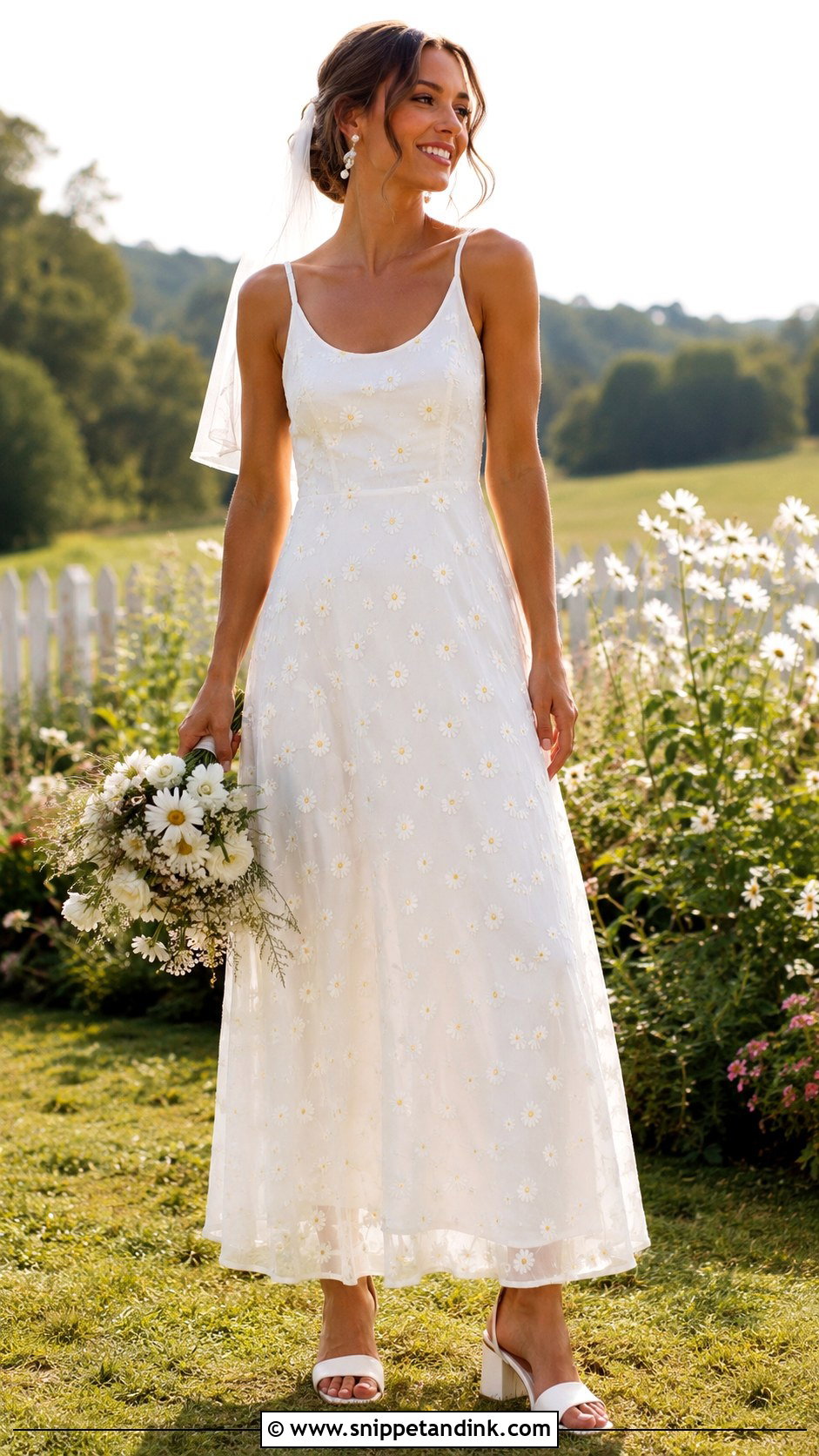
Daisies are cheerful and a little less formal than roses or vines, which is the point. A light A-line with small embroidered daisies scattered across bodice and tulle skirt keeps it fresh. A scoop neck or slim straps suit the simple motif. White block heels, small pearl hoops, softly waved hair and a short plain veil finish it, with a loose bouquet of white flowers and green stems. Heavy crystal jewelry fights the casual character of daisies. I keep every finishing piece plain so the gown looks intentional.
17. Rose Appliqué Wedding Dress
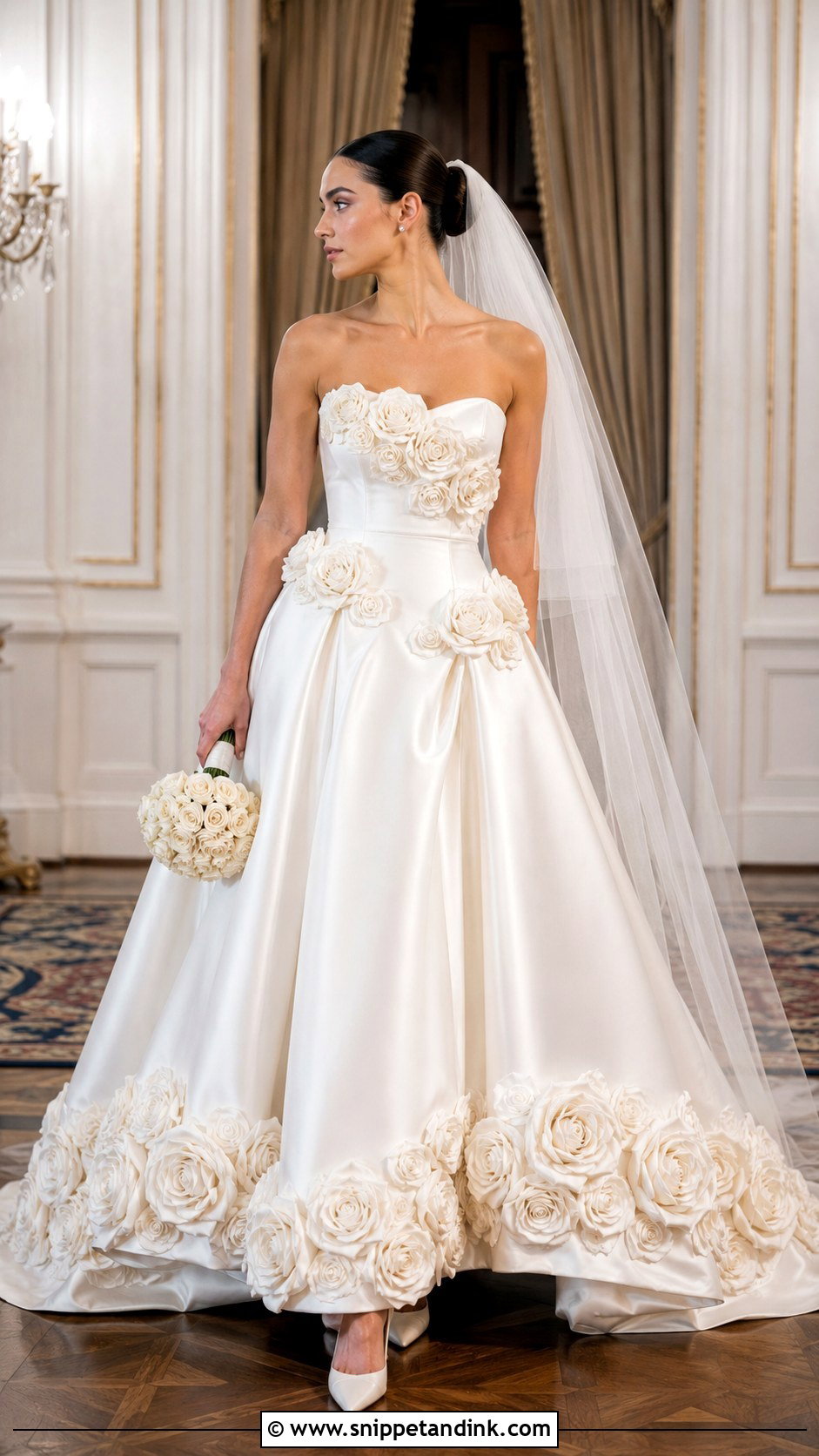
Sculpted roses on smooth satin give the most classic floral statement here. They look best placed along the bodice, waist and hem, with bare satin in between; a gown covered in them loses the shape of each flower. A strapless satin ball gown gives the cleanest background. Crystal studs, pointed ivory heels, a long plain veil and a sleek bun keep it formal. Carry smaller cream roses than the ones on the dress, so the bouquet echoes rather than competes. Large roses at the waist can dig in when you sit, so I always test a chair in the fitting.
18. Floral Mini Wedding Dress
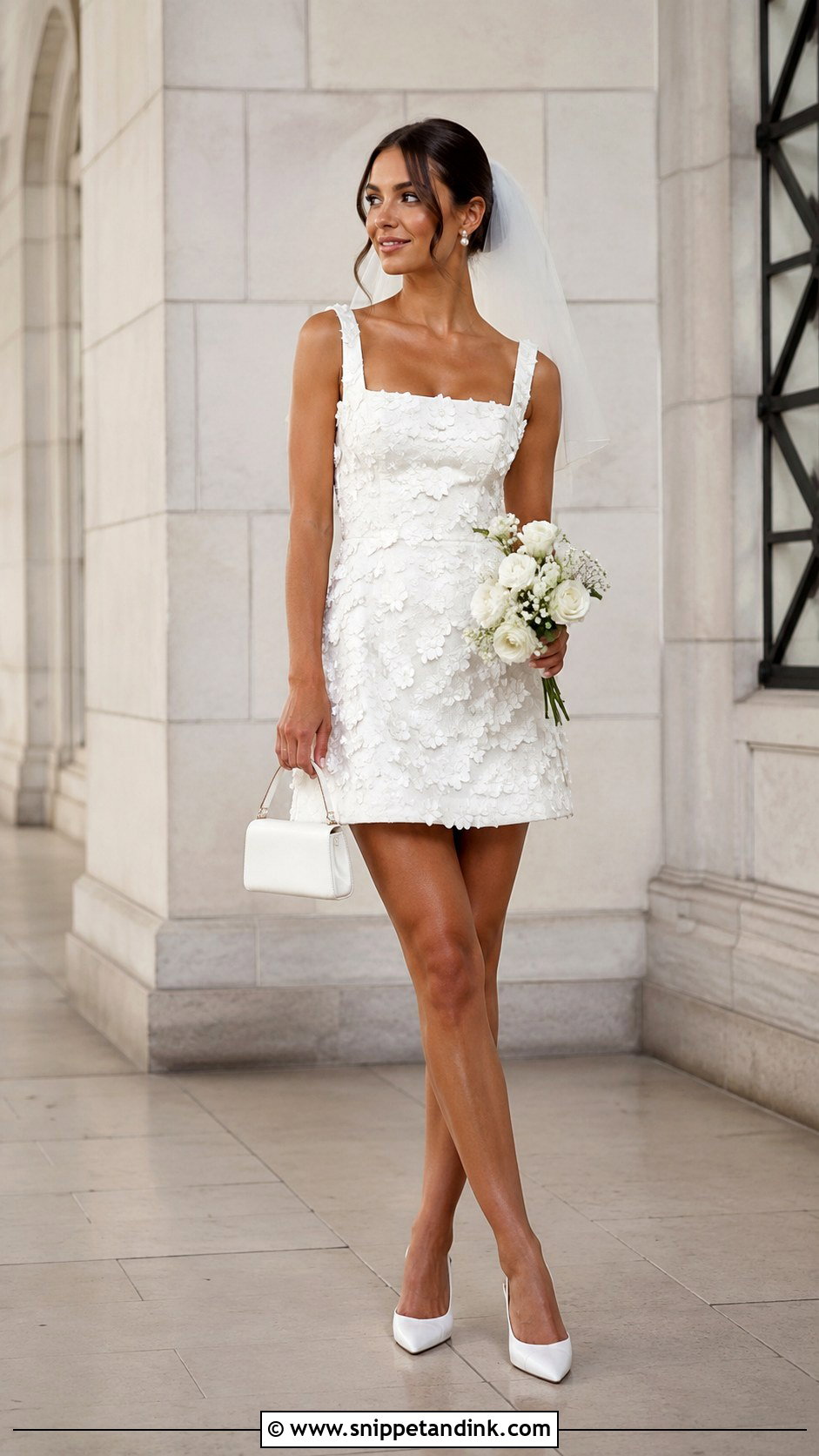
A short floral dress is the easiest outfit for dancing. A structured ivory mini with a fitted bodice and dimensional flowers at the neckline or skirt suits a civil ceremony, a casual wedding or a reception change. A square neck and a slight A-line keep it polished. Pointed slingbacks, pearl earrings and a small structured bag work well, and a short veil or floral hair bow makes it clearly bridal. Keep the bouquet petite. Sit down and walk in it before alterations end; I often suggest matching tailored shorts underneath for peace of mind.
19. Floral Wedding Dress With Train
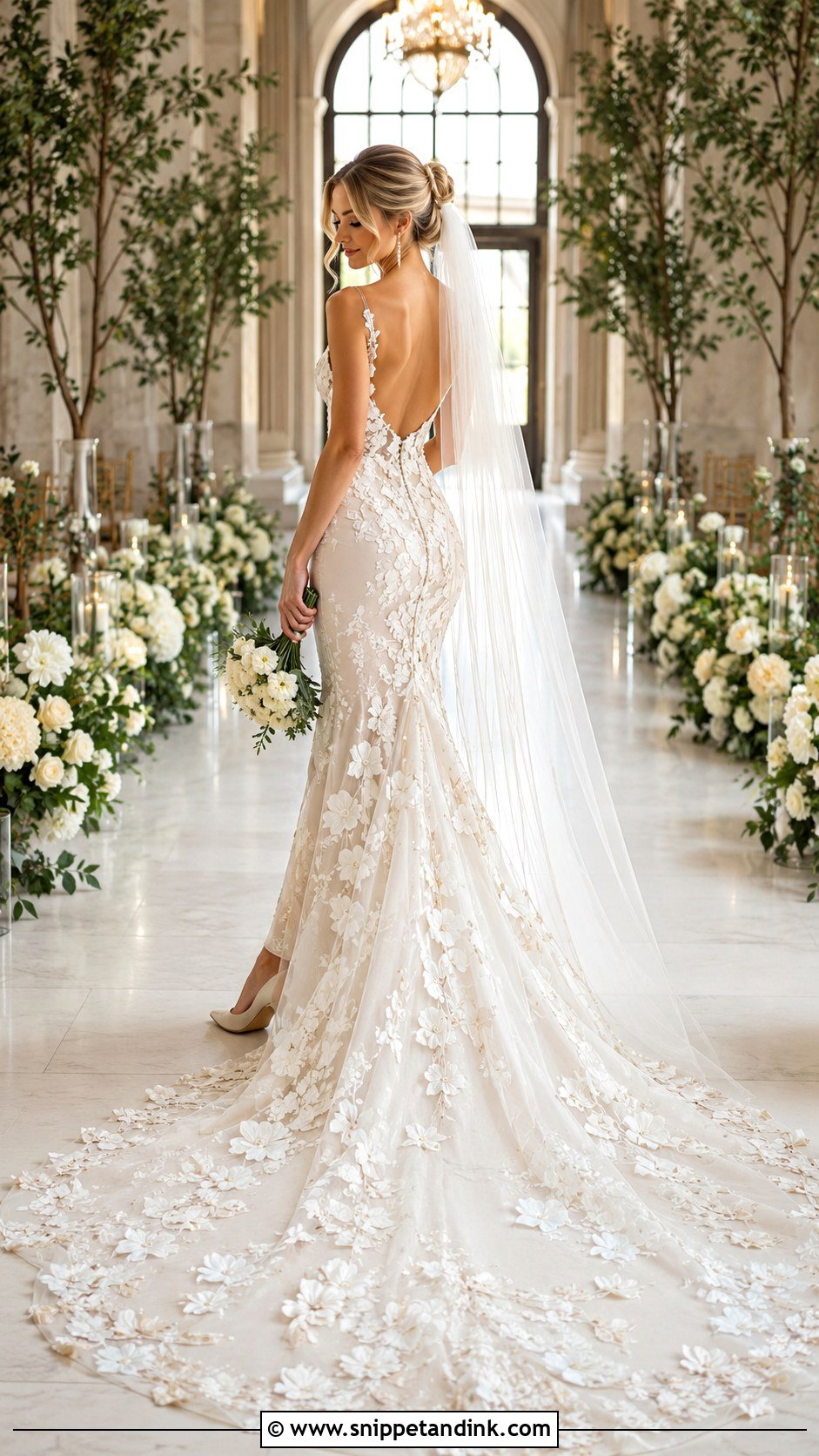
The back of the dress is what guests see for most of the ceremony, so a floral train earns its keep. Appliqués that grow denser toward the hem, or vines spreading over a chapel or cathedral train, give that view something to look at. Choose a fitted or A-line gown, ivory heels and small earrings, and a plain veil that ends past the train without hiding it. Hair up and a compact bouquet keep the line long. The bustle is the risky part: I ask for one that lifts the train without folding appliqués against each other. It needs a long aisle and space to be displayed.

20. Plus Size Floral Wedding Dress
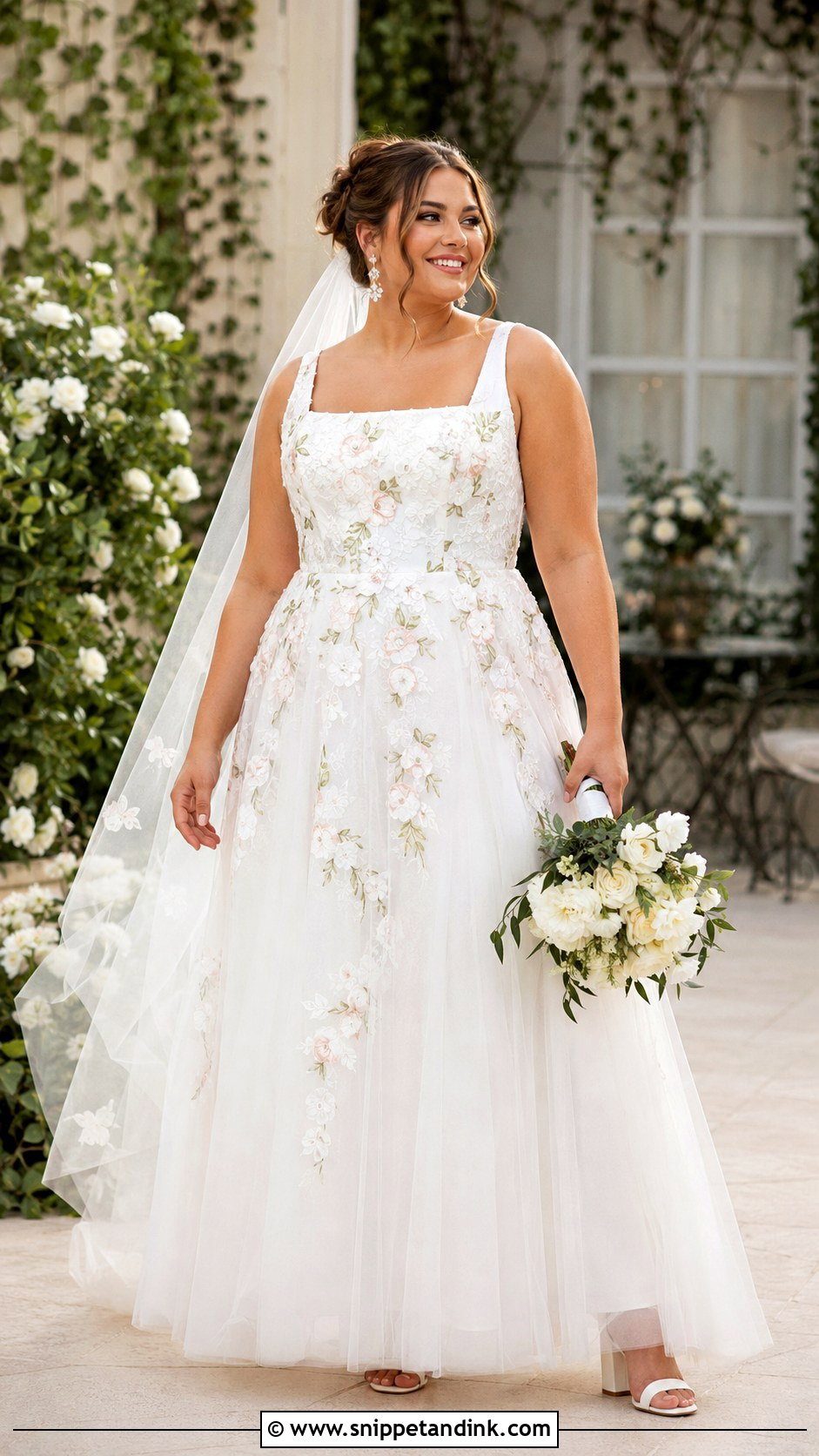
Support comes first, and that should never mean hiding. An A-line or fit-and-flare with a structured bodice, comfortable straps and appliqués placed to flow across the body is a strong starting point. A V-neck or square neckline frames the face, and a defined waist gives shape. Supportive block heels, a pair of statement earrings and a lightweight veil suit it, with a bouquet scaled to your height. I look for designers who grade their patterns properly for larger sizes instead of simply making the same pattern bigger, because that’s what puts darts and cups in the right place. Move, sit and dance in every fitting.
What Happens to 3D Petals in a Car, a Chair and a Hug
Raised flowers are the most fragile thing a bride wears all day, after the veil. They don’t usually fall off, but they flatten, catch and crease if nobody plans for them.
- In the car, sit on the skirt’s back panel and lift the front flowers up into your lap, so nothing is crushed against the seat or the door.
- At the table, a chair with arms presses on hip appliqués. If you can, ask for an armless chair at the head table.
- Guests’ brooches, watch straps and beaded clutches snag petals during hugs. A gentle side hug protects the bodice.
- A flattened petal usually recovers with a little steam held several centimeters away and a fingertip to reshape it. Never press it with an iron.
Colored embroidery has its own risk: some threads can bleed if they get soaked, so blot spills with a dry white cloth rather than rubbing with water. After the wedding I’d hand the gown to a specialist cleaner and point out every colored area and every spill you know about. Store it flat or folded loosely in acid-free tissue, petals facing up, so the flowers keep their shape.
A Dress You Still Recognize Yourself in at Midnight
Flowers make a gown personal in a way plain fabric can’t. Sculpted appliqués bring drama, colored embroidery adds personality, and lace, puff sleeves, capes and trains reshape familiar silhouettes. Think about where you’ll stand and how far away guests will be, because some flowers only read up close. Keep the shoes, jewelry, veil and bouquet restrained and coordinated. Then test the whole outfit at your fittings. The right one fits securely, lets you move freely and still feels like you when you catch yourself in a mirror at midnight.
You'll Like These Ideas:







Leave a Reply