
Draping is the detail I find brides warm to once they try it on, even if they arrived wanting lace. Instead of beading or appliqué, these gowns get their interest from folds, gathers and wraps, and the fabric choice decides almost everything: satin holds a crisp, sculpted fold, crepe gives a softer matte ripple, and chiffon floats. Draping turns up on strapless ball gowns, bias-cut slips and fitted mermaids alike. What it does well is shape the body through line rather than decoration. Below are the draped styles I pull most often in the fitting room, with notes on how each one actually wears.
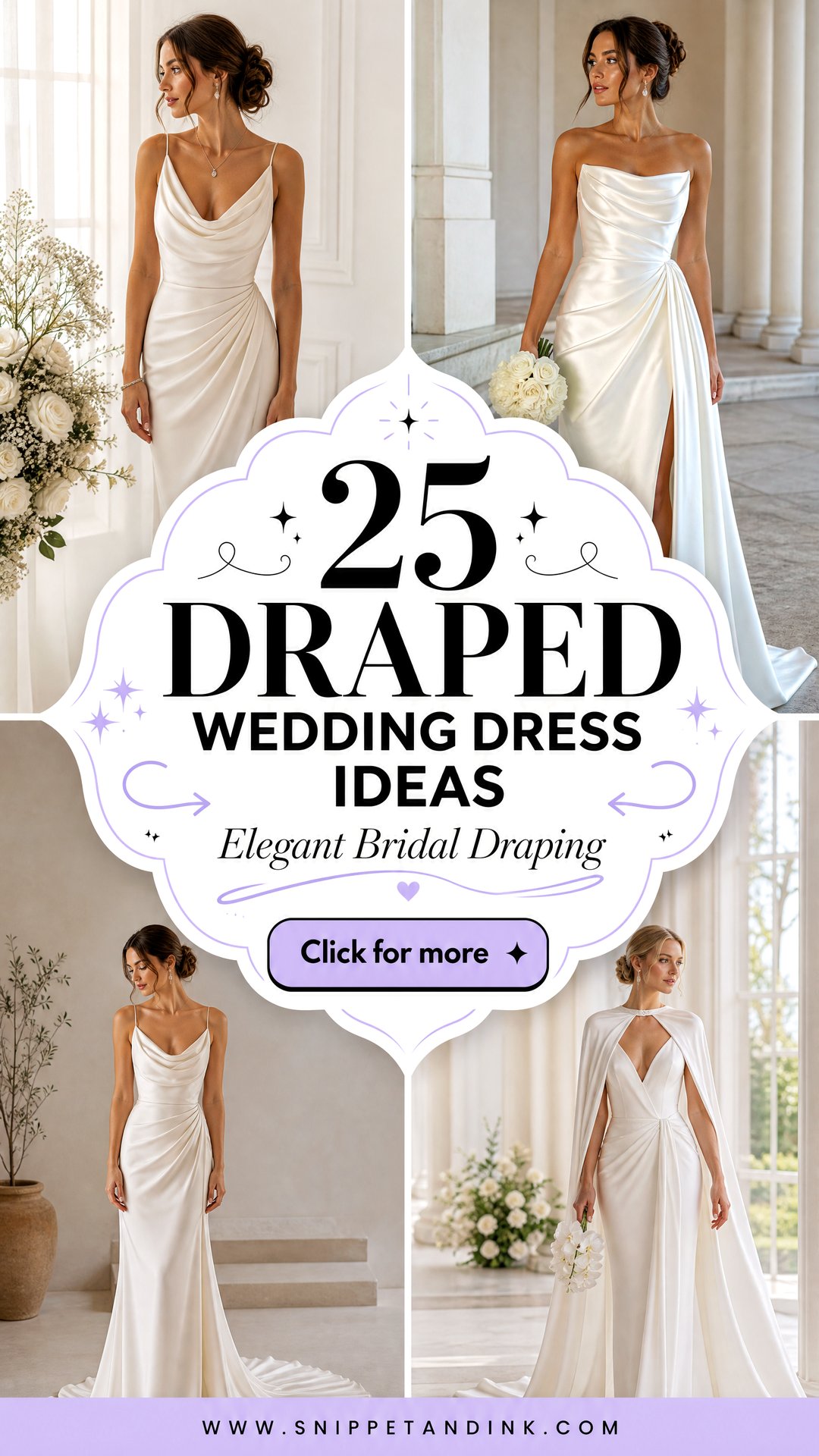
Reading Where a Drape Will Land on Your Body
Folds add visual volume wherever they gather, and they draw the eye along the direction they run. That’s the whole trick to choosing a draped gown, and it’s why two dresses in the same fabric can look completely different on you.
- Diagonal drape across the waist or hip tends to define and slim, because the eye follows the line across rather than around.
- Horizontal gathers across the bust add fullness there. Lovely if you want it, too much if you’re already full-chested.
- A cowl at the neck adds softness and some volume at the chest; on a fuller bust, a smaller, shallower cowl usually sits better.
- Drape gathered at one point, like a shoulder or a hip, creates a focal point. Put it where you’d like people to look.
In the fitting room, I look at a draped gown from the side as much as from the front. A fold that looks flat head-on can stand away from the body in profile, and that’s how most of your candid photos will be taken.
1. Draped Strapless Wedding Dress
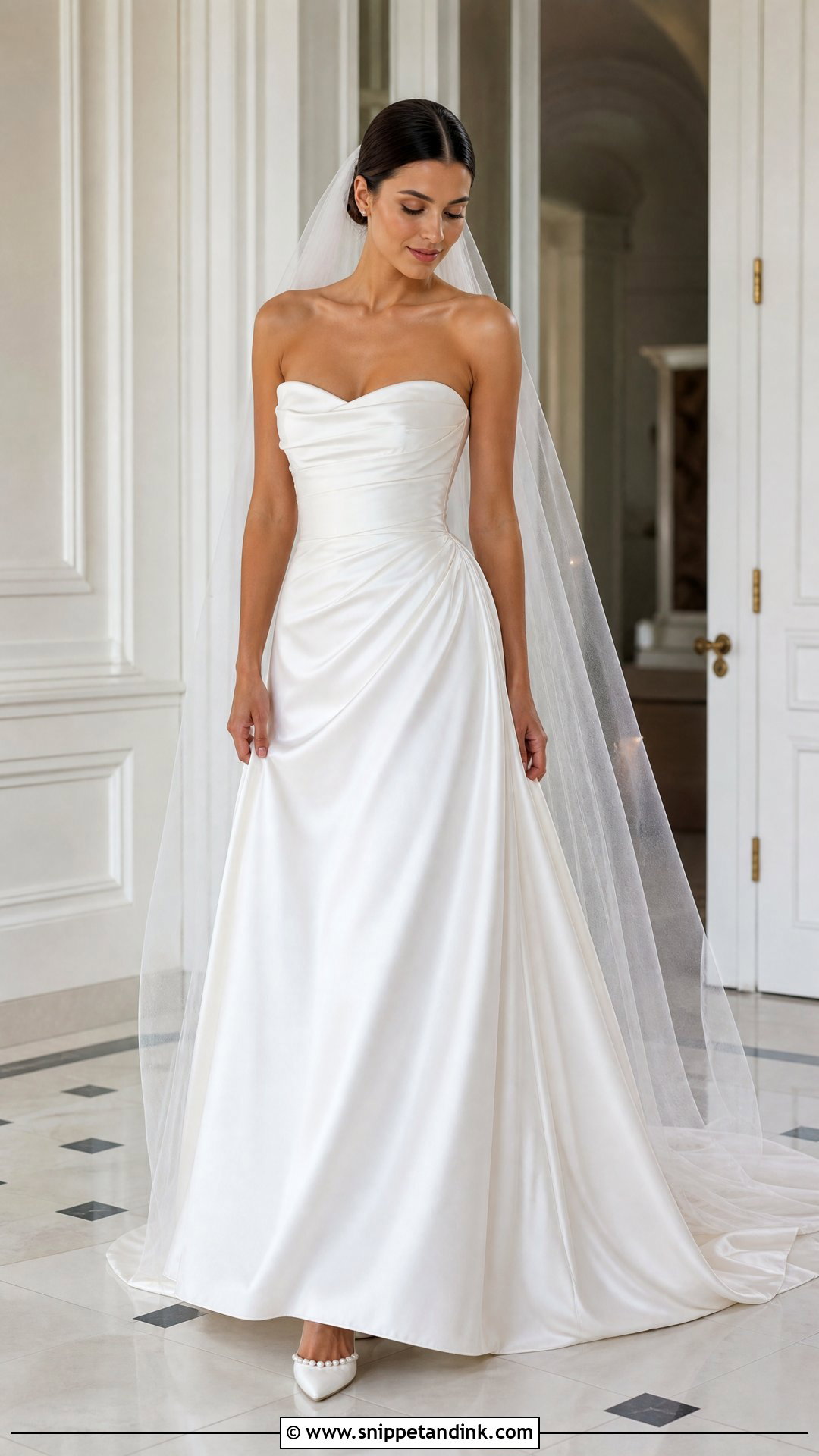
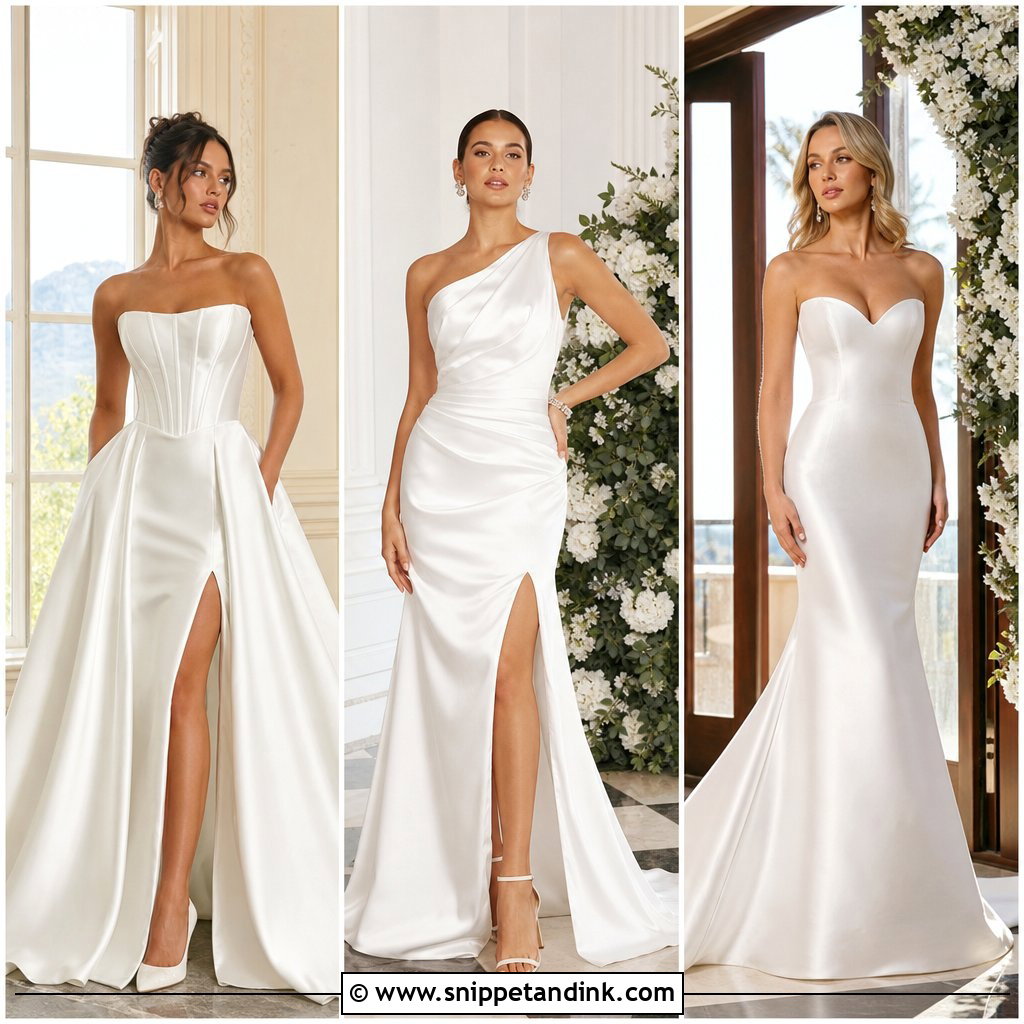
A draped strapless wedding dress gives a clean neckline with some movement across the bust. The gathered fabric is usually stitched onto a boned inner bodice, and that inner structure is what keeps it from slipping, not the drape itself, so I always check the bones sit flat against the ribs when you lift your arms. Satin, mikado, crepe and silk faille hold the folds best. A fitted waist with a soft A-line or column skirt keeps it balanced. Pearl studs and a sleek veil are all it needs, and it suits a ballroom as easily as a city ceremony.
2. Draped Off Shoulder Wedding Dress
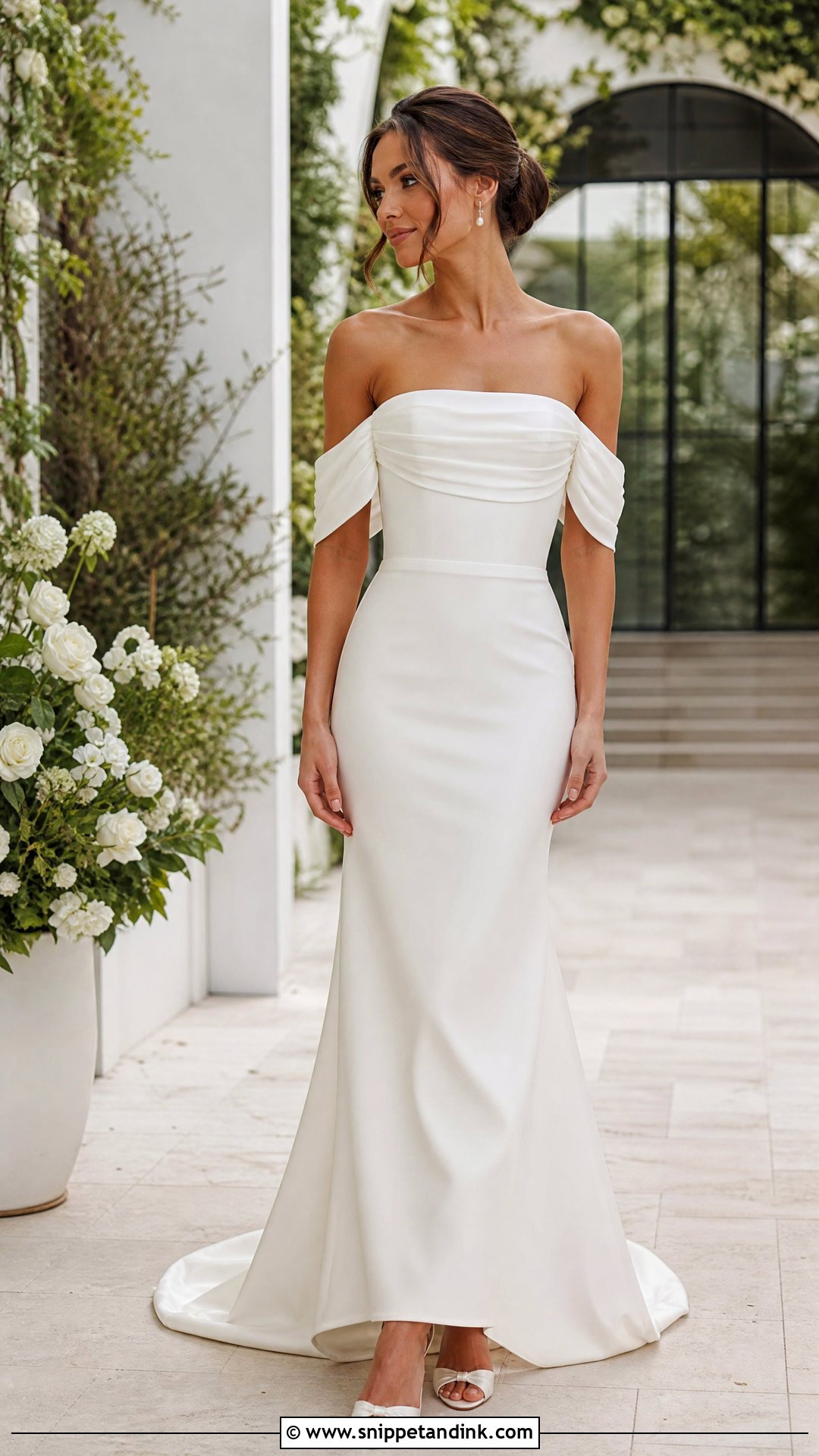
Off-shoulder drape sits across the collarbone and then falls onto the upper arm, which means it moves every time your arms do. That’s the thing to test: hug someone in the fitting room. If the band rides up toward your neck or the arms feel pinned, it needs either a little elastic grip inside or a slightly looser fit at the bicep. Smooth satin or crepe reads classic; chiffon or tulle draped over a structured base feels softer. A low bun shows the neckline, and I’d start the veil below the crown so it doesn’t hide the folds.
3. Draped Cowl Neck Wedding Dress
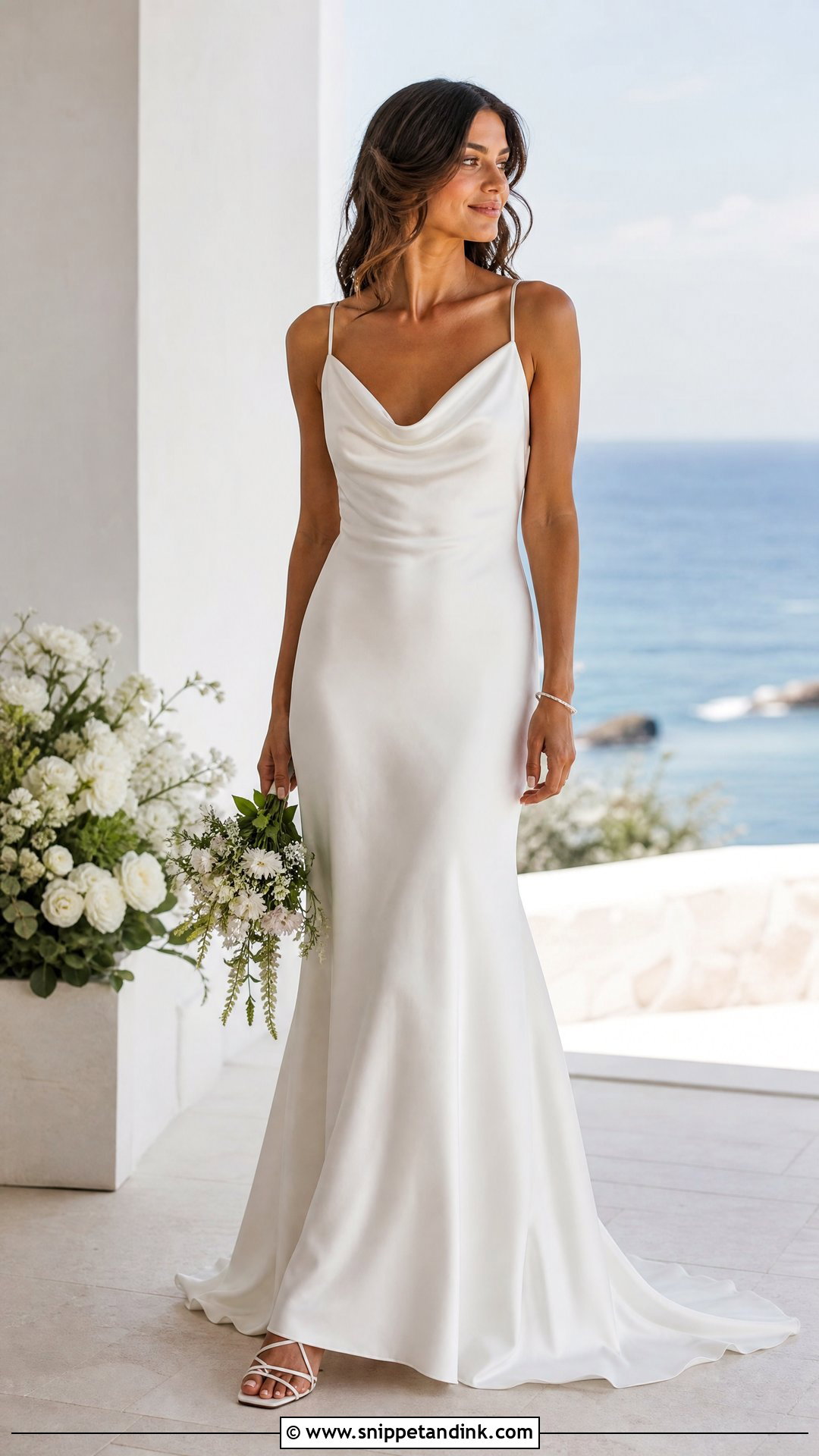
Cowl necks only work in fabric that actually falls. The front relaxes into soft loops across the décolletage, and that needs fluid cloth like silk satin, charmeuse or a light crepe cut on the bias; in a stiffer fabric the cowl just stands out like a pocket. Lean forward in the mirror before you buy. A deep cowl can gape when you bend to sign the register or hug a short grandparent, and a hidden snap or a small weight sewn into the fold is the usual fix. Balance a low front with a clean back or narrow straps. Strappy sandals and softly waved hair keep the mood modern for a beach or an intimate evening.
4. Draped One Shoulder Wedding Dress
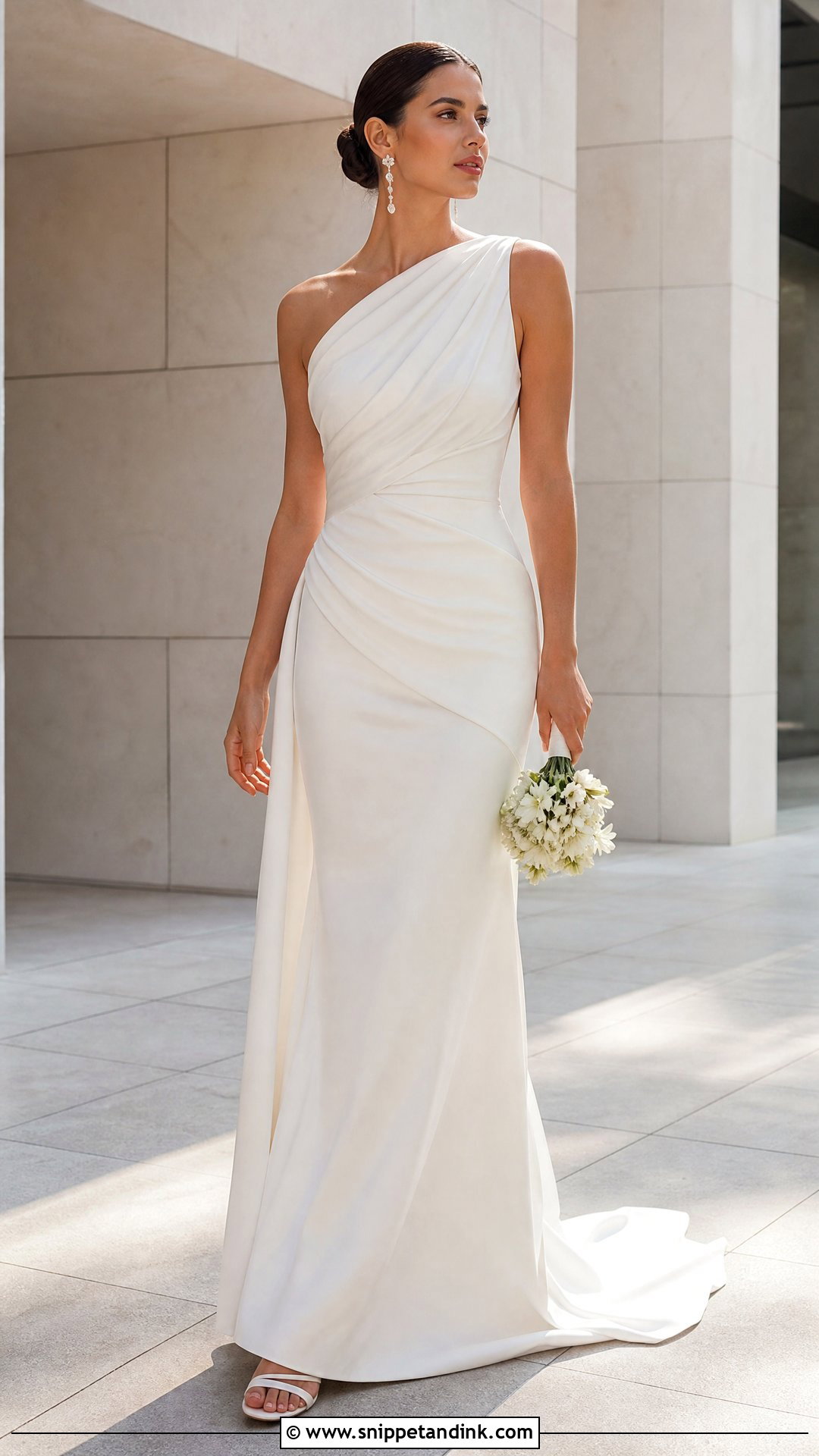
An asymmetric neckline pulls the eye up and across, so the one-shoulder drape is a good choice if you want the focus on your face and shoulders in portraits. The folds gather from the strap toward the opposite hip, and the anchor point at the shoulder needs real support underneath; I check it doesn’t drag the bodice sideways after a few minutes of standing. Crepe, satin or chiffon over a fitted lining all work. A slim column feels sleek, a fuller skirt feels grander. Skip the necklace and wear earrings.
5. Draped Corset Wedding Dress
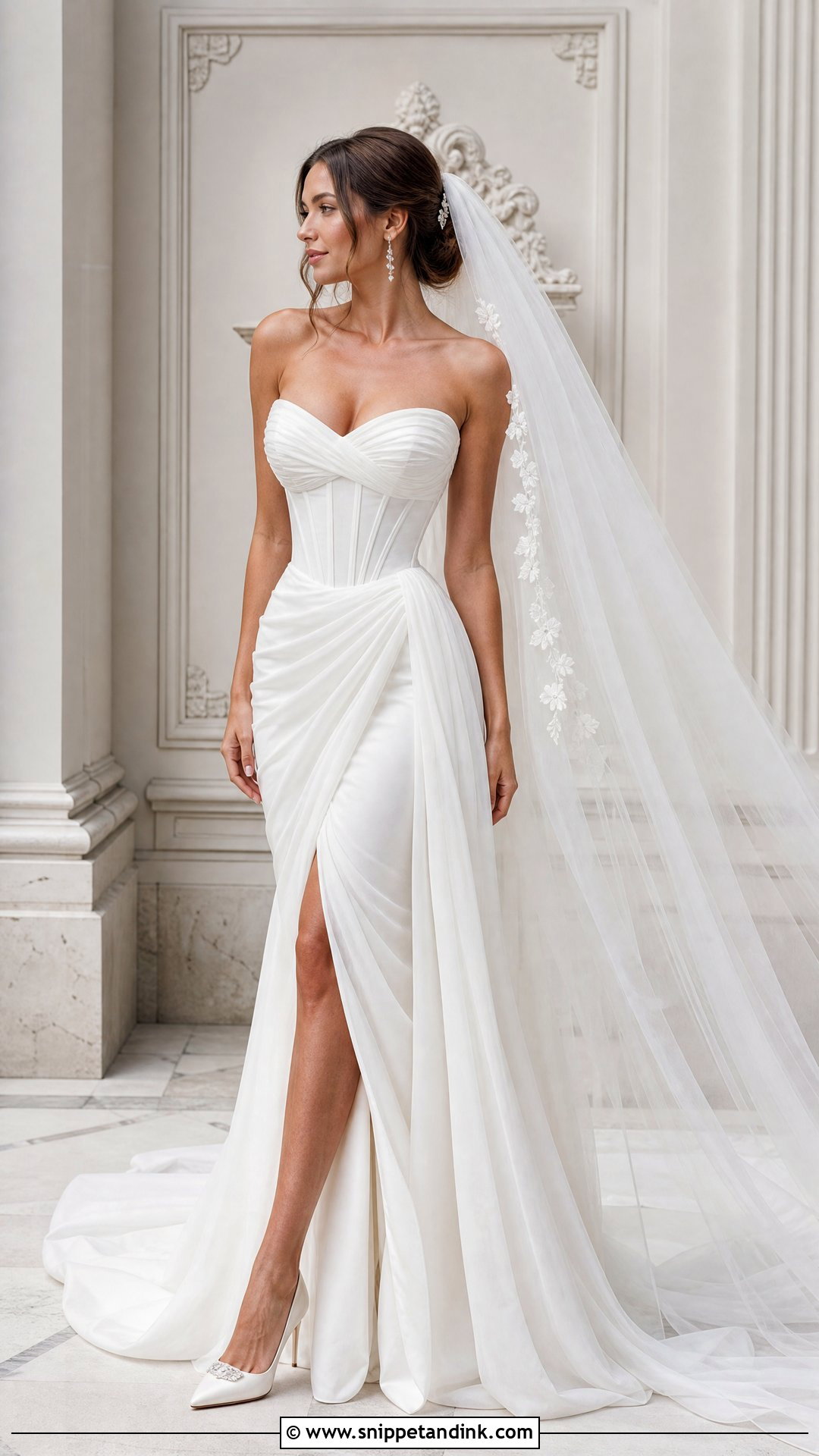
This is drape with shaping you can actually feel. The corset underneath does the work at the waist and bust, while folds laid over the top stop it looking rigid. Have it laced at the fitting as tight as you’ll wear it on the day and then sit down; if you can’t breathe through a full sentence, ask for it eased. It pairs with strapless, off-shoulder or fine straps. Satin over tulle gives a clear contrast between structure and softness. A long veil and minimal jewelry suit formal and estate venues.
6. Draped Satin Wedding Dress
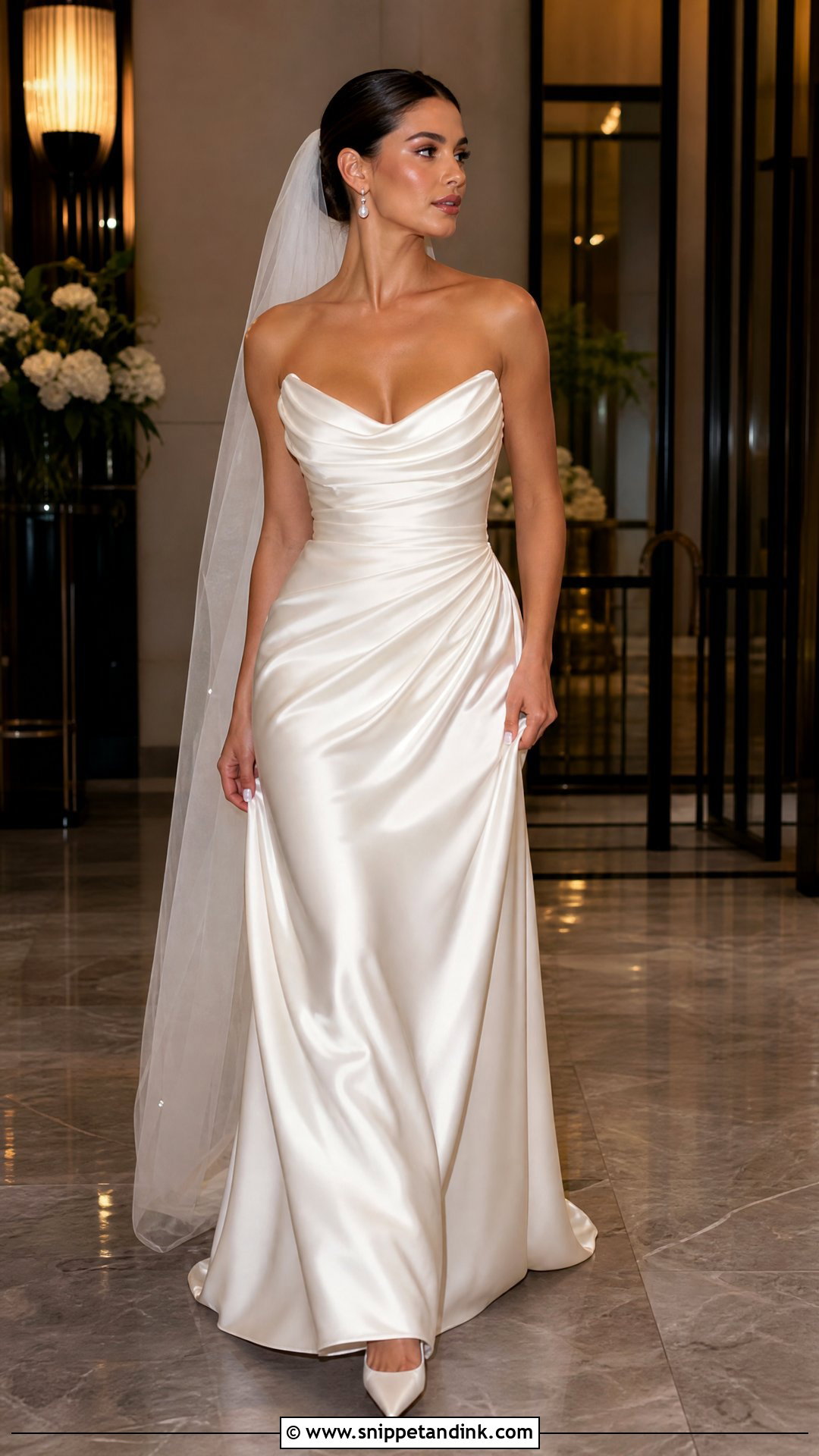
Satin is where draping looks most deliberate, because every fold catches light and throws a shadow. Gathers at the waist, hip or neckline give a rich gown without a single bead. The catch is that satin also shows every crease, and the drape at the hips creases most when you sit. A heavier duchess or crepe-backed satin wrinkles less than a thin polyester one. Fitted, A-line or full-skirted all work. Because the fabric already shines, keep the rest simple: pearl earrings, sleek hair, a clean veil for an evening or hotel wedding.
7. Draped Crepe Wedding Dress
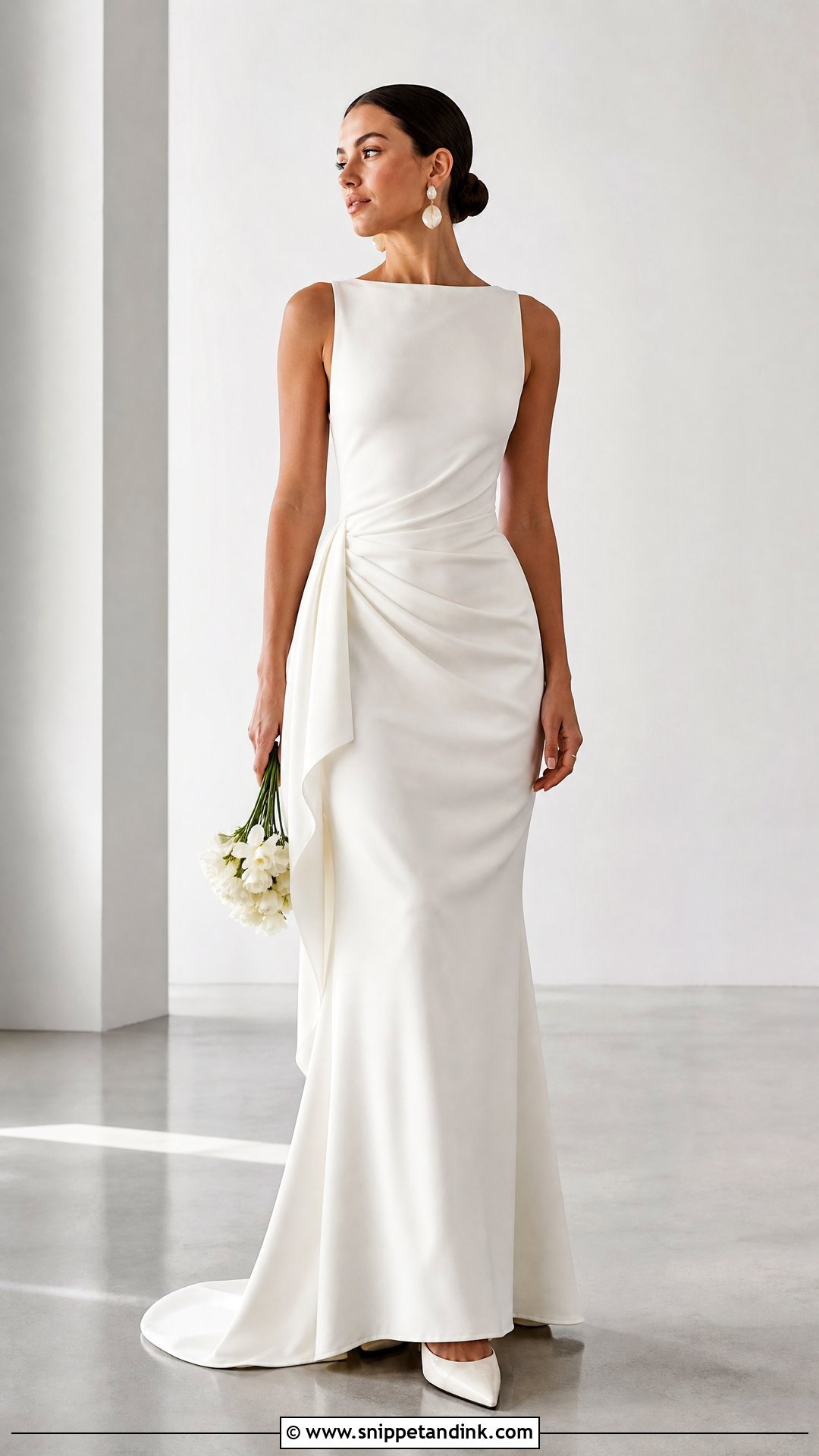
Crepe is my pick for a bride who wants clean lines and nothing shiny. Its matte surface makes folds look sculpted rather than glossy, and draping at the waist or bodice adds shape without visual noise. Crepe skims the body closely, so it will show what’s underneath; look for a good lining, careful seams, and a little stretch if you want to dance. A sleek bun, drop earrings and pointed pumps finish a modern wedding look.
8. Draped Tulle Wedding Dress
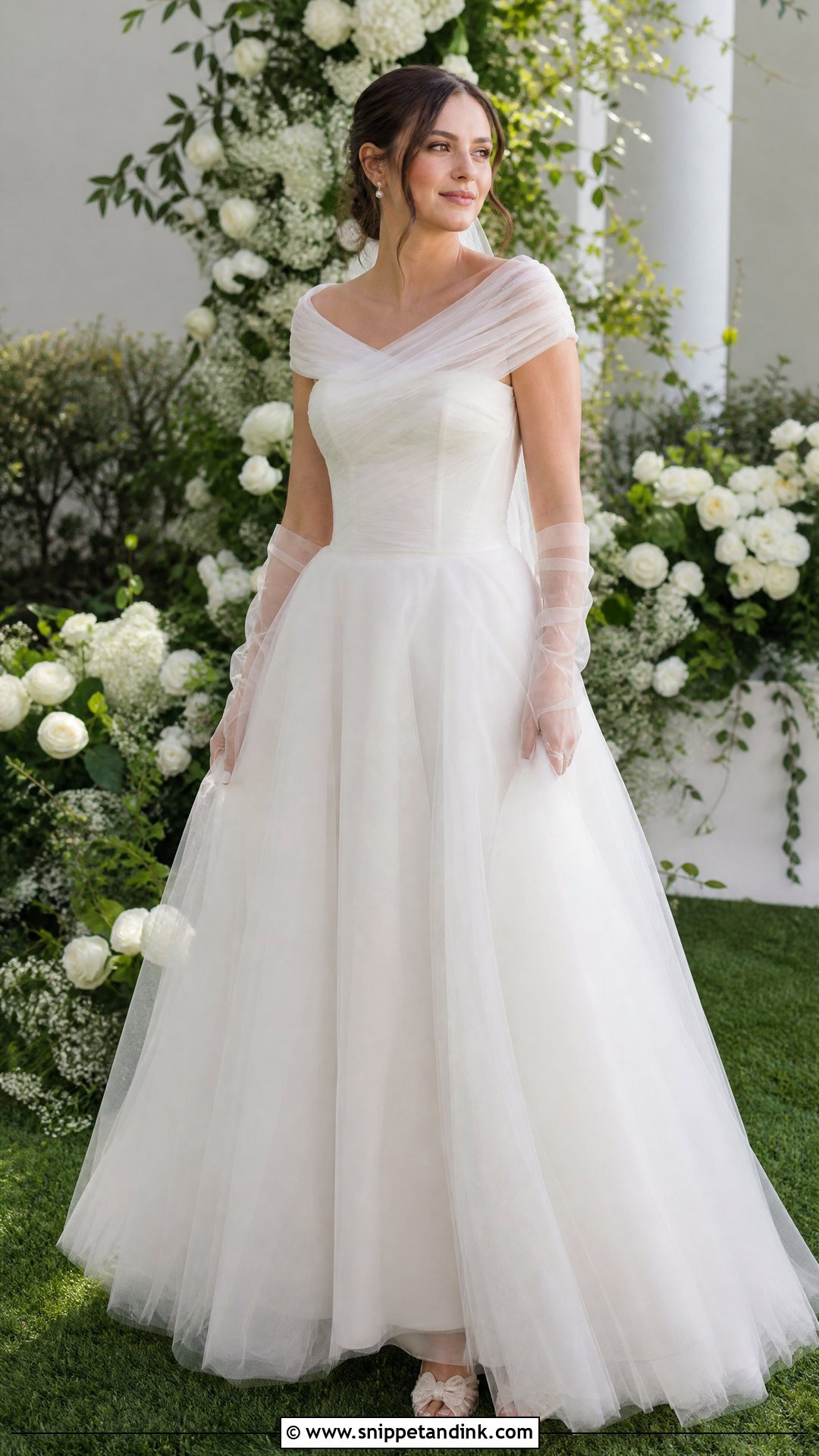
Tulle drapes in a looser, cloud-like way than any other bridal fabric. It’s usually layered over a structured bodice or skirt, and because it’s so light you get volume without weight. A draped tulle neckline, wrapped bodice or gathered overskirt all keep it refined. The practical issue is snagging: tulle catches on bracelets, bouquet wire and rough stone walls, so I’d keep jewelry smooth. Garden ceremonies and spring or summer weddings suit it best. Sheer gloves, small pearls and a raw-edge veil let the fabric stay the focus.
9. Draped Chiffon Wedding Dress
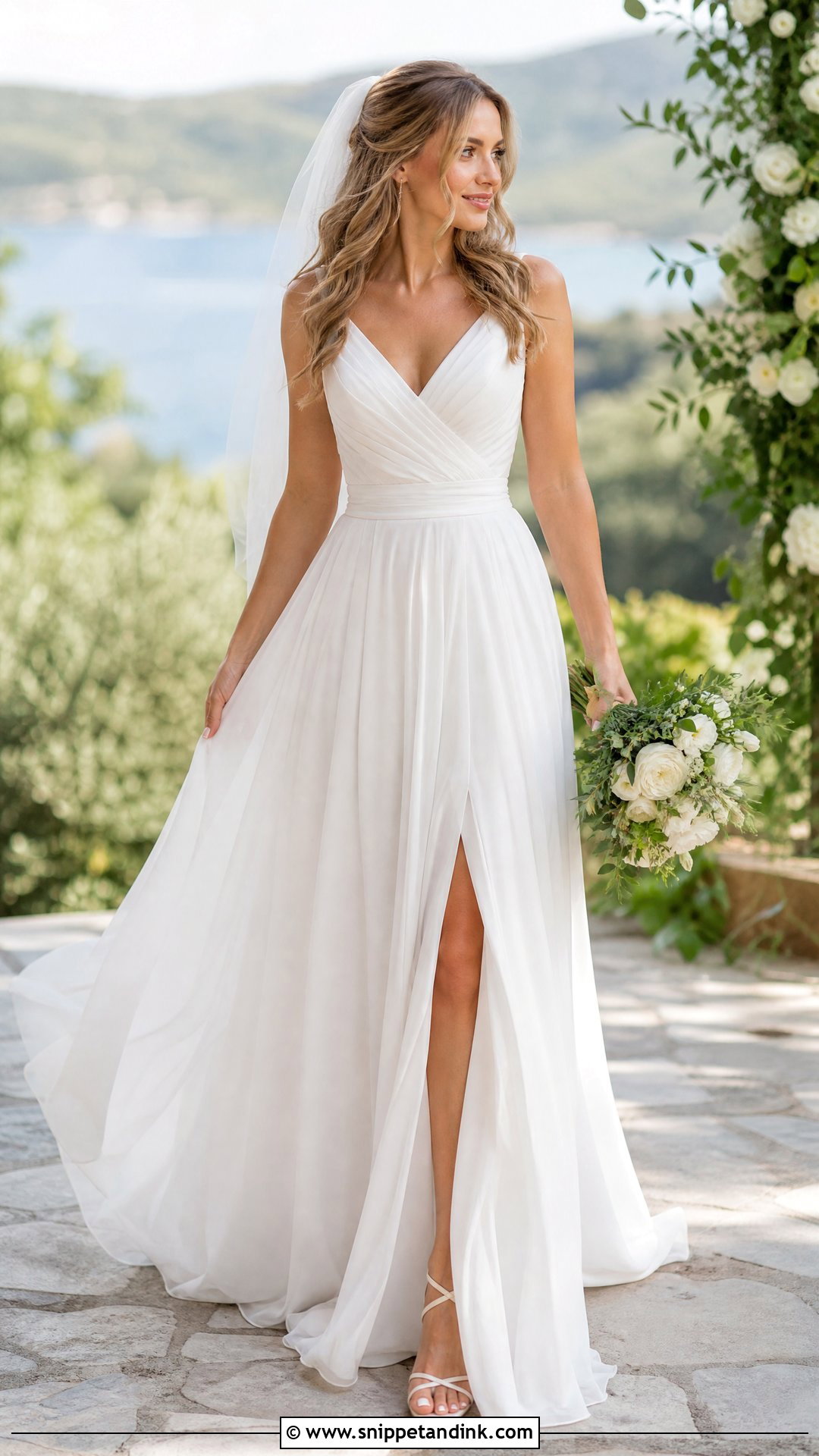
Chiffon moves more than anything else on this list, which is why it turns up in Grecian gowns and beach dresses. It’s sheer and light, so a draped chiffon bodice needs a lining or a fitted base underneath to hold its shape. A loose chiffon skirt is cool and comfortable in warm weather, far easier than satin or mikado on a hot afternoon. One trade-off: chiffon frays and pulls if it’s handled roughly, so seams should be finished cleanly. Soft curls, barely-there sandals and a fine veil suit an outdoor ceremony.
10. Draped Silk Wedding Dress
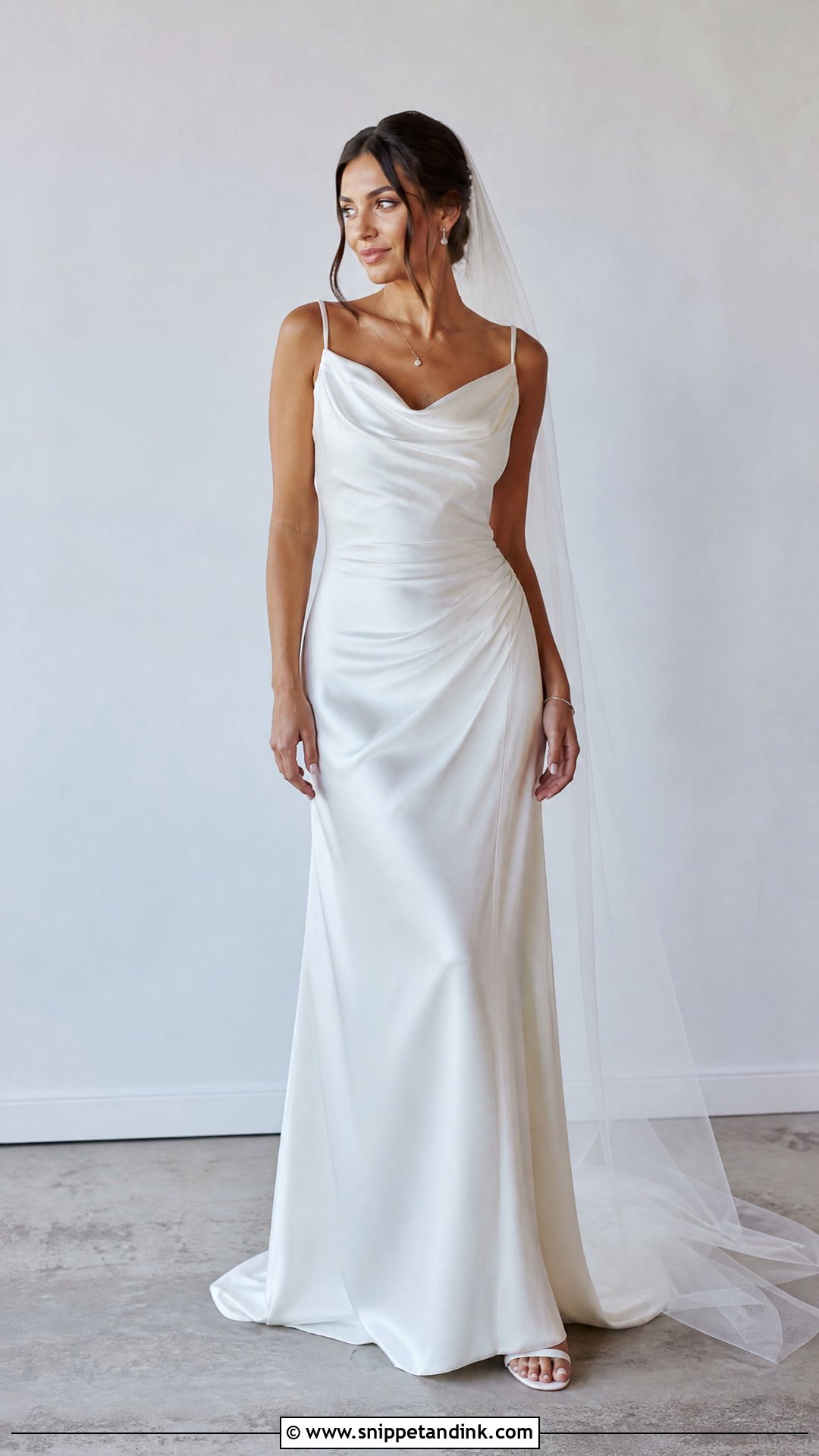
Silk is the luxurious end of draping. It has natural movement and a soft glow, so folds look liquid rather than stiff. Bias-cut silk makes a draped slip dress; silk faille or silk satin gives more structured folds. Silk is unforgiving in the fitting room, though: it marks with water, shows underwear lines and needs a skilled seamstress, because a re-stitched seam can leave visible needle holes. Leave plenty of time for alterations and choose smooth, edge-free underwear. Fine jewelry and satin heels are enough.
11. Draped Mermaid Wedding Dress
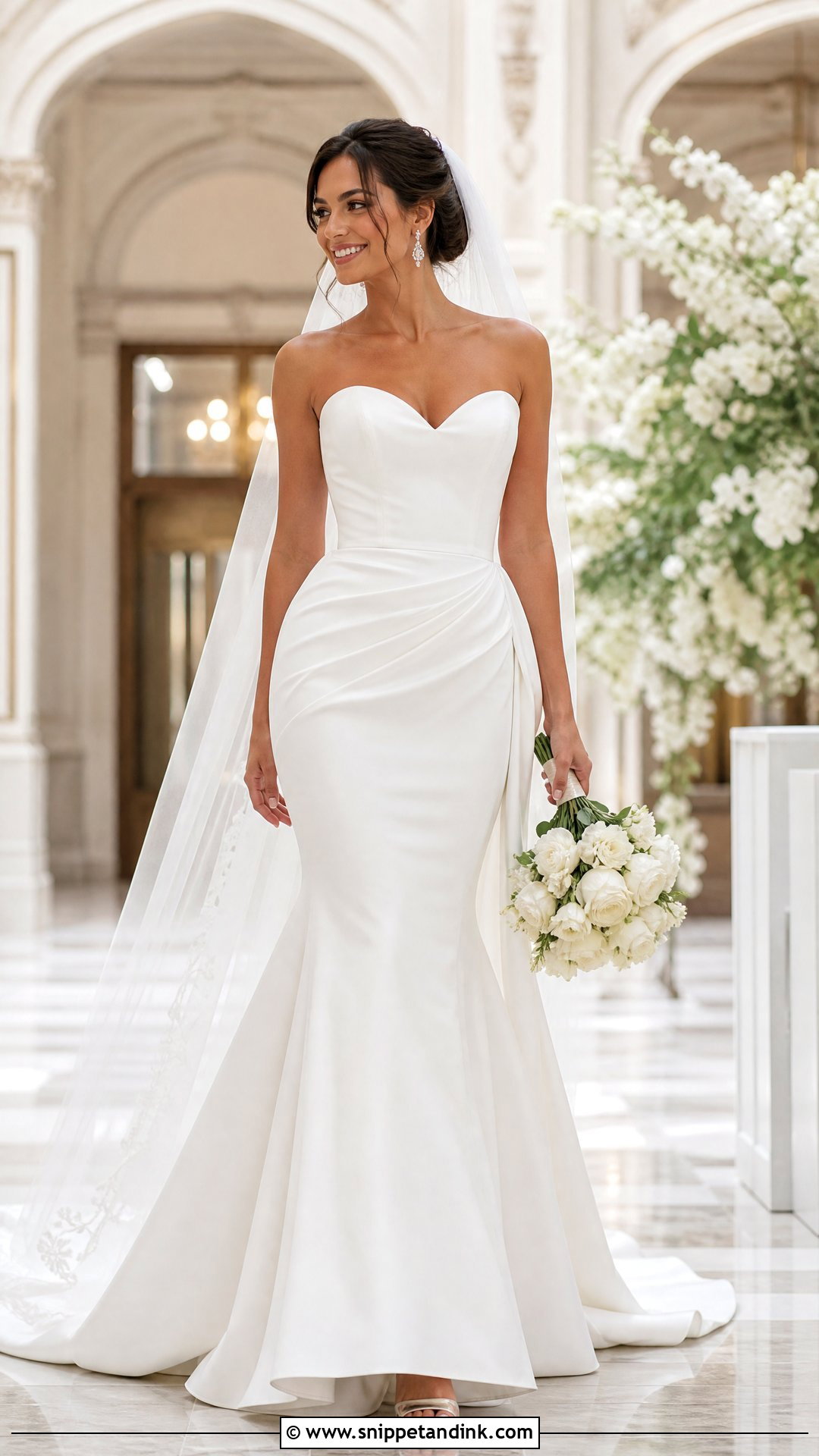
Draping on a mermaid is more forgiving than a plain fitted mermaid. The draped mermaid wedding dress follows the body to below the knee and then flares, and diagonal folds across the hip or tummy soften areas some brides don’t want tightly outlined. Crepe, satin and stretch mikado all hold the shape. Check where the flare starts: too high and you’ll waddle, too low and you can’t climb a step. Off-shoulder, sweetheart and one-shoulder necklines all balance the fitted skirt. A long veil and simple heels are plenty.
12. Draped A Line Wedding Dress
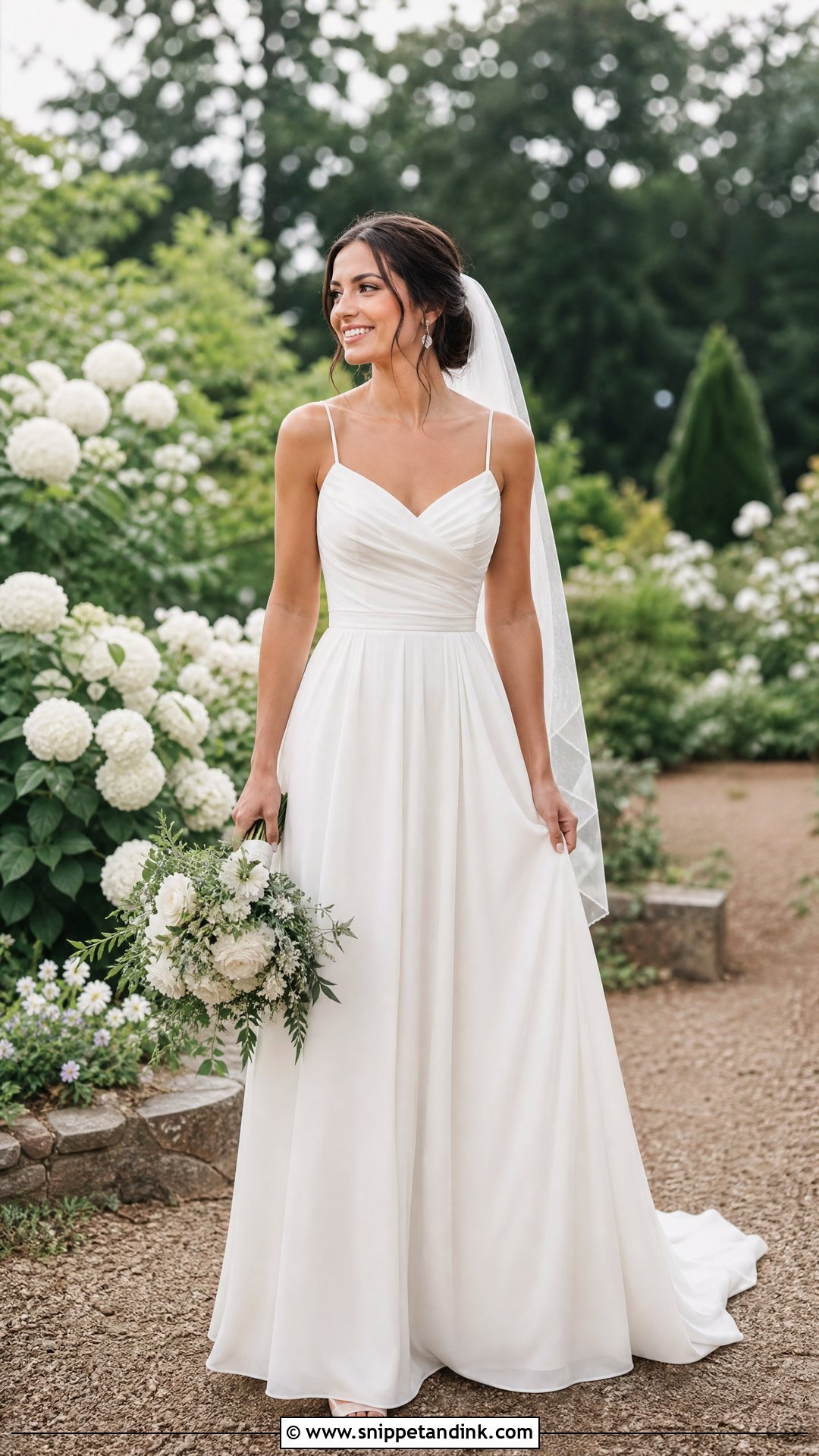
The A-line is the shape I see suit the widest range of bodies. The skirt flows away from the waist, and drape on the bodice or waistband adds definition without clinging. It sits between a fitted gown and a full skirt, so it’s a safe middle if you’re torn. Satin reads classic, chiffon soft, crepe modern. It works with strapless, off-shoulder, V or square necklines. Block heels are worth considering if you’ll stand for hours. Garden, formal and traditional ceremonies all suit it.
13. Draped Ball Gown Wedding Dress
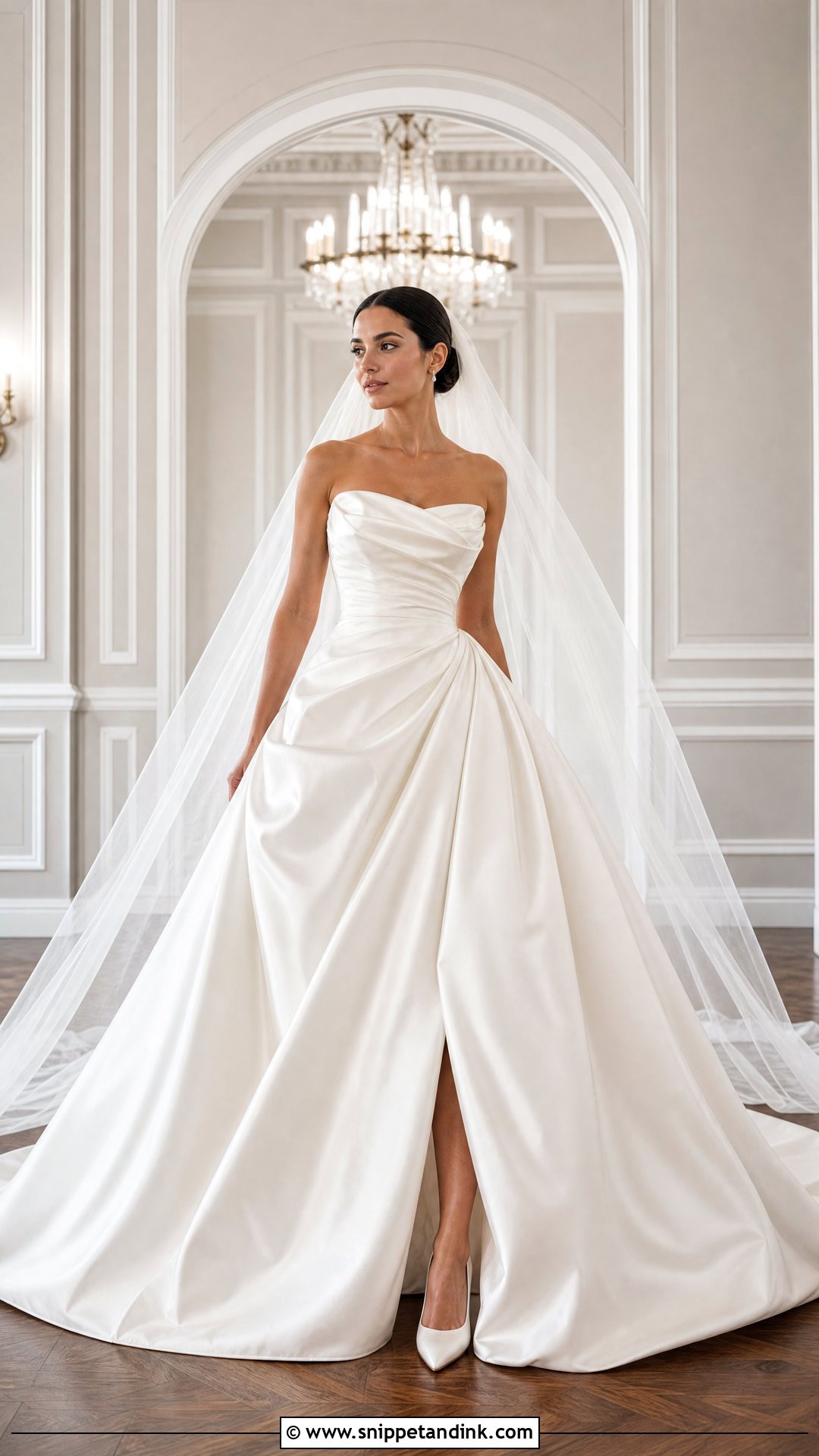
A draped ball gown wedding dress gives you the grand skirt but keeps the top half softer than a stiff, beaded bodice. Satin, mikado and organza hold volume well. A draped neckline frames the face, while a basque or dropped waist modernises the shape. Ball gowns are heavy, and draped satin adds more weight at the waist, so ask the salon to weigh up a bustle early; you’ll want the train lifted for the reception. A long veil, small earrings and classic heels complete it.
14. Draped Sheath Wedding Dress
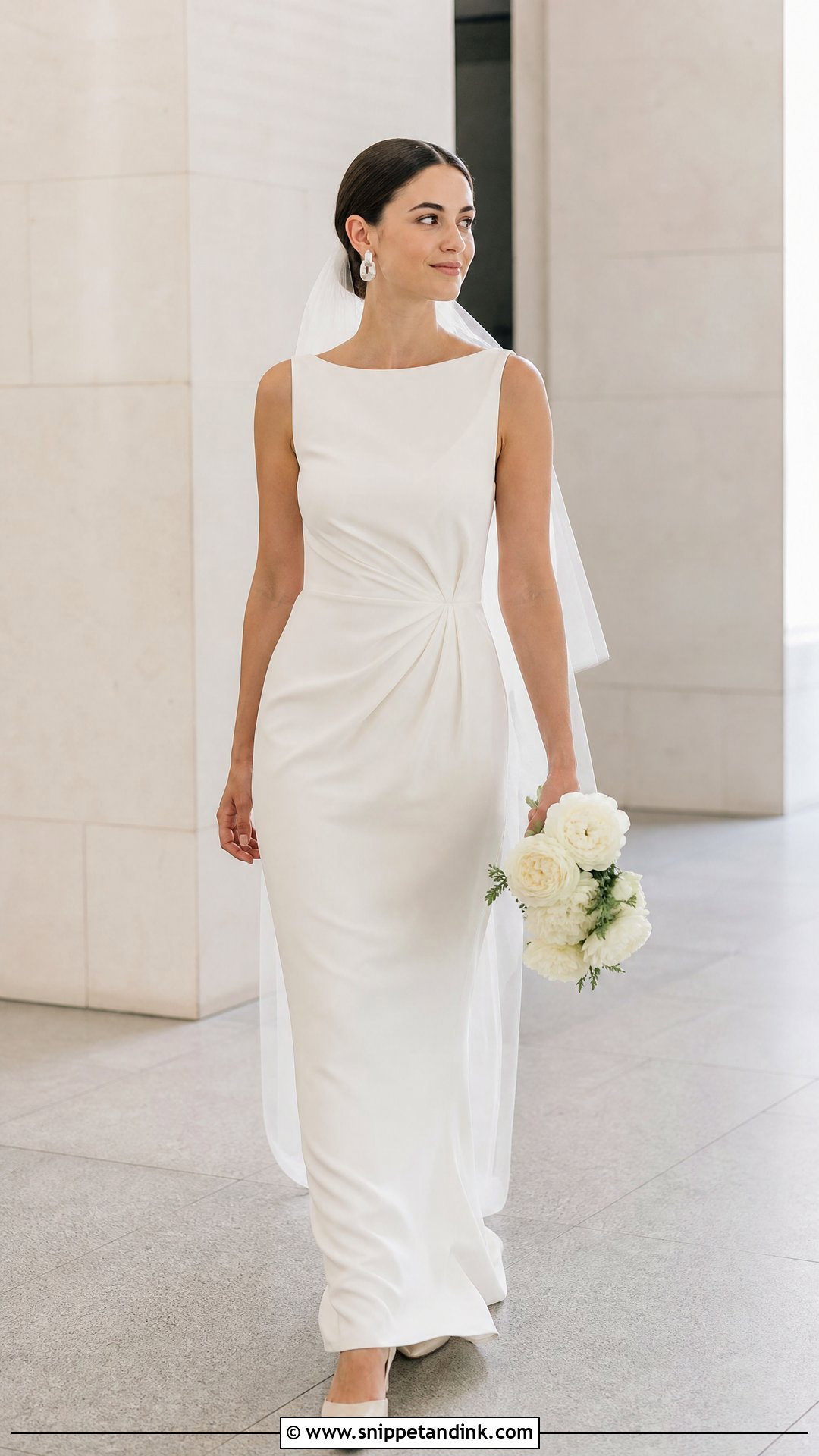
Sheaths fall close to the body without a flare, so the drape is doing all the shaping. Waist draping, a soft cowl or a little gathering at the hip makes the clean line look intentional. It’s comfortable and easy to move in, which is why I suggest it for city weddings and small ceremonies. Crepe and silk satin flatter it most. Try walking in it before you commit; a narrow hem can shorten your stride more than you expect, and a hidden back slit fixes that. Pair with a clean veil, sculptural earrings and low or mid heels.

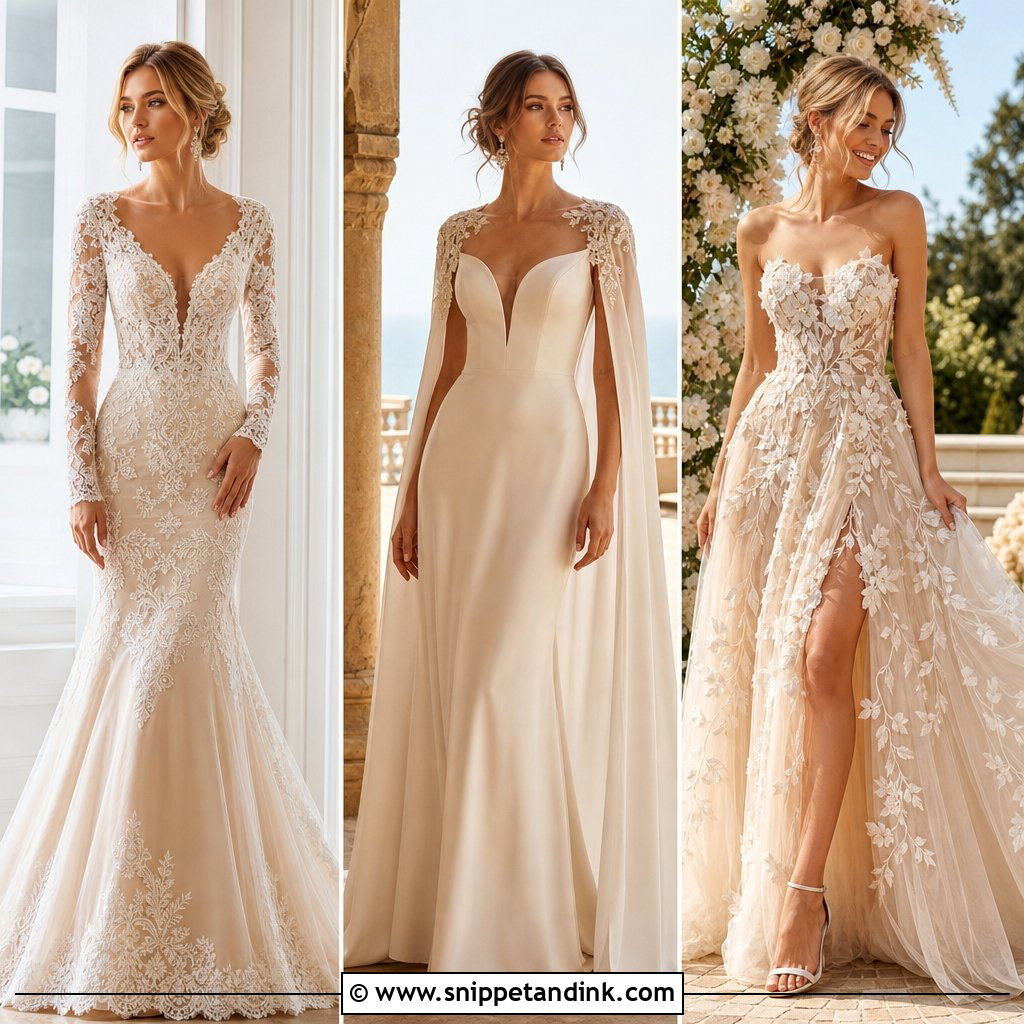
15. Draped Slip Wedding Dress
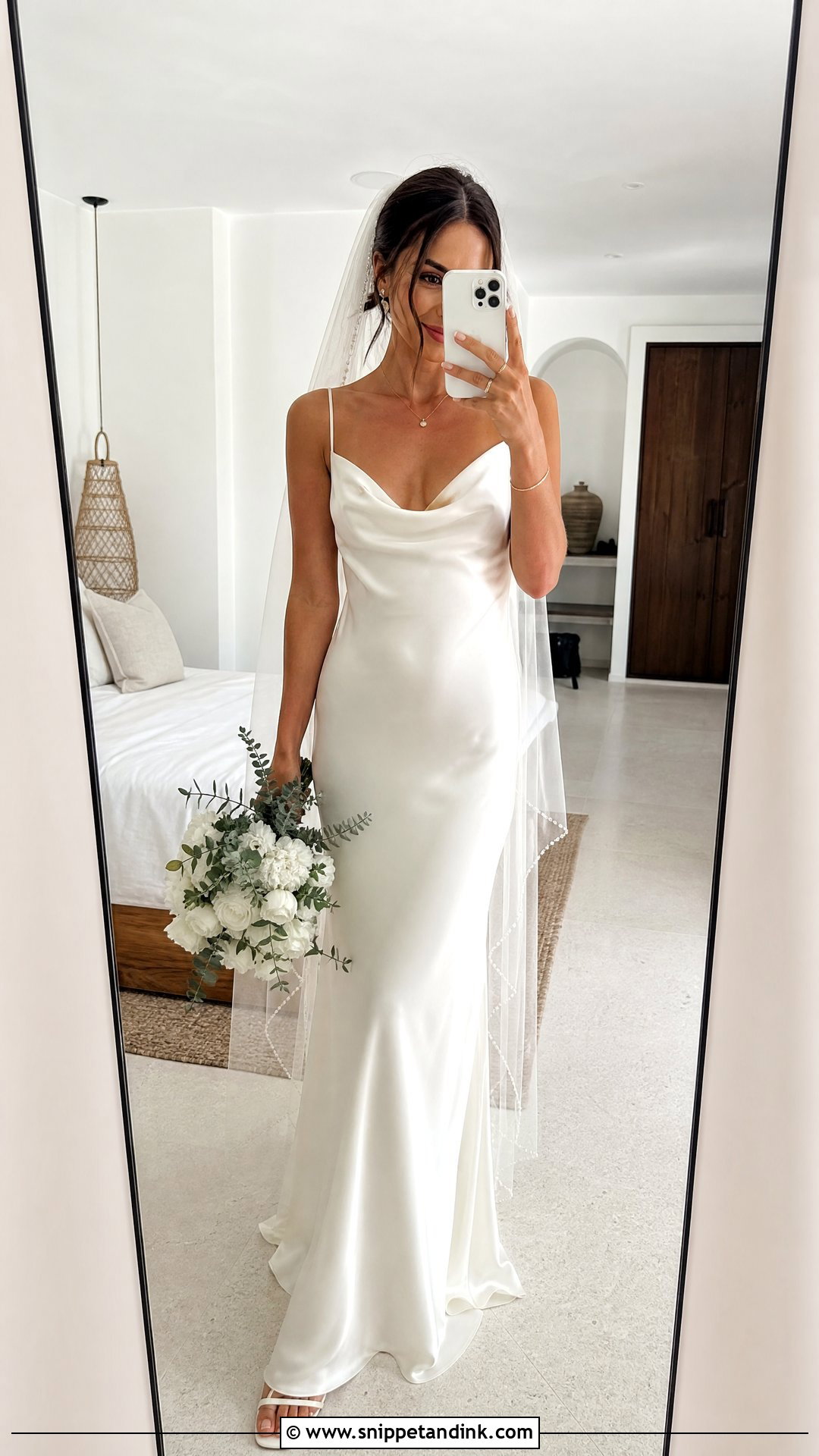
The slip dress is the most relaxed draped gown: thin straps, a loose fit and fluid fabric that skims the body. Draping shows up at the cowl neck, the low back or the side waist. Silk satin, charmeuse and soft crepe move naturally, but they also show every line, so smooth, edge-free underwear and a skin-tone slip are not optional. It’s light enough to pack for a destination wedding. Delicate sandals, a fingertip veil and simple jewelry finish a beach, courthouse or relaxed reception look.
16. Draped Drop Waist Wedding Dress
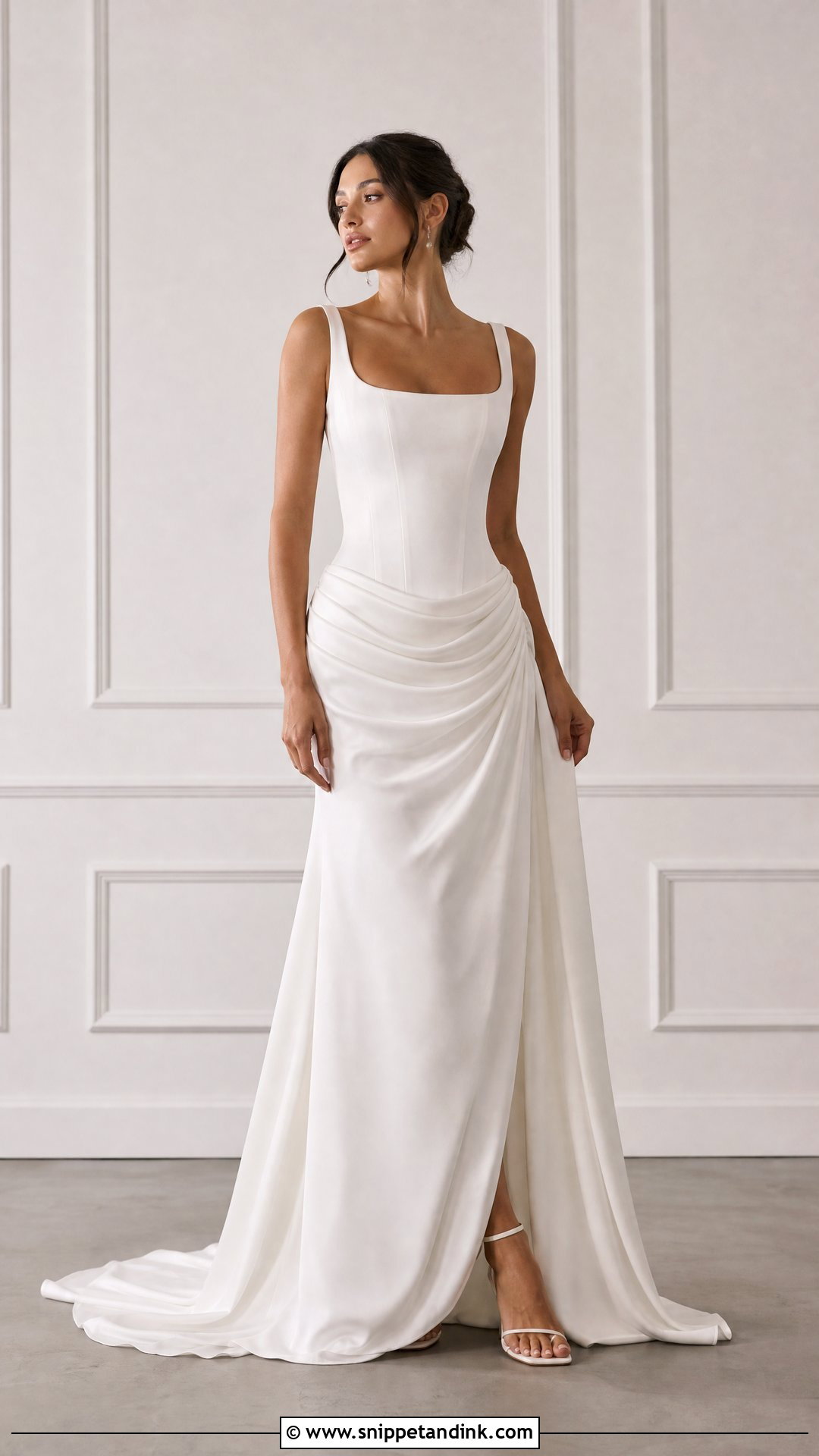
A drop waist lengthens the torso and puts the shaping around the hips rather than the natural waist. The draping usually wraps across the hip line before the skirt opens out, and it photographs well from the side and while walking. It flatters a straighter figure or a long torso; on a shorter torso it can make the legs look shorter, which is worth seeing in a three-way mirror. Satin and mikado look polished, tulle softer. Keep the neckline clean so the waist stays the focus.
17. Draped Basque Waist Wedding Dress
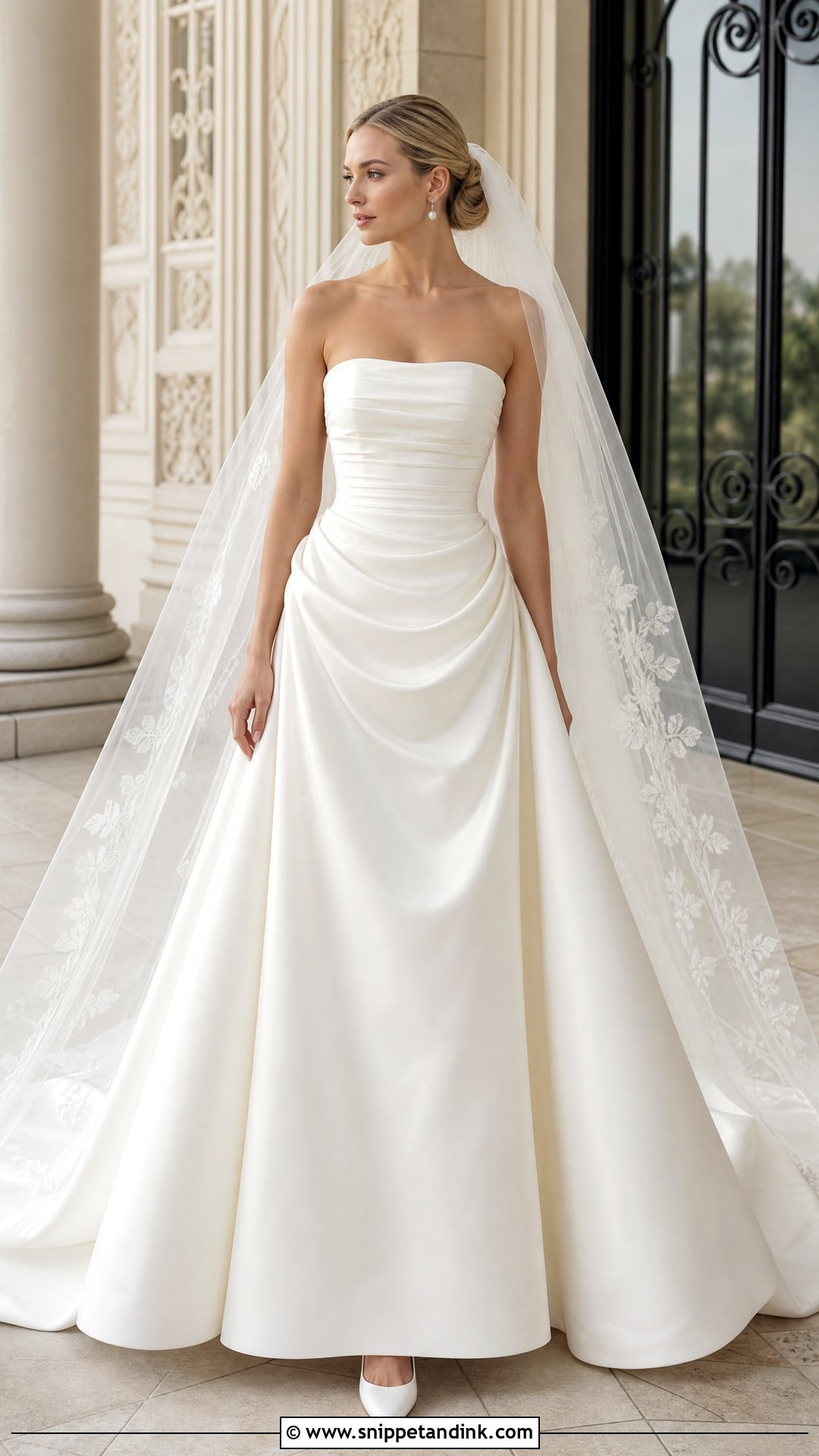
The basque waist dips into a shallow V at the front, which lengthens the torso and makes a full skirt look fuller. Draped fabric around that V softens what can otherwise be a sharp line. It looks most balanced with a full skirt and a strapless or off-shoulder bodice. Satin or mikado gives structure; tulle lightens it. A basque needs precise fitting, since if the point sits even slightly off-centre it shows in every front-on photo. Classic pumps, a cathedral veil and understated jewelry suit it.
18. Draped Halter Wedding Dress
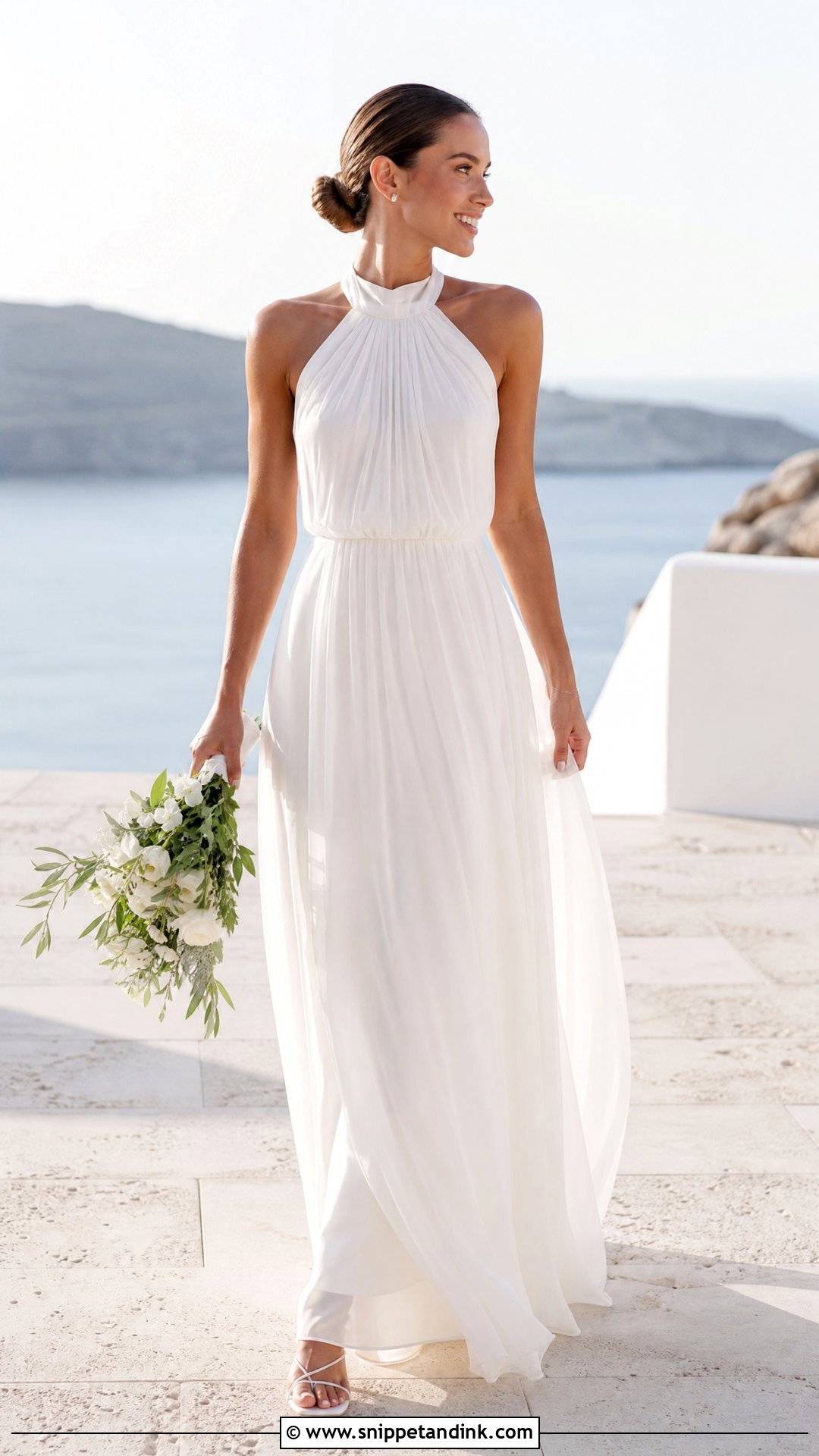
Halter drape gathers at the neck and falls down across the bodice, giving a long vertical line and support without straps on the shoulders. It reads both modern and Grecian. Chiffon, silk and satin all work. Because everything hangs from the neck, a heavy fabric can pull and leave you with a sore neck by evening, so I check the weight and ask for a back strap or hook inside if it drags. A low bun or swept-back hair shows the neckline off. Small earrings and simple heels suit summer and destination ceremonies.
19. Draped Long Sleeve Wedding Dress
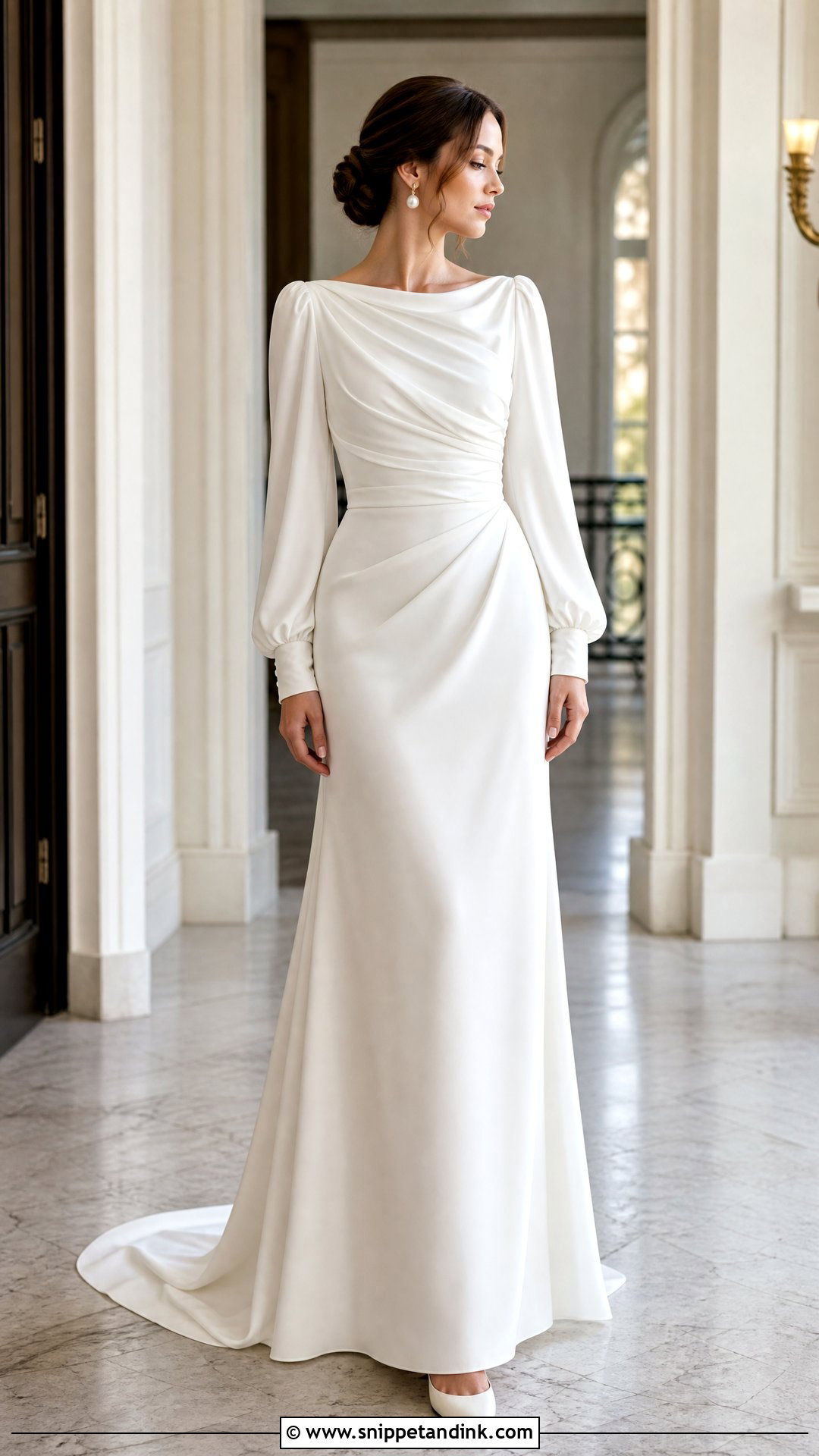
Draped sleeves give coverage without the tight, plain look of a fitted sleeve. A draped long sleeve wedding dress may use sheer chiffon, soft tulle or smooth crepe, and the drape on the bodice can run straight into a loose sleeve. Lift your arms and reach forward at the fitting; sleeves set too tightly at the armhole stop you hugging or holding a bouquet. Keep the skirt simple if the sleeves have volume. It suits autumn, winter and cool spring weddings, with a low chignon and pearl earrings.
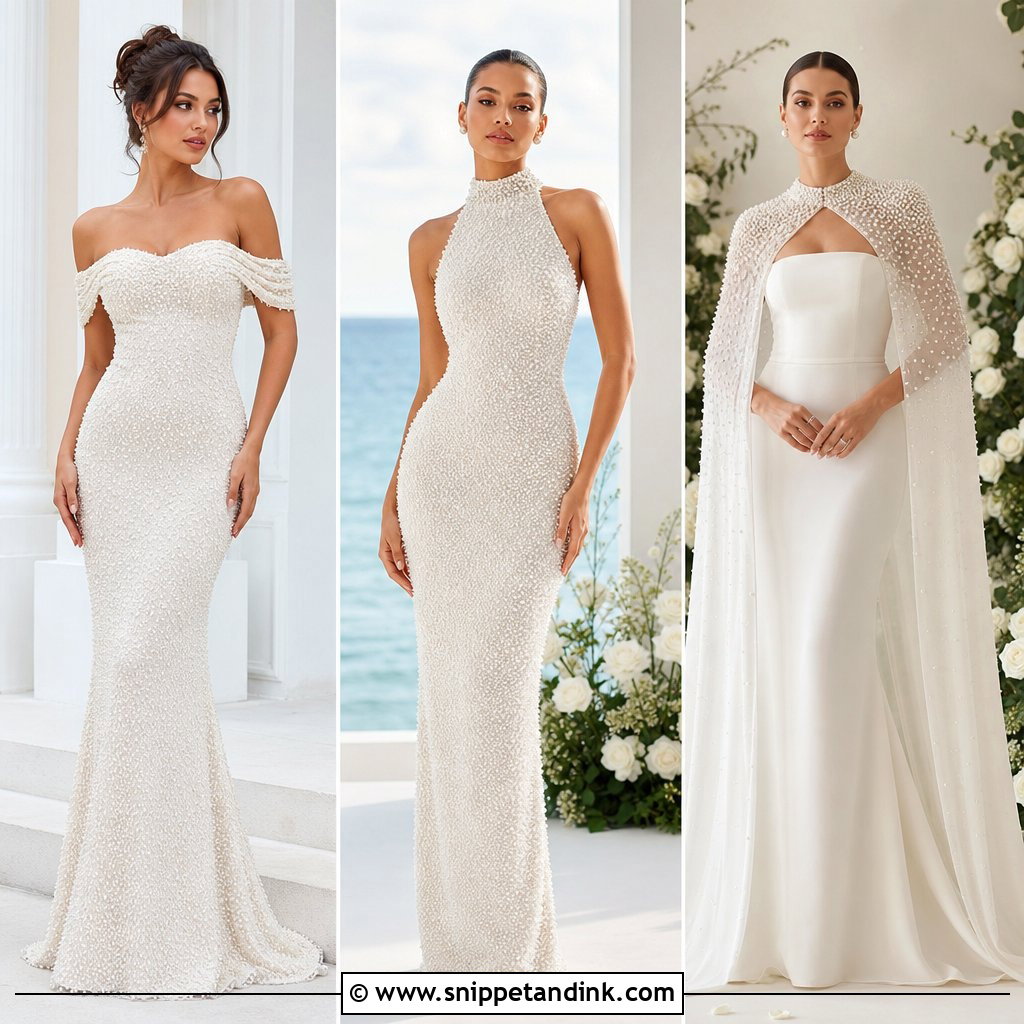
20. Draped Short Sleeve Wedding Dress
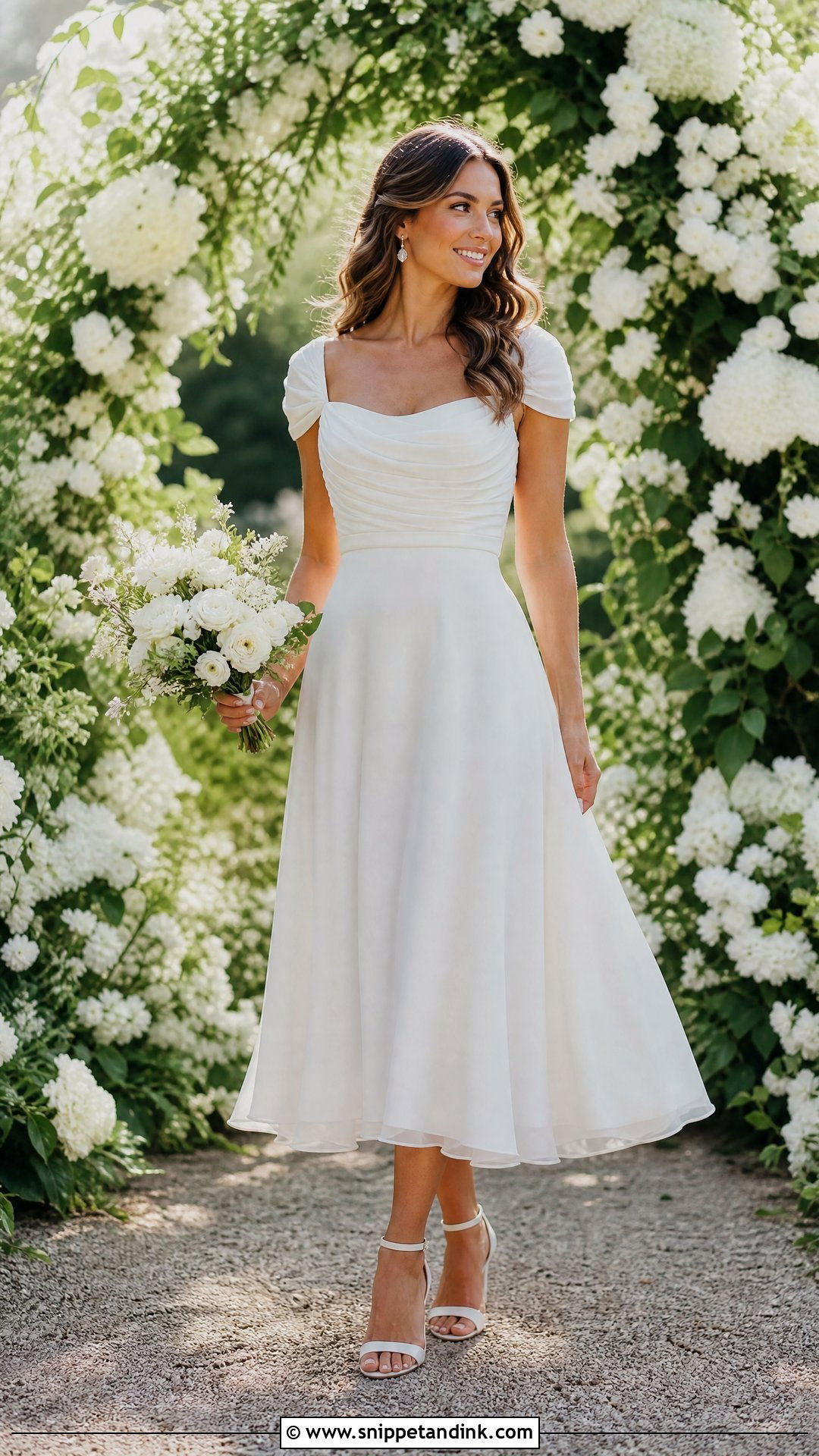
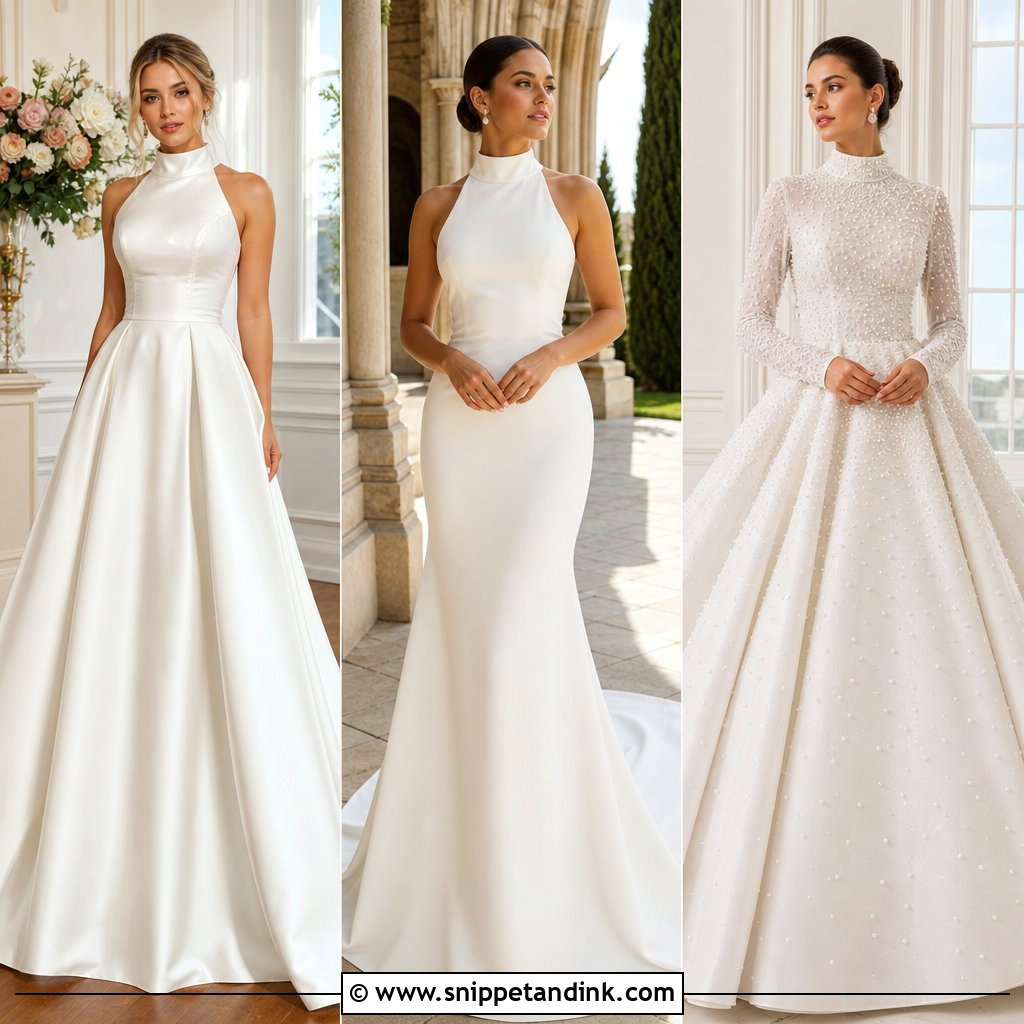
Short draped sleeves sit between strapless and full coverage. The sleeve may be folded, gathered or simply a continuation of fabric wrapping from the neckline. It’s light enough for daytime and warm weather, and it covers the upper arm, which some brides are glad of. It works on A-line, sheath and tea-length gowns. Chiffon and tulle feel airy; crepe and satin more structured. Simple earrings, soft waves and comfortable heels suit a garden or courthouse wedding.
21. Draped Back Wedding Dress
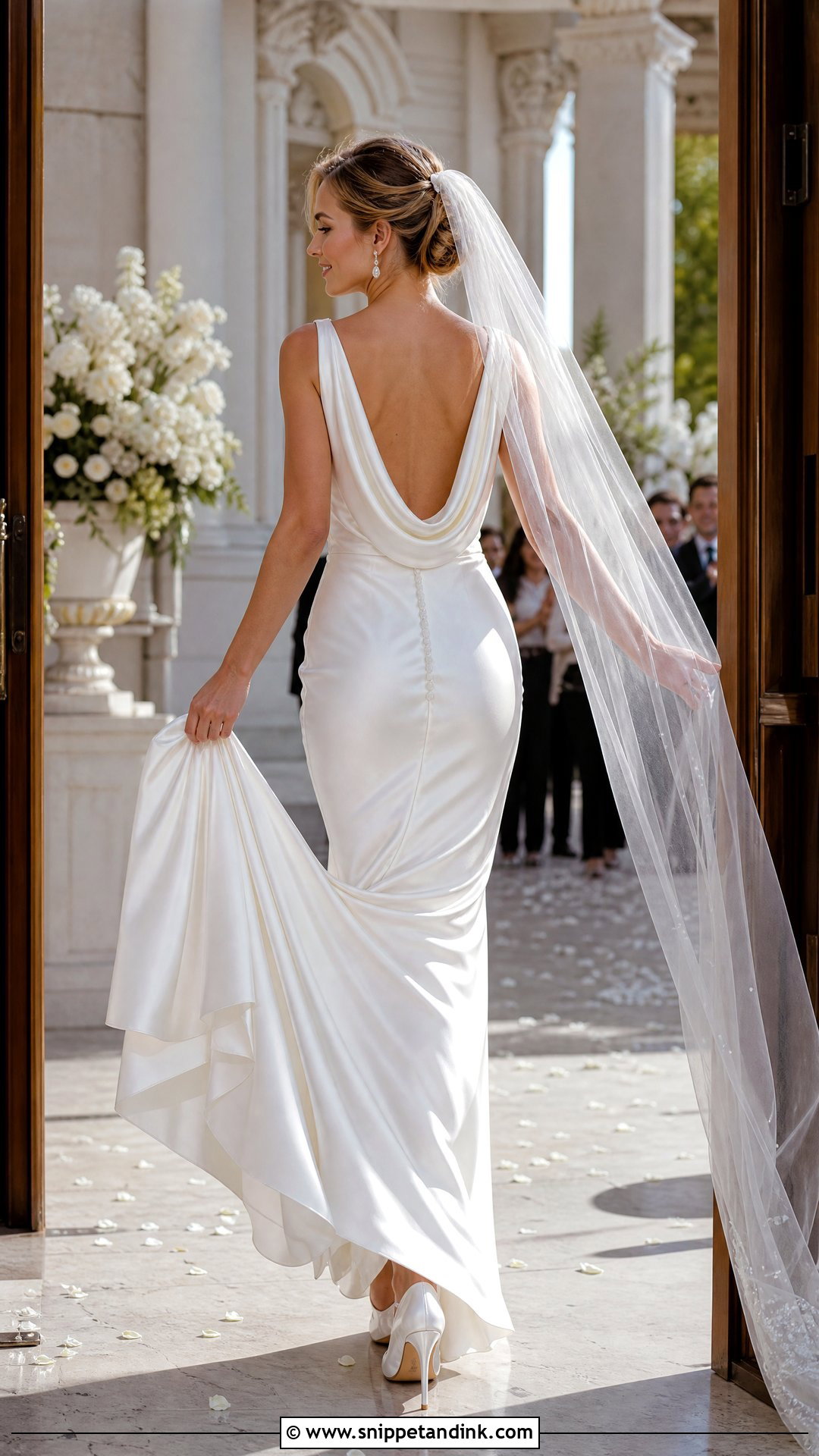
A draped back is for the moment you walk away from guests. The front stays clean while fabric falls across the back as a cowl, wrap or scarf shape, and it needs fluid silk satin, charmeuse or light crepe to hang properly. A low back means you need a plan for support: built-in cups, a low-back bra or adhesive options, tested at the fitting rather than on the morning. Wear a simple veil for the ceremony and take it off later to show the draping. Keep hair up or swept to one side so it doesn’t cover the folds.
22. Draped High Neck Wedding Dress
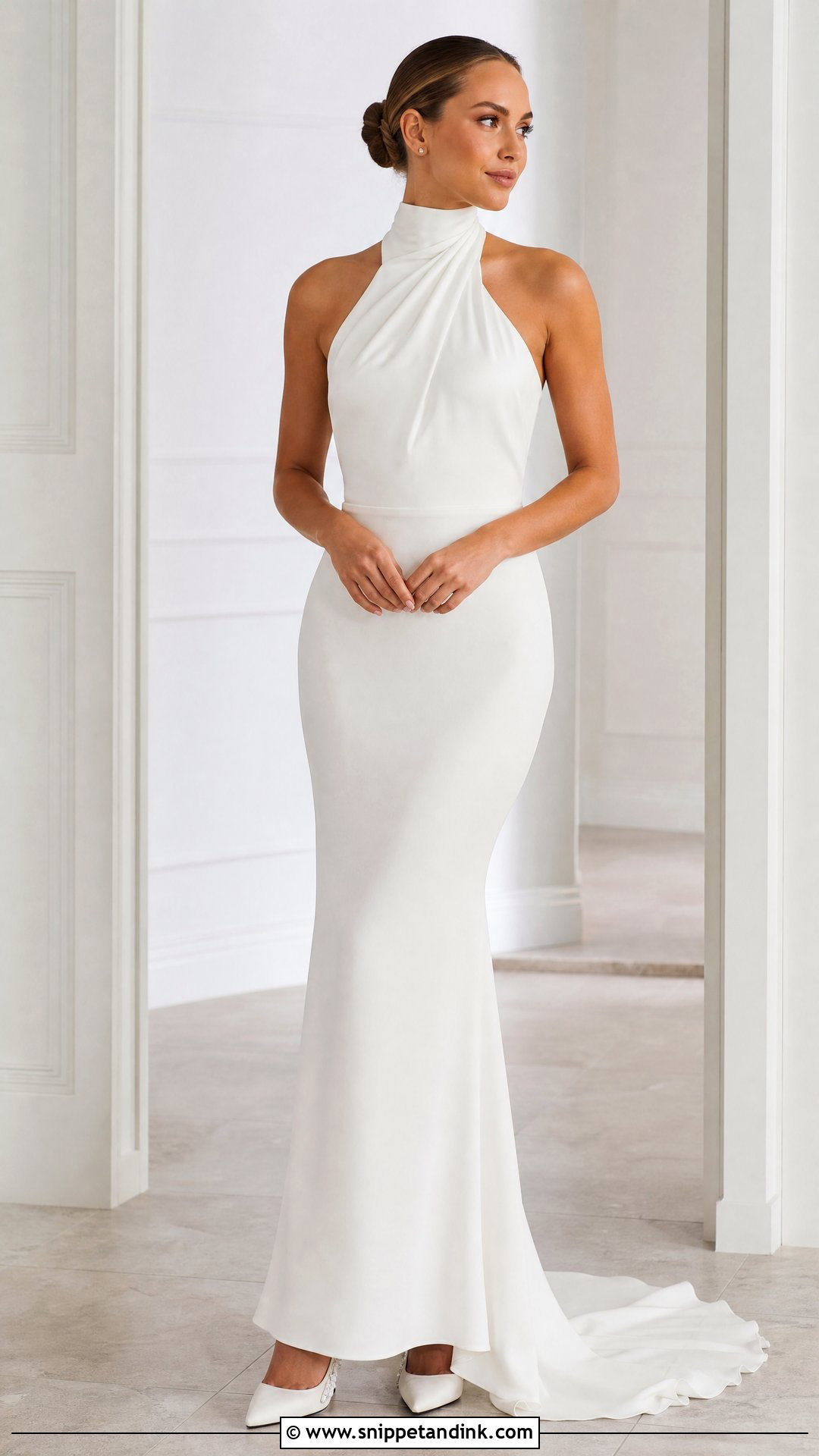
A high neck can look severe, and the drape is what softens it. Folds at the neck, shoulder or waist add movement without sparkle. Silk, crepe, chiffon and satin all work, especially with a slim skirt or soft A-line. Because the neckline already frames your face, jewelry can stay minimal: small earrings and a clean bun. Make sure the collar isn’t tight when you turn your head and swallow; a quarter-inch too snug at the throat is uncomfortable within an hour. It suits formal weddings and brides who want modest coverage.
23. Draped V Neck Wedding Dress
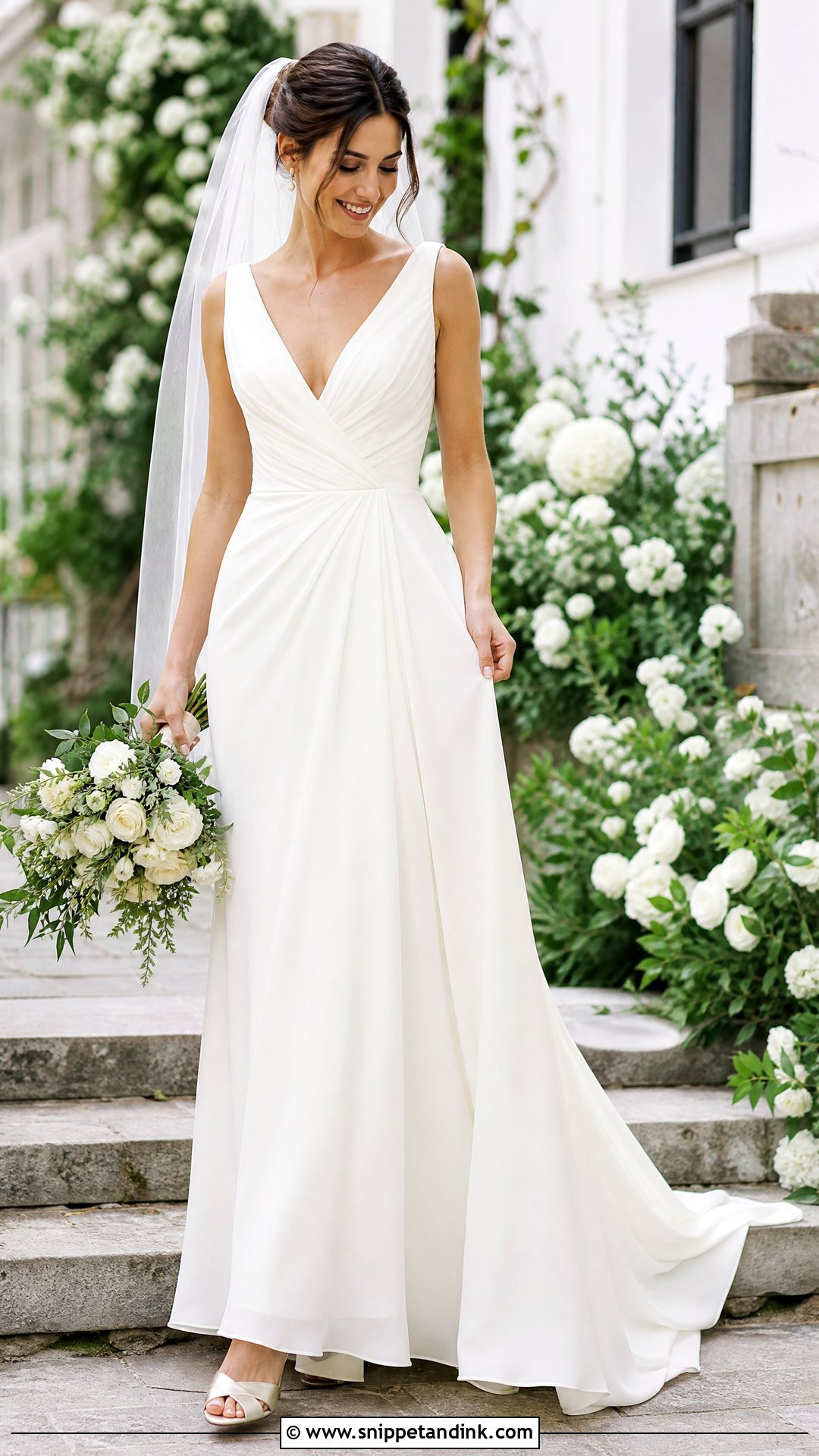
The V lengthens the upper body, and the gathered fabric around it keeps the line from looking sharp. A shallow V is subtle; a plunge needs illusion mesh or careful tape to stay in place when you move. It pairs well with A-line, sheath and Grecian silhouettes. Chiffon feels relaxed, satin or crepe more formal. Skip the pendant, wear delicate earrings, and choose a veil that doesn’t sit heavily over the bodice folds.
24. Draped Cape Wedding Dress
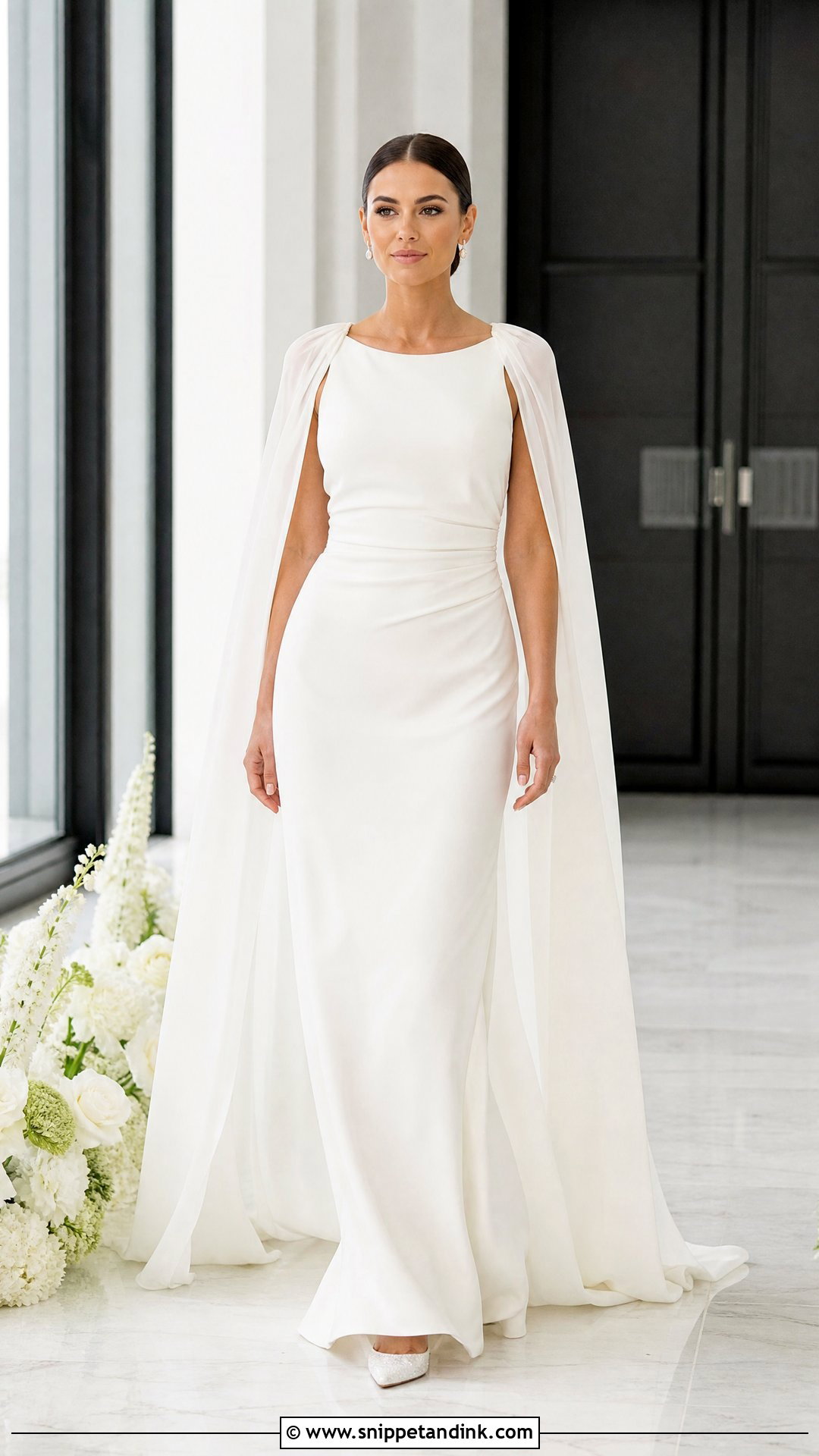
A draped cape wedding dress gives you movement and drama without a traditional veil. The cape might fall from the shoulders, attach at the neckline or flow from the back. It makes most sense on a simple sheath, column or fitted gown, where the cape becomes the statement. Chiffon or tulle looks airy; crepe looks sleek. Walk in it outdoors if you can, because a long chiffon cape catches wind like a sail. Keep jewelry minimal and let the cape frame the whole outfit.

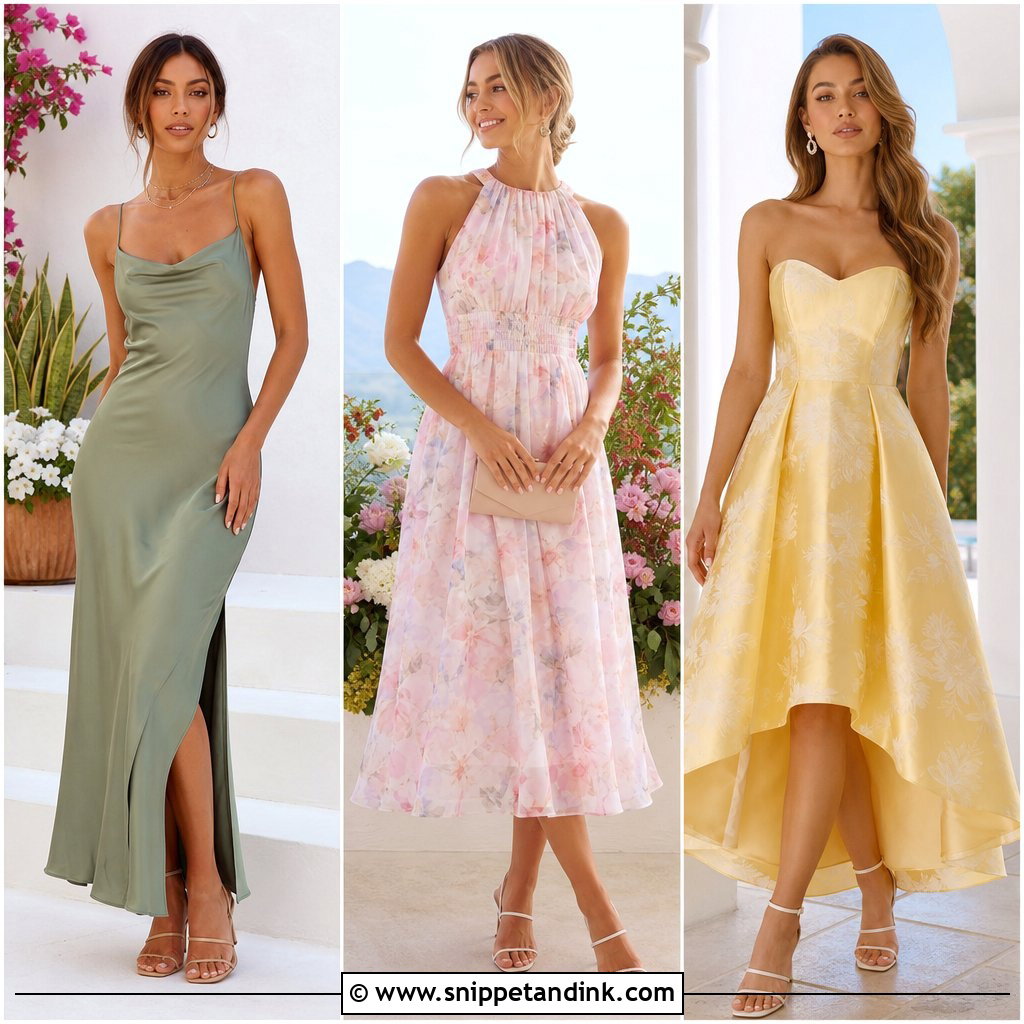
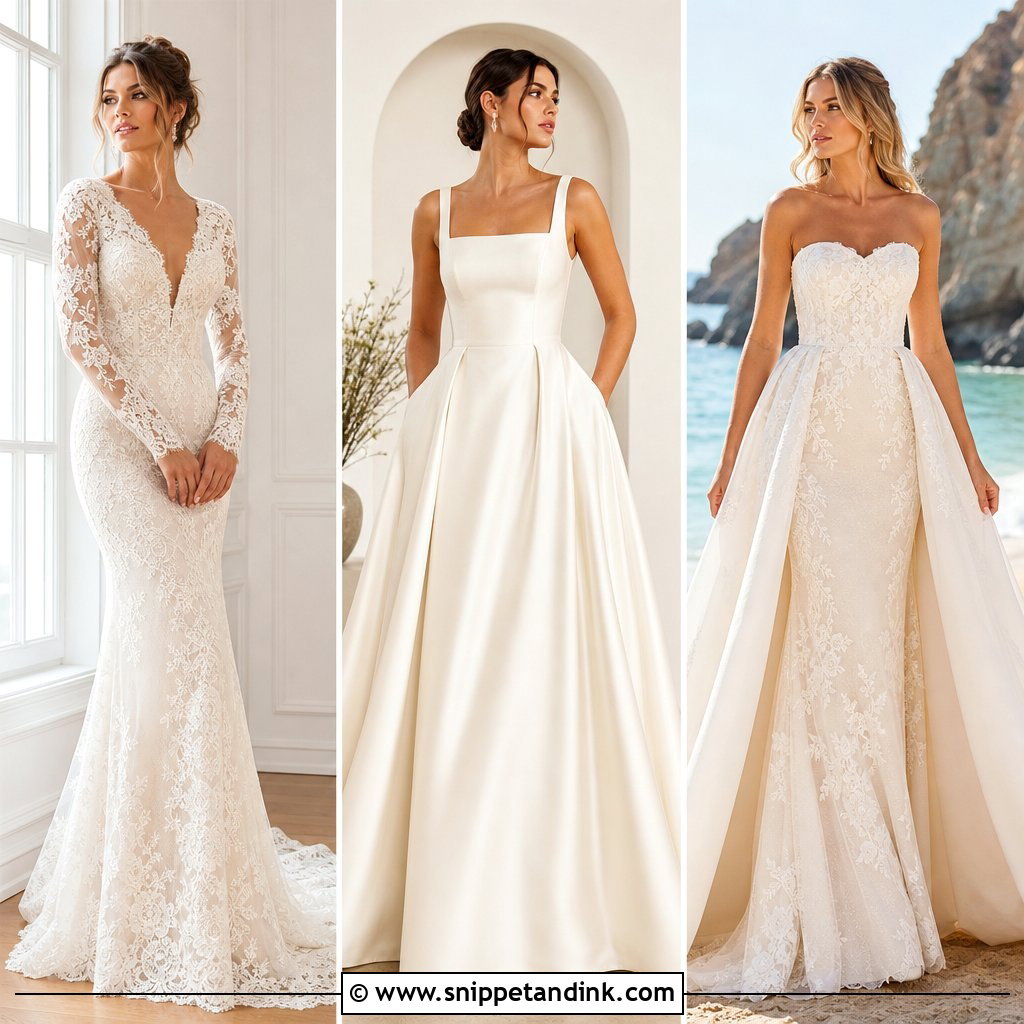
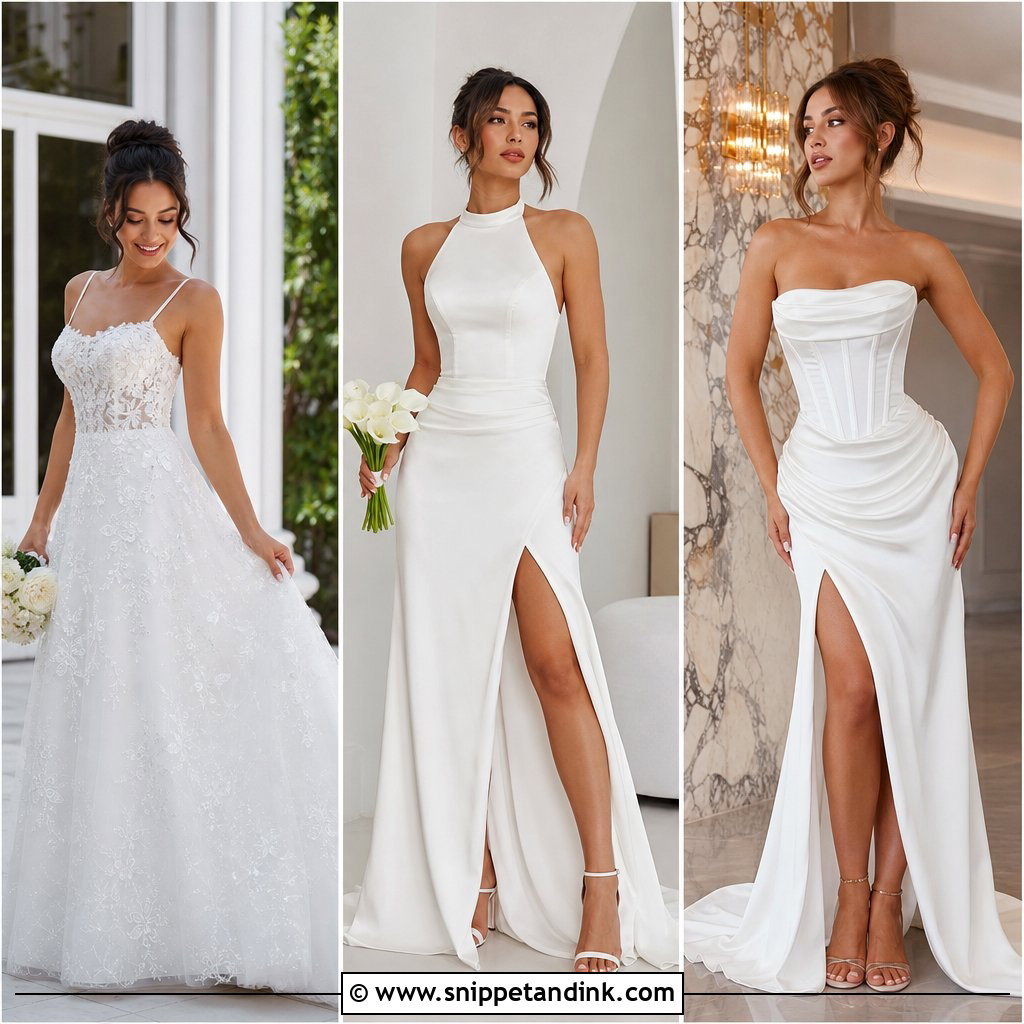

25. Draped Beach Wedding Dress
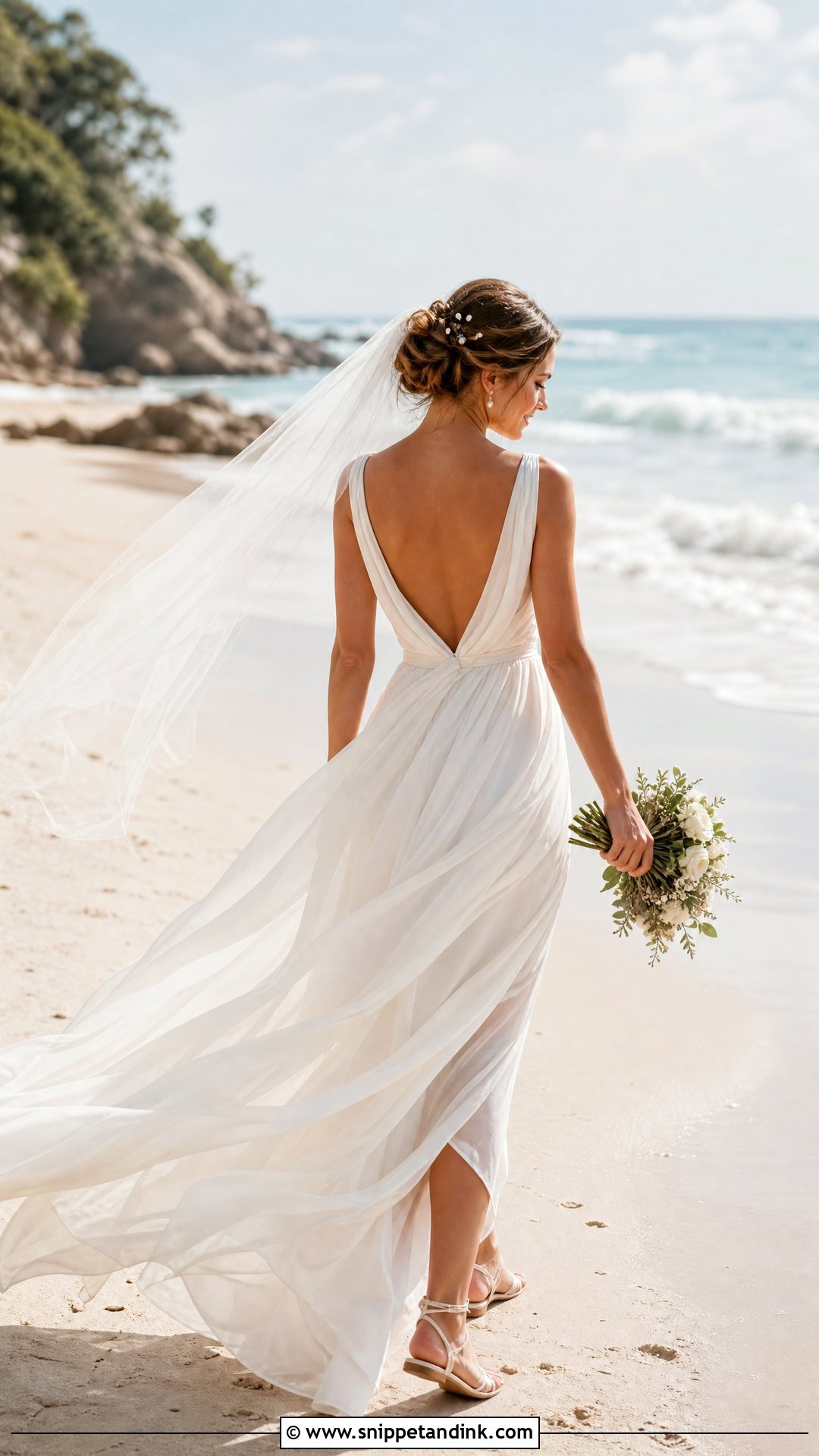
For the beach, the gown has to be light and comfortable on uneven ground. Soft chiffon, silk or lightweight crepe catches a breeze without feeling heavy; a cowl neck, wrapped bodice, open back or gentle waist draping all suit it. Skip stiff skirts and long trains if you’ll walk on sand, since they drag and fill with grit. Salt water and sand stain silk quickly, so plan photos at the water’s edge for the end. Flat sandals, pearl hair pins and a simple veil or hair scarf are enough for a destination or coastal ceremony.
Draped Gowns at the Alterations Table
Alterations on a draped bodice are slower than on a plain one. The folds are often hand-tacked into place, and taking in a side seam can pull every gather out of line, so the seamstress may need to release the drape, alter the base and re-set it by hand. Expect two or three fittings and ask at the first one whether the drape itself can be adjusted. Some designs can’t be taken in more than a size without losing the pattern of the folds.
Order with that in mind. Many salons quote several months for a made-to-order gown, and alterations usually start roughly two to three months before the wedding. Bring the actual shoes and underwear to every fitting, because a change of a single inch in heel height moves where the hem and the hip drape fall.
Steaming on the morning
Never press a draped gown flat with an iron; you’ll set creases into the folds that were never meant to be there. Hang it the night before, then steam lightly from the inside, keeping the steamer moving and a few inches from the fabric. Silk can water-spot, so test a hidden seam first. Shape each fold back with your fingers while it’s still warm, and the drape will settle where the designer intended.
Where the Folds Sit Matters More Than the Fabric
Draping can read soft, sleek or dramatic depending on the fabric and the silhouette underneath it. It flatters through line and movement rather than decoration. From satin ball gowns to chiffon beach dresses and crepe sheaths, there’s a draped gown for almost any venue and season. When you try them on, watch where the folds land on your body, how the fabric behaves when you sit and hug, and whether the inner structure feels secure. Get those right and the dress will feel graceful and comfortable all day.
You'll Like These Ideas:







Leave a Reply