
Brides who come to me wanting something soft and graceful but not frothy usually end up looking at Grecian gowns. The style is built on draping rather than decoration: fabric gathered across the bodice, a raised waistline, and a skirt that falls in long lines. Done well, it gives a goddess-like effect without tipping into costume. The fabric sets the mood more than anything else. Chiffon floats and suits a beach, crepe reads modern and clean, silk satin turns the same shape into evening wear. One-shoulder bodices and empire waists are the classic markers, and capes, pleats and column cuts are where designers are taking it now. The twenty gowns below each come with the shoes, hair and veil I’d put with them.

Chiffon, Crepe or Silk: How Each Fabric Moves on the Body
A Grecian silhouette can look completely different depending on what it’s cut from, and the fabric decision is one I like brides to make early. Each one has a personality.
Chiffon
Sheer and very light, usually layered two or three deep. It floats in a breeze and is the most forgiving over the hips because the layers blur the outline. It also wrinkles less than you’d think. The downside: it snags on rough surfaces and beaded accessories.
Crepe
Matte and heavier, with a slight stretch. It drapes in fewer, deeper folds and looks modern. It also skims close to the body, so I suggest it to brides comfortable with a fitted line.
Silk satin and charmeuse
Liquid and reflective. Satin turns draping into evening wear, but its sheen highlights every fold and every crease from sitting. Charmeuse is even more fluid and less forgiving. I keep both for indoor evening weddings rather than a hot afternoon outside.
1. One-Shoulder Chiffon Grecian Wedding Dress
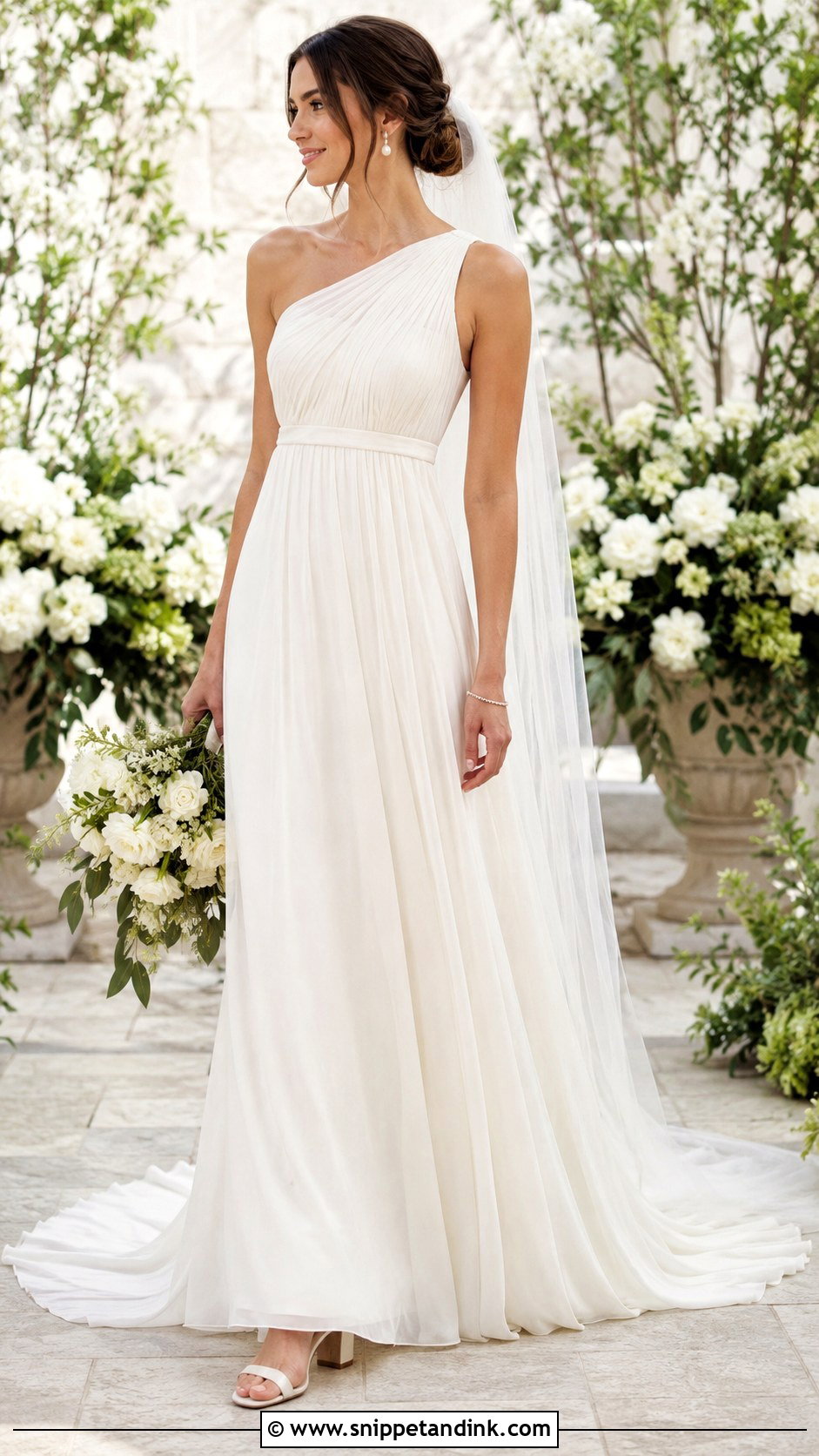
The asymmetrical neckline is what makes this the signature Grecian shape, and diagonal pleating across the bodice is what holds it in place. I’d look for an ivory chiffon with a defined empire seam and a narrow chapel train, which is enough length for the aisle without weighing down such a light fabric. Hair matters here: a low, loosely twisted bun leaves the bare shoulder clear. Pin a fingertip chiffon veil beneath the bun instead of on top, so it doesn’t drag the drape sideways. Small pearl drops and ivory block heels finish it, and block heels are kinder than stilettos if the ceremony is on a lawn.
2. Empire Waist Grecian Wedding Dress
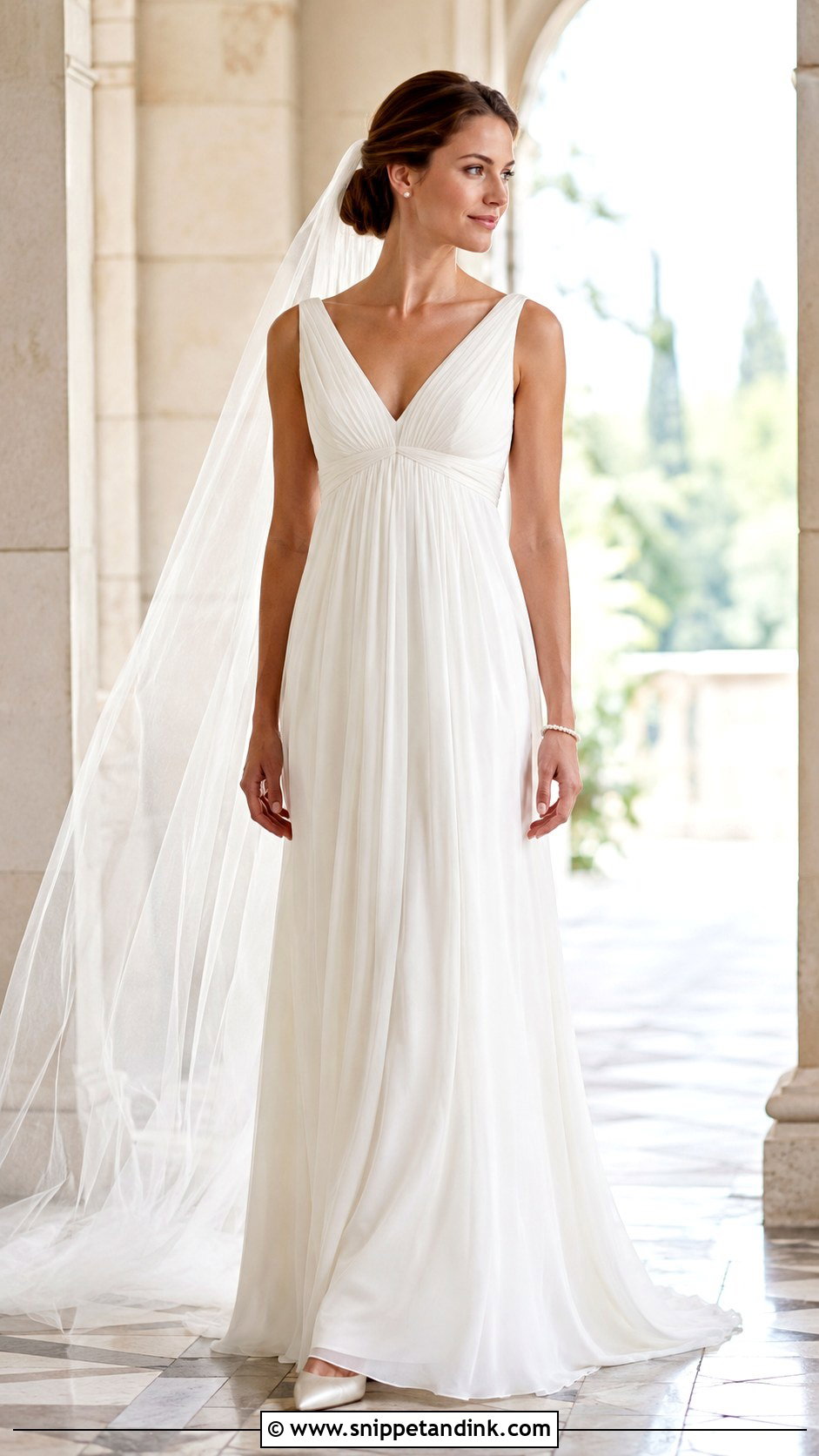
Most of my Grecian appointments start with an empire waist gown, because the seam just under the bust lets the skirt fall without interruption. The detail I check first is where that seam actually lands on her. Sitting even half an inch too low, it cuts across the bust instead of under it, and the line is lost. A delicate V and wider straps make it comfortable for a long day. Pointed ivory pumps and a smooth low chignon keep the outline clean, and a plain cathedral veil adds tradition without hiding any of the construction.
3. Draped Satin Grecian Wedding Dress
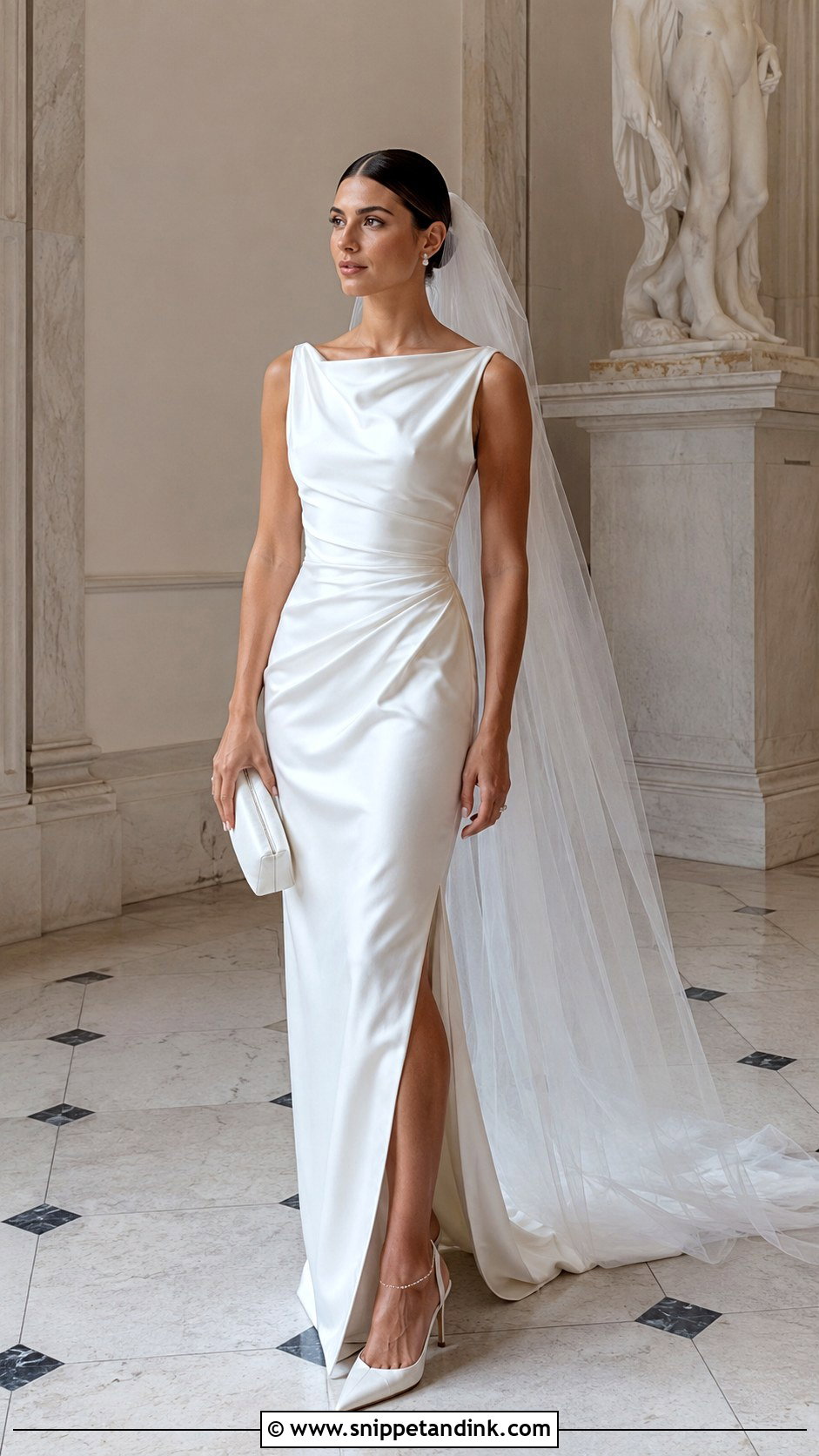
Satin changes how Grecian draping behaves. Chiffon folds collapse softly, while satin folds hold their shape and catch light along each ridge, which is why a pearl or soft ivory shows them best in photos. The trade-off is that satin shows every crease from sitting, so plan a quick steam before the reception. A modest side slit helps a column cut walk. I’d keep the hair sleek and center-parted with one decorative comb, add sculptural pearl earrings, and save this one for an evening wedding in a hotel or gallery.
4. Pleated Grecian Wedding Dress With V-Neck
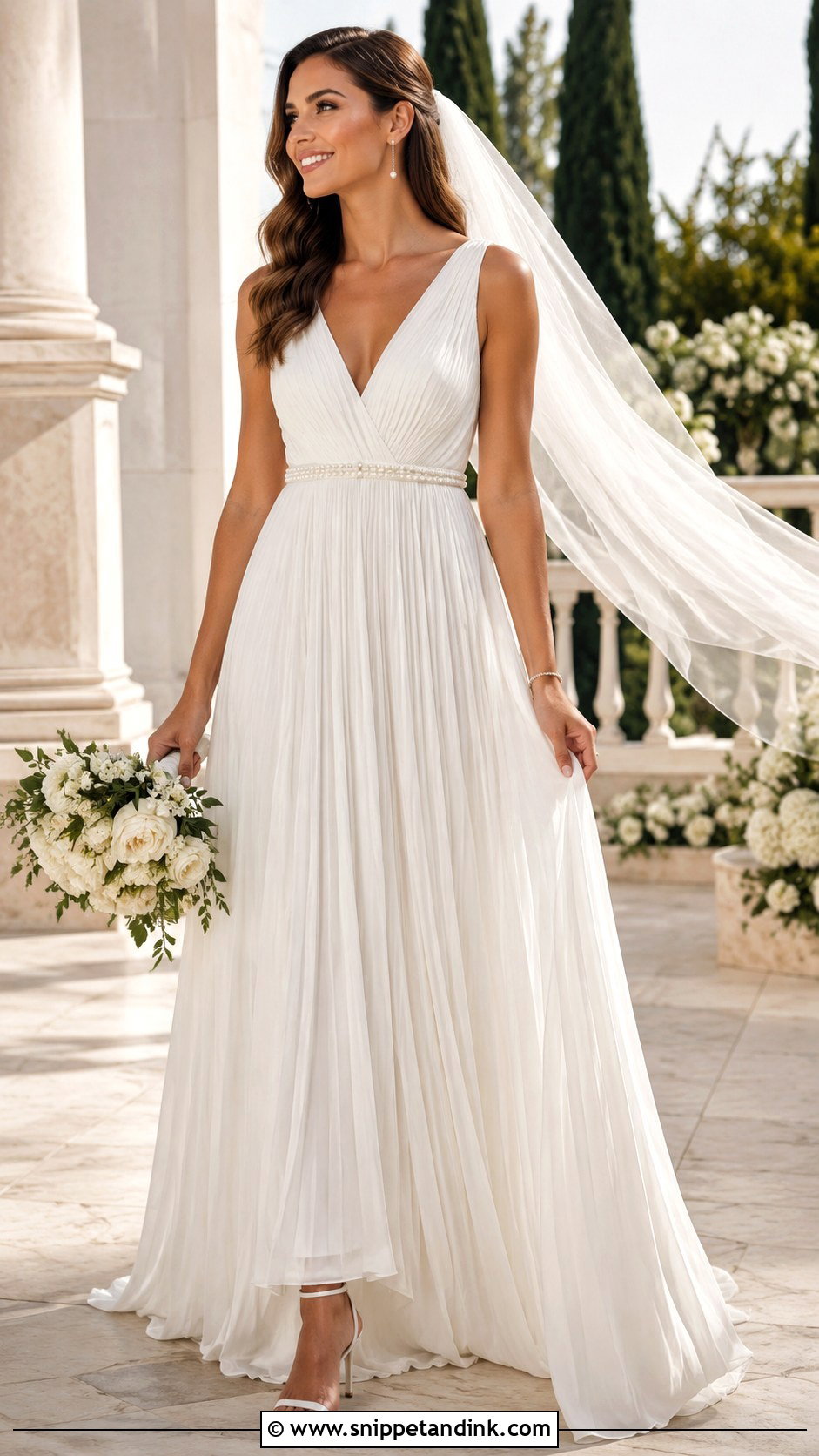
Pleating gives texture without lace or beading, and it’s lighter to wear than either. On a deep V-neck, pleated bodice, the pleats also hide the small gaps a plunge can open when you lean forward, though if you want real security, ask for wider straps or a sheer mesh inset. A pearl-trimmed empire band gives the waist a little definition. Side-swept waves follow the vertical pleat lines nicely, and a plain tulle chapel veil keeps the outfit light for a warm afternoon outdoors.
5. Grecian Wedding Dress With Cape
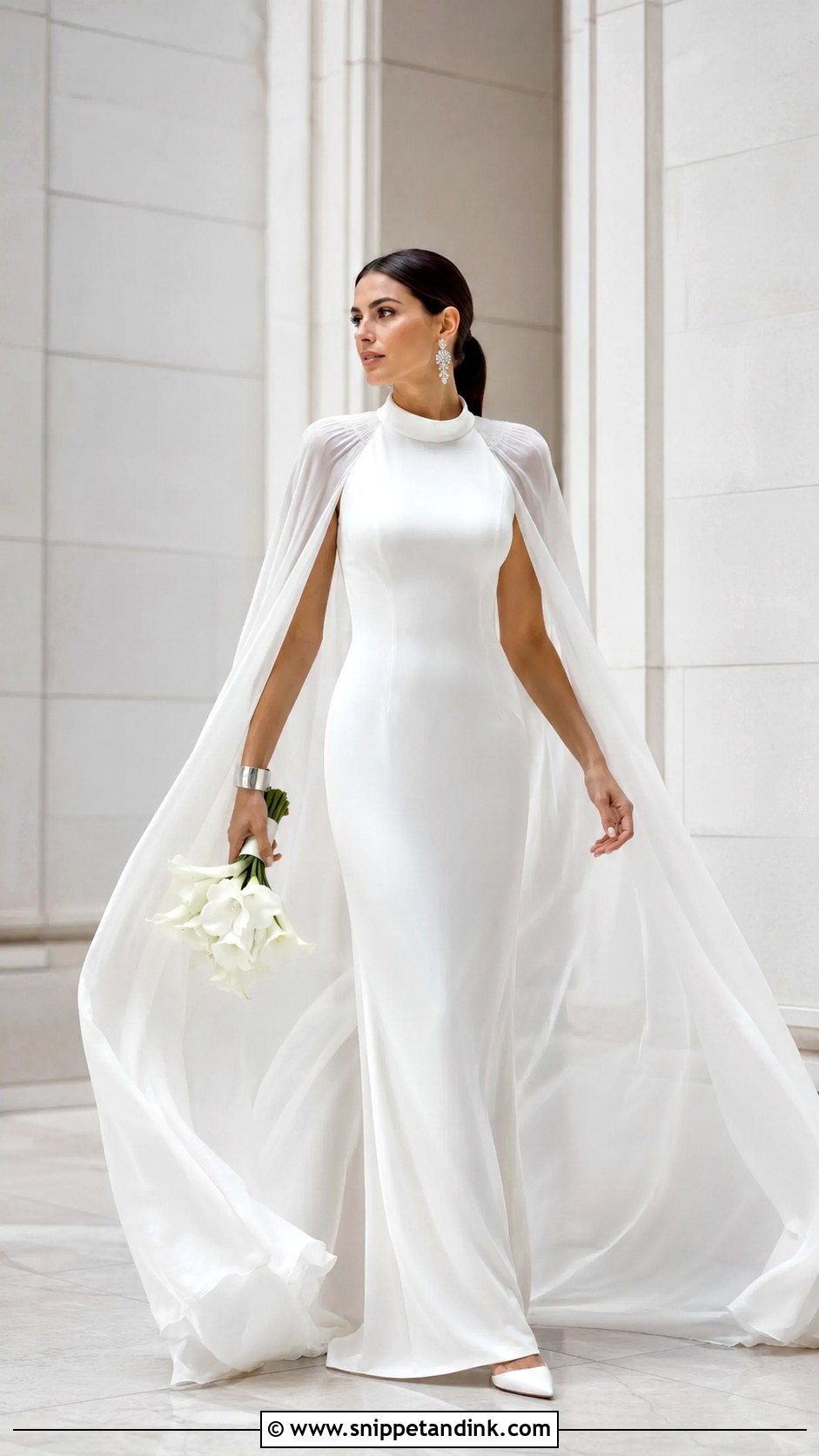
A cape can replace the veil entirely, and for brides who find veils fussy, that is often the reason they choose one. Start with a minimal crepe or chiffon column with a high neck, then attach a sheer cape at the shoulders so it falls behind like a train. The gown stays plain; the cape is the feature. Ask whether it is detachable. Dancing in a full-length cape is awkward, and taking it off after the ceremony gives you a second look for the reception. Hair should be smooth, a low ponytail or neat bun, so nothing tangles with the cape fabric at the shoulders.
6. Off-the-Shoulder Grecian Wedding Dress
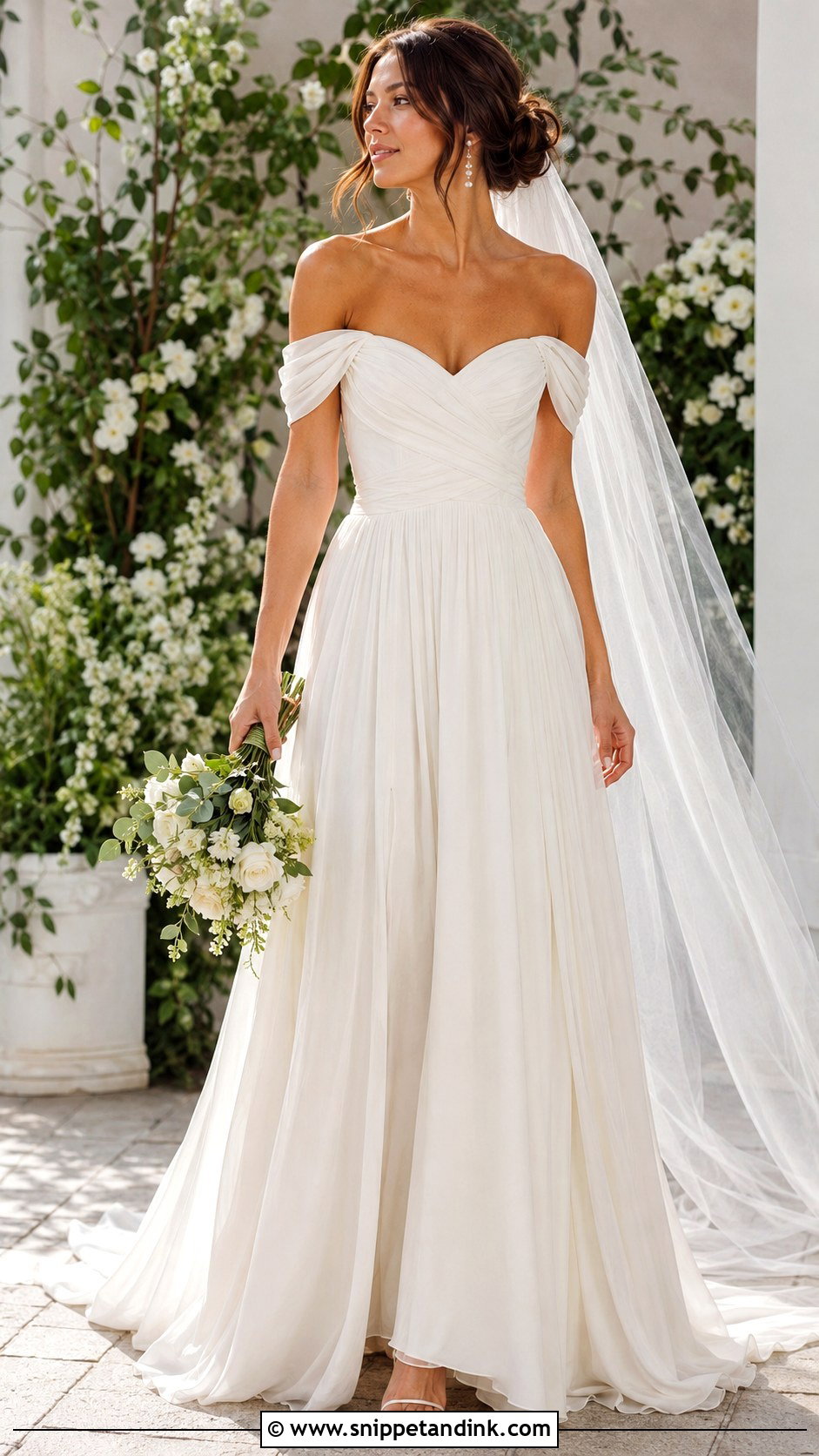
Off-the-shoulder draping looks wonderful on the collarbone and restricts the arms more than most brides expect. With the fabric sitting below the shoulder, you can’t lift your arms high without it riding up, so at fittings I ask brides to hug me, sit down and reach as though for a bouquet toss. A supportive inner bodice does most of the work of holding it in place. Gathered chiffon sleeves and a fluid A-line skirt suit a garden or estate. A loose bun with a few face-framing pieces and a sheer veil anchored beneath it keeps the neckline open.
7. Halter Neck Grecian Wedding Dress
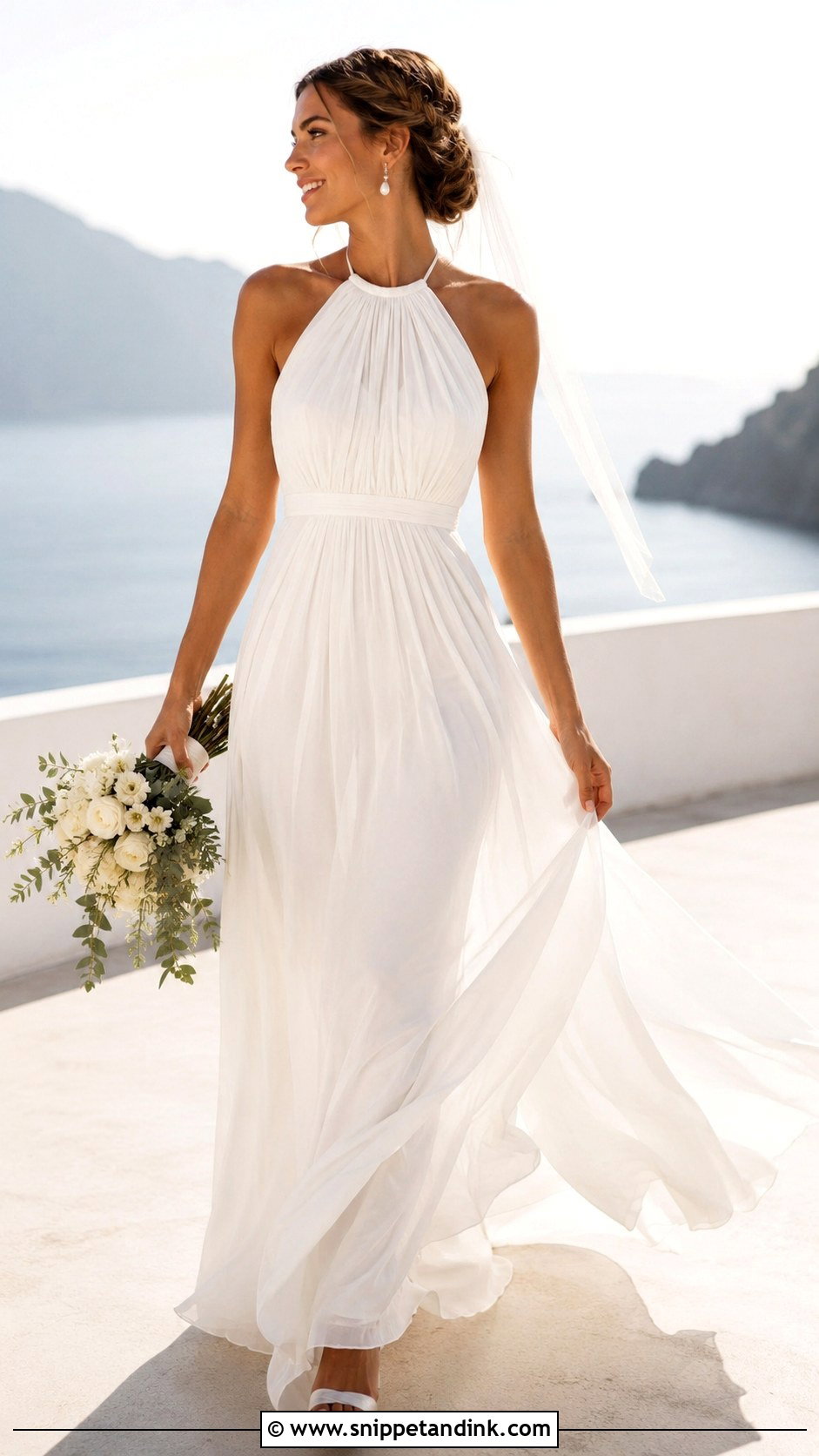
Halters give the Grecian aesthetic a cleaner, more confident edge, and they suit brides with strong shoulders. Because the gathered high neck is already the focal point, I always skip the necklace and go with small pearl studs. One honest drawback: all the weight of the bodice hangs from the back of the neck, which can ache by evening on a heavy fabric, so silk chiffon is the right choice here. A braided low bun shows off the open back. Block-heel sandals keep her steady on a rooftop or sand.
8. Long-Sleeve Grecian Wedding Dress
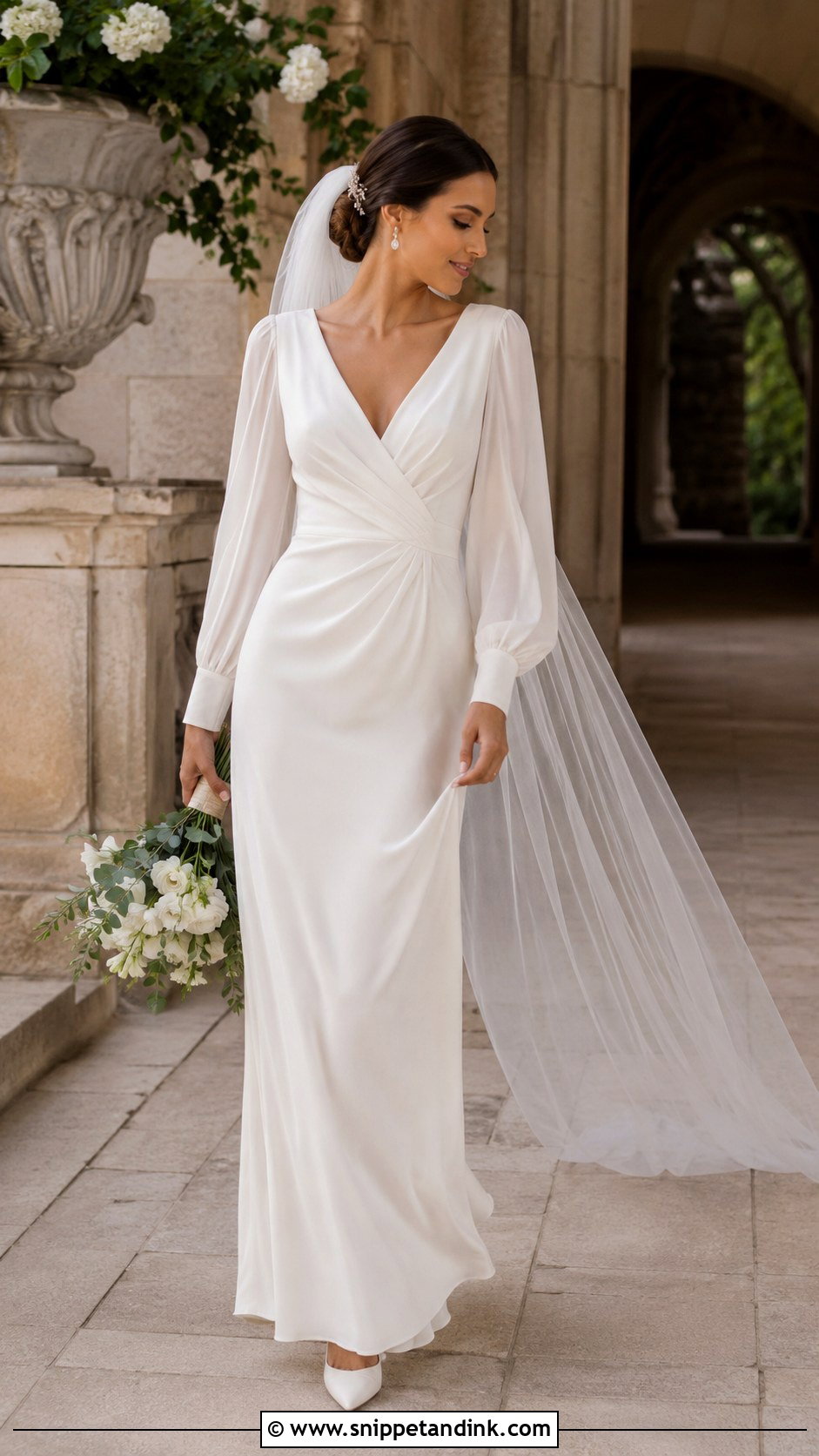
Long sleeves bring Grecian style into cooler months. A wrapped V-neck bodice with billowing chiffon sleeves gathered into fitted cuffs gives volume at the arm, so I keep everything else slim: a skirt that follows the hips, pointed ivory pumps, small crystal earrings, one hair comb. Check the cuff fit with your arms bent. A cuff that’s snug when straight can cut in once you’re holding a bouquet. A lightweight chapel veil sits behind without competing with the sleeves.
9. Grecian Wedding Dress With Gold Belt
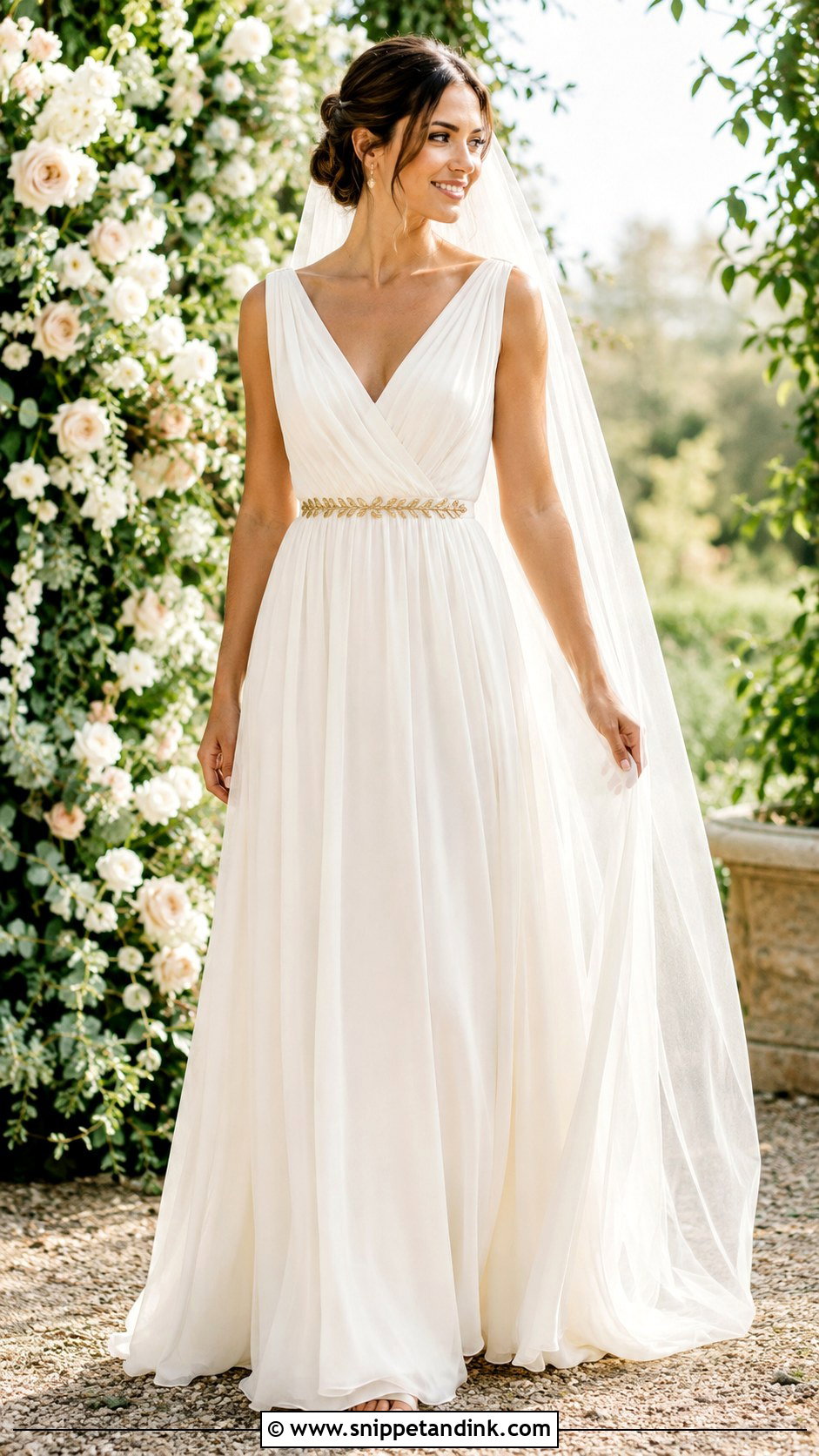
A thin gold belt is the most classical touch in this whole list, and it only works small. I steer brides toward a narrow metallic band with fine leaf or braided detail; anything wide or heavily jeweled starts looking like a theme party. Under an ivory chiffon crossover bodice with an empire waist, it marks the waistline neatly. Keep the gold to that one spot plus tiny earrings. Ask your seamstress to add thread loops at the side seams so the belt doesn’t slide down as the chiffon moves.
10. Minimalist Crepe Grecian Wedding Dress
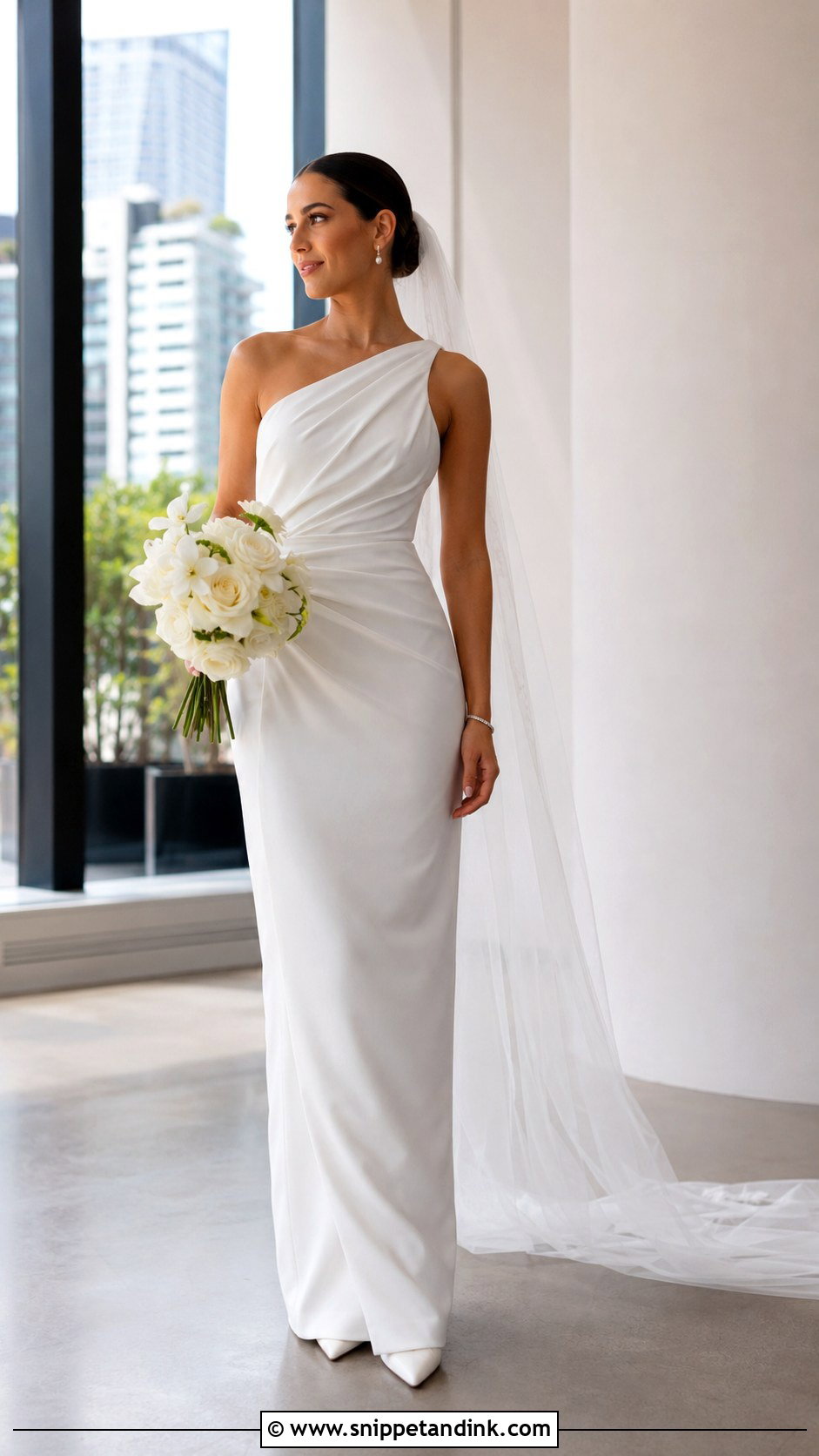
Crepe is honest fabric. Its matte surface doesn’t hide anything, which is why I tell brides that a crepe column is only as good as its tailoring. A one-shoulder or bateau neck, a column skirt and a touch of gathering at the waist is all it needs. Underwear lines show through crepe more than any other fabric on this list, so bring the exact undergarments to every fitting. Pointed pumps, pearl button earrings and a sleek bun with a long plain veil suit a city wedding.
11. Grecian Wedding Dress With High Slit
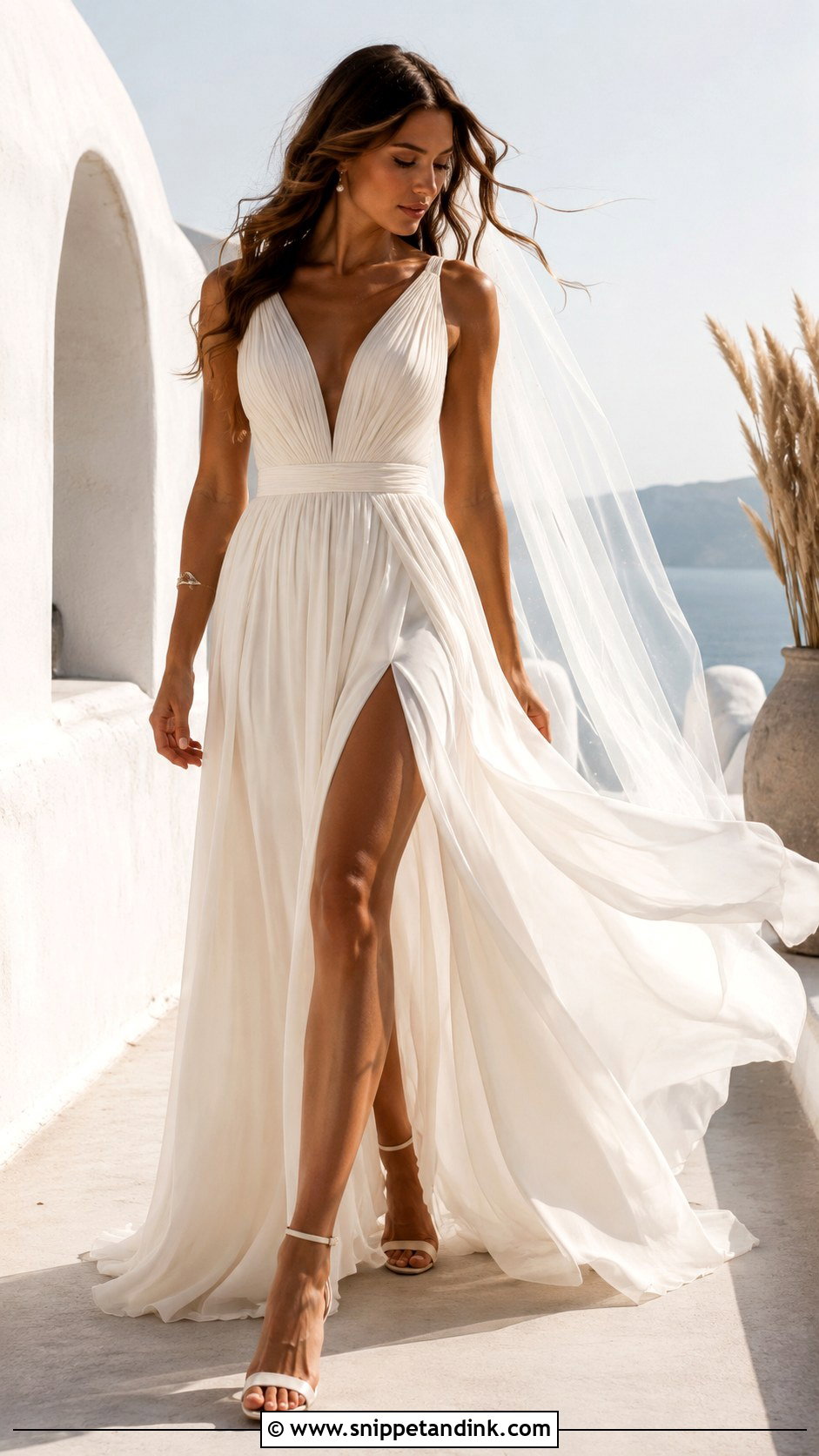
A slit should open when you walk and close when you stand. That’s the test I give every high-slit gown, and layered chiffon passes it better than a single layer because the panels overlap at rest. A secure draped bodice matters here, since you’ll be moving more freely. Strappy ivory or champagne sandals are a natural pair. Sit down in it at the fitting too; a slit placed too high can open well above the knee when seated, and that is easy to lower if caught early.
12. Strapless Grecian Wedding Dress
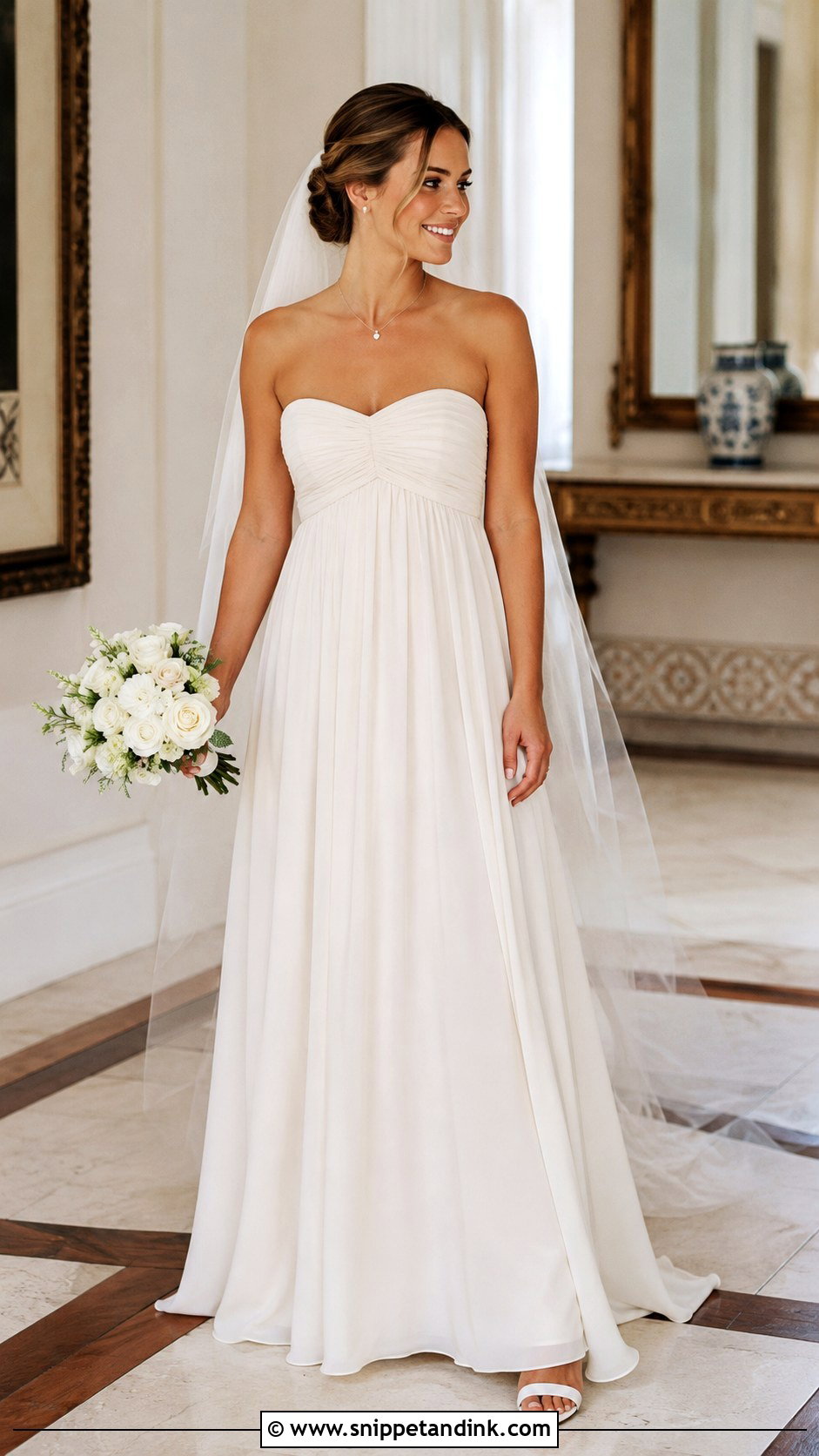
Strapless Grecian gowns depend entirely on the corset you can’t see. Gathered chiffon or satin over a boned bodice should stay put without you hitching it up all night, and if it doesn’t at the fitting, it won’t later either. I like a softly curved or asymmetric neckline here, which feels more natural than a straight-across cut. A delicate necklace has space to sit on a strapless neck. Polished waves or a textured bun, depending on the venue, and a chapel veil to add volume behind the bare shoulders.
13. Grecian Wedding Dress With Beaded Shoulders
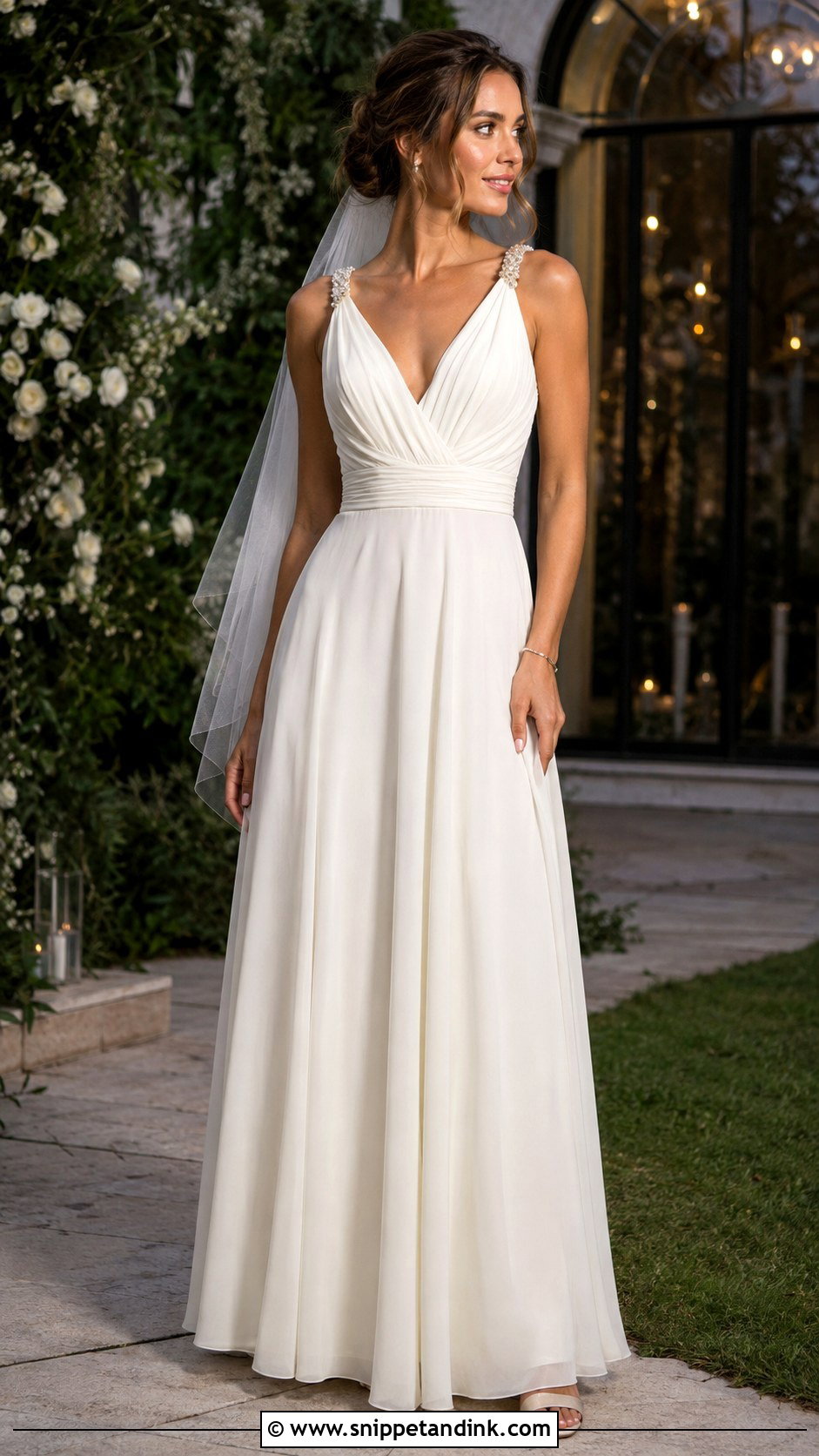
Beading on the straps adds light near the face, where it counts in photographs. Keep the embellishment on the shoulders only and let the chiffon or crepe skirt stay plain. Skip the necklace, which would crowd the detail. A practical note from fittings: beaded straps catch tulle. Attach the veil beneath the bun, well below the strap line, so it doesn’t snag every time you turn your head. Studs, a thin bracelet and ivory block heels round it out for day or evening.
14. Grecian Wedding Dress With Open Back
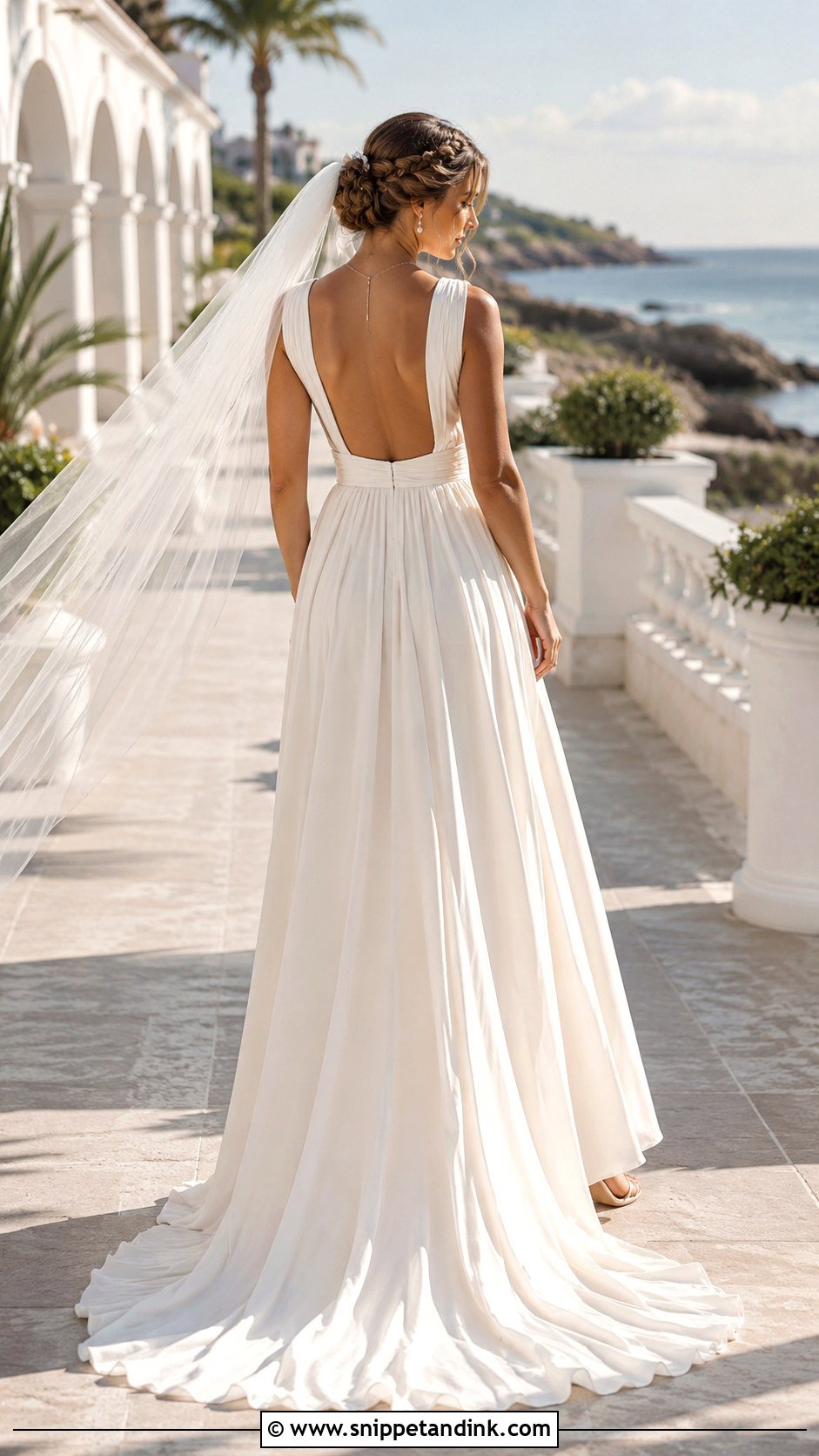
An open back puts all the drama behind you, which makes the front look quieter in the best way. Balance it with a high gathered neck or wide straps. The hidden detail is support: a backless gown can’t use a standard bra, so ask your seamstress about sewn-in cups and a low elastic band hidden at the waist seam. Wear the hair up, a sleek bun or braided updo, so the back stays visible. A removable veil lets the reception reveal what the ceremony covered.

15. Grecian Wedding Dress With Flutter Sleeves
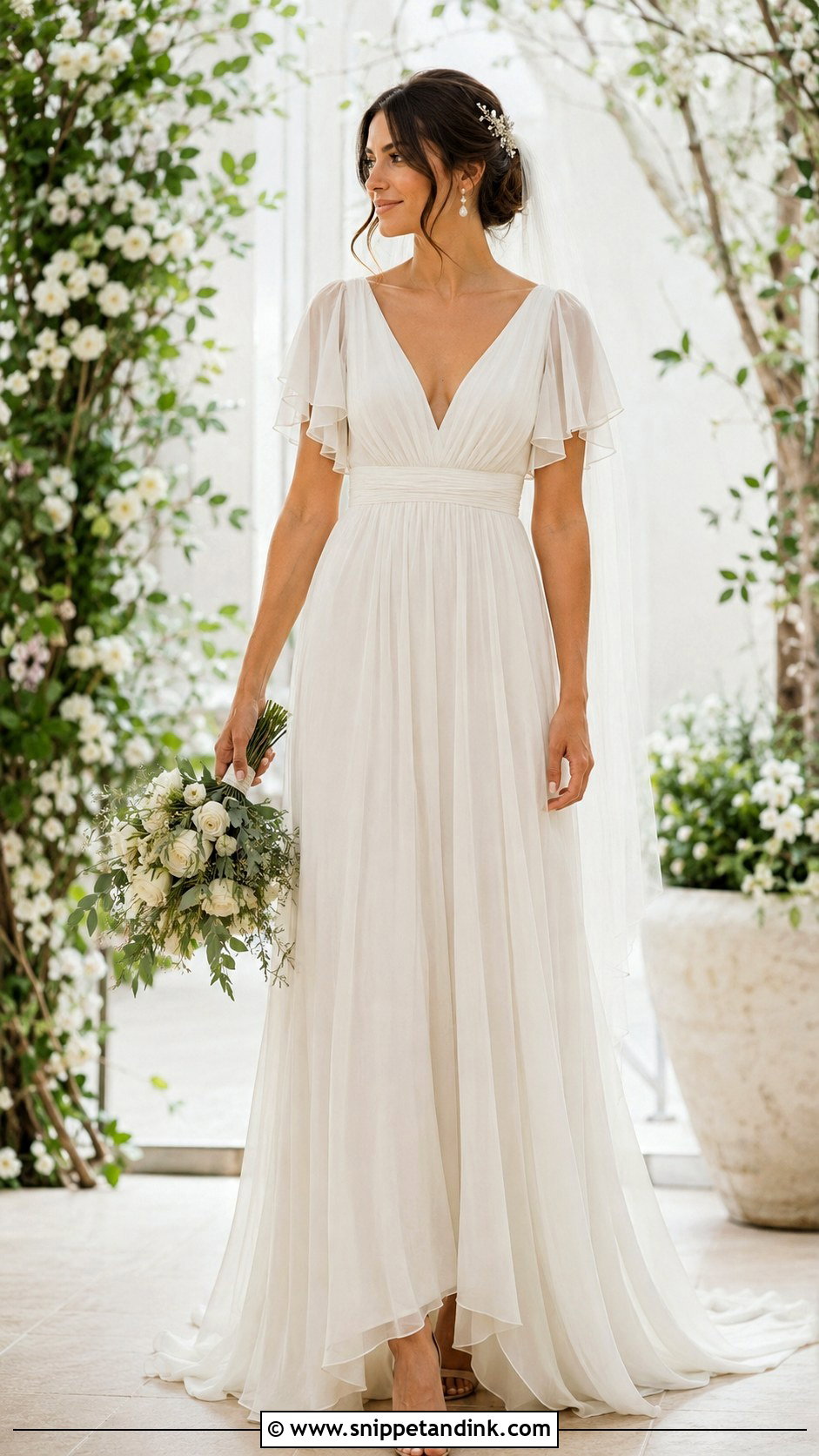
Flutter sleeves give coverage without the weight of a real sleeve. Layered chiffon that ends above the elbow moves with every step, and for brides who dislike bare upper arms it is my favorite compromise. Keep the skirt a simple A-line so the sleeves remain the detail. A loose updo or half-up style won’t hide them. Choose a single-layer veil; two layers of tulle over layers of chiffon sleeve turns the shoulder area into a cloud in photos. It suits spring gardens and coastal venues with a breeze.
16. Silk Column Grecian Wedding Dress
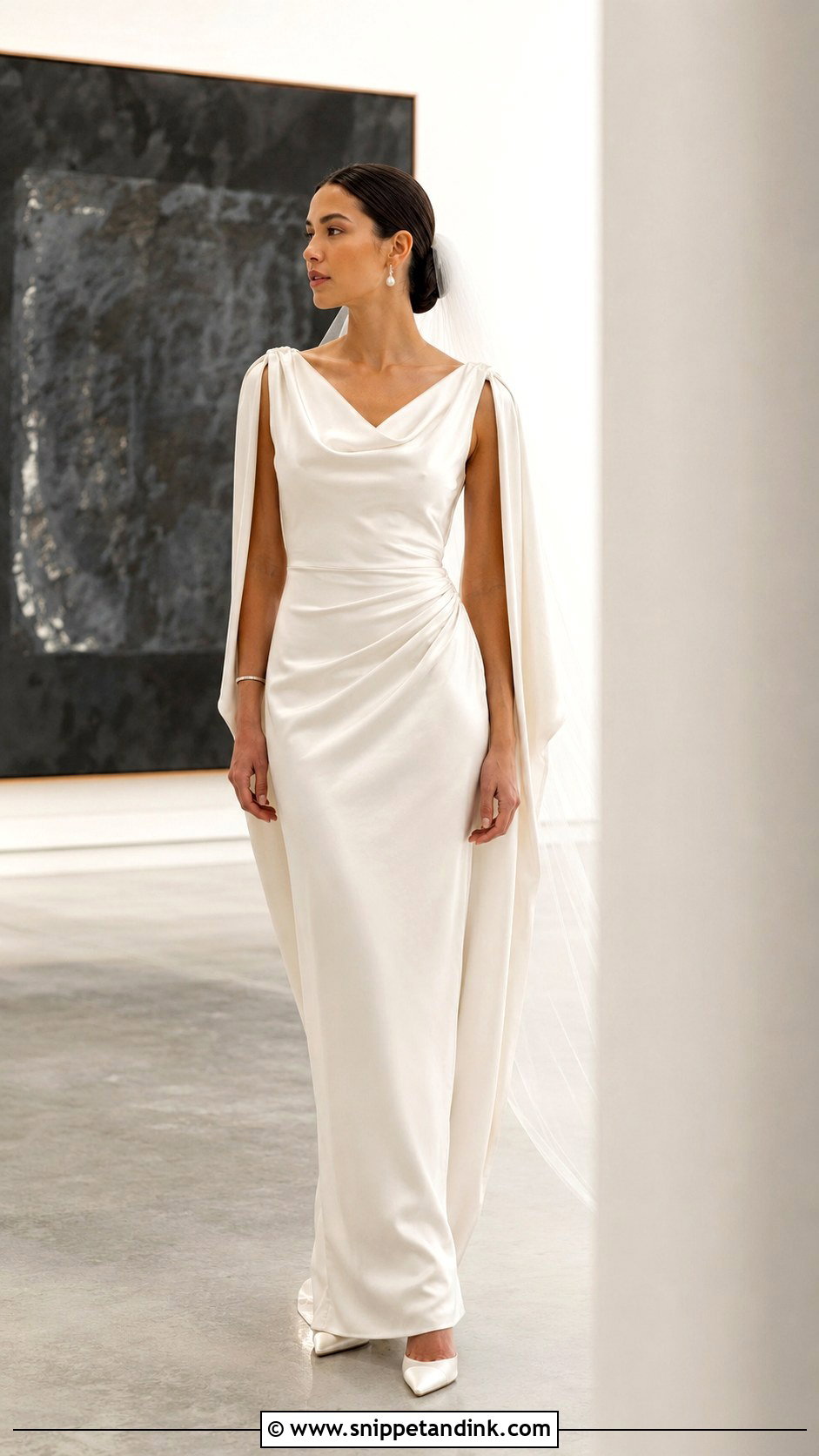
Silk in a column cut does very little and shows everything. A cowl neck, a gathered waist and a narrow skirt that follows the body are enough, and a detachable silk shoulder drape gives asymmetry for the ceremony that comes off for dancing. Because silk is so light, it shows undergarment lines and uneven seams clearly, so plan on smooth, invisible underwear and an experienced seamstress. Pointed satin pumps and pearl earrings keep it polished. I only add a cathedral veil for a formal ceremony; otherwise, a fingertip veil or a comb suits the slim shape better.
17. Lace and Chiffon Grecian Wedding Dress
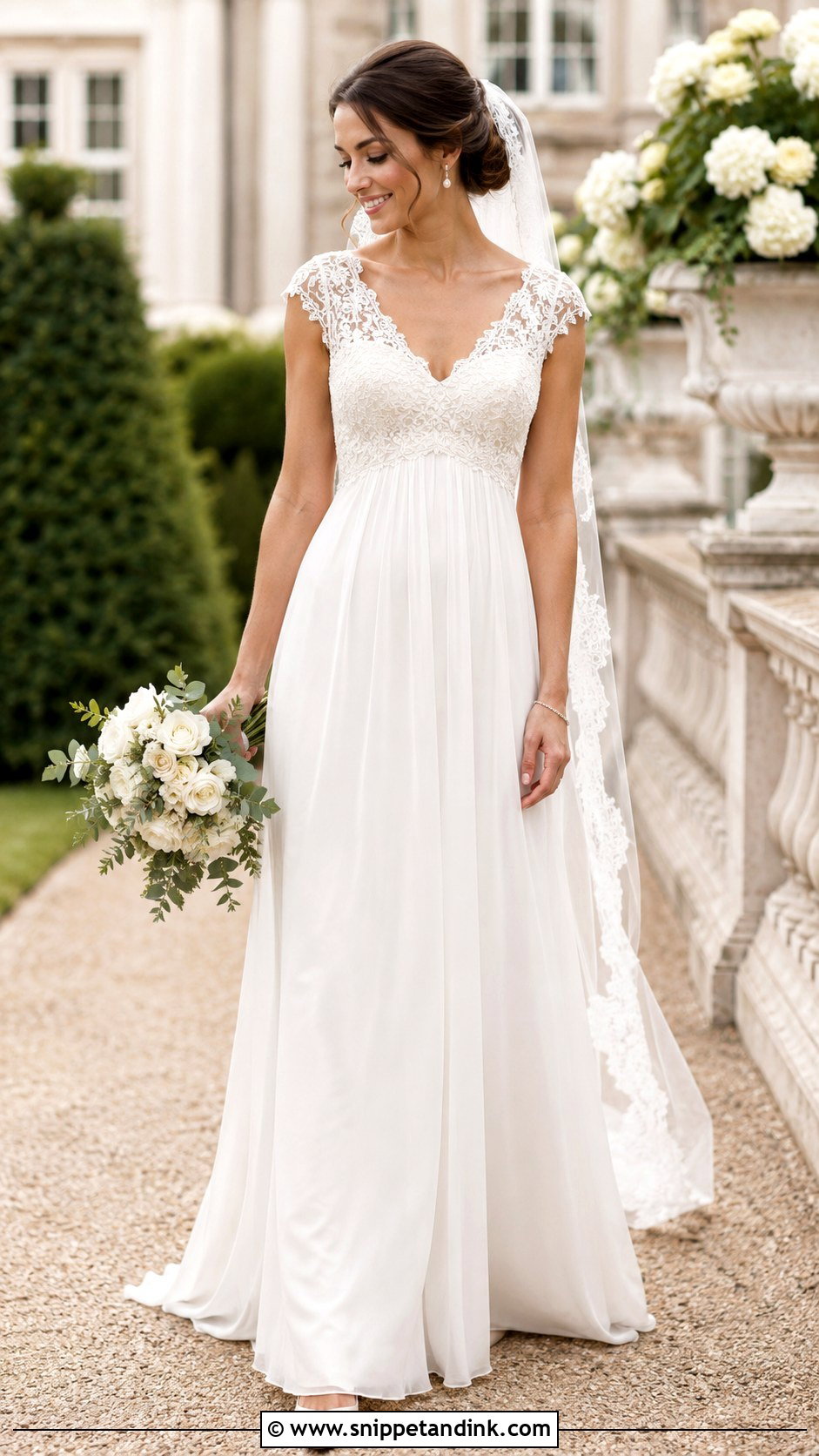
Lace and Grecian draping can fight each other, so I use lace only on the bodice and leave the chiffon skirt plain. A lace-covered V-neck with an empire seam, or lace cap sleeves, gives romance without heaviness. The detail I check closely is color. Lace and chiffon are dyed separately, and an ivory lace can look noticeably yellower than ivory chiffon in daylight. If you add a lace-edged veil, keep the motifs small and widely spaced. A soft low chignon with face-framing pieces finishes it.
18. Blush Grecian Wedding Dress
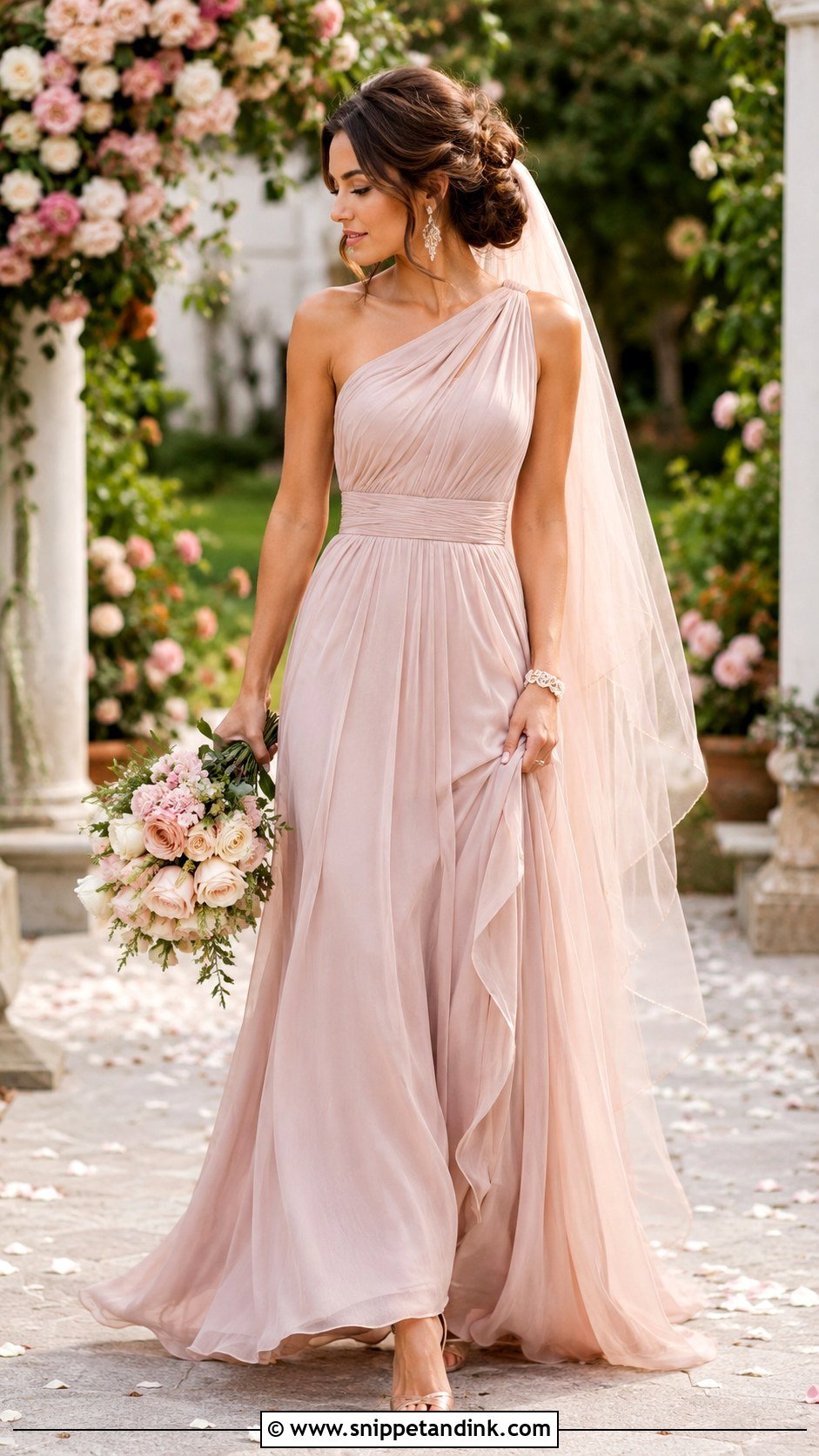
Blush needs testing in daylight before anything else. Pale rose, shell and nude-blush can look almost white under boutique lights and suddenly pinker outdoors, and the shade has to suit your skin, not just the palette. I’d keep it subtle so it photographs as a tint rather than a color. A one-shoulder draped bodice with a flowing empire skirt works well, with champagne heels and rose-gold earrings. An ivory veil over blush adds a soft layered effect at sunset.
19. Plus-Size Grecian Wedding Dress
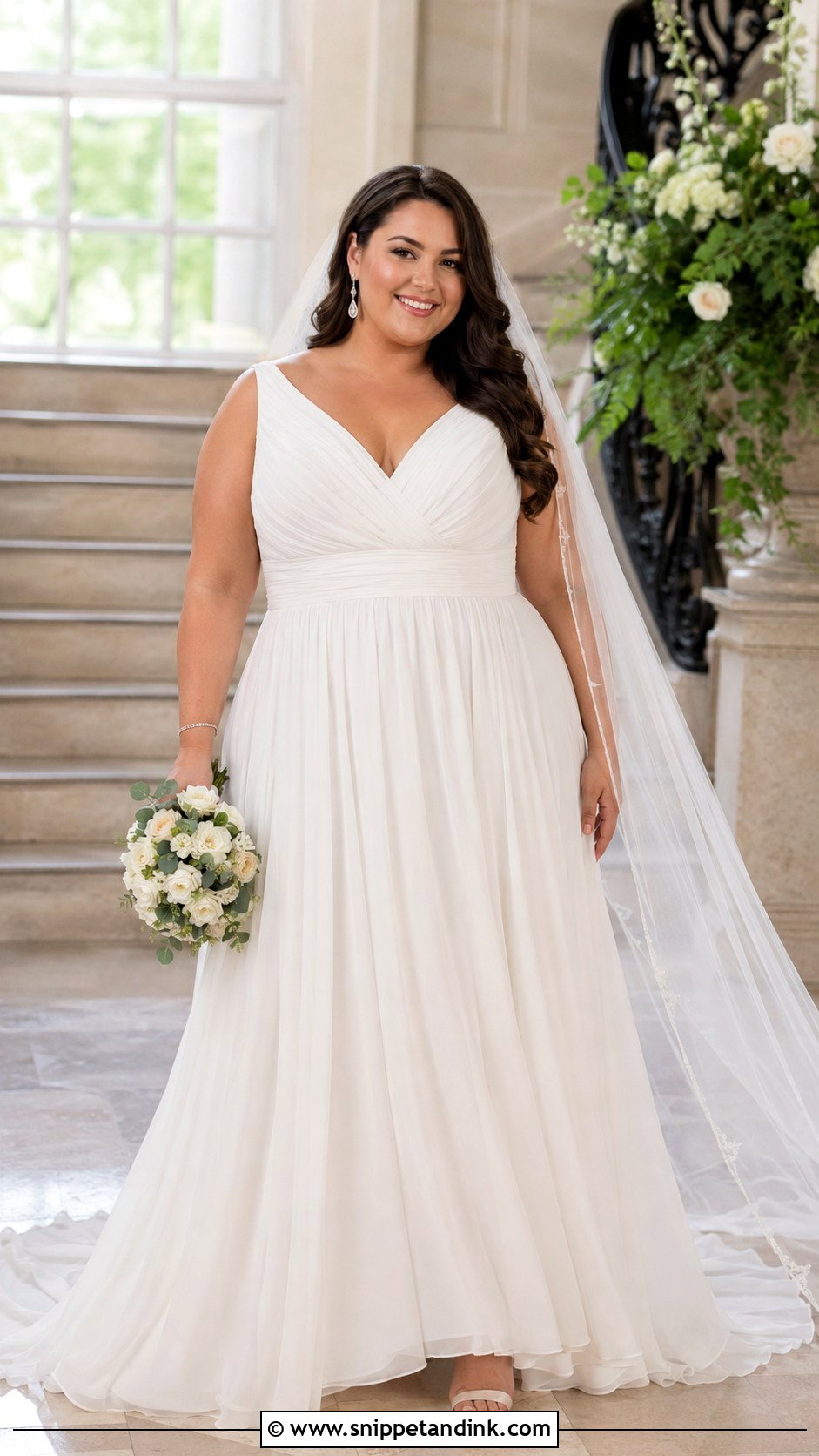
Grecian construction is one of the most forgiving for curvy brides, provided the support is built in rather than added later. I look for wide straps, a crossover V, an empire or slightly raised natural waist and a structured inner bodice with proper bust cups. Pleating should run with the body; random gathers add bulk. Ignore the size on the label, because bridal sizing runs small, and book alterations early so straps, bust and hem can all be adjusted. Comfortable block heels and side-swept waves suit it well.

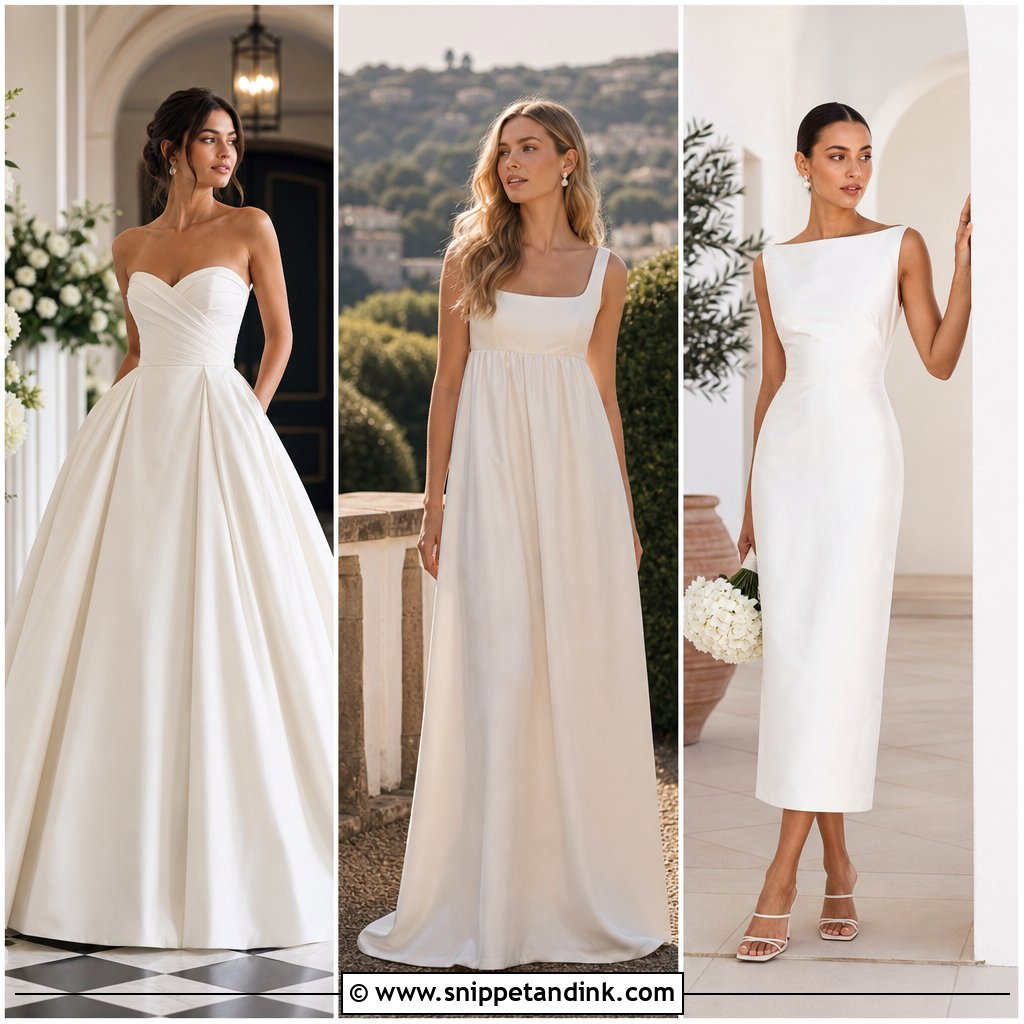
20. Grecian Beach Wedding Dress
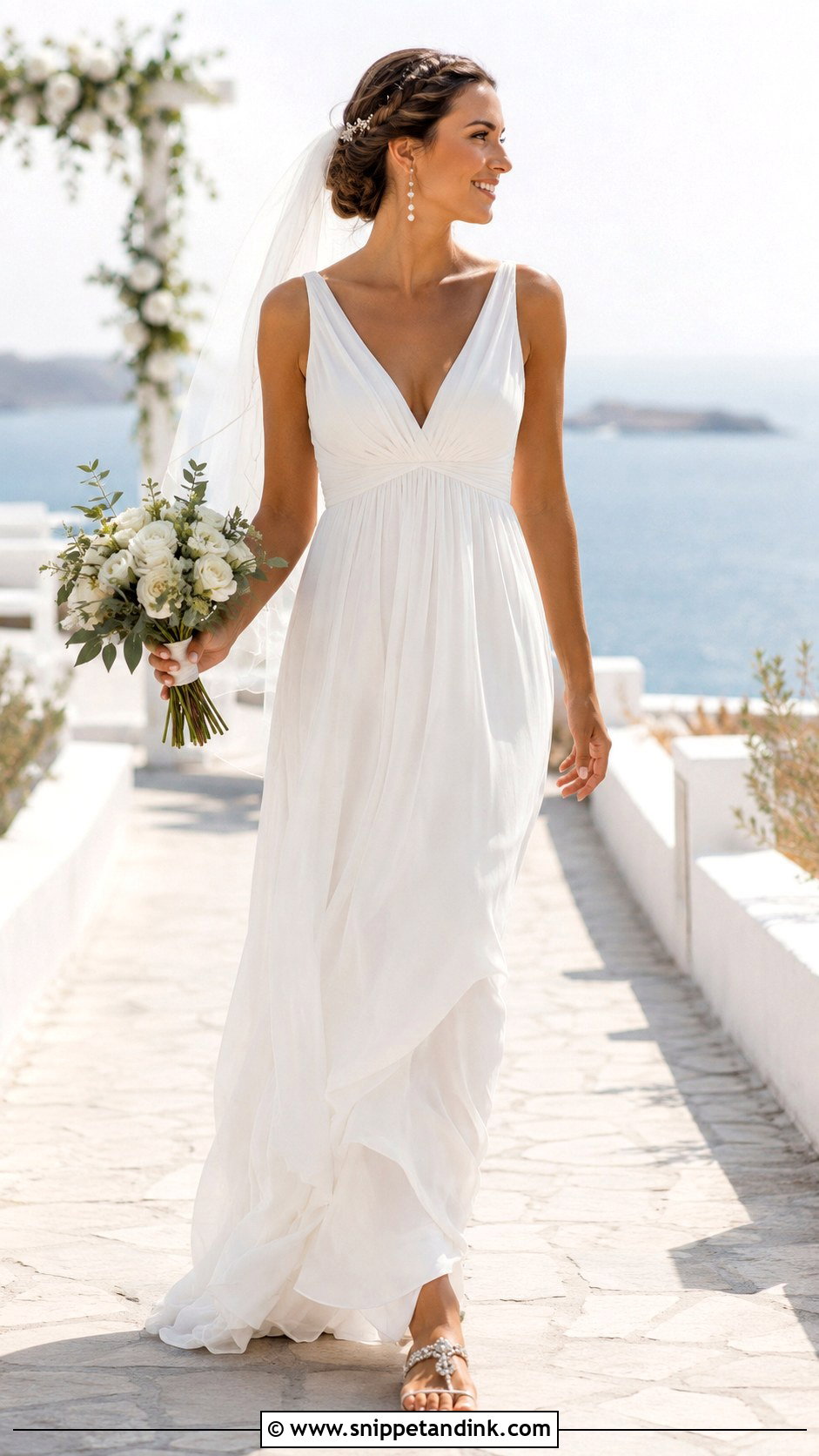
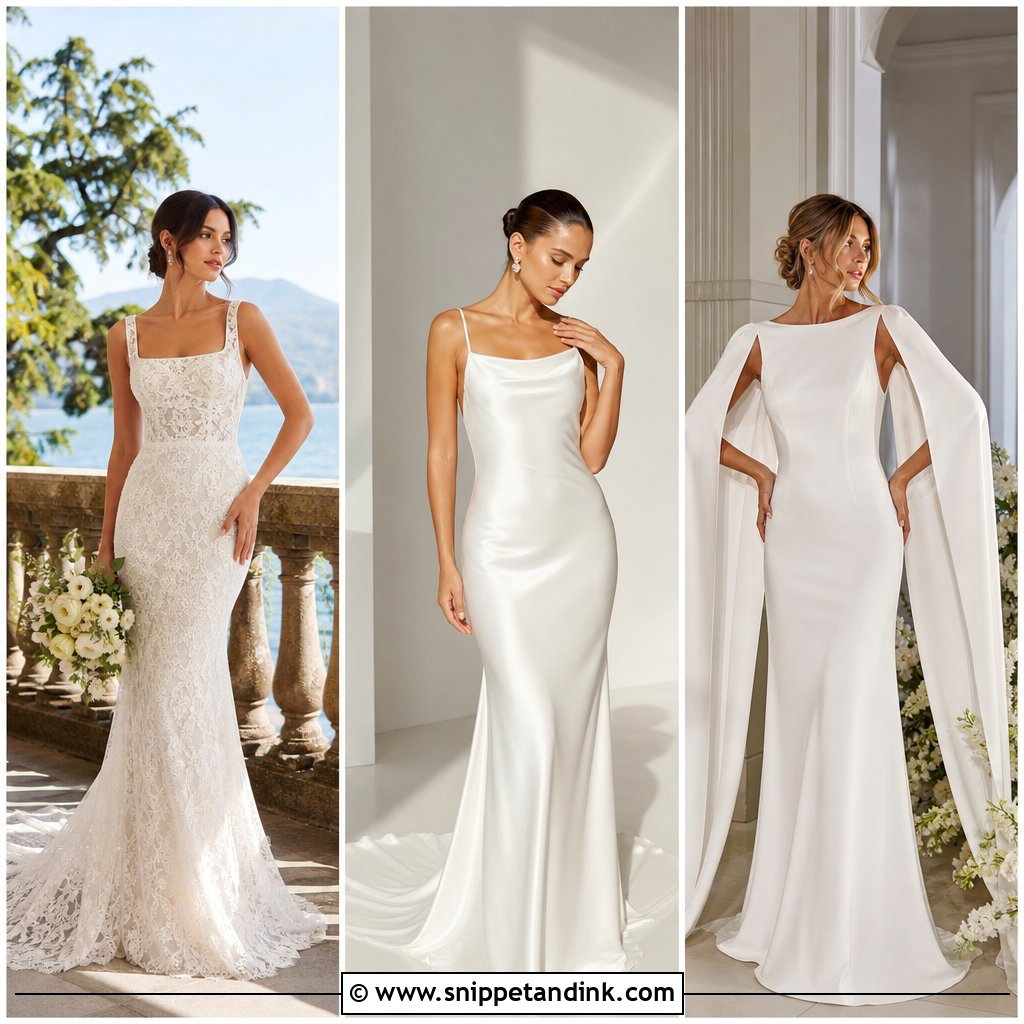
Sand ruins trains, so on a beach I keep the hem short or detachable. A sleeveless chiffon gown with a gathered empire waist and a layered skirt moves naturally in wind without a heavy underskirt holding it down. Flat sandals or low block heels are the only sensible shoes on sand. Wind is the other thing: a braided bun or textured ponytail stays secure, while loose waves end up across the face in every photo. A short veil, a detachable cape, or nothing at all is the right call by the water.
Draped Bodices Are Harder to Alter Than They Look
Brides often assume a soft, flowing gown is easy to adjust. It’s usually the opposite. The pleats across a Grecian bodice are set by hand into the seams, so taking in the side means unpicking and re-laying every fold, and only some gowns have enough seam allowance to let out. I’d ask at the boutique, before ordering, how much room there is in each direction.
- Hemming layered chiffon means hemming each layer separately, which takes longer and often costs more than a single-layer skirt.
- A chiffon train usually bustles best with a few hidden hooks or ribbon loops; heavy French bustles pull the light fabric out of shape.
- Straps on one-shoulder and halter styles carry the whole bodice, so adjust them last, once you’re wearing the final shoes and undergarments.
- Allow for at least two to three fittings, and leave several weeks between the first and the wedding for any re-pleating.
Will Chiffon Survive the Car, the Wind and the Dance Floor?
Mostly yes, with a little planning. Chiffon recovers from sitting better than satin, but the skirt should be gathered and lifted forward when you get into a car so you’re not sitting on the back layers. Steam it on the morning of the wedding; never iron it, because direct heat can leave a shine on synthetic chiffon. Bring a small pair of scissors to snip any pulled thread rather than tugging it, and keep heel buckles covered when you walk through layered hems, since a sandal strap will catch the inner layer more often than you’d expect. Outdoors, a few discreet weights or a hand-sewn hem chain can keep the outer layer from lifting in strong wind.
Movement Is the Test Every Grecian Gown Has to Pass
Grecian gowns live or die on how they move. Across one-shoulder chiffon, silk columns, capes and empire waists, the gowns that work have good fabric, hidden support and careful alterations behind them. Choose shoes for the ground you’ll stand on and jewelry that leaves the neckline alone; a simple veil, polished hair and one pearl or metallic accent is usually plenty. Before you commit, walk, sit, raise your arms and dance a few steps in the full outfit. If it still drapes properly after that, it will hold up for the whole day.
You'll Like These Ideas:








Leave a Reply