
There is no single Native bridal look, and I won’t pretend otherwise. Materials, colours, beadwork, ribbonwork and jewellery differ widely from one nation to the next, so every bride I style starts with her own nation, family and community. Some wear regalia made by relatives or tribal artists. Others wear a modern white gown with a few meaningful handmade details. My part is practical: buy from Native makers, use designs her community approves, and ask before wearing anything with ceremonial or family-specific meaning. Beaded moccasins, heirloom jewellery, ribbon details and handmade shawls can then finish the outfit in her own taste.
Commissioning a Native Artist for Bridal Beadwork
Most of the outfits below depend on handwork, and handwork sets the calendar. Detailed beadwork is sewn bead by bead, and a full collar, yoke or train border can take an artist months alongside her other orders. I’d make the first contact as soon as the date is set.
What to bring to the first conversation
- The dress, or at least a fabric swatch and a photo of the neckline, so the piece is designed for what it will sit on.
- Your nation, family connections and any designs relatives have already approved. Many artists will ask, and some will only make certain designs for certain people.
- A realistic budget. Pricing for custom beadwork varies a great deal with size, bead type and the artist’s demand, so ask for a quote rather than assuming.
- The date of the final fitting, not just the wedding date, so the piece arrives in time to be tried on with the dress.
Expect a deposit, and respect the artist’s process. If she says a design isn’t hers to make for you, take that as guidance, not an obstacle.
1. White Native Wedding Dress With Beaded Yoke
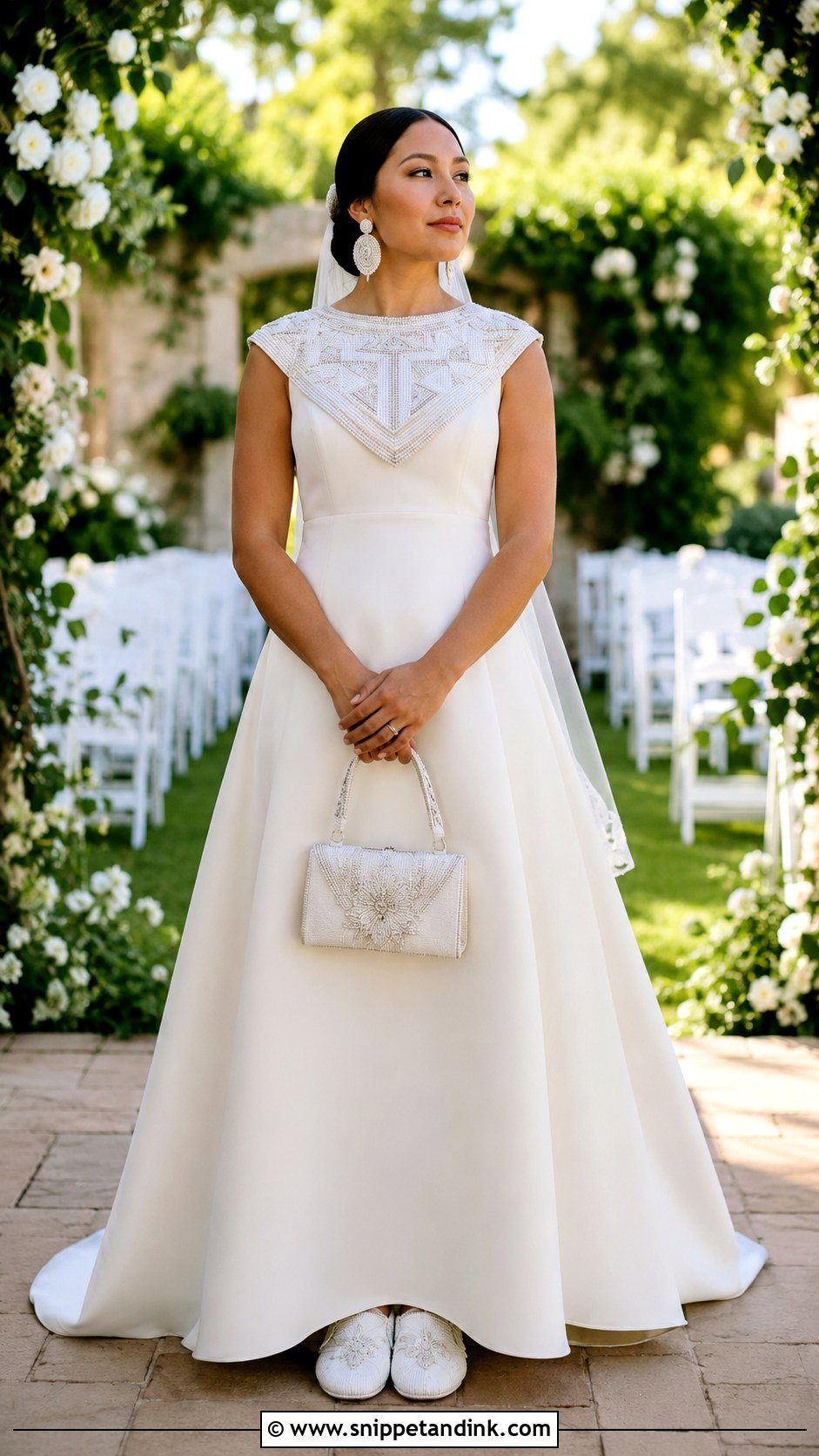
A white gown paired with a handmade beaded yoke lets the beadwork carry the whole outfit. I keep the gown plain, an A-line, column or fit-and-flare in silk, satin or matte crepe, because lace or embellishment underneath turns the yoke into clutter. Commission the panel from an artist connected to your nation, and ask for it to be removable with hooks or snaps so the gown can be cleaned separately. Matching beaded earrings, white or neutral moccasins and a small bag finish it. A low bun or smooth braid keeps the neckline clear.
2. Buckskin Native Wedding Dress With Moccasins
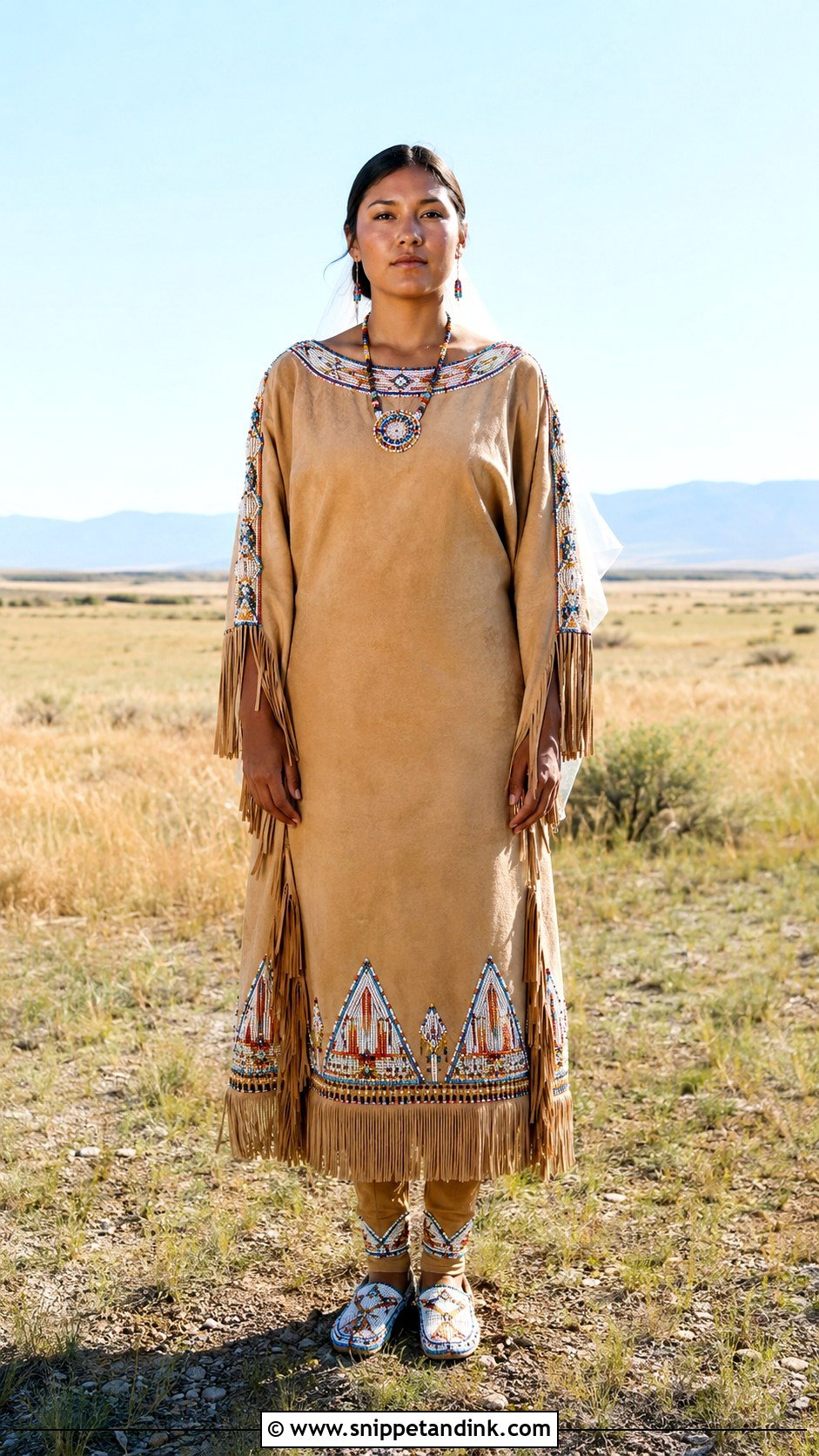
Buckskin moves and drapes in a way no woven fabric does, and for brides whose communities use it, it carries real weight. I look for a long, modest shape with carefully placed fringe at the sleeves, shoulders or skirt, with beadwork framing the neckline and cuffs. Plains dresses have long carried beadwork, designs and materials tied to tribal identity and family, so leggings, moccasins and jewellery should be chosen with family or cultural knowledge holders. Hide is warm, so I’d plan for that at a summer ceremony. Braids or another community-appropriate style suit the hair, and unrelated tribal details stay out.
3. Native Ribbon Wedding Dress With Beaded Belt
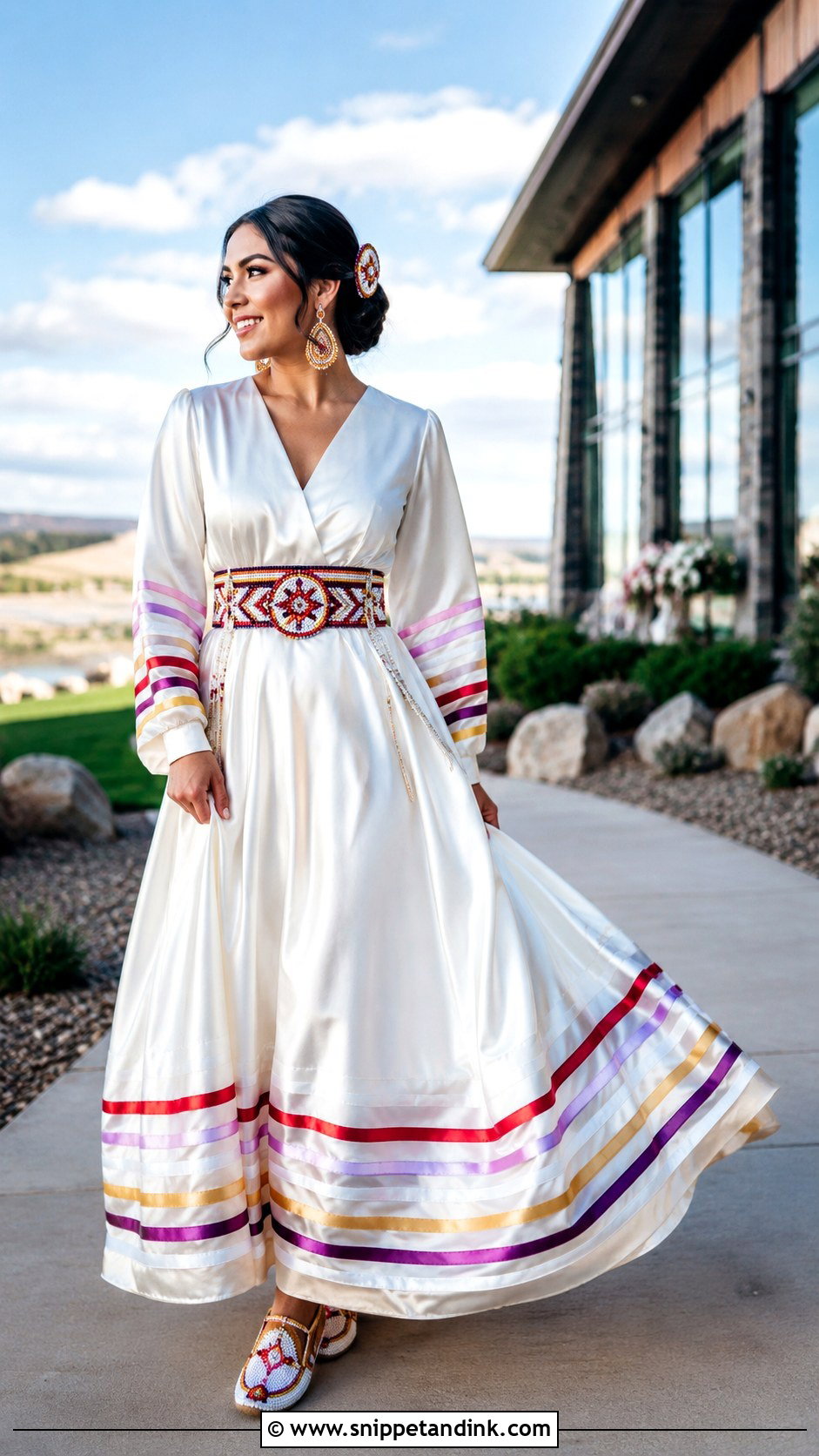
Ribbonwork brings motion that a plain dress can’t. I’d start with a floor-length cotton, satin or light wool dress with a comfortable fitted bodice, then set ribbon bands at the sleeves and near the hem in colours with personal or community meaning. A wide beaded belt gives the waist ceremonial detail. Beaded moccasins, small drop earrings and a hair ornament from a Native artist complete it. Outdoors, the ribbons lift when she walks, which is lovely in candid photos. Satin ribbon on a lightweight cotton base can pucker if it’s stitched under tension, so a skilled maker matters. Confirm placement and meaning with relatives before it’s sewn.
4. Cherokee Tear Wedding Dress With Pucker-Toe Moccasins
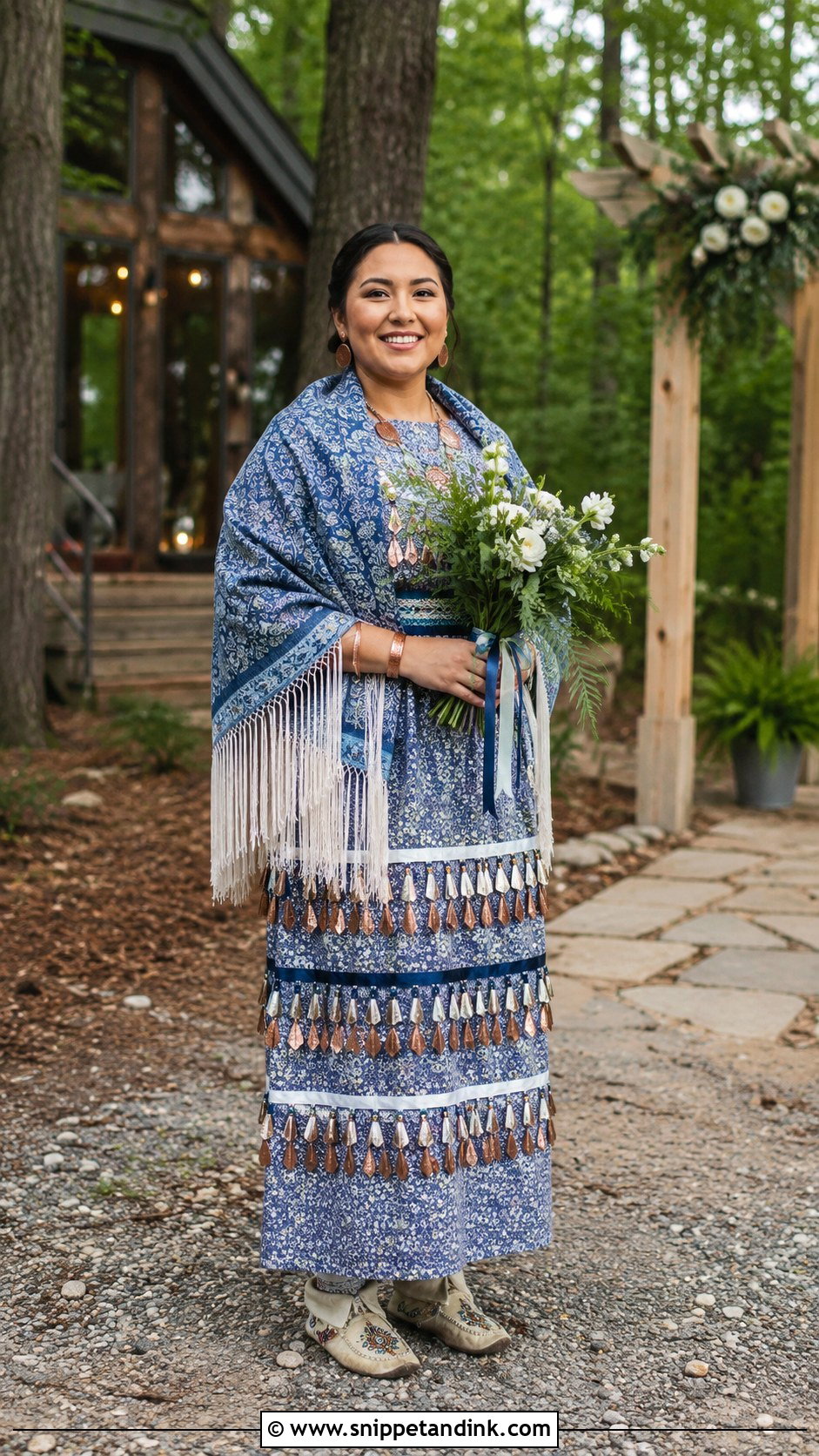
A Cherokee tear dress gives a Cherokee bride a colourful, grounded alternative to a white gown. The tear dress is a modern take on nineteenth-century dresses, and special-occasion versions often use calico, piecework and ribbons. Choose ankle or floor length in white, blue, red or a meaningful floral, with a woven belt, copper or bead jewellery and properly made pucker-toe moccasins. A shawl adds coverage without hiding the construction. I’d go to a Cherokee seamstress or a knowledgeable relative rather than altering a commercial prairie dress, since the cut and the way the pieces are torn and joined are part of the tradition.
5. Chickasaw Prairie Wedding Dress With Apron
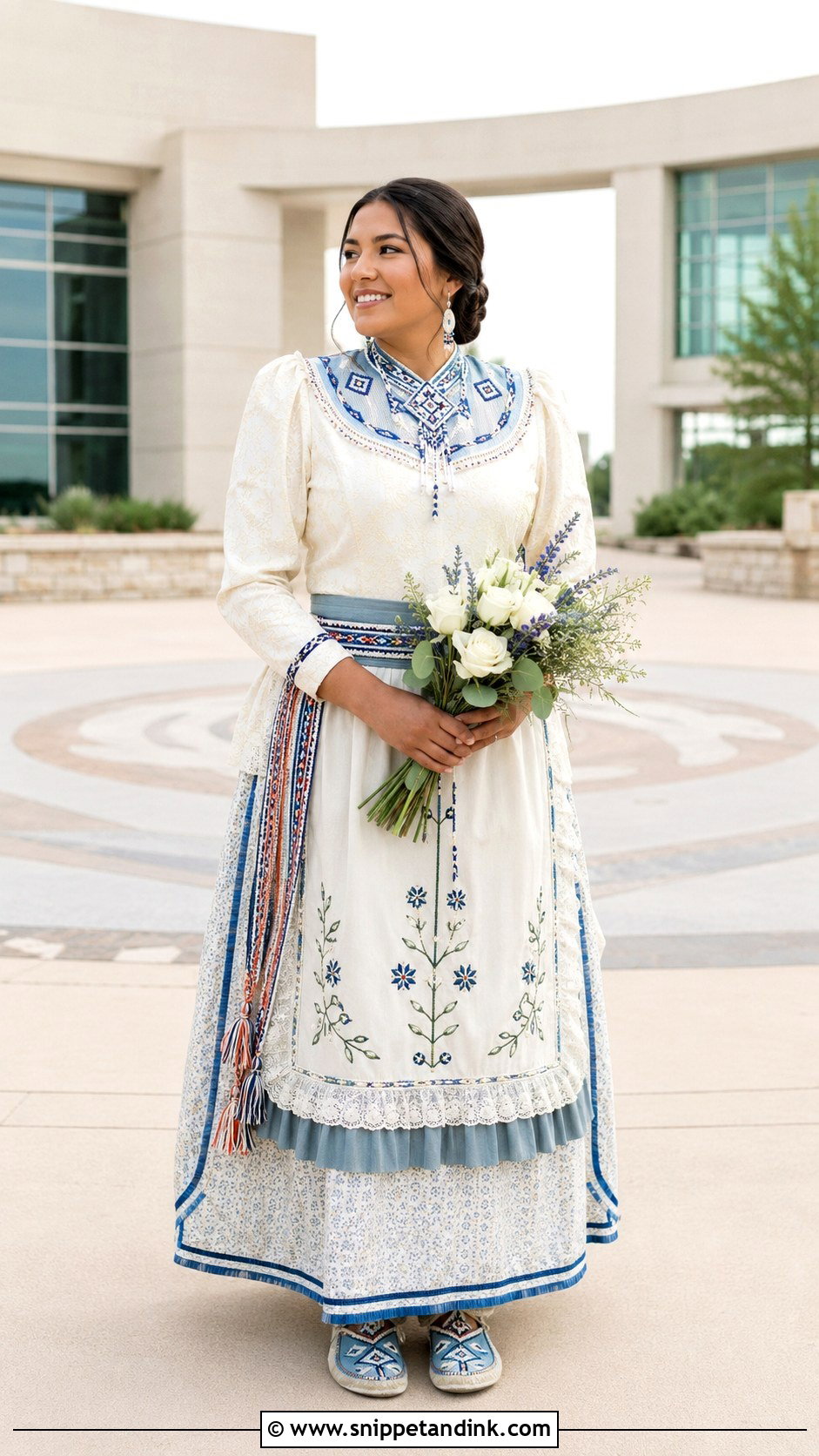
Layered fabric and a shaped apron give a Chickasaw prairie dress its polish. Plain prairie dresses were everyday wear, while special-occasion ones added ornate aprons, woven sash belts and beaded collars, and that’s the version I’d build a wedding outfit from. A long dress in ivory, soft blue, deep red or a family-approved shade works, with an apron matched to the sleeve and skirt trim. A handwoven sash defines the waist and a beaded collar frames the face. Moccasins and quiet earrings finish it. A Chickasaw maker will get the proportions and construction right in ways a general dressmaker won’t.
6. Seminole Patchwork Wedding Dress With Bead Necklaces
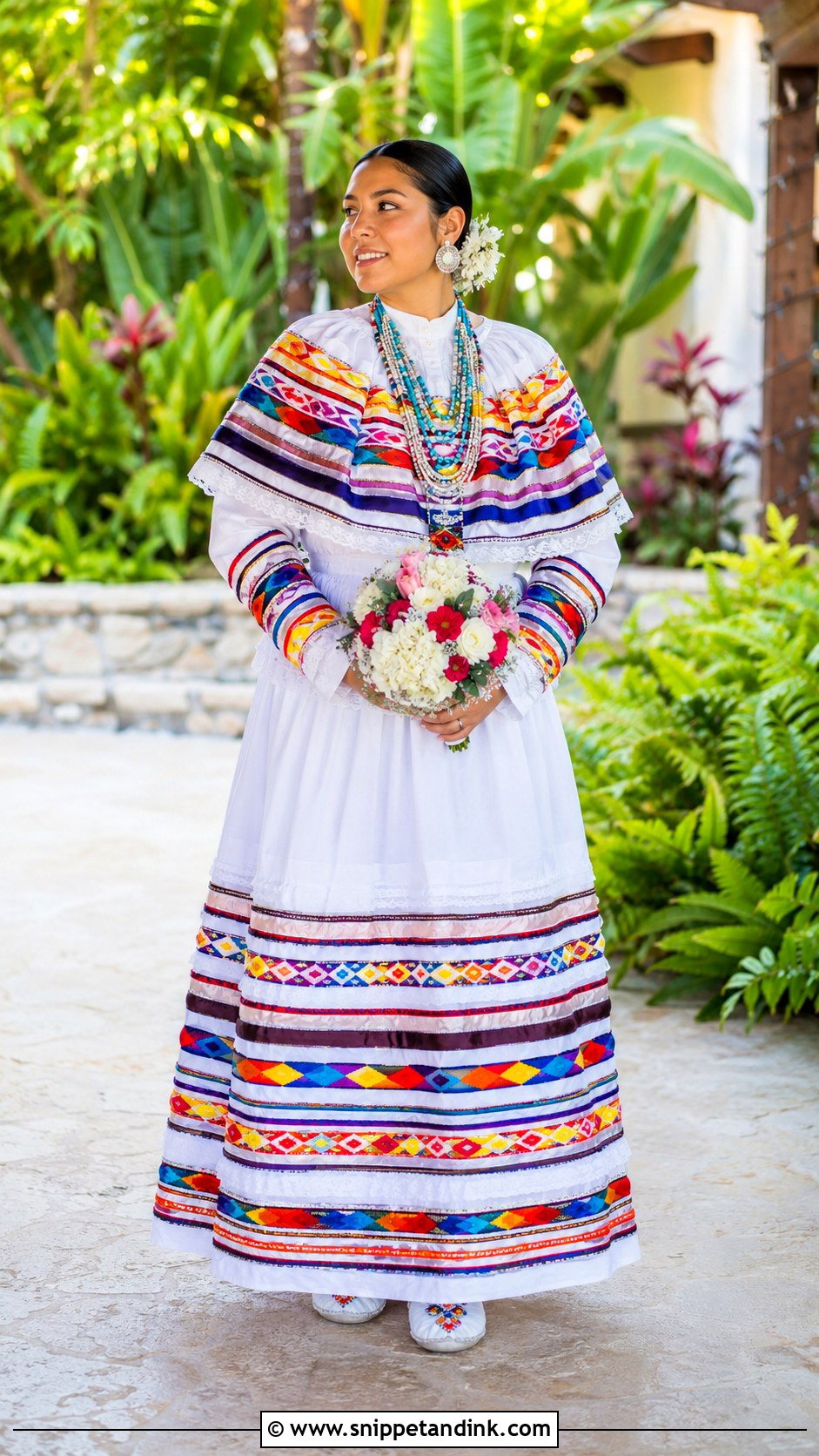
Seminole patchwork is skilled, slow work, and it can make an unforgettable wedding outfit for a Seminole bride. A traditional women’s ensemble may pair a floor-length skirt and long-sleeved blouse with a ruffled cape, patchwork bands and layered bead necklaces. The technique grew in the early twentieth century and is still a strong expression of tribal creativity. For a bride, I’d use white or ivory as the base with chosen bands of blue, coral, green or red, and coordinate cape and skirt. Flat shoes or moccasins keep her comfortable. Printed fabric that imitates patchwork is not a substitute; work with a Seminole artist.
7. Osage Bridal Outfit With Wedding Coat
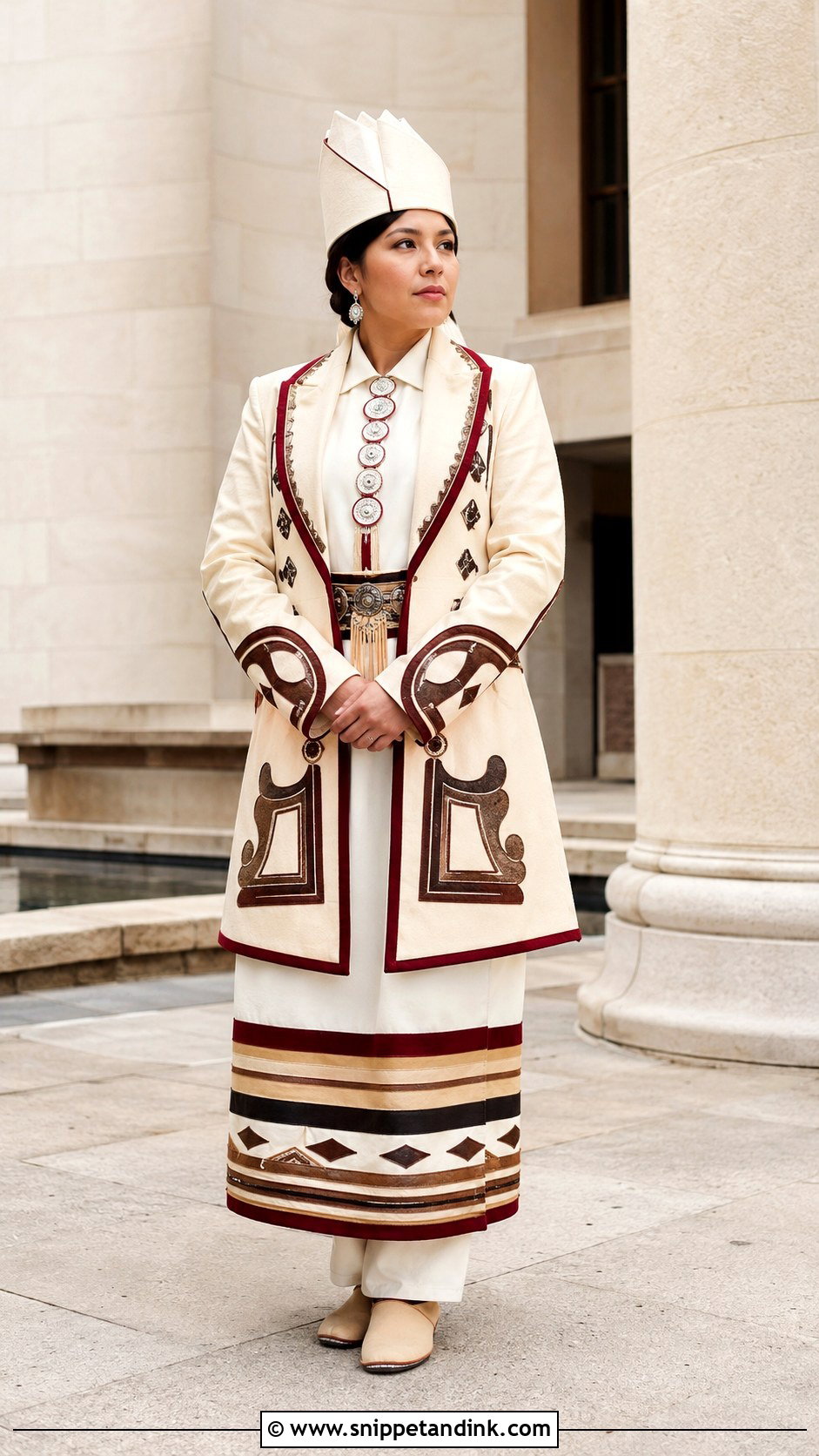
Osage bridal dress is its own tradition, not an alternative look to borrow. It is known for a distinctive wedding coat and hat, connected historically to military coats given to Osage leaders and later taken into bridal custom. This is for an Osage bride working with relatives and community makers. The coat needs careful fitting and must go with the correct skirt, shirt, belt, footwear and headwear as the family directs. Each piece can carry history and responsibility, so I wouldn’t style any part of it as fashion. Assembled properly, the outfit has a presence no Western gown matches.
8. Red Native Wedding Dress With Silver Jewelry
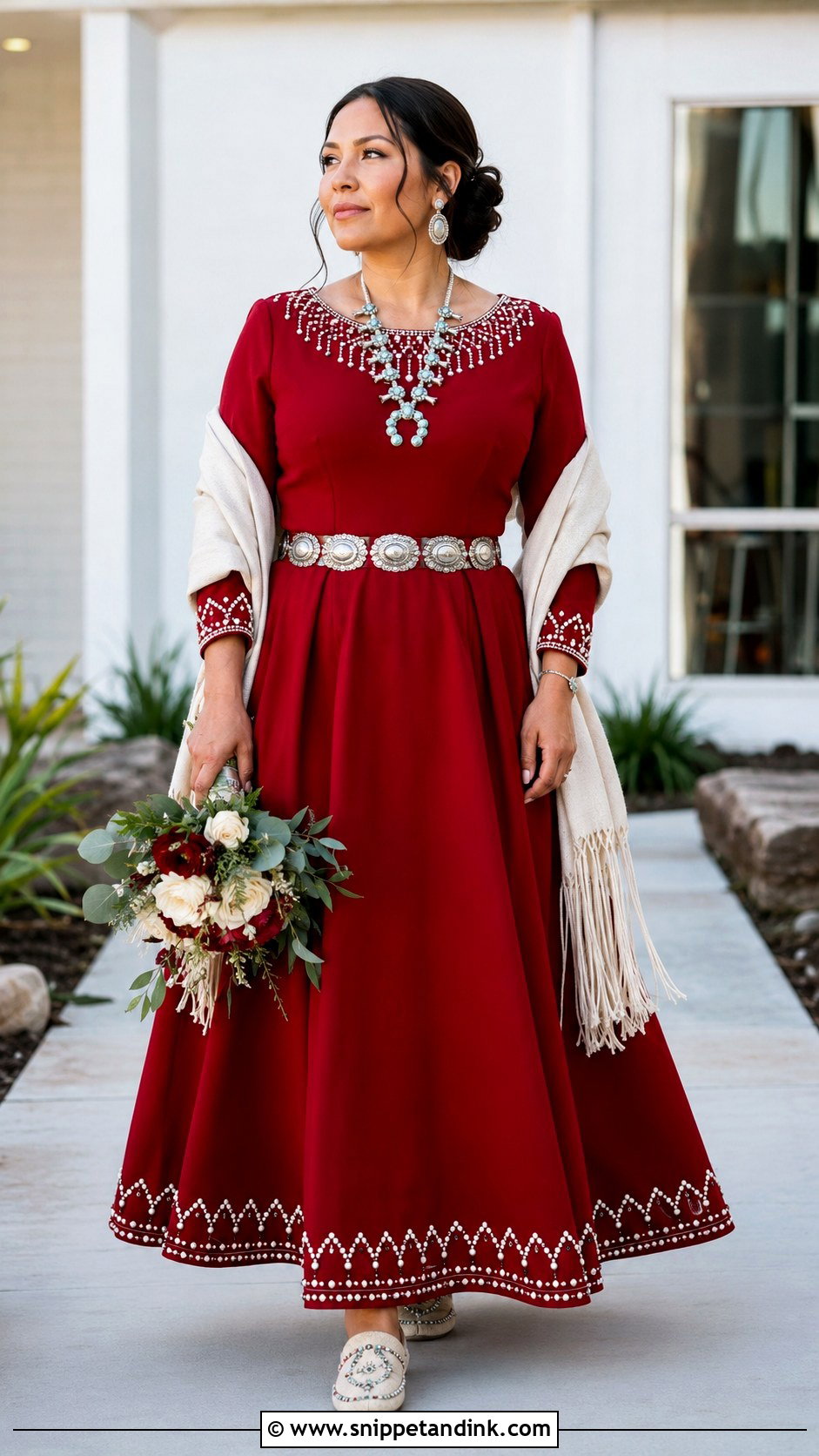
Red doesn’t need much decoration to hold attention. I choose a long A-line or softly gathered shape, in matte satin or silk for warm months and velvet or good cotton when it’s cool, then add community-approved beadwork at the neckline, cuffs and lower skirt. Silver earrings, a handmade necklace and a belt finish it. If turquoise is meaningful for her nation, one or two pieces are enough. Red or neutral moccasins and a simple shawl complete it. Some colours carry ceremonial, clan or family meanings, so ask about the exact shade before ordering fabric.
9. Blue Native Wedding Dress With Floral Beadwork
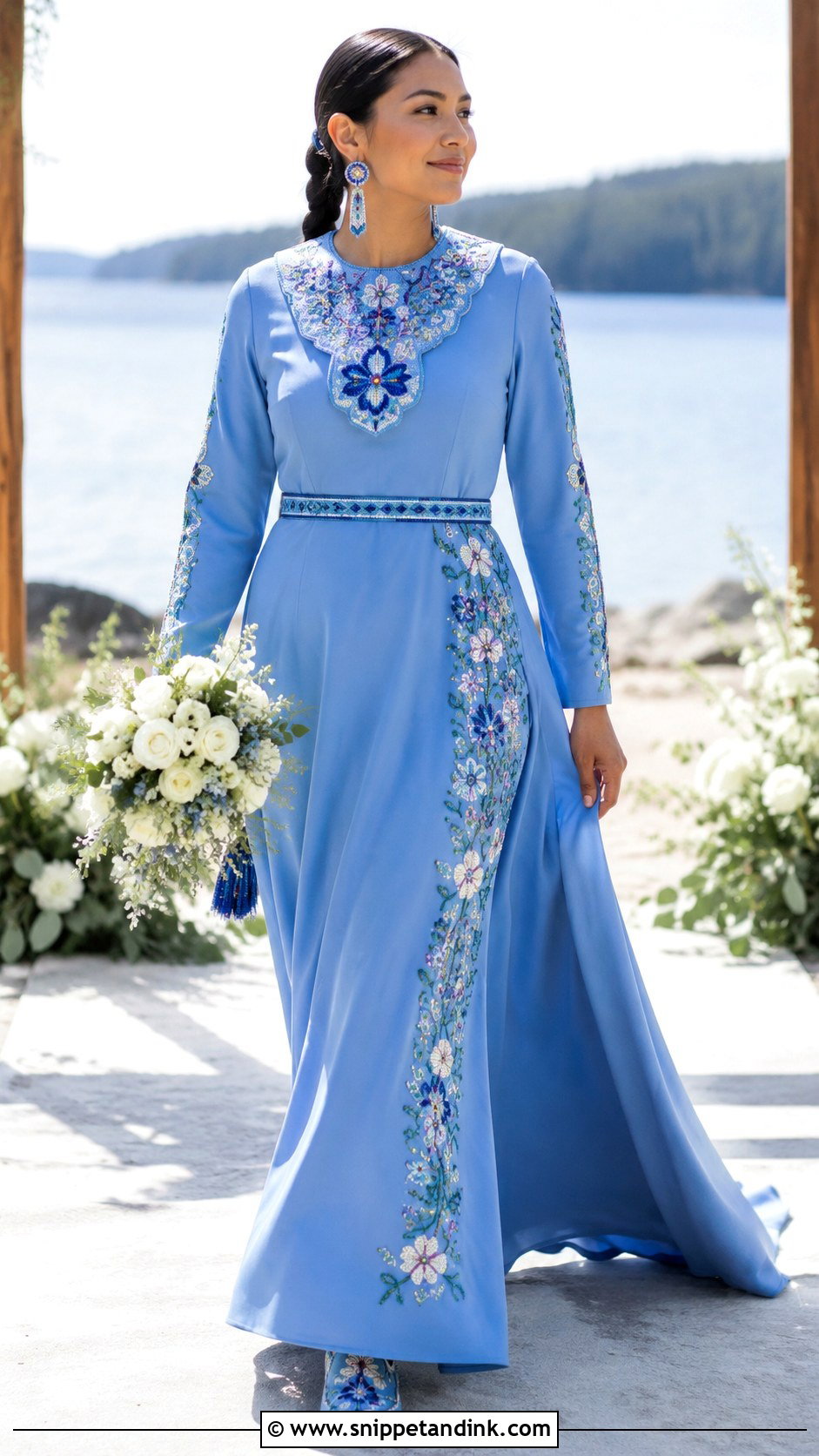
Picture a deep blue dress in daylight with floral beadwork across the bodice and sleeves. The base is a long, flowing gown in navy, turquoise, cornflower or another meaningful blue, with a square, round or modest V neck that leaves room for a custom panel. I repeat a smaller version of the motif at the cuffs or hem so the top doesn’t look heavy. Beaded earrings, a slim belt and moccasins picking up one accent colour finish it, with hair in a low braid or bun. Floral beadwork styles differ between communities, so I’d commission it from an artist who knows hers.
10. Ivory Native Wedding Dress With Turquoise Jewelry
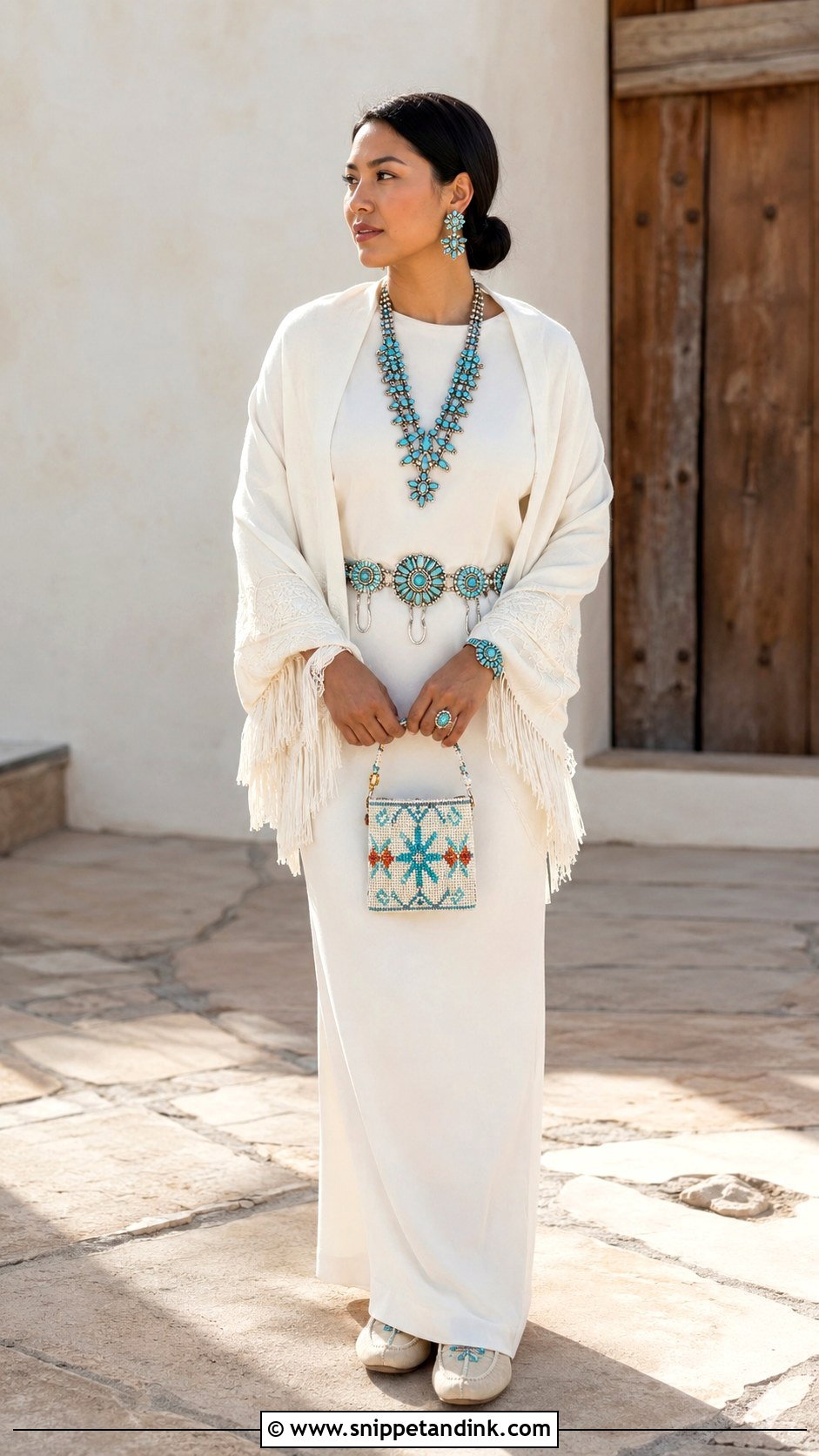
An ivory gown is a quiet background for turquoise and silver. I keep it simple, a long silk, crepe or satin dress with clean lines and a gently defined waist, high-necked or off the shoulder depending on the ceremony and her comfort. Necklace, earrings and bracelet should come from Native artists connected to that jewellery tradition. Neutral moccasins, an ivory wrap and a small beaded bag complete it, with plain hair so the jewellery leads. Turquoise is not a universal Native symbol. I’d only use it when it belongs to her personal, regional or community context, not because it suits a Southwestern theme.
11. Native Wedding Dress With Wool Cape
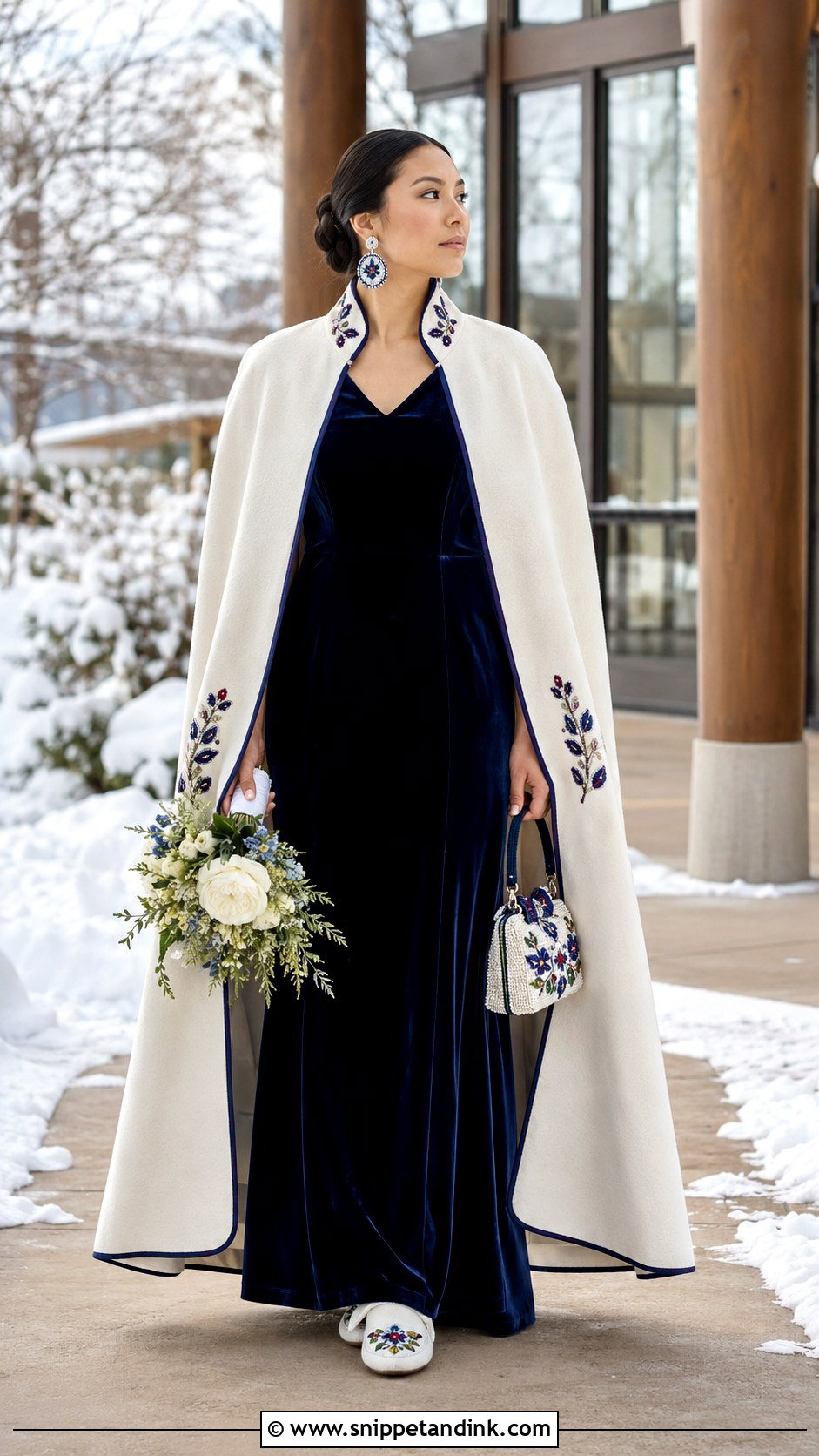
For an autumn or winter ceremony, a structured wool cape is the warmest option that still looks like bridal wear. It pairs with a long ivory, red, navy or black dress in velvet, crepe or heavy satin, and can carry approved ribbonwork, appliqué, embroidery or a narrow beaded border from a Native artist. I size the cape so the lower skirt and footwear still show. Lined moccasins or closed shoes, statement earrings and a compact bag finish it. Wool on satin can slide, so I add a discreet hook at the front. Copied blanket patterns or sacred imagery have no place here without clear permission.
12. Native Wedding Dress With Beaded Shawl
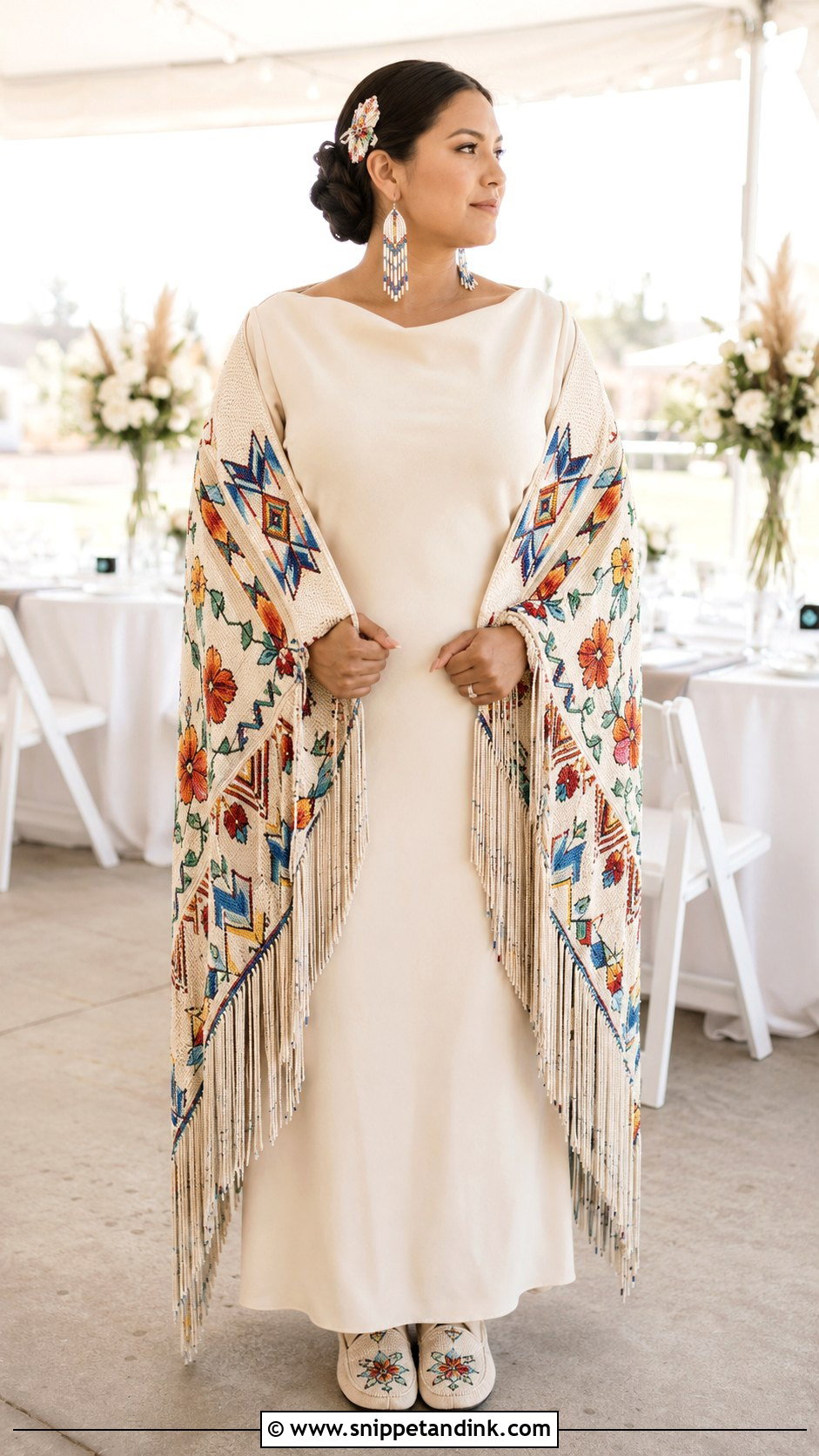
A beaded shawl brings artistry to a simple dress, and it has to be handled like the heirloom it may become. I pair it with a floor-length A-line, sheath or soft column in white, cream, blue or red, distinct enough that the shawl reads in photos. It sits over the shoulders for the ceremony and across the arms at the reception. Beadwork drags on fine fabric, so I check the shawl’s weight against the dress fabric at the fitting. Matching earrings, a beaded barrette and comfortable moccasins complete it. If the shawl is fringed, limit fringe elsewhere, and work with an artist who knows the protocols for any family, clan or nation imagery.
13. Native Wedding Dress With Fringe Sleeves
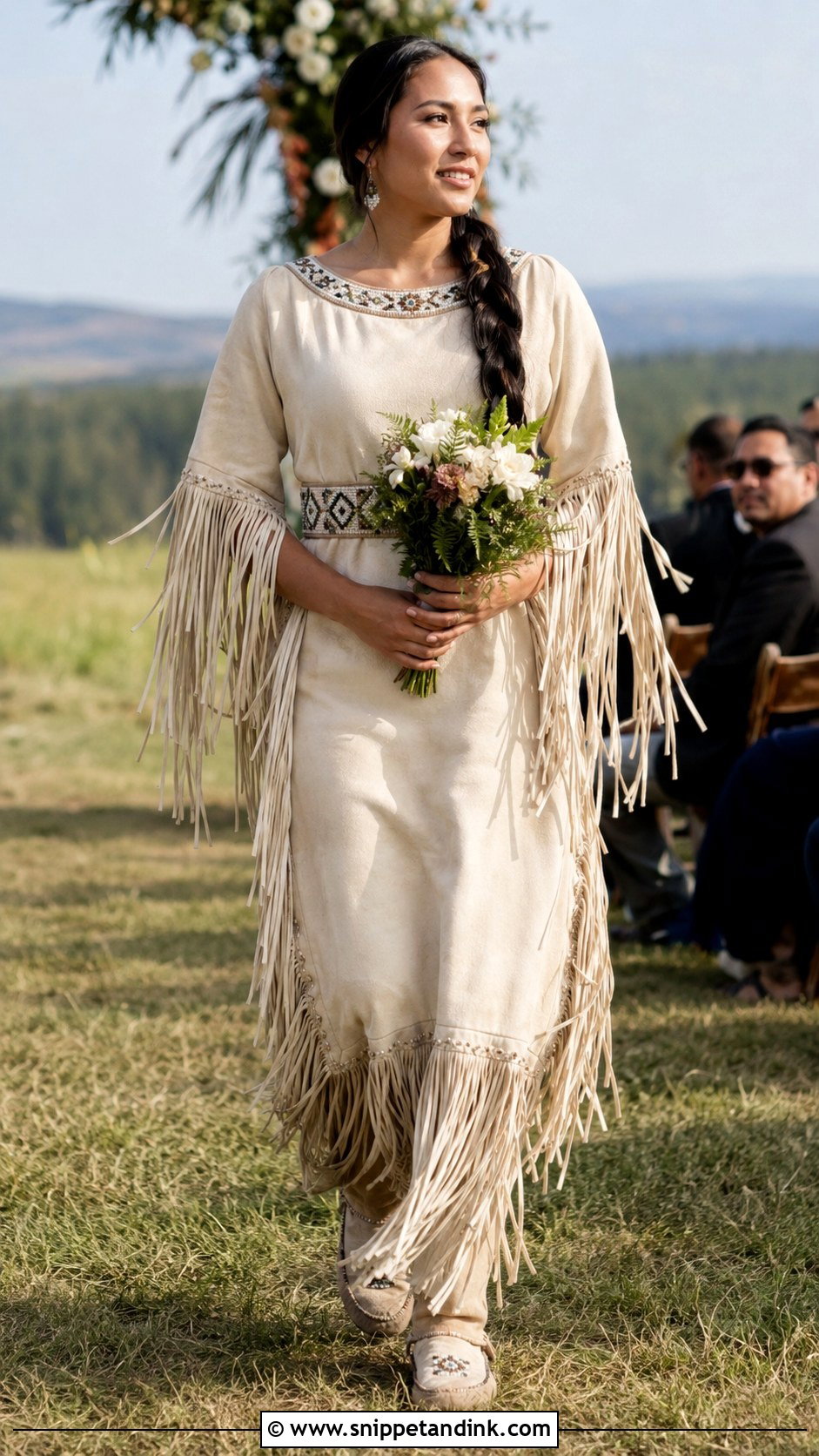
Fringed sleeves need restraint, or they start to look like a film costume. I’d choose a long dress in buckskin, soft suede, cotton or matte crepe, with fringe running from shoulder to wrist and a fairly plain bodice and skirt. Narrow beadwork at the neckline and cuffs ties top and bottom together. Beaded moccasins, small earrings and a structured belt or sash finish it. Hair matters more than you’d think: loose waves tangle in fringe within an hour, so a single braid, low ponytail or neat bun is safer. The design should come from her community’s practice, not a generic idea of Native clothing.
14. Native Wedding Dress With Removable Beaded Collar
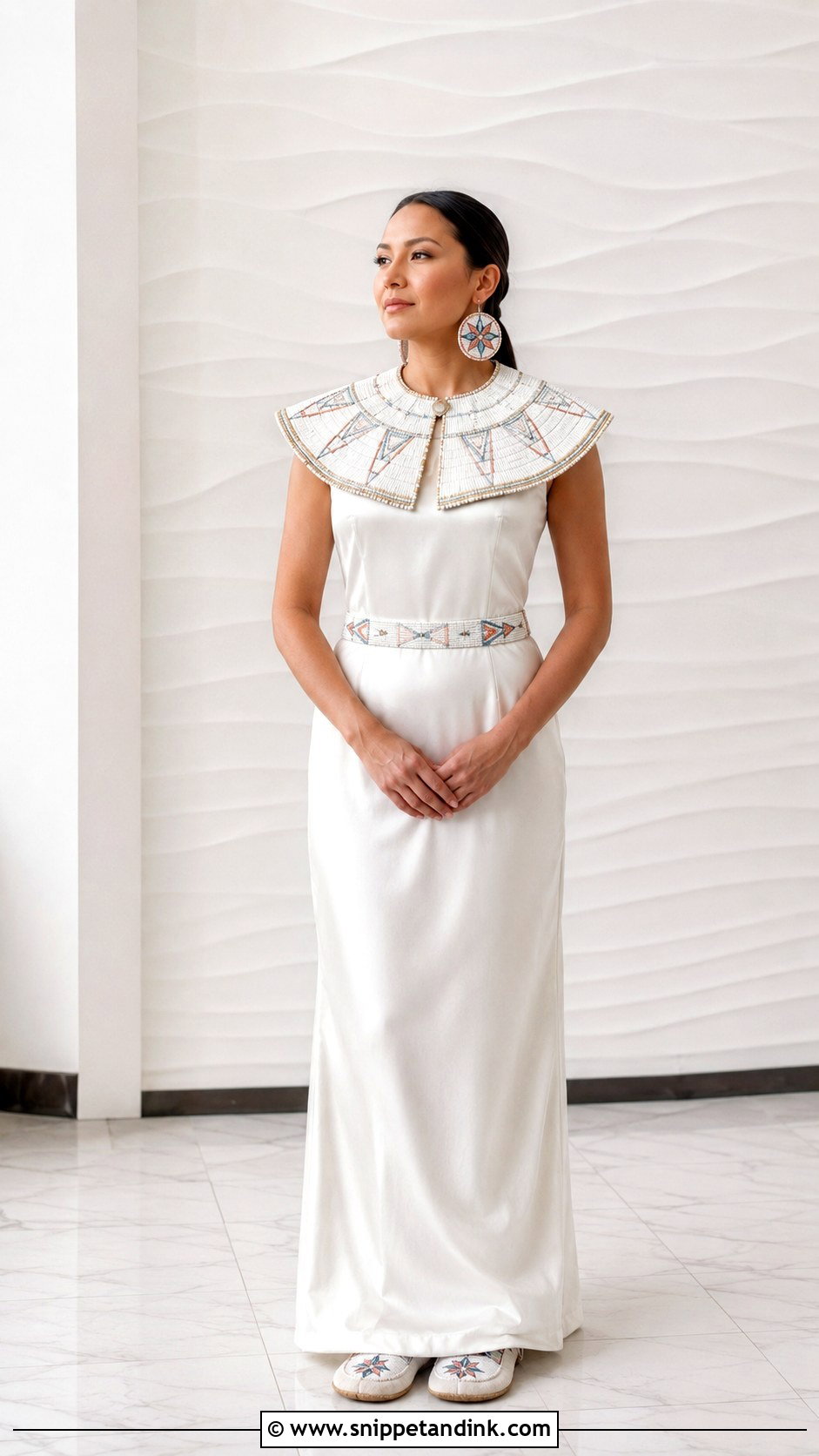
Two looks, one dress: that’s what a removable beaded collar gives a bride. It goes over a clean white, ivory, black or jewel-toned gown with a simple neckline. For the ceremony, the collar is the focal point and links to matching earrings, belt and moccasins; for the reception, it comes off. I fit the collar against the actual gown, because a collar cut for a different neckline lifts at the edges. Detailed beadwork takes time, so commission early. Approved colours and patterns can honour family relationships and keep it personal.
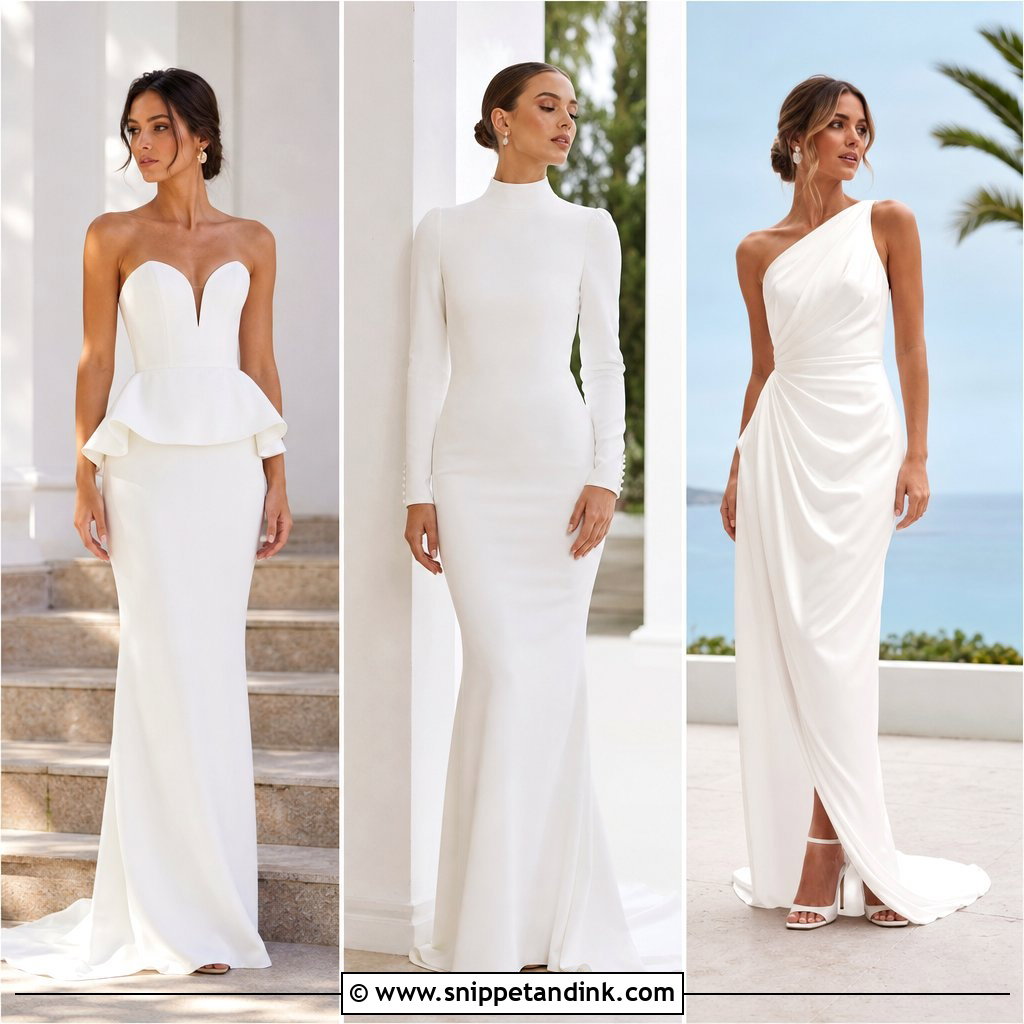
15. Native Wedding Dress With Ribbon Skirt
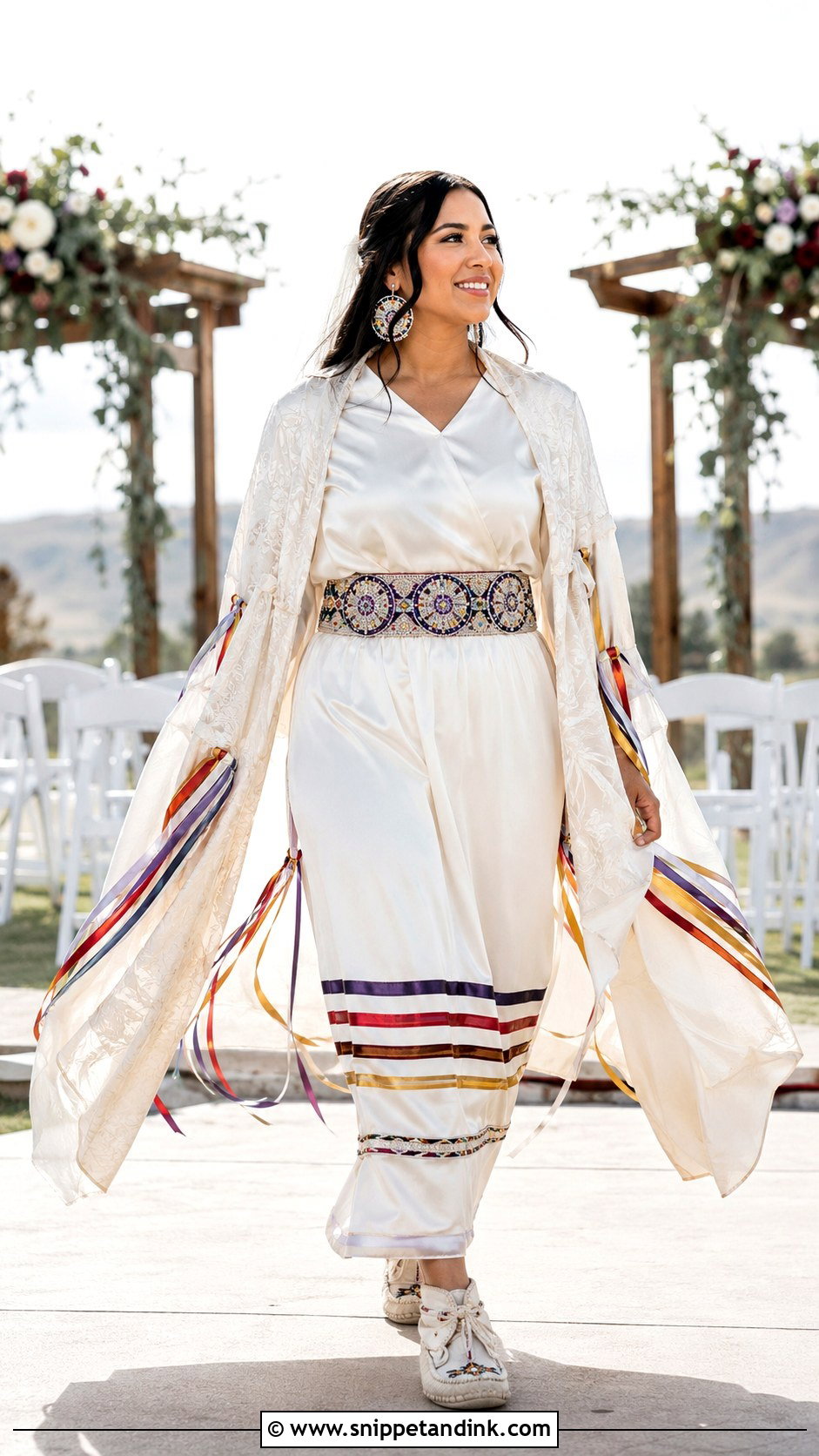
A ribbon skirt can anchor a two-piece bridal outfit. I pair a floor-length skirt with a fitted blouse, peplum top or modest satin bodice in the same base colour. White and ivory read as bridal; red, blue, green and purple give more contrast. The ribbons should sit where they follow the skirt’s movement and match her community’s practice. A beaded belt defines the waist, with moccasins, earrings and a matching shawl that doesn’t cover the ribbons. The top and skirt need a clear link through fabric, trim or beadwork. Ask a Native seamstress to make the set rather than stitching random ribbons onto a store skirt.
16. Native Wedding Dress With Embroidered Veil
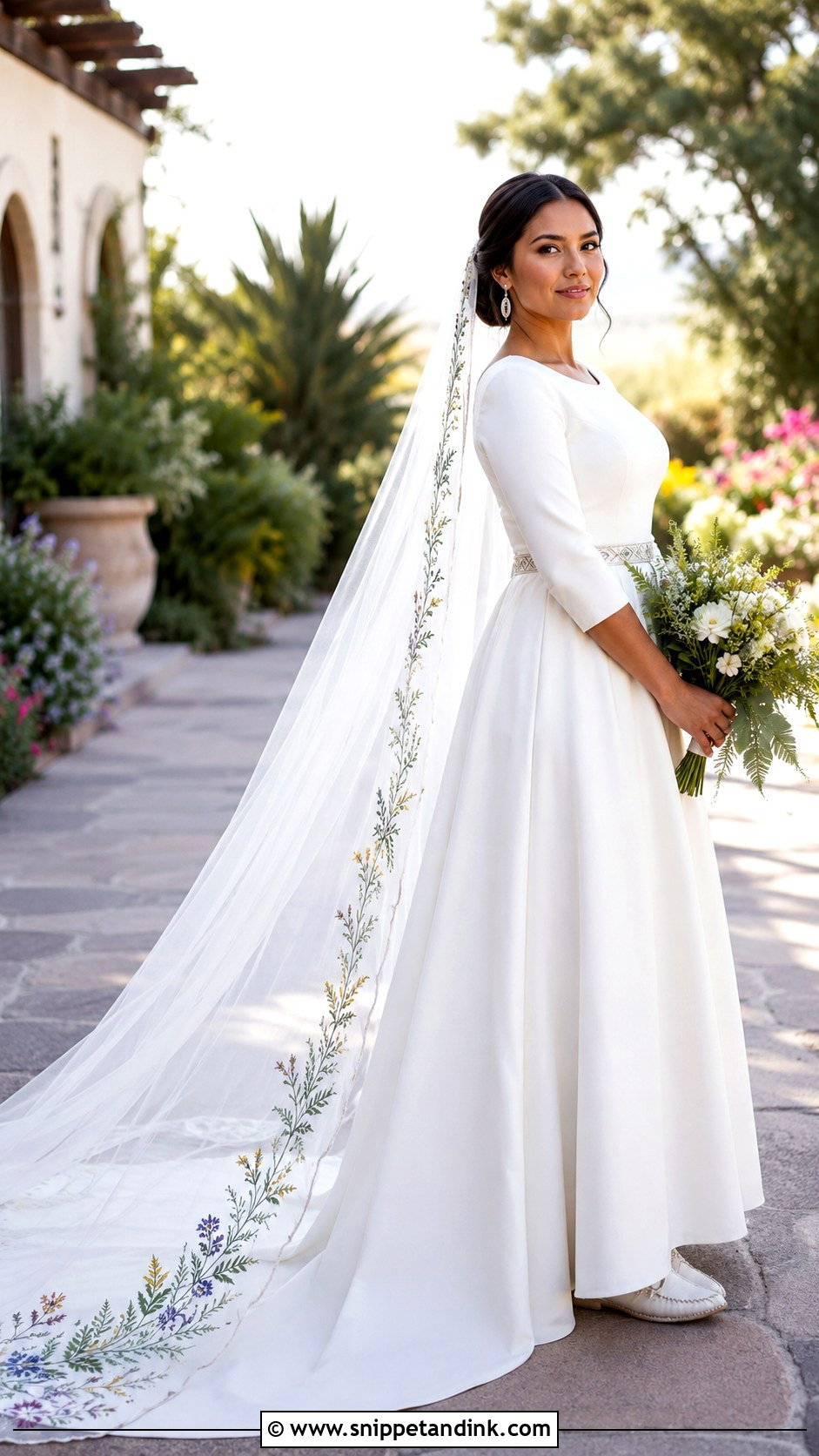
A veil can belong in a modern Native outfit when its decoration is chosen with care. I’d start with a clean A-line or column in white, cream or pale blue, then add a fingertip, chapel or cathedral veil with subtle border embroidery. The design might show approved plants, landscapes or family imagery, developed with a Native artist, never copied from the internet. Simple earrings, a narrow beaded belt and plain moccasins or low heels balance it. I keep heavy decoration off the back of the gown so the veil’s embroidery shows. If veils aren’t part of her traditions, the same idea works as a sheer embroidered shawl or removable cape.
17. Modern Native Wedding Dress With Beaded Train
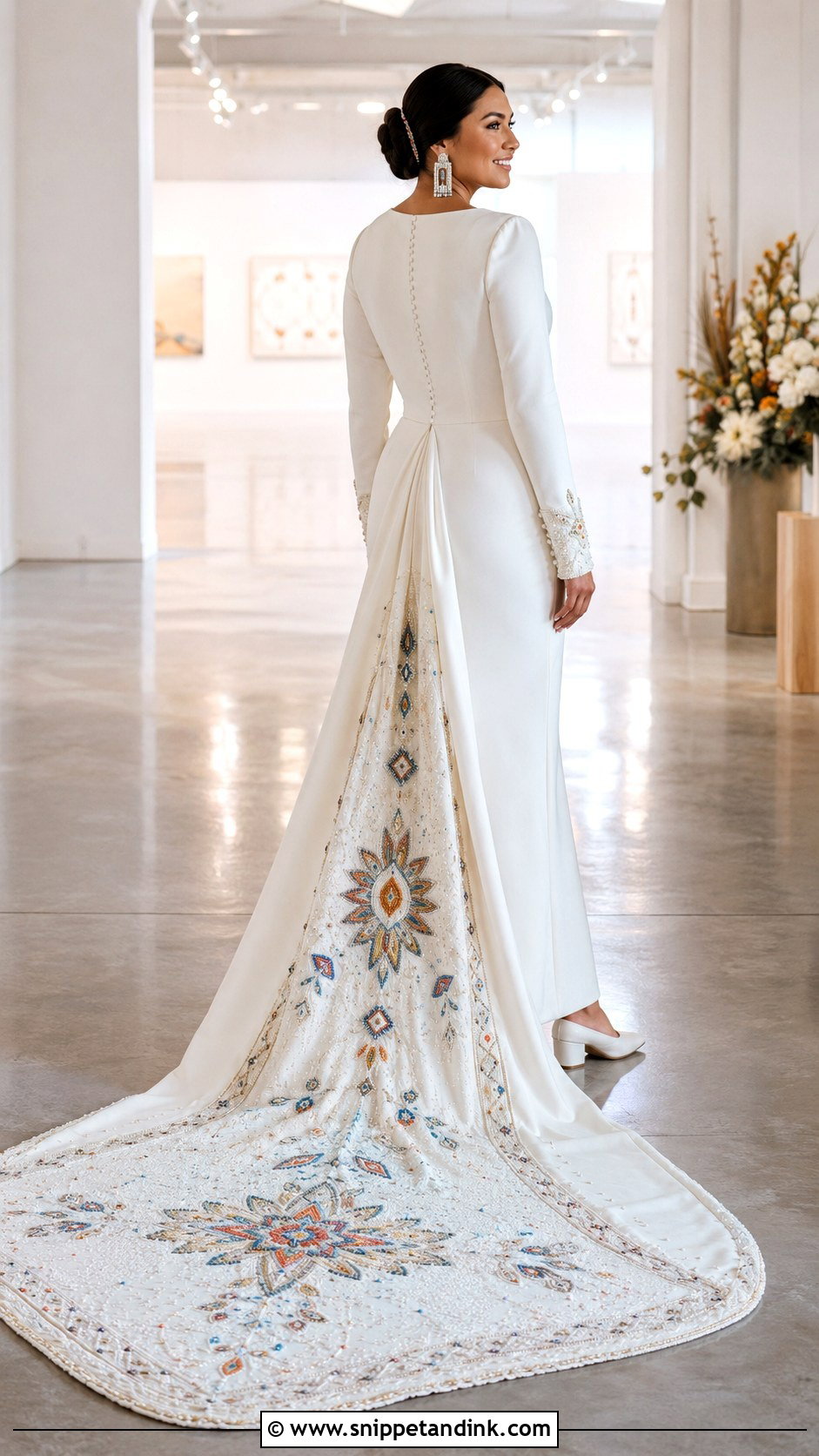
A long train gives beadwork room without loading the whole gown. I choose a fitted crepe, satin or mikado gown with a detachable overskirt or train, and place custom beadwork near the train’s edge. Beads at the hem add drag, so I ask the maker to keep that band narrow and to reinforce where the train attaches. Repeat a small part of the design at the neckline, cuffs or belt for continuity. Beaded earrings, smooth hair and moccasins or low block heels finish it. The train comes off after the ceremony. Agree every pattern with the artist, and leave time for both fitting and handwork.
18. Simple Native Wedding Dress With Statement Earrings
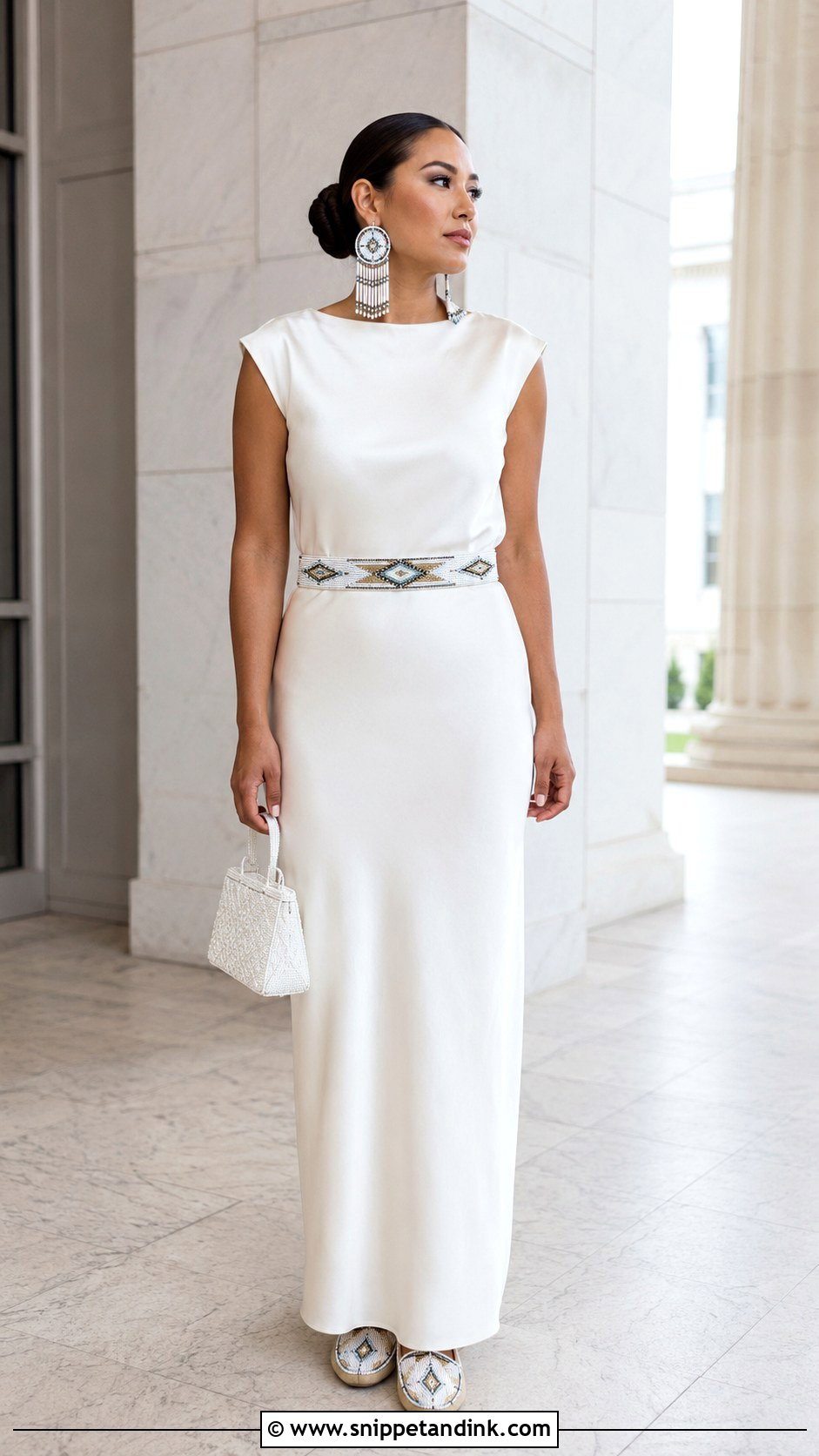
Minimal can still say a great deal about who she is. I start with a simple floor-length silk, crepe, cotton or matte satin dress with a clean neck and comfortable waist, then build the outfit around one pair of statement earrings from a Native bead or jewellery artist. A narrow belt, small bag and understated moccasins echo them, and a sleek bun or side braid keeps them visible. Heavy beaded earrings pull on the lobe over a long day, so I check weight and suggest a lighter pair for the reception. It suits courthouse weddings and small family ceremonies, and leaves room for an heirloom necklace or shawl.
19. Plus Size Native Wedding Dress With Ribbonwork
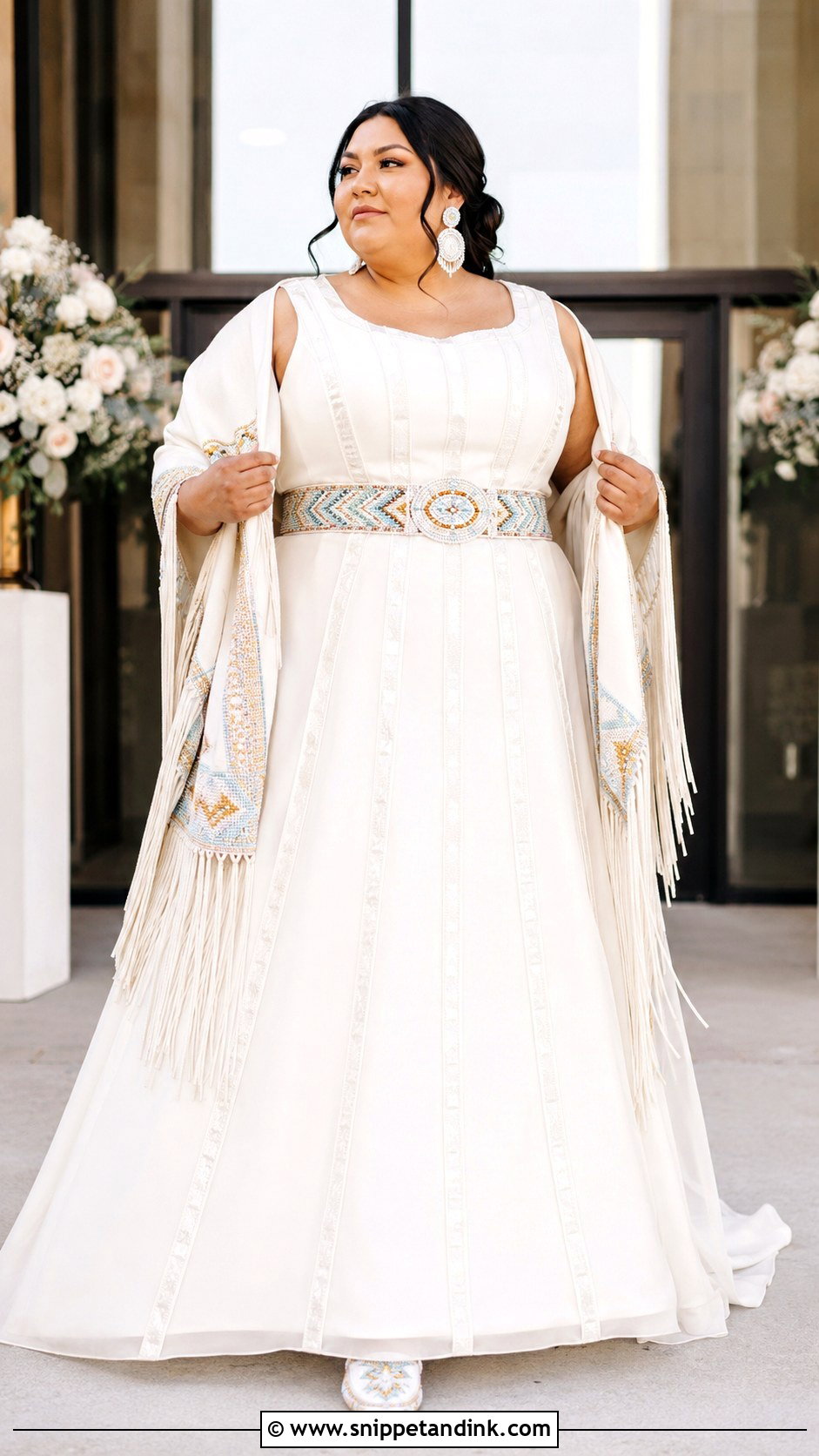
On a plus size bride, fit is what makes the ribbonwork look intentional. I’d consider an A-line, empire waist or softly structured ball gown with good undergarments and professional tailoring. Vertical ribbon along the bodice or sleeves creates a long line, repeated near the hem. A wide beaded belt defines the waist, and a removable shawl gives flexible coverage. Cushioned moccasins, proportional earrings and an updo that keeps the neckline visible finish it. Don’t settle for a badly fitting standard gown because custom work takes longer; a Native designer or seamstress can adjust sleeve width, torso length and skirt fullness while adding the right details.
20. Custom Native Wedding Dress With Family Heirlooms
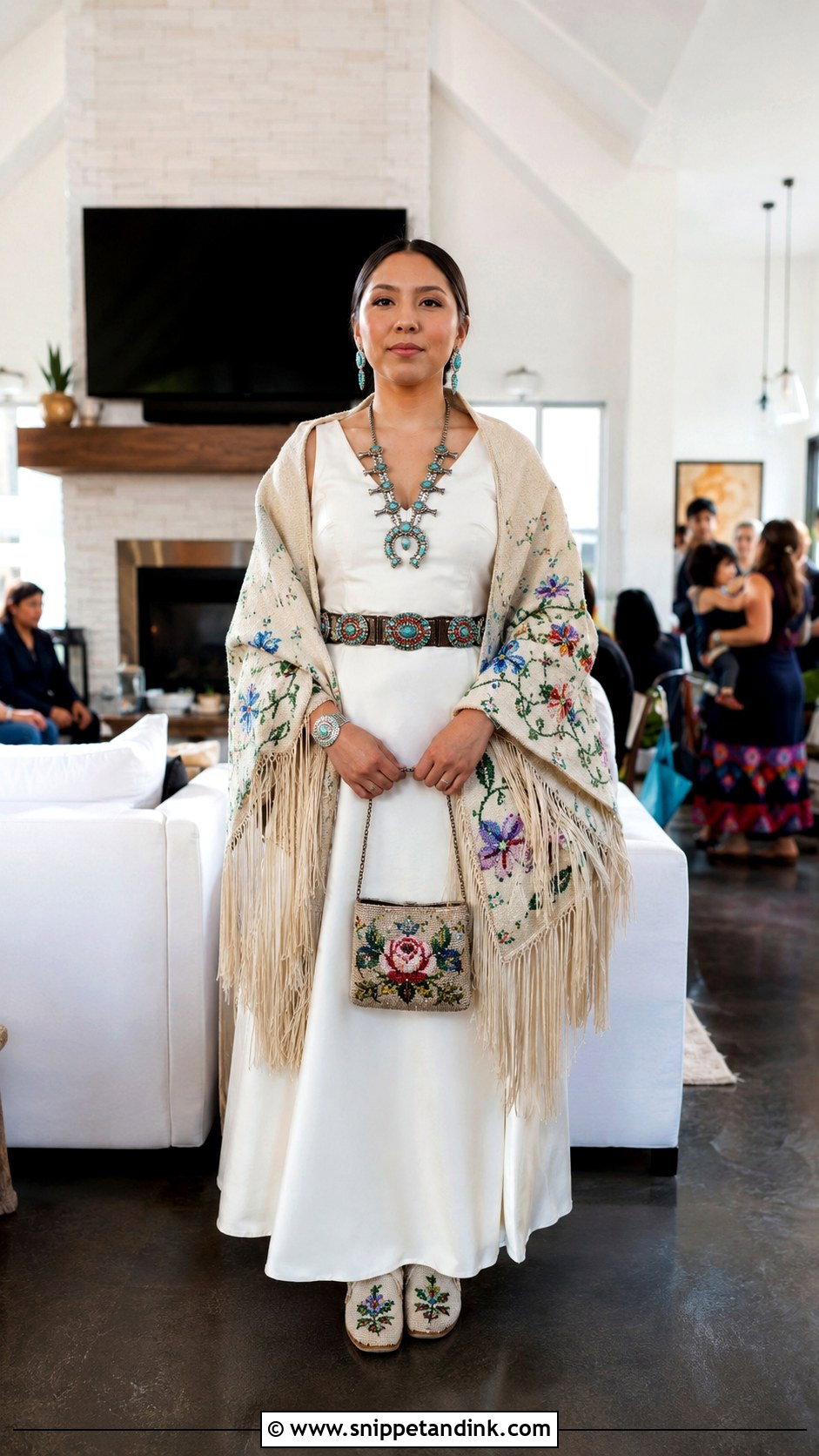
Heirlooms bring generations into a custom dress, and they set the rules for it. I design the gown around the size and character of the inherited pieces: a plain ivory dress for an ornate beaded belt, or a colourful ribbon dress next to vintage moccasins. Ask relatives about each object before wearing or altering it, since some carry ceremonial restrictions, fragile materials or responsibilities. Old beadwork thread can be brittle, so I’d have a knowledgeable artist check stitching before the day. If a piece can’t be worn, display it nearby or commission a new one in its colours with family permission. Nothing entrusted to her should be permanently changed.
If It Rains on Buckskin, Beads or Ribbonwork
Outdoor ceremonies are common with these outfits, so I plan for weather at the final fitting. Hide is the most vulnerable. Buckskin that soaks through can stiffen and shrink as it dries, so I pack a large clean umbrella and a cotton sheet for the bride to stand on during portraits if the ground is wet.
If buckskin does get wet, blot it, never wring it, and let it dry slowly at room temperature away from heaters. Working it gently with clean hands as it dries helps it stay soft. Moccasins are the same: stuff them with plain paper and let them dry on their own.
Ribbon and cotton are more forgiving, though some ribbon colours can bleed onto a white base if soaked. Beadwork itself shrugs off rain; the thread and backing behind it are the weak points. After the wedding, I tell brides to store beaded pieces flat in cotton or acid-free tissue, never hung by the beadwork, and to keep hide out of sealed plastic so it can breathe.
Start With the People, Then the Dress
Every outfit here starts with identity, relationships and respect, and only then with appearance. Talk with relatives, tribal artists, seamstresses and cultural knowledge holders before choosing traditional materials or meaningful symbols. A bride might feel most herself in full community-specific clothing, in a white gown with beadwork, or in a simple dress with heirloom jewellery and moccasins. Each can work when it reflects her real connection and taste. Plan custom work early, fit every piece properly, and buy from Native makers. Done that way, nothing about the outfit will feel like a costume.
You'll Like These Ideas:


Leave a Reply