
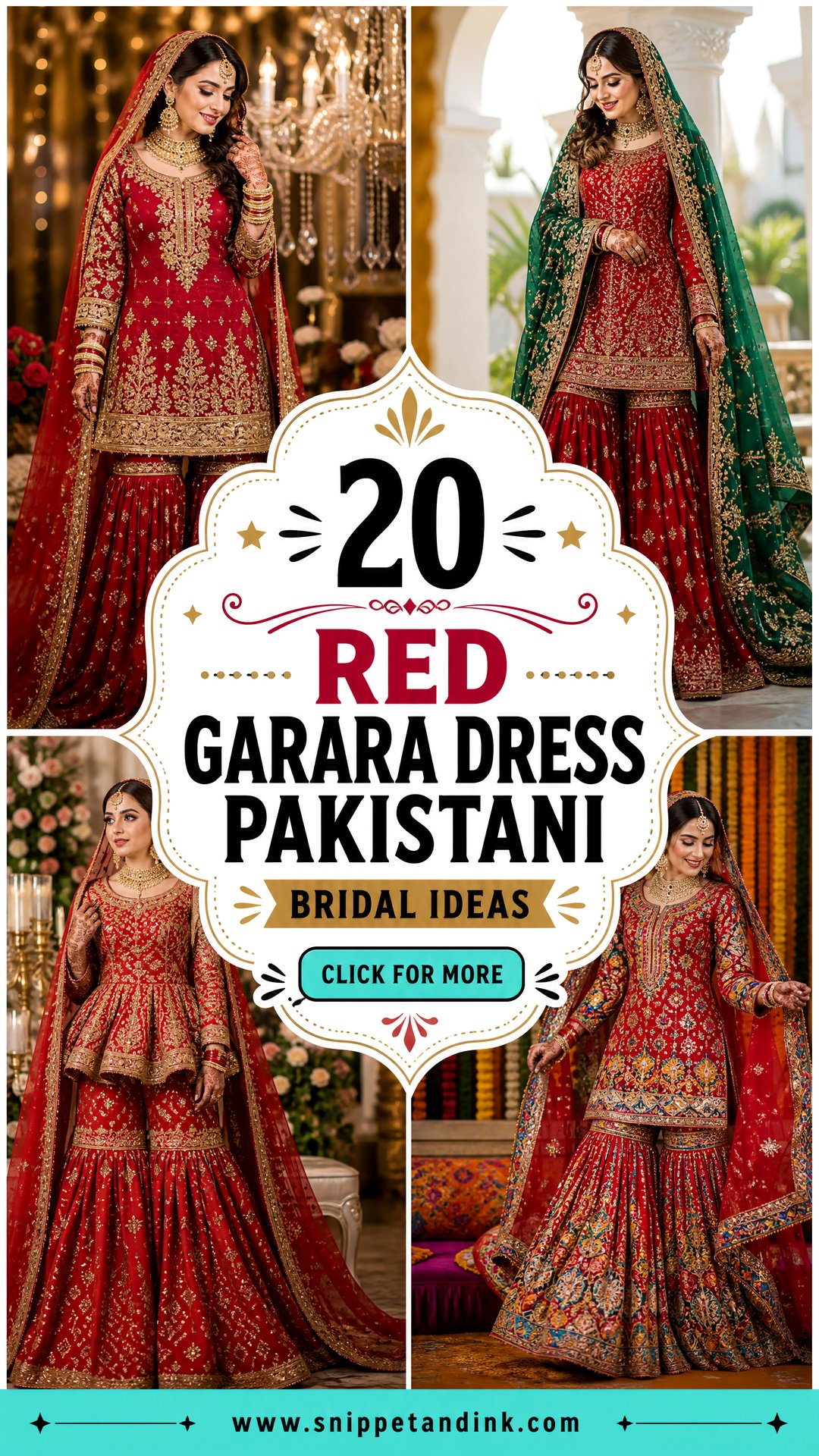
A red garara is one of the few bridal outfits where the cut matters as much as the embroidery. A classic garara is fitted down to the knee and then breaks into a wide flare, worn with a kameez and dupatta. When I dress a bride in one, most of my attention goes to proportion: how long the shirt is, where the knee band lands and how much weight the dupatta adds. Maroon, crimson, rust and antique red all read as bridal, and placed embroidery keeps the set rich without turning it into a suit of armour. The twenty ideas below cover the shirt cuts, fabrics and accessories I’d actually put together for a full look.
Where the Knee Band Lands Decides How a Garara Moves
The knee band, the gathered seam where the fitted leg meets the flare, is the detail I fuss over most at fittings. Set it right on the knee or just below and the flare swings when you walk. Set it too high and the garara starts to look like palazzo pants; too low and you shuffle, because the fitted part grips your calf.
I ask brides to bring the shoes they’ll wear to every fitting, since a two-inch heel shifts the hem and the band together. I also have them sit on a low chair and climb a step in front of me. If the fabric pulls across the thighs when seated, the tailor needs to add ease above the band before the embroidery is finished, not after.
- Weight: heavy zardozi on the flare adds real kilos. Ask the karigar to lighten the work on the back panels that nobody sees.
- Length: the garara should graze the floor in your shoes, or trail if it is farshi on purpose.
- Pockets: a hidden side pocket for a phone and tissues is easy to add at the first fitting and nearly impossible later.
- Timing: hand embroidery commonly needs two to four months, sometimes longer, so order early and leave a month for alterations.
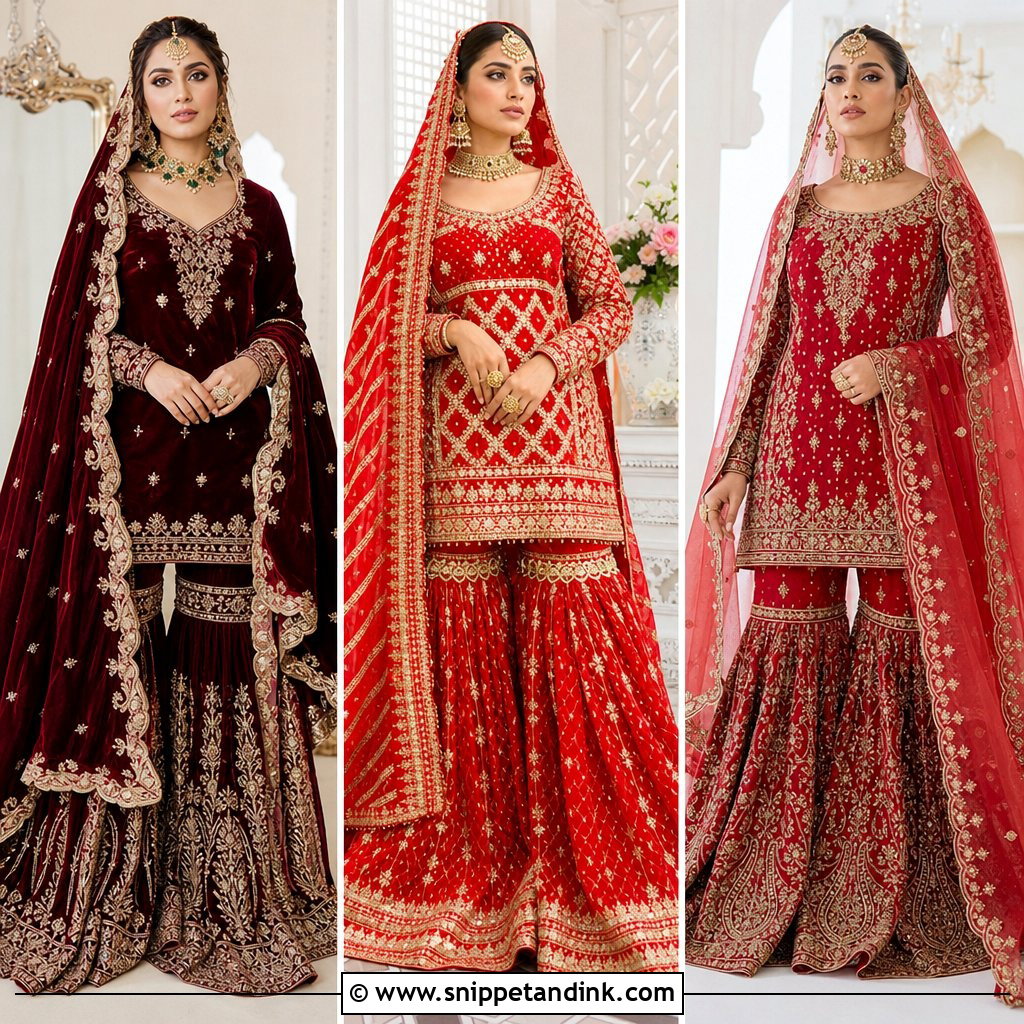
1. Traditional Red Garara With Short Kameez
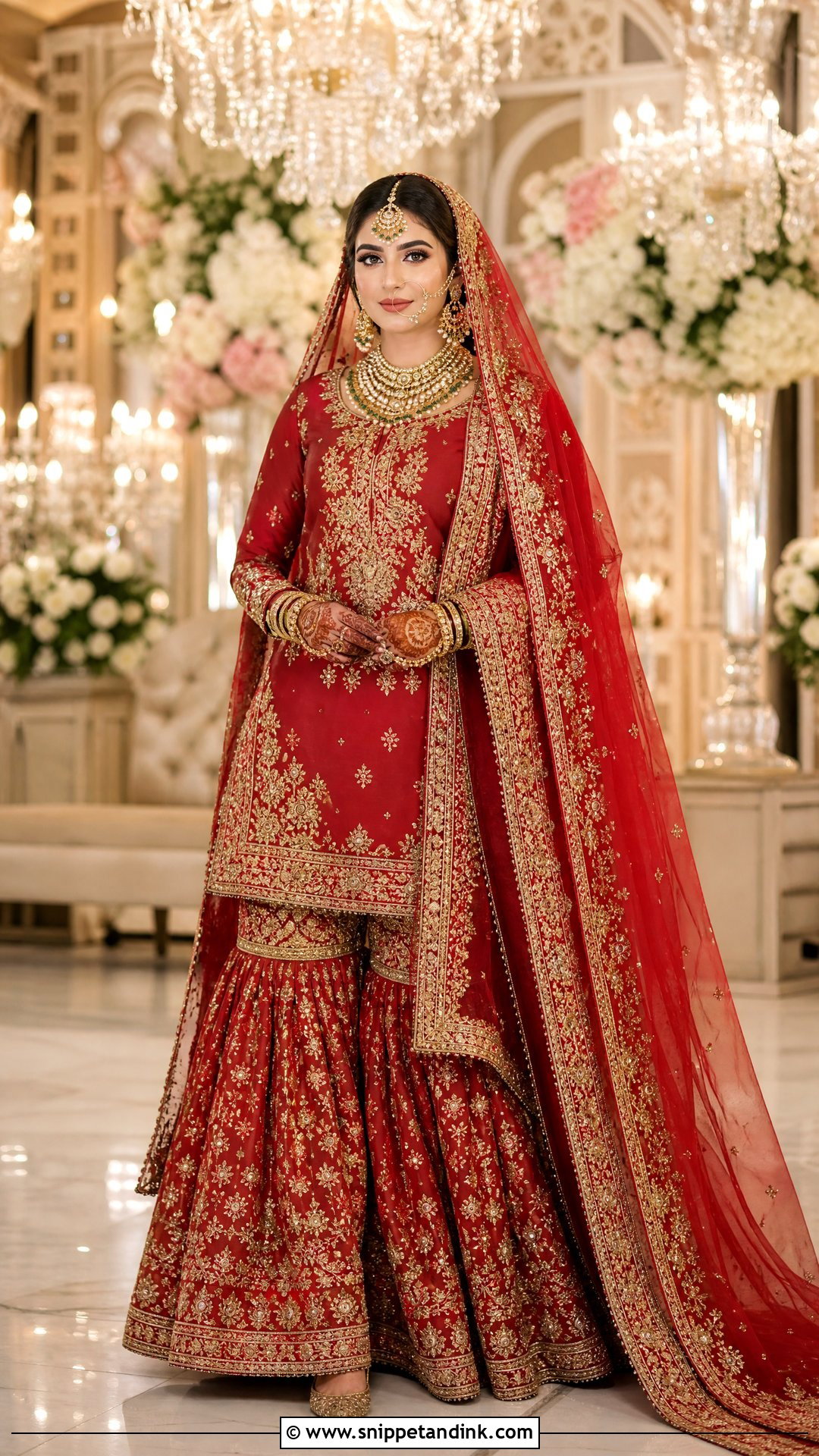
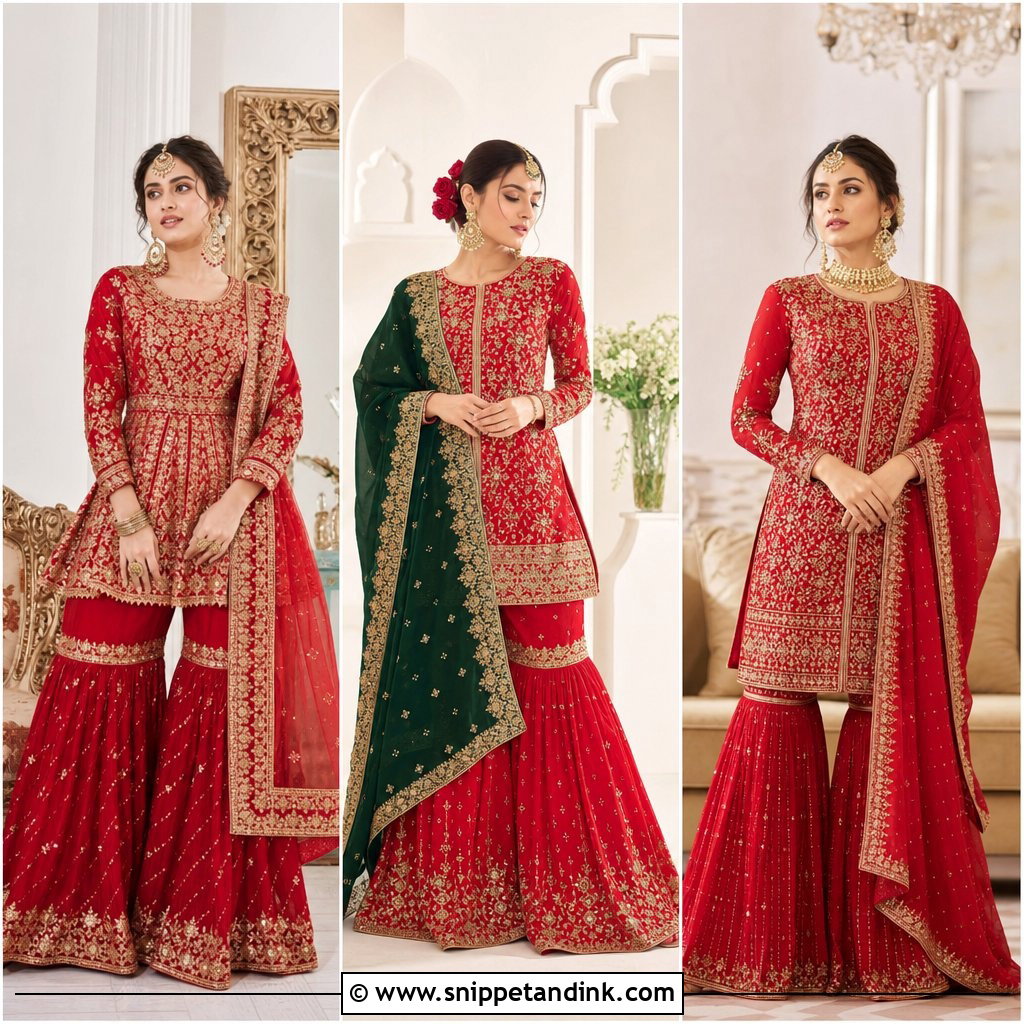
This is the proportion I measure every other garara against. The raw silk kameez should stop at the upper thigh, which leaves a visible stretch of fitted garara before the knee band opens out. Dense zardozi on the neckline, sleeves, knee bands and lower flare gives the ceremonial weight, and a red organza dupatta with a broad border sits on top without hiding the shape. I pair it with a layered kundan necklace, earrings, a maang tikka and gold khussas, with hair in a low bun under the dupatta. For a baraat, red and gold still carries the most meaning in the room.
2. Maroon Red Garara With Long Shirt
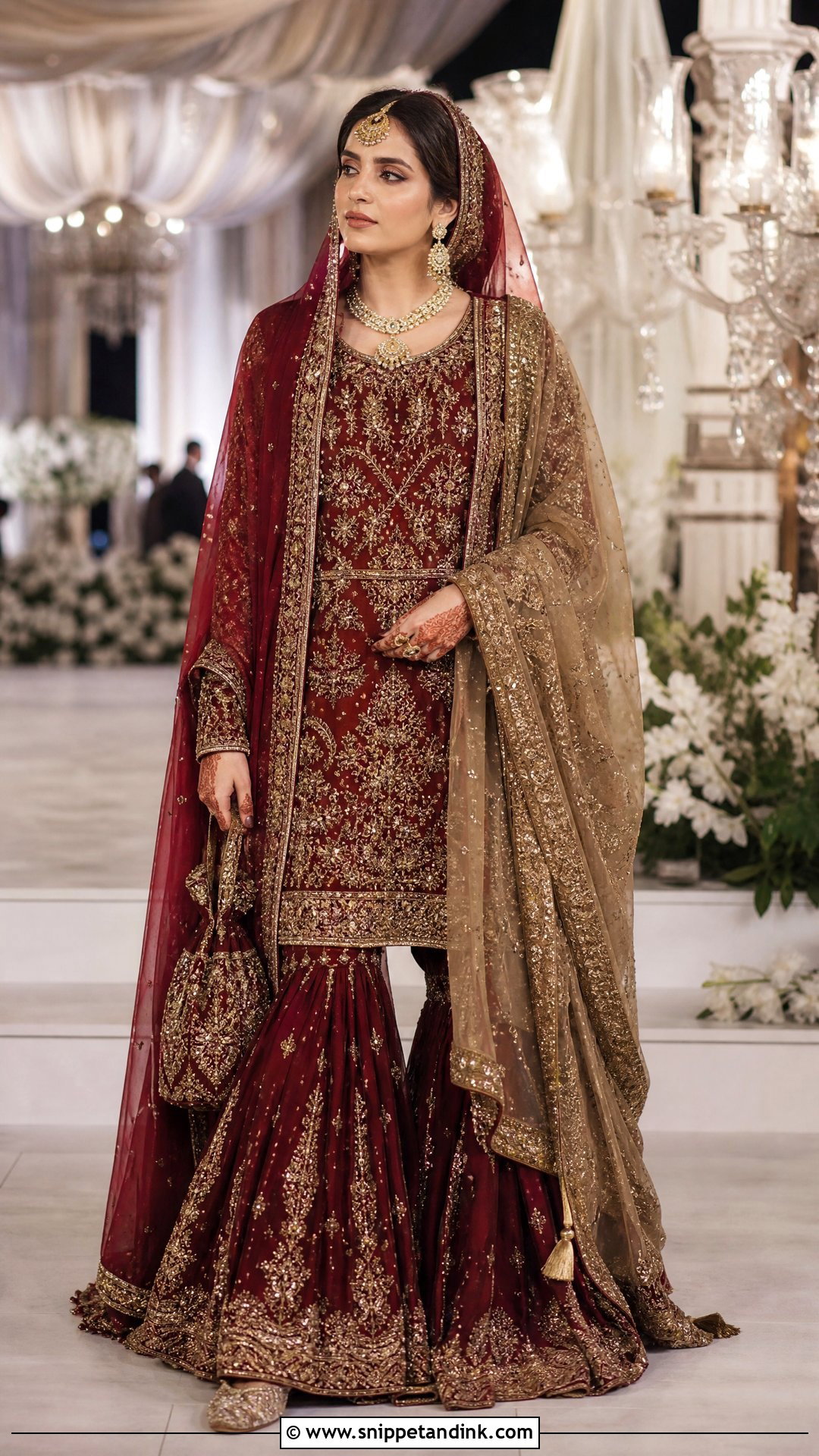
Maroon absorbs warm evening light instead of bouncing it, so it looks deeper and richer after sunset than crimson does. I’d pair a flowing maroon garara with a long straight shirt slit at the sides, because the slits let the flare show when you walk. Keep the antique gold dabka, naqshi and sequins to the neckline, cuffs, hem and knees. A light maroon net dupatta goes over the head; a second gold-neutral one across one shoulder adds depth if you want it. Polki with deep red beads, a center-parted bun, block heels and a small potli finish it.
3. Crimson Red Farshi Garara Bridal Dress
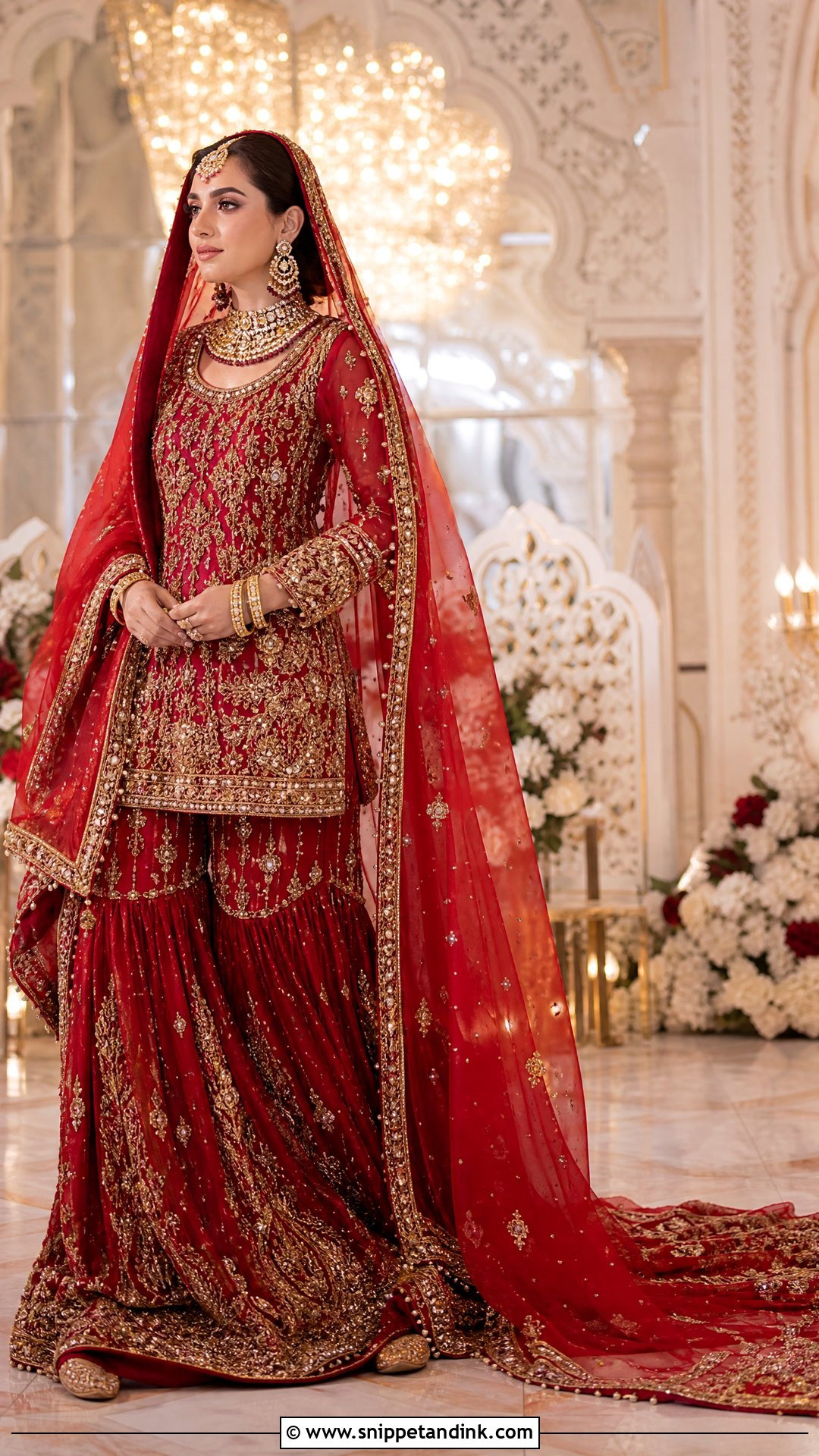
A farshi garara trails along the floor, and that extra length is the whole point. It keeps the fitted knee and flare, then keeps going, so the short embroidered kameez on top has to stay compact or the eye has nowhere to land. Kora, dabka, pearls and old floral motifs suit the crimson base. I always put the dupatta over the head sheer so the choker, jhumkas, passa and bangles still show. My one firm rule with farshi: flat cushioned khussas. Heels catch the hem on stairs, and nobody sees your shoes under that much fabric anyway.
4. Red Velvet Garara With Gold Embroidery
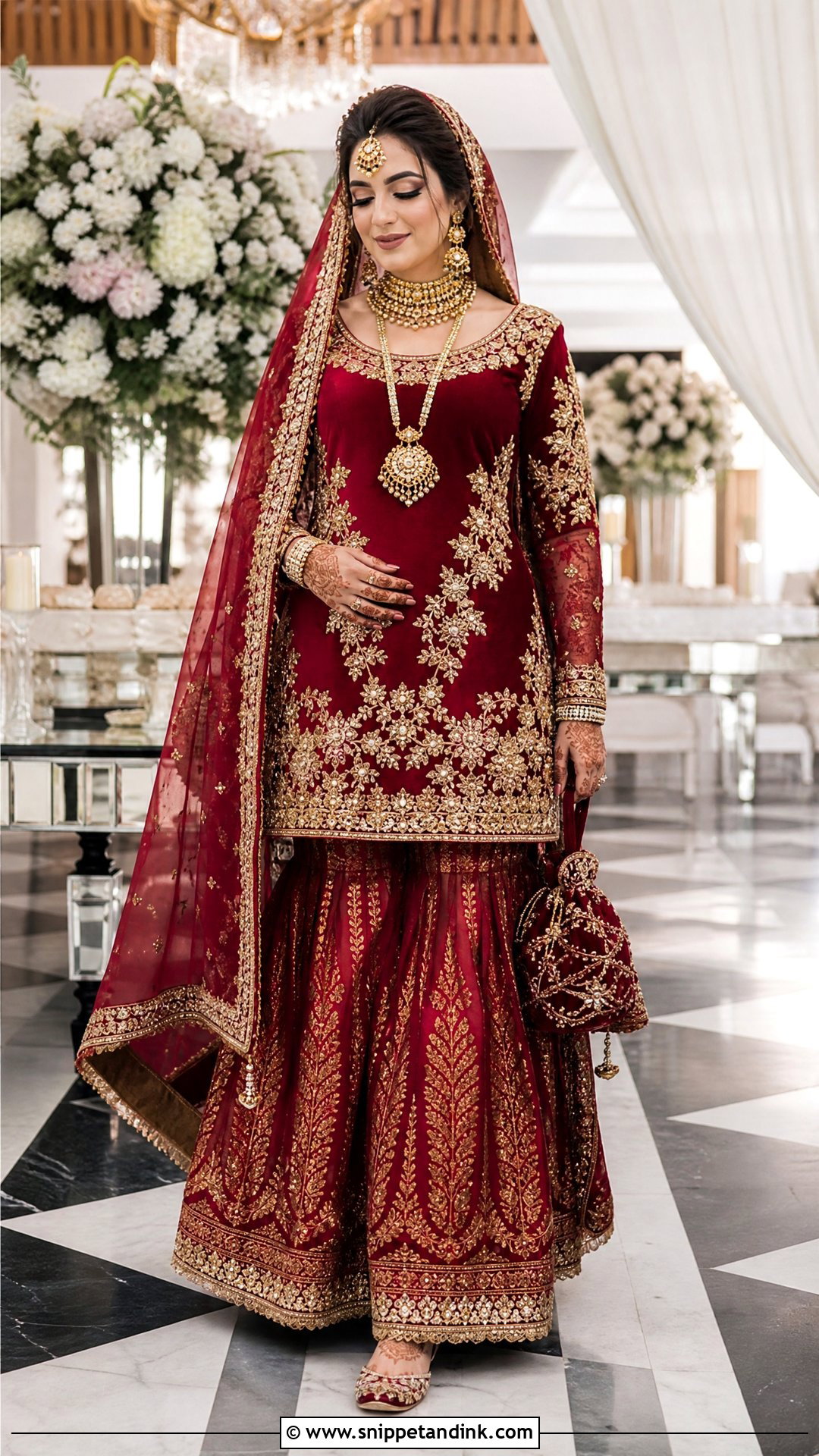
Velvet is wonderful in winter and miserable in a warm hall, so I only suggest it for cool months. I’d use it for the fitted mid-length kameez and keep the garara in raw silk or jamawar, because a full velvet flare gets heavy and drags. Antique zardozi in arches or Mughal borders sits proud on the pile. Add a light organza dupatta trimmed in velvet, a coordinated gold choker, long necklace, earrings and tikka, and low block heels. Velvet also marks easily where a hand rests, so ask your tailor to press the nap in one direction before the day.
5. Red Organza Garara With Pearl Work
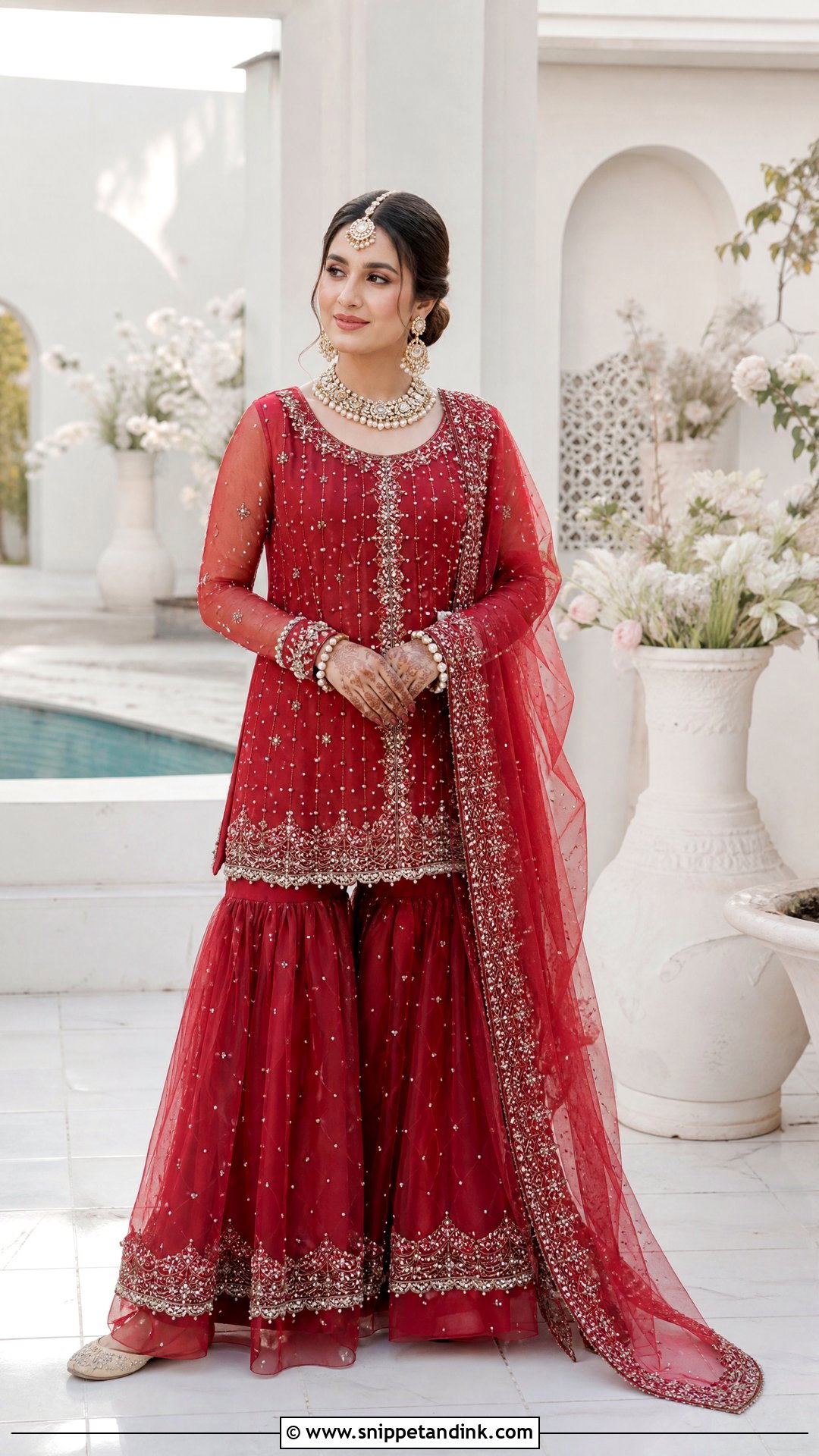
Organza is the garara I reach for when a bride tells me she hates feeling weighed down. It needs a proper lining and a defined knee band, otherwise the flare collapses after an hour of sitting. On the short red kameez I’d swap dense metallic work for pearls, crystals and fine thread, which reads gently in daylight at a daytime nikah. Pin the pearl-scattered organza dupatta at both shoulders, because organza is slippery. Pearl-edged kundan, a small tikka, ivory-gold khussas and a low bun keep the whole set bright.
6. Red Garara With Double Dupatta
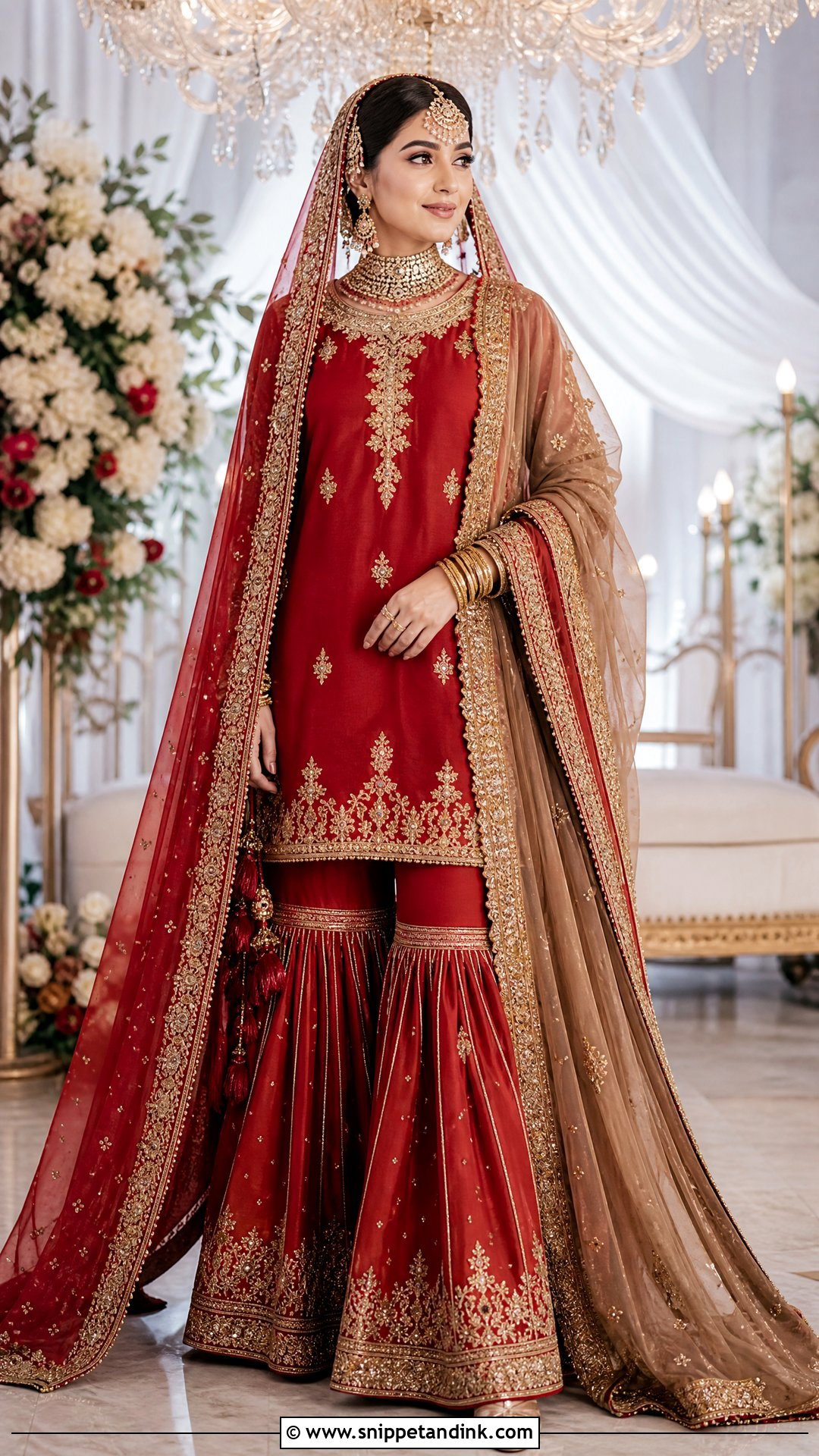
Two dupattas give you coverage over the head and a second layer to frame the body, and they’re very much in fashion in Pakistani bridal wear right now. Start with an embroidered red raw silk garara and a short kameez with a defined waist. The head dupatta should be light red net with a firm border, since a floppy edge collapses around the face. The second, in muted gold or soft beige, crosses one shoulder and loops round the arms. With that much fabric I’d wear a choker rather than stacked necklaces, and I ask the tailor for hidden loops so both layers stay put while you walk and greet guests.
7. Bright Red Garara With Gota Patti
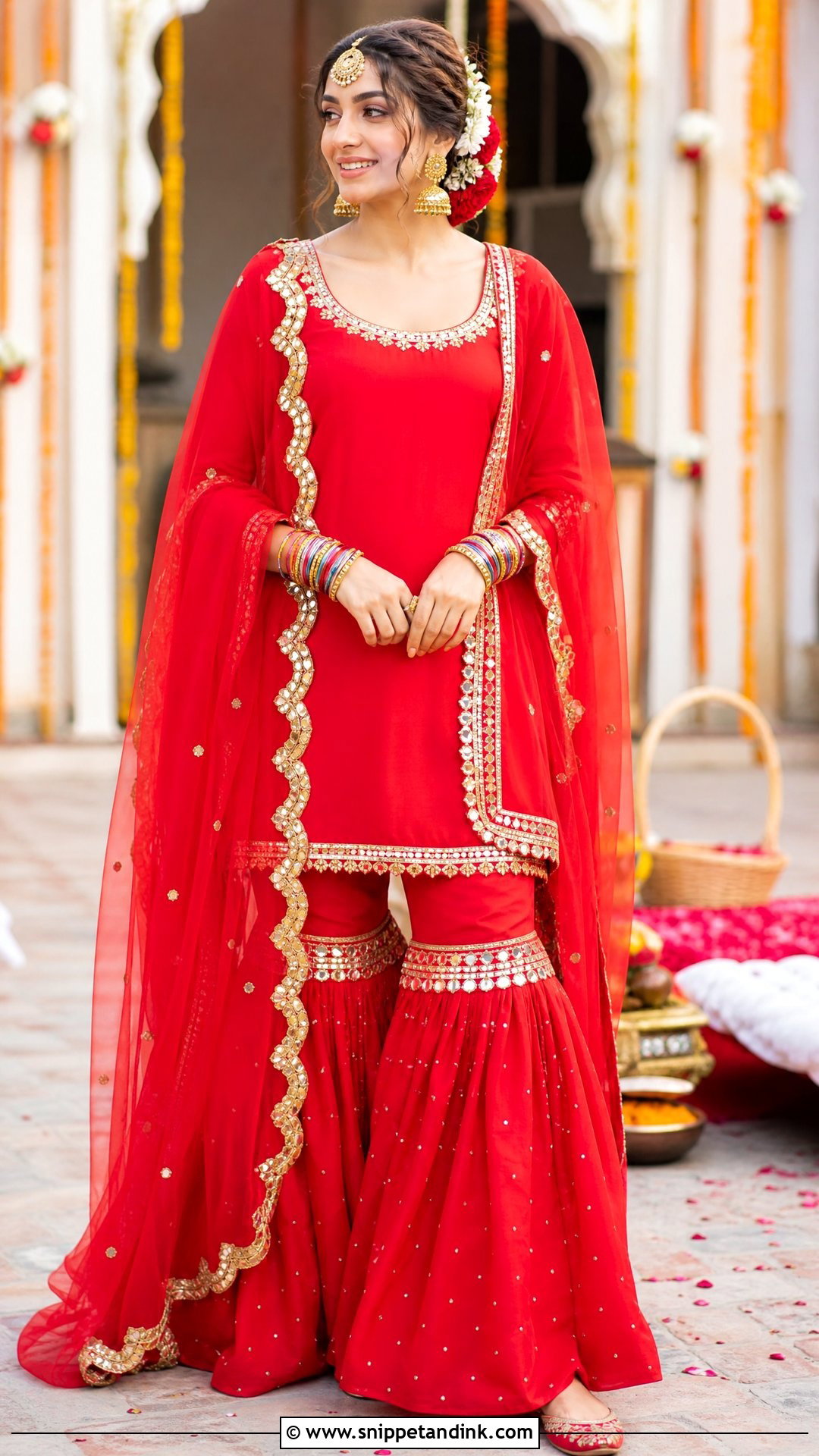
Gota patti is metallic ribbon, so it throws light like nothing else, and in daylight that sparkle is very lively. I’d keep the short kameez slightly relaxed and pair it with a full garara trimmed with broad gota above the knees and around the hem, leaving plenty of red visible between motifs. A chiffon dupatta with scalloped gota edging, gold jhumkas, a classic tikka, coloured bangles and embroidered khussas keep it festive. Gota can scratch bare arms, so check the inside of the sleeves at your fitting.
8. Dark Red Garara With Antique Gold Work
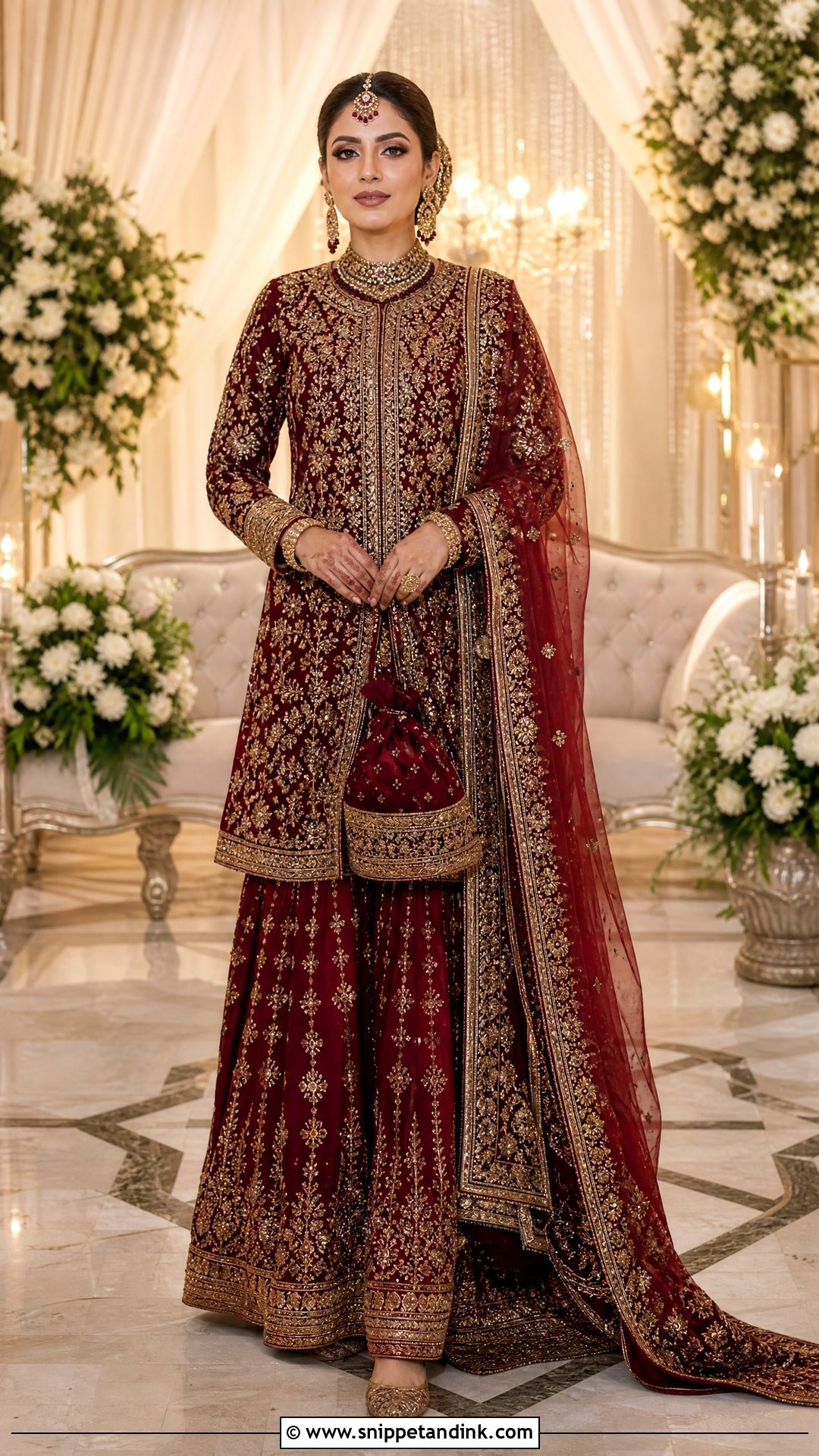
Dark red lets antique gold thread look aged and soft rather than brassy. A structured silk garara with a wide flare and a knee band in aged dabka pairs well with a mid-length kameez, high neck and fitted sleeves. Let the dark net dupatta’s corner motifs fall evenly from the head. I’d choose antique polki with maroon beads instead of bright yellow gold, and keep makeup in the same register: smoked eyes and a brick lip. Antique-gold khussas and a small potli finish it without competing with the handwork.
9. Red Garara With Green Dupatta
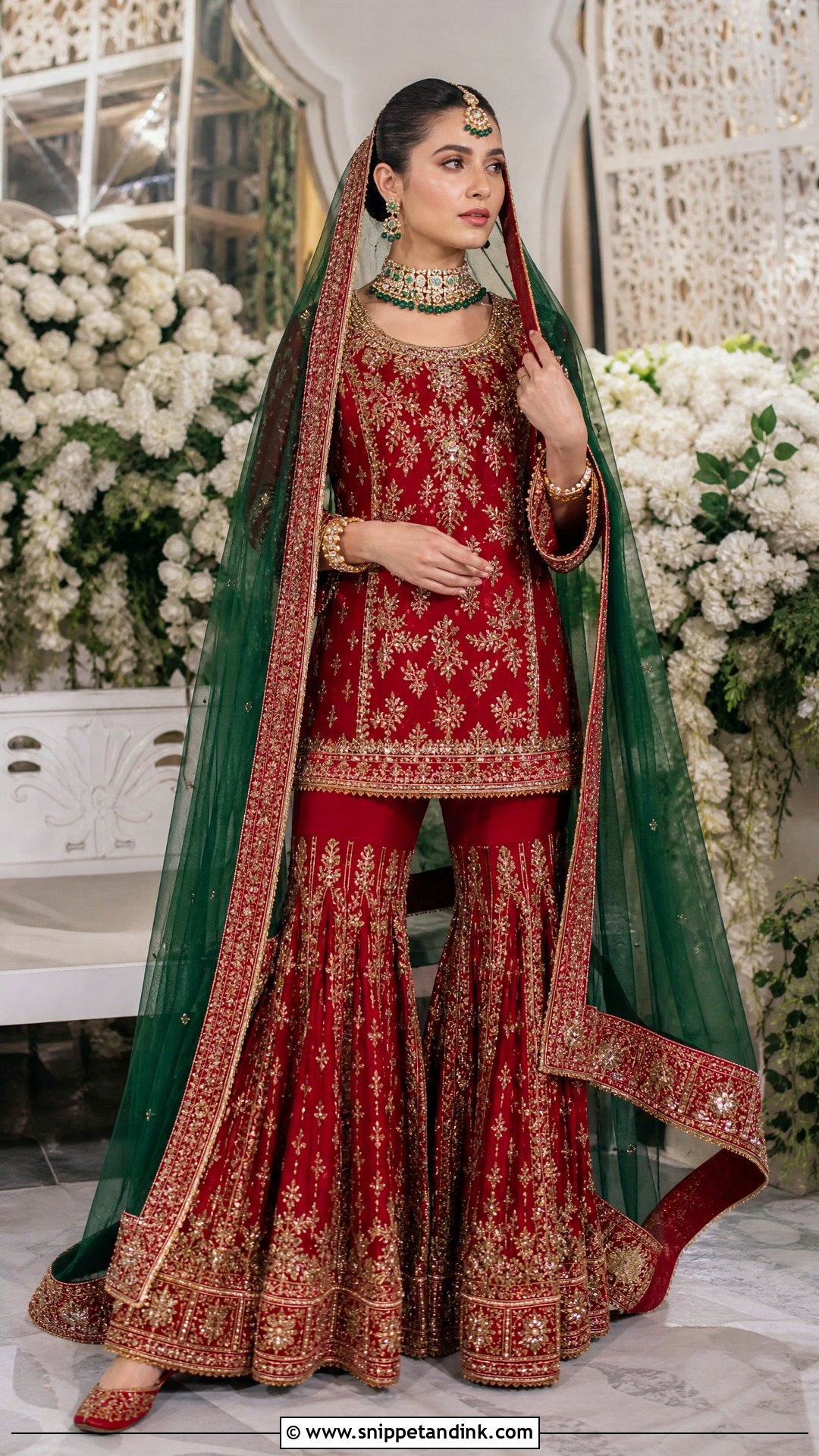
Green against red is a very old pairing in Pakistani bridal dress, and I love how it frames the face. Build the red kameez and garara with gold floral vines, then add an emerald or bottle-green dupatta bordered in red. Drape it over the head, or carry it on one shoulder if a lighter red veil goes on top. The trick I use to make it feel planned is emerald beads in the kundan choker, so the jewellery ties the two colours together. Red khussas, warm neutral eyes and a rich red lip keep the red as the main colour.
10. Red Garara With Pink Dupatta
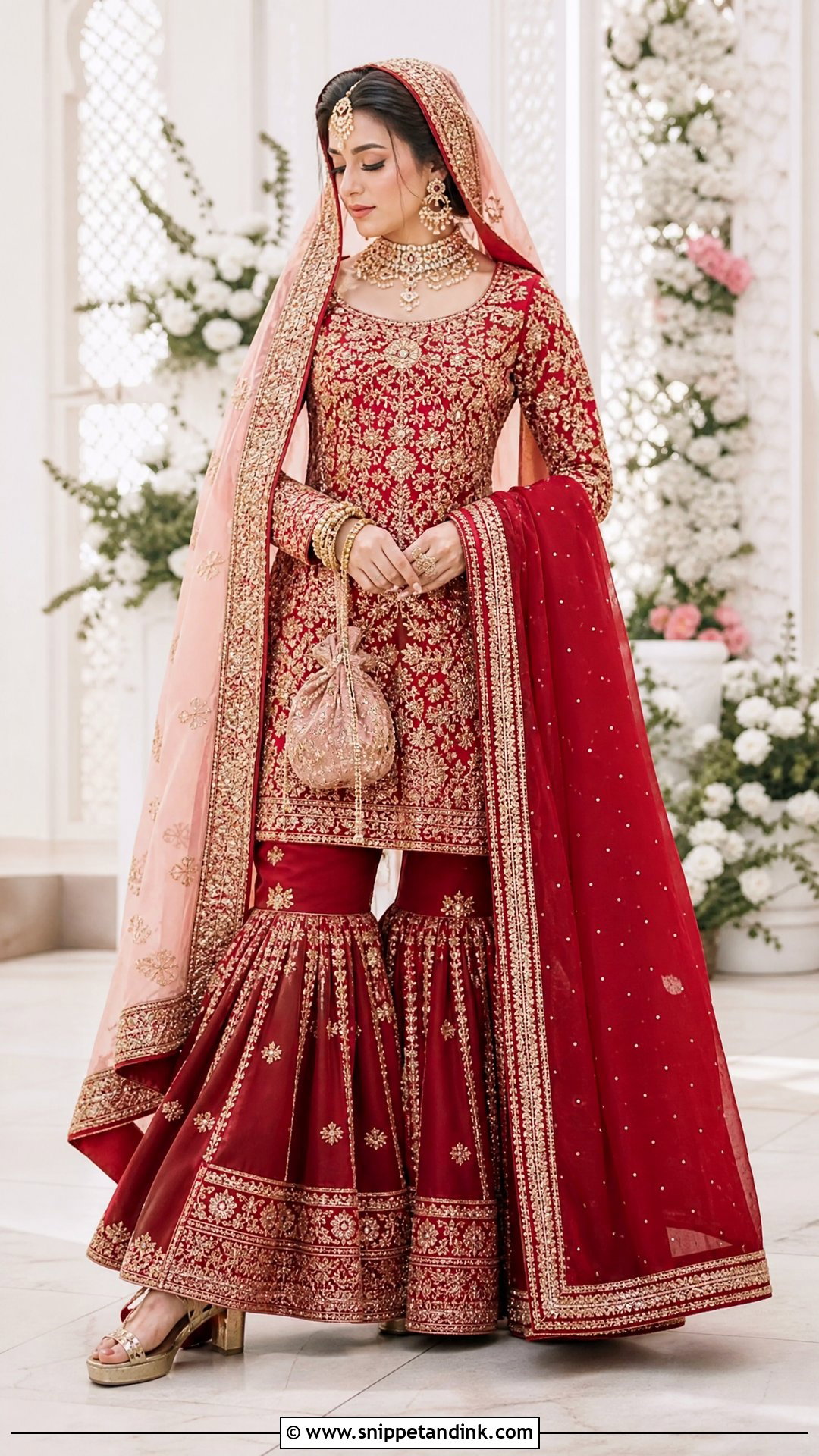
A pink head dupatta softens a red outfit around the face, which is useful for brides who find full red overwhelming next to their skin. Keep the garara deep red with gold work at the knees and hem, and the kameez fitted. The dupatta can be blush or dusty rose, embroidered in red and gold so it doesn’t look borrowed from another outfit. Rose-gold kundan or polki with pink beads bridges the two shades. I’d carry a second red dupatta over one arm for the ceremony and drop it for the reception.
11. Red Garara With Peplum Kameez
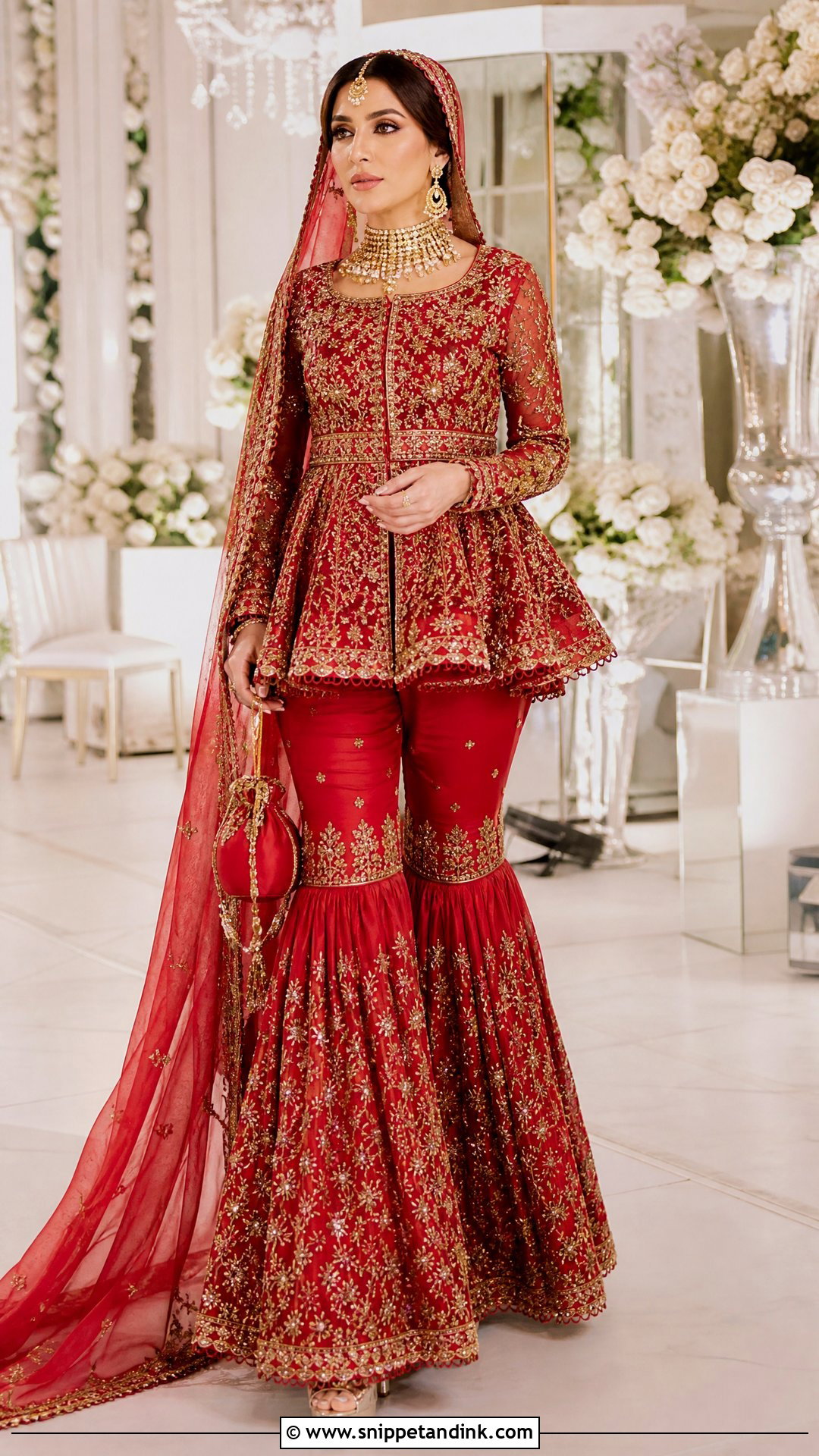
A peplum pinches the waist, which gives a garara a much more modern outline. The peplum should end above the knee so the fitted top of the garara still shows, and its flare has to stay controlled; when both the top and bottom flare widely, the figure disappears. Put the embroidery on the bodice, waist, cuffs and peplum edge, with coordinated knee bands below. A sheer dupatta with a narrow border, pinned to one shoulder, keeps the waist visible. A kundan choker, statement earrings, platform heels and a neat bun suit the sculpted line.
12. Red Garara With Angrakha Shirt
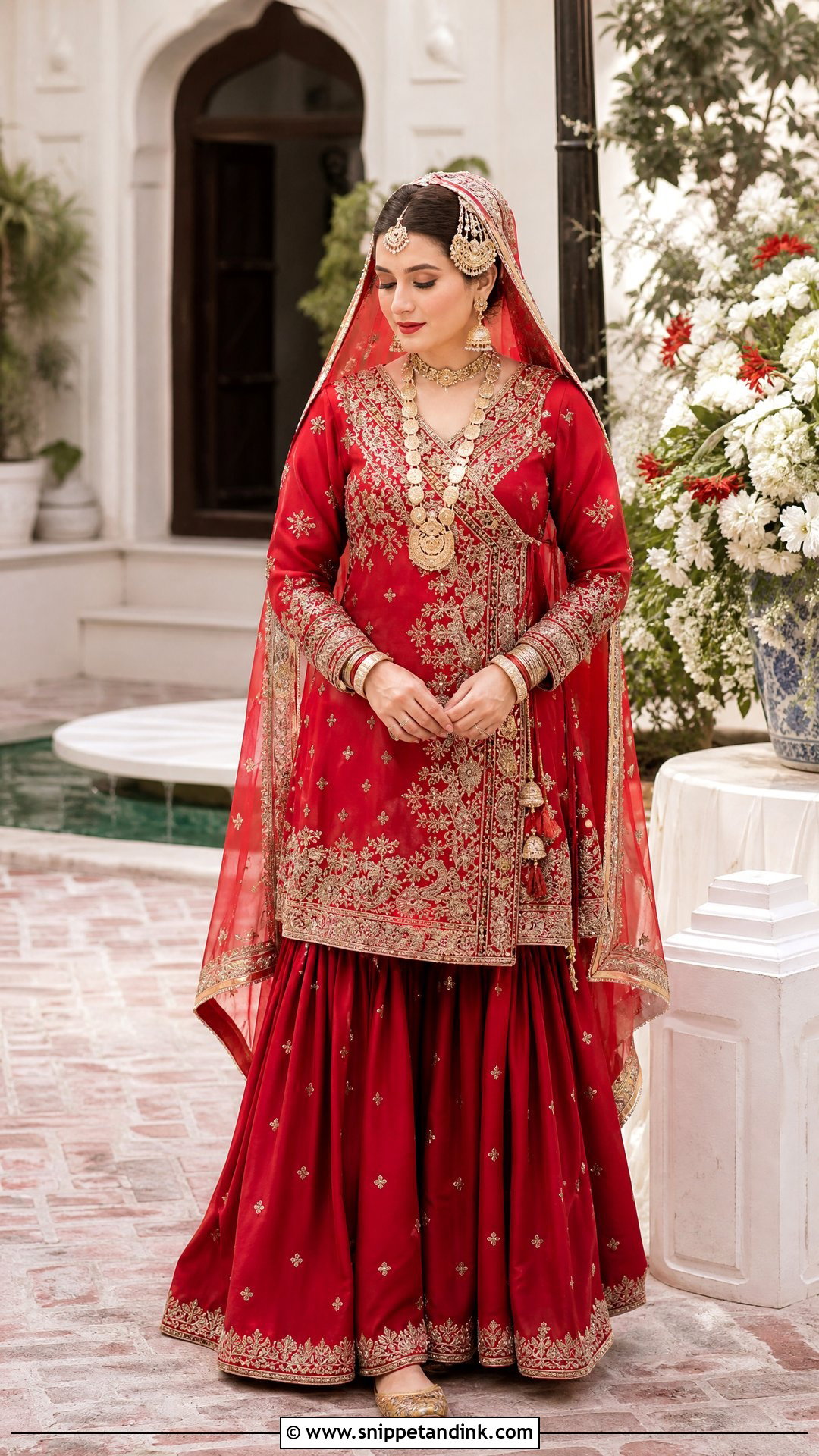
The angrakha’s wrapped, diagonal neckline gives the outfit movement even when you’re standing still. I’d choose a knee-length cut with side ties and a modest flare, and run the embroidered border along the diagonal and round the hem so it reads as one line. Under it, a red raw silk garara with gold knee bands. A light chiffon dupatta over the head and one shoulder stops the layered top from looking bulky. One fitting note: angrakha ties loosen as you move, so I tack the inner tie with a couple of stitches on the morning.
13. Red Garara With Jacket Kameez
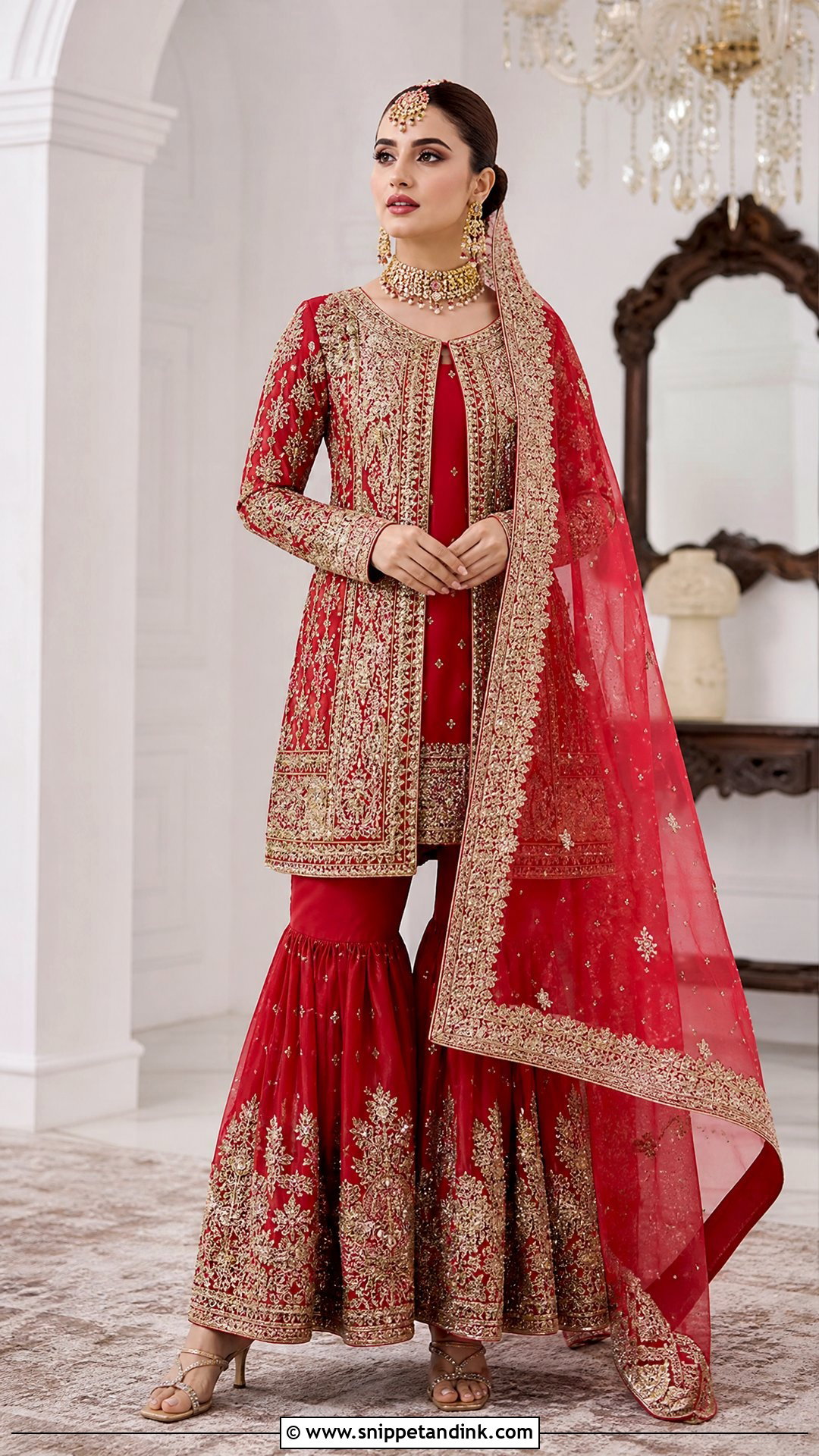
A jacket kameez suits brides who want something tailored but still traditional. The red inner blouse stays plain; the open embroidered jacket falls to the knee, fitted at the shoulders and lightly shaped at the waist. I keep the threadwork, pearls and dabka on the opening, sleeves and hem so the structure shows. The head dupatta has to be narrow at the front or it swallows the jacket line completely. A choker, drop earrings, central tikka, block heels and a low bun fit the architectural shape.
14. Red Jamawar Garara With Plain Kameez
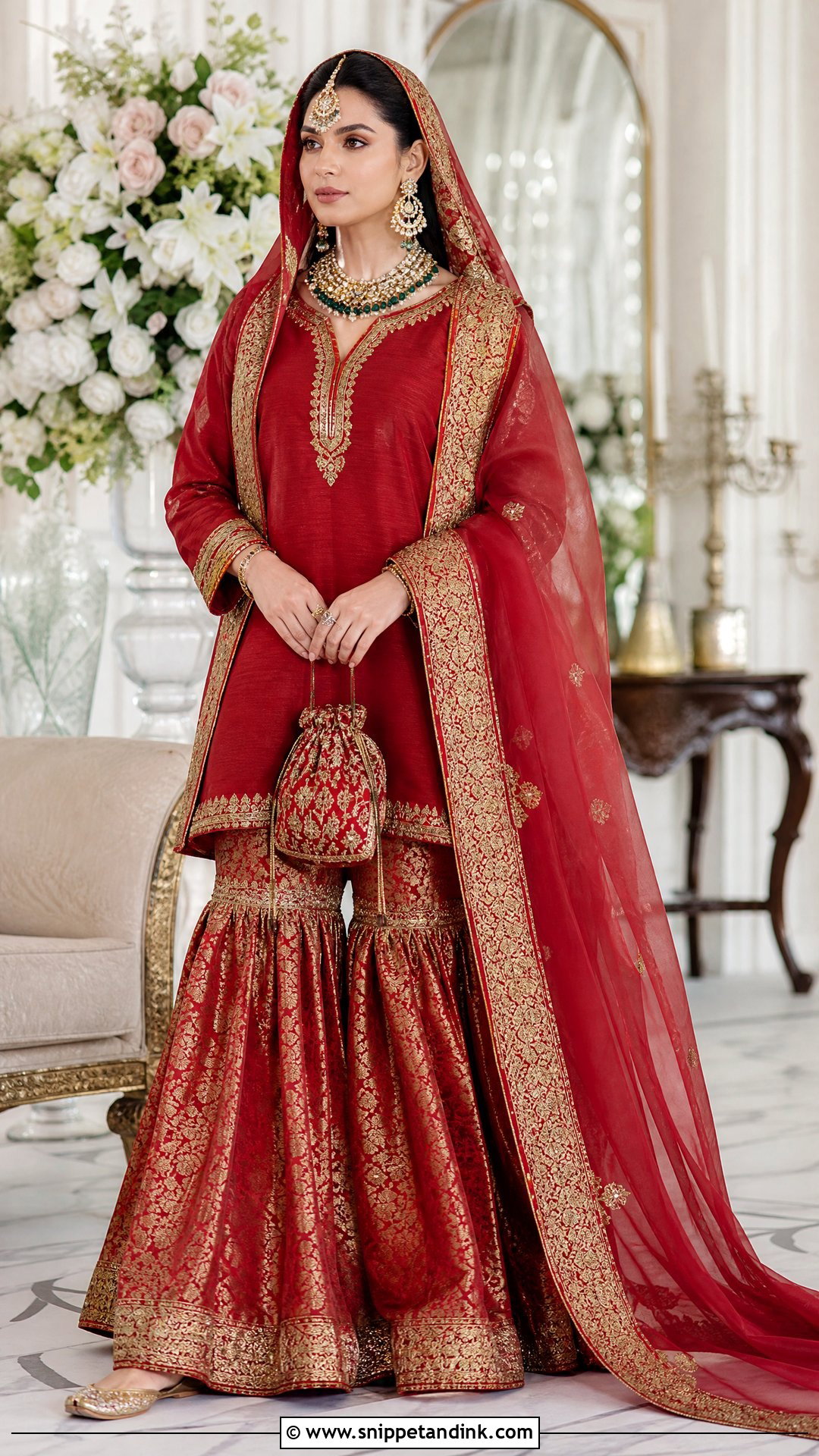
Jamawar is woven with its pattern, so it looks rich even with very little embroidery on top. I’d pick a red-and-gold jamawar garara with a tailored upper leg, ornate knee band and generous flare, and keep the raw silk kameez plain apart from the neck, cuffs and hem. A red organza dupatta with a jamawar border ties the pieces together. Jamawar is stiff and slightly scratchy at the seams, so ask for the garara to be lined in soft cotton or silk. Classic kundan, gold khussas and soft matte makeup let the weave carry the outfit.
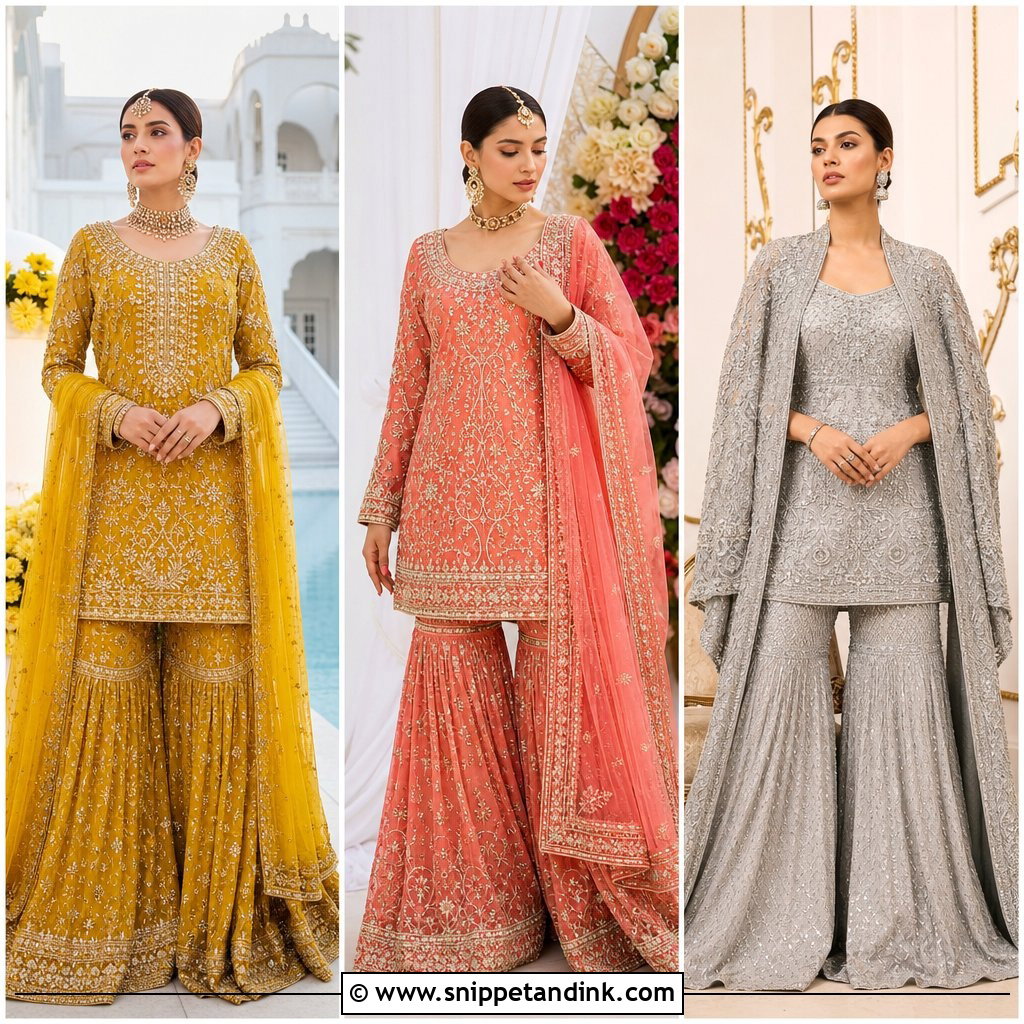
15. Red Garara With Floral Zardozi
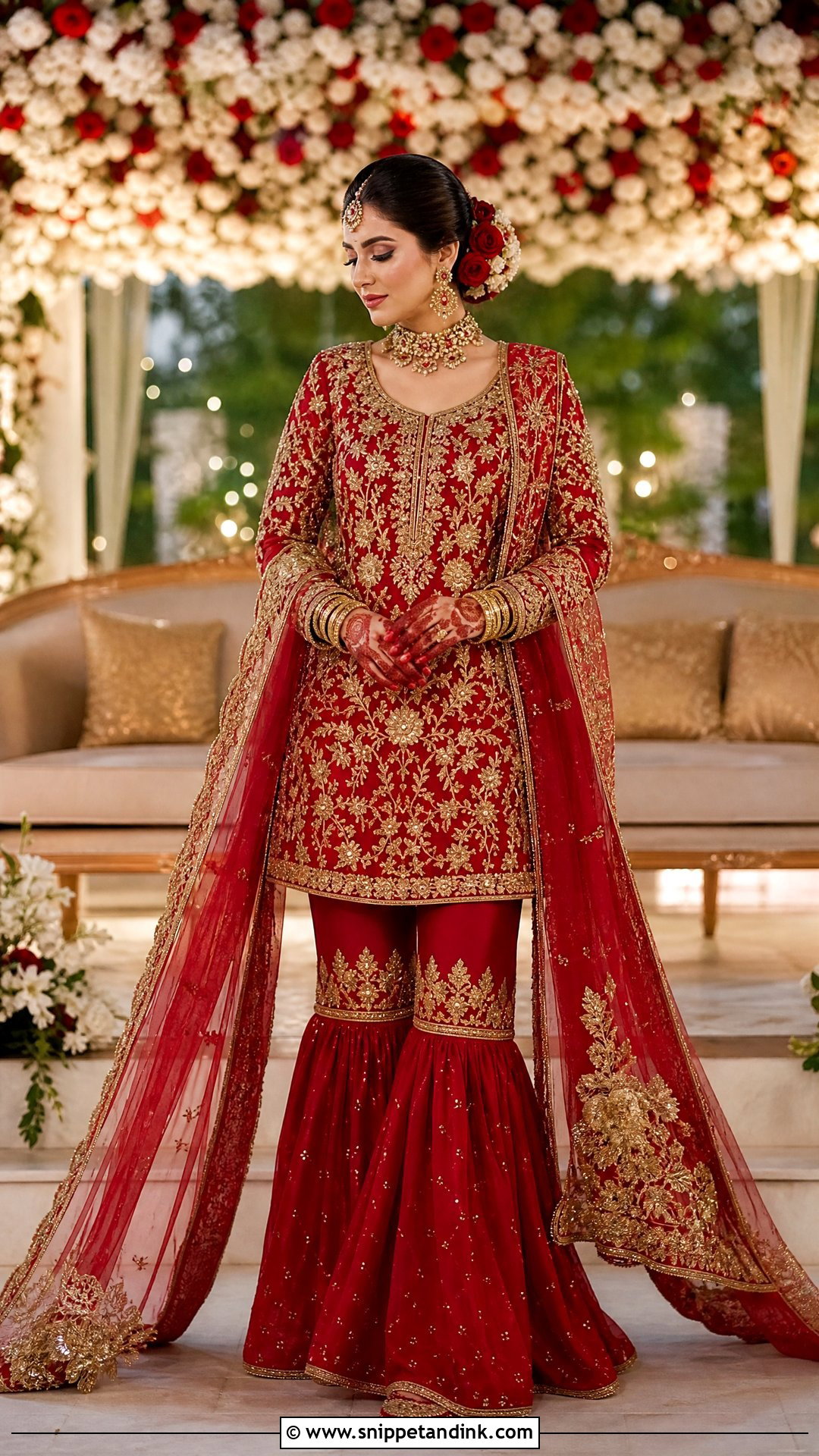
Floral zardozi gives real depth, because the raised metal thread catches light at different angles across each petal. Space the flowers, leaves and vines carefully on a short silk kameez, then repeat a few motifs at the garara knees and border so the set reads as one. Pearl or coloured-stone centres are fine, but I’d limit them to one accent colour. A net dupatta with floral corners, a floral kundan choker, stacked bangles, red-and-gold khussas and a low bun with flowers complete it.
16. Rust Red Garara With Copper Work
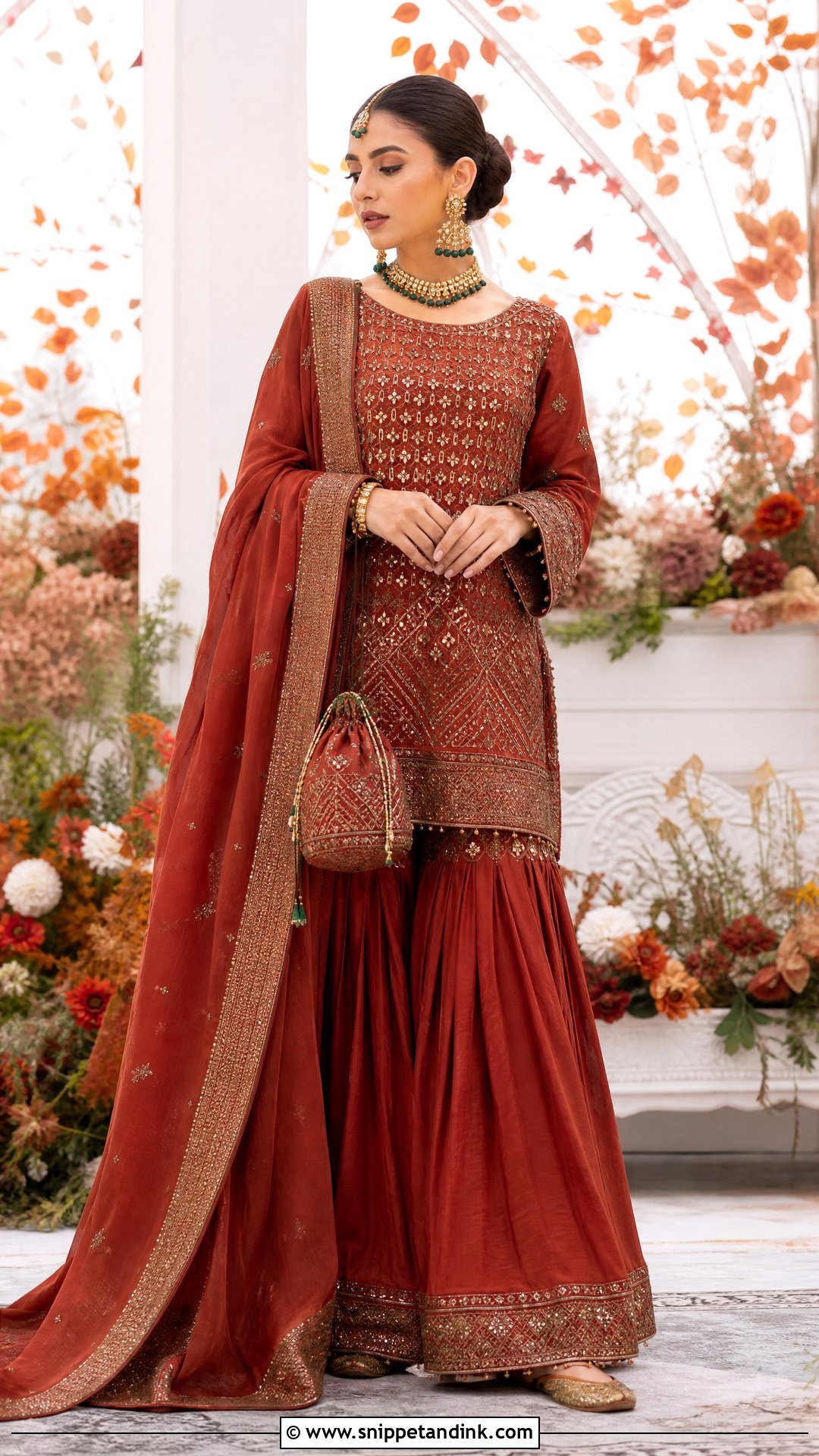
Rust is the red I suggest for brides with warm, olive or golden skin who feel washed out in bright crimson. Pair a rust raw silk garara with a fitted short kameez worked in copper, dull gold and bronze; geometric borders suit this earthy shade better than very sweet florals. A rust organza dupatta with copper edging can go over the head or off one shoulder. Antique jewellery with deep green beads adds contrast without cooling things down. Keep makeup in terracotta and bronze, with a warm brick lip.
17. Cherry Red Garara With Silver Work
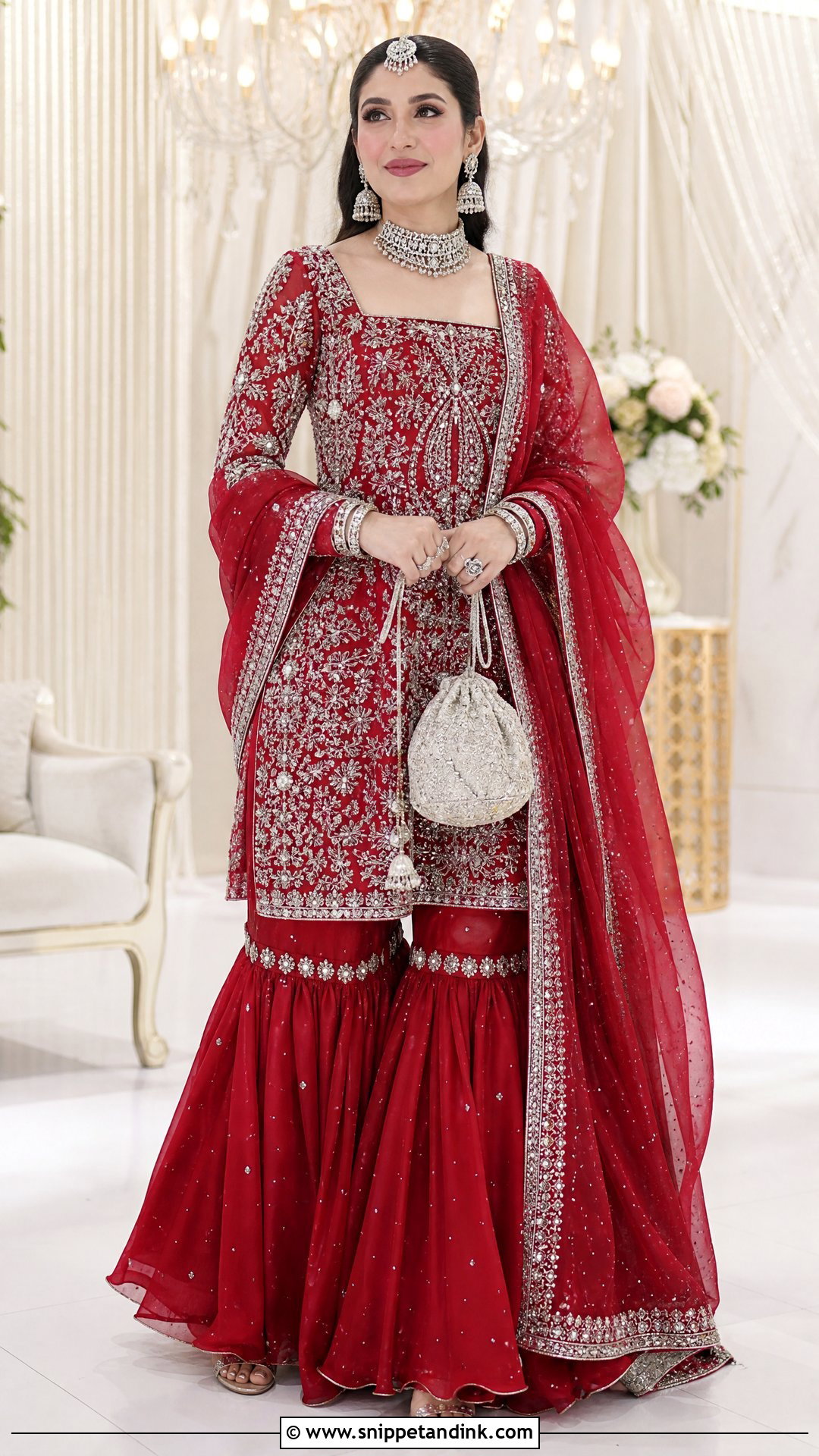
Cherry red with silver looks young and bright, and it’s the right choice if you prefer silver or white metal to yellow gold. Concentrate crystal, pearl and silver thread on the garara knees and lower flare, and keep the short kameez clean with a square or soft curved neck. A sheer cherry dupatta edged in silver goes on top. Silver kundan, diamond-style pieces or pearls in cool settings belong with it. Silver thread tarnishes faster than gold, so I’d store this one wrapped in acid-free tissue with a silica sachet between events.
18. Red Garara With Cape Dupatta
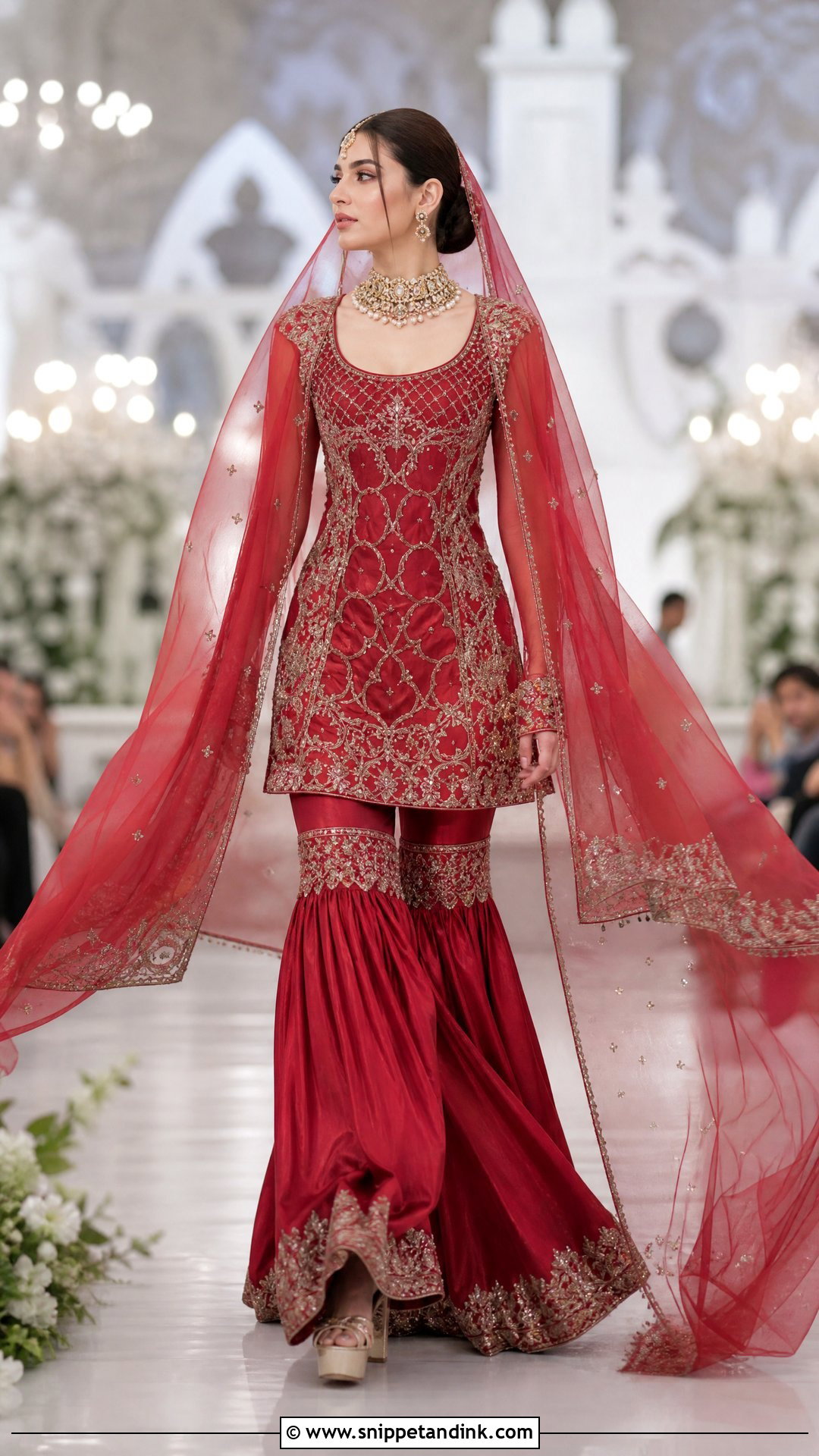
A cape dupatta attaches at the shoulders and leaves both arms free, which I appreciate on brides who dread a dupatta slipping all evening. The garara keeps its detailed knee panels; the cape, in red organza or net, should trail behind without dragging. Repeat the gold motifs from the shirt on its border and shoulders. A separate light veil can cover the head for the ceremony and come off later. The weak point is the attachment: I ask for hooks plus a hidden snap at each shoulder, because a single hook pulls the neckline sideways in photos.
19. Red Garara With Minimal Gold Embroidery
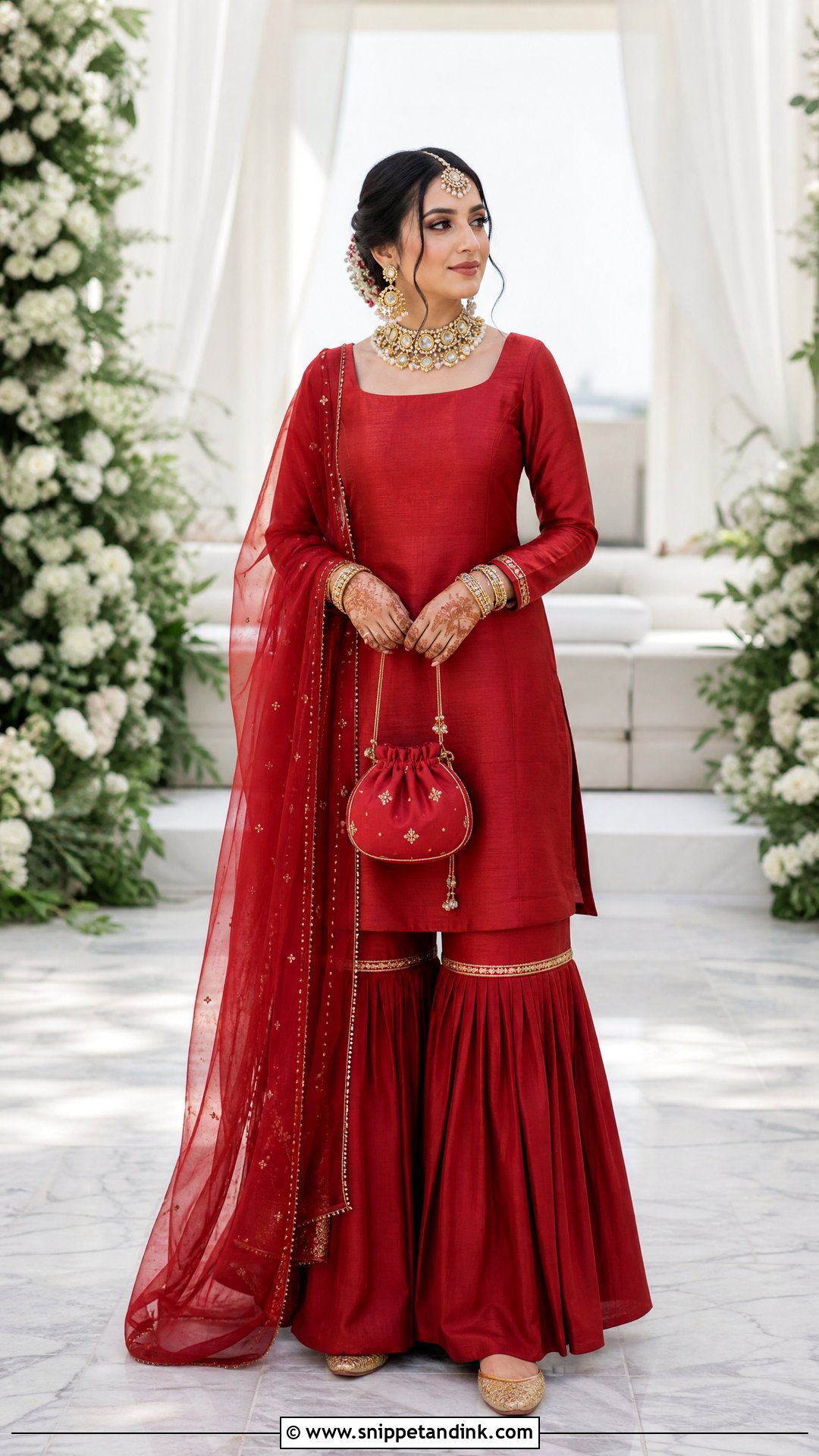
A garara doesn’t need dense embellishment to look bridal; clean tailoring and well-finished borders do a lot of the work. I’d choose a structured short kameez with fine gold embroidery at the neck and cuffs, a wide garara with one defined knee band, and a narrow border near the hem. A sheer dupatta with delicate edging stays light. Let the jewellery carry the weight instead: a substantial kundan choker, earrings, tikka and traditional bangles. The trade-off is that a light set shows every flaw in the fit, so give yourself an extra fitting.
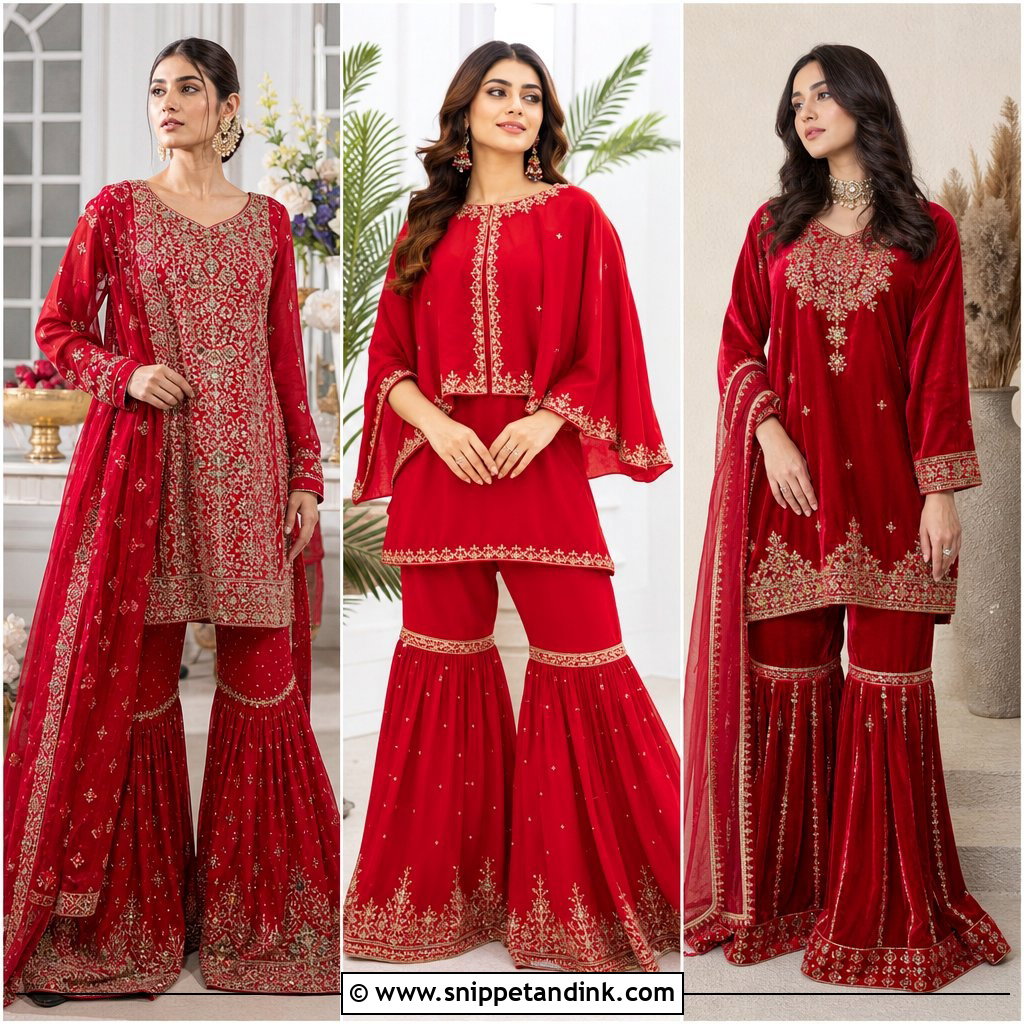
20. Red Garara With Multicolor Embroidery
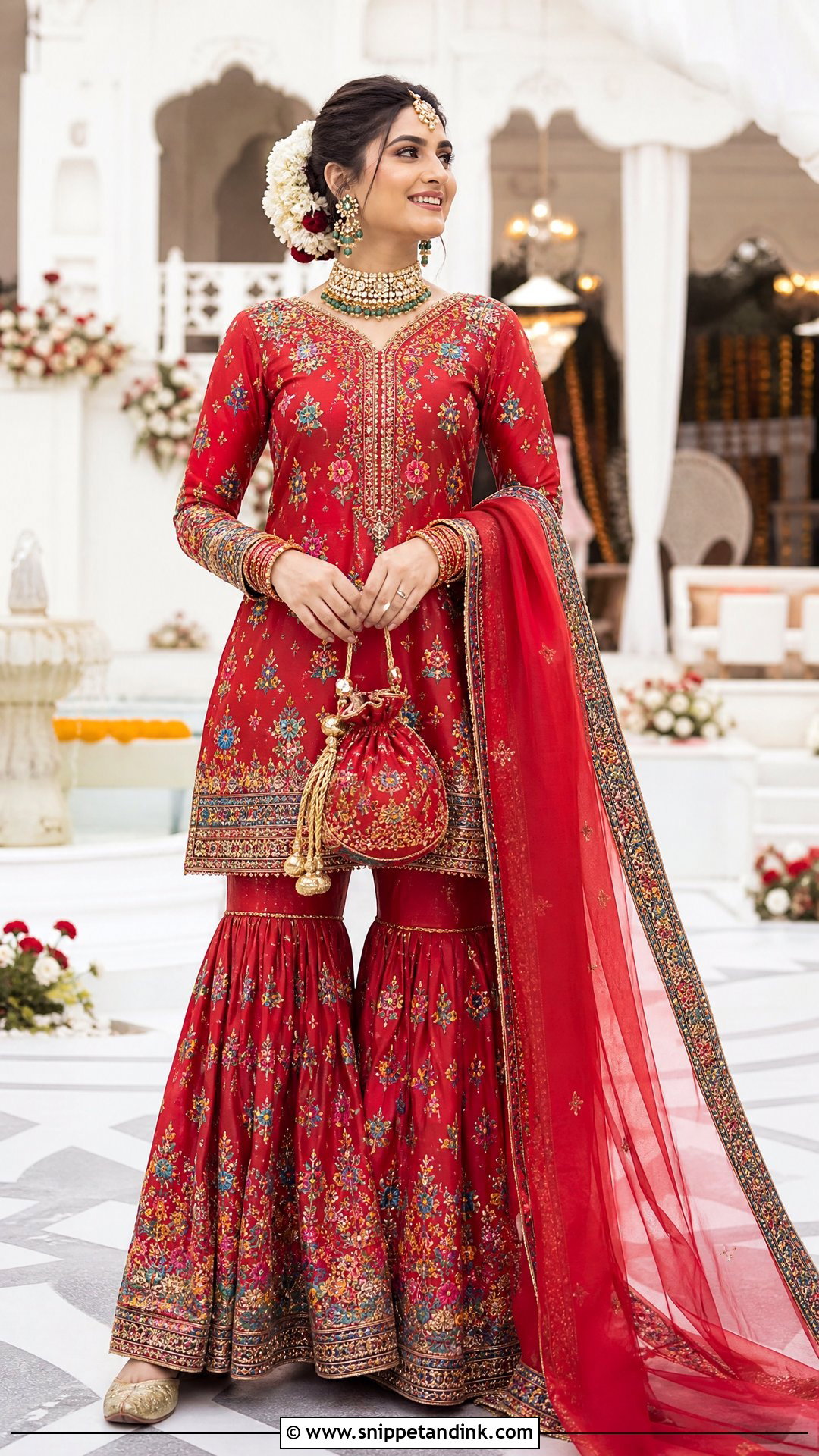
Multicolor embroidery gives a red garara personality without leaving its traditional base. I’d keep the small floral motifs on the short kameez in emerald, pink, orange, blue and antique gold, then repeat only a few of those colours at the garara knees and hem. A red organza dupatta with a multicolour border pulls the pieces together. With jewellery, I echo one or two shades from the embroidery through coloured beads; matching every colour makes the outfit busy. Gold khussas, mixed bangles and a center-parted bun with fresh flowers keep it grounded.
Red Under Stage Lights, Flash and Daylight
Reds shift more than any other bridal colour under different light. Warm tungsten stage lights push crimson toward orange, while cool LED and camera flash can make bright red look slightly pink. Maroon and dark red hold their tone better at night, and that is one reason they’re so popular for evening baraats.
When a bride is torn between two swatches, I take both to a window and then under a phone flash. If one turns flat or orange, I steer away from it. I also hold the red against her face without makeup, because the right shade should make her skin look clear, not ruddy. Bright crimson tends to suit cool and neutral undertones; rust and brick are kinder to warm ones.
Airing and Folding a Zardozi Garara the Night After
Don’t leave the outfit in a heap after the reception. Hang the kameez on a padded hanger and lay the garara flat overnight so body moisture can dry out of the lining. Metal thread tarnishes faster when it is stored damp or in plastic.
- Spot-check for makeup on the neckline and henna on the cuffs, and send the set to a dry cleaner who handles hand embroidery.
- Fold with acid-free tissue between layers so the zardozi doesn’t press into the silk and leave marks.
- Store it in a breathable cotton or muslin bag, never plastic, away from damp walls.
- Refold along different lines every few months so permanent creases don’t crack the thread.
Bring Your Dupatta, Shoes and Jewellery to the Last Fitting
A good red garara respects the traditional structure and still leaves room for your own choices of colour, fabric and shirt cut. The short kameez gives the classic proportions; long shirts, peplums, jackets and angrakhas offer alternatives. Velvet and jamawar belong to cool-weather weddings, while organza, chiffon and lighter silk move more easily. Before the outfit is finished, wear everything together, underlayers included, and walk, sit and climb a step. That one rehearsal tells you more than any picture can.
You'll Like These Ideas:


Leave a Reply