
A garara suit, often spelled gharara, is three pieces that have to work as one: trousers fitted to the knee and flaring wide below it, a short kurti and a dupatta. When any of the three is off, the whole silhouette suffers, which is why I fit them together rather than one at a time. Heavily embroidered bridal sets sit at one end of the range, and light sets for bridesmaids and guests at the other. Fabric, colour and the weight of the work decide whether a suit belongs at the nikah, the mehndi, the sangeet or the reception. Below are twenty suits for different roles and functions, with the fitting and fabric details I’d point out to a client in the shop.

Ready-Made or Stitched to Measure? What to Inspect in the Shop
Ready-made garara suits have improved a lot, but they are cut for an average body, and the garara’s knee joint is the hardest part to alter. Before buying off the rack, I turn every piece inside out.
- Stand in the garara and find the joint. It should sit at your knee or slightly above. If it’s far off, the fix means unpicking the whole flare, which costs almost as much as stitching new.
- Check the seam allowance at the waist and kurti sides. A generous allowance means the suit can be let out later.
- Look at the back of the embroidery. Loose threads and stiff, scratchy backing will rub for hours; a soft cotton facing behind it is a sign of careful work.
- Hold the fabric up to daylight. Pale georgette, net or chikankari without lining will need one added.
Custom stitching takes longer, often several weeks for simple work and months for heavy hand embroidery, but you choose the panel count, the knee height and the hem length to your own shoes.
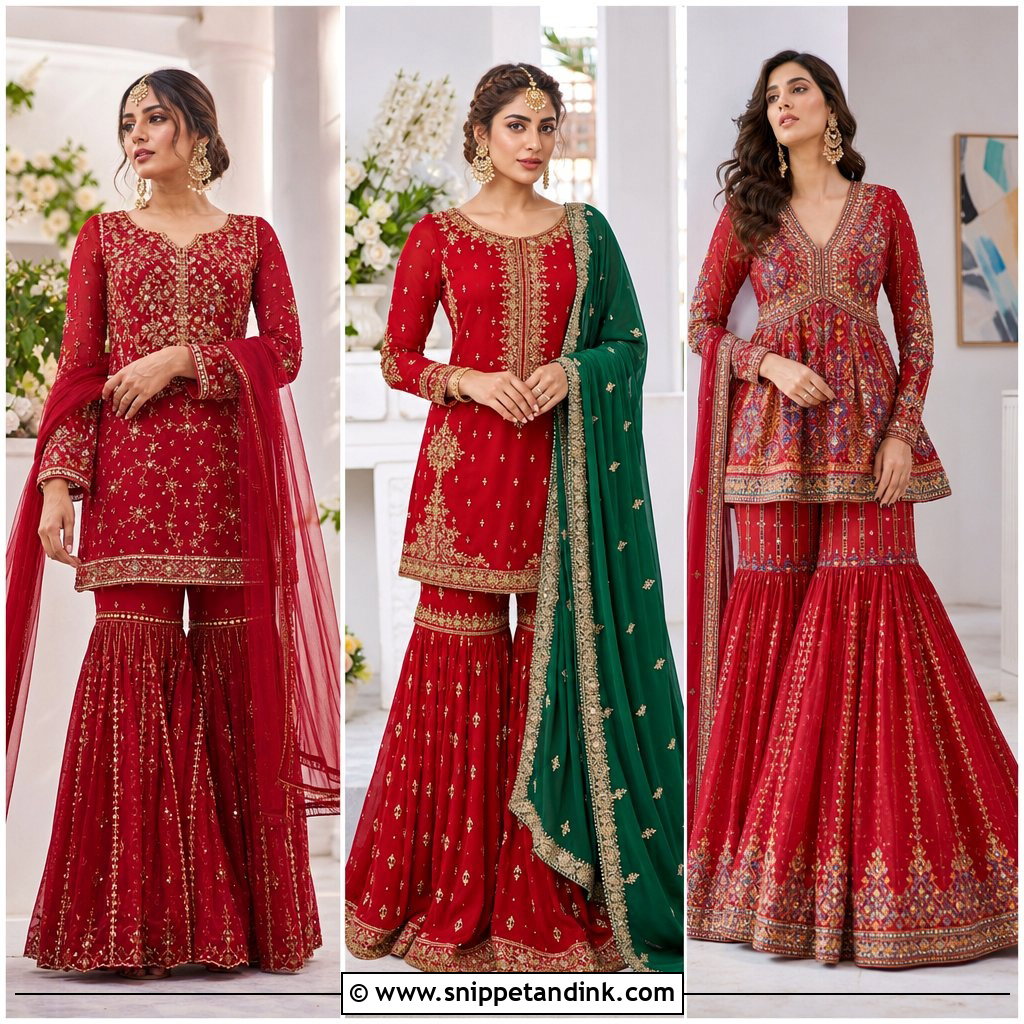
1. Red Bridal Garara Suit With Zardozi
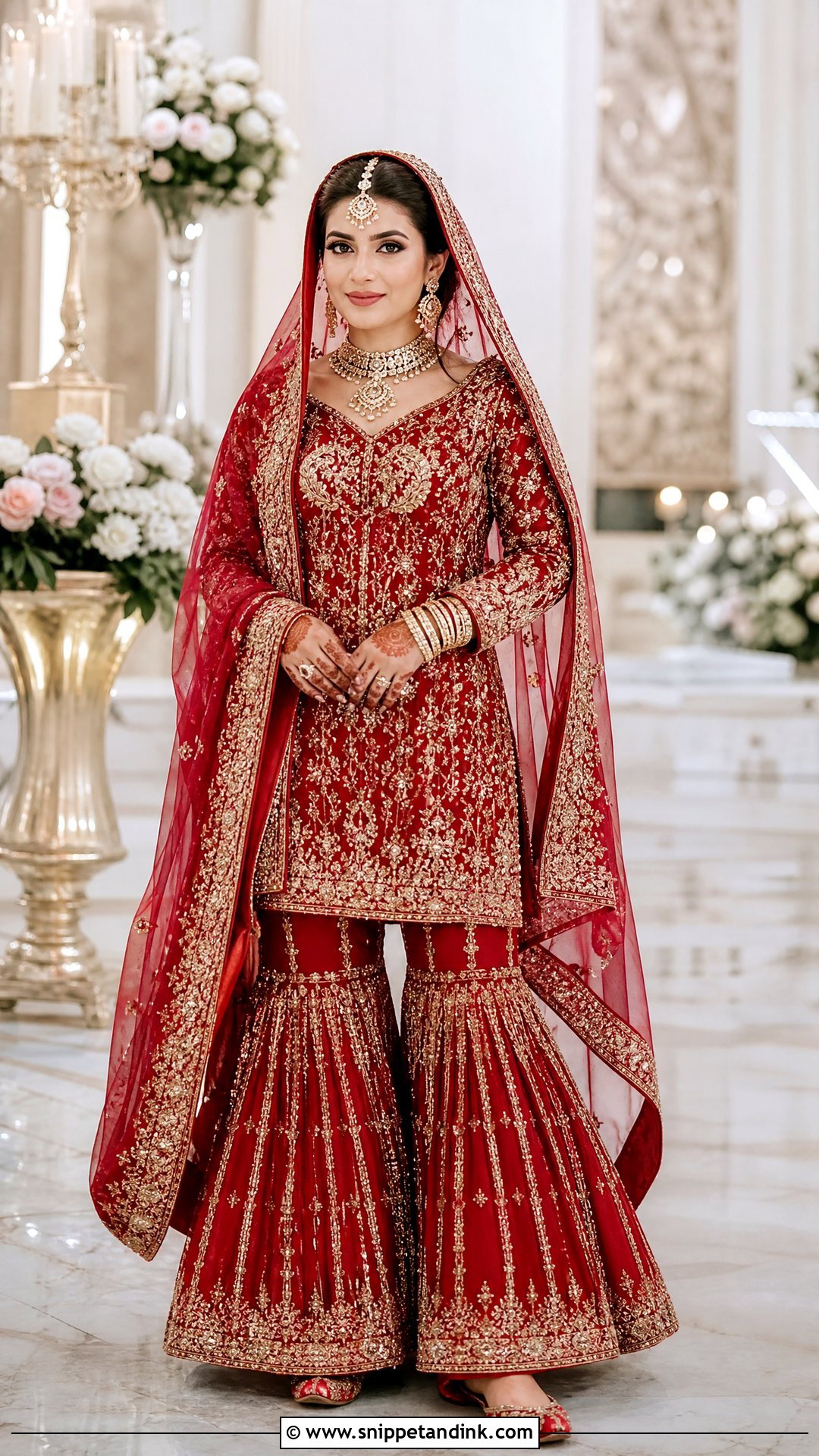
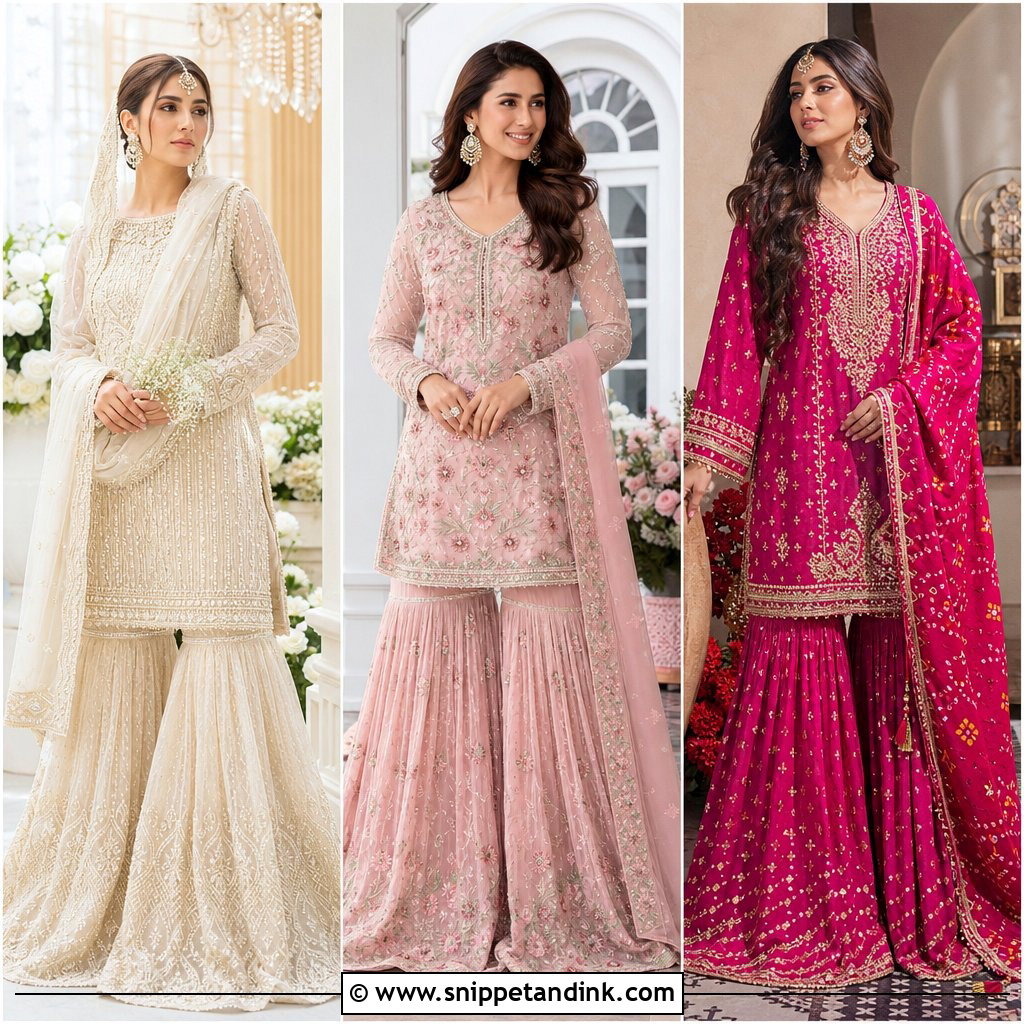
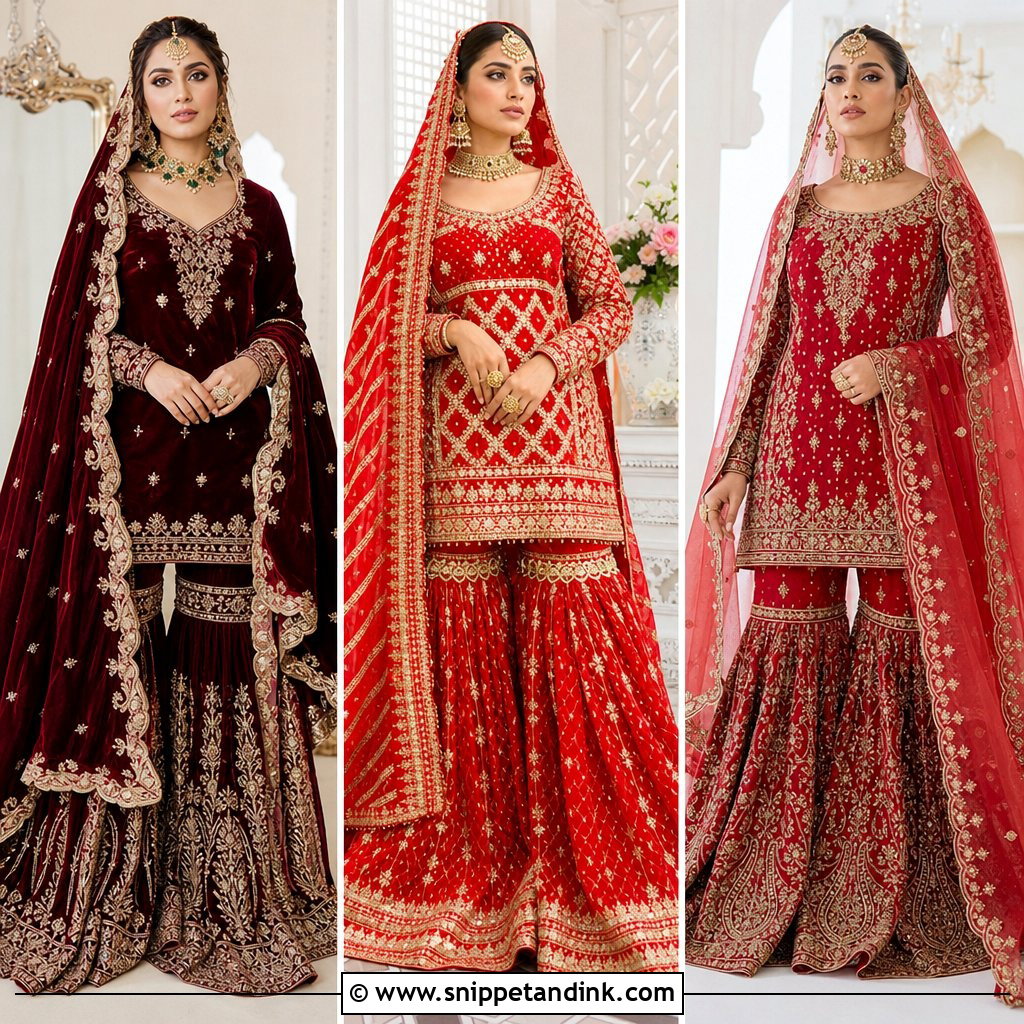
Deep red is the ceremonial classic. A short silk or velvet kurti in controlled zardozi, dabka and zari sits over a garara that fits neatly through the thighs and opens into a generous flare at the knee. The embroidered border along that joint is what makes the shape read from across a room, so I line it up level all the way round at the fitting; a band that dips at the back looks like a sagging hem. A red net dupatta with a scalloped gold edge goes over the head and one shoulder. Kundan jewellery, a maang tikka, juttis and bangles complete it, and a small structured bag is all you need.
2. Ivory Garara Suit With Gold Embroidery
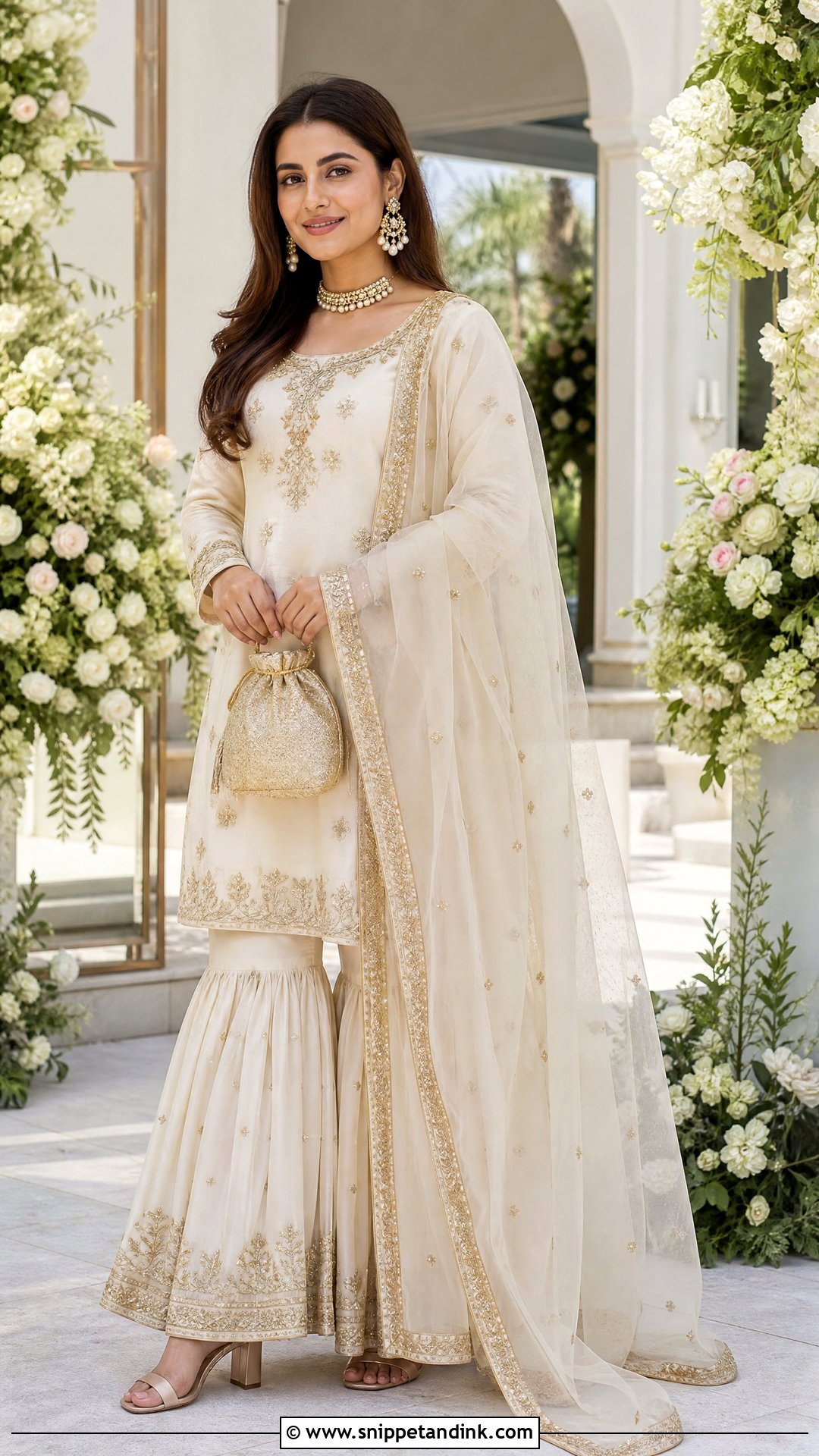
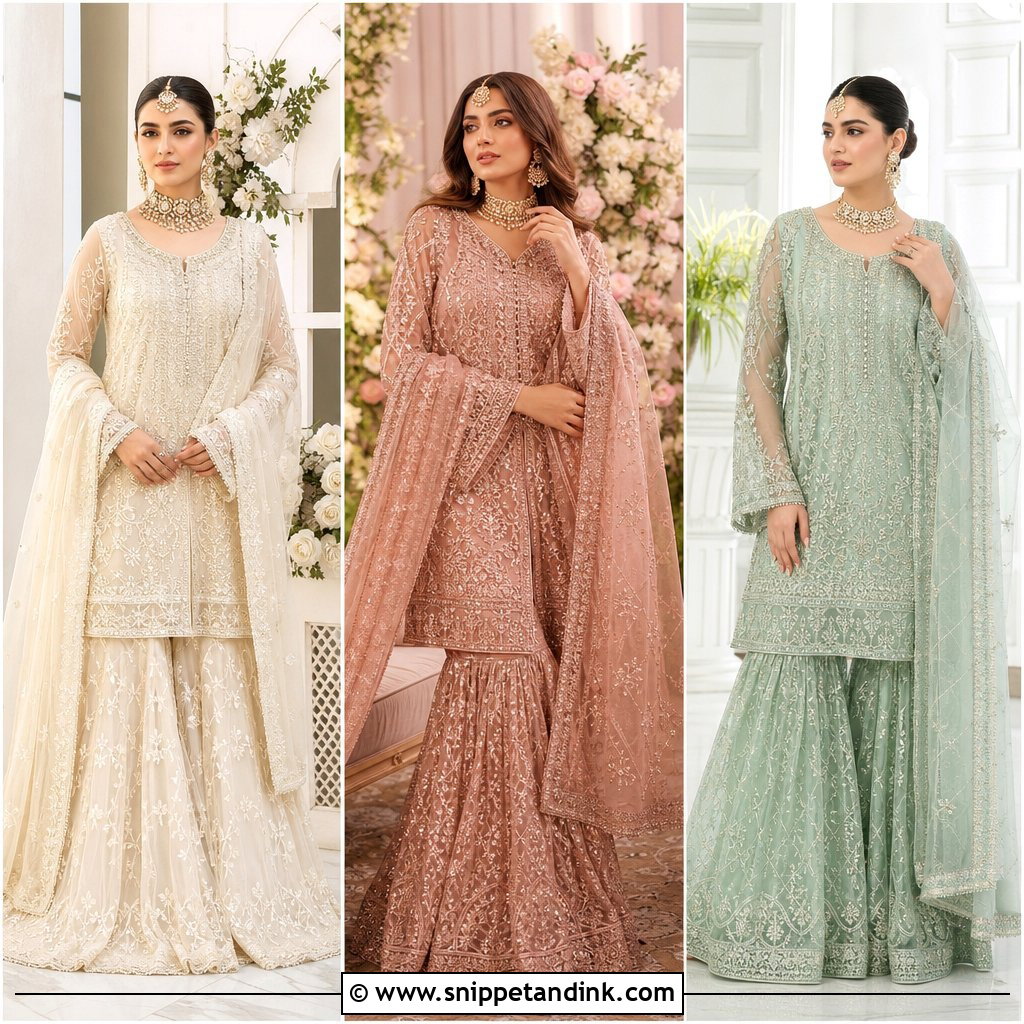
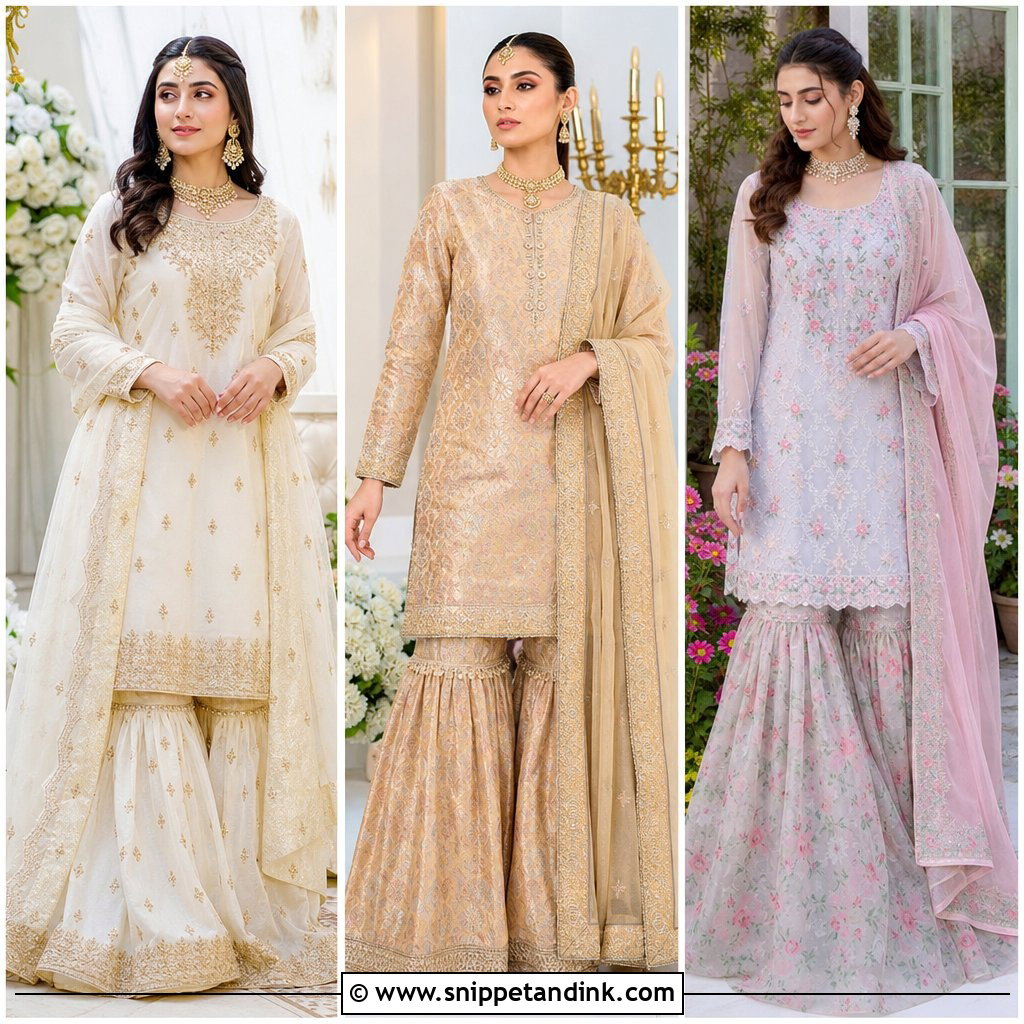
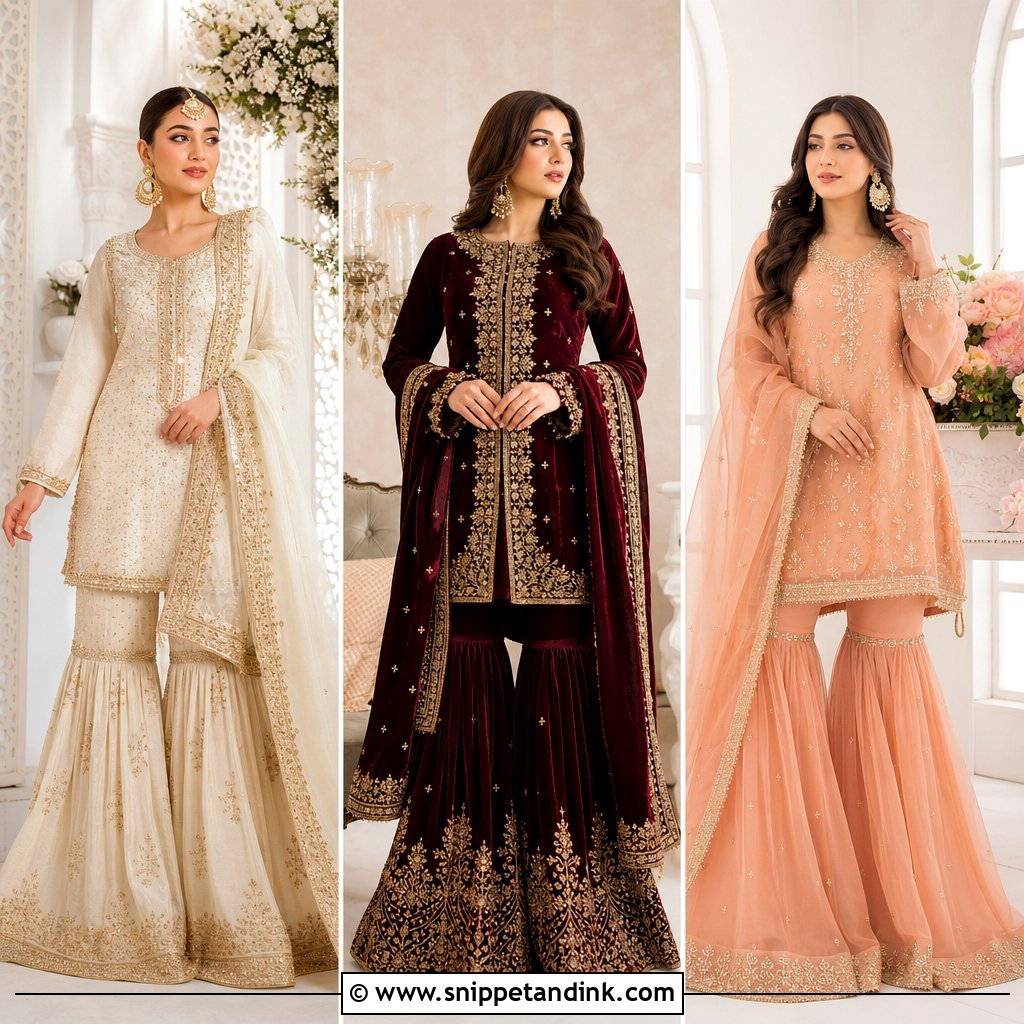
Ivory and antique gold is my usual answer for a nikah or engagement in daylight. An ivory raw silk kurti with fine gold thread at the neckline, sleeves and hem pairs with a structured garara finished with embroidered knee bands and lightly worked flares. A sheer organza dupatta keeps it airy and lets the work underneath show. Pearl drops, a delicate choker, a small gold potli and champagne block heels are plenty. A bride can add a second veil and heavier jewellery; a guest should keep accessories light and ideally choose a warmer cream so the two outfits don’t blur together in pictures.
3. Pink Garara Suit With Peplum Kurti
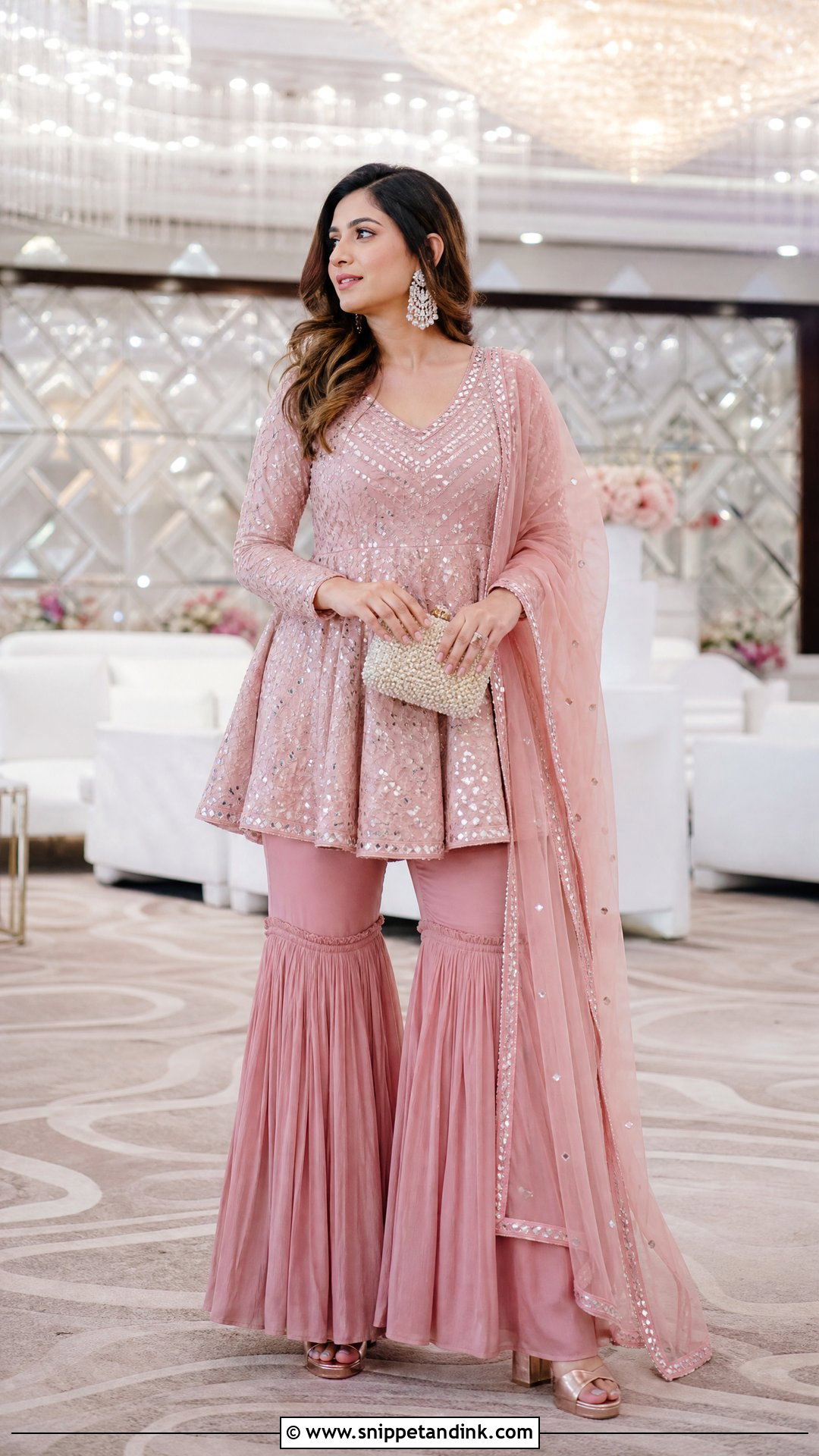
Peplum tops are the easiest way to make a garara suit feel young. Choose a blush, rose or raspberry kurti with a fitted waist and short flared hem, and a garara with fine pleats and a visible embroidered knee joint. Mirror work, sequins or light florals add shine without weight. Drape the dupatta diagonally across one shoulder so the peplum stays visible. The detail I check: the peplum must end above the widest part of the hips. Any longer and it stacks on top of the flare, adding width exactly where most women don’t want it. Crystal earrings, metallic sandals and a beaded clutch finish it for a sangeet.
4. Green Garara Suit For Mehndi
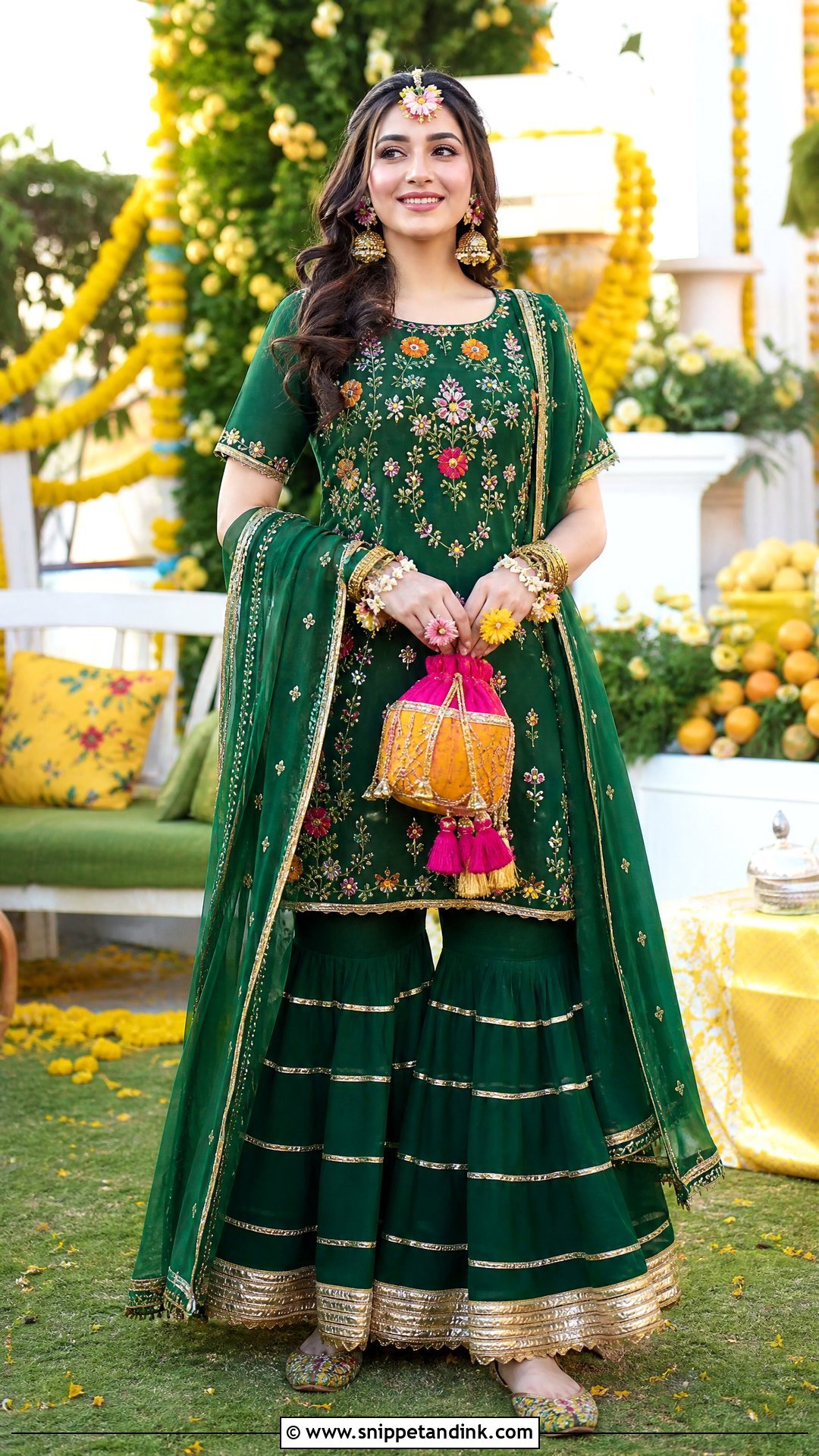
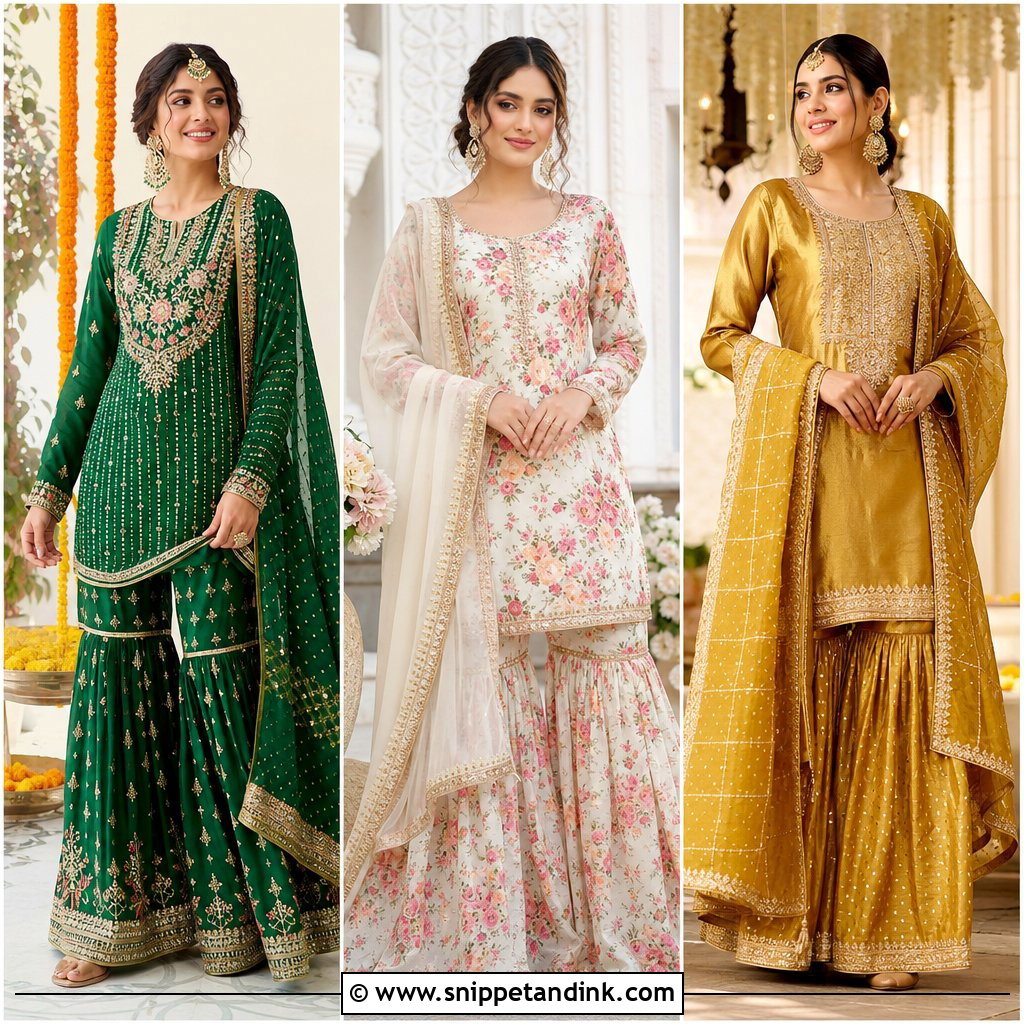
Green is natural mehndi colour. A short bottle green, emerald or leaf green kurti with colourful florals pairs with a matching garara with gota-trimmed pleats and pink or yellow details at the knees. Use a light chiffon dupatta; you’ll be dancing, hugging aunts and holding your hands out to the mehndi artist. Floral jewellery, gold jhumkas, embellished juttis and a bright potli complete it. Brides can go denser with the embroidery; bridesmaids look better with smaller motifs. Outdoors, georgette or cotton-silk keep the flare’s shape and stay bearable through a long afternoon.
5. Yellow Garara Suit For Haldi
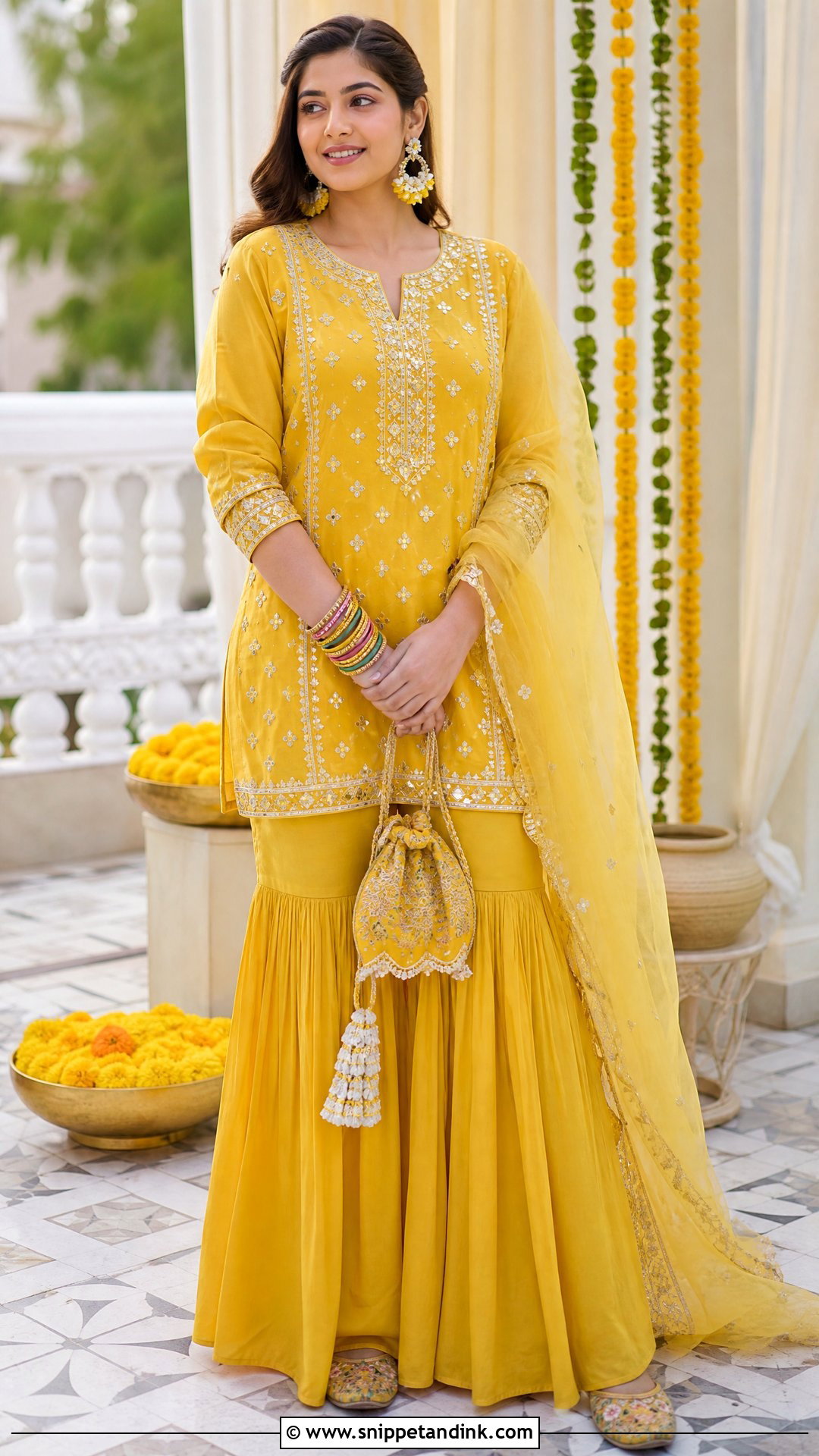
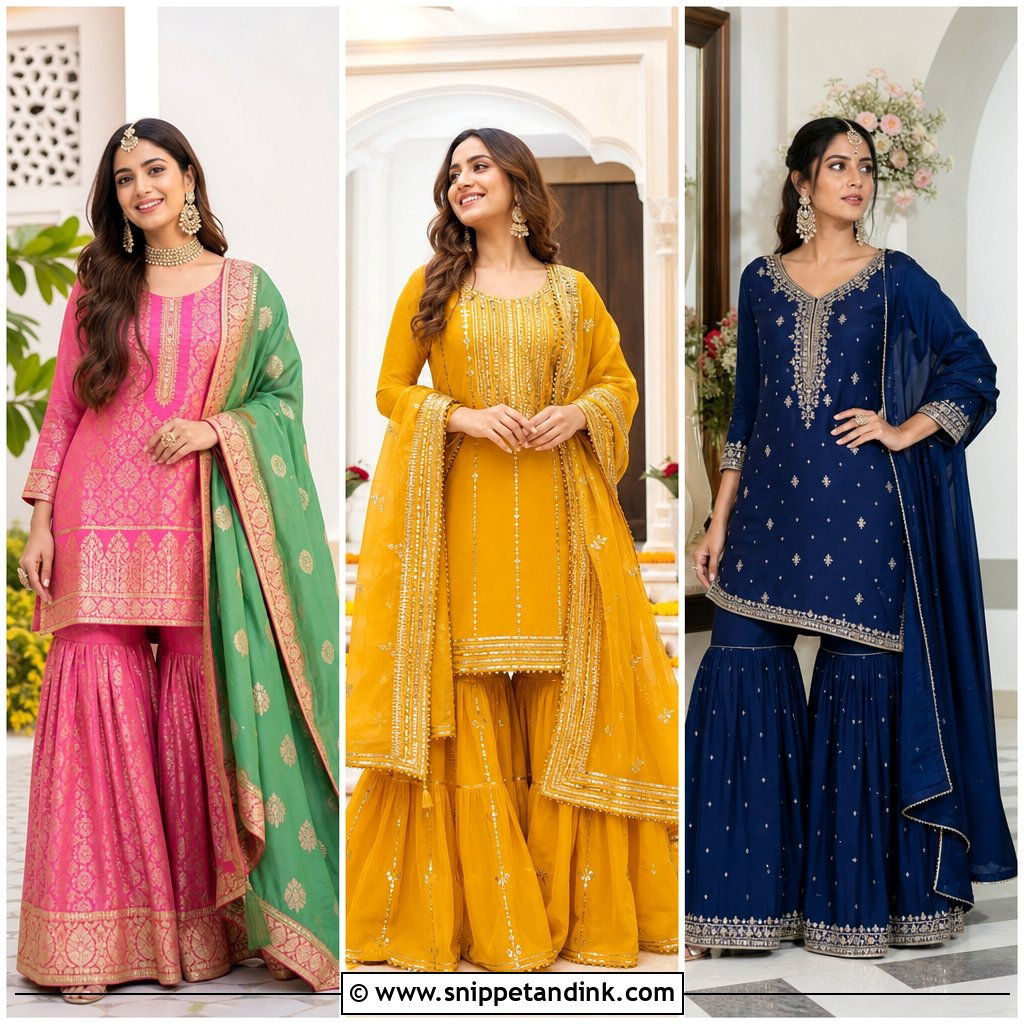
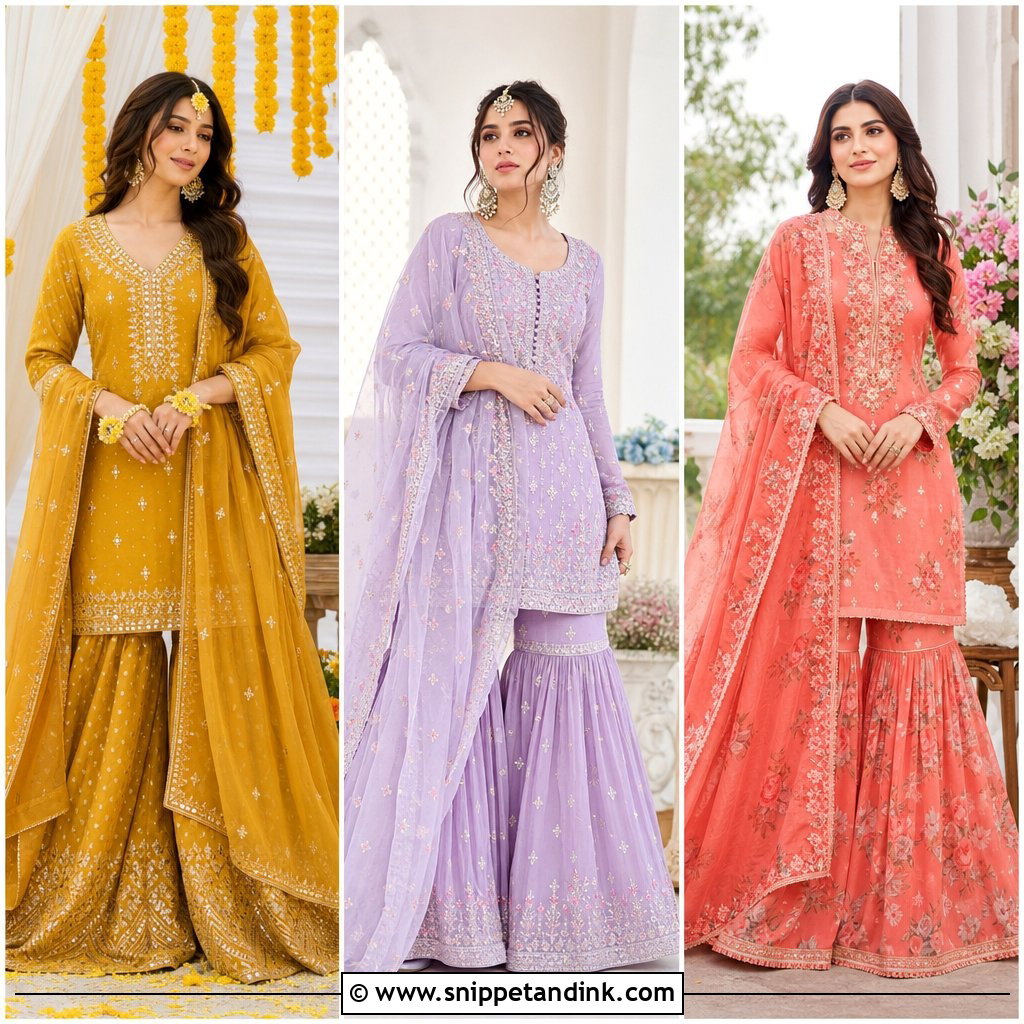
Haldi is the one function where I tell clients not to wear anything precious. Turmeric paste stains silk, gota and pale thread for good, and floor-length hems drag through it. So choose a short kurti in mustard, marigold or lemon with white threadwork, small mirrors or a little gota, and a light garara cut a touch shorter than usual and lined against transparency. Wear a soft organza dupatta with a narrow floral border over one shoulder. Floral earrings, bangles, flat juttis and a crossbody potli keep your hands free. Brides can add fresh flowers in a braid; guests need little more than simple gold.
6. Maroon Velvet Garara Suit For Winter Wedding
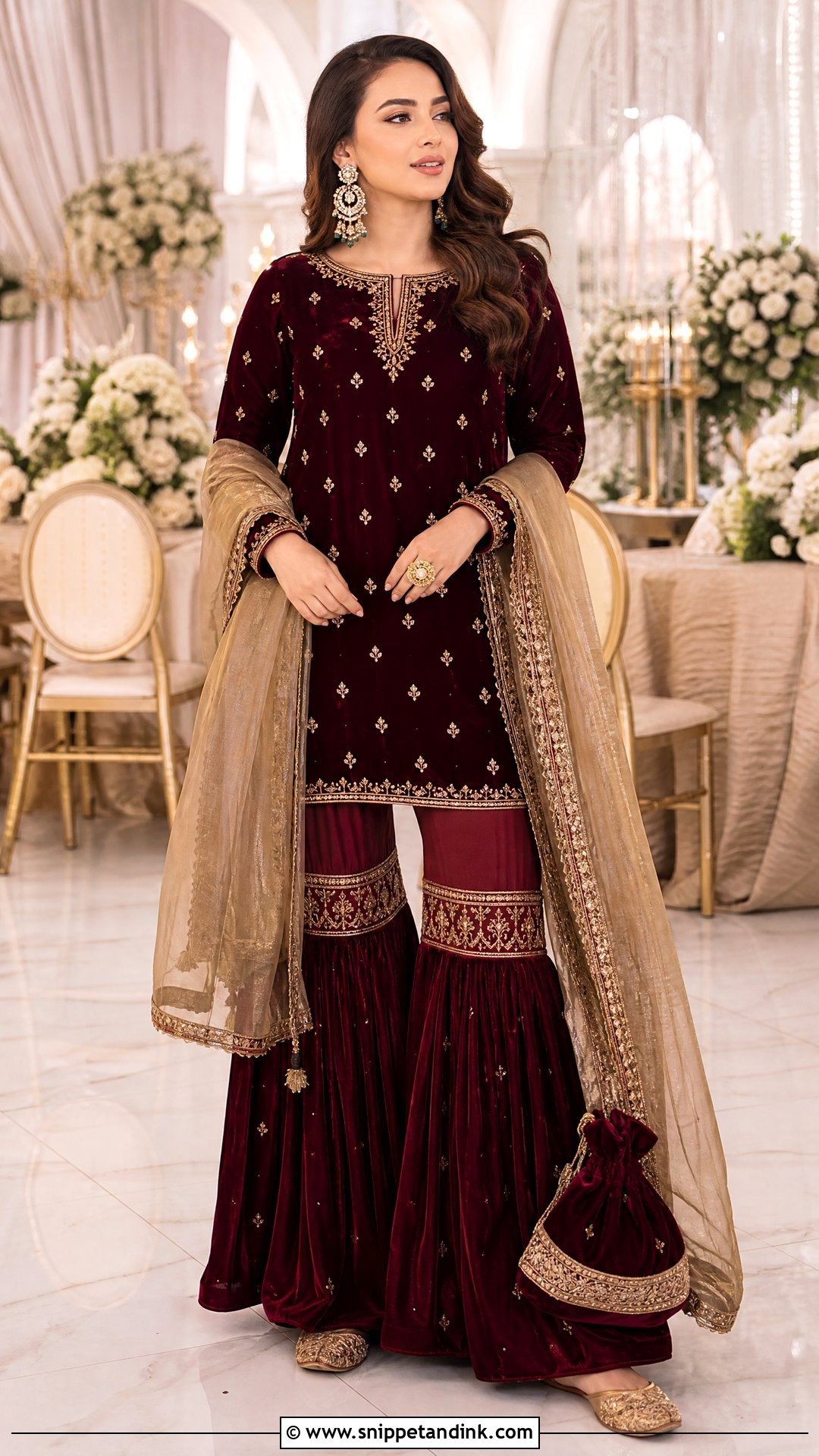
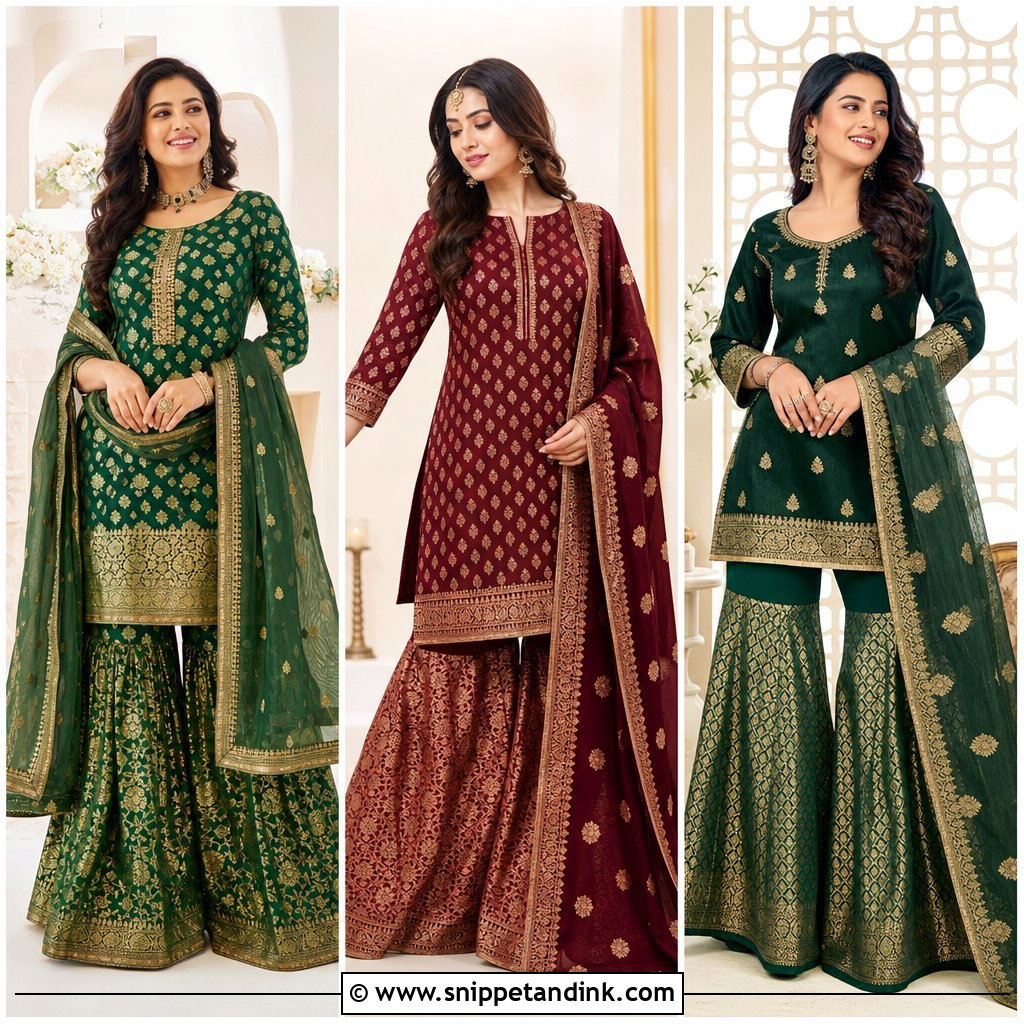
Velvet on the kurti and silk or brocade on the garara is the combination I recommend for a winter wedding, and it suits a maroon garara suit particularly well. A head-to-toe velvet set is warm but heavy, and the flare loses its swing. Antique gold embroidery at the neckline, cuffs, hem and knee joints ties the fabrics together. A tissue or organza dupatta with a wide border adds a light layer over the dense pieces. Kundan earrings, a statement ring, closed-toe juttis and a velvet potli suit the season. A sleek bun keeps attention on the neckline.
7. Black Garara Suit With Mirror Work
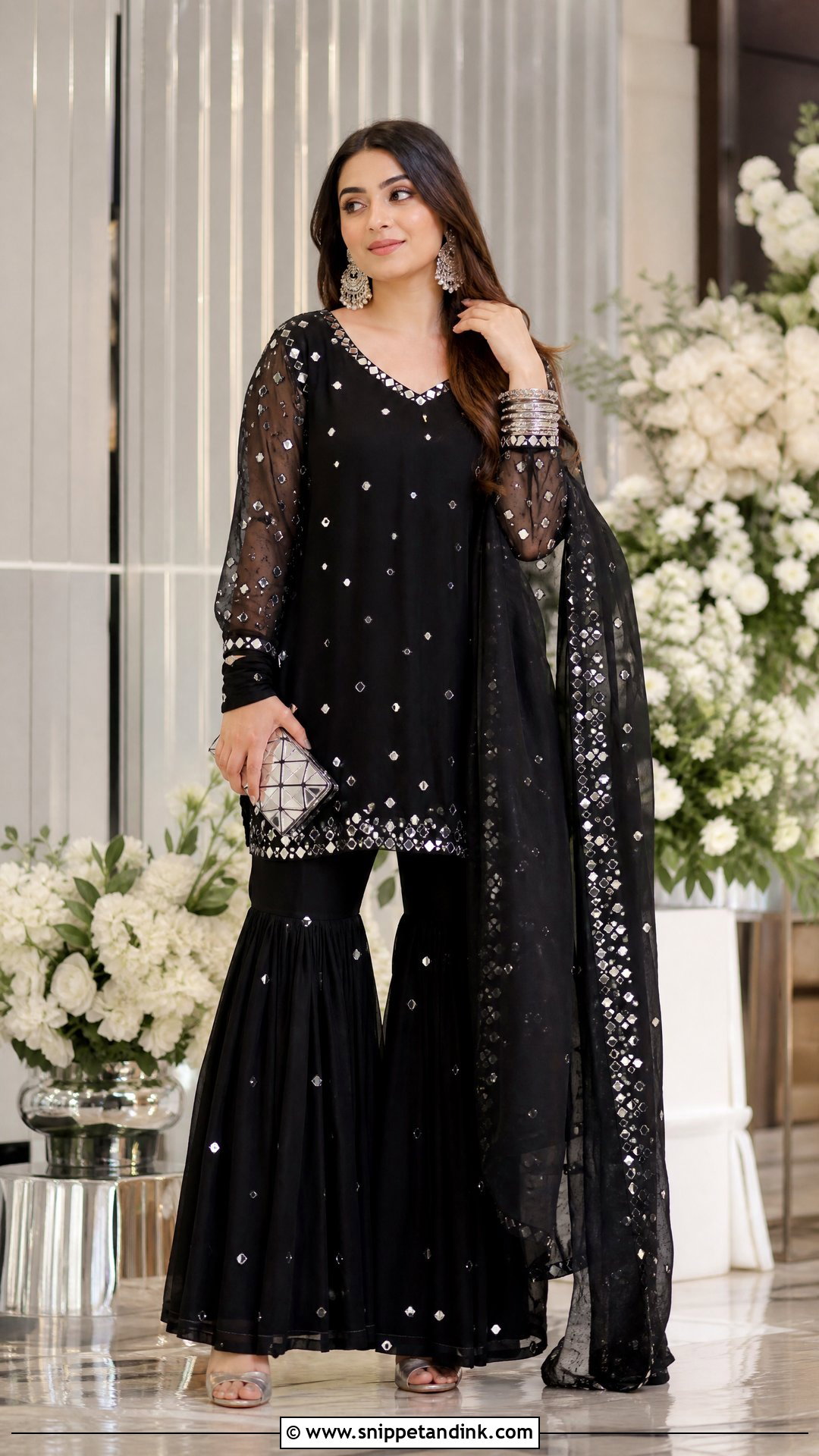
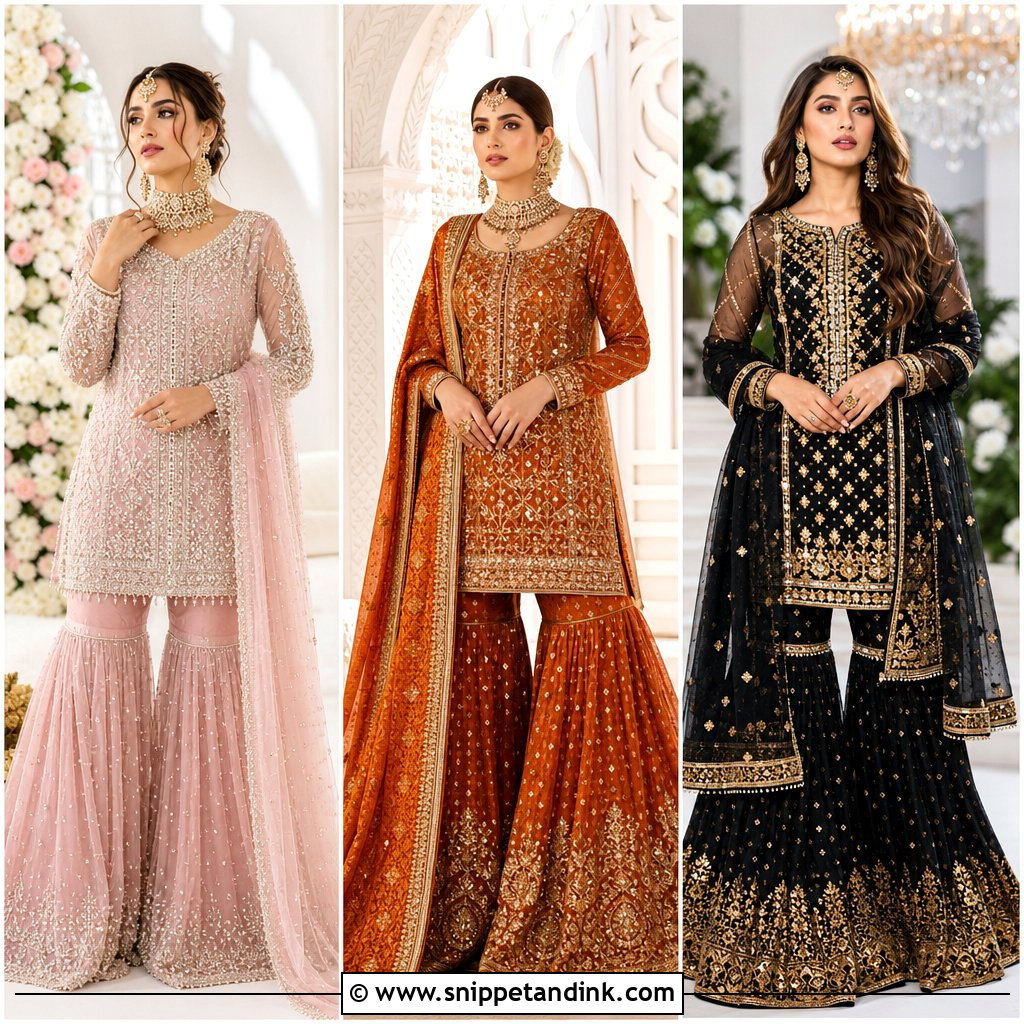
Black with silver mirror work is a strong choice for a sangeet or evening reception. A fitted short kurti in mirrors, sequins or geometric embroidery pairs with a black georgette garara carrying lighter work above the knee and a sparkling border on the flare. A sheer black dupatta with scattered mirrors moves well. Silver chandbalis, a metallic clutch, stacked bangles and block heels finish it. Leave open fabric between motifs; solid embroidery on black turns into one dark, heavy mass. And check that the couple hasn’t asked for a palette, and that black is welcome in the family, before you wear it.
8. Pastel Blue Garara Suit With Pearl Work
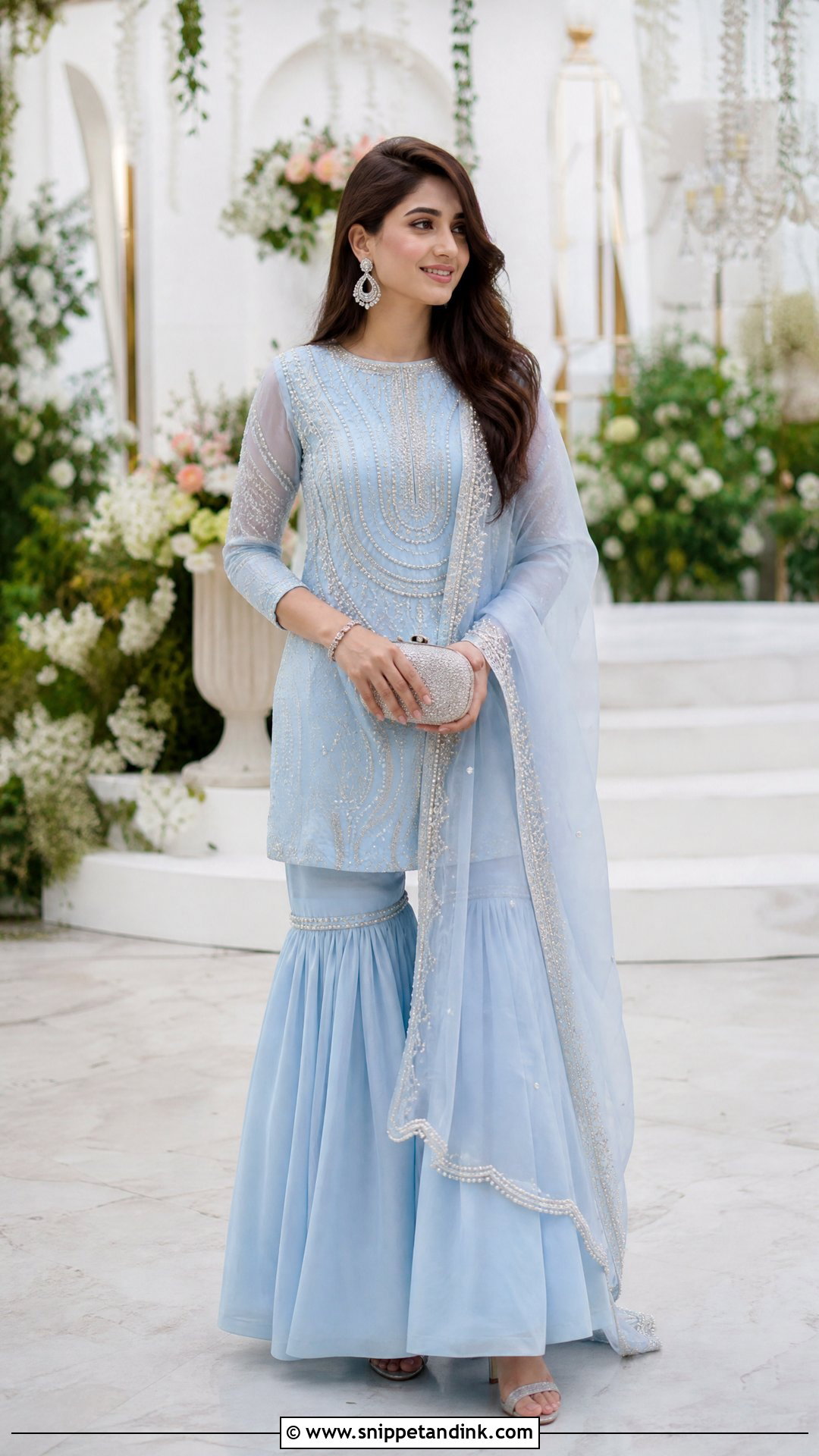
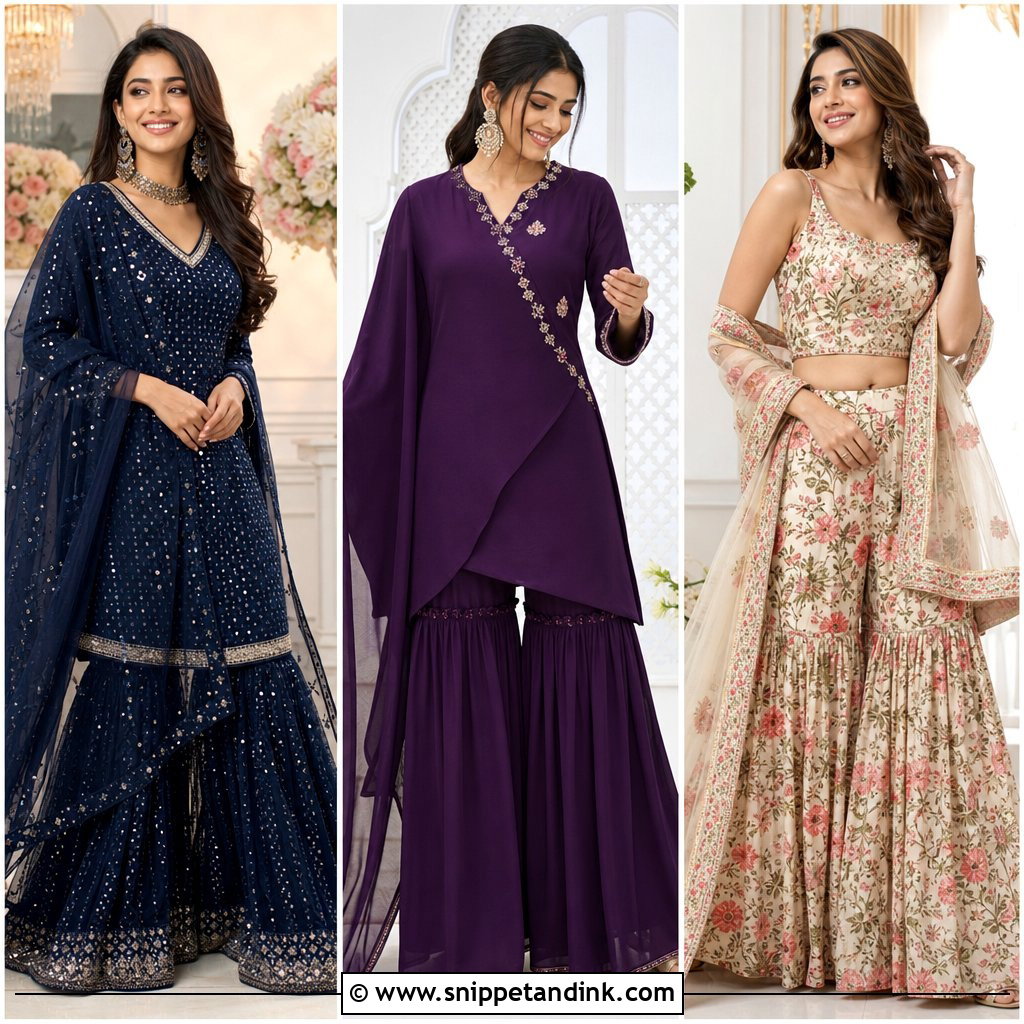
Powder blue has a soft, current feel. A short satin or silk kurti with pearls, silver thread and small crystals pairs with a matching garara with neat pleating and a pearl-edged knee seam. An organza dupatta with scattered pearls finishes the set. Satin shows every pull at the seams, so this kurti needs precise fitting through the bust and waist, or it wrinkles in photos. Pearl earrings, a slim bracelet, a silver minaudière and pale metallic heels suit it. Ask for the lining to be dyed close to the outer colour; a white lining under pale blue shows at every slit and hem.
9. Lavender Garara Suit With Silver Sequins
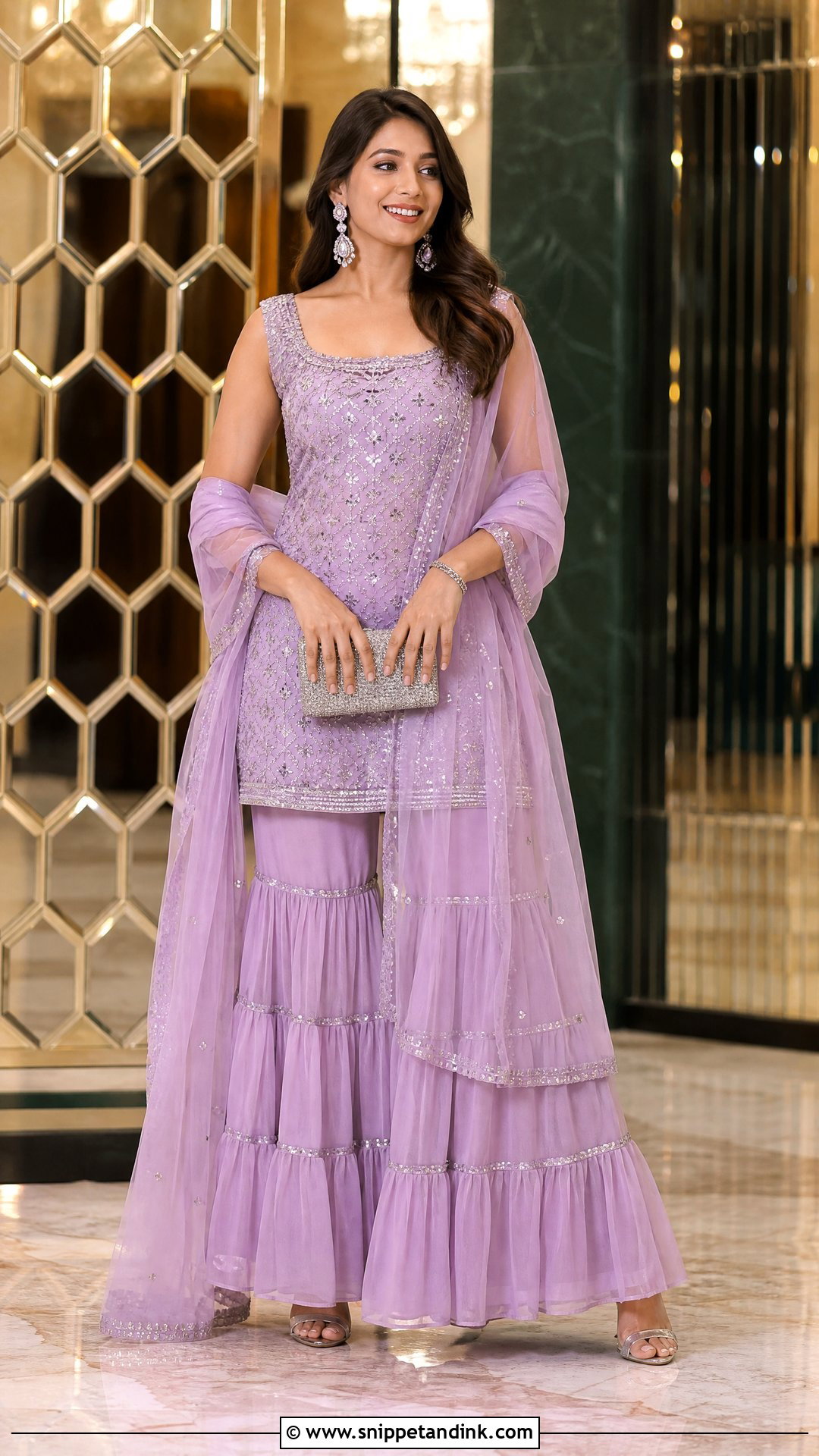
Lavender is modern and easy to accessorise. A short georgette kurti with silver sequins, resham and a softly shaped neckline pairs with a lavender garara with tiered flares and a silver border at each knee. Choose a net dupatta with scattered sequins rather than dense embroidery; heavy work on net makes it slide off the shoulder all night. Crystal drops, silver heels and a small clutch finish it. I like this one for sisters of the couple and guests at a sangeet or indoor reception, because it looks dressed without competing with the bride.
10. Orange Garara Suit With Gota Patti
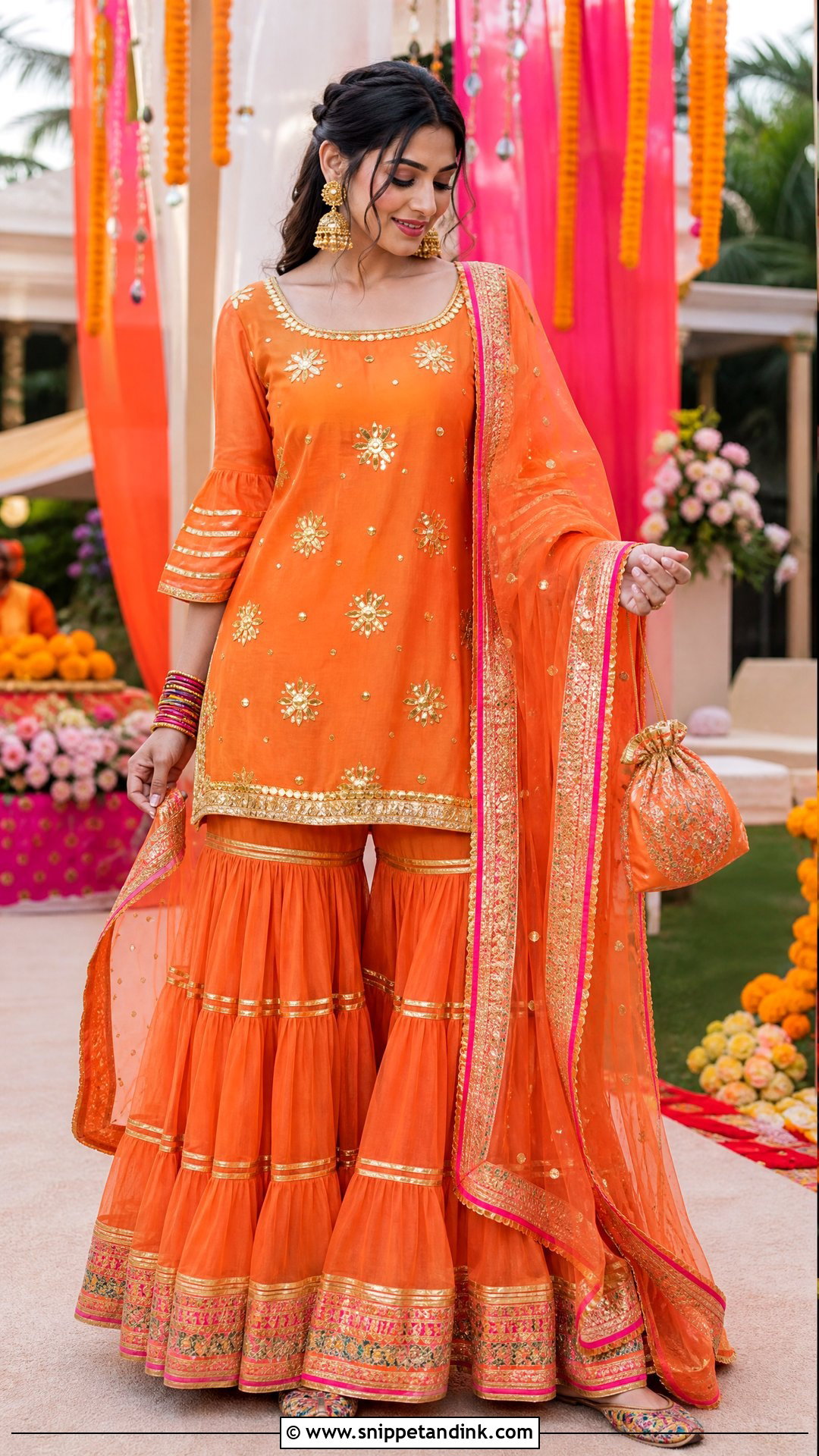
Orange has more energy than almost any colour in daylight. Choose a tangerine or burnt orange kurti with gota patti at the neckline, sleeve edges and hem, and a garara with layered flares, narrow gold trims and a pink knee border. A light chiffon dupatta with a finished edge moves freely. Gold jhumkas, flat juttis, colourful bangles and a small potli complete it for a mehndi or outdoor sangeet. If orange feels too strong near your face, a peach dupatta softens the effect without changing the outfit.
11. White Chikankari Garara Suit
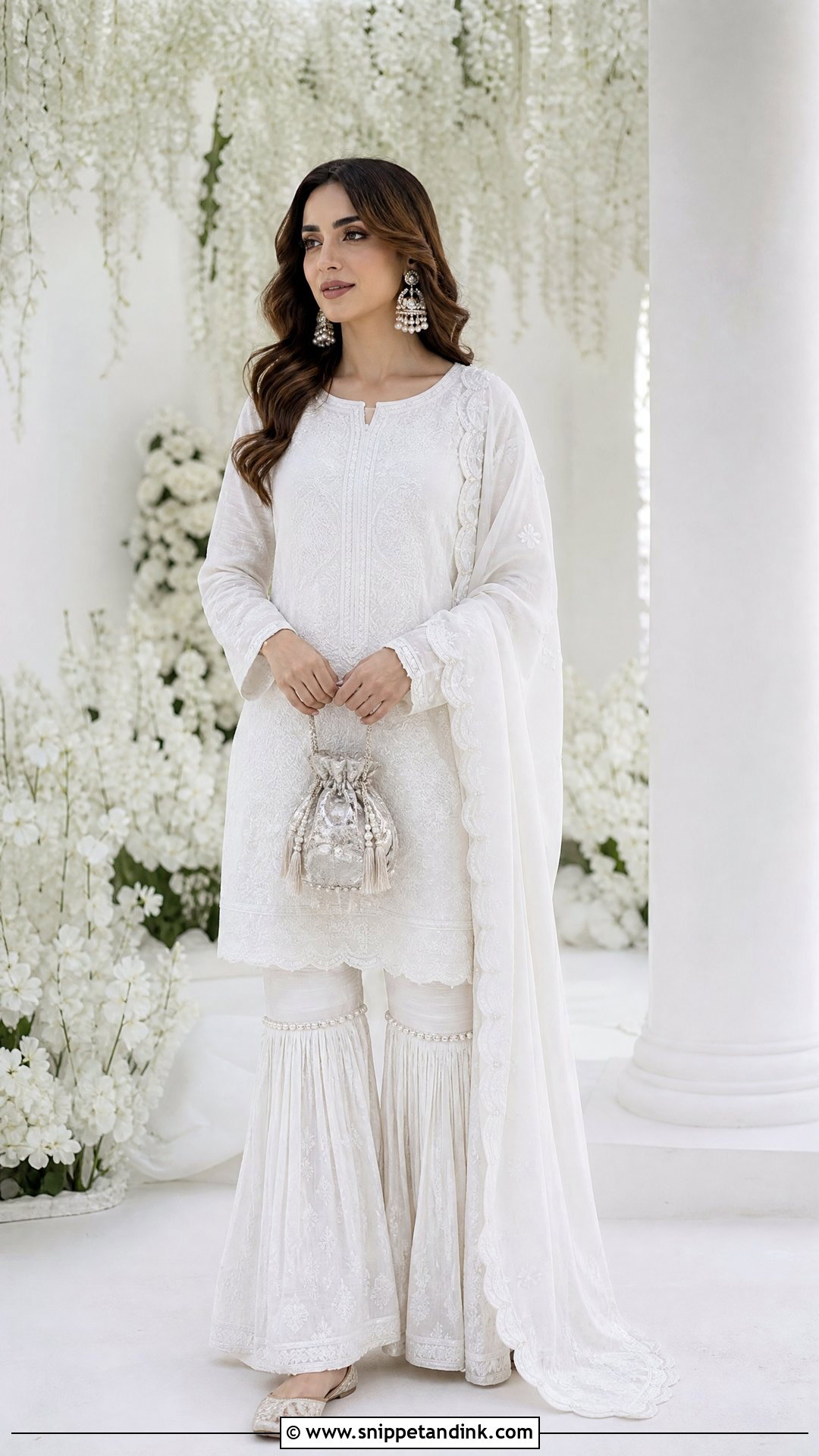
A white chikankari garara suit is quiet and graceful for a daytime nikah. Chikankari is hand shadow-work, so its texture shows best in natural light. Choose a short cotton-silk or georgette kurti with dense white-on-white work and a few sequins, and a garara with chikankari panels, fine pleats and a narrow pearl border at the knee. A light white dupatta with scalloped edges keeps it delicate. Pearl chandbalis, a silver potli and ivory juttis finish it. Lining isn’t optional with white; I check it in front of a window before I approve any chikankari piece.
12. Royal Blue Garara Suit With Gold Work
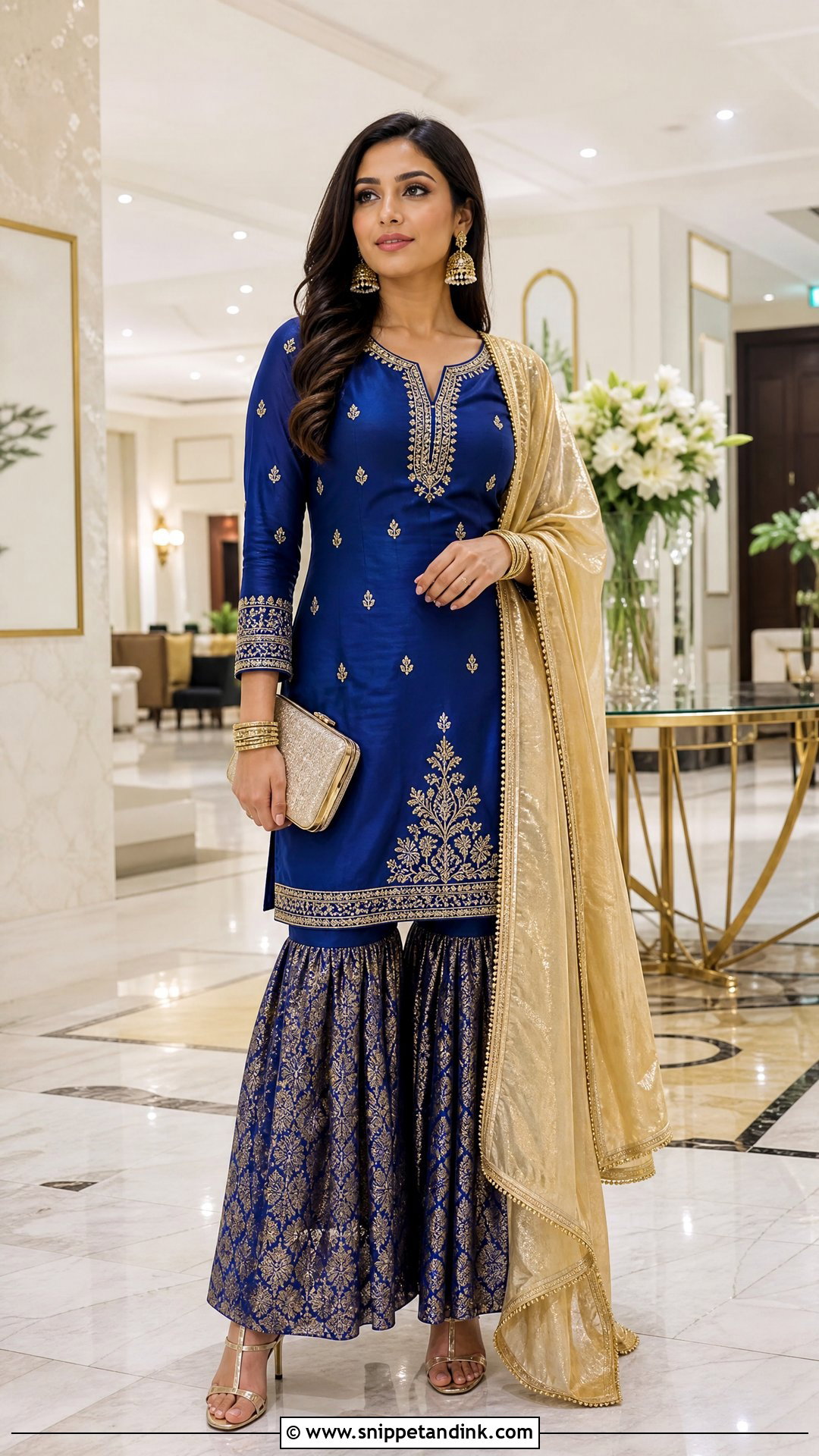
Royal blue stays visible from the back of a large hall, which is exactly why I suggest it for an evening reception in a big venue. A fitted silk or velvet kurti with gold zari and small beads pairs with a garara in brocade flares and a wide knee border. A gold tissue dupatta adds richness, though blue chiffon is kinder if you plan to dance. Jhumkas, a gold clutch, bangles and metallic block heels complete it. Keep the necklace simple when the neckline is heavily worked. Tailored shoulders and a clean kurti length keep all that flare under control.
13. Peach Garara Suit With Floral Embroidery
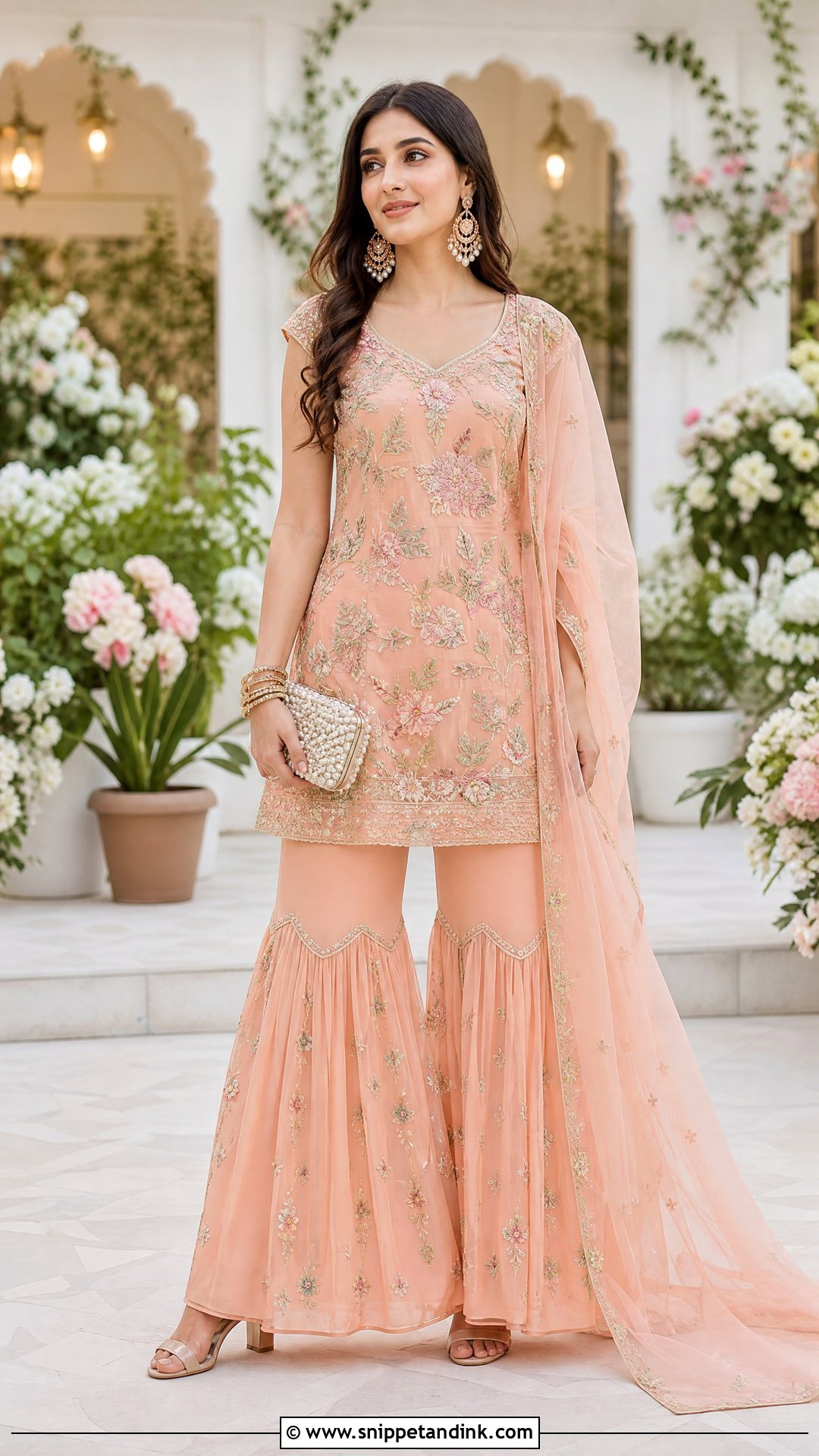
Peach flatters a wide range of skin tones outdoors. Choose a short kurti with pastel florals in pink, sage, ivory and muted gold, and a flowing peach garara with embroidered knee panels and a lightly scalloped hem. A sheer organza dupatta with small botanical motifs ties it together. Rose-gold earrings, nude block heels, a pearl-trimmed clutch and a couple of fine bangles keep it light. Scale matters here: petite wearers look best with small motifs and a narrower flare, while taller women can carry deeper borders. Keep the dupatta drape open and vertical to lengthen the line.
14. Purple Garara Suit With Cape Dupatta
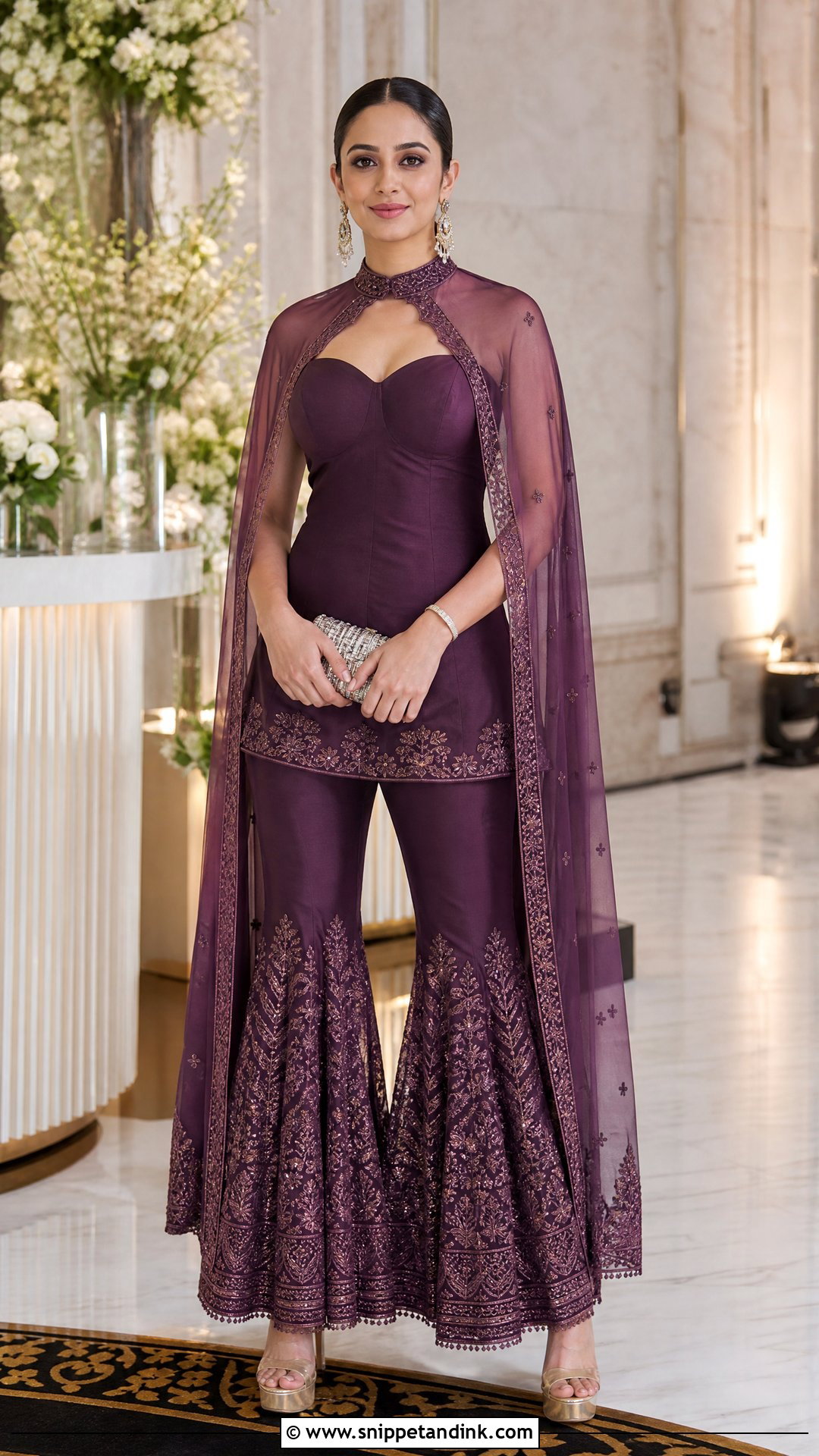
A cape instead of a dupatta frees both hands, which is the real reason I suggest it for anyone hosting or dancing. Start with a fitted purple blouse or short kurti with a clean neckline and fine beadwork, and a garara with structured pleats, embroidered knee seams and flowing panels. The sheer cape attaches at the shoulders or neckline. It should end just above or slightly below the knee so the garara’s joint stays visible. Skip an oversized necklace; it crowds the cape’s neckline. Plum or aubergine for evening, lilac for daytime. Statement earrings, a jewelled clutch and block heels complete it.
15. Gold Brocade Garara Suit
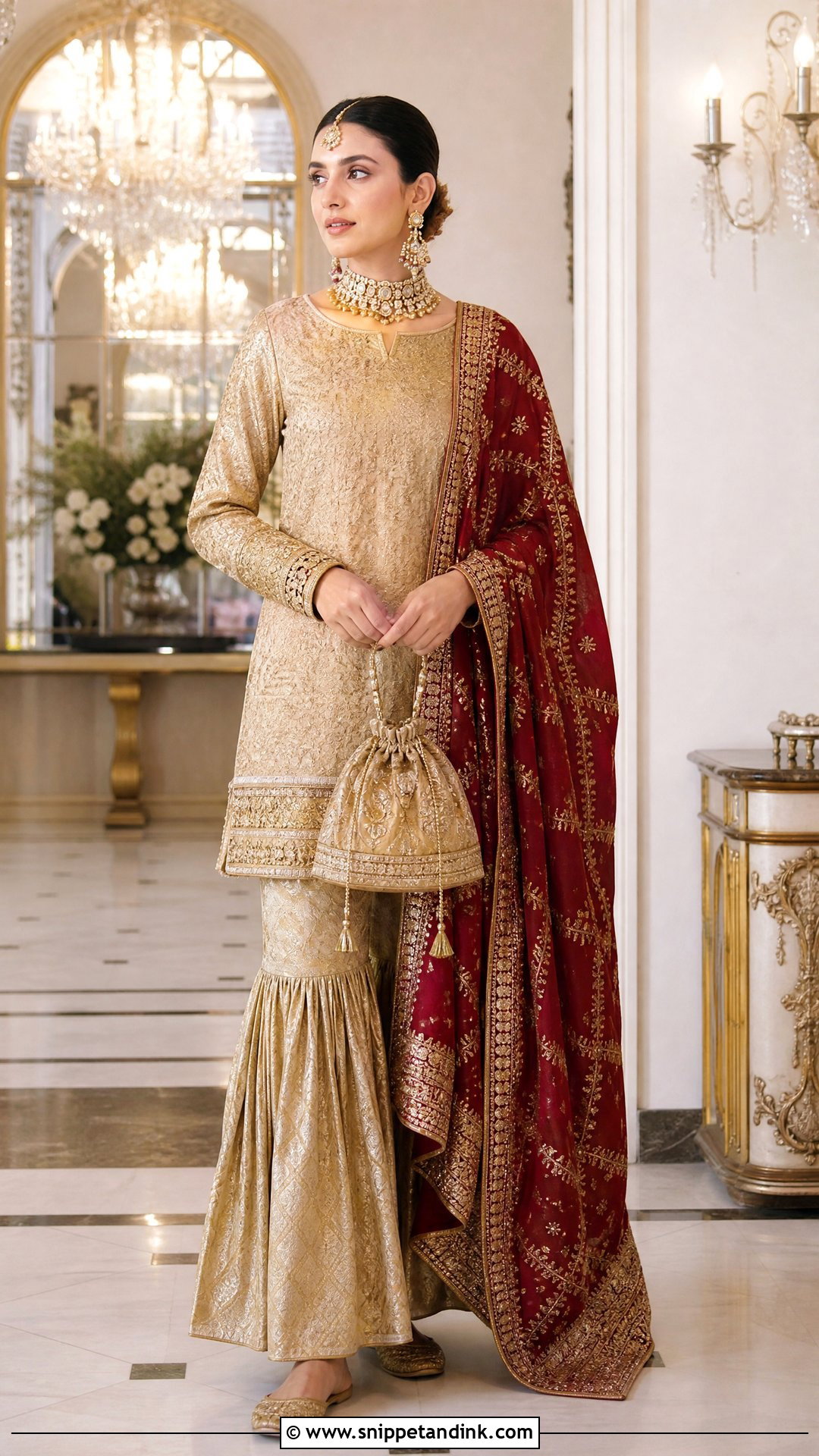
Gold brocade can suit a bride, close family or a formal guest, depending on how much of it you wear. I like plain silk above the knee and patterned brocade through the flares, with a short brocade kurti on top; it keeps the woven pattern from fighting itself. A deep red, emerald or ivory dupatta adds contrast and frames the metallic. Kundan jewellery, a structured potli and muted gold juttis finish it. Brocade already reflects light, so skip sequins elsewhere. Brides can wear a broader dupatta border; guests can keep the same colours with smaller woven motifs.
16. Teal Garara Suit With Long Jacket
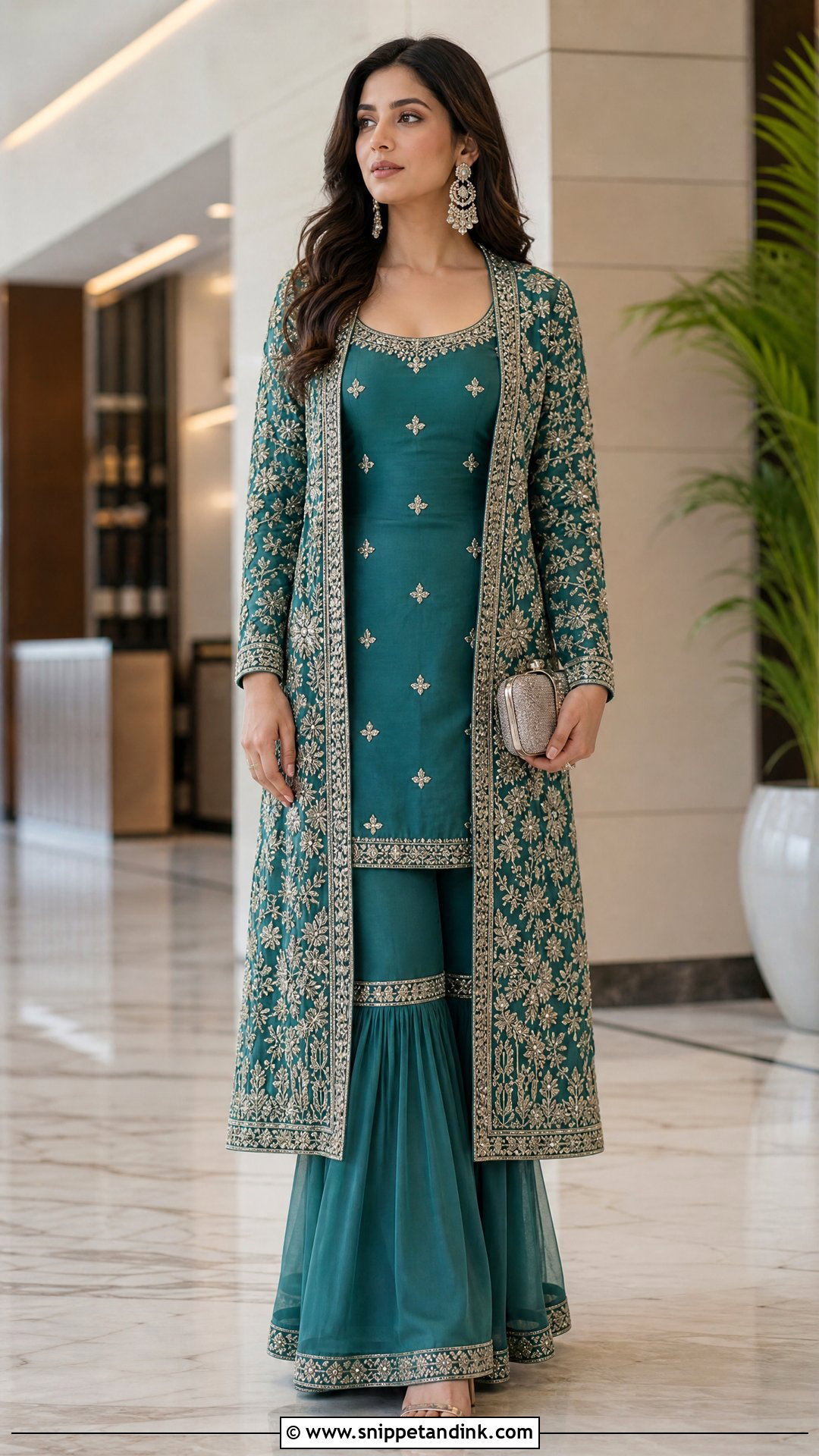
An open long jacket over a teal garara gives structure and extra coverage without a long kurti that hides the construction. Wear a simple sleeveless kurti or fitted blouse with the garara, then layer an embroidered jacket open at the front, falling to calf or ankle. The front opening needs to stay wide enough to show the fitted knee and flare, so I keep the jacket’s work concentrated along that edge. Add a slim dupatta only if you need one; three layers plus a dupatta hide everything. Chandelier earrings, a small clutch and heeled sandals suit a reception or evening sangeet.
17. Mint Green Garara Suit With Organza Dupatta
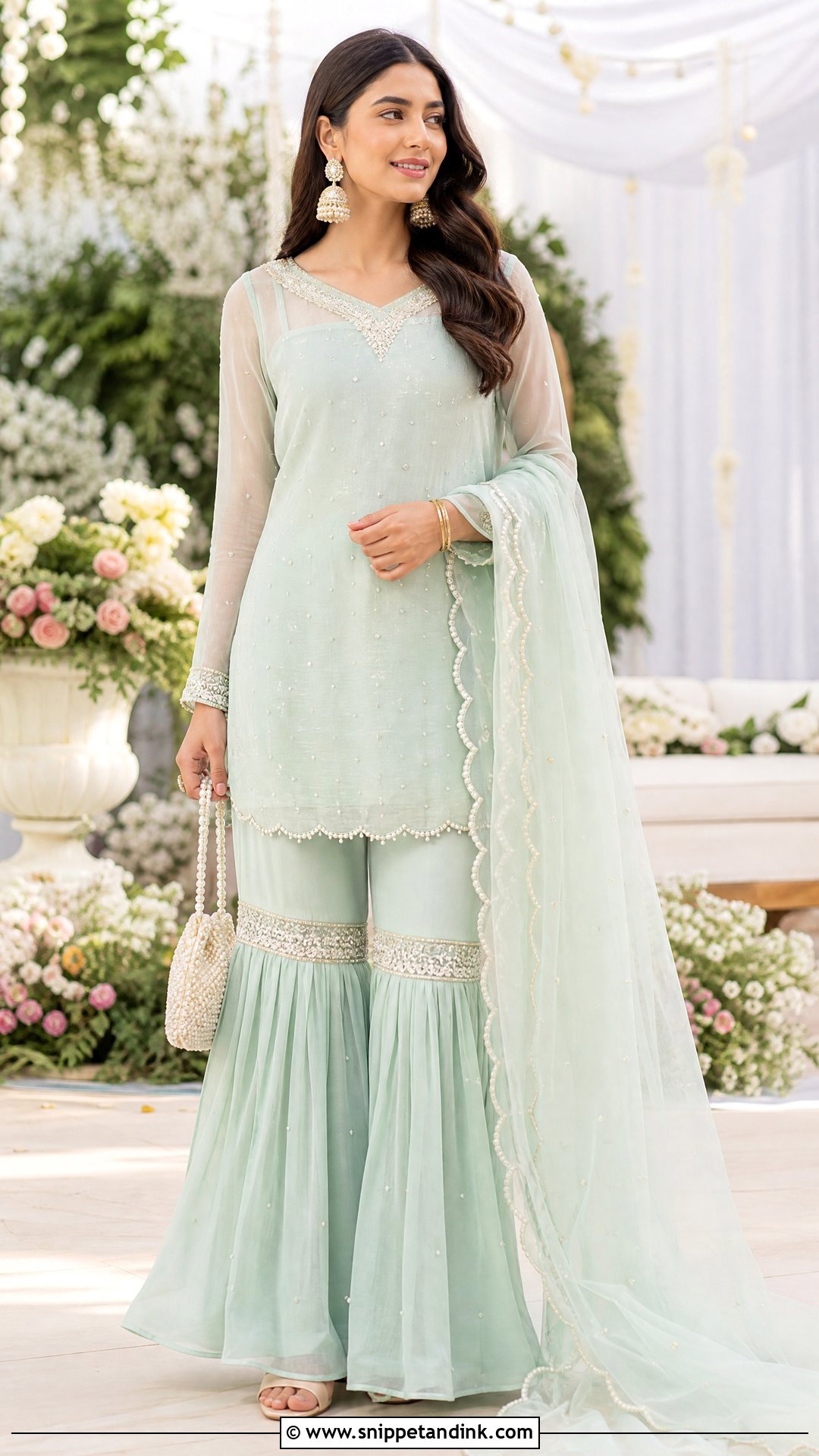
Mint is a spring and summer colour. A short chanderi or silk kurti with pearl, resham or light gold work pairs with a garara in airy fabric through the flares and a detailed knee border. Chanderi has a slight sheen and a crisp, almost papery hand, so it keeps the kurti’s shape in heat. An organza dupatta with a scalloped edge adds crispness. Pearl jhumkas, ivory heels, a beaded bag and slim gold bangles finish it. Outdoors, pin the dupatta at one shoulder so the breeze doesn’t take it. A tonal lining keeps the pastel even in photographs.
18. Fuchsia Garara Suit With Contrast Dupatta
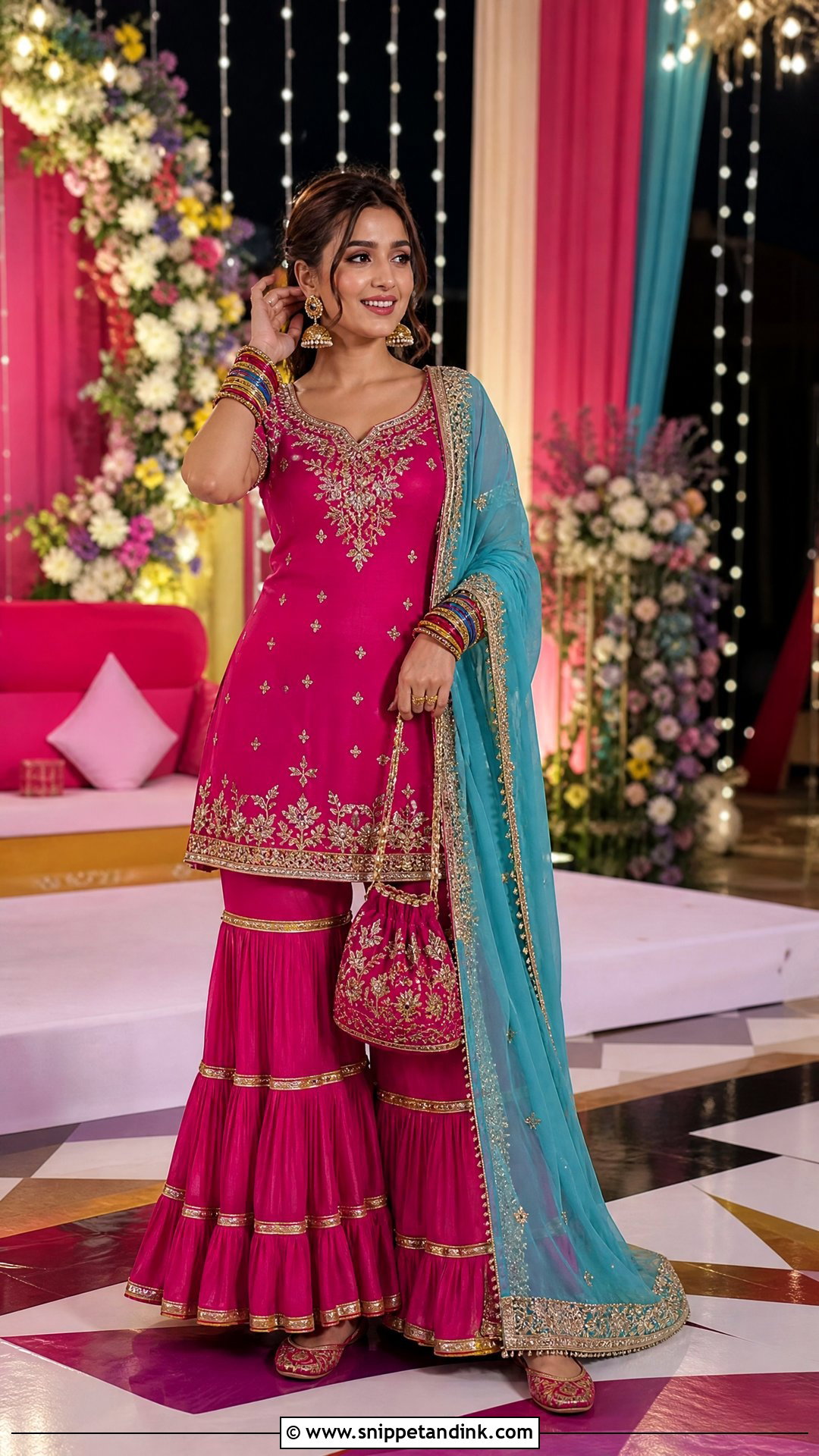
Fuchsia is joyful at a mehndi, sangeet or family function. Choose a short kurti in gold embroidery, mirrors or coloured resham, and a fuchsia garara featuring layered flares with neat gold knee bands. Add contrast with one other strong colour only, an orange, green or turquoise dupatta. My rule with brights: repeat one of the outfit’s colours in the accessories, and the mix looks deliberate rather than random. Gold earrings, juttis, bright bangles and a compact potli complete it, on a heel or flat you can dance in.
19. Beige Garara Suit With Multicolor Threadwork
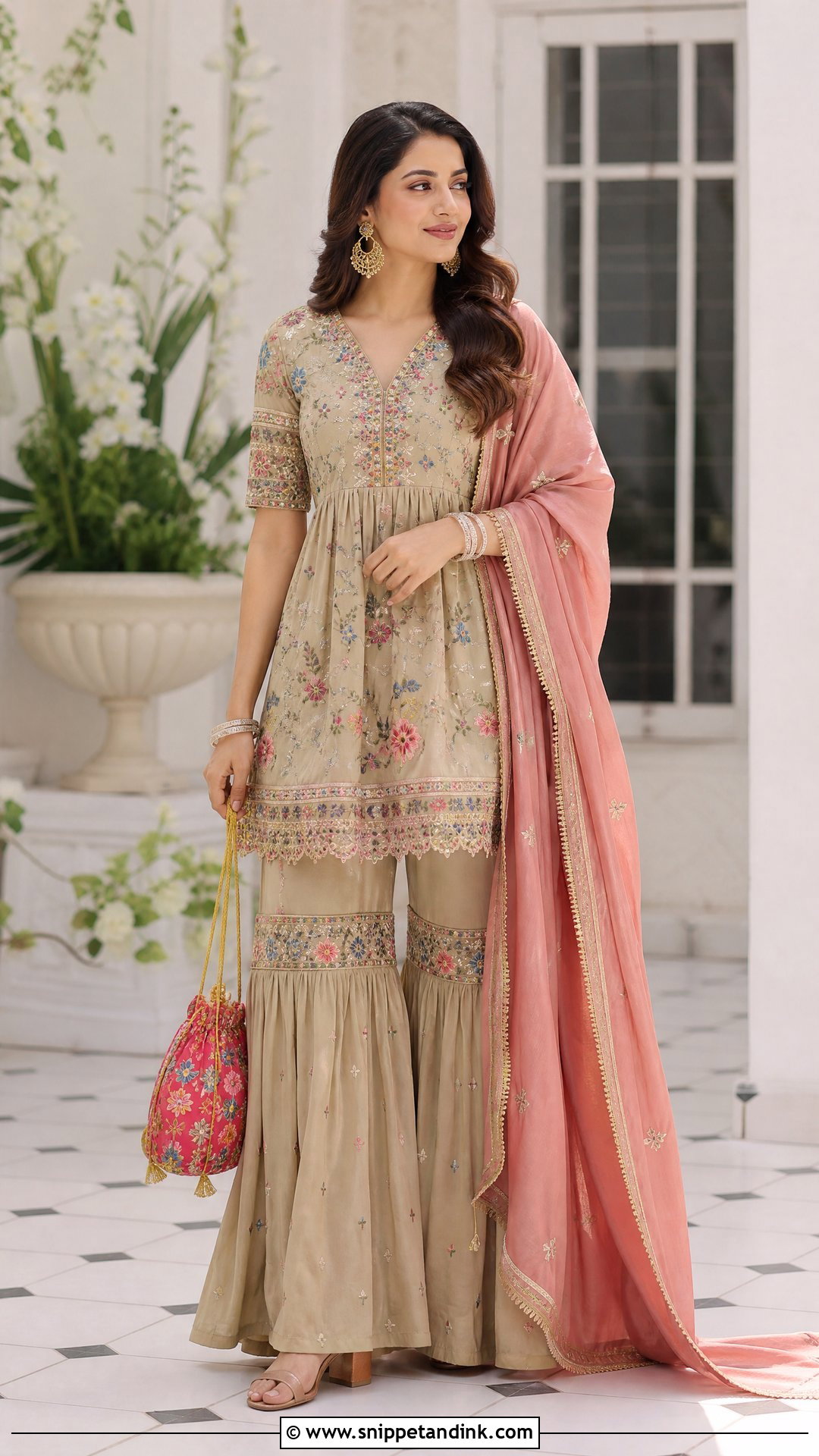
Beige is the most re-wearable suit on this list. A short kurti with multicolour floral or geometric threadwork at neckline, sleeves and hem pairs with a beige garara with smaller motifs and a bright knee border. A coral, teal or dusty pink dupatta pulls one colour from the embroidery and gives the outfit definition. Gold earrings, a colourful potli, neutral block heels and a few bangles finish it. For a guest who prefers understated clothes at a daytime wedding, this works now and later with a different dupatta, jewellery or shoes.
20. Champagne Garara Suit With Sequin Kurti
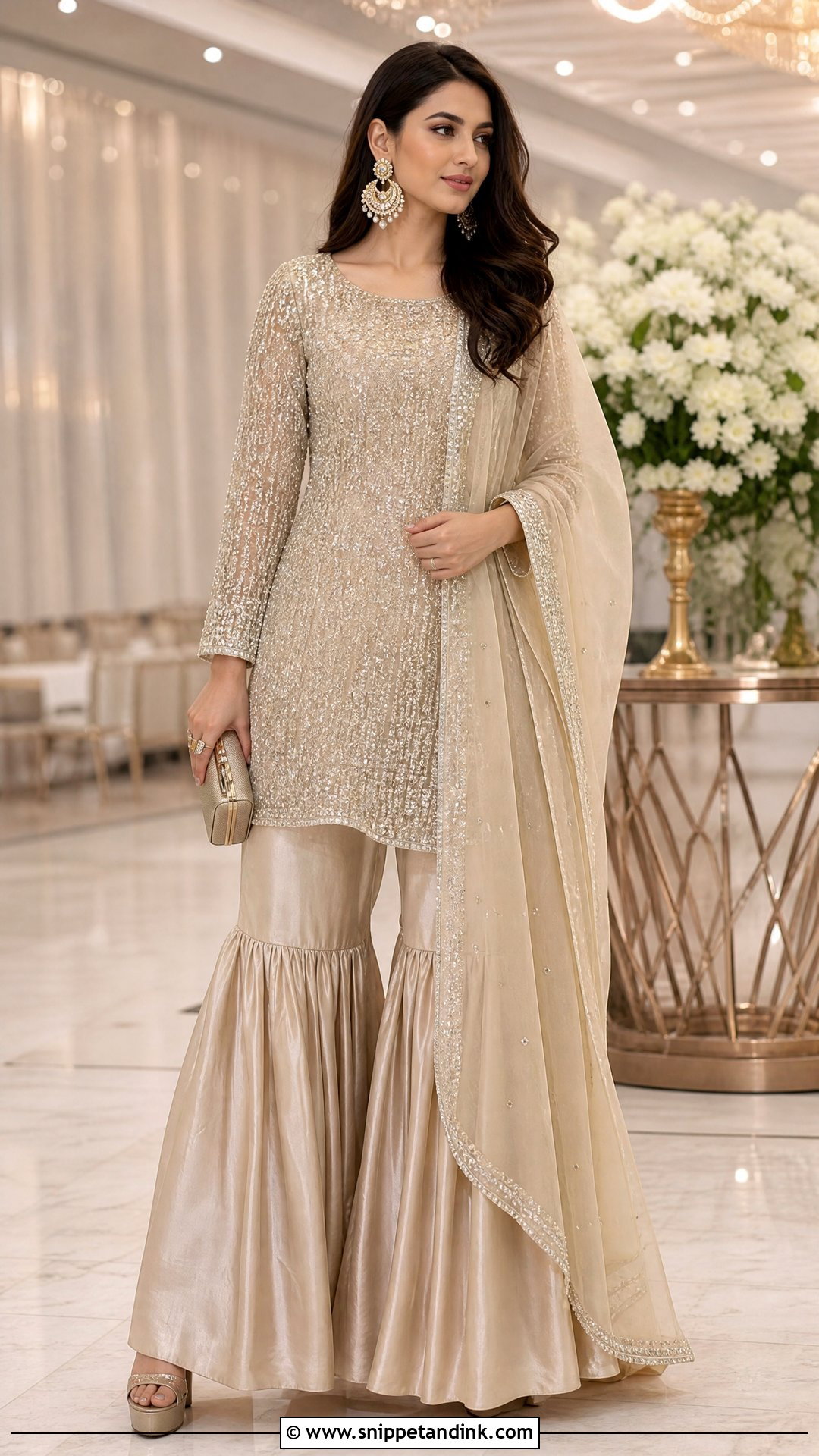
Champagne suits a reception or engagement in the evening. Choose a short sequin kurti with a defined waist and simple neckline, and a satin or georgette garara in the same colour, plain above and sequinned at the knee borders and hem. Sequins scratch the inner arm on a sleeveless kurti, so I ask for a soft lining at the armhole edge. A light champagne dupatta with fine crystal edging finishes it. Statement earrings, a metallic box clutch and comfortable platform heels are enough. Stick to champagne, soft gold and clear crystal rather than mixing metals. A bride can add a longer veil; guests keep the work lighter.
Packing a Garara Suit for a Destination Wedding
All that gathered fabric creases badly in a suitcase. I fold the garara along its panel seams rather than across them, lay tissue paper between the folds and pack it flat on top, never rolled. The kurti goes face-in with tissue over the embroidery so sequins don’t catch on the dupatta.
Carry the bridal suit on the plane in a garment bag if the airline allows it; checked luggage gets lost and crushed. On arrival, hang everything immediately in the bathroom while the shower runs warm, which lets the worst creases drop. A hand steamer finishes the job, held a few centimetres away from metallic work, never pressed on it.
Pack a small repair pouch too: matching thread, a needle, safety pins, spare hooks and a few dupatta pins. Something always comes loose between the hotel room and the stage.
Heat at the destination changes things too. If you’re flying somewhere warm and humid, wear the heaviest embroidered piece for the evening function only and keep the daytime suits in georgette or cotton-silk. Zardozi and velvet that felt fine at a winter fitting become very hard work on a humid terrace.
Red for the Ceremony, Mint for the Afternoon
The best garara outfit has a clearly defined knee flare, a well-fitted kurti and accessories that support the silhouette. Red, maroon, ivory and gold belong at the main ceremonies; mint, lavender, peach and blue are easier for daytime functions and bridesmaids. Fabric is the other half of the decision. Velvet and brocade suit winter evenings, while chiffon, georgette, organza and cotton-silk stay comfortable in heat. Think about the function, the venue, how comfortable you need to be and any dress code before you settle on embroidery or jewellery. Get the tailoring right and every one of these suits works, for a bride, a relative, a bridesmaid or a guest.
You'll Like These Ideas:


Leave a Reply