
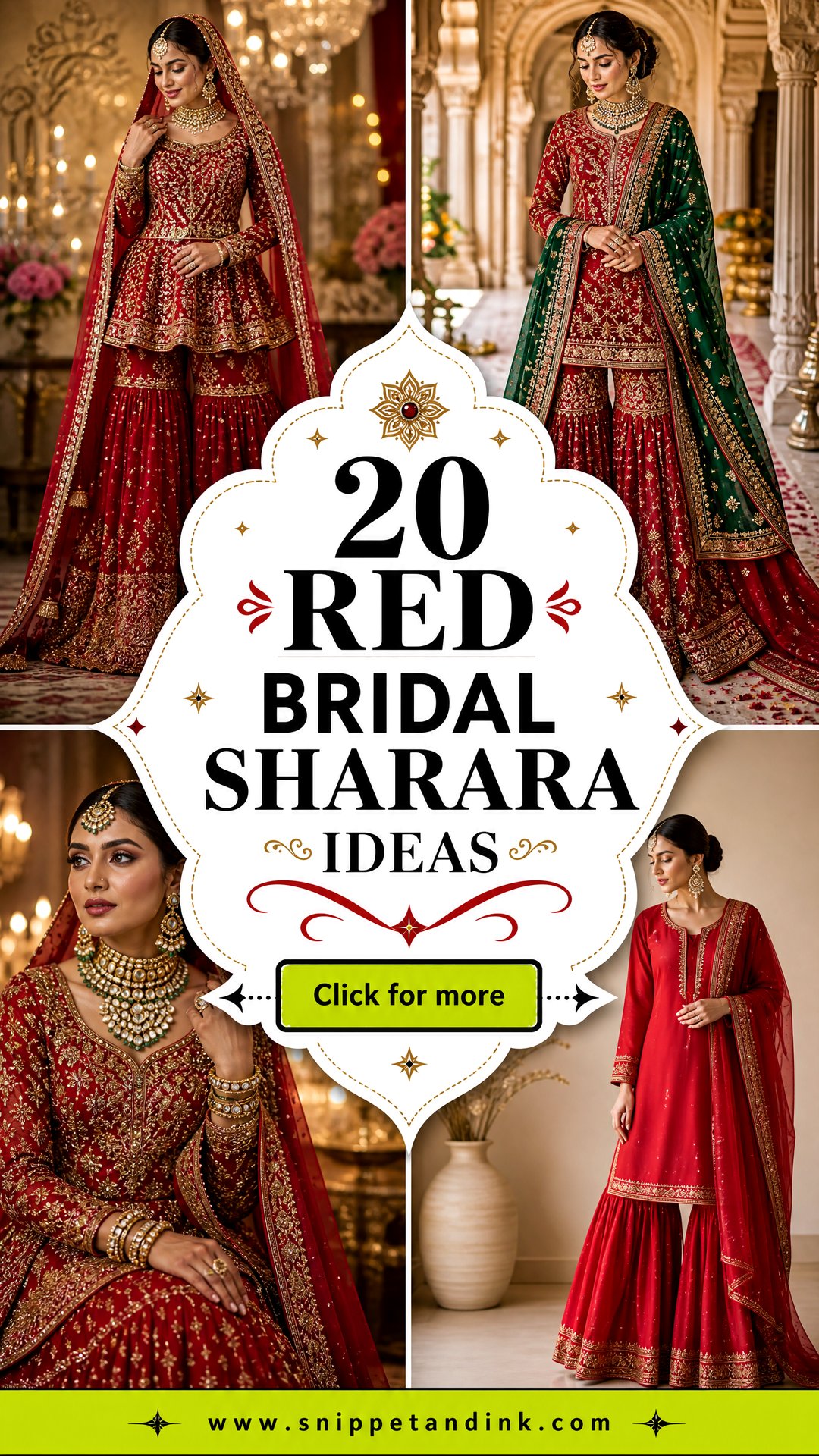
How Much Flare a Bridal Sharara Should Have
A sharara is a pair of very wide trousers that flare from the hip or upper thigh, and most of its character comes from how that flare is built. Bridal shararas are usually cut from many panels, called kalis, sewn together for each leg. More panels and more fabric give a bigger swing when you walk, but they add weight, and with embroidered borders the weight adds up quickly.
Fabric changes the shape as much as the cut does:
- Georgette and chiffon hang softly and ripple with every step, the easiest to wear for hours.
- Raw silk holds a fuller, bell-like shape and shows embroidery crisply.
- Velvet and heavy brocade look rich but get warm and heavy fast.
Ask how the waistband closes. A plain drawstring can roll under a heavily embroidered flare, so for bridal weight I prefer a firm waistband with a side zip or hooks, or at least a wide elastic. Have the hem finished in your actual shoes, so it just clears the floor. And sit down in the trial: a sharara that looks perfect standing can bunch awkwardly on a stage settee if the panels are cut too full.
1. Traditional Red And Gold Bridal Sharara
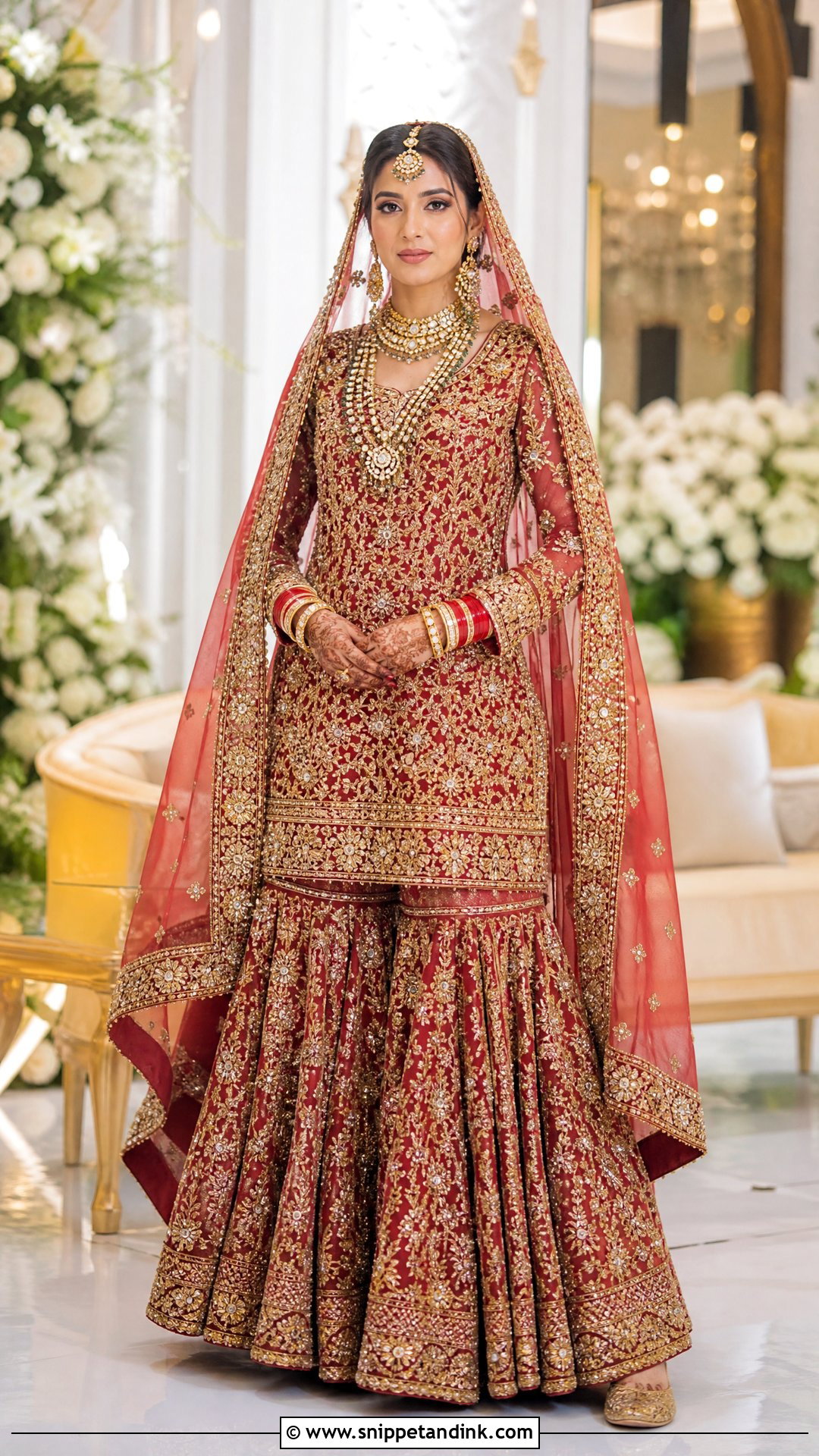
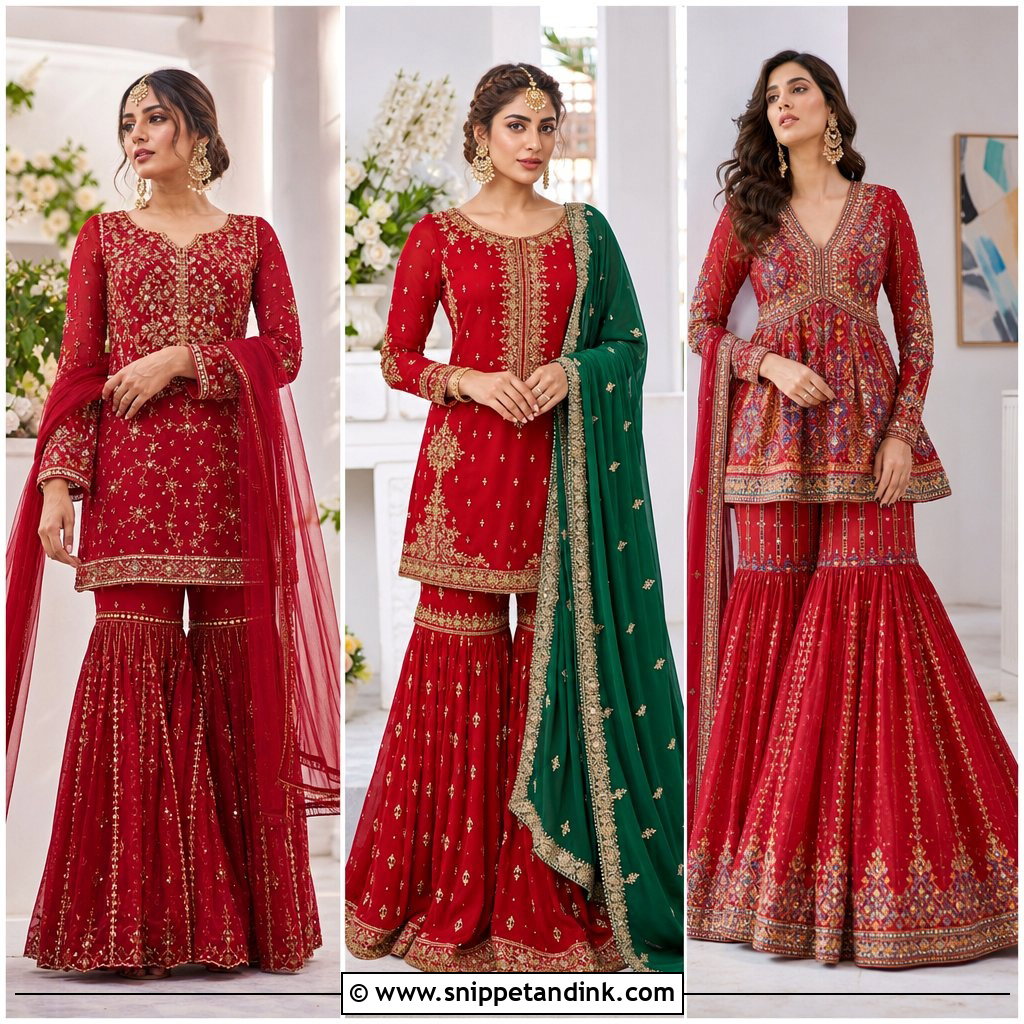
Red and gold is the starting point for most sharara brides, and it holds up because the pairing gives the embroidery somewhere to shine. Deep bridal red pants with a wide flare go under a fitted embroidered kurti, with a net or organza dupatta in the same red. I prefer antique gold zardozi and zari borders here over bright yellow gold, since the older tone lets the red stay dominant. A layered kundan necklace, matching earrings, a maang tikka and stacked bangles finish the jewelry. Embroidered juttis carry you through a long ceremony. A centre-parted low bun sits well under the dupatta and gives the pins something firm to grip.
2. Maroon Velvet Bridal Sharara
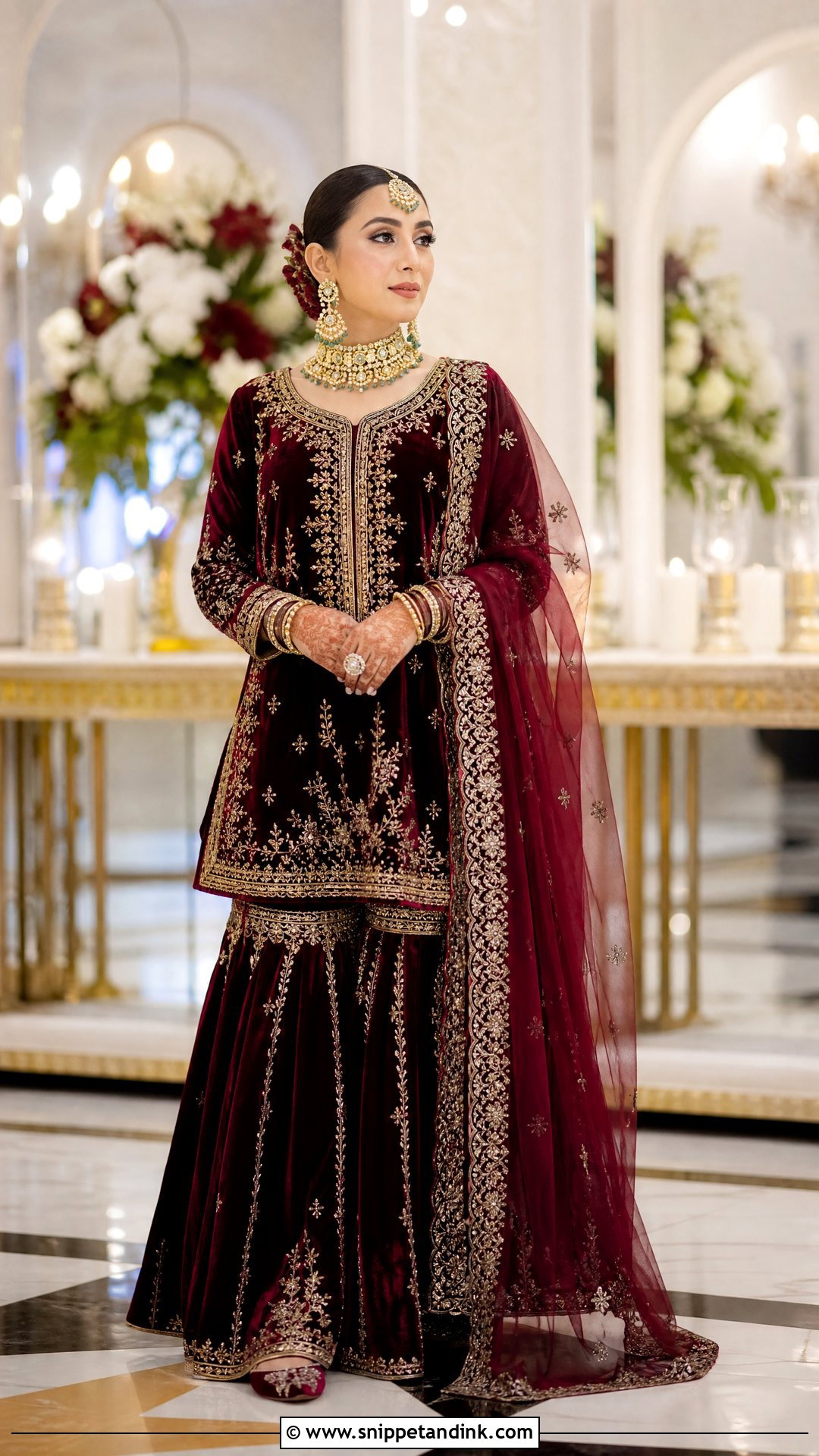
Velvet only makes sense in the cold. A maroon velvet bridal sharara is warm and muted, a quieter alternative to bright red, but wide velvet pants are heavy and the pile traps heat, so I keep it for indoor winter evenings. Pair the pants with a structured short kurti worked in antique gold at the neckline, sleeves and hem. A lightweight net dupatta stops the whole outfit becoming a wall of velvet. Polki jewelry, a traditional nath and maroon bangles coordinate easily. Gold or velvet juttis, a smooth centre-parted bun and a statement maang tikka finish it.
3. Red Zardozi Bridal Sharara
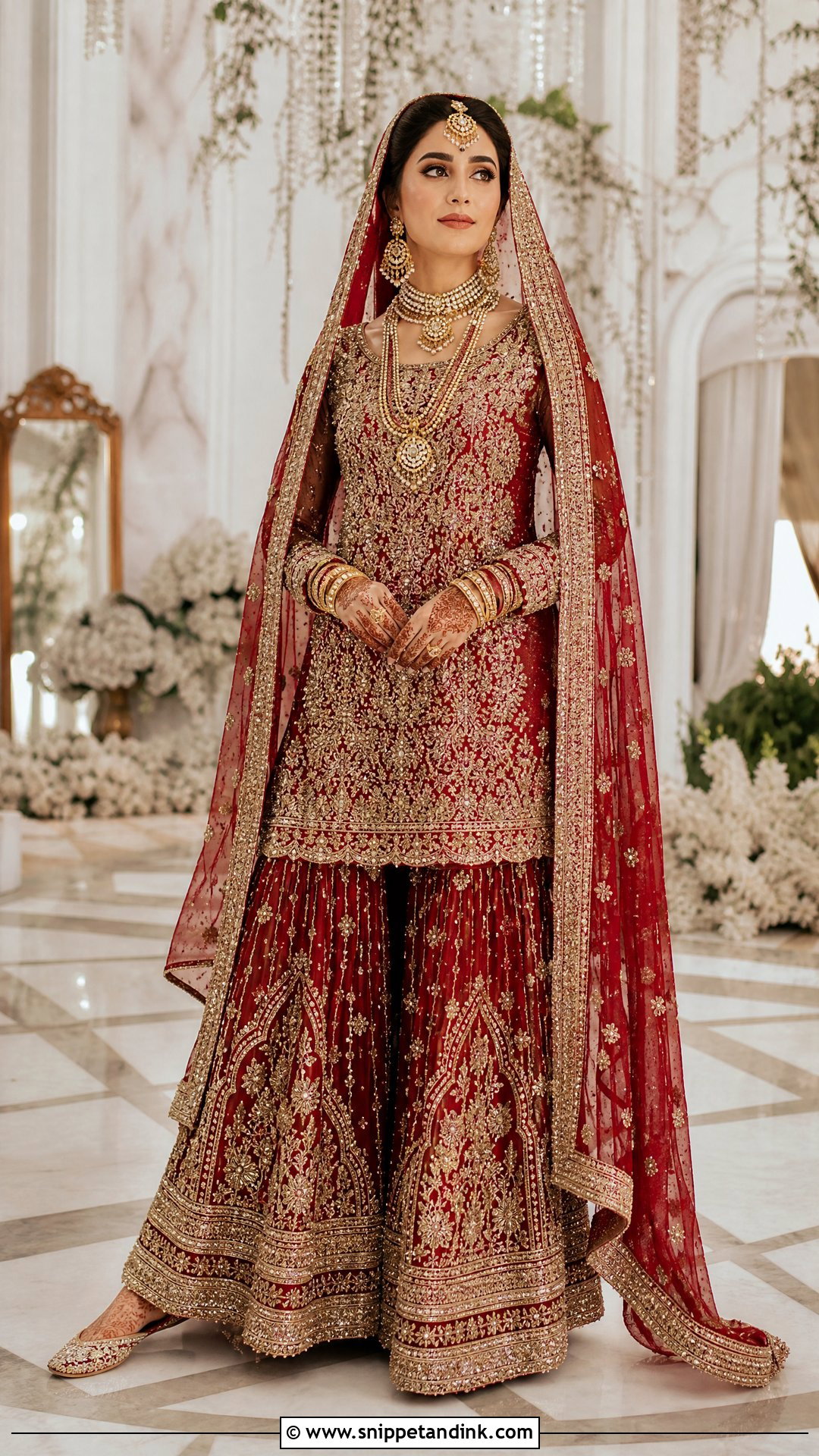
Zardozi is dense, metal-wire embroidery, and placing it well is the whole skill. I like an ornate kurti over sharara pants that grow heavier toward the hem, which keeps the upper body defined and adds weight exactly where the flare needs it to swing. A sheer red dupatta with a zardozi border and scattered motifs is enough; all-over work on the dupatta too makes the outfit stiff and hot. Petite brides should ask for smaller motifs and narrower borders, because large zardozi panels can swamp a small frame. A choker, long necklace, jhumkas and gold juttis complete it. Pin the dupatta at the crown and shoulder so your hands stay free.
4. Red Gota Patti Bridal Sharara
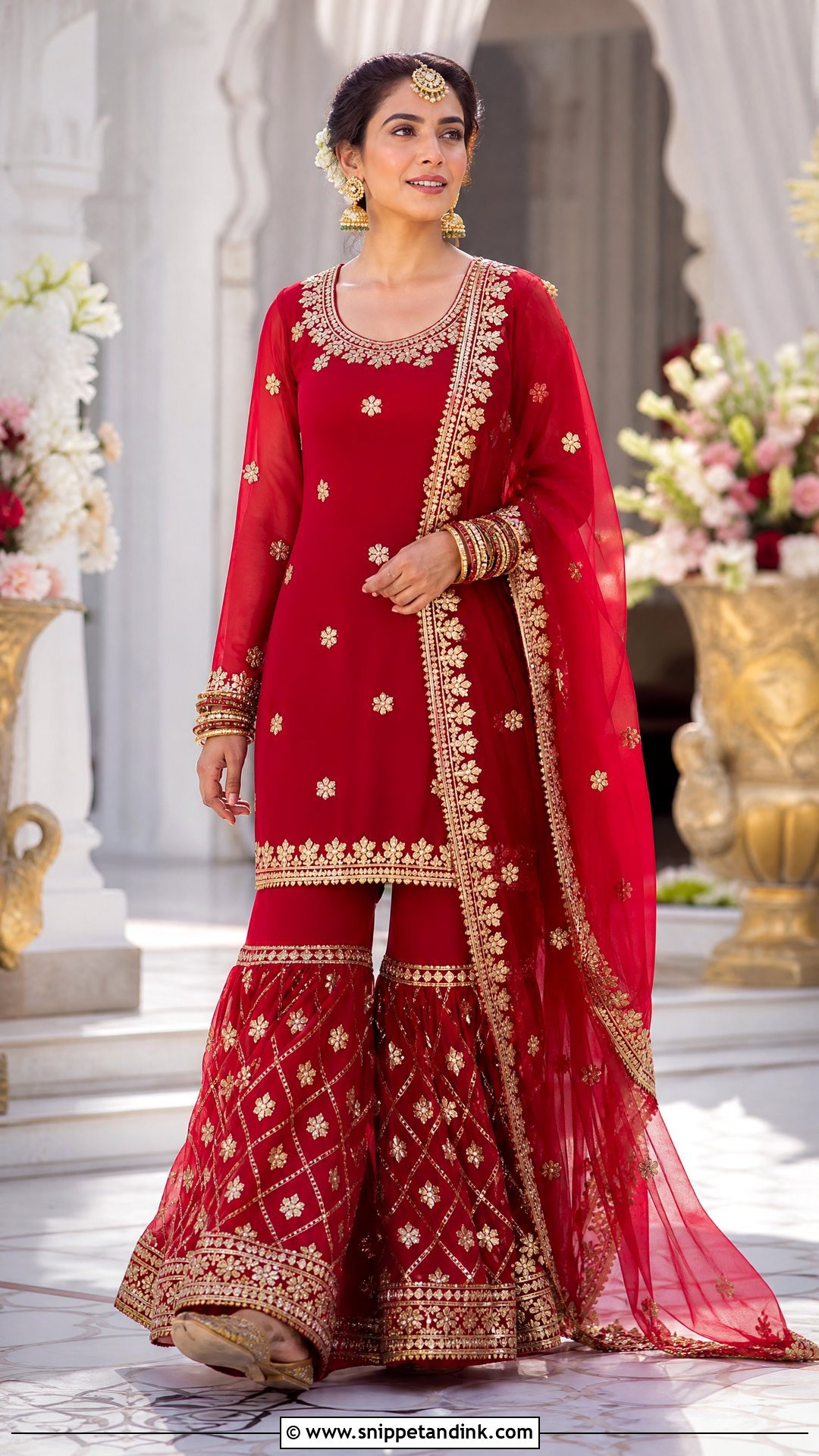
Gota patti is metallic ribbon stitched onto fabric, and it gives a festive flash without the weight of beadwork. Start with a ruby georgette or silk-blend sharara with diagonal gota borders; the diagonal line exaggerates the flare when you move. Add a fitted square-neck kurti with matching gota and a light organza dupatta with a broad border. Gota tarnishes if it’s stored damp, which matters if you want to wear the outfit again for family weddings. Gold jhumkas, a medium maang tikka, stacked bangles and pointed embroidered juttis suit it, with kohl-lined eyes and a rose-red lip. Loose waves for a mehndi, or a low floral bun for the wedding itself.
5. Red Sharara With Short Kurti
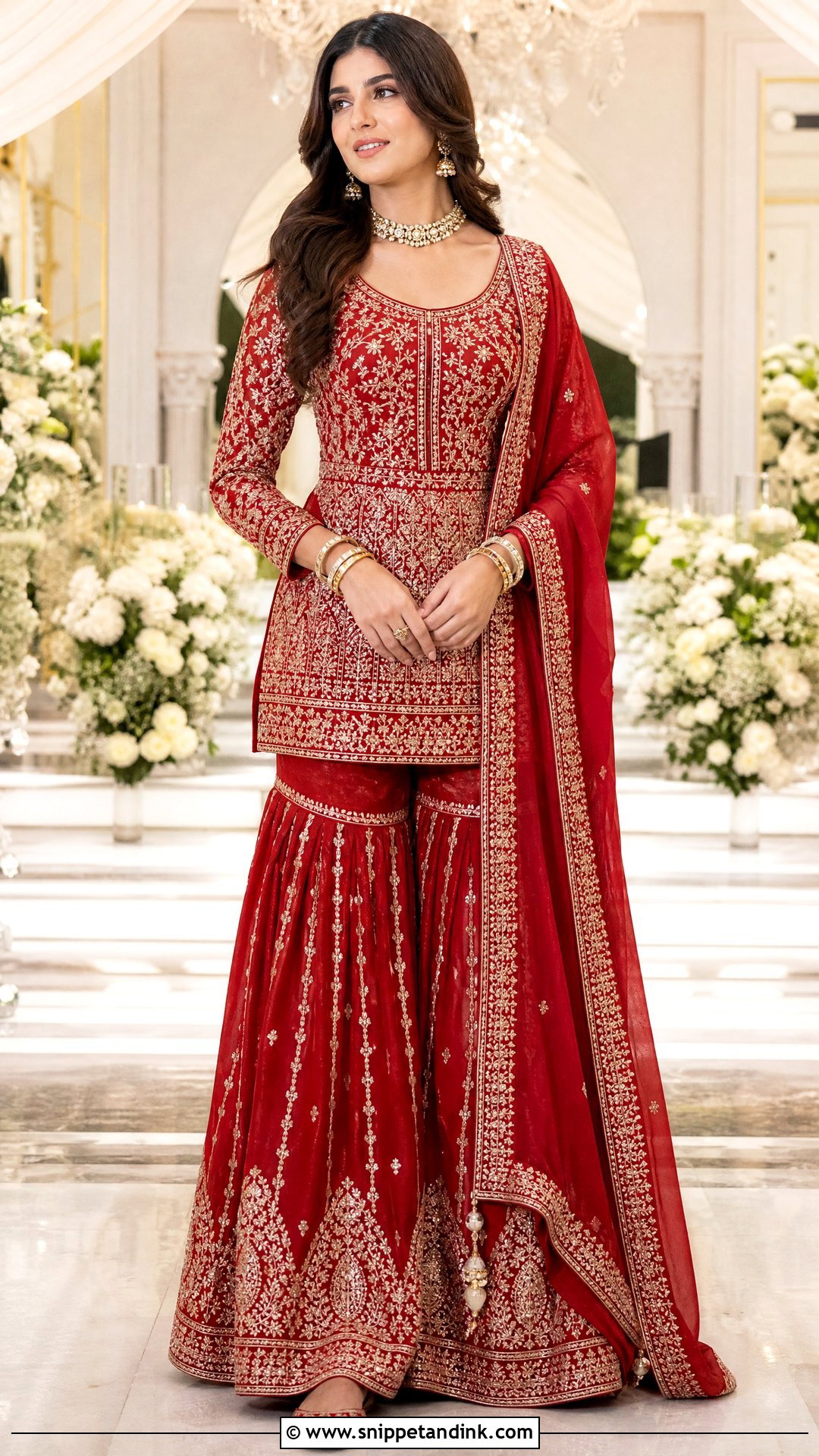
Keep the kurti short and the flare does all the talking. A fitted kurti ending near the natural waist or upper hip, with a supportive neckline, sits over high-waisted pants embroidered at the knees, panels or hem. A short kurti exposes the waistband join, so ask your tailor to finish that seam cleanly and to cut the kurti long enough that it doesn’t ride up when you lift your arms. A long dupatta draped from one shoulder adds a vertical line and stops the outfit from looking cut in half. Kundan choker, drop earrings, bangles and red juttis complete it. Using the same red fabric for both pieces gives one long, unbroken column of colour.
6. Red Sharara With Long Kurta
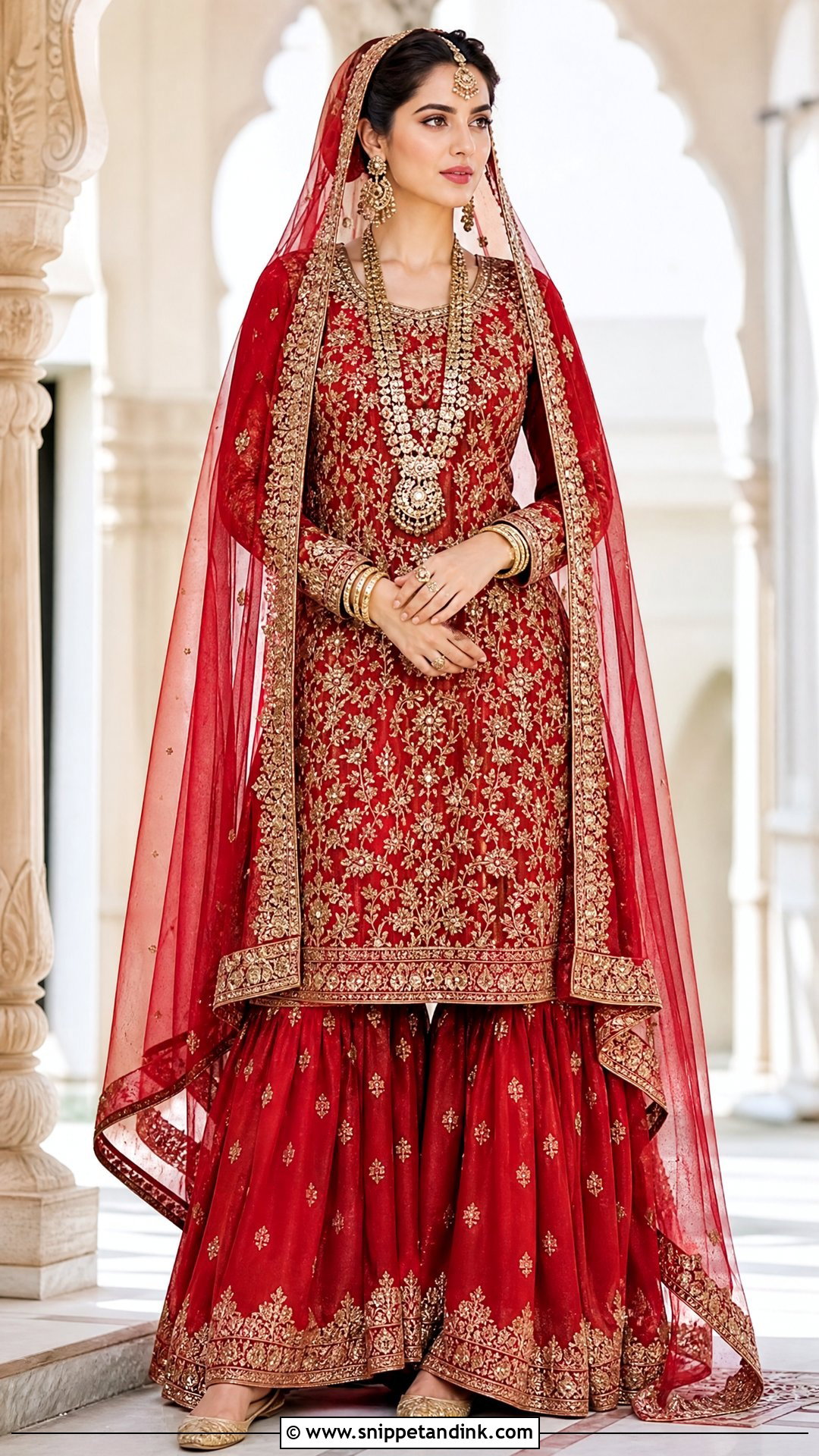
Prefer more coverage? A long kurta falling around the knees, open slightly at the front or sides, gives a flowing silhouette that’s easy to sit in for long rituals. The risk is that so much fabric swallows the body, so I look for defined shoulders, a shaped waist and vertical embroidery that pulls the eye up and down. Side slits matter here; without them, the kurta catches on the sharara flare when you walk. Let the pants show clearly beneath the hem. A sheer red dupatta over one shoulder or lightly on the head, a long necklace, matching earrings, slim bangles and gold juttis finish it, with a centre-parted bun or polished braid.
7. Red Bridal Sharara With Peplum Top
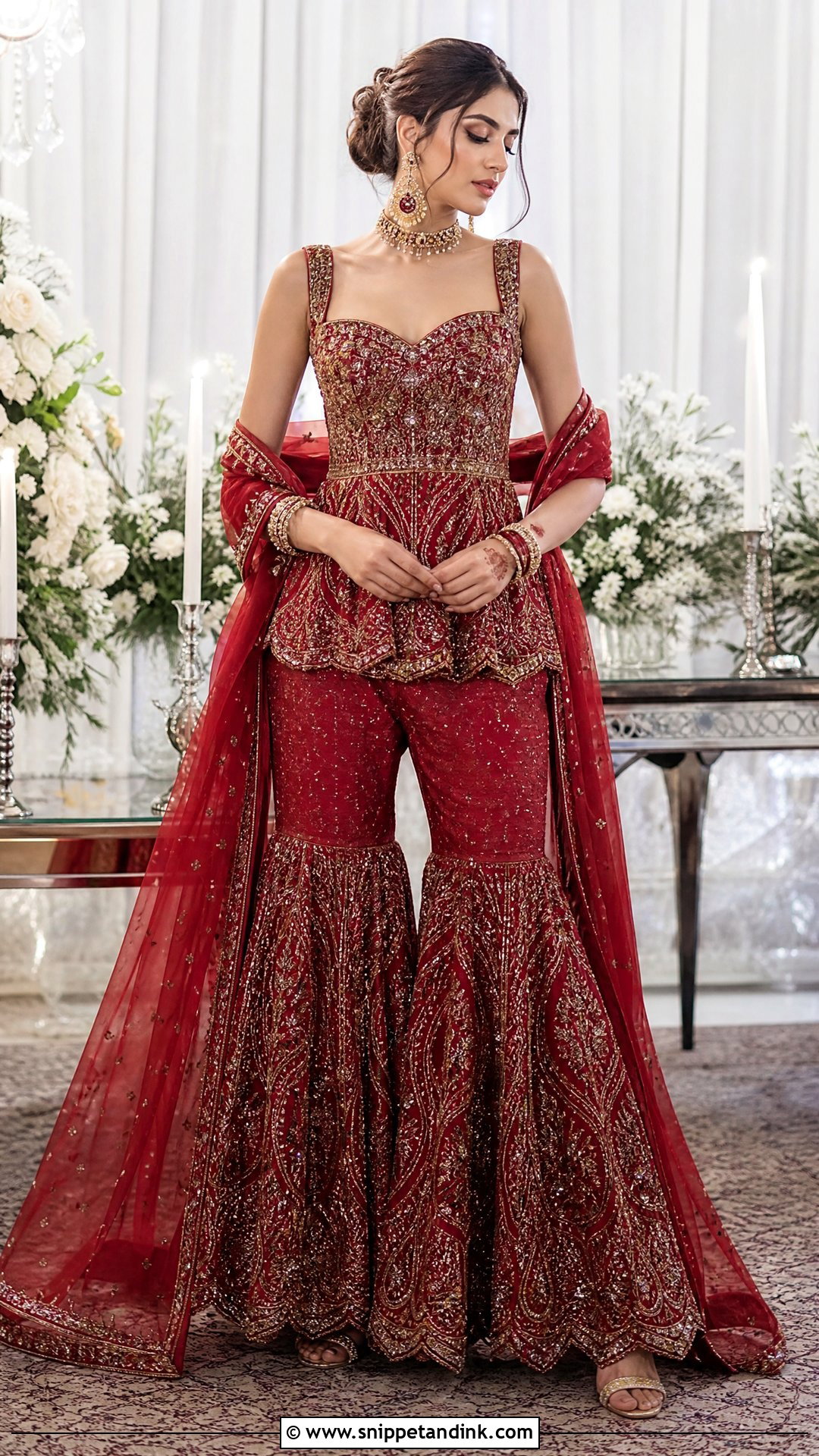
A peplum top turns a sharara modern by giving the waist a clear shape. The peplum should end above the widest part of the flare. Any lower and the two volumes meet and blur together. Pair a structured fitted bodice with high-waisted pants in matching silk, raw silk or georgette, and let embroidery connect them: gold florals at the neckline, peplum edge and pant hem. Drape a lightweight dupatta from the shoulder and catch it at the wrist so it flows without trailing. Statement earrings, a delicate choker, bangles and embellished block-heel sandals complete it. Side-parted waves feel contemporary; a sleek bun brings it back toward tradition.
8. Red Bridal Sharara With Jacket
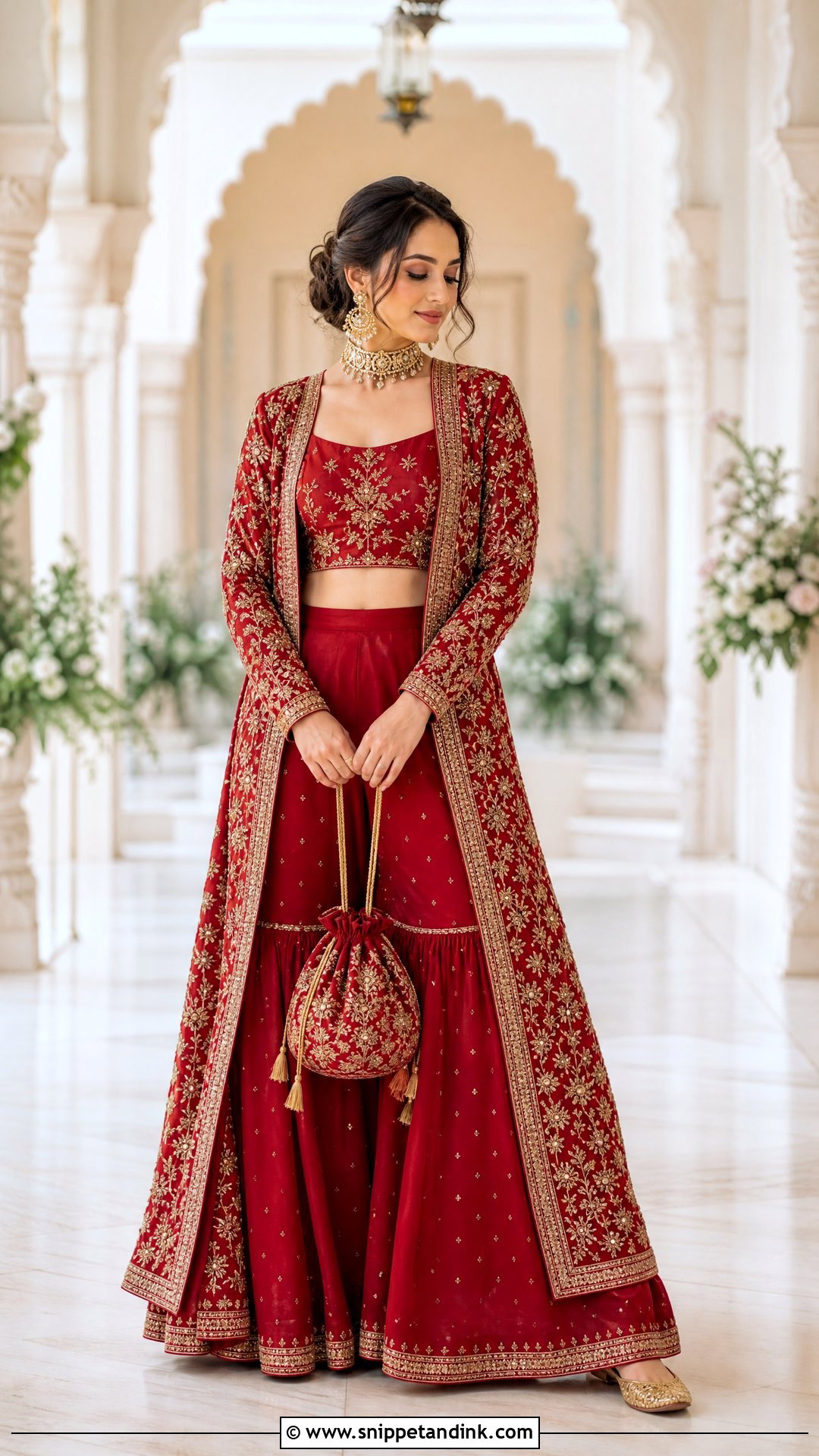
Here the jacket is the outfit. Start with plain or lightly embellished sharara pants and a fitted sleeveless blouse in the same shade, then layer a floor-length open-front jacket so the waist and moving pants stay visible. Put the gold threadwork, florals or small sequins on the jacket, not equally on every piece. A floor-length jacket is heavy on the shoulders, so I check the shoulder seam fits snugly; a loose one slides back all evening and you’ll keep tugging it. Choker, chandelier earrings, gold heels or juttis and a small potli complete it. If you add a dupatta at all, make it very light and carry it over one arm.
9. Red Bridal Sharara With Cape
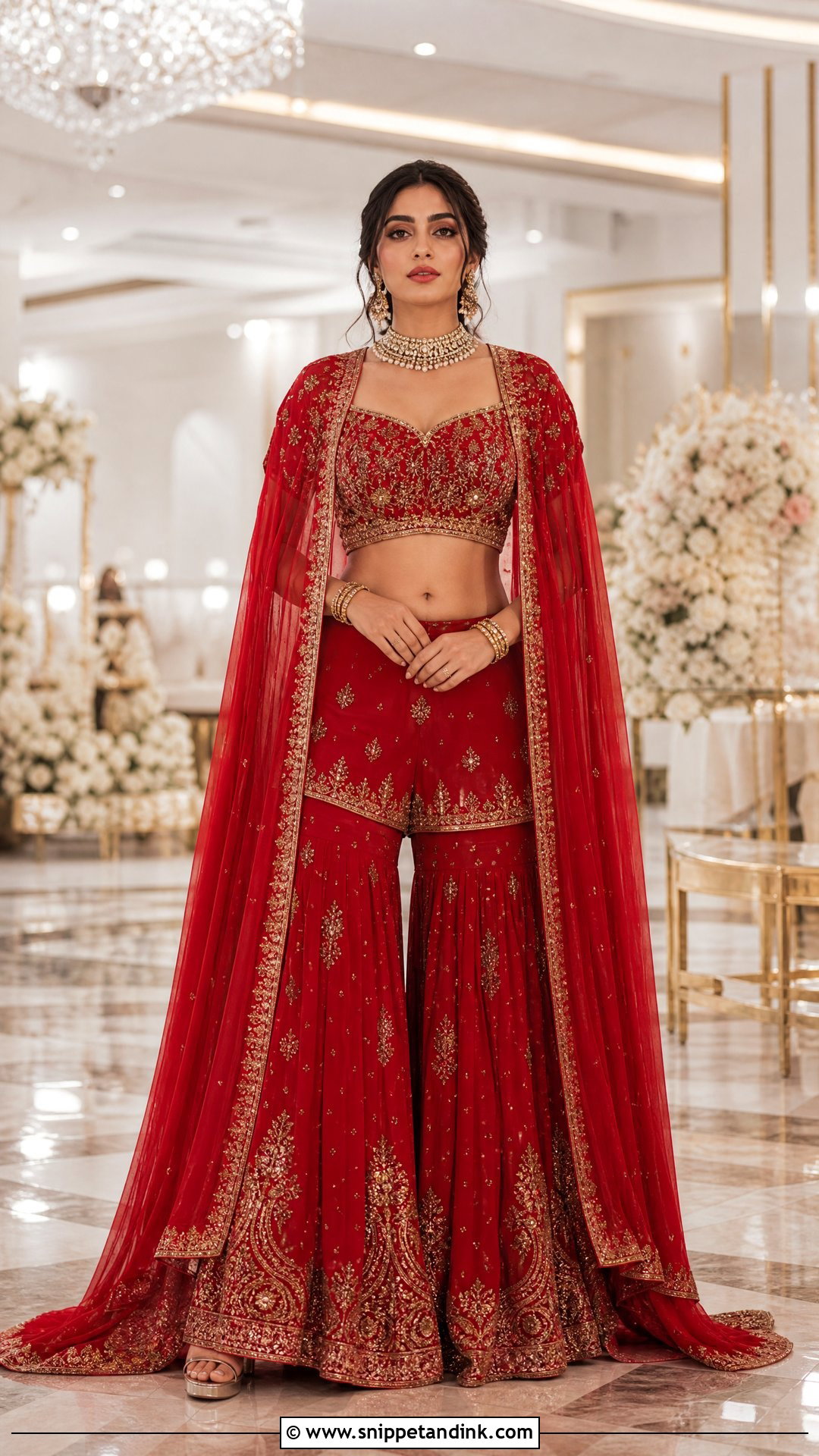
A cape solves the dupatta problem for brides who hate constantly adjusting fabric. Pair a fitted embroidered blouse with fluid sharara pants, then add a sheer shoulder cape falling to the wrists or the floor, trimmed with a fine gold border, scattered sequins or floral appliqué that matches the blouse. Keep the pants plainer so the balance holds. A floor-length cape needs a little room behind you on stairs and around candles, so ask a bridesmaid to watch it. Statement choker, coordinating earrings, slim bangles and metallic block heels suit it, with a neat ponytail or textured low bun. I suggest it most for receptions, engagements and sangeets, where you’re moving all night.
10. Red Sharara Saree For Bride
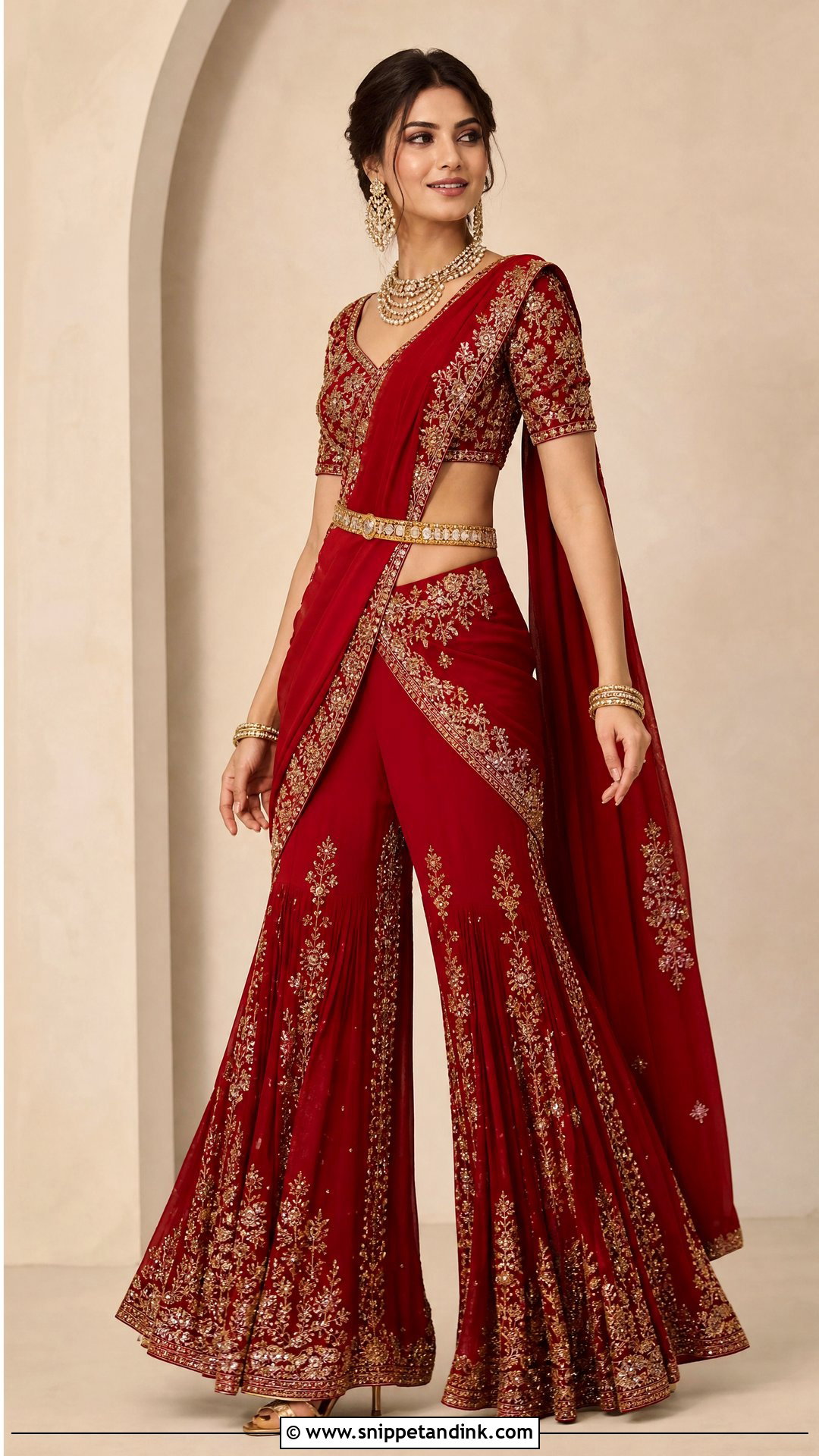
A sharara saree joins wide-legged pants with a pre-stitched drape that crosses the torso and falls over one shoulder like a pallu. You get the look of a saree with none of the pleat anxiety, which is a relief for brides who’ve never worn one. A slim embroidered belt secures the drape at the waist and cleans up the shape. Tone-on-tone embroidery or muted gold keeps it refined. Check that the stitched drape is attached at the shoulder and waist, not just pinned, before the day. Layered necklaces, chandelier earrings, bangles and gold heels complete it, with a smooth ponytail, sculpted waves or a neat bun depending on the event.
11. Red Bridal Sharara With Double Dupatta
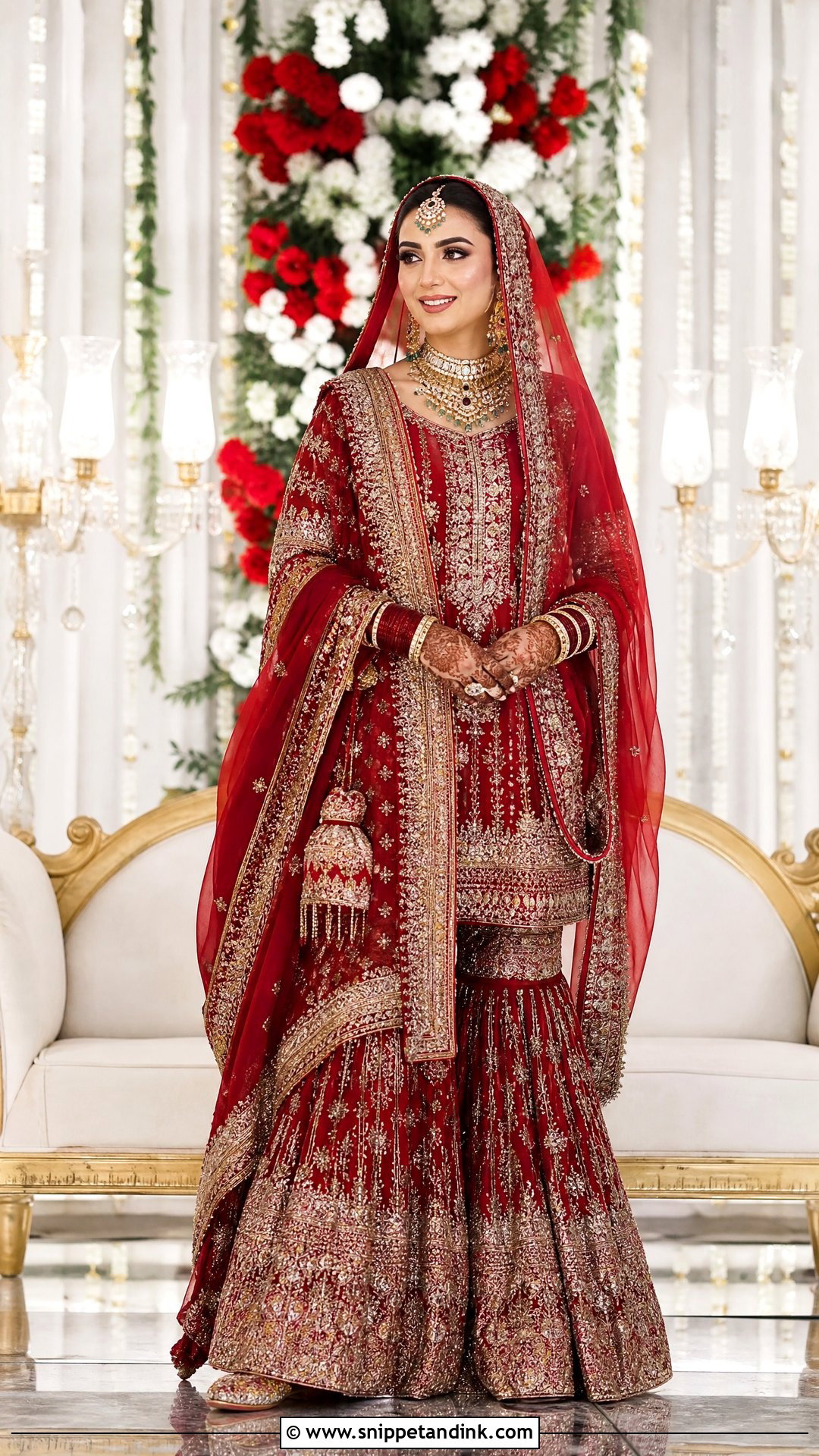
A double-dupattа red bridal sharara layers two pieces without burying the outfit, but only if both stay light. One red dupatta goes on the head, with a detailed border and scattered embroidery; the second, in softer net or organza, crosses the shoulder and waist. Heavy fabric on the head pulls at the roots for hours and tugs the hairstyle loose, so I’d test the actual pieces at the hair trial. Wear them over a structured short kurti and fully flared pants. A kundan choker, long necklace, maang tikka, earrings, bangles and embroidered juttis complete it. A centre-parted braided bun gives the best grip, with discreet pins at the crown, shoulders and waist.
12. Red Bridal Sharara With Green Dupatta
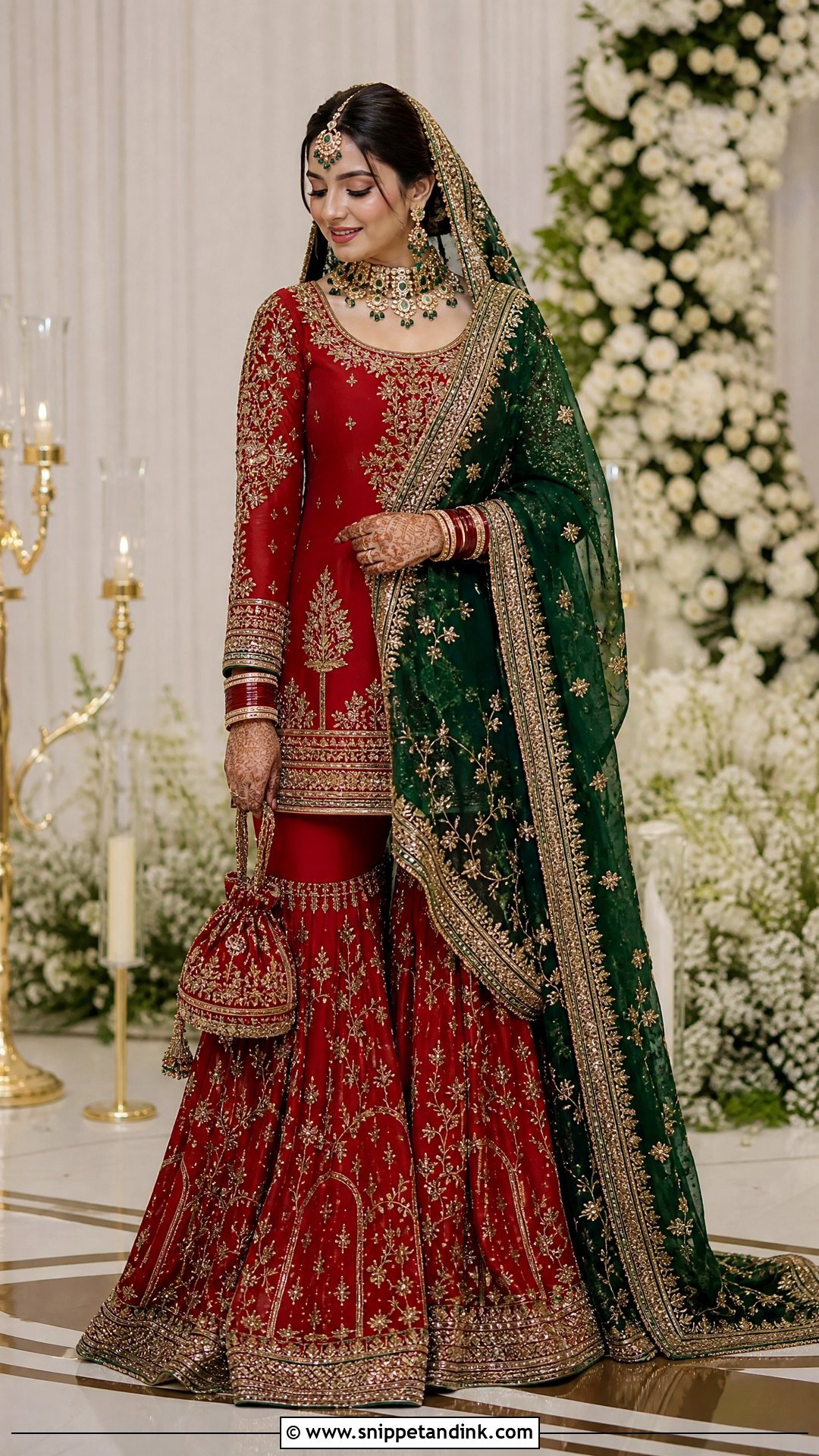
Red with green is an old pairing in South Asian bridal dress, and it reads richest in evening light. Choose a deep emerald or bottle green dupatta with a red-and-gold border, which ties it back to the main outfit. The sharara can carry antique gold embroidery while the kurti stays a little quieter at the neckline. Green and red need similar depth; a bright green against a deep red looks like it came from a different outfit, so compare the fabrics side by side before buying. Drape the dupatta over one shoulder or use it as the second layer of a double-dupatta drape. Emerald and kundan jewelry, red bangles, gold juttis and a small embroidered potli finish it, with white flowers in a low bun.
13. Red Bridal Sharara With Pink Dupatta
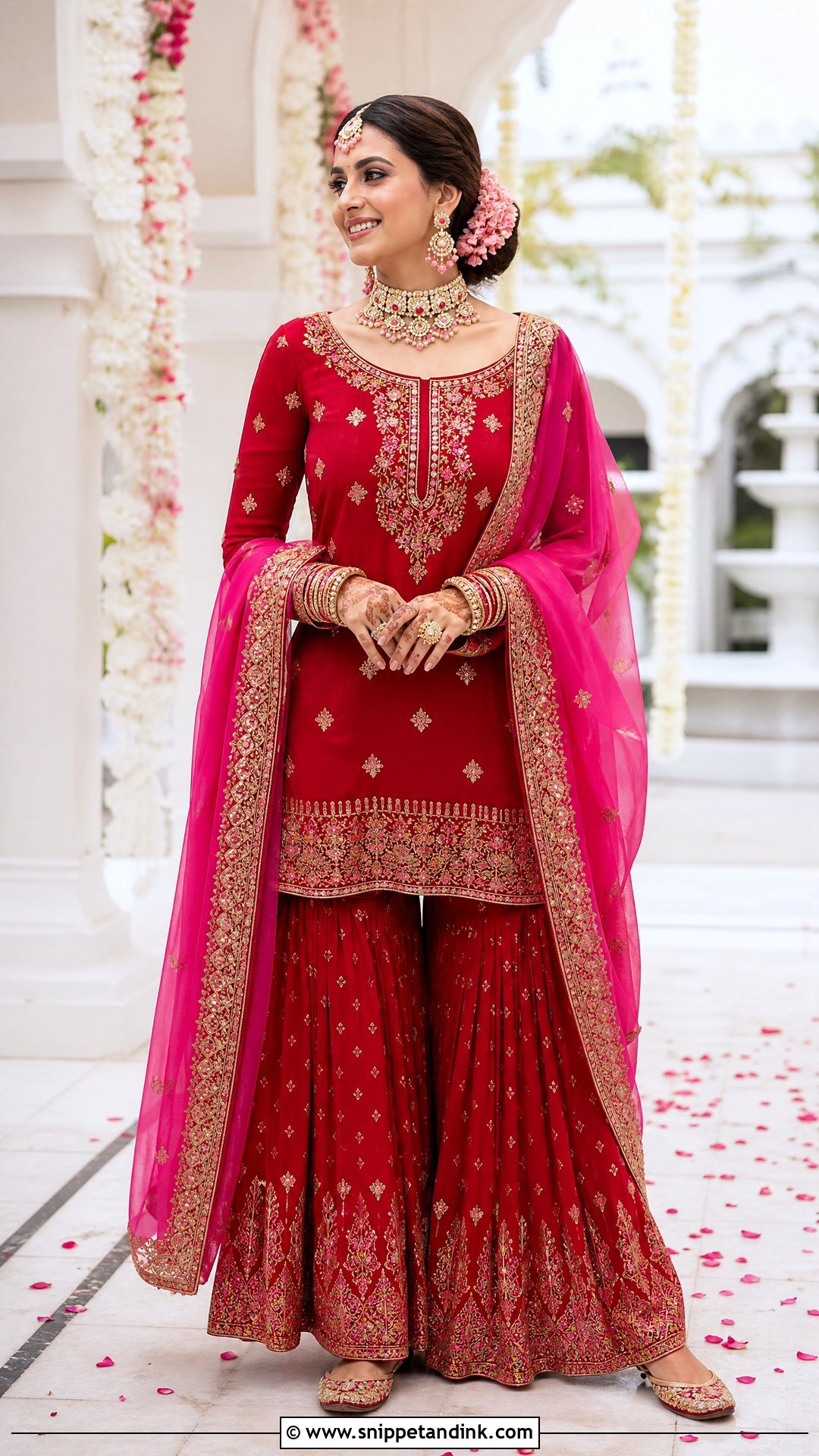
Pink softens red while keeping it celebratory, and undertone decides which pink works. Cooler, blue-leaning reds sit well beside magenta and rani pink; warmer, orange-leaning reds suit coral-pink. Getting this wrong is the commonest mistake with the pairing, and both colours end up looking slightly off. Pair a deep red sharara and embroidered kurti with the right pink dupatta, finished with a gold border and small red motifs so the contrast feels deliberate. Kundan jewelry with pink stones, gold bangles, a coordinated maang tikka and embroidered juttis complete it. Keep the face simple, with rosy cheeks and a neutral red lip, so you’re not adding a third and fourth shade.
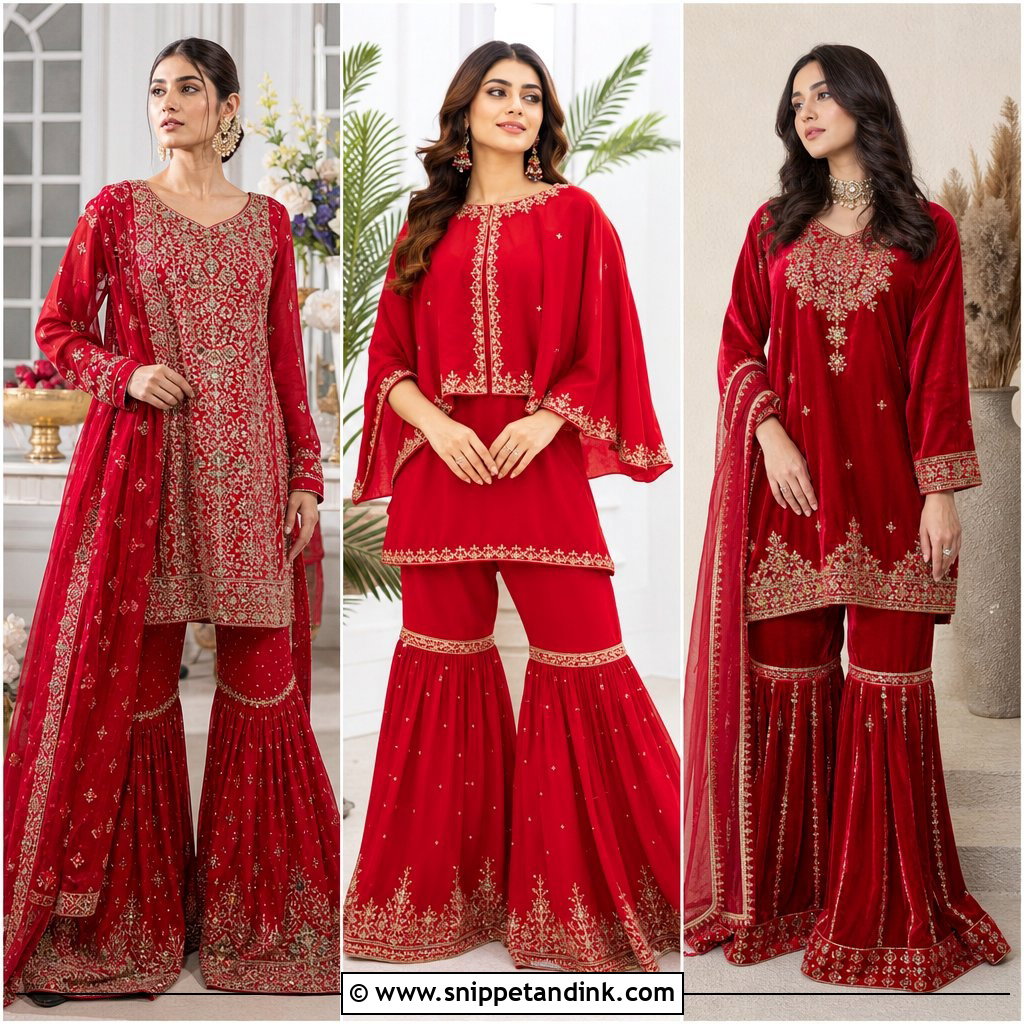
14. Red Bridal Sharara With Kundan Jewelry
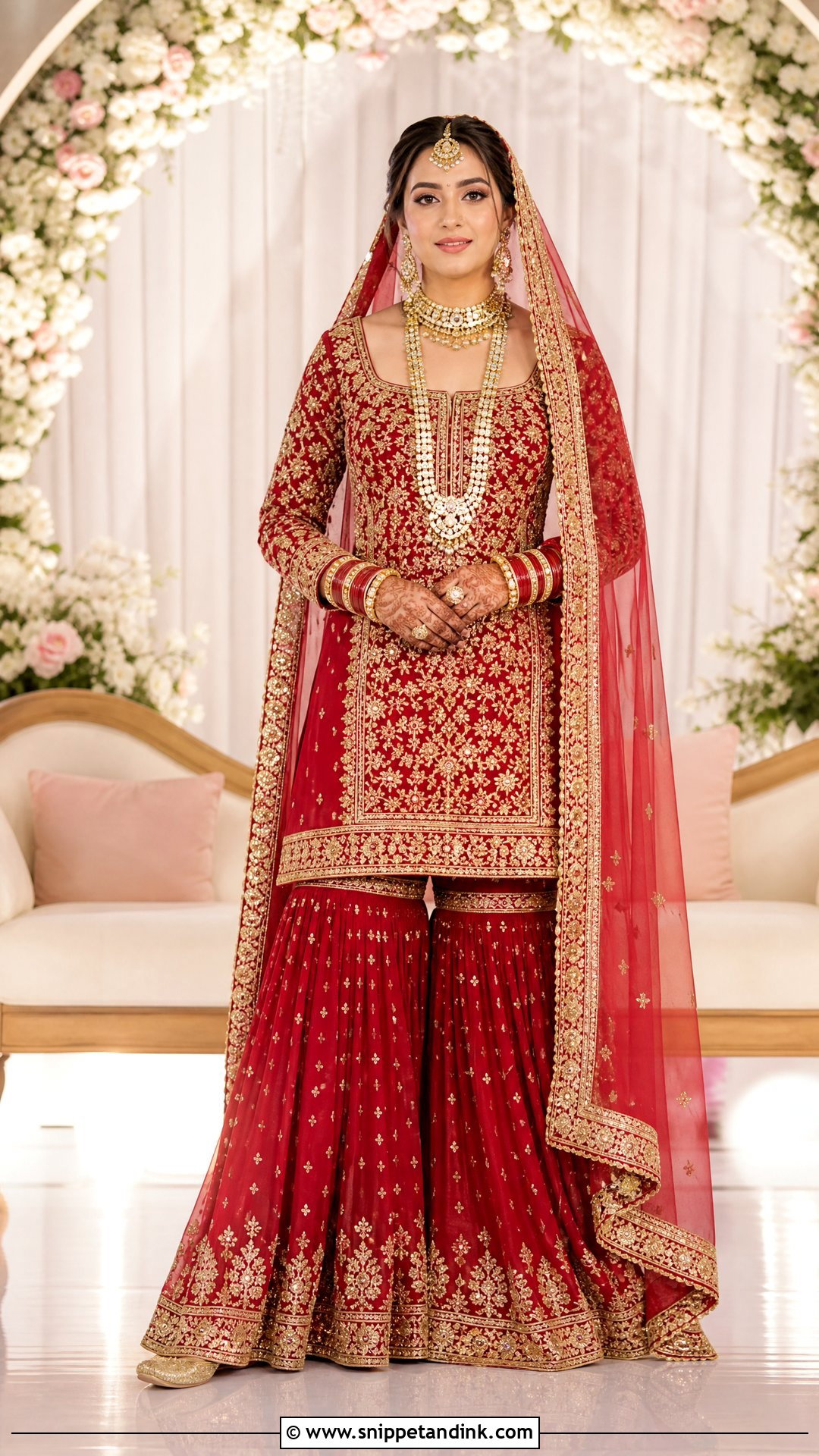
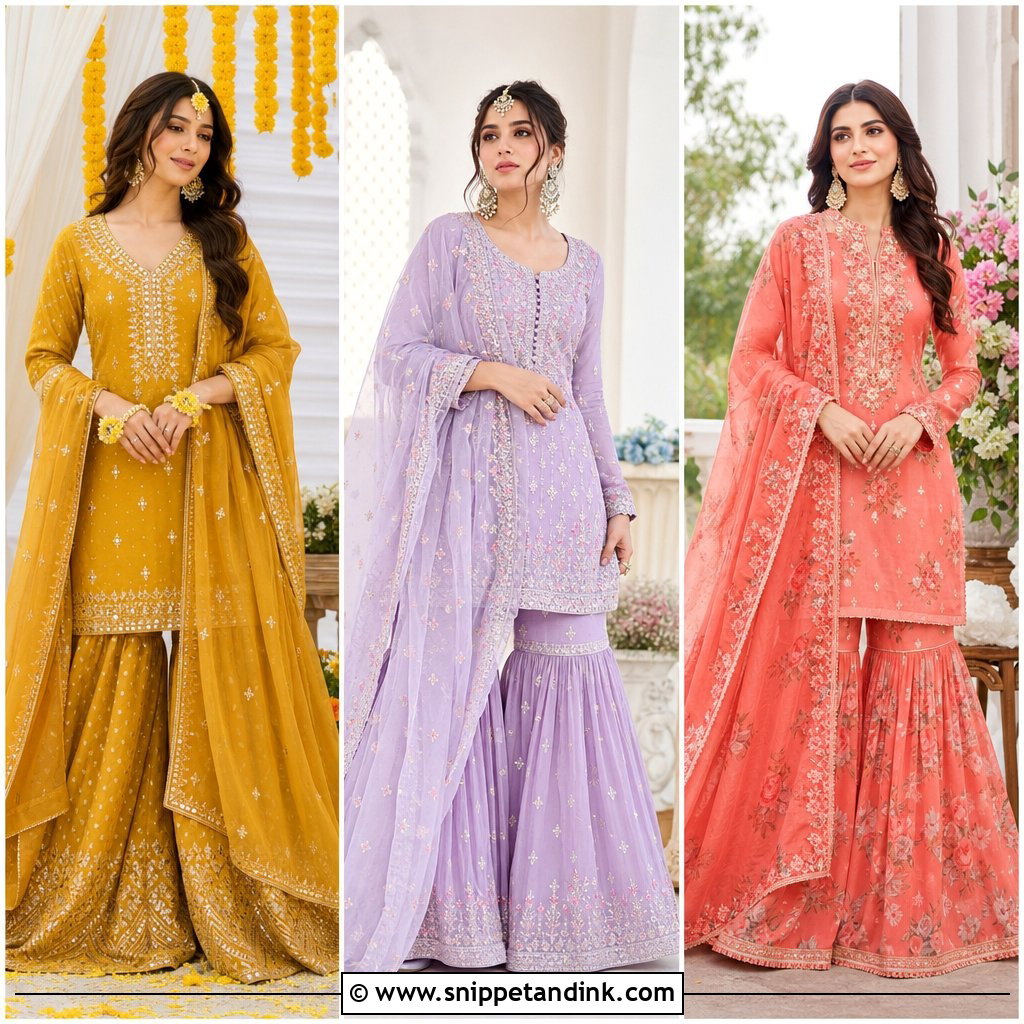
Kundan needs bare skin around it to read properly. Choose a square, sweetheart or modest scoop neckline that leaves space for the necklace, then style a fitted red kurti, flared sharara pants and a sheer dupatta with a controlled gold border. One kundan choker plus one longer necklace is better than three pieces of equal weight fighting for the same spot. Matching earrings, a maang tikka, red-and-gold bangles and a small nath finish the jewelry. Gold juttis that echo the embroidery avoid adding another colour. With so many reflective surfaces, matte makeup keeps the skin from adding a third layer of shine in photos.
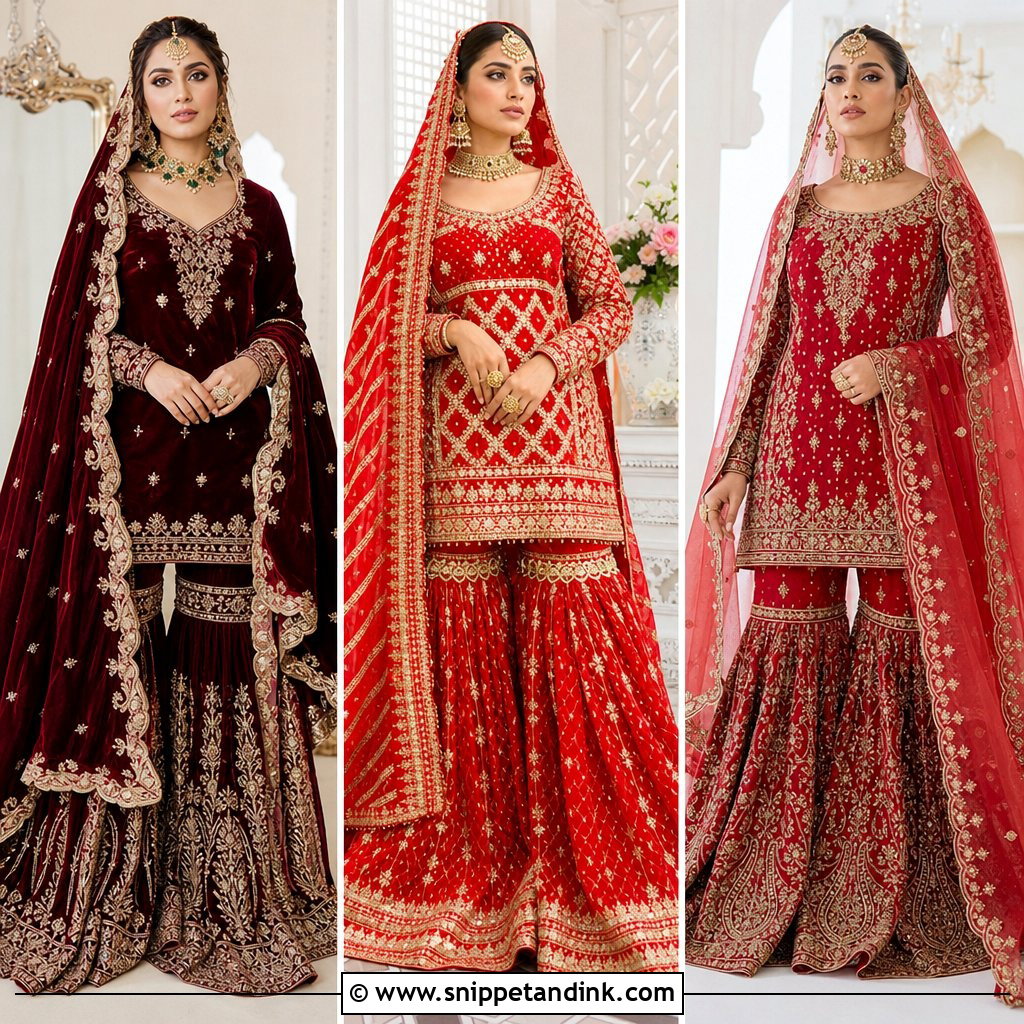
15. Red Bridal Sharara With Polki Jewelry
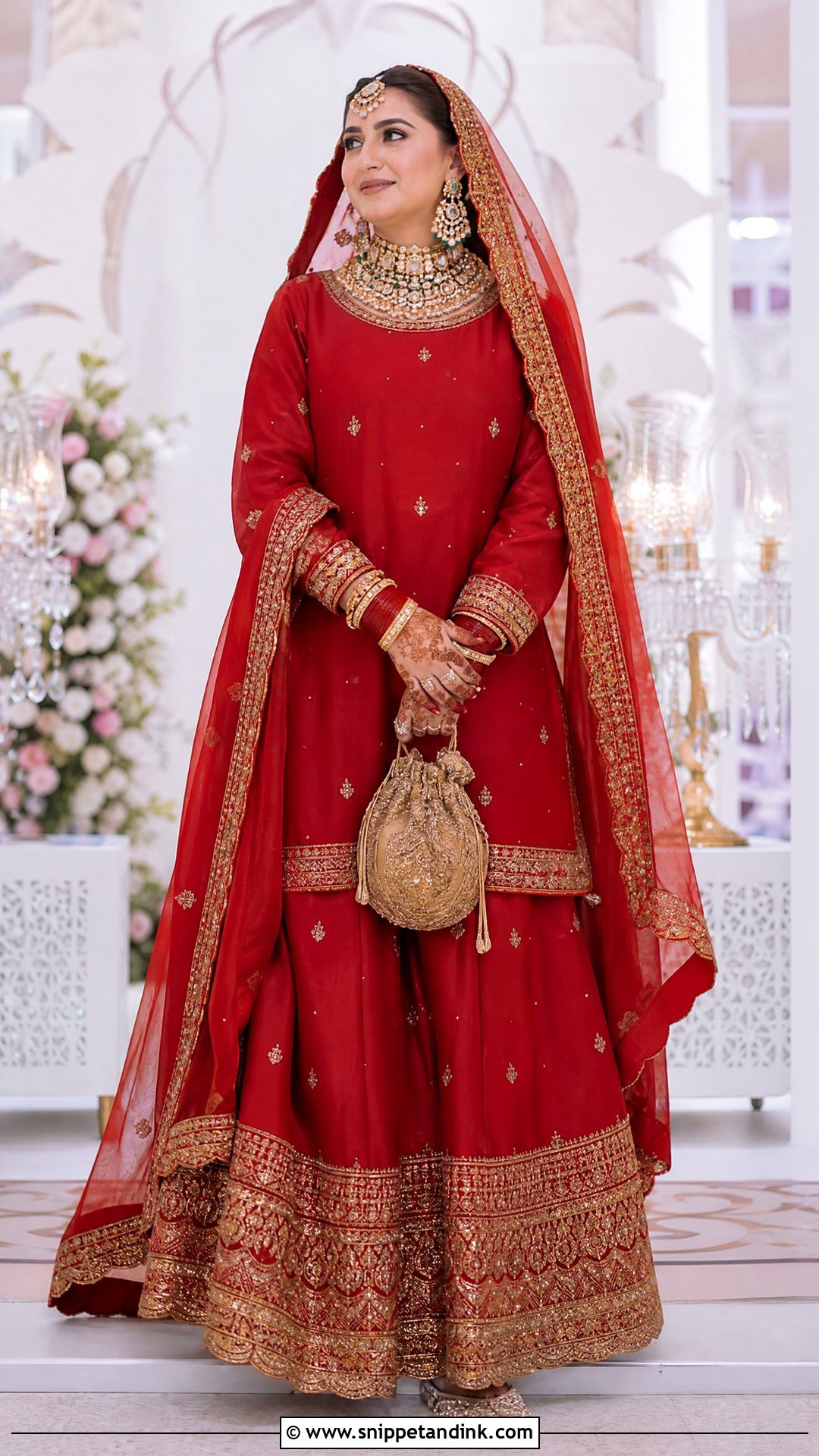
Polki, uncut diamonds set in gold, gives an antique depth that suits a deep red sharara. Choose a raw-silk or velvet kurti with old-gold embroidery and matching pants bordered near the hem. A sheer dupatta stops the heavier fabrics feeling oppressive. A broad polki choker is usually the anchor, so pair it with medium earrings and a matching tikka, and skip the second necklace if the choker is detailed. Polki is heavy; a broad choker worn all evening can press on the collarbone, so try it on with the kurti for an hour before the wedding. Red bangles, an antique-gold potli, embroidered juttis, a smooth low bun and soft smoky eyes complete it.
16. Red Bridal Sharara With Gold Embroidery
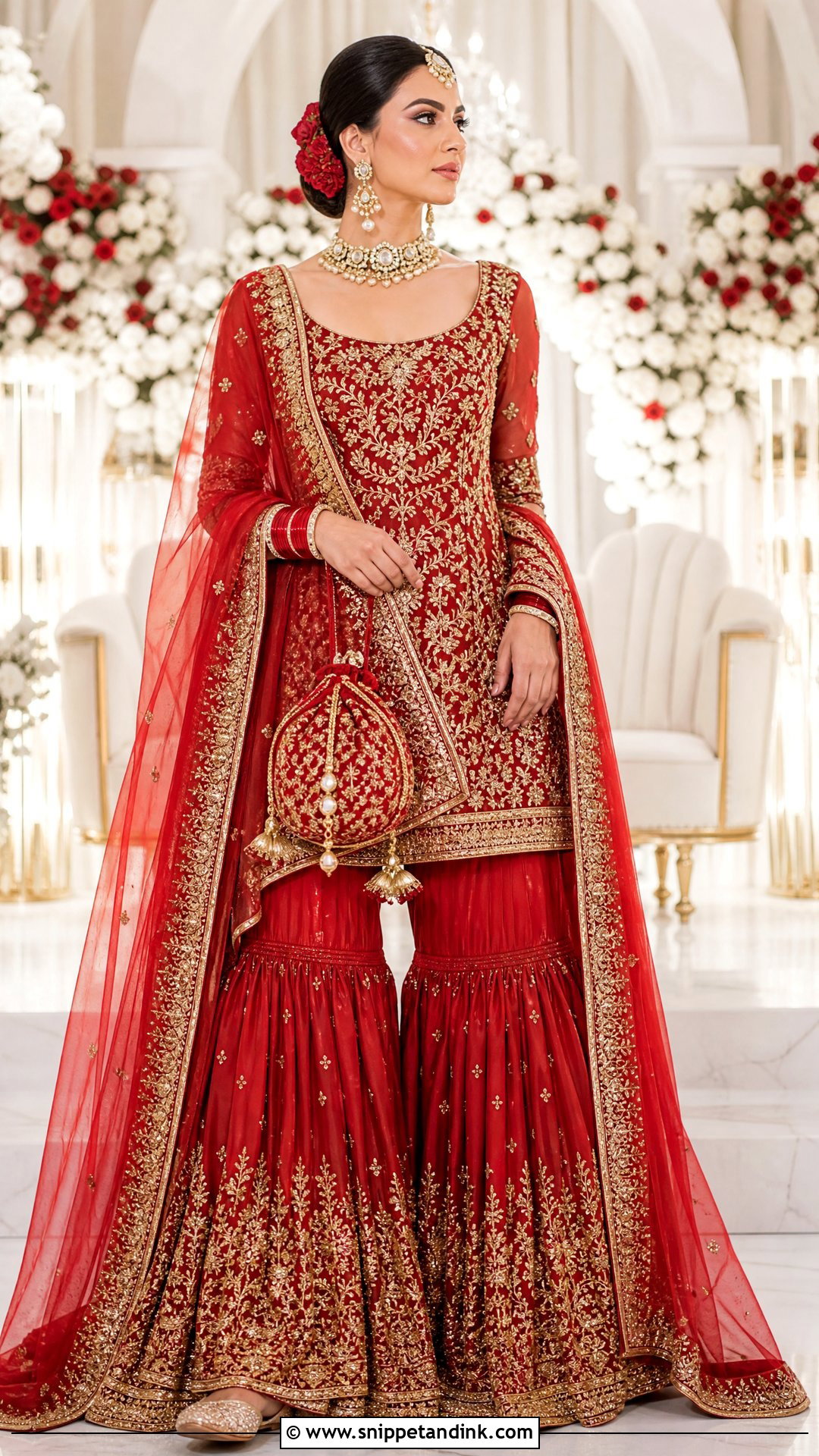
Gold embroidery can look rich or crowded, and placement decides which. Concentrate the floral or architectural motifs at the neckline, cuffs, kurti hem and lower sharara, and leave small areas of red visible between them. That breathing room is what makes the pattern read from across a room. A matching dupatta with a gold border and lighter scattered motifs through the centre keeps the head drape manageable. Gold-toned kundan jewelry, red bangles, a structured potli and metallic juttis complete it. A traditional bun or long decorated braid suits it, with softly defined eyes and a classic red lip.
17. Red Bridal Sharara With Silver Embroidery
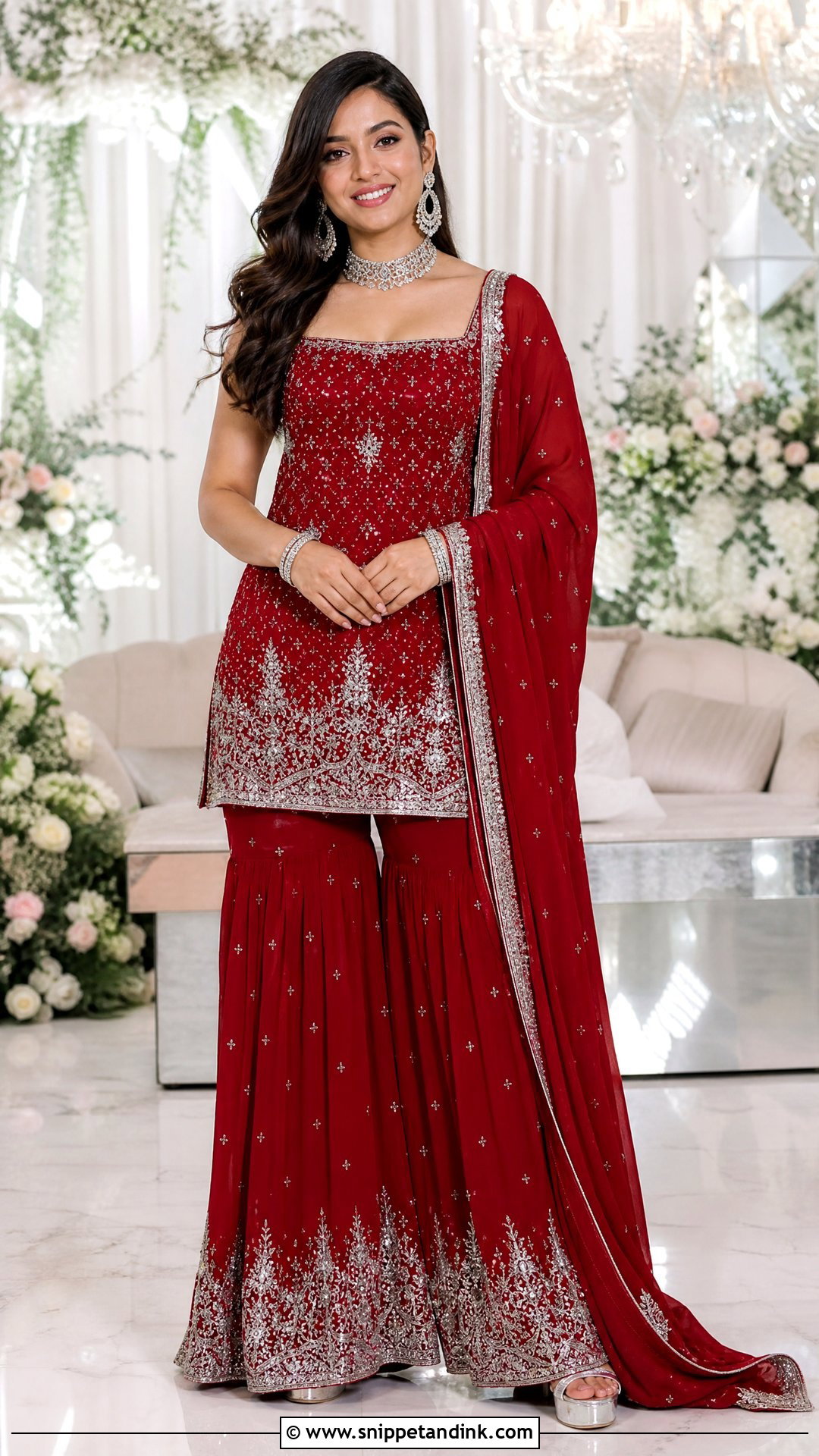
Silver on red feels cool and contemporary. Blue-based reds, such as crimson, cherry and ruby, carry silver thread, crystals and sequins better than orange reds, which can make silver look slightly grey. Keep the brightest work at the neckline and pant hems of a fitted short kurti and fluid sharara, with a sheer red dupatta finished in a narrow silver border. Diamond-style jewelry, crystal earrings, slim bangles and silver heels avoid any gold. Silver reacts with air and darkens over time, so store this one wrapped in muslin. Glossy waves, a sleek ponytail or a simple low bun, cool rose blush and a berry lip suit a reception under modern lighting.
18. Minimal Red Bridal Sharara
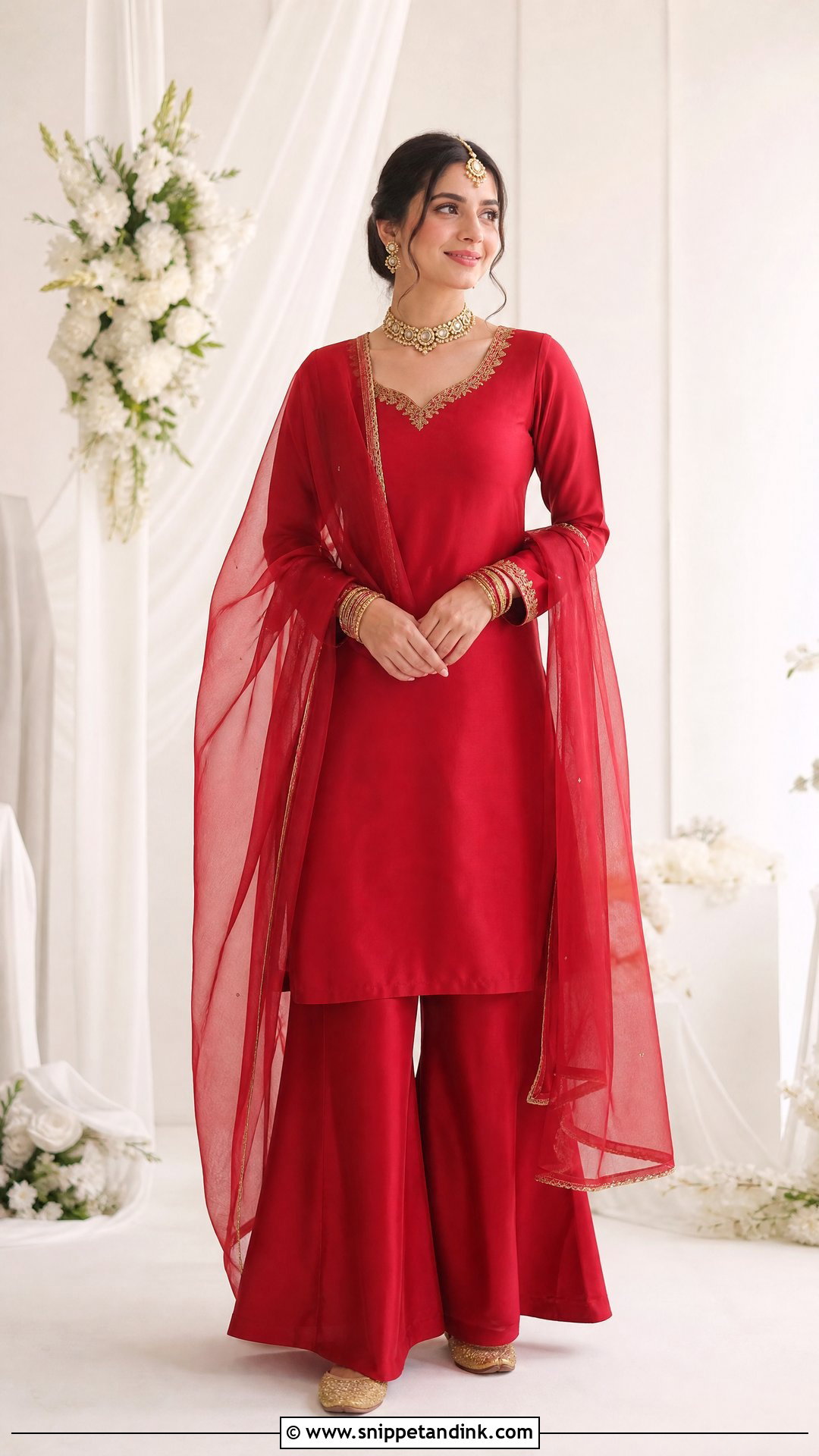
With almost no embroidery, a red sharara depends entirely on fabric and cut. Plain silk or crepe pants and a fitted kurti embroidered only at the neckline and cuffs need precise tailoring, because every pull or uneven hem shows. I’d put the budget into better silk and a good tailor rather than decoration. An organza dupatta with a slim gold edge keeps it bridal. One statement necklace, small earrings, a maang tikka and a few bangles are plenty, with plain gold juttis or low block heels. A sleek bun or brushed waves, fresh skin and a muted red lip keep it from looking casual.
19. Plus Size Red Bridal Sharara
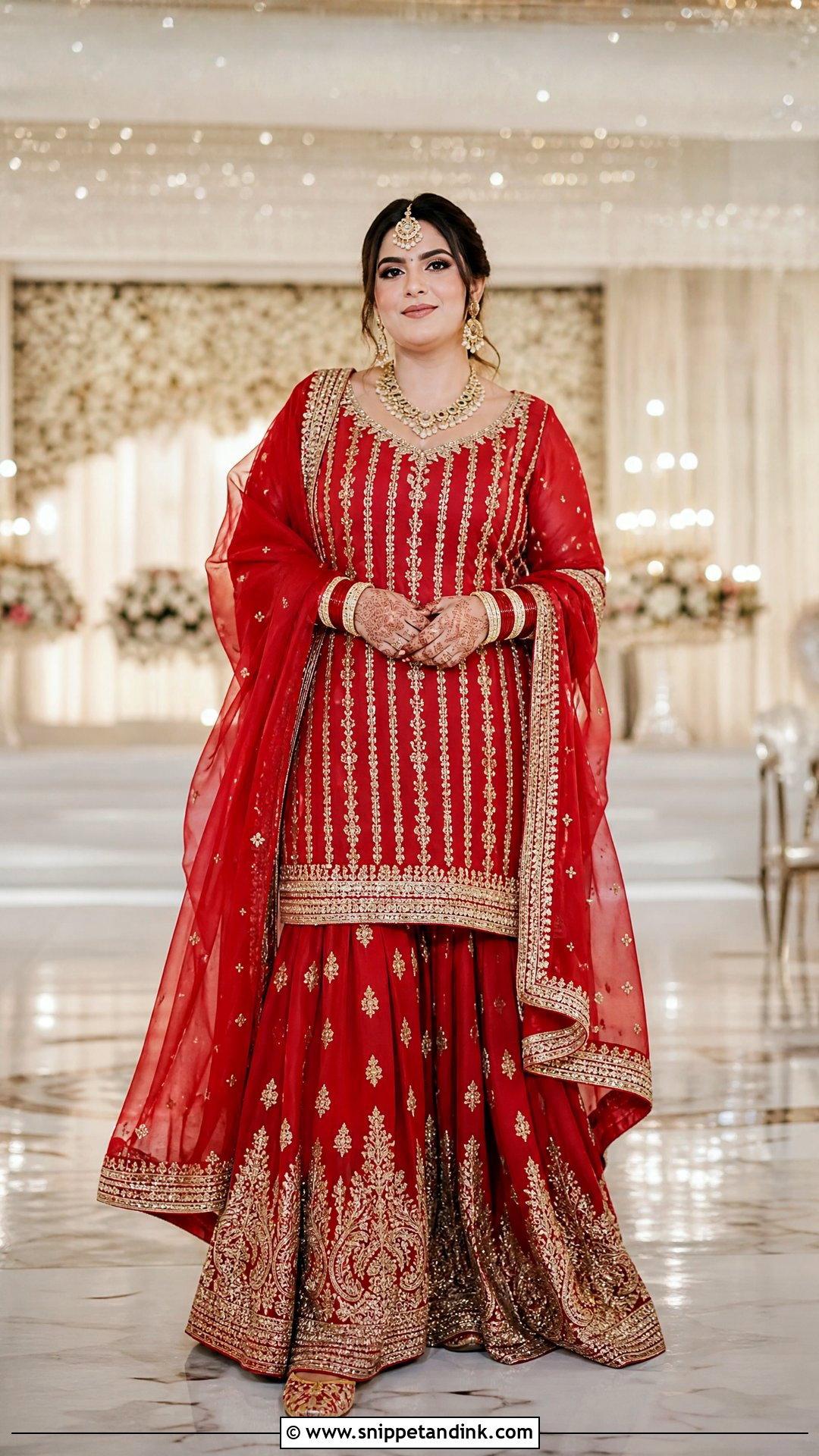
For plus-size brides, the goal is fit and support, not hiding under extra fabric. A structured kurti with a shaped waist, a comfortable neckline and sleeves that let your arms move freely sets the foundation. High-waisted pants with a smooth upper section and controlled flare keep bulk off the hips; too many panels gathered at the waist add width exactly where you don’t want it. Vertical embroidery and evenly spaced motifs balance the frame. Drape a lightweight dupatta from one shoulder instead of wrapping it across the torso. A medium necklace, statement earrings, bangles and cushioned juttis complete it. Do the final fitting in the exact undergarments and shoes you’ll wear.
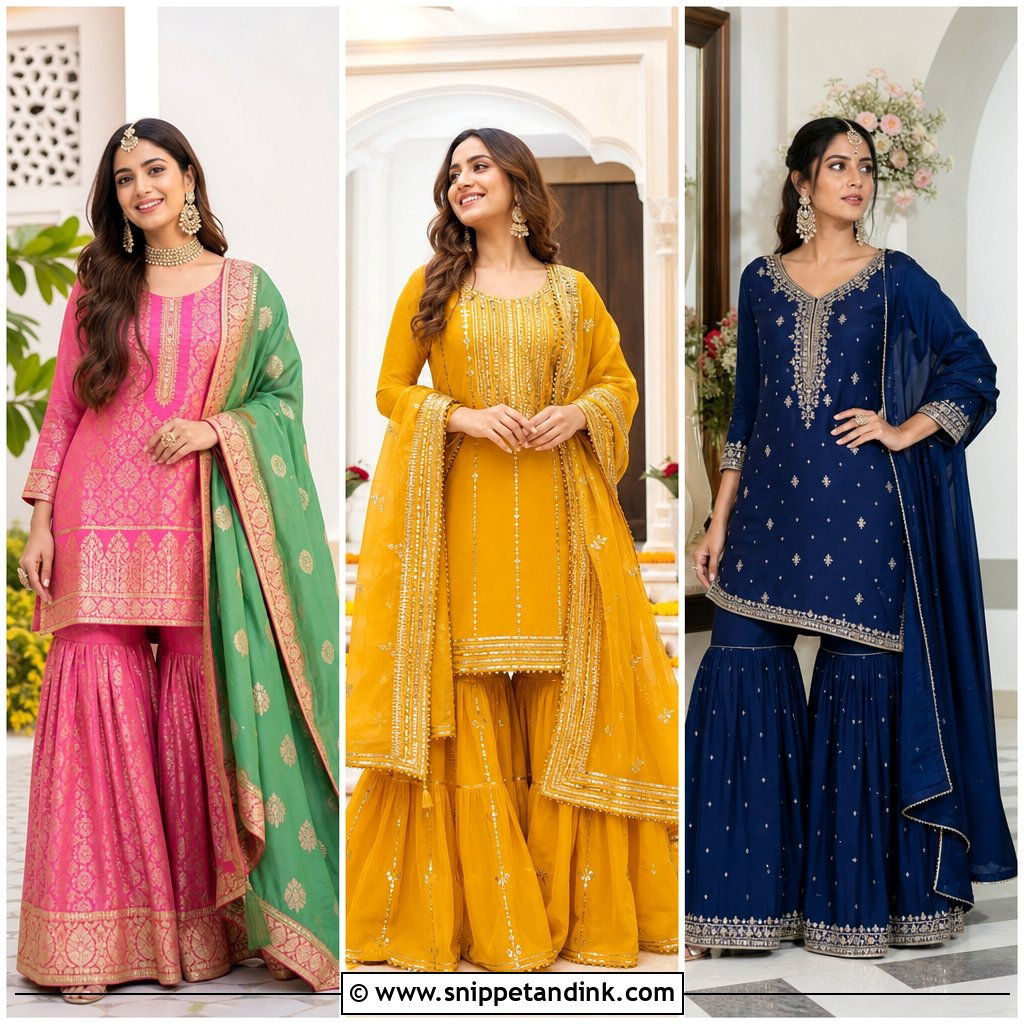
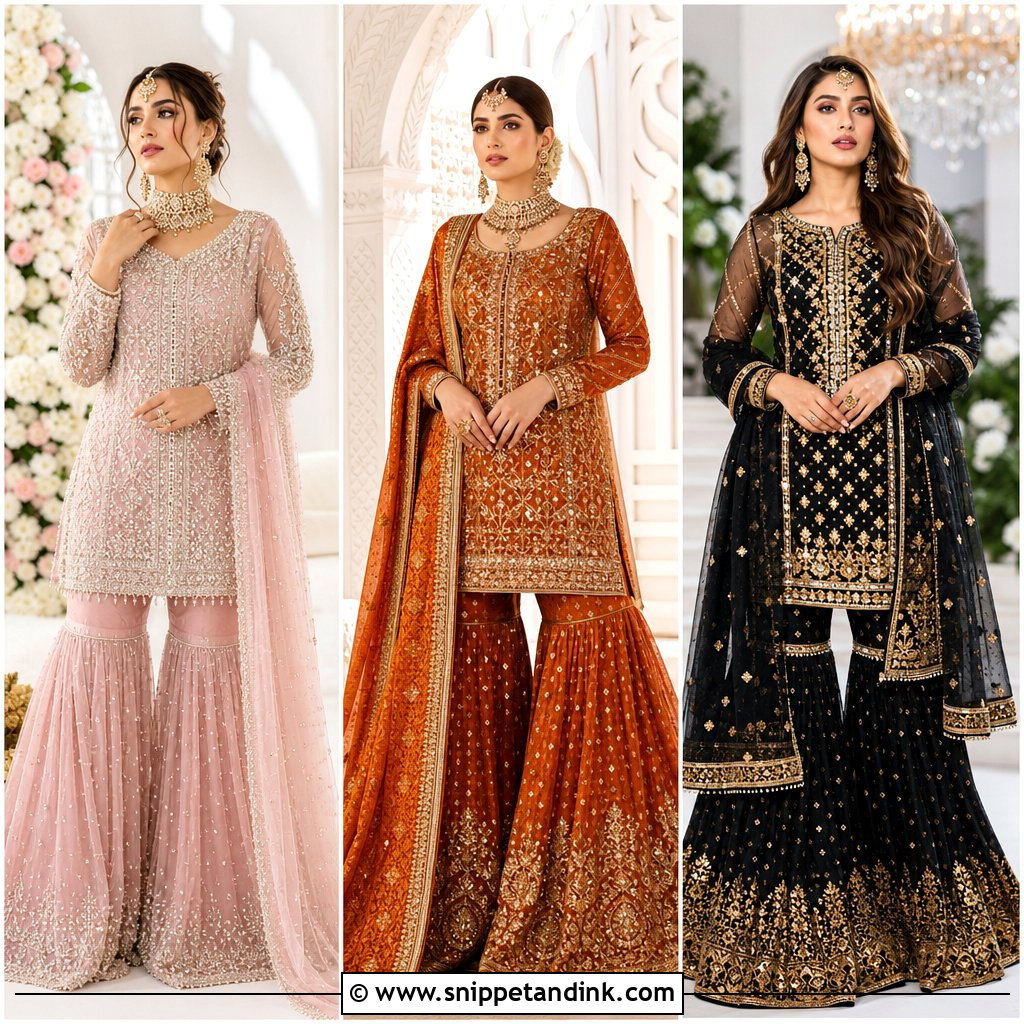
20. Red Bridal Sharara For Reception
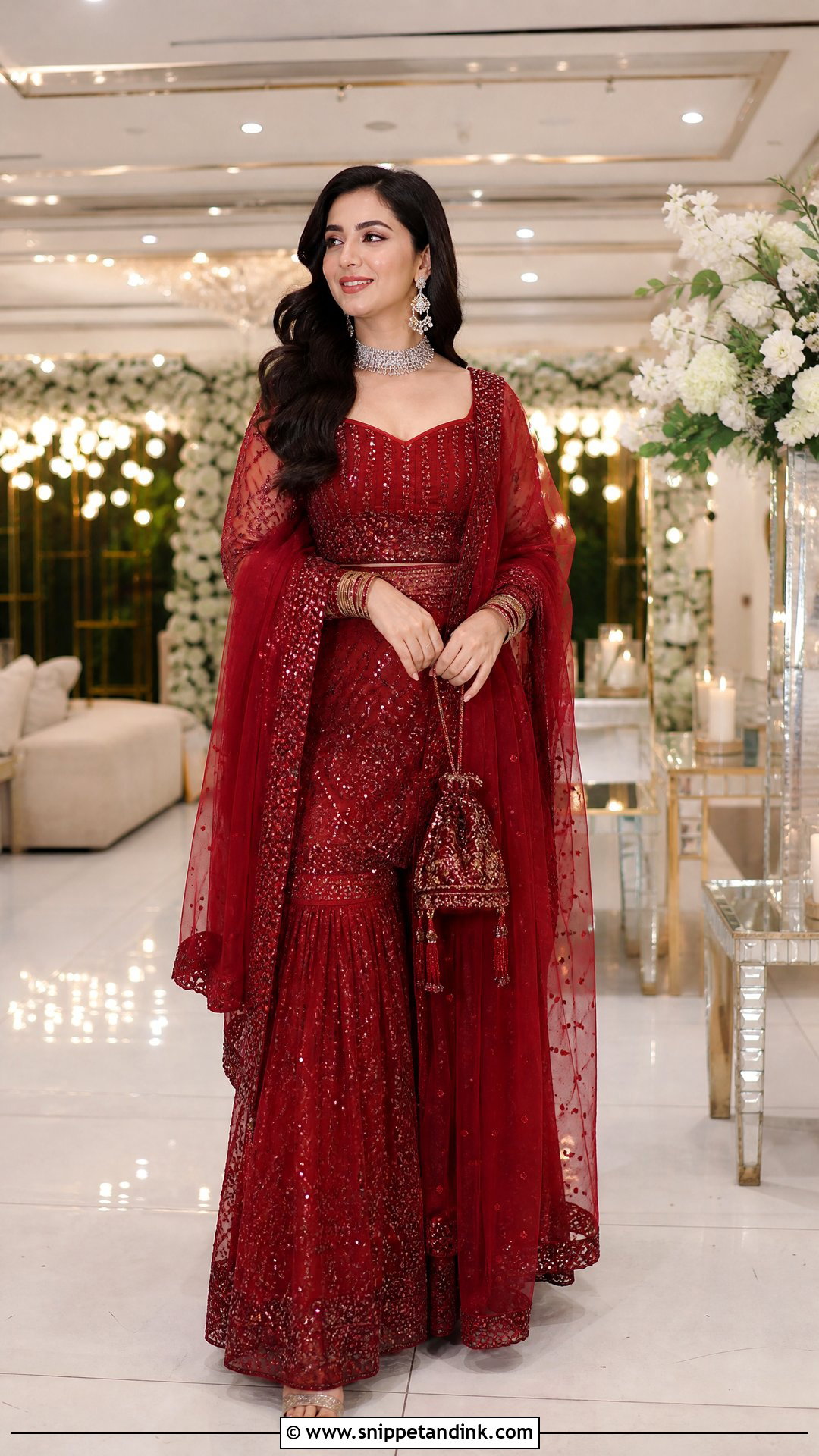
Reception shararas can be more glamorous because you’re no longer sitting through rituals. Wine, ruby or crimson with sequins, crystals or tone-on-tone embroidery reads well under evening lights. A structured blouse with fluid pants keeps the shape clean, and a sheer cape or pre-draped dupatta leaves your hands free for greeting guests. Sequins catch on each other and on lace, so expect a few snags after a night of hugs, and keep a small pair of scissors in the emergency kit rather than pulling loose threads. A diamond-style choker, statement earrings, slim bangles and stable metallic heels finish it. Glossy waves or a sleek ponytail and a berry lip suit evening photographs.
Ordering a Red Sharara From a Designer You Can’t Visit
Plenty of brides now order their outfit from a designer in another city or country. It can work well, but the measuring has to be right, because a bridal sharara with dense embroidery is hard to alter afterwards.
- Have someone else measure you, wearing the undergarments you plan to wear on the day.
- Measure the waist where you want the sharara to sit, not where your jeans sit. Bridal pants usually sit higher.
- Measure the length from that point to the floor while wearing your wedding shoes.
- Give the kurti length you want, and mark it on your body against a mirror before writing it down.
- Ask for a video of the finished outfit in daylight. Red changes a lot on screens, and daylight video is closer to the truth than a studio photo.
Leave time for shipping delays and a local tailor’s adjustments; customs alone can hold a parcel for days. And check the policy on custom pieces before paying, since many makers don’t accept returns on made-to-measure bridal wear.
One Red Sharara, Fitted Properly and Worn With Ease
One colour supports a surprising range of bridal looks here. Gold zardozi, reflective gota patti, velvet, contrasting dupattas, capes and saree drapes each give a different result. Start with a silhouette you’re comfortable in and that fits the event, then decide fabric weight, embroidery placement, jewelry scale and shoe height. Book proper fittings and test the whole outfit by walking, sitting and raising your arms. Secure every dupatta or cape before you leave the room. Choose the details that feel like yours rather than following every trend at once, and you’ll spend the day enjoying it instead of adjusting it.
You'll Like These Ideas:


Leave a Reply