
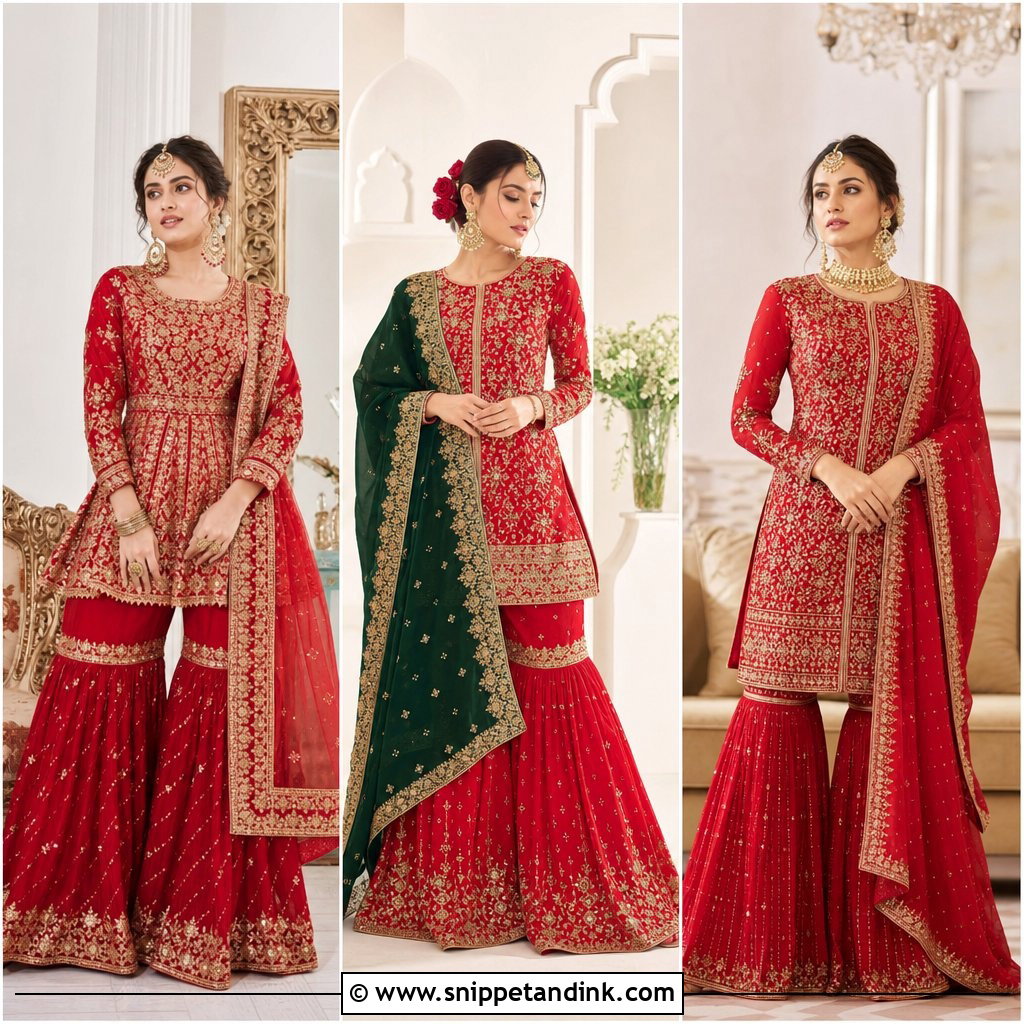
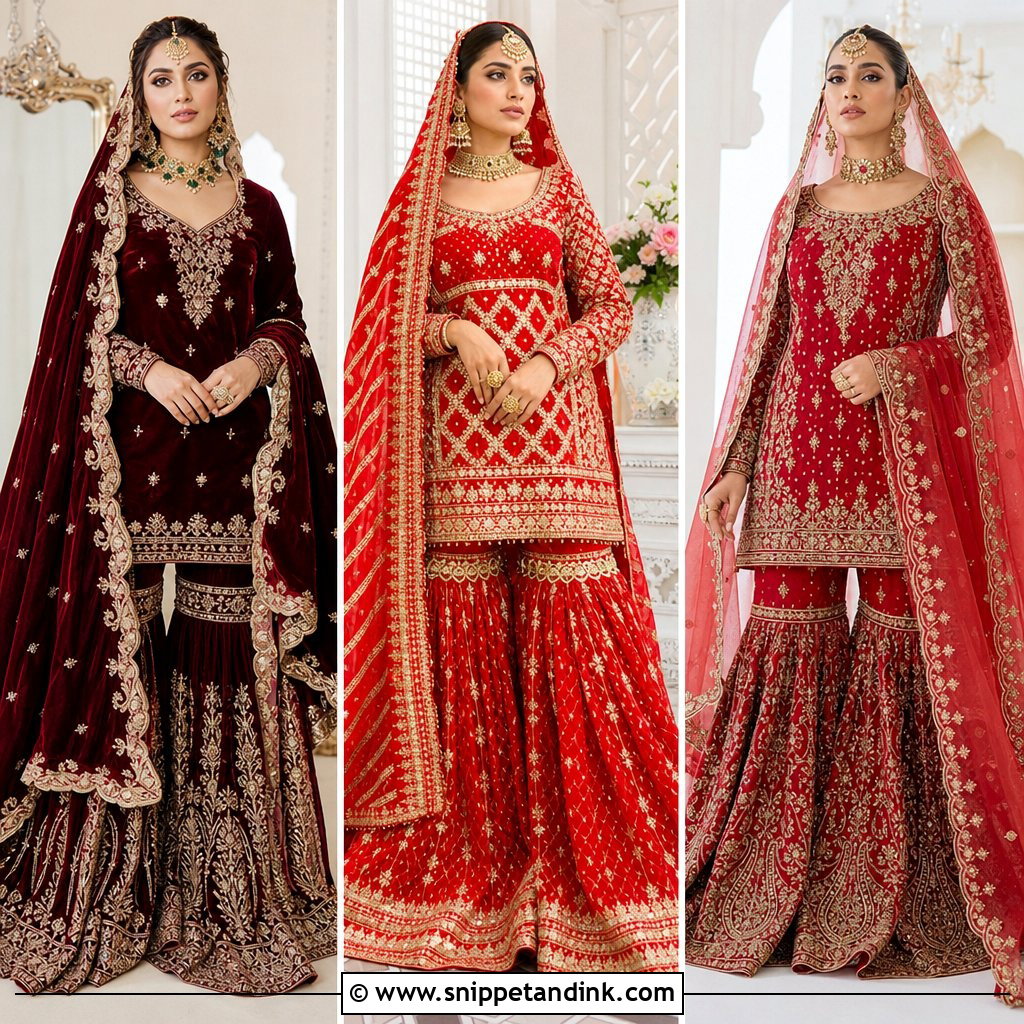
A garara, also spelled gharara, is easy to recognise once you know where to look: fitted through the upper leg, joined at the knee with an embroidered band, then flaring out into wide panels to the floor. That knee joint is what separates it from a sharara or a palazzo, and it’s the detail I check first on any outfit. The designs below run from bridal red and farshi lengths to pastel organza, chikankari and modern jackets, for brides, family and guests. I’ve paired each one with jewelry, shoes and the event it suits, and noted where the cut tends to go wrong.

Where the Knee Joint Lands Changes the Whole Outfit
Every garara is built in two parts: a fitted section from waist to knee, and a flared section of joined panels below it, with an embroidered band covering the join. Where that band lands on your leg is the single measurement I’d fuss over. Too high and the outfit starts to look like a sharara or palazzo; too low and the fitted part grips the calf, so you can’t take a normal step or sit cross-legged.
I have the tailor mark the knee while the bride stands in the shoes she’ll actually wear, because heels change how the hem falls and how much fabric gathers at the floor. The fitted section should be close but not tight, with enough ease to bend the knee and climb a step.
Questions I ask a tailor before cutting
- How many panels go into the flare, and how much fabric does that take? More panels mean more movement and more weight.
- Is the knee band stitched over a stabilising layer, so heavy embroidery doesn’t drag the joint downward?
- What lining is going under sheer or scratchy fabrics like organza, tissue and net?
- Where will the drawstring or waist closure sit, and will it show under a short kurti?
1. Red Bridal Garara With Short Kurti
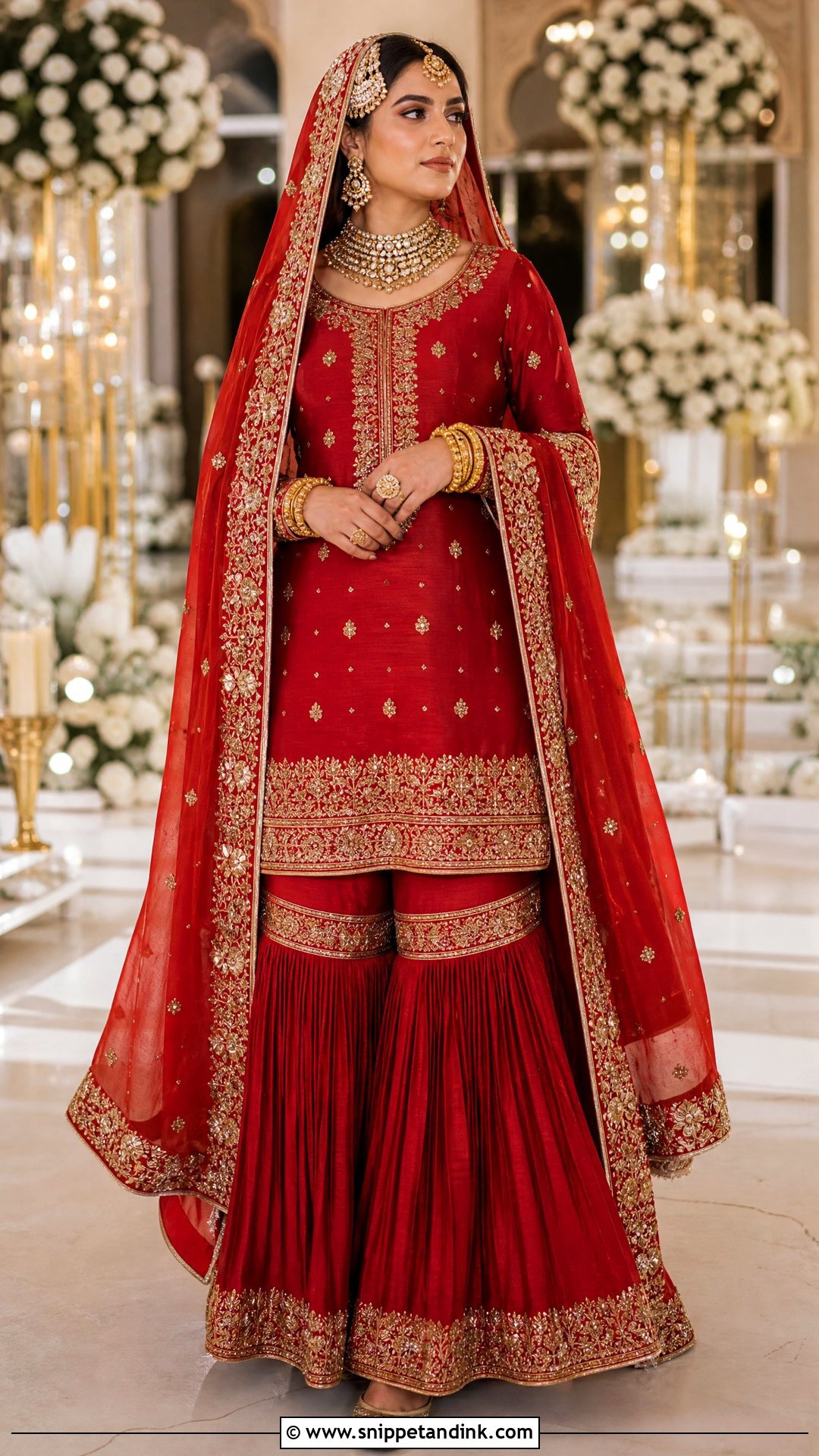
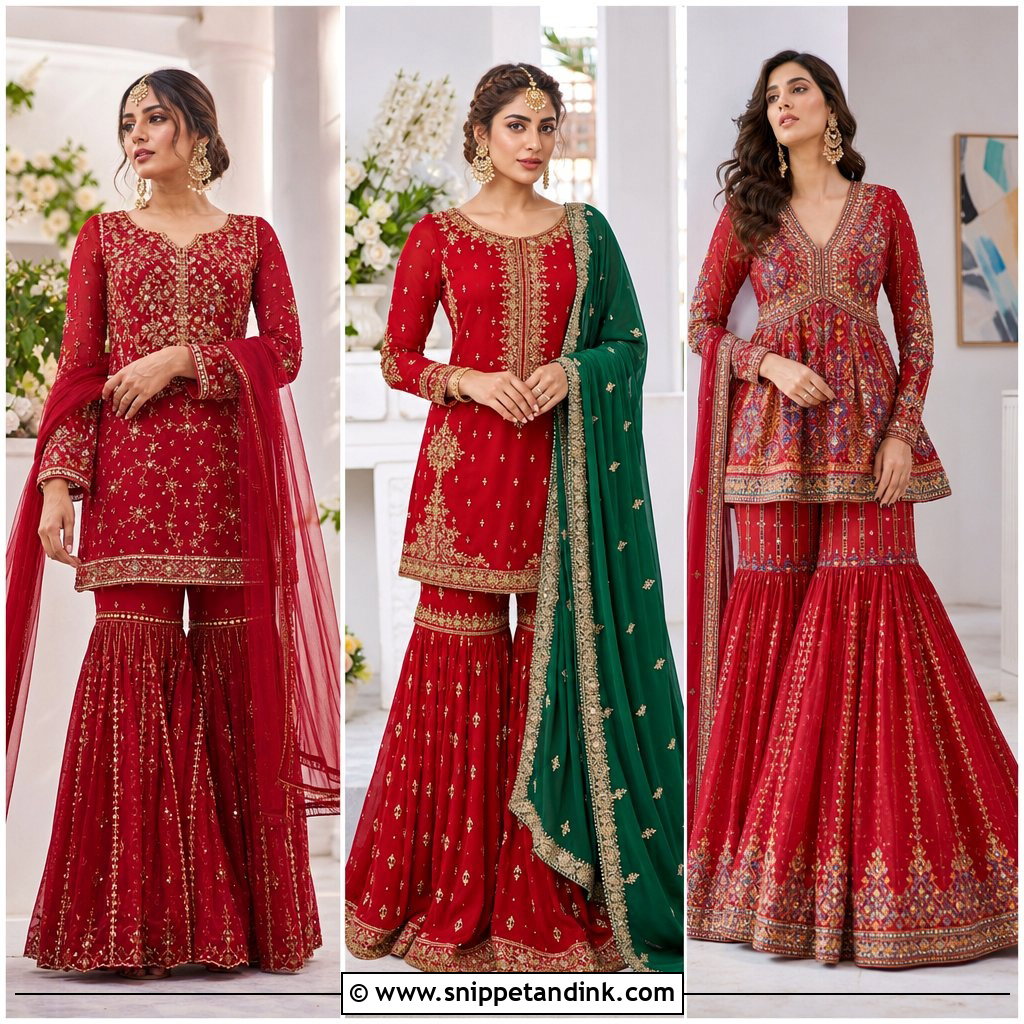
Deep red with a heavily worked short kurti is the garara at its most traditional. I’d make the shirt in raw silk or velvet and concentrate zardozi, dabka and sequins on the knee joints and hem of the garara, since those bands are what the eye follows when you walk. Two dupattas are common: a red one over the head and a lighter net one across a shoulder. Pinning both securely takes time, so build it into the dressing schedule. A choker, long necklace, jhumkas, tikka and gold juttis complete it for the nikkah or baraat.
2. Ivory And Gold Nikkah Garara
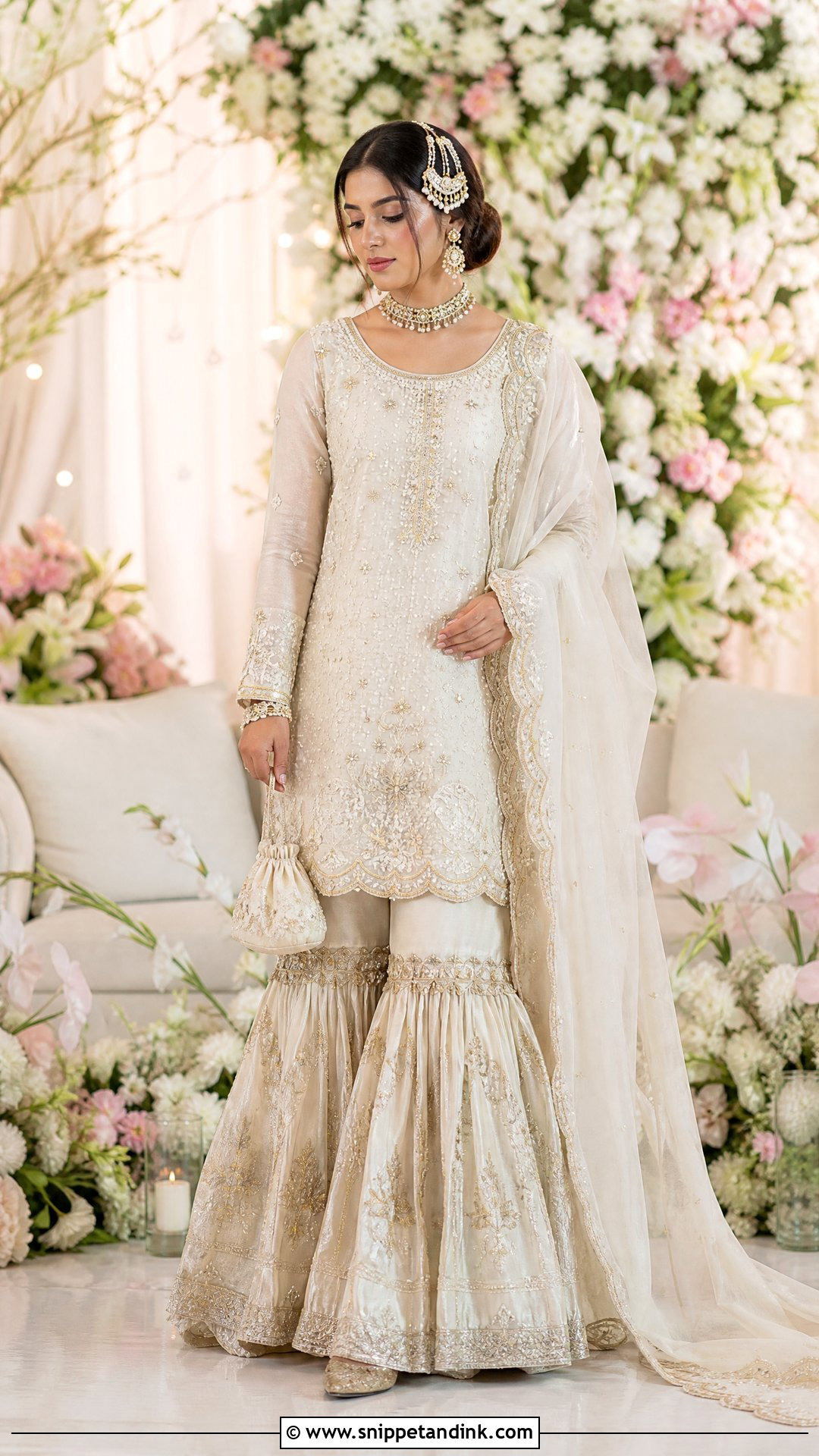
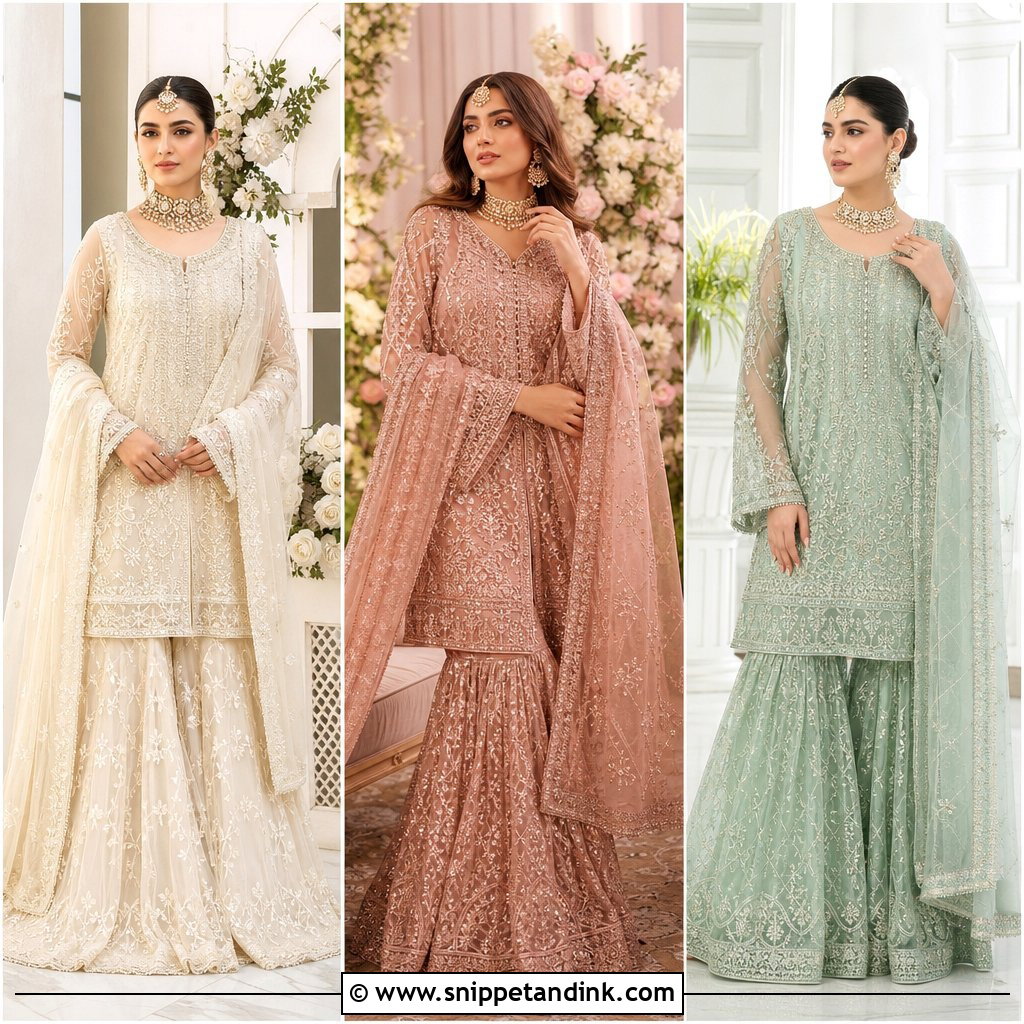
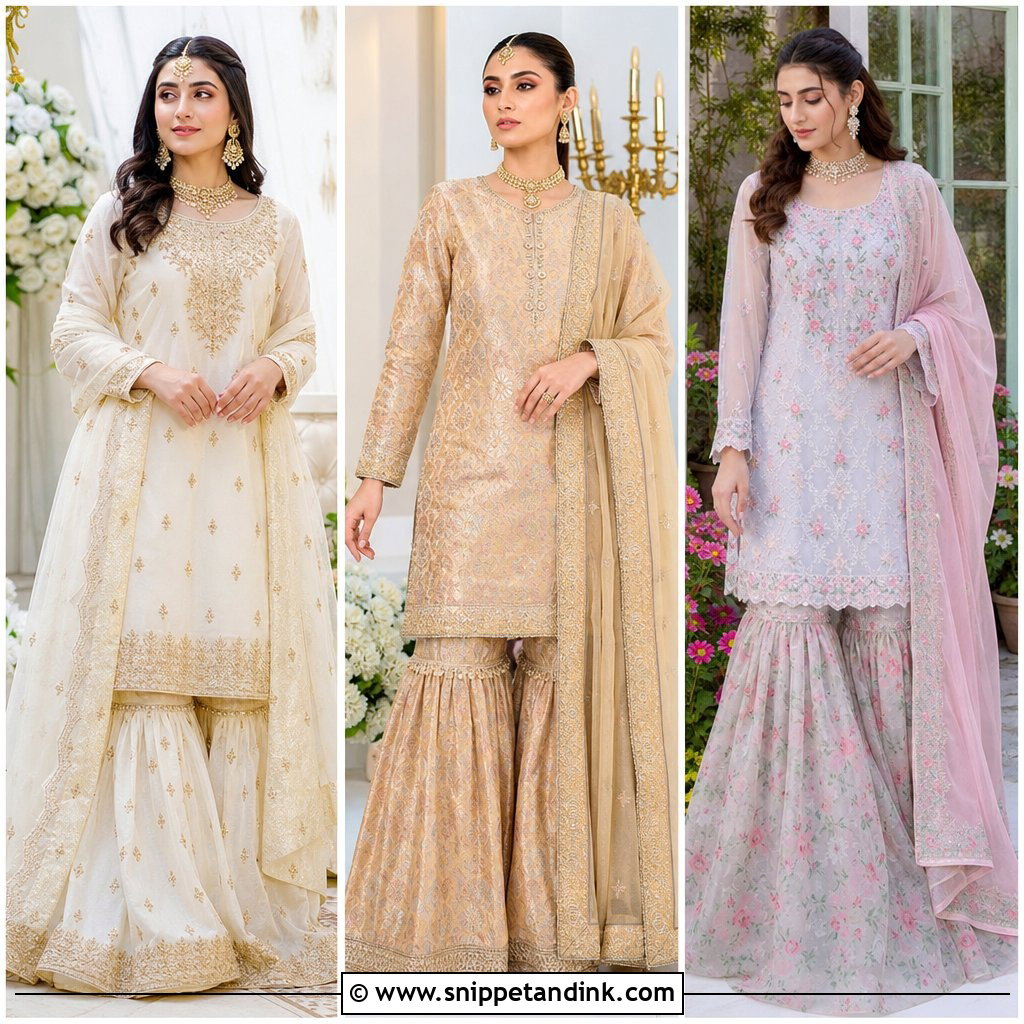
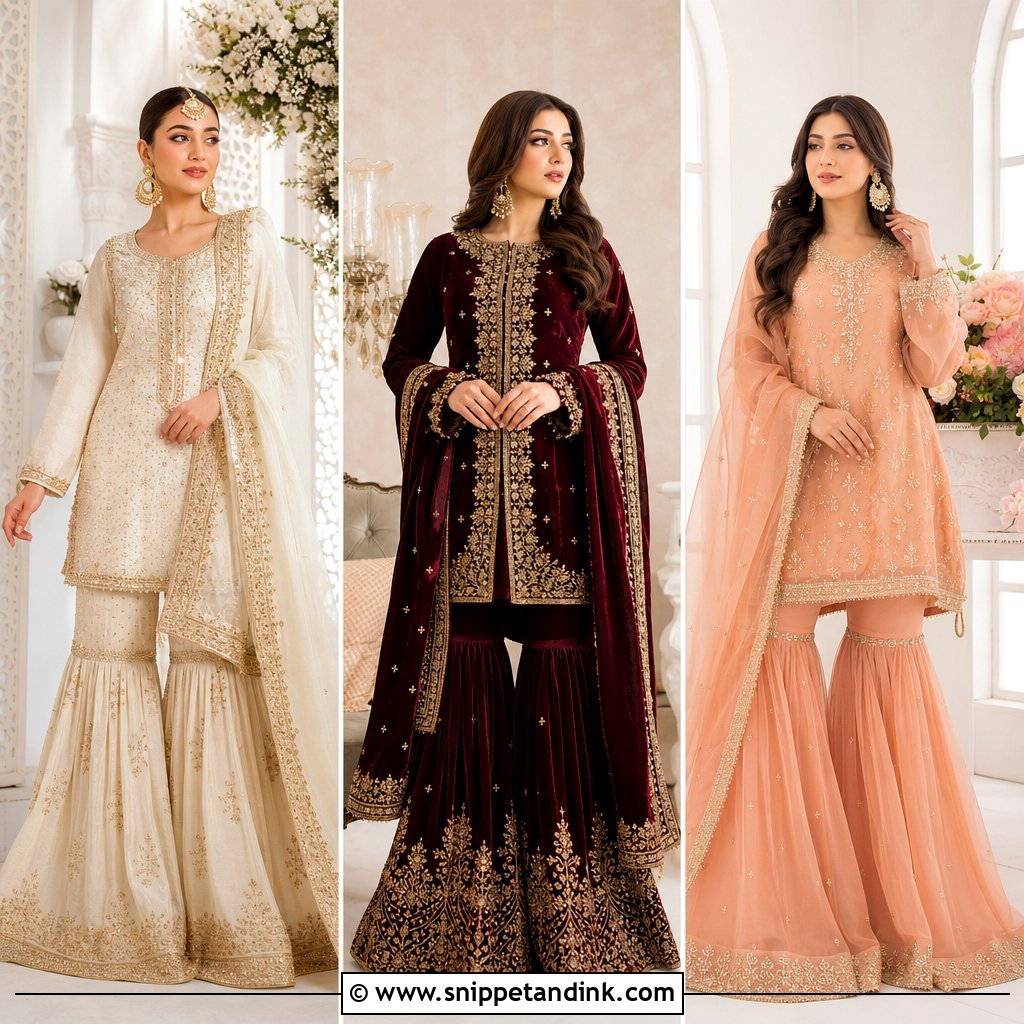
Ivory with antique gold makes a graceful nikkah outfit that’s anything but plain, as long as the gold is muted rather than bright. A modest neckline, fitted sleeves and pearl or mukesh detailing on the shirt; defined gold knee bands on the garara. Ivory is unforgiving with lining, so I always hold the fabric up to daylight to check that nothing shows through. Pearls and a delicate passa suit the light palette. To add colour, bring sage or dusty pink in through the jewelry stones rather than another fabric.
3. Maroon Velvet Garara With Zardozi Work
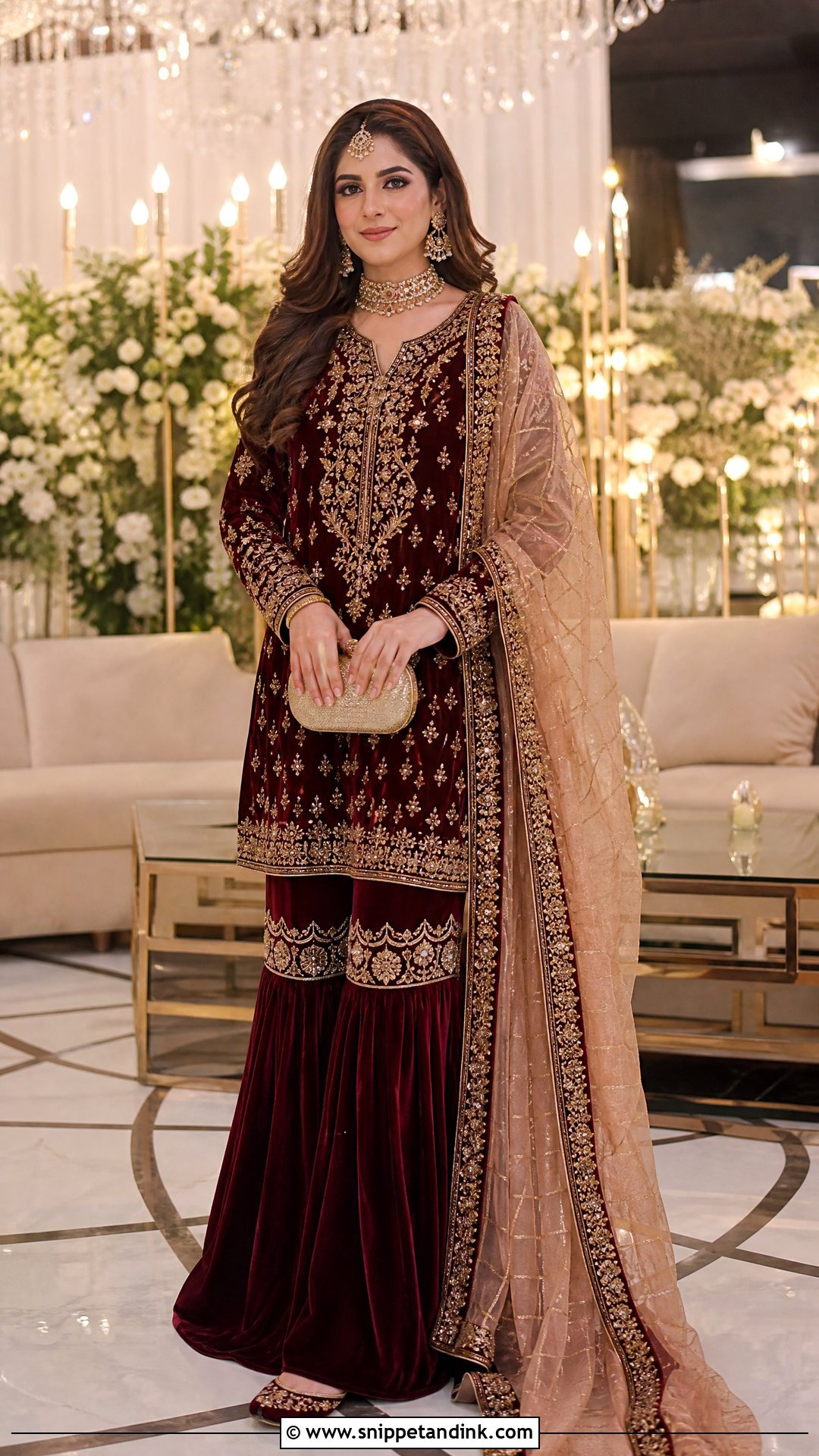
Maroon velvet is my first suggestion for a winter evening, and the trick is not making everything velvet. A fitted hip-length velvet shirt over a silk garara keeps the weight manageable; an all-velvet garara with full flares is heavy enough to tire you out by the end of the night. Antique zardozi at the neckline, cuffs, knees and hem shows off the construction. Drape a maroon net dupatta, or a tissue one for contrast. Kundan earrings and velvet juttis finish it, and it works for sisters of the bride as well as the bride herself.
4. Pink Banarasi Garara With Green Dupatta
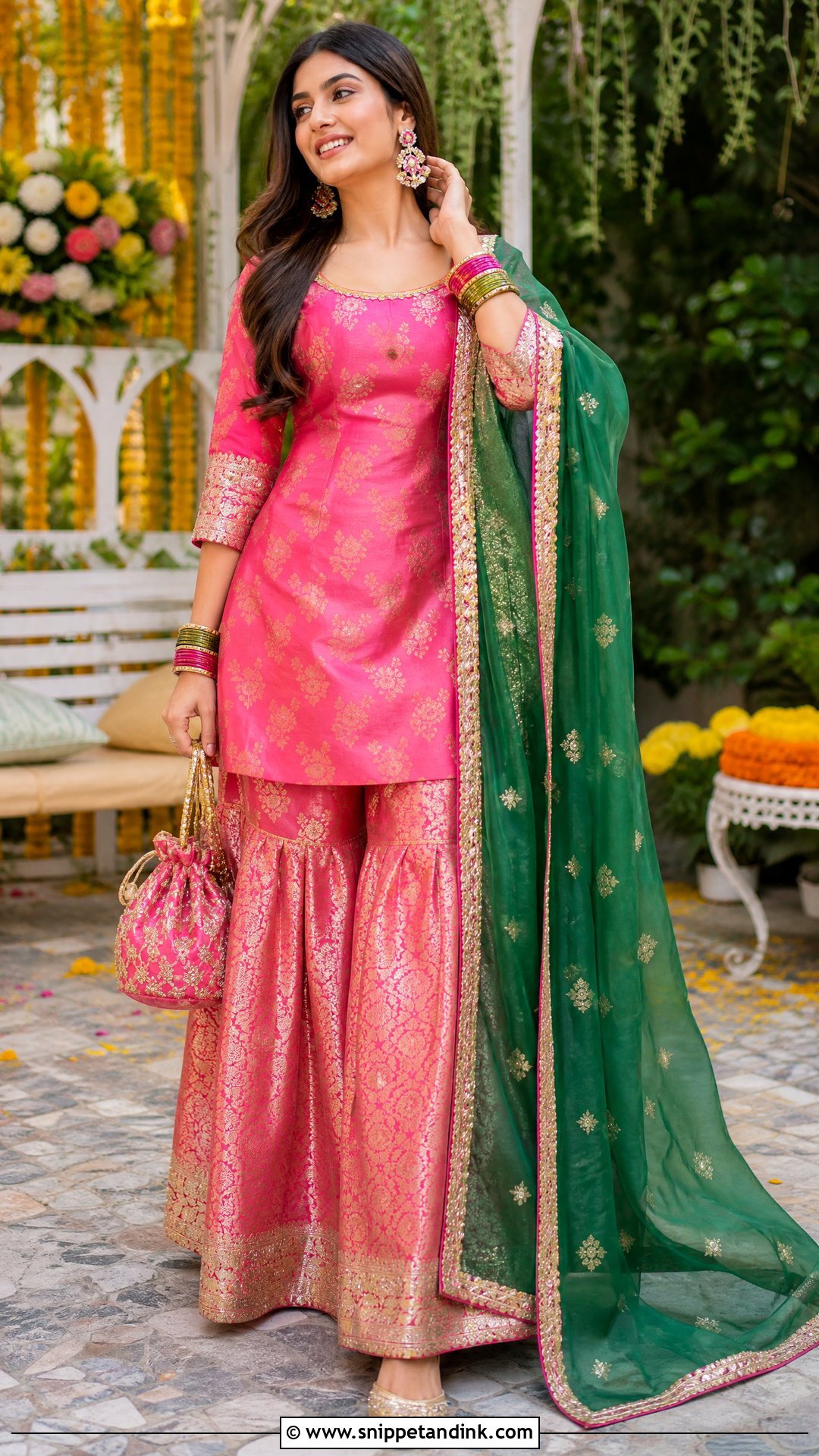
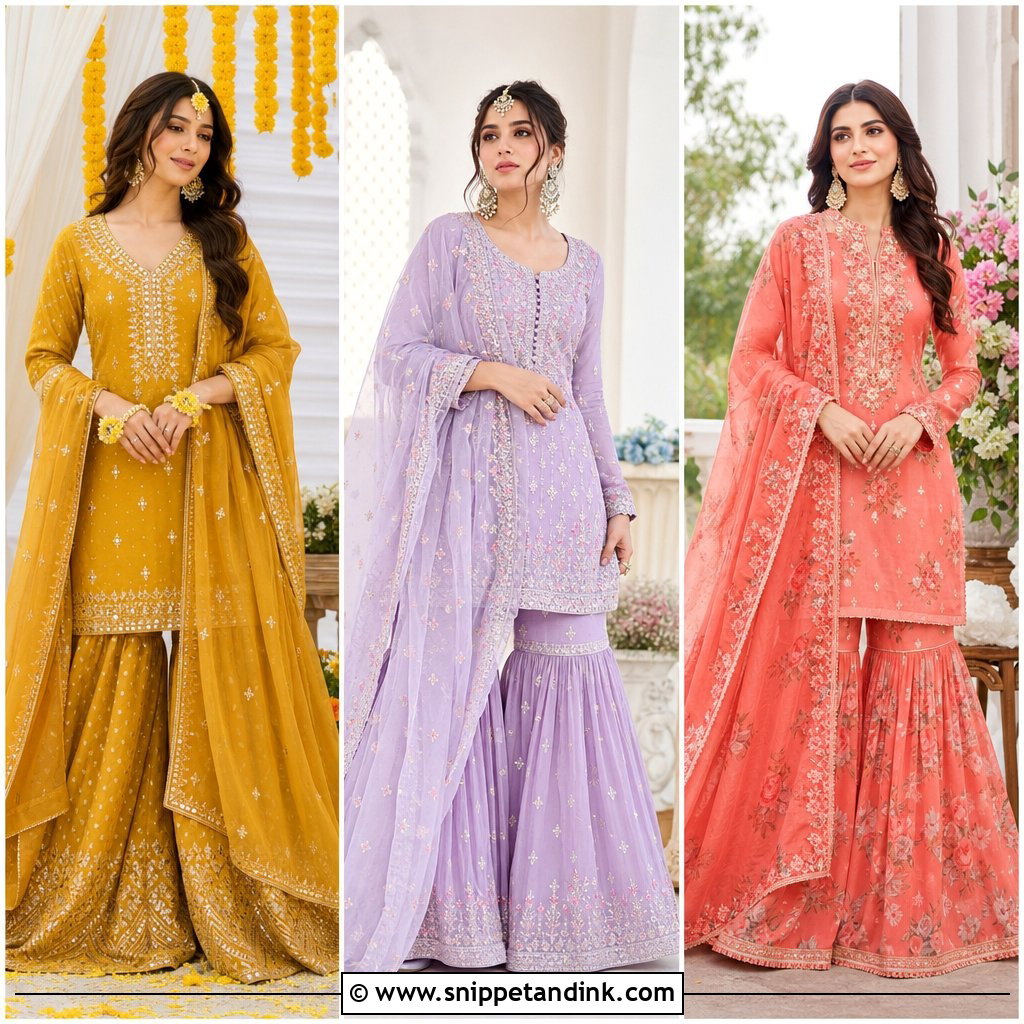
Pink and green is mehndi colour at its happiest. A short pink silk kurti with light gota work over a Banarasi garara woven in gold motifs, with a green organza dupatta bordered in pink to tie them together. Banarasi is stiff, so I check that the knee joint still sits flat and visible rather than puckering at the seam. Brides can wear fresh flower jewelry; guests look right in simpler meenakari pieces. It suits a garden setting full of marigolds.
5. Pastel Floral Organza Garara
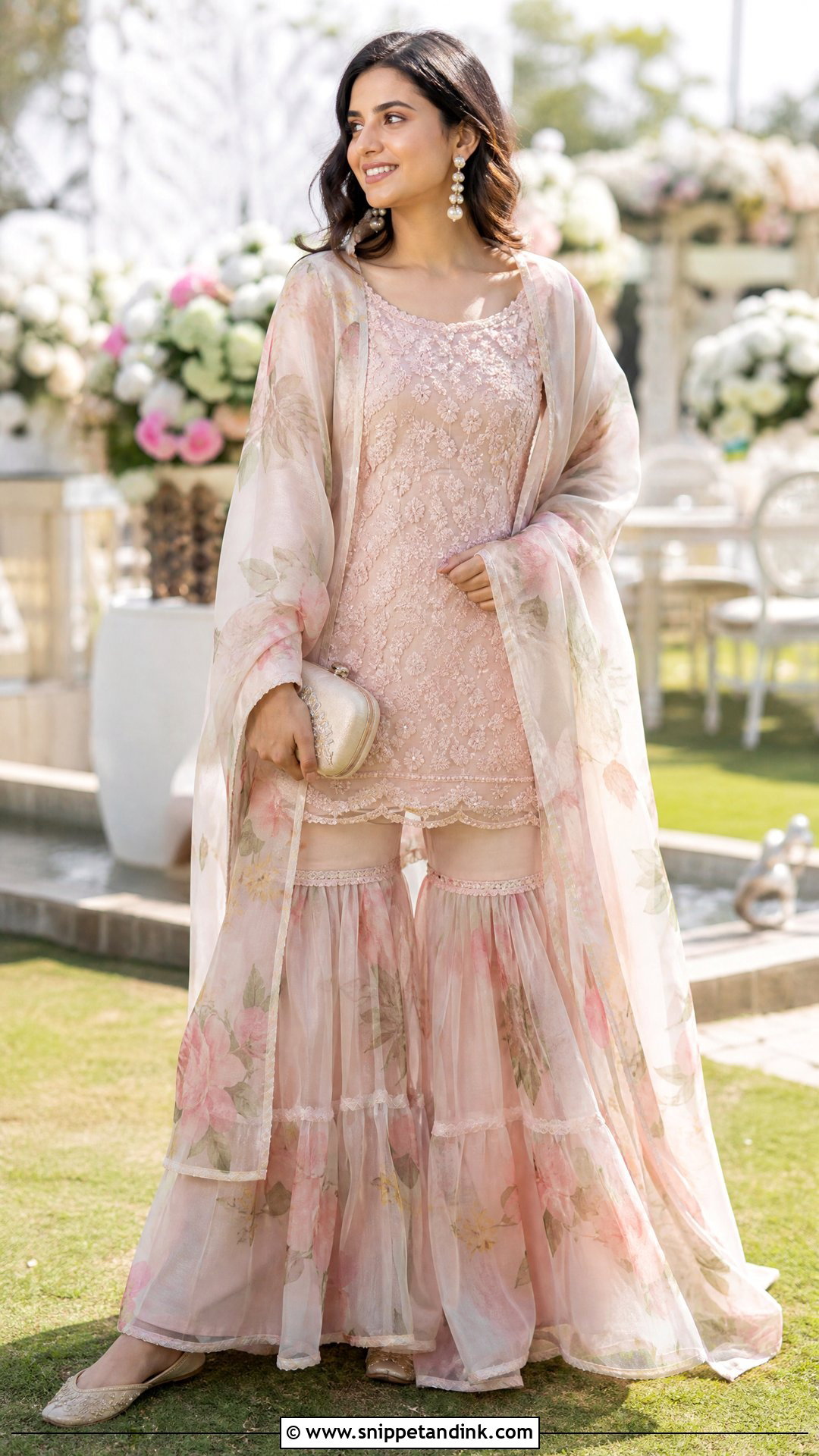
Organza gives a pastel garara movement in a garden, but it’s sheer and slightly scratchy against the skin, so the flares need a soft lining both for coverage and comfort. A blush or mint short kurti with fine threadwork and small appliqué flowers, embroidered knee bands, and a sheer matching dupatta scattered with flowers rather than a heavy border. Pearl drops and neutral juttis or low block heels keep it light. It’s a good bridesmaid and daytime guest choice.
6. Emerald Green Garara With Mirror Work
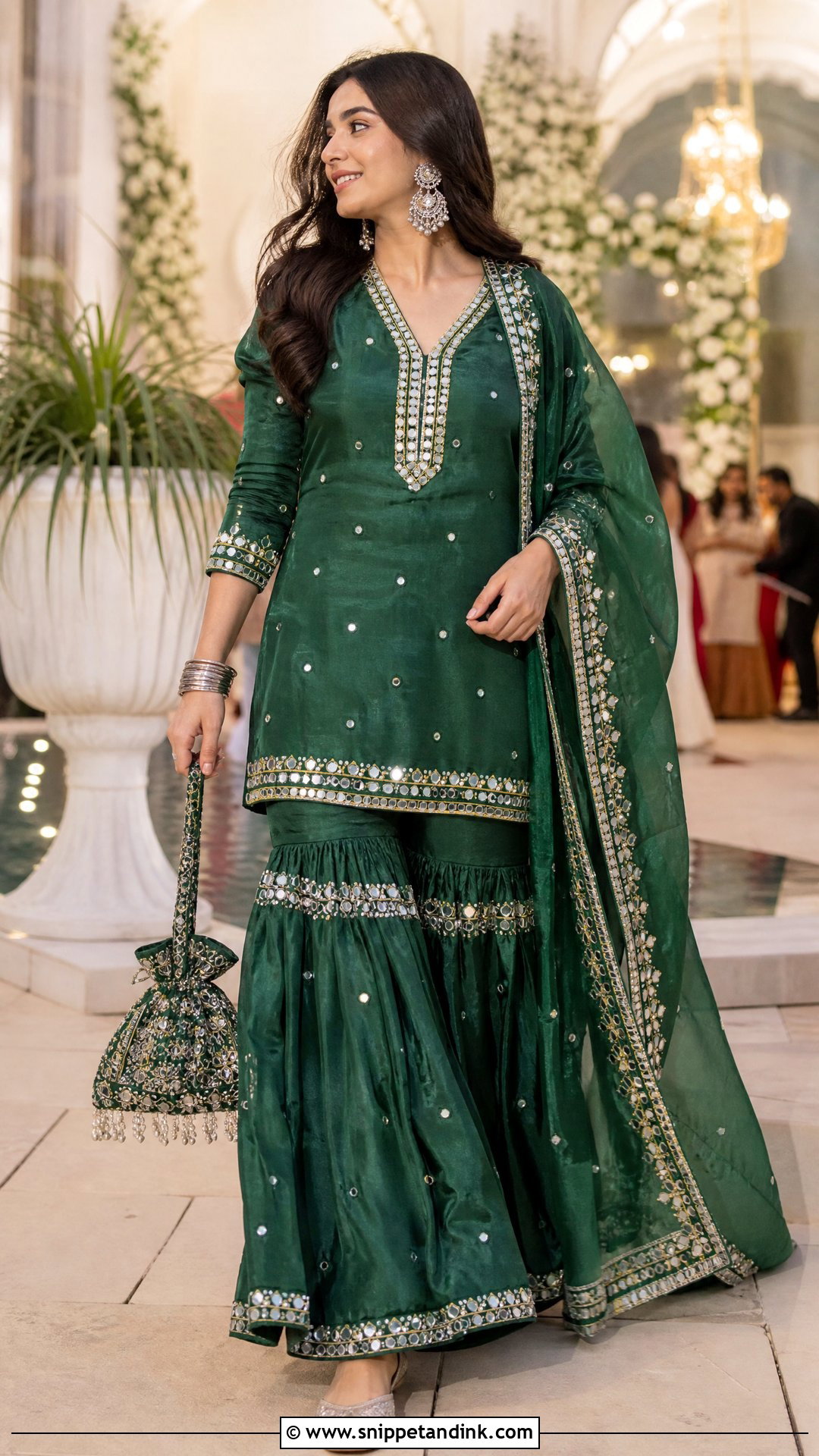
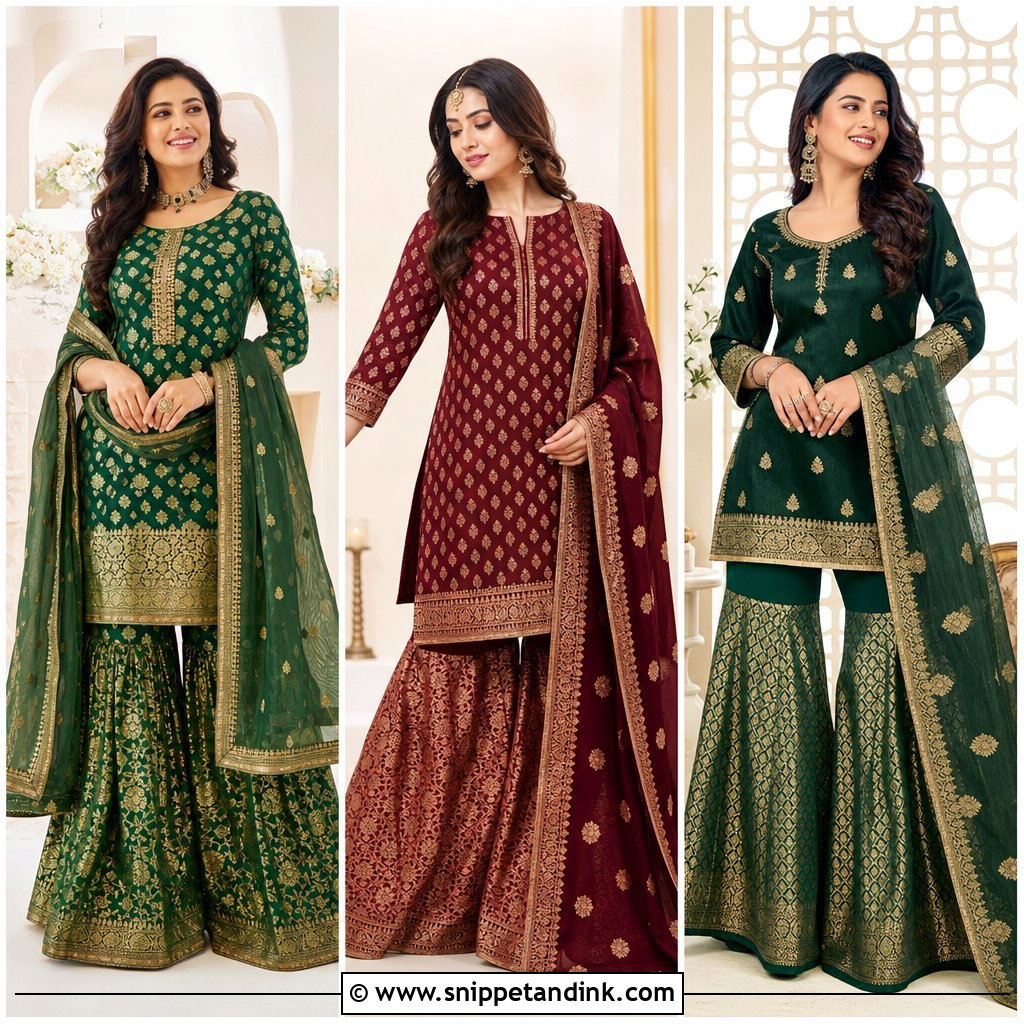
Mirror work under evening lights is pure festivity, and emerald gives it a rich background. Keep the mirrors to the neckline, sleeves and hem of a short silk or georgette shirt, with embellished knee joints on the garara and a lightweight dupatta edged in mirrors. More than that and the outfit gets heavy and scratchy. Silver-toned jewelry suits the mirrors better than yellow gold. Wear metallic juttis if you plan to dance at the sangeet, or low heels for a more formal evening. Hold back on extra jewelry; the mirrors already throw plenty of light.
7. Black Garara With Gold Embroidery
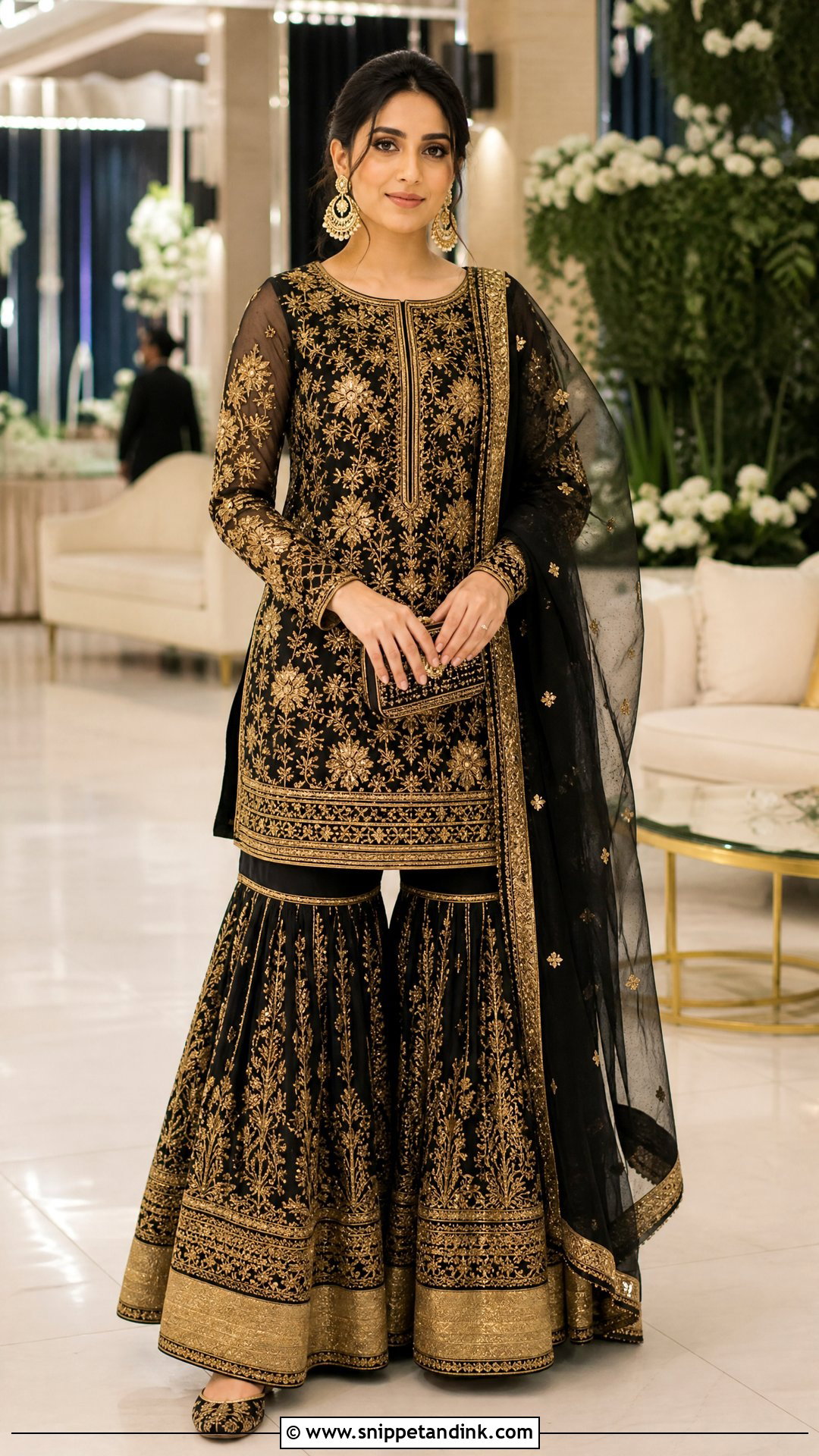
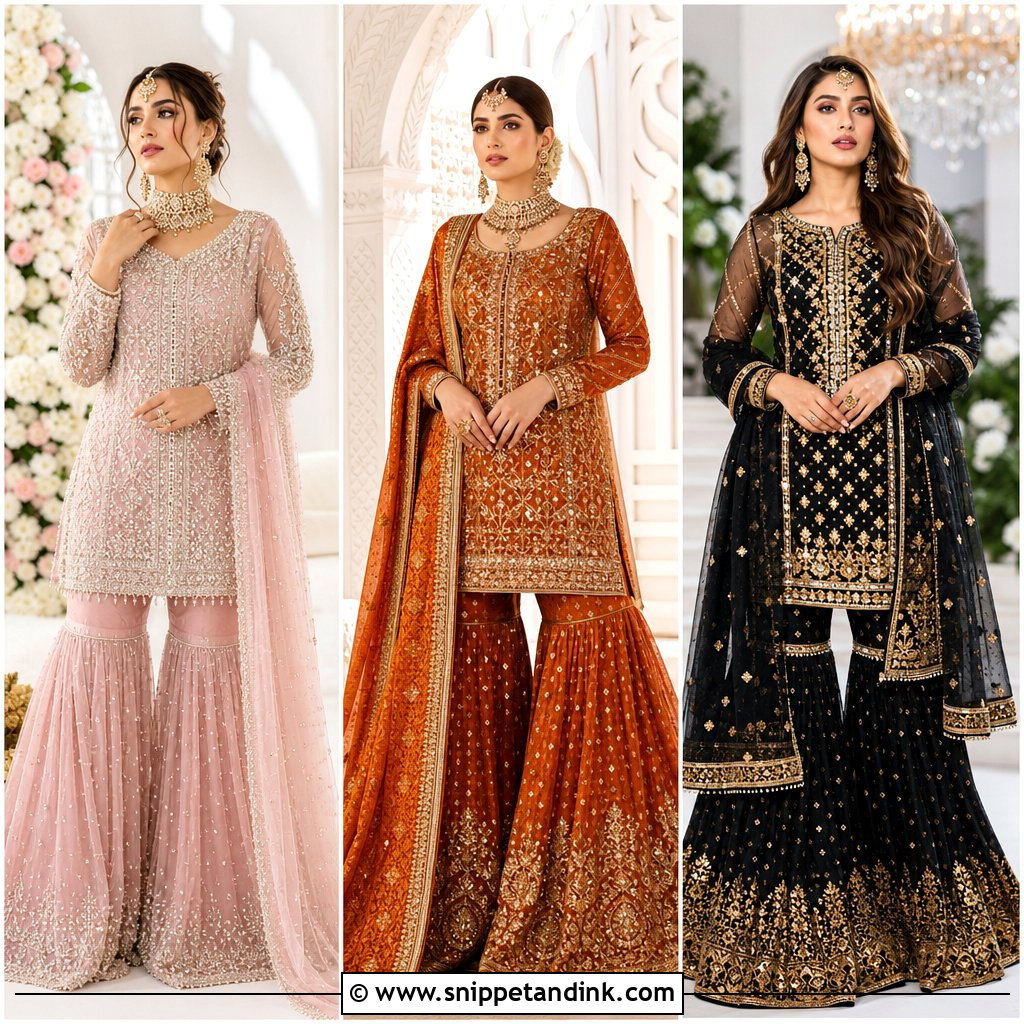
Black with gold zari is the reception option for anyone tired of bright wedding colours, and the contrast is very sharp in photos. A fitted black short shirt, gold patterns along the knee seams and broad borders, and a black net dupatta with scattered motifs. If black drains your face, switch to a muted gold dupatta so there’s brightness near it. I always add one caution: in some families black is avoided at weddings, so check with the couple before you order.
8. Mustard Gota Patti Garara
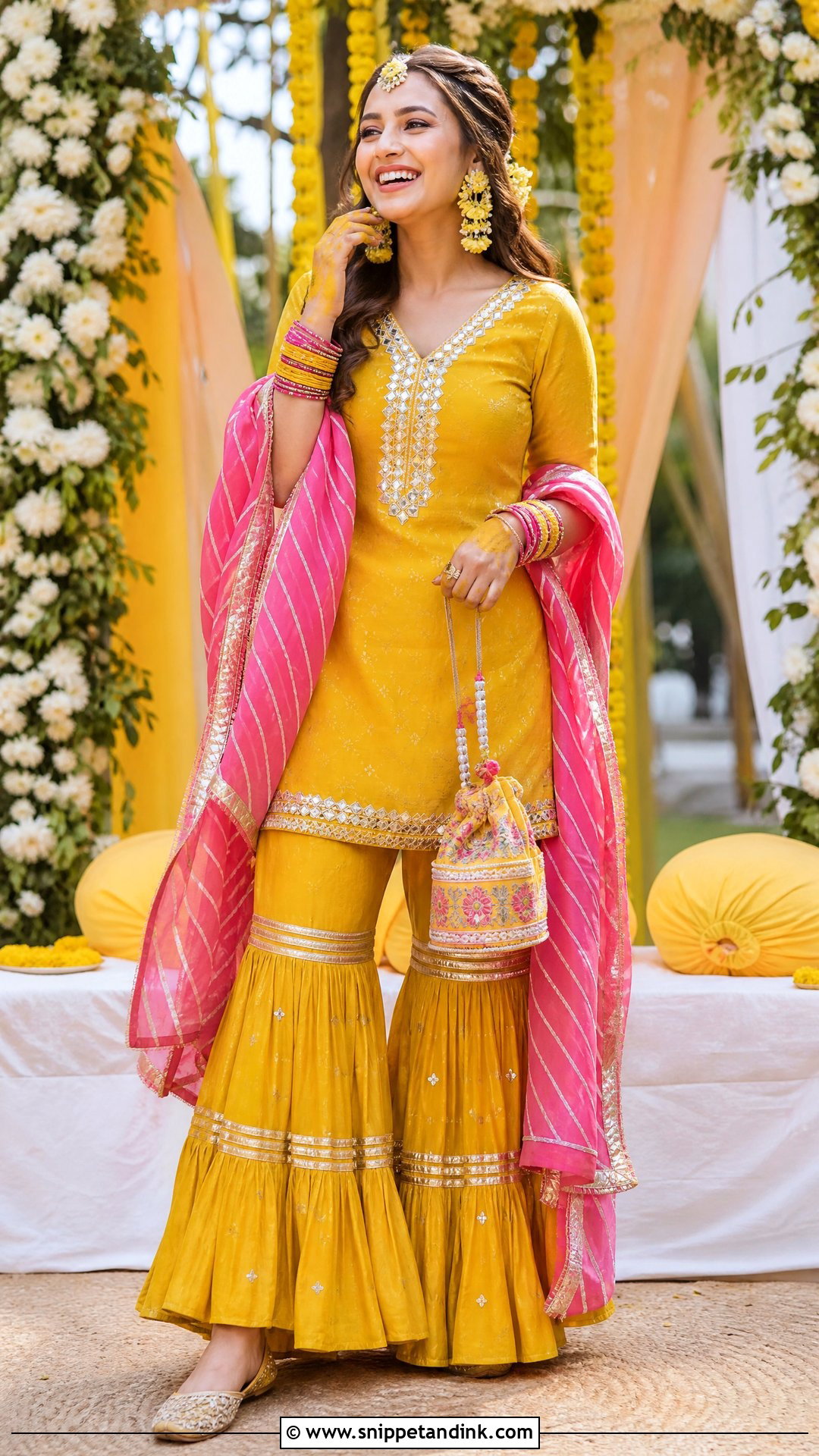
Mustard and gota patti belong at haldi and mehndi gatherings. A short cotton-silk or chanderi kurti with gota at the neck and sleeves, and wider gota bands at the knees and hem of the garara. Gota is light, which makes this one of the easiest gararas to dance in. A pink or green dupatta adds contrast. For an outdoor daytime event, I’d ask for breathable cotton lining and keep the flare a little shorter so it doesn’t sweep through grass and haldi paste.
9. Powder Blue Pearl Work Garara
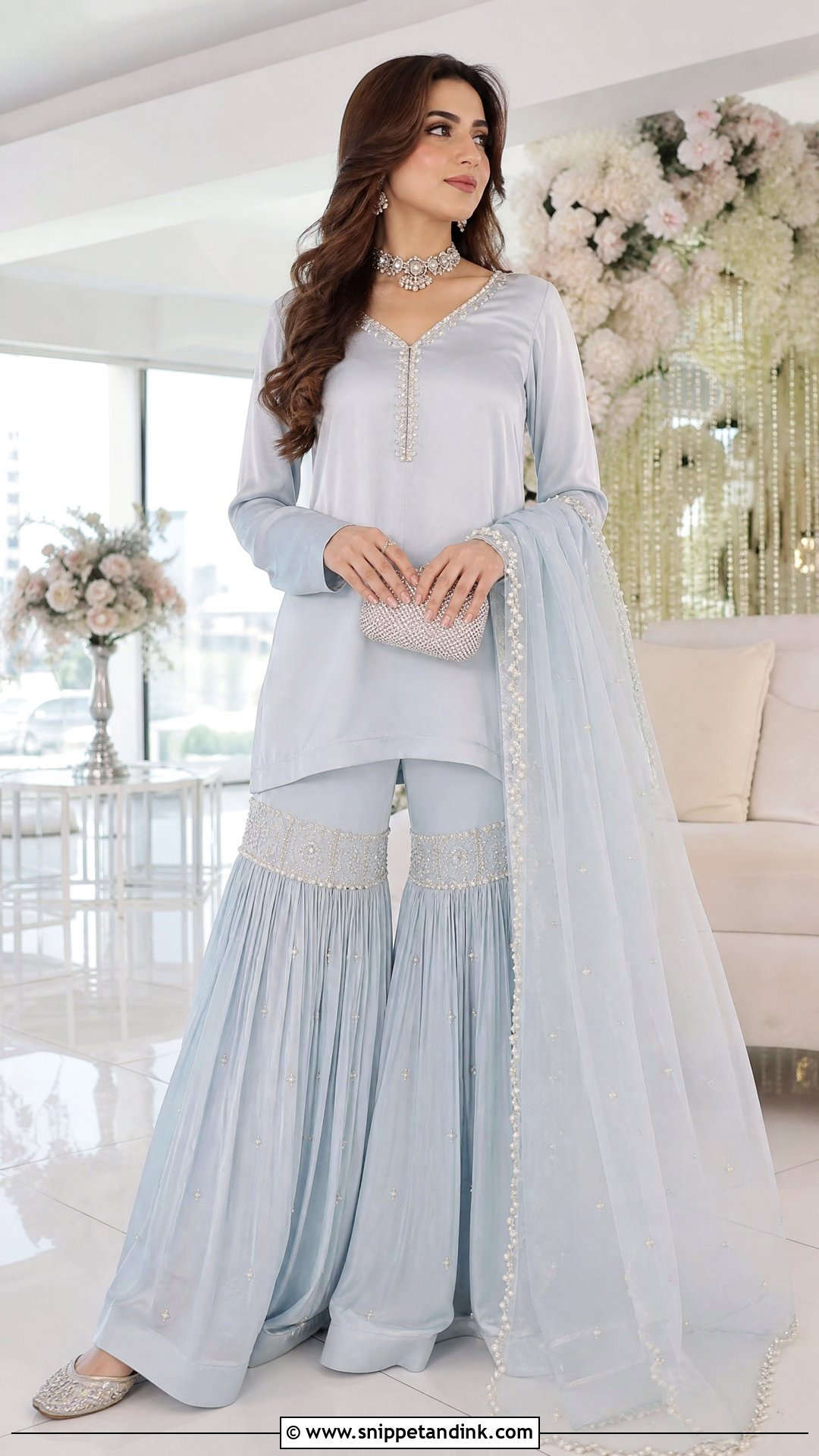
Powder blue is calm and cool-toned, good for a daytime reception or engagement. A satin or raw silk short shirt with pearls, silver thread and a few sequins, with the embellishment running vertically down the shirt. That vertical placement is a styling trick I use often, because it lengthens the body and stops a short kurti from cutting you in half. Structured knee bands, soft floor-skimming panels, and a pearl-edged organza dupatta kept light. Silver jewelry carries on the palette.
10. Orange Silk Garara With Magenta Dupatta
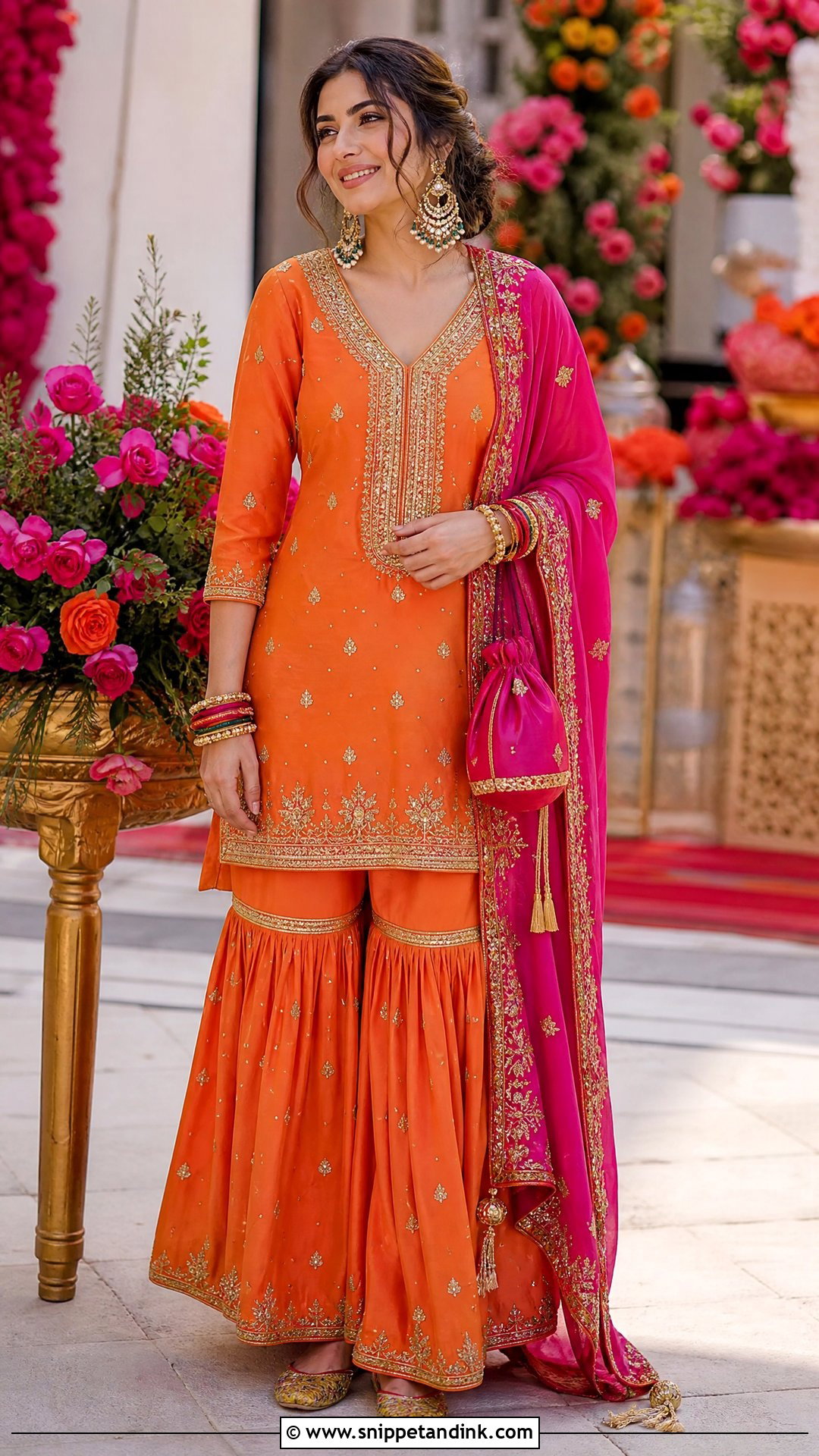
Orange and magenta are made for dancing. A short tailored orange kurti with gold at the neckline over a matching orange garara with magenta piping, then a magenta dupatta with small orange motifs to pull it together. Keep the shirt and the garara in the same orange; two slightly different oranges look like a mistake next to a deliberate contrast. Kundan earrings, pink-and-gold bangles and a braid with small floral pins suit a mehndi or sangeet.
11. Champagne Tissue Garara With Sequin Kurti
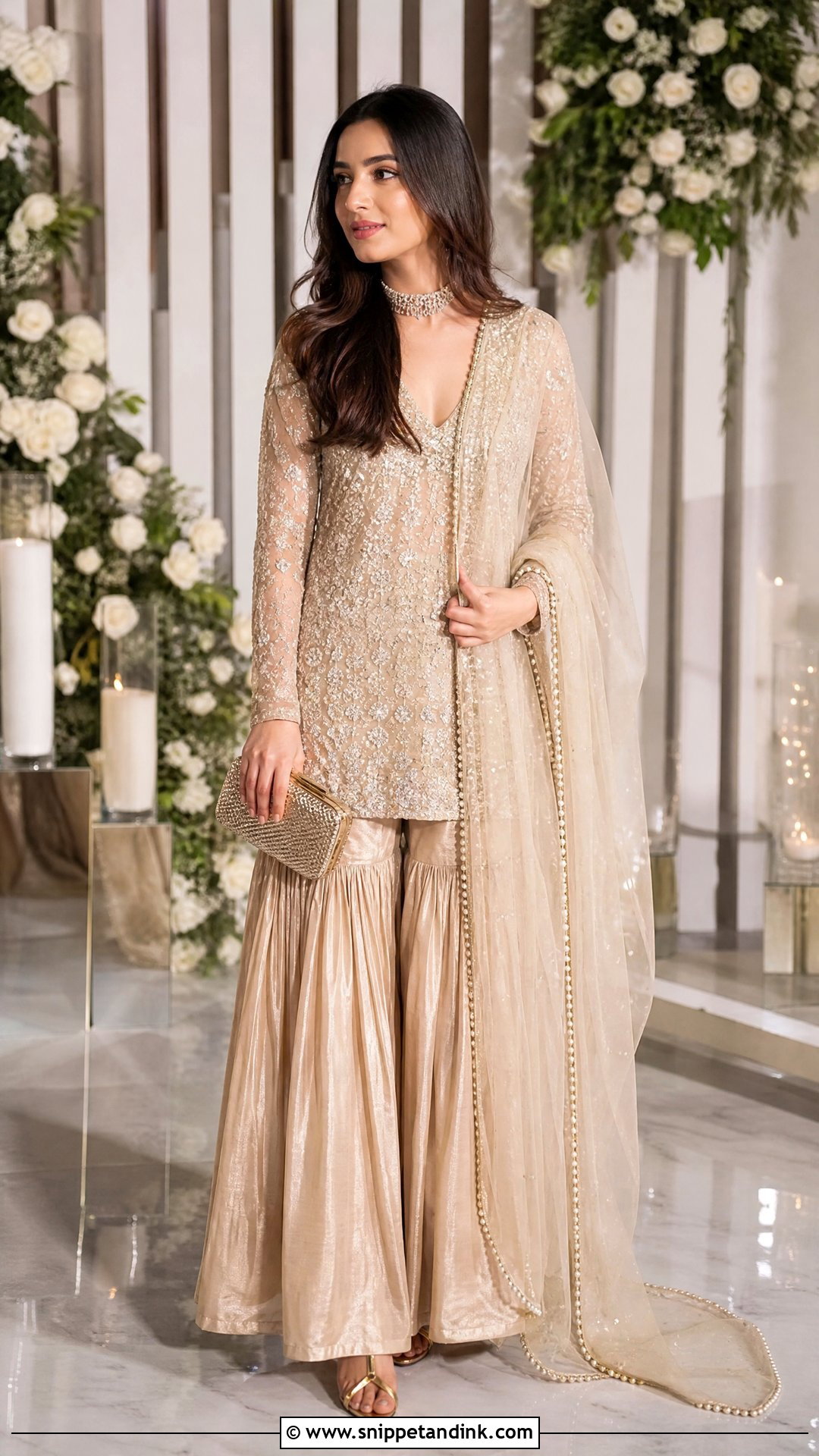
Tissue fabric shines without any loud colour, which is why champagne works for receptions and formal evenings. A short sequin kurti in pale gold or beige over a softly structured tissue garara, with embroidered knee bands to keep the garara silhouette defined. Tissue has a slightly crisp, scratchy hand, and I’d always ask for a smooth lining underneath. A sheer net dupatta with a crystal edge, a diamond-style choker and nude heels. Sleek hair keeps it modern.
12. Lilac Garara With Silver Embroidery
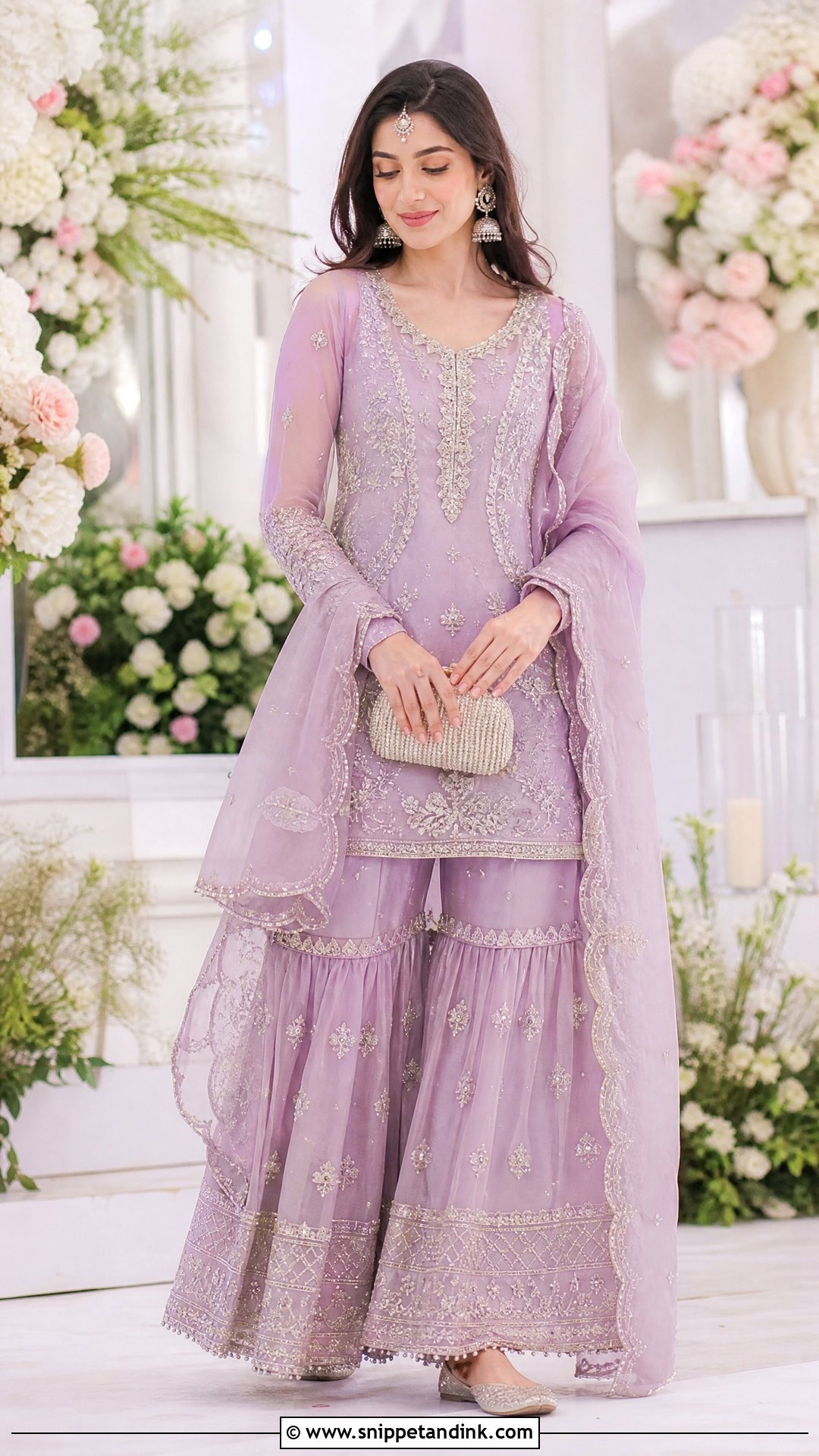
Lilac is the easiest pastel to coordinate across a bridal party. A georgette or silk short kurti with silver threadwork and crystals, a lilac garara fitted above the knee before the layered flares, and an organza dupatta with a silver scalloped edge. For bridesmaids I’d keep everyone in the same lilac and let jewelry or dupatta drapes vary, rather than mixing shades that clash under different lights. Silver jhumkas and grey or silver juttis finish it. It reads equally well by day and at an evening reception.
13. Farshi Garara With Long Trail
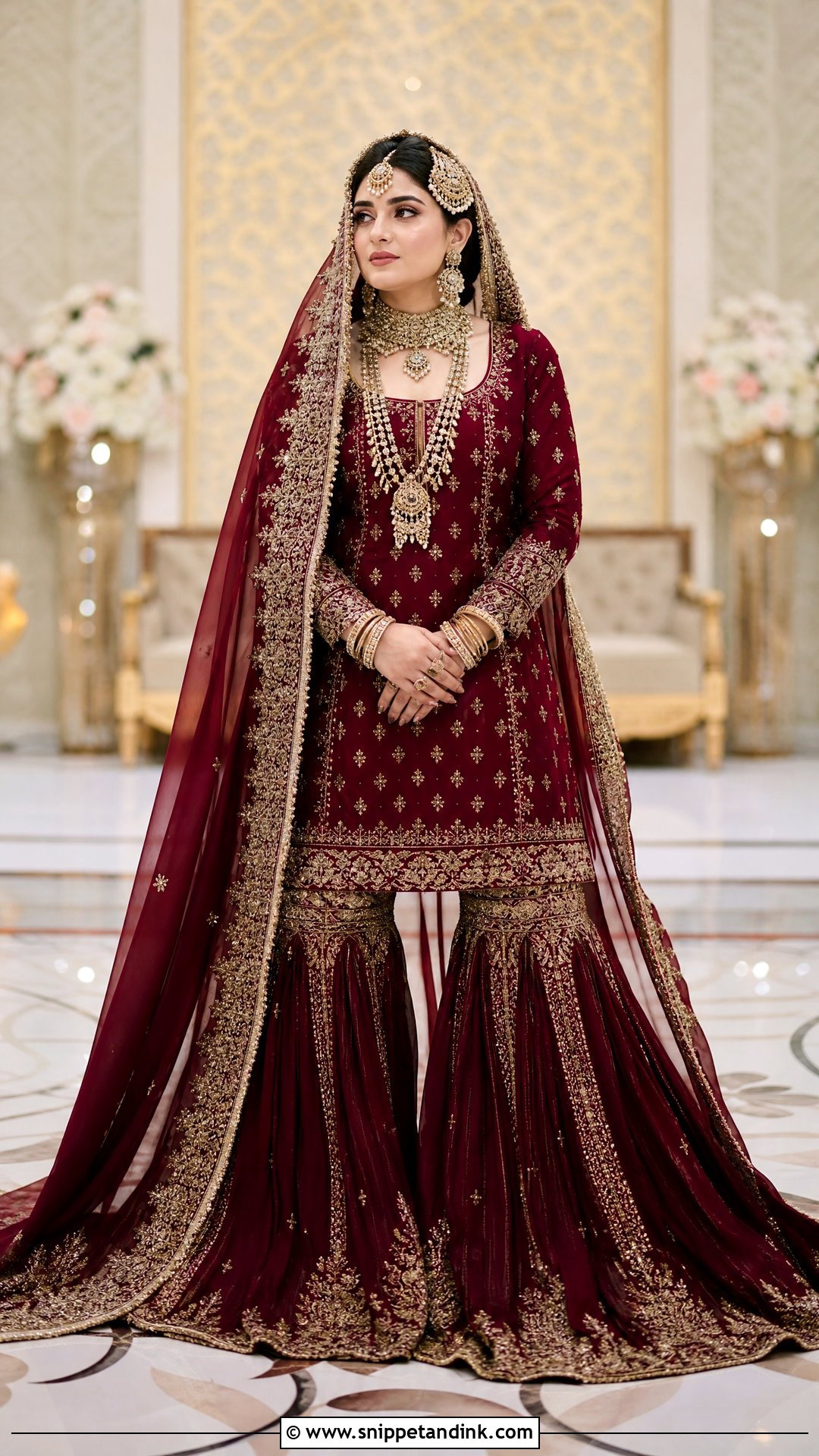
A farshi garara is the heritage form, with extra-long panels that pool on the floor around the feet. Pair it with a fitted short kurti in brocade or velvet, embroider the knees and outer borders, and wear a dupatta over the head or pinned across both shoulders with a jhoomar and full traditional jewelry. Here’s what nobody warns you about: you can’t walk forward in a farshi without lifting the front, and stairs need a helper. Practise walking and sitting in the finished outfit well before the wedding. It belongs on a bride at a formal ceremony, not on the dance floor.
14. Peplum Kurti With Layered Garara
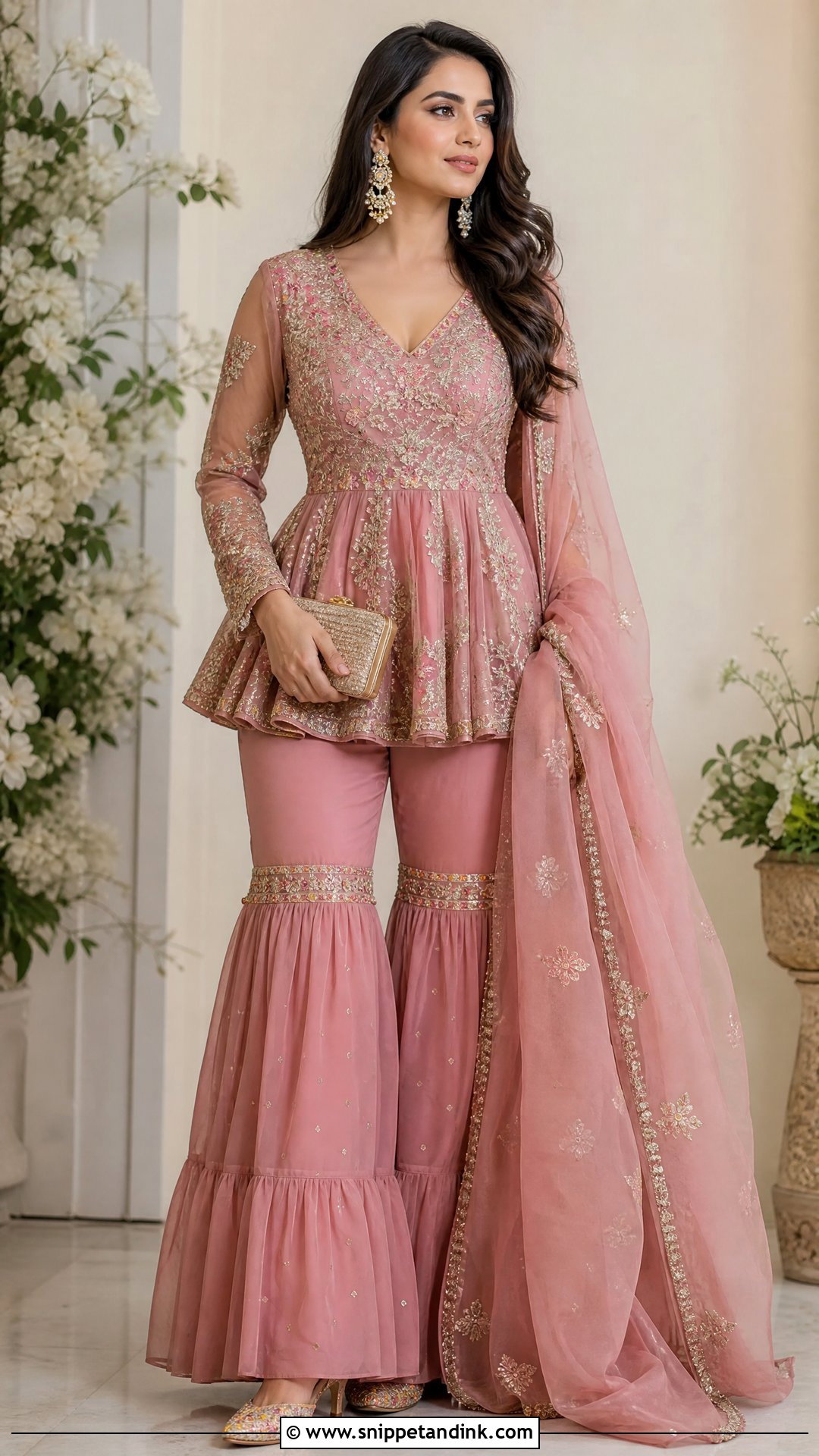
A peplum kurti modernises the garara, provided it stops at the upper hip. Any longer and it hides the knee joint, which is the whole point of the outfit. I’d put the embroidery at the waist to define it and keep the peplum flare lightly worked so it doesn’t add bulk. A layered georgette garara and a sheer dupatta in the same colour family. Petite frames suit a shorter peplum with less flare; taller women can go a little longer. A good guest and sangeet option.
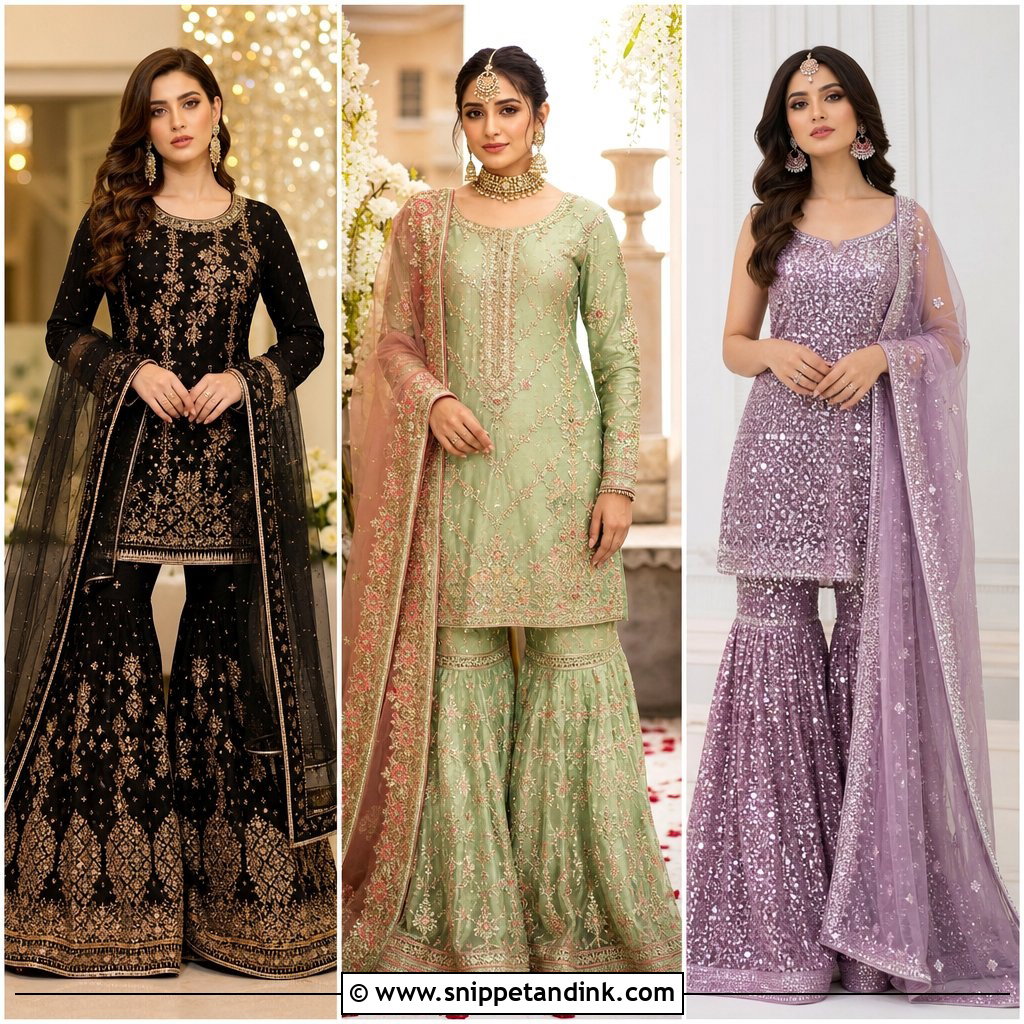
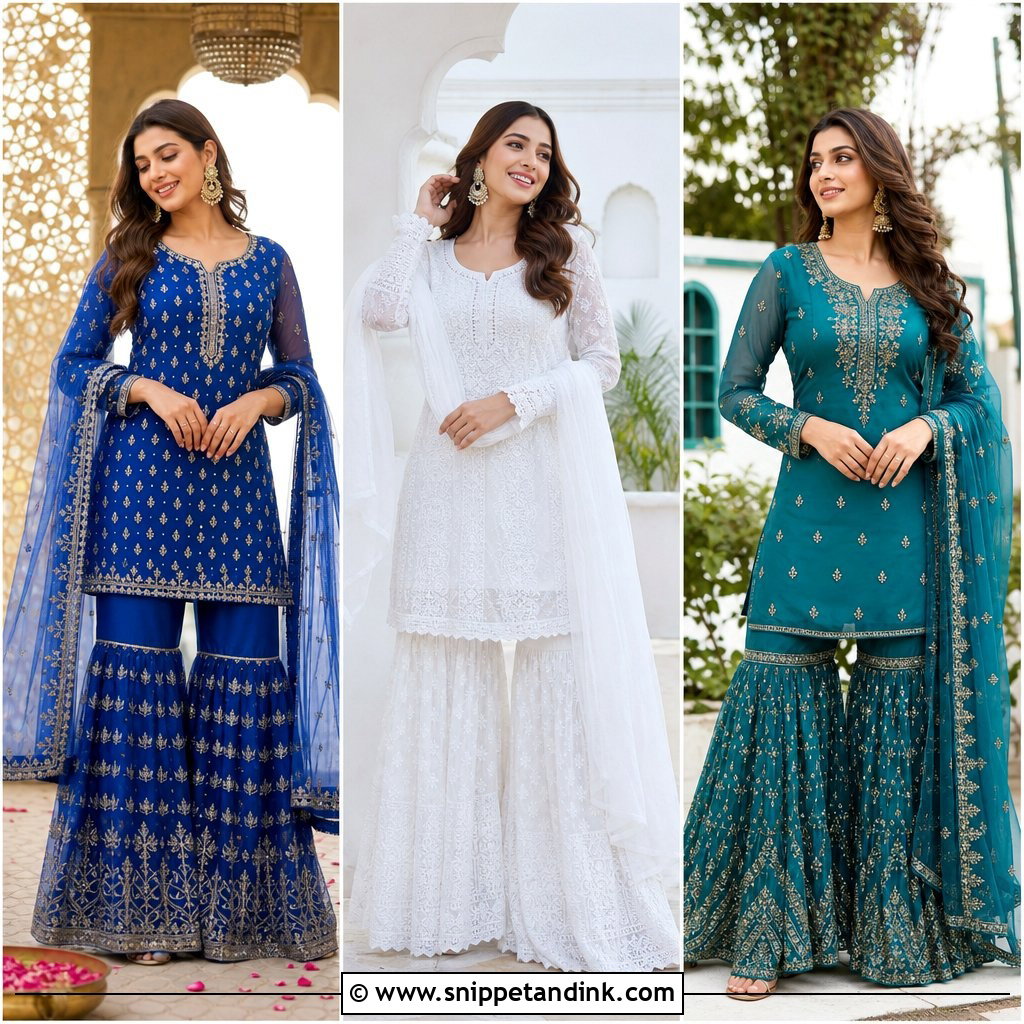
15. Jacket Kurti With Embroidered Garara
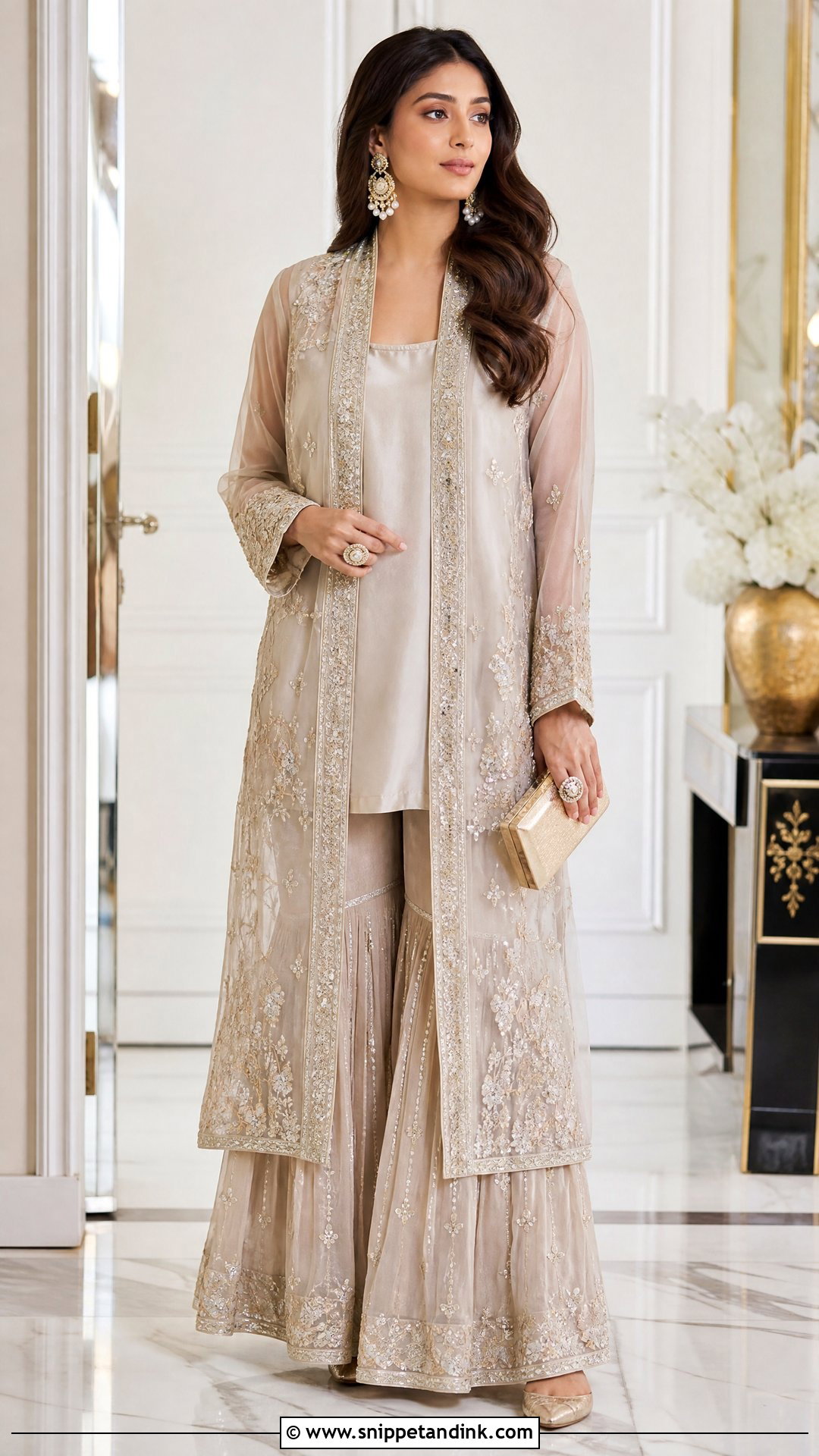
An open jacket turns a garara into a reception outfit and can replace the dupatta entirely, which is a relief for anyone who hates managing one all night. Keep the inner kurti sleeveless or short-sleeved and simple, with detailed knee bands on the garara, and layer an organza, net or velvet jacket over it, open at the front. Fit is what I watch: the shoulders and sleeves of the jacket must be tailored, because an oversized jacket hides the waist and swallows the flare. Chandelier earrings and a cocktail ring are enough jewelry.
16. White Chikankari Garara With Pastel Dupatta
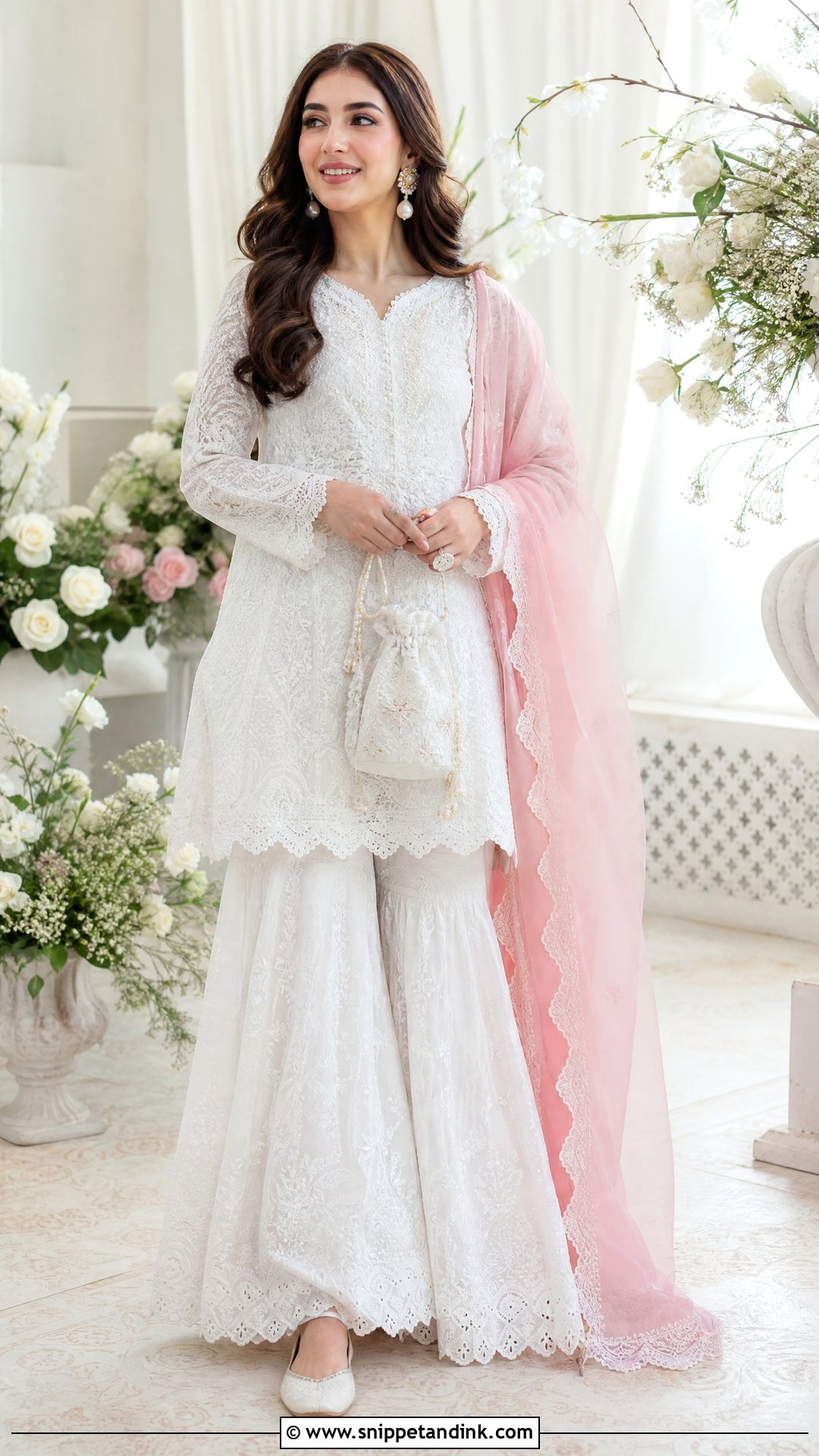
Chikankari gives white texture through shadow work and fine stitches rather than metal. A short white cotton-silk or georgette kurti over a lined garara with embroidered knee panels and scalloped edges, then colour from a pastel dupatta. Lining matters more here than anywhere else in this list. White chikankari on georgette goes nearly transparent in sunlight, so I check it outdoors before approving. It suits a daytime nikkah or wedding brunch. Brides can add a jeweled passa; guests should keep accessories minimal.
17. Navy Blue Garara With Cutdana Work
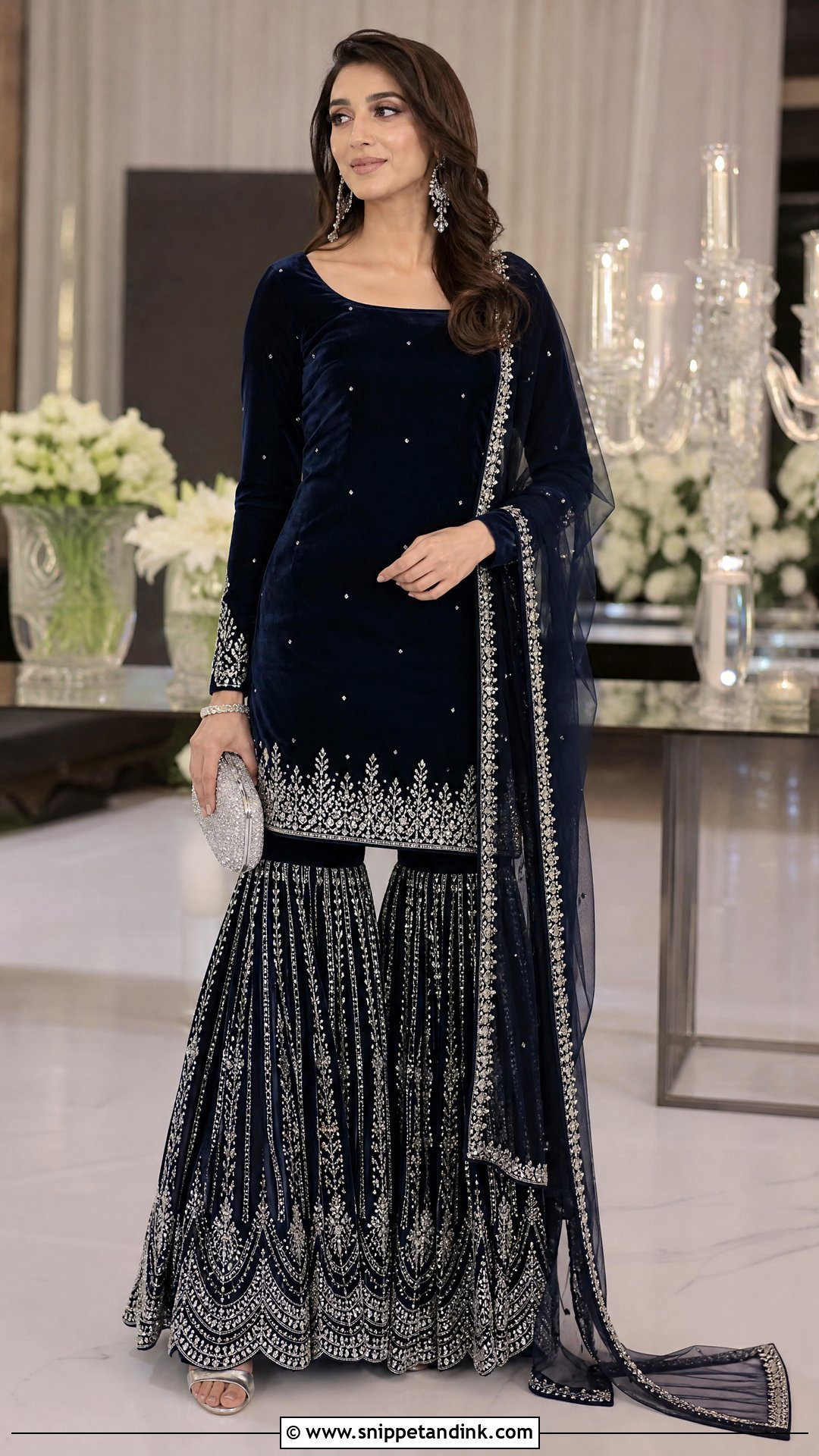
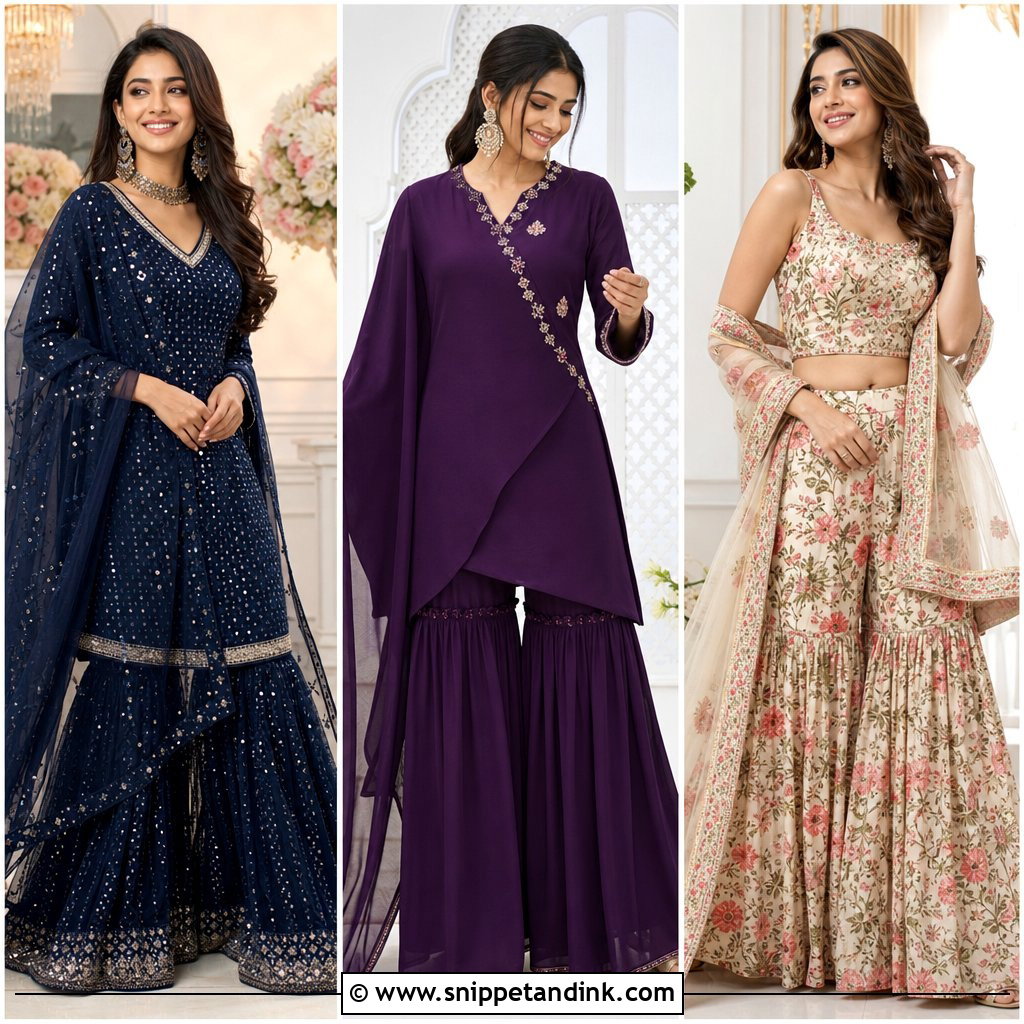
Navy is a jewel tone that stays refined at night, and silver cutdana suits it better than gold. A velvet, silk or crepe short kurti with cutdana, crystals and beadwork; heavy embellishment at the garara’s knees fading to light motifs down the flares. Cutdana is cut glass bead, so it has real weight and can snag a net dupatta; I’d keep it off the shoulder area where the dupatta rests. Choose cool-toned jewelry over yellow gold. A sleek ponytail keeps the neckline visible.
18. Peach Garara With Floral Embroidery
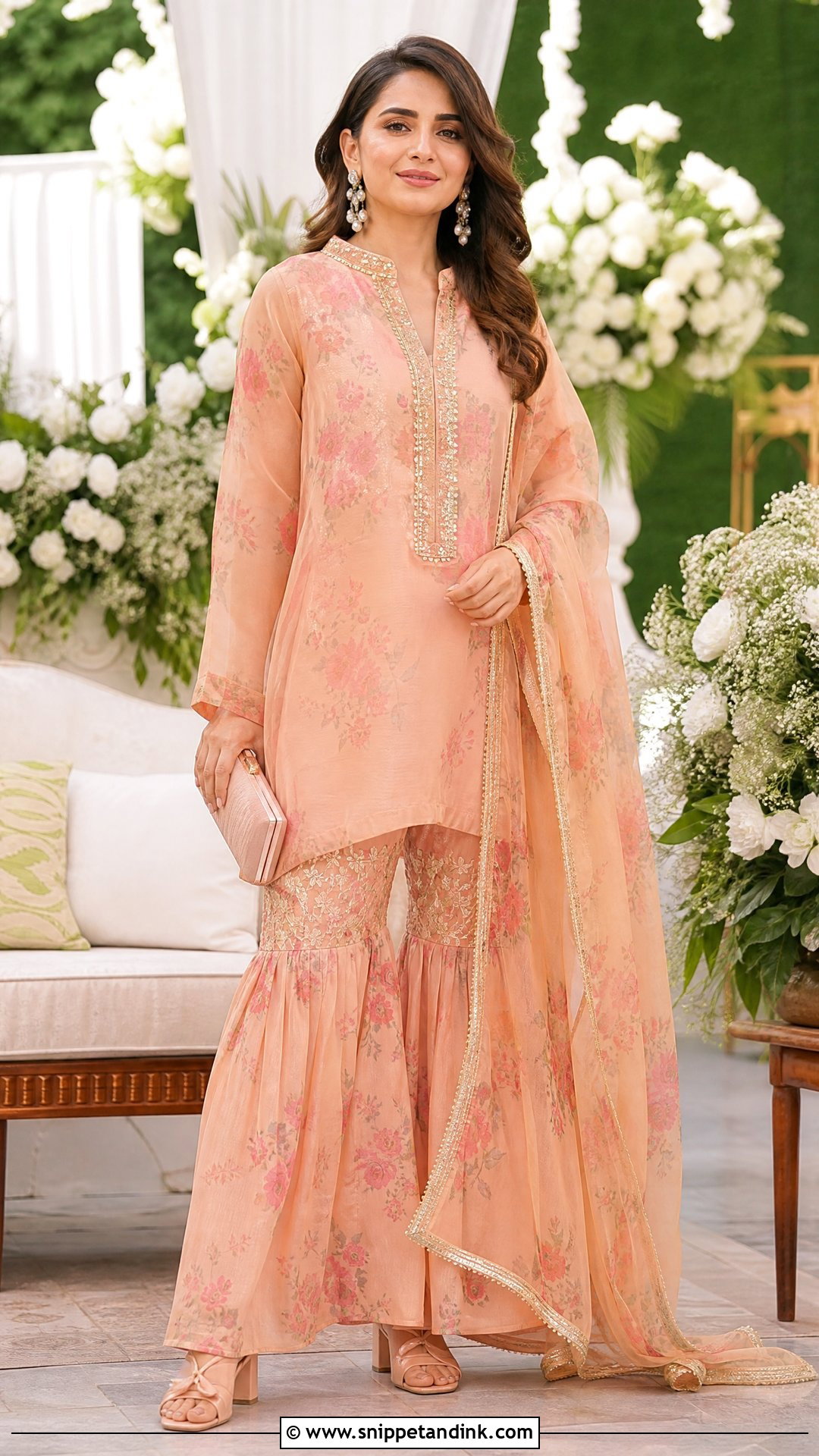
Peach gives colour without competing with the bride, so I often suggest it to sisters and bridesmaids. An organza or silk short kurti with ivory, pink and muted green flowers, a peach garara with floral knee bands and scattered motifs, and a soft net dupatta with a narrow border. Keep jewelry delicate so the florals lead. A small green potli makes a nice accent against the peach. It’s a daytime outfit; under warm evening light, peach can look washed out.
19. Gold Brocade Garara With Plain Kurti
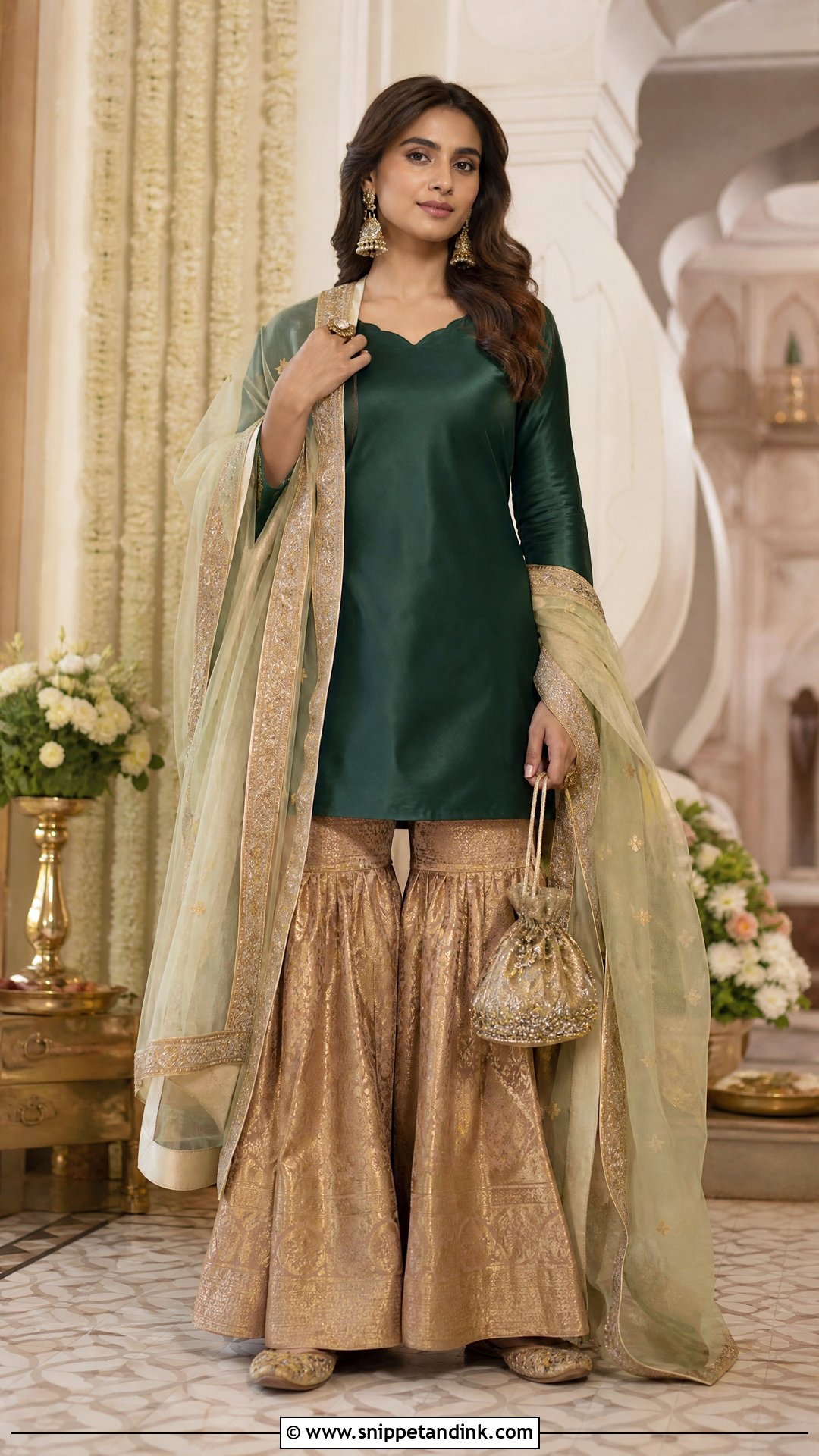
Brocade on the garara and a plain shirt above is a balance I like a lot. A gold Banarasi or jamawar garara with woven motifs and a clearly shaped knee, under a plain silk kurti in cream, maroon or deep green with embroidery only at the neckline and cuffs. The risk with brocade is stiffness: woven fabric holds out from the hips instead of falling. I ask for a softer lining and enough panels in the flare that it moves rather than standing away from the body. A light organza dupatta and antique gold juttis complete it.
20. Teal Garara With Asymmetrical Kurti
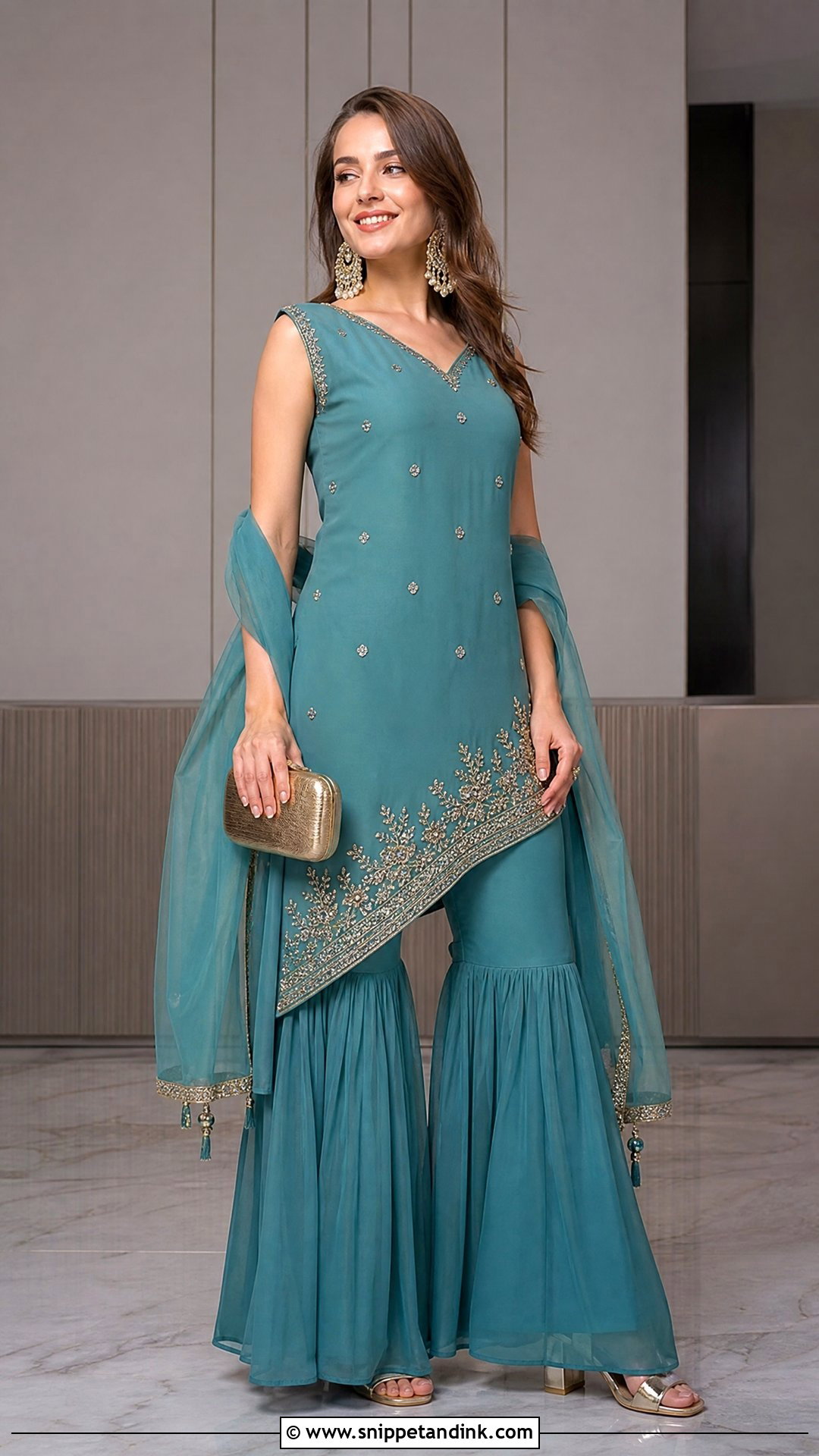
An asymmetrical kurti makes a garara look current, but it still has to stay short enough to show the knee joint. I’d choose a one-sided hem or angled overlay rather than a long high-low shirt that drags the eye downward. Under it, a traditional garara with fitted upper legs, decorated knee seams and wide chiffon or georgette flares. Embroider the neckline and the angled edge, pin a light dupatta over one shoulder, and keep accessories streamlined, since the shape is already doing the work. A sleek bun suits a sangeet or reception.
Stage Steps, Floor Seating and a Few Metres of Flare
A garara behaves very differently from a lehenga once you start moving. Each leg carries its own flare, so stairs are easier than in a full skirt, but the inside edges brush against each other and catch on heels. Gather a little fabric on each side with your hands as you climb onto a stage, and ask the tailor to finish the hem with a firm facing so it doesn’t curl under your shoe.
Floor seating at a nikkah or mehndi is where tight knees show up. Sit cross-legged at your final fitting and stay there for a few minutes. If the band pulls or the fabric bunches painfully behind the knee, it needs more room before the day, not after.
Guests and bridesmaids, a quick etiquette check
- Leave deep bridal red and full farshi lengths to the bride unless the family has asked otherwise.
- Check whether black or white is welcome before choosing either.
- For a matching bridal party, agree one shade and let each person vary the dupatta drape or jewelry.
- Keep embellishment lighter than the bride’s so photos read clearly.
Shirt Length and Knee Band Are the Two Things to Get Right
A garara stretches a long way, from red zardozi, ivory and gold, velvet and farshi for the bride, to pastel organza, chikankari, mirror work, brocade and jacket sets for family and guests. Whatever the colour, the outfit only reads as a garara when the knee band sits where it should and the shirt stops short enough to show it. After that, look at lining, a flare you can manage and the event’s dress code. Match jewelry and shoes to the embroidery instead of adding competing pieces, and plan for the amount of moving around you’ll actually do.
You'll Like These Ideas:


Leave a Reply