
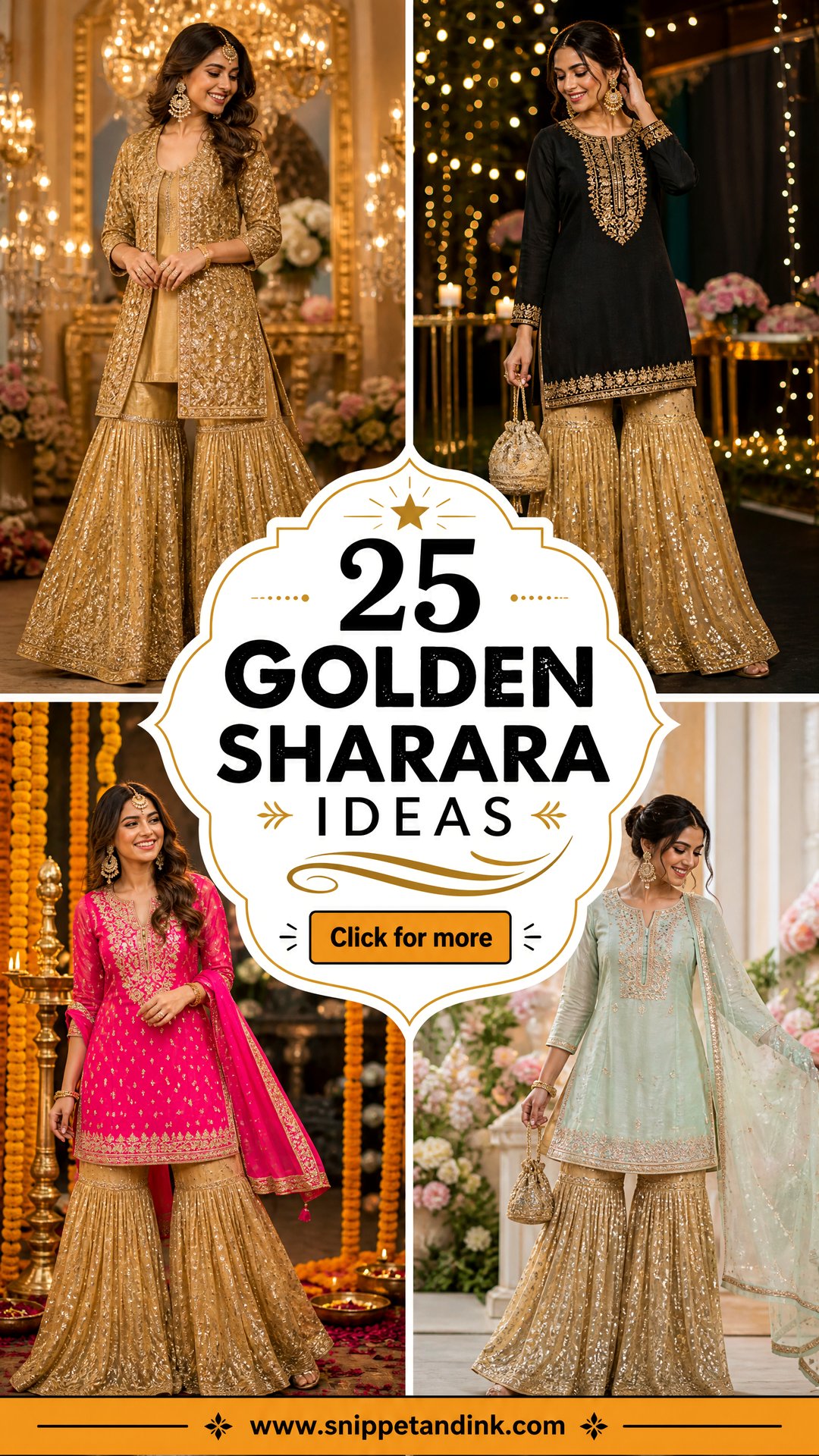
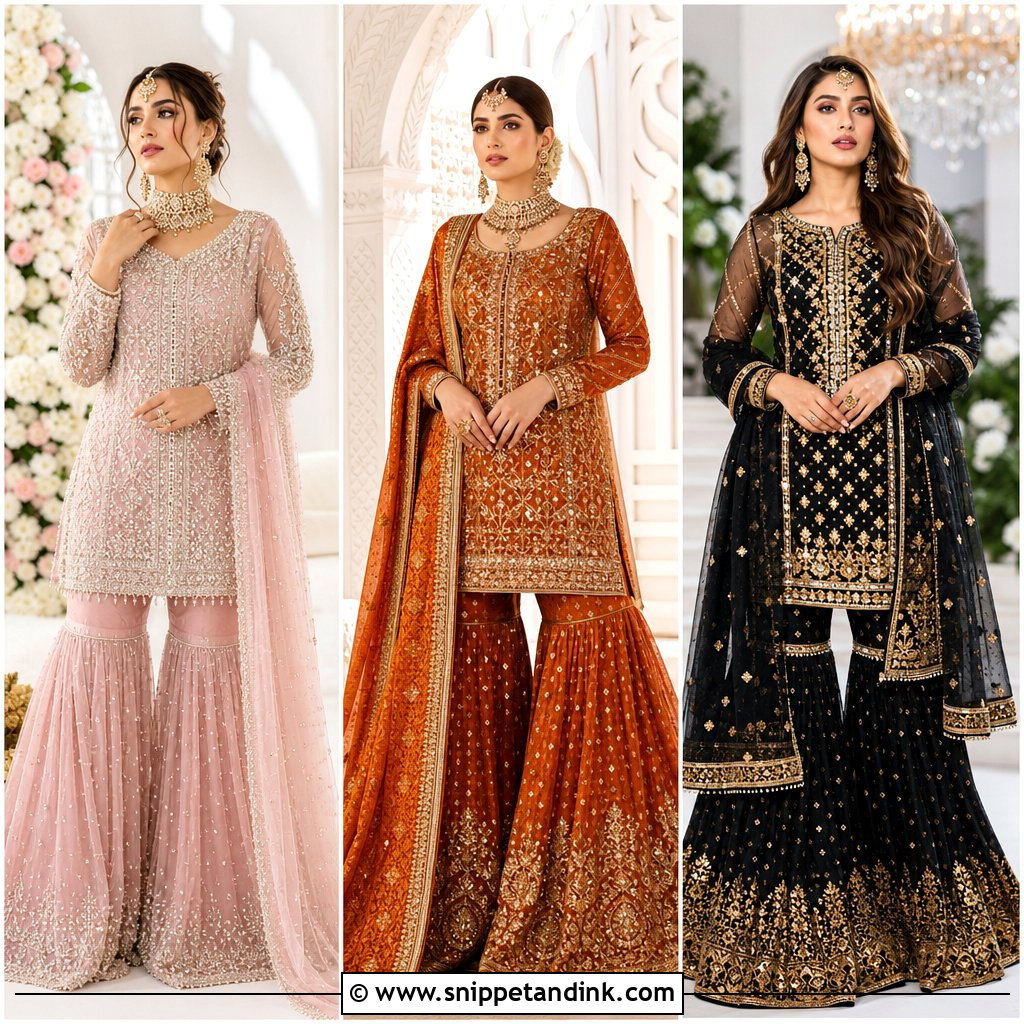
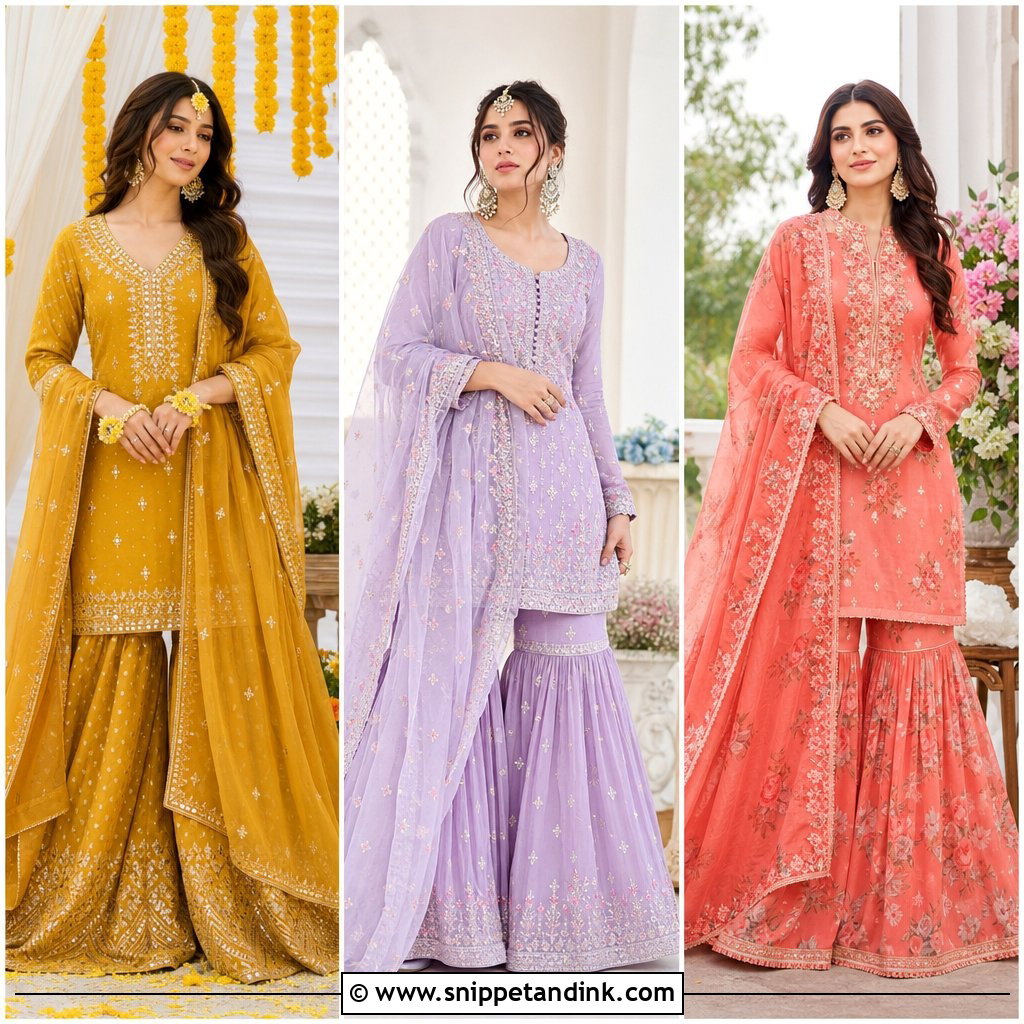
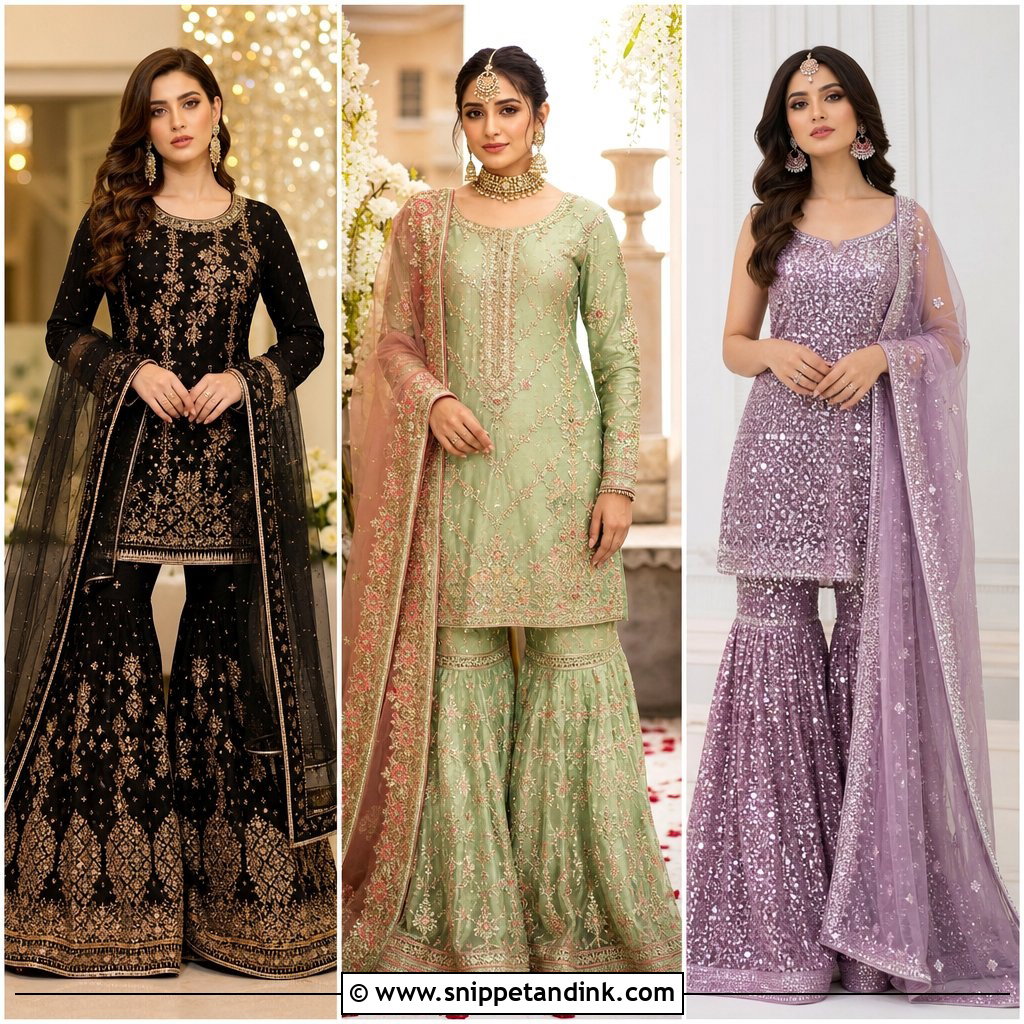
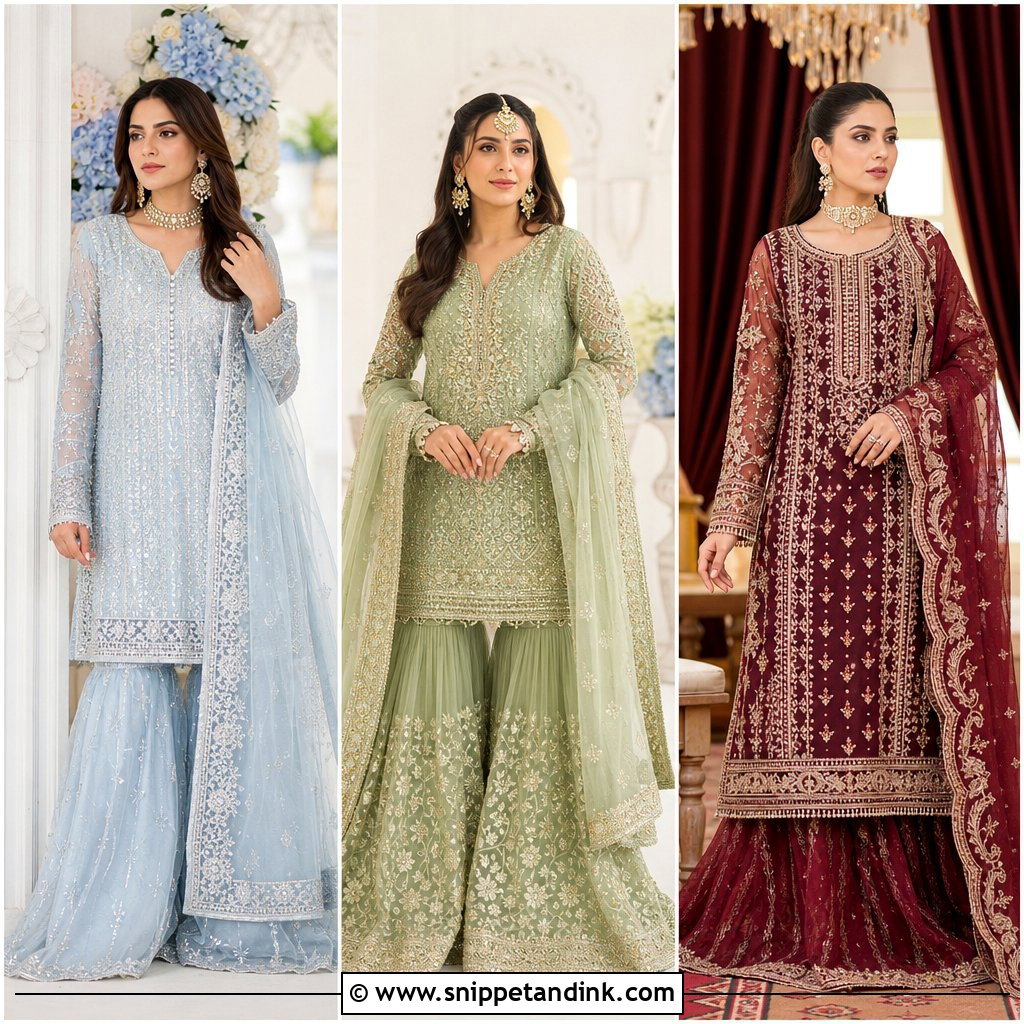
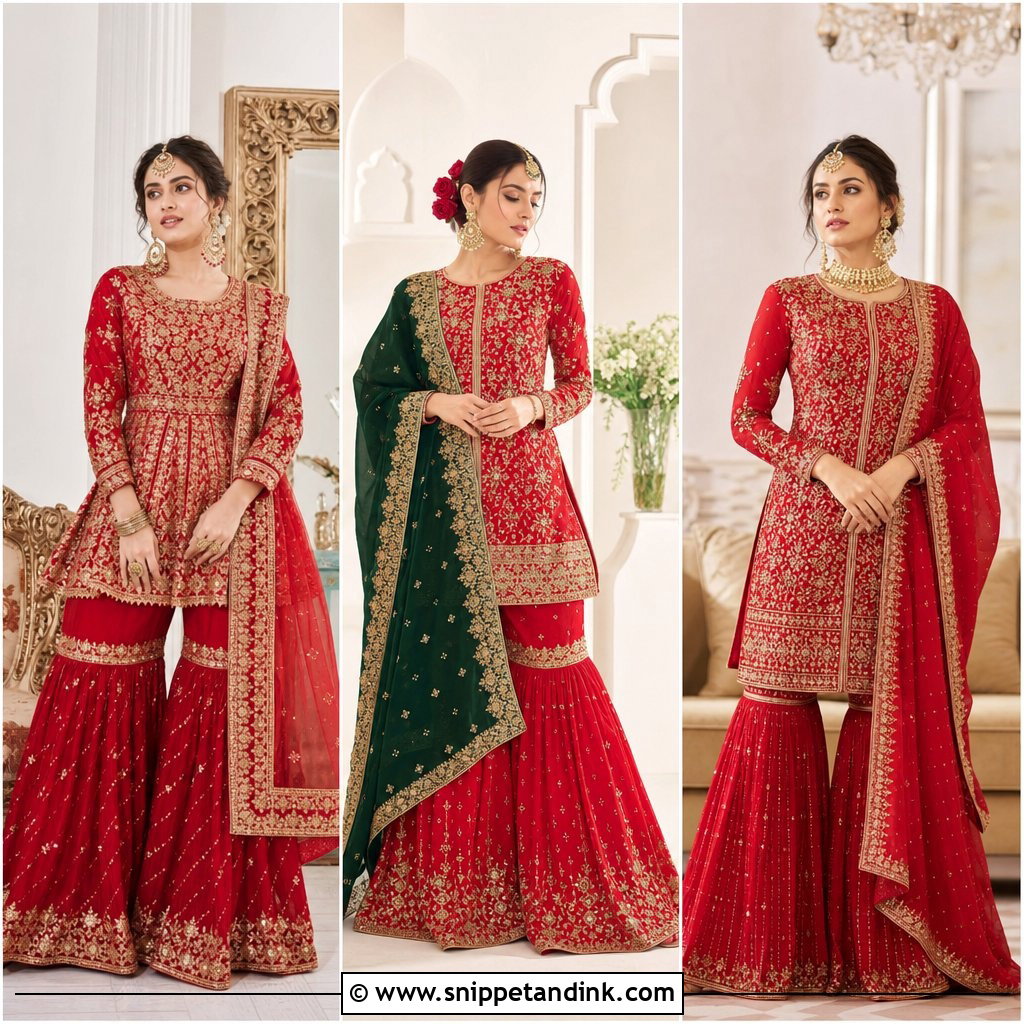
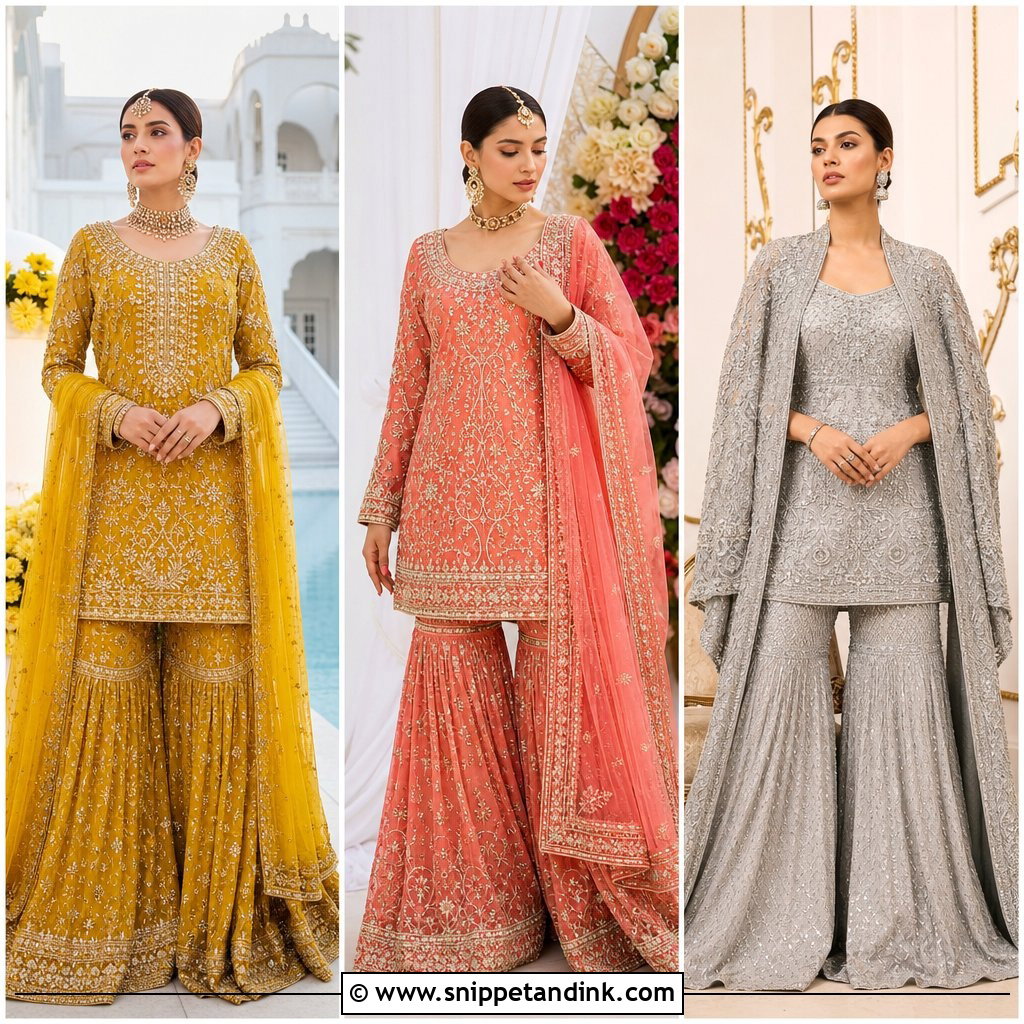
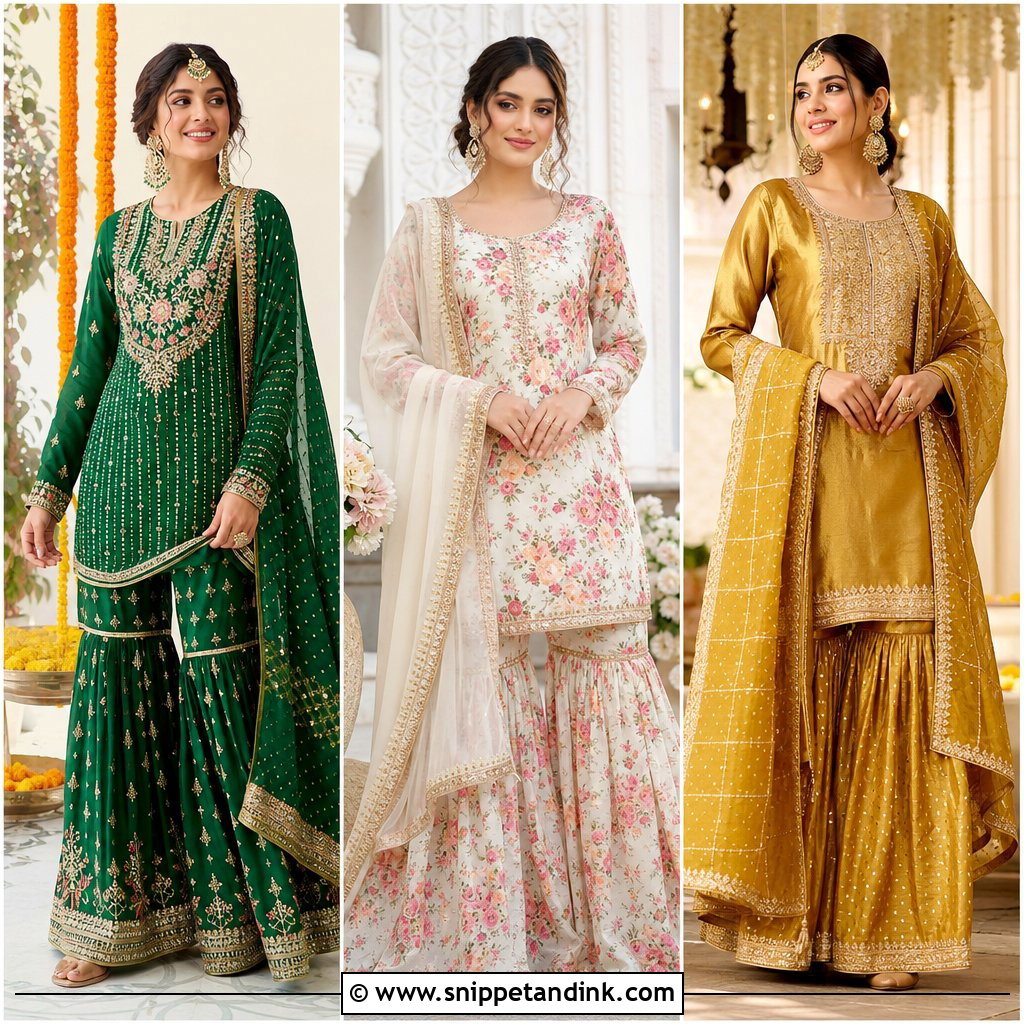
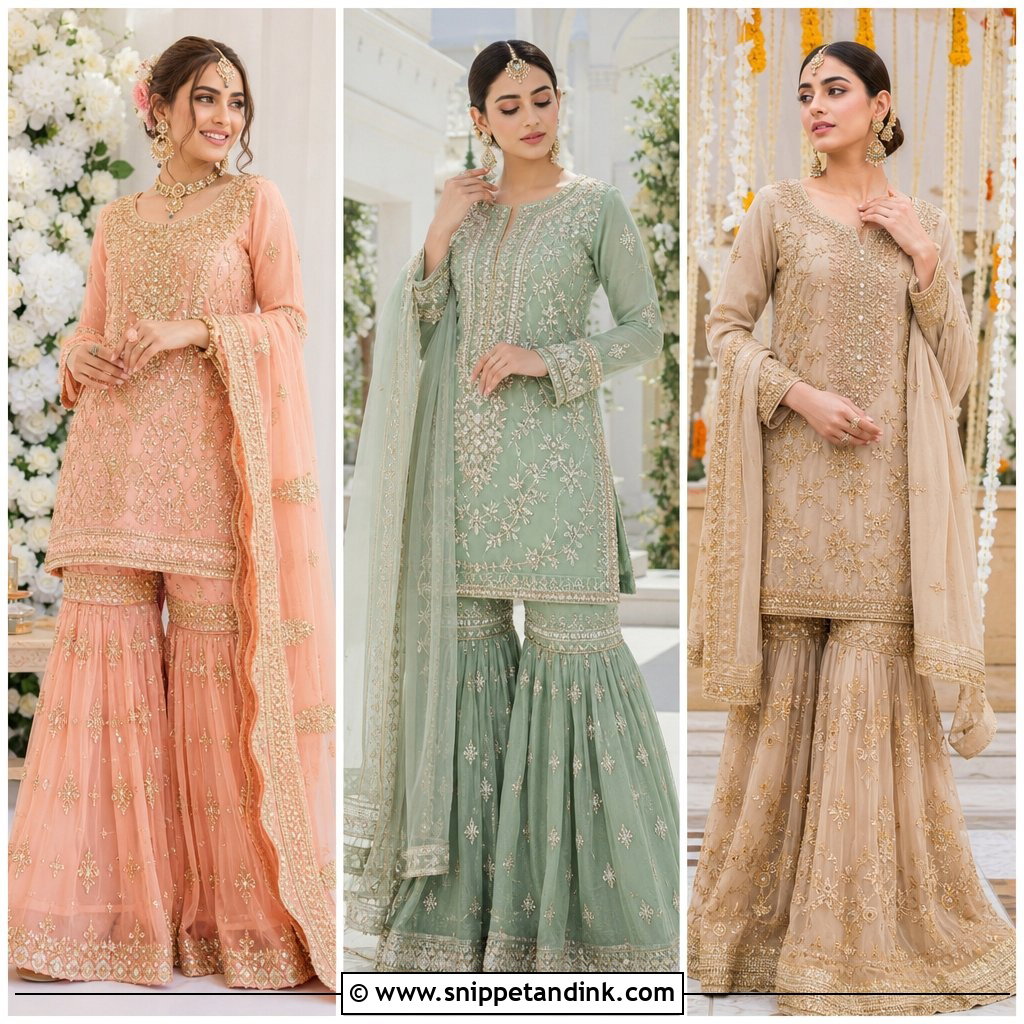
A gold sharara is the outfit I suggest most often to someone who wants to look festive and still be able to dance. The same flared pants can read royal at a wedding, soft at a daytime puja or sharp at a sangeet, and almost all of that comes from the top, the dupatta, the jewelry and the shoes. Current sharara trends are leaning toward lighter festive fabrics, jacket layers, crop tops, peplums and paler gold tones, with handwork kept where the eye lands. Gold also gets along with ivory, green, blush, maroon, black and peach, so one sharara can carry several different events. Here are the combinations I’d actually put together, with the fitting notes that go with each.
Where the Flare Starts and Where the Hem Lands
Most shararas I’m asked to fix have the right fabric and the wrong proportions. Two measurements decide how the outfit moves: the point where the leg widens, and the length of the hem.
The flare point
A classic sharara is fitted to the knee and flares from there, often with a gathered band at the knee. If you’re petite, ask the tailor to start the flare a little higher, just above the knee, so the leg doesn’t look cut in half. Taller women can carry a lower, more dramatic flare. With a long kurta, the flare must begin below the kurta hem or the two layers fight.
The hem
I fit the hem with the exact shoes on. It should just brush the floor at the back and clear it at the front by a finger’s width. Too long and you’ll step on it going up stage steps or during a dance; too short and it looks like palazzos. If you’ll switch from heels to juttis halfway through, hem for the lower shoe and accept a little more ankle in heels.
Weight matters too. A heavily embroidered hem pulls the fabric down over the evening, so a sharara fitted perfectly at the trial can be dragging by midnight. I ask for embroidery to stop a few centimetres above the edge on heavy pieces.
1. Golden Sharara Suit For Wedding
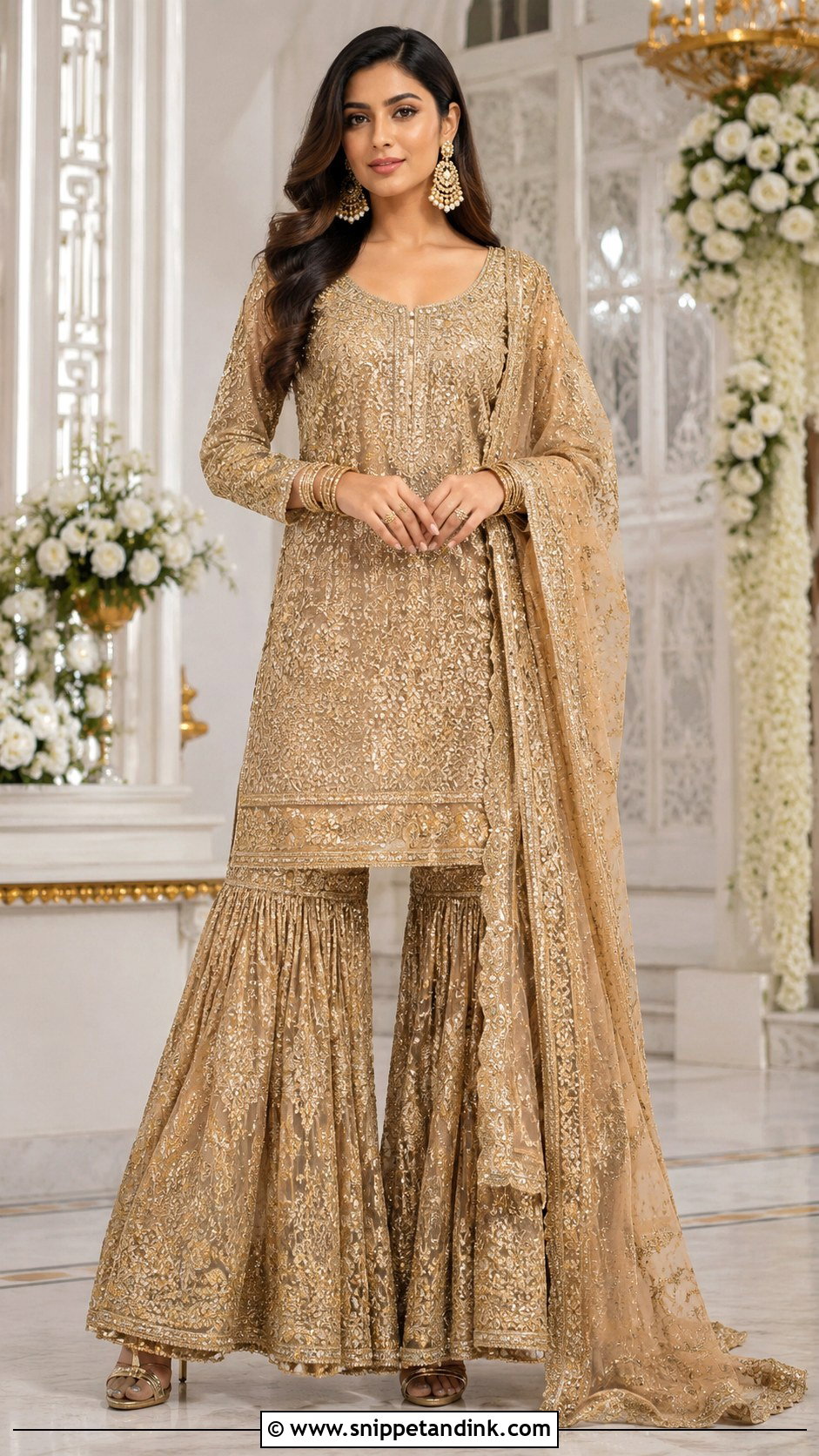
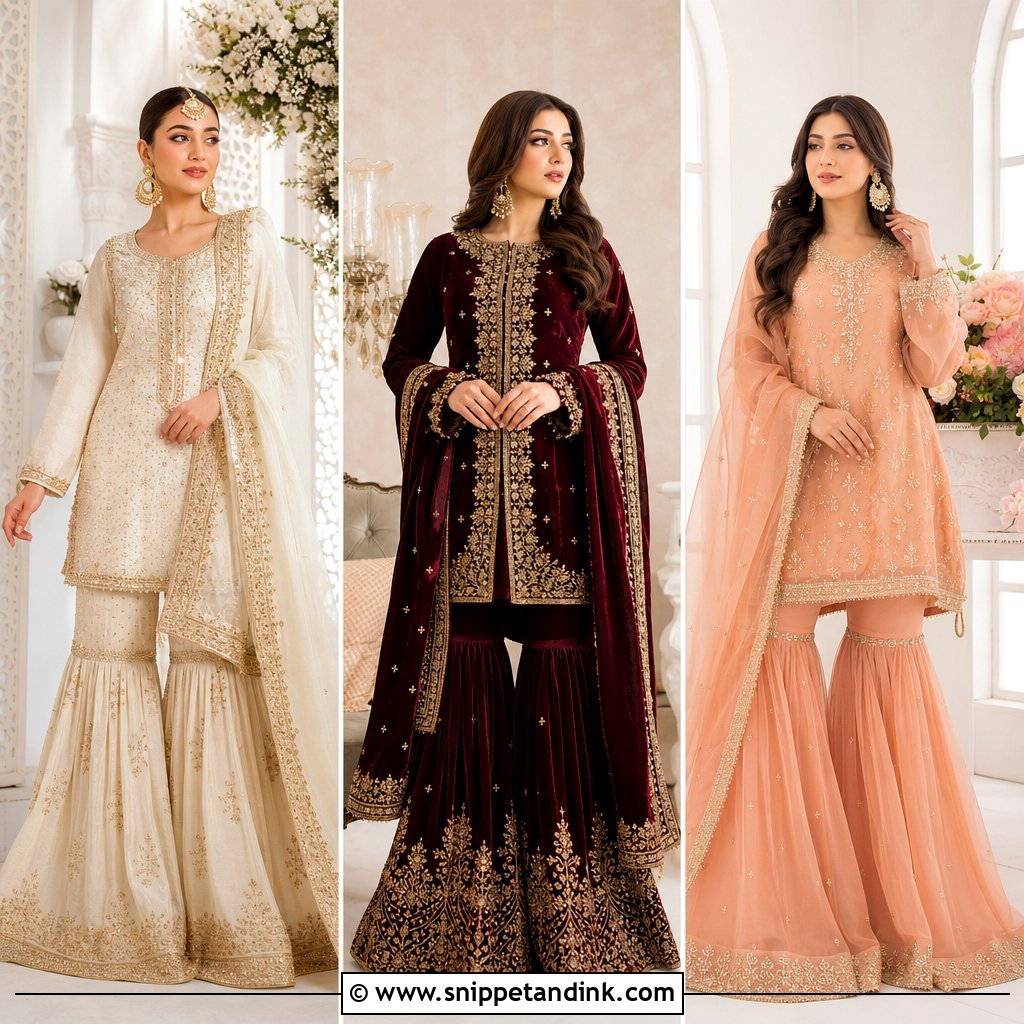
For a wedding, this is the safest grand outfit there is, because the silhouette stays simple and the work does the talking. I’d choose a short or mid-length kurta with zari, dabka or mirror work and a sharara whose embroidery sits mostly at the hem, since that is where the flare swings and catches light. A dupatta with a strong border finishes it. Kundan earrings and a fine maang tikka are plenty; add stacked bangles only if the kurta is heavy enough to hold them. Juttis or metallic heels depending on how long you’ll stand, and glowing skin with defined eyes so the gold stays the focus.
2. Golden Sharara With Short Kurti
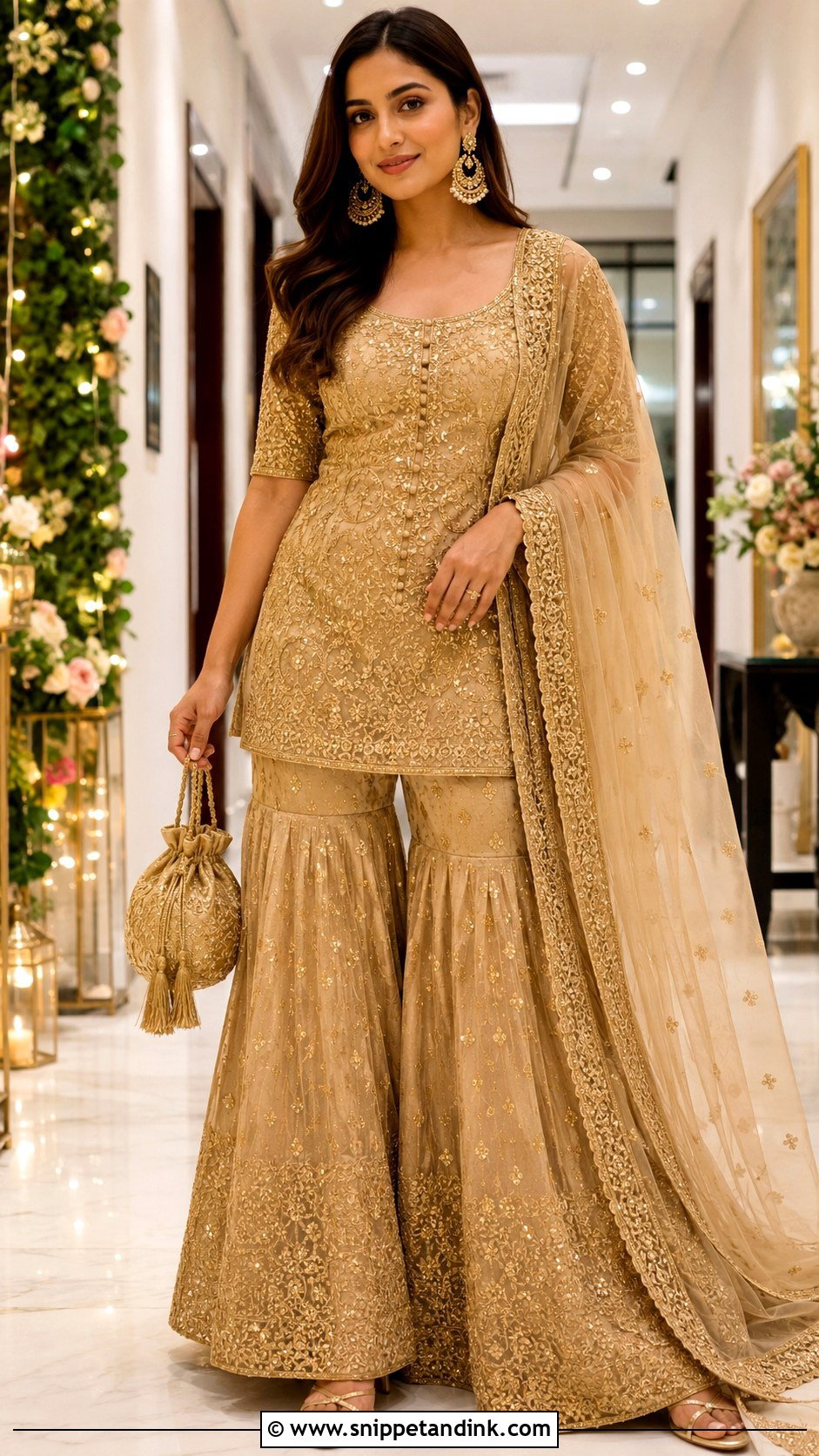
A short kurti shows the full flare, which is the whole point of a sharara. It’s my first pick for sangeet nights and anything with a dance floor. Choose a fitted or slightly A-line kurti with embroidery at the neck, sleeves and hem. The sharara can be plain brocade or lightly worked georgette. One thing I check at fittings: the kurti should end at the hip bone, not the waist, or the join between top and flare shows when you raise your arms to dance. Chandbalis, block heels and a small potli keep it light.
3. Golden Sharara With Long Kurta
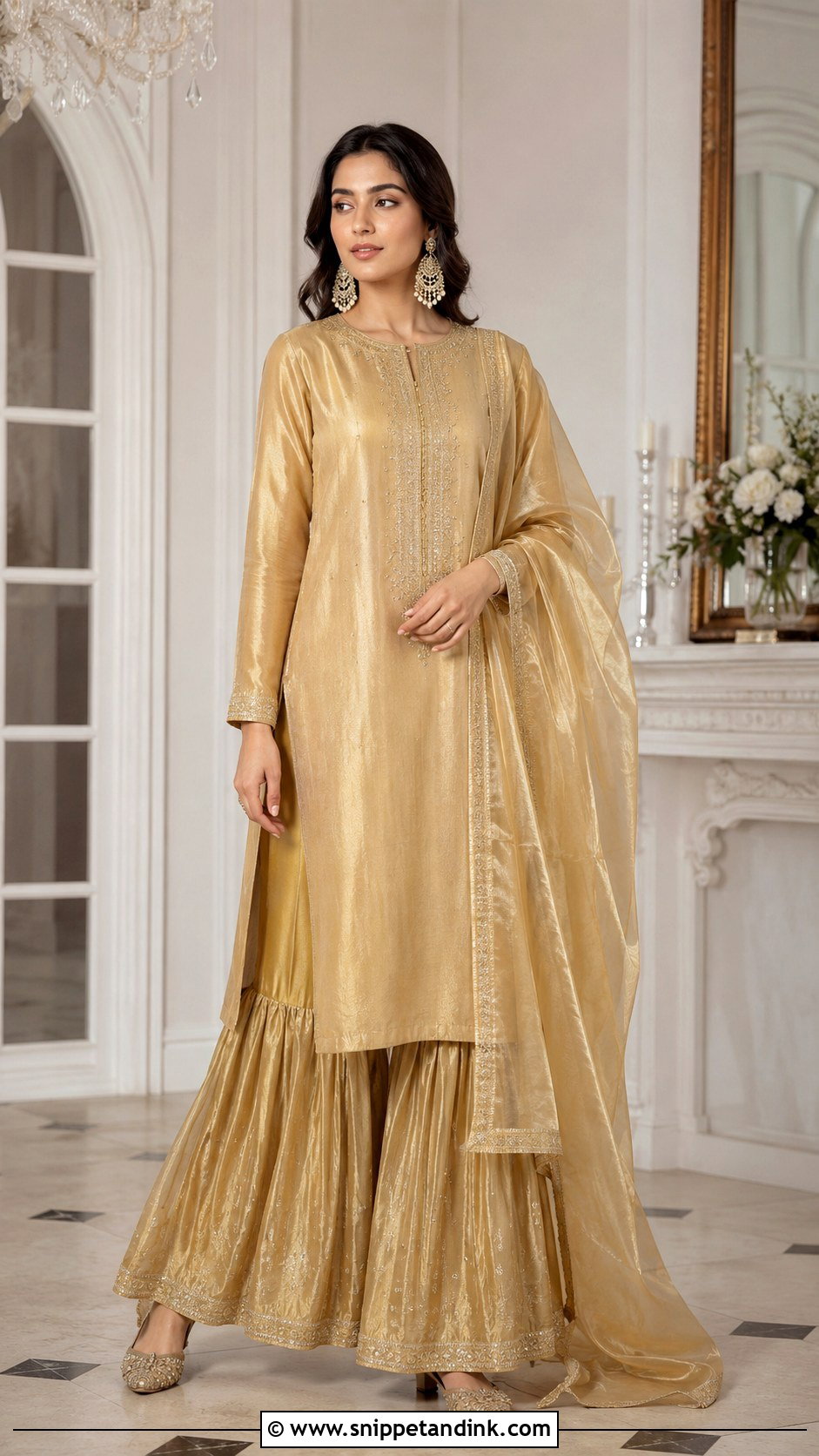
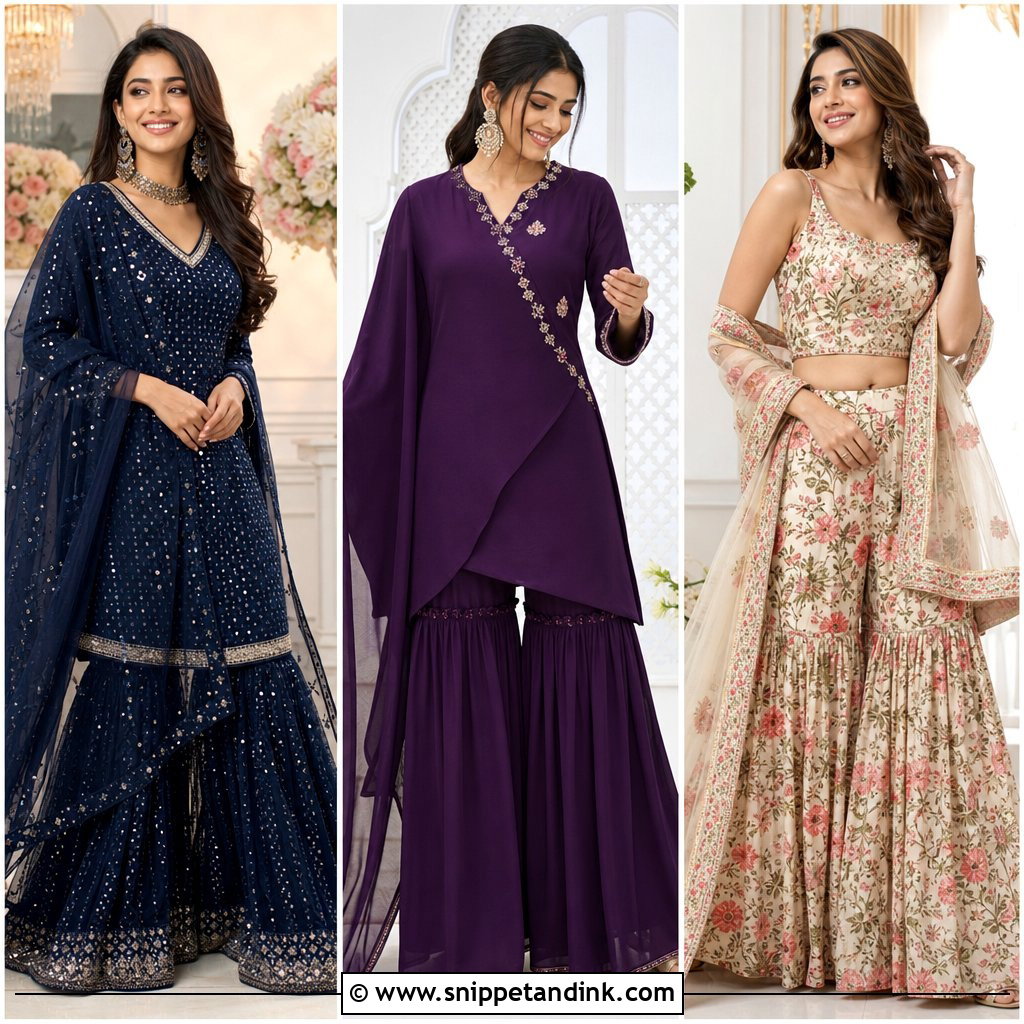
A long kurta adds a vertical line and covers more, which many older guests and modest dressers prefer. The flare should start below the kurta hem, otherwise the two layers bunch at the knee. Straight cuts with deep side slits let the sharara move properly. Silk or tissue for the dupatta is enough; anything heavier makes the whole outfit wide. I’d style it with pointed embellished flats or kitten heels, statement earrings and a sleek low bun for receptions and evening family events.
4. Golden Sharara With Peplum Top
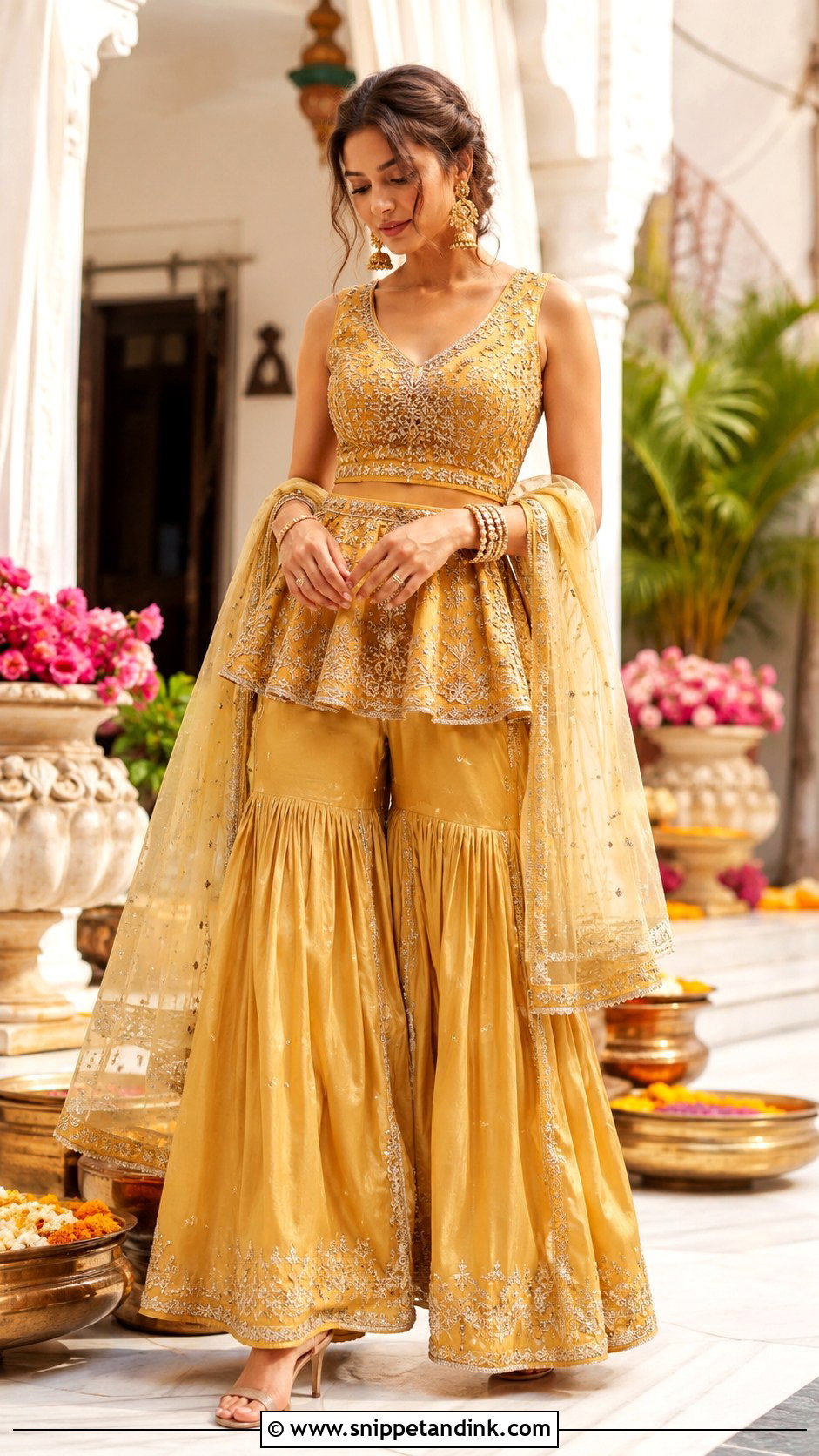
The golden sharara with peplum top is the shape I recommend for pear-shaped figures, because the peplum marks the waist and skims the hip before the flare takes over. Mirror work, gota patti or zardozi on the peplum is lovely, but then the sharara should be plain with only a hem border. Drape a light dupatta over one shoulder or round the arms. Jhumkas, soft curls and heels you can stand in for a mehendi or engagement function.
5. Golden Sharara With Crop Top
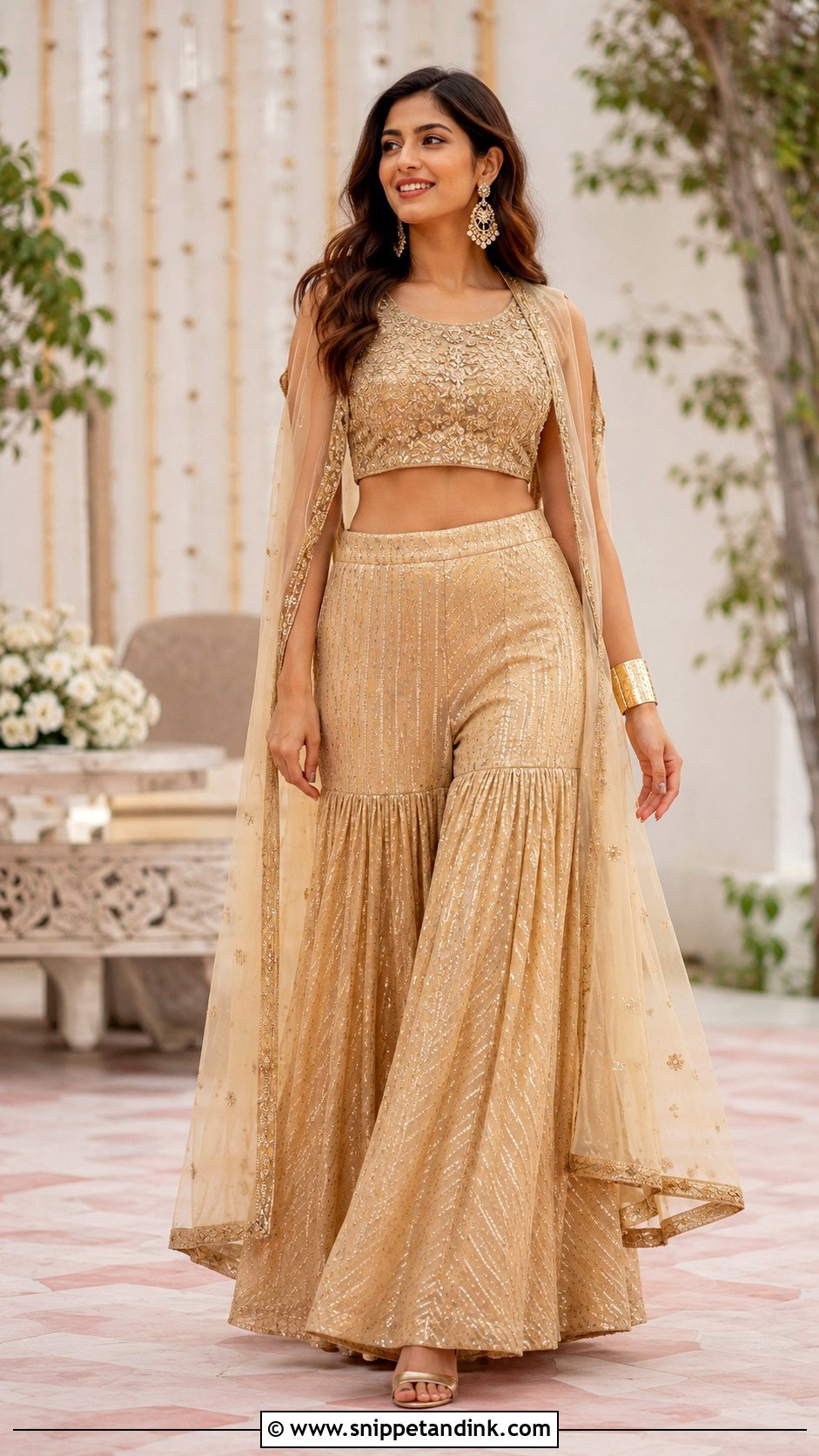
A crop top turns the sharara Indo-western, and it moves best of all the options here. The top can be a structured blouse, an embroidered choli or a sleeveless embellished piece. My rule is high-waisted sharara, always, so only a sliver of midriff shows when you’re standing and nothing gapes when you sit. A cape or organza dupatta adds coverage for elders. Layered earrings, a cuff and strappy heels, with waves or a sleek ponytail so the neckline shows.
6. Golden Sharara With Jacket
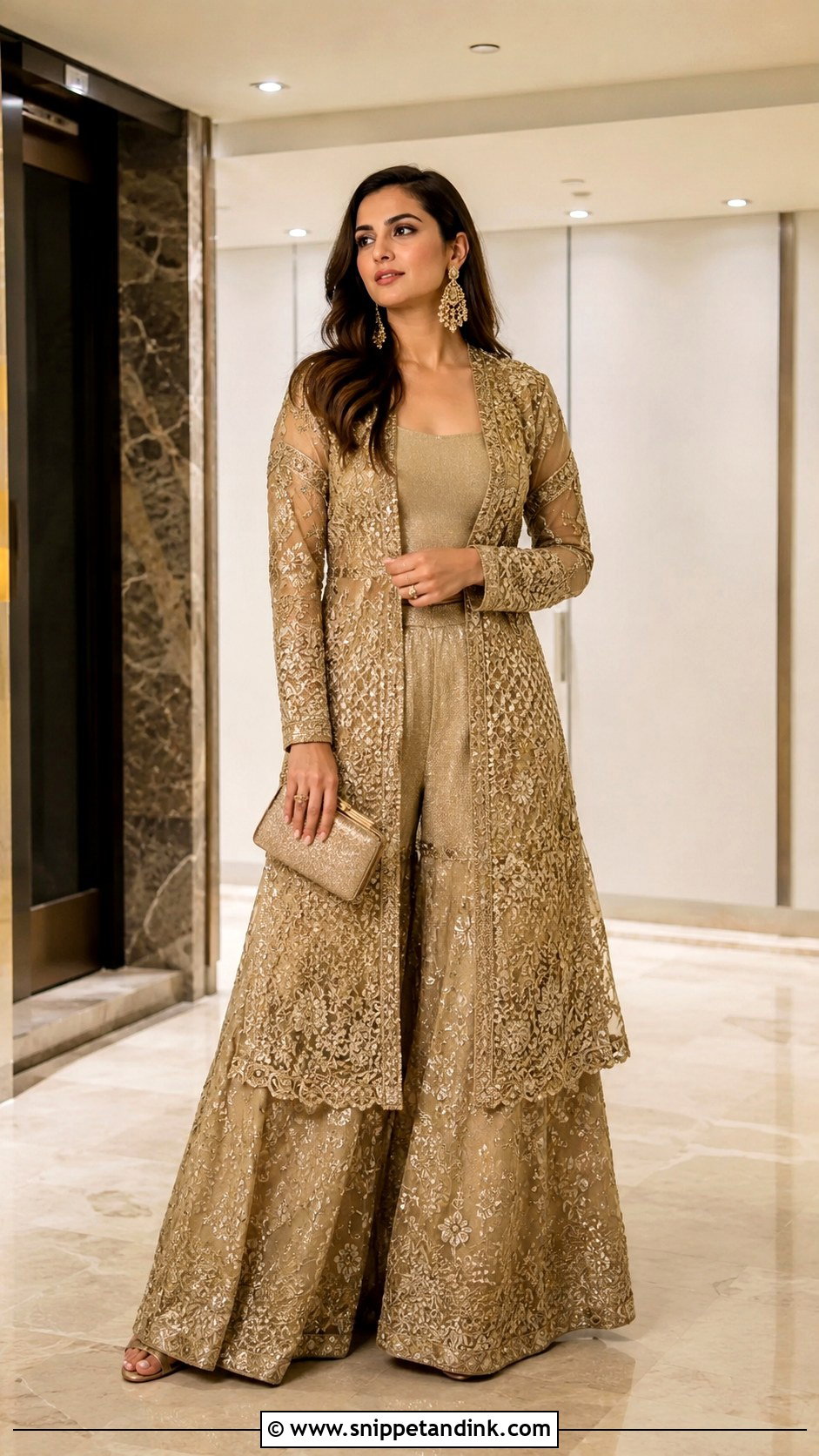
A jacket gives you a sharara look without a dupatta to manage all night. A long embroidered jacket over plain gold looks regal; a short mirror-work one is younger and more party. Keep the inner blouse or kurti simple so the layers don’t compete. It’s also genuinely practical in air-conditioned halls. Make sure the jacket shoulders fit; borrowed or off-the-rack jackets often sit wide and droop once you’re seated. Statement earrings, a clean clutch and heels.
7. Golden Sharara With Dupatta
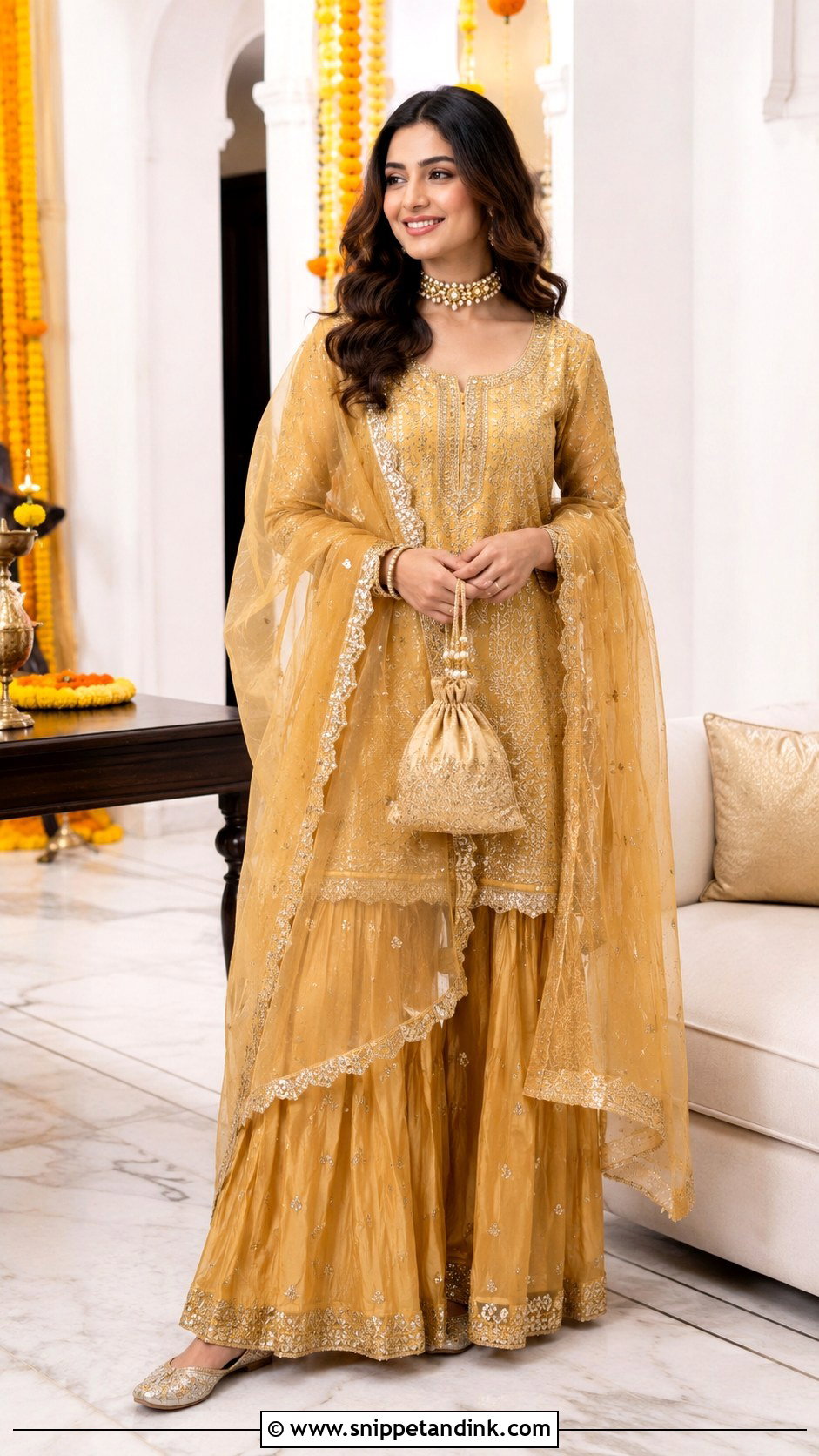
The drape changes everything about this outfit. Over both shoulders with a fitted kurta reads traditional; pinned to one shoulder and left to fall along your side looks more current. Match weight to work: a heavily embroidered set wants a sheer net or organza dupatta with just a border, while a plain sharara can carry a banarasi or embellished dupatta. I pin heavier dupattas at two points, shoulder and back, because one pin drags the neckline sideways within an hour. A choker, bangles and a small embroidered bag finish it.
8. Golden Sharara With Mirror Work
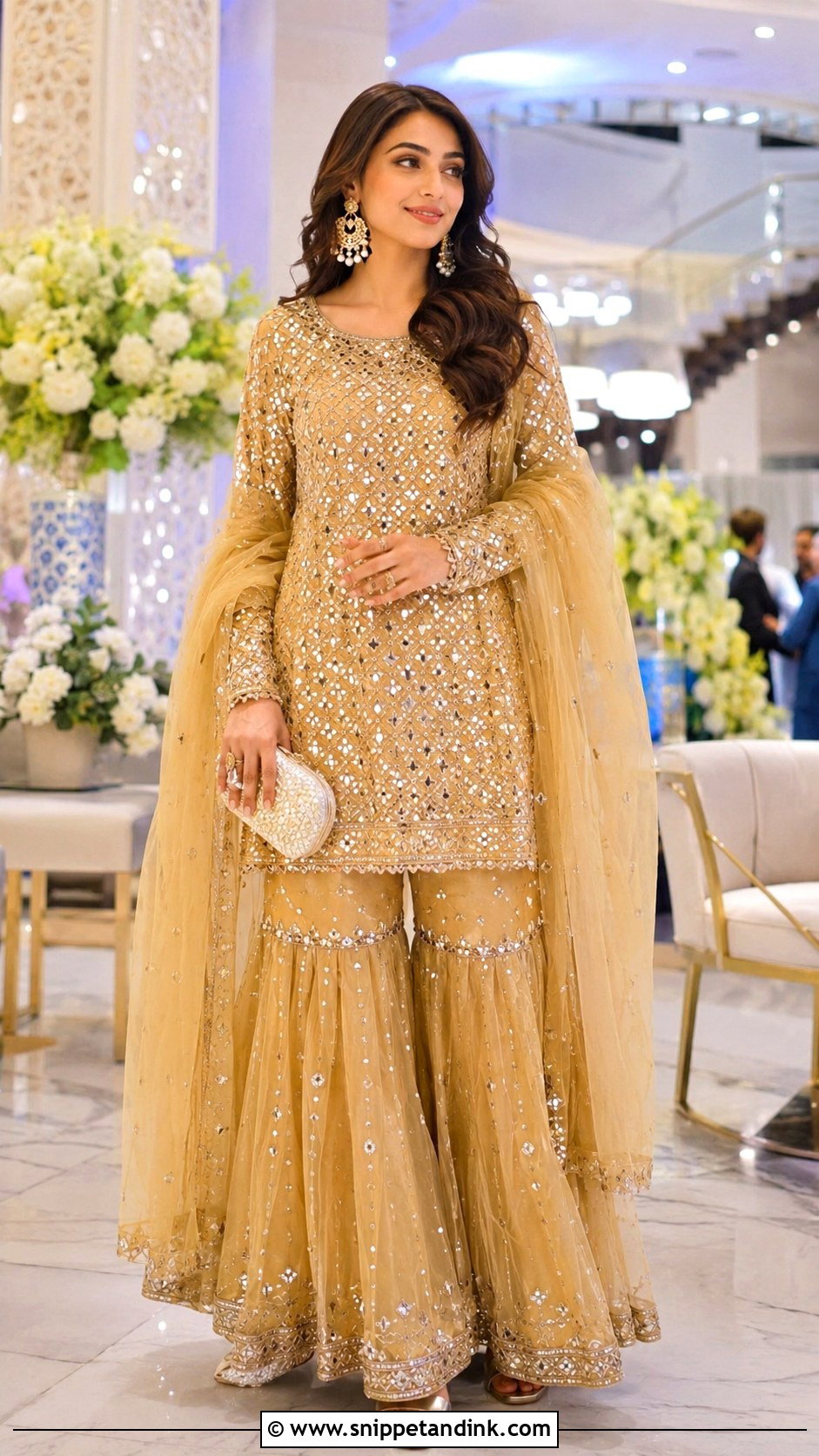
Mirror work throws light at every movement, which makes it great for evening sangeets and reasonably forgiving in photos. I’d keep the mirrors on one or two pieces, the kurti or the hem, rather than head to toe. Too much and it starts to look like a costume. Match the jewelry to the thread color around the mirrors: gold for zari outlines, pearls for white thread. Real glass mirrors are heavier than you expect, so check the hem isn’t pulling the sharara longer at the front.
9. Golden Sharara With Gota Patti
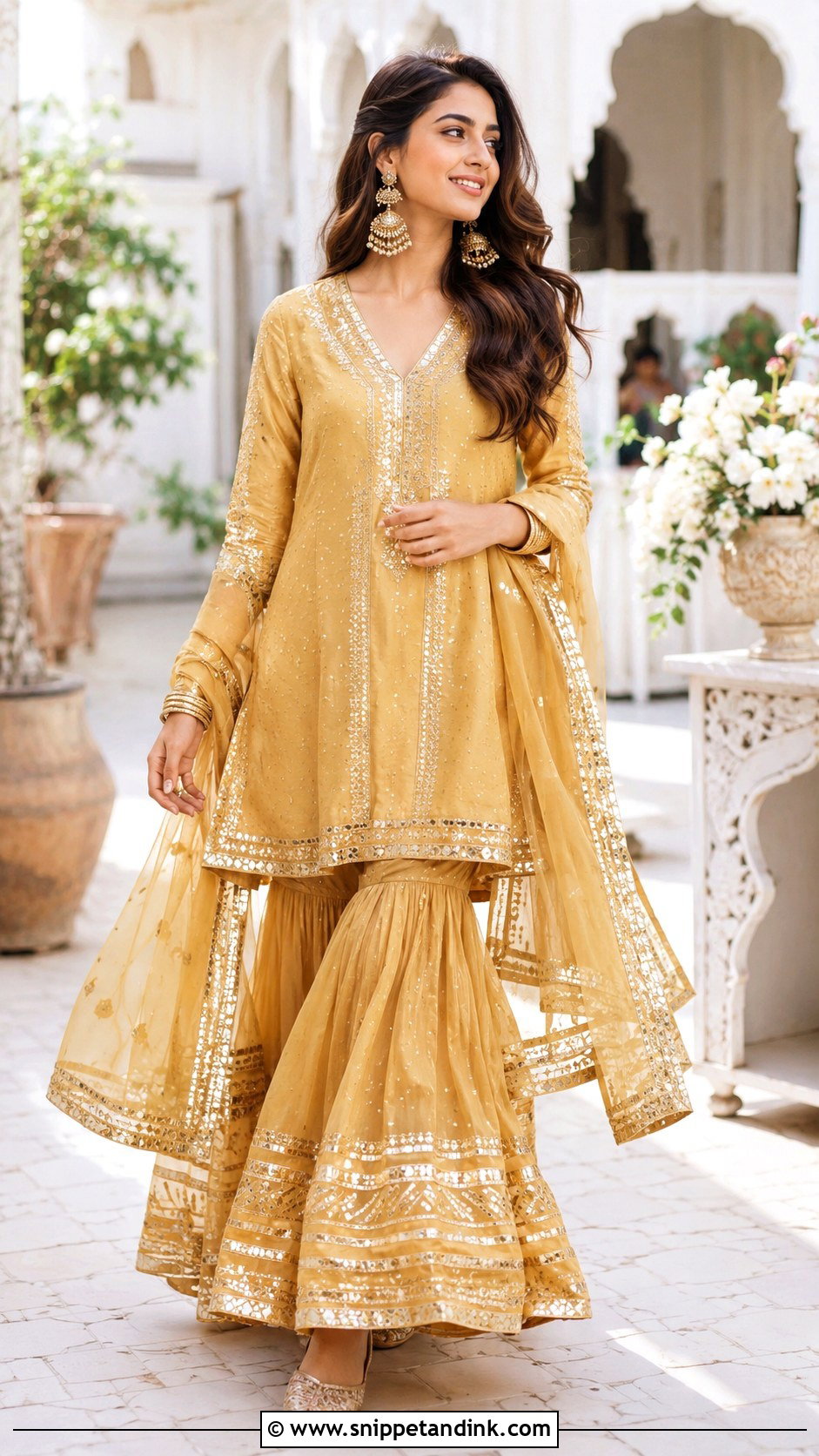
Gota patti blends into a gold base because it’s metallic ribbon appliqué, and it’s lighter than zardozi, which makes it my favorite for daytime mehendi and family functions. Choose a flowy kurta in georgette, chiffon or cotton silk with gota at the neckline and sleeves, and a sharara with small motifs or a wide hem border. Scattered gota on a light dupatta ties it in. Jhumkas, bangles, embroidered juttis and a soft braid. One caution: gota creases sharply if folded tight, so hang it.
10. Golden Sharara With Zardozi Work
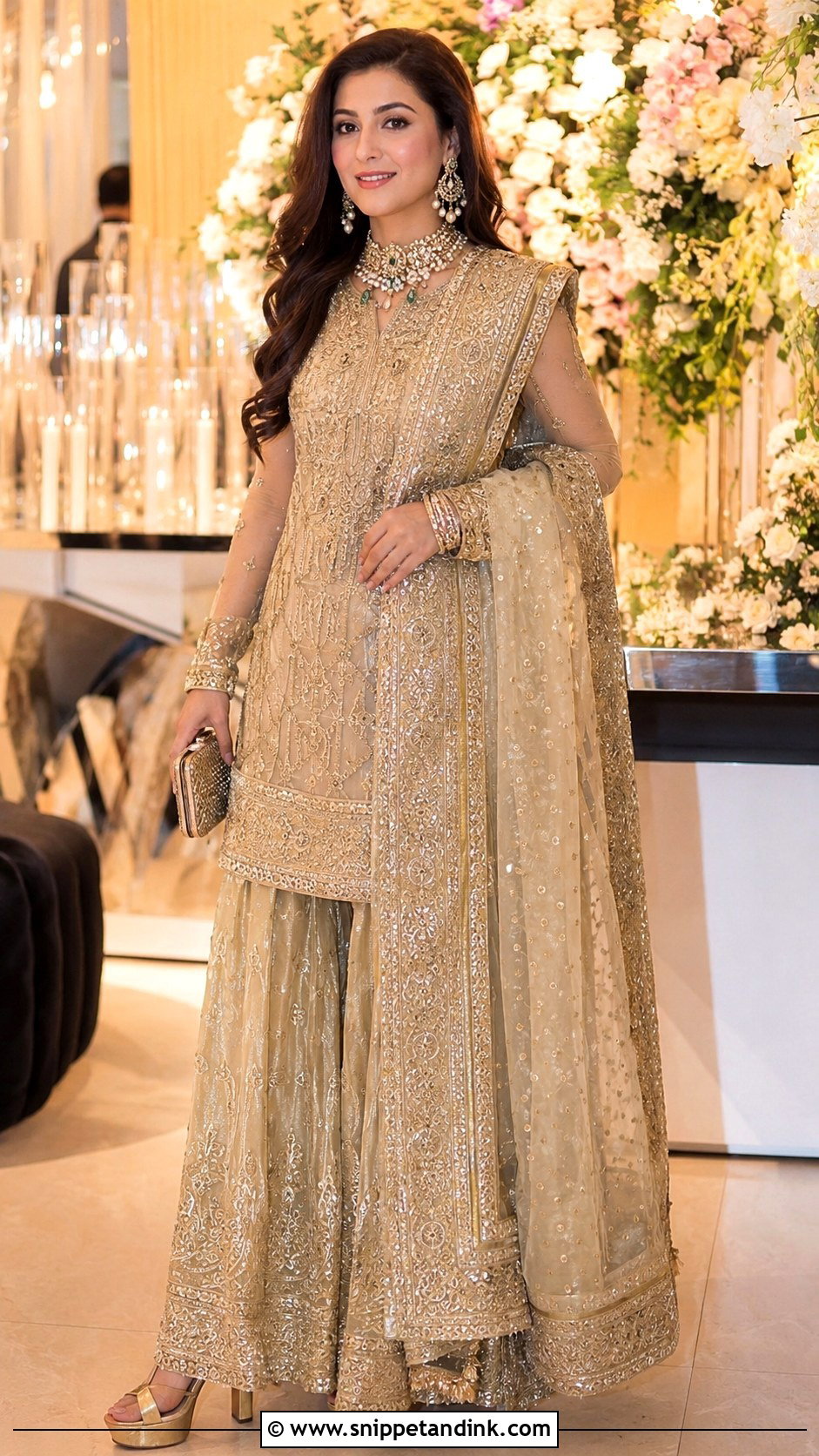
Zardozi is raised metal-wire embroidery, so it has weight and depth, and I’d save it for weddings and receptions. Concentrate it on a structured kurta or blouse at the neckline, sleeves and hem, and let the sharara stay lighter so the outfit isn’t dragging at your hips by the end of the night. A matching or contrast dupatta with a border balances it. Kundan jewelry and platform heels help, since a platform keeps a heavy hem off the floor. A low bun or sleek waves match the formality.
11. Golden Sharara With Banarasi Dupatta
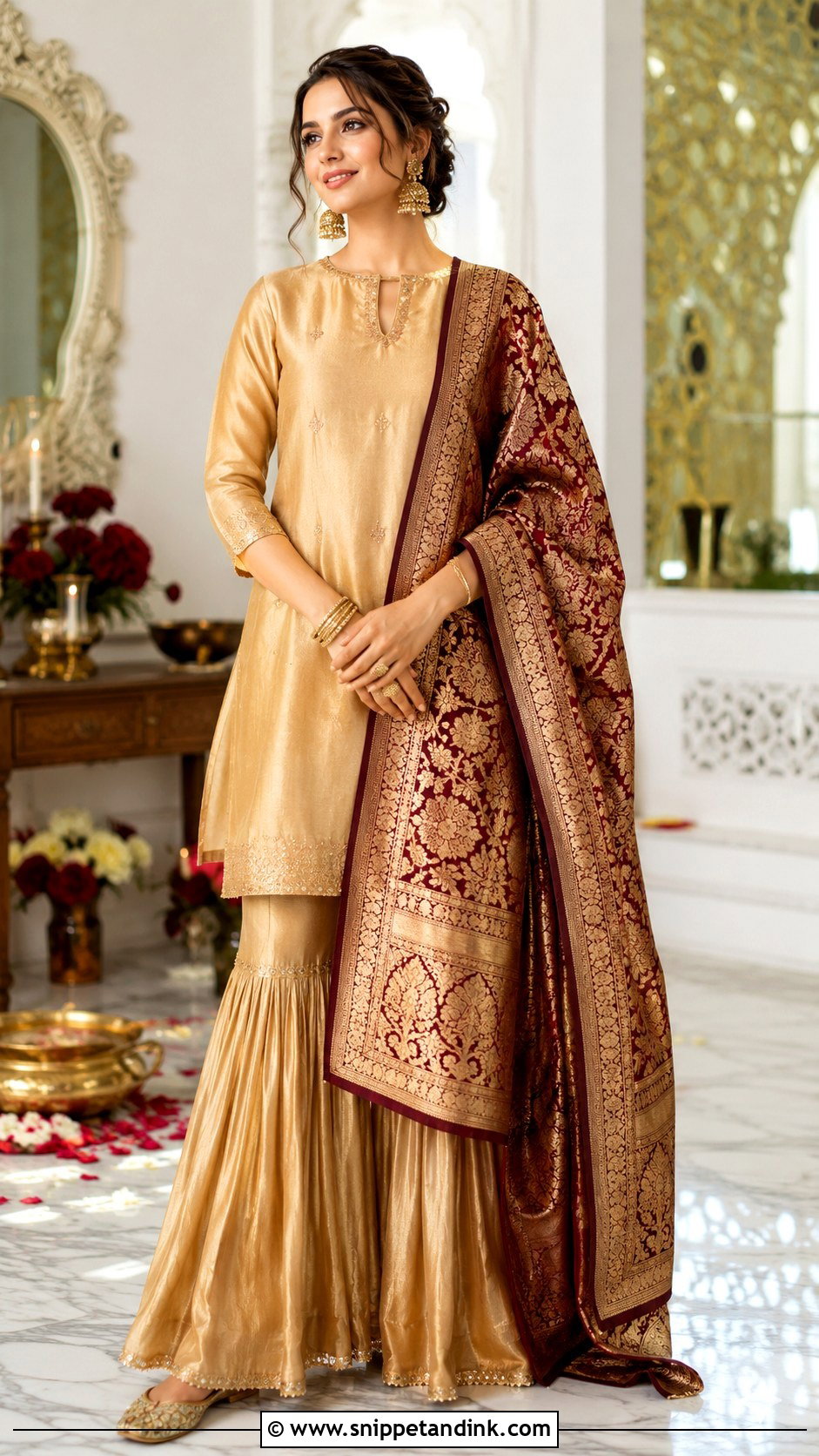
Here the dupatta is the statement and everything else steps back. A banarasi with motifs in gold, ivory, maroon or green looks richest over a plain or lightly worked sharara set in silk blend. Keep the kurta simple. Banarasi silk is stiffer than net, so it won’t drape in soft folds; I fold it lengthwise into a narrow band and wear it over one shoulder so it hangs cleanly. Temple-style earrings, gold bangles and a bindi if you like, with embellished flats or low heels.
12. Golden Sharara With Cape
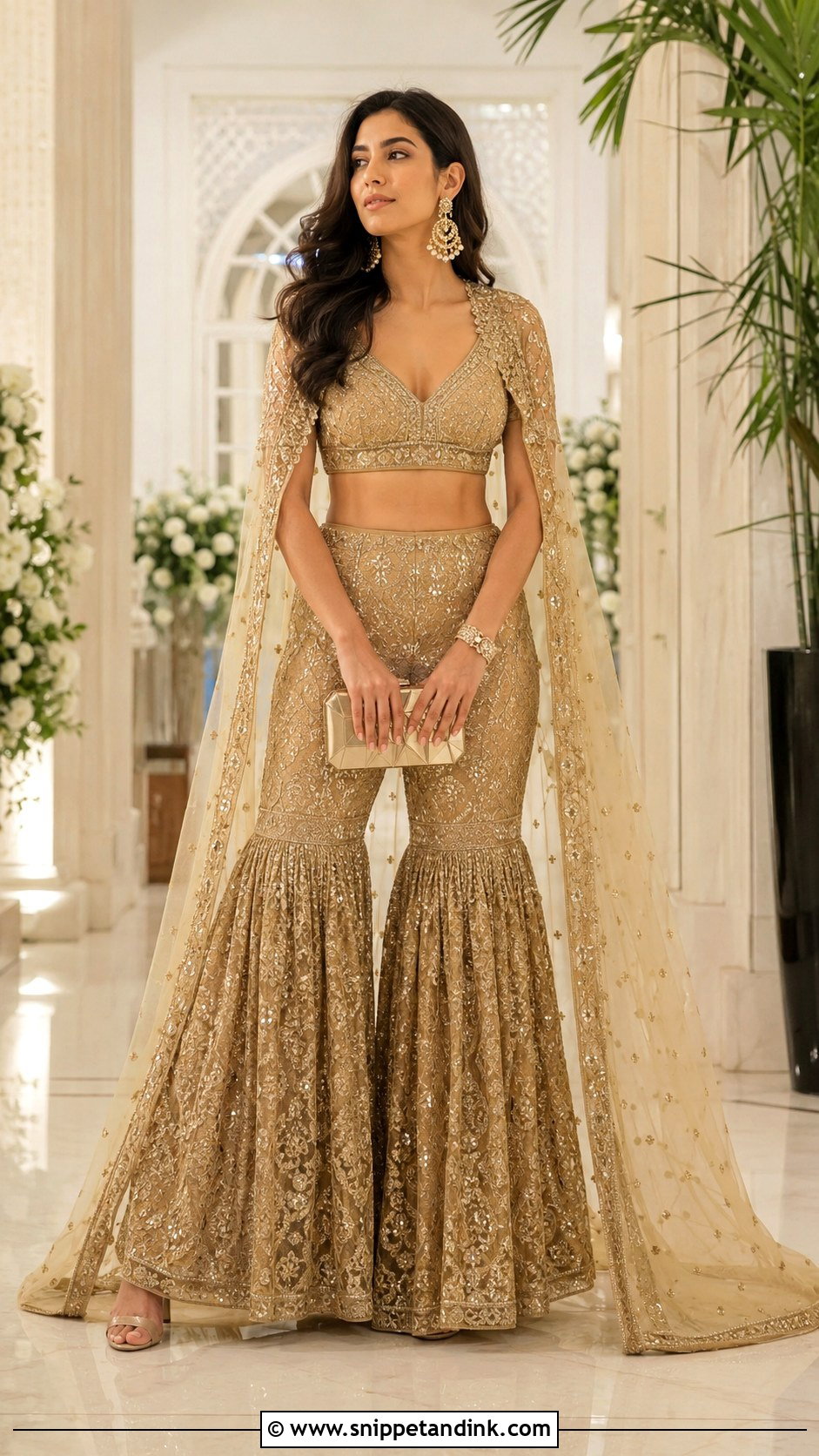
A cape gives coverage and movement without pins, which is why I like it for people who hate fussing with a dupatta. Sheer organza or net over a crop top or fitted kurti works for cocktail-style functions and receptions. A high-waisted sharara balances the volume up top. Because the cape already makes a strong statement, I’d stop at earrings and a bracelet. Check how the cape behaves when you sit; long capes trail on the chair and get stepped on, so a hip-length one is easier at a seated dinner.
13. Golden Sharara With Anarkali Kurta
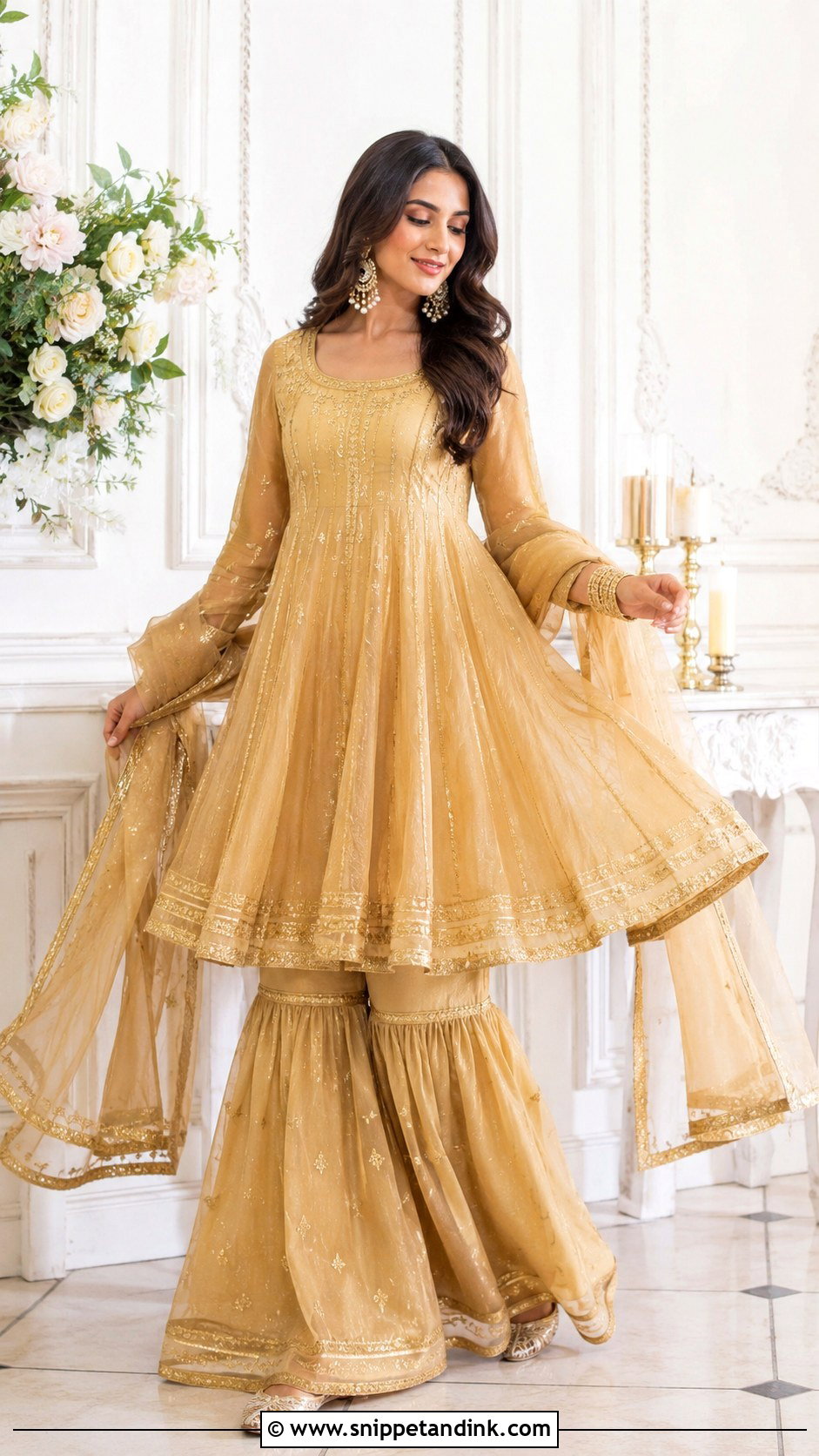
An anarkali over a sharara is a lot of flare in two layers, so fabric choice decides whether it flows or balloons. Georgette, chiffon or a light silk blend only. Knee or calf length lets the sharara flare show underneath; any longer and it disappears. I’d steer petite clients toward knee length. A sheer dupatta, pearl-and-gold earrings and embroidered juttis, with soft waves or a low ponytail, suit formal family events.
14. Golden Sharara With Black Kurti
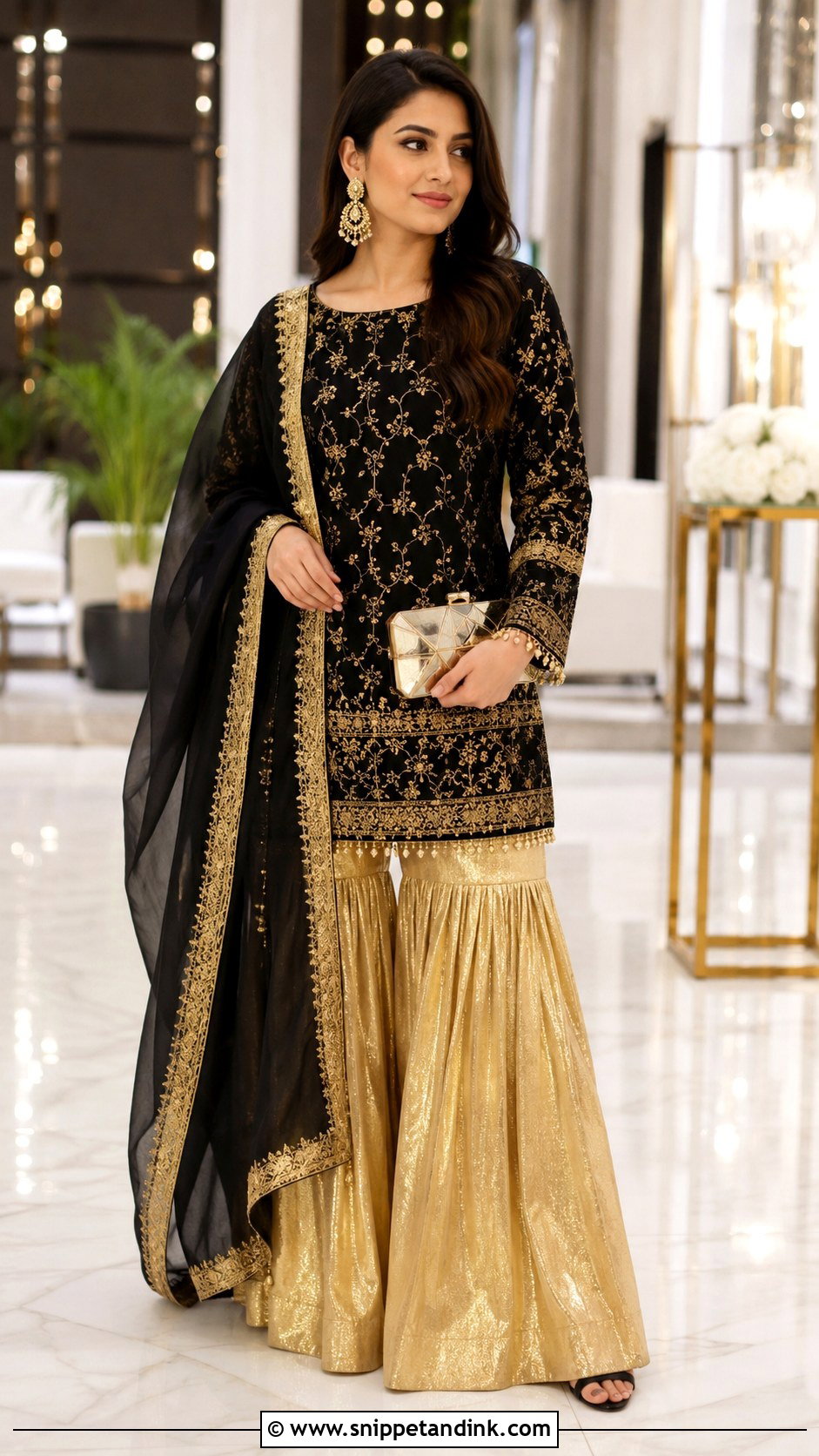
Black and gold is the evening combination I trust most. A black velvet, silk or georgette kurti with gold embroidery connects the two pieces so it doesn’t look like separates thrown together. A black dupatta with a gold border makes it formal; a plain sheer one keeps it lighter. Do check with the family first, as some communities avoid black at weddings. Gold earrings, a metallic clutch and kohl-lined eyes with a neutral lip finish it for receptions and dressy parties.
15. Golden Sharara With White Kurta
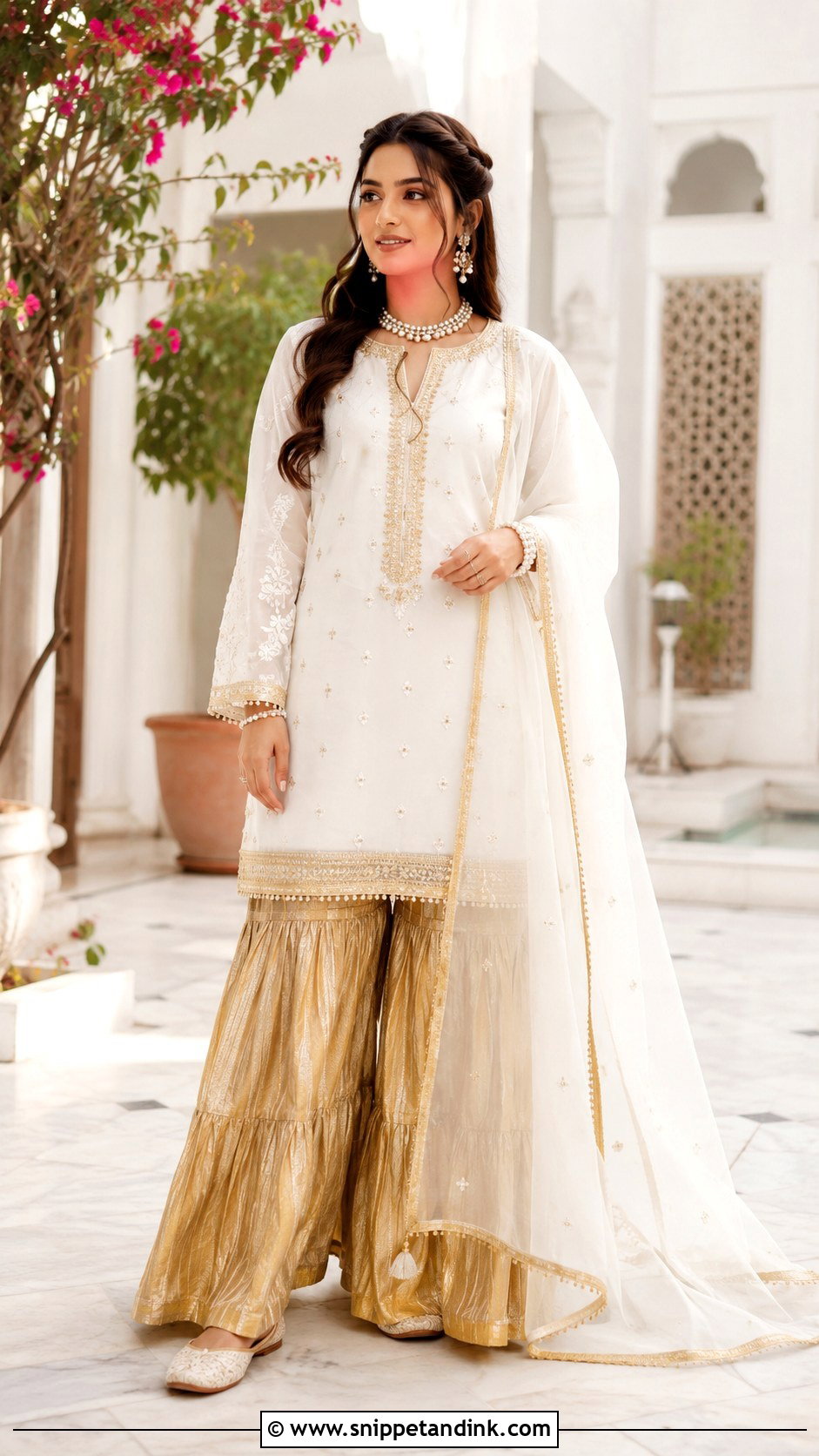
White softens gold and makes it read daytime. White chikankari, pearl work or subtle zari on the kurta ties into the sharara. Chikankari is shadow-work hand embroidery on fine cotton or georgette, and it’s breathable, which matters at outdoor brunches and engagement mornings in summer. A white or gold organza dupatta, pearls, gold bangles and ivory juttis or block heels. Peachy blush and a natural lip. Like any white outfit, it needs a careful eater.
16. Golden Sharara With Green Dupatta
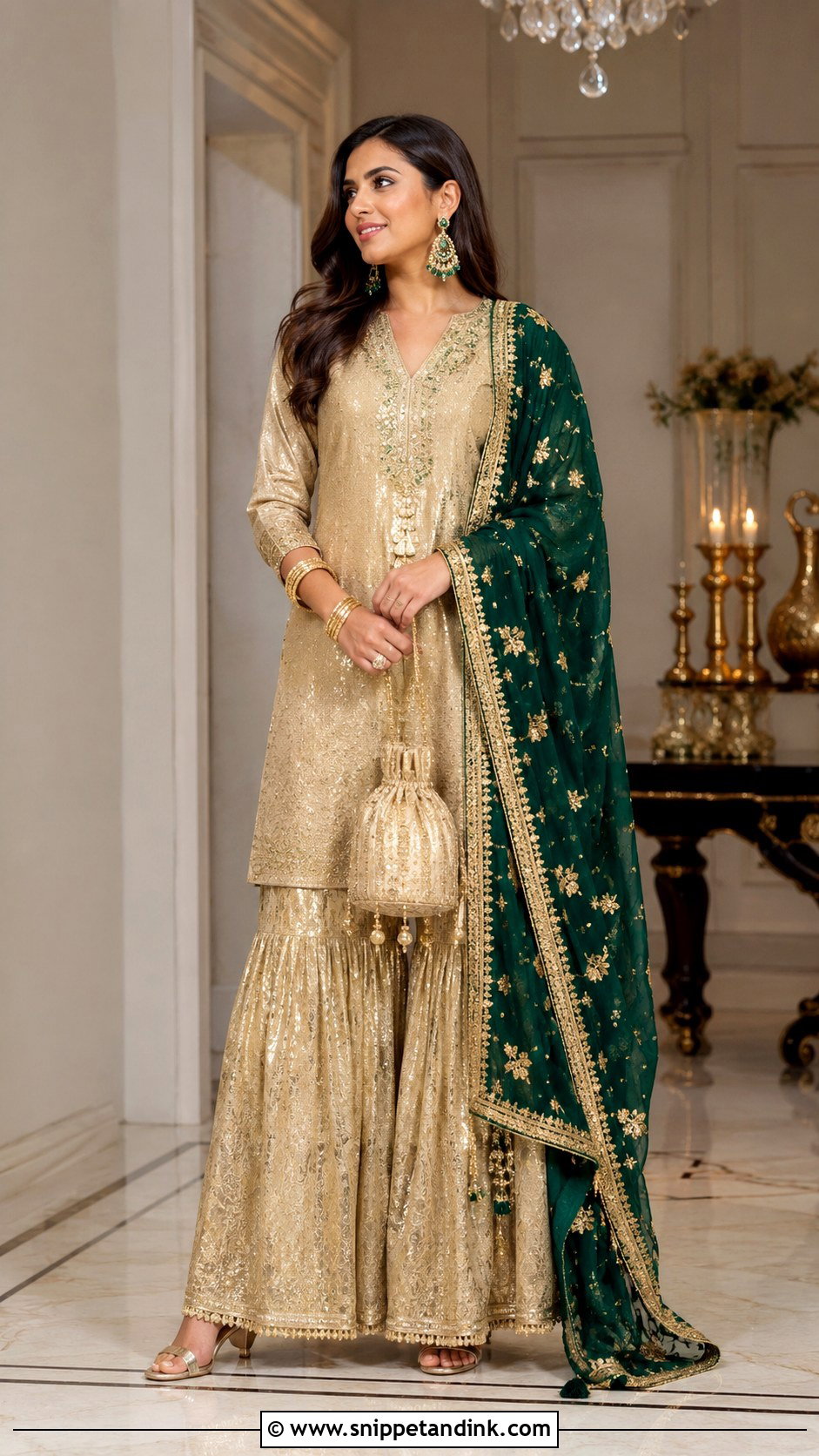
A green dupatta is an easy way to make a gold sharara feel regal. Emerald and bottle green carry evening drama; sage and pistachio are better in daylight. Keep the kurta gold or ivory-gold so the dupatta is the only contrast. I’d pick a dupatta with a zari border so the green links back to the sharara. Kundan or green-stone earrings, gold heels, a small potli and a neat bun or soft curls.
17. Golden Sharara With Maroon Kurta
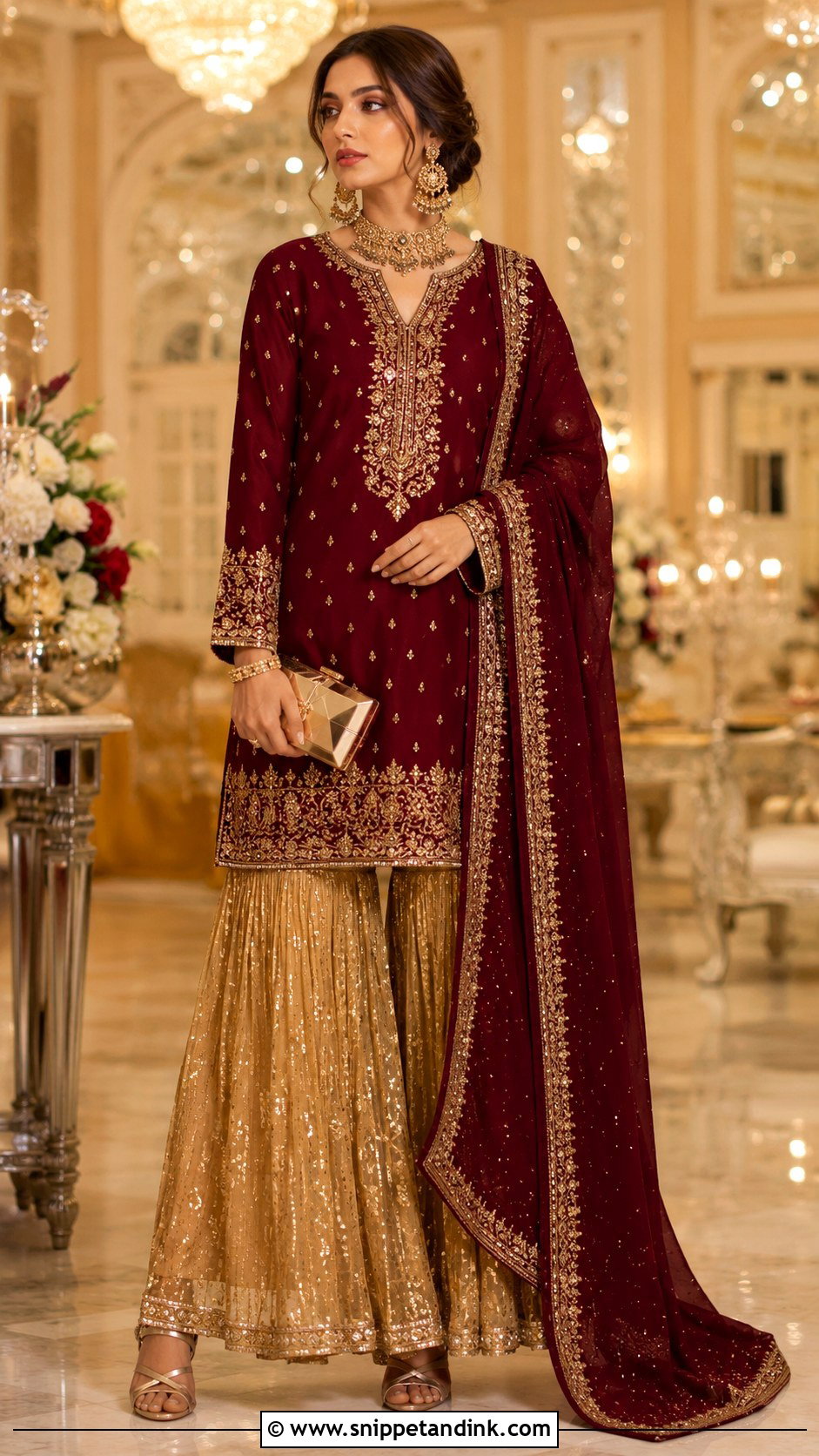
Maroon and gold is the most traditional pairing on this list, and it photographs well under warm indoor wedding lighting. A maroon kurta with gold embroidery or velvet texture and a maroon dupatta with gold edging looks complete. If the kurta is heavy, keep the sharara to a clean flare and border. Antique gold or kundan jewelry suits it better than bright polished gold. A structured clutch and heels you can actually stand in for the pheras finish it.
18. Golden Sharara With Pink Kurti
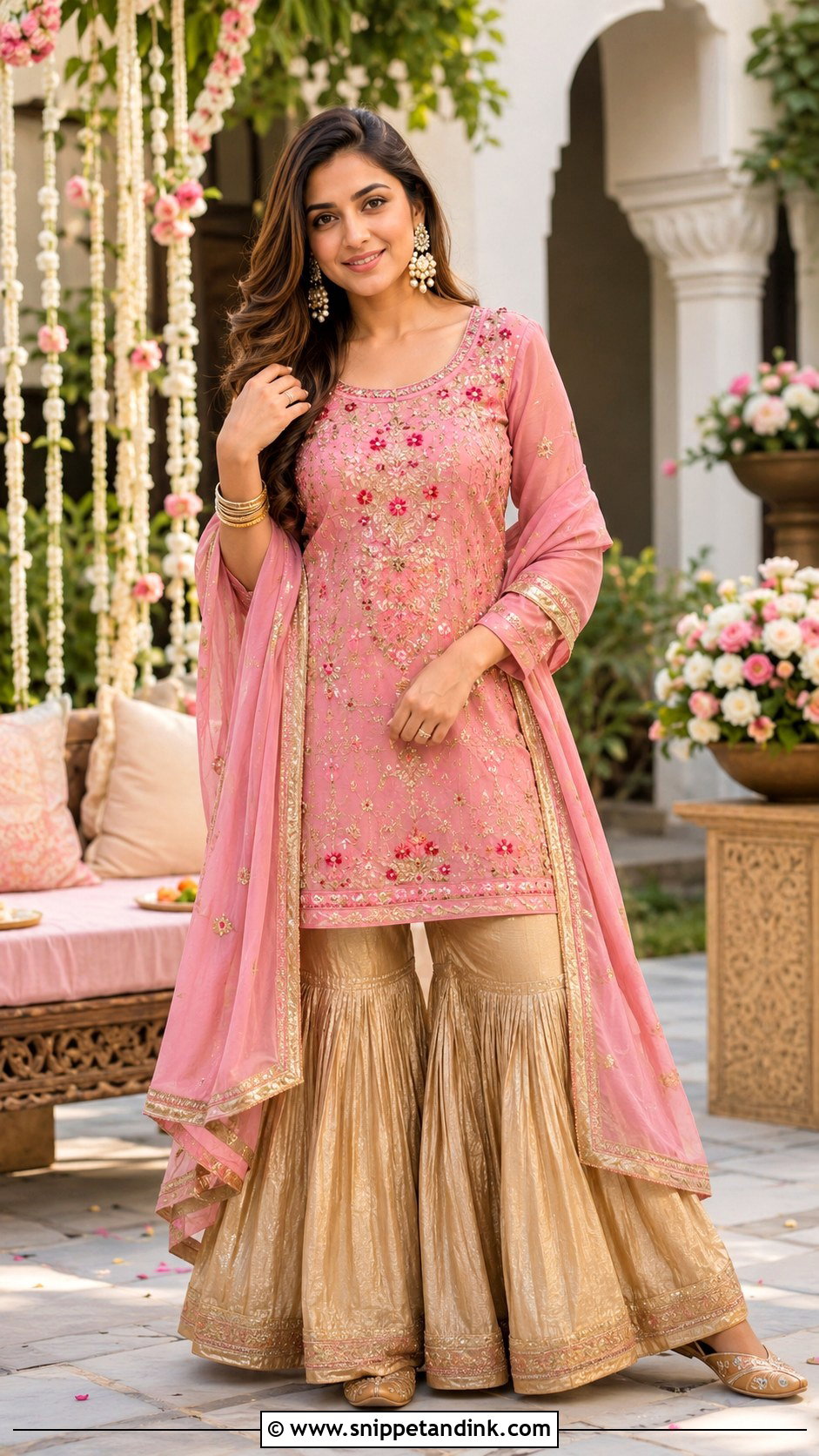
Pink with gold changes mood with the shade. Blush is soft, rose is warm, and rani pink is loud and celebratory, which I love for mehendi. Choose a kurti with gold zari, sequins or gota so it connects with the sharara, then decide whether the dupatta should match the pink or the gold. Pearl earrings, gold bangles and embellished flats. Rosy, fresh makeup with a comfortable lip color you can reapply.
19. Golden Sharara With Ivory Kurta
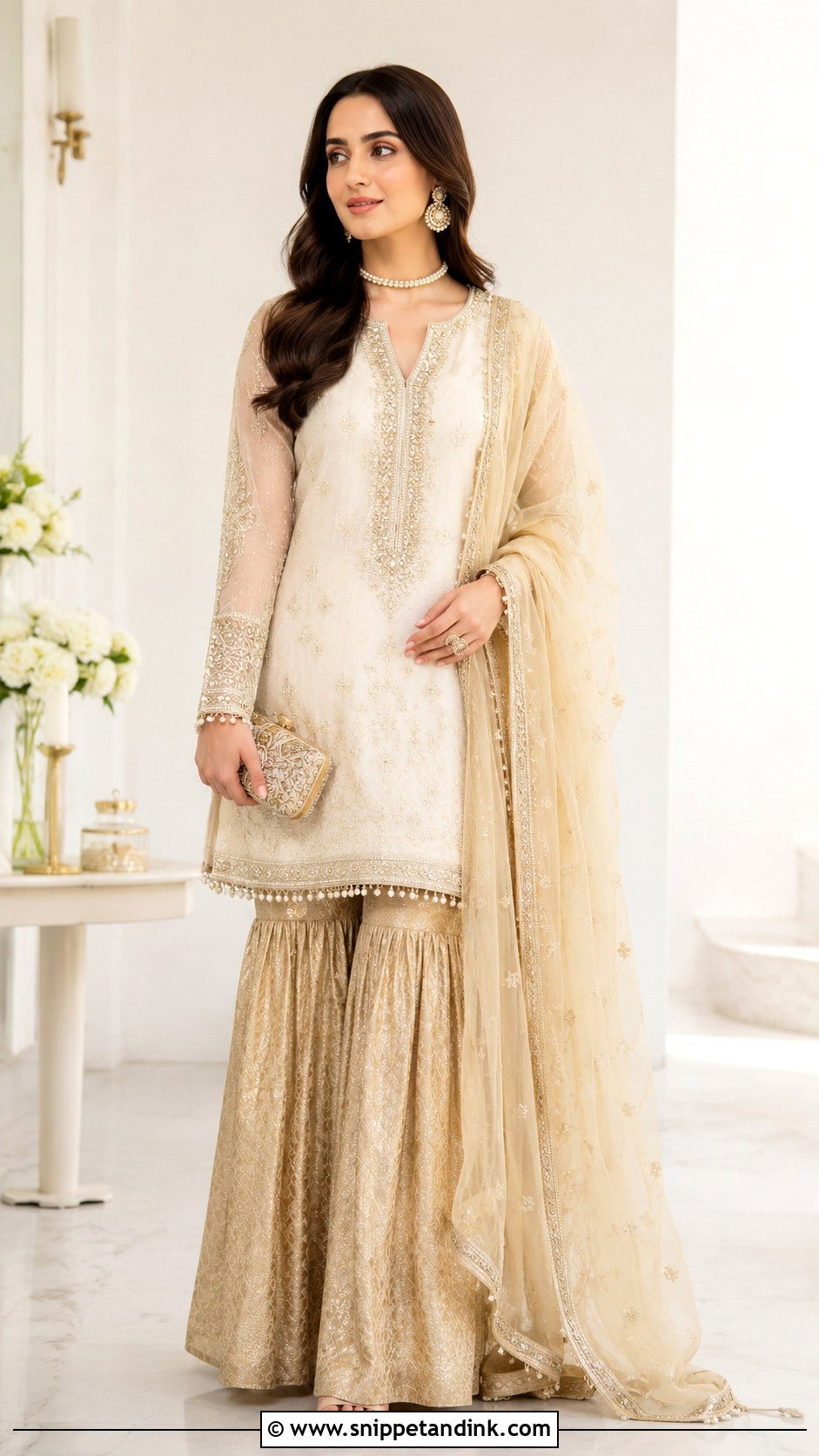
Ivory sits better than white against antique, champagne or dull gold, because it has the same warmth. Tone-on-tone embroidery, pearls or light zari on the kurta is enough. A sheer gold dupatta, or ivory with metallic edging, keeps it balanced. I’d suggest this one to wedding guests who want to look polished without competing with the bride. Pearl jewelry, nude heels and a small embroidered clutch, with a clean bun or polished waves.
20. Golden Sharara With Net Dupatta
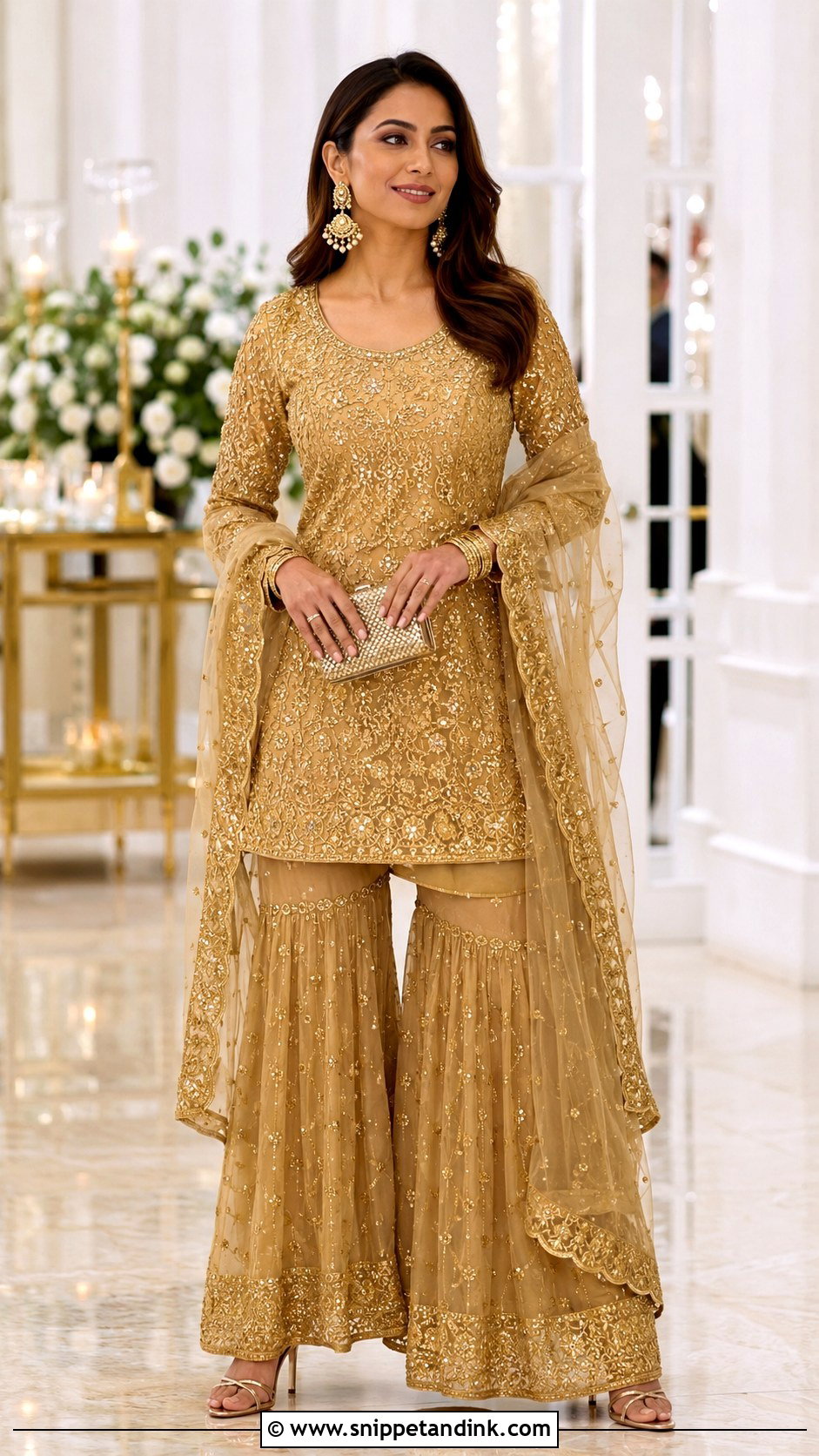
Net is the dupatta I reach for when the kurta and sharara are heavily worked, because it adds softness without hiding the embroidery underneath. A neat border, scattered sequins or tiny motifs are enough. Net catches on bangles and earring backs, so pin it to one shoulder rather than letting it float across both arms all evening. Statement earrings, slim bangles and metallic heels keep things clean for receptions and evening functions.
21. Golden Sharara With Organza Kurta
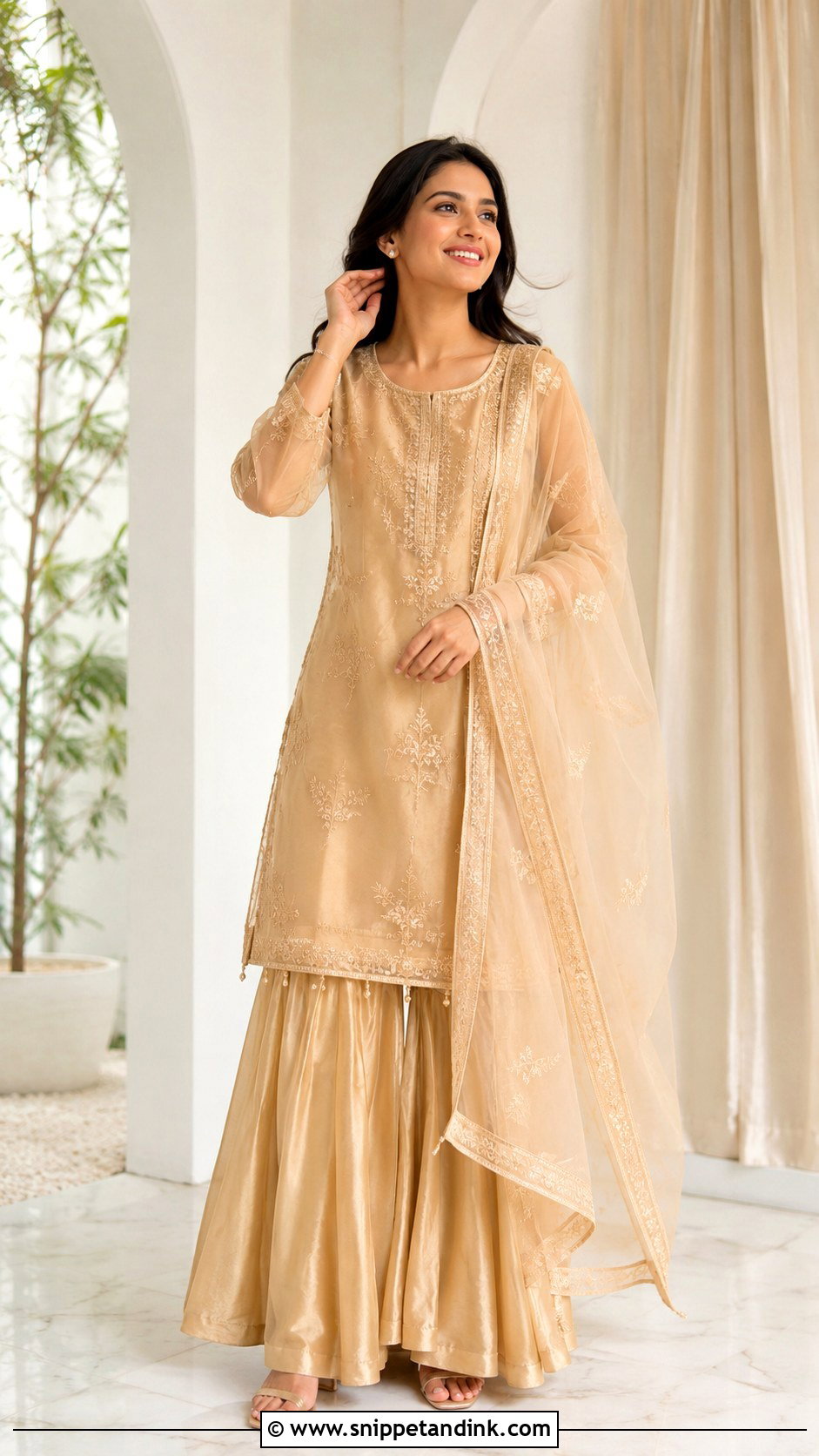
Organza has crispness that holds a shape while still looking light, so an organza kurta stands slightly away from the body. It must be lined, or it shows everything in flash photos. A relaxed cut works better than a fitted one, since organza doesn’t stretch and creases at the elbows. Pair it with a fluid silk, satin or georgette sharara for contrast in drape. A matching organza dupatta, pearl studs, a small bracelet and block heels round out a lighter festive look.
22. Golden Sharara With Velvet Kurti
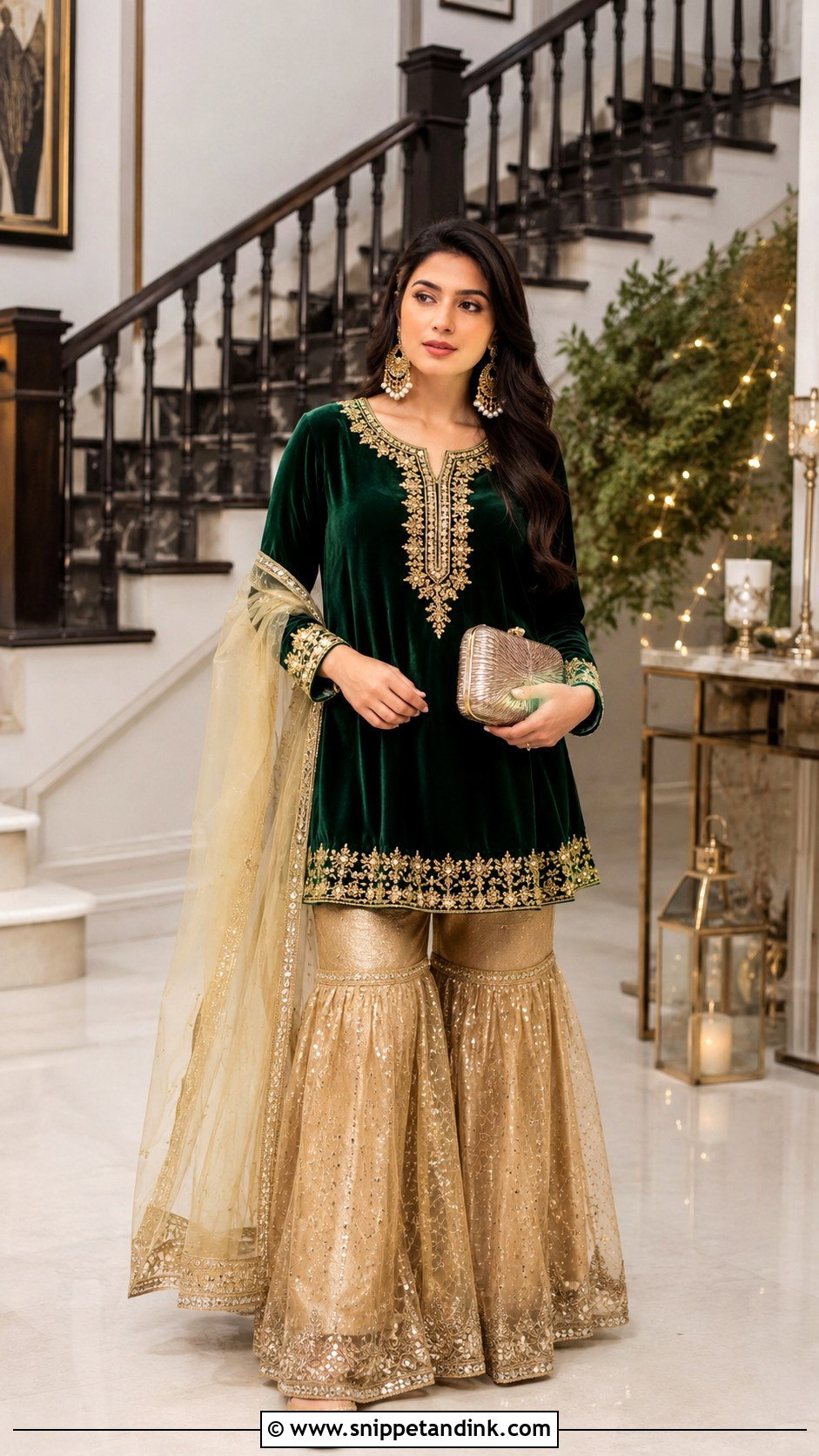
Velvet makes gold embroidery look richer, and it’s the fabric I’d choose for winter weddings. Maroon, emerald, navy or black velvet kurti over a gold sharara with a clean flare. A velvet or sheer dupatta with a gold border makes it formal. Velvet is warm and heavy, so in a heated hall it can be too much; check the venue. Choose either statement earrings or a choker, not both if the neckline is ornate. Closed-toe heels or embellished flats and a structured clutch.
23. Golden Sharara With Silk Kurta
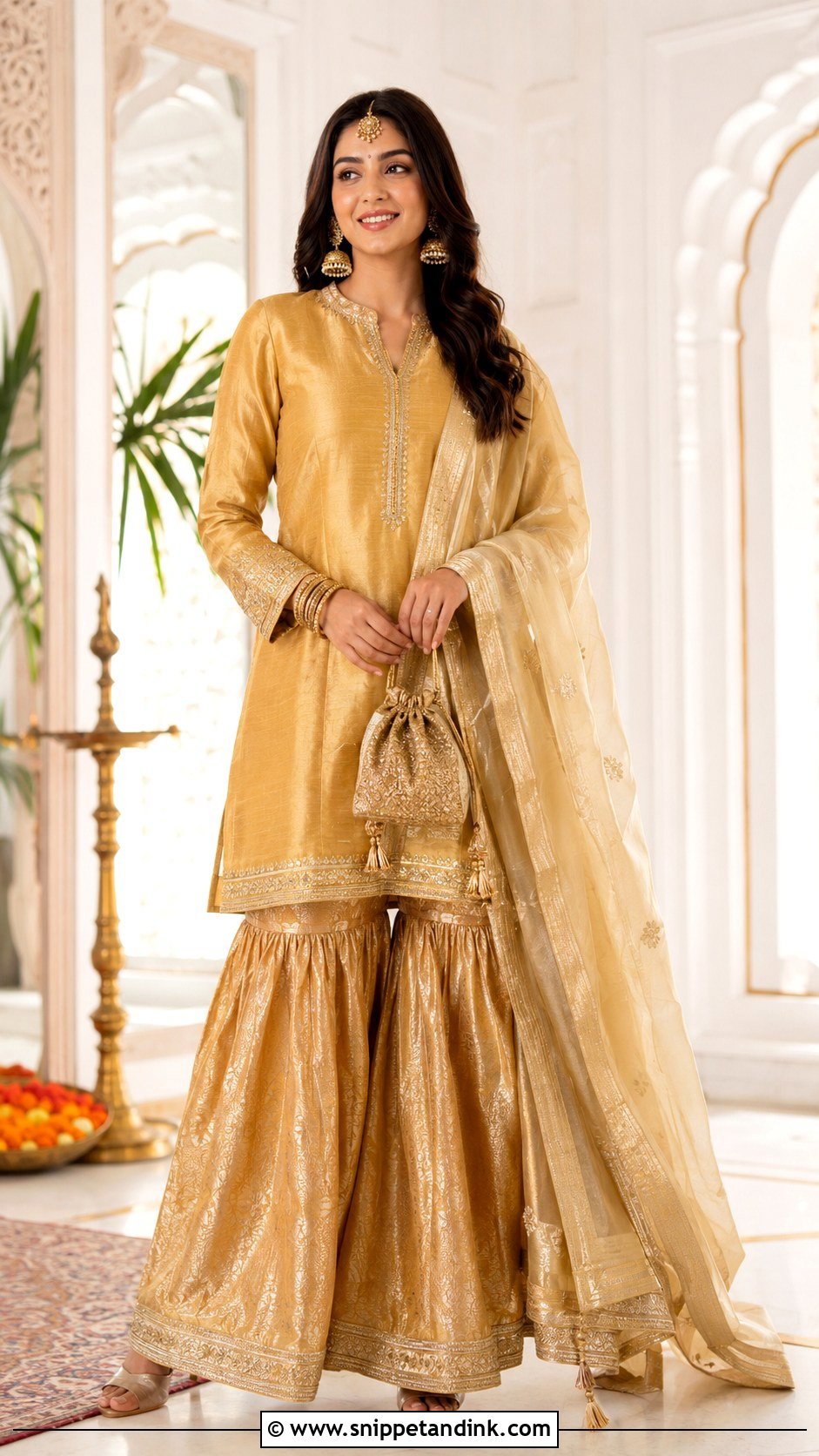
Silk has its own sheen, so a silk kurta with gold sharara needs very little embroidery. Gold, ivory, peach, green or maroon silk with delicate zari, paired with a sharara of similar luster. Mixing a matte kurta with a glossy sharara can look accidental, so I hold them together under daylight before deciding. A silk or tissue dupatta adds richness; organza keeps it lighter. Temple jewelry, bangles and a small potli carry it from a day function into the evening.
24. Golden Sharara With Sequin Kurti
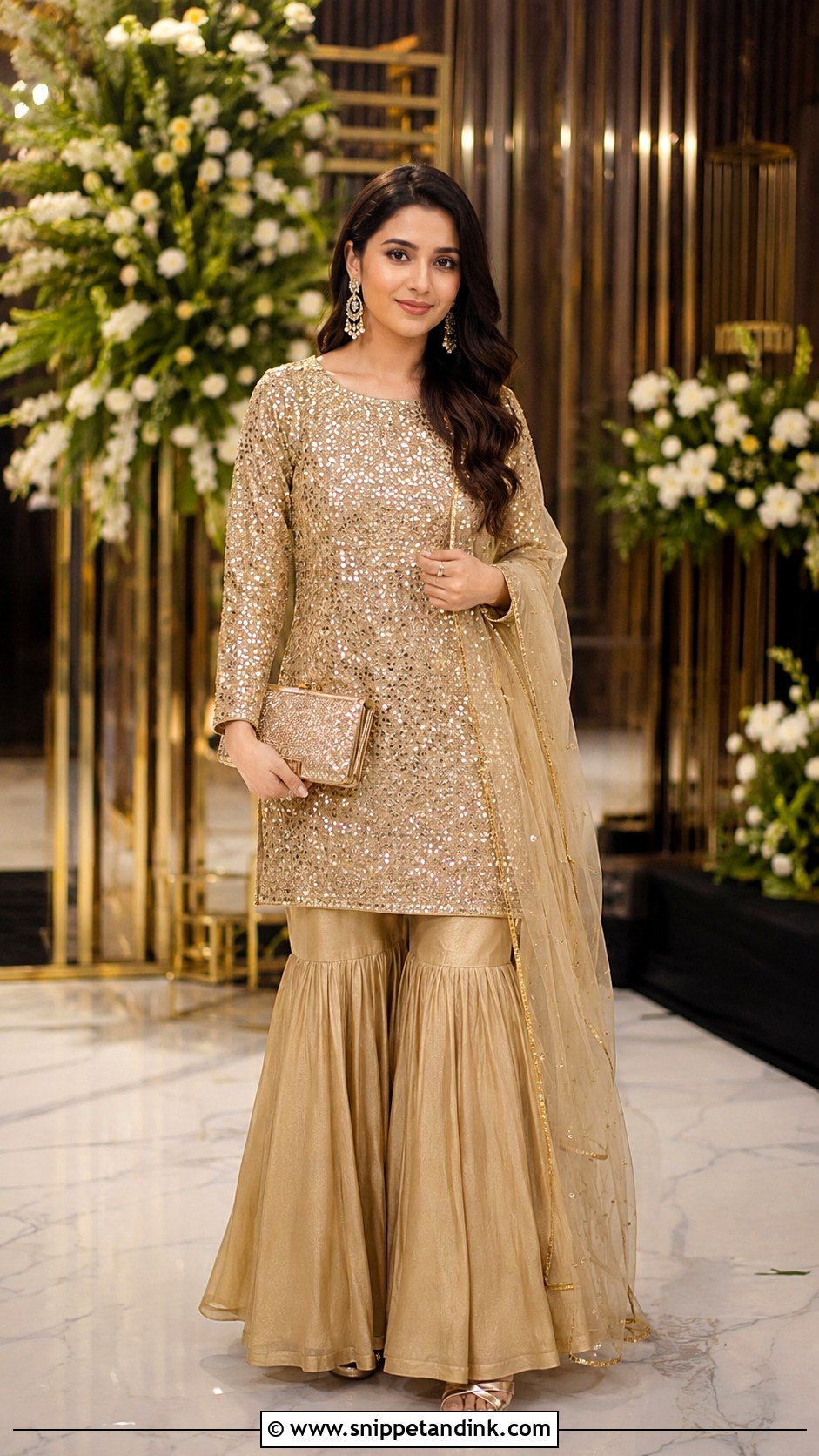
With sequins, balance is everything. A fully sequined kurti needs a plain gold sharara with a soft flare; a kurti with sequin accents can take a decorated hem. A sheer dupatta keeps it party-ready for receptions and sangeets. Sequins scratch the inside of your arms and catch on net dupattas, so I’d check the lining under the arms before buying. Sleek earrings, metallic heels and a compact clutch, with smooth hair and glowing skin.
25. Golden Sharara With Pastel Kurti
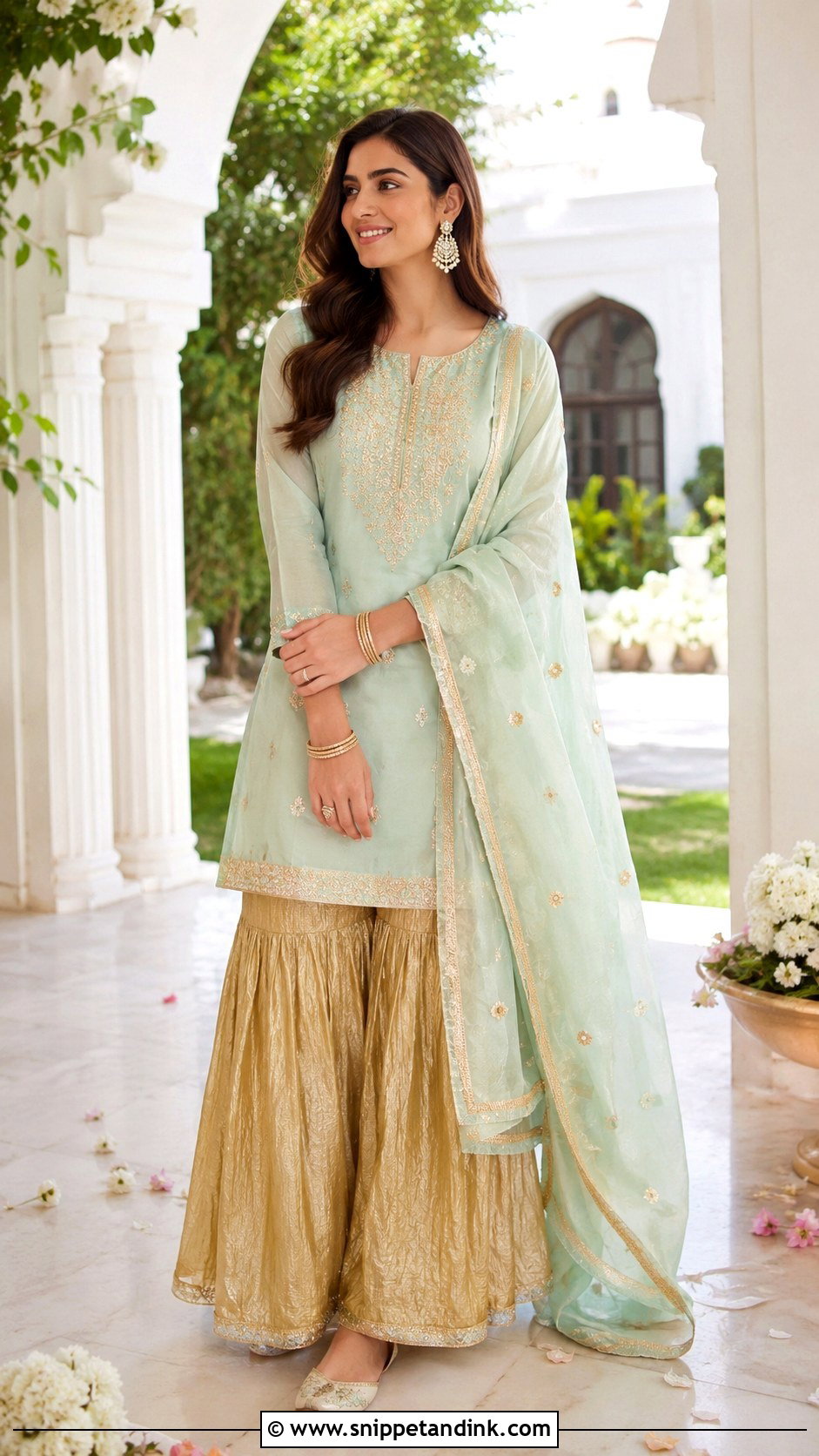
Pastels make gold feel gentle, and powder blue, mint, lavender, peach and powder pink all take it well. A kurti with light zari, pearl or thread embroidery keeps it delicate, and a matching pastel dupatta with a gold border pulls it together. This is the one I’d recommend for daytime functions when you want festive without looking bridal. Pastels show stains and makeup marks quickly, so wear the dupatta pinned away from your face. Pearl earrings, simple bangles, ivory or gold juttis and fresh, glowing makeup.
Gold Thread Tarnishes, So Pack the Sharara Away Properly
The gold in most shararas is metallic zari, and it dulls or darkens when it meets moisture, perfume and air. Real metal zari (fine wire coated in gold) tarnishes most; plastic metallic thread doesn’t tarnish but can crack at folds. Either way, how you put it away after the wedding decides whether you can wear it again.
- Spray perfume before you dress, not onto the outfit. Alcohol and oils mark zari quickly.
- Let it air for a day inside out before storing. Sweat left in the fabric is what darkens the thread.
- Wrap each piece in plain muslin or old cotton, never a plastic bag, which traps moisture.
- Refold along different lines every couple of months so the thread doesn’t break at one crease.
- Send heavy work to a dry cleaner who handles embroidered pieces, and point out any stains rather than letting them guess.
Keep jewelry off the outfit when storing too. Earring hooks and bangle edges snag sequins and pull threads loose.
A Gold Sharara Can Carry Every Function of the Wedding
A gold sharara isn’t one outfit; it’s a base you dress up or down with the top, the dupatta and the fabric. Short kurtis, long kurtas, crop tops, capes, jackets, velvet and silk all sit on the same flared pants. For daytime I’d lean on ivory, pastels, organza and gota patti. For evening, zardozi, velvet, sequins, maroon, black or deep green. Get the hem length right in your actual shoes, keep the jewelry to one focus, and the rest follows.
You'll Like These Ideas:


Leave a Reply