
I dress as many sisters, cousins and guests in gararas as I do brides, and the questions are different for each. The cut itself never changes: fitted from waist to knee, then flaring wide below a joint, which is why garara pants have such a regal walk. Wedding versions now run from heavily embroidered bridal sets to light pastel outfits for a daytime function. Fabric, kurti length, the amount of work and where the dupatta sits change the mood far more than colour does. Shoes and jewellery matter too, because the wide hem can swallow a small frame. Below are twenty complete outfits, from classic zardozi and pearls to Banarasi weaves and mirror work, with notes on who each one suits and when.
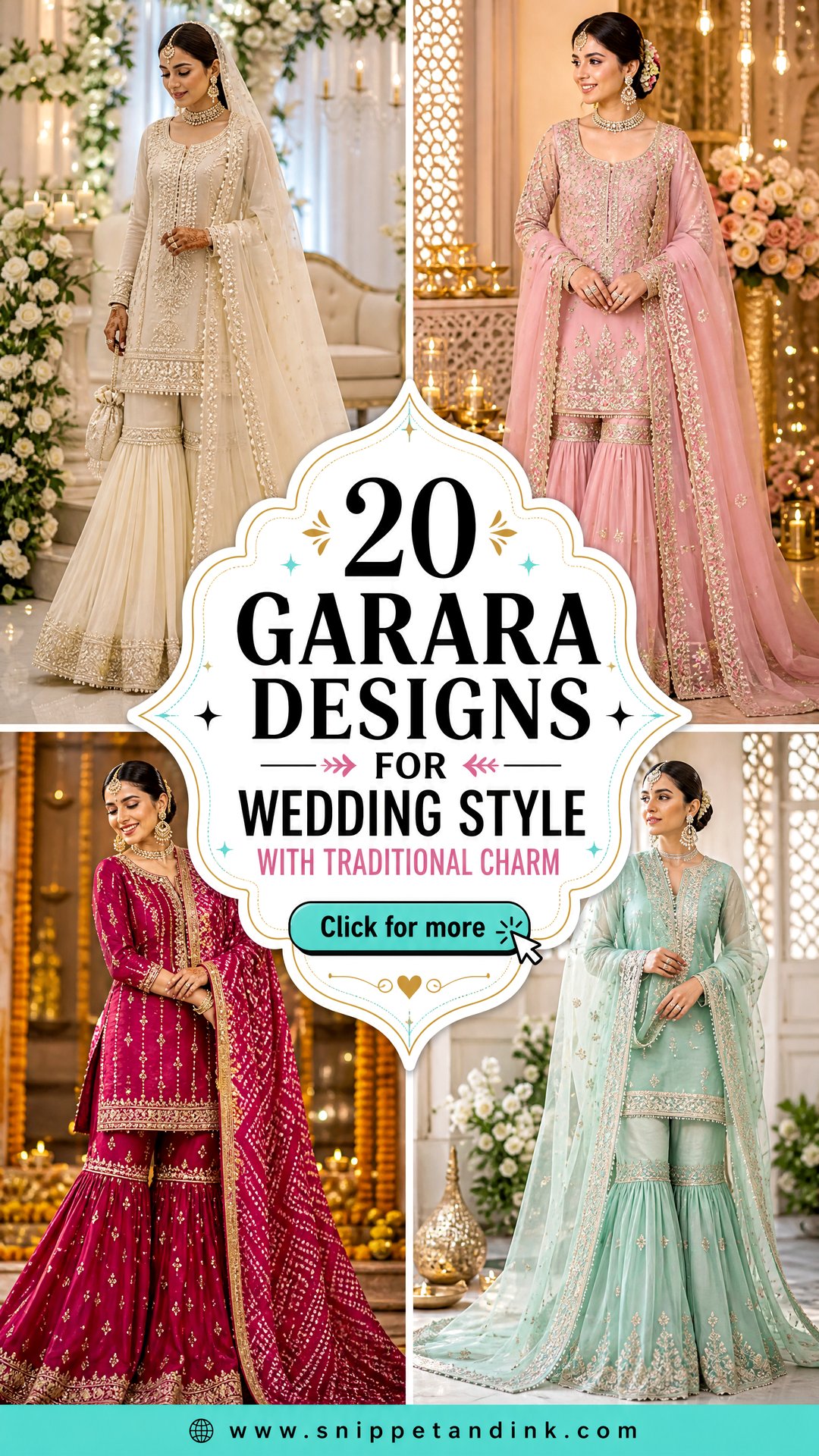
Bride, Sister or Guest? How Much Embroidery Each One Wears
The same garara design can be bridal or a guest outfit, and the difference is mostly how much work it carries and where. When a client brings me a picture, the first thing I ask is who she will be at the wedding.
- The bride can wear heavy zardozi or dabka from neckline to hem, two dupattas and a full jewellery set. Weight is the price, so I keep her shoes flat and soft.
- Close family often look best one step down: embroidery on the kurti and the knee band, a lighter dupatta and one statement piece of jewellery.
- Guests should avoid bridal red and, in many families, ivory at the nikah. Lighter work, sequins, gota or thread embroidery and pastel or jewel tones are safe everywhere.
If you are unsure, ask the bride’s family what colours she and her sisters are wearing for each function. Most are happy to share, and it saves the awkward photo of two women in the same shade.
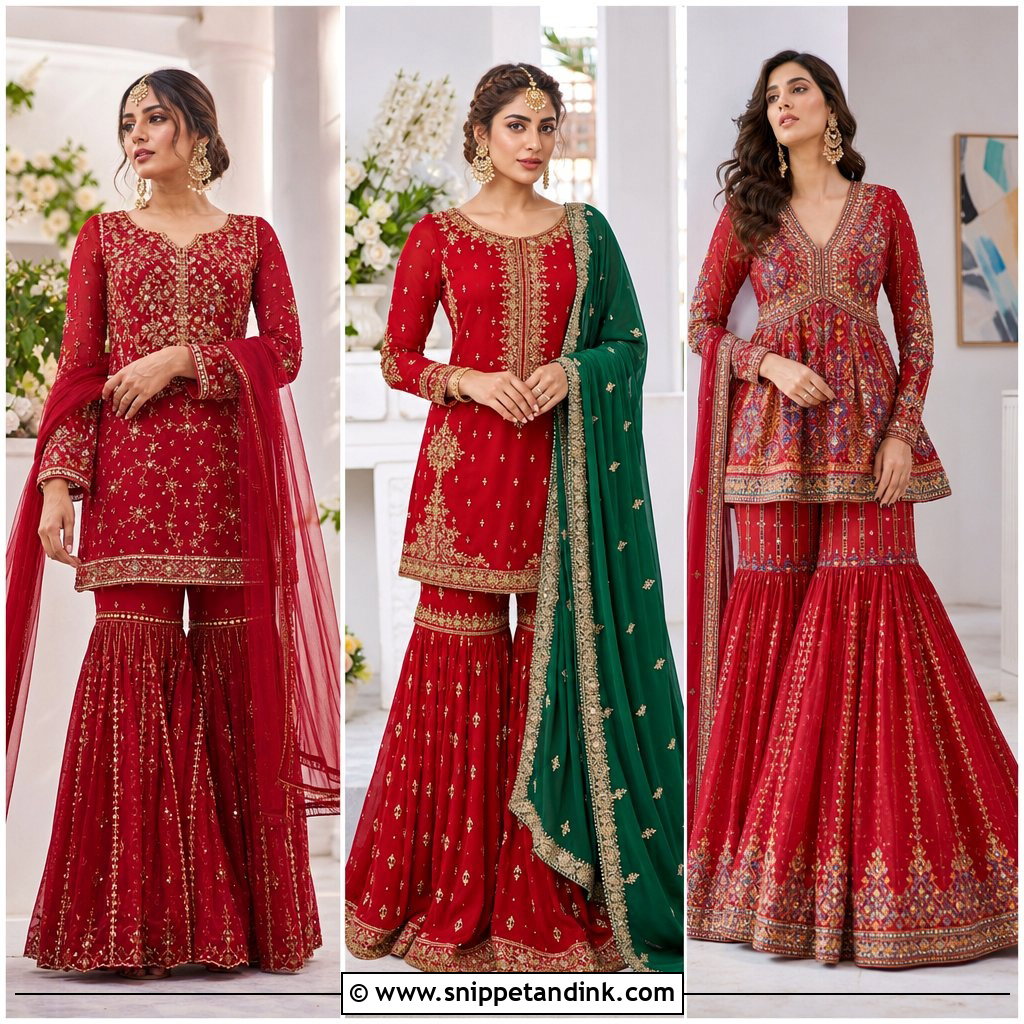
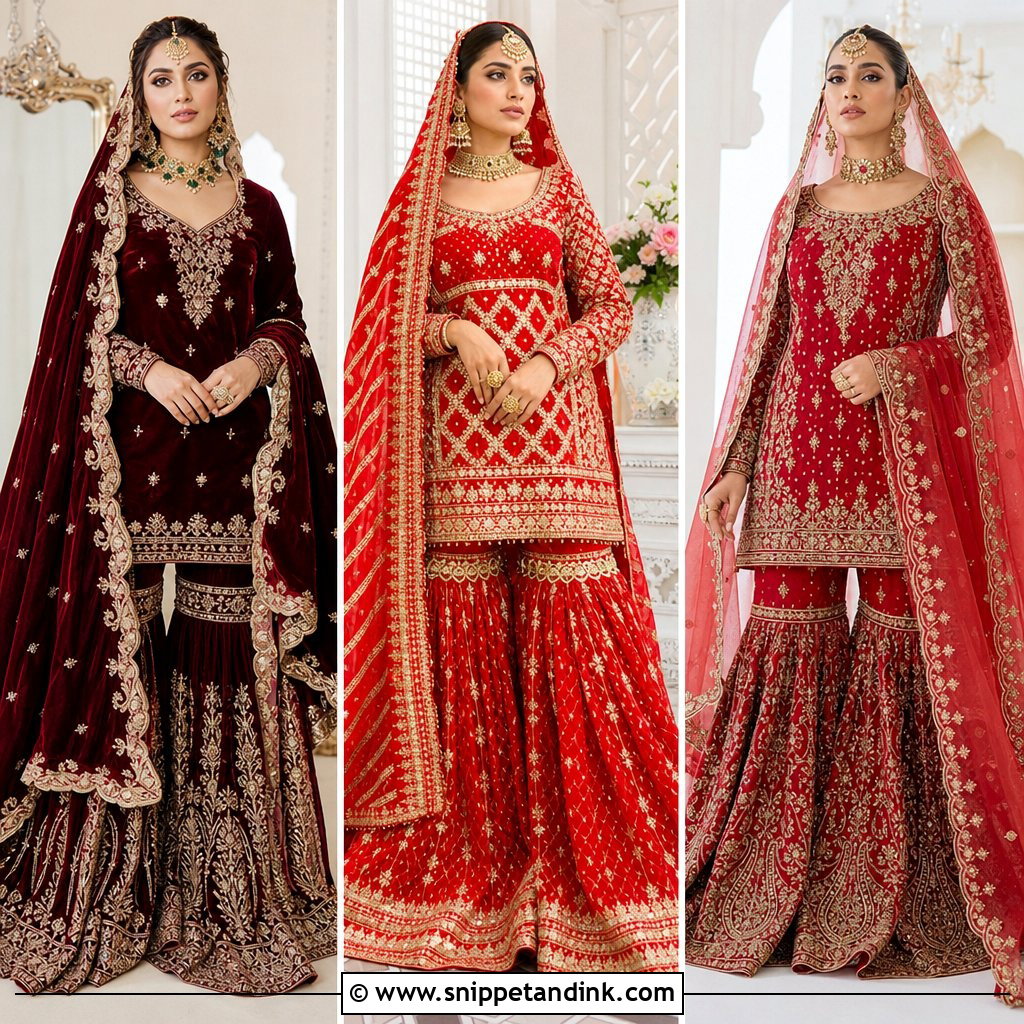
1. Red Bridal Garara With Short Kurti
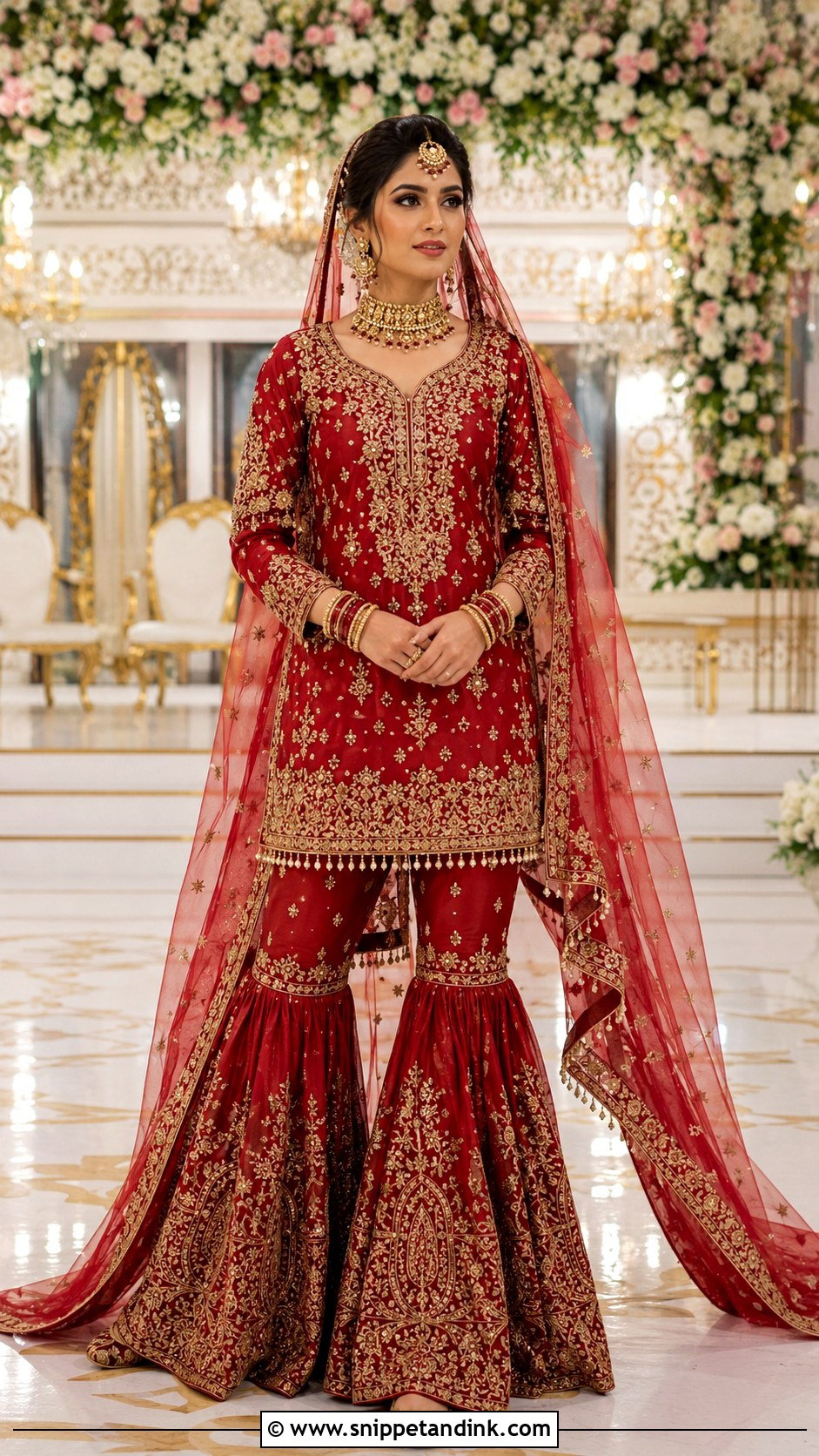
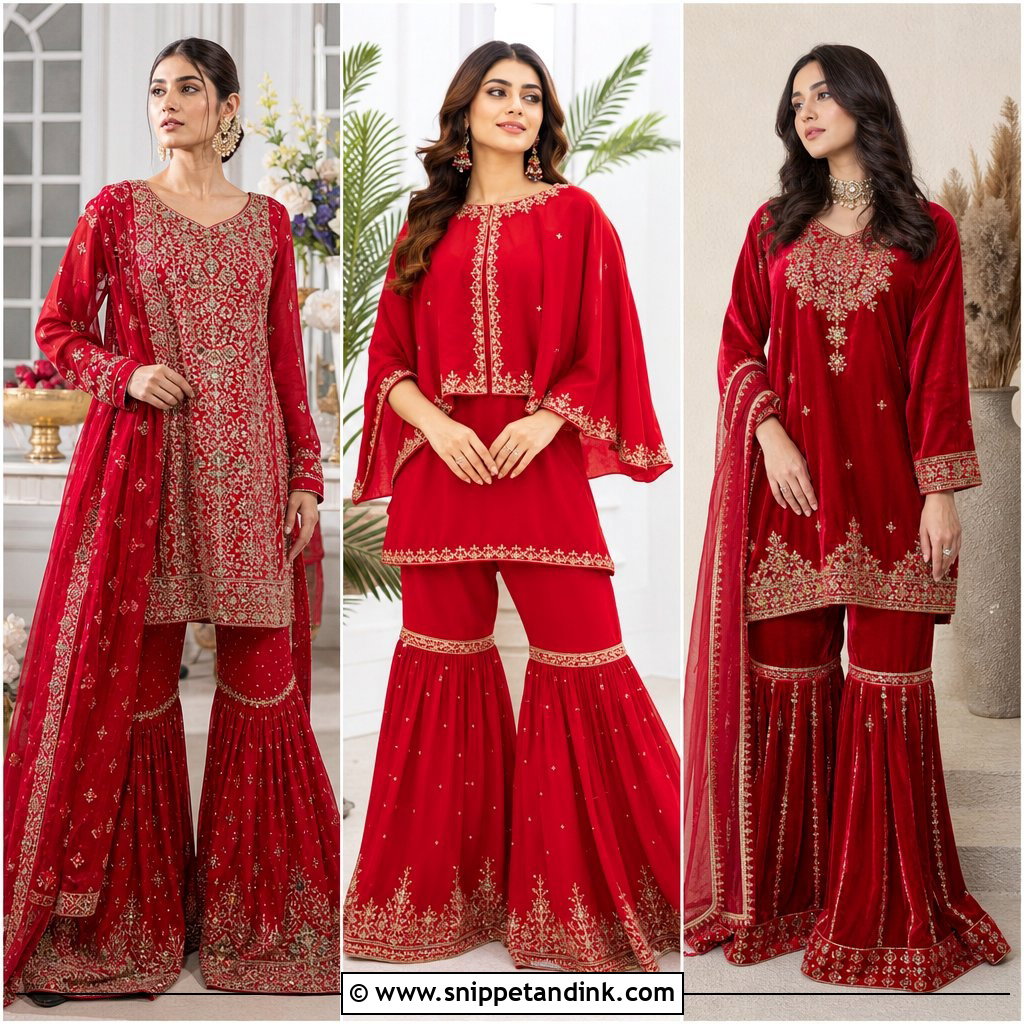
Red is still the bridal default, and the short raw silk kurti is the right partner because it holds a crisp shape against the volume below. I’d keep the zardozi, dabka or resham controlled on the top so the broad border on the garara can carry the eye downward. A red net dupatta with scalloped gold edging frames the face without hiding the silhouette, and a second light dupatta over the head adds coverage when the ceremony calls for it. Gold choker, earrings, maang tikka and embroidered juttis are enough. One fitting note: ask for the kurti’s side slits to be finished with a small facing, because heavy borders pull loose slits open when you sit.
2. Maroon Velvet Garara With Embroidered Kurti
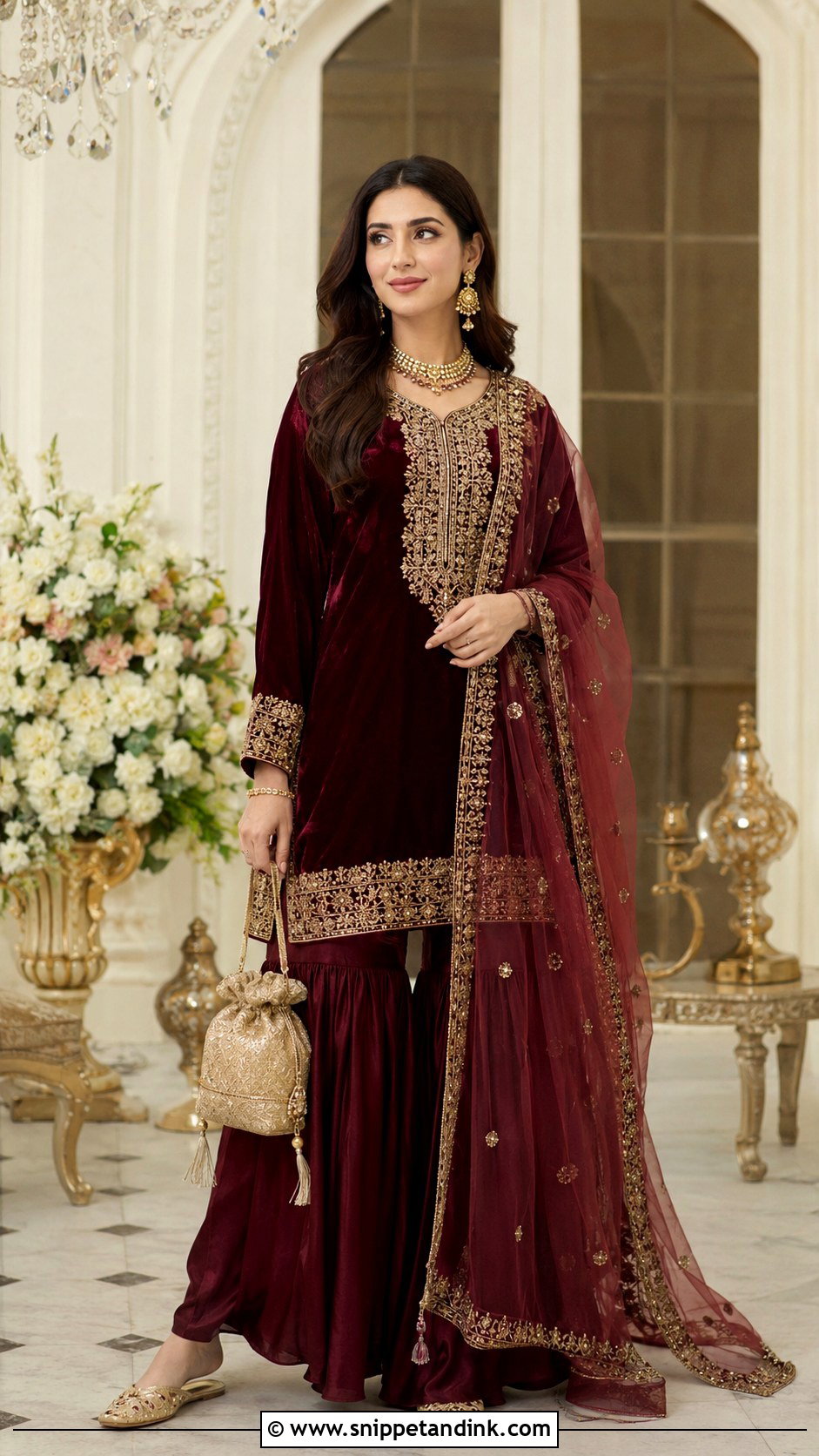
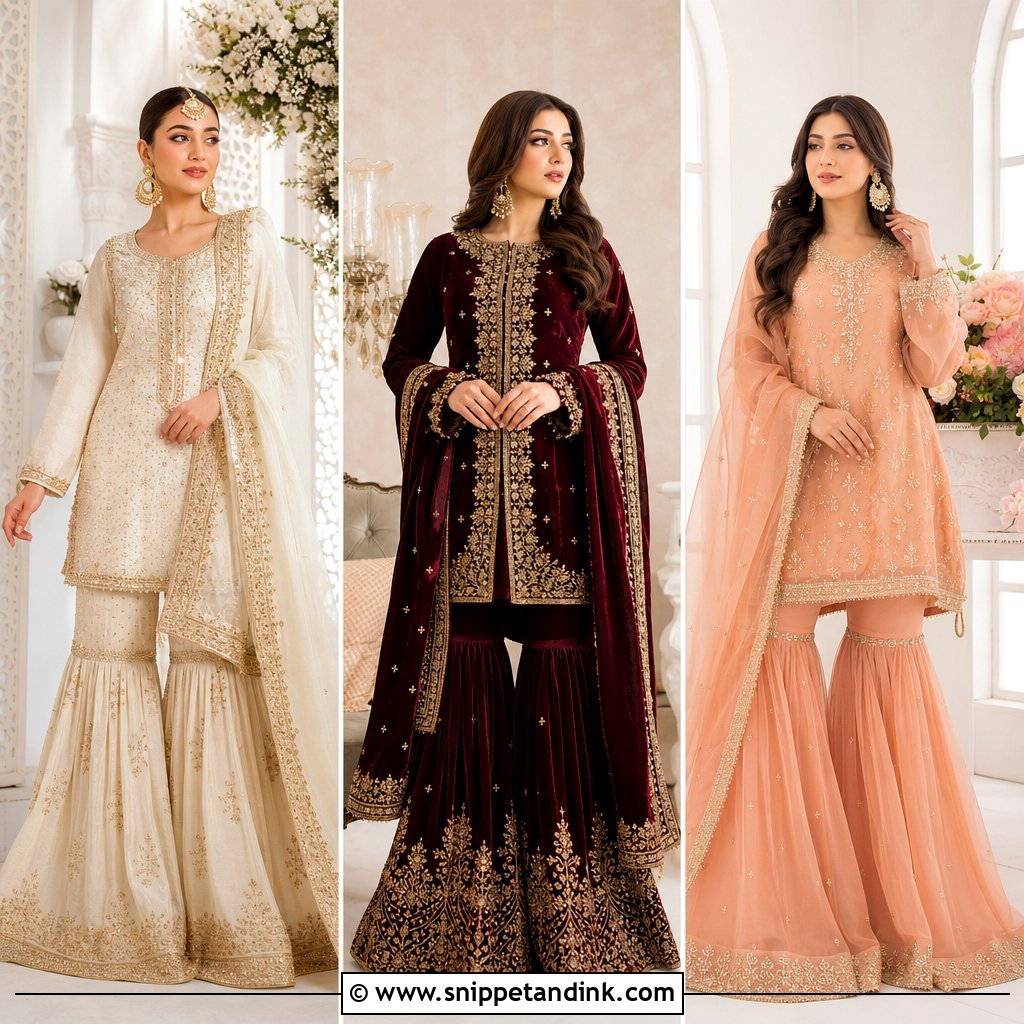
Velvet suits an evening wedding in cold weather, and the smart construction here is velvet above the knee with silk or brocade in the flare. Full velvet flares are beautiful on a hanger and exhausting to wear. Choose a fitted mid-thigh kurti with a modest neckline and fine zari at the cuffs, hem and front panel. A sheer maroon dupatta with small scattered motifs lets the velvet stay the focus. Antique gold earrings, a coordinating necklace and a structured potli suit it, and pointed embroidered flats are kinder than heels on long evenings. Velvet already gives depth, so I’d edit the accessories down rather than up. A sleek bun or soft curls finishes it.
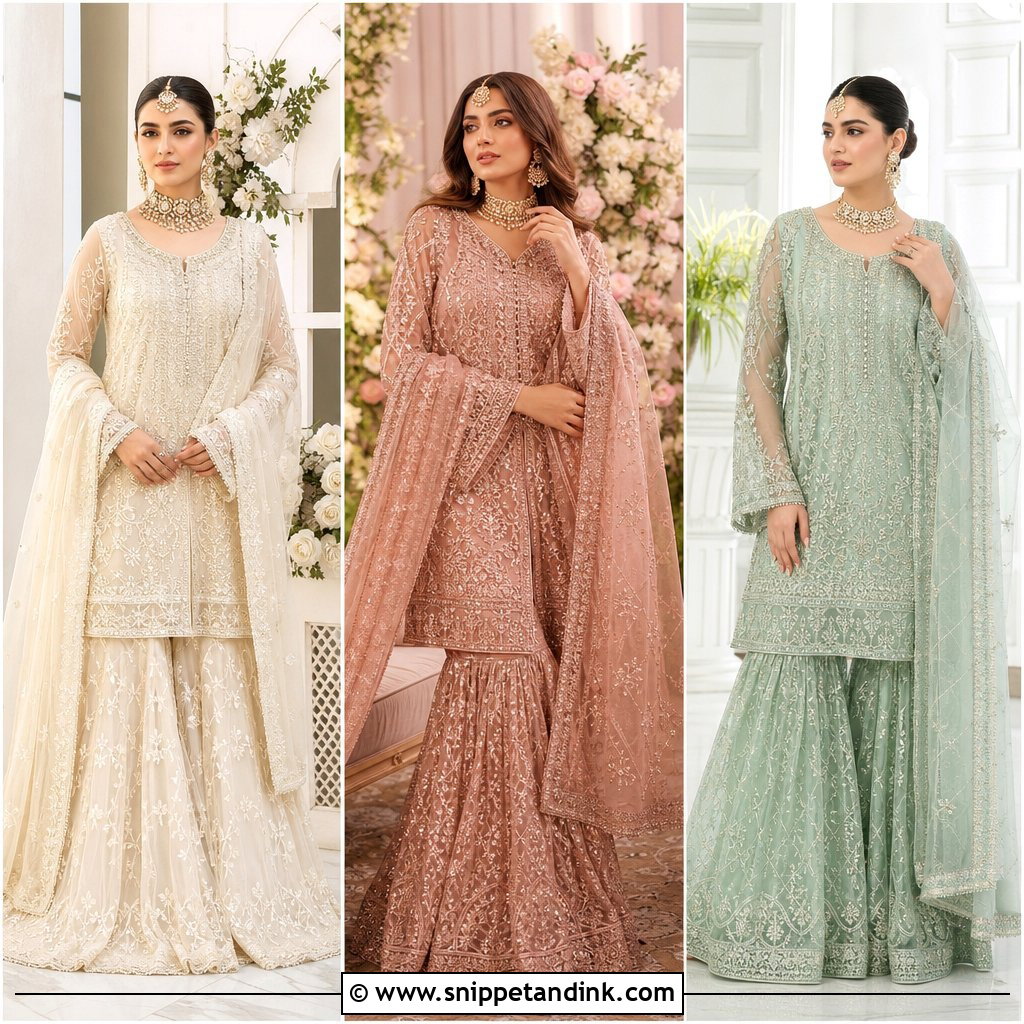
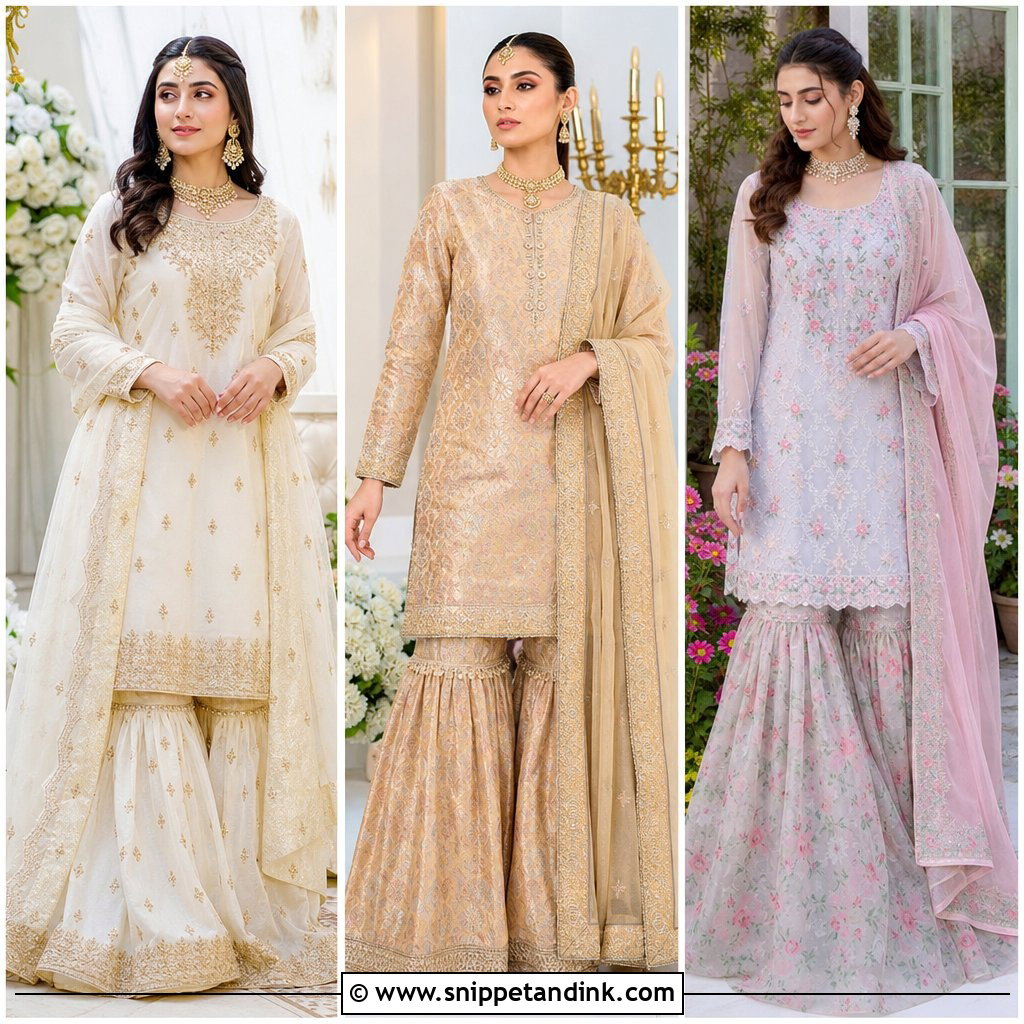
3. Ivory Nikah Garara With Pearl Work
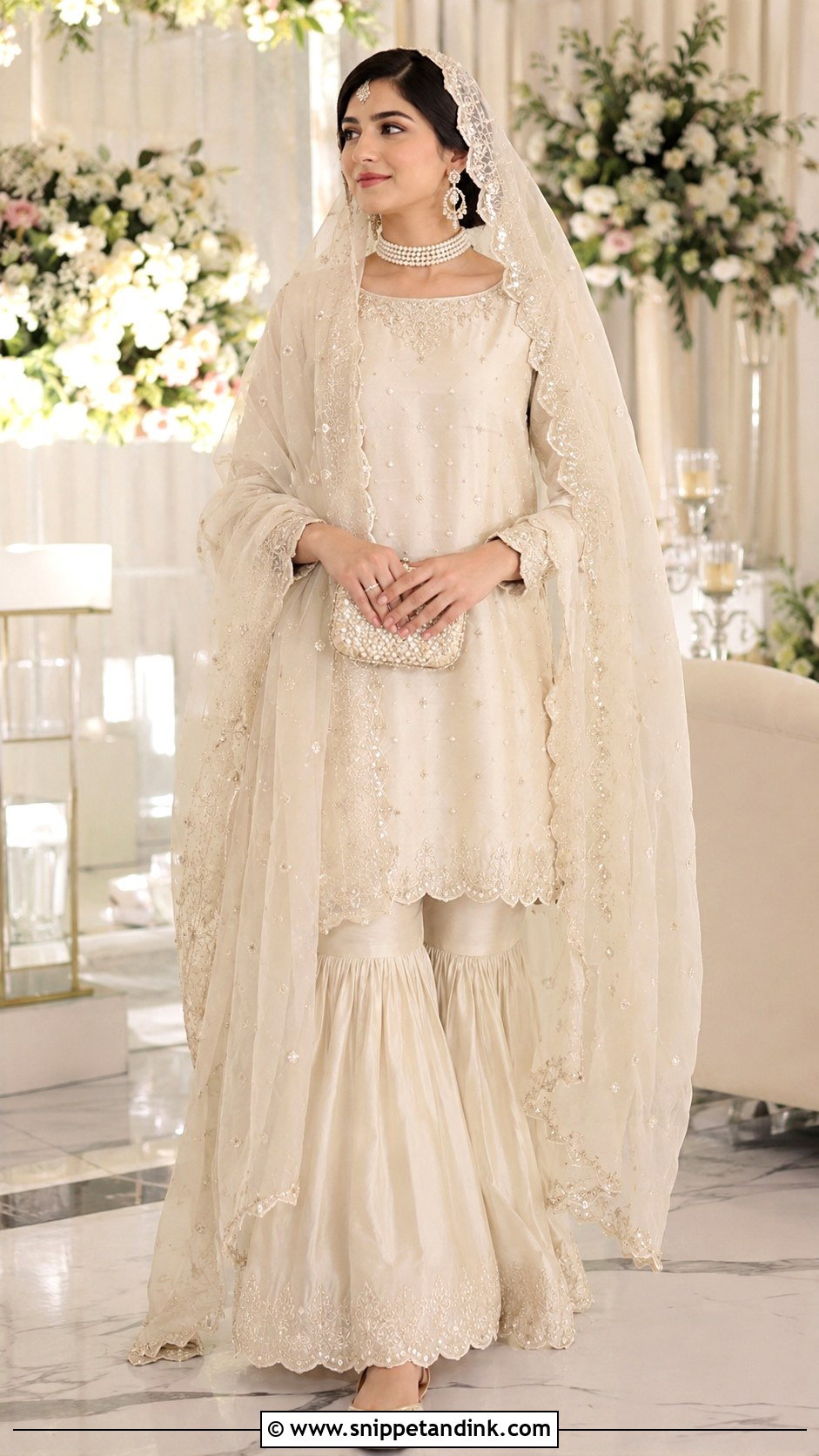
Ivory is what I reach for most often at a nikah. A short silk kurti in pearls, fine thread and a little silver pairs with an ivory garara that has narrow pleats at the knee and a scalloped hem. A sheer organza dupatta with a pearl border gives the outfit structure without weight. Pearl drops, a delicate choker and ivory or metallic juttis keep the palette quiet. The bride wears the dupatta over her head; a guest in a similar outfit should drape it loosely over one shoulder and choose a different shade of cream, so she isn’t mistaken for the bride in the group photo. Fresh flowers in a low bun complete it.
4. Gold Banarasi Garara With Red Dupatta
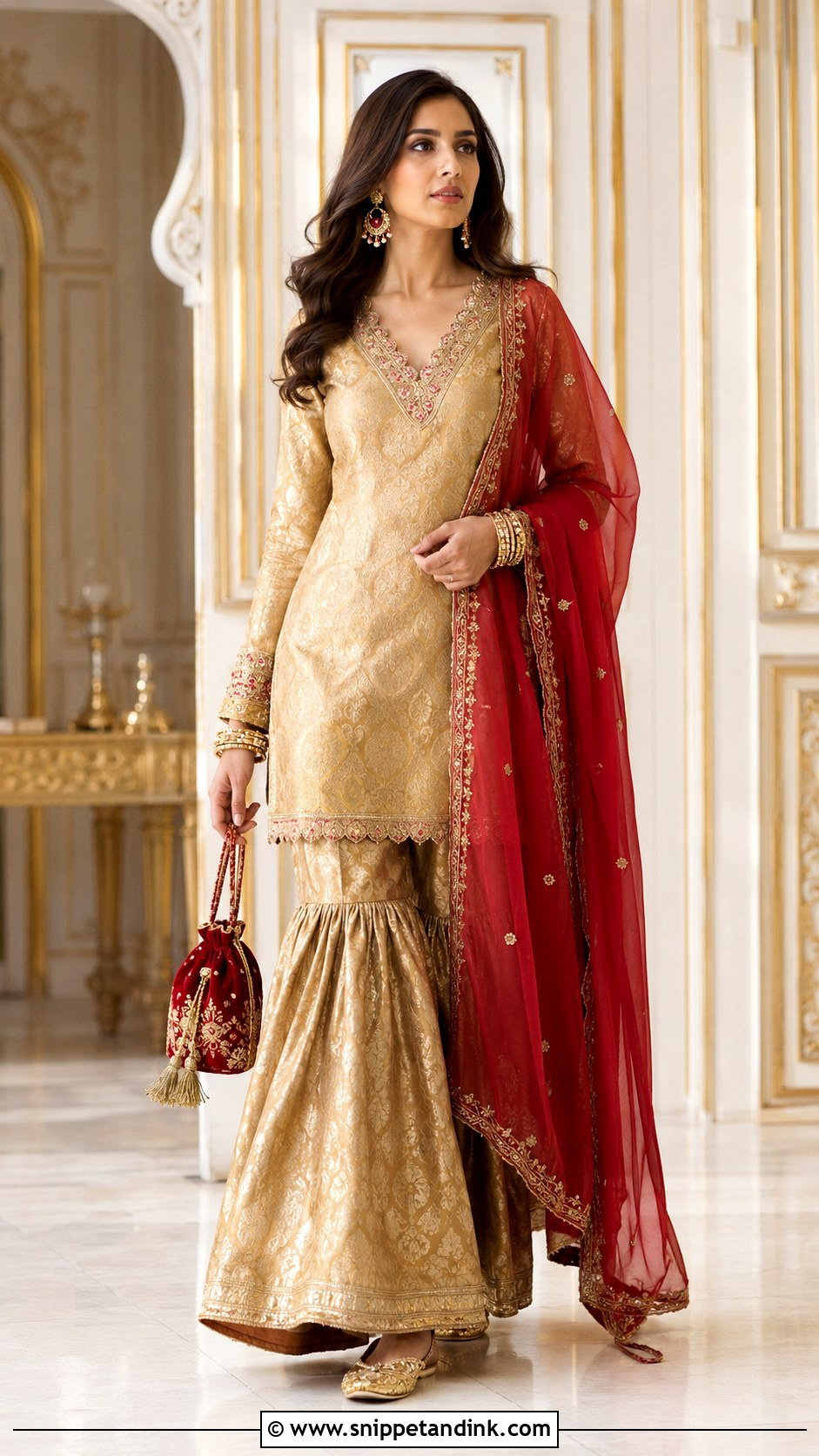
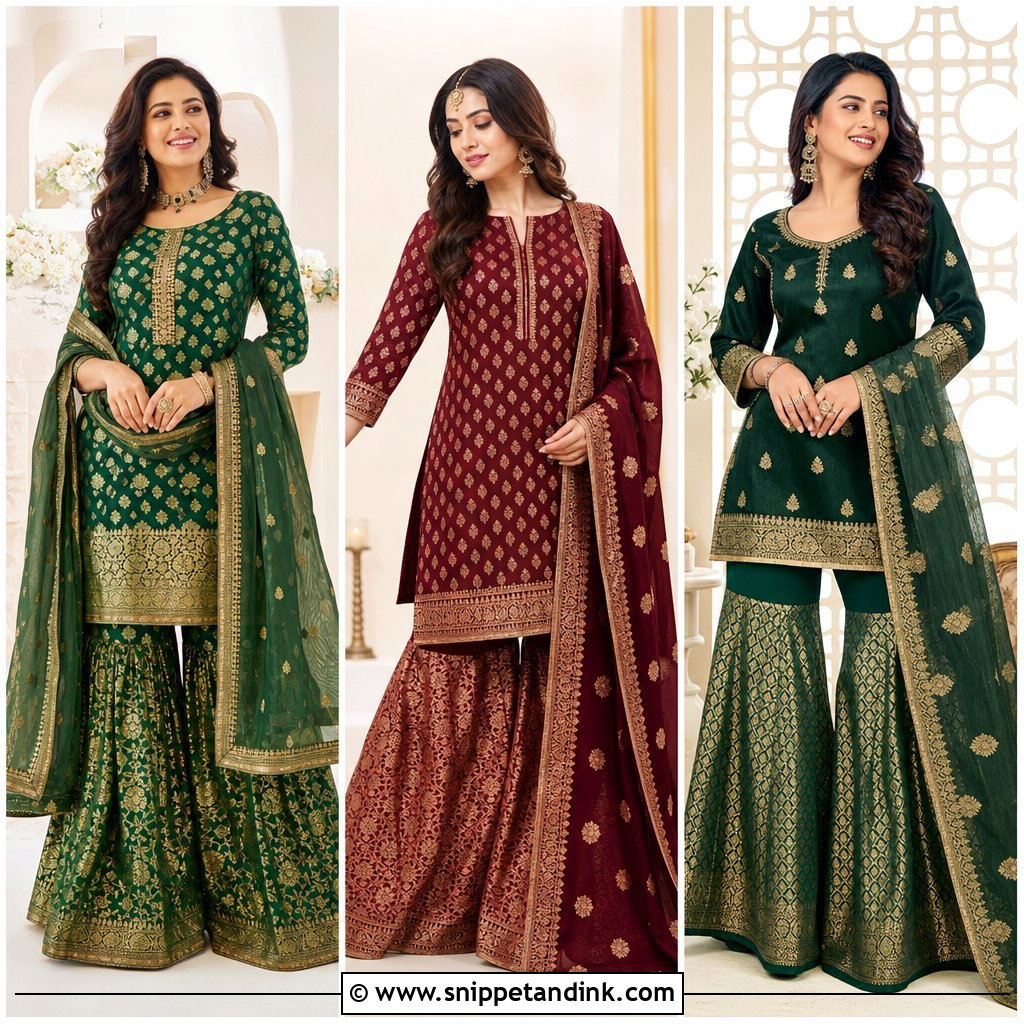
Woven Banarasi gold does the talking, so I keep the short kurti plain or barely embroidered. The garara should show traditional motifs and a clearly defined knee seam, which is what makes it read as a garara rather than palazzos. Contrast comes from a deep red chiffon dupatta with a gold border. Ruby-toned earrings, stacked bangles and a red potli tie accessories to the dupatta, and low cushioned gold juttis get you through a long ceremony. Brocade is stiff, so the flare stands out from the body; the sister of the bride who will be on her feet greeting guests all evening might prefer brocade only in the borders.
5. Blush Pink Garara With Floral Embroidery
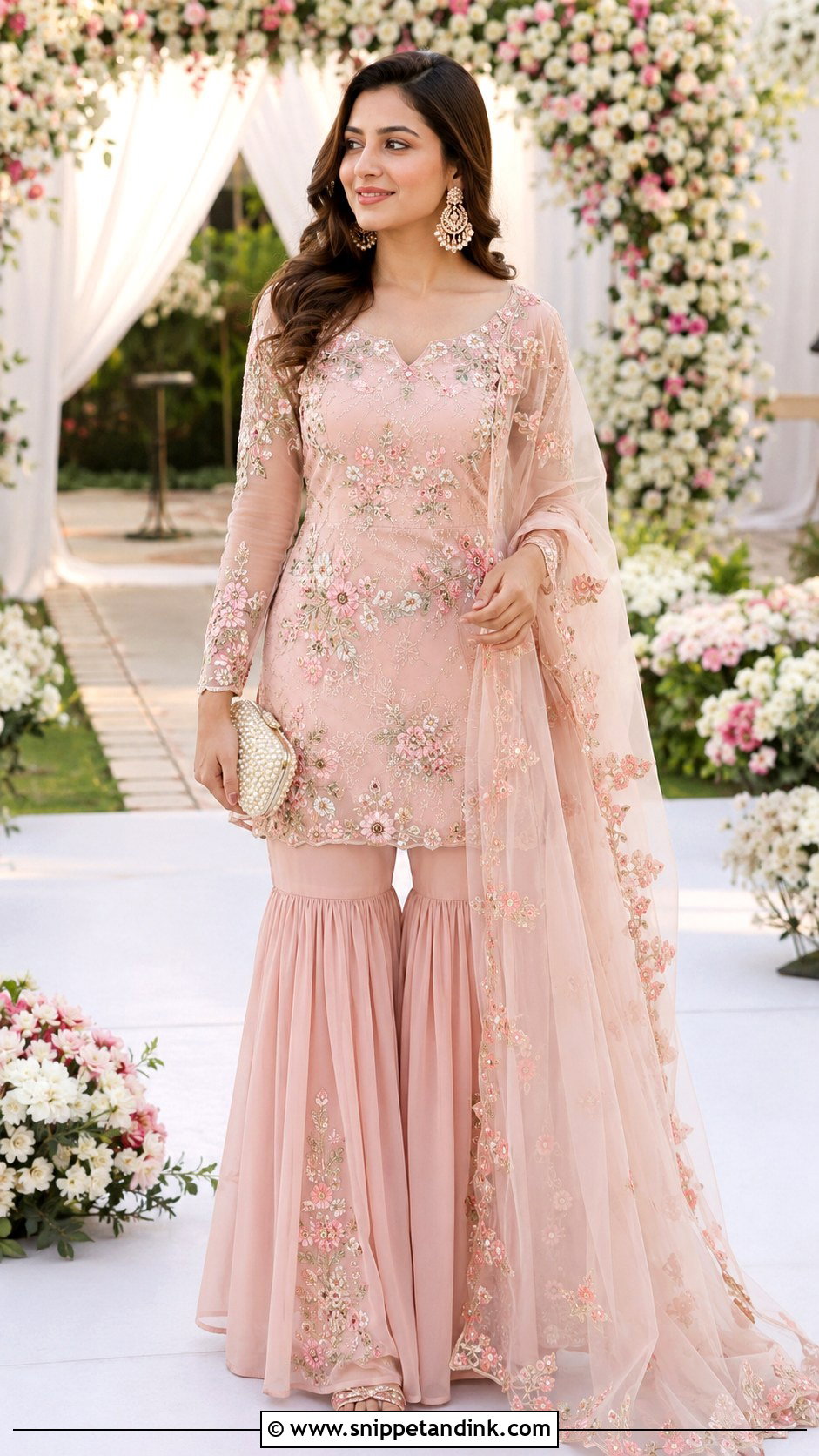
Blush pink is my go-to for a bridesmaid group that wants to look coordinated without competing with the bride. A short georgette kurti with pastel floral embroidery at the neckline, sleeves and hem pairs with a flowing garara with embroidered knee bands. Georgette moves well but clings slightly in heat, so I ask for a cotton or silk lining in the kurti for a summer garden wedding. A sheer organza dupatta with appliqué flowers adds a soft layer. Rose-gold earrings, a slim bracelet and a pearl-trimmed clutch are enough, and nude embellished sandals lengthen the leg line. Soft waves and a fresh complexion suit it.
6. Emerald Green Garara With Gold Zardozi
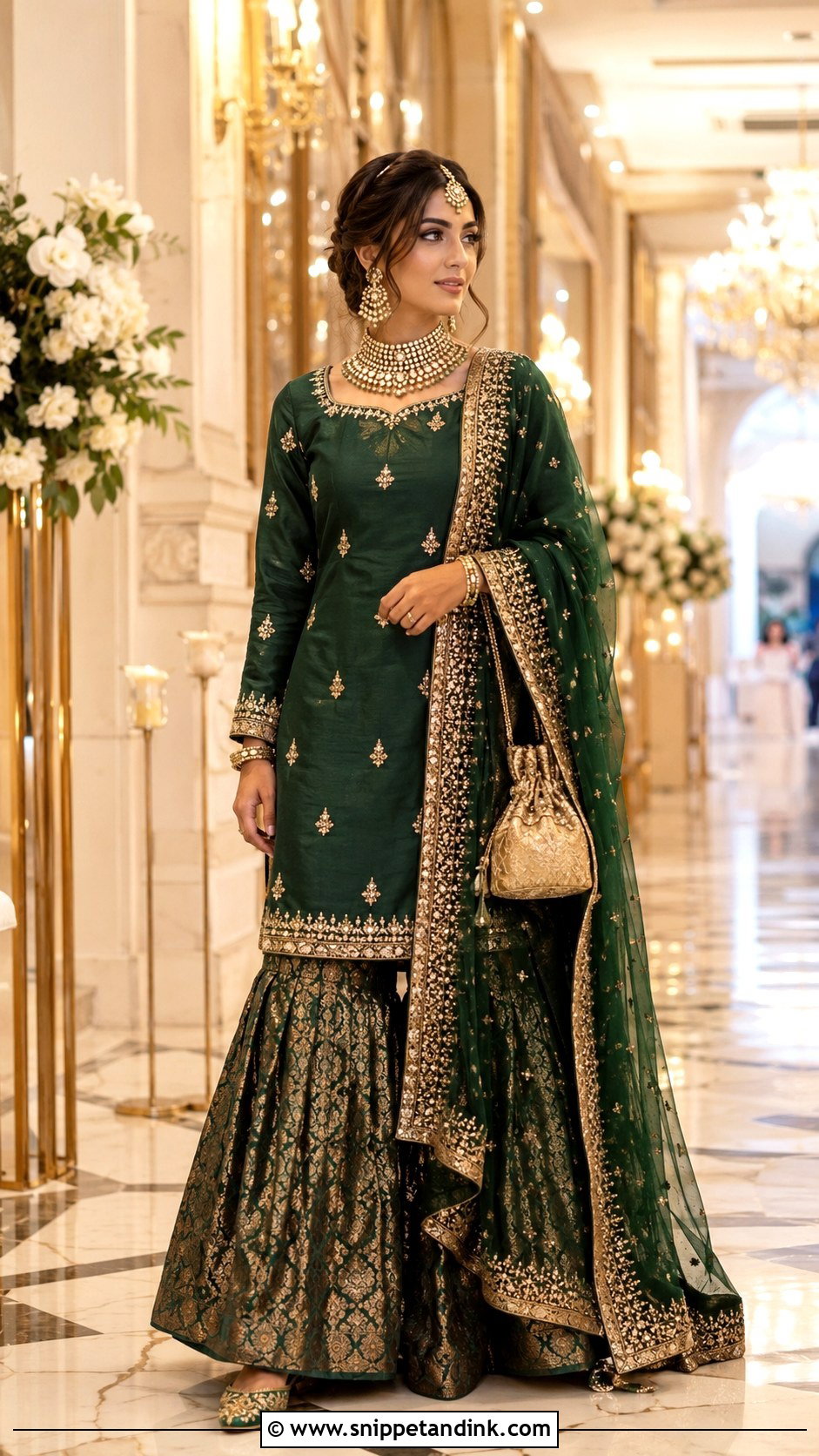
If red isn’t for you, emerald gives the same ceremonial weight. Pair an emerald raw silk kurti, with gold zardozi at the neckline, cuffs and lower edge, with a garara that has a fitted upper leg and brocade flares finished in a wide gold border. Drape a green net dupatta with small metallic motifs over one shoulder so the kurti stays visible. Kundan earrings, a statement ring, a gold potli and embroidered green juttis complete it. Emerald works in every season and flatters most skin tones I dress, from very fair to deep. It is equally right on a bride, her mother or an evening guest, with only the amount of embroidery changing.
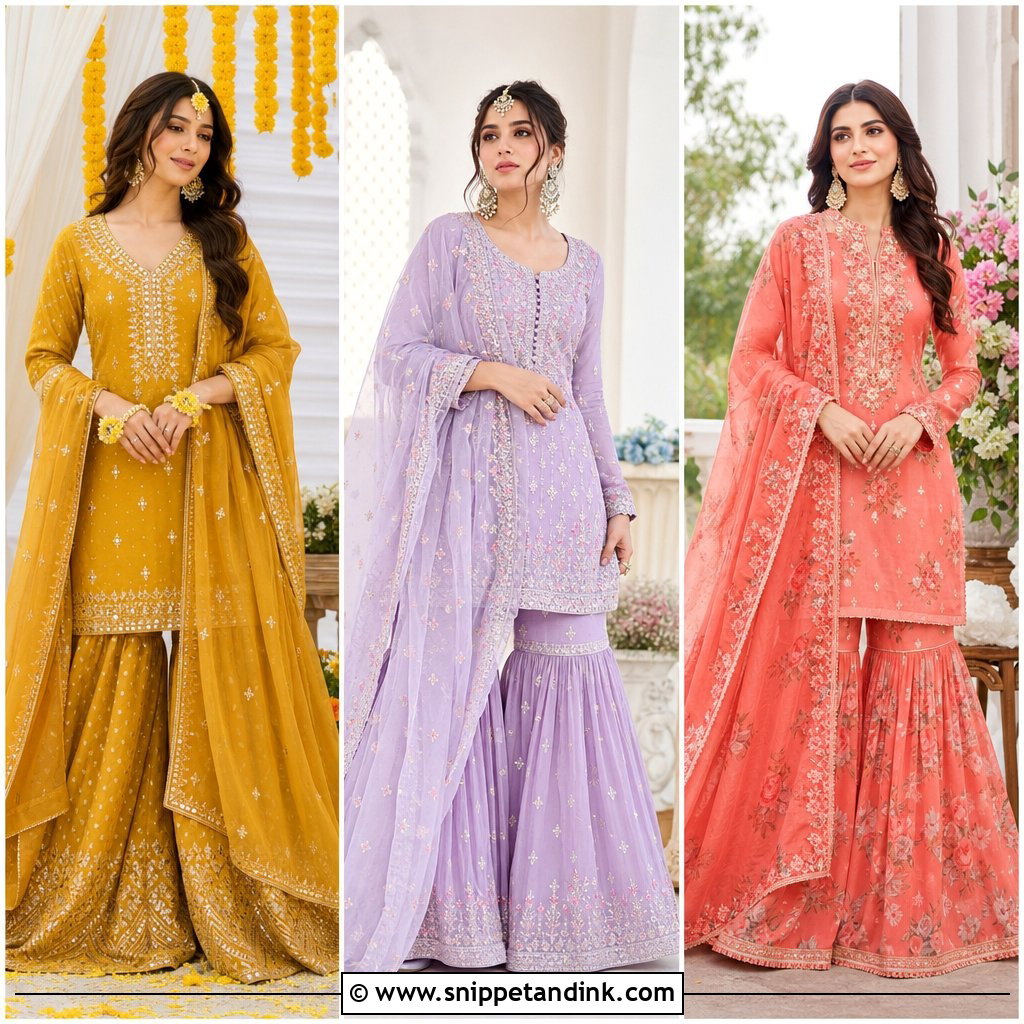
7. Mustard Garara With Mirror Work Kurti
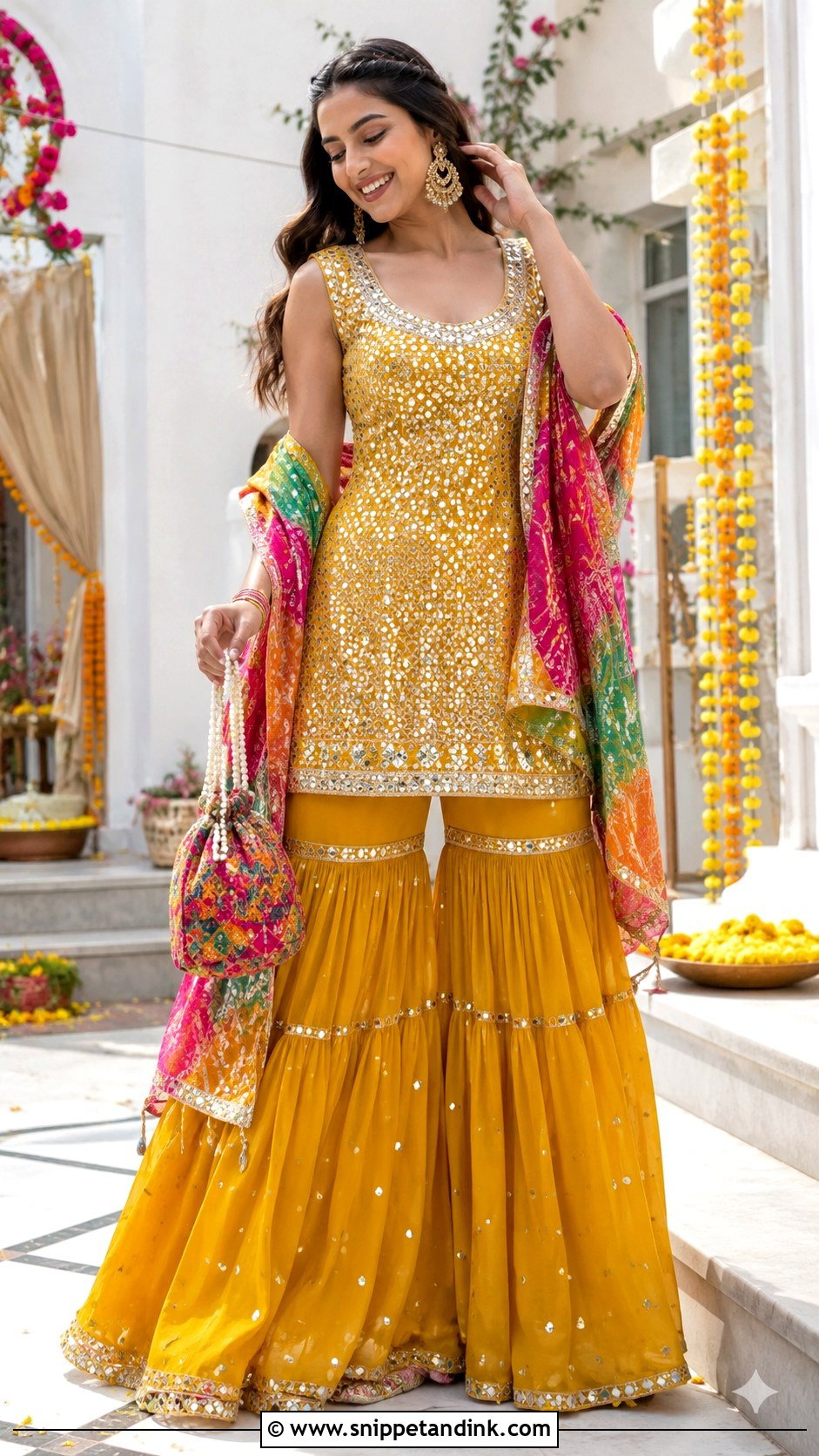
Mustard is built for a mehndi celebration or a colourful daytime function. I’d choose a short kurti in neat mirror work, thread embroidery and small tassels, with a matching garara that has comfortable knee gathers and a contrasting border. Mirror work looks wonderful but each mirror is stitched in place, and on a dance floor the edges can catch on a partner’s dupatta, so I’d keep mirrors off the sleeves if you plan to dance. A light bandhani or chiffon dupatta adds movement. Oxidised or antique gold earrings, colourful bangles, a potli in an accent colour and a braid or floral bun keep it practical.
8. Navy Blue Garara With Silver Embroidery
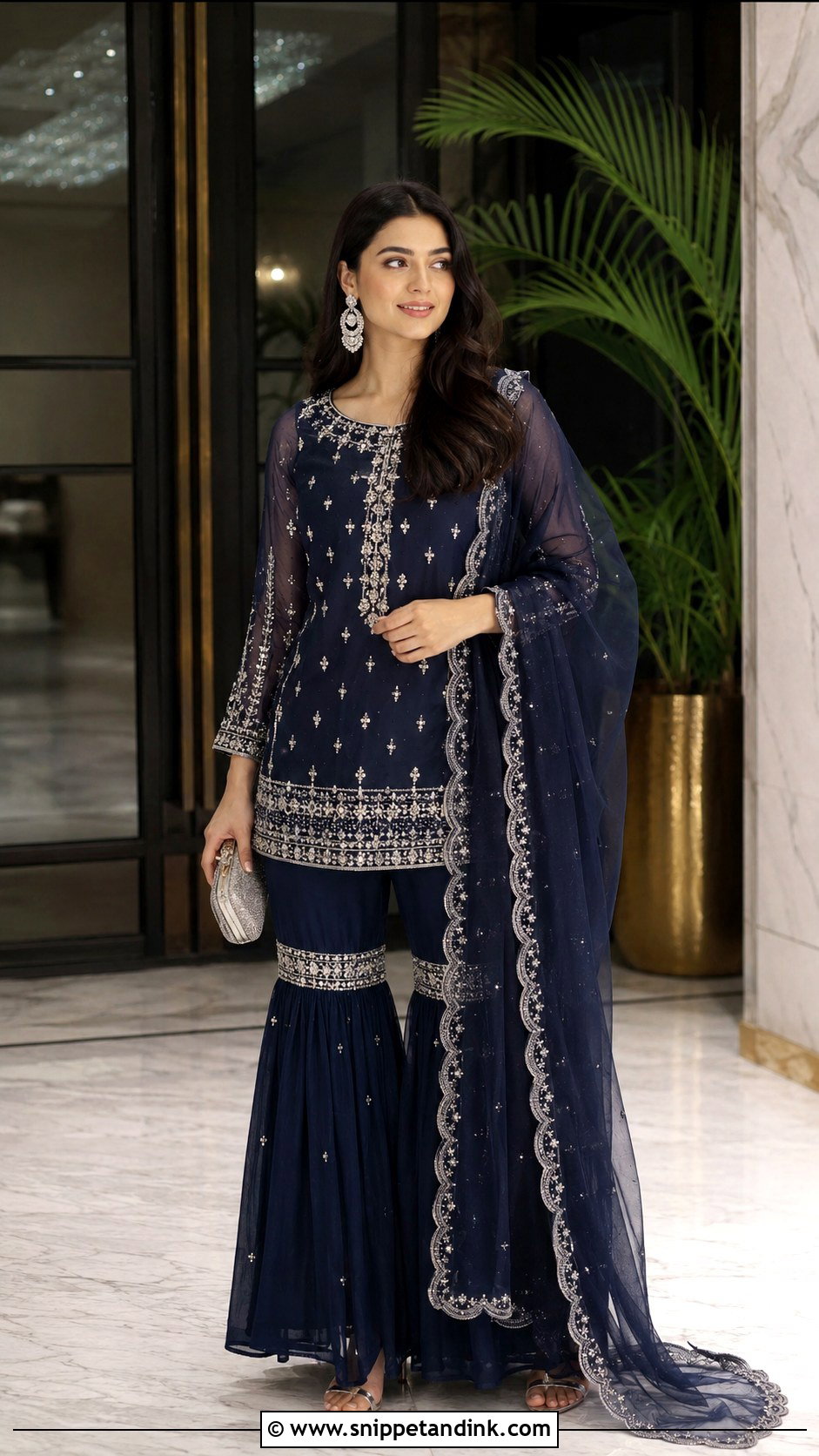
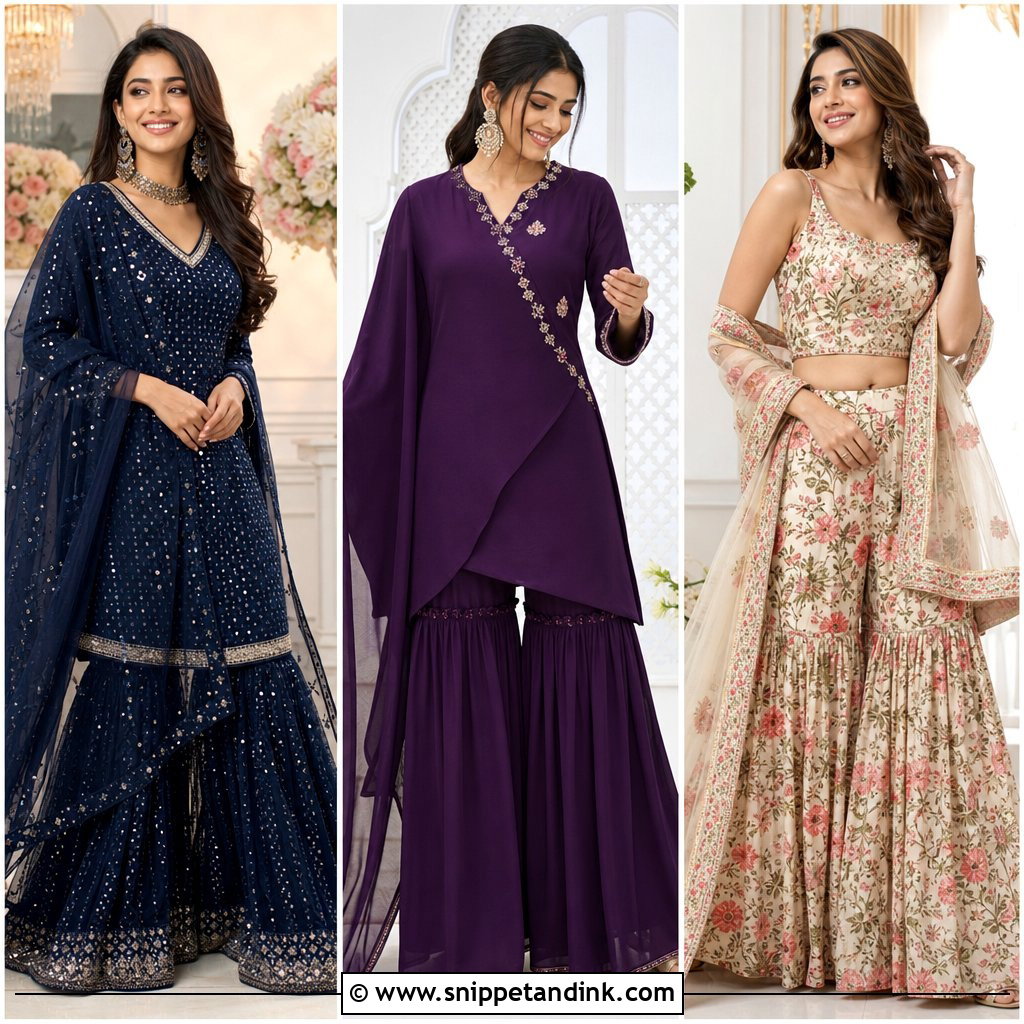
Navy is a better base for silver than black, because it keeps some colour under evening lighting. Choose a short velvet, silk or georgette kurti with silver threadwork arranged in panels, leaving fabric between them; covering every inch flattens the work in photographs. The garara needs defined knee bands, soft flares and borders that catch light as you move. A navy net dupatta with a silver scalloped edge ties it together. Crystal earrings, a slim bracelet and a silver clutch suit the cool palette. Heels or flats depend on the hem length, so decide on shoes before the final fitting. Smooth waves and soft highlight finish it for a reception or sangeet.
9. Peach Garara With Long Jacket Kurti
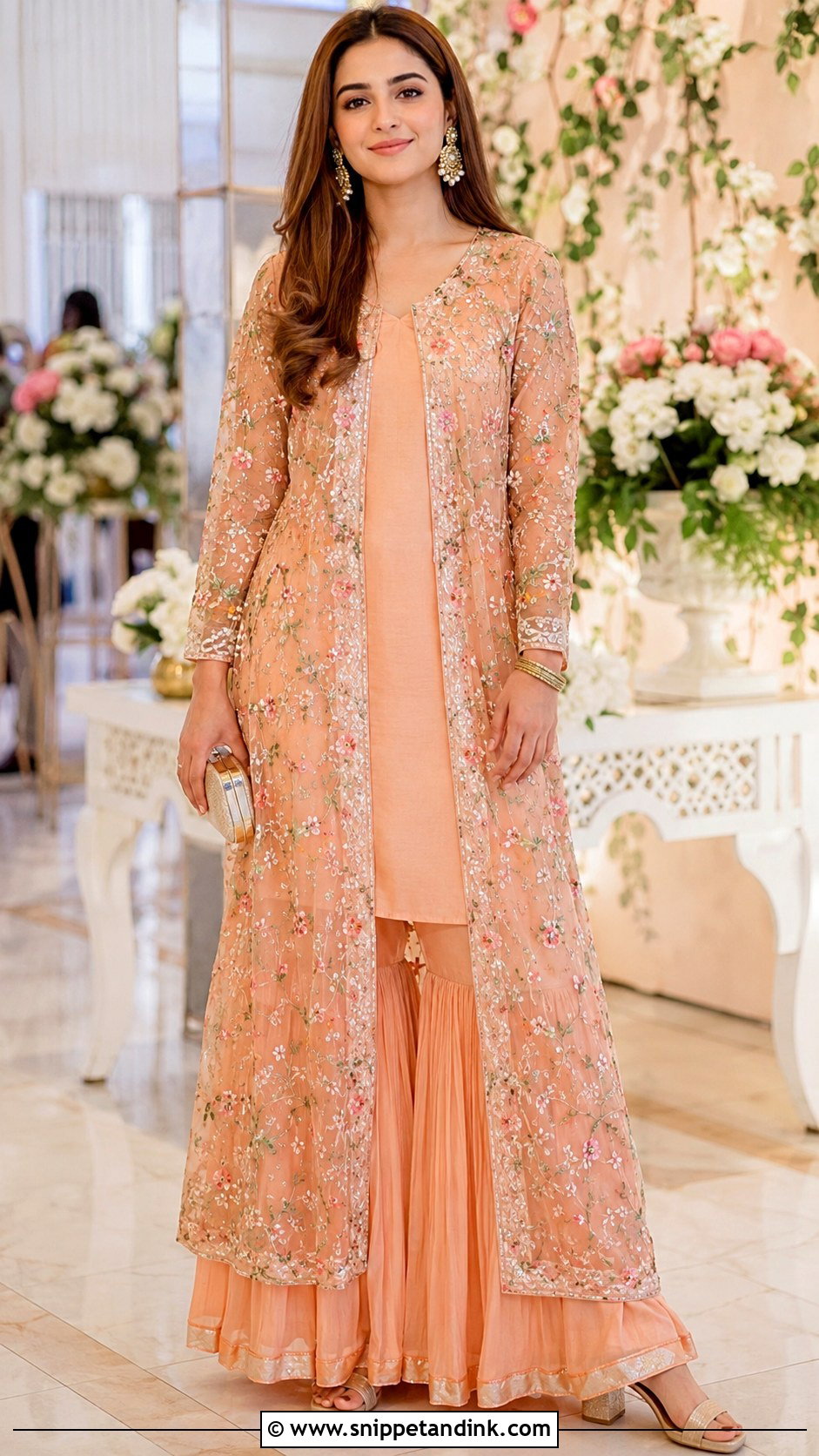
A long open jacket is a clever way to modernise a garara, and it also adds vertical lines that balance the volume below. Start with a sleeveless or short-sleeved peach inner kurti and matching silk or georgette garara, then add a knee-length sheer jacket in vines, pearls or sequins. Keep the front open, or the inner outfit disappears. With the jacket doing so much, a dupatta can be carried over an arm or left out. I’d check the jacket’s hem against the knee band at the fitting: if it stops exactly at the joint, it cuts you in two. Champagne earrings, a slim clutch and low block heels suit guests and bridesmaids.
10. Black Garara With Gold Sequin Kurti
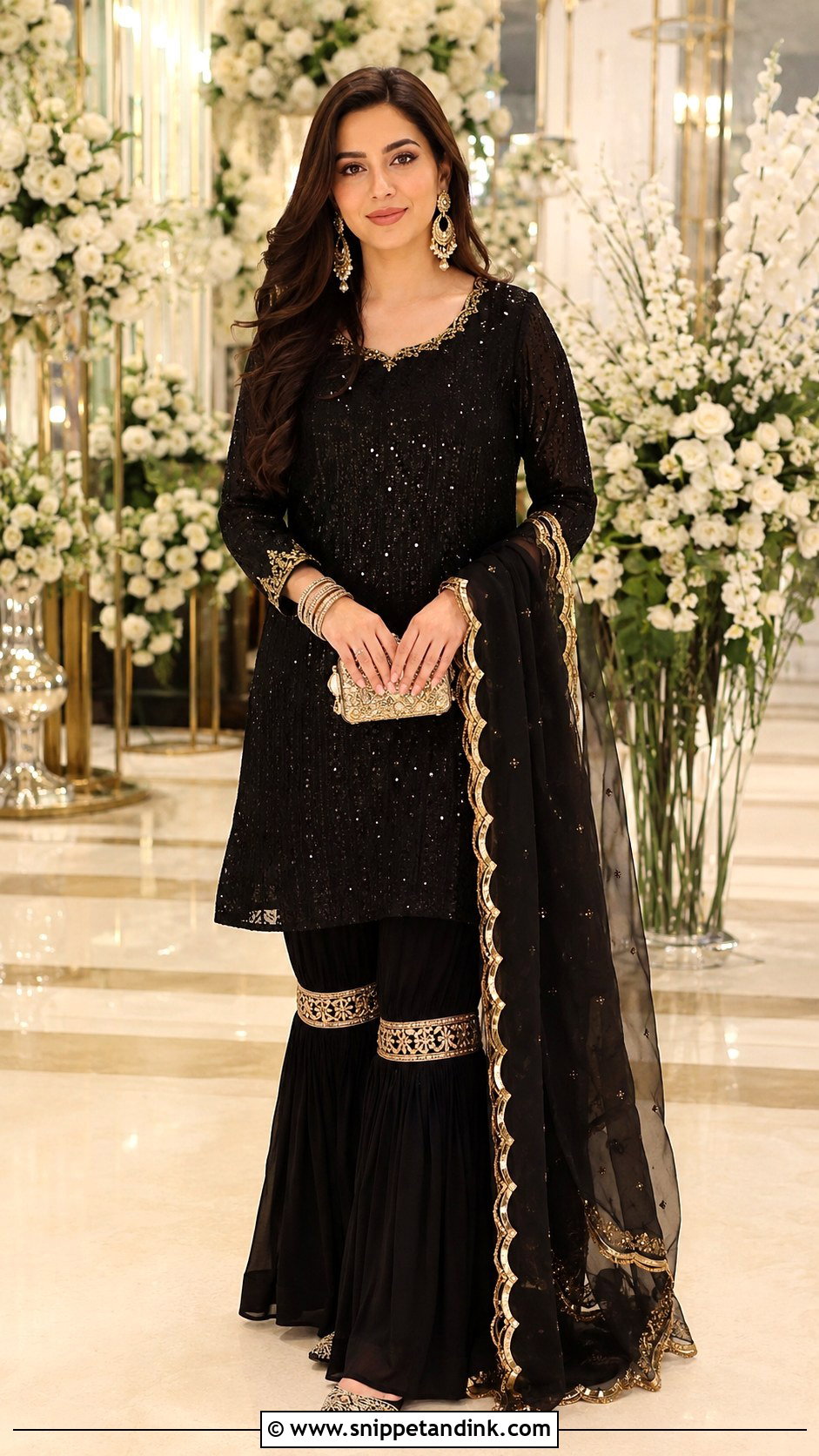
Black and gold looks sharp at a reception, as long as black is welcome in the family’s traditions; I always suggest checking quietly with the hosts first. Choose a short black kurti in gold sequins, zari borders or geometric embroidery, and a black georgette garara with gold at the knee and hem. Fluid georgette keeps the dark colour from looking heavy. A sheer black dupatta with a narrow gold edge keeps the set light. Gold drops, stacked bangles, a compact clutch and black embroidered heels or flats complete it. A sleek ponytail, defined eyes and neutral lips keep the evening line clean.
11. Lavender Garara With Sequin Embroidery
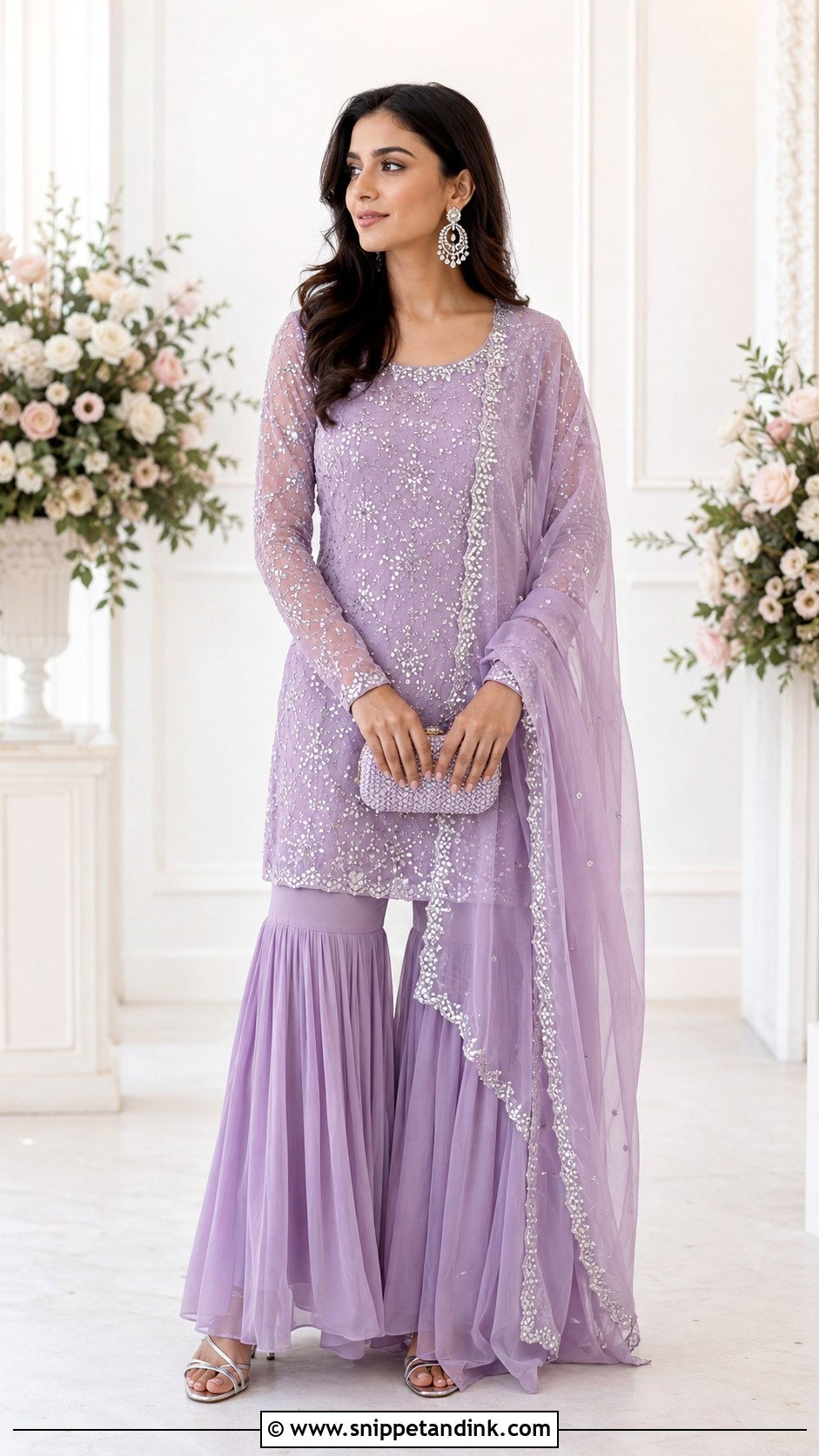
Lavender suits guests and bridesmaids who like cooler pastels. A short chiffon or georgette kurti with silver sequins and tonal thread gives just enough sparkle, and a lavender garara with fine gathers and a lightly worked knee band keeps it soft. Here is the one thing I’d insist on: a proper lining. Pale chiffon turns see-through under a photographer’s flash, and you won’t notice until you see the pictures. Add a sheer dupatta with a narrow crystal border, over both arms or from one shoulder. Silver earrings, a lilac clutch and metallic sandals finish it, with loose curls or a low bun.
12. Orange Garara With Gota Patti Kurti
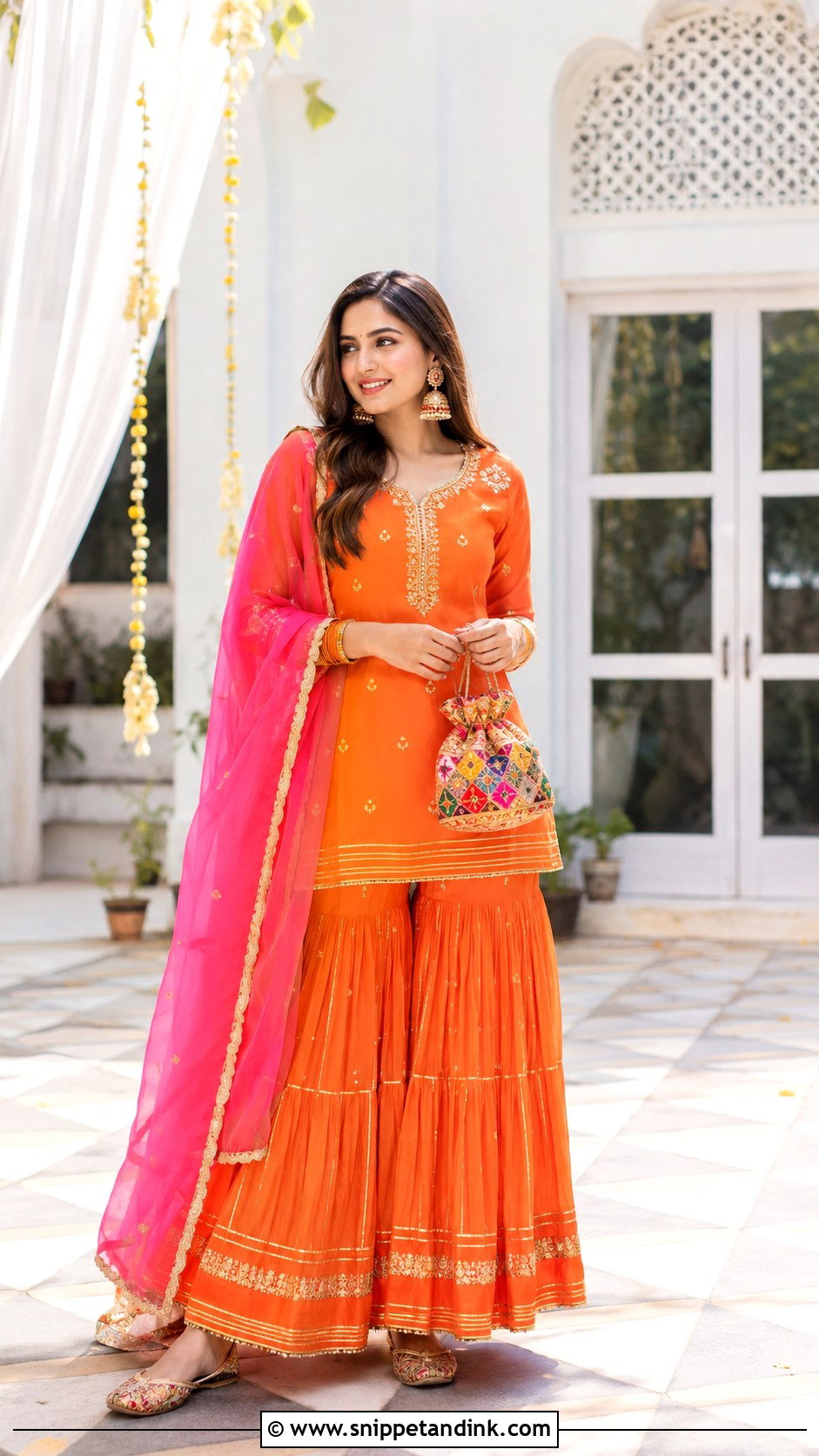
Orange with gota patti brings warmth to a mehndi or haldi, and gota, a flat metallic ribbon, stays light enough for a long afternoon. Choose a short cotton-silk or georgette kurti with symmetrical gold work and three-quarter sleeves, paired with a full orange garara with ribbon details at the knee seam and hem. A pink or yellow dupatta makes it playful, while matching orange looks more refined. Wear something else to the haldi itself if you can; turmeric stains gota and pale silk permanently. Gold jhumkas, slim bangles, a small potli, juttis and a braid with a few flowers keep it practical.
13. Teal Garara With Peplum Kurti
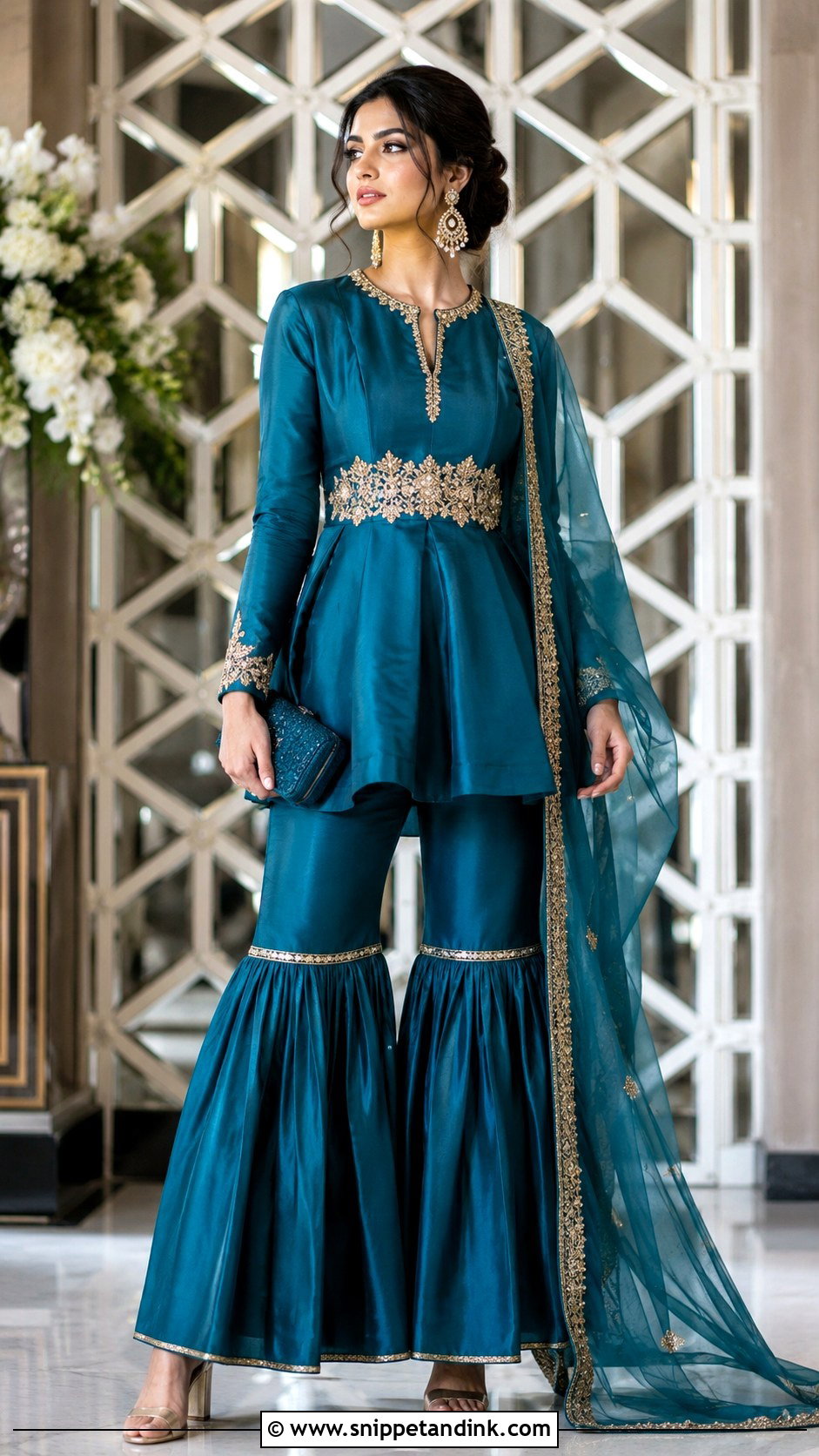
A peplum kurti gives teal a contemporary shape, and the key is where it ends. The peplum should finish above the widest part of the pants, so the fitted knee area still shows; if it falls lower, the two volumes merge into one shapeless block. Fine gold embroidery at the waist, neckline and sleeves defines the top. Pair it with a matching silk garara and a sheer dupatta with a narrow embellished border. The defined waist suits many body shapes, though I’d steer a very short-waisted figure toward a straight kurti instead. Gold statement earrings, a small teal clutch, block heels and a low ponytail finish it.
14. Powder Blue Garara With Cape Kurti
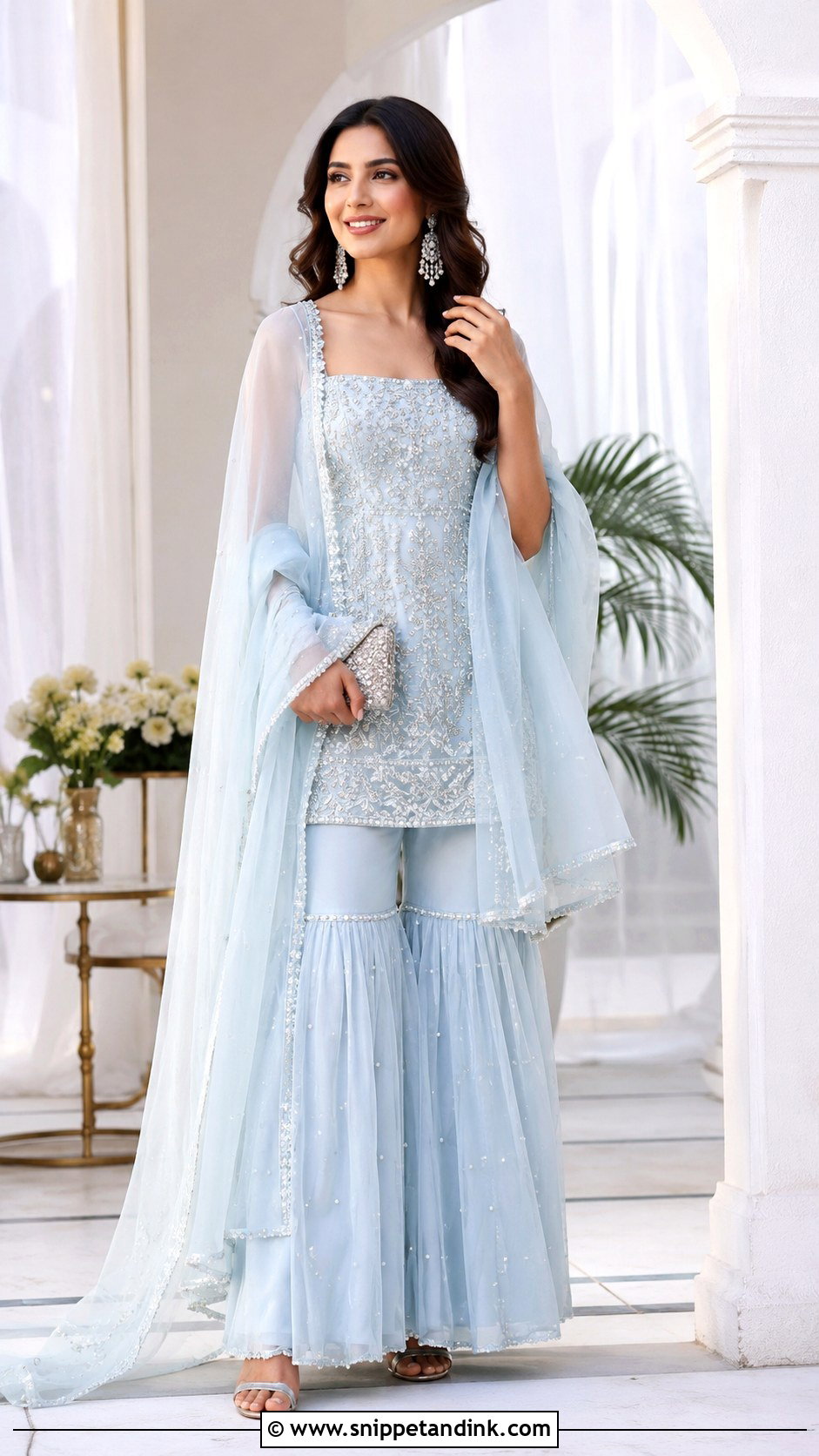
A cape kurti is light, modern and gives arm coverage without sleeves that feel tight in a crowded hall. Choose a fitted inner bodice with a sheer embroidered cape falling to the elbow or the waist, then a powder blue garara with silver thread, tiny pearls and a scalloped hem. The cape already acts as the upper layer, so I’d carry only a narrow dupatta over one arm. Ask for the cape to be tacked at the shoulder seams; loose capes slide back every time you hug someone. Crystal earrings, a silver clutch and light metallic heels suit it, with a neat bun or smooth waves for bridesmaids and daytime guests.
15. Magenta Garara With Bandhani Dupatta
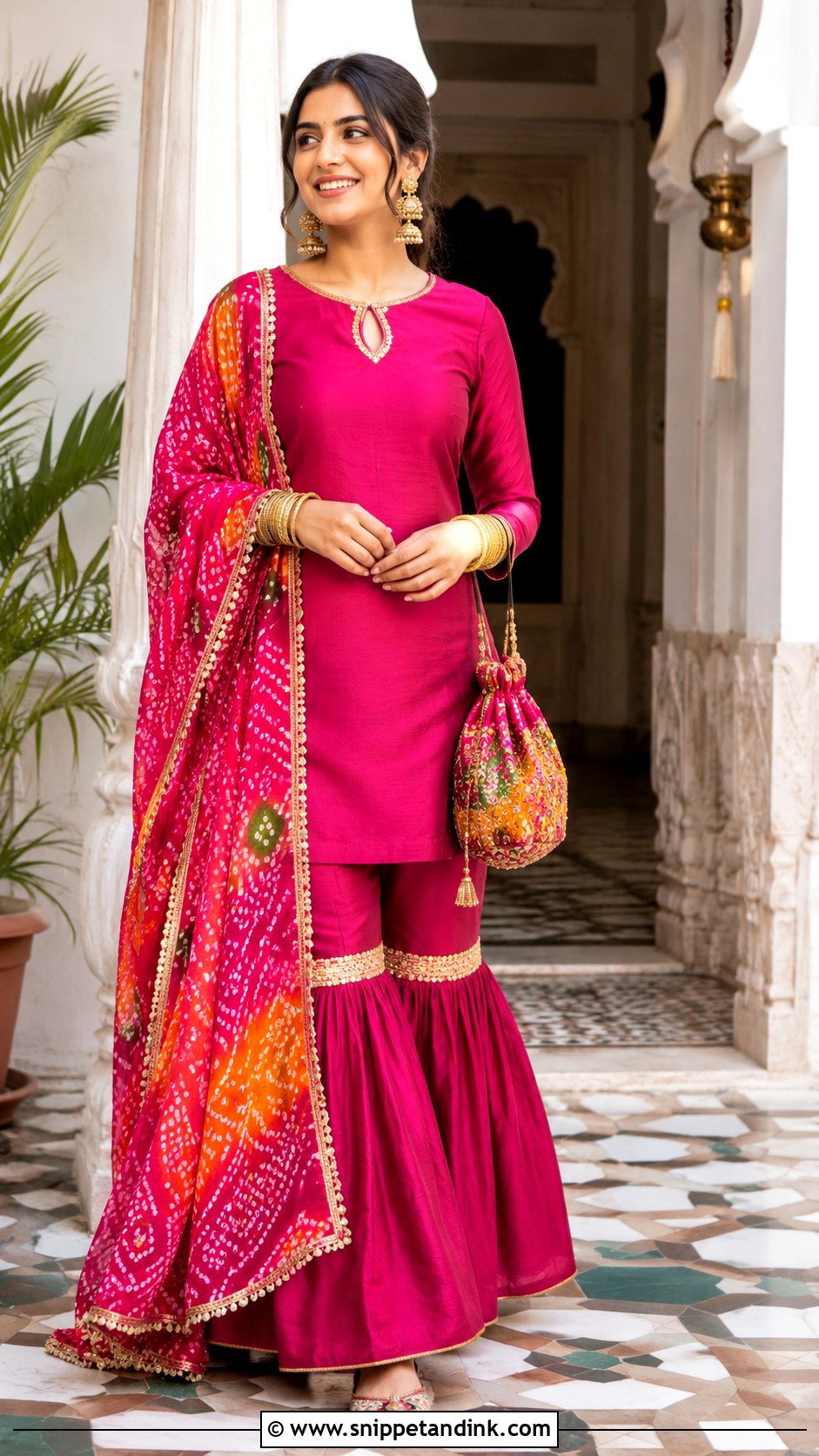
Here the dupatta leads and everything else follows. Bandhani is tie-dye made by pinching and binding tiny dots of fabric before dyeing, and its texture shows best against plain silk. So choose a plain raw silk kurti with an embroidered neckline and sleeve borders, and a magenta garara with gold gota bands at the knees and hem. Keep embroidery off the rest of the outfit. Gold jhumkas, stacked bangles, a colourful potli and magenta juttis complete it. The dupatta can carry yellow, green, orange or white dots, which makes it easy to match a family colour scheme. A long braid or a centre-parted bun suits it.
16. Mint Green Garara With Organza Kurti
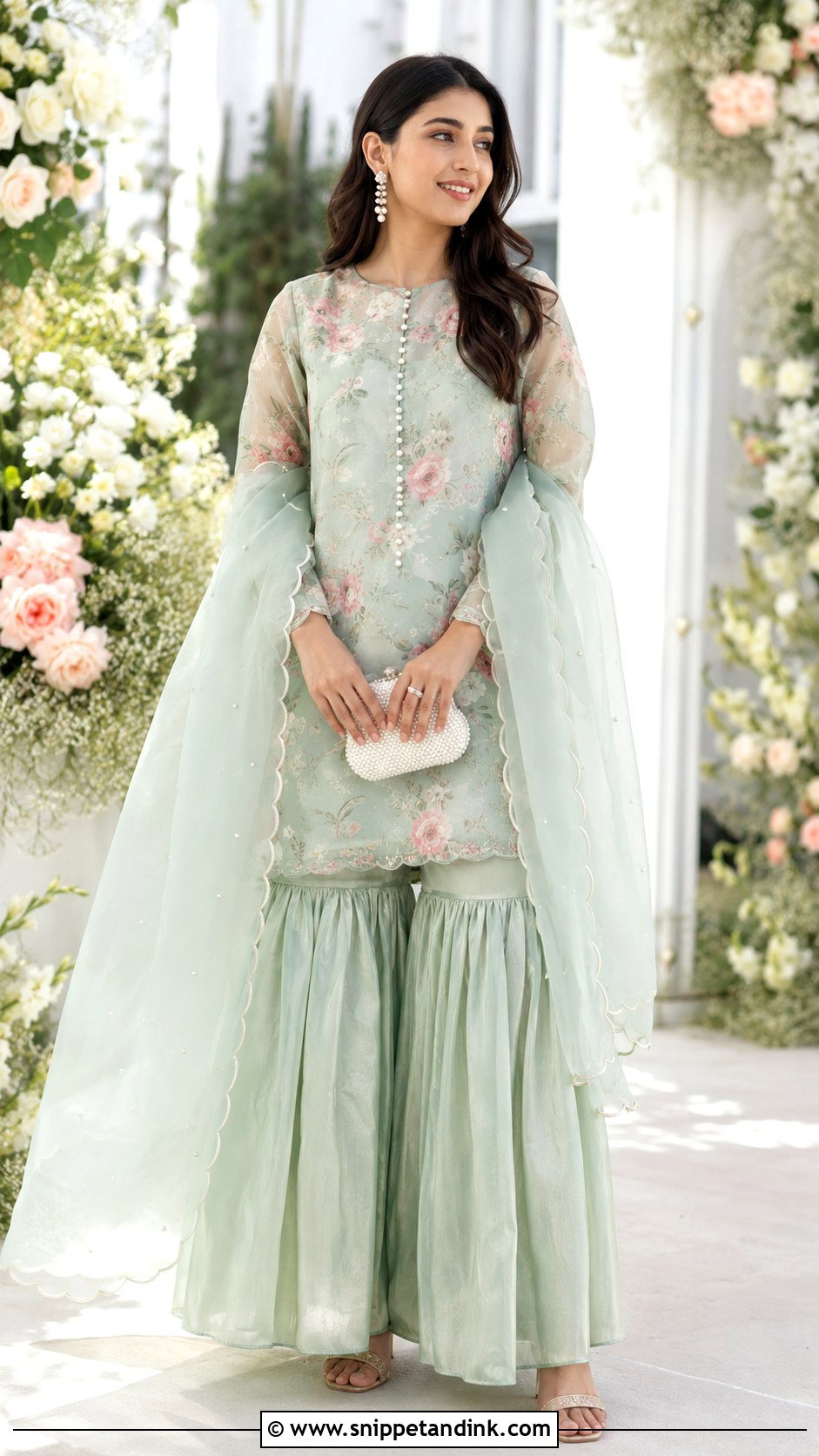
Mint is the coolest-looking colour I can put on a summer guest. A lined organza kurti with delicate florals, pearl buttons and puffed or straight sleeves pairs with a mint silk garara that has soft gathers and a narrow border; silk below gives the flare weight so it falls rather than floats. A matching organza dupatta with tiny appliqué flowers or a scalloped edge adds softness. Pearl earrings, a white clutch and silver or champagne sandals are enough, because heavy jewellery would hide the translucent work. Organza wrinkles where you sit, so steam it on the morning, not the night before. Soft curls or a low bun finish it.
17. Rust Garara With Brocade Kurti
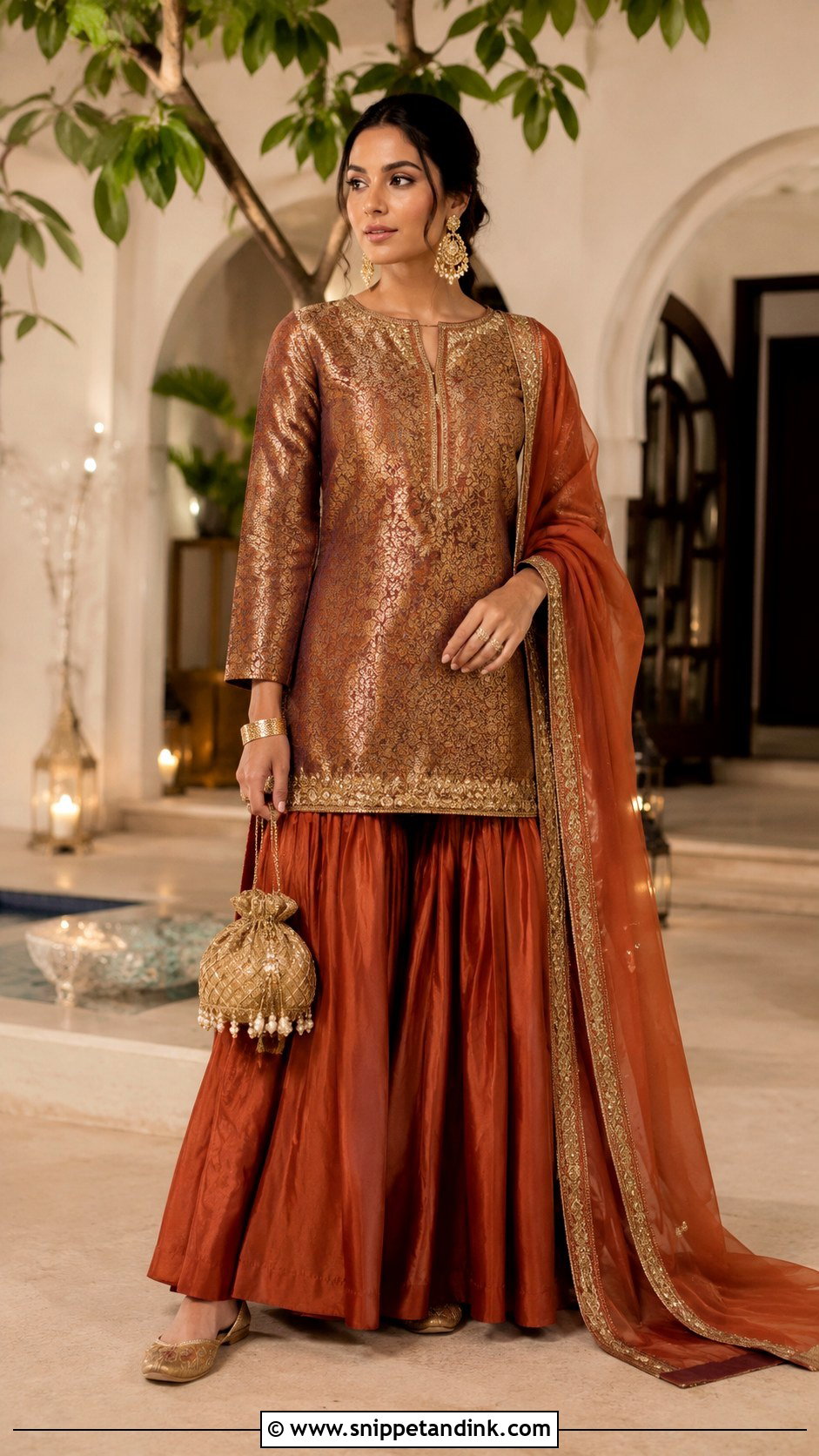
Rust is for the family member who wants depth without bridal red. A short brocade kurti with antique gold motifs pairs with a rust silk garara fitted above the knee and opening into fluid flares. With brocade on top, the dupatta should be plain chiffon with a brocade border, or the outfit becomes crowded. Antique gold earrings, a cuff, a structured potli and embroidered flats suit the colour. Rust needs warm makeup; cool pinks on the lips can look chalky against it. Under the warm lighting of an autumn evening, this is one of the most flattering choices for a mother or aunt of the couple.
18. White Garara With Multicolor Embroidery
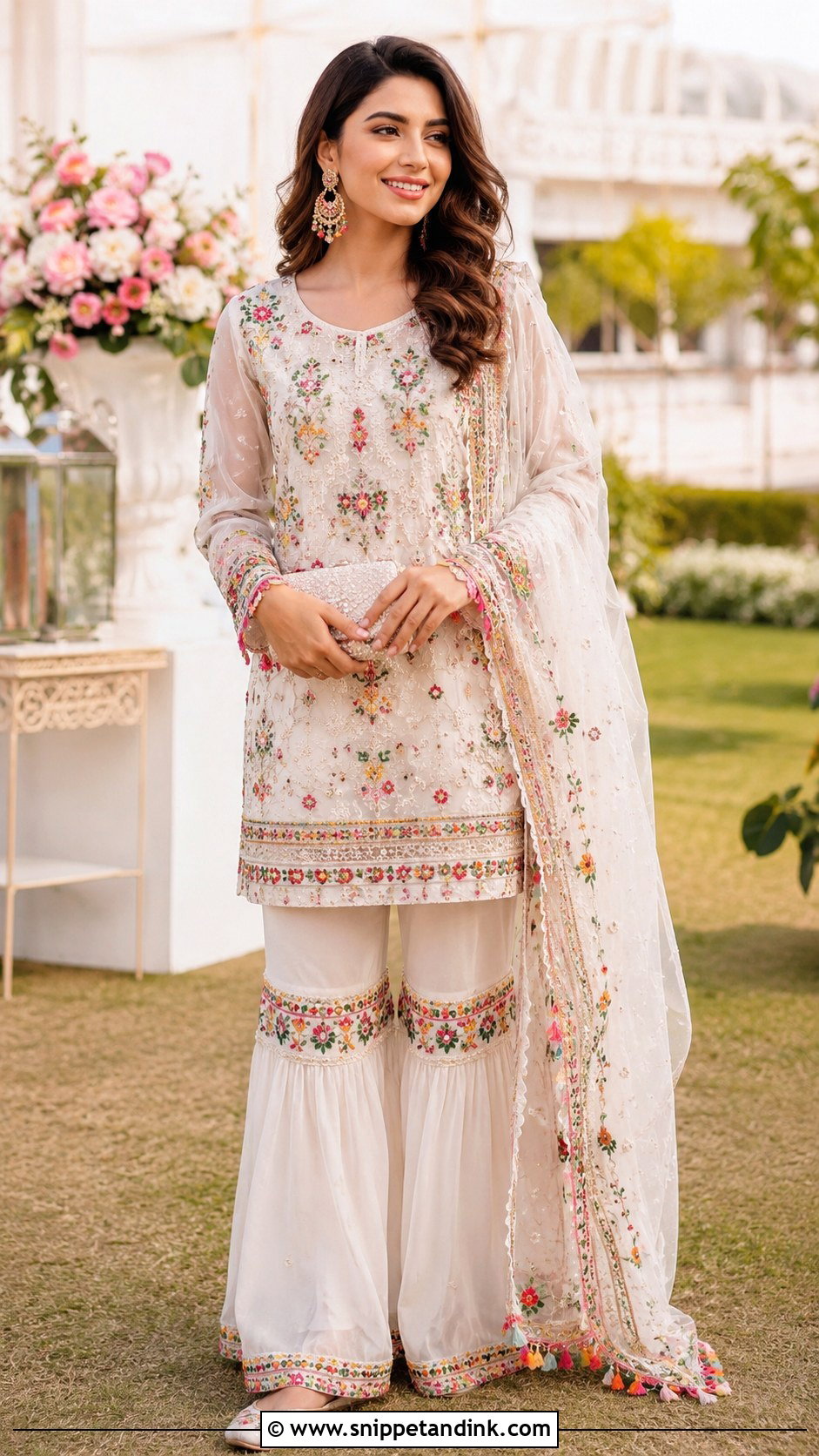
A white garara with multicolour florals is joyful, but white has different meanings across families, and some keep it for mourning. Guests should confirm it’s welcome before buying. If it is, choose a short white kurti with pink, green, blue and yellow threadwork and a garara that repeats those colours in the knee bands and lower border. A sheer white dupatta with colourful tassels keeps it light. Bright earrings, a beaded clutch and white juttis stitched in matching threads finish it. White shows grass and dust within minutes outdoors, so I’d have the hem finished a little shorter than usual. Soft waves or a braided bun keep it relaxed.
19. Champagne Garara With Crystal Kurti
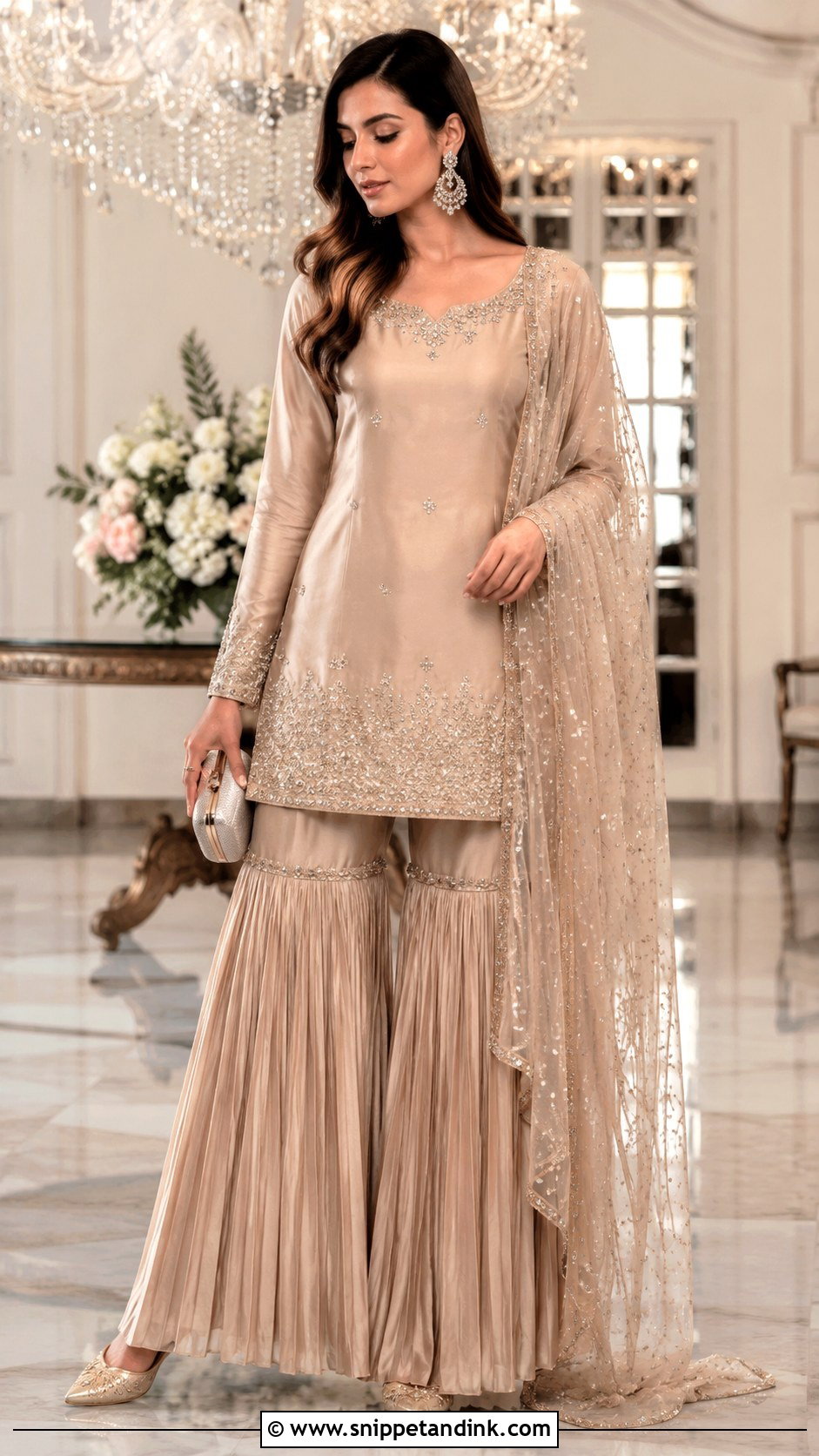
Champagne gives quiet glamour indoors. Choose a short satin or tissue-silk kurti with crystals at the neckline, cuffs and hem, and a matching garara with a smooth fitted upper leg and finely pleated flares. A sheer champagne dupatta with a crystal edge adds sparkle without colour. Reflective fabric and crystals already catch light, so stop at chandelier earrings, a metallic clutch and pointed flats. Satin marks easily where it creases, so I’d suggest tissue silk if you’ll be seated for a long dinner. It works for bridesmaids, reception guests or a bride’s second outfit.
20. Pastel Floral Garara With Asymmetric Kurti
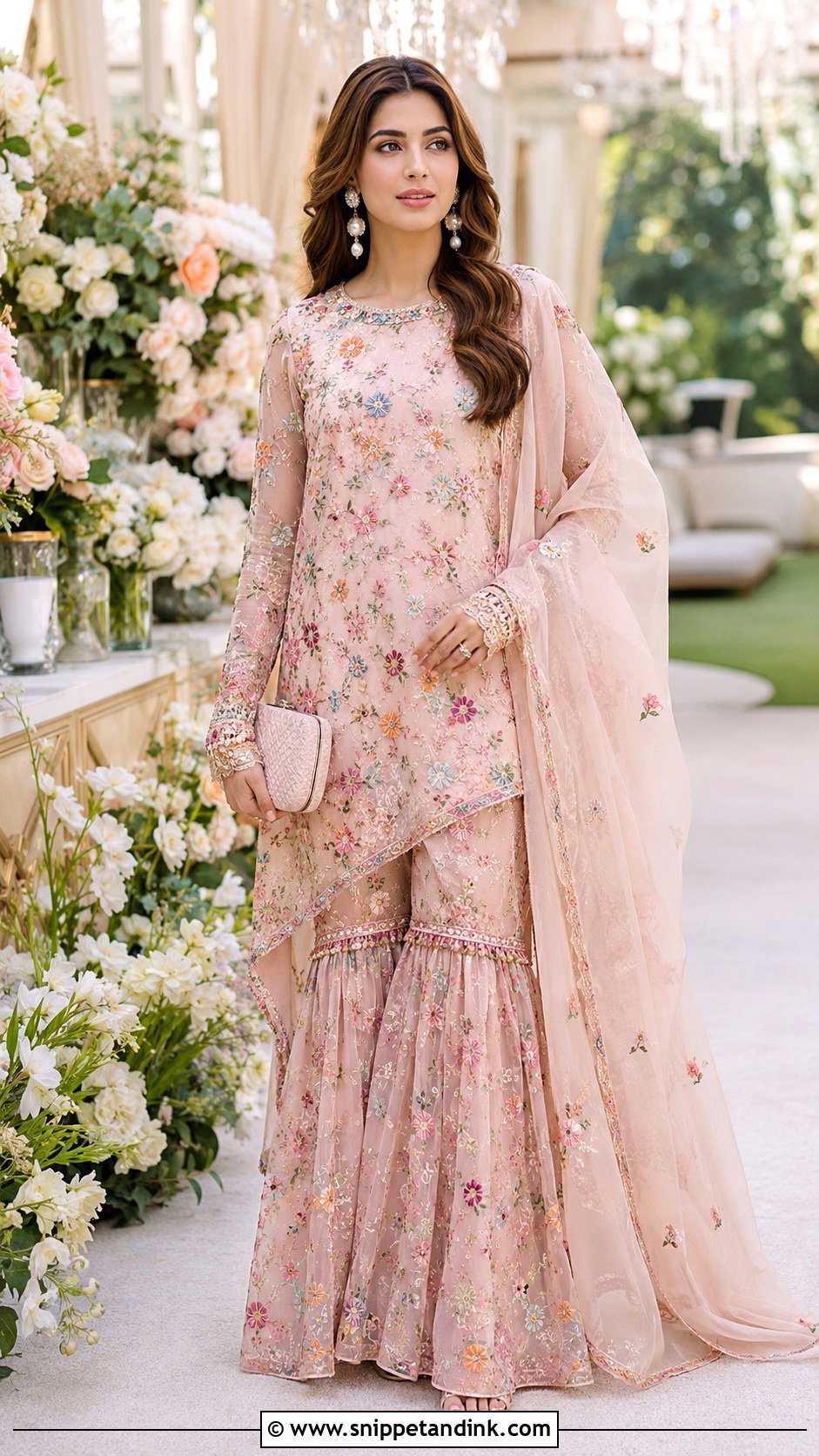
An asymmetric kurti is a fun, modern cut, but it has one rule: the longer side must still end above the knee joint, or the garara’s construction is hidden. Floral embroidery in peach, lilac, mint and blue sits well on an ivory or blush base. Add a coordinating garara, a light organza dupatta, pearl earrings and a small pastel clutch. Neutral embellished sandals keep the palette from getting busy. A clean ponytail, half-up waves or a low bun suit the cut. I’d suggest this one to younger guests and bridesmaids at a daytime function rather than to anyone who prefers classic tailoring.
Ordering Matching Gararas for a Group of Bridesmaids
Group orders are where I see the most last-minute panic. Dyed silks and chiffons vary slightly from batch to batch, so a pink ordered in March rarely matches one ordered in May. Order all the fabric together, from one roll if possible, and take every measurement in the same week.
Agree on the kurti length as a group, too. A garara reads best when every kurti ends at about the same point above the knee joint, even though the women are different heights, so each one is cut relative to her own knee rather than to a fixed length. Leave a few weeks between delivery and the wedding for alterations, because someone always needs the waist taken in.
Wearing the Garara Again After the Wedding
A guest garara doesn’t have to live in a cupboard. The flared pants pair well with a plain short kurti for Eid or a family dinner, and the embroidered kurti on its own looks good over straight trousers. A heavy dupatta can be worn with a simple suit at the next wedding you attend. I store each piece separately, folded in muslin rather than plastic, so the metallic work doesn’t tarnish and the pieces are ready to mix.
Which Garara Belongs at Which Function
Start from your role, then the event, venue and season. Brides usually lean toward red, maroon, ivory or Banarasi outfits with traditional embroidery and ceremonial jewellery, while guests and bridesmaids have more freedom with pastels, florals, lighter fabrics and cape or peplum kurtis. Whatever you wear, check two things at the final fitting: the knee seam should sit at your knee, and the flare should brush the floor in your actual shoes without dragging. Think of kurti, garara, dupatta, shoes, bag and jewellery as one outfit. Secure draping and comfortable footwear are what let you sit through the ceremony and still dance later.
You'll Like These Ideas:


Leave a Reply