
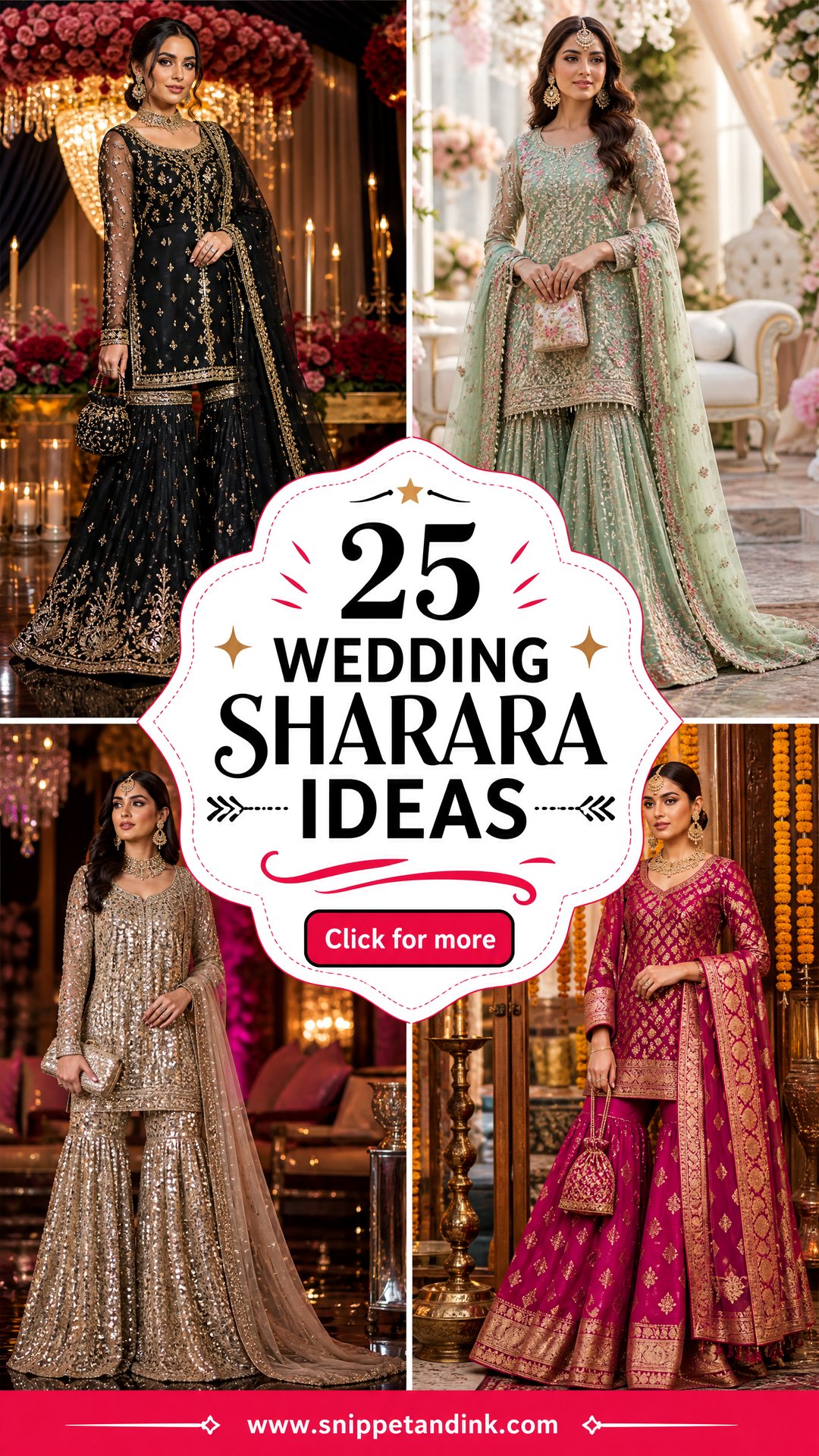
A sharara gives you the swing of a lehenga with the freedom of trousers, and that’s why I keep suggesting it for functions where you’ll dance, sit on floor cushions or stand for hours. It works for the bride, her sisters, bridesmaids and guests alike. Right now I’m seeing short embroidered kurtas, jacket and cape versions, pearl work, mirror work, pastels next to deep jewel tones, and far lighter fabrics than a few years ago. Each of the looks below can be pushed modest or modern depending on the dupatta and the jewelry. I’ve grouped notes on fabric, fit and occasion into each one, because the same silhouette can feel very different at a haldi and at a reception.
Give Your Tailor These Measurements, Not Just Your Size
A sharara is mostly custom made or altered, and the measurements decide whether it swings or just hangs. I ask brides to bring the shoes they’ll wear and to be measured standing, never sitting.
- Full length from waist to floor with the shoes on. The hem should just brush the floor; any longer and you’ll tread on it on stairs.
- Waist where you’ll actually tie the drawstring, which is often a little lower than your natural waist.
- Knee position, if you want the traditional cut. In that style the trousers are fitted to the knee and flare from a joint, often hidden under a band of gota.
- Hip, measured over whatever underwear you’ll wear on the day.
- Kurta length, decided together with the sharara so the hem sits where the flare begins or clearly above it, never just beside it.
Heavily embroidered bridal sets can take several months to make, and timing varies a lot between workshops, so order early and leave room for at least two fittings. A plain guest sharara can often be stitched far faster.
1. Red Bridal Sharara Outfit
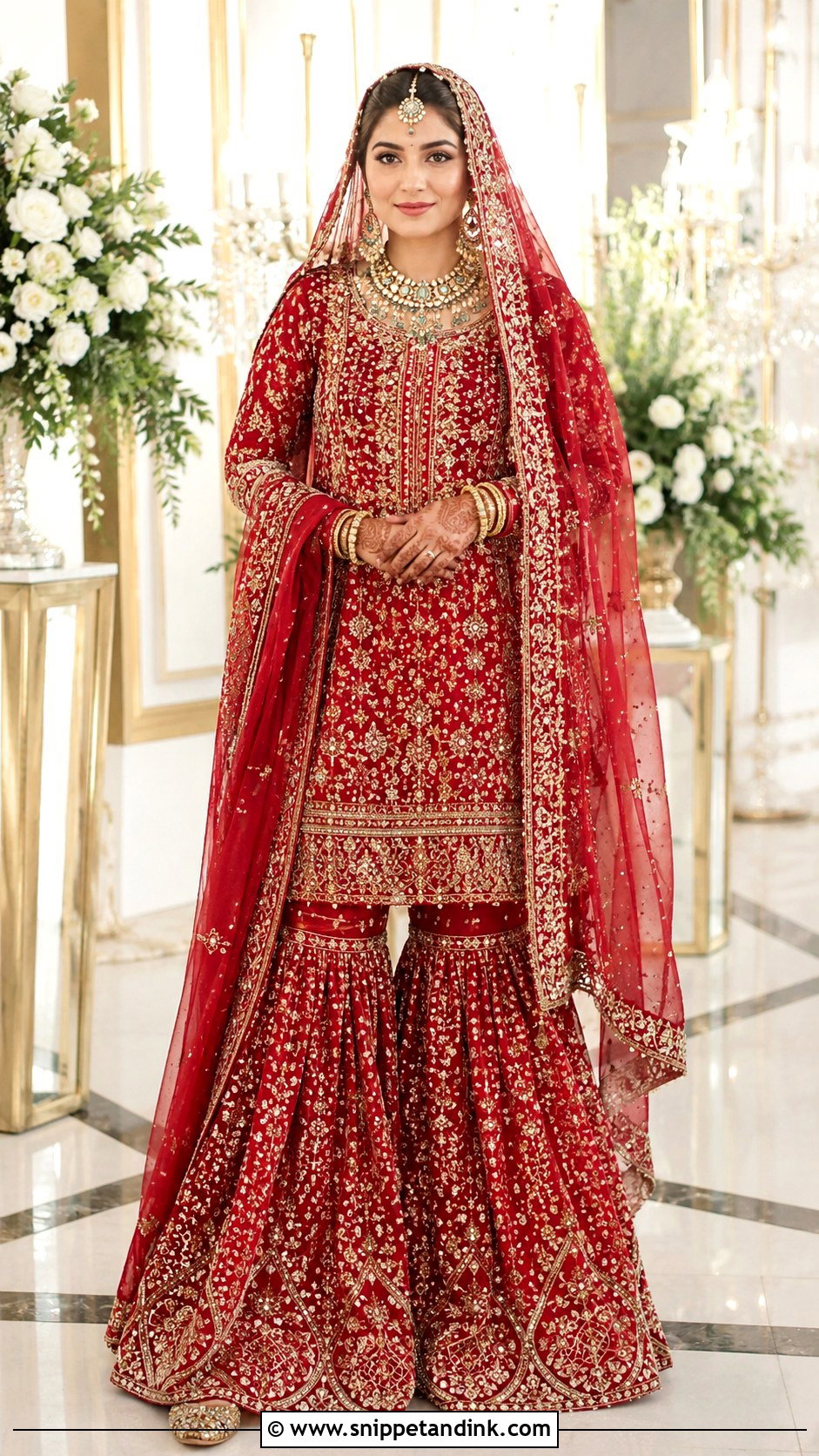
Red is still the color I’m asked for most for the wedding ceremony itself, and a red bridal sharara outfit gives you that weight of tradition while letting you walk, sit and climb into a car without a stiff can-can. Choose a heavily embroidered short kurta over a wide sharara in silk, brocade or georgette, with zardozi, gota patti or sequins doing the bridal work. The dupatta needs a strong border; I’d drape it over the head for the ceremony and across both shoulders afterwards. Kundan, stacked bangles, embroidered juttis and a neat bun finish it. Ask for the sharara to be lined in a soft cotton, since heavy zardozi on bare silk scratches the legs over a long day.
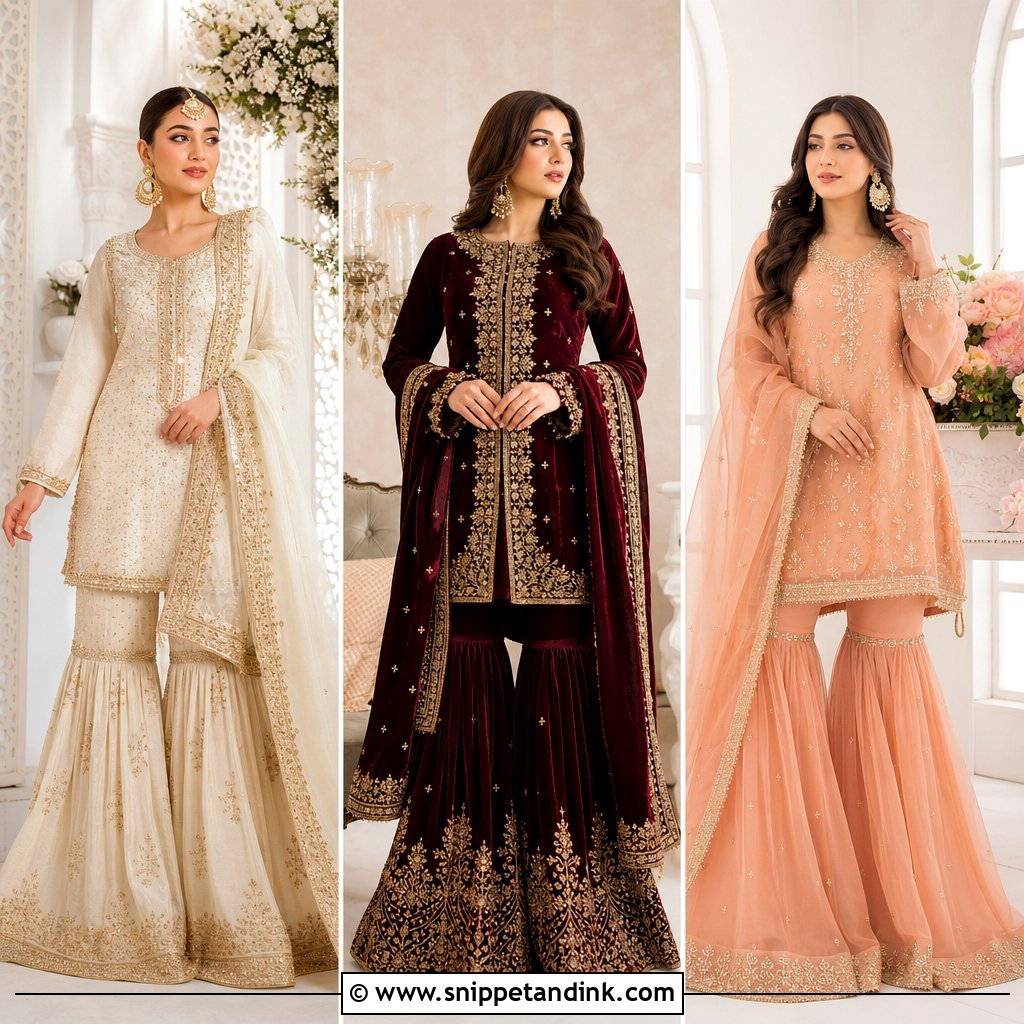
2. Ivory Wedding Sharara Outfit
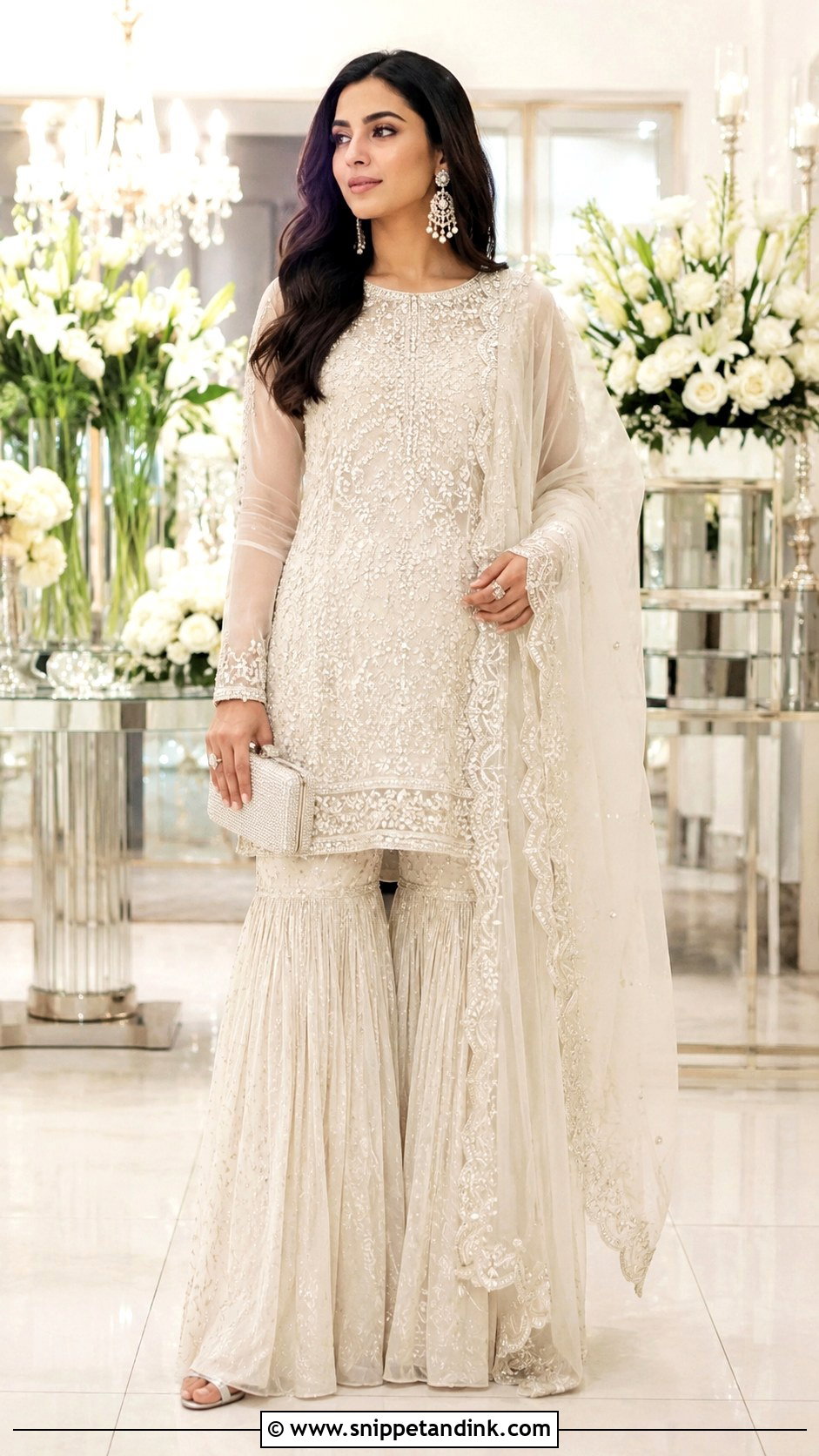
Ivory needs texture or it reads as unfinished, so I look for pearl embroidery, tone-on-tone thread or a scatter of silver sequins on the kurta. It suits engagements, daytime weddings and receptions, with a flowing sharara in organza, chiffon or crepe. A sheer dupatta with a scalloped or crystal edge keeps it delicate. Pearl earrings, a fine maang tikka, silver heels and a structured clutch finish it. If pure ivory washes you out in photos, bring in champagne, beige or dull gold near the face.
3. Pink Sharara For Wedding Guest
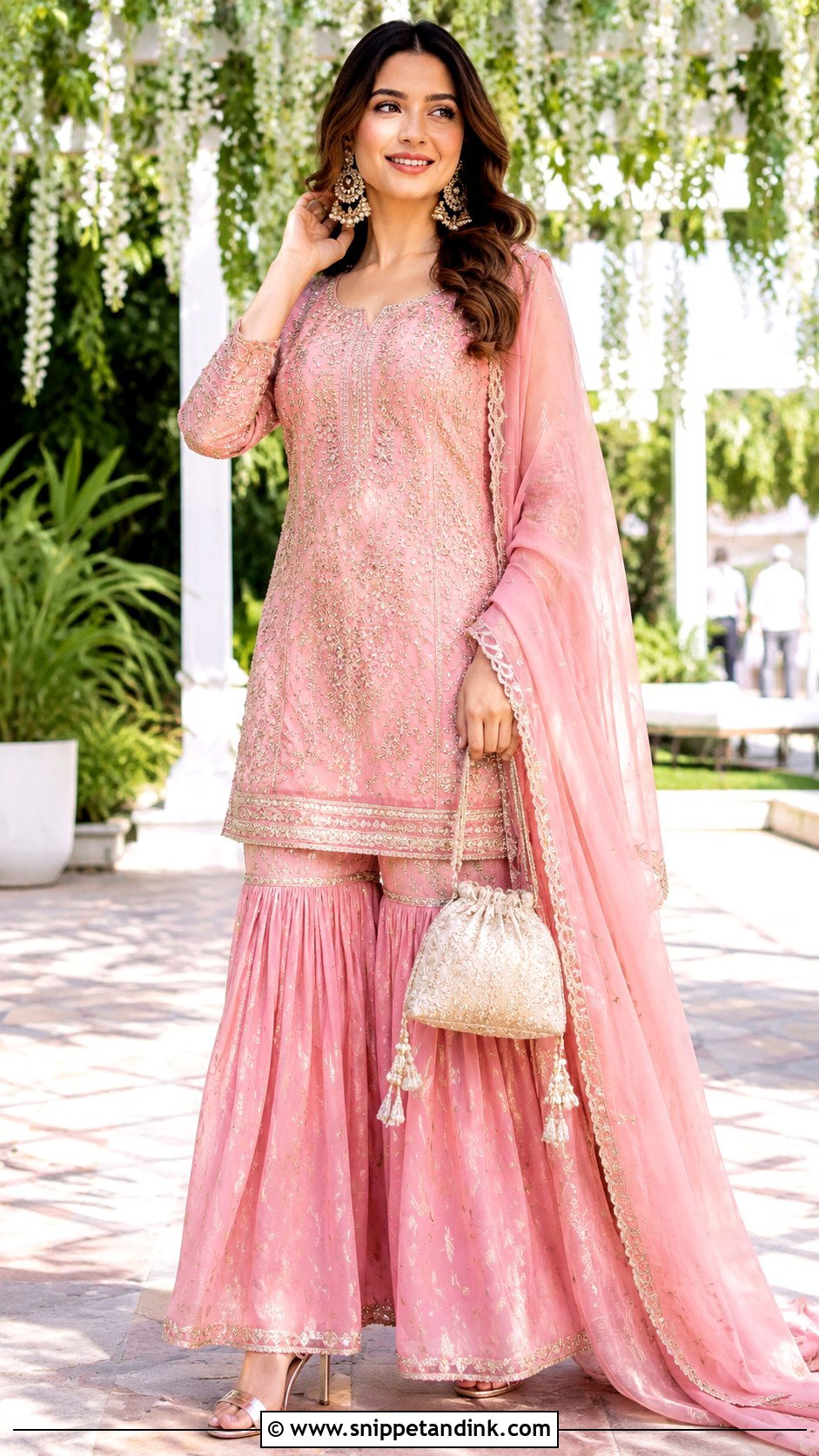
Pink is the safest festive color for a guest because it celebrates without competing with the bride, who in many families wears red. Blush or dusty pink with floral embroidery and a light dupatta suits a daytime function. For an evening, go deeper: rani pink with sequins, mirror work or a gold border. Statement earrings, soft curls, metallic heels and a small potli finish it. I’d keep the makeup rosy and glossy rather than heavy. Cousins and close friends attending several events can rotate a pink set by changing only the dupatta and earrings.
4. Green Mehndi Sharara Outfit
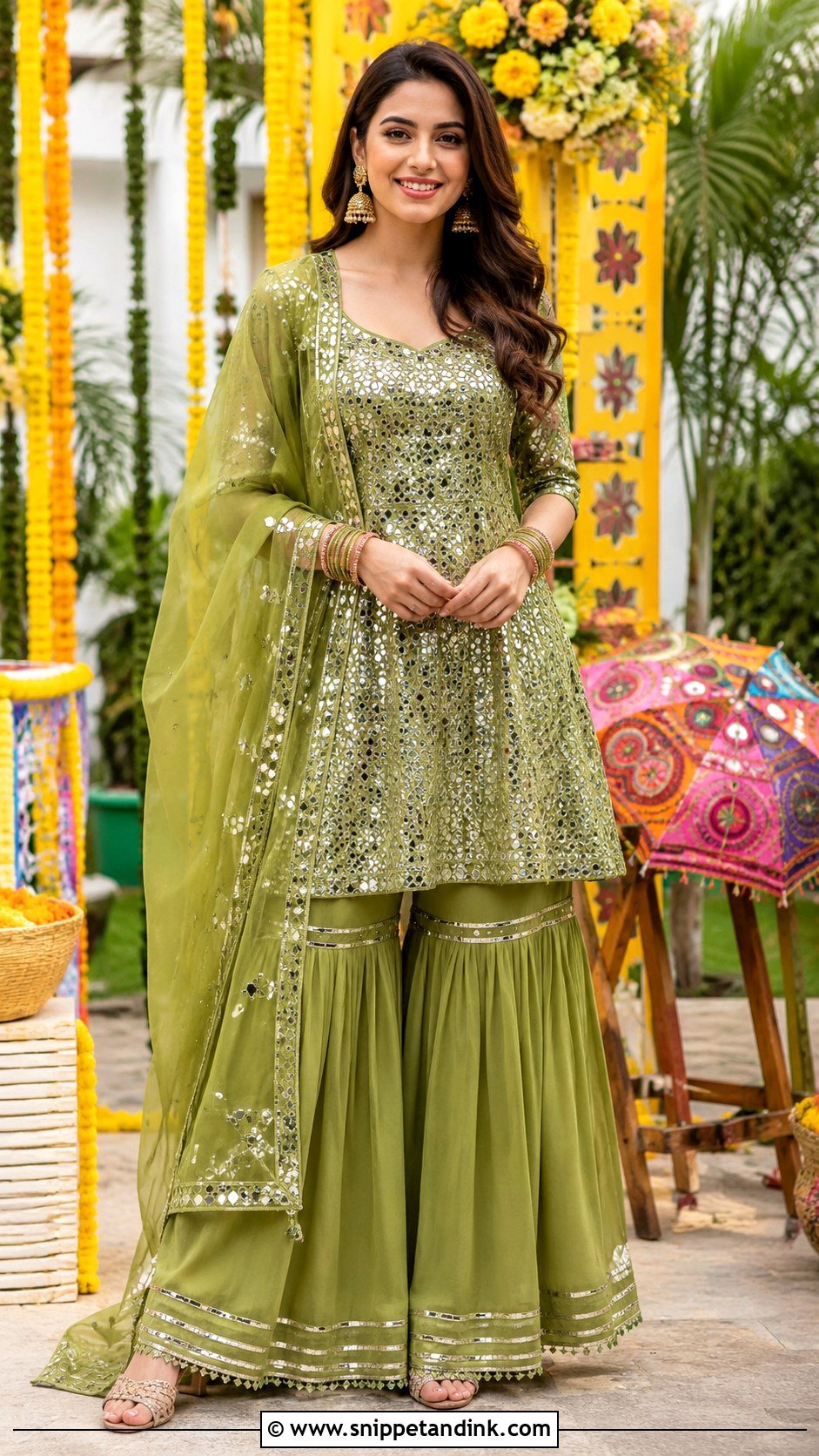
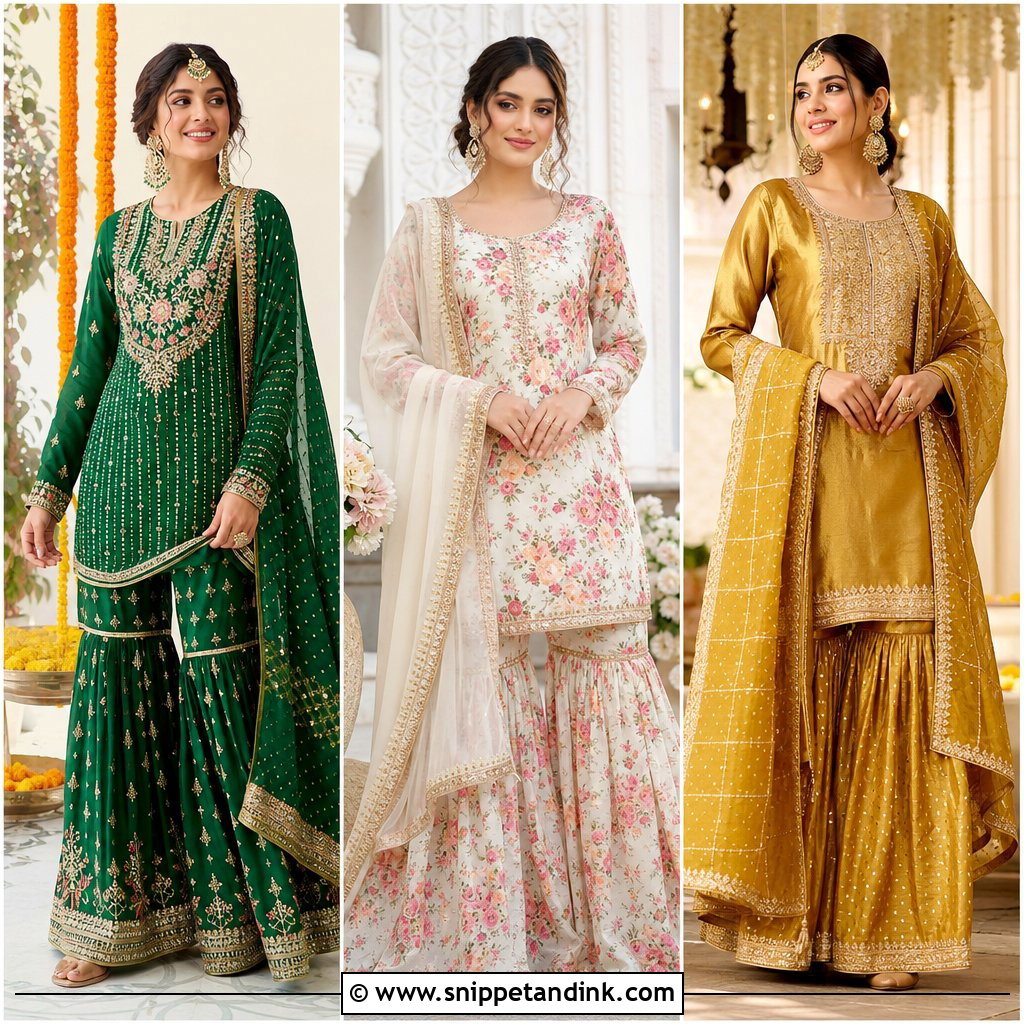
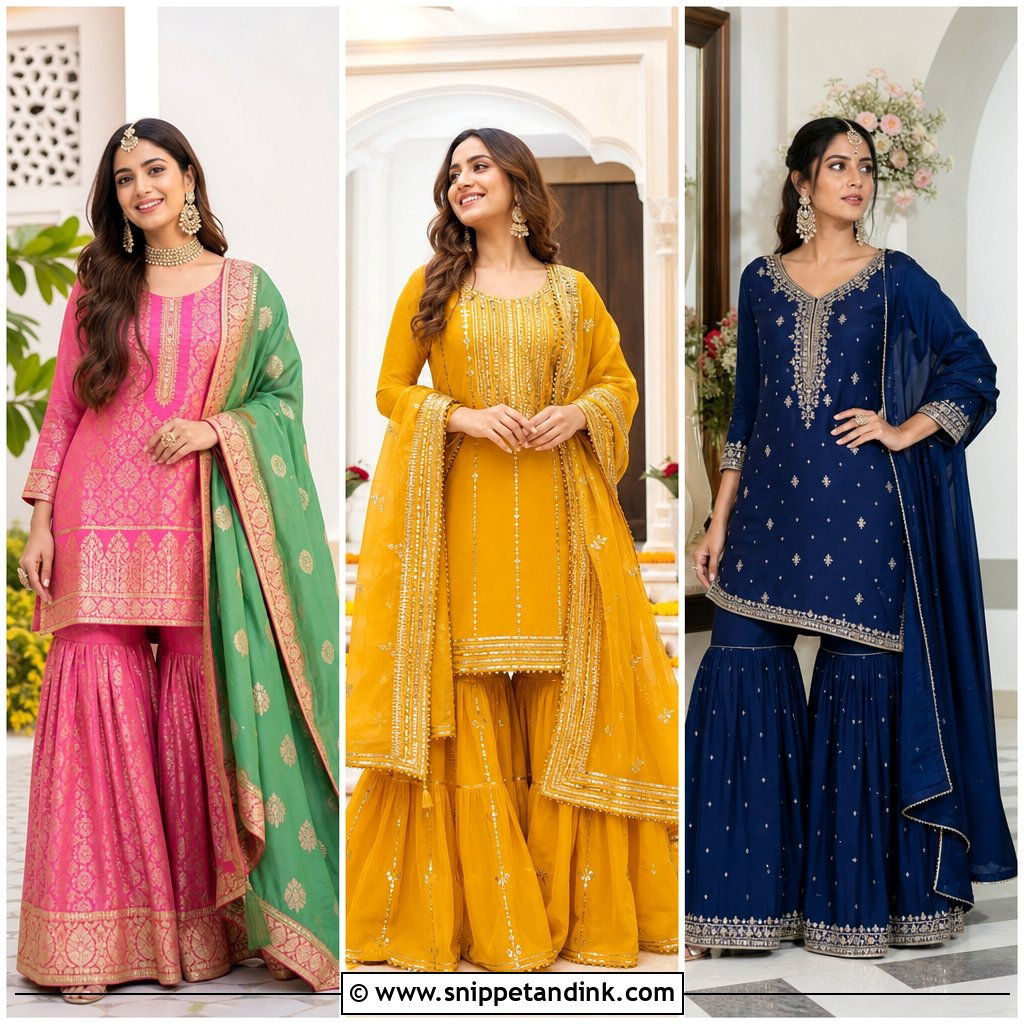
Green is traditional at the mehndi for good reason: it hides henna smudges and looks bright in outdoor daylight. Emerald, lime, olive and parrot green all work, and the right one depends on your undertone more than the trend. A green mehndi sharara outfit with a short mirror or gota kurta lets you dance and sit cross-legged while your hands dry. Pin a light dupatta on one shoulder so it can’t slide into wet henna. Gold jhumkas, bangles and embroidered wedges finish it, with yellow, pink or orange coming in through the dupatta or jewelry. One practical point: if you’re the one getting mehndi, choose short or three-quarter sleeves, because long sleeves will drag across the paste.
5. Yellow Haldi Sharara Outfit
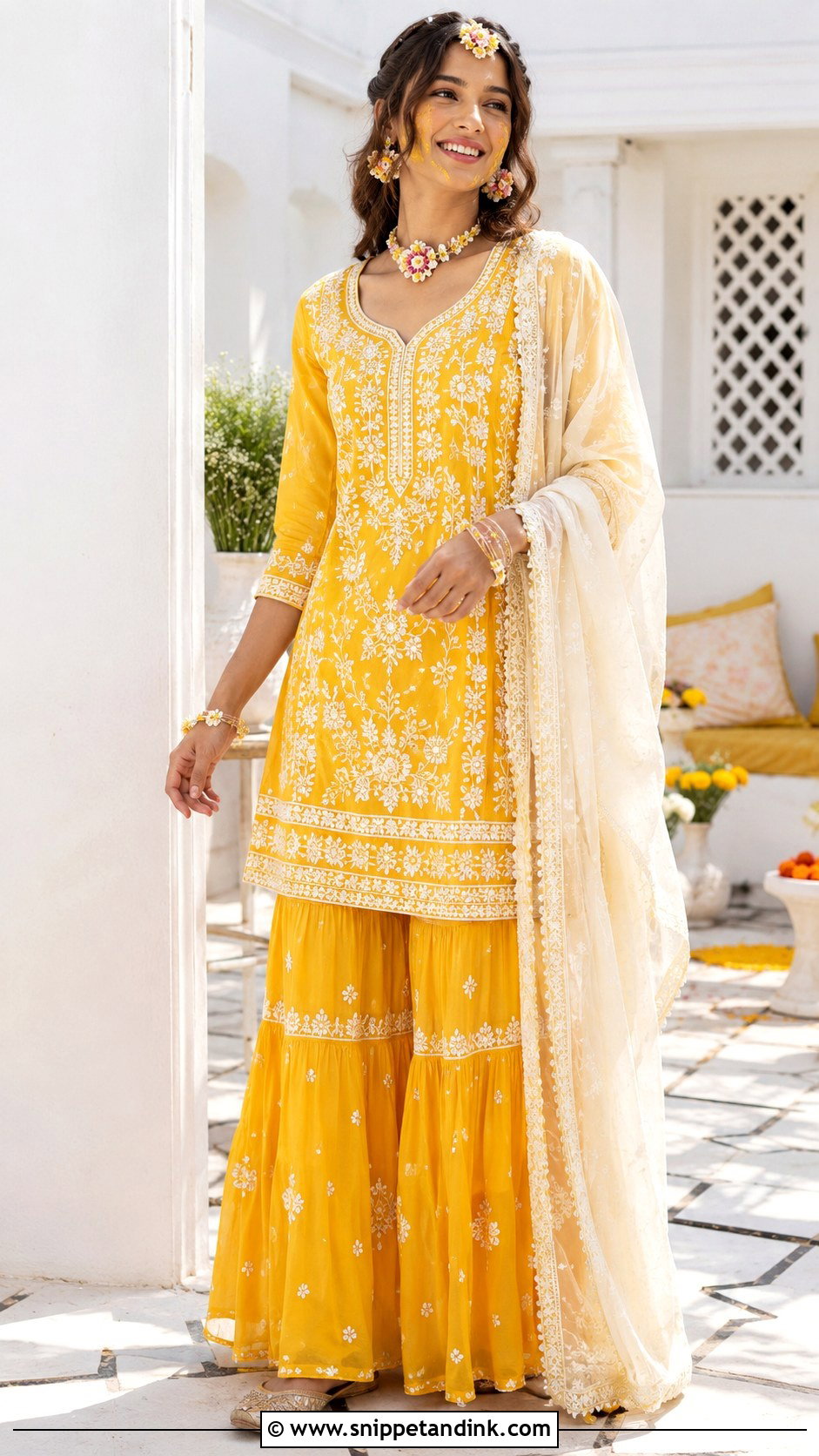
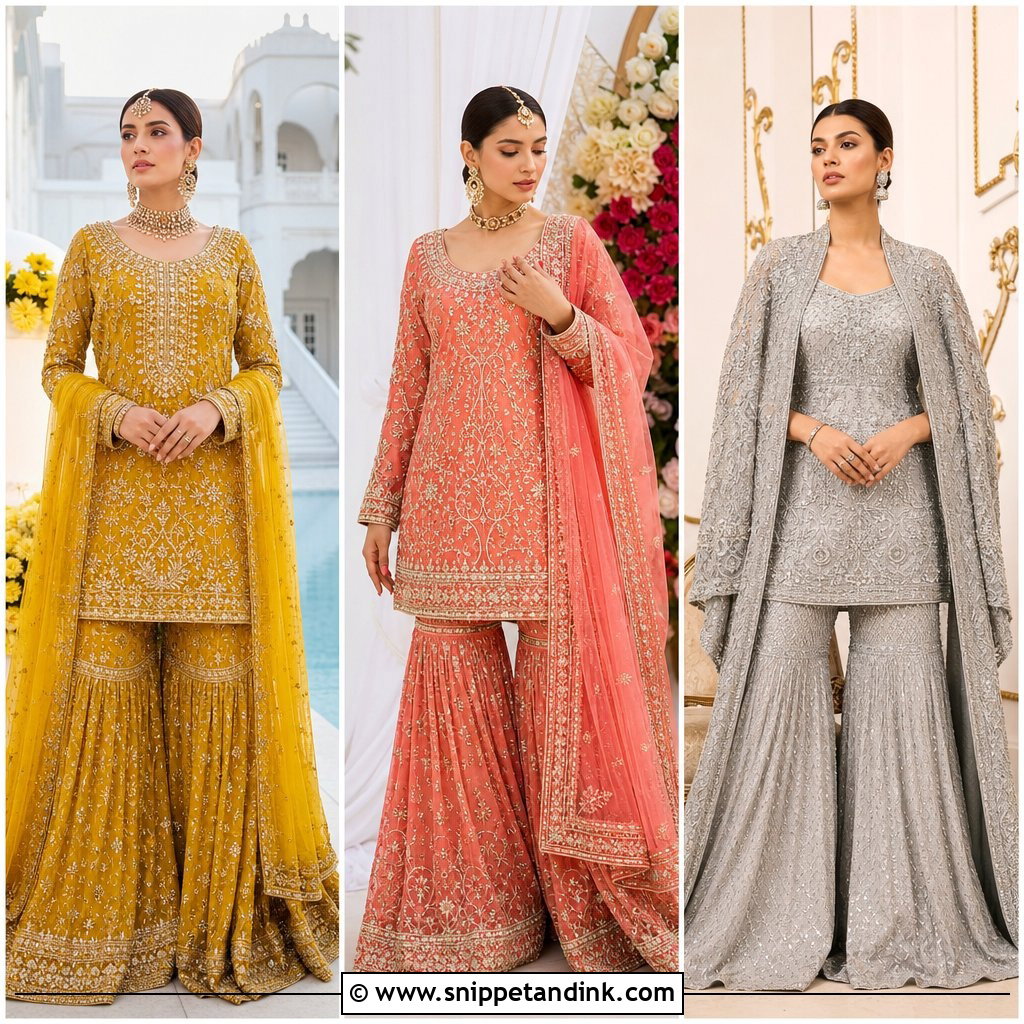
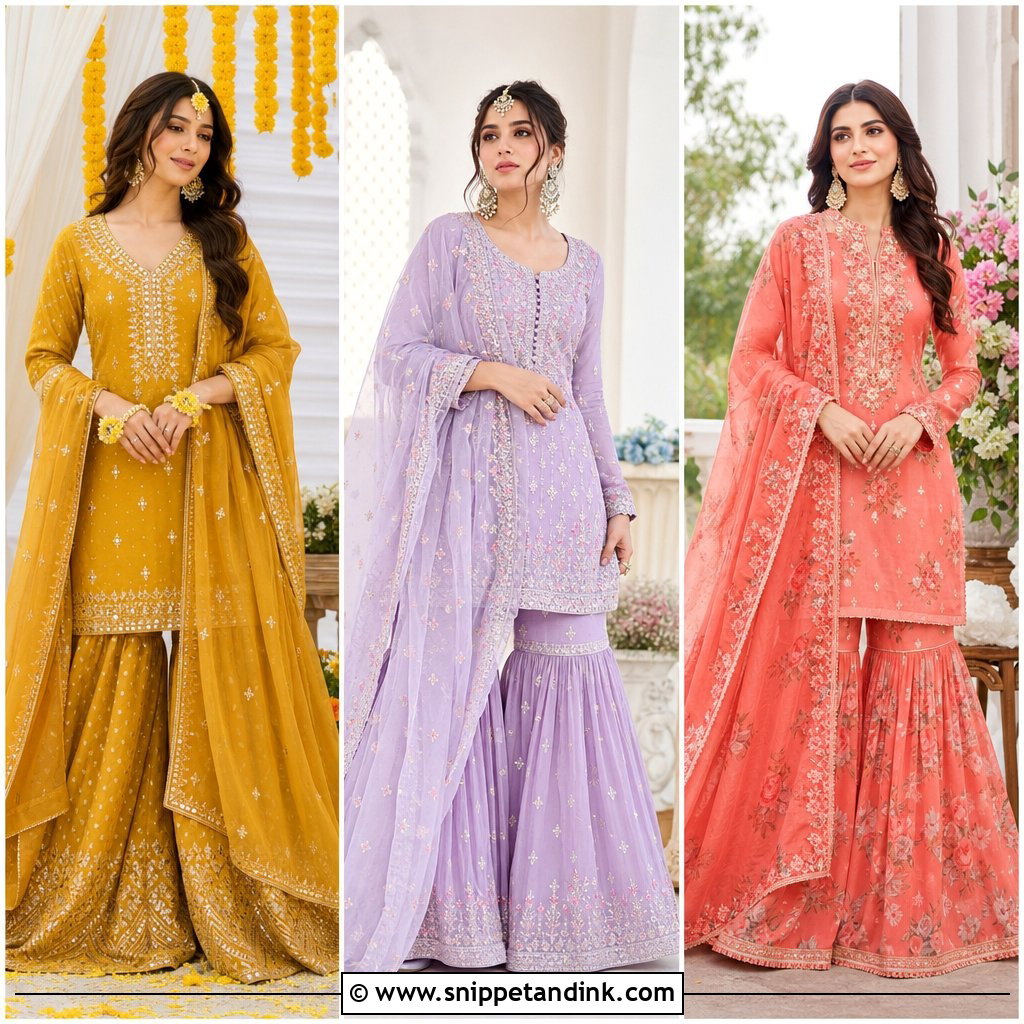
Haldi paste stains, and it stains light fabric for good. So for a yellow haldi sharara outfit I always ask whether the wearer is being smeared or watching. If it’s you, choose cotton silk or a simple georgette you’re happy to sacrifice, and skip delicate organza. Guests can go lighter and prettier. White thread, small mirrors or tiny florals on the kurta keep it festive, with an ivory, peach or green dupatta. Floral jewelry, plain bangles and comfortable juttis suit a sunny morning outdoors, and makeup should be light because some of it will come off.
6. Black Sharara For Wedding Reception
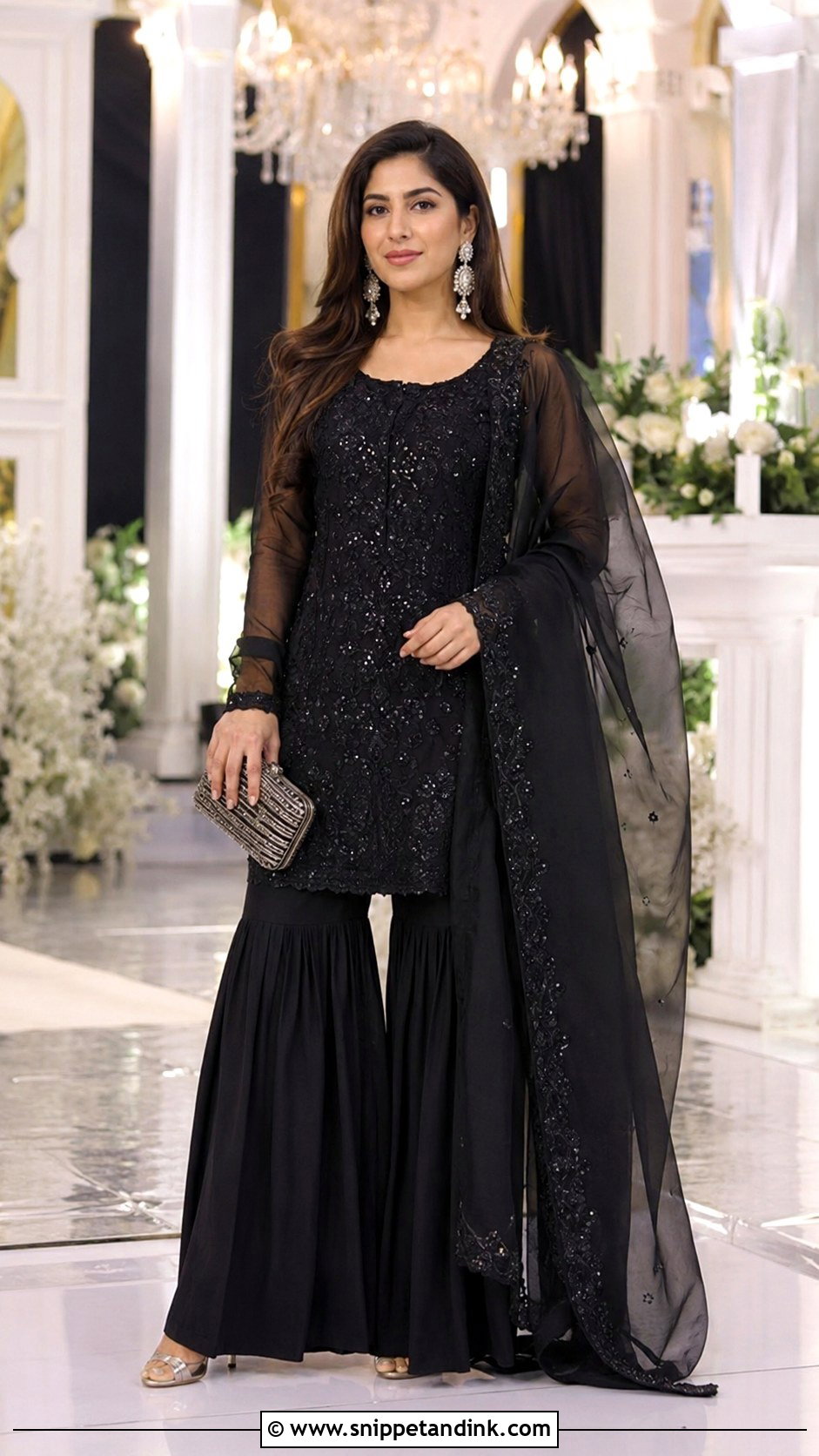
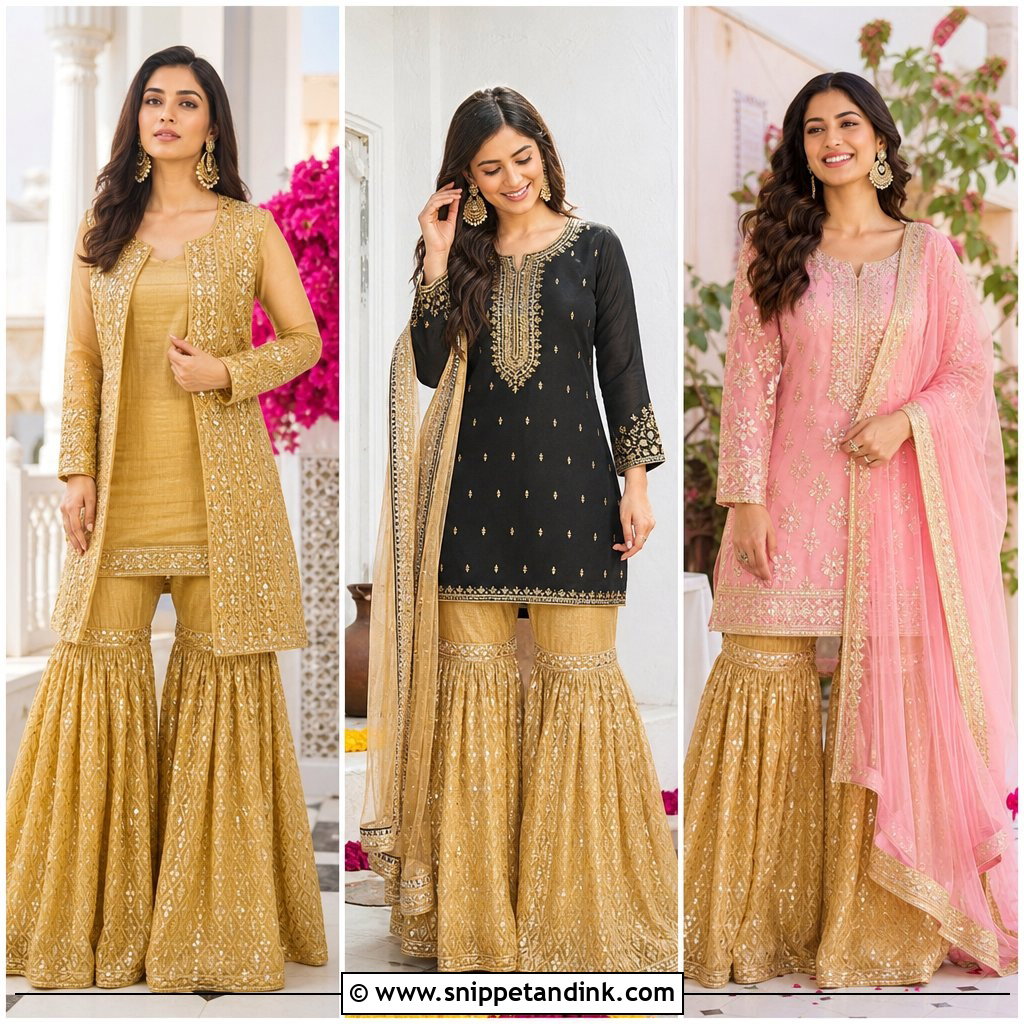
Black was once avoided at weddings in many families, and I’d still check with yours before wearing it. For a reception where it’s welcome, a black sharara with gold embroidery, silver sequins, crystal work or velvet trim looks sharp and formal. A fitted short kurta balances the wide trousers, and a long embroidered jacket can replace the dupatta if you want more coverage. Chandelier earrings, metallic heels and a box clutch suit it, with lined eyes and a nude or berry lip. Black shows every lint speck and stray hair under flash, so pack a small lint roller.
7. White Sharara With Dupatta
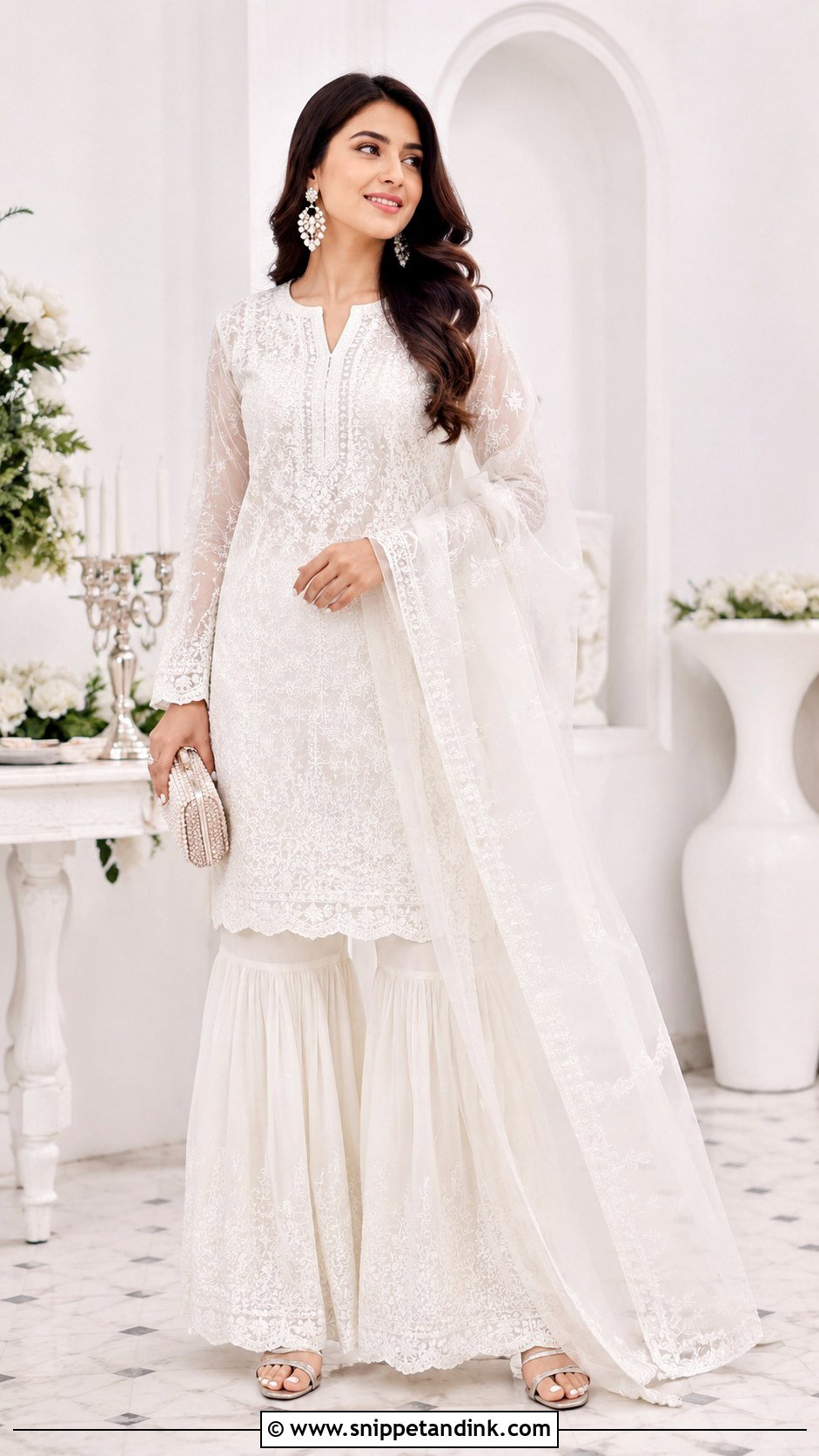
The dupatta carries this outfit. A white or off-white set with chikankari, pearls or fine silver work is quiet on its own, and an organza, net or chiffon dupatta with a proper finished border gives it ceremony. Without that, white can slip into looking like daywear. I add texture with lace edges, layered jewelry or a pastel bag, and keep the makeup soft glam. Silver heels and pearl earrings finish it. Engagements, family gatherings and daytime functions suit it; for a white outfit, check the family’s view first, as it’s linked with mourning in some households.
8. Gold Sharara For Wedding
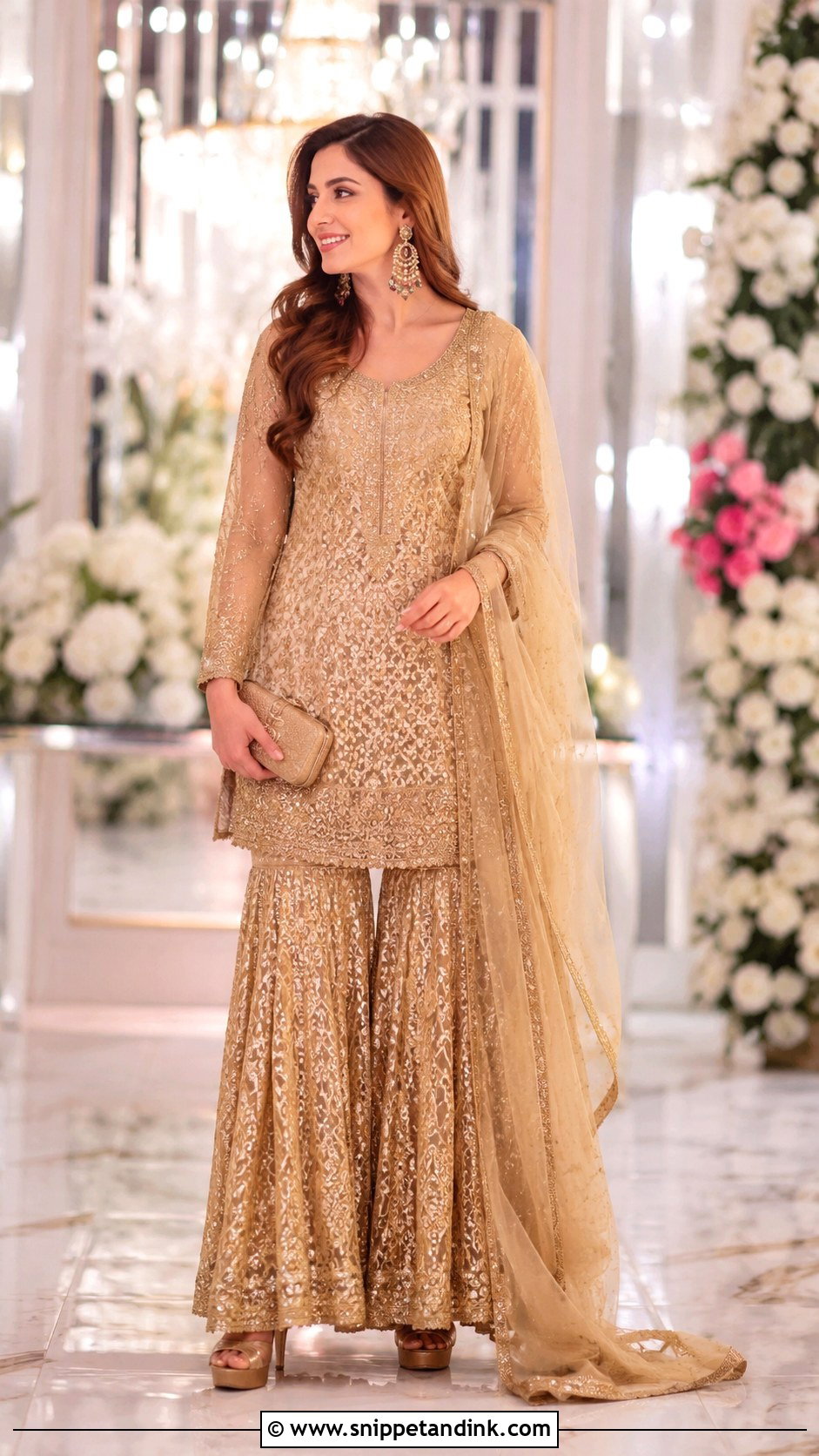
Full gold brings its own shine, so the trick is restraint everywhere else. Choose a kurta in brocade, beads or sequins over a matching flared sharara, and if head-to-toe gold feels like too much, break it with ivory, champagne or blush. A sheer dupatta with a narrow border keeps it from getting heavy. I’d pick one hero piece, kundan earrings or a statement ring, not both plus a necklace. Warm, glowing makeup works with it. Sangeet nights, receptions and close-family events are where gold looks at home.
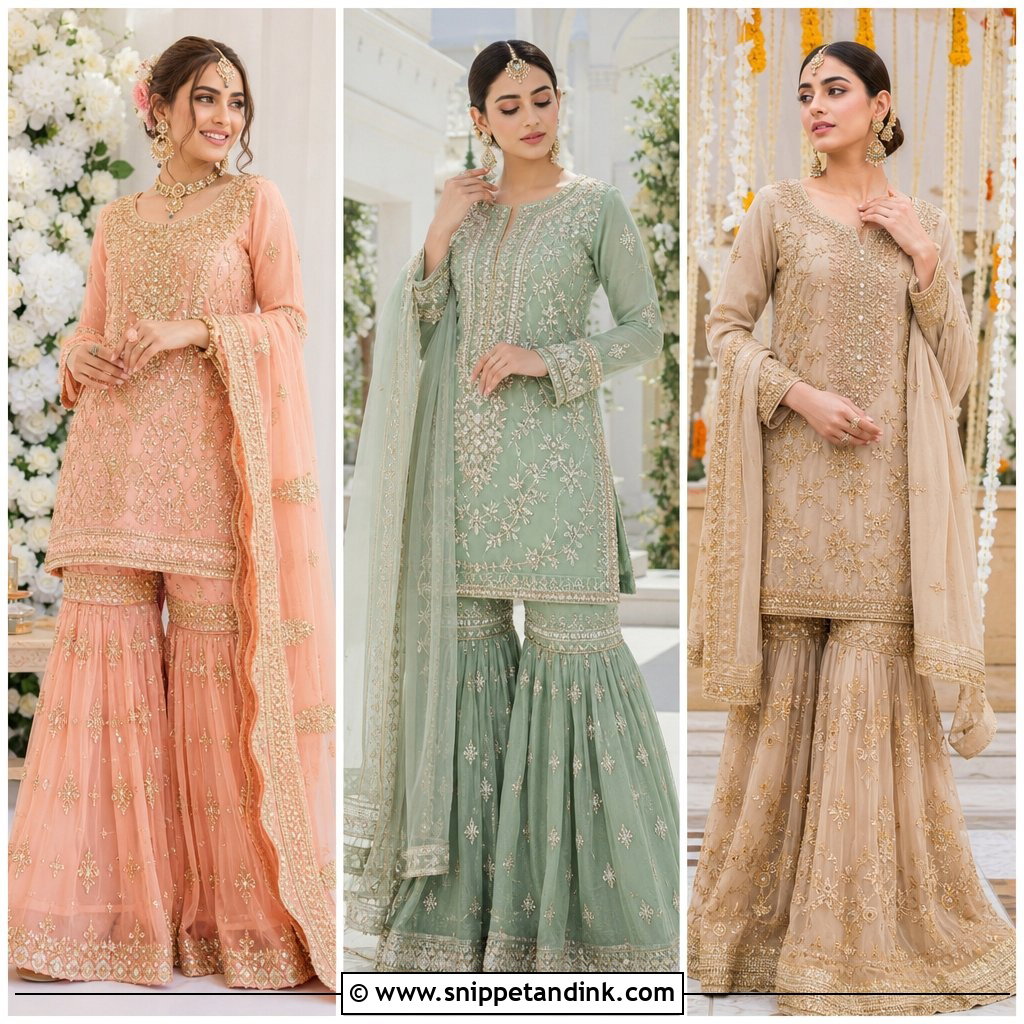
9. Pastel Sharara For Day Wedding
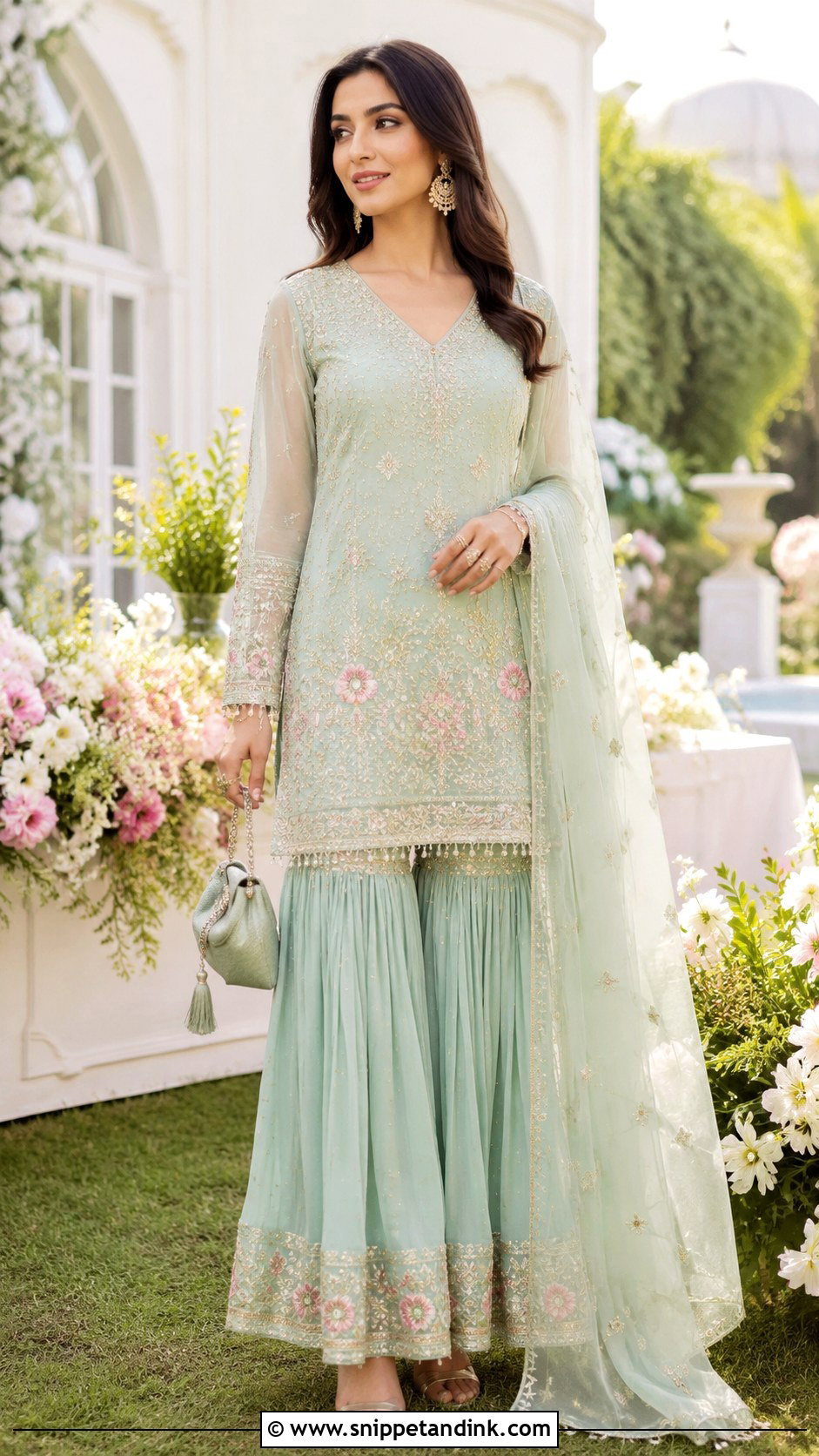
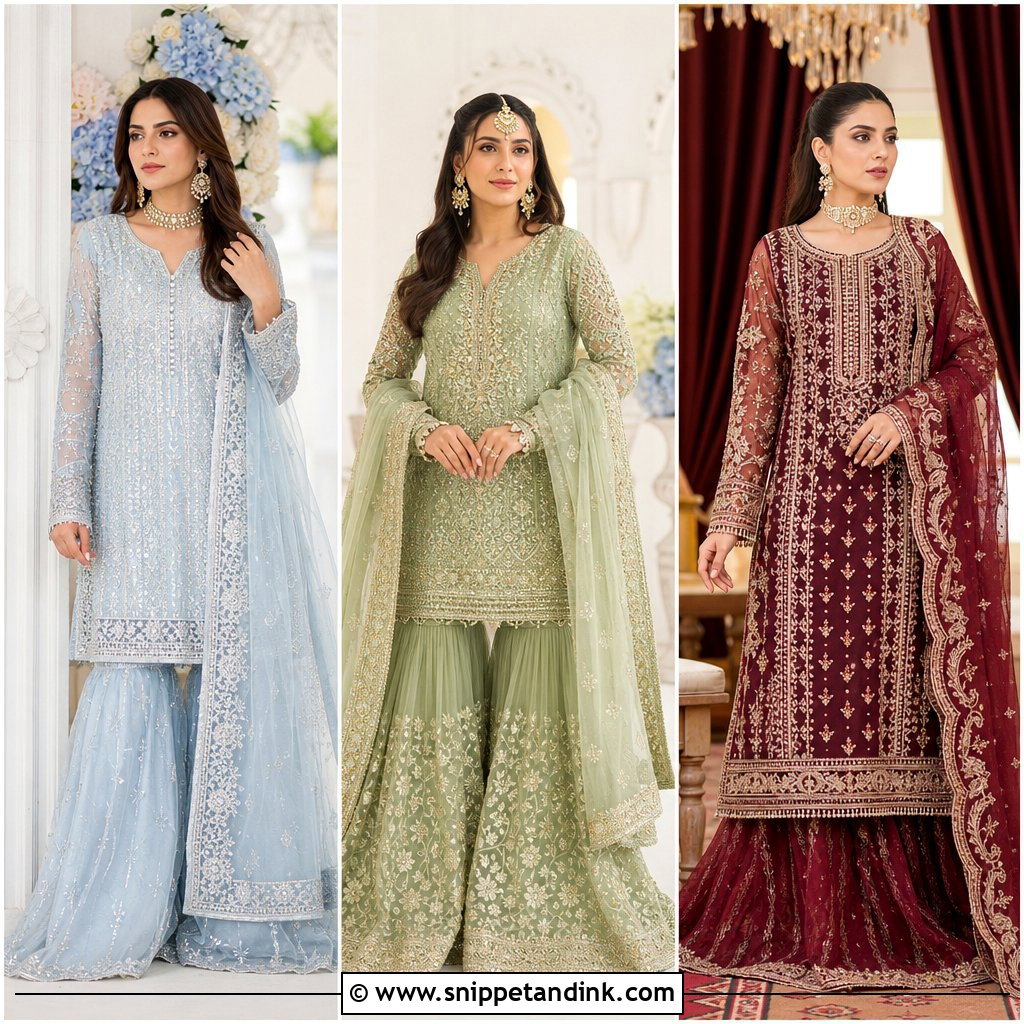
Mint, powder blue, lavender, peach and pale yellow come alive in daylight and go flat under yellow evening bulbs, which is why I save pastels for daytime events. Choose a short kurta with floral embroidery or fine pearl work over georgette, organza or chiffon so there’s movement without bulk. A sheer dupatta, delicate earrings, block heels and a small handbag finish it. Makeup should stay soft. I’d avoid icy pastels if your skin has strong warm undertones; peach and pale yellow are kinder.
10. Velvet Sharara For Winter Wedding
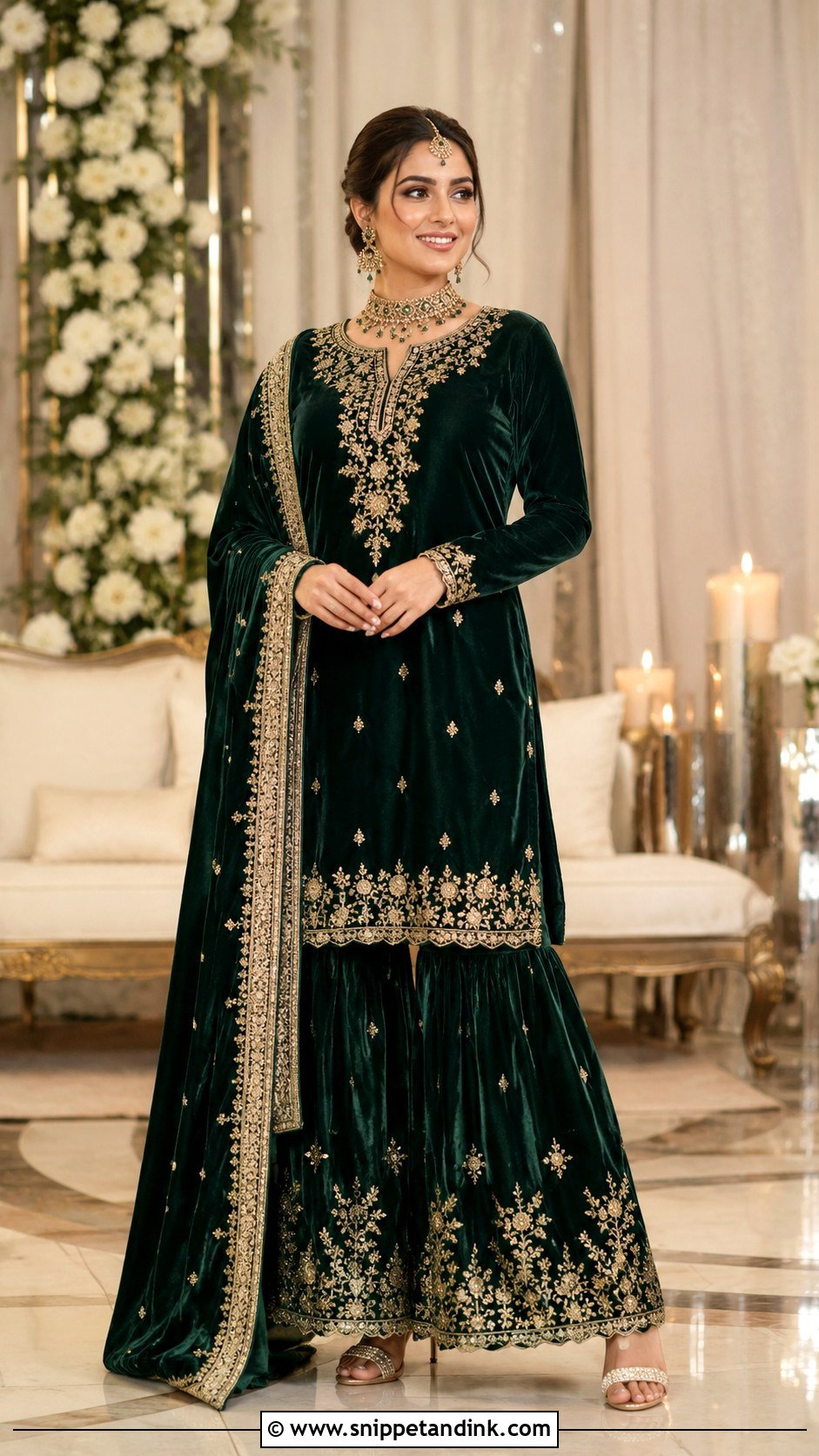
Velvet is a cold-weather fabric, full stop. In a warm hall it gets heavy fast, so I keep it for winter evenings, outdoor receptions in cold months and formal family events. Maroon, navy, emerald, plum and bottle green show off the pile best. A structured kurta with embroidery at neckline, sleeves and hem keeps it crisp; for the sharara you can drop to a lighter fabric so you can still dance. Add a matching bordered dupatta, gold jewelry and embellished heels. Velvet crushes where you sit, so steam it on the day and avoid sitting on it in the car if you can.
11. Mirror Work Sharara Outfit
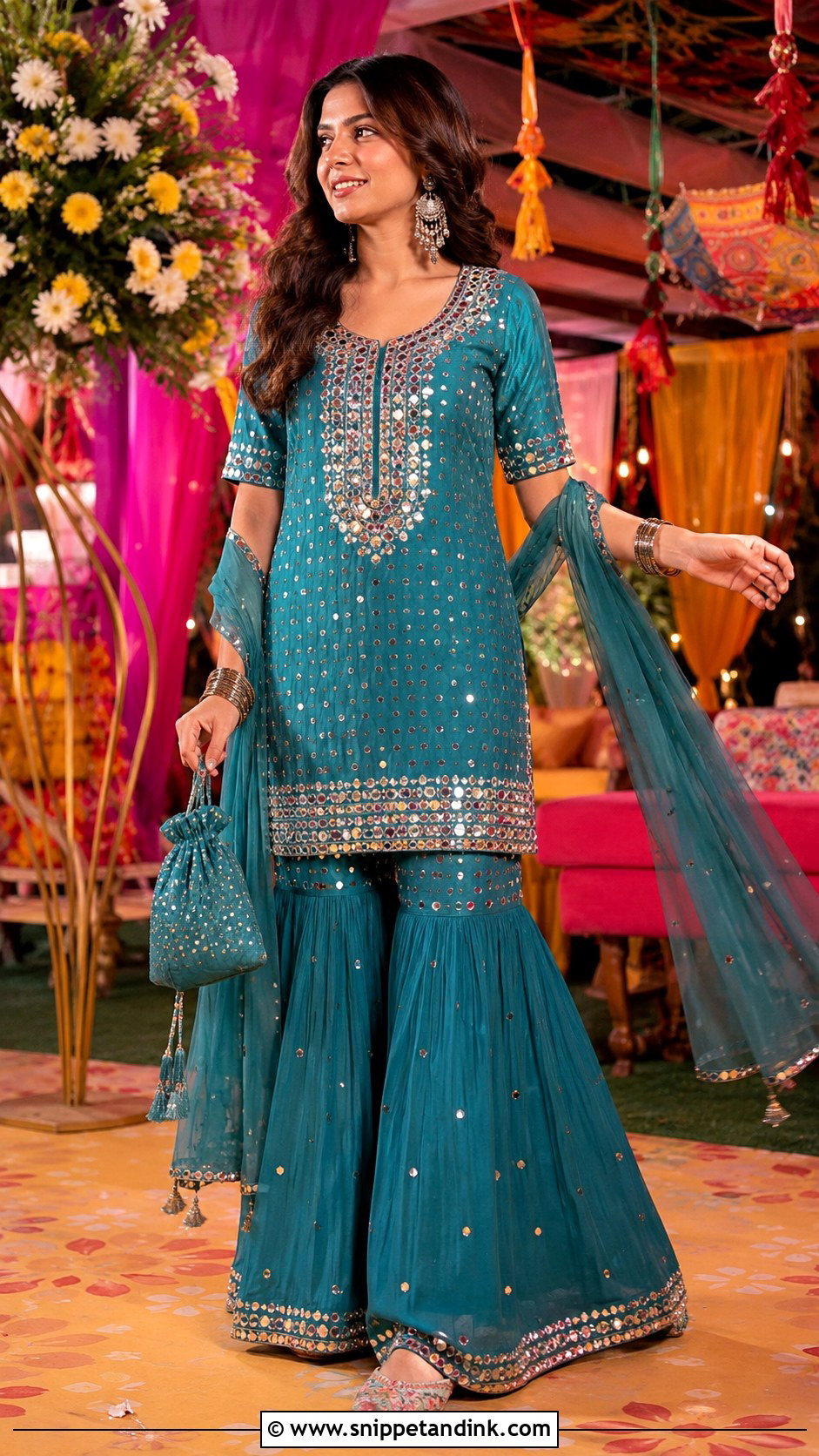
Small mirrors catch every light as you turn, which makes this the outfit I suggest for sangeet and mehndi nights where dancing is the whole point. A mirror work sharara outfit looks best with mirrors at neckline, sleeves or hem rather than all over, because a fully mirrored kurta is heavy and the edges can catch fine dupattas. Teal, pink, yellow, orange and green all look playful with it. Oxidized earrings, bangles, a potli and comfortable wedges or juttis finish the look. Check the backs of the mirrors are stitched flat, since a raised edge on the inside of a sleeve rubs the arm.
12. Chikankari Sharara For Wedding
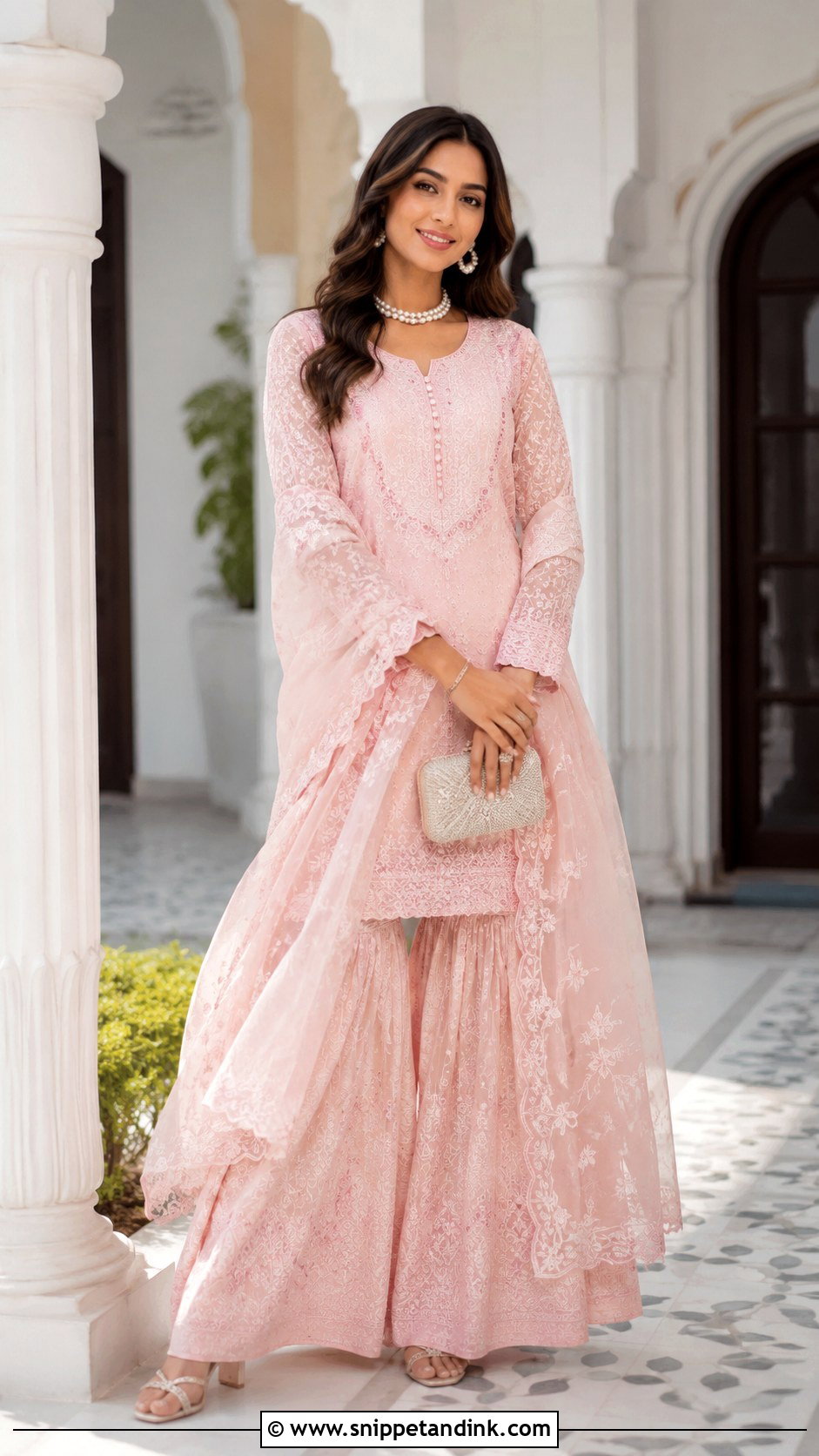
Chikankari is hand embroidery done on fine, light fabric, so it breathes in heat and suits summer and daytime events better than almost anything else here. A chikankari sharara for wedding events looks right in ivory, pastel pink, mint, powder blue and lavender, with a long or short kurta over a matching sharara. A sheer dupatta with lace edges, pearl jewelry and silver sandals keep it light. For more formal events I’d look for chikankari with mukaish, the tiny metal dots that add a soft glow. Most chikankari fabric is sheer, so check the lining before you buy.
13. Jacket Sharara For Wedding
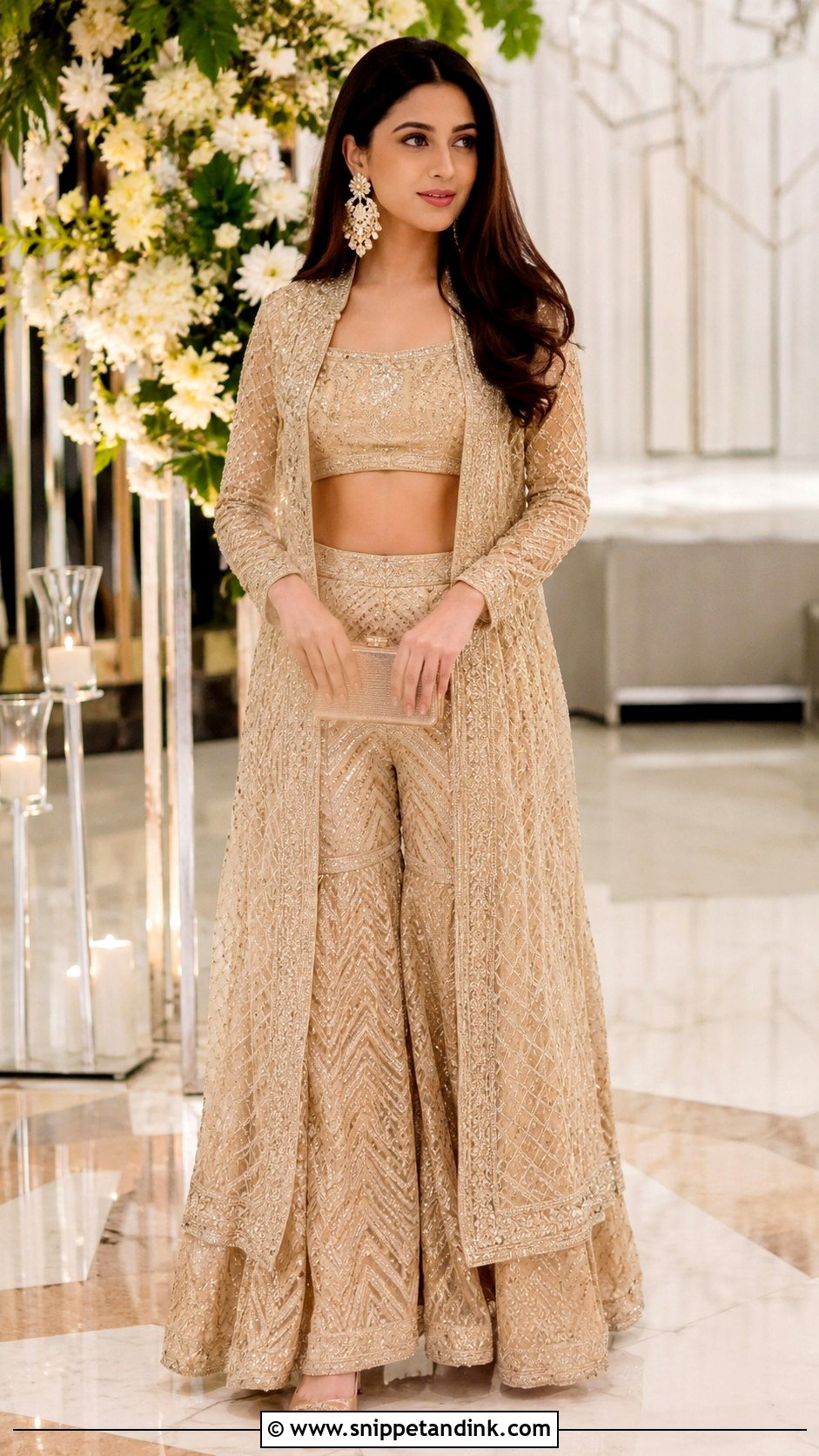
A jacket gives you coverage without a dupatta to manage, which brides often appreciate by the second event of the day. It can be short, floor-length, sheer or structured, worn over a crop top, a short kurta or a sleeveless inner with a matching sharara. Long jackets look regal; cropped ones feel younger. I check that the jacket’s shoulder seam sits on the shoulder bone, because a dropped shoulder makes the whole outfit look borrowed. Statement earrings, pointed heels and a sleek clutch complete it, and it holds its own at receptions and engagement parties.
14. Cape Sharara For Wedding
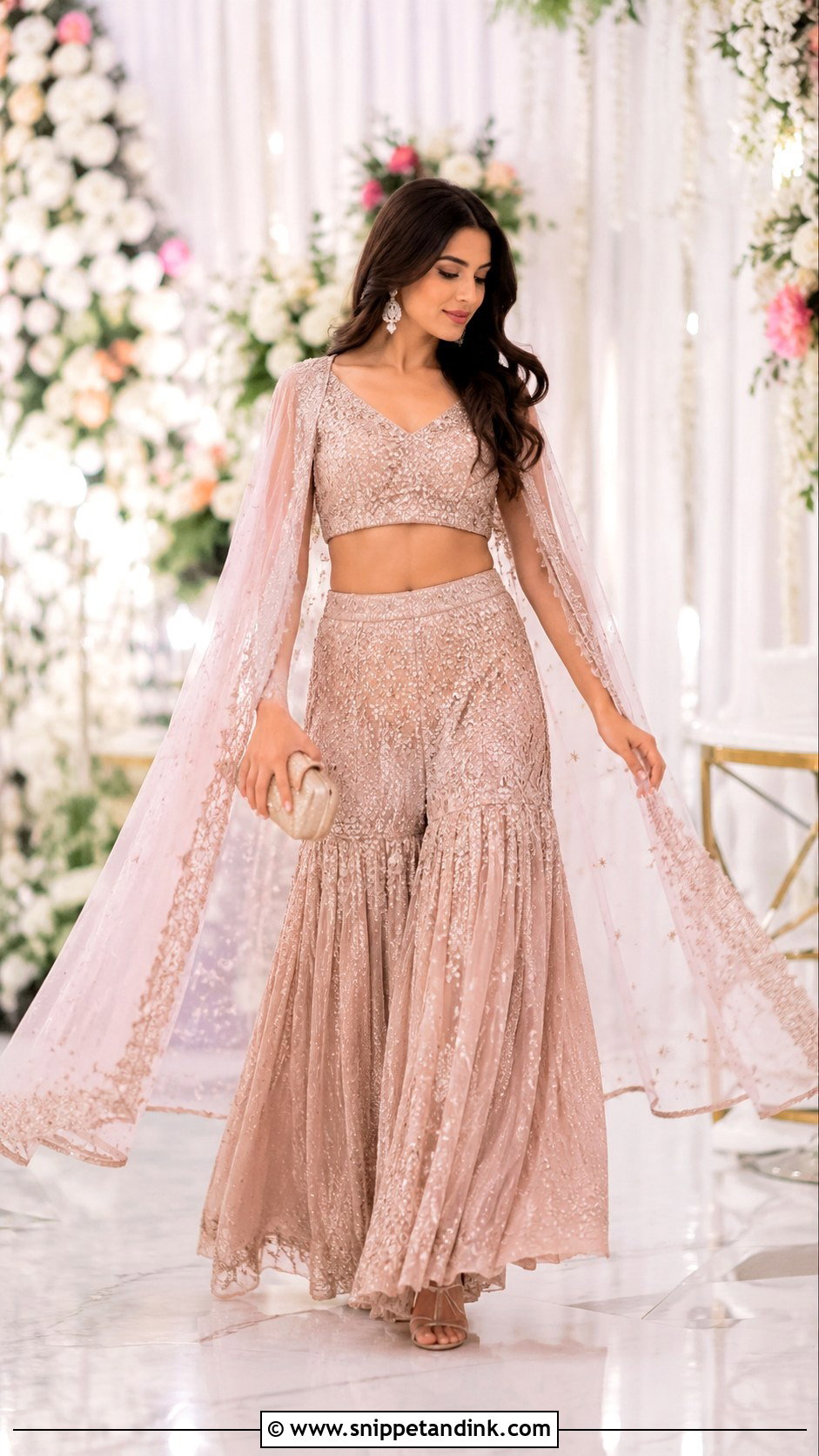
A cape replaces the dupatta with something that falls on its own, so your hands are free to eat, dance and hold a phone. Pair an embroidered, sequined or pearl-edged cape with a fitted blouse or short kurta and a wide sharara. Blush, silver, powder blue and ivory keep it soft; jewel tones make it festive. If the cape is heavily worked, I scale down the necklace and let the earrings do the talking. Sangeet, reception and engagement events suit it. Capes that fasten only at the neck can pull backwards when you lift your arms, so ask for a discreet hook at each shoulder.
15. Short Kurti Sharara Outfit
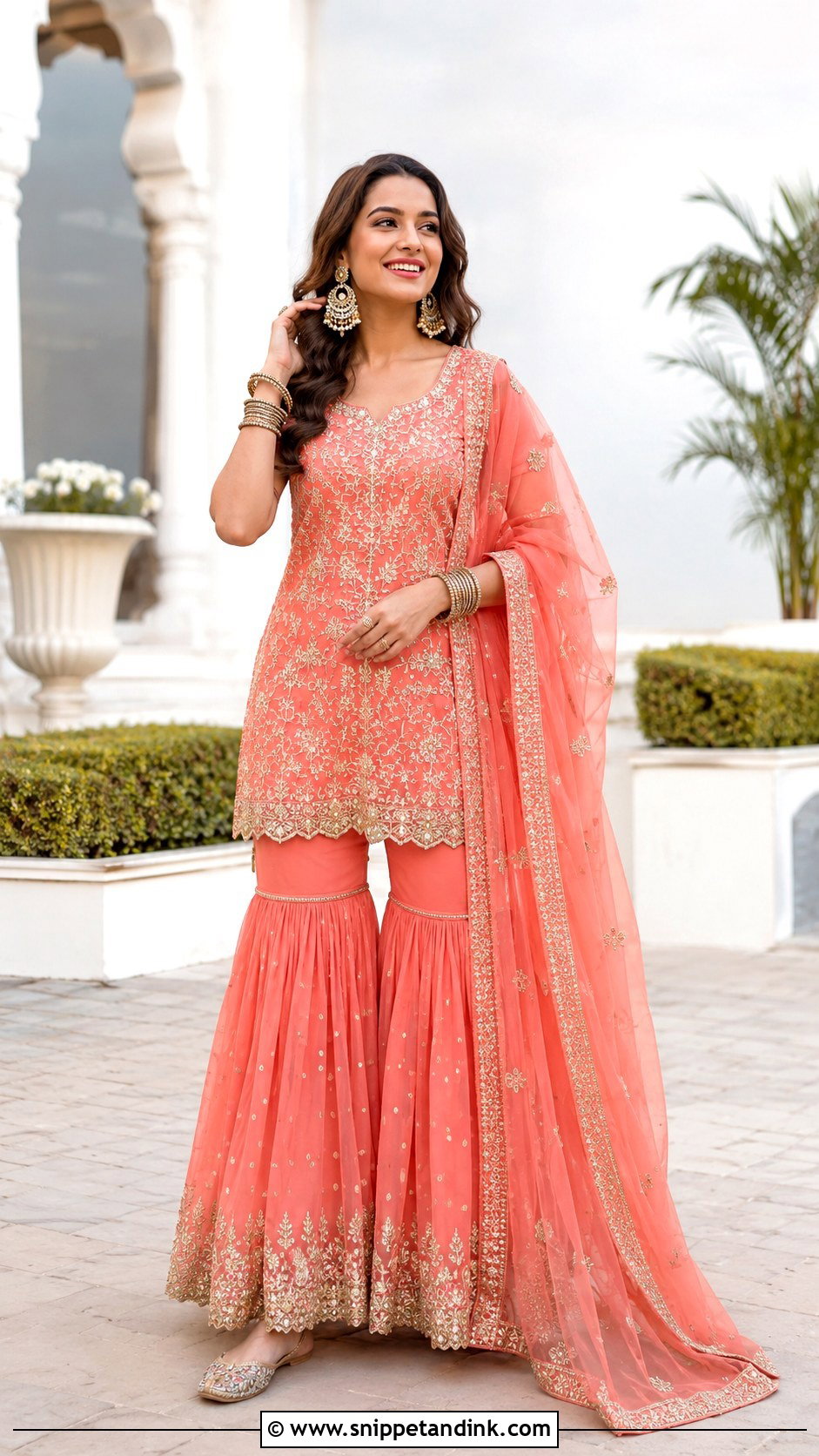
The short kurti shows off the full flare of the sharara and marks the waist, which is why it’s the cut I put on most people. Embroidery should frame neckline, sleeves and hem so the eye moves through the outfit. It works in nearly any color. For a traditional event add a dupatta; for a modern pre-wedding function, leave it off. Jhumkas, bangles and embellished juttis or heels finish it. I’d ask the tailor to end the kurti just above the widest part of your hip, since stopping right at it adds visual width.
16. Long Kurta Sharara Outfit
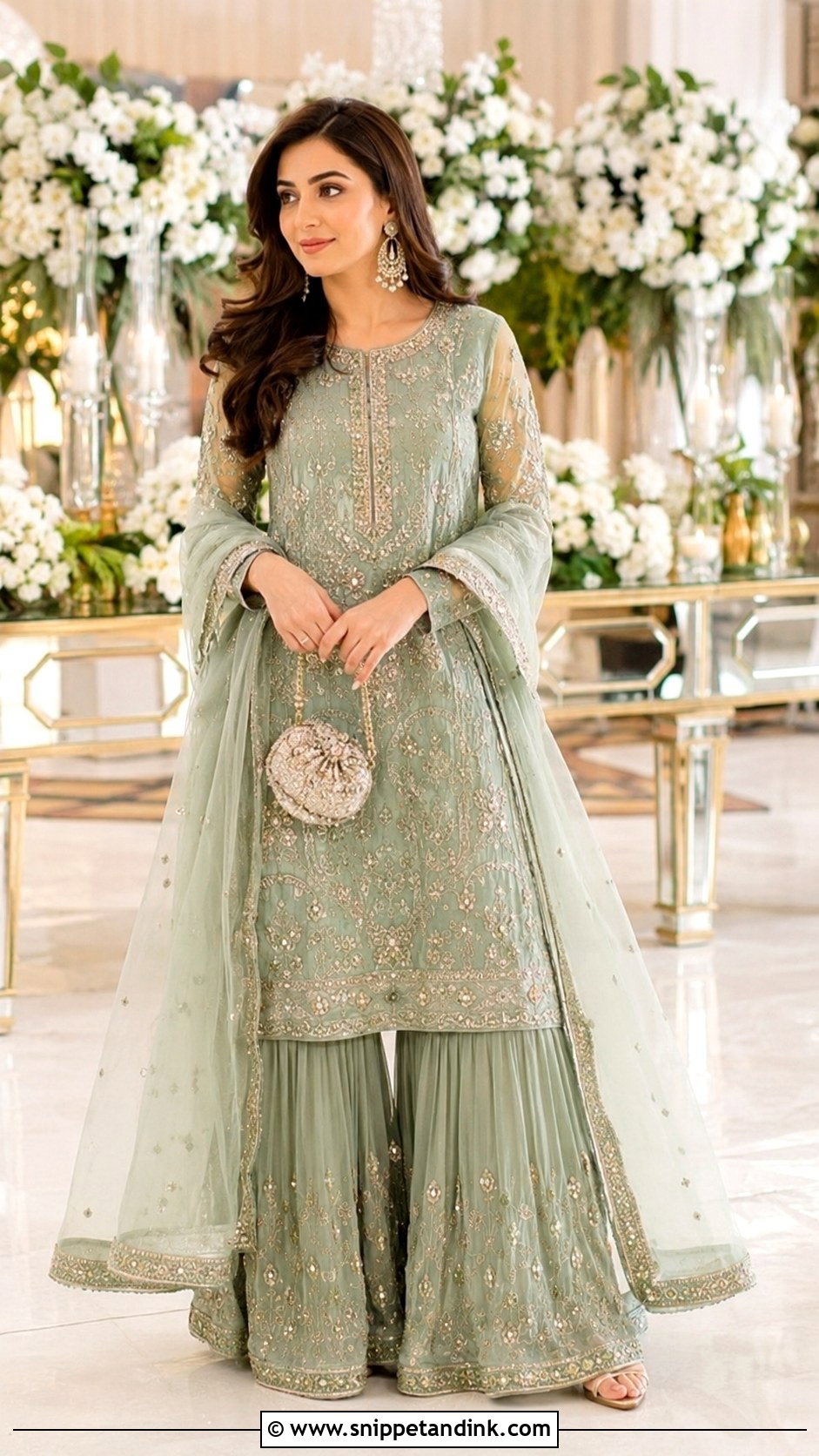
A long kurta gives coverage and a lengthening line, with the sharara flaring out below. Side slits or a slight A-line are essential, otherwise the trousers disappear and it reads as a plain suit. Silk, georgette, chiffon and crepe all drape well. Embroidery at neckline, cuffs and hem gives it finish, with a matching dupatta, statement earrings and heels. Family ceremonies and formal events suit it. Sit down in it at the trial; a long straight kurta that’s tight across the hip will ride up and crease in a band across the lap.
17. Peplum Sharara For Wedding
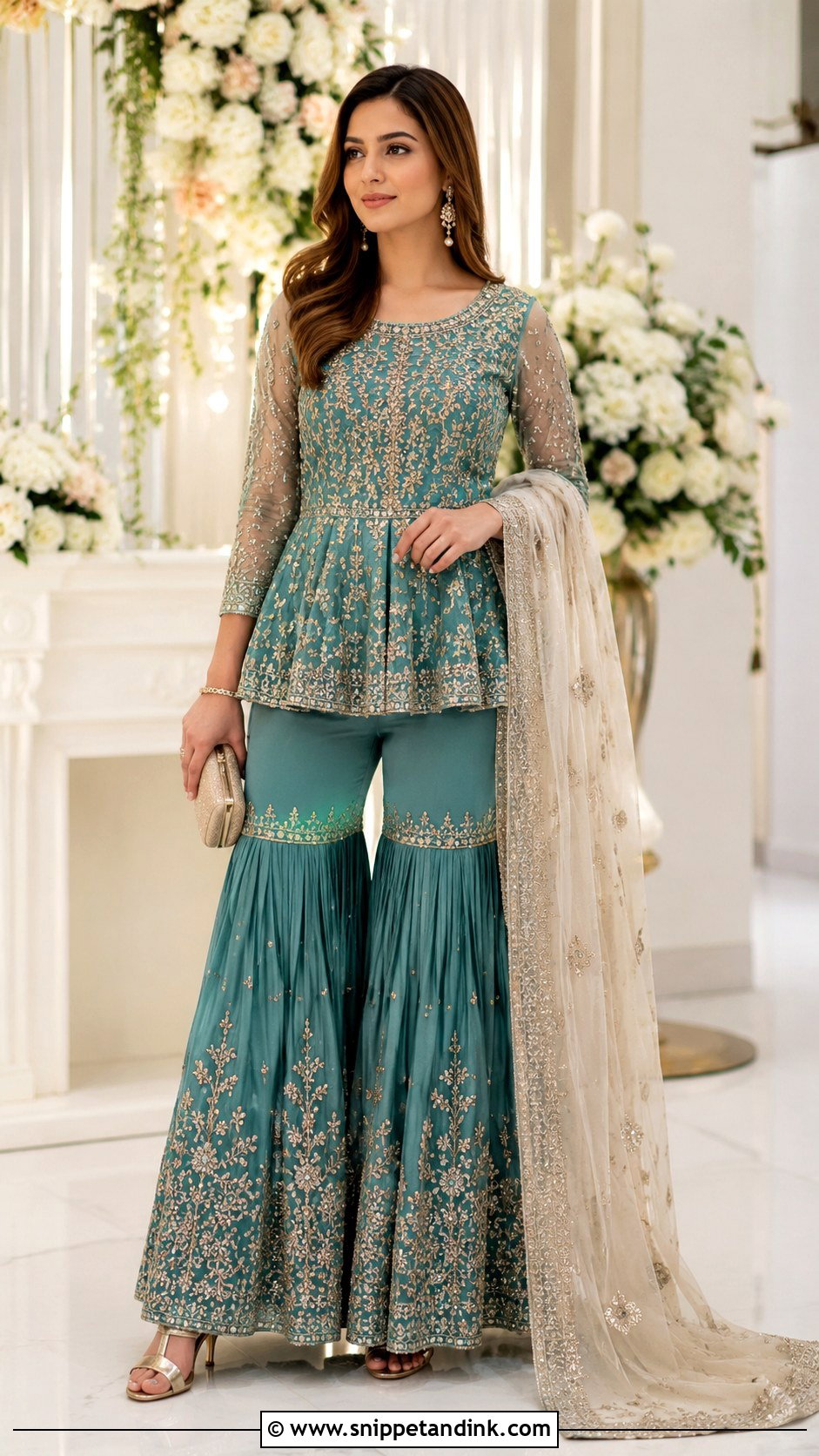
The peplum flares from the waist, so it shapes your figure without clinging to the stomach, which is the reason many guests feel comfortable in it. Embroidered, printed or embellished, it pairs with a high-waisted sharara to give a balanced line in photos. Coral, teal, blush, emerald and champagne feel fresh at sangeet and engagement events. Drop earrings, a bracelet, heels and a small clutch finish it. With a heavily worked peplum, I keep the dupatta plain. A peplum that starts too low shortens the legs, so the seam should sit at your natural waist.
18. Anarkali Sharara Outfit
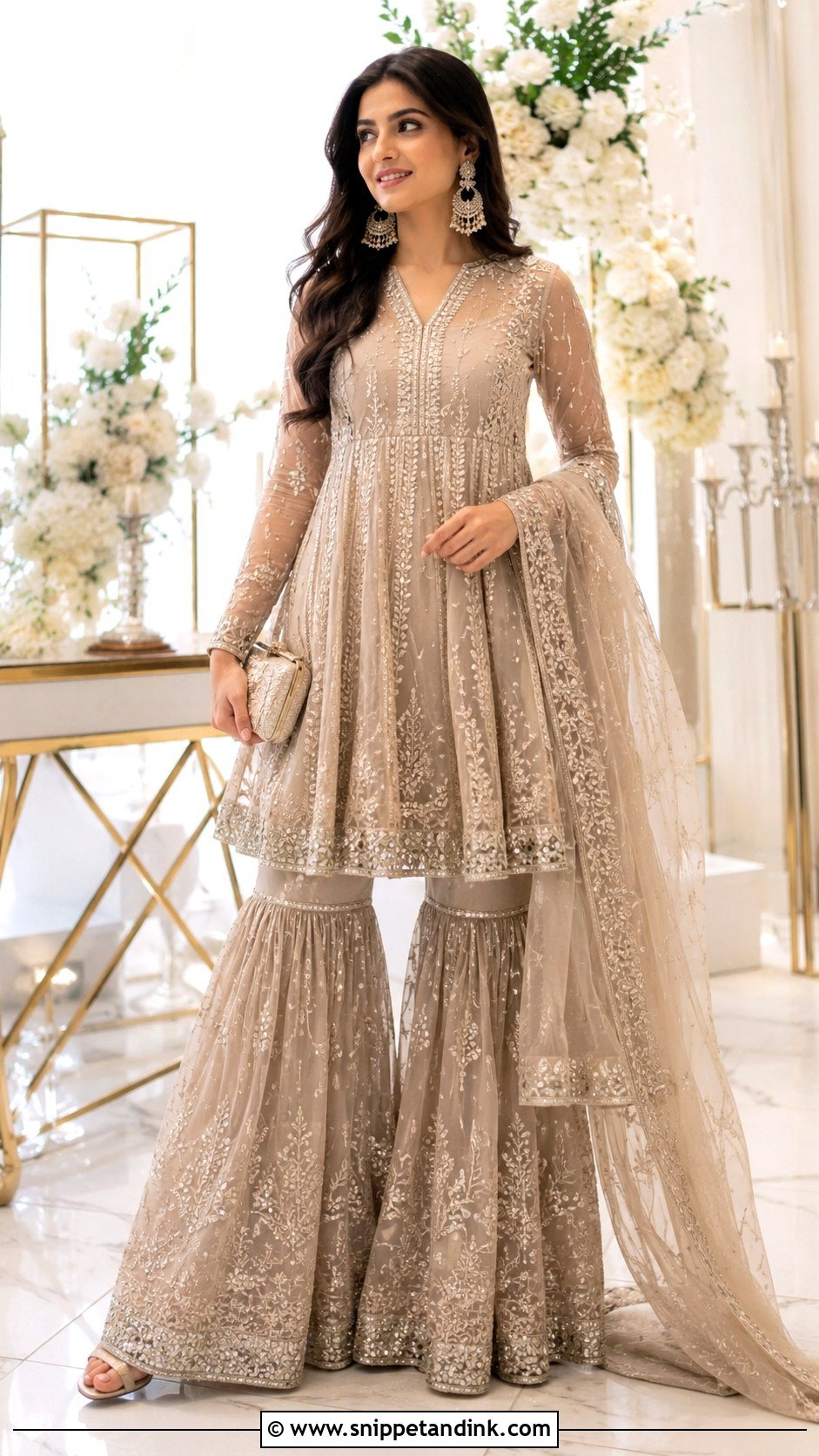
Layering a flared Anarkali over a sharara gives two levels of movement, which is grand and graceful but can swamp a petite frame. That’s why I stop the Anarkali at knee or calf length, so the sharara flare still shows. Embroidery, sequins, lace borders or brocade panels make it formal. A bordered dupatta, statement earrings and heels to lengthen the line complete it. Bridesmaids, sisters and guests who want something dressier than a suit like it. All that fabric is warm, though, so I’d avoid it at a summer daytime event outdoors.
19. Pakistani Sharara For Wedding
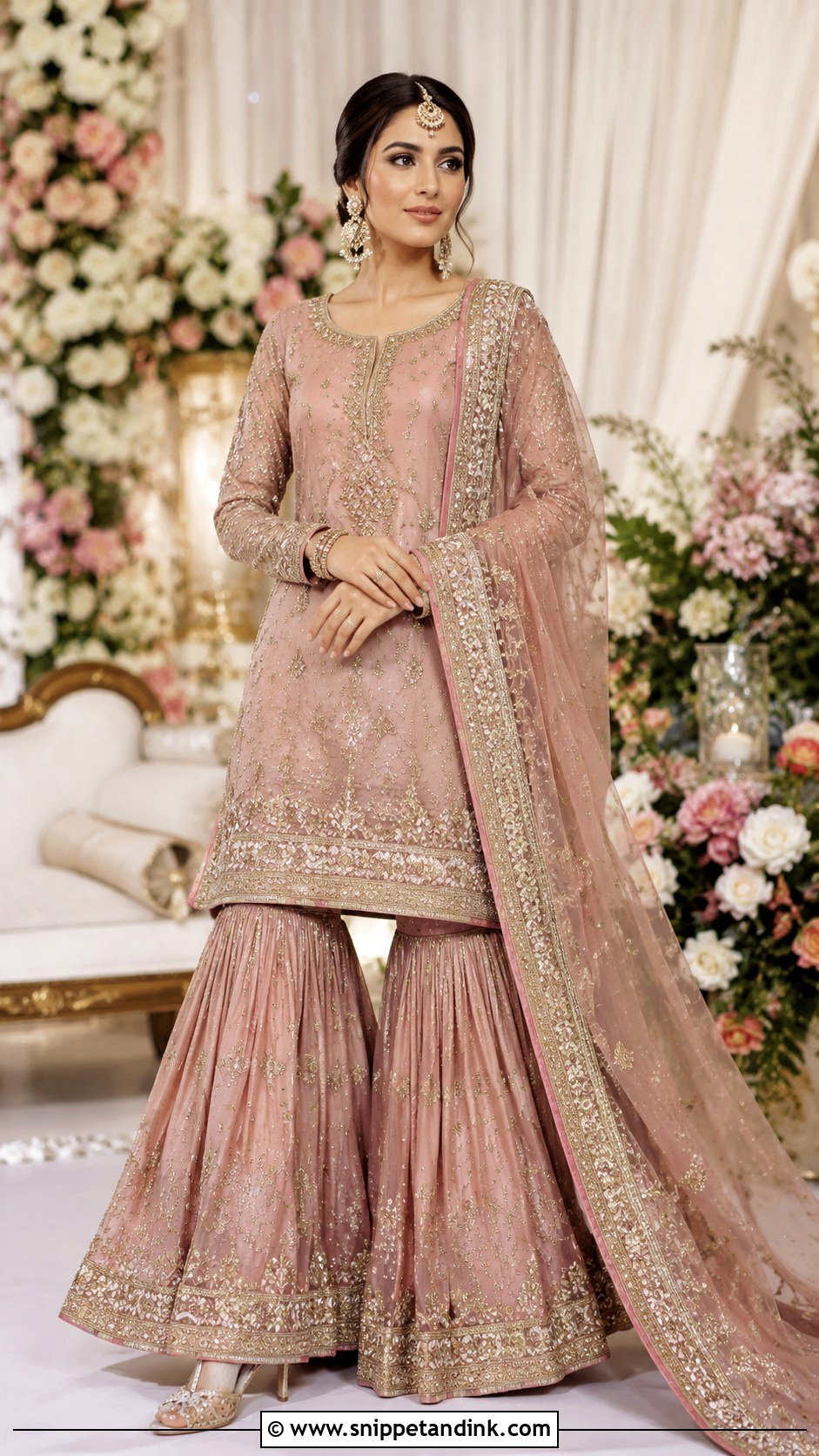
Pakistani wedding shararas tend toward longer shirts, richly embroidered dupattas and refined color pairings, often looking regal without heavy sparkle. Choose a straight or slightly flared kurta with work on the neckline, sleeves and daman, the bottom hem panel. The sharara is full, and the dupatta carries either a bold border or allover motifs. Maroon, ivory, emerald, tea pink, gold and deep blue all work. Traditional earrings, a tikka, bangles and embellished heels finish it. Because the daman is so heavily worked, I have the shirt length set with the shoes on, or the embroidery sits at the wrong height.
20. Punjabi Sharara For Wedding
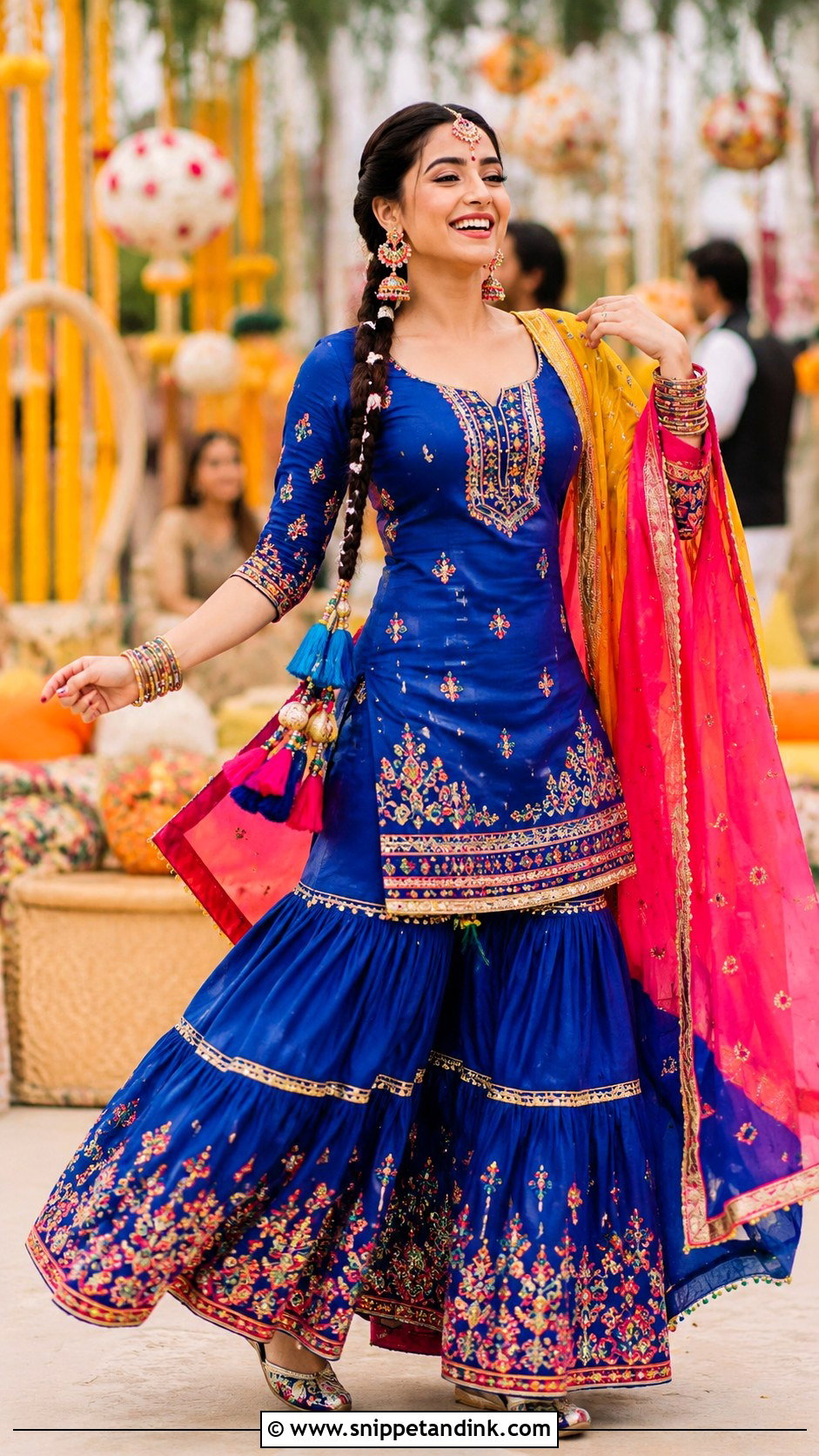
This is the loudest, happiest outfit on the list, made for a dhol and a crowded dance floor. Hot pink, orange, yellow, green, royal blue or red, with a short kurti in gota patti, phulkari-style embroidery, mirror work or bright thread over a full sharara. Drape a light dupatta across one shoulder so it stays put while you dance. Jhumkas, bangles, paranda-inspired hair accents and embroidered juttis finish it. Mehndi and sangeet nights suit it most. New juttis are stiff for the first few wears, so break them in before the event, not on it.
21. Floral Sharara For Wedding
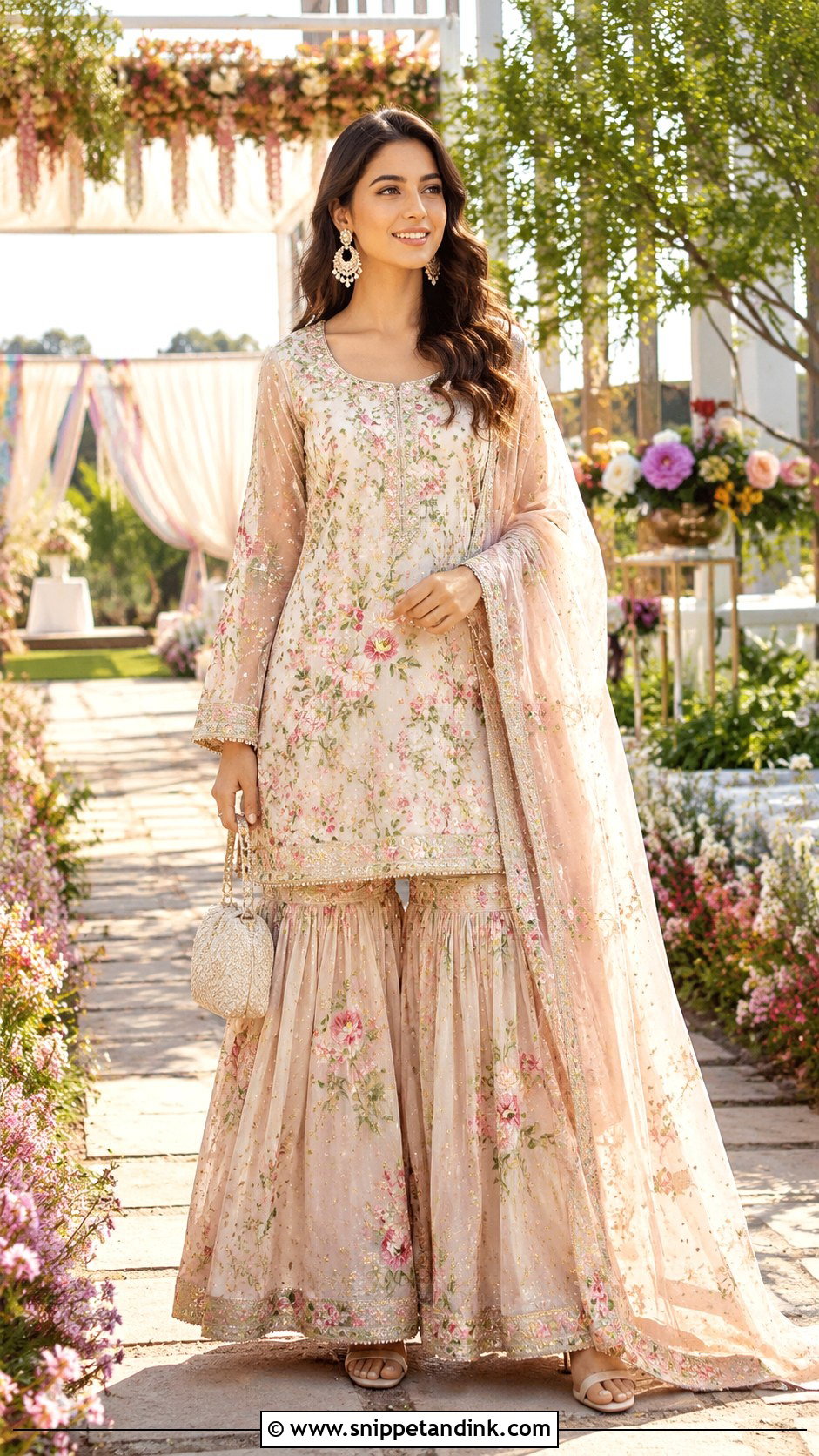
Printed florals suit lighter daytime events; embroidered florals hold up at something dressier. A pastel base with pink, lavender, yellow or green flowers feels fresh at spring and summer garden ceremonies. Keep the dupatta soft, the earrings delicate and the bag small, so the print does the work. A floral sharara is also one of the easiest outfits to rewear at dinners and Eid or Diwali gatherings afterwards. I’d watch the scale of the print on a petite frame: big blooms on wide trousers can overwhelm, while a small print reads as texture.
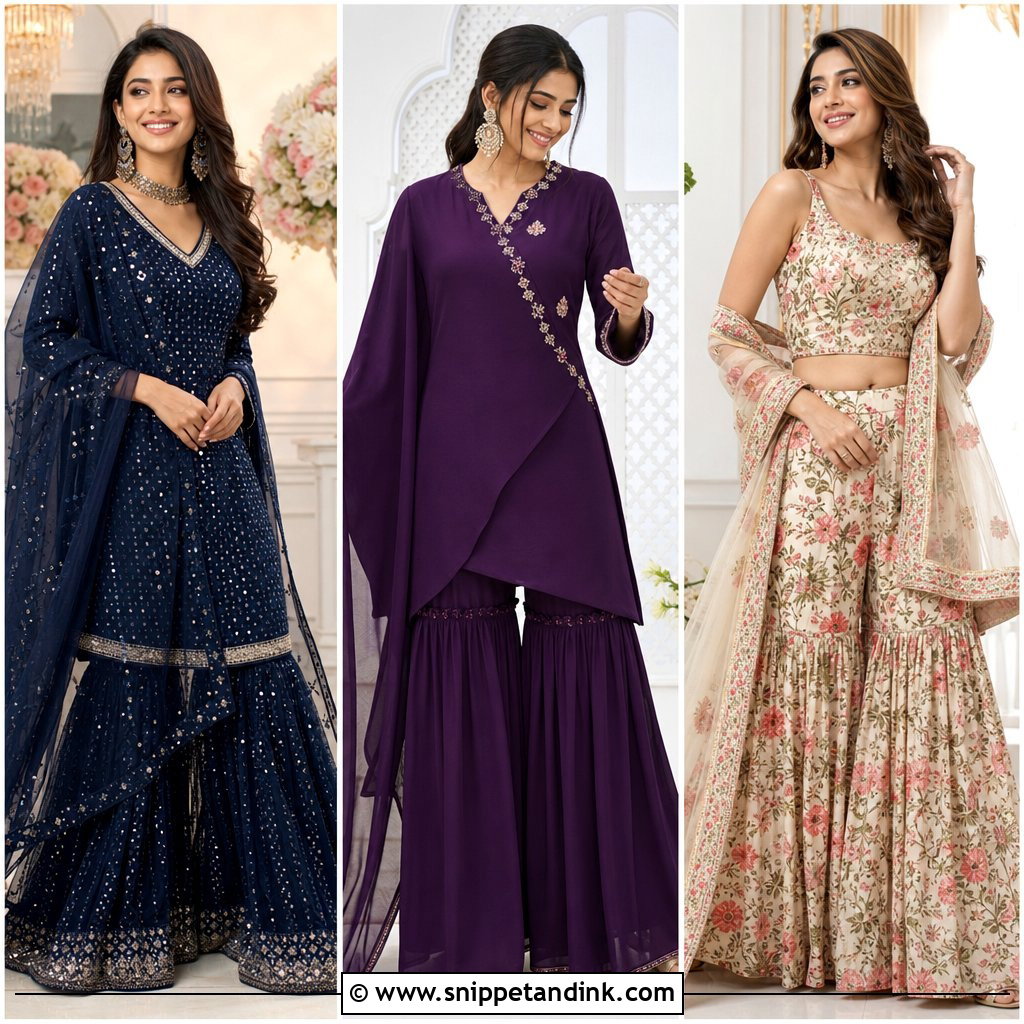
22. Sequin Sharara For Reception
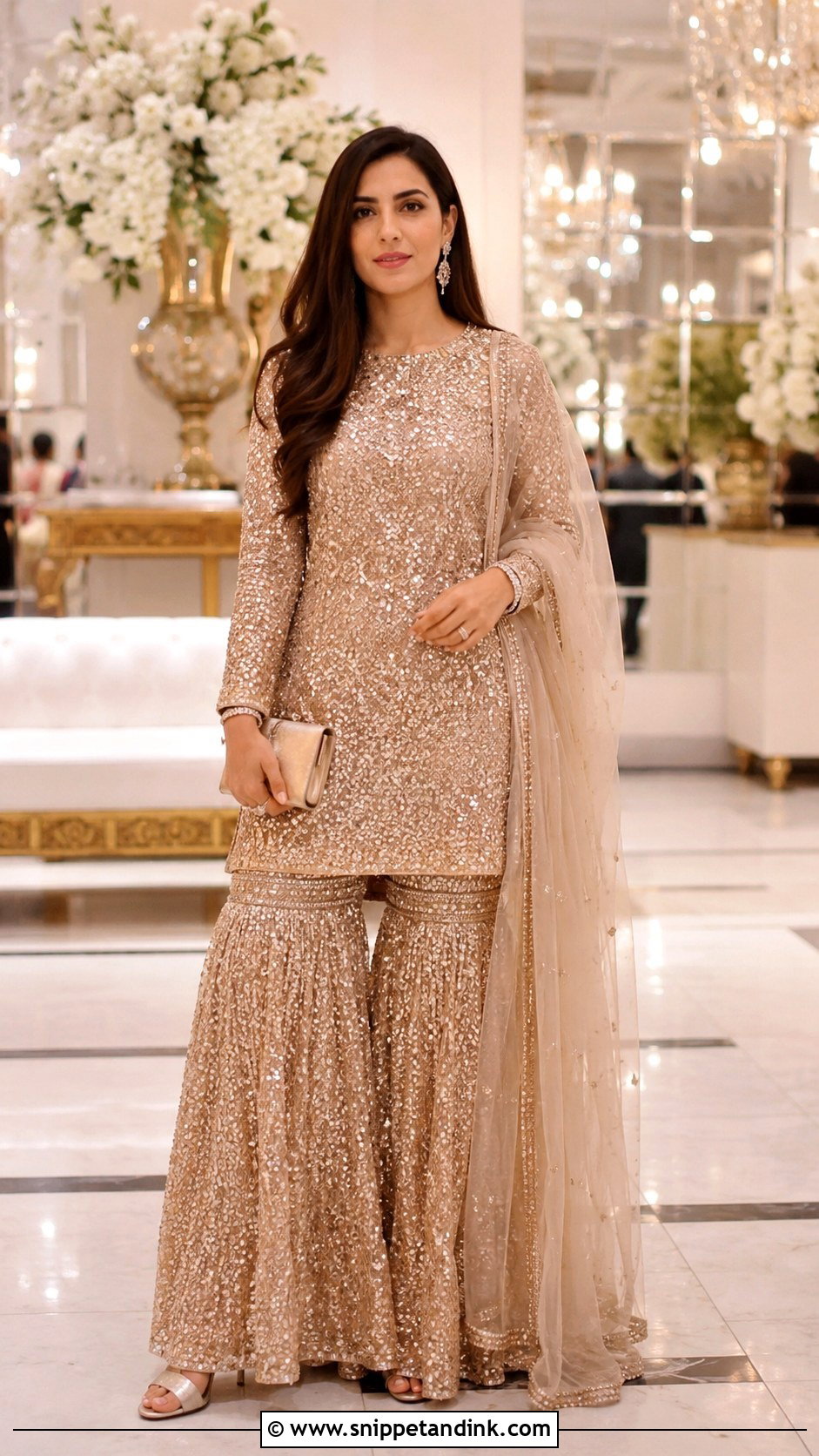
Sequins give reception sparkle in a shape that’s far easier to sit and dance in than a heavy lehenga. I prefer fine sequins over large paillettes; they move more like fabric and look less costume-like close up. Champagne, silver, black, blush, navy and emerald are strong evening colors. A fitted kurta or blouse with a flared sharara keeps the line clean. Wear a sheer dupatta or skip it if the top has enough coverage, and keep jewelry minimal with metallic heels and a sleek clutch. Sequins snag on each other, so store and travel the outfit inside out.
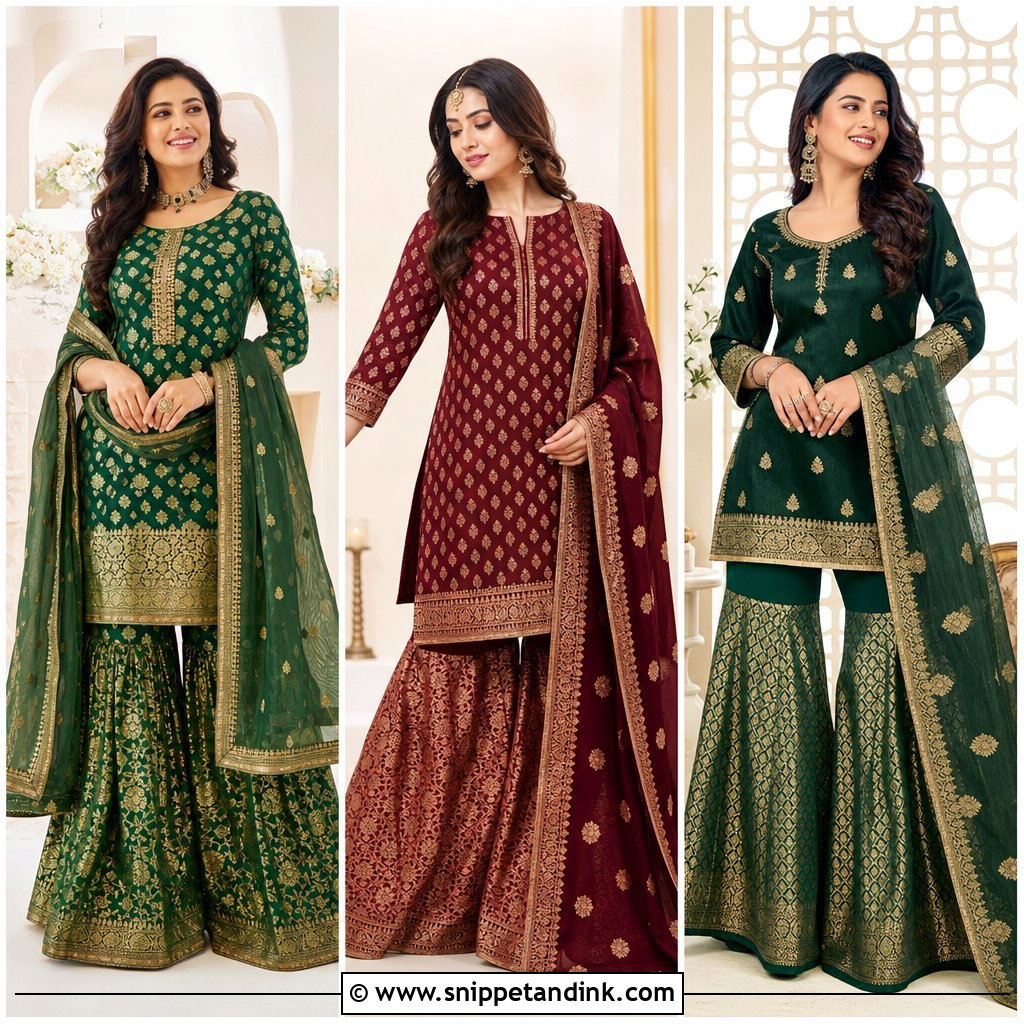
23. Banarasi Sharara Outfit
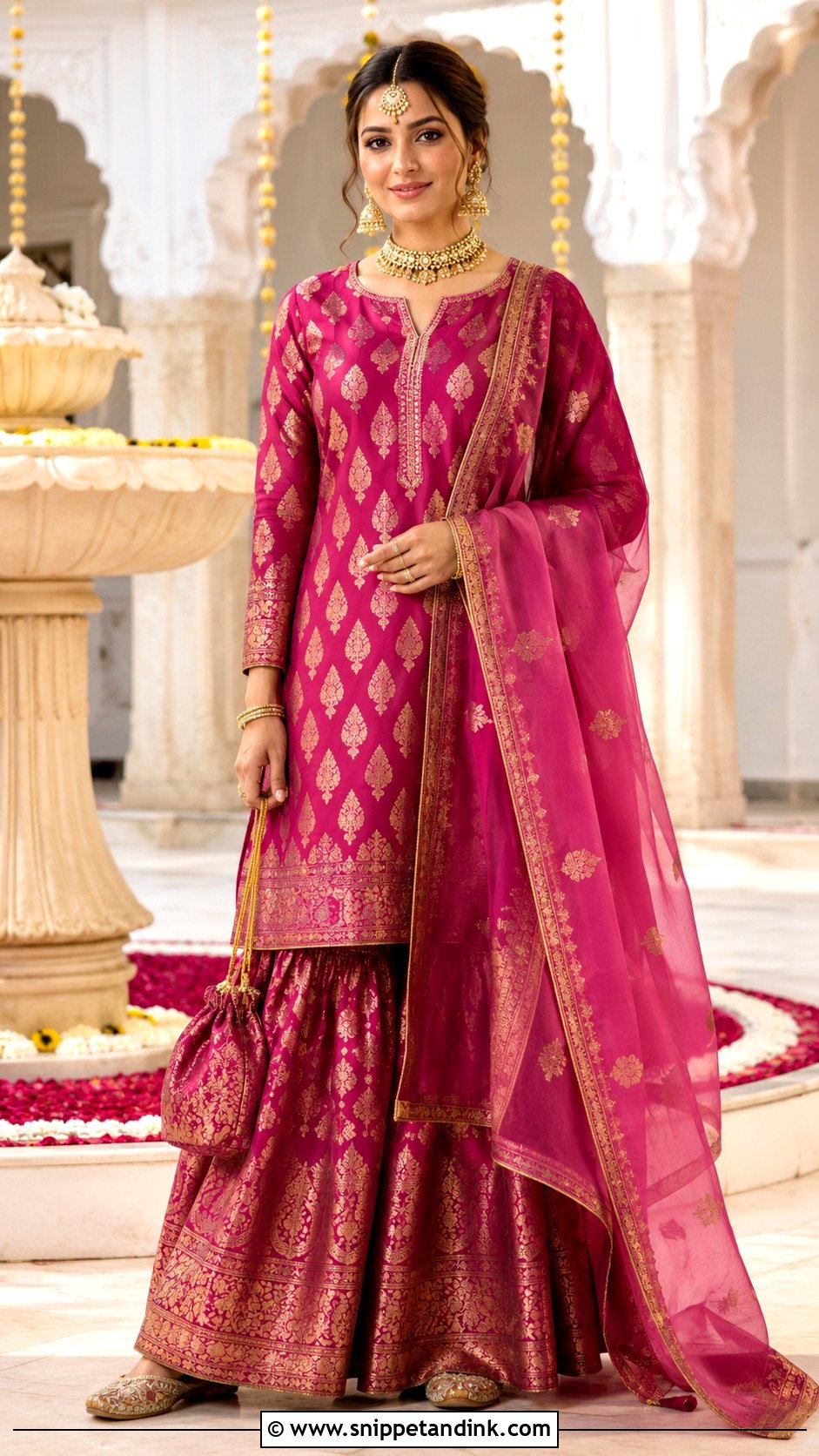
Banarasi silk is woven, not embroidered, so the richness is in the cloth itself and there’s no need for extra work on top. That’s what I love about it, and why I keep the silhouette simple and sharply tailored. A brocade or silk kurta pairs with a matching or contrast sharara, and red, gold, magenta, emerald, mustard and royal blue show off the weave. Add a silk or organza dupatta and traditional jewelry, with heels or juttis to suit the event. Real zari can tarnish over the years, which matters if you hope to pass the outfit down.
24. Organza Sharara For Wedding
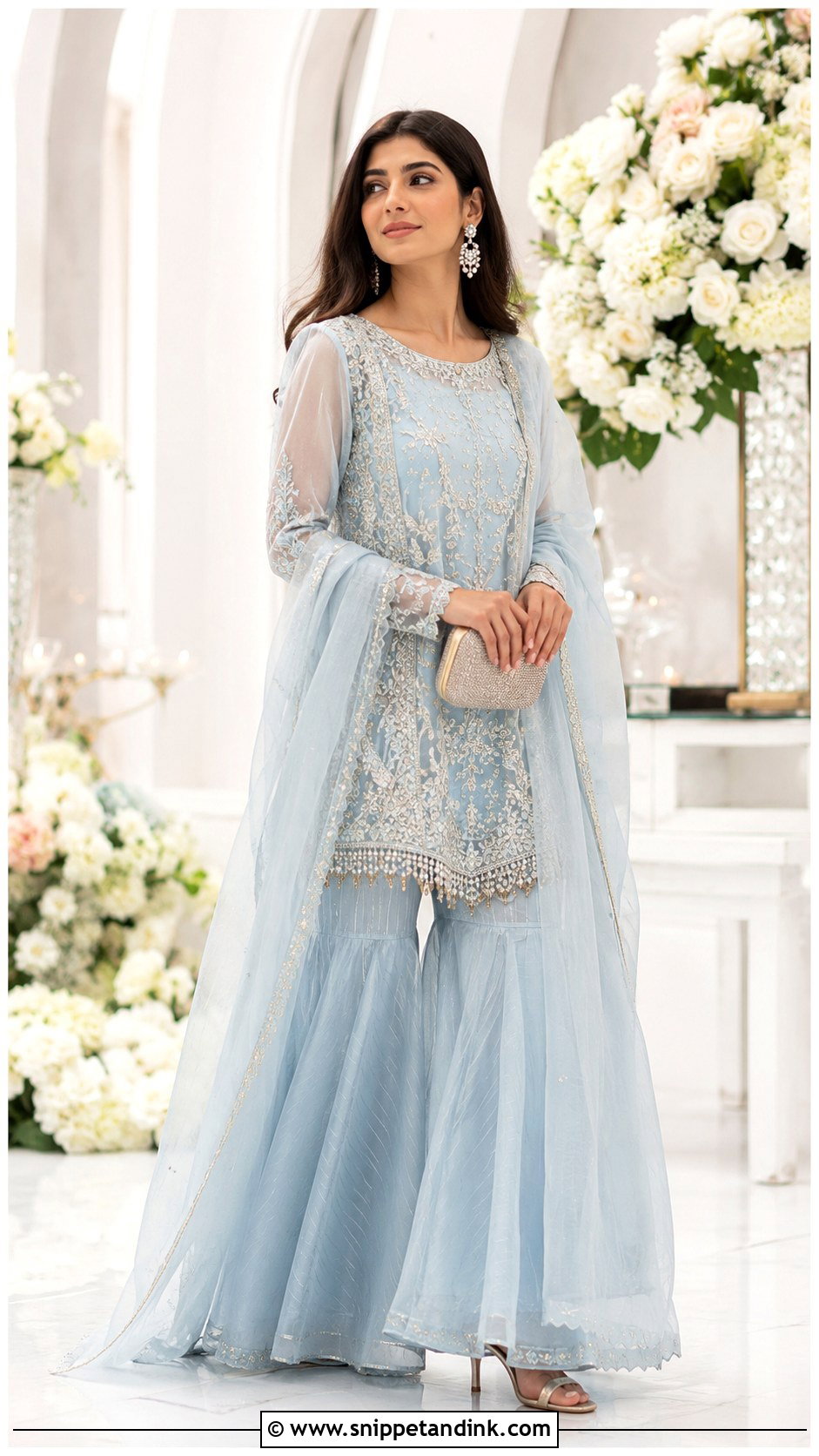
Organza is crisp and light, so it suits daytime ceremonies, engagement parties and summer weddings. The catch is that it stands away from the body, which makes loose tailoring look bulky; I always ask for a closer fit than with georgette. Choose an organza kurta or dupatta with embroidery, pearls, sequins or floral thread, and line it with something softer against the skin. Pastels, ivory, peach, powder blue and sage look fresh in it. Pearl earrings, clear or metallic heels and a delicate clutch finish the look. Organza creases sharply if folded, so hang it.
25. Embroidered Sharara For Bridesmaid
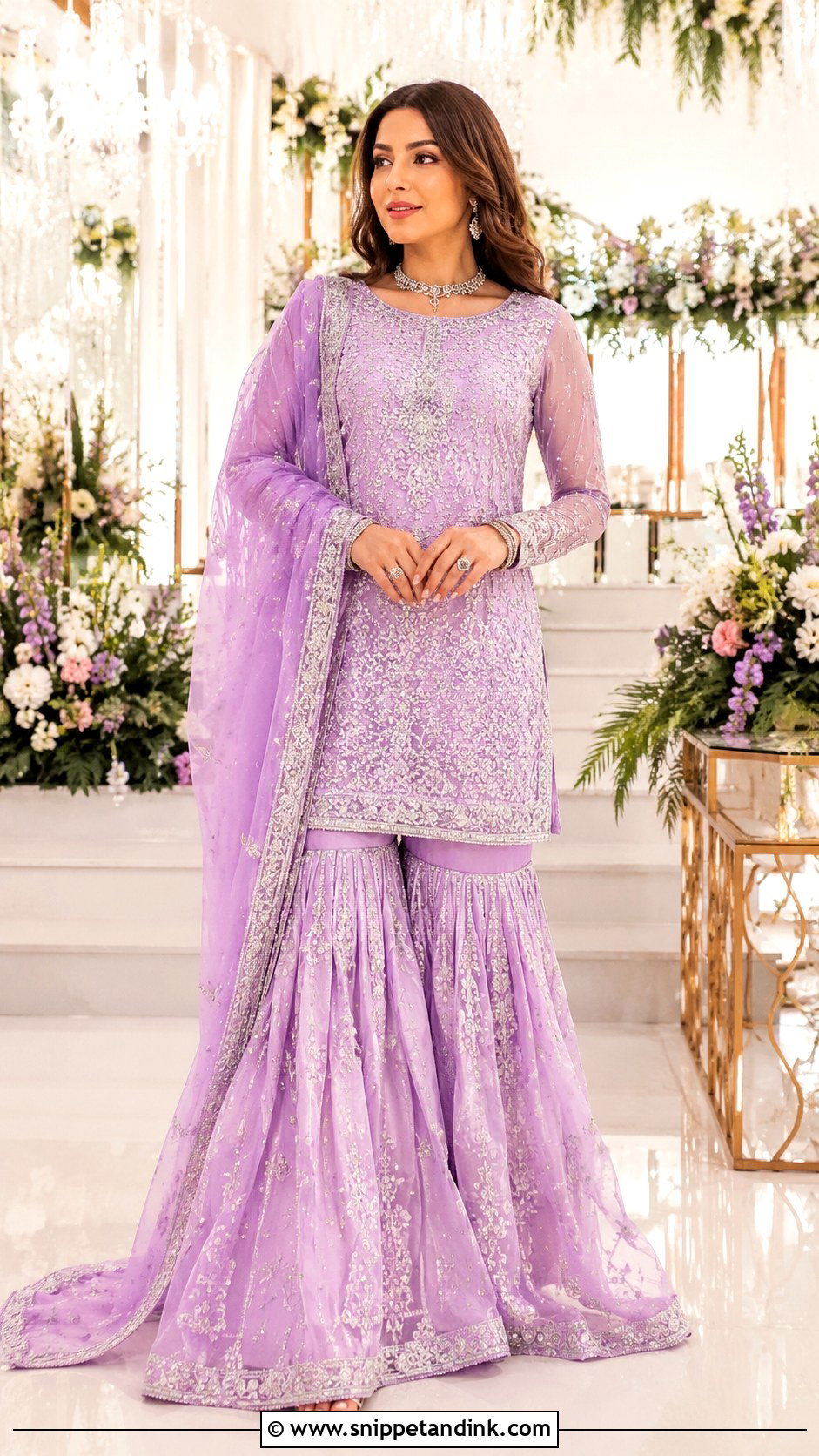
Coordinated shararas let bridesmaids dance, sit and help the bride without fighting a heavy skirt. Pick a palette from the wedding colors, perhaps blush, sage, lavender, gold, teal or coral, and choose floral, geometric, mirror, thread or sequin embroidery. A short kurta over a flared sharara suits most body types. I like matching dupattas for the group shot, but let each bridesmaid choose jewelry and shoes she’ll actually manage in. Finish with soft makeup and simple hair. Order everyone’s sets from one maker and one dye batch, or the same shade on paper can arrive visibly different.
Can You Sit on the Floor, Dance and Use the Bathroom in It?
These are the three things I make every bride test at her last fitting, because a sharara has much more fabric between the legs than a lehenga.
Sit cross-legged on the floor as you would for mehndi or a pheras ritual. If the drawstring digs in, ask for a wider waistband or a side zip instead. Then spin. A flare that wraps around your ankles needs a little more weight at the hem, which a tailor can add with a heavier border or a facing.
For the bathroom, practise once with the dupatta pinned. Gather the sharara legs up one at a time rather than together, and have a friend hold the dupatta. A drawstring with a sliding toggle is much easier to retie than a knot, so it’s worth asking for one.
After the Wedding: Storing Embroidered Silk
Have the outfit dry cleaned by someone used to handwork before you put it away; sweat and perfume left in the fabric discolor zari and silk over time. Wrap it in plain unbleached muslin or a cotton sheet rather than plastic, which traps moisture.
- Fold with tissue between layers of embroidery so sequins and mirrors don’t press into the fabric.
- Refold along different lines every few months, since permanent creases can crack metallic thread.
- Keep it away from direct sun and damp walls, and don’t spray perfume onto it when you wear it again.
Matching the Sharara to the Function on Your Calendar
Start from the event, then your comfort, then the trend. Red still belongs to the ceremony; pastel, organza and floral sets are made for daytime; velvet, sequins, black and gold come into their own after dark. Jackets, capes, peplums and Anarkali layers add shape while staying rooted in tradition. Pay attention to fabric weight, how the dupatta sits, footwear and jewelry so the outfit holds together from head to toe. Bride, bridesmaid or guest, you’ll be on your feet and dancing, so the right sharara is the one you forget you’re wearing.
You'll Like These Ideas:


Leave a Reply