
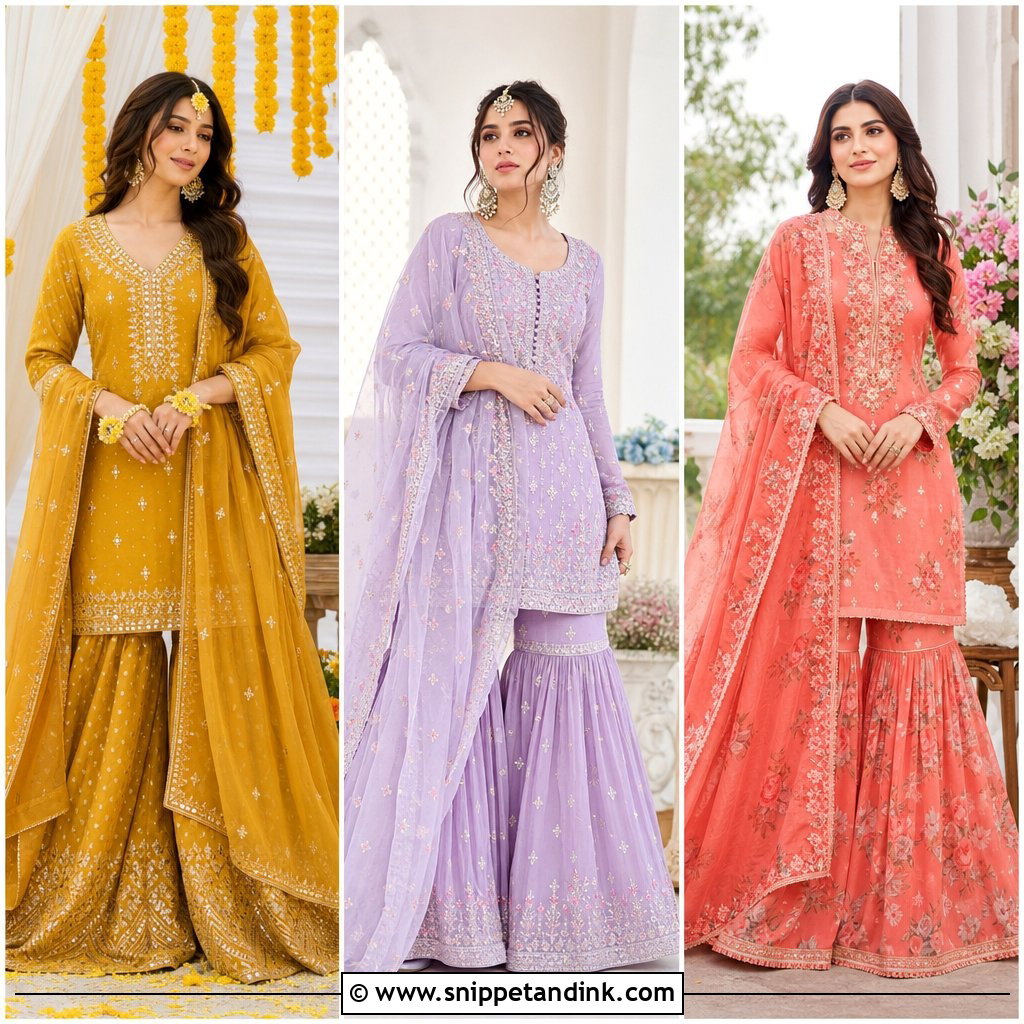
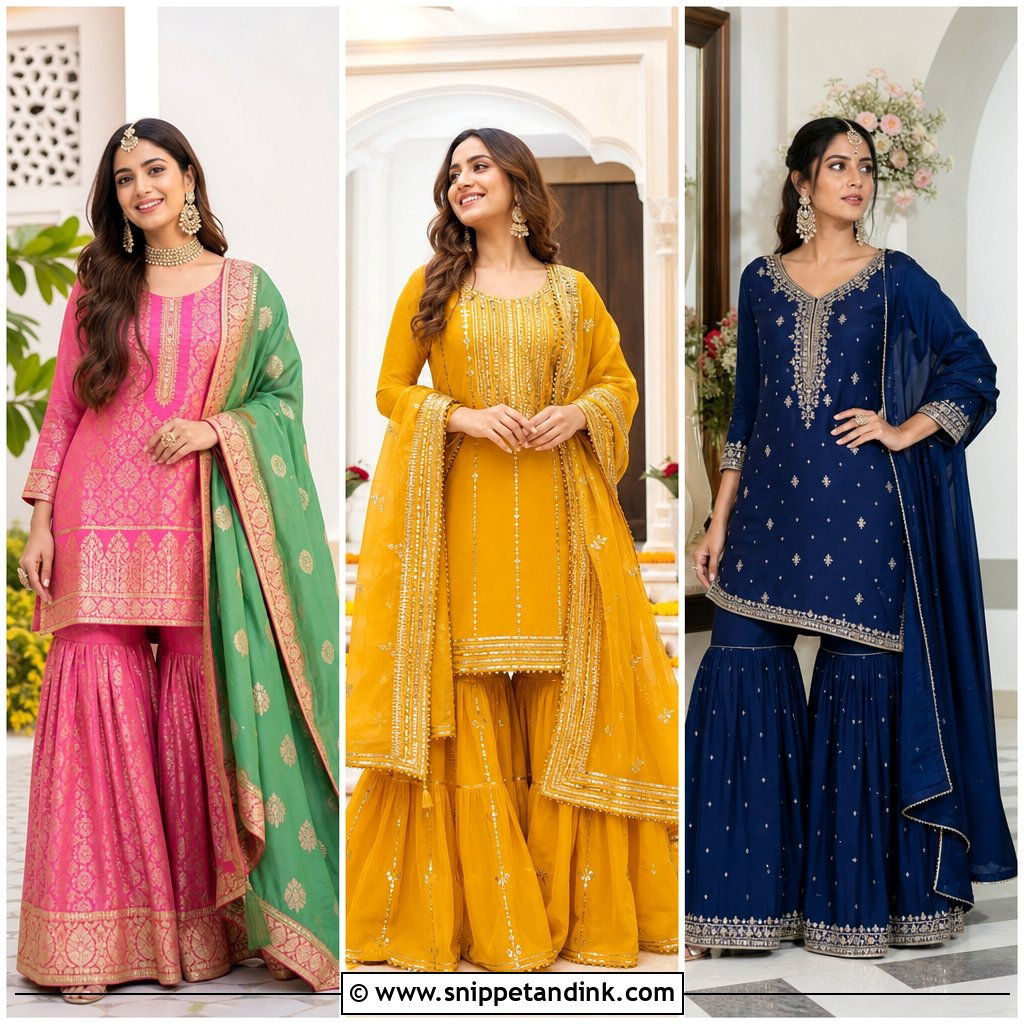
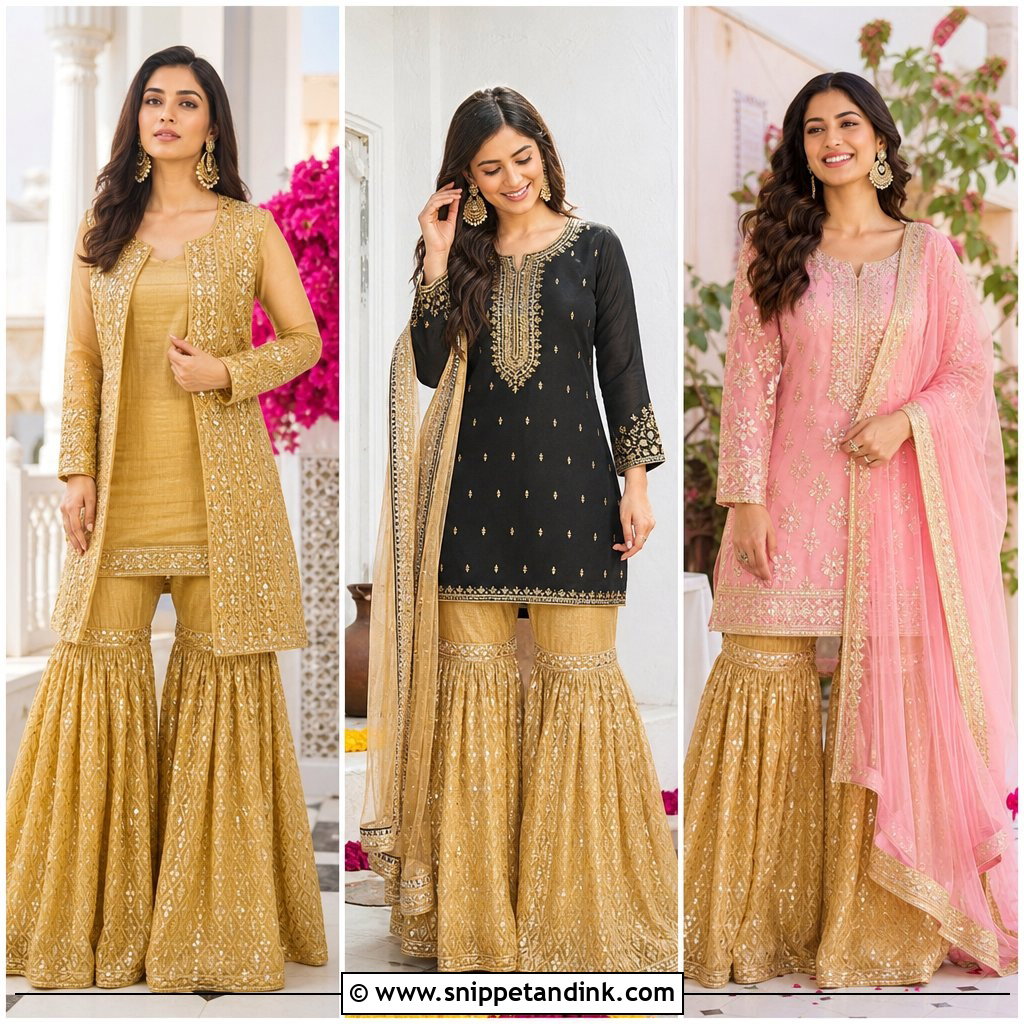
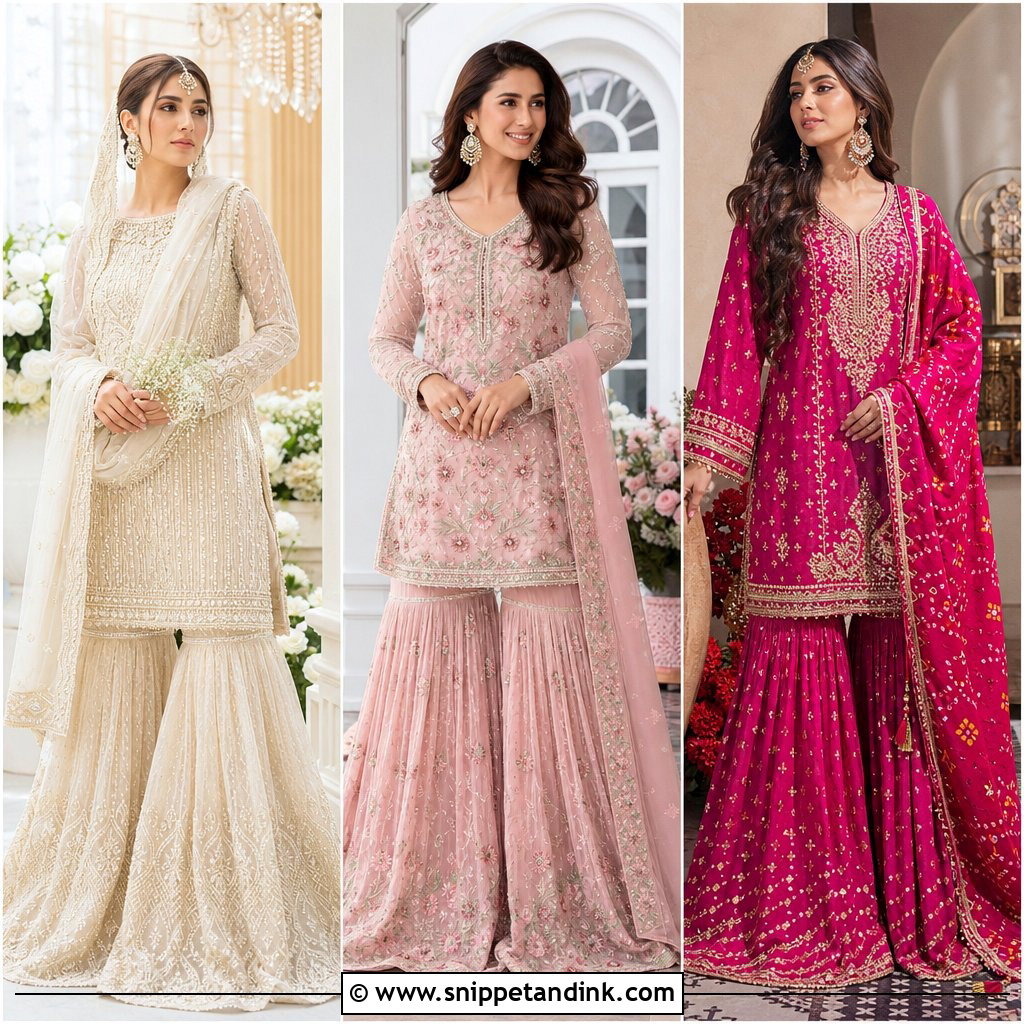
A garara is the one bridal silhouette that only shows its full shape once you start walking, which is why I style it around movement first and colour second. The range now runs from classic red zardozi to ivory, champagne, jewel tones and pastels. A short kurti is still the traditional partner for those flared legs, while long shirts, trailing farshi cuts and statement dupattas change the proportions in useful ways. Brides are also leaning toward tonal embroidery, Banarasi weaves and lighter construction that is kinder over a long day. Before you fall for a colour, think about the venue, the season and how much walking, sitting and stage time the ceremony asks of you. The twenty looks below are a starting point for the whole outfit, from dupatta to shoes.

How Many Panels, Where the Knee Joint Sits, How Long the Hem Falls
A garara is cut very differently from a sharara. The leg is fitted down to the knee, then a joint joins it to a gathered flare made from many panels, called kalis. That joint is usually covered by a band of gota or embroidery, and where it sits decides how the whole outfit looks on your body.
- Ask how many kalis the flare uses. More panels give a fuller swing but add weight, so I ask brides to lift the finished garara in the shop before signing off.
- Set the knee joint at or just above the true knee. Lower than that shortens the leg line, especially on petite brides.
- Bring your wedding shoes to the first fitting. The hem should brush the floor in those shoes, and a farshi cut is measured to trail, so a heel change later means a new hem.
- Allow time. Hand zardozi and dabka sets often need several months, and I’d never plan a fitting less than a few weeks before the wedding.
If you are buying ready-made, check the inside of the knee band. Rough backing on heavy embroidery rubs the skin by the end of the evening, and a soft lining strip sewn behind it solves the problem in an afternoon.
1. Red Zardozi Garara Bridal Dress
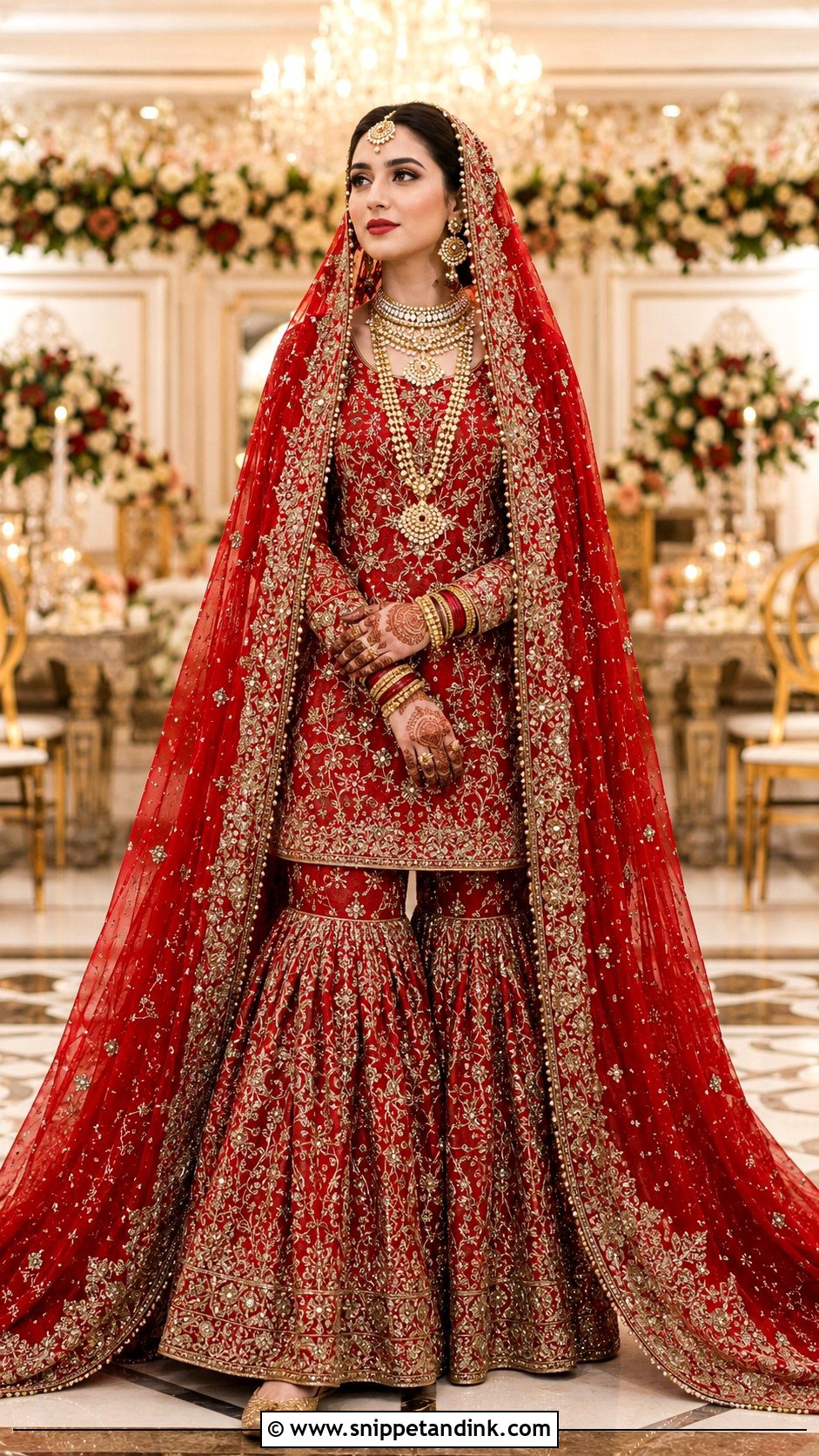
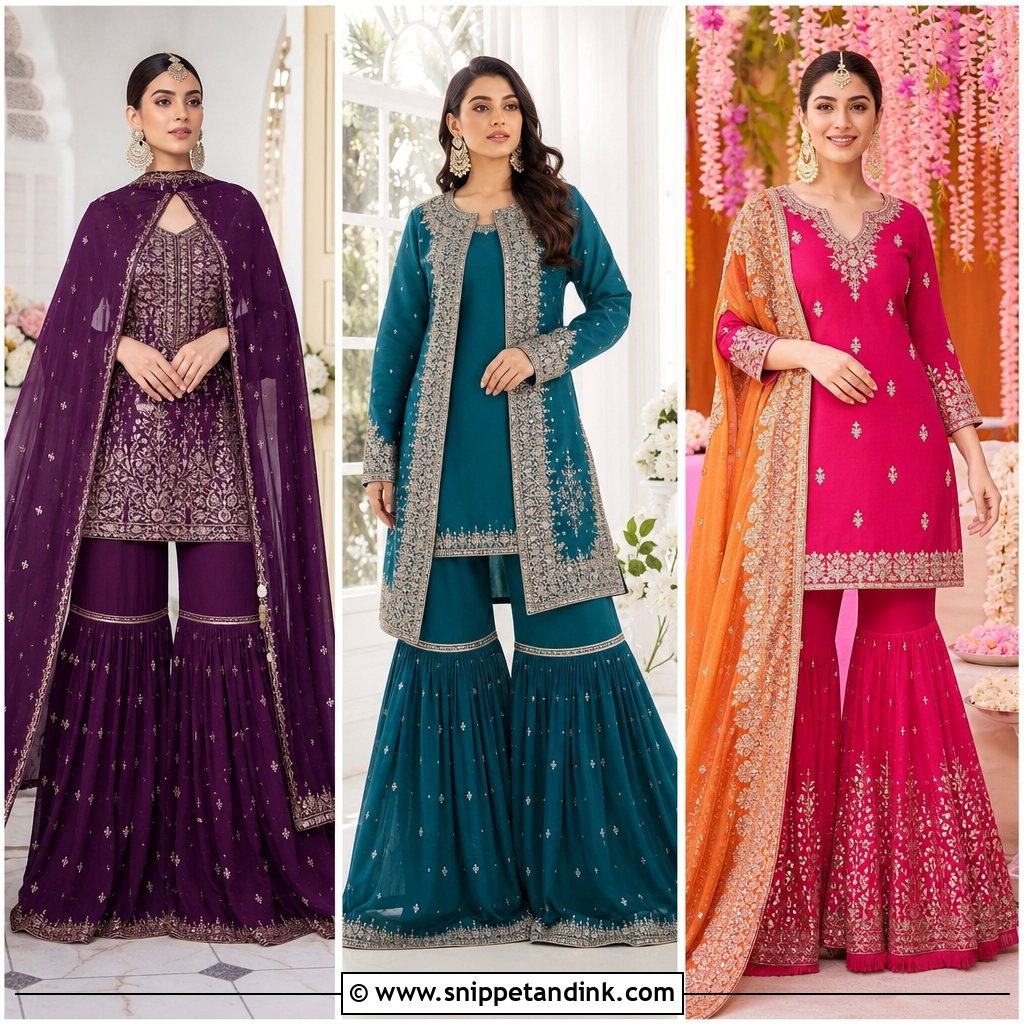
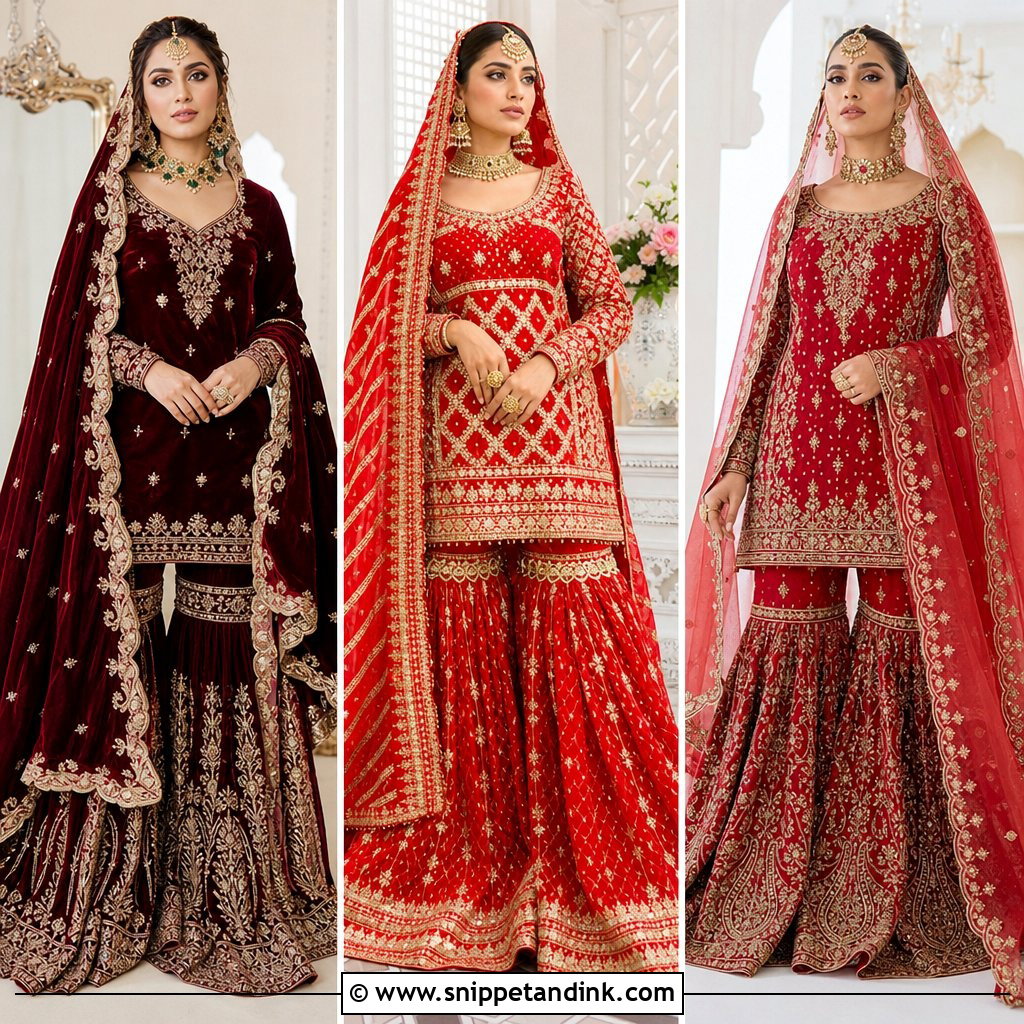
A deep red garara is the most traditional way to wear this silhouette, and it rewards a short raw silk kurti worked in antique gold zardozi, dabka and a little sequin. Raw silk has enough body to hold a fitted top against all that gathered fabric below. The gold band at the knee joint is what defines the shape, so I check its height at every fitting; a centimetre too low and the flare looks like it starts at the shin. Wear a red net dupatta over the head and a lighter one across a shoulder. Gold jhumkas, a layered necklace, bangles and a maang tikka are plenty. Cushioned gold khussas hide under the flare, and a deep rose lip keeps the face from fighting the red.
2. Maroon Velvet Garara Bridal Dress
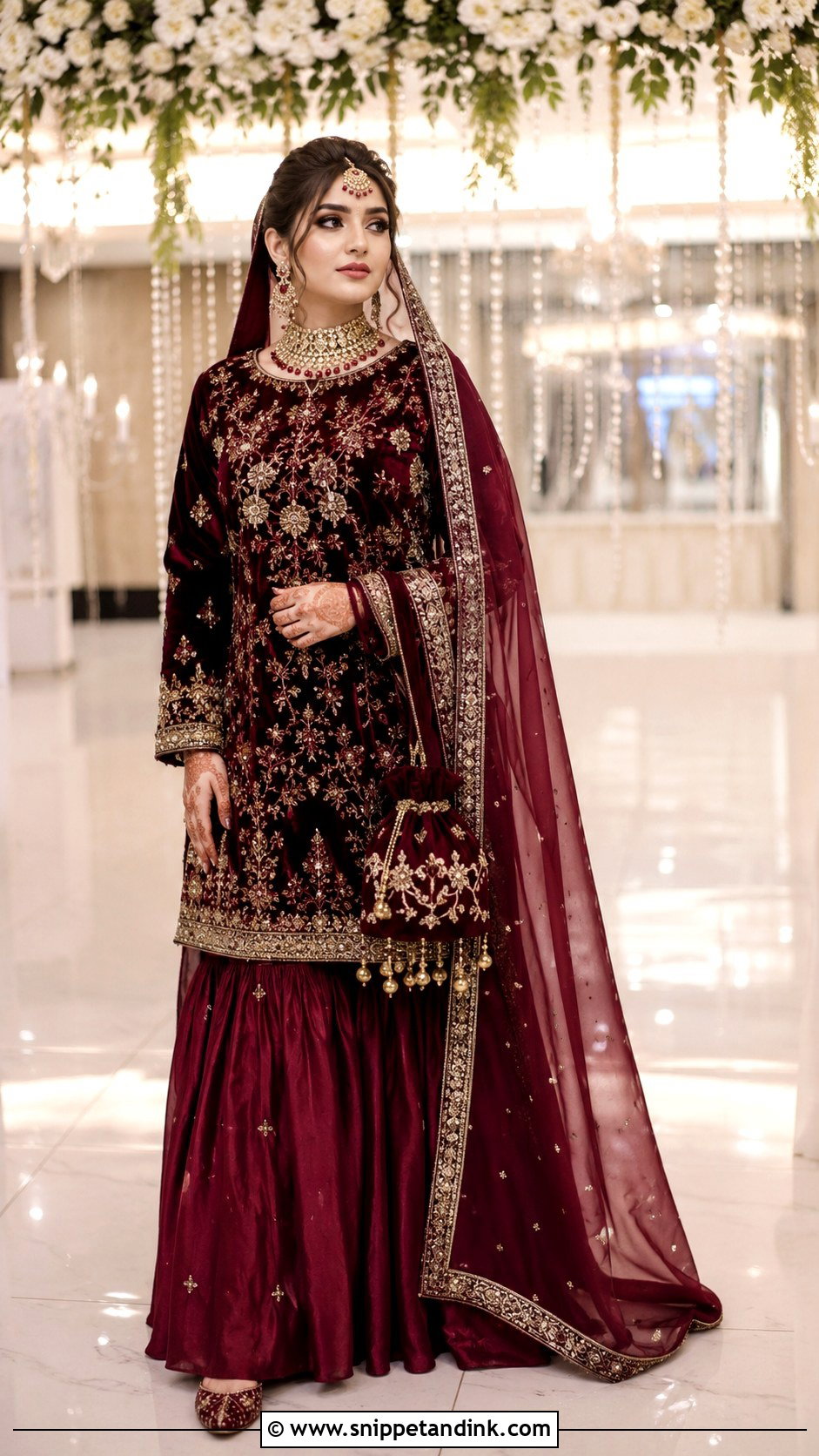
Velvet is my first suggestion for a winter wedding, but only on the kurti. A full velvet garara is heavy enough to drag on your hips by the second hour, so I pair a structured maroon velvet top with a raw silk garara dyed to the same shade. Keep the gold work on the top restrained to neckline, sleeves and hem, and repeat it in the knee and ankle borders so both pieces read as one. An organza dupatta edged in velvet softens the weight. A kundan choker, matching earrings and a small headpiece are enough sparkle here; velvet already reflects light in its own way. Finish with maroon or gold khussas, a small potli and either soft waves or a low bun.
3. Ivory And Gold Garara Bridal Dress
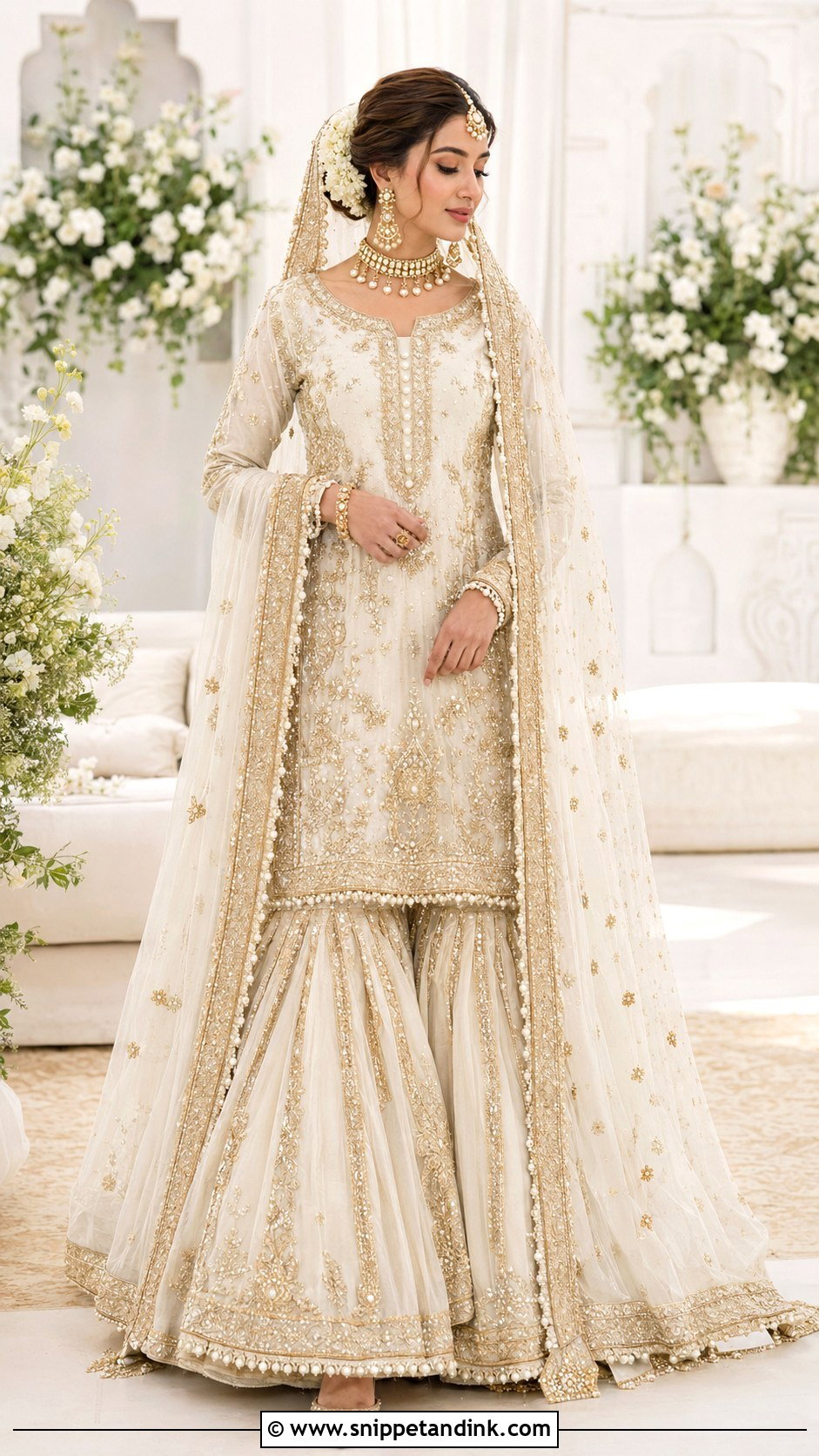
For a nikah or a daytime ceremony, ivory and gold is hard to beat. I like a short ivory silk shirt with fine gold thread, pearls and only a few crystals, paired with a full ivory garara that keeps its embroidery at the knee joint and hem. Concentrating the work there gives the outfit definition without making it heavy. One thing to know before you commit: ivory picks up every mark, and the hem of a garara skims the floor, so I always ask whether the venue is carpeted, tiled or grass. Drape a sheer ivory dupatta over the head and add a second narrow one on the arm if you want more formality. Pearl and kundan jewellery, champagne heels or embroidered flats, and a sleek bun with white flowers finish it.
4. Blush Pink Pearl Garara Bridal Dress
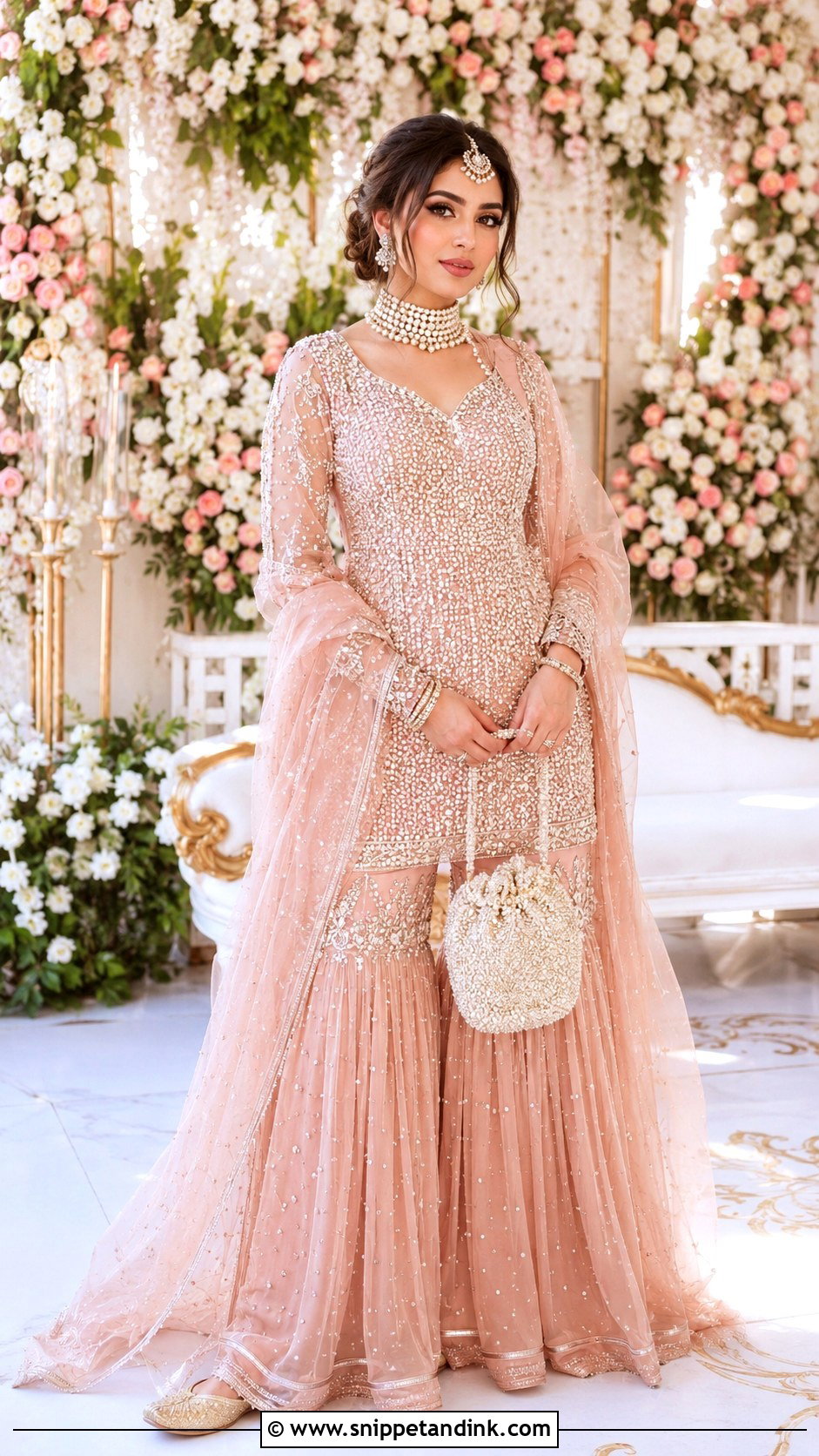
Blush can disappear under bright lights unless something gives it edges, and pearls with a thin line of metallic work do that job. Choose a fitted short kurti in silk or tissue with pearl clusters at the neckline, cuffs and hem, and a flowing blush garara with slim silver-gold borders. Tissue is crisp and slightly stiff, so it holds the kurti’s shape well, but it creases if you sit on it for long; I’d steer brides with a long seated ceremony toward silk. A sheer organza dupatta edged in pearls stays light on the head. Keep jewellery modest: a pearl choker, mid-size earrings and a fine maang tikka. Champagne khussas, a low braided bun and rosy makeup complete it.
5. Champagne Tonal Garara Bridal Dress
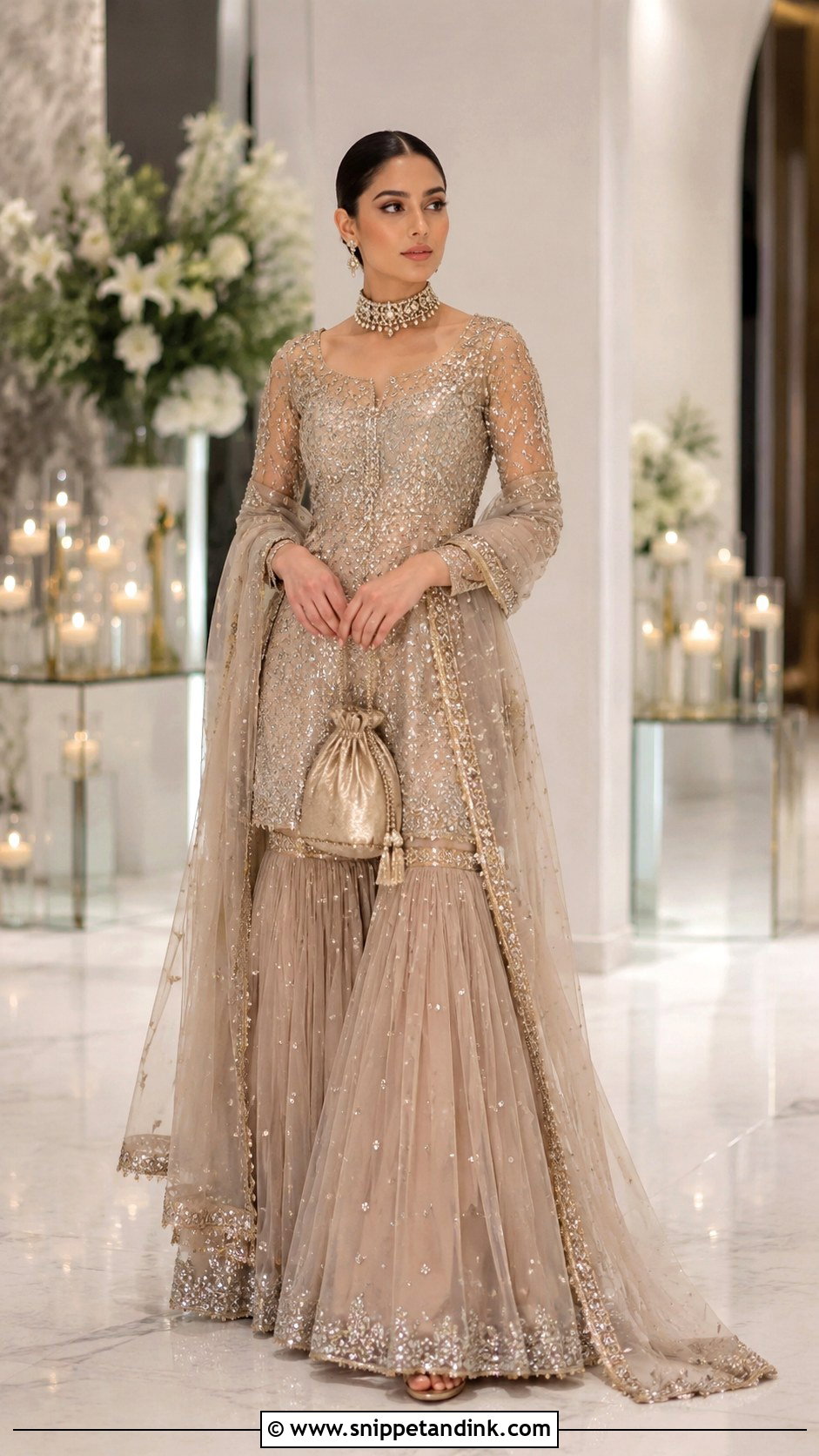
Monochrome champagne is quiet luxury, and it lives or dies on texture. I ask the embroiderer for matching thread, clear beads and only small touches of metal on a short silk kurti, then let the tonal motifs on the garara grow denser toward the flare. That gradual build keeps one long, unbroken line from shoulder to floor. Add a sheer champagne dupatta with an ornate border and a light scatter of work through the centre. Diamond-style jewellery and small drops keep it modern. The trade-off: champagne can look washed out against very warm skin under yellow lighting, so hold the fabric to your face in the venue’s kind of light before you order. Metallic block heels, a matching potli and a centre-parted bun finish it.
6. Emerald Green Gold Garara Bridal Dress
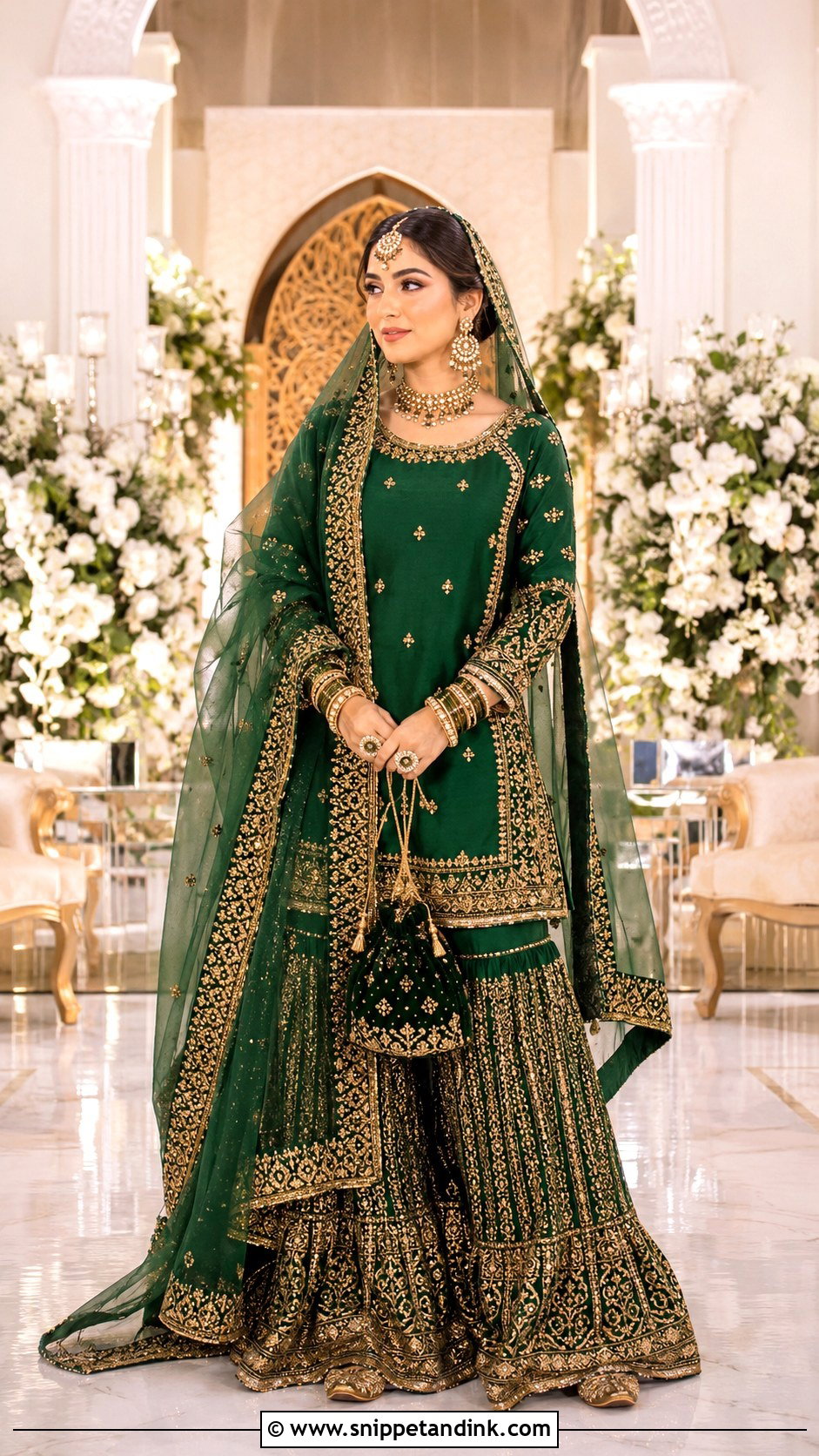
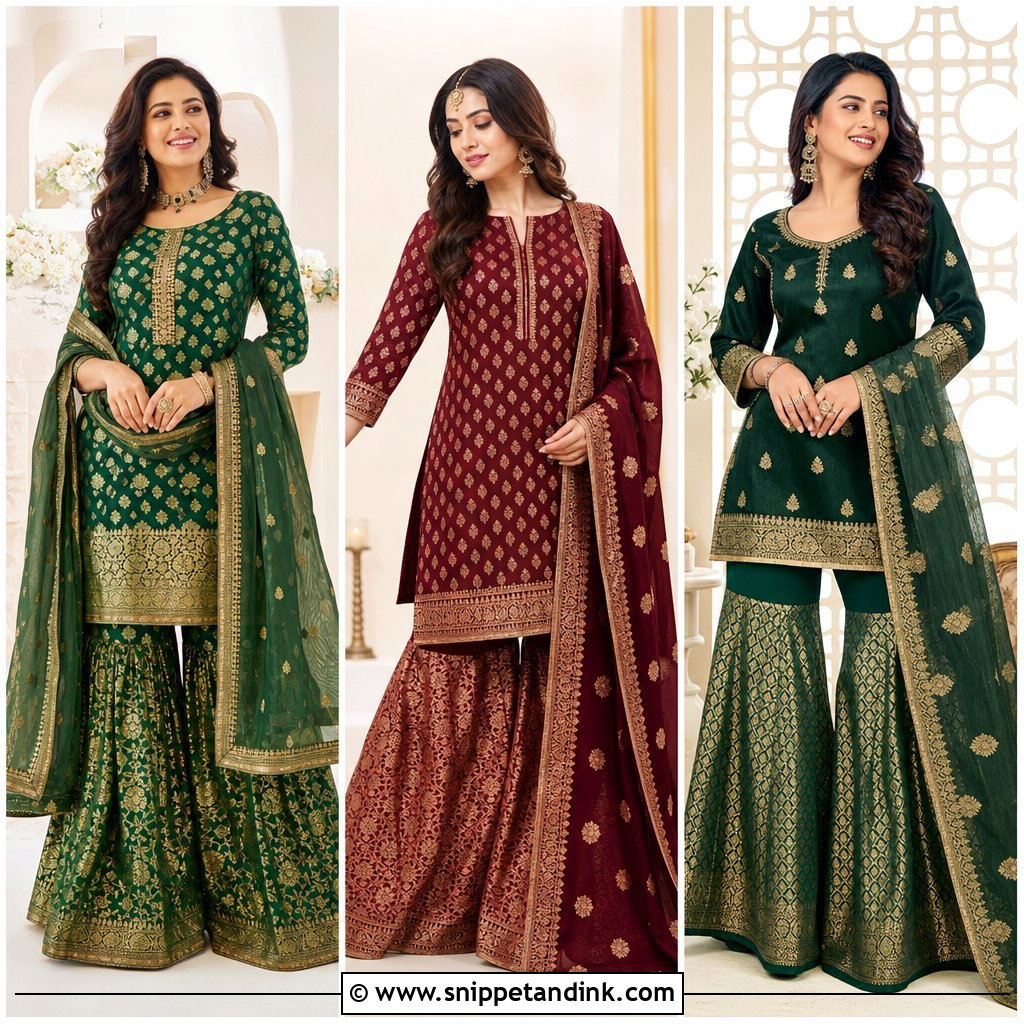
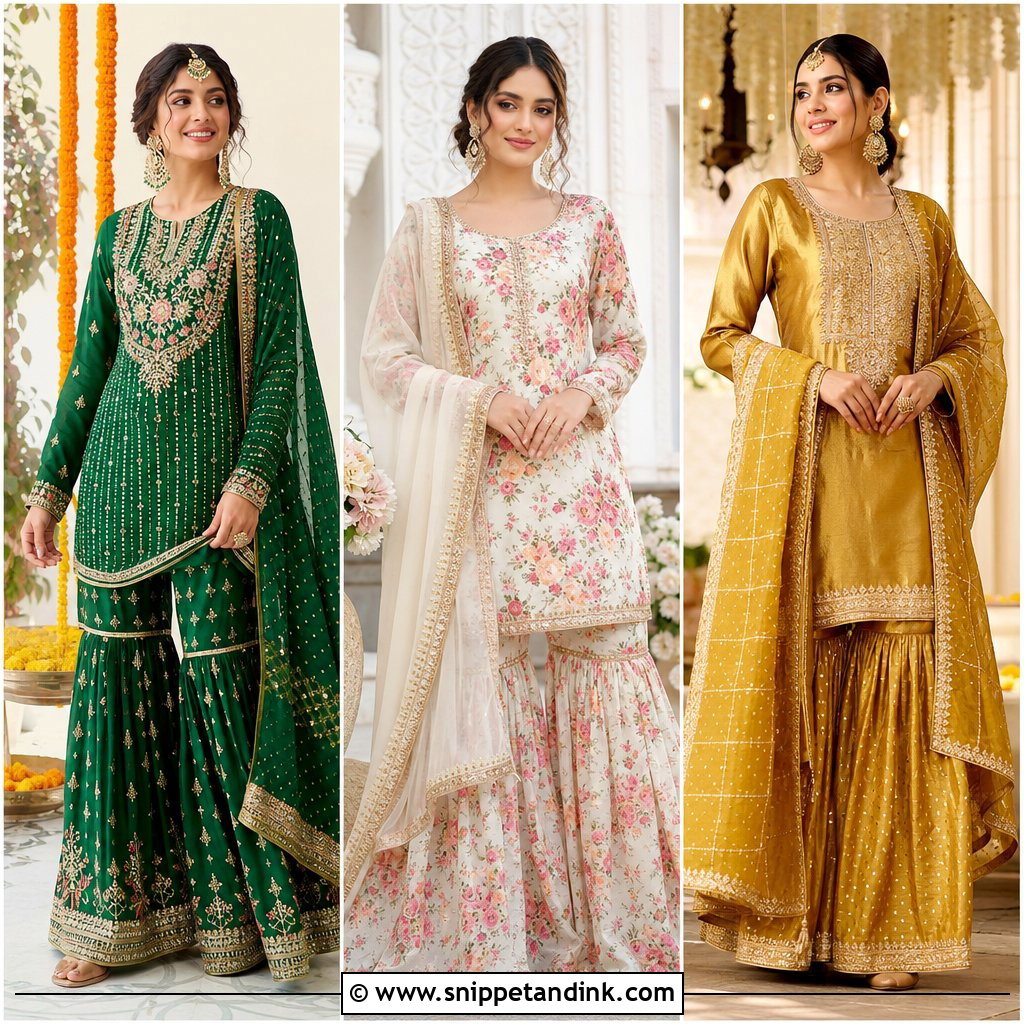
Emerald gives you jewel-tone drama with a lot of dignity. Pair a short emerald raw silk shirt, worked in antique gold zardozi at the neckline, waist, cuffs and hem, with a matching garara carrying gold knee bands and a wide scalloped border. A green net dupatta framed in antique gold gives the outline photographers need. If you want a richer colour story, a few tiny maroon accents in the embroidery or stones work well; more than a few and the outfit starts to look festive rather than bridal. Kundan earrings, a statement necklace, bangles and a traditional headpiece suit it. Gold khussas, a green potli, sleek hair and a muted berry lip balance the saturated fabric.
7. Royal Blue Silver Garara Bridal Dress
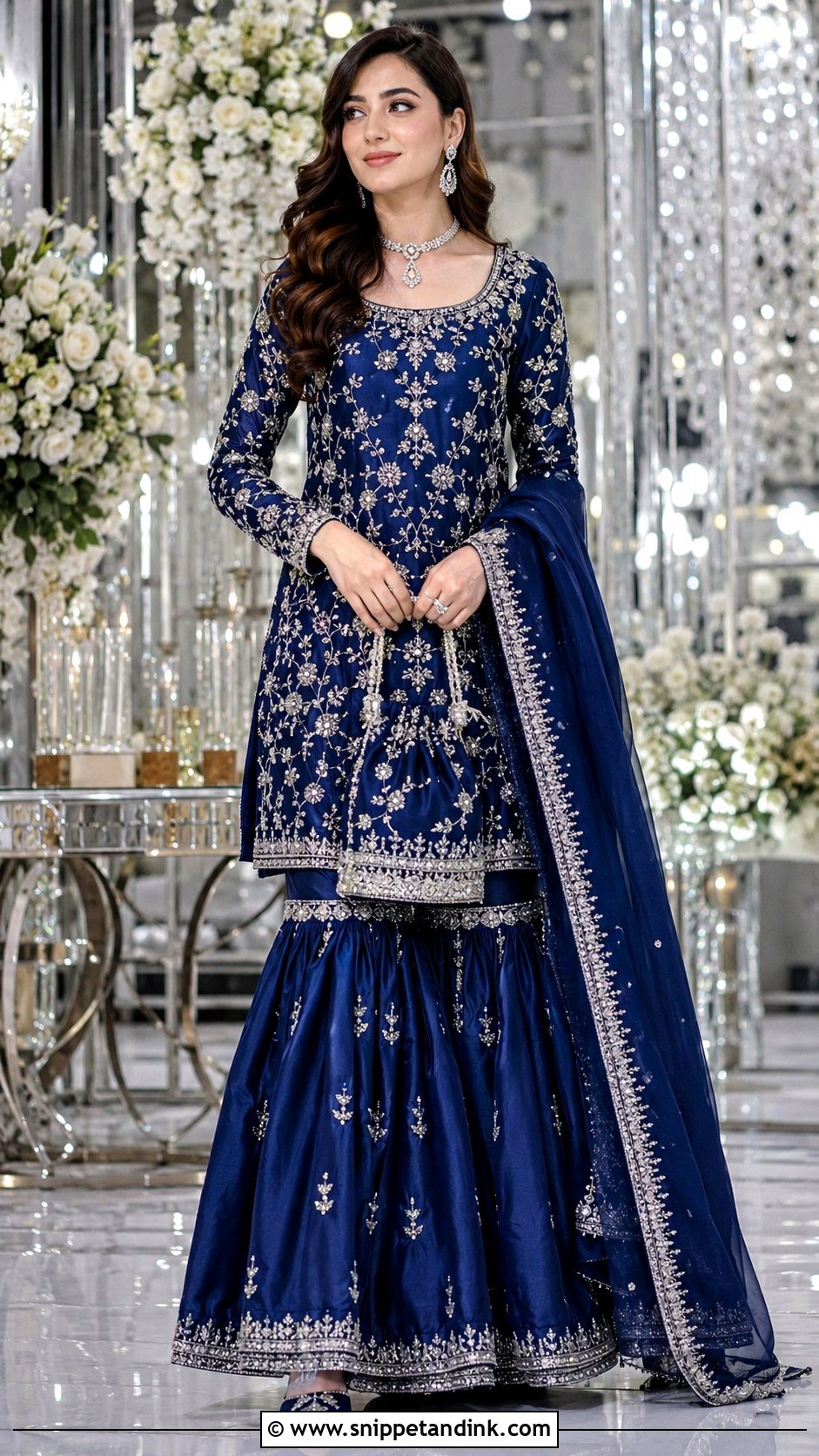
Royal blue and silver belong to the evening. Start with a fitted blue kurti in silver thread, crystal and small beads, then a garara with narrow vertical motifs and a heavily worked lower flare, which catches light as you walk. I keep the centre of the blue dupatta fairly plain because a fully embellished net dupatta slides and won’t hold pins. Silver kundan or diamond-style pieces suit the cool palette. Blue velvet khussas stitched in silver and a crystal potli carry it through. Resist adding a third colour. The strength of this pairing is how clean the blue-and-silver contrast is, and a stray gold necklace breaks it immediately. A low bun and cool-toned eyes finish it.
8. Powder Blue Organza Garara Bridal Dress
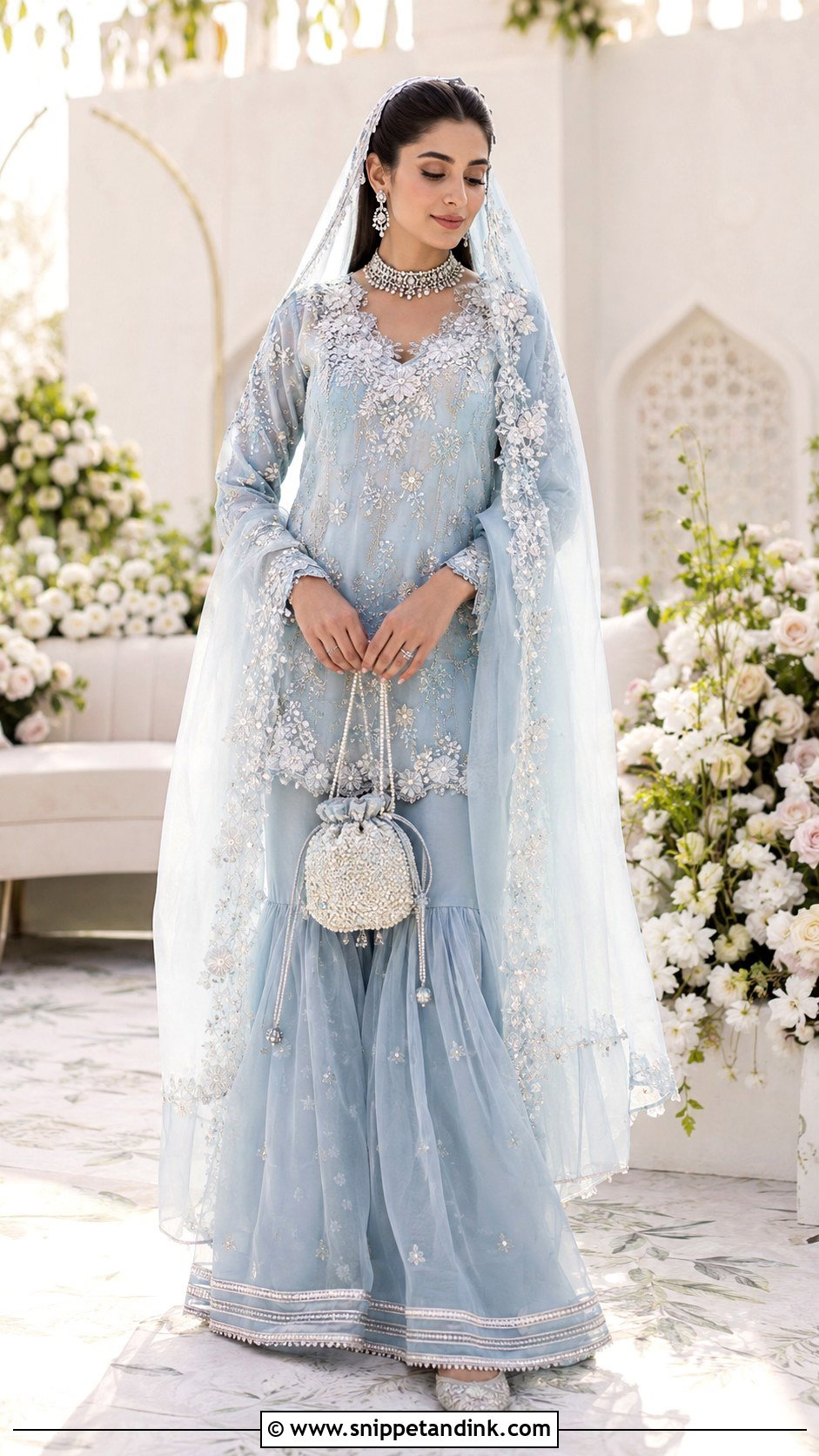
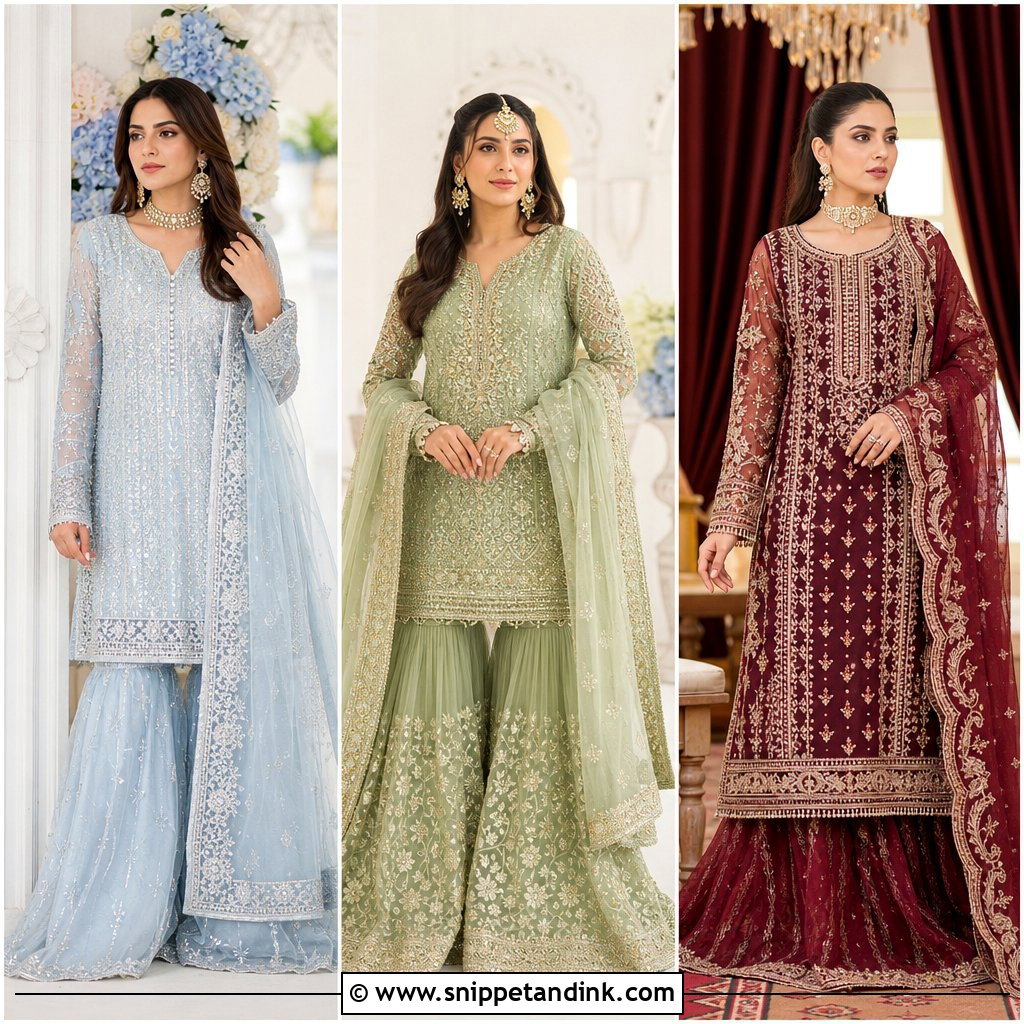
Powder blue is fresh in daylight and reads beautifully at an outdoor reception. I’d choose an organza kurti with a proper structured lining, delicate silver embroidery and a few dimensional florals at the neckline and sleeves; unlined organza scratches and shows every seam. Pair it with a silk garara rather than organza, so the lower half has weight and swings instead of puffing out. A lightly worked organza dupatta can go over the head without pulling. A silver choker, drops and a slim bracelet stack are enough. Crystal flats or low heels, a pearl-trimmed potli, soft waves or a braided bun and rosy neutral makeup keep the colour gentle.
9. Sage Green Floral Garara Bridal Dress
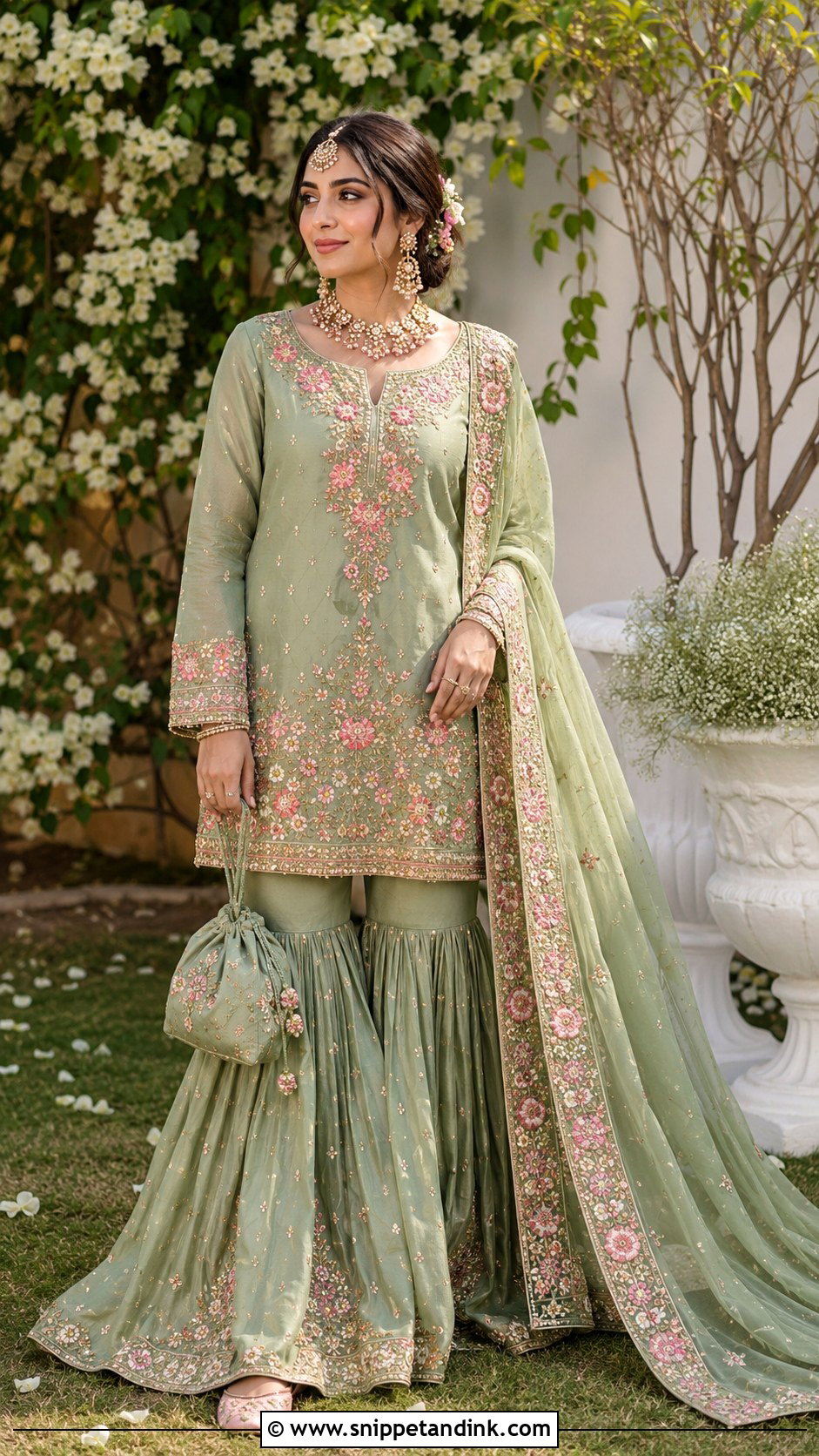
Sage is one of the calmest colours I dress brides in, and it suits a garden ceremony better than a ballroom. Choose a short silk shirt embroidered with vines, pale pink blossoms, pearls and muted gold leaves. Carry only a few florals onto the garara, mostly around the knees and hem, or the pants start to look crowded and shorten your legs visually. A sheer sage dupatta with a floral border and a few scattered buds ties it together. Rose-gold jewellery and pearl earrings work better than yellow gold against the grey-green. Blush khussas, a sage potli with pink thread, a textured low bun with small flowers and peach blush complete it.
10. Lavender Crystal Garara Bridal Dress
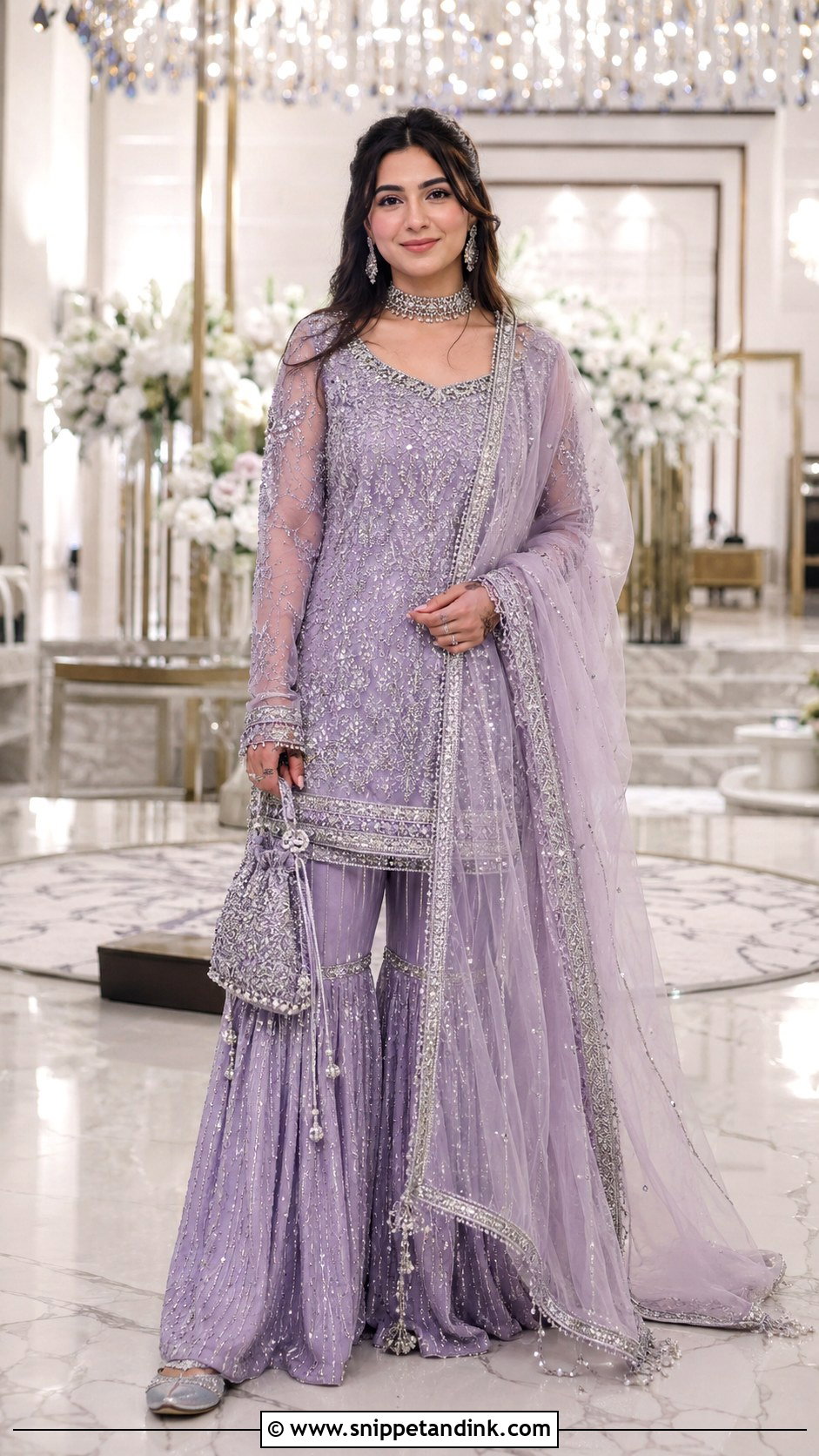
Lavender needs structure to look bridal rather than like a guest outfit. Start with a short lavender kurti with a fitted bodice, sheer sleeves and silver crystal work in floral patterns, then a silk garara with crystal-lined knee bands and a scalloped hem. Crystals are heavier than they look; when they sit densely on a net dupatta I ask for them to stay near the border, so the dupatta still drapes. A lavender net dupatta with silver edging is light on the head and catches reception lighting well. Diamond-style earrings, a delicate choker and a slim maang tikka are right for this palette. Silver pointed flats or low block heels make walking easier under the flare, and a polished bun with cool pink makeup finishes it.
11. Peach Gota Patti Garara Bridal Dress
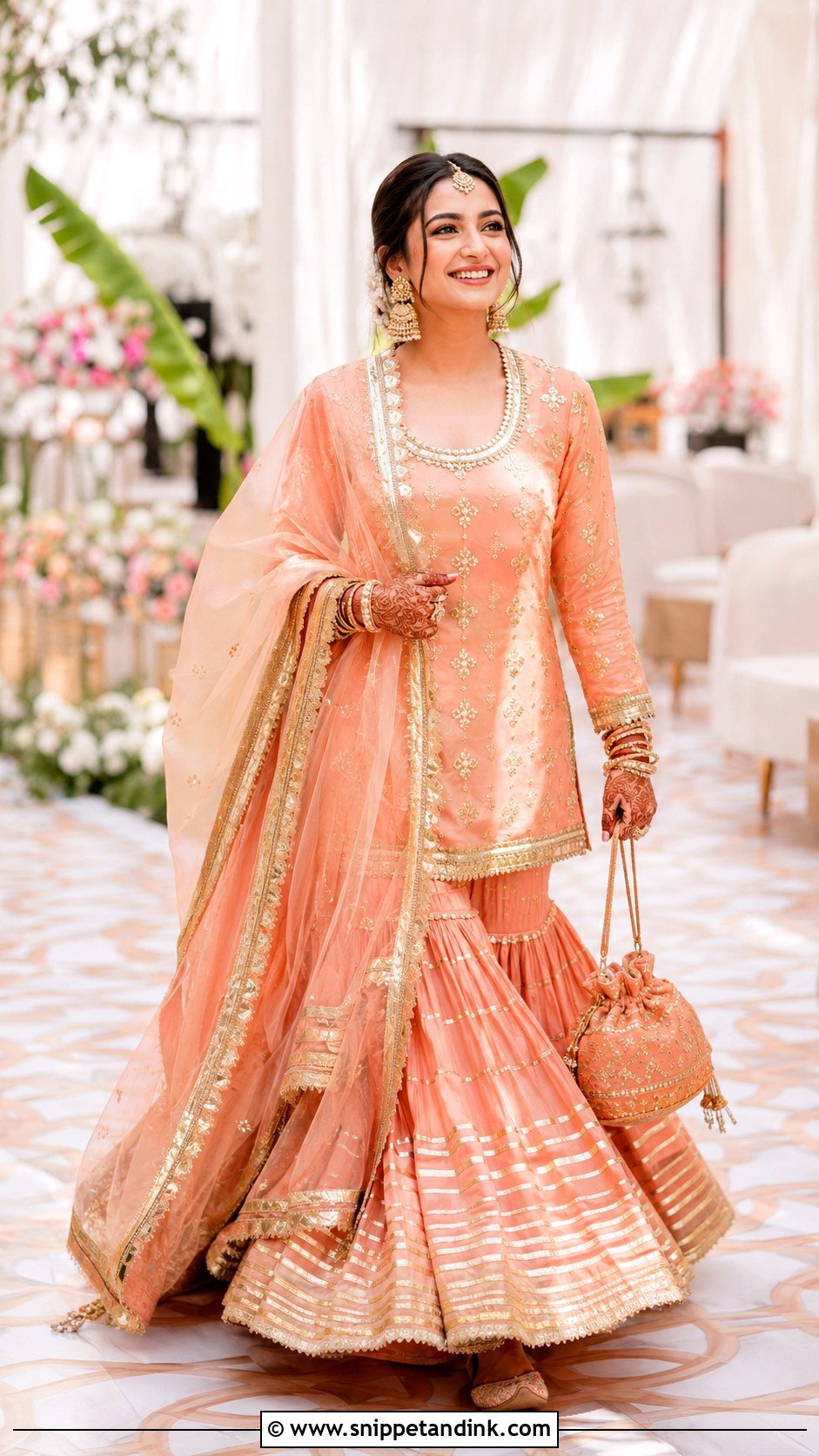
Peach with gota patti is my favourite daytime combination because gota, being a flat metallic ribbon, glints in sunlight without looking heavy. Choose a short peach kurti with gota flowers, gold ribbon borders and fine thread, and a wide silk garara with layered gold trim at the knees and flare. Keep plenty of plain peach between the motifs so the metal stays crisp. Real gota is lighter than zardozi but it bends and creases if crushed, so I hang this outfit rather than folding it in the days before. A light organza dupatta with a bold gota border can go over the head or be pinned on a shoulder. Gold jhumkas, stacked bangles, a small kundan necklace, gold khussas, a braided bun and coral-pink lips complete it.
12. Rust Orange Banarasi Garara Bridal Dress
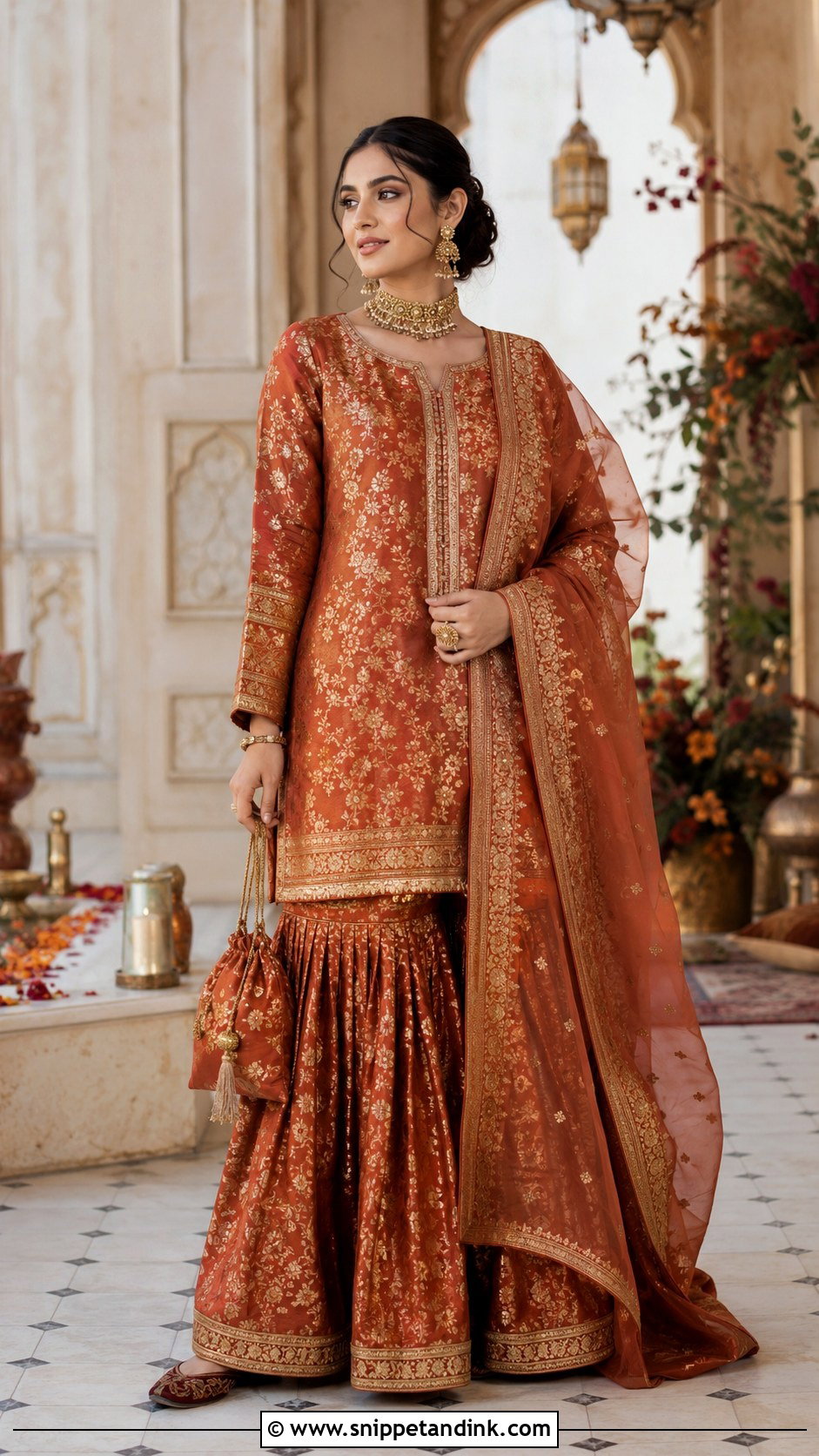
Rust orange Banarasi fabric carries its own pattern, so this is one outfit where I put the heavy textile on the garara and calm the top down. A rust silk kurti with antique gold embroidery lets the woven pants stand out. Highlight the knee joint with a gold or maroon border. Banarasi brocade is stiffer than plain silk, so the flare stands away from the body more; that suits a tall frame, while a petite bride may prefer brocade only in the borders. Add a rust organza dupatta framed in Banarasi and small motifs. Antique gold choker, jhumkas and bangles suit the warm tone. Maroon khussas, a tasselled potli, a low bun and earthy rose makeup make it right for an autumn indoor ceremony.
13. Fuchsia Pink Garara Bridal Dress
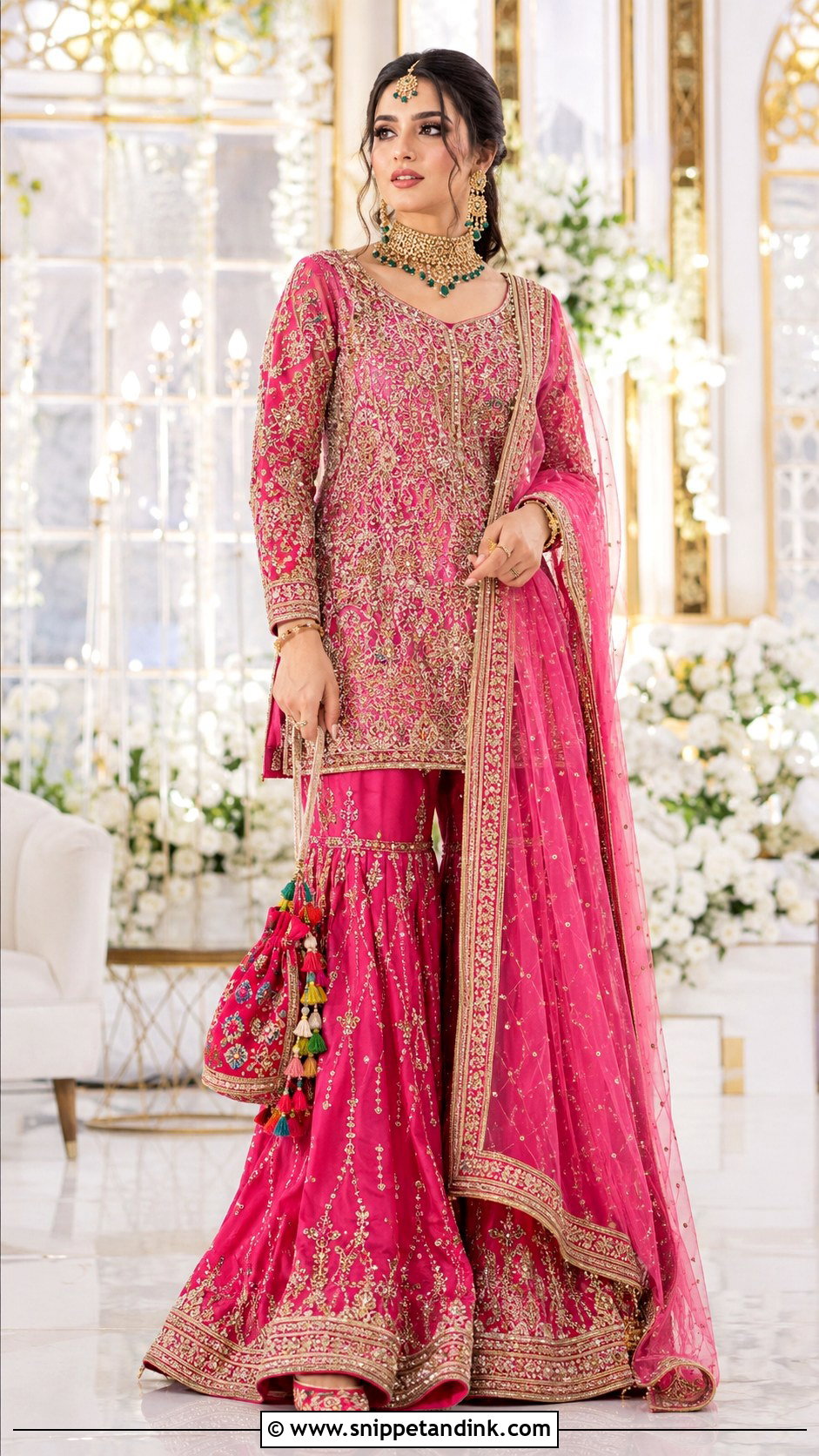
Fuchsia is confident and unmistakably South Asian bridal. I’d pair a fitted short kurti in gold zardozi and resham flowers, with a few green accents, with a voluminous fuchsia garara that has ornate knee bands and a broad gold hem. Rather than matching everything, choose a lighter pink dupatta with a fuchsia border; a single flat block of hot pink from head to toe loses its detail in photographs. Gold and emerald jewellery can pick up those green threads. Embroidered pink khussas and a gold potli with coloured tassels finish the accessories. With this much colour, keep the hair pinned neatly in a centre-parted bun and let defined eyes and a rosy lip do the rest.
14. Black And Gold Garara Bridal Dress
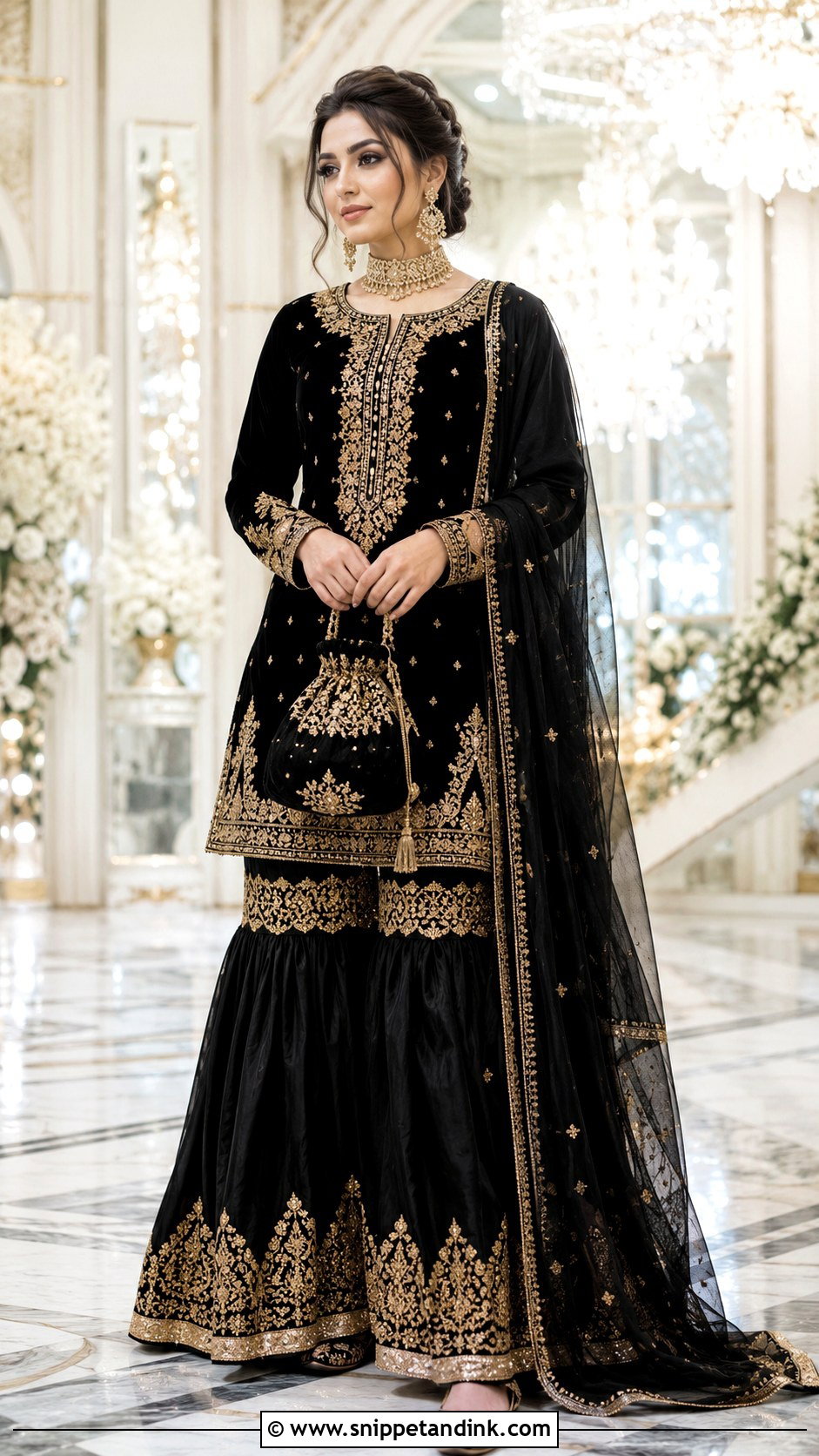
Black and gold makes a dramatic reception look, but check first with family, because in some households black is still avoided at weddings. If it’s welcome, choose a black velvet or raw silk kurti with dense antique gold embroidery at neckline, cuffs and hem, and a black silk garara with elaborate gold knee bands and a wide border. A sheer black dupatta framed in gold adds a layer of softness so the dark palette doesn’t read as one solid shape. Antique gold jewellery, statement earrings and a structured choker suit it. Black-and-gold khussas, a beaded potli, warm metallic eyes and a muted red lip finish it. Ask your photographer about lighting, as black swallows embroidery in a dim hall.
15. White Chikankari Garara Bridal Dress
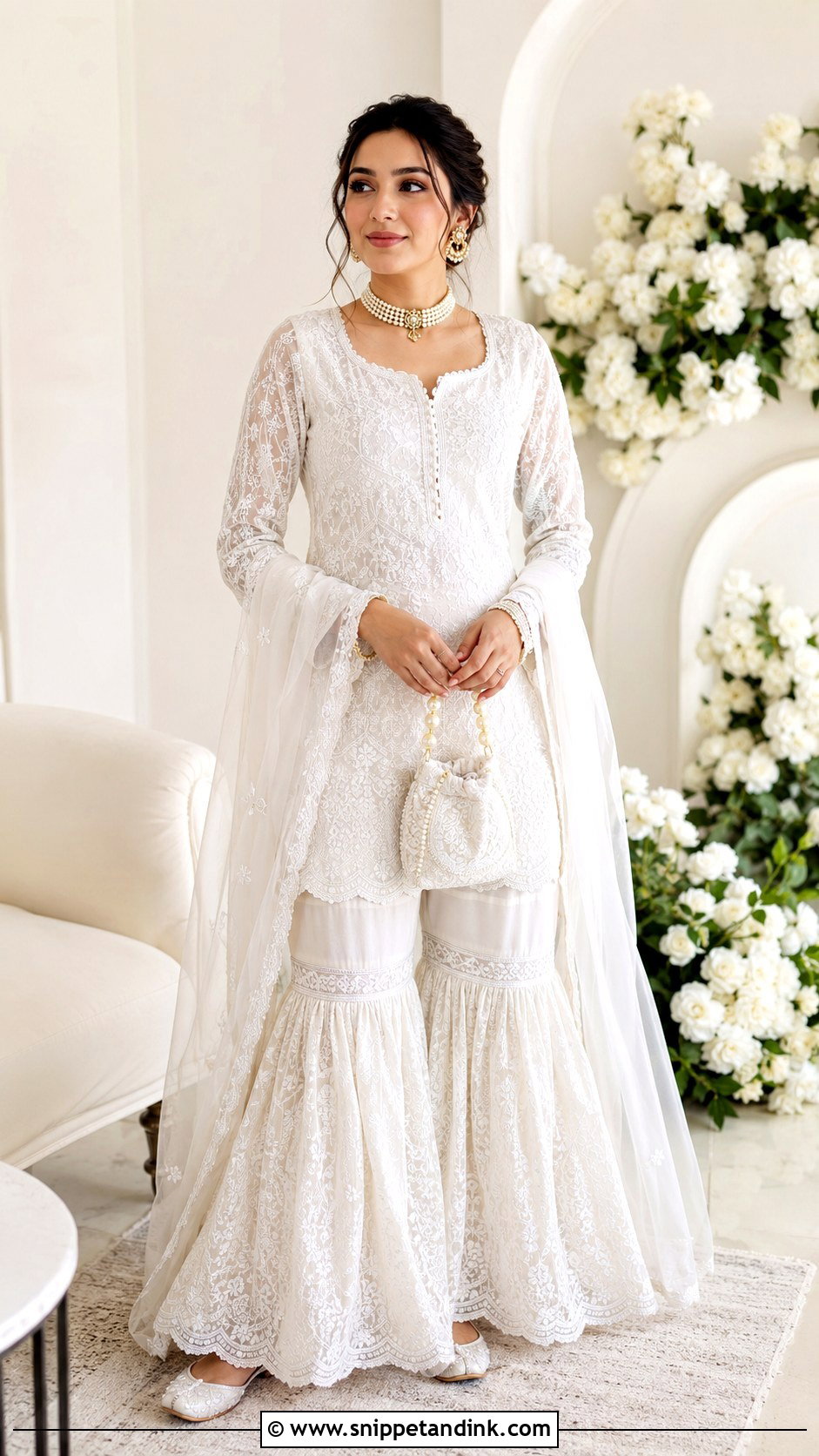
A white chikankari garara suits a simple nikah where texture matters more than shine. Chikankari is fine hand shadow-work, often on mul or georgette, so it is soft and breathable but also translucent; I always have the garara lined and check the lining doesn’t show at the knee joint. Pair it with a short white kurti in dense tone-on-tone work, pearl buttons and a scalloped hem, adding subtle silver or pearl borders at the knees. A sheer white dupatta with fine embroidery keeps it modest and light. Pearls are the natural partner, though a small kundan choker adds presence. White khussas, a pearl-trimmed potli, a low bun with white flowers and fresh makeup complete it.
16. Multicolor Chatapati Garara Bridal Dress
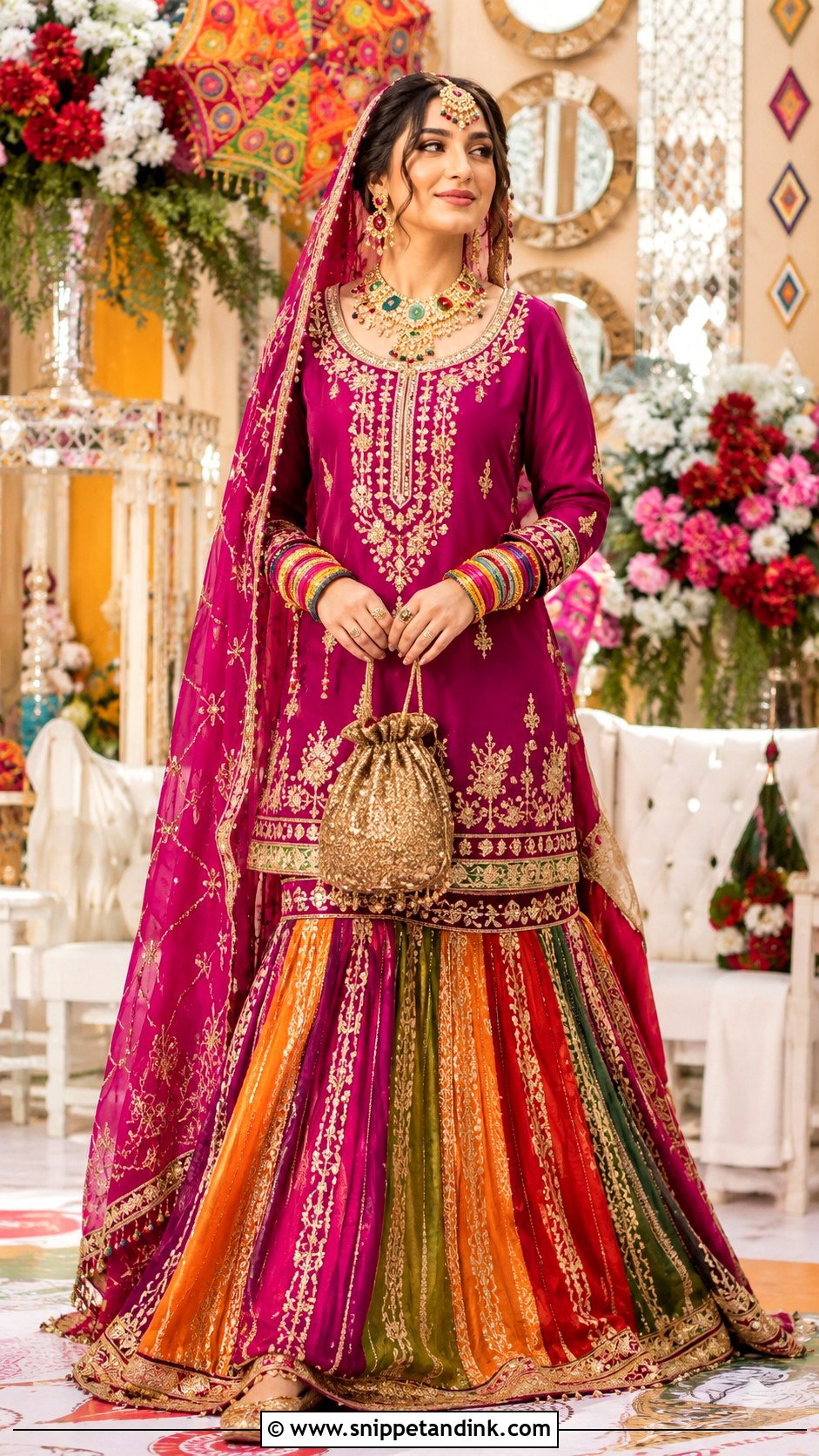
Chatapati is a patchwork of narrow coloured strips, and on a garara it turns every step into movement. I balance the striped legs in magenta, orange, green, red and gold with a solid jewel-tone kurti, then use antique gold embroidery at the shirt’s neckline and hem to connect all those colours. Pick the one dominant shade for the dupatta and give it a multicolour border that echoes the garara. Gold jewellery with small coloured stones and stacked bangles fit the mood; a simple metallic potli stops the accessories from tipping into busy. This isn’t for a bride who wants calm photographs. It’s for one who wants the energy of a mehndi carried into the main ceremony.
17. Farshi Garara Bridal Dress
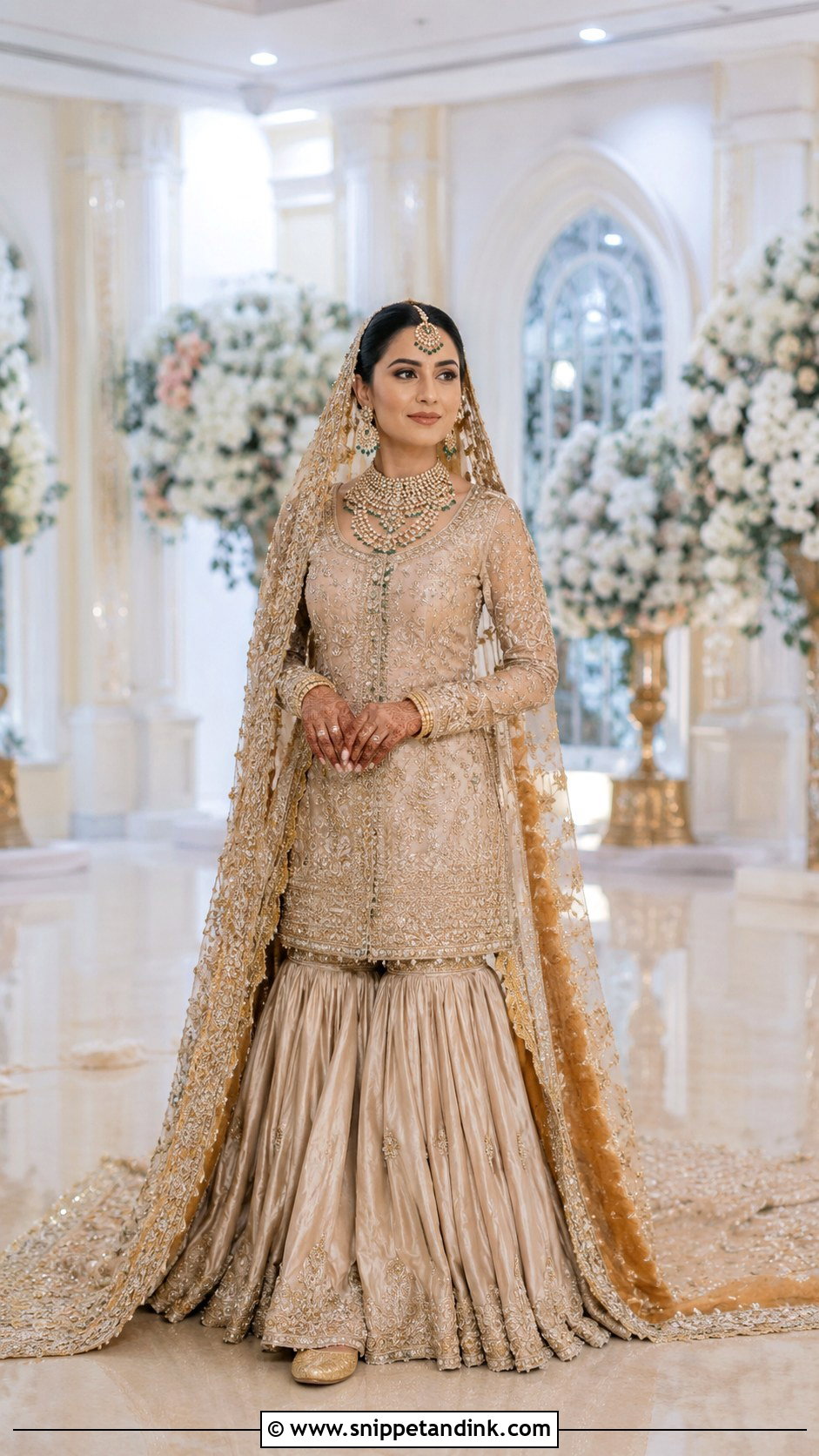
A farshi garara trails on the floor, so it needs a fabric that can support that length: structured silk or jamawar. Pair it with a fitted short kurti in coordinated zardozi, pearls and resham, and keep the neckline clean and sleeves close, since the lower half already carries most of the volume. A long embroidered dupatta over the head adds the regal finish, with a kundan choker, long necklace and centred maang tikka. Footwear matters more here than anywhere: wear the exact shoes to every fitting, because the hem is cut to them. Practise walking, turning and sitting at home. I teach brides to kick the front hem slightly forward with each step, which keeps them from treading on it.
18. Short Kurti Garara Bridal Dress
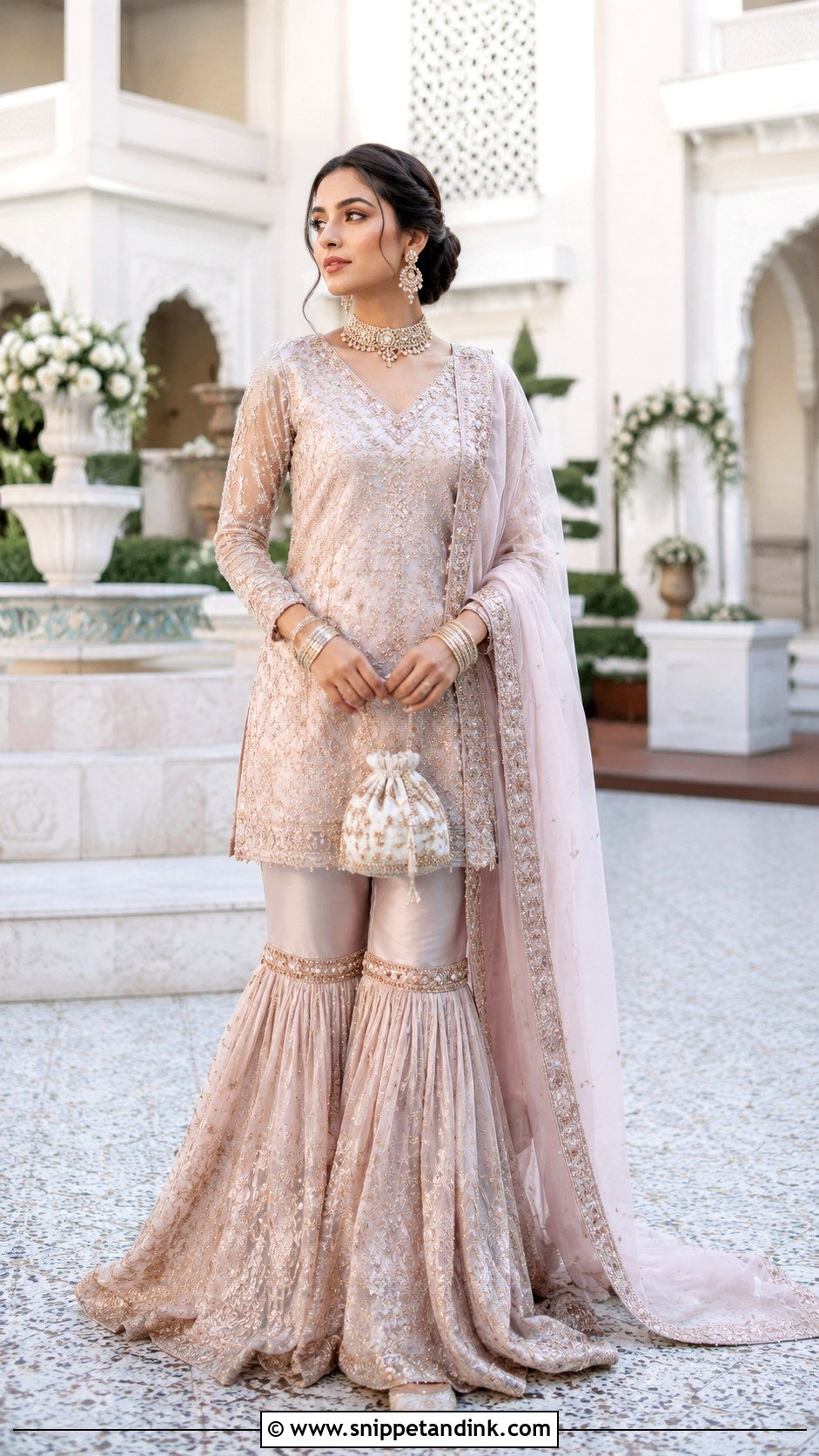
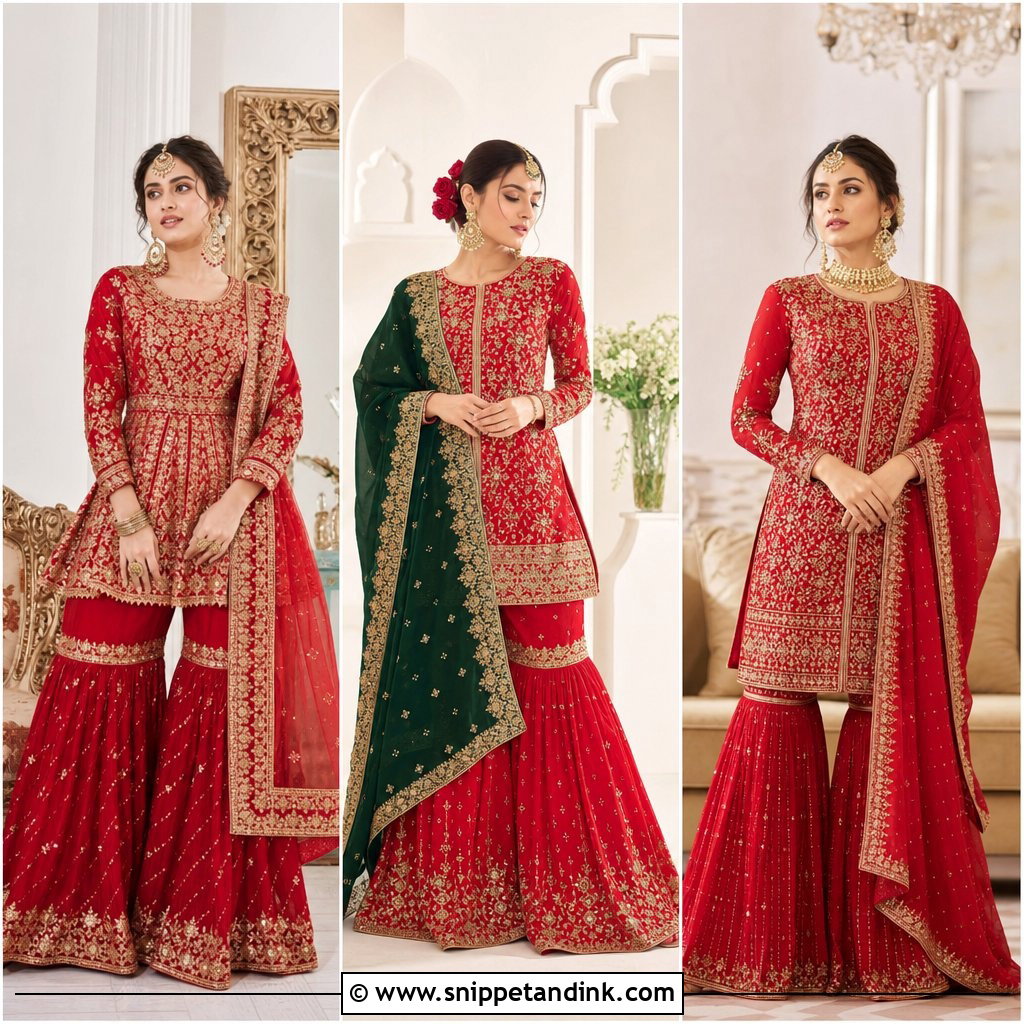
The short kurti and garara is the original pairing, and it shows the silhouette most clearly. I aim for a fitted kurti that ends around the upper thigh with enough structure to stand up to the flare. Concentrate embroidery at the neckline, sleeves and hem and leave small open areas of fabric, which make the work look richer rather than less. Pair it with a heavily flared garara with ornate knee joints and an embroidered hem. A long dupatta over the head adds vertical balance, important because this cut can look wide on a petite frame. A choker, drop earrings, bangles and a small potli are enough. Flats or low heels stay hidden under the flare, and a sleek bun keeps attention on the craftsmanship.
19. Long Shirt Garara Bridal Dress
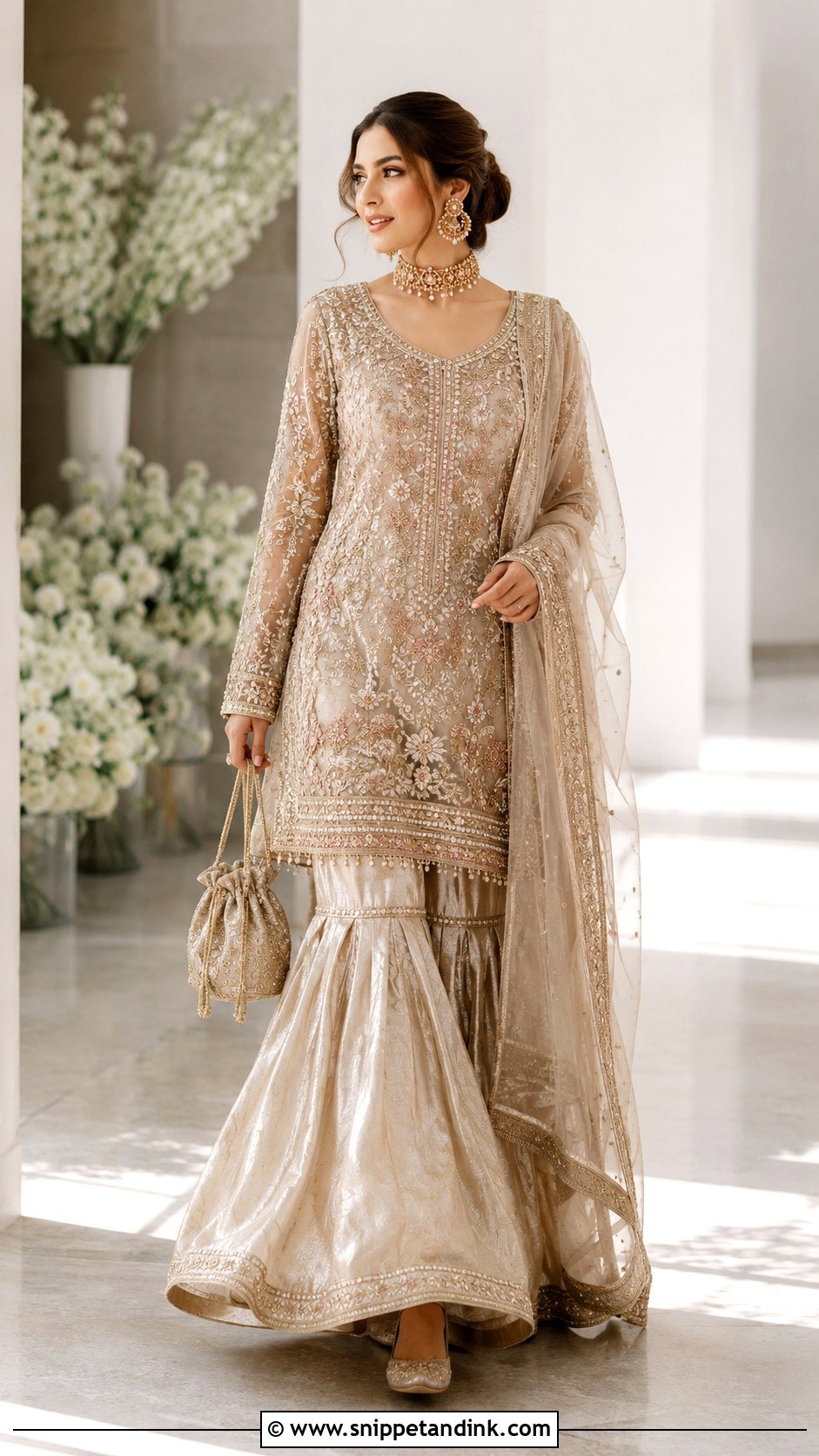
A long shirt gives more coverage and a longer line, and it’s the version I suggest to brides who feel the short kurti cuts them in half. Choose a knee-length straight shirt with side slits cut high enough to show the knee bands; if the slits stop too low, the garara’s defining joint disappears. Put tonal embroidery along the neckline and centre panel, with heavier work at cuffs and hem. A matching silk garara gives a lengthened monochrome effect. Drape a sheer dupatta loosely over the head and one shoulder so the front of the shirt stays visible. Medium earrings, a refined choker, an embroidered potli and pointed flats or block heels are all it needs. A low ponytail or a polished bun keeps it contemporary.
20. Double Dupatta Garara Bridal Dress
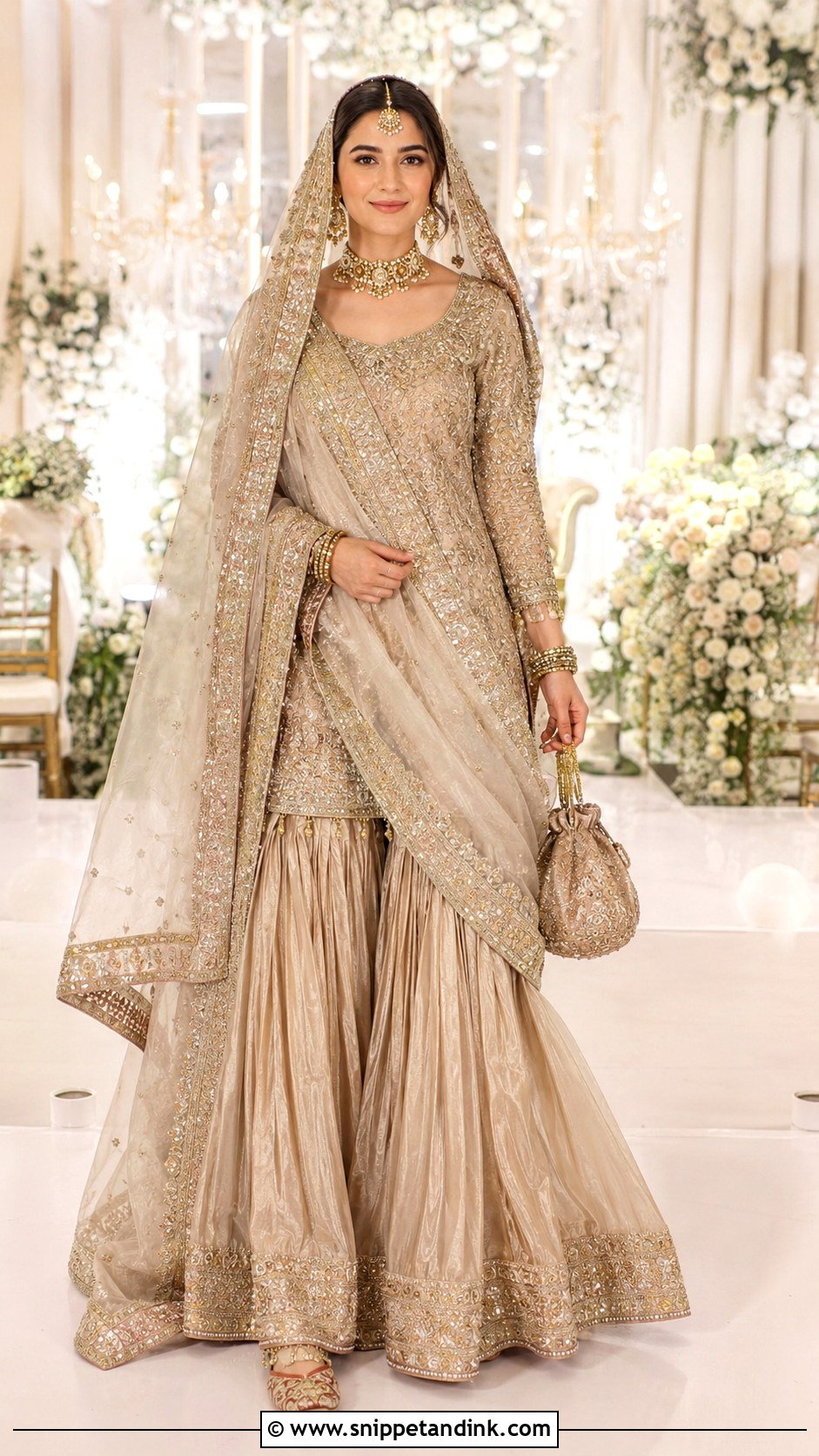
Two dupattas give a garara ceremony-level drama, and they need planning so you can still move your arms. Start with an embroidered short kurti and a silk garara in red, ivory, pink or whatever colour carries meaning for your family. The heavier dupatta goes over the head; choose one with a structured border to frame the face. The lighter one crosses the torso or sits over one arm. Keep both in one colour family or add one gentle complementary shade. When I pin, the head dupatta gets anchored at the crown and behind each ear, and the second one at the shoulder seam and the waist, never through the embroidery itself. A balanced set of choker, earrings, headpiece and bangles completes it.
Stage Steps, Seating and the Washroom in Yards of Flare
Most of my day-of help for garara brides is practical. The flare is generous, so stairs, low stage seating and narrow venue corridors all need a plan, and it is far easier to rehearse at home than to discover the problem in front of guests.
- On steps, gather a handful of fabric at each side just below the knee band and lift slightly. Lifting from the hem crushes the border.
- When you sit on stage, sweep the flare forward and to one side before lowering yourself, so you are not sitting on the embroidery for an hour.
- Ask a sister or friend to be the one person who handles the dupatta and the flare in the washroom. Two hands and a plan keep the hem off a wet floor.
- Pack a small kit: safety pins, a few dupatta pins, fashion tape and a clean muslin cloth to press under the hem if you sit on a dusty seat.
Storing Zardozi and Gota After the Wedding
Metallic embroidery tarnishes when it meets moisture and plastic. I tell every bride to air the outfit for a day after the wedding, then wrap it in soft white muslin and lay it flat in a box, with tissue between the folds of the flare. Avoid plastic covers and avoid spraying perfume near the work. Refold it along different lines every few months so the creases don’t set into the silk, and have it dry-cleaned only by someone who handles embroidered bridal wear, because harsh steam can lift sequins and flatten raised zardozi.
A Garara Should Move Well Before It Sparkles
This silhouette stretches further than most people expect, from traditional red and maroon velvet to ivory chikankari, colourful chatapati and the full drama of a farshi cut. My order of decisions never changes: fabric that you can carry for hours, then a colour that suits the ceremony, then the top that balances the volume, whether a fitted short kurti or a tailored long shirt. Jewellery, dupattas, shoes and hair should support the outfit rather than compete with it. Above all, wear everything together before the day. Walk, sit, climb a step and pose in every layer, and let your tailor adjust what you notice. Good fitting and secure draping are what let you stop thinking about the outfit once the ceremony begins.
You'll Like These Ideas:


Leave a Reply