
Satin is the fabric I’d call honest. It has no lace or beading to hide behind, so cut and fit show at once, and the surface picks up light along every fold and seam. That’s exactly why so many brides are turning to it, in everything from slip gowns and column dresses to structured ball gowns, corsets and short reception looks. Below are thirty ways it gets cut, with notes on what each silhouette asks of the fabric and of you. Before you scroll, know that “satin” covers several very different cloths, and the one you choose changes how a dress behaves far more than the photos suggest.
Duchess, Silk or Polyester? Reading the Satin Label
Satin is a weave, not a fibre. The long floating threads on the surface are what create the sheen, and they can be woven from silk, polyester or a blend. When a bride brings me two dresses that look alike in photos, the label usually explains why one feels so different.
- Silk satin drapes fluidly and feels cool on the skin. It’s beautiful for slip and bias-cut gowns but marks easily and creases when you sit.
- Duchess satin is heavy and stiff with a soft lustre. It holds ball gown skirts and structured bodices, and it’s warm to wear in summer.
- Mikado is thicker still with a slightly textured surface and less shine, so it suits sculpted, architectural shapes.
- Polyester satin resists creasing better and costs less, but it can look shinier under flash and feels warmer because it breathes less.
Ask for a swatch, crush it in your hand for ten seconds, and see how quickly the creases fall out. Then look at it in daylight and under a phone flash. That small test tells you more about how the dress will look at hour eight than any product photo will.
1. Satin Ball Gown Wedding Dress
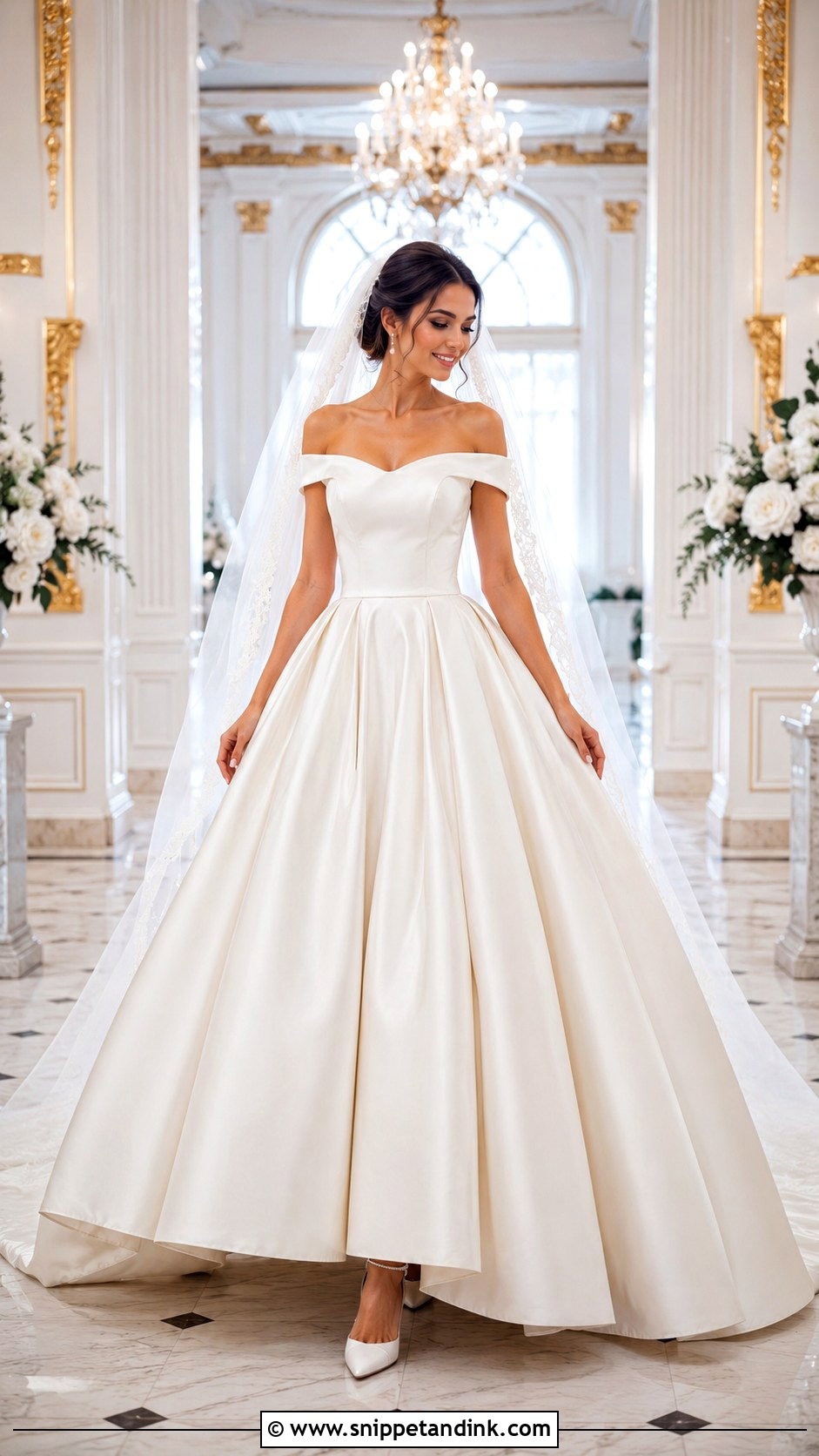
A satin ball gown needs a heavy satin, usually duchess or mikado, to hold its skirt without collapsing. The full skirt and fitted bodice suit grand hotels, estates and ballrooms. I always check the waist seam first; a ball gown only looks right when the waist is clearly defined and sits at your natural waist. A structured or scoop bodice, pearl earrings, a long veil and pointed satin heels finish it, and I keep everything else quiet because the skirt already carries the room.
2. Strapless Satin Wedding Dress
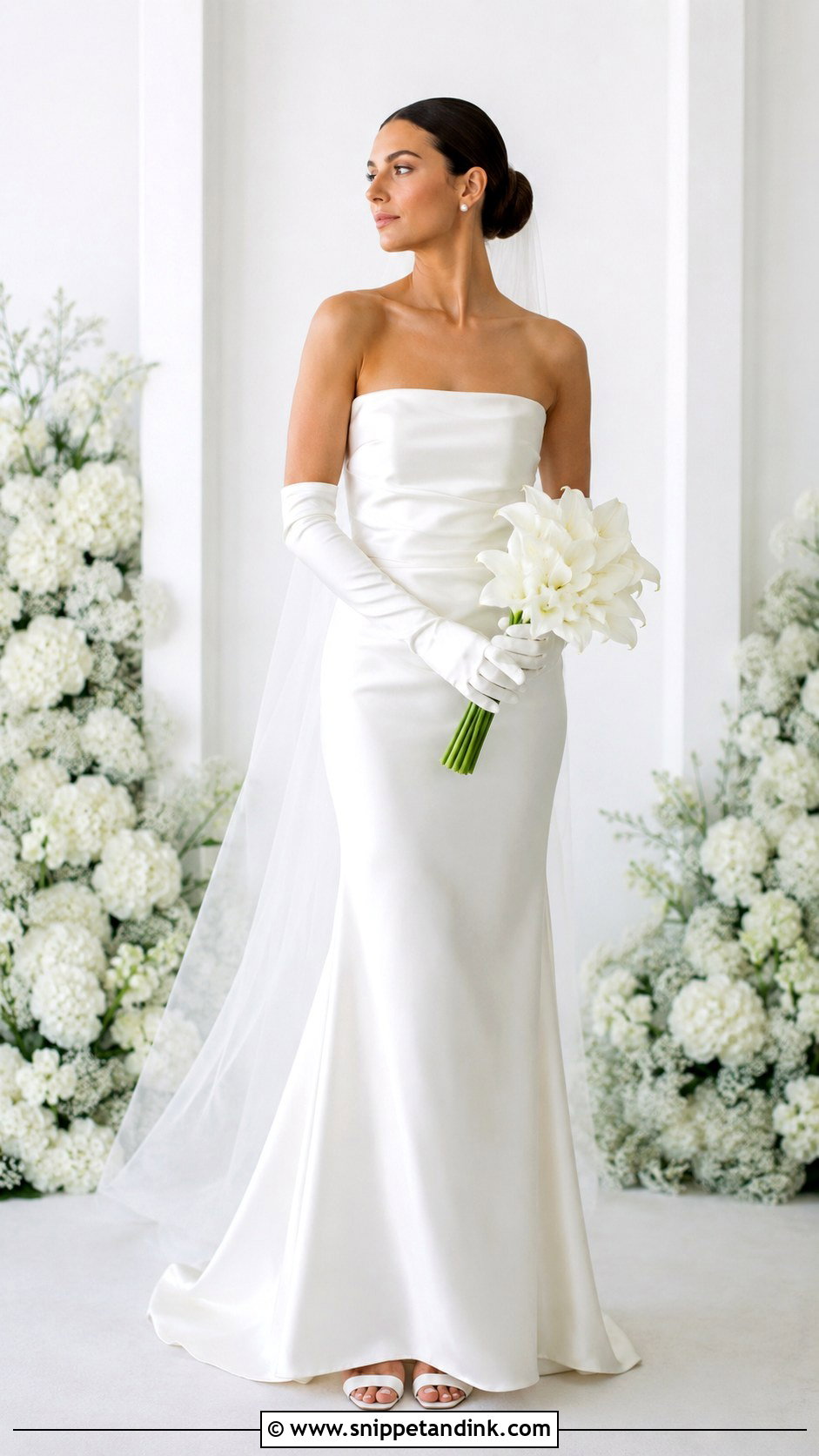
Strapless gowns rely entirely on internal structure, so before I look at the neckline I check the boning and the waist stay. A straight-across neckline is cleaner; a sweetheart softens the face. Satin shows any pulling at the top edge, so the bodice should be fitted while you breathe in and out, not only standing still. With opera gloves, pearl studs or a simple chignon, it looks classic in photos and still current.
3. Long Sleeve Satin Wedding Dress
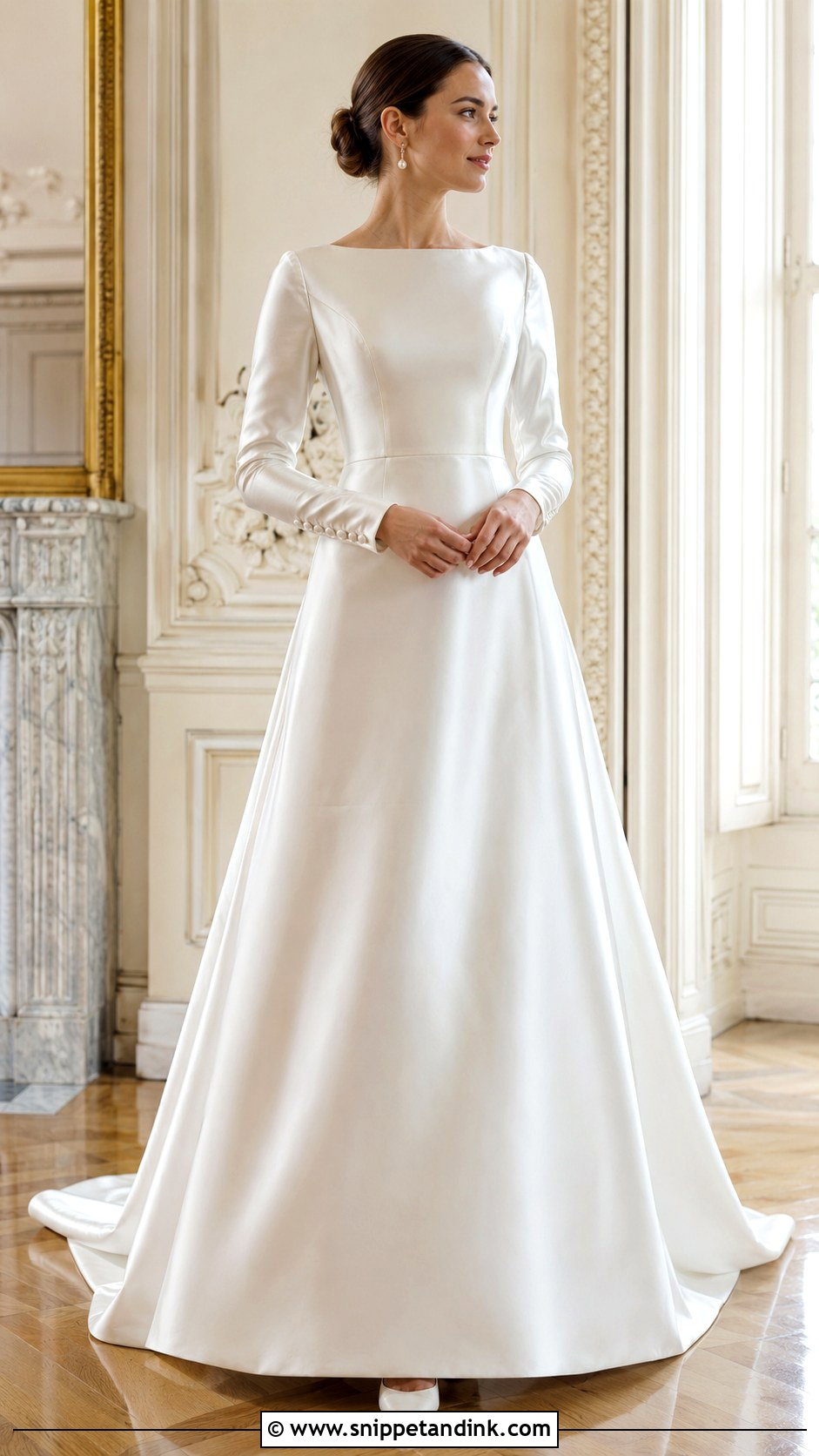
Long satin sleeves suit cooler months and formal ceremonies, and they flatter historic venues and candlelit rooms. They can be fitted, softly puffed or draped. The thing I watch is arm movement: satin has almost no stretch, so tight sleeves pull the whole bodice up when you hug or raise a glass. Ask your seamstress to add a gusset or cut the sleeve a touch fuller at the elbow. A low bun, pearl drops and closed-toe heels keep it refined.
4. Satin A Line Wedding Dress
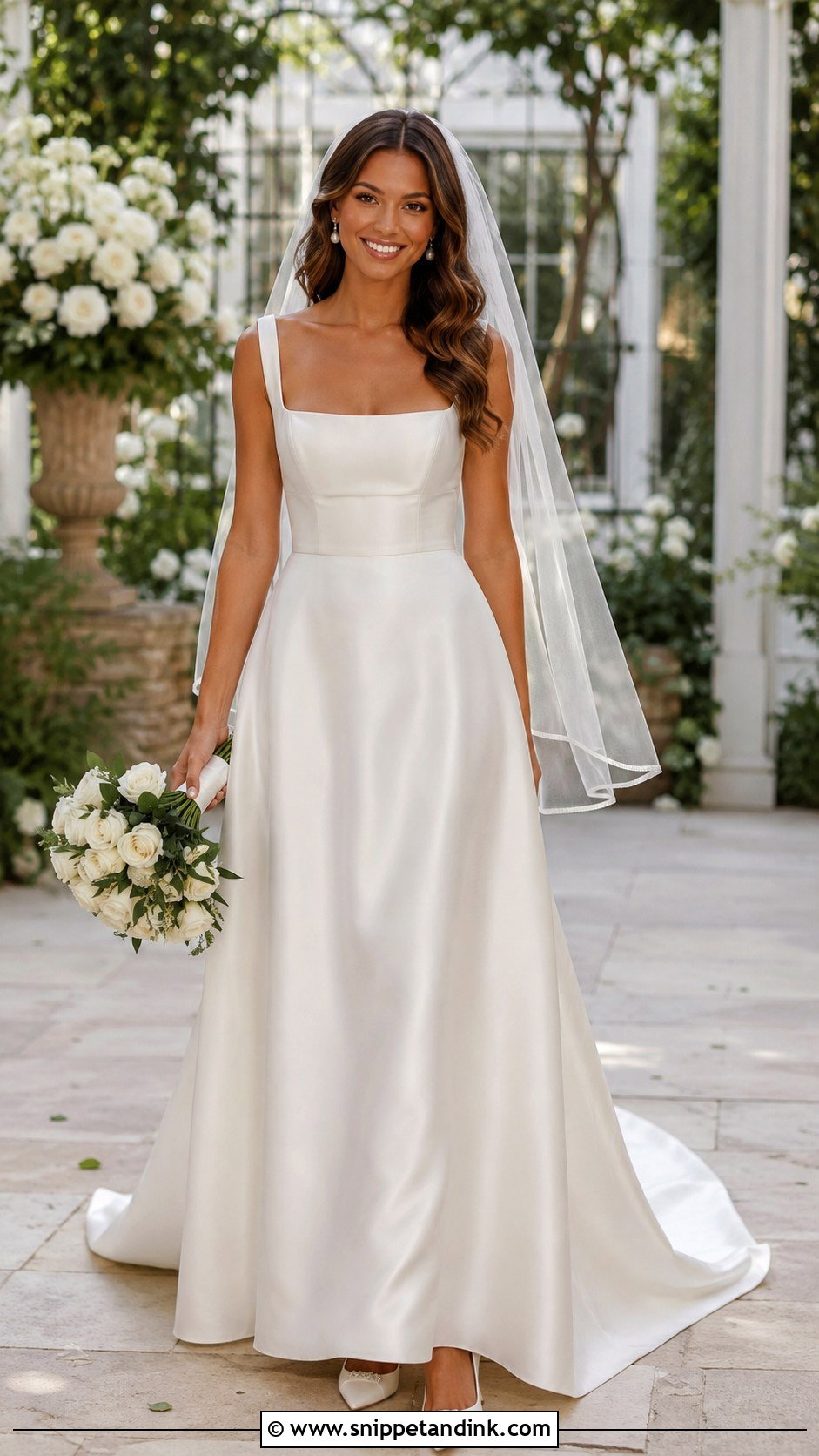
A-line is the silhouette I recommend most because it balances upper and lower body for nearly everyone. In satin, the skirt holds more shape than chiffon or tulle and photographs cleanly. A square neckline feels modern; a V-neck lengthens. The fold lines down the skirt are where satin shows its quality, so look at the gown from the side under strong light before buying. A fingertip veil, soft waves and simple heels are all it needs.
5. Satin Mermaid Wedding Dress
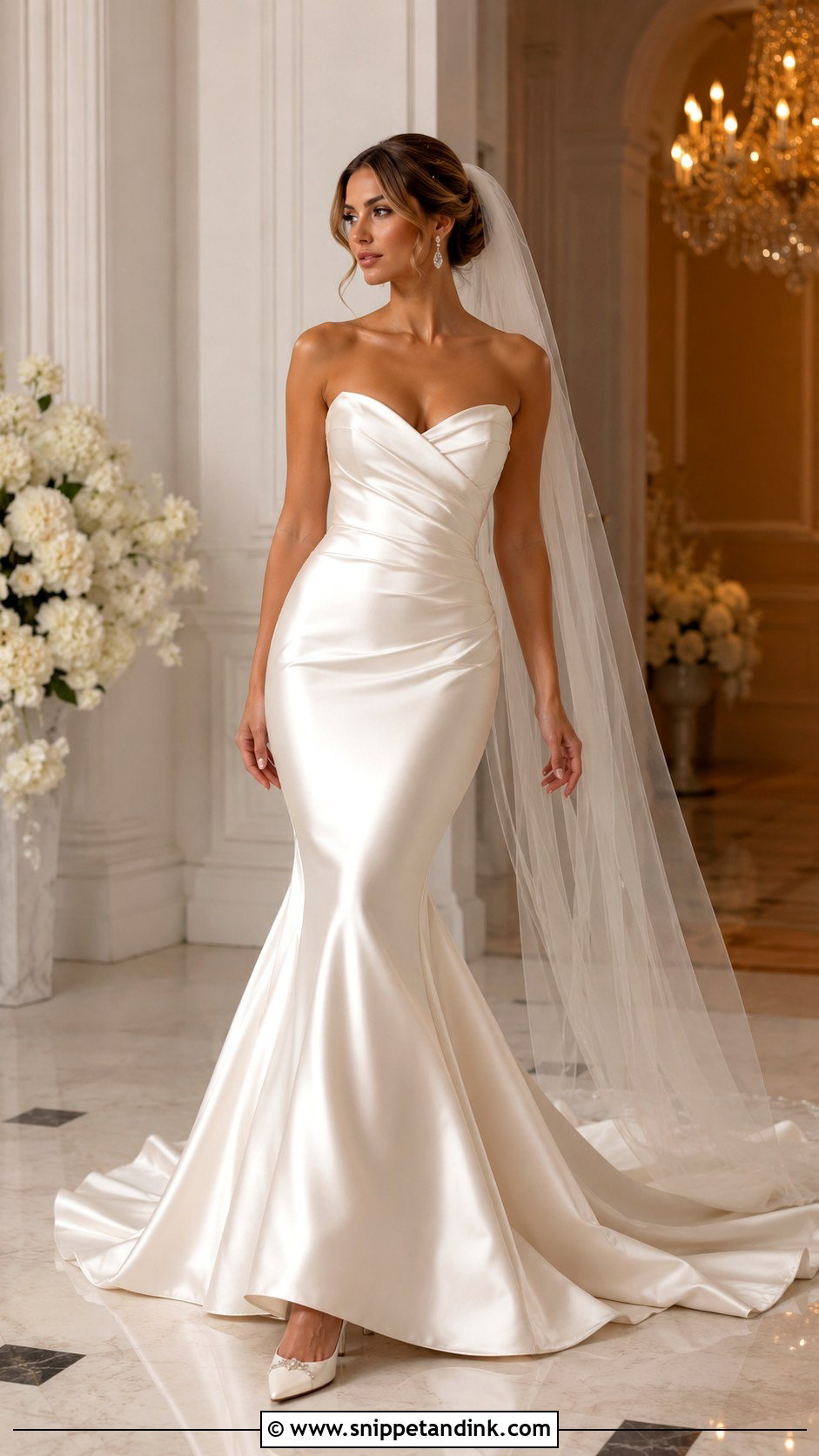
Mermaid gowns hug through the bodice, waist and hips before flaring at or below the knee, and satin shows every line of that. For more support and a smoother finish, choose a thicker satin or mikado satin. I ask brides to walk, sit and climb a step in the fitting room; a flare set too low makes stairs and dancing hard. Strapless or off-shoulder necklines suit the shape, with drop earrings and a fitted veil.
6. Satin Slip Wedding Dress
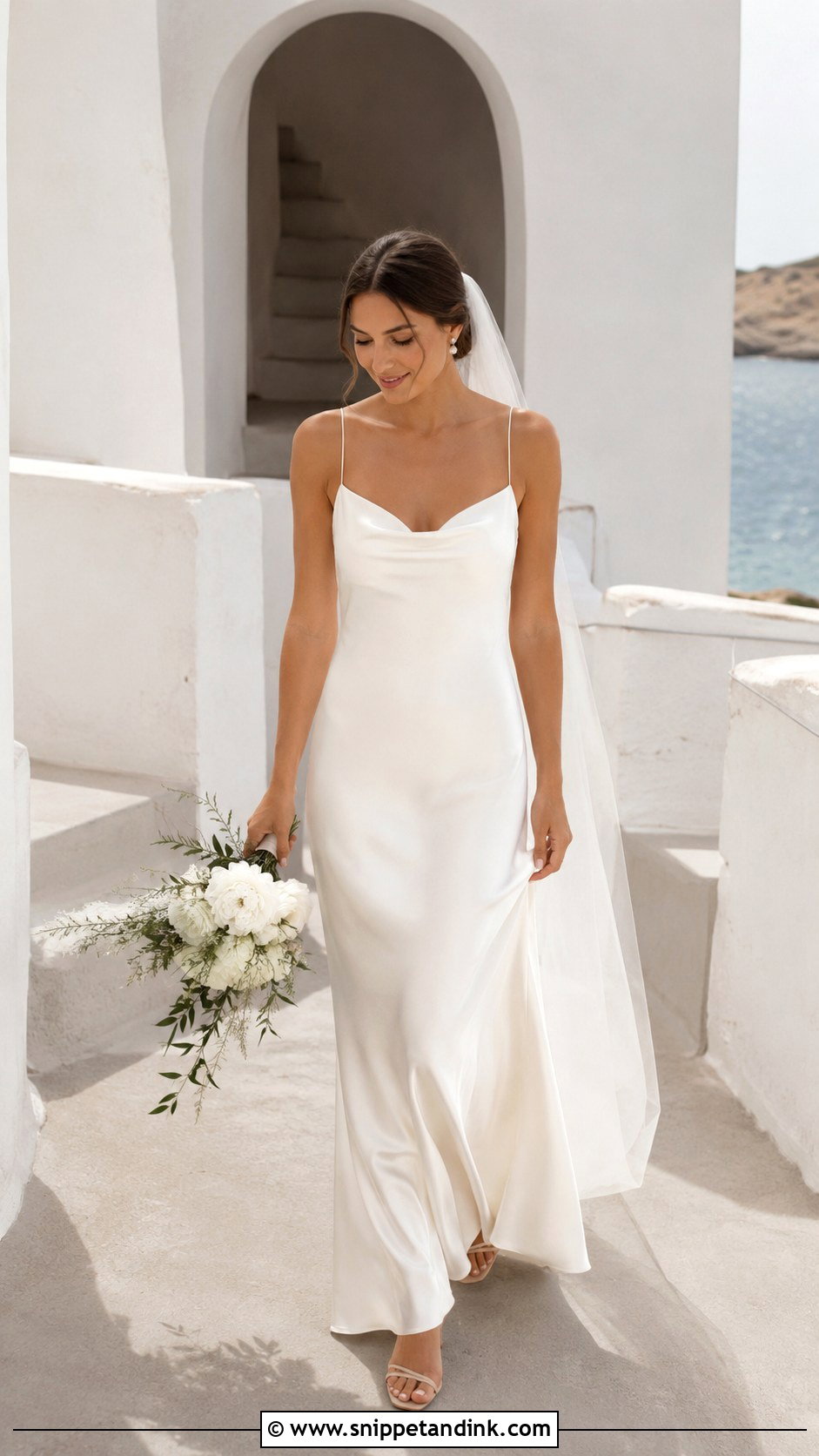
The slip dress is cut on the bias, which makes the fabric drape and skim instead of standing away from the body. That’s also what makes it unforgiving: it shows underwear lines and the slightest pull at the hips. Silk satin drapes most fluidly, while a heavier satin gives more coverage. Tailoring matters more here than any detail. Barely-there heels, a soft veil and small earrings suit beach ceremonies and elopements, and it makes a great second look for dancing.
7. Off Shoulder Satin Wedding Dress
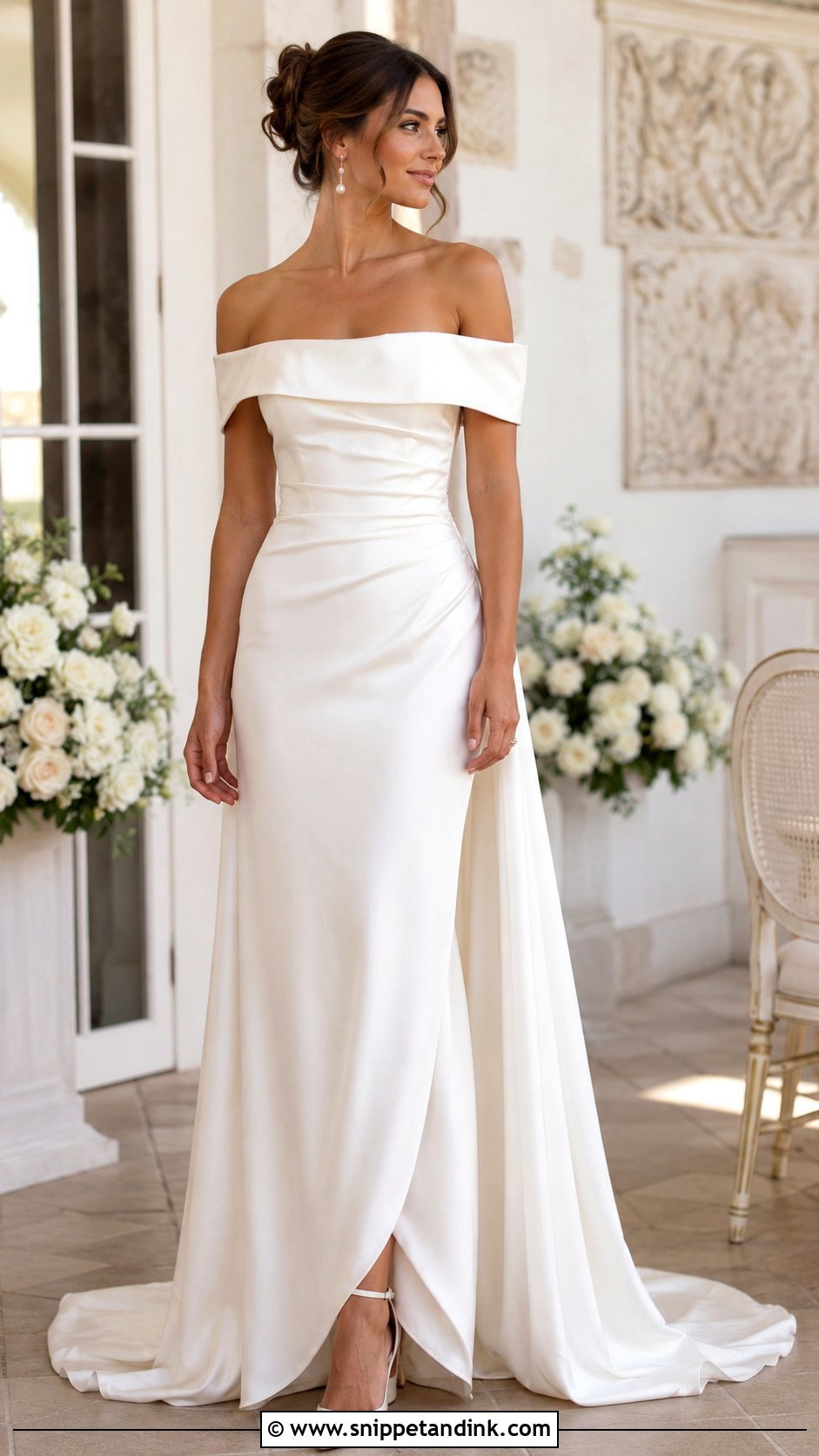
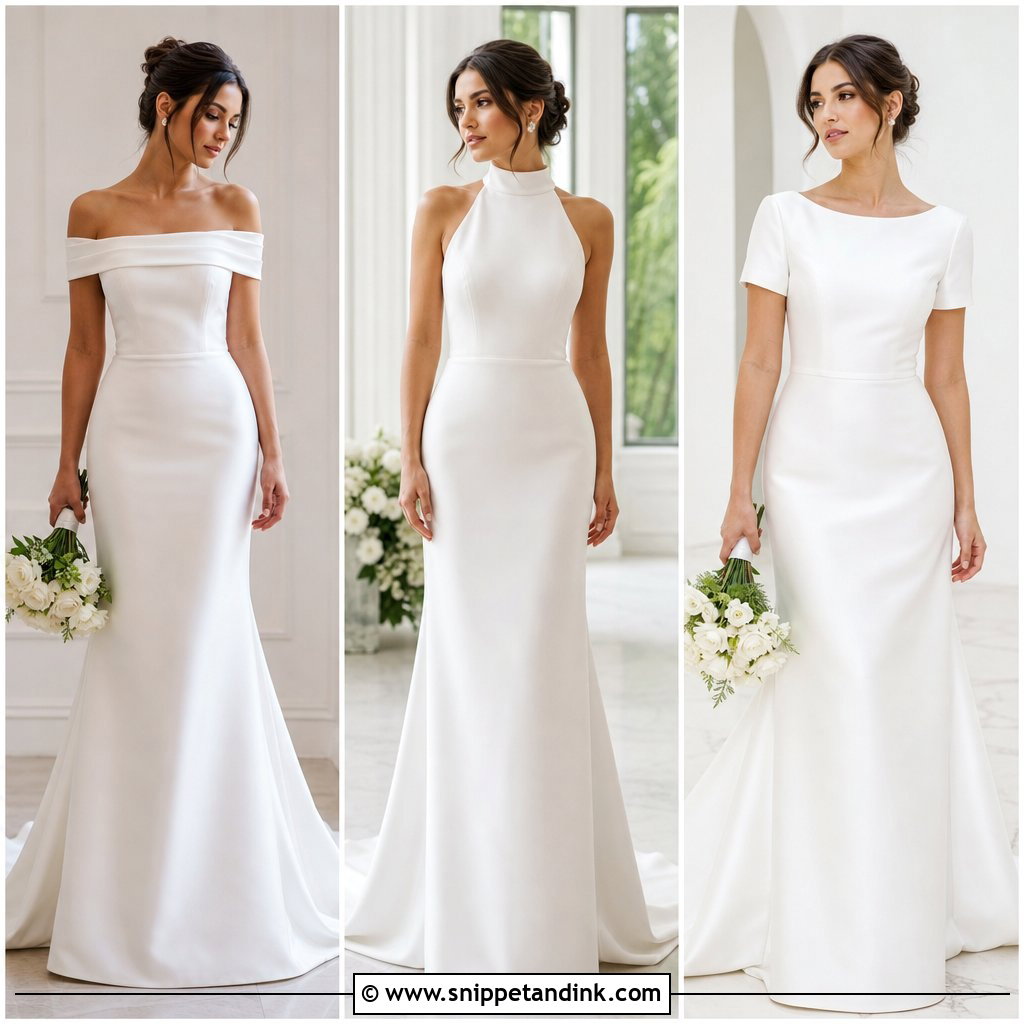
Off-shoulder satin frames the collarbones without needing lace. It pairs with ball gown, A-line, fit-and-flare and sheath shapes. A full skirt and long veil feel traditional; a clean fold-over neckline on a fitted dress feels modern. The neckline must grip the upper arm firmly or you’ll be pulling it up all night, so I check it while the bride lifts her arms. Skip the necklace, choose earrings, and wear a soft updo or side-parted waves.
8. Square Neck Satin Wedding Dress
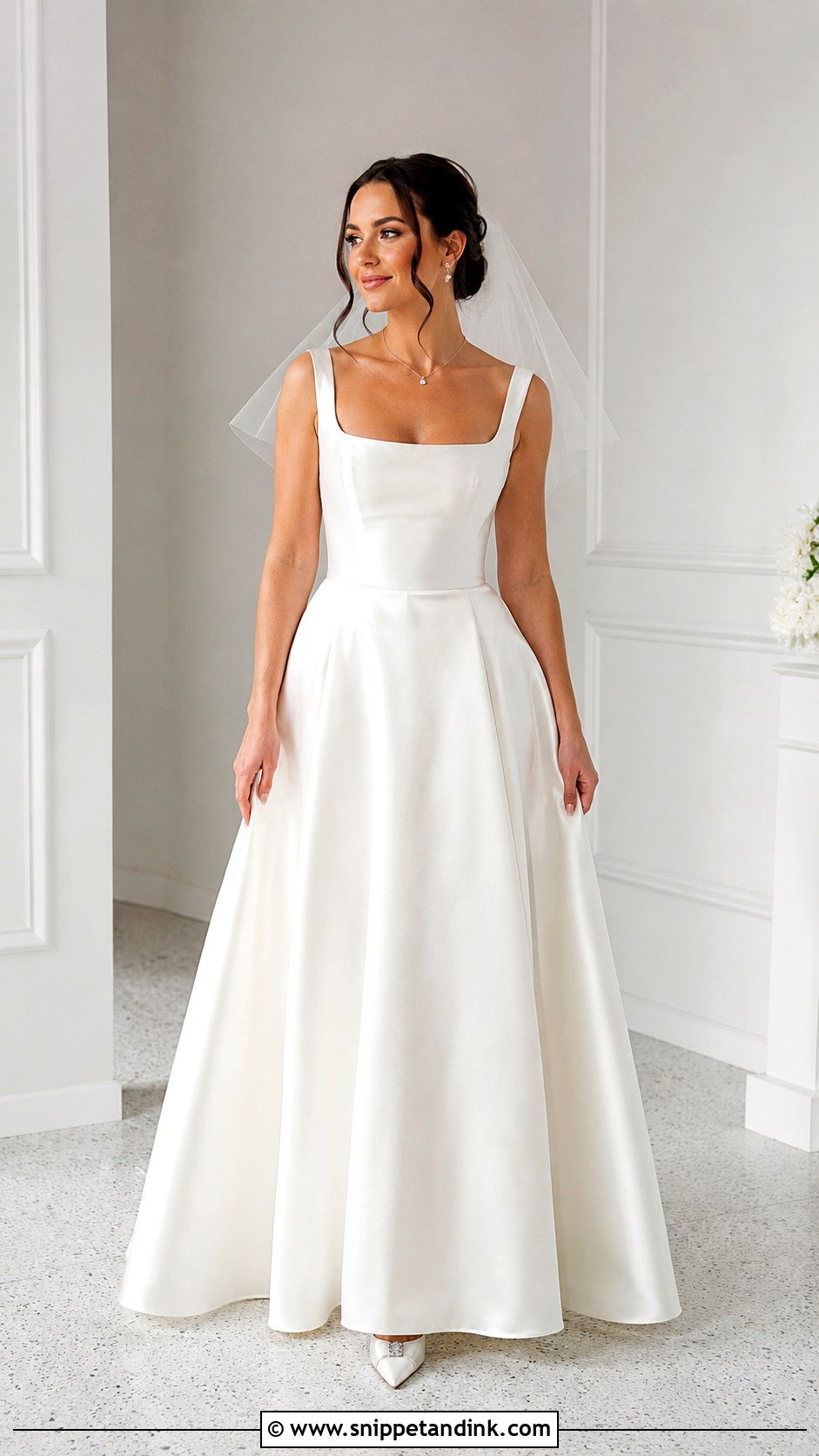
Square necklines give satin an architectural look. Wide straps, cap sleeves or long sleeves all suit it, and so do A-line, column and ball gown shapes. I suggest it when a bride asks for classic without beading or lace. The corners of the square should sit level and lie flat against the chest; if they gape when you lean forward, the bodice needs taking in. Pearl earrings, a smooth bun and a short veil finish it.
9. V Neck Satin Wedding Dress
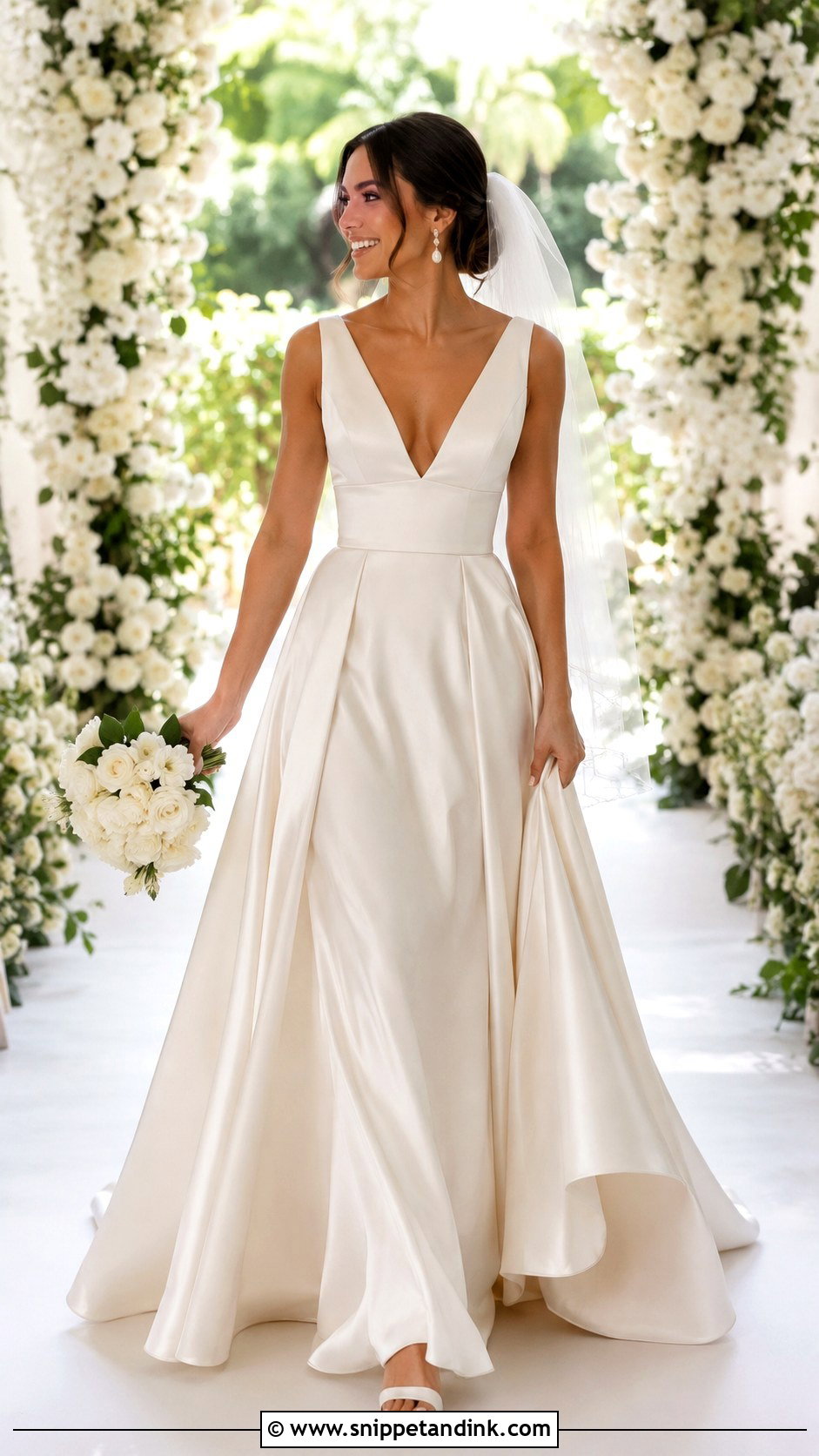
A V-neck draws a long line through the upper body, and the depth can be modest or plunging. A soft V suits an A-line skirt; a deep V reads more modern on a fitted gown. Satin keeps even a plain V-neck dress looking polished. For a deep V, illusion mesh, wider straps or a structured bodice give support, and I fit it with a strip of fashion tape tested on your skin beforehand. Drop earrings, a low veil and sleek heels suit most venues.
10. Satin Wedding Dress With Pockets
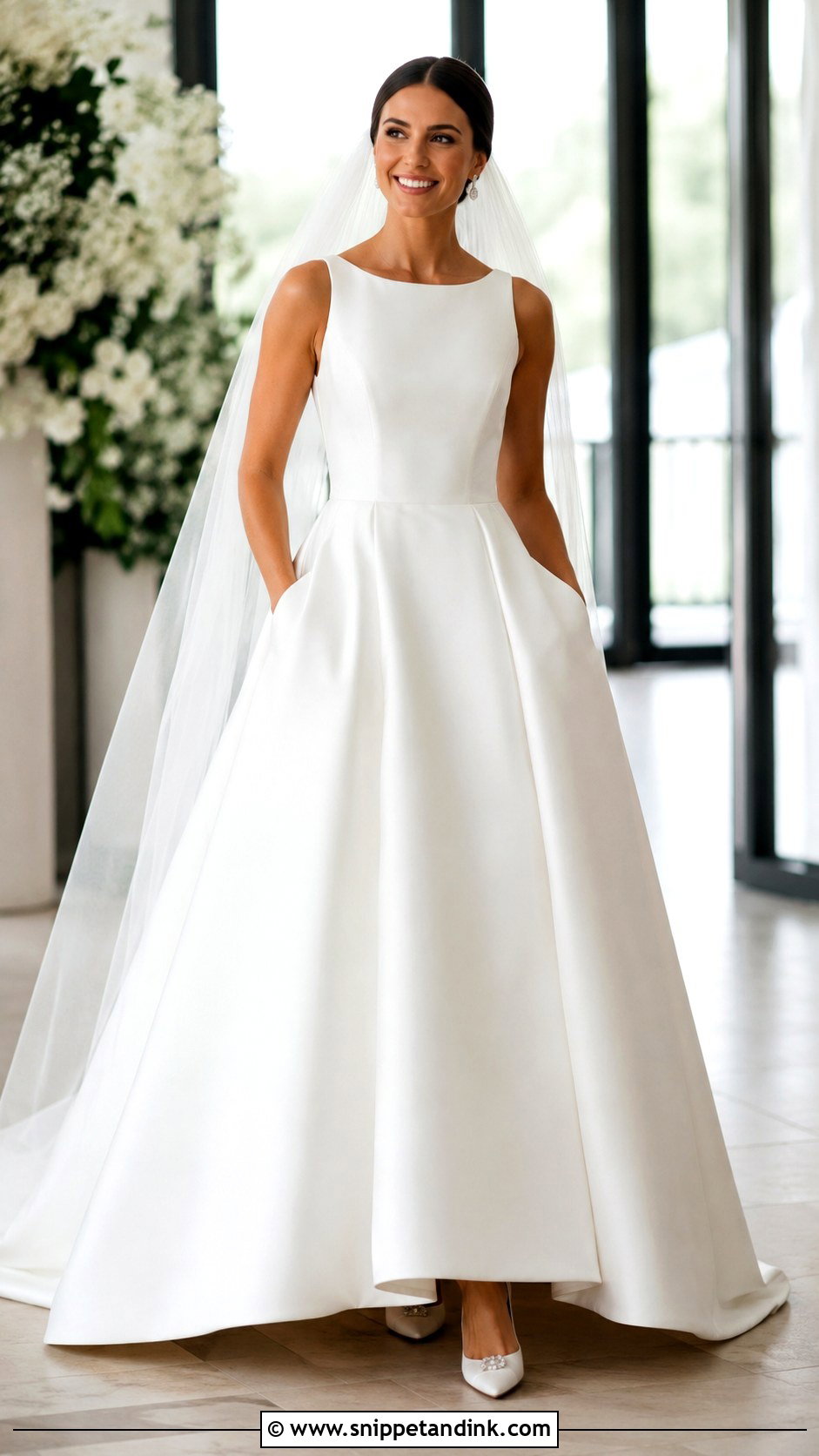
Pockets surprise people in satin: the fabric has enough body to hide them, especially in A-line and ball gown shapes. You can carry tissues, lipstick or a small keepsake without a bag. I check that the pocket openings sit in the side seam and don’t flare out when you put your hands in them, which is common in lighter satins. A clean bodice and defined waist make them look intentional.
11. Simple Satin Wedding Dress
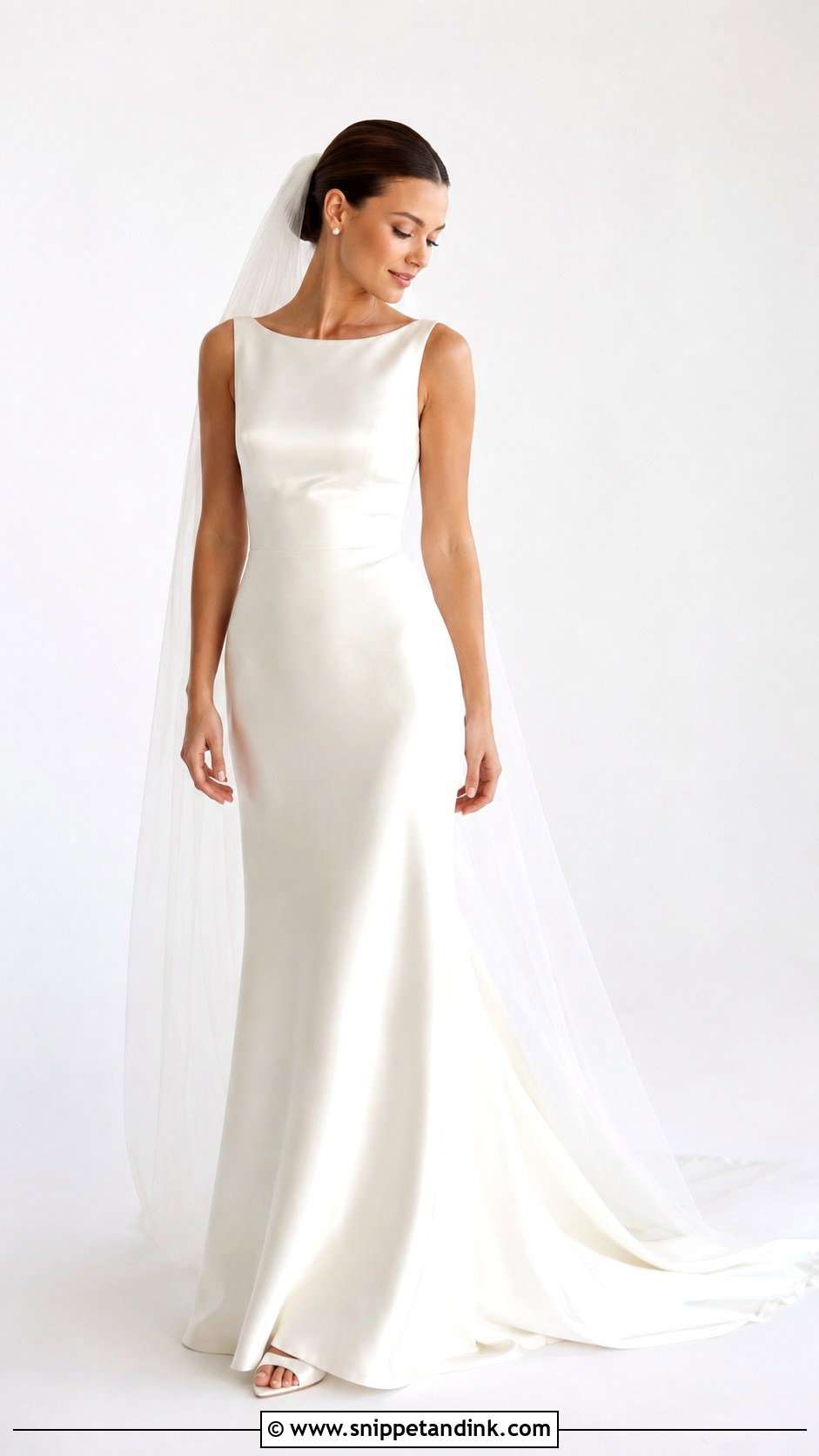
A plain satin gown has nowhere to hide, so the details that matter are the ones you’d barely notice: straight seams, a well-set neckline, covered buttons, a softly draped waist, a train that falls evenly. I’d spend the budget on fit before trims. A veil with minimal edging, pearl studs and sleek hair keep it clean, and it leaves room for a bold bouquet or statement shoes if you want a single strong accent.
12. Satin Corset Wedding Dress
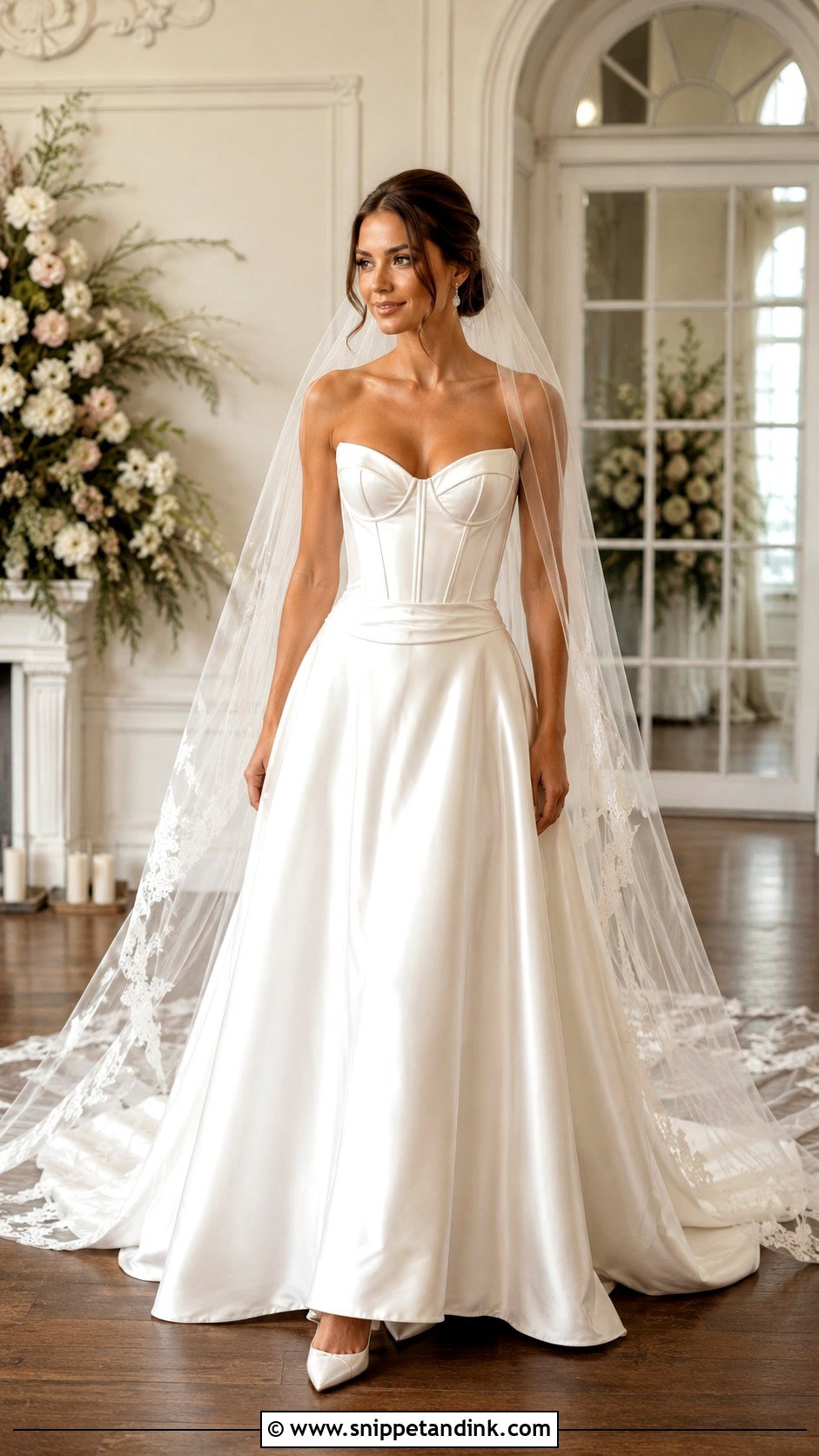
A corset bodice gives satin shape and support. Some show boning on the outside as a design feature; others hide it for a softer finish. It suits ball gown, A-line and fit-and-flare skirts. Snug but not restrictive is the target, and I check it with the bride seated, because that’s when a corset bites at the ribs. A cathedral veil adds drama, a short veil feels modern, and delicate earrings and clean heels are enough.
13. Satin Drop Waist Wedding Dress
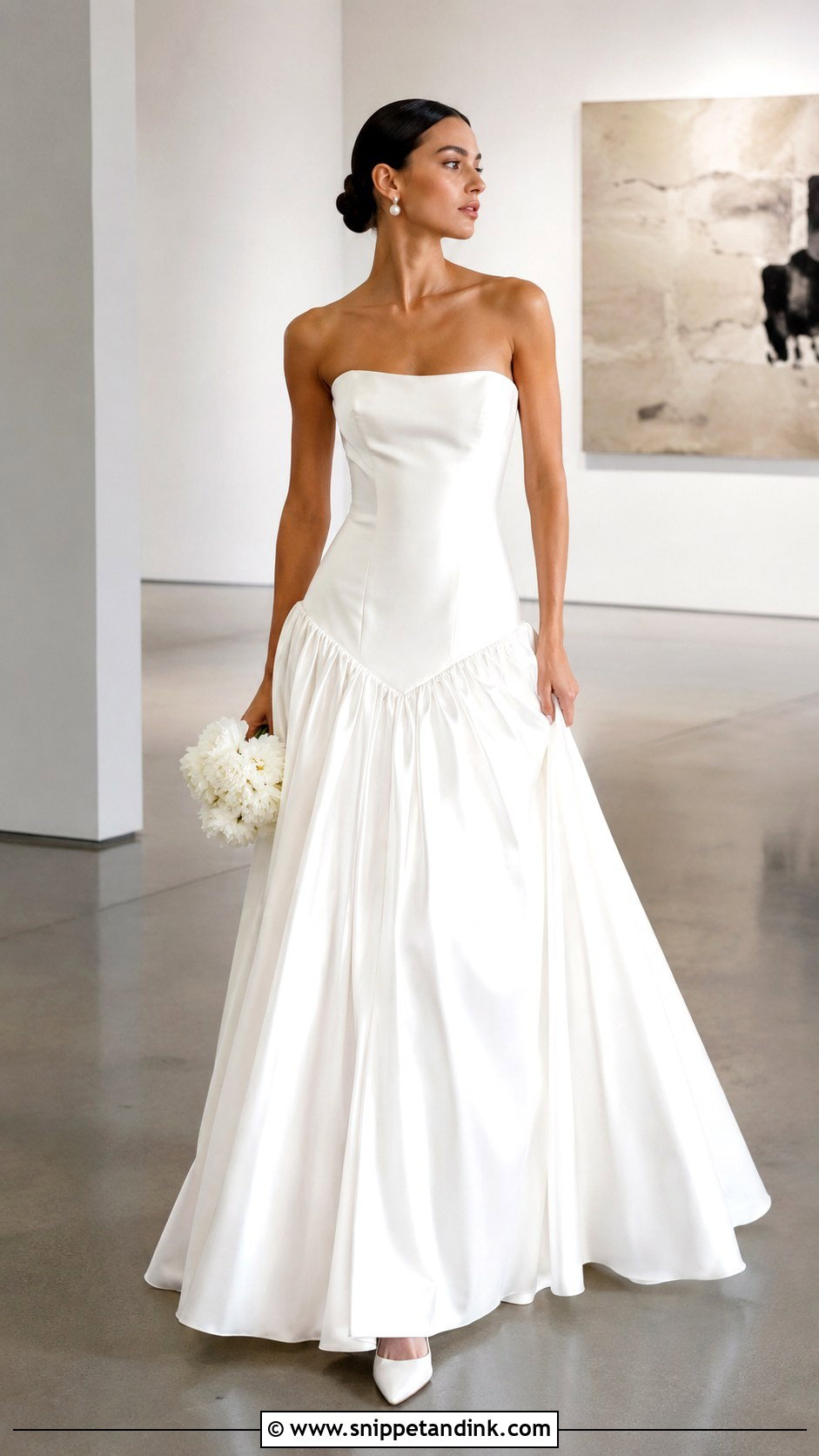
Dropped waists sit lower than the natural waist, often at the upper hip, which lengthens the torso and gives a slightly vintage line. Satin suits the shape because it holds a crisp seam there. A full skirt adds drama, and a slimmer one looks more fashion-led. It flatters longer torsos most; on a short torso, the waist seam can make the legs look shorter, so try it before committing. Keep hair sleek and the veil clean.
14. Satin Column Wedding Dress
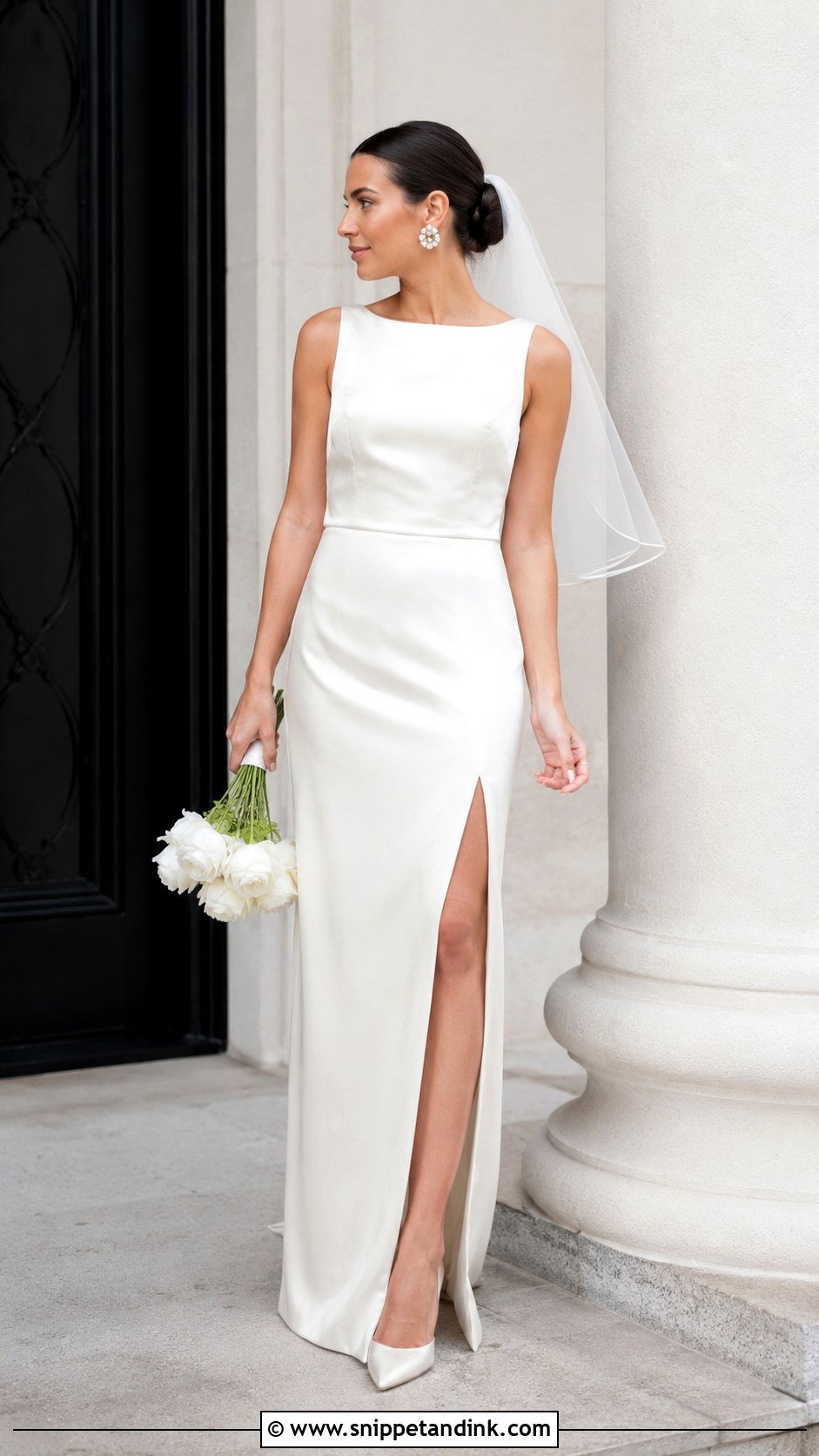
A satin column wedding dress follows the body in a straight line without much flare, which suits city halls, galleries and intimate receptions. Satin gives the plain shape a finished surface. A high neckline looks formal, a strapless or scoop one softer. Because the skirt is narrow, a slit or small train helps you walk. Pointed heels, sculptural earrings and a low bun keep it sharp.

15. Satin High Neck Wedding Dress
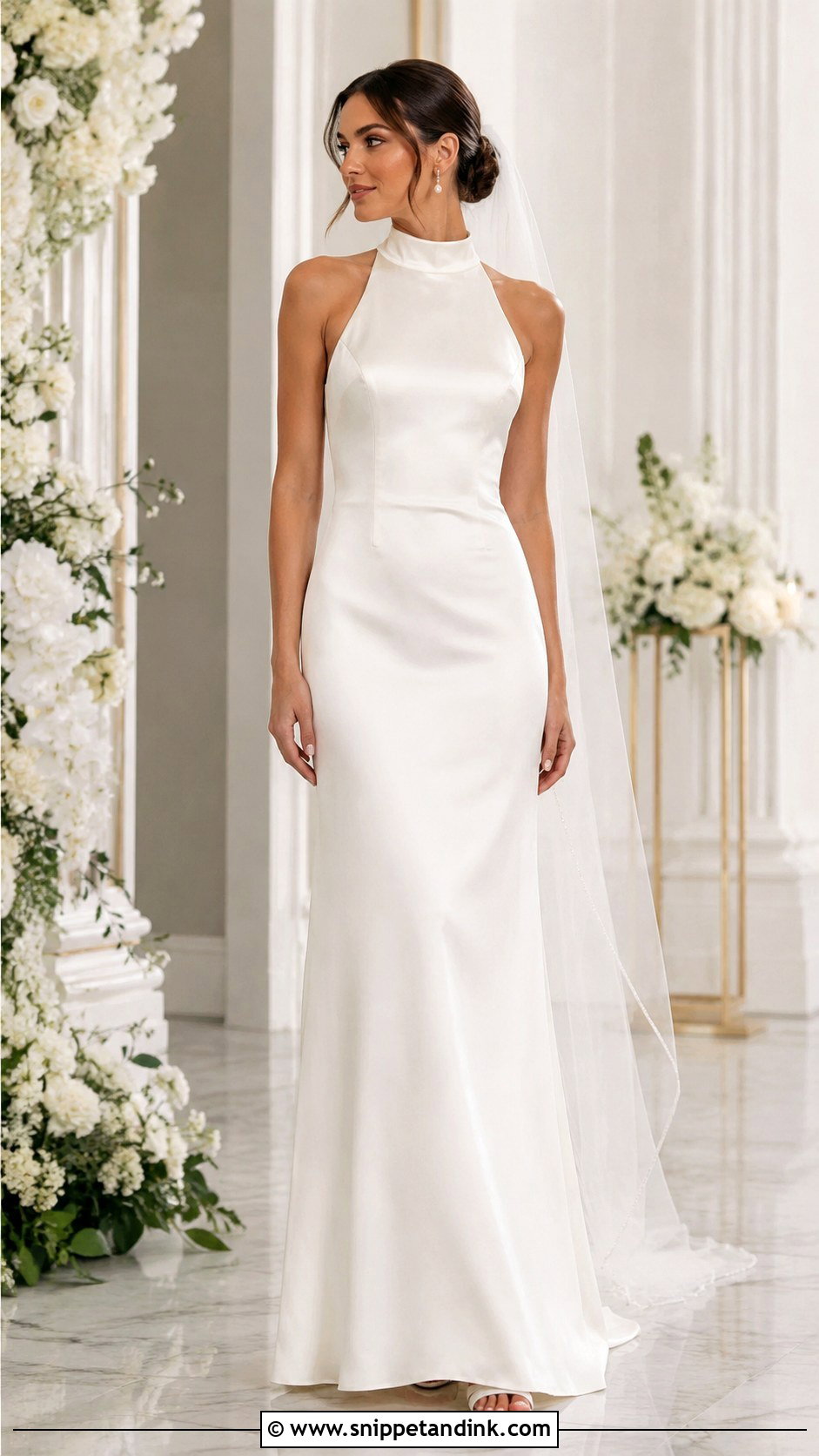
High necks give satin a formal, almost regal look. They pair with sleeveless, long sleeve and column shapes, and they suit brides who want coverage without looking old-fashioned. Earrings become the main jewellery: pearl drops, crystal studs or sleek hoops. Wear the hair up or tucked back. One thing to check is the collar fastening; a row of small buttons at the back of the neck is lovely but hard to do up quickly, so allow time when dressing.
16. Satin Halter Wedding Dress
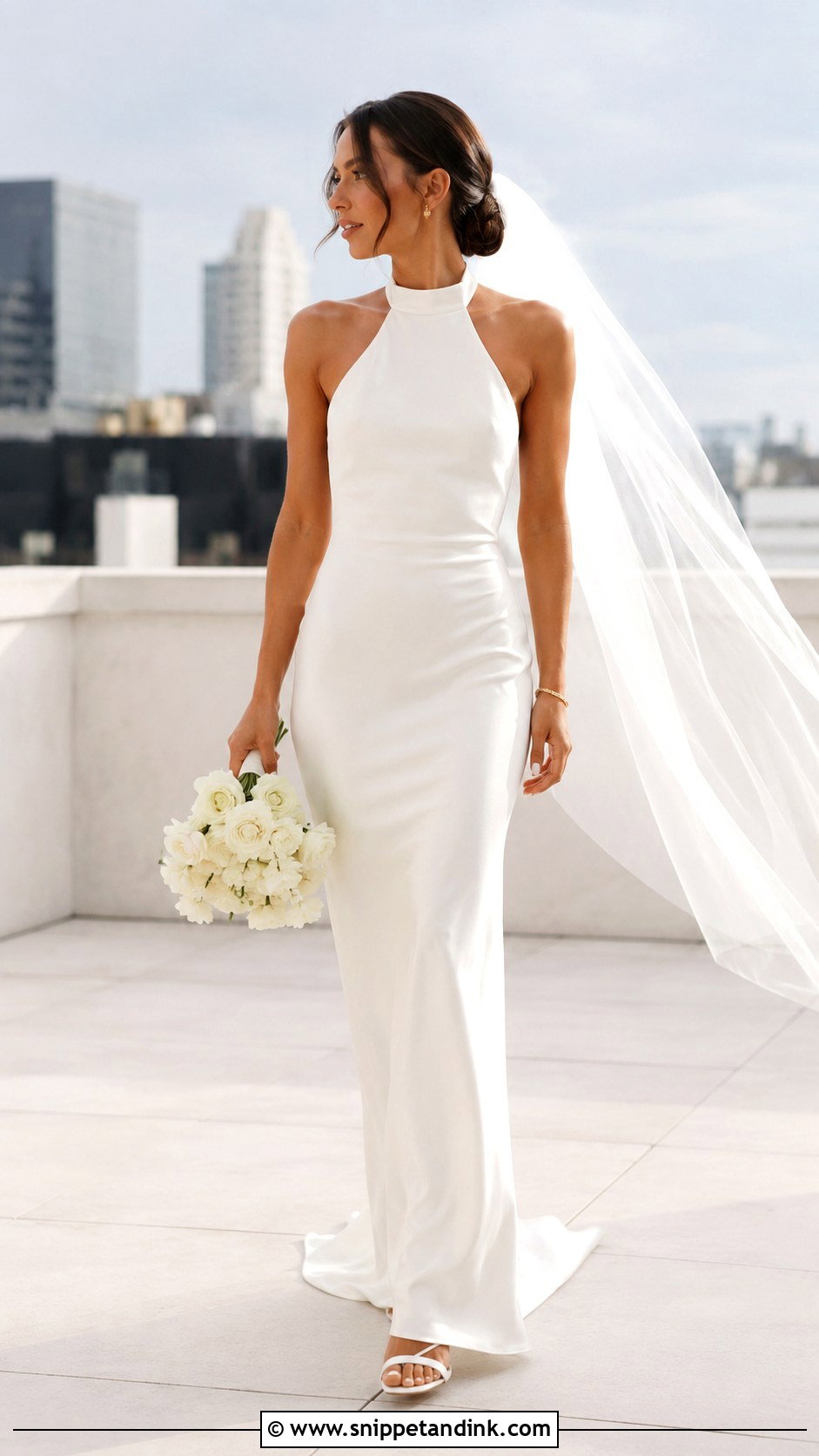
Halters draw the eye to the shoulders and upper back and look confident and modern. They suit sheath, column, fit-and-flare and slip silhouettes, and they shine at summer, destination and city weddings. Skip the necklace and wear earrings or a bracelet. A heavy satin halter gown can drag on the neck by evening, so I look for a wider strap or a hidden clasp rather than a thin tie.
17. Satin Wedding Dress With Bow
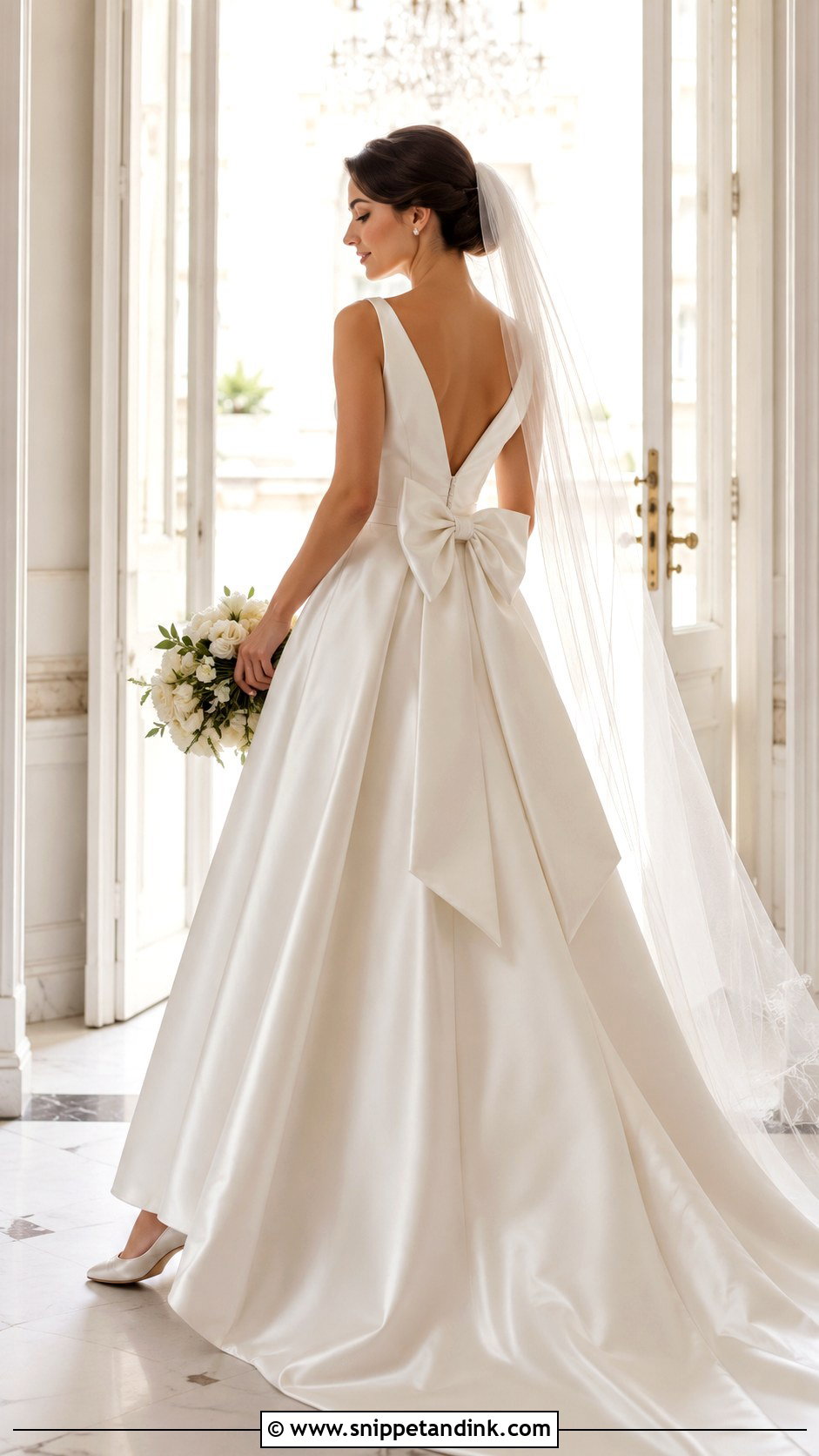
A satin wedding dress with a bow uses the fabric’s body to hold a crisp shape, at the back waist, shoulder, neckline or on a detachable train. A back bow on an A-line or ball gown feels classic; a sculptural bow on a one-shoulder dress feels modern. Large bows flatten when you sit against a chair, so ask whether it’s stiffened inside. Pearl studs, satin heels and a smooth veil keep the bow the focus.
18. Satin Wedding Dress With Slit
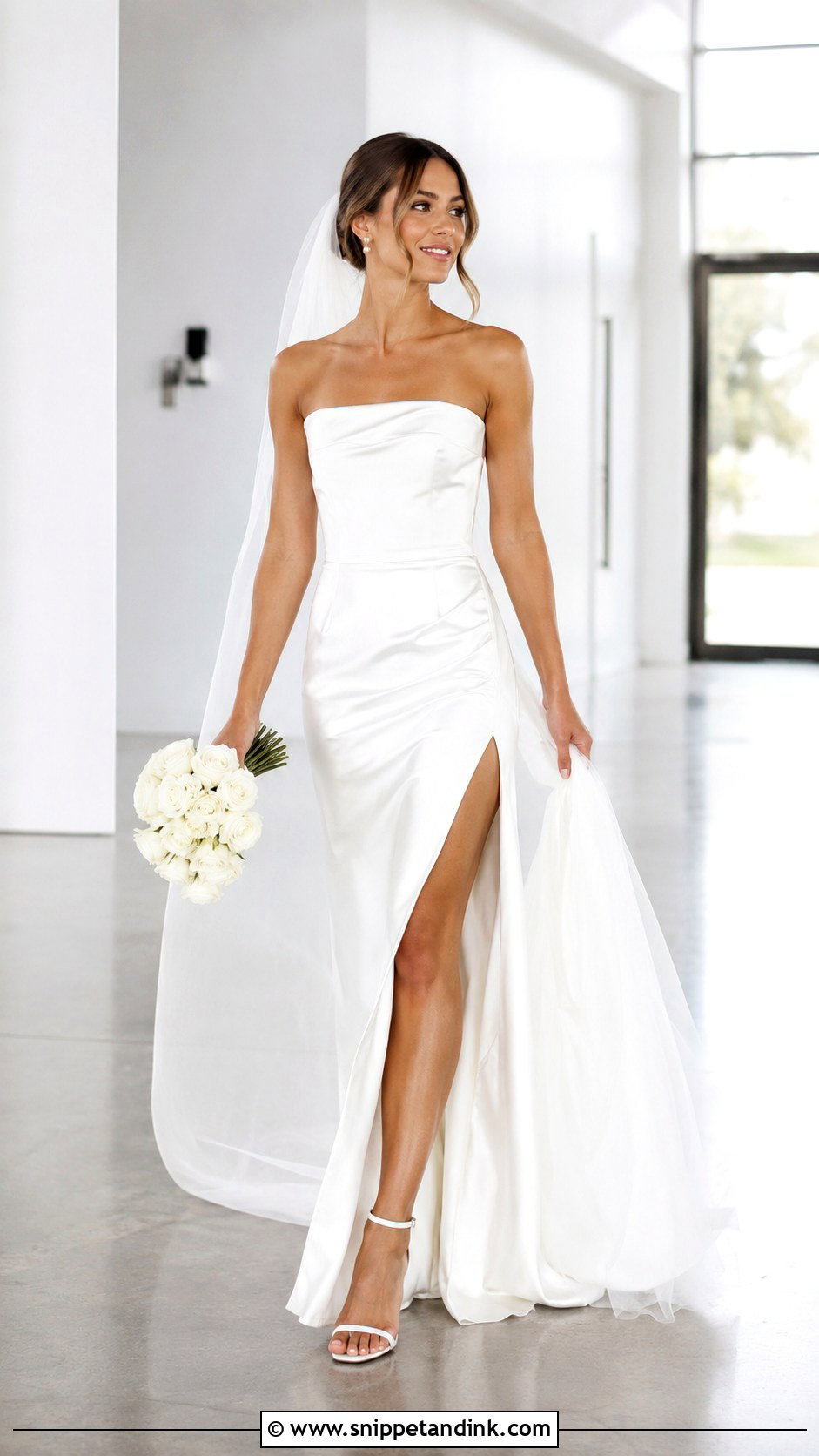
A slit lets satin move as you walk and shows off the shoes. It suits column, A-line and fit-and-flare gowns. A higher slit feels bolder, a lower side slit adds quiet ease. I test the height by having the bride sit; slits that look modest standing can open wide when seated. Sleek heels, a clean pedicure and minimal jewellery keep it refined for walking, posing and dancing.
19. Satin Midi Wedding Dress
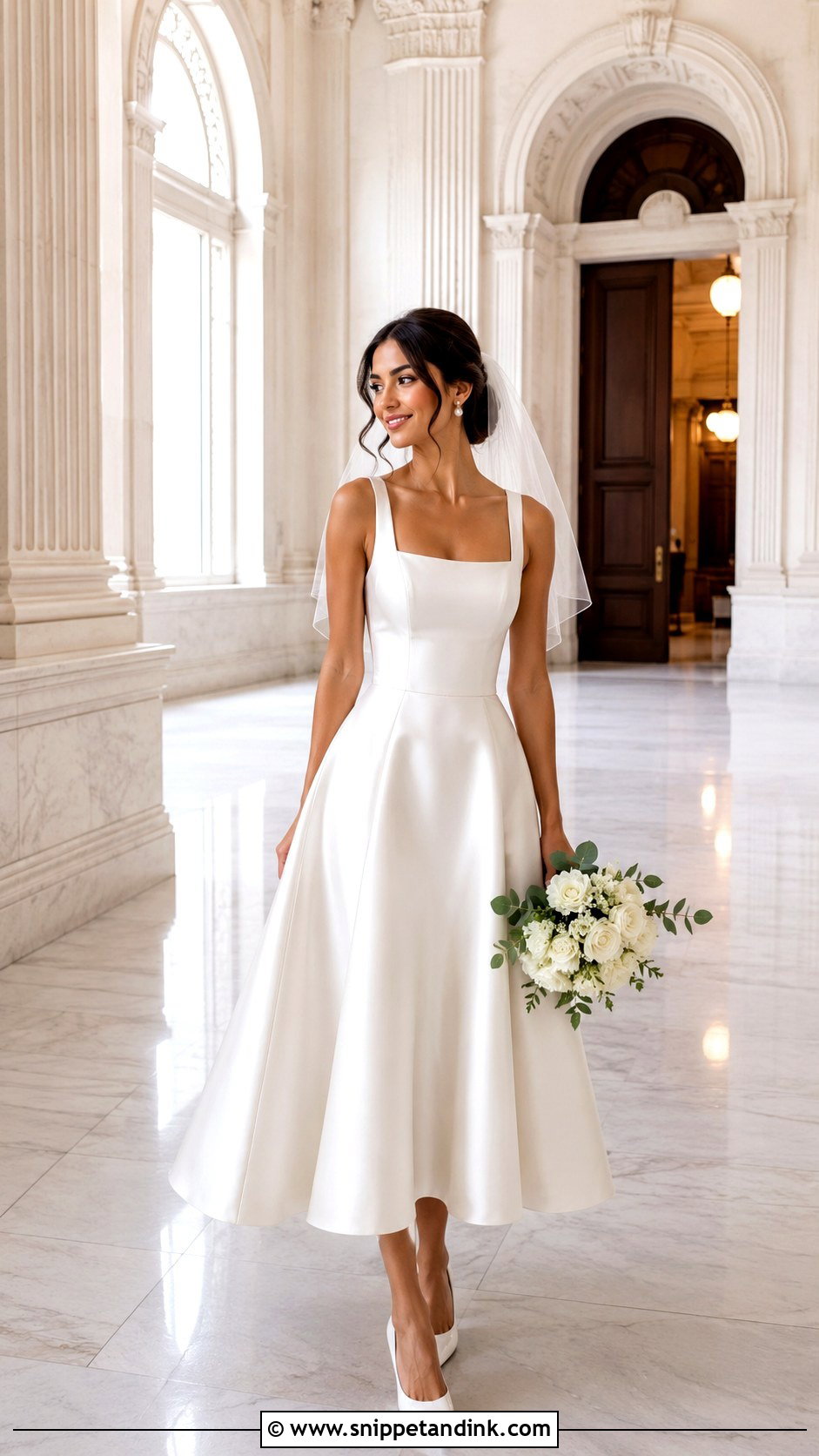
A satin midi suits courthouse ceremonies, showers and rehearsal dinners. The hem sits below the knee or at mid-calf, and satin makes that shorter length feel special rather than casual. A fitted bodice with a flared skirt reads classic, while a bias-cut midi reads sleek. Ivory, champagne or soft white satin look most bridal. It’s also one of the easiest wedding dresses to wear again, with pointed heels, pearl earrings and a short veil or bow on the day.

20. Satin Mini Wedding Dress
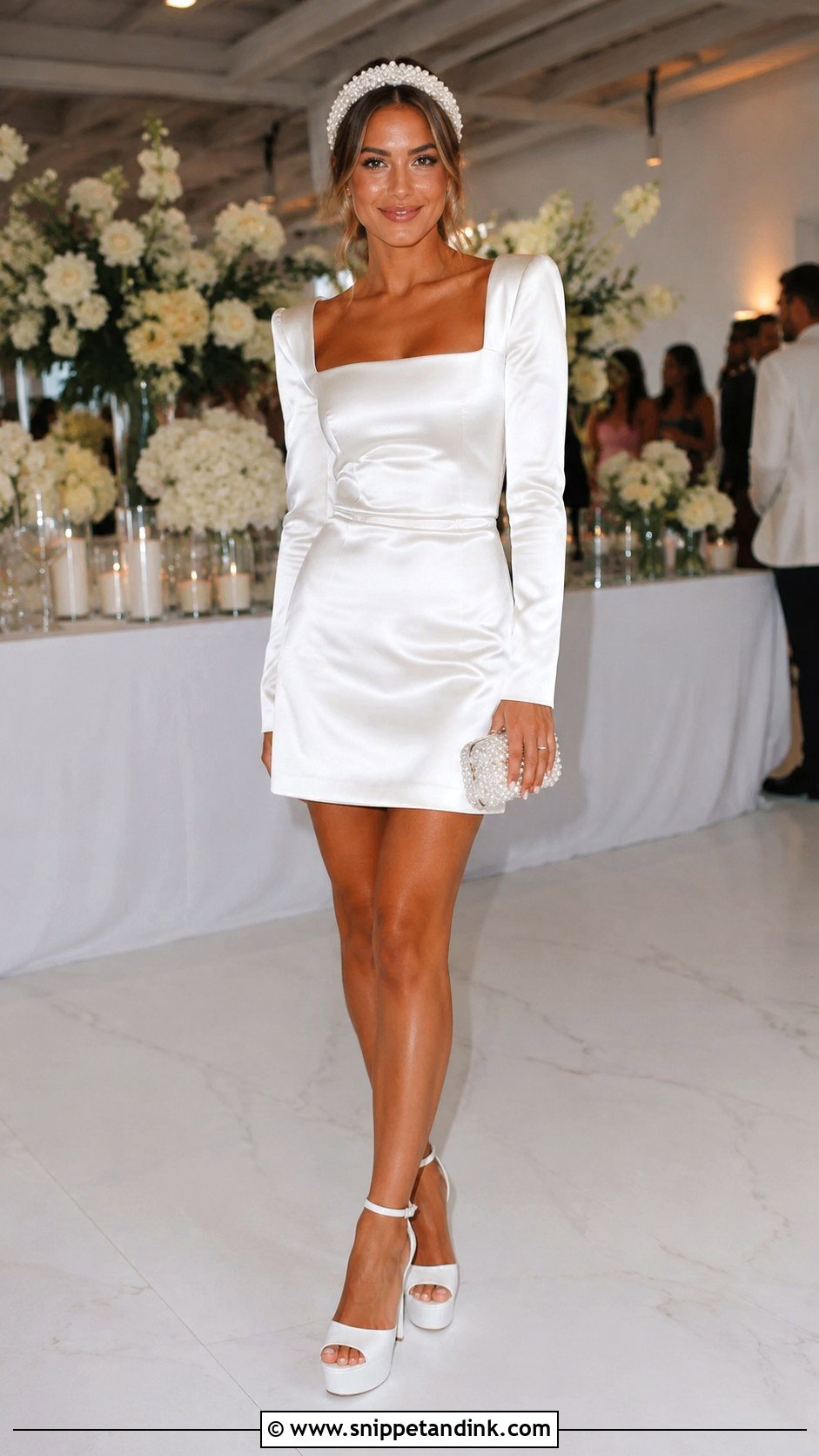
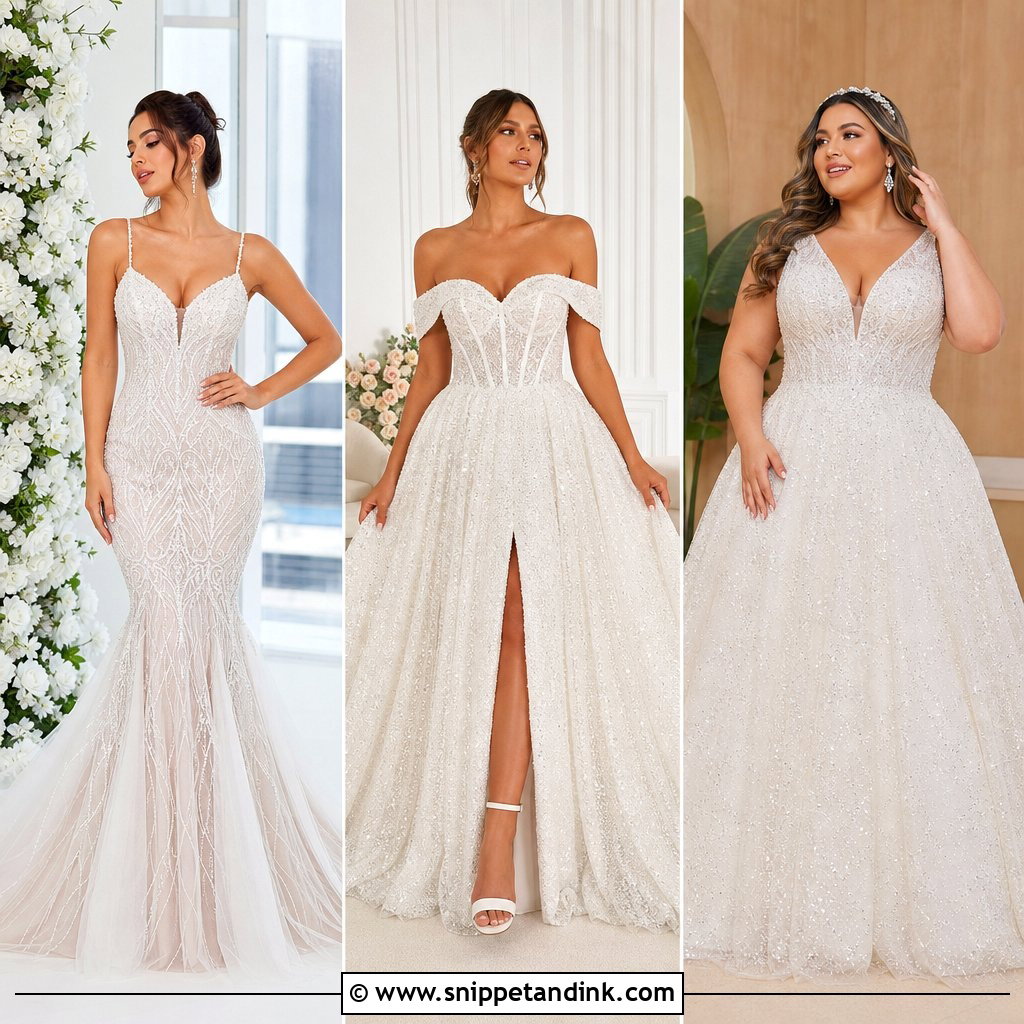
A satin mini is a fun second look for an after-party, welcome event or warm-weather courthouse wedding, and satin keeps the short length feeling dressy. Structured bodices, long sleeves, square necklines and bows all suit it. Balance the hem with polished shoes such as pointed pumps, slingbacks or platforms. A short veil or pearl headband keeps it bridal. I’d always check how it sits when you sit down; short satin skirts ride up more than you’d expect.
21. Champagne Satin Wedding Dress
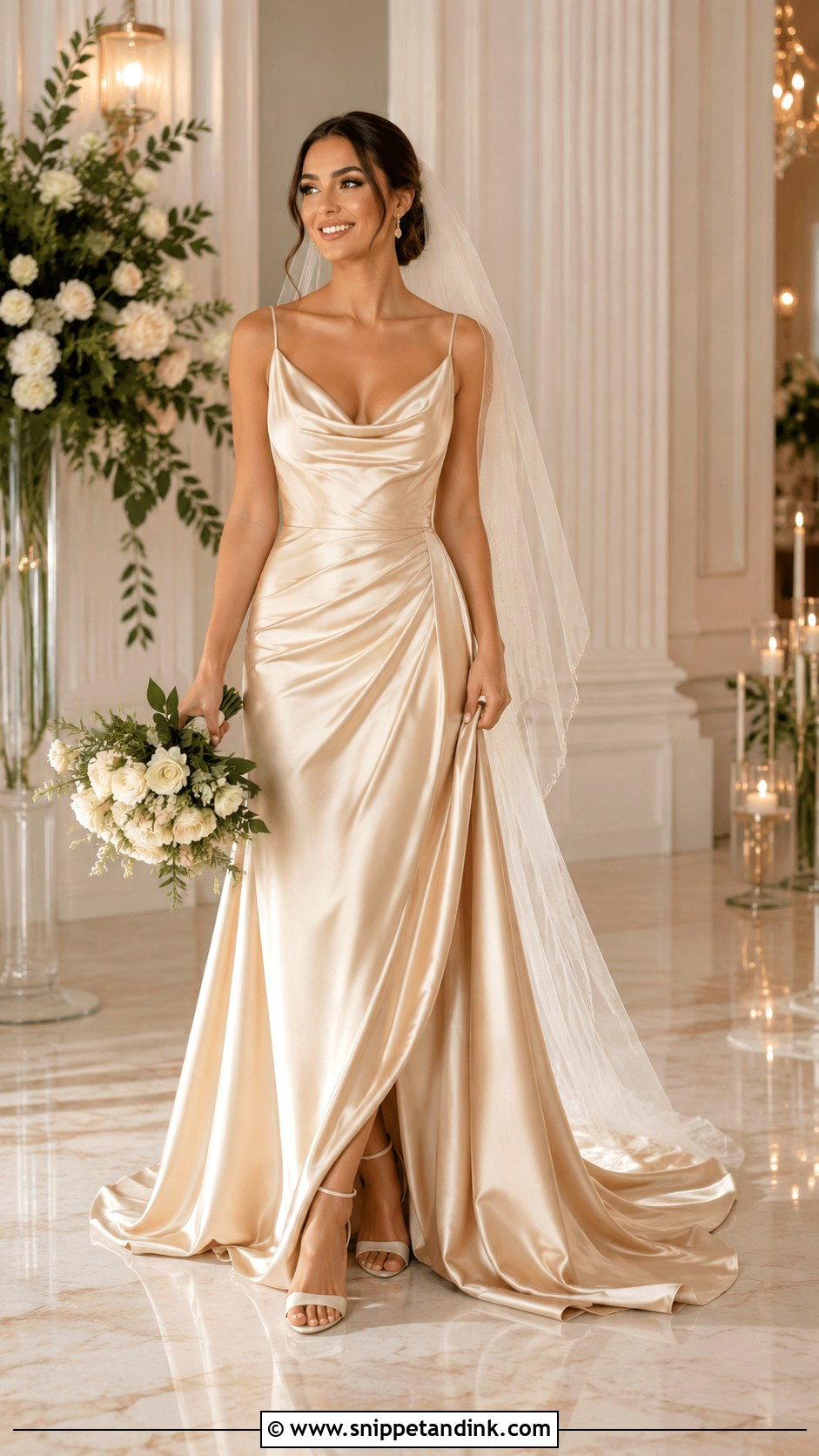
Champagne satin carries a golden undertone that warms many skin tones, especially those that look pale next to bright white. Satin’s sheen deepens the colour. It suits evening weddings, gardens and romantic indoor spaces. Keep accessories in the same warm family, with pearl, gold or ivory, and avoid bright white shoes, which look grey beside champagne. Depending on the neckline and cut it can look vintage or modern.
22. Ivory Satin Wedding Dress
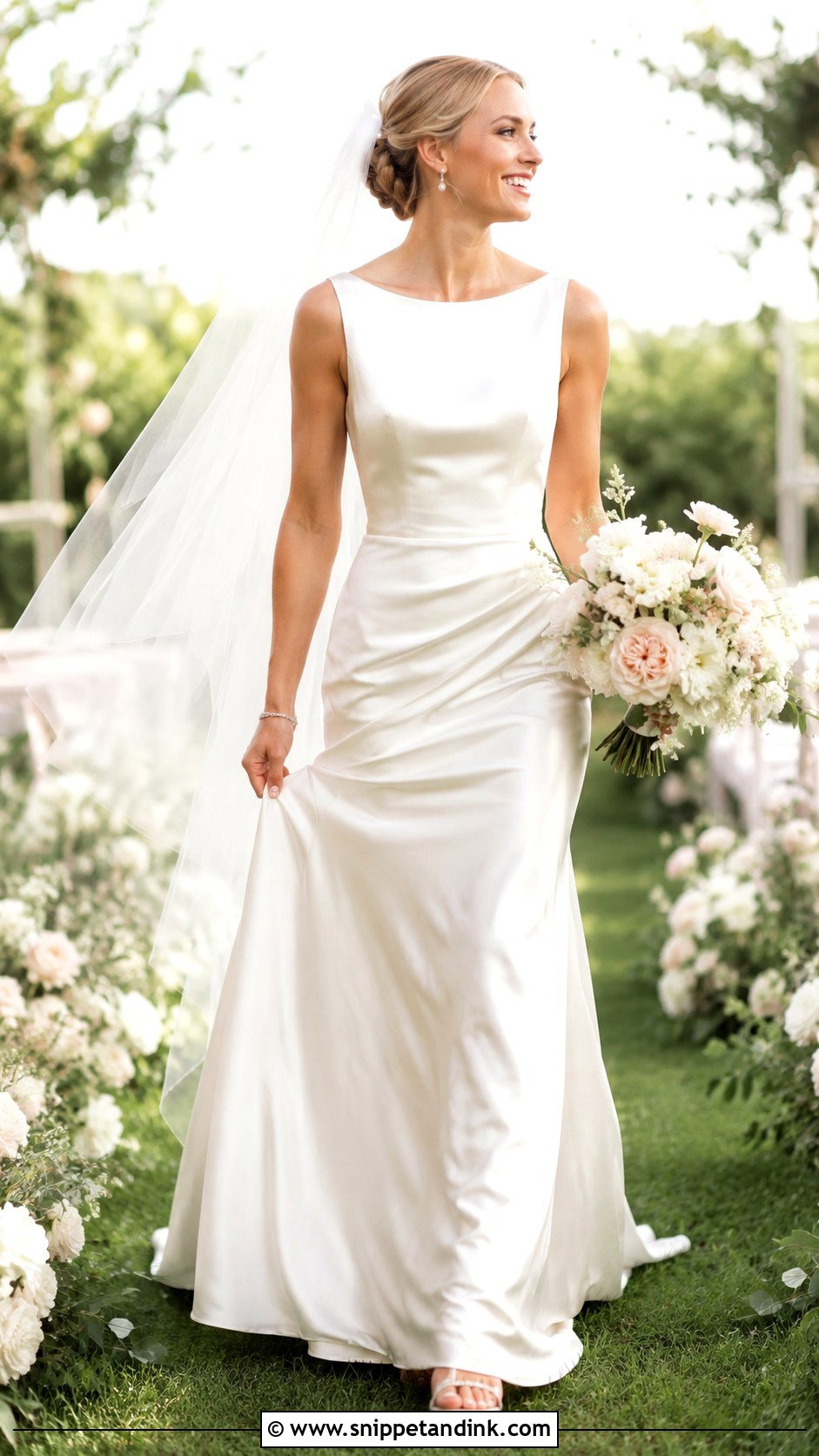
Ivory is softer than pure white and the shade most brides end up in once they compare them under daylight. It works almost anywhere, from outdoor ceremonies to formal receptions, and satin gives it depth on camera. Pearls, silver, gold and soft neutral shoes all suit it. Different makers’ ivories vary a lot, from near-white to quite creamy, so match your veil to a swatch of the dress, not to the word on the label.
23. Pearl Detail Satin Wedding Dress
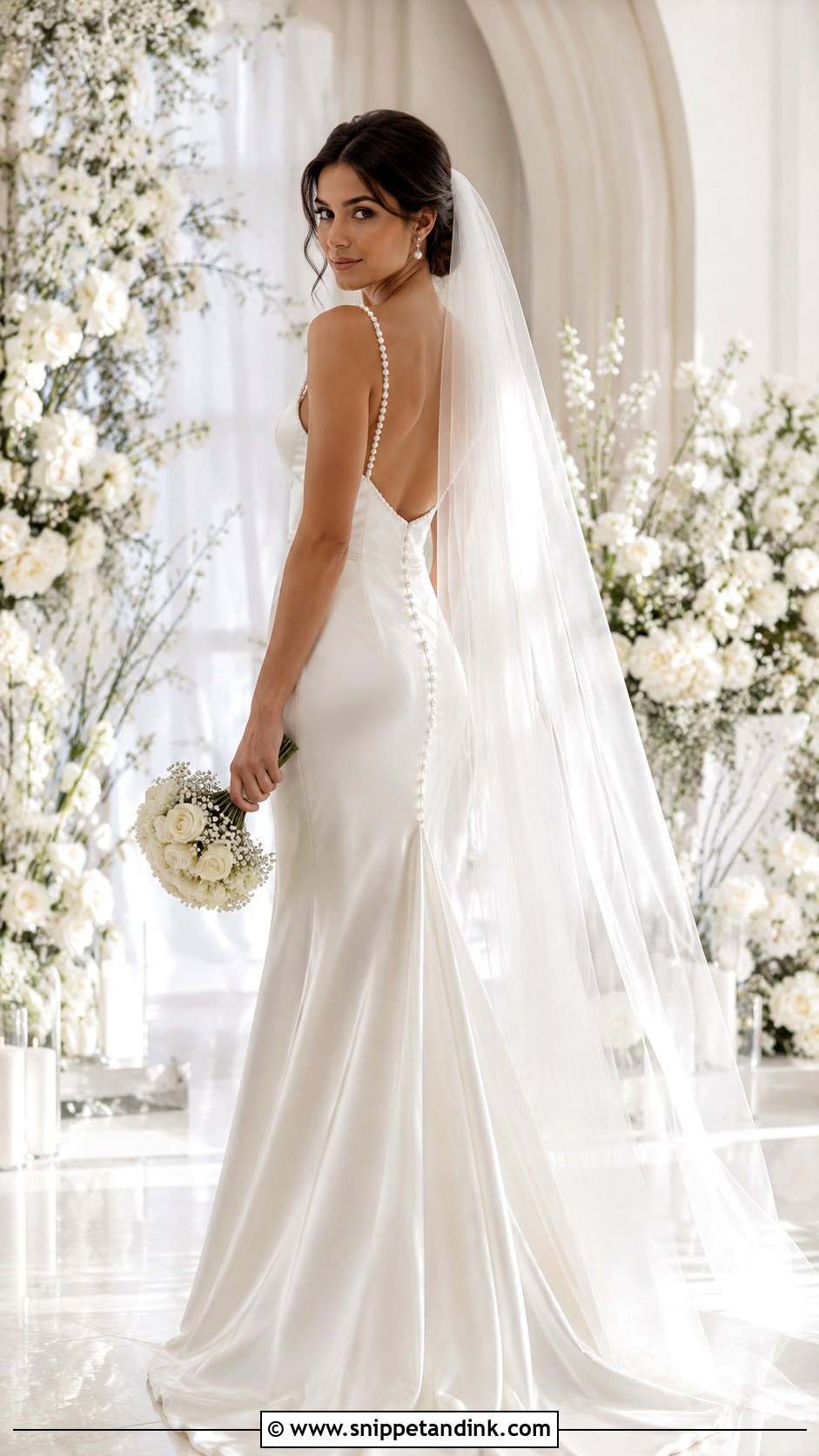
Pearls add texture and a soft gleam to a plain satin base without the sparkle of crystals. They appear on straps, sleeves, bodice seams, buttons and veil edges. Pearl straps look delicate; pearl buttons down the back look classic. Check how they’re attached: sewn individually is sturdier than glued, and loose pearls do drop through a long day. Keep other accessories simple so the pearls lead.
24. Satin Wedding Dress With Train
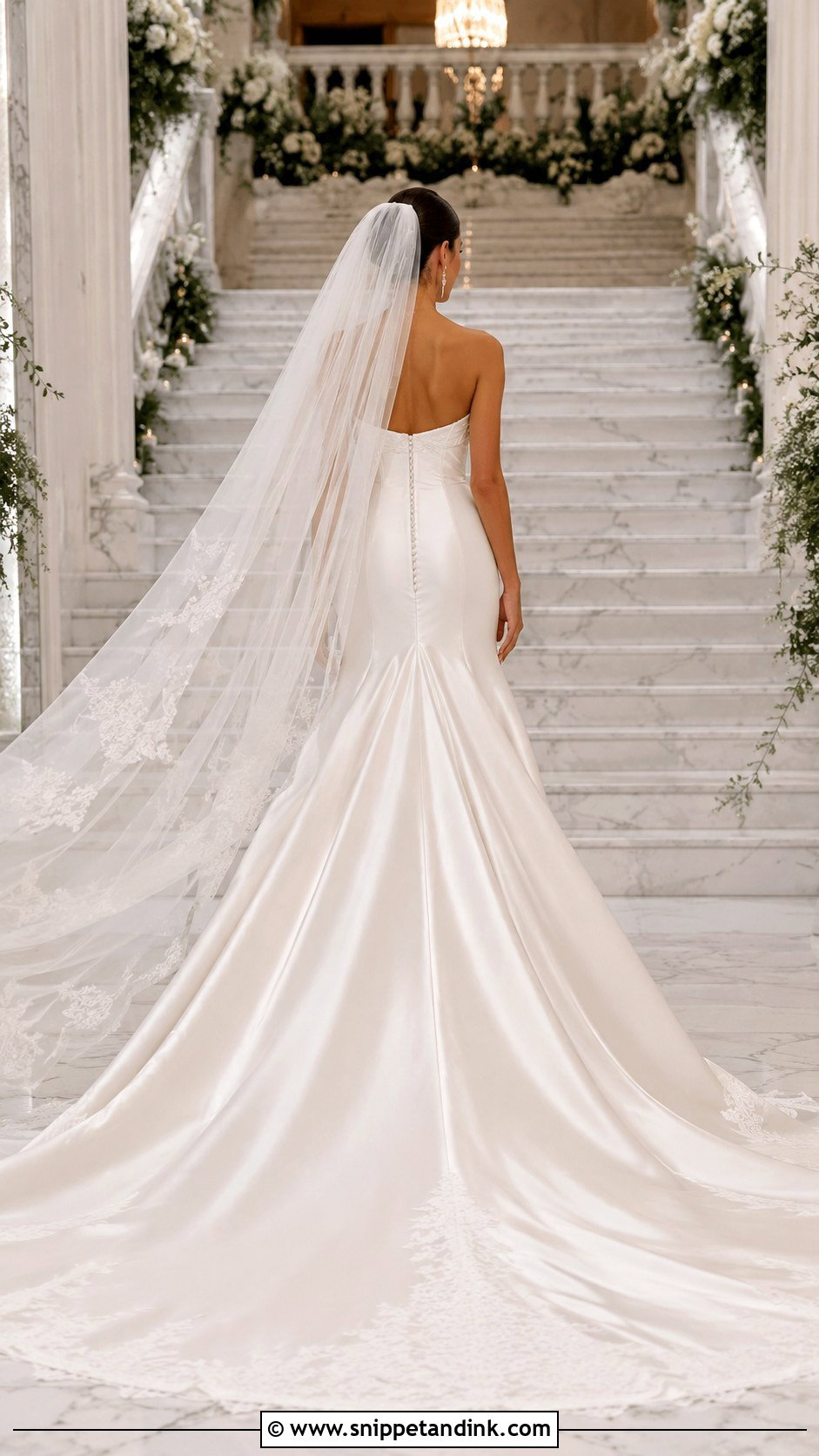
A train makes the aisle moment, and satin has the weight to flow behind you smoothly. A chapel train is manageable; a cathedral train is formal drama. Stairs and long aisles show it off best. Plan the bustle at your final fitting, and have whoever will do it on the day practise once, because satin bustle points are often hidden buttons or ribbons that are hard to find in a dim reception room.
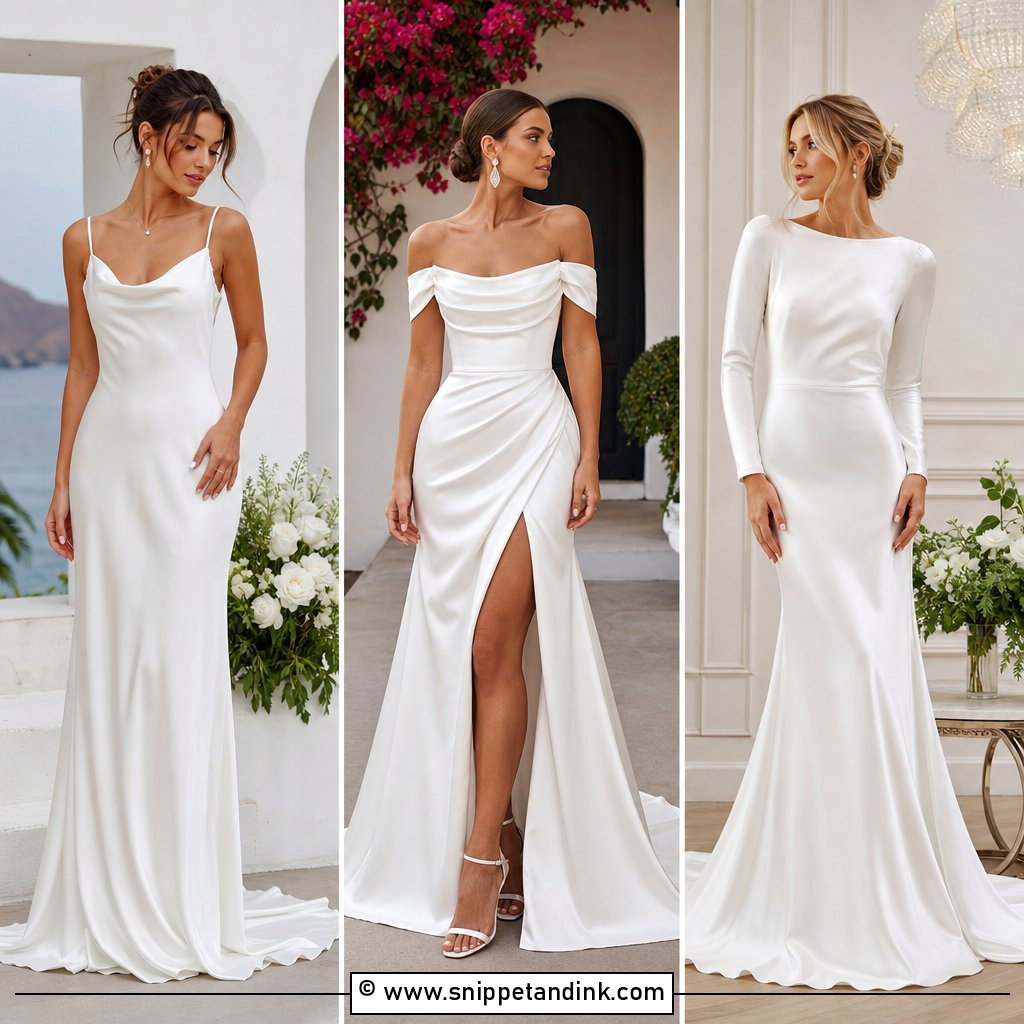



25. Satin Wedding Dress With Buttons
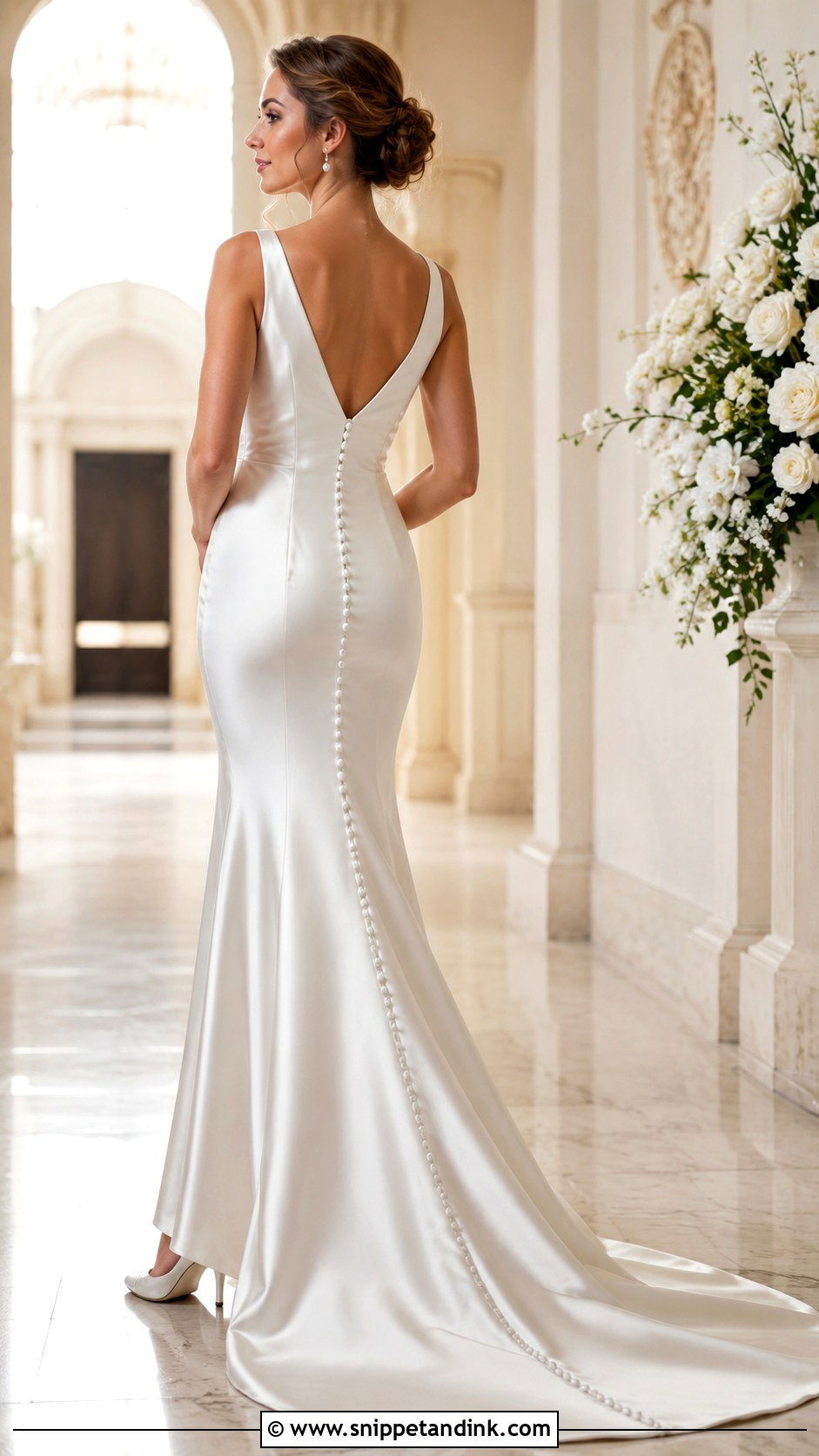
Covered buttons down the back give a long vertical line, especially with a fitted bodice and train. They can stop at the waist or continue down the skirt for more drama. They are slow to fasten, often twenty minutes or more for a long row, so I build that into the getting-ready schedule and bring a crochet hook to help ease each loop over its button. A simple veil and small earrings let them stay the detail.
26. Satin Wedding Dress With Detachable Sleeves
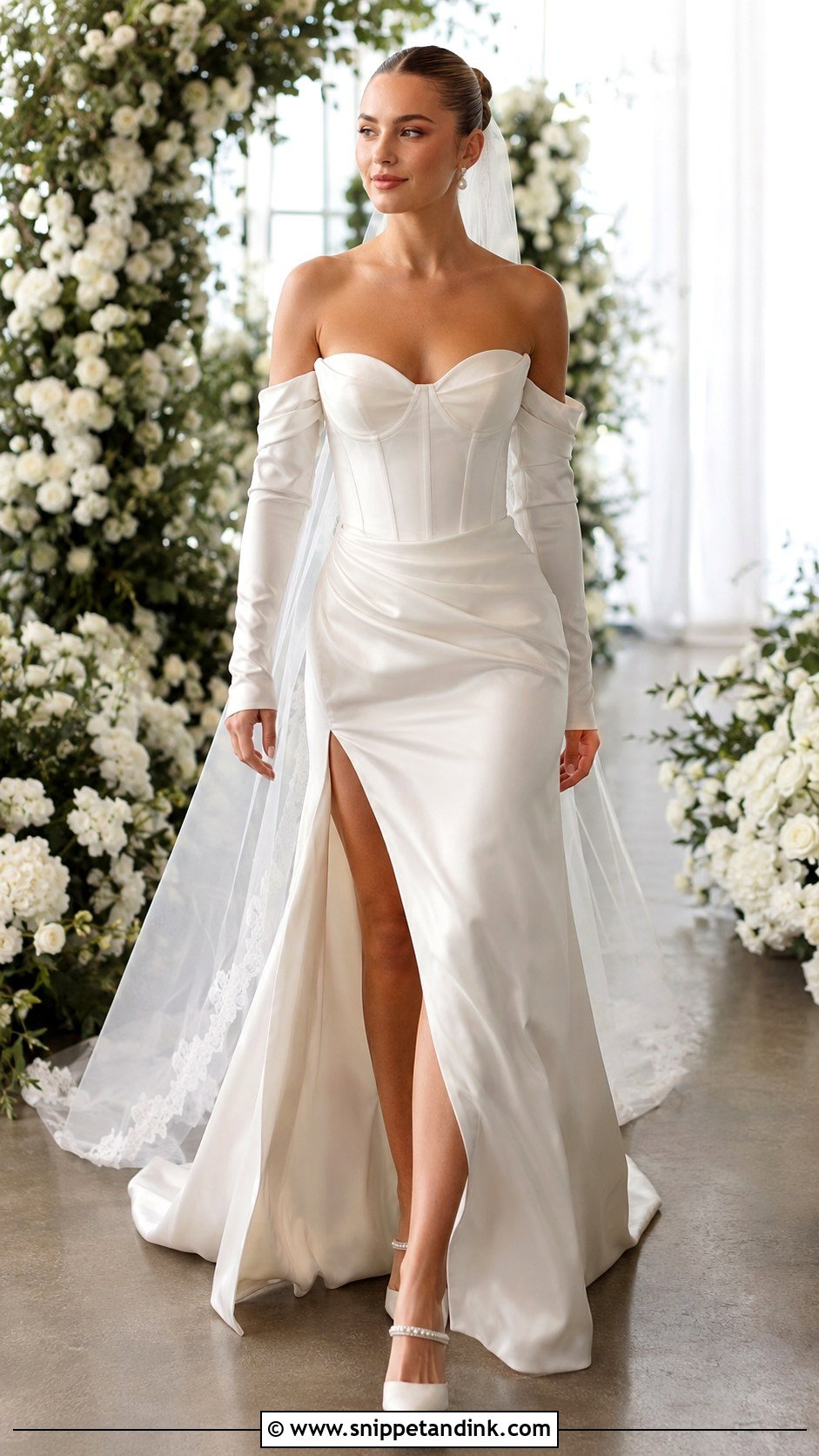
Detachable sleeves give two looks in one dress: covered and formal for the ceremony, lighter for the reception. They can be fitted, puffed, off-shoulder or sheer with satin cuffs, and they suit strapless and corset gowns best. Make sure they’re cut from the same fabric lot as the dress, since satin from different rolls can differ slightly in sheen. Once they come off, swap in a bracelet or bolder earrings so the second look feels deliberate.
27. Satin Wedding Dress With Cape
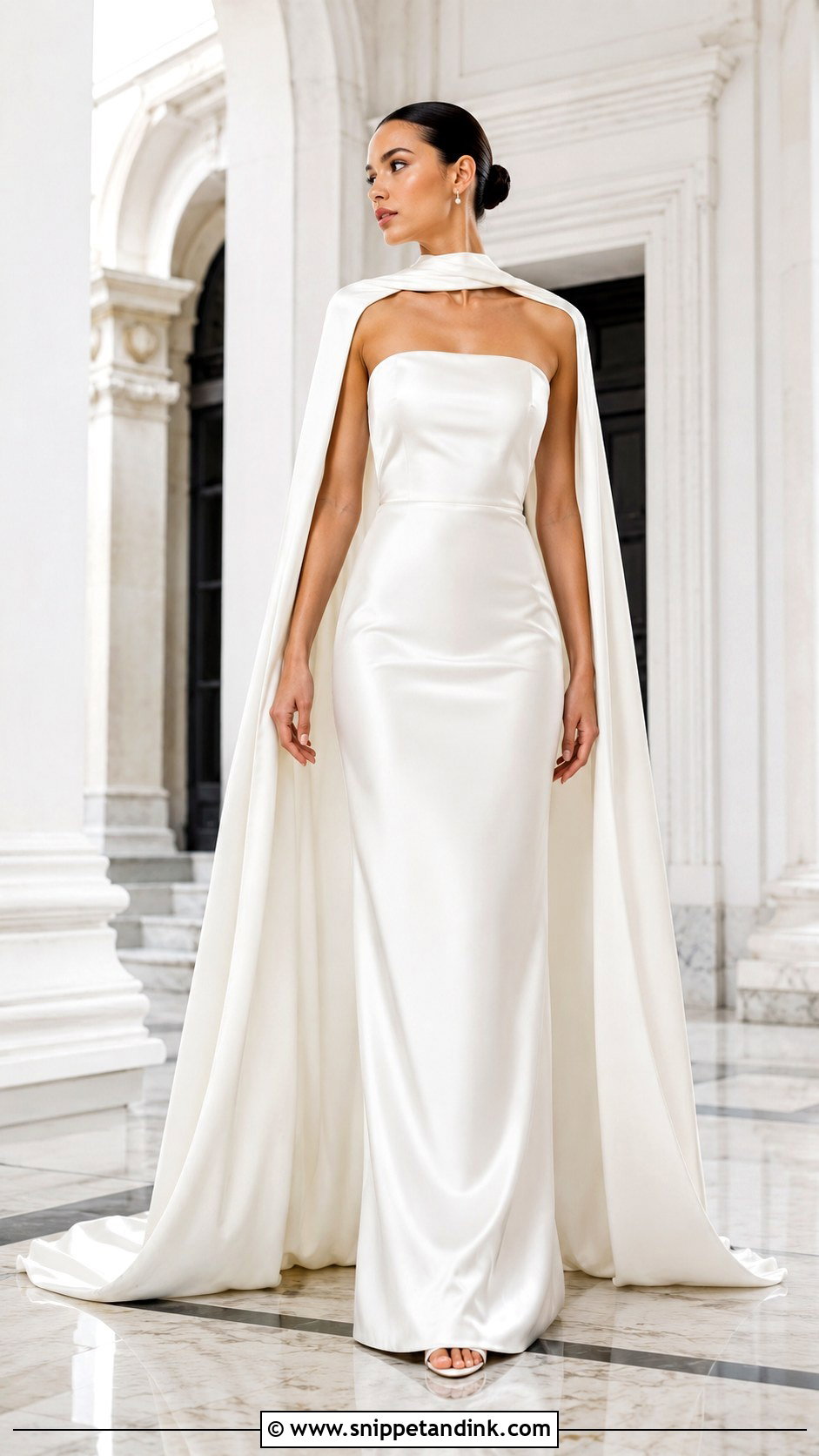
A cape gives drama without a traditional veil. It can be sheer or satin, short or floor-length, fixed or detachable. A simple satin column or strapless gown lets the cape stand out. I check where it attaches, at the shoulders, the neckline or the back, because a heavy satin cape pulls backward and can drag a strapless bodice down. Keep hair sleek so the attachment shows, with minimal jewellery and polished heels.
28. Satin Wrap Wedding Dress
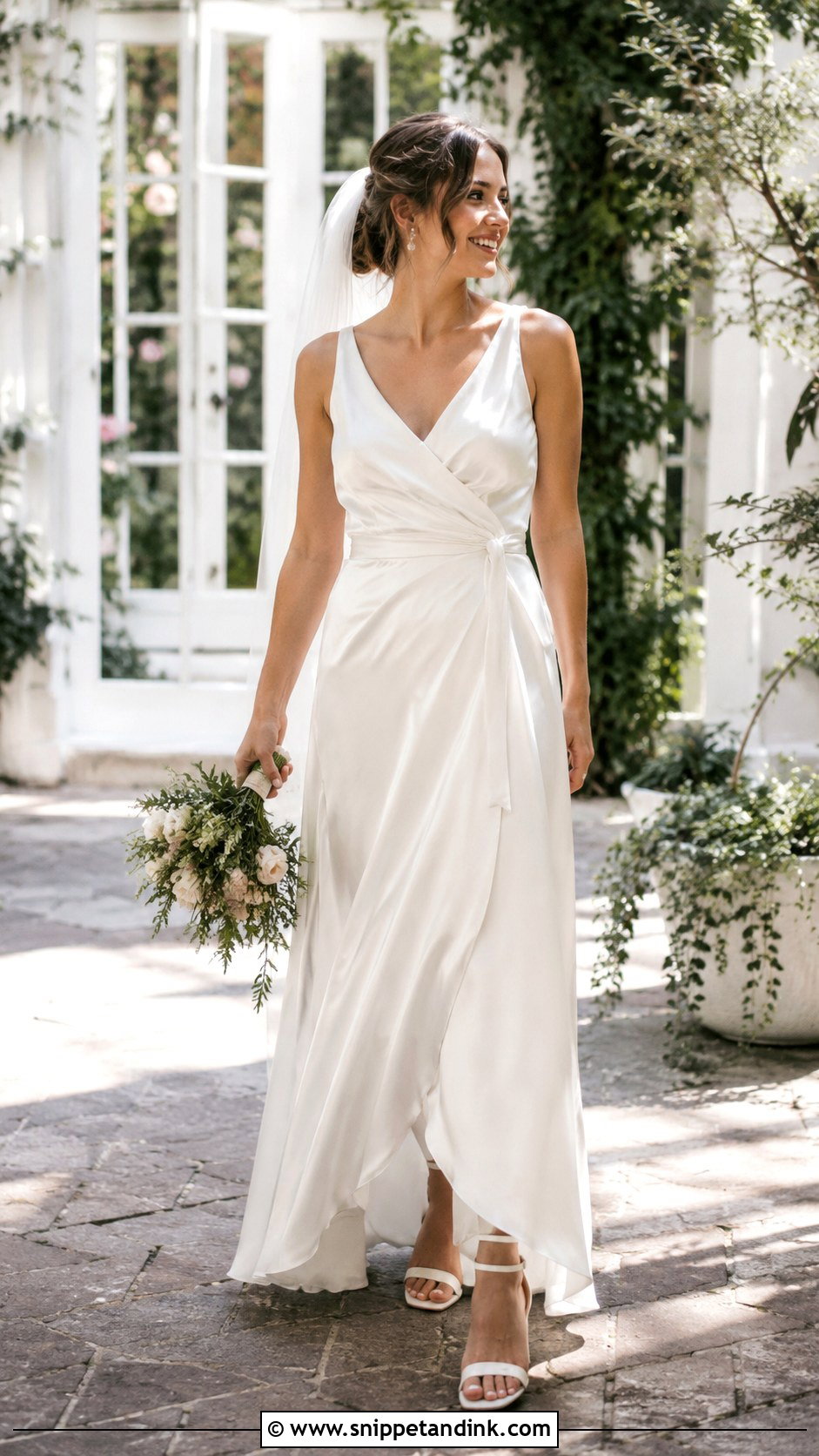
A satin wrap dress defines the waist and opens into a V, which lengthens the body. It suits gardens, small ceremonies and relaxed receptions. Satin is slippery, so a wrap needs inner ties, snaps or tailored seams to stay closed as you move. I always add a hidden snap at the bust crossover. Block heels or sleek pumps, pearl earrings and a simple veil complete it.
29. Satin Two Piece Wedding Dress
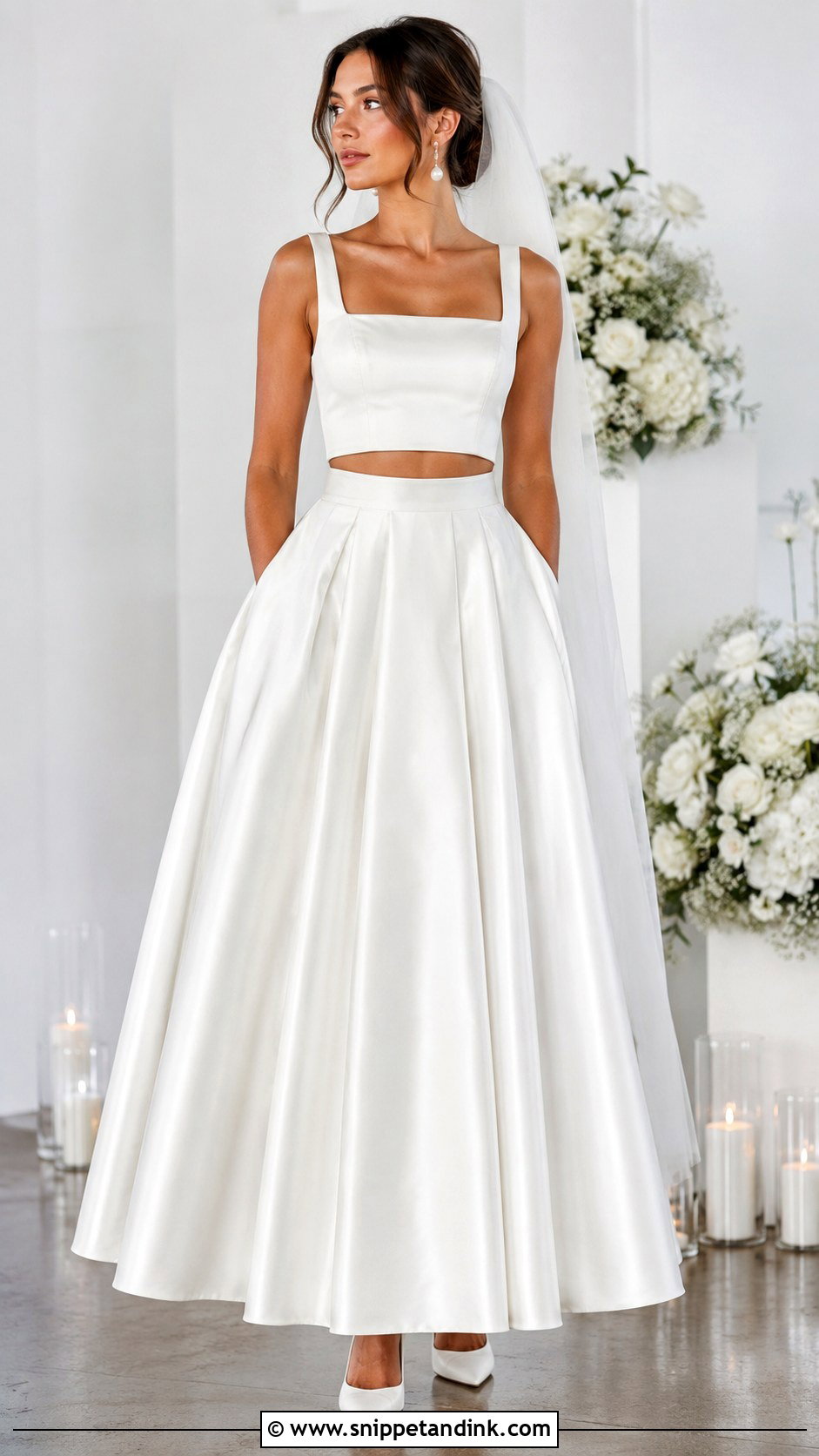
Two-piece satin, such as a crop top with a full skirt or a structured bodice with a column skirt, is more flexible than a single gown. You can size the top and skirt separately, which helps when your measurements don’t match one standard size. Keep the gap between pieces small for a refined look, or show more waist for a fashion-led one. Buy both pieces together so the satin matches in colour and sheen.
30. Satin Reception Wedding Dress
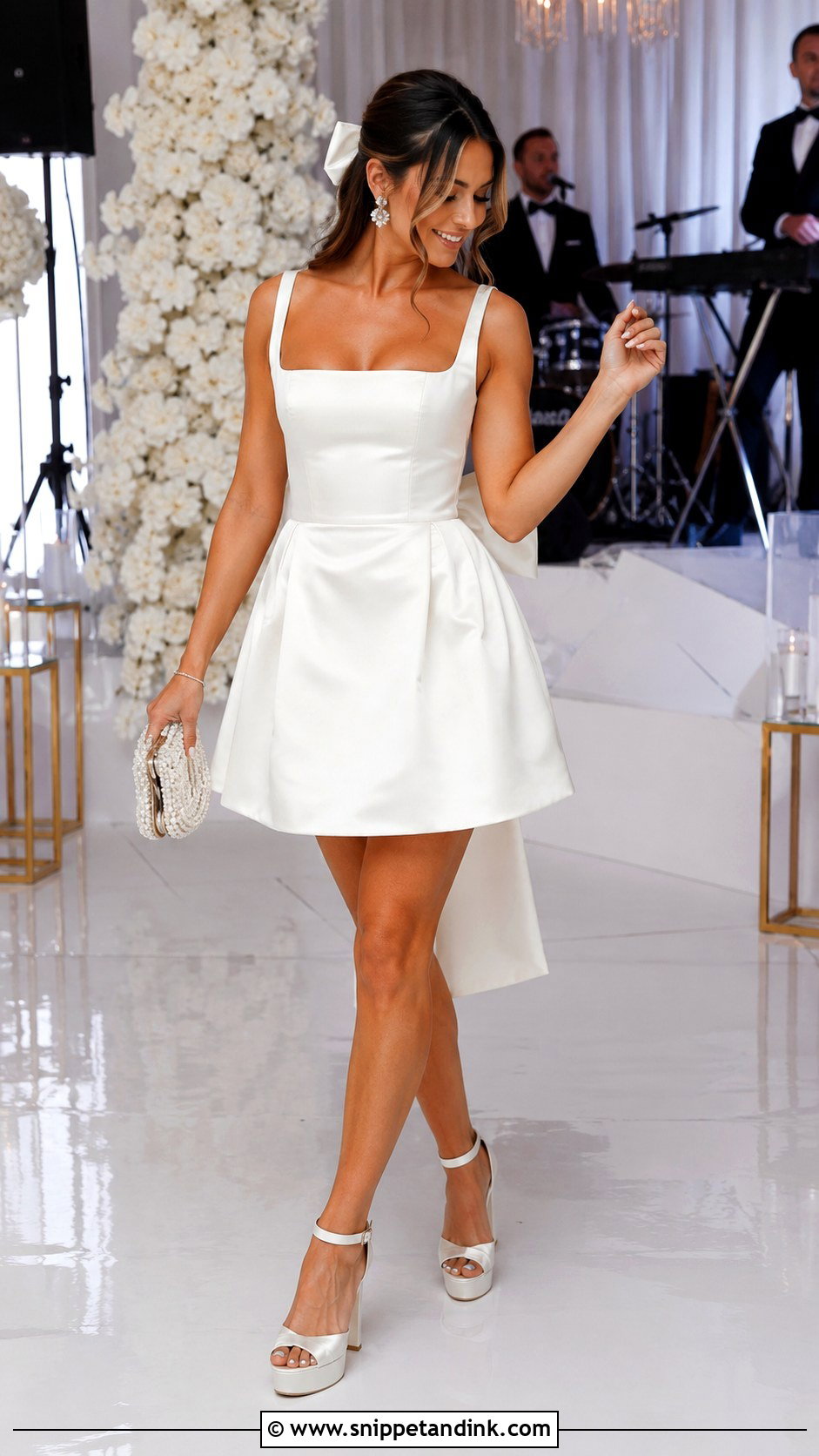
A reception dress has to dance. Shorter satin dresses, slip gowns and sleek columns all let you greet guests and move freely while still looking bridal. Satin looks polished under reception lighting and keeps the second outfit special. I check three things: straps that stay put, a hem you won’t step on, and shoes you can stand in for hours. Statement earrings, a small clutch and a playful veil or hair bow finish it.
Creases, Water Spots and the Car Ride
Satin’s weak points are predictable, which means you can plan around them. I steam the gown on the morning itself, from the inside wherever possible, holding the steamer a little away from the surface so no droplets land on it.
On the day
When sitting, lift the back of the skirt and sit on your lining rather than the satin face; it saves you a seat-shaped crease in every photo after. In the car, spread the skirt and train across the seat instead of bunching it. Water marks silk satin, so if anything spills, blot gently with a dry cloth and never rub. Clear drinks like champagne can dry invisible and then turn brown weeks later, so mention any spills to the cleaner.
Afterwards
Have it professionally cleaned soon after the wedding rather than months later. Store it folded with acid-free tissue in a breathable box, away from light. A heavy satin gown shouldn’t hang by its shoulder straps for long, as the weight stretches them; use the inner hanging loops sewn at the waist if you do hang it.
Satin Hides Nothing, So Start With the Seams
Satin gives you shine, structure and a clean finish in one cloth. The right gown depends on your venue, season, comfort and taste: a ball gown feels classic, a slip feels modern, a mini feels playful, and long sleeves feel formal. Because satin shows structure, seams and movement so plainly, fit has to come first. Get the right weight of satin for your silhouette, have it tailored to how you’ll actually move, and keep accessories few and considered.
You'll Like These Ideas:









Leave a Reply