
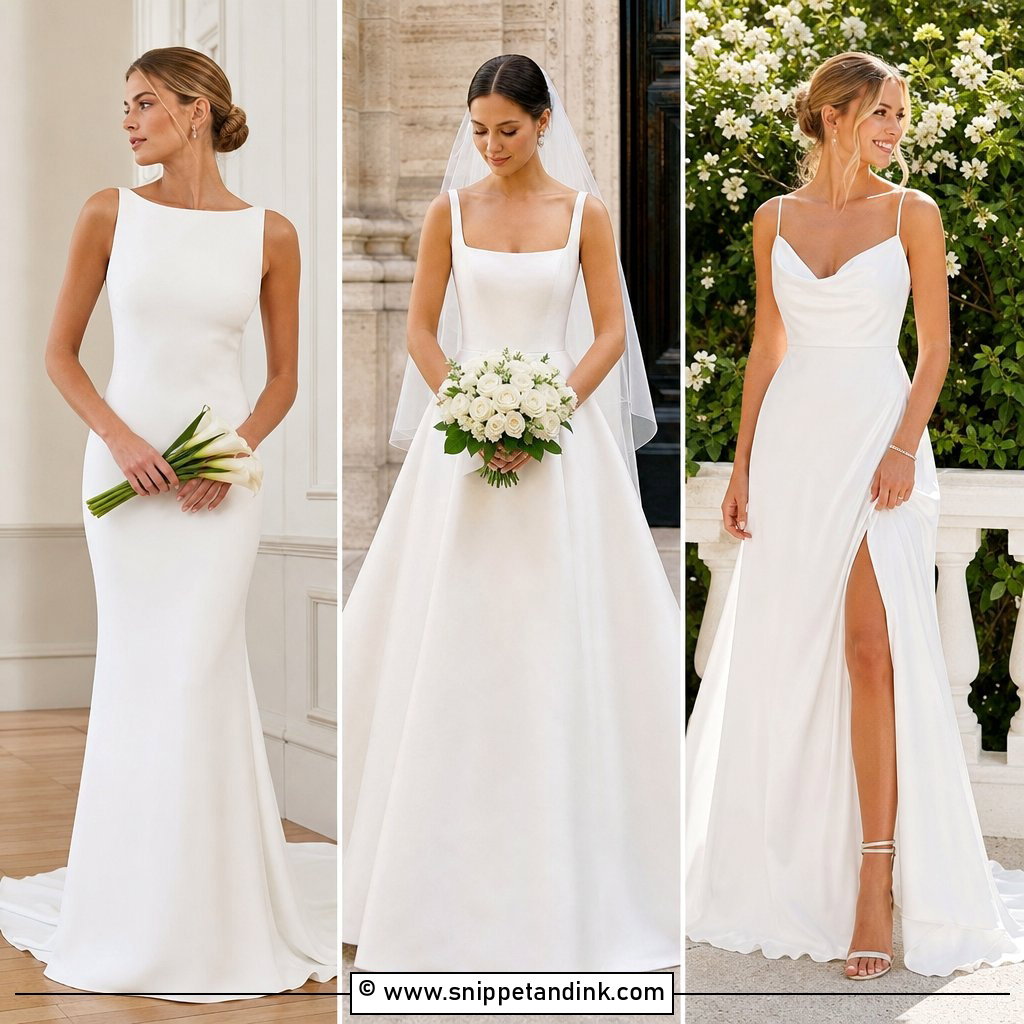
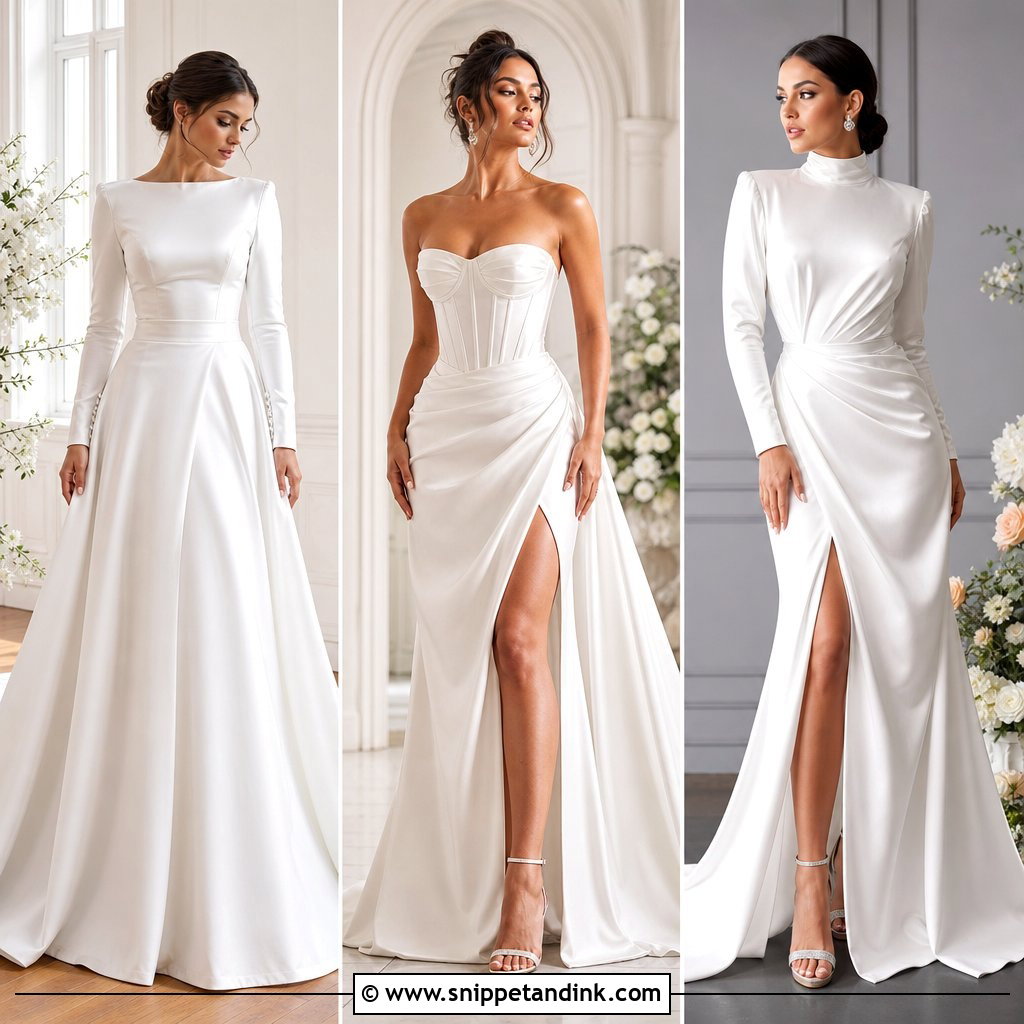
Old money wedding dresses look expensive for one reason: nothing on them is trying too hard. The fabric is good, the cut is exact, and the details are few. Silk satin, crepe, fine lace, long sleeves, a sculpted neckline and a graceful train will always outlast a season’s sparkle. I find this style suits far more brides than people expect, from minimalists to lace lovers, and it works in a ballroom as easily as at a city hall. The 25 gowns below are the ones I keep returning to, with notes on how I’d fit and finish each one.
What Makes a Plain Fabric Look Expensive?
Almost every dress in this list depends on fabric rather than decoration, so I teach brides to judge cloth with their hands before they fall for a photo. Three quick checks tell you a lot in a shop.
- Scrunch a corner of the skirt in your fist for five seconds. Good silk and quality crepe relax back with soft creases; cheap polyester satin holds sharp, shiny wrinkles that will show in every seated photo.
- Hold the fabric up to a window. Light should pass evenly; thin patches or a visible weave grid mean the lining will be doing all the work.
- Look at the sheen from an angle. Silk satin has a deep, soft glow, while many synthetic satins have a flat, bright shine that can turn plastic-looking under flash.
None of this means synthetic is wrong. Polyester crepe and mikado blends are often tougher and easier to steam, which matters on a long outdoor day. Just know what you’re buying and choose it for a reason, not by accident.
1. Satin Ball Gown Wedding Dress
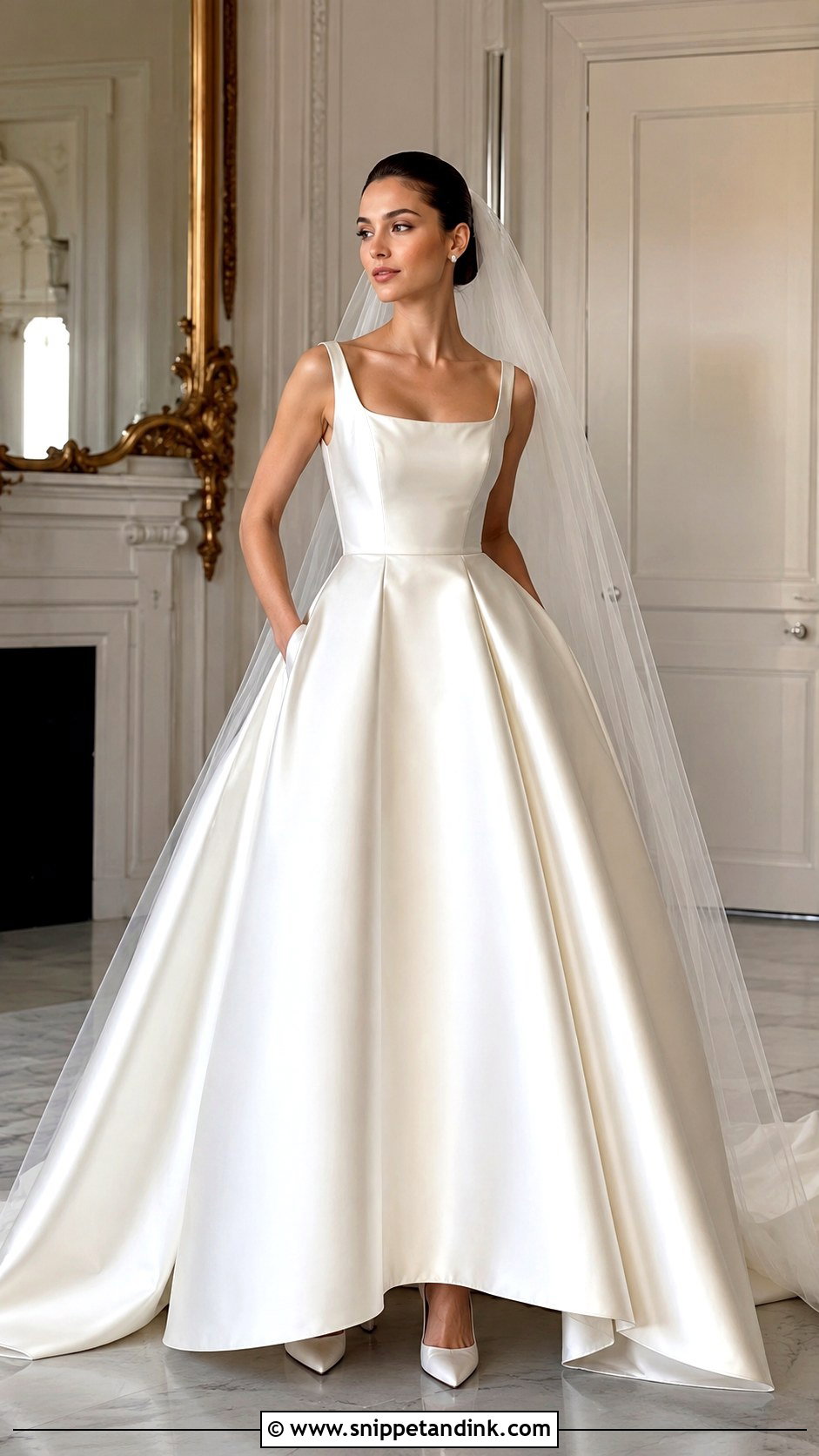
Satin ball gowns stand or fall on the bodice. All that skirt weight hangs from the waist, so the bodice needs firm boning and a waist stay, a grosgrain band inside that anchors the dress to your body and stops it riding up. Ivory or soft white satin, a natural waist and a simple neckline keep it classic rather than costume. I’d skip beading entirely and let the fabric catch the light. Pointed satin heels, pearl studs, a low chignon and a long plain veil are all it needs.
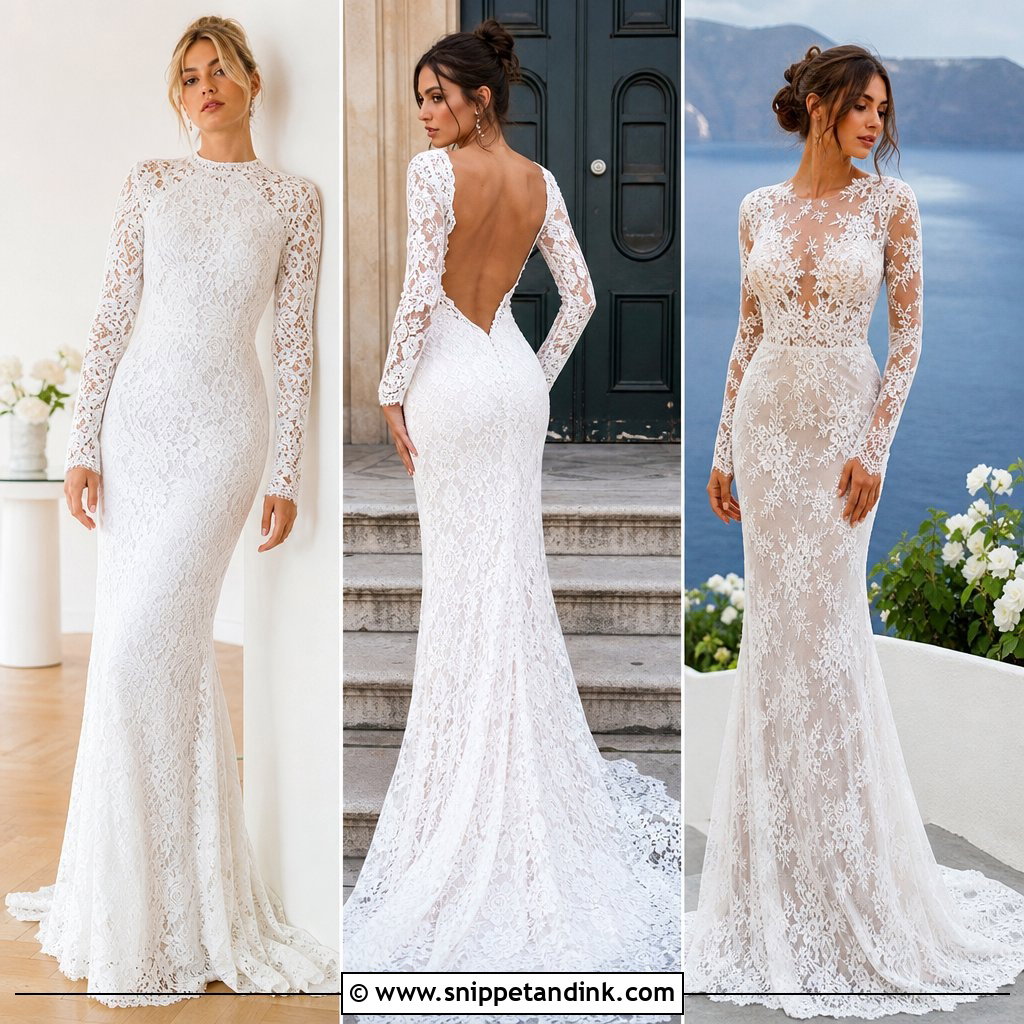
2. Long Sleeve Lace Wedding Dress
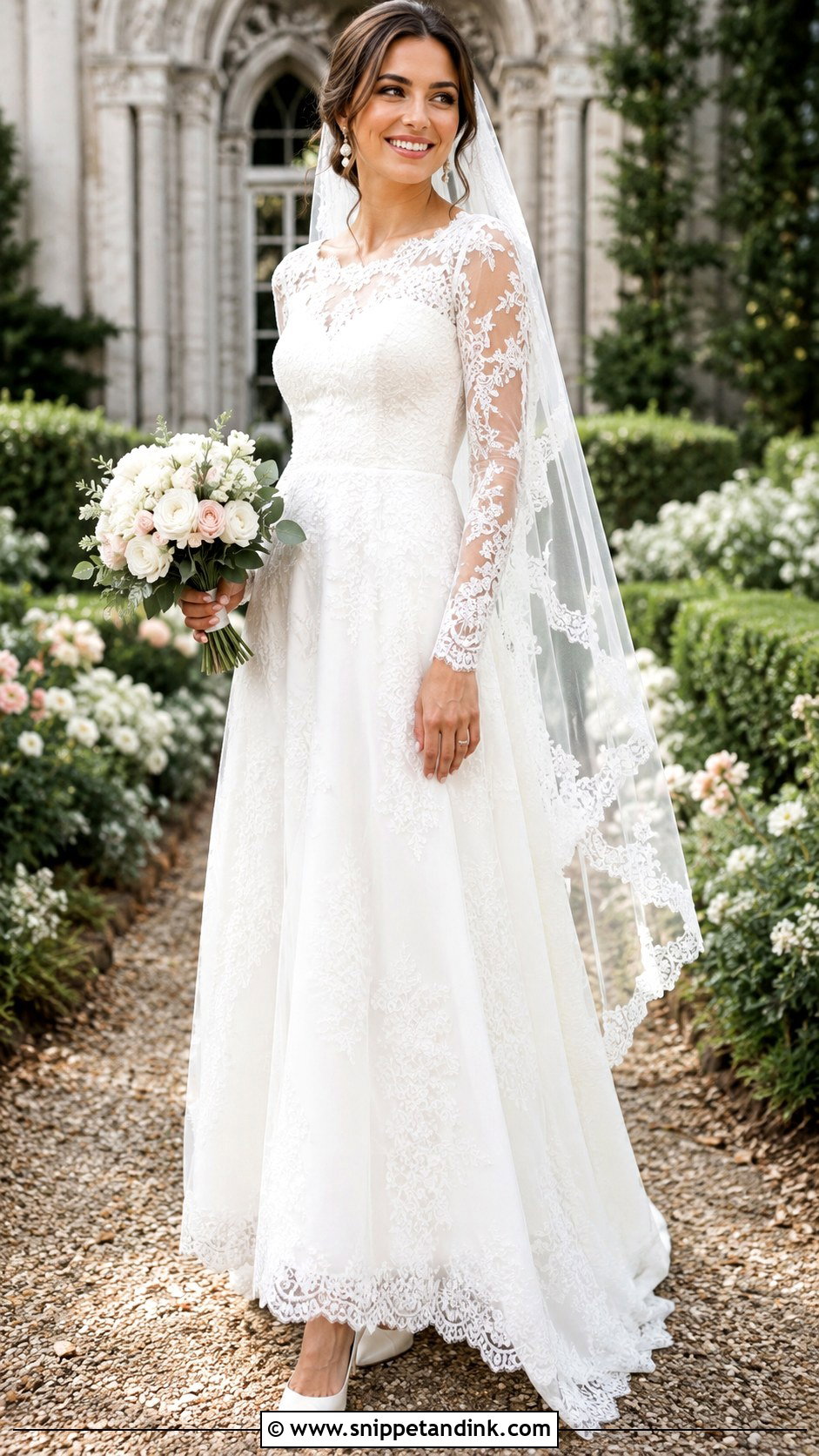
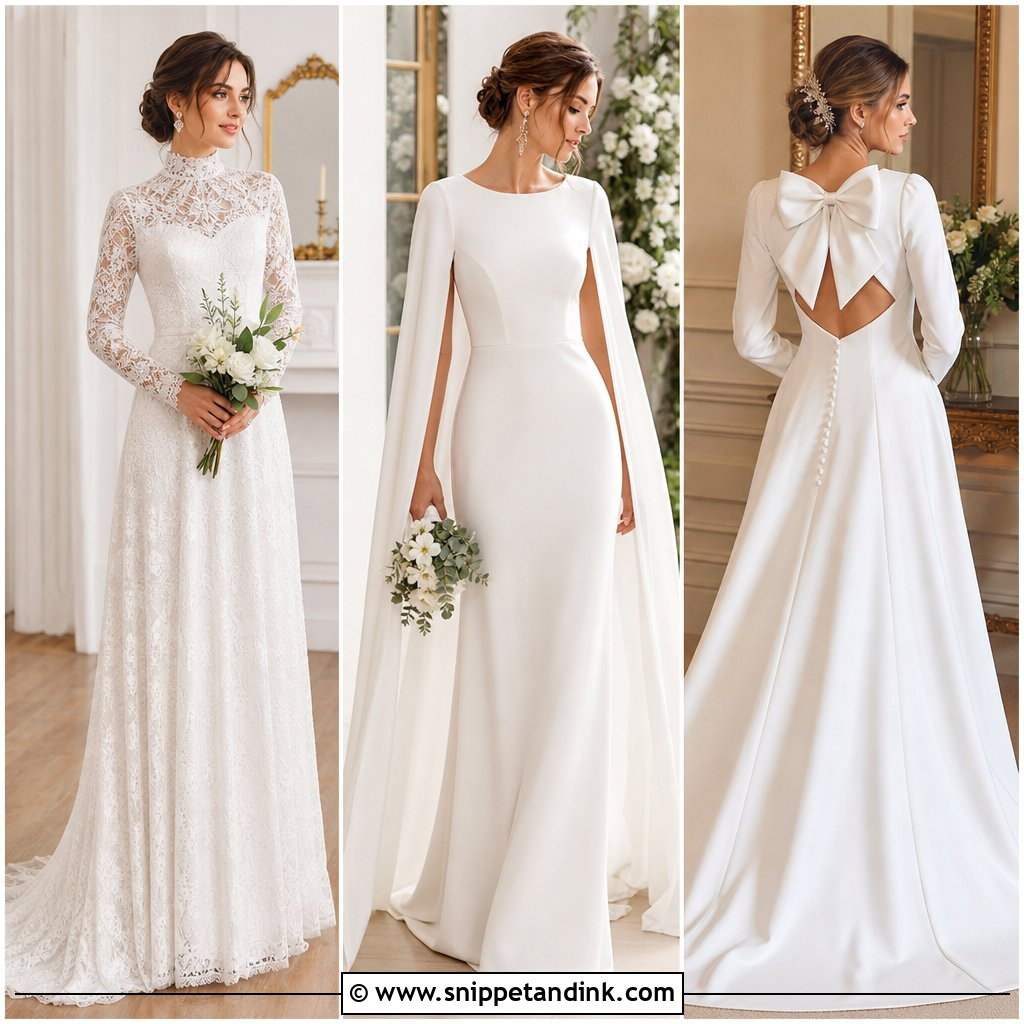
Long lace sleeves are where I spend the most fitting time. Lace has little stretch, so a sleeve fitted with the arm straight can bind at the elbow the moment you hug someone; I fit them with the arm bent and raised. Floral lace over a clean lining, a fitted bodice and an A-line or sheath skirt give the right balance. Scalloped cuffs or a high bateau neck add the heirloom note. Only choose a lace-edged veil if the lace genuinely matches the gown; a near-miss looks worse than a plain veil. Pearl earrings, a slim bracelet and ivory heels keep it traditional.
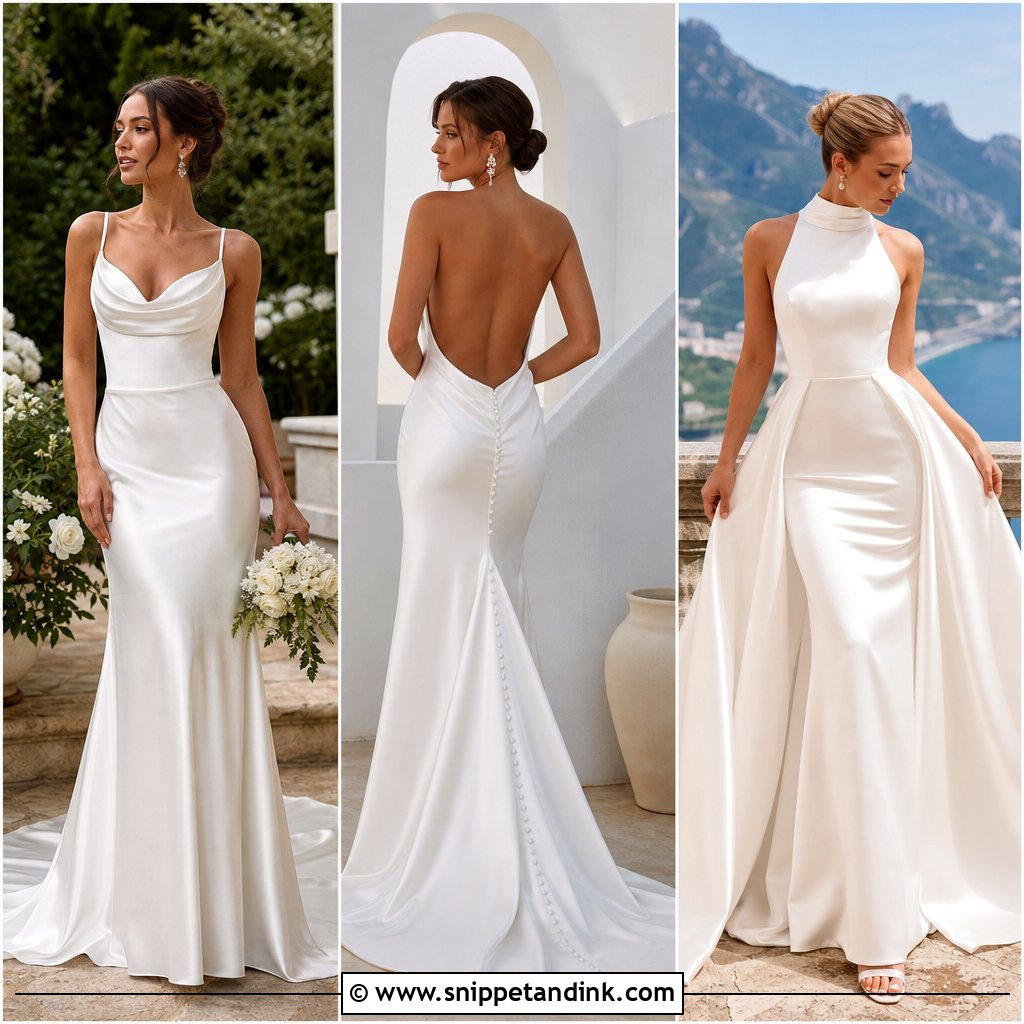
3. Silk Slip Wedding Dress
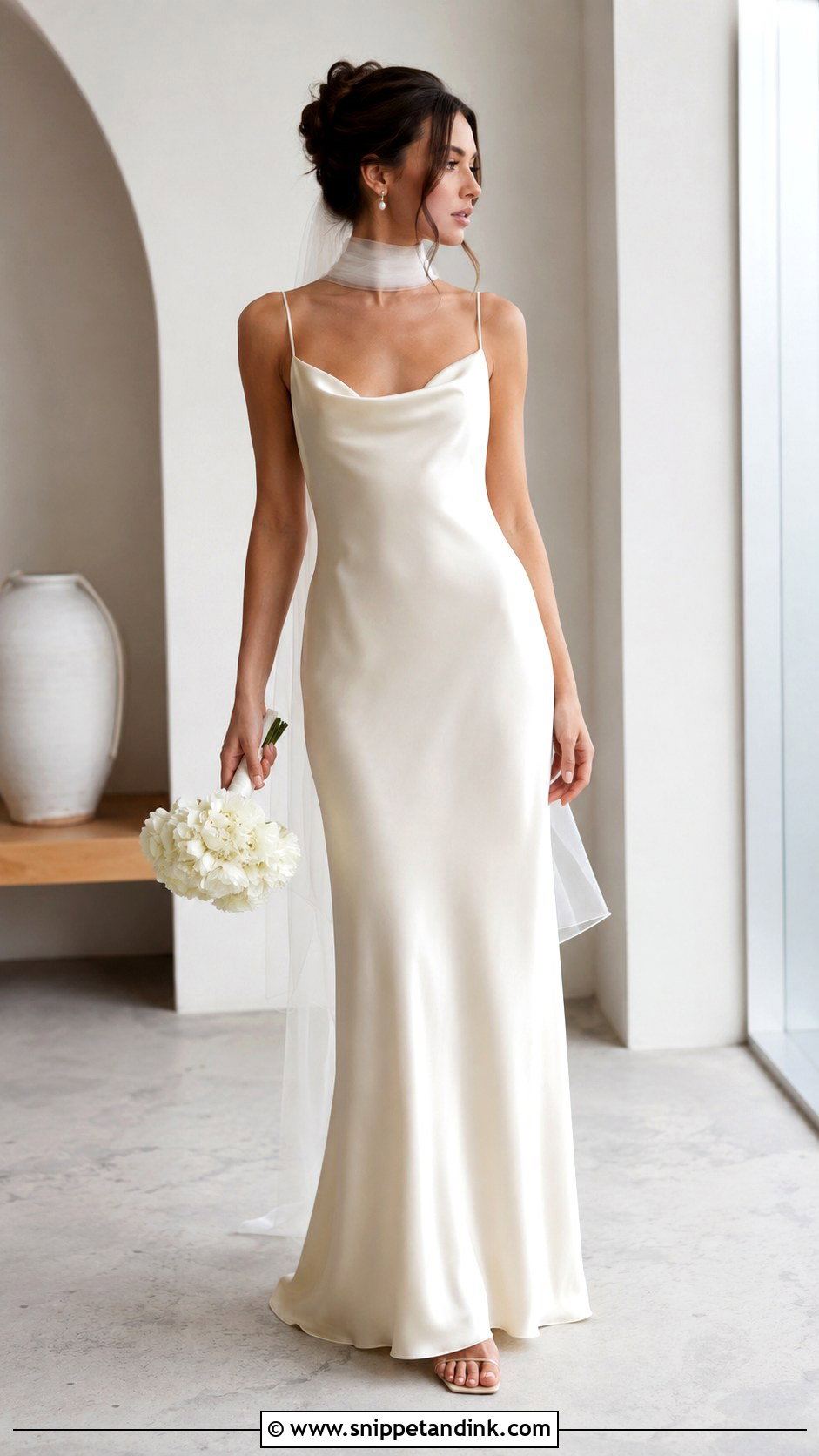
A silk slip is the quiet luxury choice, and also the least forgiving dress in this list. Bias-cut silk or silk crepe skims the body and moves as you walk, which means it shows any line underneath and any crease from sitting in the car. I suggest a skin-tone slip or smoothing layer and a steamer in the bridal suite. A soft cowl, thin straps or a clean square neck all work. Barely-there heels, a single pearl drop and a sleek low bun suit it, with a sheer scarf or simple veil for the ceremony. City and coastal weddings are its natural home.
4. Crepe Column Wedding Dress
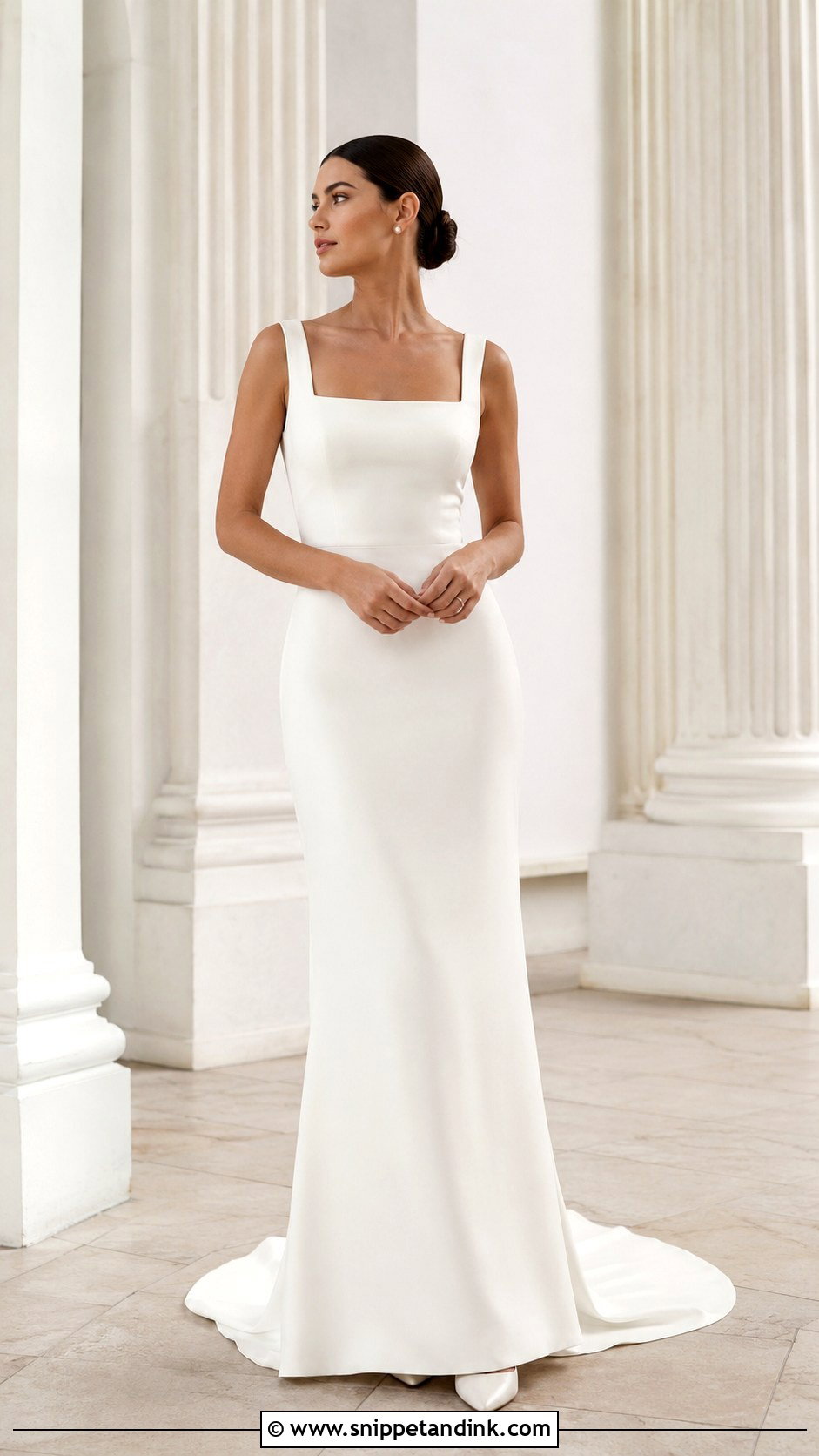
Verdict first: a crepe column is the most confident dress here, and it’s all about fit. Crepe has enough weight to smooth the body while staying soft, so the shape is drawn by seams, not decoration. I look closely at the side seams and the back zip in a fitting, because on a plain column any pucker reads instantly. Strapless, square neck and long sleeves all suit it, with a small train. Pointed pumps, pearl studs, a smooth updo and a structured clutch for later keep it crisp. The strong outline holds up from every camera angle.
5. Off Shoulder Wedding Dress
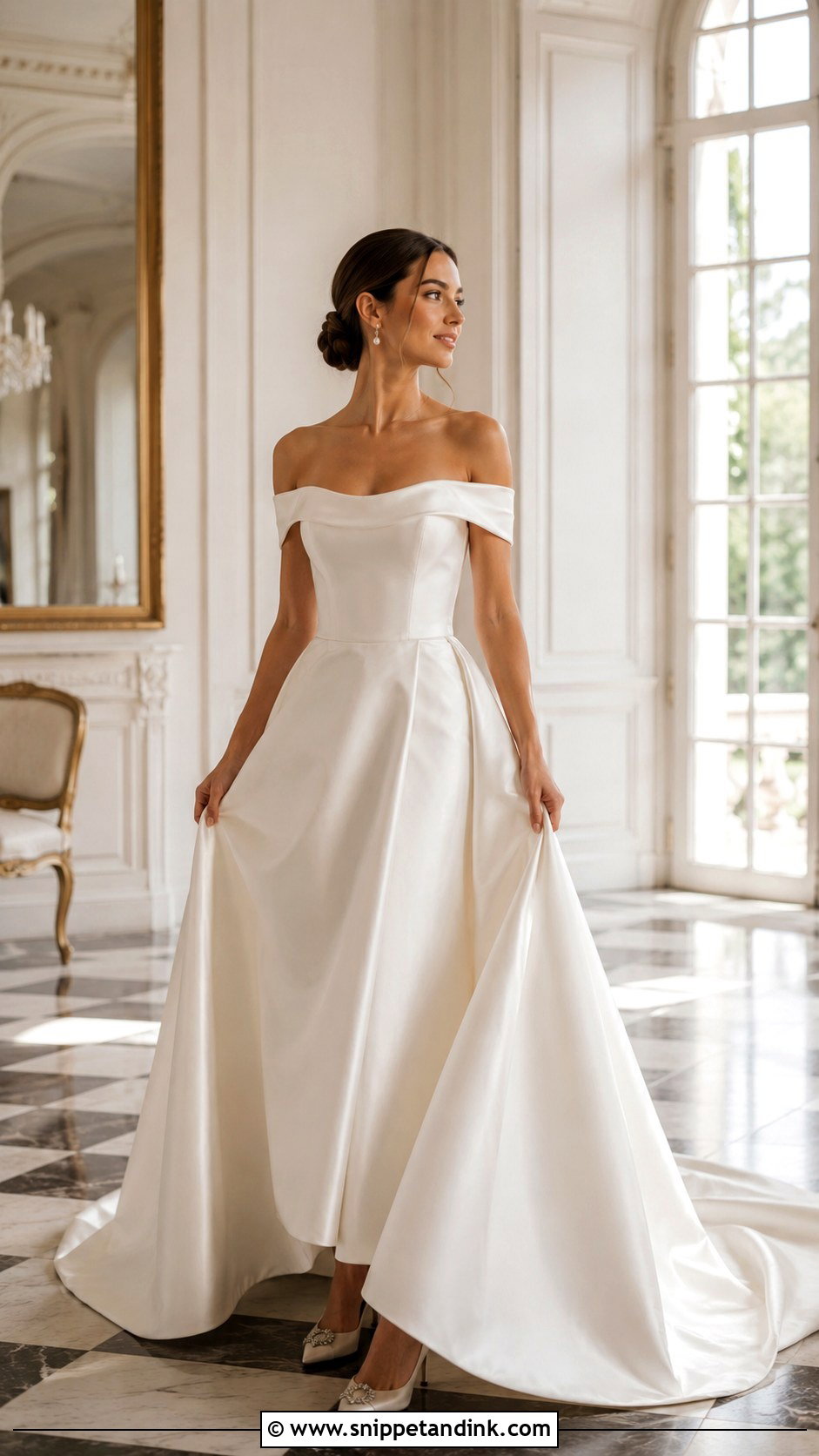
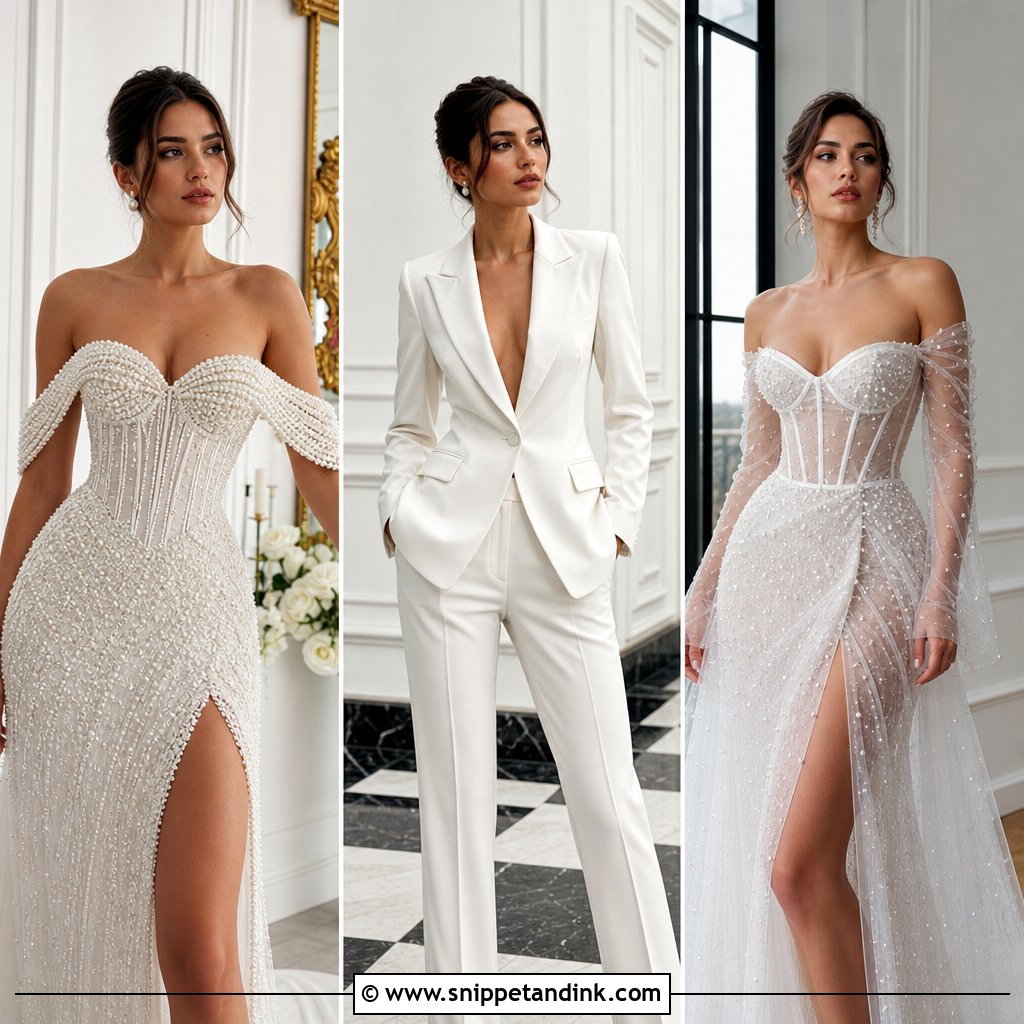
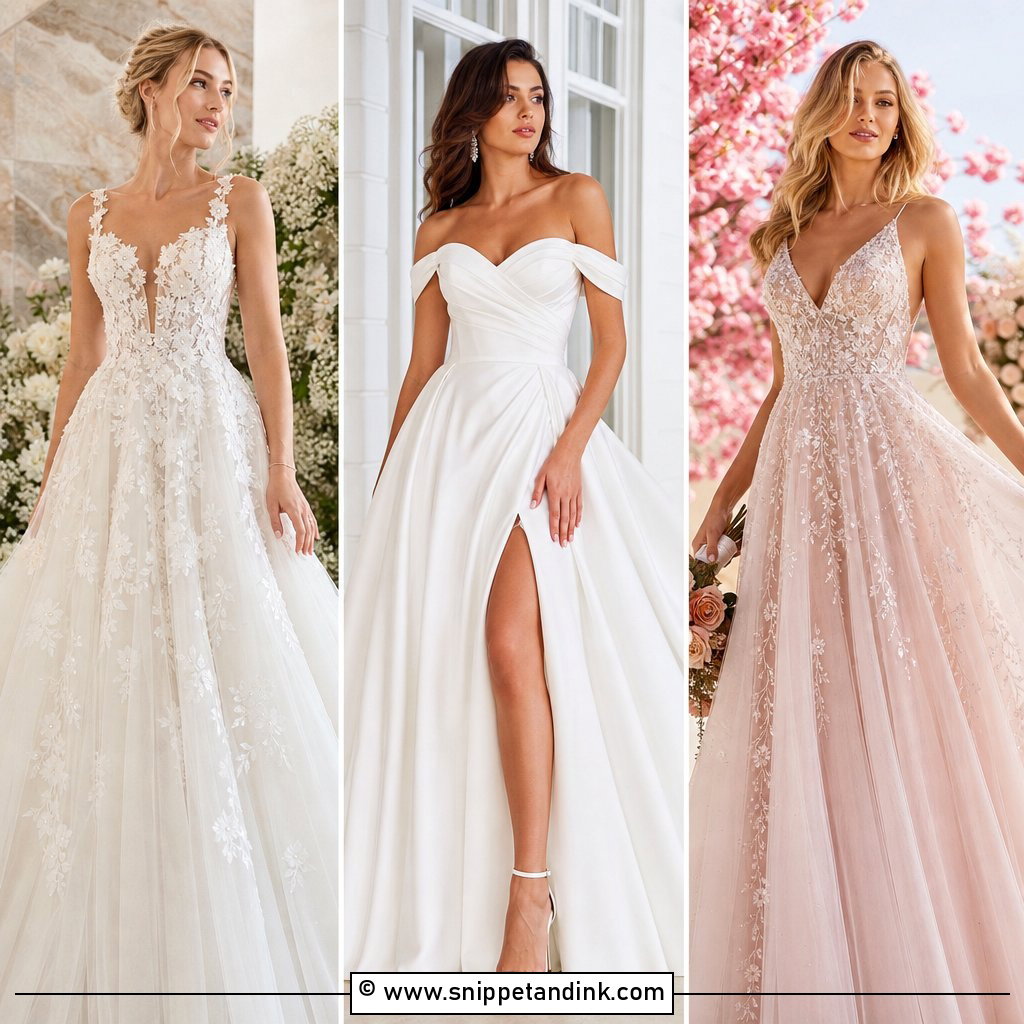
Off-shoulder necklines need the most engineering of any here. The neckline sits on the upper arm, so it needs a boned bodice and usually a silicone grip strip along the edge to keep it in place when you lift your arms to hug. Test it with arms up at every fitting. Satin or mikado gives the structure; crepe looks smoother and more modern. Pair a fitted bodice with an A-line or column skirt. Small pearls or a thin necklace and a low bun keep the collarbone and shoulders in view.
6. Bateau Neck Wedding Dress
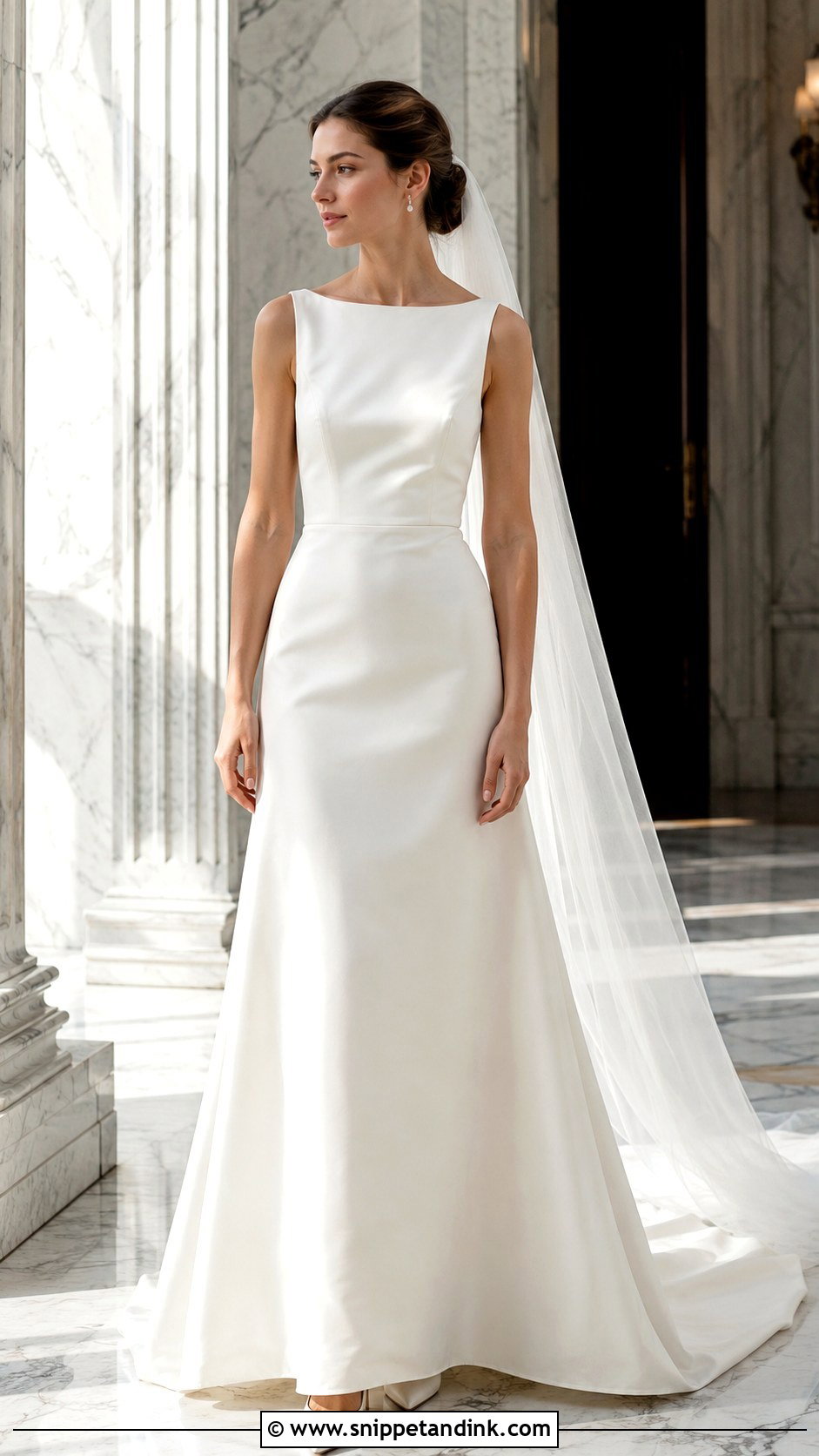
The bateau neck runs straight across the collarbone from shoulder to shoulder, and it’s my go-to whenever a bride asks for coverage that still looks elegant. It flatters a sloping shoulder especially well, since the line visually squares the frame. Satin, crepe or silk faille all hold the shape. A fitted bodice and slim A-line feels classic; a column skirt makes it more modern. Big accessories fight the neckline, so pearl earrings, a clean veil and ivory pumps are plenty. It’s the neckline behind so much classic and royal bridal fashion, and it still won’t look dated in twenty years.
7. High Neck Lace Wedding Dress
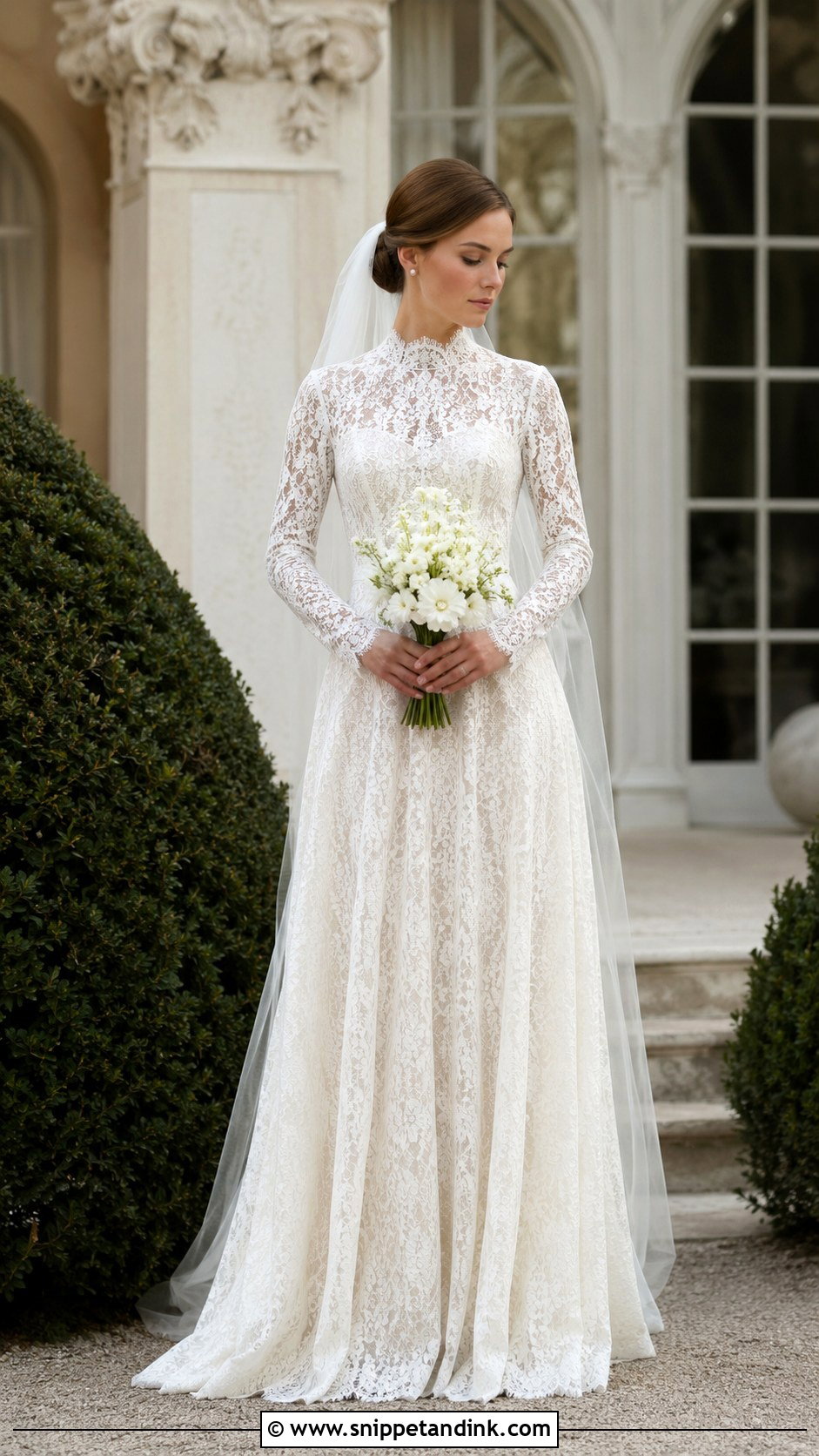
High-neck lace can turn heavy fast if the lace is too thick, so I always push brides toward the finest lace they can afford. Fine Chantilly-style lace sits close to the skin and looks refined; chunky guipure at the throat can feel like armour. A tailored bodice and a skirt that moves easily keep it light. Long sleeves make it formal, while a sleeveless high neck is far cooler for summer. Pearl studs, a neat bun, soft makeup and a plain veil balance all that detail.
8. Square Neck Wedding Dress
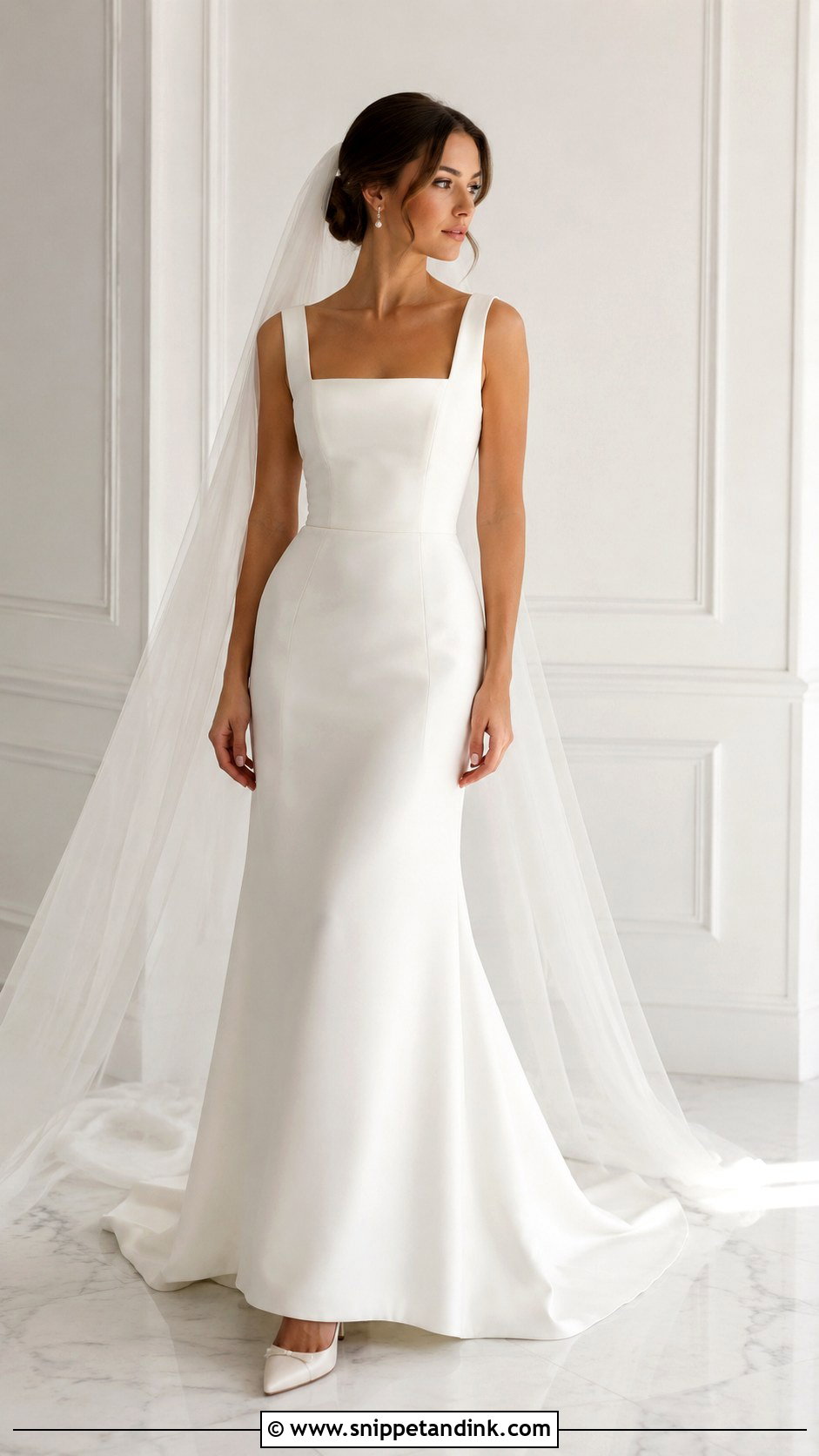
Square necks flatter almost everyone because they frame the collarbone with straight lines and give structure to the upper body. For the old money version I prefer wider straps, about two fingers wide, which also hide bra straps and sit more securely than spaghetti straps. Keep the bodice fitted and the skirt smooth with as few seams as possible. Low satin heels, pearl earrings and a soft veil finish it. Your hair choice can follow the venue: a centre-part bun for a ballroom, soft waves for a garden.
9. Mikado A Line Wedding Dress
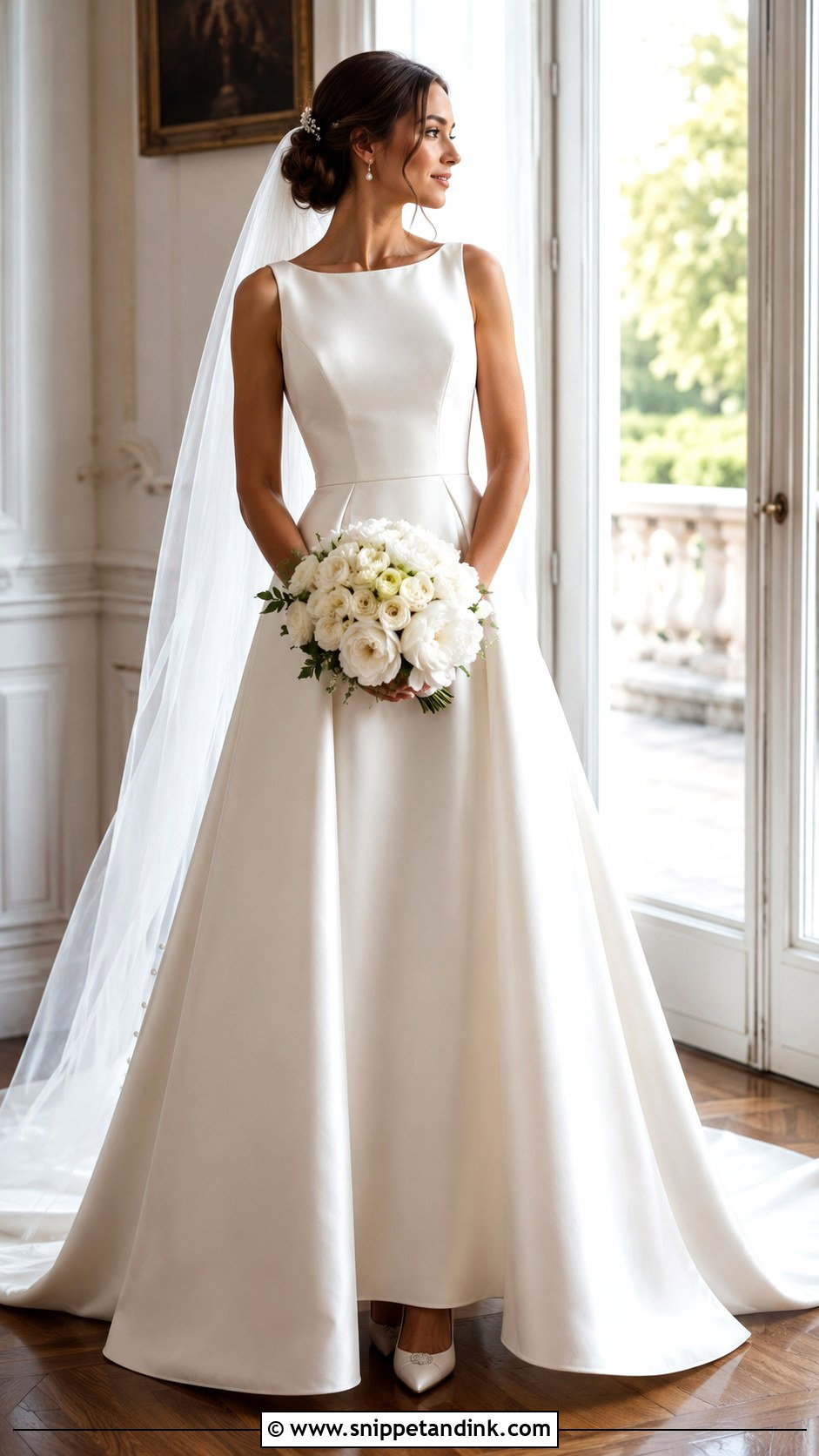
Mikado is a heavy silk or silk-blend with a faint sheen and a crisp body, and it holds a shape better than nearly any other bridal fabric. That’s why even a plain mikado A-line looks expensive. The A-line works on many body types because it defines the waist and floats away from the hips. A strapless, square or bateau neckline keeps it classic, and a small bow, covered buttons or a neat train is enough detail. One caution: mikado creases sharply when you sit, so I’d keep it on a hanger until the very last moment. Pointed heels, a pearl hairpin and a long veil suit a formal day.
10. Pearl Detail Wedding Dress
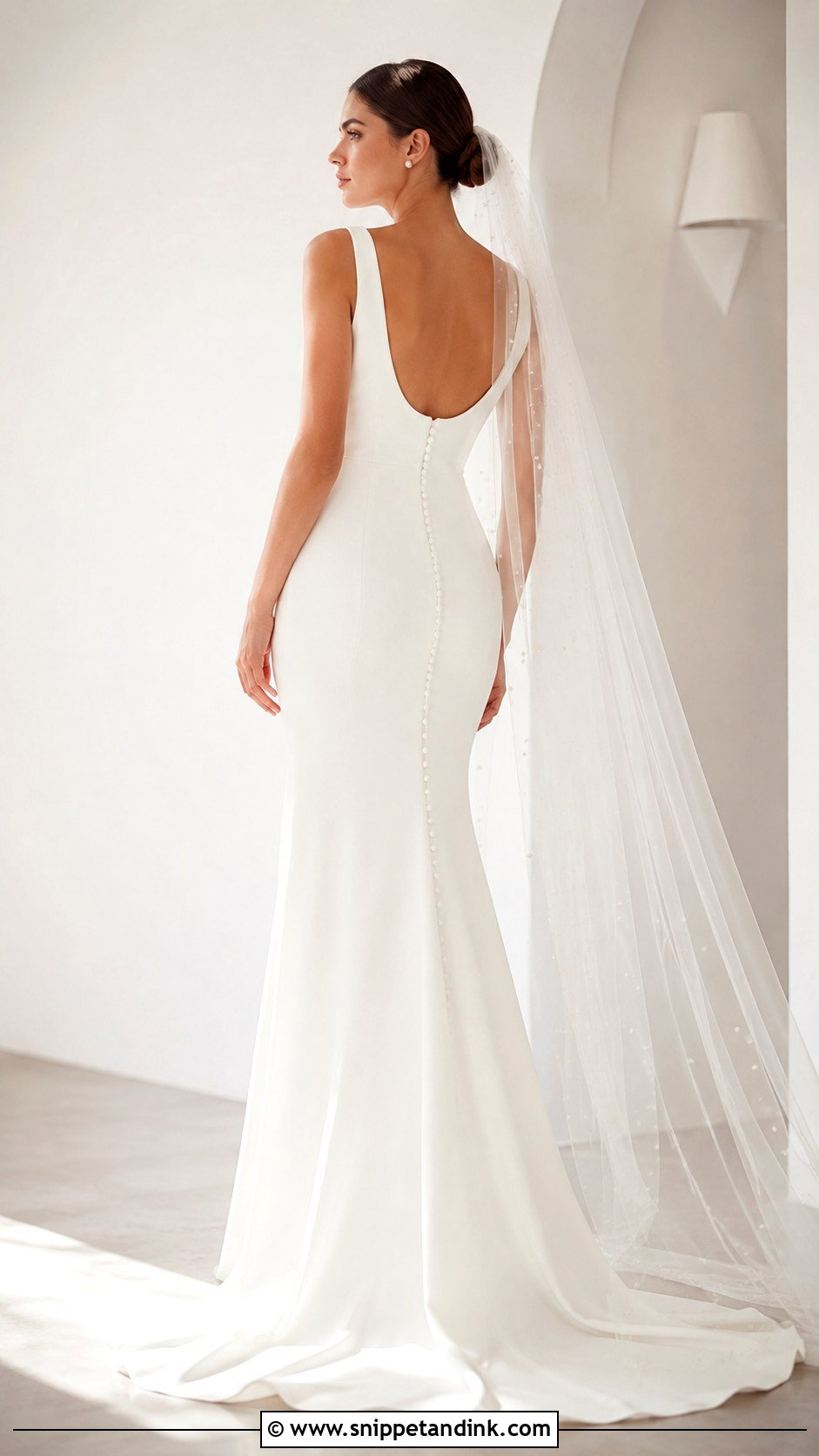
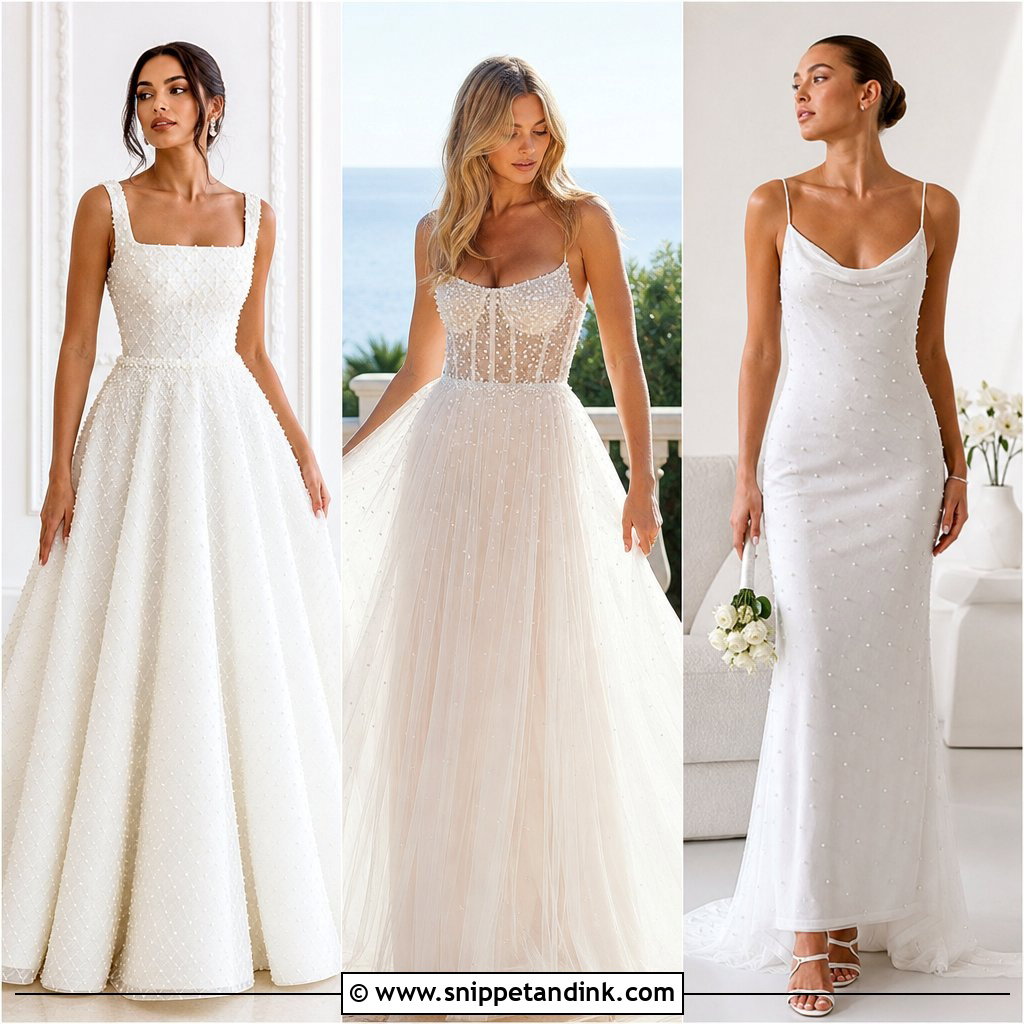
With pearls, less is genuinely more. Scattered pearls on a veil, pearl buttons down the back or a fine line of them at the neckline look far richer than an allover pearl bodice. On a simple satin, crepe or silk gown they finally have room to be seen. Ask whether they’re sewn individually or glued; hand-stitched pearls survive a full day of hugging, while glued ones tend to pop off. If the dress already carries pearls, keep the jewellery to studs, with ivory heels and a polished hairstyle.
11. Strapless Satin Wedding Dress
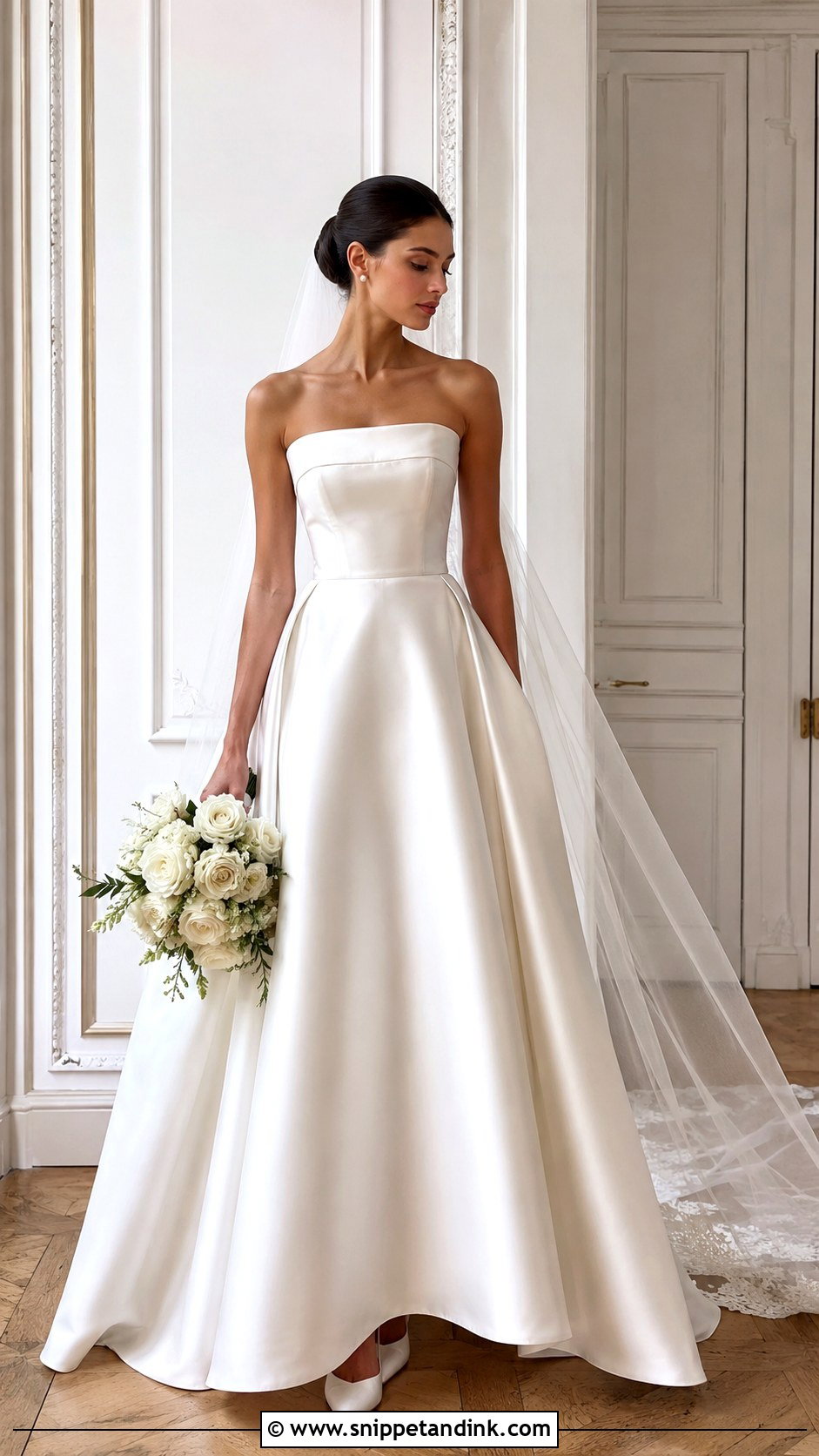
Strapless satin is easy to style and hard to fit. The whole gown is held up by the bodice, so it needs boning and a snug fit around the ribcage, not the bust. If you’re tugging it up during the fitting, it’s too loose. A straight neckline, gentle scoop or subtle cat-eye shape all look modern-classic. The skirt can be a ball gown, A-line or column depending on venue. Pearl studs, satin pumps and a long veil suit the ceremony, and a sleek bun with a small clutch takes you into the reception.
12. Basque Waist Wedding Dress
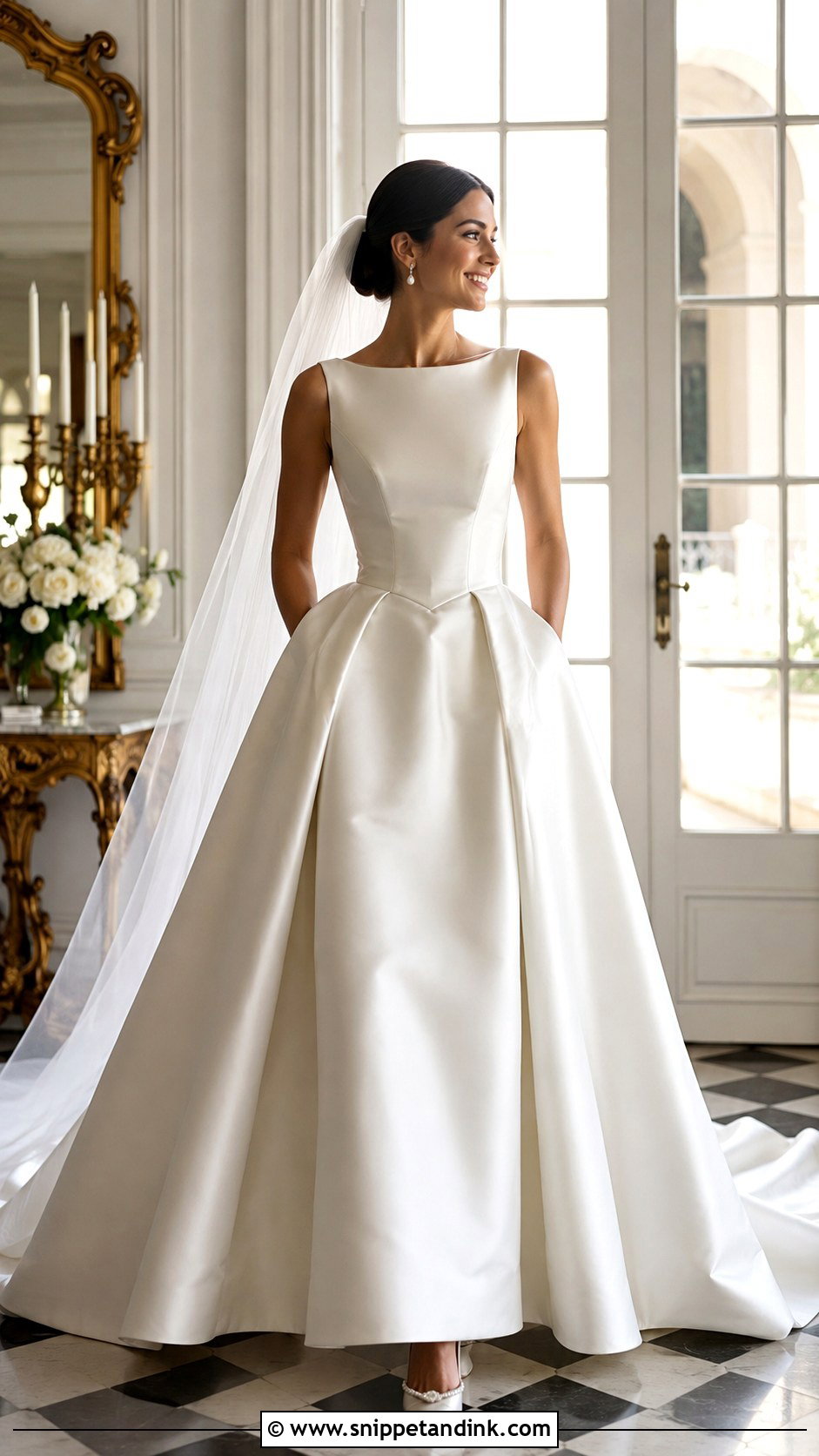
A basque waist dips into a V below the natural waist, lengthening the torso and adding a sculpted line. It suits brides with a shorter torso particularly well. For the old money take, choose satin, mikado or silk faille; sparkle fights the shape. A full skirt is classic, a softer A-line more relaxed. I always check how the point behaves when the bride sits, since a rigid tip can press into the stomach. A plain veil, refined heels and pearl earrings keep the waist detail in charge.
13. Drop Waist Wedding Dress
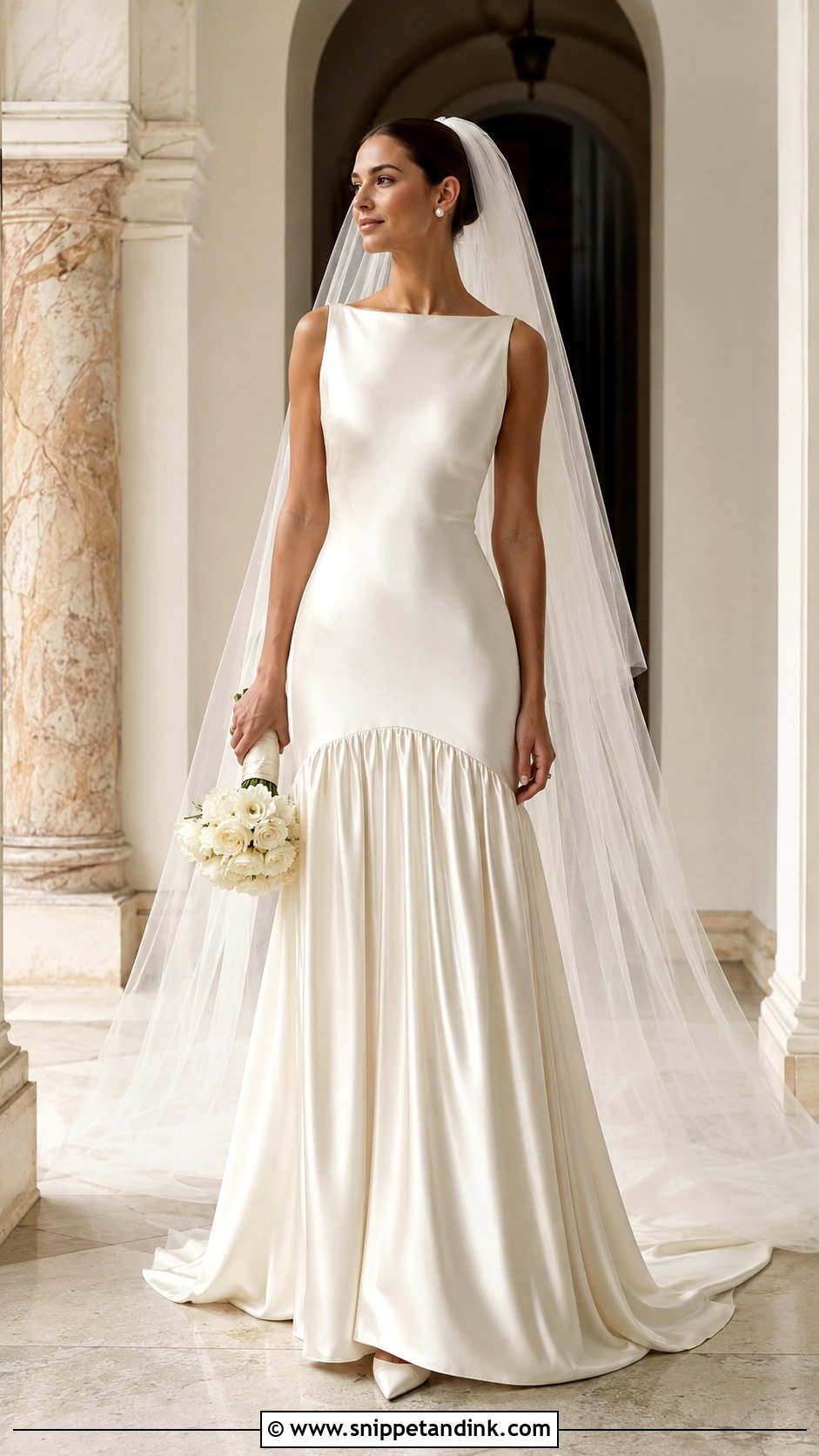
Drop waists are for the bride who’s tired of every gown looking like an A-line. The longer bodice draws a smooth line through the torso before the skirt begins, which is very refined in satin or crepe. Placement is personal, so expect your seamstress to adjust where the seam sits for your height. Keep embellishment minimal, the neckline soft and the skirt volume controlled. Simple pumps, pearl earrings and a low bun suit it, and a plain cathedral veil brings ceremony drama.
14. Tea Length Wedding Dress
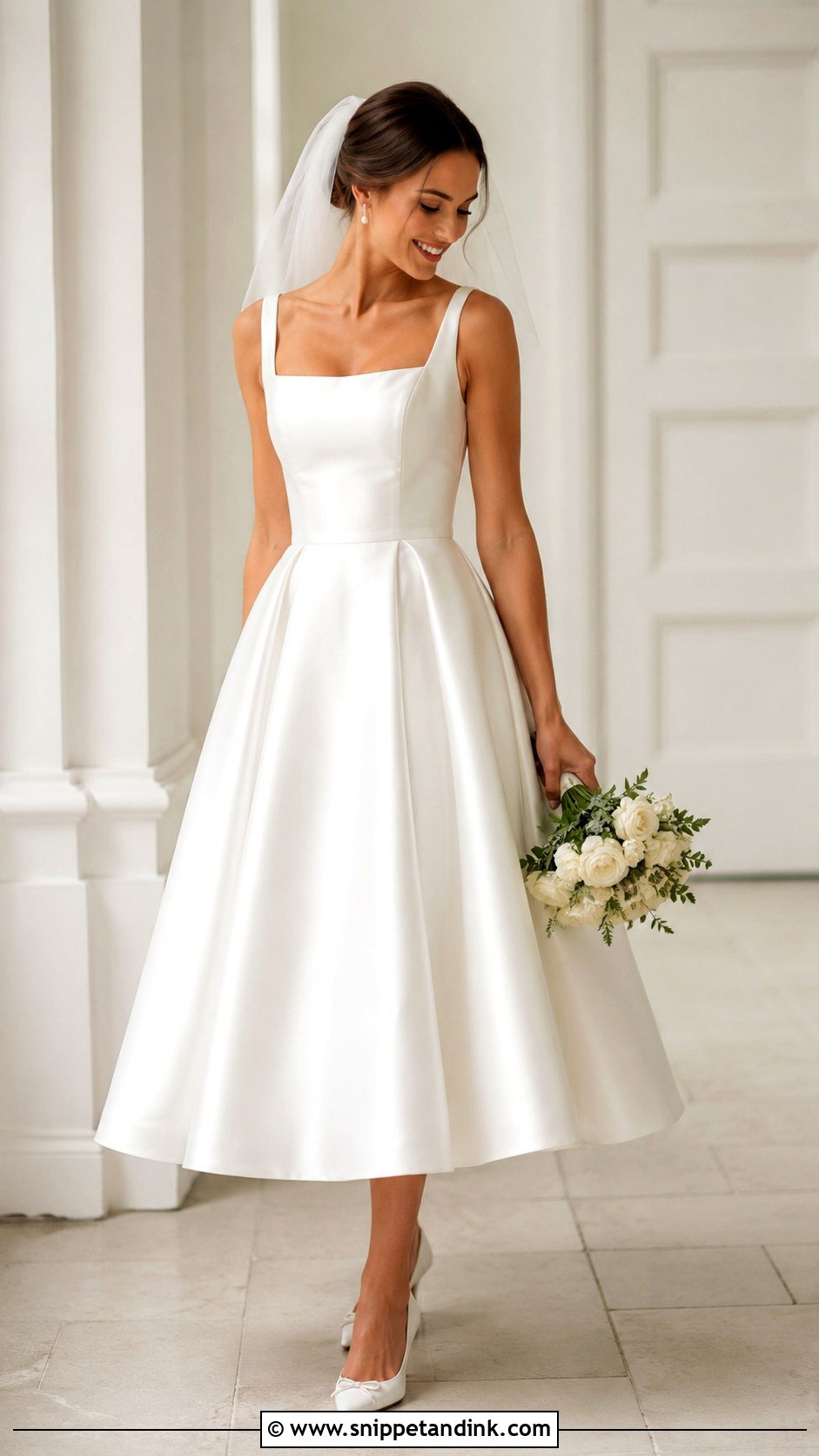
Tea length is the most practical dress on this list, and it still feels formal. The hem falls between knee and ankle, so your shoes become a big part of the look; buy them before the hem is set. Satin, lace or structured taffeta give the polish. A fitted bodice and full skirt is classic, while a sleek tea-length sheath feels more modern. Pointed kitten heels, pearl earrings and a short veil or hair bow finish it for a courthouse ceremony or garden reception.

15. Lace Sleeve Satin Wedding Dress
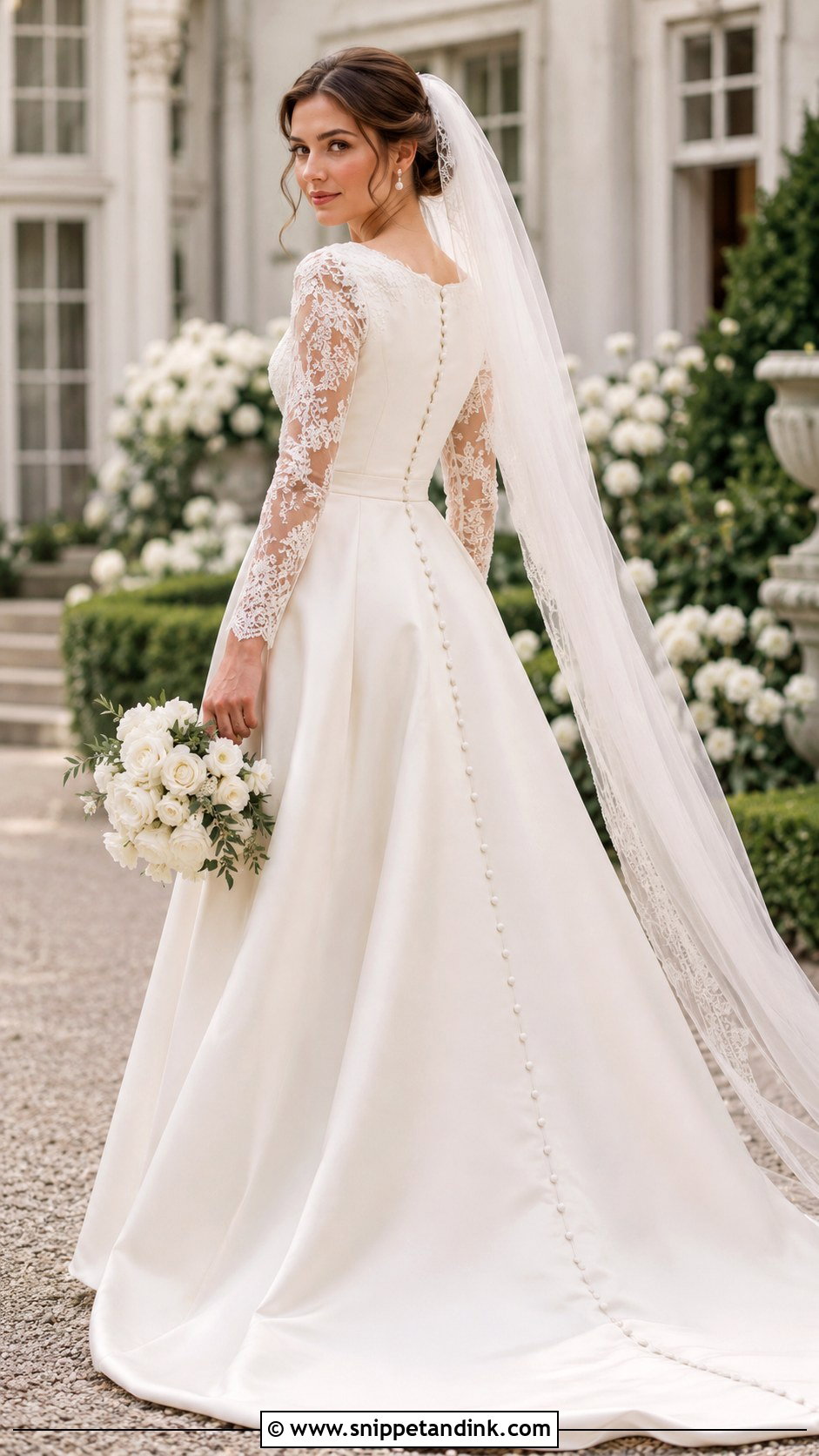
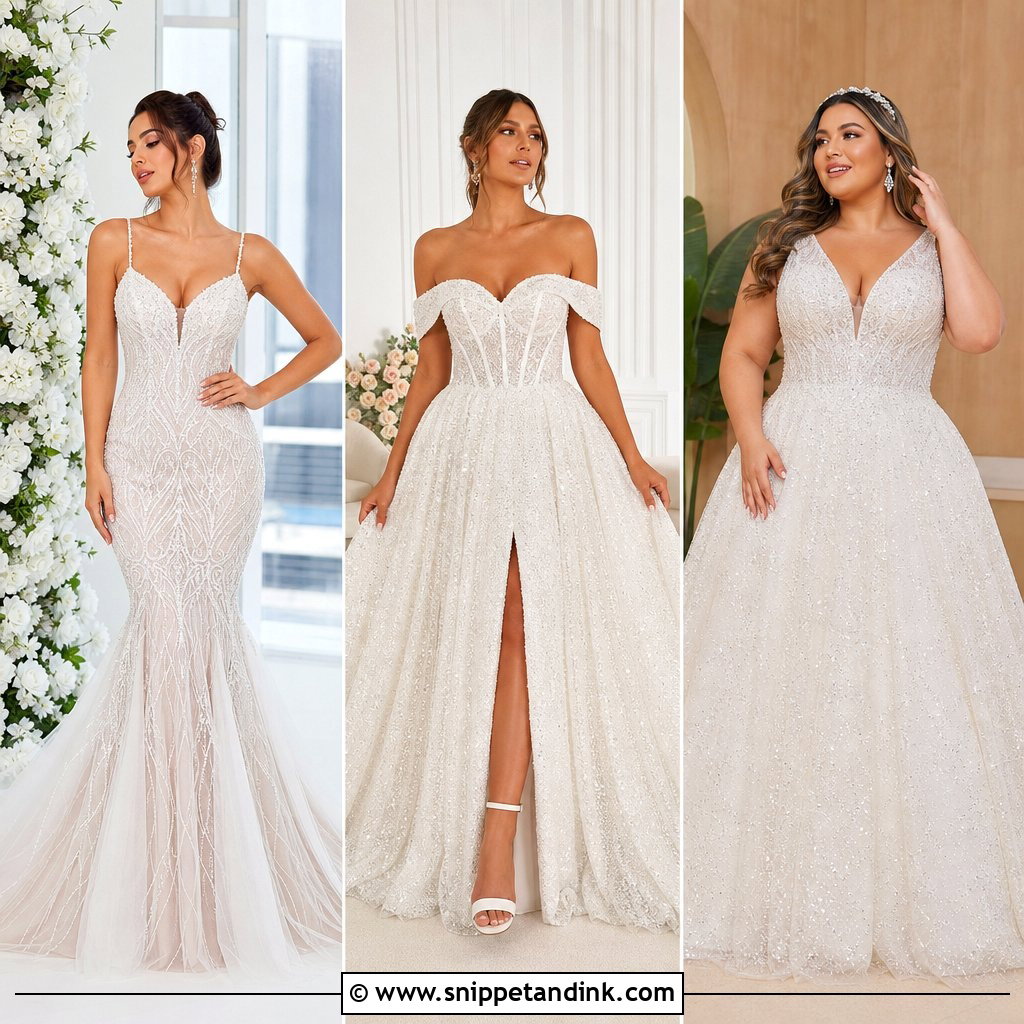
Lace sleeves on a satin body give you smooth luxury through the torso and romance at the arms. The detail that separates a great version from an average one is how the lace is joined to the satin; look for a clean, nearly invisible seam at the shoulder rather than a stiff ridge. A fitted bodice, A-line skirt and covered buttons keep it timeless. Keep the neckline plain so the sleeves aren’t fighting another feature. Pearl earrings, satin heels and a classic veil are all you need.
16. Minimalist Long Sleeve Wedding Dress
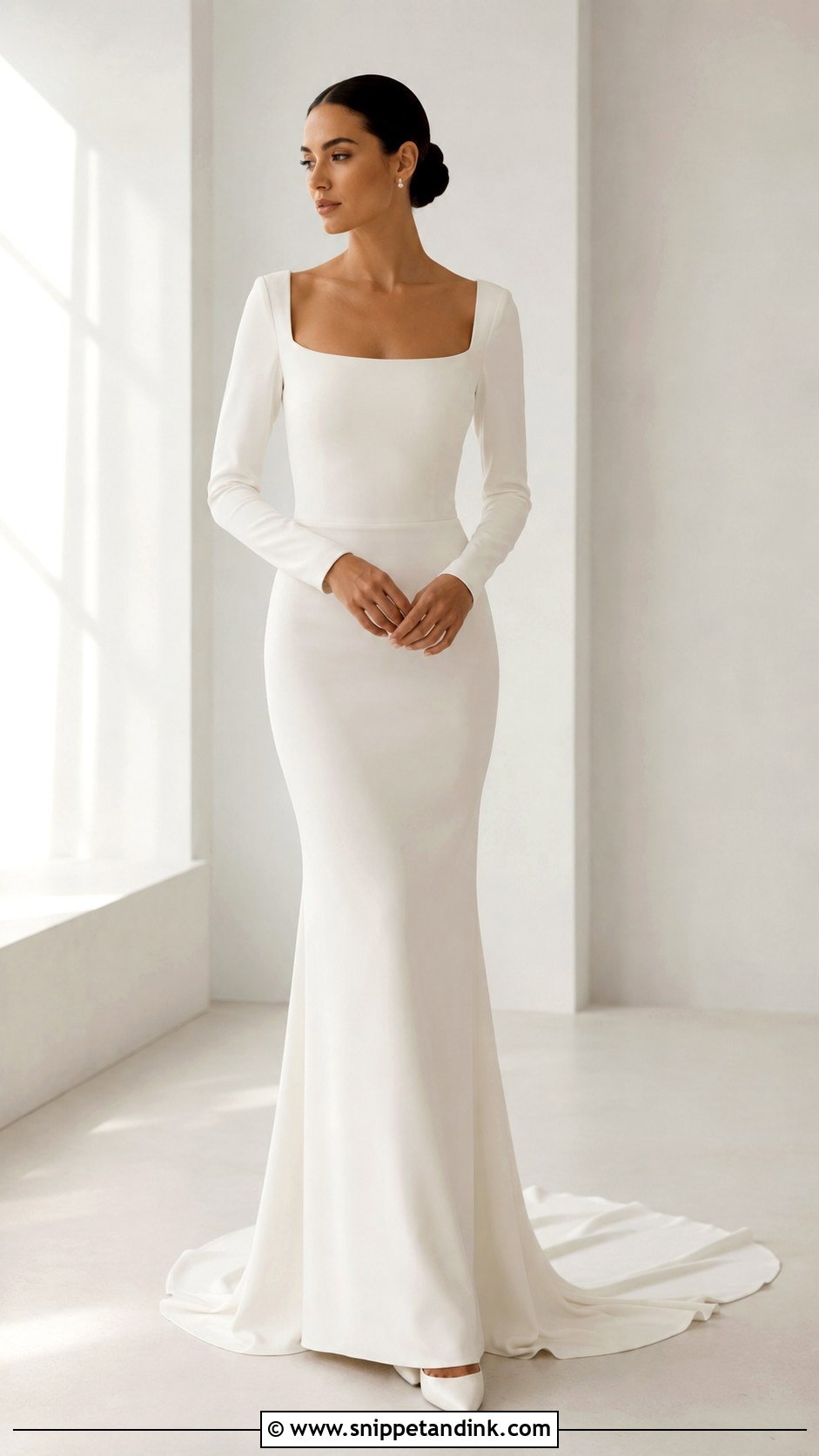
A plain long-sleeve gown has nowhere to hide, so tailoring at the shoulders, waist and hips decides everything. I check that the sleeve head sits exactly on the shoulder bone and that the bride can raise her arms without the bodice lifting. Clean crepe or satin keeps it modern. A high neck, a square neck or a low back adds interest without trend. Pointed heels, small earrings and a smooth bun suit it, and a long veil makes the simplest gown feel properly bridal at the ceremony.
17. Embroidered Tulle Wedding Dress
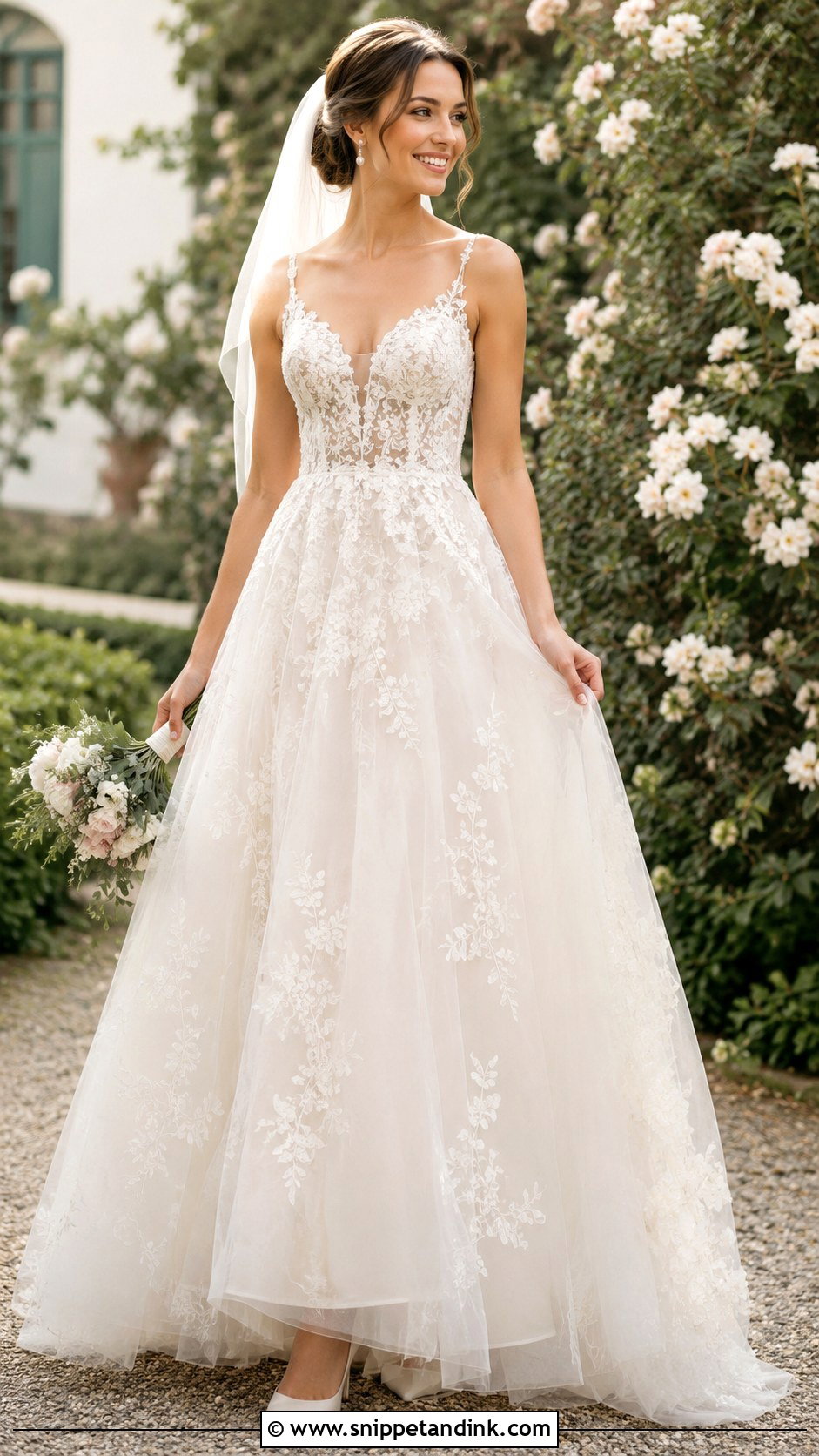
Embroidered tulle can still read as quiet luxury when the embroidery is fine and thoughtfully placed. Tonal floral work, sheer sleeves or a light overlay works; bold sparkle doesn’t. Tulle also snags on rough surfaces like stone walls and bark, so on an estate lawn I keep an eye on where the bride stands for portraits. A fitted bodice with an A-line or soft ball gown skirt gives the shape. Minimal jewellery, ivory heels and a simple veil keep the embroidery as the one detail.
18. Vintage Inspired Wedding Dress
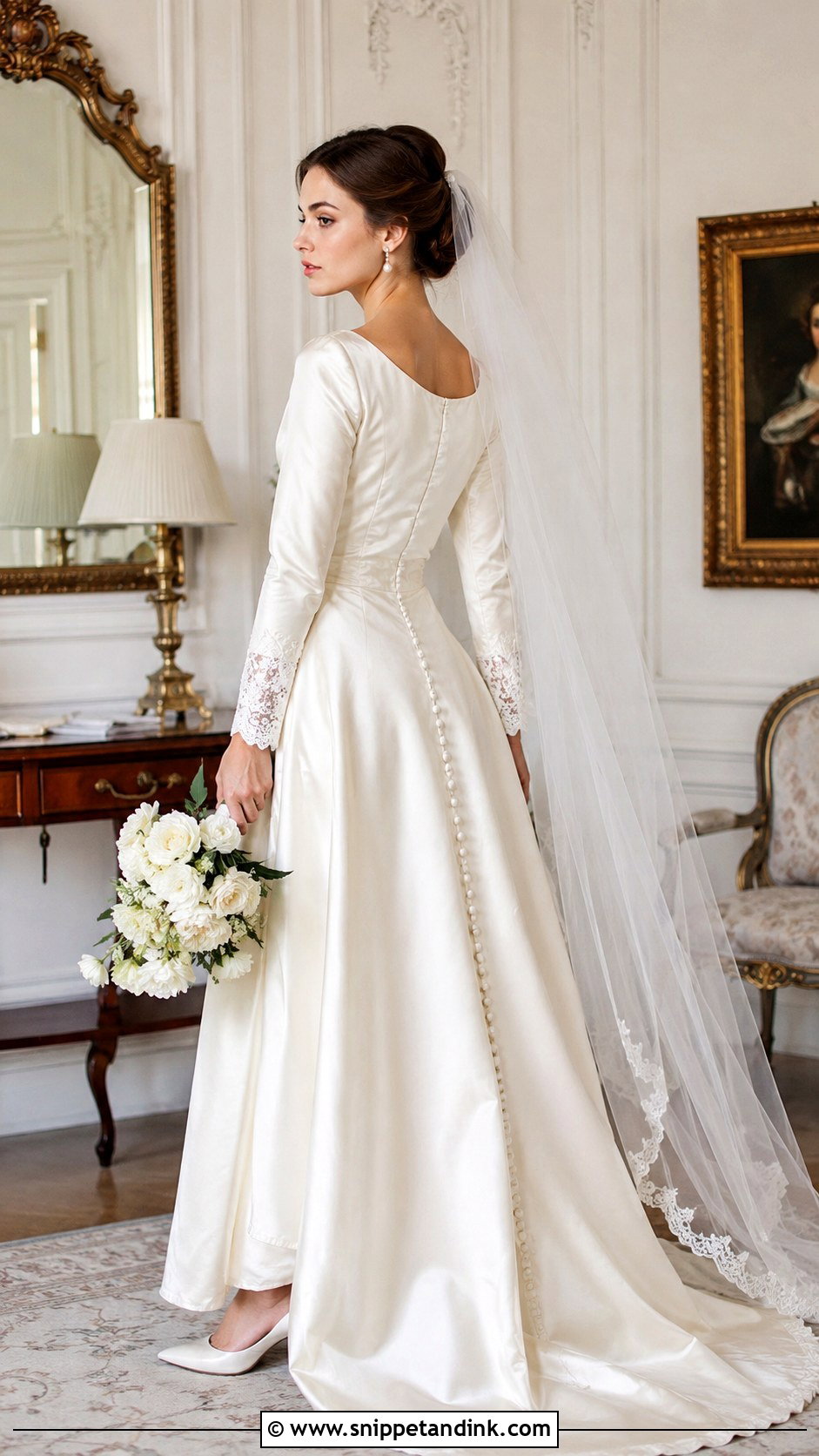
The rule I give for vintage-inspired dresses is one or two period details, no more. Covered buttons, lace trim, soft sleeves or a draped neckline each carry history on their own; stacking all four tips into costume. A satin A-line with lace cuffs works, as does a crepe sheath with pearl buttons or a silk dress with a soft cowl. Pearl earrings, classic heels and a neat veil complete it. This is the style I’d suggest to anyone thinking of the family photos on the wall fifty years from now.
19. Simple Ivory Wedding Dress
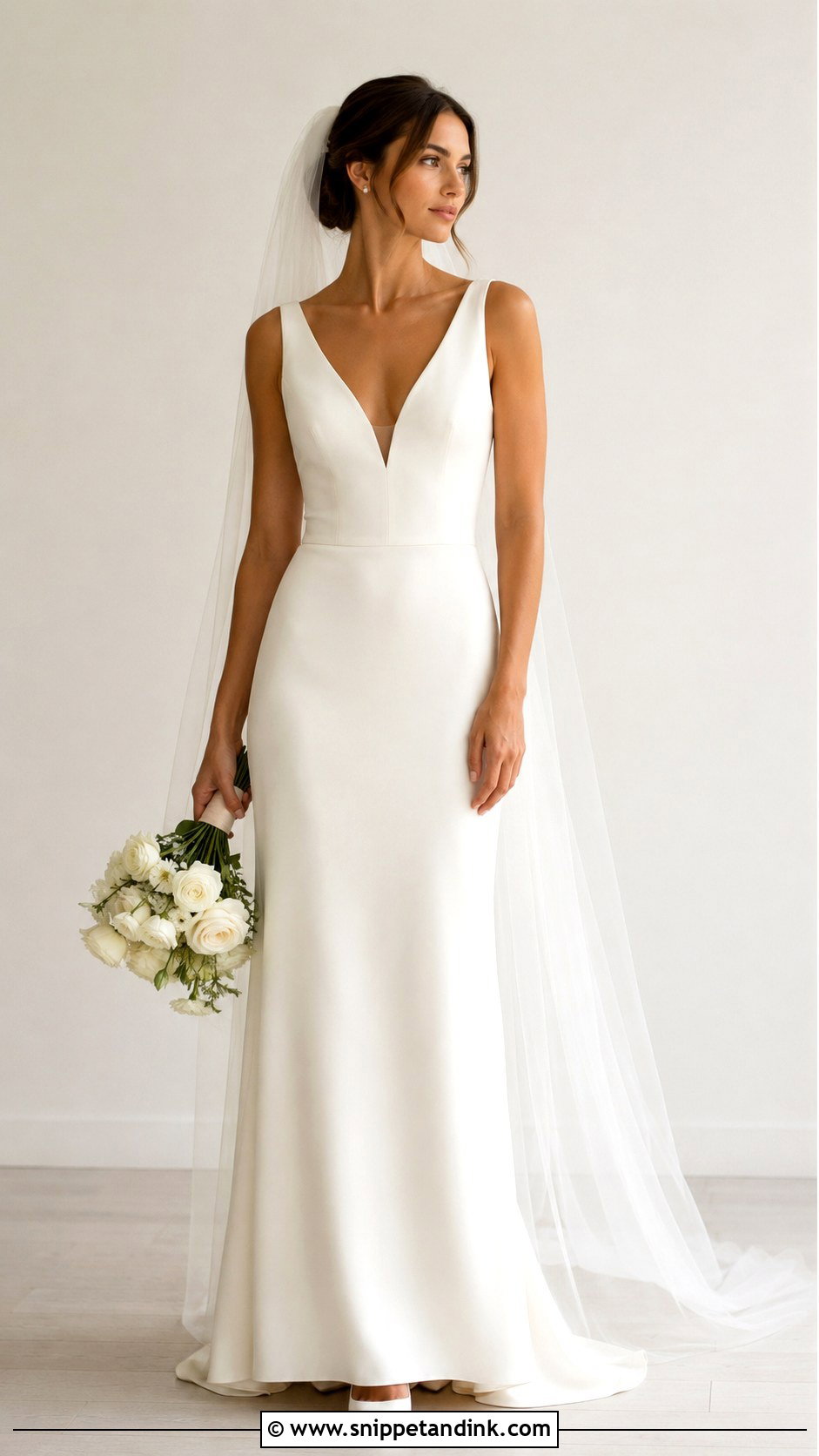
Ivory sits a shade warmer than bright white, and on most skin tones it looks softer and richer. Bring a swatch of bright white to the shop and hold both against your face in daylight; the difference is usually obvious within seconds. Satin, crepe, silk or mikado all work, but the cut has to be clean. Look for a flattering neckline, a defined waist and a skirt that suits your venue. A plain veil, pearl studs and classic pumps keep the colour story cohesive. Proof that a simple dress can feel deeply luxurious.



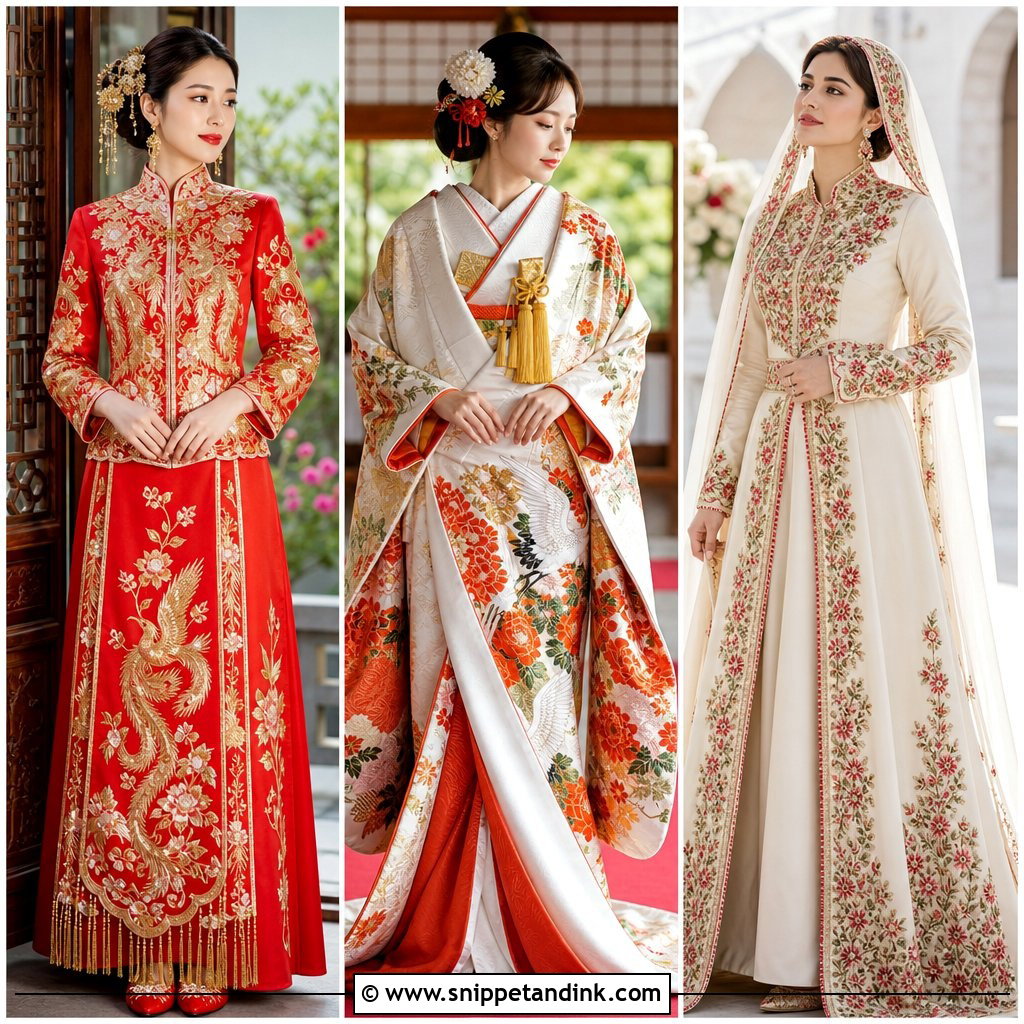

20. Cap Sleeve Wedding Dress
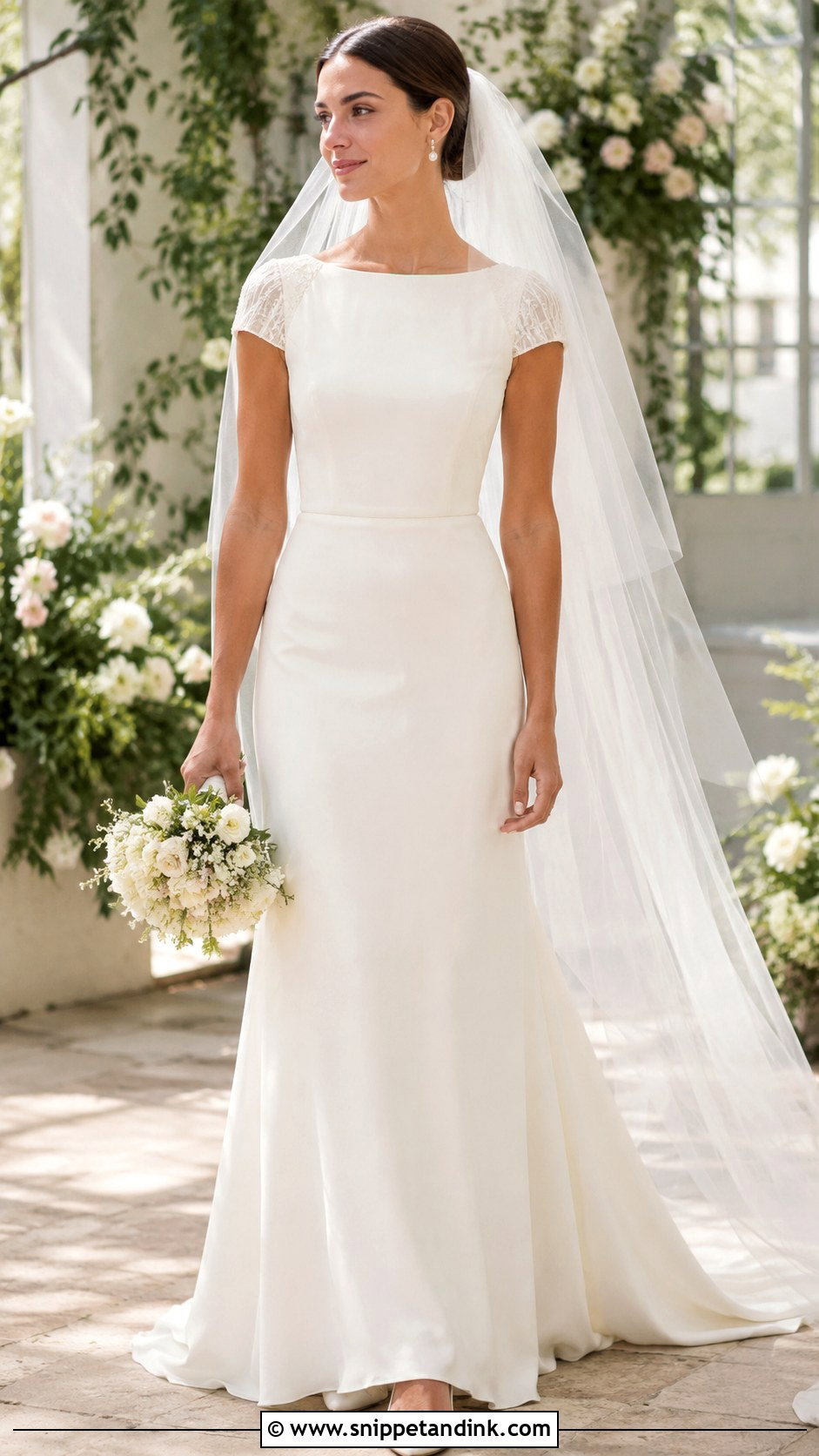
Cap sleeves give a little coverage over the shoulder while keeping the neckline open. They’re a good answer for brides who don’t trust strapless but find long sleeves too warm. Fit matters at the armhole: too tight and the sleeve cuts in, too loose and it gapes when you reach. Lace, satin, crepe or silk all suit the style. A bateau neck with cap sleeves looks especially polished, while lace cap sleeves feel softer. Pearl studs, low heels and a classic veil keep it calm.
21. Draped Silk Wedding Dress
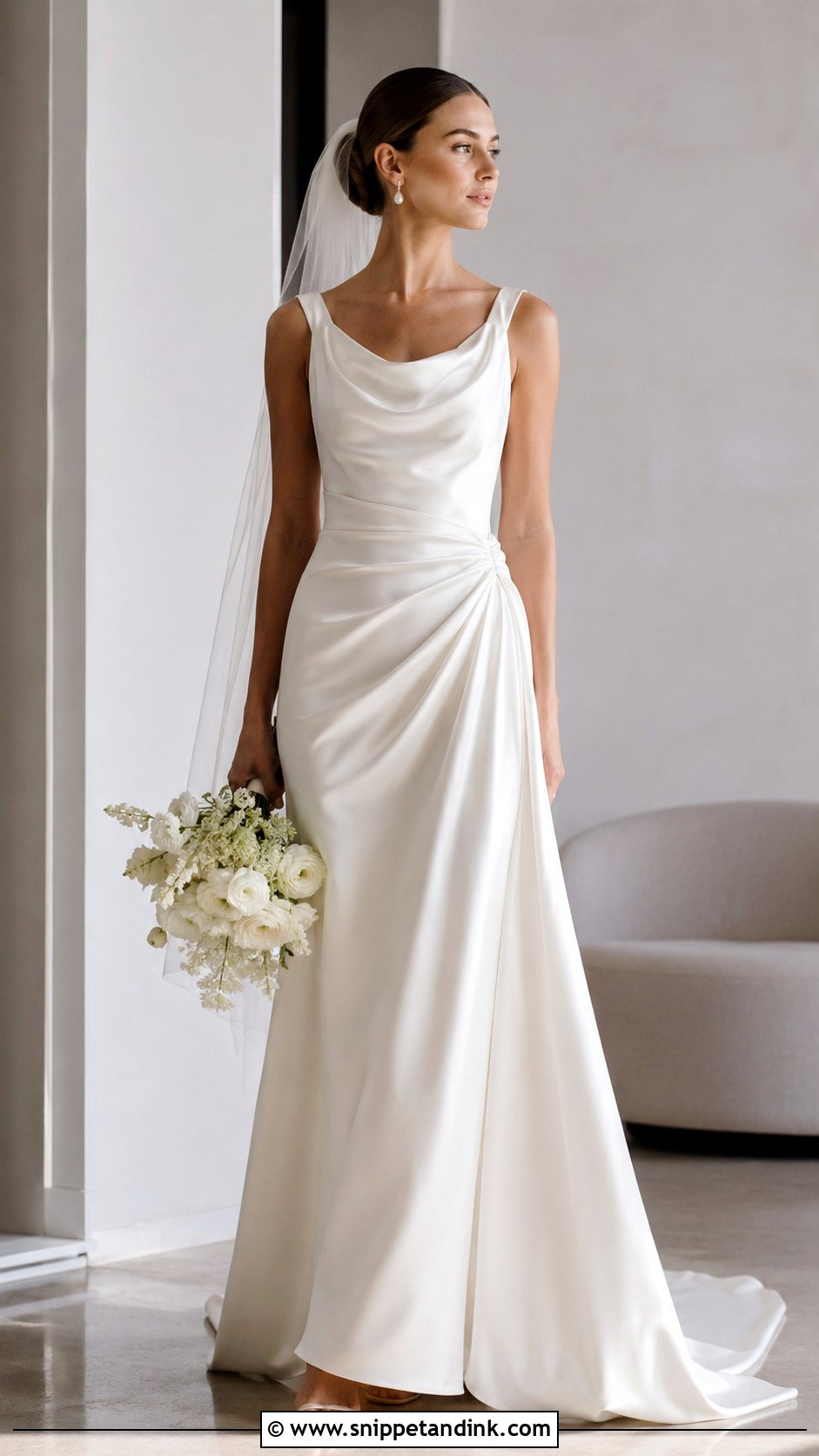
Drape is the hardest thing for a dressmaker to get right and the easiest thing for a guest to notice when it’s wrong. The folds need to fall naturally across the body at the neckline, waist or hip, and they should be stitched in place inside so they don’t shift during the day. A cowl, one-shoulder drape or wrapped bodice all work with a simple skirt. Delicate heels, small pearl earrings and a smooth hairstyle keep the focus on the fabric, with a sheer veil or silk scarf for the ceremony.
22. Bow Back Wedding Dress
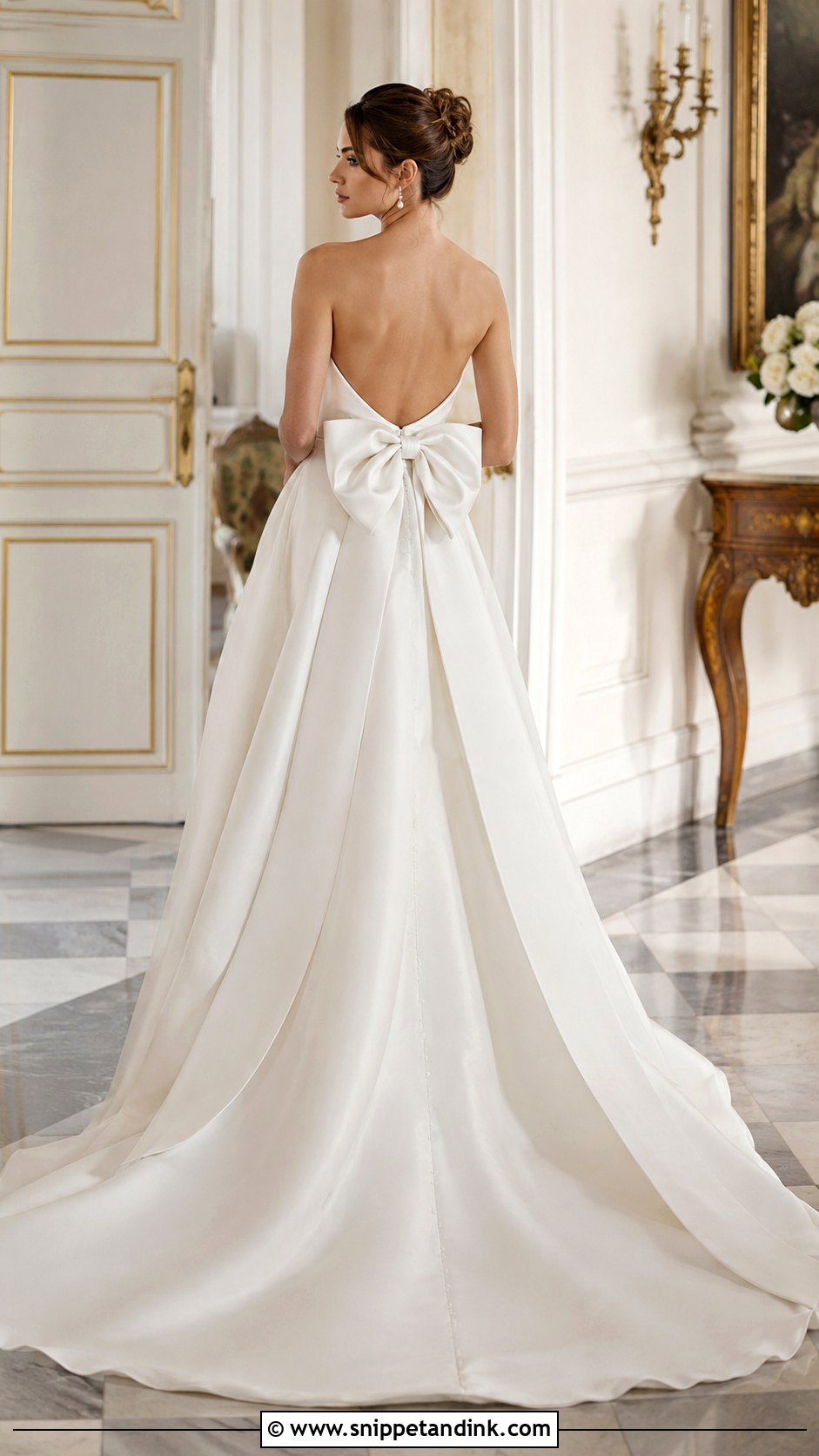
A back bow is the gown’s one big gesture, so it has to be structured. Ask whether it’s interfaced; an unsupported satin bow tends to droop by mid-afternoon, especially if you sit against it at dinner. A satin or mikado gown with a neat bow and a plain front is the classic version. Pick a slim bow for subtlety or a larger one with a clean train for drama. Wear your hair up or softly pinned so the bow stays visible, and keep jewellery minimal.
23. Cathedral Train Wedding Dress
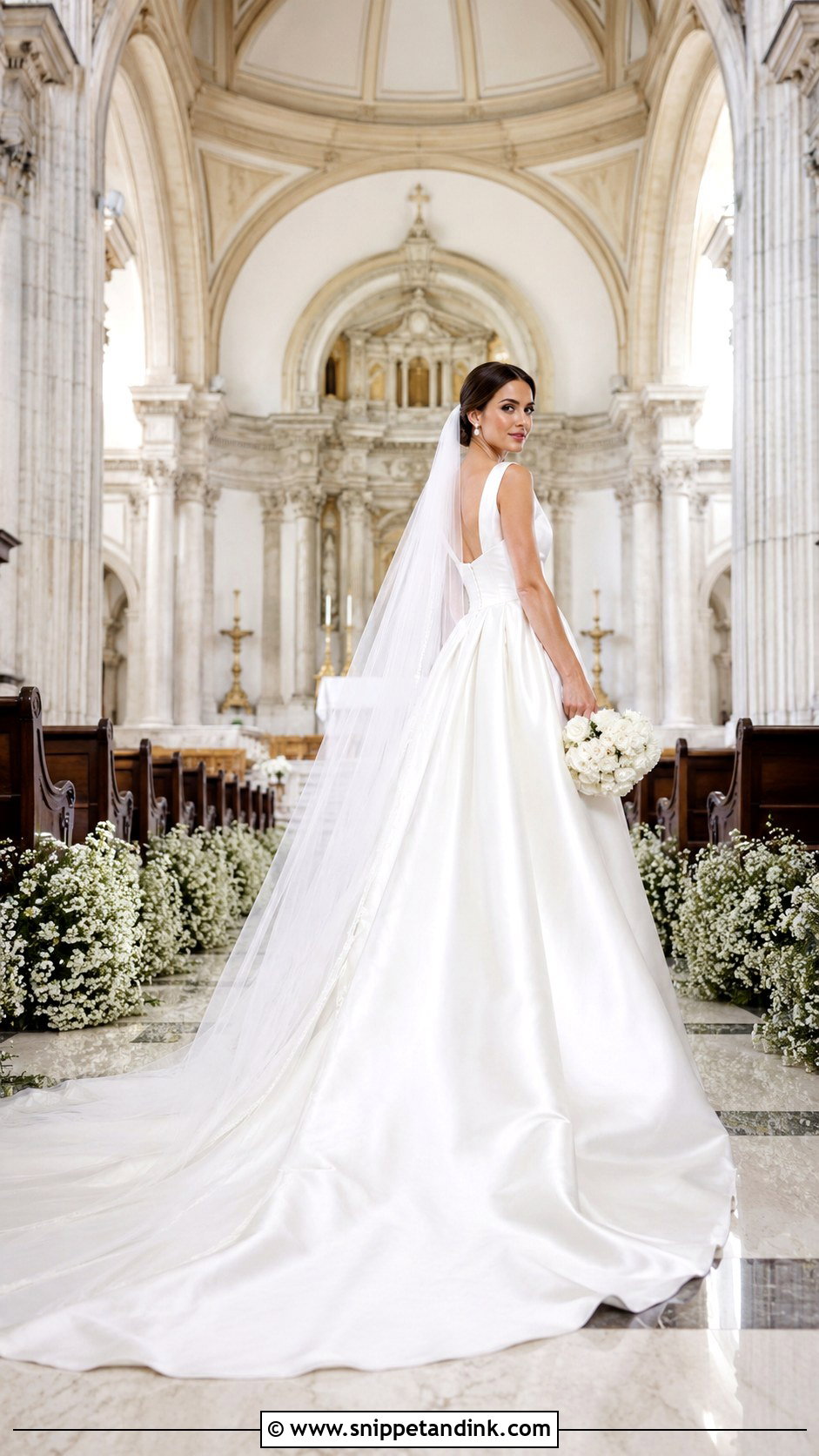
A cathedral train makes the grandest entrance, and it also needs the most planning. Ask early how it bustles, and have whoever will do it practise at the final fitting; a train with a dozen hooks takes a few minutes and a steady hand. Smooth satin, silk, mikado or crepe all draw long clean lines. A fitted bodice with an A-line or column skirt keeps it refined. A plain long veil, pearl earrings and elegant heels finish it, and the train does the rest without a single sparkle.
24. Courthouse Wedding Dress
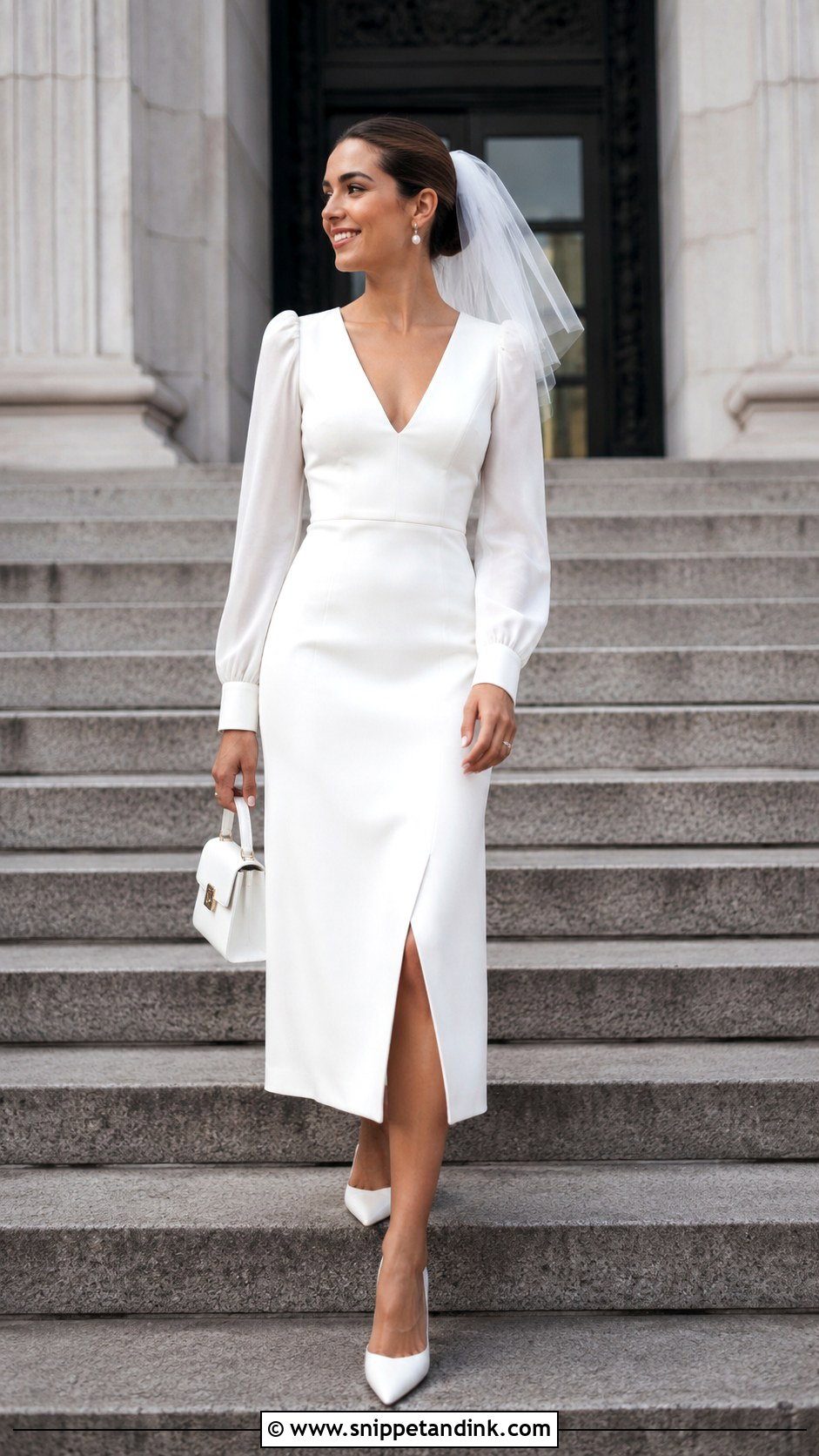
Courthouse dresses get the same old money treatment through cut, fabric and a few polished accessories. A tailored midi, silk slip, crepe sheath or structured mini all work in ivory, cream or soft champagne. Pointed pumps, pearl earrings, a small structured bag and a short veil or hair accessory complete it. For a city ceremony in cooler months, a tailored blazer over a simple dress looks sharp and keeps you warm on the steps. Keep the outfit one notch below overdone, and it reads as intentional rather than casual.


25. Reception Wedding Dress
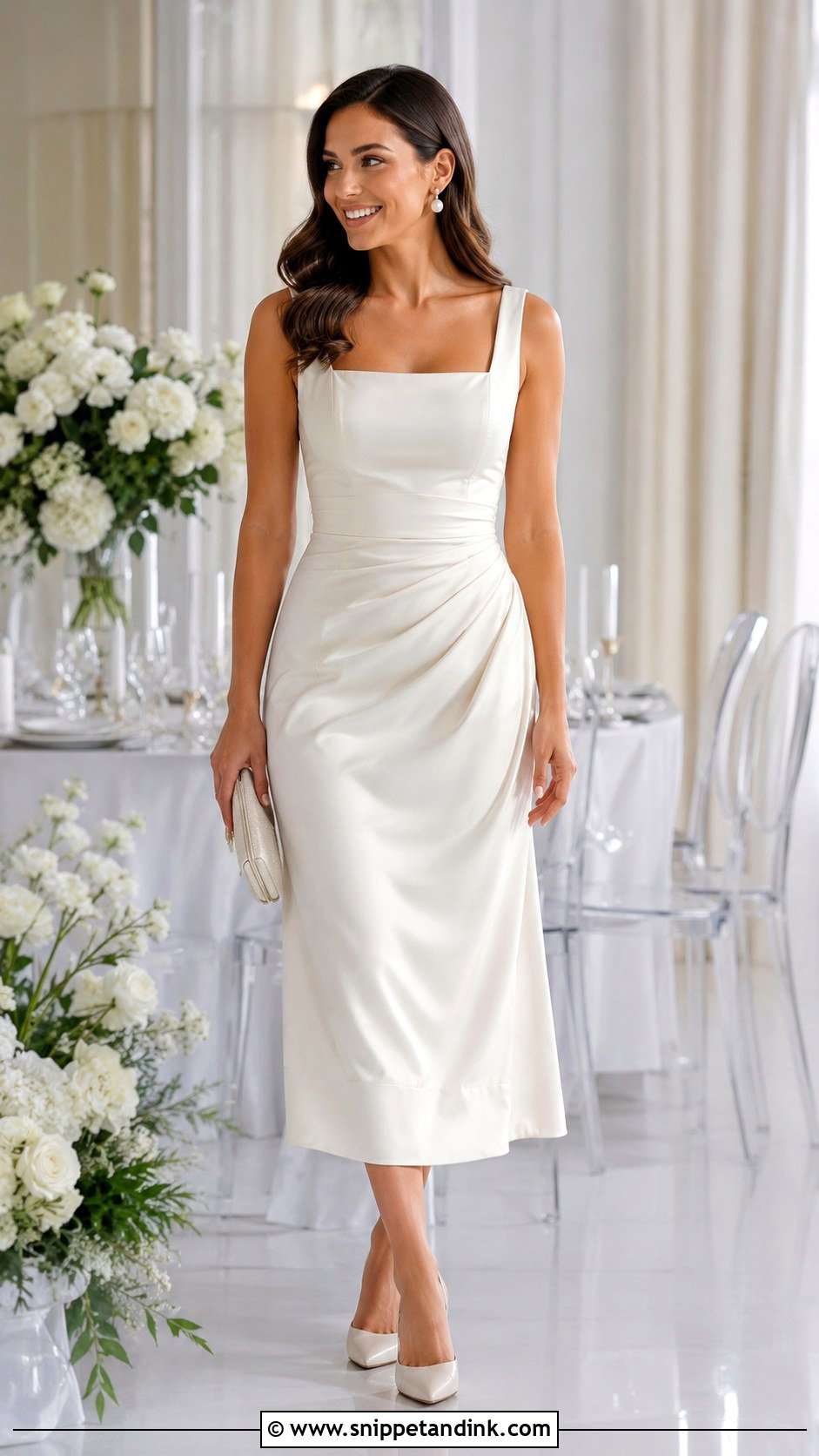
A reception dress is about movement. Choose a silk midi, satin mini, crepe column or tea-length dress that you can dance and sit in without adjusting. Pearl buttons, a square neckline, subtle lace trim or a soft bow keep it bridal. Practical point: plan when and where you’ll change, and who will help, since even a quick change takes fifteen minutes or more once hair and jewellery are involved. Comfortable ivory heels, pearl earrings and a hairstyle that can last into the evening finish it.
A Fitting Calendar for a Gown With Nowhere to Hide
Clean gowns show every flaw in tailoring, so the alteration schedule matters more here than with a heavily embellished dress. Production times vary by designer, but many made-to-order gowns take several months to arrive, so I suggest ordering around eight to ten months out if you can.
- First fitting: roughly two to three months before the wedding, with your real shoes and underwear.
- Second fitting: about a month later, once the main changes are pinned and sewn.
- Final fitting: two to three weeks before, when the person who will help you dress learns the bustle and fastenings.
- Pickup: as close to the date as your seamstress allows, then straight onto a padded hanger.
Small Things That Cheapen a Simple Gown
When a dress has no beading, tiny problems get noticed. A visible bra strap or line under bias silk is the most common. A zip that ripples because the bodice is slightly too tight is the next, and it usually means letting it out a touch rather than more shapewear.
I also watch for veils in a different white from the dress, a bustle that sags because nobody practised it, and shoes that show scuffs at a tea-length hem. Each one is easy to fix weeks ahead and hard to fix on the morning, so I make a little checklist at the final fitting and go through it with the bride and whoever is dressing her.
Where Quiet Luxury Really Comes From
Quiet luxury has little to do with the price tag. It’s good fabric, a shape that suits you and one or two details you genuinely love. Satin ball gowns, silk slips, lace sleeves, structured mikado and polished courthouse dresses can all get you there; the right one is the dress you stop thinking about once you’re in it. Keep styling simple and put your budget into fit. Pearls, satin heels, a clean veil and soft hairstyles always support the look, and they’ll date far more slowly than anything trend-led.
You'll Like These Ideas:







Leave a Reply