
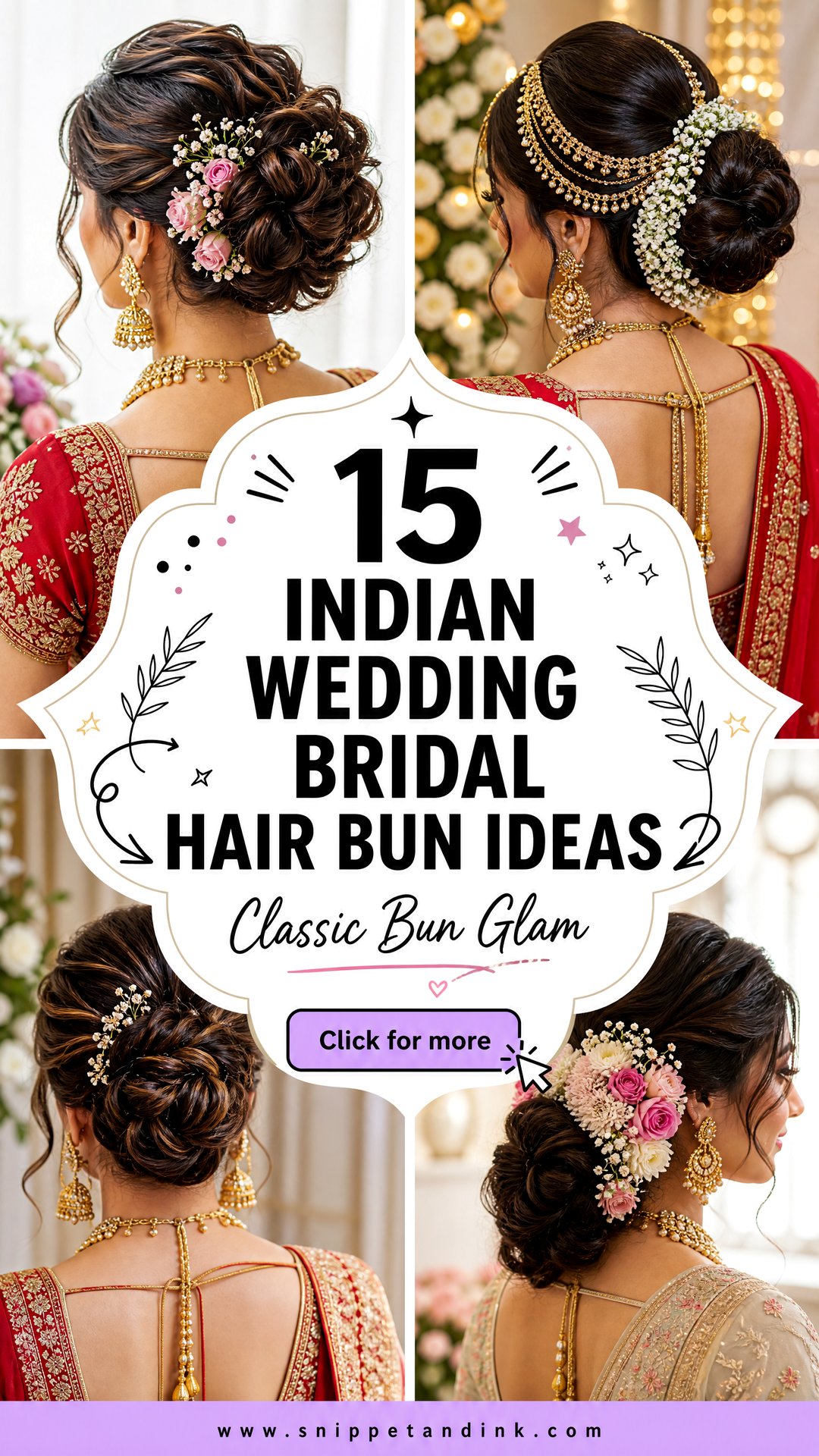
If I had to pick one hairstyle that survives an Indian wedding day best, it would be a bun. It gives the dupatta a solid base, keeps heavy earrings clear and takes hours of sitting, bowing and dancing without much complaint. Pinning hair up is the easy bit. The real work is choosing where it sits, what’s inside it and what goes on it, based on your outfit, jewelry, ceremony and region. Below are fifteen buns, from a gajra bun for the pheras to a loose curly one for the reception, with notes on how each is built.
Nikah, Anand Karaj or Pheras: How Much of the Bun Will Anyone See?
The ceremony tells me a lot before I look at a single inspiration photo. If your head will be covered for most of it, as it often is at a nikah or in the gurdwara for an Anand Karaj, the bun is mainly a pinning base. I keep it low and fairly flat so the dupatta drapes smoothly, and save decorative work for the front and the reception.
Where the dupatta sits further back, as at many Hindu pheras or a South Indian muhurtam, the back of the bun is on show for hours and earns its flowers and ornaments. If you have several functions in one day, I often build a single base bun and change only its dressing: gajra for the ceremony, then pearls or a juda pin later.
Tell your stylist which ceremony it is and how your family drapes the dupatta. Customs vary between families as much as between regions, and the pinning plan depends on it.
1. Classic Gajra Bridal Bun
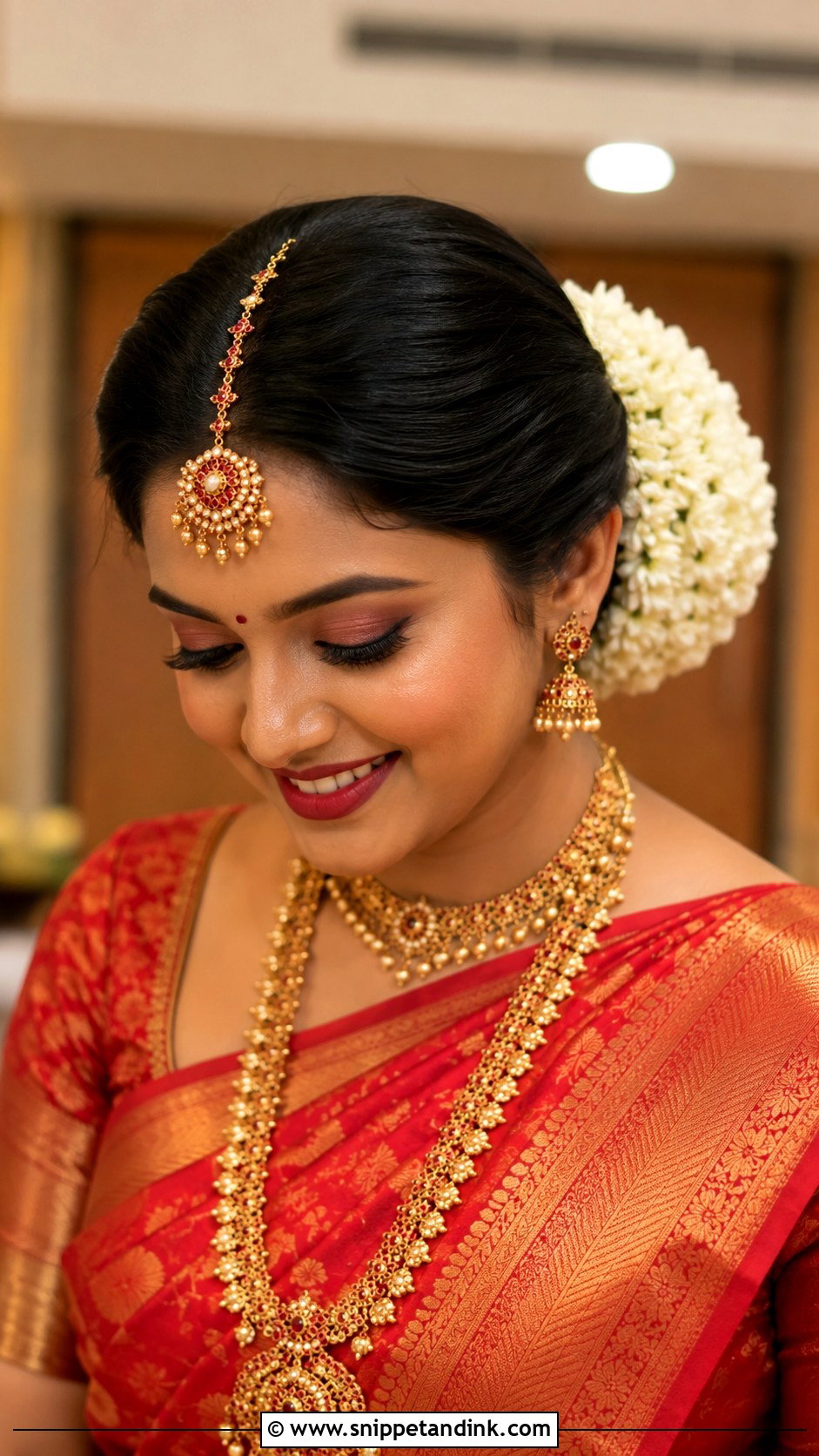
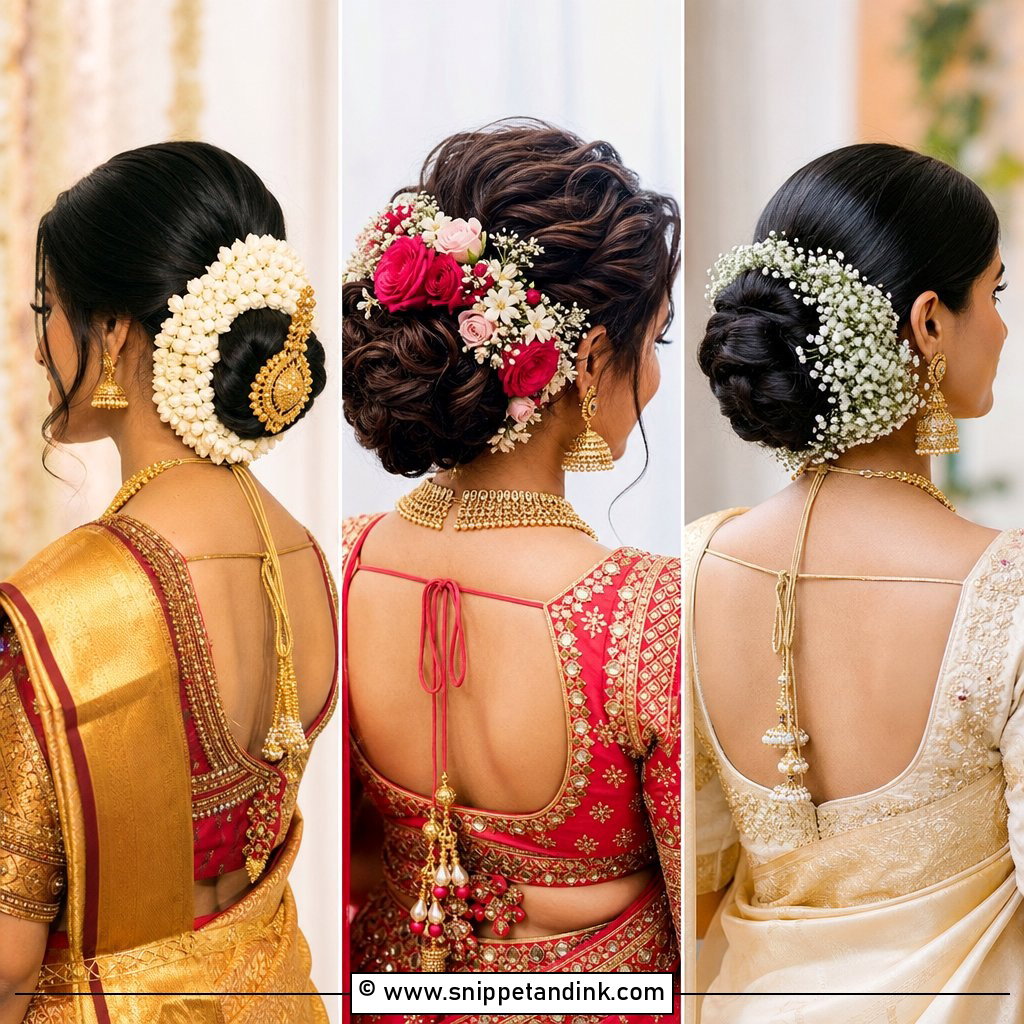
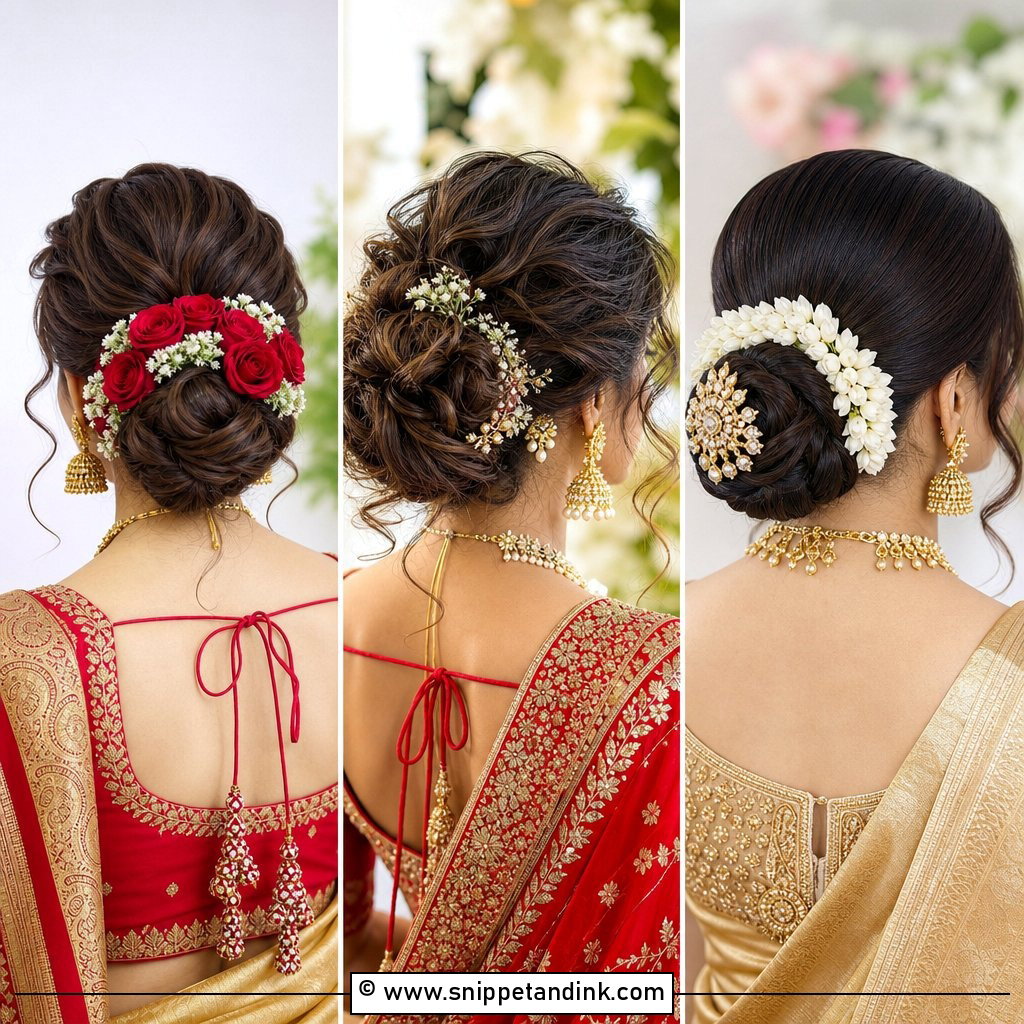
There’s a reason the classic gajra bridal bun never goes away. A center part, smoothed sides and a round low bun, wrapped in jasmine that shows up white against dark hair. It sits naturally with silk and Kanjeevaram sarees, red lehengas and gold jewelry, and a dupatta rests on it without bulk. I wrap the gajra from the bottom of the bun upward, so each round overlaps the pins of the one below and nothing shows. If you have very fine hair, it will need a donut inside to hold that round shape.
2. Sleek Low Bridal Bun
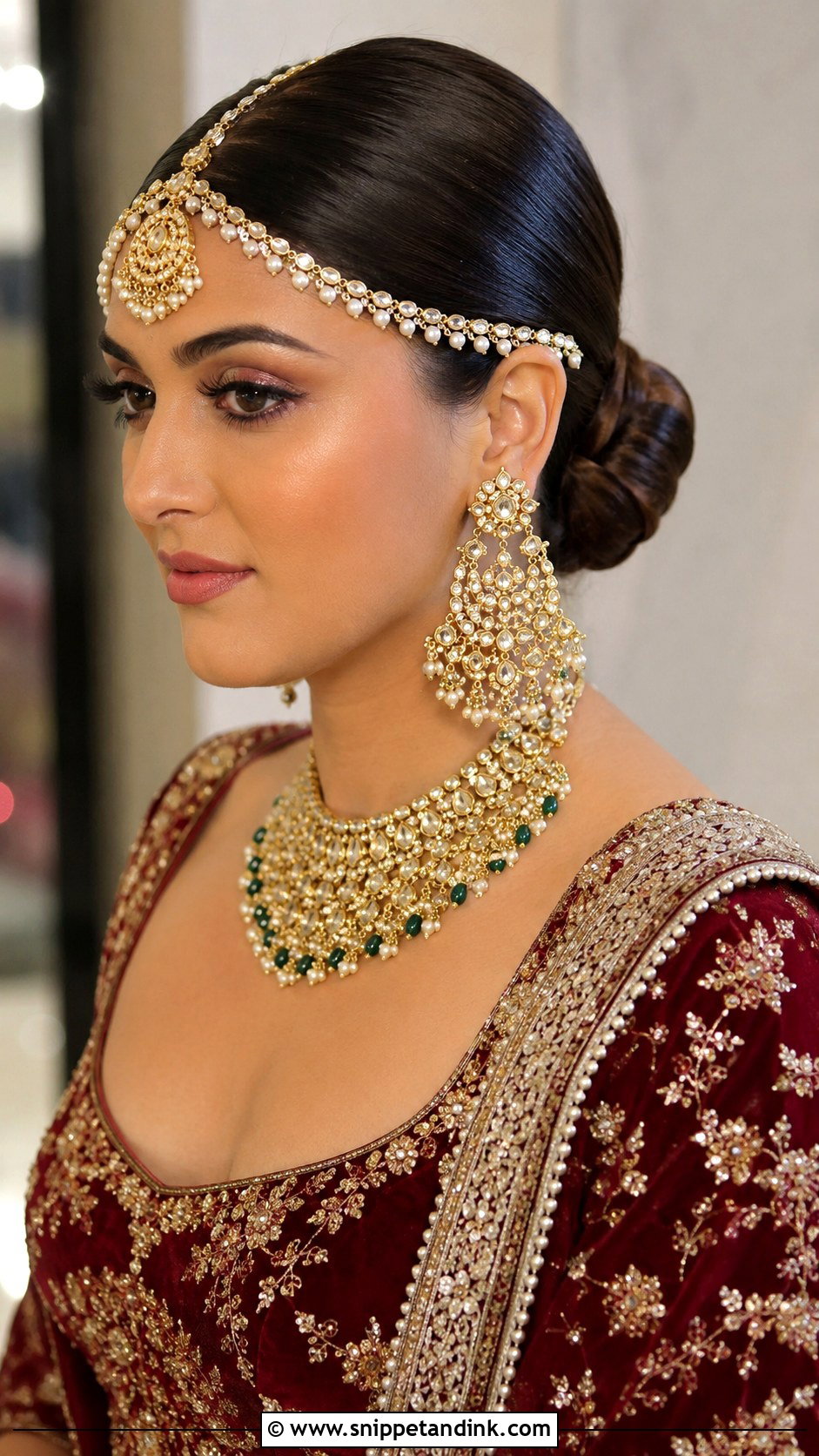
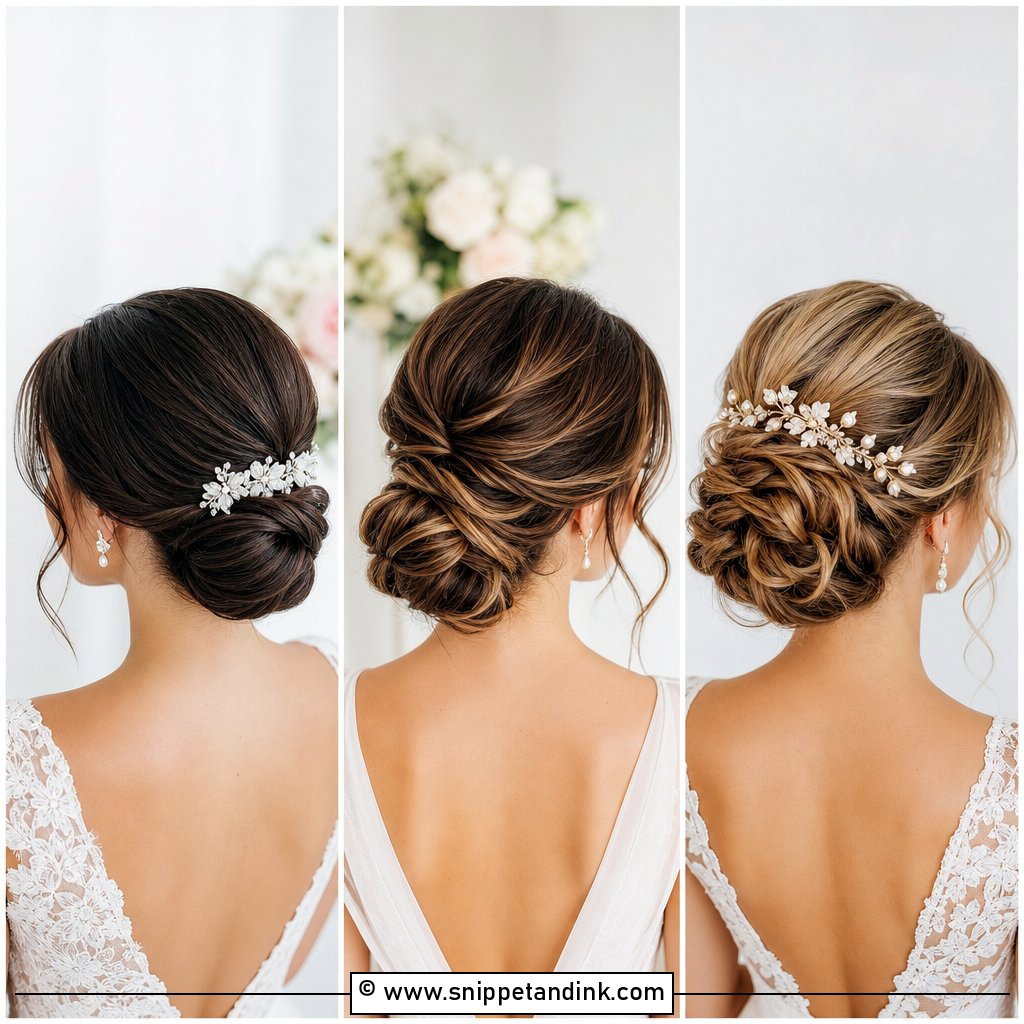
A sleek low bun lets the outfit and jewelry do the talking. Sharp middle part, smooth sides, compact bun at the nape. It takes a matha patti, maang tikka, heavy earrings and a veil without any competition. In humidity it’s my safest option, because there are no loose curls to drop. The skill is in the sides: I brush them flat with smoothing cream and set them with spray while the hair is still slightly warm from the dryer, which keeps them glossy rather than crunchy.
3. Braided Bridal Bun
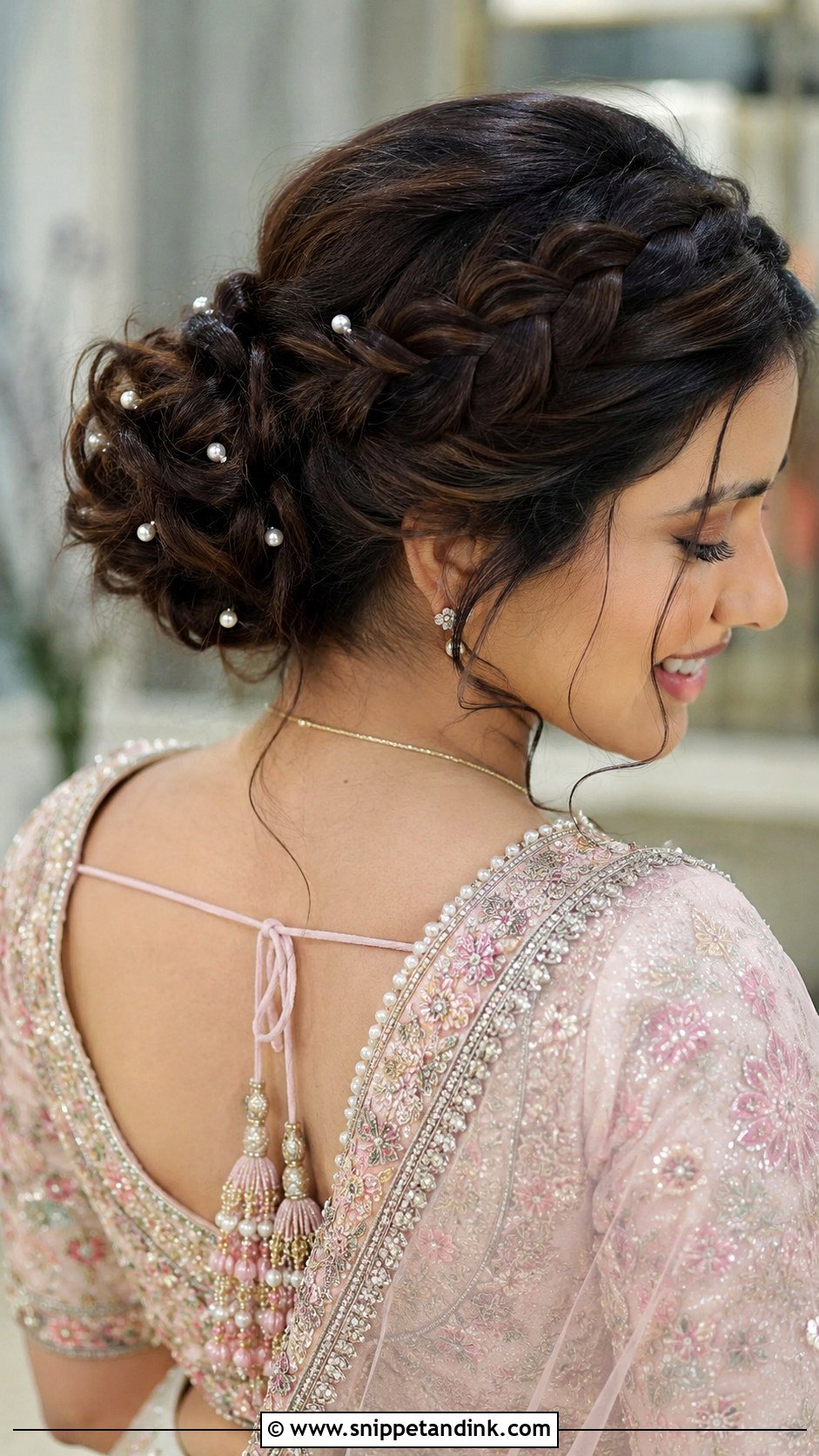
Braiding before you pin adds texture without losing the shape of an updo. The braid can start at the crown, the sides or the back and then coil into a round bun. For thick hair it’s especially useful, as braiding compresses the bulk so the bun ends up a sensible size instead of enormous. Small flowers, pearl pins or gold pieces tuck into the gaps of the braid. It’s traditional enough for rituals, with more to look at from behind than a plain bun.
4. South Indian Bridal Bun With Flowers
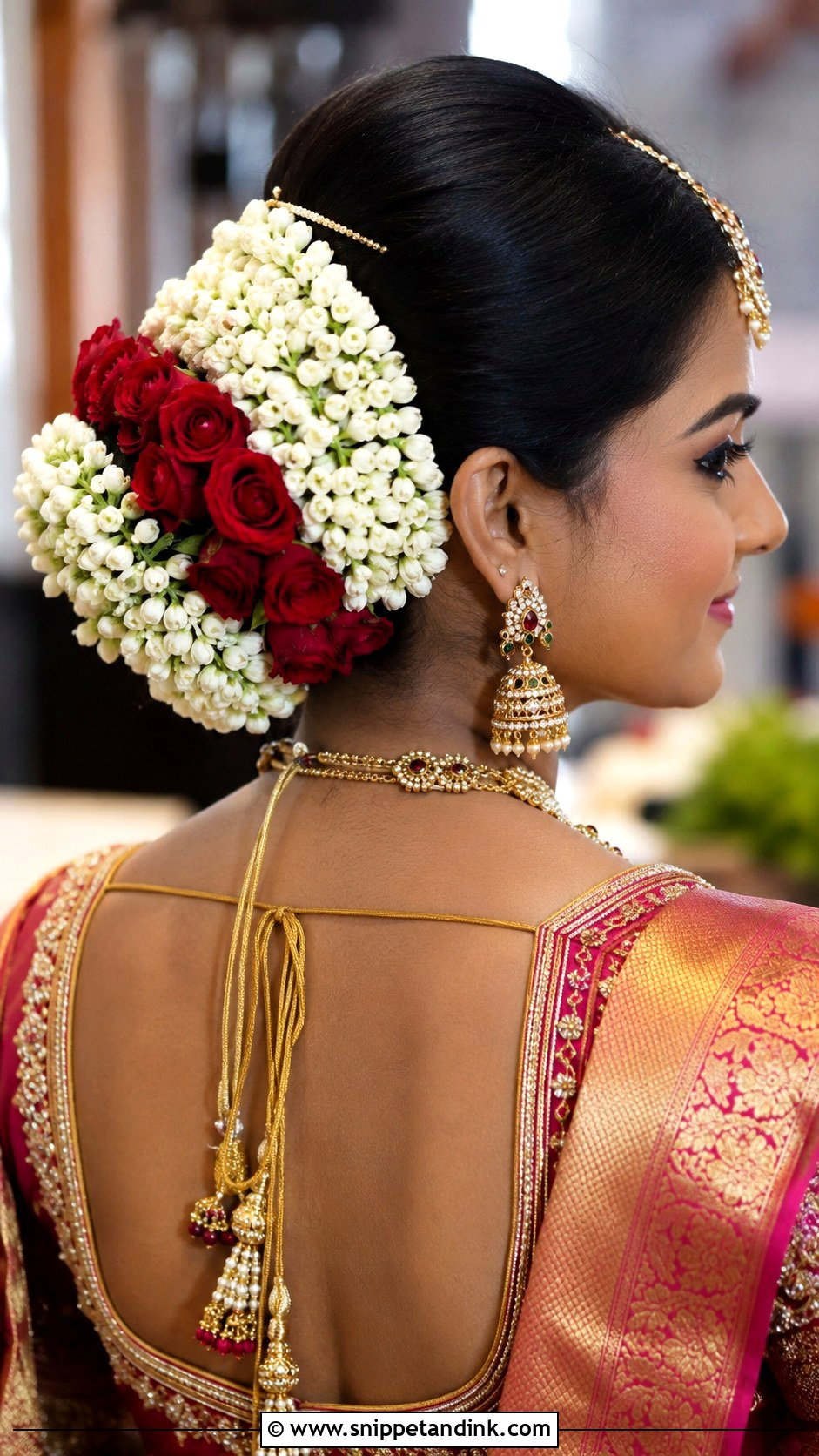
A South Indian bridal bun with flowers is full, neat and sits low or at mid-back, dressed with jasmine, roses or traditional floral rings. It belongs with temple jewelry, Kanjeevaram sarees, long necklaces and a bold maang tikka, and it’s a common choice for muhurtam. If your saree has a heavy gold border, white jasmine with a few red roses balances it. Keep the floral layers lighter on top of the bun and heavier at the base; flowers stacked high make the bun tip backward as the morning goes on.
5. Messy Bridal Bun
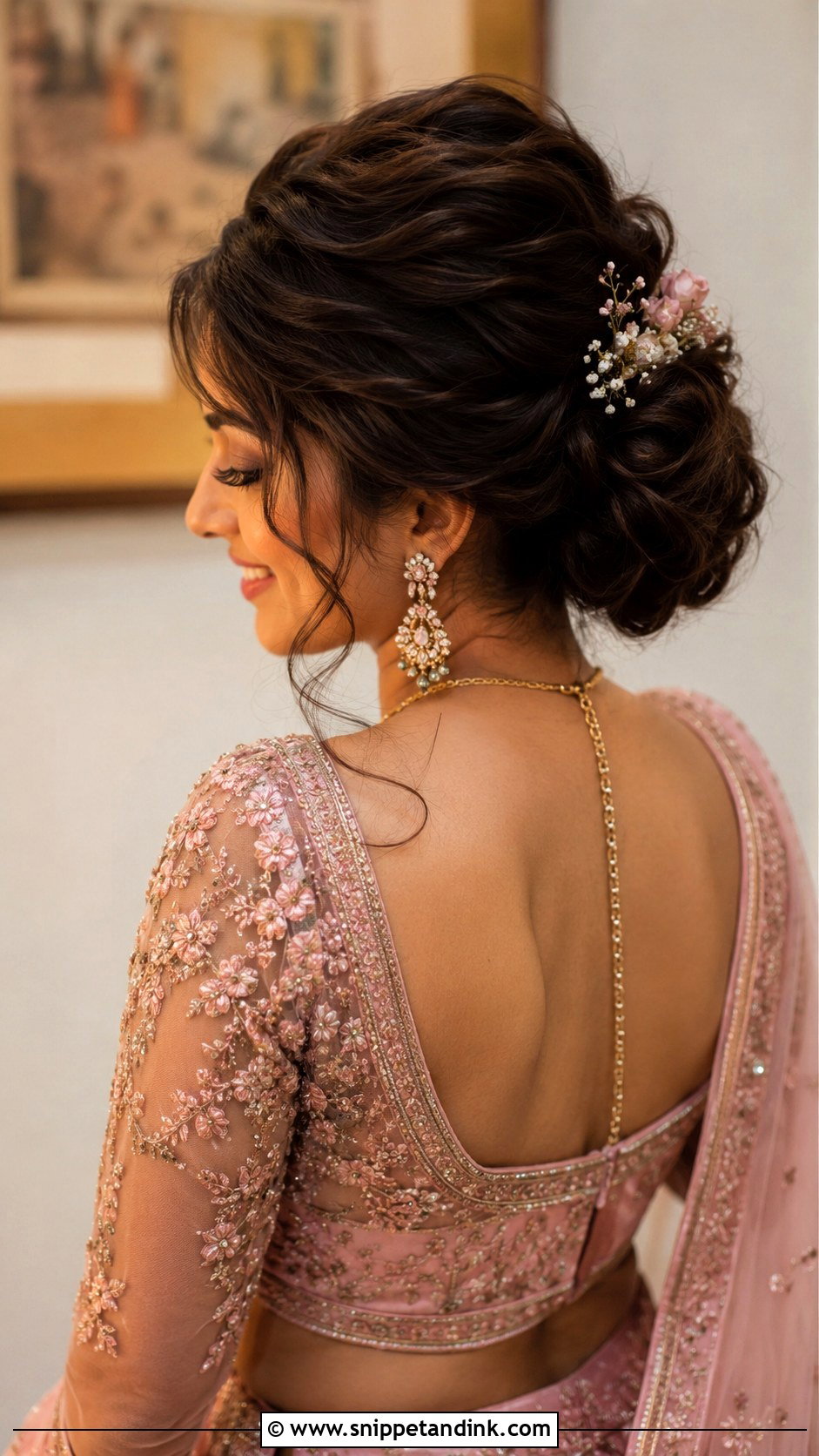
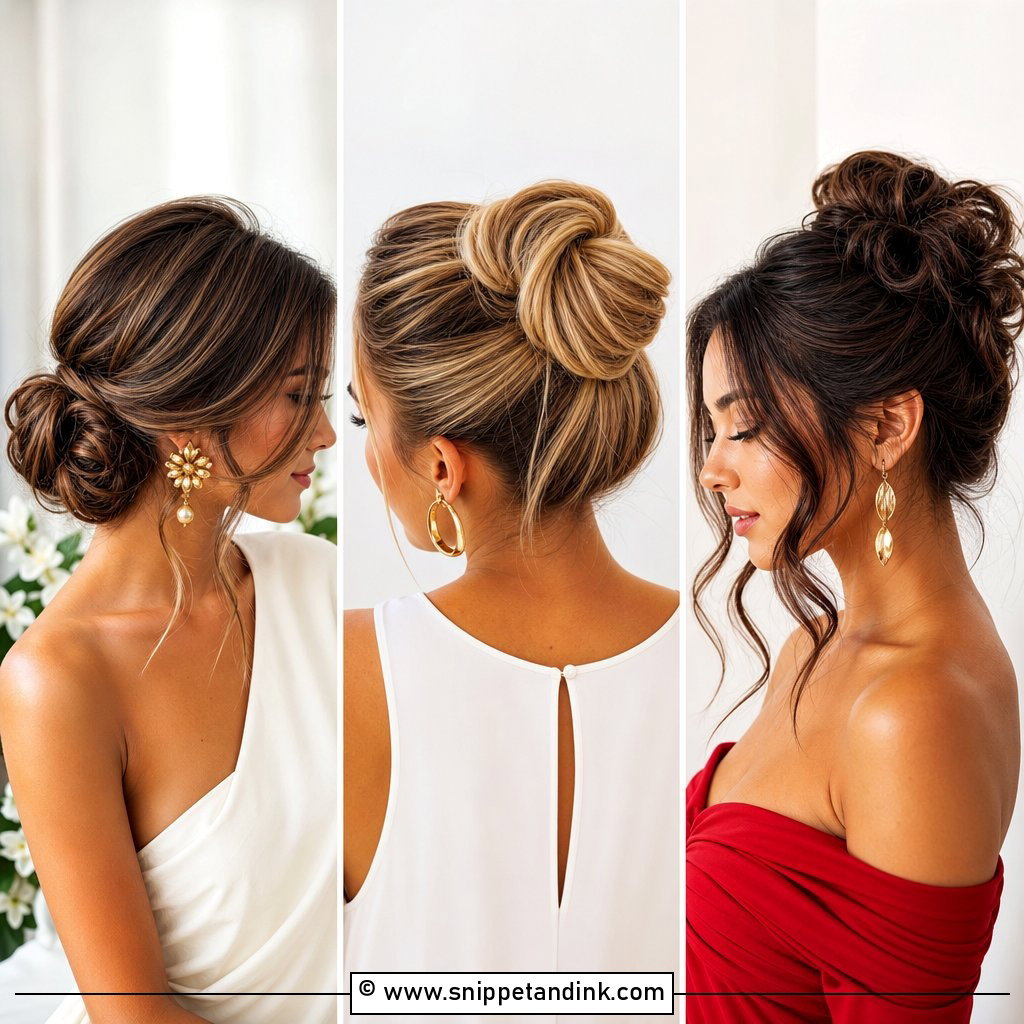
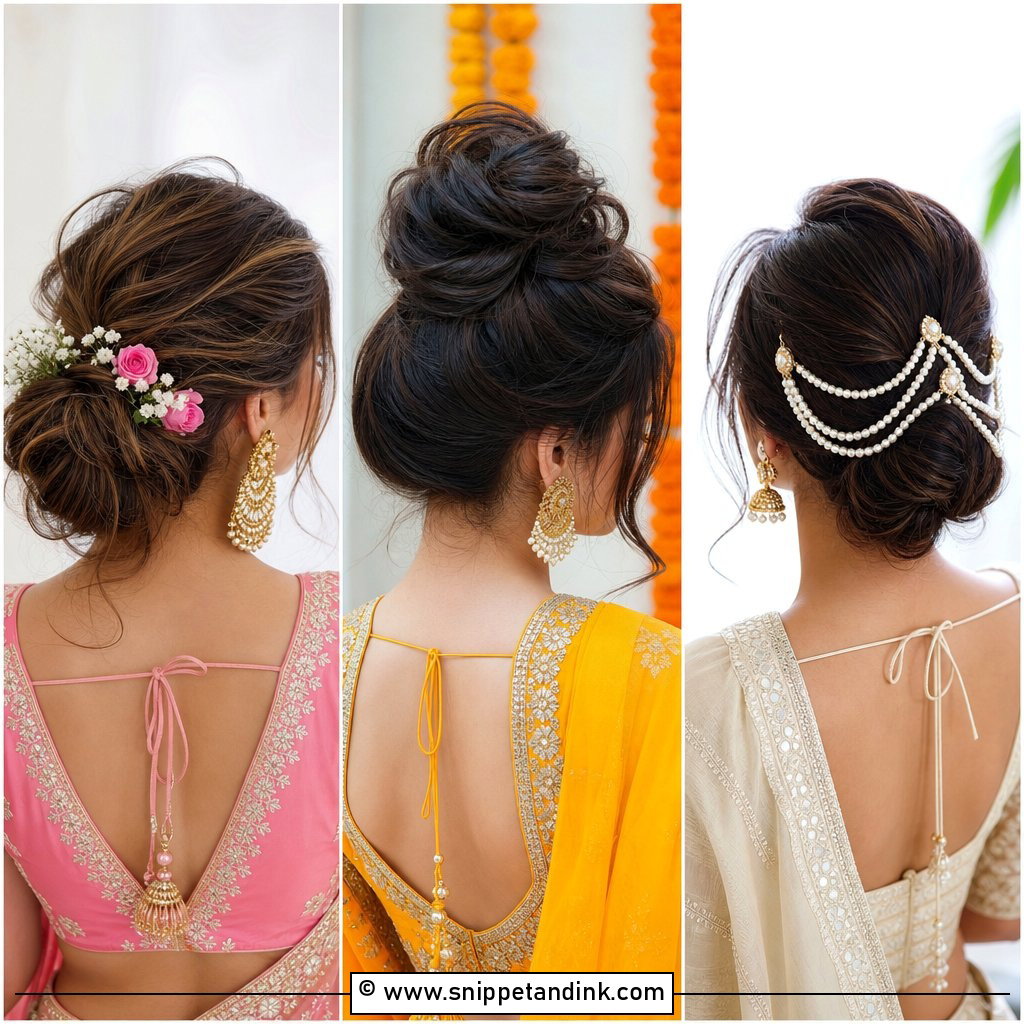
Controlled messiness is harder than polish. A messy bun has gentle volume, a lifted crown and a few loose pieces at the cheeks, but underneath it’s pinned as firmly as any sleek bun. I curl the hair first so the texture has a shape to follow; messing up straight hair just looks like it fell down. It suits receptions, engagements, haldi and lighter dupattas. With pastel lehengas and pearl or floral jewelry, it softens the whole look around the jaw.
6. Floral Bridal Bun
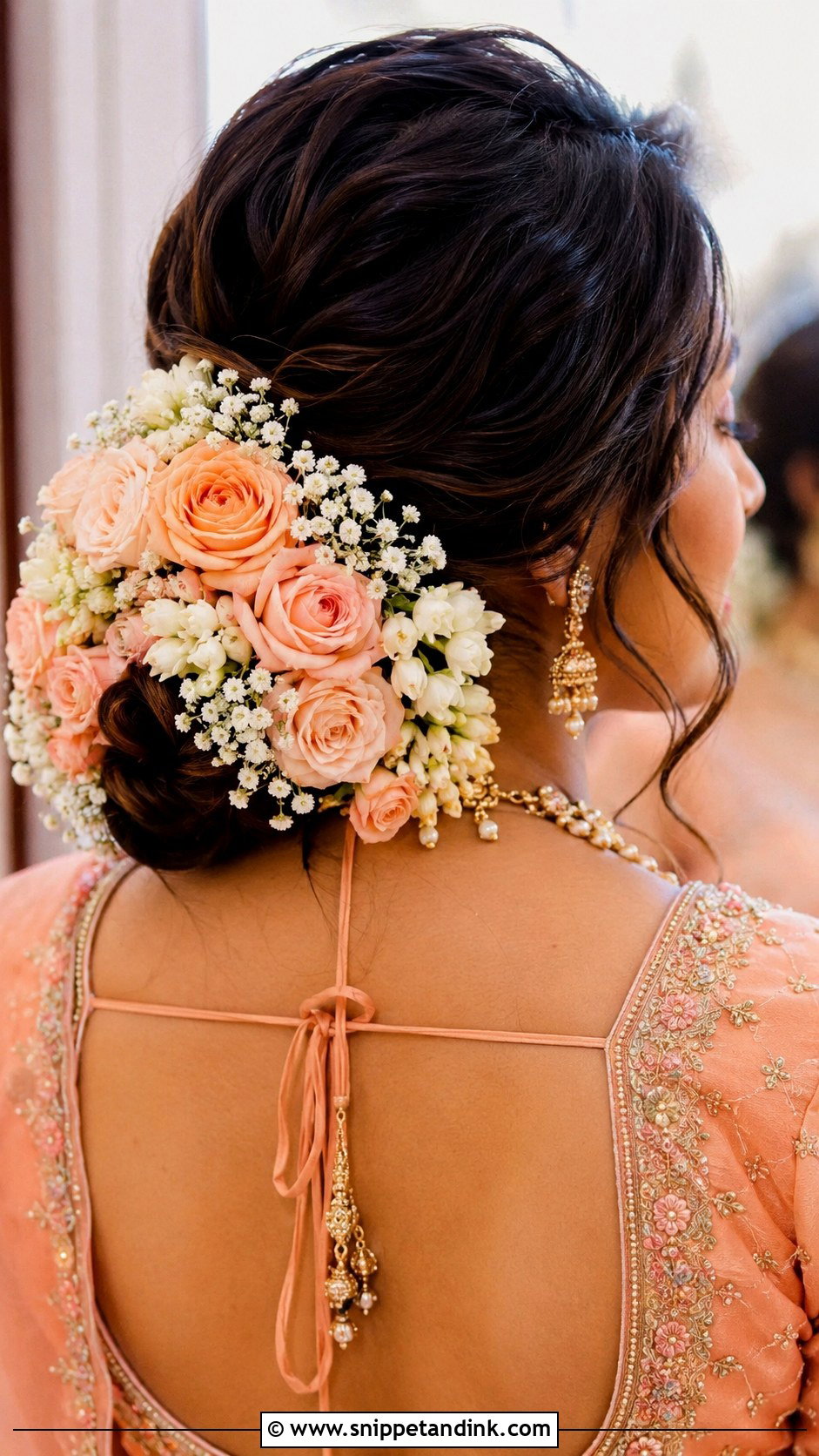
A floral bun treats the flowers as the main accessory. Roses, baby’s breath, orchids, marigolds or a mix can be arranged around or across the bun, often matched to the lehenga border or the decor. It suits daytime ceremonies, outdoor weddings and mehendi events. I wire or pin each stem individually rather than attaching a pre-made crown, because individual stems sit flatter and can be swapped if one wilts. Skip oversized blooms if your jewelry is already heavy; you want to still see the shape of the bun.
7. Bridal Bun With Matha Patti
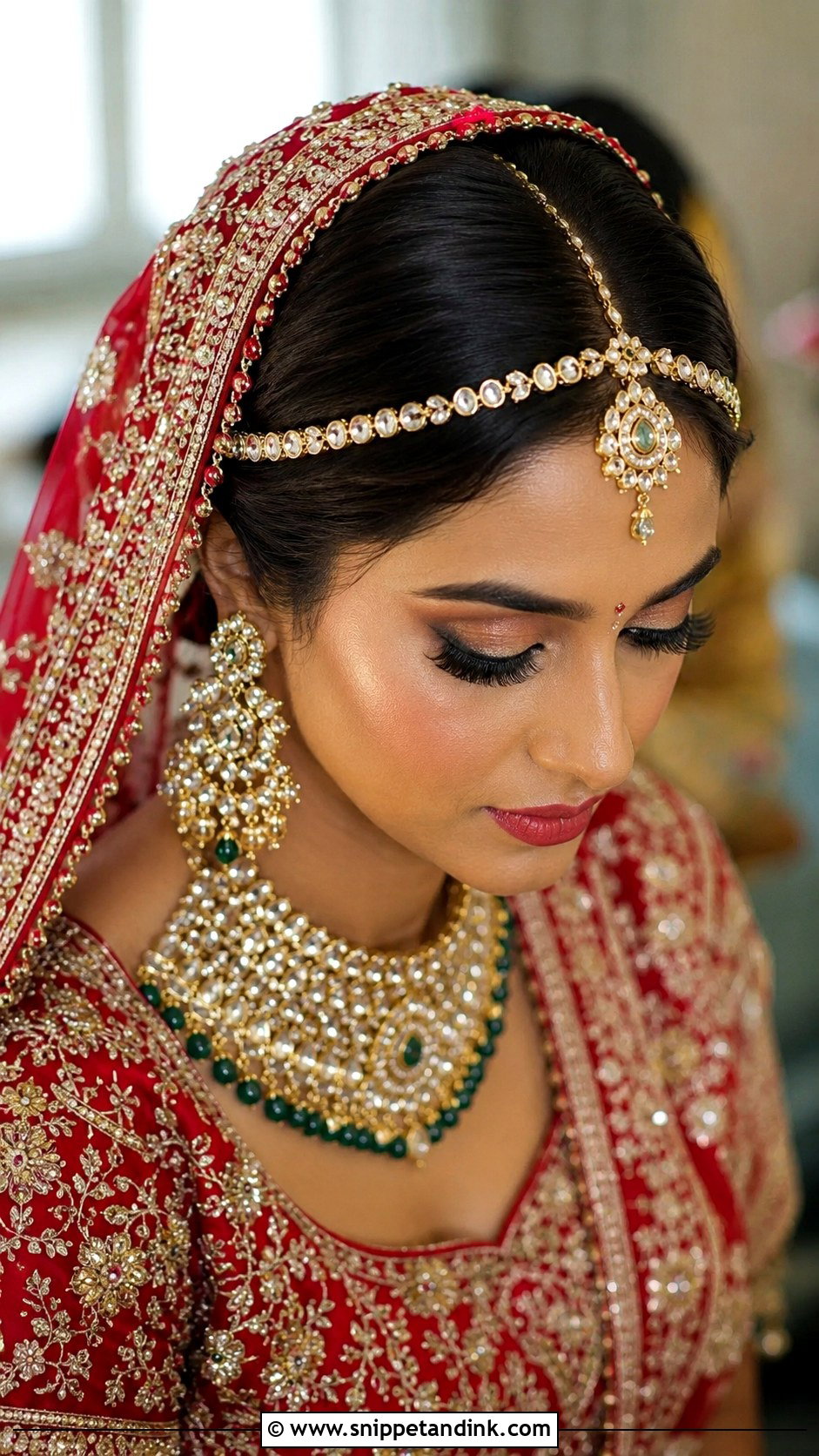
A matha patti asks for symmetry, so the hair is center-parted and the bun sits low or at mid-height to keep the focus forward. The order matters most here. I pin the matha patti before the bun is completely finished, while I can still hook its side chains into the hair at the temples, then the dupatta goes on last. Done the other way round, the patti slides every time the dupatta moves. The bun itself can be sleek, braided or lightly textured.
8. High Bridal Bun
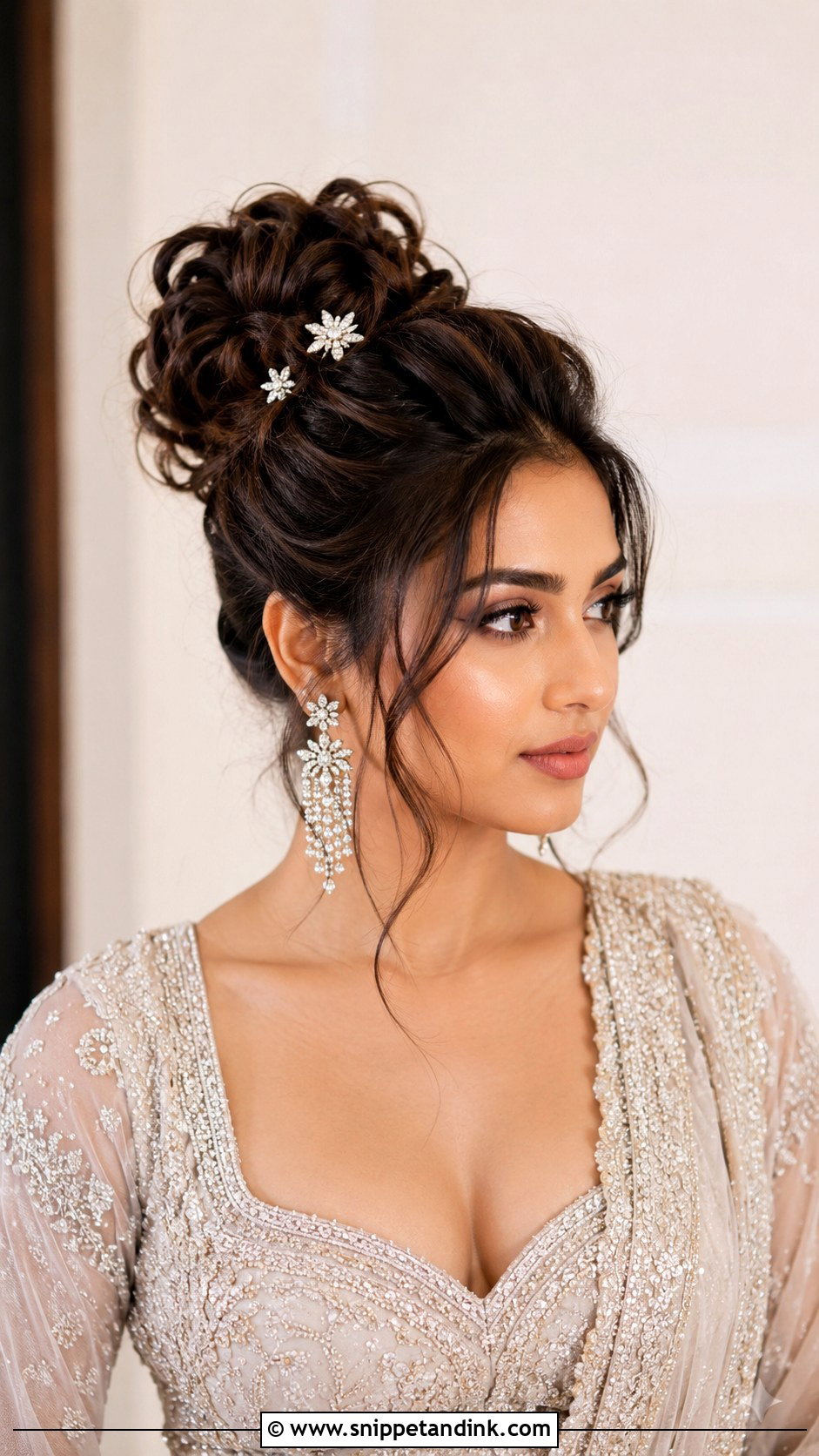
Height changes everything. A high bun lengthens the neck and adds drama, and it’s best for receptions, modern lehengas and outfits with detailed necklines. It also suits brides wearing the dupatta low or not over the head at all; under a head-draped dupatta it pushes the fabric into an awkward peak. Round and petite faces often look good with the extra vertical line. I keep a little softness at the front so it doesn’t look severe, and anchor it with crisscrossed bobby pins at the crown, because high buns carry their weight further from the scalp.
9. Bridal Bun With Juda Pin
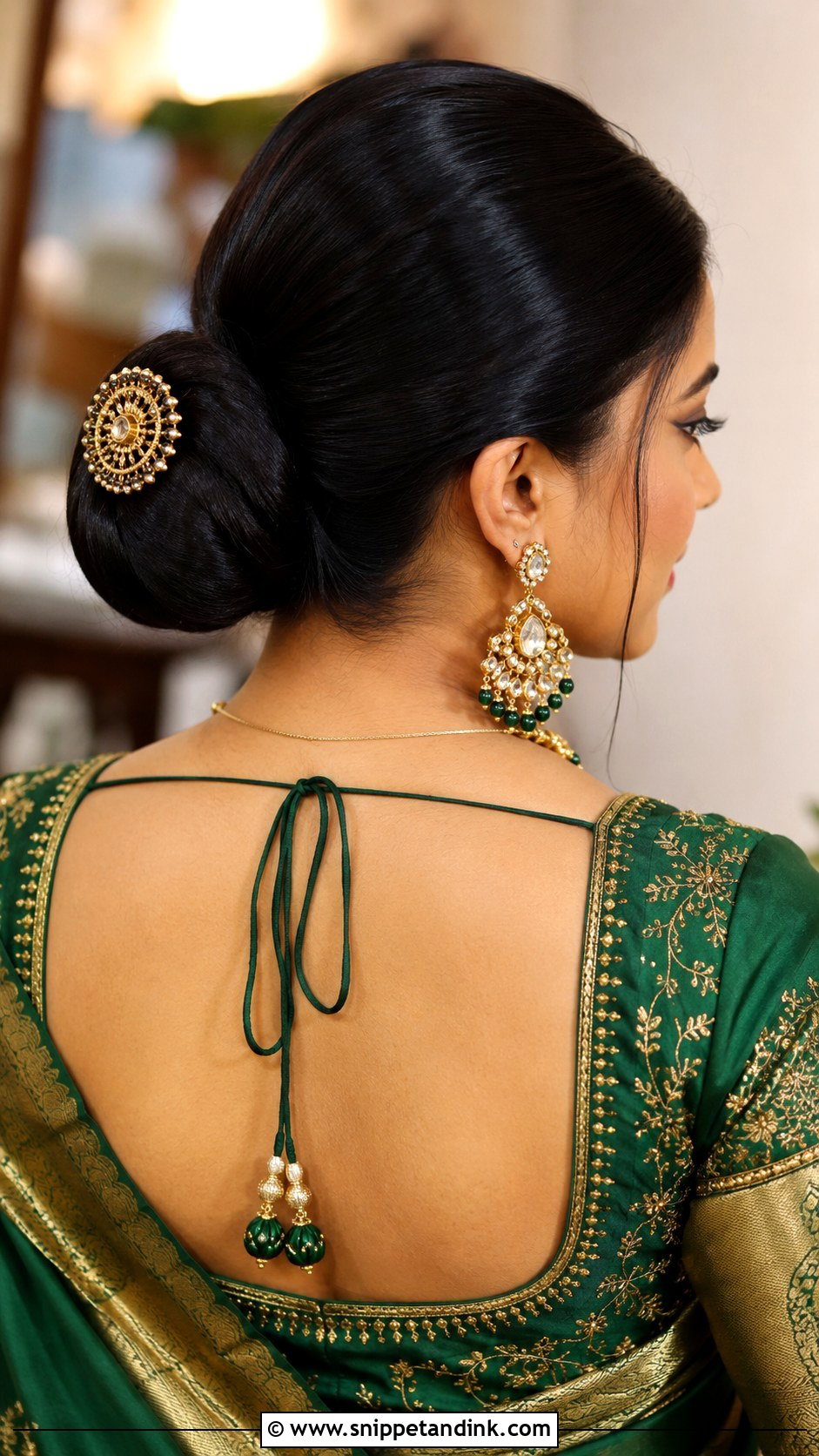
A juda pin is jewelry for the back of the head. The bun is styled neatly, then finished with a decorative pin, brooch or circular ornament in kundan, polki, pearl, gold or antique finish. It’s a good choice when you want a traditional bun without many flowers, and it catches the light in back-view photos. Weight is the thing to check. A heavy juda pin will drag the bun down within an hour, so I look for one with a long sturdy prong and push it in at an angle through the base of the bun, not just the surface.
10. Bridal Bun With Hair Chains
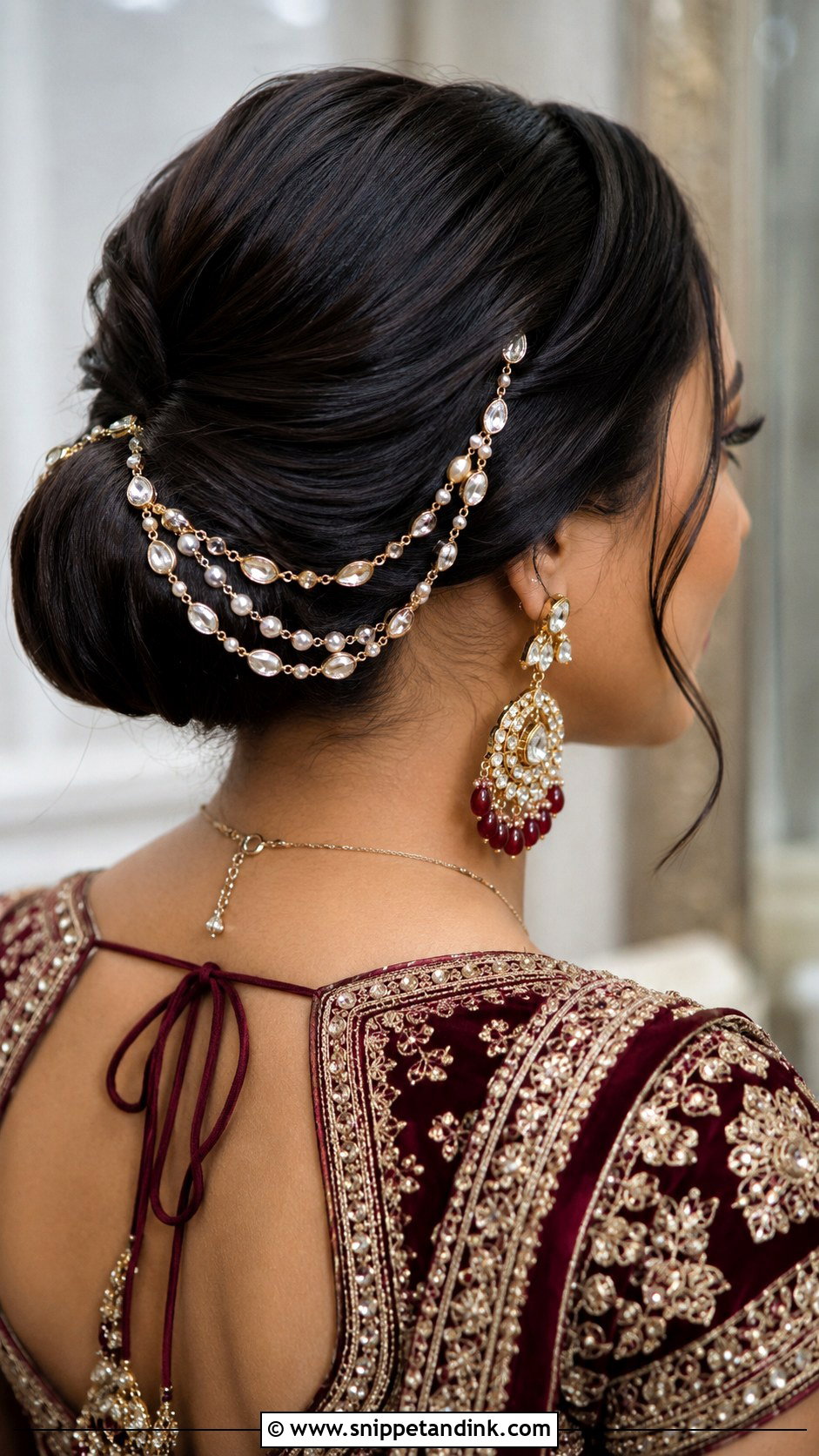
Hair chains add shine from every angle. The chains drape across the crown, over the hair or around the bun, and they suit heavy lehengas, mirror work, pearl jewelry and evening lighting. I attach them with small pins at each end and one in the middle, because chains that only hang from two points swing and catch on the dupatta. If you’re wearing a net dupatta over the head, check at the trial that the chain doesn’t snag it every time you turn.
11. Pearl Bridal Bun
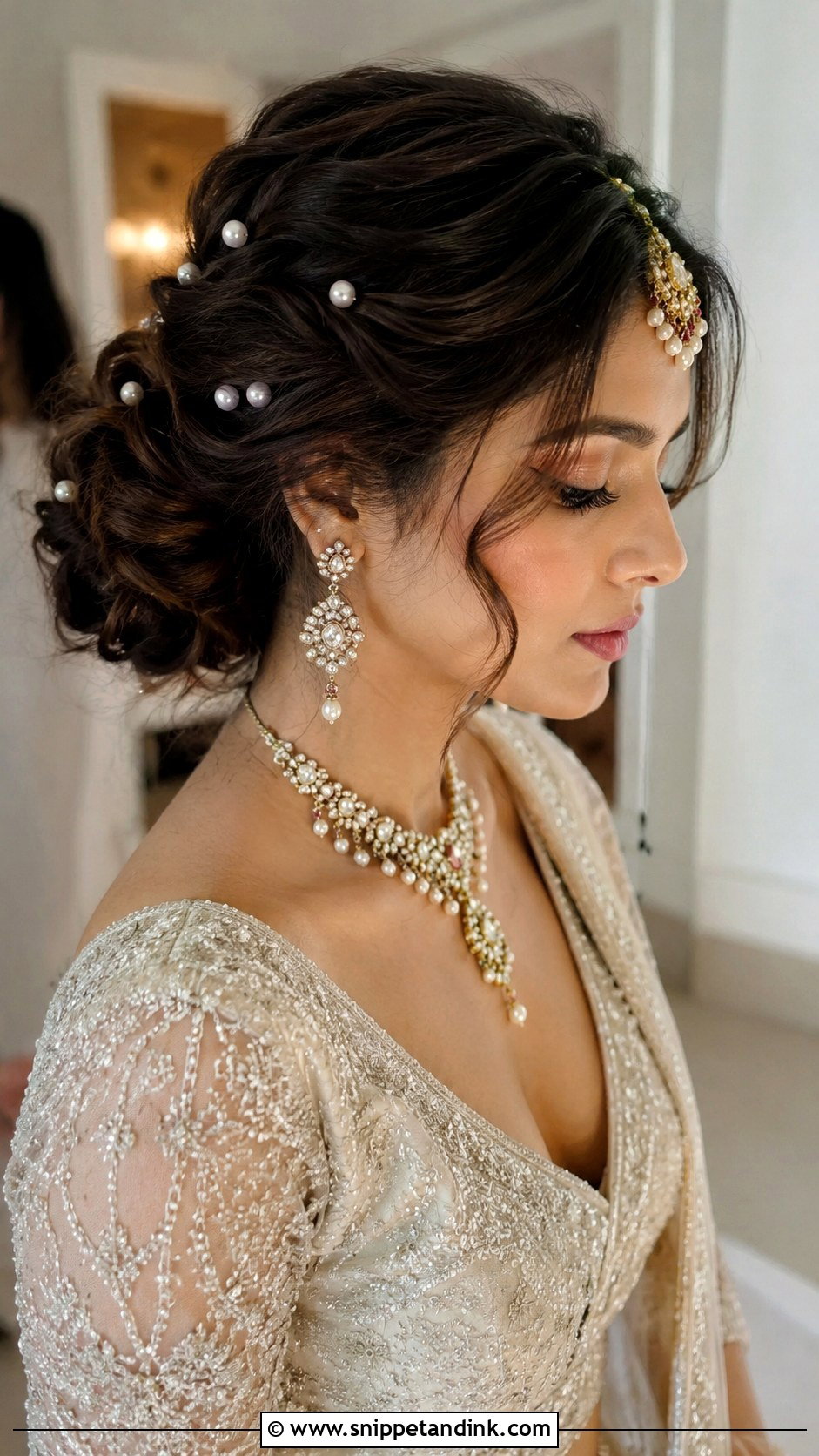
Pearls soften a bun more than any other accessory. They can go in as pins, scattered accents, a wrap round the bun or a fine hair vine, and they look right with ivory lehengas, pastel sarees and champagne tones. The bun underneath can be sleek, braided or loose. I place pearls in a loose pattern that echoes the earrings, rather than dotting them everywhere, so they read as one design. Receptions and engagements suit this look in particular.
12. Twisted Bridal Bun
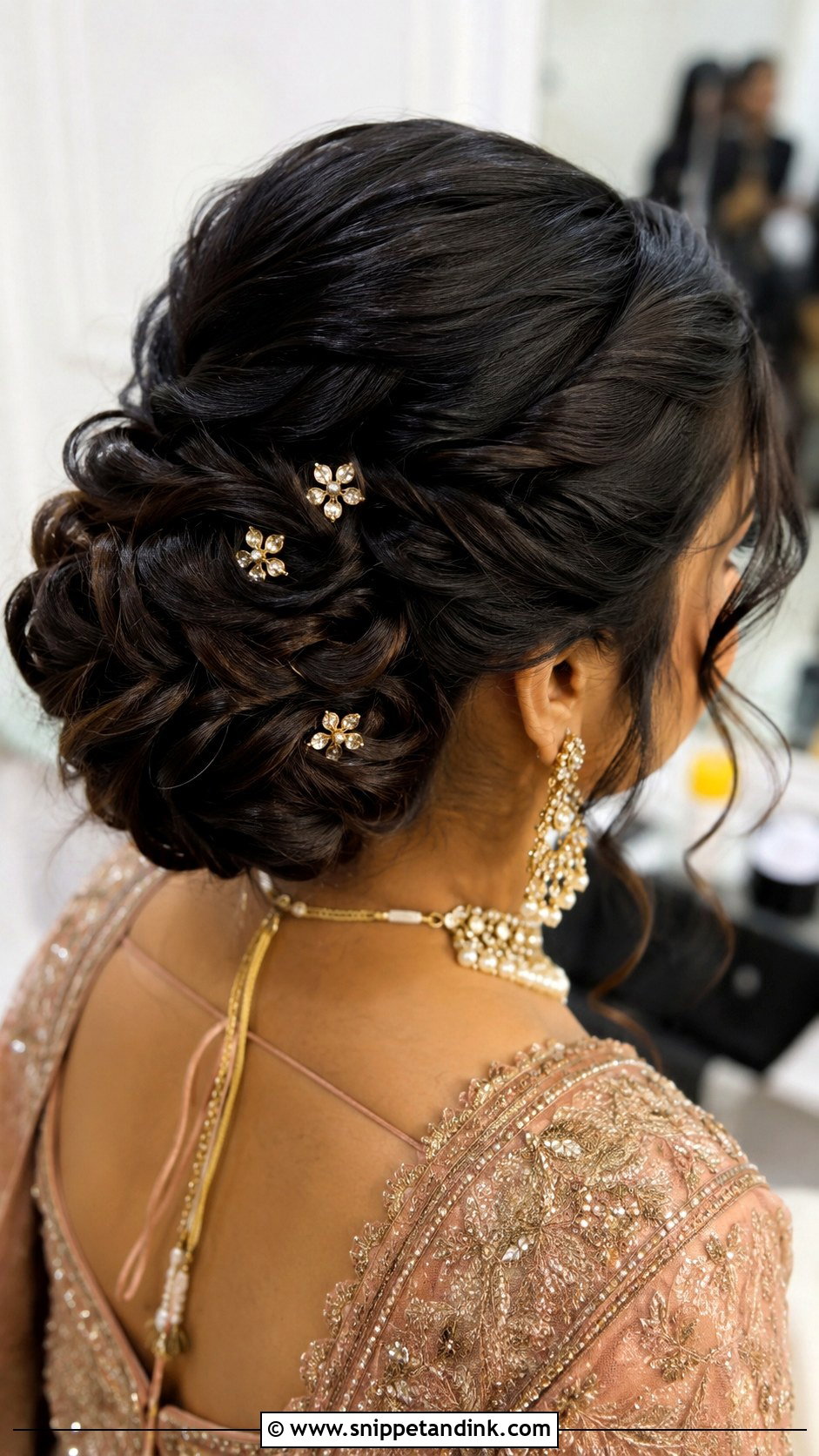
Twisting gives texture while keeping things tidy. Sections are twisted and pinned into a low or mid bun, creating a sculpted, rope-like finish. It works on medium to long hair and can be built out with extensions. Finer hair benefits most, as the twists bulk up the bun in photos. This is a versatile Indian bridal hairstyle: dress it with flowers for the ceremony or keep it plain with minimal jewelry for a modern look. Pin each twist across its own direction so it can’t untwist.
13. Side Bridal Bun
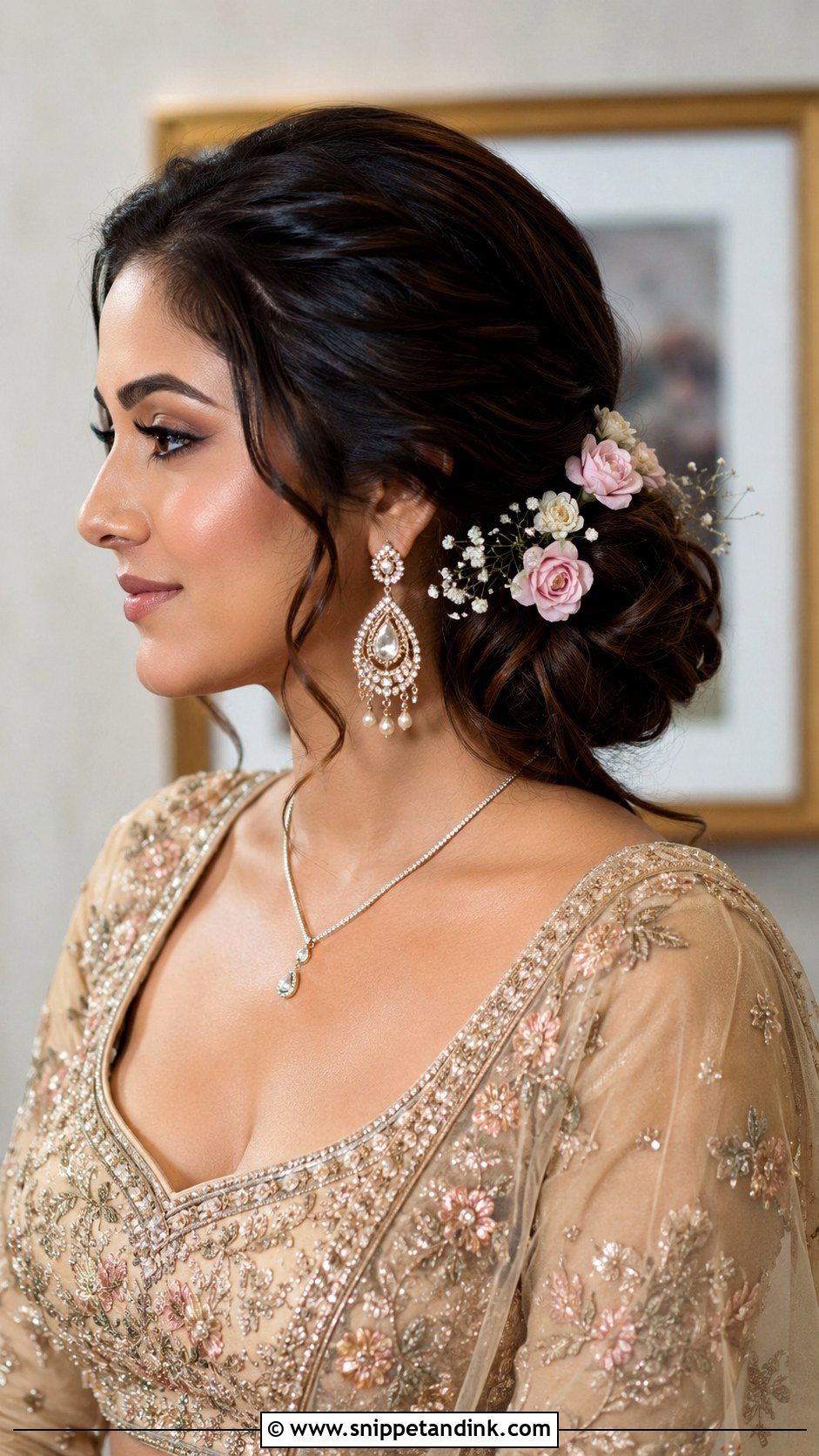
Moving the bun to one side, low near the nape, gives a flattering angle in portraits and shows off earrings, the neckline and any shoulder embroidery. It suits reception gowns, pre-wedding events and lehengas with an asymmetric dupatta drape. Which side? I put the bun on the side opposite the dupatta, and away from your partner if you’ll be standing side by side for photos. Keep the other side smooth or softly waved for balance.
14. Curly Bridal Bun
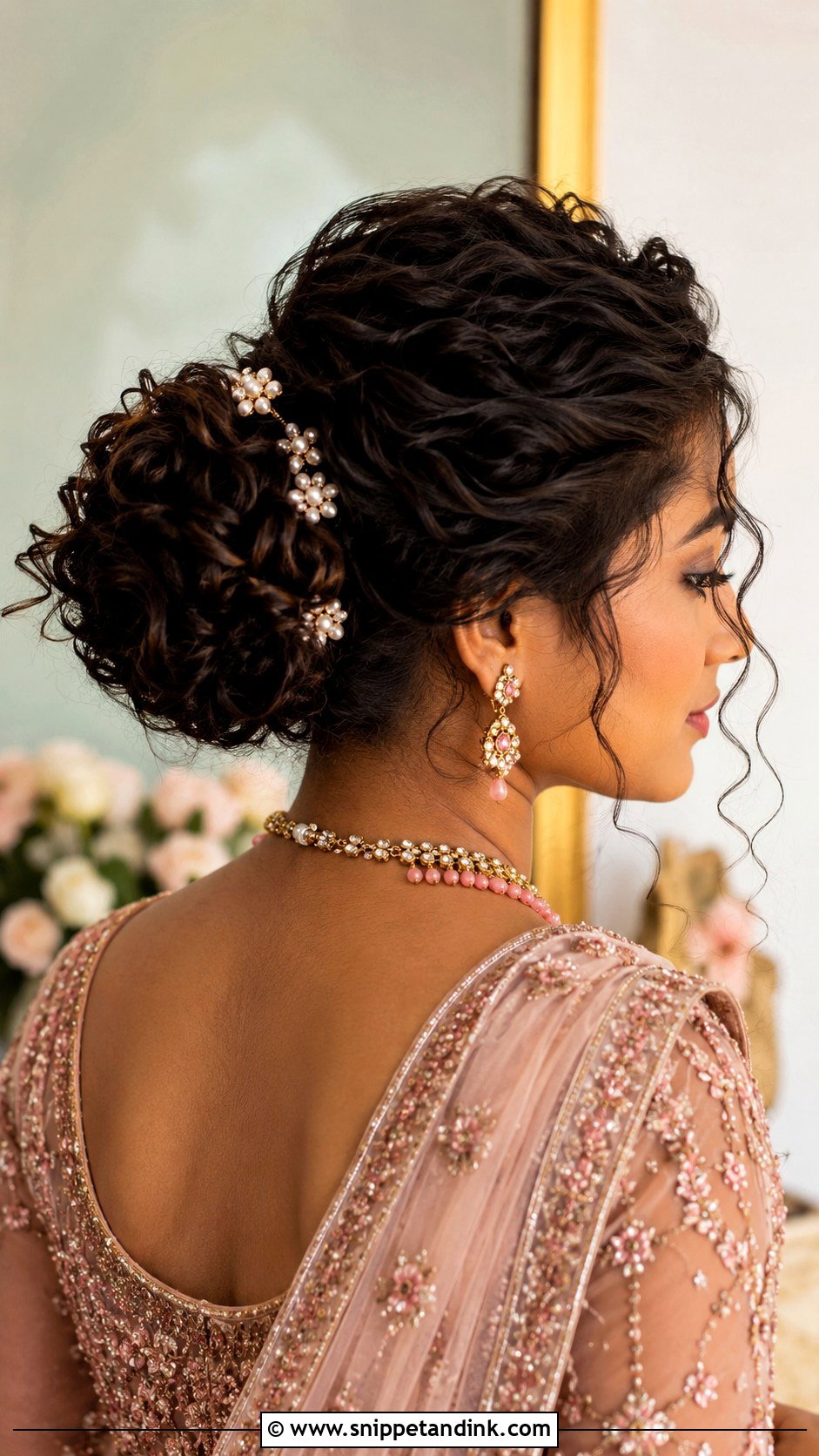
Curling the hair before pinning gives a bun natural texture and fullness. It’s at its best on thick, wavy or naturally curly hair, and extensions can fake it on finer hair. Floral clips, pearls and a few face-framing curls finish it. For sangeet, reception or wedding-day glam it looks full from every angle. I place each curl deliberately and pin it at its base, because curls dropped in at random collapse into a lumpy shape by evening.

15. Bridal Bun With Dupatta
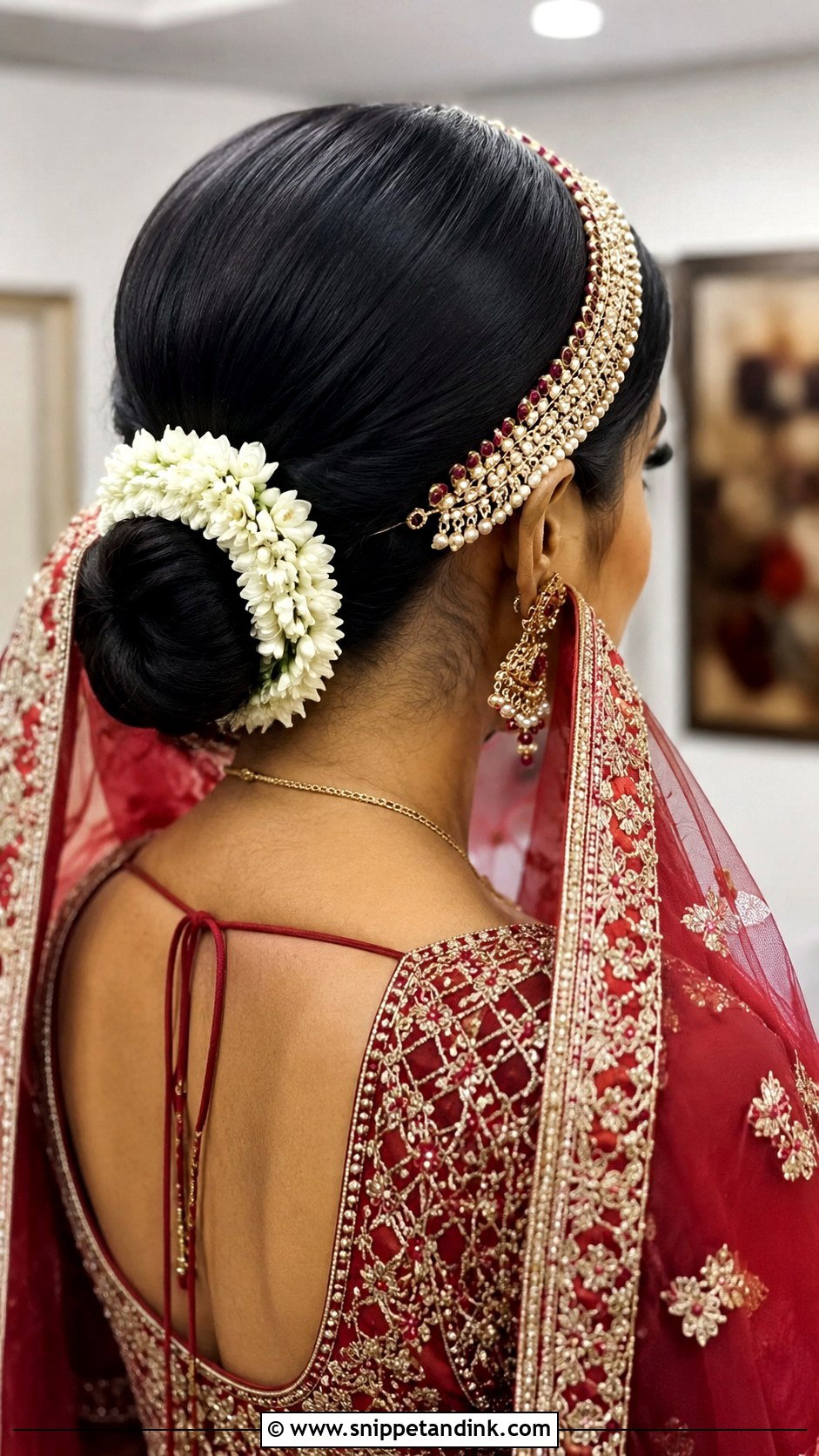
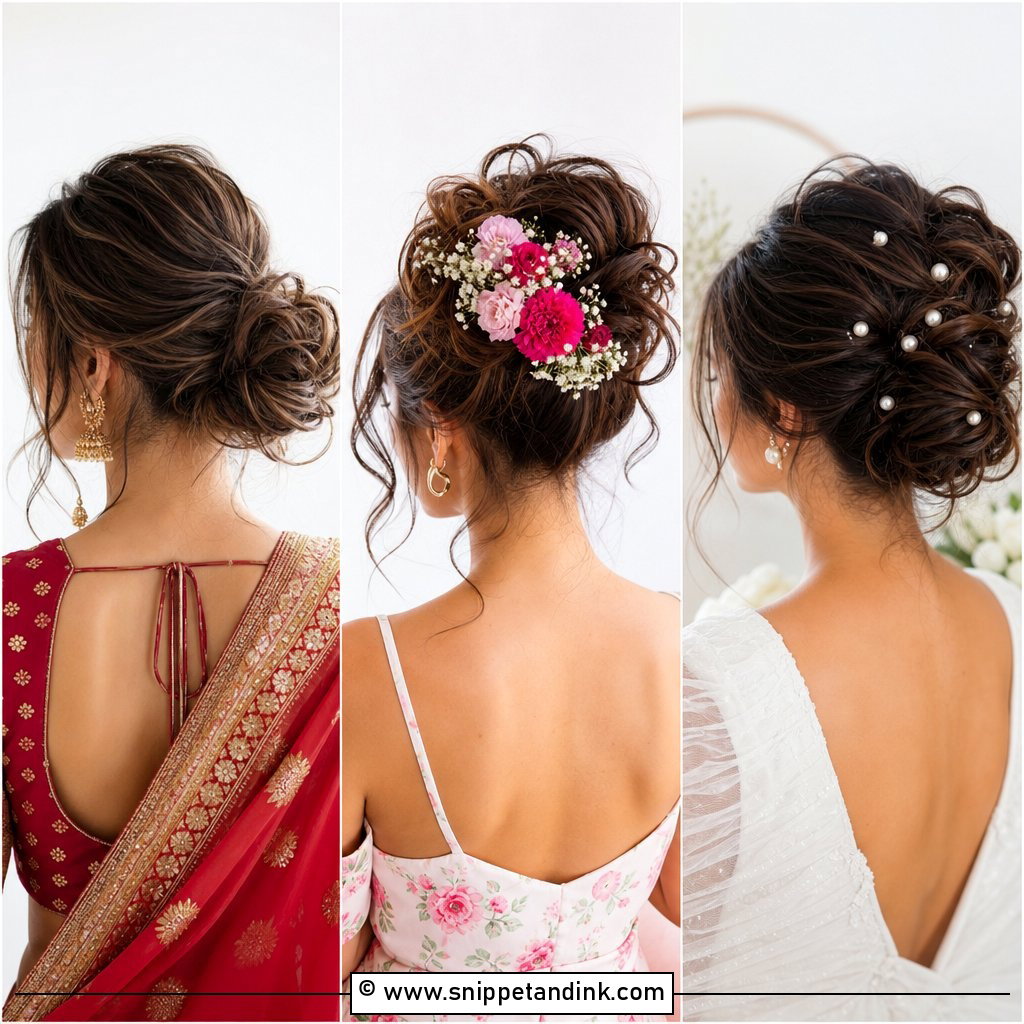
A bun under a dupatta is about engineering more than looks. The bun gives the veil a firm base, so the dupatta can sit comfortably without flattening the front. Low or mid buns usually work best, as the pins grip well there. Sleek, floral, braided or juda-pinned all suit it, and it’s right for pheras, nikah ceremonies, Anand Karaj and traditional portraits. Ask your stylist to pin the dupatta only after the hair and jewelry are complete, then check it from the front, side and back.
What’s Hiding Inside a Big Bridal Bun
Most of those full, round buns in bridal photos aren’t all hair. Underneath there’s usually one of these:
- A mesh donut, which gives a perfect round shape and suits sleek and gajra buns.
- Hair padding or a filler matched to your colour, which can be shaped into a juda or a wider bun.
- Backcombed sections, which add size with no extra weight but need more time and more spray.
- A clip-in bun or extension, which lets a bob or shoulder-length cut wear a full bun.
Any of these is fine, but match the filler to your hair colour, because gaps appear once the bun relaxes. And watch the weight. A big bun plus padding, flowers, a juda pin and a dupatta can easily add up to more than your scalp wants to hold all day.
Signs it’s pinned too tight
A dull ache at the crown in the first hour, a pin you can feel pressing on one spot, or red marks along the hairline at the trial. Say so then. A stylist can move one or two pins in minutes, but nobody can fix a headache halfway through the pheras.
Plan the Bun With the Whole Outfit on the Table
A bun works because it combines comfort, hold and tradition. A gajra bun, a sleek low bun, a braided bun, a floral bun or a pearl-dotted one: whichever you go for, it has to support your jewelry, outfit, dupatta and ceremony. Plan it as part of the whole look, not as a separate detail. Save reference photos from the front, side and back so your stylist sees the shape and finish you have in mind. Then, at the trial, wear it for an hour. The right bun is the one you stop noticing.
You'll Like These Ideas:




Leave a Reply