
Wedding hair has to do more work than any other styling I do: hold a veil, survive hugs and a dance floor, and look as right in the last photo as in the first. The styles brides ask me for most right now lean toward natural texture, softer updos and small personal details rather than stiff, lacquered shapes. Below are twenty I would happily put on a bride, from a sleek ballerina bun to a loose boho braid, with notes on which hair types hold each one and what I do to make it last. There is something here for short, medium and long hair.
What Fine, Thick and Curly Hair Each Need From These Styles
The same photo will not come out the same on every head of hair. Before a bride falls for a style, I look at the texture and density she is working with.
Fine or silky hair
Fine hair is pretty but slippery. Sleek styles like the ballerina bun and low ponytail suit it, while big loose waves can fall flat by evening. I add texture spray before curling and gently back-comb at the root before pinning, and clip-in pieces are an easy way to fill out a braid or bun.
Thick or heavy hair
Thick hair holds curl well, but its weight pulls on pins and on half-up sections. Updos need careful sectioning and stronger pins, and I allow extra time for drying and styling. On very heavy hair a half-up style often feels more comfortable pinned slightly lower.
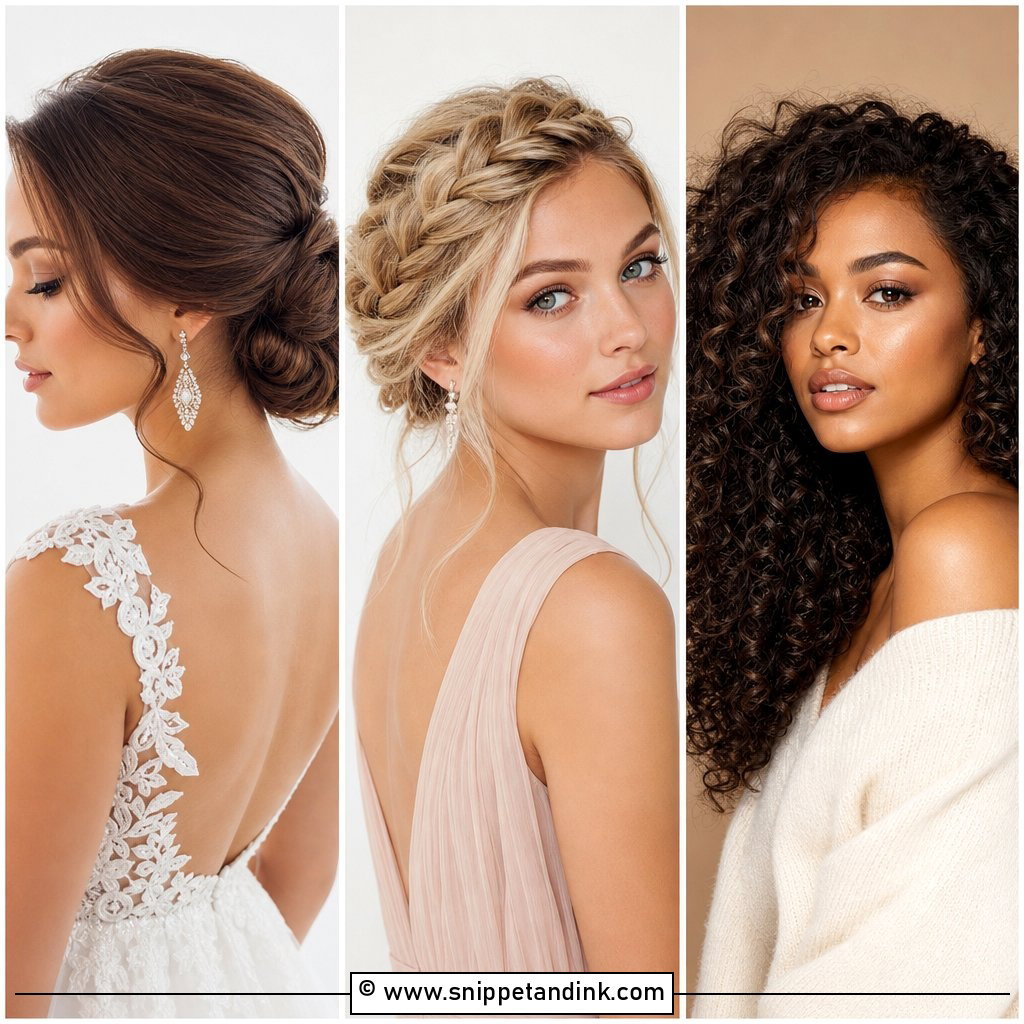
Curly and coily hair
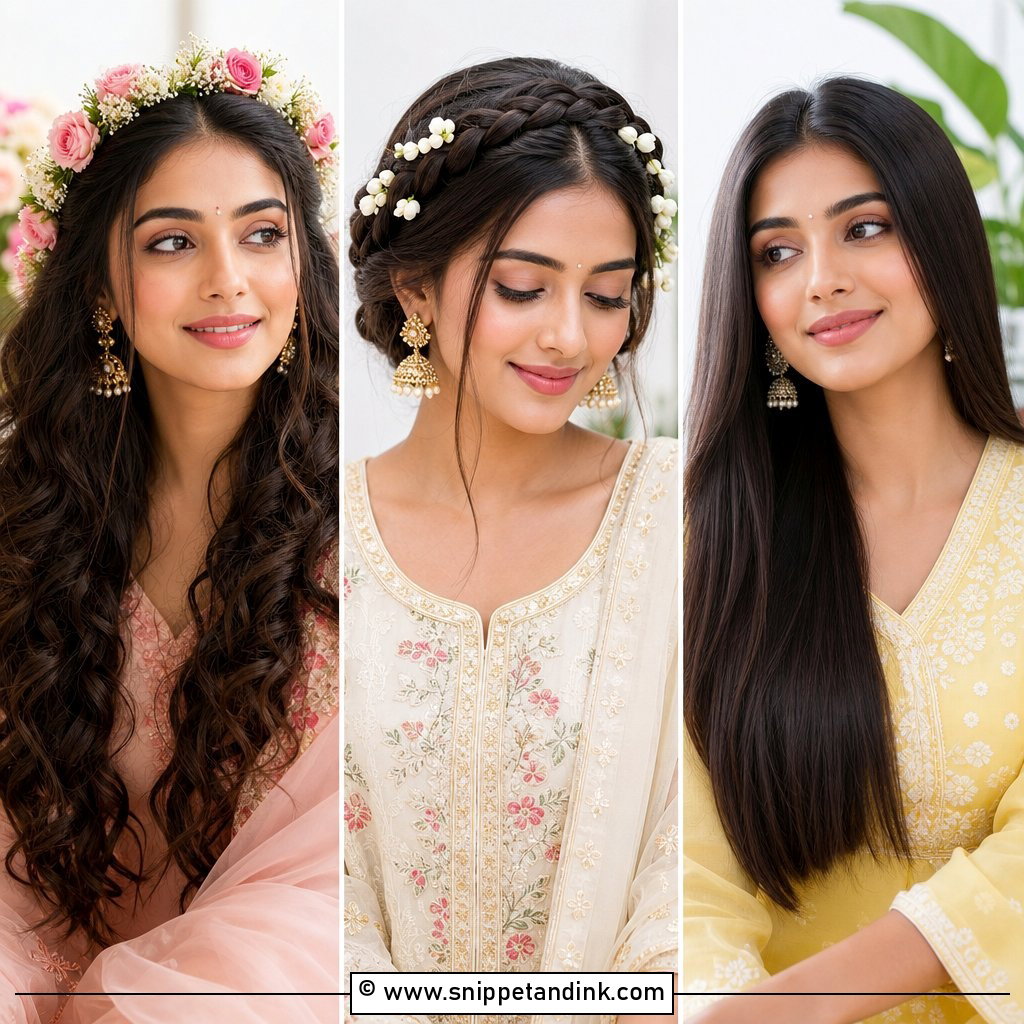
Natural curls do not need straightening to wear most of these. A twisted chignon, a braided crown or a high bun works with your own texture, and defined curls give you the voluminous look without heat. I define or stretch the hair the way you normally wear it rather than inventing a new routine on the morning.
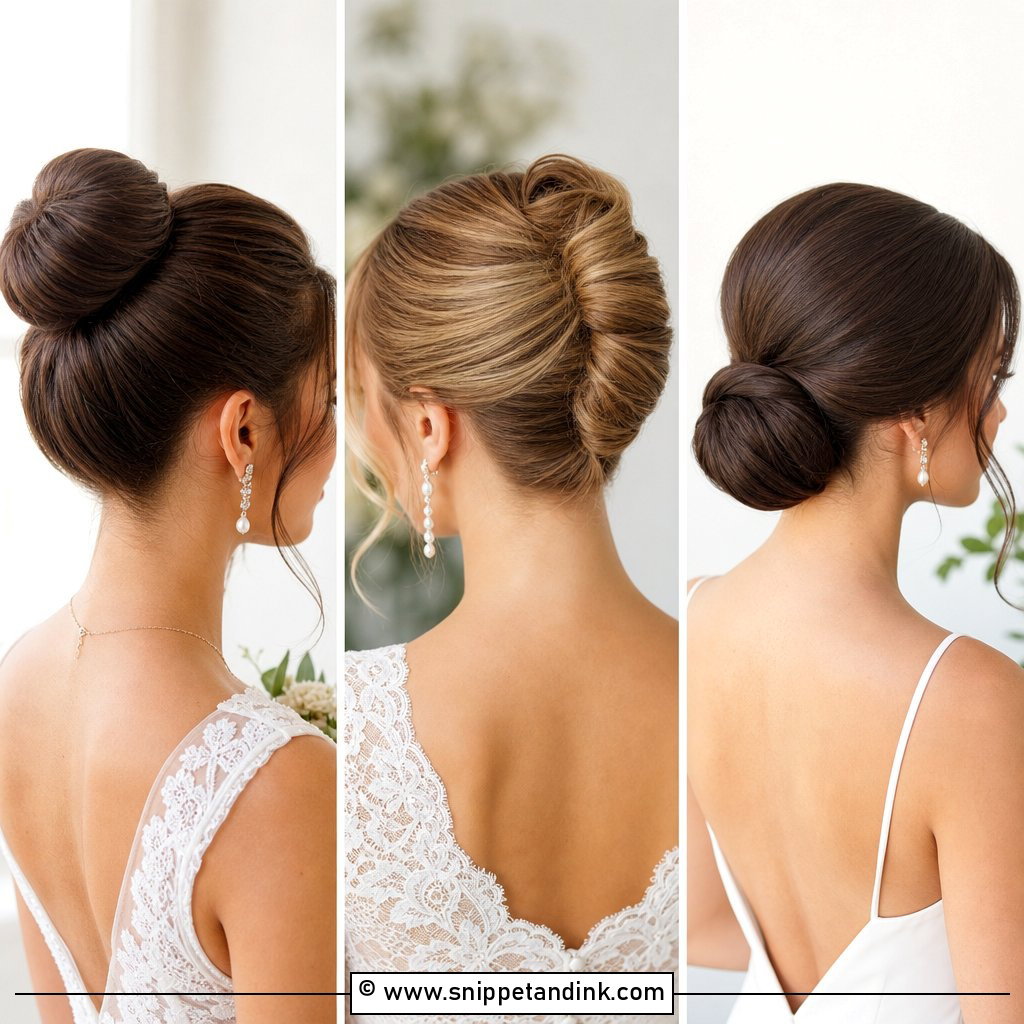
1. Sleek Ballerina Bun With Center Part
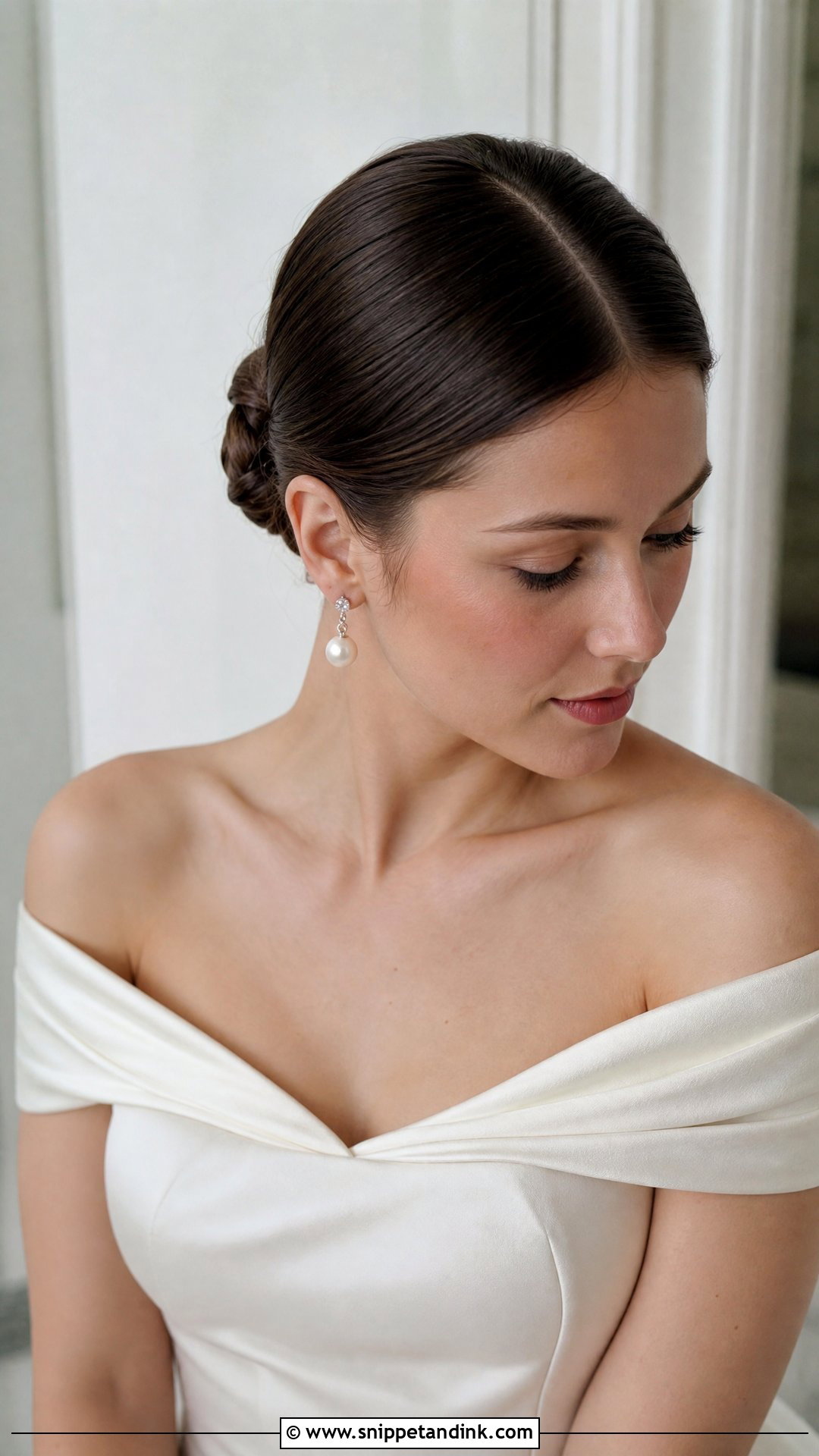
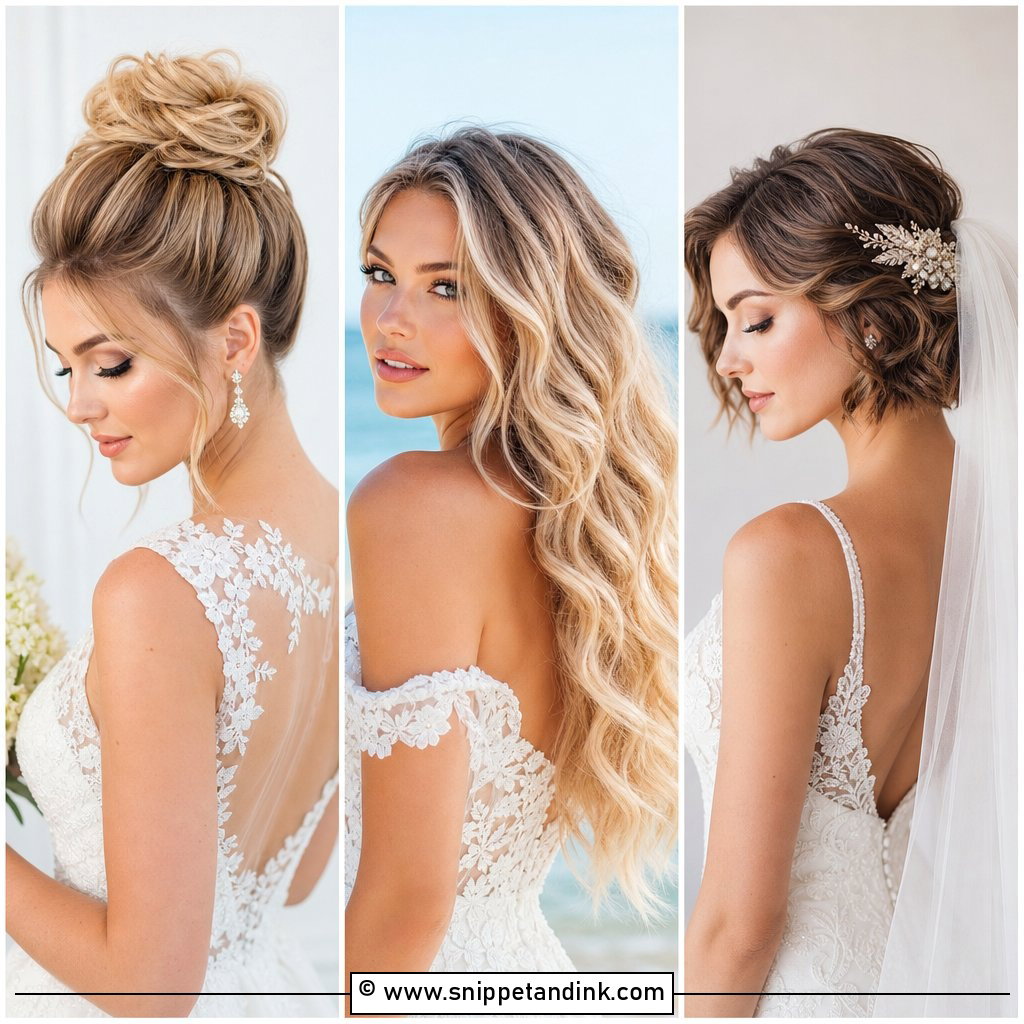
A center part, every strand smoothed back and a low twisted bun at the nape leave very little room for error. The part has to be dead straight and the hair truly smooth, so I blow-dry it flat with a paddle brush first, then finish with a little cream and a fine-tooth comb rather than heavy spray, which leaves visible comb lines. It suits minimalist dresses and statement earrings, and a single pearl pin is plenty. If you have always worn a side part, try the center part at your trial before committing to it.
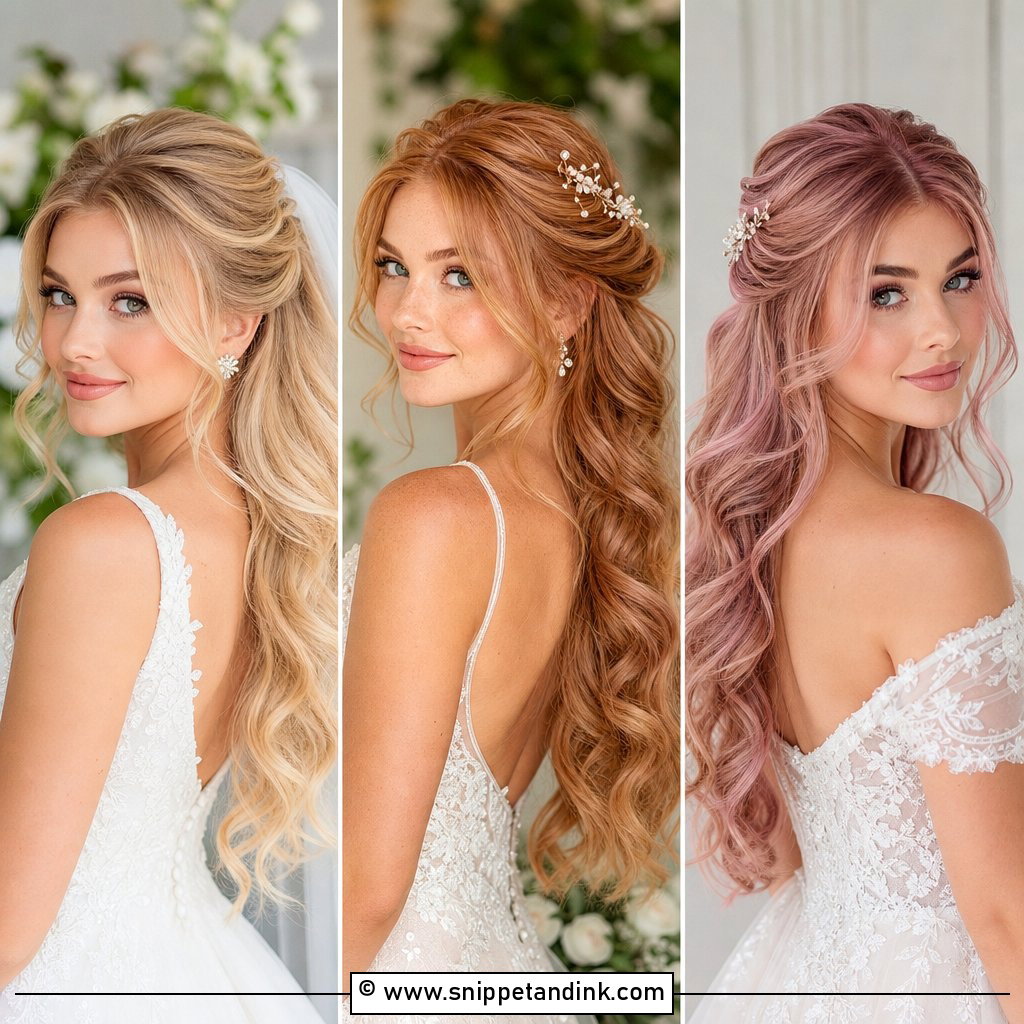
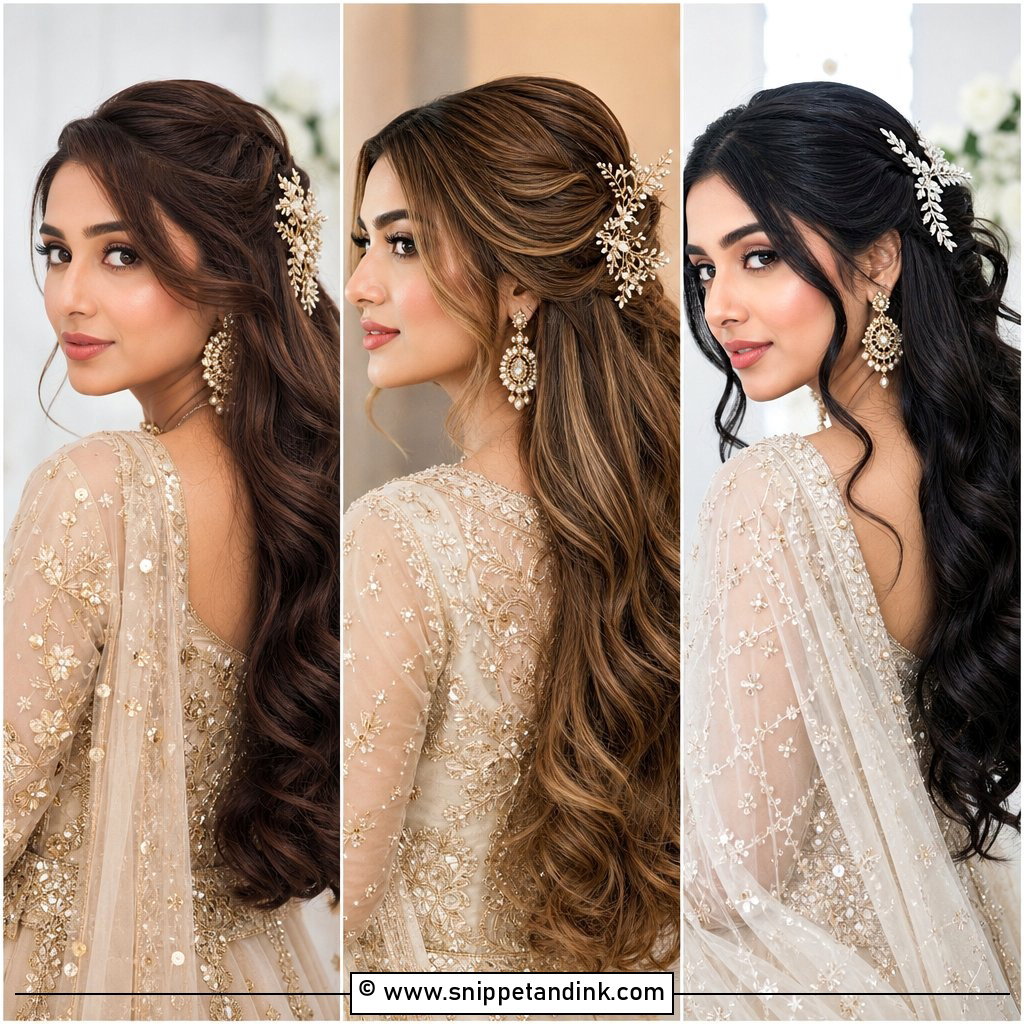
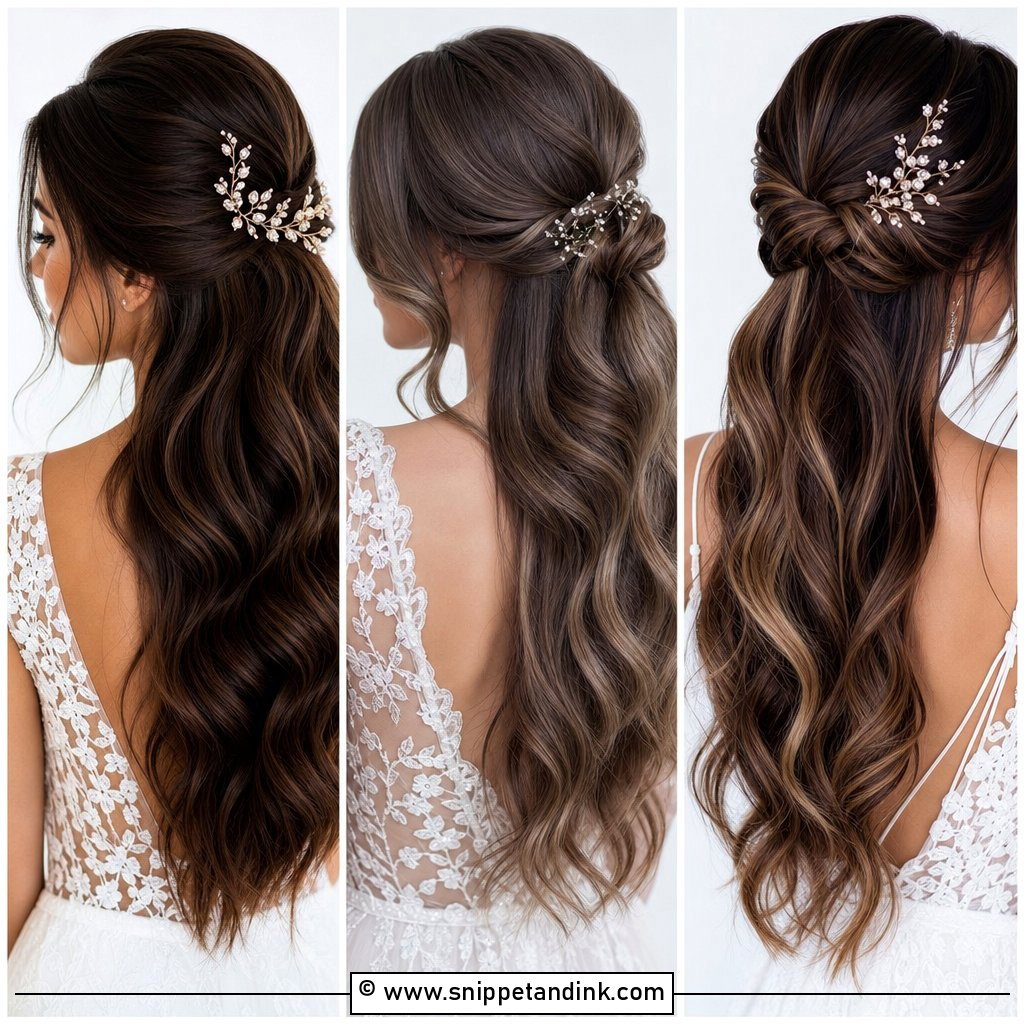
2. Half-Up Half-Down With Soft Waves
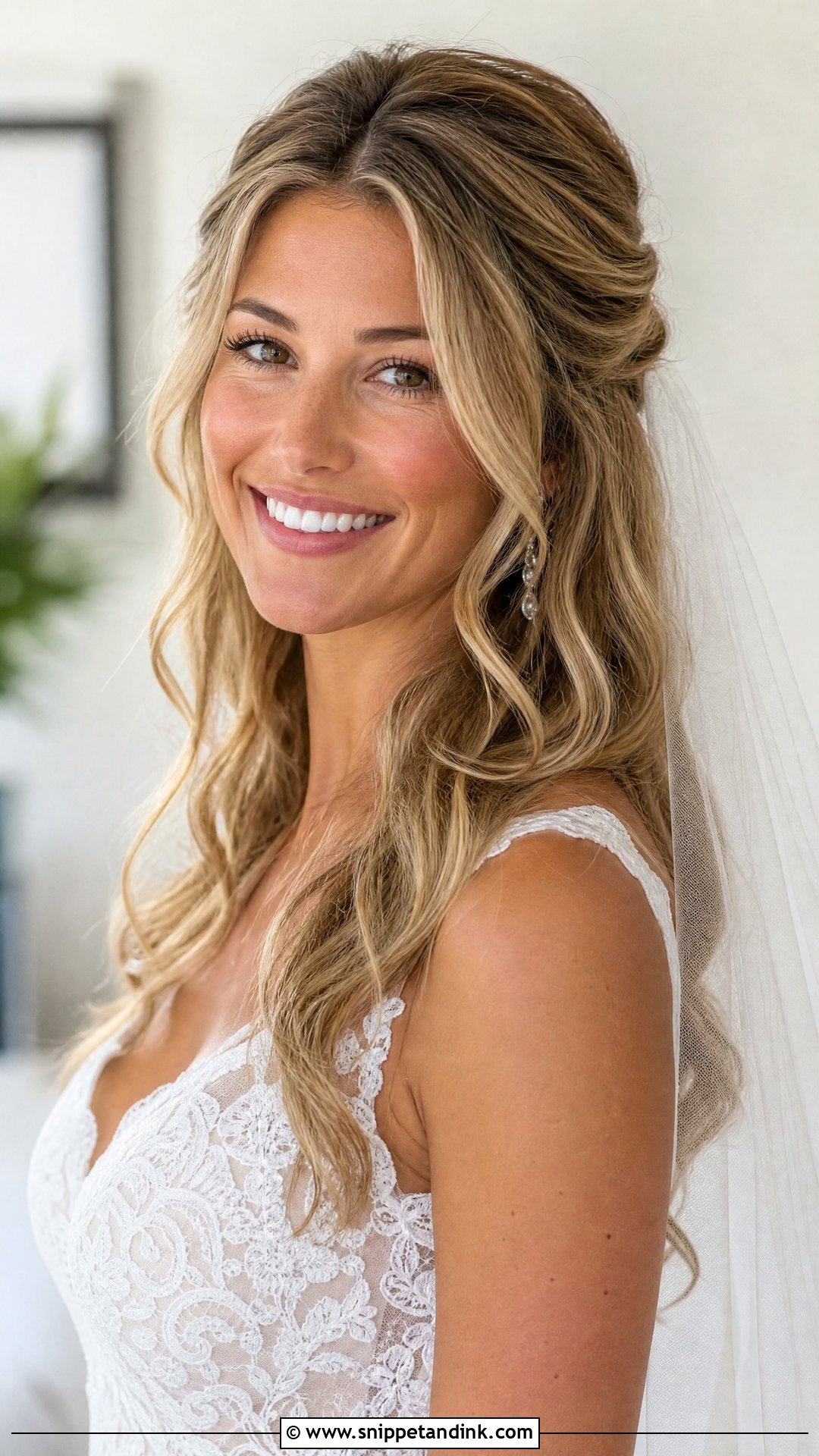
Half-up is the answer for brides who cannot choose, and it is harder to hold than it looks. Soft waves fall over the shoulders while the front sections are pulled back and secured. The weak point is that back section: on heavy hair the pinned part drags down by evening, so I anchor it with a small hidden elastic first and pin over the top. A small braid or twist adds detail if you want it. It works on most lengths and sits nicely under a veil or a few flowers.
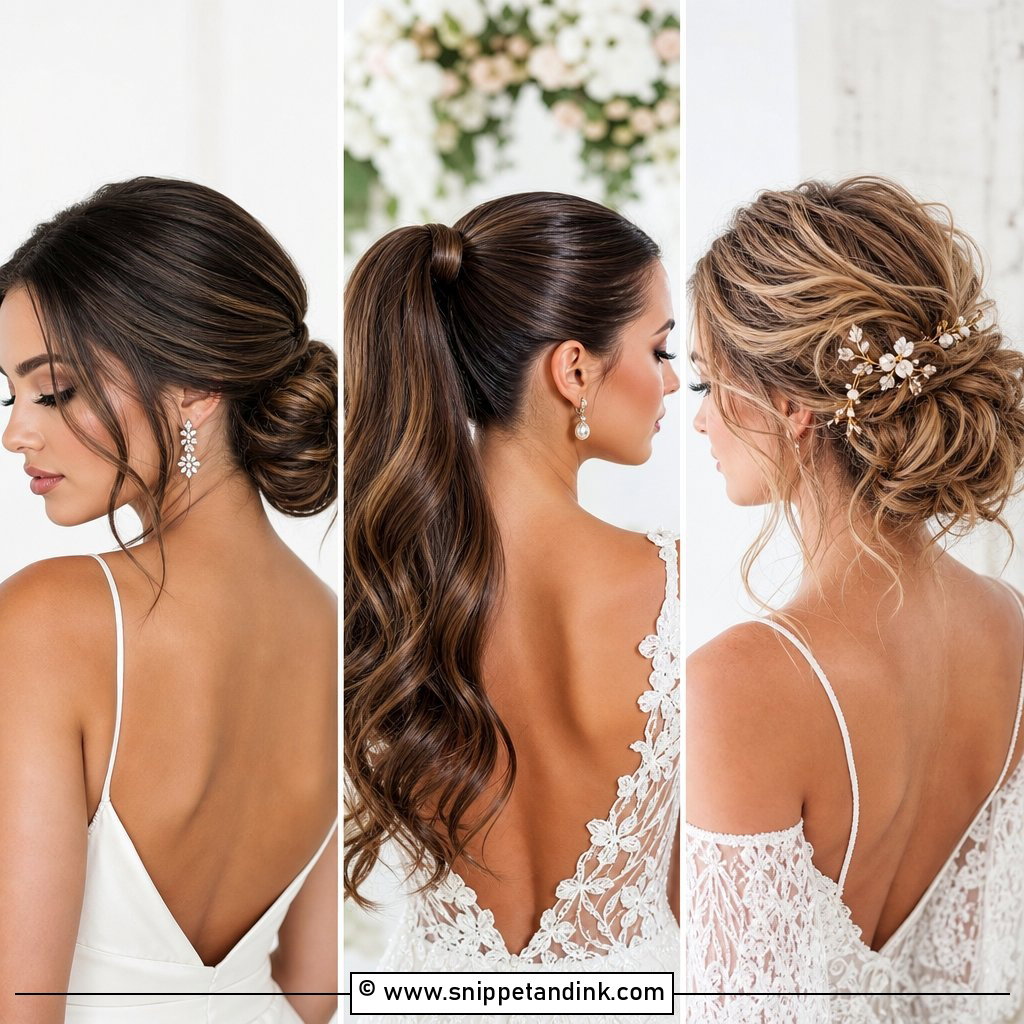
3. Messy High Bun With Face-Framing Tendrils
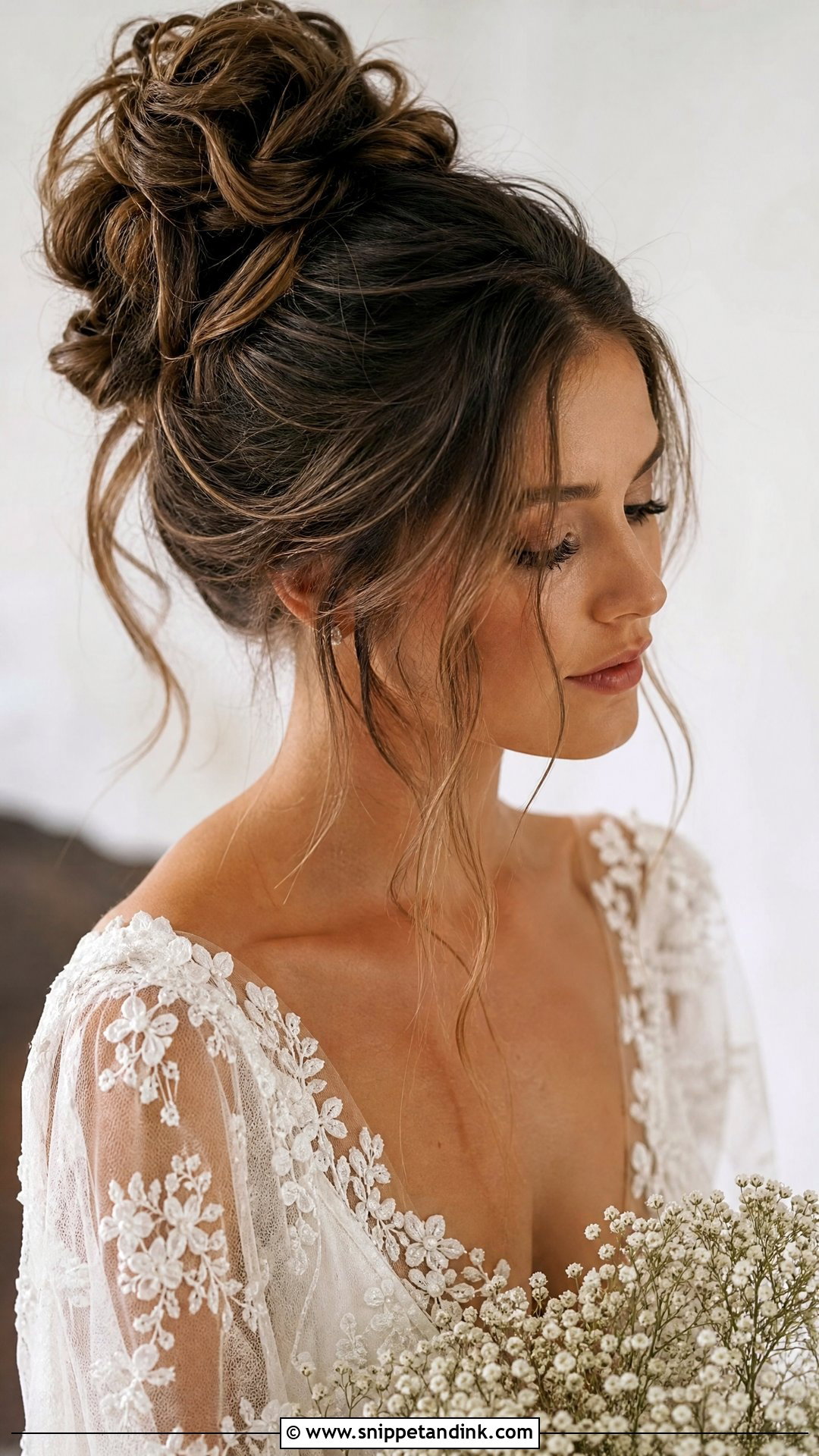
Messy only looks messy. I curl the hair first, then pin tousled hair gathered loosely on top of the head and draw soft tendrils down around the face. The curls underneath are what stop it collapsing; without them, the bun flattens by the speeches. It is a natural fit for bohemian and rustic weddings and for hot days, since it keeps hair off the neck. Small flowers or baby’s breath can be tucked in, but go easy on weight at the crown.
4. Classic French Twist
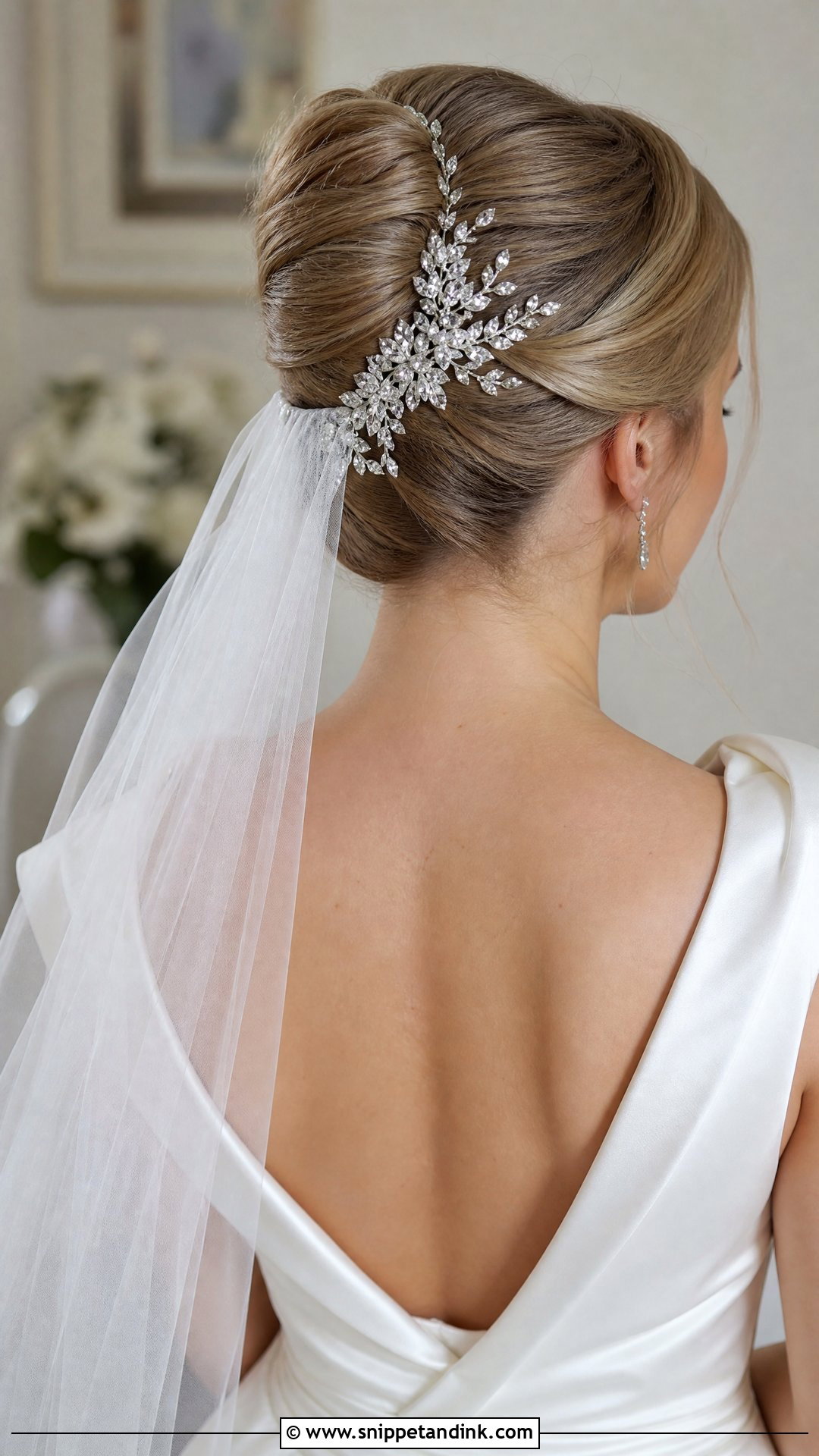
Hair is gathered vertically and rolled into a clean seam along the back of the head. A French twist is formal and structured, which suits ballroom receptions and a tiara or jeweled comb, and the veil sits beneath the roll. I need some grip to do it well. Freshly washed, silky hair slides out of the twist, so I prefer hair washed the day before and prepped with a texture spray. A few loose pieces at the face make it feel more current.
5. Cascading Natural Waves
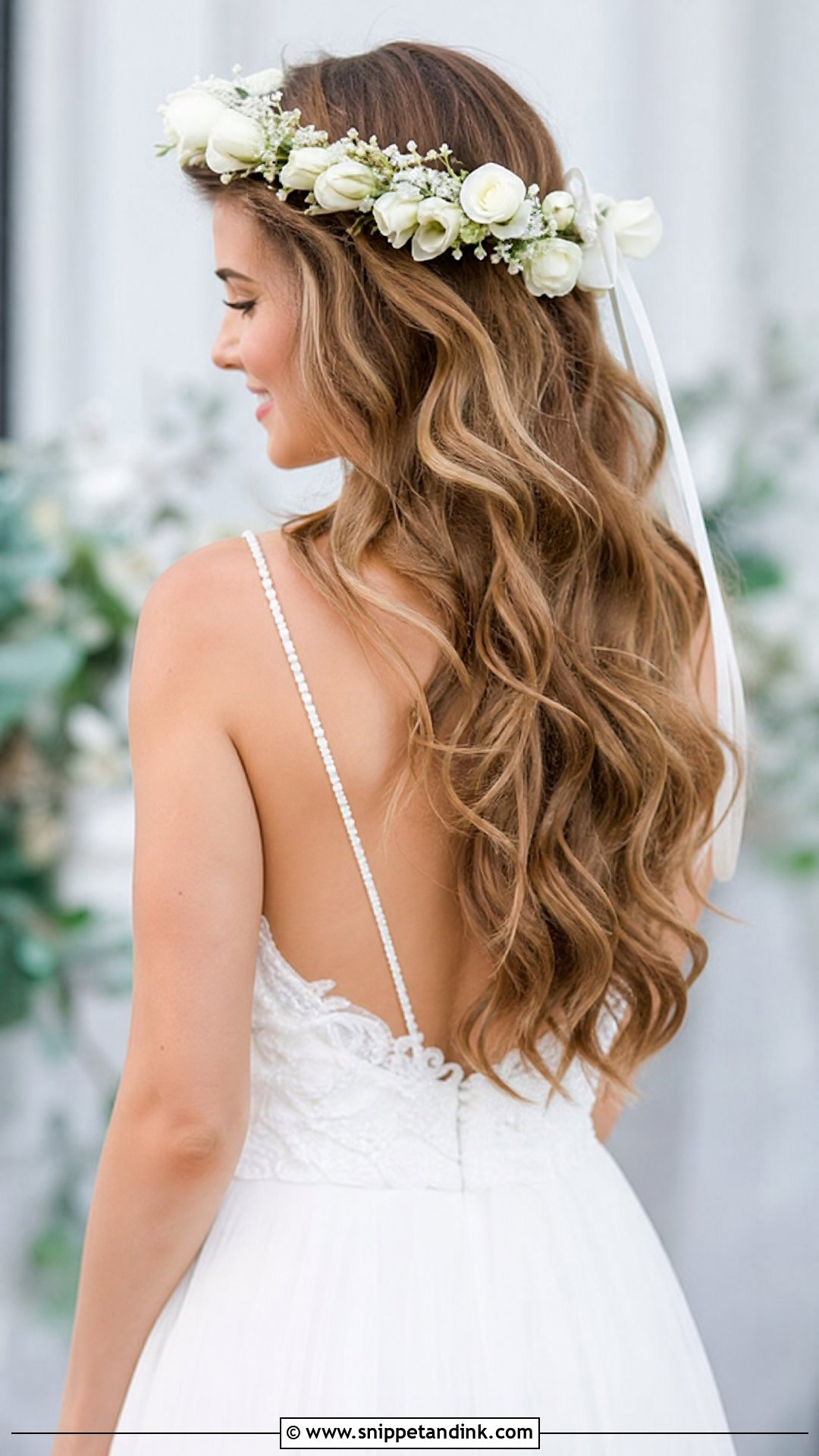
Loose waves down the back look like they took ten minutes, and they do not. I curl in larger sections and let each one cool fully, pinned in its curl, before brushing out, because curls brushed out while hot drop straight within the hour. Medium and long hair suit it. The trade-off is weather. In humidity, waves on fine hair relax, so I often pin one side back to give the style some structure. It pairs with a flowing veil, a few pins or a flower crown.
6. Low Braided Bun
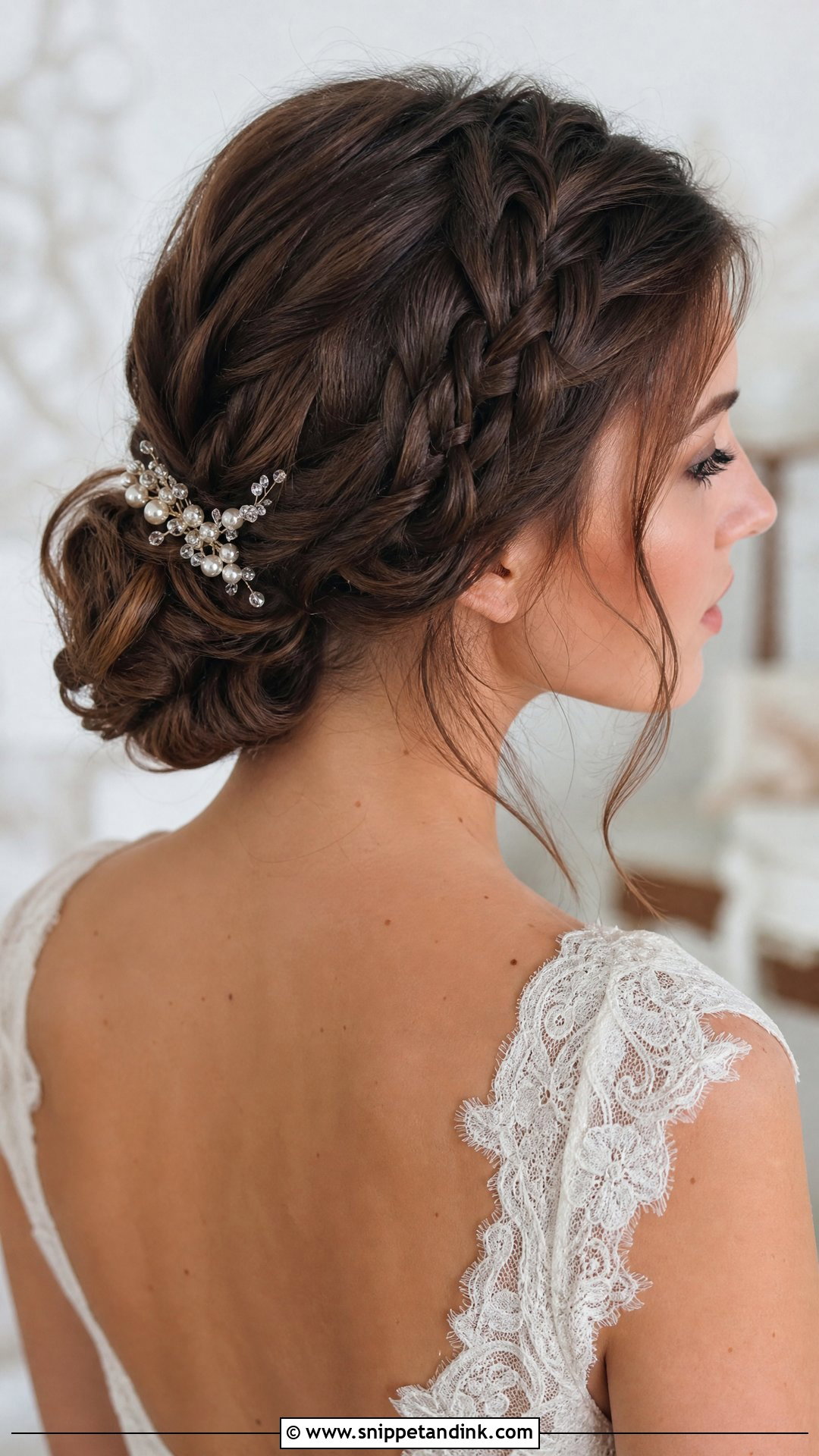
Braids woven through the hair and gathered into a soft bun at the nape give texture that shows from the back of the aisle. It works for modern, vintage or bohemian brides depending on how tightly I keep the plaits. Tight braids look tidy; pulled-apart braids look softer but need more hair to fill them out, so on finer hair I add a clip-in piece. Pearls or small flowers tucked into the plaits finish it. Because everything is locked in, this is one of the most secure styles here for a long night of dancing.
7. Boho Braided Crown
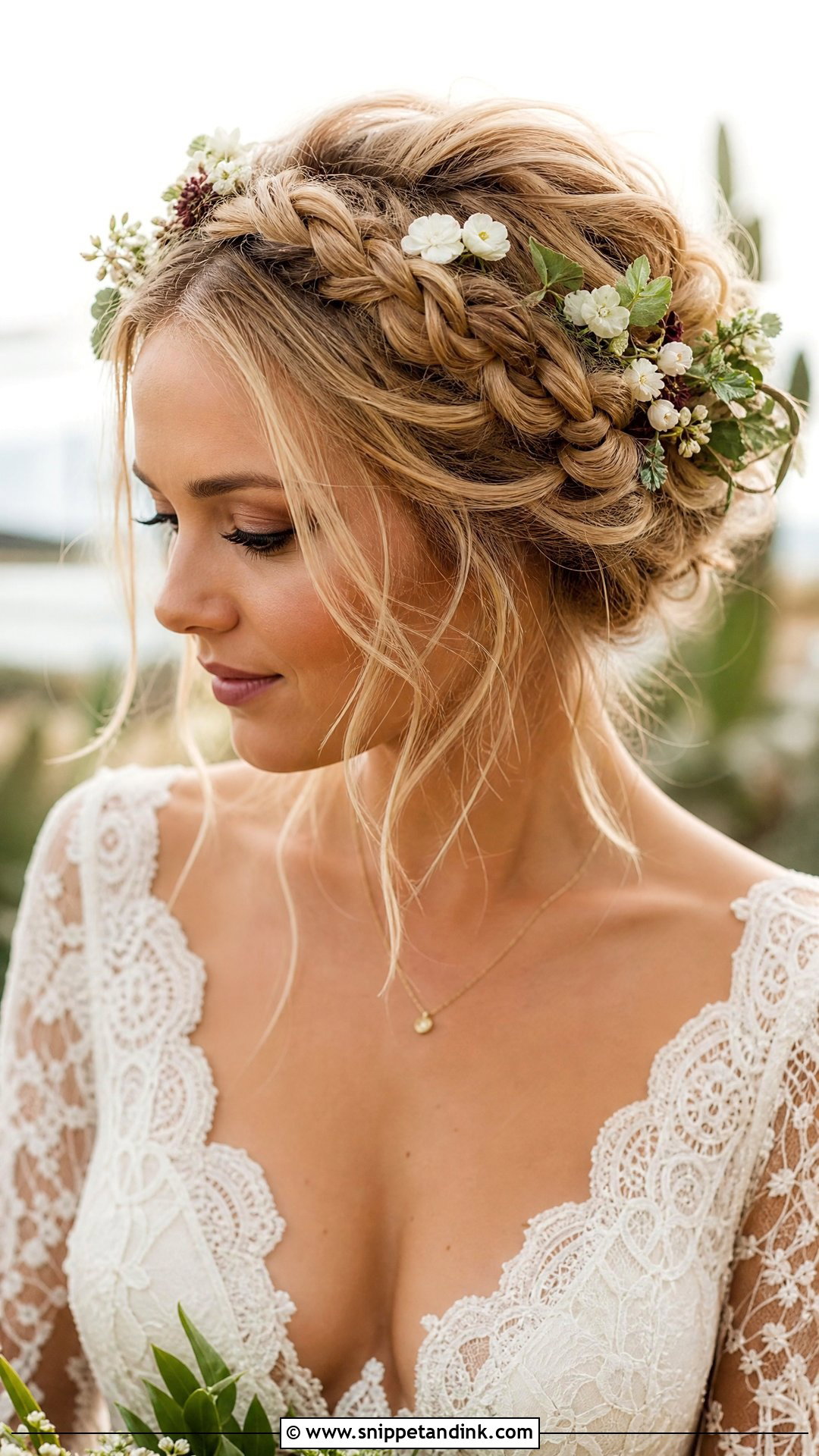
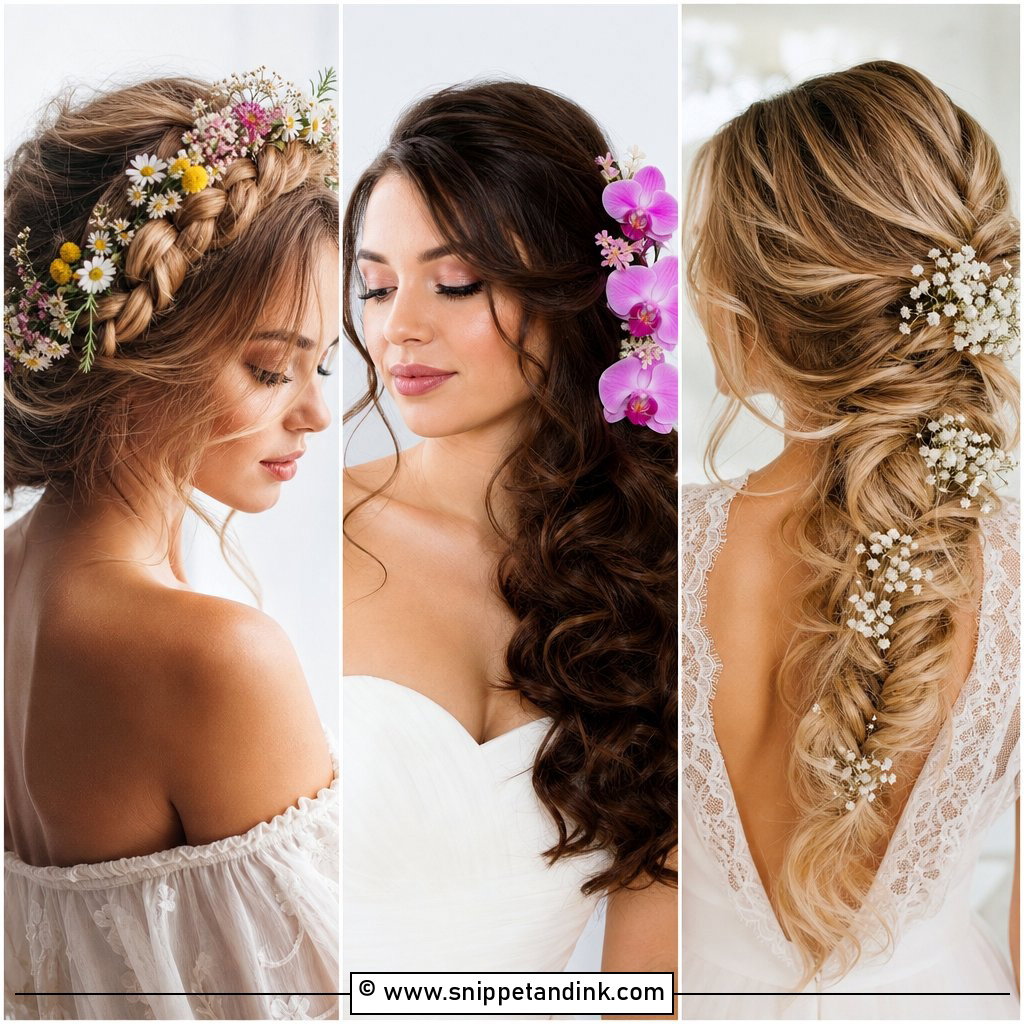
A braid wrapped around the head like a halo gives a goddess-inspired look, usually softened with loose tendrils and waves. Outdoor, garden and festival-style weddings suit it, along with fresh blooms or trailing greenery, and the rest of the hair can stay down or go into a loose bun. Length is the catch. The braid has to reach around the head, so on shoulder-length hair I make two braids, one from each side, and pin them where they meet. That join is exactly where I tuck a flower.
8. Sleek Low Ponytail
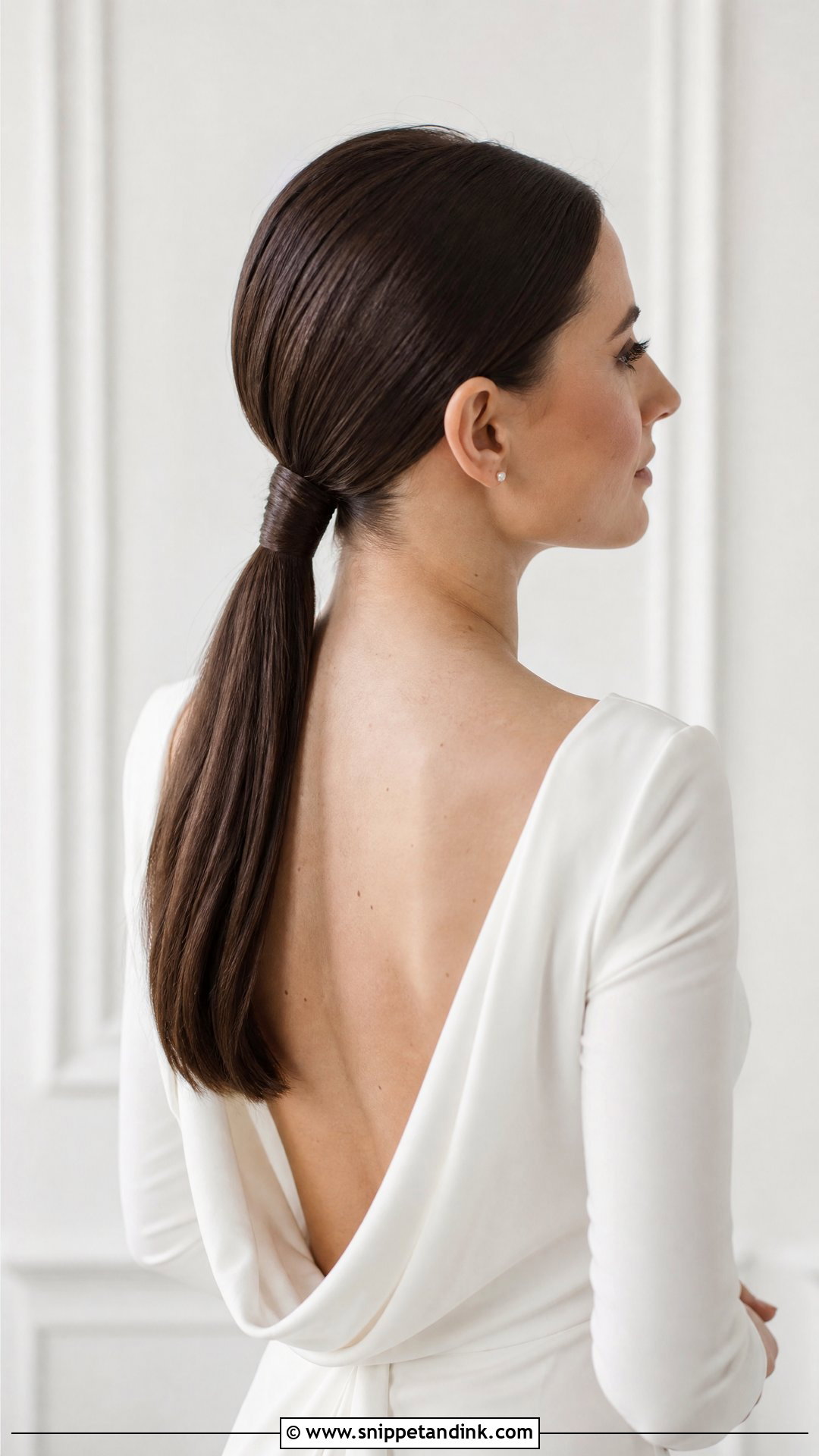
Simple, but unforgiving. All the hair is smoothed back into a ponytail at the nape, a strand is wrapped around the base to hide the elastic, and that is the whole style. City weddings, statement gowns and bold accessories suit it. What I watch for is the elastic sliding down during the day on slippery hair, so I use two small elastics, one above the other, and a crisscross of pins through the wrap. A touch of lift at the crown stops it looking flat in profile photos.
9. Romantic Side-Swept Curls
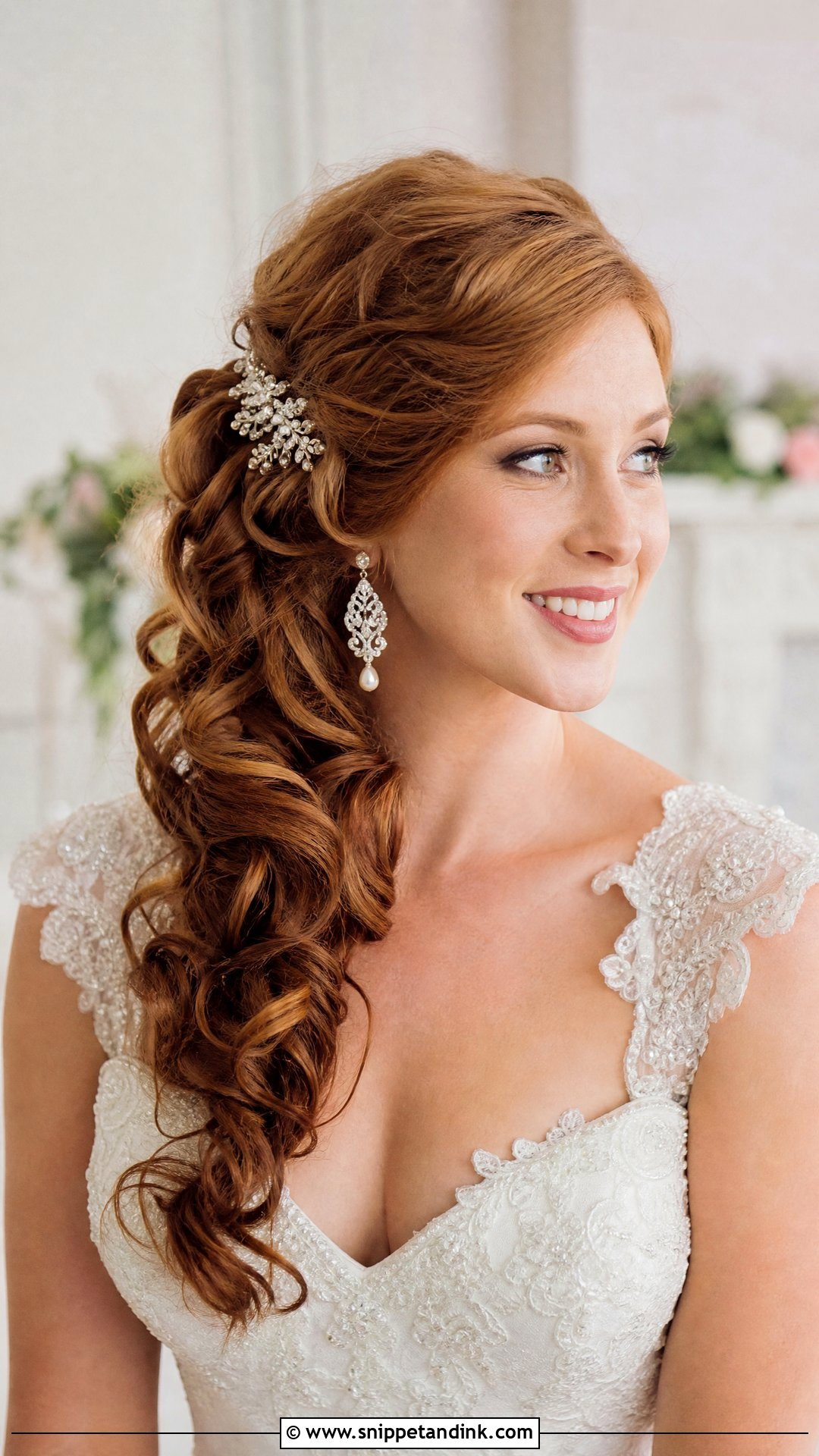
This is old Hollywood: voluminous curls brushed over one shoulder, leaving the other side clear to show an earring. The sweep only stays put if it is anchored underneath, so I set a row of crossed bobby pins behind the ear on the clear side, hidden beneath the curls. The curls can stay defined or be brushed out softer. A jeweled clip or a flower behind the ear finishes it for a vintage or classic wedding. Do check the neckline, because a one-shoulder dress on the swept side fights the hair.
10. Twisted Chignon
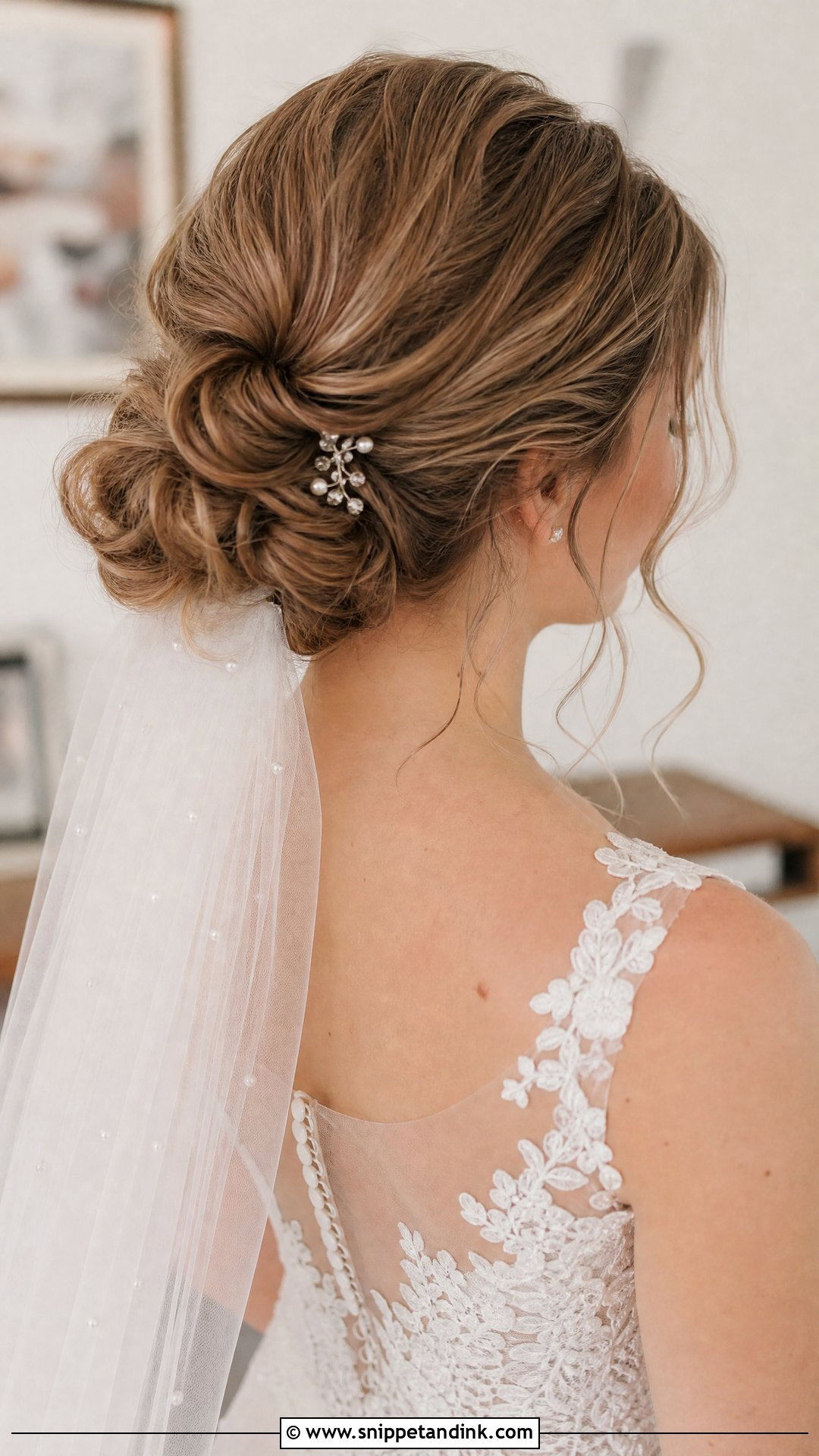
A series of twists arranged into a low knot at the back of the head gives detail without fuss. The twists add texture that reads well in photos, and because each section is pinned individually, a twisted chignon holds through a long celebration. I can leave a few face-framing pieces loose or keep it sleek, and it works with a veil, comb or delicate pins. On layered hair the shorter layers can pop out of the twists, so I prep with texture spray and pin the ends in as I go.
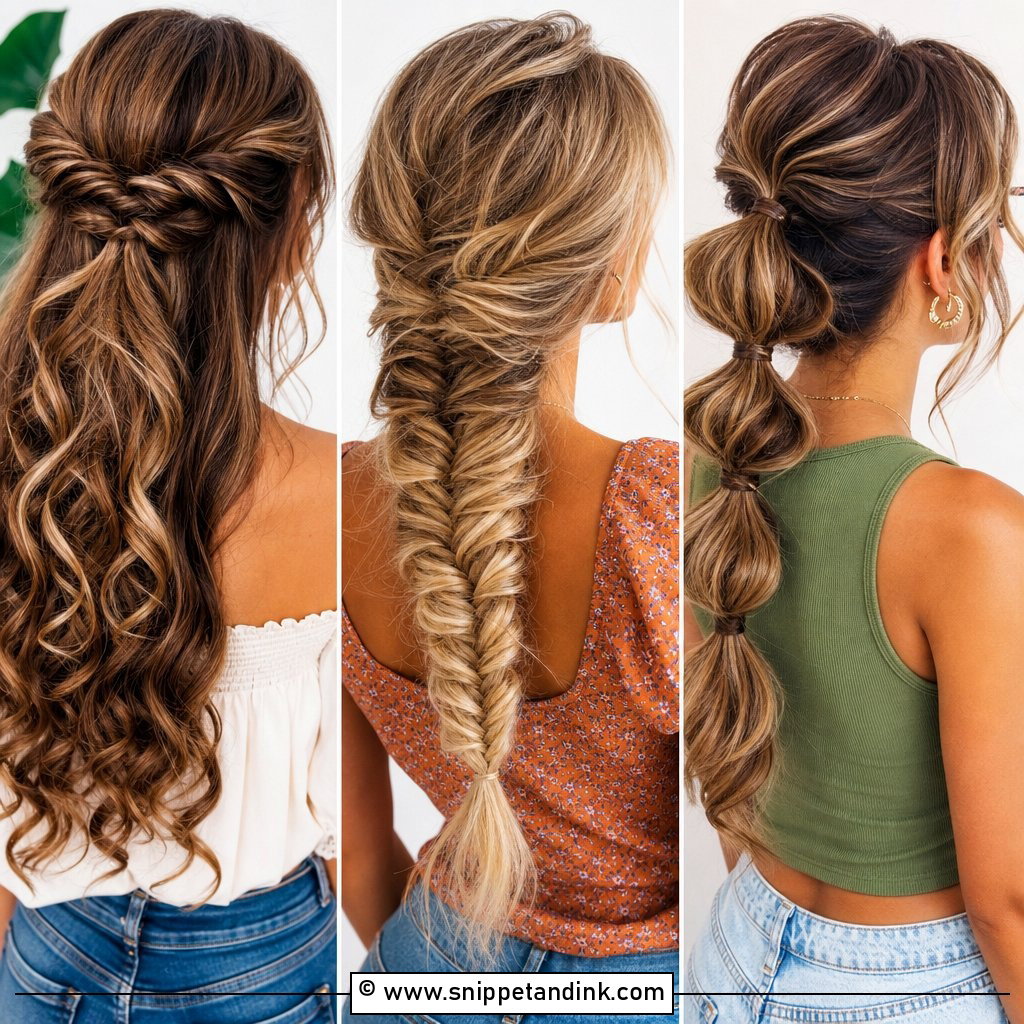
11. Half-Up Braided Style
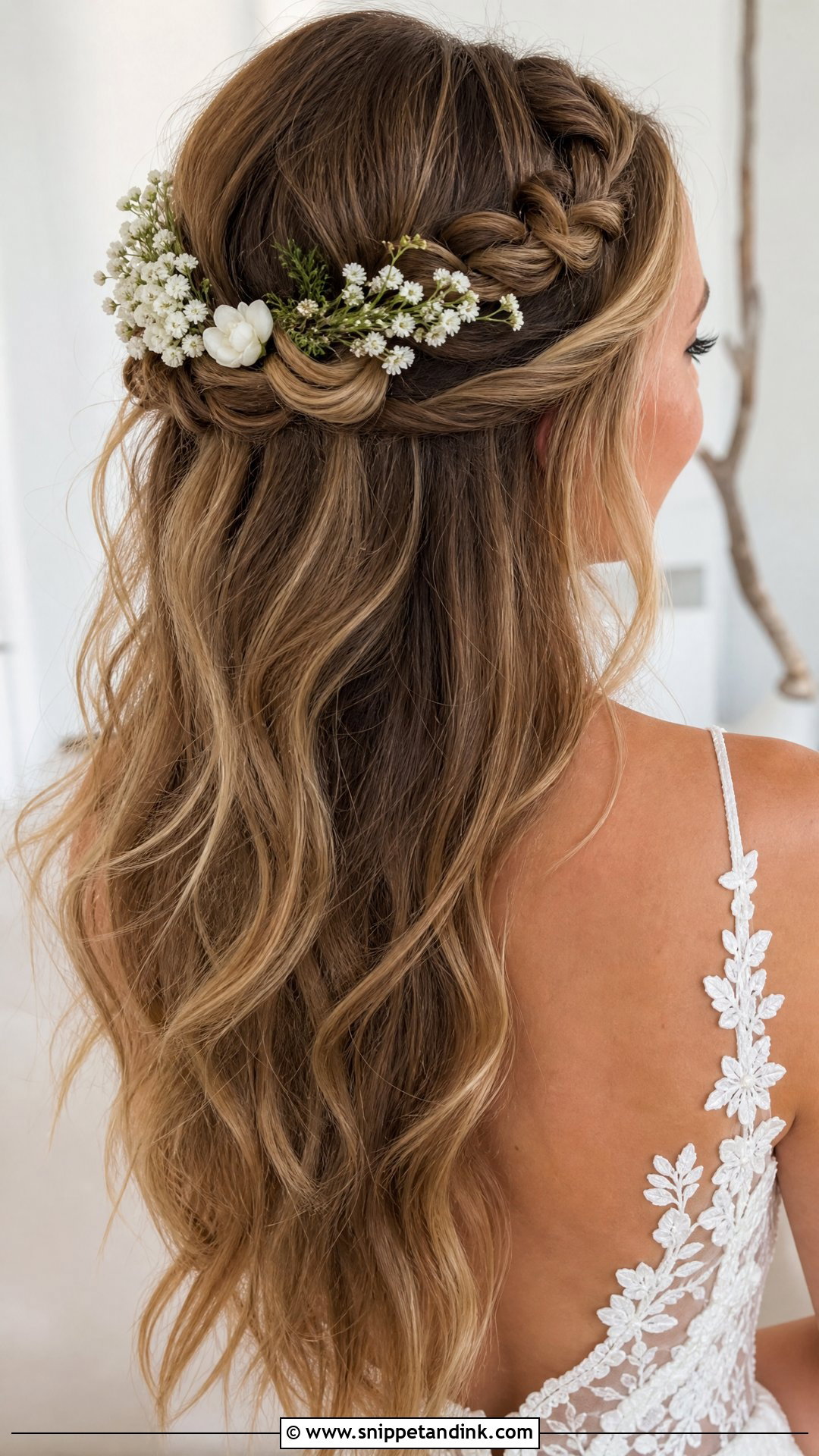
The top sections are braided back and the rest left loose, so the braids frame the face. Fishtail, French or a simple three-strand braid all work; fishtail gives the most texture and French the neatest line. Small flowers or pearls between the braids add a pretty touch. Medium and long hair suit it best. The loose lengths underneath need the most work, since the braids will hold but the waves will relax, so I curl them firmly and set them with a flexible spray.
12. Voluminous Curls With Veil
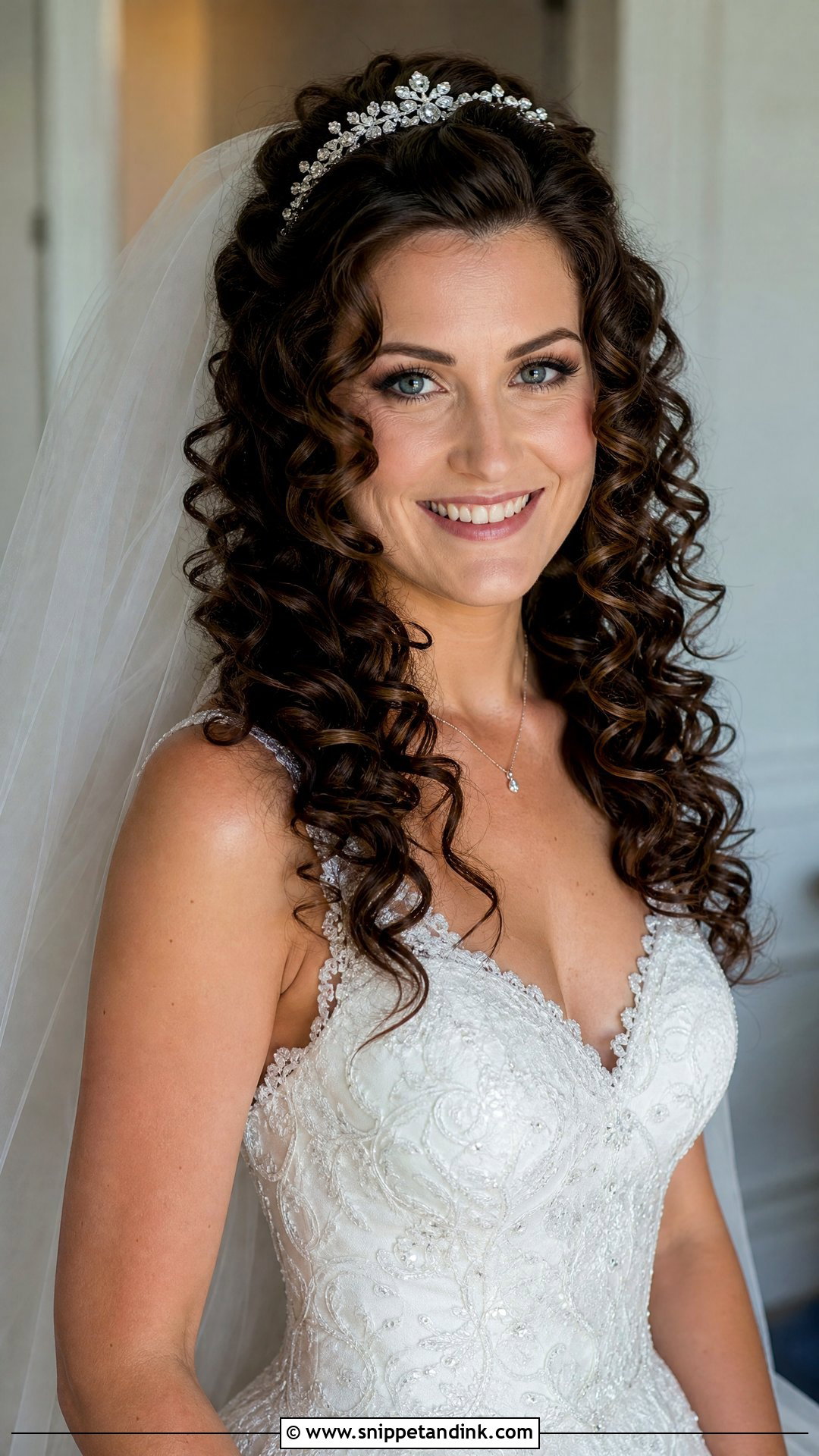
Big curls and a veil are the traditional bridal picture. The volume comes from prep: root lift at the crown, curls set in small sections and left to cool. The veil comb slides beneath the curls at the back of the crown, and I anchor it on a base of crossed pins so the weight of the tulle does not drag the curls flat. A jeweled comb adds sparkle for classic and formal weddings. On very fine hair I add a few clip-ins so the curls still look full by evening.
13. Sleek Bob With Veil
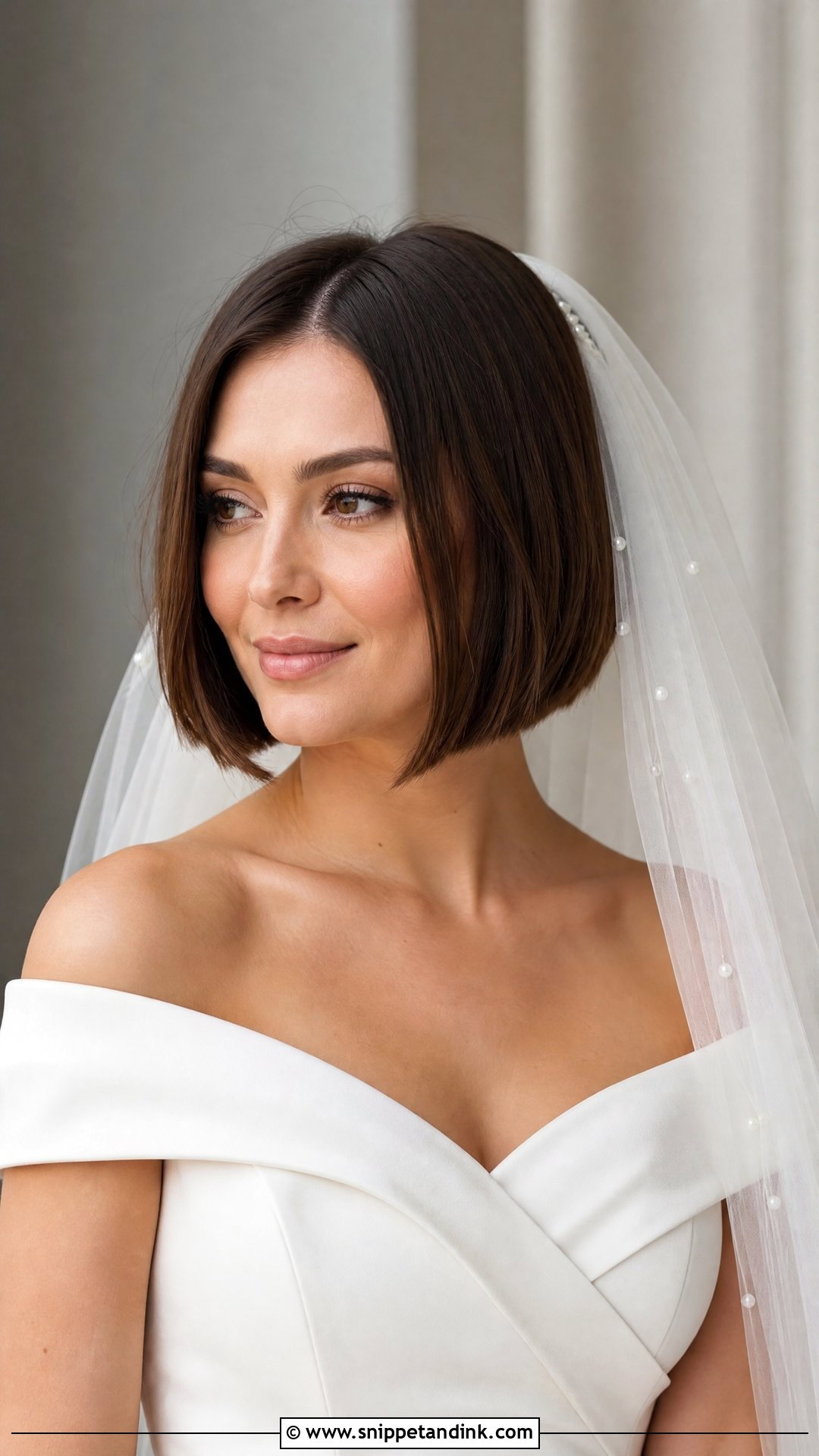
Short hair needs no apology on a wedding day. A sleek bob, blow-dried smooth and straight, frames the face and works with almost any veil, from a birdcage to a classic veil set at the back. Placement is the challenge because there is less hair to anchor a comb, so I pin the comb into a tiny hidden twist at the crown. A headband or small clip adds sparkle. Have your trim two to three weeks before the wedding rather than the week of, so the ends have time to settle.
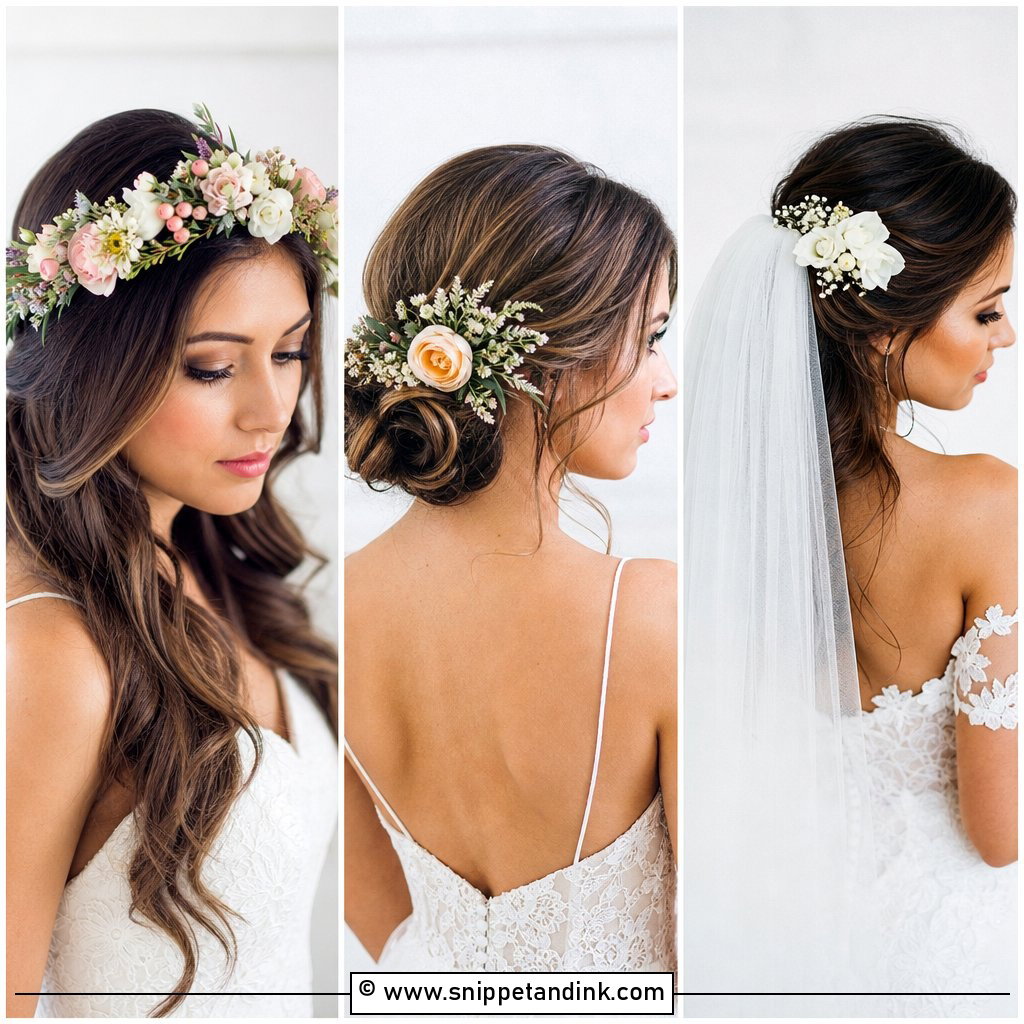
14. Flower Crown Updo
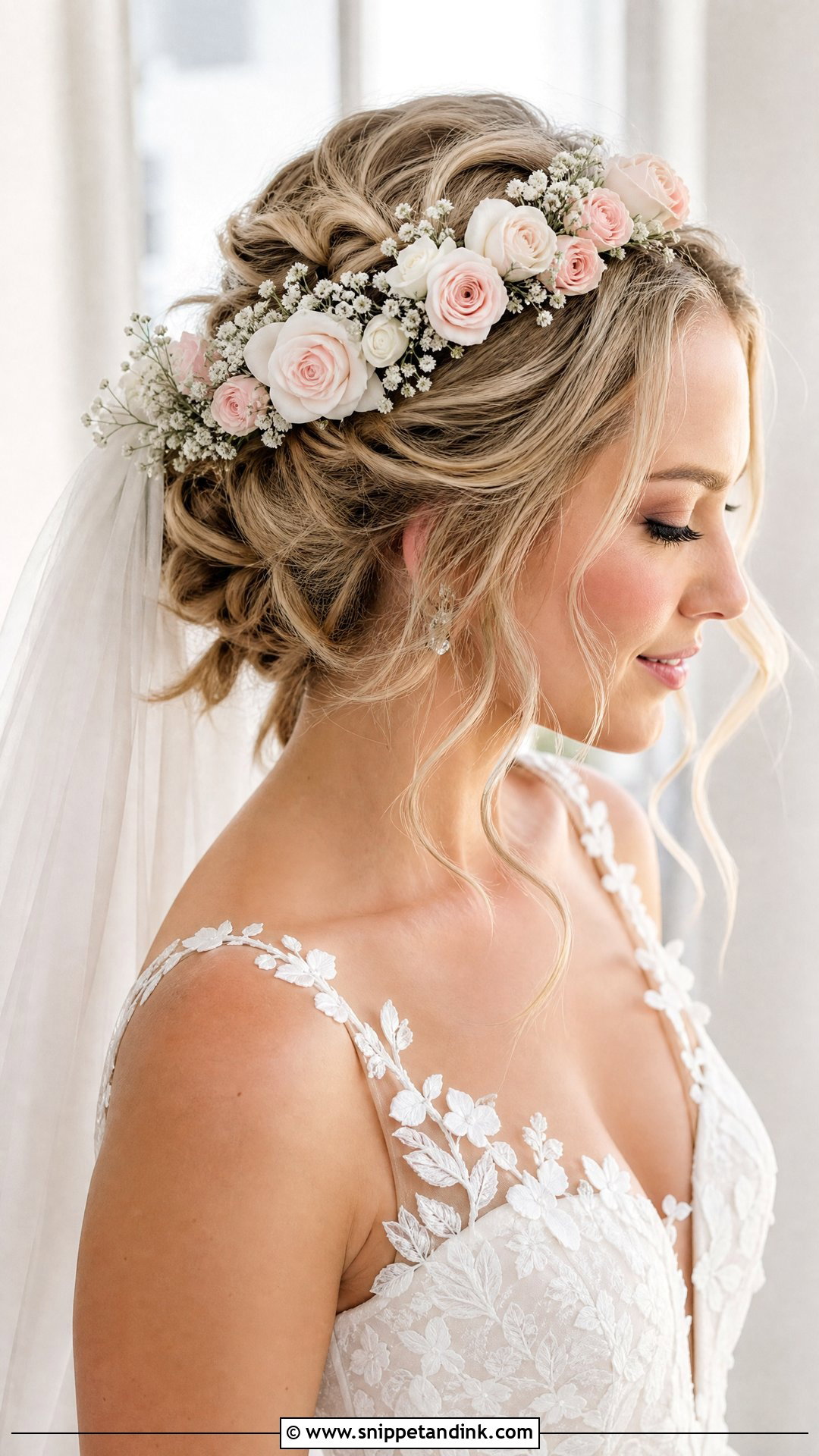
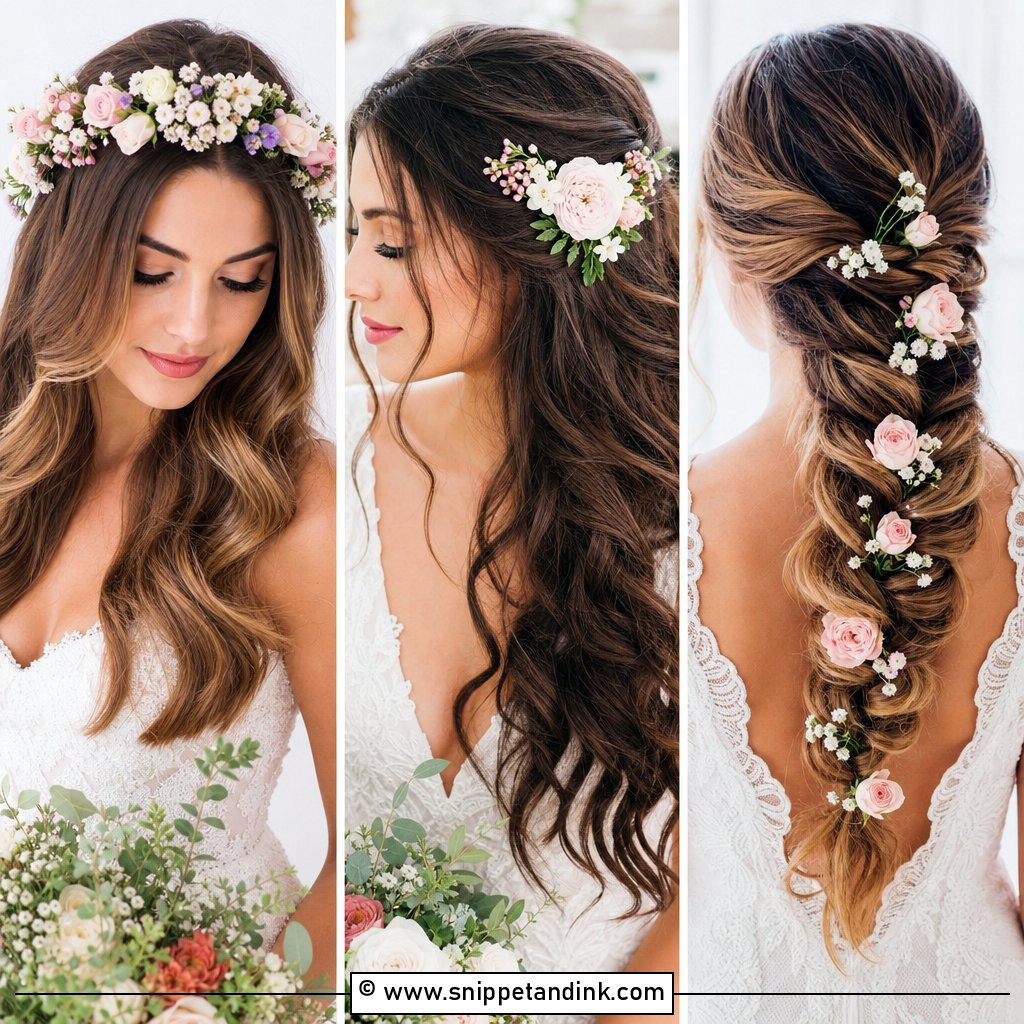
A soft updo with a crown of fresh or dried flowers suits garden and boho weddings and echoes the bouquet; baby’s breath, roses and eucalyptus are common choices. I always put the crown on last and secure it with pins through its base into the updo, so it does not slide when you hug people. A flowing cathedral veil can sit behind it. Loose tendrils around the face soften the look. On hot days dried flowers are worth considering, since they will not wilt.
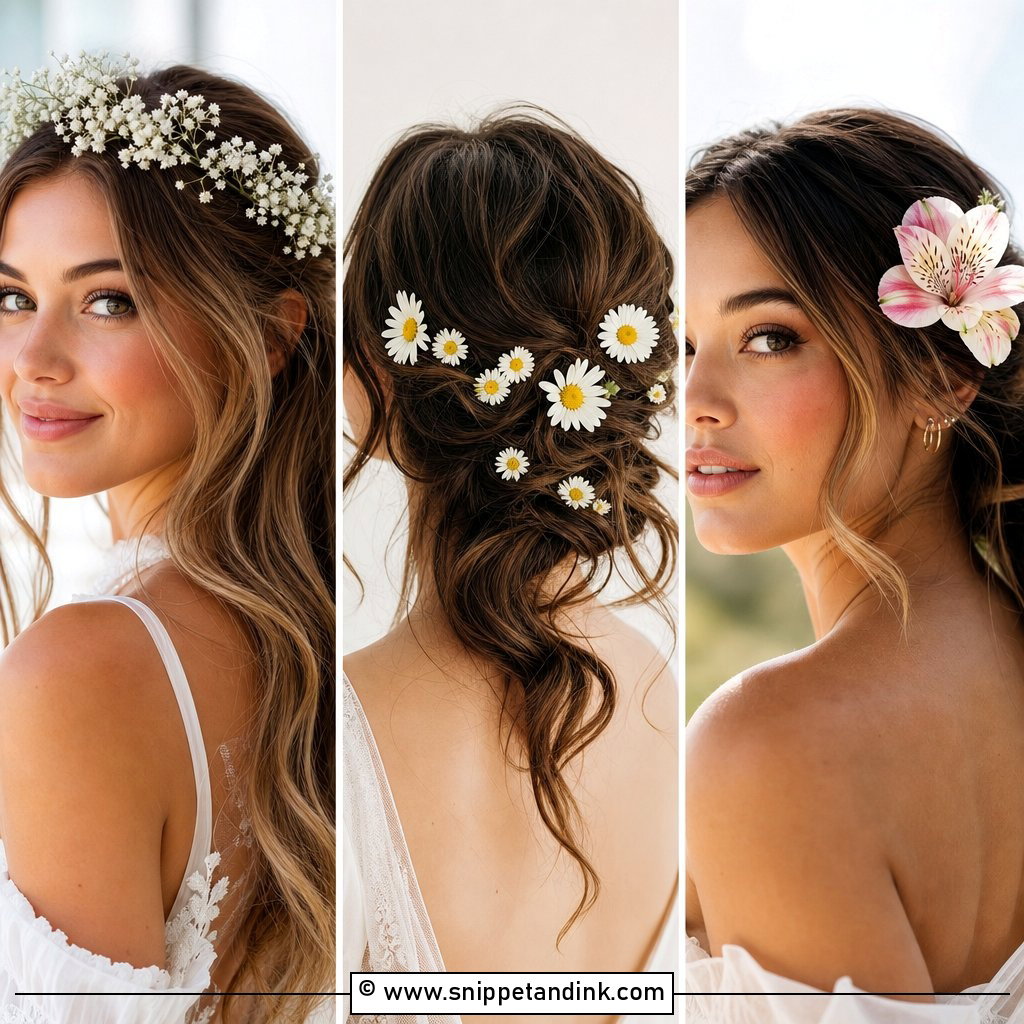
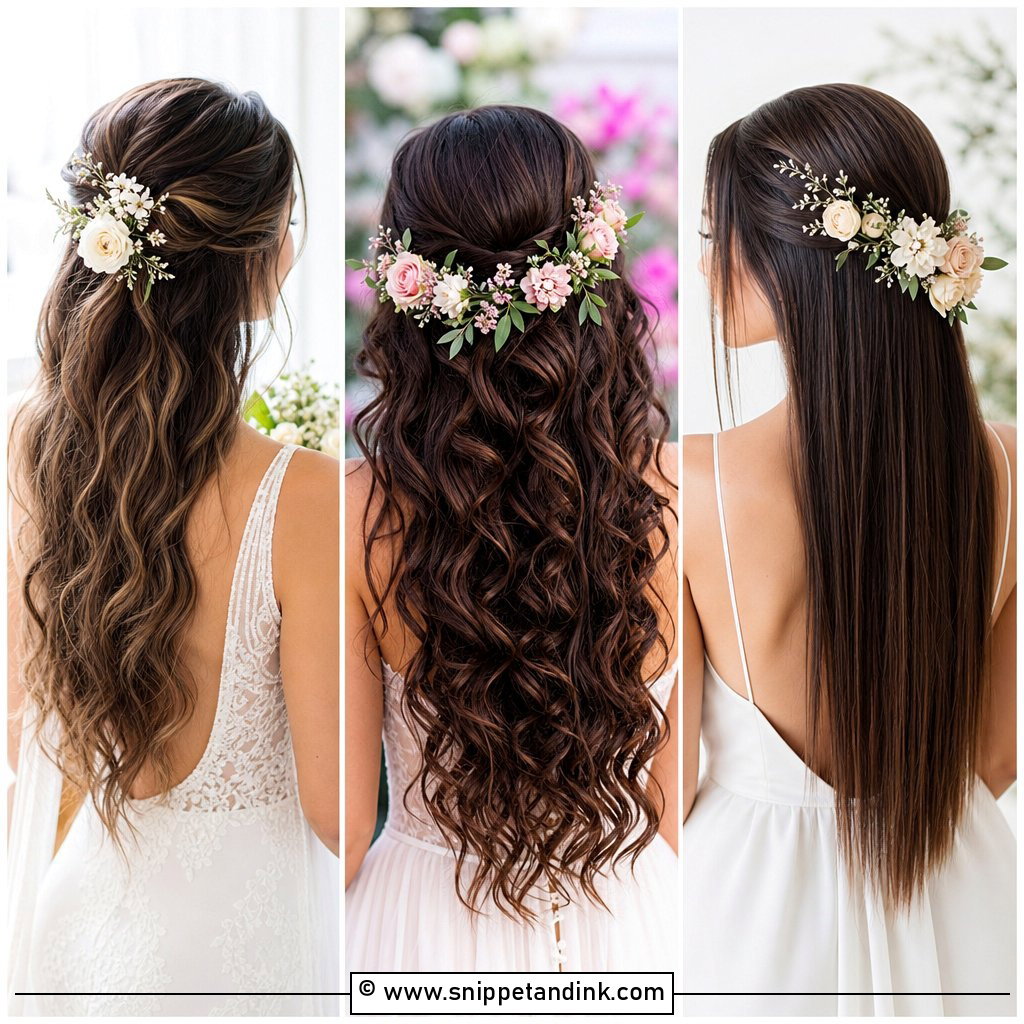
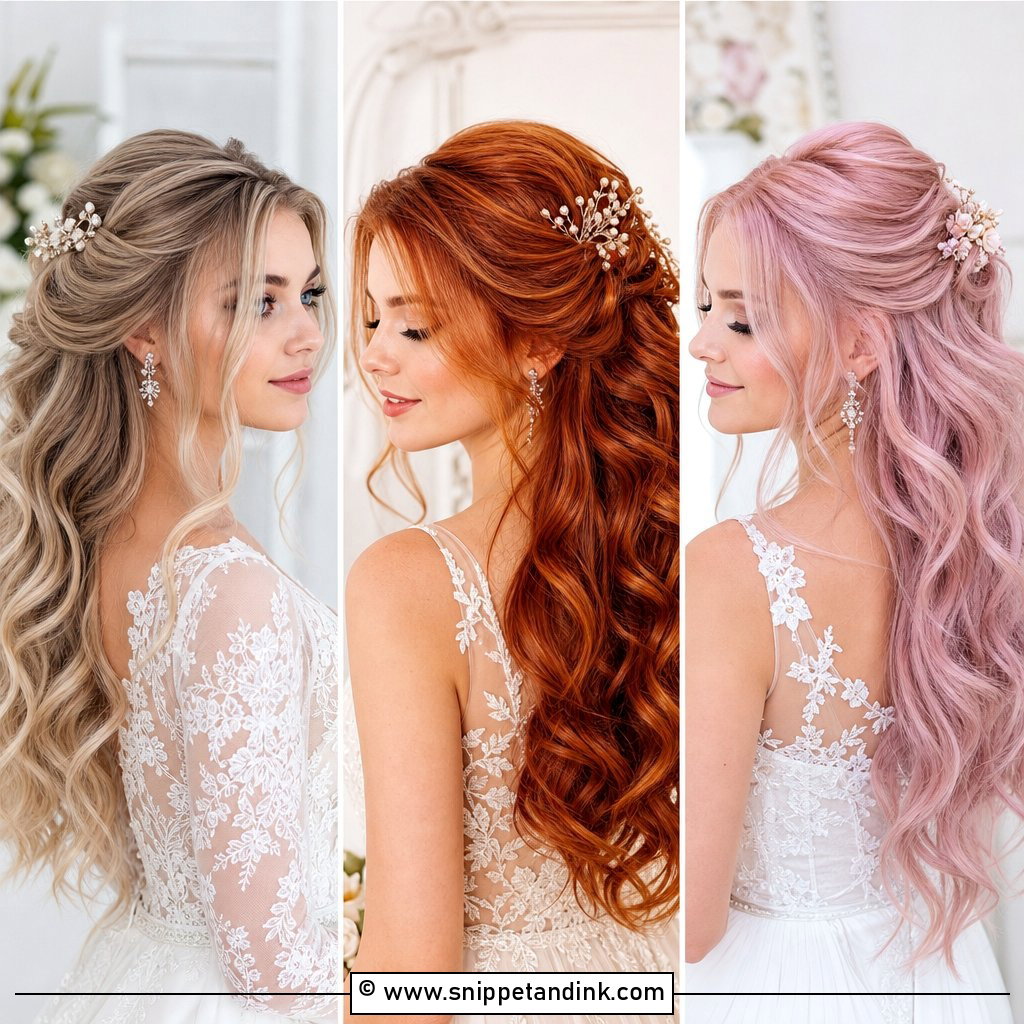
15. Pulled-Back Waves With Face Framing
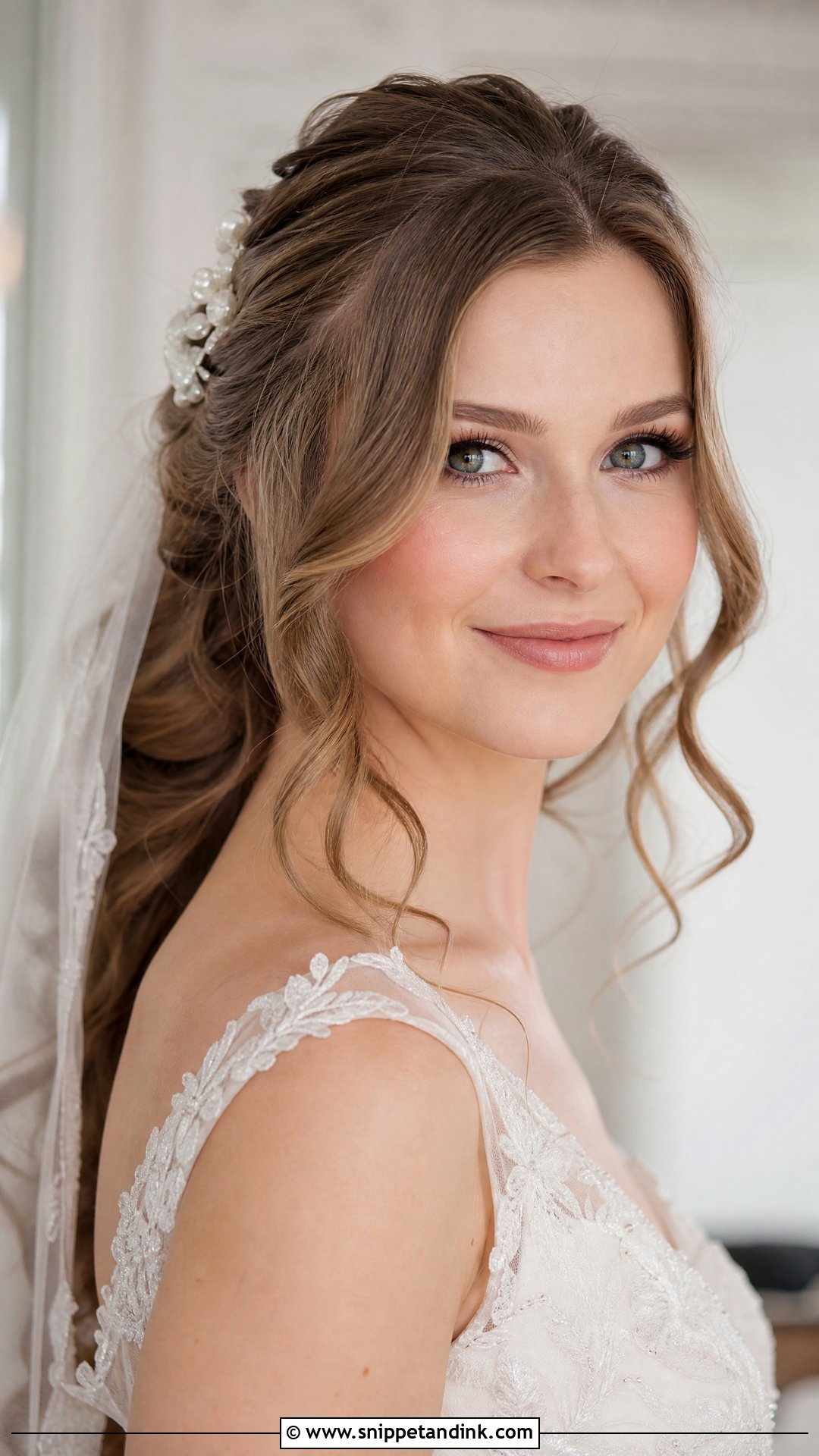
Waves fall around the cheeks while the front sections are pulled back and fixed with a clip, comb or twist. It shows off the face but keeps movement, and it sits well with nearly every neckline. The face-framing pieces make or break it. Cut too short or curled too tightly, they spring up and look stringy by the afternoon, so I curl them away from the face with a larger barrel.
16. Fishtail Braid Updo
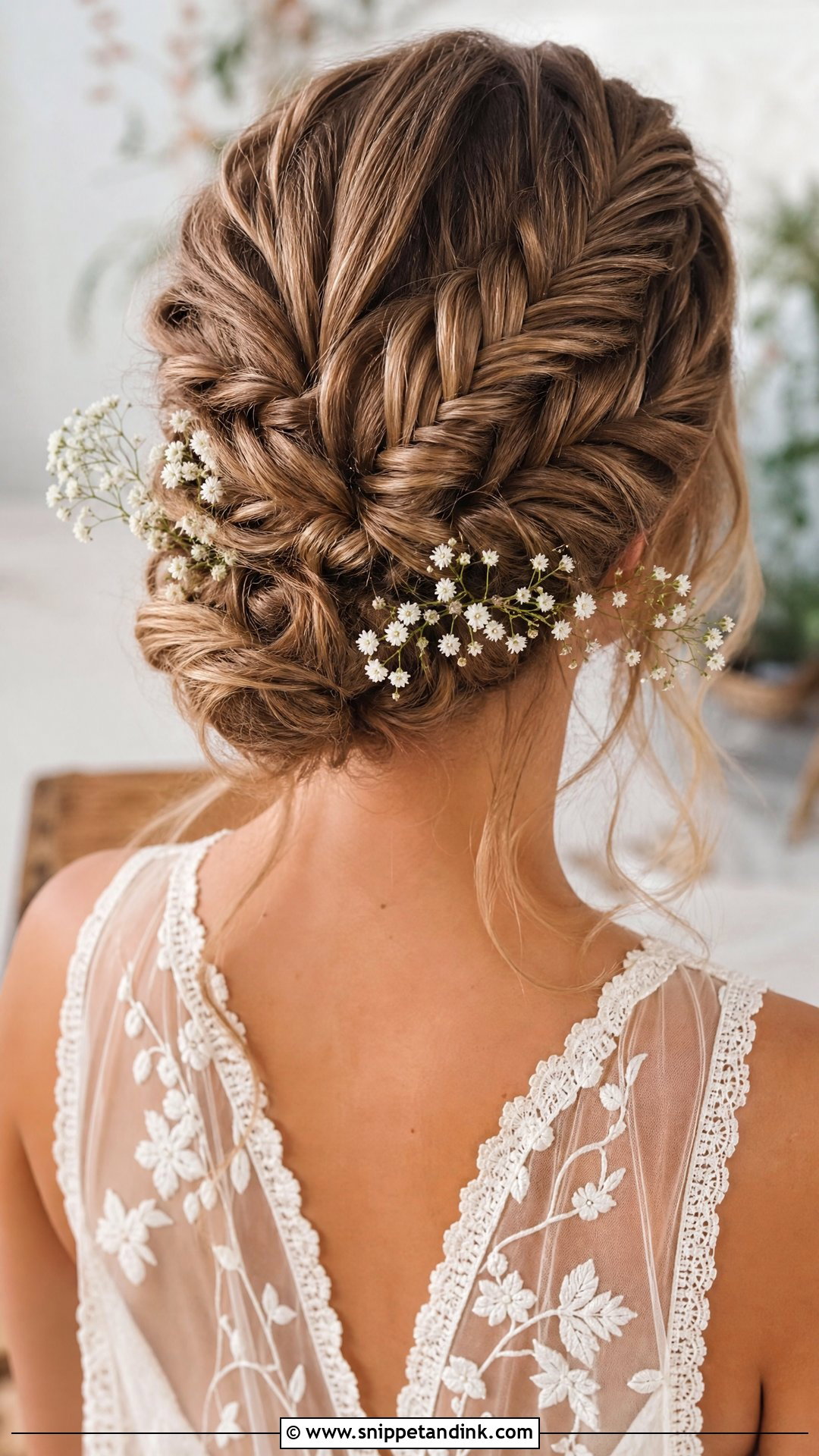
A fishtail braid is woven first and then pinned into a soft updo, which gives a handmade texture you can see in close-up. Boho, rustic and vintage weddings suit it, and a sprig of baby’s breath into the braid adds a romantic note. Pulling the braid looser makes it softer. Fishtails take noticeably longer to weave than a standard plait, so build that into your morning schedule, particularly if bridesmaids are booked in the same chair before you.
17. Vintage Finger Waves
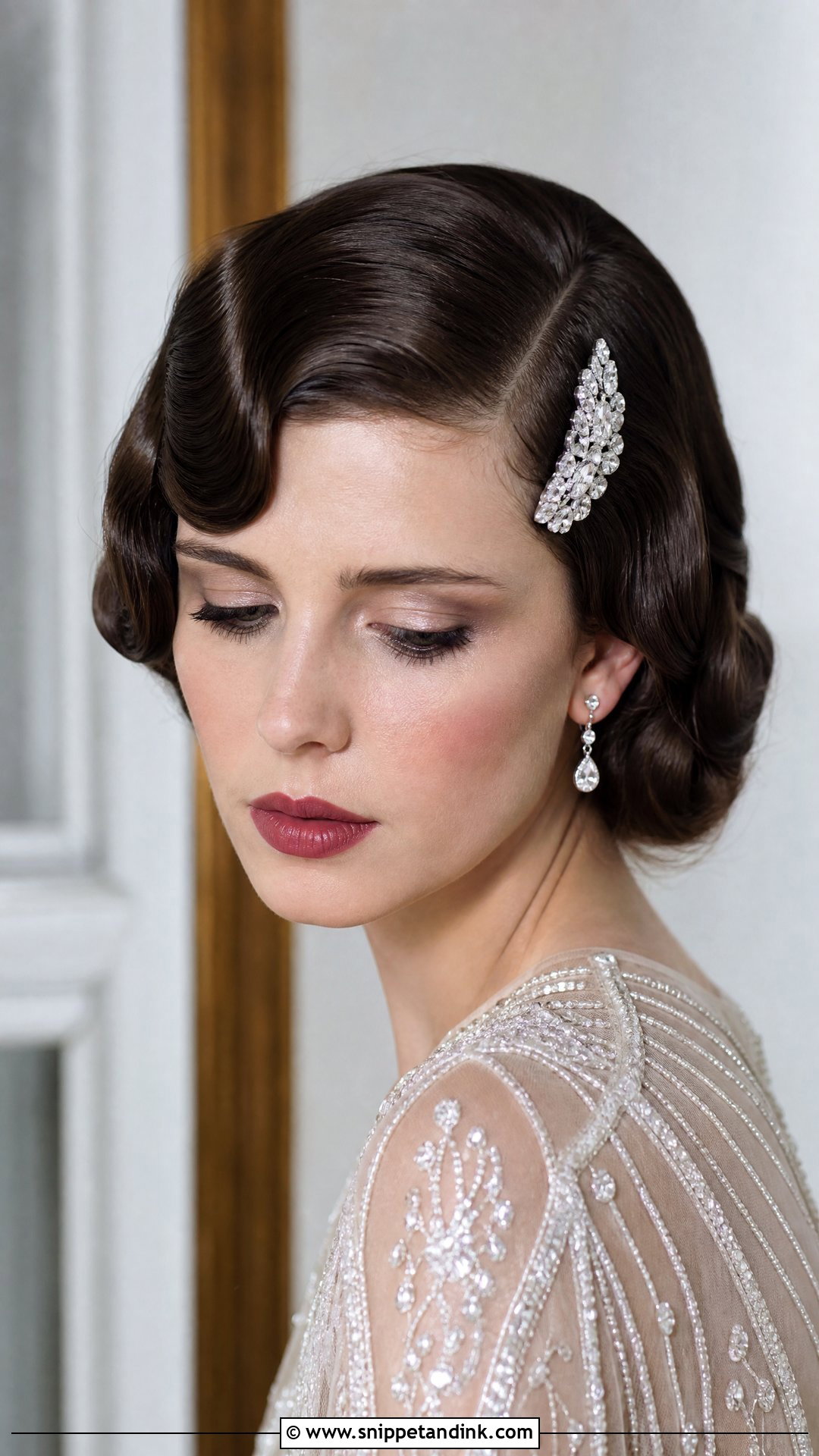
Sculpted, S-shaped waves set close to the head are the signature of 1920s glamour. Finger waves suit short and medium hair best, along with art deco weddings and structured gowns, and they photograph sharply in black and white. This is a specialist set. It is traditionally done with setting lotion, a comb and finger pressure on wet hair, or recreated with a flat iron and clips, and not every stylist offers it, so ask to see examples of their work. A jeweled clip or sparkling pin finishes it.
18. Twisted Half-Up Crown
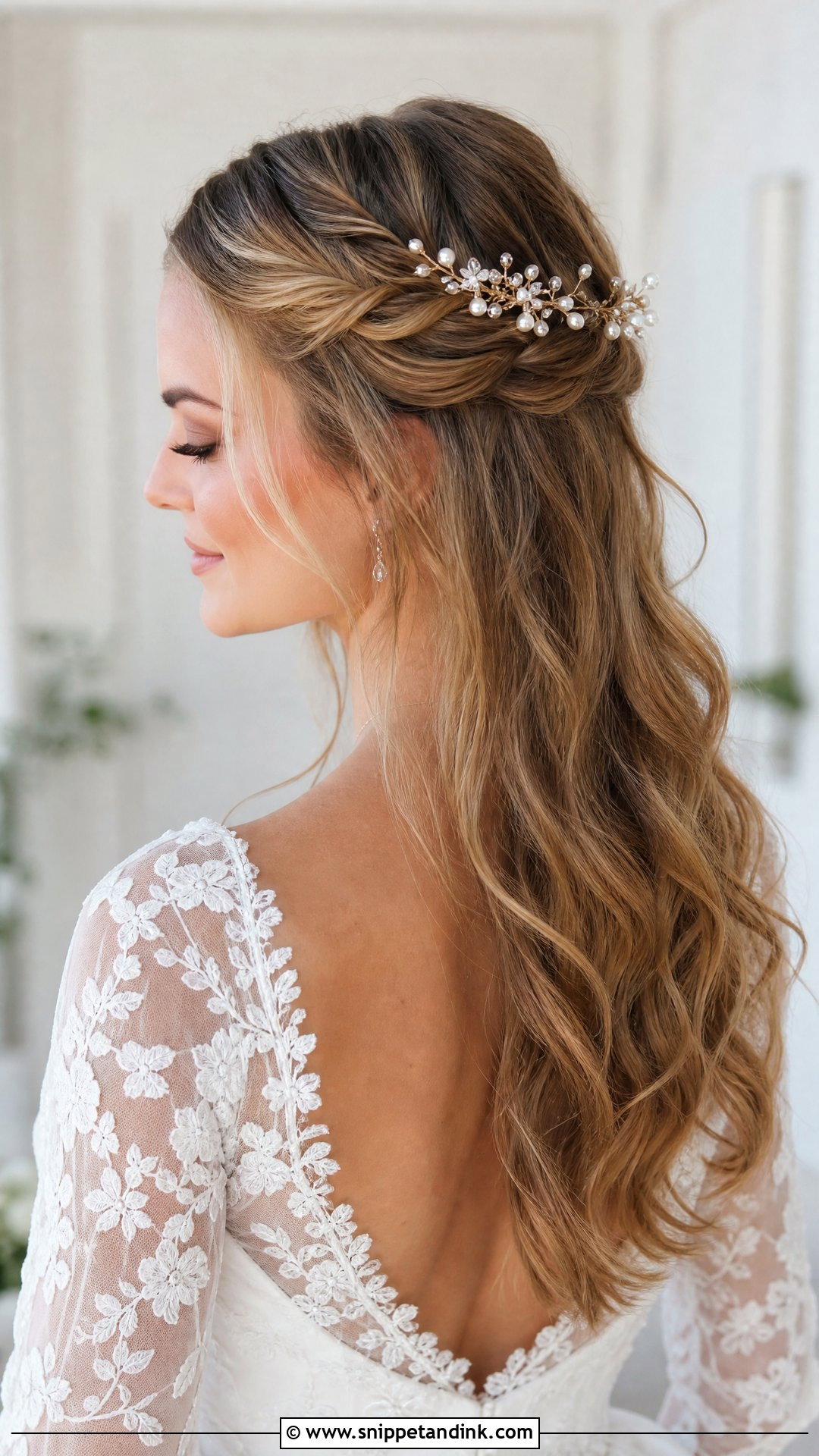
The top sections are twisted back into a soft crown while the rest falls free. It frames the face and catches light along each twist, and I suggest it when a bride wants detail but finds braids too busy. Small flowers or pearls along the crown add charm. Twists loosen faster than braids, so I pin each one at the back with crossed pins and set it with spray before the waves underneath go in.
19. Pinned Curls For Short Hair
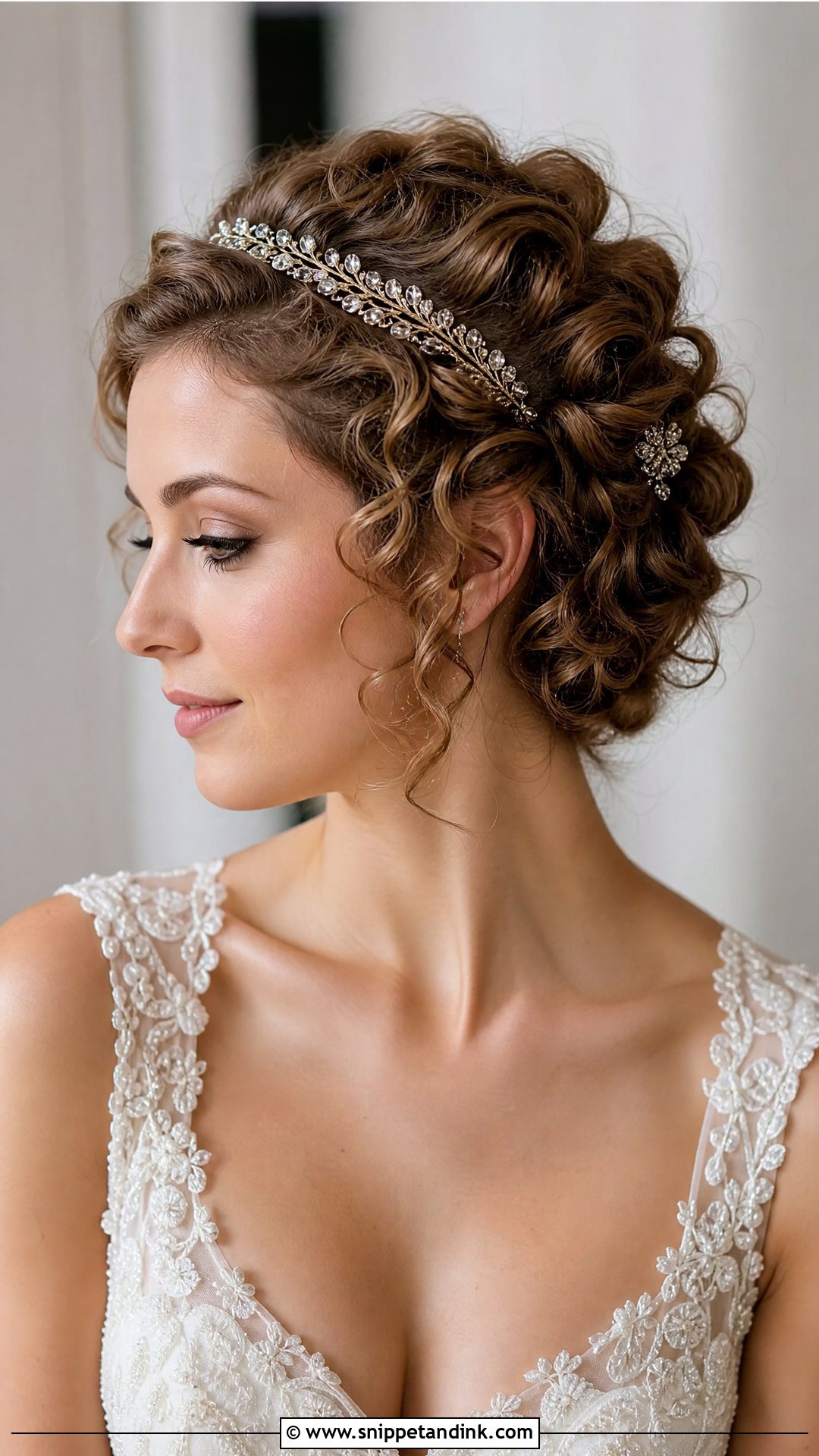
Short-haired brides can have romantic texture too. I curl the hair throughout, then pin sections back to build volume and shape, and a sparkly clip, jeweled pin or small flower finishes it. Veils and headbands both sit well with it. The pins have to be tucked where the curls cover them, since there is less hair to hide them. Short hair often holds curl better than long hair, because there is less weight pulling it straight.
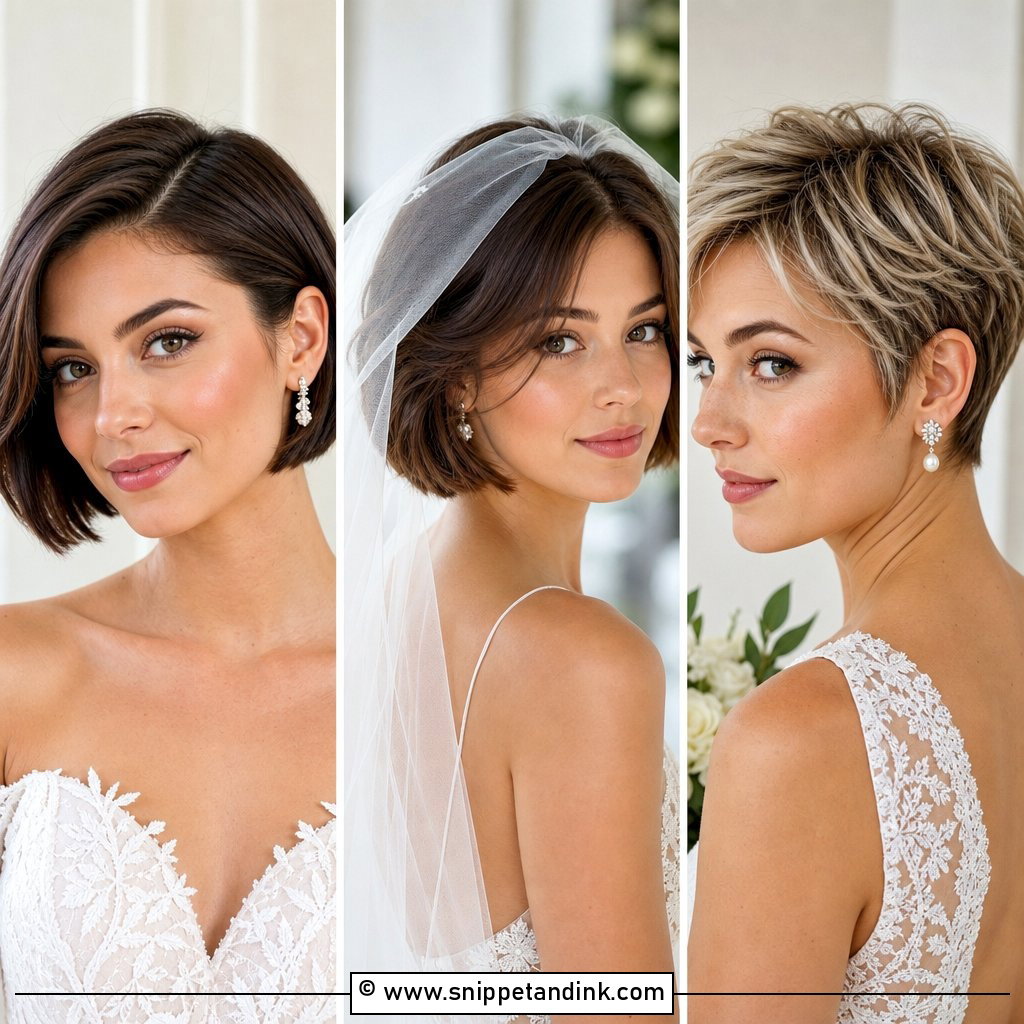
20. Loose Bohemian Side Braid
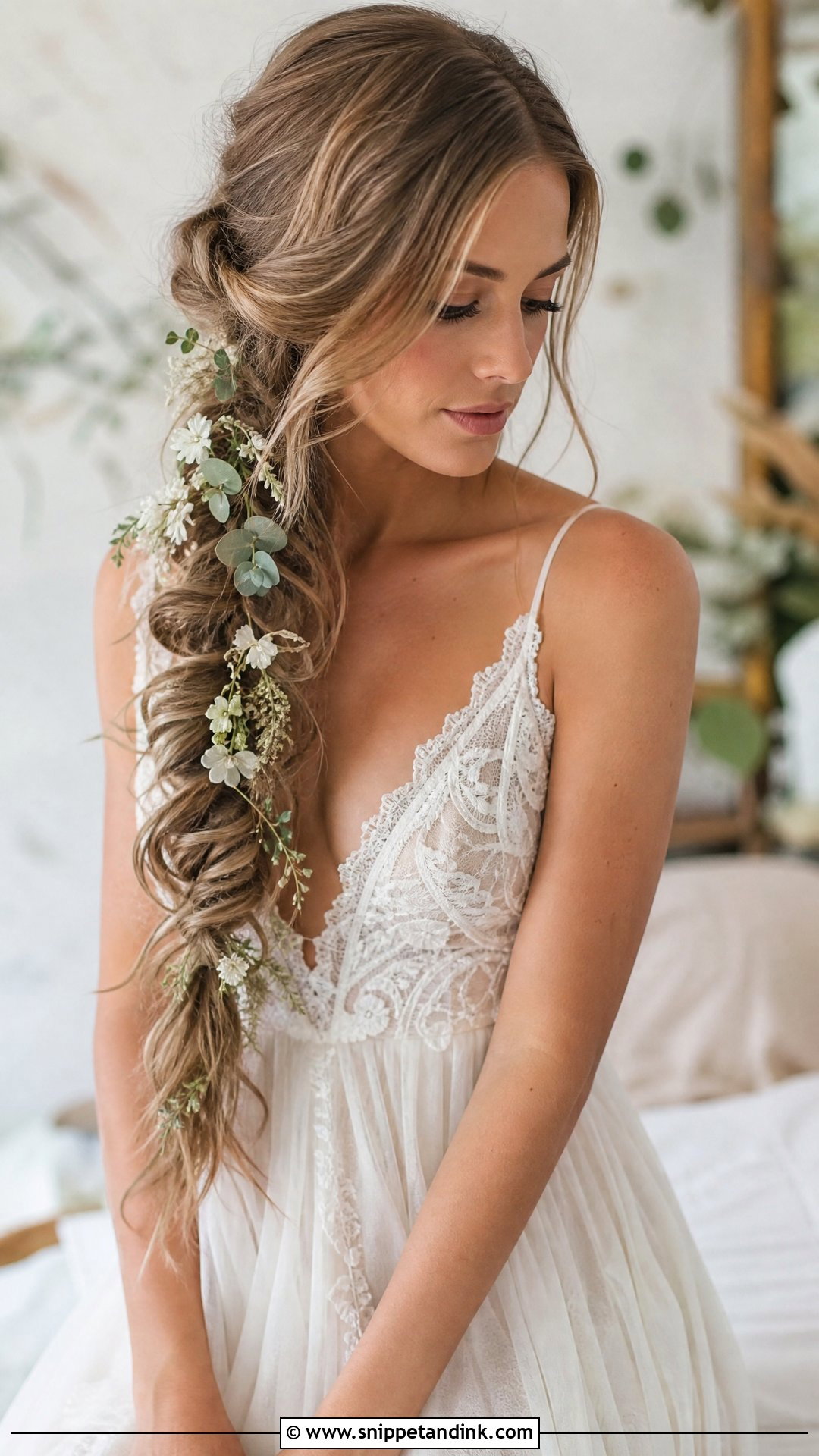
A soft braid over one shoulder, pulled apart for texture, is about as relaxed as bridal hair gets. Outdoor and festival weddings suit it, and you can weave in small flowers, greenery or ribbon. It works on medium and long hair. I start the braid behind the ear rather than at the nape so it falls forward naturally, and I only pull the loops apart after the end is secured, otherwise it loosens unevenly.
Which Blooms Last in Hair Past the First Dance
Flowers in hair have no water source, so they start to wilt the moment they are cut. Ask your florist to prepare hair flowers separately, wired and conditioned, and to deliver them to where you are getting ready rather than to the venue.
- Hardy choices: baby’s breath, spray roses, waxflower, eucalyptus, small orchids and statice.
- Fragile choices: gardenias, hydrangea and peonies bruise and droop quickly, especially in heat.
- Dried or preserved flowers hold their shape all day and weigh less, which helps on fine hair.
I add flowers last, sliding the wired stems into the style alongside the pins. Weight matters here too. A full ring of fresh flowers pulls on a soft updo, so a few small clusters often look better and stay put longer.
Bring Earrings, the Veil and an Honest Photo of Your Hair
Inspiration photos help most when the hair in them looks like yours in texture and density. A thick, waist-length braid will not come out the same on fine shoulder-length hair, and I would rather tell you that at the trial than on the morning. Bring the veil or headpiece too, since its comb and weight decide where the style can sit, and your earrings, because they decide whether you want your ears covered. Wear a button-up top so you can change without dragging anything over the finished hair.
On the day, plan roughly an hour to an hour and a half for an updo, a little less for half-up or waves, and more for detailed braiding. Ask your stylist how they want your hair washed. Many styles grip better on hair washed the day before, but very oily or very fine hair often needs washing that morning.
Your Veil and Neckline Narrow the List Fast
There is no single trend you have to follow. Start with your neckline and the back of the dress, then the veil, then the venue and the weather, and only then the inspiration photos. Fresh flowers, pins or a comb can make any of these styles your own. Save the ones you like, bring them to your hairstylist, and ask for an honest answer about which ones your hair will actually hold.
You'll Like These Ideas:



Leave a Reply