
Lace and a halter neckline pull in two directions at once. The halter shows off shoulders and arms; lace adds texture right where the strap meets skin. Bridal collections now put lace halter bodices on almost every silhouette, from airy A-lines to fitted mermaids, with open backs, long trains and raised appliqués. What decides whether you’ll love wearing one is less the photo and more the lace itself: how heavy it is, what it’s lined with and how it sits against your neck. Each of the twenty looks below comes with the fitting-room checks I’d make before buying.
Heavy Lace or Light Lace on a Neck Strap
On a strapless gown, lace weight is a style decision. On a halter it’s also a comfort decision, because the front of the bodice hangs from the back of your neck. Here’s how the common laces behave once they’re cut into this shape.
- Chantilly is fine and flat with a delicate outline. Light enough that you barely notice it on the strap, but it snags easily and needs a lining for coverage.
- Alençon has a corded outline that gives motifs a raised edge. It’s my favourite for halter necklines because the cord gives the edge structure without much weight.
- Guipure is dense, heavy and holds its own shape. Lovely on high collars, but on a deep back it can pull the neckline forward.
- Beaded or 3D lace adds the most weight of all. If you love it, insist on internal support that carries the bodice from the waist.
The lining changes the dress more than most brides expect. The same ivory lace over a nude lining reads warmer and more detailed; over ivory it looks softer and more traditional; over champagne it looks vintage. Ask the salon to pin a swatch of each colour behind the bodice so you can compare them in a mirror.
1. High Neck Lace Halter Wedding Dress
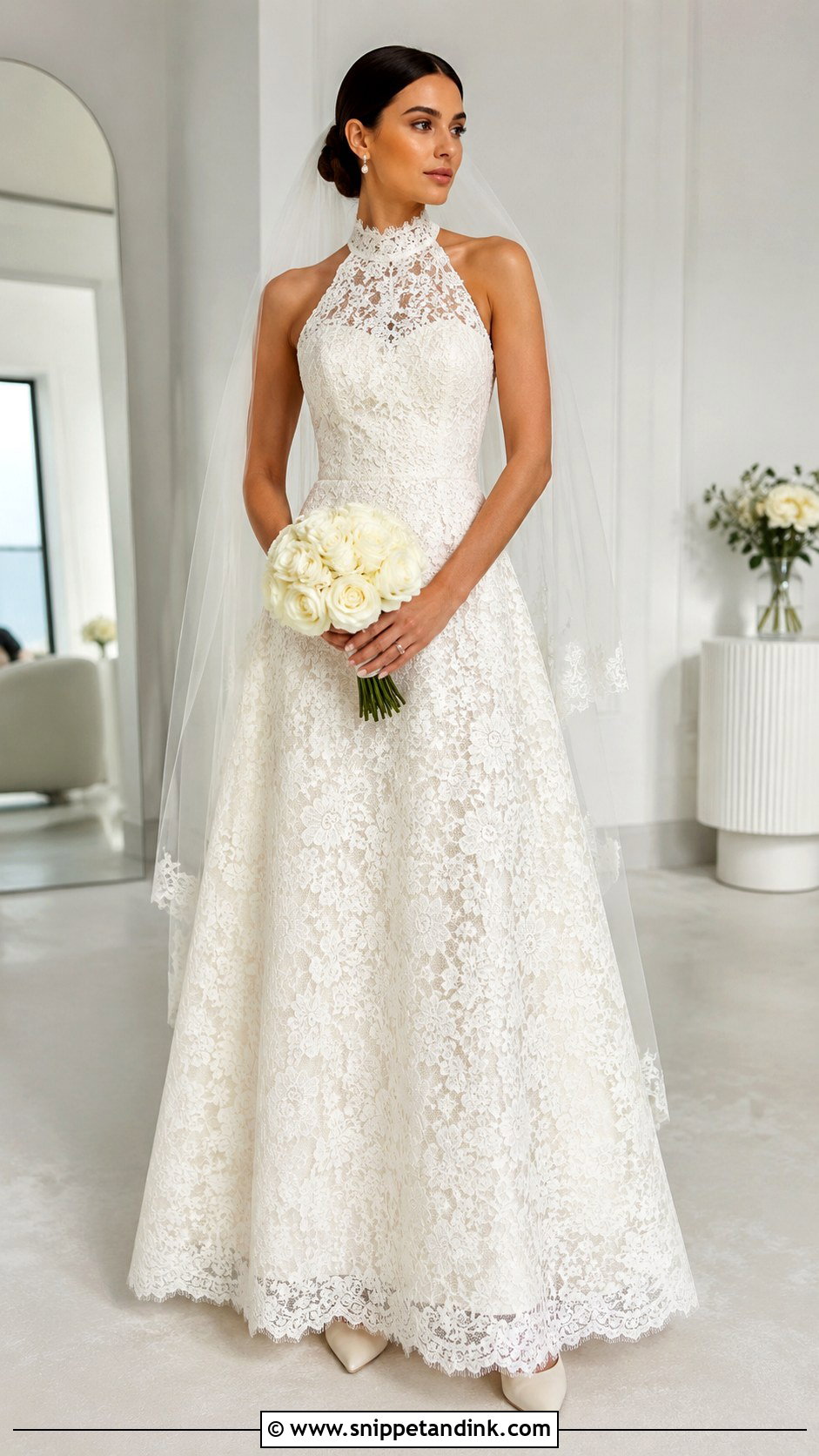
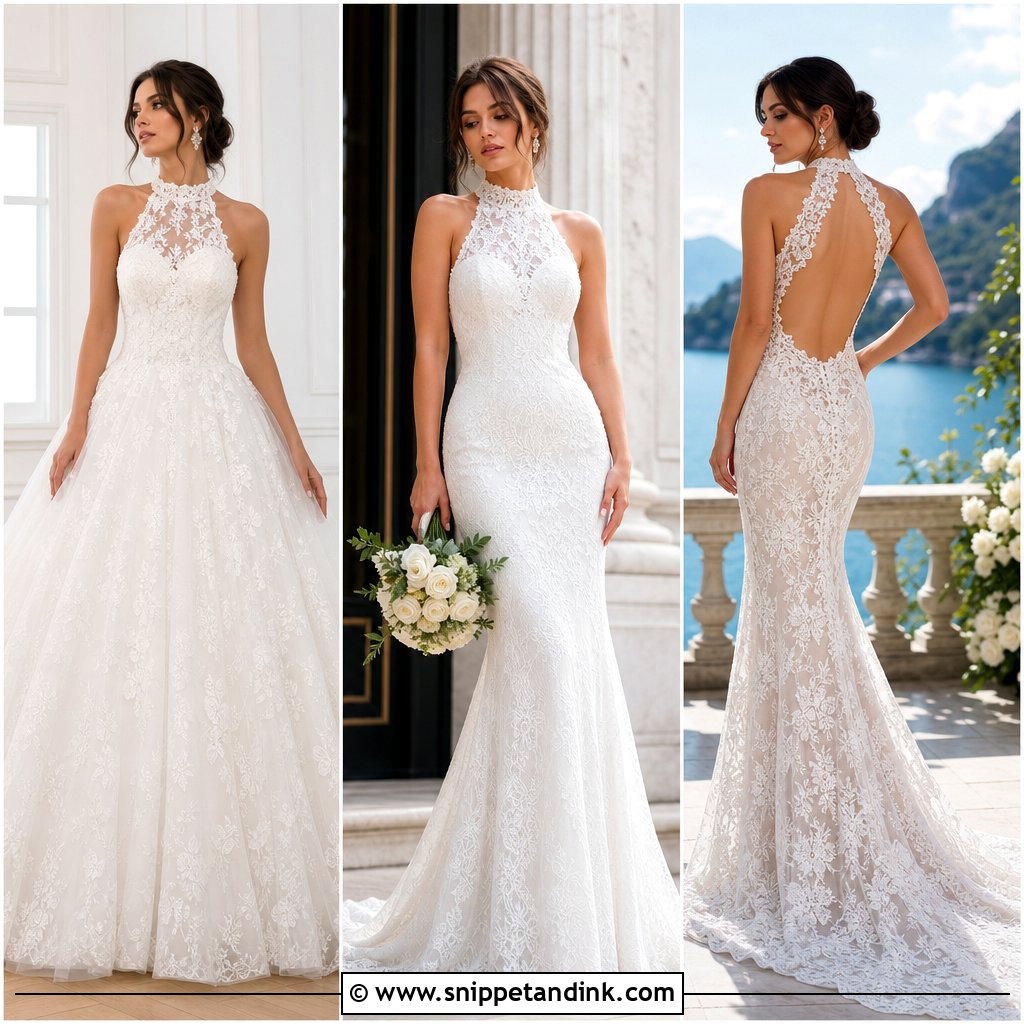
A high lace collar gives coverage and frames the face like a portrait mat. Fitted floral lace on the bodice over a soft A-line skirt keeps it from feeling stiff, and an ivory or nude lining shows the pattern without turning sheer. Pearl drops, a sleek low bun and ivory pointed pumps finish it, with a fingertip veil and white roses. Two checks matter. Turn your head fully left and right in the shop, because a lace collar that’s tight by a hair will press on your throat. And ask for a soft binding inside the neck edge; the cut ends of lace scratch after a few hours.
2. Open Back Lace Halter Wedding Dress
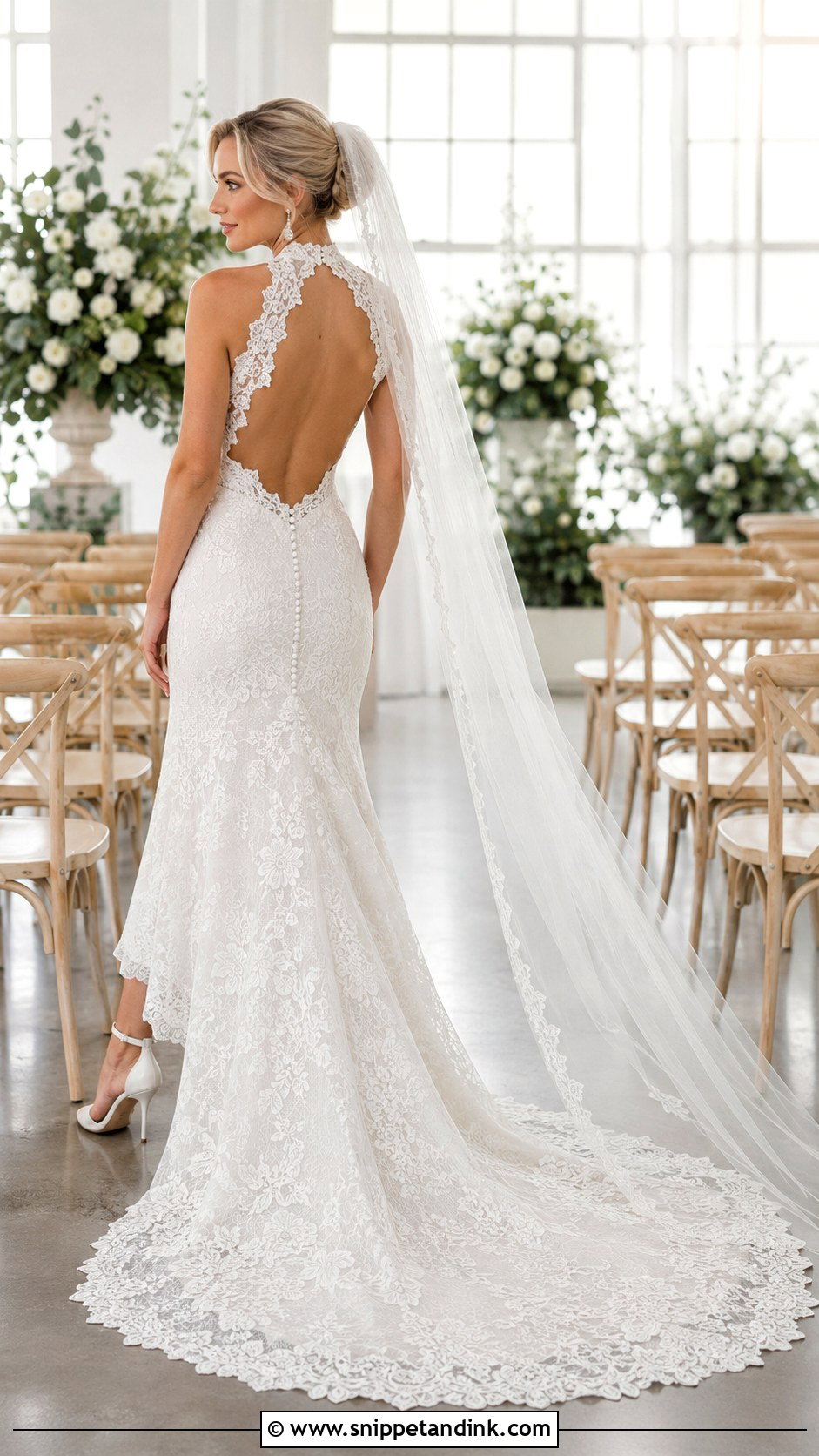
From the front this one looks modest, then the open back changes the whole story as you walk away. The halter needs to fasten firmly at the nape and follow the curve of the shoulders, not cut across them. Covered buttons, scalloped edges or fine straps make the back look finished rather than simply missing. I’d put the hair up, add small crystal studs and ankle-strap heels, and fix a chapel veil below the bun. A trailing bouquet suits the long line. Dance a little during alterations. If the neckline creeps forward when you move your arms, the halter isn’t anchored well enough at the side seams.
3. Mermaid Lace Halter Wedding Dress
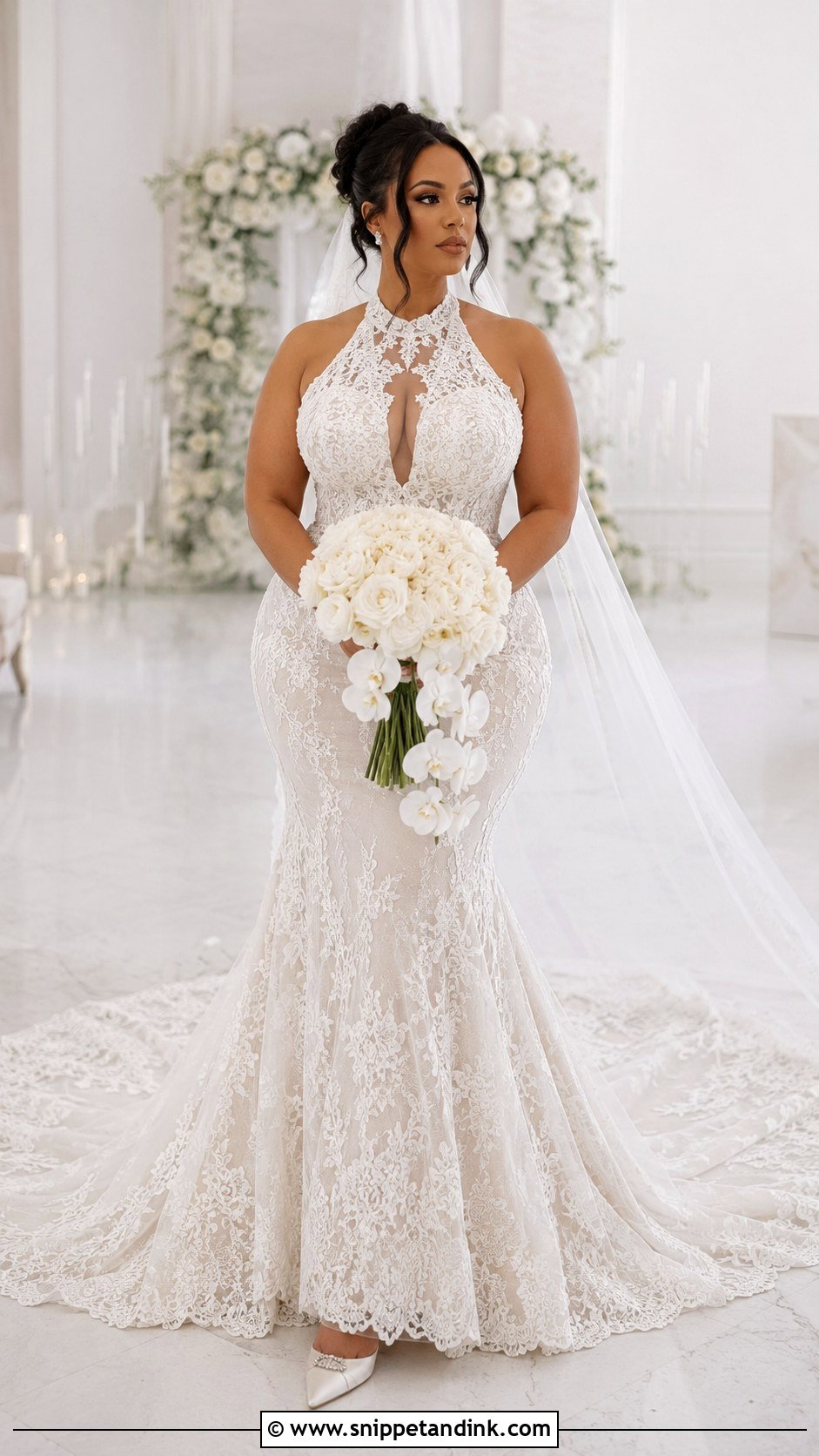
The mermaid holds close through bodice, waist and hips, then flares near the knee, and the halter balances that by widening the eye line at the shoulders. Ask for stretch lining under the lace. Rigid lining on a mermaid is what makes brides shuffle. A cathedral veil that runs past the train, crystal studs and pointed satin heels keep it sleek, with a structured white bouquet. Take long steps and sit down at the first try-on. If the flare starts too high, you’ll fight the skirt on every stair, and that’s very hard to fix later.
4. A-Line Lace Halter Wedding Dress
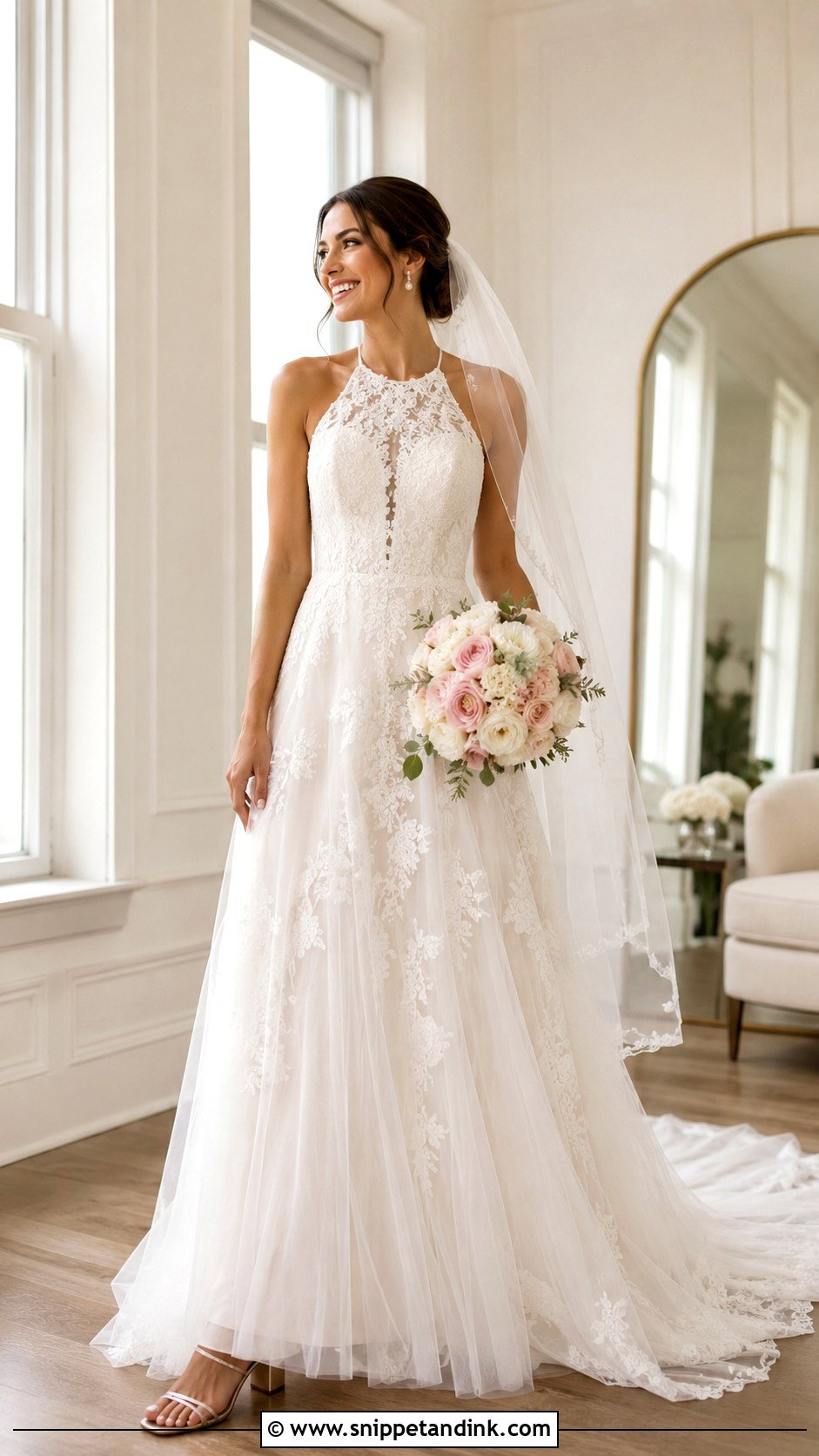
This is the shape that suits the most bodies and the most venues. A fitted bodice defines the top and the skirt widens gradually from the waist without bulk. Allover lace reads traditional; a lace bodice with a chiffon or tulle skirt moves more. Pearl earrings, low block heels and a sheer fingertip veil suit it, with a loose bun or smooth ponytail and a round bouquet in white and pale blush. The one thing I always correct is the waist seam. Many sample dresses sit an inch above or below the natural waist, and moving it is what makes the proportions look right.
5. Boho Lace Halter Wedding Dress
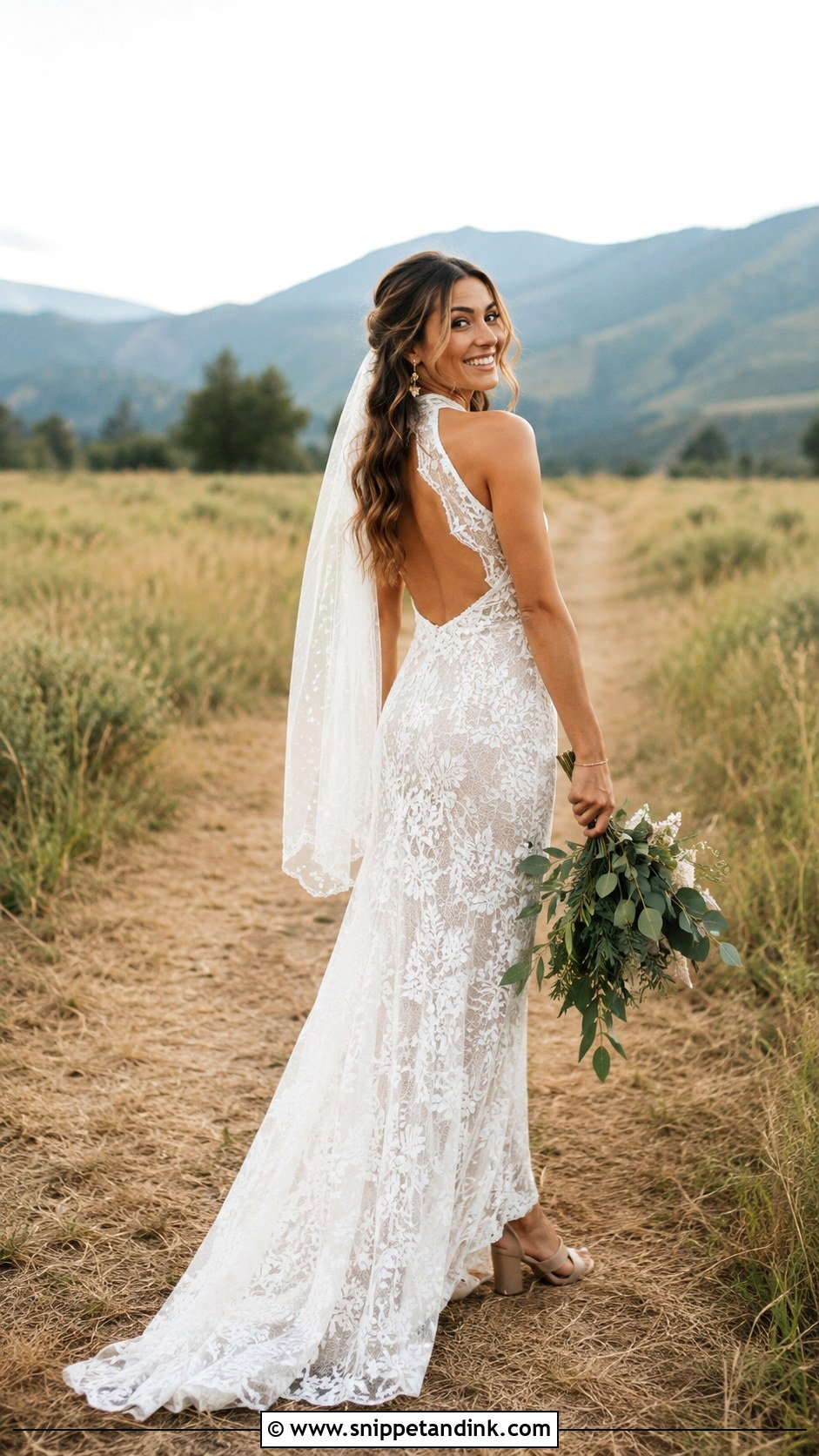
Boho lace is usually lighter and less structured, with botanical motifs and a gently fitted waist over a flowing skirt and a short sweep train. A slightly open back or scalloped edge gives enough detail. Loose waves, delicate gold earrings and neutral block-heel sandals keep it relaxed, and a single-layer veil or lace-edged cape veil beats anything heavily decorated. A loose bouquet with grasses and greenery belongs here. Outdoors, watch the lace type. Open, loopy patterns catch on branches and rough benches, so a tighter weave is safer if the ceremony is among trees.
6. Vintage Lace Halter Wedding Dress
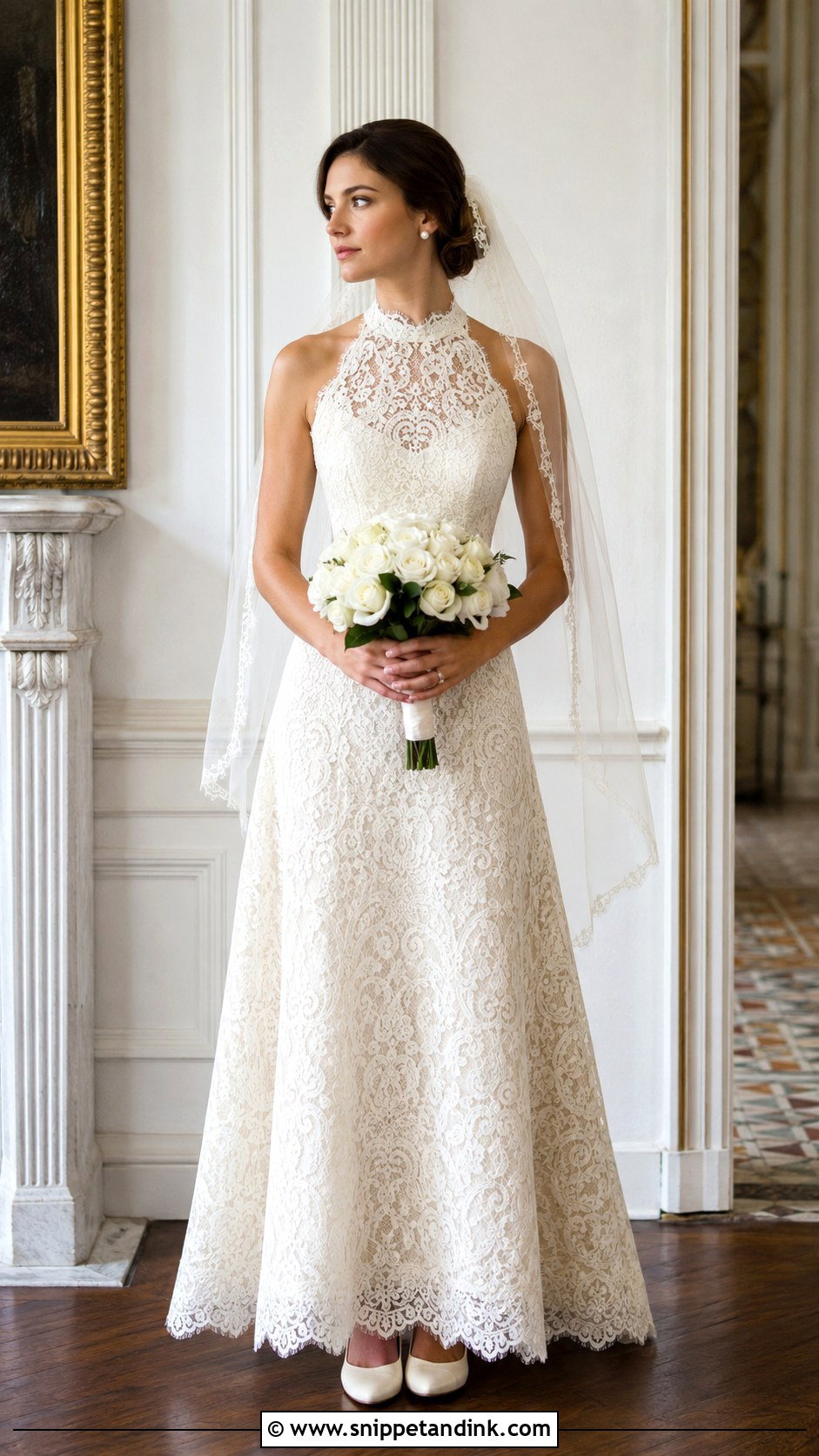
Vintage-leaning gowns tend to use denser lace: guipure, corded or medallion styles that hold their own shape instead of lying flat. With a high neck, a fitted natural waist and a floor-length A-line skirt, it looks like something passed down. Pearl button earrings, a low chignon, closed-toe ivory pumps and a lace-trimmed fingertip veil fit, with a compact bouquet of white roses. Keep jewellery minimal. Dense lace is warm, so check the lining is breathable cotton or a light silk blend, and lift your arms high. Heavy lace across the shoulders can restrict you in the hugging shots.
7. Floral Lace Halter Wedding Dress
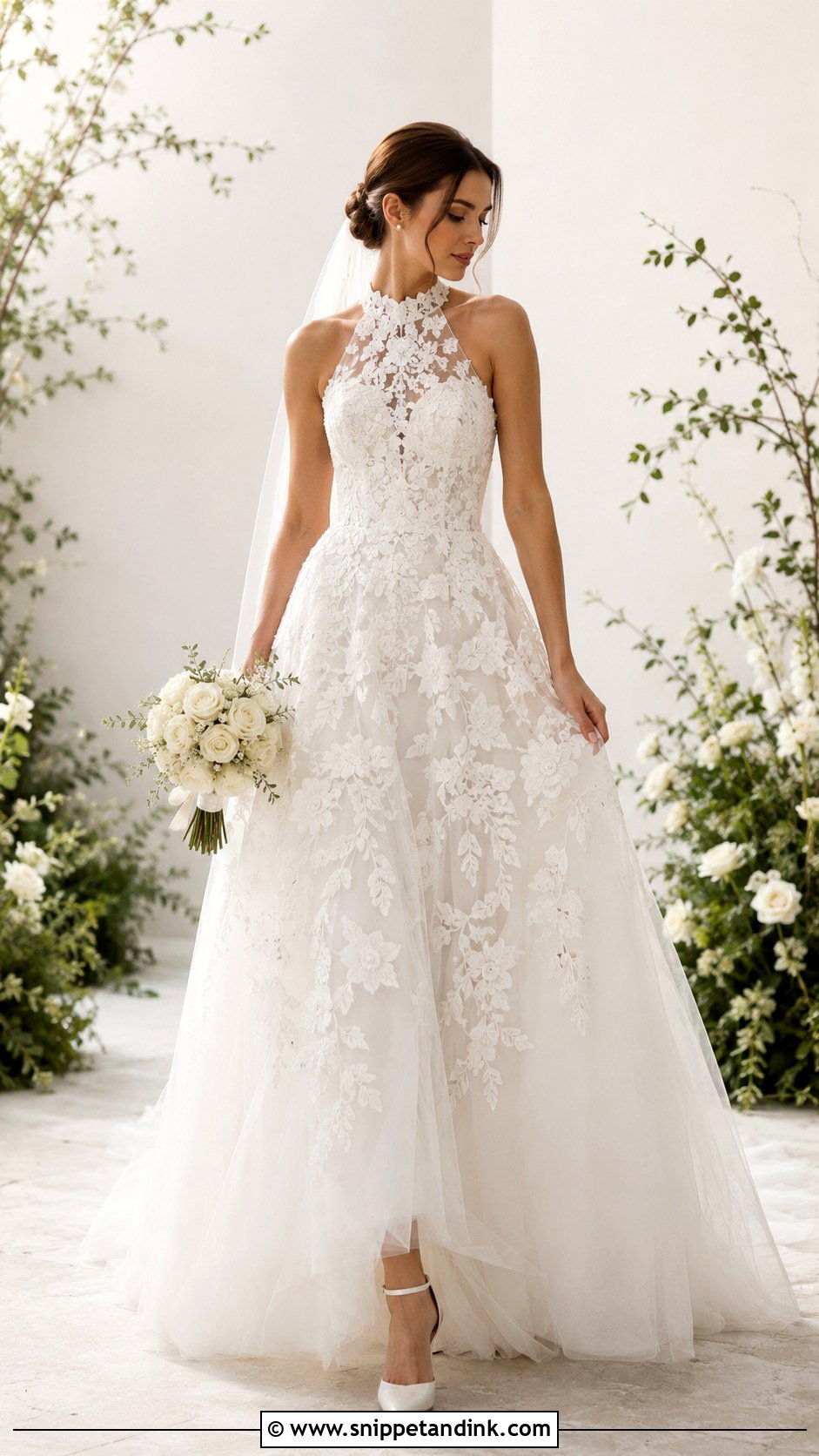
Large floral motifs turn a plain halter shape into the main event. The best placement is dense across the bodice, then scattering down the skirt, which looks grown rather than stuck on. An ivory lining gives just enough contrast for each flower to show in photos. Since the dress is busy, everything else isn’t: pearl studs, a smooth bun, plain satin heels, a tulle veil without trim. Choose a bouquet with only a couple of flower types. I check every seam where motifs meet during alterations. A flower cut in half at a side seam or neckline looks cheap, and a good seamstress will re-lay the appliqué across it.
8. Illusion Lace Halter Wedding Dress
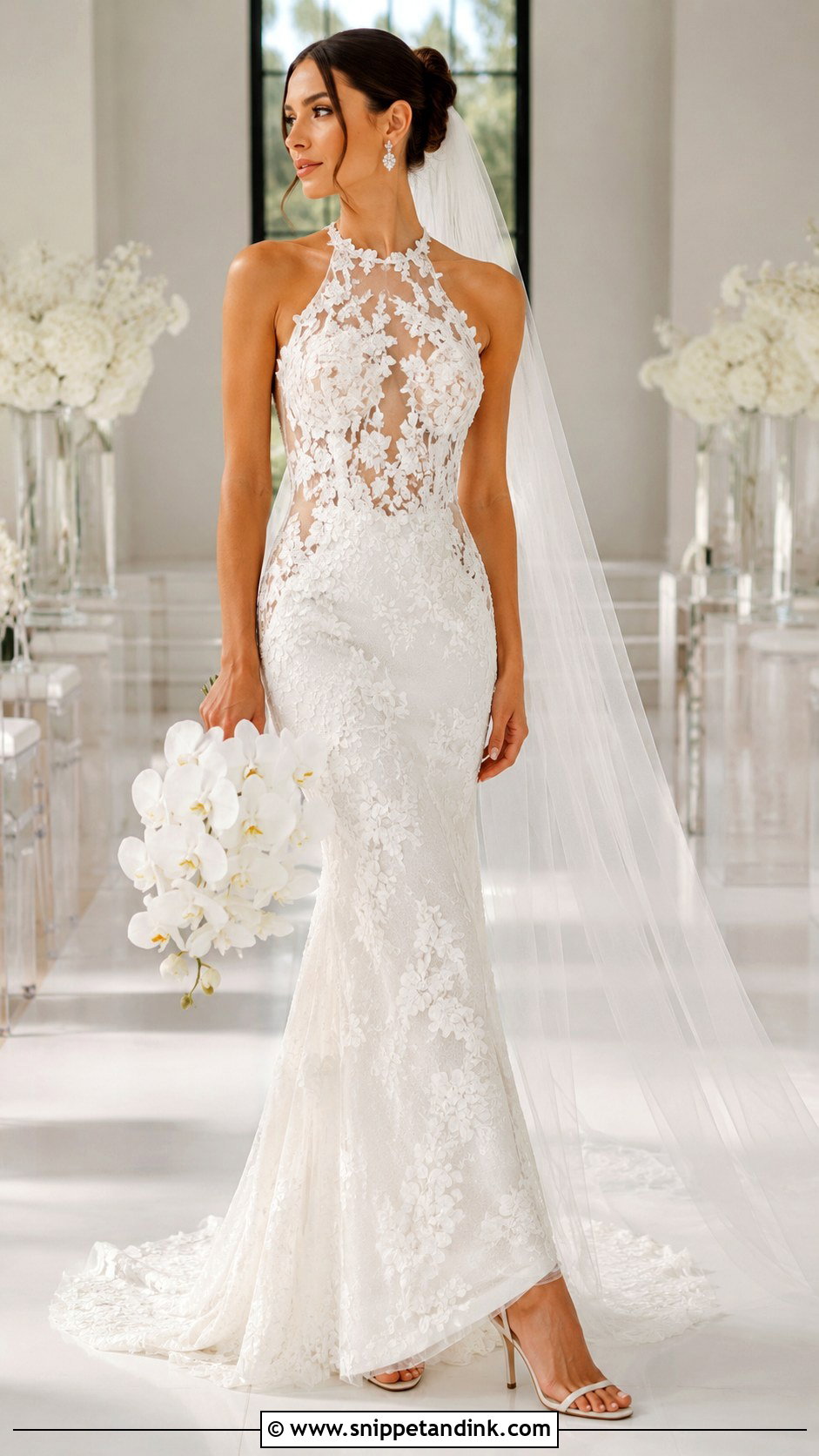
Illusion necklines float lace motifs on fine mesh, so the shoulders look bare while the bodice gets more support than an open plunge gives. Everything rests on the mesh colour. Match it to your skin in daylight, not just under shop lights, or it reads as a grey film in outdoor photos. Crystal drops, an updo and satin slingbacks suit it, with a narrow cathedral veil and white orchids or calla lilies. Before ordering, look at a swatch both indoors and by a window. The mesh should lie flat at the neck, with no puckering where the lace is stitched on.
9. Lace Halter Ball Gown Wedding Dress
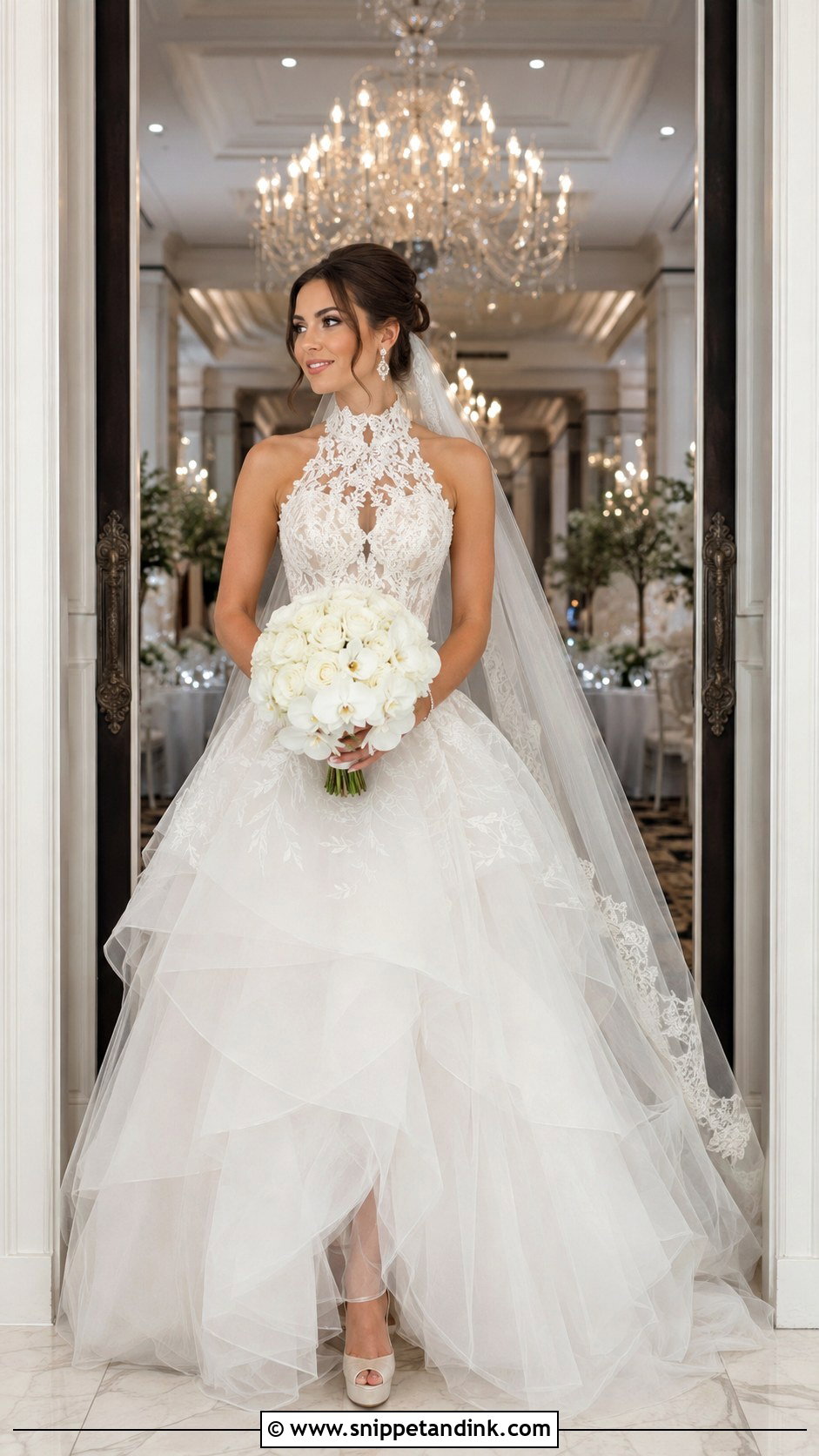
A ball gown with a lace halter is pure ceremony: a defined upper body with real volume below. The bare shoulders stop it from looking top-heavy, and a structured bodice is what holds the skirt up. Lace that runs from neckline to waist and reappears in the tulle ties it together. A neat bun, pearl-and-crystal earrings and platform heels hidden under the skirt work, with a cathedral veil and a structured bouquet. Walk through a doorway and sit in a chair at the salon. Plan the bustle at the second fitting rather than the last; a ball gown train can need many lift points to hold evenly.
10. Minimal Lace Halter Wedding Dress
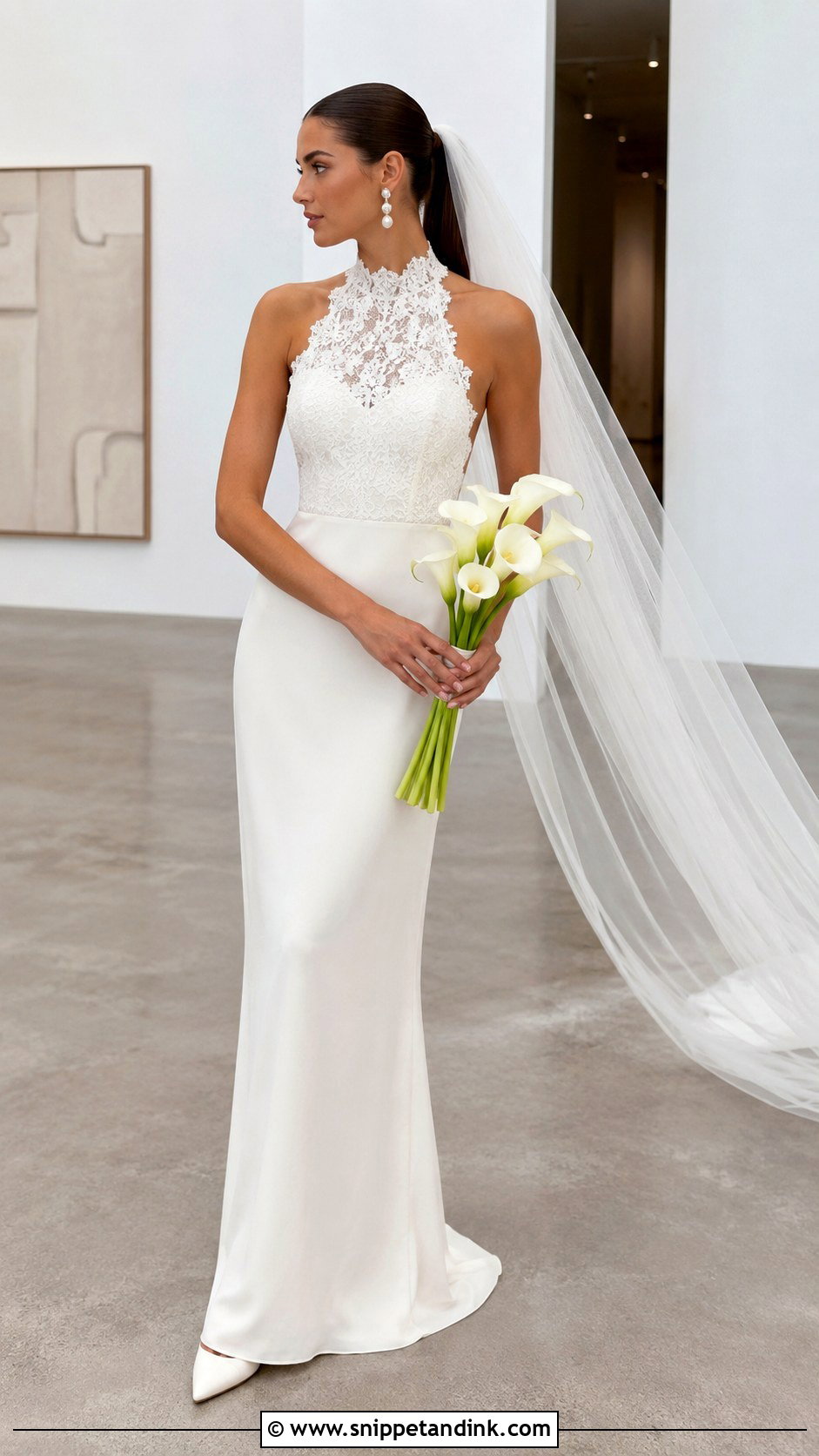
Minimal here means smooth crepe or satin with lace used only where it counts, perhaps along the neckline, at the waist or edging the open back. The rest stays clean in a column or soft fit-and-flare. Sculptural pearl earrings, a sleek ponytail, pointed pumps and a plain cathedral veil keep it modern, and a small bunch of calla lilies suits it. Plain fabric shows every seam and pull that lace would hide. Ask your seamstress to view the neckline, waist and back from all sides, and make sure the lace panels are placed symmetrically, because on a plain dress any shift looks like a mistake.
11. Beaded Lace Halter Wedding Dress
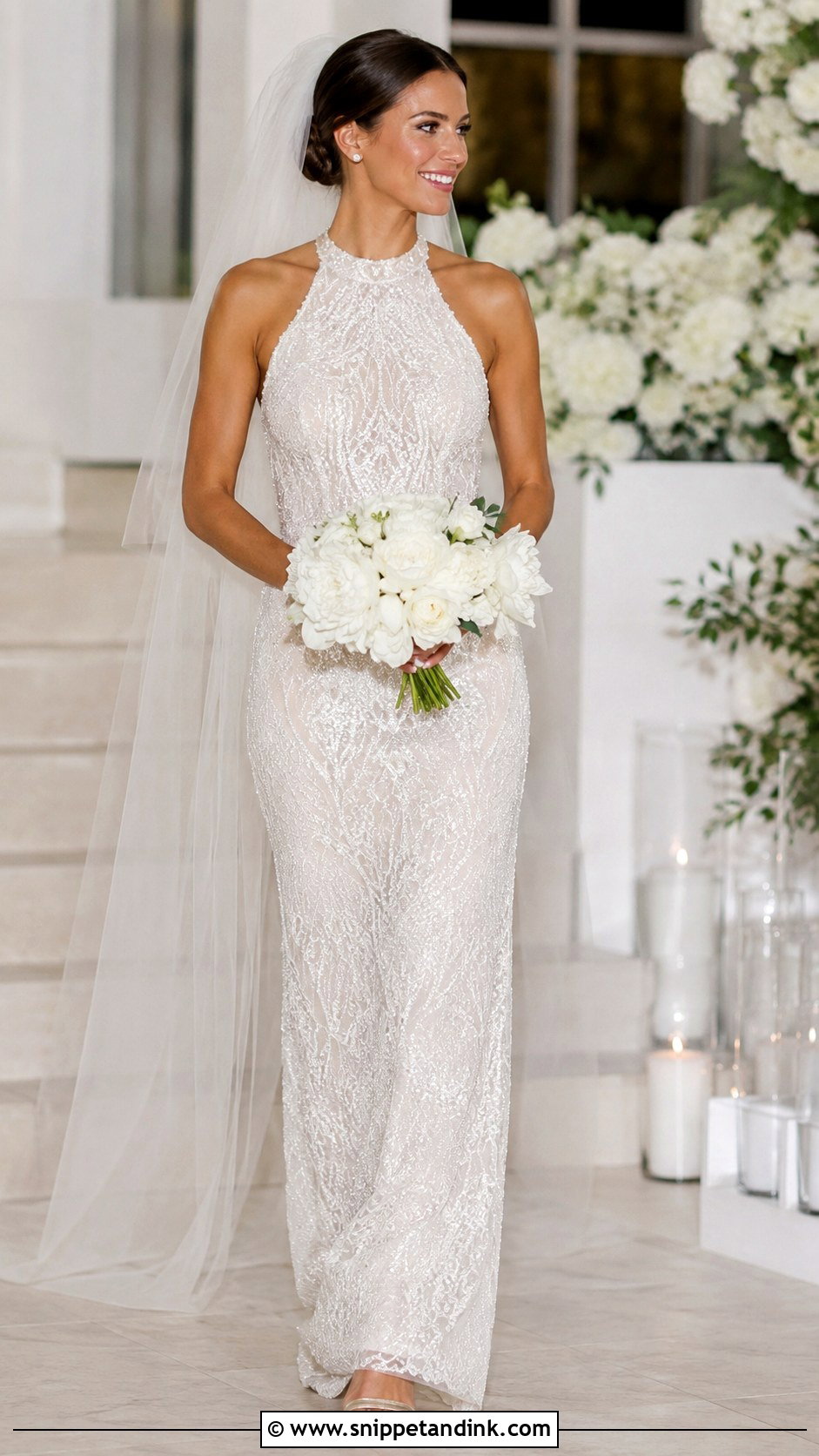
Beading catches light, which makes it the one I suggest for evening receptions under candlelight. Tiny seed pearls, clear sequins or small crystals across the bodice, thinning onto the skirt, look rich on a fitted sheath or mermaid. Keep the rest quiet: studs, metallic ivory heels and a single-layer veil with minimal trim. A low bun keeps hair out of the beads, and a plain white bouquet gives contrast. Rub your inner arms against the bodice in the shop. Beaded lace can graze the skin, and it adds weight to the halter strap, so the bodice needs proper support to share it.
12. Scalloped Lace Halter Wedding Dress
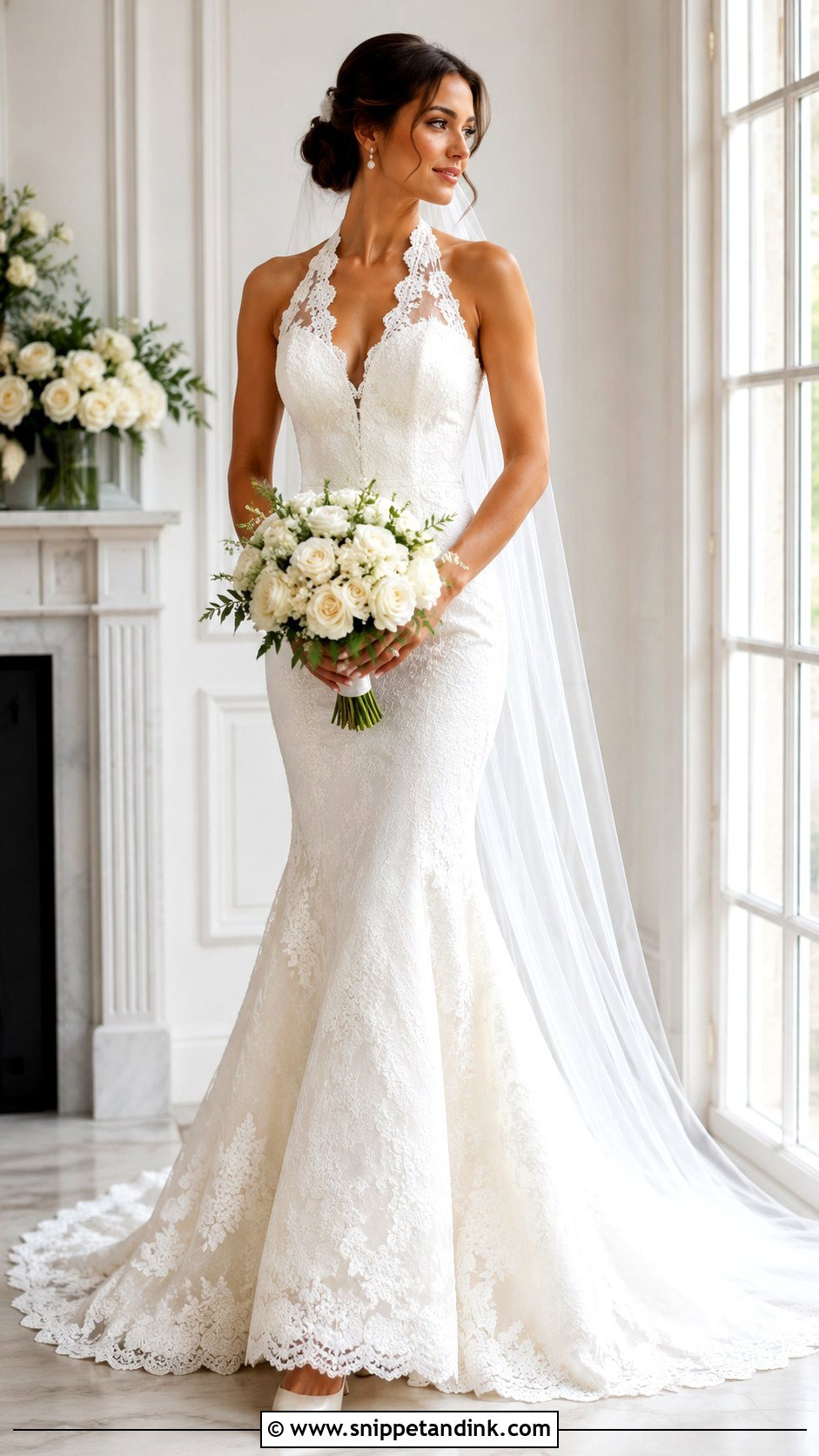
Scalloped edges give lace a finished border, and the effect is strongest when the same scallop outlines the neckline, the back and the hem. A gentle fit-and-flare lets that hem border spread around your feet. Pearl drops, a textured low bun and pointed ivory heels suit it, with garden roses and greenery. Pick a plain veil, since a second lace border competes with the dress. During fittings, check the scallops match on both sides of the neck and at the hem. When a hem is shortened, the scallop is usually cut off and re-applied by hand, so ask whether your seamstress does that rather than simply cutting straight across.
13. Two-Piece Lace Halter Wedding Dress
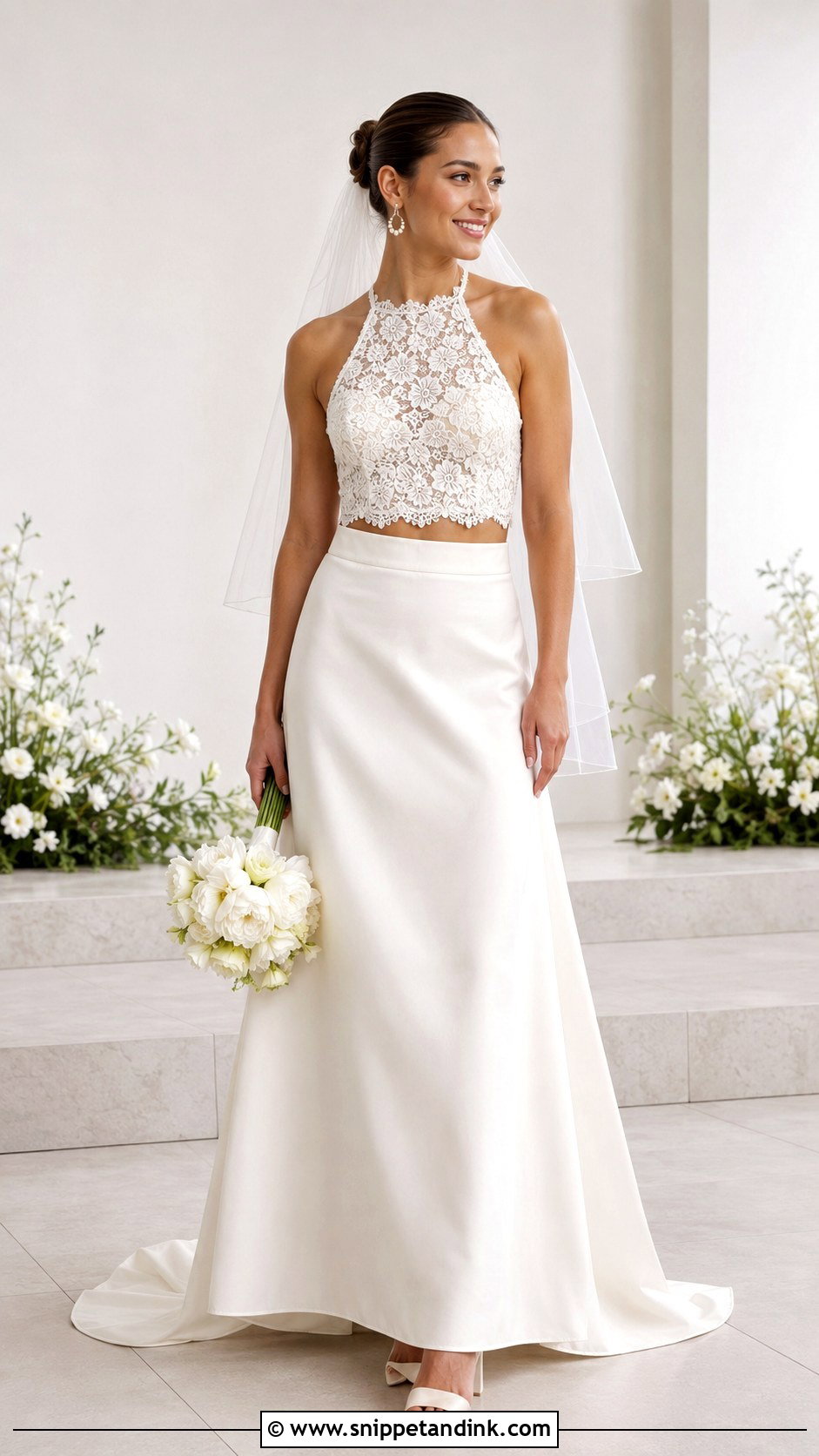
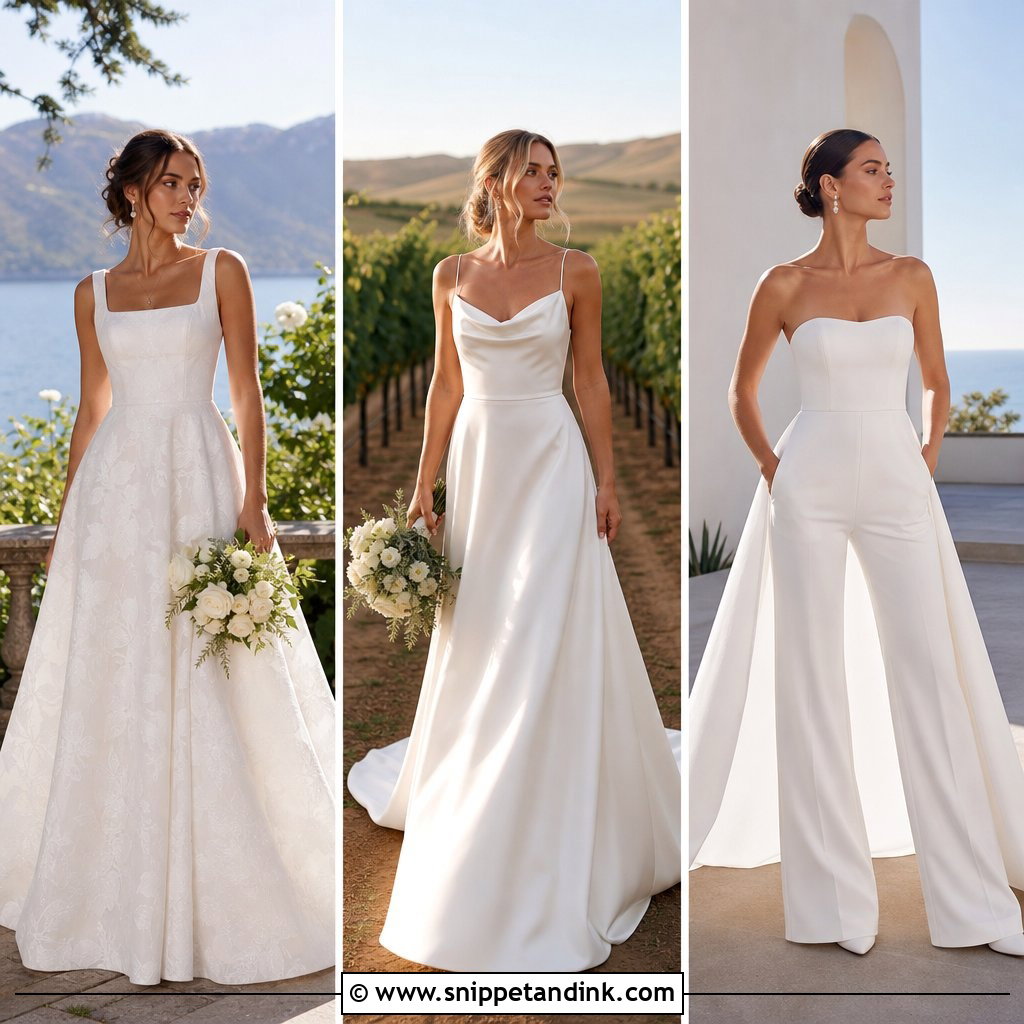
Separates let you wear the halter and lace in a newer way, and they’re easier to alter because top and skirt fit separately. A fitted lace halter top meets a high-waisted A-line or column skirt with no gap or a narrow, deliberate one. A satin skirt gives contrast; a lace skirt keeps it traditional. Pearl hoops, a sleek bun, block-heel sandals and a light fingertip veil suit it, with a simple white bouquet. Raise your arms and sit before you decide. Crop tops ride up, and hidden hooks linking top to skirt solve it.
14. Lace Halter Wedding Dress With Slit
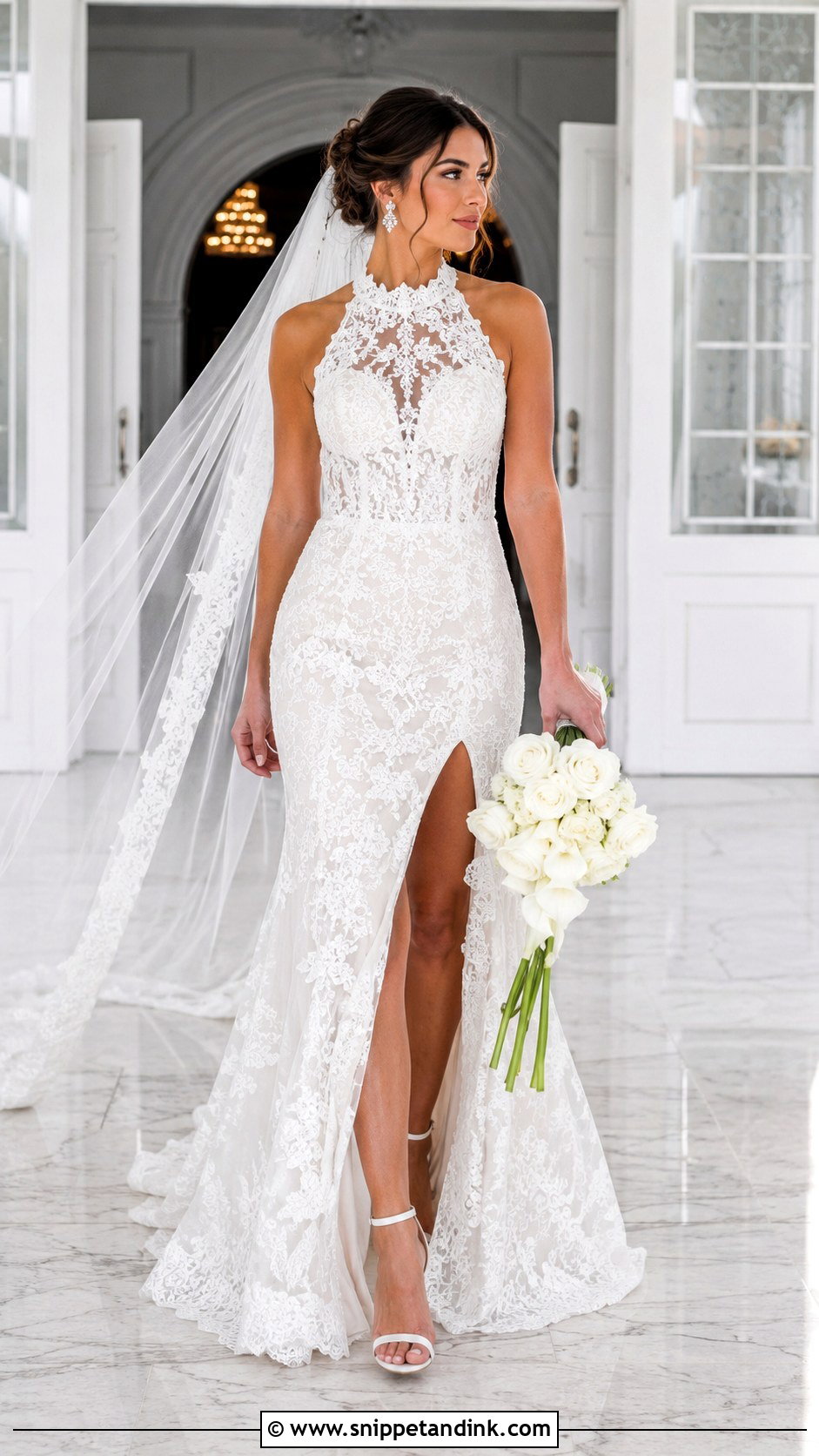
A slit adds movement to a fitted lace halter gown and turns the shoes into part of the look. Lace slits need a bar tack or small reinforcement at the top, otherwise the lace tears upward the first time you take a big step. Floral lace over a light lining keeps it soft. Ankle-strap heels, small crystal earrings and a sleek updo work, with a narrow chapel veil and a long-stemmed bouquet. Walk up a few steps and sit facing a mirror during fittings. You’ll see exactly how high the slit opens, which is often more than you expected.
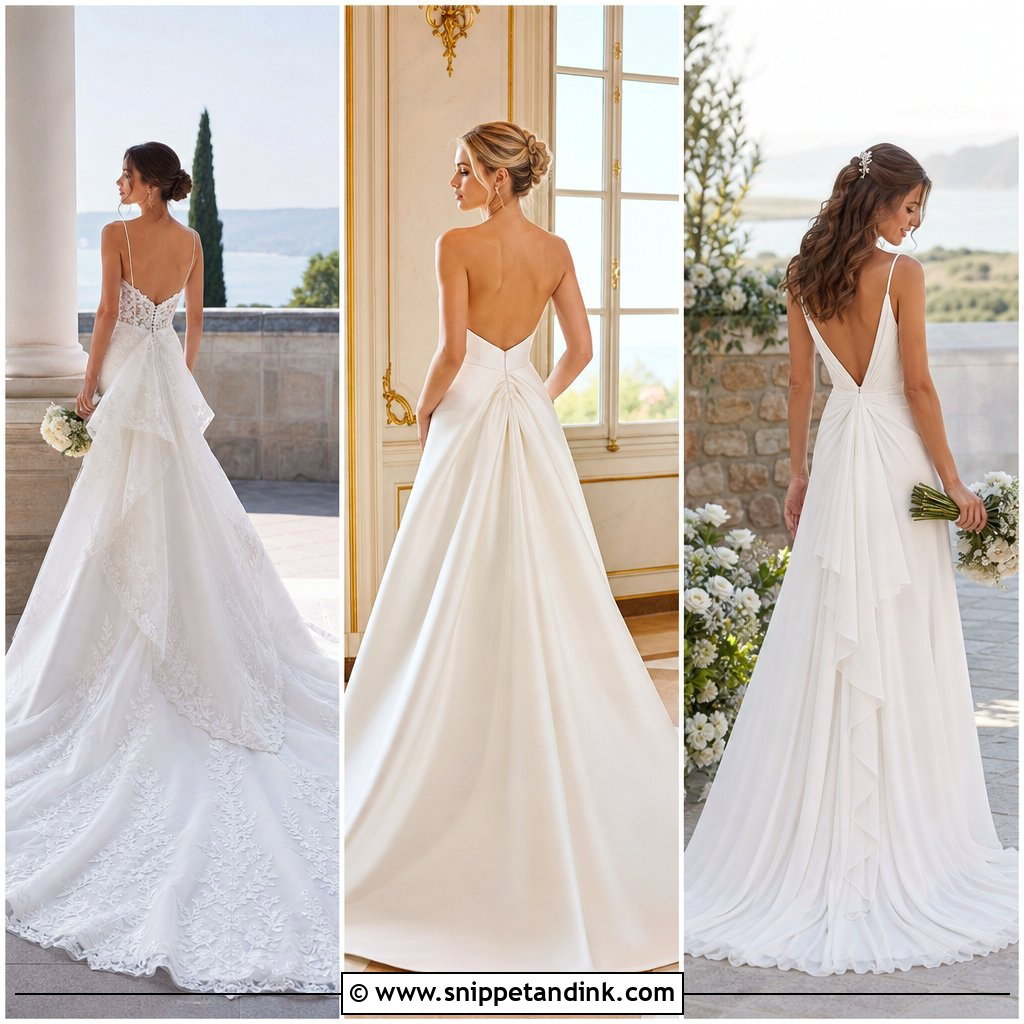
15. Lace Halter Wedding Dress With Train
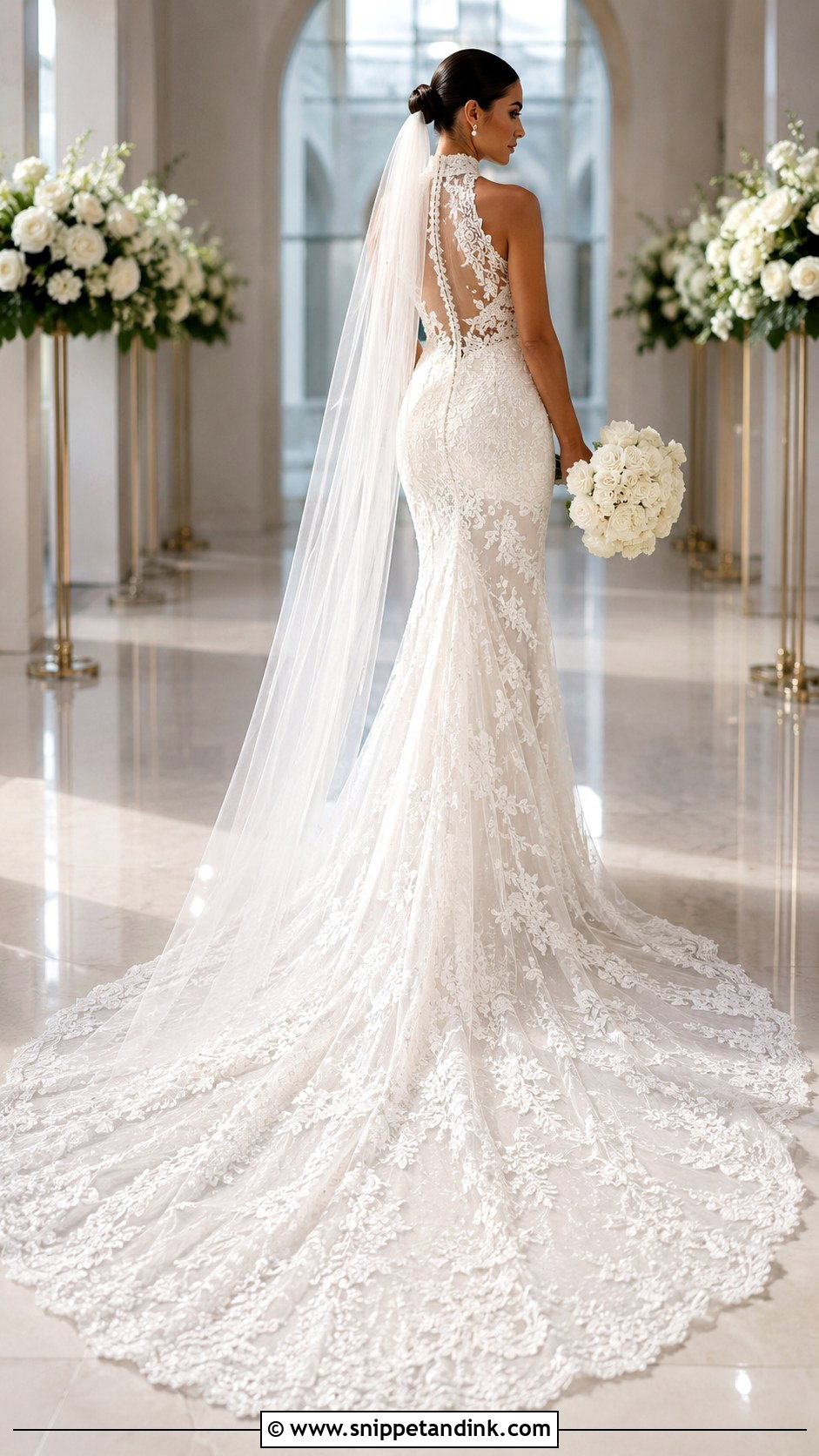
A long train makes the entrance, and lace makes it worth looking at as you pass. Choose chapel length for most venues and cathedral only when the aisle is wide and clear. The appliqués should flow from bodice to skirt to train without sudden bare patches. Pearl studs, a low bun and classic ivory pumps fit, with a veil slightly longer than the train and a structured white bouquet. Settle the bustle before the final fitting and practise it with the person who’ll do it on the day. Lace trains are heavy, and a bustle that hangs from too few points drags the waist down.
16. Lace Halter Wedding Dress With Detachable Skirt
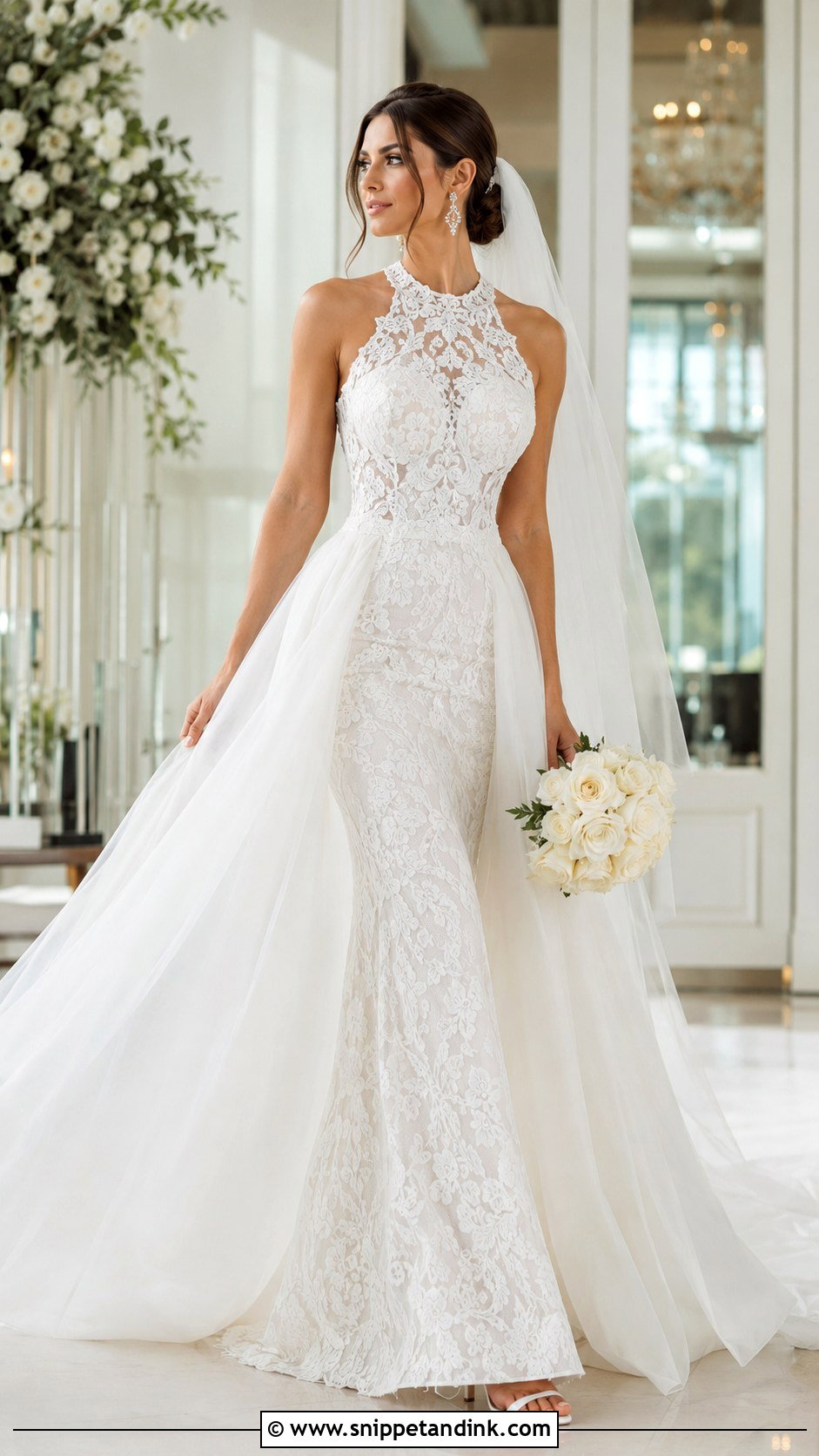
With a detachable skirt, one lace halter gown gives you two silhouettes. A full tulle or lace overskirt goes over a fitted sheath, column or mermaid for the ceremony and comes off for dancing. Repeat the same lace motif or the same ivory on both layers so they read as one dress. Crystal earrings, a clean updo, satin heels and a plain cathedral veil suit both versions, and so does a bouquet of white roses. The fastening is everything. Hooks, snaps or a hidden waistband must release quickly without pulling lace threads, so practise taking it off at a fitting.
17. Lace Halter Tea Length Wedding Dress
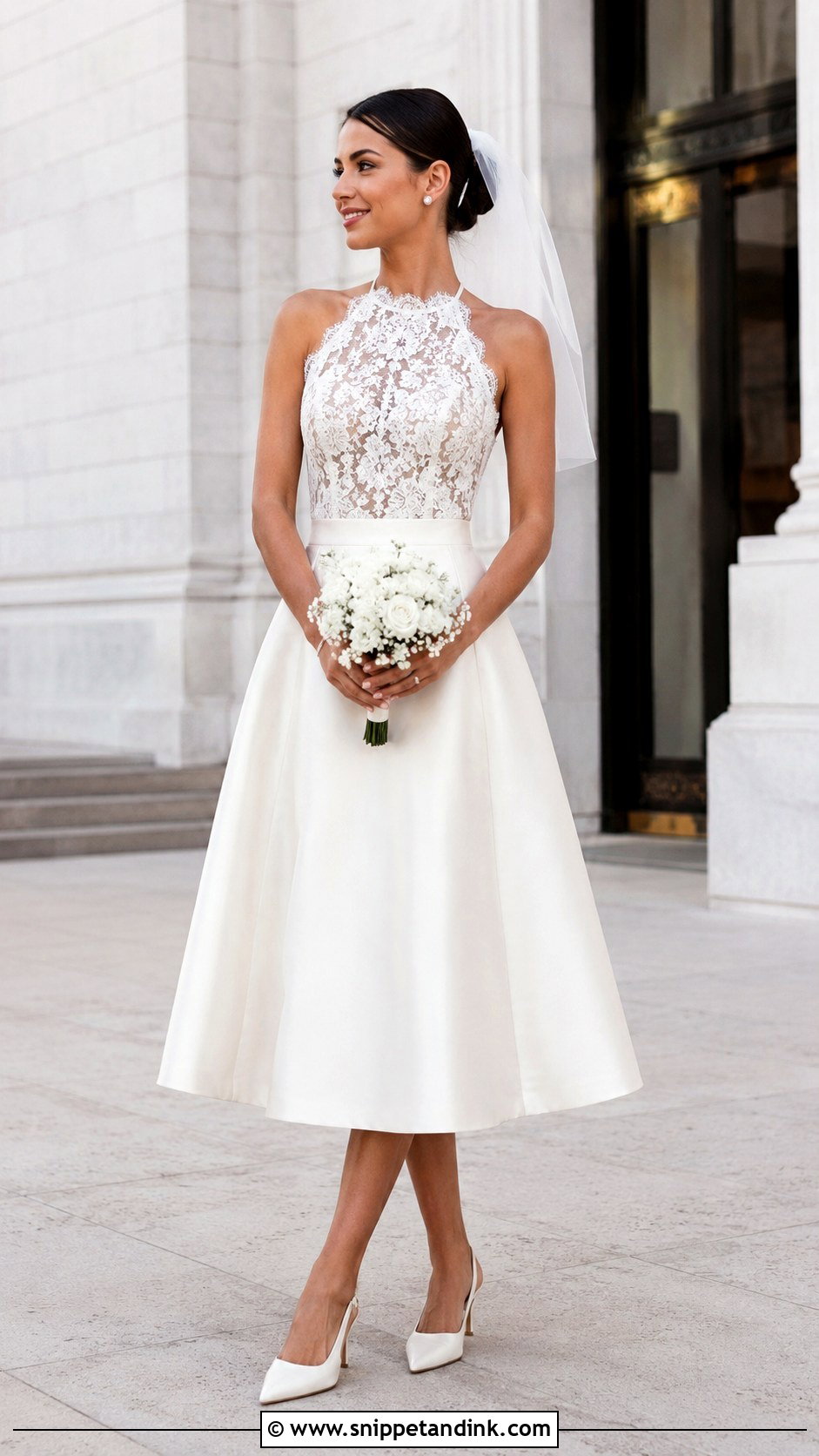
Tea length puts the attention on the waist and the shoes, so footwear is no afterthought. A fitted lace bodice and a structured skirt ending between knee and ankle look crisp. Pointed slingbacks, pearl studs and a short veil or a small comb fit, with a smooth bun and a compact bouquet. It’s my usual suggestion for a civil ceremony, a brunch wedding or a second look. Sit and walk in it before the hem is cut. A structured skirt can rise more than you’d guess when seated.
18. Beach Lace Halter Wedding Dress
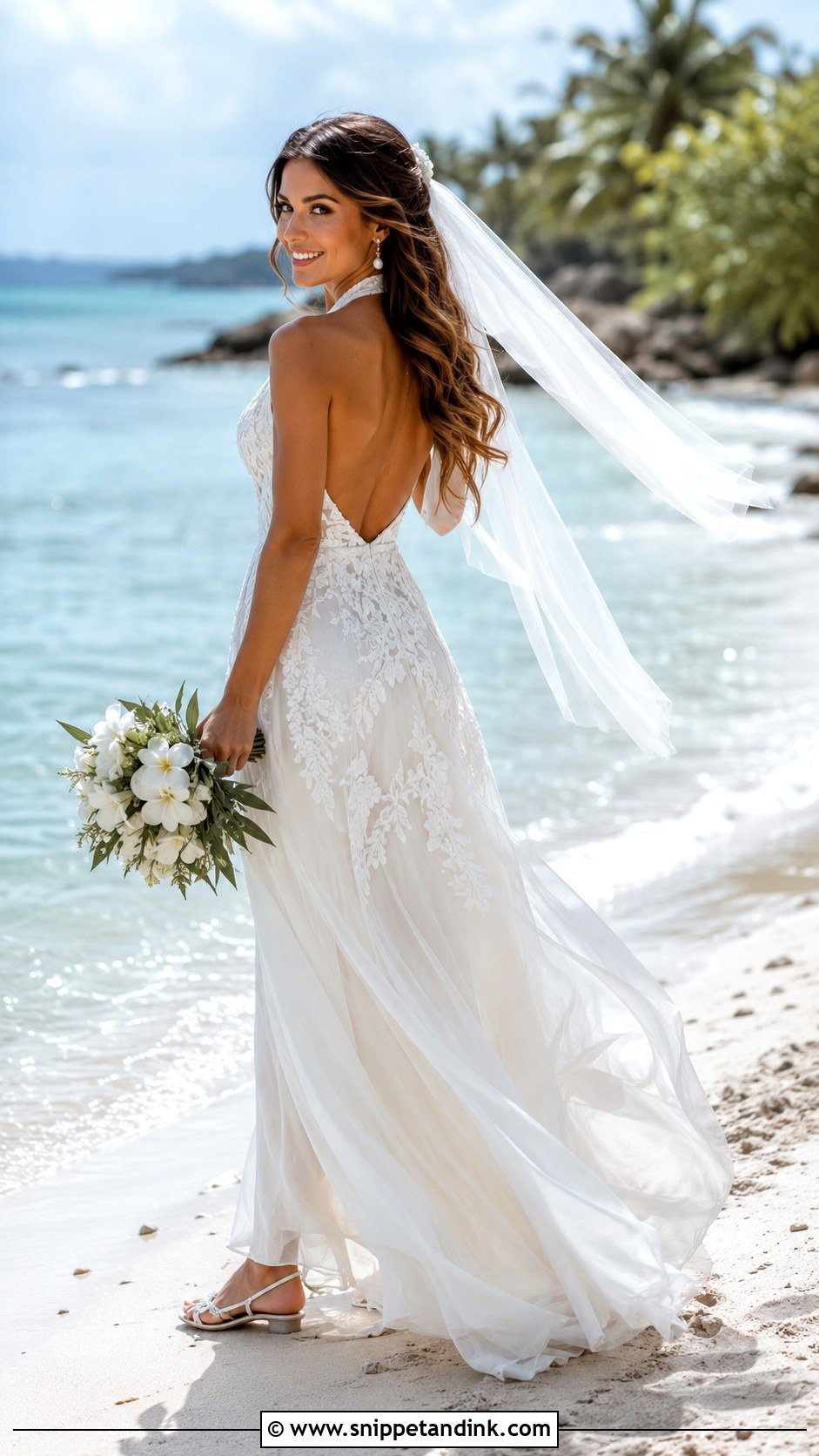
Lace can work on sand if it’s the light kind. Look for soft lace over chiffon or a breathable lining, a gently fitted bodice and a flowing A-line. A low open back adds interest and lets heat escape. Pearl earrings, loose waves and flat sandals or sturdy low heels suit it; pin a light veil firmly under the hair or wear a comb instead. A simple bouquet of white tropical flowers fits. I’d skip very long trains, heavy beading and stiff layers for the beach. Sand drags, salt air dulls beads, and stiff layers trap humidity against your skin.
19. Garden Lace Halter Wedding Dress
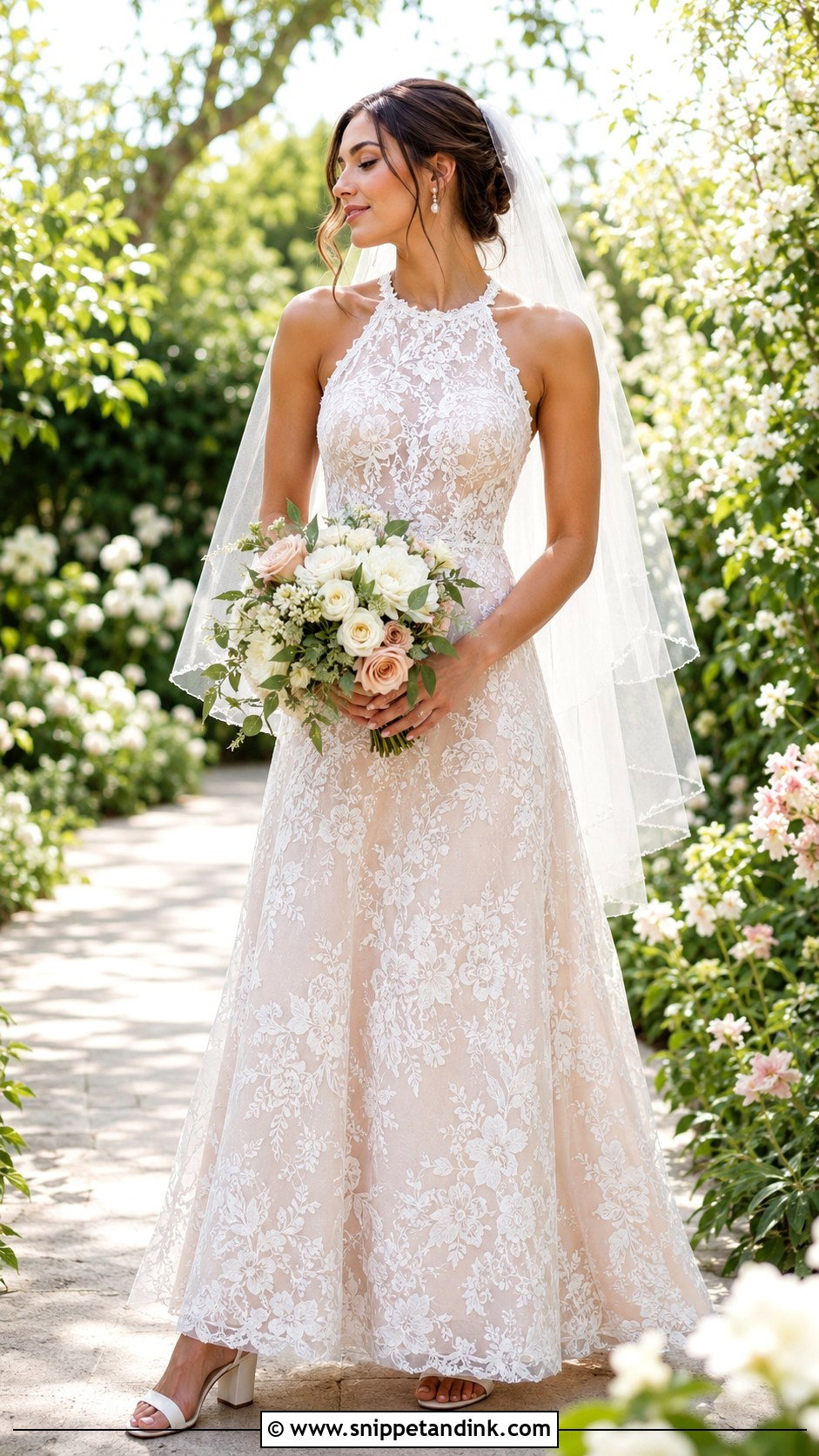
Botanical lace and a garden belong together, especially on a soft A-line or fit-and-flare. Motifs with leaves and vines look at home outdoors, and a blush, champagne or nude lining helps the ivory pattern stand out against green. Pearl drops, a loosely pinned bun and block heels that won’t sink into grass suit it, with a sheer fingertip veil and flowers in white, blush and green. Keep the train moderate for paths. Ask the venue about gravel, damp lawn or steps before you set the hem, because gravel shreds lace hems quickly.

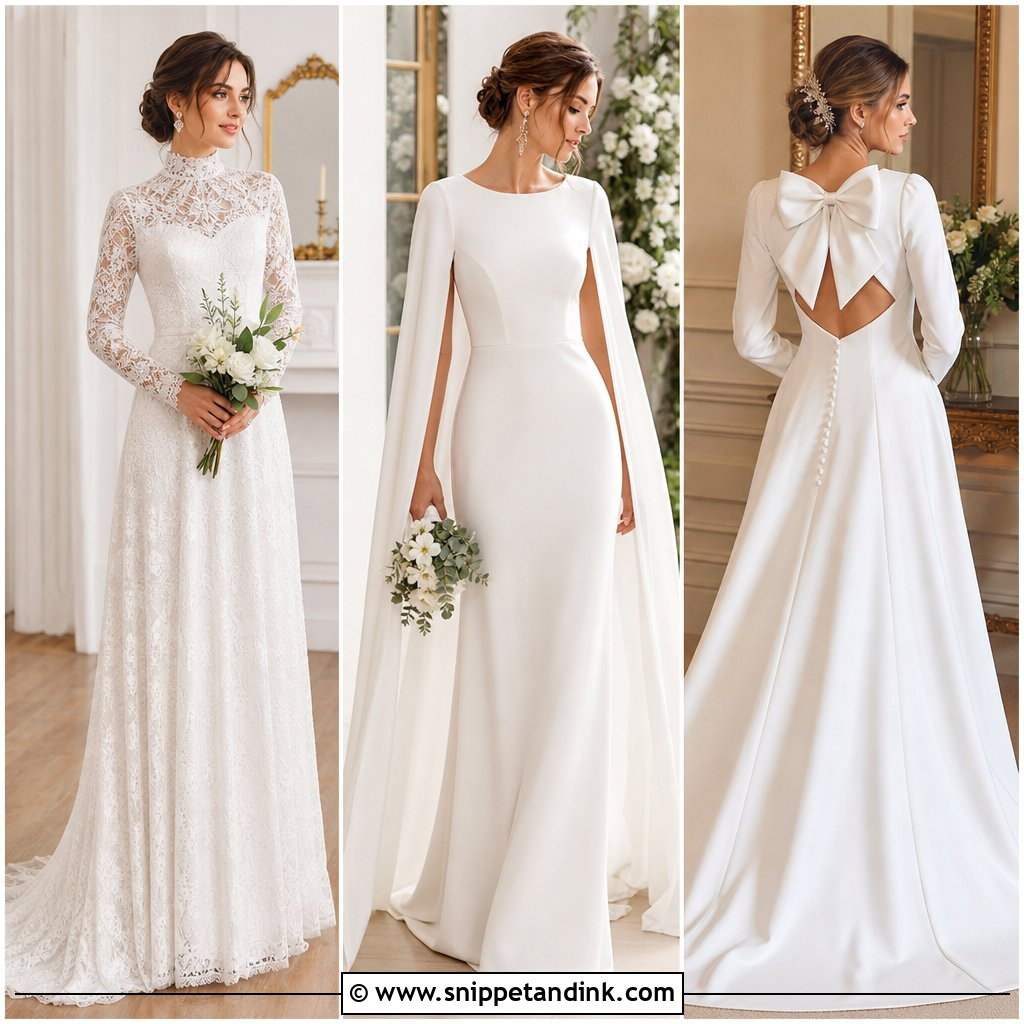

20. Plus Size Lace Halter Wedding Dress
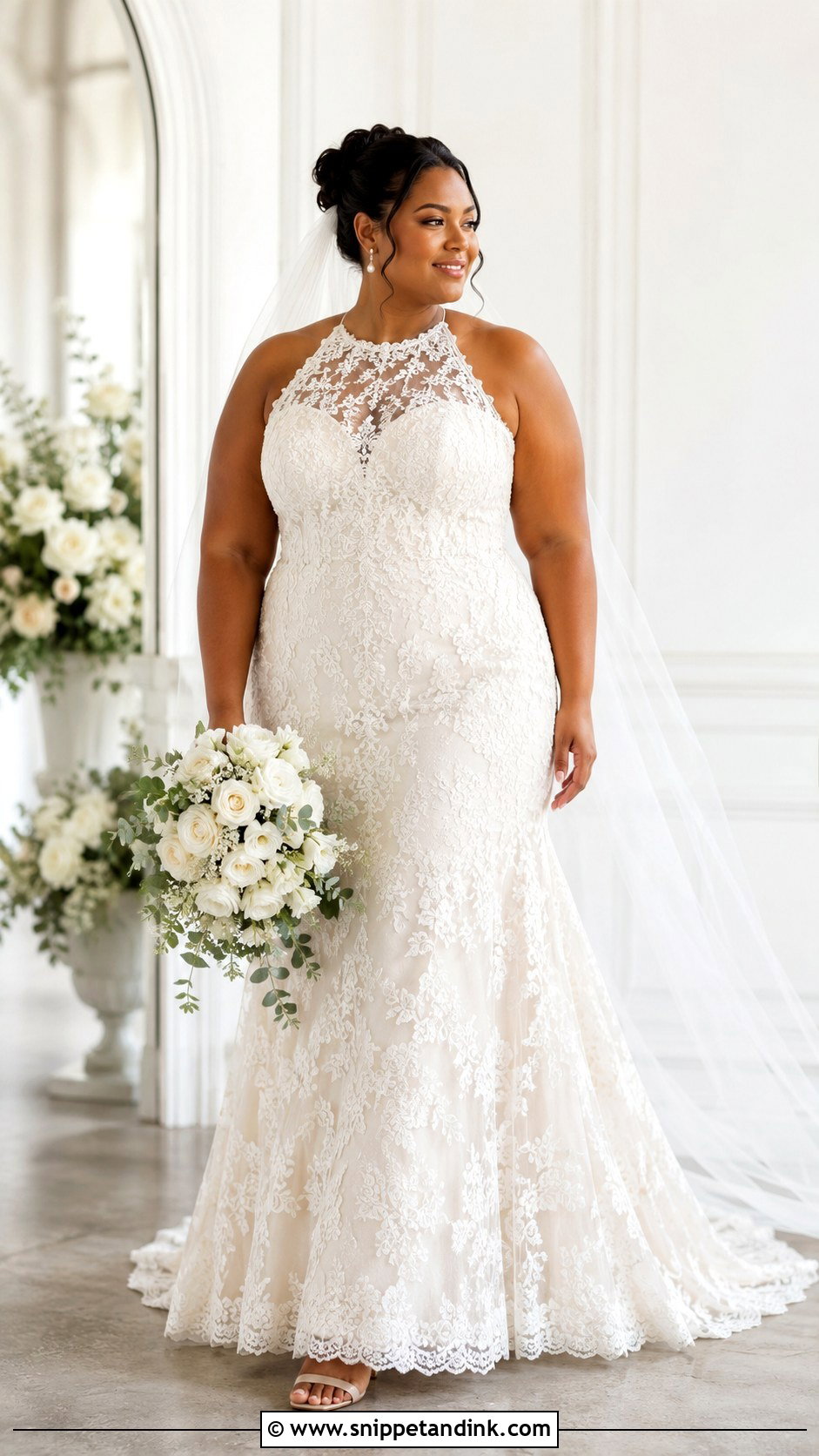
For a plus size bride the lace matters less than what’s underneath it. Look for a structured bodice with built-in cups, firm side panels and a halter that lies flat without loading weight onto your neck. An A-line or fit-and-flare skirt defines the waist and lets you move. Pick the lace scale you actually like; the old rule that larger brides need small motifs isn’t one I follow. Supportive block heels, pearl earrings, an updo and a light veil finish it. Move, sit and walk for several minutes during fittings, and choose a boutique and seamstress who know supportive bridal construction, since that skill matters more than any size on a label.
Small Snags on the Day and How I Deal With Them
Lace is tougher than it looks, but it catches. Most damage on the day comes from the same few things, and nearly all of it is avoidable.
- Bouquet wire and pins. Ask your florist to wrap the stems fully in ribbon with no exposed pin heads, since you’ll hold it against the bodice for hours.
- Jewellery with prongs. Claw-set earrings and chunky bracelets hook loops of lace. Choose smooth settings or none on the wrist.
- Other people’s outfits. Sequinned guest dresses and suit jacket buttons catch during hugs. You can’t avoid that, but it’s worth knowing a pulled thread is usually fixable.
- Velcro and hook-and-loop on bags or shoe straps. Keep them well away from the skirt.
If a loop does pull, don’t cut it. Ease the slack back into the pattern from the reverse side with a pin, working along the thread. A tiny tear can be closed with a few stitches in matching thread from a small sewing kit, or a dab of clear nail varnish on the back of the lace to stop it spreading until after the wedding. Give the kit to whoever is looking after you, not to yourself.
Does the Lace Still Feel Good at Midnight?
A lace halter has to look right from front, back and side and still feel comfortable late in the night. Start with a silhouette that suits how you’ll move and where you’re marrying. Then compare lace weight, lining colour, neckline height, back coverage and train length side by side. Keep earrings and hair simple, since the lace already gives the texture. In every fitting, walk, sit, raise your arms and turn your head. Then take whichever of these looks you keep coming back to and let good alterations, comfortable shoes and a couple of personal accessories make it yours.
You'll Like These Ideas:


Leave a Reply