
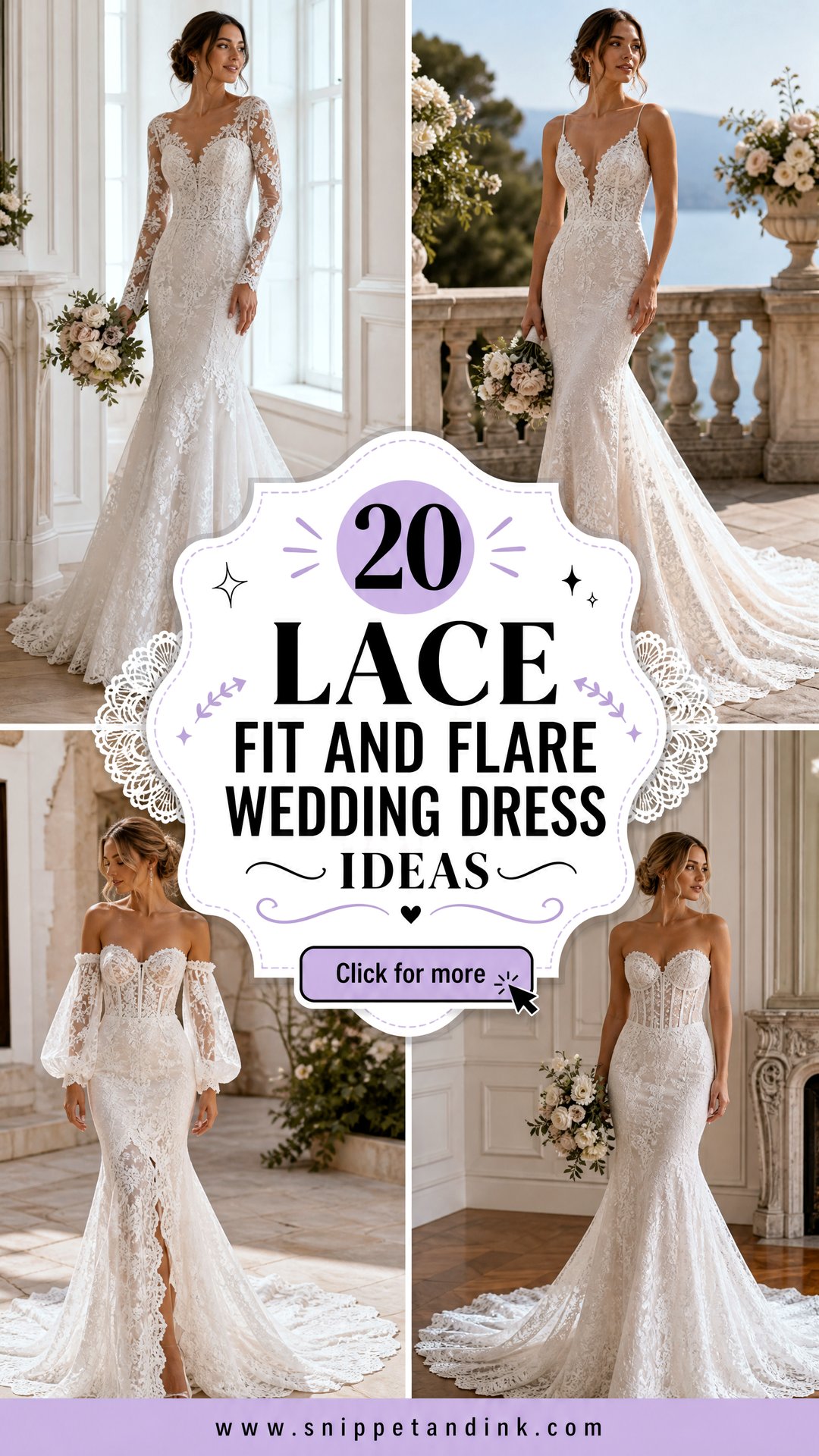
A fit-and-flare gown follows you through the bodice and hips and then opens into a softer skirt, usually somewhere around mid-thigh. That gives you shape without the tight knee of a mermaid, and it lets you walk at a normal pace. Lace suits it well because the pattern follows your curves, and it turns up in every form at the moment, from fine layered gowns to bolder modern versions. Chantilly, raised flowers, clean lines or sparkling beadwork all work on this cut. The ideas below go neckline by neckline and detail by detail, with styling for each and the fitting checks I’d make before saying yes.
Flare at the Thigh or the Knee? Reading the Cut on Your Body
Bridal shops use fit and flare, trumpet and mermaid loosely, and the difference is mostly where the skirt opens. A true fit and flare usually releases around mid-thigh or a little higher. A trumpet tends to open lower on the thigh, and a mermaid hugs to the knee or below. The lower the flare, the more dramatic the shape and the shorter your stride.
When a bride tries this cut, I watch three things in the mirror. First, where her hip is widest: the flare should open just below that point, never right on it, or it adds width. Second, her height. On a petite frame, a flare that starts high keeps the legs looking long, while a tall bride can carry a lower flare easily. Third, how she walks. If she has to shuffle in the fitting room, the skirt is too tight above the flare and will be miserable by evening.
The hip is also the part most often altered on this style. Expect the side seams to be taken in or let out there, and on lace that means the seamstress has to keep the motifs matched across the seam, which is slow, careful work.
1. Sweetheart Lace Fit and Flare Wedding Dress
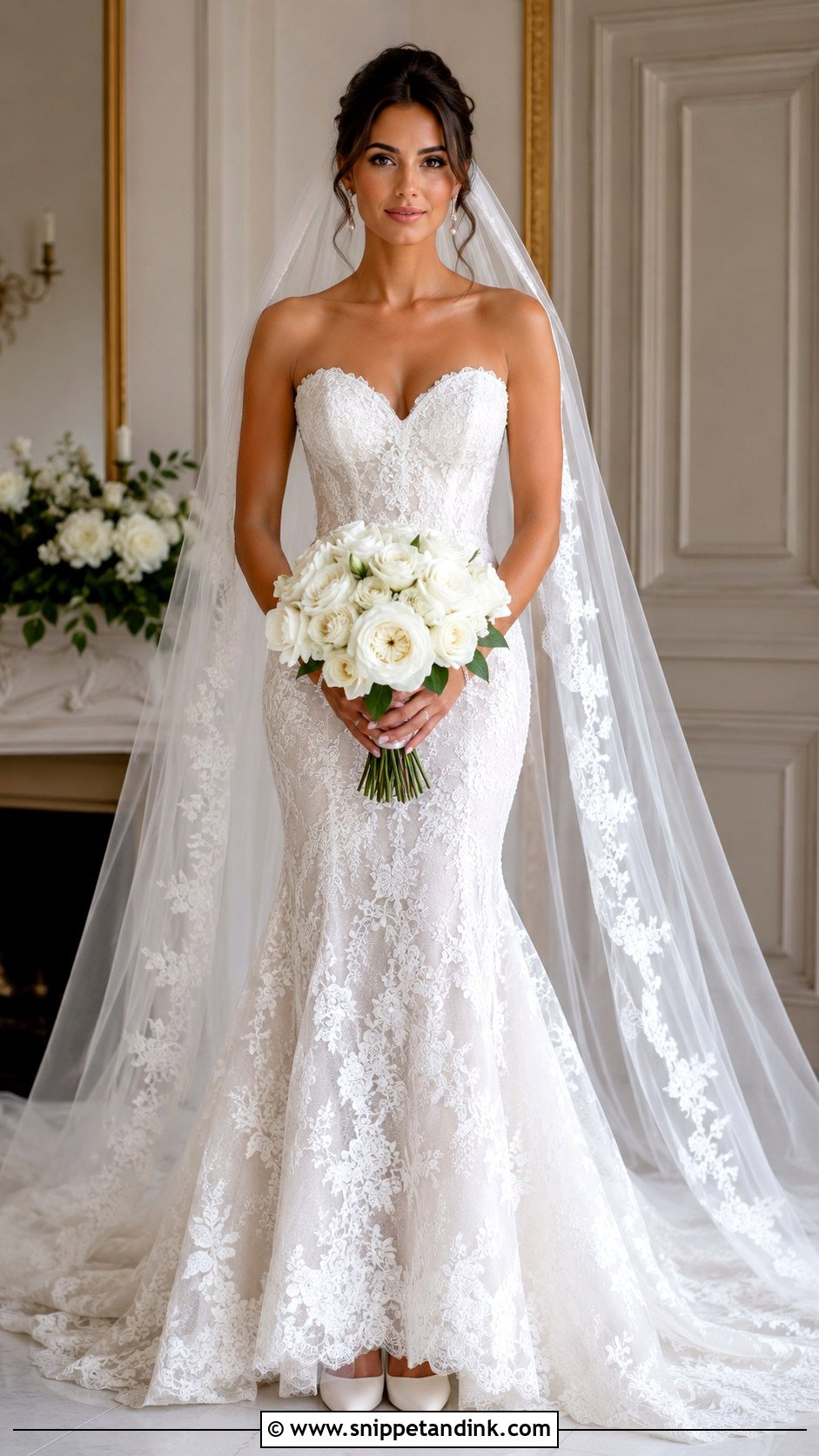
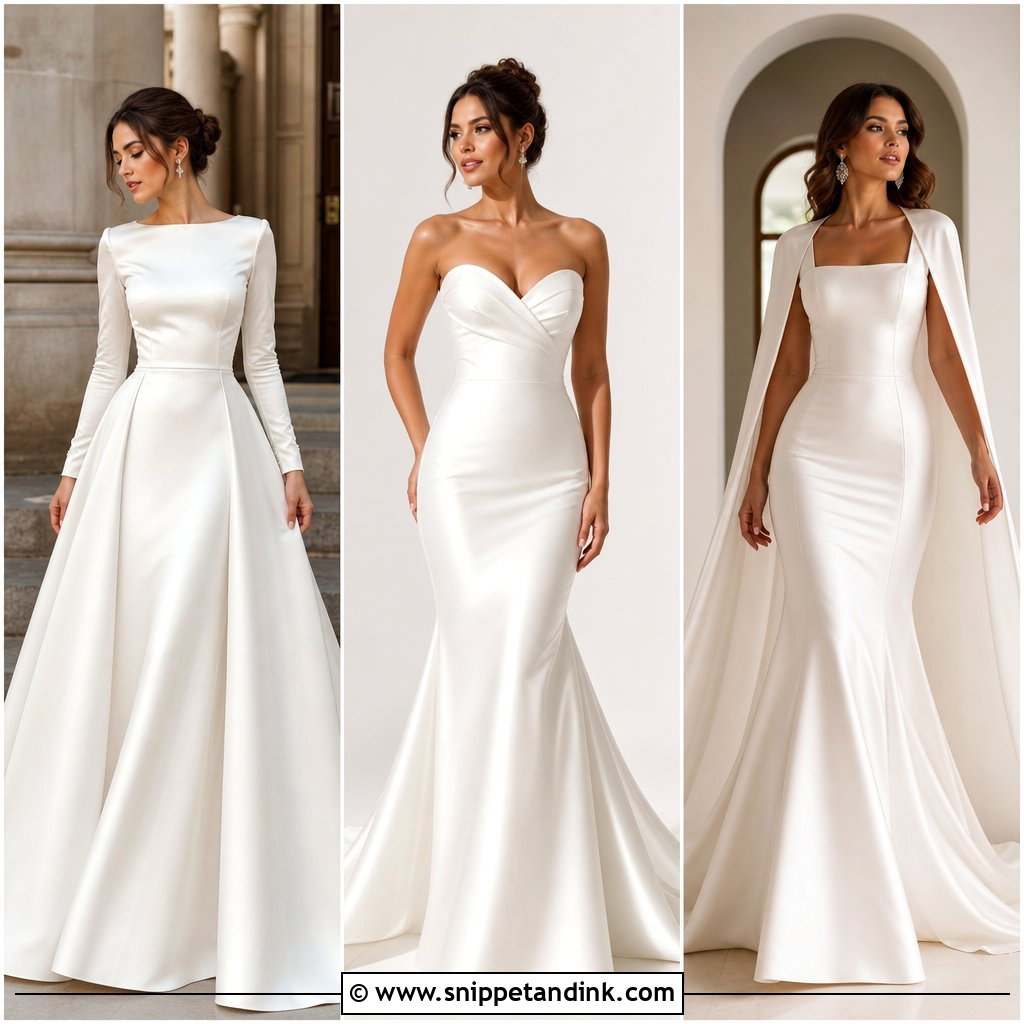
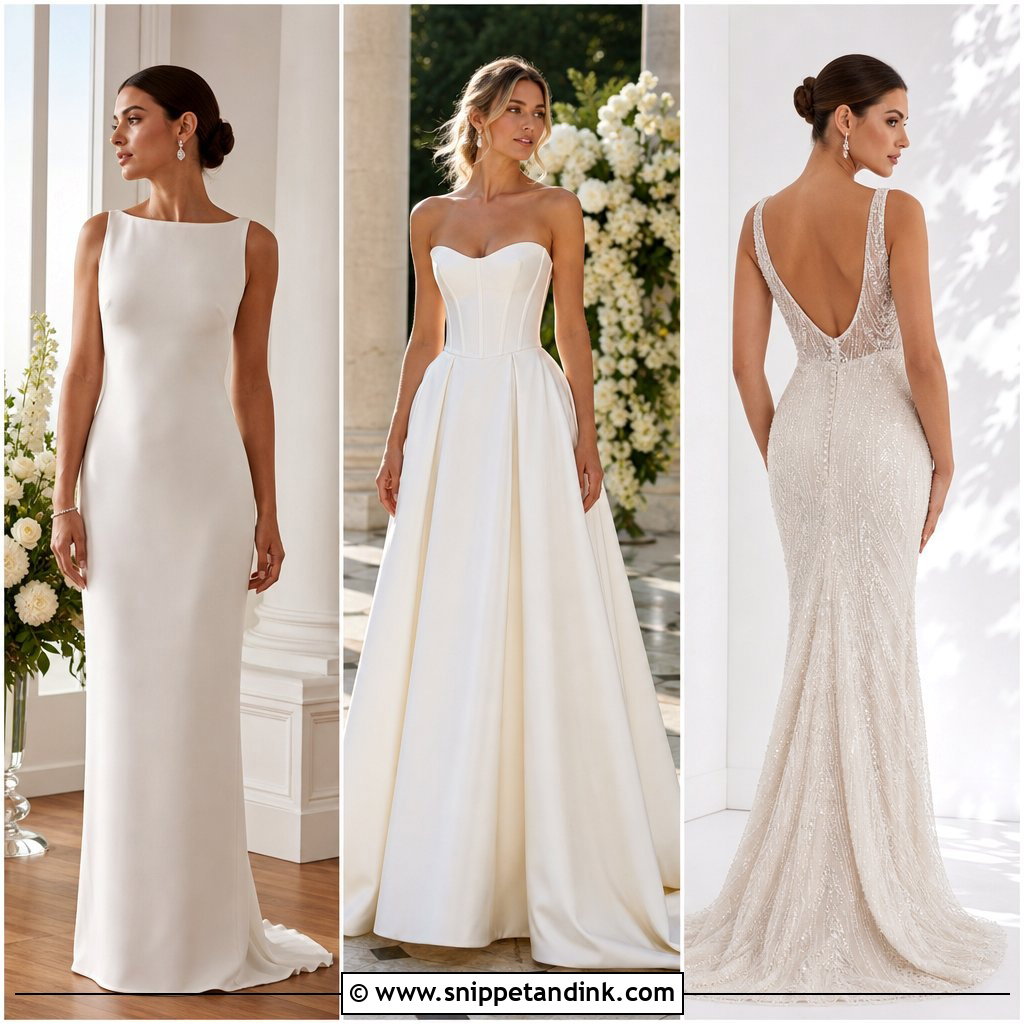
Sweetheart bodices are the classic partner for this cut, and the cups are what make or break them. Supportive cups and light boning should hold the curve of the neckline when you breathe in and when you bend, so the edge doesn’t stand away from your chest. Floral lace placed across the waist and hips draws the eye down to where the skirt opens. Pearl drops and pointed ivory heels keep it traditional, and a cathedral veil with a narrow lace border adds length. Garden roses in a loose shape finish it for a ballroom, an estate or a garden.
2. Long Sleeve Lace Fit and Flare Wedding Dress
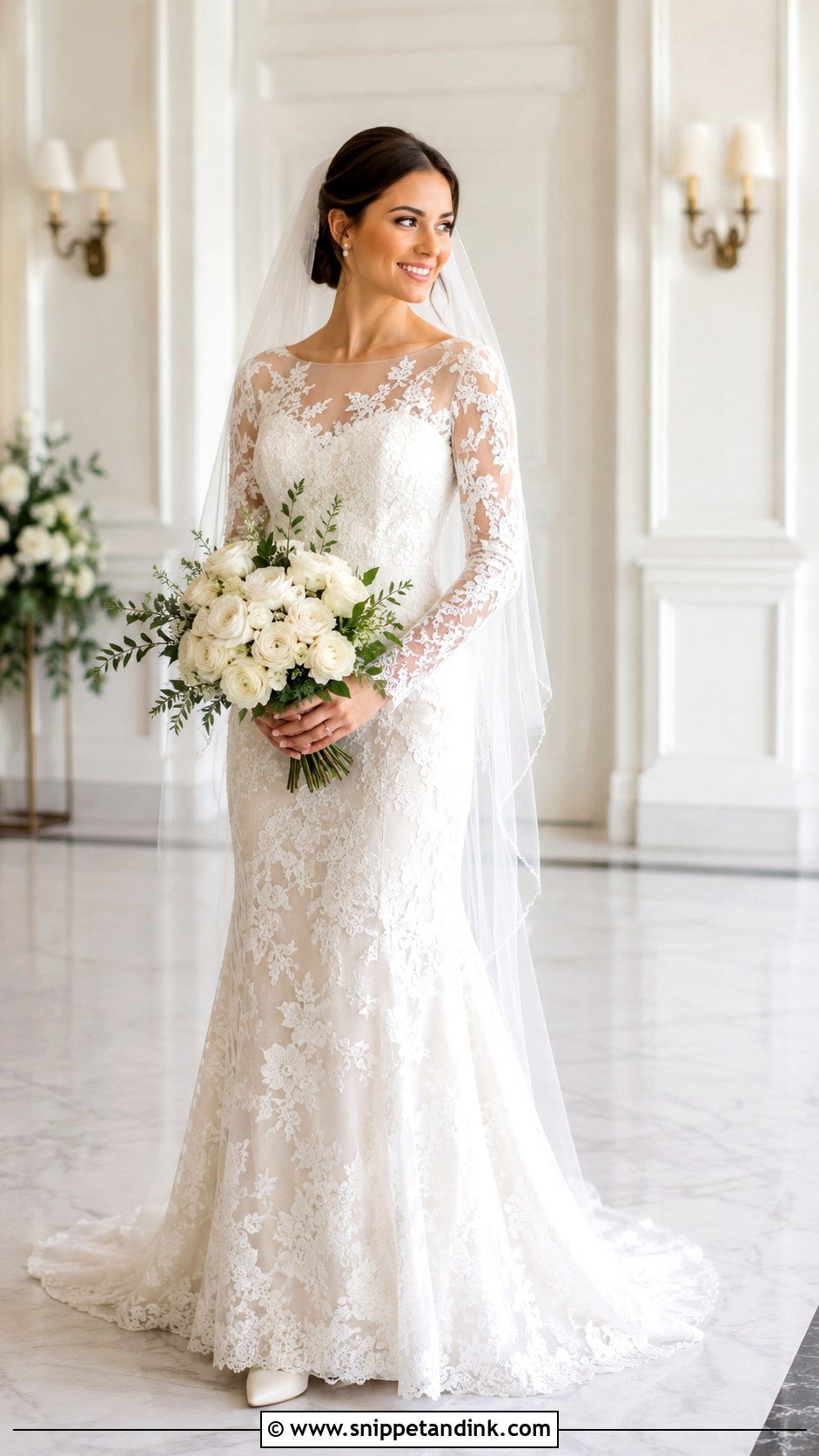
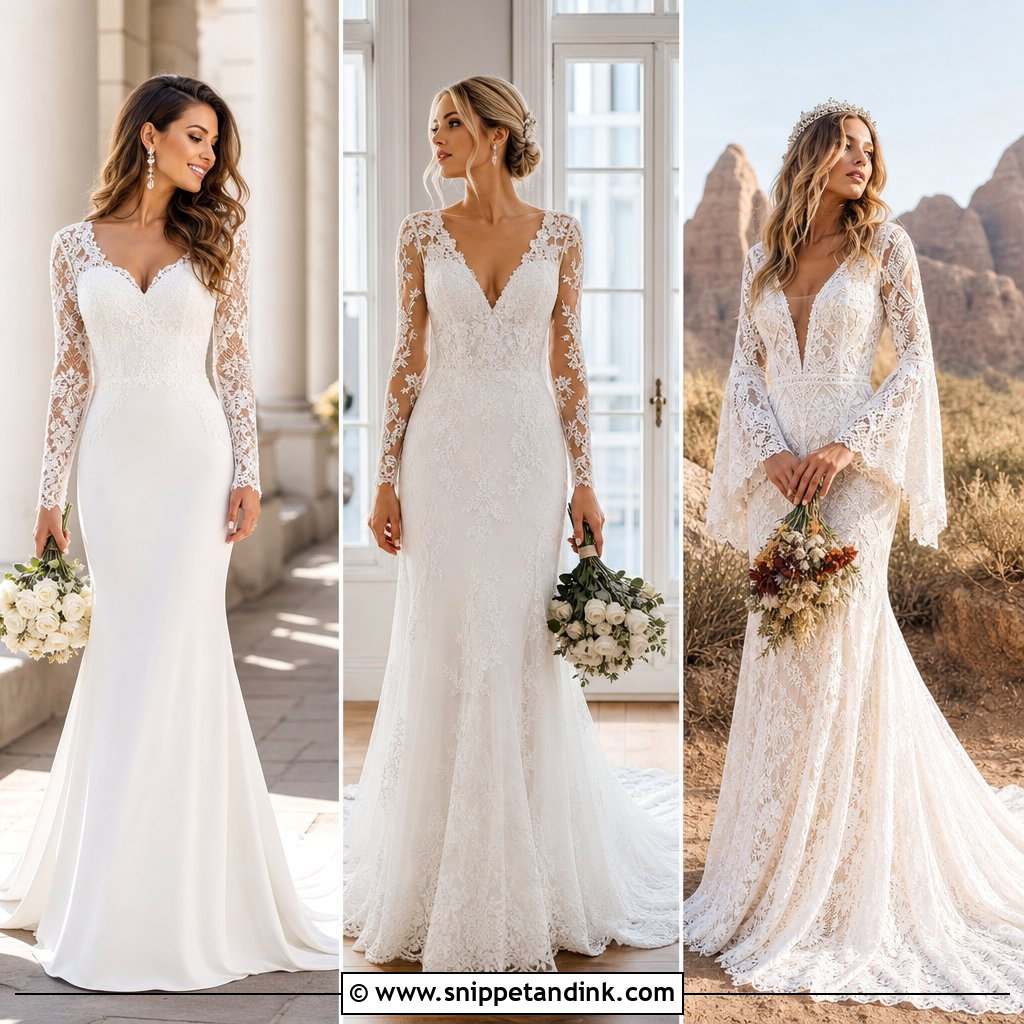
Long illusion sleeves are the cold-weather answer, and on a fitted gown they balance a body-skimming skirt with coverage up top. The appliqués should look as though they’re resting on bare skin; if the mesh puckers between motifs, ask for it to be eased. A lined bodice keeps the gown from feeling too sheer. Closed-toe satin pumps are the practical fall and winter shoe. Choose a fingertip veil with no heavy edge so the sleeve pattern shows through it, and a low chignon with a small comb.
3. Off Shoulder Lace Fit and Flare Wedding Dress
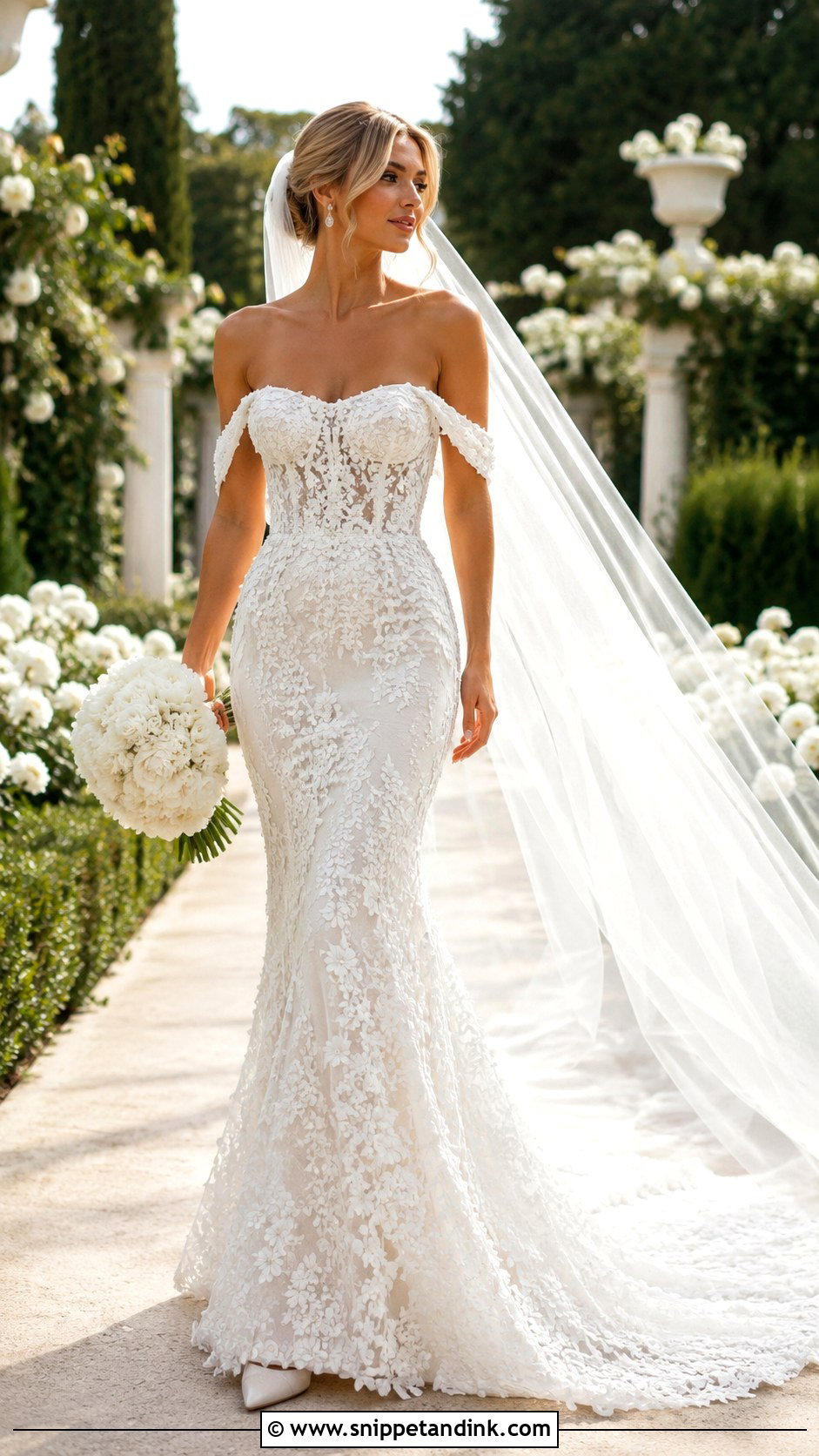
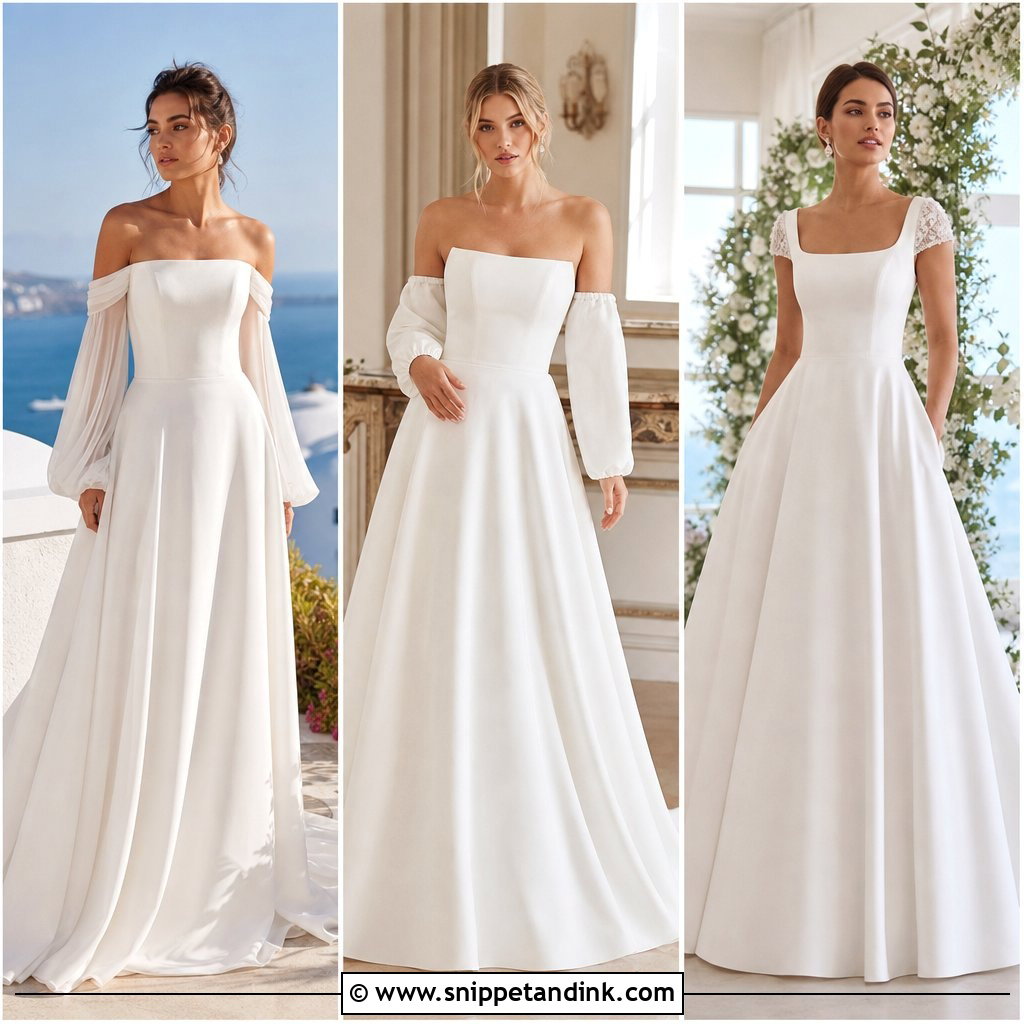
Off-the-shoulder lace sits best on a fit and flare when the skirt opens just above the knee; the wider shoulder line and the flare balance each other. A structured bodice must hold the dress up, because the lace band at the shoulders is decoration rather than support. Look for appliqués that carry on unbroken from the neckline onto the gown. Loose low buns and side-swept waves both keep the shoulders on show. Teardrop earrings and a tennis bracelet add a little shine. It’s formal enough for a hotel and easy enough for a countryside party.
4. Square Neck Lace Fit and Flare Wedding Dress
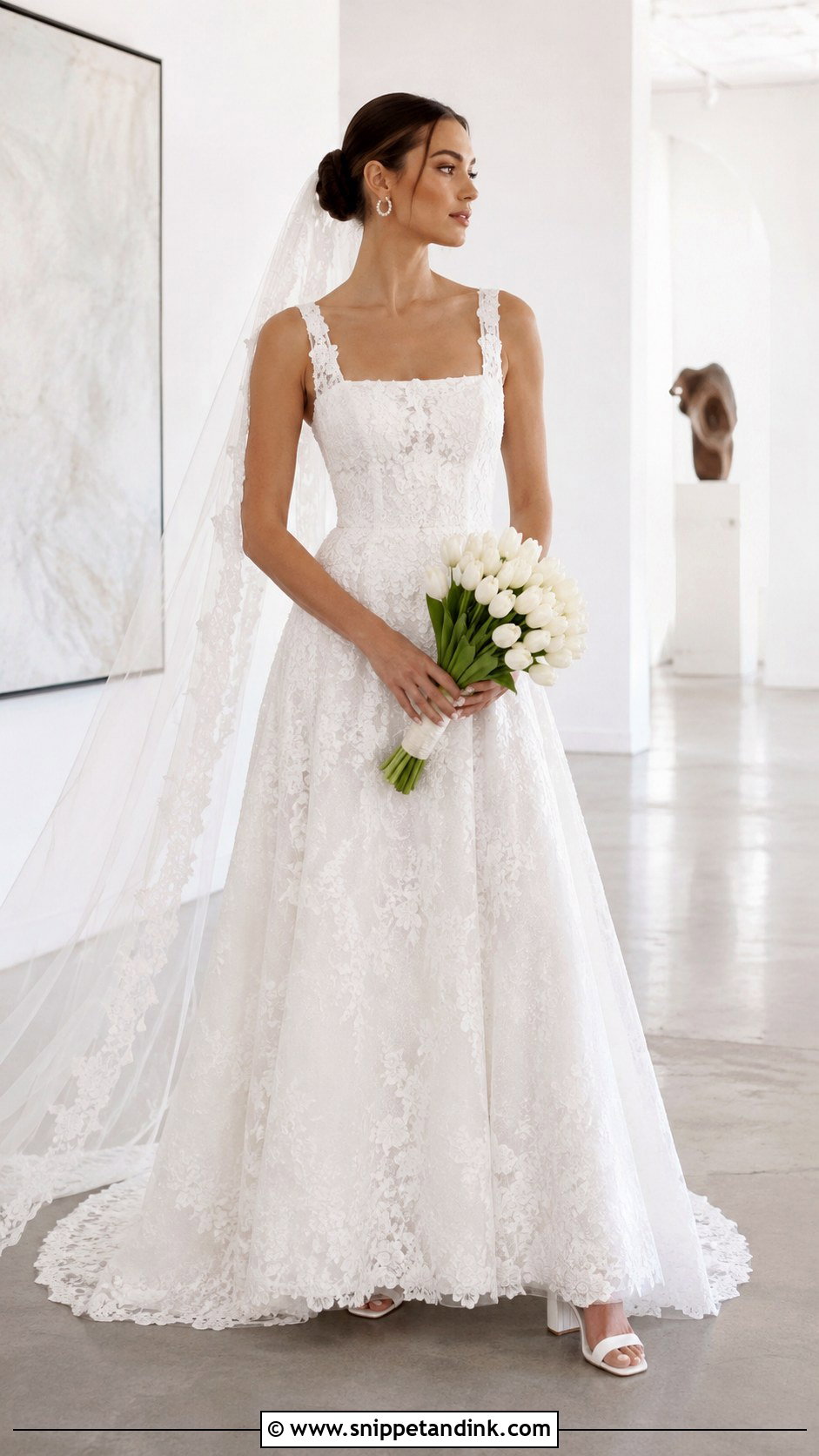
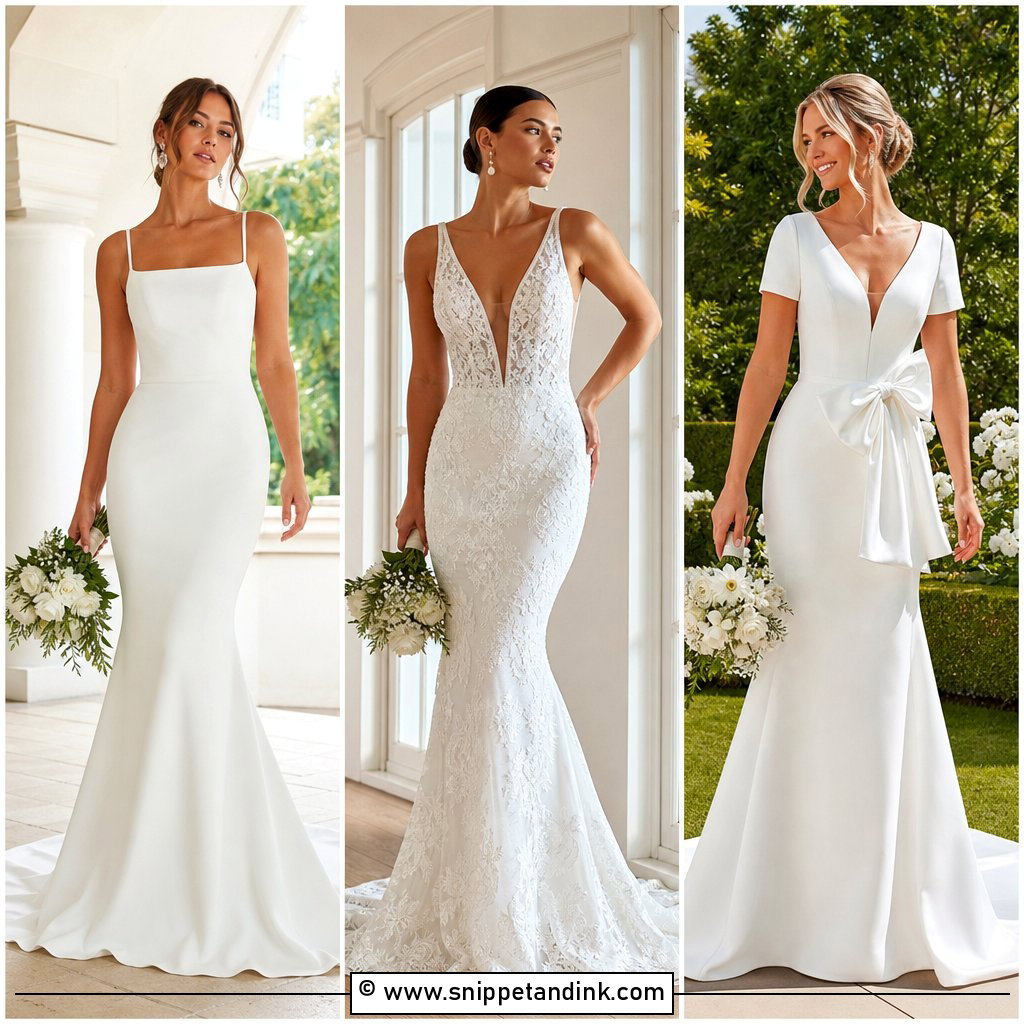
Square necks give lace a modern edge. Wider straps help here, both for support and to balance the straight line across the chest. On a fitted skirt I always check for a little stretch in the lining, since a rigid fitted skirt makes sitting and stairs harder than they need to be. Medium-scale floral lace suits the clean neckline better than a tiny pattern. A smooth bun, small pearl hoops, and a short single strand only if there’s room. Sleek block heels give stability without looking casual, and white tulips or calla lilies in a structured bouquet match the architecture.
5. High Neck Lace Fit and Flare Wedding Dress
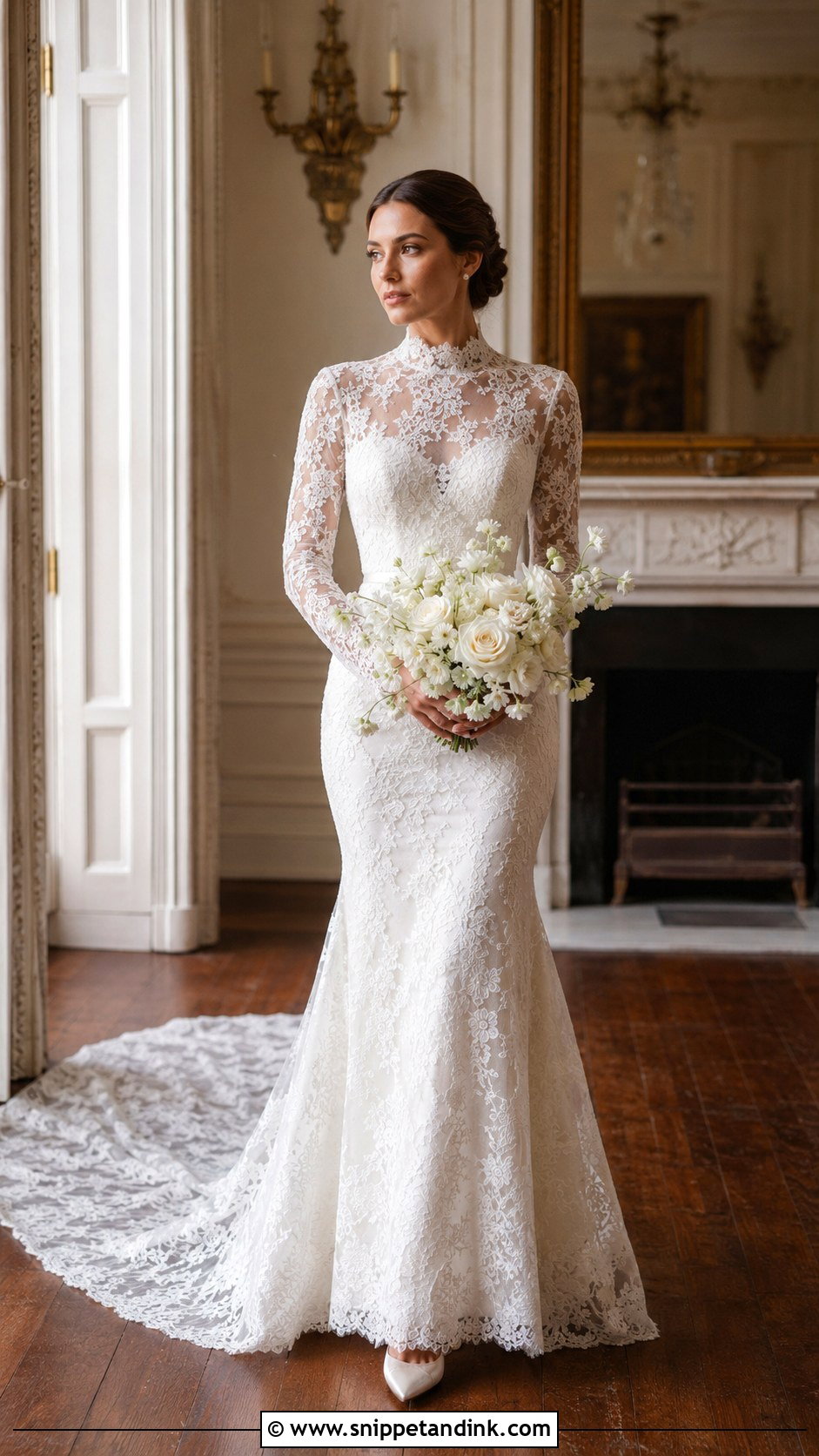
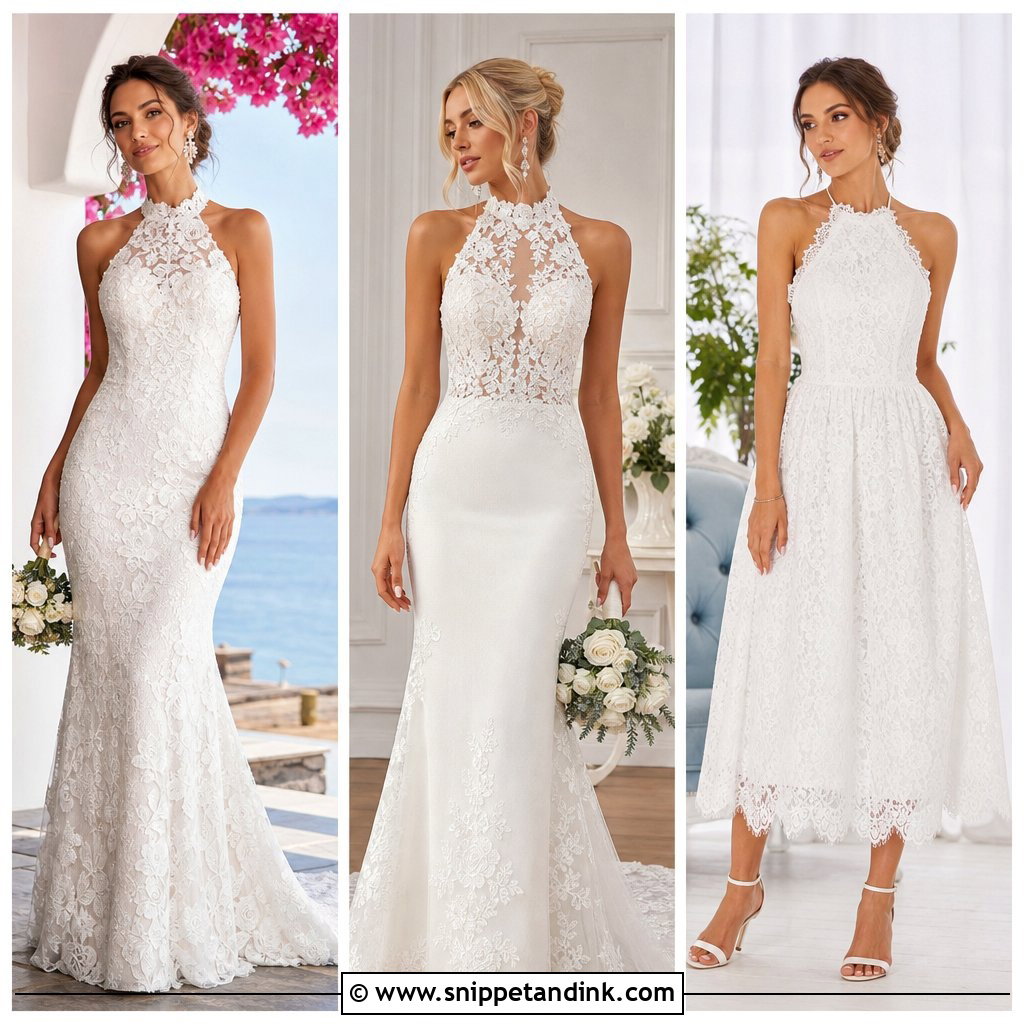
A high illusion neck with carefully placed appliqués gives coverage while still looking light, and with a skirt that releases around the lower thigh the whole line stays long and slim. Treat the neckline as the jewellery and keep everything else small: pearl studs, a thin bracelet, a smooth updo. The thing to test is the collar while you’re sitting. Fitted gowns push the bodice up slightly when you sit, and a high neck can then press against the throat. Pointed satin shoes and a long plain veil suit historic houses and grand hotels.
6. V Neck Lace Fit and Flare Wedding Dress
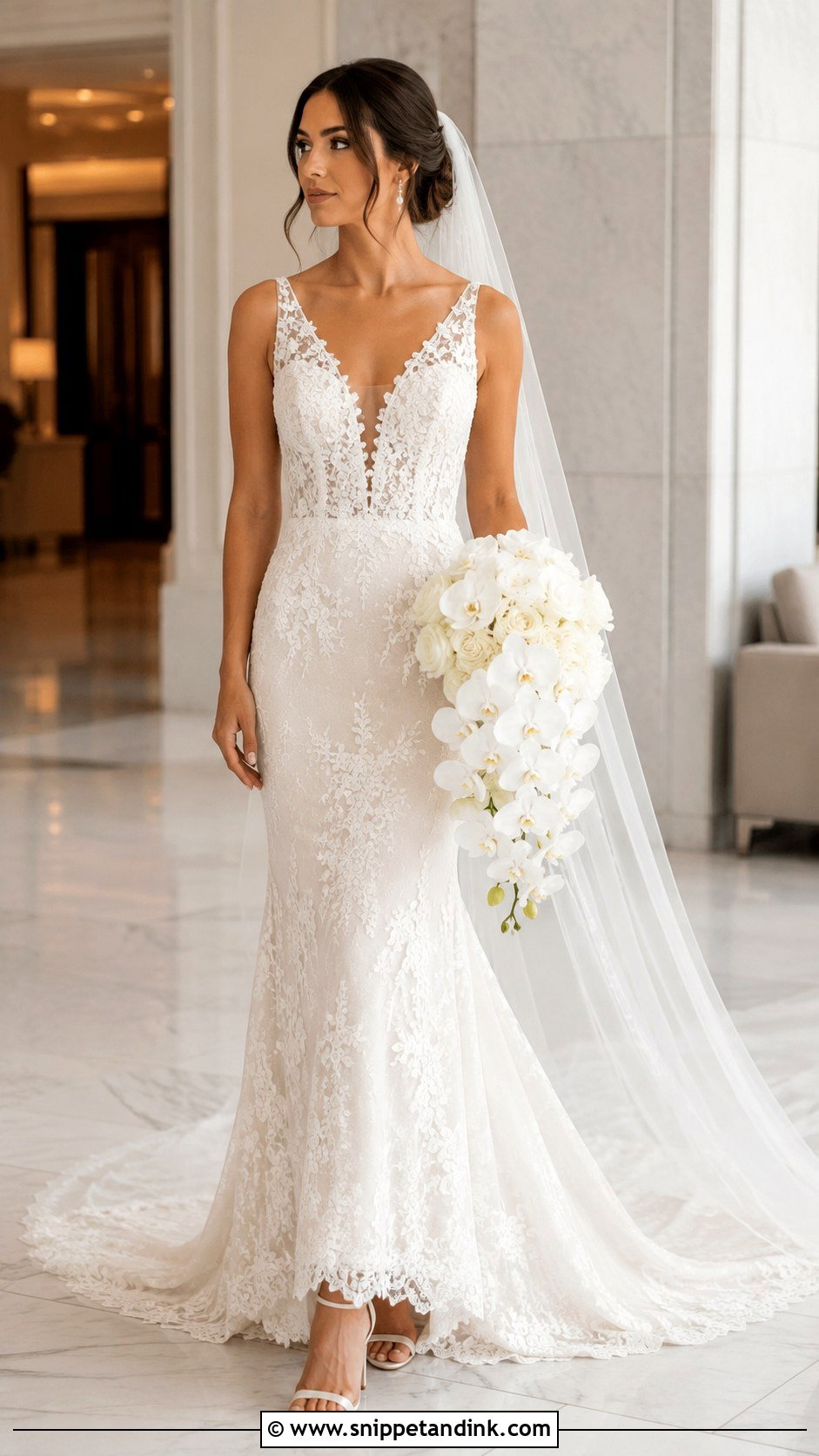
A V neck lengthens the upper body and gives a fitted gown a confident line. On a close-fitting dress, the inner bodice has to do the holding, so look for illusion mesh in the V, secure straps and solid internal construction. Appliqués along the edge of the V soften it. I’d usually leave the necklace off, since lace and neckline already give plenty to look at. Fine ankle-strap heels, drop earrings and a low textured bun are enough, and a cascading bouquet of orchids and roses follows the long line down.
7. Strapless Corset Lace Fit and Flare Wedding Dress
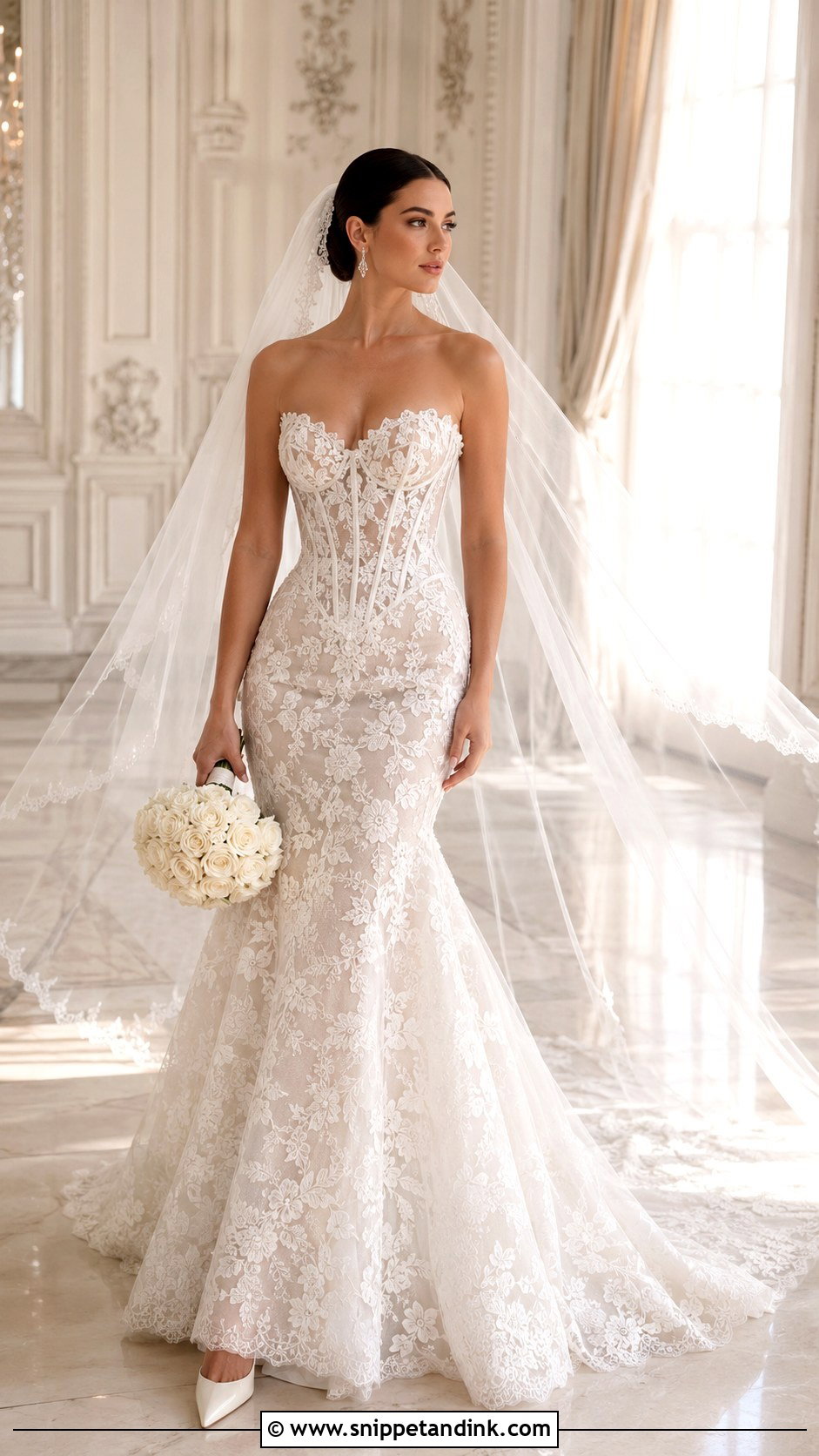
Corset bodices with visible boning look structured and current, and the lace should trace those lines rather than smother them. Strapless versions need proper internal support; a waist stay, the inner band that anchors the bodice at the waist, is worth asking about, because it carries the weight instead of the bust. The skirt should flare gradually below the hips. A short necklace works over a clean bodice edge and should be skipped over heavy embellishment. Crystal drops and a polished bun keep it sharp, and a cathedral veil with a raw edge adds drama without hiding the corset.
8. Cap Sleeve Lace Fit and Flare Wedding Dress
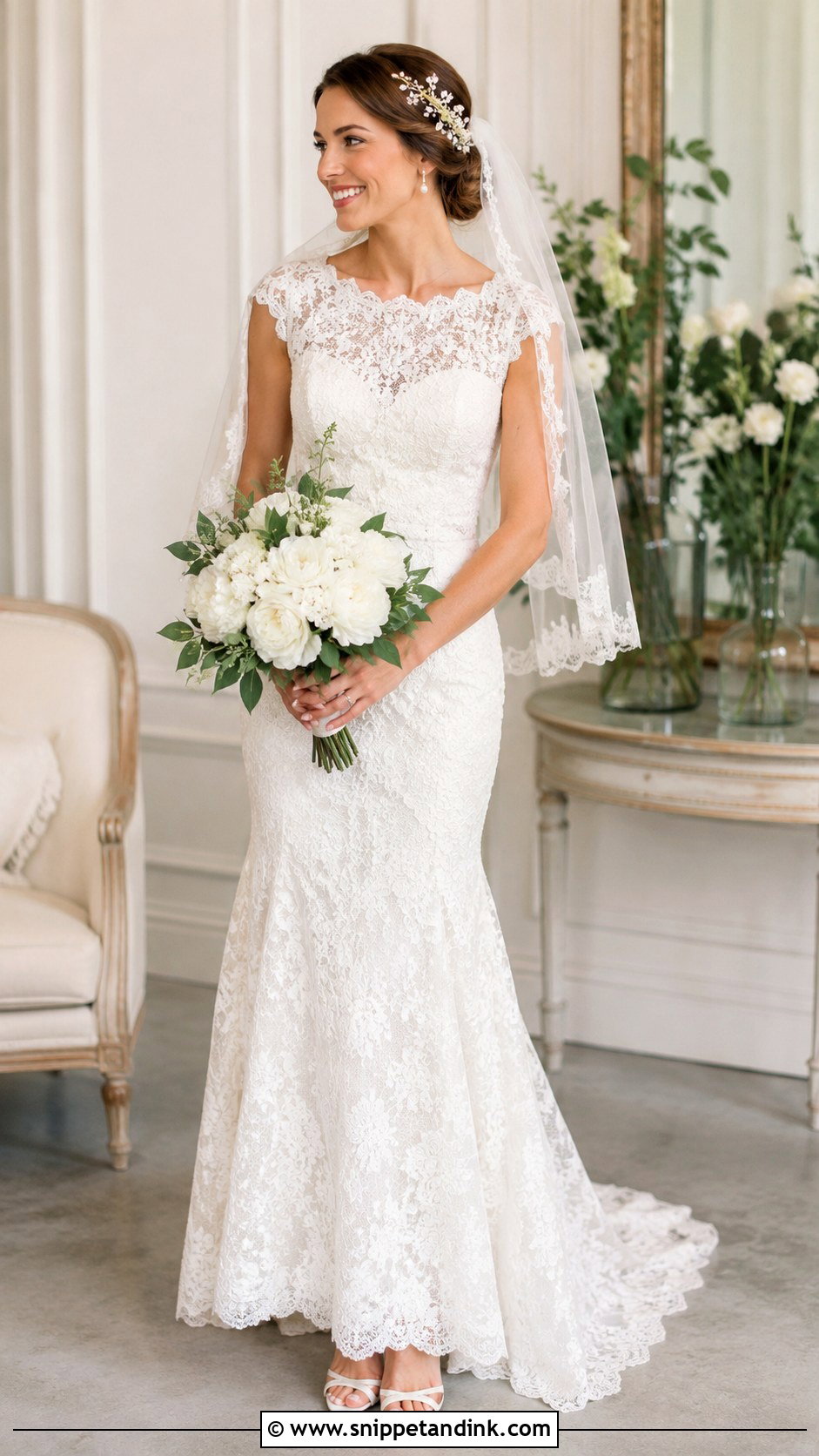
Delicate cap sleeves add a little shoulder cover without changing the gown’s line. They should sit softly on the arm and join cleanly with a scoop, bateau or shallow V neck. A tight cap sleeve cuts into the upper arm and looks worse in photos than none at all, so check you can lift your arms freely. A half-up style with a small vintage comb suits it, and slingbacks feel lighter than a closed pump. A fingertip veil or a tulle bow veil keeps things uncluttered. Peonies in a loose bouquet suit a daytime ceremony.
9. Detachable Sleeve Lace Fit and Flare Wedding Dress
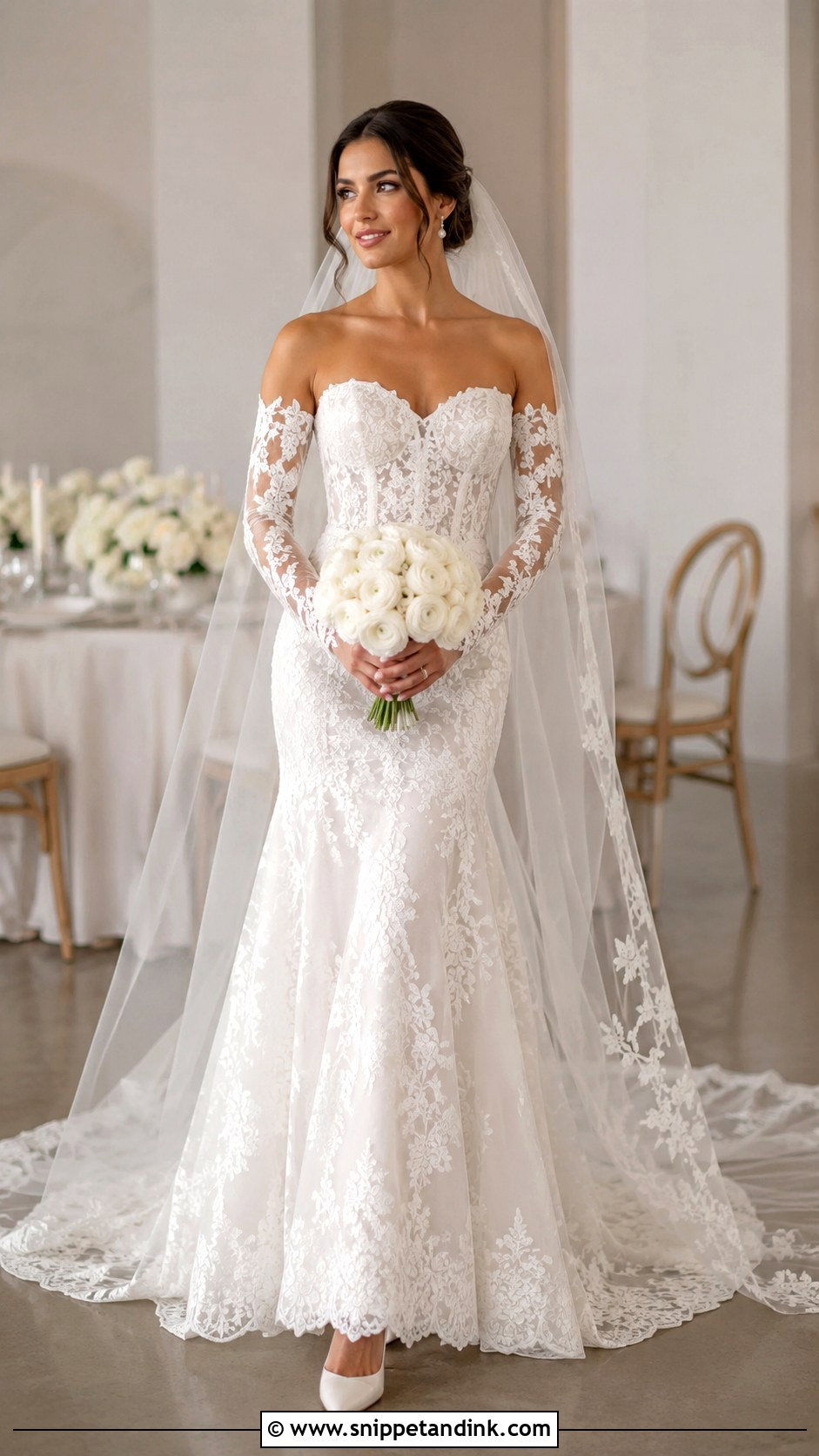
Why settle for one look? Fitted illusion sleeves clip onto a strapless or thin-strap gown for the ceremony and come off for the reception. The sleeves should share the bodice’s floral motifs so they look built in, not added later. The changeover is quick when the fastenings are good, so try it at your last fitting with the person helping you. After the ceremony, swap the chapel veil for a sparkling comb or a ribbon. A small bouquet of ranunculus and roses suits both versions.
10. Basque Waist Lace Fit and Flare Wedding Dress
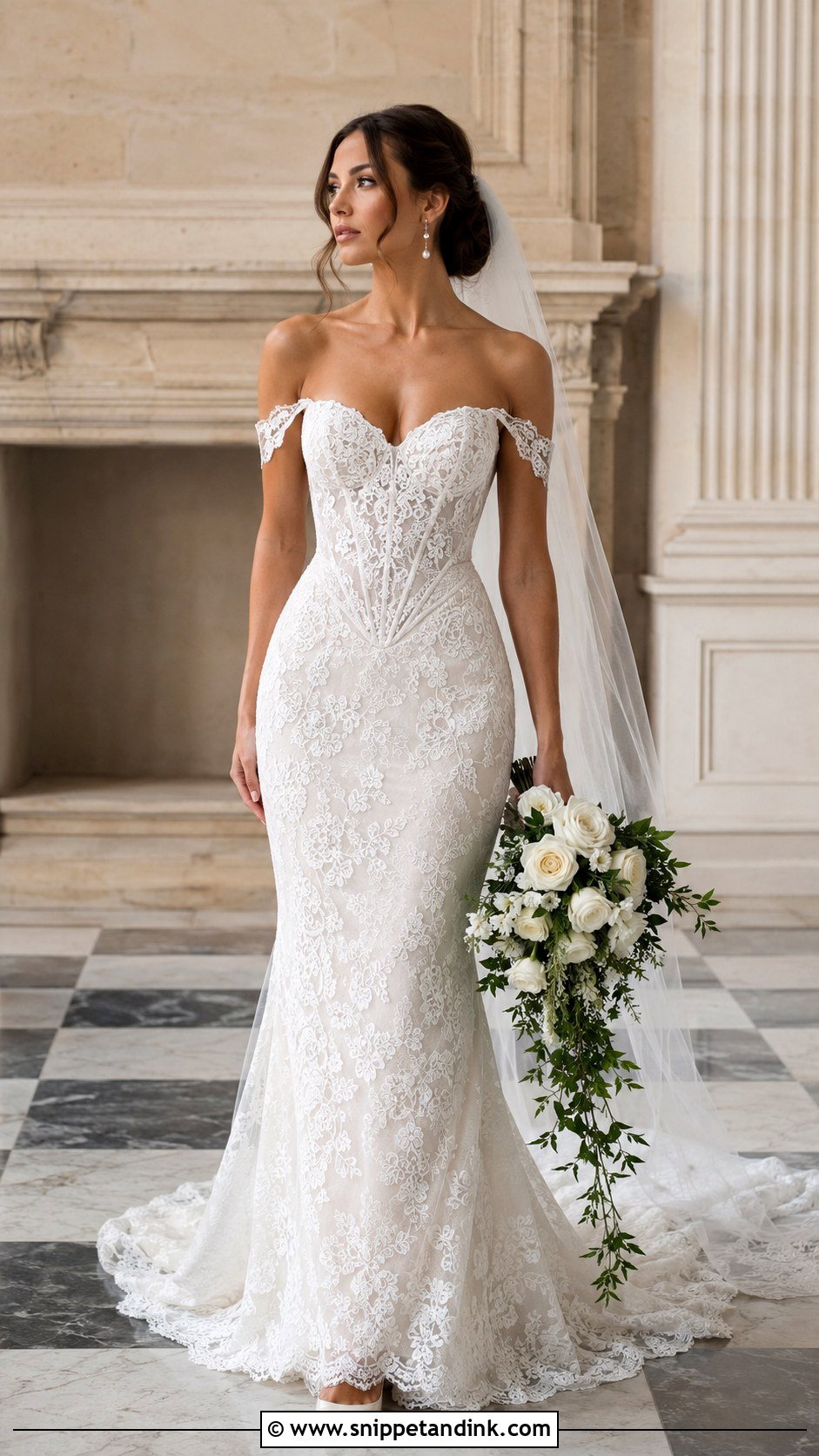
A basque waist dips into a soft point at the centre front, which lengthens the torso and sharpens the transition into the skirt. On a fit and flare, that point sits on a very fitted area, so I check it carefully when the bride sits: a poorly shaped basque pushes into the stomach. Lace motifs should be placed symmetrically around the point to show it off. Keep everything else controlled, with pearl drops, a neat bun and a long plain veil. White roses with trailing greenery suit a grand indoor venue.
11. Low Back Lace Fit and Flare Wedding Dress
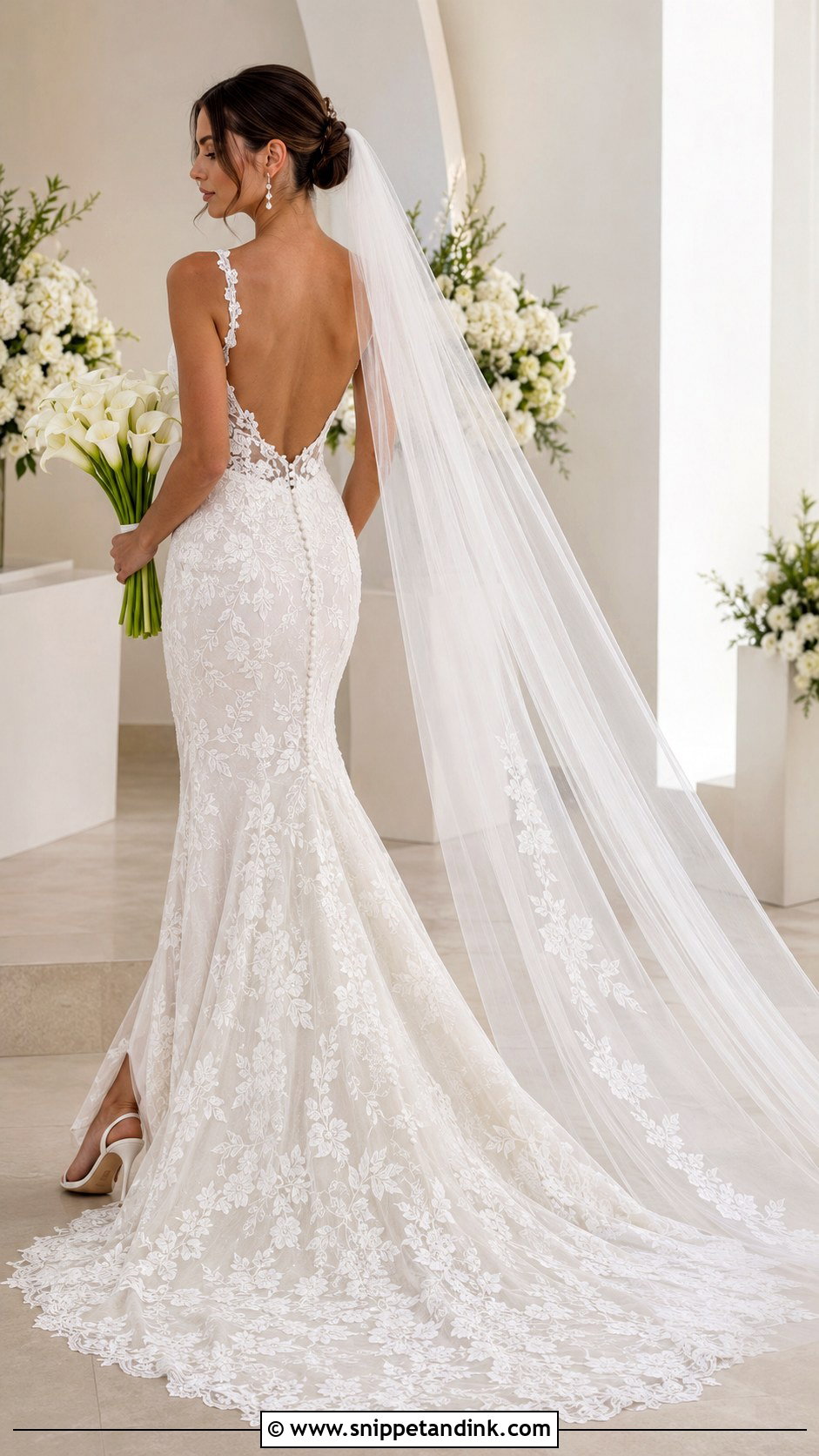
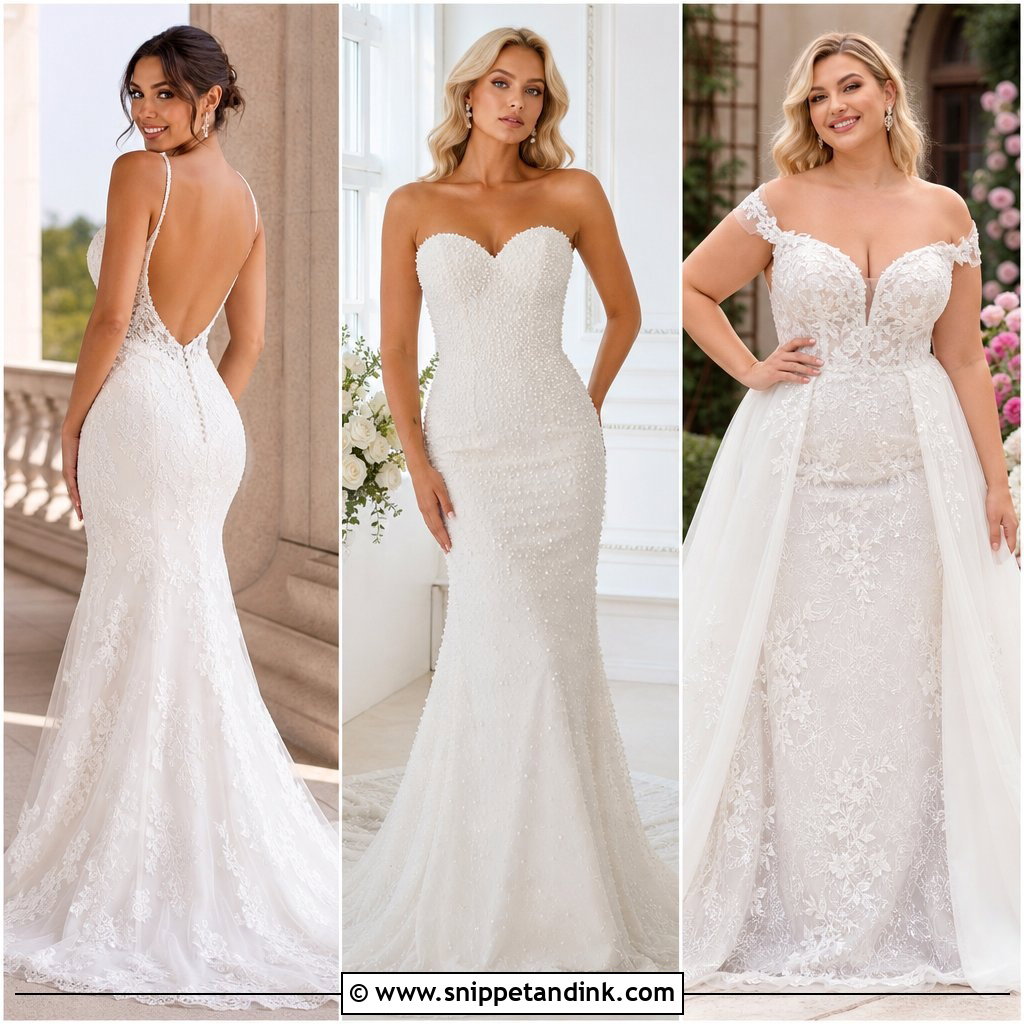
Low backs make the moment you turn to face your partner as striking as the walk in. On a fitted gown, side panels and secure straps are essential, or the edges gape when you lean forward. Covered buttons along the lower back add a traditional detail and lead the eye down the shape of the dress. Sort out undergarments at the first fitting, not the last; most low backs need cups sewn into the gown, and that takes time. Wear your hair up or swept to one side, and fix a sheer cathedral veil below it so it frames the back.
12. Button Back Lace Fit and Flare Wedding Dress
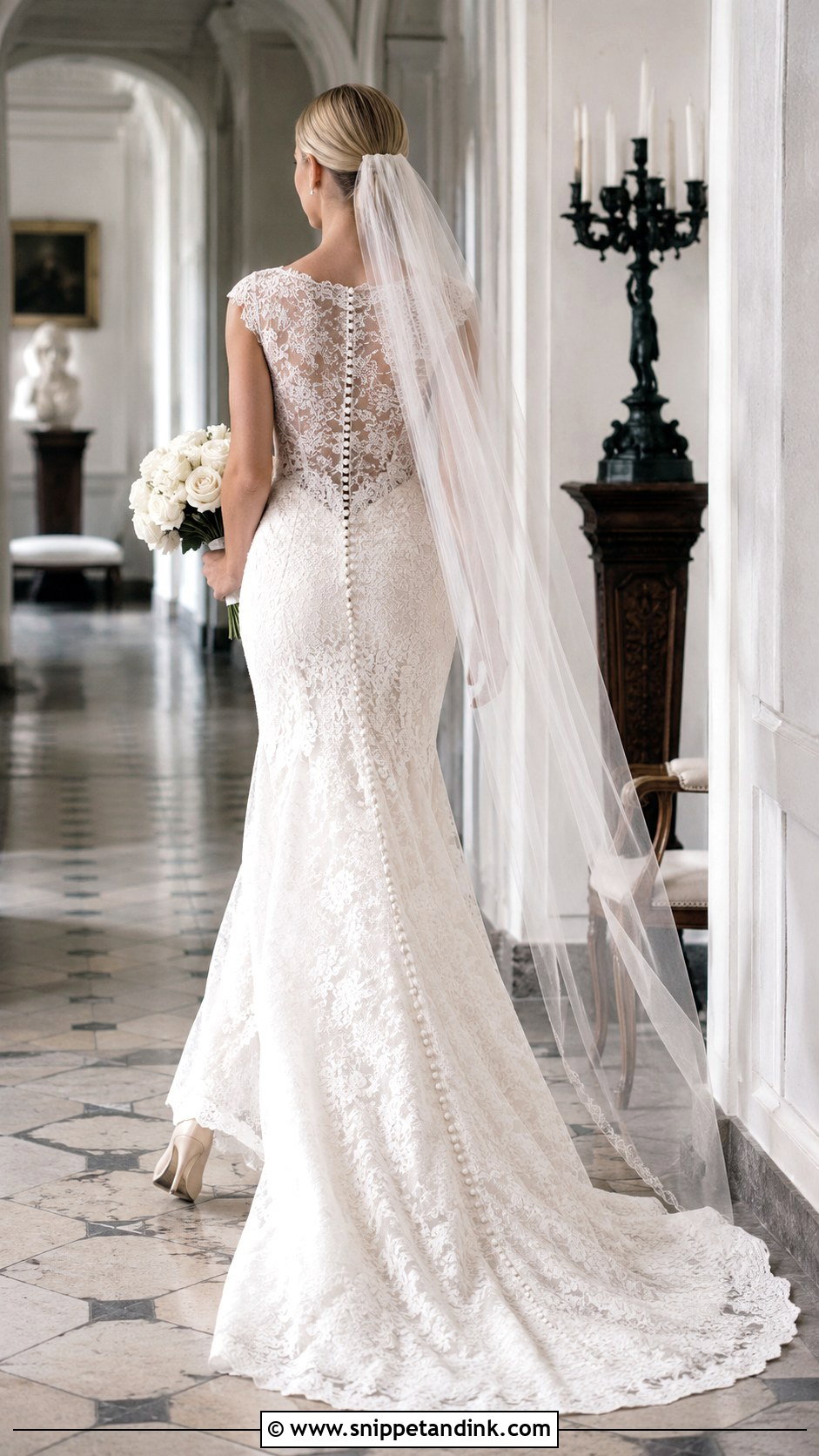
Tiny covered buttons running from the bodice into the skirt are a classic for a reason. The line follows the fitted silhouette and pulls the eye down the length of the dress. They also take a long time to fasten. Ask whether there’s a hidden zip underneath; it saves several minutes and a lot of fiddling while the photographer waits. A softly waved updo, pearl studs and a delicate hairpin suit it. Choose a lightweight raw-edge veil so the buttons stay visible, and carry a rounded bouquet of roses and greenery.
13. Scalloped Train Lace Fit and Flare Wedding Dress
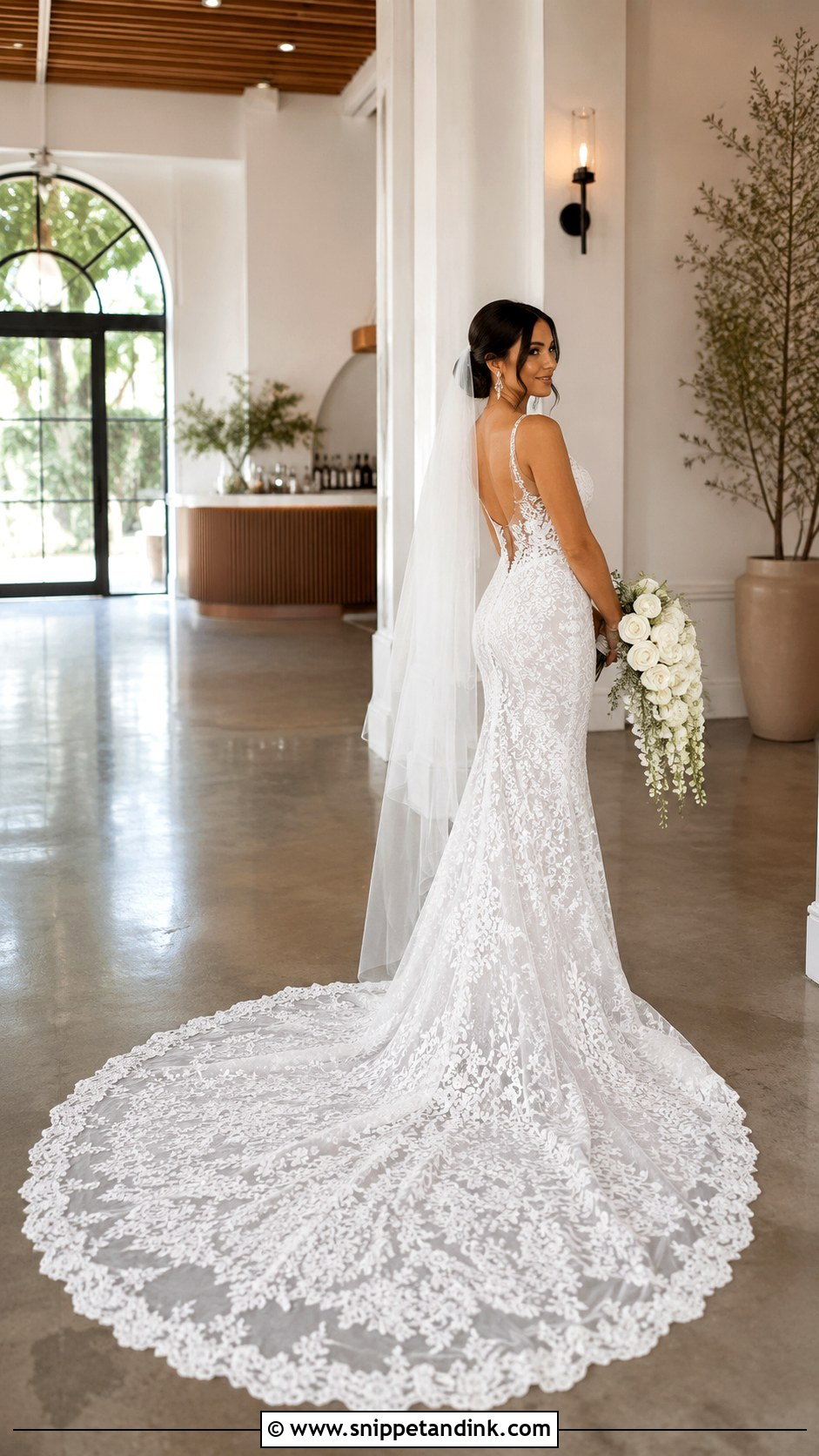
A scalloped lace train gives the hem a clear border without adding volume, and it’s one of the prettiest details on a fit and flare. Keep the upper gown simple so the hem gets the attention. Your veil needs a plain edge; two scalloped borders overlapping in photos look messy. Scallops are delicate, and they catch on rough floors and heels, so practise walking and turning at your fittings. A secure bustle protects the train once you start dancing. An elongated bouquet of roses echoes the long line.
14. Floral Appliqué Lace Fit and Flare Wedding Dress
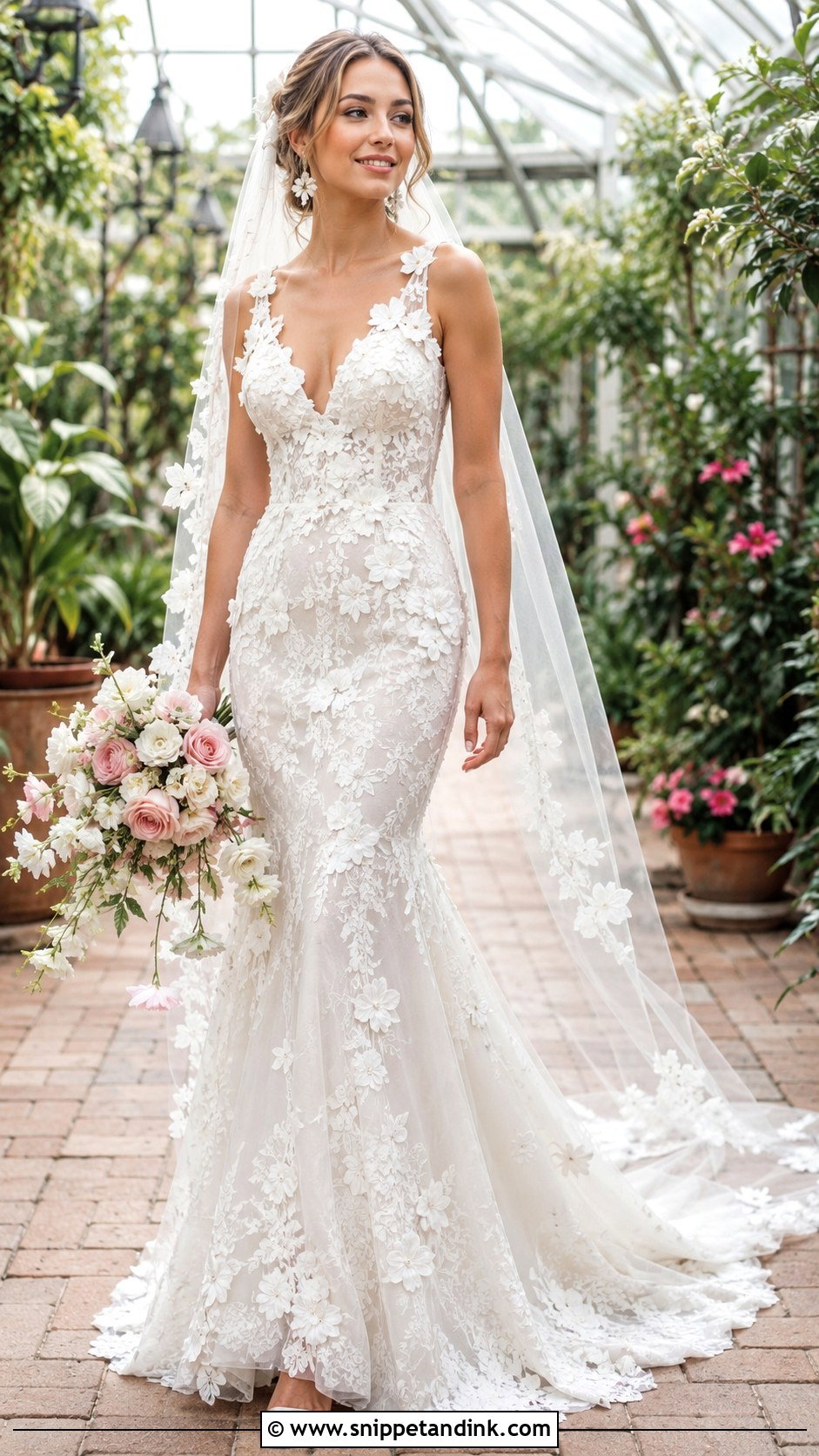
Raised flowers clustered on the bodice and drifting down the skirt give depth, and varied sizes stop it from looking like a pattern stamped on. A neutral or nude lining lets the flowers stand out. On a fitted gown, though, thick appliqués at the hip can add bulk exactly where the dress is tightest. If that’s a concern for you, ask for flatter lace at the hip and the dimensional pieces higher up. Floral earrings and a soft tulle veil with a few matching appliqués near the edge tie it together. It sits naturally in a greenhouse or a botanical garden.

15. Beaded Lace Fit and Flare Wedding Dress
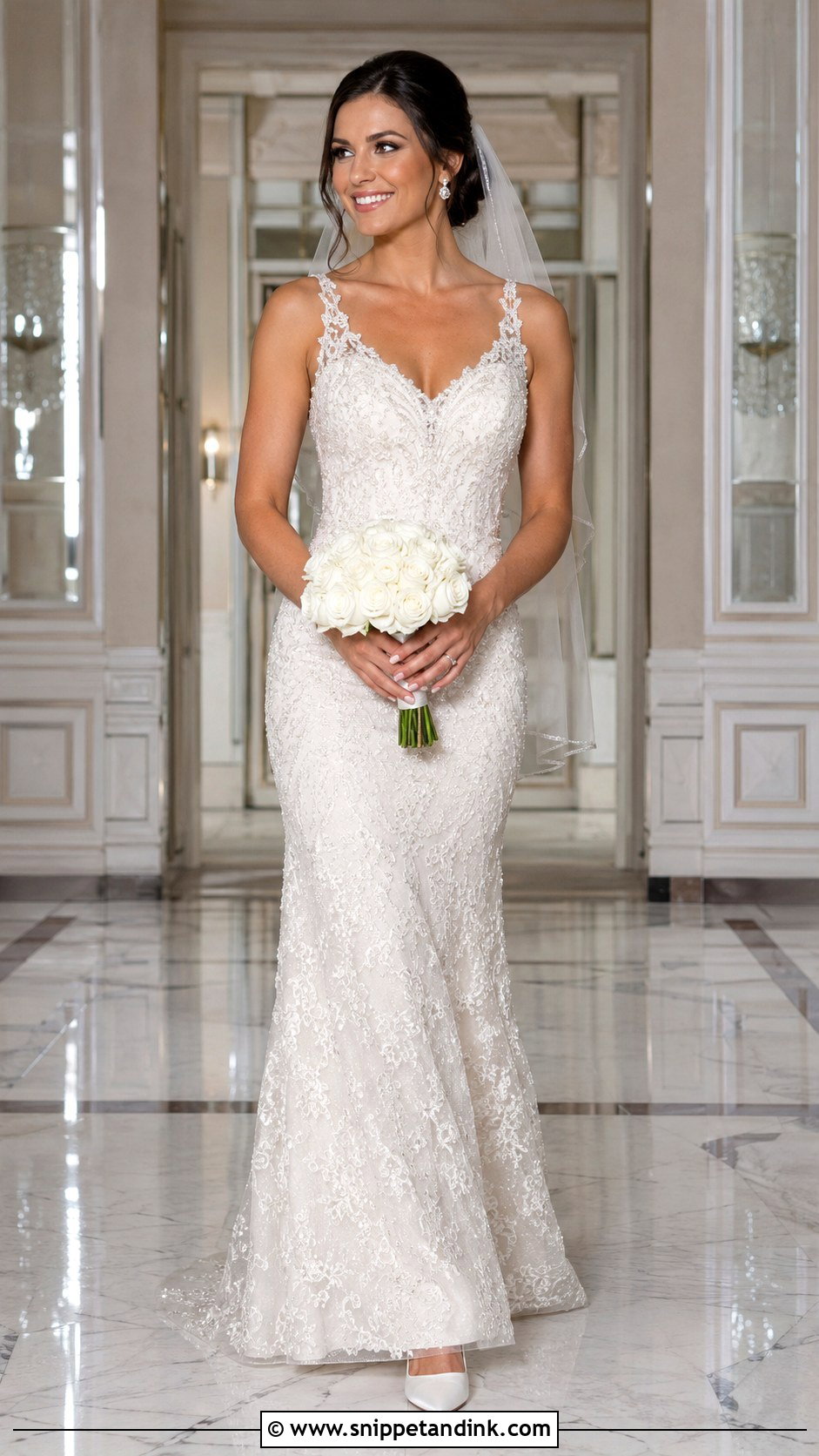
Beads are at their best in motion: as you walk, turn and dance, the light moves across them. Tonal beads, tiny pearls or clear crystals look more refined than mixed colours. Concentrate them on the bodice to define the waist, and keep the skirt lighter, or the extra weight drags at the flare. Rub the underarm area of the bodice against your inner arm in the fitting room. Beading that scratches there will be sore by the speeches. Small crystal earrings, a sleek updo and a plain sheer veil let the dress do the sparkling.
16. Chantilly Lace Fit and Flare Wedding Dress
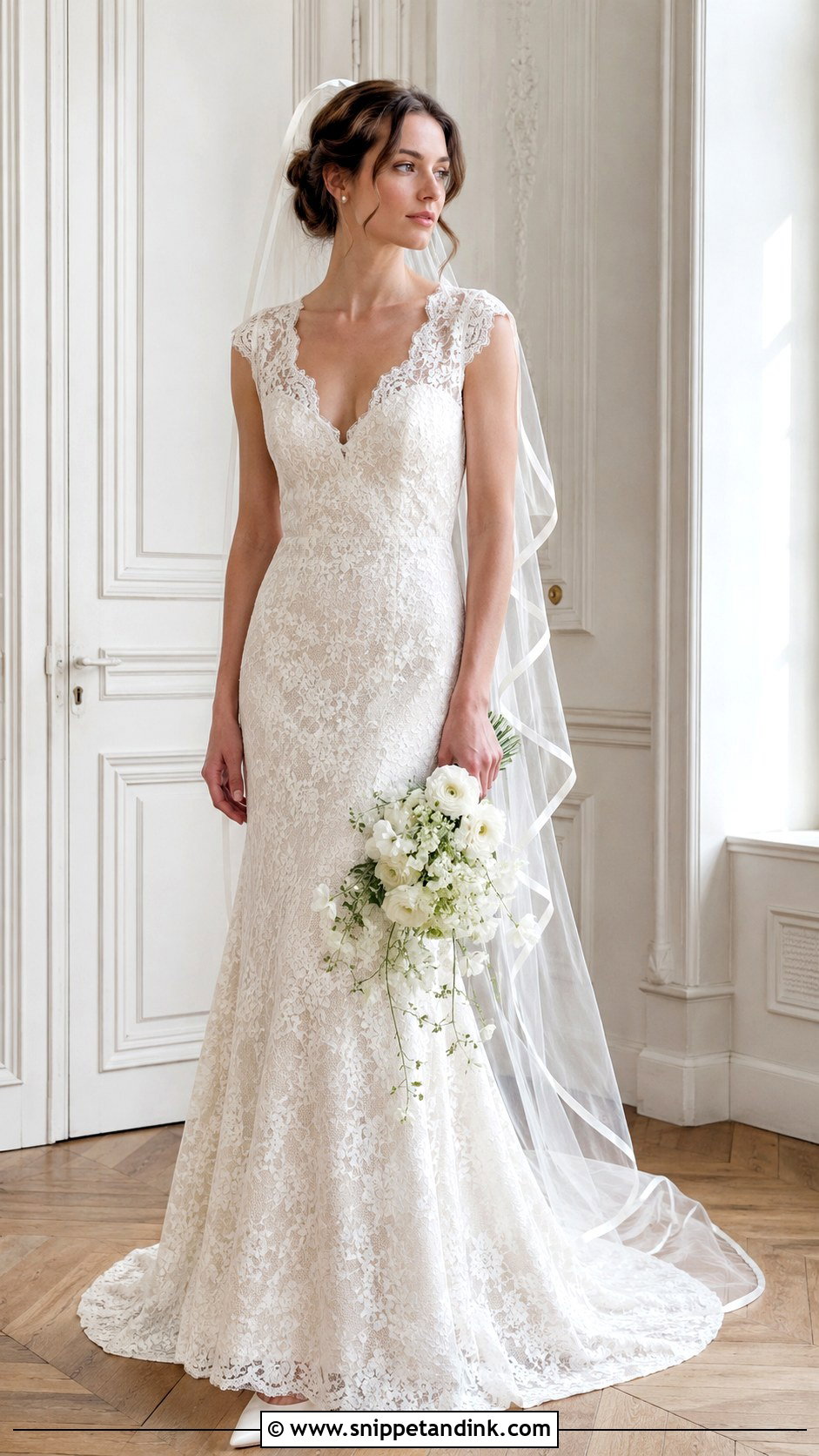
Chantilly is a fine net lace with softly outlined flowers, light enough to move with a gradual flare instead of holding it stiff. An ivory or light nude underlayer brings the pattern forward. That fineness also makes the hem vulnerable. If you’re walking on gravel, rough stone or grass for portraits, ask your seamstress about a horsehair or protective edge on the hem, or have the gown taken up a fraction so it doesn’t drag. Pearl studs, a low chignon and a ribbon-edged veil suit it, with sweet peas and ranunculus in a loose bouquet.
17. Boho Lace Fit and Flare Wedding Dress
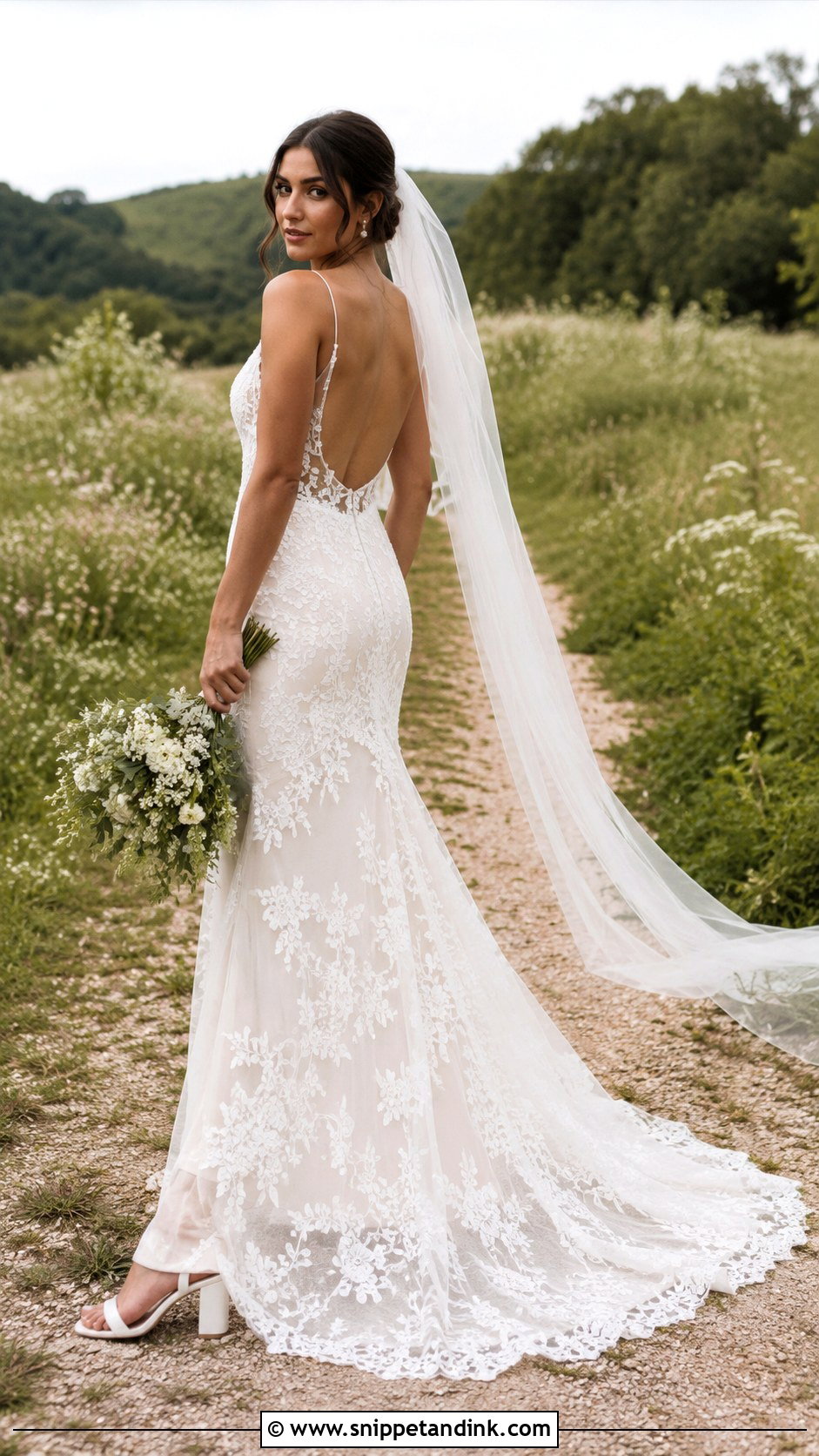
Leaf, botanical or crochet-style lace and a gentler flare turn this shape into something with an easy bohemian character. Avoid a rigid mermaid flare here; the skirt should move freely when you walk across grass. Thin straps, an open back or removable flutter sleeves keep it relaxed. Crochet-style lace is heavier than it looks and can stretch if the gown is hung by its straps for days, so keep it on the inner loops. Loose waves, small gold earrings and block-heel sandals suit a meadow or a coastal venue. A light chapel veil or just a comb is plenty.
18. Modest Lace Fit and Flare Wedding Dress
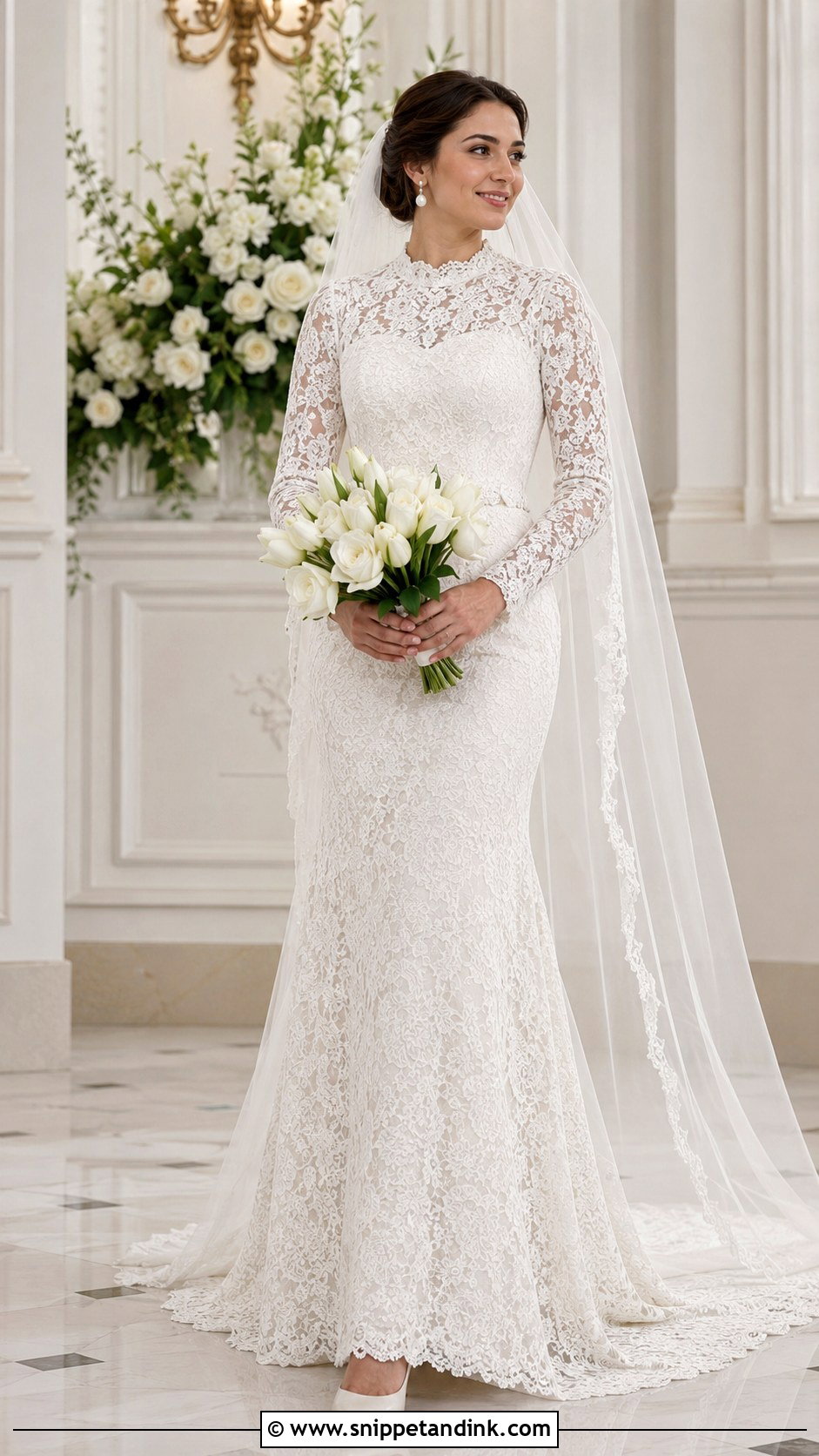
Coverage on a fitted gown has to move with you. A higher neck, a lined bodice, full sleeves and a back above the shoulder blades can all be comfortable, provided the lace is lightweight and the lining flexible. Seams placed to define the waist keep the shape clear. What I test on a modest fit and flare is reaching: arms forward as if hugging, arms up as if waving. Full sleeves on a fitted bodice can pull across the back. Pearl earrings, a tidy low bun and closed-toe heels keep it calm, and the veil sits neatly beneath the hair.
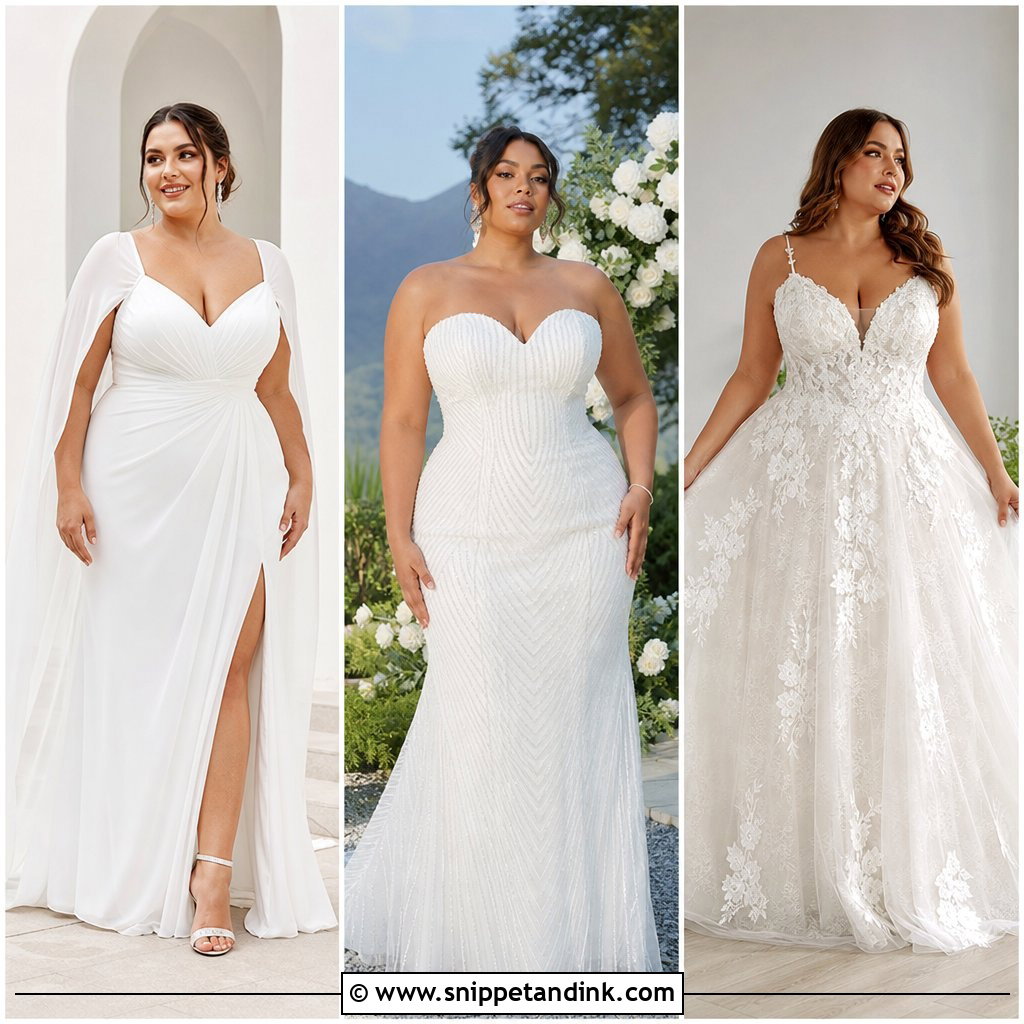
19. Plus Size Lace Fit and Flare Wedding Dress
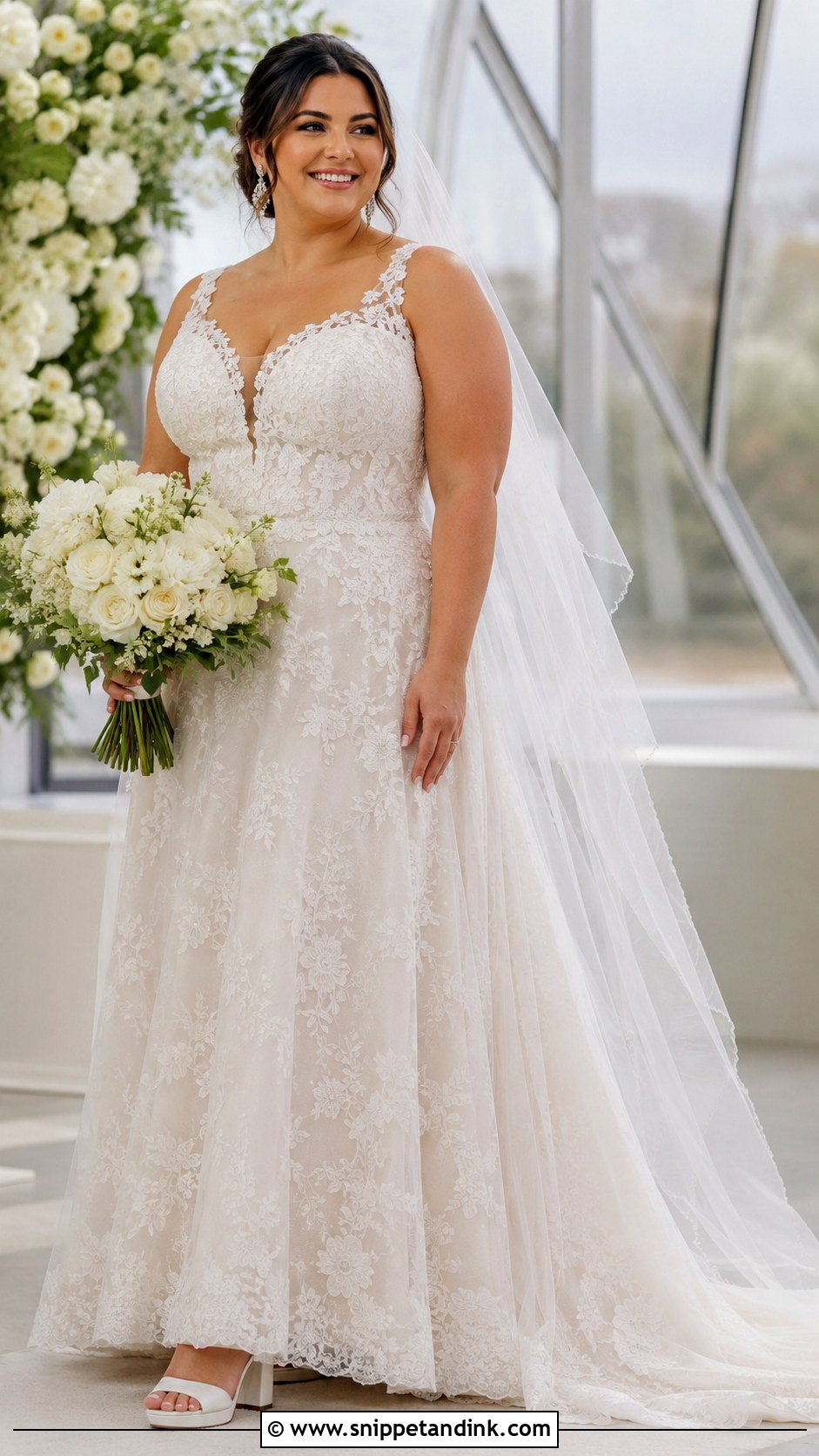
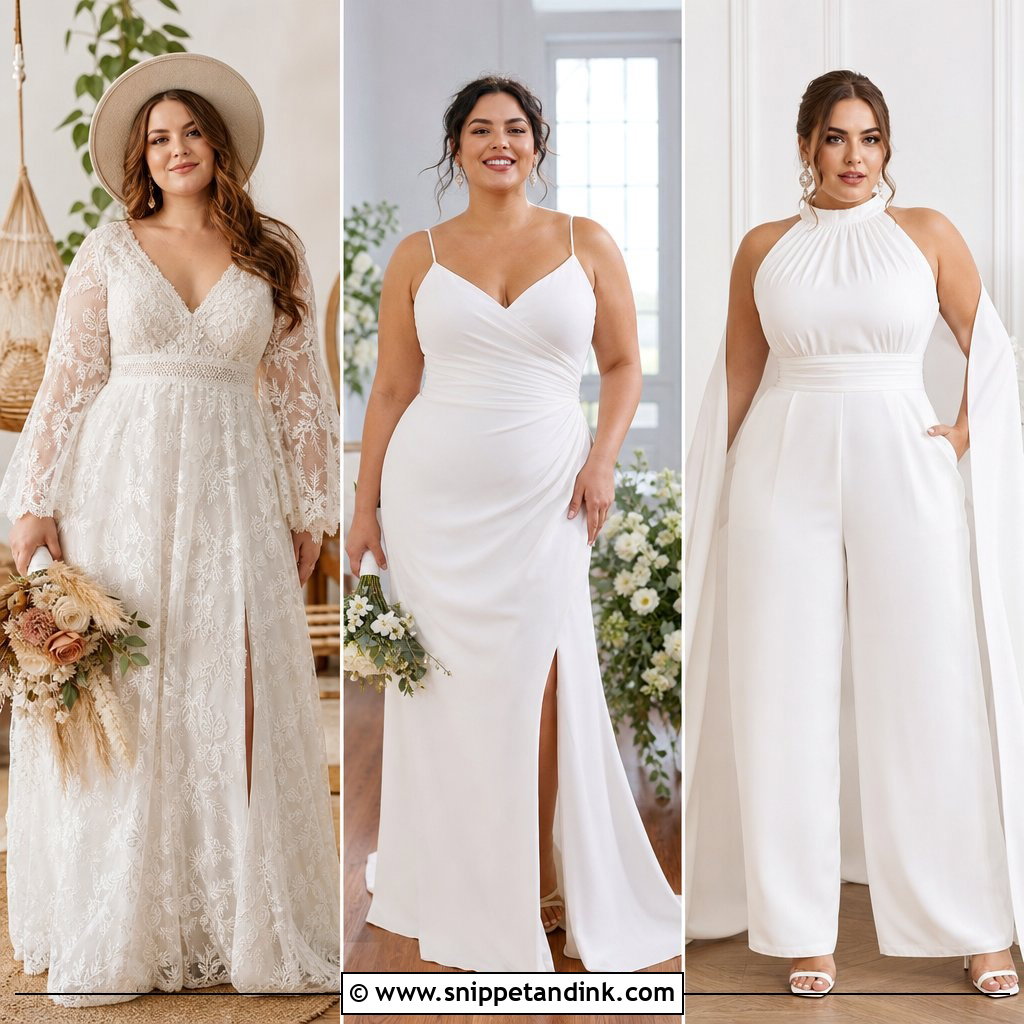
Fit starts with construction, not with the number on the label. A structured inner bodice, secure straps or sleeves, a flexible lining and seams that follow the body make a plus size fit and flare comfortable all day. A raised or natural waist gives definition, and a gradual flare keeps your stride free. The scale of the lace matters more than people think: small motifs can look busy across a fuller gown, while a medium pattern sits balanced. Stable block heels or elegant flats, a long raw-edge veil and a medium bouquet that doesn’t hide the bodice complete it.
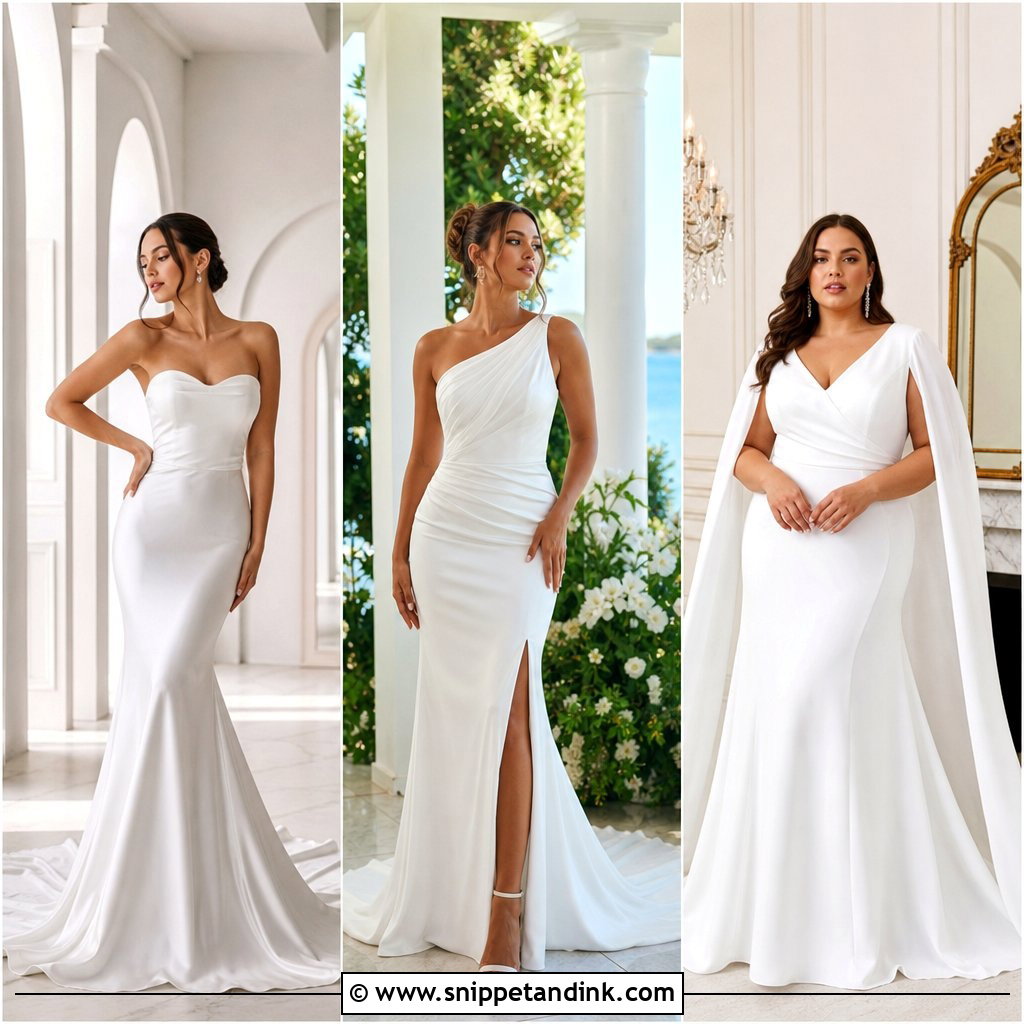
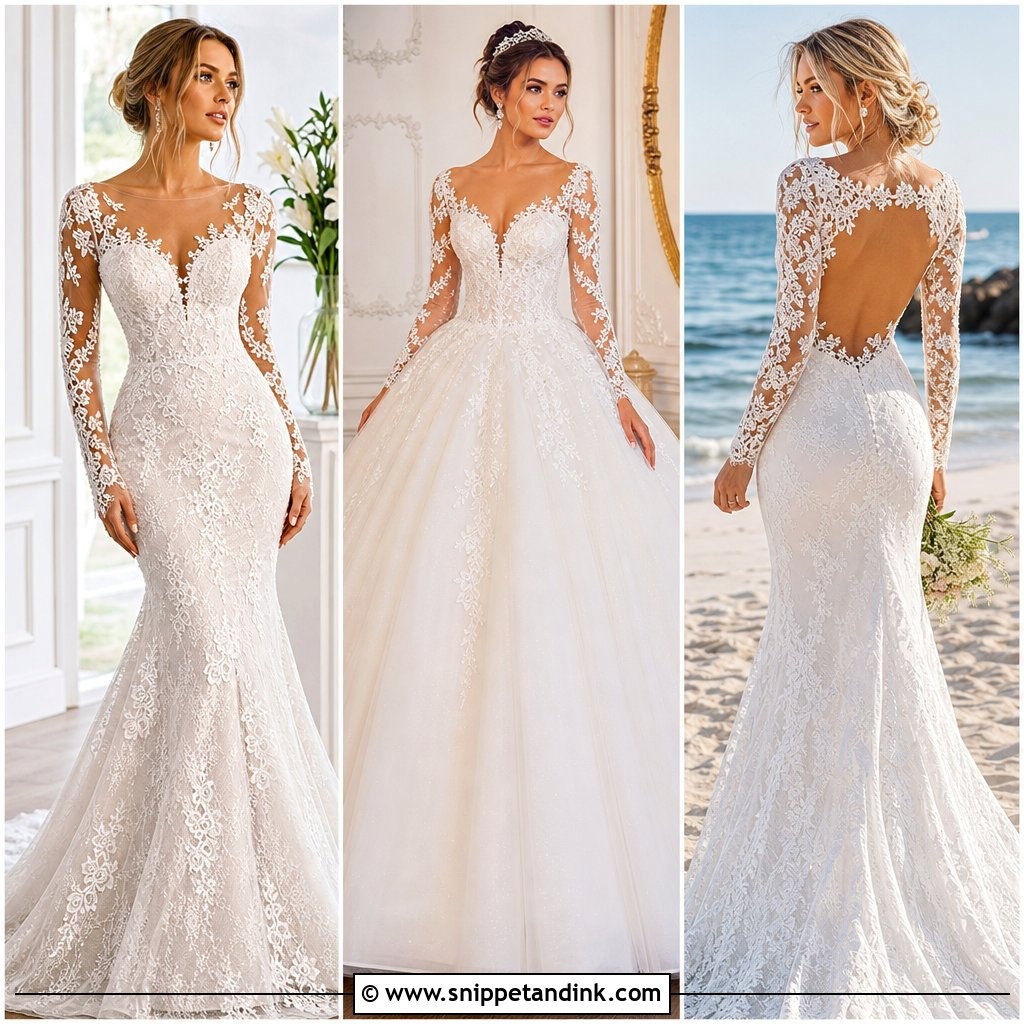
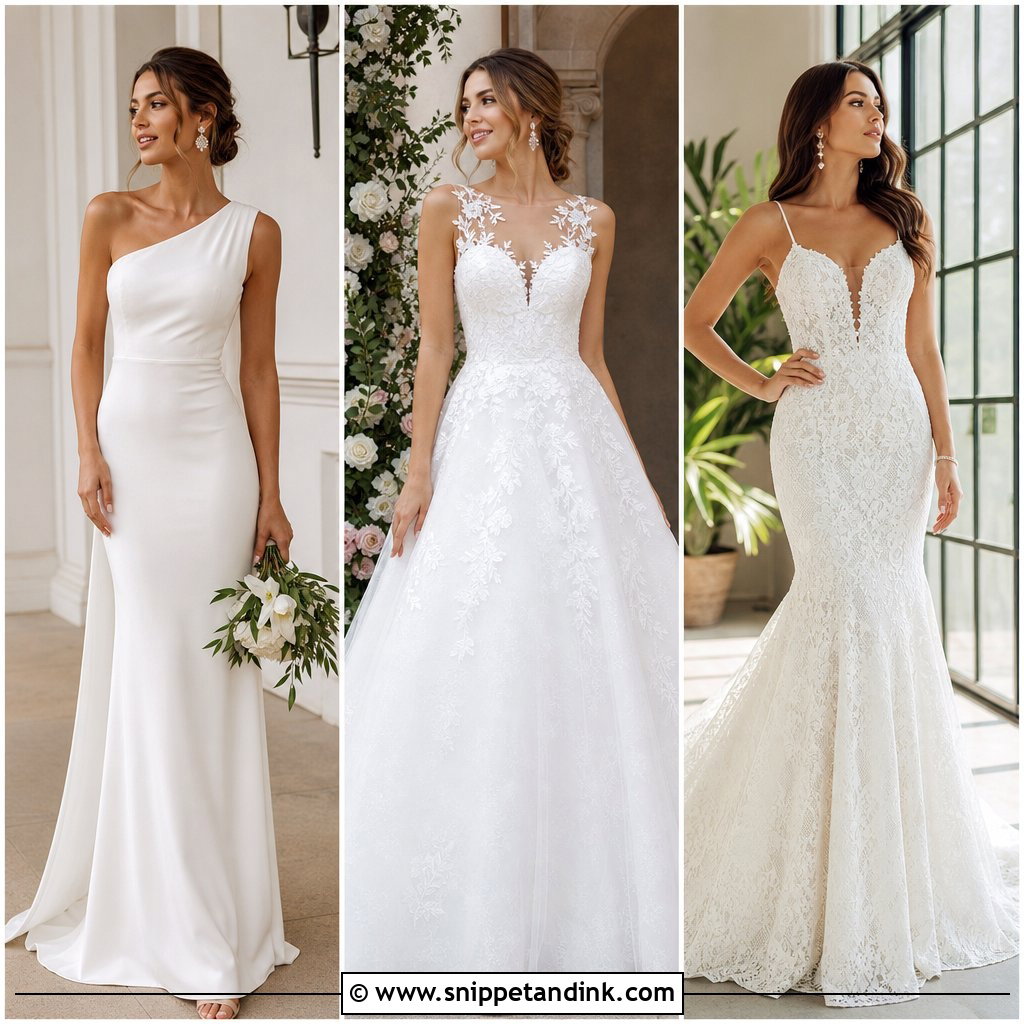
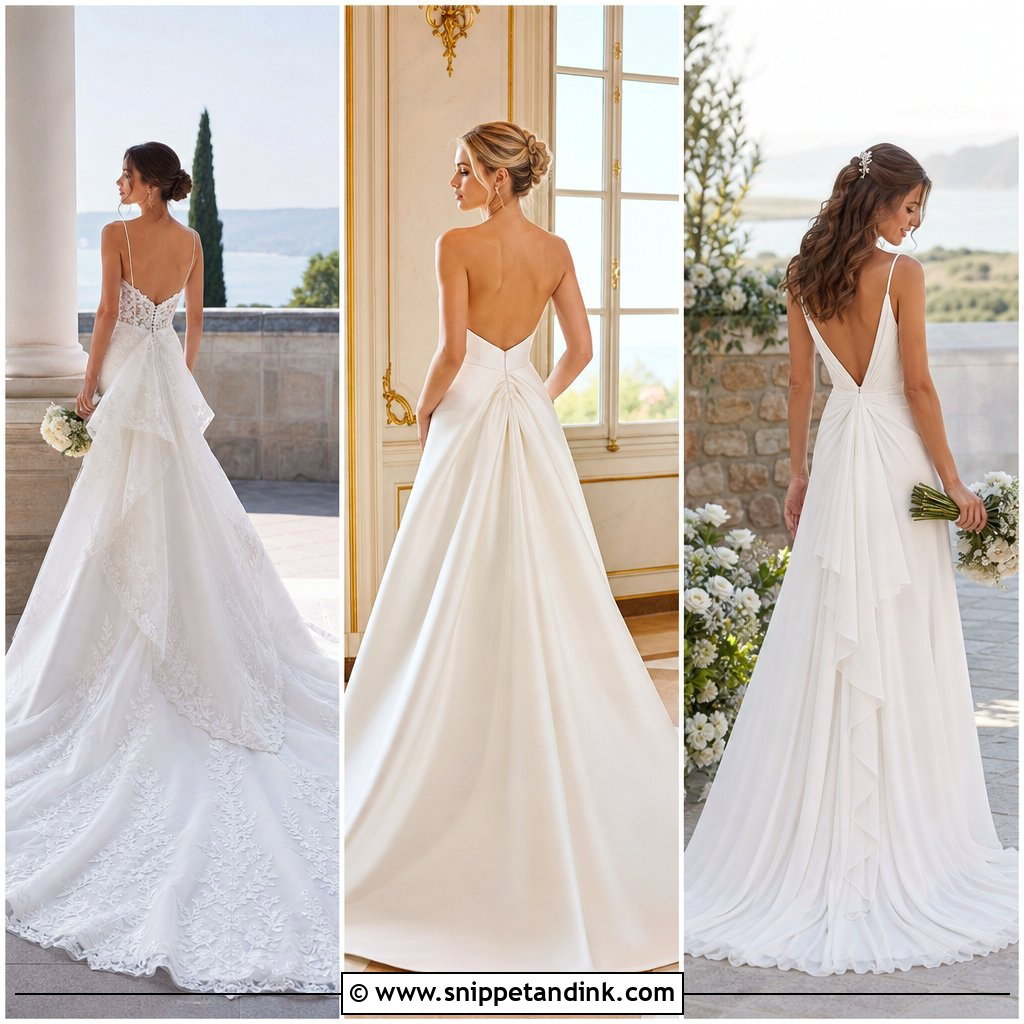
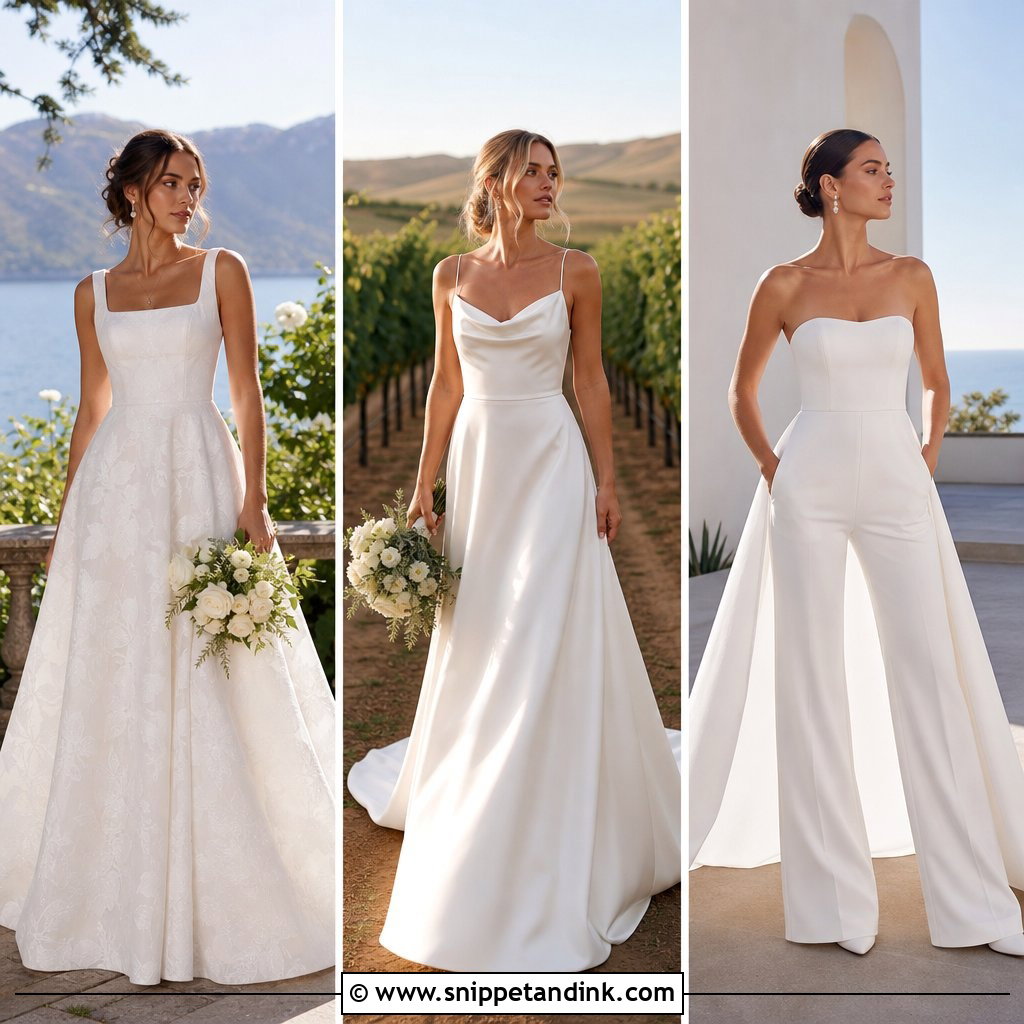
20. Lace Fit and Flare Wedding Dress With Overskirt
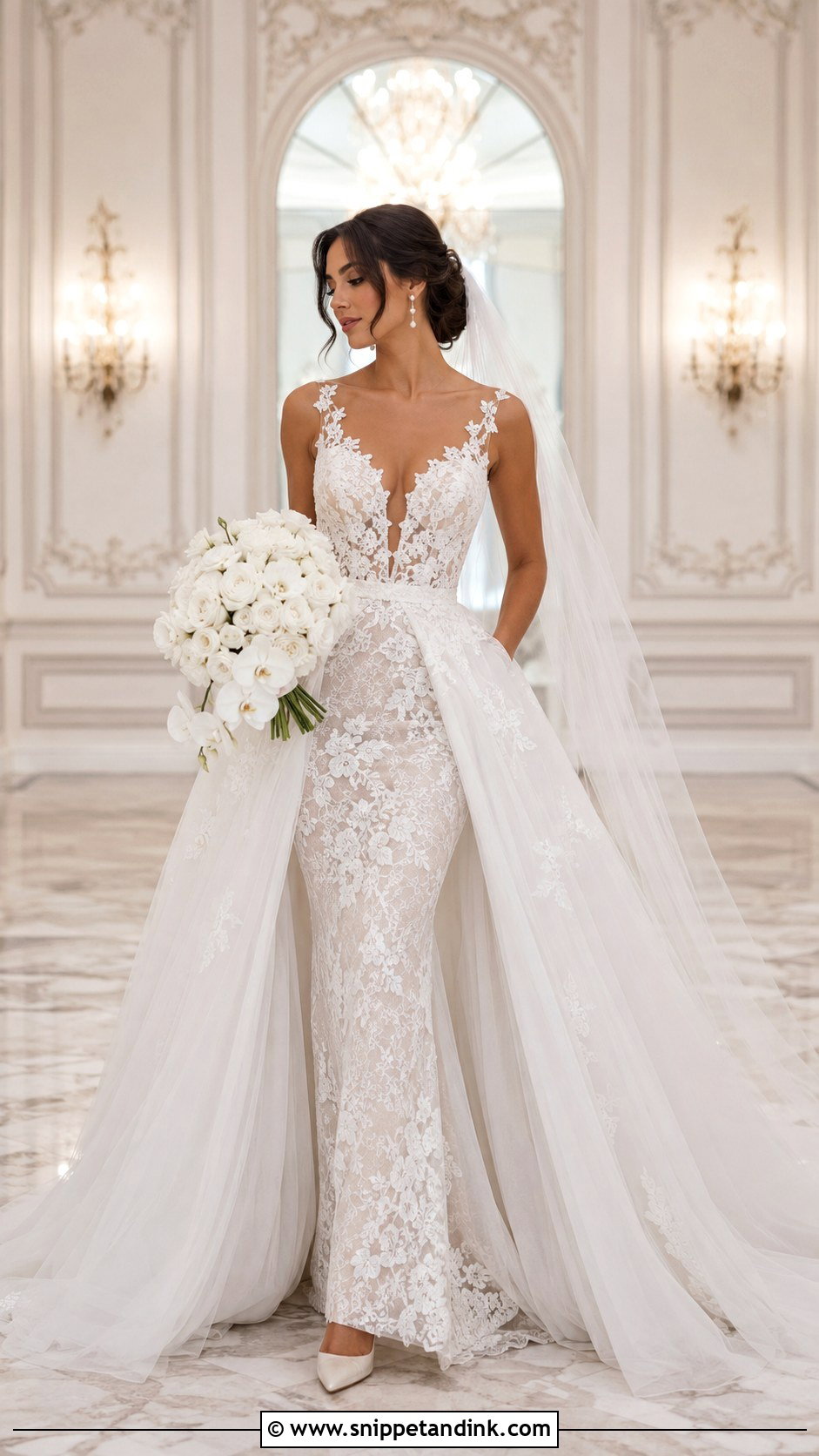
A detachable overskirt gives you a full ceremony silhouette and a slim, dance-ready gown afterwards. The sheer tulle layer fastens at the waist and should open slightly at the front so the lace shape still shows through. Test the attachment while you walk; a poorly fixed overskirt twists around the waist and drags the dress with it. Once the ceremony is over, take off the overskirt and veil and add a comb or small bow. The fitted gown underneath is far easier to dance in, and a structured white bouquet suits both versions.
Car Rides, Static and Six Hours of Dancing in a Fitted Lace Skirt
A close-fitting gown is the one most affected by ordinary things on the day. A few habits keep it looking right from the first photo to the last song.
- Getting into the car: sit down first, then swing both legs in together, holding the skirt in your lap. Climbing in one foot at a time strains the seams across the hip.
- Static: lace over a synthetic lining can cling to tights or legs in dry winter air. A light mist of anti-static spray on the inside of the lining, tested on a hidden spot first, stops it riding up.
- Sitting at dinner: fitted skirts crease across the lap. Smooth the skirt under you as you sit, and stand for a moment before the first dance so the creases relax.
- The bustle: fit and flare trains are usually bustled with a few hooks or ribbon ties. Make sure someone other than you knows how it works, because you can’t see behind yourself in the dress.
Some brides with a very fitted gown add a short second dress for the late part of the party. It’s not essential, but if you love to dance and the skirt is snug at the knee, it’s worth thinking about before the day rather than at eleven o’clock at night.
A Fitted Lace Gown Should Move When You Do
A lace fit and flare should look good from every side and still let you walk, sit and dance through a long day. The same silhouette changes character with every neckline, sleeve, lining, lace pattern, train and removable piece. Start with how much structure and coverage you want, since that decides most of what follows. Then let the veil, shoes, jewellery, hair and bouquet work with the dress. Take your real shoes and undergarments to every fitting, practise sitting and walking before alterations are finished, and pick the gown that reflects your own taste rather than this season’s trend.
You'll Like These Ideas:



Leave a Reply