
When the space between your bust and your waist is naturally compact, a lot of sample gowns look slightly wrong on you before anyone can say why. Usually it’s the waist seam landing too low and the bodice creasing above it. The gowns that work on a short torso share a few traits: a waist seam in the right place, an open neckline, vertical lines and a skirt scaled to your frame. V-necks, A-lines and column shapes are good places to start, but comfort still decides. I’d also tell you early that alterations matter as much as the design, because shortening a bodice is what puts the cups, boning and waist seam back where your body actually is.
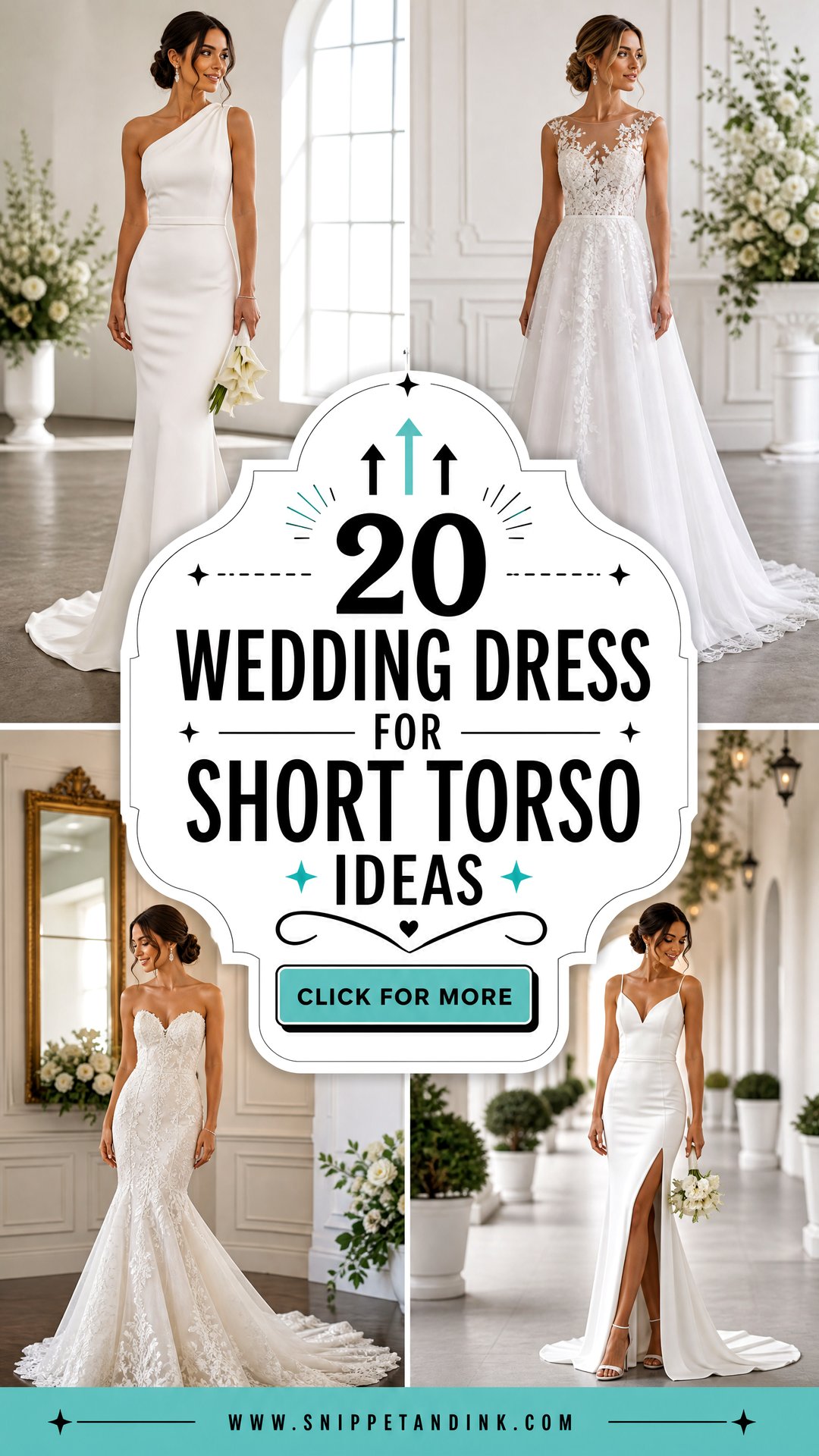
Is Your Torso Short, or Is Your Waist Just High?
Brides often use short torso to describe two different things. Some have a genuinely short span from shoulder to waist. Others have an average upper body but a high natural waist with longer legs. The gowns below suit both, but knowing which you are tells you where the alterations will happen.
A quick check at home: stand straight and lay your fingers flat between the bottom of your ribs and the top of your hip bone. If only a couple of fingers fit, your waist sits high and close to the ribs. Then measure from the base of your neck to your natural waist and compare it to a sample bodice in the salon. Most samples are drafted for an average torso, so on you the waist seam may land on your hip, with fabric creasing sideways just above it.
That crease is the thing to watch in the mirror. It doesn’t mean the gown is wrong for you. It means the bodice is too long, and that is one of the most common alterations a bridal seamstress does.
1. V-Neck A-Line Wedding Dress
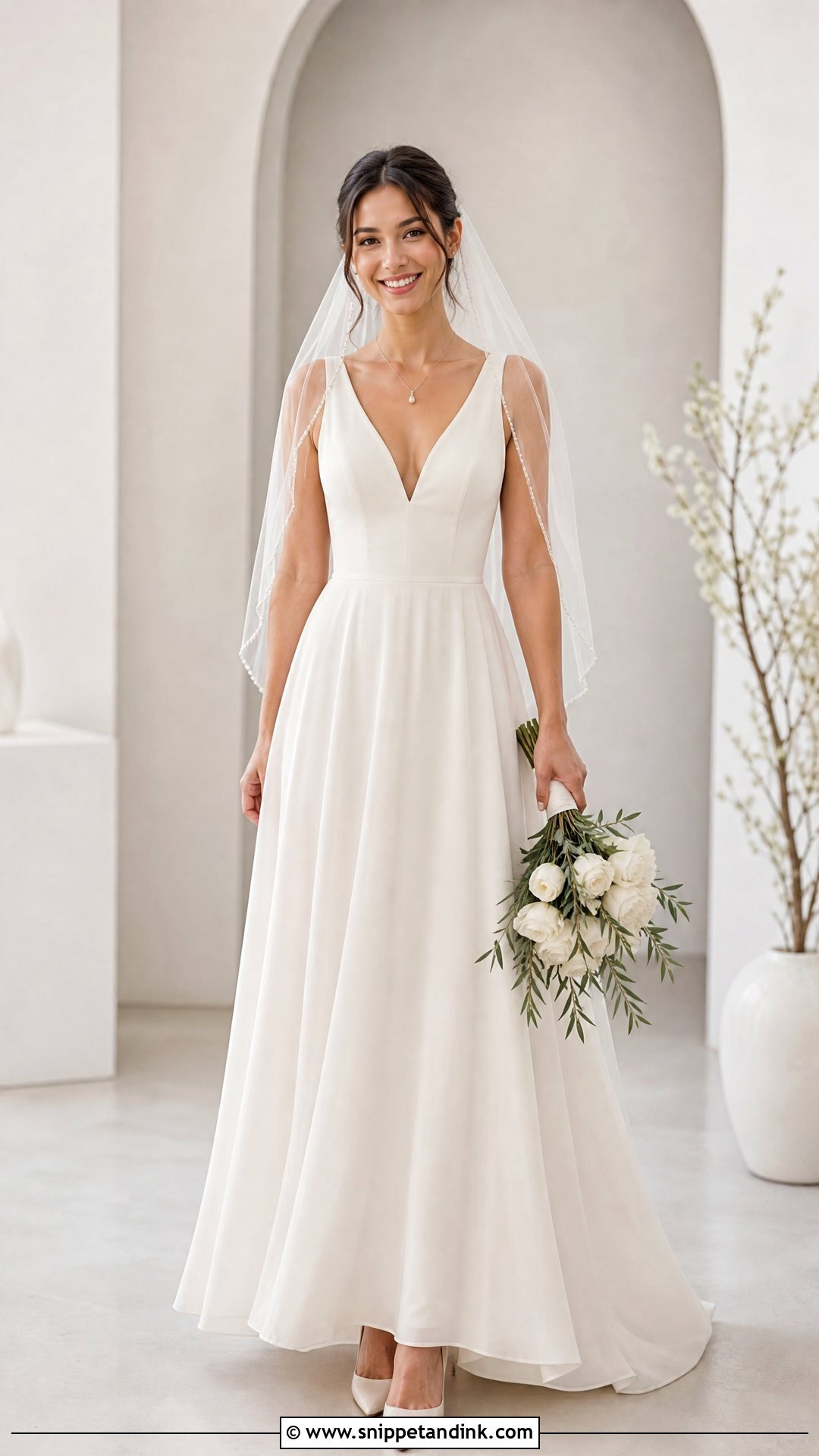
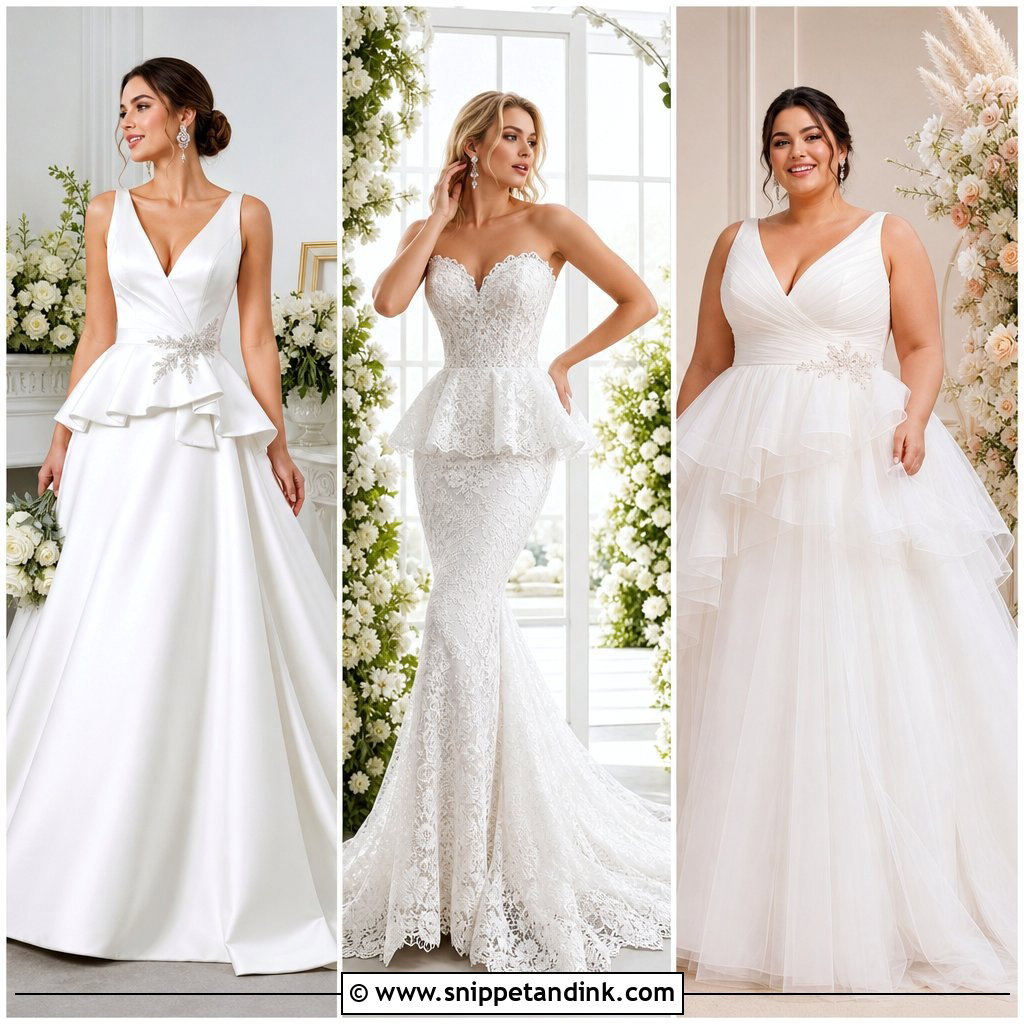
A V-neck draws a clear line from the face toward the waist, which makes a compact upper body read longer without needing a deep plunge. Ask for a fitted bodice with narrow straps and a waist seam that meets your natural waist exactly, then a softly flared chiffon, crepe or light tulle skirt. Pointed ivory heels, a fine pendant and a fingertip veil under a simple updo finish it. Skip wide belts. They cut straight across the very space you’re trying to show. At the fitting, look for small horizontal ripples between bust and waist; that’s the sign the bodice still needs shortening.
2. Scoop Neck Sheath Wedding Dress
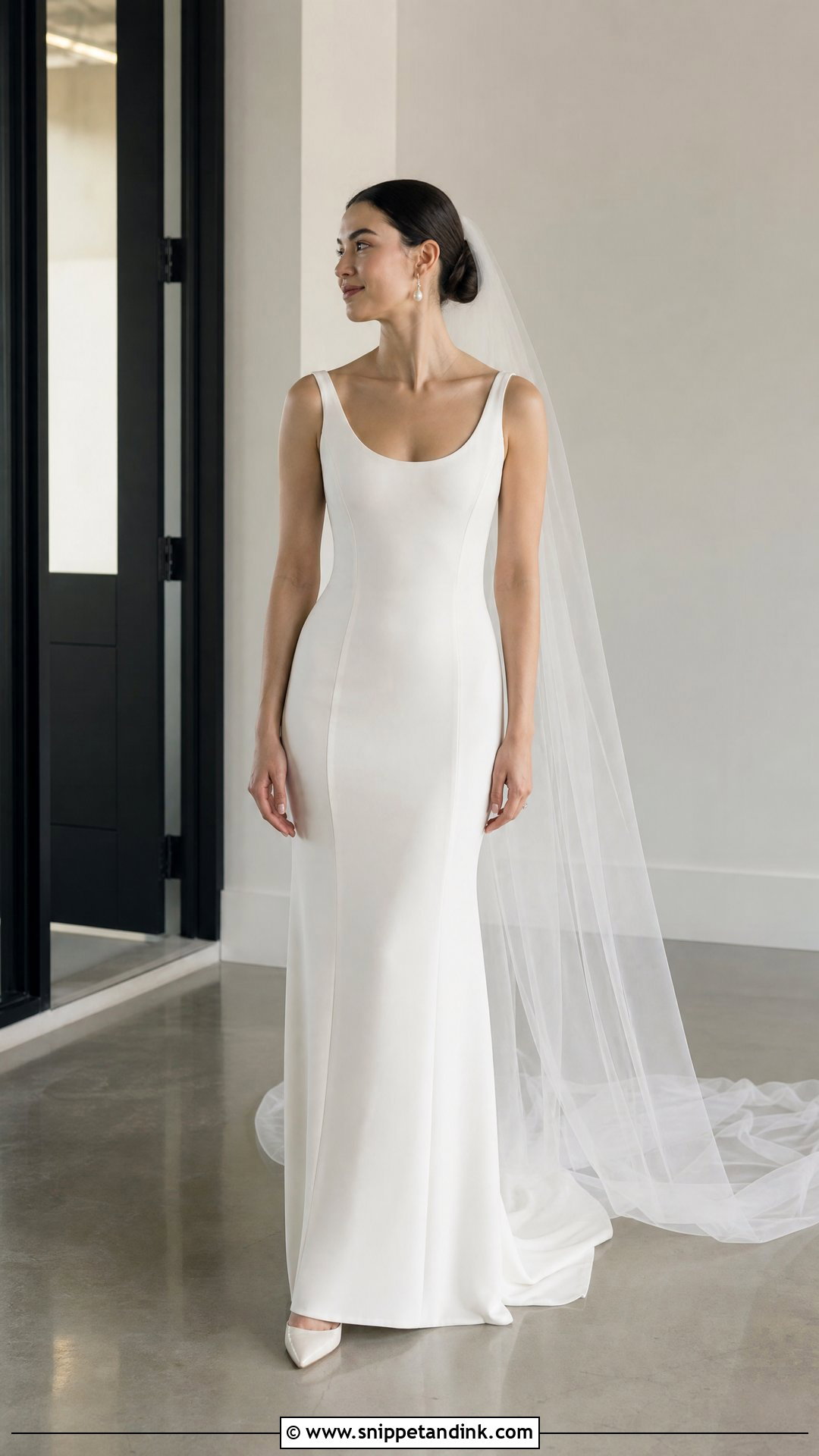
A scoop-neck sheath keeps the whole body in one line. The rounded neckline shows some collarbone while the straight skirt carries the eye down. I look for crepe or fluid satin built with long princess seams rather than a waist seam, because without that horizontal break the torso and skirt read as one piece. Sleek pointed pumps, pearl drops and a narrow cathedral veil add vertical movement, and a low bun or smooth ponytail keeps the neckline clear. Want more waist? Ask for gentle shaping through the side seams instead of a contrasting belt. The hem should just skim the floor in your actual wedding shoes.
3. Empire Waist Chiffon Wedding Dress
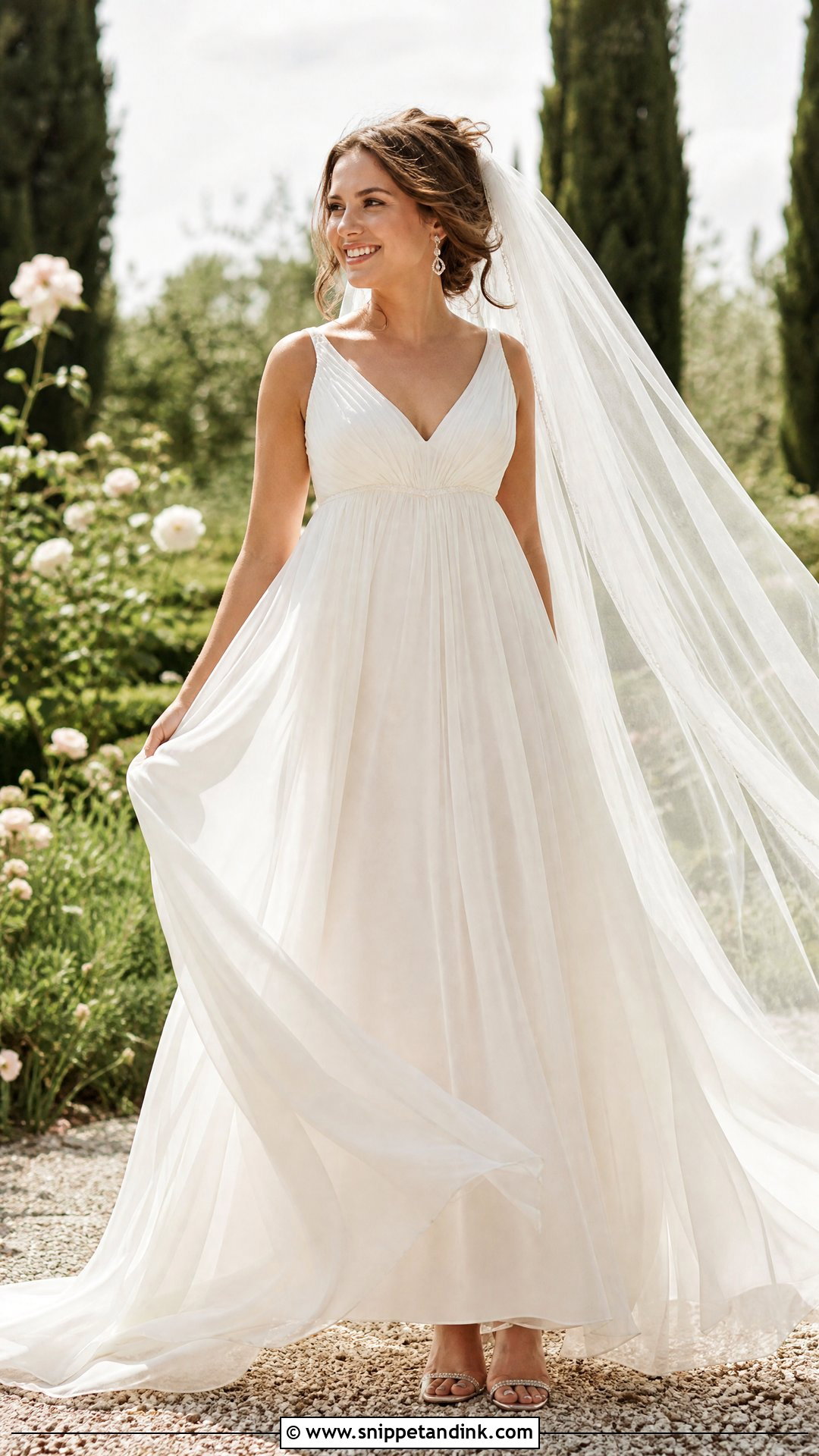
An empire waist moves the seam up under the bust, so a short natural waist never has to carry it at all. The chiffon then falls in one long line. Keep the bodice simply shaped, ideally a gentle V, because heavily gathered fabric crowds a compact torso fast. A lined chiffon skirt moves without bulk. Slim metallic sandals, small crystal studs and an airy chapel veil suit it, with loose waves or a relaxed updo. Here’s the catch: the empire seam only stays put if the bust is properly supported. Without cups or a good bra underneath, it slides down and lands right where a short torso least wants a line. Outdoor and warm-weather ceremonies suit it.
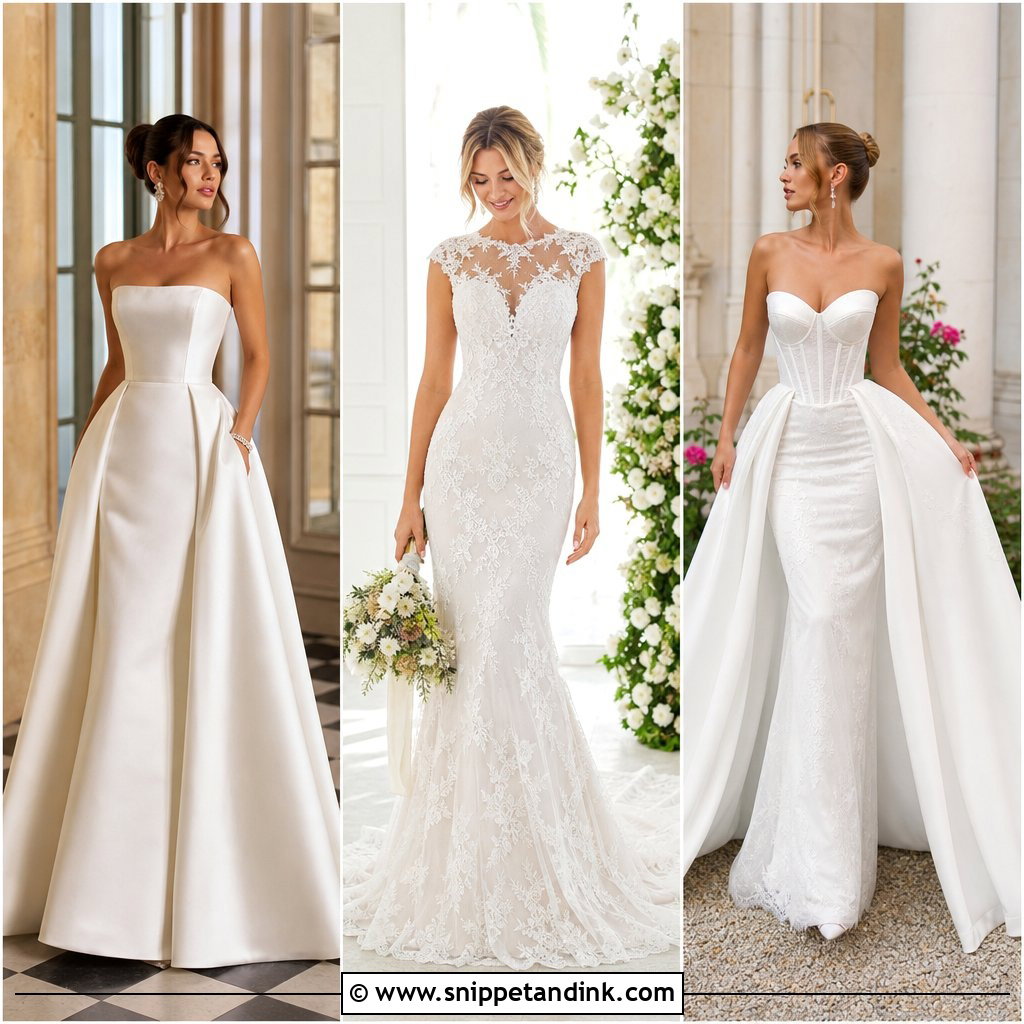
4. Strapless Seamless Wedding Dress
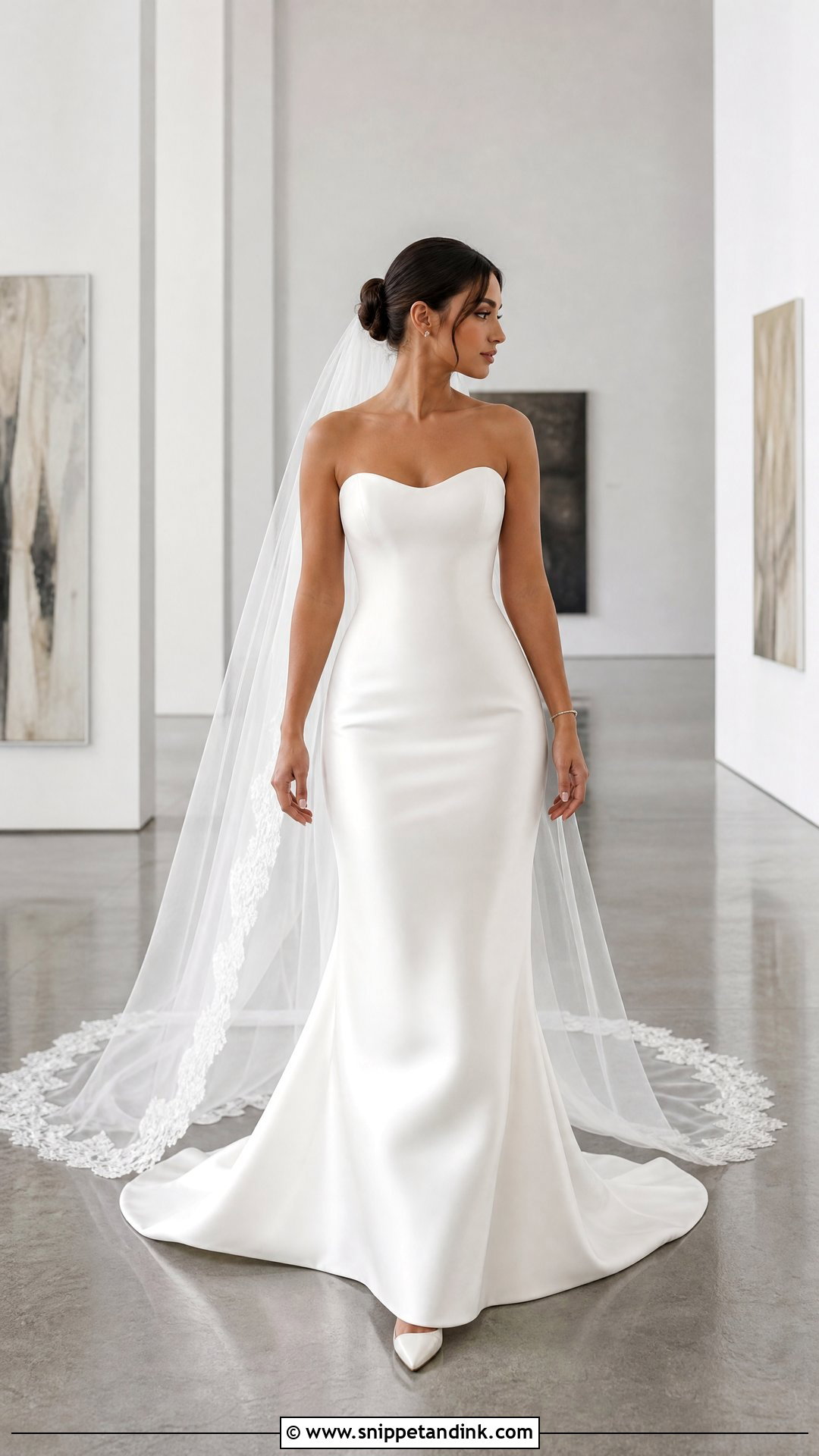
Can strapless work on a short torso? Yes, if the bodice is proportioned to you rather than to the sample. A gown with no thick waistband or contrasting skirt seam lets satin or mikado run unbroken from neckline to hem, and a softly curved top edge is kinder than a rigid straight-across one. Pair it with pointed ivory heels, a slim tennis bracelet and a long veil set behind a polished bun. The internal corset should support the bust without running so far down that it digs into your hips when you sit. Ask the seamstress to check cup position and bodice length seated as well as standing, which keeps the clean, architectural silhouette free of bunching.
5. Sweetheart A-Line Wedding Dress
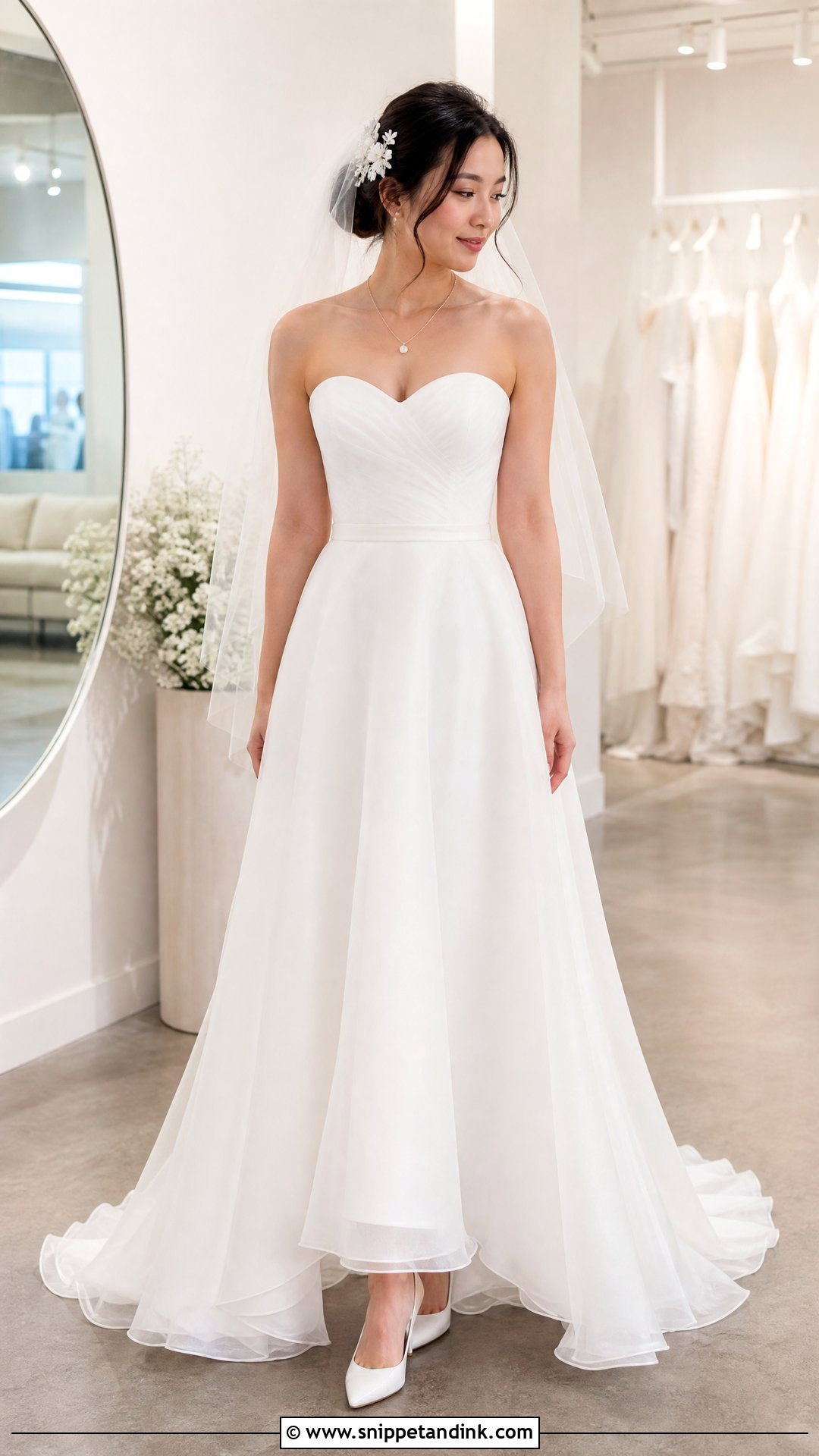
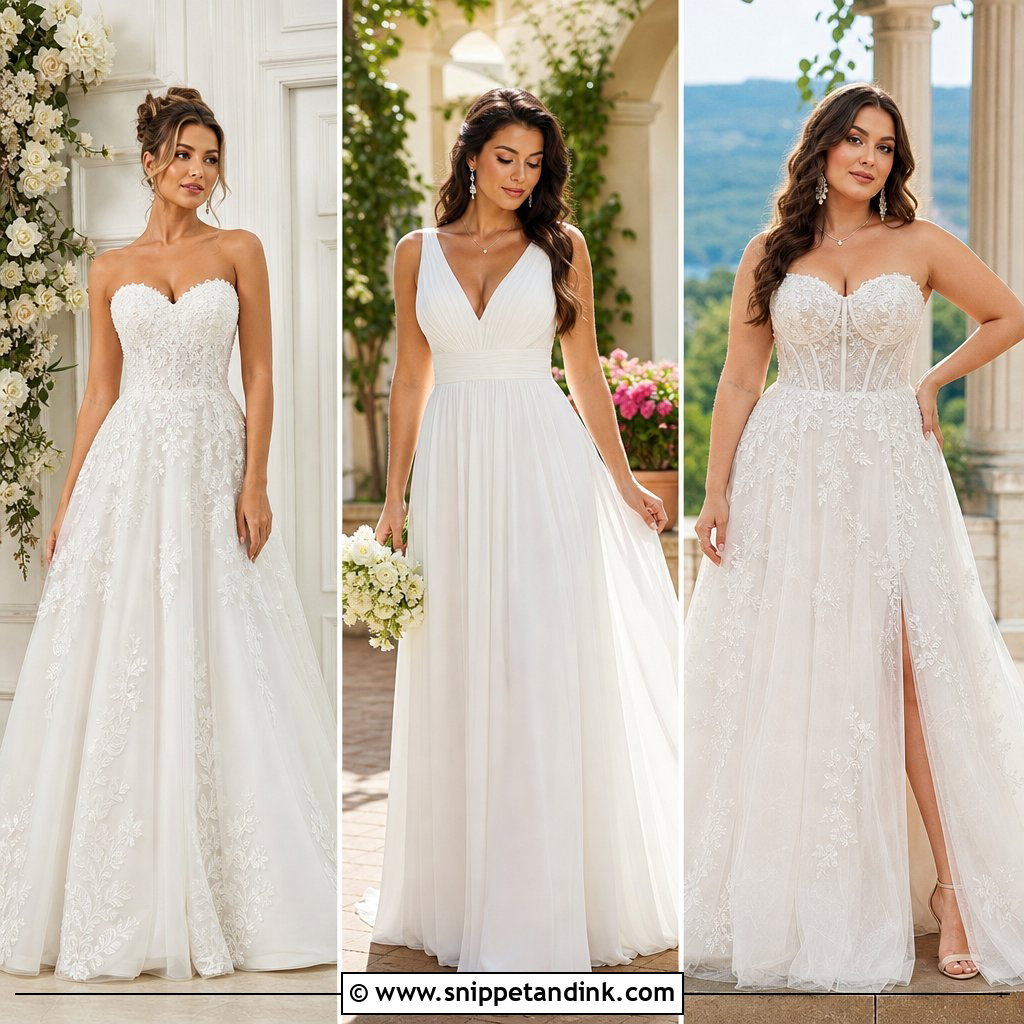
A sweetheart A-line wedding dress brings curves while keeping the shape clean. The open neckline gives the chest and collarbone room, so the upper body looks wider and longer rather than squeezed. I’d choose a shallow sweetheart curve over a deep one, a smooth bodice, and a skirt that flares gradually in light satin, organza or fine tulle. Add pointed pumps, a single-strand necklace and a fingertip veil, plus a narrow floral comb to pull attention upward. Dense appliqué over the bodice is the thing to avoid. You want visible space between the neckline, the bust shaping and the waist seam, and heavy lace fills it in.
6. Plunging Neckline Column Wedding Dress
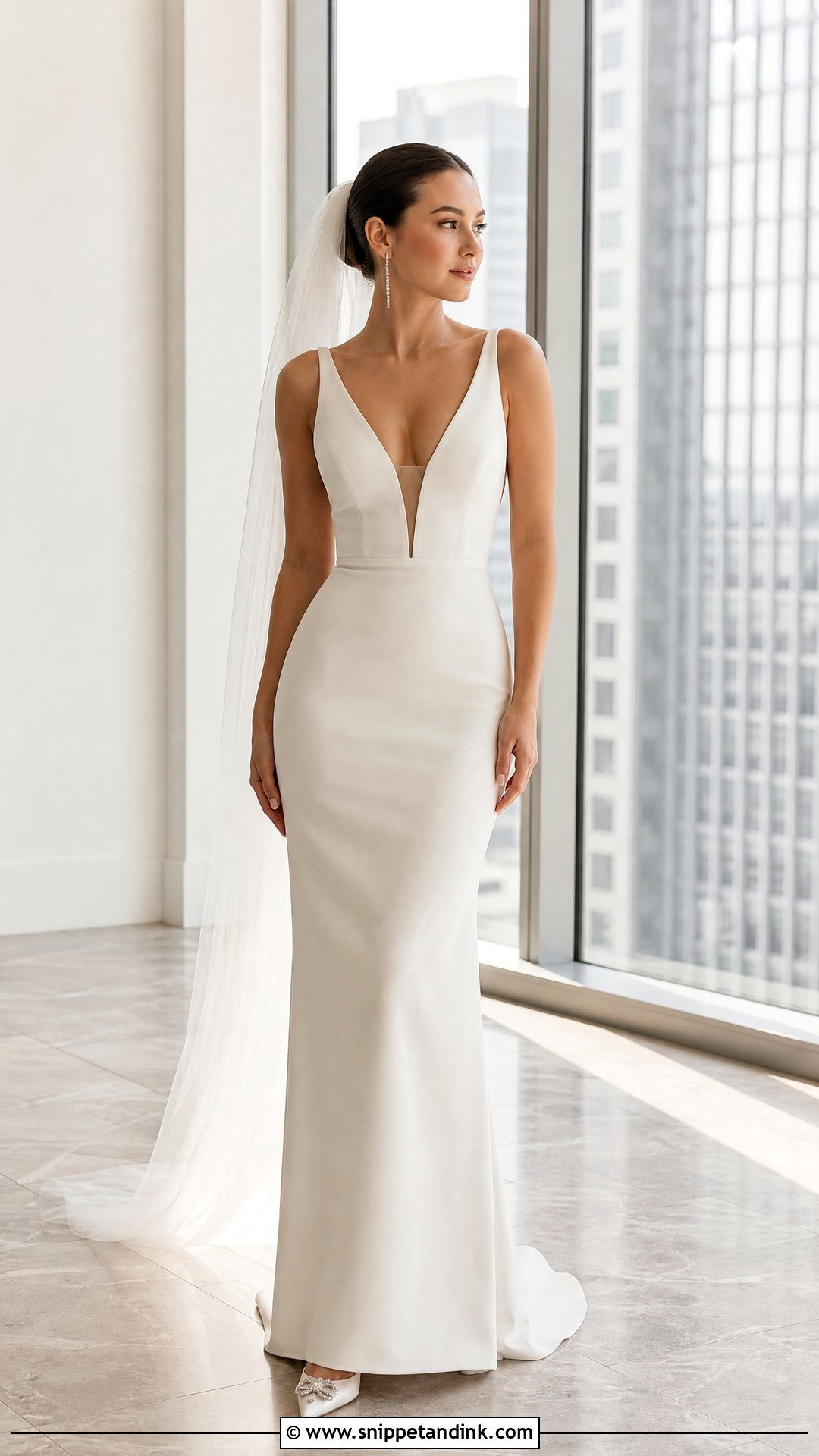
The narrow plunge on a plunging neckline column wedding dress gives you one strong vertical down the centre, and the straight skirt continues it. It doesn’t have to be revealing, since an illusion inset adds coverage and holds the shape steady. Matte crepe or smooth satin with almost nothing at the waist works best. Wear pointed heels, long earrings and a narrow veil that falls straight behind you, with hair pulled back. One rule I hold to: the plunge should stop above your natural waist. If it runs into the waist seam on a short torso, the two lines collide and everything looks compressed. Test the boning, cups and fashion tape while moving, not just standing still.
7. Drop Waist Satin Wedding Dress
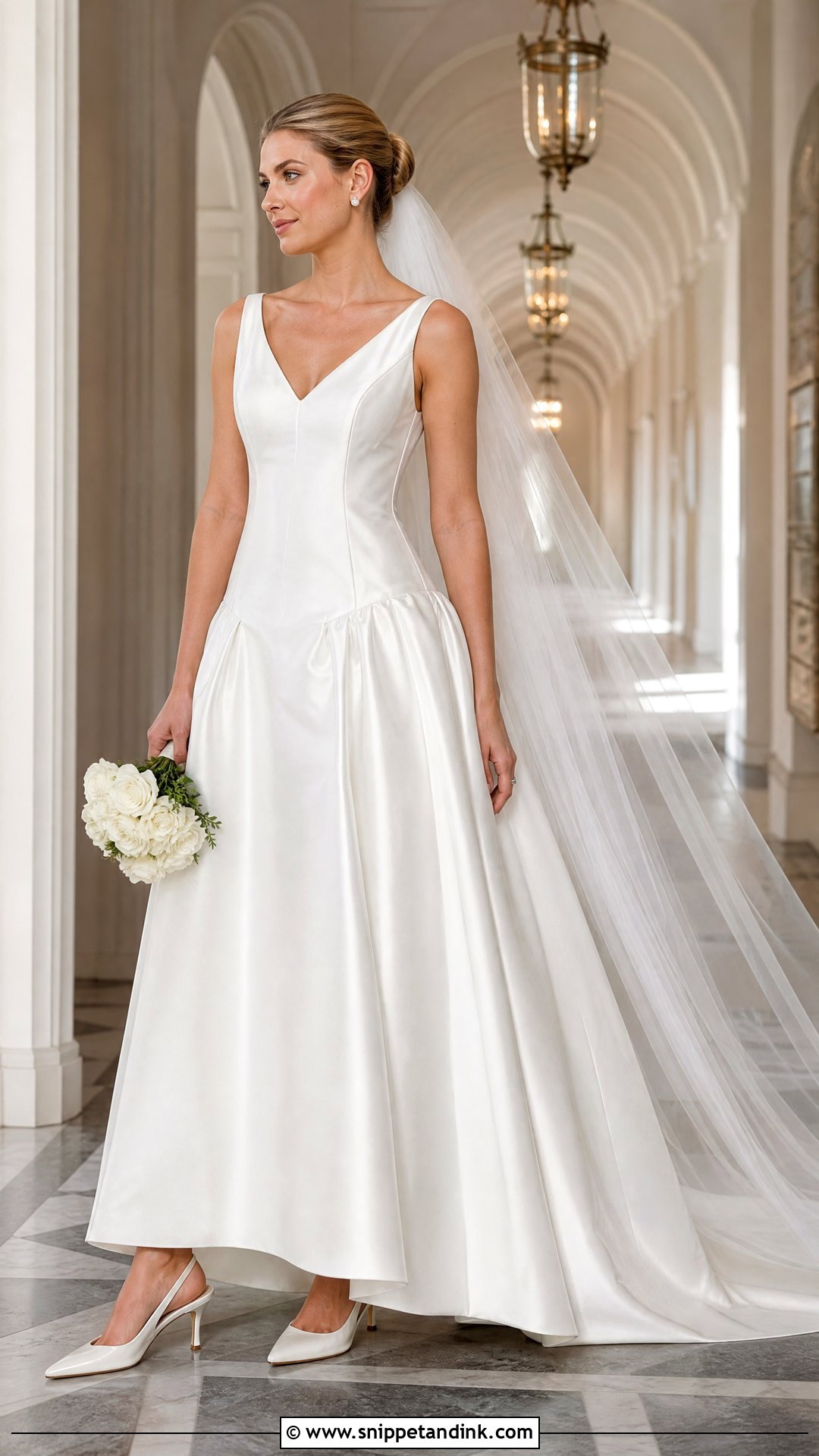
This one surprises people. A drop waist sounds like the last thing a short torso needs, yet a seam set only slightly below the natural waist adds visible length between bust and skirt. The key word is slightly. A seam that sweeps right across the hips swamps a short-waisted frame. Pair it with a shallow V or scoop neck, a moderately full satin skirt, pointed slingbacks, pearl studs and a sheer cathedral veil. Standard drop-waist samples are usually too long in the body for you, so plan on specialist alterations and check carefully for creasing at the ribs and hips.
8. Basque Waist Wedding Dress
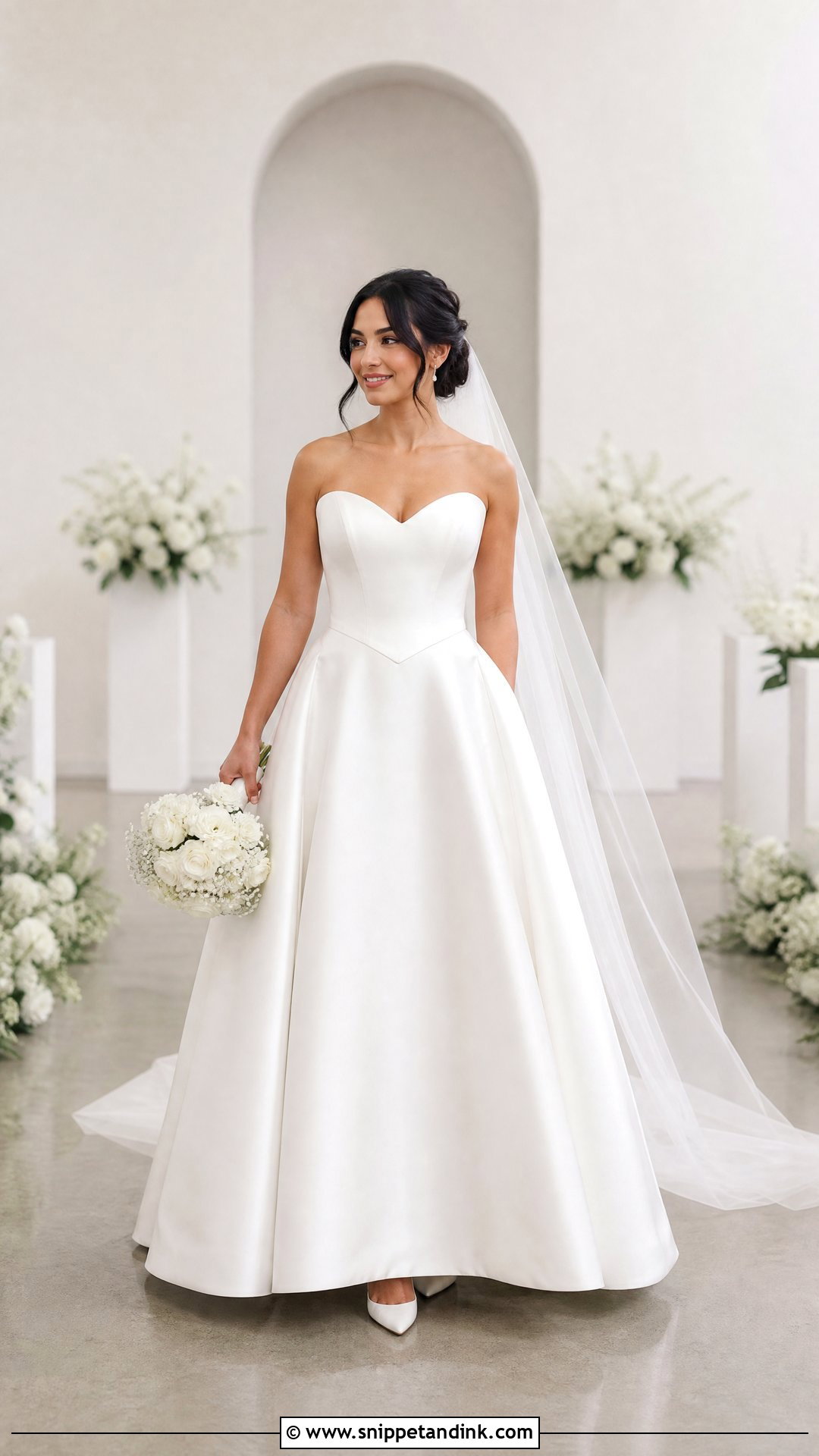
A basque waist points down at the centre, which pulls the eye lower and suggests a longer torso. Keep the point shallow; a deep V on a short body runs out of room and ends up resting on the stomach. An open sweetheart neckline and a controlled A-line or softly full skirt balance it. Smooth mikado holds the shape, and plain fabric keeps the line readable. Add delicate drops, pointed pumps and a long plain veil. When I fit one, I sit the bride down and watch the tip of the point; if it lifts or digs in, the boning and seam need shortening in proportion rather than just at the hem of the bodice.
9. Cowl Neck Satin Wedding Dress
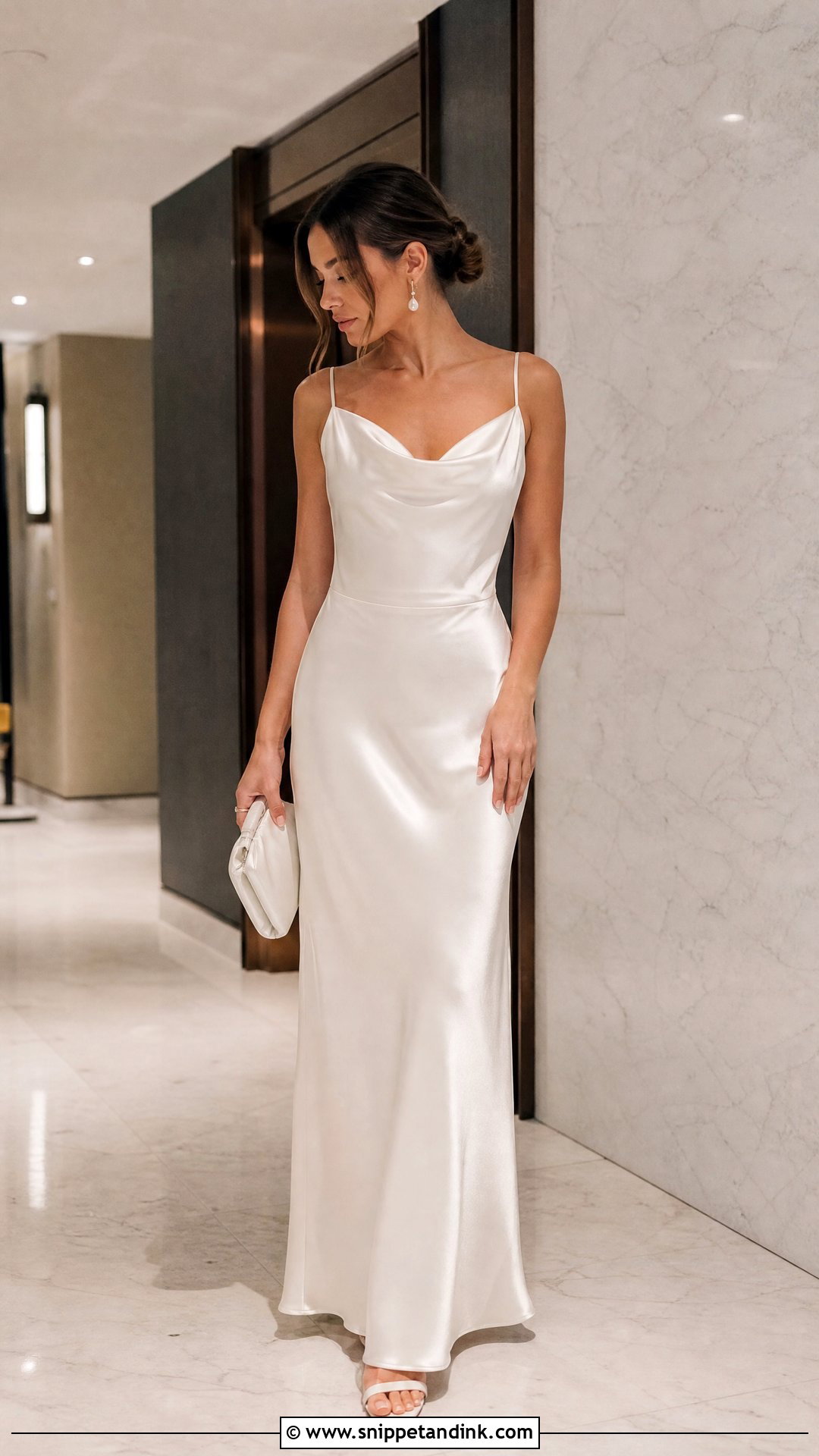
A cowl drapes softly across the chest without drawing any hard horizontal line, which is exactly why a cowl neck satin wedding dress sits well on a short torso. Choose a bias-cut gown that skims the waist and hips in one fluid line with no separate waistband. Thin straps keep the shoulders open. Minimal sandals, a small satin clutch and shoulder-length earrings suit it, with a low twisted bun to show the back. Bias satin is sensitive to strap length, though. Too long and the cowl drops low enough to shorten the visible bodice, so adjustable straps are worth insisting on.
10. Square Neck Crepe Wedding Dress
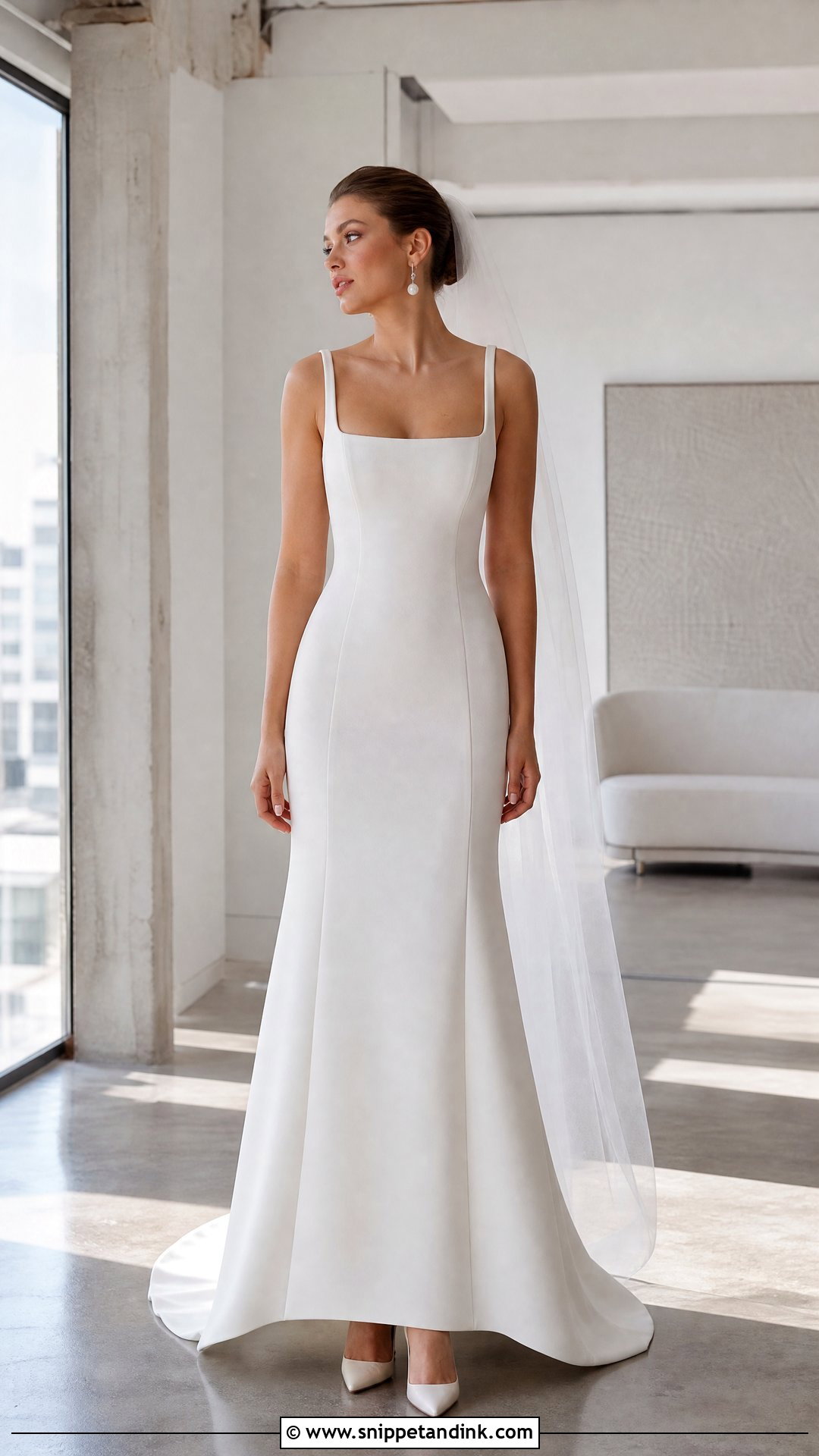
Crepe and a square neck give the upper body some structure while the line stays modern. I’d go for a moderately open square with narrow straps or fitted sleeves; a very high or very wide version boxes in a short torso. Long princess seams can shape the gown without a band at the waist, and a straight or softly flared crepe skirt keeps it sleek. Pointed heels, geometric pearl earrings, a chapel veil and a low bun finish it. Watch the corners of the neckline for gaping. Shortening the straps is often the single most effective alteration here, because it lifts the neckline, supports the bust and moves the shaping up to where your waist really is.
11. Spaghetti Strap Slip Wedding Dress
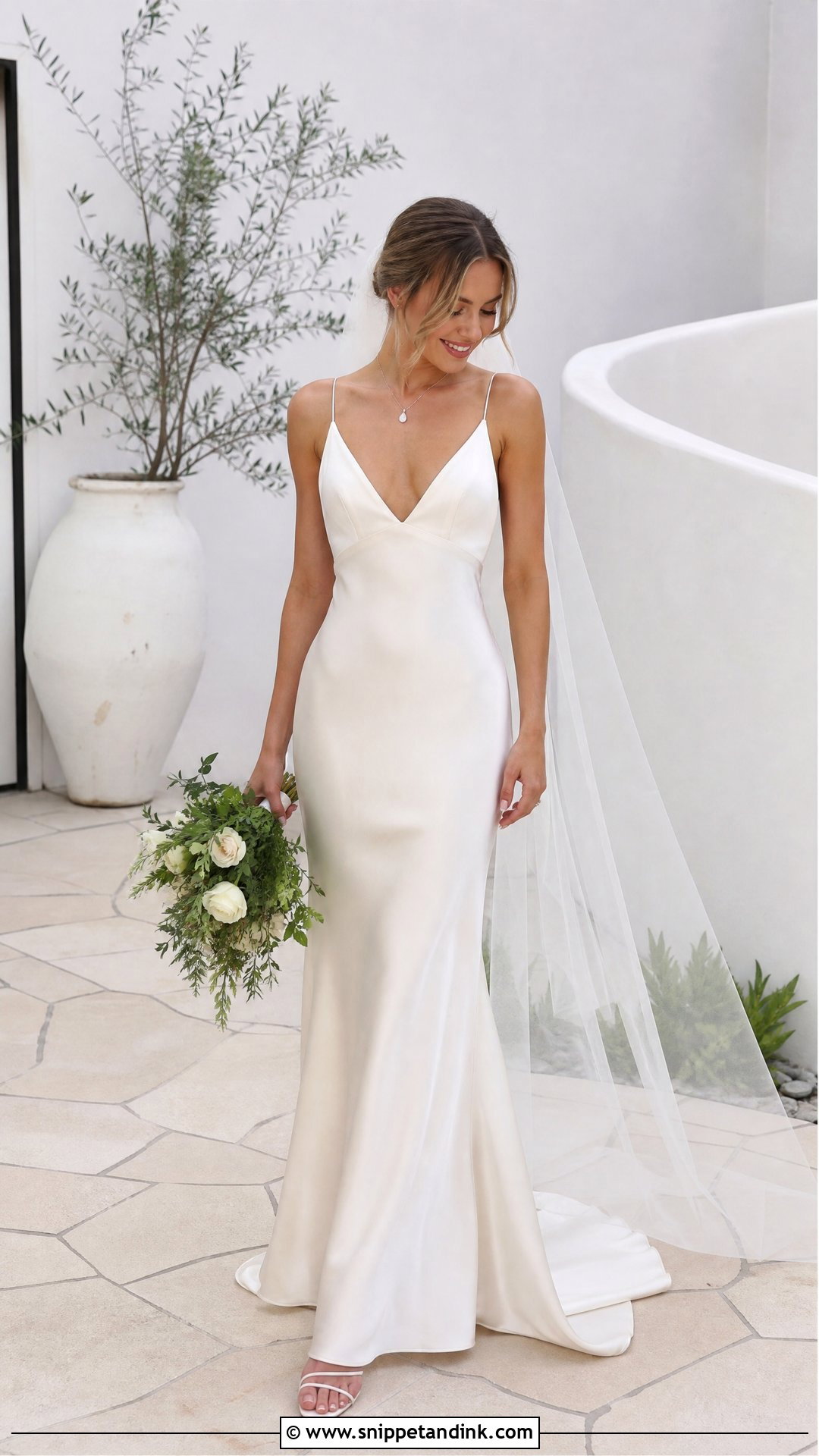
Thin straps don’t divide the shoulders or torso, so a spaghetti-strap slip is one of the easiest minimalist options for this body type. Look for fluid satin with a soft V-neck, a gently shaped waist and no belt, cut on the bias so it falls close to the body. Slim ivory sandals, a fine pendant and a sheer floor-length veil keep it simple; loose low buns or glossy waves suit it. Adjustable straps matter twice over for a short torso, controlling both neckline depth and where the bust sits. I’d add discreet sewn-in cups for support. The satin should skim rather than cling, or every seam of your underwear will show as you walk.
12. Lace A-Line Wedding Dress
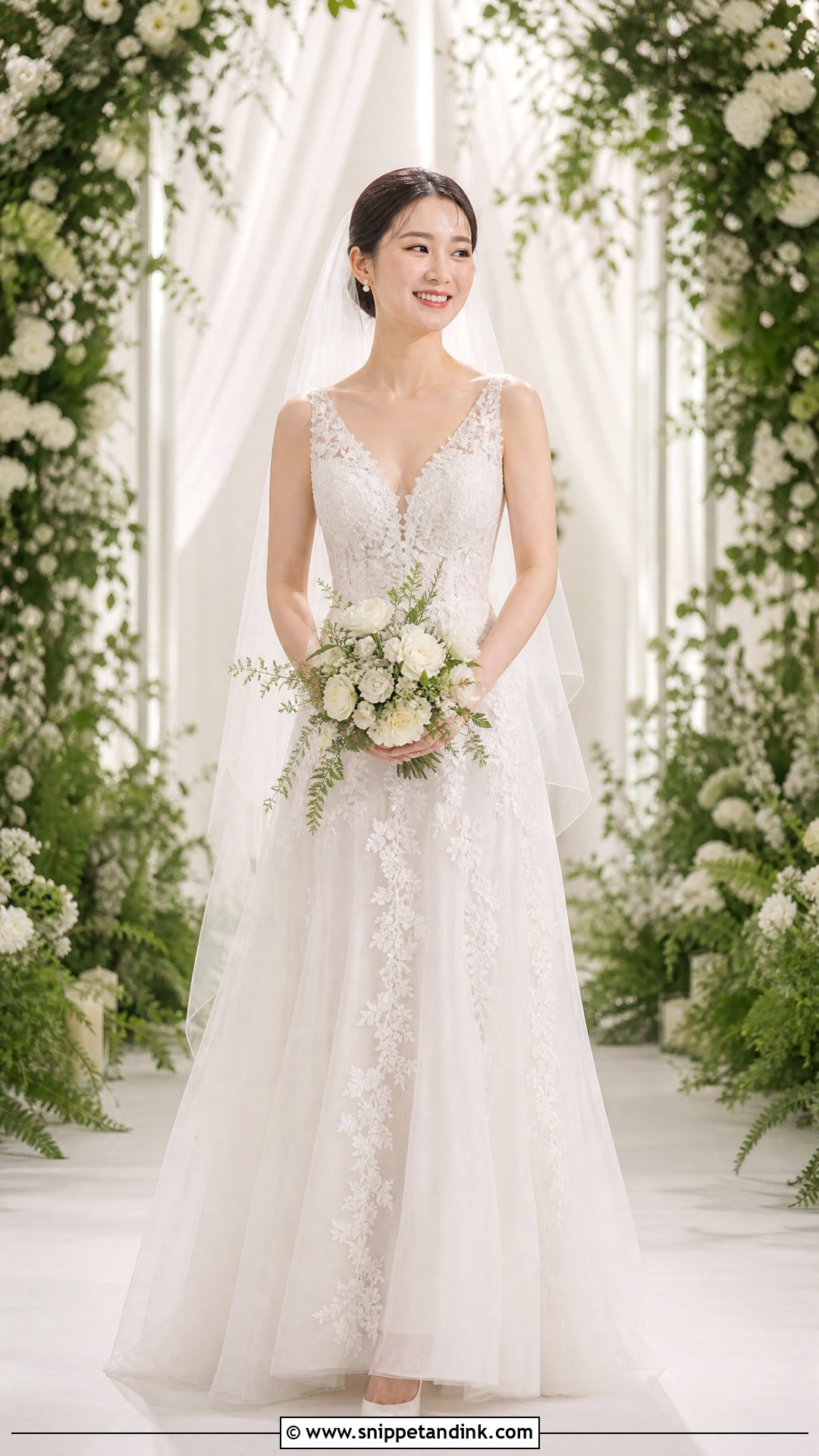
Lace doesn’t have to overwhelm a short torso if the pattern runs the right way. A V-neck A-line with appliqués arranged vertically lengthens the bodice, while motifs that keep going below the waist avoid the hard stop of a heavy waistband. A lightly layered tulle skirt keeps it airy. Add pointed pumps, small pearl earrings, a plain-edged veil and an understated updo. Dense appliqué at the narrowest point of your torso hides the shape you’re trying to show. Shortening a lace bodice also means the pattern gets cut, so ask the seamstress to rebalance the motifs to keep both sides symmetrical.
13. Off-Shoulder V-Neck Wedding Dress
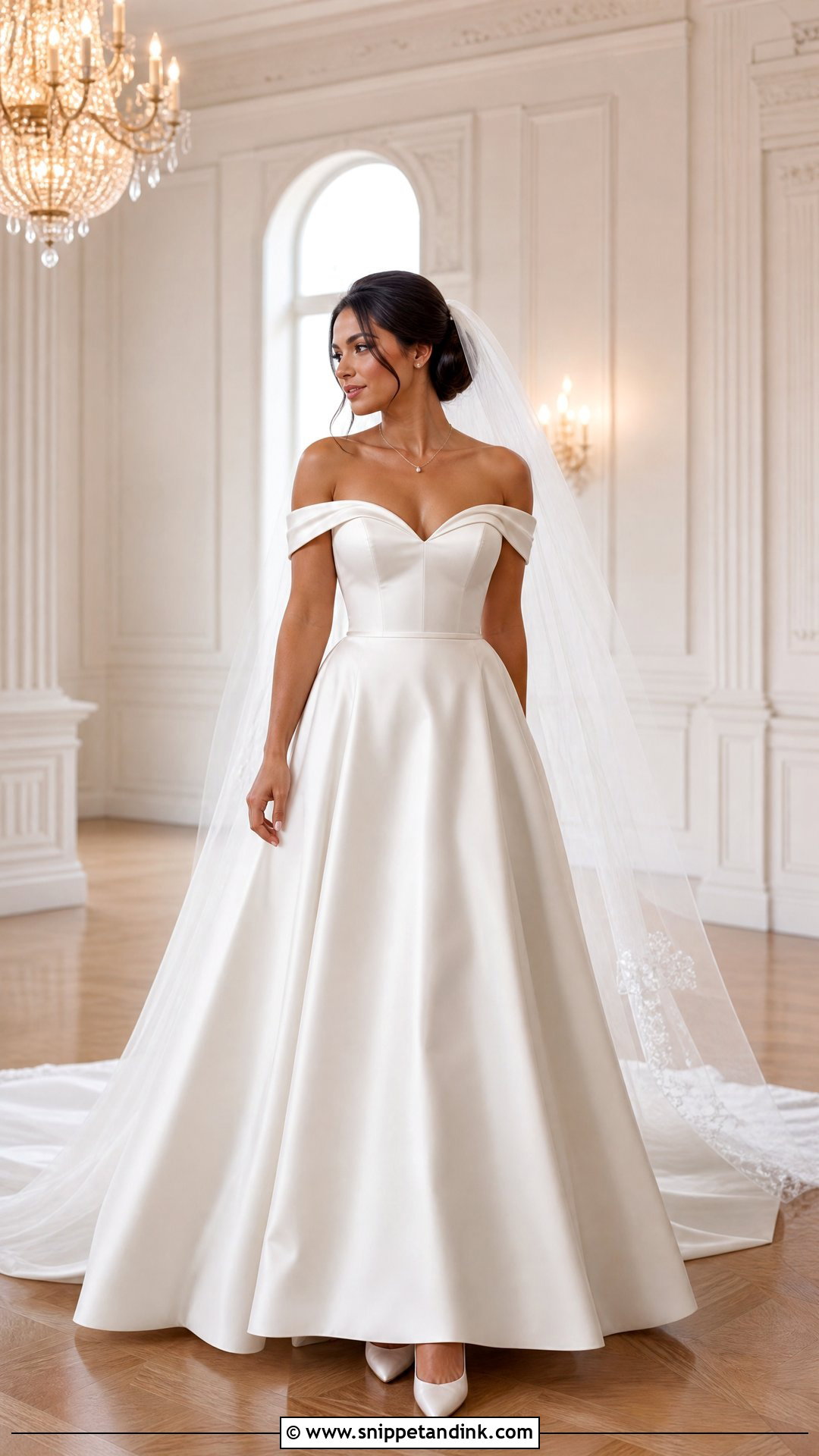
An off-shoulder V-neck pairs an open shoulder line with a lengthening centre. The draped straps should be slim and rest lightly on the upper arm; a thick horizontal band across the arms undoes the effect. Choose a structured V bodice and a softly flared skirt in crepe, satin or smooth mikado so the neckline stays the focus. Pointed heels, a fine necklace and a chapel veil under a low chignon complete it. Off-shoulder pieces like to drag the bodice down when you lift your arms, which is a bigger problem on a short torso because there’s less bodice to lose. Raise your arms and sit at every fitting until it stays put.
14. One-Shoulder Column Wedding Dress
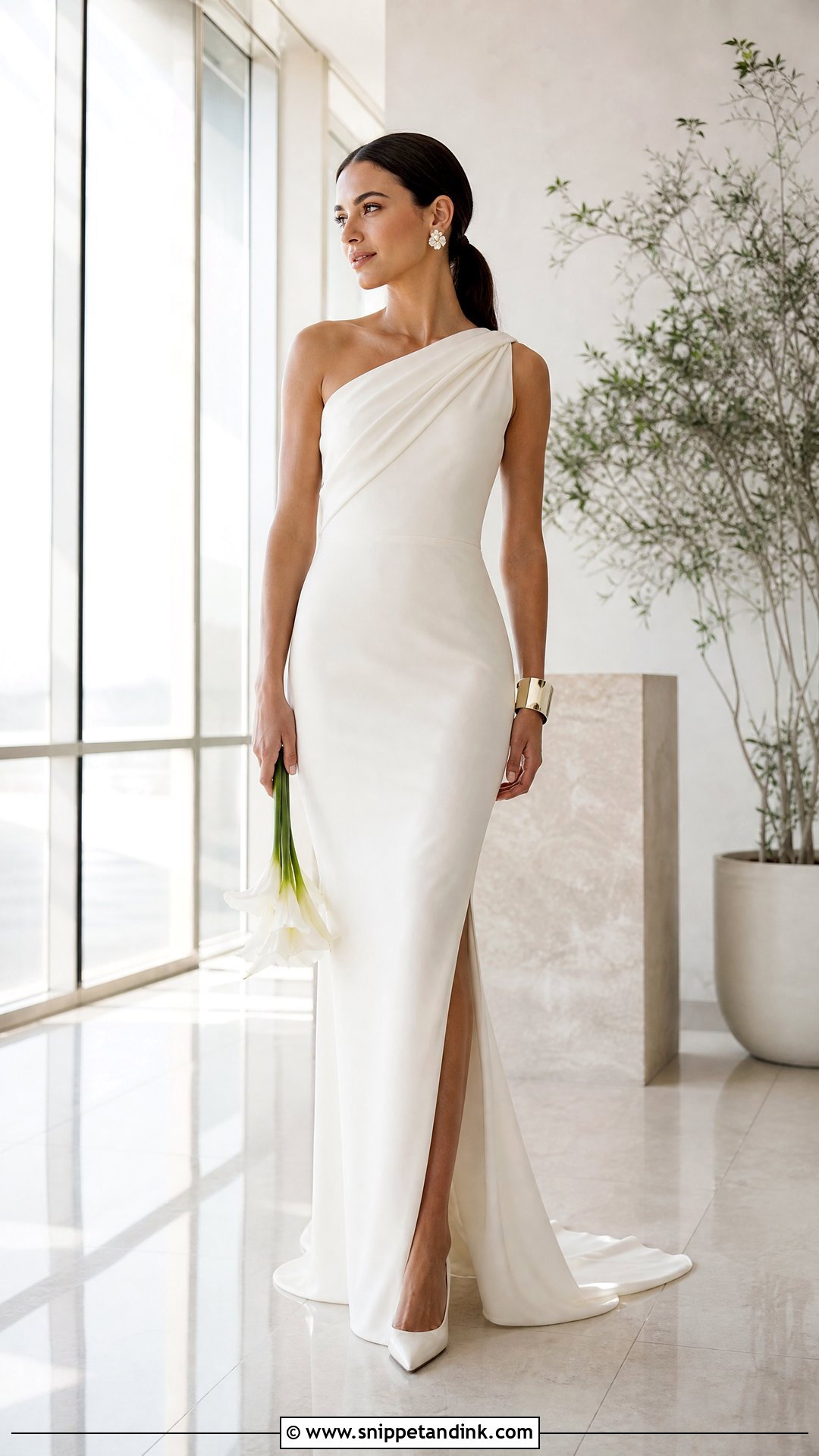
The diagonal line of a one-shoulder column wedding dress draws the eye across and upward, while the straight skirt adds length below. Keep the drape restrained and skip big shoulder bows, which swallow a compact upper body. A fitted crepe column with a small side slit stays light and easy to move in. Wear pointed pumps, a sleek cuff and statement earrings on the bare side, with a smooth low ponytail. Have the single strap shortened until it holds firmly. A loose strap lets the neckline sag, and the waist shaping slides down with it over the evening.

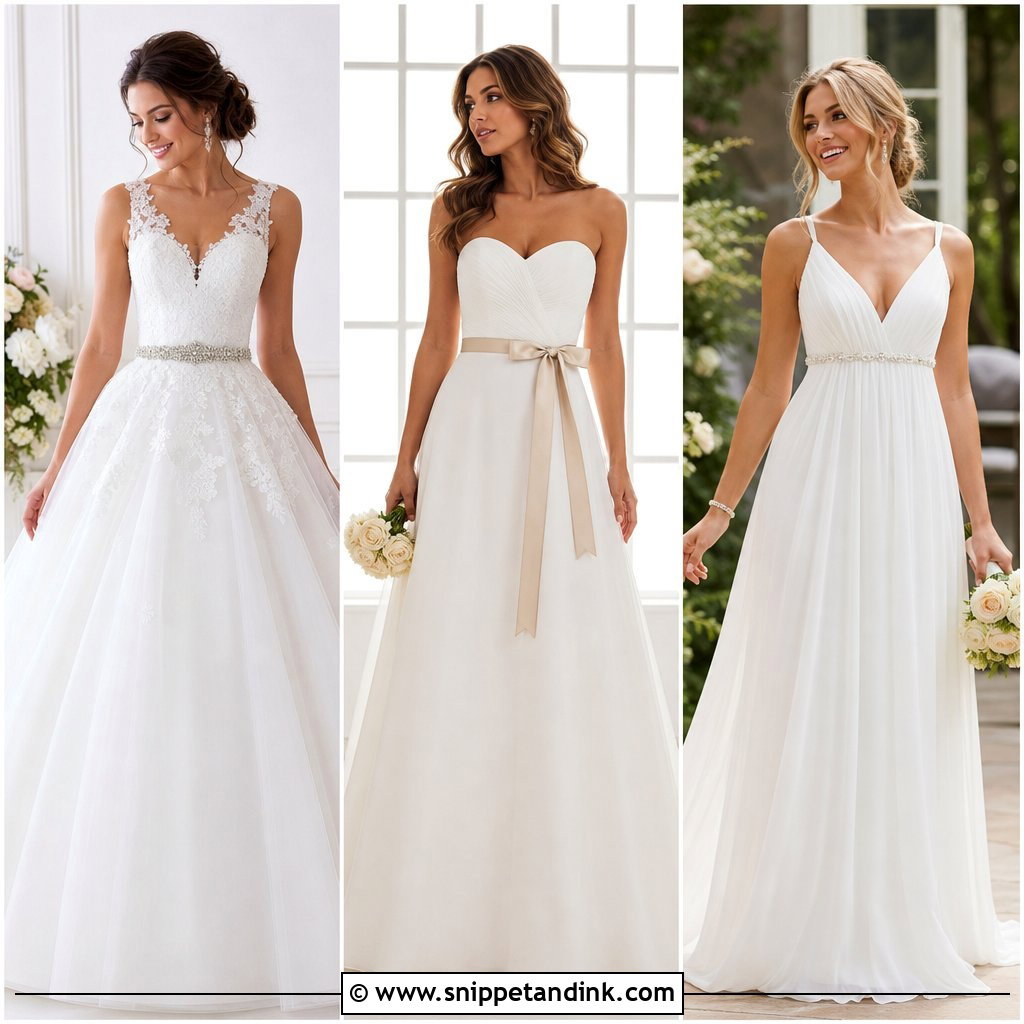
15. Illusion Neckline A-Line Wedding Dress
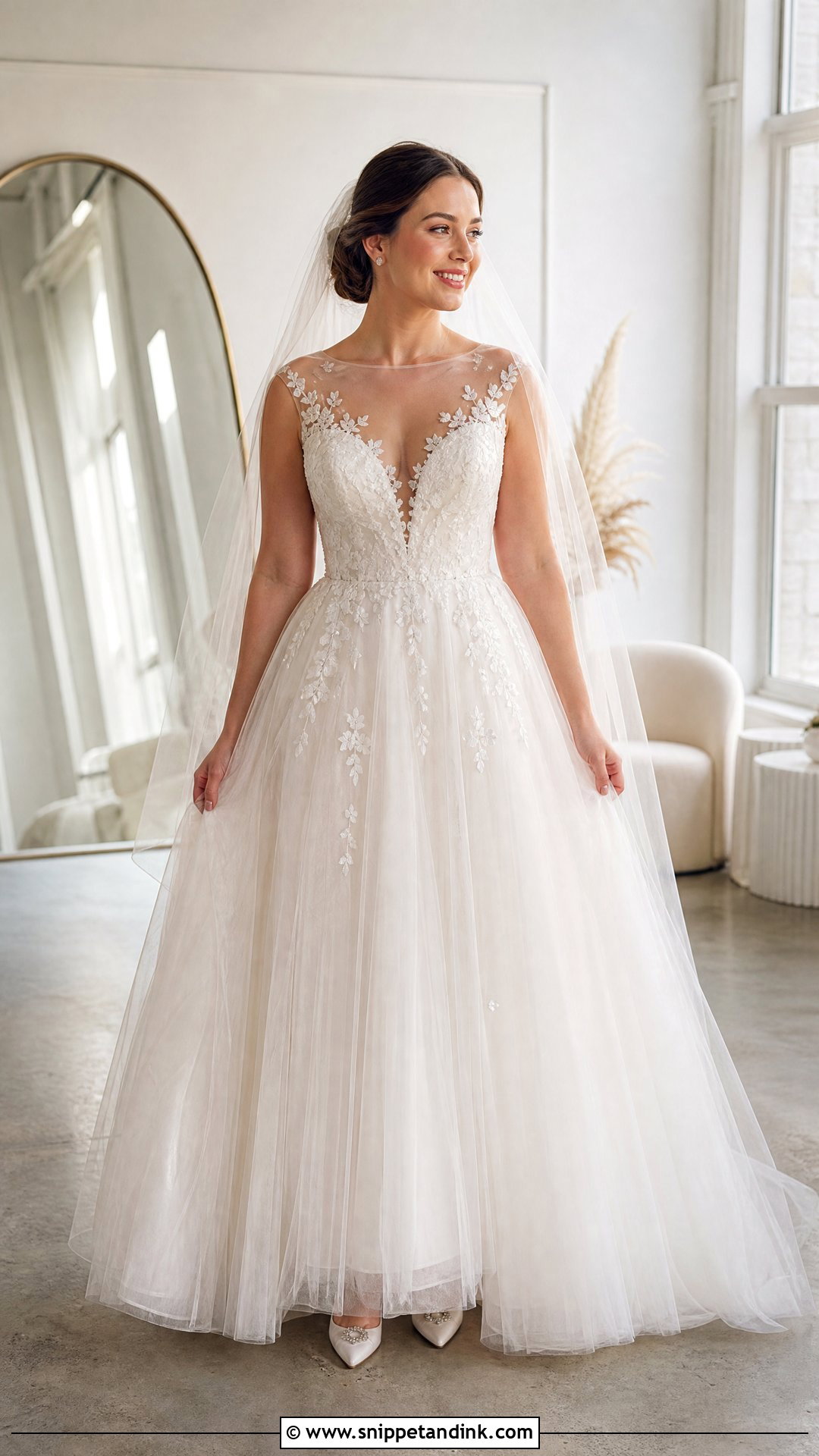
An illusion neckline gives you support and coverage while the bodice still looks open. I like fine mesh over a V-shaped lining, which puts a vertical focus right through the torso. Keep appliqués spaced out; a dense band of them across the chest or waist chops the length back up. A softly flared tulle skirt, classic pointed heels, crystal studs, a fingertip veil and a neat updo complete it. Match the mesh to your skin tone in daylight, not under the salon’s warm bulbs. When the bodice is shortened, the lining and mesh have to be reshaped together, or the mesh wrinkles at the shoulders.
16. Long Sleeve V-Neck Wedding Dress
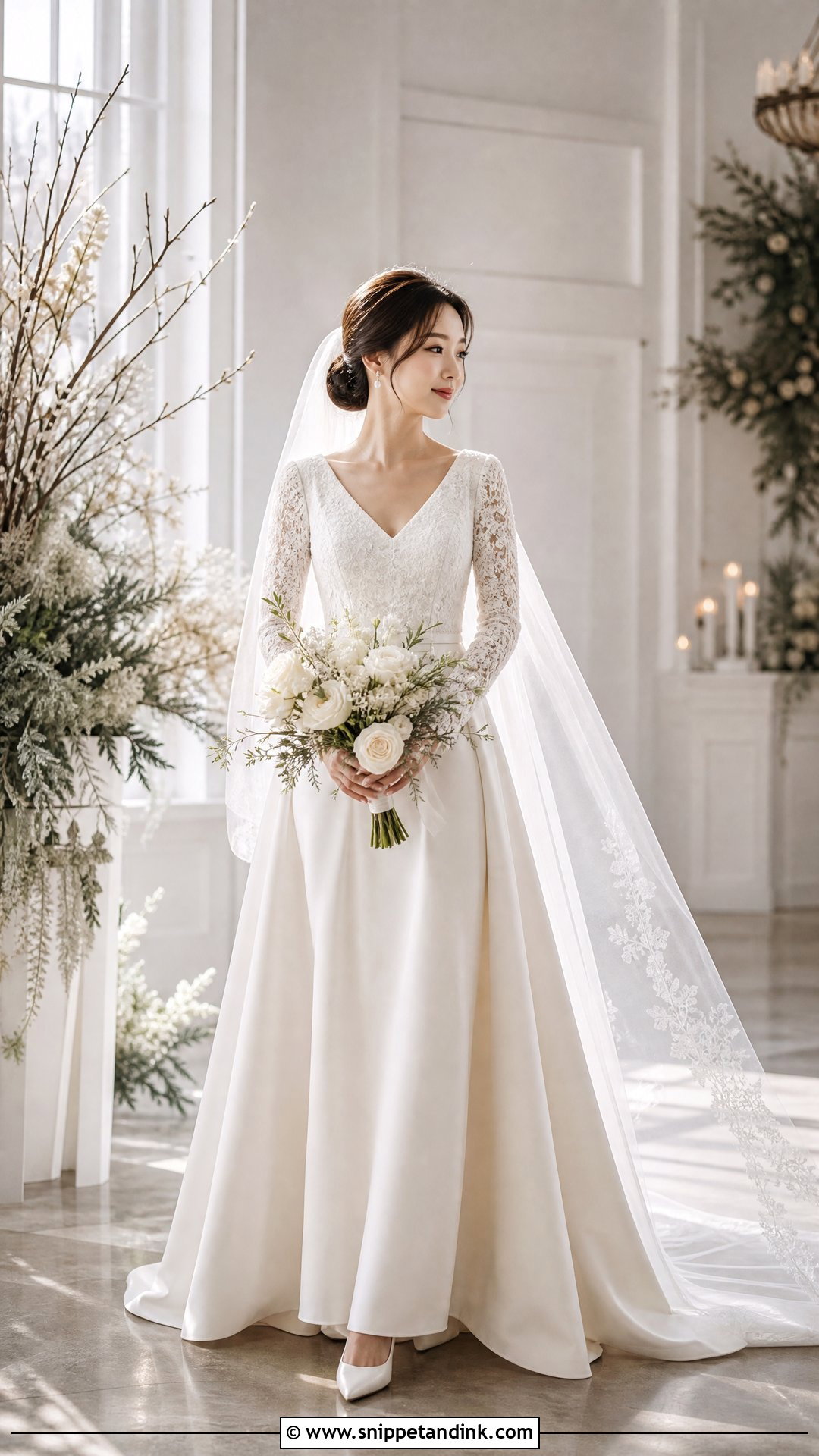
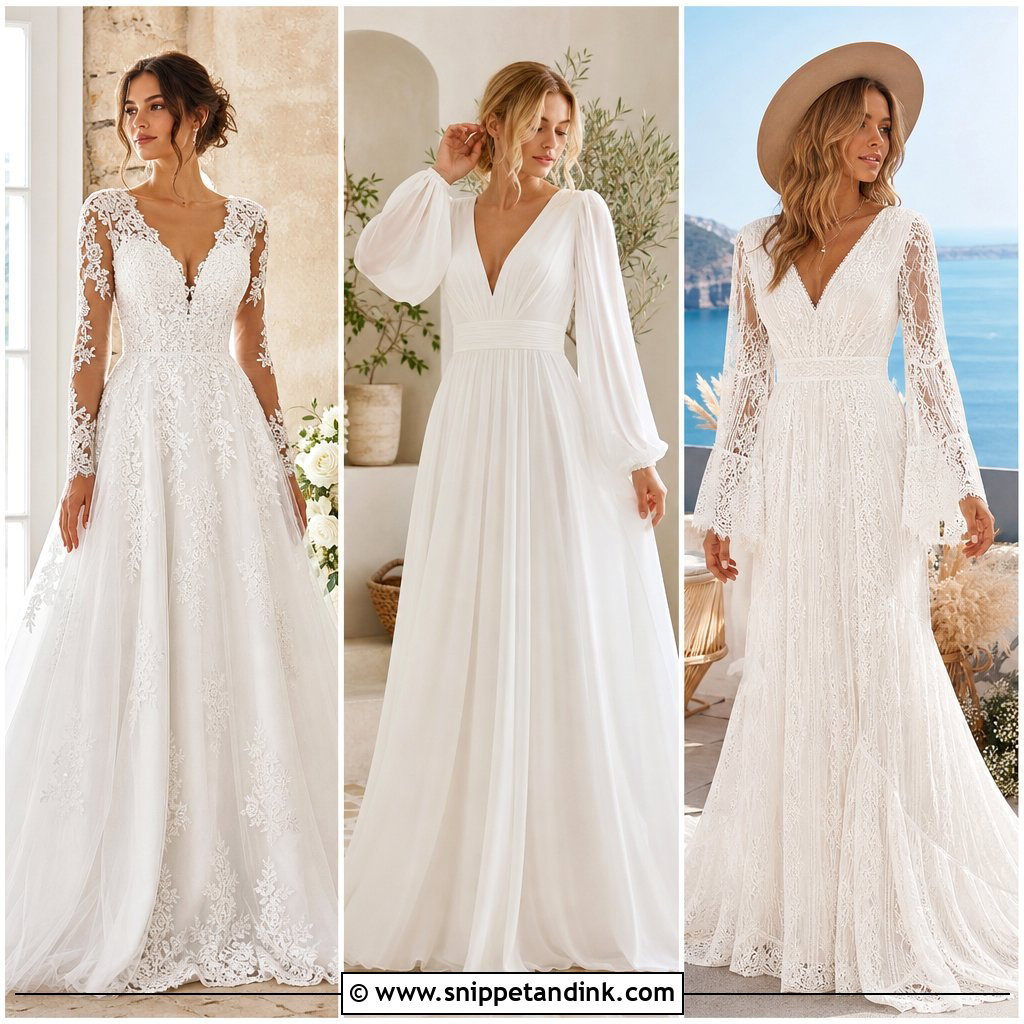
For cooler weather, long sleeves with a V-neck give coverage without closing off the upper body. Fitted lace or sheer sleeves, a simple V bodice and a straight or gentle A-line skirt work well, and vertical seams down the front help further. Avoid puffed or gathered sleeve heads; volume at the shoulder makes a short bodice look shorter still. Pointed closed-toe pumps, pearl earrings, a clean cathedral veil and a soft low bun keep it calm. Long sleeves pull the bodice up when you raise your arms, so the sleeve heads need careful setting. Hug, sit and dance at the final fitting before you sign it off.
17. Fit And Flare Wedding Dress
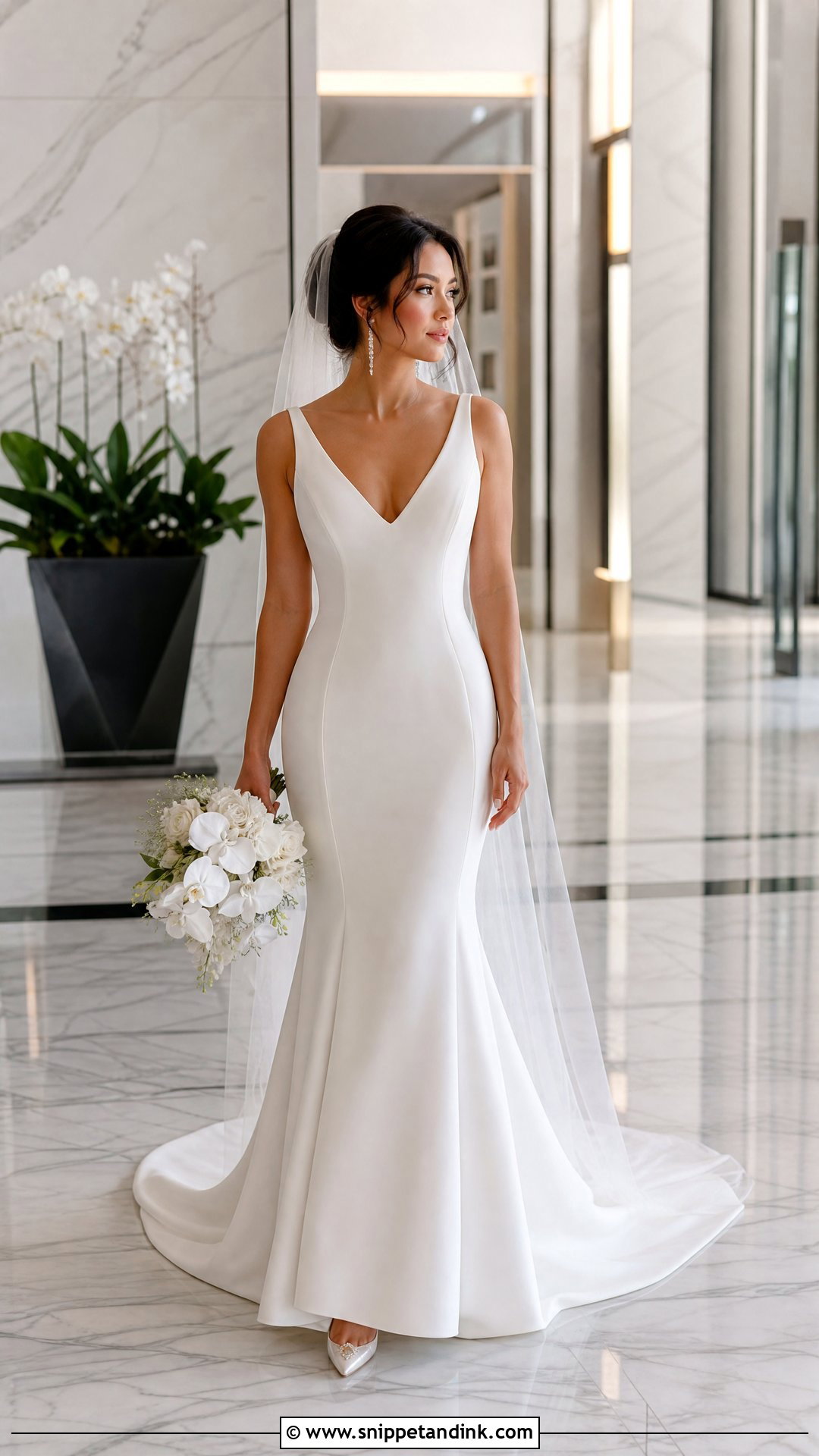
Fit and flare can work on a short torso, but only when the flare starts below the fullest part of the hip. Start it at the waist and you get a short bodice sitting on a big skirt. A V-neck or soft scoop, continuous vertical seams and almost no waist decoration keep the line long, and stretch crepe gives structure with room to move. Pointed heels, long earrings and a narrow chapel veil follow the shape, and a row of covered buttons down the back adds one more vertical. Ask your seamstress to judge the flare point from the side and back as well as the front. Moving it even a little changes the whole balance.
18. Tea Length A-Line Wedding Dress
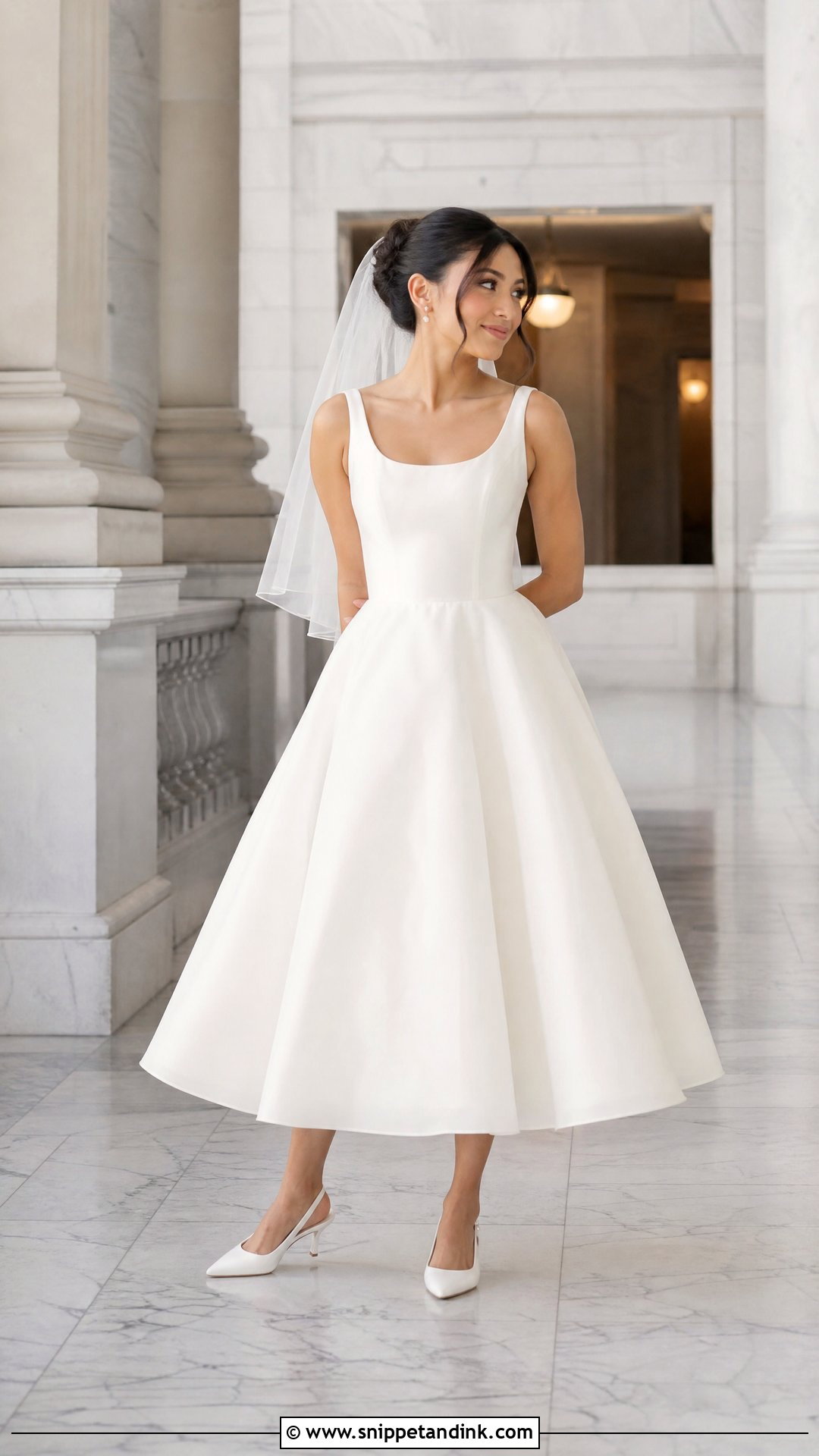
Tea length has an easy, playful swing that suits courthouse, city and relaxed daytime ceremonies. Pick a V-neck or open scoop bodice with a defined but narrow waist seam, and have the skirt end at the slimmest point between lower calf and ankle so your shoes become part of the outfit. Add pointed slingbacks, pearl studs and a short veil or structured hair bow. Smooth satin or crisp organza keeps the shorter shape clearly bridal. Wide waistbands eat torso space you don’t have. Measure the hem in the exact shoes, since an inch either way decides whether it looks polished or costume-like.
19. High Slit Sheath Wedding Dress
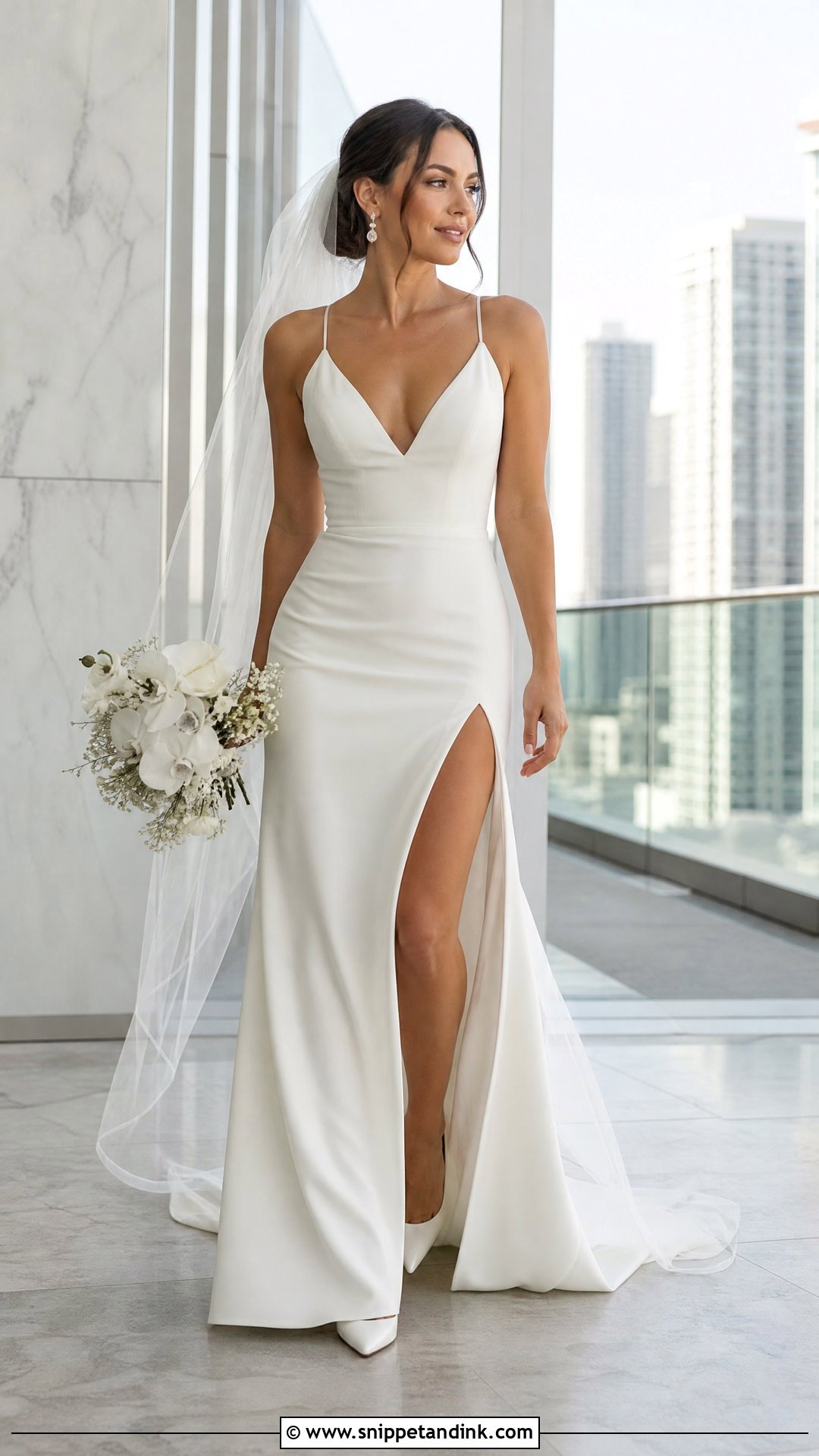
A high slit sheath wedding dress adds vertical movement through the skirt while the upper body stays streamlined. Choose a moderate V-neck, narrow straps and smooth crepe or satin without a heavy waist seam. Shoes close to the dress colour, a long sheer veil, fine drops and a sleek low knot keep the line continuous. The slit should start at a point you’re comfortable with seated, not just standing. I always ask for a small hidden reinforcement bar at its top so it doesn’t tear or creep higher over the night. Then the bodice gets shortened so neckline, bust, waist and slit line up on your proportions.
20. Petite Ball Gown Wedding Dress
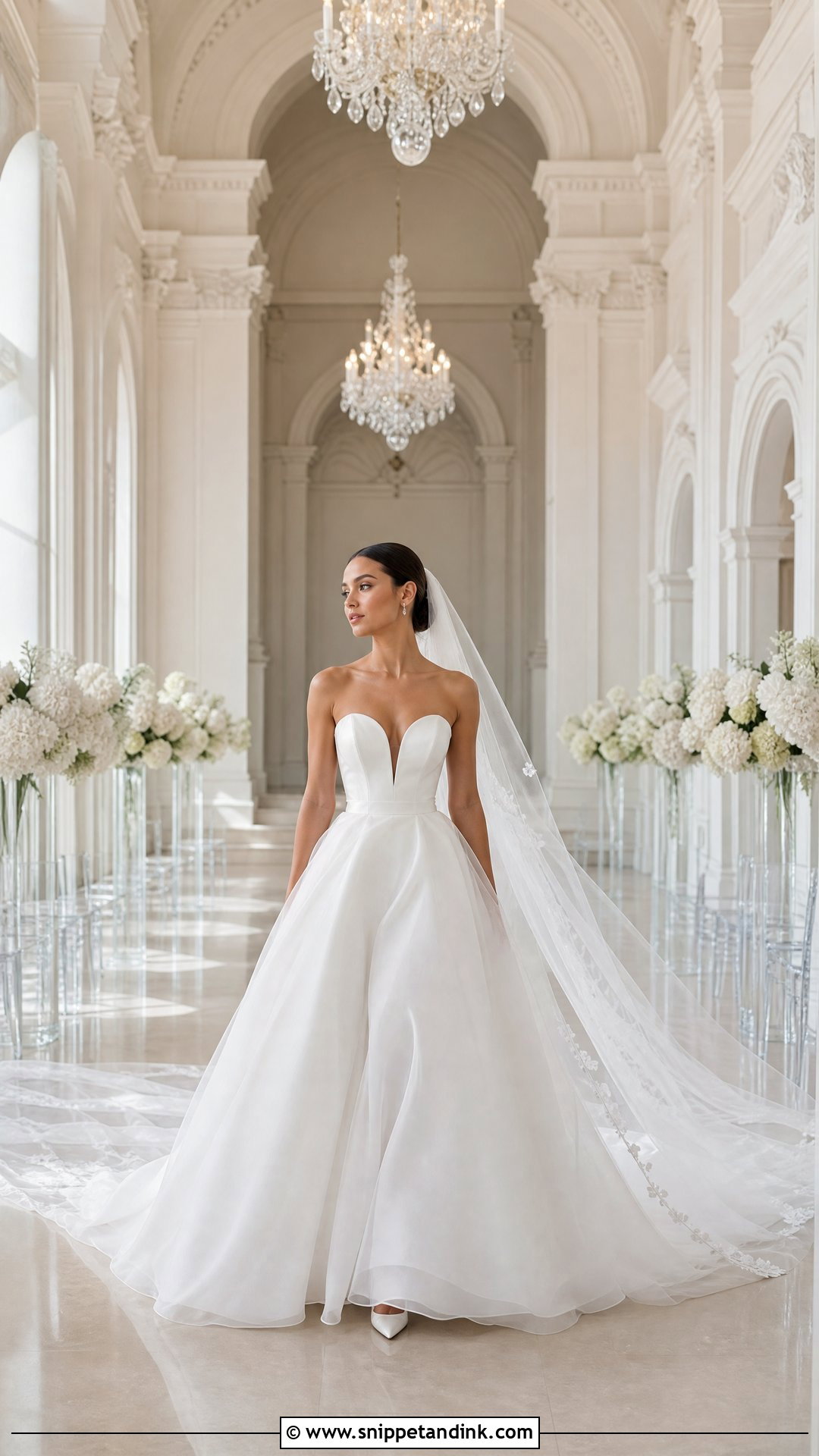
A short torso doesn’t rule out a full skirt. The bodice just needs to stay simple and the volume needs controlling. I’d pair an open V-neck or sweetheart with a waist seam placed precisely at your natural waist, over lightweight organza or fine tulle rather than heavy satin. Pointed heels, understated jewelry and a cathedral veil that extends past the train finish it. Keep any embellishment in one area. Most ball-gown samples carry more petticoat layers than a petite frame needs, and removing one or two makes the gown easier to walk in as well as better balanced. The bodice should be shortened from the correct seams, not just hiked up at the straps.
Where a Seamstress Takes the Length Out
There are three main places to shorten a bodice, and each has a trade-off. Ask which one your gown needs before you agree a quote.
At the shoulders
Shortening the straps is the quickest fix and often enough for an extra centimetre or two. It also raises the neckline, which can be a good thing on a plunge and a problem on a high neck. Strapless gowns don’t have this option.
At the waist seam
Here the skirt is unpicked, the bodice is shortened from the bottom and the skirt is reattached higher. It gives the biggest change, but it’s slower work on beaded or lace bodices because embellishment has to be removed and reset across the new seam. Boning gets trimmed at the same time.
Under the bust
On gowns with an empire or princess-seam construction, length can be taken from the panel between bust and waist. The cups usually have to be repositioned too, so bring the exact bra or adhesive cups you plan to wear.
After any of these, sit down in the gown. If the boning bows outward or the waist seam rides up onto your ribs when seated, it still isn’t right, and the next fitting should focus on that before the hem.
Proportion Gets Settled at the Fitting Table
In the end, the most flattering gown is the one that feels secure and comfortable and still looks like you. Across these looks, the same few tools keep doing the work: open necklines, vertical seams, smooth fabric, a waist seam in the right place and a skirt scaled to your frame. Treat them as starting points rather than rules. Try silhouettes you’d have skipped, and photograph each from the front, side and back. Bring your heel height to every fitting and ask directly about shortening the bodice, adjusting straps, moving cups and reshaping the waist seam. Good alterations turn a nearly right dress into one that fits your proportions and lets you move without thinking about it.
You'll Like These Ideas:





Leave a Reply