
Pearls are one of the few embellishments I can put on almost any bride, because they catch light softly instead of flashing like crystal. Designers keep using them on corsets, drop waists, detachable overskirts and short reception dresses, so the choice is wide. What changes everything is how much pearl you wear and where it sits. A scattered handful reads delicate; a fully beaded bodice reads formal and adds real weight. Below are twenty head-to-toe pearl wedding looks, from ball gowns to minis, each with the fitting checks I run before a bride says yes.

What I Check on the Pearls Themselves Before You Fall in Love
Most bridal pearls aren’t real pearls. They’re glass or plastic beads with a pearlescent coating, and that’s fine, because real pearls would make a gown impossibly heavy and expensive. But the quality varies a lot between gowns, and you can see it in the fitting room if you know where to look.
- Sewn or glued? Turn a section of the bodice over gently. Hand-sewn pearls have thread behind each bead. Glued pearls have nothing behind them, and they pop off when the fabric flexes.
- Coating. Look at the pearls near seams and edges. If the shiny coat is already chipping on a sample dress, it will chip on yours.
- Color against the fabric. Bright white pearls on ivory silk can look slightly blue in photos. I ask for the pearl tone to be matched to the base fabric, or one shade warmer.
- Weight. Lift the skirt and the bodice separately. Dense beading can add a surprising amount of weight, and that load hangs from your shoulders and waist all day.
Ask the salon whether the gown comes with spare pearls. Many do, in a small bag, and it’s worth keeping that bag somewhere you’ll remember.
1. Pearl Ball Gown Bridal Dress
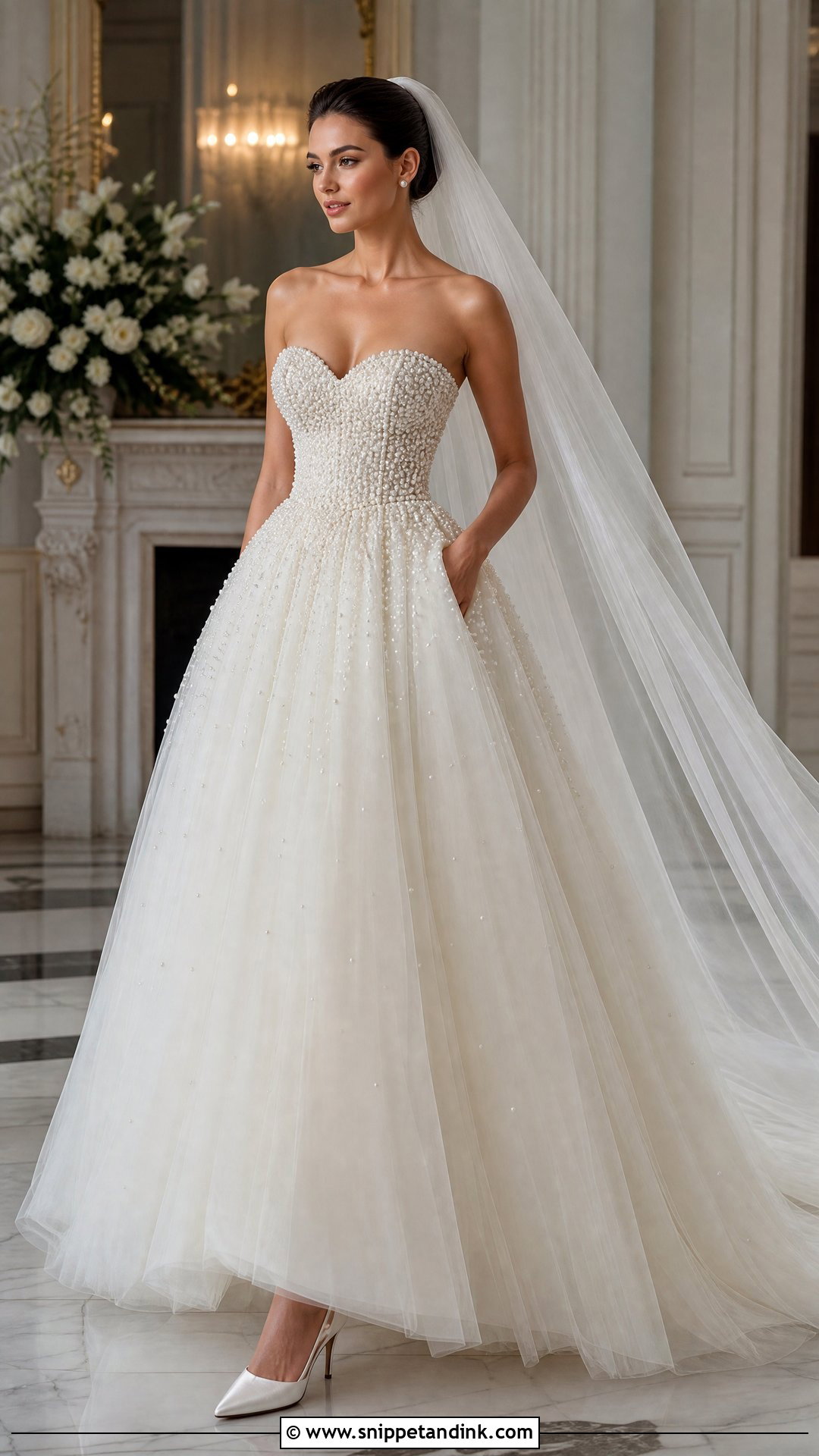
The ball gown is the entrance most people picture, and pearls suit it best when they’re graduated: dense on the bodice, thinning out as they travel into the tulle or organza. That fade keeps the skirt from looking heavy. A sweetheart neckline and a firm waist give the volume something to balance against. I’d style it with pointed satin pumps, pearl studs and a sheer cathedral veil with a plain edge, plus a low bun so the beading stays visible. At the fitting, sit down in it for a few minutes. Heavily beaded bodices feel fine standing and start to drag on the shoulders by the second hour.
2. Pearl A-Line Bridal Dress
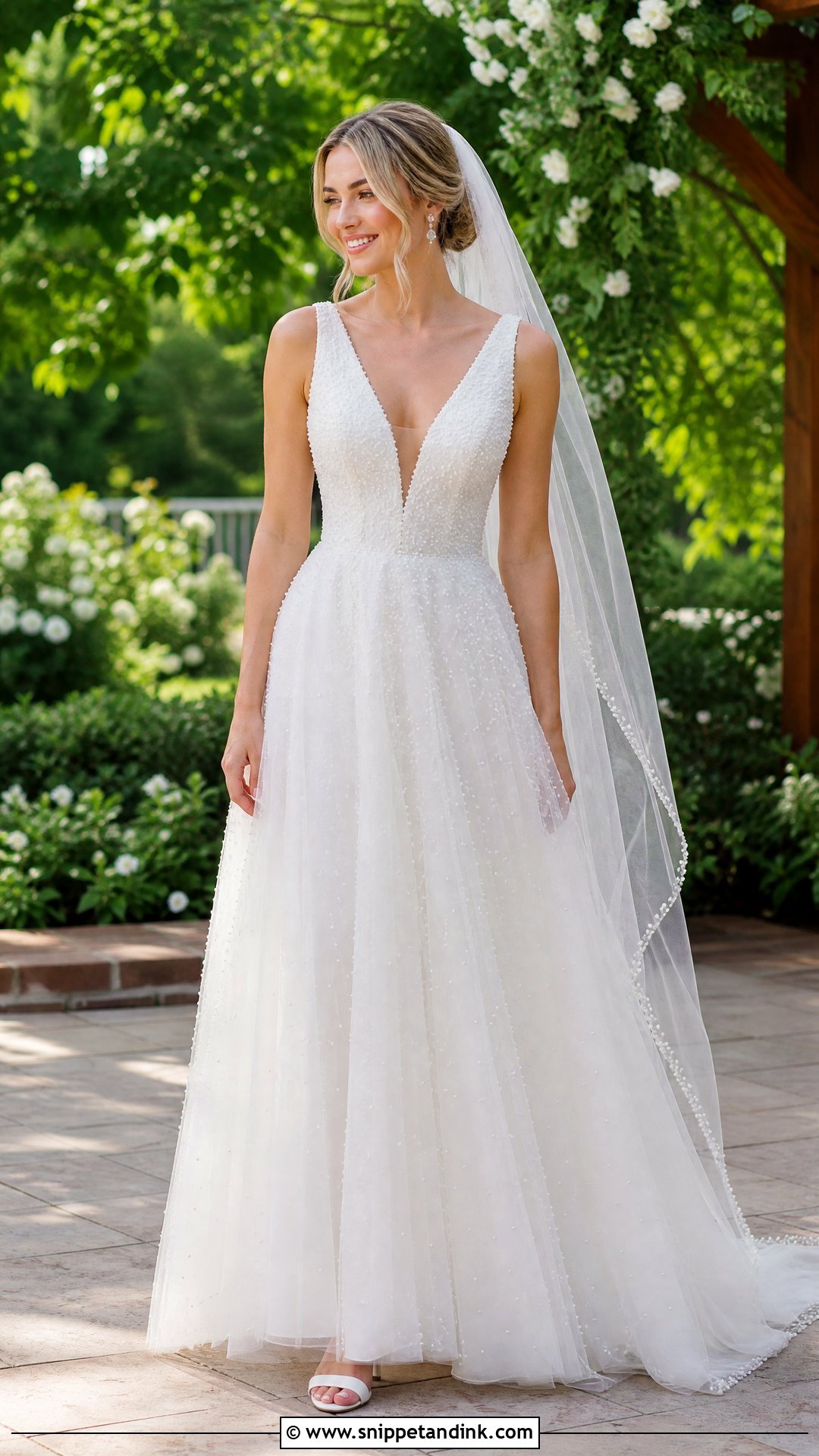
An A-line gives you movement without the width of a ball gown, and it forgives more body shapes than any other cut I fit. Scattered pearls over soft tulle add texture while the dress still swings when you walk. A V-neck lengthens the torso; wider straps help if you need support. Pair it with ivory block heels, small drop earrings and a fingertip veil with a narrow pearl border, and wear loose waves or a soft half-up style. I’d skip the necklace here. When the fabric already carries pearls, a second row at the throat starts to look like costume.
3. Pearl Mermaid Bridal Dress
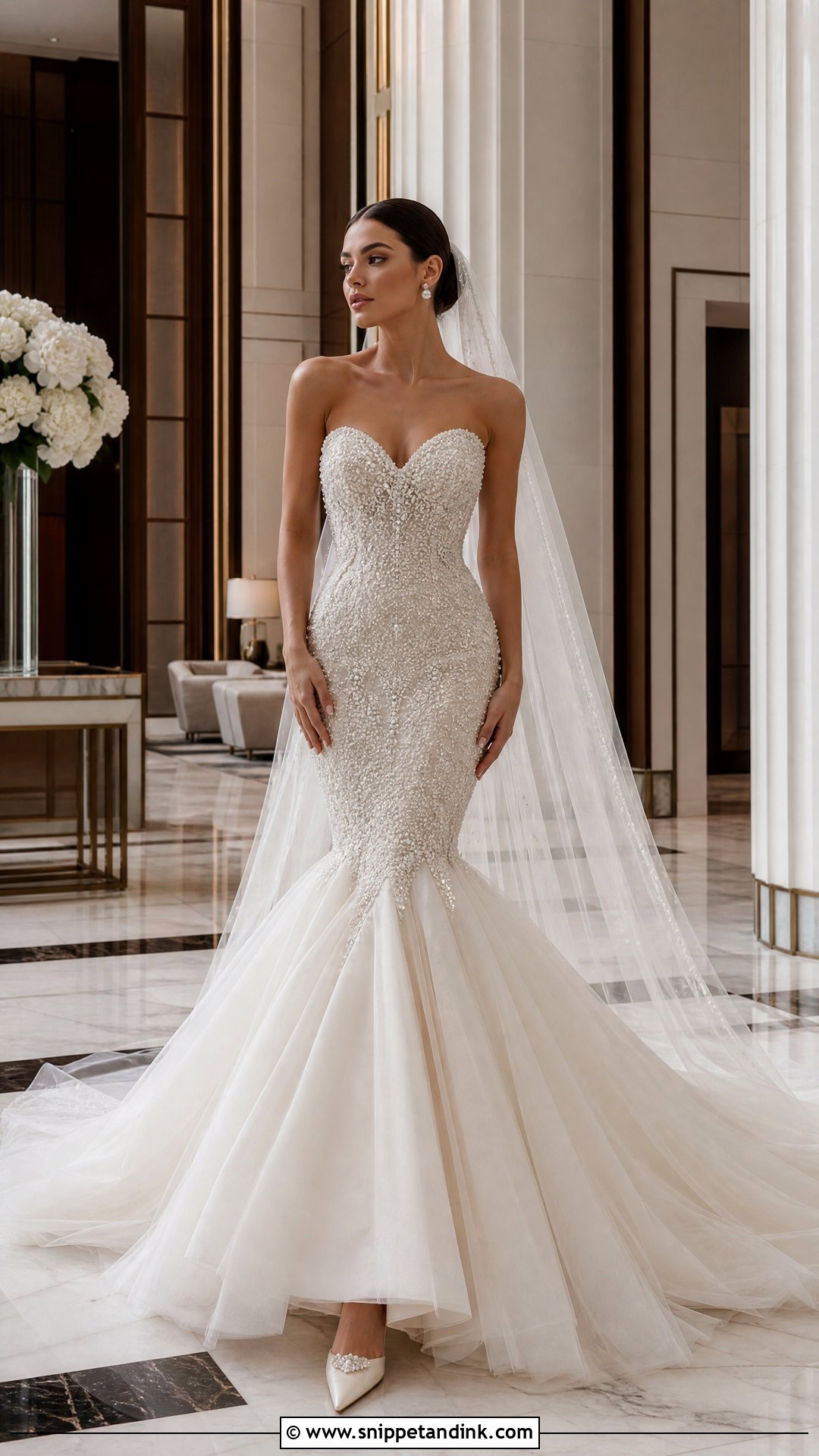
Mermaid gowns photograph with real drama, but they’re the cut I watch most carefully at alterations. The fit has to hug through the hips before the flare opens in tulle, crepe or organza, and the pearls work best concentrated on the bodice and upper skirt with a plainer hem. Sleek pointed heels, pearl-and-crystal earrings and a narrow cathedral veil keep it sharp, with a smooth bun or structured Hollywood waves. Ask your seamstress where the flare starts. If it sits too high on the thigh, you’ll shuffle; an inch or two lower and you can climb steps and take a normal stride.
4. Pearl Sheath Bridal Dress
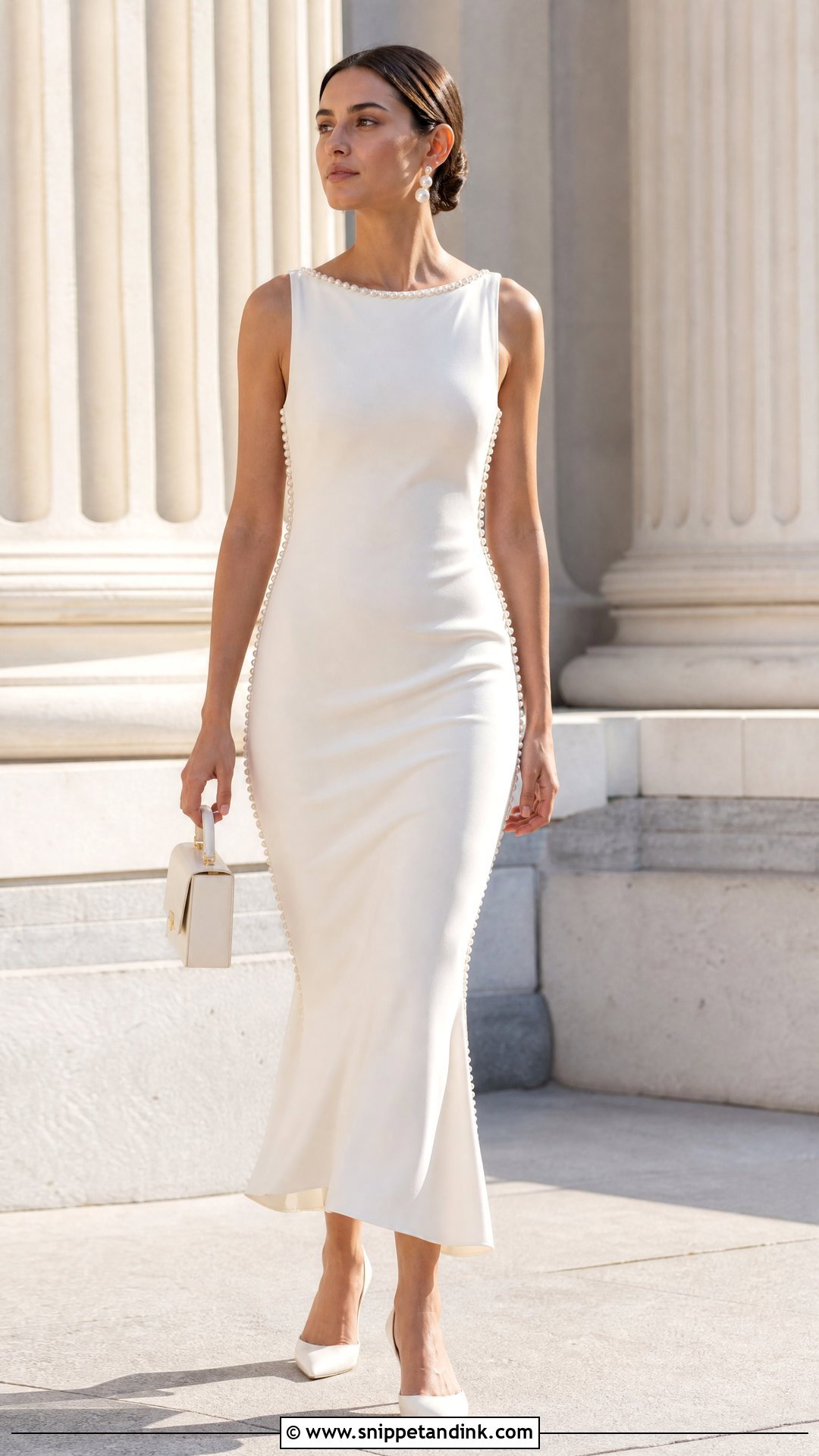
A sheath suits city ceremonies and small rooms, where a big skirt would crowd the space. It falls close to the body without a flare, so the pearls need to be placed with intent: along the neckline, down the side seams or across the back on a crepe or satin base. I like pointed slingbacks, a small structured bag for portraits and geometric pearl earrings with it, and a sleek ponytail. The honest drawback is that a sheath shows every fitting flaw. Spend your alteration budget on the waist and hips, and wear smooth, skin-tone underwear so the lining doesn’t pull against the embroidery.
5. Pearl Corset Bridal Dress
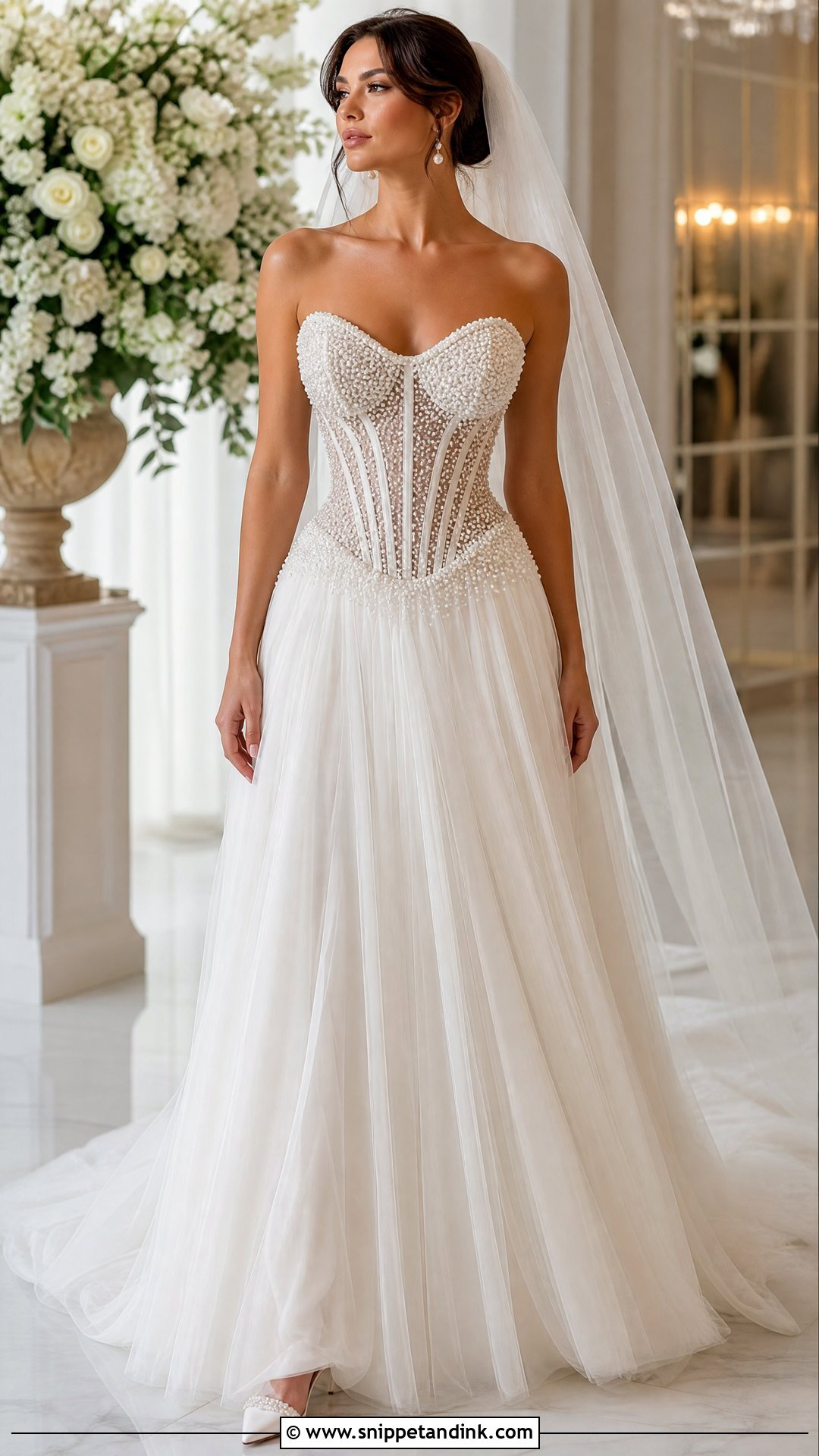
Corset bodices are where pearls look most deliberate, sitting in the cups and following the boning. Look for proper boning and a softly dipped waist, then balance the structure with a flowing tulle or satin skirt. Illusion mesh is the part I always check twice: hold it up to your skin by a window and again under warm indoor light, because the shade that disappears in one can look gray in the other. Pearl drops, pointed ivory heels, a plain cathedral veil and a soft updo finish it. You should be able to take a full breath and eat a meal in it. If you can’t, ask about extra lining or a modesty panel now.
6. Pearl Satin Bridal Dress
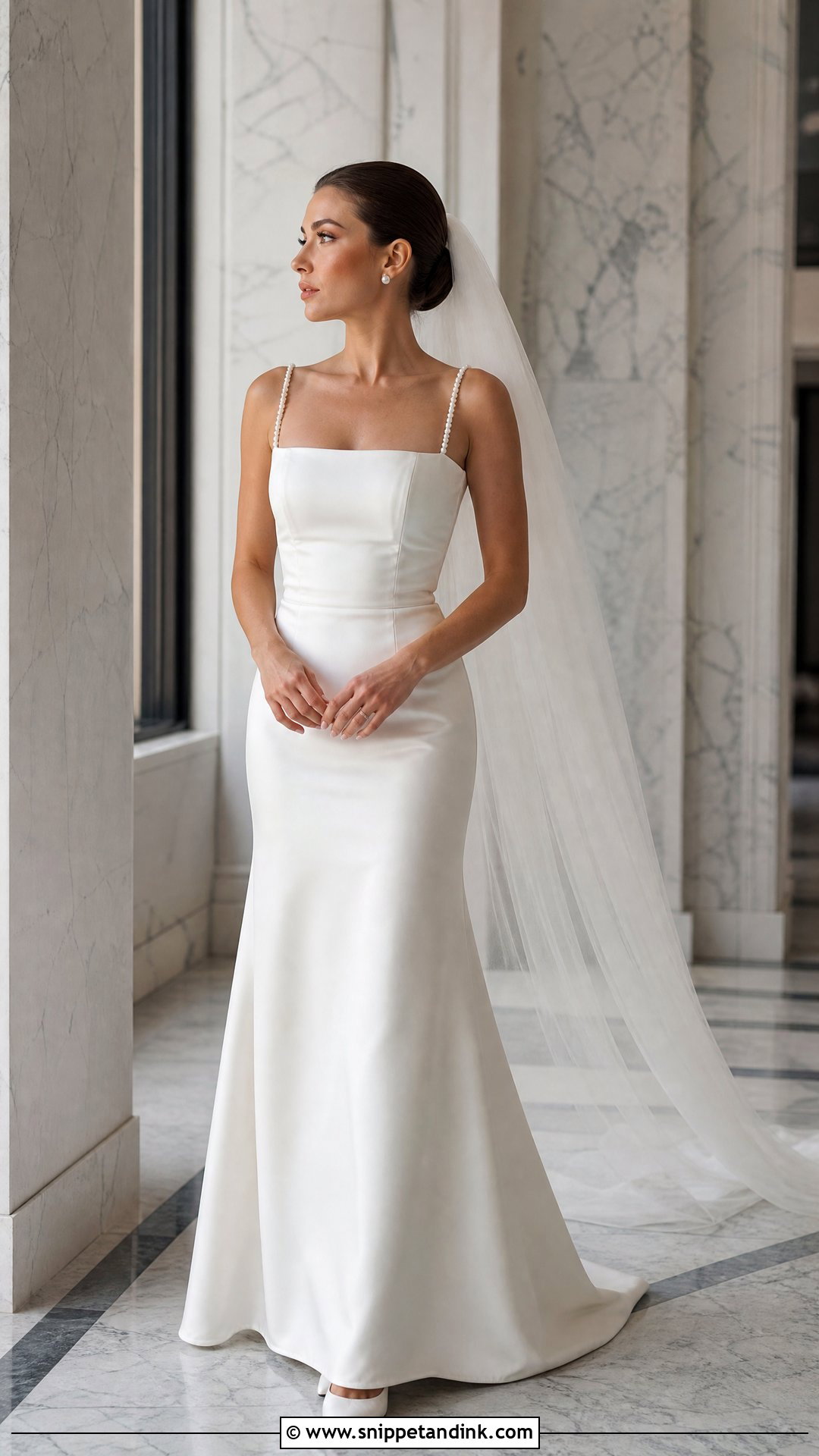
Satin carries its own sheen, so pearls should be a light touch: pearl straps, a trimmed neckline or a line of pearl buttons down the back. Let the fabric and the shape do the work. A square or scooped neckline sits well on heavier satin. Wear closed satin pumps, pearl studs and a long plain veil set under a polished chignon, with a satin bolero if you want cover for the ceremony. Satin creases where you sit and marks under pressure from a car seat belt. I always ask brides how they’re travelling to the venue, and plan the steaming for after arrival, not before.
7. Pearl Tulle Bridal Dress
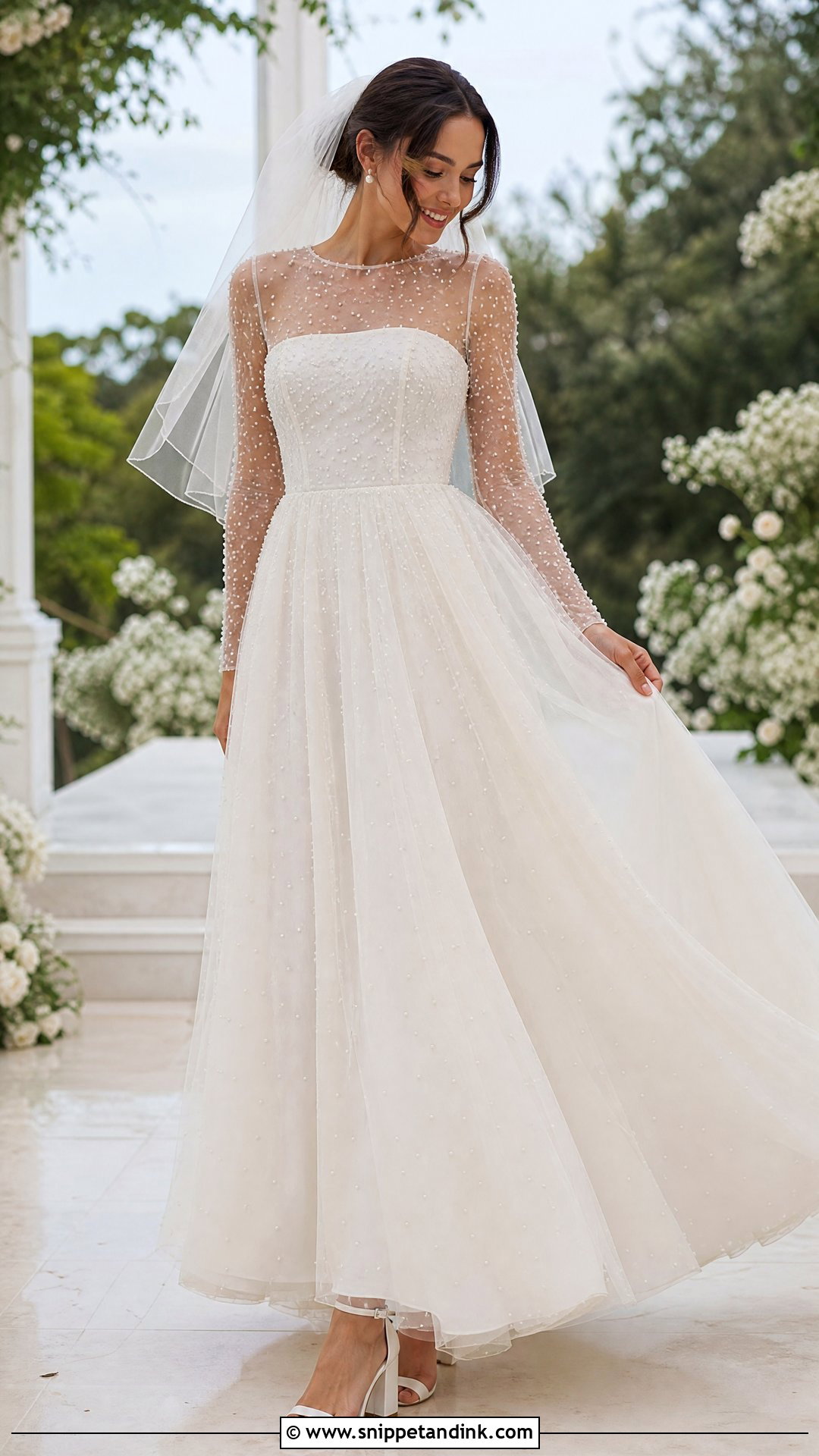
Pearl-dotted tulle looks as if the beads are drifting across the layers, especially when the pearls vary slightly in size. An A-line or soft ball gown lets that tulle move; a stiff, over-netted skirt kills the effect. A lined bodice gives coverage, and sheer sleeves keep the top light. Comfortable block heels, small pearl earrings and a fingertip veil suit it, with a braided updo or loose curls. Tulle has one enemy, and it’s the beading itself. Rough settings snag the layer above them. Run your hand over the skirt before final alterations and ask for a strong bustle so dancing doesn’t pull threads.
8. Pearl Lace Bridal Dress
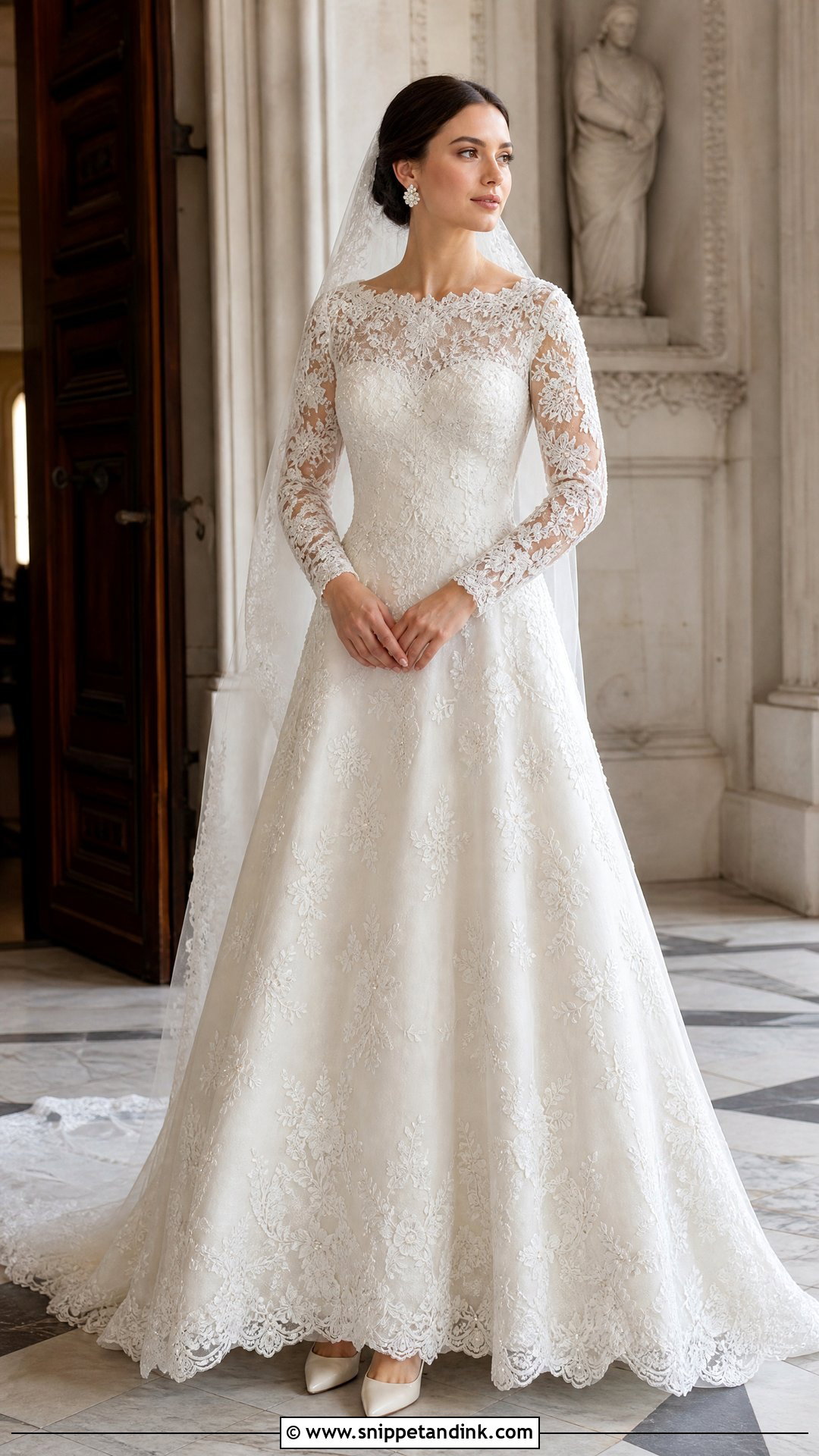
Lace and pearls together can go wrong fast if the pearls are sprinkled at random. The versions I trust sew them into the centers of the floral motifs, so they follow the pattern and look planned. A fitted lace bodice over an A-line skirt is the easiest shape to wear, and lined long sleeves work for cooler months. Add ivory pumps, pearl cluster earrings and a simple lace-edged veil with a low twisted bun. No heavy necklace; there’s already plenty of texture. At the fitting, lift your arms. Beads near the underarm and the inner sleeve rub skin raw by evening if they aren’t backed.
9. Pearl Long Sleeve Bridal Dress
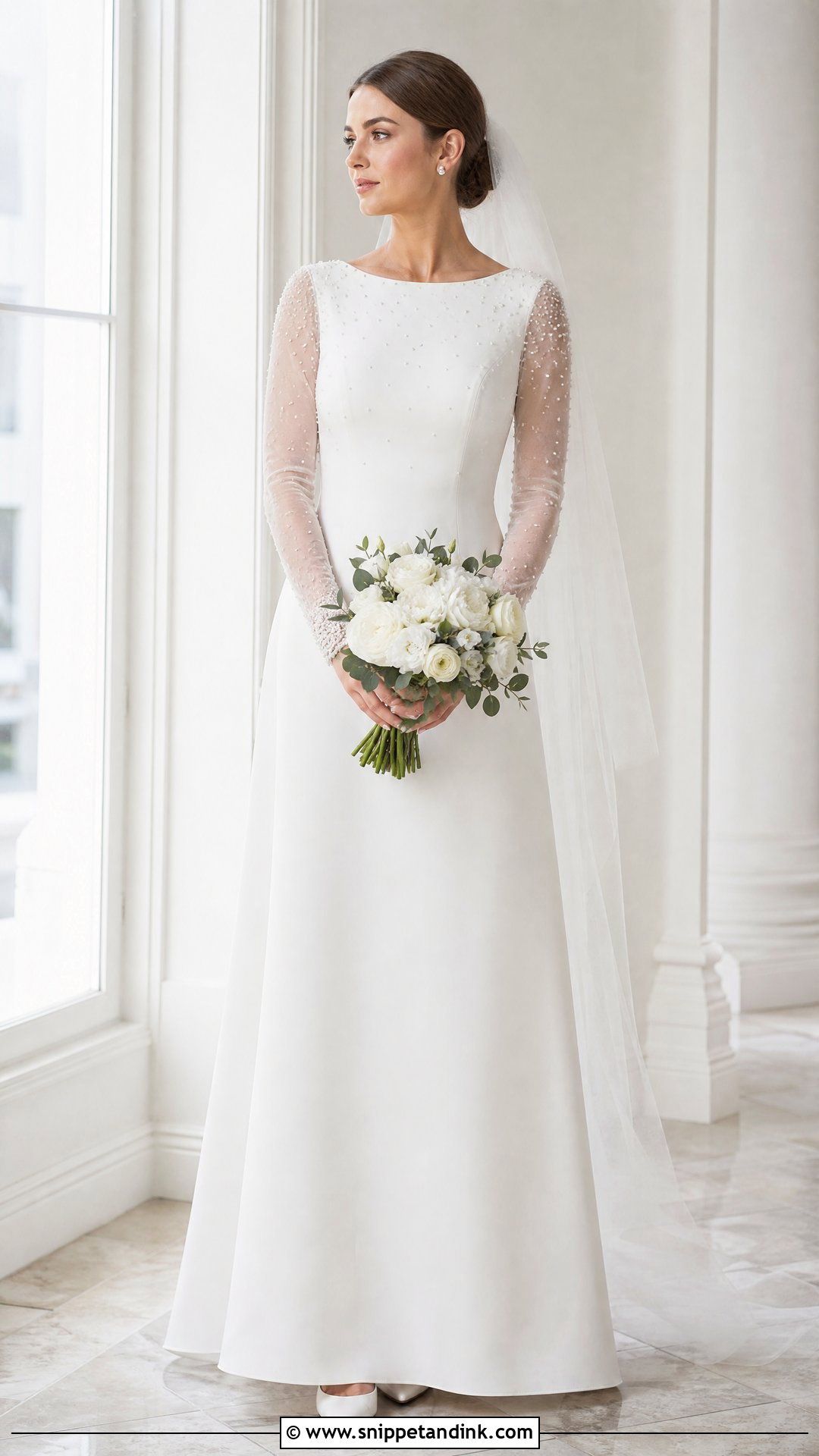
Long pearl sleeves give coverage without weight when the base is sheer tulle with scattered pearls rather than opaque beaded fabric. Keep the skirt calmer, in clean crepe or a lightly layered A-line, and use pearl cuffs or covered buttons for detail at the wrist. Closed-toe heels, small studs, a plain chapel veil and a neat low bun keep long hair from catching on the beads. My test for any sleeve is a hug. Bend the elbows, raise the bouquet, reach around someone’s shoulders. A good seamstress will move individual pearls off the seam lines so the sleeve can actually bend.
10. Pearl Off Shoulder Bridal Dress
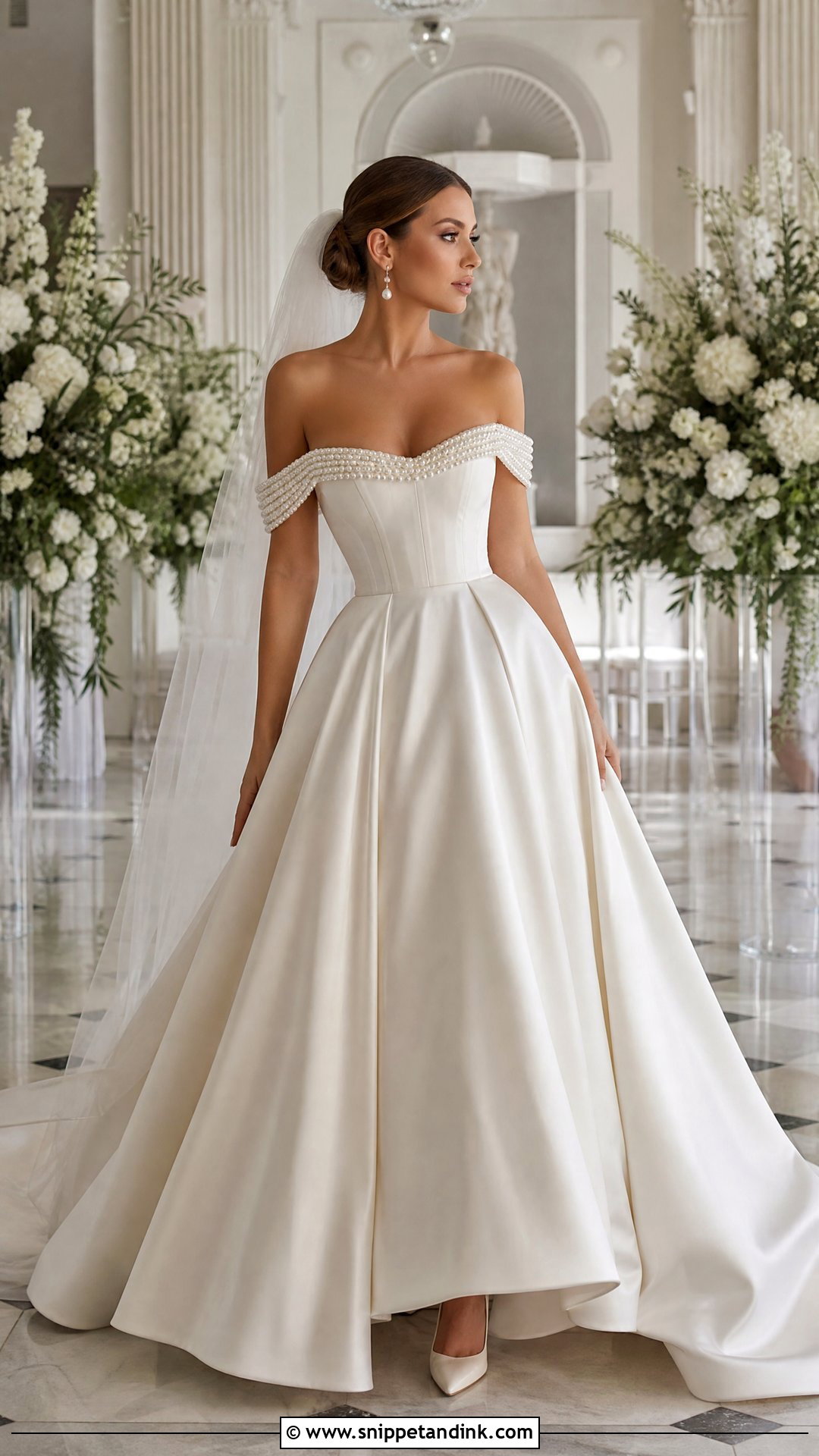
An off-shoulder neckline edged in small pearls frames the collarbones better than almost any necklace could. The bodice needs real internal support, and the skirt can follow the venue: a full ball gown for a ballroom, a softer A-line outdoors. Keep the pearl trim on the neckline itself; when it creeps down the arm bands, it stiffens them and you lose movement. Wear pearl drops, pointed pumps and a sheer veil under a low bun, and leave the neck bare. Raise and lower your arms at the fitting. The bands should stay put without biting into skin, and tailoring, not tape, should do most of that work.
11. Pearl Strapless Bridal Dress
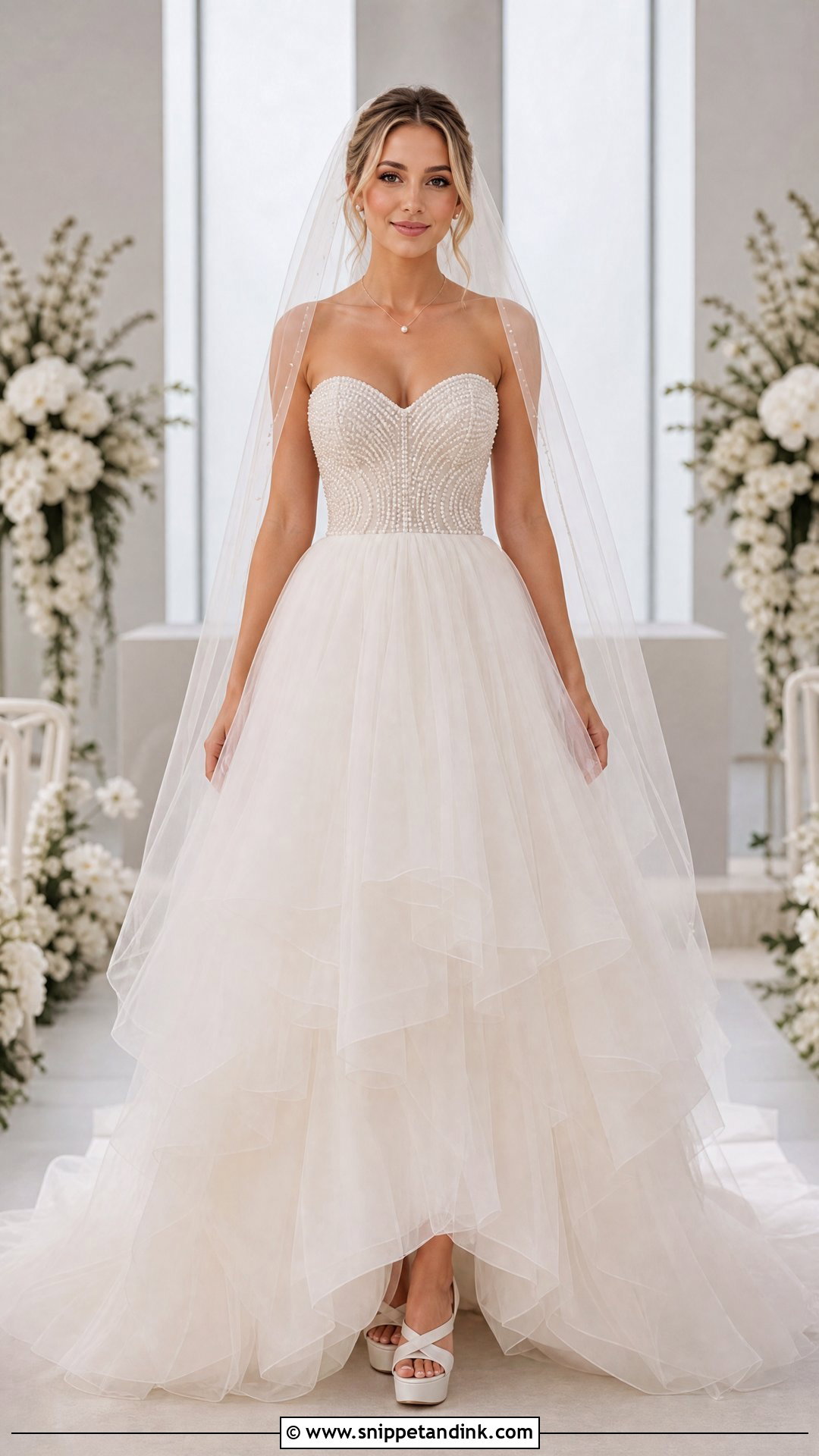
Strapless pearl gowns put everything on the bodice, so the construction has to be right: internal boning, a waist stay and a neckline that sits firmly against you. Small pearls in curved or floral lines can trace the shape, set against a smooth satin or layered tulle skirt. I’d add a delicate pearl choker or short pendant, matching studs and ivory platforms hidden under the hem, with a fingertip veil and swept-back hair. If you catch yourself tugging the top up during the fitting, that’s a support problem. Have the bodice taken in before anyone suggests tape.
12. Pearl Square Neck Bridal Dress
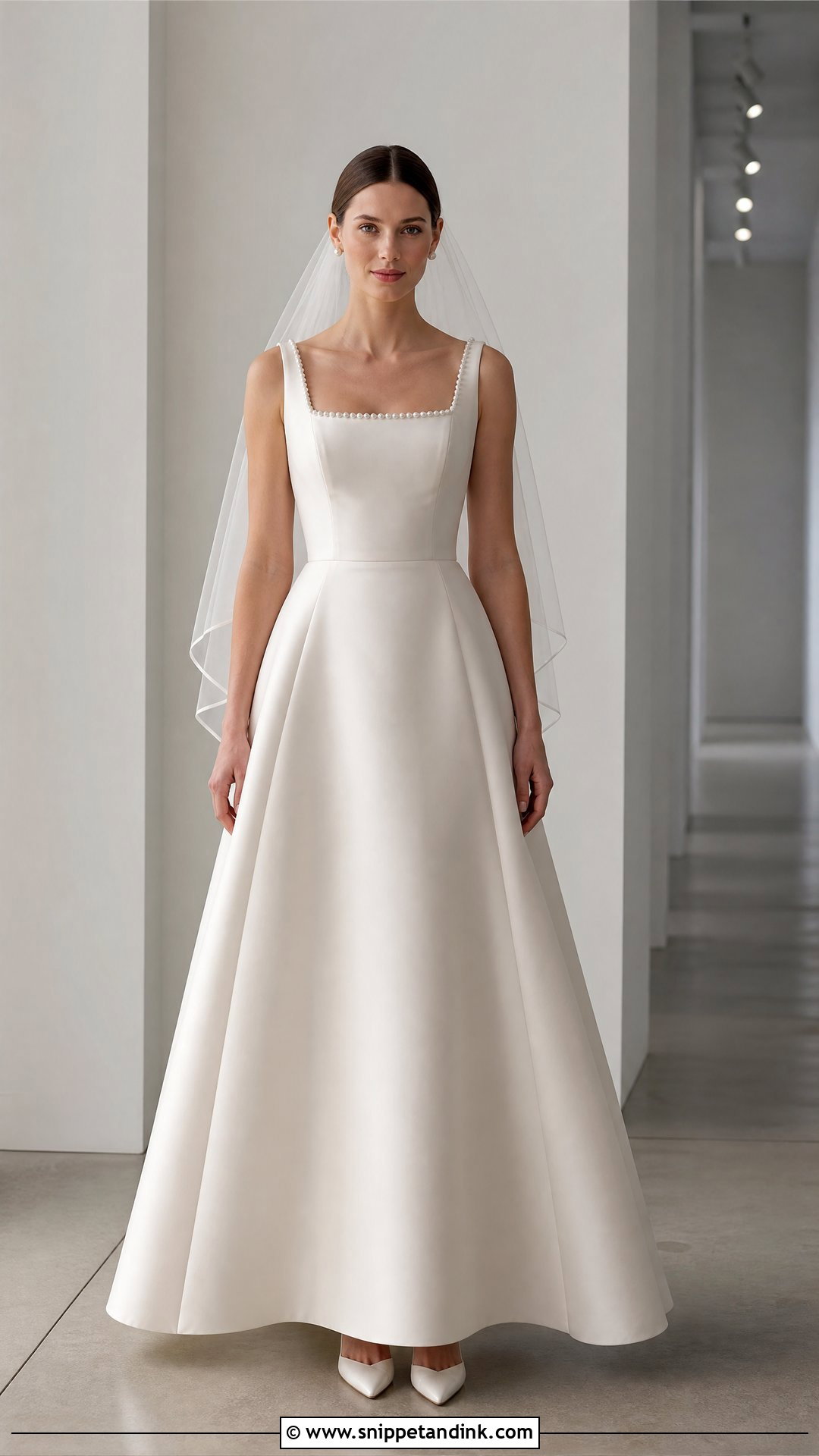
The strong lines of a square neckline are a good foil for round pearls; the geometry makes each bead look more defined. Wide straps, a structured bodice and an A-line or column skirt keep it balanced. Pearls along the neckline act as a frame, and a row of pearl buttons carries the detail to the back. Low pointed heels, compact pearl earrings and a shoulder-length veil suit it, with a center-parted bun or glossy waves tucked behind the ears. Strap length matters more than people think. A strap half an inch too long drops the whole neckline and loosens the support.
13. Pearl Halter Bridal Dress
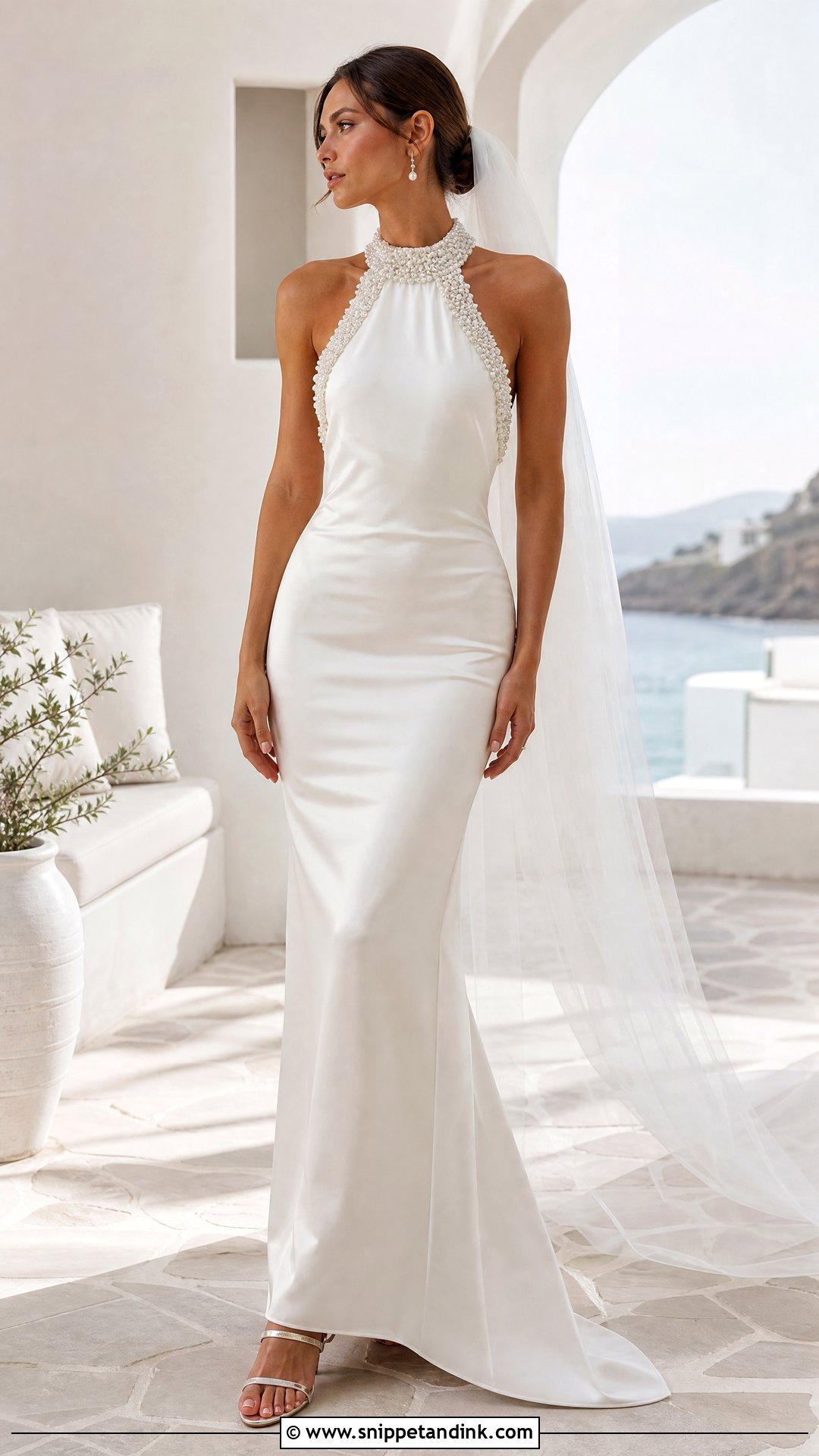
A pearl halter bridal dress draws the eye up in a long vertical line and shows off the shoulders. Satin, crepe and soft chiffon all work, with pearls gathered around the neck and upper bodice and a column skirt below. An open back adds drama without more decoration. Metallic ivory sandals, pearl drops and a veil set below a high or mid bun are enough; the beaded collar already does a necklace’s job. Weight around the neck is the problem I see most with halters. Ask for a soft backing behind dense beading at the collar so it doesn’t rub through a long day.
14. Pearl Backless Bridal Dress
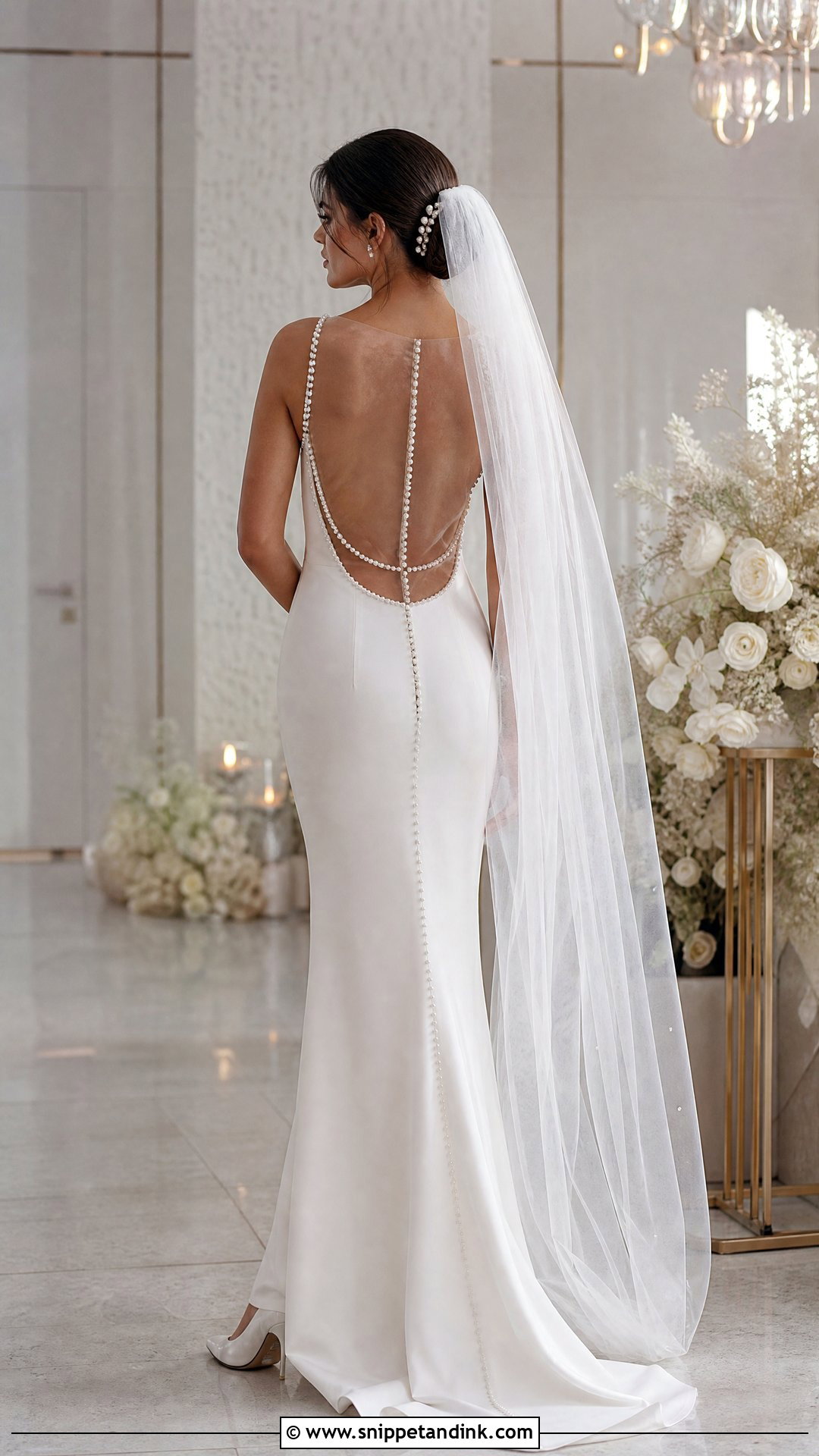
Backless gowns rely on what frames the opening: pearl-trimmed straps, illusion mesh or a single vertical line of pearls running into the skirt. A fitted crepe or satin silhouette lets that back stay the focus. Pearl hairpins, simple studs, pointed heels and a veil you can take off after the ceremony suit it, and an updo keeps the back clear in photos. Sort out underwear before you buy, not after. A normal bra rarely works with a low back, so I ask whether cups can be sewn in. Then run a finger along every pearl edge that touches skin; rough finishing rubs at the sides and lower back.



15. Pearl Basque Waist Bridal Dress
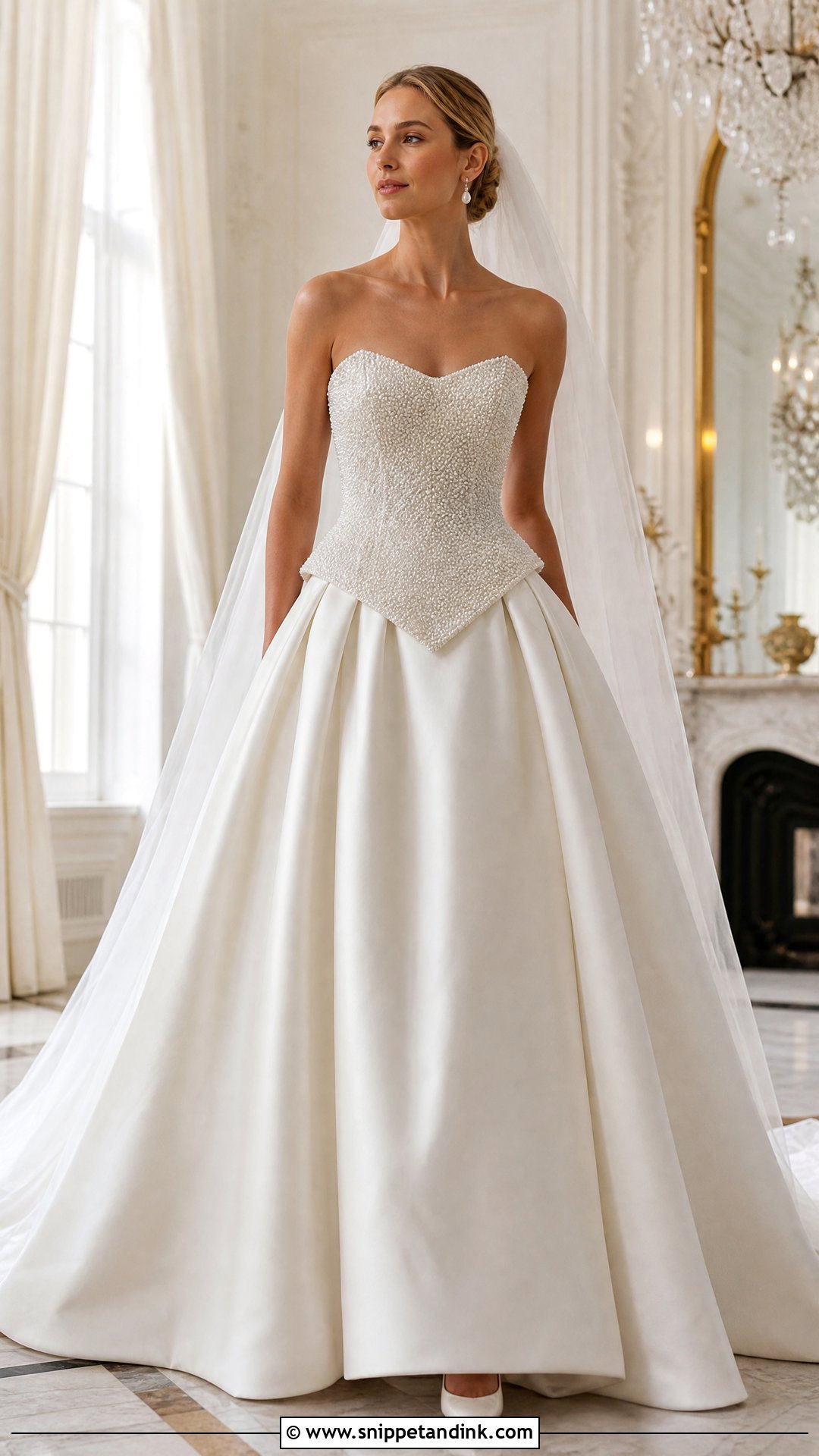
The basque waist dips into a V below the natural waistline, which visually lengthens the torso and flows into a full tulle or satin skirt. Pearls set along the boning and the waist seam show off that construction instead of hiding it. A curved strapless neckline or supportive off-shoulder straps suit the shape, with satin pumps, pearl earrings, a long plain veil and a structured bun or polished waves. The point of the V is the fussiest part to fit. If it lands too low, it folds and digs in when you sit. I have the seamstress check torso length first and only then touch the skirt.
16. Pearl Drop Waist Bridal Dress
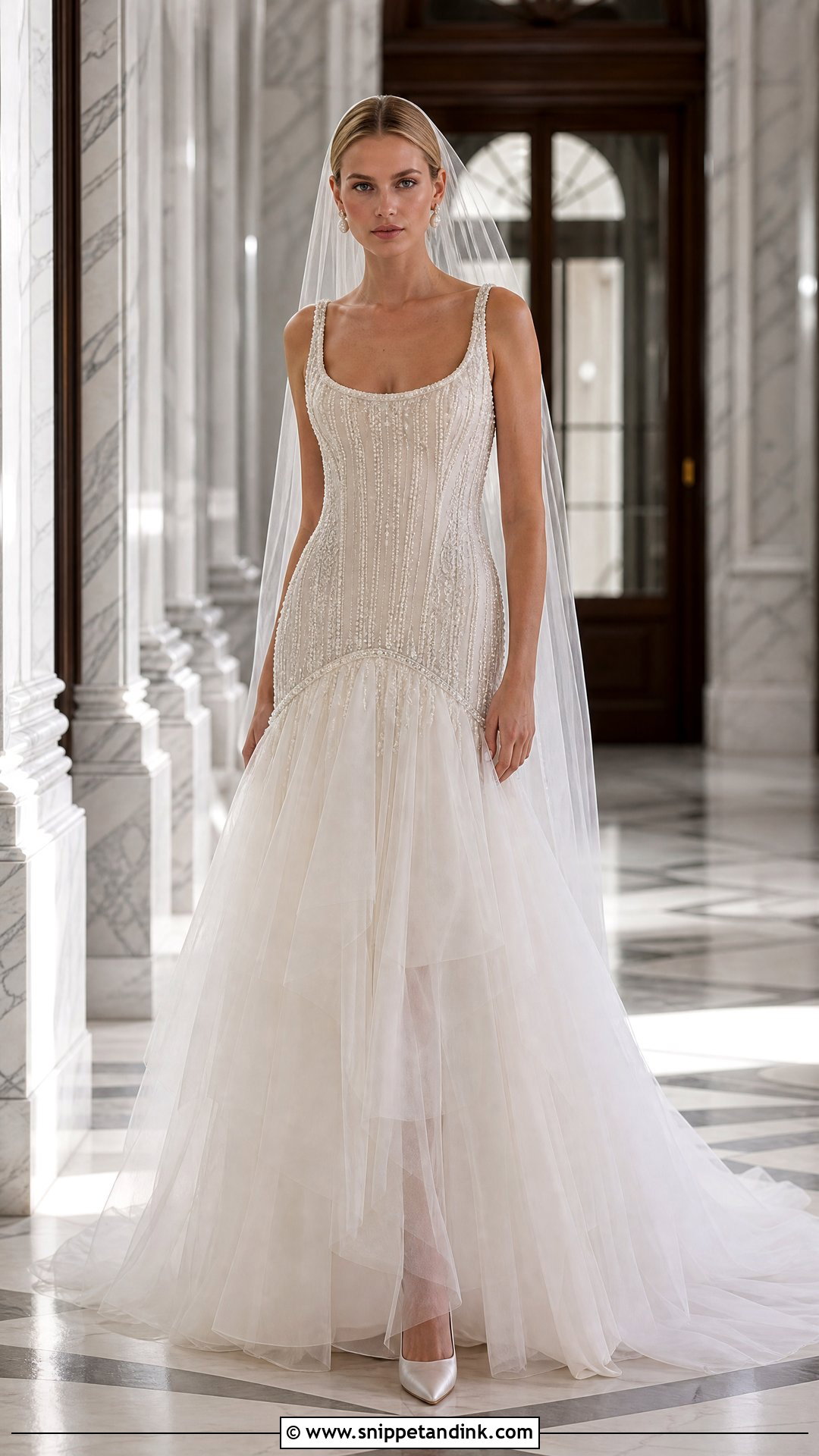
A drop waist stretches the bodice past the natural waist before the skirt opens, so it has a slightly vintage line on a modern dress. Proportion decides whether it flatters you. Vertical rows of pearls on the bodice exaggerate the length, and a scoop or strapless neckline suits the longer torso, with layered tulle below the hips for movement. Pointed pumps, pearl button earrings, a sheer chapel veil and a smooth bun or shoulder-length waves finish it. On shorter frames, the seam can land where it cuts the legs off visually. Try it with your actual wedding shoes on before deciding.
17. Pearl Overskirt Bridal Dress
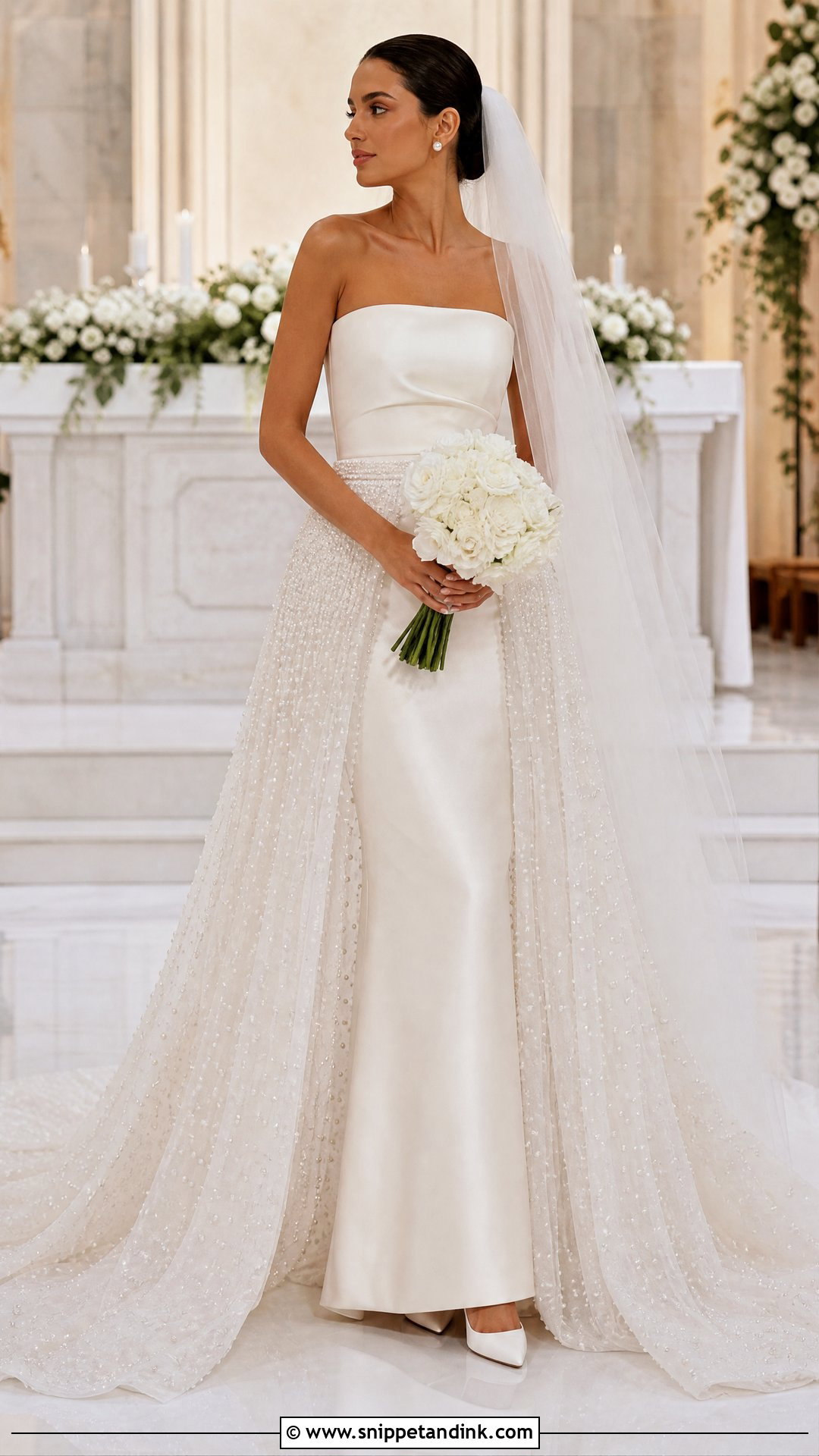
A detachable overskirt is the most practical idea on this list: one dress, two looks. Start with a fitted satin, crepe or pearl-beaded column, then add a full tulle overskirt scattered with pearls for the ceremony, with volume and a train. Take it off for dancing. Pointed ivory heels, pearl studs and a plain cathedral veil work first; afterwards, swap the veil for a pearl bow or comb. Rehearse the change with the person who’ll do it. Hidden hooks catch on beading when someone’s rushing, and I’d rather your helper practice once in the fitting room than find that out mid-reception.
18. Pearl Cape Bridal Dress
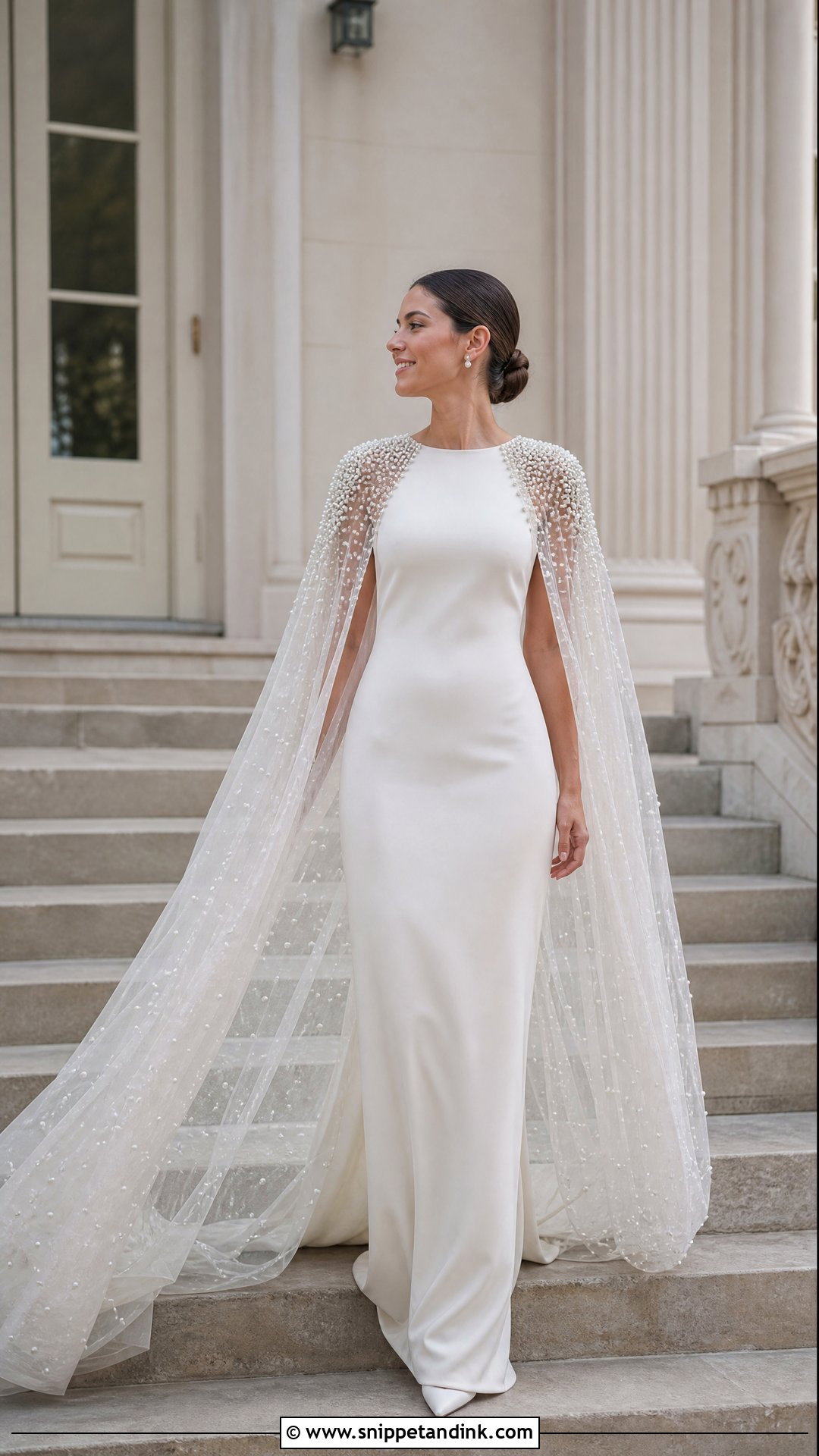
A pearl cape can turn a very plain dress into something regal. Start with a clean column or A-line in satin or crepe, then add a sheer cape scattered with pearls. A short capelet gives light coverage; a floor-length one makes a slow aisle walk feel like an event. Keep the dress underneath minimal, wear closed pumps, studs and a sleek low bun, and leave the veil out, since a long cape already moves behind you. Check how it fastens at the neck. A heavily beaded cape pulls the neckline backwards if it clips onto the dress rather than sitting on your shoulders.
19. Pearl Slip Bridal Dress
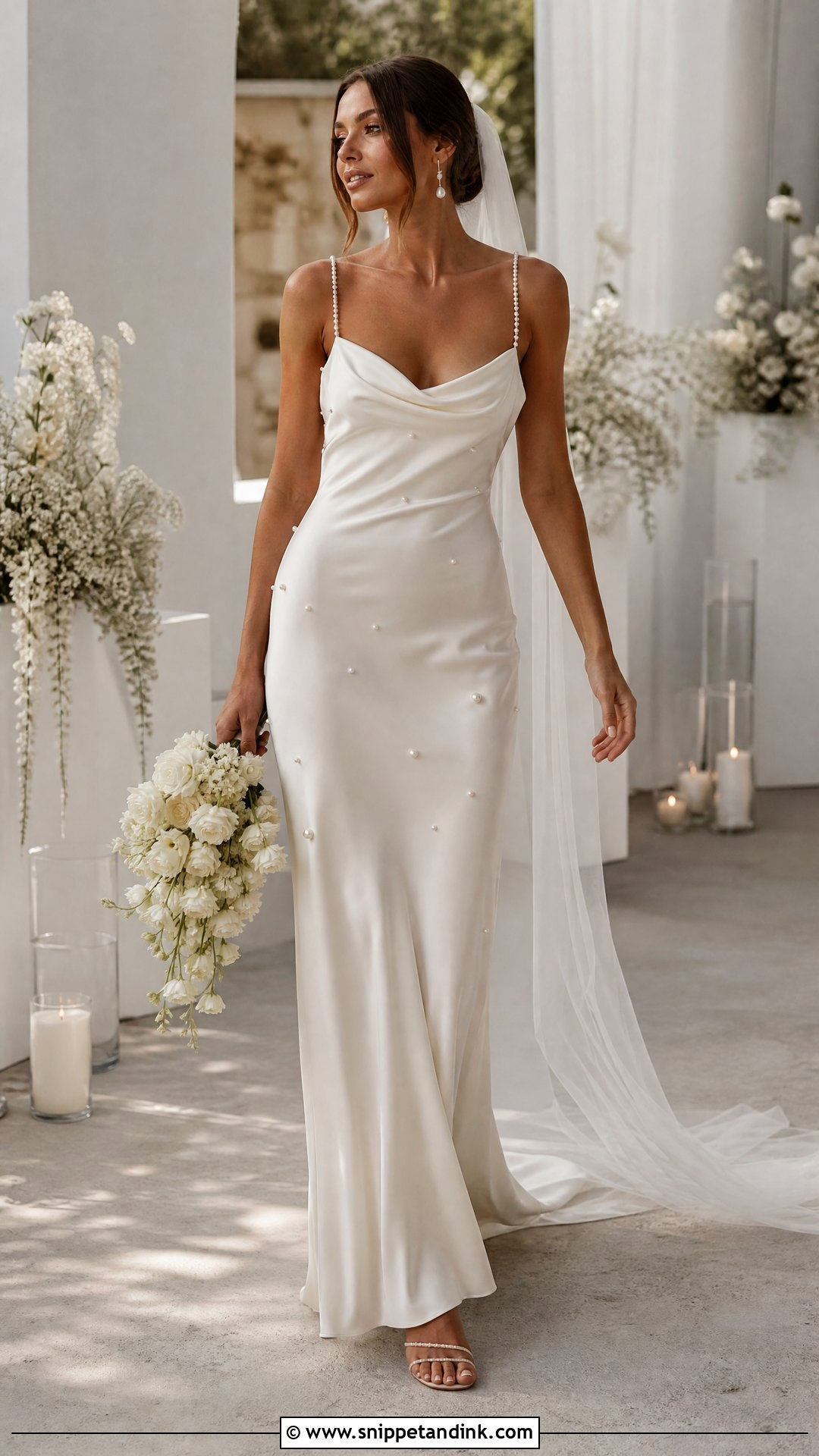
The slip is the lightest way to wear pearls: fluid satin or silk, a draped neckline, narrow straps and sparse pearl embroidery at the bodice or side seams. Too many beads and the fabric stops flowing, which defeats the point. Minimal strappy heels, pearl drops and a sheer floor-length veil carry it through the ceremony, with a loose low bun or glossy waves. Slips hide nothing, so they need careful alterations and a lining that stops sheerness in daylight. If the straps are pearl-covered, check that they’re stitched on securely; thin straps carry the whole dress for hours.



20. Pearl Mini Bridal Dress
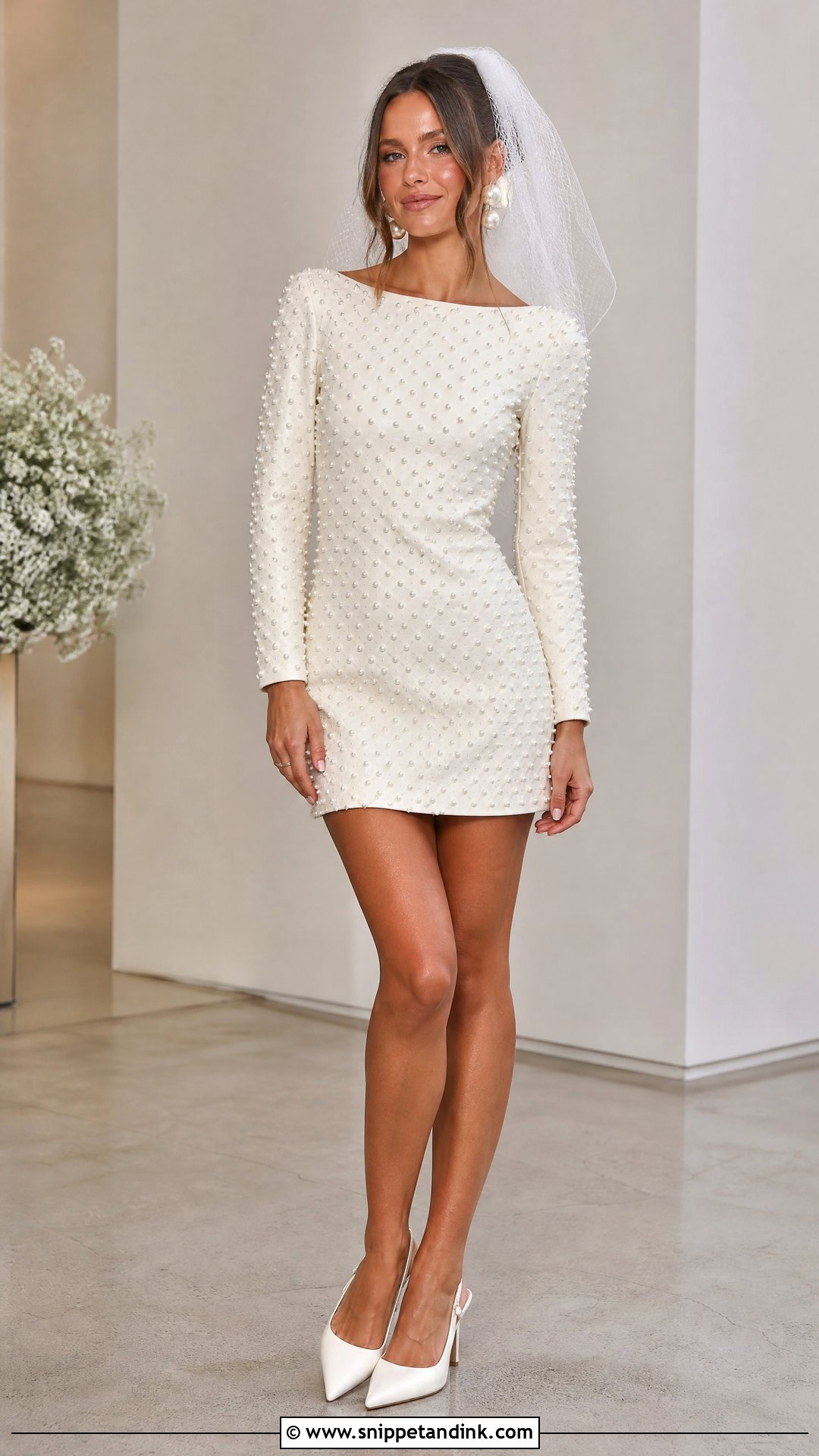
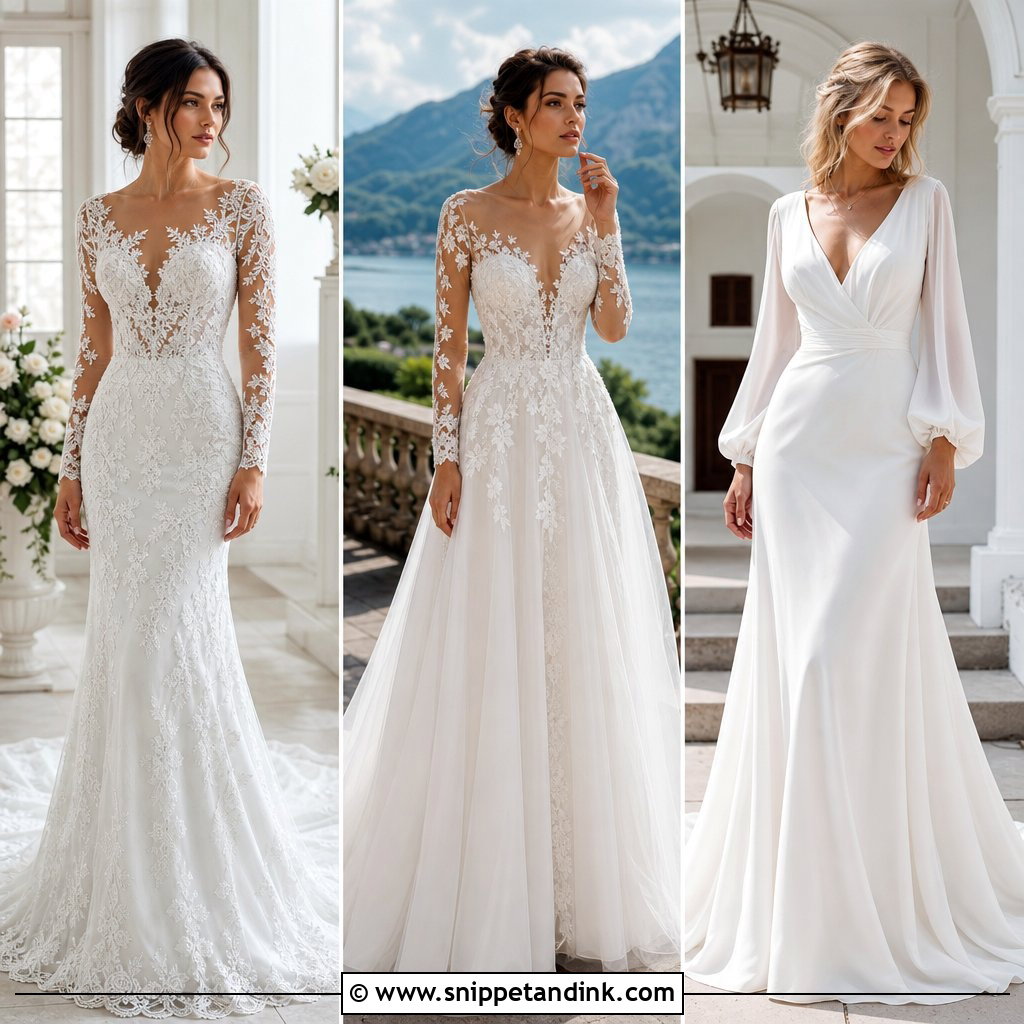
A pearl mini works for a civil ceremony, a reception change, or after-party, and it’s the most fun option here. A structured shift, fitted sheath or flared mini covered in evenly spaced pearls all suit it; a higher neckline balances the short hem, and long sleeves make it read more formal. Pointed pumps, slingbacks or ankle-strap sandals all work, plus statement pearl earrings and a short veil, bow or small hairpiece, and a sleek ponytail. Sit and dance in it before buying. Pearl-covered fabric is heavy, so make sure the shoulder seams, zip and hem are reinforced.
Perfume, Hairspray and Other Things Pearl Coatings Hate
The coating on bridal pearls is thin, and the things that damage it are all in the getting-ready room. Alcohol-based perfume, hairspray, self-tan and some body lotions can dull or lift the finish where they land. My rule on the morning is simple: hair finished and sprayed, perfume on and dry, lotion soaked in, and only then does the dress go on. Spray perfume on your wrists, never on the bodice.
A small repair kit for the day
Give your maid of honour a needle already threaded in ivory, a few of those spare pearls, some clear nail polish for loose knots and a lint-free cloth. A popped bead can be stitched back in a couple of minutes between photos, and nobody will ever see where it was.
After the wedding
Take the gown to a cleaner who handles beaded bridalwear and tell them the pearls are coated. Some cleaning solvents strip that coating, so a specialist will often spot-clean the beaded areas by hand. For storage, keep the dress flat or loosely folded in acid-free tissue inside a breathable cotton bag or box. Avoid plastic garment bags, which trap moisture and can yellow the fabric over time, and don’t hang a heavily beaded bodice by its straps for months, because the weight stretches the seams.
Pearls Look Their Best When the Dress Can Carry Them
Pearls can be a thin line of trim at the neck, a scatter over tulle, structure along a corset or beading from shoulder to hem, and each of those needs a different amount of support from the dress. Decide on the silhouette and fabric that suit your venue first, then decide how much pearl the gown can carry comfortably. Keep shoes, veil and jewelry quiet so the beading has room. Above all, inspect the stitching, move in every fitting, and have a seamstress you trust reinforce anything that feels loose. Get those things right and any of these pearl looks will hold up from the aisle to the last dance.
You'll Like These Ideas:









Leave a Reply