
A lace ball gown asks more of you than most silhouettes. The bodice has to hold you without being hitched up all night, the skirt has real weight, and the lace itself snags, sheds beads and changes colour under different light. That’s why I start every appointment with structure rather than decoration. The fitted bodice and full skirt give the classic ceremony entrance, and the type of lace decides whether it reads delicate or architectural. Necklines, sleeves, waistlines and trains change the whole picture, as do the veil and shoes you put with them. The twenty gowns below are grouped by exactly those details, with notes on who each one suits and what to check before you sign the order form.
Can You Manage Stairs, Cars and Bathrooms in a Full Lace Skirt?
Brides fall in love with a ball gown standing on a podium under shop lights. The questions that matter come later, on the day, when you have to get into a car and climb the church steps. I ask every bride to test those things at the appointment, not after the order is placed.
Ask what is creating the volume. Layers of tulle sewn into the gown are lighter and more forgiving than a separate hoop petticoat, which gives a wider, fixed shape but swings when you walk and makes sitting awkward. Lift the skirt and feel the weight. A gown heavy with beaded or guipure lace can tire your shoulders and waist over a long day, and the right corset spreads that load.
Then do a short rehearsal in the fitting room. Walk forward and back, lift the front hem with one hand as you would on stairs, sit on the edge of a chair, and imagine stepping into the back seat of a car. If any of those feel impossible, the shape needs adjusting or the dress is wrong for your venue. Practise the bathroom routine too: most brides need one helper to gather the skirt from behind, and it’s far easier to work that out before the wedding.
1. Long Sleeve Lace Ball Gown Wedding Dress
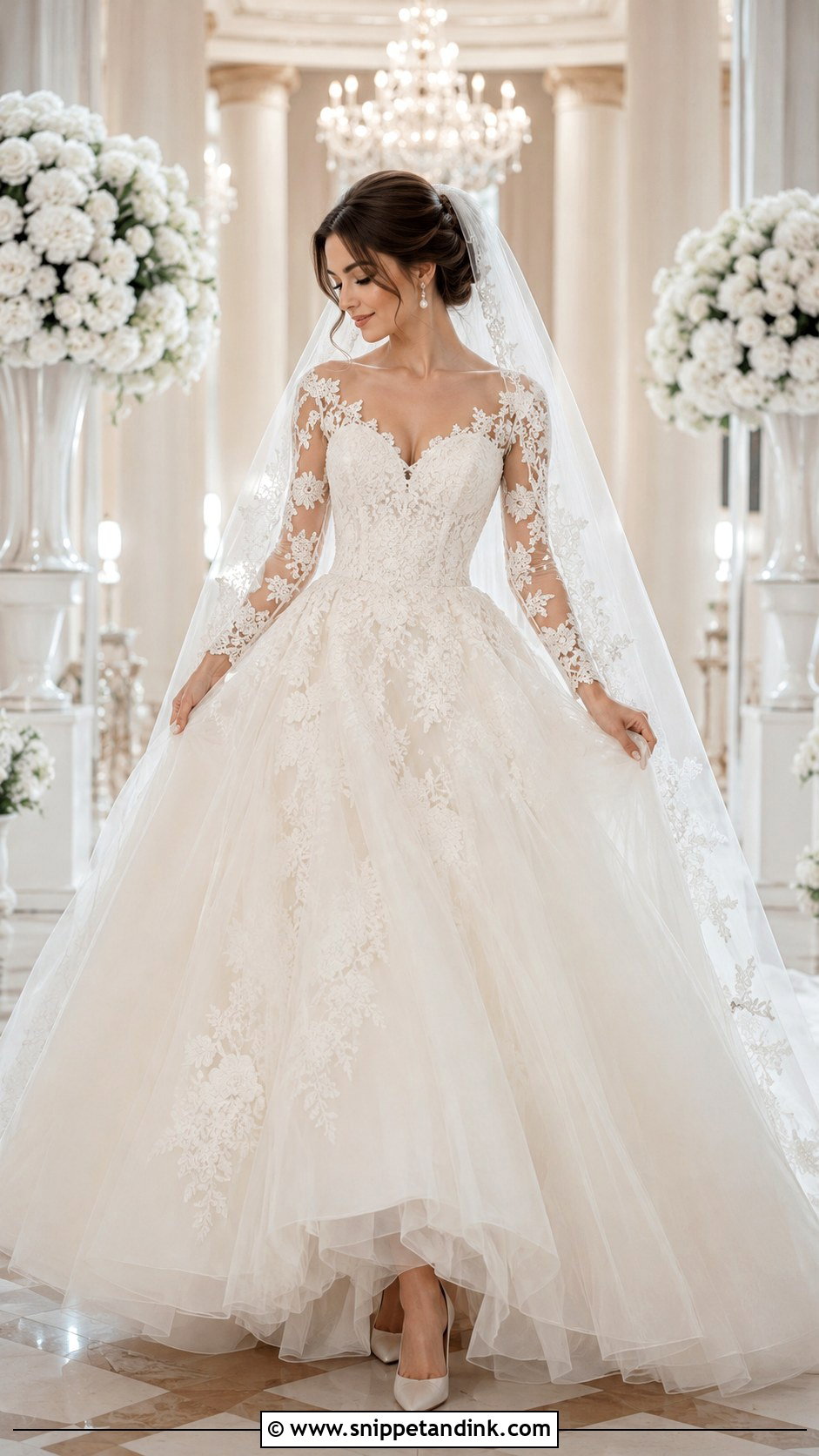
Sleeves are where lace earns its keep. With fitted illusion sleeves, the appliqués should run on from the bodice in one continuous pattern, so look closely at the shoulder seam. If the motifs stop abruptly there, the sleeves were added as an afterthought. A sweetheart lining under the sheer lace keeps the neckline defined, and a structured natural waist carries the tulle. Raise both arms over your head at the fitting. Tight illusion sleeves can lock your shoulders, and you’ll be hugging people all evening. Pearl drops, a low bun and a lace-trimmed cathedral veil finish it; I’d skip the necklace. For fall, winter or an indoor evening ceremony, it’s hard to beat.
2. Off Shoulder Lace Ball Gown Wedding Dress
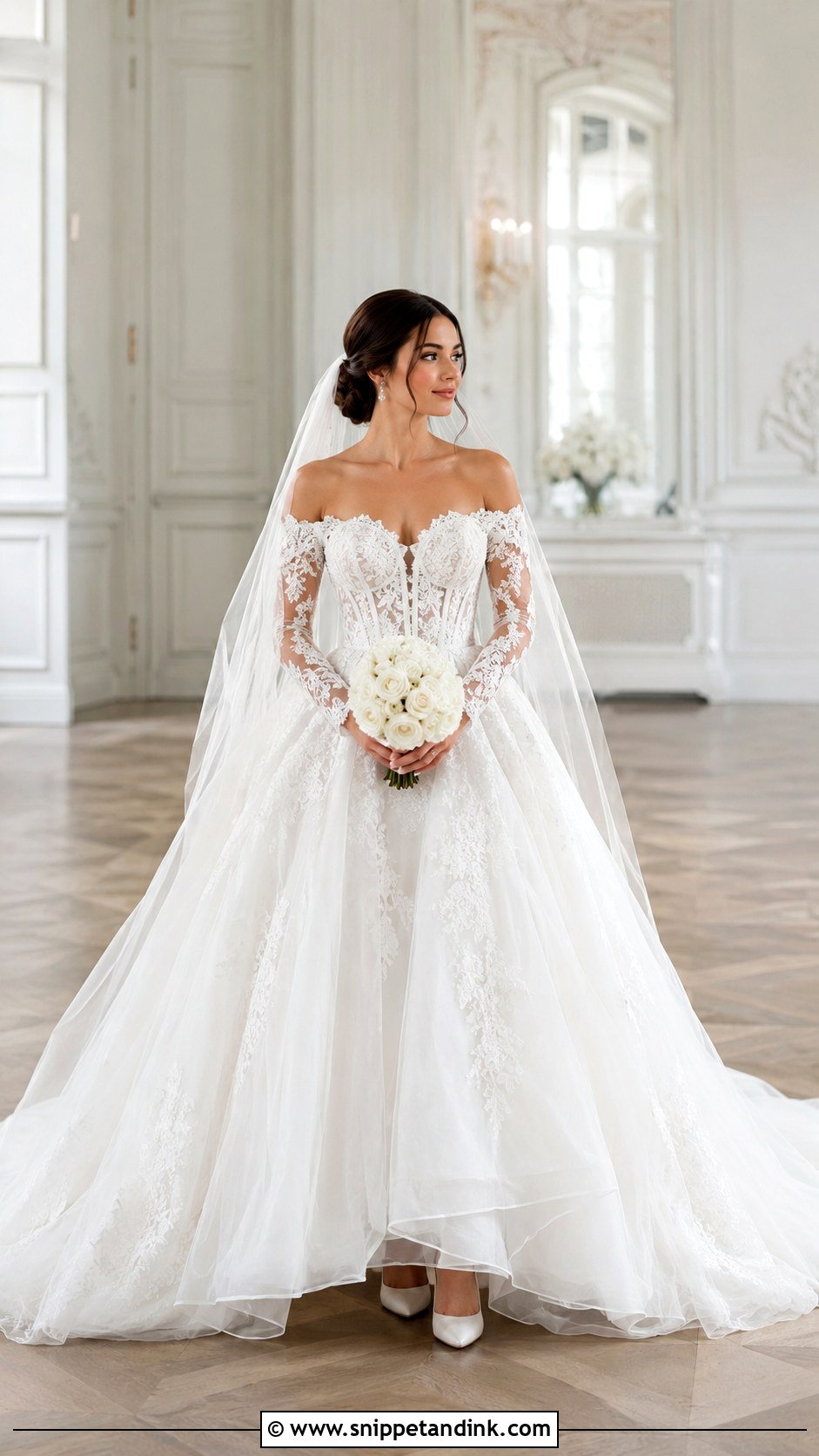
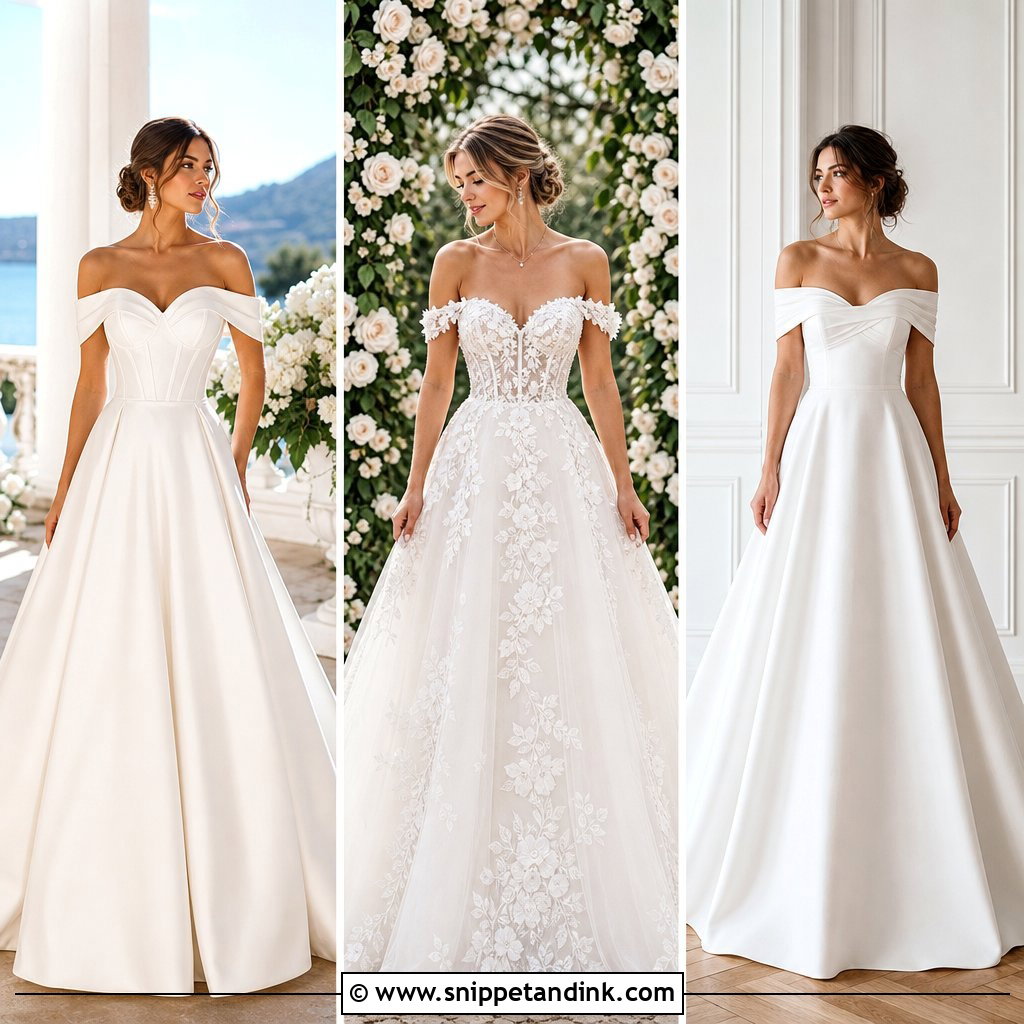
Off-shoulder lace frames the collarbone, but it only works if it stays put. The bodice underneath has to be firmly corseted, because the shoulder band can’t hold anything up by itself; it simply drapes. If you find yourself pulling it back onto your shoulders in the fitting room, it will slip all day. Choose short lace cuffs for summer or fitted long sleeves when it’s cold. A fingertip veil keeps the neckline on show, and a loose chignon with a few face-framing pieces suits the soft line.
3. Strapless Lace Ball Gown Wedding Dress
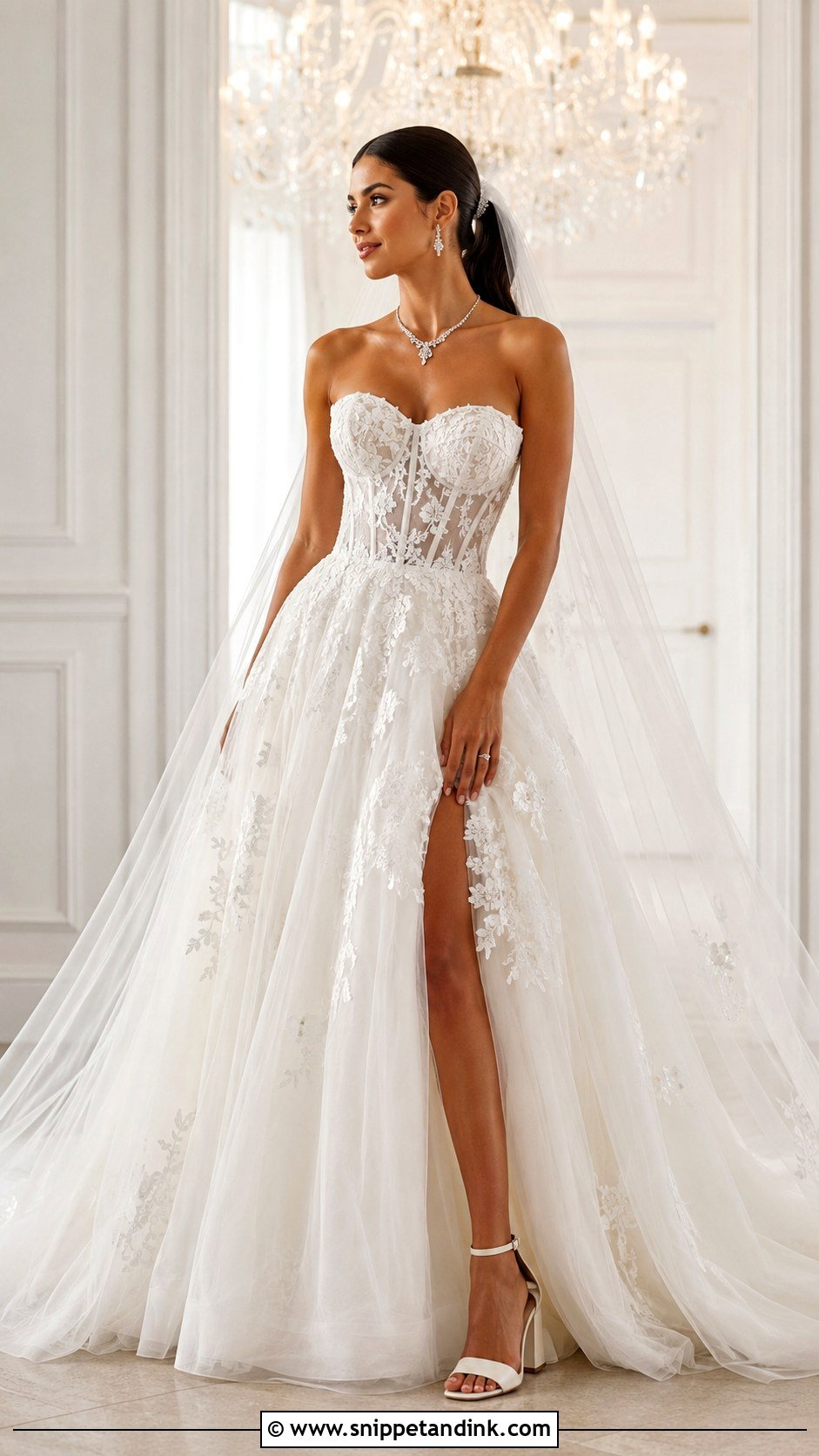
A strapless sweetheart bodice in lace is the classic, and alterations make or break it. The boning and cups should keep the bodice secure when you lean forward to sign the register, without you tugging at it. Do that lean in every fitting. Let the floral lace drift from the bodice onto the skirt in scattered appliqués, and wear a sheer cathedral veil so the neckline stays visible. A crystal tennis necklace and studs suit this one more than most, since there is bare skin to fill. Block heels help under a full skirt. If you want cover for an evening chill, a bolero should match the gown’s lace, not introduce a new one.
4. Basque Waist Lace Ball Gown Wedding Dress
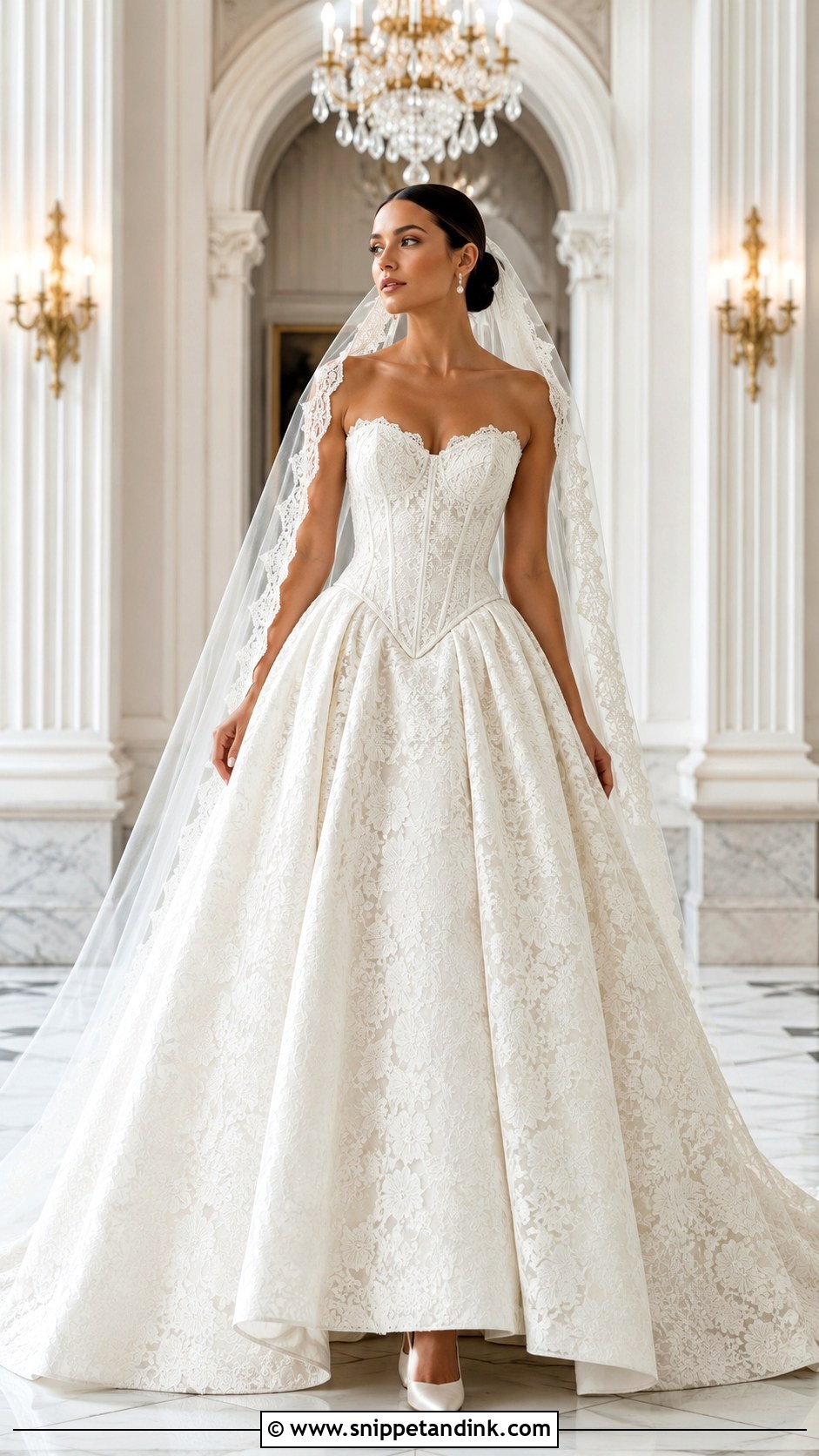
The basque waist dips into a V below the natural waist, which lengthens a short torso and sharpens the whole bodice. It is also the line most likely to dig in when you sit. Sit down at every fitting, ideally on a hard chair, and check that the point of the V doesn’t push into your stomach or crease. A lace corset bodice with a softly rounded neckline and layered tulle keeps it balanced. Keep the veil plain with a narrow lace edge so the shape stays clear, and choose a small structured bouquet; an oversized one hides the V entirely.
5. Drop Waist Lace Ball Gown Wedding Dress
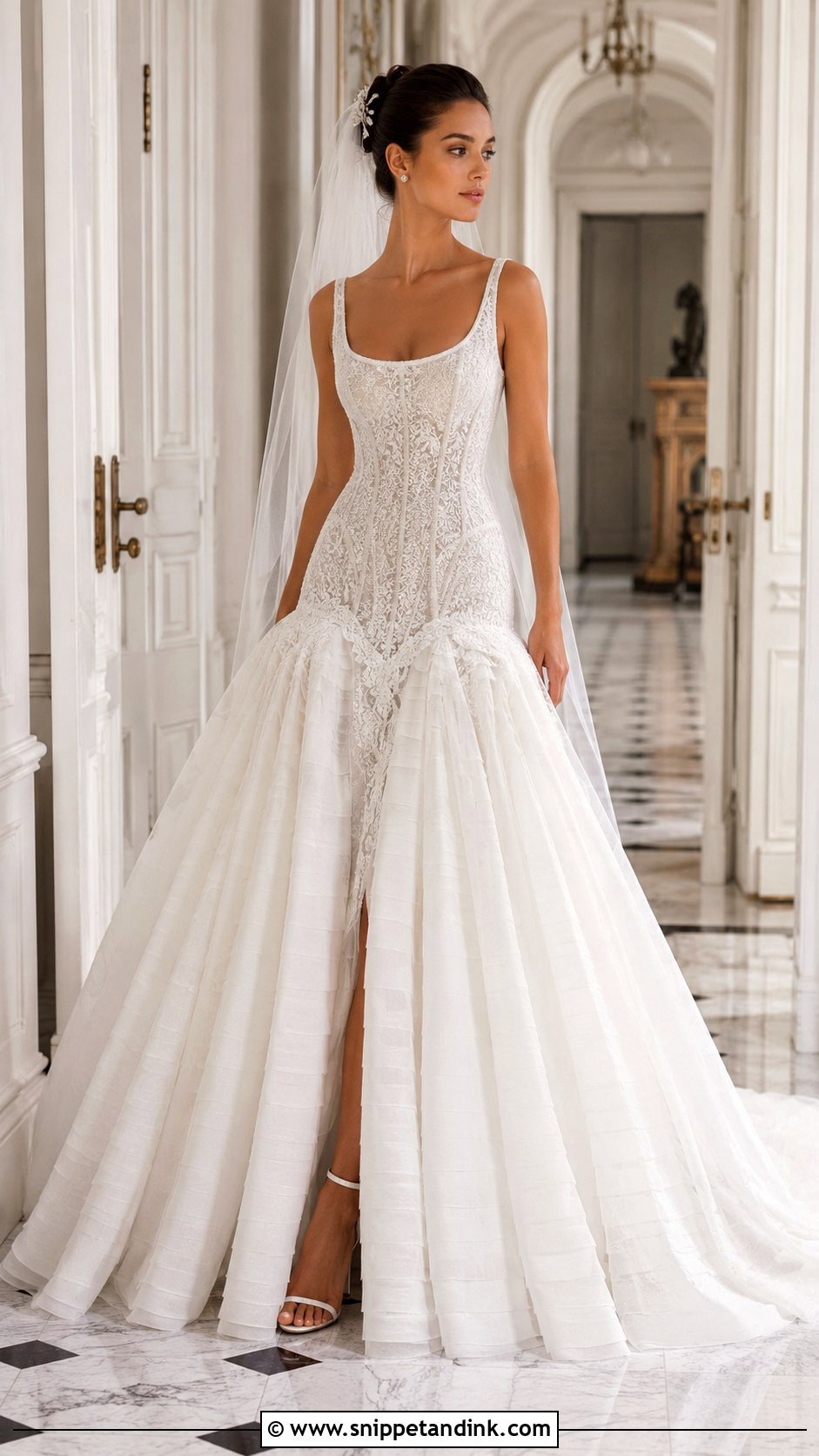
Drop waists carry the fitted part of the dress down past the hip before the skirt opens. On a long-waisted or straight figure that’s flattering; on a short torso it can make the legs look shorter. Corded lace suits this shape because the raised outlines give the long bodice definition, and subtle exposed boning adds to that. Keep the skirt light, in pleated tulle or a fine organza, or the whole gown starts to feel heavy at the hip. A chapel veil, a crystal comb and an ankle-strap heel finish it. Walk the length of the shop in it. The lower seam should let you take a full stride.
6. Illusion Neckline Lace Ball Gown Wedding Dress
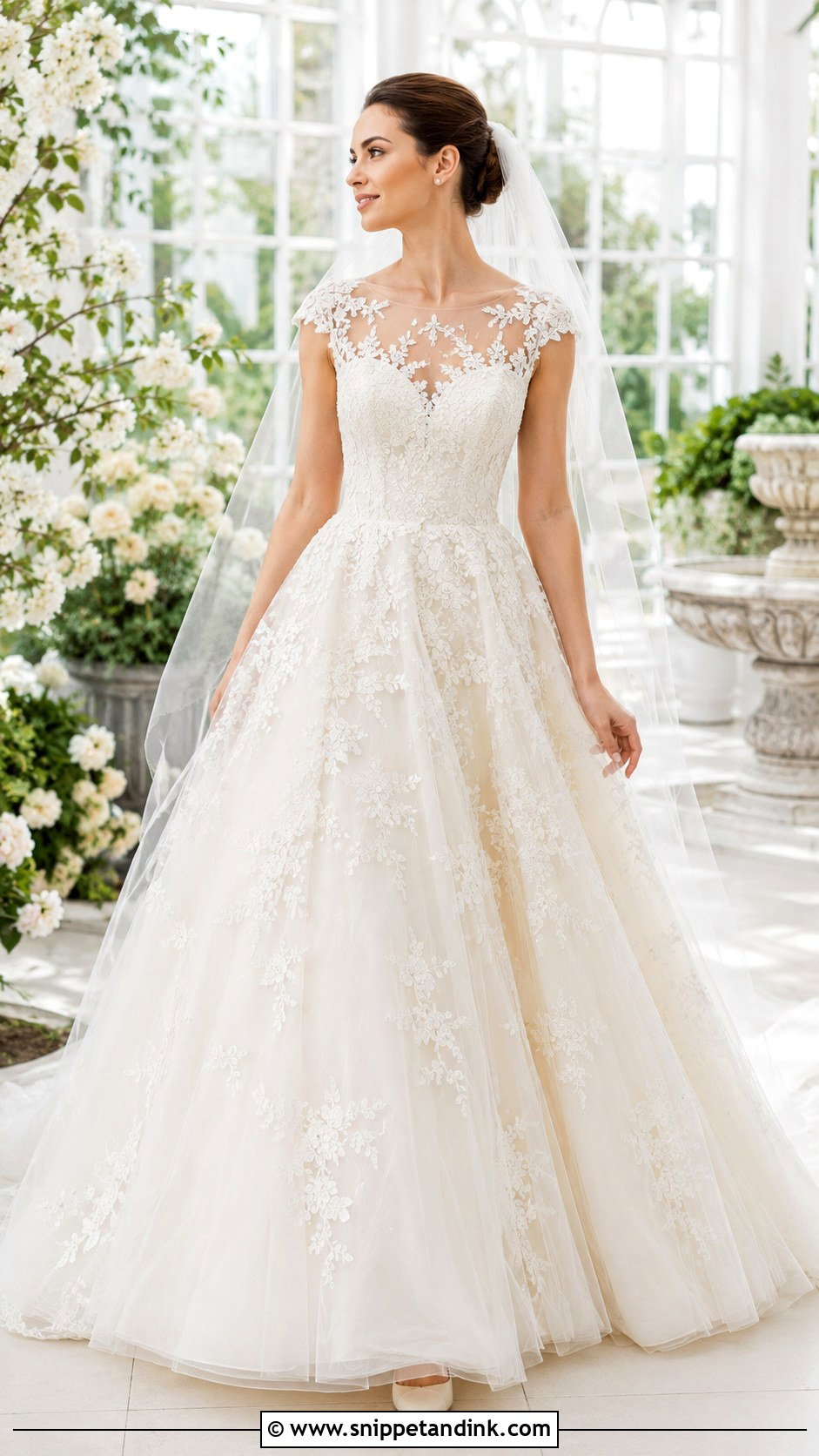
Illusion necklines make lace look as though it’s sitting directly on skin, and the effect depends entirely on the mesh. It has to be matched to your skin tone, and it has to lie flat. Mesh that is a shade too light shows as a pale band in photographs, especially under flash. I hold a few swatches against the collarbone in daylight before the gown is ordered. Lace cap sleeves can lead into the illusion panel. Small studs, a neat chignon, a plain fingertip veil and a green-and-white bouquet are all it needs. A heavy necklace would break the floating effect, so leave it off.
7. Square Neck Lace Ball Gown Wedding Dress
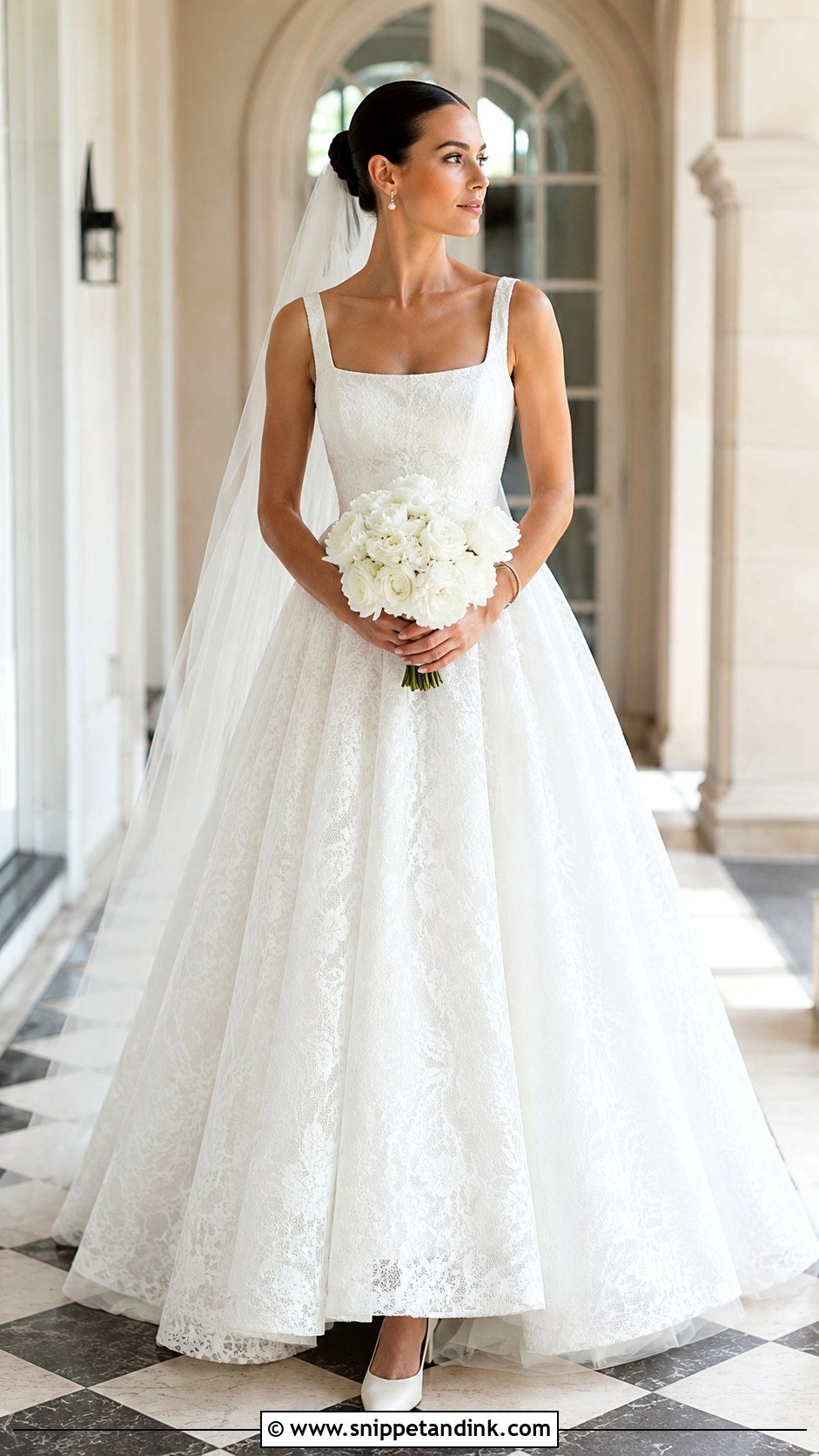
A square neckline brings clean, straight lines to an allover lace gown, and it needs support at the shoulders to hold that shape. Choose sturdy straps or short fitted sleeves. The straight edge also has a habit of gaping on a small bust, so ask your seamstress to check it while you move. A natural waist and gathered skirt give classic proportions, and a low square back mirrors the front. Pearl drops and a slender bracelet are plenty. It feels a little less expected than a sweetheart bodice, and it suits an estate or traditional church setting well.
8. V Neck Lace Ball Gown Wedding Dress
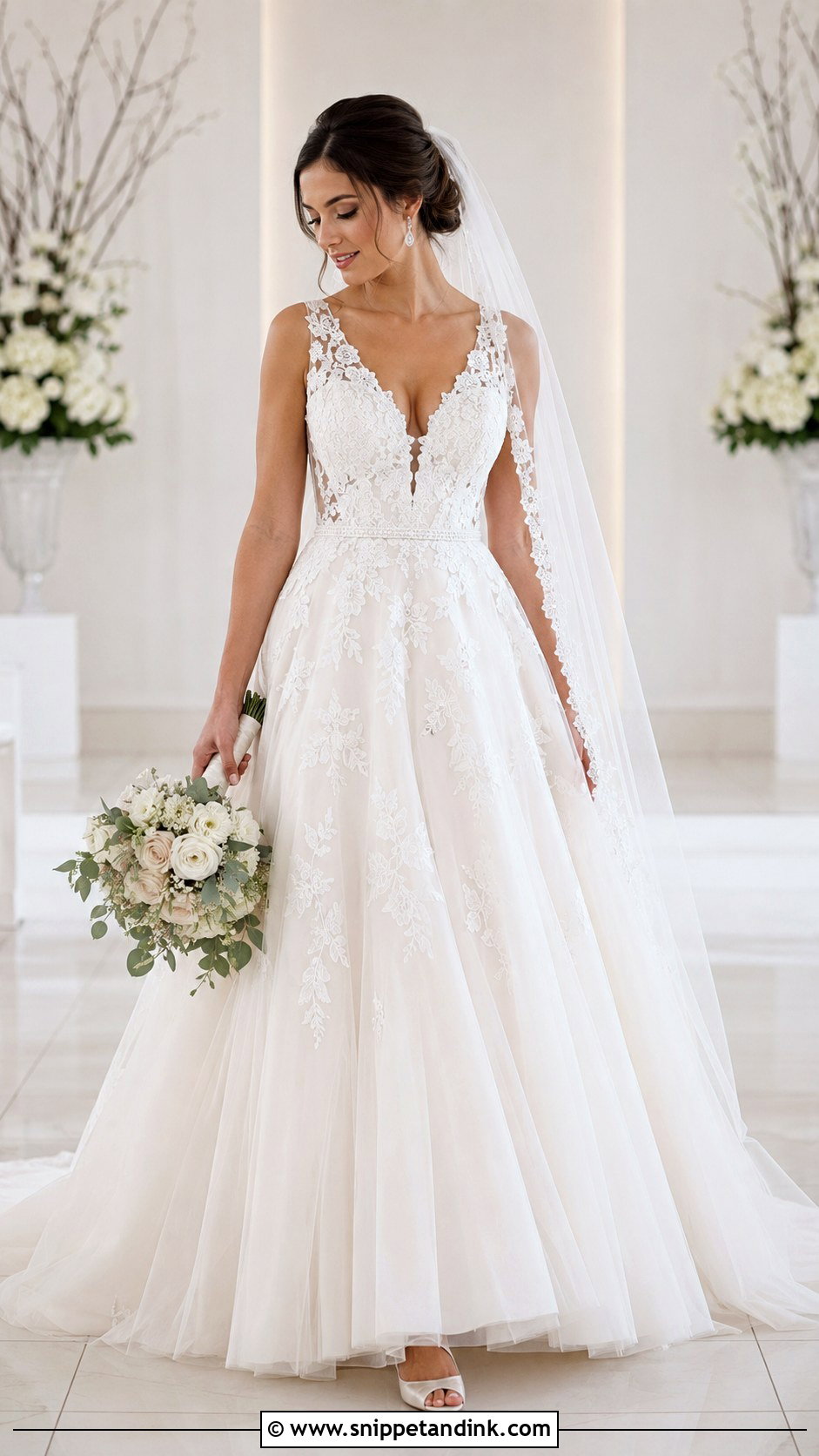
A V neckline opens up the bodice and gives a lengthened look through the torso. My advice is to go moderate, with illusion mesh filling the centre if you want security; a deep V on a full skirt can tip the balance and leaves you adjusting all evening. Wide lace straps steady it, and a defined waistband separates the detailed bodice from the softer skirt below. Teardrop earrings echo the shape of the neckline. If you wear a pendant, it should sit inside the V rather than lying on top of the lace.
9. High Neck Lace Ball Gown Wedding Dress
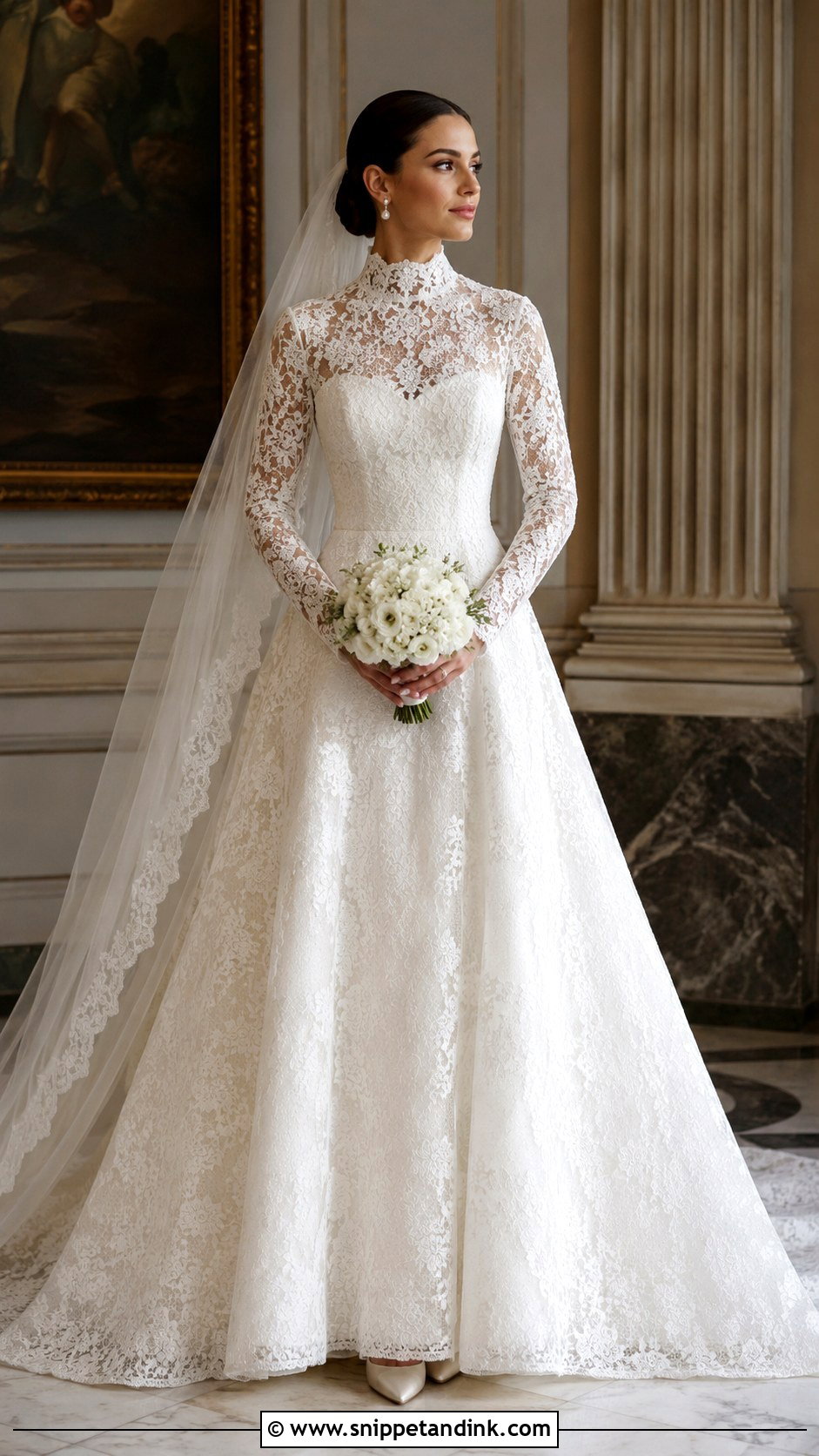
High necks are where lace gets to show off, so this is not the place for a necklace at all. Sheer lace over the collarbone, a lined bodice and fitted sleeves give a covered, formal look, and a row of fabric-covered buttons down the back can continue into the skirt. Those buttons take time; on a fully buttoned back, allow someone several minutes to do them up, or ask for a hidden zip underneath. Breathability is the real concern. A high neck in heavy lace can get warm in a crowded room, so look for a light lace and a natural-fibre lining. Wear a long veil under a clean bun to show off the back.
10. Cap Sleeve Lace Ball Gown Wedding Dress
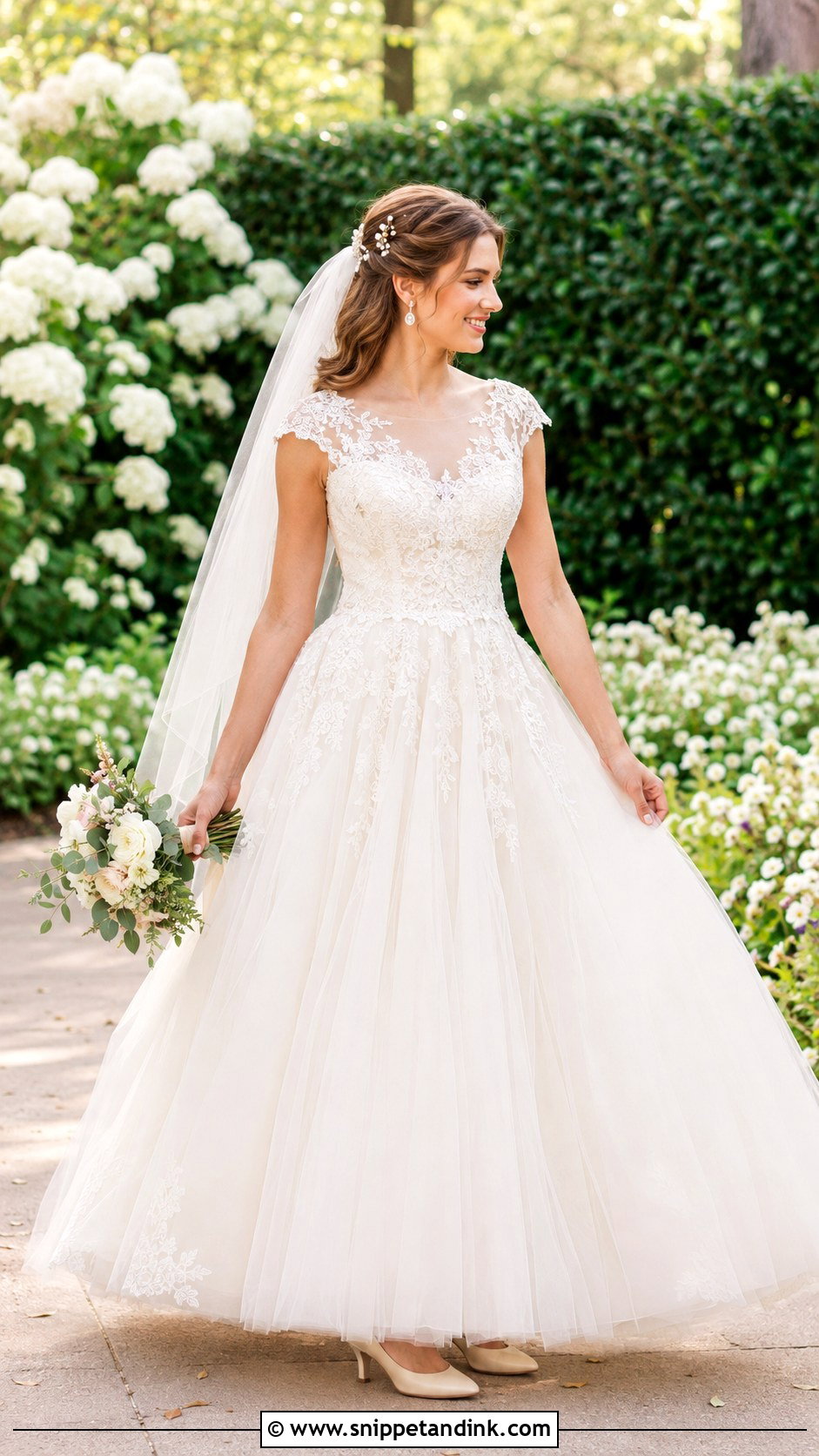
Delicate cap sleeves give just enough cover at the shoulder while keeping the gown open and light. The best versions carry appliqués off the bodice onto an illusion cap so the pattern never breaks. A scoop or shallow V neckline suits them, along with a natural waist and flowing tulle. Check where the cap ends on your arm. If it stops at the widest point of the upper arm, it draws attention there; a fraction shorter or longer usually looks better. Kitten heels, pearl hairpins and a half-up style keep the mood soft, and it moves easily from a garden to an indoor reception.
11. Detachable Sleeve Lace Ball Gown Wedding Dress
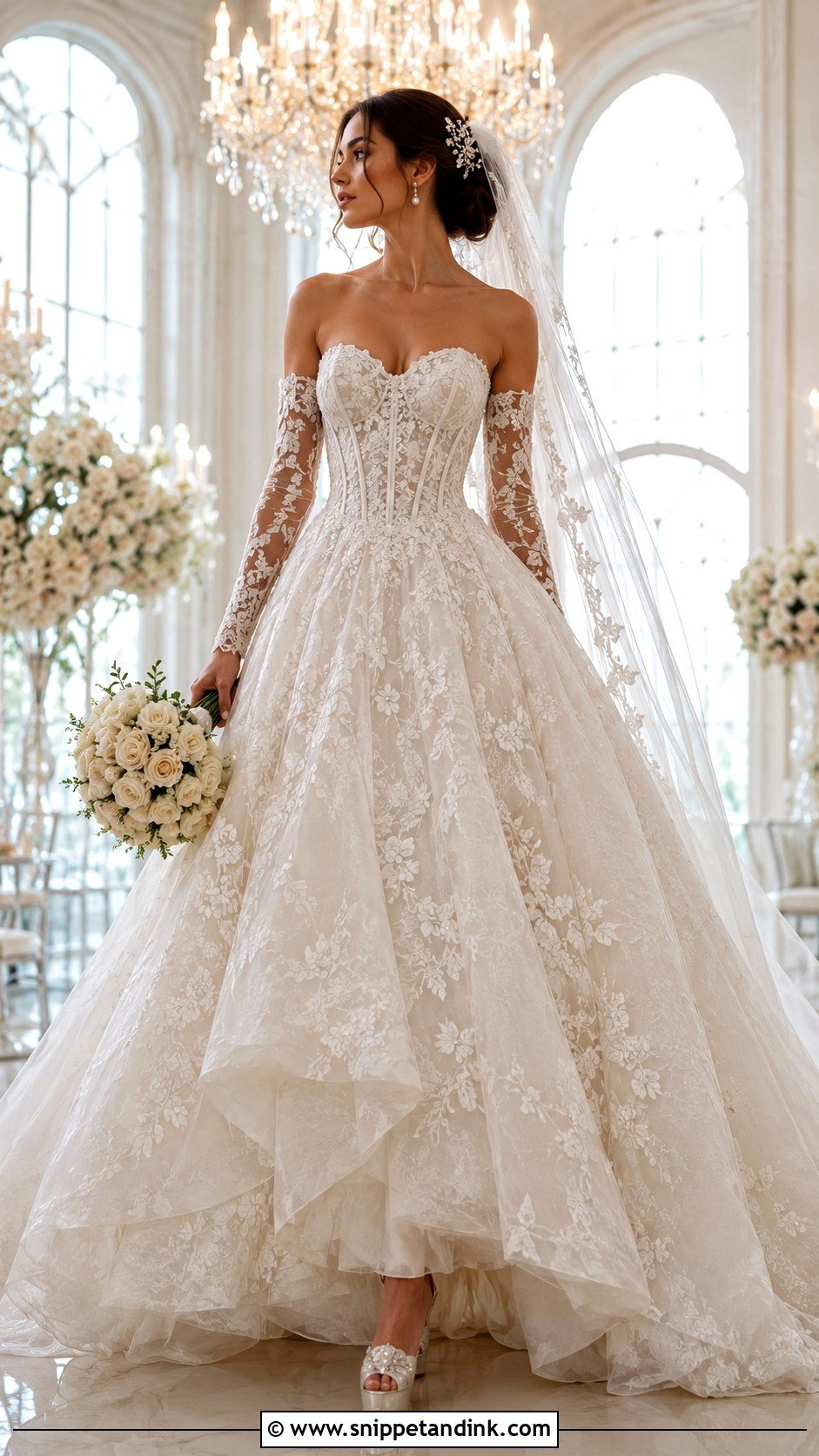
Detachable sleeves give you two dresses in one: covered and formal for the ceremony, then a lighter strapless or narrow-strap bodice for dancing. The practical test is the attachment. Hidden hooks, snaps or small buttons should be secure enough that the sleeves don’t twist when you raise your arms, yet simple for a bridesmaid to remove in a minute or two. Practise the change at your last fitting with whoever will help you. A crystal comb that stays in after the veil comes off ties both looks together, and platform heels with understated pearls work for each half of the day.
12. Chantilly Lace Ball Gown Wedding Dress
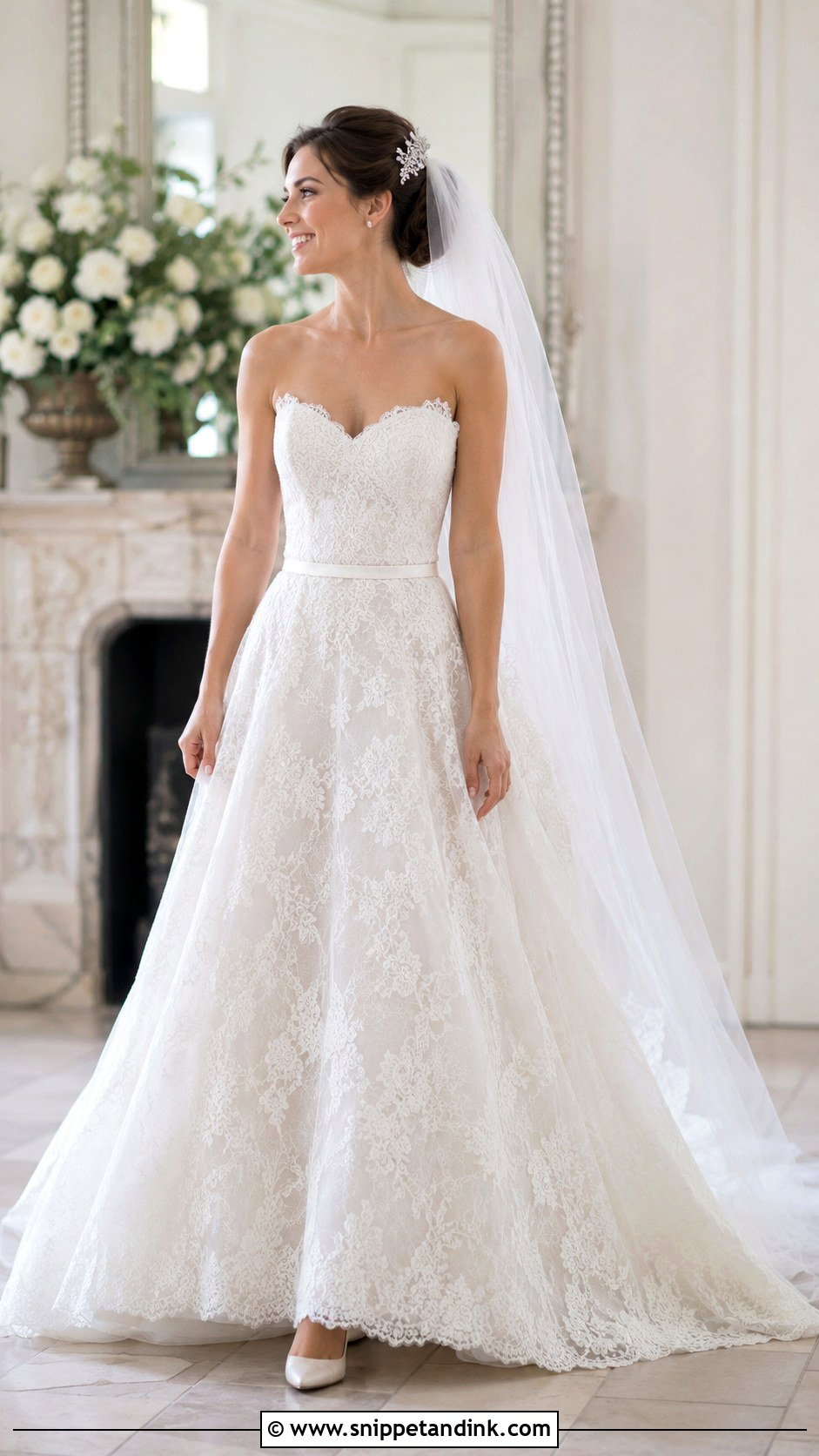
Chantilly is a fine, flat lace with a soft net background and delicately outlined motifs, so it gives a gown a light, airy surface without any beading. That fineness is also its weakness; it catches on prong-set rings and textured bracelets. Choose smooth accessories, and take your engagement ring off while you dress. Here the Chantilly-inspired lace covers a fitted bodice over a sweetheart lining and continues across a light tulle skirt, with a thin satin waistband dividing the two. A plain cathedral veil lets the lace pattern show through in photographs. A loose low bun and a vintage-style comb suit it.
13. Guipure Lace Ball Gown Wedding Dress
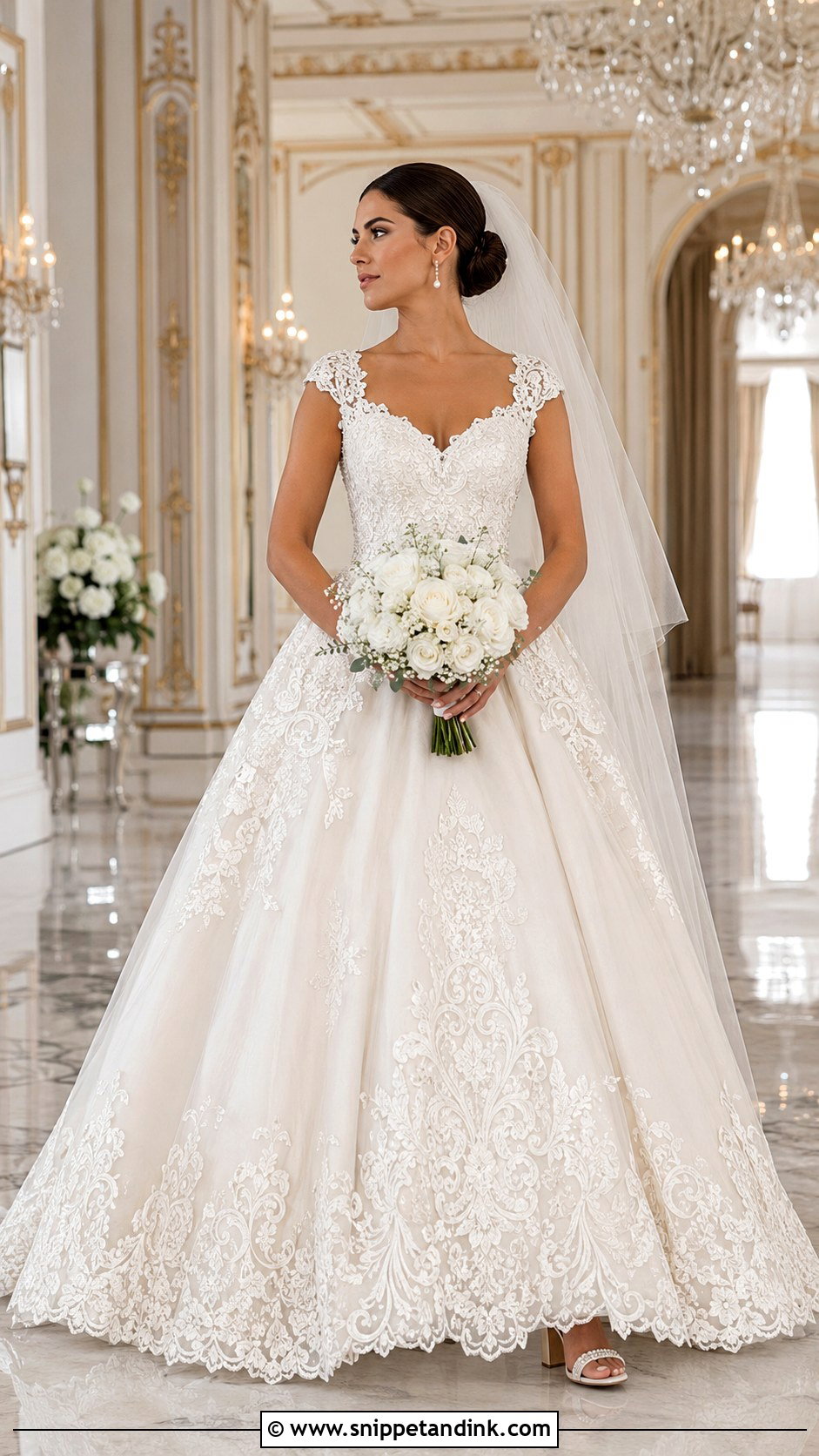
Guipure works almost the opposite way to Chantilly. There is no net background; the motifs are joined by small bars, so the lace looks dense and sculptural. That weight is why I keep it to the bodice, straps and skirt border on a ball gown. Covering the whole skirt makes the gown heavy and stiff to move in. A square or softly curved neckline suits the graphic pattern. Keep the jewellery sleek, the bouquet neat and white, and the heels sturdy. This lace really shows its depth in a large indoor space, in close-ups as much as in full-length shots.
14. Floral Appliqué Lace Ball Gown Wedding Dress
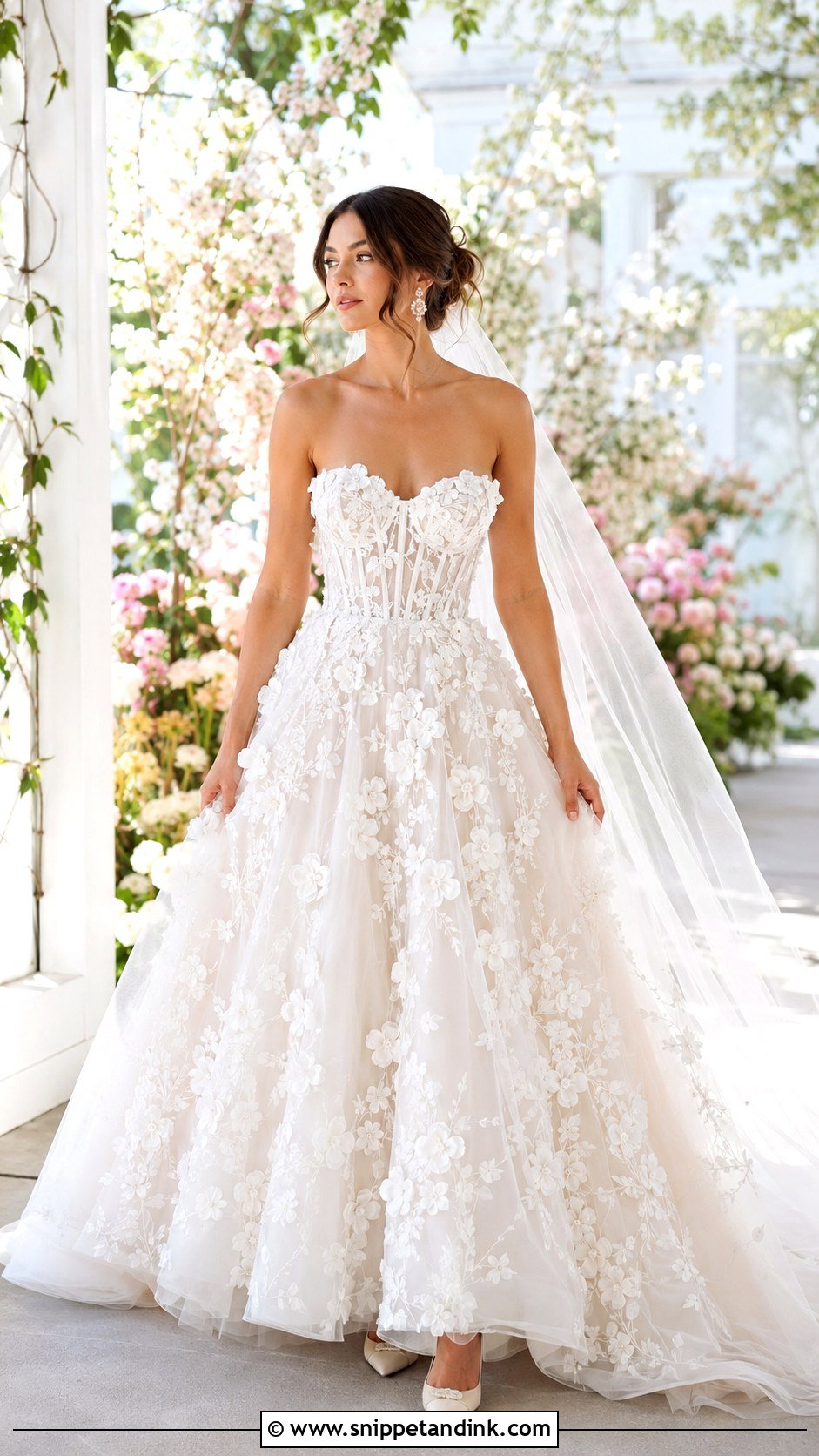
Three-dimensional appliqués are flowers that stand off the surface, and placement decides whether a gown looks rich or cluttered. I like them clustered at the neckline and waist and then thinning out across the tulle, so the eye travels down the dress. They’re also fragile. Petals get crushed in a car or under a seatbelt, so plan how you’ll sit on the way to the ceremony. A plain cathedral veil, floral crystal earrings and an airy low updo keep the focus on the dress. If the appliqués carry beads or sequins, go plainer still with everything else.
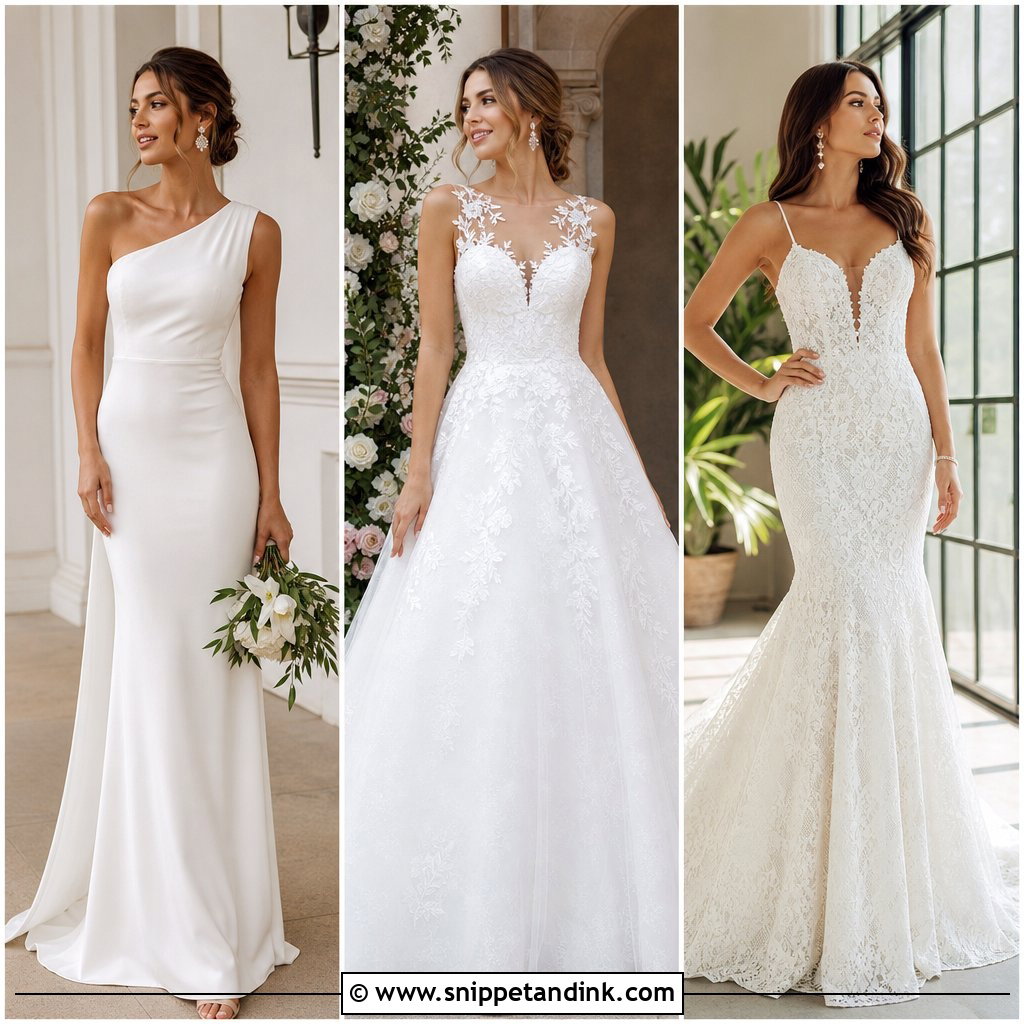
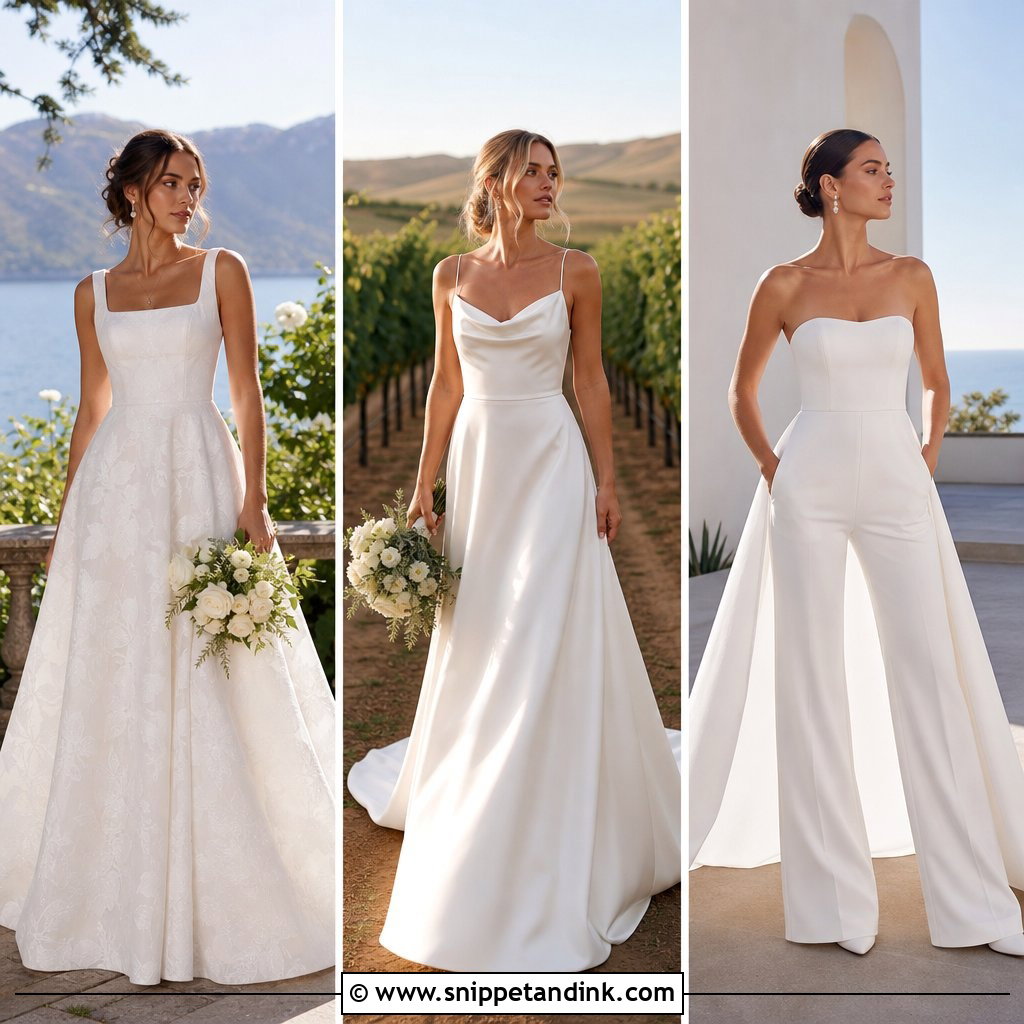

15. Beaded Lace Ball Gown Wedding Dress
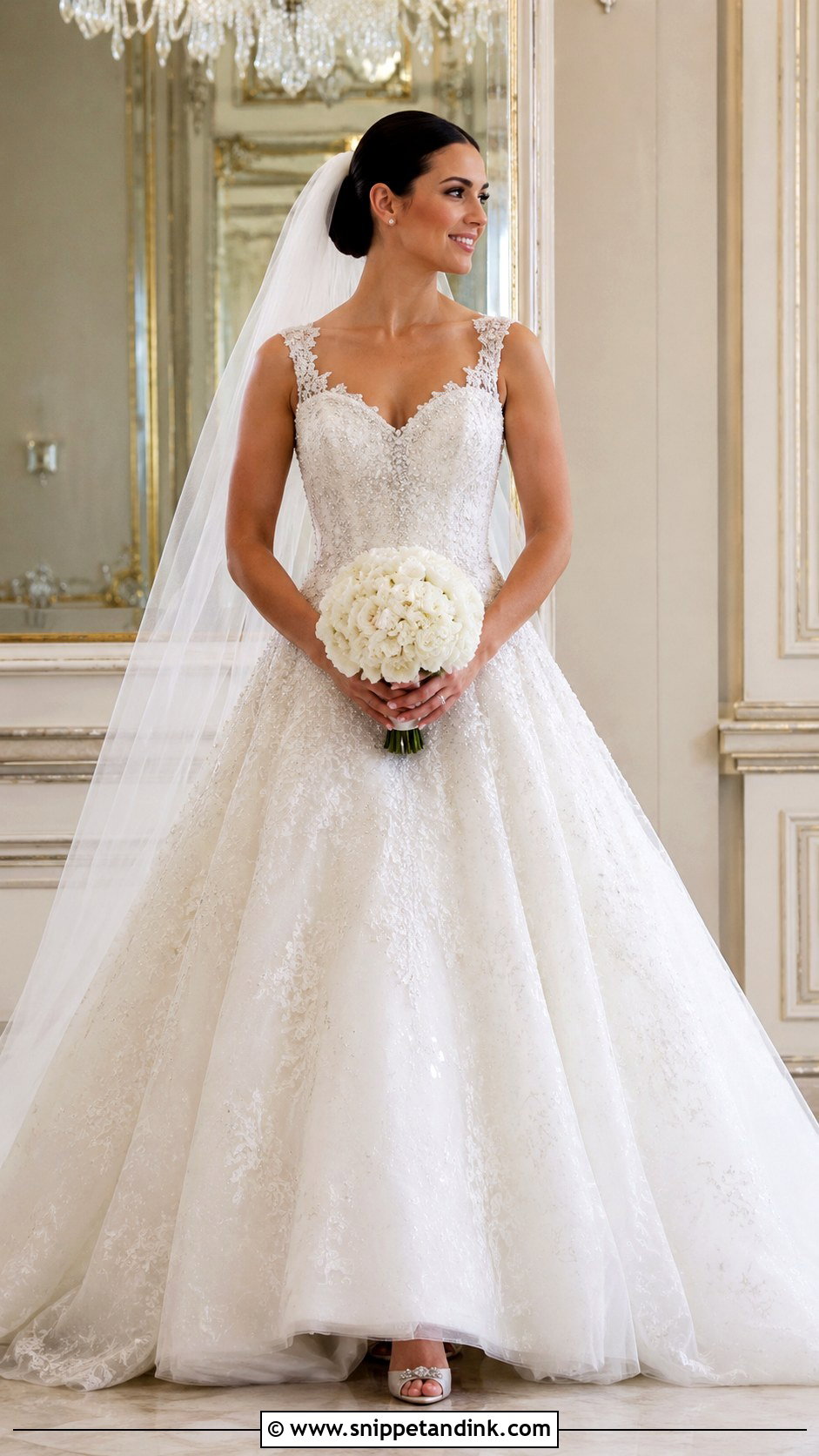
Beaded lace needs light to work, which is why it comes alive under candlelight and ballroom chandeliers and can look flat on an overcast afternoon. I look for crystals concentrated on the bodice and fading out down the skirt; beading all the way down adds real weight and pulls on the waist seam. A properly fitted corset and wider straps help carry it. Before you choose, run your inner arm along the side of the bodice. Beads that scratch there will rub raw by the end of the night. Silver-toned heels, crystal studs and a compact white bouquet are all it needs.
16. Vintage Lace Ball Gown Wedding Dress
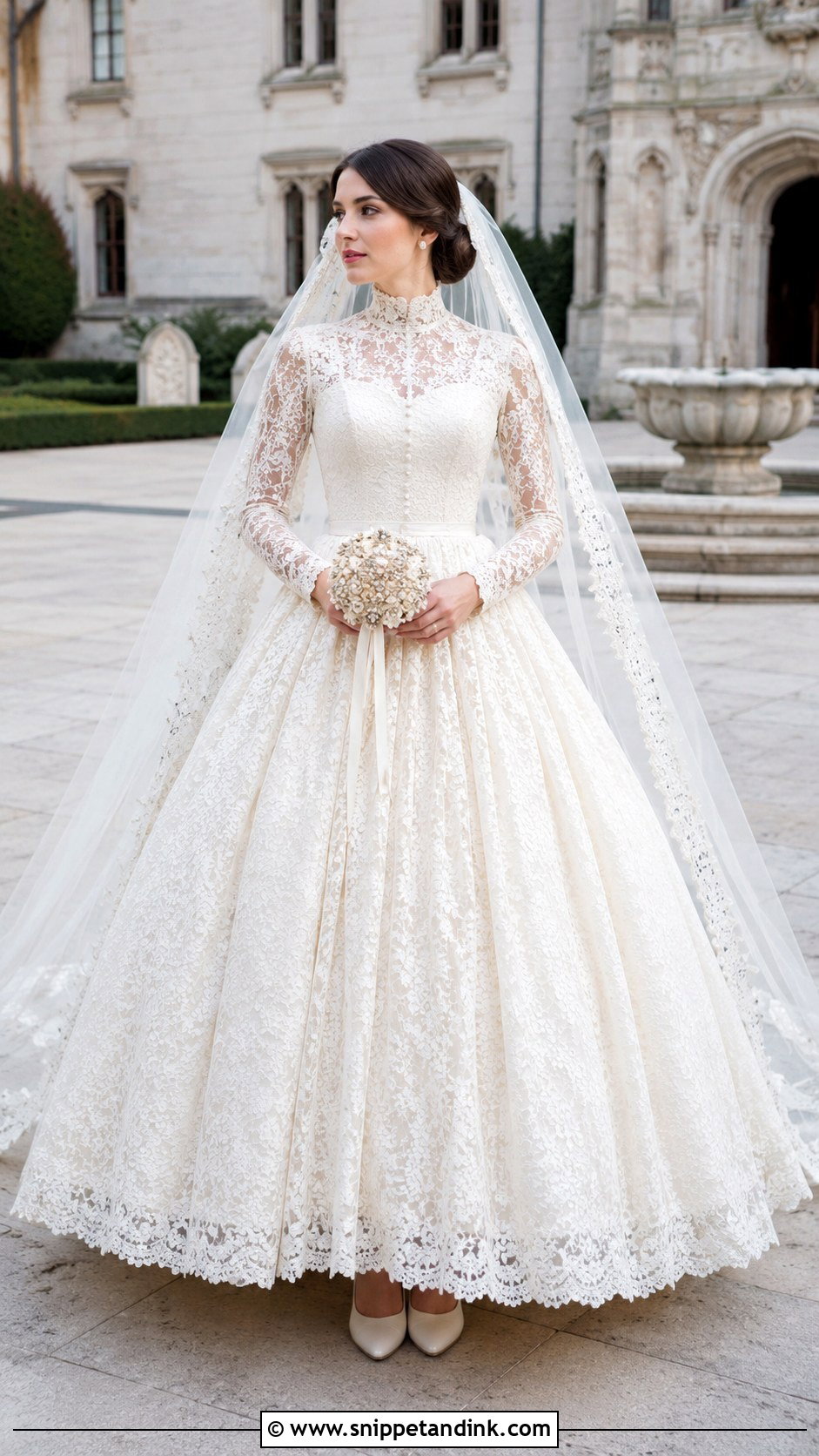
Vintage styling here combines a high neck, fitted sleeves, fabric-covered buttons and a soft waist, and the colour does a lot of the work. Ivory or light cream gives that aged warmth, while bright white makes the same lace look modern. A Juliet cap veil or lace-edged chapel veil nods to the period without slipping into costume. An heirloom-style brooch pinned on the bouquet wrap is a sweet touch. Keep the skirt full but soft, with layered tulle rather than a rigid hoop. It suits historic houses, libraries and conservatories, where the architecture matches the mood.
17. Boho Lace Ball Gown Wedding Dress
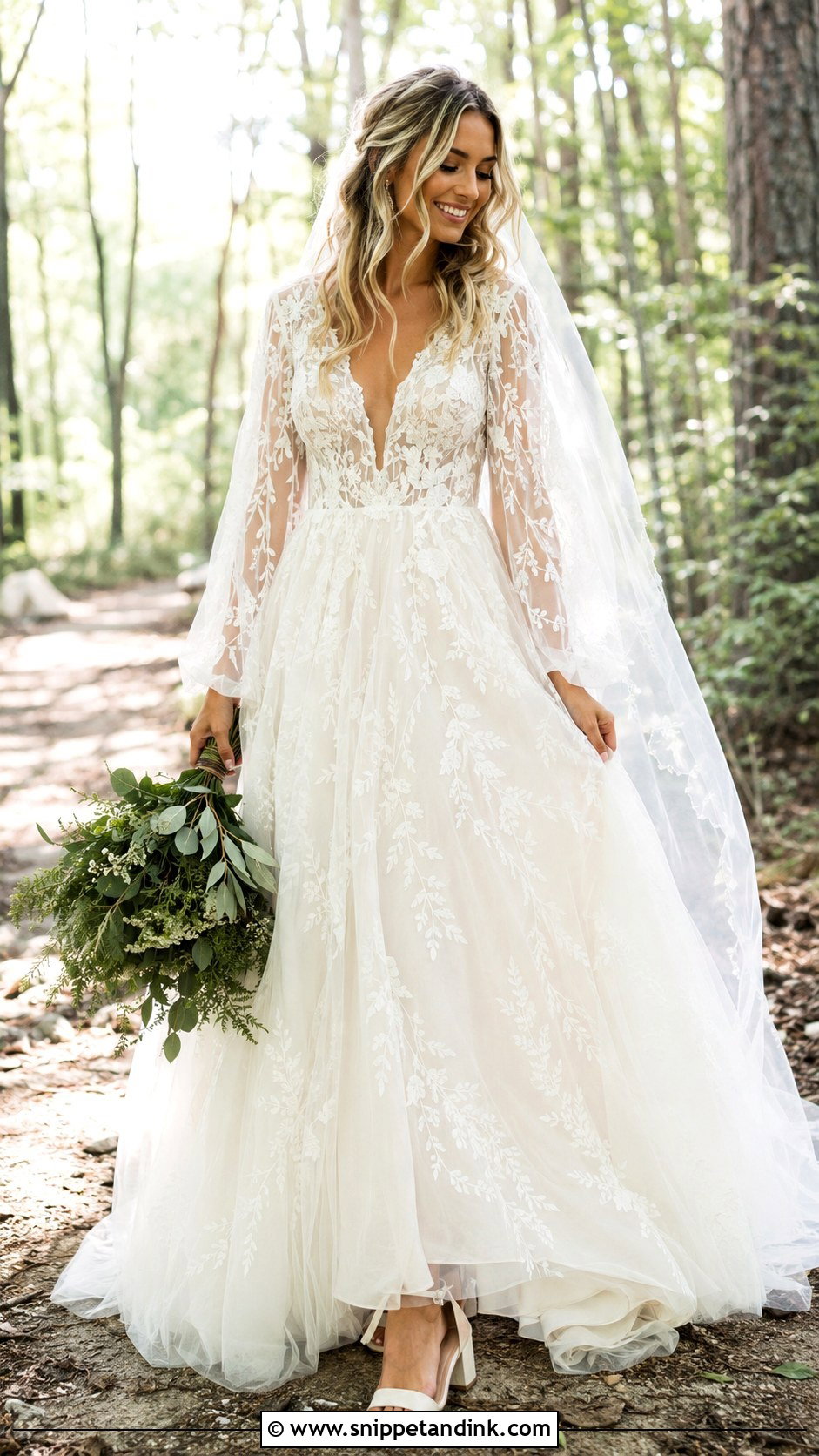
Boho and ball gown sound like opposites, and the trick is in the skirt. Instead of a stiff petticoat, flowing layers of tulle give volume that moves and lets you walk over grass. Botanical lace, a soft V neck and sheer long sleeves set the tone. A raw-edge veil with loose waves and block-heel sandals keeps things relaxed, and block heels matter on a lawn, where stilettos sink. Keep the bouquet natural but controlled; trailing greenery can hide the bodice entirely. Jewelled pieces fight the mood, so stay minimal with makeup and accessories.
18. Cathedral Train Lace Ball Gown Wedding Dress
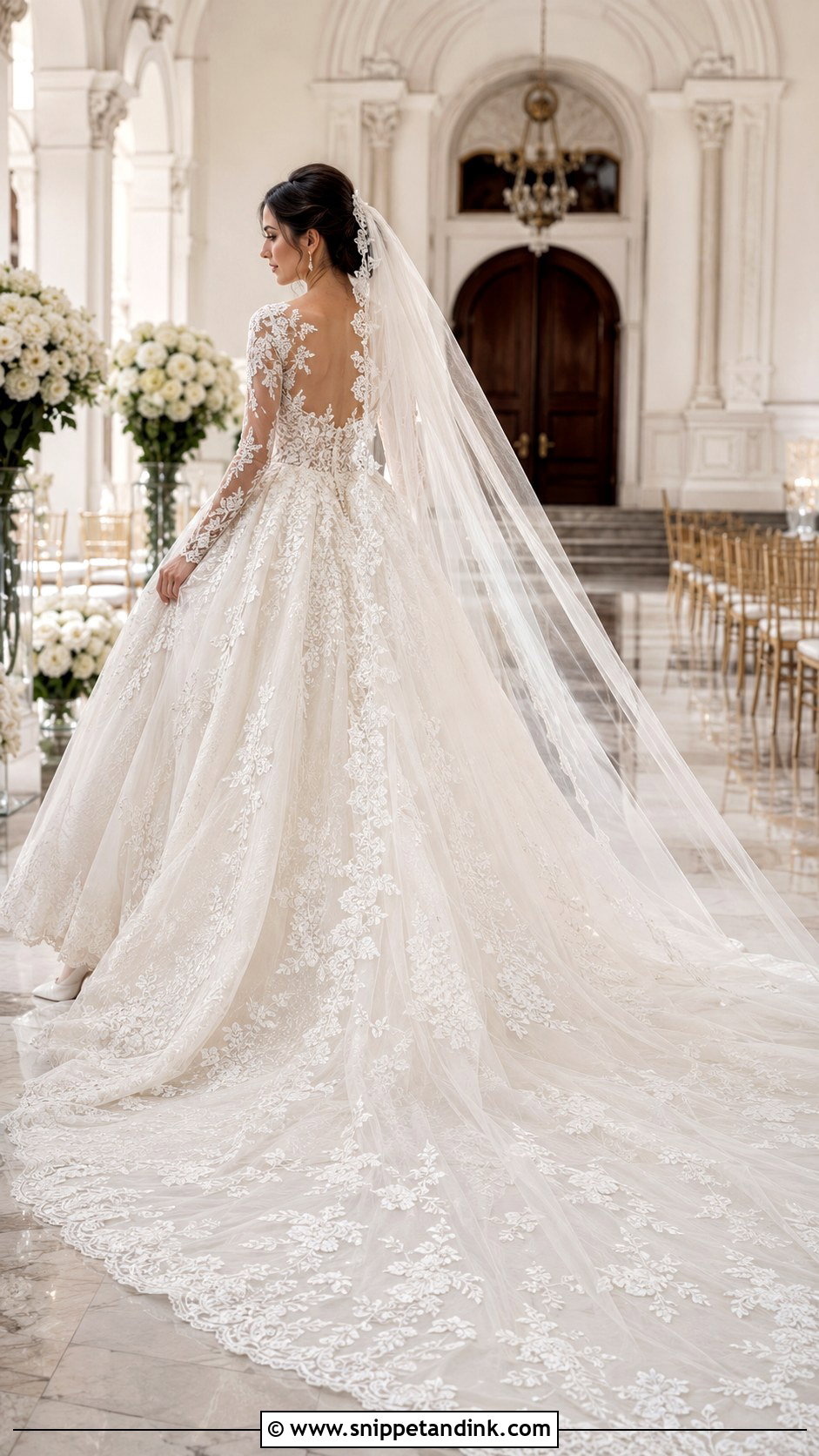
A cathedral train is the most dramatic thing a ball gown can do, and it brings logistics with it. Lace appliqués should continue from the bodice down to the border of the train. If the train is heavily detailed, choose a plain veil; two layers of busy lace pile up and confuse each other in photographs. Ask about the bustle early. Lace trains are usually bustled with hand-sewn hooks or ribbon ties, and the points need placing so the motifs fall neatly when the train is lifted. Have a bridesmaid learn it at the final fitting. A secure updo matters here, since a heavy train and veil tug at the head.
19. Blush Lace Ball Gown Wedding Dress
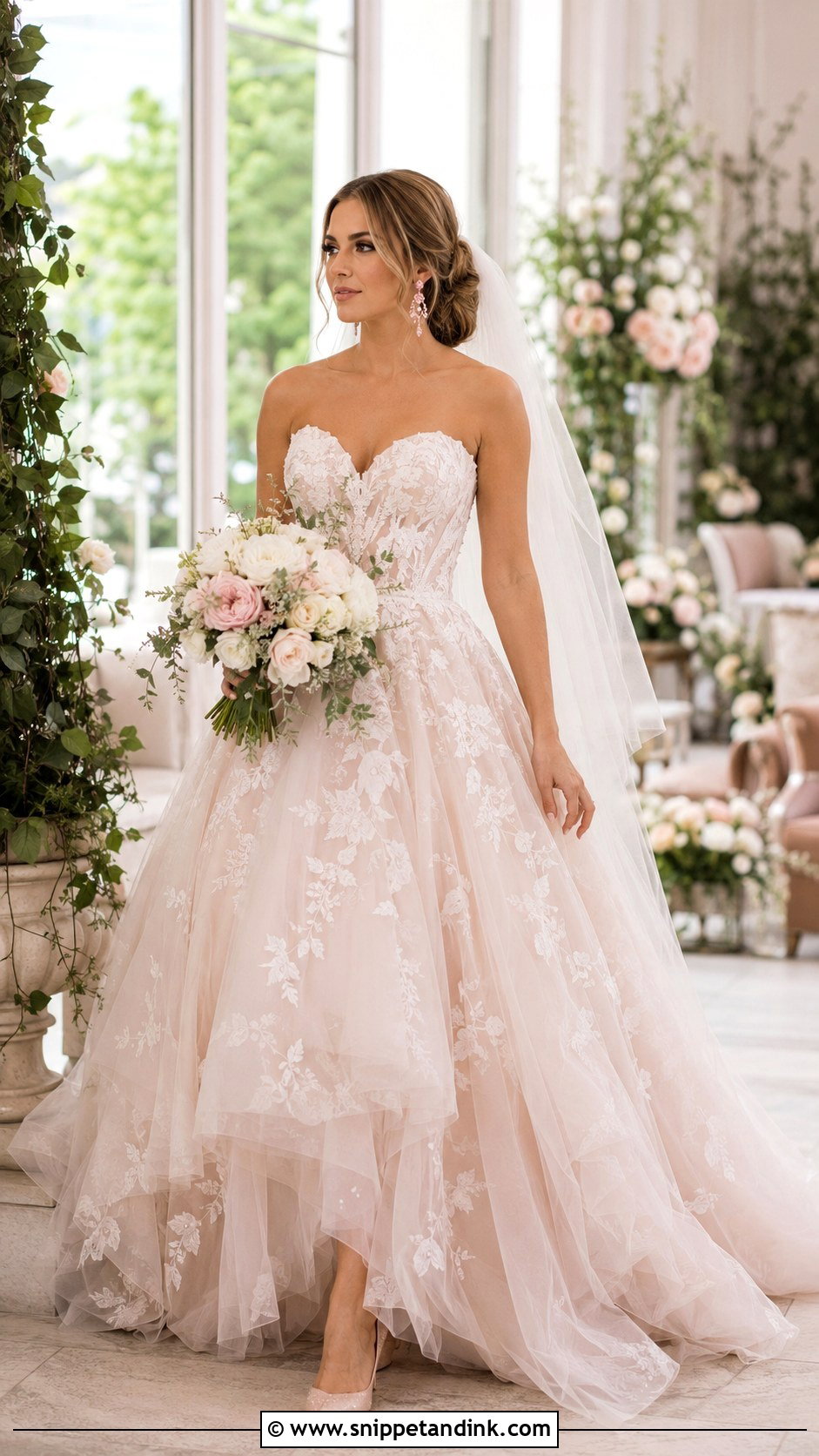
Blush works because it sits behind the lace rather than in it. A pale blush lining or tulle under ivory appliqués makes the pattern far easier to see from a distance, and it gives warmth that some skin tones need beside pure ivory. Blush is also the colour that changes most in different light. In warm indoor lighting it can almost vanish, and in daylight it can look pinker than you expected, so see the fabric both ways. Rose-gold earrings and neutral blush pumps fit the palette. Keep the bouquet in white, cream and muted pink.
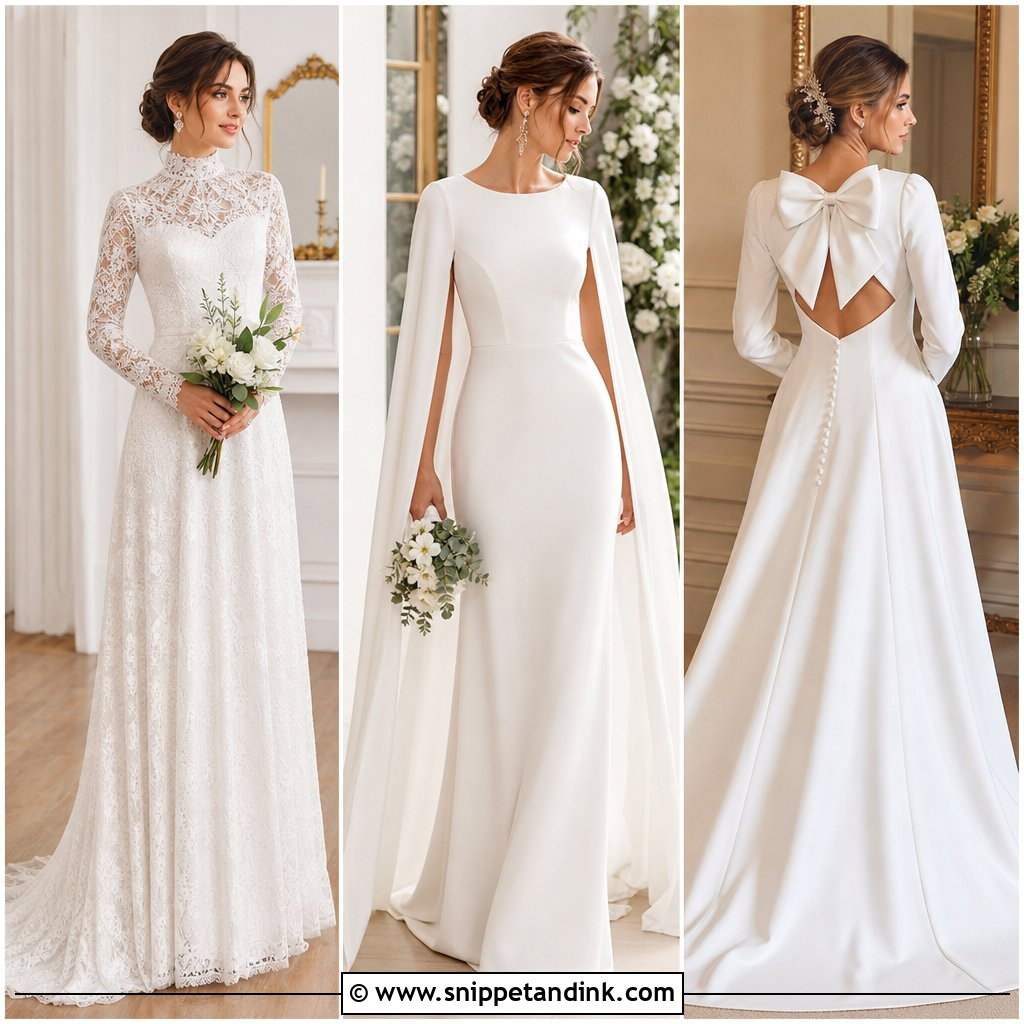

20. Plus Size Lace Ball Gown Wedding Dress
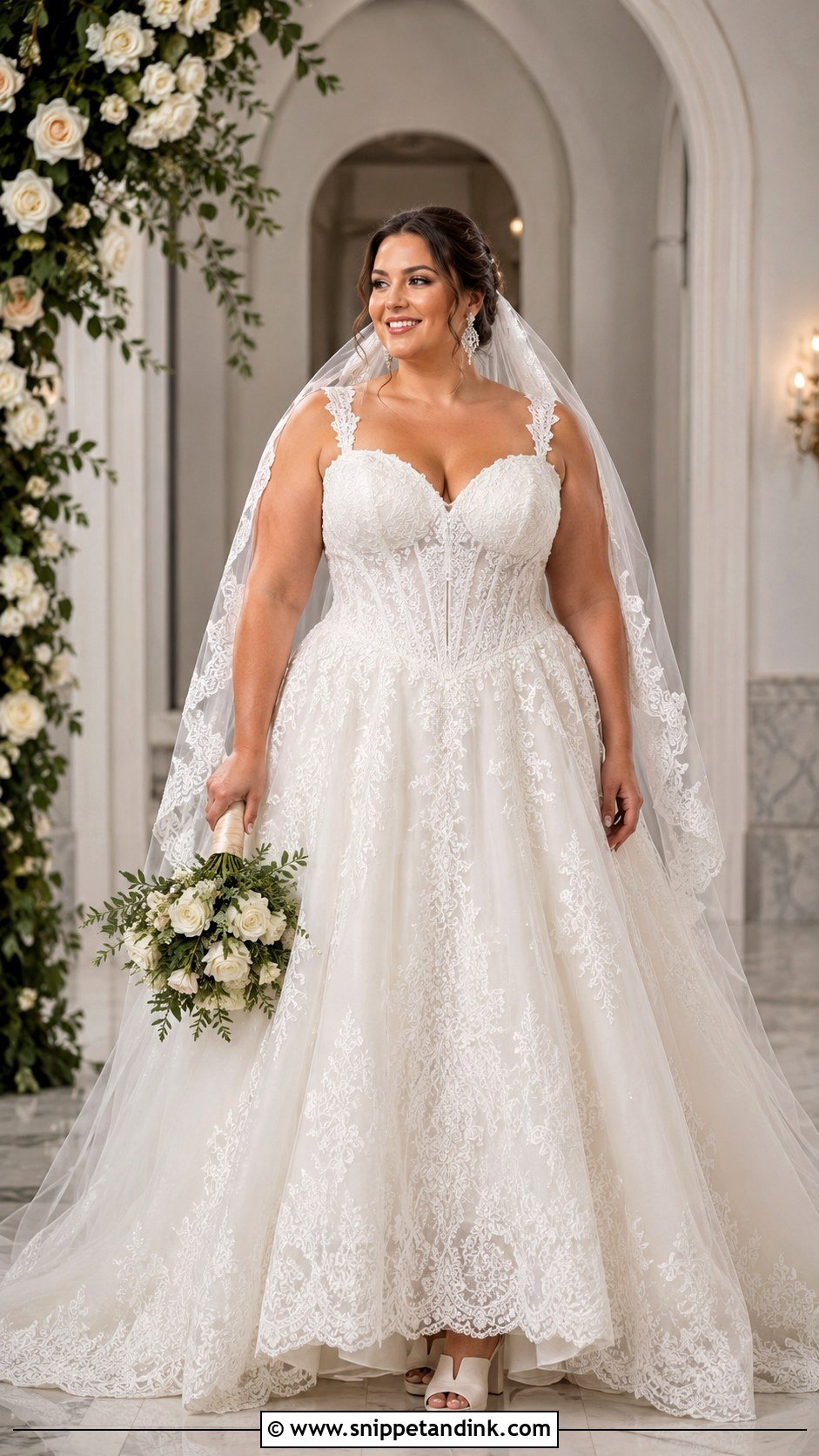
For a plus size bride, the structure inside a lace ball gown matters more than anything on the outside. A basque waist or a natural waist can both work beautifully; what I watch is where the skirt begins. It should start smoothly from the waist rather than gathering bulk over the hip. Wide lace straps, secure cups and flexible boning give support without stiffness, and a breathable lining makes a long day bearable. Work with a seamstress who has experience with structured bridal gowns. You should be able to sit, walk, raise your arms and dance without the bodice shifting.
Lace After Midnight: Cleaning and Storing the Gown
Lace is more fragile than satin once the wedding is over, and how you treat the gown in the first few weeks decides how it looks in years to come.
- Don’t hang a ball gown by its shoulders or straps for long. The weight of the skirt stretches lace and illusion mesh. Use the inner hanging loops sewn at the waist, or lay it flat.
- Have it cleaned soon, by a cleaner who handles bridal gowns. Spilled champagne or cake can dry invisibly and turn yellow or brown months later.
- Never spot-scrub lace yourself. Rubbing lifts the threads and can pull appliqués loose. Blot gently and leave the rest to the cleaner.
- Store it in a breathable box or cotton garment bag with acid-free tissue in the folds. Plastic traps moisture and can yellow fabric over time.
- Keep it somewhere cool, dark and dry, away from an attic or basement where temperature and damp swing.
If you’ve had a detachable sleeve or bolero made, store it with the gown so the lace ages at the same rate. Taking the dress out every year or so to refold it along different lines stops permanent creases from setting.
Let the Lace Carry the Look
The best lace ball gown is rarely the one with the most detail. It’s the one that holds your body comfortably, suits the venue and lets you forget what you’re wearing after the first hour. Begin with the neckline and bodice structure, then think about sleeves, skirt weight, train length and where the lace sits. Try every serious contender with the right undergarments and shoes, and a similar veil if you can. Walk, sit, turn and lift your arms in it. Let accessories support the texture instead of competing with it, and give your fittings enough time to get the structure right.
You'll Like These Ideas:



Leave a Reply