
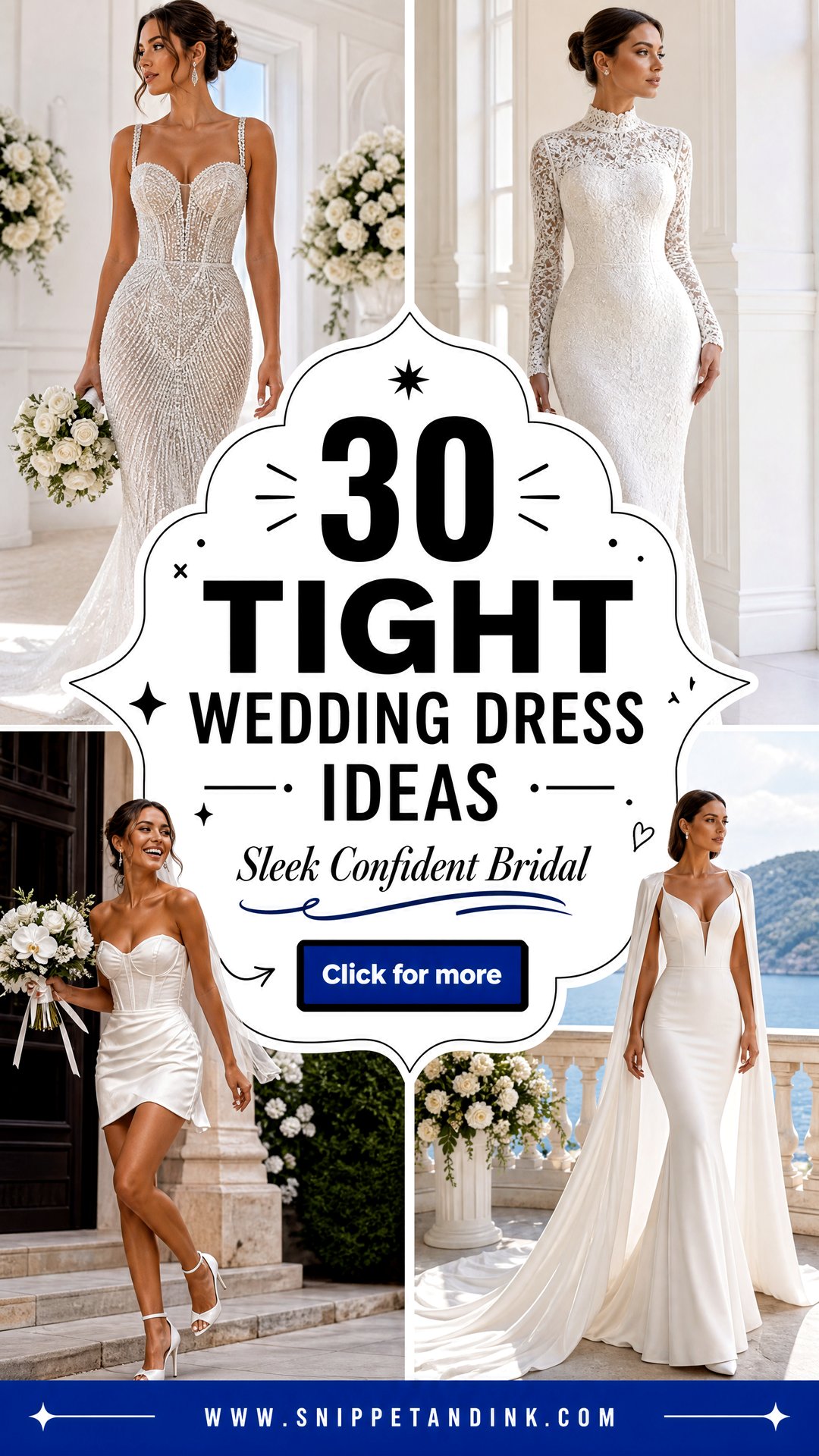
Fitted gowns have moved a long way from the stiff, can’t-sit-down mermaids of a decade ago. The ones I pull for brides now are softer in construction: minimalist crepe, satin slips, corset bodices with lighter boning, lace sleeves, pearl details. The aim is shape you can actually live in for twelve hours. A close-fitting dress is less about how tight it is and more about where it holds you and where it lets go. Below are thirty versions, from courthouse minis to formal trains, with what each one asks of your body, your venue and your fittings.
Is It Fitted or Just Too Small? The Fitting-Room Test
Brides often order a fitted gown a size down, hoping to grow into the look. I’d steer you away from that. A close-fitting dress is cut to sit snugly over your real measurements, and taking a dress in is far easier than letting it out, since many fitted gowns have very little seam allowance.
Before you say yes to any fitted dress, I put brides through the same short routine in the fitting room:
- Sit on a standard chair for a full minute. Check whether the skirt rides up, the seams strain or the bodice digs into your ribs.
- Take a deep breath and laugh. If the boning presses on your stomach, the waist needs room.
- Walk up and down a few steps. Narrow skirts reveal themselves on stairs.
- Lift both arms as if hugging someone taller than you. Sleeves and straps that pull here will pull all evening.
- Bend to pick something off the floor. A strapless bodice should stay where it is.
If a dress fails two of these, it isn’t the dress for a long day, however good it looks standing still.
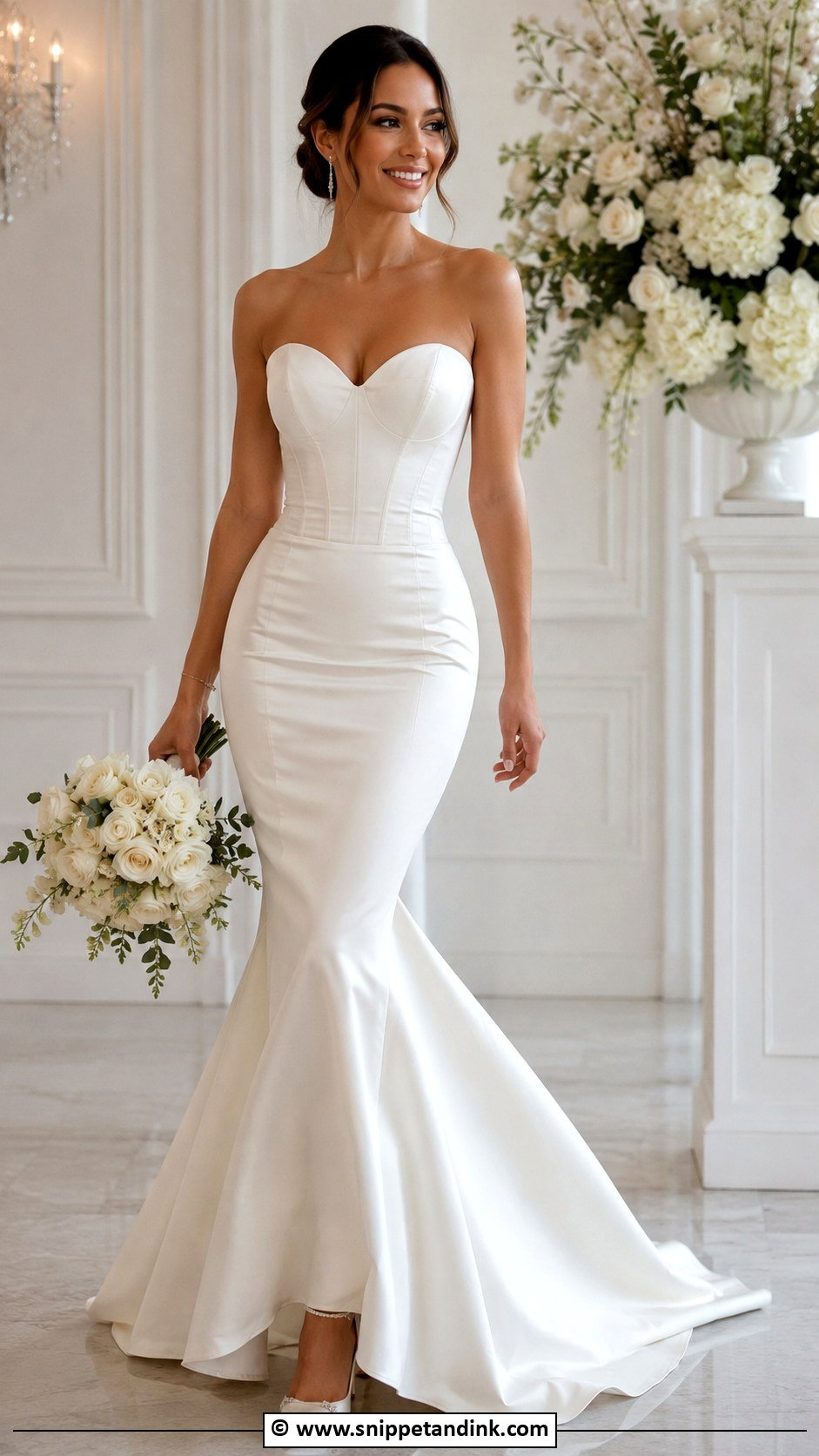
1. Tight Mermaid Wedding Dress
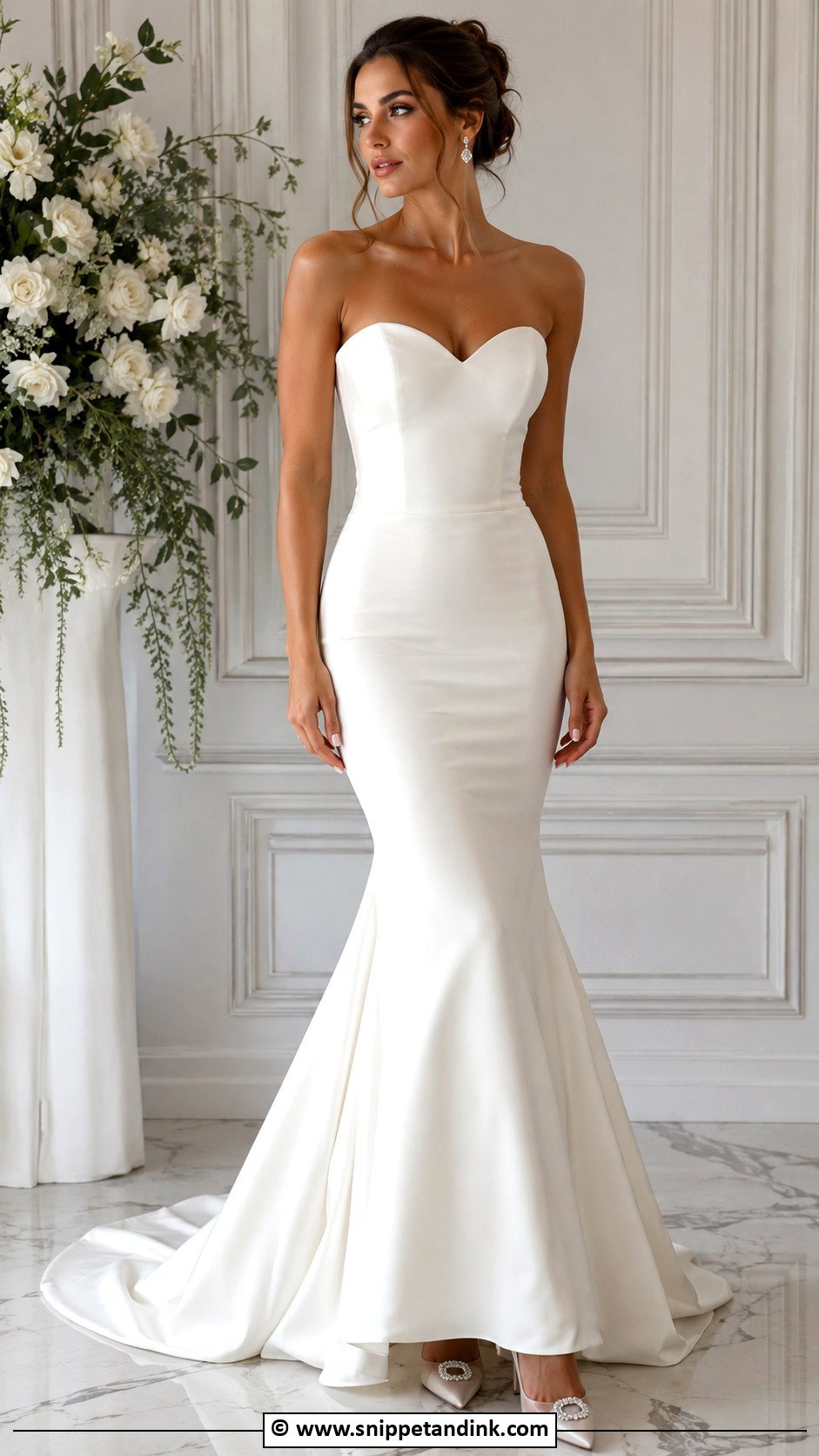
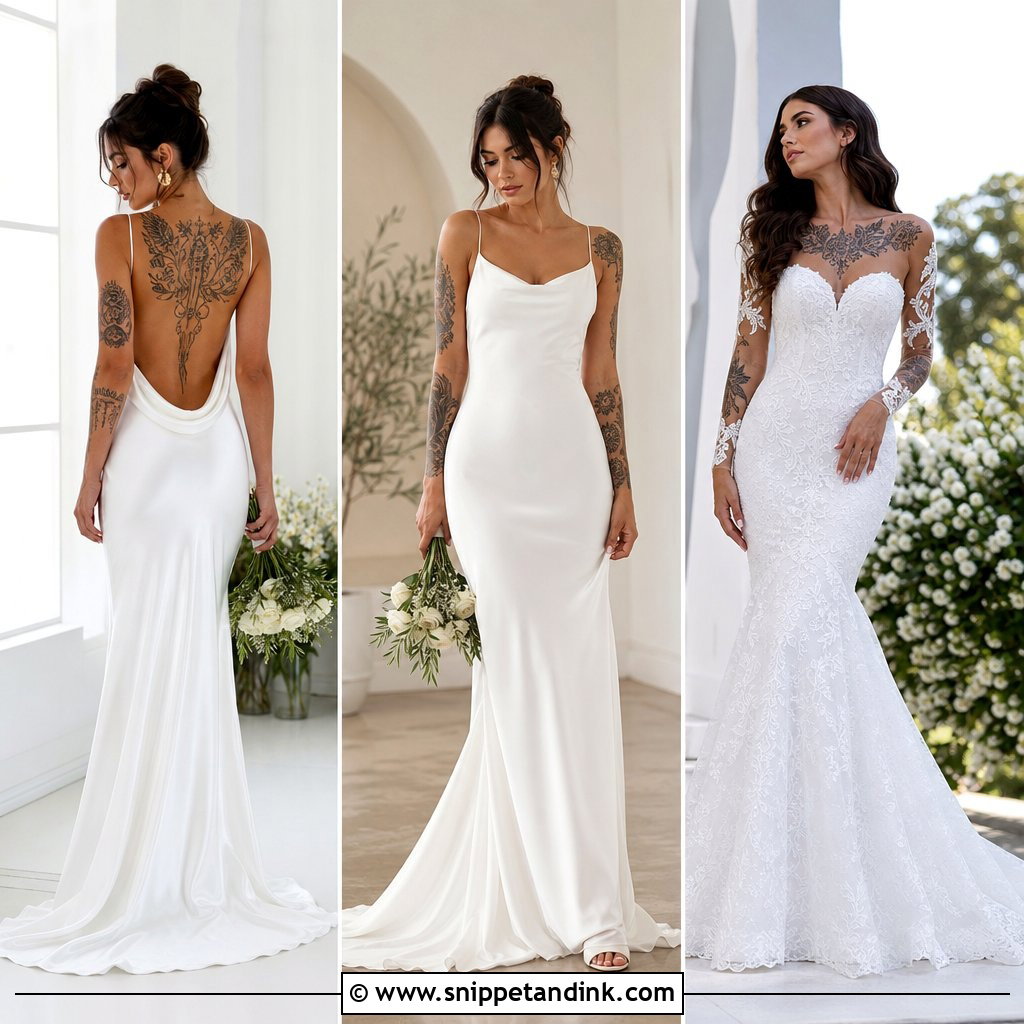
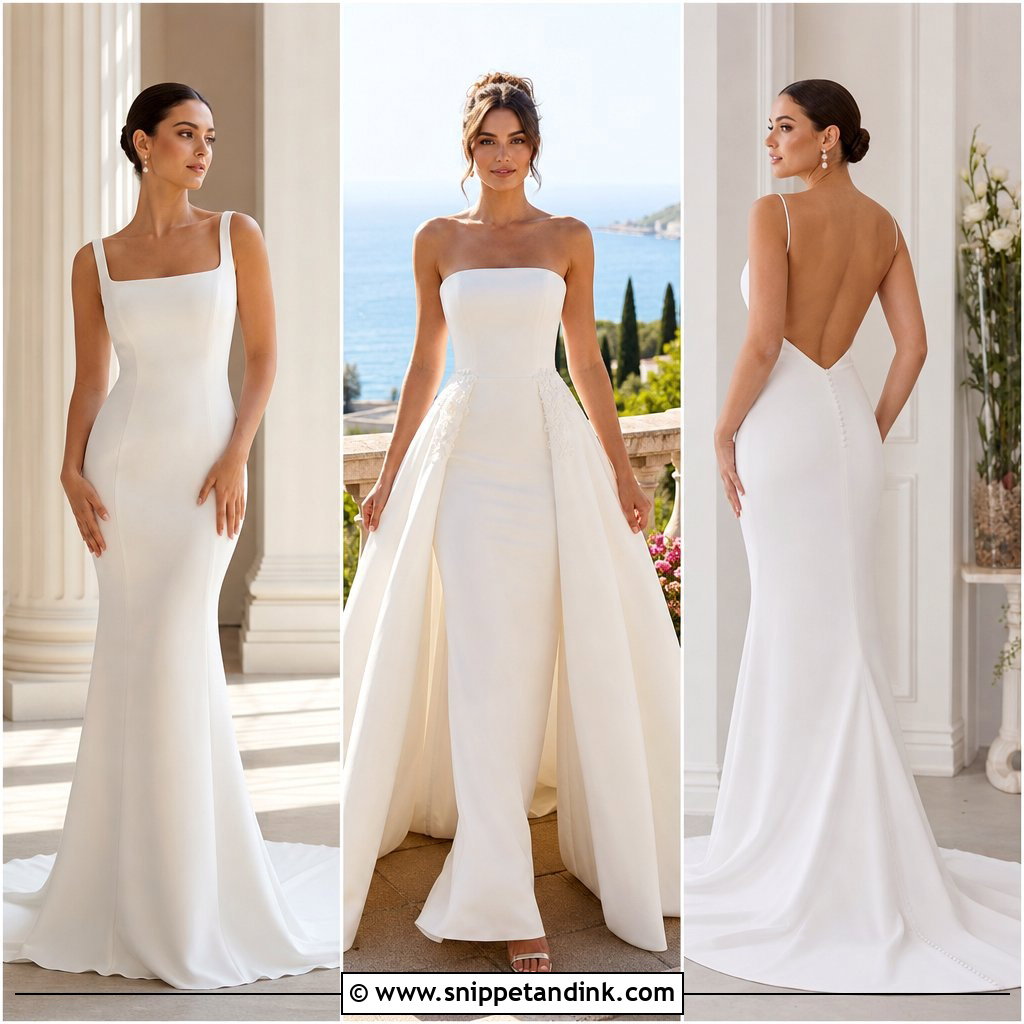
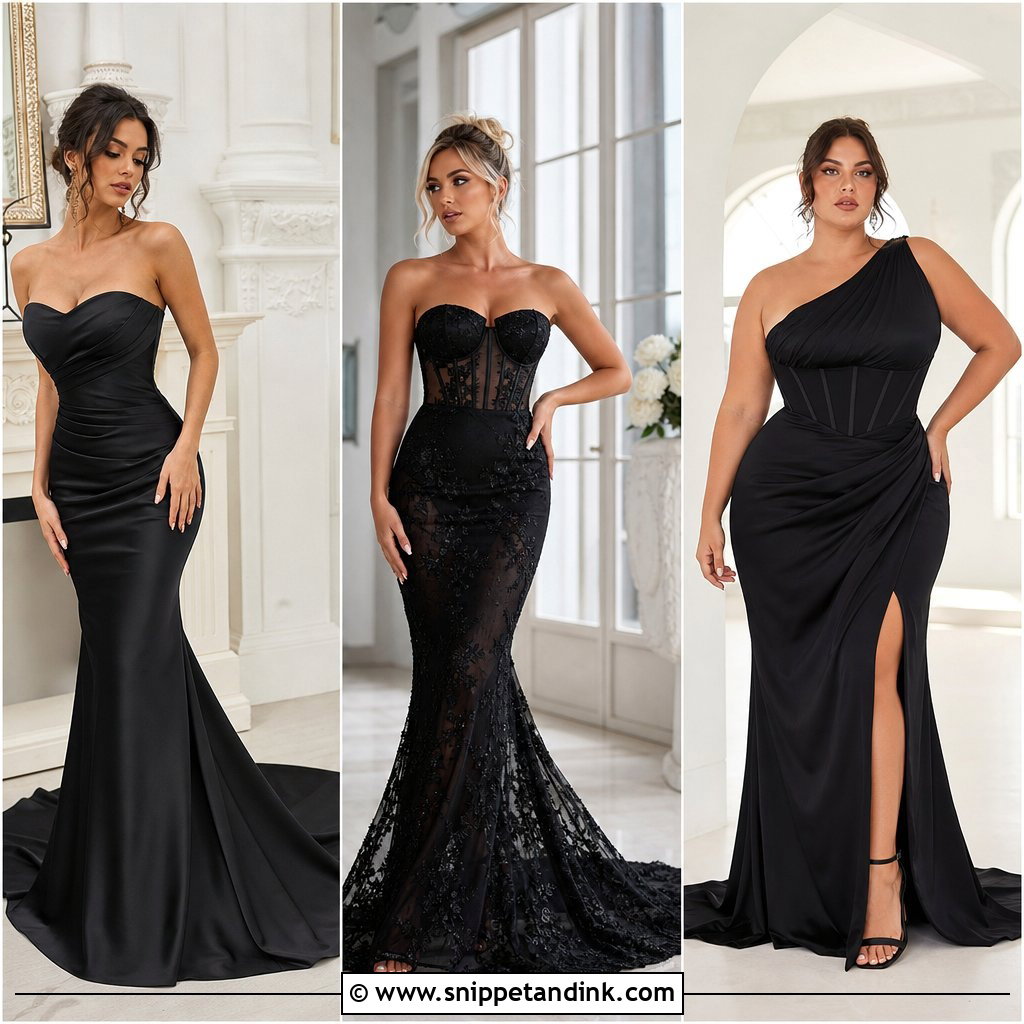
The mermaid holds you through the bodice and hips, then releases into a flare around the knee or lower thigh. Where that flare starts is the whole story: a low flare looks more dramatic but shortens your stride, while a higher flare (closer to a trumpet) is easier to walk in. Crepe gives it a clean line, satin a glow, lace or mikado more structure. A sweetheart neckline softens it, a strapless neckline sharpens it, long sleeves cover it. Since the silhouette already carries the drama, I keep to a smooth veil, simple earrings and pointed heels.
2. Tight Satin Wedding Dress
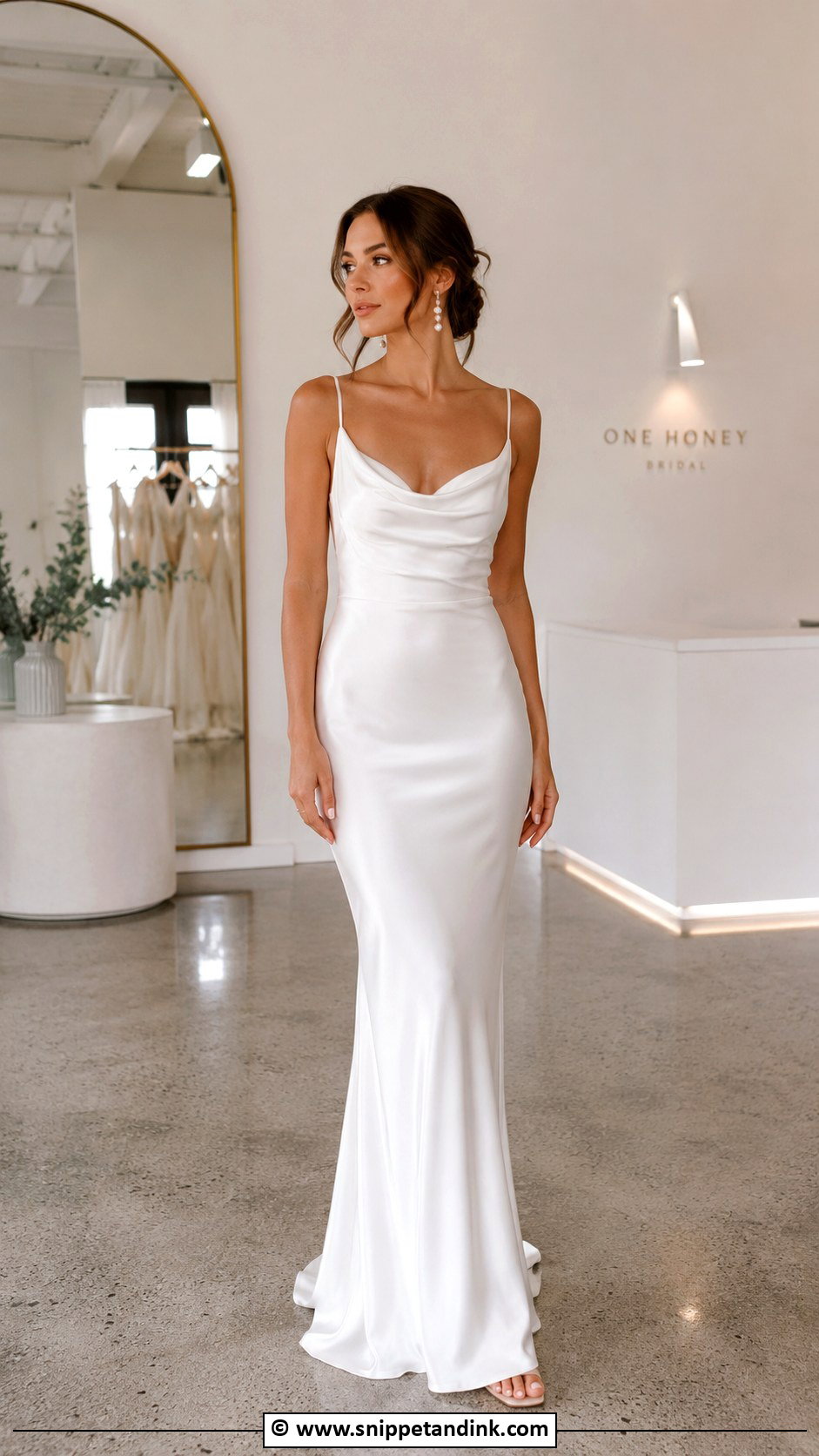
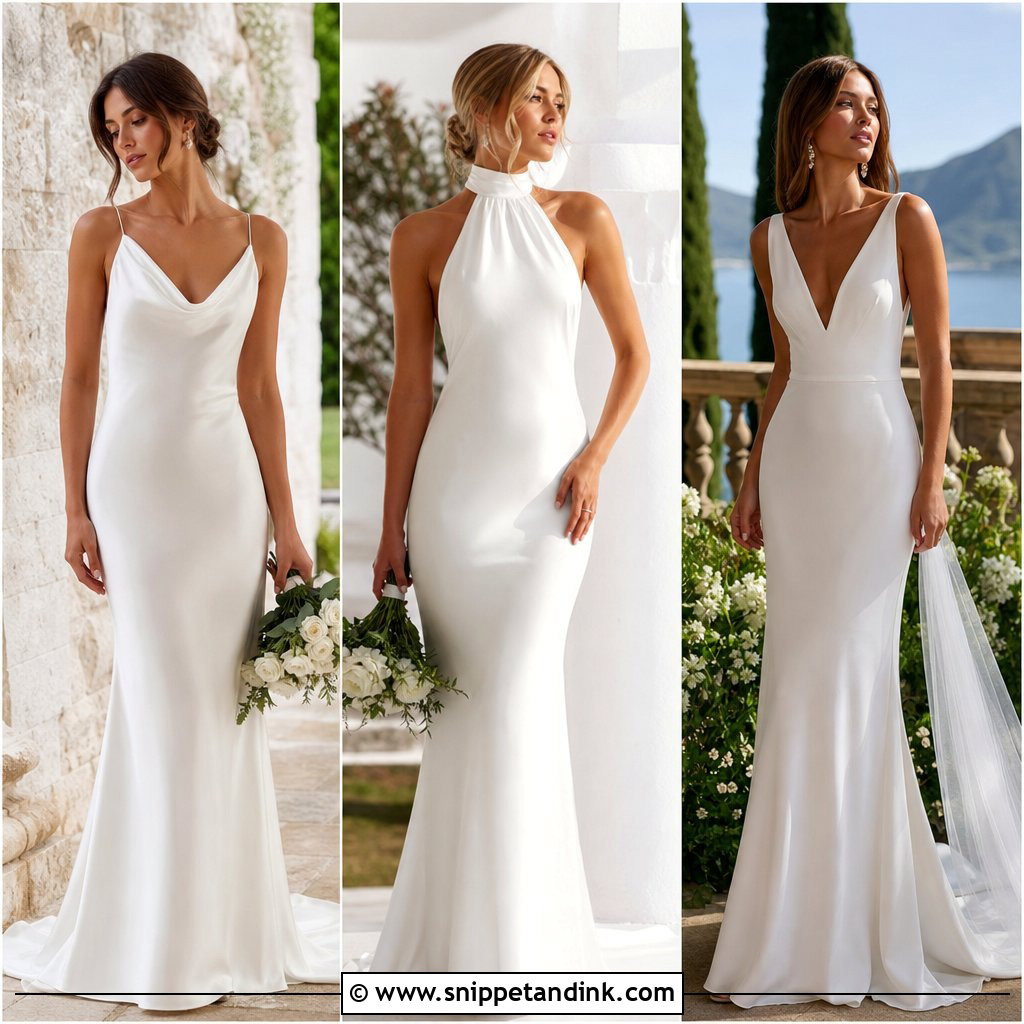
Satin reflects light, so a fitted satin dress looks rich even with almost no decoration. That same reflection shows every seam, pantie line and pucker, which is why I never fit a close satin gown without the bride’s final underwear on. Ivory, pearl white and pale champagne all suit it. A cowl neckline relaxes the look; a straight strapless edge makes it more structured. Delicate drop earrings, a clean bun and simple heels are enough.
3. Tight Lace Wedding Dress
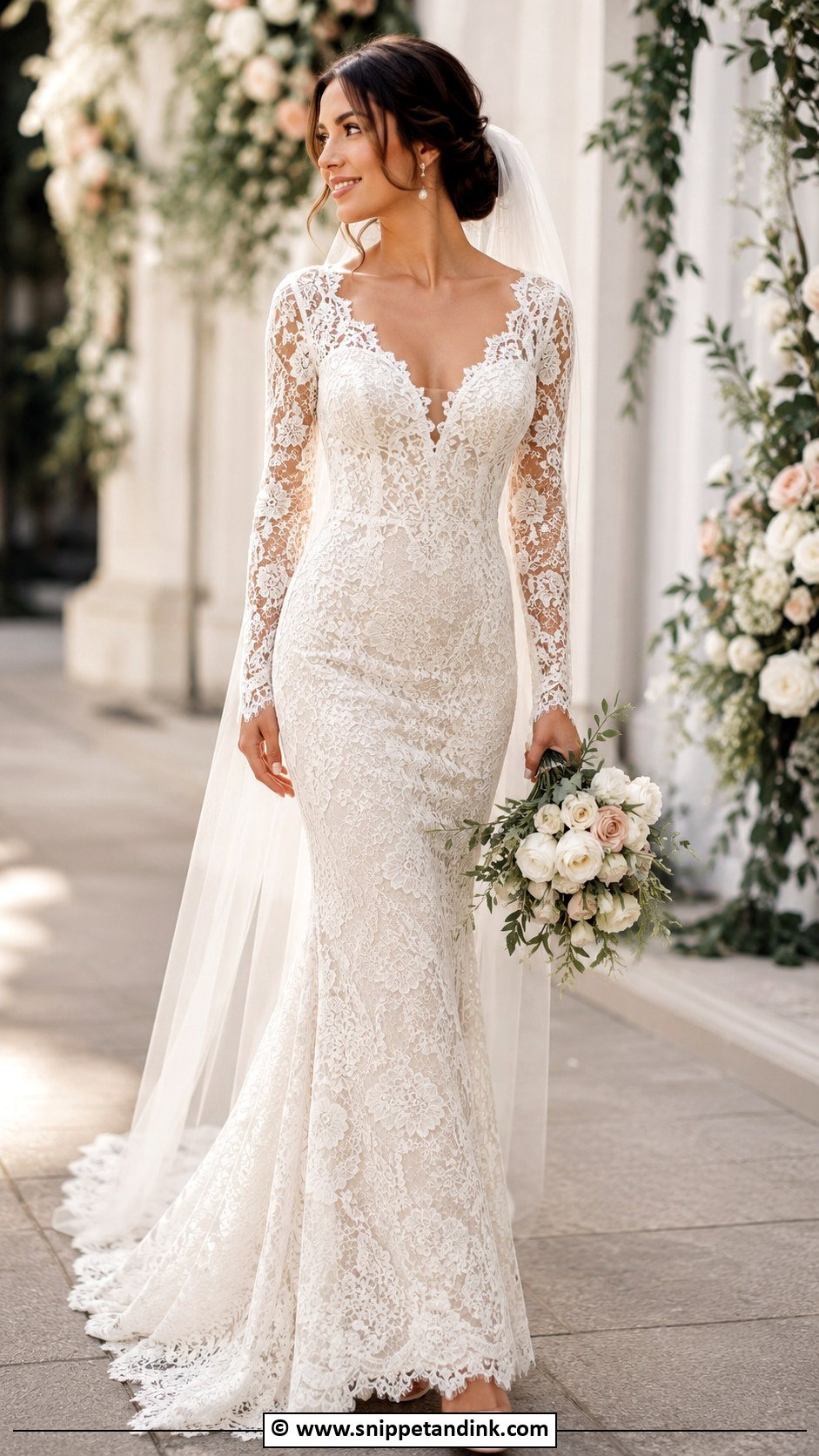
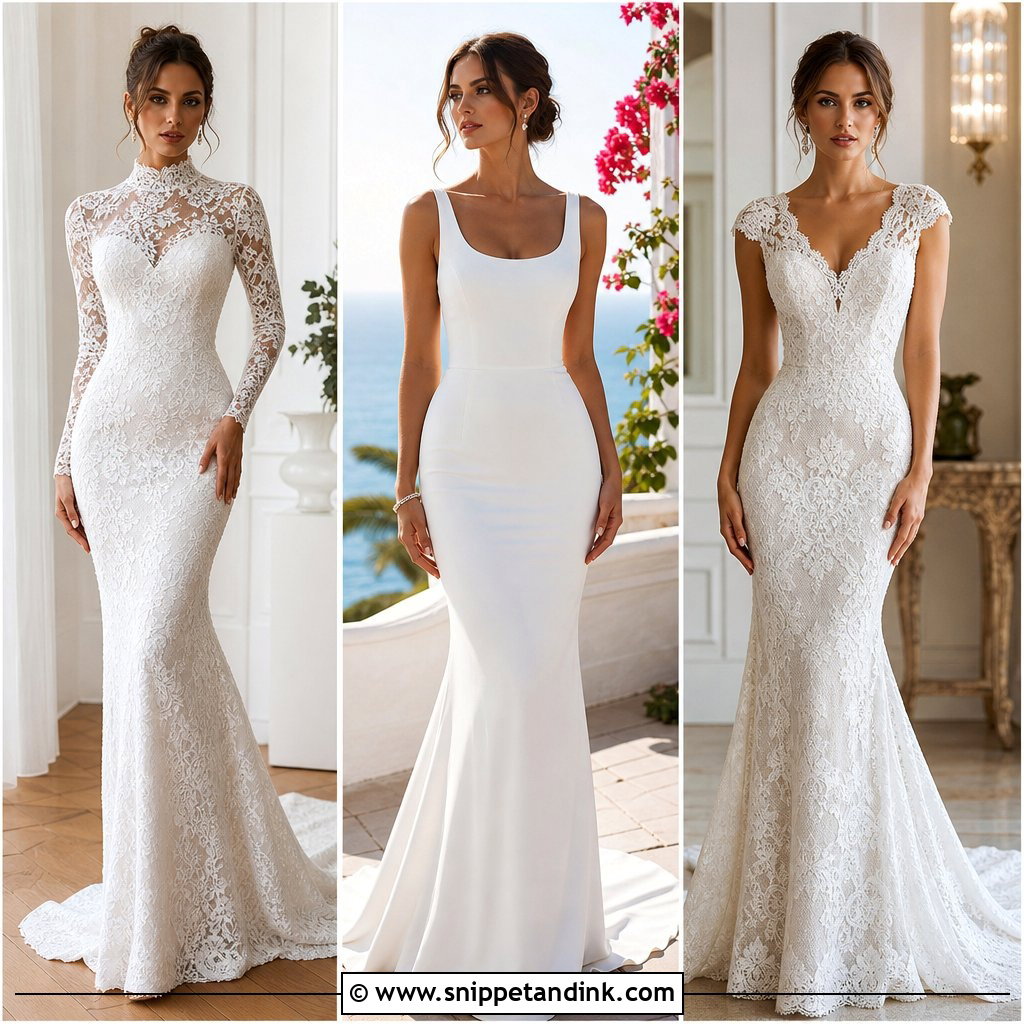
Lace is the forgiving option among fitted dresses. Its texture breaks up the line of the body, so small bumps and seam marks disappear in a way they never would under satin. For a classic version, choose allover lace on a fitted lining; for a more modern one, lace appliqué over a nude or ivory base. Ask whether the lace has any stretch: corded and guipure lace do not give at all, and a fitted bodice in them needs room to breathe when you sit. Pair it with a chapel veil, pearl studs and slim heels, and add illusion sleeves or a high neck if you’d like more coverage.
4. Tight Long Sleeve Wedding Dress
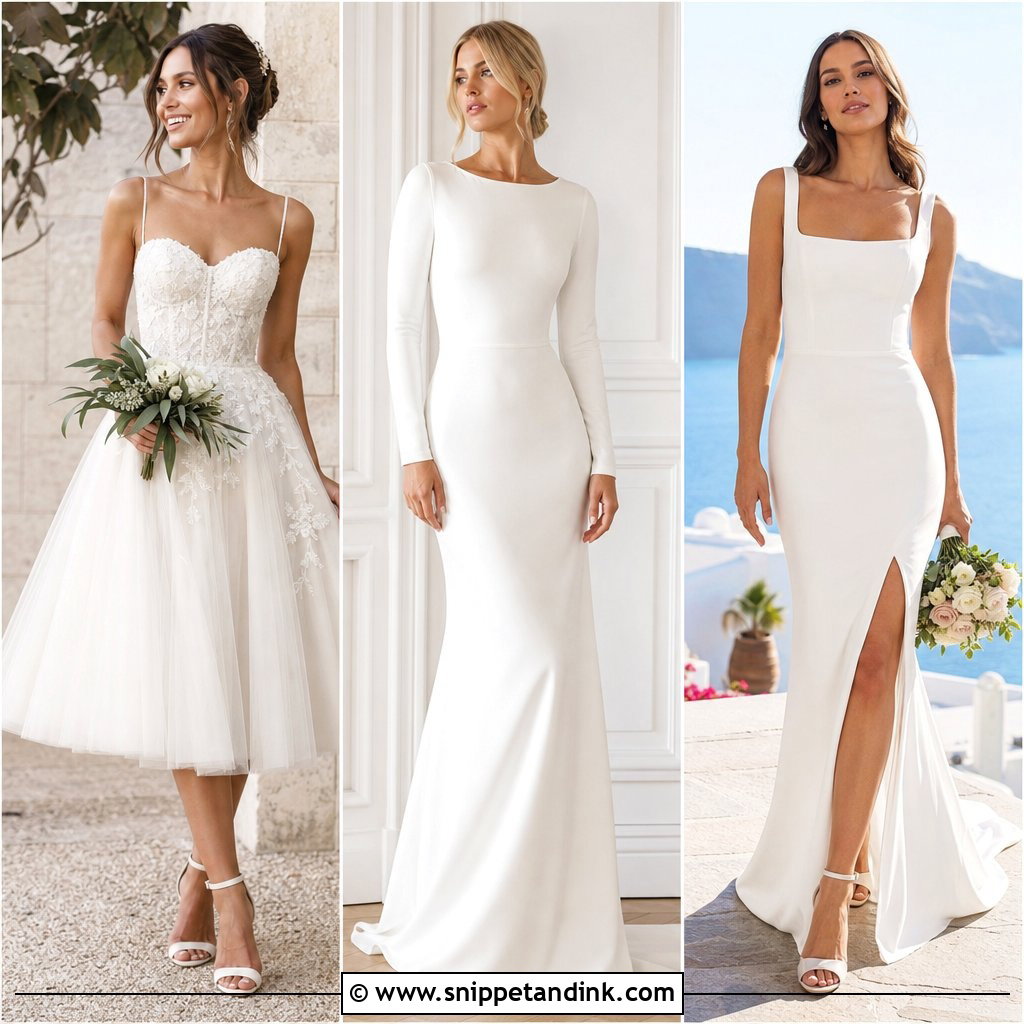
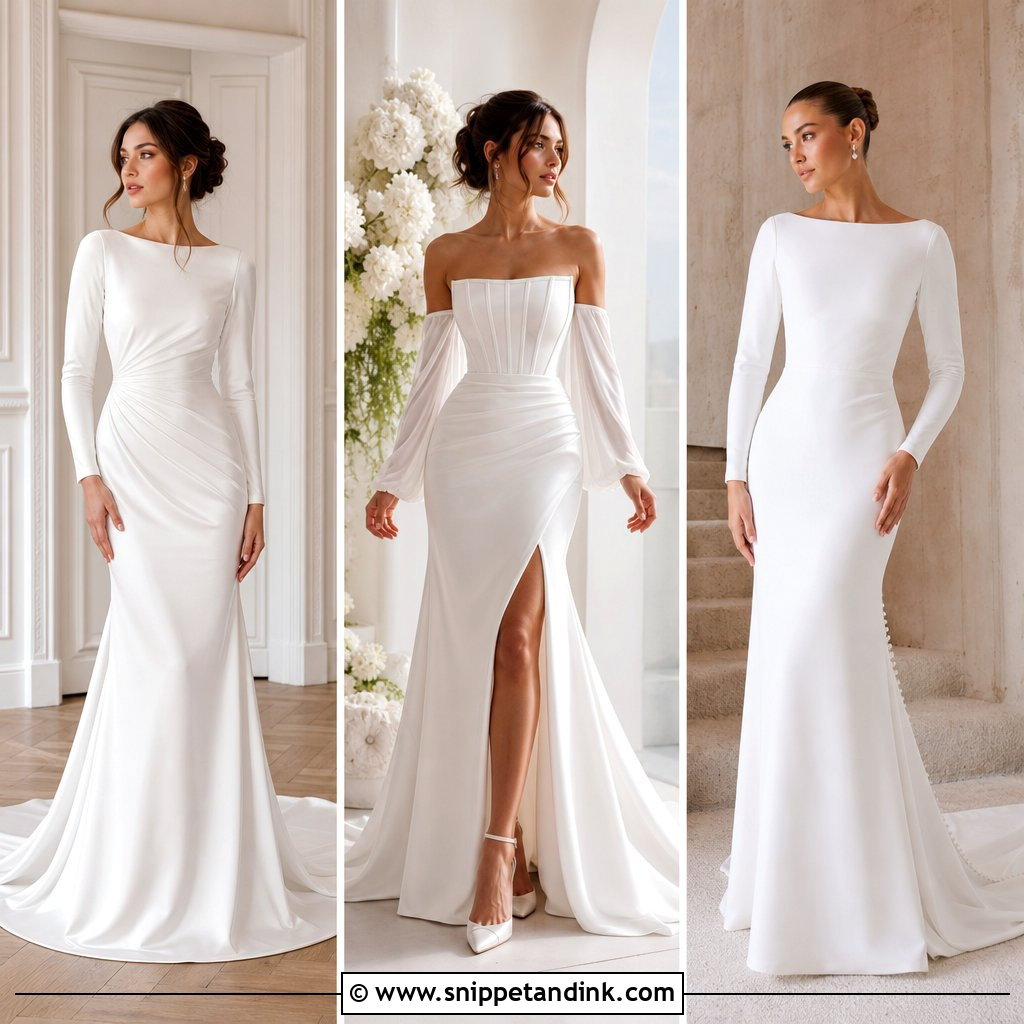
Long fitted sleeves give coverage and a sculpted line, and they suit cooler months and formal rooms. Crepe sleeves look minimal; lace sleeves look softer. What I always test is the arm lift: a tight sleeve set into a tight bodice restricts how high you can raise your arms, which matters for hugging, dancing and throwing a bouquet. A good tailor can add a small gusset or stretch lining at the underarm. With the sleeves framing the upper body, keep to a low bun, small earrings and a narrow veil.
5. Tight Off Shoulder Wedding Dress
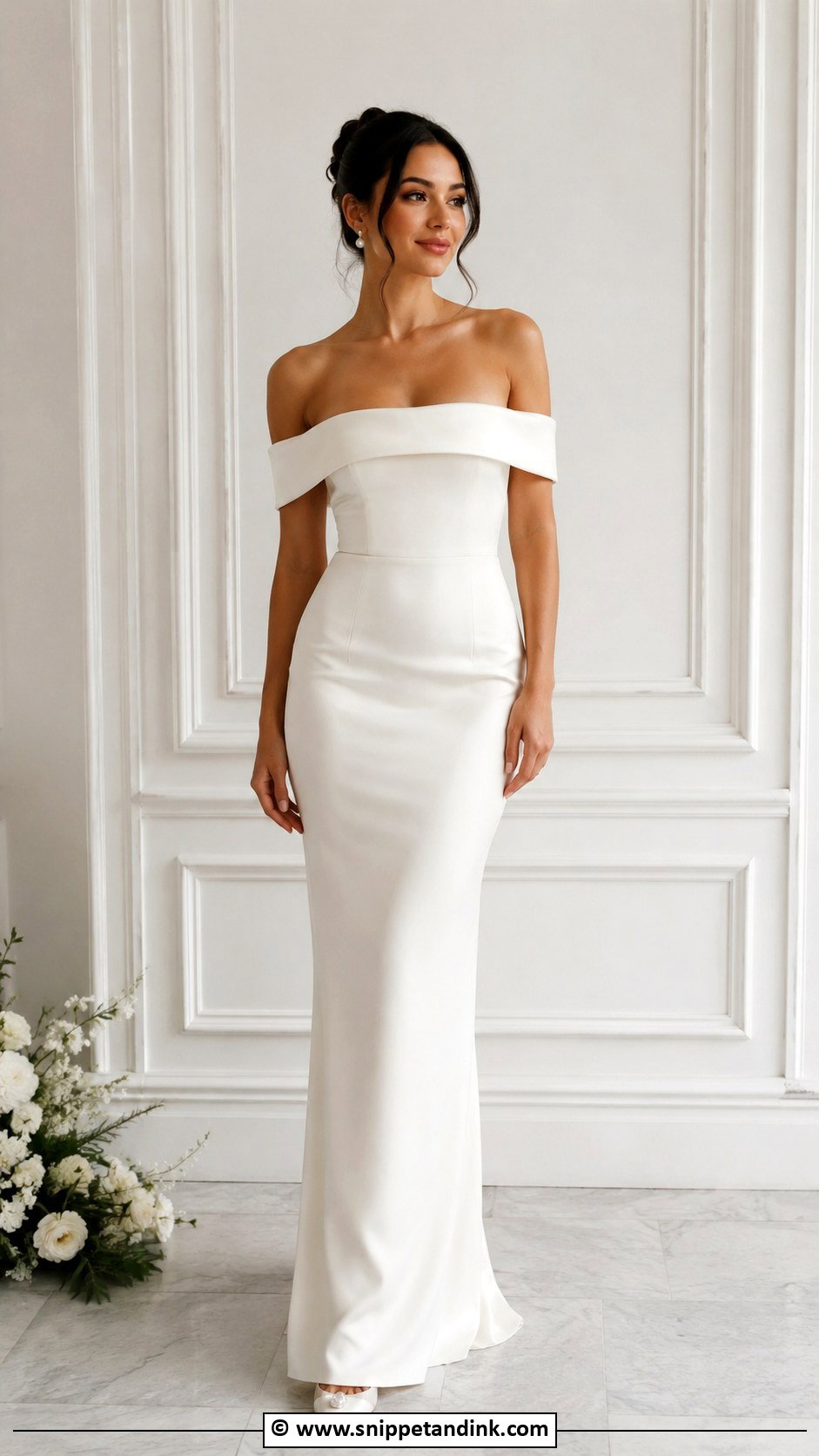
An off-shoulder line frames the collarbones and makes a fitted bodice feel romantic. Crepe reads modern, satin glossy, lace soft. The neckline can be straight, folded or gently draped. The practical catch: off-shoulder bands rely on a snug fit around the upper arms, so they slip if the bodice is even slightly loose, and they limit arm movement if it’s too tight. A simple necklace or none at all, swept-back hair, pearl earrings and slim heels keep it balanced.
6. Tight Strapless Wedding Dress
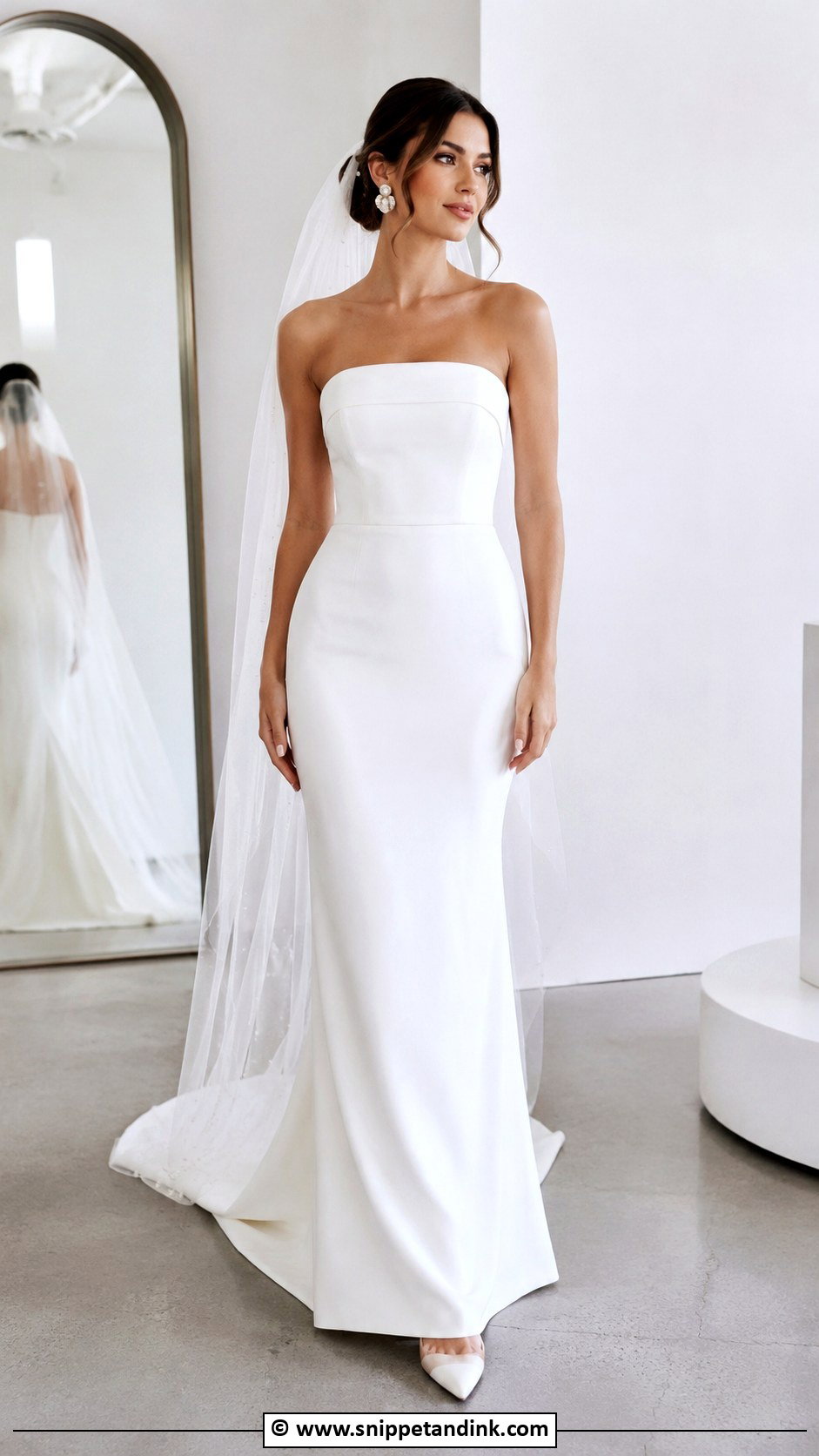
Strapless with a close skirt is about as clean a bridal line as you can get. A straight neckline reads architectural; a sweetheart softens it. The bodice has to hold itself up, so look inside: proper boning, a waist stay (a grosgrain band that anchors the dress at the waist) and silicone grip tape at the top edge mean you won’t spend the night tugging. Column, mermaid or a short train all suit it. A sheer veil and sculptural earrings finish it, and I insist on heels you can stand in for hours.
7. Tight Corset Wedding Dress
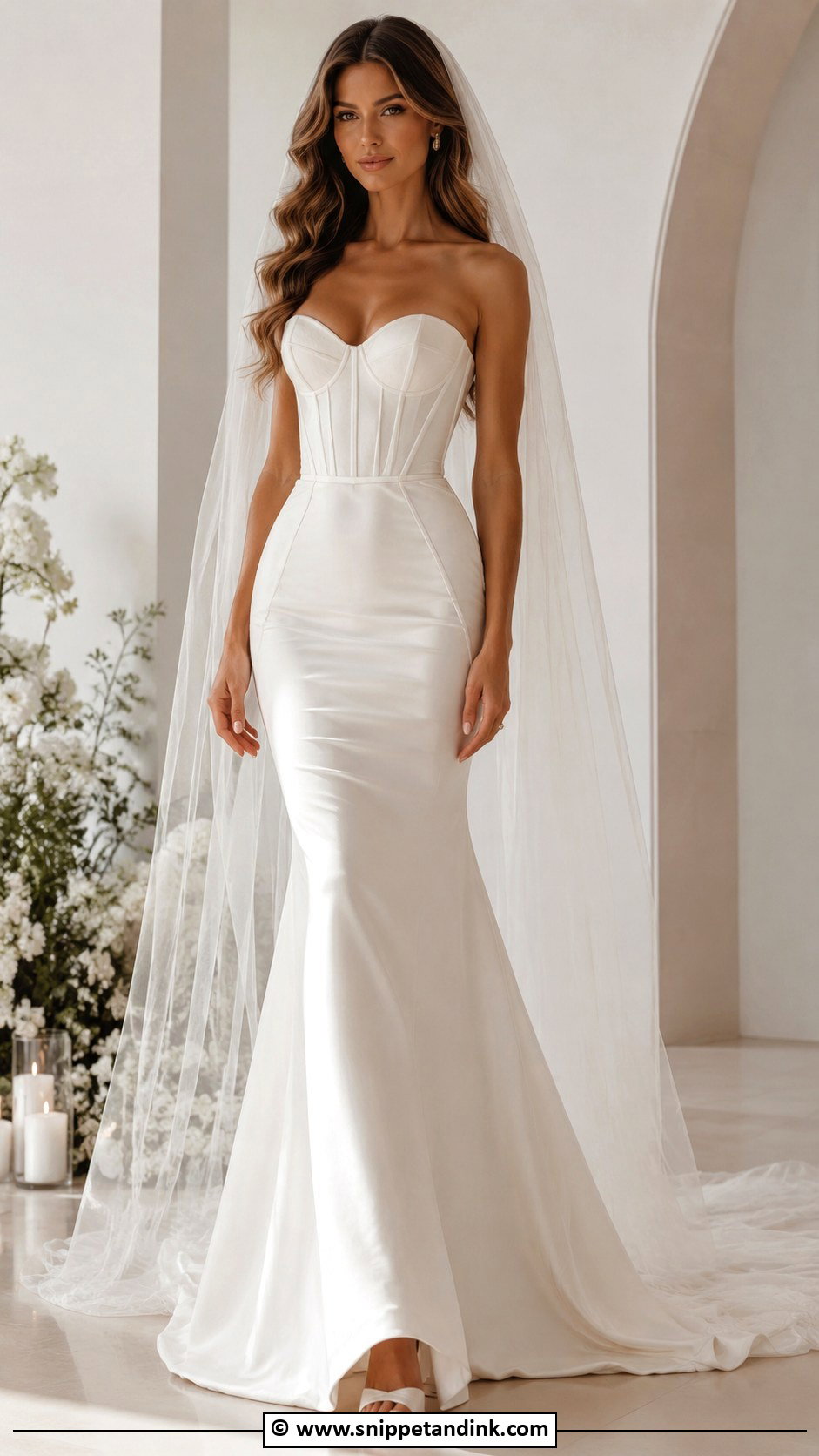
A corset bodice shapes and supports at once, defining the waist while the rest of the gown stays smooth. Exposed boning reads fashion-led; hidden boning reads classic. Lace, satin, tulle overlays and crepe skirts all pair with it, and embroidery or sheer panels soften the effect. I tell brides to eat a normal meal before the final fitting, because a corset laced on an empty stomach will feel very different after the wedding dinner. Finish with a long veil, soft waves and elegant heels.
8. Tight Crepe Wedding Dress
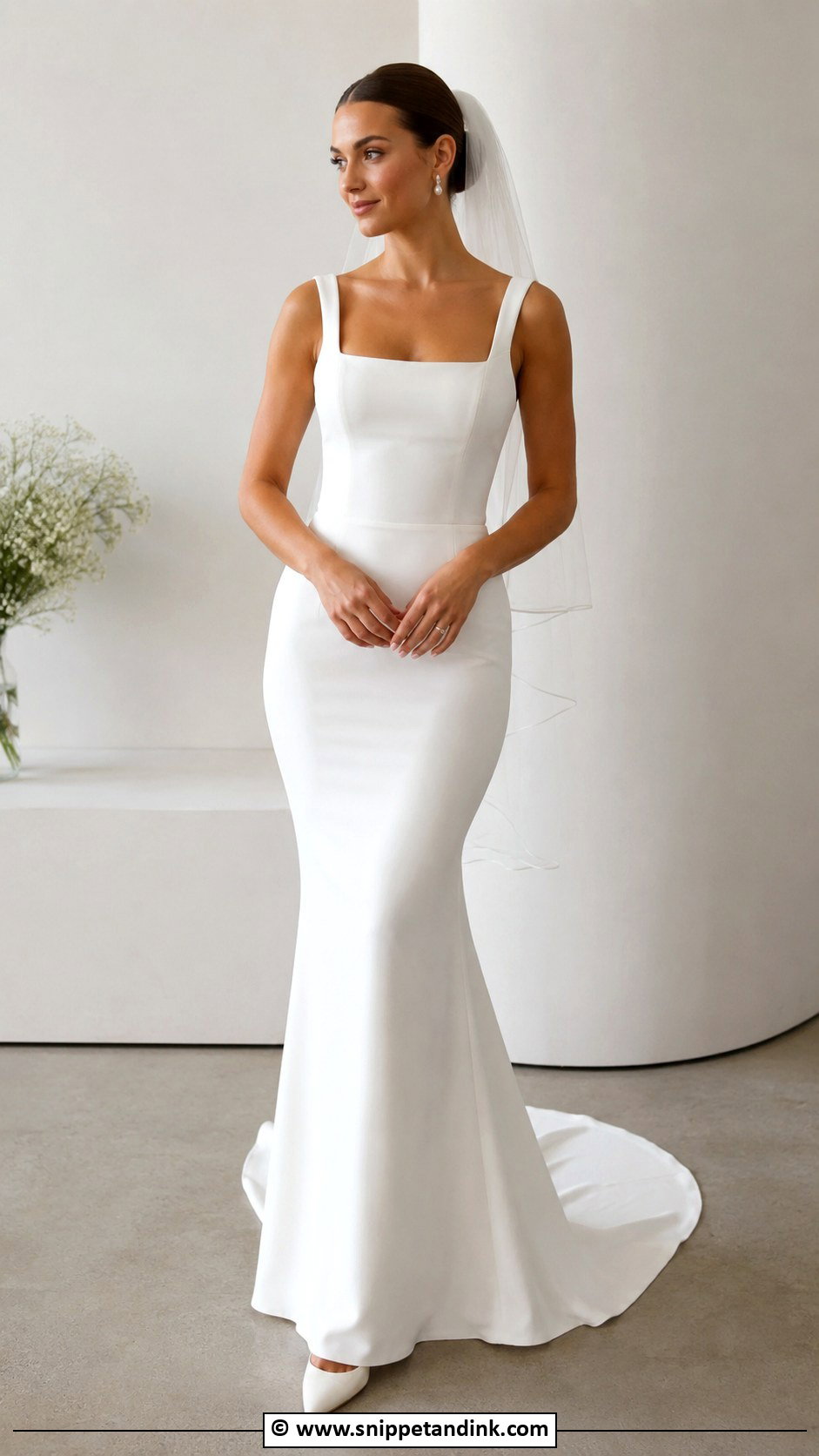
Crepe has a matte surface and a slight weight that skims rather than clings, which is why it’s my default suggestion when a bride asks for a fitted dress that looks quiet and expensive. With so little surface detail, seams carry the design, so precise darts, a fitted waist and a simple train matter. Long sleeves, strapless, square necks and open backs all suit it. Pearl earrings, a sleek veil and pointed pumps are enough. One honest warning: thin, cheap crepe shows everything underneath, so feel the weight before you buy.
9. Tight Beaded Wedding Dress
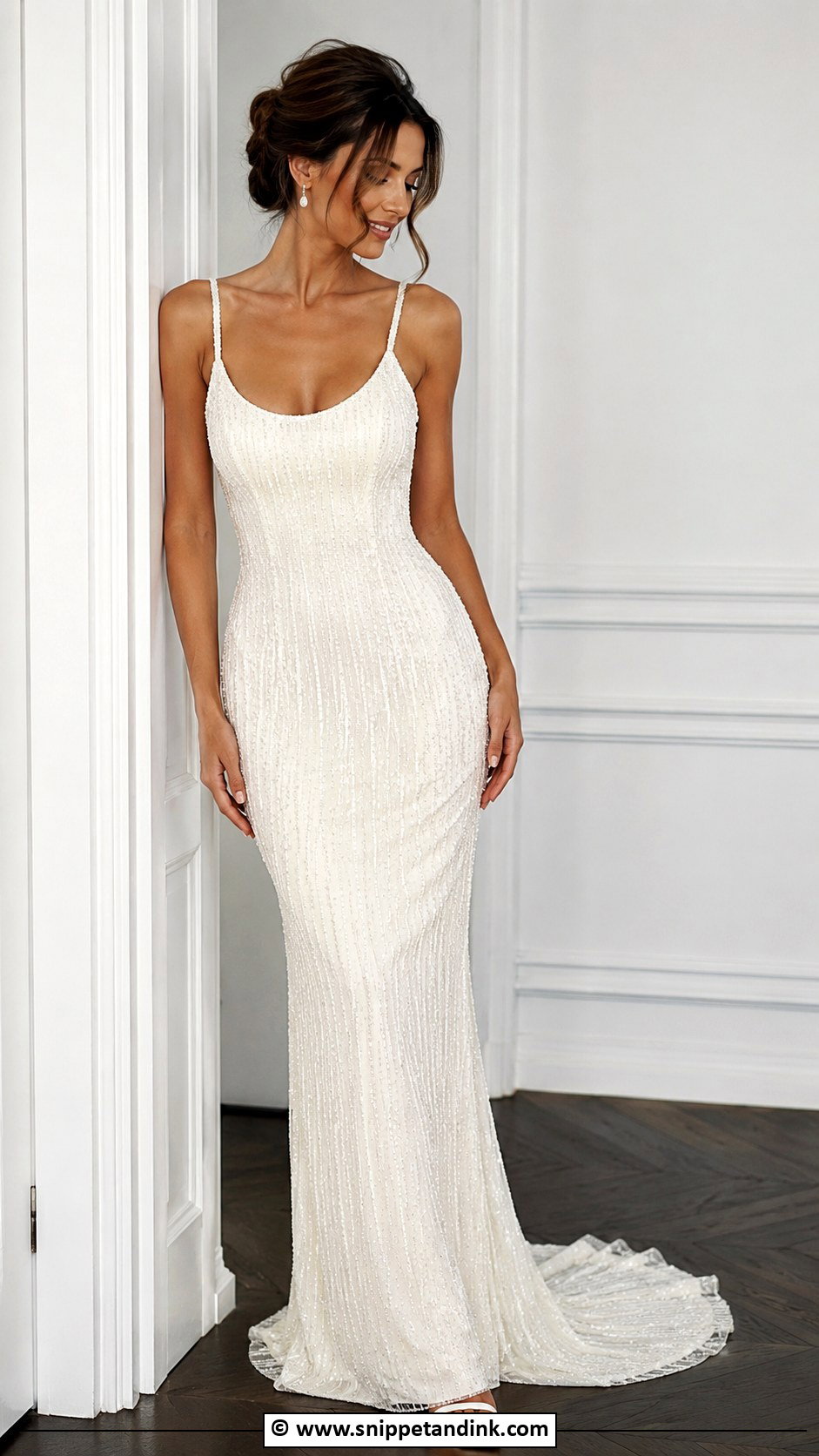
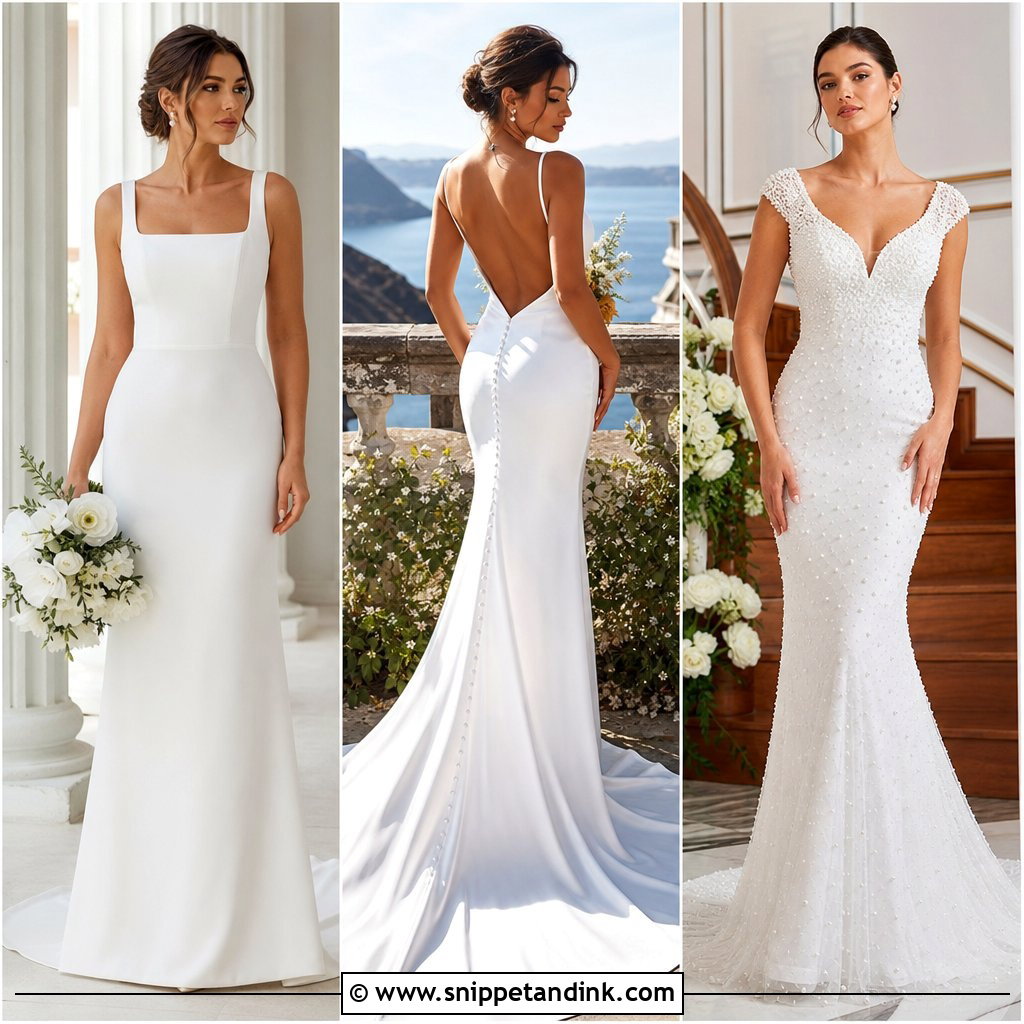
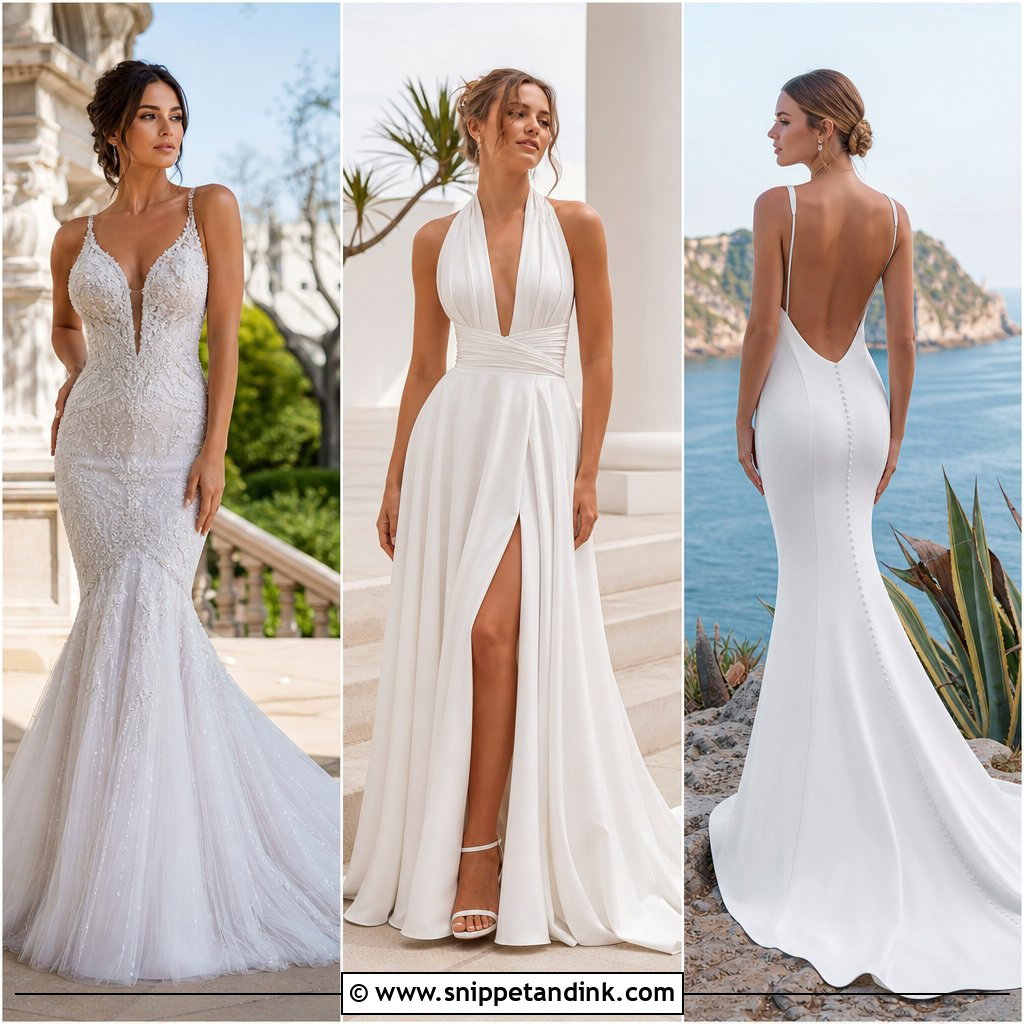
Beading adds sparkle to a fitted shape without needing a ball-gown skirt. Scattered beads feel delicate on a sheath; dense beading on a mermaid is full glamour. Vertical lines, vines and soft geometric patterns all lengthen the body. Heavily beaded dresses are heavy, often noticeably so, and that weight pulls a fitted skirt downward through the day, so ask for a well-anchored lining and hanging loops. Keep accessories quiet: a smooth hairstyle, clear or satin heels, small earrings.
10. Tight Pearl Wedding Dress
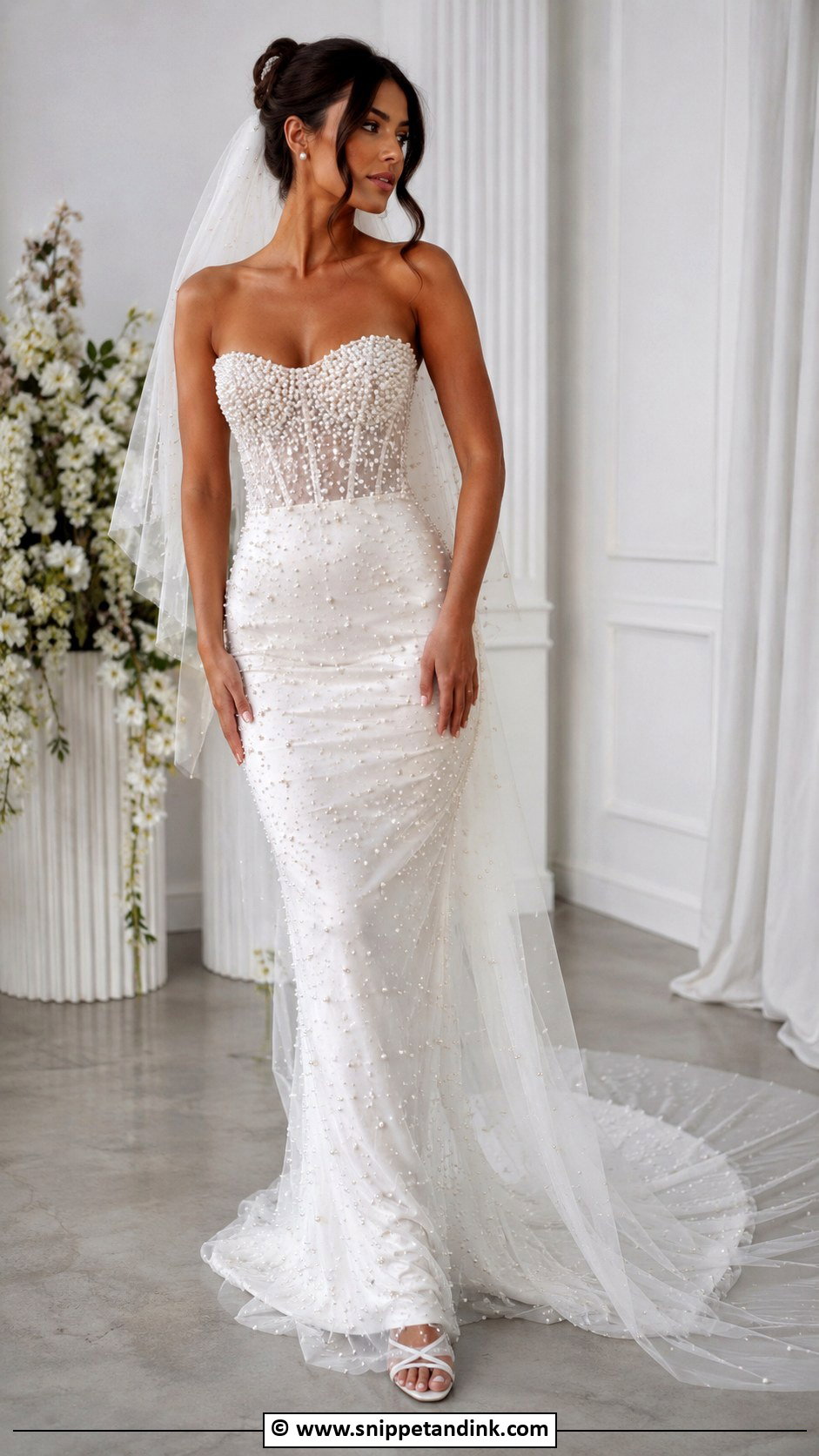
Pearls can be scattered across a bodice, lined along straps or placed sparingly on sleeves and veils. They stand out best against smooth bases such as crepe, sheer tulle and satin. For subtlety, keep a few small pearls near the neckline or waist; for impact, choose allover pearls on a plain silhouette. I check how they’re sewn on, because pearls attached with a single loose stitch catch on jewelry and pop off during hugs. Pearl studs, satin heels and a soft veil finish it.
11. Tight Square Neck Wedding Dress
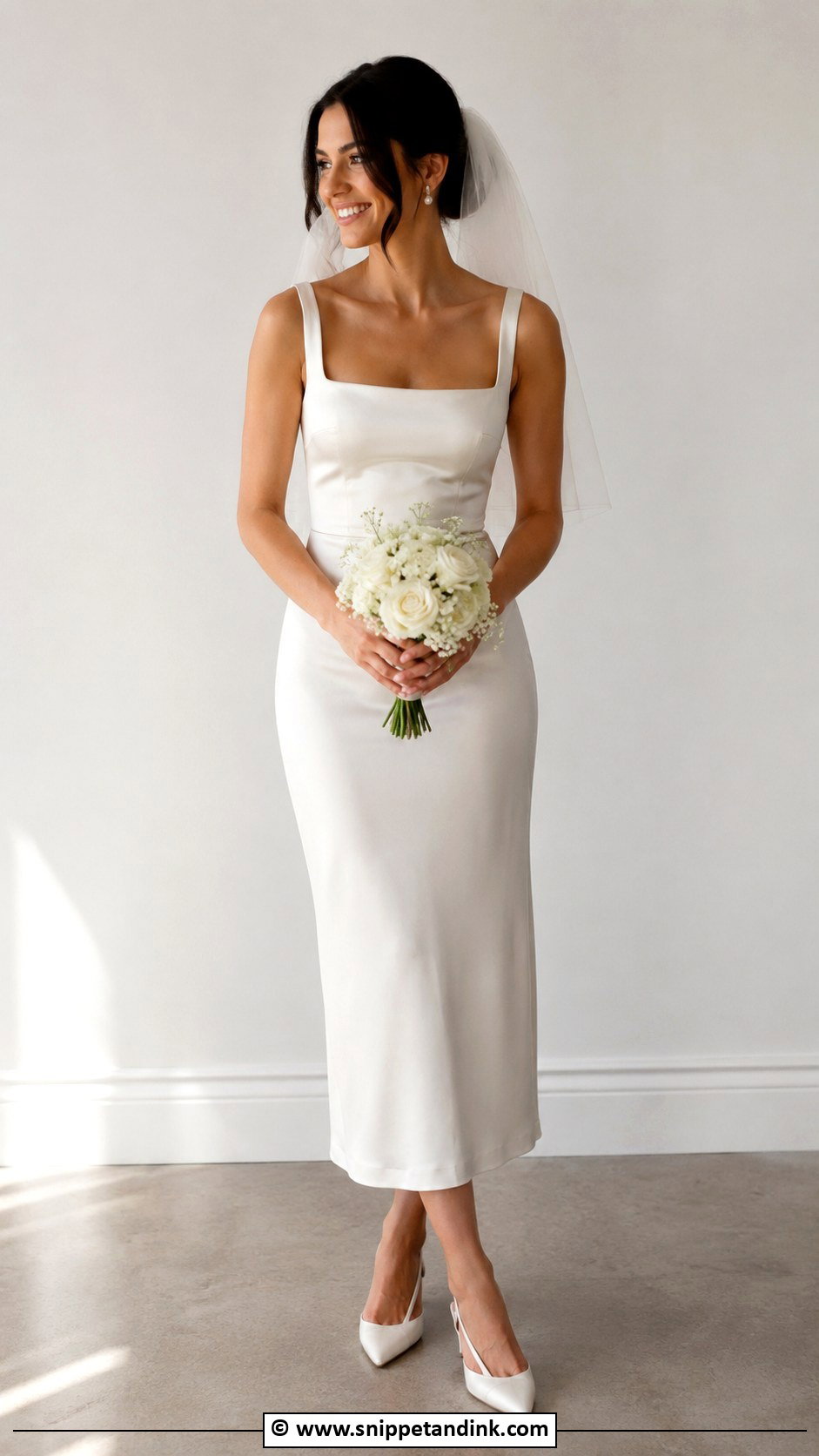
Square necklines give the upper body a crisp, structured frame that suits both modern and classic weddings. Wide straps, a fitted bodice and a smooth column or mermaid skirt are the natural partners. Crepe and satin hold the sharp corners better than soft fabrics. If you want less severity, lace trim or a gentle basque waist softens it. At fittings I watch the corners; if they bow outward when you breathe, the bodice needs letting out. A simple pendant, a low bun and block heels or pointed pumps are all it takes.
12. Tight High Neck Wedding Dress
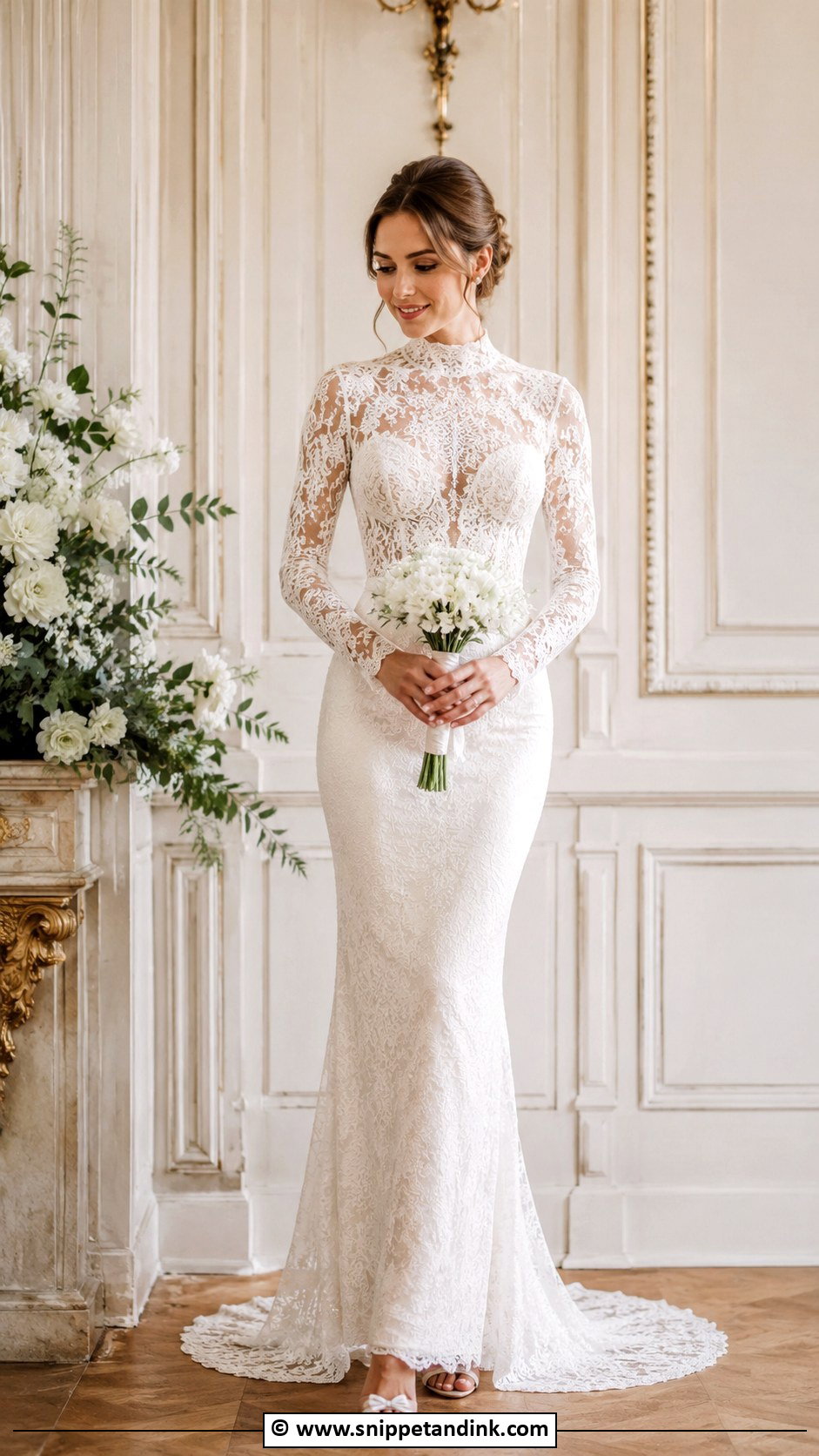
A high neck draws one long line from shoulder to hem, which suits a fitted body especially well. Lace gives it a romantic, vintage flavour; plain crepe looks sharp and modern. Because the front is covered, an open back or a close skirt brings the balance back. Skip necklaces altogether. The thing I flag is heat: a high-neck fitted dress in a warm room gets uncomfortable fast, so choose breathable lining if your venue runs hot. Small earrings, a neat updo and slim heels.
13. Tight Open Back Wedding Dress
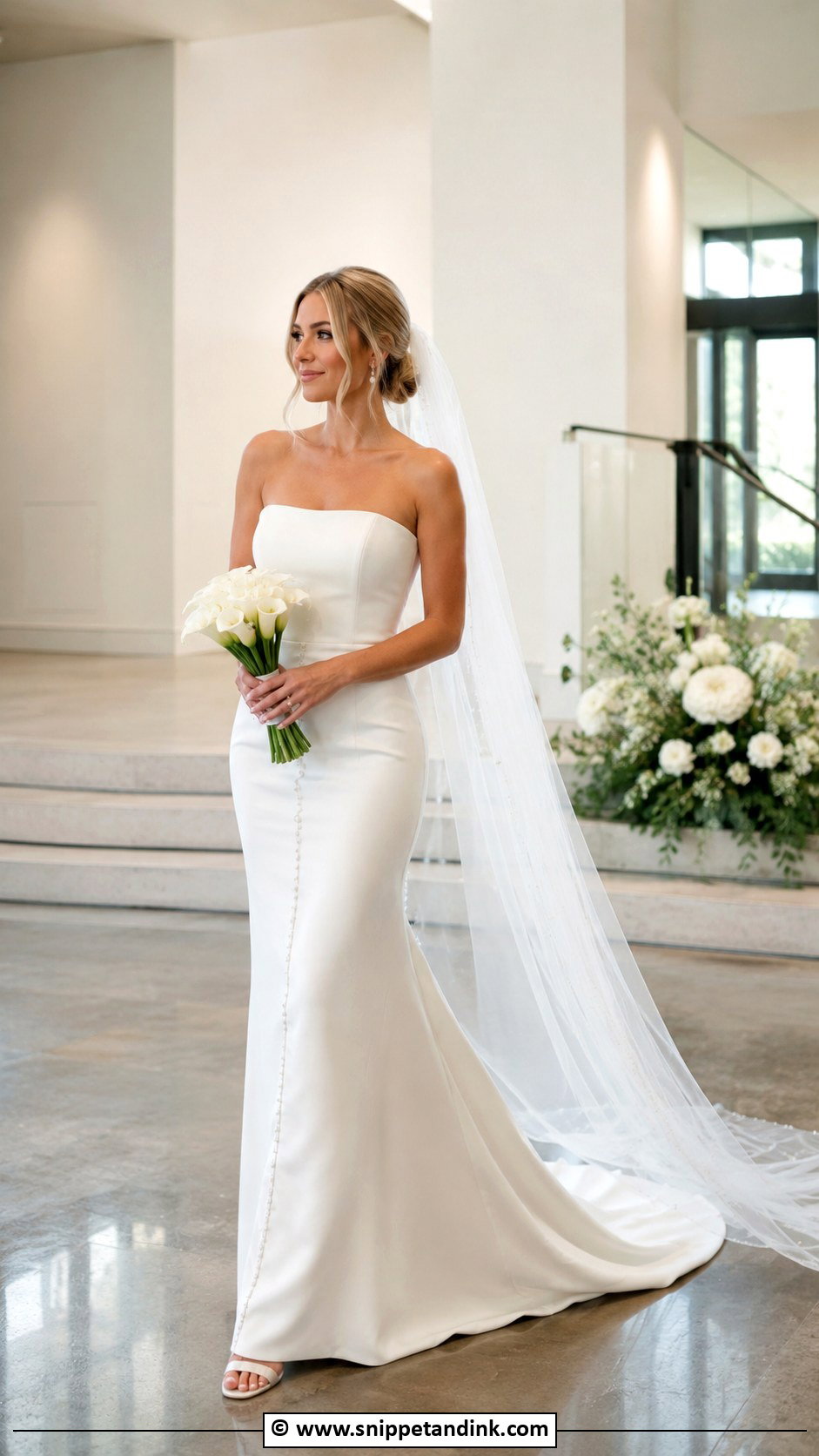
An open back keeps the front simple and puts the moment behind you, which is the view your guests have during the whole ceremony. Crepe, satin, lace and stretch mikado all hold the shape. Choose a low scoop, a V or a square cut-out, depending on how much support you need, since a deep back limits bra options. A back necklace only belongs on a very plain dress. Add a long veil, soft curls and elegant heels.
14. Tight Spaghetti Strap Wedding Dress
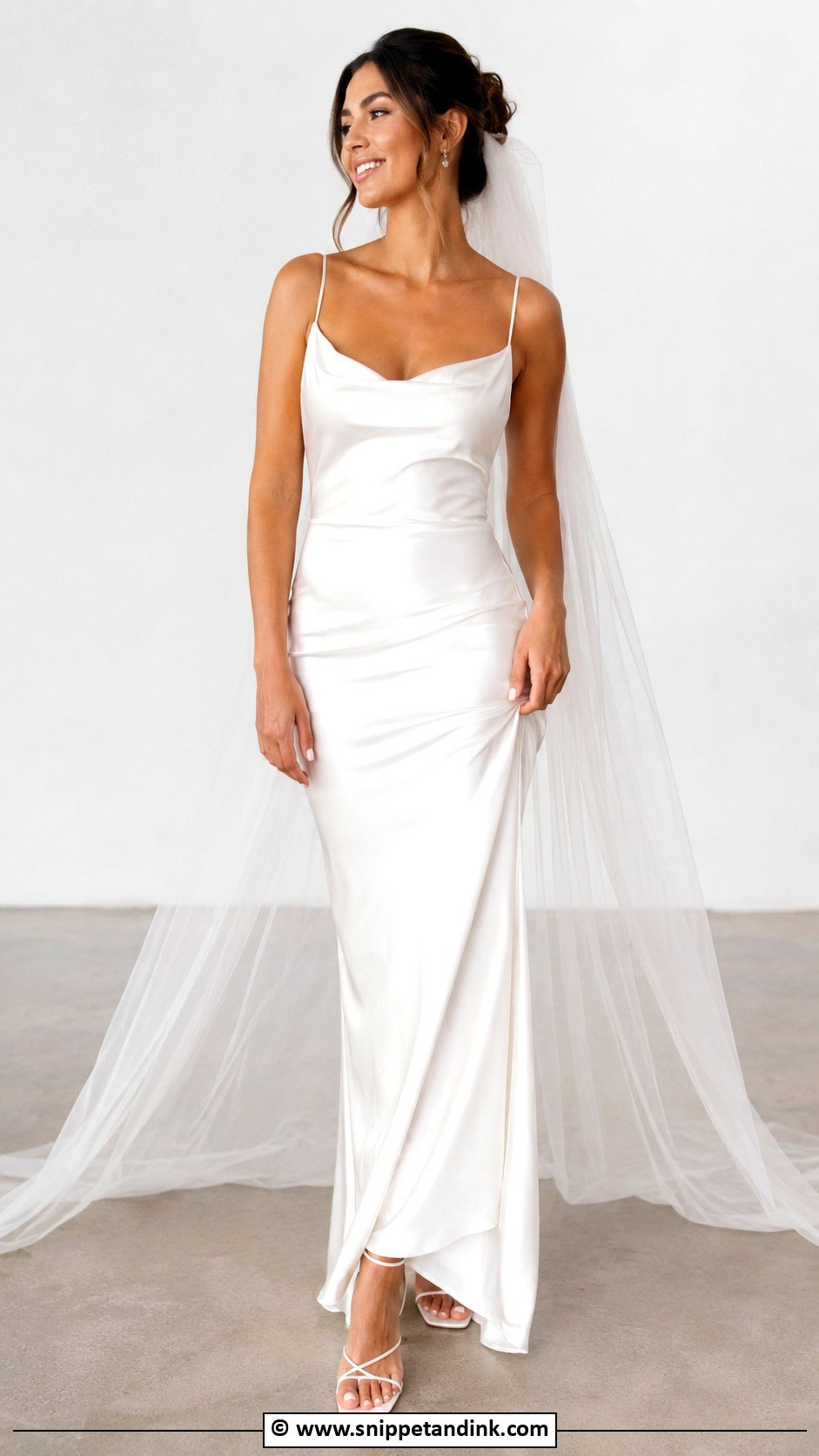
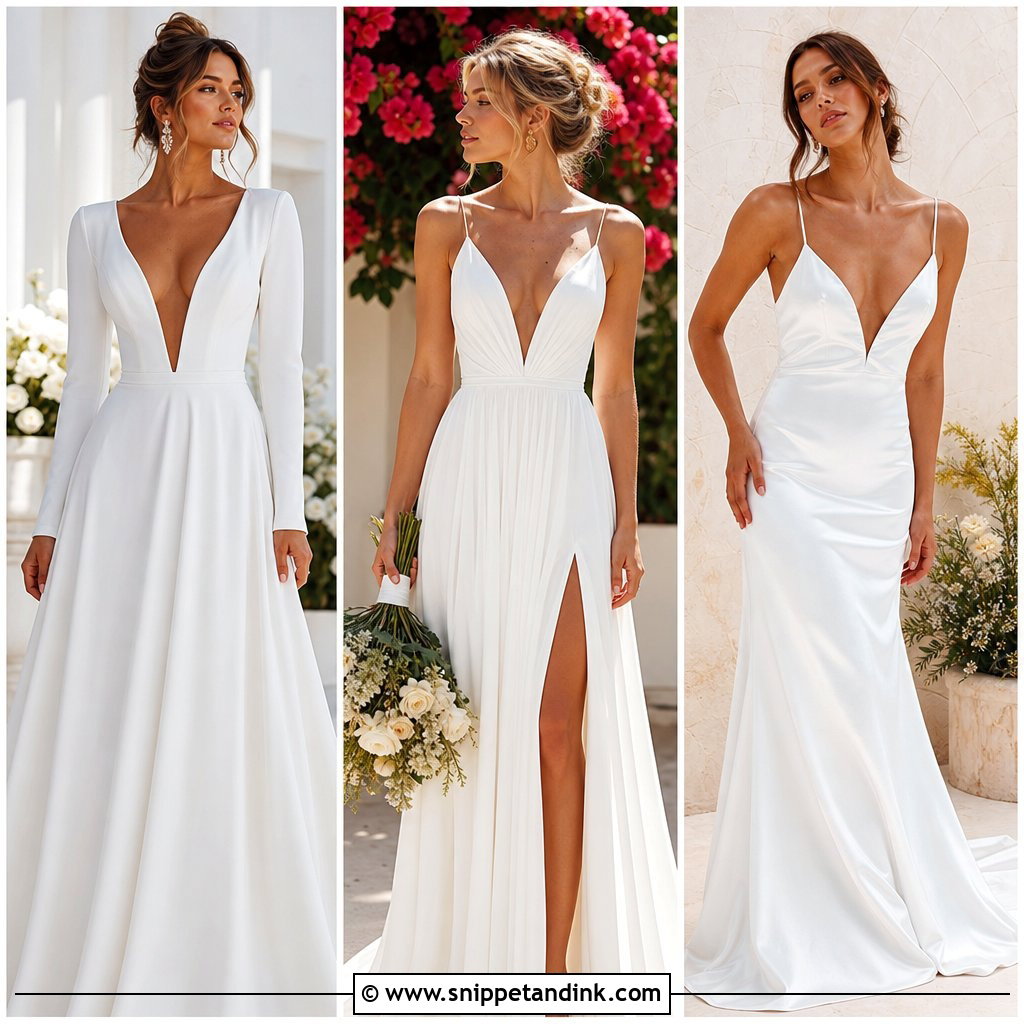
A tight spaghetti strap wedding dress is about the lightest fitted look you can wear. The thin straps suit satin slips, fitted crepe and soft lace sheaths. A cowl neck makes it relaxed; a straight neckline looks more current. These straps don’t carry real support, so I only recommend this style when the bodice itself is built to hold you, or when you’re comfortable without much structure. Strappy heels, a small bouquet, simple earrings and, if you like, a long veil.
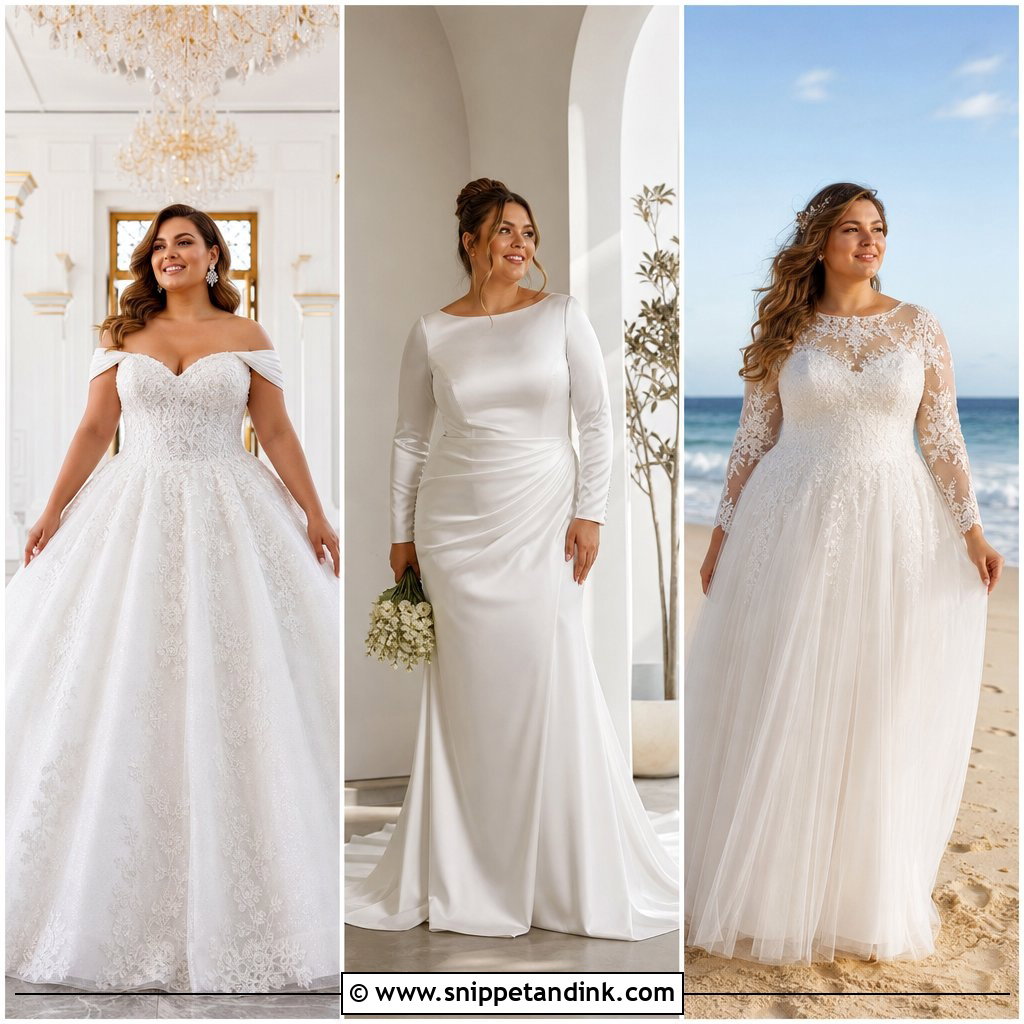
15. Tight Halter Wedding Dress
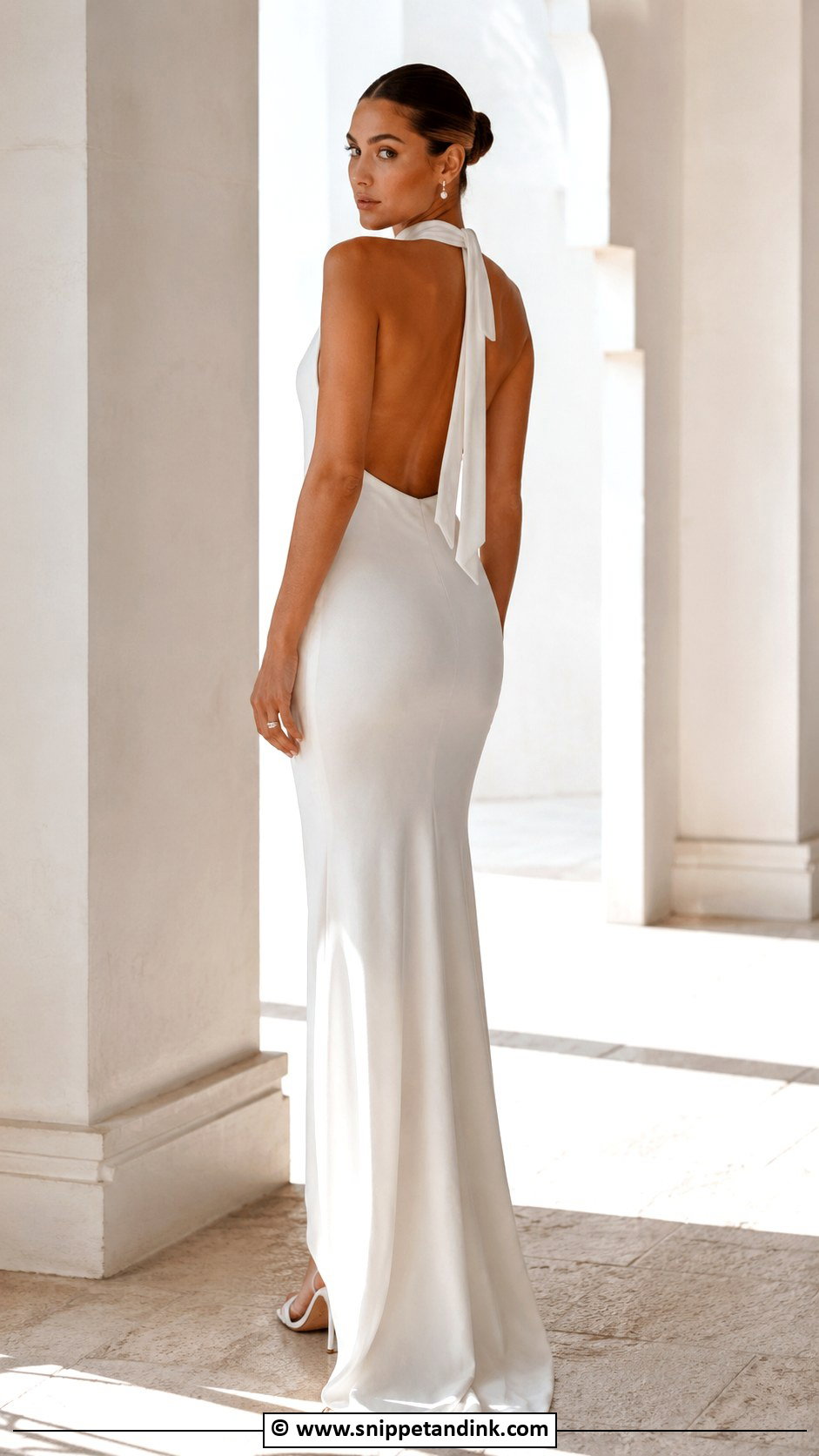
Halters lift the eye upward and show the shoulders, which pairs well with a skirt that follows the body. Satin halters feel like evening wear; lace halters are more delicate. A high front usually wants an open back to balance it, and a deep neckline wants a plain skirt. I’d check the neck strap at the fitting for pressure; a halter that carries the dress’s weight from the neck can give you a headache by the speeches. Pulled-back hair, small earrings and slim heels keep the neckline clear.
16. Tight Sheath Wedding Dress
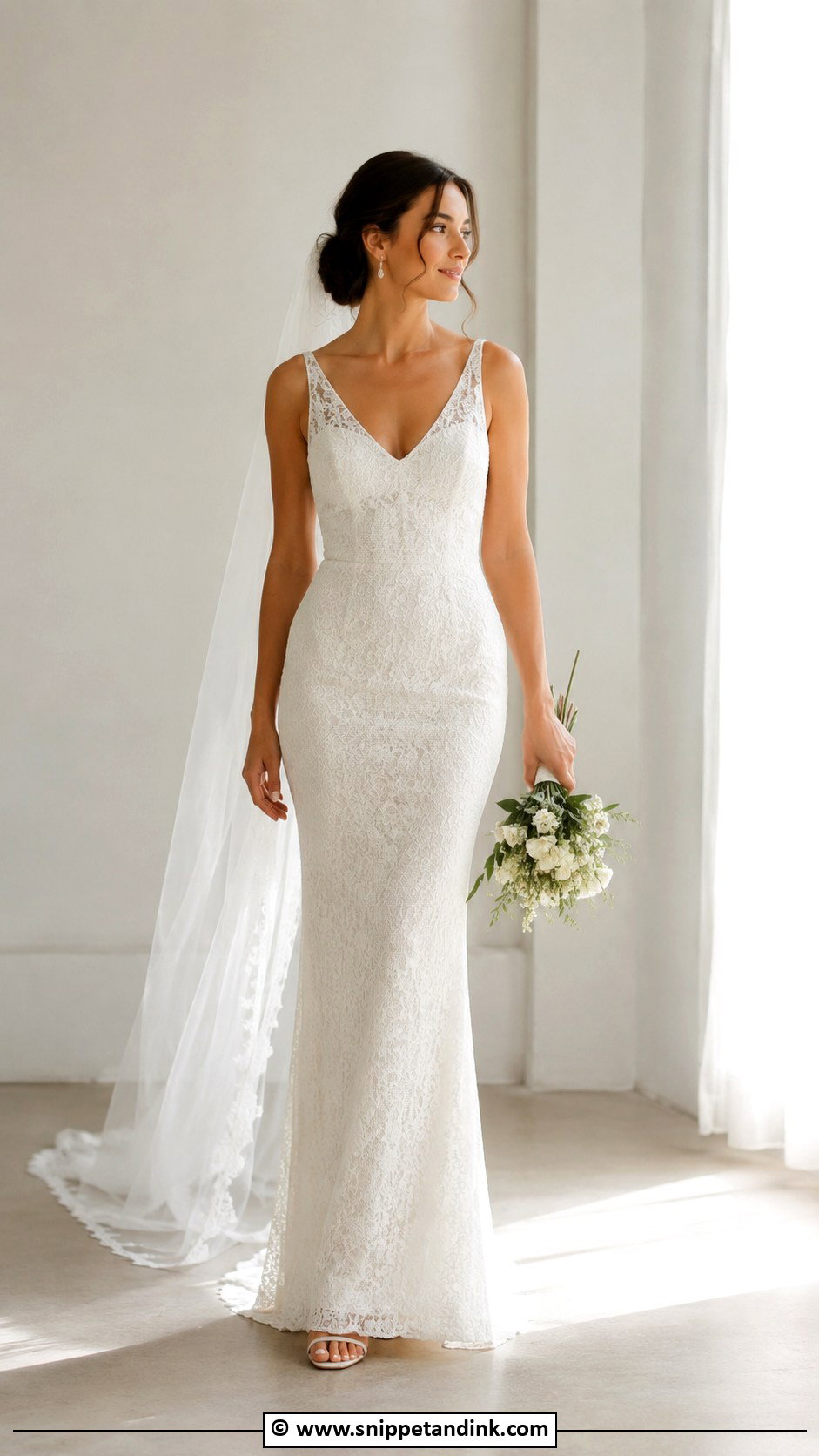
A sheath follows the body from top to bottom without a dramatic flare, so it feels lighter than a mermaid and travels well to courthouses, gardens and destination weddings. Crepe, satin and lace all suit it. Add a veil for tradition or a sleek hair piece for a modern feel. A narrow skirt shortens your stride, so practise walking downstairs in it, and ask your tailor about a small walking slit if steps are involved. Comfortable heels are non-negotiable here.
17. Tight Column Wedding Dress
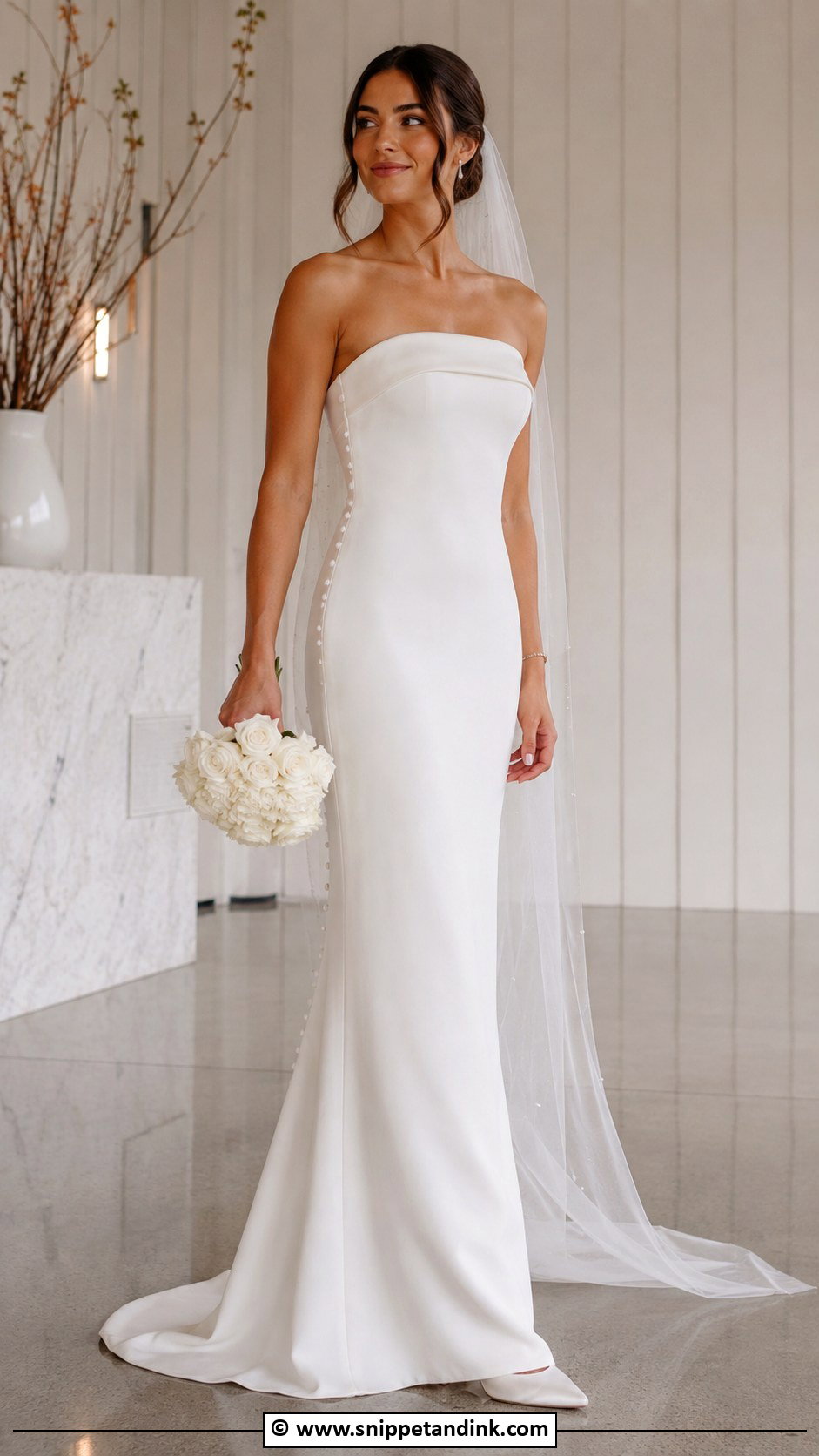
A column falls straight from neckline to hem with no flare, which is why it looks so current. It works in matte crepe, satin or structured jersey, with strapless, square, high or one-shoulder necklines. Minimal shapes live or die on small details: covered buttons, a slight train, a sculpted waist seam. Hemming matters more than people expect; a column should just kiss the top of your shoe, not puddle. Finish with sleek heels, a long veil and simple jewelry.
18. Tight One Shoulder Wedding Dress
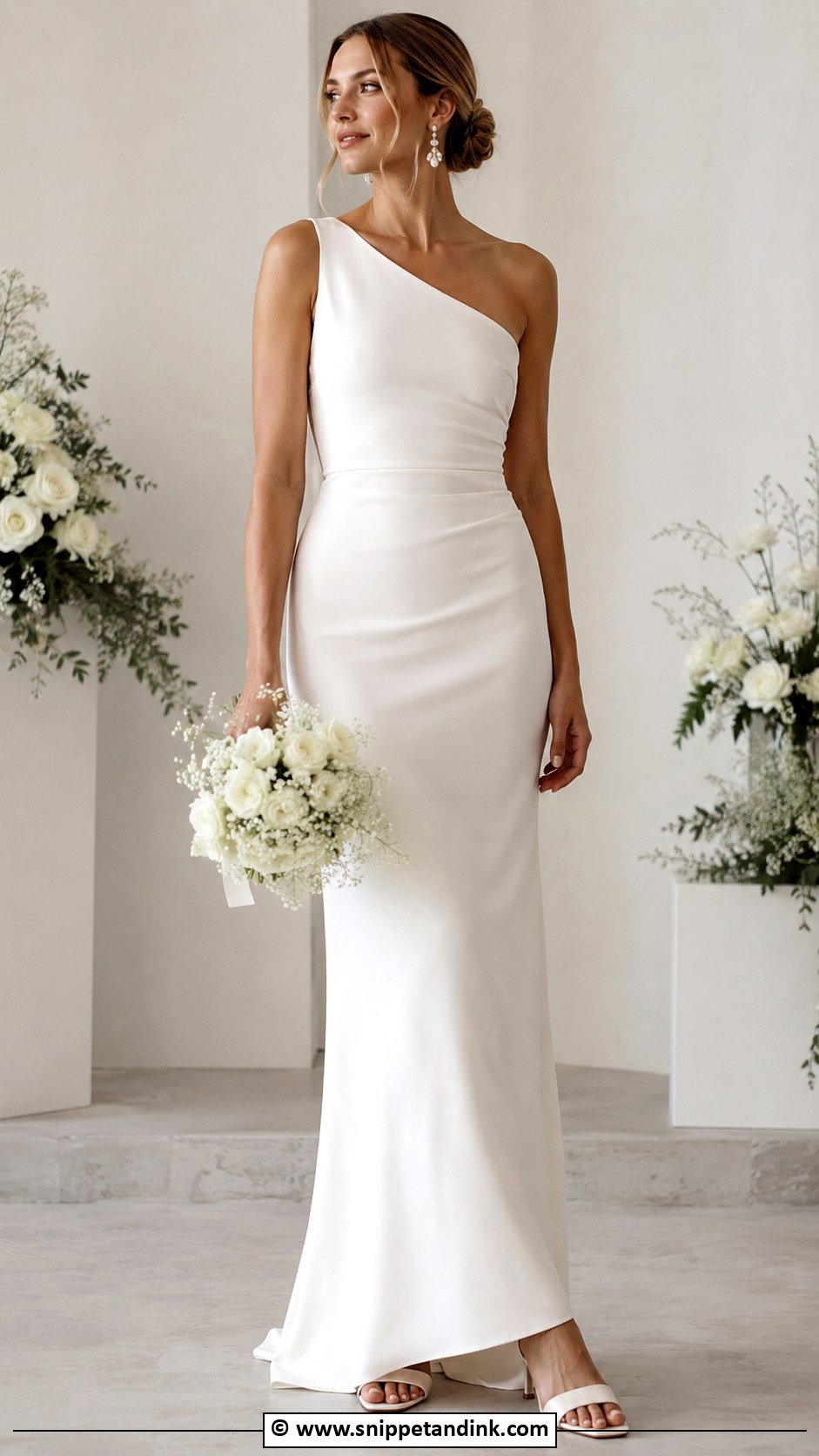
One-shoulder necklines bring a little asymmetry to a sleek, fitted body. Smooth fabrics such as crepe, satin and mikado show the line best. The shoulder can be slim, draped or gently sculptural. Because one side carries the bodice, I check that the strapless side stays secure when you lift your opposite arm. Skip the necklace and wear earrings; a clean bun or side-parted waves keep the shoulder visible. Slim heels and a simple veil.
19. Tight Mini Wedding Dress
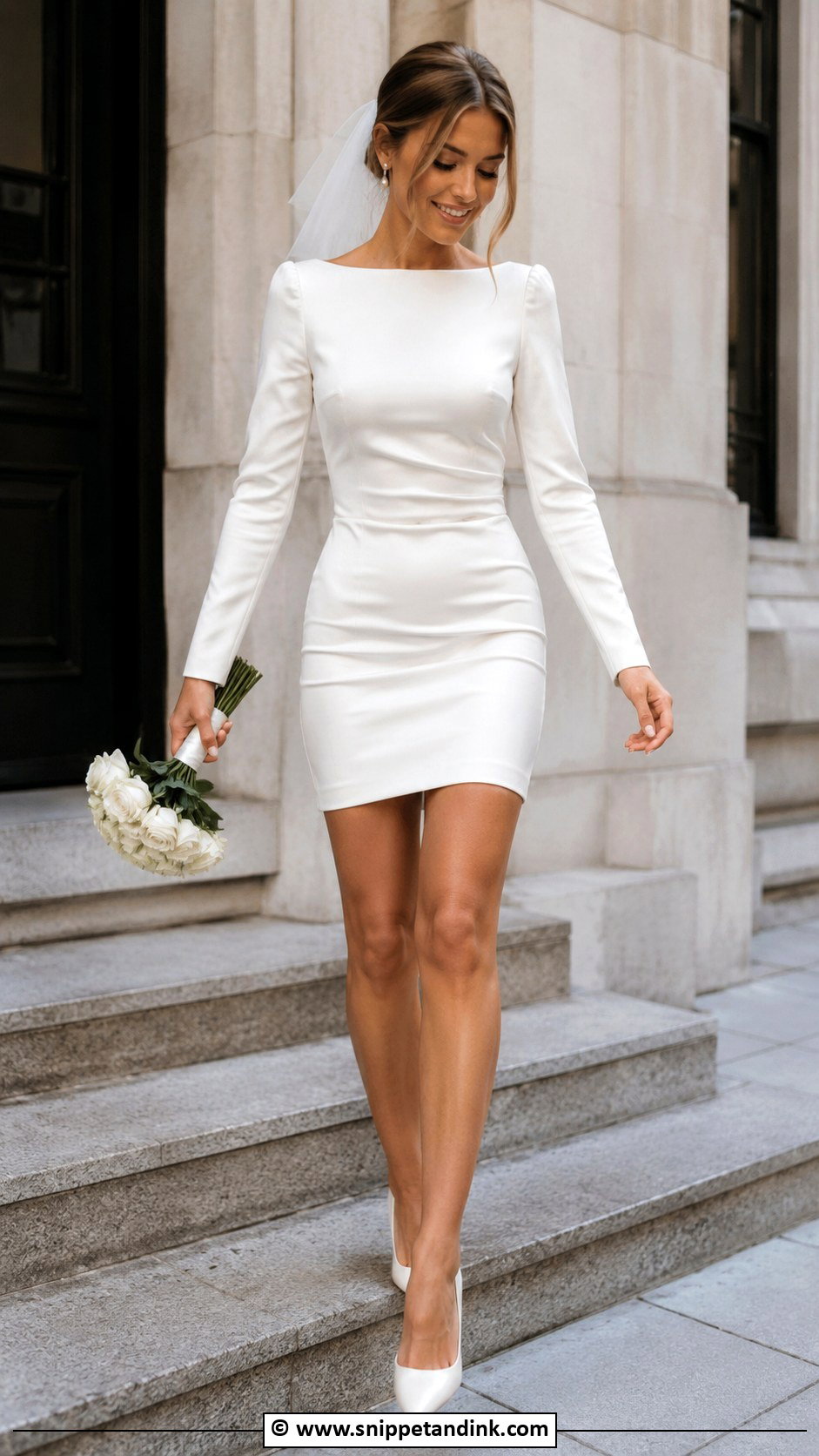
A fitted mini is fun for a courthouse ceremony, a reception change, a shower or an after-party. Structured crepe, satin or lace keep it from looking casual. Long sleeves balance a very short hem; strapless feels bolder. Short fitted skirts ride up when you sit, so try sitting and standing in front of a mirror before you choose a length. Pointed pumps, slingbacks or embellished heels, plus pearl earrings, a small veil or a bow clip, keep it bridal.
20. Tight Midi Wedding Dress
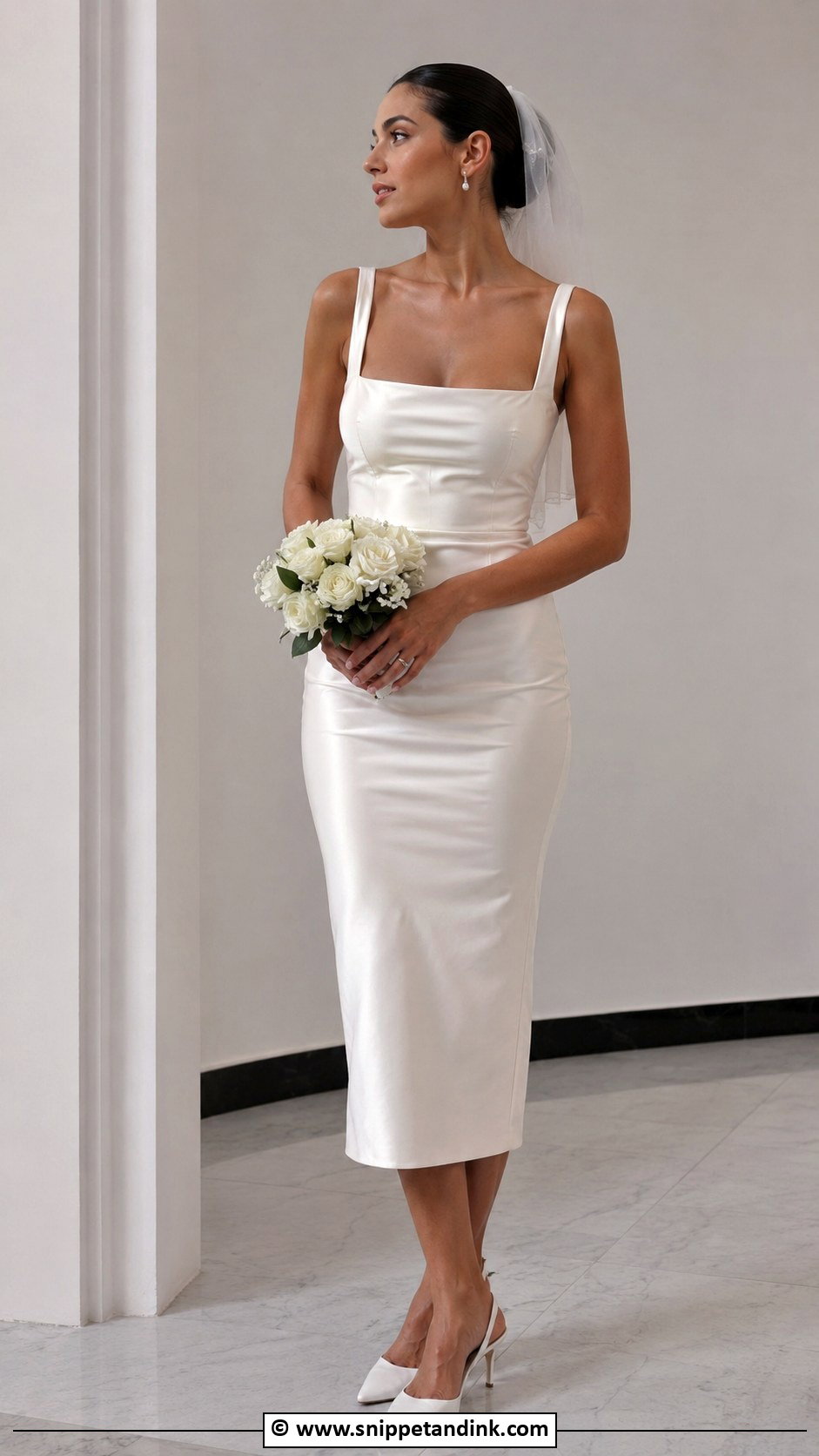
A fitted midi lands between knee and ankle and sits neatly between a mini and a full gown. It suits courthouses, civil ceremonies, rehearsal dinners and small celebrations. Satin feels sleek; lace feels softer. A narrow midi skirt needs a back vent or slit to walk well, and without one you’ll be taking small steps all day. Slingbacks or pointed pumps lengthen the leg. A birdcage veil, pearl earrings or a simple headband add the bridal note.
21. Tight Wedding Dress With Slit
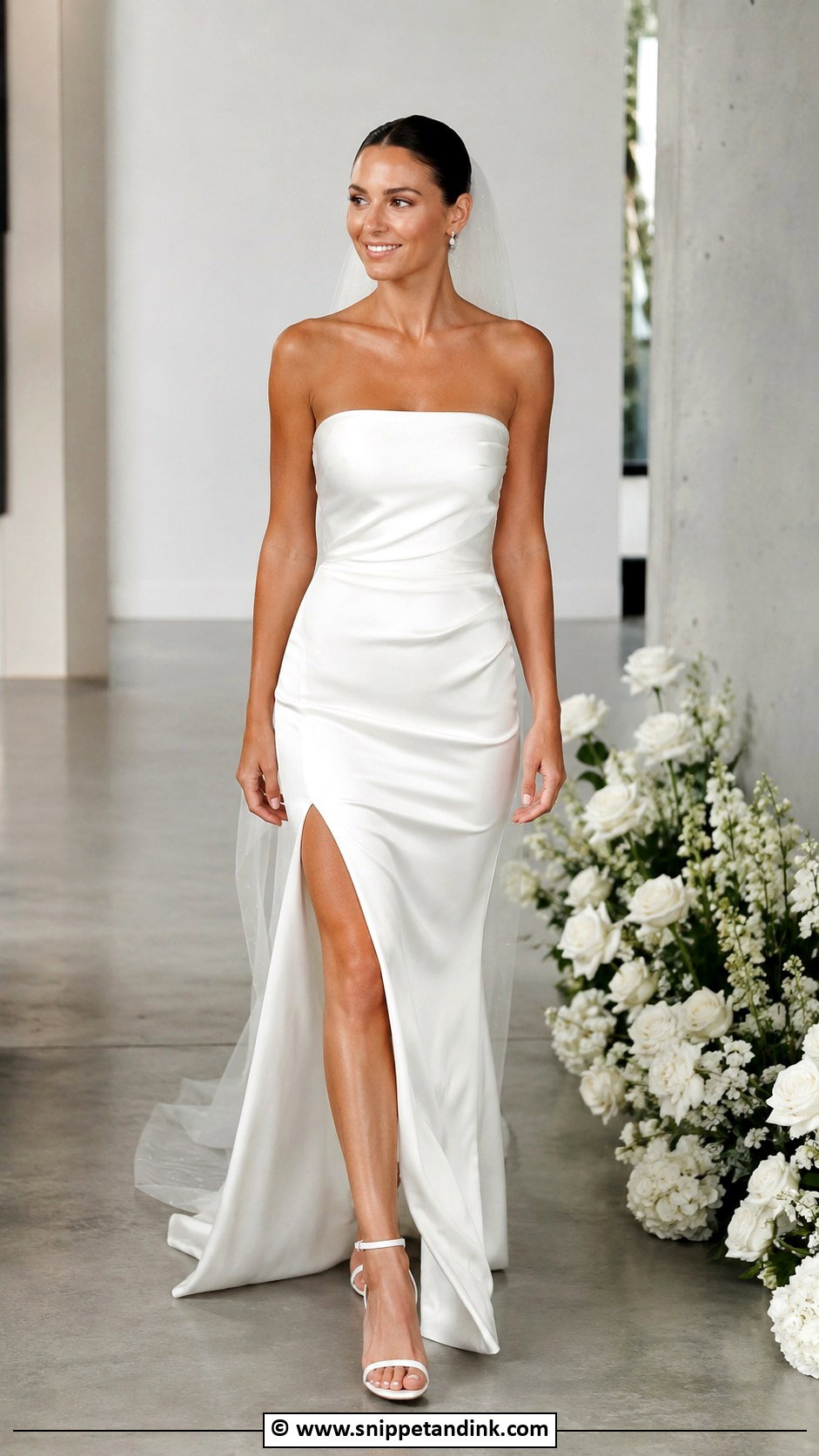
A slit gives a fitted skirt somewhere to move, which makes walking far easier in a sheath or column. Front slits read bold; side slits look softer. Satin and crepe drape cleanly at the opening. I always mark slit height with the bride sitting and climbing a step, because a slit that looks modest standing can open much higher on a stair. Keep the neckline calm: straight strapless, square or simple straps. Heels that show when you walk, small earrings and a clean veil.
22. Tight Wedding Dress With Train
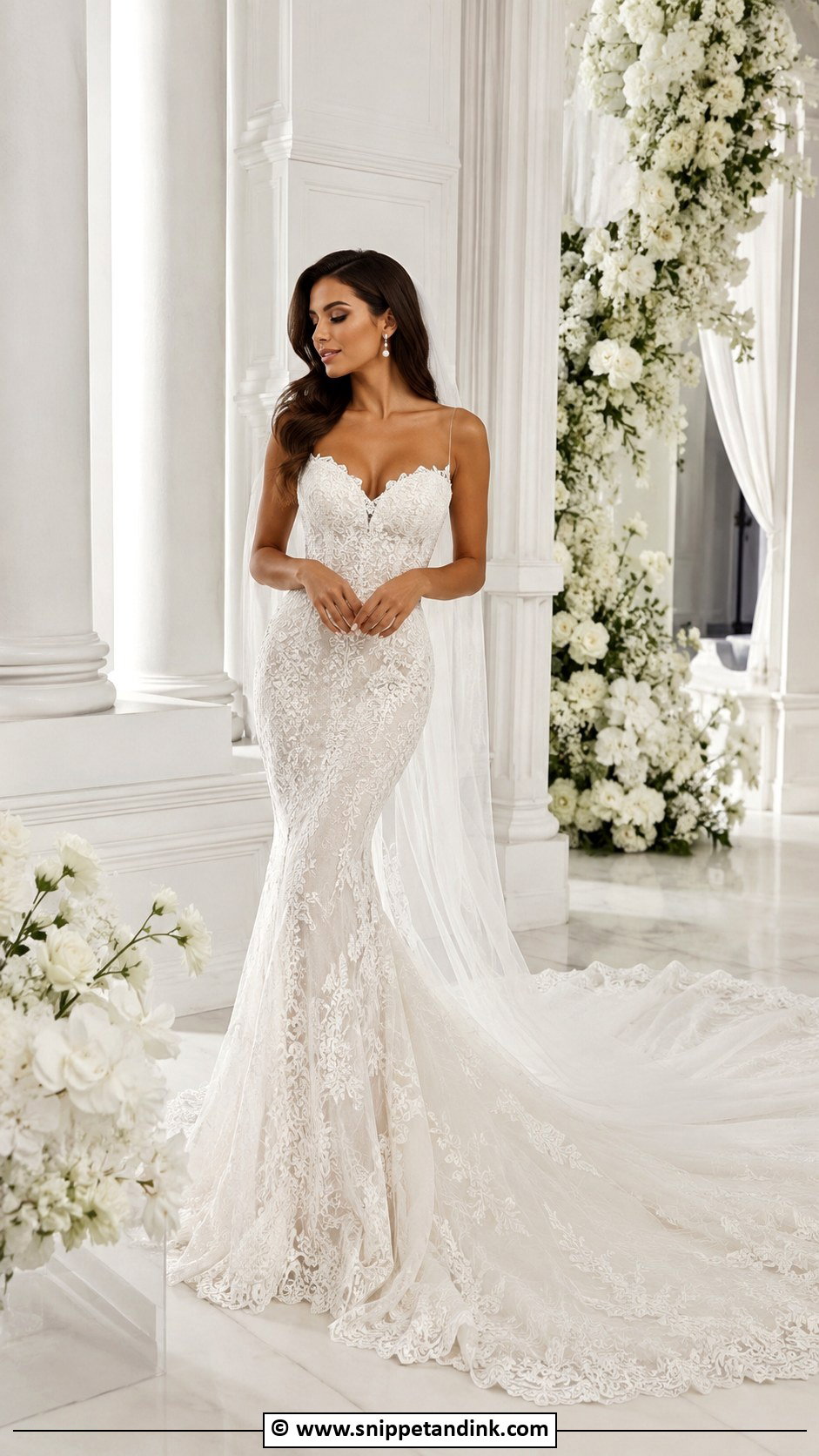
A train adds a sweep of drama behind a sculpted body. Short trains suit gardens and small rooms; long ones need an aisle and a venue with clean floors. Crepe with a long train looks modern; a lace mermaid with a train feels romantic. Ask for a bustle demonstration at your last fitting and teach it to whoever will do it on the day, because fitted gowns often use small hooks or ribbon loops that are fiddly under pressure. Keep the veil, heels and jewelry simple.
23. Tight Wedding Dress With Detachable Skirt
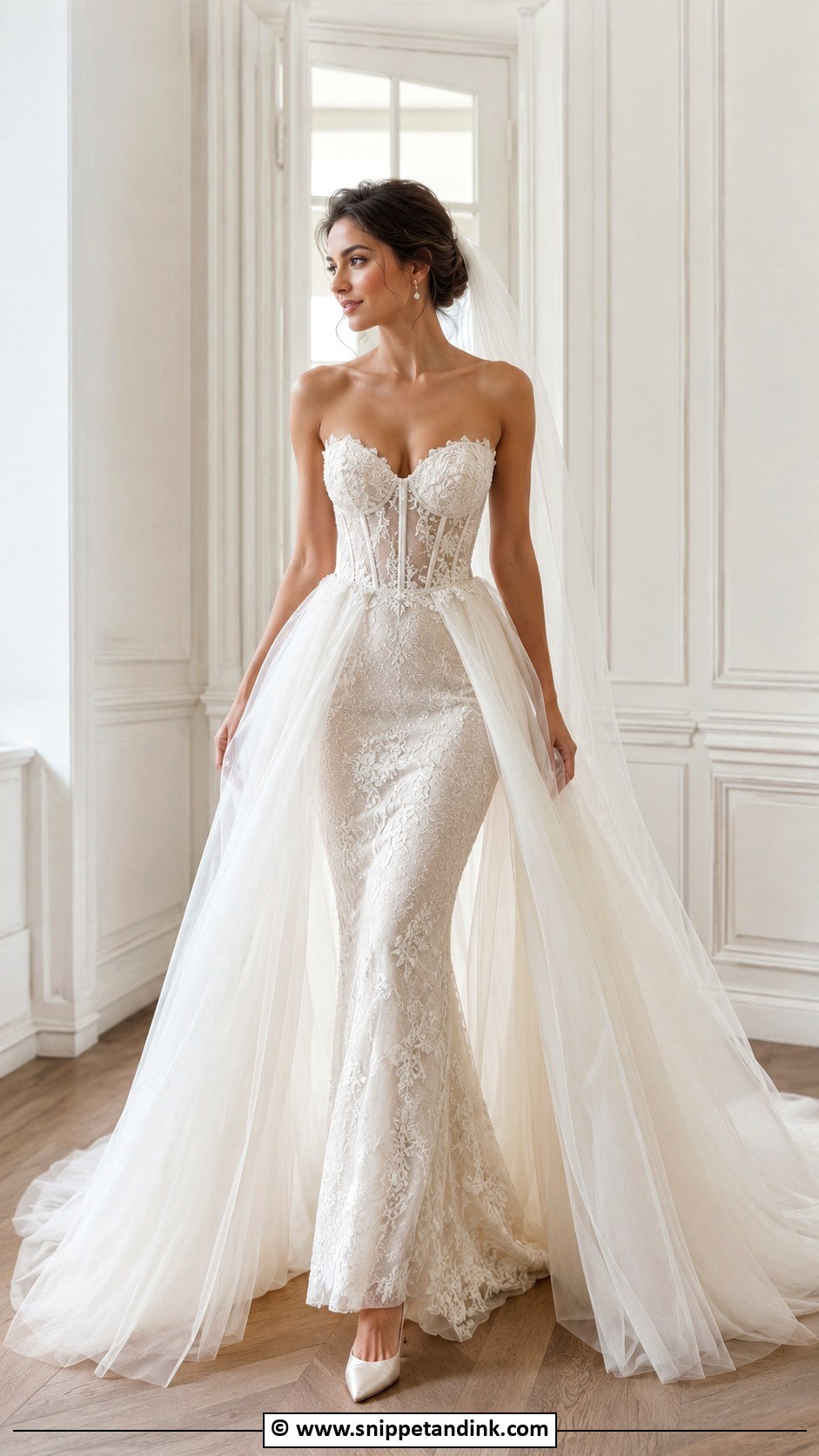
A detachable skirt gives you two outfits. For the ceremony it adds volume and formality; off it comes for the reception to reveal a sheath, mermaid or mini. Tulle overskirts feel soft, while satin or mikado ones look structured. Keep the base dress plain so both versions read finished. I recommend a practice run at a fitting, timing how long the swap takes and who unhooks what. Add the veil for the ceremony and statement earrings for the second look.
24. Tight Wedding Dress With Cape
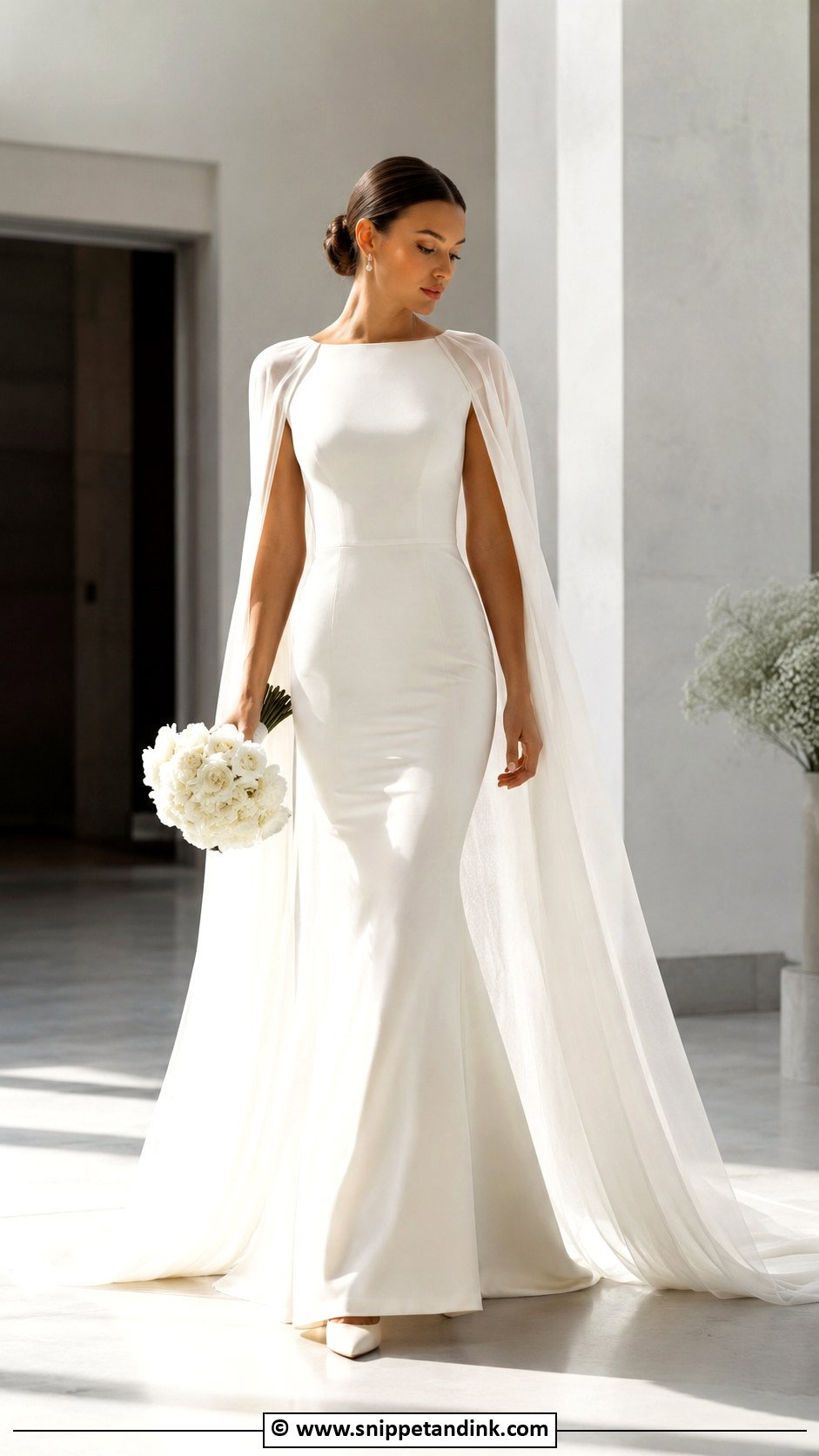
A cape adds a moving layer to a fitted gown and can stand in for a veil. It also covers a strapless, sleeveless or low-back dress for a religious ceremony, then comes off for the party. Sheer capes feel airy; crepe capes look architectural. Check how it fastens: a cape that hooks at the neck can drag the neckline back when it catches the breeze or gets sat on. Keep the dress underneath clean, and pair it with simple earrings, smooth heels and sleek hair.
25. Tight Wedding Dress With Overskirt
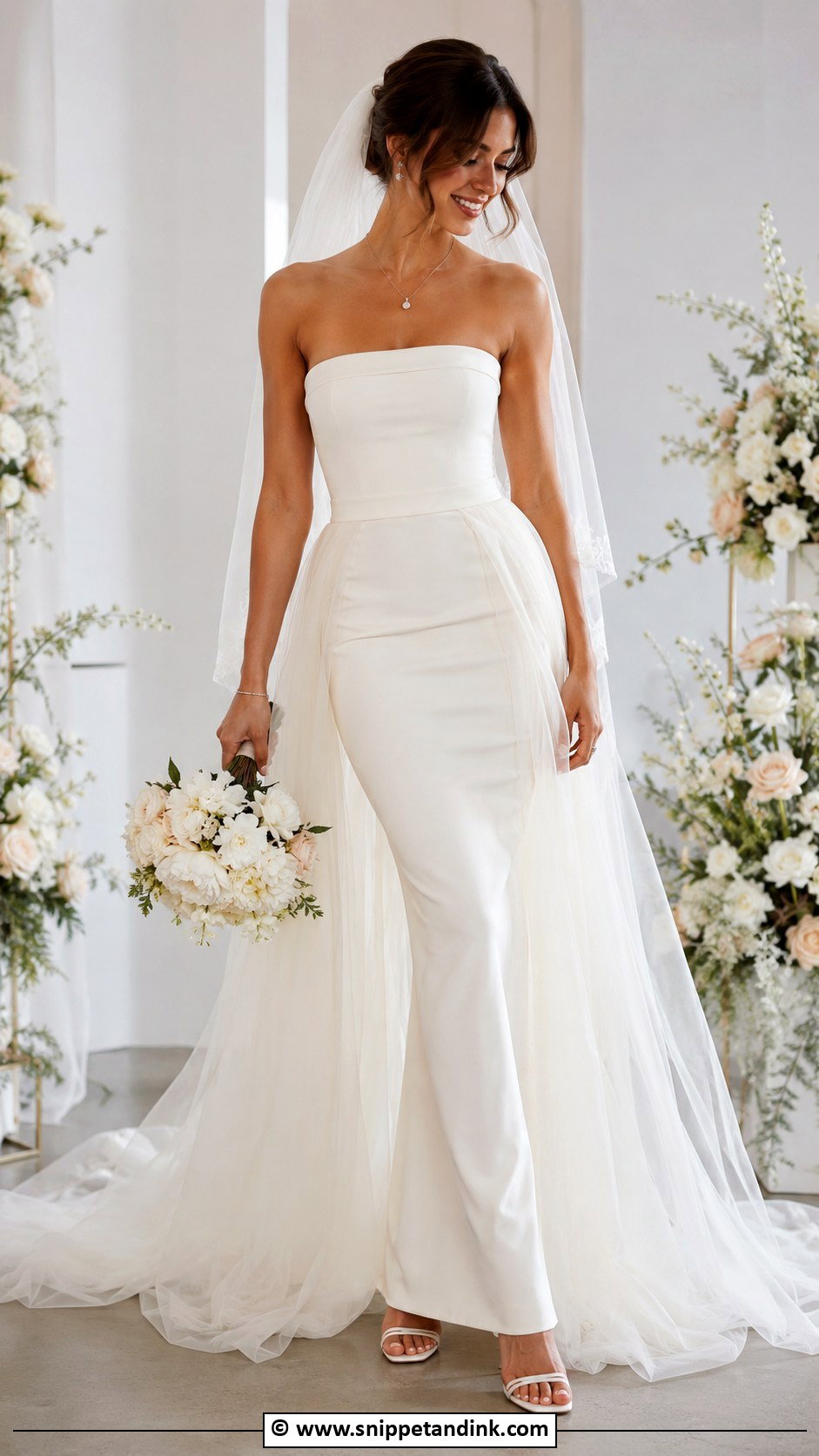
An overskirt differs from a detachable skirt in that it’s often open at the front, fixed at the waist or layered lightly over the back. You keep sight of the fitted shape while gaining softness and ceremony presence. It suits strapless corset gowns, lace sheaths and fitted satin. Tulle reads romantic; mikado holds structure. Some can be removed after photos. I match the veil length to the overskirt so the two don’t fight at the back.
26. Tight Wedding Dress With Gloves
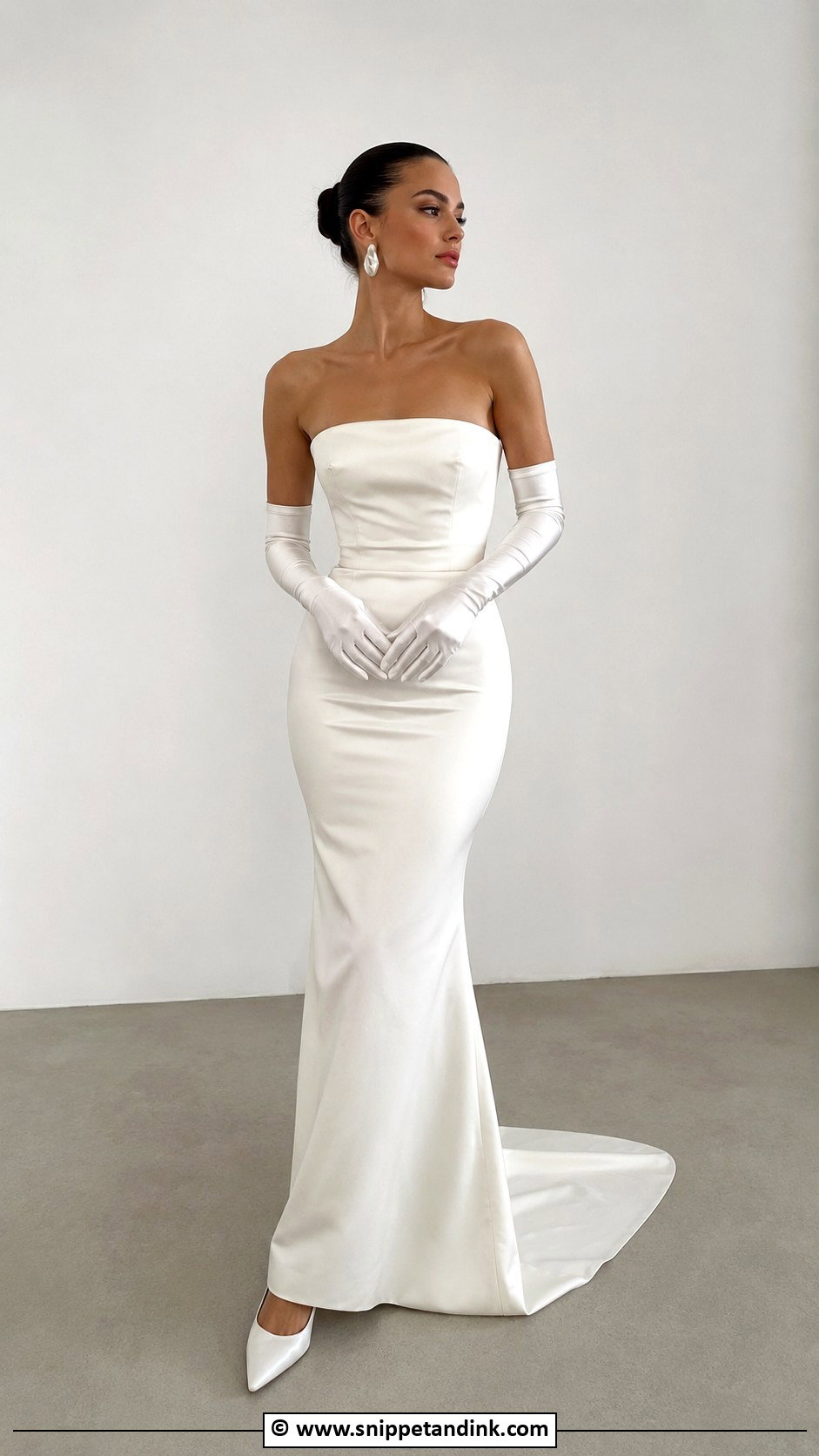
Gloves make a fitted gown feel styled and a little fashion-led. Long satin gloves suit strapless and off-shoulder dresses; sheer gloves pair well with lace or pearl detail. Clean lines work best, so the gloves read intentional rather than crowded. Practical point: you’ll need to remove at least the left glove for the ring, so choose gloves that slide off easily, or ones with a ring-finger opening. Ivory for a match, sheer white for softness; bracelets off.
27. Tight Wedding Dress With Bow
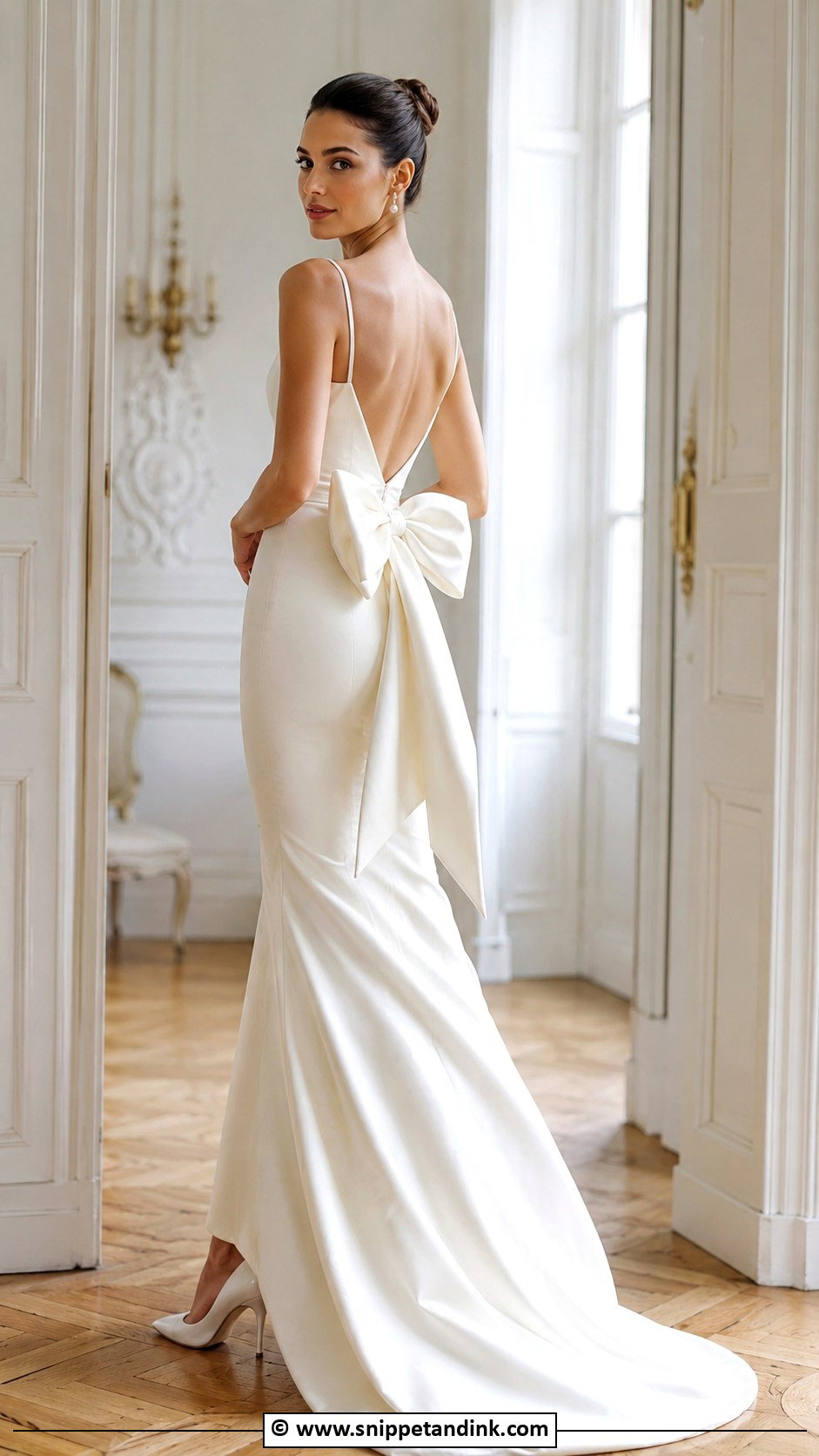
A bow softens a sculpted silhouette. It can sit at the back waist, shoulder, neckline or train; a large back bow adds drama walking away, a small shoulder bow stays subtle. Satin, crepe and mikado hold the loops crisply. One embellishment is enough on a fitted dress, so let the bow be it. A back bow gets crushed against a chair through dinner, so I suggest a bow that’s stiffened inside or detachable. Simple heels, pearl earrings and smooth hair.
28. Tight Floral Lace Wedding Dress
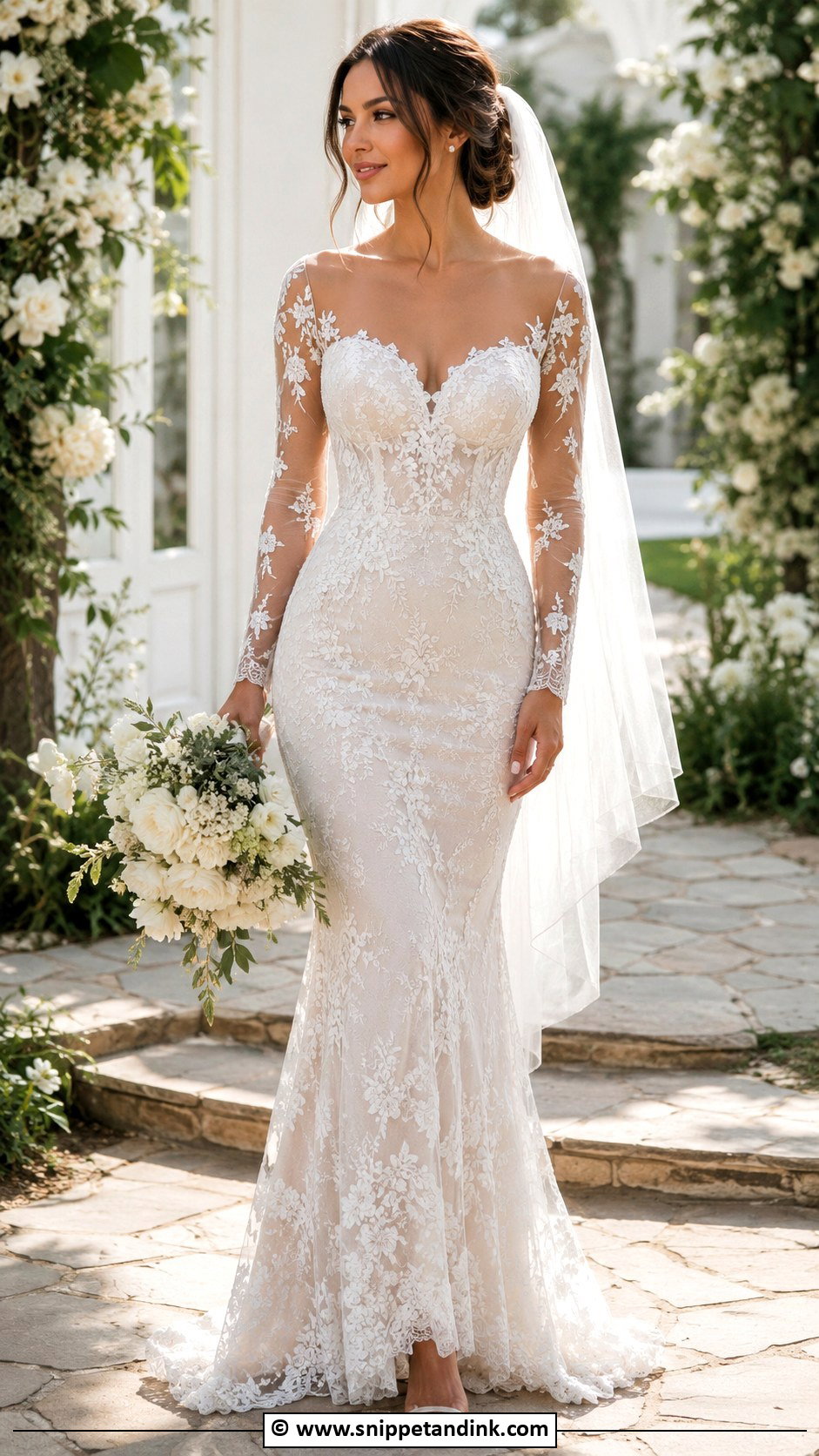
Floral lace gives a fitted dress texture and softness and can highlight the waist, neckline, sleeves or train. Large flower motifs look modern; small ones feel classic. Sheath, mermaid and fit-and-flare shapes all suit it. For outdoor heat, choose a lightweight lace on a breathable lining, since heavy lace over a tight lining traps warmth. Pearl studs, a sheer veil and delicate heels are enough.
29. Tight Minimal Wedding Dress
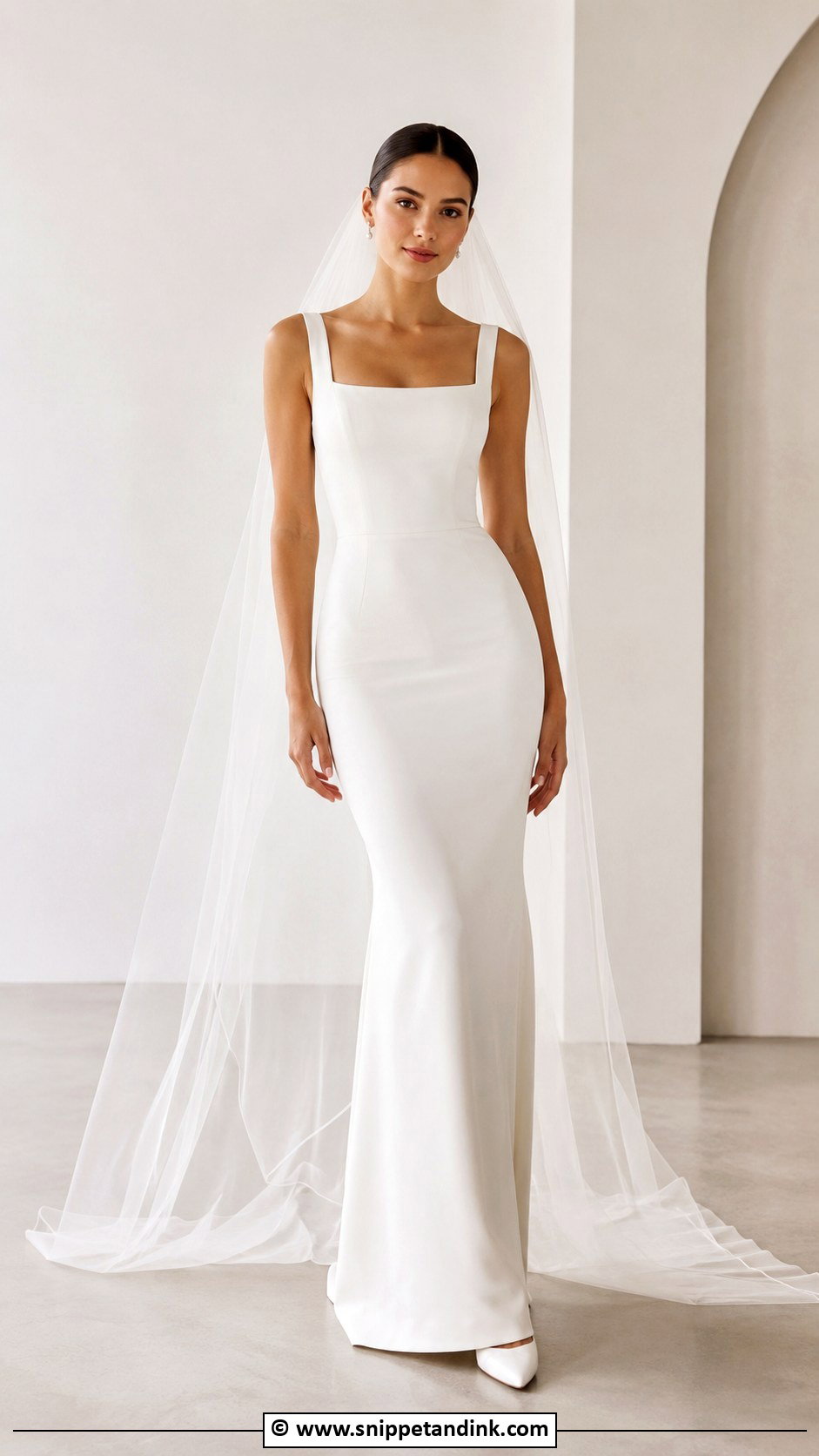
With no decoration, a minimal fitted dress depends entirely on cut, fabric and fit. Crepe, satin and mikado give the smoothest finish. Look for considered details like a square neckline, covered buttons, a subtle train or a sculpted waist seam. This is the style where I’d spend the most on alterations, since a fraction of an inch at the waist or shoulder is visible. Pointed heels, delicate earrings and a sleek veil complete it.
30. Tight Vintage Wedding Dress
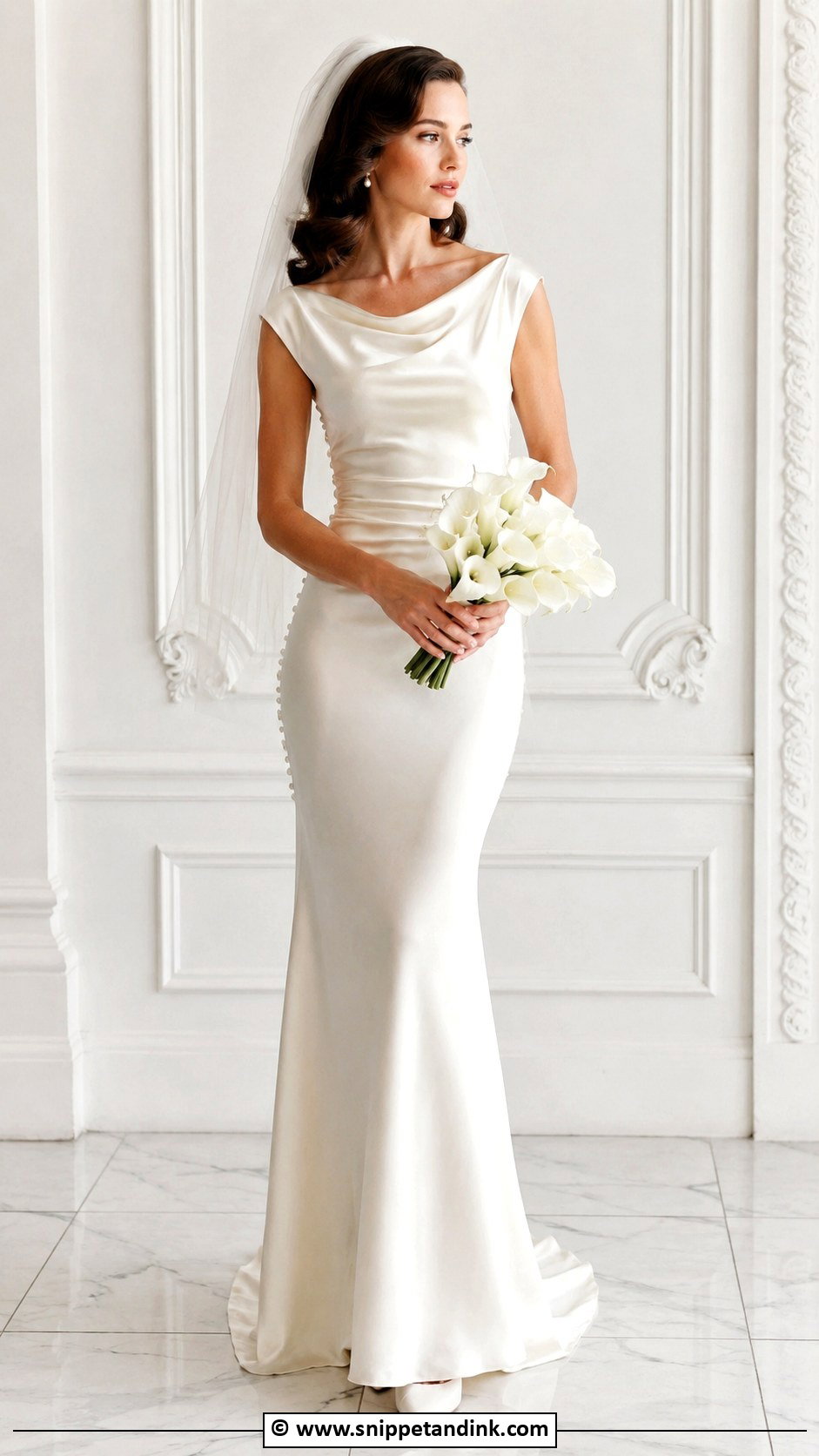
Vintage fitted dresses borrow from earlier decades: bias-cut satin, lace sleeves, high necks, covered buttons, slim silhouettes. A 1930s bias-cut satin pours over the body; a 1950s fitted midi looks crisp. Bias cut is the honest challenge here, because it clings and shows every line underneath, so it suits brides who are comfortable with that. Classic pumps, pearl earrings and softly set hair work. Keep the makeup clean and the tailoring modern so it reads as a reference, not a costume.
What Goes Underneath a Body-Skimming Gown
With a close silhouette, underwear is part of the dress. I ask brides to buy foundation garments before the first fitting, because every alteration is measured over them. Swap them later and the waist, hips and hem can all shift.
Matching the layer to the fabric
- Satin and thin crepe: laser-cut, no-show underwear in a shade close to your skin, not white, which can show through ivory.
- Strapless and open-back styles: ask your seamstress to sew bra cups into the bodice rather than relying on a stick-on bra for twelve hours.
- Light shaping: a smoothing slip or short is often enough; heavy compression under a tight dress gets uncomfortable at dinner.
- Bias-cut silk or satin: try everything on under the actual dress in daylight, since this cut shows the most.
Living in It From Ceremony to Last Dance
Fitted dresses ask for a bit of planning around the day itself. Bathroom trips are the obvious one. A narrow skirt is easier than a ball gown, but a bridesmaid who knows the zip and any bustle hooks saves time.
Eat little and often rather than one big meal, since bloating is real under a corset. Keep a fashion tape strip and a small sewing kit in someone’s bag for straps and hems. If the dress has a train, have it bustled before the first dance rather than mid-song. Most fitted gowns feel snugger in the evening than they did at noon, and that is normal.
Close Fit Works When the Fabric Lets You Breathe
A good fitted dress is shaped, confident and comfortable at once. How close it sits matters less than the fabric, the support inside and whether you can move. Satin is smooth, crepe is clean, lace forgives, beads and pearls add texture. Mermaid, column, corset or mini, the right one is the dress you forget you’re wearing by the second hour. Good tailoring is what gets you there.
You'll Like These Ideas:





Leave a Reply