
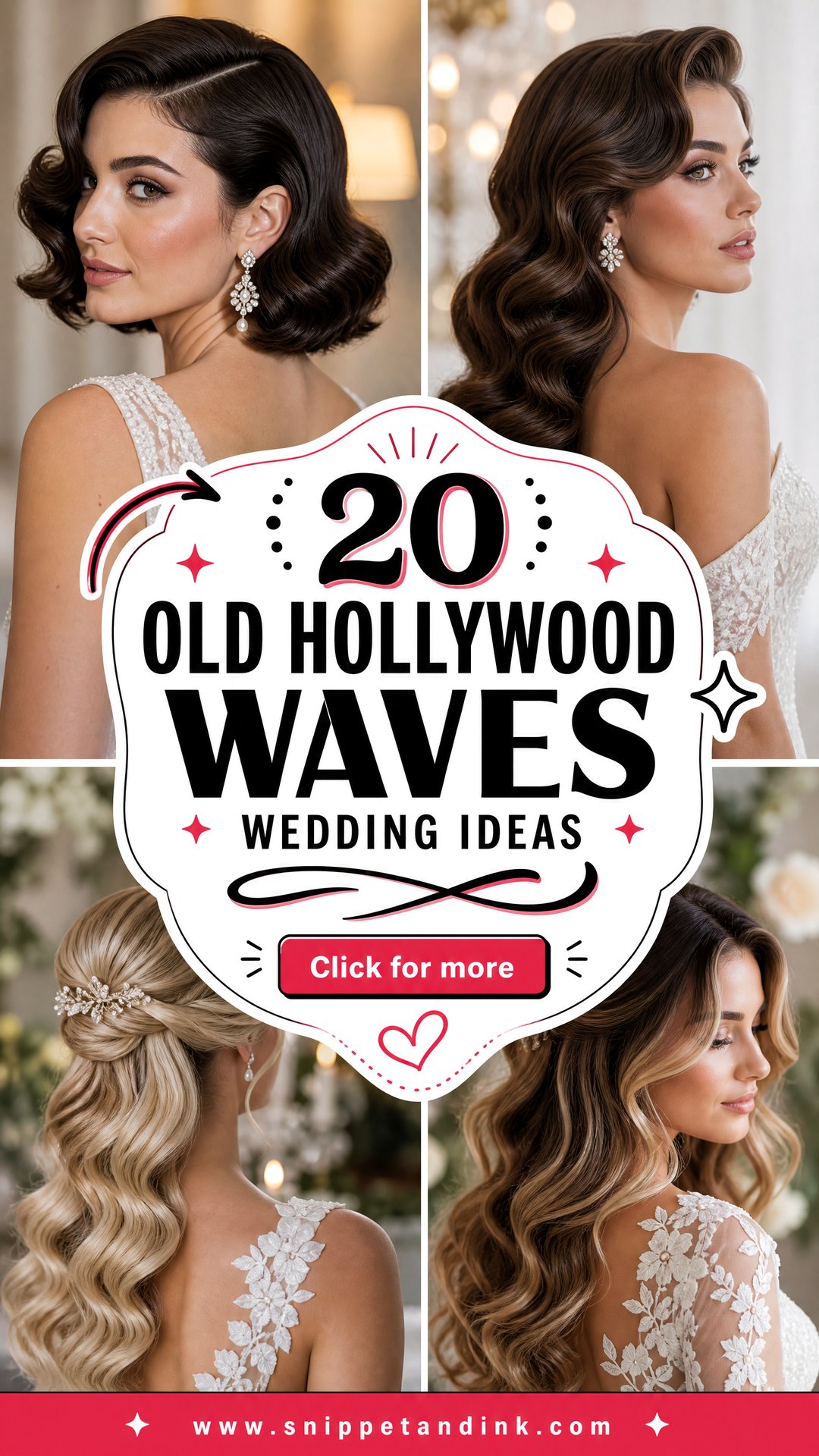
Old Hollywood waves are smooth at the root and fall into one continuous S-shaped pattern through the lengths, with shine on every bend. They work on short, medium and long hair, and with the right preparation on fine, thick, natural and extension-assisted hair too. The part, the wave size, the volume and where the veil sits all change how the finished style reads, so I treat this as a hairstyle that has to be planned at a trial rather than improvised on the morning. Below are twenty versions, from deep side parts to finger-waved bobs, with notes on what each needs from your hair and what tends to go wrong.
How I Set and Brush These Waves So They Hold
Old Hollywood waves are less about the curling iron and more about what happens after it. When brides tell me their waves fell flat by the speeches, the cause is almost always skipping the cooling stage or brushing too early.
- Prep the surface. Smooth hair holds a sculpted pattern better than frizzy hair, so I blow-dry with a round brush and a light heat protectant before any curling.
- Curl every section in the same direction. Mixing directions creates beachy texture; one direction creates the continuous wave.
- Pin each curl while it’s hot. I roll the warm curl back up and clip it flat to the head. The hair sets as it cools, which is where the hold comes from.
- Let it cool completely. Usually this takes at least twenty minutes, and it’s a good moment for makeup.
- Brush out with a soft bristle brush. Brushing connects the curls into waves. Then I press the ridges with duckbill clips and mist with spray, removing the clips only after the spray has dried.
This takes longer than a loose curl, so allow extra time in your morning schedule. On a heavy-haired bride I’d plan close to an hour for the hair alone.
1. Classic Deep Side Part Old Hollywood Waves
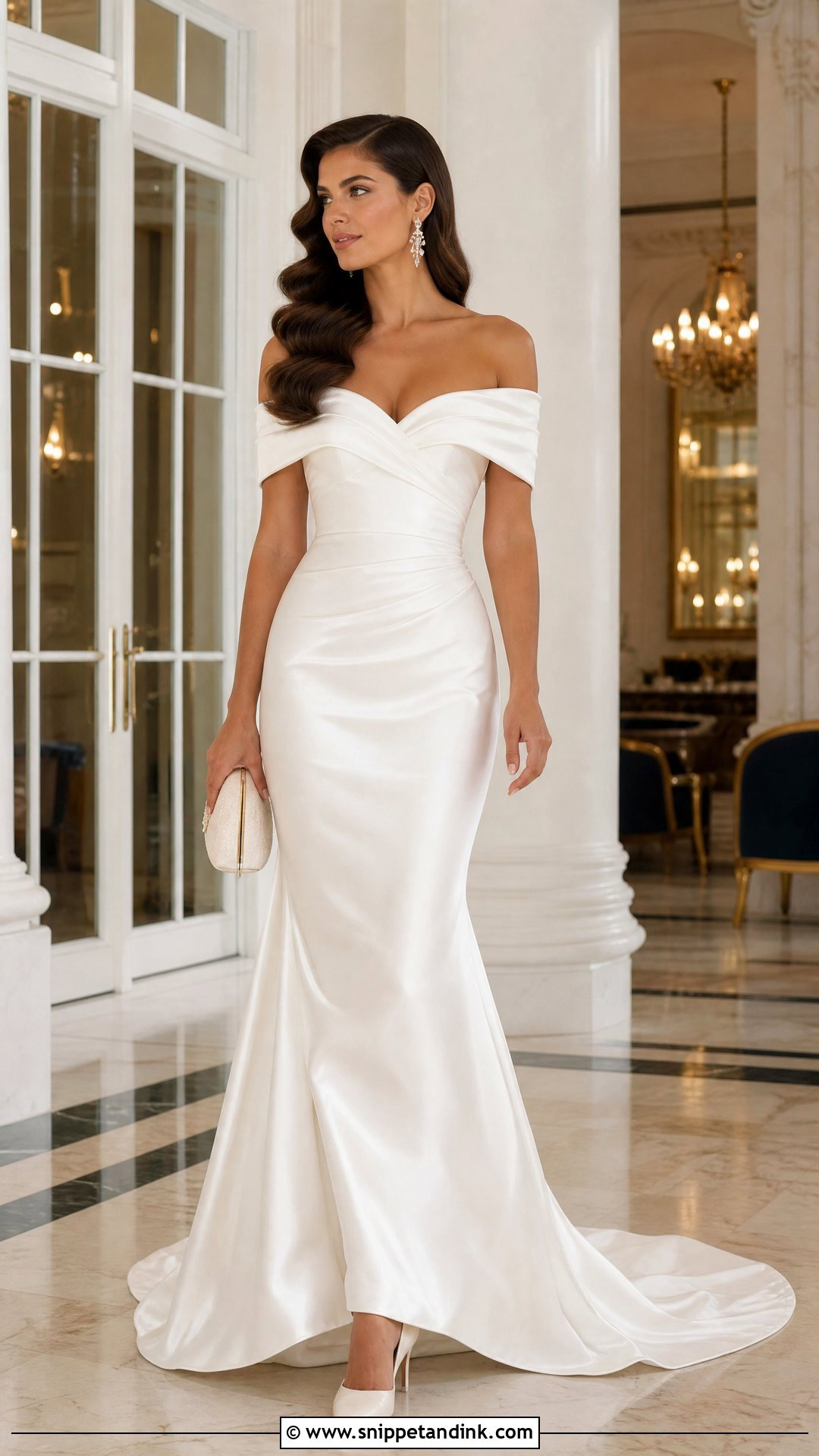
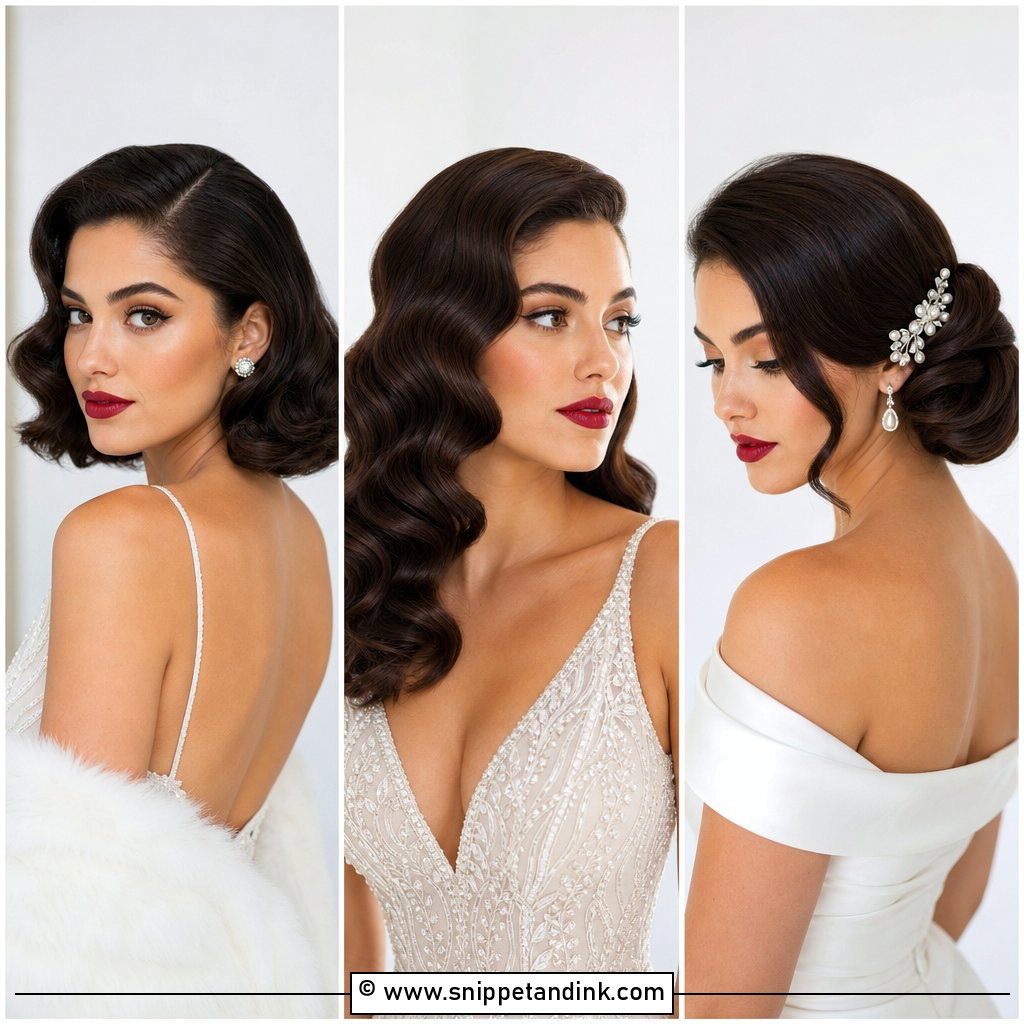
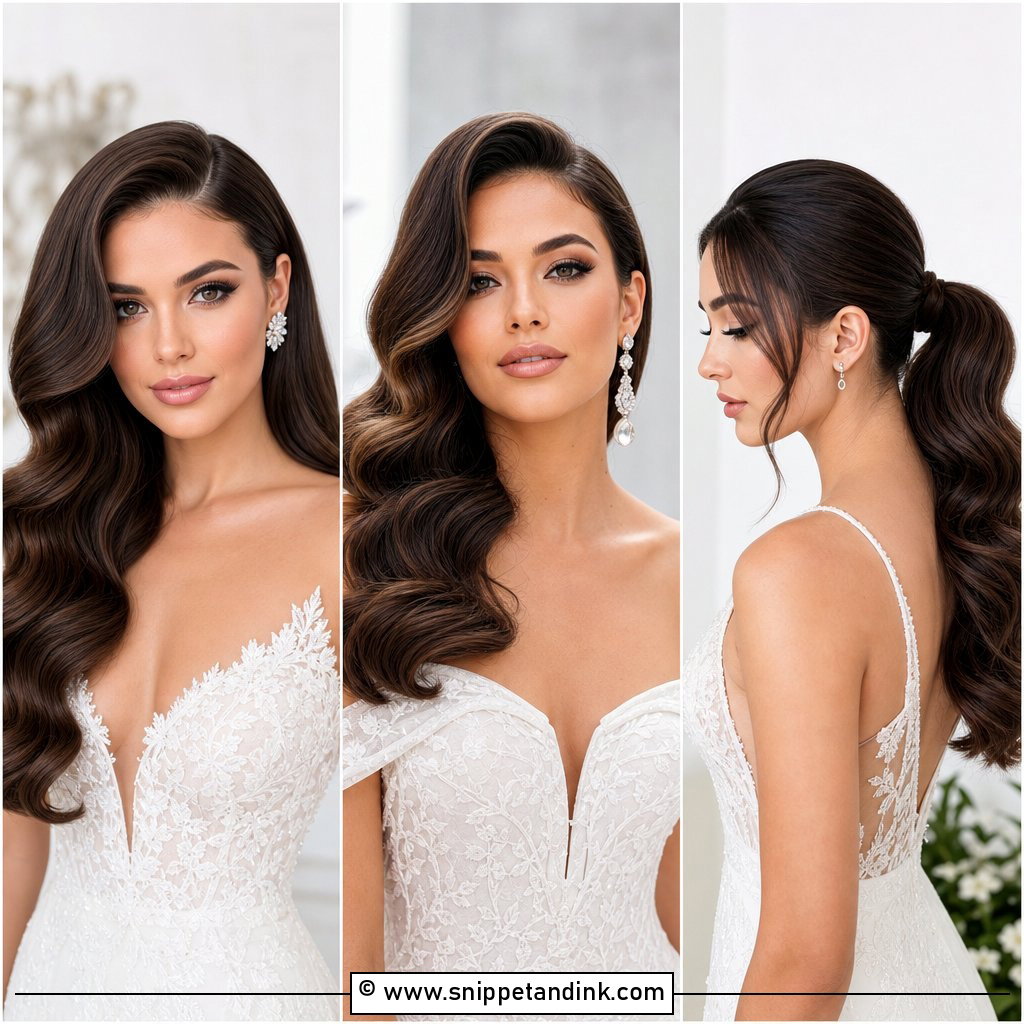
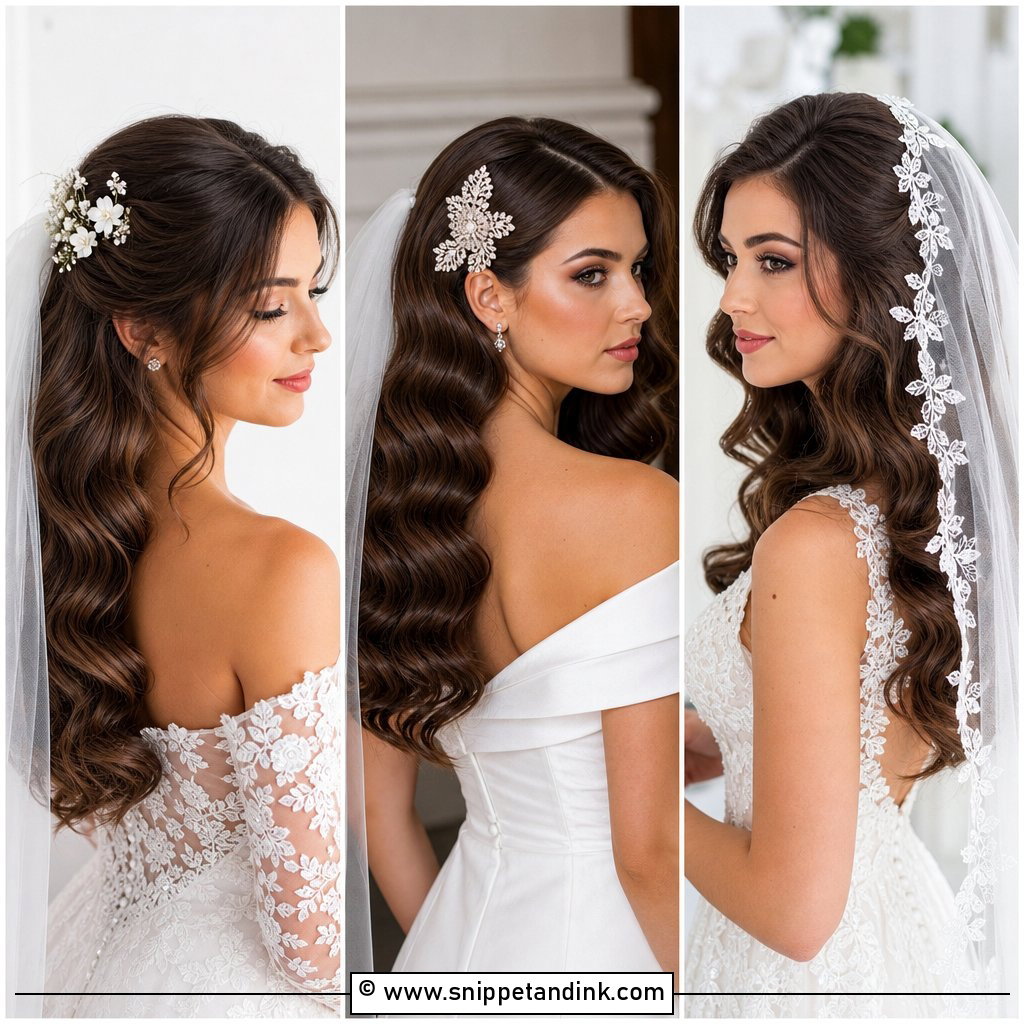
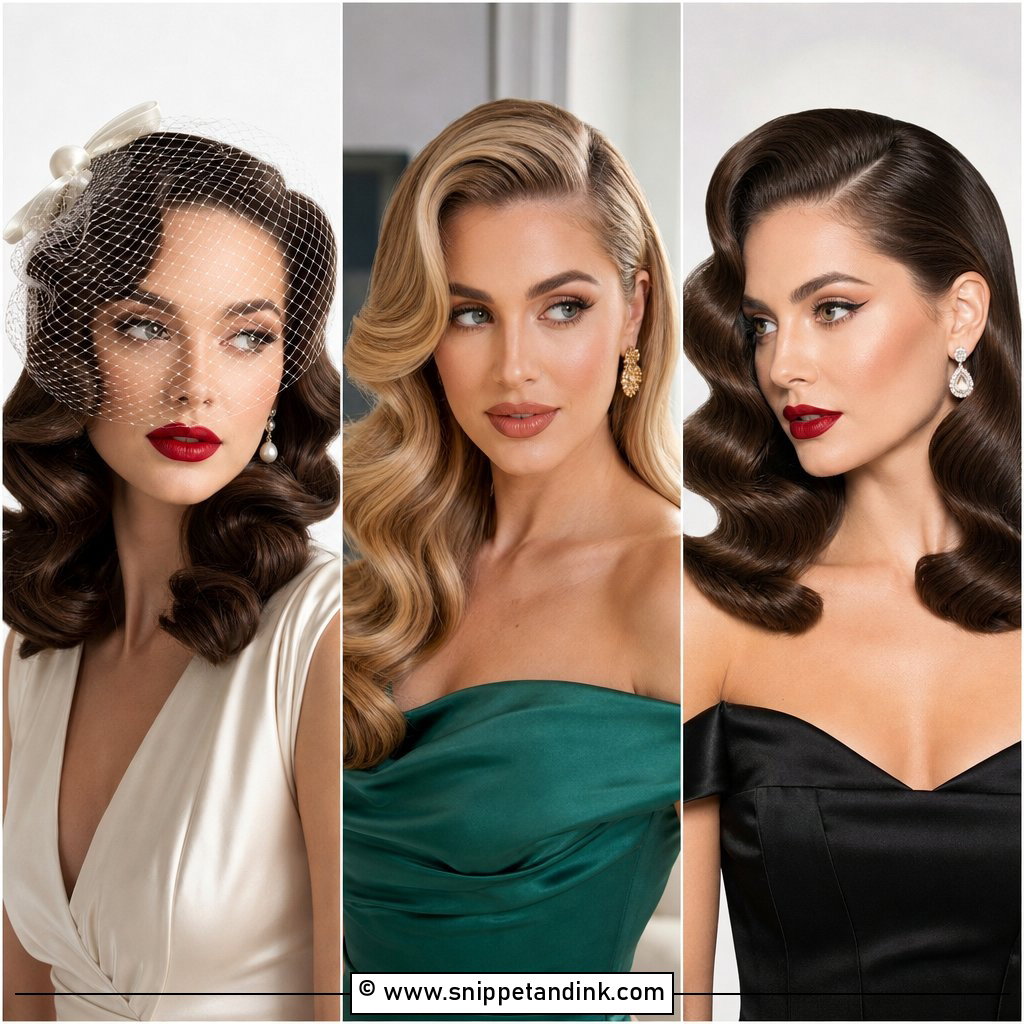
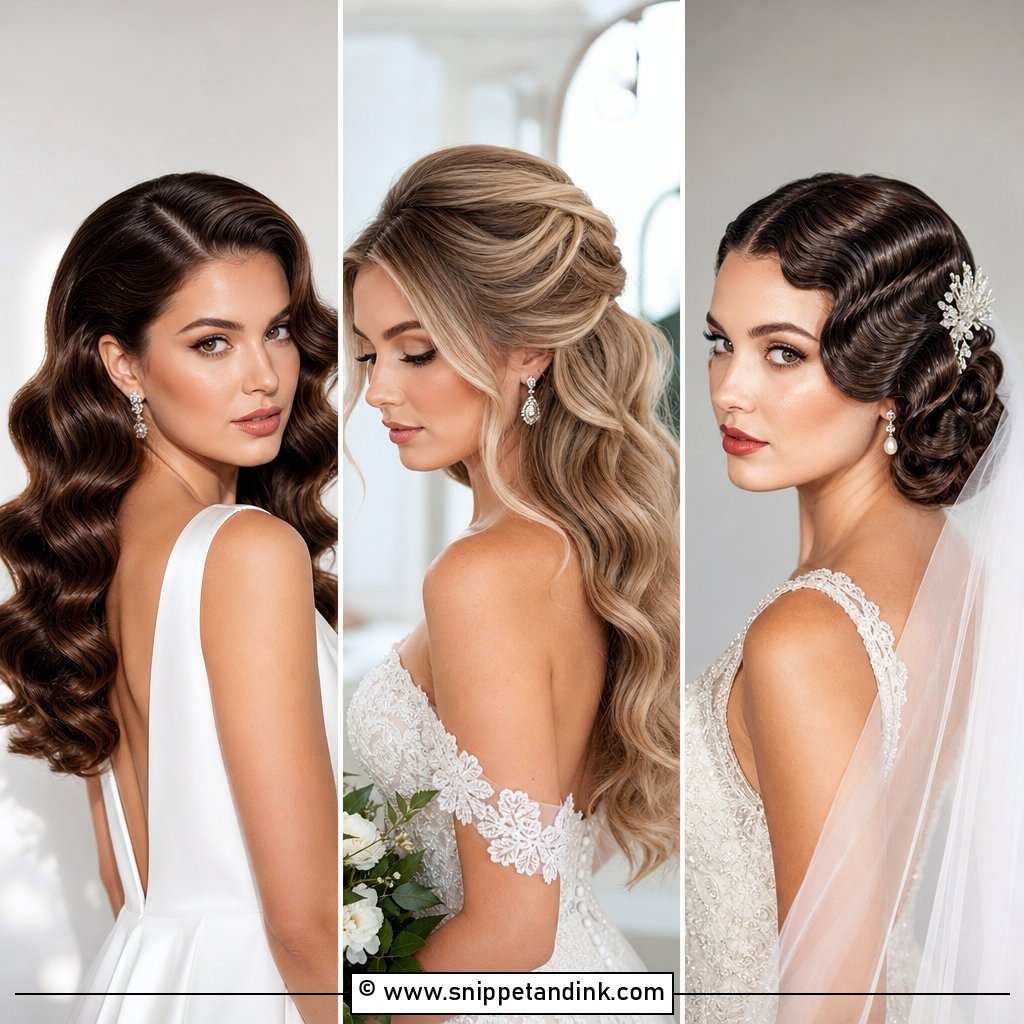
The deep side part is the version everyone recognizes. Roots stay flat and polished, and large, even bends sweep across the forehead and over one shoulder. The trick that makes it work is direction: every section has to be curled the same way, away from the face, so that when I brush through, the curls lock together into one wave instead of a row of separate ringlets. The heavy side of the part frames the eye, so defined liner and a soft satin lip suit it. An off-shoulder satin gown and crystal drops finish it; skip a big necklace.
2. Middle Part Old Hollywood Waves
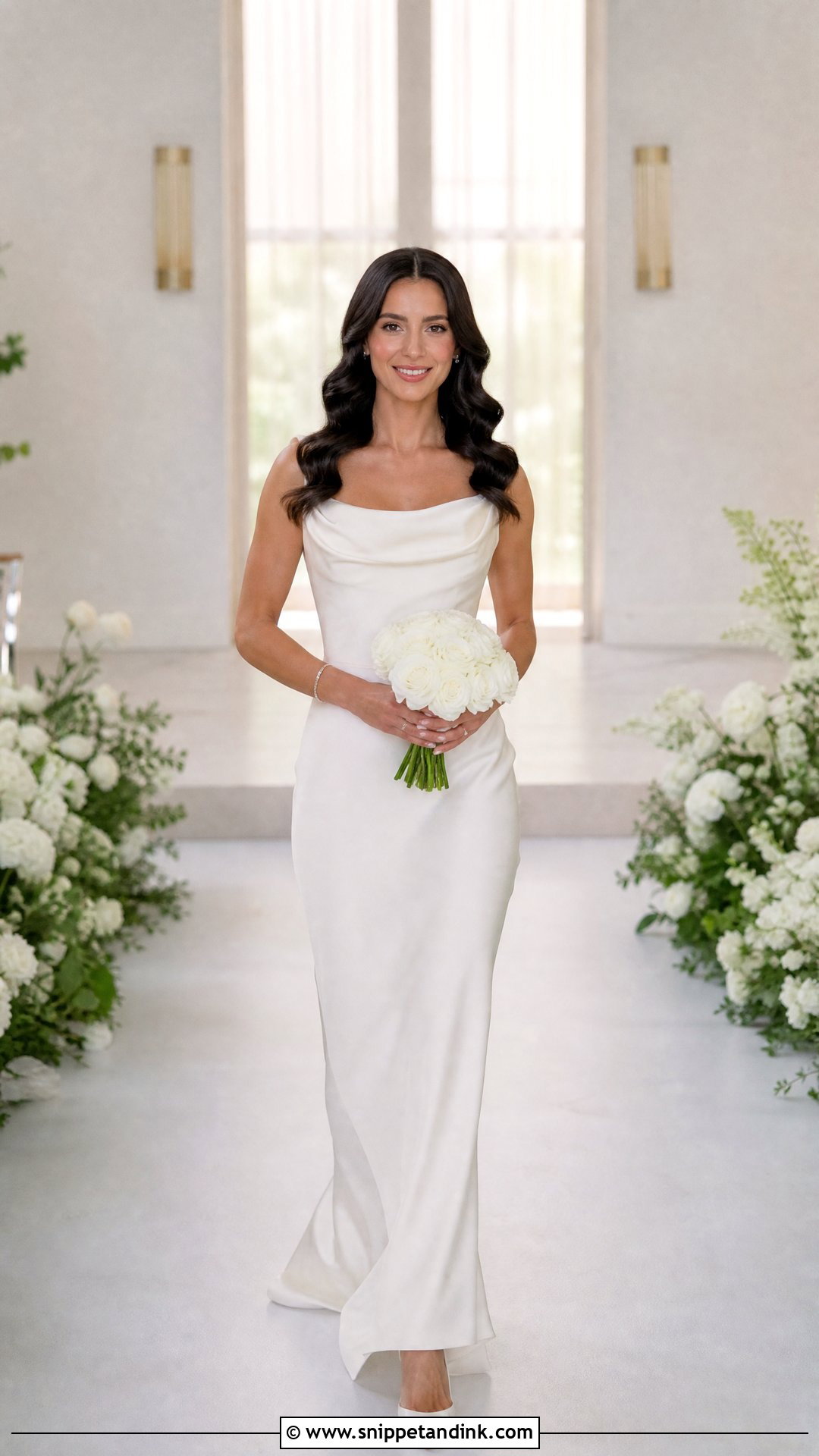
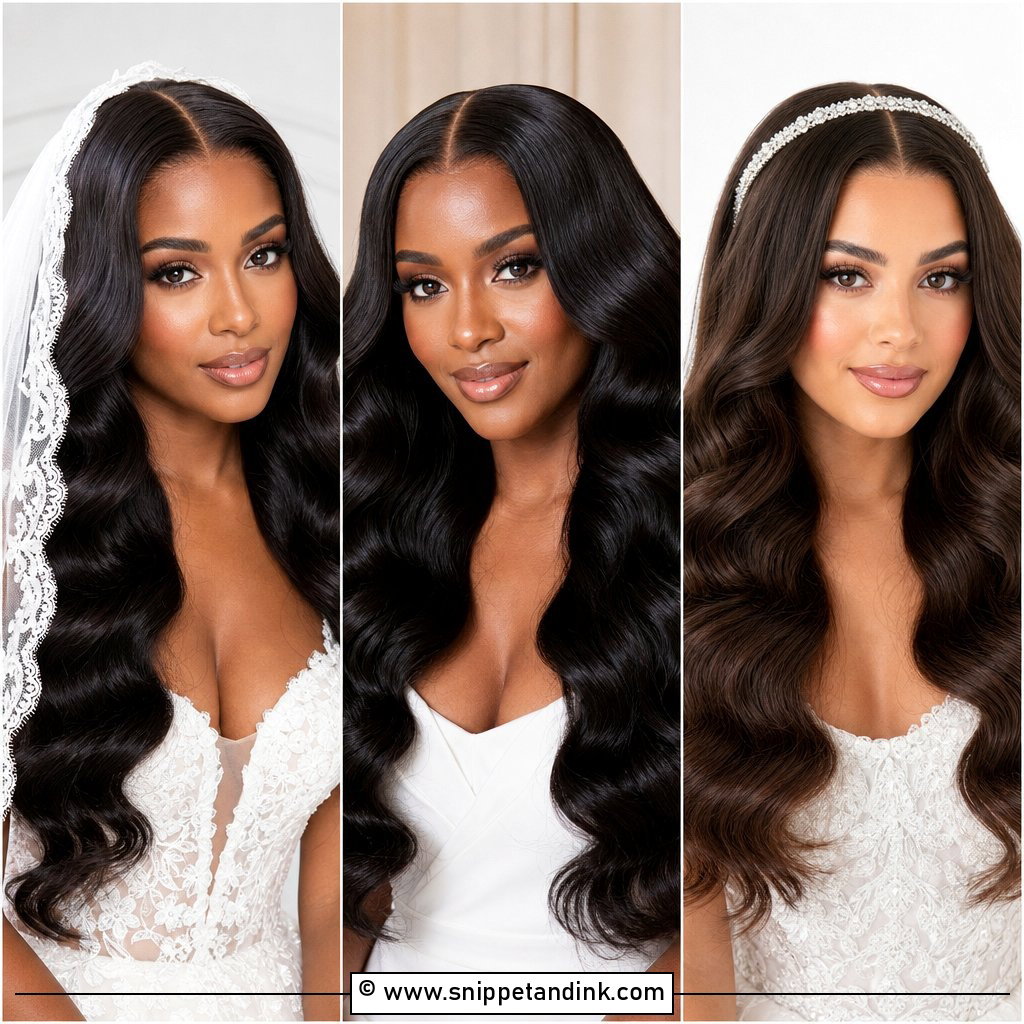
A middle part works with this style more often than brides expect. It gives a clean symmetry, and I start the first bend at cheekbone level on both sides rather than at the root, so the waves frame the face without swallowing it. The catch is balance: if your hair naturally falls heavier on one side, a center part needs more pinning underneath to keep both sides matched for the photos. It sits well with a minimalist column gown and simple studs, and it’s the version I suggest to brides who wear a middle part every day and want to look like themselves.
3. Side Swept Old Hollywood Waves
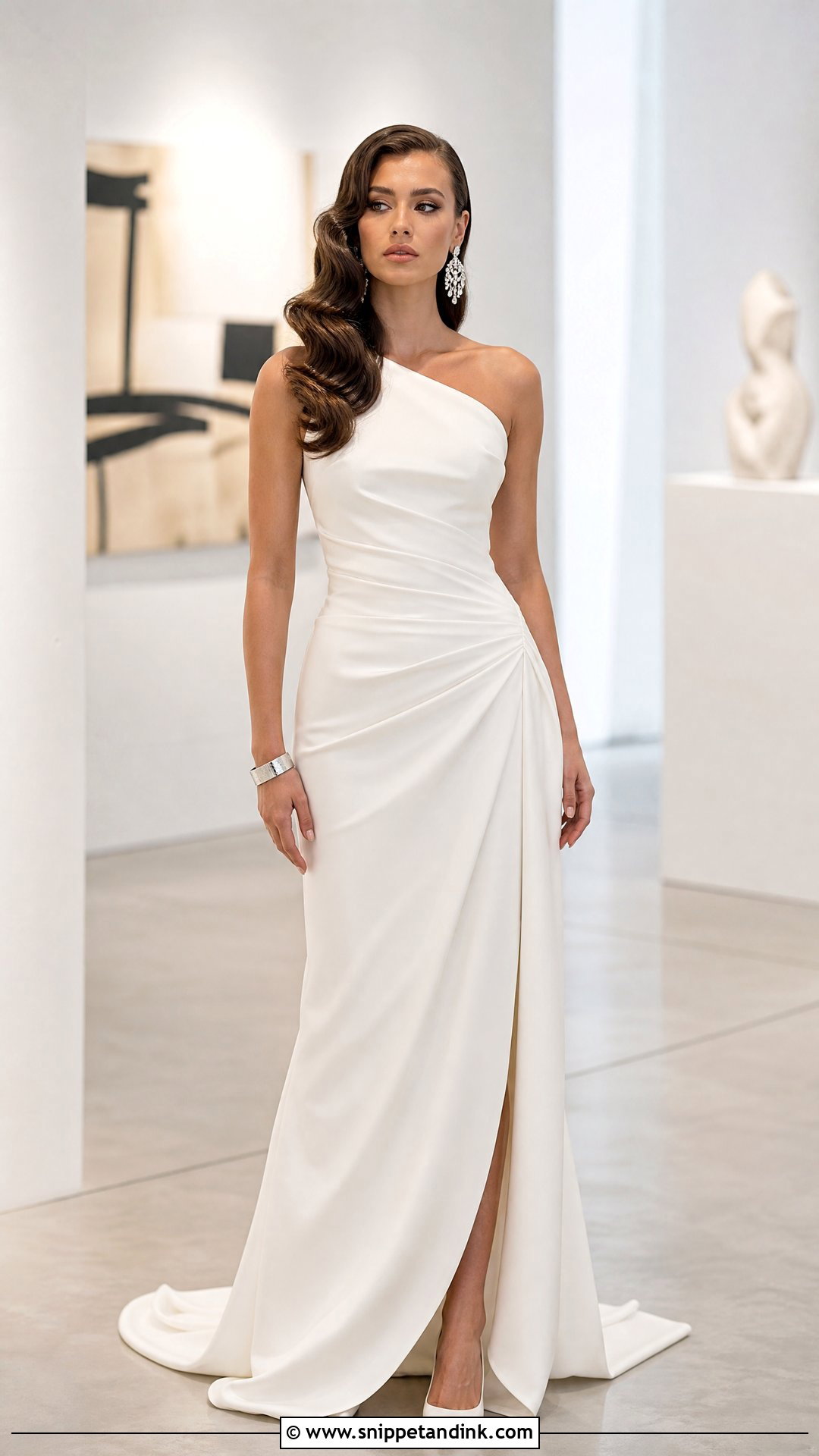
Here the waves fall over one shoulder while the other side is tucked tight behind the ear. That tucked side is where the work happens; I build a small anchor of crossed pins behind the ear so the sweep holds when you turn your head. The visible lengths get brushed into connected curves. It shows off the neck and earrings, and it pairs naturally with a one-shoulder or asymmetric dress. Ask your stylist to put the waves on the side you prefer being photographed from, and check it in the mirror from both angles at your trial.
4. Short Bob Old Hollywood Waves
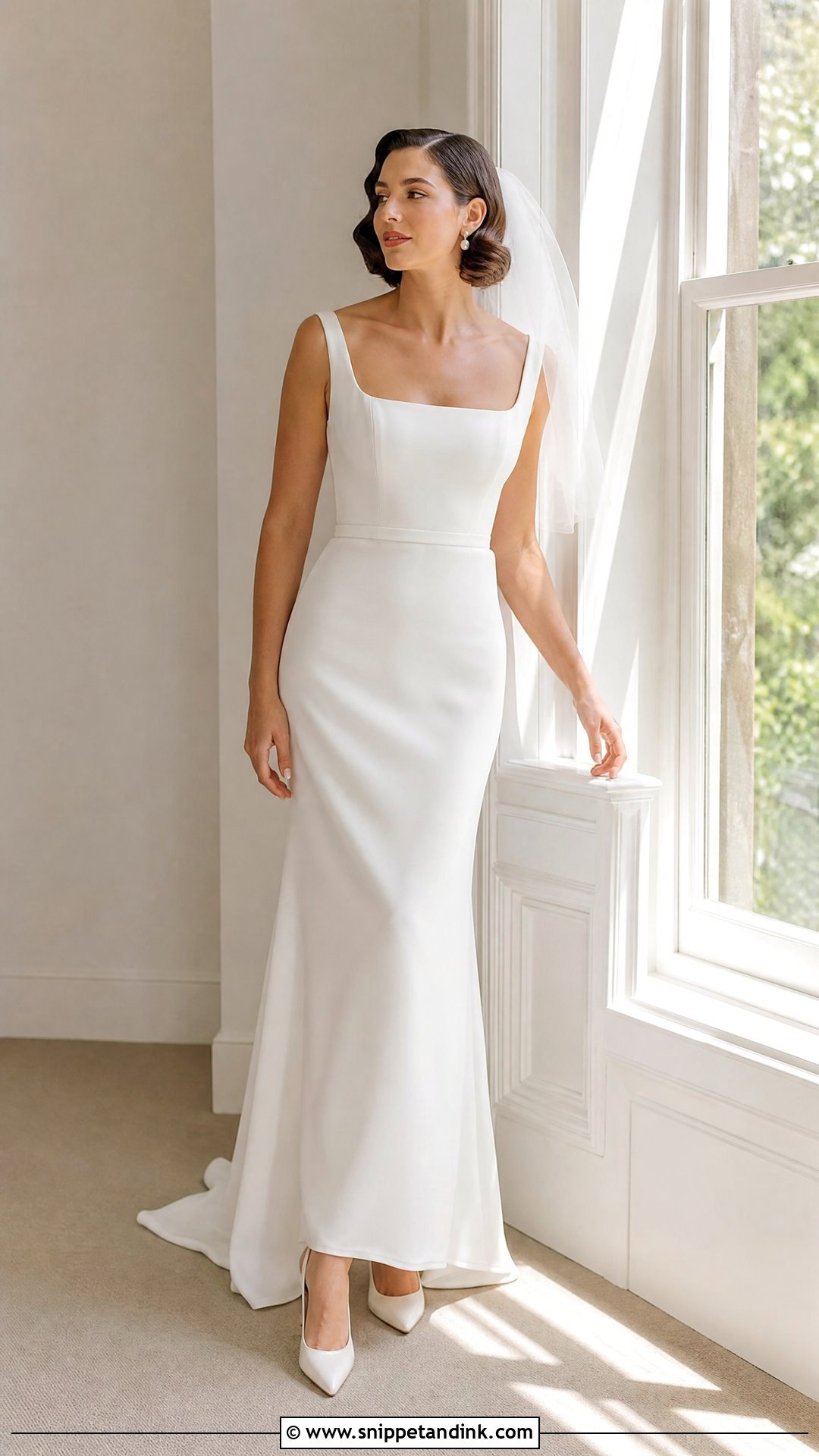
A chin-length bob takes these waves surprisingly well, but it needs smaller sections and a smaller iron than long hair. Big barrels on short hair just make a puffy bend that drops in an hour. I build compact, glossy waves that follow the jaw, with a deep side part and one side tucked to show an earring. The ends should curve inward together, not flick in different directions. A square-neck gown and a short veil at the crown suit it. Bring side-view photos to your trial, because bob waves look very different in profile.
5. Shoulder Length Old Hollywood Waves
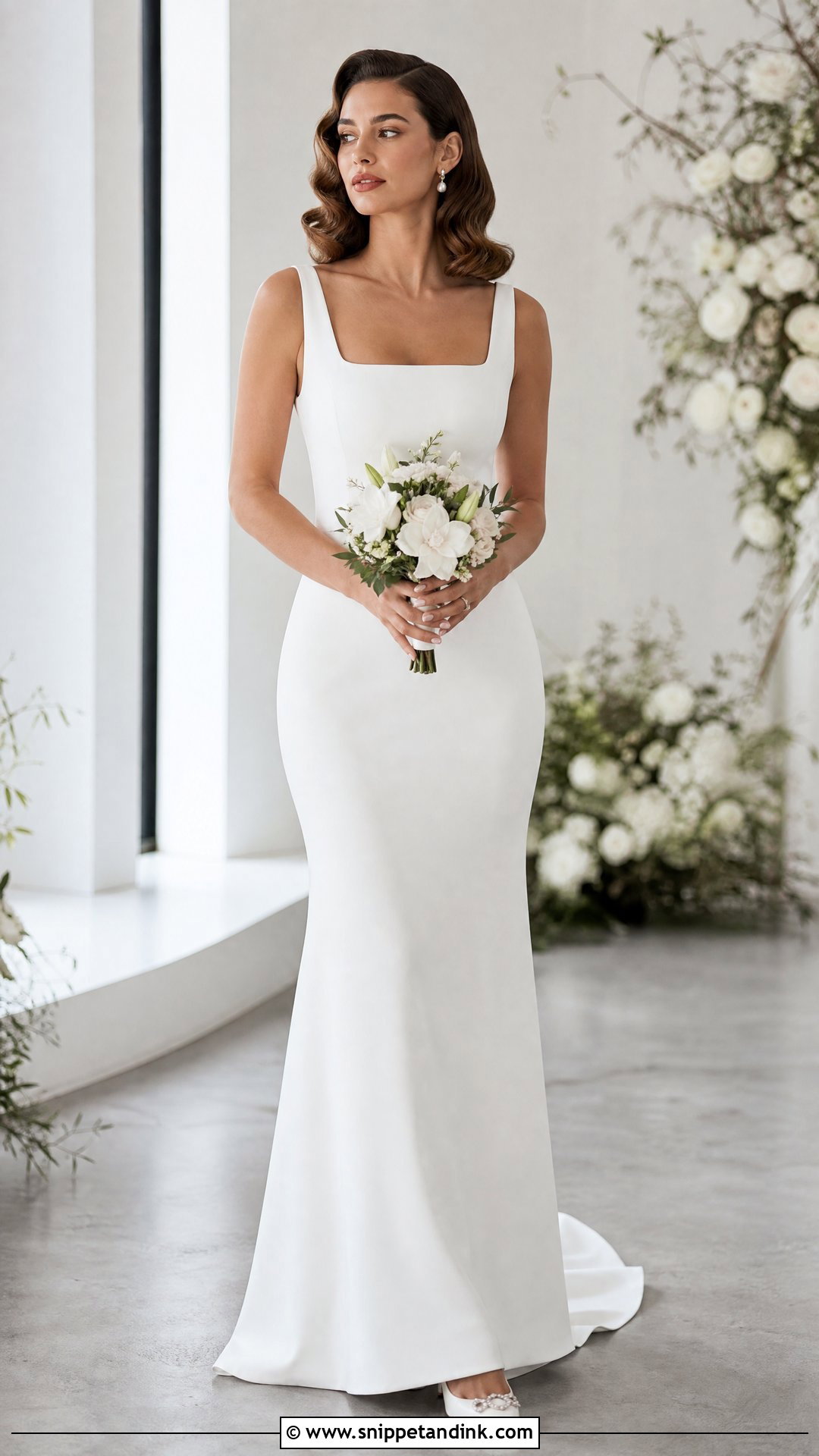
Shoulder length is a comfortable middle ground: long enough for a visible S pattern, short enough that the weight won’t pull the curl out. I usually start medium bends at eye or cheekbone level and let the ends rest along the shoulders rather than forcing long cascades. Layered or uneven ends are the common problem at this length, so during the brush-out I shape them into one outline and slip a couple of pins underneath where they splay. A fitted crepe gown and pearl earrings keep the look understated and very wearable.
6. Long Old Hollywood Waves
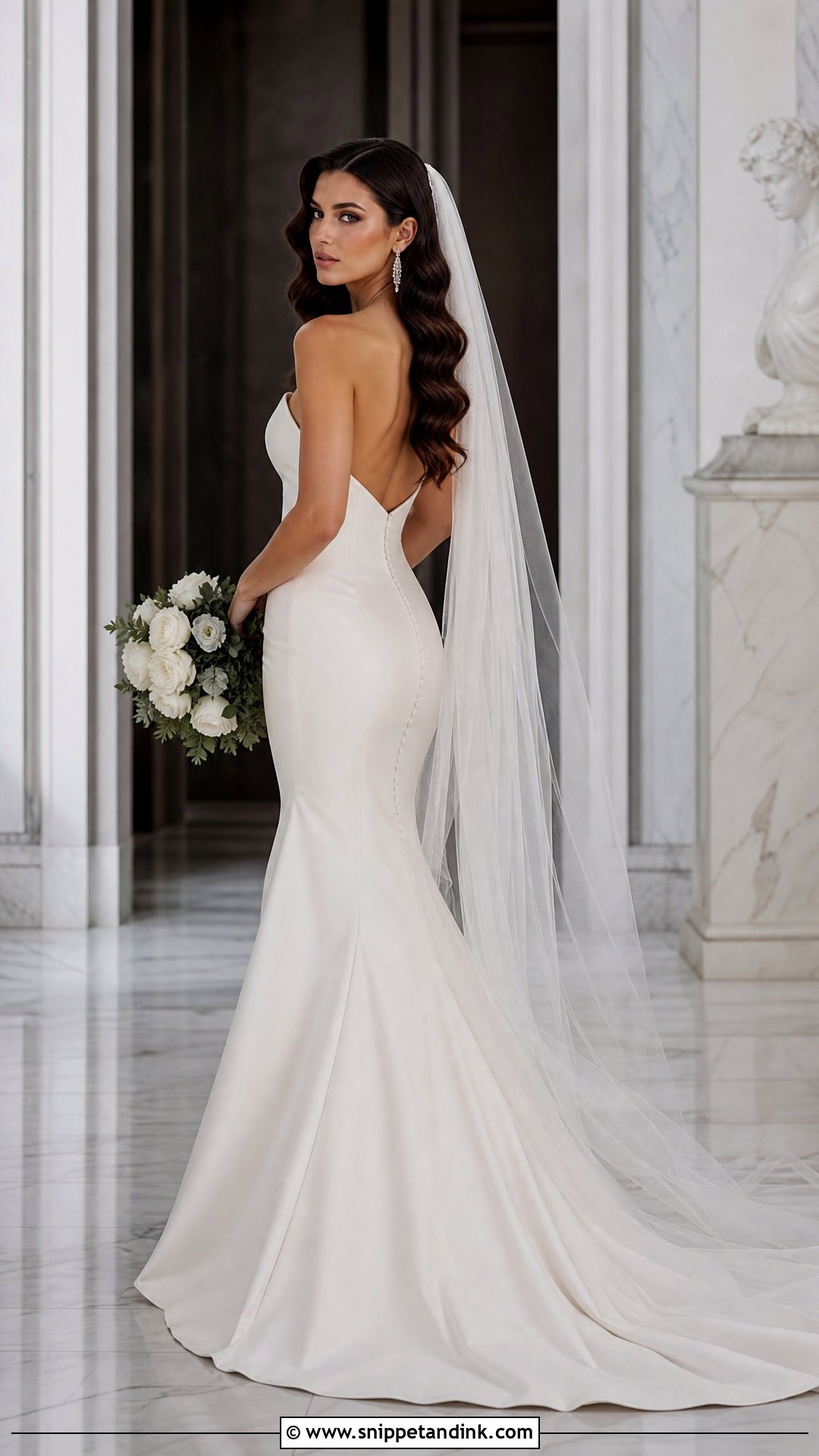
Long hair gives the most luxurious cascade, but it’s also the length most likely to drop, simply because of weight. I curl in smaller sections than you’d think, pin each curl to cool completely and only then brush out, starting the first bend high near the cheekbone and letting the waves grow larger toward the ends. A fitted trumpet gown and long drops suit it, with the veil attached below the crown. Avoid scattering accessories through the lengths. At the trial, look at it from behind and walk around, because long waves should move without coming apart.
7. Blonde Old Hollywood Waves
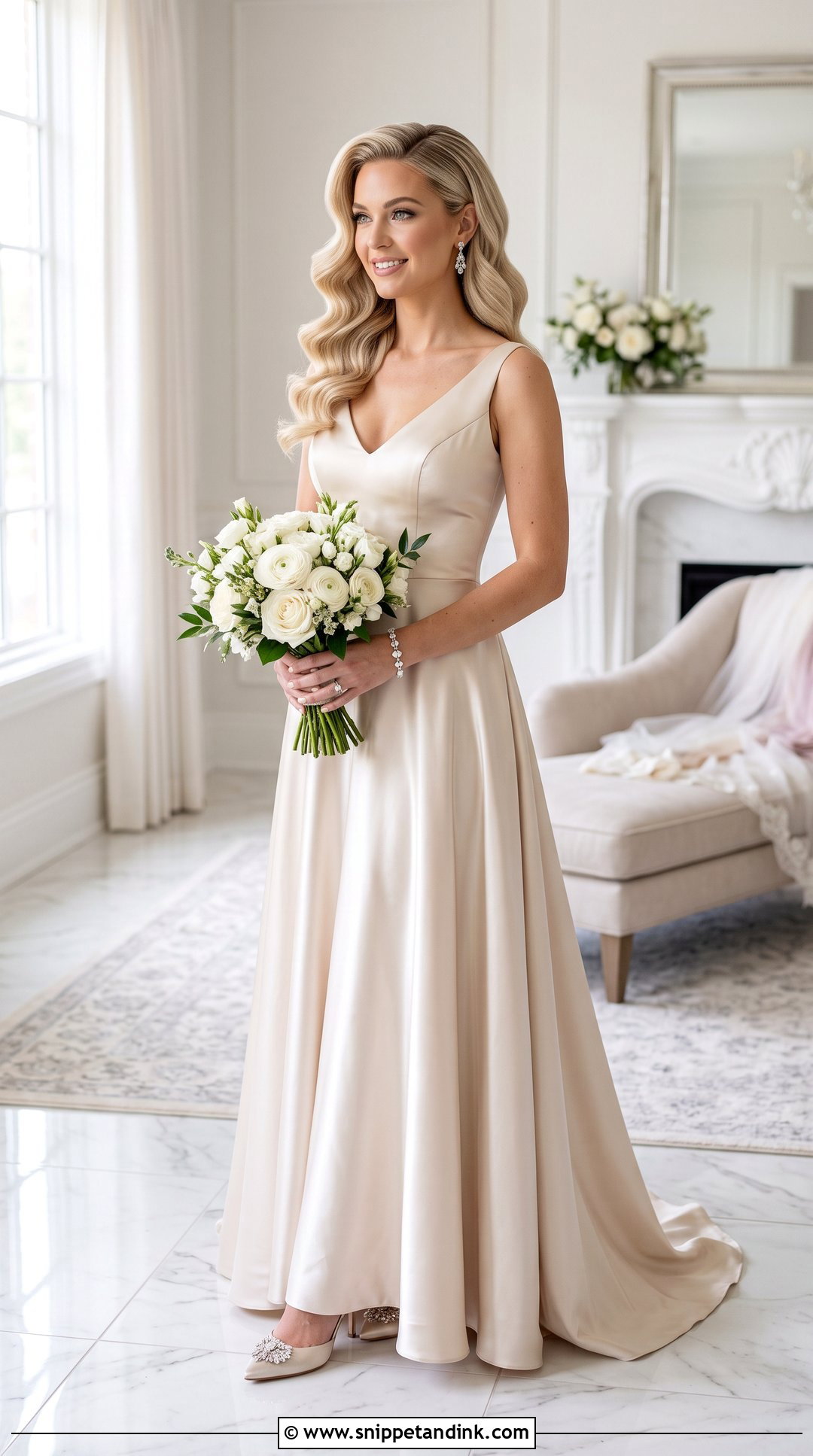
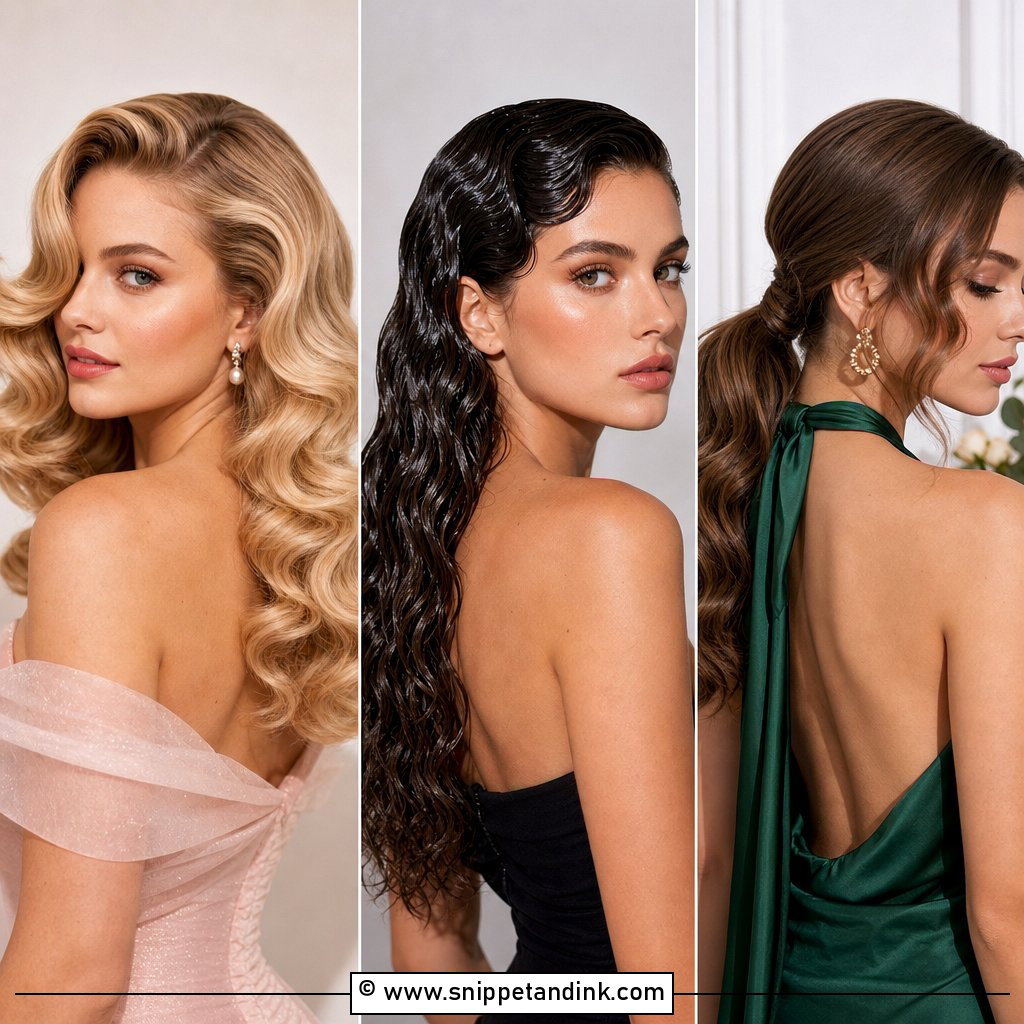
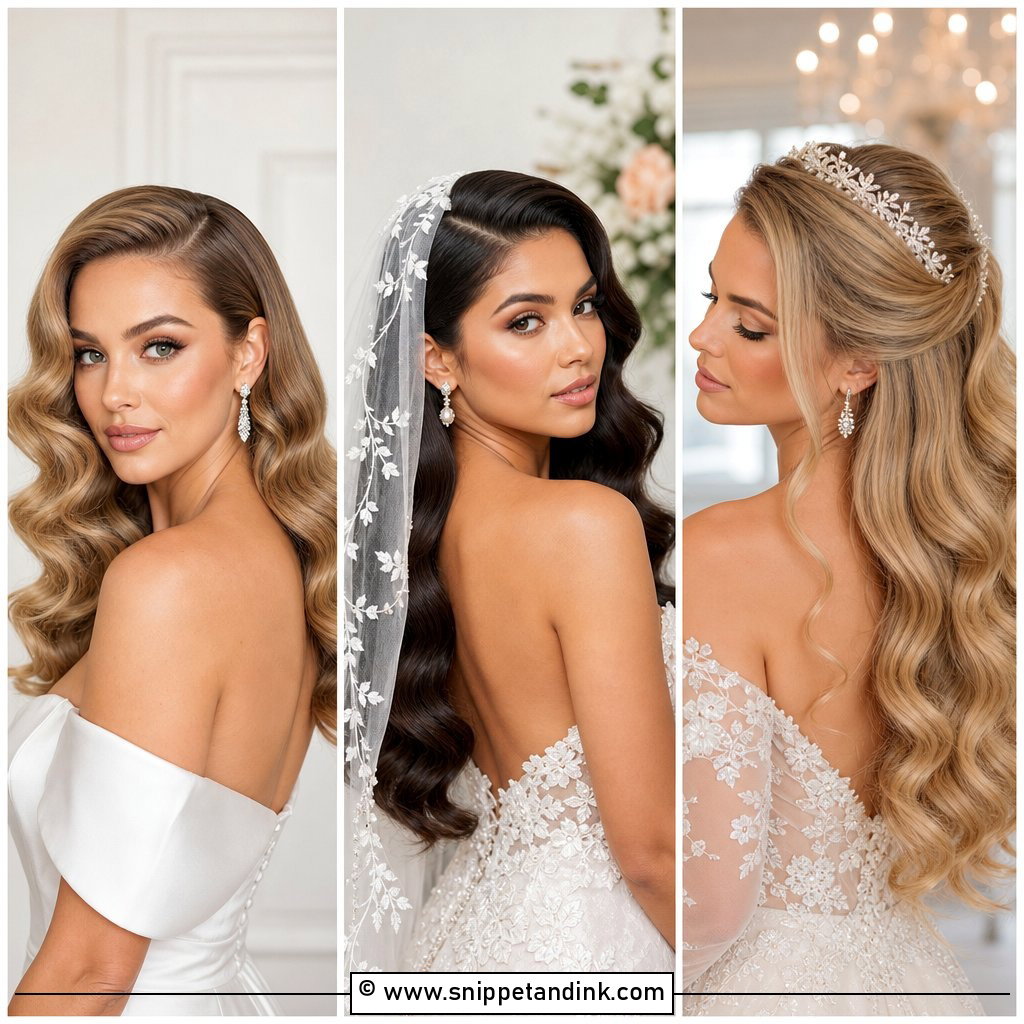
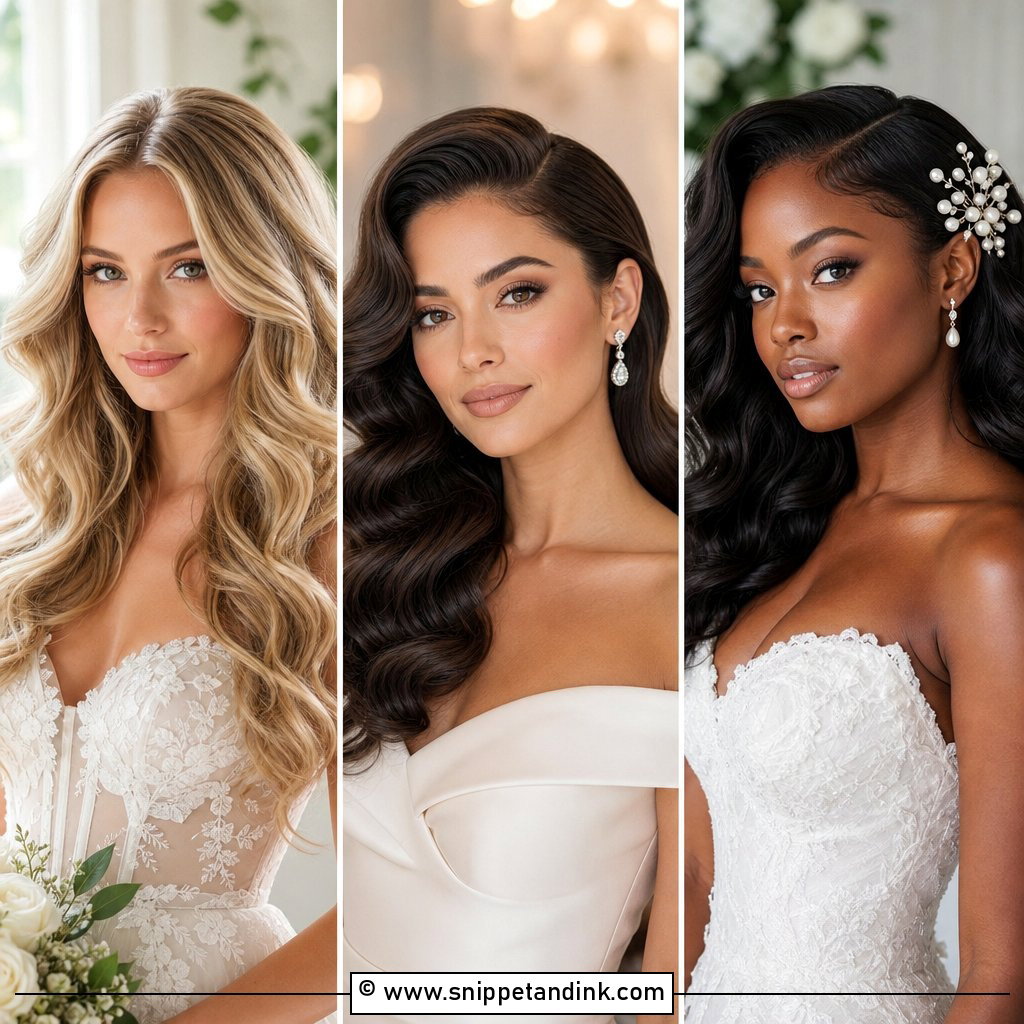
Blonde hair shows every highlight and shadow in a brushed wave pattern, which is great for definition and less great for frizz. Light hair often reads drier in photos, so I keep products light at the ends and focus on smoothing the cuticle before curling. A shadowed root or a few dimensional highlights give the waves depth under bright light. Medium to large bends suit blonde better than small curls. A champagne satin gown and crystal earrings keep everything in the same warm register.
8. Brunette Old Hollywood Waves
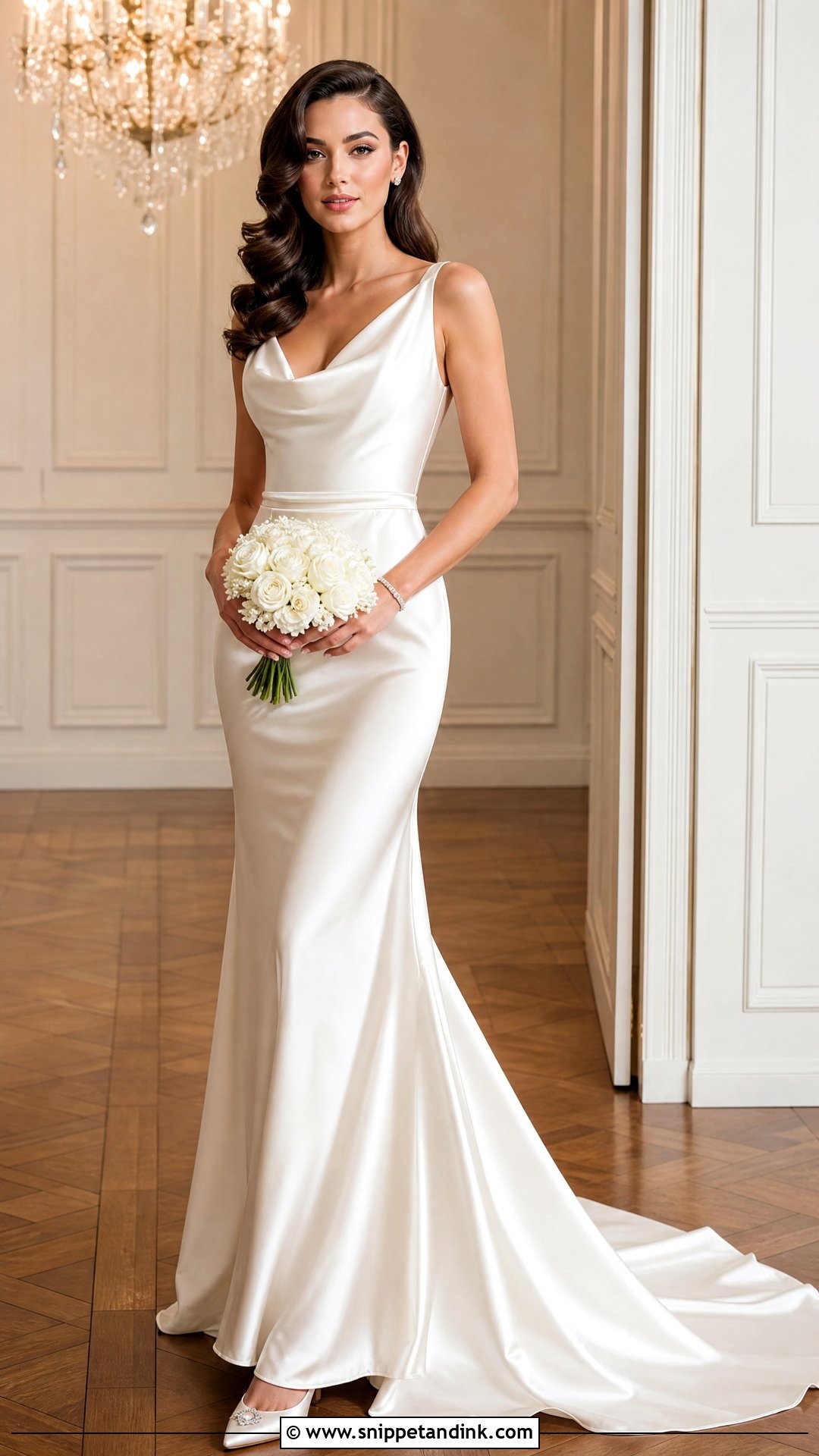
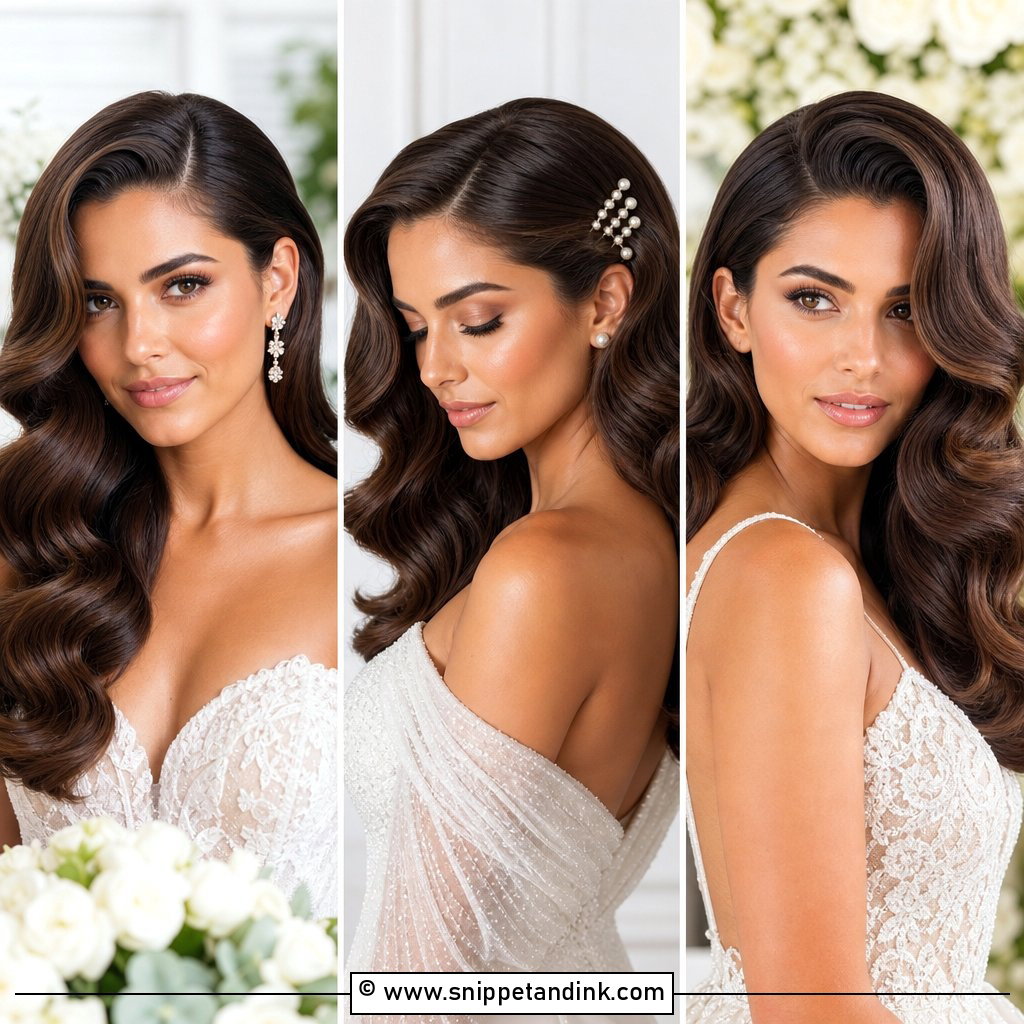
Dark brunette hair shines beautifully when it’s smooth, but in photos it can flatten into one dark shape. That’s why I place the first big curve near the brow or cheekbone, where light catches it, and keep the bends clearly separated through the lengths. Some dimension in the color helps too. A deep side part gives contrast against the face. An ivory satin gown with a clean neckline lets the hair be the texture. Ask your photographer to show you a test shot from behind at the venue, because direct overhead light can turn glossy dark waves into glare.
9. Black Hair Old Hollywood Waves
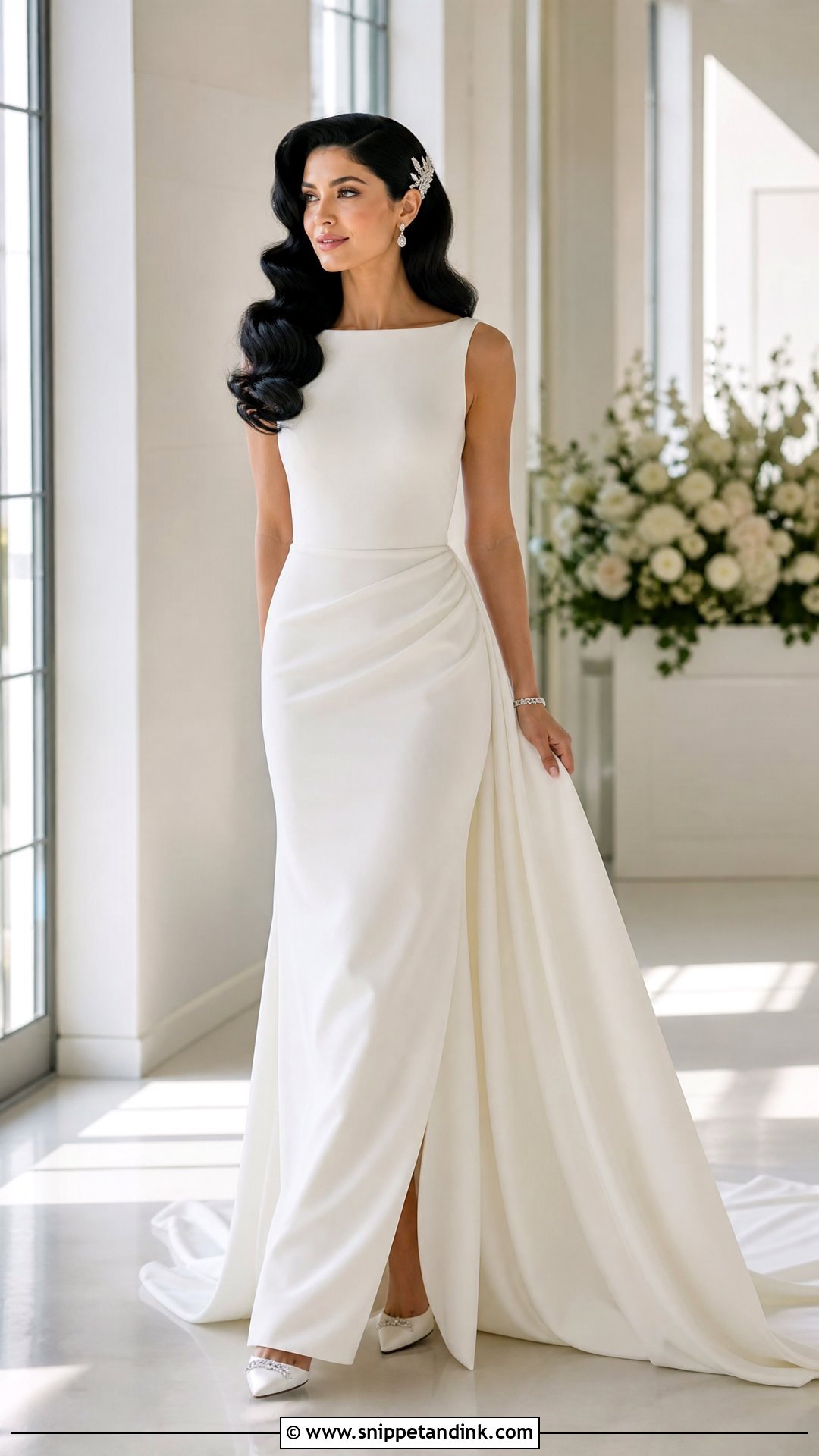
Jet-black hair against ivory is high contrast, which is wonderful until the waves lose their definition and the hair reads as a solid block. I aim for broad bends with clear separation, and I tuck one side behind the ear to let the face breathe. A bateau-neck gown and silver earrings suit it, and a crystal clip on the tucked side should sit close to the head. Shine spray helps, but very little; black hair goes from glossy to greasy-looking quickly under flash. The finish should move when you turn, not sit stiff.
10. Red Hair Old Hollywood Waves
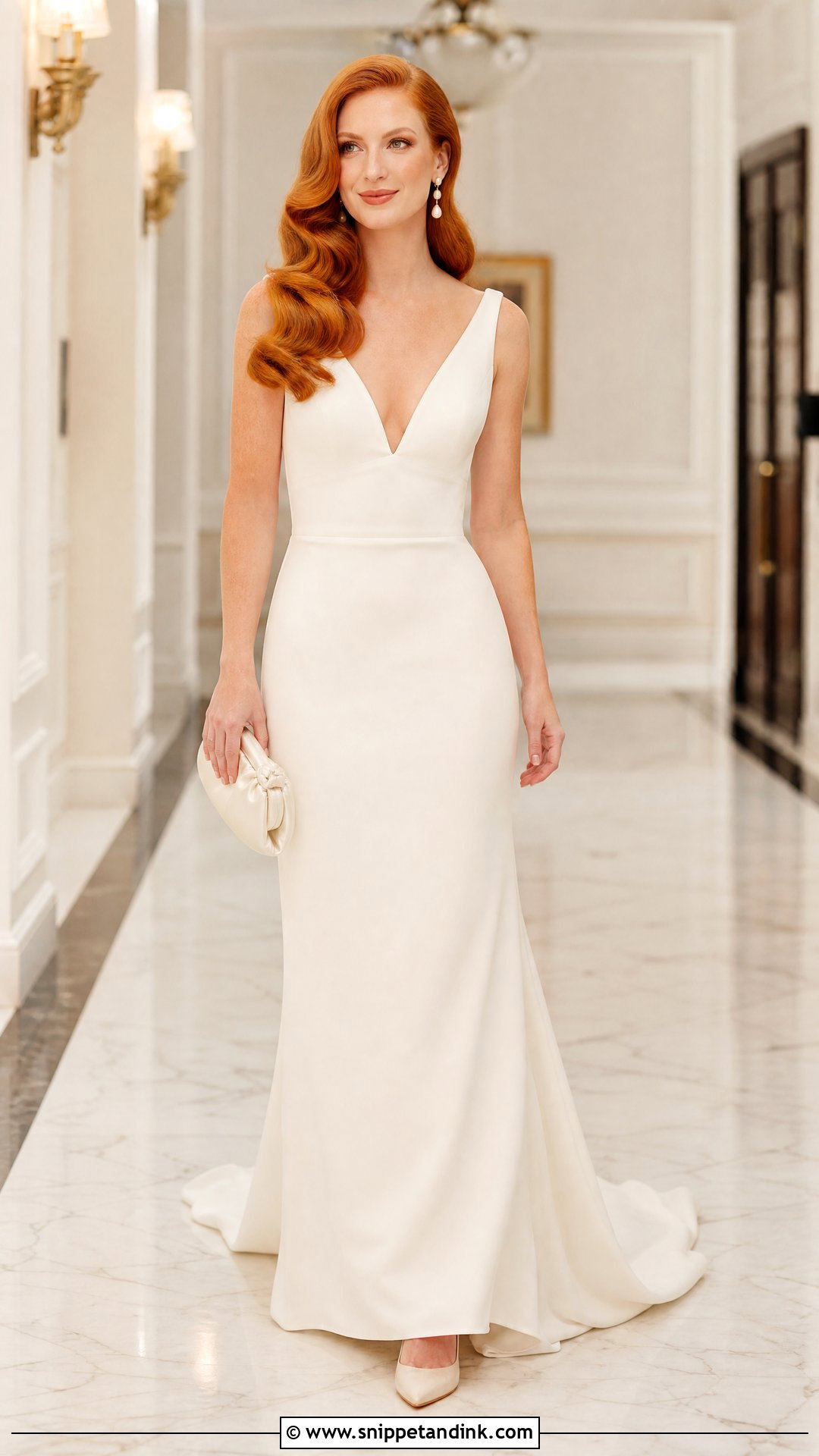
Red and copper shades already have so much dimension that I keep accessories minimal. A soft side part shows the color across the crown, and the waves catch light differently on every bend. Pair them with a simple ivory gown, pearl drops and a small satin clutch, and lean makeup toward peach, rose or bronze rather than trying to match the hair. Red hair is often finer in texture, so I check at the trial whether it holds a curl without extra grip, and add a light texture spray before setting if it doesn’t.
11. Natural Hair Old Hollywood Waves
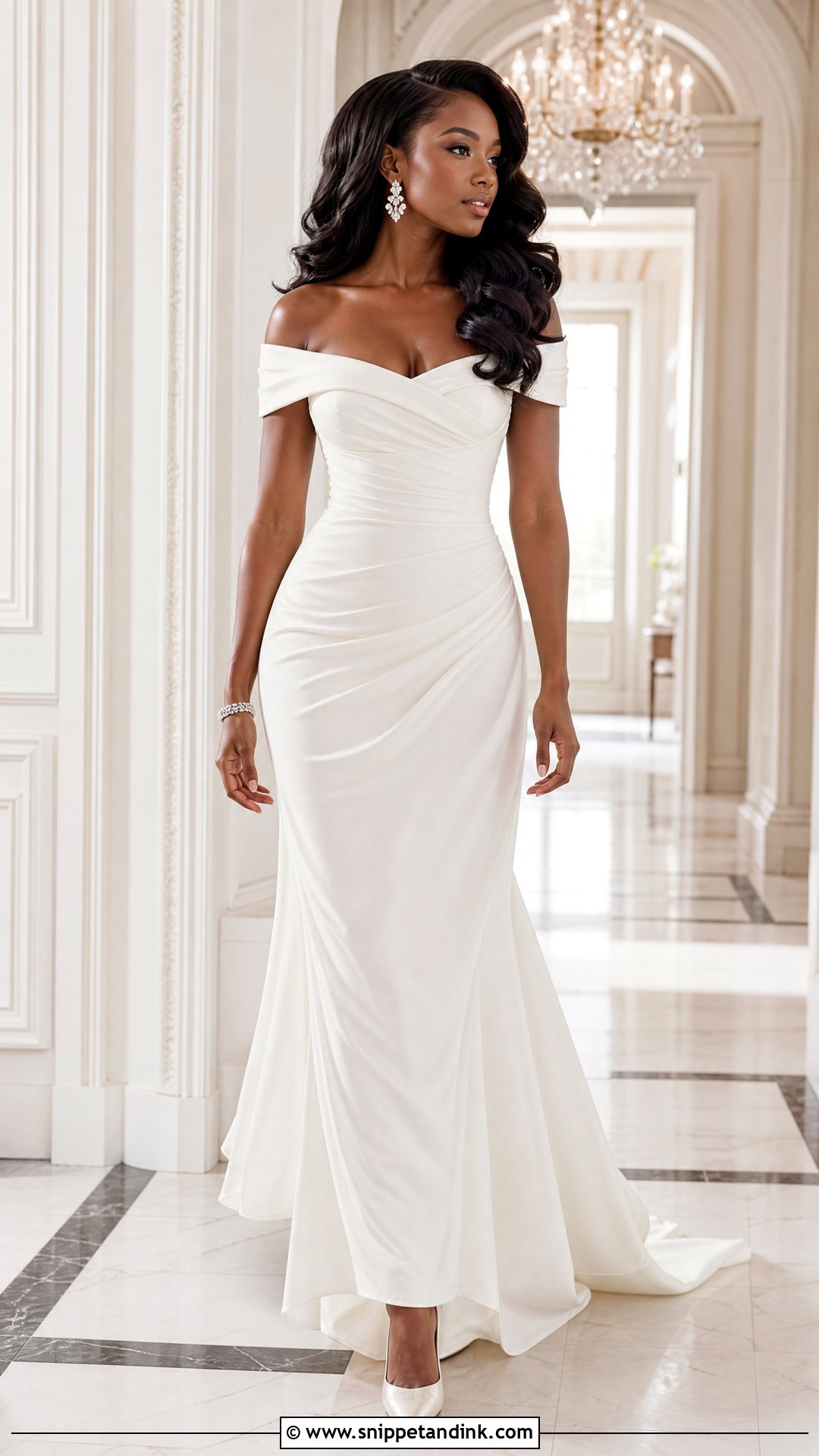
Natural hair can wear this style well, and the route depends on the bride’s preferences about heat and texture. Some brides want a stretched base and a set, others prefer smooth extensions matched to their own hair, and some want a silk press in the days before. None of these is about hiding texture; they’re different ways to reach the same silhouette safely. A deep side part, soft lift at the crown and defined cascading bends give the classic shape. At the trial, talk through heat limits, moisture, extension matching and how you’d like your edges styled, so the result feels secure and like you.
12. Fine Hair Old Hollywood Waves
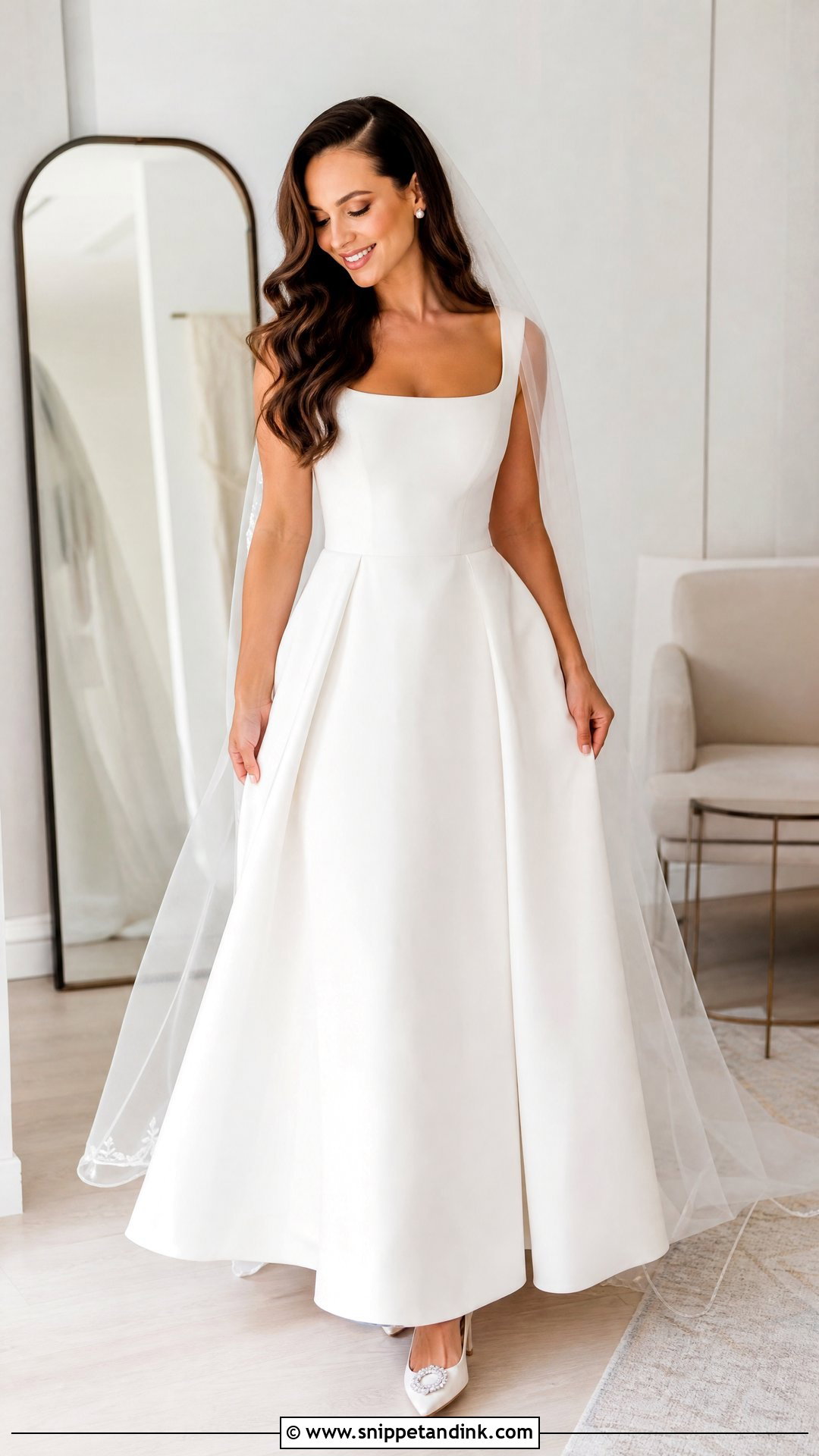
Fine hair can hold these waves, but heavy teasing is the wrong tool; it shows through the smooth surface and collapses. I give moderate lift at the root with a light mousse, set every curl and let it cool fully before touching it. Medium bends hold longer than very large ones on fine hair. Matched clip-in extensions through the lower lengths add density if they blend in color and movement. Keep oils away from the roots, choose a veil with a light comb, and pair it with a clean A-line gown and pearl studs.
13. Thick Hair Old Hollywood Waves
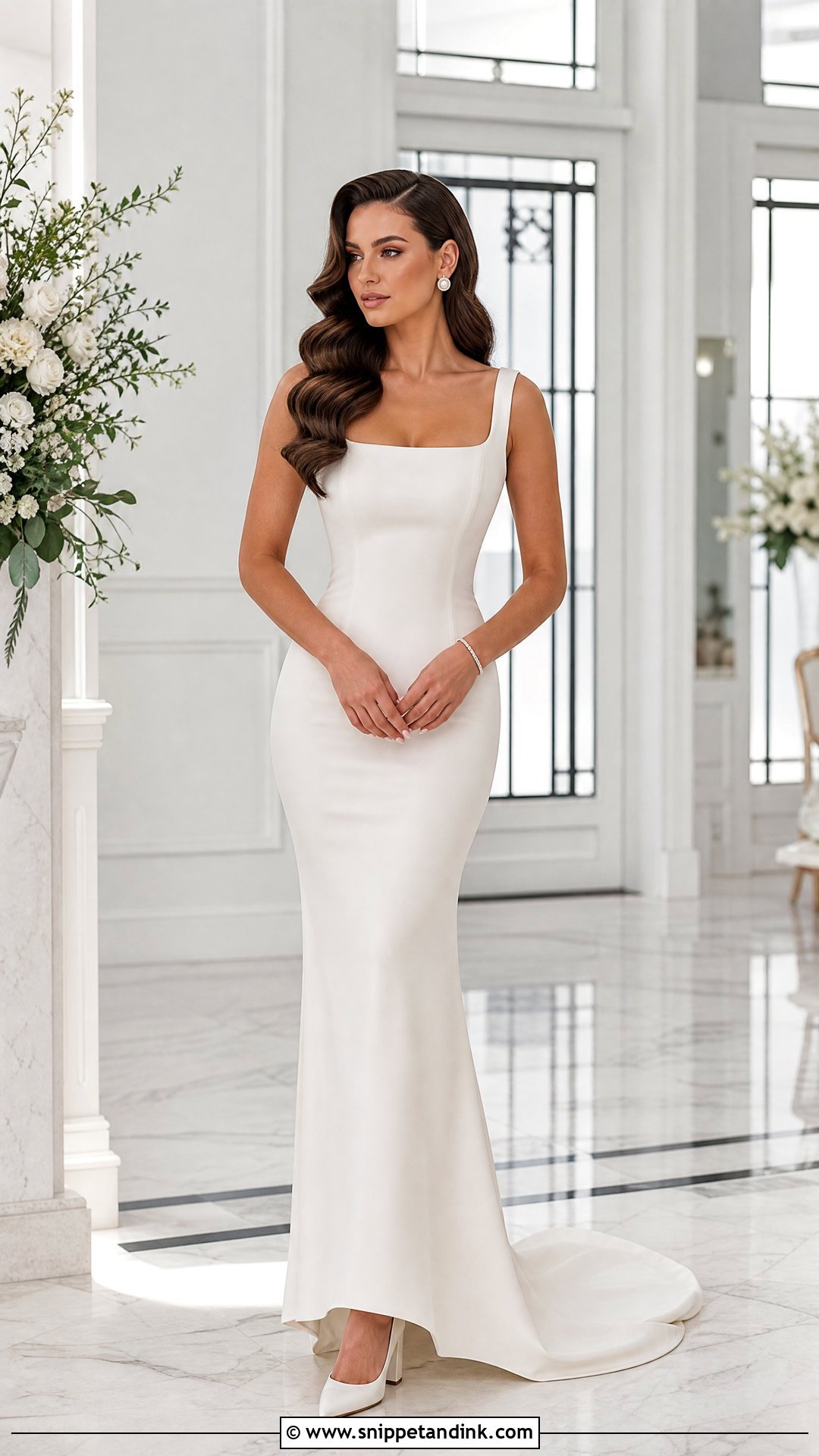
Thick hair gives you all the volume you could want, which is exactly the problem. Without careful sectioning, the waves turn wide and triangular. I keep the crown sleek, use large bends to spread fullness evenly, and sometimes pin a little of the underneath flat so the surface pattern lies smooth. Bringing part of very long hair forward over one shoulder makes the outline look deliberate. Wear the trial style for several hours; thick hair is heavy, and you’ll learn whether you need stronger pins or a slightly smaller wave to last the day. A sleek sheath gown balances it.
14. Old Hollywood Waves With Veil
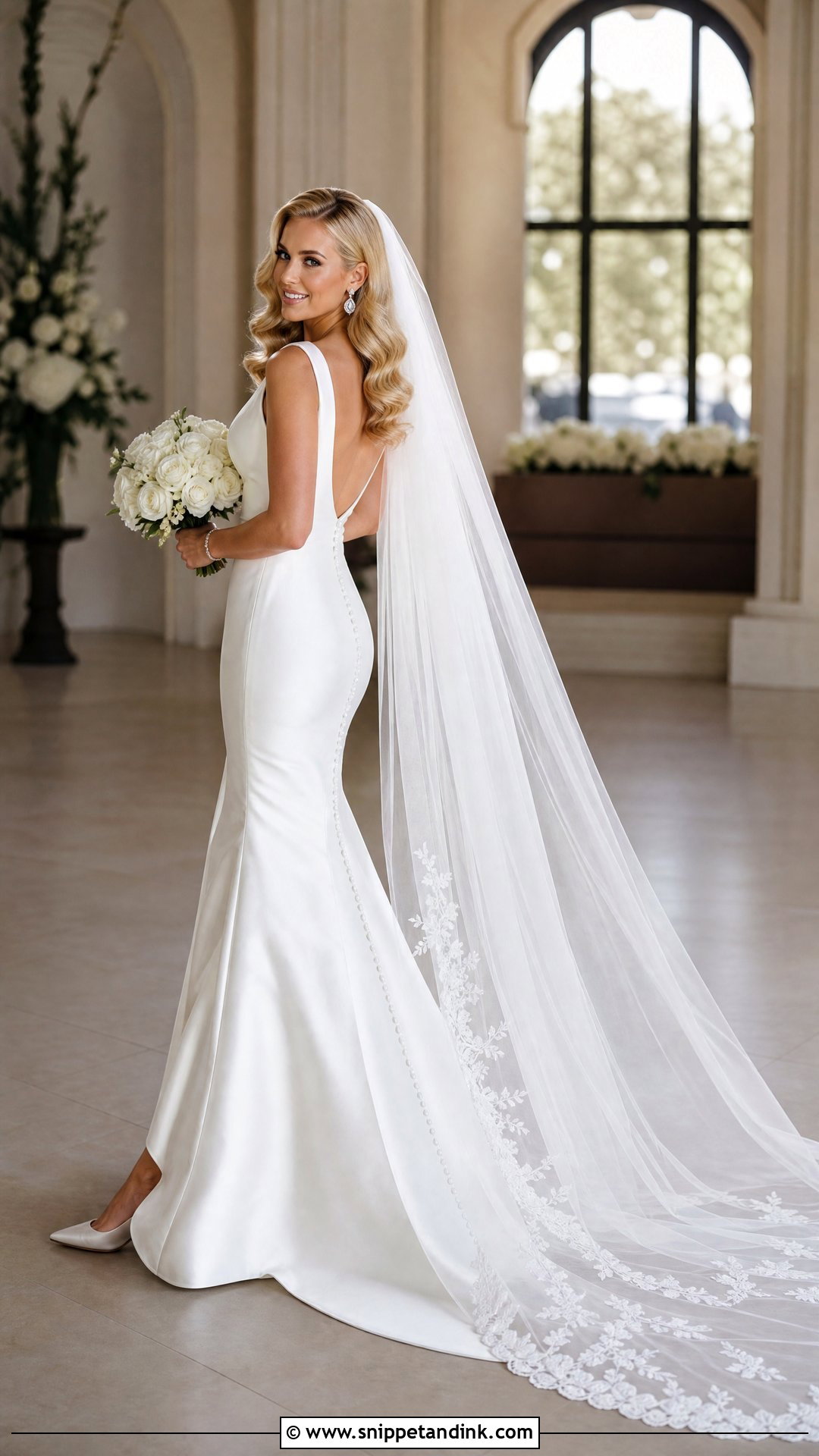
A veil and sculpted waves can coexist, but only if the attachment point is decided before the waves are brushed out. I set a hidden anchor of crossed pins beneath the crown and slide the comb into that, so the veil falls behind the waves instead of flattening them. A cathedral veil suits a fitted gown; a fingertip veil feels lighter with an A-line. Keep the edging plain. Practice taking it off at the trial: when it comes out, the hair underneath should still look finished, with no gap where the comb sat.
15. Old Hollywood Waves With Crystal Clip
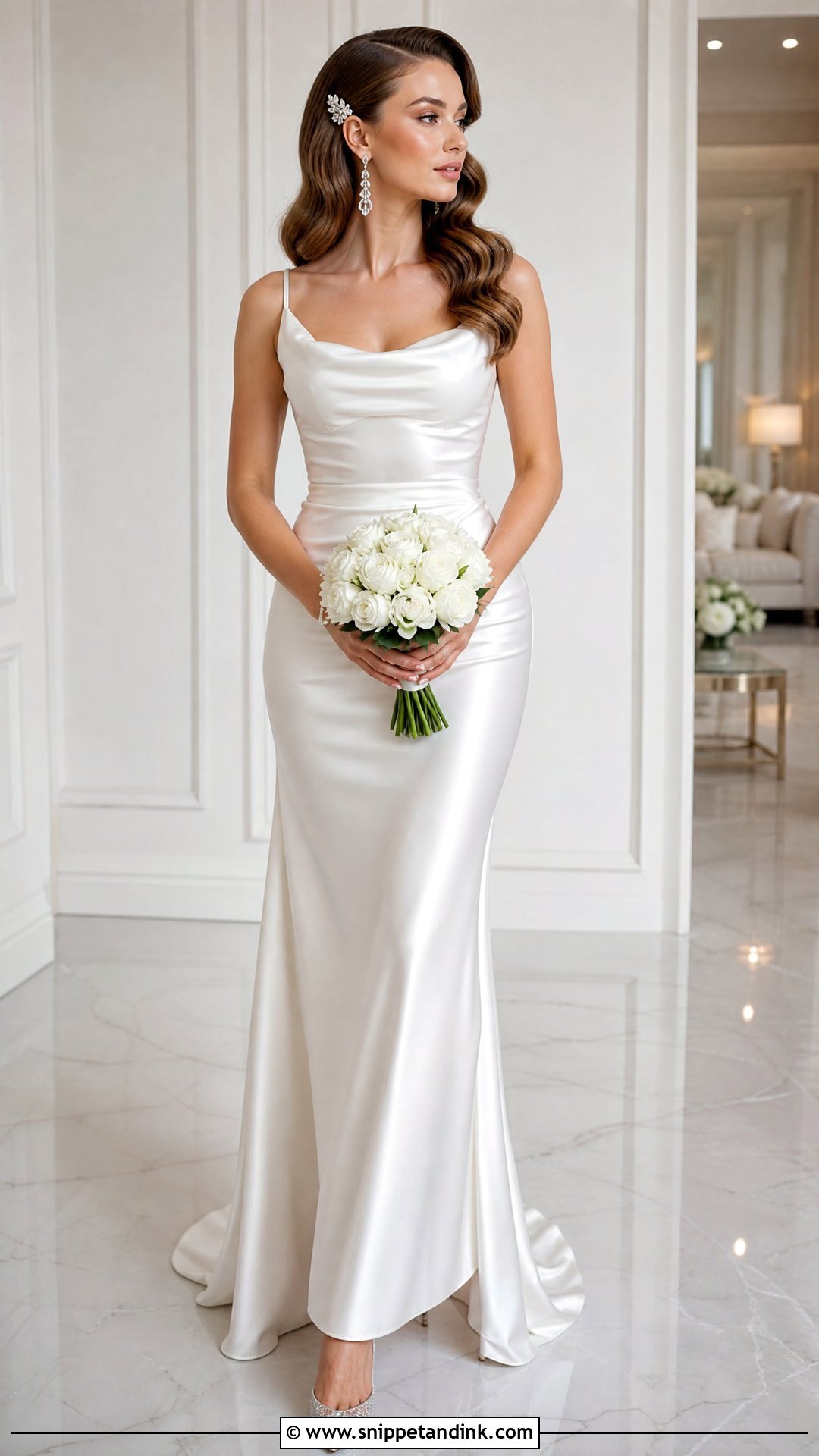
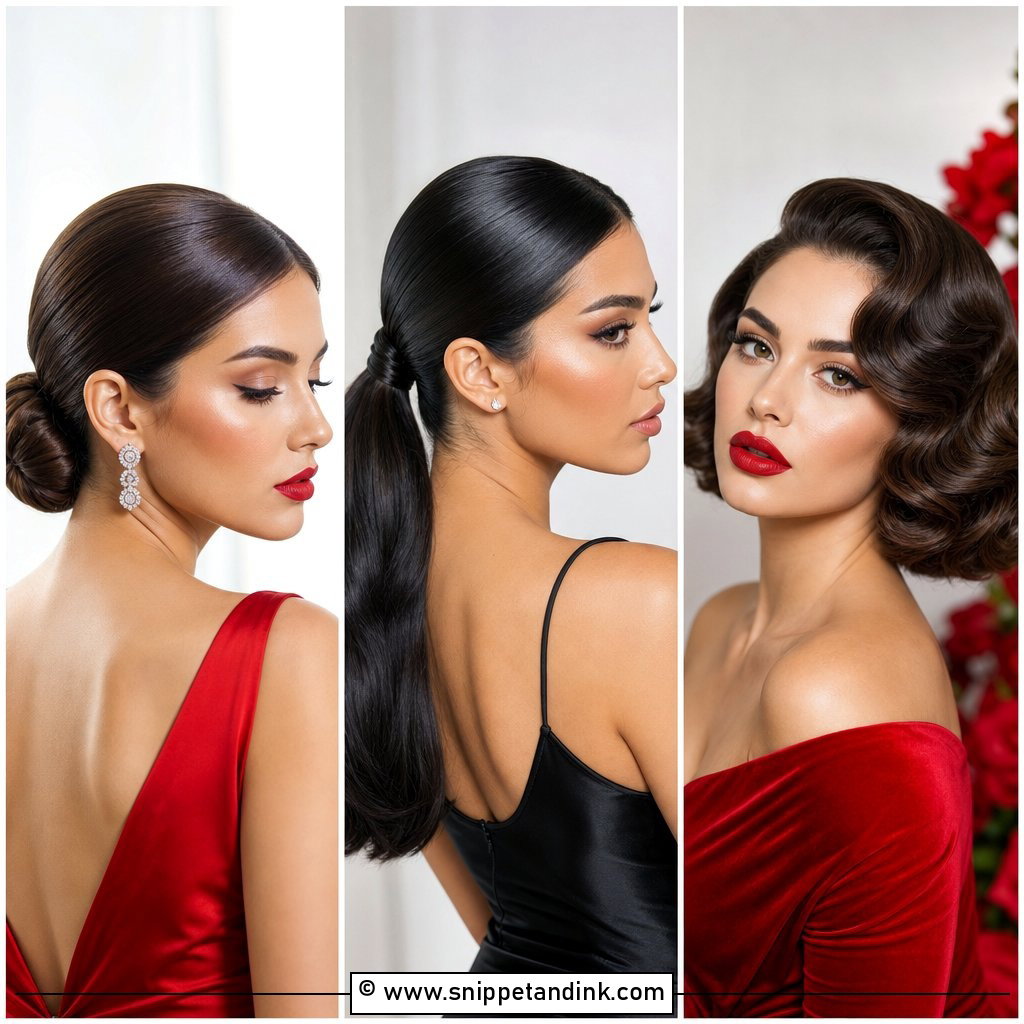
One crystal clip above the ear on the tucked side gives a focused point of sparkle and reinforces the asymmetric shape. Choose a slim barrette or a curved clip that follows the head; bulky pieces lift away and break up the wave. I never let the clip carry its own weight. Pins go in underneath first, and the clip sits on top of them as decoration. Pair it with a clean satin gown and keep the rest of the jewelry quiet so the sparkle doesn’t compete.
16. Old Hollywood Waves With Pearl Comb
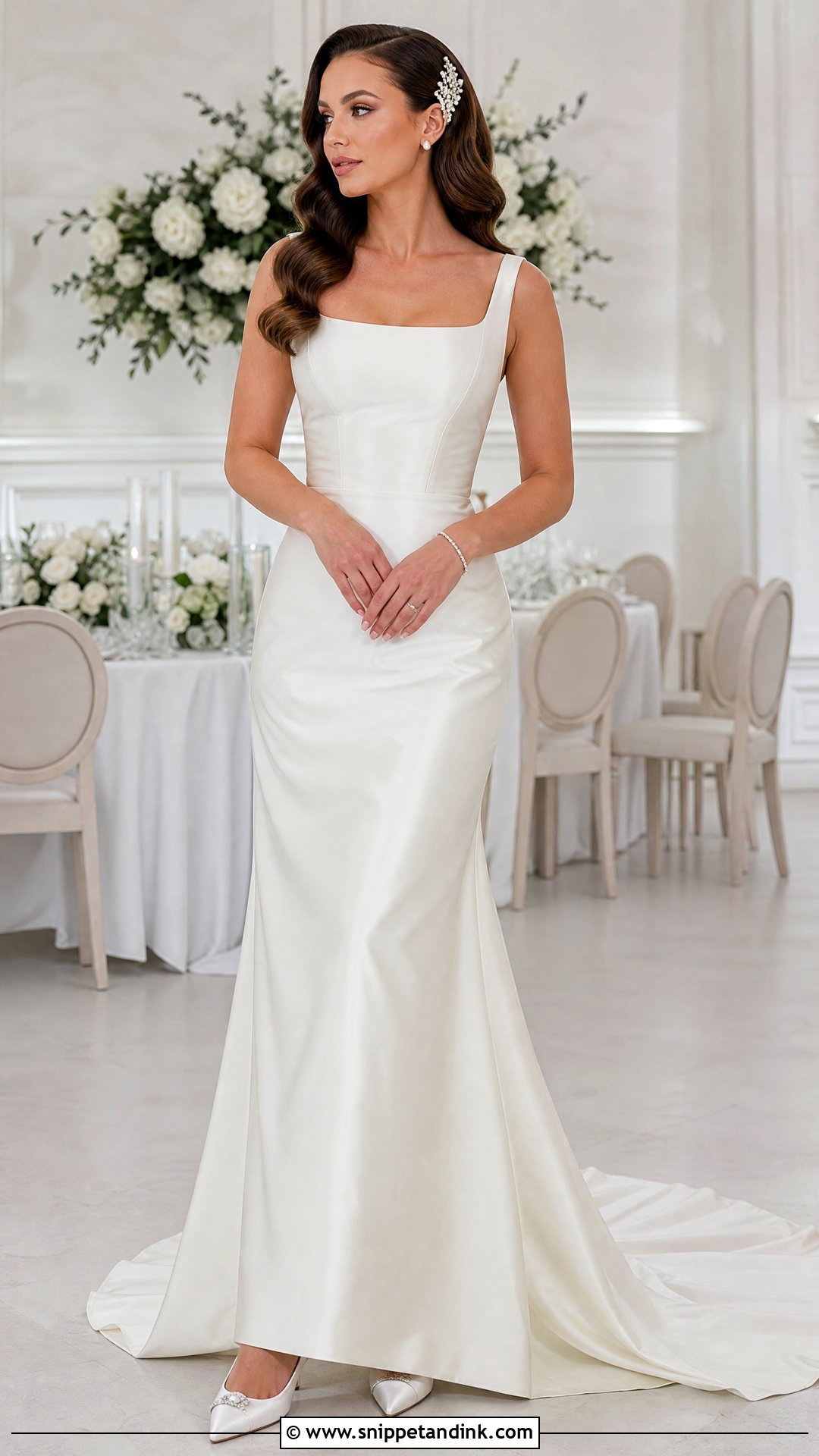
Pearls soften the polish of these waves. A small comb behind one ear sits nicely with a gentle side part and medium bends, and it can echo pearl buttons or earrings on the dress. Match the pearl tone to the fabric, because bright white pearls next to ivory silk make the dress look yellow. I set the comb near the surface but supported by crossed pins underneath, so it stays put when you hug people and doesn’t press the waves flat. A square-neck gown and satin slingbacks complete the look.
17. Old Hollywood Waves With Tiara
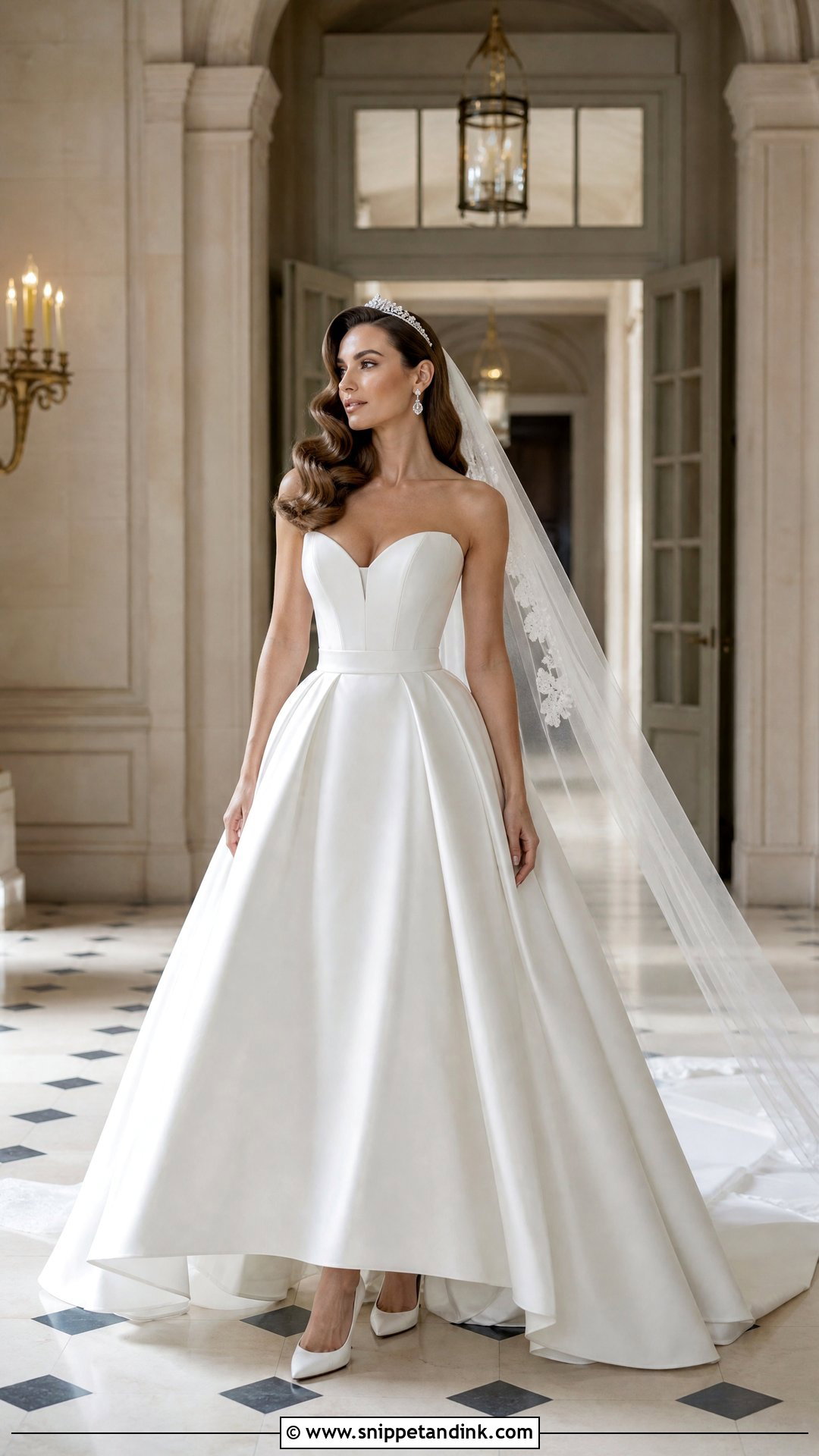
A tiara makes the look formal, and the danger is proportion. A low-profile band that follows the curve of the head works; a tall crown on top of big waves feels top-heavy. I place it slightly behind the hairline, not on the forehead, and secure it with small loops or pins through its frame. Large side-parted waves fall below it, and a long veil attaches behind. Avoid adding more clips. Wear the tiara for a few hours at your trial; pressure behind the ears is the first complaint, and it’s fixable if you catch it early.
18. Half Up Old Hollywood Waves
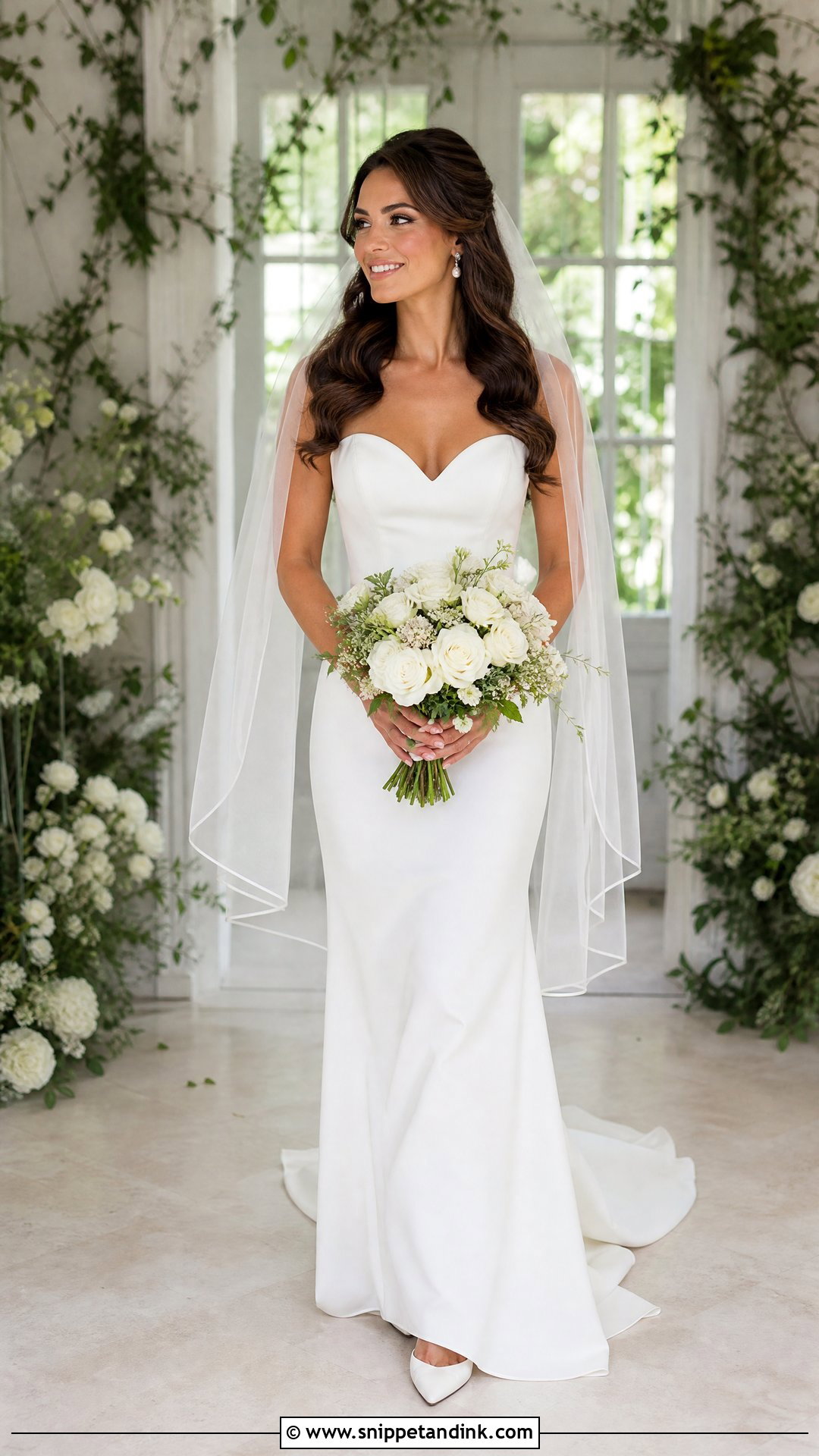
Half up keeps hair off your face while still showing the wave. The front sections sweep back and join with hidden pins or a narrow comb, the crown gets soft lift, and the rest becomes broad, connected bends. If a fully swept-back front feels severe, I leave a polished curve at each temple. It’s a good choice for fine hair because the gathered section gives accessories something solid to grip, and a fingertip veil can sit right above it. From behind, the join should disappear into the waves rather than look like a small ponytail.
19. Finger Wave Old Hollywood Wedding Hair
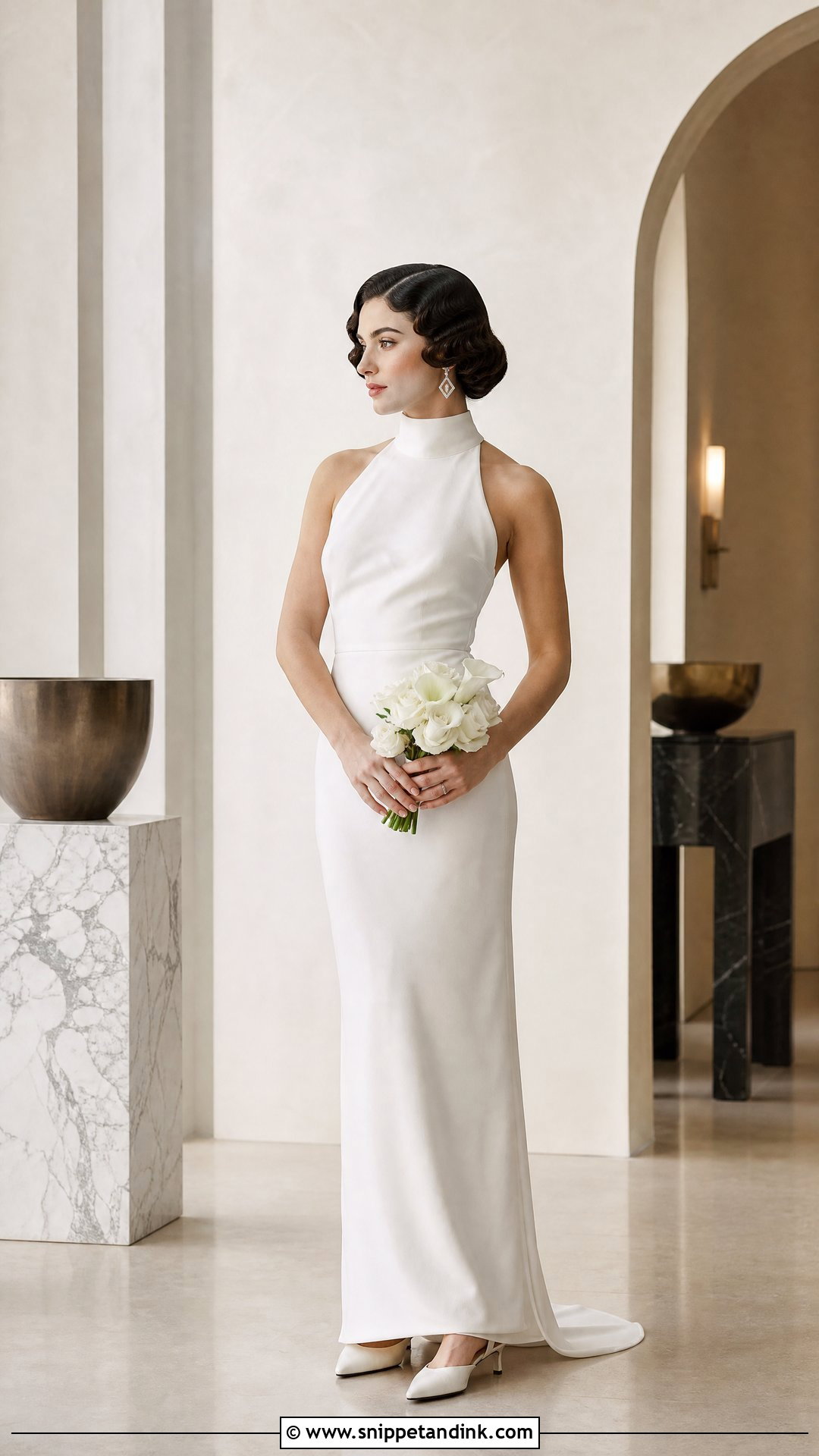
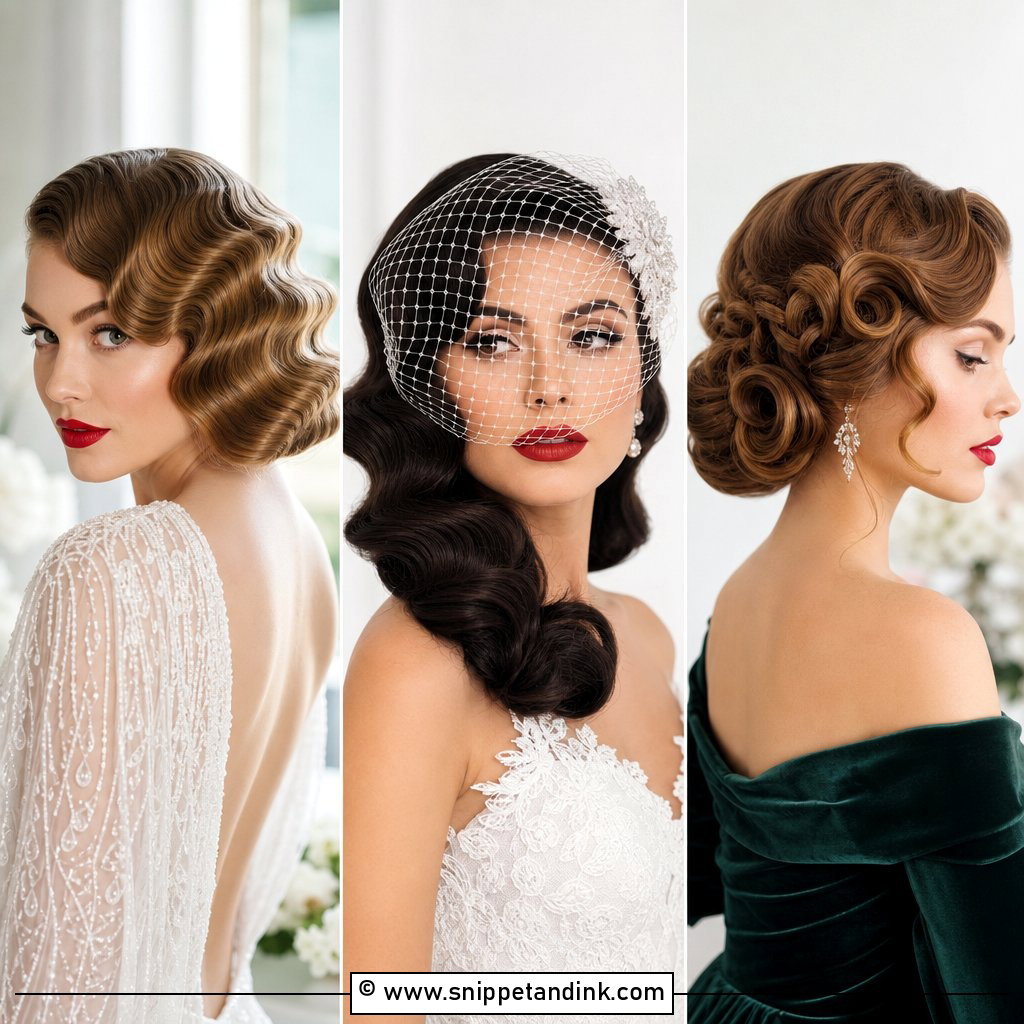
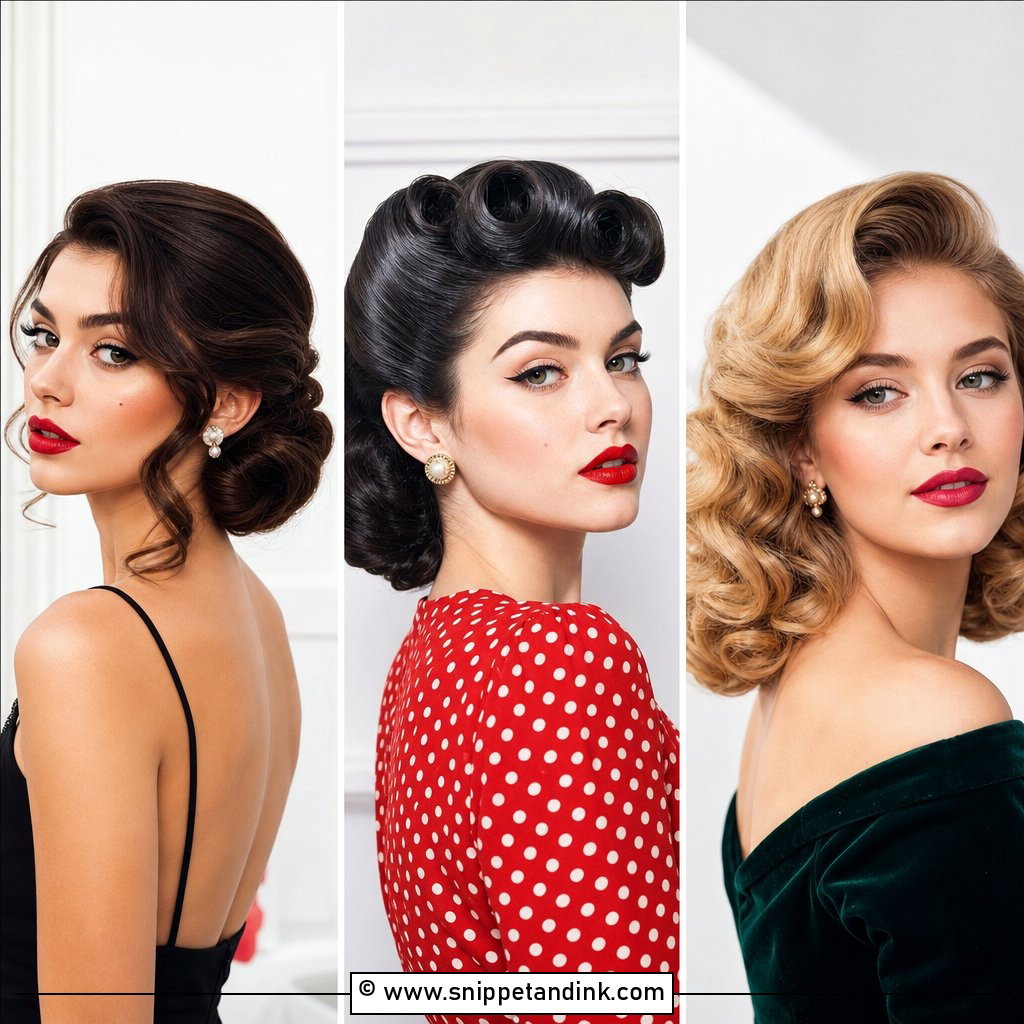
Finger waves are the most sculpted option, and they suit short hair, pixie cuts and sleek bobs best. The waves are formed close to the head in neat S-shaped ridges, traditionally pressed in with fingers and a comb while the hair is wet with setting lotion, then dried in place. A deep side part shows off the pattern. Every ridge is visible, so it takes time and a steady hand, and it’s worth booking a stylist who has done them before. A high-neck gown, geometric earrings and a simple crystal pin or birdcage veil suit it. It should look glossy, never wet or crunchy.
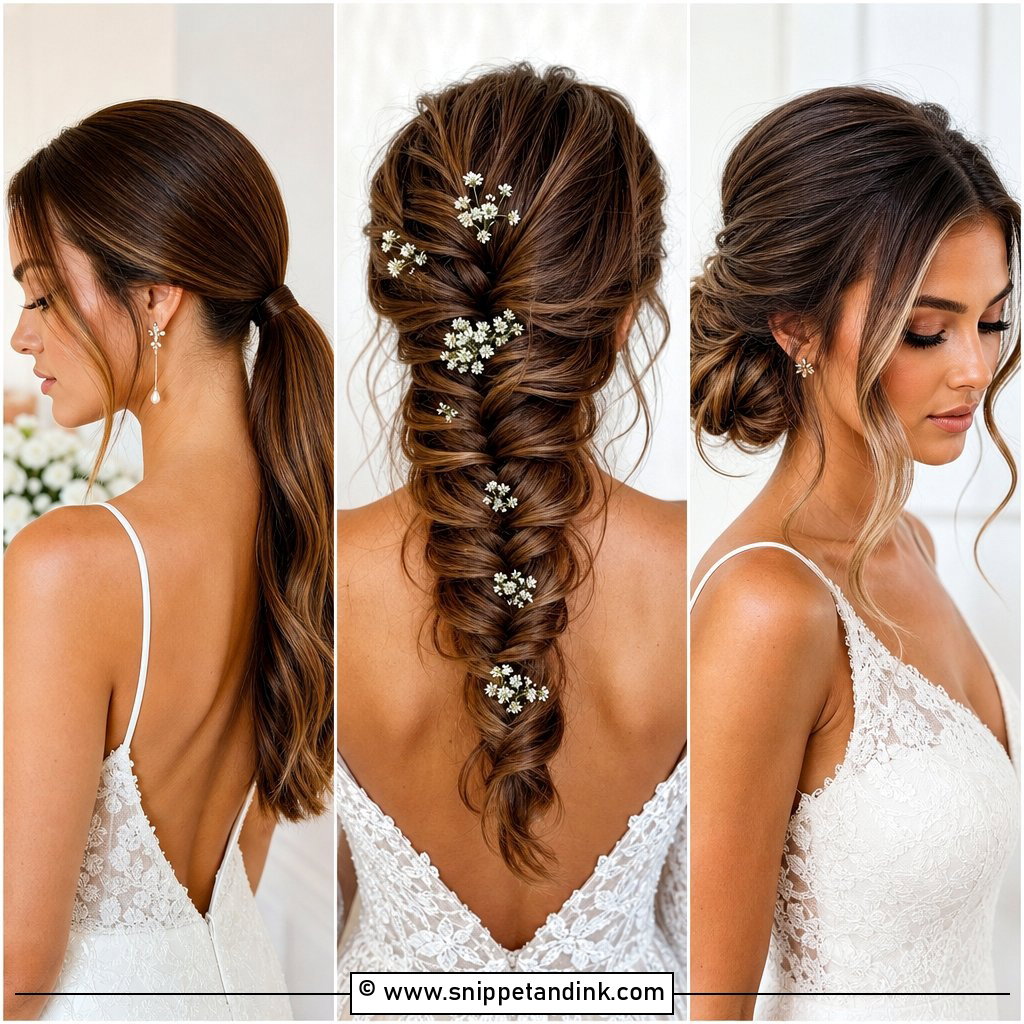
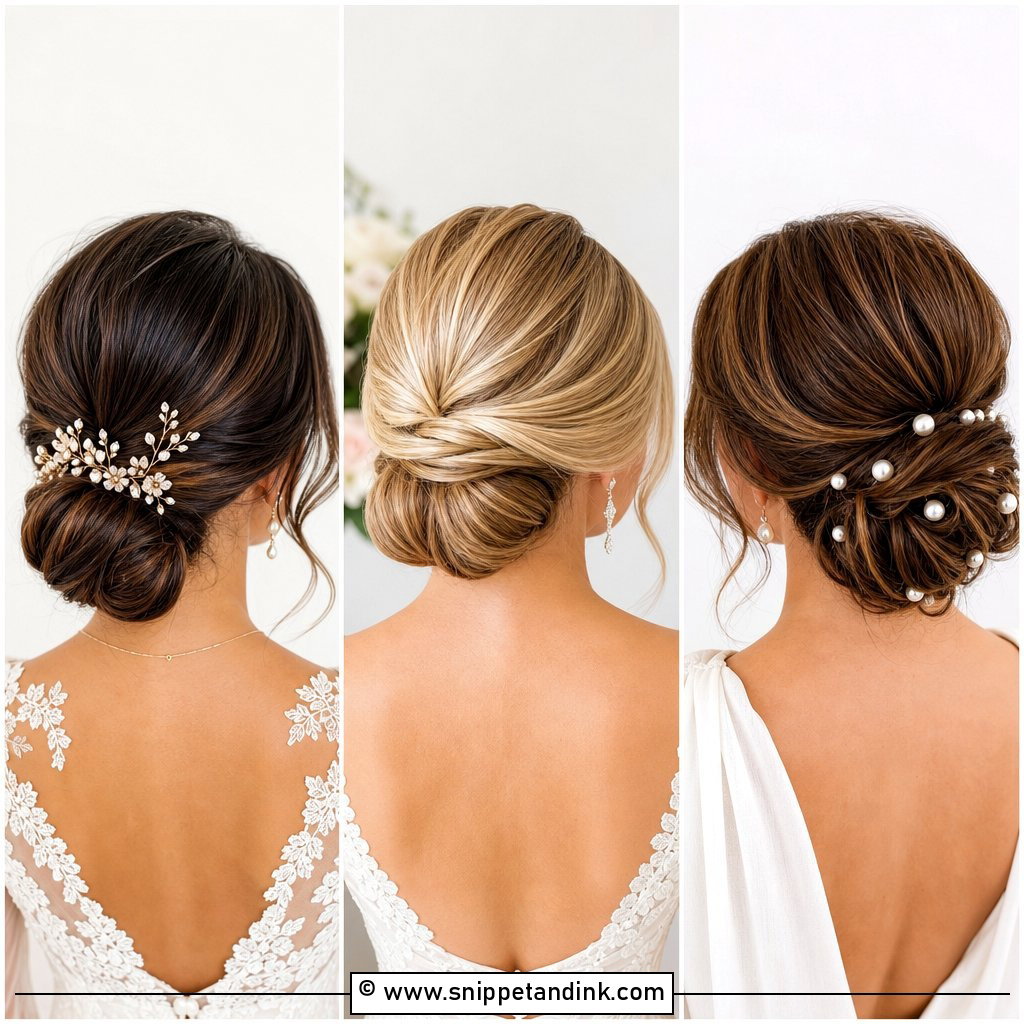
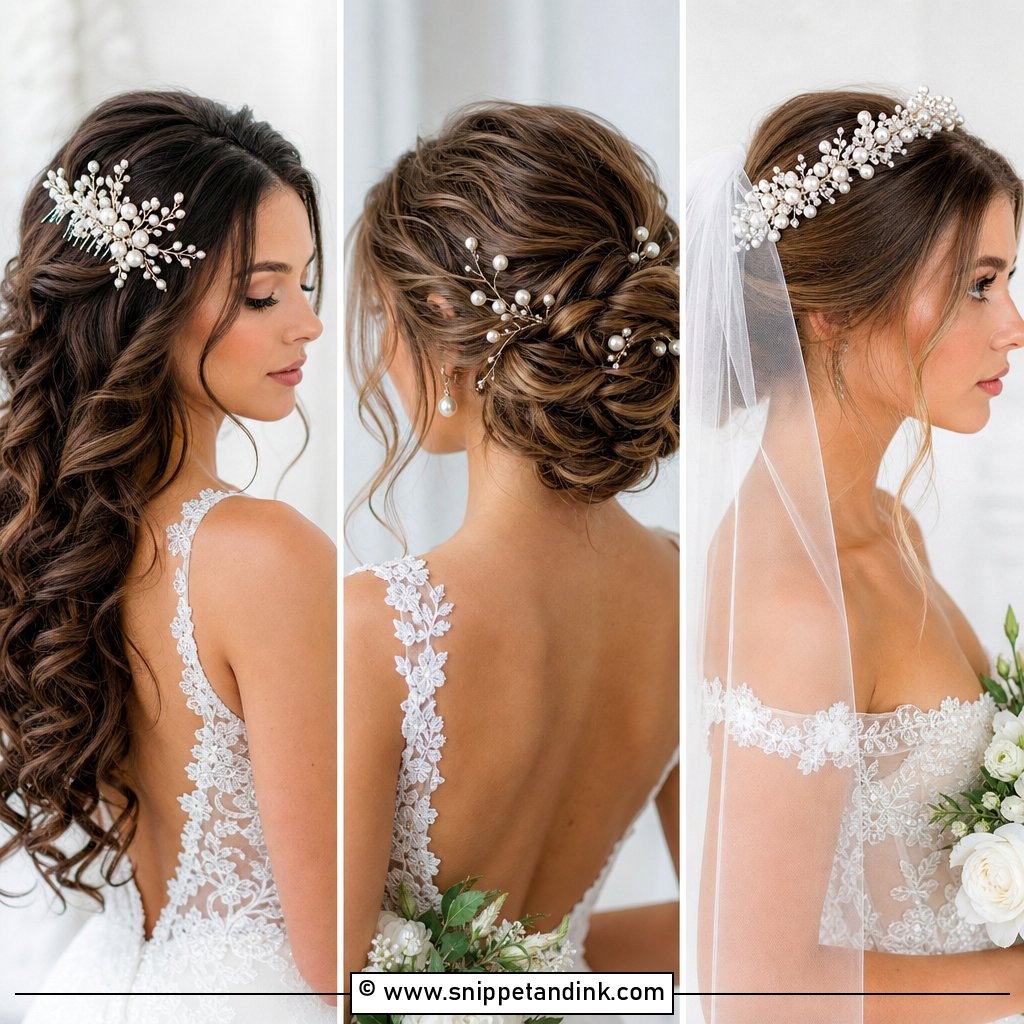
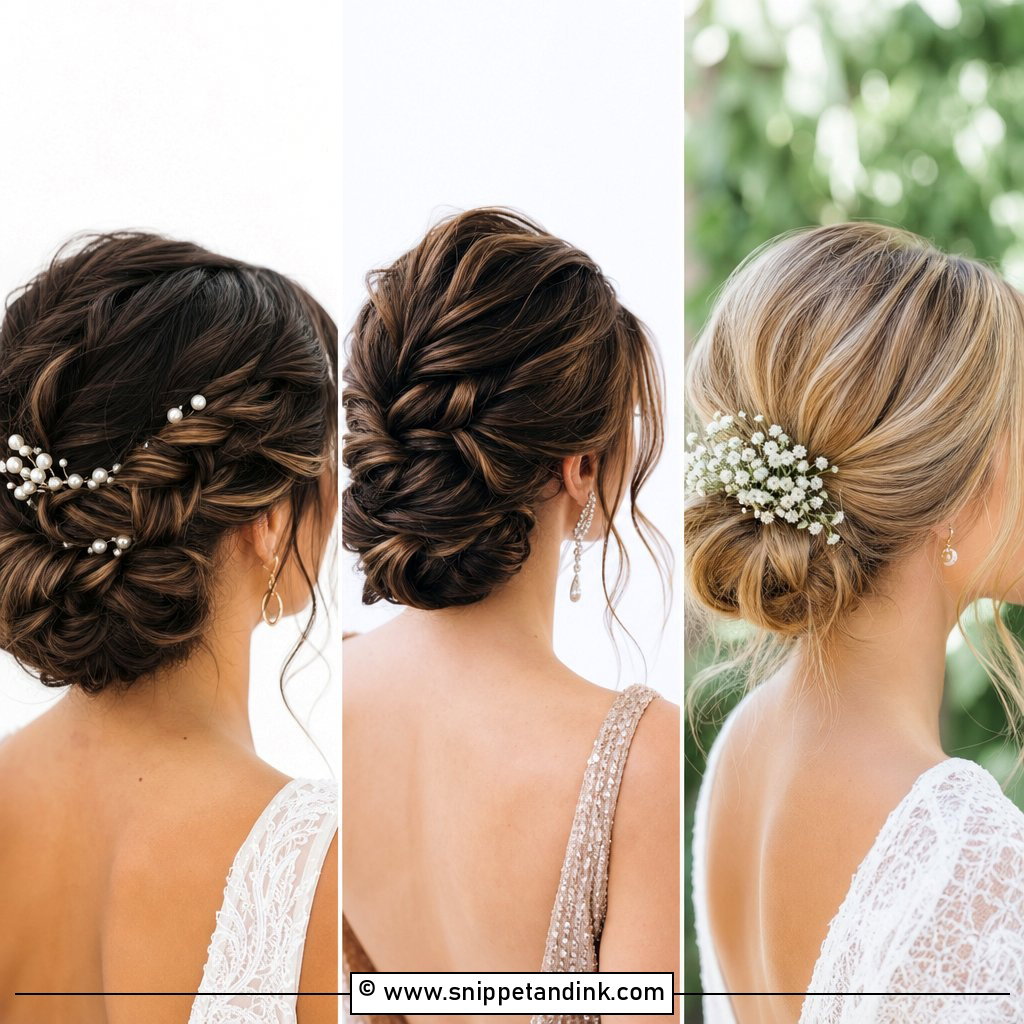
20. Loose Modern Old Hollywood Waves
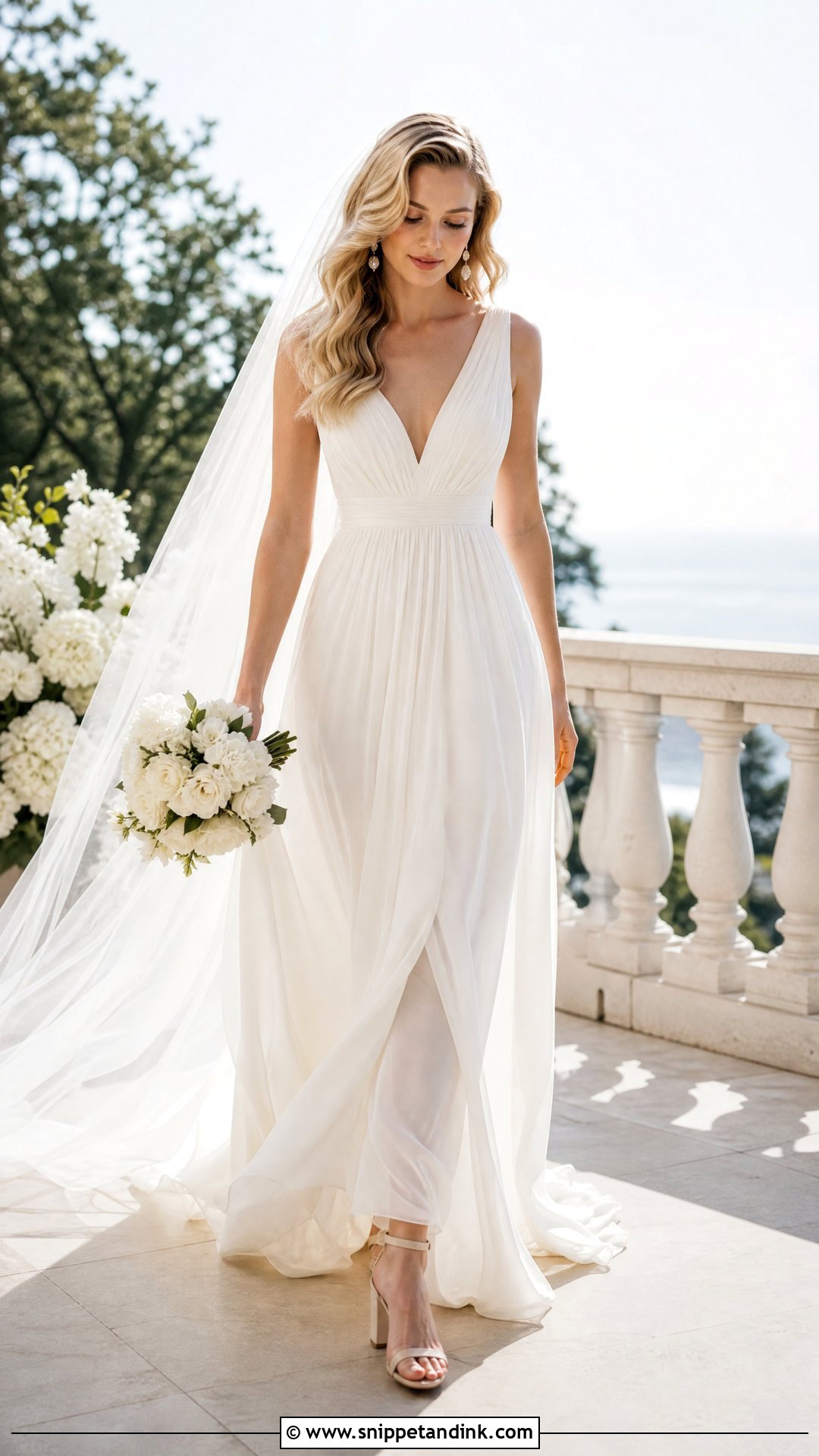
A looser version keeps the side part and the single curl direction but brushes the bends further, so they look soft and touchable. Not every Hollywood-inspired hairstyle needs sharp ridges, and this one sits more comfortably at an outdoor or garden wedding with a flowing chiffon gown. Leave the ends a little uneven so they move naturally. Looser doesn’t mean less work; the set still needs to cool fully, or the waves will fall into plain curls by the reception. Test it at the trial in conditions close to your venue.
Humidity, Hugs and Hour Nine
Even a well-set wave relaxes over a long day. Body heat, damp air and a lot of embraces all loosen the pattern a little, and I’d rather brides expect that than panic about it. A gentle softening by the evening looks natural in photos. What you want to avoid is a total collapse, and that usually comes from moisture.
For a beach, garden or summer wedding, I use a stronger hold through the set and finish with an anti-humidity spray. If the forecast is especially sticky, I may suggest a half-up or side-swept version instead of fully loose waves, because pinned sections resist humidity far better than hair that’s hanging free.
What to give your bridesmaid for touch-ups
- A small soft bristle brush to reconnect waves that have separated.
- A handful of bobby pins in your hair color, for a tucked side that loosens.
- A travel-size flexible hairspray, sprayed onto the brush rather than straight onto the hair.
- A couple of duckbill clips. Pressing a fallen ridge for five minutes during dinner brings it back surprisingly well.
Your Part, Your Texture and the Neckline Decide the Wave
The right version comes down to your length, texture, neckline, accessories and how much structure you enjoy. A deep side part gives classic drama; a middle part or a looser brush-out feels more current. Short bobs, natural hair, fine hair and thick lengths all adapt with the right preparation and honest expectations. Bring reference photos to your trial and talk about wave size and direction, then test the veil and any accessory in place. Before you leave the chair, look at the style from every angle, including behind, because that’s how most of your guests will see it during the ceremony.
You'll Like These Ideas:


Leave a Reply